Dear Readers, Welcome to Edition 286. It is always such a pleasure to put each edition together, and this one is filled with the kind of local stories that remind me why I love doing what I do. There are so many wonderful people, groups, businesses and volunteers in our community, and I feel very lucky to be able to share just a small part of what is happening around us.
The Abbey Museum’s Medieval Festival was a huge success, and what a joy it was to see so much colour, history and excitement come to life. Events like this take an enormous amount of work behind the scenes, and it was wonderful to see the community come out and enjoy it. We will have full coverage in the next edition, so keep an eye out for more photos, stories and highlights from such a memorable event.
Another story that really warmed my heart is the Courageous Girls Club. It is such a beautiful idea — a warm, uplifting space where confidence, friendship and fun are woven together. I think we can all appreciate how important it is for young people to feel supported, encouraged and valued, and I am so pleased to be able to share this story with you.
On a more serious note, I have also written a very strongly worded story in this edition about people using the Busy Fingers Op Shop as a dumping site. I want to make it very clear that these are my words and my views as editor.
This story has not been contributed by Busy Fingers, but it is something I felt needed to be said. Our local op shops and volunteers do so much good, and they deserve respect, not the burden of cleaning up other people’s rubbish.
As always, I encourage you to shop locally whenever you can. Every coffee, gift, appointment, meal, recommendation and friendly hello helps keep our small businesses and community groups going.
Thank you for continuing to read, share and support our local stories — it truly means a lot.
Take Care, Stay Safe, CONTRIBUTORS
Anne Matthews
Al Finegan
Barry Clark
Elaine Lutton
Joie Scheinpflug
John Traill
Kathy Vincent
YOUNG TERRY MP
Federal Member
Longman Gets Things
Done!
Maria Christina
Peter Schinkel
Peter Dallimore
Philip Arlidge
Robyn- B.I.
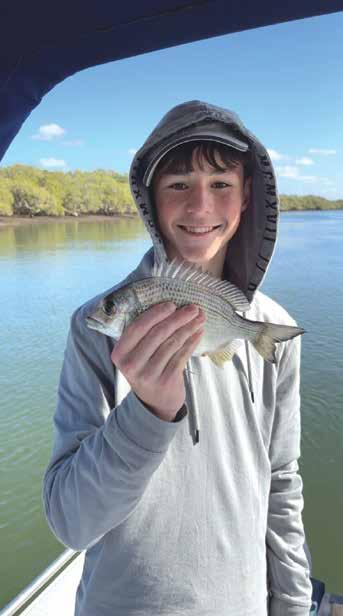
Boat Charters
Sue Wighton
Tracey Blinco
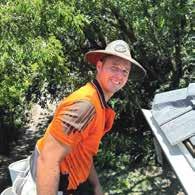
R3 Roofing
Paul Popham
Ivory T - fabric & wallpaper
Yawk Yawk
Disclaimer for Contributions to The Bribie Islander Magazine
The
for
Tai Chi Walking:
Is It Really Worth the Hype?
Everyfew years, the wellness world rediscovers something ancient, gives it a modern label, and asks us to believe it can ease the pressures of modern life. Tai Chi walking is having one of those moments. It is praised as mindful movement, balance training, meditation in motion, and a safer way to walk, all at once. That sounds almost too convenient. Yet beneath the marketing language is a practice that deserves more ser ious attention than the word “hype” suggests.
Tai Chi walking is not simply strolling slowly. It is a deliberate way of moving in which each step is broken down and noticed. A person shifts weight carefully from one foot to the other, keeps the body upright, softens the knees, and pays attention before moving forward. In ordinary walking, most of us are on autopilot. In Tai Chi walking, the pause, the weight transfer, and the awareness are the point.
That may sound minor until we remember how much daily life depends on balance. Getting out of a chair, turning in the kitchen, stepping over a garden hose, and walking on uneven pavement all ask the body to coordinate movement and attention. When balance fades, the world can quietly shrink. People avoid stairs, walk less, and sometimes lose confidence long before they lose strength.
The strongest case for Tai Chi walking is balance. Research on Tai Chi more broadly has repeatedly found benefits for balance, physical function, confidence, and fall-risk reduction, particularly among older adults. Recent reviews and metaanalyses have reported improvements in balance measures and mobility tests, as well as reduced fall risk. Tai Chi walking borrows one of the central ingredients from that evidence base: controlled weight shifting under mindful attention.
RADIAL & FOCUSED SHOCKWAVE THERAPY
Clinically proven* to help these conditions
• Heel pain (plantar fasciitis and Achilles tendinopathy)
• Tennis and golfers elbow
• Patella tendinopathy
• Frozen shoulder
• Rotator cuff tendinopathy +/- calcification
• Hip bursitis and tendinopathy
• Shin splints; Heel spurs
• Lower back & Knee arthritis 14 YRS
** Podiatry, focused & Medicare different
The mechanism is not mystical. In slow stepping, the ankle, knee, hip, trunk, and eyes all have to cooperate while the brain receives feedback about where the body is in space. This is why Tai Chi walking is more than relaxation. It is a quiet rehearsal of the control needed for safer everyday movement.
But enthusiasm needs discipline. The strongest evidence is for Tai Chi as a structured practice, not necessarily for every branded version of Tai Chi walking circulating online. A short indoor routine may be useful, but it is not a miracle intervention.
It will not replace strength training, cardiovascular exercise, medical treatment, or a proper falls assessment for someone at high risk. If the claim is that Tai Chi walking can improve steadiness and body awareness, it is credible. If the claim is that it can transform health on its own, it is inflated.
That distinction matters because good ideas are often weakened by overpromising. Tai Chi walking does not need to be sold as a cure-all. Its value is more modest: it gives people a way to slow down, notice how they move, and practise control without expensive equipment or punishing effort.
Its real strength is accessibility. Tai Chi walking requires little space, no equipment, and no special athletic identity. For people who find gyms intimidating, high-impact exercise painful, or brisk walking unsteady, that matters. A practice that can be done in a hallway, on a verandah, or in a community hall has a better chance of becoming a habit than one that depends on perfect conditions. For general
readers, the appeal is simple: it can be added gently to daily life. A few minutes of careful stepping before a walk, after gardening, or during a break from sitting may be enough to build familiarity. The goal is not to look elegant or perform a perfect martial art form. The goal is to move with attention: place the foot, shift the weight, settle the body, breathe, and repeat.
The people most likely to benefit are those who need gentle, repeatable balance practice: older adults, beginners returning to movement, people recovering confidence after a stumble, and anyone who wants calmer daily activity. Still, caution is sensible. Anyone with dizziness, a recent injury, neurological symptoms, chest pain, or a serious fear of falling should seek professional advice before treating it as a do-it-yourself solution.
There is also a broader lesson here about wellness trends. We should be sceptical of grand claims but not dismiss practices simply because they are gentle. Not every worthwhile health habit has to be dramatic. Some are boring, repeatable, and almost invisible, including walking after meals, standing regularly, sleeping consistently, and practising balance before it becomes a crisis.
So, is Tai Chi walking worth the hype? Not if the hype promises effortless transformation. Yes, if we judge it for what it is: a low-cost, low-impact, evidence-aligned way to practise balance, attention, and safer movement. It is not magic, and it should not be marketed as medicine in disguise. But for many people, slow movement may be exactly the point. Progress does not always arrive breathless and fast. Sometimes it arrives one deliberate step at a time.
Just personalised care, advanced testing, and frames you’ll actually love wearing. We’re proudly independent and locally owned, so you’ll never feel like a number.
If you’re blaming the lighting, stretching your arm to read a text, or avoiding night driving - it might be time
S IM P L Y H EALTH Y
Anti-Parasites and Cancer Therapy
Are we Missing out Cures for Cancer?
By Heenam Kim
Many people come into Bribie Simply Healthy asking about Natural Parasite Cleanse for Treating or preventing Cancer.
So I was curious about it and did further research into the subject.
Black walnut, cloves, and wormwood are popular herbs used in parasite cleansing protocols. Lately, Black Seed Oil (Nigella sativa) and wild Oregano Oil were popular too. Early research suggests that the potential benefits of antiparasitic treatments for cancer are worth further investigation.
Large randomised clinical trials are needed to establish whether parasite cleansing remedy is an effective treatment for cancer. Many generic, off-patent drugs and natural compounds cannot be patented, so there may be limited financial incentives for pharmaceutical companies to invest in large and expensive clinical trials. Cancer drugs are
one of the largest and most profitable areas of the pharmaceutical industry. Global spending on cancer medicines is estimated to be well over US$200 billion per year and continues to grow.
Cancer begins with genetic and cellular changes. Our body normally identifies and removes many abnormal cells through DNA repair, cell death pathways, and immune surveillance. Immune cells require a tremendous amount of cellular energy, known as Adenosine Triphosphate (ATP), to multiply, function effectively, and carry out their protective roles. If your cellular powerhouses, the mitochondria are impaired and unable to efficiently produce energy, your immune system may struggle and leaving them less capable of responding effectively to threats like cancer.
Laboratory studies have shown that antiparasitic compounds may affect cancer cells through several mechanisms, including disrupting microtubules
(structures that cancer cells need for division), affecting glucose metabolism, promoting apoptosis (programmed cell death, which remove old and damaged cells), and influencing cancer-related signalling pathways.
Some anti parasite herbs are traditionally used as part of a “terrain-clearing” approach, with the goal of reducing factors that may contribute to imbalance within the body’s internal environment. This supports the body’s ecosystem by reducing unnecessary stressors, improving resilience, and creating conditions that may allow the immune system to function more effectively.
Also activated charcoal and bentonite clay, is often used in detox protocols to help bind certain compounds within the digestive tract. These are typically taken on an empty stomach and separated from medications and supplements. Liver-Supportive Remedies such as milk thistle, NAC (N-acetylcysteine), and Glutathione are often used in relation to antioxidant protection and the body’s natural detoxification systems.
More readings: Wormwood Extract Kills Cancer Cells
www.science.org 30 Nov 2001
“Scientists are testing a recipe of wormwood(Artemesinin) and iron on breast cancer cells, and so far the results are encouraging. In a new study, researchers report that Artemesinin – a derivative of
the wormwood plant kills iron-enriched breast cancer cells but doesn't harm many healthy ones...”
Anticancer Activities of Nigella Sativa (Black Seed Cumin)
NIH National Library of Medicine, 3 Jul 2011
“Nigella sativa has been used as traditional medicine for centuries. The crude oil and thymoquinone (TQ) extracted from its seeds and oil are effective against many diseases like cancer, cardiovascular complications, diabetes, asthma, kidney disease etc. It is effective against cancer in blood system, lung, kidney, liver, prostate, breast, cervix, skin with much safety...”
For further information or to discuss your individual health needs, please contact Kim at:
Bribie Simply Healthy Bribie Healing Centre
Health & Wellbeing Services
Natalie McDonald Law
Your Local lawyer
Wills & Estates
Family Law
Conveyancing - Domestic & Commercial
Home visits available by appointment
All Areas of General Law Including Traffic Now Located in Beachmere Incorporating Beachmere Law Email: natalie@nataliemcdonaldlaw.com.au For Affordable Legal Advice call: 07 5499 1508 Natalie has been a Beachmere resident for 20 years and been practising Law in Queensland for 19 years.
BRIBIE ISLAND VOLUNTARY COMMUNITY HELP ASSOC. INC.
VOLUNTEER DRIVERS WANTED
Bribie Island Community Help is after volunteers to assist our active aged and frail clients with door-to-door transport. We transport clients around following areas:
•Bribie Island & surrounds •Caboolture, Redcliffe, Northlakes
•North Brisbane & Brisbane City. Currently seeking to expand our Volunteering numbers to service all areas to assist our growing client numbers.
We are seeking committed volunteers who can donate 5 to 8 hours per week. We are registered with Centrelink for those with
volunteering obligations.
We have a fleet of Toyota Commuter automatic minibuses, and we will provide training on driving the buses as well as orientation and ongoing support from our professional office staff.
MANDATORY
REQUIREMENTS:
•Must hold Australian or NZ Citizenship or the capacity to permanently work in Australia.
•Above 25 years of age due to insurance constraints.
•Be able to pass a driving record history check by Qld Transport.
•Be able to pass a criminal history background check.
•Have a minimum of an Australian Open “C” class license check by Qld Transport.
If you wish to apply or seek further information, you can email your details to apply@bivchai.org.au or call on 3408-0111.
JUICE BAR
100% fresh fruit & veg made in-store
RICOS DELI
Cold meats, sauces, Asian rice, desserts & other goodies gluten free options available
EASY SHOPPING
Free delivery over $30
Click and collect (in-store or to boot)
Order online top quality Produce, hand picked, market fresh
www.banksiafruitjuicebarn.com.au
We’re family when family can’t be there™
We really care about making every journey a pleasure, and all our drivers are safety checked, licenced and first aid accredited for peace of mind. Driving Miss Daisy will help with: Trips to the doctor, physio, podiatrist, hairdresser etc.
Organising and accompanying on outings - perhaps to a cafe, the movies or museum.
Shopping assistance as needed, for groceries, clothes, gifts etc.
Clients with special needs Airport, bus, rail departures and pick ups
We offer you independence and assurance, so please call Pauline’s Daisy Mobile - 0498 760 438
Supporting Community
Bribie Respite and Support Services Incorporated has been servicing Bribie Island and surround since 1987. As a not for profit organization all monies generated are reinvested into our Bribie based business. Our well trained support workers offer high quality care and support to ensure our clients are able to live their lives in the best possible way with support an dignity.
We are Commonwealth Home Support Program (CHSP) funded, offering a wide range of support services to assist individuals within our community
Aged Care & Dementia Care Services
• Group Social Support
• Home or Community General Respite
• Individual Social Support
• Transport to and from our services
• Diversional Recreational Activities
• Personal Care
• Meals
MICHELLE MCCARRON - ELDER ABUSE SUPPORT
Michelle McCarron - Advocate & Support Against Elder Abuse - My Story
As the details are unpleasant and disturbing, only the outline facts have been written.
On 31/1/24, I was admitted to the hospital. Whilst I was in emergency, very ill and vulnerable, I was sexually assaulted by an employee of the hospital. He had worked there for six months and sexually assaulted multiple women; he was charged, has a criminal record and is on probation.
I had no support during this ordeal.
A police report was completed, and then I had no idea what to do next. I am 67 years old. I was frightened, vulnerable and in pain and had no support. I am now public speaking to support older Australians who, like myself, have been through trauma.
If this is you or someone you know, please get in touch with me to stop elder abuse. I am an advocate, sharing my perspective with a wider audience. I want to raise awareness, support, inform and protect the older population who are being mistreated.
Elder abuse is a pervasive issue that often goes unreported, with 1 in 6 older people in the community falling victim to it, sadly, often by family members. This alarming statistic underscores the urgent need for action and awareness.
The types of abuse are:
• Neglect/domestic violence
• Physical and verbal abuse
• Psychological and emotional abuse
• Financial abuse
• Sexual
• Control and manipulation
As a community, we hold the power to recognize, respect, and refer. It's crucial to understand that some victims may experience more than one type of abuse.
By being vigilant and responsive, we can help identify and address all forms of elder abuse, with 24/7 support always at hand.
I will assist and guide all victims with kindness, dignity and confidentiality.
Contact me for more.
Please call 000 Triple Zero
My Aged Care 1800-200422
National Elder Abuse Line 1800-353374
Respect for Support 1800-737732
My contact details 24/7: 0428 900767
I am available for further speaking (no cost) to all community organisations.
What are the 3 R's of elder abuse?
Bystanders should remember the three “Rs.” This stands for recognize, respond and refer. The first step in helping to break the cycle of abuse is recognizing the signs and behaviors. Abuse can be physical, emotional, verbal, sexual, financial, digital or resource restrictive.
What is the legal definition of elder abuse in Australia?
Elder abuse is a single or repeated act or lack of appropriate action, occurring within any relationship where there is an expectation of trust, which causes harm or distress to an older person Michelle McCarron has been a victim of abuse herself and now works hard to help other victims who don’t know how to report abuse or where to turn.
She is available 24/7 and will guide you through the first stages of police reporting and support you.
Please contact Michelle on 0428 900 767
Recovering From Spinal Surgery: Life After a Medtronic Implant
Anne Matthews
Spinal
surgery can be one of the most physically and emotionally challenging experiences a person faces. When a Medtronic device is implanted as part of the procedure, recovery involves more than healing from the surgery itself - it also means adapting to modern technology designed to improve quality of life and manage ongoing symptoms.
security or medical professionals as required. There are misconceptions about safety of the implants. Also, myths about living with implanted technology. The key message here is that the Medtronic device is designed to support recovery and improve quality of life. It does not serve as an instant cure.
This article explores the realities of recovery, the challenges met along the way, and the lessons learned while adjusting to life after spinal surgery and the implantation of a Medtronic device.
It is not a medical opinion or recommendation – but rather an information piece from someone who has gone through the processes detailed above and below outlining what might be expected should you or someone you know take this option.
Deciding on Surgery
If you have been living with chronic pain, which is having an impact on your daily activities, effecting your quality of life and more conservative treatments have failed, then it might be time to decide about surgery.
If so, you firstly need to consult your General Practitioner. Speak to them and if necessary, arrange a referral to a specialist. Then you need to weigh up the risks and benefits. Think about your expectations versus reality.
The key message in reaching the decision to go ahead, is that surgery is rarely a first choice. But it is often a necessary step when other treatments no longer provide relief.
Understanding Medtronic Implants
Medtronic implants are medical devices used to treat chronic back pain, spinal deformities, and injuries. They fall into two categories: pain management neurostimulators (like spinal cord stimulators that block pain signals) and structural surgical implants (like screws, rods, and cages used for spinal fusion).
Titanium and stainless steel are the two materials used for implants because of their exceptional durability. Most implants are designed to precisely replicate the natural mechanics of the spine and related disc materials as much as possible.
Following your surgery a Medtronic device ID card is posted to your registered address. The card holds essential information about your implanted medical device, including model numbers, physician details, and MRI compatibility. You should always carry the card and present it to airport
Hospital and Surgery
Most hospital admissions are completed online. It is a good idea to have a list of your medication, existing conditions and previous operations prepared so that you can upload it onto the Admissions form.
Pre-operative emotions, such as feelings of anxiety, are normal. Also living on Bribie Island usually means a long drive, often through bumper-to-bumper traffic, to your Specialist’s Hospital. This also adds tension at your admission.
Discussions with your surgical team, prior to the operation, will alleviate your concerns. They are experts in helping you.
Once you are taken to the operating theatre and the anaesthetist administers the general anaesthetic, you won’t remember anything until you wake up in the Recovery Room. Here you will be checked and asked about your pain levels.
Once you are stabilised you will be taken back to your room, with drips, a catheter, a pain release drip and compression pumps on your legs.
Nurses will monitor you every two hours during the first night. Your usual medications may be withheld. The following day a Physiotherapist visits and gets you out of bed and helps you walk wearing all the attachments. Expect to stay at least two days in bed and then once the catheter is removed another four to five days in hospital.
But the length of your stay is decided by your recovery. For example, is your pain adequately controlled, are you able to toilet, shower and dress independently and are you able to move in and out of bed and a chair without aid.
The Physiotherapist will give you exercises and sign a referral to your home Physiotherapist when they believe you are independent. Remember, it is vital to continue the exercises. Before going home, you will have to have staples removed from the incision in your spine. The key message here is that surgery is only the first step in a much longer recovery journey. Rehabilitation is the key –and you must follow all instructions.
The First Few Weeks of Recovery
During then first weeks of recovery, it is important to rest and manage your discomfort. Slowly coming off your preexisting pain medication can be difficult especially if you are taking medications for surgical pain.
It is important that you follow all medical instructions and move regularly. Avoid overexertion and don’t be afraid to accept help from family and friends. Often this is difficult especially when you are used to being independent. The key message for recovery is patience, rest, and realistic expectations.
Adapting to life with an Implant
Becoming familiar with your implant and understanding how it works is important. Make sure you attend your follow-up appointments.
Follow your specialist's advice about returning to driving, work, and hobbies. Make sure you recognise your limitations and take all necessary precautions. Gradually you will gain confidence and overcome your fear of movements. You must learn to trust your bodies healing process. The key message is living with an implant becomes easier as knowledge and confidence grow.
The Emotional Side of Recovery
Managing setback and slow progress can be frustrating. So, it is important to compare expectations to reality. You may experience mental health challenges, anxiety about recovery, fear of re-injury and feelings of isolation. Therefore, finding support from family and carers,
healthcare professionals and friends is vital. Support groups can also be useful. The key message is emotional recovery is just as important as physical healing. Also, the knowledge that your life could be so much better from the procedure. Try to stay positive!
Lessons Learned During Recovery
Patience is essential. Healing takes time and small improvements are important. Make sure you follow medical advice and don’t be afraid to get help if something doesn’t feel right. Celebrate milestones, no matter how small and make sure you return to your valued activities. Walking a little further each day and moving regularly will reduce pain.
The key message - recovery is measured in weeks and months, not days.
Conclusion: A Journey of Recovery and Resilience
Spinal surgery transforms lives, but there are challenges to recovery. Personal determination, technology and medical care all have a significant role to play in recovery. Through perseverance and proper care, many patients regain independence, mobility, and a better quality of life.
Recovery from spinal surgery is not simply about healing an incision or adapting to a medical device. It is about rebuilding confidence, rediscovering independence, and learning that progress - however small - is still worth celebrating.
Positivity is essential. You will feel down at time, doubts may occur. But if you stick to your plan the results can be life changing.
The Hidden Weight of "Should"
Duringa recent session with a client, an interesting insight emerged. She had been spending considerable time and energy on a project she believed she needed to finish. It had become one of those things that consumed her time and thoughts, creating a sense of heaviness and draining her energy whenever she thought about it.
As we explored it further, something became clear. There was no deadline, no expectation from anyone else, and no consequence if she chose not to continue. The pressure was entirely self-imposed.
What struck me most was the relief she felt when she realised this. A burden she had been carrying for months suddenly felt lighter simply because she had questioned whether she truly needed to carry it at all.
It made me reflect on how often we do this in our own lives. Of course, there are things we genuinely need to do. Not everything we do in life will light us up, and that's okay. However, there is a difference between what we genuinely need to do and what we think we should do.
Many of us carry around a long list of "shoulds". We should continue pursuing goals we set years ago. We should stay committed simply because we have already invested time, money, or energy, yet sometimes these commitments are no longer aligned with who we are today.
One of the things I often encourage clients to do is simply notice how things feel. Our energy often tells us more than we realise. It can show us what is nourishing us and what may be draining us.
This does not mean avoiding every challenge or responsibility. Rather, it means becoming aware of the difference between healthy effort and unnecessary burden.
A simple question I often ask is: Does this uplift me, or does it drain me?
The answer is not always straightforward, though can be revealing.
When something consistently leaves us feeling drained, resentful, or weighed down, it may be worth exploring whether we are continuing because it is truly important or simply because we believe we should.
Sometimes the greatest act of self-care is releasing what no longer belongs there. When we let go of unnecessary obligations, we create space for greater clarity, peace, and the things that genuinely matter.
After all, our energy is precious. The more consciously we choose where it flows, the more aligned and fulfilling life can become. Ready to create more clarity, balance, and ease in your life? Let's explore what's draining your energy and what truly supports your wellbeing.
Reach out and give me a call on 0405 361 882.
Always with love, Maria Christina x Holistic Counsellor | Life & Wellness Guide
Cyn's Corner
Be More Dog
Recently,one Sunday afternoon, our church lawns looked a little different. There were wagging tails, excited noses, the occasional bark and plenty of smiling faces as people gathered for our first Pet Blessing Service. We welcomed dogs of every shape and size, shared afternoon tea, raised over $90 for Caboolture and District Animal Welfare Incorporated (CADWI) whose Op Shop is opposite the BP service station at the shopping centre, and celebrated the animals that bring so much joy into our lives.
But what stayed with me most wasn't the dogs. It was their owners' stories. As people introduced their companions, I noticed something remarkable. No one talked about breed, pedigree or obedience training. Instead, they spoke about connections, especially with rescue dogs.
One woman told me her dog had become her reason to get out of bed after losing her husband. Another shared how her rescue dog had slowly helped rebuild her confidence after a particularly difficult chapter in life.
Then there was one story that stopped everyone in their tracks. One owner explained how her dog repeatedly pulled her mother towards a lounger, refusing to give up until she sat down.
Concerned by the dog's unusual behaviour, she later visited her doctor, where a serious medical condition was discovered that required urgent treatment. Listening to her story gave me goosebumps. Believe what you will, but in her eyes—and in mine—that dog saved her life.
Stories like this are not as uncommon as we might think. More often, though, the gifts our dogs give us are quieter. They encourage us to walk, and walking is one of the best things we can do for our physical and mental health. Research also confirms what many dog owners already know: stroking and brushing our furry companions can lower blood pressure and increase oxytocin—the hormone associated with bonding, trust and wellbeing.
Again and again, I heard the same qualities.
"They're always there."
"They never judge."
"They somehow know when you're having a bad day."
"They love you anyway."
It made me wonder whether our dogs possess qualities that we, as humans, sometimes struggle to offer one another. They don't ask what job we have.
They don't care what we look like. They don't hold grudges after an argument. They don't disappear when life becomes difficult. They simply remain present. Perhaps that's the lesson they quietly teach us. We don't always need the perfect words when someone is hurting. Sometimes the greatest gift we can give is simply to be there.
In a world where many people experience loneliness, uncertainty and constant busyness, perhaps that simple gift of presence is more valuable than we realise.
Our pets remind us to slow down.
To walk.
To notice the sunset.
To stop and chat with another dog owner.
To laugh.
To play.
To simply be.
Living on Bribie Island, we are blessed with beautiful walking tracks, parks and beaches where these little moments happen every day. A conversation often begins because two dogs decide they would like to meet. Before long, strangers become neighbours, and neighbours become friends. Perhaps our dogs have been quietly building community all along. As I drove home after the Pet Blessing Service, I realised it wasn't really about blessing our pets.
It was about celebrating the unconditional love, companionship and purpose they bring into our lives every single day. So, if you're reading this while your faithful companion is curled up beside you, perhaps give them an extra pat today. After all, they may never speak a word, but they have an extraordinary way of reminding us what it means to love someone simply by being there. Perhaps the world needs a little more of that. Perhaps we all need to be a little more dog.
I'd love to hear your stories.
Has your pet been your lifeline during a difficult time? Have they made you laugh when you needed it most, encouraged you to get out and about, or simply been there when no one else could? Please share your story with me.
You can email me at cynthia@ucabribie.org.au, write to me C/O Uniting Church, 80 Webster Street, Bongaree, or simply drop in on a Tuesday or Wednesday morning. The kettle will be on, there'll be tea, coffee and cake waiting, and yes... dogs are always welcome.
I'd love to share a cuppa and a chat. Until next time—Peace, Light and Love.
Cyn
Cynthia Gusman-Nolan is a Lay Ministry Agent with the Uniting Church and has professional experience in psychology, education, trauma counselling and community wellbeing.
Disclaimer:
The views expressed in this column are the personal views of the author and do not necessarily represent the views of the publisher, the Uniting Church, or any other organisation. This column is intended for general interest, reflection, and community discussion only and is not a substitute for professional medical, psychological, legal, or other professional advice. Readers should seek appropriate professional support for their individual circumstances. The author and publisher accept no liability for actions taken based on the content of this column. If you are experiencing emotional distress, thoughts of self-harm, or believe life is not worth living, contact your GP, call 000 in an emergency, or contact a crisis support service such as Lifeline Australia on 13 11 14
Where are all the male role models?
They may be closer than we think
AtThe Men’s Table says connection, care and honest conversation are helping Australian men model a healthier version of masculinity.
a time when many Australians are asking where the positive male role models are, The Men’s Table says the answer may be sitting much closer than we think.
They are not always on podiums, platforms or playing fields. They are often in local communities, sitting beside other men, listening without judgement, checking in, showing care, and quietly modelling what healthier masculinity can look like in everyday life.
According to The Men’s Table 2025 Impact Report, A Thousand Men’s Voices, six years of evidence shows that connection is not simply a social benefit - it is a practical, scalable and preventative mental health solution. Since launching in 2019 with one Table in Sydney and 12 men, The Men’s Table has grown to more than 296 Tables and 2,800 men across Australia, providing safe places for men to have quality, intentional conversations about their lives, health and wellbeing.
The release of the report comes as men’s health, wellbeing and connection receive renewed national attention. The Men’s Table representatives recently met with Assistant Minister for Social Services and the Prevention of Family Violence, Ged Kearney, and Special Envoy for Men’s Health, Dan Repacholi, as they toured Victoria for the launch of the Australian Government’s National Healthy Men Community Conversations project.
The national initiative is bringing together communities and organisations working across men’s health, wellbeing, family and domestic violence prevention, respectful relationships and support services, with a focus on encouraging help-seeking and connection across men’s mental, physical and social wellbeing. For The Men’s Table, the national focus reinforces what its own evidence has shown - connection is not a soft social issue, but a practical and preventative health response already operating in communities across Australia.
The organisation’s latest impact data shows that men at Tables are building the kinds of relationships many men have been missing. Among surveyed members, 93 per cent say they feel heard, seen and understood at their Table, 85 per cent say the Table supports their mental health and wellbeing, and 76 per cent say that if they
were going through a rough time, they could call someone from their Table. The impact also extends beyond the men themselves. The report shows that while connection can begin quickly, with some men describing feeling welcomed, safe and included from their first Table, the deeper benefits build through the regular rhythm of men gathering month after month. Over time, that connection appears to flow into families and communities, with 68 per cent of men saying they are better able to model healthy versions of being a man, 60 per cent saying they are more able to care for their families, and 54 per cent saying they are more able to care for their communities.
The Men’s Table Co-Founder and CEO David Pointon said the national conversation about men and boys often focuses on what is going wrong, but the organisation’s data and stories point to a more hopeful and constructive narrative.
“We often ask where the male role models are, but our experience tells us they are already here - in suburbs, regional towns and communities across Australia,” Mr Pointon said.
“They are the men who keep showing up, who listen, who learn to be open, who check in on each other, and who are redefining strength as something that includes care, vulnerability and connection.
“The national focus on healthy men and community conversations reinforces what we are seeing every month at Tables across Australia. Men want and need places where they can speak honestly, be heard without judgement, and build the kind of trusted relationships that support better health, stronger families and safer communities.
“Connection is a proven, scalable solution, and it is time we treated it like one.”
The human stories behind the data show why the model matters.
Malik, who moved to Australia two years ago and became a new father, joined The Men’s Table after struggling to make friends and feeling reluctant to seek help. Through his Table, he found a place where men from different backgrounds could speak openly, share the good and difficult parts of life, and feel less alone. Stephen came to The Men’s Table during
a period of significant personal crisis. Used to being “the fixer”, he found himself overwhelmed and isolated. What he discovered at his Table was not advice or judgement, but men who kept listening. That care helped him take steps toward professional support and begin building new friendships.
For William, The Men’s Table created a kind of connection he had not found elsewhere. His Table gave him a place to check in with himself, speak honestly, and form friendships that extended beyond the monthly dinner — including bike rides and practical support between men.
Mr Pointon said these stories reflect a broader shift in how men themselves are defining healthy masculinity.
“The men at our Tables are not asking for permission to care. They are already doing it,” he said.
“What we are seeing is a powerful counter-narrative - men want deeper connection, they want to be better listeners, better fathers, better friends, better partners and better members of their communities. The role modelling happens when other men see that in action.”
The 2025 Impact Report found 95 per cent of men agreed that a healthy version of what it means to be a man includes being able to openly express care for themselves, other men, their families and their communities. The Men’s Table says this matters because many men still do not naturally seek formal support when they need it. By building trusted peer groups before crisis, the organisation is creating protective relationships that can help reduce isolation, improve wellbeing and normalise help-seeking.
“This is preventative mental health in its most practical form,” Mr Pointon said.
“A Table is not therapy, and it is not a crisis service. It is a safe, consistent place where men build the relationships and emotional skills that help them navigate life. That kind of connection is simple, but it is also deeply powerful.”
For more information, visit www.themenstable.org
BUSY FINGERS
From the Editor: If You’re Dumping Rubbish at Busy Fingers, You’re the Problem
After all, nothing says “community spirit” quite like dumping your rubbish at an organisation and then complaining about the people who refuse to clean it up for you.
Enough. The attacks on Busy Fingers Organisation are offensive, ignorant and completely out of line. This organisation works for our community every single day, yet some people think they have the right to run it down because volunteers refuse to accept filthy, broken, unsafe or unsaleable junk.
Let’s stop pretending this is about generosity. It is about people throwing a tantrum because they cannot dump their rubbish for free.
Donating and dumping are not even close to the same thing. A real donation is clean, usable and resalable. Dirty clothing, broken furniture, stained bedding, damaged goods, foul-smelling items and mattresses no one can sell are not acts of kindness. They are rubbish. Calling them
donations is just a convenient excuse for an organisation to deal with a mess someone else created.
The bill for this selfish behaviour is appalling. Money is being ripped away from community support because people cannot be bothered to properly dispose of their own waste.
Every filthy mattress, every broken chair, and every foul bag of unwanted goods adds another cost to an organisation that should never have to pay for it.
What do the critics want? Do they expect volunteers to smile while being handed rubbish? Do they expect organisation funds to be wasted on carting junk to the tip?
Do they expect people giving their time for free to cop abuse for saying no to things that should never have been dumped at the door? That is not community spirit. That is selfishness and entitlement, plain and simple.
So, let’s make this very clear: Busy Fingers is not your dump. It is not your free rubbish collection service. It is not there to save you money, save you effort or clean up your laziness.
It is an organisation that supports schools, SES, Police, Ambos, and all young and old sporting groups, and, of
course, the BI Aged Care facility on Foley Street. Treating it like a tip is shameful.
Meanwhile, while the loudest critics sit back complaining, Busy Fingers is desperately short of volunteers. The same small group of hardworking people is lifting, sorting, carrying, cleaning, pricing and dealing with other people’s mess day after day.
They are not there to be abused, blamed or treated like servants. They are volunteers, and they need help now.
Bad media and careless gossip are not harmless. They damage an organisation’s reputation, scare off potential volunteers and make a difficult job even harder.
It takes no backbone to complain from the sidelines. It takes backbone to turn up, work hard and support the people doing something useful.
The harsh truth is this: some of the loudest critics seem to have mastered the fine art of contributing absolutely nothing. What a gift to the community: do none of the work, carry none of the cost, then winge and bitch about the people holding Busy Fingers together.
So here is the challenge, and it is not complicated. If you value Busy Fingers, prove it. Donate clean, safe, working and resalable items only. Ask before dumping anything questionable.
Do not leave dirty, broken or foul goods behind and then pretend you have done something charitable. If you have enough energy to criticise, you have enough energy to
volunteer. Busy Fingers has stood behind this community for years. Now this community needs to stop taking advantage of it.
Support it properly, donate responsibly, volunteer if you can, and stop treating a hardworking organisation like your personal dumping ground. Keep pushing it this way, and do not act shocked if one day the doors close and the help disappears.
If this offends you, good — maybe it finally hit the right nerve. Volunteer, donate properly or help pay the bill. If you will not lift a finger to help, then stop whinging, stop dumping and stop attacking the people doing the work you clearly refuse to do.
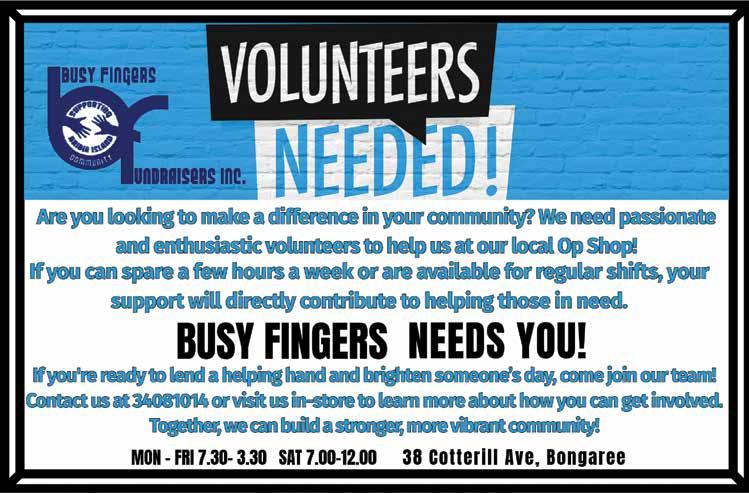
Busy Fingers needs volunteers now. If you can spare even a few hours, step forward, lend a hand and help keep this organisation open for the community that depends on it.
Because sarcasm aside, here is the brutal truth: Busy Fingers cannot run on complaints, gossip or dumped rubbish — it runs on volunteers, and without them, the doors will close.
This is my opinion only, not be reflected towards Busy Fingers,
Cheers, Cherrie Wilson
MELSA Bribie sculptures
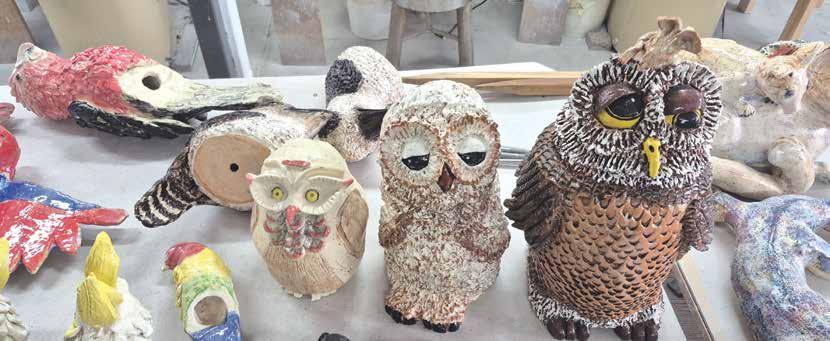
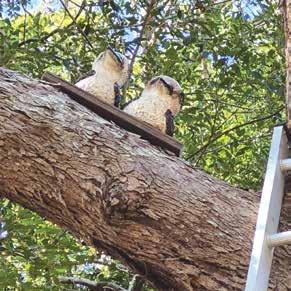
Thesun really shone on MELSA Park the day Sonia, Paty, and the team from Bribie Potters, in a gentle and caring manner, suggested in mid-2025 that our attempts to excite passengers on our trains by placing unusual animal cut-outs from corrugated iron around the track may have missed the mark.
MELSA members thought corrugated iron was pretty good, even when we were no longer sure what animals the shapes represented, but Sonia and the team were gently persuasive.
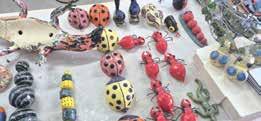
Bribie Potters inspected the trees on our 5 acres of bushland, selected which trees would display which animals, and applied to Busy Fingers for help funding the cost of materials for the project. Shortly after, about 20 artists from Bribie Potters entered production.
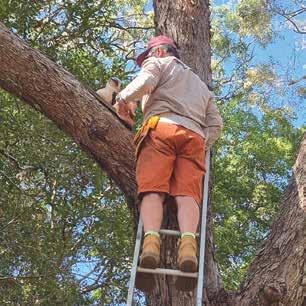
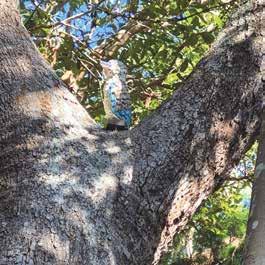
In early November 2025, arrangements were made to mount the 60 or so sculptures, representing 15 different animal groups, on selected trees.
Extension ladders, willing helpers, installation mountings and materials were assembled in preparation for the work to commence at the end of November.
The week before the sculptures were to be installed, the mother of all storms hit Bribie, and most of the trees selected to hold the sculptures were no longer standing. In fact, it wasn’t until late February 2026 that it was safe to walk around MELSA Park.
target of the activity. In this case, it was both the young and not-so-young passengers on our trains who didn’t stop talking about and pointing excitedly at every animal sculpture along the track.
In short, the imagination and skills of the Bribie Potters were a raging success.
Comments such as;
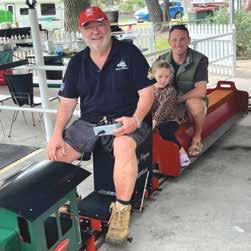
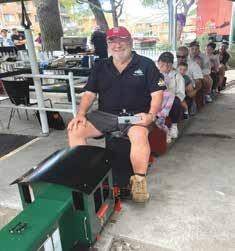
“The lady beetles are beautiful, look at the galah, didn’t know ants grew so big, I love the lizards, can we have a cockatoo like that one… and countless variations meaning the same thing, our passengers, young and old, loved the sculptures.
Don’t simply accept our words of praise for the artistry of Bribie Potters; come down to MELSA Park on the 3rd Sunday of every month, hop on a train and see for yourself.
MELSA Bribie members thank Bribie Potters and Busy Fingers absolutely!
It took that long to remove debris from both the ground and the branches hanging in the trees. Eventually, the Bribie Potters installed the sculptures, and we were surprised by just how good they are.
There are many ways to measure success, or failure, for every activity that we all undertake, but nothing measures success better than instant, unrequested positive comments from those who are the
THE BUSY FINGERS EXPRESS
Busy Fingers Express, in honour of the incredible work the team of volunteers at Busy Fingers undertake to support our community. We had 3 days to prepare the Tender, the wagon used by the driver to control the loco, before our June Public Run Day.
Three of our members completed the task with a dayto spare, It’s usually the children who have smiles as big as watermelons when riding the trains, but it was the members operating the Busy Fingers Express who were beaming from the performance of the new loco.
Our two electric locomotives are aging, with one of them, Neverfail, being overdue for a rebuild, but the demand for locomotives on Public Run Days prevented us from removing the loco from the tracks.
When the major clean-up from the November storm was completed, we asked Busy Fingers for help purchasing a new locomotive so we could undertake the rebuild.
To our enormous relief, Busy Fingers helped us again, and on the 17th of June we took delivery of a 7 ¼” Jumbuck 24-volt locomotive which carries the name
The performance, safety, and remarkable suspension offer the driver nothing short of mini-train luxury. After pulling a fully loaded passenger wagon for 3 hours, it then pulled 2 fully loaded passenger wagons for a further hour.
By the end of the day, the loco had used less than 1/3 of its available power. Next Public Run Day, the Busy Fingers Express will start the day pulling 2 passenger wagons and increase the load throughout the day by pulling 3 wagons.
The loco also has a Sound Card that provides the lifelike sound of a diesel engine starting up and running.
The sound is absolutely realistic to the extent that several passengers commented on the loco’s engine, such as; “What make is the diesel? I didn’t know they made diesel engines so small. The great engine pulled us up the hill without burning oil and belching smoke.”
The members of MELSA Bribie Inc work very hard every Tuesday undertaking maintenance tasks such as ground/garden care, rebuilding tracks, servicing electric and steam locomotives, cleaning, painting and numerous minor tasks but we could not successfully hold Public Run Days, Birthday Runs and numerous community charity events without the significant support from our community such as Busy Fingers, Bribie Island Bowls Club, Bribie Signs, Bribe RSL, Bribie Potters and the Community Plant Nursery.
Come along on the 3rd Sunday of the month and experience our new loco and ride on a steam loco. Bring a picnic lunch or enjoy hot chips and a great sausage sizzle.
Who knows, you might even find an activity at MELSA Park that excites you as much as it excites us.
How to Love Making Music Things My Mother Taught Me
Ididn’t
come from a music-making heritage. My mother couldn’t play the piano, so until we learned to make our own music, our only sources were the radio and a wind-up HMV record player. It had a sound box which could be stuffed with rags to adjust the volume, and it played 10-inch (25cm) Bakelite records at 78rpm, using copper needles which only lasted for 3-4 playings.
Later, when I was a teenager, we acquired a more modern machine which played vinyl records with a diamond needle. Then Mum would buy classical works from the World Record Club, which also released albums from musical shows. We would listen as a family on weekend evenings, as we could not afford a TV set - at least, it was considered unnecessary.
Eventually, I was given a small radio so that I could listen to pop music in my bedroom. Like most parents, mine were not impressed with rock and roll, but I do remember Mum being pleased when I told her one of my favourites was the Platters singing “Smoke Gets in Your Eyes”. She said it was a favourite of hers when she was young!
Mum thought that music was an important part of education, and that to really love it, one needs to learn to make one’s own. My elder sister had piano lessons, but as that was only possible if Mum went out to work, I was too afraid to ask for the violin lessons I wanted.
My Dad was only a motor mechanic, so we didn’t have much money.
So, I started playing the recorder at school in third class and then joined the school band. The recorder, like the 78 records, was made of bakelite, so I was always breaking the bottom end, and held the bits together with sticking plaster. By fifth class, I was good enough to play in the Sydney Eisteddfod and amazed myself by winning second place - a whole guinea (one pound one shilling). Playing well
requires practice, which I enjoyed, especially when it could be used as an excuse to get out of household chores!
I always went to state schools, and while the boys at my school were taught to play the fife for their band, girls were not allowed to join until Jane Rutter’s parents broke the tradition for her (after I had left). I continued playing in high school as there was no orchestra in those days. I was part of ensembles of up to seven players, each with her own part, and I was lucky enough to perform on TV (live in those days). One time, we dressed up in Elizabethan costumes and played at a society soirée, where I met Doc Evatt. I also dressed up in a toga and played on a Waratah Festival float when Cliff Richard was top of the pop scene in 1959.
I rarely pick up my recorder these days because my favourite instrument is my voice. When I was young, I didn’t think I could sing very well, but I did enjoy it when the whole bus load would sing on the way to swimming classes or other excursions. In those days, I was afraid to sing alone. If I put my fingers in the right places, the notes on the recorder would be the right notes, but I couldn’t say the same for my voice!
Nevertheless, I always sang in the school choir and was even chosen for a madrigal group in high school, where I sang madrigals and motets à cappella. Back then, we took part in annual mass choir events at the Sydney Town Hall - always exciting. There were no School Spectaculars, but we still had fun. I continued singing in a choir at university, and this was a pathway to my greatest musical thrill - singing Beethoven at the Sydney Opera House with 800 others in 2019, as part of Chorus Oz.
Wherever I have lived, I’ve found a choir to sing with - or several, as here on Bribie Island. One choral society I joined decided to try its hand at entertaining the community with musical shows, and after a trio and
then a duet, I eventually was given the chance to sing a solo in “Viva Mexico”. Being in a musical is really good fun, especially in rehearsals when mistakes bring laughter. And no one should miss the fun of the after-show party.
My childhood shyness had been overcome by the time I sang solo, but singing alone was always a problem without some form of security blanket, like the guitar that men use to cover their masculinity. Almost every singer has a band to back them. I failed to teach myself the guitar in my late teens, but at age 65, I learned to play the ukulele here at U3A. Now, I enjoy making music four times a week, and even used it to entertain myself in the dark, during the storm last November.
For any reader who claims that not everyone has music in them, I suggest they read some science on the subject. Music and singing probably came before speech. Music is so connected to memory that it enabled people to remember their history before it was written down. Importantly, music will trigger memories in people with Alzheimer’s and bring them joy. But, best of all, performance is a proven way to boost immunity, reduce inflammation, and therefore increase longevity - not just a longer life, but one with less stress and more well-being.
Retirement: The Full-Time Job Nobody Warned Us About
Retirement is sold as the golden age: long lunches, gentle walks, spontaneous travel, and finally enough time to alphabetise the spice rack. That is partly true. It is also a tender, slightly bewildering handover from the life that kept you busy to the life that has been waiting underneath. It brings freedom, yes, but also a demanding new boss: yourself. And yourself can be surprisingly hard to please.
For decades, work gives us structure. Alarms ring, emails arrive, meetings appear, and someone expects us to know where the important document is. Then retirement arrives and the calendar becomes a wide-open field.
At first this feels magnificent. By the third Tuesday, many retirees have scheduled “buy milk” as a major event and are considering whether to dress formally for it.
There is comedy in that, but also sweetness: after years of racing the clock, the clock has finally stopped chasing. There is also the matter of identity. Work gives people a simple answer to “So, what do you do?”
Retirement makes the question oddly philosophical.
“I used to be in logistics,” one might say, before realising the current logistical challenge is getting the recycling bin out on the right night. Some say “I’m retired” with the calm authority of a person who has escaped.
Others add, “But I’m keeping busy,” as though idleness were a crime and the neighbours were taking notes. It takes time to remember that usefulness is not the same as employment. The modern retiree is not so much retired as rebranded. Yesterday they were a manager, teacher, builder, nurse, accountant,
• Keep your retirement plans on track.
• Understand how much you may need in
• See how long your money might last in
care about
• Considering downsizing - Boost your Super
administrator, or the only person who knew how the printer worked.
Today they are “available,” which family members interpret as chauffeur, babysitter, pet sitter, emergency handyman, and unpaid consultant on whether the children deserve another biscuit. To be needed after a lifetime of being useful is exhausting and, on the right day, rather beautiful.
Grandchildren, where present, are another revelation: delightful, expensive, sticky, and terrifyingly confident with technology. A retired grandparent may struggle to find the mute button, while a six-year-old can redesign the television settings in twelve seconds. “Just watching them for an hour” can involve snacks, negotiations, three costume changes, and a plastic dinosaur in the cutlery drawer. Still, there are worse legacies than being remembered as the person
with time, biscuits, and a flexible approach to bedtime. Then there is the great retirement fantasy: travel. Every retiree imagines drifting through Tuscany or cruising down a river with linen shirts and excellent posture. In reality, travel now requires three passwords, two-factor authentication, a boarding pass no printer will print, and a suitcase packed with enough medication to open a small chemist.
Even hobbies arrive with administration. Gardening sounds peaceful until the mulch options resemble international trade negotiations. Fishing promises serenity provided one owns the right rod, bait, hat, and explanation for why the fish are not cooperating.
Golf offers fresh air, friendship, and the chance to lose dignity and small white balls in the same afternoon. But these things give shape to the days without making them feel owned by anyone else. Financial planning adds comedy best enjoyed after checking the retirement savings twice and lying down. Advice often sounds reassuring until it mentions “longevity risk,” a polite way of saying, “Congratulations, you may live long enough to outlast your spreadsheet.” Nothing makes a person feel young like being told their biggest
threat is surviving enthusiastically. Then comes the health phase, which is not illness so much as administration. Appointments become social occasions. Waiting rooms fill with people comparing specialists, parking tips, and the best time to secure a decent chair.
The body, dragged through decades of work, children, mortgages, deadlines, and questionable takeaway choices, begins submitting formal complaints. Knees creak, backs negotiate, and reading glasses appear in every room except the one where they are needed.
Still, retirement has one undeniable advantage over employment: nobody can make you attend a meeting about meetings. A community group, lunch club, fishing trip, or serious discussion about pruning shrubs may still appear, but these gatherings usually have snacks and no performance review.
This is progress. Yet retirement’s comedy is also its charm. A weekday café visit can happen without guilt. Lunch can drift into the afternoon. A nap becomes strategic energy management. Saying “I’ll do it tomorrow” becomes less a desperate postponement and more a lifestyle
philosophy. These are small freedoms, but small freedoms are often the ones people worked hardest to earn.
Retirement is not an ending. It is a strange promotion to a position with no job description. Some people paint, volunteer, renovate, learn an instrument, or simply sit outside with tea, knowing the morning traffic jam now belongs to someone else. After a lifetime of deadlines, it is no small thing to discover that a day can be valuable even when nothing urgent happens.
So let us stop pretending retirement is one long holiday. Holidays have room service. Retirement has bins to put out, passwords to reset, and at least one mysterious container in the freezer that nobody is brave enough to open.
But it also has time: for old friendships, new routines, long phone calls, unfinished books, and errands that become pleasant when nobody is rushing. In the end, retirement may not be freedom from work so much as freedom from proving one’s worth through work. It is the chance to become more available to life itself: family, friends, weather, hobbies, rest, and yes, occasionally the recycling bin. If that is not worth celebrating with a cup of tea in the middle of a weekday, while ignoring a cupboard handle that can wait a little longer, then what is?
The Girls’ Club Helping Confidence Grow, One Brave Step at
a Time
Thereis something quietly powerful about watching a girl realise she does not need to change who she is to belong. She can be shy and still be brave, sensitive and still be strong. At Courageous Girls Club, that belief sits at the centre of everything.
Designed for girls aged 7 to 16, Courageous Girls Club is a warm, uplifting space where confidence, friendship and fun are woven together. It is not school, therapy or another screen-based activity. It is real-life connection through small groups, creative workshops, movement and conversation.
Growing up can be beautiful, but it can also be complicated. Friendships shift, emotions run high, social media adds pressure and school can feel demanding.
Some girls arrive nervous or unsure of where they fit. Others simply need a place to breathe, laugh, connect and feel accepted.
What they find is a club that meets them where they are. It is not about making girls louder or tougher. It is about helping them recognise the courage they already carry and giving them tools to use it in everyday life.
Where Fun Has a Purpose
On the surface, a session might look like girls chatting, creating, moving, playing games or sharing ideas. And that is exactly how it should feel: relaxed, social and enjoyable.
Beneath the laughter is a carefully shaped experience that builds confidence, resilience, emotional awareness, communication and self-belief.
These skills matter when a girl walks into a room and wonders if she is welcome, when friendship feels confusing, or when she needs to speak up for herself. At the club, girls practise them in gentle, age-appropriate ways, without pressure or performance.
That is part of the magic. Girls are not lectured about confidence; they experience it. They are given a space where courage is practised in small moments, and
friendship can grow naturally. In a world where so much of childhood is filtered through screens, Courageous Girls Club feels refreshingly hands-on and human. It gives girls the chance to connect face-to-face, hear “me too” from someone their own age, and discover they are not alone.
Inside the Club
Each session is built around connection. Girls may explore courage, talk through friendship challenges, take part in creative projects, move their bodies, practise mindfulness or use their voices in a safe group setting. The activities are purposeful, but feel natural, playful and welcoming.
For a girl hesitant to join in, a warm greeting can be the first step. For another, sharing an idea aloud might feel like a milestone. For someone navigating friendship worries, hearing that others have felt the same can bring relief.
Over time, the changes can be quietly remarkable. A girl who once stayed on the edges may begin to participate more freely. A girl overwhelmed by friendships may learn new ways to communicate, repair and set boundaries.
The Power of Belonging
Friendship sits at the heart of the club because it sits at the heart of girlhood. The joy of finding your people, the sting of exclusion and the courage it takes to speak honestly are all part of growing up.
Courageous Girls Club gives girls language and support for these experiences.
Here, girls are reminded that kindness does not mean people-pleasing, confidence does not have to be loud, and true belonging never asks them to shrink. They learn to celebrate difference, include others and cheer each other on.
A Place to Start
As Courageous Girls Club grows across Australia, more families are discovering the value of giving girls a dedicated space of their own. Parents are looking for something that helps their daughters feel stronger, happier, more connected and more comfortable in themselves.
For those wondering whether the club is the right fit, the free trial is a gentle way to start. It gives girls the chance to step inside, meet the group and experience the warmth and encouragement for themselves.
She may arrive a little nervous. She may not know anyone yet. But she will be welcomed into a space created to help her feel safe, supported and brave enough to try. Because courage is not always a grand gesture.
Sometimes it is joining the circle, saying hello, sharing an idea, making a friend or believing, even just a little, that you are already enough. At Courageous Girls Club, those small brave steps are celebrated every week. CONTACT 0484 768 748 or visit courageousgirls.club, or find them on Socials for more information.
WINELANDER
Inrecent news about the health of the wine industry it has been revealed that Treasury Estate who currently own around 19 wine brands from around the planet plan to sell or retire 70% of the companies, which will probably see the demise of companies like Seppelt, perhaps Lindeman/Leo Buring, which were founded in the 1800’s.
When I started in 1981 with Kaiser Stuhl we had brand leaders such as Summer Wine, Black Forest Moselle, Gold Medal Rose, which in Australia was the only Rose worldwide to outsell Mateus Rose. Shortly after I started with Kaiser Stuhl, Penfolds who at that time were a division of The Adelaide Steamship Co. bought the business and this was followed several years later by Wynns/ Seaview/ Killawarra, then Seppelt, Lindemans/Leo Buring and Wolf Blass.
Then they became involved with a range of overseas brands including making their own Champagne with an association with an independent Champagne House. In that time before the recent statement Treasury Estate had already retired Kaiser Stuhl, Seaview and several other brands and will move the business more towards premium brands such as Penfolds, Beringer, Wynns, Stags’ Leap and probably Matua, time will tell.
tonnes, this followed a failed sales bid in 2025.
Unfortunately more administrations are expected as the Australian grape and wine sector continues to face ongoing challenges associated with a wine grape oversupply, reduced consumption, increased costs and economic pressures. Added to that The Federal Government have announced the end of the Wine Tourism and Cellar Door Grant program effectively removing $10 million per year from one of the only Federal programs available to the sector.
All this comes at a time when The Endeavour Group which comprises of Dan Murphy’s, BWS, Langton’s the ALH Group and a number of vineyards in Australia and New Zealand are to rationalise the business to restructure its premium wine operations including the review and potential sale of assets such as Oakridge, Joseph Cromy from Tasmania and other vineyard holdings, which has generated strong reactions across the country.
On a sadder note several businesses have gone into liquidation and administration including Temple Bruer and Bellweather Wines, which it appears will not face the same fate as parent company Glen Roy Winemakers Pty. and Riverland’s Winemasters which is one of South Australia’s largest wine businesses with a vintage capacity of 30,000
Both of these companies reflect decisions to improve returns, strengthen focus and allocate capital towards perceived areas of competitive advantage, which It is important to recognise that these are legitimate business decisions. However it should also be recognised that for many years the wine industry was recognised as a very close industry, almost family like, in the past sales representatives of different companies would gather on a Friday afternoon in a bar somewhere, for a friendly drink, Yalumba actually had a premium wine released with the label
Pessimists see the glass half empty however optimists such as myself are already opening another bottle.
- Ernest Hemmingway
recognising a long serving member of staff.
In Western Australia the liquor industry had a club for all the sales representatives that met yearly, which in the beginning was held in
a family home of a representative of Orlando who had built a club house in his back yard from boulders he collected on his country trips and his wife and daughter cooked and served all the nibbles, when he retired the club moved to a room at The Raffles Hotel in Applecross. The membership cost was used to pay for a chauffeur should someone lose their licence, usually for 6 months and in those days it was only for males as there were no women representative, how times have changed!
Winemakers also had a very close existence, which no doubt still exists, but business decisions in an industry like the wine industry can have a huge effect on local communities, towns and villages, I remember carrying out a tasting in Adelaide and almost 100% of the customers who came into the shop that day had a relative in the wine industry and had a lot of knowledge of the wines I was showing.
Unfortunately nowadays it is about the returns and shareholders rather than history and these cost cutting measures that will hopefully mean an increase in the share price and dividend payments, a different world to that of forty years ago, however
Tips for Choosing Wine Glasses
• Start with one good universal glass. If you only want one style, choose a tulip-shaped glass with a medium bowl, slightly tapered rim, and thin lip. This shape works well for most red, white, rosé, and sparkling wines because it gives enough room to swirl while still guiding aromas toward the nose.
• Choose clear, simple glassware. Clear, uncoloured glasses make it easier to judge the wine’s colour, brightness, and clarity. Simple shapes also look timeless on the table and keep the focus on the wine rather than the glass.
• Look for a thin rim and balanced feel. A thin rim feels more refined and lets the wine flow smoothly. The glass should feel stable in the hand, not top-heavy, and comfortable to hold by the stem or base.
• Match bowl size to the wine style. Fuller reds such as Shiraz, Cabernet Sauvignon, and Pinot Noir benefit from larger bowls, which give aromas room to open. Whites, sparkling wines, fortified wines, and dessert wines usually suit smaller bowls that help preserve freshness, bubbles, and intensity.
• Use a dedicated port glass. Port is rich, sweet, and higher in alcohol, so it is best served in a small tulip-shaped glass with a narrow rim. This concentrates the aroma, keeps the serving size modest, and prevents the alcohol from dominating the experience.
the current state of the industry also opens the door for keeping the costs of many wines down and many premium wines affordable to everyone.
At the time of writing Liquorland here on the Island seem to have some outstanding buys especially for those who enjoy red wines, Tintara Cabernet Sauvignon, Tintara Shiraz and Tintara Grenache Shiraz are all half price at $15 a bottle, Chateau Tanunda Grand Barossa Shiraz and Grand Barossa Cabernet $20 instead of $27, and for those who enjoy a fortified wine McWilliams Hanwood Tawny at $25.
Cheers, Philip Arlidge arlidge@bigpond.com.au
Philip Arlidge
As I ate the oysters with their strong taste of the sea and faint metallic taste that the cold white wine washed away, leaving only the sea taste and succulent texture, and as I drank the cold liquid from each shell and washed it down with the crisp white wine I lost the empty feeling and began to be happy again and to make plans.
• Buy for the occasion. For everyday use or frequent entertaining, choose durable glassware that is easy to replace. For formal dinners, celebrations, or gifts, finer glass or crystal can feel more elegant and make the occasion feel special.
• Choose matched sets for special events. Sets of 6 or 8 create a polished, consistent table setting and are practical for dinners, birthdays, anniversaries, and holiday meals. If you host larger groups, consider buying two matching sets.
• Buy a few extras. Having more glasses than the exact guest count allows for unexpected guests, accidents, or breakage. Extras are especially useful if the design might be discontinued later.
• Think about storage and use. Before buying, check that the glasses fit your cabinet, dishwasher, or serving area. Avoid glasses that are so tall, fragile, or awkward that you will hesitate to use them.
STEAKOUT PIZZERIA
For delicious pizza, pasta, contorni salads and more, all crafted with love, come and enjoy our waterfront pizzeria. With live music every Sunday and the beautiful Pumicestone Passage right beside you, we offer you a taste you’ll love For deliveries or bookings, please visit us at www.steakoutpizzeria.au
9/11 Spinnaker Drive, Sandstone Point - 07 5360 1094
LUNCH Thu to Sun 11:30 - 2:30
DINNER Tue to Sun 4:30 - 8:30
THE DECK RESTAURANT
With its spacious, relaxed ambiance, The Deck Restaurant offers casual dining indoors or alfresco on the deck overlooking the golf course, lake and lush gardens. Enjoy modern cuisine with locally sourced ingredients, open 7 days a week for breakfast and lunch, and dinner on Friday and Saturdays. Perfect for any occasion!
Experience classics you’ll love and the new favourites you'll crave!
LUNCH: 12PM - 2PM
DINNER: 5PM - 8PM
OPEN 7 DAYS NOW OPEN SUNDAY 8AM - 11AM FOR BREAKFAST Call our restaurant on 07 3408 1018 to book Bribie Island Bowls Club 11-23 Welsby Parade, Bongaree 4507
Let the Kids Cook, They Said
Where confidence meets batter, and common sense goes missing
Thereare plenty of good reasons to teach kids to cook. It builds confidence, teaches them a handy life skill, and might one day stop them standing in front of the fridge saying, “There’s nothing to eat,” while staring directly at half a roast chook, three yoghurts and enough fruit and vegies to stock the local IGA. Tremendous.
Can syrup be applied with both hands and one elbow? Can an egg be cracked using only enthusiasm and the bench? Can a pancake be flipped so high it briefly joins the ceiling fan? Big questions. Brave questions. Questions nobody wants to deal with before coffee. Or ever to be honest.
Then the smoke alarm cracks it, because apparently breakfast now requires a referee. It screams. The dog loses the plot. Someone yells, “It’s meant to be that colour!” while flapping a tea towel like they are signalling a rescue chopper. The toast, meanwhile, has gone past crunchy and entered bushfire awareness week. Stunning work, team.
Now, before anyone writes in, this is not a call to ban children from kitchens. Calm down, Carol, nobody is coming for your family bonding moment. Kids should absolutely learn to cook. Let them stir. Let them measure.
Put it on a parenting brochure. But leaving kids to cook unattended? Mate. No. That is not parenting. That is handing fate a whisk, giving chaos a little apron, and saying, “Off you go, champion.”
A kitchen is basically a suburban obstacle course with snacks and consequences. There are hot things, sharp things, slippery things, noisy things, and that one drawer full of gadgets nobody understands but everyone is too emotionally attached to bin. Adults see a saucepan.
Kids see a helmet, a drum, or a bowl of batter begging to become finger paint for the cupboards. Naturally, this is where some parental bright spark says, “You’ll be right,” because apparently common sense has popped out for milk.
The first warning sign is silence. Not peaceful silence. Not “the kids are quietly reading” silence. Oh, please. The other kind. The kind that means someone has found the flour and decided the kitchen needs a light dusting, like it is entering a country show baking competition and wants Best in Mess.
Add a frying pan to that silence and you do not have lunch. You have an episode of Disaster Kitchen, proudly brought to you by blind optimism, poor supervision, and someone who thought five minutes on the couch was harmless.
The unsupervised child does not “make pancakes.” Bless your optimistic little cotton socks. The unsupervised child launches a food-science spectacular with the confidence of a learner driver reversing a trailer at Bunnings while everyone pretends not to watch. Can batter bounce?
Let them discover that “a pinch of salt” does not mean “season it like the Pacific Ocean has popped round for tea.” Just keep an adult nearby, preferably one who can tell the difference between “golden brown” and “everyone grabs a wet towel.” Bare minimum stuff, really, but here we are.
The meal itself might survive. With enough tomato sauce, most things can be negotiated, which is why tomato sauce remains the unofficial glue holding this nation together. But the aftermath is where the real theatre begins: flour in the fruit bowl, egg on the jug, a spoon in the toaster, and one proud child holding up a pancake so thick and lumpy you could plaster a wall with it.
So yes, teach your kids to cook. Hand them the whisk. Let them crack eggs, stir sauces and learn that dishes do not wash themselves just because everyone “forgot.” Revolutionary concept, I know.
But do not wander off for a cuppa and hope for the best. A supervised child might make dinner; an unsupervised child might make smoke, folklore, or a plate of something grey delivered with the devastating words, “You have to try it, Mum. I made it just for you.”
In the great Aussie kitchen comedy, supervision is not spoiling the fun. It is keeping the firies away, the insurance bloke bored, and the local mums’ group from forming a committee. Call it “mindful risk-managed culinary exploration” if you must. Back in the day, it was just called keeping an eye on the kids before they set fire to breakfast.
At Vietnam Park, Bribie Island Will Pause With Gratitude, Sorrow and Pride
On18 August, Vietnam Veterans Day, Bribie Island will pause at Vietnam Park, Toorbul Street, Bongaree, to remember Australians who were sent to a war that changed lives, families and communities forever.
The service will be more than a ceremony. It will be a moment of stillness, a public act of gratitude, and a chance to stand beside those who carried the weight of Vietnam long after the guns fell silent.
Vietnam Veterans Day, marked each year on 18 August, carries a heavy history. It falls on the anniversary of the Battle of Long Tan in 1966 and honours almost 60,000 Australians who served in Vietnam. More than 500 Australians died as a result of that service.
Many more returned home wounded in body, burdened in mind, or changed in ways that could not easily be seen. For too many, the homecoming they deserved was replaced by silence, confusion or rejection.
That is why the service at Vietnam Park matters so deeply. It gives a community the chance to say what should have been said clearly decades ago: your service mattered, your sacrifice mattered, and you were never forgotten.
When families, veterans, neigh-bours and younger generations gather together, remembrance becomes more than words. It becomes a promise that the pain of the past will be met with respect, compassion and truth.
Bribie Island has long understood the value of service and mateship. Its veteran community, supported by the local RSL Sub Branch and dedicated volunteers, knows that remembrance must reach beyond the laying of wreaths.
It must be found in the welfare call, the quiet conversation, the hand on a shoulder, and the reassurance that those who served are still held close by the community they helped protect.
For those who attend, the service will invite reflection not only on war, but on the people who endured it. They were regular personnel, national servicemen, sailors, soldiers, airmen, nurses and support staff.
Names on memorials are not simply names. They represent lives interrupted, families changed, friendships tested, and courage shown in circumstances most of us can only imagine.
On Bribie Island, where community spirit is strong, Vietnam Veterans Day should stir more than memory. It should stir gratitude. It should stir care. It should remind us that veterans and their families deserve support not just on commemorative days, but every day.
The service at Vietnam Park, Toorbul Street, Bongaree, is both a tribute and a call to conscience: to remember honestly, to speak kindly, and to ensure that no veteran feels alone.
VIETNAM VETERANS DAY SERVICE
They were sons, brothers, husbands, fathers, mates and neighbours. They answered a call placed upon them, and many paid a price that continued long after they returned to Australian soil.
Younger residents of Bribie Island also have a place in this act of remembrance. They may not have lived through the years of Vietnam, but they inherit the responsibility to listen, to learn and to carry the stories forward.
Tuesday, 18 th of August commencing at 4.30pm We welcome the community to share this special
JOIN in the CROQUET COMMUNITY CHALLENGE
SATURDAY 1st AUGUST
Areyou wanting something stimulating and fun to do? Then why not give croquet a try. It is good exercise for both mind and body but is not physically strenuous. It is tactically challenging and most importantly, it is FUN.
The Bribie Island Croquet Club is inviting any interested persons to come along to a Come and Try session from 9.30am to 11am on Saturday August 1.
All equipment is provided and qualified coaches will be available to take you through the basics of the game. Morning tea and a sausage sizzle are available for a modest fee. There will also be raffles and prizes available.
It is a great chance to meet new people and get involved in a wonderful outdoor activity. Our club has 77 members ranging in age from their 40s to 90s and caters for those who want to play in competitions as well as those who just want to enjoy having a hit with friends.
We are a social lot and love to see new members joining in. Just make sure you wear covered shoes and bring a hat. After the Come and Try you can stay on & watch the
annual Community Challenge in which teams from other service and sports clubs play a modified version of the game and compete for the Community Challenge Cup.
Perfect opportunity to sit and enjoy a Devonshire tea or a BBQ sausage and have a few laughs. Or you may like to put a team together yourselves and have a go. The entry fee is $30 for a team of 2 or 4 players.
This is all part of our Community Fund Raiser Day which the Croquet Club holds each year and donates proceeds to a local community organisation.
This year all proceeds will be donated to the Bribie Island Neighbourhood House Emergency Relief Service.
So come along, have some fun, meet some new people & discover a new pastime which you will love.
CHANGE OF DATE - 24 Jul 2026 – Happy Hour @ Coungeau House 4pm
18 Aug 2026 – Vietnam Veterans’ Day @ Coungeau House 5pm
20 Sep 2026 – Modern Veterans Day, Woorim 11am
29 Sep – 01 Oct 2026 – Carnival of Flowers Toowoomba
JOIN US
Membership is open to all current serving and ex-serving ADF members, their spouse, and family members. Email veteransbribie@gmail.com for further information
Bribie Arts Centre Matthew Flinders Art Prize 2026
Matthew Flinders Art Prize 2026 judges John Massy and Ronelle Reid examined more than 200 entries in the exhibition/competition this year to arrive at the winners.
Who’d want their job?
So much talent and quality to choose from.
The successful works are named and prizes presented at the MFAP opening event on Friday night, July 17. And you can see these on Saturday July 18 and until August 7 in the Matthew Flinders Gallery at Bribie Island Community Arts Centre. John and Ronelle will give a Gallery floor talk on Saturday from 9.30am.
Meet
Christine Leonard author of Coochiemudlo: A Mariner’s Mystery
Artists are welcome to attend and discover the reason behind their choices and they can also ask the judges for an assessment of their work/s.
The MFAP action continues through the exhibition run. Artists will demonstrate their creative techniques in the Gallery each day, you can vote in the People’s Choice , which will be decided and announced on August 1, and the MFAP raffle of lovely art works is on sale until August 7.
On Sunday, July 26, at 11am, you can join an Artists’ Discussion Group in the Gallery. Numbers are limited, so booking essential on 3408 9288 please.
As we celebrate our annual signature event, the Matthew Flinders Art Prize, we’re delighted to bring you a captivating story that ties this namesake explorer to another island in Moreton Bay.
Christine Leonard’s fascinating book, filled with drama, hilarity and colourful characters, links directly to Matthew Flinders’ 1799 voyage around Moreton Bay. The modern-day identity of Flinders’ Sixth Island was a mystery until Coochie resident Edward Field Jones set out to solve it.
10am Saturday, July 25 Boardroom
Bribie Island Community Arts Centre
On the subject of Matthew Flinders, author Chrisine Leonard, from Coochiemudlo Island, has written a fascinating story of his discovery and naming of Moreton Bay islands in 1799.
Flinders’ journey up Pumicestone Passage and landng on Bribie Island has been well documented.
Indeed, it’s to commemorate this in July each year, the Bribie Community Arts Society hold his namesake event in his namesake galley.
In her latest book, “Coochiemudle: A Mariner’s Mystery’’, Christine has
plotted the story of his landing on Coochiemudlo and the hilarious and fascinating tale of local resident Edward Field’s role in confirming it was Flinders’ unnamed “ Sixth island’’
Meet Christine and hear her wonderful story at the Bribie Arts Centre on Saturday July 25 at 10am. Books will be available for sale.
FREE event, but please book online here https://www. bribieartscentre.com.au/copy-ofwhats-on or at the Centre, on 3408 9288
Bribie Arts Centre and Lions Club join forces to reduce waste
Take it to the Repair Cafe Toss it? - No Way
Bribie Island Community Arts Centre plan a REPAIR CAFE on their precinct at Sunderland Drive, Banksia Beach.
Following an enthusiastic turnout at a recent planning meeting there, project coordinator Alana Wahl (left) is confident Bribie is ripe for this activity. Repair Cafes began in the Netherlands in 2009.
People bring repairable items to be fixed by volunteer mendersnot thrown away.
It’s a worldwide trend, part of a grassroots movement that aims to reduce waste, overconsumption, and planned obsolescence.
Menders give their time and knowledge to fix a broken item. People can learn about caring for and maintaining things and maybe even learn some tips themselves.
It can reignite the "do-it-together" and "do-it-yourself" spirit, and reinforce social cohesion. Save the environment, save dollars and get connected with your community.
In association with the Lions Club of Bribie Island, the Repair Cafe will recruit volunteer menders who will attend once a month to work on items people bring for assessment and hopefully fix.
These can be clothing, furniture, textiles, toys, household goods, electrical and mechanical items and other.
Going by the roomful of eager menders at the meeting, retired and current handymen and fix-it people, there’s no shortage of skills and knowhow on and near the island.
Some who attended have been part of a Repair Cafe in
Brisbane and Maleny. They offered tips on how they’ve run at optimum success. Alana said the Cafe might start slowly and build as the people and activity widens, according to demand.
Lions Bribie Island president Leonie Trubshoe (right) said the club was delighted to be in a joint venture with BICAS for such a valuable community pastime.
It not only offered a means of reducing waste and saving landfill, but encouraged a sharing of skills and new opportunities for friendship and learning, she said.
Experienced repair personnel spoke at the meeting of the amazing back stories they learnt about items brought to them. One of the more unusual repairs involved a baby animal incubator.
The most satisfying was related by Paul, formerly of Brisbane Bayside Repair Cafe, who fixed a child’s electric car, where the mother had never been able to get it going.
“The look on the little boy’s and mother’s faces as he drove out in it was priceless,’’ he said.
The Bribie Repair Cafe will begin at the Arts Centre in August, once guidelines and processes have been finalised. If you’d like to join the mending crew or you have something you’d like to see repaired, contact Alana on alanawahl@gmail.com
ON BRIBIE
MONDAY
EUCHRE
Bribie Bowls Club 12.00pm
Contact Annette on 0414622490 TRIVA
Bribie Island Hotel 6.30pm
Bribie Island R.S.L 7.00pm
TUESDAY
BINGO
Bribie Island R.S.L 10.00am POKER
Bribie Island Hotel 6.30pm
WEDNESDAY
MUSIC BINGO
Bribie Island Hotel 6.30pm
Bribie Island R.S.L 7.00pm RAFFLES
Solander Lakes Bowls Club - 6.30pm (tickets on sale from 5:30pm)
THURSDAY BINGO
Bribie Island R.S.L 7.30pm RAFFLES
Bribie Island R.S.L Fishing Club 4.30pm
Every Thursday at the RSL prizes are Meat Vouchers from Avondale Meats and Seafood Vouchers from Saviges.
FRIDAY
MEAT TRAY RAFFLES
Bribie Island Bowls Club 4.30pm
Bribie Island Golf Club 5.30
Blue Pacific Hotel (from) 3.00pm
Solander Lakes Bowls Club - 6.30pm (tickets on sale from 5:30pm)
Enjoy playing 500 Cards?
Join a like-minded group who meet on Monday afternoons at the RSL Anzac Room from 12.45pm-3.45pm. $5 which includes raffle prize.
Please arrive 10mins before play starts at 12.45pm
Further information please ring Carole 0438 713 663
Beachmere District Community
The B.D.M.S. Community Markets are held at the Men's Shed 53 Rogers Street Beachmere, every 1st Saturday of the month 7.30am - 12pm
Bribie Island BIDCA Markets
The Bribie Island BICA Markets are held at Brennan Park, Bongaree, the 3rd Sunday of each month from 6am -12pm Bribie Rotary Markets
The Rotary Markets are held at Brennan Park, Bongaree on the second Sunday of each month from 6.30am – 12 noon
Queensland Cancer Council
The Cancer Council Markets are held at Brennan Park, Bongaree on the first Sunday of each month from 7am to 12 noon.
LUNCH MARKETS - Sylvan Beach (Farmers Market)
First Saturday of each month from 8am to 1pm held in the park opposite the Bribie Island Hotel. Funds raised to E.P.C.S, Ass, 0417629957
The Bribie Island Lions Market
2nd Sat of the month at Tintookie Park Woorim 7am - 1pm.
Bribie Woodcrafters & Bribie Island Gem Club
Open day, Demonstrations & Sales - last Sunday of each month
8am to 12noon Held at Bribie Art Centre 191 Sunderland Dr, Banksia Beach
Mystic Journey Markets change of location
Saturday November 15th ~ 9am ~ 2pm
Saturday December 6th ~ 9am ~ 2 pm Saturday December 20th ~ 9am ~ 2m 4pm ~ 8pm
There is also an outdoor market to run alongside indoor market called This ‘n’ That
Guardian quick cryptic crossword
Crosswords
(7) created supporting for the dock material a bit stiff? son going linnet coming identity (9) ennui,
CRYPTIC SOLUTION
Down
- QUICK & CRYPTIC
1 Starts to lament obtaining cheap key for security feature (4)
Across
3 Balance of finances following shock event tumbled, initially (6)
1 Large supporting structure for tree (5)
2 Had care altered – absurd behaviour (7)
1 Starts to lament obtaining cheap key for security feature (4)
7 Studied the colour of blood, reportedly (4)
3 Balance of finances following shock event tumbled, initially (6)
8 It’s said French cheeses can give one wind (6)
7 Studied the colour of blood, reportedly (4)
10 Try rubbish approach for medical emergency (5,6)
12 Time to throw out the German, an enthralling speaker (11)
Down
4 Conifer getting serious treatment for damage (5,3)
1 Large supporting structure for tree (5)
5 Notice body of water’s sound (3)
6 Change the world economy after Kremlin’s overtures (5)
8 It’s said French cheeses can give one wind (6)
Clues begin or end with a definition of the answer. The rest is one of these: Anagram Anagram of answer and hint that there’s an anagram
2 Had care altered – absurd behaviour (7)
9 Eccentric still on a horse (8)
4 Conifer getting serious treatment for damage (5,3)
11 Appallingly, ban demo in corporation? (7)
5 Notice body of water’s sound (3)
‘Senator arranged crime (7)’ gives TREASON Charade Combination of synonyms/abbrevs ‘Qualify to get drink for ID (8)’ gives PASSPORT (pass + port)
10 Try rubbish approach for medical emergency (5,6)
14 Leave with a porky footballer (6)
12 Time to throw out the German, an enthralling speaker (11)
12 Groans’ magnitude picked up (5)
6 Change the world economy after Kremlin’s overtures (5)
13 Brief change of timer (5)
9 Eccentric still on a horse (8)
16 Religious figure in many Arabian mosques, primarily (4)
14 Leave with a porky footballer (6)
15 Become sick from beer in audition (3)
16 Religious figure in many Arabian mosques, primarily (4)
17 Refraining from speech, listen out (6)
17 Refraining from speech, listen out (6)
18 Announced ‘You idiot!’ in subdivision of army, perhaps (4)
18 Announced ‘You idiot!’ in subdivision of army, perhaps (4)
CRYPTIC
Across
1 Detectives so worried about a former data-storage platform (13)
10 Set of wooden bars cut between axes and whetstone (9)
11 Stout or beer seen regularly (5)
12 Cat bound to scratch head (5)
13 Elaborate cycling honour and ring cyclist maybe accepts (9)
14 Hesitant setter would back lines on article (7)
16 Energetic daughter splitting (7)
18 Confound what could be seen as negative? (7)
20 Peeling away front, disclose broken bone (7)
21 Very famous cricket side totally gutted, eleven runs in 24 hours (9)
23 Summons Pope intermittently filled out? (5)
24 Literary genre evident in podcaster’s Athenian letters (3-2)
25 Naughty kid is turning into fool, collapsing inwards (9)
26 In one sense, food flipped in hot fat remains revolutionary number one (5,1,7)
SOLUTIONS
11 Appallingly, ban demo in corporation? (7)
Soundalike Something that sounds like answer ‘Excited, Oscar’s announced (4)’ gives WILD Acrostic First letters of answer
12 Groans’ magnitude picked up (5)
‘Initially get a good joke (3)’ gives GAG
13 Brief change of timer (5)
15 Become sick from beer in audition (3)
Down
2 Harpo pitches books around north London borough (9)
3 Some steeplejack’s climbing record (5)
4 I’m here to host two kings separately for cuisine (7)
5 Fostering environment created by dame and duke supporting diocese (7)
6 Chiefly moot ‘science’, for the most part blurry? (9)
7 With time, perhaps dock material (5)
8 Shoe tongue, one that’s a bit stiff? (6,7)
9 Poor girl almost regrets son going back (13)
15 Fragrant plant, say, a linnet damaged (9)
17 Having ditched ‘Mike’, coming into new assumed identity (9)
19 Dispelling onset of ennui, inspires rising energy (7)
20 Half of African country welcomes retiring setter’s large source of games? (7)
22 Composer lowering final note causes trouble (5)
23 Dog muck held up by child (5)
QUICK SOLUTION
Kid Zon
SPOT THE 10 DIFFERENCES
Sudoku
MINI
The Remarkable John F Kennedy
By Al Finegan
In1988, my family and I spent the year working on Guadalcanal in the Solomon Islands at the very spot that the Americans had landed in 1942. During our year on Guadalcanal, we often visited old battle sites where rusting tanks, landing craft and ammunition dumps were slowly disappearing beneath the jungle. The war was never far away. Local villagers could still point to places where Americans and Japanese had fought. Among those stories, none seemed to capture the imagination more than the tale of the young PT boat commander who would one day become President of the United States. His name was John Fitzgerald Kennedy.
For my generation, Kennedy was more than just the President of the United States. He represented youth, energy and optimism in a world still recovering from the devastation of World War II. His speeches inspired millions. His assassination in Dallas on 22 November 1963 shocked the world and remains one of the defining moments of the twentieth century.
Yet long before he occupied the White House, Kennedy's life almost ended in a remote stretch of ocean thousands of kilometres from America. The future president came within a whisker of disappearing forever in the waters around the Solomon Islands during World War II. Kennedy's wartime ordeal had become a proud chapter in the history of the Solomon Islands. It is an extraordinary tale.
John Kennedy was born in 1917 into a wealthy and influential American family. His father, Joseph Kennedy, was a millionaire businessman and diplomat. The family enjoyed privileges most people could only dream about. Yet Kennedy was never particularly robust. Throughout his life, he suffered from recurring illnesses and chronic back problems. Few people looking at the thin young man would have predicted he would become a war hero. When the United States entered World War II after the Japanese attack on Pearl
The Pacific War was raging across a vast ocean stretching from Australia to Hawaii. Japanese forces had swept south through Southeast Asia and into the islands north of Australia. By 1942, the Japanese threat seemed very real indeed. Australians remember the battles of the Coral Sea, Milne Bay, Kokoda and Guadalcanal. These were desperate struggles that helped halt Japan's advance toward Australia. It was into this dangerous environment that Lieutenant John F. Kennedy found himself posted. He was appointed as the commander of a small patrol torpedo boat known simply as PT-109.
PT boats were remarkable little craft. Only about 24 metres long, they were constructed largely from timber and carried powerful engines that allowed them to race across the water at speeds exceeding 40 knots. Their job was hazardous. Operating mainly at night, they hunted Japanese shipping, delivered supplies, and conducted reconnaissance missions near enemy- held islands.
The crews lived with constant danger. They could be fired on by Japanese destroyers, aircraft and shore batteries with little warning. Life aboard PT-109 was hot, cramped and exhausting. Yet Kennedy quickly earned the respect of his crew.
During the summer of 1943, American forces were fighting to push Japanese troops north through the Solomon Islands chain. Night after night, PT boats patrolled the waters between the islands. Then disaster struck. Shortly after 2am on 2 August 1943, PT-109 was operating near New Georgia in the Solomon Islands. The night was exceptionally dark. Without warning, a Japanese destroyer, the Amagiri, emerged from the darkness at high speed. The destroyer was
travelling so fast that Kennedy and his crew had almost no time to react. The steel warship smashed directly into the wooden PT boat. The impact was catastrophic. PT-109 was virtually cut in half. Aviation fuel exploded. Burning fuel spread across the water. Two crewmen were killed instantly. The remaining eleven men found themselves thrown into the sea amid wreckage, flames and darkness.
The survivors clung desperately to the remains of the shattered boat. As dawn approached, it became obvious that rescue was unlikely. Japanese forces controlled many nearby islands, and enemy patrols were active throughout the area.
Kennedy made a decision. The crew would swim for land. Kennedy could just see the tops of coconut trees several kilometres away. One crew member, Patrick McMahon, had suffered severe burns and was barely able to move. Kennedy took hold of the strap of McMahon's life jacket and towed him through the water. The rest of the surviving crew swam closely behind.
For hours, they swam while Kennedy pulled the injured sailor behind him. The tropical sun beat down relentlessly. Sharks were known to inhabit the area. The men were exhausted, dehydrated and uncertain whether they would survive. Eventually, they reached the tiny uninhabited island. Today, that island is known as Kennedy Island. Reaching land was only the beginning of their struggle. The crew were now stranded in enemy-controlled territory,
Harbour in December 1941, Kennedy joined the United States Navy. Despite his health issues, he was determined to serve.
with no food or water. Kennedy Island was tiny and uninhabited, offering very little, including no reliable source of fresh water. The men were exhausted, many were injured, and all were suffering from dehydration after hours in the sea. But there were green coconuts, which contain coconut water. This provided some hydration and helped keep the men alive. However, coconut water alone was not enough for a group of hungry and dehydrated sailors.
For several days, Kennedy repeatedly swam kilometres through dangerous waters into surrounding channels and islets seeking food and water. After exploring nearby sandy cays, he eventually moved the crew to another island where he had found a small supply of fresh water. This greatly improved their chances of survival. Japanese patrols operated throughout the area, and the Americans knew that discovery could mean capture or death.
Unknown to the stranded sailors, help was closer than they realised. Throughout the Solomon Islands, the Allies had established a remarkable intelligence network. Hidden among remote islands were Australian Coastwatchers who reported Japanese ship and aircraft movements by radio. Their work was so valuable that Admiral William Halsey famously remarked that “The Coastwatchers had saved Guadalcanal and Guadalcanal had saved the Pacific.”
An Australian Coastwatcher, Sub-Lt Arthur Reginald Evans, observed the explosion of the PT-109 when it was rammed by a Japanese destroyer. Despite US Navy crews giving up the downed crew as a complete loss, Evans dispatched Solomon Islander scouts Biuku Gasa and Eroni Kumana in a dugout canoe to search for survivors. After searching for five days, the two scouts found Kennedy and his crew. Lacking paper, Kennedy scratched a simple message on a coconut describing the plight and position of his crew: "NAURO ISL COMMANDER. NATIVE KNOWS POS'IT. HE CAN PILOT. 11 ALIVE. NEED SMALL BOAT. KENNEDY"
The words were brief, but they contained everything the rescuers needed to know. The coconut was handed to Gasa and Kumana.
Then began another remarkable journey.
The two islanders set off in their canoe, paddling through waters where Japanese patrol boats and soldiers were known to operate. The Japanese were notorious for using the locals as "target practice". Had they been caught helping Allied personnel, they would almost certainly have been executed. After travelling between islands, they eventually reached Reg Evans and delivered Kennedy's unusual message. Evans immediately recognised its significance. Within hours, he was transmitting the details by radio through Allied channels. Rescue plans were quickly organised and arrangements made for a PT boat to retrieve the survivors. Several nights later, under cover of darkness, rescue boats approached the island
and brought Kennedy and his men to safety. Remarkably, all eleven survivors eventually returned safely to Allied lines. The future President of the United States owed his life not only to his own courage and determination, but also to two Solomon Islanders in a canoe and an Australian Coastwatcher hidden deep within enemy territory. 20 years later, he welcomed Evans to the White House.
The coconut itself survived the war. Kennedy treasured it for the rest of his life and later displayed it on his desk in the White House. It became one of the most famous artefacts associated with his life. It still remains one of the most unusual and famous messages ever sent in wartime history.
In 1988, I visited the Coastwatchers Memorial Lighthouse at Kalibobo Point, Madang Harbour, to commemorate the Coastwatchers' rescue of JFK. Among the names were two men remembered alongside Kennedy's own story - Biuku Gasa and Eroni Kumana.
Kennedy never considered himself a hero. When asked about his wartime exploits years later, he reportedly joked, "It was involuntary. They sank my boat."
Yet the Navy awarded him the Navy and Marine Corps Medal for his leadership and courage.
The PT-109 story became widely known after the war and helped establish Kennedy's public reputation. Americans admired courage under pressure, and Kennedy's wartime record demonstrated precisely that. More importantly, it revealed qualities that would later define his political career - determination, resilience and an ability to inspire others during difficult circumstances.
Following the war, Kennedy entered politics. He served in Congress and later became a United States Senator.
In 1960, he ran for President against Vice President Richard Nixon. At just 43 years of age, Kennedy became the youngest elected President in American history. His presidency coincided with one of the most dangerous periods of the Cold War. The Berlin Crisis, the construction of the Berlin Wall, the Space Race and the Cuban Missile Crisis all occurred during his brief time in office. Kennedy's speeches remain among the most quoted in modern history. He challenged Americans to aim higher. His call to land a man on the Moon inspired a generation of scientists and engineers. His inaugural address contained words that still resonate more than sixty years later: "Ask not what your country can do for you—ask what you can do for your country."
Whether one agreed with his politics or not, Kennedy possessed a remarkable ability to communicate hope and optimism. He seemed to embody the belief that the future could be better than the past.
On 22 November 1963, Kennedy travelled to Dallas, Texas. As his motorcade passed through the city, shots rang out. The President was mortally wounded. I can still remember the sense of shock that spread around the world. Kennedy had seemed young, energetic and almost larger than life. The idea that a President could be murdered in broad daylight appeared unbelievable. Yet within hours, the television images from Dallas were being broadcast around the globe. For many older readers, the memory remains vivid even today. The image of Kennedy's funeral procession, the riderless horse and the young John Kennedy Jr saluting his father's coffin became enduring symbols of a nation in mourning. He was only 46 years old.
Whenever I think about Kennedy, my mind returns not to Washington or Dallas, but to the Solomon Islands. I remember standing on Guadalcanal and reflecting on the events that unfolded across those tropical waters during World War II, and their tale of a young American officer whose boat was destroyed in the darkness.
Had PT-109 not been struck by the Japanese destroyer that night, history might have unfolded very differently. Had Kennedy and his crew not survived, America would never have had President John F Kennedy. The Cuban Missile Crisis may have been handled by someone else. The race to the Moon may have followed a different path. The twentieth century itself might have taken a different course.
History often turns on the smallest of moments.
Sometimes it turns on a piece of coconut shell that brave islanders have carried through enemy waters. And sometimes it turns on the courage of a young naval officer who simply refused to give up.
SPORTS PAGES
BRIBIE ISLAND BOWLS CLUB
Self-Select Pairs Results Friday AM 26 June 2026
Winners: S Chandler, B Snare
Runners up: D Cherry, N Bolton
Winning draw: P Nelsson, T O’Laughlin
Winning draw: T Comacchio, L Comacchio
Encouragement: G Marter, B Tomkins
Self-Select Pairs Results Friday PM 26 June 2026
Winners: R Black, C Smith
Runners up: K Burdon, J Mercer
Winning draw: A Wells, M O’Neill
Winning draw: M Beutell, B Hosie
Winning draw: B Castle, A Feichter, D Bowers
Encouragement: T Paekau, G Paekau
Random Fours Results Saturday 27 June 2026
Winners: D Draper, R Follett, J Laidlaw, R Warwick
Runners up: B Castle, G Horne, R Cross
Lucky draw: P Phillips, G Hutchison, T Hudson, L McNamara
Scrounger Results Monday 29 June 2026
1st: G Coleman
2nd: P Hamersley
3rd: S Soens
4th: J Flavey
Self-Select Triples Results
Tuesday 30 June 2026
Winners: G Coleman, K Lew
Runners up: D James, F Bingham, B Williamson
Winning draw: T Phillips, G Hutchison, C Brayley
Winning draw: S Horn, J Warwick, W Baker
Winning draw: D Davis, F Grimsey, G Olsen
Encouragement: B Thirwell, G Pincott, M Hansen
Self-Select Pairs Results
Wednesday AM 1 July 2026
Winners: T O’Loughlin, P Nelson
Runners up: J Brazier, M James
Winning draw: L Murphy, J Oliver
Encouragement: R Stuart, B Stuart
Self-Select Pairs Results
Wednesday PM 1 July 2026
Winners: K Ford, A Legosz
Runners up: D Dodd, J Mercer
Winning draw: A Gordon, B Sellars
Winning draw: W McDougall, D McDougall
Winning draw: M Cullinan, W Gilbert
Encouragement: C Kelly, P Mann
Random Triples Results Thursday 2 July 2026
Winners: P Cook, T Phillips, M Gaggiano
Winners: C Christiansen, G Flint, M Adams
Runners up: B Kelly, D Bishop, C Draper
Runners up: D Draper, K Mulpeter, G Gawron
Winning draw: D Neumann, L Williams, G Horn
Winning draw: K Muller, M Cole, M Ball
Encouragement: K Brown, J Adams, E Polloni
Self-Select Pairs Results Friday
AM 3 July 2026
Winners: M Brenner, L Tait
Runners up: J Bartel, R Bartel
Winning draw: S Gaunt, G Gaunt
Winning draw: S Hose, C Monk
Encouragement: G McEniery, D Dodd
Self-Select Pairs Results Friday PM 3 July 2026
Winners: J Oliver, W McKillop
Runners up: K Thornton, B Ferguson
Winning draw: W Gunders, G Pitts
Winning draw: C Smith, C Hayles
Winning draw: T Whalley, A Buckmaster
Encouragement: R Hicks, Turnbull
Random Fours Results Saturday 4 July 2026
Winners: B Castle, T Brain, J McGrath, R Warwick
Runners up: I Smith, K Muller, A Wells, C Cross
Lucky draw: F Grimsey, y McDonald, L Mathers, A McBride
Scrounger Results Monday 6
July 2026
1st: M Todd
2nd: C Davis
3rd: W Manson
4th: R Smith
Self-Select Triples Results
Tuesday 7 2026
Winners : M James, L Godfrey, L Gilmour
Runners up: M Durham, I Smith, K Smith
Winning draw: J Murray, D Merrett, T Ridley
Winning draw: P Andrews, E Hookey
Winning draw: P Mann, L Murphy, A Sturm
Encouragement: D Draper, C Christianson, C Draper
Self-Select Pairs Results
Wednesday AM 8 July 2026
Winners: D Heath, R Riley
Runners up: K Mulpeter, G Mulpeter
Winning draw: J Brazier, M James
Encouragement: J Buckmaster, T Comacchio
Self-Select Pairs Results
Wednesday PM 8 July 2026
Winners: W Gunders, D Cherry
Runners up: C Brayley, G Skoien
Winning draw: N Gray, S Hose
Winning draw: W McKillop, R
Avern
Winning draw: S Mitchel, K Smith
Encouragement: M Mills, J Hattie
Random Triples Results
Thursday 9 July 2026
Winners: D Draper, J Wallis, M Ball
Runners up: I Gillard, T Phillips, C Hamilton
Winning draw: S Gaunt, S Muller, R Donnelly
Winning draw: K Muller, P Bennett, J McGrath
BONGAREE BOWLS RESULTS
Bongaree Bowls Club Results 19/6 to 2/7 Results of Friday 2-4-2 19/6 Winners: Val Smith, Adrian Taylor R/Up: Paul Krueger, Alan Simonic Results of Saturday Scroungers 20/6 1st: Gideon Croukamp. 2nd: Wayne Gunders: 3rd: Jan Dixon. 3rd: Bob Hall
Results Super Saturday Social 20/6 Winners: Greg Sibthorpe, Garry McCarthy, Beryl Moor Leading Lead: Col Valentine Results of Tuesday Paddle Pop Draw Triples 23/6 Winners: Lisa Pemberton, Alan Simonic, Brenda Hutchinson R/Up: Errol Fender, Anita Broughton, Ray Broughton Bonus Draw: John Gambling, Ann Clarke, Greg Sibthorpe, Sandi Hodges, Pat Spice, David Hutchinson
Results of Wednesday 4’s 24/6 Winners: Alan Simonic, Keith McLeod, Sheena Bath R/Up: Ann Clarke, Ron Wilson, Anita Broughton, Ray Broughton
Results of Thursday Jackpot Pairs 25/6 Winners: Errol Fender, Arne Jensen R/Up: Colin Sleet, Peter Blake Results of Friday 2-4-2 26/6
Winners: Kim and Harry Hayes R/Up: Pat and Jim Warwick Shopper Docket Winner for June: Maureen Ferguson Results of Super Saturday Social 27/6 Winners: Arne Jensen, Jenni Mitchell, Doreen O’Halloran
Results of Tuesday Paddle Pop Draw Triples 30/6
Winners: Narelle Pender, Terry Keatch, Tim Carlton R/up: Pat Spice, Peter Caruso, Brenda Hutchinson Bonus Draw: Kim Hagan, Christine Nathan, Tracey Pugliano, John Morrison Maureen Ferguson, Marissa Renton
Results of Wednesday 4’s 1/7
Winners: Garry McCarthy, Gordon Heaps, Ian Paterson, Col Valentine R/ Up: Alan Simonic, Rod Lethborg, Frank Levey, Dave Dixon.
Sponsor for the day was Fran Stowers of Workhorse Advisory, an Advisory and Mediation group providing services in Family Dispute Resolution, Parenting Coordination, Counselling, Reports and Training. They also provide Mediation for Government and Corporate organisations.
Results of Thursday Jackpot Pairs 2/7
Winners: Ian Paterson, Garry McCarthy R/Up: Alan Simonic, Paul Krueger.
SOLANDER LAKE BOWLS RESULTS
Tuesday 23 June - Club
Select Triples:
Winners - Gaenor Mallet, Des Stewart, Ted Parker 2nd - Marg Matheson, Raie Stuart, Rosa McLeod
Wednesday 24 June - Self Select Pairs:
Winners - Ralph Chaplin and Trevor Rennick 2nd - Brice Wrice and Nathan Wrice
3rd - Tony Grimmond and Steve Ross
Thursday 25 June - Self Select Triples - washed out
Friday 26 June - Self Select Pairs:
Pool A Winners - Terri Curtis and Barry Curtis
Pool A runners-up - Tony Grimmond and Manny Regenfelder
Pool B Winners - Mark Wendt and Mike Dance
Pool B runners-up - Declan Dawson and Ray Zahl
Saturday 27 June - Club Select Triples/Pairs:
Winners - Sheila Jeffrey, Jan Van Arnhem, Bob Edwards 2nd - Grant Riley and Ian Jackson
Tuesday 30 June - Club Select Triples:
Winners - Des Stewart, Cheryl Crawford, Ted Parker 2nd - Ib Larsen, Michael Whiteside, Daryl Heilig 3rd - Tony Musial, Val Paul, Ron Boddenberg
Wednesday 1 July - Self Select Pairs:
Winners - Paul Dixon and Robert Stumbles 2nd - Lloyd Tait and Mardy Brennan 3rd - Manny Regenfeld and Terry Nash
Thursday 2 July - Self Select
Triples:
Winners - Denis John, Leonie Schmidt, Wally Schmidt 2nd - Wayne Stewart, Andy Ives, Rod Reilly 3rd - Daryl Heilig, Bruce Pursehouse, Judy Pursehouse
Friday 3 July - Self Select Pairs:
Pool A Winners - Mark Wendt and Mike Dance
Pool A runners-up - Greg Caplick and Ross Weir
Pool B Winners - Alex Kinnear and Ralph Chaplin
Pool B runners-up - Fred Tarry and John Sly
Saturday 4 July - Club Select
Triples:
Winners - Grant Riley, Jan Van Arnhem, Doug Hogan 2nd - Gaenor Mallett, Jeff Wall, Greg Hemphill
BRIBIE ISLAND WOMEN’S GOLF RESULTS
Results for Bribie Island Women’s Golf 30 June to 9 July 2026
30/06/26 Single Stableford
DIV 1 WINNER – Christine
Pronk 39. 2nd Carole Watson 38 c/b. 3rd Sheena Bath 38. DIV 2 WINNER – Sue Lee 36 c/b. 2nd Margaret Peterson 36. 3rd Maureen Driscoll 35. NTP. Hole 7 Judith ’Estrange. Hole 14 Gwen Clutterbuck. Hole 16 2nd shot Linda Urquhart. Hole 7 (Div 3 2nd shot) Jennifer Mckay.
02/07/26 MONTHLY MEDAL - SINGLE STROKE
– Sponsored by Churches of Christ DIV 1 WINNER Vicki Cronan 73. 2nd Katie Wilson 75 c/b. 3rd Kate Wesener 75. NTP Hole 7 Vicki Cronan. Hole 16 2nd shot Lorna Burns. BEST GROSS Di Benghamy 86.
DIV 1 WINNER Vicki Cronan with Annie from Churches of Christ
N/S1 L Carr & J Wright 2 A Fielding & M Bailey 3 R Sutton & L McLaren E/W 1 R King & L Groves 2D Scown & J Easey 3 R Medhurst & M O’Reilly
Wed 24 June
N/S 1 H Standfast & J
Budgeon 2 L Carr &J Wright
3 L Groves & A Fielding E/W 1 R Floquet & J Kinross 2 J Hays & K Cohen 3 R King & M O’Reilly
Sat 27 June
N/S 1 J Kinross & R Floquet
2 J Easey & J Budgeon 3 B Pridham & L McLaren E/W 1 J Reiter & B Connell 2 C Frederikson & J Hays 3 M O’Reilly & T Avenia
Sat 1 July
N/S 1 L Carr & J Wright 2 H Standfast & J Budgeon 3 L Pellow & E Viney E/W
1 S Huntington-Wynne & K Cohen 2 B Gamble & C Denaro 3 E Hutton & L Manson
BICBC: Mon 22 June
N/S 1 A Fielding & J Easey
2 C Browne & P Hexel 3 M
Peterson & D Quinan E/W
1 J Lawson & A Bronn 2 G Lock & N Denvir 3 I Best & B Moxham
Mon 29 June
N/S 1 C Page & J Kennedy2 P Edis & L Groves 3 A Fielding & J Easey E/W 1 L Kane & R Deacon 2 C & R Perrott 3 S Smith & M O’Reilly
The Club welcomes visitors and new players. Phone Bob 0412 722 258. For lessons phone Helen 0427 567 670.
SPORTS RESULTS
07 Jul Kate Vicki Ann
Pawsome Pet Pages
Jessie
Woozie
Little Dog
Coco
Chilli, Millie & Alan
Bailey Clara
Lync, Mac & Winston
Garden
Hedging
Palm
Weed
Yard
Green
Seasonal
FLOORING, CURTAINS,
• Renos,
• House Surrounds,
• Pool Surrounds (Plain or Exposed)
Timber is BACK but builders warn Aussies
not to believe everything they see on social media.
Fromstunning oak flooring and timber feature walls to natural cabinetry, ceilings and benchtops, homeowners are increasingly embracing wood to create warmer, more natural living spaces. However, one of Australia's leading custom home builders is warning that while timber remains one of the most practical, sustainable and visually appealing building materials available, using it in the wrong locations can quickly become an expensive mistake.
Matt Jackson, Managing Director of David Reid Homes Australia said timber offers significant advantages when used correctly. "Timber has stood the test of time for a reason. It is sustainable, versatile, energy efficient and creates a warmth and character that many modern materials simply cannot replicate. However, homeowners need to understand that not all timber applications are equal. Where you use it matters."
Why timber is making a comeback
Many Australians are moving away from cold, sterile interiors and embracing more natural finishes. "People want homes that feel welcoming, comfortable and connected to nature. Timber delivers that in a way very few materials can,” Jackson said.
Beyond aesthetics, timber also provides practical benefits. It acts as a natural insulator, helping regulate temperatures throughout the home, and it stores carbon, making it one of the most environmentally responsible building materials available.
It is also lightweight, highly adaptable and suitable for everything from structural framing through to luxury finishes.
The kitchen trend homeowners need to think about carefully. While timber is increasingly being used in kitchens, Jackson said homeowners should understand the maintenance requirements before committing.
“Timber benchtops are beautiful and create a premium look, but kitchens are one of the harshest environments in a home," he said. “Heat, moisture, food preparation, cleaning products and constant daily use all take a toll."
Without proper sealing and ongoing maintenance, timber surfaces can stain, swell, crack or deteriorate. Its primary food and health risks come from its porosity, which can trap moisture, bacteria and food residue in deep knife cuts or unsealed cracks if it is not cleaned and maintained properly.
"Many people fall in love with what they see on social media but don't always understand what those surfaces look like after years of daily use," Jackson said.
Timber floors are beautiful but not indestructible Timber flooring remains one of the most requested features in new homes. "It instantly adds value and creates a timeless aesthetic, but homeowners also need to be realistic,” Jackson said. Pet claws, furniture movement, children's toys and everyday wear can all leave marks.
"Timber floors develop character over time, but not everyone appreciates scratches and dents once they
start appearing. I have seen quite a bit of damage done to wooden floors by dog paws and kid’s toys and the only way to fix it is to sand the whole lot back again which is costly”. He said households with large pets or young children should carefully assess whether traditional timber flooring is the best fit.
Moisture is timber's biggest enemy
Jackson said bathrooms, laundries and wet areas are where homeowners often run into trouble. "Wood and moisture have never been close friends," he said. “If timber products are not properly selected, treated and maintained, moisture can cause swelling, warping and long-term damage." This also applies to cabinetry and joinery located near sinks, dishwashers and wet zones.
"People often focus on appearance but forget about functionality."
Not all timber products are the same Jackson said many consumers incorrectly assume all timber products perform similarly. "There is a huge difference between solid timber, engineered timber and various manufactured products," he said. "The right choice depends on how the space will be used and what level of maintenance the homeowner is prepared to undertake."
The rise of timber alternatives
As demand for timber aesthetics grows, many homeowners are turning to modern alternatives that replicate the look of wood while improving durability. Hybrid flooring has become particularly popular. "It delivers the appearance of timber while being completely waterproof and highly resistant to wear and tear," Jackson said.
Laminate flooring also continues to improve. "Modern laminate products can look remarkably realistic and offer excellent durability at a lower price point,” he said. “Luxury Vinyl Plank (LVP) flooring is another increasingly common choice. It is waterproof, hardwearing and ideal for busy family homes where practicality is a priority."
Beauty and practicality must work together Jackson believes the best homes balance design aspirations with real-world living. "We always encourage homeowners to think beyond what looks good on the day they move in," he said.
"You need to consider how the materials will perform five, ten and even twenty years down the track. Timber should not be avoided, far from it. It remains one of the best building materials available and we are seeing it becoming more popular. "The key is understanding where it will perform brilliantly and where an alternative product may be a smarter long-term choice."
Build for the way you live
Jackson's advice is simple. “Choose materials based on how your family actually lives, not just what is trending online," he said. "When timber is used thoughtfully, it can create some of the most beautiful homes imaginable but when it is used in the wrong place, it can become one of the most expensive maintenance headaches a homeowner will face."
BRIBIE ISLAND
BRIBIE ISLAND
By Alistair Gray
BIEPA Bush Regenerators make a significant start to the Buckleys Hole Restoration Project
Whata great way to celebrate World Environment Day, touring the BIEPA (Bribie Island Environmental Protection Association) Buckleys Hole Restoration Project worksite. Around 30 visitors, including Brooke Savige, Tony Latter and Adam Hain, City of Moreton Bay Councillors, along with 3 Council Environment Officers, took the opportunity to view the amazing progress made by the BIEPA volunteers in preparing the site for regeneration.
BIEPA received a $46,000 grant from Council and, in conjunction with Barung Landcare’s professional contracting arm, is restoring part of the Buckleys Hole Conservation Park to rebuild habitat and help native flora and fauna flourish. The visit was a great opportunity to showcase the work completed.
For those who don’t know, Buckley’s Hole Conservation Park is a protected area of a freshwater lagoon, woodlands, open forest, and beach, home to 190 bird species and many other fauna, and best viewed from the Boulevard, Bongaree. The views are spectacular.
The closed project site is a short walk from the Red Beach Car Park, near the old Bribie Island Aquarium site. You will find carefully weeded land and a sea of little green plant guards set around new plantings. While at first glance you may say this looks easy, the work covering 1.6 hectares of the 88-hectare
Conservation Park has taken over 8 months to get to this stage. All done by hand by a wonderful group of BIEPA volunteers, who have cleared away many of the noxious plants, including Ground Asparagus, Mother of Millions, Coral Berry, Brazilian Nightshade, Broad-leaved Pepper, and Glory Lily.
While the volunteers have the benefit of soft, sandy soil to work with, the roots of these plants can run deep, and the work can be strenuous as they are on their hands and knees removing the undesirable plants. Having said that, the work is very rewarding, and many volunteers claim it “sets them up for the day”.
“Council couldn’t achieve all they do with Landcare without people like BIEPA and community volunteersone in the hand is not as good as 20 BIEPA volunteers in the bush”, said Adam Hain, Councillor Division 3 –City of Moreton Bay.
There are 5 teams, one for each day of the week, Monday to Friday. Each team has around 6 volunteers, sometimes more, who work for a couple of hours on their chosen day. Working together is where the magic happens, and new friendships are made as they chat and tell stories. They all learn about the bush, the plants and the environment. The teams may only clear 3 or 4 square meters in a shift, but once done, the area is ready for planting. Only plants
already growing in the project area may be planted, and the challenge is to carefully propagate new seedlings.
As they are not readily available on Bribie Island, the seedlings are grown at the Council’s Lagoon Creek Nursery. There is also no water on site, aside from a small water tank wrestled in by the volunteers, which adds to the challenge. Volunteers need to carry in water for the new seedlings until they get established.
Then, not only do they have to contend with dry sandy soil and the lack of water, but also with bush turkeys who love the young green plants.
The volunteers handle this by placing small logs around the plant guards to prevent turkeys from scratching soil away from the plants and to serve as a reminder of which plants need watering.
Eventually, the newly planted plants will grow, and the native seed bank in the soil will have the chance to regenerate, covering the cleared land.
This Conservation Project is one of BIEPA’s many projects. If you are interested in getting involved as a volunteer, finding out more, and joining more than 400 other BIEPA members working to protect the Bribie environment, please email Jill Cutting, BIEPA’s Volunteer Coordinator (jill@biepa.online), or visit www.biepa.online.
Why Growing a Bonsai Tree Is Worth
Trying
Mostof us are used to things happening quickly. We send messages in seconds, order almost anything online, and expect results straight away. Growing a bonsai tree offers something different. It begins with a small tree from a nursery, a simple pot on the patio, and a few minutes of care each day.
You do not need to be an expert or an artist to start. You only need to be willing to look after something and enjoy watching it change slowly over time. That is part of the appeal.
A bonsai is not just a decoration for a table or windowsill. It is a small living project. One week you might notice a new shoot stretching towards the sun. Another week, you might trim back a branch so the little tree looks less crowded.
You water it, turn it towards the light, and learn what it needs. Over months and years, the tree begins to show the result of your care, almost like a quiet record of the time you have spent with it.
Many people think bonsai must be difficult, but it does not have to be. Like any hobby, it can become as simple or as detailed as you want it to be. A beginner might start with an affordable juniper, fig, or jade plant and learn the basics one step at a time.
The first tree does not have to look like something from a garden show. It may lean awkwardly, grow unevenly, or lose a few leaves while you learn. That is fine. The enjoyment comes from learning, noticing, and improving as you go.
There is something calming about that routine. Watering a bonsai before work gives you a reason to pause before the day begins. Trimming a branch on a Sunday afternoon makes you think about shape and balance instead of chores and emails.
Checking the soil after a hot day reminds you that living things need regular attention, not just enthusiasm at the beginning. In a busy household or a crowded week, even a few quiet minutes with a small tree can feel surprisingly refreshing.
Bonsai also changes the way you think about success. We often measure success by size, speed, or obvious results. A bonsai asks for a different measure. Is the tree healthy? Has a new leaf appeared? Does the trunk look a little stronger than it did last season?
These are small questions, but they are satisfying ones. A person who grows bonsai may find joy in something as simple as a branch settling into a pleasing curve or a tree recovering after a rough spell of weather.
That is the real magic of growing your own bonsai. It is not about creating a perfect miniature tree. It is about enjoying the process of caring for one.
A small tree near the kitchen window or on a balcony can become a daily reminder to slow down, pay attention, and take pride in small improvements.
For the general reader, that may be the best reason to try bonsai: it is a hobby that brings nature, patience, and a little beauty into ordinary life.
Bribie
Garden Centre
where beauty blooms
Pete and Simon welcome locals and visitors alike to enjoy their beautiful garden spaces.
Wide selection of pots
Large range of gifts & homewares
FREE BONSAI CLASSES.
For inquiries, or to book your spot, please pop in, call, or SMS
F o r a N O O B L I G A T I O N
F R E E Q U O T E , C a l l o r V i s i t
FUNDING OPTIONS AVAILABLE
•
W h e t h e r I t B e W e e d C o n t r o l ,
L a w n G r u b C o n t r o l
O r T h e C o m p l e t e P a c k a g e
Look No Further Than Coochie Hydrogreen
Our Services Include:
t o r e d u c e w a t e r i n g a n d i n c r e a s e d r o u g h t t o l e r a n c e
• F r e e c a l l b a c k a n d r e d o p o l i c y
• P a y a s y o u g o w i t h n o l o c k i n
c o n t r a c t s
l w e t t e r s a n d m o i s t u r e r e t a i n e r s
David R Jack has been instrumental in keeping our lawn bindi & weed-free all year round. We are constantly receiving compliments from visitors & even a few drivers by have stopped and complimented. We love being outdoors and this is the first house we’ve lived in where we can be barefoot all year round. We HIGHLY recommend Jack for your lawn care!
m a i n t e n a n c e
v i s u a l r e s u l t s
• F r e e a d v i c e r e g a r d i n g l a w n c a r e a n
• C o s t e f f e c t i v e s o l u t i o n s f o r p o s i t i v e
Why choose Coochie?
• No. 1 industry leader with over 35 years experience, servicing hundreds of regular customers in your local area on our lawn care program
• Utilising our own unique formulas whilst partnering with global leading brands ensures the best outcome for your lawn
ZUKO’S PAW OF APPROVAL SO LUSH YOU CAN SLEEP ON IT
OR MAYBE YOU:
• Have tried all the retail products and not getting results
• Are sick of wasting time and money on products that don’t work
• Overwhelmed by conflicting online advice about lawn care
• Are at the point of replacing your lawn which will cost $1000's of dollars knowing that you will still get weeds and lawn pests
N
Deb B
Jack, is a master at his trade, he provides an excellent service and his visits are always educational. He takes the extra time to fully explain everything and his knowledge is second to none. Would highly recommend his services.
Liana L Jack was extremely professional and helped educate me on how to get the garden of my dreams. My yard has never looked so lush and my children are loving being outside again definitely recommend.
Google Search - Coochie Hydrogreen Bribie Island & Caboolture, or scan the QR code above.
Find us on Facebook atwww.facebook.com/LoveThatGreen
Irene M Jack has our lawn looking the best it has in years, we were using every weed killer we could get our hands on, trying every fertiliser spending 100’s of dollars yearly and the lawn was always a mess full of weeds, since using Jack we save a fortune paying the bi-monthly bill and our lawn looks fantastic, so green and thick and FINALLY weed free.
Kevin R Jack has been treating our lawn for several years now and taken it from basically weed, to a lush spongy green lawn all year round. The regular fertilising and weed treatment is fundamental to this result but equally important is his advice and ongoing support that allows us to keep it this way.
Residents urged to Plan. Prepare. Survive. this bushfire season
Bushfire
season has officially commenced in South East Queensland, with residents being encouraged to start preparing their homes and families. City of Moreton Bay has been conducting planned burns to reduce the risk of catastrophic bushfires and will continue to do so when conditions allow.
Mayor Peter Flannery said Council manages and maintains more than 10,000 hectares of natural areas, but that everyone in the community has a role to play this bushfire season. “Unlike the southern states, South East Queensland’s bushfire season typically begins in July and runs until October, but the City’s bushfire risk can extend well into February.
“We can’t always prevent natural disasters from occurring, but as a community we have a shared responsibility to ensure we are as prepared as possible if the unexpected happens,” he said. “We should never become complacent with preparation efforts and residents should remain vigilant, acting now to prepare their homes and family,” he said
Ways to start preparing your home and family for bushfire season include:
• Trimming low-lying branches and native shrubs growing close to your house.
• Removing all rubbish, leaf litter, firewood and fuel containers.
• Stocking up your first aid kit.
• Checking and updating your home and contents insurance if needed.
• Reviewing and updating your Bushfire Survival Plan.
• Downloading the GetReady kit checklist.
• Ensuring pets are included in your emergency plan.
Residents can find out if their area is prone to bushfires with Postcode Checker and see if their home has a bushfire hazard overlay map with Council's My property look up.
You can stay informed about planned burns and active fires in by signing up to MoretonAlert for SMS and email updates.
WHAT MOST ROOF RESTORATIONS DON'T TELL YOU
By Rodney Rock –
R3 Roofing − PART 3
But for me, the accreditation represents something even more important. It represents a shared commitment to quality.
A commitment to preparation. A commitment to long-term performance. And a commitment to raising standards across the industry.
Interestingly, we genuinely hope more companies begin adopting many of these higher standards. That may sound unusual coming from a competitor, but the reality is simple.
We only complete a small fraction of the roofing projects undertaken throughout South East Queensland each year.
If better preparation methods, better products and better education improve outcomes for homeowners across the board, everybody wins.
After nearly 40 years in roofing, I still love this industry. I still enjoy helping homeowners protect their properties. And I still believe quality matters.
One conversation has stayed with me throughout this entire journey.
When I was speaking with Joshua Griffin from Dulux Acratex about our commitment to quality, he laughed and said: "Rodney, I've honestly never heard a roofing contractor talk like this before."
When I asked what he meant, his answer surprised me. He explained that many conversations within the industry revolve around purchasing products cheaper or finding ways to stretch materials further.
For me, that thinking never made sense. The roof protects everything beneath it. Why wouldn't you want the best possible system protecting one of the biggest investments you'll ever own?
That philosophy became the foundation of our relationship with Dulux.
Today, R3 Roofing is proud to be a Dulux Accredited roofing specialist for the Dulux Acratex roofing system. For homeowners, that accreditation means qualifying projects can be backed by Dulux's official 15-year warranty program, providing additional confidence that products and application systems meet strict manufacturer standards.
R3 Roofing, we're not interested in being the cheapest. We're interested in doing the job properly.
Because we're not just painting roofs. We're helping raise the standard of roof restoration in Australia.
BIGGEST DESIGN MISTAKES
COUPLES MAKE WHEN BUILDING THEIR DREAM HOME
Buildinga dream home is supposed to bring couples together, but one of Australia's leading custom home builders warned that unless every member of the family going to live in the property is consulted during the design process things can go wrong.
According to David Reid Homes Australia Managing Director Matt Jackson, one of the biggest mistakes couples make is allowing one partner, often the one making most of the interior design decisions, to overlook how the entire family will actually use the home.
"The reality is that women often make many of the design and styling decisions, while men tend to focus on the structural and mechanical aspects of the build," Jackson said.
"Neither approach is wrong, but when one dominates, the home can become less practical for everyone else."
He said many of the issues only become obvious after people move in.
"That's when someone says, 'I wish we'd thought about that before we built.' That's exactly why we spend so much time working with couples and families during the design process.
We want everyone to have input because the best homes are the ones that work for every member of the household, not just the person choosing the finishes," Jackson said.
THE TOILET MISTAKE MEN NEVER SEE COMING
One of the most overlooked items in a new home is something everyone uses every day. "Taller toilets are becoming increasingly popular because they're far more comfortable for many men, older Australians and people with mobility issues," Jackson said.
"Yet most people choose toilets based on appearance, not comfort." He said homeowners rarely sit on display toilets before purchasing them. "They'll spend hours choosing tapware but barely five minutes choosing something they'll use several times a day."
THE
SHOWER WAR HAPPENING IN THOUSANDS OF HOMES
Jackson said bathrooms often become the scene of one of the biggest design disagreements. "Many men love oversized rain showers because they create that luxury, day-spa experience.
The problem is that many women don't want to wash their hair every time they have a shower," Jackson said.
He recommends installing both a rainfall showerhead and an adjustable handheld shower on a rail to give homeowners maximum flexibility. "It keeps everyone happy. You get the luxury of the rain shower when you want it, but you also have the convenience of a
handheld shower for washing without getting your hair wet, cleaning the shower or bathing children and pets," he said.
Jackson said another common design mistake is where the shower controls are positioned.
"Far too many people install the tapware directly underneath the showerhead. That means every morning you have to step under an icy blast of cold water just to turn the shower on while you wait for it to warm up," he said.
"A much smarter design is to position the shower controls away from the showerhead, allowing you to turn the water on, let it reach the right temperature and then step comfortably into the shower. It's a small design detail that makes a huge difference every single day."
MIRROR CABINETS CREATE ANOTHER SURPRISING DIVIDE
Jackson said bathroom storage is another common source of frustration. "Women generally want large mirror cabinets with plenty of storage for skincare, makeup and toiletries," he said. "Men often just want a simple mirror positioned at the right height so they can shave comfortably."
He said good bathroom design considers both. "The best bathrooms combine generous storage with mirrors positioned to suit everyone," Jackson said.
GARAGES KEEP GETTING BIGGER FOR GOOD REASON
Jackson said garages have evolved dramatically. "They're no longer just somewhere to park the car. People want room for bikes, camping gear, tools, trailers, home gyms, workbenches and electric vehicle chargers.
“He said “many homeowners regret building the smallest garage possible to cut back on floorplan cost.
This is a big mistake. You never hear people complain that their garage is too big. Car garages are now an extension of a home's living space. It deserves attention."
POWER POINTS ARE ALWAYS IN THE WRONG PLACE
Jackson said insufficient power points remain one of the biggest complaints after construction. "Modern families charge phones, tablets, laptops, watches, vacuum cleaners, gaming consoles and electric bikes," Jackson said.
"We always encourage clients to install more power points than they think they'll ever need because technology keeps expanding. It is more expensive to add them later.
Don't forget, the garage, several points in the garage are a must."
THE KITCHEN ISN'T JUST FOR COOKING ANYMORE
Jackson said kitchens have become command centres.
"They're where people work from home, supervise homework, entertain guests and gather every day."
He said sufficient bench space, walk-in pantries, appliance storage and practical workflow should always outweigh cosmetic trends.
"A beautiful kitchen that doesn't function well quickly loses its appeal. Social media is full of wonderful designer kitchens that look great but in reality, they are not practical. Homeowners need to think beyond their current stage of life," Jackson said.
"Children grow up, parents get older and lifestyles change. Small decisions like wider doorways, step-free showers, better lighting and smarter storage can make a home far more enjoyable for decades."
DESIGN FOR PEOPLE, NOT PINTEREST
Jackson believes the best homes aren't necessarily the most expensive or the trendiest. "The best homes are the ones that genuinely suit the people living in them," he said.
"Instagram won't tell you that your shower annoys your partner every morning, your garage is too small or your toilet isn't comfortable."
"Before signing off on your plans, ask everyone in the family how they actually live. Those conversations can save years of frustration and thousands of dollars in renovations later."
Why Picking a Real Estate Agent Is Important
Choosing
the right real estate agent is a key step when buying or selling a home in Queensland. Real estate deals here often involve significant financial and emotional decisions, so having a skilled and trustworthy agent who understands the Queensland property market can make a world of difference. In this essay, I’ll explain why picking the right agent matters and what advantages they offer.
Expertise and Market Knowledge
A qualified real estate agent possesses in-depth knowledge of the property market, including regional trends, local regulations, and unique suburb characteristics.
Their knowledge helps you set the right price if you’re selling or make a smart offer if you’re buying.
Without an agent, you might misjudge the market and end up paying too much or selling for too little.
Agents also use tools and databases to access up-to-date information on homes, recent sales, and market trends that most people can’t easily find.
They are trained to negotiate effectively on your behalf, whether you’re trying to secure a better price, negotiate repairs, or navigate complex contract terms.
Their experience enables them to handle negotiations with professionalism and tact, often achieving outcomes that are more favourable than if you were to negotiate on your own.
By acting as an intermediary, an agent can help keep emotions out of the transaction, ensuring that decisions are made logically and in your best interest.
Access to Professional Networks
Real estate agents know many local professionals who can help during your home sale or purchase, such as mortgage brokers, building and pest inspectors, conveyancers, and tradespeople.
A well-connected agent can suggest trusted people, making the process smoother and helping you avoid mistakes or delays. Their network also helps them market your home to more buyers, including those relocating from interstate or within the state.
Guidance Through Legal and Regulatory Requirements
Real estate transactions are governed by a range of legal and regulatory requirements. From contract conditions and cooling-off periods to building and pest inspections, the paperwork can be overwhelming and easy to mismanage.
Agents are well-versed in these procedures, ensuring that all documents are completed accurately and deadlines are met.
Their knowledge helps protect you from legal pitfalls, ensuring that you remain compliant with all relevant property laws throughout the process.
Mistakes in paperwork can lead to delayed settlements, financial penalties, or even the collapse of the transaction—risks that a competent agent helps mitigate.
Time and Stress Management
Buying or selling a home is often a time-consuming and stressful experience. There are countless details to coordinate, from scheduling inspections to handling offers and
counteroffers. A real estate agent manages these logistics on your behalf, allowing you to focus on your daily life.
They act as your advocate, handling communication with buyers, sellers, and other parties involved, which can significantly reduce your stress and free up your time.
Their organisational skills help keep the transaction on track and ensure that nothing falls through the cracks.
Objective Advice and Support
Emotions can run high during real estate transactions, especially when dealing with a family home or making a significant investment. An experienced agent provides objective advice, helping you make decisions based on facts rather than emotions.
They offer a balanced perspective, ensuring that you remain focused on your goals and avoid common pitfalls such as overpricing, underbidding, or making impulsive decisions.
Choosing the right real estate agent is essential for a smooth, successful transaction. Their expertise, negotiation skills, professional networks, and understanding of legal requirements provide a level of support that is difficult to replicate on your own.
By managing the complexities of the process and offering objective guidance, a real estate agent not only saves you time and reduces stress but can also help you achieve the best possible outcome.
In the high-stakes world of real estate, having a trusted agent by your side is an investment in your peace of mind and financial well-being.
Ivory T - fabric & wallpaper Creative Interiors with
Bathroom
Design Ideas for a Calm and Luxurious
Retreat Bathrooms are no longer seen as purely practical rooms. They have become places of comfort, calm, and personal expression, offering a quiet retreat where you can start and finish the day with ease.
elements create a timeless look suited to both modern and traditional homes.
Window treatments are an important detail in bathroom design, balancing privacy, light control, and style.
Plantation Shutters offer a timeless, practical solution, while linen-look Roman Blinds and moisture-resistant Roller Blinds provide a softer, textured alternative. They can enhance the overall style and give the space a more polished finish.
Whether you are planning a full renovation or updating a few decorative details, considered design choices can turn a simple bathroom into a refined sanctuary that feels both stylish and relaxing.
Introducing texture is one of the simplest ways to give a bathroom a more elevated, designer feel. Textured wallpapers, especially in powder rooms or bathrooms with good ventilation, bring a sense of warmth, depth, and refinement that paint alone can rarely achieve. Faux grasscloth, linen-inspired finishes, soft botanical patterns, and understated geometric designs all add visual interest while remaining timeless. When paired with painted trims or tiled splashbacks, wallpaper can create a beautifully balanced and sophisticated look.
Lighting has a powerful impact on a bathroom’s atmosphere. Layered lighting, from wall sconces and pendants to dimmable LED mirrors, balances functionality with soft ambience. Warm white tones enhance natural materials and help create a soothing, spa-like retreat. Vanities often define the overall style of a bathroom.
Floating designs create the impression of added space and bring a contemporary edge, while natural timber, warm greige tones, stone benchtops, and brushed brass hardware add warmth and sophistication. Together, these
Colour is key to creating a calm and cohesive bathroom. Soft whites, warm greige, natural stone tones, muted greens, and earthy taupes continue to define timeless bathroom palettes, complimenting both modern and traditional interiors. Used thoughtfully, these shades create a soothing backdrop that allows feature materials and decorative details to shine.
Accessories are the finishing touches that bring a bathroom design together and create a sense of understated luxury. Plush white towels, woven baskets, handcrafted ceramics, scented candles, and fresh greenery can soften hard surfaces while adding warmth, texture, and calm. Even a simple timber stool placed beside a freestanding bath can introduce both practicality and a beautifully natural detail.
A beautifully decorated bathroom is one that balances everyday practicality with considered design. By layering textures, choosing quality finishes, incorporating thoughtful lighting, and selecting accessories that reflect your personal style, you can create a space that feels both functional and indulgent.
Whether it is a powder room or a family bathroom, the right design choices can transform an everyday space into a luxurious retreat you will enjoy for years to come.
Images from Thibaut, Better Homes & Gardens, Ivory Tfabric & wallpaper Ivory T - fabric & wallpaper 0422 599 084
July
Winterfishing species are showing up around the Pumicestone Passage at last. It’s been a slow and difficult Autumn, with unseasonal rains and early westerlies, but at last we’re looking at some promising cold-weather fishing.
Tailor are yet to come through in good numbers, but they can be found around Sandstone Point and between the second and third green markers south of the bridge. Whiting, too.
Luke and his mates spent most of the day near the second green markers south and caught good-sized tailor, as well as bonito and mackerel. All were caught on metal slugs. Luke said they got nothing but slimy grinners on bait.
Five French backpackers also caught a medley of fish, just north of the bridge - snapper, flounder, flathead, sweetlip, whiting and of course, grinner!
They said prawns were the best bait, but squid and pilchards also worked. Richard likes to get a good supply of squid from the local trawlers for fishing, to keep him going over the winter.
Moreton Bay prawns, too, are favoured by locals - the fresher the better. Often, it’s not the type of bait that matters, it’s the quality, and there’s generally nothing as good as local squid, local prawns or live worms, yabbies or baitfish.
Ken has sworn off bait - he bagged three impressive bar-tailed flathead, south of the bridge on the rising tide, using maroon paddle-tail soft plastics and a flounder with a soft-plastic prawn.
Flathead and flounder are best mates, especially in winter. Try sitting near any sandbank on the falling tide; the fish will be sliding back into the channels as the water falls away.
Snapper, grassy sweetlip, Venus tusk-fish and Moses perch are all being caught, especially at the ripples or at the bridge. The best strategy is to get there as the tide is slowing, coming towards the low tide.
Rob said that as soon as the water started to move again, it was all over. Not many keepers among them, but good fun while it was on! Craig says that very early mornings or end-of-day fishing at the bridge has been getting him all sorts, as long as it’s on the turn of tide.
Richard and Paul had an early morning run off Caloundra wide, bringing in 9 Venus tuskfish, all good sizes. They also caught an oval cod - an uncommon fish with a quite
small range. Really good eating, apparently, but they felt lucky enough already and released it back to the ocean.
Wally, of Moreton Fishing charters, has been taking his customers out into the bay on some beautiful winter mornings, where they’ve been getting onto some big snapper and emperor, using squid and pilchards.
Wally said the best of fishing out there has been midway through the rising tide.
Cooper's bream came from Ningi Creek, caught with squid.
Remember - snapper is a NO-TAKE species from July 15th to August 15th, no matter what the size. Be very careful unhooking the snapper, making sure not to damage the lateral line, and release it as quickly as possible.
It’s pretty much guaranteed that I’ll hear lots of stories over the next month, about giant snapper - too bad - put them back!
FISHING, BOATING AND ADVENTURES
Austin, Arthur, Molly, Daphne and Franklin were at Bribie for school holiday sunshine and fishing. This haul came from White Patch, using prawns.
A carpet shark, caught on squid and a 44cm flathead, which took a prawn, both from Bongaree jetty.
Dylan has been making the most of school holidays, too!
THANK YOU JONKERS TOYOTA
Our magnificent Toyota HiLux 4X4 has been returned to Martin Jonkers Motors Morayfield. Since 2018 Ray Jonkers has supplied a brand-new Toyota HiLux 4X4 vehicle every 4 years, including maintenance, to VMR Bribie Island Inc and beautifully signed with decals. The vehicle certainly stood out wherever we went! MRQ has delivered a tow vehicle to MRQ Bribie Island, so the vehicle was returned to Ray at Martin Jonkers Motors Morayfield by Peter McNamara (Radio Officer and former Management Committee member who initiated this sponsorship), Operations Manager Liz Radajewski (former VMR Commodore), and MRQ Deputy Unit Commander Allan Tranter (former VMR Vice Commodore and Unit Training Coordinator).
Thank you so much Ray for your extremely generous sponsorship of these magnificent vehicles, which always generated much interest wherever we took them. Ray has been a member of VMR Bribie Island and now MR Bribie Island Supporters Association since August 2008.
ASSIST SOUTH OF TANGALOOMA Sunday 28th June 2026 - Assist today to recover a 7m Whitley at the Dring Bank just south of Tangalooma. Vessel was towed back to Scarborough. Crew was Senior Coxswain Ces Luscombe with Phil Hagen, Kevin Fraser, and Dean Barnett.
Monday Morning Maintenance board room table meeting before getting ready to hand back the Toyota HiLux 4X4.
Some of the maintenance crew perform a “Guard of Honour” as the Jonkers 4x4 leaves the building for the last time.
Liz Radajewski, Ray Jonkers, and Peter McNamara.
Liz Radajewski and Allan Tranter hand back the Jonkers Hilux 4X4 to Ray Jonkers from Martin Jonkers Motors at Morayfield.
October 2018 Ray Jonkers officially hands over the first Martin Jonkers Motors sponsored HiLux 4X4 to Commodore Liz Radajewski.
October 2018 Ray Jonkers is taken for a spin in Bribie 1.
June 2022 Ray Jonkers hands over the second new Martin Jonkers Motoprs sponsored Toyota Hilux 4X4 to Unit Training Coordinator Allan Tranter and Commodore Liz Radajewski.
June 2022 Commodore Liz Radajewski drives off in the new Martin Jonkers Motor sponsored Toyota HiLux 4X4.
Phil Hagen at the helm of Bribie One.
NEW CREW INDUCTION
Sunday 5th July 2026 – Seven Trainee Crew were inducted on Sunday: - Michael Siegmund, Phil Helgesen, John Wroblewski, Jayde Chaplin-Melville, Michael Truskett, Dan Gorman, and Denis Eames. Welcome to the Marine Rescue Bribie family!
base. From Left: - James Dickson, Michael Siegmund, Phil Helgesen, John Wroblewski, Jayde Chaplin-Melville, Michael Truskett, Dan Gorman, Denis Eames
UNIT COMMANDER GARY’S MESSAGE:
Let’s
Talk About Anchoring!
You would be surprised how many of our callouts involve boats that have dragged their anchor.
The skipper is usually convinced the anchor was set properly. But somewhere during the day (or night) the wind changed, the tide turned, or the breeze picked up, and the boat slowly started drifting away.
Anchoring isn't just a matter of throwing the anchor over the side and hoping for the best.
The first step is choosing the right spot. Think about the wind, the tide, the depth of the water and what will happen in a few hours time. Remember that in Moreton Bay the tide can change significantly while you're fishing or enjoying lunch, and your boat may end up lying in a completely different direction.
Take care not to anchor too close to a bank or beach, because when the tide changes and the wind shifts, you can end up beached. Lots of people make this mistake.
The next step is making sure you have enough anchor line (rope or chain) out. As a general rule, start with 5x the depth that the water will be during your stay. Remember to allow for a rising tide! If the current or wind are strong, maybe go to 7x depth, and if things are really tough go to 9x. HOWEVER - Remember that the more you have out the more you will move with the tide and wind. If you are in a crowded anchorage like Tangalooma, don’t let out a crazy amount of line or you will end up collecting other boats – stick to the guidelines.
To set anchor, start upstream of your desired location, and lower the anchor while drifting slowly backwards. Do not just dump it all on the bottom as it will turn into an anchor chain ball and never set. When you have enoung line out, tie off the line and let the anchor set. Try a couple of bursts of astern power to make sure it is set.
Then pick a landmark ashore and keep an eye on it for a few minutes to make sure you are not moving. Set an anchor alarm if you have one.
Fot those anchoring in the southern end of Pumicestone Passage – the bottom is silt over rock and the holding is terrible. Always assume that your anchor could let go and not reset on the change of tide or in strong wind.
Every year we recover many boats that have drifted onto beaches, sandbanks, rocks, mangroves or even into other vessels after their anchors let go. In many cases it could have been avoided with just a few extra minutes extra preparation
So remember – choose your spot carefully, use the correct amount of line, make sure the anchor is holding, and keep an eye on it throughout the day and night Stay safe on the water.
“BUT importantly – Always remember if you are heading out on the water LOG ON with your local MRQ. VMR or Coast Guard, it’s a free service for everyone, so why wouldn't you! It just may save your life!”
The stricken vessel now rafted up ready for entry to Scarborough Marina.
Inside the Scarborough canals.
Recruitment Officer & Crew Day Coxswain Mark Purtell addresses the new crew.
Unit Commander and Senior Coxswain Gary Voss addresses the group.
The group with James Dickson has a tour of the
Blue Sunday Crew on the day: - John O’Hagan, Garry Bunker, Graham Parker (Skipper), Kevin Fraser, and Mark Paterson.