We’re so glad to have you with us. This edition is all about celebrating the people, places and everyday moments that make our local area feel like home.
One of the best ways we can look after our community is by supporting the local businesses around us.
Whether you grab a coffee from your favourite café, browse a nearby shop, book a local service or tell a friend about a great small business, it all helps.
These are the businesses run by our neighbours, families and friends, and every bit of support makes a real difference.
There is also plenty to enjoy close to home, so we encourage you to get out and see what’s happening locally. Markets, shows, sporting days, workshops, fundraisers and family events are all great chances to meet people, try something new and enjoy the friendly spirit of our community.
In this issue, you’ll find stories from around our area — some familiar, some new, and all worth sharing.
We hope you enjoy reading about the people and happenings that bring our community together, and that you feel inspired to get involved in your own way.
Thanks for taking the time to read, support local and be part of our community. We hope this issue gives you a few ideas, a bit of inspiration and a reminder of just how much there is to enjoy right here where we live. Until next time,
Take Care, Stay safe,
CONTRIBUTORS
Anne Matthews
Al Finegan
Barry Clark
Elaine Lutton
Joie Scheinpflug
John Traill
YOUNG TERRY MP
Federal Member
Longman Gets Things
Done!
for
Peter Schinkel
Peter Dallimore
Philip Arlidge
Robyn- B.I.
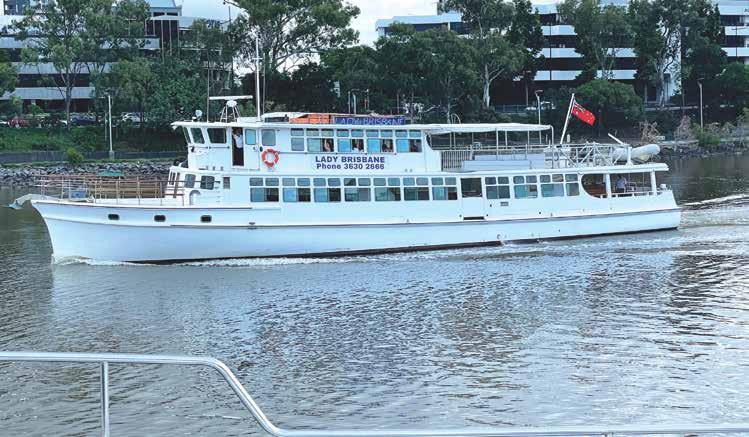
Boat Charters
Kathy Vincent Maria Christina
Sue Wighton
Tracey Blinco
R3 Roofing
Paul Popham
Ivory T - fabric & wallpaper
Yawk Yawk
Disclaimer for Contributions to The Bribie Islander Magazine
The views and opinions expressed in contributions to The Bribie Islander Magazine are those of the individual authors and do not necessarily reflect the official policy or position of the magazine or its editorial team. Contributions are welcome, but the magazine reserves the right to edit, modify, or reject submissions that do not align with our publishing standards or guidelines. By submitting your work, you acknowledge that you have the necessary rights to share the content and grant The Bribie Islander Magazine permission to reproduce it in print and online formats. The Bribie Islander Magazine is not responsible for any copyright infringement that may arise from the publication of submitted materials. We encourage respectful and constructive dialogue, and contributions that violate community guidelines or promote hate speech, discrimination, or illegal activities will not be accepted. Thank you for your understanding and support in maintaining a positive and inclusive community publication.
Can You Really Sweat Out a Hangover?
Few hangover “cures” have hung around quite like the idea that you can sweat one out. It sounds appealing in a tough-love sort of way: drag yourself out of bed, put on your runners, punish your body for last night’s decisions, and somehow emerge fresh, glowing and forgiven.
Sadly, your liver is not watching from the sidelines thinking, “Good effort, champ, I’ll speed things up.” Biology is far less impressed by a dramatic jog than we might hope.
The problem with the sweat-itout theory is that it gets the basic plumbing wrong. Alcohol does not mostly leave your body through sweat. Your liver does the heavy
lifting, breaking alcohol down in its own unhurried way.
A tiny amount can leave through breath, urine and sweat, but not enough to make your gym towel a detox device. You can sweat buckets and still be waiting for your body to
finish processing what you drank. A hangover is also more complicated than “there is still booze in me.”
It is more like your body filing a formal complaint. Your sleep has been disrupted, your stomach may be irritated, your blood sugar can
wobble, your head is protesting, and your hydration levels may have packed a bag and left.
That is why a hangover can feel so unfairly comprehensive: headache, nausea, tiredness, thirst, brain fog and a general sense of “why did I text that?” can all arrive as a team.
This is where forced sweating can backfire.
Alcohol encourages your body to lose fluid, which helps explain the classic dry mouth and banging head. If you then add a brutal workout or a steamy sauna, you are basically asking a thirsty body to hand over even more water.
That can make dizziness, nausea, weakness and headaches worse. In hot weather, or for anyone with heart, blood pressure or kidney issues, this is not just unpleasant; it can be risky.
Then there is the small matter of coordination. A hangover can mess with balance, reaction time and judgement. That makes heavy lifting, intense sport, cycling in traffic or sprinting like you are being chased by your own poor choices a questionable plan.
The morning after drinking, you may also be short on decent sleep and steady energy. A punishing session might feel noble, but nobility loses its shine if it ends with a rolled ankle or a quick lie-down on the gym floor.
That does not mean you must spend the entire day horizontal, communicating only through groans and food delivery apps. If your symptoms are mild, gentle movement can help.
A slow walk, some stretching or easy yoga may improve your mood and make you feel a bit more human. The important word is gentle. This is not the time to set a personal best, prove your character, or join a spin class led by someone who claps too much.
So, what actually helps? The boring stuff, unfortunately. Drink water. Consider electrolytes if you feel especially depleted. Eat something plain and friendly to your stomach. Rest. Coffee may help you feel more awake, though it can also make some people jittery or queasy.
Be careful with pain relief too, because alcohol and some medicines do not play nicely together. And if symptoms
are severe — confusion, chest pain, fainting, nonstop vomiting, an irregular heartbeat, or signs of alcohol poisoning — skip the home remedies and get medical help.
The appeal of sweating out a hangover is easy to understand. It makes recovery feel active. It lets us imagine we can undo the night before with enough determination and a regrettable amount of Lycra. But a hangover is not a moral debt that must be paid in perspiration. It is your body asking, quite reasonably, for time, fluids, food and rest.
So no, you cannot sweat out a hangover. You can only sweat while having one, which is much less impressive and usually less pleasant.
A little fresh air and light movement might help if you are only mildly suffering, but the real fix is patience. Your liver is already doing the work, even if it is not posting about it.
The best plan is still the least glamorous one: drink less, drink water between alcoholic drinks, eat before drinking, sleep, and be kind to the poor body that has to deal with your social calendar.
Receptionist Katherine (left) and Acupuncturists Jessica (centre) and Wendy (right).
PERIMENOPAUSE & CHINESE MEDICINE
If you’re in your 40s (or even your late 30s) and suddenly find yourself waking at 3am, forgetting why you walked into a room, feeling unusually anxious, or wondering why your once-predictable periods have become anything but predictable, you may be entering perimenopause.
Many people don’t realise that perimenopause can begin years before menopause. It is a natural transition, but that doesn’t mean you have to simply “put up with” the symptoms.
Acupuncture and Chinese Medicine have been used for thousands of years to support women’s health, and many women find they provide welcome relief during this stage of life.
WHAT IS PERIMENOPSAUSE?
Perimenopause is the period leading up to menopause, when oestrogen and progesterone levels begin to decrease.
However, rather than hormone levels steadily declining, they often fluctuate dramatically. This is why you might feel perfectly normal one week, then exhausted, emotional or unable to sleep the next.
Common symptoms include:
• Irregular or heavier periods
• Hot flushes and night sweats
• Difficulty sleeping
• Anxiety or feeling overwhelmed
• Mood swings and irritability
• Brain fog and forgetfulness
• Fatigue
• Headaches or migraines
• Joint aches
• Reduced libido
• Weight gain, particularly around the abdomen
Every woman’s experience is different. Some notice only a few changes, while others find their symptoms have a significant impact on work, relationships and everyday life.
HOW ACUPUNCTURE CAN HELP
Traditional Chinese Medicine views perimenopause as a normal stage of life rather than an illness.
Instead of focusing on hormone levels alone, it looks at how the whole body is functioning. Treatment is tailored to the individual, meaning two women with similar symptoms may receive quite different treatments depending on their overall health, sleep, stress levels and menstrual history.
Many women seek acupuncture because they are looking for a natural way to support their body during this transition. Others choose it alongside hormone therapy or other medical treatments.
Supporting
Better Sleep
Poor sleep is one of the most common reasons women seek treatment during perimenopause.
Whether it’s difficulty falling asleep, waking repeatedly during the night, or finding yourself wide awake at 3am, lack of quality sleep can affect every aspect of your wellbeing.
Acupuncture aims to calm the nervous system and encourage the body to move into a more relaxed, restorative state. Many patients tell us they sleep more deeply after treatment and gradually begin waking feeling more refreshed.
Mood & Emotional Wellbeing
Hormonal fluctuations can affect emotional health just as much as physical health.
Women often describe feeling more anxious, irritable or emotional than usual, sometimes without any obvious reason.
Acupuncture is commonly used to help regulate the body’s stress response, leaving many people feeling calmer and better able to cope with the demands of everyday life.
Hot Flushes & Night Sweats
Hot flushes and night sweats can begin during perimenopause, even while periods are still occurring.
Although everyone’s response is different,
many women notice these symptoms become less frequent or less intense after a course of acupuncture treatments. Research has found acupuncture may improve overall menopausal symptoms and quality of life, particularly for sleep and vasomotor symptoms such as hot flushes, although results vary between studies.
MORE THAN JUST NEEDLES
One of the strengths of Traditional Chinese Medicine is that treatment isn’t just about acupuncture.
Nutrition, stress management, exercise, sleep habits and other lifestyle factors that can influence hormonal health. If appropriate, Chinese herbal medicine may also be recommended.
The aim is to support your body as a whole, rather than simply masking individual symptoms.
IS THERE EVIDENCE?
Acupuncture has become the subject of increasing scientific research over the past several decades.
While researchers continue to study exactly how it works, growing evidence suggests it may help improve sleep, reduce the impact of hot flushes and support overall quality of life for many women experiencing perimenopause.
As with any treatment, results vary from person to person. Acupuncture is not a cure for perimenopause, but many women find it becomes a valuable part of their overall health plan.
Perimenopause is a significant hormonal transition, but it doesn’t have to be something you simply endure.
Whether your biggest challenge is poor sleep, anxiety, brain fog, hot flushes or simply not feeling like yourself, acupuncture offers an individualised approach that supports your body’s natural ability to adapt to hormonal change.
If your symptoms are affecting your quality of life, we are happy to help you navigate this stage of life with greater comfort and confidence.
If you’d like to make a booking or if you’d like to discuss whether acupuncture and Chinese medicine is right for you, please contact us - Jessica, Wendy, and Katherine - via our website www.bribieacupuncture. com.au or call 0423 160 228. You can also find us on Facebook and Instagram @ bribieacupuncture. HICAPS is available onsite. Pensioner discounts available.
Bribie Acupuncture
4/29 Benabrow Avenue, Bellara (behind the James Moore law office)
Health & Wellbeing Services
Natalie McDonald Law
Your Local lawyer
Wills & Estates
Family Law
Conveyancing - Domestic & Commercial
All Areas of General Law Including Traffic
Home visits available by appointment
For Affordable Legal Advice call: 07 5499 1508
Natalie has been a Beachmere resident for 20 years and been practising Law in Queensland for 19 years.
Now Located in Beachmere Incorporating Beachmere Law Email: natalie@nataliemcdonaldlaw.com.au
BRIBIE ISLAND VOLUNTARY COMMUNITY HELP ASSOC. INC.
VOLUNTEER DRIVERS WANTED
Bribie Island Community Help is after volunteers to assist our active aged and frail clients with door-to-door transport. We transport clients around following areas:
•Bribie Island & surrounds •Caboolture, Redcliffe, Northlakes
•North Brisbane & Brisbane City. Currently seeking to expand our Volunteering numbers to service all areas to assist our growing client numbers.
We are seeking committed volunteers who can donate 5 to 8 hours per week. We are registered with Centrelink for those with
volunteering obligations.
We have a fleet of Toyota Commuter automatic minibuses, and we will provide training on driving the buses as well as orientation and ongoing support from our professional office staff.
MANDATORY
REQUIREMENTS:
•Must hold Australian or NZ Citizenship or the capacity to permanently work in Australia.
•Above 25 years of age due to insurance constraints.
•Be able to pass a driving record history check by Qld Transport.
•Be able to pass a criminal history background check.
•Have a minimum of an Australian Open “C” class license check by Qld Transport.
If you wish to apply or seek further information, you can email your details to apply@bivchai.org.au or call on 3408-0111.
JUICE BAR
100% fresh fruit & veg made in-store
RICOS DELI
Cold meats, sauces, Asian rice, desserts & other goodies gluten free options available
EASY SHOPPING
Free delivery over $30
Click and collect (in-store or to boot)
Order online top quality Produce, hand picked, market fresh
www.banksiafruitjuicebarn.com.au
We’re family when family can’t be there™
We really care about making every journey a pleasure, and all our drivers are safety checked, licenced and first aid accredited for peace of mind. Driving Miss Daisy will help with: Trips to the doctor, physio, podiatrist, hairdresser etc.
Organising and accompanying on outings - perhaps to a cafe, the movies or museum.
Shopping assistance as needed, for groceries, clothes, gifts etc.
Clients with special needs Airport, bus, rail departures and pick ups
We offer you independence and assurance, so please call Pauline’s Daisy Mobile - 0498 760 438
for the Disability Community and caregivers Building a Better Future
Womencontinue to carry the majority of unpaid disability care responsibilities in Australia, making up more than 71 per cent of all primary carers.
This contribution is essential to the disability support system, with a 2020 report estimating that it would cost the government $77.9 billion to replace unpaid disability care with paid support—more than double the National Disability Insurance Scheme (NDIS) expenditure for the same period.
Advocacy groups, including Women With Disabilities Australia, have raised concerns that proposed NDIS funding changes could place greater pressure on families, particularly mothers, who often provide significant unpaid care.
The Child and Family Disability Alliance have recommended that family and household circumstances be considered during funding assessments to ensure participants do not lose vital supports. Without these protections, women’s wellbeing, financial security, and workforce participation may be further affected as caring responsibilities increase.
I recently lodged a submission with the Senate Standing Committee on Community Affairs regarding the National Disability Insurance Scheme Amendment (Securing the NDIS for Future Generations) Bill 2026.
Throughout this process, I have witnessed the extraordinary commitment of disability advocates, community leaders, participants, carers, and families who continue to advocate with integrity, dignity, respect, and inclusion at the forefront of every conversation.
Many people with disability have travelled significant distances to
Parliament to provide testimony and share their lived experiences of the proposed NDIS reforms. For many, this journey is not simple.
Travelling with mobility equipment, arranging support workers, managing health conditions, and navigating inaccessible environments creates additional burdens that many Australians never have to consider.
Yet they have done so because they believe in speaking truth to power and protecting the rights of the disability community. What is deeply concerning is the role that feardriven media narratives have played throughout this debate.
Headlines claiming that the NDIS spends billions of dollars on “haircuts, movies and walks” have created a misleading and harmful public perception of disability supports. These false narratives are not only inaccurate, but they have also contributed to stigma, division, and hostility towards people with disability.
Community access supports do not fund a person’s haircut, movie ticket, or walk in the park. These supports fund the assistance required for a person with disability to leave their home when they are unable to do so independently.
They provide access to support workers who assist individuals to attend medical appointments, education, employment, community activities, and social connections. These supports are not luxuries. They are fundamental enablers of participation, independence, and inclusion. When these supports are misrepresented, the public is led to believe that people with disability are receiving unreasonable benefits, rather than the practical assistance required to participate in society. The
result is increased misunderstanding, resentment, and discrimination. The disability community should not be forced to justify its right to belong.
Accessing healthcare, education, employment, social connection, and community life are basic human rights. Suggesting that support for these activities is excessive sends a damaging message that people with disability should remain isolated, invisible, and excluded from society.
The past several months has been incredibly difficult for people with disability, carers, families, and support networks. Many have felt targeted by public commentary, that lacks understanding of disability, functional impairment, and the purpose of the NDIS.
We must demand greater integrity in public reporting and political discourse. Governments, ministers, media organisations, and public commentators have a responsibility to ensure that information presented to the public is accurate, evidencebased, and reflective of the lived realities of people with disability. Public policy should be guided by facts, not fear.
The disability community deserves respectful representation, honest reporting, and meaningful consultation. Most importantly, people with disability deserve to be heard when they tell us what these supports mean to their daily lives. The future of the NDIS should be shaped by truth, dignity, and inclusion—not by headlines that misinform the public and undermine the rights of Australians living with disability.
Yours in Health and Wellness, Tracey Blinco Wellness Consultant
A Beautiful New Chapter Begins
Aftermore than three wonderful years at Bribie Island Central Plaza, Mojito is preparing to farewell this much-loved space as we turn our focus back to the heart of our brand — our flagship Pina Colada boutique on Benabrow Avenue.
This move marks not an ending, but a beautiful new chapter: one filled with fresh energy, thoughtful style, and an even greater focus on the shopping experience our customers know and love.
Since opening on Bribie Island during COVID, Pina Colada has continued to flourish, growing from a local favourite into a beloved fashion and footwear destination with five boutiques now trading across South East Queensland.
Through every season, our customers have embraced the Pina Colada approach to everyday elegance — beautiful clothing, comfortable footwear, considered styling and genuine personal service.
Our Bribie Island flagship, located at 37 Benabrow Avenue, remains one of our most spacious and beautifully positioned stores — a destination where style, comfort and boutique service come together in a relaxed coastal setting.
The Last Hurrah Moving Sale
To mark this special transition, we invite you to enjoy our Last Hurrah Moving Sale — a rare opportunity
to discover beautiful pieces at exceptional prices before Mojito closes this chapter.
Whether you are refreshing your wardrobe, searching for the perfect knit, updating your everyday shoes, or treating yourself to something new, this is the perfect time to visit.
Everything in store at Mojito is on sale, with 40% off all clothing, including new season arrivals and winter knits, plus 20% off all shoes, including our much-loved Cabello collection.
It is our way of celebrating the style, colour and personality that Mojito has brought to Bribie Island Central Plaza over the past three years, while giving our loyal customers the chance to enjoy generous savings on pieces they will love wearing now and into the seasons ahead.
As a special thank you, customers who spend over $250 will be entered into our weekly draw to win one of two pairs of Cabello shoes.
Known for their comfort, quality and effortless style, Cabello has become a true favourite among our customers — and this weekly giveaway is a little extra indulgence to celebrate the loyal community that has supported us so warmly.
Bernie and the entire Mojito team would like to sincerely thank you for your loyalty, warmth and continued patronage over the years. It has been
a pleasure to welcome you, style you, share conversations,
help you find your favourite pieces, and be part of your shopping moments — whether for everyday wear, travel, special occasions, or simply something lovely just for you.
While we say farewell to Mojito at Bribie Island Central Plaza, we are delighted that the Pina Colada experience is waiting just across the road.
At our flagship boutique, you will find an expanded clothing range, a larger shoe department and the same friendly service from a team that genuinely loves helping you feel confident, comfortable and beautifully dressed.
We invite you to join us for one last celebration at Mojito — to shop, save, reminisce and farewell this special chapter in true boutique style. Come in, enjoy the moment, find something beautiful, and let us thank you in person for being part of our story.
QLD Laser & Cosmetic Clinic has relocated to our new Private
in Banksia Beach
We are proud to continue offering the latest in advanced skin procedures for face & body, supported by our experienced Nurse and Doctor for cosmetic enhancements. We have a focus on achieving real, visible results using medical-grade products & technology.
Whether you’re looking to rejuvenate your skin, improve texture and tone, skin tightening, reduce signs of ageing, or address specific skin concerns, we’re here to help you look and feel your best.
• BBL HERO™ Skin Rejuvenation • Sun Damage, Pigmentation & Vascular Treatments • RF Needling (Radio Frequency Skin Needling)
HIFU Skin Tightening & Lifting
Skin Needling • AquaPure & Advanced Facials • Cosmetic Enhancement Procedures performed by our Nurse and Doctor • General Beauty Treatments • Waxing & Beauty Services • Skin Enhancement Treatments • Face & Body Treatments And much more!
Beauty & Aesthetics Clinic Address provided upon booking – Appointments Only
Young Designers Take Culture and Creativity to CIAF From Yarun to the Runway:
A bold new fashion collection created by young Indigenous designers from Yarun/Bribie Island is preparing to make its mark at the Cairns Indigenous Art Fair, carrying stories of culture, Country and community onto a national stage.
A new generation of creative voices
Something powerful is taking shape on Yarun, also known as Bribie Island. It is stitched with pride, patterned with story and carried by the imagination of a new generation.
Through YarunYung, young people are transforming ideas, cultural connection and personal expression into contemporary fashion designed by young people, for young people.
The collection has been developed by the Pumicestone Indigenous Education & Employment Council Inc. (PIEEC) in partnership with the Bribie Island Nature Festival (BINF), working alongside young people on Yarun/Bribie Island to build confidence, skills and creative opportunity.
Stepping onto a national stage
This July, YarunYung will step confidently into the spotlight when the collection is showcased at the Cairns Indigenous Art Fair (CIAF) fashion parade from 8–12 July.
For the young designers, the opportunity is more than a runway debut. It is a moment of recognition, a celebration of identity and a chance to see their creative work honoured in front of new audiences.
Building on Canvas 2 Catwalk
YarunYung builds on the creative energy of the Canvas 2 Catwalk (C2C) project delivered by BINF and PIEEC in 2024. C2C revealed what many in the community already
knew: Yarun is home to remarkable young creative talent. With the right encouragement, mentoring and space to create, that talent can grow into something extraordinary.
Mentored by artists, supported by community
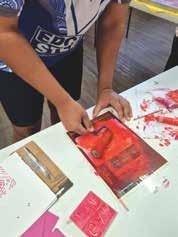
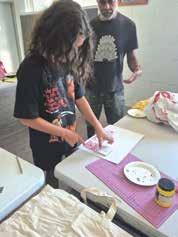
In early 2026, workshops at the Bribie Lions Hall brought the vision for YarunYung to life. Led by Creative Director Rachel Bywaters and facilitated by Darren Blackman, both talented Indigenous artists, the workshops gave young people the space to explore design, develop ideas and create work grounded in culture and Country.
Each workshop was supported by BINF representatives Libby Anstis and Erica Hart, together with Elders and community members from PIEEC. Their presence helped create a nurturing environment where young designers could experiment, learn and express who they are through fashion.
Seven designers, one shared journey
Seven young Indigenous designers aged 12 to 20 will travel to CIAF to immerse themselves in the Art Fair and proudly watch their designs come alive on the runway. They will be joined by PIEEC, supporters, Elders and BINF, with the journey also including visits to Yarrabah and Green Island.
The story will continue beyond Cairns. Later in 2026, the YarunYung collection will return home to be shared at the Bribie Island Nature Festival, giving the wider community the chance to celebrate the creativity, confidence and cultural strength of these emerging designers.
The YarunYung project is proudly supported by The Benevolent Society and the City of Moreton Bay Council.
by Bambi and Kristine Ellis.
Photos
Buying Now
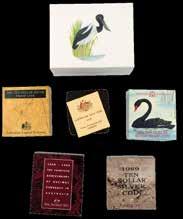
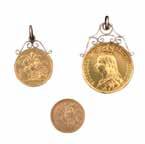
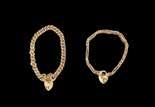
Mike and Nate Cornish will be travelling to Bribie Island for 2 days only on Monday, 20th, and Tuesday, 21st July. We want to buy your unwanted items listed below. Please visit us at the Bribie Island RSL Club as shown below, for an ‘on the spot’ appraisal.
If you live outside the area, have too many items to bring in, or would like a home visit, phone Nate on 0426 820 646 NOW to arrange a time.
These events are often compared to the ‘Antiques Roadshow’ on TV, but without the long queues. Don’t miss this opportunity!
Fully Licensed Antique, Numismatic, and Precious Metal Buyers with over 45 years Industry Experience. Security supplied by Security International Limited.
MONDAY 20TH
1:00pm
TUESDAY 21ST JULY
Bribie
1:00pm
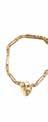
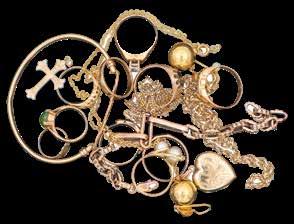
Gold & Silver Jewellery
All Worn or Broken Jewellery
All Modern, Vintage & Antique Jewellery, Rings, Chains, Bracelets, Earrings,
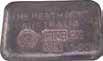
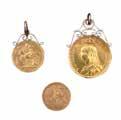
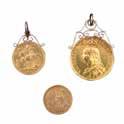
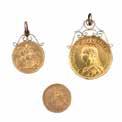
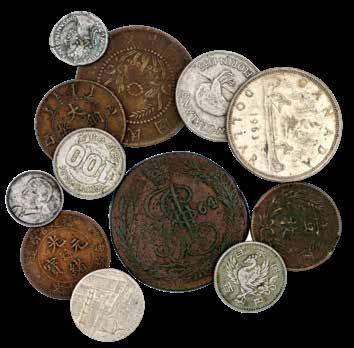
Gold Coins
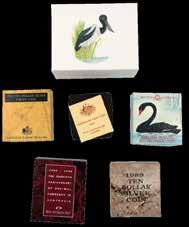
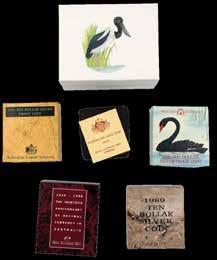
Full and Half Sovereigns, Nuggets, Bullion, $200 Aust. Coins, Commemora tive Coins, World Gold Coins, Holed or Worn, Gold Medals & Fobs
Silver Coins
Aust. – Crowns, Florins, Shillings, Sixpences, Threepences, all coins
Tokens,
Silver
Sterling Silver: Tea Sets, Cutlery, Trophy Cups, Trays, Baskets, Vases, Jugs, Cigarette & Card Cases. Silver Bars of any size
All Jewellery, Rings, Diamond and other stones, Brooches, Pendants, Lockets, Bracelets & Bangles, Gold Cuff Links, Necklaces, All Broken or Worn
Antique Buyers in the Area
In today's trend of downsizing and decluttering our homes, it's the perfect time to go through those drawers and cupboards and turn those unwanted items into cash.
Antique Buyers, and father-son duo, Mike and Nate, will be at Bribie Island RSL Club on Monday, 20th and Tuesday, 21st of July, from 9am to 1pm both days. See page __ for full details.
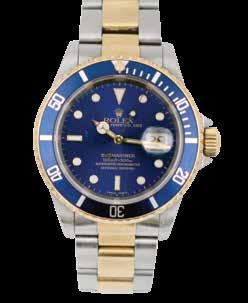
"We are enthusiastic buyers, particularly interested in gold jewellery, whether broken or intact, antique jewellery, gold and silver coins, collectibles including military medals, and banknotes, as well as mechanical watches.”
“Everyone has something we want to buy, and nothing is too small for our consideration. We are just as happy to buy one item, as we are buying 10,000!" says Mike Cornish, the company's chief buyer. If you are in doubt about any items you wish to sell, take them in for an instant appraisal. No appointment is needed.
Gold and Silver still at high prices
With the gold price still at higher than traditional levels, right now is an opportune time to explore your jewellery box and dig out those old gold chains, rings, and brooches, to turn them into cash.
Mike emphasizes, "This is an ideal time to sell. We will buy anything made of gold – old jewellery, coins, virtually anything, even gold teeth! We also need silver in any form, including coins, and bars of any size."
Old coins can toss up a rarity
Check those drawers and cupboards, you may have a rarity lurking amongst your coins. “We want to see any old foreign coin accumulations.
Bags, tins, folders, however they come, we will be quite happy to go through your coins on the spot and give you an idea of what we can pay. You just never know what can turn up!”
Rolex and mechanical watches wanted
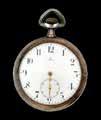
Mechanical watches are needed urgently by the buyers. “Collectors at this stage want brands such as Rolex, Omega, Patek Philippe, Longines, and Seiko, just to mention some.
These brands can command good prices depending on the model and condition.” Mike explains. "If you are unsure, bring your watches in for an appraisal." Home visits are offered for those unable to make it to a venue, or those with too much to carry.
For more details, please see the advertisement on page __, and for the full schedule, please see www. heritageint.nz.
The Power of Becoming the Observer
Ihave been reading a book by Deepak Chopra, and there was one sentence that has stayed with me all week. It wasn't one of those dramatic, life-changing statements that leaps off the page. In fact, it was quite simple. It spoke about becoming an observer and looking at your life as if you were watching yourself.
The more I sat with those words, the more I realised how rarely we do this.
Most of us are so immersed in our thoughts, emotions, worries, and responsibilities that we become tangled up in them. We don't just experience stress; we become stressed. We don't simply feel fear; we become fearful. We don't notice our thoughts; we believe them.
When we are caught up in life this way, it can feel as though an invisible current is pulling us along. We react automatically, repeating the same patterns, having the same arguments, worrying about the same things, and wondering why nothing changes.
What if, instead of being completely absorbed in the experience, we became the observer?
Imagine watching yourself from a distance. You see yourself rushing through the day, carrying responsibilities, responding to people, and navigating challenges.
You notice your reactions, habits, and the stories you tell yourself. Rather than judging what you see, you simply observe with curiosity and compassion.
When we become the observer, we create space between ourselves and our thoughts. We begin to realise that we are not our worries, fears, or circumstances. We are the awareness behind them.
From this place, something interesting happens. We gain choice. Instead of reacting immediately, we can pause. Instead of believing every thought, we can question it. Instead of becoming overwhelmed by an emotion, we can acknowledge it and allow it to move through us.
One simple practice is to ask yourself, "What am I noticing right now?" Notice your thoughts, emotions, and how your body feels. Observe without trying to fix or judge anything.
The goal is not to detach from life. It is to become more conscious within it and witness yourself with the same kindness you would offer a dear friend.
Perhaps that is the gift of becoming the observer. We stop being consumed by life and begin to participate in it more consciously. We create room for awareness, wisdom, and choice.
Sometimes, that small step back is exactly what allows us to move forward with greater peace, clarity, and understanding.
When we learn to become the observer, we often discover the answers we have been searching for are already within us. If you would like support reconnecting with your inner wisdom and creating more peace in your life, reach out to organise a session on 0405 361 882
Always with love, Maria Christina X Holistic Counsellor, Life & Wellness Guide
Recently, I was helping a member of our congregation with a technology issue. The conversation reminded me of my own parents, who at 85 years young are understandably nervous about using their phones. Their fear is not that they will break the device—it is that one accidental click might result in their savings disappearing.
Not long after, a friend told me about a trip to the Telstra store in Morayfield. While waiting for her appointment, she struck up a conversation with a gentleman sitting nearby. He reflected that surviving the Blitz during World War II was easier than dealing with his mobile phone.
The Blitz, for those unfamiliar with the term, was the sustained bombing campaign against Britain during World War II. Imagine that. A generation that lived through war now finds modern technology more stressful than air raid sirens.
I hear it often:
"I'm such an idiot."
"I'm hopeless with technology." "I'm too old to learn."
None of these statements are true. The problem is not that older Australians are incapable of learning technology. The problem is that technology is often designed by young engineers for people who think like young engineers.
them. Show them how to spot a scam. Teach them how to video call their grandchildren. Most importantly, remind them that struggling with technology does not make them stupid.
It makes them human. After all, this is a generation that survived wars, built communities, raised families, and helped shape modern Australia.
Cyn's Corner
Is Your Phone More Stressful Than the Blitz?
I believe there was once a Telstra shop on Bribie Island, and for many residents that local support provided reassurance as much as technical assistance. When the Bribie Island Telstra store closed in late 2025, an important source of face-to-face help disappeared.
Today, if something goes wrong with a phone or account, many residents must travel to Morayfield. For some, the technology problem becomes a travel problem. Organising transport, navigating traffic, finding parking, and waiting for an appointment can feel overwhelming before the actual problem is even addressed.
Years ago, when teaching Design, I asked my students to design a mobile phone specifically for their grandparents. The students observed how older people used technology and where they became frustrated. The findings were remarkably consistent.
Most grandparents did not want a phone that could do everything. They wanted a phone that could do phone things. They wanted large buttons, clear screens, and simple menus. They wanted to answer a call without accidentally opening an app and dial a number without navigating multiple screens.
What concerns me even more than the technology itself is the way people speak to themselves when they struggle with it.
At the same time, the digital world has become genuinely dangerous. We are navigating online scams, identity theft, fake news, AI-generated deepfakes, and cybercriminals who can operate from anywhere in the world.
According to Scamwatch, Australians over 65 continue to suffer some of the highest financial losses from scams. In 2024 alone, Australians aged 65 and over reported more than 62,000 scams and lost almost $100 million. Perhaps the question is not, "Why are older people struggling with technology?"
Perhaps the better question is: Why are we expecting people who grew up writing letters, using rotary telephones, and balancing cheque books to suddenly navigate a world of artificial intelligence, deepfake videos, online scams, and invisible cybercriminals?
So here is my encouragement. If you know your way around a phone, computer, or tablet, lend a hand to someone who does not. Sit beside
They deserve more than our patience. They deserve our respect, our support, and occasionally, a little help finding the right button. I would love to hear your thoughts. Have you had a technology triumph, a technology disaster, or a tip that has helped you stay safe online? Some of the best conversations—and future Cyn's Corner articles—start with the stories and wisdom of Bribie Islanders themselves.
After all, one of the strengths of Bribie Island has always been neighbours helping neighbours. Until we meet again, take care of yourselves—and each other.
Cyn Cynthia Gusman-Nolan
Cynthia Gusman-Nolan is a Lay Ministry Agent with the Uniting Church and has professional experience in psychology, education, career development, counselling support, and community wellbeing.
Disclaimer:
The views expressed in this column are the personal views of the author and do not necessarily represent the views of the publisher, the Uniting Church, or any other organisation. This column is intended for general interest, reflection, and community discussion only and is not a substitute for professional medical, psychological, legal, or other professional advice. Readers should seek appropriate professional support for their individual circumstances. The author and publisher accept no liability for actions taken based on the content of this column. If you are experiencing emotional distress, thoughts of self-harm, or believe life is not worth living, contact your GP, call 000 in an emergency, or contact a crisis support service such as Lifeline Australia on 13 11 14.
$5000 is the first prize in the 2026 Community Chest. Along with another 85 amazing prizes, the total prize pool is $14,000.
Other prizes include:
• Art works from local artists Sabine Von Graz, Geoff Ginn and bespoke pottery (all on display at the Bribie Island Community Arts Centre until the end of June);
• A voucher for a Warplane Flight from Caboolture Airport.
• Fuel vouchers compliments of Belle Property Bribie Island.
• Vouchers compliments of Priceline Pharmacy, Bribie Bowls Club, Bribie RSL, Bribie & District Locksmiths, Island Auto Repairs, Straight Talk Technology, Saviges Seafood, Avondale Meats and Seafood, two nights’ accommodation from On The Beach Resort.
• Gifts of oysters from Southern Fish Marine, Bluey-style
soft toys by Rhonda Purtle, and Children’s colouring books by April Bansy.
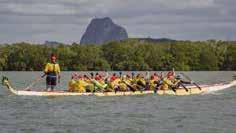
The Community Chest will assist in funding the activities of its partners, Bribie Island Environmental Protection Association, Bribie Island Community Arts Centre, Dragons Abreast Bribie Island and Bribie Island Kindergarten.
Tickets are just $5 and are available from BIEPA volunteers every Monday evening, 5-7pm, at the Bribie RSL; on Thursday and Saturday mornings at MITRE 10; and on Friday and Sunday mornings at Bribie Island Central.
Also from The Bribie Island Community Arts Centre, the Bribie Island Kindergarten and Dragons Abreast Bribie Island. Don’t miss your chance to pick up a ticket or two or ten.
It will be drawn just after 6pm on 17 August 2026 at the Bribie RSL.
Dear Pumicestone...
Delivering for Queensland, Delivering for Pumicestone
The State Budget is more than a collection of numbers. It is a statement about our priorities, our values and the future we are building together.
As your local Member for Pumicestone, I know the conversations happening at kitchen tables across our community. Families are working hard to keep up with rising household costs. Young people are wondering whether home ownership is within reach. Seniors want confidence that quality healthcare will be there when they need it. Parents want safe communities where their children can thrive.
This Budget responds to those priorities by continuing to strengthen the foundations for Queensland's future. Cost of living remains one of the biggest pressures facing local families. That's why this Budget continues to provide practical relief through permanently legislated 50 cent public transport fares, lower electricity prices under the Energy Roadmap, a $150 Back to School Boost for primary students and ongoing Play On! vouchers to help children participate in community sport. These initiatives are designed to make a genuine difference to everyday household budgets.
Building more homes is equally important. Across Queensland, investment is being directed towards unlocking land, delivering critical infrastructure and expanding social and community housing. Increasing housing supply is essential if we are to improve affordability and ensure more Queenslanders have the opportunity to own or rent a home close to where they work and raise their families.
Community safety also remains a priority. Queenslanders deserve to feel safe in their homes, at work and in public
spaces. Continued investment in additional police, frontline resources, early intervention programs and stronger laws reflects a commitment to improving safety while supporting long-term prevention and rehabilitation.
Healthcare continues to receive significant investment, with funding directed towards new and expanded hospitals, additional health services and reducing elective surgery wait times. As our region continues to grow, ensuring residents have timely access to quality healthcare remains critically important.
Here in Pumicestone, we continue to advocate strongly for the projects and services that matter most to our community. Whether it is improving local infrastructure, supporting community organisations, investing in sporting facilities, protecting our natural environment or strengthening healthcare access, I will continue working every day to ensure our region receives the investment it deserves.
This Budget continues to focus on supporting Queensland families through cost of living pressures, investing in the infrastructure needed for our growing population, strengthening community safety and building a stronger economy for the future.
There is always more work to do, and I recognise the challenges many families continue to face. However, this Budget represents another important step in delivering practical outcomes that will benefit communities across Queensland, including here in Pumicestone.
It remains a privilege to represent our community in Parliament, and I will continue advocating to ensure Pumicestone receives its fair share as we build an even stronger future together.
Authorised by Ariana Doolan MP, 1/43 Benabrow Avenue, Bellara, 4507
Bribie Gardens Waterways Association Launches New Residents’ Guide to Support Safety,
Awareness and Community Connection
The Bribie Gardens Waterways Association (BGWA) has recently completed a major community initiative aimed at improving safety, awareness, and shared responsibility across the Bribie Gardens canal estate.
Over the past month, every household in the estate received a newly developed Bribie Waterways Residents’ Guide. A clear, practical resource designed to help residents, new arrivals, and holiday home guests better understand how to safely and respectfully use our waterways.
The idea for the Guide emerged after ongoing questions from residents about waterway rules, lock operation, pontoon requirements, tidal awareness, and general canal etiquette.
Many people, especially newcomers and short term visitors, were unsure where to find accurate information. Rather than leaving residents to search through multiple websites or rely on word of mouth, BGWA decided to create a single, easy to read reference that brings everything together in one place.
The result is a comprehensive, community friendly booklet that covers the essentials of living on and enjoying the Bribie Gardens waterways. Key topics include:
• Waterway rules and speed limits, including wash awareness and safety expectations
• Tidal and bridge clearance guidance, helping boaters avoid common hazards
• Step by step lock operation instructions, written for both new and experienced users
• Pontoon lease, insurance and maintenance requirements
• Canal infrastructure responsibilities, including who manages what
• Marine Rescue procedures and emergency contacts
• Guidance for holiday home owners and renters, ensuring visitors understand local rules
• How to report issues using Snap Send Solve
• Information about the BGWA Social Club, events, and community engagement
To complement the printed Guide, BGWA has also updated its website (www.bgwa.net) with a digital version of the booklet, lock instructions, safety reminders, tidal information, community notices, and an easy contact point for residents. This ensures that accurate information is always accessible, especially for visitors and holiday home guests who may not have a printed copy.
The project was made possible thanks to the generous support of three local businesses who share BGWA’s commitment to community safety and stewardship:
• Bribie Pontoons
• Bribie Waterways Motel
• GSi Ventures
Their sponsorship enabled the Guide to be professionally printed and delivered to every home in the estate, ensuring all residents benefit from consistent, reliable information. The response from the community has been overwhelmingly positive. Residents have praised the Guide for being clear, helpful, and beautifully presented.
Many have commented that it has already improved understanding of waterway expectations and reduced confusion for new residents and visitors. A few of the comments shared on Facebook include:
• “This is exactly what we needed — thank you BGWA.”
• “Clear, helpful and beautifully presented.”
• “Great to finally have all the information in one place.”
BGWA hopes the Guide will strengthen community awareness, reduce safety risks, and encourage considerate behaviour on the waterways.
The Association sees it as an important step in supporting both long term residents and newcomers, while helping maintain the unique lifestyle that makes Bribie Gardens such a special place to live. Residents who would like more information, or who wish to download the digital version of the Guide, can visit www.bgwa.net or contact the Association directly at info@bgwa.net.
On behalf of the committee
Bribie Gardens Waterways Association
Easier, Faster, and Somehow More Complicated Life Today:
Australians have always enjoyed a good whinge. It is practically a national sport, right up there with cricket, arguing about where the best meat pie comes from, and pretending we understand the NBN.
But if there is one topic guaranteed to start a lively conversation at any barbecue from Bongaree to Broome, it is whether life is harder today than it was for older generations.
Older Australians will tell you that in their day, children walked five kilometres to school, barefoot, uphill both ways, through swooping magpies and character-building dust storms.
Younger Australians will reply that they too suffer hardship: their phone battery once dropped to 4 per cent during a train delay, and the café had run out of oat milk. Both sides have a point, although only one of them had to rewind cassette tapes with a pencil.
Life for earlier generations was certainly more physical. Washing day involved a contraption that looked like it had been designed by someone with a grudge against fingers. Dinner did not arrive by app; it was cooked, usually from scratch, and if you complained you were invited to eat what was on the table or try your luck with hunger.
Entertainment meant three television channels, one of which was probably showing bowls, and the remote control was whichever child sat closest to the set.
Today, by contrast, we live in an age of convenience so advanced that we can become irritated if a movie takes seven seconds to load. We carry tiny computers in our pockets that can translate languages, navigate cities, pay bills, photograph lunch and ruin sleep patterns, often before breakfast.
Our grandparents had to remember phone numbers. We only have to remember passwords, except there are 83 of them, each requiring one capital letter, one number, one symbol, and a blood sample from a distant relative.
Still, the modern world has its own peculiar challenges. Housing, for example, has become less of a dream and more of an extreme sport. Once upon a time, the great Australian aspiration was a house, a yard, a Hills Hoist and a dog named Bluey.
Now, many younger people would settle for a laundry with ventilation and a landlord who does not describe a converted cupboard as “cosy urban living”. The cost of groceries can make a person stare at a cauliflower like it is a luxury European import.
Older generations, to their credit, did not have it easy. They lived through recessions, wars, rationing, limited medical care and cars without air conditioning. Summer road trips in the family sedan were less “holiday” and more “slow-roasted children with vinyl seat garnish”.
There were no streaming services, no online banking and no way to discreetly check whether that rash required a doctor or a stern talking-to from Mum.
But they also had something modern Australians sometimes envy: simplicity. A bad photo disappeared into a shoebox forever; today it becomes a tagged memory, cloud-synced and available for public humiliation at any milestone birthday.
News arrived in the paper or on the six o’clock bulletin; now it arrives every minute, shouting from every device, usually accompanied by a headline suggesting the world may end before dinner. Even relaxing has become competitive. We track steps, sleep, calories, mindfulness minutes and screen time, then feel guilty about all of them.
In fairness, younger generations enjoy freedoms and opportunities that would have amazed their grandparents. We can study online, work remotely, video-call family overseas, order obscure plumbing parts at midnight and learn the ukulele badly from a stranger on the internet.
Australia is more multicultural, more connected and, in many ways, more open. Dinner tables now feature
everything from lamb roast to laksa, and nobody blinks when the family barbecue includes tofu, gluten-free buns and someone explaining cryptocurrency near the esky.
The older generation, meanwhile, has adapted with impressive determination. Many retirees now use smartphones, online shopping and group chats, although some still sign every text message with their full name, as if composing a formal letter to the Governor-General.
They have discovered emojis, occasionally with unintended consequences. A thumbs-up from Nanna can mean approval, confusion, or “please come over and fix the printer”.
Perhaps the truth is that every generation believes it had the rough end of the stick, because every generation did. The hardships simply changed uniforms. Yesterday’s struggles were manual labour, limited choices and making one chicken feed six people. Today’s struggles are rising costs, digital overload and trying to cancel a subscription that appears to be guarded by a labyrinth of customer service menus.
What has not changed is the Australian instinct to get on with it, preferably after a cup of tea, a joke and a small complaint about the weather. Older Australians built
communities with neighbours, footy clubs, school fetes and front fences low enough for a chat.
Younger Australians are building communities too, sometimes online, sometimes in share houses, sometimes around a discount air fryer found on Marketplace. The tools have changed, but the need to belong has not.
So, is life better now or back then? The answer is yes, no and it depends who is paying the electricity bill. We have medical advances, instant communication and food delivered to the door, but we also have inboxes, algorithms and rent that requires emotional support.
Previous generations had resilience because they had to. Today’s generations need resilience because everything is available, except peace and a reasonably priced avocado.
In the end, comparing generations is like comparing Holden and Ford: familiar, passionate and likely to start an argument before the sausages are even cooked. The best we can do is borrow from each other.
Let the young teach the old how to use the phone without photographing their chin. Let the old teach the young how to mend things, save money and survive without Wi-Fi for more than twelve minutes.
Somewhere between the rotary phone and the smart watch, Australia might find the sweet spot: a life with modern comforts, old-fashioned patience and enough humour to keep us all from taking the whole circus too seriously.
A plant-based food journey Life after meat
By Brooke Nunn
I'vetreasured food since absorbing my first meal in the womb. Photos taken post-delivery show an adorable, yet undeniably chubby, baby girl. It only took another 6 weeks before I was over milk and wanted something I could really sink my gums into.
As I grew, my desire to devour tasty morsels only intensified. I spent loads of time in the family kitchen as the self-appointed taste tester, and I learned to cook along the way. These days, I consider myself a quasi-decent home cook and I make a lot of my meals from scratch. So, when I decided to embrace a plant-based lifestyle at the beginning of this year, I thought it'd be easy.
In reality, it began as a bit of a culinary obstacle course. My first hurdle: the morning coffee. What milk should I use now? Soy? Rice? Coconut? One option is to outsource this task to a professional, and they'll create magic with any plant-based milk alternative (PMA): a barista's double shot almond latte is as satisfying as receiving a foot massage in a hot tub as you watch snow fall onto Mt Wellington.
However, economics and a post-sleep hairdo that resembles a bird's nest prohibit me from daily morning excursions to a local cafe. At home I tried almond milk, but do you know what happens when you add a splosh of unfrothed almond milk to your coffee?
Much like oil and water, the almond milk and the coffee extraction won't blend together. Then the milk will split; almond splinters will saunter off in all directions, while the liquid pools in the centre of the mug. Unfortunately, what you'll be left with is a beverage that resembles one of those haemorrhage-themed cocktail shots.
At a local coffee shop, myself and Samantha Rose, a former personal trainer and plant-based eater for over a decade, ask the barista wizards to wave their magic steam wands and prepare our morning elixirs. I order my latte with almond milk (because of the wizards), but Samantha's choice is oat milk.
As with all plant-based options, it's taken her years of experimenting to work out what she likes. ‘[It's] a lot of trial and error. A lot of, “Oh my god, I'm never eating this again”,’ she explains. Which is a lot of effort if you consider how many PMAs are on the market.
‘I have tried every single oat milk on the shelves in the shops until I found one or two that were decent enough to put in your coffee,’ she states. ‘So Good Barista and Oatly [Barista].’
And choosing a barista variation is imperative. A 2025 review by Deakin University concluded that it is the specifically formulated processes applied to barista PMAs that make all the difference. These processes develop creaminess, peak-level foaming performance and a delicately sweet flavour in the PMA that closely resembles dairy milk. Barista PMAs ensure one living a plant-based lifestyle need not endure their coffee but relish it.
Though, when it comes to PMAs, along with all processed foods, you need to be aware of added ingredients and preservatives. Samantha warns that you need to become adept at reading food labels, scrutinising such items like levels of sugar. ‘It was actually ridiculous, the amount of times [I'd] get something from the shelf and [I'd] see the sugar content and I'd put it back on the shelf.’
Herein was my next challenge: prioritising nutrition. This is not a new issue for me. If I allowed myself to, I'd eat pancakes more often. I salivate at the thought of fluffy little pillows soaked in warm, sticky maple syrup carrying me off to sweet nirvana. But alas, my body needs more than sugar (and coffee) to function. I have always tried to eat a varied diet, but when I shifted to a plant-based lifestyle, I became concerned with consuming healthy levels of protein. I was still going to eat eggs, but I wasn't prepared to eat them every day of the week. So, what were my options?
According to a 2013 article published in the Medical Journal of Australia, legumes are a good addition to a balanced diet when it comes to considering protein consumption. The article notes that a 100g serving of chickpeas can offer around 6.3g of protein; lentils offer around 6.8g of protein; and soybeans come in at a hefty 13.5g of protein.
Luckily for me, I like chickpeas, lentils and soybeans. But even if I didn't, the article suggests varying protein sources and including foods like nuts and seeds, eggs, milk and yoghurt and wholegrains, like quinoa.
The Heart Foundation supports this idea of varying protein sources. On their website they note that consuming plant-based alternatives can help to reduce weekly meat consumption. And while they don't believe it's essential to adhere to a plant-based lifestyle, consuming less animalbased protein is advised for optimal heart health.
However, they do suggest individuals speak to their own health care professionals to ensure their needs are being met. It's all about considering your own personal circumstances. Then, when you're ready to explore plant-based protein alternatives, the Heart Foundation can assist with some suggestions. Their website alone provides many heart-smart recipes that are plant-based and packed full of nutrients.
And that was key to solving the next puzzle: ideas on what to cook. I realised quickly that my repertoire of plantbased recipes was lean: stir-frys, soups and curries. There was always tofu, but short of being a replacement for chicken in stir-frys, soups and curries, what else can you do with tofu? A lot as it turns out.
‘Blending tofu is probably one of the biggest [food] hacks,’ says Fiona Anchal, owner of Wholesome Bellies – a plantbased cooking business in Brisbane that specialises in cooking retreats and international food adventures.
I'm instantly intrigued and my mind starts to imagine what dishes has use for such an ingredient, but Fiona has more. ‘Blend firm tofu with some kind of nut, whether it's cashews or almonds, nutritional yeast, garlic and salt and pepper. Blending that into a base for a spread on toast or mixing it with roast pumpkin or spinach as a filling for lasagna or cannelloni.’
But we're not stopping at savoury. Fiona tells me that it is her chocolate mousse made from a silken tofu base that really surprises people. ‘Everyone is like, “Oh my god, no one would even know that was tofu”.’ Not to mention, because of Fiona's ingenuity and culinary prowess, dessert now comes with a hit of protein.
Tofu isn't big on flavour, so it's crucial to include other ingredients that can do the heavy lifting here. Especially seasoning, which shouldn't just be sprinkled on at the
end. ‘I think we need salt whilst we're cooking to bring out flavour,’ Fiona tells me. ‘I think using fresh herbs and dried spices is important … garlic and onion powder, mixed herbs and paprika.’
More than anything else, Fiona's message to people learning to cook plant-based meals is not to be scared. ‘I think a lot of people are worried that it's not going to work and it's not going to taste good … but just give it a go and be open-minded.’
Samantha echoes this sentiment. ‘It's trial and error and working out what tastes good.’ She advises to ‘start with really simple meals. Make a stir-fry, but instead of chicken strips, cook your stir-fry vegetables and chuck a can of chickpeas in it.’ The philosophy here is simple. ‘You still get the same flavours … you're just changing the base,’ Samantha says.
And so, I've been experimenting. I recently cooked one of the best lasagnes I've ever made using chickpeas and roast vegetables. The roast pumpkin added a sweet, creamy nuttiness; the chickpeas softened and offered a hearty texture; and the seasoning and rosemary added depth to the tomato base.
I also made a batch of blended tofu with roast pumpkin, which I stuffed into cannelloni as well as spreading it on toast, just like Fiona suggested. It was really good and it's given me the courage to go full mad scientist in the kitchen. Because I've learned that plant-based eating doesn't have to be restrictive. In fact, it's opened me up to a whole new smorgasbord of deliciousness and I can't wait to see what I can whizz up next.
STEAKOUT PIZZERIA
For delicious pizza, pasta, contorni salads and more, all crafted with love, come and enjoy our waterfront pizzeria. With live music every Sunday and the beautiful Pumicestone Passage right beside you, we offer you a taste you’ll love For deliveries or bookings, please visit us at www.steakoutpizzeria.au
9/11 Spinnaker Drive, Sandstone Point - 07 5360 1094
LUNCH Thu to Sun 11:30 - 2:30
DINNER Tue to Sun 4:30 - 8:30
THE DECK RESTAURANT
With its spacious, relaxed ambiance, The Deck Restaurant offers casual dining indoors or alfresco on the deck overlooking the golf course, lake and lush gardens. Enjoy modern cuisine with locally sourced ingredients, open 7 days a week for breakfast and lunch, and dinner on Friday and Saturdays. Perfect for any occasion!
Experience classics you’ll love and the new favourites you'll crave!
Bribie Island Bowls Club 11-23 Welsby Parade, Bongaree 4507 On
LUNCH: 12PM - 2PM
DINNER: 5PM - 8PM
OPEN 7 DAYS NOW OPEN SUNDAY 8AM - 11AM FOR BREAKFAST Call our restaurant on 07 3408 1018 to book
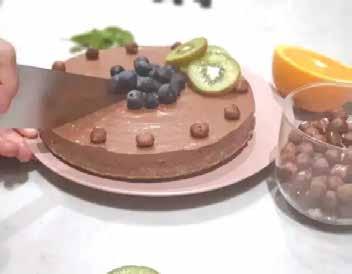
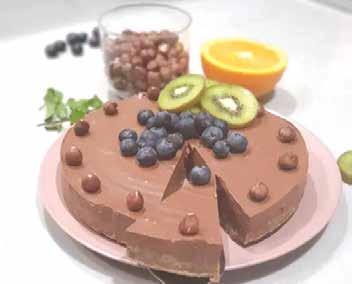
Hazelnut Chocolate Mousse Cake
Ingredients
Base
• 1 cup raw hazelnuts
• 3 tablespoons melted coconut oil
• 7 medjool dates
• 170 grams oat biscuits
• 3 tablespoons water
Method
Base
• Dry roast hazelnuts in a pan or oven. Once roasted, let the nuts cool. When cool, peel the nuts. I found the best way to do this is to pick up a small handful and rub the nuts together between your two palms. You will find the shells just fall away easily. Repeat until nuts are peeled or buy them already peeled.
• Pit the dates.
• Blend all ingredients together in a food processor or high-speed blender.
• The mixture should be a little wet and able to stick together easily. If it is dry and crumbly you will need to add some water.
• Place the crumb mixture in a cake tin – I line my tin with baking paper. The best tins are the ones where the base pops out or a spring form cake tin.
• Pat down the mixture to form an even base.
• Place in fridge to firm up whilst making the mousse.
Mousse
• Melt dark chocolate.
• Blend together in high speed blender the melted chocolate and the rest of the ingredients. Be sure to blend thoroughly to break down all the silken tofu.
• Pour the mousse over biscuit base and place in the fridge to set. It will take about three hours to set. Speed up the process by placing in the freezer. Serve on own or with plain coconut ice-cream.
Mousse
• 300 grams silken tofu
• 220 grams dark vegan chocolate
• 1 cup maple syrup
• 4 teaspoon hazelnut extract
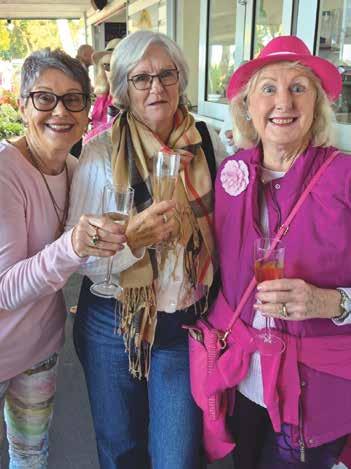
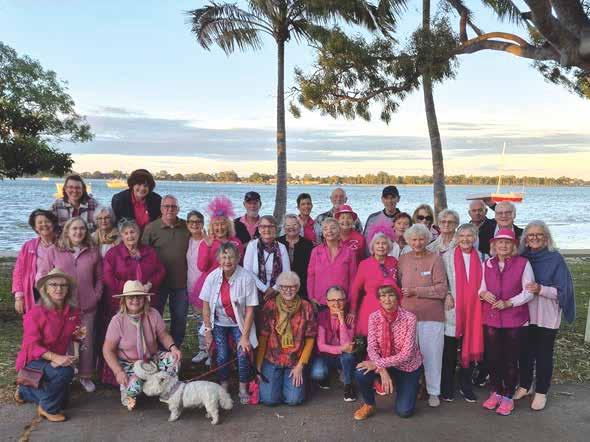
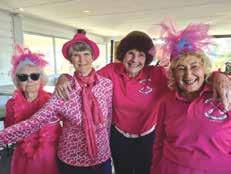
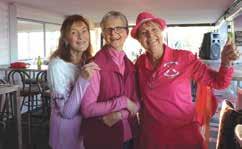
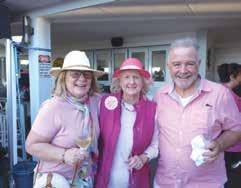
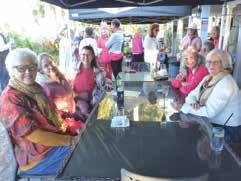
Did you know that Bribie Dragons Breast Cancer Survivors Inc. known as Bribie "Pink" Dragons, is the largest breast cancer survivors’ group in the local area?
For nearly two decades, we have been dedicated to providing unwavering support, sisterhood, and vital camaraderie to survivors and supporters alike.
We recently gathered to celebrate our incredible 18-year milestone. We might be a group that has been around the block a few times, but the smiles were massive, the
Bribie Arts Centre Matthew Flinders Art Prize 2026
Matthew Flinders Art Prize 2026 judges John Massy and Ronelle Reid examined more than 200 entries in the exhibition/competition this year to arrive at the winners.
Who’d want their job?
So much talent and quality to choose from.
The successful works are named and prizes presented at the MFAP opening event on Friday night, July 17. And you can see these on Saturday July 18 and until August 7 in the Matthew Flinders Gallery at Bribie Island Community Arts Centre. John and Ronelle will give a Gallery floor talk on Saturday from 9.30am.
Meet Christine Leonard author of Coochiemudlo: A Mariner’s Mystery
Artists are welcome to attend and discover the reason behind their choices and they can also ask the judges for an assessment of their work/s.
The MFAP action continues through the exhibition run. Artists will demonstrate their creative techniques in the Gallery each day, you can vote in the People’s Choice , which will be decided and announced on August 1, and the MFAP raffle of lovely art works is on sale until August 7.
On Sunday, August 26, at 11am, you can join an Artists’ Discussion Group in the Gallery. Numbers are limited, so booking essential on 3408 9288 please.
As we celebrate our annual signature event, the Matthew Flinders Art Prize, we’re delighted to bring you a captivating story that ties this namesake explorer to another island in Moreton Bay.
Christine Leonard’s fascinating book, filled with drama, hilarity and colourful characters, links directly to Matthew Flinders’ 1799 voyage around Moreton Bay. The modern-day identity of Flinders’ Sixth Island was a mystery until Coochie resident Edward Field Jones set out to solve it.
10am Saturday, July 25 Boardroom
Bribie Island Community Arts Centre
On the subject of Matthew Flinders, author Chrisine Leonard, from Coochiemudlo Island, has written a fascinating story of his discovery and naming of Moreton Bay islands in 1799.
Flinders’ journey up Pumicestone Passage and landng on Bribie Island has been well documented.
Indeed, it’s to commemorate this in July each year, the Bribie Community Arts Society hold his namesake event in his namesake galley.
In her latest book, “Coochiemudle: A Mariner’s Mystery’’, Christine has
plotted the story of his landing on Coochiemudlo and the hilarious and fascinating tale of local resident Edward Field’s role in confirming it was Flinders’ unnamed “ Sixth island’’
Meet Christine and hear her wonderful story at the Bribie Arts Centre on Saturday July 25 at 10am. Books will be available for sale.
FREE event, but please book online here https://www. bribieartscentre.com.au/copy-ofwhats-on or at the Centre, on 3408 9288
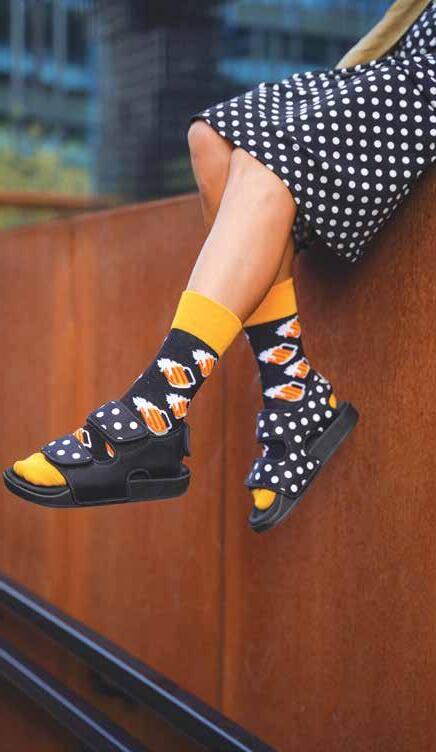
SILLY SOCKS AND CROQUET.
a ridiculous title for an article about croquet you may say. But wait, let me explain. Croquet is a great sport for all ages. It incorporates thinking strategies, exercise, fresh air, socializing but most of all fun. Recently I reported the Gala Day entitled Autumn Colours when competitors wore the colours of Autumn.
Well on the 13th of June Bribie Island Croquet Club held another Gala Day with the title SILLY SOCKS. Now these Gala days are very popular and players come from many of the surrounding clubs to join in the fun. Players played 6 games changing partners after two games.
As usual the amazing morning tea laid on by the members was very popular.
There were winners and losers but all agreed it was great fun.
Everyone entered into the fun and I didn’t know so many ridiculous ,sorry silly Socks existed!!
The next Gala day is Halloween so I will need to brush the cobwebs off My broomstick and save petrol. But one more thing.
Here is an excellent offer for everyone. How often can you have fun and something good for free? Well, let me explain.
You could come along with friends and have 6 weeks free to Come and Try Croquet!
Community Coaching Course starts on Thursday the 6th of August.
Don’t miss this great offer look out for the next issue with more information.
Come and have some fun.
Kathy Vincent.
8 July 2026: The Majestic Theatre Pomona departs 8.30am –kindly supported by Busy Fingers Fundraisers
31 July 2026: Happy Hour @ Coungeau House 3.30pm
18 August 2026: Vietnam Veterans’ Day @ Coungeau House 5pm
SAVE THE DATE
20 September 2026 – Modern Veterans Day, Woorim
JOIN US
Membership is open to all current serving and ex-serving ADF members, their spouse, and family members. Email veteransbribie@gmail.com for further information
THE TIME DETECTIVE
From the sea bed to a Museum case
Oneof the biggest problems for collecting museums is determining a safe provenance and legitimacy of ownership for objects that are offered for sale or as a donation. The ability to replicate artefacts is increasingly becoming more sophisticated and harder to detect.
Recently the Abbey Museum was offered about thirty attractive Pre-Columbian Chorrera figurines from the estate of a wealthy Italian architect.
They had been collected while travelling in South America, travelled around the world during his career, and eventually ended up in a garage in Queensland. The Chorrera culture flourished from 1300 BC to 300 BC in Ecuador, South America.
They were a remarkable group of figurines, modelled to represent almost every aspect of human behavior. The sad thing was that when we had them dated through an expensive thermoluminescence test in London, they all came back with a date of 1960, which means they are probably museum copies but not archaeological objects. Very disappointing.
Thermoluminescence (TL) dating measures the age of quartz crystals trapped at firing in ancient pottery and is one of the most secure and reliable dating forms for antiquities, requiring only a tiny sample.
However, the sale of antiquities looted from burial sites or museums is accentuated in times of war or hardship.
Rare Luristan bronzes from western Iran are today flooding the antiquities market; some are clever replicas but many are ancient metalwork. They are collected by Iranian villagers struggling for livelihood in the face in crippling sanctions.
Sadly, most are stolen with no record of their archaeological context, and this means a cultural loss for the country of their origin. But it is not only local villagers who are digging up antiquities.
Countries like Egypt, Greece and Italy are seeking the return, not only of illegally looted antiquities but also objects that had been acquired legally by sale but when the country itself was under foreign rule. But it is hard
to see the Neues Museum in Berlin returning the bust of Nefertiti, or the British Museum with sculptures and obelisks from Egypt.
When several objects were recently stolen from the Abbey Museum, the Egyptian Government was very quick to contact us to see what was involved and assure us that they were quite content for their cultural heritage to be displayed here in Caboolture.
Many museums contain the treasures of years of colonial pillaging. The famous Elgin marbles and the Benin bronzes from west Africa, both in the British Museum, are today at the centre of an intense debate over ownership.
The Abbey Museum has several objects that were brought back to England by political officers, teachers and missionaries during the days of empire as souvenirs or mementos of the travels overseas – weapons from Naga headhunters; lacquerware from Burma; poison arrows from the Congo.
Some were freely given, like a priceless palm leaf manuscript given by the abbot of a Buddhist monastery in Ceylon (Sri Lanka) to John Ward, founder of the Abbey Folk Park in England, when a schoolmaster in the Far East.
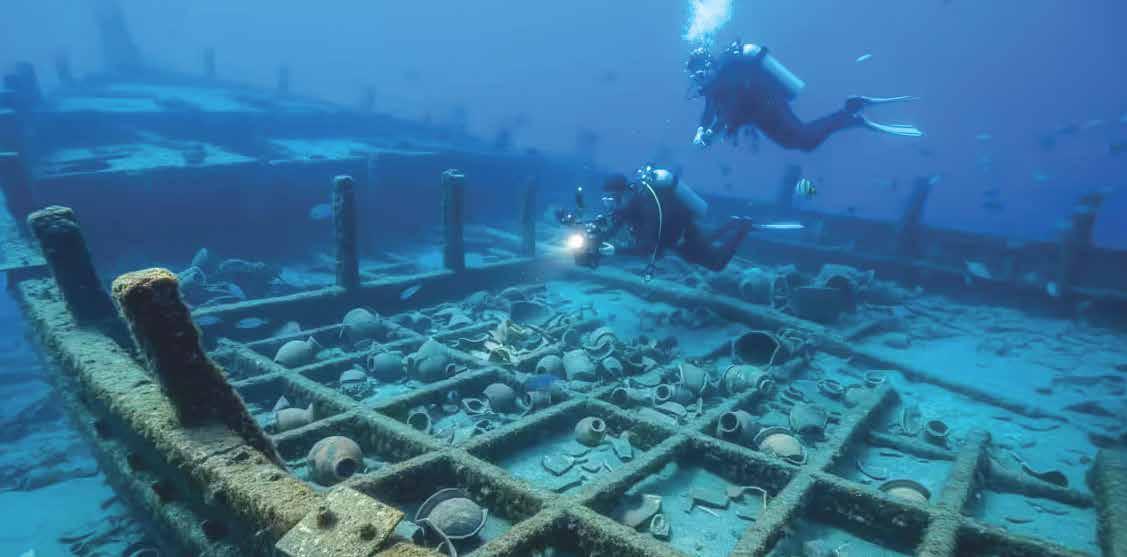
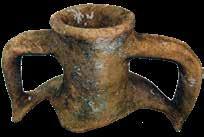
Artefacts are also taken from cultural sites by tourists unaware of their national significance. Three large fragments of Hellenistic and Roman transport amphora collected during a holiday in Cyprus were recently offered to the Abbey Museum.
Research showed they came from a popular diving spot, but also one that is an important archaeological site, where numerous wrecks dating back to the Bronze Age and ancient Greece have been discovered. We contacted the Antiquities Department of the Republic of Cyprus who were grateful we had reported the find.
After several months of negotiation, which required parliamentary approval, the Republic of Cyprus has now agreed to the fragments being permanently loaned to the Abbey Museum in Caboolture, Queensland! They will go into our revamped Ancient Rome archaeological display later this year.
2500-year-old-greek-shipwreck-is-revealing-the-secrets-of-mediterranean-trade (courtesy of Mediterrean Archaeology Assoc)
Neck & handles of Roman amphora, Cyprus
Michael Strong (Senior Curator)
ON BRIBIE
MONDAY
EUCHRE
Bribie Bowls Club 12.00pm
Contact Annette on 0414622490 TRIVA
Bribie Island Hotel 6.30pm
Bribie Island R.S.L 7.00pm
TUESDAY
BINGO
Bribie Island R.S.L 10.00am POKER
Bribie Island Hotel 6.30pm
WEDNESDAY
MUSIC BINGO
Bribie Island Hotel 6.30pm
Bribie Island R.S.L 7.00pm RAFFLES
Solander Lakes Bowls Club - 6.30pm (tickets on sale from 5:30pm)
THURSDAY BINGO
Bribie Island R.S.L 7.30pm RAFFLES
Bribie Island R.S.L Fishing Club 4.30pm
Every Thursday at the RSL prizes are Meat Vouchers from Avondale Meats and Seafood Vouchers from Saviges.
FRIDAY
MEAT TRAY RAFFLES
Bribie Island Bowls Club 4.30pm
Bribie Island Golf Club 5.30
Blue Pacific Hotel (from) 3.00pm
Solander Lakes Bowls Club - 6.30pm (tickets on sale from 5:30pm)
Enjoy playing 500 Cards?
Join a like-minded group who meet on Monday afternoons at the RSL Anzac Room from 12.45pm-3.45pm. $5 which includes raffle prize.
Please arrive 10mins before play starts at 12.45pm
Further information please ring Carole 0438 713 663
Beachmere District Community
The B.D.M.S. Community Markets are held at the Men's Shed 53 Rogers Street Beachmere, every 1st Saturday of the month 7.30am - 12pm
Bribie Island BIDCA Markets
The Bribie Island BICA Markets are held at Brennan Park, Bongaree, the 3rd Sunday of each month from 6am -12pm Bribie Rotary Markets
The Rotary Markets are held at Brennan Park, Bongaree on the second Sunday of each month from 6.30am – 12 noon
Queensland Cancer Council
The Cancer Council Markets are held at Brennan Park, Bongaree on the first Sunday of each month from 7am to 12 noon.
LUNCH MARKETS - Sylvan Beach (Farmers Market)
First Saturday of each month from 8am to 1pm held in the park opposite the Bribie Island Hotel. Funds raised to E.P.C.S, Ass, 0417629957
The Bribie Island Lions Market
2nd Sat of the month at Tintookie Park Woorim 7am - 1pm.
Bribie Woodcrafters & Bribie Island Gem Club
Open day, Demonstrations & Sales - last Sunday of each month
8am to 12noon Held at Bribie Art Centre 191 Sunderland Dr, Banksia Beach
Mystic Journey Markets change of location
Saturday November 15th ~ 9am ~ 2pm
Saturday December 6th ~ 9am ~ 2 pm Saturday December 20th ~ 9am ~ 2m 4pm ~ 8pm
There is also an outdoor market to run alongside indoor market called This ‘n’ That
Guardian quick cryptic crossword
player breaks of canapes
Guide (5) American ironget her getting into immediately eyelids start (7)
Across
1 Help Lassie use sty without limits (6)
3 So sad bride dismantled items of furniture (10)
Crosswords - QUICK & CRYPTIC
4 Speak no words, somewhat understand (4)
Across
8 Government quitting land –drinks for everyone! (5)
9 Come in, get into here, no outsiders! (5)
5 Perhaps fa or la some Slipknot enthusiastically (4)
Down
6 Noun, perhaps, for blade, not small (4)
1 Help Lassie use sty without limits (6)
4 Speak no words, somewhat understand (4)
10 From inside, watches crab bleakly claw about (8)
13 Speech from old Bangui sages, not taking sides (8)
TODAY’S
TRICKS
Clues begin or end with a definition of the answer. The rest is one of these: Anagram Anagram of answer and hint that there’s an anagram
1 So, cars needing repair on the other side (6)
7 In translation losing some modern words (10)
2 Naked ass, squat, try and pee at a right angle (6)
11 Captivated by Elphaba, Nan abandoned fruit (6)
8 Government quitting land – drinks for everyone! (5)
12 E-file’s malfunctioned – it was me, I snapped it (6)
3 So sad bride dismantled items of furniture (10)
3 Press’s outspoken demands (5)
Skin rash oddly deep, I’m starting to itch, unfortunately (9)
CRYPTIC SOLUTION
Type of food (French) that is delicious starter (5) 6 Guy with cape swallowing drug that 12 might like (9) 7 I can show one score, not 150 (5) 8/20 Maybe Cocaine’s indicative of normal songs (7,7)
Overexcited setter to noisily approach flowering plant (9)
Places that display musical
16 Cold, missing female is stiff (5)
17 Stole from dealer’s car forecourt (5)
9 Come in, get into here, no outsiders! (5)
18 Unites weak men lacking some energy (4)
14 Take out odd prawn, peeled (4)
10 From inside, watches crab bleakly claw about (8)
19 Tea set laid out – it’s my property (6)
5 Perhaps fa or la some Slipknot enthusiastically (4)
15 Charlie deserting locked-up geriatric (4)
13 Speech from old Bangui sages, not taking sides (8)
16 Cold, missing female is stiff (5)
Down
17 Stole from dealer’s car forecourt (5)
1 So, cars needing repair on the other side (6)
18 Unites weak men lacking some energy (4)
2 Naked ass, squat, try and pee at a right angle (6)
19 Tea set laid out – it’s my property (6)
CRYPTIC
Across
1/5 Type of novel ice, not scenic if cracked (7,7)
9 Ray meeting first lady magistrate (5)
10 Vagrant makes one point before shouting (9)
11 Concluded special finish to exhaust (9)
12 The old boring mean settler (5)
13 Ruins potatoes? (5)
15 Expert ship’s captain mostly occupied (9)
18 Liking the present, love? It’s a starter (9)
19 Alarm son accompanying trim Papas’ woman (5)
21 Coach tyres unable to operate reliably at the beginning (5)
23 Lacking love, Chinese philosophy embraces yelling and uncontrolled dancing (9)
25 Instrument associated with West African city and lake (9)
26 Move out of the way of car (5)
27/28 Sounds right wearing underwear at first in hot baths (7,7)
SOLUTIONS
6 Noun, perhaps, for blade, not small (4)
‘Senator arranged crime (7)’ gives TREASON Hidden word(s) Answer hidden in clue’s words ‘Some have altered meat (4)’ gives VEAL Deletion Remove letters from another word for answer
7 In translation losing some modern words (10)
11 Captivated by Elphaba, Nan abandoned fruit (6)
‘Car trip with no parking, bad thing (3)’ gives SIN Naked words Remove first and last letters of another word for answer
12 E-file’s malfunctioned – it was me, I snapped it (6)
‘Called for citrus to be peeled (4)’ gives RANG
14 Take out odd prawn, peeled (4)
15 Charlie deserting locked-up geriatric (4)
Down
1/18 Determined effort to meet upstairs for massage (7,7)
2 Unsophisticated member enthralled by trendy European worker (9)
5 Type of food (French) that is delicious starter (5)
6 Guy with cape swallowing drug that 12 might like (9)
7 I can show one score, not 150 (5) 8/20 Maybe Cocaine’s indicative of normal songs (7,7)
14 Overexcited setter to noisily approach flowering plant (9)
16 Places that display musical boards? (9)
17 In favour of ex-president (Democrat), blocked and debarred (9)
18 See 1
20 See 8
22 Some barristers examine brief (5)
23 Test introduction of tandoori bread in the Middle East (5)
24 Bottom part of horrid android’s turned up (5)
QUICK SOLUTION
Kids Zone
SPOT THE 10 DIFFERENCES Sudoku
1066
When England Changed Forever
By Al Finegan
Inthe long story of England, there are years that passed quietly, and there are years when history took a dramatic turn. 1066 was one of those.
Before that year England was AngloSaxon, ruled by warrior-kings with names like Ethelred, Cnut and Edward and governed through shires with royal authority maintained through ealdormen (earls) and sheriffs. Its language was Old English. Its aristocracy was native. Its links were as much Scandinavian as they were continental.
After 1066 it would be Norman, Frenchspeaking rulers, stone castles rising over towns, feudal obligations binding lords to king, and a new aristocracy whose names would echo down the centuries, names like de Warenne, de Clare, or FitzOsbern. It was not a gentle transition. It came at the point of a spear.
The English King from 1042 was Edward the Confessor. In January 1066, he lay dying in Westminster. He was a pious and childless king. With no son to inherit the throne, the question of succession loomed heavily. In the brutal politics of the eleventh century, a crown was rarely passed peacefully, when bloodlines were uncertain. And there were three men who believed it was their rightful crown. Three principal men … three men who were watching and waiting.
First was Harold Godwinson, Earl of Wessex. He was England’s most powerful nobleman, brother-in-law to the king, experienced in war and administration. To many in England, Harold was the natural successor. He had the support of the leading nobles - the Witan - the council that advised the king. Second was William the Conqueror, Duke of Normandy across the Channel. William claimed that Edward, who had spent years in Norman exile, had once promised him
the English crown. More explosively, William asserted that Harold himself had sworn an oath to support that claim. The third was Harald Hardrada, a formidable Scandinavian warrior-king. Hardrada based his claim on earlier dynastic agreements linking the English and Danish crowns. To him, England was part of a broader North Sea world.
Edward died on 5 January 1066. The Witan moved quickly. Harold Godwinson was crowned king the next day. The speed of this accession tells its own story - England could not afford a power vacuum.
But if Harold believed his crown was secure, he misjudged the ambition of the men beyond England’s shores. The story of Harold’s alleged oath to William has echoed down the centuries, embroidered by chroniclers and immortalised in thread on the Bayeux Tapestry.
Some years before 1066, Harold had crossed to Normandy - perhaps blown off course, perhaps on a diplomatic mission. There, according to Norman sources, he swore to support William’s claim to the English throne. In the tapestry scene, Harold’s hand rests upon holy relics, heightening the drama of perjury when he later accepted the crown.
Did he swear freely? Was he coerced? Did he even understand what he was swearing to? Anglo-Saxon sources are conspicuously silent. What matters is that William believed - or chose to believe - that Harold had betrayed him. And betrayal demanded punishment. Harold’s Kingdom was now under threat. His position in early 1066 was precarious. England’s defence relied upon the fyrd, an Anglo-Saxon militia composed of free men, farmers, and landowners compelled to serve in
regional or national defence. These 8,000 men came under command of the king’s professional housecarls - seasoned warriors armed with great two-handed axes. Harold assembled his forces along the southern coast, waiting for William’s invasion fleet. The English army waited patiently, eyes glued on the horizon. But the wind did not favour William. Weeks passed, then months. Supplies ran thin. The fyrd, unpaid and tied to harvest duties became restless. Harold knew they could not be held indefinitely. In early September he reluctantly disbanded much of his army. And as is often the case, it was then that disaster struck - not from the south, but from the north. Harald Hardrada had landed in Yorkshire with a formidable Viking host, joined by Harold’s own estranged brother, Tostig Godwinson.
Harold now faced impending invasion on two fronts. He reacted with astonishing speed. He marched his army nearly 300 kilometres north in a matter of days. On 25 September 1066, at Stamford Bridge, he caught Hardrada by complete surprise. In a savage battle, the unprepared Norse soldiers were massacred. Norse sagas tell of a lone Viking holding a narrow bridge against the English advance until he was stabbed from beneath by a spear thrust through the planks.
Hardrada was killed. Tostig was killed. The Norwegian threat was crushed. It was a triumph. My photo of the field where the battle took place But triumph came at a terrible cost. Harold’s army was exhausted. Many of his best housecarls had fallen. As Harold regrouped his army, a messenger galloped to his camp. The wind had changed.
Soon after, another exhausted messenger arrived. William had finally
crossed the Channel. On 28 September 1066, William landed at Pevensey in Sussex. His army was a professional force: Norman knights, Breton cavalry, archers, infantry - and 7,000 men. He brought horses, armour, siege equipment, and carpenters ready to build fortifications. He immediately constructed a wooden castle. It was a clear statement of intent.
Harold knew he had to act immediately. He turned his weary army south, Speed was essential. He force marched his depleted army, now about 5,000 strong, back to Sussex. Any delay would allow William to ravage the countryside and draw support.
On 14 October 1066, the two armies met near a hill later known as Senlac, close to the town now called Hastings. Harold chose high ground. His army
formed a dense shield wall along the ridge, overlapping shields, axes ready, a barrier of wood and iron. This AngloSaxon method of warfare was solid, defensive, grounded in cohesion.
William deployed his forces in three divisions - Bretons on the left, Normans in the centre, French contingents on the right. Archers loosed volleys uphill. Infantry advanced. Cavalry followed. Again and again the Normans attacked. And again and again they were repelled. The shield wall held. At one point a rumour spread that William had been killed. Norman lines faltered. Some units broke and fled downhill. English troops pursued. It was a fatal mistake.
William, very much alive, lifted his helmet to show his face and rallied his men. Feigned retreats - whether deliberate or opportunistic - began to draw segments of the English line out of formation. Once broken, the shield wall lost its strength. The battle raged back and forth all day. As evening approached, the English line thinned. Casualties mounted. Each time the arrows rained down, the English soldiers crouched behind their large shields. Harold, crouching behind his shield decided to have a quick look to see
what was happening down the hill. As he stuck his head above the top of his shield an arrow came down and pierced his eye. The Bayeux Tapestry famously depicts a figure with an arrow in his eye beside the words “Here King Harold is killed.” When Harold fell, English resistance faltered. His brothers were dead. His housecarls fought on around his body, but without leadership their defence collapsed.
By nightfall, William stood victorious. The battlefield was strewn with the dead of two kingdoms. But, England had lost its king. Victory at Hastings did not instantly secure England for William. He still faced resistance. London hesitated. Anglo-Saxon nobles considered elevating Edgar Etheling, a boy with royal blood.
William advanced methodically, circling London, burning settlements to demonstrate his resolve. Faced with devastation and lacking unity, English leaders submitted. In Westminster Abbey on Christmas Day 1066, William was crowned King of England. The ceremony was tense. Norman guards outside, hearing cheers within, believed an uprising had begun and set nearby houses ablaze.
William knew that conquest must be enforced. Across England, motte-andbailey castles (fortifications featuring a wooden or stone keep on a raised earth mound (motte), surrounded by a protective ditch and palisade), were built. From their heights Norman lords controlled towns, trade routes, and rebellious shires.
The Anglo-Saxon elite was systematically displaced. Lands were confiscated and granted to Norman followers. Within a generation, almost all major landholders in England were Norman. The ruling class had been replaced.
Resistance flared repeatedly, particularly in the north. William would not permit divided loyalty. In 1069/70 he responded with brutal force in what became known as the “Harrying of the North”. Villages were burned, crops destroyed, livestock slaughtered. Famine followed. Contemporary chroniclers describe widespread suffering. It was a calculated terror campaign. William understood that the Church was essential to legitimising his rule. Bishops crowned kings. Monasteries recorded history. Clergy reinforced divine authority. Far from attacking the Church as an institution, William replaced many Anglo-Saxon bishops and abbots with Norman clergy, strengthened ties with Rome, promoted church reform, and founded new abbeys. One of the most striking examples is Battle Abbey, built
on the site of the Battle of Hastings itself. According to tradition, the high altar was placed where Harold fell. William founded it as both a religious house and a memorial, and possibly as an act of penance for the bloodshed. By 1085 William had secured his realm sufficiently to undertake one of the most remarkable administrative feats of the Middle Ages. It was a comprehensive survey of his kingdom’s lands and resources. The result was the Domesday Book. Every manor, plough team, mill and meadow was recorded. It was taxation made systematic, governance made precise. Also known as the Great Survey of much of England and parts of Wales, it was completed in 1086. The manuscript was originally known by the Latin name Liber de Wintonia, meaning "Book of Winchester", where it was originally kept in the royal treasury.
The Anglo-Saxon Chronicle states that in 1085 the king sent his agents to survey every shire in England, to list his holdings and dues owed to him. Written in Medieval Latin, it was highly abbreviated and included some vernacular native terms without Latin equivalents. The survey's main purpose was to record the annual value of every piece of landed property to its lord, and the resources in land, labour force, and livestock from which the value derived.
The name "Domesday Book" came into use in the 12th century. Richard FitzNeal wrote in the Dialogus de Scaccario (c. 1179) that the book was so called because its decisions were unalterable, like those of the Last Judgment, and its sentence could not be quashed
The Norman kings brought with them continental ideas of feudal obligation. Land was held in exchange for service. Loyalty ran upward in a chain that terminated with the king. French became the language of the court and ruling class, yet Old English survived among the people. Over centuries the two would blend, shaping the English language that we know today. It altered architecture, aristocracy, language, law, and identity.
Yet it is easy to imagine a different outcome. What if Harold had not marched north, or if he had delayed engaging William? Or if in that vital second he had not taken a peek over his shield, and the shield wall had lasted for another hour? Perhaps we would be living in a different world today.
Nevertheless, William of Normandy did claim his crown by force of arms. England became part of a broader European political sphere. The Norman dynasty would shape not only England but, in time, much of Britain. For centuries afterward, English monarchs would hold lands in France, speak French at court, and wage wars rooted in that continental inheritance. And it all evolved from that single year, 1066, when England changed forever.
My photo of the field where the battle took place
King Harold Godwinson died in the Battle of Hastings, on October 14, 1066, Senlac Hill Sussex, England.
JULY HISTORY of BRIBIE ISLAND
YouSignificant happenings over the years.
Barry Clark OAM - Bribie Island Historical Society
are reading this article in July, a special month for events in Australia and Bribie Island, and a reminder of how much our world has changed, since the first white footsteps in the sand of Bribie 227 years ago.
It was in July 57 years ago when man first landed on the moon in 1969. A few Senior readers may remember the Sydney Harbour Bridge opening in 1932, or the introduction of Cane Toads into Australia in 1935.
Climate Change is topical, but significant change been going on for many millions of years. In July 18,000 years ago, at the end of the last Ice Age, the coastline was 50 kilometres to the east, and what in now Moreton Bay was all dry land.
The sea level has risen125 meters in the last 12,000 years and the people who occupied land that is now Moreton Bay had to adapted to climate change as the water rose.
The sea level rose to a few metres higher than it is now, then went down a bit, and the Queensland coastline and Bribie Island has been this way for about 1000 years.
JAMES COOK - JULY
In July 1769, James Cook observed the Transit of Venus in Tahiti and went on to claim the east coast of Australia in 1770. He named the Glass Houses and Cape Morton (without the E which was a later transcription error) but did not see Moreton Bay or any islands as he was a long way offshore.
In July 1770 Cook and his crew desperately repaired damage to the Endeavour after having struck the Great Barrier Reef.
They were lucky to repair the hole in the ship and find a way out of the reef, to sail back to England with 44 of
the original crew of 100 men after a three-year journey of discovery.
The suburb of Banksia Beach was named 200 years later for Joseph Banks, a wealthy naturalist who sailed with Cook, and his Swedish botanist Daniel Solander. They never saw Bribie Island
Cook spent 11 years of his short life on three journeys of explorations aboard Endeavour and Resolution sailing the Pacific Ocean, searching for a Great South Land and North West Passage, before his death in Hawaii in 1779 at 50 years of age.
JULY 16 ANNIVERSARY
Thirty years after Cook, Matthew Flinders was the first white man to sail into Moreton Bay and set foot in the sand of Bribie Island on 16 July 1799. Aboard the sloop Norfolk with his much-travelled cat Trim, and aboriginal
companion Bongaree, the 25-year-old Flinders was searching for big inland rivers. Flinders spent 16 days in Moreton Bay, 11 days on Bribie Island, where he named Pumicestone River, and climbed a Glasshouse mountain, but failed to find what we now know as the Brisbane River.
There are many tributes and sculptures of Flinders around the world, but the only public figure of Bongaree, anywhere in the world, is the sculpture we erected outside the Bribie Seaside Museum in 2023.
CONTINENT of AUSTRALIA
Flinders was a Commander at the age of 27 and captained the Investigator in 1801 to survey the entire coastline of New Holland and New Wales, sailing anticlockwise around this vast continent, mapping and naming thousands of locations.
Flinders completed his circumnavigation in 1803, proving for the first time that this was one vast island continent, and suggested the name AUSTRALIA. His proposal in 1803 that the continent be named Australia, was finally accepted in 1817 three years after his death.
Returning to England he sailed via Mauritius, not knowing that France was at war with England, and held prisoner of war for 6 years, eventually getting back to England in failing health in 1810.
He published a book of his adventures and discoveries but died without much recognition in 1814 at the age of 42, the day after his works were published.
Flinders had spent more than twenty Julys of his short life searching the oceans.
JULY 200 YEAR ANNIVERSARY
For the 1999 Bicentenary celebration of that first landing on Bribie Island in 1799, a replica of Flinders sloop Norfolk was built in Tasmania and sailed to Bribie Island for the opening of the Bribie Island Community Arts Centre and the Matthew Flinders Gallery.
SOME WORLD JULY EVENTS
July is special for a variety of memorable world events which include;
1799 Rosetta stone found in Egypt to decipher ancient Hieroglyphs
1623 Pilgrim Settlers arrived in the New World colony at New Plymouth.
1872 Norwegian explorer Roald Amundsen first reached the South Pole.
1945 The first US Atomic Bomb was tested in Mexico. 1969 Astronauts Armstrong & Aldrin were the first men on the Moon.
MORE BRIBIE HISTORY
Historical Society hold public meetings with excellent guest speakers on the second Wednesday of each month at 6;30pm at the RSL Club and visitors are welcome. See more stories & photos of Bribie history on Web site Bribiehistoricalsociety.org.au and Blog http:// bribieislandhistory.blogspot.com or contact us on bribiehistoricalsociety@gmail.com
SPORTS PAGES
BRIBIE ISLAND BOWLS CLUB
Self-Select Pairs Results Friday AM 12 June 2026
Winners: D Kaatz, H Kaatz
Runners up: M James, C Dann
Winning draw: P Lawton, I Holzberger Encouragement: S Chandler, B Snare
Self-Select Pairs Results Friday PM 12 June 2026
Winners: S Telford, B Williams, R Ferguson Runners up: B Lamb, F Crockett, Winning draw: T Bishop, C Chidgey Winning draw: R Black, D Bowers, C Smith Winning draw: D Gibson, A Feichter Encouragement: R Fowler, W Ebert
Random Fours Results Saturday 13 June 2026
Winners: D Draper, W Follett, J Laidlaw Runners up: P Gee, B Hamer, R Warwick Lucky draw: C Stroud, A Pinzger, L Hackwood, L McNamara
Scrounger Results Monday 15 June 2026
1st: G Jackson
2nd: C Stroud
3rd: E Mapletoft
Self-Select Triples Results
Tuesday 16 June 2026
Winners: G Coleman, J Lonsdale, J Coleman Runners up: J Downey, C Christianson, I Jones
Winning draw: F Crocket, R Eaton, BJ Adams Winning draw: G Paekau, S Jackson, K Henry
Winning draw: L Tweedle, S Hose, L Tibbett Encouragement: A Feichter, K Piva, D Gibson
Self-Select Pairs Results
Wednesday AM 17 June 2026
Winners: D Gibson, A Feichter
Runners up: L Murphy, J Oliver
Winning draw: V McDermott, M Gittins Encouragement: J De Ruyter, K Brown
Self-Select Pairs Results
Wednesday PM 17 June 2026
Winners: T Comacchio, A Sturm
Runners up: J Cullen, S Chandler
Winning draw: T Bishop, D Dodd
Winning draw: K Piva, W Gilbert
Winning draw: R Ferguson, M Todd, W Gunners
Encouragement: B Snare, I Jones
Random Triples Results Thursday 18 June 2026
Winners: G Riley, B Hamer, J Downey Runners up: C Stroud, J Hilliar, J De Ruyter
Winning draw: W Gunders, L Hackwood, R Warwick
Winning draw: G Frew, K Henry, M Adams
Self-Select Pairs Results Friday AM 19 June 2026
Winners: D Dodd, F Grimsey
Runners up: V McDermott, M Gittins Winning draw: N
Holsberger, G Lawton
Encouragement: V McDermott, M Gittins
Self-Select Pairs Results Friday
PM 19 June 2026
Winners: P Nixon, E Holliday
Runners up: C Perkins, M Beutel
Winning draw: J Cullen, W
McDougal Winning draw: D Beadman, G Fowler
Winning draw: B Svensson, C Neive Encouragement: K Thorton, A Mann
Random Fours Results
Saturday 20 June 2026
Winners: B-J Adams, K
Mulpeter, P Bennett, J De Ruyter Runners up: G Mulpeter, G Hutchison, J Wallis, I Teakle
Lucky draw: B Castle, J Teakle, K Lew Lucky draw: A Russell, B Hamer, T Binns
Scrounger Results Monday 22
June 2026
1st: M Todd
2nd: M James
3rd: J Falvey
Self-Select Triples Results
Tuesday 23 June 2026
Winners (HWS) : J Coleman, G Coleman, J Lonsdale
Winners: (LWS): M Cole, L
Shephard, C Shephard, G
Hemphill Runners up (HWS): P
Takanen, I Jones, K Takanen
Runners up (LWS): D Puls, N Ramage, J Sutherland
Winning draw: D Bishop, L Beaven, T Erfurth
Winning draw: J Hosie, M Gittins, B Hosie Winning draw: A Wells, K Brown, P Maloney
Encouragement: B Garfield, E Bateman, M Garfield
Self-Select Pairs Results
Wednesday AM 24 June 2026
Winners: D Heath, R Eaton
Runners up: J Brazier, D McDougall Winning draw: L Murphy, J Oliver
Encouragement: J Cullen, S Chandler
Self-Select Pairs Results
Wednesday PM 24 June 2026
Winners: B Sellars, G Merrin
Runners up: N Holzberger, J Mercer Winning draw: C Brayley, J Skoien
Winning draw: G Reilly, F Crockett Winning draw: D Beadman, G Fowler
Encouragement: C Thorton, K Thorton
Random Triples Results
Thursday 25 June 2026
Winners: D Cherry, P Boyland, M Gaggiano Runners up: P Cook, J Hilliar, J Downey
Winning draw: G Hutchison, C Ormerod, P Takanen
Winning draw: K Brown, S Muller, R Brinton
BONGAREE BOWLS RESULTS
Bongaree Bowls Club Results 5/6/26 - 18/6/26
Results of Friday 2-4-2 5/6
Winners: Bob Vonarx, Pam Walker
R/Up: Wendy Rollason, Paul Kruger
Results of Tuesday Paddle Pop Draw Triples 9/6
Bonus Draw: Jackpot $60 next week
Results of Thursday Jackpot Pairs 11/6
Winners: Imelda Valentine, Noela Gray
R/Up: Peter McQueen, Gary Pincott
Results of Friday 2-4-2 12/6
Winners: Col and Sandi Hodges
R/Up: Maureen and Richie Ferguson
Results of Saturday Scroungers 13\6
1st: Peter Caruso. 2nd: Peter Furlong. 3rd: Errol Fender. 4th: Peter Blake
Results of Tuesday Paddle Pop Draw Triples 16/6
Winners: Christine Nathan, Glen Griffiths, Ron Wilson
R/Up: Kath Gambling, Pat Spice, Bob Vonarx
Bonus Draw: Pip Hammersley, Joanna Horsley, Terry Keatch
Results of Wednesday 4’s 17/6
Winners: Ron Carruthers, Terry Keatch, Doreen Pennery, Jim Warrick
R/Up: Billy Wilkins, Trevor Mickelborough, Jimmy Parker, Anthony Gordon
Results of Thursday Jackpot Pairs 18/6
Winners: Bob Thirwell, Trevor Mallouk
R/Up: Diana Stowers, Ian Gillies
SOLANDER LAKE BOWLS RESULTS
Tuesday 9 June 2026 - Club Select Triples:
Winners: Will Luke, Beryl Moor, Ralph Chaplin 2nd: Bill Dobe, Michael Whiteside, Merv Adams 3rd: Julie Watson, Merv Boike, Judy Pursehouse
Wednesday 10 June 2026 - Self Select Pairs - no bowls, washed out
Thursday 11 June 2026 - Self Select Triples:Winners: Jeff Farmer, Ray Griffin, Vicki Mitchell 2nd: Rod Townsend, Graham Hubbard, Keith Tucker 3rd: Brad Storey, Des Stewart, John Sly
Friday 12 June 2026 - Self Select Pairs: Pool A Winners: Fred Tarry, Bill Hasted Pool A runners-up: Steve Jameson, Ralph Chaplin Pool B Winners: John Thiele, John Sly Pool B runners-up: Tony Miguel, Andy Dehnert
Saturday 13 June 2026 - Club Select Triples: Winners: Paul Bottger, Darren Jones, Alan Thompson 2nd: Mike Wilson, Anne Johnson, Ross Luscombe
Tuesday 16 June 2026 - Club Select Triples:Winners: Will Luke, Cheryl Crawford, Jeff Niblett 2nd: Ann Larsen, Debbie Jackson, Gary Podosky 3rd: Bill Dobe, Ian Jackson, Ross Luscombe
Wednesday 17 June 2026 - Self Select Pairs: Winners: Eric Holliday, Errol Sharp 2nd: Maurie Bonollo, Terry Nash 3rd: Des Stewart, Tony Grimmond Jackpot ($396): Eric Holliday, Errol Sharp
Thursday 18 June 2026 - Self Select Triples/Pairs:Winners: Margaret McKenzie, Jim McKenzie, Denis John 2nd: Wayne Mitchell, Ray Griffin, Jeff Farmer 3rd: Ann Mehmet, Karron McComb Jackpot ($150): Robert James, Cheryl Crawford, Bruce Crawford
Friday 19 June 2026 - Self Select Pairs: Pool A Winners: John Lewty and Karron McComb Pool A runners-up: Terri and Barry Curtis Pool B Winners: Gavin Dunlop and Ian Jackson Pool B runners-up: Greg Jones and Greg Caplick
Saturday 20 June 2026 - Club Select Triples: Winners: Tom Dempsey, Rod Horsfall, Ross Luscombe 2nd: Gaenor Mallet, Rosa McLeod, Merv Adams
Club LadiesChampionships: Vets ChampionshipSingles - Raie Stuart defeated Marieke Moore (25-17) Men's Vets Singles Championship - Eric Holliday defeated Ron Boddenberg (25-22) Men's Triples Championship - Alex Kinnear, Eric Holliday, Ron Boddenberg defeated Terry Nash, Peter Hodgson, Steve Ross (24-18)
District MoretonChampionships: Bay District Bowls Association - Men's Novice Pairs Champions - Ian Jackson and Wayne Shackell
Sat 6 June N/S 1 J Kinross & R Floquet 2 S Watson & R Sutton 3 M Arthur & P Edis
E/W 1 J Reiter & B Connell
2 D Scown & J Easey 3 N Denvir & G Lock
Wed 10 June Restricted
Pairs: 1 J Kinross & R Floquet
2 L Groves & A Fielding 3 B Moxham & R Deacon
Sat 13 June N/S 1 J Hays & C Frederikson 2 B Pridham & J Budgen 3 L Carr & J Wright E/W 1 J Reiter & B Connell 2 D Scown & J Borowski 3 C & R Perrott
Wed 17 June N/S 1 L Carr & J Wright 2 K Cohen & J Hays
3 H Tyler & L McLaren E/W 1 R King & M O’Reilly 2 L Gadsby & N Denvir 3 L Heap & B Connell
BICBC: Monday 8 June N/S 1 C Page & J Kennedy 2 A Fielding & J Easey 3 M Peterson & D Quinan E/W 1 C & R Perrott 2 D & G Lock 3 S Smith & M O’Reilly
Monday 15 June N/S 1 A Fielding & J Easey 2 M Arthur & R King 3 M O’Reilly & J Lindell E/W 1 S Smith & I Best 2 C &R Perrot 3 J Lawson & A Bronn
The Club welcomes visitors and new players. Phone Ruth 0417 656 693 For lessons phone Helen 0427 567 670.
SPORTS RESULTS
Pawsome Pet Pages
Coffee
Mac, Winston & Lync
Ruby
Opal
Buddha
Riley Angus & Freddie Trevor
Jack
FLOORING, CURTAINS, BLINDS
•
•
it’s best.
Be Ready Before The Rush Upgrade Your Smoke Alarms NOW
The countdown to Queensland’s new Smoke Alarm Legislation is on!
By 1st January 2027, every home must have interconnected photoelectric alarms in all bedrooms, hallways, and living areas.
Don’t Leave It Too Late - Be Compliant Before 2027
Serious safety starts with quality - we use only Clipsal and Brooks Smoke Alarms.
Why upgrade now?
• Demand will surge as the deadline approaches
• Stock shortages and price increases are expected
• Avoid last-minute stress and non-compliance
• Be safe with the highest-quality alarms available
Brooks Features
• Photoelectric technology
• 10-year sealed lithium battery
• Reliable wireless interconnection
• Pet friendly / Insect-resistance design
• Wall controller for easy silencing/testing
• Hearing-assistance options (strobe/vibration)
Don’t leave it too late - book
BRIBIE ISLAND
BRIBIE ISLAND
Under the Bonnet:
Men, Motor Maintenance and the Great Australian Love Affair with Cars
Thereare few sights more Australian than a man standing in the driveway on a Saturday morning, staring into the engine bay of his car with the solemn focus of a surgeon, the optimism of a Lotto winner, and absolutely no intention of admitting he has no idea what that clicking noise is.
The kettle has boiled, the footy is on later, and somewhere nearby a neighbour is pretending not to watch. This is not merely car maintenance. This is ritual.
For many Australian men, the car is not just transport. It is a mate, a memory bank, a toolbox on wheels and, in some cases, the most emotionally available relationship in the household.
A ute, a four-wheel drive, an old Holden, a faithful Corolla with three different shades of paint—each comes with a story.
It got him to work, to the coast, to Bunnings, to the servo for milk and somehow back home with a sausage roll, two cable ties and a new socket set he swears was essential.
Car care, then, becomes a form of affection. Some blokes do not say “I love you” easily, but they will rotate tyres, check oil, top up coolant and wash a vehicle with the tenderness usually reserved for newborn lambs and fresh meat pies.
They know the exact sound of a healthy engine and can detect a mysterious rattle from three suburbs away.
Ask them how they are feeling and you may get a shrug. Ask them about tyre pressure and suddenly you are listening to a keynote address.
There is humour in it, of course. The same man who cannot find the laundry basket can locate a 10-millimetre socket under a pile of rags, receipts and ancient service stickers.
He may forget anniversaries, but he remembers the exact odometer reading when the timing belt was changed. He will insist the car “just needs a bit of TLC,” even when the vehicle is making a noise best described as a washing machine full of gravel being attacked by a magpie.
But beneath the jokes is something genuine. In a country built on distance, work, weather and weekends away, cars have always carried more than people. They carry independence. They carry pride.
They carry the possibility of chucking an esky in the back and heading somewhere with no phone reception and a questionable public toilet.
The Australian car is part practical machine, part passport, part personality test.
Maintenance is also a kind of responsibility. Loving a car is not only polishing it until it reflects the neighbour’s envy; it is servicing it before it lets go on the Bruce Highway, replacing bald tyres before the wet season, and listening when the mechanic says, “Mate, this is not optional.” The true car lover understands that care is not cosmetic.
It is respect—for the machine, the passengers and everyone else on the road.
So let us salute the men who love their cars: the driveway detailers, the shed philosophers, the oil-checking optimists and the blokes who say, “I’ll just have a quick look,” then disappear for four hours.
Their devotion may be greasy, noisy and occasionally accompanied by language unsuitable for children, but it speaks to something deeply Australian.
A car, cared for properly, is more than metal. It is freedom with rego, memory with mudflaps, and love with a slightly overdue service sticker.
Let the Light In
Thereis a particular moment, usually when afternoon light hits the room just so, when dusty blinds and streaked glass suddenly announce themselves. Clean window furnishings can transform that same room, lifting the light and making everything feel fresher. The trick is to work gently and regularly, rather than waiting for a once-a-year deep clean.
Blinds and Shutters
Start dry. Close blind slats and dust with a microfibre cloth, then tilt them the other way and repeat—the sort of small job that seems fussy until you see the cloth afterwards.
Use a vacuum brush for Roman, vertical or cellular styles. For shutters, wipe across each louvre with a soft cloth, taking care not to press too hard. PVC and aluminium can handle a lightly damp cloth; timber prefers minimal moisture and a quick dry.
Curtains
Curtains are often the quiet collectors of a room, gathering cooking smells, dust and the odd reminder of openwindow weather. Give them a regular shake or light vacuum, especially along hems and leading edges. Always check the care label before washing: some fabrics are machine washable, while lined, linen, silk, velvet or blockout curtains may need professional care. Air dry sheers where possible to preserve their drape.
Windows
Leave the glass until last. Brush or vacuum tracks first, where crumbs, grit and mystery fluff have a habit of settling, then wipe sills with a damp cloth.
Clean panes from top to bottom with a lint-free cloth or squeegee, ideally on an overcast day to avoid streaks. Finish by wiping corners and edges for a polished result.
Quick Routine
• Weekly: Dust blinds, shutters and curtain hems.
• Monthly: Spot clean marks and wipe tracks.
• Seasonally: Refresh curtains, deep clean blinds and polish windows.
• Always: Test products first and follow care instructions.
In short, the best results come from cleaning in the right order: dust soft and hard furnishings first, treat delicate materials with care, then finish with the glass for a clear, streak-free view.
A little upkeep goes a long way. It is the difference between noticing the dust every time you draw the blinds and simply enjoying the view. Clean windows and well-kept furnishings sharpen the whole room, making the space feel brighter, calmer and more cared for.
are driving quirky trends in home design Kidults living at home longer
Australians
are redesigning their homes in ways that would have seemed unusual just a few years ago, with builders reporting a surge in highly personalised features that reflect changing lifestyles, growing storage demands and evolving household dynamics.
According to David Reid Homes Australia Managing Director Matt Jackson, today's homeowners are no longer simply asking for bigger kitchens and open-plan living.
Instead, they are requesting highly specific features designed to solve modern lifestyle challenges.
The rise of the double dishwasher
One of the fastest-growing requests is surprisingly simple, two dishwashers. Not one, two. "We are seeing more families install one dishwasher in the main kitchen and another in the butler's pantry," Jackson said.
"It sounds excessive until you think about how modern households operate. The reality is that homes are now open plan and homeowners want to entertain and also hide the mess. So, the ideal solution is to have two dishwashers.”
He said busy families, entertainers and multigenerational households are driving the trend.
"One dishwasher can be running while the second is being loaded. For people who entertain regularly or have adult children living at home, it can make life significantly easier."
Shoe collections taking over entire walls
Another unexpected trend is the rise of floor-to-ceiling shoe storage. "We are seeing entire walls being converted into shoe display and storage systems," Jackson said.
"People simply own more shoes than they used to and they want them organised, accessible and protected. They also store by sight and colour.
This helps when deciding where to put things so that when you need them you can easily find them too.”
What was once a simple wardrobe shelf has evolved into dedicated shoe rooms, custom cabinetry and full-height display walls. “In some homes, the shoe storage is almost becoming a design feature in itself,” he said.
Goodbye corridors, hello storage
Jackson said many homeowners are actively eliminating traditional hallway space. "People are becoming much more conscious of wasted square metres," he said. "We are seeing homeowners remove long corridors and replace them with storage walls, linen cupboards, mud rooms and additional cabinetry."
Rather than paying for floor space that serves no practical purpose, homeowners are finding creative ways to maximise functionality.
"Storage has become one of the most valuable commodities in modern home design. We are also tucking study and computer areas into cupboards in hallways so that the space can be used when needed and then hidden away when not in use,” he said.
“Once upon a time, families wanted dedicated study areas however many people now want TV rooms and separate living spaces. Computer desks can be moved into discreet areas allowing the room to be used for other things.”
Hidden appliance rooms
Pantries are evolving into something much larger. Many homeowners are now requesting dedicated appliance rooms hidden behind kitchens. "We are building spaces specifically designed to hide coffee machines, air fryers, toasters, blenders and other appliances," Jackson said.
"People love the convenience of modern appliances but don't necessarily want them cluttering up their kitchen benches. They also don’t want to break their back kneeling and leaning into cupboards to pull out appliances.
“Dedicated appliance rooms are the ideal ergonomic solution.” The result is cleaner kitchen aesthetics while maintaining functionality. "Everything is still accessible, it's just hidden from view."
Pet-friendly luxury spaces
Australians are increasingly designing homes around their pets. "We're seeing requests for built-in dog washing stations, custom feeding areas, integrated pet beds and even dedicated pet rooms," Jackson said. "For many families, pets are treated like family members and home
design is reflecting that." Some homeowners are even incorporating pet access doors into cabinetry and laundry designs. "It is no longer unusual for pet features to be included during the design stage.
Many pets are now enjoying washing facilities that are better than what a lot of humans’ experience.”
Adult children changing home design
Jackson said one of the biggest drivers behind many of these trends is the changing makeup of Australian households.
"Adult children are staying at home longer, some are moving back home to save for a deposit, while others are returning with partners and children while they build or buy their own homes," he said.
"This is creating demand for more storage, larger pantries, additional bathrooms and flexible living spaces." Multigenerational living is becoming increasingly common. "Many homes now need to function for five or six people rather than the traditional family of four,” he said.
Function replacing form
While luxury remains important, Jackson believes practicality is becoming the dominant design influence. "People still want beautiful homes, but they want every square metre to work harder," he said. "The trend is moving away from spaces that look impressive and towards spaces that genuinely improve everyday life."
“That means more storage, more flexibility and more intelligent design. The modern Australian home is becoming less about showing off and more about solving problems."
Homes designed for real life
Jackson believes these emerging trends reflect a broader shift in how Australians think about their homes. "People are spending more time at home, working from home, entertaining at home and raising families in different ways," he said. "As lifestyles evolve, home design evolves with them."
A Short History of the Roof Over Our Heads
Mostof us do not think much about roofs until something goes wrong. A leak appears after heavy rain, a storm lifts a sheet of metal, or the summer sun turns the ceiling into an oven. Yet the roof has always been one of the most important parts of any home. It is the thing between us and the weather, and its history tells a surprisingly human story about how people have learned to live with heat, cold, rain, fire and wind.
The first roofs were simple, practical and made from whatever people could find nearby. Long before hardware stores and building codes, people used branches, leaves, bark, grass, reeds and earth to make shelters that kept out rain and gave shade.
In Australia, Aboriginal peoples built shelters using local materials in ways that suited the season, the climate and the Country they were living on. In many parts of the world, thatched roofs made from straw or reeds lasted for centuries because they were affordable, available and surprisingly good at keeping water out when built properly.
As towns and cities grew, roofs became stronger and more permanent. Clay tiles were a major step forward. They could be shaped, fired and laid in overlapping rows so rain would run off instead of soaking through.
Ancient builders in places such as China, Greece and Rome used tiles not just because they worked, but because they lasted. The Romans also built impressive domes and vaulted roofs, showing that a roof could be more than cover. It could be a sign of skill, wealth and confidence.
In medieval Europe, ordinary homes often had timber shingles or thatch, while richer buildings used slate, stone or tile. This was not just about looks. Fire was a constant danger in crowded towns, and wooden or thatched roofs could help flames spread quickly. A slate or tiled roof cost more, but it was safer and lasted longer.
Churches, castles and important public buildings used these tougher materials partly because they needed protection and partly because they wanted to look permanent and powerful.
Then came industry, and roofing changed fast. Factories could make materials in large quantities, railways could move them long distances, and growing cities needed homes built quickly. Metal roofing became popular because it was light, strong and fire-resistant. In Australia, corrugated iron became a classic sight, especially on
sheds, veranda’s, homesteads and country buildings. It was easy to transport across long distances and tough enough for rough conditions. Even today, a corrugated roof can instantly make people think of the bush, the outback or an old Queenslander.
Roofing has always been shaped by local weather. In hot places, a good roof needs to give shade and help a house breathe. In cold places, it needs to hold warmth and carry snow. Australia has plenty of examples of roofs designed for climate.
The wide veranda roofs of Queenslanders help shade walls and windows, while older Federation homes often feature red tiles that still shape the look of many suburbs. These styles remind us that a roof is not just a cap on a house. It is part of how a home feels and works.
Today, roofs have an even bigger job. They still need to keep out rain, but they also have to cope with heatwaves, storms, salt air, cyclones and bushfire risk. In Australia, these challenges are very real.
A coastal roof may have to stand up to corrosion, a northern roof may need to handle cyclonic winds, and a bushfire-prone home needs materials and design that reduce ember attack.
At the same time, many roofs now carry solar panels, collect rainwater or use lighter colours to reflect heat. The roof has gone from being a simple cover to part of a home’s energy and climate plan.
That is why the history of roofing still matters. Every age has built roofs to solve its biggest problems. Early people needed basic shelter. Ancient cities wanted stronger buildings. Medieval towns worried about fire. Industrial cities needed cheap, fast housing. Today, we need roofs that are tough, affordable, energy-smart and suited to a changing climate.
So, the next time you look up at a roof, it is worth seeing more than tiles, metal or shingles. A roof is a record of common sense, local knowledge and human invention.
It shows how people have adapted to the world around them, using whatever tools and materials they had. The roof over our heads may seem ordinary, but it has always carried one of life’s biggest promises: a safe place to live under an unpredictable sky.
WHAT MOST ROOF RESTORATIONS DON'T TELL YOU
By Rodney Rock –
R3 Roofing − PART TWO
One of the biggest misconceptions in the roof restoration industry is that a roof restoration is simply a paint job. It isn't. In fact, paint is often the least important part of the process.
Over the years I've seen countless roofs cleaned, coated and made to look fantastic from the street while significant problems remained hidden underneath.
Broken tiles.
Failed ridge capping. Rust.
Drainage issues.
Damaged flashings. Compliance concerns.
The roof looks new, but the underlying problems remain. This is one of the key differences between a roofing contractor and a painting company. A painting company focuses on the coating. A roofing contractor focuses on the roof.
That distinction became increasingly important as we began working closely with Dulux and exploring ways to improve long-term outcomes for homeowners.
One area that fascinated me was the impact heat has on roof coatings.
Queensland roofs face extreme UV exposure year after year. Over time, excessive heat contributes to fading, loss of gloss and coating breakdown.
That's where Cool Roof technology and TSR coatings come into the picture.
TSR stands for Total Solar Reflectance. In simple terms, it measures how much solar energy a roof reflects away rather than absorbing as heat.
The higher the TSR, the less heat stress placed on the coating system.
Less heat means less stress. Less stress means better durability.
Better durability means longer-lasting performance. For homeowners, that can translate into a roof that maintains its appearance and protective qualities for much longer.
Technology such as Dulux Acratex Cool Roof systems and HueTech polymers are helping reshape what homeowners should expect from a premium roof restoration.
But technology alone isn't enough.
The preparation underneath it still matters.
No coating system can compensate for poor workmanship or inadequate preparation.
That's why we continue to place such a strong focus on repairs, preparation and roofing expertise before a single coat is applied.
Because at the end of the day, a roof restoration should be more than cosmetic.
It should be an investment in protecting your home.
NEXT ISSUE:
Why becoming a Dulux Accredited roofing specialist changed everything.
What if the
Aremovalist loaded everything you own… then disappeared
ustralians preparing to move house are being warned to think carefully before handing over their possessions to unknown removalists, with reports of scams, missing belongings and damaged items continuing to emerge across the country.
According to property clearance expert and cofounder of The Property Clearance Company, Australia's leading experts in helping people and their older loved ones to downsize and clear out their homes and move into aged care and retirement living, Bob Morton, moving house can be one of life's most stressful experiences and unfortunately it is also becoming a prime target for dishonest operators.
"Most people are focused on getting packed and settled into their new home," Morton said. "What they don't realise is that the wrong removalist can turn an exciting new chapter into a financial and emotional nightmare."
The hidden risks of cheap movers
With cost-of-living pressures affecting households nationwide, many people are choosing the cheapest quote available. Morton said this can be a costly mistake.
"When a removal quote seems dramatically cheaper than everyone else's, you need to ask why," he said.
"Professional moving businesses carry insurance, maintain vehicles, train staff and have systems in place to protect customers. Those things cost money." He said many consumers fail to check credentials, insurance coverage or business history before booking.
"People spend months researching a television but hand over everything they own to a stranger after reading a Facebook post."
Lost, broken and damaged
Even when scams are not involved, poor-quality movers can create significant problems. "We regularly hear from families whose furniture arrives damaged, boxes disappear, valuable items are broken or possessions are loaded and unloaded multiple times without adequate protection," Morton said. He said disputes often
become difficult because many customers have little documentation of what was actually moved. "Trying to prove a missing box existed after the fact can be incredibly challenging," he said. "Often, many people don't even realise that things are missing until months later and by then it is too late to do anything about it."
Elderly Australians particularly vulnerable
Morton said older Australians downsizing into retirement living or aged care can be especially vulnerable.
"This is often an emotional transition involving a lifetime of possessions," he said. "Many older Australians are trusting by nature and may not be aware of the risks involved."
He said families should take an active role in helping elderly relatives choose reputable providers. "One poor decision can create enormous stress at an already difficult time."
How to protect yourself
Morton recommends consumers conduct thorough due diligence before booking any moving company. "Check reviews, verify insurance, confirm the business has a legitimate operating history and don't rely solely on social media advertisements," he said.
He also recommends photographing valuable items before moving, keeping detailed inventories and obtaining all agreements in writing. "If someone is reluctant to provide documentation or answers, that's a major red flag."
More than just a move
Morton said people often underestimate the trust involved in relocating. "When you hire a removalist, you're effectively handing over your entire life for a day," he said. "Your possessions, your memories, your personal information and everything you own is suddenly in someone else's hands. "Don't choose a mover based solely on price.
Choose one based on trust, reputation and the confidence that your belongings will arrive where they're supposed to."
Small Space, Big Greenery - How to Create a Living Wall at Home
RailScapes Founder Deborah Holtschlag reveals how vertical gardening can turn balconies and patios into lush, layered sanctuaries
Nothing quite compares to having a touch of greenery at home - settling into a quiet corner with a favourite book, or simply unwinding after a long day surrounded by plants offers a sense of calmness.
When outdoor space is limited or traditional garden beds are not an option, creating a peaceful garden retreat can be challenging. The good news is that with a bit of creativity, even the smallest balcony, patio or outdoor nook can be transformed into a lush sanctuary.
According to Deborah Holtschlag, founder of Plant Traps, a balcony gardening speciality brand, the key to creating a thriving balcony garden is often simpler than people think.
Her award-winning innovation, RailScapes Vertical Plant Hooks, allows plants to be elevated along balcony railings, utilising underused vertical space, to create a layered garden without taking up valuable floor area.
“Greenery can completely change how a space feels,” says Holtschlag. “Even a small balcony can become a calming outdoor retreat when plants are lifted into view and layered vertically.
RailScapes are designed to fit securely onto balcony railings with vertical spindles, providing a stable bracket for plants. They are practically invisible from the curb making them easily work with your decor or personal style.”
With a few thoughtful choices around plant selection, placement and care, even the smallest outdoor space can be transformed into a stunning floating garden.
Here, Holtschlag shares her tips for urban gardening enthusiasts.
1. Start by Making the Most of Vertical Space
RailScapes clip-on hangers can be used on balcony and deck railings, fences or stairs, so the first thing to consider when creating your
vertical garden is deciding which space you would like to utilise. Greenery can really elevate the entrance to your home, so a front balcony with cascading florals could improve its street appeal, a green oasis on your back balcony can create the perfect indoor-outdoor feel, or if you are planning a small nursery for vegetables and herbs, an outdoor nook or fence could be suitable.
Instead of filling valuable floor space with pots, using vertical areas can keep spaces open and functional while creating a lush, layered garden effect.
2. Let Sunlight and Climate Guide Your Plant Choices
The location of your chosen space also plays an important role in determining which plants will thrive. Consider natural factors such as how much sunlight and wind your balcony or outdoor area receives throughout the day.
Hardy plants such as succulents, herbs and compact grasses often perform well in smaller spaces. It is also important to consider your local climate conditions.
For example, in coastal areas, tough and drought-tolerant plants such as coastal rosemary, succulents and lavender are low-maintenance plants, require minimal watering and perfect for sunny spots. Flowers such as jasmine, freesia, and marigolds add vibrant colour and a delightful fragrance, and can really set the scene.
3. Let Your Plants Create Texture and Flow
Gardens are designed to bring a sense of relaxation, improve mood and create a stronger connection with nature. Choosing plants that suit your environment and naturally create movement and layering is key to achieving this effect.
“Vertical greenery introduces texture, movement and natural colour at different levels,” Holtschlag explains.
“It softens hard balcony materials like concrete or metal and makes the space feel warmer, more designed and more inviting.”
Trailing plants work particularly well in vertical gardens as they produce a soft, cascading display. Varieties such as dichondra ‘Silver Falls’, trailing petunias, ivy geraniums and mandevilla can help build a lush, layered look that brings life and depth to the space.
4. Create Simple Care Routines for Your Garden
While most outdoor spaces can work well with RailScapes, it is also helpful to consider the day-to-day simple maintenance of your space. Good drainage is important for balcony gardening, so use pots with drainage holes, quality potting mix and saucers where needed.
Vertical containers can dry out, particularly in breezy areas, so group those with similar watering needs to keep things easy to manage. “Tending a small garden can become a simple daily ritual,” Holtschlag says. “It might be watering your plants with your morning coffee or taking a quiet moment outdoors at the end of the day.”
5. Let Your Garden Grow Naturally
The beauty of a vertical garden is the sense of possibility it creates. “If you are new to vertical gardening, starting with just a few plants is a great way to begin.
Beginning small allows you to experiment with different plants and arrangements while slowly creating layers of greenery that grow into an interesting and balanced outdoor space,” says Holtschlag. RailScapes Vertical Plant
Hooks are made from high-quality, durable steel, and rustresistant powder coated.
They offer easy tool-free installation to position at any height, and are available from Bunnings nationally. RRP: $19.98.
Ivory T - fabric & wallpaper Creative Interiors with
Designing the Perfect Gallery Wall
You may be asking what a Gallery Wall is.
A gallery wall is an arrangement of artwork, photographs, prints, clocks, mirrors, decorative objects, or framed pieces displayed together on one wall. Instead of using a single large artwork as the focal point, you bring several items together to create a visually engaging feature that reflects your personality, interests, and style.
Some gallery walls share a story of photos of their family or travels, favourite artworks, botanical prints, or their children’s creations. You can plan a clear theme or combine styles and arrangements that grow and change over time.
A successful gallery wall starts with careful planning. Choose your location, such as a living room, hallway, staircase, bedroom, dining area, or home office, then select the pieces you want to display. For a cohesive look, use items with a shared colour palette, subject, or frame style. For a more eclectic effect, combine different frame sizes, colours, and textures.
Various Gallery Wall Layouts
Symmetrical Layout – A balanced arrangement with evenly spaced frames of similar sizes. Perfect for classic, Hamptons, and contemporary interiors.
Grid Layout – Identical or matching frames arranged in neat rows and columns. Creates a clean, modern, and organised look.
Salon Style Layout – A collection of artwork in varying sizes and frame styles that fills the wall. Ideal for eclectic, traditional, and artistic homes.
Linear Layout – Artwork displayed in a straight horizontal or vertical line. A simple, minimalist style that's perfect above sofas, beds, or hallways.
Central Anchor Layout – A large statement piece surrounded by smaller artworks, creating a strong focal point with balanced visual interest.
Eclectic Layout – A relaxed mix of artwork, photographs, mirrors, and decorative objects in different sizes and styles. Perfect for showcasing personality.
Staircase Layout – Frames arranged to follow the angle of a staircase, creating a flowing display that complements the architecture.
Picture Ledge Layout – Artwork displayed on floating shelves instead of being permanently hung, allowing pieces to be easily changed or layered.
Mixed Media Layout – Combines framed artwork with mirrors, baskets, sculptures, or wall décor to add texture, depth, and dimension.
Minimalist Layout – A small selection of carefully chosen artworks with generous spacing, creating a calm, sophisticated, and uncluttered aesthetic.
Key Points
Before hanging your pieces, it’s best to test your layout on the floor. Cut paper templates to match each frame or item and tape them to the wall to visualise the arrangement before making holes.
Hang the centre of the arrangement approximately 145–155 cm from the floor, which is close to average eye level. Leave 5–8 cm between smaller frames and 8–12 cm between larger pieces for a cohesive look and a balance and organise display. This will help you to avoid an over crowed look.
When hanging above furniture, keep the bottom of the gallery approximately 15–25 cm above the furniture.
Your gallery wall not only relies on smart preparation, the right spatial layout, but also secure mounting. For renters there are damage-free alternatives to nails. Consider using 3M Command Picture Hanging Strips and lighter frames. Picture Hanging Strips make it easy to lock frames in place and adjust them later.
A well-designed gallery wall creates a unique feature that brings character, conversation, and lasting visual interest within your home, and a great talking point for you, your family and friends.
Ivory T - fabric & wallpaper
Bribie Island Fishing:
A Larrikin’s Guide to Losing Bait and Finding Glory
Everyfishing column worth its salt should start with a grand truth, so here it is: no sane person gets up at sparrows to stand in the dark holding a rod unless they are either wildly optimistic, slightly unhinged, or married to someone who enjoys a quiet morning without them.
Bribie Island understands this sort of bloke. It does not judge. It simply offers coffee-stained dawns, shifting tides, a chance at a feed, and the faint possibility that today’s excuse might actually turn into a fish.
That is the beauty of Bribie. One side gives you the Pumicestone Passage, all mangroves, banks, pylons and sneaky bits of water that look ordinary until something smashes your bait.
The other side gives you Woorim, where the surf rolls in, the wind ruins your hairline, and the beach changes shape just to prove it can. It is two fishing trips in one, which is handy, because it gives you twice as many places to blame when you come home empty-handed.
The Passage: calm water, crooked plans
The Pumicestone Passage is where plenty of Bribie fishos cut their teeth, lose their first decent flathead, and learn that “just one more cast” is a legally recognised condition. It is shallow, tidal and full of little edges where fish like
to sit around looking innocent. Bream, flathead, whiting, trevally and the odd sweetlip all make appearances, usually right after you have packed the good bait away. If you are chasing mulloway around deeper water and bridge structure, bring patience, warm clothes and a personality that can handle disappointment.
Bongaree Jetty, the Bribie Island Bridge, Bellara, Sylvan Beach, Banksia Beach and White Patch all deserve a look, but do not march up, cast straight over the top of three people and announce you have watched a video. Watch the tide. Watch the bait. Watch the old fella with the battered hat who says nothing and somehow keeps catching fish. He knows. He will not tell you. That is the law.
Woorim: where tackle goes to collect sand
Woorim is for the fisho who likes a bit of drama with his breakfast. Surf gutters, swell, wind, dart, tailor, bream, whiting, flathead and enough sand to exfoliate a tractor — it has the lot. Some mornings the beach looks perfect and fishes like a bathtub.
Other mornings it looks rough as guts and produces the best session of the month. This is why fishing advice always comes with confidence and very little accountability. The trick is simple enough to say and annoying enough to learn: find a gutter close
to shore, fish early or late, and move when nothing is happening. Standing in one dead hole for half a day does not build character; it builds sunburn. Take a few good baits, a couple of metals, enough water to remain human, and the humility to admit the fish are not coming just because you bought new gear.
The usual suspects
Bribie offers the sort of fishing that keeps a bloke humble, which is a polite way of saying it will occasionally make him look like he has never seen water before. Bream are dependable little scrappers.
Flathead are ambush merchants with a face only another flathead could love. Whiting are the summer favourites, especially when the flats are working. Tailor can turn up in the cooler months and make everyone suddenly remember where they left the metal slugs.
And then there is mulloway, the great silver troublemaker. They are the fish that turn sensible adults into tide-chart philosophers and bridge-pylon lurkers.
One hit and you are ruined. Suddenly every night tide looks promising, every deep hole looks holy, and every missed run becomes “probably a metre-plus fish, mate”. Of course it was. If you have a tinny, kayak or small boat, the playground gets
I don't go fishing to escape my life, I go fishing to live my life.
bigger. Sandstone Point, Toorbul, Ningi Creek, the mainland side of the Passage, channel edges, creek mouths and sandbanks all come into the conversation. Naturally, this also means more opportunities to forget the landing net, leave the bait in the fridge, or discover the bung is still sitting in the shed. Boating is just fishing with extra ways to be embarrassed.
Rules, ramps and not being a proper goose
Now for the bit every fishing columnist has to say before someone writes in with capital letters: check the rules. Queensland has size limits, possession limits, gear rules and closed waters, and Moreton Bay Marine Park zoning can affect where
and how you fish. Some areas are notake, some have gear restrictions, and none of them care that your mate’s cousin reckons it was fine in 1998. The unofficial rules are easier: do not be a proper goose. Take a feed, not a freezer full.
Put undersized fish back properly. Pick up your line, pillie bags, bait trays and rubbish. Give people room on the jetty, at the ramp and along the beach. If you leave a spot looking like a bin exploded, you are not a character. You are the reason we cannot have nice things and the rest of us cop dirty looks before we have even tied on a swivel.
Why we keep coming back
That is the thing about Bribie. It will
give you just enough success to keep you dangerous and just enough failure to keep you buying tackle you do not need. You will swear you are done with early starts, then see one good tide on the forecast and start packing like you have been personally invited by the fish.
And when it all comes together — the tide pushes right, the bait flicks, the rod bends and something decent thumps back — every bad coffee, lost rig, sandy sandwich and heroic excuse suddenly feels worth it. Bribie is not fancy fishing. It is better than that. It is honest fishing, knockabout fishing, fishing with mud on its boots and a grin on its face. Get out there, have a crack, and if you come home emptyhanded, at least lie well.
BCF SANDSTONE POINT OPENING
Saturday 6th June 2026 – “Queensland Day” BCF Sandstone Point opened its doors for the first time. Marine Rescue Bribie was invited to participate by cooking a free sausage sizzle (supplied by BCF) and to be available to promote safe boating tips to the local community and hand out some MRQ merchandise.
Thank you to all that contributed from MRQ Bribie and MR Bribie Supporters Association.
INTERNATIONAL WOMEN’S DAY
AWARDS - Mary Brown: Mary received a high commendation as a Trailblazer. This award celebrates women who have made significant contributions to Marine Rescue and paved the way for others to follow. Mary has been with Marine Rescue Bribie Island for 23 years, and her trailblazing roles have included Treasurer, Duty Officer, Zone Delegate and Radio Operator, among others!
DRAGON BOAT PUMICESTONE
President Lisa Hoffmann and the Management Committee of Dragon Boat
Pumicestone proudly presented a cheque to Marine Rescue Bribie Island in appreciation of their outstanding support of Enduro-Quest 2026. Held Saturday 16th May 2026.
“Enduro-Quest is our annual 37km paddle from Bribie Island to Caloundra, bringing paddlers together for an incredible challenge while raising funds for Marine Rescue Bribie Island.
Events like Enduro-Quest would not be possible without the dedication, professionalism, and commitment of the Marine Rescue volunteers who help ensure the safety of all participants throughout the journey.
We are grateful for the support they provide not only during our events but also to the wider boating community every day. Their volunteers give countless hours to keeping people safe on the water, and we are honoured to contribute to their important work.
The site MRQ Bribie Island was set up at the front entrance to BCF Sandstone Point.
The first shift Karen Arthurs, John Burdinat, Garry Comerford, Denny Freeman, Linda Burdinat, Charles Williams, Ian Grimes, Graham Greenwood, Wayne Schultz, Kelly Langworthy, and Gary Lynskey.
Free sausage sizzle time.
State Member for Pumicestone Ariana Doolan MP also appeared promoting Queensland Day, above with Crew Wayne Schultz and Trainee Crew Phil Helgesen.
Wayne Schultz at the entrance to BCF with MRQ merchandise.
Senior Coxswain Ian Grimes chats with the public in the lineup to BCF.
Dane Fatouros and Murray Dennis chat with the public next to the sausage sizzle.
Mary Brown with her plaque for her award for MRQ International Woman’s Day. Mary was holidaying when the presentation lunch was held.
Thank you, Marine Rescue Bribie Island, for everything you do. We look forward to continuing our partnership and supporting your vital service.”
At dawn 16th May 2026, a vibrant community of dragon boat enthusiasts converged, embodying the spirit of friendly competition and collective achievement. The second annual race, held on the picturesque Pumicestone Passage, saw ten determined crews from various clubs paddle with purpose, starting at Marine Rescue Bribie Island and finishing at Caloundra Power Boat Club. Building on last year's inaugural event, which drew four dragon boats, this year's fleet more than doubled, showcasing the growth and enthusiasm of the sport. Aiding their swift passage was a welcome tailwind, which complemented their strength and teamwork. The Sunshine Coast Dragon Boat team dominated the race, leading from start to finish and demonstrating their prowess. Capturing the excitement from multiple vantage points, Buzz (Bluey’s Photography drone) skilfully documented the event's dynamism and camaraderie.
FISHING, BOATING AND ADVENTURES
Congratulations to everyone involved it was a top event and look forward to bigger and better next year
many are expected to run everything from sounders and radios to live bait tanks, lights, refrigerators and phone chargers. Eventually they give up.
One of the biggest mistakes we see is people jump-starting the boat at home or at the boat ramp, getting the engine running, and then heading out thinking everything will be fine.
It might be… but it might not. If the battery has failed, or your charging system isn’t working properly, you could be one engine stop away from needing a tow home.
Another common trap is spending hours fishing with the electronics running. Sounders, chartplotters, stereos, live bait pumps and lights all draw power. It doesn’t take long to flatten an older battery, particularly if the engine isn’t running much. A few simple checks can save you a lot of trouble. If your battery is more than a few years old, have it tested. Check the terminals are clean and tight, and look for any signs of corrosion. Make sure your battery is securely mounted and your charging system is working properly.
Ideally if you have lots of electronics, or a fridge you should have two batteries – one for the engine and one for the ‘house’ power. The same is true of boats with an electric trolling motor – always run these off a second dedicated battery.
Sometimes people don’t understand how the switches work and they will accidentally flatten both batteries! Always learn how your battery switches work before you head out – particularly in a new boat. A second battery won’t help if you don’t know how to switch to it.
The best time to discover you have a flat battery is in your driveway – not drifting around Moreton Bay waiting for Marine Rescue.
So remember – look after your batteries, understand your electrical system, and don’t assume that because the engine started this morning, it will start again this afternoon.
Stay safe on the water.
Let’s Talk About Batteries!
You would be surprised how many of our callouts involve flat batteries.
Boat batteries have a tough life. They sit for weeks between trips, they’re exposed to heat, vibration and salt air, and
“BUT importantly – Always remember if you are heading out on the water LOG ON with your local MRQ. VMR or Coast Guard, it’s a free service for everyone, so why wouldn't you! It just may save your life!”
Above and below: - Lisa Hoffman presents MRQ Bribie Deputy Unit Commander Allan Tranter with a cheque, watched by Unit Finance Coordinator Kelly Langworthy.
Sunrise at Marine Rescue Bribie
BBQ area adjacent to Marine Rescue Bribie.
Assembly area Sylvan Beach Bribie Island.
Lining up for the start of Enduro-Quest 2026
364m Mt Tibrogargan in the background UNIT COMMANDER GARY’S MESSAGE:
Dear Editor, Monoculturism in Australia is actually impossible, when one needs to have a certain level of population to be viable in the modern world economy, and we enjoy the input of a valuable variety of immigrants. If we are to enjoy freedom, and be a secular society, as determined by our Constitution, we cannot practice religious discrimination. Since culture depends on one’s religious upbringing, and there are quite a few different religions to choose from, one must ask: whose culture should we follow?
Some cultures are certainly not benign (e.g. criminal culture) but most follow the Golden Rule. As long as one respects the rights of others, there should be nothing to prevent different cultural activities being allowed. But modifications may be necessary, such as not masking one’s identity, simply because one is female. It is hundreds of years since the rules of most religions were written to suit the activities of their time. We now live in a society with more enlightened information about things like genetic diversity. We can live in a multicultural society simply by practicing more tolerance.
H.Beneke
Dear Editor, Bravo Lyn (BI June19). Those who goaded a ‘weak’ government for ‘big change’, are now screaming loudest about ‘broken promises’ and lies – as if none of them ever broke a promise and reshuffled money when times called for it. These ‘haves’ whine because they have to pay their way after years of accumulating hyper-inflated paper profits, made in artificially high markets, from policies that encouraged gluttony in the first place. So, who’s being ‘weak’ now?
COST OF ELECTRICITY
In my article in the Bribie Magazine in April last year on this subject, and in various presentations I have given since then, I predicted that the cost of electricity will only go up. And probably at a rate greater than the rate of inflation. You can imagine my great surprise at the news last month that electricity prices would be going down.
The cause of this reduction was primarily due to the impact that industrial-scale batteries have made to stabilising power supply.
Previously, when there was a short-term shortage of power (such as the unexpected shutdown of a generating unit), the Australian Energy Market Operator (AEMO) had to quickly raise the price the grid will pay for power in order to get some of the more inefficient (and costlier) generators to come online.
But now, AEMO can access stored electricity in batteries without having to activate costlier power. This has resulted in a reduction in wholesale prices for power (that is the prices your supplier has to pay one of the generators for the power that is on-sold to you and me).
letters totheeditor letters to the editor
Change is rarely comfortable, but the situation we find ourselves in now is not of one government’s doing, as mainstream media would have us believe. This is a long-term, systemic mishandling of capitalism from fear and greed that relied on ignorance and acceptance from the majority, to succeed for the few - long before now. We have done this to ourselves, and it is up to us to change what hasn’t worked.
For now, even if we don’t fully understand or agree with the Federal government’s methods, we really should be getting behind them. They’re the government we have, and are doing their job in very, very difficult times … while the opposition continue to waste time fighting over who’ll get to ‘bring them down’, so they can maintain the status quo under a different label.
P Robinson
Surprisingly, those reductions in wholesale costs were passed on to the consumers. So, I signed up. And sure enough my June supply costs went down. But last week, my supplier advised that beginning July 1, power costs will go up. Those increases in July will wipe out the savings that were announced in May. So, I was right that power costs will continue to go up. But maybe not quite at the rate of inflation this year.
However, there are more price shocks to come. For instance, the Snowy 2.0 project that was initiated by the Turnbull / Morrison governments is ballooning in cost, and that cost has not been added into the power cost calculations as yet. Turnbull said Snowy 2.0 would cost $2bn. The latest estimates suggest it could be as much as $40bn. We will soon have to start paying for that. Unfortunately, I think my prediction that electricity costs will rise at a rate greater than inflation is still correct. There are some actions we can take to address that cost. But that will have to be the subject for another letter.
John Oxenford Woorim
Neighbourhood Watch
JULY 2026
OUR COMMUNITY:-
The actions of ordinary people are those which define our Bribie Island community. People who care, connect and contribute make our home, indeed all our homes, safer and help create a strong and supportive district where people are welcome, have opportunities and residents feel proud of where they live.
A community is more than homes, roads, schools and shopping. It’s about residents feeling safe, supported and valued. It’s about there being opportunity for all and making a difference.
Speaking of the latter, nothing makes us lock our cars more than the knowledge that our neighbour had theirs stolen recently. It is better for the community if we all remembered that locking our car – every time – helps prevent theft!
Positive actions – speaking to neighbours, small “acts of random kindness” and the like, all make for more connected communities and a better place for us to live.
DOWNLOADING AN APP:-
Only download an app from the official store. With android phones, this is Google Play Store, and with iPhones it is the App Store. Avoid downloading from links in texts or emails.
There are many very useful apps. Google Maps is excellent – whether you are driving, riding or walking. It also saves your location in case you forget where your car is parked!
Another one is Half Price. This app lists all of the 50% off specials at Australian supermarkets, updated every Wednesday – which is the day that prices change. A Health app is built in to an iPhone, and is available on android at Get Fit. These let you record your medications, receive reminders, set schedules and add photos of your medications or prescriptions for easy reference.
ARTIFICIAL INTELLIGENCE:-
These days AI can copy anyone’s voice. If your family is concerned that AI may impersonate someone you know, decide on a code word to use – this is especially useful if an emergency situation arises. You can never be too careful!
GOOGLE STORAGE:-
An enormous amount of information about you, your web browsing habits and your day-today life, is stored on Google. There is a way to check on just what secrets it knows about you, and to delete the bits that you don’t want to be available to anyone else!
You can also adjust your settings so that you can have more control over just what information the technology keeps about you in the future.
All this information is stored in chronological order, and will include access made to your Gmail or web browsing account from any other devices – such as old phones, iPads, etc. There will be many pages of it. You can see what Facebook knows about you – the likelihood is that it knows more than your best friends!
USE THE CAMERA ON YOUR PHONE:-
A simple way to keep track of your possessions is to photograph them. It is always handy to have a set of photos of everything you valuewhether this be furniture, documents, collectibles, clothing, toys or nick-nacks – take a few minutes and go around your house, taking pictures of every item that is important to you. If manufacturers’ details are significant, include them in the photos. If all is lost, stolen or destroyed, at least you will have the photos as a memory!
Many of us have boxes of old photos, the subjects of which are really only of interest to us. Take photos of each – that way you will refresh your memory of the subjects while the electronic copies take up no physical space. (And you can dispose of the old photos at our secure disposal day in August!)
NEXT MEETING:Tuesday, 18th August.
MORE INFORMATION:-
Visit the Bongaree NHW Facebook page or ring Peter on 0408 841 306