











Exclusive discounts on Carpet, Timber, Hybrid & Vinyl from Australia’s favourite flooring brands. Hybrid & Vinyl from Australia’s favourite flooring brands.
June 1st – July 31st
15% Off on Timber Flooring by Quick-Step Applied on top of normal discounted prices
off on Carpet

Free Floor Care Kit by Australian Select Timbers Available only on orders over 60sqm










Dear Readers,
Welcome to edition 266. Can you believe we are already halfway through the year? Time seems to slip by faster and faster, reminding us to cherish each moment and use it wisely.
Recently, as I’ve browsed through community posts, I’ve noticed a troubling trend: acts of unkindness, mean-spirited comments, and rudeness seem to be on the rise. Instead of lifting each other up, more people are tearing others down, and it’s disheartening to witness.
When I look around the world and see people facing genuine hardships and real struggles—whether it’s illness, loss, or adversity—it really puts things into perspective. The constant need for some to be "right" at all costs, often through online arguments or negative comments, feels incredibly small-minded in comparison.
Kindness costs nothing, yet its impact is immeasurable. Every day, we have the choice to build others up or break them down. Why not choose compassion over criticism? Instead of making mountains out of molehills, let’s focus on what truly matters: being good, empathetic human beings.

Ask yourself, is being "right" really more important than being forgiving? Take a moment to appreciate the good in your life, rather than fixating on what you lack. There are countless people facing challenges far greater than our own, and sometimes we lose sight of our shared humanity in the pursuit of winning an argument or proving a point.
So, as my message for this edition: let’s all make an effort to be kinder to one another. You never truly know what someone else is going through, and a little compassion can make a world of difference. Belittling others to make ourselves feel superior accomplishes nothing—real strength is found in lifting each other up
Take care, stay safe,
Anne Matthews
Al Finegan
Barry Clark
Elaine Lutton
Joie Scheinpflug
John Traill
Kathy Vincent

Maria Christina
Peter Schinkel
Peter Dallimore
Philip Arlidge
Robyn- B.I.
Boat Charters
Sue Wighton
Tracey Blinco
R3 Roofing
Paul Popham
Ivory T - fabric & wallpaper
Yawk Yawk
Disclaimer for Contributions to The Bribie Islander Magazine
The views and opinions expressed in contributions to The Bribie Islander Magazine are those of the individual authors and do not necessarily reflect the official policy or position of the magazine or its editorial team. Contributions are welcome, but the magazine reserves the right to edit, modify, or reject submissions that do not align with our publishing standards or guidelines.
By submitting your work, you acknowledge that you have the necessary rights to share the content and grant The Bribie Islander Magazine permission to reproduce it in print and online formats. The Bribie Islander Magazine is not responsible for any copyright infringement that may arise from the publication of submitted materials.
We encourage respectful and constructive dialogue, and contributions that violate community guidelines or promote hate speech, discrimination, or illegal activities will not be accepted. Thank you for your understanding and support in maintaining a positive and inclusive community publication.



Aclutteredkitchen bench or an overflowing laundry basket may seem trivial, but according to emotional wellbeing expert Elizabeth Jane, differences in cleanliness and organisation are fast becoming one of the most common and overlooked sources of relationship tension in Australian households. For some couples, it is a deal breaker.
“We dismiss it as ‘just mess’ or ‘just habits’, but it’s rarely about that,” Jane said.
“It’s about values, respect, mental load and how safe and supported someone feels in their own home.”
Not about mess, but what it represents. Jane said the clash between a tidy partner and a messy one often runs much deeper than surface- level frustration. “For one
person, mess can feel like chaos, lack of care or even disrespect.
For the other, it may feel like control, pressure or unrealistic expectations,” Jane said. Jane explained these opposing interpretations can create a cycle of resentment that builds over time.
“One partner feels overwhelmed and unsupported, while the other feels criticised and never good enough,” she said. “That dynamic, left unresolved, can erode even strong relationships. This issue is more common than people think, and it can diminish healthy partnerships.”
The emotional load no one talks about
Jane said many conflicts stem from the invisible mental load carried by
one partner, often the one who values order more highly.
“It’s not just about doing the dishes,” she said. “It’s about constantly thinking about what needs to be done, when it needs to be done and why it hasn’t been done.” She said this imbalance can lead to burnout, frustration and a sense of being taken for granted.
“When one person feels like they are carrying the responsibility for the home, it impacts how they feel about the relationship as a whole,” she said.
When does it become a deal breaker? Jane said cleanliness differences become a deal breaker when they reflect deeper incompatibilities. “If one partner sees cleanliness as essential to their wellbeing and the other

dismisses it entirely, that’s not a small issue,” she said.
“It becomes about alignment in lifestyle, values and respect. Everyone likes their space a certain way and if the other person is impacting how this space is managed, then this becomes an issue.” She said the warning signs are clear.
“When arguments about mess become constant, when resentment builds or when someone feels they cannot relax in their own home, it’s no longer a minor disagreement,” she said.
According to Jane, many couples approach the issue the wrong way, focusing on the behaviour rather than the meaning behind it. “Telling someone to ‘just clean up’ misses the point. What needs to be addressed is why it matters and how each person feels,” Jane said.
She said without that deeper understanding, the same arguments repeat endlessly. “It becomes a loop of frustration, defence and no real resolution,” she said.
How to fix it before it breaks you Jane said the solution is not perfection, but awareness and communication. “Start by having an honest conversation about what your environment means to you,” she said. “Explain how it impacts your stress levels, your mood and your ability to function.”
She said couples should move away from blame and towards shared responsibility. “This is not about winning, it is about creating a space where both people can feel comfortable and respected,” Jane added.
Practical strategies include setting clear, agreed standards, dividing responsibilities fairly and acknowledging effort rather than focusing only on what is missing. “Small, consistent changes can transform the dynamic,” she said.
It’s never just about the house Jane said the biggest mistake couples make is underestimating the impact of this issue.
“Your home environment affects your nervous system, your mood and your relationship,” she said. “If it feels chaotic or imbalanced, that

energy carries into everything else.” She said addressing the issue can have a powerful ripple effect. “When couples get this right, they often see improvements in communication, intimacy and overall connection,” she said.
A reflection of something bigger Ultimately, Jane said the tidy versus messy debate is a reflection of something much deeper. “It’s about how you live, how you respect each other and how you show up in a shared space,” she said.
“When those things are aligned, the relationship feels easier. When they’re not, it creates friction.
“If something small is causing repeated conflict, it’s not small anymore. Pay attention to it, address it and don’t ignore what it may be telling you about the relationship.
Speaking up about how you feel and to what is bothering you, whether at home or work is very powerful as it allows heavy feelings of resentment or insecurities to be processed and you feel lighter, more empowered and your relationships are strengthened.” https://elizabethjane.au





235 Goodwin Drive, Bongaree Ph:












Bribie Island Community Arts Centre
191 Sunderland Drive Banksia Beach
Presenter: Helen Smith
9:00am Arrival time
9:30am Session 1
“Diving Deeper into Ancestry DNA” BFHA Members $30 Non-Members $40
Noon Lunch Break
1:00pm Session 2
This lecture provides a practical introduction using case studies to the use of autosomal DNA in genealogical problem solving, with a focus on the analytical tools and methodologies used by today’s genetic genealogists after using the tools at Ancestry or MyHeritage.

“Solving Family Mysteries with Autosomal DNA” BFHA Members $30 Non-Members $40
Full Day Rate BFHA Members $50 Non-Members $70
Limited Seating Available –prebooking required
Pre-registration to Treasurer – Trish Jacobsen bribiefha.treasurer@gmail.com
Payment to be made with booking to Bribie Family History Association Westpac BSB 034-119 Account number 379180

You have tested at Ancestry and the results are there. But how do you move from thousands of unknown cousins to identifying meaningful family connections?
This lecture explores Ancestry DNA, the settings, and its suite of tools to organise matches, evaluate evidence, and determine likely relationships.
The presentation examines the key features available within Ancestry’s DNA platform, including shared matches, coloured match groups, notes, tree evaluation, ethnicity estimates, ThruLines®, and chromosome inheritance concepts.
Participants will learn how to sort and cluster DNA matches into family groups, recognise paternal and maternal lines, identify unknown ancestors, and build evidence-based hypotheses using both documentary research and genetic evidence.
By the end of the session, attendees will understand how to turn a confusing DNA match list into a structured research tool that supports accurate relationship identification and stronger genealogical conclusions.
These will include the Leeds Method, DNA Painter site with the Shared CM Project, and the WATO (What Are the Odds?) tool and how it can be used to test competing relationship hypotheses using both DNA evidence and traditional genealogy.
This presentation combines practical examples with clear explanations of key concepts, providing attendees with strategies they can immediately apply to their own research.
Whether investigating unknown parentage, identifying biological relatives, or solving longstanding family mysteries, this lecture demonstrates how autosomal DNA can be integrated with documentary evidence to produce stronger and more reliable genealogical conclusions.



We’re family when family can’t be there™

We really care about making every journey a pleasure, and all our drivers are safety checked, licenced and first aid accredited for peace of mind. Driving Miss Daisy will help with:
Trips to the doctor, physio, podiatrist, hairdresser etc.
Organising and accompanying on outings - perhaps to a cafe, the movies or museum.
Shopping assistance as needed, for groceries, clothes, gifts etc.
Clients with special needs
Airport, bus, rail departures and pick ups
We offer you independence and assurance, so please call Pauline’s Daisy Mobile - 0498 760 438
100% fresh fruit & veg made in-store
Cold meats, sauces, Asian rice, desserts & other goodies gluten free options available
Free delivery over $30
Click and collect (in-store or to boot)
Order online top quality Produce, hand picked, market fresh
Bribie Island Community Help is after volunteers to assist our active aged and frail clients with door-to-door transport. We transport clients around following areas:
•Bribie Island & surrounds •Caboolture, Redcliffe, Northlakes
•North Brisbane & Brisbane City. Currently seeking to expand our Volunteering numbers to service all areas to assist our growing client numbers.
We are seeking committed volunteers who can donate 5 to 8 hours per week. We are registered with Centrelink for those with
volunteering obligations.
We have a fleet of Toyota Commuter automatic minibuses, and we will provide training on driving the buses as well as orientation and ongoing support from our professional office staff. MANDATORY REQUIREMENTS:
•Must hold Australian or NZ Citizenship or the capacity to permanently work in Australia.
•Above 25 years of age due to insurance constraints.
•Be able to pass a driving record history check by Qld Transport.
•Be able to pass a criminal history background check.
•Have a minimum of an Australian Open “C” class license check by Qld Transport.
If you wish to apply or seek further information, you can email your details to apply@bivchai.org.au or call on 3408-0111.

Communities to support our Services.


Bribie Respite and Support Services Incorporated has been servicing Bribie Island and surround since 1987. As a not for profit organization all monies generated are reinvested into our Bribie based business. Our well trained support workers offer high quality care and support to ensure our clients are able to live their lives in the best possible way with support an dignity.









Ina world where mental health crises quietly devastate families and communities, events like 'Tough for Tiana' stand as both a public call to action and a deeply personal plea for change. The loss of Tiana, a young woman full of potential, was not just a private tragedy—it is a stark reminder of the urgent need for open dialogue, compassion, and collective responsibility.
'Tough for Tiana' is a community ocean cold plunge event hosted by Jessy Jay, founder of The Empowerment Arena, in honour of her little sister, Tiana, whom she lost to suicide in 2025. The aim is to honour Tiana's memory while helping break the stigma surrounding mental health struggles and suicide.
The event was created to bring people together for honest conversations about mental health, resilience, and supporting one another through life's hardest moments.
While the ocean plunge is a central part of the morning, the event is about much more than cold water. It is about connection, community, and reminding people that they are not alone.
Too often, the conversation around suicide and mental health is shrouded in silence or stigma. Yet, as stories like Tiana's reveal, these struggles are far more common than we admit.
By gathering at the ocean’s edge, participants are not only braving the cold—they are taking a stand against the isolation and shame that so often surround mental health challenges. Events like this are more than symbolic. They foster real connection, spark critical conversations, and offer hope to those who may feel lost or alone.
It is time for communities everywhere to follow this example, to create more spaces for honesty, vulnerability,
and support. Only through such collective action can we hope to break cycles of silence and loss.
'Tough For Tiana' is not just an event; it is a movement—one that urges us all to show up, speak up, and look out for one another, today and every day.
The morning will include:
• An ocean cold plunge
• Guided breathwork
• Lived-experience speakers sharing stories of recovery, resilience, and hope
• Community connection and support
This isn't about being the toughest person in the water. It's about showing up, leaning into discomfort together, and creating a space where people feel seen, supported, and connected. Come and be part of a morning that welcomes you to show up, connect, and share the experience together.
Whether people choose to join the plunge or simply come along to listen, support, and connect with others, everyone is welcome. Come along in whatever way feels right and be part of the community.
Event Details
Date: Saturday 27 June 2026
Time: 8:00 am
Location: Air Force Park, Bongaree, Bribie Island
Community members of all ages are encouraged to attend and join a morning dedicated to hope, connection, and turning pain into purpose.
Let 'Tough for Tiana' remind us that change starts with each of us, and that every act of courage—whether it’s stepping into cold water or reaching out to someone in need—ripples outward.
By coming together, we honour Tiana’s legacy and spark a movement that can save lives. Let this be the beginning of more open conversations, more support, and more hope, not just for a day, but for the future.








With
endless makeup products on the market, it’s easy to feel overwhelmed. But when you strip away the trends, what do you actually need? Everyone’s essentials differ, but some time-tested basics work for nearly everyone, delivering versatility and confidence without weighing you down. Let’s clear out the excess and focus on the essentials every makeup bag should have. Each item is a trusted favourite, offering both function and a touch of indulgence.
Moisturiser with SPF
Healthy skin is the foundation of any look. A lightweight, oil-free moisturiser with SPF primes your face and protects against sun damage—the top cause of premature aging. Choose a noncomedogenic, oil-free formula to prevent breakouts. Look for SPF 15 or 30 for added daily protection. Apply moisturiser to damp skin in the morning before makeup, and at night for lasting hydration.
Concealer
Smooth away imperfections with a dab of concealer. Concealer hides blemishes, dark circles, and fatigue. Choose a formula that blends well and matches your undertone. Concealers come in liquid, cream, or stick forms. Liquids are lightest, sticks are most opaque. Concealers also come in a variety of shades, and you want to make sure you find the one, or one palette, that best matches your skin tone. The general guideline is to go one-half to one shade lighter than your skin. A lighter concealer is best for minimising darker areas, like the circles under your eyes. Darker concealers help hide puffiness.
Translucent Powder
Translucent powder sets makeup, controls oil, and gives a natural, shine-free finish without heaviness. Apply a light layer all over the face to smooth makeup, control shine, and set your look. You can apply translucent powder to your eyelids and around your lips, nose, forehead and chin to reduce shine. Pressed powder is best for your makeup bag: it won’t spill and comes with an applicator.
Eyeshadow Palette
A compact eyeshadow palette offers both subtle and bold options. Neutrals are great for day, deeper shades add drama for night. Choose palettes with coordinated shades for versatility and portability. Neutral eyeshadow shades produce a classic look that accentuates your eyes. You can also choose colours that match or complement your eye colour. For a more dramatic look, pick a bright colour that pops, or blend several shades together to heighten the effect.
Luckily, eyeshadow often comes in coordinated palettes, with three or more colours in one little case. It saves space and helps you identify the right combination for your look.
Quality Brushes
A few quality brushes offer precision, easy blending, and more hygienic application than fingers. Key brushes include
blush, eyeshadow, lip, powder, and brow/lash brushes.
• Blush brush -- tapered at the sides with a rounded tip
• Eye shadow brush -- soft-bristled with tapered sides and a rounded top
• Lip brush -- firm, tapered bristles
• Powder brush -- soft-bristled, large brush
• Brow/lash groomer -- rough bristles with a square or slanted tip
You don't need to buy every single one of these; just don't use one brush for everything, unless you want to wear blush on your eyelids and eyeshadow on your cheeks.
Blush or Bronzer
Blush or bronzer adds instant life to the face. Choose a shade that mimics your natural flush or a warm bronzer for a sun-kissed look, and blend well for a natural effect. Powder blush is fast and easy; cream blushes work best on dry skin. Apply blush along your cheekbones, not in the centre of your cheeks, for a flattering look. Add bronzer to cheeks, nose, forehead, and chin for an all-over glow.
Mascara is a staple. One swipe makes eyes look bigger and more awake. Choose waterproof for long days or volumizing for nights out; black suits nearly everyone. Thin mascaras create natural lashes; thick versions add drama. Start with top lashes for a natural look; layer coats and add bottom lashes for more definition. Let each coat dry and comb through to avoid clumps. Waterproof mascara stays put all day but can dry out lashes. Black is classic; coloured mascaras are fun for special occasions.
Lipstick or gloss completes any look. Choose a flattering shade that suits your style—lipstick for colour, gloss for shine. Pick shades that complement your skin tone—soft pinks and beiges for light skin, deeper reds and browns for dark skin. Creamy lipsticks need more touch-ups; longwear formulas last but can be harder to remove. Use a neutral liner to make lips look fuller.
Eyeliner defines your eyes. Pencil, gel, or liquid—choose what feels comfortable for subtle or bold effects. Pencil is easiest for beginners; liquid and gel offer more drama. Apply after eyeshadow, before mascara. Liquid eyeliner gives eyes a dramatic look -- but only if you can apply it without smearing, which isn't always easy. Use liquid liner after you've put on eyeshadow, but before you apply mascara. Browns, greys, and blacks work for everyday wear; add a pop of colour for special occasions.
A streamlined makeup bag isn’t about limiting yourself. It’s about focusing on what you love and need— rediscovering the joy in simple rituals and making beauty an act of self-care.

Changesounds simple when people talk about it, though when you are the one living it, it can feel hard, uncomfortable, and sometimes exhausting.
Most of us know there are things we want to change in our lives, yet fear, self-doubt, old habits, or simply feeling overwhelmed can keep us stuck where we are.
The truth is, change rarely happens in one big moment. It happens slowly through small choices we make every day.
Sometimes it begins with reaching a point where we can no longer ignore how unhappy, tired, disconnected, or unfulfilled we feel. Other times it begins quietly, with a thought deep inside saying,
“There has to be more than this.”
So many people spend years putting themselves last. They care for everyone else, survive difficult situations, carry emotional pain, or keep going simply because they have no other choice.
Over time this can leave a person feeling lost within their own life. Creating change starts with recognising that your needs, feelings, dreams, and wellbeing matter too.
One of the hardest parts of change is letting go of who we have been. Even unhealthy patterns can feel familiar and safe. We hold onto relationships, behaviours, beliefs, or routines because they are known to us.
Stepping into something new requires trust, and sometimes we do not yet fully trust ourselves. That is why self-compassion is so important during times of growth.
Real change is not about becoming perfect. It is about becoming more aware. A small shift in thinking can change the direction of a whole life. Choosing to speak to yourself with kindness instead of criticism matters.
Choosing rest instead of burnout matters. Choosing peace instead of chaos matters. These small decisions slowly create a different future.
There will be setbacks along the way. There will be days when old fears return or motivation disappears. That does not mean you are failing. Growth is messy and deeply human. Healing does not happen in a straight line.
Often the strongest people are not the ones who never struggle, but the ones who keep going despite it. Change happens when we stop waiting to feel completely ready and simply begin where we are.
No matter what has happened in the past, life can still shift in beautiful and unexpected ways. One decision, one step, and one moment of courage can change more than we realise.
Ready to create positive change in your life? Call me on 0405 361 882, to book your session today.
Always with love, Maria Christina x Holistic Counsellor, Life and Wellness Guide
By Heenam Kim
Aman in late 60s came to the shop after reading my pervious article about moxibustion treatment for numbness and pain of his feet. It was Chemotherapy Induced Peripheral Neuropathy (CIPN). He’s been to acupuncture for a few years and he experienced some improvement; however his progress eventually plateaued so discontinue acupuncture treatment.
Gregg Braden (researchers and authors) and Bruce Lipton PHD, suggest that traumatic experiences may affect the body beyond conscious memory. Braden proposes that unresolved emotional stress can contribute to ongoing physical discomfort, also Bruce Lipton, in his work The Biology of Belief, emphasizes how our perceptions, beliefs, and emotional states can influence our health. So unresolved emotional experiences may continue to affect a person's
wellbeing long after the actual events have passed.
During the consultation, it became apparent that discussing his father still evoked some unresolved emotions. Although he had undergone various therapies and felt he had worked through these issues, I wanted to explore whether he would experience further improvement by addressing remaining resentment and anger.
I use Emotional Freedom Techniques (EFT), also known as tapping, to support emotional regulation, stress reduction, and nervous system calming alongside body-based supportive care strategies. Although I had not intended to use EFT extensively, I continued the approach because the client experienced a noticeable and rapid reduction in numbness and physical discomfort during the consultation.

While individual responses will always vary, the extent of change observed in this session was very interesting. It highlights the potential value of working with both emotional and physical dimensions of wellbeing simultaneously.
The next step in his care was to use moxibustion after addressing the emotional factors that appeared to be contributing to his overall wellbeing. Moxibustion is a traditional adjunctive modality aimed at promoting relaxation, warmth, and circulation, alongside continued body-based and emotional regulation strategies. Client was also encouraged to practice EFT techniques between sessions to support self-healing, stress management, and general wellbeing.
I also suggested MSM (Methylsulfonylmethane), a sulfur-containing compound that may help support the body's natural detoxification, pathways, antioxidant activity, and healthy inflammatory responses. MSM is often used to support overall wellbeing and may be

beneficial as part of a broader approach to managing discomfort and promoting recovery.
“Moxibustion for the Treatment of Cancer & its Complications; Efficacies and Mechanisms” on NIB (National Library of Medicine).
For thousands of years, people in Asian countries such as China, Korea, and Japan have used moxibustion as a traditional therapy for a wide range of health conditions. According to this report that moxibustion may help cancer patients by reducing chemotherapy side effects, improving quality of life, supporting immune function, and potentially enhancing anticancer activity.
If you are still struggling with your health, and you have tried everything but still having problems, please speak with Kim for further information at Bribie Simply Healthy / Bribie Healing Centre Shop 2, 41 Benabrow Avenue, Bellara. Ph. 3410 0521

Stress & Anxiety
Anger
Pain management
Depression


Asthe days grow shorter and the sun begins setting before many of us have finished our afternoon cup of tea, I find myself reflecting on a question that has been weighing heavily on my heart: what kind of community are we becoming if we no longer check in on one another?
Recently, I heard of an older resident on our island who was not discovered for several days after passing away. It was not family, a friend, or a neighbour who found them. It was someone carrying out their routine work.
I do not share this story to create sadness. Rather, I share it because it forces us to confront an uncomfortable reality: in a community filled with good people, how can someone disappear from our collective awareness for days?
Winter has a way of amplifying loneliness.
As the temperature drops, many of us slip into what I affectionately call "bear mode". The lure of a warm home, a cosy blanket, slippers, pyjamas, and a steaming mug of tea becomes almost irresistible. There is nothing wrong with comfort. In fact, winter invites us to slow down and rest. The challenge arises when a few days indoors become a few weeks.
For those living alone, particularly in their golden years, it can become increasingly easy to withdraw from community life. Gradually, routines change. Invitations are declined.
Social activities become less frequent. The outside world begins to feel further away. What once felt comfortable can slowly become isolating.
Loneliness is not simply an unpleasant feeling. It is increasingly recognised as a significant public health issue. The Australian Institute of Health and Welfare reports that around 15% of Australians experience loneliness,
while other studies suggest that approximately one in five older Australians regularly experience loneliness, particularly those aged over 75. Around one in five older Australians are also considered socially isolated.
Research has linked prolonged loneliness to poorer physical and mental health outcomes, including depression, anxiety, cardiovascular disease, cognitive decline, and reduced quality of life. Some researchers have even compared the health impacts of chronic loneliness to other well-known health risks.
Yet loneliness is rarely talked about. Many people feel embarrassed to admit they are lonely. After all, how can someone living in a beautiful community surrounded by thousands of people feel alone?
The truth is that loneliness is not about the number of people around us. It is about the quality of our connections.
A neighbour checking in. A phone call. A coffee together. A simple "How are you really doing?"
These small acts can make an enormous difference. As a community, perhaps we need to be more intentional. Maybe we should know which neighbour lives alone.
Maybe we should notice when someone has not been at church, bowls, bridge club, the Men's Shed, or the local café for a while. Perhaps the antidote to loneliness is not another government program, but the rediscovery of something older and simpler: being genuinely interested in one another. This winter, I would like to offer a gentle challenge. Think of one person you have not spoken to recently.
Give them a call. Knock on their door.
Invite them for coffee. Ask them to join you for a walk.
You may never know how much that small gesture means. What are your thoughts on loneliness in our community? If you know someone who may be withdrawing, please reach out to them. I would love to hear whether you are seeing this challenge too.
Please share your stories, ideas, and suggestions on how we can combat this silent epidemic together.
You can email me at cynthia@ ucabribie.org.au or write to me care of Uniting Church, 80 Webster Street, Bongaree.
Until next time - Peace, Light and Love, Cyn
Cynthia Gusman-Nolan is a Lay Ministry Agent with the Uniting Church and has professional experience in psychology, education, career development, counselling support, and community wellbeing.
Disclaimer:
The views expressed in this column are the personal views of the author and do not necessarily represent the views of the publisher, the Uniting Church, or any other organisation. This column is intended for general interest, reflection, and community discussion only and is not a substitute for professional medical, psychological, legal, or other professional advice. Readers should seek appropriate professional support for their individual circumstances. The author and publisher accept no liability for actions taken based on the content of this column. If you are experiencing emotional distress, thoughts of self-harm, or believe life is not worth living, contact your GP, call 000 in an emergency, or contact a crisis support service such as Lifeline Australia on 13 11 14
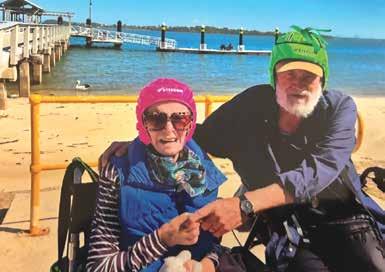
The late Sheila Sherry-Wolden was a remarkable and incurable force of nature. Her Sinn Fein ways and her pro-Collins approach of the Irish Free State often put the mettle in her calm and successful dealings with significant oth-ers in her life.
Sheila’s global friends in Ireland, the UK, France, Germany, Italy, New Zealand, and home in Aus-tralia, loved Sheila’s unwavering free soul and blithe spirit, as well as her brave courage in the face of adversity.
Sheila was empowered to use her voice for all that was good and salvageable in the world. Wide social approval followed from friends and work colleagues: within the fine art world; in education; from universities and in former schools in which she worked and thrived.
As a career activist, Sheila was an important member of the New Zealand Post Primary Teachers’ Association. Sheila at one time also supported the ex-President of Eire, Mary Robinson, for her work on the US Global Foundation; and against the general maltreatment of womankind.
Towards the end of her life, Sheila’s ship was full of sail and her calm body held on during home care, hospital stays, age care respite and residence. Her indisputable fighting Irish courage held and kept her away for ages from the persistent demons latterly trying to rob her of her life and human dignity.
Dr James G Lergessner for my dear friend, Peter Wolden
29th April 1955 - 1st May 2026

On17 February 1997, a community meeting was held at the Bribie Island RSL with a simple but powerful purpose – to explore ways of growing end-of-life care services for local residents.
Chaired by Lorraine English, the meeting attracted strong community support and led to the formation of a Steering Committee tasked with investigating the possibility of establishing a two-bed hospice. From those early discussions, a remarkable story began.
For 29 years Bribie Hospice has remained a small but vital charity, driven by the belief that no one should face the challenges of serious

illness or caregiving alone. Through determination, community spirit and countless volunteer hours, the organisation has continued to grow and adapt while remaining true to its founding purpose.
One of the most significant milestones came through community fundraising efforts that enabled the purchase of a cottage in Bellara. Since 2023 the house, known as Boronia Cottage, has provided much needed respite for carers. In 2012, the original cottage was rebuilt as a modern four-bedroom home, allowing even greater support for local families.
For over 15 years, palliative care services were available under an

Bribie-Moreton Hospice Health Services Incorporated Invites all interested members of the community to the 2026 Annual General MeetingSaturday 4 July at 2.00 pm ANZAC Room at Bribie RSL
Following the General Business of the AGM A discussion about the future of the charity. Hospice Inc is nearly 30 years old!
How will we ensure our sustainability and continue our work for this community?
Listen to the options. Join in the discussion.
Agreement with the Churches of Christ Care that allowed exclusive use of the purpose-built hospice suite. Generous donations from residents, community groups, clubs and local businesses, together with income from the popular The volunteeroperated Hospice Op Shop made these services possible.
These initiatives are hallmarks of a strong and resilient community that values compassion, connection and looking after one another. Many local people have made remarkable contributions to the journey since 1997. Long before “social "Isolation" was acknowledged as a failure of community connection, the amazing management.


Committee member June Daniell was actively organising many activities to get people out of their homes. The most popular outings were the bus trips and vintage train trips.
cruises on Lady Brisbane, concerts at Caloundra Events Centre and many theatre trips to QPAC.
While organising these outings involved enormous amounts of time and patience, the smiles, laughter and friendships they created made it worthwhile.
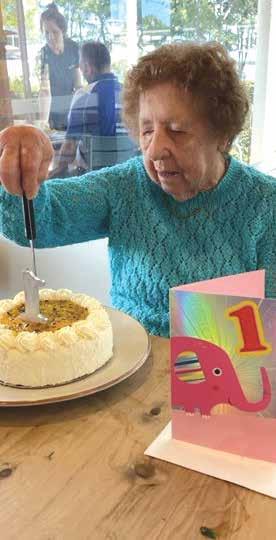
Another remarkable chapter in the Bribie Hospice story belongs to Ellen Towers, a passionate supporter of community hospice care. Ellen lived independently in her home until her 101st birthday.
When she celebrated the milestone by announcing she was “starting over”, a comment that perfectly captured her spirit and positive outlook on life. Through a generous bequest, Ellen left her estate to Bribie Hospice, with the hope that her gift would help create something meaningful for the future That hope will become a new building, Ellen’s Place, where Karuna Hospice Service
will offer their carer support services closer to families in need.
As Bribie Hospice approaches its 30th year, much has changed since that first meeting in 1997. What has never changed is the commitment of people to care for one another.
The Management Committee of Hospice and all interested members of this community need to harness the strengths of our community to ensure hospice care and carer support remain available to all who need it.
1997 – Community meeting at Bribie Island RSL sparks the vision for local hospice care
2003 – Boronia Cottage begins providing respite for carers
2012 – Boronia Cottage is rebuilt as a four-bedroom facility
2009 – 2024 Hospice services operate from the Hospice Suite in Churches of Christ Care
2025 – an alliance with Karuna Hospice Service is created
2017 – Bribie Hospice Celebrates 30 years of caring for the local community

Clinically proven* to help these conditions
• Heel pain (plantar fasciitis and Achilles tendinopathy)
• Tennis and golfers elbow
• Patella tendinopathy
• Frozen shoulder
LASER IDEAL FOR RECENT INJURIES < 6 WEEKS

• Rotator cuff tendinopathy +/- calcification
• Hip bursitis and tendinopathy
• Shin splints; Heel spurs
• Lower back & Knee arthritis


Winterhas arrived. The days are shorter, the nights are cooler, and for many people the risk of illness increases during this time of year. As we enter another winter season, it is worth reflecting on the lessons we learned during the pandemic and how they can continue to benefit our communities today.
Covid was a challenging period for Australians and people around the world. It introduced many people to the reality of how quickly viruses can spread and the impact they can have on individuals, families, and communities.
While it was a difficult time, it also created opportunities to learn, adapt, and improve the way we approach health and wellbeing.
For many people living with weakened immune systems or chronic health conditions, the concerns that much of society experienced during Covid are part of everyday life.
The pandemic helped increase awareness of the challenges faced by vulnerable members of our community and highlighted the importance of protecting one another from preventable illness.
It also led to positive changes that continue to benefit people today. Telehealth services became more accessible, allowing people to receive medical care from home. Workplaces, schools, and health services improved their understanding of infection control, and conversations about public health became more common.
One thing many people still remember is the rush to buy toilet paper and other household items.
While it may seem unusual in hindsight, it demonstrated how people can react when faced with uncertainty. It reminded us that during difficult times, staying calm, informed, and considerate of others is important.
As winter viruses continue to circulate, we all have a role to play in keeping our community safe. Simple actions can make a significant difference.
Staying home when unwell, keeping children home from school when they are sick, washing hands properly, shops wiping down shopping trolleys and practising good hygiene are effective ways to reduce the spread of illness.
One of the surprising lessons from Covid was that many people were unaware of basic hygiene practices that can help prevent infection.
Fortunately, the pandemic encouraged better habits and increased awareness about how viruses spread. These are valuable lessons that should not be forgotten.
Teaching children good health etiquette from a young age can help create lifelong habits that protect both themselves and others. Small actions taken consistently can have a lasting impact on the health of our communities.
I have spent time learning from an infectious disease specialist about viruses and how they spread.
Through this experience, I gained a greater knowledge of how even common illnesses, such as colds and seasonal viruses, can pose serious risks to vulnerable individuals and how the viruses are carried.
Another simple way to protect our community is to avoid visiting supermarkets and shopping centres when you are unwell. If possible, ask a family member or friend to pick up groceries and essential items for you and drop at your door.
Many stores also offer home delivery and click-and-collect (boot shop) services, making it easier to access what you need without exposing others to illness.
Retail workers interact with hundreds of people every day and deserve a safe workplace, just as customers deserve a safe shopping environment.
Choosing alternative shopping options when you are sick is a small act of consideration that can help reduce the spread of viruses and protect vulnerable members of our community.
As a community, we can continue building on the lessons learned during the Covid pandemic.
By practising good hygiene, staying home when sick, showing consideration for others, and using common sense, we can help protect those who face health challenges every day.
Winter is a reminder that health is something we all share responsibility for. Looking after ourselves also means looking after those around us.
Together, we can create a healthier, safer, and more caring community for everyone.
Yours in Health and Wellness, Tracey Blinco Wellness Consultant

Caring for a person with dementia at home often feels like an act of love. Many family members choose to provide care because they feel a strong sense of duty alongside their deep love for their partner. However, this role can become emotionally and physically overwhelming. In many cases, caregiving is a traumatic experience for the carer.
Trauma is a strong emotional and psychological response to distressing or overwhelming experiences. A person experiences trauma when they feel unsafe, helpless, or unable to cope with what is happening. Trauma can arise from a single event or from ongoing stress over time. In dementia caregiving, trauma often develops gradually. Caregivers face repeated stress, fear, and emotional pain in their daily lives. These experiences can affect how they think, feel, and respond to those they care about.
Dementia slowly affects memory, thinking, and behaviour. As the condition progresses, the person with dementia needs help with basic daily tasks such as eating, bathing, and dressing. Family caregivers often provide this support for many hours each week. In fact, many caregivers spend the equivalent of a full-time job's worth of time on caregiving tasks.
Caring at home means the carer rarely gets a break. They must remain alert at all times because the person with dementia may wander, forget safety rules, or become confused. This constant responsibility leads to ongoing stress and fatigue.
Family caregivers often experience strong emotional strain. Research shows that informal caregivers face significant psychological distress, including anxiety, depression, and irritability. Many caregivers report high levels of stress, and some experience symptoms similar to those seen in trauma. This stress does not happen by chance. Caregivers watch a loved one slowly lose their memory and identity. They may experience grief, even while the person is still alive (Ambiguous Grief). This ongoing loss
causes deep emotional pain and can lead to lasting mental health problems.
Many people with dementia develop behavioural and psychological symptoms. These include agitation, sleep problems, wandering, and aggression. Studies indicate that up to 90% of people with dementia experience these symptoms.
These behaviours can frighten caregivers. Some individuals with dementia may yell, threaten, or even become physically aggressive. Such actions can damage the relationship between the caregiver and the person they love. Caregivers may feel unsafe in their own homes, which can contribute to trauma.
Caregiving at home often reduces social contact. Caregivers may stop seeing friends or attending activities because they cannot leave the person unattended. Many caregivers report feeling isolated and cut off from support networks.
This isolation worsens stress. Without time to rest or talk to others, caregivers struggle to manage their emotions. Some experience declines in their health and well-being. Studies link caregiver burden to lower life satisfaction, particularly when demands are constant and intense.
Burnout occurs when stress becomes too much to manage. Many dementia caregivers experience this condition. Research shows that many caregivers report symptoms of burnout, such as emotional exhaustion, anxiety, and depression. Burnout affects more than mental health. It can harm physical health, relationships, and financial stability. Some caregivers develop chronic stress or illness, while others struggle to keep working or maintain their normal lives. In severe cases, the pressure of caregiving can lead to harmful outcomes. Studies show that high levels of caregiver burden can increase the risk of depression and even harmful behaviour within the caregiving relationship.
Home caregiving creates a unique situation. The caregiver lives in the same environment where stress occurs. They cannot leave the workplace because it is their home. This constant exposure to stress can make the experience feel traumatic. Caregivers often feel trapped. They may feel guilty about wanting to step away, yet overwhelmed by the demands. This conflict can heighten emotional strain and deepen trauma.
Caring for a person with dementia at home can be deeply traumatic. Family caregivers face constant demands, emotional distress, and challenging behaviours. They often feel isolated and unsupported. Over time, this pressure can lead to burnout and serious mental health problems. Society must recognise the hidden impact of home caregiving. Support services, respite care, and education can ease this burden. When communities support caregivers, they protect both the carer and the person receiving care.
Recent statistics on how many older patients are in public hospitals awaiting placement in aged care facilities or home care packages
More older Australians are being kept in hospital longer because they cannot yet move into aged care or access sufficient support to return home. In early 2026, about 3,274 older patients were waiting in hospitals in this situation. Earlier figures suggest the problem has been worsening, with around 2,500 patients waiting in September 2025 and 2,743 in January 2026. Although these figures need to be compared carefully because different sources measure

the issue in different ways, they point to the same serious problem: older people are remaining in hospital when hospital care is no longer the right setting for them. Some sources count the number of patients waiting, while others measure the total number of hospital bed-days used during the delay. Some also include delays linked to shortages in both residential aged care and inhome support. Taken together, these figures highlight a system under increasing pressure and the need for better pathways from hospital to appropriate aged care.
Recent public reports do not provide a national figure for the number of people with dementia still waiting for a homecare package. However, the latest national data shows that 87,597 older Australians were waiting for a Home Care Package at their approved level on 31 March 2025.
National research also shows that people approved for home care wait a median of 8 to 9 months after approval, and those living with dementia may wait longer than others. Government analysis also warned that the average wait time could reach 10 to 12 months by 30 June 2025 without more packages.
Although these figures measure the issue in different ways, they point to the same serious problem: people with dementia and their families still face long delays in accessing home support. Taken together, these figures show a system under growing pressure and underscore the urgent need for faster access to home-care support for people living with dementia.
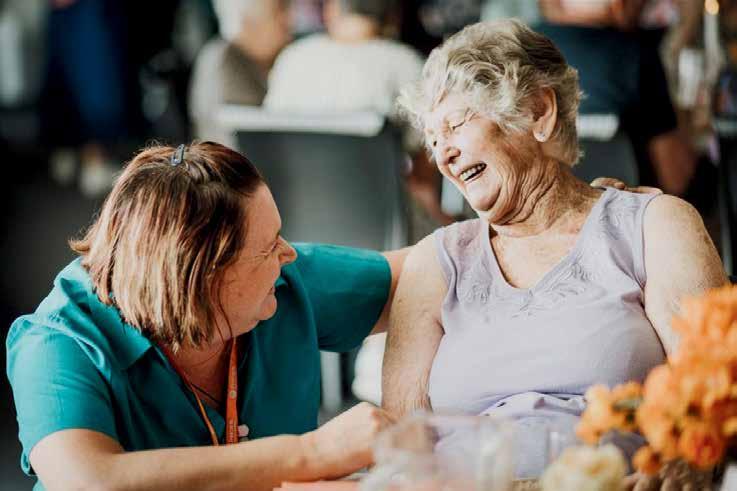
At Boronia Cottage on Bribie Island,

While




Tool or Overhyped Cure? GLP-1 medications have quickly become one of the biggest talking points in health and weight loss. Originally developed to help manage type 2 diabetes, they have gained significant attention for their ability to support meaningful weight loss. As a result, many people are now wondering whether these medications could also be the answer to obstructive sleep apnoea (OSA). The research is certainly promising, but it's important to separate the hype from the reality.
Recent clinical studies have shown that GLP-1 medications can help reduce the severity of sleep apnoea in some patients, particularly those with a BMI of 30 or greater. The reason is fairly straightforward: excess weight can increase pressure around the upper airway, making it more likely to collapse during sleep. By helping people lose weight, GLP-1 medications can reduce this pressure and potentially decrease the number of breathing interruptions experienced overnight.
For many patients, this can lead to improvements in symptoms such as snoring, daytime fatigue, poor concentration, and overall sleep quality. However, here's the key point many people are missing: GLP-1 medications are not a cure for sleep apnoea. One clinical trial found that losing 10% of body weight resulted in roughly a 20% reduction in sleep apnoea severity.
While that is a meaningful improvement, it often isn't enough to eliminate the condition entirely. For example, someone with an Apnoea-Hypopnoea Index (AHI) of 25, which is classified as moderate OSA, may see that number reduced to just under 20 after losing 10% of their body weight. While improved, they would still clinically have moderate sleep apnoea and may still require treatment. This highlights an important truth about OSA: it is not caused by weight alone.
Airway anatomy, genetics, muscle tone, age, sleeping position, nasal obstruction, and other health factors all contribute to the development of sleep apnoea. In fact, many people diagnosed with OSA are not overweight at all. While weight loss can help reduce severity for some patients, it does not address all of the factors that can cause the airway to collapse during sleep.
For people already using CPAP therapy, weight loss may still provide valuable benefits. It can improve overall health, reduce symptom severity, and in some cases lower pressure requirements. However, any changes to treatment should always be guided by a healthcare professional and supported by repeat sleep testing where appropriate.
At CPAP Direct, we see every day how effective proper diagnosis and ongoing therapy can be in improving sleep quality, energy levels, and long-term health outcomes. GLP-1 medications may play an important supporting role for some patients, but they should be viewed as part of a broader sleep health strategy rather than a standalone solution.
If you're concerned about sleep apnoea or would like support with diagnosis, sleep testing, or CPAP therapy, visit your local CPAP Direct store or learn more at cpap. com.au. Better sleep starts with understanding the cause, not just treating the symptoms.


As the Australian financial year ends, people and businesses start preparing for tax time. Many feel anxious, facing late nights sorting receipts, checking expenses, and reviewing spreadsheets.
But with a good bookkeeper, tax time can shift from stressful and uncertain to clear and full of opportunity.
In Australia, tax compliance is not just a requirement but also a chance to improve your finances. The Australian Taxation Office (ATO) expects tax returns to be accurate and on time, and mistakes or late submissions can lead to serious penalties.
Still, tax time is also a good opportunity to check your financial health, find possible savings, and plan for the future. Often, the quality of your bookkeeping makes all the difference. A good bookkeeper does more than just enter numbers into software. They act as a behind-thescenes partner, keeping your financial records organised, making sure you meet your obligations, and helping you
make decisions based on accurate, current information. In Australia’s complex tax system, this kind of support is extremely valuable.
The foundation of a smooth tax season is accurate and comprehensive record-keeping. The ATO requires individuals and businesses to keep records of income and expenses. Accurate and complete record-keeping is key to an easy tax season.
The ATO asks individuals and businesses to keep records of income, expenses, and deductions for at least five years. For sole traders and small business owners, this can quickly feel overwhelming, especially when you are busy running your business each day.
You are claiming all legitimate deductions—such as workrelated expenses, motor vehicle costs, or home office deductions—while steering clear of common pitfalls that

• Keep your retirement plans on
• Understand how much you may need in
• See how long your money might last in retirement
• Considering downsizing - Boost your Super
We care about your financial goals Provide ongoing support and advice


trigger ATO audits. In an era where digital transactions and cloud accounting are the norm, a bookkeeper can also recommend and manage the best software tools, making data entry and retrieval seamless.
Time is a precious commodity for business owners. Every hour spent reconciling bank statements or chasing up missing invoices is an hour not spent growing your business or enjoying your personal life. By entrusting your books to a professional, you free up time and headspace.
This not only reduces stress during tax time but also throughout the year, as you can make decisions based on real-time financial data rather than gut feel or guesswork. The peace of mind that comes from knowing your records are accurate and up to date cannot be overstated. If the ATO comes knocking, you can respond with confidence, knowing your documentation is in order.
For individuals, this can mean a faster, smoother tax return process and potentially a quicker refund.
Beyond compliance, a good bookkeeper provides valuable insights that can drive business success.
Regular, accurate financial reports make it easier to track cash flow, monitor profitability, and identify emerging trends or areas of concern. This data is essential for making informed decisions about everything from pricing strategies to expansion plans.
Our volunteers come to you to help with a vast range of Technology and Cyber Safety.

For example, a bookkeeper might notice that certain expenses are creeping up and suggest ways to cut costs. Or they might highlight a seasonal dip in revenue, prompting you to adjust your marketing strategy or diversify your offerings. These insights can mean the difference between merely surviving and truly thriving.
Not all bookkeepers are created equal. In Australia, it’s important to choose a bookkeeper who is registered with the Tax Practitioners Board (TPB) if they are providing BAS (Business Activity Statement) services.
Look for professionals who have experience in your industry, are familiar with the latest accounting software, and can provide references from satisfied clients. Ultimately, the best bookkeepers are those who communicate clearly, respond promptly to queries, and take the time to understand your unique needs and goals.
As tax time approaches, consider whether your current bookkeeping approach is serving you as well as it could. Investing in a good bookkeeper is not just about compliance or ticking a box for the ATO—it’s about investing in the health and success of your business or personal finances.
This tax season, make the smart choice and ensure your books are in the best possible hands.



As we come to the close of the 2026 Financial year, I would like to share with you the grants that we have approved over the last 12 months, excluding June as our committee meeting had not occurred at time of writing this.
We could not have achieved this without the continued support of the thousands of donators who bring us their resaleable preloved items and the customers that purchase these items through the op shop.
Thank you so much for supporting us so that in turn we can support our beautiful island residents through the schools, retirement village, social clubs, and the many sporting clubs and associations.
We wish to thank all our wonderful volunteers whose hard work and dedication make these grants a reality. If you have some time available please consider the Busys family.
If you are a member of an island club or association and require assistance, please let us know.
Please call 3410 1920 or email busyfingers1@bigpond.com if you wish to have a presentation by our President Pauline or if you wish to apply for a grant of assistance.
As usual I would like to thank the Bribie Islander for all the support they give us throughout the year.
I would like to thank all our supporters and customers, and a very special thank you to the Bribie Islander and staff for their continuing support. I hope to see you in the shop soon. Sandra






BI Retirement Village 100 over the bed portable tables, Mini Putt Putt and surrounding shaded spectator area, renovations to assist residents care. 3 Bariatric beds & Mattresses, Barista Coffee Machine for residents and visitors coffee shop. Ice Cream Trolley. Monthly assistance to the Lifestyle section for events and entertainment.
BI RSL Subbranch Transportation costs to take school children to Canberra for a week to attend ANZAC Day and join the parade. (This is both educational and enjoyable for the kids)
BIKES Books and Stationary
Melsa Group Renovate Carriage into Kitchen and new Locomotive.
BI OWN Assistance to attend annual conference
BI Probus Club Assistance with hiring function room
BI Social Seniors 2 Bus Trips
BI Ladies Golf Gift Cards
BI Kindy Construct table around the mango tree for crafts, Hats and T-shirts
Bribie Netball Training T-Shirts
Bribie Swim Club Marquees
BI Men’s Shed Tools
BB Garden Club 3 Laptops
BI Gem & Fossil Club BBQ and Banners
Bribie Art Centre Assistance with Solar Paneling
BI Primary School Utility for grounds men, and C Reader Pens
BI High School Assistance with buses for transition Days for GR 6
BI Nashos BBQ Boat hire and 6 Bus trips, trolleys for Christmas and Easter raffles
BI Legacy Ladies Supply Christmas lunch and Mother’s Day Morning tea.
Bribie Pickleball Shed
BI Rotary Assistance with NYE Family Carnival
BI VMR (MRQ) Lift and Fuel (part year) New heavy duty rust resistant furniture for new patio for functions. New flag and signage for new social club.
BI SES Roof Truss Training Assembly Kit erected by Men’s Shed to assist in training members when dealing with dangerous roof work in severe weather.
BI Primary School AFL goal posts padding to minimize injury
Treecreate Accommodation assistance for open day workshops for the Joondoburri people of Yarun BI.
BI Police ATV maintenance and DV Coasters to spread awareness in pubs and clubs.
BIDCA New Shirts
Dragons Abreast Shirts
Global Care Foodbank assistance.
Church Hall D-Fib Machine
Tri-Sports Storage Boxes
Coolamon Social Bingo machine
Bribie Little Athletes iPads for recording results. House of Happiness Renovate the male bathroom. Bongaree Bowls Upgrade one green and paint.
Blue Water Trio Musical Equipment for associations entertainment
BI RSL Indoor Bowls New sets of Bowls to assist the vision impaired.
Bribie Aquatic Medic and toilets for regatta
BI Family History Signage
BI Tennis Club IT equipment
BI RSL Golf Club Transport for their Annual Tournament weekend.
6 Mangrove Prod Office Equipment.
Bribie Pines Village Social Club Computer and Printer package.
Bribie Respite & Support Services Renovations to the NDIS Ladies Disability Bathroom

AlthoughI spent my school days living in suburbia, I have never really liked the city with its bustle and noise. I was born in a small English village, where I lived until I was seven, and as soon as my schooling was over, I escaped to the country. I remember that day when I first saw sheep and realised they weren’t the fluffy white lambs depicted in children’s picture books.
My mother started me off, and my experience of nature began with growing seeds and watching vegetables grow into something delicious. Gardening was always part of family life, with a compost bin for scraps and a variety of produce. In England, we also had chooks and pigs to provide eggs and bacon, but these weren’t allowed in our Sydney garden.
So, each weekend, we would get away from the bricks and mortar and go walking in the bush. I remember seeing a koala near where dad’s friend was building a house in a new “development”. It was sad to see the bush being torn down, and even worse when we drove through bushfires on our way home.
At school, we didn’t have a plot like many modern schools, but we did do “Nature Study”, which I loved. In class, we had striped caterpillars and watched them metamorphose into beautiful Wanderer butterflies.
At home, I kept silkworms which we fed with mulberry leaves from a tree growing near the first Channel Nine TV tower in Sydney. I can still remember the stink of that shoe box, but we never worked out how to spin the silk.
In the winter, when we weren’t interested in having a swim after our walk, we would go inland to Lane Cove National Park, or the Kuringgai Chase. Mother taught us the names of the wildflowers, which she must have learned from library books. The waratah flowers stood out like beacons amongst the rest of the bush.
Not knowing how fragile the system was, and with no rules banning it, we would collect a bunch of flowers to take home. Mother would paint pictures of some of them, usually on greeting cards or bookmarks, and we children would try our hand as well. This encouraged our powers of observation.
Whenever we went for a walk, we would look around to see what we could find. I still bushwalk this way, maintaining silence between discoveries, in the hope of seeing native animals and birds, taking twice as long as the advertised time.
I am disappointed that so many people rush by intent on reaching their destination instead of enjoying the journey. Plants are the source of all life, and yet, when I taught biology, most students were only interested in animals.
Though my mother taught me to appreciate all life, she was not a Buddhist, so we were quite happy to swat flies or stomp on ants, which used to annoy our picnics. And of course, it was a real thrill to catch a fish.
We owned a dog and a cat and learned the facts of life when the dog had pups. And also, some anatomy, when the chooks had to be plucked and cleaned for eating. A lot can be learned from observing the natural world.
Unlike Bribie and Brisbane, Sydney has a rocky foreshore, so our coastal excursions would include a walk of discovery along the rock platform, poking around in rockpools for anemones, which Mum told me were animals, not plants, despite their appearance.
We would also find sea lettuce (Ulva), Neptune’s beads, snails and crabs, and the occasional octopus. In high school, I had to present a report on a similar outing and learned the proper names for the various snails and seaweeds, which made future trips more interesting and allowed me to teach my own children about the seashore.
When I went to university, I decided on Chemistry, which I found fascinating, but it was a love of nature, taught to me by my mother, which paid off in dividends when I became a Grey Nomad. We avoided caravan parks and usually camped in National Parks or just rest areas. There, we could enjoy the fabulous skies with binoculars or my 8” telescope, then go bushwalking the next day.
When Mum retired, she and Dad took up Lapidary as a hobby. Sometimes we joined them on fossicking trips in the New England Tablelands, to dig and pan for sapphires or grass stone. And that sparked my interest in geology, the study of the non-living aspects of the natural world.
So instead of wildflowers, which were now protected, our bush walks became a source of interesting minerals, and even an occasional stone tool. Most of these were surprisingly easy to spot because they looked out of place amongst local rocks. My first discovery, I just picked up as interesting, but then I discovered it fitted my hand perfectly.
In fact, thanks to my mother's lessons, I was never a tourist, but rather, an eco-tourist before the term was invented. A lifetime of experience observing the natural world has given me an internal encyclopaedia of knowledge with which to enjoy our great country. I am so pleased that my home is a place where some of the original habitats have not been altered by the ravages of man.
© Hazel Beneke 30-08-22
The girls of Good Company invite you to an afternoon of songs and reminiscing with favourites from the 60s and 70s.
Enjoy lots of fellowship and afternoon tea served to your table, plus a lucky door prize and raffles, for a lovely toe-tapping afternoon to share with friends in the community.
Sing along with songs from Abba, The Carpenters, Bee Gees, The Seekers and many more. You will be made most welcome, and a great afternoon is assured.
Come along to Bribie Community Hall, 96 Arcadia Avenue (cnr Golf Drive), Woorim, on Saturday 11 July 2026 at 2:30 pm.
(Monday to Friday) 17 Benabrow Avenue, Bellara




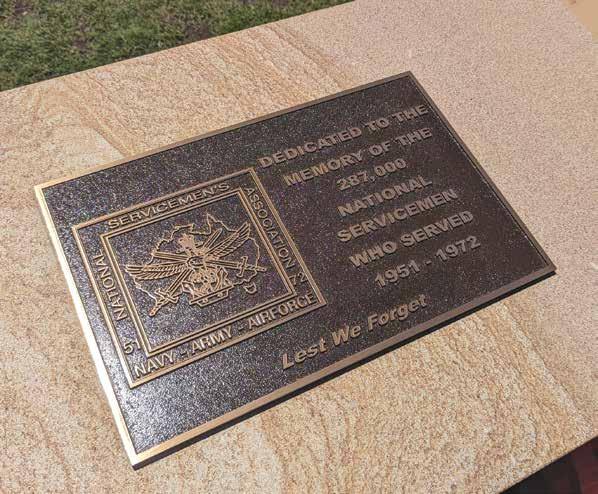
TheBribie Island National Servicemen’s Park was established in 2023 by the dedicated local Bribie Island branch of Nashos QLD to commemorate the service of 287,000 young Australian men who were required to undertake compulsory military training in the Army, Navy and Air Force between 1951 and 1972 and to remember the 212 who died during active service in Borneo and Vietnam.
The Park was established with the assistance of a DVA Saluting Their Service Commemorative Grant.
The objective of the STS program is to commemorate the service and sacrifice of Australia’s service personnel who served in wars, conflicts and peace operations, including National Service personnel, and their families.
The intended outcome of the program is to provide funding for projects and activities that:
• promote appreciation and understanding of the experiences of service, and the role of service personnel
• preserve, add to the sum of knowledge on, or provide access toinformation about Australia’s wartime heritage
• projects and activities relating to all wars, conflicts, peacekeeping operations and National Service are eligible.
On 20 October 2023 about a hundred local servicemen, war widows, family, friends and dignitaries gathered to
National Register of War Memorials, it is open to all, and everyone is welcome to stroll through the lush green lawns. History buffs can view historical military equipment including a decommissioned Australian Army Leopard AS1 Main Battle Tank.
Plaques have been laid throughout the park to commemorate the lives and service of deceased Nashos.
On Friday 29 May 2026 a group of family and friends gathered at the park in the afternoon sunshine for a Memorial service led by retired

After the ceremony, the Bribie Island National Service Association hosted a sunset function at Coungeau House.
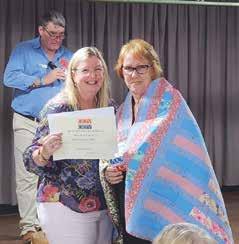
Quilts of Valour Australia QLD representative, Vanessa Cotter awarded quilts to Maria Boland OAM on behalf of her husband John Boland, Cathy Sterling on behalf of her father Peter Yates, Kaye Bush on behalf of her husband Clive Bush, Tracy Duffield on behalf of her father Peter Bernannd and Janette Scowen on behalf of her husband John Scowen.
The local Bribie Island Nashos branch has had to face the difficult decision to close with the announcement that the Nashos QLD state branch will close at the end of 2026.
The last Australian National Serviceman (Nasho) completed his Army obligation and was discharged in November 1974 meaning the youngest Nashos are now in their 70s and the first intake are now in their 90s with sadly diminishing numbers.
The Bribie Island National Service Association was formed in 2025 by a dedicated group of modern veterans with the support of the local Nashos to relieve mental health issues and isolation experienced by past and present members of the ADF and encourage their transitional to civilian life.

The group identified a need within the community to provide welcoming regular events, family friendly social functions and commemorative activities to support veteran wellbeing.
Membership is open to all current serving and ex-serving ADF members, their spouse and their family members.
The new association whilst open to all who have served, has offered Foundation membership to Nashos members to recognise their long-term commitment to veteran welfare and their dedication to preserving the Nashos story for future generations.
Email veteransbribie@gmail.com for further information.


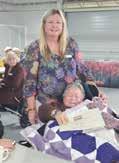

There’s always imagination running wild when members of the Contemporary Art Practices Group at Bibie Community Arts Centre presents their Eclectica exhibition.
Eclectica 11 opens on June 23 and true to form, will not disappoint.
The 20 members meet every Tuesday at the Centre, coming from varied backgrounds but with a common interest in
Just three days left to enter the 2026 Matthew Flinders Art Prize, for which deadline is June 21.
Details on the BICAS website. https://www.bribieartscentre.com.au/ matthewflindersartprize
experimenting with contemporary techniques in 2D and 3D.
As the name suggests, there will be diverse ideas and style on show in this their 11th exhibition.
Meet the artists in the Gallery Saturday June 27, from 1pm – 3.
And watch them demonstrate their techniques there each day of the exhibition, which runs until July 9.

MFAP planning committee chairman Stephanie White said this was the time of year the excitement peaked in anticipation of what would be entered and hung.
There’s prizes worth $9000 and your work will be seen by thousands of visitors who visit the exhibition during its run.
Entries judged in the Gallery July 16, opening is Friday July 17 and exhibition open to the public July 18 – August 7.
Daily demonstrations by artists will take place in the Gallery during the event.





Michael Strong (Senior Curator, Abbey Museum)
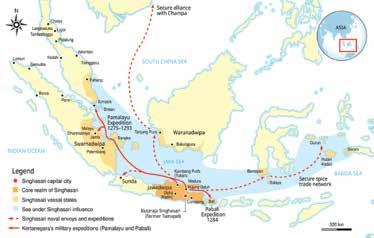
Perhaps the most beautiful sculpture in our recently opened Art Gallery is this sandstone figure of the goddess Tara, dating from approximately the 9th–13th centuries. She comes from the island of Java, one of the main islands of Indonesia. During this medieval period, several great maritime empires flourished, whose names are almost forgotten today.
Among these were the Kingdoms of Kediri and Singhasari in Java and the empire of Srivijaya in Sumatra. This was a time in Indonesian history when the powerful influence of Hinduism and Buddhism was fusing with animistic beliefs current in the island archipelago.
These two great religions have profoundly influenced Indonesian culture and history, in a syncretic fusion, dating back to the 1st century AD, spread through trade and cultural exchanges. Indeed, it is considered highly plausible that the veneration of the goddess Tara as a goddess of protection and navigation may have endeared her to seagoing merchants and navigators, crucial to the wealth of the maritime kingdoms of Java.
The largest Hindu temple in Indonesia, the Prambanan Shiva temple near Yogyakarta, was built in the 9th century but abandoned about 80 years later. Another gigantic temple, Borobudur, built by the Sailendra dynasty, also in the 9th century, is the largest Buddhist temple in the world, rivalling Angkor Wat in Cambodia.
Another Sailendra structure, the magnificent Kalasan Temple in Yogyakarta, dating to around 778 AD was built specifically as a sanctuary for the goddess Tara.
All these temples were adorned with hundreds of statues and carved reliefs of gods and goddesses. It is likely that our sculpture of Tara was made about this time. In this form she is a Buddhist goddess who emerged in popularity in India in the 6th century. The bejeweled decoration of her headgear, in the form of the Five Jewels (Panchartna) representing five Buddhas, tentatively identifies her as Tara.

She eventually came to be considered the Mother of all Buddhas, a savior of beings from worldly and spiritual dangers, and the embodiment of the divine feminine energy or shakti, representing both nurturing and compassionate aspects, the balance of masculine and feminine energies within the cosmos. In the 13th century, Tantric Buddhism gained royal patronage in the Singhasari
court and female figures of deities and queens came to follow the same format of sensual beauty with an aura of mystical contemplation.
Our sculpture of Tara shows her seated in a meditative pose called vajrasana, atop a double lotus throne. She holds a rosary (akshamala) in front of her belly; the other right hand holds a flying chintamani (‘the gem that satisfies all desires’) banner. Her left hand holds the stalk of a lotus (utpala) and the other left hand a rosary stringing a water-vase (kamandelu). She is profusely bedecked with jewellery and wears a diaphanous skirt.
The end of the great Hindu-Buddhist temples of central Java, where our Tara statue was made, came abruptly around the 11th century. By the 15th century, Islam had become increasingly influential across much of Indonesia, although the great temple complexes of Central Java had already long been abandoned.
It may have been a political change in government or perhaps the eruption of Mount Merapi volcano located around 25 kilometres north of Prambanan, covering much of the area in volcanic ash.
The temples, once peopled with wonderful divine sculptures, became a part of legend until their rediscovery in the 18th century.
We invite you to discover Tara in our recently opened Art Gallery, a remarkable survivor from Indonesia's rich Hindu-Buddhist past and a symbol of compassion, wisdom and protection.



For delicious pizza, pasta, contorni salads and more, all crafted with love, come and enjoy our waterfront pizzeria. With live music every Sunday and the beautiful Pumicestone Passage right beside you, we offer you a taste you’ll love For deliveries or bookings, please visit us at www.steakoutpizzeria.au
9/11 Spinnaker Drive, Sandstone Point - 07 5360 1094
LUNCH Thu to Sun 11:30 - 2:30
DINNER Tue to Sun 4:30 - 8:30
With its spacious, relaxed ambiance, The Deck Restaurant offers casual dining indoors or alfresco on the deck overlooking the golf course, lake and lush gardens. Enjoy modern cuisine with locally sourced ingredients, open 7 days a week for breakfast and lunch, and dinner on Friday and Saturdays. Perfect for any occasion!
Pacific Harbour Golf & Country Club, 141-159 Avon Avenue, Banks 07 3410 4024
Scan The QR Code To Book Now!
Experience classics you’ll love and the new favourites you'll crave!

LUNCH: 12PM - 2PM
DINNER: 5PM - 8PM OPEN 7 DAYS NOW OPEN SUNDAY 8AM - 11AM FOR BREAKFAST Call our restaurant on 07 3408 1018 to book Bribie Island Bowls Club 11-23 Welsby Parade, Bongaree 4507








MONDAY
EUCHRE
Bribie Bowls Club 12.00pm
Contact Annette on 0414622490 TRIVA
Bribie Island Hotel 6.30pm
Bribie Island R.S.L 7.00pm
TUESDAY
BINGO
Bribie Island R.S.L 10.00am POKER
Bribie Island Hotel 6.30pm
WEDNESDAY
MUSIC BINGO
Bribie Island Hotel 6.30pm
Bribie Island R.S.L 7.00pm RAFFLES
Solander Lakes Bowls Club - 6.30pm (tickets on sale from 5:30pm)
THURSDAY BINGO
Bribie Island R.S.L 7.30pm RAFFLES
Bribie Island R.S.L Fishing Club 4.30pm
Every Thursday at the RSL prizes are Meat Vouchers from Avondale Meats and Seafood Vouchers from Saviges.
FRIDAY
MEAT TRAY RAFFLES
Bribie Island Bowls Club 4.30pm
Bribie Island Golf Club 5.30
Blue Pacific Hotel (from) 3.00pm
Solander Lakes Bowls Club - 6.30pm (tickets on sale from 5:30pm)
Enjoy playing 500 Cards?

Join a like-minded group who meet on Monday afternoons at the RSL Anzac Room from 12.45pm-3.45pm. $5 which includes raffle prize.
Please arrive 10mins before play starts at 12.45pm
Further information please ring Carole 0438 713 663

The B.D.M.S. Community Markets are held at the Men's Shed 53 Rogers Street Beachmere, every 1st Saturday of the month 7.30am - 12pm
Bribie Island BIDCA Markets
The Bribie Island BICA Markets are held at Brennan Park, Bongaree, the 3rd Sunday of each month from 6am -12pm Bribie Rotary Markets
The Rotary Markets are held at Brennan Park, Bongaree on the second Sunday of each month from 6.30am – 12 noon
Queensland Cancer Council
The Cancer Council Markets are held at Brennan Park, Bongaree on the first Sunday of each month from 7am to 12 noon.
LUNCH MARKETS - Sylvan Beach (Farmers Market)
First Saturday of each month from 8am to 1pm held in the park opposite the Bribie Island Hotel. Funds raised to E.P.C.S, Ass, 0417629957
The Bribie Island Lions Market
2nd Sat of the month at Tintookie Park Woorim 7am - 1pm.
Bribie Woodcrafters & Bribie Island Gem Club
Open day, Demonstrations & Sales - last Sunday of each month
8am to 12noon Held at Bribie Art Centre 191 Sunderland Dr, Banksia Beach
Mystic Journey Markets change of location
Saturday November 15th ~ 9am ~ 2pm
Saturday December 6th ~ 9am ~ 2 pm Saturday December 20th ~ 9am ~ 2m 4pm ~ 8pm
There is also an outdoor market to run alongside indoor market called This ‘n’ That



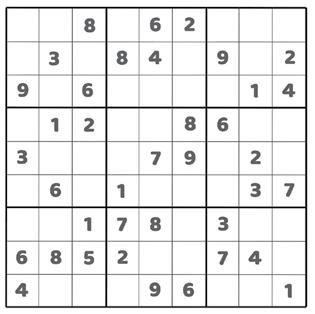



10 AM TO 2 PM THIRD SUNDAY OF EVERY MONTH Food , Drinks & Eftpos Available


Discover the wonders of the Great Barrier Reef these school holidays in this free, family-friendly program. Through engaging storytelling and activity, young participants will explore one of the most iconic and diverse ecosystems on Earth.
Children will learn how the reef functions as a living ecosystem—where corals, fish, plants, and other marine life are all connected and depend on one another to survive.
With a focus on science and discovery, participants will be inspired by reef life while gaining a deeper understanding of the Great Barrier Reef as the world’s largest living organism. Along the way, they’ll explore concepts such as habitats, biodiversity, and the importance of protecting our oceans.
This relaxed and imaginative session offers a fun opportunity for families to connect with science, nature, and creativity.

Bookings required. Ages 5+.
Bribie Island Seaside Museum is open from Wednesday to Friday, 10:00 AM - 4:00 PM, and Saturday to Sunday, 10:00 AM - 3:00 PM.
Saturday, 04 July 2026 | 10:30 AM - 11:30 AM Saturday, 11 July 2026 | 10:30 AM - 11:30 AM
Bribie Island Seaside Museum, 1 South Esplanade, Bongaree, 4507
MONDAY 29 JUNE TO SUNDAY 5 JULY
10:30am - 1:30pm daily IN THE ATRIUM
HEY EXPLORERS! READY FOR AN EPIC SCHOOL HOLIDAY ADVENTURE?
Experience the fun of school holiday camp without leaving town! Climb to new heights on the rock wall, practice your aim with axe throwing challenges, try the camp themed baking activities and jump into awesome camp games led by our fun-loving camp leaders!
+ 150 SPECIALTY STORES

By Al Finegan
InOctober 1962 I was in the final weeks of my Year 12 education at Cavendish Road High School in Brisbane. We students were meant to be concentrating on our final studies for the big exams, the path for career prospects, and university majors. Or perhaps we were thinking of a holiday on the beach with our girlfriends or anticipating cricket on the weekend?
But we were not.
All day, in classrooms and corridors, the talk was of Cuba. It is hard now, more than sixty years later, to explain the atmosphere that settled over us. There were no mobile phones. No social media. No constant news updates. Information dribbled in through newspapers, radio bulletins, and hushed whispers from teachers. Yet somehow the tension filtered down to us with remarkable clarity. The words “nuclear war” were spoken quietly, but often. And we understood enough to be afraid.
The crisis centred on the island of Cuba, a place that, to most Queensland schoolboys in 1962, might as well have been on the moon. Yet that island, only 150 kilometres from Florida, suddenly became the pivot on which the world seemed to balance.
It began In 1959. The Cuban revolutionary Fidel Castro overthrew the US-backed regime of Fulgencio Batista. Within months, Cuba aligned itself with the Soviet Union. To the United States, this was a hostile communist state in its own backyard. Back in Australia, it was of only mild interest - a place far away. Then In early 1961, a secret operation was being conducted by the CIA to train a force of Cuban exiles they named
“Brigade 2506”. Its objective was to invade and overthrow Fidel Castro’s communist government. But Cuban intelligence had infiltrated this force of exiles. They sent the details of the planned invasion back to Castro.
On 17th April 1961, Brigade 2506 landed at the Bay of Pigs on the southern coast of Cuba. It was a terrifying farce, as 1,500 Cuban exiles landed into a carefully prepared ambush. 118 exiles and four CIA operatives were killed immediately. Over 360 lay wounded while the remainder scattered, before surrendering. Within two days it was all over.
As the news spread, my friends and I were stunned at the debacle. We had been raised in admiration of the US international power. It was an incredible embarrassment for the US government. The failure generated widespread international condemnation of the US for violating Cuban sovereignty, while strengthening Fidel Castro's image as a hero. The Soviet Union revelled in the debacle while their allies agreed it was proof of blatant American aggression and weakness. It led directly to closer Soviet-Cuba relations.

JFK
reassessment of Cuba policy, he urgently established a committee to examine the causes of the defeat. In November, the committee launched a new covert program in Cuba, with the codename of Operation Mongoose. It was a campaign designed to do what the Bay of Pigs invasion failed to do - remove the Communist Castro regime from power. It was to be run by the CIA and the Department of Defence.
The plan constituted a coordinated program of political, psychological, military, sabotage, and intelligence operations, as well as proposed assassination attempts on key political leaders, and the publication of antiCastro propaganda. It included provision of armaments for militant opposition groups, and the establishment of guerrilla bases throughout the country, all leading up to preparations for an October 1962 military intervention in Cuba.
Meanwhile, American U-2 reconnaissance aircraft had photographed Soviet missile installations being constructed in Cuba.
These were not defensive weapons. They were medium-range nuclear ballistic missiles… and they were capable of reaching Washington, New York, and much of the continental United States within minutes of launch.
For Americans, it was intolerable. For the rest of the world, it was terrifying.
On 16th October 1962, barely a year after the Bay of Pigs debacle, JFK was informed that the missile sites were ready for launch. He immediately called a meeting of his Executive Committee to weigh options that ranged from air strikes to full invasion.
On 22nd October, we were all warned to listen to JFK as he made a TV address to his nation. His speech was calm, firm, and unmistakably serious. He announced that the US would impose a naval “quarantine,” effectively a blockade, around Cuba to prevent further Soviet missile shipments from arriving. It was a defining decision. We all understood the gravity of his words.

We understood that the US and the Soviet Union were now on a nuclear collision course. If Soviet ships attempted to run the blockade and American vessels tried to stop them, a shooting war could begin. And if that happened, nuclear escalation was not a remote possibility, it was a genuine danger.
Back at Cavendish Road High, the enormity of it began to sink in. Some of us joked about it, that was how we teenage boys handled fear. Others listened closely to transistor radios. Teachers spoke in unusually sober tones. In the evenings, parents discussed contingency plans. There were rumours of fallout shelters in America. We wondered whether Brisbane would be a target if the worst occurred.
In 1962, Australia was firmly allied with the United States. Pine Gap had not yet been established, but the strategic relationship was clear. If nuclear war broke out between the superpowers, we would not be untouched observers at the edge of the world. For the first time in our young lives, global politics felt personal.
The Soviet leader at the time was Nikita Khrushchev, a blunt, even crude man, determined to redress what he saw as a strategic imbalance. The US had nuclear missiles positioned in Turkey, close to Soviet borders. From Moscow’s perspective, placing missiles in Cuba was a logical countermeasure. Yet logic in the growing nuclear age was a dangerous thing. US naval forces moved into position around Cuba. Soviet ships continued to steam toward the island. The world watched the unfolding events in growing tension … and fear. By October 1962, that tension was to erupt into something far more dangerous. We all wondered, who would blink first? Would the Russians turn back? If not,
would the US Navy fire on the Russians? Then what? On 24th October, some Soviet vessels slowed and altered course. It was a small but significant step away from confrontation. But the crisis was far from over. The missiles already in Cuba were nearing operational readiness.
On 27th October, later known as “Black Saturday”, matters were spiralling out of control. An American U-2 spy plane was shot down over Cuba. Its pilot, Major Rudolf Anderson, was killed. Simultaneously, another U-2 strayed into Soviet airspace near Alaska, provoking the Russians to the highest level of alert. Their fingers were on the triggers of their air defence. The spy plane turned back into US airspace. But the tension remained.
Although Washington at the time did not know for sure whether the Soviet field commanders in Cuba already had tactical nuclear weapons available for use if the island were invaded, they assumed that they were. Even more chilling was an incident beneath the sea. The US Navy had located a Soviet submarine, B-59, lurking in the waters near Cuba. The US captain decided to scare off the submarine. He began harassing tactics by dropping depth charges not meant as a lethal strike, but to scare off the submarine.
The alarmed Soviet officers believed war may have already begun and that they were under fire. The submarines were loaded with nuclear armed missiles. For them to be fired it required the three senior officers of the crew to agree to the launch. The captain was determined to fire missiles immediately at the US. He summoned his two subordinates and held a formal vote. One officer agreed with his captain. The third officer, Vasily Arkhipov, refused to consent. The launch was aborted. Historians would later argue that this quiet decision by Vasily may have saved the world from an epic disaster.
How close did we come? Closer than we knew at the time.
In Washington, JFK and his advisers faced enormous pressure to strike. Military chiefs advocated bombing the missile sites. An invasion plan was ready and presented by the Chief of Staff to the Committee. Instead, JFK chose a path that balanced firmness with restraint. Khrushchev had sent two letters, one conciliatory, the other more demanding. The Soviet leader proposed removing the missiles in exchange for a US pledge not to invade Cuba and, in the second message, the removal of American missiles from Turkey.
JFK’s response was measured. Publicly, he accepted the first proposal. Privately, through back-channel diplomacy, he agreed to withdraw the Turkish missiles quietly at a later date. It was not a simple capitulation by either side. It was a negotiated de-escalation, careful, deliberate, and face-saving for both leaders. On 28th October 1962, Khrushchev announced that the Soviet Union would dismantle and remove the
missiles from Cuba. The world exhaled. At school, the tension eased almost as quickly as it had risen. Exams returned to the forefront of our minds. Life resumed its ordinary rhythm.
But something had changed.
We had seen how thin the margin really was. For thirteen days, humanity had stood on the brink of annihilation. The realisation that civilisation might end not through slow decline, but through a handful of catastrophic decisions, was sobering. The crisis did not end the Cold War. Confrontations would follow - in Vietnam, in Berlin, in countless proxy conflicts. But October 1962 remains the closest the superpowers ever came to a disastrous nuclear war.
In the years that followed, both superpowers took steps to reduce the risk of such a confrontation occurring again. A direct communication link, the “Hotline”, was established between Washington and Moscow. In 1963 the Limited Nuclear Test Ban Treaty was signed. It was the crisis that was needed to expose the terrifying speed at which miscalculation could escalate. With the benefit of hindsight, historians often praise Kennedy’s handling of the crisis. He resisted immediate military action. Firstly, he listened to dissenting voices within his security committee, then decided on negotiation, not confrontation.
Khrushchev, too, deserves recognition for ultimately choosing withdrawal rather than confrontation. Neither man was reckless. Both understood that nuclear war offered no victory, only devastation.
Looking back now, I recall the Cuban Missile Crisis as a defining moment of the Cold War. It demonstrated that nuclear weapons were not abstract deterrents but instruments poised for use. It forced leaders to confront the reality that misjudgement could mean extinction. It also demonstrated the power of measured leadership. It was JFK’s calm address, his refusal to be stampeded into immediate attack, and his willingness to pursue a quiet compromise that prevented an ominous catastrophe. Today’s world has its own crises, different actors, different flashpoints, different technologies. Yet the lesson of October 1962 remains clear. Restraint matters. Communication matters. Leadership matters.
Even now, in 2026, the Cuban communist government still stands. More than sixty years after Kennedy and Khrushchev stepped back from the brink, Havana remains under the same revolutionary banner. The US continues its long economic squeeze, tightening sanctions in the hope that pressure will achieve what invasion and isolation did not. I still have vivid memories of those thirteen days in October 1962, when humanity stepped to the edge and peered into the abyss. Then, slowly, deliberately, it stepped back. And a group of Year 12 students in Brisbane returned to their textbooks, acutely aware that history had just passed within a whisper of ending before they had even begun their adult lives.
Bongaree Bowls Club
Results 22/5/26 - 4/6/26
Results of Friday 2-4-2 22/5
Winners: Ross Bryant, Peter Vlajic
R/Up: Val Smith, Adrian Taylor
Results of Saturday Scroungers 23/5
1st: John Miller. 2nd: John Bell. 3rd: Bob Cooper. 4th: Bev Montgomery
Results of Tuesday Paddle Pop Draw Triples 26/5
Winners: Jenny Stephens, Diana Stowers, Andrea Pike
R/Up: Brenda Hutchinson, Ron Wilson, Merissa
Results of Wednesday 4’s 27/5 - Sponsored by Graeme Harland of Green and Clean Lawn Services
Winners: Yuki King, Jaarpung Blundell, Graham Symonds, Tim Carlton
R/Up: Rosie Smith Averyl Symonds, Gordon Pitts, Ray Horne
Results of Friday 2-4-2 29/5
Winners: Dee and John Morrison
R/Up: Marg O’Keefe, ArneJensen
Results of Saturday Scroungers 30/5
John Bell, Yuki King, Sheena Bath
Results of Tuesday Paddle Pop Draw Triples 2/6
Winners: Diana Stowers, Terry Keatch, Ian Paterson
R/Up: Col Hodges, Dee Morrison, Nadia McIlveen Bonus Draw: Imelda Valentine, Ron Wilson, Jaarpung Blundell
Results of Wednesday 4’s 3/6
Winners: Tony Gormley, Adrian Taylor, Bob McLaren, Glen Biggs
R/Up: Ross Bryant, Dee Morrison, Imelda Valentine, John Morrison
Results of Jackpot Pairs 4/6
Winners: Dave Dixon, Colin Sleet
R/Up: Tim Carlton, Darryl Rowlingson
Bongaree Bowls Club Results 22/5/26 - 4/6/26
Results of Friday 2-4-2 22/5
Winners: Ross Bryant, Peter Vlajic
R/Up: Val Smith, Adrian Taylor
Results of Saturday Scroungers 23/5
1st: John Miller. 2nd: John Bell. 3rd: Bob Cooper. 4th: Bev Montgomery
Results of Tuesday Paddle
Pop Draw Triples 26/5
Winners: Jenny Stephens, Diana Stowers, Andrea Pike
R/Up: Brenda Hutchinson, Ron Wilson, Merissa
Results of Wednesday 4’s
27/5 - Sponsored by Graeme Harland of Green and Clean Lawn Services
Winners: Yuki King, Jaarpung
Blundell, Graham Symonds, Tim Carlton
R/Up: Rosie Smith Averyl Symonds, Gordon Pitts, Ray Horne
Results of Friday 2-4-2 29/5
Winners: Dee and John Morrison
R/Up: Marg O’Keefe, ArneJensen
Results of Saturday Scroungers 30/5
John Bell, Yuki King, Sheena Bath
Results of Tuesday Paddle Pop Draw Triples 2/6
Winners: Diana Stowers, Terry Keatch, Ian Paterson
R/Up: Col Hodges, Dee Morrison, Nadia McIlveen
Bonus Draw: Imelda Valentine, Ron Wilson, Jaarpung Blundell
Results of Wednesday 4’s 3/6
Winners: Tony Gormley, Adrian Taylor, Bob McLaren, Glen Biggs
R/Up: Ross Bryant, Dee Morrison, Imelda Valentine, John Morrison
Results of Jackpot Pairs 4/6
Winners: Dave Dixon, Colin Sleet
R/Up: Tim Carlton, Darryl Rowlingson
Saturday 23 May 2026 - Club
Select Triples:
Winners: Nathan Wrice, Rosa McLeod, Robert ClavellPearson Runners-up: Doug Hogan, Darren Jones, Greg Hemphill
Tuesday 26 May 2026 - Club Select Triples/Pairs: Winners: Des Stewart, Allan Matheson
Runners-up: Manny Regan, Mardy Brennan, Gary Podosky
Wednesday 27 May 2026Self Select Pairs:
Winners: Greg Caplick and Rob Horsfall
2nd: Marieke Moore and Neil Feazey
3rd: Eric Holliday and Errol Sharp
Thursday 28 May 2026 - Self
Select Triples - washed out
Friday 29 May 2026 - Self
Select Pairs:
Pool A Winners: Pete Neilsen and Glenn McCarthy
Pool A Runners-up: Brad Jackson and Allan Lavender
Pool B Winners: Eric Holliday and Errol Sharp
Pool B Runners-up: Sheron Strasser and Terry O'Neil
Saturday 30 May 2026 - Club Select Triples/Pairs:
Winners: Tom Dempsey, June Sanderson, Alan Matheson Runners-up: Des Stewart, Ross Luscombe
Tuesday 2 June 2026 - Club
Select Triples:
Winners: Judy Pursehouse, Jan Van Arnhem, Diane Nock Runners-up: Steve Jameson, Brad Storey, Debbie Jackson
Wednesday 3 June 2026Self Select Pairs: Winners: Brian Smith and Paul Coxhead 2nd: Trevor Rennick and Ralph Chaplin
3rd: Nathan Wrice and Declan Dawson
Thursday 4 June 2026 - Self Select Triples: Winners: Merv Adams, Des Stewart, Brad Storey 2nd: Denis John, Jim McKenzie, Margaret McKenzie 3rd: Daryl Wilkins, Ian Jackson, Wayne Shackell Jackpot $600 won by Neil Feazey, Marieke Moore, Ross Luscombe
Friday 5 June 2026 - Self
Select Pairs:
Pool A Winners: Errol Sharp and Eric Holliday
Pool A Runners-up: Wayne Shackell and Ian Jackson
Pool B Winners: Terry Nash and Tony Grimmond
Pool B Runners-up: Fred Tarry and John Sly
Saturday 6 June 2026 - Club
Select Triples/Pairs: Winners: Margie Matheson, Ann Johnson, Doug Hogan
Runners-up: Des Stewart, Jan Van Arnhem


Results for Bribie Island Women’s Golf 2 June to 11 June 2026
02/06/26 2 Person
Aggregate Stableford –Sponsored by The Belles of the Ball
WINNERS Suzanne Fowler & Vivienne Learoyd 76. 2nd Sandy Smith & Vivi Lloyd 72. 3rd Sonia Ferrante & Carol Lobegeiger 71 c/b.
NTP. Hole 4 Judy Umlauft. Hole 7 Julie Bell. Hole 7 (Div 3 2nd shot) Lyn Cockerell. Hole 14 Sonia Ferrante. Hole 16 2nd shot Abby Driver.
04/06/26 Single Stroke –Monthly Medal – Sponsored by Churches of Christ
DIV 1 WINNER Sandy Smith 74. 2nd Jo McCowan 76 c/b. 3rd Lorna Burns 76 c/b.
NTP. Hole 7 Sandy Smith. Hole 16 2nd shot Kate Wesener. BEST GROSS Lorna Burns 90
DIV 1 MM WINNER Sandy Smith with Helen from Churches of Christ
DIV 2 WINNER Maree Bailey 72. 2nd Myra Dickson 73. 3rd Tricia Brown 75. NTP. Hole 7 Joanne McCoombes. Hole 14 Wendy Washington. Hole 16 2nd shot Debra Dunn. BEST GROSS Carole Watson 99.
DIV 2 MM WINNER Maree Bailey with Helen from Churches of Christ
DIV 3 WINNER Lulu Drew 70. 2nd Gay Burnham 76 c/b. 3rd Roz Crossley 76 c/b.
NTP Hole 4 Fitzie Jackson. Hole 7 Wendy Robinson. Hole 14 Tash Johnson. Hole 16 2nd shot Nadia Aylott. BEST GROSS Lulu Drew 96.
Helen from Churches of Christ with DIV 3 MM WINNER Lulu Drew
09/06/26 MULTI TEE STABLEFORD
DIV 1 WINNER Kate Wesener
37. 2nd Debra Dunn 36 c/b. 3rd Gaby Bennett 36.
DIV 2 WINNER Tanya Zanow 41. 2nd Gay Burnham 40. 3rd Mearon Geldard (Toowoomba) 37 c/b.
NTP. Hole 4 Linda Urquhart. Hole 7 Jan Knox (Toowoomba). Hole 14 Kate Wilson. Hole 16 2nd shot
Maureen Bailey. Hole 7 (Div 3 2nd shot) Charmaine Price
11/06/26 SINGLE STABLEFORD
Reduced field due to no carts on wet course. No NTP WINNER Tanya Zanow 35 c/b. 2nd Joanne McCoombes 35.





Aswinter sets in, colder weather, shorter days and seasonal household hazards can put pets at greater risk of illness, injury and discomfort, making it important for owners to take extra steps to keep their animals safe and healthy throughout the cooler months.
New claims data highlights the added health pressures winter can place on pets, with a notable spike in mobility and joint-related conditions during the colder months.
According to RSPCA Pet Insurance CEO Brad Smith, claims for these ailments increase significantly in winter, with the average vet visit costing $2,462.
“We know that the top five issues resulting in vet visits year-round are ingestion of foreign objects, skin allergies, ear infections, gastroenteritis and vomiting, but during winter, the most noticeable rise in claims is for mobility and joint issues,” says Smith.
These conditions can worsen in colder weather, making prevention and early care especially important.
Smith also warns that winter routines can contribute to seasonal health issues for pets.
“We all feel the pull of the couch after work when the days are shorter and cooler, but less exercise, reduced fresh air, cold weather and drier indoor environments can affect pets too by increasing the risk of weight gain, stiffness, skin irritations and infections such as kennel cough.”
Dr Melissa Meehan, Director of Veterinary Services, RSPCA Victoria smaller breeds, short-haired pets, puppies and kittens as well as senior pets are particularly vulnerable to cold weather, as they struggle to regulate body temperature and have less body fat.
“Where possible, it’s best to keep pets indoors during winter,” she says, adding that short-haired breeds may benefit from a jacket or sweater, while outdoor pets need warm, dry shelter and bedding.
Pet owners should also watch for signs of hypothermia, including shivering, reluctance to walk, whining, hunched posture, or tucked tails, especially in underweight animals.
She says colder weather can also worsen joint stiffness and mobility issues in pets.
“Cold weather doesn’t cause joint problems, but it does result in reduced circulation, muscle tightening and
thicker joint fluid which increase discomfort and stiffness in joints,” she explains. While pets often begin showing signs of joint disease at the age of 7 years, claims data show that many pets visiting vets for mobility and jointrelated conditions are even younger, highlighting that these issues are not limited to older animals and are something all pet owners should be aware of.
Dr Meehan says pets are more prone to winter illnesses such as kennel cough during colder months, with claims rising as dogs pick up infections at parks, daycare and boarding facilities, while cats can be affected in poorly ventilated indoor spaces.
She recommends keeping vaccinations up to date, in particular Bordetella and Canine Parainfluenza virus, which cause kennel cough and ensuring pets have warm bedding and well-ventilated shelter.
Owners should watch for symptoms including coughing, nasal discharge, lethargy and noisy breathing, and seek veterinary advice if symptoms develop.
Heated homes and lower humidity during winter can dry out pets’ skin, worsening allergies, itching and infections, with skin-related claims remaining consistently high throughout the colder months.
Dr Meehan recommends regular brushing to maintain natural oils, limiting baths, and using moisturising shampoos when needed.
She says winter can also increase the risk of ear infections, particularly in floppy-eared breeds, due to dampness and reduced airflow indoors.
Owners should avoid getting water in ears, dry pets thoroughly after bathing and watch for signs including head shaking redness, odour, discharge or excessive scratching.
For pets, as with people, prevention matters. A balanced diet, regular exercise and consistent grooming can help protect their health through winter, but Smith urges owners to act quickly if something seems wrong.
“Don’t wait, a quick vet check can stop minor hassles from becoming major problems.”
After many years of serving our wonderful customers from our Cotterill Avenue store, Bongaree Pet Food is excited to announce a new chapter in our journey. From the beginning of July, we will be moving to a delivery-only service, with our retail shop permanently closing.
While the way you shop with us is changing, everything our customers know and love about Bongaree Pet Food will remain exactly the same.
You will still receive the same friendly, personalised customer service that has always been at the heart of our business. We will continue to provide free pet nutritional advice and information, helping you make the best choices for your furry family members. Our fresh pet meat, fresh meaty beef bones, popular treats and extensive range of pet products will all still be available, along with special orders for those harder-to-find items.
The biggest difference? We'll come to you.
By moving to delivery-only, we're making it easier and more convenient for our customers to access the products they need without leaving home. No more extra trips to the shop, no more loading heavy bags into the car, and no need to factor in rising fuel costs. Simply place your order, and we'll deliver it straight to your door.
This change allows us to focus on what we do best –providing quality pet food, trusted advice and exceptional service – while making life a little easier for our customers and their pets.
We understand that some customers will miss visiting the shop, and we are incredibly grateful for the support we've received over the years.
However, we're confident that this new delivery-focused service will enable us to continue serving the Bribie Island community in an even better way.

We look forward to continuing to care for your pets and helping you keep them happy, healthy and well-fed for many years to come.
Same great products. Same trusted service. Now delivered directly to your door.













































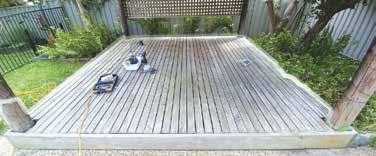

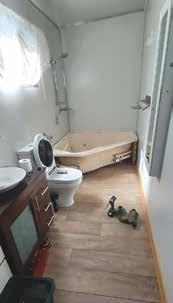




















We service the Brisbane area and surrounds, including Bribie Island. We provide a quality and reliable service for all your domestic and commercial pest control needs.
For management and prevention of:
• Spiders
• Silverfishes
• Ants
• Wasp
• Rodents
• Moths
• Cockroaches
Let the pros at FPC with years of experience handle them to ensure the problem does not intensify.
We are fully licensed and insured, and guarantee a quality solution to your pest problems.
We also specialise in termite management treatment and prevention systems in pre-construction and post construction. It is essential to have regular termite inspections to protect your family, your home, or your business from the persistent threat of termites.














If you are looking for a skilled team with years of experience all under one roof, here we are!
The Caravan and Camper Repair Centre is proud to be one of Queensland’s highest-rated caravan and RV repairers. What sets our team apart is our years of industry expertise and formal qualifications. Whether your caravan requires a standard service, major insurance repairs, or electrical upgrades, we have it covered.
We are also pleased to announce that we are the only repair centre in the Bay region equipped with Sealtech USA leak testing equipment. Testing your van early with this technology can prevent major expenses in the future.
Our team has recently expanded and now includes three trade-qualified RV technicians, an automotive technician, an apprentice, and two directors, with one always on-site to assist you.
In the event of storm damage, we can come to you for your insurance assessment and handle the paperwork to ensure a seamless process.
We look forward to looking after your RV and ensuring your travels are safe and enjoyable.
THE CARAVAN AND CAMPER REPAIR CENTRE ARE THE EXPERTS IN:
• Insurance Repairers
• Leak Testing Facility
• Awning Replacements
• Servicing
• Hatch Replacements
• Govt Approved HVRAS Officers
• Insurance Repair
• Plumbing Repairs

E: service@ccrc.com.au
W: caravancamperrepairs.com.au
Hours: Mon to Thurs 7.30am to 4pm Fri 7.30am - 1.00pm

L• B g
• L t
• R g
• L h
• S
•
•
F o r a N O O B L I G A T I O N
F R E E Q U O T E , C a l l o r V i s i t
•
W h e t h e r I t B e W e e d C o n t r o l ,
L a w n G r u b C o n t r o l
O r T h e C o m p l e t e P a c k a g e
Our Services Include:
t o r e d u c e w a t e r i n g a n d i n c r e a s e d r o u g h t t o l e r a n c e
• F r e e c a l l b a c k a n d r e d o p o l i c y
• P a y a s y o u g o w i t h n o l o c k i n
c o n t r a c t s
• S o i l w e t t e r s a n d m o i s t u r e r e t a i n e r s
HERE'S WHAT THE CUSTOMERS HAVE TO SAY:

David R Jack has been instrumental in keeping our lawn bindi & weed-free all year round. We are constantly receiving compliments from visitors & even a few drivers by have stopped and complimented. We love being outdoors and this is the first house we’ve lived in where we can be barefoot all year round. We HIGHLY recommend Jack for your lawn care!

m a i n t e n a n c e
v i s u a l r e s u l t s




• F r e e a d v i c e r e g a r d i n g l a w n c a r e a n
• C o s t e f f e c t i v e s o l u t i o n s f o r p o s i t i v e


• No. 1 industry leader with over 35 years experience, servicing hundreds of regular customers in your local area on our lawn care program
• Utilising our own unique formulas whilst partnering with global leading brands ensures the best outcome for your lawn
ZUKO’S PAW OF APPROVAL SO LUSH YOU CAN SLEEP ON IT

OR MAYBE YOU:
• Have tried all the retail products and not getting results
• Are sick of wasting time and money on products that don’t work
• Overwhelmed by conflicting online advice about lawn care
• Are at the point of replacing your lawn which will cost $1000's of dollars knowing that you will still get weeds and lawn pests

Google Search - Coochie Hydrogreen Bribie Island & Caboolture, or scan the QR code above.
Find us on Facebook atwww.facebook.com/LoveThatGreen
Deb B
Jack, is a master at his trade, he provides an excellent service and his visits are always educational. He takes the extra time to fully explain everything and his knowledge is second to none. Would highly recommend his services.
Liana L Jack was extremely professional and helped educate me on how to get the garden of my dreams. My yard has never looked so lush and my children are loving being outside again definitely recommend.
Irene M Jack has our lawn looking the best it has in years, we were using every weed killer we could get our hands on, trying every fertiliser spending 100’s of dollars yearly and the lawn was always a mess full of weeds, since using Jack we save a fortune paying the bi-monthly bill and our lawn looks fantastic, so green and thick and FINALLY weed free.
Kevin R Jack has been treating our lawn for several years now and taken it from basically weed, to a lush spongy green lawn all year round. The regular fertilising and weed treatment is fundamental to this result but equally important is his advice and ongoing support that allows us to keep it this way.

If you’re new to the Bribie region, “winter gardening” might sound like an oxymoron. But here, June through August is one of the best times to be in the garden.
While the southern states are pulling on gloves and coats, our subtropical climate gives us a mild, dry season that’s perfect for growing food, prepping for spring, and tackling jobs that summer heat makes difficult.
What Winter Feels Like around Bribie.
Our winter is gentle. Daytime temps usually sit between 19°C and 23°C, with nights dropping to around 8–12°C. We get fewer storms, lower humidity, and the sea breeze backs off a bit. The trade-off: it’s also our driest time of year, and westerly winds can strip moisture fast.
Frost is rare on the island thanks to the ocean buffer, but if you’re on the western side near Ningi Creek or in a low pocket, you might cop a light one in July.
Because the soil stays relatively warm, roots keep growing. That’s the key difference from temperate zones — winter here isn’t dormancy; it’s a second growing season.
What to Plant Now.
This is prime time for most veggies, salads and herbs. The lack of humidity means less fungal disease, and pests like fruit fly slow down. Edible plants that might only be good for summer planting down south, thrive here in winter.
Veg to sow May–July:
• Leafy greens: Lettuce, spinach, silverbeet, kale, rocket. They won’t bolt like they do in spring and summer.
• Brassicas: Broccoli, cauliflower, cabbage, bok choy and other Asian greens. Start seedlings in punnets or
buy advanced ones — they’ll head up nicely before spring heat.
• Root crops: Carrots, beetroot, radish, turnips, swedes. Sandy Bribie soils suit these crops if you add compost.
• Peas and beans: Snow peas, sugar snap, and broad beans love it. Trellis them against those westerlies.
• Onions, garlic, shallots: Traditionally planted on the shortest day in June. If you haven’t yet, get them in anytime from now.
• Herbs: Parsley, coriander, dill, chives. Coriander struggles in our summer but thrives right now.
Native flowers for winter colour include:
Bracteanthas (paper daisies), some native grasses, grevilleas, kangaroo paws, scaevolas, native violas, and many more. A great benefit is that many of these plants will attract native birds, helping retain our region's natural biodiversity.
Some exotics for winter colour include:
Allamandas, alyssum, bouganvilleas, calibrachoas, cuphea, cyclamens, daisies, delphiniums, dianthus, chrysanthemums, geraniums, impatiens, mandevillas, marigolds, pansies, many rose varieties, violas, scaevolas, snapdragons, violas, sweet peas, and more.
Jobs to Tackle in Winter.
Prune and clean up: Once the autumn flush finishes, prune hibiscus, frangipani, and almost any plants. Cut back spent perennials. It’s also safe to give roses their main prune in June–July (pop instore for advice on how).
Soil improvement: For sandy soils, winter’s the time to add organic matter without it rotting away from
humidity. Dig in compost, aged manure, etc. Add mulch (bark chips or straw) to protect against westerlies and prep for spring.
For those with clay soil, a little gypsum does wonders for breaking down clay.
Watch for pests: Aphids love new broccoli shoots. Caterpillars show up on brassicas. At Bribie Garden Centre, we have a wide range of products to combat pests and diseases, many of them natural. The good news: fruit fly, scale, and fungal problems drop off in winter.
Feed citrus: Citrus trees set fruit in winter. Give them a feed of complete citrus food in July, plus a handful of dolomite if your soil is very sandy. Pick mandarins and lemons as they ripen.
The Bribie Quirks
Wind: July westerlies dry everything out. Use windbreaks for seedlings and stake taller veg.
Sandy soil: Nutrients leach fast. Feed little and often with seaweed, fish emulsion, or slow-release pellets.
Salt: If you’re in Woorim, or within a couple of blocks of the ocean, there are dozens of salt-tolerant plants to choose from. Some native favourites include pigface, banksia, coastal rosemary. Veggie beds need protection from salty spray.



Water table: Some gardens will be waterlogged after the recent prolonged rains. Raise beds, or areas around certain plants by 30cm if yours stays soggy. Putting a rock border around raised areas turns these mounds into a garden feature.
Summer on Bribie is tough — humidity, heat, storms, and pests. Winter gives us a break. You can be outside at midday, the soil is workable, and things grow without bolting in a week. Get your crops in by July and you’ll be harvesting from September, right when summer prices at the shops tend to go up.
Winter here isn’t about survival. It’s about taking advantage of the calm season. Pull on a light jumper, make a cuppa, and get planting. Spring on Bribie comes fast, and gardens that start in winter are the ones that look best in October.
So, for all your gardening needs and advice, pop over to Bribie Garden Centre, 50 Verdoni Street, Bellara, and we'll look after you. And we have DIY coffee for just $2, with all proceeds going to our Neighbourhood Centre's Senior's Wellbeing Program.
We'd love to see you.
Cheers, Pete, Simon and team. 0435 007 751


Pete and Simon welcome locals and visitors alike to enjoy their beautiful garden spaces.



For inquiries, or to book your spot, please pop in, call, or SMS



By Rodney Rock –
Istarted roofing in 1986 as a young apprentice roof tiler and spent decades working throughout the building industry before eventually stepping away to pursue other business ventures.
A few years ago, I found myself back where it all began. The original plan was simple. My son Bryce and I would paint a few roofs together, spend some time working side by side and enjoy being back on the tools.
What started as a small venture quickly became something much bigger. Like many businesses entering the roof restoration industry, we initially tried to compete on price. The problem was that every time we sharpened the pencil, something had to give.
Less preparation. Cheaper products. Faster turnaround times.
The industry had become increasingly focused on how cheaply a roof could be restored rather than how well it could be restored. And honestly, it didn't sit well with us. Bryce and I kept asking ourselves the same question.
If your roof protects everything underneath it, why would you cut corners on the very thing that protects your home?
Eventually we made a decision that changed the direction of our company.
We stopped trying to be the cheapest. Instead, we decided to focus entirely on QUALITY, PREPARATION, DURABILITY AND LONG-TERM PERFORMANCE. It wasn't necessarily the easiest path, but it felt like the right one.
Around that same time, we were experiencing ongoing frustrations with paint systems, warranties and product performance. I reached out to a few roofing contacts in Melbourne looking for advice. I expected a recommendation. What I got was something completely different.
The following day my phone rang. On the other end was senior management from Dulux. Two days later, the National Manager for Dulux Acratex was sitting at my dining room table. I'll never forget what he said.
"Rod, we've had a look at who you are and what you're trying to achieve. We'd love to work with you." Then he asked a question I wasn't expecting.
"What do you want? What do you need?"
I told him we wanted the very best products available. Better adhesion. Better gloss retention. Better durability. Better performance in Queensland's harsh climate.
What happened next would ultimately change the way we approached roof restoration forever. And together, what followed helped shape a major shift in premium roof restoration systems across Queensland.

What most roof restorations don't tell you.


















Aswinter’s chill settles in, Australians are feeling the squeeze of rising living costs. For many households, this means seeking affordable ways to stay warm, such as using portable heaters, electric blankets, and overloading power boards. But these short-term solutions come with a hidden danger: an increased risk of house fires.
With energy prices surging, families are forced to make tough decisions. Some opt for second-hand heaters or use older appliances that may not meet current safety standards.
Others overload power boards to run multiple devices simultaneously—an easy way to push electrical systems beyond their limits. According to fire authorities, such practices are a leading cause of winter house fires. The risk is further compounded by attempts to cut corners on maintenance.
Skipping annual heater servicing, neglecting to check wiring, or using frayed extension cords can all lead to disaster. In the rush to keep bills down, safety checks often fall by the wayside. This is particularly dangerous



with heating appliances, which draw significant power and generate heat—two ingredients for a potential fire. Queensland Fire and Emergency Services (QFES) report a spike in domestic fires during winter months, with many incidents linked directly to unsafe heating practices.
Portable heaters placed too close to furniture or curtains, or left on overnight, can quickly ignite nearby materials. Similarly, daisy-chained power boards or overloaded outlets are a recipe for electrical faults.
The solution lies in awareness and prevention. Authorities urge households to prioritise safety over short-term savings: never overload power boards, keep heaters away from flammable items, and have appliances checked regularly. Investing in a smoke alarm is also critical—it could be the difference between a minor scare and a tragedy.
While the cost of living may be rising, a house fire carries a price far higher than any energy bill. This winter, staying safe means making informed choices about how we heat our homes and power our lives.























































With 30 years of experience as interior decorators, we have used wallpaper on clients’ ceilings. While it is not for the faint-hearted, it is becoming an increasingly popular design choice.
For many years, ceilings have been an afterthought in interior design. Homeowners often spend time choosing flooring, wall colours, furniture, and lighting, while leaving the ceiling plain white with little consideration.
As design trends evolve, however, more people are questioning whether paint is still the best ceiling finish or whether wallpaper offers a more creative alternative. Both options have
their advantages, and the right choice depends on finding the right balance between practicality and visual impact.


Paint remains the most common ceiling finish for good reason. It is affordable, widely available, and relatively easy to apply. A painted ceiling creates a clean and uncluttered appearance that works in almost any room. White paint reflects light effectively and can make a space feel larger and brighter.
This is especially valuable in homes with lower ceilings or limited natural light. Paint is also easy to maintain. If stains, cracks, or marks appear over time, touching up the surface is usually straightforward and inexpensive.
Beyond practicality, painted ceilings provide flexibility. Homeowners can change wall colours, furniture, and décor without worrying about whether a patterned ceiling will clash with a new design scheme. For those seeking a timeless look, paint is often the safest investment.
Wallpaper, on the other hand, challenges the idea that ceilings should fade into the background. Designers often refer to the ceiling as the “fifth wall,” and wallpaper can transform it into a focal point. A carefully chosen pattern, texture, or colour can add character and sophistication to a room. In dining rooms, bedrooms, powder rooms, and home offices, wallpapered ceilings can create a sense of luxury and visual interest that paint alone may struggle to achieve. Wallpaper does have some drawbacks. Applying it overhead requires skill and precision, so we strongly recommend using a professional wallpaper installer.

Maintenance can also be more challenging. If a section becomes damaged or begins to peel, repairs may be noticeable and difficult to complete seamlessly, so professional assistance is also best for any touch-ups.
The decision ultimately comes down to purpose. If the goal is simplicity, affordability, and long-term versatility, paint remains the superior choice.
If you are wanting to create a memorable design statement and add personality to a space, wallpaper deserves serious consideration.
Rather than viewing paint and wallpaper as competing options, homeowners should see them as tools for different design goals.
Most rooms benefit from the clean elegance of a painted ceiling, while select spaces can be elevated through the thoughtful use of wallpaper.
In the end, the best ceiling is not the one that follows the latest trend, but the one that enhances the character and function of the room beneath it.
Images from Decor Pad, Thibaut Ivory T - fabric & wallpaper 0422599084

Ithinkthis has been the trickiest Autumn for weather and for fishing in a long, long time. I’ve looked back through June fishing reports from previous years and mostly they were about “glorious Autumn weather, with calm winds and sunshine.”
This year has been all about rain and morning westerlies. Over the three months of Autumn, a total of only 30 days showed no rain at all. As a result, there is a fair bit of fresh water in the Passage, which is not very encouraging for good fishing.
There’s also been a fair bit of weed up the Passage, maybe because of the fresh water. Stacey was saying it was covering their gear and hiding their bait.
She and Brendan still managed to catch three keeper flathead in Ningi Creek, although Brendan also dropped a couple of biggies at the side of their boat.
The biggest stories lately have been about flounder and flathead – especially lots of bar-tailed flathead, which only needs to be 30cm to keep. Ningi Creek and Turner’s Camp have been consistently good for flathead fishing, but Connor’s family were straight out from VMR when they caught three bar-tailed flathead.
There have also been some impressive Venus tusk-fish caught near Turner’s Camp – this has been particularly at or near the top of the tide, on a light wind. The new moon and big tides this week should mean a good time for targeting them. Try some mullet fillet on a smallish hook, with a nice strong leader.
Plenty of snapper are being caught, but not many keepers among them. It’s only a month before the snapper closed season starts, so I hope to see some biggies before then!
Whiting have been caught all over the place, from around Sandstone Point and the second green marker south of the bridge, past Ningi Creek and up towards White Patch.
Alan thinks the south-westerly mornings have been good for the whiting, but there has often been just too much westerly wind to be comfortable very far into the Bay.
Tailor and whiting have been happening at Cook’s Rocks and on the drift towards Red Beach. Even fishing from Red Beach itself has been a windy and frustrating exercise, but there is some decent winter whiting for the taking.
There are plenty of reports about tailor and mackerel tuna as well. After their Ningi flathead fishing, Stacey
and Brendan anchored off Red Beach, looking for whiting – it was quite bumpy, there were birds hanging around but no other boats seemed to be getting any luck.
She let her line drop a little deeper than she usually does for tailor fishing and found them - both mack tuna and tailor - a bit too small but plenty of them. One even


jumped back out of the boat when Brendan landed it!
Crabbing has slowed a bit, especially sand crabs, but Darren spent a few days anchored around Mission Point and said that his pots were “chock-a-block” full of mudcrabs every time he pulled them up.
Interesting news came in last week about a new fishing “club” on Bribie. A group of female fishing enthusiasts have banded together, under the name of Bribie Saltwater Sisters. They have a Facebook page, but have only just started, so there isn’t much to show yet.
The intention is to get together every now and again, for a cuppa, a chat and a fish. If you’re a woman who would like to share fishing trips and catching stories with some other lovely women, look them up.
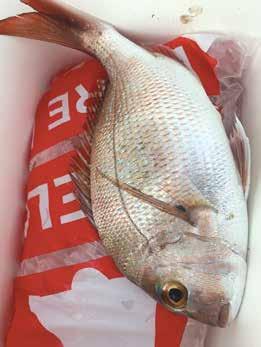
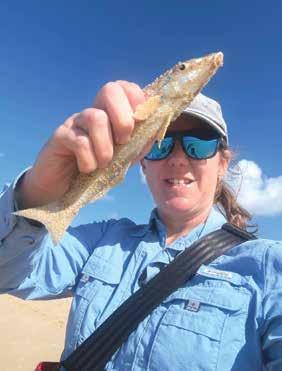
I think Saltwater Sisters is another great asset for Bribie Island’s fishing community!


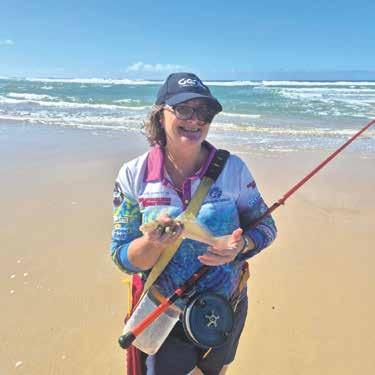


PARKING SANDSTONE PT HOTEL
Saturday 23rd May 2026 – Marine Rescue Bribie Supporters Association provided parking services for the Sandstone Point Hotels Red Hot Summer Tour featuring Paul Kelly, Missy Higgins, The Cruel Sea, The Cat Empire, Kasey Chambers, and more.
Parking Team –
Mark Paterson (Lead), Doug Lythgo (deputy Lead) Gary Lynskey, Sharyn Giles, Lindsay Paterson, Phil Hagen, Doug Wilson, Allan Davey, Noel & Lynne Wendt. Payment team –
Kelly Langworthy (Lead), Linda Burdinatsplitting cars, Karen Arthurs & Colleen Kenyon – eftpos, Kate Brown & Cecila Wilson- eftpos.

STATE OF ORIGIN – GAME 1
Wednesday 27th May 2026 – Marine Rescue Bribie Supporters Association beginning around 6PM held a function for Active Members and partners with footy fare on the menu! Toasties, pies, and hot dogs with a variety of sauces and of course the bar with our usual great prices. Peter Morton was barman for the night, Kelly Langworthy, Cheryl Robinson,and Brenda Allardyce perpared and served the footy snacks. NSW Blues won 22 – 20.

PARKING SANDSTONE PT HOTEL
Saturday 30th May 2026 – Marine Rescue Bribie Supporters Association provided parking services for the Sandstone Point Hotels Alpha Fest Concert featuring Bliss n Eso, The Wolfe Brothers, Shannon Noll and others.
Parking Team: -
Mark Paterson (Lead), Doug Lythgo (deputy Lead), Wayne Schultz, Mark Purtell, Liz Radajewski, Sharyn Giles, Lindsay Paterson, Henry Graffen, John Burdinat, and Colin Graham.
Payment Team: -
Kelly Langworthy (Lead), Cheryl Robinson – eftpos, Linda Burdinat- splitting cars, and Barbara Gillmore – eftpos
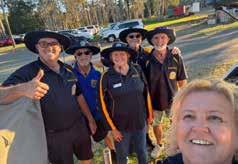
Thursday 4th June 2026 MRQ Bribie Island held a Town Hall Meeting with some of their active crew members to bring them up to date on new procedures, risk assessment, the New Bribie One, operational systems including Off Shore SMS and MRQ Activate/Noggin, Furuno, and progression in the rank structure.



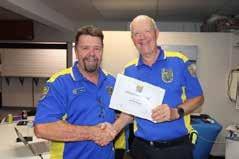
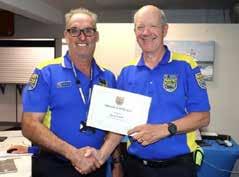
Unit

Unit Commander Gary Voss presents Crew Day
Saturday 6th June 2026 – Kerry Beeton surprised husband Wayne with an 80th Birthday Party at Marine Rescue Bribie. Wayne has been a Radio Operator at VMR & MRQ Bribie Island since December 2011. Relatives including children travelled from Western Australia and Tasmania to celebrate with Wayne & Kerry.



Tuesday 9th June 2026 - We farewelled the old Bribie One today as it headed off to Horizon Shores. Scott Burger, Glenn Philip and Josh Belsham from MRQ came to Bribie Island to take the vessel to its new home (hard stand) at Horizon Shores to be refurbished. She has served the local community well for over 10 years and has been involved in many rescues in and around Moreton Bay and has recently been replaced by our new state-of-the-art Bribie One.

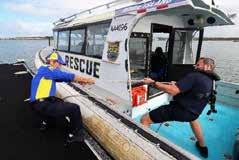

otherwise perfectly fine. The weather is good. The engine is working. There is just one problem – the fuel tank is empty. One of the biggest traps is relying on the fuel gauge. Boat fuel gauges are often more of a suggestion than an accurate measurement. They can be affected by the angle of the boat, sea conditions, and even how long the boat has been sitting. If your fuel gauge says you have a quarter of a tank left, don't ever assume this is right.
Another common mistake is calculating fuel based on a ‘typical’ trip. Moreton Bay can throw up some serious weather challenges that make a trip anything but typical. A strengthening breeze, rougher conditions, and an outgoing tide can all increase fuel consumption significantly.
Fishing can catch people out as well. Many skippers calculate fuel based on distance travelled to get to a spot, but forget about hours spent idling, trolling, and moving between fishing spots.
Then there is the "just enough" mentality. "I' reckon I’ve got just enough to get there and back." That might be true. But do you have enough to take a detour around weather? Enough if conditions deteriorate?
A good rule is to always carry more fuel than you think you will need. Many experienced boaties often follow the onethird rule – one-third to get there, one-third to get home, and one-third in reserve.
Now here is a fun fact – we have had reports of people having fuel syphoned from their boat on the pontoon in the canals. So don’t assume you have heaps of fuel before you leave your pontoon – make sure you check?
The best time to think about fuel is before you even arrive at the boat ramp or leave your pontoon. Don’t wait till you are in the water to check the fuel level!
So remember – don't trust the gauge, allow for changing conditions, and always keep a reserve.
Running out of fuel is one of the easiest boating emergencies to avoid. Stay safe on the water

You would be surprised how many of our callouts involve boats that have run out of fuel.
The skipper is usually a bit embarrassed. The boat is
“BUT importantly – Always remember if you are heading out on the water LOG ON with your local MRQ. VMR or Coast Guard, it’s a free service for everyone, so why wouldn't you! It just may save your life!”
“PLEASE WEAR YOUR LIFE JACKETS!”

Editor,
The Crisafulli Government is increasingly showing a preference for centralised power and fast-tracked development over consultation and local decision-making.
The proposed legislation to accelerate critical minerals projects may have merit, but the powers extend well beyond mining. They would also apply to other projects deemed to be of state significance, with little clarity about what future developments might qualify.
The legislation would allow greater state intervention in planning decisions, expand the reach of State Development Areas beyond their existing boundaries, and provide mechanisms for land acquisition where owners refuse to sell. These are significant powers that deserve careful public scrutiny.
Queensland already has established processes for major projects through the Coordinator-General and existing state development frameworks.
If the real barriers to development are infrastructure, energy supply and investment, granting governments even broader powers may not address the underlying problems.
The issue is not whether important projects should proceed. It is whether Queenslanders are comfortable with governments having greater authority to override councils, communities, environmental protections and property rights in pursuit of development.
Economic growth matters, but so do accountability, transparency and public confidence.
Before these powers are expanded, Queenslanders deserve a full public debate about where the balance should lie between development and democratic oversight.
What began as a promise to get things moving is increasingly looking like a Development Dash with fewer checks and balances.
(With reference to John McCarthy's Newsletter, 3 June 2026.)
Lyn Rushby
Dear Editor,
It was nice to read about the Pink Dragons latest escapade. It reminded me of when I was paddling back in September 2009, when we ventured beyond our usual course.
None of us had much experience then, with the club having only about four months of paddling. First, we went under the bridge as far as the Bongaree lock, and then, the following Wednesday, we paddled all the way into Pacific Harbour and around Osprey Island.
After one hour and twenty minutes on the water, I for one needed a nanny nap that afternoon. Great memories.
Cheers, Hazel
Dear Editor,
Al Finegan writes interesting historical articles, but I take issue with him on his "understanding of the Puritan's mindset" slur.
I doubt that Mr Finegan understands that which can only be understood by regenerate believers in the Lord Jesus Christ. ("The natural man receiveth not the things of the Spirit of God.")
The devil does indeed "walk the earth, tempting souls and waging a spiritual war" as he states. The devil is called "the prince of this world, the god of this world and the prince of darkness" in Scripture, among many other titles.
Puritan preachers, such as Cotton Mather, can in no way be linked with the introduction of evil into society, whereas voodoo is notoriously associated with satanism and sorcery.
Additionally, medical diagnosis has always been inadequate in explaining demonic attacks, as any reader of the Bible must see.
The Lord Jesus healed diseases, raised the dead and cast out demons, never once suggesting that the three separate ministries could be handled alternatively.
The witch trials, of course, were carried out by secular powers, peopled again by those who could not understand the things of the Lord, and they acted outrageously.
S. Thompson
Dear Editor,
For years Australians have been told that major tax reform is too difficult. Meanwhile, housing has become less affordable, wealth inequality has increased, and many younger Australians feel the economic system no longer works for them.
Labor's latest budget finally begins to address some of these long-term problems. The changes to negative gearing, capital gains tax concessions and discretionary trusts are not aimed at ordinary Australians. They are targeted at tax arrangements that have disproportionately benefited a relatively small number of wealthy asset owners. The reality is that many Australians earn their income from wages and salaries and pay tax on every dollar they earn. Yet people with substantial income from investments often pay a lower effective tax rate through concessions and tax structures unavailable to most workers. That is neither fair nor sustainable. The budget seeks to level the playing field. By reducing tax advantages for investors and wealthy trust users, while providing tax relief for working Australians, it shifts the system towards rewarding work rather than speculation.
Importantly, these changes will affect only a small proportion of taxpayers. Most Australians do not own multiple investment properties, use discretionary trusts to distribute income, or realise large capital gains. Most Australians are workers, families, first-home buyers and retirees concerned about the rising cost of living and housing affordability. The budget also includes direct benefits for wage earners through targeted tax relief and simplified deductions. Combined with measures designed to reduce upward pressure on house prices, these reforms offer practical help to those who have felt increasingly locked out of economic opportunity. Predictably, scare campaigns have already begun. Similar campaigns have accompanied almost every major reform in Australia's history. However, genuine reform is often unpopular with those who benefit most from the status quo. If these changes succeed, Australia will become a fairer country where hard work is rewarded and more people have a genuine chance to get ahead.
Lyn
after box swallowing niente? (6) hiding … arrest and regrettably sour at ambassador in teetotaller’s follow of rusts badly reverses (3,5) bank vault to arrive,
CRYPTIC SOLUTION
1 Give money to stop expression of pain (5)
4 Subject, theme or point in conversation, primarily (5)
Across
7 Quantity of tea swallowed by our Nan (3)
1 Reckoning mountaineer is confused (11)
2 Wild dog’s noise and energy (5)
Down
TODAY’S TRICKS Clues begin or end with a definition of the answer.
1 Give money to stop expression of pain (5)
4 Subject, theme or point in conversation, primarily (5)
8 Joy in treatment of toenail (7)
9 Some hero slavishly presented in London statue (4)
3 Bird heads for wood, reviewing every nest-site (4)
7 Quantity of tea swallowed byour Nan (3)
8 Joy in treatment of toenail (7)
10 Rascal, one providing seafood (6)
1 Reckoning mountaineer is confused (11)
The rest is one of these: Anagram Anagram of answer and hint that there’s an anagram
2 Wild dog’s noise and energy (5)
4 Nectar drunk? Abstracted state (6)
9 Some hero slavishly presented in London statue (4)
12 Creative worker in part is technician (6)
5 What will originate pretty real iridescent spectrum? Maybe this (5)
10 Rascal, one providing seafood (6)
14 String running over parcel extensively at the outset (4)
12 Creative worker in part is technician (6)
14 String running over parcel extensively at the outset (4)
17 Earnestly request naughty child to get learning (7)
18 Spring asparagus? Just a selection thereof (3)
17 Earnestly request naughty child to get learning (7)
18 Spring asparagus? Just a selection thereof (3)
19 Courage boarding commoner vessel (5)
20 Discernment: this artistic sensibility takes experience, principally (5)
3 Bird heads for wood, reviewing every nest-site (4)
4 Nectar drunk? Abstracted state (6)
6 Thoughtful, repairing desecration (11)
5 What will originate pretty real iridescent spectrum? Maybe this (5)
11 Remains with rocky material on the beach (6)
6 Thoughtful, repairing desecration (11)
13 Pig-like animal that Asian people immediately recognise at the outset (5)
‘Senator arranged crime (7)’ gives TREASON Hidden word(s) Answer hidden in clue’s words ‘Some have altered meat (4)’ gives VEAL Charade Combination of synonyms/abbrevs
‘Qualify to get drink for ID (8)’ gives PASSPORT (pass + port)
11 Remains with rocky material on the beach (6)
15 Desert refuge? Nothing in current form (5)
19 Courage boarding commoner vessel (5)
20 Discernment: this artistic sensibility takes experience, principally (5)
13 Pig-like animal that Asian people immediately recognise at the outset (5)
16 Warmth suffusing the atmosphere (4)
Acrostic First letters of answer
‘
15 Desert refuge? Nothing in current form (5)
Initially get a good joke (3)’ gives GAG
16 Warmth suffusing the atmosphere (4)
Across
7 Edges of empire sacked by Egypt’s last queen (9)
8 Told ally to lose three pounds before tomorrow (5)
9 Bring this novel for Leo, perhaps (5,4)
10 Reportedly failing, fell (5)
12 Some thoughts on Gabonese Bantu language (6)
13 Always, come rain or shine, tongue in cheek? (8)
14 In bits, heads to America (see below) (7)
17 Earliest of begonias continued blooming (7)
20 Free money for Americans, with short notice (8)
22 Goes off round centre of Damascus and swelters (6)
24 Delicate international agent put on weight (5)
25 Exciting yet gloomy study of roots (9)
26 Brief question for bachelor in automobile (5)
27 Oblique signal in setter’s work (9)
Down
1 Einstein retrospectively taking legal action over equation’s origin (6)
2 Lustrous, wingless bug (6,2)
3 Parched after cycling in area south of Suez (3,3)
4 Loose gravel’s slippery stuff (7)
5 See you doffing cap a lot (6)
6 Fossil fuel left dons suffering agonies (8)
11 Offer and appraisal both turned out to be unwritten (4)
15 False promise goads nurses (8)
16 Authentic beach huts oddly disappearing (4)
18 Buys barrier to stop litter droppers (8)
19 Familiar with your sib’s butt trouble (7)
21 Roger backing strike for change in Russia (6)
22 Lacking vigour in harem is shameful (6)
23 Chasing game, regularly dispatching zebras and big cats (6)