Welcome to edition 265. I hope you’re enjoying the cooler weather and finding time to connect with friends, family, and our great local community. There’s plenty happening around Bribie this winter, so let’s take a look at some recent highlights.
The Pumicestone Business Awards took place last week, recognising the hard work and achievements of our local business community. Congratulations to all the finalists and winners—your dedication really does make a difference. Please continue to support our local businesses and help keep our region thriving.
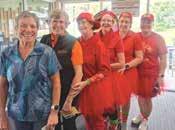
Eye Envy is celebrating 16 years in business, and Bribie View Club marks an impressive 30 years of community involvement and support. It’s wonderful to see the ongoing commitment of these groups and all the work they do for our community.
Congratulations also to Narsha on her recent golf achievements—it’s inspiring to see young talent emerging in our local sports scene. Congratulations also to Eric Tabor for his achievements in Shorinjiryu Koshinkai Karatedo.
BEIPA has exciting news to share as well, with updates on projects and initiatives that benefit our island. They have a great raffle going now with chances to win some amazing prizes!
So, make sure you grab a cuppa, put your feet up, and enjoy this edition of the Bribie Islander as we celebrate the people and stories that make our community special.
Take care, stay safe,
CONTRIBUTORS
Anne Matthews
Al Finegan
Barry Clark
Elaine Lutton
Joie Scheinpflug
John Traill
Kathy Vincent
Maria Christina
Peter Schinkel
Peter Dallimore
Philip Arlidge
Robyn- B.I.
Boat Charters
Sue Wighton
Federal Member
Longman Gets Things
Done!
for
Tracey Blinco
R3 Roofing
Paul Popham
Ivory T - fabric & wallpaper
Yawk Yawk
Disclaimer for Contributions to The Bribie Islander Magazine
The views and opinions expressed in contributions to The Bribie Islander Magazine are those of the individual authors and do not necessarily reflect the official policy or position of the magazine or its editorial team. Contributions are welcome, but the magazine reserves the right to edit, modify, or reject submissions that do not align with our publishing standards or guidelines. By submitting your work, you acknowledge that you have the necessary rights to share the content and grant The Bribie Islander Magazine permission to reproduce it in print and online formats. The Bribie Islander Magazine is not responsible for any copyright infringement that may arise from the publication of submitted materials. We encourage respectful and constructive dialogue, and contributions that violate community guidelines or promote hate speech, discrimination, or illegal activities will not be accepted. Thank you for your understanding and support in maintaining a positive and inclusive community publication.
days, so many healthcare experiences can feel rushed and impersonal. You book online, sit in a waiting room, have a quick appointment and leave feeling more like a number than a person.
That is exactly what Justin and Alayna Gribbin wanted to change when they opened Eye Envy Optometrist 16 years ago.
This June, Eye Envy proudly celebrates its 16th birthday — a milestone built on trust, genuine relationships and caring for the local community like family.
From the beginning, Justin and Alayna created Eye Envy with a simple belief: people deserve time, honesty and personalised care when it comes to their eyes.
As a proudly independent, familyowned and locally operated practice, they have built their business around old-fashioned service and genuine connection — something many Australians feel is becoming harder to find.
Living locally in Wamuran themselves, and with Alayna coming from a long-standing local farming family, the couple have always felt deeply connected to the Moreton Bay community. For them, Eye Envy has never just been about selling glasses.
It is about looking after local families, supporting the community and helping people feel genuinely cared for from the moment they walk through the door. That personal approach is what keeps patients coming back year after year. Justin has been practising optometry for
PODIATRY SERVICE
more than 30 years and is known for the calm, caring way he looks after his patients.
Whether someone is coming in for a routine eye test, struggling with dry eyes, needing contact lenses or noticing changes in their vision, Justin takes the time to truly listen and explain things properly. Patients are never rushed through appointments or made to feel like they are on a conveyor belt. Instead, they receive thoughtful, personalised care focused on finding the best outcome for their individual needs.
In a world of big retail chains and fastpaced healthcare, Eye Envy offers something refreshingly different. It is the sort of place where conversations matter, where staff remember your name and where patients feel comfortable the moment they walk in. That genuine care and attention to detail is why so many local families continue recommending Eye Envy to their friends and loved ones.
The practice also combines that personalised service with worldleading technology. Eye Envy proudly offers premium Rodenstock lenses featuring advanced German biometric intelligent technology, allowing lenses to be customised
to the unique structure of each individual eye. The result is incredibly precise, comfortable vision tailored specifically to each patient — because no two people see the world exactly the same way. And when it comes to choosing frames, Alayna brings her own special touch to the experience. Passionate about helping people feel confident in their eyewear, she carefully selects unique, distinctive frame collections that differ from the same styles often seen in larger retailers. Patients are guided honestly
and personally, with the goal of finding frames that genuinely suit their face, personality and lifestyle — not simply what is trending.
For many locals, Eye Envy has become more than just an optometrist. Families who first visited years ago now bring in their children — and even grandchildren — knowing they will receive the same level of warmth, honesty and care every time.
As Eye Envy celebrates 16 wonderful years, Justin and Alayna are also saying thank you to the community that has supported them along the way. Throughout June, patients purchasing complete eyewear can enjoy 20–50% off frames as part of the practice’s birthday celebrations.
At its heart, Eye Envy Optometrist represents something many Australians value deeply — supporting local businesses, receiving genuine service and knowing the people caring for you truly have your best interests at heart.
Sixteen years on, the passion behind Eye Envy has never changed. It is still about people, community and helping every patient walk out seeing clearly, feeling confident and knowing they have been genuinely cared for.
235 Goodwin Drive, Bongaree Ph: 07 3410 1122
241 Goodwin Drive, Bongaree Ph: 07 3450 0761
Receptionist Katherine (left) and Acupuncturists Jessica (centre) and Wendy (right).
THANK YOU!
Thank you to our wonderful Bribie Acupuncture community! We’re honoured to be a Finalist in the Pumicestone Business Excellence Awards for the fourth year in a row. We truly appreciate your support and are grateful to be part of this community.
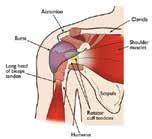
Acupuncture for Shoulder Pain
Shoulder pain is one of the most common musculoskeletal complaints, affecting people of all ages. Whether it develops from an injury, repetitive strain, poor posture, arthritis, frozen shoulder, bursitis, or simply wear and tear over time, shoulder pain can significantly impact daily life. Simple activities such as getting dressed, reaching into cupboards, driving, exercising, carrying groceries, or sleeping comfortably can become difficult and painful. As interest in nondrug approaches to pain management continues to grow, many people are turning to acupuncture to help manage a range of shoulder conditions, including:
• Rotator cuff tendinopathy
• Shoulder impingement syndrome
• Frozen shoulder (adhesive capsulitis)
• Bursitis
• Arthritis affecting the shoulder joint
• Muscle tension and trigger points
• General chronic shoulder pain
Many people seek acupuncture when shoulder pain has persisted for weeks or months, particularly when it is interfering with sleep, work, exercise, or quality of life.
What Does the Research Say?
A 2024 systematic review examining shoulder impingement syndrome—one of the most common causes of shoulder pain — found that acupuncture was effective in reducing pain while improving shoulder function and disability scores.
Another 2024 review comparing acupuncture with other treatment approaches found meaningful improvements in pain levels, shoulder function, and range of motion. Improvements in movement, including lifting the arm overhead and shoulder rotation, were often greater than those seen with some comparison treatments.
Rotator cuff disorders are another common source of shoulder pain, particularly in adults over 40 years of age. A 2021 systematic review examining acupuncture for symptomatic rotator cuff disease concluded that acupuncture may be a valuable non-surgical treatment option for reducing pain and improving function.
While every individual responds differently, these findings suggest acupuncture may offer a useful option either on its own or alongside other treatment approaches.
How
Acupuncture May Help
Acupuncture can be effective for both muscular shoulder pain and inflammatory conditions such as bursitis. While each person’s condition is unique, there are several ways acupuncture may support healing and recovery.
• Releasing Muscle Tension - Shoulder pain is frequently associated with tight muscles in the neck, upper back, chest, and shoulder region. Acupuncture can help relax these muscles by targeting specific points that reduce muscle contraction and encourage relaxation. As tension decreases, many people notice improved comfort and easier movement.
• Improving Blood CirculationAcupuncture has been shown to increase local blood flow to the affected area. Improved circulation helps deliver oxygen and nutrients needed for tissue repair while assisting the removal of metabolic waste products that can contribute to pain and inflammation.
• Alleviating Pain - One of acupuncture’s best-known effects is its ability to stimulate the release of endorphins and other natural pain-relieving chemicals produced by the body. Research also suggests acupuncture can influence pain pathways within the nervous system, helping to reduce pain signals and improve comfort.
• Releasing Trigger Points - Trigger points are tight, sensitive knots that can develop within muscles and contribute significantly to shoulder pain. These areas may also refer pain into the neck, upper back, or down the arm. Acupuncture can help release trigger points, reducing tension and improving muscle function.
• Reducing Inflammation - Inflammatory conditions such as bursitis can cause significant pain and restriction of movement. Research suggests acupuncture may help regulate inflammatory processes and stimulate the production of antiinflammatory substances, helping to reduce irritation within the shoulder joint and surrounding tissues.
• Restoring Mobility - Pain, inflammation, and muscle guarding often create a cycle of stiffness and restricted movement.
By addressing several of these factors simultaneously, acupuncture may help improve shoulder mobility and range of motion, making everyday activities easier and more comfortable.
Where Do the Needles Go?
One of the most common questions we hear is, “Where do the needles go?”
The answer is that it depends on your individual needs.
Jessica and Wendy have trained in a variety of acupuncture styles, allowing treatments to be tailored to each person. Every treatment is designed around your symptoms, health history, comfort level, and treatment goals.
For some conditions, needles may be placed close to the area of concern. For example, shoulder pain may involve points around the shoulder itself. In other cases, acupuncture points on the arms, hands, legs, or feet may be used to influence other parts of the body through the body’s interconnected pathways.
Treatment can also be adapted to suit your mobility and comfort. For those who have difficulty getting on and off a treatment table, or who simply prefer not to lie down, acupuncture can often be performed while seated with only sleeves or pant legs rolled up. We regularly work with clients who have restricted mobility and can modify treatments to meet individual needs.
How Many Treatments Are Needed?
The number of treatments required varies depending on the nature of the condition, its severity, and how long it has been present. Recent injuries may respond relatively quickly, while long-standing shoulder pain, arthritis, or frozen shoulder often requires a series of treatments over several weeks.
During your initial consultation, we will discuss a recommended treatment plan based on your individual circumstances and adjust this as your symptoms improve. If shoulder pain is affecting your ability to work, exercise, sleep, or enjoy daily activities, acupuncture may be worth considering as part of your recovery plan.
If you’d like to make a booking or if you’d like to discuss whether acupuncture and Chinese medicine is right for you, please contact us - Jessica, Wendy, and Katherine - via our website www.bribieacupuncture.com.au or call 0423 160 228. You can also find us on Facebook and Instagram @bribieacupuncture. HICAPS is available onsite. Pensioner discounts available.
Bribie Acupuncture
4/29 Benabrow Avenue, Bellara (behind the James Moore law office)
Health & Wellbeing Services
We
Organising
Shopping
Clients
We
Free
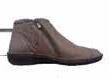
At Pina Colada Bribie, we proudly offer Cabello women’s boots and sneakers that combine luxurious comfort with classic
European style. Ideal for winter, our boots and sneakers provide warmth, coverage, and protection beyond what lighter footwear offers, making them suitable for everyday use. Each pair is thoughtfully designed for comfort, with wide-fitting options for all-day support and removable insoles for orthotics or personal preference.
CABELLO BOOTS HAVE ARRIVED
Made from premium Turkish leather and crafted in Europe, Cabello boots deliver quality and durability throughout the cooler months.
Our selection includes over 100 shoes on display, ranging from stylish lace-up boots and comfortable sneakers to practical winter shoes for women. Many pairs feature convenient zip access and soft leather linings for enhanced comfort and ease of use.
Whether heading to work, enjoying a weekend outing, or seeking dependable winter footwear, our collection of comfortable ladies’ shoes delivers versatility without sacrificing style.
Visit Pina Colada at 37 Benabrow Avenue, Bellara, to discover your perfect pair of natural comfort boots and sneakers. Step in today and experience unmatched comfort and style for yourself!
AMARA SKIN CLINIC
Advanced aesthetics. Natural results.
Medical-grade skin and injectable treatments designed to enhance — never mask — your natural features.
Every treatment is personally tailored by an experienced cosmetic nurse, with a focus on skin health and long-term results. Treatments
Wrinkle Relaxing
Facial Volume Restoration Face & Neck Rejuvenation
Advanced Skin
Skin Needling
RF Microneedling
Medical-Grade Facials & Peels
Proud MURAD Stockist
Afterpay & Zip available Memberships & flexible options offered
Openup that bathroom drawer, and you may discover makeup that is well beyond its normal usage date, some types of makeup can expire faster than normal if they are stored incorrectly. That means that it's up to you to decide when it's time to toss your beauty products.
Not disposing of makeup within a certain time limit, depending on the product, can also cause infections. Old cosmetics should be thrown out and replaced as needed. Recommended expiration dates vary between products, with liquid makeup getting older faster than powder.
Mascara is especially important, as it comes in close contact with your eyes and can easily cause an infection.
This may mean cleaning out your makeup collection on a regular basis, but the extra effort is well worth it to keep your skin and eyes healthy.
Since eyes are one of the areas of the body that are most susceptible to disease, you should be especially careful when keeping track of how long you've had your current mascara. The closed container creates a dark environment that allows germs to thrive.
Most manufacturers suggest tossing mascara just after the three-month mark. Of course, if it smells odd, has become dried out or has been exposed to drastic temperature changes, you might want to chuck it sooner than that.
And if you've had a recent eye infection, no matter how long (or little) you've had it -- you should replace all of your eye makeup.
Other liquid products, or those that contain a large amount of water, also are breeding grounds for bacteria and should be replaced on a regular basis. After six
months, get rid of liquid foundation, creamy-formula eye shadow and blush. And, like mascara, after three months, discard liquid eyeliner.
Powder-based products, which contain little water, can last for up to two years. These include pencil eyeliner and lip liner, and powder eye shadow, foundation, blush and bronzer. But this doesn't mean that every type of makeup will necessarily last this long. If a cosmetic changes colour or starts to smell, throw it out right away.
Keeping your makeup fresh and your skin clean can help you avoid illness. Using makeup in a hygienic way can help you avoid picking up an unpleasant disease. Many women get so involved in their routines that they may not even realize that what they're doing each morning is, in fact, putting them at risk of infection.
First, examine how you store your cosmetics. Make sure that you close your makeup containers tightly after using them each day. This helps keep the product in good, safe condition for a longer period of time.
Cosmetics normally contain preservatives that help prevent bacteria growth, but storing products incorrectly can mean germs will be able to grow. An important aspect of this is keeping products at room temperature; storing them in a hot place or in direct sunlight will make it much easier for bacteria to thrive.
You should never add water to makeup, either, as this can spur germ growth in a previously clean environment and lessen the effects of any preservatives added to the makeup that keep it more sanitary. And using saliva is an even bigger makeup don't: It can spread bacteria from your mouth, where they are harmless, to your eyes, which are much more sensitive.
Why You Should Buy Pre-Loved Clothing: Fashion with a Conscience
Let’s be real—who doesn’t love a good bargain or the thrill of finding a hidden gem? That’s exactly what pre-loved clothing is all about! Forget boring shopping trips— secondhand fashion is your ticket to adventure, savings, and doing good for the planet. Here’s why buying preloved is a win for you, your wallet, and Mother Earth.
Eco-Friendly Impact
Did you know the fashion industry is one of the world’s biggest polluters? Every year, mountains of clothes end up in landfills, and making new stuff uses up tons of water and energy. By giving clothes a second chance, you’re basically a superhero—saving the planet one awesome outfit at a time!
Let’s talk cash—pre-loved clothing is a goldmine for anyone who loves saving money. Why pay full price when you can score stylish, highquality, or even designer pieces for way less? Whether you’re hunting for vintage vibes or everyday basics, your wallet will thank you.
Unique Style and Creativity
If you’re tired of showing up in the same outfit as everyone else, preloved is your secret weapon! Thrift
shops are bursting with wild prints, cool vintage jackets, and one-of-akind pieces that scream ‘you’. Every find has a story, and your closet will be anything but boring.
Support for Local Communities
Plus, shopping secondhand is like giving your community a high-five. Many thrift stores support local causes or charities, so your new (to you) jeans might help fund a good cause. Looking good and doing good? Yes, please!
A Shift Toward Mindful Consumption
Shopping pre-loved is also about slowing down and appreciating quality. You’ll start noticing beautiful details and better fabrics—and you’ll think twice before buying something brand new just because it’s trendy. It’s all about smarter, more mindful shopping.
Here’s the bottom line: Buying pre-loved clothes is fun, affordable, planet-friendly, and totally unique.
So next time you want a wardrobe refresh, skip the mall and hit up your local thrift shop—you never know what treasures are waiting!
Protecting Moreton Bay’s Turtles: Community Action for Biodiversity
By Colin Scobie
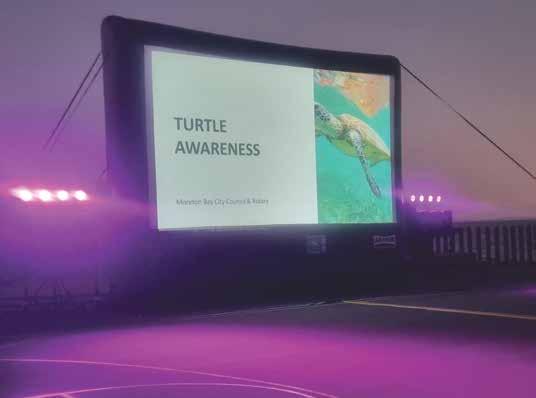
Oneof the strongest themes emerging from ESRAG (Environmental Sustainability Rotary Action Group) is concern about the accelerating loss of biodiversity. Members of the ESRAG team at Redcliffe Sunrise Rotary Club are helping raise awareness of this challenge through annual community events that celebrate and protect one of Moreton Bay’s most remarkable natural treasures — marine turtles.
The loggerhead and green turtle are among six turtle species that nest and thrive in the Moreton Bay Marine Park. According to the Moreton Bay Foundation, the marine park welcomes approximately twice as many visitors as the Great Barrier Reef, making this unique ecosystem one of Australia’s most accessible wildlife experiences.
Remarkably, it sits on the doorstep of Brisbane, Queensland — the only major capital city in the world adjacent to such an extraordinary marine habitat. Each year from November, the turtle nesting season begins. Over approximately six months, turtles return to Queensland’s sandy beaches for nesting, incubation and hatching. During a roughly 60-day cycle, eggs incubate beneath warm coastal sands before hatchlings emerge and begin their journey to sea.
However, climate change is altering this ancient process. Rising temperatures are producing disproportionately more female hatchlings, while nesting activity is gradually shifting south along the Queensland coast as turtles seek more suitable conditions.
At the same time, increasing urbanisation is placing pressure on traditional nesting beaches, creating growing competition for coastal space and threatening habitat protection. Marine turtles possess an extraordinary natural instinct. Hatchlings are believed to imprint on the Earth’s magnetic field — an inbuilt “geo-compass” that guides them back to their birthplace decades later. After a remarkable 30-year journey following ocean currents across
the Pacific to South America and back, adult turtles return to Queensland’s beaches to nest and begin the cycle again. To help build public awareness, this year’s annual event brought together local Indigenous leaders, council environmental representatives, university researchers and community groups in a beachside conservation expo supported by government partners.
The event combined education with family-friendly activities. After community presentations and a raffle draw, children were invited to paint their favourite animal — the turtle — and take part in a simulated nesting activity on the sand using ping pong balls, reflecting the nesting process during the off-season. The morning concluded with a classic Rotary barbecue, bringing families and volunteers together in a relaxed coastal setting.
As dusk settled, the community gathered at the local beachside amphitheatre for a free outdoor movie following the adventures and challenges faced by a turtle family — a fitting end to a day focused on conservation, connection and hope for the future of Moreton Bay’s marine life.
Through awareness, education and community action, initiatives like these remind us that protecting biodiversity begins at home — sometimes right on our own shoreline.
CONGRATULATIONS TO OUR GRIDMATCH WINNERS!!!!
Theseare our winners of the 3-pack giveaway! We hope you enjoy the game and for those who were not successful in winning one, they are available for sale at www. gridmatch.cards
Morning, I was just reading your article to win the interesting card game called grid match.
As a member of a games freak family, I would love to win this, as I have never seen this game before and looks totally interesting.
At present my mother and father-inlaw live on the island and my parents are visiting in the Bongaree caravan park. They often visit Bribie and totally love it here.
As a games family we are super competitive so this sound like a game I can finally win and beat the pants off my mum. Xx
Lisa
I would love a Gridmatch set. Over the last 4 months I’ve had 3 strokes which affected my left side. Since having the first stroke, I have attended rehab and am a lot better although my left hand is still partially affected. With the help of physio and occupational therapy I am much better. My left hand still not fully functioning it is much better than before. I think grid Match will help with my concentration as well achieving better fine motor skills.
Thankyou Roland
I’m eager to win the Grid Match Pack to gift to my parents to help with their aging minds. This pack will challenge them and test their thinking and strategy.
Winning this would be really rewarding for my parents.
Kind regards.
Janet
RADIAL & FOCUSED SHOCKWAVE THERAPY
Clinically proven* to help these conditions
• Heel pain (plantar fasciitis and Achilles tendinopathy)
• Tennis and golfers elbow
• Patella tendinopathy
• Frozen shoulder
LASER IDEAL FOR RECENT INJURIES < 6 WEEKS
• Rotator cuff tendinopathy +/- calcification
• Hip bursitis and tendinopathy
• Shin splints; Heel spurs
• Lower back & Knee arthritis
Happiness Is an Inside Job
Iwastexting with a friend this morning when she asked me a question that felt both simple and deeply layered: How can I be happy when I feel like I have nothing?
She didn’t mean nothing in the practical sense. She has the essentials many would say should be enough, yet having the basics and feeling emotionally nourished are two very different things.
Her beloved dog, who has been by her side for years, is ageing and unwell, bringing the quiet ache of anticipatory grief. Her relationship with her partner has slowly shifted into something that feels more like sharing space with a flatmate than being truly met, with little intimacy or emotional connection.
She is also moving into a rental, adding stress and uncertainty, while navigating life without much family support.
As she shared, I could feel that what she was really asking had little to do with her circumstances. Beneath her words was a deeper question: How do I feel okay when the things I once leaned on no longer feel steady?
I replied, “I feel you already know the answer.” After a long pause, her next message came through. “Yes,” she wrote. “It’s all an inside job.”
… and in many ways, it is. Heartache, loneliness, change, and grief are deeply human experiences. Though there comes a point where life gently asks us to stop searching outside ourselves for something only, we can cultivate within.
Many of us are conditioned to believe happiness lives somewhere ahead of us: in a better relationship, more money, greater certainty, or easier circumstances. Yet external conditions are rarely stable enough to build lasting peace upon. Relationships change, people disappoint us, pets age, homes shift, and life unfolds in ways we cannot control.
True happiness is less about the absence of pain and more about building a sense of inner peace. It is learning how to stay connected to yourself, even when life feels uncertain. Often it is the simple things: being honest about what is real, and creating simple rituals and self-nurturing moments.
Not having everything we thought we needed, but in discovering that even when life feels uncertain, we can still return home to ourselves…because sometimes, when it feels like we have nothing left to lean on, life is quietly inviting us to discover what was always there waiting for us all along.
Ourselves.
If you are moving through a challenging time and are ready to reconnect with yourself and find more inner peace, reach out to organise a session.
You can reach me on - 0405 361 882. Always with love, Maria Christina x Holistic Counsellor, Life & Wellness Guide
Recognising Australia’s Unpaid Carers and why they shouldn't have to feel alone
Unpaidcarers are the invisible workforce of Australia’s disability support system. Long before the introduction of the National Disability Insurance scheme families, parents and carers were carrying the weight of a system that too often overlooked the needs, dignity and potential of people living with disability.
For decades, advocates fought tirelessly for reform. They campaigned for a system is as an investment in equality, independence and human rights. The NDIS represented a turning point — a national insurance scheme designed to give people with disability greater choice, opportunity and inclusion in everyday life.
Yet in recent times, much of the public conversation surrounding the NDIS has focused on budget cuts, and cost savings. While accountability and integrity are important, the debate has too often lost sight of the people at the centre of the scheme — participants and the unpaid carers who support them every single day.
Behind every person navigating complex disability needs is often a parent, sibling, partner or loved one acting as an unpaid multidisciplinary care team. They are advocates, administrators, drivers, therapists, support coordinators, nurses and emotional supports all at once. They manage appointments, paperwork, medications, education plans, transport and crisis situations, often while sacrificing their own careers, health and financial security.
These carers are not asking for applause. But they do deserve recognition, respect and support. Without unpaid carers, Australia’s disability system would collapse under the sheer demand placed upon it. Their contribution saves governments billions of dollars each year, yet their labour is frequently overlooked in policy discussions and media narratives.
Since the introduction of the NDIS, many unpaid carers have experienced a sense of relief because they are no longer carrying the entire responsibility of care alone. Nobody should have to carry the role of a multidisciplinary team on their own. A team is needed for support and sustainability. The scheme has allowed families to build collaborative support networks with support workers, allied health professionals, educators and the broader multidisciplinary team, all working together to help participants reach their goals and thrive. Families often become the bridge connecting every aspect of care, ensuring consistency,
communication and stability across services. They spend countless hours coordinating supports, sharing knowledge, training staff and advocating for the participant’s needs and aspirations. While carers willingly give everything they can, it is not sustainable for individuals to maintain workloads that can exceed 100 hours a week over a lifetime. This is why properly funded NDIS plans and functional assessments are so important, enabling support staff and services to be implemented in ways that strengthen both the participant and the family unit.
A strong and sustainable NDIS depends on recognising the unpaid care that underpins it. Governments cannot continue to speak about sustainability without acknowledging the immense unpaid workforce quietly holding the system together behind closed doors.
When carers, support workers and allied health teams work together, participants are given the best opportunity to live with equality, dignity, independence and inclusion. Every person involved in that journey deserves recognition and gratitude for the role they play in building meaningful and empowered lives. It is also important to challenge the negativity that continues to surround the NDIS. Why are so many people uncomfortable with seeing Australians with disability thrive? Why is support for inclusion and opportunity framed as a burden rather than a shared social responsibility?
The NDIS is not a welfare handout. It is an insurance scheme that exists to ensure Australians with disability can live with dignity, autonomy and equal opportunity. It allows children to access early intervention, adults to pursue employment and education, and families to participate more fully in community life. These outcomes benefit not only individuals, but society as a whole.
Advocates and carers have spent decades fighting for these opportunities. To see the scheme continually “dragged through the mud” through fear-driven rhetoric and narrow budget conversations is deeply disheartening for many in the disability community. Reform should strengthen the system, not weaken the lives of the people who need it. This is why the recent submission by Carers Australia to the Parliamentary Inquiry into the Integrity of the NDIS is so important. The organisation has called for reforms that improve transparency, accountability and safeguards while also protecting the wellbeing of participants and unpaid carers.
Crucially, the submission highlights the essential role carers play in sustaining the disability support system and argues that carers’ voices must be included in policy design, assessments and decision-making processes.
Beyond the physical and emotional demands of caregiving, unpaid carers also carry an enormous administrative task that often goes unseen. Family and friend carers regularly navigate disability supports on behalf of the people they support, becoming case managers, coordinators and advocates in the process. When issues arise within the NDIS — including billing irregularities, poor provider conduct, or sudden withdrawal of services — the workload can escalate dramatically. Carers are frequently left identifying discrepancies, pursuing complaints through complex systems, sourcing replacement supports and managing endless reassessments, forms and paperwork.
In a carer wellbeing survey, many describe the administrative pressure as “another unpaid job” layered on top of full-time caring responsibilities, contributing significantly to stress and burnout. One carer shared, “Sometimes I feel like I work in an office with the number of emails, phone calls, booking appointments, chasing paperwork and correcting mistakes, while also being expected to care full-time.”
These experiences highlight the hidden workload many carers face daily, reinforcing the need for systems that are not only accountable and transparent, but also compassionate and easier for families to navigate. Australia must move beyond viewing disability supports solely through the lens of cost. Instead, we should measure success by the opportunities created, the dignity protected and the lives improved. Supporting people with disability — and the unpaid carers beside them — is not a burden on society. It is a reflection of the kind of society we choose to be.
Yours in Health and Wellness, Tracey Blinco Wellness Consultant
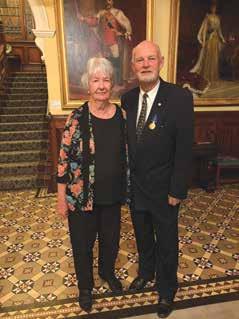
Barry C. Clark Honoured with Order of Australia Medal at Government House
On a memorable Monday evening, Barry C. Clark attended a ceremony at Government House in Brisbane. He received his Order of Australia Medal (OAM) during a formal investiture by the Governor, Dr Jeanette Young.
The event included dignitaries and celebrated individuals. This created an atmosphere of honour and camaraderie.
During the ceremony, Mr Clark received medals, pins, and certificates from King Charles and the Governor-General. This highlighted the occasion's importance.
The Governor, known for her warm manner, shared her fondness for Bribie Island. She also mentioned her
BRIBIE ISLAND VOLUNTARY COMMUNITY HELP ASSOC. INC.
VOLUNTEER DRIVERS WANTED
Bribie Island Community Help is after volunteers to assist our active aged and frail clients with door-to-door transport. We transport clients around following areas:
•Bribie Island & surrounds •Caboolture, Redcliffe, Northlakes
•North Brisbane & Brisbane City. Currently seeking to expand our Volunteering numbers to service all areas to assist our growing client numbers.
We are seeking committed volunteers who can donate 5 to 8 hours per week. We are registered with Centrelink for those with
volunteering obligations.
We have a fleet of Toyota Commuter automatic minibuses, and we will provide training on driving the buses as well as orientation and ongoing support from our professional office staff. MANDATORY REQUIREMENTS:
•Must hold Australian or NZ Citizenship or the capacity to permanently work in Australia.
•Above 25 years of age due to insurance constraints.
•Be able to pass a driving record history check by Qld Transport.
•Be able to pass a criminal history background check.
•Have a minimum of an Australian Open “C” class license check by Qld Transport.
If you wish to apply or seek further information, you can email your details to apply@bivchai.org.au or call on 3408-0111.
recent attendance at the U3A Network Queensland conference. The evening continued with drinks at Government House, where Mr Clark spoke with esteemed guests.
There, he reflected on the achievements that earned him recognition and received the Order of Australia Medal for his dedicated work in promoting and documenting Bribie Island's history.
As a local history tutor and Life Member at the University of the Third Age and Founding President and Life Member of the Bribie Historical Society, Barry C. Clark’s contributions have left a lasting impact on the Bribie Island community.
YOUR VOICE MATTERS
City of Moreton Bay stands as one of Australia’s fastest-growing areas, and Bribie Island is experiencing this growth firsthand. While new opportunities are emerging, many residents are concerned about how well Council plans will address Bribie’s unique needs—not just the priorities set by Council. We have a chance to shape decisions that suit Bribie Island’s character and lifestyle, but only if community voices are not just heard but acted upon.
For example, last year’s feedback on Bribie’s foreshore upgrades resulted in better pathways and more shaded rest areas, showing how local input can drive meaningful change. By getting involved, Bribie residents can help ensure their concerns shape the island’s future.
The City of Moreton Bay commits to engaging with the community on key projects. While Council highlights what they consider when planning for growth, residents must ask questions and challenge decisions that may not reflect the broader public’s best interests.
You can get involved by attending public Council meetings, submitting questions or feedback through the Council’s website, or joining community forums both inperson and online. By using these options, your voice can help shape the future of Moreton Bay.
To help plan for our city’s future, the City of Moreton Bay is seeking early input on a new planning scheme, which guides how land is used and developed.
For future plans to succeed on Bribie Island, residents need to engage actively sharing concerns specific to the island, advocating for local needs, and holding Council to account for delivering real outcomes. Real outcomes should be visible in the community, such as better beach access, improved stormwater management, or safer pedestrian crossings following local feedback. For example, upgrades to Bongaree Jetty Park were driven by community calls for more accessible facilities and seating, showing that when Bribie residents and Council genuinely collaborate, the island’s unique needs can be met.
CITY OF MORETON BAYS FUTURE FOCUS
(Available on their website)
• Shaping our future city
Help shape the future of the City of Moreton Bay. Learn how we’re planning for sustainable growth, housing, transport, jobs, and the environment.
• Housing and communities
Learn how Moreton Bay is planning for growth with diverse, well-located housing that supports safe, connected and sustainable communities.
• Transport and infrastructure
Discover how the City of Moreton Bay plans to manage transport and infrastructure in our growing city to help create connected communities.
• Our economy
A strong local economy benefits all residents. Learn how we are helping to build a city where people can earn and spend within their community.
• Our environment
Learn how Moreton Bay is planning a greener future, protecting our natural environment, supporting sustainable living, and reducing carbon emissions.
• City planning processes
Find out more about the tools we can use to manage growth, including infrastructure planning, neighbourhood planning, planning schemes and more.
• Advocacy work
Learn how Council works with State and Federal Governments to plan the City of Moreton Bay’s future and advocate for funding.
New Planning Scheme survey
Early engagement is underway to gather community feedback that will inform a new planning scheme and ongoing amendments and updates.
Find out more and take part now
Learn more, have your say in the city-wide survey and register for planning scheme updates.
Survey closes 12 July 2026
Demand true engagement—make your voice count in shaping our city. Insist on transparency, ask direct questions, and expect your feedback to influence real outcomes.
Register now to share your input on key projects, participate in local consultations, and stay informed about initiatives in the City of Moreton Bay.
You can register quickly and easily via the online portal at moretonbay.qld.gov.au/haveyoursay or https://www. moretonbay.qld.gov.au/Council/Imagine-Our-City.
The process takes just a few minutes and ensures you receive updates and opportunities to get involved.
That’s a wrap on Queensland Small Business Month!
Overthe past month, we’ve taken the time to celebrate the hardworking, passionate and resilient small business owners who make Pumicestone such a special place to live, work and visit.
What a phenomenal evening celebrating the very best of our local business community at the 2026 Pumicestone Business Excellence Awards. With almost 300 people filling the room at Sandstone Point Hotel, the night was a true celebration of the small businesses, entrepreneurs and community champions driving our community forward each and every day.
It was wonderful to be joined by Premier David Crisafulli, Small Business Minister Steve Minnikin, Mayor Peter Flannery, Cr Brooke Savige, Cr Tony Latter, Cr Mark Booth and Cr Adam Hain.
A special thank you to our sponsor, the Pumicestone Chamber of Commerce, for supporting this incredible event and championing local businesses across our region.
To our Chamber judges- thank you. You had an incredibly difficult task, with so many outstanding businesses and individuals nominated this year.
Thank you also to Harmony Haven Choir for their beautiful performance and for helping make the evening so memorable. Most importantly, thank you to every local business owner in Pumicestone.
Your passion, resilience and dedication are what keep our community thriving. Please continue to shop local, support local and celebrate local.
A huge congratulations to all our winners and highly commended businesses:
Business of the Year
Winner: Pigface Seafood
Highly Commended: Beachmere Takeaway
Best Home Business
Winner: Relaxing Rainbows
Highly Commended: Beauty For All
Tourism & Attractions
Winner: Abbey Museum
Highly Commended: Bribie Island Picnics
Education & Childcare
Winner: Sandstone Lakes Early Learning Centre
Highly Commended: Bribie Island Community Kindergarten
Best Beauty & Hairdresser
Winner: Mane Studioz
Highly Commended: Bayside Hair Design
Best Hospitality Business
Winner: Steakout Pizzeria
Highly Commended: Bribie Beach Shack
Best Pet Business / Groomer
Winner: Sandstone Point Veterinary Surgeons
Highly Commended: Barking Mad Dog Groomers
Community Impact
Winner: Brendan Harvey Builders
Highly Commended: Bribie Island Bowls Club
Rising Star
Winner: Remember Me Pet Cremations
Highly Commended: Friendly Grocer Sandstone Lakes
Creative Industry
Winner: Larrikin Puppets
Highly Commended: Island Dance
Trades & Services
Winner: Eliminate Pest Control
Highly Commended: Bribie Island Tiling
Health & Wellbeing
Winner: Beyond Dental Care
Highly Commended: Active Haus
Customer Service Excellence
Winner: Who’s On First
Highly Commended: Savige’s Seafood
Best Employee
Winner: Mandi Calleja – Bayside Hair Design
Highly Commended: Charlie O’Shea – Silver Spoon Beachmere
Sustainability Champion
Winner: Bamboo Projects
Highly Commended: Seastainable Bags
Retail Business of the Year
Winner: Red Fox Orchids
Highly Commended: Cinderella’s Closet
Young Entrepreneur
Winner: LMZ Building and Construction
Highly Commended: Cornerstone Commercial
Premier’s Young Achiever Award
Winner: Tyra’s Treats
People’s Choice Award
Winner: Coastal Pest Control Group
Building for the Future at Birali Steiner School
Birali Steiner School is stepping confidently into the future with the upcoming Stage 5 campus development, an exciting milestone that reflects the school’s continued growth and commitment to high-quality education.
After several years of careful planning, Stage 5 is expected to begin construction in late September to October and will significantly enhance Birali’s High School facilities. The development has been thoughtfully designed to support students as they move through their secondary years, providing inspiring spaces that encourage curiosity, creativity, and practical learning.
The new facilities will include a purpose-built Science Room with preparation and storage areas, a dedicated Visual Art Room, a Kiln Room for clay work, additional High School Workspaces, new amenities, and an Outdoor Learning Area.
Together, these spaces will strengthen Birali’s capacity to deliver a rich and balanced high school program grounded in Steiner education principles.
Central to the design is the belief that learning environments matter. Natural flow, connection to outdoor spaces, and purpose-built rooms all contribute to a setting that supports wellbeing, engagement, and a love of learning.
Scheduled for completion by the end of Term 1 next year, Stage 5 represents more than a building project, it is an investment in young people and in a vibrant, future-focused school community where students are supported to learn, grow, and thrive.
THREE LITTLE WORDS ‘I know! Let’s
…!’
Those three
little words
are so full of fun and possibility, an invitation to choose your own adventure.
I’m sitting on a Caloundra verandah watching some little kids playing on the beach and “I know! Let’s…!’ is a constant refrain. If only we adults could revisit some of this joyful exuberance, this sense of endless possibilities in our lives.
These children run everywhere – no walking for them! There’s no time to waste. It’s like they have to hurry to squeeze the most out of whatever adventure awaits. Perhaps they know that childhood is fleeting.
One makes a suggestion, ‘I know! Let’s …!’ and suddenly they’re all on board, cooperating and enthusiastically taking up the idea, making suggestions and getting on with it.
They delight in the things that make us adults uncomfortable. Getting dirty, sand in their hair, dead fish, anything smelly actually, getting wet in the rain. They’re trying out all their senses.
And as the plan takes shape they help each other, making important modifications, cheering each other on and working towards their common goal. And not a whiteboard in sight.
Some adults I know do indeed take on some of the traits of childhood. They’re selfish, petulant, entitled, sulking and bullying. Remind you of anyone?
Thankfully most of us outgrow these more unpleasant aspects of childish behaviours. But this joyous creativity, this idea that the world full of possibilities? This we should recapture.Kids are inherently inventive. A stick becomes a conductor’s baton. A palm frond is a cape. An empty bottle is a pirate’s eyeglass. They don’t need
Sue Wighton
Accidental Writer
Website and blog: suewightonaccidentalwriter.com
expensive playthings like we do – the leaf blowers, jet skis, air fryers. Kids make do.
The sheer physicality of children is a joy to watch. They spin and twirl, leaping about, arms and legs akimbo, just for the love of feeling their bodies moving in space.
And now the children on the beach are whooping and dancing about and raising their hands in triumph. Mission accomplished!
It’s a rare adult who can naturally embrace the playfulness of their child-self. I’m currently watching ‘Somebody Feed Phil’ on a prominent streaming platform.
Phil Rosenthal travels the world sampling the food and culture of the diverse inhabitants of this small planet we call Earth.
He’s so enthusiastic, so willing to give everything a try, so happy to engage with everyone he meets. It’s his playfulness, his delight in his surroundings that make me want to travel along with him.
Phil brings a generosity of spirit to his audience that gives me hope for this sad and fractured world. Occasionally I have been called ‘childish’ by some adults in my life. Far from being offended, I take this as the highest compliment.
I now have a gorgeous grandson. I look forward to many years of playing with him, indulging my childish whims for the amusement of us both.
Even now, when he’s on my back deck, surrounded by plastic containers and spoons and boxes from my cupboards, I find myself saying, ‘I know! Let’s …’
Yarun EcoFlix Returns to Bribie Island with Powerful Stories from Nature and Community
Thethird annual Yarun EcoFlix short film festival will return to Bribie Island on Saturday July 4, bringing together powerful environmental storytelling, community conversation and local conservation groups for an afternoon of film and discussion.
Presented by BIEPA in partnership with the Environmental Films Australia (EFA) network, Yarun EcoFlix has quickly become a popular local event, with previous festivals selling out well in advance. This year’s program features five short environmental films exploring themes ranging from Indigenous land management and forest protection to coral reef conservation and global plastic pollution.
Among the featured films is Walk Good Fire, which explores cultural burning practices and the growing recognition of Indigenous fire management knowledge in modern landscape management. Through striking imagery and interviews with Traditional Custodians, the film examines how cultural fire practices are helping reshape conversations around bushfire resilience and Country.
Forest Country turns its attention to Australia’s native forests, examining the relationship between forestry policy, conservation and ecological protection.
The documentary highlights both the environmental significance of forest ecosystems and the tensions surrounding their future management.
Marine conservation is the focus of Corals’ Last Stand, filmed at the remote Scott Reef system off the coast of Western Australia.
The documentary follows scientists, Traditional Owners and conservation advocates working to protect one of Australia’s most remarkable coral ecosystems from industrial development pressures.
An international perspective comes through Plastik, a short Indonesian film that views the global plastic pollution crisis through the eyes of a child growing up surrounded by plastic waste.
Despite its short running time, the film delivers a confronting and deeply human perspective on one of the defining environmental issues of our time.
The festival program also includes a remarkable outback journey following Indigenous Ranger teams travelling more than 1,900 kilometres through the Western Desert to Uluru, highlighting connection, Country and collaboration across remote Australia.
In addition to the films, the event will feature more than a dozen information and display tables showcasing the work of local environmental and community organisations, giving attendees the opportunity to connect directly with local conservation initiatives.
Yarun EcoFlix will be held on Saturday afternoon, July 4. Tickets are $20 and include afternoon tea.
Further information and bookings are available via the BIEPA website. www.biepa.online
How would you like
$5,000?
Bribie Island Community Chest 2026 Support
This is the first prize in the 2026 Community Chest. Along with another 85 amazing prizes, the total prize pool is $14,000.
Other prizes include:
• Art works from local artists Sabine Von Graz, Geoff Ginn and bespoke pottery (all on display at the Bribie Island Community Arts Centre until the end of June);
• A voucher for a Warplane Flight from Caboolture Airport.
• Fuel vouchers compliments of Belle Property Bribie Island.
• Vouchers compliments of Priceline Pharmacy, Bribie Bowls Club, Bribie RSL, Bribie & District Locksmiths, Island Auto Repairs, Straight Talk Technology, Saviges Seafood, Avondale Meats and Seafood, two nights’ accommodation from On The Beach Resort.
• Gifts of oysters from Southern Fish Marine, Bluey-style soft toys by Rhonda Purtle, and Children’s colouring books by April Bansy.
We are very grateful for the support and generosity of our partners, sponsors and sellers.
The Community Chest will assist in funding the activities of its partners, Bribie Island Environmental Protection Association, Bribie Island Community Arts Centre, Dragons Abreast Bribie Island and Bribie Island Kindergarten.
Tickets are just $5 and available from BIEPA volunteers every Monday evening, 5-7pm, at the Bribie RSL; on Thursday and Saturday mornings at MITRE 10; and on
Impact of BIEPA’s Involvement
This Community Chest has a strong emphasis on the "Natural Bribie" aspect of the community. As BIEPA is a wholly volunteer-run not-for-profit, its share of funds will support the many activities it is engaged in, such as:
• Turtle and dugong monitoring
• Shorebird stewardship and habitat protection
• Invasive species management - e.g. cane toads and weeds
• Habitat restoration - e.g. the Buckleys Hole Restoration Project
• Community education and outreach
• Rubbish removal on both land and sea
• Water monitoring
• Engaging with local development
• Groundbreaking data collection
Don’t miss your chance to pick up a ticket or two or ten.
It will be drawn just after 6pm on 17 August 2026 at the Bribie RSL.
Friday and Sunday mornings at Bribie Island Central. Also from The Bribie Island Community Arts Centre, the Bribie Island Kindergarten and Dragons Abreast Bribie Island.
STEAKOUT PIZZERIA
For delicious pizza, pasta, contorni salads and more, all crafted with love, come and enjoy our waterfront pizzeria. With live music every Sunday and the beautiful Pumicestone Passage right beside you, we offer you a taste you’ll love For deliveries or bookings, please visit us at www.steakoutpizzeria.au
9/11 Spinnaker Drive, Sandstone Point - 07 5360 1094
LUNCH Thu to Sun 11:30 - 2:30
DINNER Tue to Sun 4:30 - 8:30
SCOOPYS
Located by the jetty on beautiful Bribie Island, Scoopy’s Family Cafe is all about the family vibes, great food and coffee, fantastic service and all the ice cream you can eat!
Enjoy our friendly hospitality with barista-made coffee, amazing burgers, and a tempting array of ice cream choices to impress the pickiest connoisseurs.
Our massive range of cakes and famous fish and chips make it well worth the hour’s drive north of Brisbane.
Shop 2/2 Toorbul Street, Bongaree 07 3410 1791
THE DECK RESTAURANT
With its spacious, relaxed ambiance, The Deck Restaurant offers casual dining indoors or alfresco on the deck overlooking the golf course, lake and lush gardens. Enjoy modern cuisine with locally sourced ingredients, open 7 days a week for breakfast and lunch, and dinner on Friday and Saturdays. Perfect for any occasion! Pacific Harbour Golf & Country Club, 141-159 Avon Avenue, Banksia Beach 07 3410 4024
Scan The QR Code To Book Now!
Experience classics you’ll love and the new favourites you'll crave!
NOW OPEN SUNDAY 8AM - 11AM
DINNER: 5PM - 8PM OPEN 7 DAYS
LUNCH: 12PM - 2PM
WINELANDER
Recently sales figures for the wine production have been released for 2025 and show a slight decline in total sales which reflect the trend around the world towards a healthier lifestyle, even so the Australian wine crush is estimated to be 1.57 million tonnes from over 2,000 wineries around the country an increase of 11% compared to the 2024 crush but still down on the 10 year average of 1.71 million tonnes.
Shiraz is still the Australian wine drinker’s favourite red wine and Chardonnay the leading white wine varietal, South Australia has the largest share of the national crush followed by New South Wales and Victoria.
The 2025 crush equates to around 1.1 billion litres of wine which is in line with current sales of Australian wine on domestic and export markets, the crush of red grapes is still estimated to be the third smallest in more than a decade, the last two years being the smallest and was 9% below the 10 year average whilst white grapes was 8% below the 10 year average.
completely different with Western Australia, Tasmania and Queensland contributing nearly 40% of Australia’s wine production.
Figures from The Endeavour Wine Group, comprising of BWS and Dan Murphy’s, show the surging popularity of Rose and Prosecco to the ‘spritz culture’ invigorating the market although I suspect this is more age group related.
A gourmet
meal
without a glass of wine just seems tragic to me somehow.
Although Australia is mirroring the global decline in alcohol consumption, a figure that has been in sharp decline since 2018, it seem there are positive signs on the horizon in that from 2023 to 2024 total wines sales gained 0.1% in share versus total liquor, which I am sure that the Governments’ reluctance to stop the twice yearly increase in excise on spirits and beer has a lot to do with that.
Kathy Matteo
The top 5 red wine varieties in 2005:
1. Shiraz (23%increase)
2. Cabernet Sauvignon (40% increase)
3. Merlot (7% increase)
4. Pinot Noir (20% increase}
5. Grenache (less than 1% increase)
White varieties
1. Chardonnay (13% decrease)
2. Sauvignon Blanc (31% increase)
3. Pinot Gris/Grigio (33% increase)
4. Semillon (16% increase)
5. Muscat Gordo Blanco (1% decrease)
South Australia contributed 48% of the volume, New South Wales 33%, Victoria 16% whilst Western Australia, Tasmania and Queensland all showed increases in their crush, Tasmania is estimated for achieving a record crush, these figures are for a total grape crush and the percentages for premium wine production are
Chardonnay continues to be the largest produced white wine style in Australia and in recent years the trend is to produce very lightly wooded styles and it is still the best white wine when matched with food, there is a movement with Semillon to also introduce a small amount of oak to the wine, although in France this has always been the case.
If you are looking for something different In the white wine department one of my favourites is the Tulloch Verdelho from the Hunter Valley available at BWS here at Banksia Beach, if you are looking for a crisp dry white to match a seafood meal this is a perfect match.
Liquorland at Sylvan Beach probably has the best wine selection on Bribie and I had a bottle of the Wynn’s ‘Sidings’ Cabernet Sauvignon the other day and as with all Wynn’s red wines it was excellent and if still on special at $10 outstanding value.
There seems to be a concerted effort at long last to convince Australian wine drinkers that Australian Cabernet Sauvignon is every bit as good as Shiraz, I will certainly drink to that!
Cheers Philip Arlidge arlidge@bigpond.com.au
Life is too short, and I’m Italian, I’d rather eat pasta and drink wine than be a size 0
- Sophia Bush
✓ Grassed Beachfront Camping
✓ Watefront Lodge Rooms
✓ Self Contained Beach House
✓ Licensed Outdoor Dining ✓ Guided Cape York 4WD Tours ✓ Guided Fishing Charters ✓ Tour
Michael Strong (Senior Curator, Abbey Museum of Art & Archaeology)
THE TIME DETECTIVE More Than Storage: The
Stories of a German Renaissance Cupboard
There is a story behind almost every artefact in the Abbey Museum and its journey into the Museum’s collection. As we delve into their past, we reach out to museums around the world to assist with our research.
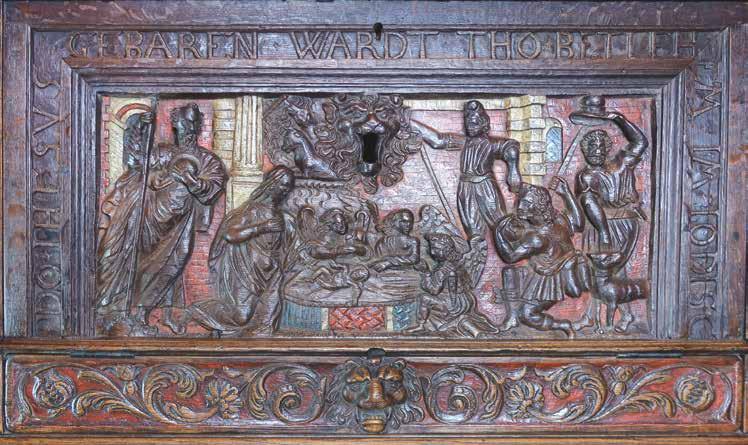
A recent acquisition to the Museum is a wonderful cupboard dating from around 1600 AD from north Germany, more specifically Schleswig-Holstein or Lübeck, both regions associated with the famous Hanseatic League.
Several German museums in Hamburg and Lübeck helped document this object. Cupboards of this type were used to display silverware and to store valuable possessions, such as clothing and jewels, while simpler lower-class cupboards were often used for food.
Carved ones like this became very popular in the Renaissance and the highly decorated features were typical of this period.
Our cupboard has a splendid Renaissance-style lock in the form of a lion’s head, its open mouth forming the keyhole. A second ornate lock protected a drawer decorated with acanthus foliates.
Together, these locks suggest the cupboard was designed to hold important property. The most important and obvious feature of the cupboard is a delightful carved and painted panel depicting the Nativity of Christ, done in a realistic but naïve style.
Traces of paint show it was decorated with red, blue and ivory pigments. It shows the shepherds adoring the
newborn Jesus, watched over by Joseph and Mary, while angels crowd around the crib.
The shepherds doff their hats as they arrive at the stable, still carrying their staffs and armed with knives. Through an opening behind the scenes, oxen bellow into the night sky.
One of the most interesting elements is a carved inscription around the Nativity scene.
‘DO IHESV GEBAREN WARDT THO BETHLEHEM IM IODISC’.
This is Low German and approximately means: ‘Jesus was born in Bethlehem, in the Jewish (land).’
The rare language known as Low German is largely spoken today only in northern Germany and northeast Netherlands. Historically it evolved from Old Saxon, closely related to early Anglo-Saxon.
However, it was once the lingua franca of much of Baltic Germany, an area controlled in the late Middle Ages by the Hanseatic League (12th-17th century), a powerful defensive and economic alliance of merchant guilds and market towns centered on the city of Lübeck for over 300 years.
Furniture is an intimate part of every house and tells us a great deal about the occupants. Our cupboard possibly graced the Lübeck home of a rich merchant, wealthy from the Baltic trade. If only we knew what treasures might have been stored inside!
BRIBIE ISLAND NATIONAL SERVICE ASSOCIATION INC
UPCOMING EVENTS & ACTIVITIES
10 June 2026 – Maleny Day Trip departs 8.30am – kindly supported by Busy Fingers Fundraisers
26 June 2026 – Happy Hour @ Coungeau House 3.30pm
8 July 2026 – The Majestic Theatre Pomona departs 8.30am – kindly supported by Busy Fingers Fundraisers
SAVE THE DATE
20 September 2026 – Modern Veterans Day, Woorim
JOIN US
Membership is open to all current serving and ex-serving ADF members, their spouse, and family members. Email veteransbribie@gmail.com for further information
Paint Paper & Thread basically loved Bribie Island Comunity Art Centre
June 9 - June 21
What a joy to feature works from four BICAS Working Together Groups , exploring what’s possible with basic materials.
Paint comprises work from Thursday Painters, Figure and Portraits with crossovers into textiles from Rags to Stitches.
Paper, the basis of many artworks, is the hero of the Pen, Pencil and Pastel, Working Together Group, who turn the most accessible of all art materials into stunning, portraits, landscapes, fantasy, realism and abstract artworks.
Thread, literally what ties us all together; an element that could be used as texture in paint, twine to bind books and the basis of all fabric.
Meet these talented artists in the Gallery Tuesday, June 9, 12 – 2pm.
The Bribie Community Arts Centre opens Tuesday to Saturday 9am to 4pm; Sundays 9am to 1pm.
Cafe 191, serving delicious treats and refreshments every day; 9am – 2pm Tuesday to Saturday, 9am – 1pm Sundays.
Calling you in for Matthew Flinders Art Prize 2026
Time’s getting away if you’ve plans to enter the 2026 Matthew Flinders Art Prize at Bribie Island Community Arts Centre.
It runs this year from July 17 – August 7.
Your work/s are displayed in our beautiful gallery before the thousands of visitors who come to see the exhibition. And two highly-esteemed judges peruse them and give you personal feedback on your entry/entries.
Details here on the BICAS website. https://www. bribieartscentre.com.au/matthewflindersartprize
Countdown to deadlines is on. Earlybird entry closes June 14; other entries close June 21.
Our golden event is an annual winner - whether you take out a prize or not.
Each year, the wonderful local supporters who sponsor this event blow us away with their kindness.
Please note and support THEM when you can.
LET’S GO TRAVEL
Well,
it was a sad turnout on 17th May, as it was a rainy, cold day. Only 4 of us were there, but we had a great chat, since 2 of the ladies were going on a trip to England, Ireland, and Scotland with me and 3 others next year, so there was plenty to talk about.
We discussed whether to stay an extra 2, 3, or 4 nights in London before the tour starts, or to spend those extra nights after the tour ends. What do we want to see in Londoneverything that's for sure. Hopefully, we'll even get to see a show somewhere along the way.
If you're interested in learning more about this trip or just enjoy chatting about travel, we invite you to join our group. Whether you're seeking advice from experienced travellers or simply want travel company, you're always welcome. We are all about Travel.
Please remember: I am not a Travel Agent, but I can refer you to one if needed. I do not provide travel insurance advice, but members can share their experiences.
I will not be booking anything for you. We are a discussion group looking for travel buddies if needed.
Our next Meeting is on 14th June 2026 at the Bribie RSL, usually in the Auditorium, ask at the Social Desk and they will guide you. Looking forward to seeing you there
Regards
Roslyn Sanderson JP Qual 0401078187
Bribie Island VIEW Club Turns 30
On22nd May 1996 Bribie Island VIEW Club was formed.
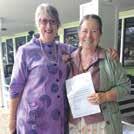
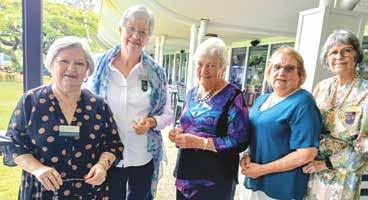
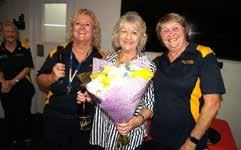
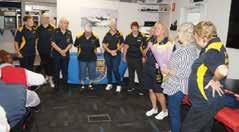
On 27th May 2026 the club celebrated its 30th birthday and present were four of the founding members, Pat Edis, Jill Medhurst, Kath Rawlinson & Lenore Wilson to be presented with their 30-year VIEW Clubs of Australia pins and to have the honour of cutting the birthday cake.
Along with VIEW Clubs of Australia Vice President, Angie Carroll and other office bearers, current & former members and guests joined in the celebration at the Bribie Island Golf Club with Bar Manager, Virginia and staff assisting the Bribie Island VIEW Club committee in creating a fabulous & memorable event. Member, Keryn received a Making A Difference Award.
A highlight of the lunch was the performance by Della, Anita & Mary-Anne from Blue Water Trio. The day raised funds for our six students’ sponsorships from The Smith Family Learning For Life program. A huge thank you to Sonia from Hair 4507 who contributed a raffle prize won by one of the visitors from the Sunshine Coast.
VIEW stands for Voice, Interests and Education of Women. Anyone interested in meeting like-minded women for lunch, most months with a guest speaker, whilst supporting Australian students with their education or for more information on the club and its association with The Smith Family please contact Secretary Jennifer 0402663867 or via email bribieviewclub@gmail.com
Anyone wishing to contribute to needy Australian students’ education feel free to contact The Smith Family on 1800 805 366 or visit the link https:// www.thesmithfamily.com.au/sponsor-a-child
ON BRIBIE
MONDAY EUCHRE
Bribie Bowls Club 12.00pm
Contact Annette on 0414622490 TRIVA
Bribie Island Hotel 6.30pm
Bribie Island R.S.L 7.00pm
TUESDAY
BINGO
Bribie Island R.S.L 10.00am POKER
Bribie Island Hotel 6.30pm
WEDNESDAY
MUSIC BINGO
Bribie Island Hotel 6.30pm
Bribie Island R.S.L 7.00pm RAFFLES
Solander Lakes Bowls Club - 6.30pm (tickets on sale from 5:30pm)
THURSDAY BINGO
Bribie Island R.S.L 7.30pm RAFFLES
Bribie Island R.S.L Fishing Club 4.30pm
Every Thursday at the RSL prizes are Meat Vouchers from Avondale Meats and Seafood Vouchers from Saviges.
FRIDAY
MEAT TRAY RAFFLES
Bribie Island Bowls Club 4.30pm
Bribie Island Golf Club 5.30
Blue Pacific Hotel (from) 3.00pm
Solander Lakes Bowls Club - 6.30pm (tickets on sale from 5:30pm)
Enjoy playing 500 Cards?
Join a like-minded group who meet on Monday afternoons at the RSL Anzac Room from 12.45pm-3.45pm. $5 which includes raffle prize.
Please arrive 10mins before play starts at 12.45pm
Further information please ring Carole 0438 713 663
Beachmere District Community
The B.D.M.S. Community Markets are held at the Men's Shed 53 Rogers Street Beachmere, every 1st Saturday of the month 7.30am - 12pm
Bribie Island BIDCA Markets
The Bribie Island BICA Markets are held at Brennan Park, Bongaree, the 3rd Sunday of each month from 6am -12pm
Bribie Rotary Markets
The Rotary Markets are held at Brennan Park, Bongaree on the second Sunday of each month from 6.30am – 12 noon
Queensland Cancer Council
The Cancer Council Markets are held at Brennan Park, Bongaree on the first Sunday of each month from 7am to 12 noon.
LUNCH MARKETS - Sylvan Beach (Farmers Market)
First Saturday of each month from 8am to 1pm held in the park opposite the Bribie Island Hotel. Funds raised to E.P.C.S, Ass, 0417629957
The Bribie Island Lions Market
2nd Sat of the month at Tintookie Park Woorim 7am - 1pm.
Bribie Woodcrafters & Bribie Island Gem Club
Open day, Demonstrations & Sales - last Sunday of each month
8am to 12noon Held at Bribie Art Centre 191 Sunderland Dr, Banksia Beach
Mystic Journey Markets change of location
Saturday November 15th ~ 9am ~ 2pm Saturday December 6th ~ 9am ~ 2 pm Saturday December 20th ~ 9am ~ 2m 4pm ~ 8pm
There is also an outdoor market to run alongside indoor market called This ‘n’ That
The Salem Witch Trials
By Al Finegan
History is scattered with moments when fear overwhelms reason. Few periods demonstrate this more starkly than the Salem Witch Trials in what is now Massachusetts, US. It erupted in the early 1690s in a disturbing mix of superstition, politics, religion, and uncontrolled panic. The tragedy unfolded in the fledgling New England colony, barely sixty years old. For families living in Salem, life was precarious enough. They suffered harsh winters, threats of native American raiding, disease, rigid Puritan expectations, and bitter local feuds. It was tinder waiting for a spark. In early 1692, that spark ignited. What followed was one of the darkest episodes in early American life, simply caused by hysteria, and overwhelming Impulses to lash out in fear.
To understand what occurred in Salem requires an understanding of the Puritans' mindset. These were settlers who fled England to build a godly society in the New World. They believed the Devil walked the earth, tempting souls and waging a spiritual war. Their ministers preached hellfire with conviction, and their legal system was inseparably linked to Biblical scripture.
By January 1692, the colony was deeply unsettled. Native American raids brought terror or death to isolated farms. Refugees streamed into Salem from Maine and New Hampshire, telling stories of slaughter and ruin. The colony’s charter had recently been revoked and then reinstated with unpopular changes, further destabilising the colony.
Meanwhile, Salem itself was divided. Disputes between wealthy merchant families in the town and conservative farming families in the village caused growing resentment. Salem Village was on the brink of disaster. Fighting between ministers, boundaries, taxation, and land rights was reaching a boiling point. Everything was considered personal. It did not take much imagination for them to think the Devil was working among them. It had become a powder keg.
Unexpectedly, it was the Reverend Samuel Parris’ nine-year-old daughter, along with his eleven-year-old niece, who lit the powder keg. Without warning, they began to emit piercing screams, fall into fits, and mutter about invisible forces tormenting them. Physicians were unable to explain the symptoms. It was more likely to be due to stress, boredom, or a neurological illness. Instead, the doctors declared the cause to be supernatural.
The community was primed for such a conclusion. Stories of sorcery had long circulated, as did whispered beliefs in some Caribbean Voodoo teachings of a complex spiritual ecosystem. One enslaved woman in the Parris household, Tituba, brought from Barbados, practised Voodoo storytelling that may have fascinated the girls.
Soon, more young women joined the afflicted girls, performing uncontrolled scenes of intense, emotional, and dangerous irrational conflict, all the while making wild personal accusations.
The church and village leaders sought an explanation, and the girls had given them names.
Accusations first fell upon marginalised people. In March, Tituba, Sarah Good, a homeless beggar, and Sarah Osborne, a woman disliked for challenging inheritance norms, were arrested. In court, pressured under severe questioning, Tituba confessed, painting vivid tales of flying spirits and devilish ecosystems. Her confession poured fuel on the fire, “proving” that witchcraft existed in Salem. Promptly, everyone with a grudge or grievance decided to act. The hysteria escalated rapidly.
The afflicted girls’ circle grew, as did their gestures. They began fainting, clawing at invisible spectres, and claiming spectral assaults from those accused. Neighbours, rivals, and the eccentric found themselves named. The courts accepted spectral evidence, testimony that the accused spirit had appeared in dreams or visions. Defendants turned on others in the hope of saving themselves. Citizens of Salem were suddenly living in fear of a knock on their door as arrests intensified.
Some Ministers preached moderation, but others, like Reverend Cotton Mather, believed Satan’s forces were real and pressing. Magistrates responded enthusiastically. By May, Massachusetts had established a special Court of Oyer and Terminer ("to hear and to determine") to prosecute suspected witches, allowing spectral testimony as fact. Thus, the judges, rather than calming panic, intensified it.
Trials unfolded like a theatre. The afflicted girls performed dramatic fits when an accused entered the room, claiming supernatural assault. When spectral evidence was presented and hearsay allowed, logic was ignored. Citizens testified to livestock dying, butter curdling, misfortune, all blamed on neighbours accused of witchcraft.
In June, Bridget Bishop, a tavern keeper with colourful clothing and a reputation for speaking her mind, became the first executed. Her hanging was followed by five more in July, five in August, and eight in September. Most were women, but not all. Giles Corey, an 81-year-old farmer, refused to plead. Under the law, a plea was required for trial. Without one, courts could not proceed. To force a plea, he was laid on the ground, boards placed over him, and heavy stones piled on one by one. For two days, he endured crushing agony. His last words reportedly were, “More weight.” Corey died without ever speaking the words the court demanded. Such defiance became a silent indictment of the system.
By mid-1692, the logic of survival was clear ... confess, accuse others, or hang. More than fifty who confessed were spared execution, but faced imprisonment, loss of property, and often became key witnesses for the prosecution. To demonstrate their own "repentance” they had to name others as witches,
resulting in children being imprisoned, elderly women chained, and pregnant women shackled until they gave birth in fetid cells. Salem’s jailers profited, charging victims for chains, straw bedding, and food. For those too poor to pay, the conditions were torture. Pleading guilty and paying for your punishment was often the only vestige of mercy available.
Hysteria spread through the colony. Villagers testified against kin, Ministers turned against Ministers. Even respected figures such as Martha Corey and Rebecca Nurse, pious churchwomen, were condemned.
When the social order began devouring its most upstanding members, many began to doubt.
They sent word to Governor Sir William Phips to return from fighting in Maine. He found his province in chaos. On his arrival, his own wife was accused. He immediately demanded that prominent ministers condemn spectral evidence, warning that it is “better that ten witches escape than that one innocent person be condemned.”
In October 1692, Governor Phips dissolved the Court of Oyer and Terminer. The ongoing trials were transferred to a Superior Court that excluded spectral evidence. With that critical step, cases collapsed. Many were acquitted and released. Others languished until early 1693, when the governor ordered pardons for all those accused of witchcraft.
The hangings stopped. The panic dissipated as quickly as it had risen. But the damage could not be undone. Nineteen had been hanged, one pressed to death, while many had died in captivity. As well, countless reputations had been shattered and many good families destroyed.
The afflicted girls moved on. Some later confessed regret, others remained silent. Judges expressed repentance, notably Samuel Sewall, who publicly asked God’s forgiveness. In 1697, the colony held a Day of Fasting to acknowledge wrongdoing. Decades later, the families of the executed received compensation, though no amount was deemed sufficient.
In 1706, Ann Putnam, one of the most influential accusers, asked forgiveness, admitting she had been misled by Satan. Few historians doubted the sincerity of her remorse, but her apology did not bring the dead back to life. Salem Village eventually abandoned its name, becoming Danvers, perhaps trying to outrun its infamy. Salem Town, now a tourist destination, embraced its ghostly legacy through museums and reenactments. But for generations, New Englanders avoided the subject.
The trials became a cautionary tale whispered in church sermons and political debates. The message was simple: righteousness without restraint becomes tyranny.
Historians have debated explanations for centuries. Possibilities suggested include:
• Psychological stress from frontier warfare, famine, and communal conflict.
• A rigid belief system that personalised evil.
• Local feuds exploited under the guise of divine justice.
• Ergot poisoning, from mouldy rye producing hallucinations, though this theory remains contested.
• Economic rivalries between Salem Village and Salem Town.
• Mass psychogenic illness, leading to unconsciously performed symptoms.
Perhaps all contributed. But Salem’s lesson lies less in the mechanics and more in examining how civilised societies can abandon truth and justice under the pressure of fear.
The Salem witch trials became a warning to later generations. During America’s McCarthy communist scare of the 1950s, playwright Arthur Miller penned “The Crucible”, placing contemporary paranoia in Puritan costume. Miller used Salem to expose a timeless human failing, the ease with which moral panic trumps evidence.
Perhaps the most poignant elements of Salem lie in its simple human details: Rebecca Nurse, 71-year-old grandmother, devout and respected, hanged despite widespread disbelief in her guilt. Martha Corey accused partly because she questioned the legitimacy of the trials. George Burroughs, former minister, recited the Lord’s Prayer flawlessly at the gallows, something witches were believed unable to do. The crowd hesitated; startled officials kicked the chair away. These individuals were not nameless medieval peasants. They were literate people, families with orchards, cattle, church roles, and responsibilities. They were people like us.
The Jonathan Corwin House aka The Witch House The Salem witch trials were not inevitable. They were the outcome of fear, factional politics, theological certainty and individuals seeking safety or advantage by accusing others. Yet they ended, not through revelation, but because the system began threatening the powerful. When elite families and the governor’s wife fell under suspicion, the brakes finally went on.
Salem’s tragedy left scars, but also lessons. Today, its echoes prompt historians, jurists, and ordinary citizens to pause when hysteria rises. Whenever emotion overwhelms evidence, we hear faint warnings from the gallows on the distant Gallows Hill. (Or is that spectral too?) For at the heart of Salem lies a truth that civilisations become most dangerous when they believe absolutely in their righteousness.
About 20 years ago, my wife and I were in Boston, US, when my beloved Judy decided it was time for us to visit the infamous Salem village. We found a town both haunted by its history and determined to transform itself into a place of understanding, rather than shame. At the same time, modern Salem is not shy about its commercial side. Shops sell souvenir broomsticks, and Halloween crowds transform the town each October. The narrow streets are lined, not with Puritan huts, but with cafes, galleries, and bookshops. Yet the echoes of 1692 are never far away. Rather than bury its tragic past, Salem has chosen to exploit it.
We visited the most popular location of the Salem Witch Trials. It is the Memorial, a quiet, tree-lined space where 20 stone benches bear the names of those executed. It is a simple design, with no statues or spectacle, and its restraint carries a sense of reverence. People paused here, some reading the etched final words of Giles Corey or Rebecca Nurse, others leaving flowers or smooth stones in silent tribute. Nearby stood the rebuilt Salem Witch Museum, with exhibits that revisit Puritan fears, courtroom theatre and the aftermath. Its focus is not merely horror but context, inviting visitors to consider how hysteria begins, spreads, and consumes.
A short distance away, the Witch House offered one of the few surviving buildings with direct historical links. It was the home of Judge Jonathan Corwin, whose decisions sealed the fate of many accused. Today, it is furnished to show how Salem families lived and how superstition laced ordinary routines. Travellers can also venture to Danvers, once Salem Village, where the foundations of the original meeting house and parsonage remain. But as we walked the cobblestones, we sensed that Salem had become both teacher and warning. It invites visitors not merely to observe history but to recognise how fragile justice can be, and how easily any community, given the right pressures, could repeat the madness that swept this little New England town more than three centuries ago.
PRICKLY PEAR CURSE BRIBIE ISLAND & QUEENSLAND
FEW
readers today could imagine when much of Queensland and Bribie Island was covered with dense, invasive and impenetrable Prickly Pear, covering an area the size of the United Kingdom.
By 1890 it was one of the world’s great biological invasions rendering millions of hectares useless for agriculture. It proved so difficult and costly to control that vast areas of Queensland were simply abandoned. The title header photo shows the invasive Cactus growing up to 8 meters high in central Queensland.
Prickly pear cactus came in 1788 with the First Fleet to create a cochineal industry in the new colony making a scarlet dye to colour the distinctive red coats of the British soldiers.
There was no Cactus native to Australia and Prickly Pear came from South America as a hedge plant with a red fruit for jam making, and the spikey leaves initially used as cattle fodder. The invasive plant was growing in cultivation at Parramatta prior to 1840 and had spread to invade Queensland by 1843. It covered an area of 58 million acres by 1920.
Despite every control effort, the plant’s rate of advance was 2.4 million acres per year. It was cut down and dumped but did not die when cut so individual pieces readily take root and regrow and animals and birds droppings helped spread the pest with impact on native species.
The eventual control of this pest in the space of a few years, with another imported insect, is an example of yet another introduced species impacting Australia. Record rainfall in February 1893 flooded Brisbane and spread seed and plant parts to many new areas including Bribie Island when Pumicestone Passage silted up and eventually ended Oyster farming.
IMPACT ON BRIBIE
Gamour politician and businessman ARCHIBALD MESTON visited White Patch on Bribie Island in 1891 and stated
“This site is where a previous government of this great colony surveyed the Bribie Township, a locality where no man has yet the courage to reside. One man, whose outcast soul pined for a lodge in some vast wilderness, stole softly onto his allotment, planted some prickly pear, and fled.
He died after bequeathing his twenty perches to old man kangaroo, who indignantly refused the bequest. There is not an acre of useful soil on the whole island. It is inhabited principally by snakes and kangaroos. I spent five days on Bribie, crossed it in two places, and traversed it for fourteen miles.
To anyone desirous on emulating my example, I simply say, you better stay at home.”
Barry Clark OAM
– Bribie Island Historical Society
After the Jetty was built at Bongaree in 1912 Bill Freeman became the Brisbane Tug & Steamship Co. caretaker on Bribie Island in the 1920s and told an interviewer
“Where the jetty is that entire park on the south side of the jetty and all those big fig trees there - I planted them and made a park and a cricket pitch there and cut out all the Prickly Pear.
It was a big job; I had to dig it out all the way from Campbell’s Creek (now Williams Creek) right up to Jimmy-no-legs creek (Shirley Creek) I destroyed the prickly Pear, cleaned up the undergrowth and left the Cyprus pines.
CURSE OF PRICKLY PEAR
In 1901, the Government offered a 5000-Pound reward for discovery of an effective control method. Despite an increase to 10 000 Pounds in 1907, the reward was never collected. Commercial use of prickly pear for production of paper, alcohol, dye, soap and oil was all investigated with little success.
Private property owners were compelled to remove prickly pear, but it also thrived on crown land. By 1925, Prickly Pear covered some 264,000 square kilometres of prime land forcing the abandonment of many large Queensland grazing properties. What was happening on crown land at Bribie Island was of little interest or consequence to Government.
In 1926, there was a major breakthrough when the Commonwealth Prickly Pear Board released the Cactoblastis caterpillar imported from South America, as tests showed the larvae ate only the prickly pear.
Within a few years the small caterpillars had eaten through vast tracts of the dreadful Prickly Pear after 10 million eggs were distributed in 61 localities during 1926 and 1927. The insect proved to be spectacularly successful in destroying the weed.
FOOD FOR THOUGHT
We are all acutely aware of the ever-present risk of virus and pest infections invading or being introduced to our shores. Australia’s history has many examples of unexpected outcomes from such things as Cane Toads, Rabbits, Foxes, Feral Pigs, Fire Ants, Feral goats. If you talk to very old Bribie islanders, they may remember Prickly Pear on the island.
More recently another cactus became invasive. A small domestic potted ornamental cactus was thrown out into compost on a property in remote central Queensland. It began to grow wild and spread and with heavy rainfall it regenerated and washed down creeks and rivers. There are now hundreds of thousands of acres of outback Queensland cattle country infested with clumps of Harrisia wild Cactus.
Targeted Chemical spraying by hand can kill it, but that is time consuming, difficult and expensive, and with increased rainfall it could end up in Lake Eyre creating a serious problem. If you have some cactus at home be very careful how you dispose of it.
MORE BRIBIE HISTORY
Historical Society meetings are on the second Wednesday of each month at 6;30pm at the RSL Club and visitors are always welcome. See more stories & photos of Bribie history on Web site Bribiehistoricalsociety.org.au and Blog http://bribieislandhistory.blogspot.com or contact us on bribiehistoricalsociety@gmail.com
THE INSPIRING STORY OF ERIC TABOR
Forover a decade, Eric Tabor's unwavering commitment to Shorinjiryu Koshinkai Karatedo at the Seiryukan Dojo on Bribie Island has set him apart as an inspiration to all.
Eric's remarkable journey began with a heartfelt letter to the Dojo Instructors, Kyoshi Jim Griffin, 8th Dan, and Kyoshi Lesley Griffin, 7th Dan, asking them to share their treasured Art with him.
At just 15, and facing his own unique challenges, Eric bravely chose the path of discipline and tradition, determined to learn from the very best.
From his very first class, Eric distinguished himself with relentless determination, never seeking shortcuts or special treatment.
His achievements stand as a true testament to his hard work, earning every accolade through sheer perseverance and grit.
Eric's dedication saw him seize every opportunity— attending countless training camps and tournaments and reaching the pinnacle as a proud member of the Australian contingent at the prestigious 2025 World Koshiki Karate Championships in Brisbane.
It is with immense pride that we share Eric’s recent accomplishment: he was tested by a panel of Senior Koshinkai Karate Instructors for promotion to 3rd Dan Black Belt at the National Camp in Coolum—a momentous milestone in his martial arts journey.
Eric’s performance was nothing short of exceptional—his demonstrations exceeded the high standards expected of a Sandan (3rd Dan), earning him well-deserved recognition and promotion from the testing panel.
Congratulations to Eric on his truly outstanding and welldeserved achievement! His dedication, perseverance, and spirit have inspired everyone around him, and this milestone is a testament to his extraordinary journey.
Eric continues to train at the Seiryukan Dojo, inspiring both new and seasoned students alike. Join him on Tuesdays and Thursdays from 6:30 pm to 8:00 pm at the Lions Hall beside the skate park on Sunderland Drive, Bellara, under the expert guidance of Kyoshi Jim Griffin and Kyoshi Lesley Griffin.
For more information, call 0428 288 866 or visit www.shorinjiryu.com.au.
Tournament time !!
Kathy Vincent
Yes, it’s that time of the year at Bribie Island Croquet Club. On Saturday, the 16th of May, the Croquet Club held the annual Caboolture Sports Club Golf Croquet Tournament.
This was a tournament for players with a handicap of 7+, with cash prizes! For 6 players, it was their first tournament. How lucky were we with the weather! If it had been held on the Sunday, I think we would all have developed webbed feet!!
This tournament was open to other clubs, and players came from Eildon, Stevens, Bribie, of course and 2 players from Otorohanga, New Zealand!!
No, they didn’t travel to Bribie especially for the competition; they were here on holiday and came along to join in. One of the New Zealand players was runner-up in her group.
Games lasted an hour each, and every player had 6, so it was a long and
tiring day. As usual, some members had laid out an excellent spread for morning and afternoon tea—always very popular!
So many members gave up their time, even though they were not playing.
The tournament manager and scorer, the hoop setters, the referees, and the providers: a lot of work goes into organising the event, and everyone did an excellent job.
But at the end of the day, there was only one Champion, and that was John Burdinet from Bribie, with Penny Varell from Eildon winning the plate.
If you’re interested in playing or attending, come and join us for some fun at Bribie Island Croquet Club.
For more information, contact Joan, our President, on 0429 165 64.
We look forward to seeing you there!
BISC Boat Festival Delivers Thrills on the Water
Therecent boat festival, supported by the BISC, featured a handicap race on Saturday, 16 May. In this exciting event, slower boats set off first, followed by faster boats in pursuit, with the goal of finishing as closely together as possible.
Conditions were generally favourable, with a steady southerly breeze and moderate tide, although overcast skies and persistent rain added a challenging element.
Twelve boats took part, ranging from yachts and dinghies to a lone trimaran. The race began and ended off Bellara Jetty, with competitors sailing south to the bridge, then north to round markers at Ningi and Toorbul.
One visiting boat, Banzai Cheryl, faced early challenges when her crew accidentally dropped both sails and a crew member into the water, but both were quickly recovered.
Flipper, another competitor, capsized mid-race but was righted and bailed out in time to finish the course.
The competition concluded with a thrilling finish: Love It, sailed by John Belleri, made the most of the strong winds to claim victory and a bottle of Bundaberg’s finest, awarded during a lively post-race BBQ at the club’s Marine Parade compound.
A Rising Star: Narsha’s Inspiring Golf Journey
Narshais a proud Banksia Beach local, currently in Grade 5 at Banksia Beach State School. Having recently turned 10, her passion for golf shines brightly—she pours her heart into every round and is always striving to improve.
Narsha’s golfing journey began at age six, and from the outset her results were remarkable. In her very first year on the prestigious Glasshouse Future Tour, she triumphed in the 6-hole division.
The following year, she bravely stepped up to the 9-hole division, finishing as Gross Runner-Up despite being one of the youngest competitors—a testament to her skill and determination.
Adding to her list of achievements, Narsha captured a coveted junior title at Wantima Golf Club during the Cameron Smith Junior Open series—a thrilling moment in her young career.
Last year, Narsha advanced to 18-hole competitions ahead of schedule to earn her GA handicap and broaden her experience. Over the past 18 months, she has eagerly
competed in local events at Pacific Harbour and Bribie Island Golf Clubs, where her progress has been nothing short of inspiring.
Earlier this year, Narsha teed off at the Sunshine Coast school trials at Beerwah Golf Club, aiming for a spot on the 10–12-year-old team.
With a dazzling score of 79—the lowest of the day—she secured her ticket to the State Championships in Rockhampton and Yeppoon this June. Impressively, she accomplished this feat at just nine years old.
At the exciting Bribie Island Junior Open, Narsha fired an 83 to claim the lowest gross in the Under 13 Girls division, standing out among more than 100 talented junior golfers.
This outstanding performance earned her a coveted invitation to the Greg Norman Junior Masters at Palmer Coolum Resort in December—a dream for many young players.
Narsha has proudly represented both Pacific Harbour Golf Club and Bribie Island Golf Club, having joined as a
member in 2023. Recently, Narsha achieved a phenomenal milestone by winning the Pacific Harbour Women’s Club Championship by an incredible nine shots.
Remarkably, at just 10 years old, she already boasts a GA handicap of 6.8—a clear sign of her extraordinary talent and drive.
As Narsha’s golf journey continues to soar, she will face rising costs for travel, tournaments, equipment, and entry fees.
The support of local businesses— whether through sponsorship, financial assistance, or help with travel and equipment—will allow Narsha to keep chasing her dreams and proudly represent her community at the highest levels.
Any introductions or referrals to potential sponsors would make an incredible difference in helping her shine even brighter.
If you can help, please get in touch with 0491635762 to organise this.
Sunshine and Rain for the Bribie Pink Dragons
What a spectacular morning, Sunday 17th May!
The weather truly turned it on for the Bribie Island Classic Boat Regatta. The Pumicestone Passage was absolutely packed with history and character and littered with stunning vintage vessels.
For a few newer members, today marked a huge personal milestone. It was the very first time they had ever paddled all the way from one side of the passage to the other, so they were feeling pretty chuffed! It was definitely an adrenaline rush dodging massive boats, sailing boats, authentic steamboats, and just about every other classic watercraft you could imagine out there.
The regatta itself was a beautiful celebration of maritime history, which made it the perfect backdrop for our dragon boat team. Dragon boating has ancient Chinese roots dating back over 2,000 years, originally used for religious ceremonies and folk rituals. That day, we definitely held our own amongst all those heavy classic beauties.
Even more special is what our club stands for. We are a proud breast cancer survivors supporter club, paddling with purpose, strength, and an incredible community spirit every time we hit the water."
Monday, 18th May, what a turnaround in the weather!
"Pink Dragons submitted a team for the "Bowls with a Cause". An extremely well organised Charity Day, sponsored by LJ Hooker, which
turned out to be" relaxed and funfilled on the green". All in support of a great cause and "a bit of friendly competition; a social event combined with giving things a go, some of us bowling for the first time!"
The wind hurled gusts of penetrating rain sideways and downwards, but we were most fortunate in being well ventilated but protected under that magnificent new pearl white canopy at the Bribie Island Bowls club.
It was a great community event; there were raffle prizes. hamburger lunch provided, and extra side games and activities accompanied by loads of laughs and reconnections. We always enjoy the opportunity to liaise in the community whilst bringing
awareness that there is life after diagnosis.
Bribie Pink Dragons are on the water three times a week – Saturdays and Mondays mornings, and Thursday afternoons. We are always encouraging new members.
If you are a survivor, a supporter of a man or woman who has been in close contact with breast cancer, a family member, or a person with a likeminded ethos, then this is the club for you. Come and talk to any of our paddlers to find out more information about the Bribie Pink Paddlers.
We, thank the "Bribie Classic" and the "Bowls with a Cause …. for inviting us, the BRIBIE PINK DRAGONS, to enjoy your special day with you all. A special thank you to LJ Hooker for their organisation of the Charity Day, event presentation, and their wonderful gift to BPD, a cheque for $1936.00.
For further information, contact President 0499 990 352
SPORTS PAGES
BRIBIE ISLAND BOWLS CLUB
Self-Select Pairs Results Friday AM 15 May 2026
Winners: D Kaatz, K Kaatz
Runners up: M James, N Gray
Winning draw: M Brenner, L Tait
Encouragement: P Andrews, E Hookey
Self-Select Pairs Results Friday PM 15 May 2026
Winners: D Dodd, F Grimsey
Runners up: C Perkins, R Simpson
Winning draw: G Denkel, R Avern
Winning draw: C Hayles, T Smith
Winning draw: B Lamb, F Crocket
Encouragement: G Hazelwood, R Fowler
Random Fours Results Saturday 16 May 2026
Winners: B Castle, K Norton, E Hookey, R Cross
Runners up: I Smith, J Lonsdale, B Hamer, J Dunn
Lucky draw: R Bickerton, R Follett, J Adams, L McNamara
Lucky draw: M Cherry, M Brown, L Hackwood, M Adams
Self-Select Triples Results
Tuesday 19 May 2026
Winners: J Brown, K Rush, F Bingham
Runners up: H Taylor, T Paekau, B Stuart, W Wombat
Winning draw: W Baker, J Warwick, A Simonic, P Andrews
Winning draw: B Kinnear, L Godfrey, L Gilmore
Encouragement: G Hemphill, K Kajewski, J Murdock
Self-Select Pairs Results
Wednesday AM 20 May 2026
Winners: D Heath, P Mann, R Eaton
Runners up: N Bolton, D Cherry
Winning draw: S Chandler, J Cullen
Winning draw: K Muller, D Gibson
Encouragement: L Murphy, J Oliver, N Wrice
Self-Select Pairs Results
Wednesday PM 20 May 2026
Winners: G Teakel, T Erfurth
Runners up: S Hose, G Riley
Winning draw: C Brayley, G Skoien
Winning draw: L Gilmour, L Godfrey Winning draw: J Hosie, S Cook Encouragement: K Piva, M Prewett
Random Triples Results Thursday 21 May 2026
Winners: G Frew, G Hutchison, L Steverink Runners up: J Muller, S Soens, G Barringhaus
Winning draw: G Riley, P Boyland, R Warwick
Encouragement: D McDonald, C Ormerod, E Thean
Self-Select Pairs Results Friday AM 22 May 2026
Winners: G Skoien, A Sturm
Runners up: D Cherry, E Green
Winning draw: N Holzberger, P Lawton
Encouragement: S Chandler, B Snare
Self-Select Pairs Results Friday
PM 22 May 2026
Winners: N Bolton, B Pritchard
Runners up: C Barclay, W Simmonds
Winning draw: K Thornton, B Ferguson
Winning draw: W Ogrodniczek, P Adams
Winning draw: K Piva, T Smith
Encouragement: T Whalley, D Heath
Random Fours Results Saturday 23 May 2026
Winners: A Russell, B Hamer, K Lew
Runners up: L Savige, R Follett, P Bennett, C Bennett
Lucky draw: K Muller, C Ebert, J Adams, J Dunn
Scrounger Results Monday 25 May 2026
1st: M Falvey
2nd: W Gunders
3rd: D Hancox
4th: S Russell
Self-Select Triples Results
Tuesday 26 May 2026
Winners: B Hosie, V McDermott, J Hosie
Runners up: J Irvine, D Somerville, P Hill
Winning draw: M Mills, G Riley, C Monk
Winning draw: P McQueen, B
Thirwill, B Faux, B Ancott
Winning draw: J Brown, R Simpson, M Brown
Encouragement: A Russell, R Cross, C Cross
Self-Select Pairs Results
Wednesday AM 27 May 2026
Winners: L Murphy, J Oliver
Runners up: J Brazier, D McDougall
Winning draw: S Priest, P Tonkies
Encouragement: S Lupi, R McLean
Self-Select Pairs Results
Wednesday PM 27 May 2026
Winners: F Bingham, A Buckmaster, J Park
Runners up: K Taylor, C Perkins
Winning draw: J Cullen, S Chandler
Winning draw: G Skoien, P Mann, C Brayley
Winning draw: E Stacey, I McLaren
Encouragement: T Phillips, R Glasser
Random Triples Results Thursday 28 May 2026
Winners: R Bickerton, S Muller, S Barringhaus
Runners up: G Hemphill, G Hutchison, G Gawron
Winning draw: P Gee, B Hammer, J Laidlaw
Encouragement: P Conn, C Ormarod, E Polloni
BONGAREE BOWLS RESULTS
Results 8/5 to 21/5 2026
Results of Saturday Scroungers 9/5
1st: Wayne Gunters. 2nd: Peter Blake. 3rd: Dale Furlong
Results of Tuesday Paddle Pop Draw Triples 12/5
Winners: Alan Simonic, Peter Blake, Ann Clarke
R/Up: Frank Denman, Marissa Renton, Col Hodges
Bonus Draw Winners: Christine Nathan, Terry Keatch, Alison Kirstenfeldt
Results of Wednesday 4’s 13/5
Winners: Hazel Crouch, David Vaughan, Joe Mifsud, Wayne Baker
R/Up: Pru Grounds, Leonie Timmerman, Ross Bryant, Peter Caruso
Results of Thursday jackpot pairs 14/5
Winners: Gary Pincott, Peter McQueen, R/Up: Neil Smith, Ritchie Ferguson
The Club Championships were held over two Saturdays, with winners being Jean Kennedy and Charles Page:
Sat 9 & 16 May: Club Championships. 1 J Kennedy & C Page 2 R King & L Groves 3 L Carr & J Wright Wed 13 May N/S 1 J Borowski & J Easey 2 C & S Watson 3 H Tyler & J Medhurst E/W 1 L Heap & B Connell 2 R Medhurst & P Breene 3 A Fielding & R Deacon
Wed 20 May: N/S 1J Kinross & J Reiter 2 S Watson & H
Tyler 3 R Webb & L McLaren E/W 2 R Sutton & M Bailey
2 R King &M O’Reilly 3 C & R Perrott
BICBC: Monday 11 May N/S 1 L Wilson & J Brazier 2 S McCormack & J Day 3 P Edis & L Groves E/W 1. E Viney & L Pellow 2 C & R Perrott
3 Carolyn Frankcom &K Strickland
Monday 18 May N/S 1 P Edis & L Groves 2 M Arthur & R King 3 L Wilson & J Brazier E/W 1 L Kane & R Deacon
2 C & R Perrott 3 J Day & S McCulloch
The Club welcomes visitors and new players. Phone Ruth 0417 656 693 For lessons phone Helen 0427 567 670.
SPORTS RESULTS
26 May 2nd Fitzie & Gwen with The Jokers
26 May 3rd Julie & Leonie with The Jokers
Guardian quick cryptic crossword
Crosswords - QUICK & CRYPTIC
SOLUTIONS
Across 1 Maiden, kind mother, name father of the illegitimate? (7)
5 Pan across faces of winning Olympic karatekas (3)
20 Cathedral search resolved: it’s right in the centre (8)
22 God posed with big pot of tea (6)
23 Screen addict perhaps, one contorted with grimace (10)
24 Youngster spends year on Benefit (4)
25 Suddenly discover hotel is losing pounds (3,2)
26 Short walk in once moving moonlit scene (8)
14 Beginners in Zumba inevitably notice growing youthful and full of vitality (5)
‘Initially get a good joke (3)’ gives GAG Insertion One thing inside another makes answer ‘In favour of republican entering Post Office (3)’ gives PRO
16 The GI organised rowing team? (5)
17 Drink a sod drunk (4)
18 British Rail incorporating a saloon? (3)
Down
1 One hard man, he was involved with Ezra initially (8)
2 Considered a soft fabric (4)
3 Dwelling on tense vote in favour (6)
4 Sad that Spain has invaded a foreign port (7)
5 They don’t make the film, dates having been switched (3-5)
6 What we are called in explosive competition (10)
7 Time goose should be cooked in foil (6)
13 Hunt neared ground, positioned for concealment? (10)
16 Distortion isn’t commonly cosmetic (3,5)
18 Aching to suppress German city university (8)
19 Stagger about, ‘run out’ replaced by ‘stumped’ (7)
21 The peak hour, dinner time? (6)
22 Uncompromising boss ultimately deceived on Radio 4 (6)
24 Start to bash away in contest (4)
Pawsome Pet Pages w w
Astro
Chase
Pumpkin
Maverick
Jock
Axis Buster
Koa
BRIBIE ISLAND
BRIBIE ISLAND
HOME AND GARDEN
The Essential Role of Car Care:
Thesedays, cars are more than just a way to get around. For many people, they represent personal style, a major investment, and a source of pride. Still, car care often gets pushed aside and seen as a chore. But regular maintenance, like washing your car and sealing your garage floor, is key to keeping your vehicle safe, lasting longer, and holding its value.
Regular car washing is about more than just looks. Dirt, dust, bird droppings, tree sap, and road salt can all damage your car’s paint and metal. If not cleaned off, these things can cause rust, faded paint, and even bigger problems over time.
Washing your car often removes these harmful substances, protects the outside, and helps prevent early wear. Plus, a clean car makes it easier for you and others to see on the road, which keeps everyone safer.
Washing your car also gives you a chance to look for small problems, like chips, scratches, or rust, so you can fix them before they turn into expensive repairs.
Many car washes now use less water and biodegradable soaps, so you can take care of your car in a way that’s better for the environment.
Car care isn’t just about the outside of your vehicle. Where you keep your car matters too. A clean, well-kept garage protects your car from weather and helps it last longer. Sealing your garage floor is important but often forgotten.
More Than Just a Clean ride
Without sealing, concrete floors can soak up oil, coolant, and other fluids, causing stains and bad smells. Over time, these can also damage the concrete, leading to cracks and other problems.
Sealing your garage floor creates a strong barrier against spills and stains, making it much easier to keep the area clean. It also keeps out moisture, which helps prevent mould and mildew, especially in damp climates.
A sealed floor cuts down on dust and makes the surface less slippery, so it’s safer to walk on. If you care about your car, having a tidy, sealed garage shows the same attention to detail and makes your space look even better.
Taking care of your car and garage can also save you money. Cars that look good inside and out are worth more when you sell them. Buyers are willing to pay extra for a car that’s clearly been looked after. In the same way, a clean, sealed garage floor can make your home more appealing to buyers and help you avoid future repair costs.
Car care isn’t just good for your vehicle—it’s good for you, too. Washing your car or cleaning the garage can be relaxing and give you a sense of pride.
It helps you feel more connected to your car and encourages you to keep up with regular maintenance, which helps prevent problems and keeps your car running longer.
Car care is about much more than looks. Washing your car keeps it safe and looking good, and sealing your garage floor protects both your car and your garage. These habits help protect your investment, keep you safe, and make you feel good about your car.
Taking care of your car is a smart and responsible choice that helps it stay reliable and valuable for years.
Why Maintaining Your Air Conditioner Matters in Winter
Whenmost people think of air conditioners, they imagine relief from the scorching heat of summer. However, the importance of keeping your air conditioner in good working condition and ensuring it is clean during winter is often overlooked.
A well-maintained air conditioner is not just a summer luxury—it is a year-round necessity for many households and businesses. Here’s why it is essential to pay attention
to your air conditioning system even during the colder months.
First and foremost, modern air conditioning units are often designed to function as both coolers and heaters. Many systems, especially split or reverse-cycle units, can warm your home during winter by transferring heat from outside to inside.
If your unit is not working efficiently or is dirty, its heating capability may be compromised, leaving your space cold and uncomfortable. Ensuring your air conditioner is in optimal working order means you can rely on it for warmth when you need it most.
Secondly, the cleanliness of your air conditioning system directly impacts indoor air quality. Throughout the year, dust, mould, and allergens can accumulate in the filters and ducts.
When you use your air conditioner— regardless of the season—these particles can be circulated through your home. In winter, when windows are less likely to be opened for ventilation, poor air quality can become a significant health concern, especially for individuals with allergies, asthma, or other respiratory issues. Regular cleaning and maintenance of
your unit help to ensure the air you breathe is healthy and fresh. A clean and well-functioning air conditioner is more energy efficient.
When filters or coils are clogged with dirt, the system must work harder to achieve the desired temperature, consuming more electricity and increasing your utility bills.
Over time, this inefficiency can also lead to costly repairs or even premature system failure. Routine maintenance, especially before and during winter, can extend your unit's lifespan and save you money in the long run.
Maintaining a well-maintained, clean air conditioner during winter is essential for comfort, health, and cost-effectiveness.
By prioritising regular checks and cleaning, you ensure your home stays warm, your air stays clean, and your energy expenses stay in check throughout the colder months.
Don’t wait until summer—take care of your air conditioner year-round.
Street junk worth thousands?
Aussies urged to join forces to make money.
Australian households are being told they are sitting on untapped value, with experts revealing that everyday metal waste could yield real financial and environmental gains if communities start working together.
Recycling specialist Manhari Recycling is calling for a shift in how households handle metal waste, urging neighbours to pool resources and create shared collection points that unlock the same benefits businesses already enjoy.
Founder and CEO Maddy Gupta said the biggest barrier for households is scale.
“Businesses benefit from metal recycling because they generate volume. A single household might not have enough to make it worthwhile, but an entire street absolutely does,” Maddy Gupta said.
From individual waste to community value
Maddy Gupta said items like old appliances, tools, shelving, wiring, metal furniture and household scrap are often thrown away or left to rust, despite holding real recycling value.
Common types of street junk include broken white goods (such as fridges and washing machines), rusted bikes, bed frames, car parts, lawn mowers, old barbeques, metal pipes, gutters, and even discarded electronics or computer towers.
These items are frequently left out for council collection or dumped illegally, yet many contain valuable metals that can be recycled.
“People don’t realise how much metal they have in their homes. Over time, it builds up, and across multiple households, it becomes significant,” Maddy Gupta said.
He said the solution is simple: think collectively rather than individually.
“If a street, apartment block or neighbourhood sets up a shared recycling bin or collection point for metal, suddenly the economics change,” Maddy Gupta said. “You create scale, and with scale comes value. This is the
easiest and fastest way for households to benefit from their unused or unwanted items.”
How community recycling can work
The concept involves placing designated metal recycling bins within a street, residential complex or shared property where residents can deposit metal items over time.
Once sufficient volume is reached, materials can be collected, processed and recycled, often with financial return or cost offset.
“This is already how many businesses operate,” Maddy Gupta said. “They consolidate waste streams, manage them properly and benefit from the outcome. There is no reason households cannot do the same.”
A win for households and the environment
Beyond potential financial benefits, Maddy Gupta said the environmental upside is significant. “Metal is one of the most valuable and recyclable materials we have,” he said. “It can be recycled repeatedly without losing quality, which makes it incredibly important in reducing landfill and conserving resources.” He said too much recyclable metal still ends up in landfills because households lack an easy way to manage it.
“We are throwing away materials that could be reused again and again. That is a missed opportunity on every level,” Maddy Gupta said.
Turning waste into a shared asset
Maddy Gupta said the idea also strengthens community engagement and awareness.
“When people come together around something practical like recycling, it creates a shared sense of responsibility and benefit,” he said. “It is not just about waste; it is about working together to create something better.”
He said local councils, body corporates and community groups could play a role in supporting the rollout of shared recycling initiatives.
“This is a scalable concept that can be implemented in suburbs, apartment complexes and regional communities,” Maddy Gupta said.
All it requires is coordination and a shift in mindset. Sports clubs that need funding can install a bin and encourage their members to dispose of unwanted items. Funds raised are then returned to the club. There are many reasons why community bins are a good idea.
A simple change with powerful results
Madd Gupta’s message to Australians is clear: stop thinking of waste as an individual problem. “If you treat metal recycling as a community effort, the results can be significant,” he said.
More recycling, less landfill, potential financial return and a stronger sense of community. The opportunity is sitting in garages, sheds and backyards across the country.
The question is not whether the value is there, but whether we are prepared to work together to unlock it.
The Worst Mistakes You Can Make in a Bathroom Reno
Renovating
a bathroom is a great way to add value and comfort to your home, but it can also come with plenty of challenges. I’ve seen many homeowners run into expensive and frustrating problems that could have been avoided.
No matter if you’re experienced with DIY projects or starting your first big remodel, knowing about the most common and damaging mistakes can save you time, money, and stress.
Here are some of the biggest pitfalls to avoid in any bathroom renovation, plus practical tips to help you stay on track:
Ignoring the Budget
Bathroom renovations can become expensive quickly, particularly if you let excitement take over and skip proper planning. One common mistake is failing to set a realistic budget or neglecting it altogether.
Temptations like luxury tiles, high-end fixtures, or custom cabinetry can make it hard to stay within your financial limits. To avoid running out of funds mid-project, begin with a thorough budget that accounts for all expected costs and includes a 10–20% buffer for unexpected issues such as water damage or hidden plumbing problems.
Monitor your spending throughout the process and make adjustments as necessary. Resist impulsive upgrades and stick to your plan to complete your renovation without financial regrets.
Poor Planning of Layout
It’s common to focus on choosing tiles, fixtures, and colours, but planning the layout is the most important step. Some homeowners prioritise appearance and try to change everything, only to find that moving plumbing for toilets, basins, or showers is expensive and complicated.
Overlooking the existing structure can also lead to compliance issues or create cramped spaces. Before selecting finishes, take time to assess your bathroom’s layout and determine what works and what doesn’t.
If possible, consult a designer or builder to ensure your plan suits your needs and meets Australian building standards. Always prioritise function and flow—sometimes the best design makes the most of what’s already there.
DIY Overreach
Painting, installing shelves, or changing hardware are suitable DIY jobs for many people, but plumbing and electrical work should always be left to licensed professionals.
Attempting these complex tasks without the right skills or permits can cause leaks, electrical faults, mould, and even safety hazards. Repairs are often costly and can void your insurance or warranties.
What seems like a cost-saving measure now could end up far more
expensive. For any work involving your home’s main systems, always engage qualified tradespeople and ensure you have the correct permits. It’s a decision you won’t regret.
Neglecting Ventilation
Bathrooms are naturally humid, and poor ventilation is a common but often overlooked mistake. Without adequate ventilation, you could face constant humidity, mould, mildew, peeling paint, and even long-term damage. Merely opening a window isn’t sufficient, especially in cooler climates or bathrooms with limited airflow.
Always install a quality exhaust fan that vents outside, not just into the roof space. Ensure it’s appropriately sized for your bathroom and use it during and after showers to control moisture. Good ventilation keeps your bathroom comfortable and safeguards your investment for the long term.
Choosing Style Over Substance
Trendy tiles, bold colours, and designer fittings can be tempting, but practicality should always come first. Choose materials that are waterresistant, durable, and simple to keep clean, as bathrooms must cope with daily moisture and frequent use.
Slippery floor tiles can pose a safety risk, and porous surfaces may stain or deteriorate quickly. Consider the upkeep each material requires and its long-term durability. Ask yourself
whether you’ll still enjoy that bold look in a few years, or if a classic style might be a better choice over time. Focus on quality and practicality as well as appearance to ensure your bathroom remains attractive and functional for years to come.
Inadequate Lighting
Lighting is often overlooked, but it’s crucial for both the functionality and ambience of your bathroom.
Many bathrooms rely on a single ceiling light, which can create shadows and make tasks difficult. Incorporating layers of lighting—such as overhead, task lighting at the vanity, and accent lights—makes the space both appealing and practical.
Quality lighting assists with tasks like shaving or applying makeup and improves safety. Consider installing dimmers or adjustable lighting for added flexibility.
Where possible, bring in natural light by including windows or a skylight for a brighter, more inviting atmosphere.
A well-considered lighting plan can transform your bathroom’s appearance and experience.
Overlooking Storage
A beautiful bathroom can quickly become cluttered and stressful without sufficient storage. Many people underestimate the amount of space they’ll need for toiletries, towels, cleaning products, and personal items. Include built-in shelves, recessed niches, mirrored cabinets, or vanity drawers to keep everything organised. Tall cabinets or shelving make the most of vertical space, while hooks or towel rails add handy extra storage. Although custom storage may cost more initially, it simplifies daily routines and pays off in the long run.
Plan your storage requirements from the start for a tidier, more relaxing bathroom—both for yourself and for guests or future buyers. Simple additions like grab rails, wider doorways, a walk-in shower, or a comfort-height toilet can greatly improve safety and usability.
Even if you’re not planning to age in place, universal design features add value and appeal to a broader range of people. Planning ahead ensures your bathroom remains practical and welcoming under any circumstances. A great bathroom renovation
combines function, durability, and style, but most importantly, it comes from making smart choices at every step. If you avoid these common mistakes, you’ll end up with a bathroom that looks good and works well for everyday life and future needs.
Take time to plan, ask experts for help when needed, and choose solutions that fit both your lifestyle and your budget. The extra effort will pay off with a bathroom you’ll enjoy for years, without the regrets of expensive mistakes.
Creative Interiors with
Ivory T - fabric & wallpaper
Tiny Living: A Simpler Way of Life
Tinyliving is a lifestyle focused on living in a smaller home while embracing simplicity and efficiency. Tiny homes typically range from 10 to 40 square metres. But it has become more of a way of life than about the size. It encourages people to reduce possessions, lower expenses, and focus on experiences rather than material goods.
The popularity of tiny living has grown as more people seek affordable housing, financial freedom, and a sustainable way of life. Whether it is a tiny house on wheels, a compact cabin, or a small apartment, the goal is to live comfortably with less.
Before making the move to a tiny home, there are several important factors to think about.
Consider how much space you actually need. Factors such as working from home, having children or pets, and hosting visitors can affect whether tiny living is suitable for you. Living comfortably often requires careful organisation. Moving into a tiny home often requires significant decluttering. Reducing furniture, clothing, and household items helps make the most of the available space. Smart storage solutions are vital.
Built-in cupboards, loft spaces, and multi-purpose furniture can help maximise every square metre. With limited space, people are encouraged to own only what they need. This often results in less cleaning, less maintenance, and a more organised lifestyle.
By spending less on housing and possessions, many people find they have more time and money to devote to family, hobbies, travel, and personal goals.
Tiny homes use fewer resources and require less energy for heating and cooling. Many owners also incorporate environmentally friendly features such as solar power and rainwater collection systems.
There are some negative points to Tiny Living. For couples and families, privacy can be a challenge. Sharing a compact space may require adjustments and compromise. Entertaining friends and family can be more challenging due to limited seating and sleeping space. Tiny living requires discipline. New purchases need to be carefully considered, as clutter can quickly overwhelm a small space.
When it comes to decorating your Tiny Living Home, you do not necessarily need to sacrifice style or comfort. With thoughtful design choices, even the smallest spaces can feel welcoming, functional, and spacious. The key is to
make every item serve a purpose while creating a home that reflects your personality.
Light colours such as white, cream, soft grey, and pastel shades help make a space feel larger and brighter. Adding colour through cushions, artwork, and decorative accessories can provide character without overwhelming the space.
Furniture needs to serve more than one purpose in tiny living. Look for ottomans with hidden storage, sofa beds, fold-down tables, or beds with built-in drawers. These pieces help maximise space while reducing clutter.
Floor space is limited; think upwards. Wall-mounted shelves, hanging storage, and tall cabinetry can provide valuable storage without taking up room. Vertical storage also helps keep everyday items organised and accessible. Too many decorative items can make a small home feel crowded. Instead, choose a few meaningful pieces that complement your style. A statement artwork, indoor plant, or decorative rug can add warmth and personality without creating visual clutter.
Mirrors are one of the easiest ways to make a tiny home feel larger. They reflect natural light, creating the illusion of extra space. Positioning a mirror opposite a window can help brighten the entire room. Natural light makes any space feel more open and inviting. Keep window coverings light and minimal where possible. Sheer curtains or blinds allow sunlight to enter while maintaining privacy.
Even in a tiny open-plan home, it can be helpful to create separate zones for sleeping, dining, and relaxing. Rugs, shelving units, or furniture placement can help define these areas without requiring walls.
Before purchasing any furniture or decorative items, consider whether they add value to your daily life. In tiny living, every piece should have a purpose. A well-designed space is not only attractive but also practical.
Interior decorating a tiny home is about finding the balance between style and functionality. By choosing light colours, smart storage solutions, multi-purpose furniture, and simple décor, you can create a beautiful space that feels larger, more organised, and comfortable. With thoughtful planning, a tiny home can be just as stylish and inviting as a traditional house.
fishing brag
Wazza from Fish
Moreton has been showing his passengers a good time fishing at his favourite spots in the bay.
The best of the fishing on this trip was midway through the rising tide. Unsurprisingly, it was an overcast day with showers, just like most days over Autumn!
The most successful baits were squid and pillies.
CREEK TO COAST VISITS BRIBIE
The Marine Rescue Bribie Island crew recently shared their passion for the water and for helping others with Creek to Coast. From water safety tips to why they volunteer, and the importance of logging on and off, it’s a great insight into what drives our people.
UNDER 8’S DAY
Under 8's Week is an annual Queenslandbased event organised by the Early Childhood Australia (ECA) Queensland Committee, celebrating the importance of early learning and development for children under eight years old. In 2026, the event marks 70 years of supporting, empowering, and celebrating young children across the state. The week highlights the value of play as a powerful tool for exploration, creativity, and foundational skill development.
Thursday 21st May 2026 Graham Gibb, Garry Bunker, Garry Comerford, and Mark Horsborough attended the Bribie Island State Primary School for the under 8's day celebrations with Rescue Vessel Jonkers Bribie 3.
SUNSET DRINKS
- Friday 23 May 2026
Active members Curry Night - was attended by 62 Active Members and partners. Also being National Volunteers Week, Supporters Association President Kelly Langworthy gave all volunteers a free drink voucher. The $5 Curry meal was a choice of Chicken, Sausage or Prawn with rice and chilli if required. The usual icecream with waffle cones or a tub with a selection of toppings.
President Kelly presented of a bouquet of flowers and champagne to Sheryl Traill who was retiring from both MRQ and the Social Committee, to concentrate on some niggling health issues. Sheryl joined VMR Bribie in 2011 and the Social Committee in 2012. Kelly commented “It will be sad to lose Sheryl as a worker, as I’m sure you will have all seen her in the kitchen at every event!” Sheryl will still attend functions where appropriate.
President Kelly then introduced the new members to the gathering. The usual raffles were then held.
Pauline and Tim Amourous with Scott Hillier from Creek to Coast in MRQ Bribie Radio Room.
MRQ Bribie Crew James Dickson is interviewed by Creek to Coast.
MRQ Bribie Crew prepare BR11 for taking the Creek to Coast Crew for a run
Group photo – Unit Commander Gary Voss, Mark Purtell, James Dickson, Ian Grimes, Scott Hillier, and Deputy Unit Commander Allan Tranter.
With Unit Commander Gary Voss at the helm, Scott Hillier chats with MRQ Queensland Chief Officer Tony Wulff and Creek to Coast cameraman recording.
Photos show Rescue Vessel Jonkers Bribie 3 on display for students to explore!
President Kelly and Cheryl Robinson present Sheryl Traill with a bouquet of flowers and champagne in recognition of almost 15 years with MR Bribie and 13 years with the Social Committee.
Sheryl Traill, pictured with the Social Committee responds to the gathering with a few words, thanking everyone for making it a pleasure to be part of such a great organisation.
and
UNIT COMMANDER GARY’S MESSAGE:
amount of time if something goes wrongand maybe save your life.
Let’s look at what happens if you DON’T log on.
You and your mate head off early in the morning while the family is asleep. Last night you told them you were “heading out for the day” like you always do - "probably to Moreton" you say. But where exactly are you going? What time are you planning to be back? Quite often nobody really knows. Then the weather changes, the boat breaks down, or something else goes wrong.
At what point does the family realise you are overdue? When it is dark? When they finally contact police, what can they tell them? “We think they went somewhere around Moreton.” That is a very large search area. Now compare that to logging on with Marine Rescue.
When you log on, we ask you where you are going, how many people are onboard, and what time you expect to return. We also ask for a mobile contact number just in case. All of that information is recorded in our computer system and monitored by our radio operators.
If you become overdue, the system alerts us automatically. We immediately start trying to contact you by radio and mobile phone. If we cannot raise you within about 30 minutes, we will contact police so a search can begin quickly.
Most importantly – we know where to look and who to look for.
That can save hours, and in a real emergency, hours matter. I can tell you from personal experience – it is much easier to locate a stranded boat in daylight than in the dark – whether it is in the bay or up the passage!
A lot of people think logging on is only for offshore boats, but small boats, jetskis and tinnies get into trouble too.
It only takes a minute or two to log on, and it could make all the difference.
So next time you head out, take the extra step and log on with Marine Rescue. Stay safe on the water.
MAY ASSISTS
MON 04/05 0745AM – Tasked by Water Police to investigate vessel flashing lights to shore near 2nd Lagoon. Stood down nothing found.
FRI 08/05 1729PM – 6.5m Half Cabin 2POB with a flat battery off red Beach required a tow to Toorbul boat ramp.
SAT 09/05 0912AM – 5m Runabout 3POB with gearbox issues off Bongaree required a tow to Bongaree boat ramp.
SAT 09/05 1253PM – Tasked by QAS to transport 2 Paramedics to Tangalooma and Medevac a patient with suspected shingles back to their waiting ambulance at MRQ Bribie Base.
SUN 10/05 1119AM – 4.3m Tinny 3POB out of fuel at Deception Bay required a tow to Toorbul boat ramp.
SUN 10/05 1454PM – Jet Ski 2POB broken down near Bribie Bridge required a tow to Bellara boat ramp.
TUE 12/05 1427PM – Tinny 1POB drifting toward Ningi Creek recovered and towed to Turners Camp.
THU 14/05 1942PM - Tasked by QAS to transport 2 Paramedics to Tangalooma and Medevac a patient back to their waiting ambulance at MRQ Bribie Base.
WED 20/05 0114AM: - Tasked by Water Police to investigate person in the water, can’t get back into kayak outside Skippers Canal in strong westerlies.
THU 28/05 0746AM - Tasked by QAS to transport 2 Paramedics to cruise ship Carnival Splendor off Tangalooma (East Cardinal) and Medevac a patient with chest pain back to their waiting ambulance at MRQ Bribie Base.
YEAR TO DATE MRQ BRIBIE UNIT STATISTICS
“BUT importantly – Always remember if you are heading out on the water LOG ON with your local MRQ. VMR or Coast Guard, it’s a free service for everyone, so why wouldn't you! It just may save your life!”
Why Log On With Marine Rescue?
One question we often get asked is “why should I log on with Marine Rescue?”
The answer is simple –because it can save a huge
MON 04/05 0803AM – 7.1m Half Cabin 2POB with a flat battery required a jump start at Cowan Cowan. Cancelled as vessel started.
MON 04/05 1116AM – 4.2m Quintrex 2POB broken down North of Bribie Bridge required a tow to Bellara boat ramp.
Cathie Eames, Allan Davey, Karen Arthurs, Colleen & Mark Kenyon, with Denis Eames.
Jen Herbert, Andrew Wilmot, Rossi & Mark Young, Lindsay & Mark Paterson, Garry & Pam Bunker with Jim Brown.
Deb & Garry Comerford, Ron Burrett with Wayne Schultz
David & Lesley Dodsworth with Leigh Lythgo.
Di
Col Graham enjoy their curry.
letters totheeditor
The Editor,
Visitors driving to Bribie and locals must question the intelligence of the person or persons responsible for setting road speed signs (not including road work areas.)
After leaving the four-lane divided highway, limit 110 kph, the speed limit to the dual roadway to the 1st traffic-controlled intersection is 80 kph. [Acceptable]
Following the opening of an excellent four (4) lane divided roadway, why are motorists restricted to 80 kph?
Have they lost the ability to drive at 100 kph but are permitted to drive at 90 kph on a section of the same roadway approaching Sandstone Point.
After crossing Pumicestone Passage, the driver is now confronted with speed limits of 20 - 40 - 50 - 60 & 70 kph.
New South Wales has one speed of 50 kph on entering a residential area - township.
Perhaps we need NSW Traffic engineers to visit QLD and teach the persons currently setting speed limits in this State.
Thomas J Mahon
Dear Editor,
One of the things that sets Bribie Island apart is the opportunities for small business owners.
Whether you're a seasoned professional with a degree or a regular person just 'havin a go', small business makes up the backbone of our community.
I was therefore shocked to hear that at the recent Pumicestone Business Excellence Awards, there was inadequate seating for our local business owners.
It seems telling that with the significant economic and social weight of responsibility on their shoulders, we were unable to provide an opportunity for them to 'take a load off'. . .
A sign of the times or simply poor planning?
Sincerely, P.R.
Dear Editor, As a concerned parent and grandparent, I say this plainlyEnough is enough. Australians are being pushed to the edge while politicians pretend everything is under control. Families aren’t “budgeting” — they’re choosing which bill keeps the lights on and which one they can afford to ignore. These are survival decisions, not financial plans.
We were promised certain taxes wouldn’t be touched. We were told changes wouldn’t happen. We were told to trust the promises made to us. “Read my lips” he said. But those promises were tossed aside the moment they became inconvenient. Let’s stop sugar-coating it- A broken promise is a lie, and Australians are tired of being lied to.
While ordinary people tighten their belts to the last notch, Canberra reaches for the same lazy solution every time — take more from the very people already doing everything they can to stay afloat. Meanwhile, the real issues go untouched.
Here’s the real truth- You cannot tax your way out of structural debt. Not now, not ever. Real solutions require growth, productivity, and disciplined spending — not squeezing families who have nothing left to give. Australians have had enough. And when a nation reaches that point, change becomes inevitable.
Sincerely, Rodney Hansen
Dear Editor, I find Hazel’s comments offensive. She suggests Queenslanders are “afraid, noncaring or simply racist” because there was no Brisbane vigil held for Kumanjayi Little Baby.
While I have great respect and sympathy for Kumanjayi Little Baby and her family, it’s not mandatory in Australia to hold vigils for all murdered victims, especially children.
Frankly, I believe Hazel’s response seems more politically motivated and using the death of any child to support a political agenda, is not acceptable.
Ultimately, regardless of the various factors involved, the only person responsible for this heinous crime is the perpetrator.
Thanks, Anna
Dear Editor, When I submitted my discussion piece entitled "Time for voting reform?" to The Bribie Islander (Issue 263) I certainly expected that there would be some 'push back'.
I did, however, expect that my critics would read and understand my letter and respond with honesty.
Unfortunately, that proved not to be the case. Where in my letter, G Newley, did I refer to pensioners, service personnel and the disabled?
I said nothing about the cost of living or, P Robinson, about those who had fallen on hard times. I specifically and only mentioned those "who had chosen to live totally on welfare handouts". Clearly,
I need to paint a word picture of people who might fall into this category. A 20-year-old who used drugs in his teenage years might decide that it would be easier to live on welfare than to get a job. I am not saying that his welfare payments should be cut, as the above critics have implied, but that he should have less of a say in who should be running the country.
Finally, some words of advice for would be critics. Read the letter carefully and understand the content.
Don't introduce your own irrelevant comments and treat them as though they came from the original author.
Read, understand and don't engage in gross misrepresentation.
Michael Cavenor
Dear Editor,
As a business owner who attended the Bribie Business Awards at Sandstone Point, I was very disappointed. Everyone was crammed in like a cattle yard; most people had no seats, and we couldn’t see or hear most of the presentations. The RSL, with its spacious seating and better visibility, would have been a more suitable venue than Sandstone Point. Unfortunately, it was not a nice event to attend, as it deserved to be. Still, congratulations to all the winners and gratitude for the strong support from our wonderful residents. I hope future events can build on this enthusiasm for an even better experience. V. Disappointed
Neighbourhood Watch
JUNE
NEIGHBOURLINESS:-
I walk our dog most days. Usually along the passage waterfront. Every time I walk, I speak to people. “Hi”, “G’Day”, “Hello”, “Good morning”, etc. Over the years, my success rate in eliciting a response has been about one in three. Many people do not want eye contact, and many certainly don’t wish to have their thought patterns interrupted by responding. It cheers me when someone, particularly a young person, speaks first! The other day a young lady even said “Hello Beautiful!” I felt really chuffed. On arriving home, I recounted my experience to my wife. Her response was brutal. “She was talking to the dog!” I know whose story I want to believe.
And while on the topic of “Put Downs”, a while back we were visiting a newly developed coastal village. New shops, and pretty smart. One was an ice cream shop. We thought we would indulge ourselves. It was one of those which has a hundred different flavours. I was looking at them, when the counter assistant asked which one I wanted. Smart me, I responded by saying “Oh, just my usual”. She said “Oh, that will be a rum and raisin.” “How did you know?” I asked. “It’s an old person’s ice cream,” was the response! Well, I’ll never go back to that shop again! (And I’m right off rum and raisin!)
Speaking to people is important. It helps you get to know just who is in your community and your neighbourhood. You recognise them, and they recognise you. It all helps reduce the possibility of crime in your area. Personal recognition is one thing criminals do not want.
DROWNING:-
In a recent report from the Royal Life Saving Society, people over 65 have a high representation in statistics of drowning. In the 24/25 financial year, 115 older people drowned – 55% up on the previous year. Be aware of the risk, and take sensible precautions when swimming.
LETS
PLANNING FOR RETIREMENT:-
If you are thinking about retirement or just checking what might be needed in the future, one free planning tool worth accessing is “Money Smart”. This is a government provided planning tool that you can use to estimate the amount you will need and you can also calculate your superannuation and pension payments. Using this site can give you peace of mind and help you plan for your future.
DOWNSIZING:-
There are many in the community who are asset rich and income poor. With rising living and healthcare costs one solution is to downsize and capitalise on the main asset –the house. However, whilst the possibility of freeing up more funds for living expenses can seem attractive, there are pitfalls to consider. Stamp duty, fees and transaction costs could take a fair proportion of the gain from selling. Also, pension payments may be affected, leaving some worse off than they were before. There are a lot of matters to consider if you contemplate downsizing.
RESEARCH ON AGEING:-
The Council on the Ageing quotes the two matters which most affect older people, are:• being treated with respect and dignity, and • being friendly. This shows that relationships are most important as we age.
NEXT MEETING:-
Tuesday, 18th August. We have a guest speaker from the NDIS – it will be an opportunity to hear about, and ask questions on, an organisation which is much in the news. It will also be our AGM – which will be short!
FURTHER INFORMATION ON NHW:-
Contact co-ordinator, Peter Barrett on 0408 841 306