Welcome to edition 264. In this edition, we are shining a special spotlight on our incredible volunteers and dedicated health care workers. Their selfless service and unwavering commitment have made a significant difference in the lives of so many. We are privileged to share a collection of their inspiring stories, highlighting the spirit of generosity and compassion that defines our community. As always, the remarkable team at Busy Fingers continues their tireless efforts to support and uplift those around them, and we are grateful for all that they do.
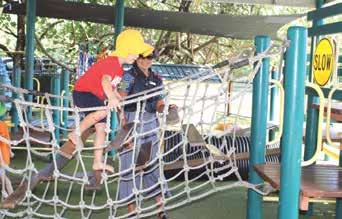
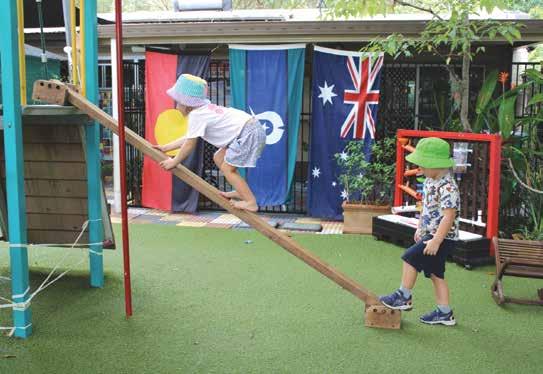
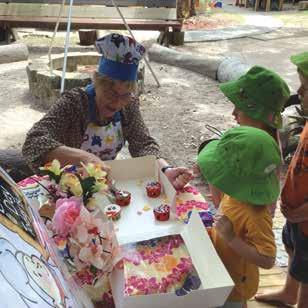
Bribie Island Community Kindergarten has been proudly providing outstanding early education and care for children and has received the Excellent Rating from ACECQA (Australian Children's Education and Care Quality Authority) for an incredible 5th consecutive time. What an achievement!
YOUNG TERRY MP
Gets Things
Done!
Federal Member
for
Longman
You'll also find a wonderful selection of stories in this edition—just the thing to brighten up these recent rainy, gloomy days. With all the wet weather we've experienced lately, it almost feels like we need an Ark more than a new bridge! We hope these uplifting articles bring a little sunshine to your day.
Until next time, Stay safe, take care,
CONTRIBUTORS
Anne Matthews
Al Finegan
Barry Clark
Elaine Lutton
Joie Scheinpflug
John Traill
Peter Schinkel
Peter Dallimore
Philip Arlidge
Robyn- B.I.
Boat Charters
Kathy Vincent Maria Christina
Sue Wighton
Tracey Blinco
R3 Roofing
Paul Popham
Ivory T - fabric & wallpaper
Yawk Yawk
Disclaimer for Contributions to The Bribie Islander Magazine The views and opinions expressed in contributions to The Bribie Islander Magazine are those of the individual authors and do not necessarily reflect the official policy or position of the magazine or its editorial team. Contributions are welcome, but the magazine reserves the right to edit, modify, or reject submissions that do not align with our publishing standards or guidelines. By submitting your work, you acknowledge that you have the necessary rights to share the content and grant The Bribie Islander Magazine permission to reproduce it in print and online formats. The Bribie Islander Magazine is not responsible for any copyright infringement that may arise from the publication of submitted materials.
you ever wondered why your knees hurt when you run, or why your back feels sore after sitting at your desk for hours? The way our bodies move and handle different activities can affect how we feel every day.
That’s where a biomechanical assessment comes in—it’s a tool used by health professionals to figure out how your body moves and why you might be feeling pain or discomfort.
What Exactly is a Biomechanical Assessment? A biomechanical assessment is simply a careful check-up of how your body moves. It looks at things like how your joints bend, how your muscles work, and how your bones
and tendons support you during different activities. The main goal is to spot any problems with your movement that could lead to pain or injury, or that might already be causing trouble.
You don’t have to be an athlete to benefit from a biomechanical assessment. Anyone who is experiencing pain, recovering from an injury, or just wants to move better can find it helpful.
How Does a Biomechanical Assessment Work? When you go for a biomechanical assessment, here’s what usually happens:
1. Chat About Your Health and Lifestyle: The professional (like a physiotherapist or podiatrist) will ask you questions about any pain you have, your daily activities, and your health history.
2. Watch How You Move: They’ll observe how you walk, run, stand, or even do simple movements like squats or stretches. Sometimes, they’ll use video cameras or special mats to get a closer look at how you step or how your feet strike the ground.
3. Check Your Flexibility and Strength: They might gently move your arms, legs, or back to see how flexible you are, and test your muscle strength.
4. Assess Your Posture: Good posture is important for healthy movement. The assessor will look at how you sit, stand, and move to see if your posture might be causing any problems.
Some places use high-tech equipment, like force plates or motion-capture cameras (think of what’s used in making animated movies), to get even more detailed information about your movements.
Why Would You Need a Biomechanical Assessment?
There are lots of reasons why someone might get a biomechanical assessment:
• To find out why they have aches and pains, like sore knees, hips, or back
• To prevent injuries, especially if they play sports or have an active job
• To recover better after an injury or surgery
• To get advice on the best shoes or insoles, especially for foot or leg problems
• To improve the way they move for sports or everyday activities
What Happens After the Assessment?
Once the assessment is done, the professional will explain what they found. If there are any issues, they’ll suggest ways to fix them. This might include:
• Special exercises to strengthen weak muscles or stretch tight ones
• Tips for improving posture
• Advice on the right shoes, insoles, or even changes to your desk setup at work
• Changes to your training or daily routines
All of these recommendations are designed to help you move better, feel less pain, and reduce the risk of future injuries.
Why is it Important?
Biomechanical assessments are important because they give you and your health professional a clear picture of how your body works.
Instead of guessing what might be wrong, you get specific advice tailored to your needs. This means you can make changes that will actually help you feel and move better.
Just personalised care, advanced testing, and frames you’ll actually love wearing. We’re proudly independent and locally owned, so you’ll never feel like a number.
If you’re blaming the lighting, stretching your arm to read a text, or avoiding night driving - it might be time
235 Goodwin Drive, Bongaree Ph: 07 3410 1122
241 Goodwin Drive, Bongaree Ph: 07 3450 0761
Health & Wellbeing Services
Bribie Simply
HEALTH Y
By Heenam Kim
Saved From Amputation
The Effective Use of Moxibustion for Diabetic - Foot Pain, Leg Pain, and Numbness.
One day, a man in his 60s came into the shop with severe left leg pain. He was very reluctant to see a doctor, as he feared the possibility of amputation. He had a long history of type 2 diabetes and had experienced a progressive loss of sensation in his foot over several years.
Diabetes is known to affect the nerves and circulation over time. High blood sugar can damage both the small blood vessels and the nerve fibres that supply the extremities. This condition is known as diabetic neuropathy. In Australia, more than 4,400 people amputate their lower limb due to diabetes
Gymnema is a traditional herb that has long been used to support healthy blood sugar levels.Iit is often called the “sugar destroyer” because it may help reduce the taste of sweetness on the tongue and
support glucose metabolism in the body. Some people use Gymnema as a natural supplement to help maintain balanced blood sugar, especially alongside a healthy diet and lifestyle.
Nerves can be understood as communication pathways in the body. They rely on adequate oxygen and nutrients to transmit signals effectively. When blood sugar remains elevated over long periods, the longest nervesparticularly those extending to the feet - are often affected first.
The lower part of his left leg appeared very pale, extending from the foot up to just below the knee, suggesting compromised circulation. He had no sensation in his foot, yet experienced intense and persistent pain just below the knee. This may be associated with neuropathic changes, where nerve function becomes disrupted and pain is
perceived in areas where partial nerve activity remains.
I have been using Moxibustion as a supportive approach for clients experiencing physical pain. Moxibustion involves the burning of dried mugwort (wormwood) near acupuncture points or affected areas. In traditional Chinese medicine, it is used with the intention of supporting circulation, reducing stagnation, and assisting the body’s natural recovery processes in muscles, joints, and connective tissues. It’s great for joint pain.
There are different sizes and types of moxa sticks. In this case, an adhesive mini moxa stick was used, which produces a strong and sustained heat. Normally, it would be removed
before burning completely. However, due to the client’s loss of sensation in the foot, it remained in place until it finished burning, resulting in a thermal injury.
Following the session the colour of the lower limb came to normal, and he gained feeling of the foot. The change was amazingly surprising! Moxibustion is also amazing healing open wounds. In one case, a client had been living with an open wound for years. After the moxa treatment, the lady came back to the shop aweek later excited to let me know that her wound had closed up, it took her about 3 days to completely closed the wound.
If you are still struggling with stubborn pain, numbness, or slow wound healing and you have tried everything but still having proglrems Moxibustion may be worth trying.
Please speak with Kim for further information at Bribie Simply Healthy / Bribie Healing Centre, Shop 2, 41 Benabrow Avenue, Bellara. Ph. 3410 0521 2, 41 Benabrow Av, Bellara. Tel. 0414 934 972
Bribie Psychotherapy & Clinical Hypnosis
Stress & Anxiety
Anger
Pain management
Depression
Motivation
products, since they touch sensitive areas that get infected more easily. That’s why you’ll notice most cosmetics counters offer disposable applicators for testers, to help keep everyone safe and healthy.
Sharing makeup might feel fun in the moment, but it can lead to unwanted surprises like skin or eye infections, and even illnesses like herpes (the virus that causes cold sores) and dermatitis.
Youmight love sharing secrets, hopes, and dreams with your friends, but when it comes to makeup, it’s best to keep it just for you. Dermatologists agree: your makeup kit should be as personal as your diary.
Think of your makeup as a little self-care ritual—something special that’s just for you. When you swap cosmetics with friends, you might also be swapping germs.
Makeup brushes and applicators can easily transfer bacteria from one person to another, and the moist, dark containers we keep our products in are perfect places for germs to grow. Pay extra attention to lip and eye
You already know it’s best not to share makeup with friends—but what about sharing with strangers? When you try a new lipstick at a department store makeup counter, you’re still sharing, in a way.
If you use a tester or get a makeover from a consultant, don’t be shy about asking for disposable applicators or checking that everything’s been cleaned properly. It’s your health—so speak up! And if you’re unsure, it’s perfectly okay to ask for a fresh tester product.
Diseases Spread Through Makeup
It’s easy to get swept up in the fun of a group makeover, but no one wants their beauty routine to end with a trip to the doctor. Infections like pink eye can be passed around by sharing makeup with friends or using store testers.
In fact, one study found bacteria like staph, strep, and even E. coli living on department store testers. So, just a few simple safety steps can help keep your makeover fun and worry-free. A common and troublesome result of sharing eye makeup is pink eye, or conjunctivitis. It can cause red, itchy, watery eyes that last up to two weeks— definitely not the kind of drama anyone wants!
Pink eye spreads easily, especially when people share makeup. If you catch it, your doctor can prescribe eye drops to help you recover, but you’ll need to skip your favourite eye looks (and contacts) until you’re better. Beyond pink eye, there are a few other infections to watch out for, too.
Even if your friend doesn’t have any visible cold sores, sharing lipstick can still spread the herpes simplex virus— the one that causes those pesky, painful blisters. There’s no cure for this virus, so it’s best to avoid sharing lip products altogether.
A single swipe from the same tube can transmit the virus, and cold sores can pop up days or even weeks after contact. Even with treatment, the virus stays with you, so keeping those lipsticks to yourself is a small step that really pays off in the long run.
At the end of the day, your makeup routine should be all about feeling good, having fun, and taking care of yourself. By keeping your products to yourself and following a few simple precautions, you can enjoy all the creativity and confidence that makeup brings—without any of the risks. So, pamper yourself, stay safe, and let your beauty shine!
The Perfect Season to Slow Down and Move Outdoors
Autumnhas arrived, bringing beautiful blue skies, cooler mornings, and the perfect reminder of why Bribie is such a wonderful place to live. As the heat of summer fades, this season invites us to slow down, enjoy nourishing slow-cooked meals, and appreciate the gentle sunshine and magnificent sunsets that make our coastal lifestyle so special.
compared to those who exercised indoors. Participants also reported improved mood and were more likely to continue exercising regularly after spending time active in natural environments.
Even gentle movement can make a meaningful difference to wellbeing. A short morning walk, stretching in the sunshine, or spending time by the water can help improve circulation, strengthen muscles, support mental health, and boost vitamin D levels.
Autumn is also one of the best times of year to begin an exercise routine. The milder temperatures make it easier and more enjoyable to spend time outdoors, whether that means walking along the waterfront, rolling in a wheelchair or mobility scooter, or simply sitting outside and soaking in the fresh air.
Being outdoors offers far more than just physical benefits. Nature encourages us to slow down, breathe deeply, and become more mindful of the world around us.
Watching the water, listening to birds, or feeling the ocean breeze can have a calming effect on both the mind and body. If you are lucky, you may even spot a dolphin while enjoying the waterfront.
Research also supports the benefits of outdoor exercise. A study published in the journal Environmental Science & Technology found that people who exercised outdoors experienced greater feelings of revitalisation, increased energy, and reduced stress
Photography is another wonderful way to enjoy the beauty of autumn and connect with the community. Taking photos encourages us to slow down, notice the small details in nature, and appreciate the changing colours and light around us.
Joining a local photography club or sharing photos with others can create meaningful social connections and inspire creativity.
I especially love taking sunset photos on Bribie, where the reflections across the water and colourful evening skies never fail to impress.
Photography is a healthy hobby that supports mindfulness, encourages time outdoors, and brings people together through shared experiences and creativity.
This autumn, take time to enjoy the simple pleasures the season brings. Embrace the cooler mornings, the golden sunsets, and the gentle sunshine.
Most importantly, remember to move your body in ways that feel comfortable. Sometimes the smallest moments outdoors can have the greatest impact on our wellbeing.
Yours in Health and Wellness,
Tracey Blinco Wellness Consultant
Autumn on Bribie:
BRIBIES OWN FLORENCE NIGHTINGALE
Celebrating
dedicated Bribie home care nurse
International Nurses Day is a Global Day of Celebration held annually on May 12 – the anniversary of the birth of the founder of modern nursing. Two centuries later, we will honour our selfless nurses who are proudly carrying on Florence Nightingale’s legacy of care.
Like the famous nursing pioneer, a nurse from Carinity Home Care is dedicated to supporting people in need in the Bribie Island community. Inspired by his mother, sister and wife who were nurses, Mark Lister got out of the laundry and dry-cleaning industry almost two decades ago and embarked on his own nursing career.
Mark has been caring for seniors through various roles with Carinity for the past 17 years, ranging from nurse to aged care home manager.
This has included working on the frontline during the COVID-19 pandemic as an infection control nurse. Mark currently supports Bribie Island seniors as a Registered Nurse with Carinity Home Care. His role encompasses undertaking assessment of new clients to ascertain their care needs, devising falls prevention strategies, and providing clinical care tasks.
“My role is to make seniors feel more comfortable and help them live where they want to live for longer,” Mark said. “I help seniors to live the life they want to live – on their own terms.”
Executive Manager of Carinity Aged Care, Heidi Wiebe, thanked nurses for their dedication to support older people in Queensland.
“Working as a nurse requires patience, kindness and compassion – and caring for older people also takes incredible skill and an extensive and deep knowledge base,” Heidi said.
“The people living in our homes, the older people we support in their own homes – and their families – are always grateful for the efforts of our wonderful nursing staff.
RADIAL & FOCUSED SHOCKWAVE THERAPY
Clinically proven* to help these conditions
• Heel pain (plantar fasciitis and Achilles tendinopathy)
• Tennis and golfers elbow
• Patella tendinopathy
• Frozen shoulder
LASER IDEAL FOR RECENT INJURIES < 6 WEEKS
• Rotator cuff tendinopathy +/- calcification
• Hip bursitis and tendinopathy
• Shin splints; Heel spurs
• Lower back & Knee arthritis
Mark Lister has been supporting seniors through various nursing roles for almost 20 years.
BUSY FINGERS
NEW MEMBER OF THE TEAM
I would like to welcome our new cashier Kylie to our family. She has been with us for three weeks and is settling in very well, please show patience while she is learning all the different roles of the cashier. Kylie works on Mondays, Tuesdays and Wednesdays, please make her welcome.
DONATIONS GIVEN THIS MONTH
Due to the generosity of our donators and customers we were able to support the following associations. Bribie Island RSL Indoor Bowls Club needed some new sets of bowls in bright colours, as the old ones were brown and black, causing issues for some members with vision problems differentiating between the two colours.
Bribie Island Aged Care required new Bariatric beds and a coffee machine for their café that accommodates residents and their visitors.
We also granted the BI National Veterans (Nashos) monthly buses over the next few months each allowing some outings for their members. Last week they went on the Mary Valley Rattler and had lunch at the Gympie RSL.
This turned into a very special day for one of their Vietnam Vets who had lost contact with a comrade 40 years ago. Jeanette Price the Treasurer of the group managed to find him through the President of the dissolved Gympie Nashos.
The two men talked over the phone, but our man did not know that his wife had arranged for him to be at the RSL for lunch after the Rattler ride. I have it on good authority that it was
a very special day for these two men, and we hope they get to have many happy times together in the future. If you are new to the island or even a long-term resident Veteran, please get in touch with Jeanette Price on 0439 282640 and join the group they are a wonderful group of people and share some great trips and gatherings.
DONATIONS RECEIVED
Once again I have to mention the quality of the donations we are receiving, it is not that we are fussy, it is the fact that, as with all charity op shops, we have to follow strict health and safety guidelines.
We can’t resell stained, dirty or torn items which could be unsafe, also our customers understandably will not pay for items like these, and we have to dump them, which is costly. It is also time consuming to sort through resulting in less items going onto the shop floor per day.
So please be careful when looking at your preloved items before bringing them to us – if you won’t use it or buy it please put it in the bin.
VOLUNTEERS AND SALES
We have a few new volunteers but still not enough to recommence our $1 sales of clothing as soon as we have enough sorters to go through the donation process, we will start them again.
If you would like to volunteer, please call Jacki on 3408 1014 or pop into the shop to see her.
SAD LOSS
Recently, we sadly lost one of our dear volunteers Sheree Thompson who passed away after a short illness, Sheree was a dedicated member of the team for the last 5 years. She will
be sadly missed, and we send our condolences to her family and friends.
REQUEST FOR PRESENTATIONS AND DONATIONS
If you are a member of an island club or association and require assistance, please let us know. We try to assist all non-for-profit associations and sporting clubs, we also assist the Police, SES, VMR and the BI Hospice.
Our President Pauline is quite happy to come along to your club and present our aims and goals and how your club can apply for assistance. Please call 3410 1920 or email busyfingers1@bigpond.com if you wish to have a presentation or if you wish to apply for a grant of assistance.
When applying for assistance please contact us for our 2026 Grant Guidelines Sheet on how to apply, include a contact name and phone number and also a current equipment quote (from an island business if possible), tell us a bit about your association/club and membership and why you need the equipment you are requesting, and email it to busyfingers1@bigpond. com Please be aware we only support Bribie Island associations and groups, not individuals.
I would like to thank all our supporters and customers, and a very special thank you to the Bribie Islander and staff for their continuing support. I hope to see you in the shop soon. Sandra
The Devil’s in the Detail
I’ma big picture person. Details elude me. Indeed details bore me and I gloss over them. I have the attention span of a slightly brain-damaged gnat. Plus I have a terrible memory.
This means that I often have trouble negotiating life’s stormy seas. Like Dory in Finding Nemo, while I keep on swimming, I’m not always sure where I’m going or even where I’ve been.
Like when I agreed to get married – I’m guessing my vows suggested it was for life. Well, how was I to know? I had a pretty white dress and lots of friends at my wedding. It was like a big party.
Or so I thought. But the devil indeed was in the detail. The phrase, ‘The devil’s in the detail’ was coined by a German architect Ludwig Mies van der Rohe way back when.
I think he originally said ‘God is in the detail’ … whatever. I can’t remember the exact words. Go figure.
Anyway in these data-driven, technological times we live in, I regularly get caught out when signing up to some youbeaut app or service.
They have these things called ‘terms and conditions’ which apparently we punters are meant to read. Who has the time or the brain power to do this? Talk about details!
And then they send you multiple emails about this and that which you ignore. Including the one telling you that your plan is being upgraded and your monthly subscription (in the year-long contract!) has increased from $13.25 a month to $276.99 a month.
You, of course, in your gnat-like ignorance ignore this particular email and only recently notice a huge monthly subscription fee being deducted from your bank account.
This brings me to the stark realization that I’m an analogue creature living in a digital world. The digital world requires that you pay attention. The digital world requires you attend to the detail. The digital world is unforgiving. The digital world wants your money and your soul.
Naturally you try to contact this online service. After calling the 1800 number and obediently choosing one for this option, two for this, one for that, etc., the robotic voice provides zero comfort, zero solution, zero empathy and of course zero resolution and simply, maddeningly at the end of this deeply unsatisfying interaction Ms Whocares says, ‘Thank you. Goodbye’. Nooooo!
So you then try the fully automated online chat help line. Hah! You outline the issue and the bot responds with a completely irrelevant answer. For example, ‘Perhaps you are interested in our online geegaw thingamajig app?’ Er.
No. I’m sure these ‘services’ rely on the fact that people like me often just give up in disgust. Sure – keep taking my money, but just leave me alone!
All our daily activities and appliances these days seem to rely on apps, email updates, data management and digital devices. So I’ve made a momentous decision to opt out of this brave new world where attention to detail and data sets rule.
I’m deleting all my apps, giving my smart television a lobotomy and putting my PC out for kerbside collection. I’m going back to the olden days.
From now on, I can be contacted by smoke signal or horseback courier; my cooking will be on an open fire in the back yard; my washing will consist of bashing my rough linen clothing on rocks. You’ll recognise me by my home-spun frock, hessian apron, missing teeth and cotton bonnet.
And like Dory, I’ll just keep on swimming.
Sue Wighton
CITY OF MORETON BAY RECOGNISES DENISE
SANDS, A LOCAL VOLUNTEERING HERO
City of Moreton Bay is recognising the selfless volunteers in our community who give their time and energy to make the city an even better place to live this National Volunteer Week, with special recognition for Denise, whose dedication and service have made a significant impact in Beachmere.
Volunteering has multiple benefits, including enhancing community spirit and providing residents with opportunities to acquire, develop and share skills and knowledge. Acting Mayor Jodie Shipway said volunteers enable and enrich the provision of programs and services to the community.
“Volunteers are all around us - from parents helping out at kids’ sporting clubs, to wildlife rescue groups run solely by volunteers.
“City of Moreton Bay provides a number of opportunities for people to volunteer, including Bushcare groups, environment centres and community disaster management.
“It’s important to recognise and appreciate the invaluable time volunteers give to make City of Moreton Bay an even better place,” she said.
Denise, the Beachmere Community Disaster Management Coordinator volunteer, is being celebrated for her extraordinary commitment to helping others.
Drawing on her successful career in disaster management before retiring, Denise has spent the past 15 years as an active and compassionate member of the Beachmere community.
Her leadership and support for local residents during extreme weather events have made her an invaluable asset and an inspiring example of community spirit.
• Volunteering is essential to the fabric of Australian society, with participation adapting in response to rising rent, fuel costs, everyday expenses, and changing lifestyles
• From helping a neighbour with groceries, to coaching local sport, supporting a school fundraiser or contributing skills online, Australians are volunteering in ways that fit around their lives
• This National Volunteer Week (18-24 May 2026), Volunteering Australia is celebrating the power of volunteering in all its forms with this year’s theme, “Your Year to Volunteer”, encouraging Australians to recognise and take part in the many ways they contribute
New insights show Australians are continuing to participate in communities of their choice in ways that are more flexible, informal and responsive to everyday life. As cost-of-living pressures rise and demands on people's time intensify, volunteering is evolving to remain accessible and relevant.
From helping a neighbour with groceries, to coaching local sport, supporting a school fundraiser or contributing skills online, Australians are volunteering in ways that fit around their lives.
While not always captured by traditional measures, these contributions remain critical to community wellbeing.
As the driving force behind National Volunteer Week 2026 (18-24 May), Volunteering Australia is leading this year’s campaign under the theme “Your Year to Volunteer”, recognising those already contributing and inviting more
people to see where they might take part. This year’s campaign aligns with the United Nations International Year of Volunteers for Sustainable Development (IVY 2026)1, a global moment to recognise volunteers and highlight the role volunteering plays in strong, connected communities by fostering solidarity, civic engagement, and a sense of belonging.
While participation continues to evolve, barriers remain. Particularly around time, awareness, and how people are invited to get involved.
These include competing work and study commitments, family responsibilities, health considerations and uncertainty about where or how to start, reinforcing the need for more flexible and accessible pathways into volunteering.
Work is already underway to make volunteering more accessible and flexible for more Australians. The National Strategy for Volunteering and enabling Action Plan supports this shift by recognising informal contributions and encouraging more inclusive ways to get involved across all stages of life.
CEO of Volunteering Australia, Mark Pearce, emphasises the importance of removing structural and financial barriers to participation and ensuring volunteering remains accessible, flexible, and inclusive for all Australians.
“The National Strategy for Volunteering is about making it easier for people to get involved, says Mr. Pearce. “We know there is a strong willingness to contribute across the community, but systems, structures, and expectations
haven’t always kept pace with how people live today. By reducing friction and improving access, we can unlock even more participation.
“At a time when Australians are under increasing pressure, what stands out is not that volunteering is declining, but that it is adapting,” adds Mr. Pearce.
“We’re still seeing people show up for their communities, but they are doing it in different ways, in more flexible ways, and often in ways they don’t even recognise as volunteering.”
Mr. Pearce says National Volunteer Week provides a moment to recognise this full picture.
“Volunteering is not limited to formal roles or long-term commitments. It includes the everyday ways people support each other and strengthen their communities.
“Your Year to Volunteer is both a recognition of what already exists and an invitation. There is no single way to volunteer. What matters is that people can take part in ways that work for them,” concludes Mr. Pearce.
Australians are encouraged to make 2026 Your Year to Volunteer by exploring opportunities through state and territory Volunteering Peak Body websites, GoVolunteer. com.au, or by building on the ways they already contribute within their communities.
Volunteers and organisations are invited to share their stories during National Volunteer Week 2026 using #NVW2026 and #VolunteerYear, showcasing the diversity and everyday reality of volunteering across the country.
Tips for people wanting to volunteer:
• Find volunteer opportunities that align with your skills: Look for volunteer work that can benefit from your existing skill set. If you're good with numbers, maybe help with fundraising efforts. If you're a people person, positions that require interaction with the community could be a good fit. This way, you can contribute effectively from the get-go.
• Speak with other volunteers: Connecting with seasoned volunteers can give you a better idea of what to expect. Their insights can prepare you for the tasks ahead and may even help you avoid common pitfalls.
• Research and choose the right organisation: Before committing your time, ensure the organisation’s mission resonates with you. This can make your volunteer work more meaningful and satisfying.
• Understand your role and responsibilities: Having a clear understanding of what’s expected will help you perform your duties efficiently. It also ensures that you’re contributing positively to the organisation's objectives.
• Set realistic goals: It’s important to know what you want to achieve through volunteering, whether it's personal growth, learning new skills, or contributing to a cause. This helps keep your volunteering purposeful and focused.
• Be open-minded: Approach volunteering with a willingness to learn and adapt. Be prepared for unexpected challenges and embrace the opportunity to step out of your comfort zone.
Bribie Island Community Help is after volunteers to assist our active aged and frail clients with door-to-door transport. We transport clients around following areas:
•Bribie Island & surrounds
•Caboolture, Redcliffe, Northlakes
•North Brisbane & Brisbane City. Currently seeking to expand our Volunteering numbers to service all areas to assist our growing client numbers.
volunteering obligations.
We are seeking committed volunteers who can donate 5 to 8 hours per week. We are registered with Centrelink for those with
We have a fleet of Toyota Commuter automatic minibuses, and we will provide training on driving the buses as well as orientation and ongoing support from our professional office staff.
MANDATORY
REQUIREMENTS:
•Must hold Australian or NZ Citizenship or the capacity to permanently work in Australia.
•Above 25 years of age due to insurance constraints.
•Be able to pass a driving record history check by Qld Transport.
•Be able to pass a criminal history background check.
•Have a minimum of an Australian Open “C” class license check by Qld Transport.
If you wish to apply or seek further information, you can email your details to apply@bivchai.org.au or call on 3408-0111.
our
Why the National Disability Insurance Scheme Matters The Invisible Workforce:
Thereare an estimated 2.65 million unpaid carers in Australia—a vast, largely unseen workforce that underpins the country’s care system. According to Carers Australia, these individuals save the government and taxpayers approximately $100 billion annually.
This figure reflects what it would cost if their care had to be replaced by formal, paid services. Despite this enormous contribution, unpaid carers are often overlooked in national conversations about funding and reform.
The National Disability Insurance Scheme (NDIS) was introduced after years of hardship experienced by people with disability and their families.
At its core, it is a human rights–based system—one that recognises the right of people with disability to live with dignity, participate in their communities, and pursue education, employment, and personal goals.
But the NDIS is not just about individual participants. It also plays a critical role in supporting the “invisible workforce” behind them.
Many unpaid carers provide support equivalent to three full-time jobs - and often far more. It’s not uncommon for carers to dedicate up to 100 hours per week to their role. No other sector in Australia expects this level of commitment without pay, recognition, or adequate support.
Over time, this takes a significant toll on carers’ physical health, mental
wellbeing, financial stability, and ability to participate in the workforce. The NDIS helps ease this workload. By providing funded supports, it allows carers to take essential breaks, maintain their own wellbeing, and, in many cases, re-enter the workforce part time or casual to pursue careers they had to put on hold. In this way, the scheme delivers benefits not only to individuals and families, but to the broader economy.
A key pillar of the NDIS is its connection to the allied health sector. Professionals such as physiotherapists, occupational therapists, and exercise physiologists work alongside participants to improve quality of life—helping reduce pain, increase mobility, and build independence.
These supports enable people with disability to engage more fully in work and community life, while also reducing long-term pressures on hospitals and residential care systems.
Before the NDIS, many younger Australians with disability had little choice but to live in aged care facilities or remain in hospitals for extended periods, sometimes for years.
The scheme has helped shift this reality—creating pathways for people to live in their own homes, stay connected with family, and participate in society.
People with disability deserve equal rights to participate fully in society and should never be isolated due to a lack of support. Social connection
is not a luxury—it is essential to overall wellbeing.
When individuals are excluded from their communities, it can have profound impacts on both physical and mental health, increasing the risk of loneliness, declining health, and reduced quality of life.
Meaningful access to community, work, and social participation is vital, and the supports provided through the National Disability Insurance Scheme play a crucial role in making this possible.
As a nation, Australia can afford the NDIS. What we cannot afford is to ignore the value of unpaid carers or expect them to carry the entire load alone. They are already saving the country billions—often at great personal cost.
Recognising, supporting, and investing in both people with disability and their carers is not just good policy. It is a reflection of who we are as a society.
Yours in Health and Wellness, Tracey Blinco
• Human Rights Advocate /Law
• NDIS Psychosocial Recovery Coach
• Writer for the Bribie Magazine
• Member BIEPA
• Bribie Region Disability Group
• NDIS Support Coordinator
• Support Professional
• Health Coach
Aussie healthcare workers, travellers urged to wear respirators
Australians travelling overseas or working in frontline healthcare have been urged to wear P2 face respirators if they are concerned about the risk of hantavirus infection. With Australian passengers of the affected cruise ship due to return home, initially to quarantine in Perth, three University of the Sunshine Coast experts in microbiology and infection prevention/control have explained potential risks and debunked myths.
"Unlike a standard surgical (baggy blue) or cloth mask, which loosely covers the nose and mouth, a P2 respirator forms a tight seal against the face and filters out 94 percent of airborne particles, including tiny droplets that can carry infectious diseases," they say.
"These respirators (known as P2 or N95) are soft and comfortable, significantly improve safety, and are as accessible as standard masks from large retailers." In their Q&A feature, Associate Professor of Microbiology Erin Price, Associate Professor Joanne Macdonald and Senior Lecturer Matt Mason write:
“The risks for everyday Australians remain low at this stage but domestic healthcare workers must remain vigilant for imported cases, as their direct contact with patients and clinical specimens places them at highest risk of exposure.
“Like COVID, the elevated risk to Australian healthcare staff cannot be overstated. Twelve Dutch healthcare workers have entered mandatory six-week quarantine due to improper handling of hantavirus-contaminated blood and urine from a hospitalised patient.
“Frontline healthcare workers in Australia – including nurses, doctors, paramedics, laboratory and support staff – should remain alert for potentially infectious patients, particularly those with recent travel history or contact with travellers.
“They should adopt appropriate protective measures including P2 masks in addition to gloves, gowns and eye protection, and adhere strictly to established safety procedures.” The senior academics address a key question about the group of hantaviruses that have no
vaccine or targeted antiviral treatment: What can I do to protect myself and my family?
“If you’re concerned about hantavirus, especially if you’re travelling overseas, the best way to protect yourself and your loved ones is to wear a P2 (N95) or higher respirator in places where there’s poor ventilation and you’ll be in contact with other people.
“Wearing a respirator will also protect you from catching other infectious respiratory pathogens like influenzavirus, RSV, adenovirus, human metapneumovirus, human parainfluenza virus, SARS-CoV-2 and other coronaviruses, and rhinovirus. “These respirators are widely available in Australia through pharmacies, major supermarkets, hardware stores and online retailers.
“Because infection can also occur through contact with contaminated fluids, it’s important to wash your hands regularly or use hand sanitiser, avoid touching your face, and take care with shared or frequently used surfaces.
“Hantavirus could survive from a few hours to a few days on surfaces, so simple precautions like wiping down areas such as aeroplane tray tables and washing your clothes and hair after long travel journeys can provide an added layer of protection.”
Supporting Community
Bribie Respite and Support Services Incorporated has been servicing Bribie Island and surround since 1987. As a not for profit organization all monies generated are reinvested into our Bribie based business. Our well trained support workers offer high quality care and support to ensure our clients are able to live their lives in the best possible way with support an dignity.
We are a registered NDIS provider, offering a wide range of support services to assist individuals within our community
Disability Support
• Community Based Day Program (5 days a week)
• Community Access
• In Home Social Support
• Personal Care
• Overnight/short term accomodation
• Supported Independent Living
• Transport to and from our services
• School Holiday Program
A passenger from the final group to be evacuated from the MV Hondius waves on the way to the airport in the Granadilla Port on May 11, 2026, in Tenerife. Photo Chris McGrath
We are Communicating more, yet not still not connecting
In a world that feels like it’s always rushing, communication can easily become something we “do” rather than something we truly feel.
Messages are sent quickly, replies are expected instantly, and conversations often happen while we are doing other things. Despite all these connections, many people still feel unheard, unseen, or misunderstood.
What I have come to see, both personally and through my work, is that effective communication is not about saying more; it is about being more present. Before we speak, there’s value in checking in with ourselves. How am I feeling right now?
Am I calm, or am I reacting? Words spoken in the heat of the moment often carry something deeper - stress, frustration, or hurt, and that’s usually what the other person feels. Even a brief pause can shift the direction of a conversation.
Listening is where real change happens. Not listening to respond, though listening to understand. When someone feels genuinely heard, something softens. Defences drop, and connection becomes possible again.
I also see how often we expect others to know how we feel, though clarity matters. Saying what we feel in a calm, honest way, without blame, creates a very different outcome. Small shifts in how we speak can open a conversation instead of shutting it down.
Communication is more than words. It’s tone, presence, and intention. People pick up on that, even if nothing is said directly. Slowing down, choosing our words more carefully, and being mindful of how we show up can change the way we relate to others.
Sometimes, it’s not about saying anything at all. Giving someone the space to be truly heard and held, without rush or distraction, can be just as powerful.
A few simple ways to communicate more effectively:
• Pause before responding, especially when emotions are high.
• Make eye contact and give the other person your full attention.
• Ask questions for clarity rather than making assumptions.
• Speak from your own experience using “I feel” or “I need” statements.
• Notice your tone, body language, and timing.
• Repeat back what you heard to ensure nderstanding.
At its core, communication is about connection. When we become more aware of how we speak and how we listen, we create stronger, more honest relationships, not just with others, but with ourselves.
If you’re finding it hard to express yourself or feel heard in your relationships, this is something we can work through together in a one-on-one session.
Contact me to book a time on 0405 361 882.
Always with love, Maria Christina x
Holistic Counsellor, Life and Wellness Guide
Outstanding Recognition for Bribie Op Shop Manager
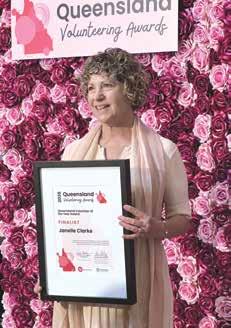
Janelle Clarke, the volunteer Coordinator of the Church of Christ Op Shop in Bongaree, has been honoured as one of three finalists in the 2026 Queensland Volunteer of the Year Award.
In just a few years, Janelle has developed the Op Shop into a larger shop, in new premises, with greater sales. However, Janelle’s emphasis has not been on making money for its own sake. Her focus has been first on developing and supporting volunteers and second on generous contributions to the community.
Janelle aims to give her volunteers a sense of purpose and encourages them to be the best versions of themselves in their circumstances. She teaches volunteers new skills, including customer relations, workplace health and safety, and responsible leadership. Local volunteers have received pastoral care, upskilling, companionship and a sense
Need a break from caring?
Respite care that feels like homefor them, and peace of mind for you.
Caring for someone you love takes time, energy and heart. At Boronia Cottage on Bribie Island, we offer personalised day respite in a calm, home-like setting.
Your loved one can enjoy their day, their way. Whether that’s relaxing in the garden, enjoying the seaside air, or simply spending time with people who understand. While they’re here, you can take time to rest, recharge, or focus on what you need — knowing they’re in safe, caring hands.
It’s your life. We’re here to help you live it. Call 1800 786 227 Or scan the QR code to learn more
of purpose through Janelle’s example of caring and giving.
Janelle’s contributions to the Community have been widespread, by advocating for the homeless and vulnerable, providing donations and support for those dealing with domestic violence or who are struggling with financial hardship, supporting families and grandparents given custody of grandchildren, and creating a safe and welcoming space for those needing a friendly smile and someone with whom to chat.
At least 10% of Op Shop sales are donated to other charities. Significant assistance has been provided to the Local School Chaplaincy Fund, which assists Chaplains with their Breakfast initiatives to reach out to needy children. The Eidsvold Indigenous community has been impacted by donations that helped set up an Op Shop where residents can purchase clothing at a very low cost. Janelle also organised the donation of a large supply of blankets to assist that community in the cold weather.
Janelle’s heart for the needy, vulnerable, lonely and disadvantaged is evident. Her contribution to the community has been outstanding, and we congratulate her on receiving the recognition that she deserves.
Celebrating an unmatched Achievement in Excellence
for Bribie Island Community Kindergarten
Bribie
Island Community Kindergarten has been proudly providing outstanding early education and care for children on Bribie Island and in the surrounding areas since 1984.
We are absolutely thrilled to announce that they are the only Early Learning Service in Australia to have received the Excellent Rating from ACECQA (Australian Children's Education and Care Quality Authority) for an incredible 5th consecutive time!
BICK first received the Excellent rating in 2014, and again in 2017, 2020, 2023, and now in 2026. To meet the first criterion for this award, a service must demonstrate that it provides and promotes exceptional education and care across at least three of the five excellence themes.
BICK succeeded across four themes by demonstrating how its programs, practices, and partnerships help children and families achieve the best outcomes.
For Criterion 2, BICK demonstrated strong leadership by supporting the community and the wider sector through advocacy, training, and the sharing of best practices in early childhood education.
For Criterion 3, BICK demonstrated its ongoing commitment to excellence through diverse methods of continuous improvement and careful planning for the future.
“We continue to wonder, ‘how can we rise above, to do and be even better’. It can at times feel like an insurmountable mountain to climb, yet here we are again, being the first and only ECEC service to receive this accolade, and to be honest, it wasn't that difficult at all. When you place the importance of children and their wellbeing at the heart of all that you do, you then shine a light for all who work with children to follow” said a member of the committee.
Why Bribie Island Community Kindergarten Stands Out: The Power of Learning Through Play
When families begin the search for the right kindergarten, they’re often looking for more than just a place for their child to spend the day—they’re looking for an environment where their child will thrive, feel supported, and develop a lifelong love of learning.
At Bribie Island Community Kindergarten, that’s exactly what children experience every day.
At the heart of the kindergarten’s philosophy is a simple but powerful idea: children learn best through play.
Learning That Feels Natural
Rather than relying on rigid, structured teaching methods, Bribie Island Community Kindergarten embraces play-based learning—an approach backed by decades of research in early childhood education. Just as children naturally learn to crawl before they walk, they also learn best when they are given the freedom to explore, imagine, and discover at their own pace.
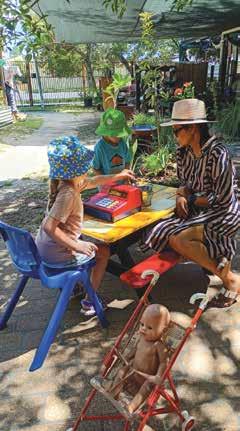
Through play, children aren’t “just having fun”—they are developing critical life skills. Whether they are building a cubby, solving a puzzle, painting a picture, or engaging in imaginative role-play, they are strengthening their problem-solving, creativity, resilience, and social skills.
A Classroom Without Walls
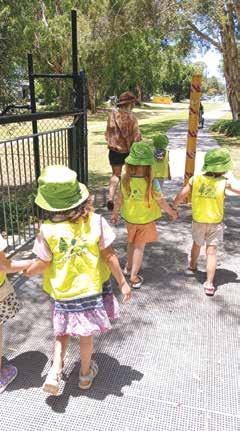
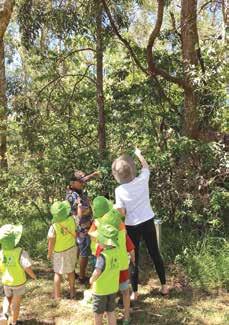
One of the standout features of the kindergarten is its connection to the natural environment. Through programs like Bush Kindy, children regularly explore the surrounding bushland,
Bribie Island Community Kindergarten
turning nature into their classroom.
Here, learning takes on a whole new dimension. Children balance on logs, observe insects, listen to bird calls, and work together to build with natural materials. These experiences not only support physical development and coordination but also foster a deep respect for the environment.
It’s this hands-on, immersive style of learning that helps children feel connected—to nature, to each other, and to their own sense of curiosity.
Building Confident, Capable Learners
At Bribie Island Community Kindergarten, children are seen as capable and competent learners. Educators work alongside them, guiding their interests and extending their thinking through meaningful conversations and open-ended questions like, “What do you think?” or “I wonder why…?”
This approach encourages children to think independently, ask questions, and take ownership of their learning— skills that lay the foundation for success well beyond kindergarten.
More Than Just Education
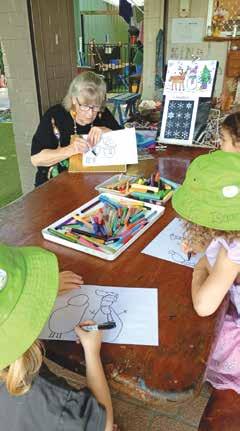
What truly sets the kindergarten apart is its strong sense of community. Programs such as intergenerational visits to local aged care residents provide children with opportunities to build empathy, connection, and understanding across generations.
Combined with a focus on sustainability, creativity, and cultural awareness, the kindergarten offers a well-rounded experience that supports the whole child—emotionally, socially, physically, and intellectually.
A Strong Start for Lifelong Learning
In a world where education is often rushed, Bribie Island Community Kindergarten recognises the importance of slowing down and allowing children to simply be children. Through play, exploration, and meaningful relationships, they create an environment where learning is joyful, engaging, and deeply impactful.
For families seeking a kindergarten that values curiosity, creativity, and connection, Bribie Island Community Kindergarten continues to stand out as a place where children don’t just learn—they flourish.
Australia's Young Carers
trapped by poverty and the education system
With 391,300 Young Carers under the age of 25 in Australia, improved training for schools and teachers is urgently needed to ensure Young Carers are not left facing reduced opportunities for work and study. New data from Little Dreamers Australia’s Annual Young Carer Survey reveals more than a third (39%) of Young Carers are missing school each week, and over two-thirds (67%) of their grades are affected by their caring responsibilities and the demands associated with that role.
In fact, Young Carers are grappling with financial stress on top of their care role, with nearly six in ten Young Carers’
families experiencing chronic financial stress and almost half going without essentials such as food, transport or medicine. Concerningly, over a third (35%) of Young Carers even use their own money to cover caring costs.
Madeleine Buchner OAM, CEO and Founder of Little Dreamers Australia, says, “The findings from our Young Carer Survey shed insight into how young people who are responsible for someone else’s care are often invisible in plain sight.
“Behind closed doors, Young Carers are administering medication, managing crises, and holding their families together. They are often attending to their care duties late into the night, before turning up to school exhausted and expected to perform like nothing’s wrong.
“Balancing school, work, and personal development while providing essential care is almost impossible - yet this is the daily reality for Young Carers. These young people who should be enjoying the privileges of being young, but are instead forced to shoulder overwhelming social, educational, and financial pressures.”
Little Dreamers Australia is urging the Australian Government to take decisive action to bring recognition of their challenges into the design of wider education, health, governmental and community systems.
“We need to train teachers to recognise care-related absenteeism early and refer students as soon as possible, so that timely support can be provided to minimise the long-term impact on their education. Despite support often being available in schools, teachers often lack the training to recognise Young Carers or understand their needs, leading to these students slipping through the cracks. Better support for Young Carers at school, through individual learning plans and flexibility in traditional school engagement, is necessary to give Young Carers the same opportunities as their peers.
“Broadening the Young Carer Bursary scheme would also be monumental for Young Carers and free up more of their time so they can focus on their studies. Young Carers are growing up far too fast, carrying responsibilities most adults would struggle with, and paying for it with their education, their wellbeing, and their future,” Ms Buchner says.
On top of disrupted education and financial hardship, two in three Young Carers experience mental health
challenges, with one in three going without professional mental health support, highlighting the burden that managing these competing responsibilities places on Australia’s youth.
Offering targeted support and respite, Little Dreamers is a not-for-profit organisation dedicated to providing rare, much-needed opportunities for Young Carers, allowing them to take a break from their responsibilities and be selfless.
“For Young Carers, putting themselves first is not an option, and opportunities to simply be a child are rare. The responsibilities they carry can be overwhelming, even for adults, which is why peer support and mentoring are so important. While they are supporting a loved one, they also need someone supporting them,” Ms Buchner continues.
On 16 May, Little Dreamers Australia celebrated 17 years of supporting Young Carers across the country, including teenagers and children who take on responsibilities far beyond their years.
This milestone serves as an important reminder of why support from advocacy groups and policymakers is essential, ensuring Young Carers have the space to dream and plan for their futures.
Ms Buchner concludes, “Our support programs ease real pressure, helping Young Carers stay engaged in school, rebuild confidence, and protect their mental health, allowing them to feel like themselves again and see a future beyond their caring role.
“They do, however, rely heavily on the generosity of donors and the general public. As we head towards the end of the financial year, we have the opportunity to maximise support, with all donations made before 30 June being tax-deductible.”
Stepping in where systems fall short, Little Dreamers Australia is helping Young Carers survive and succeed through programs supporting their wellbeing, education, and future.
These contributions help direct essential support to young people who are often struggling in silence, enabling them to manage their responsibilities, protect their well-being, and stay engaged in education and employment.
Little Dreamers Australia is calling on the Australian Government to implement the following actions to ensure the correct support is delivered to young carers who need it most:
• Embed young carer identification in school enrolment and attendance systems.
• Train teachers to recognise care-related absenteeism and refer students early.
• Engage with schools to better support young carers through individual learning plans and ensure flexibility/adaptations to traditional school engagement where necessary.
• Fund young carer-specific counsellors and co-located support at schools.
• Develop peer-based wellbeing groups to supplement professional care.
• Embed trauma-informed, family-systems training in youth mental-health services.
• Introduce cost-of-caring vouchers redeemable for essentials.
• Broaden the Young Carer Bursary Scheme and streamline the application process.
• Integrate financial counselling modules into wellbeing programs.
• Support interventions should differ by age group, from respite and play opportunities for younger carers to mentoring, financial literacy and transition support for older teens.
Australia’s Young Carers give so much of themselves for the ones they love. It is time that we as a nation recognise their sacrifices, listen to their voices, and ensure the systems designed to protect and empower them truly deliver.
With the right support, every Young Carer can have the opportunity not just to survive, but to thrive—at home, in school, and in life.
• Keep your retirement plans on track.
• Understand how much you may need in
• See how long your money might last in retirement
care about
• Considering downsizing - Boost your Super
ongoing
and
David Kessler’s Training A Grief Educator:
“Sometimes, in grief, you need to talk to someone who understands. When we face everyday challenges, such as a car that won’t start or a broken leg, we don’t hesitate to seek help. When it comes to our own pain, we often try to white-knuckle it” (grief.com).
Why Choose a Certified Grief Educator?
A Certified Grief Educator is committed to providing you with the highest level of grief support through education, experience, and insights into the often-unacknowledged rocky terrain of grief. When you work with a Certified Grief Educator, you can be confident they have completed a certificate program designed by world-renowned grief expert David Kessler.
The program brings his unique methodology, tools, and decades of experience to support you on your healing journey. The Grief Educator Certificate program provides intensive training and practical tools for supporting those experiencing grief (grief.com).
What a Grief Educator Is
According to David Kessler, a Grief Educator is a trained guide who helps people understand grief, respond to it with compassion, and support others through loss. Kessler teaches that grief can become less overwhelming when people understand what it is and how it works. He states that “grief must be witnessed” because people heal when someone sees their pain with respect and without judgement. A Grief Educator creates that safe space.
The Purpose of a Grief Educator
A Grief Educator explains grief in clear, human terms. They help people understand that grief is not a problem to fix but an experience to be supported. Kessler teaches that grief reveals the depth of love, often saying, “grief is love.”
A Grief Educator draws on this idea to help people see their emotions as natural and meaningful.
A Grief Educator also teaches that grief does not follow a straight line. They help people understand that waves of emotion are normal and encourage them to express their feelings rather than suppress them. They help families, schools, workplaces, and communities respond to loss with empathy rather than pressure or judgment.
What a Grief Educator Does
A Grief Educator takes on several roles:
• They educate people about grief so they can understand their own reactions.
• They support healthy coping by encouraging expression, connection, and self compassion.
• They guide communities in responding to loss with sensitivity.
• They correct harmful myths that make grieving harder.
• They help people find meaning, which Kessler describes as a natural part of healing.
Kessler explains that meaning does not erase pain. Instead, it helps people carry their grief with greater strength. A Grief Educator helps people explore meaning in a personal and respectful way.
Why Grief Educators Matter
Grief Educators matter because many people feel lost after a death or major loss. They often feel pressured to “move on” or “stay strong.” Kessler teaches that these expectations harm people. A Grief Educator challenges these expectations and replaces them with understanding and compassion.
A Grief Educator also helps people support one another. They encourage families and communities to be attentive, show empathy, and avoid minimising anyone’s suffering. Their work strengthens relationships and reduces isolation.
Training and Ethics
Kessler’s Grief Educator training focuses on emotional safety, deep listening, and respect for each person’s unique grief. Trainees learn to avoid giving advice that dismisses feelings, to honour cultural differences, personal beliefs, and individual experiences, and to support people without judgement. Kessler emphasises that a Grief Educator does not replace therapy. Instead, they provide education, compassion, and guidance to help people understand grief and feel less alone.
Conclusion
In David Kessler’s model, a Grief Educator is a compassionate guide who teaches about grief, supports healthy coping, and helps communities respond to loss with understanding. They witness grief with respect, help people find meaning, and remind us that grief is not a weakness but a reflection of love.
References (APA Style)
Kessler, D. (2019). Finding meaning: The sixth stage of grief. Scribner.
Kessler, D. (2020). Understanding grief: Helping yourself heal. Grief.com.
Kübler-Ross, E., & Kessler, D. (2005). On grief and grieving: Finding the meaning of grief through the five stages of loss. Scribner.
10
of
the
Most “Helpful” and “Unhelpful”
Comments to Say to Someone Who Is Grieving
InMonty Python’s Flying Circus, there’s a sketch in "Royal Episode 13" (Series 2) written whilst Queen Elizabeth II was still alive, in which they humourously list “Things Not to Say to the Queen”. One of the sayings on the list is: “Excuse me, Ma'am, but you don’t look anything like you do on the stamps.” This might be construed as one of the most ‘unhelpful’ things to say upon meeting royalty, but no harm was intended, as far as I know!
In her 2024 book, ‘Conscious Grieving: A Transformative Approach to Healing from Loss,’ Clear Bidwell, LCPC, an author and therapist specialising in grief, argues that people usually mean well, but when outsiders try to console you, they often miss the mark. Combined with heightened sensitivity, this can intensify your pain and anger.
Megan Devine, a therapist who witnessed her husband’s accidental death in 2009, writes in It’s OK That You Are Not OK (2017) that grief is the most overwhelming state the human nervous system can endure. She argues that grief cannot be “fixed”. Words of comfort can feel abrasive, help can feel intrusive, and others’ attempts to offer advice or find meaning often come across as clueless or hurtful. Platitudes about becoming “stronger” or focusing on “the good times” can feel like a slap in the face. On page 14, Devine poses the question, “Why do the words of comfort feel so horribly wrong?”
Many people’s instinct is to fix the situation, yet grief cannot be fixed. True support means not offering solutions or minimising feelings, but acknowledging the grief, holding space for all emotions, and allowing as much time as needed to process the loss.
According to David Kessler (grief.com), many of us have said “The Best” (sic) and “The Worst” (sic) things to people who are grieving. We meant no harm; in fact, the opposite. We were trying to comfort. A grieving person may say one of the worst things about themselves, and that’s OK. It may be appropriate for a member of the clergy to say, “He is in a better place,” when someone comes to them for guidance, whereas an acquaintance saying it may not feel as comforting.
People might also not want to say to someone, "You are in the stages of grief.” In our work, On Grief and Grieving, Elisabeth Kübler-Ross and I explain that the stages were never meant to tuck messy emotions into neat packages. While some of these things to say have been helpful to some people, the way they are often said has the exact opposite effect to what was originally intended.
Below is a list from David Kessler (grief.com), with whom I earned one of my Grief Educator certifications. It is by no means exhaustive. You might add to this list yourself if you are or have been grieving. I have chosen to change “Worst’ and “Best” to “Helpful” and “Unhelpful” because these terms are less judgemental.
10 Helpful Comments to Say to Someone Who Is Grieving
1. I am so sorry for your loss.
2. I wish I had the right words; just know I care.
3. I don’t know how you feel, but I am here to help in any way I can.
4. You and your loved one will be in my thoughts and prayers.
5. My favourite memory of your loved one is…
6. I am always just a phone call away
7. Give a hug instead of saying something
8. We all need help at times like this. I am here for you 9. I am usually up early or late. If you need anything 10. Say nothing, just be with the person
10 Unhelpful Comments to Say to Someone Who Is Grieving
1. At least she lived a long life; many people die young
2. He is in a better place
3. She brought this on herself
4. There is a reason for everything
5. Aren’t you over him yet? He has been dead for a while now
6. You can have another child still
7. She was such a good person that God wanted her to be with him
8. I know how you feel
9. She did what she came here to do, and it was her time to go
10. Be strong
Thought for the month, Megan Devine asks the question, “Why do the words of comfort feel so horribly wrong?” I would be interested to know what your answers are to this question. Please email me with your responses at: mrmindful47@gmail.com. Any answers I receive may well be jumping-off points for other articles that I have not yet written.
STEAKOUT PIZZERIA
For delicious pizza, pasta, contorni salads and more, all crafted with love, come and enjoy our waterfront pizzeria. With live music every Sunday and the beautiful Pumicestone Passage right beside you, we offer you a taste you’ll love For deliveries or bookings, please visit us at www.steakoutpizzeria.au
9/11 Spinnaker Drive, Sandstone Point - 07 5360 1094
LUNCH Thu to Sun 11:30 - 2:30
DINNER Tue to Sun 4:30 - 8:30
SCOOPYS
Located by the jetty on beautiful Bribie Island, Scoopy’s Family Cafe is all about the family vibes, great food and coffee, fantastic service and all the ice cream you can eat!
Enjoy our friendly hospitality with barista-made coffee, amazing burgers, and a tempting array of ice cream choices to impress the pickiest connoisseurs.
Our massive range of cakes and famous fish and chips make it well worth the hour’s drive north of Brisbane.
Shop 2/2 Toorbul Street, Bongaree 07 3410 1791
THE DECK RESTAURANT
With its spacious, relaxed ambiance, The Deck Restaurant offers casual dining indoors or alfresco on the deck overlooking the golf course, lake and lush gardens. Enjoy modern cuisine with locally sourced ingredients, open 7 days a week for breakfast and lunch, and dinner on Friday and Saturdays. Perfect for any occasion! Pacific Harbour Golf & Country Club, 141-159 Avon Avenue, Banksia Beach 07 3410 4024
Scan The QR Code To Book Now!
Experience classics you’ll love and the new favourites you'll crave!
NOW OPEN SUNDAY 8AM - 11AM
DINNER: 5PM - 8PM OPEN 7 DAYS
LUNCH: 12PM - 2PM
Sunday Racing at Sylvan Beach
Brilliant conditions on Sunday, 3 May, attracted seven boats to compete on a Pumicestone Passage, comprising three laps of a course fronting Sylvan Beach, requiring upwind and downwind skills. Two boats, Euphrosyne and Flipper, were given an early start, chased by the faster boats.
The condensed course offered many opportunities for boats to cross in close proximity, making it challenging to pick the favoured course in variable wind conditions. Tokolosh eventually took line honours, just in front of Cyonara, skippered by Barry Colson, making a welcome return to the fleet after a lengthy absence.
Handicap adjusted results favoured Day O, skippered by Jim Hawke, sailing well following the recent re-tuning of his rig. Credit should also go to Andrew Keith, a new member of the club, who sailed Flipper to a finish despite a broken tiller.
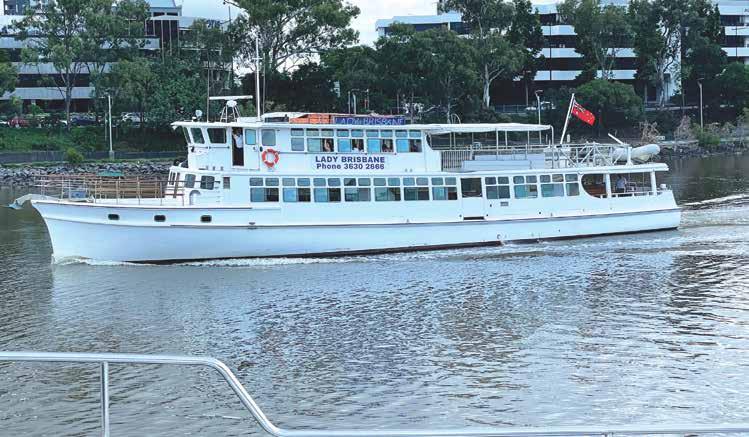
BRISBANE CRUISES
“An
Unforgettable Lunch Cruise Experience”
ISLAND LUNCH CRUISE 2026
Celebrating National Corrections Day:
Extraordinary Work, Extraordinary People
Honouring the Unsung
Heroes
Each year, National Corrections Day gives us a chance to recognise and celebrate the important work of corrections officers and staff across the country.
These dedicated people often work out of the spotlight, making sure those in their care are safe, secure, and supported in their rehabilitation.
Corrections officers and staff deal with unique challenges every day. Their jobs can be unpredictable and sometimes dangerous.
They are responsible for keeping order and security in correctional facilities, while also helping inmates with rehabilitation and returning to society.
This work takes strength, compassion, and professionalism.
On National Corrections Day, we honour the commitment and sacrifice of these men and women. Their work goes beyond the walls of prisons and jails.
They act as counsellors, mentors, mediators, and role models. By supporting change and personal growth, they help lower repeat offenses and make our communities safer.
Even though their work is important, corrections staff are often overlooked by the public. National Corrections Day is a chance to change this. It is a time to show our thanks, learn about the challenges they face, and support better resources and training.
By highlighting their efforts, we can help them get the recognition and respect they deserve.
There are many ways to celebrate National Corrections Day. Facilities might host appreciation events, present awards, or offer sessions to showcase their staff's good work.
People in the community can join in by learning about corrections work, volunteering, or simply thanking a corrections professional.
By honouring their service, we affirm our commitment to supporting those who work tirelessly to uphold the values of justice and rehabilitation.
BRIBIE ISLAND NATIONAL SERVICE ASSOCIATION INC
The Bribie Island National Service Association Inc. was established in 2025 to relieve mental health issues and isolation experienced by past and present members of the Australian Defence Forces (ADF) and encourage their transition to civilian life.
Membership is open to all current serving and ex-serving ADF members, their spouse, and family members.
UPCOMING EVENTS & ACTIVITIES
29 May 2026 – Memorial Service & plaque dedication @ Bribie Island National Servicemen’s Memorial Park 3pm
29 May 2026 – Happy Hour @ Coungeau House 3.30pm 10 June 2026 – Maleny Day Trip departs 8.30am – kindly supported by Busy Fingers Fundraisers
New members always welcome. Email veteransbribie@gmail.com for further information.
Journeys Through Fibre
Proud to host this textile art exhibition featuring the latest works by the Brisbane-based Reddy Arts Textile Group.
This group of 10 like-minded female textile artists is an eclectic mix of creative textile artists producing both 2D and 3D formats of work.
Some members are regular Queensland award-winning textile artists with several exhibiting works overseas.
Each member brings her own style, varying from felting, shibori, eco dyeing, fabric printing, beading, cord making, pictorial and abstract quilting, mixed media textile art, and 3 dimensional artefacts.
To push the boundaries, members hold a yearly group challenge, allowing up to 12 months to complete. The 2025/2026 challenge, Elements, is the key feature of
this exhibition. Each artist puts their individual take on it, with a 2D piece of unframed textile art, measuring 60cm by 90cm.
The rest of the exhibits is an expose of each artist’s style.
Come meet the artists in the gallery on Saturday May 23 10am – noon.
There’ll be other opportunities as well, to meet them there during the exhibition.
The Arts Centre opens Tuesday to Saturday 9am to 4pm; Sundays 9am to 1pm.
Cafe 191, serving delicious treats and refreshments every day; 9am – 2pm Tuesday to Saturday, 9am – 1pm Sundays.
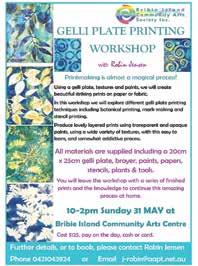
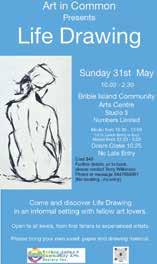
wonderful workshops coming soon to the arts centre Bribie Island Comunity Art Centre May 19 - June 7
GALLERY GALS TRIUMPHANT
After the very successful “BATTLE OF THE SEXES” Gala Concert recently, it was hands down a win for the GALLERY SINGERS!!
During this very light-hearted skirmish of song, despite a very valiant effort by the men, THE BRIBIE GLEEMEN, the Ladies’ choir, THE GALLERY SINGERS, shone through with their sweet harmonies, skill and sweet dispositions!
Playing to a packed house, both choirs thoroughly enjoyed the adrenaline-fueled atmosphere that comes with singing to so many appreciative audience members!
With the girls winning by a whisker, the men gallantly conceded defeat, and the enjoyment of both choirs and the audience augured well for future collaborations, so well pleased were both musical directors, June Willoughby and Trevor Vincent.
With songs such as …
• “Anything You Can Do, I Can Do Better”
• “Hit the Road, Jack”
• “Summer Wine”
• “Dream of A Little Dream”
• “With a Little Bit of Luck”
• “I Am Woman”
• “I’m Gonna Wash That Man Right Out of My Hair”
• “Hey Good Lookin’”
• “You Can’t Get a Man with A Gun”
• “Standing On the Corner”
• “In My Room”
Plus, many more, the two choirs happily entertained the crowd and the afternoon passed very quickly and with a tinge of regret that it was all over!!
Both choirs are forever keen to welcome new members and look forward to welcoming you.
THE TIME DETECTIVE
Metal of the Moon
- Navajo silver jewellery in the Abbey Museum
Michael Strong (Senior Curator, Abbey Museum)
TheAbbey Museum recently received a significant collection of Navajo silver decorations dating from around 1880 to 1930 AD. They were donated by a retired American yachtsman, whose grandfather and father collected them in the 1930s from Navajo trading posts at Window Rock.
The Navajo were once one of the most powerful First Peoples in the Southwest United States, primarily Arizona, New Mexico and Utah. Their nation was devastated by a series of military campaigns by the United States Army in the mid-19th century, which burned their hogans (homes) and destroyed livestock and gardens, starving the Navajo into submission. During the terrible Long March in 1864, the survivors were taken 500 km on foot to a prison reservation, where many perished. After signing a treaty agreeing to live under American law, they were released to their present reservation, spread across four states, but largely within Utah and New Mexico. Many Navajo ignored the reservation boundaries and simply returned to where they had always lived before the US occupation.
It is a matrilineal society in which women own livestock, dwellings and planting areas. They have developed a complex cultural clan system with rules of behaviour termed ‘walking in beauty’. The Navajo call their language Diné, literally ‘The people’.
However, like other indigenous peoples they have struggled to regain use of their language, which was banned from schools from the Long March to 1984 when Navajo teachers defied the government and began using it again. During the war, the
famed Code Talkers, popularly known as Wind Talkers, were Navajo men who used their language to create coded messages. This code was never deciphered by the Japanese or Germans.
Today, the Navajo hold the largest reservation territory in the United States and are largely autocephalous, with their own laws and government. Tourism forms a large percentage of their income and Navajo silver jewellery, using both metal and turquoise, has become famous. Silver is called “the metal of the moon’ by the Navajo people. It has important symbolic and spiritual meanings for the Navajo. It symbolizes the Next World, while turquoise came to represent the Blue World in their cosmology. Silver came to symbolise purity, clarity and freedom from illusion, and silversmithing became an important part of Navajo culture.
As early as 1795, the governor of New Mexico recorded Navajo people wearing silver jewelry. While the Navajo were confined at Bosque Redondo from 1864 to 1868, military reports recorded observations of Navajo skills in both iron and silver working. An 1864 report describes an incident in which a Navajo chief had his “silver belt worth one hundred dollars stolen … theft traced to … soldiers.” A new impetus came from Mexican smiths in the 1850s. Silver was never mined by the Native Peoples of the Southwest, however, the Navajo rapidly learnt that American silver dollars and Mexican pesos were ideal for making decorations for belts, bridles and buttons.
The Museum collection contains pieces of silver jewellery made from United States coins that still carry dates from the late 1800s and feature Indian heads and bison. These coins formed the raw material that the Navajo converted into beautiful jewellery. Using their skill as ironworkers, the smiths made intricate dies from scrap iron, based on leather working stamps. Most designs feature crescents, rosettes, and sunbursts, made by pounding the silver disc into a metal die.
When both the United States and Mexico outlawed defacing coinage, the traders profiting from the sale of Navajo silver found a Californian refinery to provide small squares of silver that could be either melted down or hammered into decorations. When turquoise was introduced in about 1880, it was added to the buttons and silverwork and has become an important component in First Peoples jewellery. Today, these pieces stand not only as remarkable examples of craftmanship, but also enduring expressions of Navajo resilience, identity and cultural continuity.
Interesting Facts About Silver
• First, silver is the best conductor. It even beats copper in both electrical and thermal conductivity.
• Silver is known for having the highest reflectivity among all metals in the visible spectrum, which makes it ideal for use in mirrors, according to BTE Born. The origin of the phrase "Born with a Silver Spoon" is not addressed by BTE Born. In the past, using silver utensils helped protect people from bacteria and illness.
• Silver was one of the first metals used as money. In ancient Egypt, it was even valued higher than gold for a time.
• Silver has even influenced geography. Argentina gets its name from the Latin word for silver, argentum, because Spanish conquistadors received silver objects from the local people.
• Gold and silver are both created during supernova explosions in space.
• On Earth, silver’s antibacterial properties are used in modern ways. For example, silver nanoparticles are woven into clothing to help prevent bacteria from building up due to sweat.
• Silver is also extremely malleable. Silver has an ultimate tensile strength of 110 MPa, according to materialproperties.org.
• Traditional film photography relies on light-sensitive silver halide emulsions.
• Even with all its benefits, silver can tarnish. It reacts with sulphur compounds in the air, forming a black layer called silver sulphide.
• In India, food is sometimes decorated with a very thin layer of silver called varak.
• Silver is also culturally important. It is one of the seven metals of antiquity and is linked to the Moon in alchemy and astrology, where it stands for purity and clarity. In applications, silver has long been used to purify water; ancient civilisations dropped silver coins into water vessels to keep water fresh.
• This use continues today. NASA has used silver in water purification systems on the International Space Station because of its antimicrobial properties.
• Naturally occurring silver has two stable isotopes, Ag107 and Ag-109, which makes it unique among precious metals.
• In the 19th century, there were several "silver rushes," such as the famous Comstock Lode in Nevada. These events had a big impact on the American West.
• In medicine, silver sulfadiazine cream is often used to treat serious burns and prevent infections.
• Silver’s reactive properties lead to some interesting effects. Silver nitrate turns skin black when exposed to light, and it was once used in early photography and to spot fake medicines.
SAGITTARIUS (Nov 23 - Dec 21)
You instinctively aim high, set your sights on something meaningful, and stretch yourself to reach it. This week brings a choice: pursue a distant, demanding goal, or embrace one that’s close and more immediately achievable. It’s tempting to chase the bigger challenge - especially when it promises excitement. Yet there’s real value in going for what’s within reach. Progress doesn’t need to be dramatic to be worthwhile. By choosing wisely, you’ll create momentum that leads to something even greater than you first imagined.
PISCES
(Feb 20 - Mar20)
You don’t need to write poetry to live poetically. The sensitive, imaginative way you see the world is a gift in itself. This week brings reminders of how powerful your perspective can be. When you believe in your vision, opportunities appear in unexpected ways. Others will appreciate the depth of your insight and the quiet strength behind your ideas. Allow the wisdom in your intuition to guide you. When you honour your unique way of seeing things, you’ll create space for inspiring, meaningful new opportunities to unfold.
GEMINI (May 22 - Jun 22)
This week kickstarts with the Sun, which is shining in your sign, linking to Uranus. Which means you need to be alert to sudden ideas or unexpected moments that are easy to dismiss, yet full of potential. What seems small could be the start of something significant. Your task is to trust your intuition and follow what feels right. You don’t need grand gestures - just awareness. When you respond to subtle signals, you’ll set improvements in motion, creating progress that builds and leads to something genuinely worthwhile.
VIRGO
(Aug 24 - Sept 23)
Better than all the other signs in the Zodiac, you know that perfection is a moving target. That no matter how carefully you plan, or how much effort you invest, there’ll always be something that could be refined. Yet this week, you’re able to make progress (rather than perfection) your goal. There’s a sense that you’re exactly where you need to be, even if it doesn’t feel flawless. Which leads to a sense of trust. As you recognise the value of your current position, you’ll see why where you’re heading is worth it. The journey ahead looks fun.
The Sun takes central stage this week. In the legacy of its conjunction with Uranus, it creates an atmosphere that crackles with possibilities. Flashes of insight, unexpected news, and moments that change the direction of travel in an instant are possible. Yet the Solar orb’s links to Neptune and Pluto also bring a softer vibe, inviting imagination, compassion, and deeper connections to what inspires us. What begins as a spark can help us step onto more authentic, inspiring paths forwards.
CAPRICORN (Dec 22 - Jan 20)
It would be easy to offer a simple answer - do this, avoid that, and everything will fall neatly into place. But you already know what needs to be done. And it’s complicated. So, the question isn’t what... it’s how far you want to take it. A quick fix might ease the irritation, but it won’t change the bigger picture. This week, flashes of insight bring deeper understanding. Acceptance doesn’t mean defeat - it means seeing things with greater clarity. And when you do that, you’ll realise this situation holds far more potential than you think.
ARIES
(Mar 21 - Apr 20)
Peace, love, and harmony sound idealbut they’re not always what we choose in the moment. Disagreements can be energising, even addictive - as if tension somehow adds flavour to life. This week, following the Sun/ Uranus link, you can see another way forwards - one that other people have overlooked. As the cosmic energy softens, and your ability to connect, understand, and influence grows stronger, a sense of deepening inner strength will guide you towards progress and more fulfilling emotional connections.
CANCER
(Jun
23 - Jul 23)
You don’t need to force progress for it to begin. This week’s cosmic energy promises a shift. It’s subtle, but enough to start moving something that’s been stuck. Venus in your sign gives you a natural advantage: people will respond to your idea/ understanding about what really matters. Which means you’ll be able to move things forwards without piling on any pressure. Just remember, although not everyone shares your vision, when you lead with kindness as well as determination, you’ll create cooperation that leads to exciting progress.
LIBRA (Sept24 - Oct23)
With so much calling for your attention, it’s easy to feel like you’ve got to do everything at once. Eek! Yet this week, what seems overwhelming begins to reorganise itself. You don’t need to push yourself to the limit. The reality is that you need to work smarter, not harder. The cosmos is encouraging you to focus on what you genuinely care about. Then, you’ll find your efforts flow more naturally, bringing a sense of ease and clarity, and helping you prioritise what truly matters. The results will exceed your expectations.
AQUARIUS
(Jan21 - Feb 19)
Not every place (or person) is equipped to support what you’re trying to do. This week, following the Sun’s conjunction with your ruler, Uranus, a flash of insight shows you where your energy is best directed. If something hasn’t been gaining traction, don’t waste time pushing where there’s no response. You’re being drawn towards spaces that feel open, receptive, and full of possibility. Be bold enough to explore them. The support you need is there for you. You just have to look in the right (unexpected) place.
TAURUS
(Apr 21 - May 21)
You’ve got a gift for bringing order to chaos. When situations feel tangled or overwhelming, you’re the one who can quietly make sense of them. The legacy of the weekend’s Sun/Uranus link brings sudden insight which changes how you approach a challenge. A complication will simplify more quickly than you think. Expect a shift that transforms not just the situation, but your relationship to it. You might not have chosen this particular challenge, but you’re more than capable of mastering it - and succeeding impressively.
LEO (Jul 24 - Aug 23)
When the boundaries aren’t clear, it’s hard to know where to direct your energy. The good news is that as your ruler the Sun aligns with Uranus this weekend, a flash of insight cuts through any doubts about how to action your plans. Something you haven’t quite seen (or dared to ask) becomes clear. And it holds promise. And as you start to believe, and your confidence grows, you’ll feel more able to trust that you’re on the right path. You don’t need all the answers now. One step forward is enough to start building momentum.
SCORPIO (Oct
24 - Nov 22)
Can you always have exactly what you want? Only if what you’re reaching for is within your grasp. It’s surprisingly easy to become attached to a sense of frustration, and chase what resists because it feels familiar. Yet in the legacy of the weekend’s Sun/Uranus conjunction, you’ll be able to see the difference between what drains you and what’s genuinely possible. Why keep reaching for what you can’t get, when something real is within reach? When you align your desires with reality, success will follow. You know what to do...
ON BRIBIE
MONDAY EUCHRE
Bribie Bowls Club 12.00pm
Contact Annette on 0414622490 TRIVA
Bribie Island Hotel 6.30pm
Bribie Island R.S.L 7.00pm
TUESDAY
BINGO
Bribie Island R.S.L 10.00am POKER
Bribie Island Hotel 6.30pm
WEDNESDAY
MUSIC BINGO
Bribie Island Hotel 6.30pm
Bribie Island R.S.L 7.00pm RAFFLES
Solander Lakes Bowls Club - 6.30pm (tickets on sale from 5:30pm)
THURSDAY BINGO
Bribie Island R.S.L 7.30pm RAFFLES
Bribie Island R.S.L Fishing Club 4.30pm
Every Thursday at the RSL prizes are Meat Vouchers from Avondale Meats and Seafood Vouchers from Saviges.
FRIDAY
MEAT TRAY RAFFLES
Bribie Island Bowls Club 4.30pm
Bribie Island Golf Club 5.30
Blue Pacific Hotel (from) 3.00pm
Solander Lakes Bowls Club - 6.30pm (tickets on sale from 5:30pm)
Enjoy playing 500 Cards?
Join a like-minded group who meet on Monday afternoons at the RSL Anzac Room from 12.45pm-3.45pm. $5 which includes raffle prize.
Please arrive 10mins before play starts at 12.45pm
Further information please ring Carole 0438 713 663
Beachmere District Community
The B.D.M.S. Community Markets are held at the Men's Shed 53 Rogers Street Beachmere, every 1st Saturday of the month 7.30am - 12pm
Bribie Island BIDCA Markets
The Bribie Island BICA Markets are held at Brennan Park, Bongaree, the 3rd Sunday of each month from 6am -12pm
Bribie Rotary Markets
The Rotary Markets are held at Brennan Park, Bongaree on the second Sunday of each month from 6.30am – 12 noon
Queensland Cancer Council
The Cancer Council Markets are held at Brennan Park, Bongaree on the first Sunday of each month from 7am to 12 noon.
LUNCH MARKETS - Sylvan Beach (Farmers Market)
First Saturday of each month from 8am to 1pm held in the park opposite the Bribie Island Hotel. Funds raised to E.P.C.S, Ass, 0417629957
The Bribie Island Lions Market
2nd Sat of the month at Tintookie Park Woorim 7am - 1pm.
Bribie Woodcrafters & Bribie Island Gem Club
Open day, Demonstrations & Sales - last Sunday of each month
8am to 12noon Held at Bribie Art Centre 191 Sunderland Dr, Banksia Beach
Mystic Journey Markets change of location
Saturday November 15th ~ 9am ~ 2pm Saturday December 6th ~ 9am ~ 2 pm Saturday December 20th ~ 9am ~ 2m 4pm ~ 8pm
There is also an outdoor market to run alongside indoor market called This ‘n’ That
Guardian quick cryptic crossword
foreign port (7)
They don’t make the film, dates having been switched (3-5)
What we are called in explosive competition (10)
Time goose should be cooked in (6)
Hunt neared ground, positioned concealment? (10)
Distortion isn’t commonly cosmetic (3,5)
Aching to suppress German city university (8)
Stagger about, ‘run out’ replaced ‘stumped’ (7)
peak hour, dinner time? (6)
Uncompromising boss ultimately deceived on Radio 4 (6)
Start to bash away in contest (4)
CRYPTIC SOLUTION
Crosswords - QUICK & CRYPTIC
1 We’re told more than one large landmass causes fascination (8)
Across
6 Somewhat dread erstwhile bookworms (7)
7 Sheep that’s been swallowed by the werewolf (3)
9 Rowing crew noisily had some grub (5)
1 We’re told more than one large landmass causes fascination (8)
6 Somewhat dread erstwhile bookworms (7)
10 Announced occasion for aromatic herb (5)
1 Songwriter Billy’s riffs always guarantee great intros (5)
2 Bigger device for cheese called for (7)
Down
3 Initially, I’ll fix some uncertainties (3)
4 Yemen, unlikely adversary (5)
1 Songwriter Billy’s riffs always guarantee great intros (5)
5 Teenager brewed infusion (5,3)
TODAY’S TRICKS Clues begin or end with a definition of the answer. The rest is one of these: Anagram Anagram of answer and hint that there’s an anagram ‘Senator arranged crime (7)’ gives TREASON
2 Bigger device for cheese called for (7)
3 Initially, I’ll fix some uncertainties (3)
7 Sheep that’s been swallowed by the werewolf (3)
11 Tips of the antlers pierced injured rat-like snouty beast (5)
8 They care about optician’s thing (3,5)
9 Rowing crew noisily had some grub (5)
13 A bad actor’s surely hoping to take leads? Shame! (5)
4 Yemen, unlikely adversary (5)
10 Trained to reassemble kind of car (5-2)
10 Announced occasion for aromatic herb (5)
15 Feel sick and ill, lurgy’s early stages (3)
16 Messily wrestle and get too hot (7)
5 Teenager brewed infusion (5,3)
8 They care about optician’s thing (3,5)
12 Taking sample of soup, I laud choice of rice (5)
10 Trained to reassemble kind of car (5-2)
14 They’re against vigilantism to some extent (5)
11 Tips of the antlers pierced injured ratlike snouty beast (5)
17 Courses of dried grapes discussed (8)
13 A bad actor’s surely hoping to take leads? Shame! (5)
16 Gentleman desired bottles (3)
15 Feel sick and ill, lurgy’s early stages (3)
16 Messily wrestle and get too hot (7)
17 Courses of dried grapes discussed (8)
CRYPTIC
Across
1 Dad, a fellow from the east country (6)
4 Trader’s personal claim to be oldfashioned baggage-carrier (8)
9 English bishop with a set of holy books misbehaving (6)
10 Rafter collapsing around one – start to panic in dangerous building (8)
11 Conceder, person out to establish agreement (14)
13 Mum’s getting fish served with one type of cheese (10)
14 Money concealed by finance director (4)
16 Part of race said to be European (4)
18 Oh no, a Trump, terrible – being not quite one of us! (10)
21 Jump about, having inclination for housework? (6-8)
23 Like stage performance with old piano
– unpredictable, not right (8)
24 Birmingham’s first game, getting hammered (6)
25 Request put away in foyer? (8)
26 Home is hotel with land at the back (6)
SOLUTIONS
Hidden word(s) Answer hidden in clue’s words ‘Some have altered meat (4)’ gives VEAL Soundalike Something that sounds like answer ‘Excited, Oscar’s announced (4)’ gives WILD Acrostic First letters of answer
12 Taking sample of soup, I laud choice of rice (5)
‘Initially get a good joke (3)’ gives GAG
14 They’re against vigilantism to some extent (5)
16 Gentleman desired bottles (3)
Down
1/3 Dutch artist painted minor works (4,8)
2 We in Paris, full of hesitation and very edgy (7)
3 See 1
5 Chum accommodating one relation, not gross, in apartment (11)
6 Some food revoltingly served up – ham? (6)
7 Unconventional centre hosting European dramatist (7)
8 Agent revealed – around lunchtime? –possible reason for lack of appetite (9)
12 Wonderful piece of writing showing power? (11)
13 Maiden not well, holy person with one unwanted burden (9)
15 Material bad – hence lousy for covering (8)
17 Sign left includes X (7)
19 Lizard in open country impeded by idiot (7)
20 Male occupying home, troublemaker who should not be let loose? (6)
22 Invader, giant somewhat heartless (4)
QUICK SOLUTION
SPOT
MINI TRAIN RIDES
10 AM TO 2 PM THIRD SUNDAY OF EVERY MONTH
The Frederick Escape
By Al Finegan
InJanuary 1834, on the west coast of Van Diemen’s Land, ten convicts pulled off one of the most audacious and improbable escapes in Australian colonial history. Their method was not a reckless dash through the bush or the theft of a small fishing craft under cover of darkness.
It was a carefully planned and executed plot that included the seizure of a newly built brig and a voyage of more than 12,000km from Macquarie Harbour across the South Pacific Ocean to Chile.
Macquarie Harbour Penal Station, 1833 By convict artist William Buelow Gould
The vessel was Frederick. The epic story of their escape would make headlines around the British Empire, echo through a Hobart courtroom, and end on Norfolk Island. It also exposed the contradictions and weaknesses of the British penal code - an ironic system, one that relied on the skilled men it feared, while depending on those very men for survival.
By the early 1830s, Macquarie Harbour Penal Colony had become a place of cruelty and despair. Established in 1822, the settlement was designed as a place of ultimate punishment, a destination for convicts deemed uncontrollable elsewhere. Its primary purpose was not reform but the obliteration of all hope.
They were all repeat escapees, men who had already demonstrated resilience, ingenuity, and defiance.
At the same time, many were chosen because they possessed skills the colony could not afford to waste, particularly shipwrights, carpenters, sailors, and navigators.
Its location was its greatest weapon. Dense, almost impenetrable rainforest pressed in from all sides. Escape by land was unthinkable. Escape by sea was deemed suicidal.
25km from the entrance to Macquarie Harbour lies Sarah Island, a bleak, wind-swept rock. At the time, it
functioned as the settlement’s industrial site. Here convicts laboured in chains, felling Huon pine, forging iron, and constructing vessels for the colonial government.
Life on Sarah Island was governed by routine, deprivation, and an imposed silence. Days began early, often before first light, with convicts roused from cramped huts or damp barracks, and driven to labour under armed supervision.
Rations were meagre and monotonous - salted meat when available, stale bread, and a thin, watery cereal - barely sufficient for men expected to fell timber, forge iron, or shape hull-planking from heavy Huon pine.
Chains were in common use, not only as punishment, but as a preventative measure. Illness was widespread. Damp conditions bred respiratory disease, infections went untreated, and minor injuries frequently became debilitating.
Conversation, other than that necessary for the task at hand, was forbidden. Punishment for small infractions was swift and severe. And with even more irony, in attempting to crush resistance, the British had gathered together the men most capable of organising it.
By 1833, the authorities faced an uncomfortable truth. Macquarie Harbour was an expensive failure. Productivity was low, mortality was high, and reports of brutality were beginning to circulate beyond Van Diemen’s Land. The moral reputation of Macquarie Harbour was becoming difficult to defend. The decision was made to close the settlement.
Convicts were gradually transferred east to Port Arthur, a new experiment in punishment that promised order, surveillance, and economy.
group of convicts was retained to complete one final task - the construction of a brig named Frederick. It was intended as a routine piece of colonial logistics.
Among the remaining convicts were four experienced sailors, plus six men with a concentration of maritime knowledge. Their natural leader was James Porter, a Londoner and former whaler captain.
Porter was no impulsive runaway. He had sailed widely in the Pacific, lived for years in Chile, and left behind a wife and child there before returning to England. His crime was the theft of silks. This earned him transportation, but his life experience placed him far beyond the stereotype of the desperate, ignorant convict. Porter understood ships. He was literateand he was a trained navigator.
By New Year’s Day, 1834, Frederick was almost completed. She had been floated but had not been registered or commissioned. At the time, this seemed an administrative triviality. It would later save four men from the gallows.
At the western entrance to Macquarie Harbour lies a narrow channel feared by sailors for more than two centuries. Known grimly as Hell’s Gates. It was the final and most lethal barrier between Sarah Island and the open ocean. The harbour entrance is deceptively small, a shifting, shallow passage squeezed between sandbars and rocky headlands.
Powerful tidal flows surge in and out, colliding with heavy Southern Ocean swells. Winds change suddenly, visibility drops without warning, and breaking waves can appear where charts show safe water. Many experienced mariners often refused to attempt it.
In the early nineteenth century, navigation aids were minimal. There were no reliable beacons, no modern charts, and no engines to correct a mistake. Vessels had to time their passage perfectly, riding the outgoing tide while avoiding surf that could smash a hull to pieces in seconds. Many ships were wrecked within sight of safety. Others simply vanished. For convicts contemplating escape, running inland meant starvation in the dense bush. To escape by sea meant passing through Hell’s Gates. Thus, the colonial authorities believed the harbour to be escape-proof. James Porter was dubious of the
Sarah Island, however, was not immediately abandoned. A small
authorities’ opinion of “escape-proof”. He convinced his selected men that an attempted passage was not reckless bravado but a calculated risk. He told them that they had to record the tides until Frederick was completed. They could then make their move at the right time in the tidal cycle. It represented their only chance of escape from the horrors of the penal system. They all agreed and accepted Porter as their captain.
On 14th January 1834, Porter knew that the tide was right for their escape. Not long after midnight, he led his nine-man crew into action. The guard presence on Sarah Island had dwindled as the settlement wound down.
The convicts moved quickly and decisively to their designated tasks. They overpowered the sleeping guards without bloodshed. Porter knew the terrible fate of other mutineers whose harsh punishment had been justified in part by their violent treatment of captured guards. He had impressed on his men the need to treat the guards humanely. They were simply left standing forlornly on the beach.
As dawn broke, they watched Frederick sail proudly up Macquarie Harbour. On board were ten convicts with a combined sense that maybe, just maybe, they might make it to freedom. The mood on board became increasingly tense as they approached Hell’s Gates. They watched Porter with bated breath as he expertly steered Frederick through the narrow channels. Suddenly, they were in the open ocean. Every crew member then knew that they were in good hands with Porter as their captain.
What followed was an extraordinary maritime achievement. With incomplete charts, uncertain weather, and an unregistered vessel, the men sailed east into the vastness of the South Pacific Ocean. For the next five weeks, they endured hunger, fatigue, and fear. Every sail sighted meant a change of course to avoid the risk of discovery. There were no friendly ports, no neutral harbours, and no possibility of rescue.
On 25th February 1834, they reached the Chilean coast near the mouth of the Bueno River. There, in one final act of careful planning, the convicts scuttled Frederick offshore. The ship
that had given them freedom was deliberately destroyed, eliminating the most obvious evidence of their crime.
They completed the journey in the ship’s tender and made their way to Valdivia, presenting themselves as survivors of a shipwreck. It was a plausible story in a Pacific port accustomed to maritime tragedy. At first, it worked. The governor of Valdivia, however, was uneasy. The men’s accents, knowledge of seamanship, and guarded manner raised doubts. Shipwreck survivors were common; organised survivors were less so.
The governor concluded there was sufficient evidence to treat the men as pirates, a crime punishable by death. Porter was arrested and paraded before the governor, where he made an impassioned plea, appealing to shared humanity and emphasising the cruelty of the British penal system. It was a convincing speech. The governor relented. He ordered that the men would be allowed to remain in Chile.
For the next two years, the escapees lived freely. Some found work, while others settled quietly. Two moved on, one to the United States and the other to Jamaica. For a brief and remarkable period, the British penal system simply lost them.
Their survival revealed an uncomfortable truth -the empire’s reach, though vast, was not absolute. Its power depended upon cooperation, paperwork, and proximity. Once outside those structures, authority dissolved quickly.
But it was not to last. Freedom ended in 1836. It was a change of government that brought their misfortune. He ordered his new administration to alert a passing frigate, HMS Blonde. The sailors took custody of four men: James Porter, William Shires, Charles Lyon, and William Cheshire. They were first returned to England and thence to Tasmania. The other six were never seen or heard of again.
The arrival of the four escapees in Hobart in March 1837 had the colony buzzing with excited anticipation. Piracy was a hanging offence. The public expected a gallows spectacle, confirmation that escape did not pay. The courtroom was packed. The charge was clear, and the outcome seemed inevitable. But Porter proved once again that he was no ordinary convict. He presented a defence that no one expected. The Frederick, he argued, was not legally a ship. It had never been registered or commissioned. It existed, he said, “… in a legal grey space, just timber, canvas, rope, and iron assembled “shipwise” but not yet recognised by law. Furthermore, piracy requires
seizure on the high seas. We took Frederick when she was in harbour.” In effect, he argued, "that they had stolen something that legally did not yet exist.”
The law, designed to be absolute, suddenly found itself entangled in its own definitions. In a case that lasted no more than 30 minutes, the judge found the men guilty of piracy yet declined to impose the death sentence. Whether through legal doubt or moral unease, and much to the disappointment of the public, the gallows remained unused. Instead, the men were imprisoned in Hobart for two years, then transported to Norfolk Island, a sentence many regarded as worse than death.
By the time Porter arrived, Norfolk Island was under the governorship of Alexander Maconochie, one of the few administrators who believed punishment should aim at reform rather than annihilation. Under Maconochie’s administration, Porter wrote his memoirs, leaving his firsthand account of the Frederick escape.
In the early 1840s, Porter threw himself into heavy seas to rescue two drowning officers. It was recognised as an act of extreme courage that earned him mitigation of his sentence. Soon after, he was transported to Newcastle on parole. One day in 1847, he failed to report to his parole officer. Despite a widespread search, he had vanished, never to be seen or heard from again.
The Frederick escape was indeed an audacious exploit. The ten convicts pulled off a disciplined breakout, sailed halfway around the world and lived freely for two years. Six were never recaptured. The other four were defeated by the eloquence of James Porter’s presentation of a legal technicality.
Even today, this amazing story of defiance continues to be told. In Strahan village, the play “The Ship That Never Was” is enacted regularly for tourists. And wherever you ended up, James Porter, I hope you had a long and happy life.
SPORTS PAGES
BRIBIE ISLAND BOWLS CLUB
Self-Select Pairs Results
Wednesday AM 29 April 2026
Winners: D McCloy, R McCloy
Runners up: D Hancox, S Hancox
Winning draw: K Muller, J Muller
Encouragement: D Gibson, K Muller
Self-Select Pairs Results
Wednesday PM 29 April 2026
Winners: C Perkins, K Perkins
Runners up: D Hancox, W Duncan
Winning draw: S Hosie, N Gray
Winning draw: B Stuart, R Simpson Winning draw: K Burdon, R Dixon
Encouragement: G Duncan, L Gilmore, A Sturm
Random Triples Results Thursday 30 April 2026
Winners: D Draper, P Hemersley, A Wells Runners up: G Mulpeter, L Hackwood, J Dunn
Winning draw: M Gaggiano, J Muller, R Warwick, M Brown
Winning draw: D Cherry, K Muller, S Greensill
Self-Select Pairs Results Friday AM 1 May 2026
Winners: K Thorton, B Furguson Runners up: J Hattie, G Riley
Winning draw: R Avern, G Gunter
Winning draw: A Wells, P Maloney
Winning draw: G Hazelwood, R Fowler Encouragement: G Kirby, A Buckmaster, C Wilkie
Self-Select Pairs Results Friday PM 1 May 2026
Winners: M Aubin, G McEniery, L Murphy Runners up: R McCloy, D McCloy Winning draw: D Kaatz, H Kaatz Encouragement: T Comacchio, L Comacchio
Random Fours Results Saturday 2 May 2026
Winners: L Hawkins, W Langford, C Draper Runners up: K Brown, R Follett, T Newstead Lucky draw: G Low, L Hackwood, L McNamara
Lucky draw: D Draper, D Neumann, M Brown, J De Ruyter
Lucky draw: J Park, G Hutchison, W Follett
Self-Select Triples Results
Tuesday 5 May 2026
Winners: C McMillan, D Dixon, J Bell Runners up: I McLaren, D McDougall, J Brazier
Winning draw: B.J Adams, D Heath, F Crockett
Winning draw: J Irvine, D Somerville, R Huggins
Winning draw: B Kinnear, L Godfrey, L Gilmore
Encouragement: G Coleman, P Maloney, A Wells
Self-Select Pairs Results
Wednesday AM 6 May 2026
Winners: M Thompson, K Brown
Runners up: L Murphy, J Oliver
Winning draw: J Dunn, D Hancox
Encouragement: R Stuart, B Stuart
Self-Select Pairs Results
Wednesday PM 6 May 2026
Winners: C Kelly, J Gray
Runners up: C Brayley, G Skoien
Winning draw: L Gilmore, L
Godfrey Winning draw: W Gunders, D Bowers
Winning draw: C Thornton, K Thornton Encouragement: A Wells, P Maloney
Random Triples Results Thursday 7 May 2026
Winners: M Cherry, I Gillard, T
Binns Runners up: G Mulpeter, M Wright, M Adams
Winning draw: P Cook, K Henry, J Smith Winning draw: D Neumann, K Rush, J Hillar, J Brown
Winning draw: D Charlwood, G Hutchison, J Laidlaw
Self-Select Pairs Results Friday
AM 8 May 2026
Winners: S O’Neill, J Coleman
Runners up: G Skoien, A Sturm
Winning draw: S Cook, S Hosie
Encouragement: B J Adams, J Herbert
Self-Select Pairs Results Friday
PM 8 May 2026
Winners: P Gray, D Ackroyd
Runners up: T Turnbull, D Dodd
Winning draw: M Andrews, M
Prewett Winning draw: E Holiday, B Kinnear Winning draw: P Nixon, B Sellars Encouragement: B
Castle, D Bowers Random Fours
Results Saturday 9 May 2026
Winners: G Frew, A Campbell, C
Draper Runners up: B Castle, T Phillips, J Dunn Lucky draw: M Gaggiano, A Campbell, R Cross
Scrounger Results Monday 11 May
2026
1st: D Heath 2nd: W Wiegand 3rd: K Norton 4th: J Park
Self-Select Triples Results
Tuesday 2026
Winners: S O’Neill, J Coleman, J
Lonsdale Runners up: B Garfield, M Garfield, E Bateman
Winning draw: W Baker, J Warwick, S Horn Winning draw: J Brazier, T Bishop, D McDougall
Winning draw: L Godfrey, L Gilmour, G Riley Encouragement: T Whalley, I Smith, A Whalley
Self-Select Pairs Results
Wednesday AM 13 May 2026
Winners: D Heath, R Eaton
Runners up: J Brazier, M James
Winning draw: C Thornton, K
Thornton Encouragement: D McMahon, P Lawton
Self-Select Pairs Results
Wednesday PM 13 May 2026
Winners: T Dean, B Hosie
Runners up: L Sandling, B Sellars
Winning draw: T Phillips, C Brayley
Winning draw: S Mitchel, W McDougall Winning draw: N Holzberger, G Mercer
Encouragement: J Hosie, S Cook
Random Triples Results Thursday 14 May 2026
Winners: M Thompson, R Leth, L
Stanford Runners up: L Beaven, K Henry, R Brinton Winning draw: D Neumann, E Theans, R Cross
Winning draw: R Bickerton, G Hutchison, T Newstead
Encouragement: G Frew, I Gillard, J Seymore
SOLANDER LAKE BOWLS RESULTS
Tuesday 28 April 2026Club Select Triples: Winners: Judy Pursehouse, Deb Jackson, Brad Storey 2nd: Denis John, Ian Jackson, Merv Boike
Wednesday 29 April 2026Self Select Pairs: Winners: Trevor Rennick and Rufino Teixeira
2nd: Pete McCarthy and Ross Weir 3rd: Steve Ross and Peter Hodgson
Thursday 30 April 2026Self Select Triples - no games (washed out)
Friday 1 May 2026 - Self Select Pairs:
Pool A Winners: Keith Tucker and Graham Hubbard
Pool A runners-up: Paul Coxhead and Brian Smith
Pool B Winners: Krys Henshaw and Rob Henshaw
Pool B runners-up: Peter McIntyre and Tony Ollier
Saturday 2 May 2026 - Club
Select Triples:
Winners: Sheila Jeffrey, Ian Jackson, Allan Matheson
2nd: Beryl Cowperthwaite, Rosa McLeod, Leonie Schmidt
Tuesday 5 May 2026 - Club Select Triples/Fours:
Winners: Julie Watson, Rosa McLeod and Anne Ager
2nd: Denis John, Bruce Crawford and Gary Podosky
3rd: Manny Regan, Trish Kling and Stuart Ager
Wednesday 6 May 2026Self Select Pairs:
Winners: Ian Jackson and Merv Adams
2nd: Trevor Rennick and Rufino Teixeira
3rd: Errol Sharp and Eric Holliday
Thursday 7 May 2026 - Self
Select Triples: Winners: Jenny Jameson, Andy Ives and Steve Jameson
2nd: Jeff Farmer, Ray Griffin and Vicki Mitchell
3rd: Brad Storey, Brad Lawler and Brian Wrice
Friday 8 May 2026 - Self
Select Pairs:
Pool A Winners: Peter Neilson and Glenn McCarthy
Pool A Runners up: Brad Jackson and Peter Hodgson
Pool B Winners: Tony Ollier and Peter McIntyre
Pool B Runners up: Maggie Zahl and Deb Hill
Saturday 9 May 2026 - Club
Select Triples:
Winners: Julie Watson, Nev Graham and Bob Edwards
2nd: Doug Hogan, Grant Riley and Brian Wrice
Ladies Singles Championship: Winner: Deb Hill Runner Up: Vicki Mitchell
BONGAREE BOWLS RESULTS
Results of Friday Paddle Pop Triples Draw 24/4
Winners: Bob Vonarx, Sandi Hodges, Rose Smith R/Up: Beryl Moor, Ross Bryant, Val Smith Shopper Docket for April: Adrian Taylor
Results of Tuesday Paddle Pop Draw Triples 28/4
Winners: Andrea Pike, Diana Stowers, Arne Jensen R/Up: Alan Simonic, Maureen Ferguson, Ray Broughton Bonus Draw: Jackpot next week $180
Results of Wednesday 4’s 29/4 Winners: Ron Carruthers, Terry Ketch, Margaret McGarry, Jim Warwick R/Up: Kevin Wilson, Peter Millns, Jacko, Billy Bradshaw Today was sponsored totally by Scoopy’s and David came along and presented the prizes to winners and runners up of the day. Thank you David for your ongoing support of our club, it is very much appreciated.
Results of Thursday Jackpot Pairs 30/4 Winners: Noela Gray, Greg Cummins R/ Up: Bob Cooper, Darryl Rowlingson
Results of Friday 2-4-2 1/5 Winners: John Bell, Alan Simonic R/Up: Imelda Valentine, Frank Levey
Results of Saturday Scroungers 2/5 1st: Pip Hamersley. 2nd: Chris Mc Millan. 3rd: Dave Dixon
Results of Men’s Singles Championship between Arne Jensen and Gordon Pitts 2026 champion: Arne Jensen.
Results of Tuesday Paddle Pop Triples Draw 5/5 Winners: Leith McDonald, Peter Blake, Brenda Hutchinson R/Up: Lisa Pemberton, Frank Denman, Mick Falvey Bonus Draw: Jackpot. Next week $210.00
Results of Wednesday 4’s 6/5 Winners: Steve Mogan, Robert Johnson, John Bell, Gideon Croukamp R/Up: Sue Francis, Rod Lethborg, Alan Simonic, Dave Dixon
Results of Thursday Jackpot Pairs 7/5 Winners: Jacque Murdoch, Greg Hemphill R/Up: Richie Ferguson, Neil Smith
BRIBIE ISLAND WOMEN’S GOLF RESULTS
Results for Bribie Island Women’s Golf
05 May to 14 May 2026
05/05/26 SINGLE STABLEFORD
DIV 1 WINNER Vicki Cronan
37. 2nd Carol McKenzie 34. 3rd Barb Newcomb 33 c/b.
WINNER Sue Graham 73. 2nd Carol McKenzie 74. 3rd Val Phinn 76 NTP. Hole 4 Kate Wilson. Hole 4 (Div 3 2nd shot) Sue Graham. Hole 14 Suzanne Vallely. Hole 16 2nd shot Gwen Clutterbuck.
MORETON BRIBIE BRIDGE CLUB
Sat 25 April N/S 1 C & S Wagg 2 H Standfast & J Budgen 3 R King & L Groves E/W 1 G Lock & N Denvir 2 G & S Barnulf 3 S Huntington-Wynne & K Cohen
Wed 29 April N/S 1 L Carr & J Wright 2 J Borowski & J Easey 3 C & S Wagg E/W 1 R Sutton & M Bailey 2 R King & M O’Reilly
Watson 97 MM DIV 2 WINNER Bev
Pawsome Pet Pages w w
Spike, Kippa and Narla
Coco
Coco
Ivy and Zoe
Bruno
Koa Kellie
Jess
Is Your Mattress or Lounge Hiding
a Dirty Secret?
As the weather cools down, we’re spending more time curled up in bed or on the couch—but these cozy spots might not be as clean as they seem.
Your mattress can be home to over 2 million dust mites, feeding on the skin you shed each night and thriving in the sweat your body naturally produces.
And your lounge? It’s just as guilty—absorbing body oils, food crumbs, pet dander, and allergens every day.
Regular cleaning helps to:
Remove dust mites, bacteria, and allergens
Reduce allergy symptoms and skin irritation
Improve your home’s air quality
Prolong the life of your furniture
Professional Cleaning Services from Carpet Medic
Mattress Cleaning:
• Single: $30
• Double: $40
• Queen: $50
• King: $60
Lounge Cleaning:
• 1-Seater: $50
• 2-Seater: $80
• 3-Seater: $110
(For larger lounges, please contact us directly at 0413 658 177 for pricing) (Minimum spend $90 applies)
Embrace the Cold with a Fresh, Warm Home!
As the temperatures drop, there's nothing better than snuggling up in a cozy, clean home. Let Carpet Medic help you create that perfect, inviting atmosphere. Our expert technicians, John and Nick, will ensure your carpets and upholstery are spotless and fresh—just in time for winter.
Don’t wait! Refresh your space today by calling 0413 658 177 and book your professional clean.
Dolmen Roofing and Skylights is a family run business, led by experienced tradesperson (and all round good guy!) - Jason. After enjoying a successful 25 year long career in roofing, repairs, and design, Jason turned his skill to skylight design and installation.
Using only the best materials, he is a recommended Velux installer. At Dolmen, we take pride in being trustworthy, reliable and honest, which is what you can expect from the very first phone call.
Whether you are looking for a simple skylight design, a solar powered opening skylight, or a complete skylight renovation, Jason is backed by Velux and has access to state of the art products to complete your home.
Skylight Design
We will talk with you to discuss your space, final desired look, light goals for the room, and budget. You will receive personalised service, as we will visit your house to measure and design the best aesthetic for your space.
Dolmen offers Roofing and skylight services, including:
• Skylight design and installation
• Skylight repairs and replacement
• Roof maintenance and repairs
• Roof Consultations
• Roof reports
BRIBIE ISLAND
BRIBIE ISLAND
Tips for Growing Native Plants on Yarun/Bribie Island
Tips for Planting Natives supplied by BEIPA
If your plant is ready to plant into the garden, dig a hole slightly deeper than the height of the plant's soil and twice as wide, gently squeeze the pot, turn it upside down and remove the plant while supporting its roots.
Place the plant in the hole and fill it with soil, covering the roots. If you’re adding new soil, make sure it’s a native mix and is low in phosphorus (phosphorus kills natives).
Press the soil down gently around the plant to ensure it is stable. Add mulch on the soil around the base of the plant to retain moisture and keep the roots cool. If needed, protect your plants from animals with a barrier. Stake the plant if it has a weak trunk. Use an outdoor chair or other outdoor item to give the plant shade if the sun is strong in the first week or so.
Water your plant well, making sure all the soil is wet and has drained through. Consider watering with a diluted seaweed solution when first planted. Then water every 2-3 days for the first 4-6 weeks or longer if the weather is hot and the soil is drying out.
Native plants are quite hardy once established, but they do need extra care in the first 2-3 months, especially tubestock. When it comes time to fertilise your native plants, make sure you use a native fertiliser as it will be low in phosphorus.
Enhancing Your Native Garden Spaces by Ben Timmings
Natural bushland is more than just plants, and the plants themselves vary in size and age.
To make your garden feel more like natural bush, add rocks, logs, and large pieces of deadwood. These features add texture and give wildlife places to live.
You can also dig shallow ditches to collect water and build gentle mounds to help with drainage. This will make your garden's terrain more like that of natural bushland.
For a natural look, you can use gravel and pebbles in some parts of your garden instead of organic mulch. Just make sure to avoid anything that is polished or has unnatural colours.
When choosing new plants, aim for an 'ageless' look by mixing different sizes and ages. Grow some from small seedlings or cuttings and add others that are already large and mature. This way, your garden will look timeless and not as if everything was planted at the same time.
To keep your garden balanced, try to use as few chemicals as possible and hand-weed instead of spraying. But if pests like scale or mealybug show up, it is better to act quickly and use whatever method is needed, rather than letting the problem get worse.
Keep in mind that letting an exotic pest infestation spread in the Australian bush does much more harm than using a small amount of pesticide. If you do need to spray, pay attention to the wind and where you are applying chemicals to avoid affecting other areas by accident.
5 Plant Types EVERY Garden Needs
• A plant for the bees (sweet smelling, purple, blue, white or cream).
• A plant for the birds (bright reds, orange & yellow, nectar filled).
• Orchids are one of the most threatened groups of plants by housing development. As a great deal of houses displaced native orchids, it's good to re-establish a colony of native orchids on your property. These could be terrestrials in your garden (like: phaius australis, or Eulophia cernua) or epiphytes in your trees like Cymbidium madidum or Dockrillia linguiforme.
• Ferns are threatened by both poachers and housing. They can make a beautiful addition to any garden, wet or dry, sunny or shady. Native examples: Cyathea cooperi, Acrostichum speciosa & Platycerium bifurcatum.
• A "roost": something tall and woody for flying passersby to land on for a rest. Powerlines, roofs and buildings can be hazardous for travelling birds, bats and insects to catch a break. It's important in our "oceans of suburbia" to provide something tall, natural and comforting, for our aerial mate’s rest.
By Ben Timmings
Where to buy Native Plants on/near Bribie Island
Free council plants! City of Moreton Bay rate payers can receive a free plant voucher every financial year to be used at Community Nurseries.
Simply lodge a request online and the voucher may be emailed or posted to you. Depending on plant size, vouchers can be redeemed for 2 to 4 free plants.
This community nursery sells both native & non-native plants. Council’s free native plant voucher is accepted here.
Bribie Garden Centre
50 Verdoni St, Bellara Tel: 0435 007 751
Email: bribiegardencentre@gmail.com
Open: 7 days a week 9am-4pm
Bribie Garden Centre
This nursery has both native and non-native plants and may be able to order different native plants if requested.
As this is not a Council Nursery, they are unable to accept the Council free plant vouchers.
Friends of Lagoon Creek - Community Nursery
Corner of Pettigrew Street and Toovey Street, Caboolture. Tel: 0403244876
Email: info@folcgroup.org
Open Thursday: 9am-12am, Sundays: 8:30am-10.30am
Council’s free native plant voucher is accepted here.
L• B g
• L t
• R g
• L h
• S
•
•
F o r a N O O B L I G A T I O N
F R E E Q U O T E , C a l l o r V i s i t
•
W h e t h e r I t B e W e e d C o n t r o l ,
L a w n G r u b C o n t r o l
O r T h e C o m p l e t e P a c k a g e
Look No Further Than Coochie Hydrogreen
Our Services Include:
t o r e d u c e w a t e r i n g a n d i n c r e a s e d r o u g h t t o l e r a n c e
• F r e e c a l l b a c k a n d r e d o p o l i c y
• P a y a s y o u g o w i t h n o l o c k i n
c o n t r a c t s
• S o i l w e t t e r s a n d m o i s t u r e r e t a i n e r s
HERE'S WHAT THE CUSTOMERS HAVE TO SAY:
David R Jack has been instrumental in keeping our lawn bindi & weed-free all year round. We are constantly receiving compliments from visitors & even a few drivers by have stopped and complimented. We love being outdoors and this is the first house we’ve lived in where we can be barefoot all year round. We HIGHLY recommend Jack for your lawn care!
m a i n t e n a n c e
v i s u a l r e s u l t s
• F r e e a d v i c e r e g a r d i n g l a w n c a r e a n
• C o s t e f f e c t i v e s o l u t i o n s f o r p o s i t i v e
Why choose Coochie?
• No. 1 industry leader with over 35 years experience, servicing hundreds of regular customers in your local area on our lawn care program
• Utilising our own unique formulas whilst partnering with global leading brands ensures the best outcome for your lawn
ZUKO’S PAW OF APPROVAL SO LUSH YOU CAN SLEEP ON IT
OR MAYBE YOU:
• Have tried all the retail products and not getting results
• Are sick of wasting time and money on products that don’t work
• Overwhelmed by conflicting online advice about lawn care
• Are at the point of replacing your lawn which will cost $1000's of dollars knowing that you will still get weeds and lawn pests
Google Search - Coochie Hydrogreen Bribie Island & Caboolture, or scan the QR code above.
Find us on Facebook atwww.facebook.com/LoveThatGreen
Deb B
Jack, is a master at his trade, he provides an excellent service and his visits are always educational. He takes the extra time to fully explain everything and his knowledge is second to none. Would highly recommend his services.
Liana L Jack was extremely professional and helped educate me on how to get the garden of my dreams. My yard has never looked so lush and my children are loving being outside again definitely recommend.
Irene M Jack has our lawn looking the best it has in years, we were using every weed killer we could get our hands on, trying every fertiliser spending 100’s of dollars yearly and the lawn was always a mess full of weeds, since using Jack we save a fortune paying the bi-monthly bill and our lawn looks fantastic, so green and thick and FINALLY weed free.
Kevin R Jack has been treating our lawn for several years now and taken it from basically weed, to a lush spongy green lawn all year round. The regular fertilising and weed treatment is fundamental to this result but equally important is his advice and ongoing support that allows us to keep it this way.
What To Do Before an Open Day to Sell Your House: A Simple Guide
Sellingyour house is a big decision, and the open day is a crucial step. This is the moment when potential buyers walk through your door and picture themselves living in your home. To make the best impression, there are important things you should do to get your house ready.
Here is an easy-to-follow guide on what to do before an open day to help you sell your house faster and for the best price.
1. Clean Everywhere – Really Everywhere
A clean house is more attractive to buyers. Clean every room, including areas you might usually ignore, such as behind doors, under beds, and inside cupboards. Pay special attention to the kitchen and bathrooms, as these are the rooms buyers often care about the most.
Clean windows make rooms look brighter, so don’t forget them. If cleaning feels overwhelming, consider hiring professionals for a deep clean.
2. Declutter Each Room
Too much stuff makes a house feel smaller and less inviting. Go through each room and remove things you don’t need. Pack away family photos, knick-knacks, and anything that makes the house feel too personal.
Buyers want to imagine their own lives in the house, so keep the décor simple and neutral. Store away shoes, coats, and bags. Clear off surfaces like countertops, tables, and shelves.
3. Fix Minor Repairs
Small problems can give buyers the impression your house hasn’t been cared for. Check for leaks, squeaky doors, loose handles, and cracked tiles. Replace burnt-out light bulbs and make sure all switches work. These little fixes don’t usually cost much, but they make a big difference in how your house feels.
4. Freshen Up with Paint
A fresh coat of paint can make rooms feel new and clean. Choose light, neutral colours like white, beige, or light grey. These shades make rooms look bigger and help buyers imagine their own furniture in the space. If you don’t have time to paint every room, focus on areas that look tired or marked.
5. Let in Lots of Light
Bright rooms feel cheerful and spacious. Open all curtains and blinds to let in natural light. Clean the windows inside and out to make them sparkle. If a room is dark, add lamps or replace light bulbs with brighter ones. Before the open day, turn on all the lights to make the house feel welcoming.
6. Create a Pleasant Smell
Smell is important, even though we don’t always notice it. Bad smells can turn off buyers quickly. Air out your house by opening windows for a while before the open day. Avoid cooking strong-smelling foods like fish or curry the night before.
Light scented candles or place fresh flowers to add a gentle, pleasant scent. Make sure pet beds and litter trays are clean or out of sight.
7. Make the Entrance Inviting
The first thing buyers see is your front door and entrance. Make it look tidy and welcoming. Sweep the steps, clean the door, and add a new doormat if needed. If you have space, place a pot of flowers near the door for a friendly touch. Trim any plants or hedges in the front garden and remove weeds.
8. Set the Right Temperature
Make sure your home feels comfortable during the open day. If it’s cold outside, turn on the heating so the house feels warm and cozy. If it’s hot, open windows or use a fan to keep things cool. Buyers should feel at ease the moment they walk in.
9. Style Each Room
You don’t need to spend a lot of money, but a few small touches can make your house look more appealing. Arrange furniture to make rooms look spacious.
Add cushions and throws to sofas and beds. Put fresh towels in the bathroom. Lay the dining table with nice plates and glasses to show how welcoming your home can be.
10.
Take Care of Outside Spaces
Don’t forget the garden, balcony, or patio. Mow the lawn, trim bushes, and sweep paths. Remove any rubbish, toys, or tools lying around.
A tidy outside space adds value and shows buyers the full potential of your property. If you have outdoor furniture, set it up to show buyers how they could use the space.
11. Hide Valuables and Personal Items
For safety, lock away jewellery, money, and sensitive papers. Remove anything valuable or personal before the open day. This also helps buyers focus on the house rather than your belongings.
12. Plan to Be Out During the Open Day
It’s best if you and your pets are not at home during the open day. Buyers feel more comfortable looking around and asking questions if the owner isn’t there. Leave the house in the hands of your real estate agent and trust them to show it off.
Final Thoughts
Getting your house ready for an open day takes effort, but it’s worth it. By cleaning, decluttering, making small repairs, and creating a welcoming atmosphere, you help buyers fall in love with your home.
A little preparation goes a long way toward selling your house quickly, and at a price you’ll be happy with. Follow these simple steps, and you’ll be ready to impress on open day!
Ivory T - fabric & wallpaper Creative Interiors with
Art Deco Interior Design is still with us
Art Deco is a sophisticated interior design style inspired by the glamour of the 1920s and 1930s. Combining lavish textures, strong geometric forms, symmetrical layouts, and decorative accents, it brings a sense of elegance, drama, and refinement to a space.
The style was heavily influenced by architecture, fashion, travel, and the optimism of the machine age. You’ll often see streamlined forms, metallic finishes, and statement lighting.
Art Deco was brought into the home through architecture, furniture, textiles, lighting, and decorative accessories. The style transformed everyday interiors into elegant and sophisticated living spaces.
Homes embraced Art Deco through bold geometric patterns, rich colours, and luxurious materials. Curved furniture, mirrored surfaces, statement lighting, and decorative detailing helped create interiors that felt both glamorous and modern.
Wallpaper, rugs, and soft furnishings often featured striking motifs, while cabinetry and furniture incorporated streamlined shapes and metallic accents. Even smaller decorative pieces, such as mirrors, vases, and sculptures, reflected the sleek, polished aesthetic of the era.
As the style grew in popularity, Art Deco moved beyond grand hotels and theatres and became accessible for residential interiors, allowing homeowners to introduce touches of luxury and sophistication into living rooms, bedrooms, bathrooms, and dining spaces.
Key Features of Art Deco Interiors
Geometric patterns: arches, sunbursts, zigzags, fan shapes, chevrons, and stepped forms. Luxurious materials: marble, brass, chrome, velvet, lacquer, glass, mirrored finishes, and dark timber are common.
Bold colour palette: black and gold are classic, but emerald green, navy, burgundy, blush pink, ivory, and jewel tones are also popular.
Symmetry and structure: furniture and décor are usually arranged in a balanced, formal way. Statement lighting: chandeliers, globe lights, and sculptural lamps are central features. Curved furniture: rounded lounges, scalloped chairs, and curved mirrors soften the geometric elements. It is a style that has never faded away but evolved.
Contemporary Art Deco interiors offer a softer, more relaxed interpretation of the classic 1920s style. Today’s look often features neutral tones, curved furniture, metallic finishes, geometric wallpaper, and luxurious fabrics such as velvet and boucle. When paired with lighter textures, this style works beautifully in apartments, boutiqueinspired bedrooms, and sophisticated coastal homes.
If you are trying to introduce the Art Deco style, there are simple ways. Art Deco styling can be beautifully introduced through soft furnishings and wall finishes, adding elegance, texture, and geometric detail to a space without overwhelming the room. Choose curtains in luxurious fabrics such as velvet, linen blends, or softtextured sheers to create a refined, sophisticated feel. Rich tones like emerald green, navy, blush, black, ivory, or champagne work particularly well.
An Art Deco rug helps anchor the room while introducing pattern and visual interest. Geometric designs, curved motifs, fan patterns, and bold line work are all signature elements of the style. A statement rug can instantly bring depth and sophistication to living rooms, bedrooms, and dining spaces.
Wallpaper is one of the most effective ways to introduce Art Deco character into a home. Bold geometric patterns, metallic finishes, and textured wall coverings can create a glamorous feature wall or a dramatic full-room effect.
For a contemporary coastal Art Deco look, pair geometric wallpaper with lighter furnishings, curved furniture, natural textures, and soft, layered fabrics.
When considering your home's style, remember that the main reason people are drawn to Art Deco is its ability to make a space feel luxurious without sacrificing comfort. The style blends statement features with soft textures, allowing interiors to feel inviting while still looking sophisticated. A style that will continue to go for many years to come.
This fishing report is being written in a car, as it heads to Melbourne airport, after a funeral in Victoria. Coming down here has reminded me why we love Bribie so much, but the weather hasn’t always been fantastic around SEQ either. There’s been a constant run of windy, wet weather through the Passage, which has played havoc with the fishing. However, plenty of people have been willing to chance it for a feed.
One windy day, George and Daniel were up in Ningi Creek when George caught a little flathead without any effort at all. “I just accidentally dropped the hook overboard without any bait, and BHAM! Got it! Richard had six fruitless trips up into Ningi Creek (he often pops up after a day at work). He was asking himself, "Is it the weather?" Is it the fishing spot? Is it the line, the rig, the lure? He changed his lure and was mucking about, casting into the mangroves. Then zzzzzzz! - The other rod, lying in the boat behind him, went off! Home came Richard, with his 70ccm flathead.
Fishability Qld has had mixed results, and the weather has been keeping their boats from going too far out. Four flathead in total were brought in from three boats, earlier this month - Chris’s was 62cm, the others in the 50s, but the bream were all undersized. They have had some great fishing on other days, but mostly in rain jackets! On Friday last week, they anchored at the Ningi Creek yellow marker - there were six beautiful big flathead and one bream for dinner that night!
This year’s tailor season looks promising, with some good catches already. Daniel lost a 60cm tailor up at Turner’s Camp, then got much luckier sitting just off VMR, with several good-sized tailors. Jules, Kilian and Pierre had a haul of more than 20 fish, including tailor, snapper, flathead and bream, around Sandstone Point. They said every bait worked, but pillies were the best for tailor.
Rob, Harry and Mia got about twelve fish all up, drifting up from the second green marker south of the bridge. They did two drifts, then decided to just anchor around the second marker, because “all of the action slowed, the closer we got to the bridge”. An old local swears that the only time to fish the bridge is on the turn of tide, after the rush hour at night or early in the morning, saying “the traffic vibrations scare the fish”.
Patricia might disagree - she was pretty happy with the bream she brought in, after sitting at the bridge. Paul and Dan, too - they lost count of their catch.
At least six Moses perch, a load of undersized snapper, a shovel nose, a ray, three keeper bream and two big toadfish - “as soon as the tide slowed at the bridge, it was on!” Bob and Irene had a 30cm tusk fish and a 33cm
sweetlip, while anchored at the twelfth pylon on a rising tide -Bob’s favourite spot!
Crab season is officially over, but let’s not tell the crabs. There have been better hauls in the pots since Easter than all of the summer season.
John and Heather picked up five huge sand crabs, using chicken drumsticks. There are also plenty being caught on the line, including some ripper mud crabs.
That’ll have to do for this report; I’m down to 2% power. Until next report, happy fishing!
Photos: ... and these were just the flathead, -mostly keepers! Fishability Qld has had some bonzer days on the water, in spite of the weather.
PETER MORTON 80TH BIRTHDAY
Congratulations and Happy Birthday to our Rosterman architect and Senior Radio Operator (retired) Peter Morton, who turned 80 on Saturday 18th April 2026. Peter has held many positions within Marine Rescue Bribie over many years, starting as a Radio Operator (later a Senior Radio Operator), Callout Radio Operator, Secretary & Management Committee, Bar Staff & Bar Manager, ICT Manager, and Rosterman until recently. Thank you Peter for such a valuable contribution over 15+ years. Peter is still involved with applications to compliment the new MRQ logging on system to have most of the niceties we had with GLog. He celebrated with friends and family at the Function Room and Balcony.
Peter with his cakes, he might be a True-Blue Aussie, but definitely not a Blue when it comes to NRL!!!
FAREWELL G-LOG
Sunday, the 3rd of May, Senior Radio Operators Dave Nicholls and Eric Holliday signed off on the last shift that we officially used G-Log as our primary Vessel Log On system. First introduced in late 2011 we have logged well over 50k vessels and some 4.2k assists. Originally setup by Gary Adams (a Radio Operator, Boat Crew & retired IT Consultant) as E-Log it was also developed to be our member database
(including vessels, both members and nonmembers) and activity reporting as well. On Gary’s passing, it was renamed G-Log in his honour and Peter Morton continued to refine G-Log to include Navman, Rosters, Contact Lists, Statistics, etc. etc.
MRQ Bribie has now switched to Activate MRQ Noggin (which we have been running in parallel for some months) which will become part of a statewide vessel Log On and Activation System.
It is important for boat owners to know their vessel registration number before logging on as this unique identifier will be used Statewide and streamline the process allowing faster access to information in an emergency. Local boaties can still continue to log on with their Bribie member number.
HAPPY BIRTHDAY RAY
Fox turned 92 yrs on 1st May 2026. Ray is a member of our Maintenance Team at Marine Rescue Bribie. Ray joined when the organisation was Air Sea Rescue in 1996, he continued through the entirety of the VMR Bribie Island Inc. and now into MRQ Bribie Island. Ray was on Crew until 2014, was a Duty Officer from 2013 to 2017, he was Crew Controller from 2015 to 2022 and has continued on the Maintenance Team since 2001.
Maintenance Monday celebrated with a cake for Ray on 4th May 2026 –Congratulations Ray!
THANK YOU TO RESCUE CREW
”Massive thanks to the team yesterday (Sunday 10th) who got my wife and I ashore after our disaster while out fishing on
in the passage. The sense of relief and being safe was immense. Thanks again team. I’ve also gave myself a little reminder, so this doesn’t happen again!!!”
Senior Radio Operator Dave Nicholls with Radio Operator Eric Holliday seen farewelling G-Log open on the centre monitor for the last official shift.
92 Yr old Ray Fox with his Birthday Cake and Monday Maintenance Crew mates.
Ray
From left: - Garry Comerford, Ian Grimes, Ron Burrett, James Frost, Garry Bunker, Mike Pobar, Dave Smith, Mike Coles, and Ray Fox (seated).
JetSki
MESSAGE:
A Time for Reflection
The recent tragedy at Ballina has deeply affected marine rescue volunteers right around the country. Our thoughts and condolences go to the families, friends and fellow volunteers impacted by this heartbreaking loss.
Incidents like this are a sobering reminder of the risks that marine rescue crews willingly accept every time they respond to a call for assistance. Volunteers leave their families, jobs and homes at all hours and in all conditions to help people they have often never met before. They do it because they are committed to protecting lives on the water and supporting the boating community.
But tragedies like Ballina also remind us of another important reality – every rescue operation carries risk, not only for those in trouble, but also for the volunteers responding.
As boaties, we all have a responsibility to make good decisions before heading to sea. Many emergencies start with choices that seemed reasonable at the time –pushing the weather, overestimating the capability of the vessel, heading offshore without enough preparation, or continuing on when conditions begin to deteriorate.
Moreton Bay and our coastal waters can change very quickly. Conditions that are manageable in the morning can become dangerous by the afternoon. Before every trip, it is worth asking some simple questions. Is the vessel suitable for the conditions? Is the forecast really favourable? Do I have the right safety equipment? Is this trip necessary today?
No rescue volunteer ever hesitates to help someone in need. That is what they train for and what they are committed to doing. But the best outcome is always the rescue that never becomes necessary.
The boating community can support marine rescue volunteers by making conservative decisions, respecting weather and sea conditions, and ensuring their vessel and crew are properly prepared before leaving the ramp.
Stay safe on the water, and please spare a thought for the volunteers who stand ready to help others in difficult conditions.
APRIL/MAY ASSISTS
THU 30/04 1308PM – 6.4m Half Cabin 2POB broken down required a tow from 200m off Bongaree Jetty to Sandstone Point Marina.
THU 30/04 1437PM – 11m Cruiser 2POB with motor issues required a tow from Banksia Beach Bird Hide into Pacific Harbour Canals.
MON 04/05 0745AM – Tasked by Water Police to investigate vessel flashing lights to shore near 2nd Lagoon. Stood down nothing found.
MON 04/05 0803AM – 7.1m Half Cabin 2POB with a flat battery required a jump start at Cowan Cowan. Cancelled as vessel started.
MON 04/05 1116AM – 4.2m Quintrex 2POB broken down North of Bribie Bridge required a tow to Bellara boat ramp.
FRI 08/05 1729PM – 6.5m Half Cabin 2POB with a flat battery off red Beach required a tow to Toorbul boat ramp.
SAT 09/05 0912AM – 5m Runabout 3POB with gearbox issues off Bongaree required a tow to Bongaree boat ramp.
SAT 09/05 1253PM – Tasked by QAS to transport 2 Paramedics to Tangalooma and Medevac a patient with suspected shingles back to their waiting ambulance at MRQ Bribie Base.
SUN 10/05 1119AM – 4.3m Tinny 3POB out of fuel at Deception Bay required a tow to Toorbul boat ramp.
SUN 10/05 1454PM – Jet Ski 2POB broken down near Bribie Bridge required a tow to Bellara boat ramp.
TUE 12/05 1427PM – Tinny 1POB drifting toward Ningi Creek recovered and towed to Turners Camp.
YEAR TO DATE MRQ BRIBIE UNIT STATISTICS
CALLS 5,618
VESSELS LOGGED ON 1,497
VESSELS ASSISTED 107
MEDEVACS 37
QPS SAR 2
OVERDUE VESSELS 27
VESSEL TRACKING 3
RADIO CHECKS 457
SECURITE BROADCASTS 5
PAN PAN CALLS 0
MAYDAY CALLS 0
PERSONS ASSISTED 211
“BUT importantly – Always remember if you are heading out on the water LOG ON with your local MRQ. VMR or Coast Guard, it’s a free service for everyone, so why wouldn't you! It just may save your life!”
“PLEASE WEAR
CIRCA 1981
letters totheeditor
Dear Editor, The Inquiry Illusion
The Crisafulli Government promised urgency on energy and development. Instead, Queenslanders are getting a 12-month inquiry into laws the State has no power to change.
Treasurer David Janetzki has directed the Queensland Productivity Commission to conduct a public inquiry into how the 2025 changes to federal environment laws are affecting Queenslanders now and into the future.
Dressing it up as a Productivity Commission ‘probe’ doesn’t alter the basic fact: federal environmental laws override state decisions. They are meant to. No amount of state-level examining, reporting or handwringing will shift that.
So, what is this really about? After a year and a tidy sum of public money, the inevitable conclusion will be that Canberra sets the rules. We already know that.
This looks less like problemsolving and more like political theatre — something to point to while the real decisions sit untouched.
If the Government is serious about delivery, it should stop shadowboxing federal laws and start using the powers it actually has.
As Shakespeare might put it, a ‘productivity inquiry’ by any other name is still political theatre.
Lyn Rushby
Dear Editor,
What does it say about Queensland when Brisbane was the only capital which failed to hold a vigil for Kumanjayi Little Baby?
Queensland was the last State to stop treating Indigenous people like second class citizens. Queensland had the biggest NO vote at the last referendum. Yet the proportion of indigenous people in the Queensland population is second only to that of the Northern Territory.
Does this mean Queenslanders are afraid, non-caring, or simply racist?
Cheers, Hazel
Dear Editor,
Well, I’ve seen and heard it all, M Cavenor (BI 8may). Do these fools and welfare recipients you mention include part and full-time pensioners, service personnel, the disabled and those who have faced unexpected hardship?
You pretend to sympathise with people affected by cost-ofliving pressures and then want to cut them out of the equation altogether.
If this is the attitude of your class of retiree and you get to have the final say on what's good for us all, that would make your vote just as weighted and unbalanced as the fools vote you referred to.
This is exactly why we have a compulsory voting system, to try to represent all people – not just yours who seem to want to eliminate the more inconvenient branches of society, to avoid going through hard times.
Suck it up, mate. G Newley.
Dear Editor,
That was a delightfully bigoted, arrogant letter M Cavenor (May 8) and a perfect example of why the Libs have gone down, and Orange will be the new blue ... until they implode exactly the same way.
Rorts on systems occur everywhere - be it welfare, corporate boardrooms, warehouse floors, bikie gangs or supermarkets (some even call it negotiation, bonuses or cost of living) - until those who care for someone other than themselves stand up and expose the problems within.
You might thank the fools one day...if fortunes turn and you need a hand.
P Robinson
Dear Editor, HAVE YOUR SAY!
The proposed Sandstone Point Resort Complex (DA/2025/3908) is shaping up as one of the most significant planning decisions affecting the Bribie Island gateway in years.
This is not a small tourism proposal. It includes two
11-storey towers reaching around 36 metres high, more than 200 accommodation rooms, major commercial space, drive-through uses and a service station — all at the entrance to Bribie Island and beside environmentally sensitive coastal systems connected to the Pumicestone Passage.
Residents should carefully consider what this means not only for today, but for the long-term future character of the region.
The proposal raises major concerns about traffic congestion, flooding, coastal hazards, wetland impacts and the gradual urbanisation of one of the most recognisable coastal gateways in Southeast Queensland.
The Bribie access corridor already struggles during holidays, weekends, emergencies and major events.
Even the applicant’s own reports identify the need for substantial intersection upgrades and traffic mitigation works.
The development also sits near Ramsar-connected wetlands and habitat areas supporting migratory birds, marine ecosystems and koala habitat.
Once large-scale urban intensification occurs in these locations, it cannot easily be reversed.
Importantly, this proposal may set a precedent. If 11-storey towers are accepted at the Bribie gateway, it becomes harder to argue against similar intensification elsewhere around the Passage in future years. Community members do not need to be planning experts to have a say.
Council submissions can simply explain local concerns in plain language — whether about traffic, overdevelopment, visual impacts, environmental protection or preserving the coastal identity of the area.
Public submissions on DA/2025/3908 close on 27 May.
If residents care about the future character, environment and liveability of the Bribie region, now is the time to speak up. Lyn Rushby
Dear Editor, I thank Lyn Rushby for her informative letter on the acid sulphate soil risks at the Roys Road development (BI, 10 April 2026). This is only one part of a much larger problem.
The single-lane access road, bushfire and flooding dangers, noise, erosion, sewage pollution and the likely destruction of wildlife and migratory bird habitat make this project deeply troubling.
This development has been rejected by the Sunshine Coast Council, State Government planning authorities, and many local residents and organisations.
The experts who assessed it — people with the qualifications and experience to understand the consequences — delivered clear, consistent, negative advice.
Yet the Queensland Deputy Premier has overridden all of it.
When scientific, technical and legal assessments are dismissed so easily, residents are entitled to ask what purpose these processes serve.
When Australia signed the Ramsar Treaty to protect the internationally significant Moreton Bay wetlands, was this the kind of decision our commitments were meant to allow?
If governments are expected to act in the public interest, this decision raises serious doubts.
People will ask these questions. Whether they receive honest answers is another matter.
Carol Wood
Dear Editor, Michael CAVENOR
If u allow this miscreant to infiltrate the magazine with his RWNJ postings it demeans the magazine and u yourself, just saying.
BILLY
Proposed Moreton Motorsport Park – a threat to our peace and safety.
The Motorpark proposal is currently undergoing the Ministerial Designation process, by-passing the need for Council approval. The park is proposed for an area of land near Bloesch Road, Beachmere. Proposed events include 16 speedway events and 29 motocross events annually, with approx. 25,000 attendees at the 6 major events.
The proposed location is on a floodplain, and significant earthworks are required, with nearly 350,000 cubic metres of fill. There will be significant heavy vehicle traffic and an impact on our environment.
It is proposed that Beachmere Road will be the public access. The road is one lane each way, with access managed by traffic lights on Bribie-Caboolture Road. Clearly, it will be unable to cope with the proposed numbers, and Bribie-Caboolture Road will need to be used.
While the Beachmere community will bear the brunt of the impact, namely noise pollution, the Ningi and Bribie communities will not escape the side effects related to traffic congestion and safety.
Consider traffic queues on the M1at the Bribie exit and additional congestion on BribieCaboolture Road on an almost weekly basis. At a time when there is significant community concern about hooning and dangerous driving, the Park may attract patrons who pose a significant risk to road users in our community.
Most of our community members opted for a quieter life in their retirement when moving to this area, away from the noise and congestion of city life. The threat posed to our peace and safety by this proposal is significant.
You can register your concerns with Minister Jarrod Bleijie at infrastructuredesignation@ dsdilgp.qld.gov.au by 4 June.
Contact your local member or Councillor to express your concerns. We do not want this disruption to our way of life. Homeowners Association, Beachmere Bay.
To the Editor,
Australia once took real pride in looking after its own. We believed that when someone genuinely needed help, the nation would step up. The NDIS should stand as one of our greatest achievements — a promise that no Australian with a permanent and significant disability would be left behind. But unless we confront an uncomfortable truth, that promise is being hollowed out from the inside.
Too much money is being siphoned away through weak oversight, inflated pricing, and providers who see the NDIS not as a lifeline but as a lucrative business model.
And every dollar wasted is a dollar stolen from the people the scheme was built for.
Most Australians — myself included — have no issue contributing to a system that supports people who truly need it. What we do object to is a system that allows rorting to flourish while governments churn out press releases about “transparency” they almost never deliver. If transparency really matters, then it’s time to prove it. A simple first step would make an immediate difference - publish the data. All of it. Provider pricing, complaint histories, audit results, enforcement actions — put it on the public record.
Sunlight is the cheapest reform available, and the most effective. When the facts are visible, the bad eggs scatter. And only then can public trust begin to rebuild.
A fair NDIS protects people at all costs — but that only happens when eligibility is clear, spending is honest, and oversight is real. Stronger enforcement and genuine transparency would protect participants, protect taxpayers, and protect the future of the scheme itself.
If governments are serious about integrity — and they should be — then it’s time to stop talking about transparency and start delivering it.