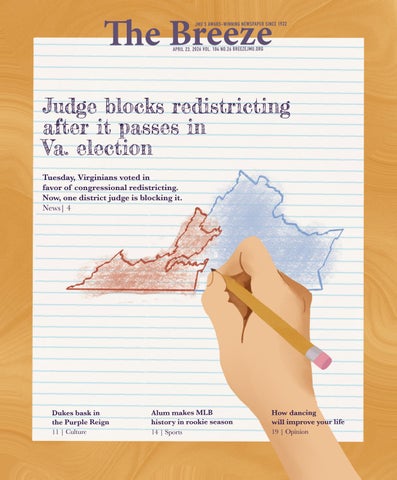

Judge blocks redistricting after it passes in Va. election
Tuesday, Virginians voted in favor of congressional redistricting. Now, one district judge is blocking it. News| 4


IN THIS ISSUE




Jack Barbour / The Breeze
Jack Barbour / The Breeze
EDITORS Charlie Bodenstein & Emma Brown EMAIL breezenews@gmail.com
Virginia passes redistricting amendment
By NEWS DESK
The Breeze
Virginians officially passed a redistricting amendment to adopt a new congressional map and reshape voting districts around 9 p.m, according to AP News.
The referendum has passed statewide, as of 5:45 pm Wednesday the vote sits at 48.5% “no” and 51.5% “yes” with 3,061,570 votes counted, according to AP News.
For all precincts throughout Harrisonburg, current totals are: 64.97% voted “yes” and 35.03% voted “no” with 10,275 total votes. The amendment will allow the Virginia General Assembly to temporarily redraw congressional districts until the 2030 census, according to the Virginia Department of Elections.
The proposed map was approved by the General Assembly in January.
Harrisonburg is currently in Virginia’s 6th Congressional District and remains in VA-06 of the proposed map, although the district’s borders will change and push Harrisonburg to the edge.
The entirety of Rockingham County is in VA-06, but the amendment will split the county into Congressional Districts 6, 7 and 11.
Resolutions must be approved by a majority vote in both the State Senate and House of Delegates in two separate legislative sessions before being held to a majority vote in a state election and being approved by the governor to be added to the constitution.
Districts in Virginia are currently decided by the Virginia Redistricting Commission, a bipartisan committee consisting of both state legislatures and citizen members. The commission was created in 2020 in order to
reduce gerrymandering and ensure fairness. Twelve of 16 commission members must vote in favor for the maps to be passed. If the commission fails to produce redistricting plans, or the General Assembly does not approve the plans, the Virginia Supreme Court is given control of the district maps, which happened the first time the commission attempted to create maps in 2021.
Justin Braunstein, Jack Friedman, Dani Inal, Sara Helwe Paget, JaMya Ribbon & Sam Wright contributed to this report. Read more online at breezejmu.org
CONTACT the news desk at breezenews@gmail.com . For more coverage of JMU and Harrisonburg news, follow the news desk on X @ TheBreezeJMU and on Instagram @ BreezeJMU.
UPDATE: Virginia judge blocks redistricting
Today, District Judge Jack Hurley of the Tazewell County Circuit Court issued an order to block the redistricting amendment that passed last night, according to CNBC. Virginia Attorney General Jay Jones said he will file an appeal in the Court of Appeals. Hurley ruled in favor of a lawsuit today to challenge the amendment’s legality.
The redistricting amendment passed by 3 percentage points around 9 p.m. last night. The referendum will allow the Virginia General Assembly to temporarily redraw congressional maps until 2030. Check breezejmu.org periodically for election updates.
SGA elects new student speaker
By SAM WRIGHT The Breeze
The Student Government Association (SGA) elected Caroline Spurling as the Speaker of the 112th Student Senate at JMU at their last meeting of the academic year on Tuesday.
Caroline Spurling elected speaker
Junior and current SGA Legislative Affairs Chairperson Caroline Spurling was elected as the SGA’s speaker.
Spurling was nominated by freshman Academic Senator for the College of Arts and Letters Brady Dunn.
Because Dunn nominated Spurling, he gave the first pro speech on her behalf.
“She was chosen [to chair the Legislative Affairs Committee] because our former leaders were confident that she would … perform above and beyond expectations,” Dunn said.
In his speech, Dunn also commended Spurling’s prior experience overseeing committees, ability to organize successful events such as Dukes Debate and responsiveness to connecting SGA with the student body.
“I could not name one Duke more qualified for this role than Caroline Spurling,” Dunn said, because she “thrives in leadership.”
The election process
The election process entailed each candidate delivering a short speech, followed by debate and ending with a vote.
The candidates were (in order of their nominations):
• Benjamin Reeves: Academic Senator for College of Business, nominated by Senator Ethan Dudley
• Isabella Schrecengost: Academic Affairs Chairperson, nominated by Senator Emily Cantrell
• Caden VanValkenburg: Democracy Fellow, nominated by Senator Ryan Colovos
• Caroline Spurling: Legislative Affairs Chairperson, nominated by Senator Brady Dunn
While many senators took part in the debate, Dunn and Cantrell were the most outspoken about their nominees. Cantrell said that Schrecengost “has also served on the leadership team for two years as the Academic Affairs Chairperson. So I think that she is among the most experienced and qualified people for this role.”
Read more online at breezejmu.org
CONTACT Sam Wright at wrigh4sx@jmu.edu. For more coverage of JMU and Harrisonburg news, follow the news desk on X @TheBreezeJMU and on Instagram @BreezeJMU.
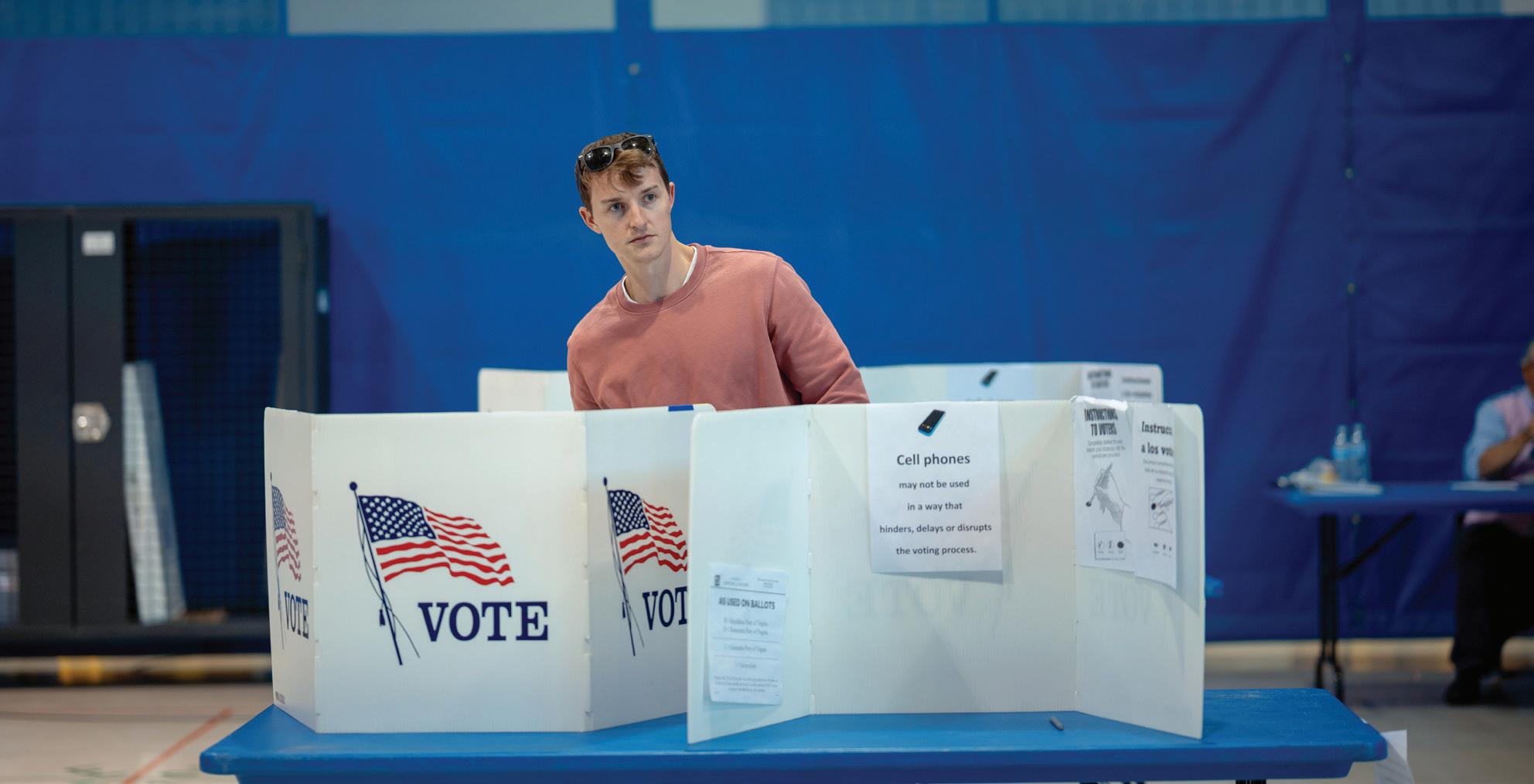
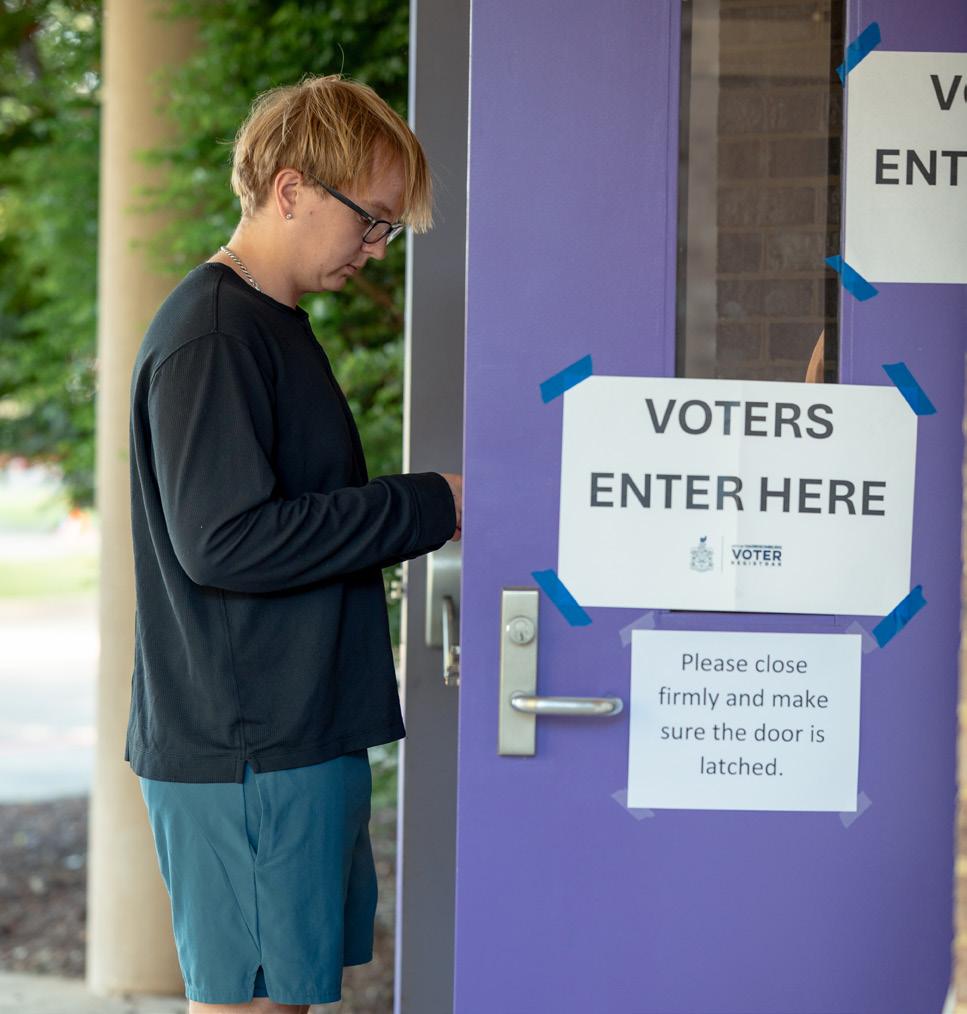
The referendum passed with 50.3% of voters voting “yes,” according to AP News. Harrisonburg, which was previusly in VA-06, will stay in VA-06. Photos by Landon Shackelford / The Breeze
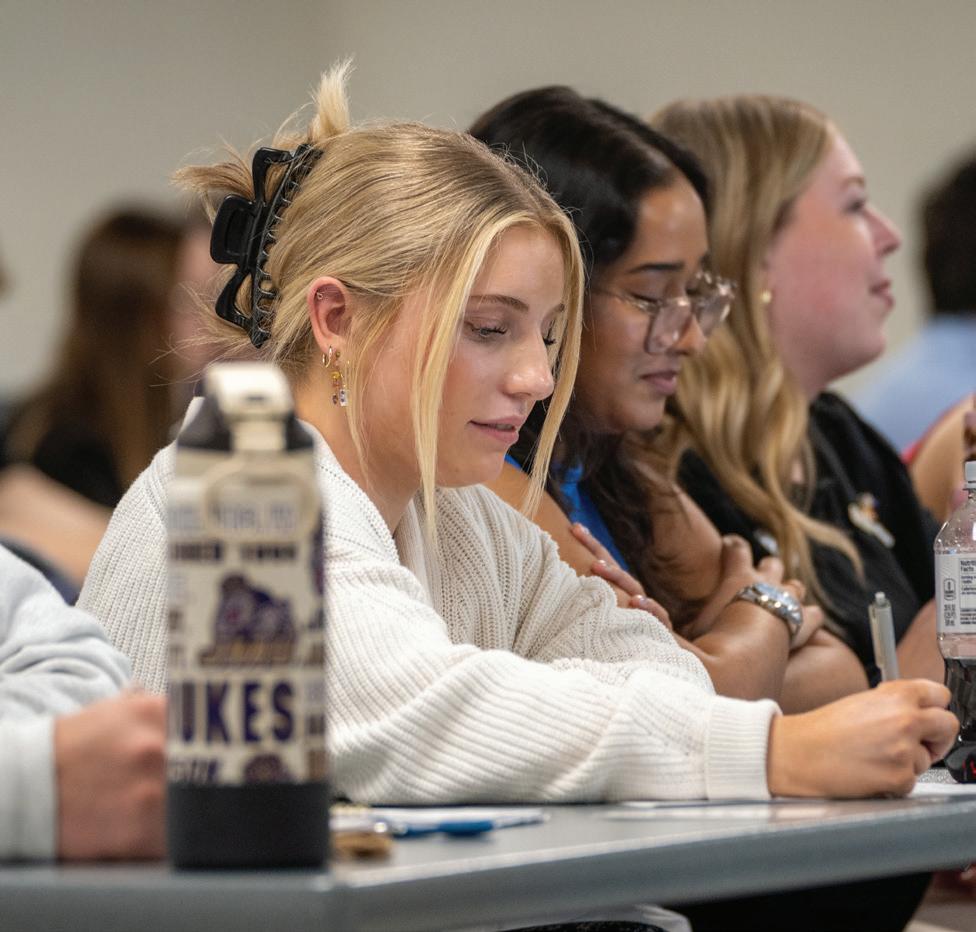
Junior Caroline Spurling was elected as the next speaker. Jack O’Dea / The Breeze
Gas prices rise during Iran war
Students, residents are left wondering how much it really costs to live in the Valley

By JACIN GARNICA
The Breeze
On Feb. 28, the United States and Israel launched a joint attack against Iran, targeting the regime’s leaders, military and nuclear programs.
Following these attacks, Iran restricted the flow of oil and fertilizer through the Strait of Hormuz, causing prices to spike globally, according to the U.K. Parliament’s House of Commons Library. Like most of the U.S., Harrisonburg is feeling the impacts of this spike.
Impact on students
Gas prices in Virginia have skyrocketed by about 20% since the beginning of March, according to AAA. This inflation has taken a toll on students, with 32% commuting to campus and 25% being out of state.
Freshman information technology major Keith Purvis said he’s struggled with rising gas prices.
“I drive a fuel-efficient car, a Toyota Camry 2018, and my price went up by $15 when I came back for spring break,” Purvis said.
Purvis also expressed having to be more mindful about how he drives and deciding whether to travel.
“My car is always on ECO mode [and] I drive a lot slower on highways now,” Purvis said. “I’m just thinking, ‘I don’t want to go to the gas station and pay $45 to fill up a fuel-efficient car that only takes 12 gallons.’”
Impact on agriculture industry in Harrisonburg
Brad Foltz, a local farmer, has seen spikes in operation costs since the beginning of this war.
Foltz said he uses Urea, a nitrogenrich fertilizer that comes in solid or liquid form and is cast into the soil; “the key fertilizer in corn, wheat and hay production.”
He added that organic crops without chemical fertilizers, such as Urea, are less efficient and produce smaller yields.
“The price of Urea nitrogen has doubled since the war. In December, a tractortrailer load cost $15,000; today the price is $30,000,” he wrote in an emailed statement to The Breeze.
Foltz said he’s also struggled to use dieselfueled machinery due to the rising fuel costs.
“Tractors and combines can burn from five [to] 20 gallons of diesel fuel an hour, and it’s nearly $6 a gallon,” Foltz said.
With the price of supplies increasing, Foltz said many farmers will likely choose to produce less this season, in turn leading to food shortages and inflation.
Read more online at breezejmu.org
CONTACT Jacin Garnica at garnicja@ dukes.jmu.edu. For more coverage of JMU and Harrisonburg news, follow the news desk on X @TheBreezeJMU and on Instagram @BreezeJMU.
I’ve weighed the consequences of going to see my friends. ” Keith Purvis JMU freshman
“
Virginia Breeze adds new Hampton Roads route
By JACIN GARNICA The Breeze
Beginning April 20, the Virginia Breeze bus company will implement its new “Tidewater Current” route that will go from Harrisonburg to Virginia Beach. The eight stops along the way are Staunton, Charlottesville, Richmond, Richmond International Airport, New Kent, Williamsburg, Newport News and Norfolk.
The Virginia Department of Rail and Public Transportation (DRPT) announced the route on March 24, according to JMU’s website. This will be the fifth line added to the Virginia Breeze bus routes and the third one with a stop in Harrisonburg, according to the Virginia Breeze website.
This route provides direct public transportation for more than 1,600
students located along stops, and more than 2,800 students in the surrounding areas, according to JMU as of fall 2025.
Marisa Futscher, a freshman anthropology major from Williamsburg, is looking forward to the addition of the line.
“I heard about it a month ago, [when] it was announced, because me and my roommate were trying to find easy ways to get down there without making my parents come up and drive me,” Futscher said.
Futscher has taken the Virginia Breeze in the past for a trip to Washington, D.C.
“The ride was not long, the chairs were a little uncomfortable, but I wasn’t too worried about that. It was a good experience,” Futscher said. “I didn’t have any problems.”
She noted how time-consuming it was for her parents to go back and forth between their home and JMU, citing a
hometown event followed by an event in Harrisonburg.
“There’s an event planned in my hometown and I was afraid I wasn’t going to be able to do it, because it was a lot of driving for my parents, they would have to drive three hours to get here, drive me back, then drive me back to Harrisonburg, and then come back up for the concert the next day, because I’m in Concert Band,” Futscher added.
Futscher said she plans to use the ‘Tidewater Current’ line frequently next year.
Read more online at breezejmu.org
CONTACT Jacin Garnica at garnicja@ dukes.jmu.edu. For more coverage of JMU and Harrisonburg news, follow the news desk on X @TheBreezeJMU and on Instagram @BreezeJMU.
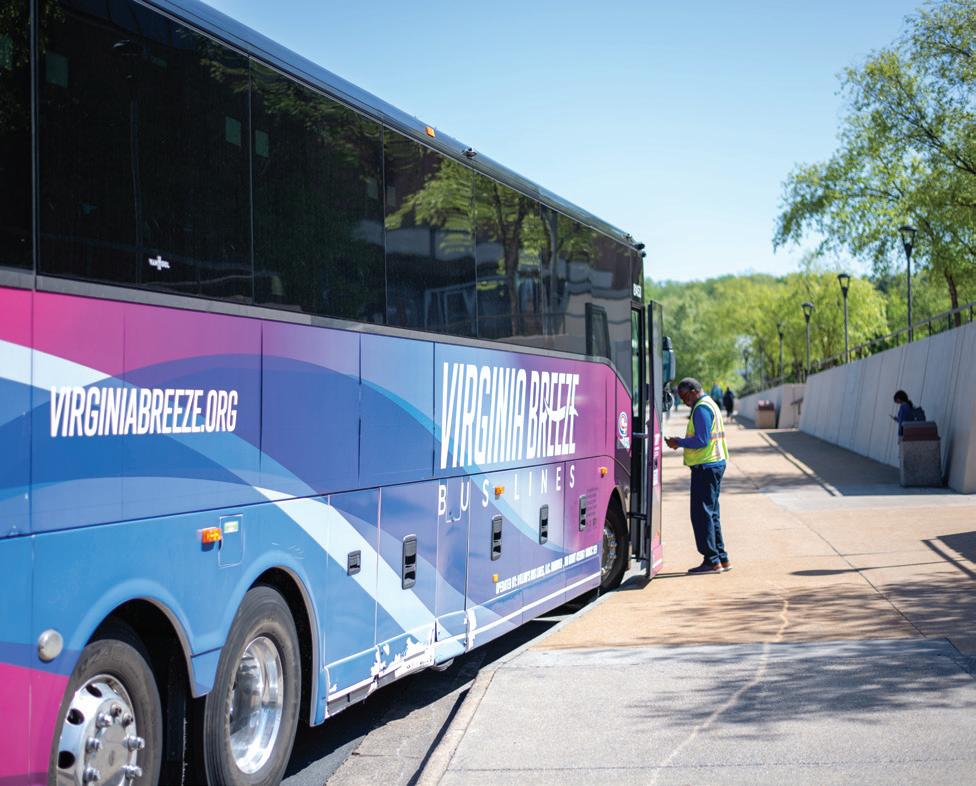
Students who are seeking alternative means of transporation can use their bikes on campus or use the Virginia Breeze for longer travel. Jack Barbour / The Breeze
The “Tidewater Current” will have stops in Norfolk, Williamsburg and Newport News. Jack O’Dea / The Breeze

CMSS celebrates its 40-year anniversary
EMMA BROWN
The Breeze
The Center for Multicultural Student Services (CMSS) is celebrating its 40-year anniversary with the theme, “40 & Forward Vision: A Commitment to Community, Culture and Connection,” in addition to a gala in the Festival Ballroom this Friday.
Established in 1985, the organization was “developed to create a space for students who were underrepresented,” CMSS Assistant Director Brittani Staley said.
CMSS provides various services for students of all backgrounds, including academic support, career guidance and counseling. It also plans heritage month celebrations and cultural programming for the university, she said.
Anniversary theme and gala
The theme embodies CMSS’ legacy, CMSS Associate Director DeAndrae Powell said.
The commitment aspect of this mission includes investing in the organization as donors, or sharing personal testimonies of being part of the CMSS community, he said.
Powell added that the community focus allows students to represent their cultural communities.
Finally, the culture element gives students a space to feel comfortable and embrace their identity, he said.
“Culture is all up and through [CMSS], through our lounges, through programming and events. We like for people to show up to CMSS, or come to involve themselves with CMSS, to be unapologetically themselves,” Powell said, adding that fostering the connection element involves students learning about and engaging with one another.
The anniversary gala will be held this Friday at 6 p.m. in the Festival Ballroom. Prior to registration closing, the event was open to all students. About 250 people have registered to attend the event, including students, alumni, faculty and community members.
“We will have an opportunity to just really honor the legacy of CMSS,” Powell said. “It’s an opportunity for us to really bring the community together and to celebrate our legacy in a way that is community-driven.”
In addition to celebrating CMSS’
anniversary, the gala will be an opportunity to expand the organization’s alumni network for graduating students and expand fundraising efforts, Staley said.
Challenges and organization evolution
Although CMSS’ mission has remained the same throughout the years, the organization has evolved over time, Staley said. CMSS changed its name from the Office of Minority Student Services in 1992 and moved to the first floor of the Student Success Center (SSC) in 2021. Following the move to the SSC, CMSS created lounge spaces for students to study, collaborate and celebrate multicultural communities, Powell said.
“Our lounges are not exclusive to anyone. You don’t have to be Black, Latinx, Asian or part of the queer community to enter those spaces,” Powell said. “It is a space that is just highlighting those communities and legacies.” CMSS has faced several challenges as the organization evolved, particularly surrounding certain communities whose place and belonging has been questioned throughout the years, Staley said.
“It’s not just at JMU, it’s across the country, and we’ve been adapting to what those policy, state and federal changes [are],” Staley said. “Those are ones that have always impacted how our office has been able to run, dating back to [the] Civil Rights Movement.”
Despite the challenges, Staley said CMSS embraces its available opportunities to navigate changing political climates and fulfill students’ needs.
Especially throughout the anniversary celebration, Powell said to remember “the legacy of CMSS is not built on one person. It is built on people who genuinely love this space, love the work that we do, love the students that are connected with it. And CMSS is here. CMSS ain’t going nowhere.”
CONTACT Emma Brown at breezenews@ gmail.com. For more coverage of JMU and Harrisonburg news, follow the news desk on X @TheBreezeJMU and on Instagram @ BreezeJMU.

Summer Solis / The Breeze



I Y K Y K


C h a n e l l o s p i z z a . c o m
f o r 2 0 % o f f y o u r E N T I R E o r d e r ! C o d e D U K E S 2 0
Residents call for city council to ‘De-Flock’ Harrisonburg
CHARLIE BODENSTEIN
The Breeze
Hundreds of Harrisonburg residents packed into the Community Mennonite Church on Monday for an info session on Automatic License Plate Readers (ALPRs), otherwise known as Flock cameras.
Flock Safety, a private technology company, owns and operates these cameras. It struck deals with cities across the country, allowing for its cameras to be implemented into the cities’ security networks.
Executive director of Justice Forward Virginia — a nonpartisan advocacy group that brings attention to criminal justice reform — Rob Poggenklass gave a presentation about Flock cameras and how community members can “push back” against them.
Poggenklass described ALPRs as “high-speed AI-enabled cameras with image processing software.”
He said the cameras operate 24/7, 365 days a year, and constantly take photos of the rear license plate of every passing vehicle.
The photo is then converted into text that computers can read and process. The cameras also record details like the make, model, color, bumper stickers and passengers in the vehicle.
These details are put into a database, which can be accessed by law enforcement and government agencies.
Poggenklass said the Virginia State Crime Commission uses ALPRs for two purposes: alerts and criminal investigations.
The alerts are real-time notifications that are sent based on a “hot list,” Poggenklass said, adding that these hot lists are created entirely by law enforcement.
“As far as we can tell, there is no regulation as to what goes on the hot list,” he said. “If law enforcement decides your vehicle plate needs to go on a hot list, it goes on a hot list.”
Additionally, ALPRs are all part of a shared network which can be used to track people “across time and space,” he said. The connected network of devices can be shared between law enforcement agencies and private entities as well.
For example, Poggenklass said, if Home Depot or Lowe’s has ALPRs positioned near their store, they can send that data
to law enforcement agencies. Moreover, physical addresses can be tied to vehicles, making it easier to search for a vehicle.
“An officer may enter the location of a gas station, identify vehicles seen nearby at the time of a large crime, and then the officer can run those plates back as long as they need to,” Poggenklass said.
Poggenklass added that ALPR cameras feed data into nationwide crime centers. The centers combine into a network of ALPRs, police cameras, body cameras, local businesses’ cameras, gunshot detection notifications and drones from across the United States.
Poggenklass said Flock has continued to improve its cameras with biometrics and facial recognition technology, and increased partnerships with companies, governments and police departments.
Poggenklass then started listing off ALPR “abuses,” adding that it’s not a partisan issue with both conservatives


and progressives concerned about the problems the cameras present.
Christopher Newport University criminology professor and Justice Forward Virginia board member Steven Keener presented his research on ALPRs, finding that the cameras are strategically placed in certain regions based on socioeconomic status.
“The Blacker the neighborhood is, the more cameras there are,” Keener said. “The higher the poverty rates, the more cameras there are.”
Keener’s research also mapped out every ALPR camera in the Hampton Roads region, noting there are clusters of cameras where higher percentages of people of color reside. He said the area with the most cameras is at Norfolk State, which is a historically Black university.
“There is no way to get on or off that campus without going through Flock cameras,” Keener said.
The event was later opened up to a Q&A. Harrisonburg Councilwoman Monica Robinson stood up and spoke on the Harrisonburg City Council’s views on the ALPR cameras.
“My ears are not closed,” Robinson said. “I don’t want people to think that we are sitting by saying, ‘Oh well, we have to do what HPD [Harrisonburg Police Department] suggests that we do.’ No, we do what our constituents want to do.”
Associate Dean at the JMU College of Health and Behavioral Sciences Linda Plitt Donaldson, spoke at the end of the event, urging community members to take action against ALPRs.
“Flock cameras don’t make us safer, they make us targets,” Plitt Donaldson said, “They erode community trust and make us more vulnerable.”
Read more online at breezejmu.org
CONTACT Charlie Bodenstein at breezenews@gmail.com. For more coverage of JMU and Harrisonburg news, follow the news desk on X @TheBreezeJMU and on Instagram @BreezeJMU.

A Flock camera in Harrisonburg. Jack O'Dea / The Breeze
By EDISON VRANIAN The Breeze
Everyone knows the classic saying, “college students are broke,” and with everyday expenses, many businesses around Harrisonburg try to help this issue by offering discounts to accommodate JMU students’ needs.
JACards and student emails are the answer to help students save money. Today, they do so much more than get you inside a dining hall: they open up a whirlwind of discounts.
Spotify
With Spotify Premium, students can enjoy music without advertisements, whether they’re finding a soundtrack to their school day, need peace while doing schoolwork or vibing to any type of party music.
Not only are students getting discounted Spotify Premium, but the student plan also comes with Hulu included in the deal.
Spotify Premium is typically $12.99 per month, and Hulu is typically $11.99 per month, according to the Spotify website. Students,
however, can get their first month for free and then pay $6.99 a month. Verification is done through the third-party SheerID.
One year after the initial purchase, students need to reverify their status to retain the Premium Student status, and they can reverify for four years.
For only $6.99, Dukes can listen to music without ads and enjoy some TV shows on Hulu.
Amazon Prime
Amazon Prime Young Adults offers a plethora of perks to young adults aged 18 - 24 at a discount.
Benefits include unlimited streaming with limited ads, fast and free delivery, exclusive deals, grocery and fuel savings, free access to Grubhub+, Prime Reading, Amazon Photos, Amazon Luna for gaming, 5% cash back savings and more, according to Amazon’s website.
To gain all-inclusive access, students pay $7.49 per month or $69 per year, compared to the typical $14.99 per month. However, new student account holders can try it out for free on a six-month trial before committing to Amazon Prime.
To gain eligibility for Amazon Prime Young Adults, student can sign up through Amazon Prime, where there are verification options.
To register, you must provide age verification, such as a driver’s license, passport or identification card. For student verification status, students can complete the sign-up form, use their student email or submit verification, like an acceptance letter or a JACard, according to Amazon Customer Service.
While registering as a student or young adult doesn’t show any difference in benefits and longevity, the user must be 18-24 years old for eligibility.
Read more online at breezejmu.org
CONTACT Edison Vranian at vraniawe@dukes.jmu.edu. For more on the culture, arts, and lifestyle of the JMU and Harrisonburg communities, follow the culture desk on X @ TheBreezeJMU and on Instagram @BreezeJMU.
Discounts accommodate expensive college life, JACard saves students Professors create children’s picture book
By KAYLA KATOUNAS The Breeze
“Please Excuse My Dear Aunt Sally” is a mnemonic device used in math education to help students remember the acronym “PEMDAS,” which represents the order of operations — parentheses, exponents, multiplication and division, addition and subtraction.
It’s also the premise of “Mable MATHis and the Mysterious Aunt Sally,” a picture book written by two JMU College of Education faculty members.
The book, published Jan. 31, follows Mable Mathis, a young girl from Athens, Georgia — where the authors attended the University of Georgia — as she and her friends try to solve an order-of-operations problem.
Each of Mable’s four friends is from a different country — Australia, Pakistan, South Korea and El Salvador — and Mable learns that math is taught differently across the world.
Middle, secondary and math education associate professor Amanda Sawyer initially wrote the concept for the book and before approaching early, elementary and reading education
associate professor Chelsey Bollinger who has experience with children’s literature with the idea.
“[Bollinger] put all the glue together and made it make sense,” Sawyer said. “What I did is I took all that and made sure it was mathematically accurate, and then vetted it with all my friends to make sure that it was still correct.”
Sawyer was inspired to write the book after discussing examples of order of operations in different countries with her math education classes. Sawyer and Bollinger took inspiration from friends from other countries to create the characters.
“I am very, very lucky that I have a lot of wonderful friends,” Sawyer said. “Every character was actually based off of somebody who actually lived in those countries and could tell if this actually had been taught.”
Sawyer also took inspiration from her own children, a 9-yearold son and 6-year-old daughter, to write the main characters of the book, soliciting their advice while writing.
“I would read it out to them and basically say, ‘Okay, what do you think?’ and [my son’s] a very honest critic and would say ‘no, Mom, that’s bad,’” Sawyer said. “But that’s who I really had a lot of help with trying to determine if it’s appropriate for kids.”


The process of writing the book took about a year. Using Sawyer’s outline, Bollinger wrote the story before they sent it to Wina Witaria, a children’s book illustrator. After going through several rounds of revisions, they sent the book to “probably 100 different publishers” before self-publishing the book, Bollinger said.
“I think publishing with a publisher takes quite a long time, and this was something we just wanted to get out there for teachers to use, because picture books with math content integrated are very rare, and so we just wanted to get it out there quickly,” Bollinger said.
On Friday, Sawyer and Bollinger, both accompanied by their children, held a book signing at the JMU Bookstore, where they shared their book with students, staff and visitors for the Admitted Student Open House.
JMU Senior Assistant Director of Admissions Tiffany Woolley got a signed copy for her son, who is in fourth grade.
“Because this is a book on math around the world, I hope he gets more of a bigger appreciation for math, and that it helps to motivate him when it comes to his learning,” Woolley said.
After finishing the book, Sawyer created “Mable MATHis’ Mini Memos,” a series of YouTube Shorts focused on significant figures and events in mathematical history. Next, Sawyer and Bollinger plan to host a read-aloud at Parentheses Books on May 2.
Sawyer and Bollinger hope to write more “Mable Mathis” books and plan to feature four countries per book, Bollinger said. Future books will continue to take inspiration from real-life international friends, including Witaria, who’s from Indonesia.
Sawyer and Bollinger are already working on their second book, which will focus on how multiplication is learned in various countries, and they have about 10 other ideas for more books, all focused on math education around the world, Sawyer said.
“We’re basically saying culture is important, language is important,” Sawyer said. “All these things influence how we teach math now, but it’s still universal because we all follow the same mathematical principle.”
CONTACT Kayla Katounas at breezecopy@gmail.com. For more on the culture, arts and lifestyle of the JMU and Harrisonburg communities, follow the culture desk on X @TheBreezeJMU and on Instagram @BreezeJMU.
A picture book written by JMU College of Education faculty members about mathematic concepts. Jack Barbour / The Breeze
Summer Solis / The Breeze

As the sun set, Purple Reign rose

By AUDREY FLETCHER The Breeze
Relaxing in the warm spring sun and buzzing with anticipation, the crowd gathered on April 16 on Festival Lawn for the annual Purple Reign Music Festival, organized by the University Program Board (UPB).
As the spring semester comes to a close, students were drawn to the event by its promises of warm weather, food, live music and a chance to relax before the storm of finals begins.
The outdoor setting gave the evening a festival-like environment, embodying the spirit of Coachella — one of the most popular music festivals in the world — where hundreds of the biggest artists perform for hundreds of thousands of people over the course of two weekends.
The stage was set with colorful lights that shifted with each song, visual effects and smoke machines, which added an extra element to the artists’ performances.
The event opened with performances from two student bands, which were announced as the winners of this year’s annual Battle of the Bands on Feb. 27 — Vessira and Chakra — energized the crowd, featuring both covers of popular songs and originals with a dynamic stage presence that set the tone for the rest of the evening.
Also announced at the end of the Battle of the Bands, the headliner for the upcoming
music festival, flipturn — an American indie rock band known for its unique upbeat indiepop sound — which rocked the stage in Purple Reign’s final act.
The openers
Vessira kicked off the festival at 5 p.m., showcasing the group’s popular Christian alternative rock sound.
The band is comprised of five members — lead vocalist Olivia (Liv), lead guitarist Shaun, rhythm guitarist Marc, bass player Grant and drummer Andrew. They performed electric covers of wellknown rock songs from bands including Third Eye Blind, Fall Out Boy, Paramore and Foo Fighters.
They also shared original songs like “Homecoming” and their newest song “Easier,” which was released on Jan. 1, 2026 and is available to stream on Spotify.
The faith-based group brought lots of energy exciting the crowd before the headliner and engaged with the crowd by giving out free T-shirts and bracelets to promote their music.
The following performance was at 6 p.m. by Chakra, an experimental rock band with similarities to notable artists like the Red Hot Chili Peppers and Led Zeppelin. The band has six members: Kaleb Merritt, Charlie Cheek, Luc Aristhene, Will Alexander, Matt Cella and Josh Beyer.
Chakra is most known on campus for performing at parties and special venues for
Sigma Nu, Kappa Sigma and Theta Chi.
Its music is best described as a blend of funk and soft rock, emphasized in its covers of popular songs “Heaven,” “Valerie,” “Sheep,” “Grey Street,” “Whole Lotta Love,” “Voodoo Child (Slight Return),” “Smooth Operator” and “Easy.”
This gave the audience a good mix of traditional rock from icons like Jimi Hendrix and Black Sabbath, as well as a soul and funk vibe with Amy Winehouse, Sade and Commodores.
Chakra ended its set to an enthusiastic crowd, but the energy in the air didn’t fade as the main event, Florida-based band flipturn, took the stage at 7 p.m.
The main act
Onlookers who had previously been lounging on blankets in the grass stood up while others ran to join the growing crowd at the front of the stage to get a better look as the group of five opened with its 2025 hit, “Inner Wave.”
The band, established in 2015, currently has over 2 million monthly listeners on Spotify and is most known for its popular song “August” released in 2018, which has over 88 million streams on Spotify.
Its set list featured their more popular songs — including “Sad Disco,” “Glistening,” “August” and “Chicago” — while also sharing
more underrated songs, namely “Moon Rocks,” “Whales” and “Velvet.”
Later in the set, lead singer Dillon Basse announced flipturn would be sharing a new, unreleased song with the crowd — using them as “guinea pigs” to test out the new music. The audience erupted at the reveal and responded with loud cheers.
The crowd stayed energized throughout the entire one-hour performance, clapping along to the rhythm, swaying their hands back and forth and singing along to almost every song.
Their enthusiasm and delight with the music could be felt throughout the atmosphere of the space, fueling the band’s performance.
As daylight faded away behind the mountains beyond the stage and people began to gather their belongings, the speakers surrounding the departing crowd began playing Prince’s iconic rock ballad “Purple Rain” — a fitting and reflective end to an unforgettable night.
CONTACT Audrey Fletcher at thebreezeculture@gmail.com. For more on the culture, arts, and lifestyle of the JMU and Harrisonburg communities, follow the culture desk on X @TheBreezeJMU and on Instagram @BreezeJMU.

flipturn took the stage as the headliner following performances from student bands Vessira and Chakra. Photos by Derrick Echols / The Breeze
How overbooked are Dukes?
By DEANNA BAUMANN contributing writer
Schools expect students to do more than ever: balancing work, classes, sports, clubs and social life. It’s no wonder students seem to be infatuated with scheduling apps.
These packed schedules seem to have become the norm among college students. This begs the question: Are we doing too much?
To understand how scheduling impacts students and faculty, it’s important to look at the different strategies people use to manage their time. These methods provide insight into the challenges that students and faculty have to overcome
Transitioning from high school to college to post-grad ventures is inevitable. How students manage time during these transitional periods can have a significant impact on their postgrad experiences.
“Coming into college, I didn’t know where my classes were, I couldn’t remember what

times they were at, and having to schedule this all around practice was difficult,” sophomore business management major Isabel Greene said.
She also runs for the JMU cross country and track team, she said, adding that being in season from August to May leaves little room for wasting free time. This requires high-level discipline and commitment everyday.
Between practices and holding a 3.7 GPA, Greene said she maximizes her time by using Google Calendar to keep track of assignments, practices and meetings. This has aided in her academic performance as well as her overall well being.
“Using Google Calendar has overall improved not only my academic performance, but I feel less anxiety knowing I am able to look at my phone and see my week ahead of me without missing anything,” she said.
Scheduling is not an individual sport either, with Google Calendar possessing a share feature to invite others to access the calendar.
Not having a structured schedule is more than just a personal headache, it also affects relationships, but a shared Google Calendar might be just what helps solve this problem.
Senior double major in political science and philosophy Ben Katz said he and his girlfriend use this feature.
This is already proving useful for students who are trying to balance busy lives and relationships. “It allows us to see what the other person is up to,” Katz said. “It’s good for coordinating time to see one another.”
Between class load, tutor sessions, presidency of Club Taekwondo, managing an after-school club program at Spotswood Elementary School, preparing to graduate

and getting ready to transition into the work force, all while maintaining the highest GPA in the philosophy program, Katz said he is slammed. He added that it’s nice to not have to spend extra time figuring out the other person’s schedule, since it’s already visible in the Google Calendar.
Scheduling affects more than just students, when thinking about transitioning from college to professional life, planning is highly important. As responsibilities increase, managing time effectively becomes essential to maintaining a healthy balance.
“In planning for our future, knowing we wanted to have a family, we knew we were going to need more flexibility within our work lives,” Associate Director of Sports Medicine at JMU Jackie Leonard said.
Raising a family while having a professional career was something Leonard knew was going to be difficult before going in.
Leonard works with cross country, which competes in the fall, while her husband works with baseball, which competes in the spring, guaranteeing they split their busy schedules over the year.
“To be able to keep our jobs that we love and make it work for our lives and family takes a lot of communication and planning,” Leonard said. Without strong communication, and organization balancing work and family life can become overwhelming.
While not everything can be meticulously planned, it’s vital to make time for what one personally believes is important. Without intention it’s easy for things that you find important to be disregarded.
For everyone to enjoy their lives, they need to have structured time for the things they
love, understanding not comproming and setting boundaries. Whether that’s time spent doomscrolling, exercising, studying or anything else, it’s important stick to it.
Sophomore finance major Anthony Walker knows who he is and what is important to him. Walker was initially committed to JMU as a football player, but unexpected circumstances forced him to adjust his aspirations.
The turning point began with a diagnosis that he received in the eighth grade. This is when he learned he had a kidney condition Focal segmental glomerulosclerosis.
“I was diagnosed with FSGS (Focal segmental glomerulosclerosis) in the eighth grade,” Walker said. “I still continued to play football, and it was during my senior year football playoff season I discovered my kidneys got to a point where they couldn’t work on their own.”
Between managing medical appointments, classes and his position as president of the Black College of Business Club, Walker is met with a busy schedule. Despite these demands he has found that his discipline is what has him meeting these demands.
“You have to advocate for yourself, you have to make a deadline for yourself when everything you need to get done will be tackled,” Walker said. However, Walker also showed an appreciation to the academic advisors who always allowed him grace and offered help.
Read more online at breezejmu.org
CONTACT Deanna Baumann at baumande@ dukes.jmu.edu. For more on the culture, arts and lifestyle of the JMU and Harrisonburg communities, follow the culture desk on X @ TheBreezeJMU and Instagram @BreezeJMU.

Summer Solis / The Breeze

EAT DOMINO’S DUKES DUKES



Ever since I was a little kid, I believed I was good enough.”
Chase

Former Duke in the majors
JMU baseball alumnus Chase DeLauter’s MLB career off to historic beginning

By RYAN CUPPERNULL The Breeze
As JMU baseball alumnus Chase DeLauter — now an everyday starter for the Cleveland Guardians — watched his 422-foot homer sail over the right field wall in Seattle, the rookie cemented himself in the history books by becoming one of just seven players in MLB history to hit multiple home runs in his regular season debut.
DeLauter started his career with Cleveland when the Guardians selected him 16th overall back in 2022, becoming JMU baseball’s first player ever drafted in the first round of the MLB draft — a milestone he had been chasing since he started playing.
“Ever since I was a little kid, I believed I was good enough,” DeLauter said.
DeLauter’s MLB career didn’t begin with his two-homer game in Seattle, though. The Guardians made DeLauter the sixth player ever to debut in the majors during the postseason, adding him to their postseason roster ahead of the 2025 wildcard series against the Detroit Tigers.
While the move may have been surprising to those around MLB, for those who knew him best — including his former skipper — it seemed inevitable.
“I knew he was going to produce,” JMU head coach Marlin Ikenberry said. “He’s produced everywhere he’s ever been.”
DeLauter started games two and three of that series, impressing with an outfield assist in game two and his first big league knock in game three. While the Guardians lost the series, the future certainly looked bright for the former Duke.
“It was a pretty special moment,” DeLauter said. “[Getting] to go out there and win playoff games was really cool.”
He carried that momentum into the regular season, ending his first week atop MLB’s home run leaderboard with five through just eight games.
“One of the things I was kind of shocked at is how fast he started,” Ikenberry said.
Despite the start, DeLauter maintained a level of cool that he has carried with him throughout his career thus far.
“When the game’s going on, there’s not a whole lot of inawe moments of what’s going on,” DeLauter said. “It kind of just becomes another day.”
Loud home runs and eye-popping numbers weren’t always DeLauter’s calling card — JMU originally recruited him as a pitcher. But after watching him play at Hedgesville High School in West Virginia, Ikenberry quickly saw something different in DeLauter’s swing, even comparing the sound off his bat to that of former New York Met and seven-time All-Star David Wright.
“His hands and eyes worked, and the ball just jumped off his bat,” Ikenberry said. “It just had a different sound.”
Soon after, DeLauter’s potential became clear to more than just JMU’s staff. He earned Gatorade Player of the Year in West Virginia after a senior season marked by eight home runs, a .606 batting average and a 0.84 ERA on the mound.
DeLauter Right fielder Cleveland Guardians
Courtesy of Russell Lee / Cleveland Guardians
DeLauter averaged .402 at the plate in his time as a Duke. Courtesy of JMU Athletics
from DELAUTER, page 14
After arriving in Harrisonburg, DeLauter earned Freshman All-American honors from Collegiate Baseball Newspaper, producing a .382 batting average with 26 hits and 14 RBIs before the season was canceled due to COVID-19. Those numbers propelled DeLauter’s future at the plate instead of the mound.
“I had a solid [freshman] year and kind of drifted away from being a starting pitcher,” DeLauter said. “And that’s when I figured, if [the majors] happen, it’s gonna be hitting.”
Building on his freshman campaign, DeLauter improved during year two. He hit six home runs with an impressive 1.231 on-base percentage plus slugging percentage (OPS) in 26 games.
DeLauter carried his redshirt freshman season success over into the summer, becoming the first Duke to win the Robert A. McNeese Outstanding Pro Prospect Award, given to the top MLB prospect in the Cape Cod Baseball League.
The quick career start was unique, and Ikenberry quickly noticed DeLauter was unlike any player he had coached.
“When you see [him] every day, you’re like, this guy’s got a chance to be special,” Ikenberry said. “I knew he’d be in the big leagues one day.”
DeLauter’s continued success had scouts taking notice.
Heading into his redshirt sophomore year, DeLauter was listed in the top ten throughout multiple MLB draft rankings, including lists from draft analysts Jim Callis and Jonathan Mayo.
Before the 2022 season, incoming freshman and current director of player development Ryan Dooley noticed little things that allowed DeLauter to stand out.
“It’s certainly easy to look up to a guy like that,” Dooley said. “He did everything the right way, and he knew exactly what needed to be done.”
DeLauter’s off-the-field preparation led to another dominant season. He excelled with a .437 average and eight home runs in just 24 games. While his record-breaking year
was cut short after suffering a broken foot in April, DeLauter’s efforts impressed teammates.
“He did some things I still have never seen anybody else do,” Dooley said.
Still, after Cleveland selected DeLauter in the first round, his path to the majors was met with challenges. After reinjuring his broken foot, he had no choice but to get surgery — delaying his professional debut until June 2023.
In 2024, after being promoted to Triple-A Columbus, DeLauter missed playing time first due to his lingering foot injury, because of a combined turf toe and hamstring issue.
Unfortunately, DeLauter’s 2025 followed a similar pattern of adversity. He underwent surgery to repair a core muscle and missed a chunk of the season. After returning for 42 games, he suffered a right hamate fracture in July, forcing another surgery.
When healthy, however, DeLauter shined, slashing .302/.384/.504 in 138 minor league games. His injury history has given DeLauter a fresh perspective on how to enjoy each chance he gets on the field.
“[I’m] just trying to enjoy each and every day,” DeLauter said. “Be where my feet are, and just be grateful to be back out there when I get the chance.”
After his scorching opening in the show, DeLauter has cooled briefly, but still boasts an OPS of .811 — good for 54th in all of baseball.
The JMU alum will look to continue transferring his success from Eagle Field at Veterans Memorial Park throughout his career in the majors, powered by his unrelenting work ethic and love of the sport.
“He loves the game, he loves to play,” said Ikenberry. “He works really, really hard.”
CONTACT Ryan Cuppernull at cupperjr@dukes.jmu.edu. For more football coverage, follow the sports desk on X and Instagram @TheBreezeSports.


Schor’s second act
Former quarterback returns to JMU as tight ends coach
By LIBBY MERCER
The Breeze
JMU football head coach Billy Napier said he has “always felt strongly about putting a quarterback in the tight end room.” Which is exactly what he did when hiring tight ends coach Bryan Schor.
Schor returns to the Dukes after playing quarterback for his entire four-year collegiate career, beginning in the 2014 season and leading JMU to its second FCS national title in 2016.
“There’s a certain pride that he has about this place, his experience on championship teams and then his
perspective from a player standpoint,” Napier said. “He’s been observing his alma mater from afar ... he knows where the landmines are at.”
Coaching wasn’t Schor’s first choice, as he “fought it for a little while” right out of graduation by taking a job in insurance.
“I got away from the game for a little while, and I was missing it really bad,” Schor said. “I knew this wasn’t what I wanted to tell my grandkids that I did. And so I was able to find myself back into the game.”
Schor spent the past four seasons at Sun Belt opponent Georgia Southern, most recently as tight ends coach but also spent time as assistant quarterbacks coach and an analyst.

Matching up agianst his alma mater last year at Georgia Southern, Schor said that he was “a little more stressed that week,” and that it brought out a different element for him as a coach.
When Napier offered him the chance to come back to JMU, Schor said he would have accepted the job right when he got the call at 8 p.m. He called his wife, and then accepted the job at 8:01, he said.
“I care a lot about every coaching job I’ve ever had, but this one is just a little bit different,” Schor said. “There’s a tie that I have to the players that I haven’t had before.”
Coming into the position with quarterback experience, Schor can coach his room based on his past slip-ups and mistakes.
“I do talk about the times that I was a player and the different failures that I had,” Schor said. “I think probably the most I talk about is where I could have been better, and where I had lapses in judgment.”
Schor coaches his guys from a “quarterback mindset” and “wants them to understand what’s going on in every play,” he said.
“I tell them if you’re open at the wrong time, you’re not open, right? So we talk about where the quarterback is in his read, what he’s reading, where his eyes are and how we play into that,” Schor said.
Transfer Cole Keller joins the tight end room after following offensive coordinator Cam Aiken from ETSU. Keller has “never been coached by a quarterback before,” but noted how Schor’s experience as quarterback is translating to the field.
“The other day in the scrimmage, we’re running a pop pass. And most guys are going to run through and run up the middle of the field and maybe not think about giving the quarterback an angle,” Keller said. “[But Schor tells us,] ‘Hey, you got to make sure you take two steps out here to get up the seams, because that gives the quarterback a way better angle to throw the ball.’”
When building the offense, Schor is working with Aiken, who he said thinks similarly to himself about the “versatility” of the tight ends position.
“There’s a gelling of systems going on, and then us picking what our very favorite is out of those. I think that’s what will be this fall,” Schor said. “But it continues to develop as we go.”
CONTACT Libby Mercer at breezesports@gmail.com. For more football coverage, follow the sports desk on X and Instagram @TheBreezeSports.
Courtesy of Russell Lee / Cleveland Guardians
Bryan Schor led JMU football to its second FCS national title in 2016. Breeze file photo
The Breeze Sports’ weekly scoreboard
Softball
Most recently: JMU softball took down No. 23 UVA 9-7 on April 21.
Next up: The Dukes round out their home slate to face Sun Belt foe Georgia State in a three-game series.


Football
Most recently: JMU football returned to the field for spring practice in antipation of the spring game. Next up: The Dukes will take the field on April 25 for the annual spring game.



Baseball
Most recently: JMU baseball falls 7-4 to George Mason on the road in Fairfax, Virginia April 21. Next up: The Dukes play ULM in a three-game series April 24 to 26.

Lacrosse
Most recently: JMU lacrosse picked up another ranked win over then No. 23 Vanderbilt on April 18 to finish their home slate.
Next up: The Dukes end the regular season at ODU on April 25 in Norfolk, Virginia.


Rowan Potts / The Breeze Breeze file photo Lily Moss / The Breeze
Jack O’Dea / The Breeze


O r d e r t o d a y

b r e a k f a s t b u r r i t o
E g g s a n d c h o r i z o
c o l d b r e w - c h ata
c h a m p u r r a d o
h u e v o f r i t o
N o w s e r v i n g b r e a k f a s t 7 a m - 1 0 a m


EDITOR EMAIL Cali Gilmer

Want to praise someone or get something off your chest? Darts & Pats is the place to do it. Submit your own at breezejmu.org.
A “I-miss-my-weekend” dart to Saturday finals.
From an angry student.
Hazing rewards suffering

ELANA LEICHTY contributing columnist
At any college, joining an organization tends to be marketed as a fairly straightforward process of “finding your fit.” We’re encouraged to explore, attend interest meetings and find a sub-community that makes the a JMU campus with upwards of 21,000 students feel like home. However, for many, getting involved in a club or organization is much more intense than social adjustment.
When we discuss intense hazing, we typically tend to regard it as a laughable moral failing or character issue.
We look at headlines, like the disturbing viral video released this February of an incedent in November 2024 at the University of Iowa, showing 56 Alpha Delta Phi pledges being humiliated in a basement for the amusement of seniors, and wonder why someone would remain in such an abusive environment or subject themself to being part of initiation rites that degrade them.
advocate for your group is even more acute. It may take a while until an individual realizes how harmful the organizational environment is. By that point, however, the individual would likely have already made substantial investments of sleep, time and emotional labor into initiation alone. This creates an emotional point of no return. The individual has invested so much already, they have no choice but to continue to endure.
Even though reports center on fraternities, this mental trap is equally as prevalent and more subtle in sororities and nonGreek organizations. In these settings, the cost usually takes a controlling behavioral form, not always a physical one, with social challenges or emotional tests used to establish loyalty.
Whether it’s the fundamental deception, physical endurance or emotional exhaustion of being at the constant beck and call of seniors, the falsehood remains consistent. This pain is required for brotherhood or sisterhood.
As per Adam’s Law in Virginia and the Stop Campus Hazing Act, the university is legally obligated to maintain the public Organizational Records of all infractions and provide in-person training to all current, new and prospective members for organizations, with events like Stop the Haze. These are meant to work as mechanisms that help students judge the reputation of the group prior.
But rules and spreadsheets can only go so far when they’re fighting against human wiring. In fact, a public investigation status can inadvertently increase the prestige for those inside. The “us vs. them” mentality — in this case, the group hides from the administration — creates a chemical bond of shared stress that a mandatory training session can’t replicate.
A “whimsical” pat to my fellow coworkers for making the work week bareable.
From a silly JMU employee.
A “shameful” dart to the men running shirtless on campus.
From a student who wants to be blind.
However, psychology specifically reveals that such actions aren’t driven by a lack of intelligence, but by the biological manipulation of our very nature.
In 1959, psychologists Elliot Aronson and Judson Mills performed research on the “severity of initiation.” They discovered a jarring flaw in the way humans process. Students who undergo an intense, humiliating initiation ceremony perceive the said group as significantly more interesting and worthwhile than those who get in easily.
Of course, the specific group wasn’t better, but students had to justify the cost of their entry.
In a cognitive dissonance cycle, a student endures hardship to gain admission into a social circle, only to realize the group is actually mediocre. Their mind is then faced with an unpleasant contradiction: “I’m supposedly a smart individual, but I endured humiliation from a mundane group.”
Historically, the dominant psychological model for these organizations centered around the idea of “group solidarity” after hazing. The theory was that shared hardship functioned as a social glue, creating a unique, unbreakable bond through mutual trauma.
A 2022 study authored by Kent State University scientist Aldo Cimino shows us the erroneous thought of such a claim.
After gaining rare, long-term access to a fraternity’s induction process, researchers determined that there’s almost no connection between the severity of hazing and the cohesion among its members. In fact, the only thing that drove them into unity was the element of socialization and fun.
We’re clinging to a functional excuse, a tax for trauma when colloquially discussing normalized, lower-scale hazing.
From a legal perspective, the university is becoming increasingly
Recent examples of OSARP investigations, including hazing reports for UREC Operations Supervisors, clearly demonstrate that this isn’t only a problem in Greek Life. There’s a campus-wide culture where we don’t know how to build authority without exclusionary practices, and it’s even apparent in more professional sectors.
We’ve been conditioned to believe that “earning your stripes” through unnecessary hardship is a prerequisite for leadership.
This emphasis on hazing prevention is crucial, yet mere transparency isn’t enough. To eradicate hazing, we must strip away the psychological prestige of the gatekeeper. We must prepare our students for cognitive dissonance and dispel the fallacy of group cohesion before even attending the first interest meeting.
The true test of leadership doesn’t lie in the absolute extent one endures, but in the ability to know one’s limit. We often emphasize the importance of commitment, but alongside that, we must also acknowledge the significance of walking away when a group demands one’s
A “civic” pat to all Dukes who exercized their right to vote.
From a civically-minded Duke.
A “green” dart to all people who used AI on earth day.
From a mother nature lover.
convinces oneself that the group is elite, sacred and worth every second of the struggle.
“Madison collective” ideal sets a high bar for social harmony, the pressure to love and

For more editorials regarding the JMU and Harrisonburg communities, follow the opinion desk on X @TheBreezeJMU and
Summer Solis / The Breeze
Dukes should dance more
SUMMER SOLIS Breeze columnist
As seen in the recent Breeze article on finding the top frat house (or “touse”) at JMU, it’s an understatement to say our campus is well-known for its party scene. How can you miss the hundreds of students who make their pilgrimages to basements and backyards around Harrisonburg every Friday and Saturday night? However, I want to dive deeper into the article to focus on the reason why these parties are so great.
In the article, the top criteria mentioned for these partygoers were “respectful brothers, a big crowd … good refreshments” and “good music for dancing.” Crucially, the last factor was present in nearly four of the five candidates for top fraternities at JMU. While I won’t comment on some of the other criteria mentioned, I agree that good music is a top factor that can make or break a party. However, I want to highlight that the key aspect that makes a get-together truly great isn’t just the music, but the ability for people to dance to the music.
Although some people might not be particularly fond of dancing, whether it be because they have two left feet or feel awkward, I argue that dancing should be incorporated into everyone’s lives for the social, psychological and physical benefits it can bring.
According to a 2024 research study published in the Sports Medicine journal, dancing as a form of fitness can surpass
traditional exercise methods in improving mental health and cardio. I personally can attest that a night of dancing has led me to close all my exercise rings on my Apple Watch (and then some), while also making me feel refreshed after a long week of classes.
You also don’t have to be a dance expert to reap its benefits. Take playing the video game series “Just Dance,” for example — you only have to follow the on-screen character to participate and bust out a few moves. Even without the physical disc, I’ve easily turned dull moments at parties into epic competitions by pulling up “Timber” or “Rasputin” on YouTube and challenging someone to a dance battle. Even friends who swear up and down that they can’t dance become competitive and turn into their inner Chad from “High School Musical 2” to prove me wrong.
If you want to improve your dancing skills — or if the usual party scene isn’t your vibe — how about joining any of the dancing organizations at JMU and meeting new people?
Take, for example, JMU’s Line Dancing Club. The club’s president, junior Alexis Locke, said the club originally started as a Facebook post by JMU students asking if anyone would be interested in joining a new club. Two years later, Line Dancing Club is still going strong at JMU. Locke emphasized how line dancing offers a unique experience for new members that they often can’t find at regular JMU parties.
The club sees a mix of different musical styles, from Jason Derulo to Darius Rucker, and collaborations ranging from JMU EDM Club to local breweries in wider Rockingham

County. However, each line dancing gathering has one thing in common: each member’s dedication to showing up and performing together as one.
Another fantastic organization that also goes by the acronym “LDC” is the JMU Latin Dance Club. Incoming Vice President Fernanda Morante spoke about the effect that Latin Dance Club had on her time at JMU. She explained how she performed contemporary dance professionally, but
transitioned into solely dancing for fun in high school. Her first semester as a Duke was filled with uncertainty — she knew she wanted to dance, but didn’t know what style to dance, until she found Latin Dance Club. Read more online at breezejmu.org
CONTACT Summer Solis at solissn@dukes. jmu.edu. For more editorials regarding the JMU and Harrisonburg communities, follow the opinion desk on X @TheBreezeJMU
Postpartum depression
Postpartum depression (PPD) affects one in seven women after childbirth, according to the National Library of Medicine. Research has also found that nearly 50% of postpartum
depression cases go undiagnosed. These numbers reveal a troubling reality: One of the most common complications following childbirth increasingly overlooked.
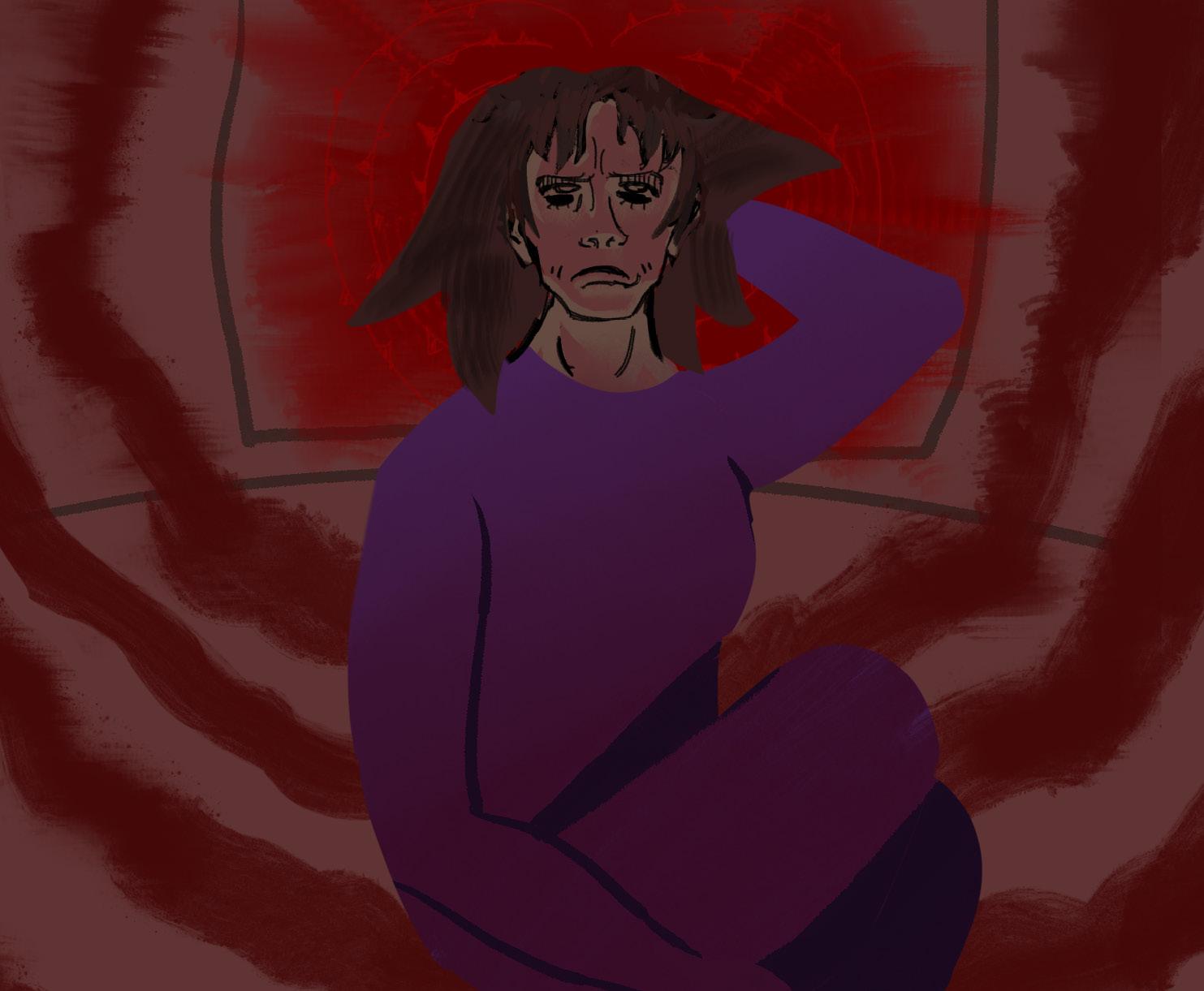
PPD is a mood disorder that occurs after childbirth. Symptoms may include persistent sadness, emotional detachment, fear, anxiety and a sense of hopelessness. Unlike temporary emotional stress, postpartum depression can be intense and may last for months or even years if left untreated. Common causes and risk factors include hormonal shifts, physical exhaustion, sleep deprivation and the major lifestyle adjustments that come with caring for a newborn.
If one in seven women in the U.S. experiences postpartum depression each year, then hundreds of thousands of mothers are affected annually. Despite how common this condition is, there remains a lack of support for women facing postpartum depression. It’s been identified as one of the most underdiagnosed pregnancy-related health conditions.
When viewing these statistics, many gaps in the health care system become clear. One of great significance is the lack of attention given to mothers after delivery, particularly regarding mental health. While childbirth often marks the beginning of intensive care for the newborn, many mothers receive far less emotional and psychological support during recovery. Part of this issue may be rooted in society itself.
Pregnancy and motherhood are often portrayed as joyful and fulfilling experiences, and while this can be true, it creates a false narrative that women should always feel happy after childbirth. This expectation can cause mothers experiencing postpartum depression to ignore their symptoms or feel ashamed to discuss
their struggles openly. Family expectations may also intensify this problem by focusing only on celebrating the newborn while overlooking the difficult realities of motherhood.
In addition, maternity and parental leave remain a major source of stress for many families in the U.S. Research shows that longer paid leave is associated with lower rates of postpartum depression. This suggests that the issue doesn’t lie solely within hospitals, but within American society as a whole. When women are expected to recover physically, care for a newborn and return to work with little support, it can result in their mental health suffering.
Unfortunately, these aren’t the only implications of high rates of postpartum depression in America. Limited health care access plays a major role in preventing mothers from receiving access to treatment. Limited access can be due to several factors such as poverty, the area, insurance status and more. This results in an inconsistent range of support after delivery. Further, the cost plays a huge role, as families with low income may receive less support compared to families with high income.
Read more online at breezejmu.org
CONTACT Keshika Rayamajhi at rayamkx@ dukes.jmu.edu. For more editorials regarding the JMU and Harrisonburg communities, follow the opinion desk on X @TheBreezeJMU and on Instagram @ BreezeJMU.
KESHIKA RAYAMAJHI Breeze columnist
Erin Jablonski / The Breeze
Summer Solis / The Breeze
• Racing Saturday and Sunday afternoons from 1:00-4:30 pm
• Wagering on all the races!
• Triple Crown betting available on Kentucky Derby and Preakness Days
• Located at the Shenandoah County Fairgrounds (I-81, Exit 283)








The Breeze
Editorial Staff
EDITOR-IN-CHIEF Hannah Kennedy breezeeditor@gmail.com
NEWS EDITORS Charlie Bodenstein & Emma Brown breezenews@gmail.com
COPY EDITORS Kayla Katounas & Luke Faircloth breezecopy@gmail.com
PRINT MANAGING EDITOR Preston Comer breezepress@gmail.com
CULTURE EDITORS Bella Arist & Audrey Fletcher thebreezeculture@gmail.com
PHOTO EDITOR Landon Shackelford breezephotography@gmail.com
ONLINE MANAGING EDITOR Emma Notarnicola thebreezeweb@gmail.com
SPORTS EDITORS Madi Perini & Libby Mercer breezesports@gmail.com
AUDIENCE EDITORS Isabel Lewis & Grace Heberer thebreezesocials@gmail.com

“Korosu” by Boris

“Sideways” by ZAYN
“Earrings” by Malcolm Todd
“Hotel Room Service” by Pitbull
“Pour It Up” by Rihanna
“Midnight Sun” by Zara Larsson

“OKAY” by JT
“Pata Pata” by Miriam Makeba
“Diva” by Beyoncé
“Grandsons” by Yusuf

“Burn” by Phillipa Soo Apply to join our team:

OPINION EDITOR Cali Gilmer breezeopinion@gmail.com
ART DIRECTOR Summer Solis thebreezeartdirector@gmail.com
TV
Lauren Keller jmubreezetv@gmail.com
Corrections
(4/22/26): A previous headline for the article “SGA hears presentation and proposed amendments at the last 111th senate” incorrectly the remaining number of Senate meetings. The online article has since been updated with the correct information.
fan FAVORITEs

































MADISON MARKETPLACE
Madison Marketplace is open for business, and all text-only listings are FREE ! Post job listings, announcements, rentals and more using our online placement tool. Ads run two weeks online and in two print editions.
HOUSING SERVICES
Space for Rent in Home
Private entrance, one bedroom, private bathroom, living room, dinette area and galley kitchen (refrigerator included). $850 per month that includes utilities. $850 deposit. No pets and no smoking. Text: (540)705-7578
Rent This 4 Bedroom 2 Bathroom
Adorable Cottage Just Two Blocks from JMU campus
Cute Cottage for Rent Just Two Blocks from JMU Campus and Bridgeforth Stadium - $1999/month. 6 month lease or month to month lease available.
Counseling Services Available!
Arcadia Apartment Available NOW
Dec. Grad needs to rent Arcadia Apartment room that is available immediately until July 31, 2026. Great roomates! Base rent is $599 with utilities included. Please email Kailey.garner0804@gmail.com
JOBS
PT Professional Wanted!
Wanted: P/T by Project. Professional Assistant. Critical Thinker. Familiar with para-legal or related, court filings, start up Llc, research & record keeping. Advertising our performance, Attend Local / County meetings and establish contacts within VA. Positive Energy Required .... Will not be boring assignments - promise! 767 645-6868, 540 456-2668
HIRING! HIRING!! HIRING!!!
Work from home
Serious inquiries only
Data entry clerk needed
$15 per hour, no experience needed We train, bonuses, full benefits 5 days work per week, if interested Contact: elevancehealth533@gmail. com

Cross Keys Equine Therapy is taking new clients! Struggling with depression, anxiety, or just need someone to talk to? We offer equine assisted therapy sessions, nature based therapy, or traditional talk therapy. Only 15 minutes from campus! Give us a call today at 540-607-6910.
New Services For Women
Discover your own beauty and improve it naturally—inside and out. Build lasting confidence, feel empowered to be your best self, and experience greater happiness while living a richer, more fulfilling life. Ask about membership. Please reply to: winstonempowers@gmail.com
Transportation Services Airport transfers, wine tours, special events Motorcoach trip to Liberty football game Sept 20 Contact Adventures-N-Travel.com Call or text 540-810-1196 mikepackett@aol.com
Car Wash Express and Laundromat Express!
Car Wash Express and Laundromat Express! Now accepting credit cards for car wash and laundromat! 3 Minutes from campus! Self-serve and automatic options. 48 Kenmore Street, Harrisonburg, VA.540810-1196 mikepackett@aol.com
Internship Opportunity - City Manager’s Office (Harrisonburg, VA)
Are you a student seeking real-world experience in public administration with a locality recognized both regionally and nationally for a variety of achievements? If so, apply to the City of Harrisonburg’s City Manager’s Office Internship Opportunity! Find out more/apply online: https://www. harrisonburgva.gov/employment. EOE.
Part-time Opportunity - VFW Bartender
Part-time bartender no experience necessary will train must be 21. Apply in person at VFW 450 Waterman Dr Harrisonburg Va 22802 .


ITEMS FOR SALE
Game room
Large folding ping pong table with accessories. Foosball table with extras. Both in good condition. Must pick up, cash only $75 each. 540-578-2362
REAL ESTATE
Property for Sale in Staunton Building for Sale. Three store fronts. Two Apartments. Needs Total Renovation. 300 Central Ave., Staunton, VA 24401 $310,000 or best offer. Call 540-290-0375