




EDITORS Charlie Bodenstein & Emma Brown EMAIL breezenews@gmail.com
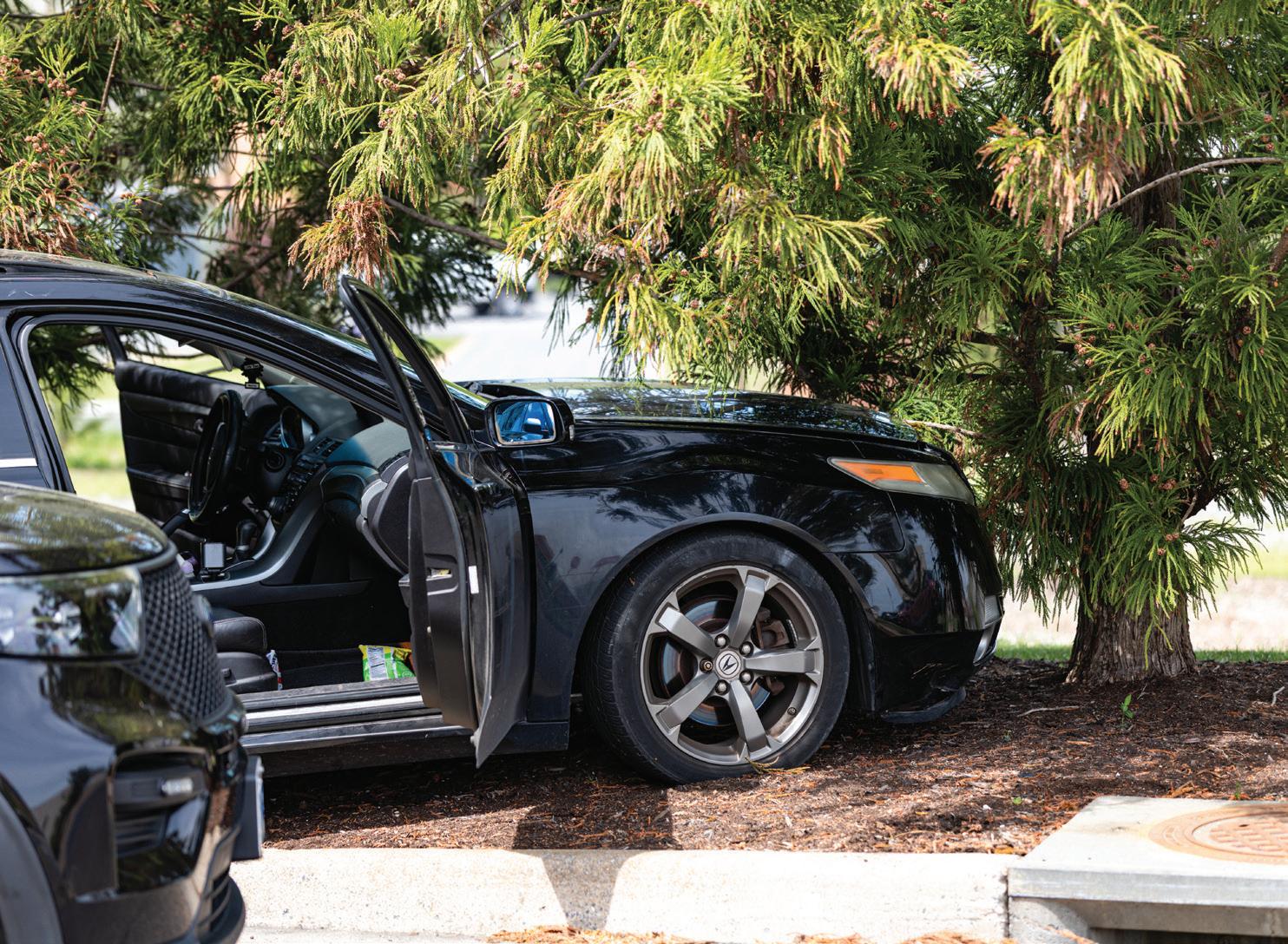
JMU and Harrisonburg police are investigating an abandoned stolen vehicle near Warsaw Parking Deck on Warsaw Avenue.
A Harrisonburg police spokesperson said the stolen vehicle, a black Acura, was observed turning onto Warsaw Avenue from South Main Street. The vehicle went onto the curb behind the parking deck and was “wrecked” just before noon today, the spokesperson said.
Police detained a female passenger, while the male driver, later identified as Leonardo Aleman, fled on foot, but was later detained on Maryland Avenue and is in custody, according to a press release sent from the Harrisonburg Police Department to The Breeze.
He is being charged with the following:
• Eluding a law enforcement officer (felony)
• Hit and run
• Property damage (felony)
• Motor vehicle theft (felony)
• Driving without a license Aleman is also being charged with a previous outstanding capias for failure to appear in court outside of Harrisonburg for a felony probation violation, according to the press release.
Senior JMU football linebacker and sociology major JT Kouame-Yao said it was his car that was stolen from The Mill Apartment complex Sunday around 8:30 a.m. After speaking with the complex, which he said has no security cameras, he reached out to Harrisonburg police, “I feel safe here at [JMU], but we’ve got to have more security," Kouame-Yao said. “The apartments where we live in should be able to take care of us.”
Kouame-Yao said he feels “blessed” that his car was found and he is safe.
Police identified the vehicle using one of the 30 Automatic License Plate Reader (ALPR) cameras, operated by Flock.
“ALPRs do not track vehicles,and there are very specific criteria used to search a vehicle in the system,” the spokesperson wrote.
To identify the vehicle, the spokesperson said that there must be an active criminal investigation, then the cameras will record the license plate, make and model, and color of the car if they match the description.
“In this instance, the officer who took the stolen vehicle report, entered it as missing into our system, created a case and was then able to enter into Flock,” she wrote.
Harrisonburg police and admin are the only ones allowed into the system, the spokesman said, adding that Flock has no access to the data.
“Flock provides the cameras and the technology but our officers are doing the legwork to look through the images to find what they need,” she wrote.
Police detained a female passenger, while the male driver fled on foot.
Amy Brooks, executive assistant to the dean of the College of Visual and Performing Arts, witnessed the incident while she was at the Warsaw Parking Deck.
“I heard a car accelerating very fast and I knew it was going to be a real challenge for them to make a sharp turn up into the Warsaw Deck,” Brooks said. “I heard the tires squealing and struggling to get the car stopped enough to make the turn.”
JMU did not immediately respond to The Breeze for comment.
This is the developing story. Check breezejmu. org periodically for updates.
CONTACT the news desk at breezenews@ gmail.com. For more coverage of JMU and Harrisonburg news, follow the news desk on X @TheBreezeJMU and on Instagram @BreezeJMU.



By CHARLIE BODENSTEIN & CAMDEN LEITCH
The Breeze
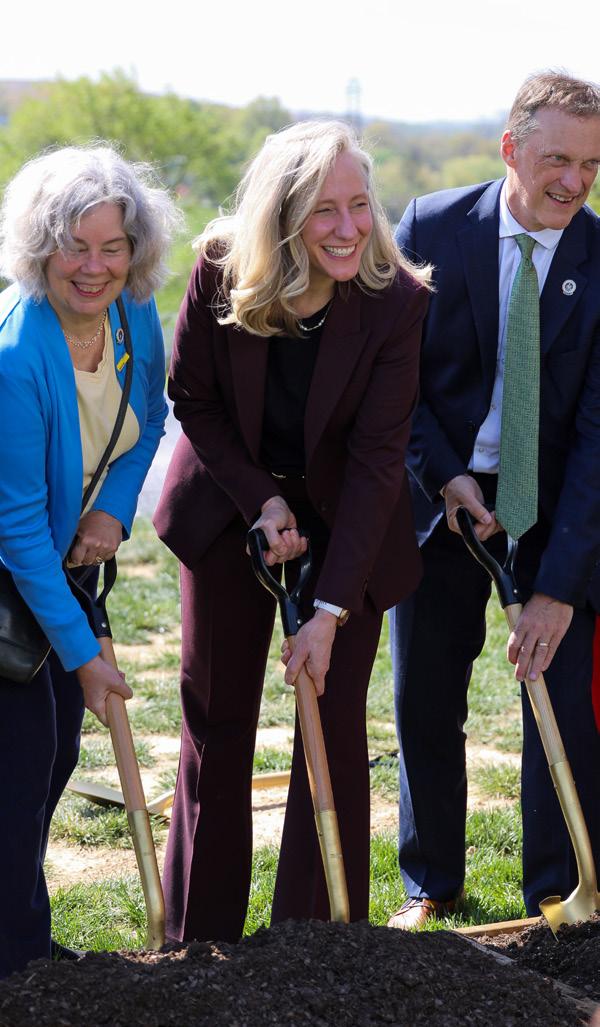
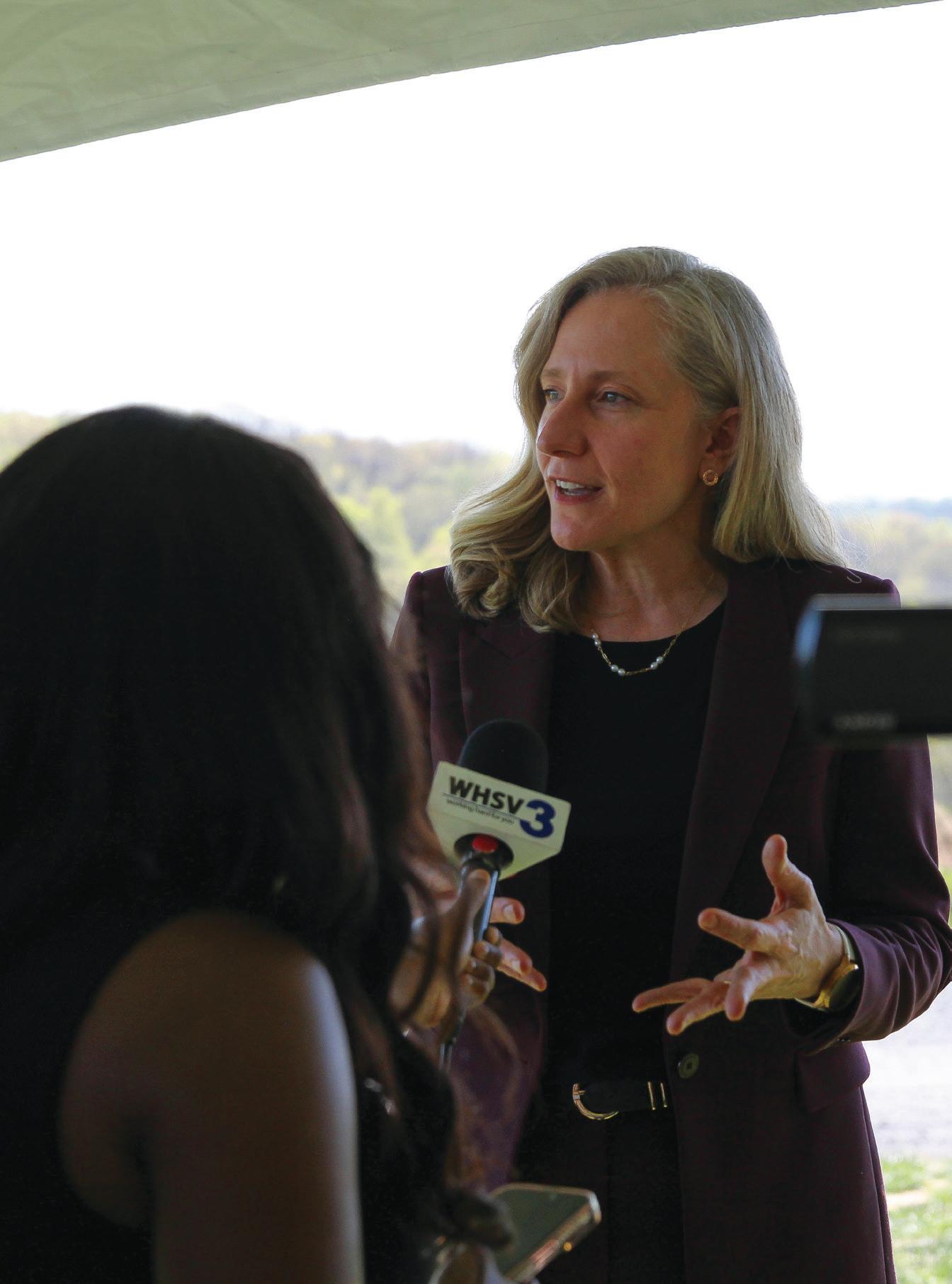
With cars zooming by on Interstate 81 in the background, Gov. Abigail Spanberger made an appearance at Rocktown High School to break ground on a new interstate expansion project. It will add nearly seven miles of the I-81 corridor passing through Harrisonburg and Rockingham County.
The project, which will finish in 2032, will add a third lane northbound and southbound on the interstate, costing $219 million. The expansion will cover the area between Exit 243 and Exit 247.
The project will also replace northbound and southbound bridges with wider structures. To address input from nearby residents, the construction will include four miles of noise barriers to reduce sound disruptions.
“The commonwealth of Virginia, the Virginia Department of Transportation recognizes the need for expansion and further investment to ease the burden on travelers,” Spanberger said.
She added that while the expansion will disrupt residents, construction workers will operate efficiently and safely to ensure its completion. She also urged people to drive slowly in work zones and to respect the workers.
Secretary of Transportation Nick Donohue echoed Spanberger, saying drivers should stay off their phones and slow down when driving in or near work zones.
“These are your neighbors, your friends and members of your community out there doing this really important work on the interstate, and so let’s make sure they’re as safe as they can be,” Donohue said.
This construction is part of a myriad of other projects that make up the I-81 Corridor Improvement Program (CIP), which will enhance safety, reliability and reduce congestion while bolstering economic growth along the regions the interstate connects to, according to the Virginia Department of Transportation website. Delegate Tony Wilt, Harrisonburg Vice Mayor Dany Fleming
and VDOT commissioner Stephen Brich also attended the event, all voicing their support for the I-81 expansion.
“We are fully committed and ready to expand travel lanes through Harrisonburg to approve one of Virginia’s most critical interstate corridors in the Commonwealth,” Brich said.
Wilt called the I-81 corridor not only one of the most important interstates in Virginia, but one of the most important in the entire Mid-Atlantic region. Wilt, who represents District 34, said the issue of I-81 improvement received “strong bipartisan support” within the state.
JMU President Jim Schmidt said the project is an “important improvement in safety” for students.
He added that the project is “welcome news” because thousands of current and prospective students, faculty and university guests travel on I-81 every year.
Spanberger also appeared in Linville earlier in the day to announce that the Virginia Poultry Growers Cooperative will invest nearly $113 million in Rockingham County.
To close out the day, Spanberger announced that AeroNimble — a Harrisonburg-based aerospace business — will invest $2.5 million to expand its operation capacity, creating 51 new jobs.
AeroNimble has also partnered with Blue Ridge Community College (BRCC) to help its students land entry-level jobs at the company.
In addition to the I-81 expansion, Spanberger said her administration recognizes the impact of improving other infrastructure in the commonwealth.
“Ultimately, [it] can bring more dollars into our economy — and in the case of preventative and proactive measures, such as bridge improvement — can save us money in the long run,” she said.
CONTACT Charlie Bodenstein at breezenews@ gmail.com & Camden Leitch wrigh4sx@ dukes.jmu.edu . For more coverage of JMU and Harrisonburg news, follow the news desk on X @TheBreezeJMU and on Instagram @ BreezeJMU.
By SARA HELWE PAGET
The Breeze
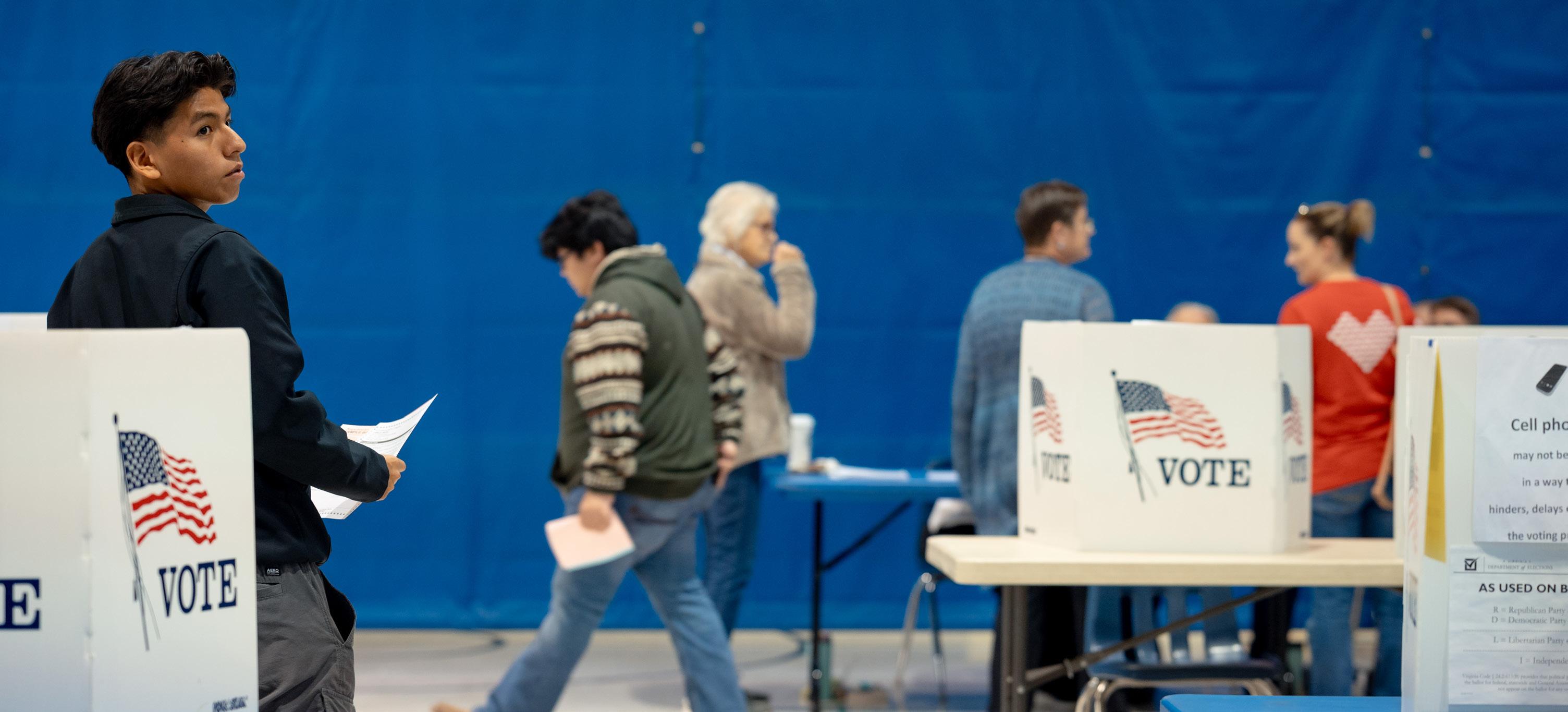
Virginia’s primary election dates have moved from June 16 to Aug 4. This is a temporary measure that will only apply to the 2026 primaries.
This change comes as a preemptive measure for the proposed amendment referendum, also a temporary measure, that will redraw Virginia’s congressional districts through 2030. Virginians will vote on it in a special election on April 21.
District 34 Delegate Tony Wilt (R) said he’s indirectly opposed to the change of the primary date, as he’s directly opposed to the referendum.
Wilt said redistricting, under normal circumstances, follows criteria to preserve community interests, and worries that new maps won’t allow the best representation of the Shenandoah Valley.
He added that it’s important for students to be civically engaged, educated and aware of what’s going on in their district before voting.
“That’s the thing that concerns me, not whether you vote or not, but if you vote in an educated way,” Wilt said. “You should know the issues that are important.”
Freshman JMU Democracy Fellow Brady Dunn said the reason for this change of the primary dates is to accommodate candidates in the primary elections in case the referendum passes, allowing them time to opt in or out of candidacy based on potential new districts.
In addition, Dunn said the primary date change will allow voters to familiarize themselves with potential new candidates.
“We don’t know who’s going to be representing Harrisonburg, granted [the
referendum] passes, and somebody else would have to run,” Dunn said. “We don’t really know what our maps are going to look like, and we don’t know who can run for what district.”
The typical 45-day period of early voting technically begins June 19, but in most cases — based on voter locality — voting will begin June 18 for the observance of Juneteenth.
This change means students registered to vote in Harrisonburg can’t vote in person during the regular semester for this election, and will have to find alternative ways to participate if they are not in Harrisonburg over the summer.
Students can request absentee ballots — a mail-in ballot that can be sent to wherever they’ll be over the summer — through June 24 and must be postmarked by Aug 4 in order to count in the election, Dunn said.
Dunn added that if students are registered to vote in Harrisonburg but aren’t going to be in Harrisonburg for the election, they can update their voter registration to accommodate where they’ll be living and vote there instead.
Wilt said the moving of the primaries may be especially confusing and a potentially disenfranchising process for students and their ability to vote in the primaries, although he had not previously considered it
Dunn said another perspective is that the change is “a great experiential learning moment to try out an absentee ballot. Early vote, try an absentee ballot and make sure your registration is up to date.”
CONTACT Sara Helwe Paget at pagetsh@ dukes.jmu.edu. For more coverage of JMU and Harrisonburg news, follow the news desk on X @ TheBreezeJMU and on Instagram @BreezeJMU.







By SAM WRIGHT
The Breeze
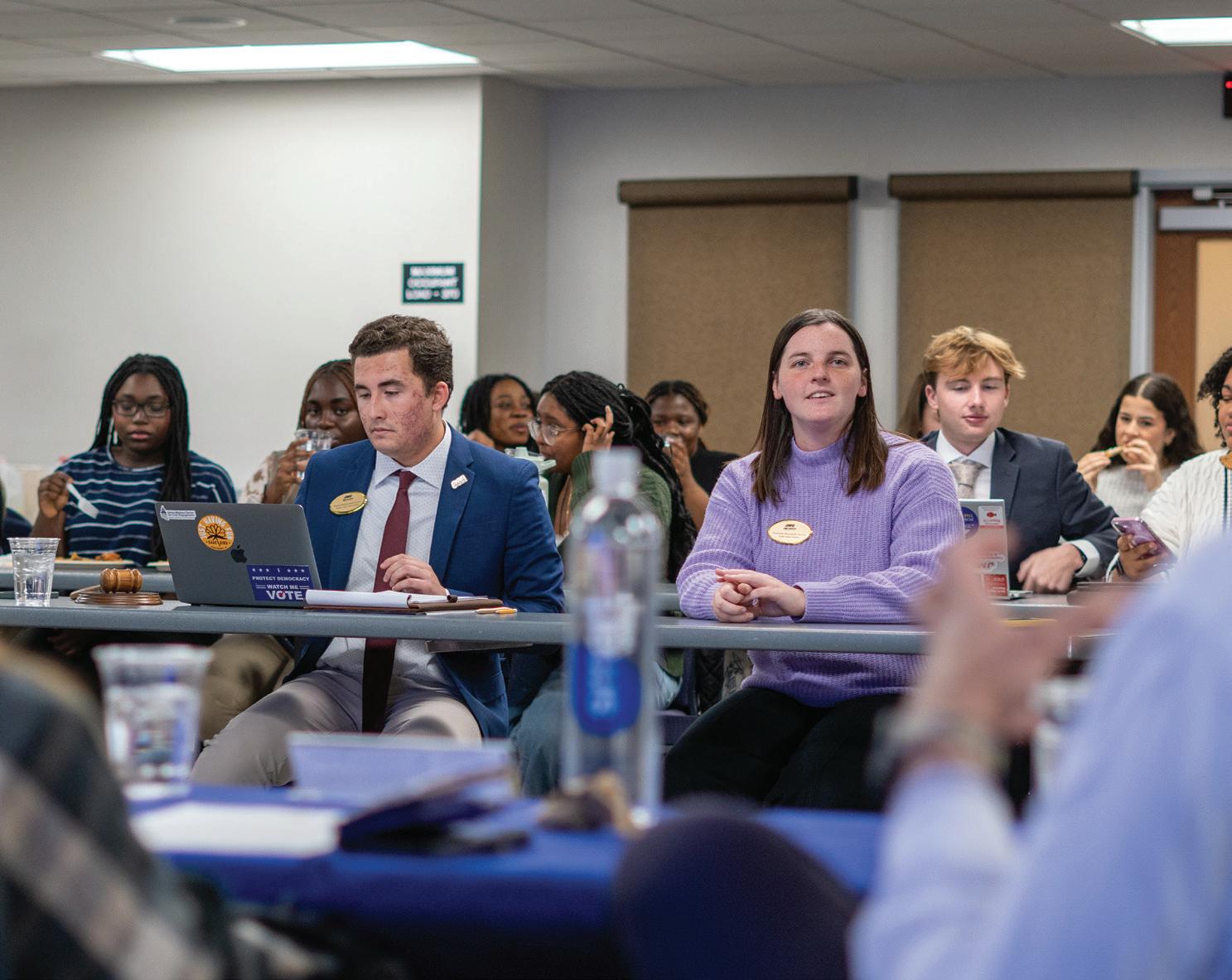
The Student Government Association (SGA) heard a presentation from the Campus History Committee, passed a resolution in recognition of University President Jim Schmidt and another resolution to amend the SGA’s constitution preamble at its last Tuesday Senate of the academic year.
Campus History Committee plays Kahoot game
Senior biology major and Student Representative to the Campus History Committee Ryan Sauer delivered an unusual presentation on JMU’s history.
“I know you guys hear a lot and talk a lot, but I figured we can have some fun this last Senate,” Sauer said.
The history presentation Sauer brought was actually a Kahoot game about JMU trivia for the senators to play.
Questions focused on early JMU history, like: “In which year did JMU first open its doors?” (1909; the bill that chartered JMU was signed in 1908, but JMU did not open for classes until September 1909), or “Which U.S. President (not James Madison) was JMU almost named after” (William Henry Harrison).
President Jim resolution
Senior and Membership Chair Ella Stotzky presented a resolution to honor President Jim and First Lady Kim Schmidt for their dedication to JMU.
The resolution was to “recognize President Jim and First Lady Kim Schmidt for their commitment to James Madison University within their first year in office,” senior and Speaker of the Student Senate Kieran Fensterwald said. In his first year, Schmidt has attended artistic performances, sporting events and made an effort to connect with student organizations.
“In my four years here, I’ve seen three different presidents, and by far, President Jim
has been the most accessible to students,” Stotzky said.
President Schmidt’s promotion of JMU across Virginia and First Lady Schmidt’s efforts to enhance student wellness were also mentioned in the resolution.
“On behalf of the student body, we thank them for their passion and commitment to JMU,” Fensterwald said, again reading the resolution.
Preamble amendment
expands student involvement
Freshman Academic Senator for the College of Arts and Letters Brady Dunn submitted a resolution to amend the preamble of the SGA’s constitution.
The amendment seeks to increase collaboration between the SGA and other student organizations on campus.
“This will include exploring ways we can partner with other organizations, departments, and community partners and reflecting on approaches that each committee can take to enhance all JMU students’ experiences here,” Dunn wrote in a statement to The Breeze.
The amendment is meant to encourage students to reconnect with the SGA, Dunn said. “We are still feeling the effects from COVID and working to mend the disconnect it created between student organizations and the student body,” Dunn said.
This amendment will be a continuation of the outgoing senior class’ work to familiarize students with the SGA and what it does, Dunn said.
“We honor them by asking, ‘How can we further reach the student body and continue your work?’” Dunn said.
CONTACT Sam Wright at wrigh4sx@ dukes.jmu.edu . For more coverage of JMU and Harrisonburg news, follow the news desk on X @TheBreezeJMU and on Instagram @BreezeJMU.

For the April 21, 2026 Special Election
Precinct 102 — East Central (Spotswood Elementary)
Will vote at: Harrisonburg City Hall
409 S. Main St.
Precinct 202 — Southwest (Keister Elementary)
Will vote at: Heritage Oaks Golf Course Club House
680 Garbers Church Rd.
Precinct 203 — West (Thomas Harrison Middle School)
Will vote at: Price Rotary Senior Center (Westover Park)
309 S. Dogwood Dr.
All other polling locations in Harrisonburg will remain unchanged
POLLS OPEN 6:00 a.m. – 7:00 p.m.
TUESDAY, APRIL 21, 2026
Please verify your voter registration, polling place, and valid ID before voting.
vote.elections.virginia.gov/voterinformation

Questions? Call 540 -432-7707 or email registrar@harrisonburgva.gov
EDITORS EMAIL
Arist & Audrey Fletcher
By SIXUAN WU The Breeze
Almost every seat in the Forbes Concert Hall was filled as attendees from near and far came for a reading and Q&A event with Virginia Evans (’08), author of “The Correspondent,” on Thursday.
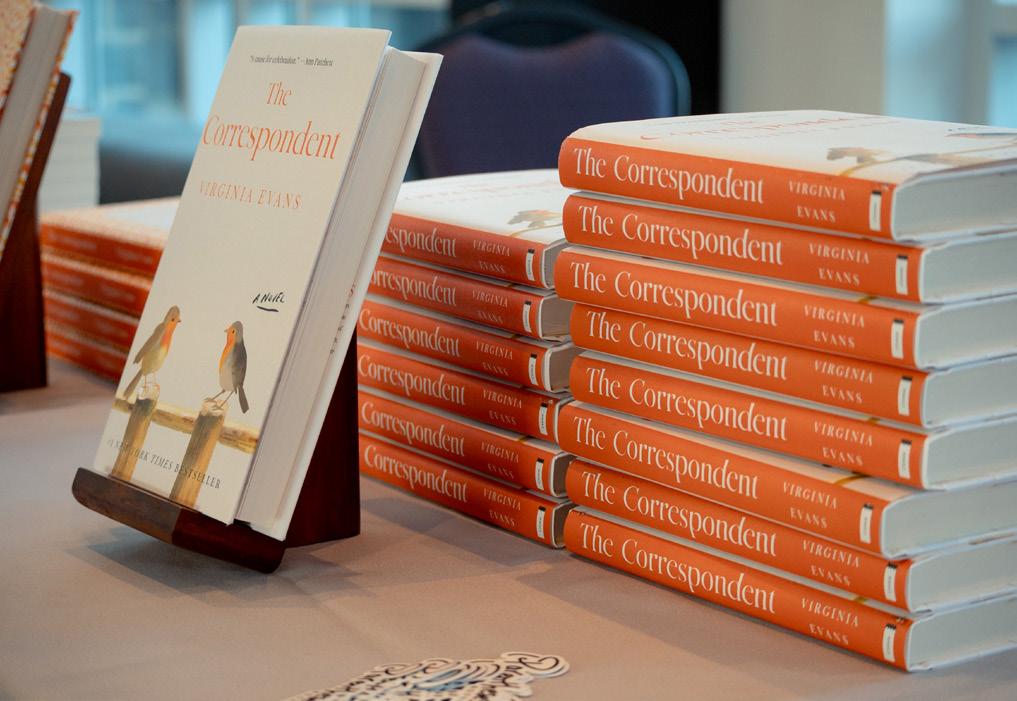
At JMU, Evans was an English major with a minor in creative writing. She later got her master’s degree in creative writing from Trinity College in Dublin, Ireland. “The Correspondent” is her debut novel and became a New York Times bestseller in February.
“The Correspondent” tells the story of 73-year-old Sybil Van Antwerp, who uses letter-writing to make sense of her life — and as a means of keeping people who love her at arm’s length. But when unexpected letters from someone in her past arrive, Sybil is forced to face a grief she’s been trying to forget and forgive herself to move on.
The novel is unique in its epistolary format — told through letters between Sybil and her correspondents. Evans drew inspiration from “84, Charing Cross Road” by Helene Hanff, and said she wanted to explore the format with a bigger, more emotionally impactful story.
“The beauty of the epistolary novel is, let’s be honest, all the negative space,” Evans said. “There’s something about this format that’s very forgiving.”
Despite telling the story through the eyes of a 73-year-old, Evans, who’s 39, said she had no trouble tapping into Sybil’s voice during the writing process, adding that she channeled other elderly women in
her life to create Sybil as a witty and blunt character who’s deeply flawed, yet not afraid of admitting her shortcomings.
“When I had her, I had her fully,” Evans said. “I knew what her voice sounded like. I knew the really annoying things about her … I just knew her.”
As the story progresses, Sybil is forced to re-examine her relationships with those around her and reform in-person connections. With the book’s success, Evans said she’s surprised by the number of people who tell her the novel has prompted them to also write letters and reconnect with others.
“There’s something really beautiful about the letters,” Evans said. “There’s something that reaches back in time. [It] feels like something we’re losing.”
She added that the letters are also the heart of the book’s tragedy; as Sybil begins losing her eyesight, she’s at risk of losing the only way she’s been connecting with the world: letter-writing.
“Because her life is conducted in mail, there’s something about losing that … that’s kind of saving her,” Evans said.
Evans described the book as one of grief and disappointment, with Sybil coping with the grief of losing a child and the fear of going blind.
Evans herself is no stranger to disappointments, after having seven previous novels rejected by publishers.
While she wrote “The Correspondent” during COVID-19 — from a closet in her North Carolina apartment — she was also considering applying to law schools due to her lack of income. Her agent insisted on trying to sell the book, however, after reading the manuscript. A publisher
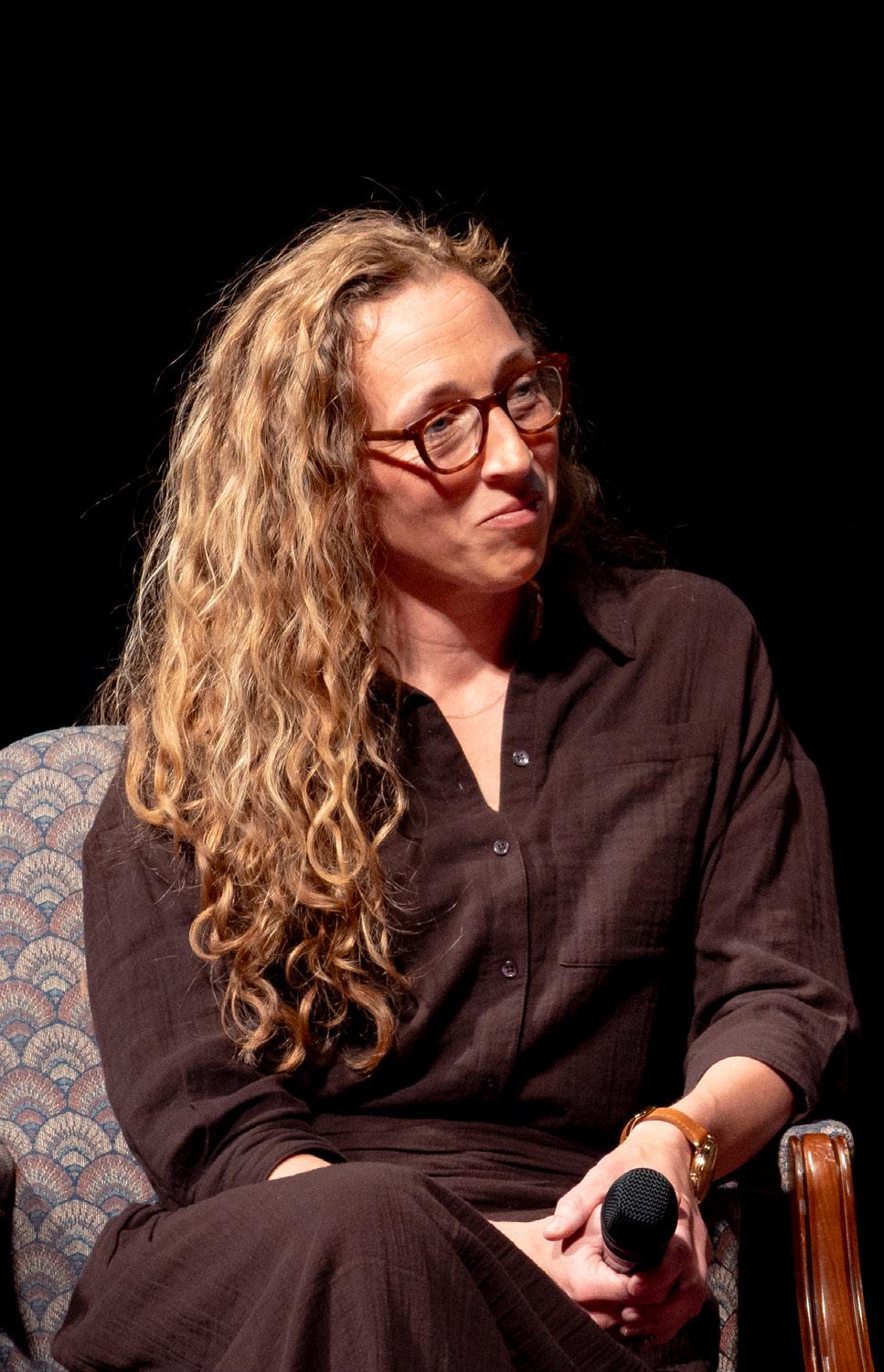
bought the book in 2023. Editing took two more years, and the book came out in 2025.
“It came out very small,” Evans said. “Nobody carried it anywhere, but [it’s] not so small now. Now it’s a whole different world.”
Attendees filed out of the concert hall for a book signing after the event, lining up the entire length of the Forbes Center for the Performing Arts’ second-floor lobby.
“I loved everything she said,” said Kailyn Noble, an attendee who drove over an hour and a half to the event from Springfield, Virginia. “She was so sweet. I wish I could go to a coffee shop and spend an afternoon with her talking about life.”
Parentheses Books, a local bookstore that collaborated with JMU for the author talk, sold 91 copies of the book following the event.
“I think small towns often get overlooked,” said Amanda Friss, owner of Parentheses Books. “All the authors go to New York City on their book tours, so it’s rarer for an author who’s this big of a name to come to a town that’s as small as Harrisonburg. That was a really big deal.”
CONTACT Sixuan Wu at wu3sx@ dukes.jmu.edu. For more on the culture, arts, and lifestyle of the JMU and Harrisonburg communities, follow the culture desk on X @TheBreezeJMU and on Instagram @BreezeJMU.



How much energy is in your drink?
By GRACE SAWYER The Breeze
A 2025 nationwide survey found that 95% of college students consume caffeine, a fact that’s unsurprising for most JMU students.
The vast majority of students have waited in line at Starbucks or Dunkin’ for a coffee, tea or matcha — stopped by a vending machine to conveniently buy a Celsius, Red Bull or Alani — or brought their own caffeinated beverage of choice from home.
Students often use caffeine to manage energy and focus during early-morning classes, late-night study sessions and even day-to-day functioning.
Some students even consume multiple caffeinated products per day with only 34% of students drinking one caffeinated beverage each day, while the other 66% say they typically drink one to two.
Among college-aged caffeine drinkers, the mean intake is 173mg of caffeine per day — and most people choose to get their caffeine from coffee, then energy drinks then soda and tea.
Women typically consume more caffeine than men overall, but men tend to consume more energy drinks than women.
Additionally, many athletes or gym-goers are often at a greater risk for excess caffeine consumption due to their increased physical exertion and subsequent tiredness.
Students consume caffeine for many different reasons, including feeling awake, enjoying the taste, the social aspects of consumption, improving concentration, increasing physical energy, improving mood and alleviating stress.
However, even with widespread consumption, caffeine can have negative effects on students’ health and well-being and blood pressure.
Caffeine is a central nervous system stimulant that works by blocking adenosine receptors in the brain, preventing the neurotransmitter adenosine from binding and causing drowsiness.
It simultaneously increases the release of neurotransmitters like dopamine and norepinephrine, causing the consumer to get a boost of energy, alertness and a rise in heart rate and blood pressure.

By JUSTIN BRAUNSTEIN contributing writer
JMU students and staff along with the Harrisonburg community flocked to paint a colorful, cohesive, two-story mural, with the use of scaffolds and ladders inside Duke Hall Gallery.
Graduate student Ver Ikeseh is an artist and instructor in the School of Art, Design and Art History. Ikeseh has spent the last several weeks collaborating with local artists, JMU students and anyone who wanted to participate in his final project: a community mural located in the Duke Hall Gallery.
Ikeseh said the mural is intended to represent belonging in a community. Ikeseh and his project are nominated for the Graduate Students Category (GSA) Impact Award.
“I was able to achieve belonging with the composition of putting different images together that define different kinds of gender, body size, age and race,” Ikeseh said. “We’re also able to put together colors that, to a large extent, define belonging, because we’re able to make them cohesive.”
Ikeseh said that he’s always been fascinated with public art because of its freedom. A mural is accessible to all and isn’t under the same constraints to display and present, as opposed to art in galleries and museums, which require specific times and sometimes payment to visit.
“A lot of people are going to have access, not people who just want to go into the galleries,” Ikeseh said.
Although obtaining permission and paperwork to get a mural approved can be challenging, there is much more freedom in the creativity and display process once that is done.
“I have always been fascinated with working in public spaces,” Ikeseh said. “There’s a lot of politics trying to get into galleries and museums. That takes away a lot of time from creating the work itself.”
In the early stages of production, Ikeseh had a broad theme of belonging and inclusion in mind. There wasn’t a specific image or goal for how the visual was supposed to look, he said.
The theme of belonging is reflected both in the art and in the process of developing the piece, with more than 60 people participating in the creation of the mural.
Ikeseh also mentioned that producing a public mural in a gallery setting is rare, contrasting the usual politics of getting art into galleries.
Ikeseh emphasized the importance of engagement: how people who contribute to and view the artwork interact with the piece. While recognition is meaningful, he said the joy of painting and doing what you love is just as important.
“The success is not only in the fact that the mural has some depth and aesthetics, but for the fact that everybody [who] contributed, participated, was excited about it and willing,” Ikeseh said. “That engagement is priceless.”
Although senior Chance Lundy an independent scholar student with a focus in art and business is not a student of Ikeseh’s, he played a large role in the painting and creation of the mural. Particularly the yellow man who’s seen throwing his hands in the air towards the front of the group of figures.
Lundy met Ikeseh at an event two years ago and described Ikeseh as a mentor for developing his artistic abilities. When Ikeseh first started the mural he invited Lundy to join in the process.
“I was just excited. A lot of people will say they’re not that good, or they don’t want to mess it up, but that’s why it’s there — so anybody could put their stamp on it,” Lundy said.
Lundy said his favorite part of the project was not feeling any tension while working on the art, with music constantly going and artists just “painting and jamming.”
“The whole gallery was jamming,” Lundy said. “Once you’re there, you just float. I didn’t feel any tension while I was in there.”
Lundy gave a few words of advice to people who are nervous to contribute to a project like this: “If you don’t do it, you’re forever going to be wishing.”
Other credited artists
In addition to Lundy, Ikeseh also credited freshman architecture major Aryan Rahman.
“I worked with everybody, and I give credit to everybody, but if you mention one person’s name, Aryan has been the most dedicated, and he has been here every day,” said Ikeseh.
Ikeseh added that the figures that appear farther back in the artwork weren’t even his ideas, crediting them to local artist Laura Thompson.
“[Laura] came around when it was a blank wall. She said to me, ‘What do you think?’ And I was like, ‘What do you think?’” Ikeseh said. “Then she went up there, and then she did all of those sketches.”
During the process of getting permission for the mural, Ikeseh stayed persistent in his vision and ideas. Ikeseh concluded the interview with a note for other artists as well as some general life advice about what it means to be convinced in what you do. Ikeseh said when you are convinced in your ideas or visions, it’s easier for others to be convinced as well.
“Don’t allow nobody to talk you down,” Ikeseh said. “For the fact that it has never been done, does not mean it cannot be done. And the truth is that when you believe in it so much, then it’s going to be much easier to convince other people to believe in it.”
Ikeseh also noted that being an artist doesn’t necessarily mean being a typical creative, such as a painter. You can be anything and still be an artist.
“What I will always tell people — students and every other person out there — is that you can be a doctor, lawyer, engineer, you can be whatever and still be an artist,” Ikeseh said. “That’s going to help you practice whatever you’re doing in a much more creative way.”
CONTACT Justin Braunstein at braunsjw@dukes.jmu.edu. For more on the culture, arts, and lifestyle of the JMU and Harrisonburg communities, follow the culture desk on X @TheBreezeJMU and on Instagram @BreezeJMU.
By EDISON VRANIAN The Breeze
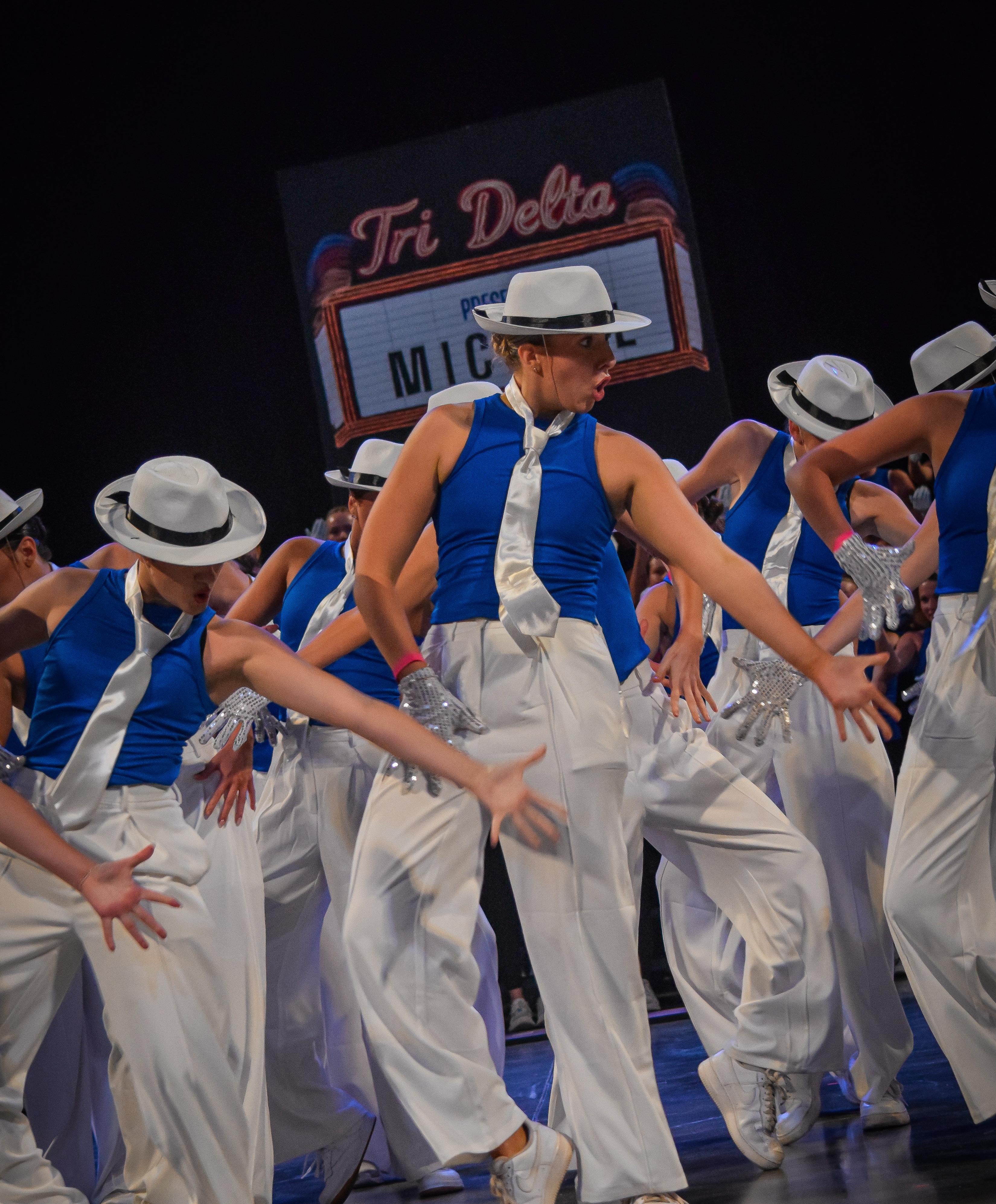
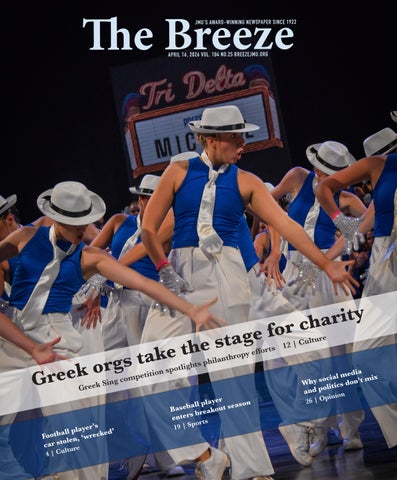
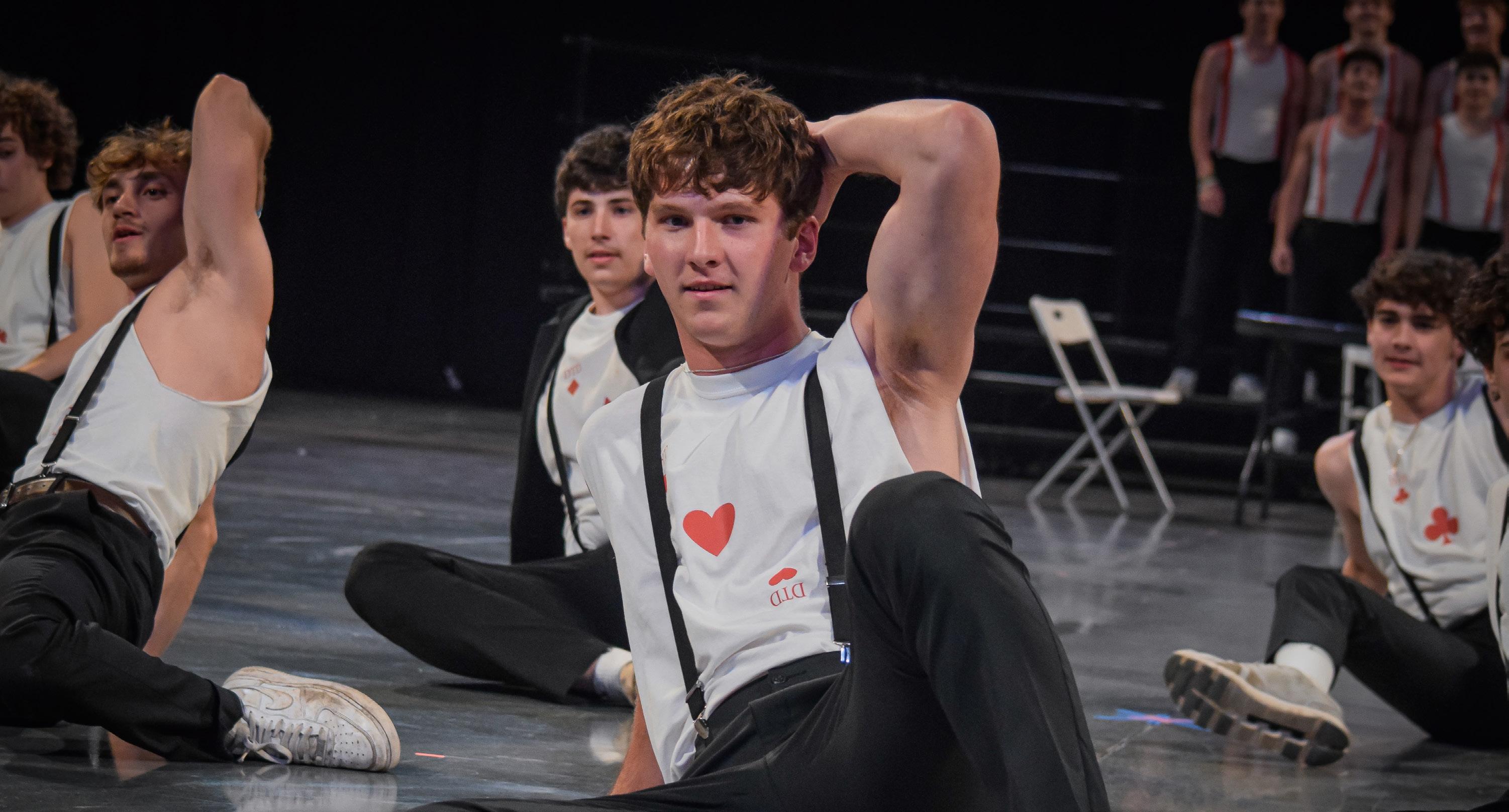
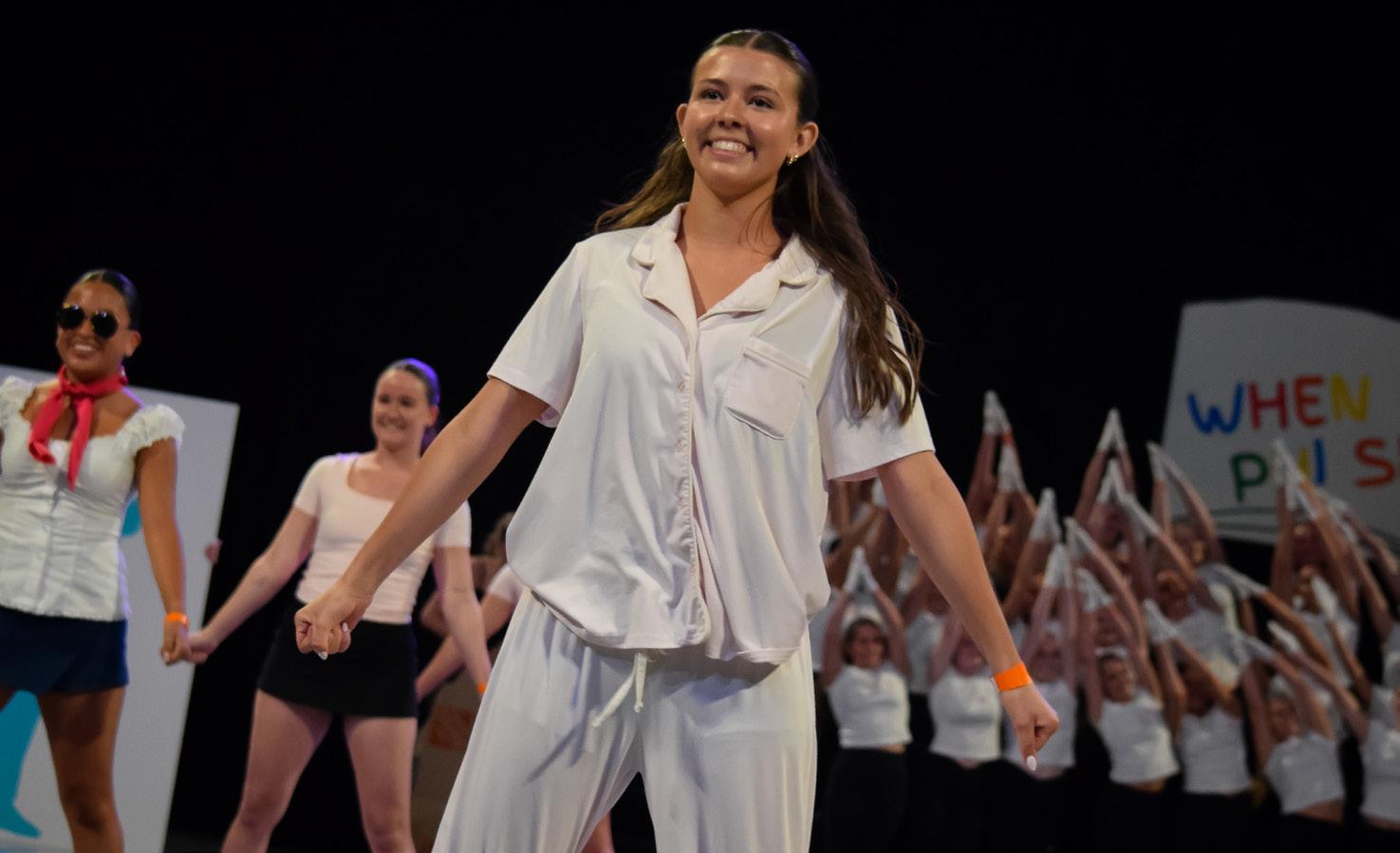
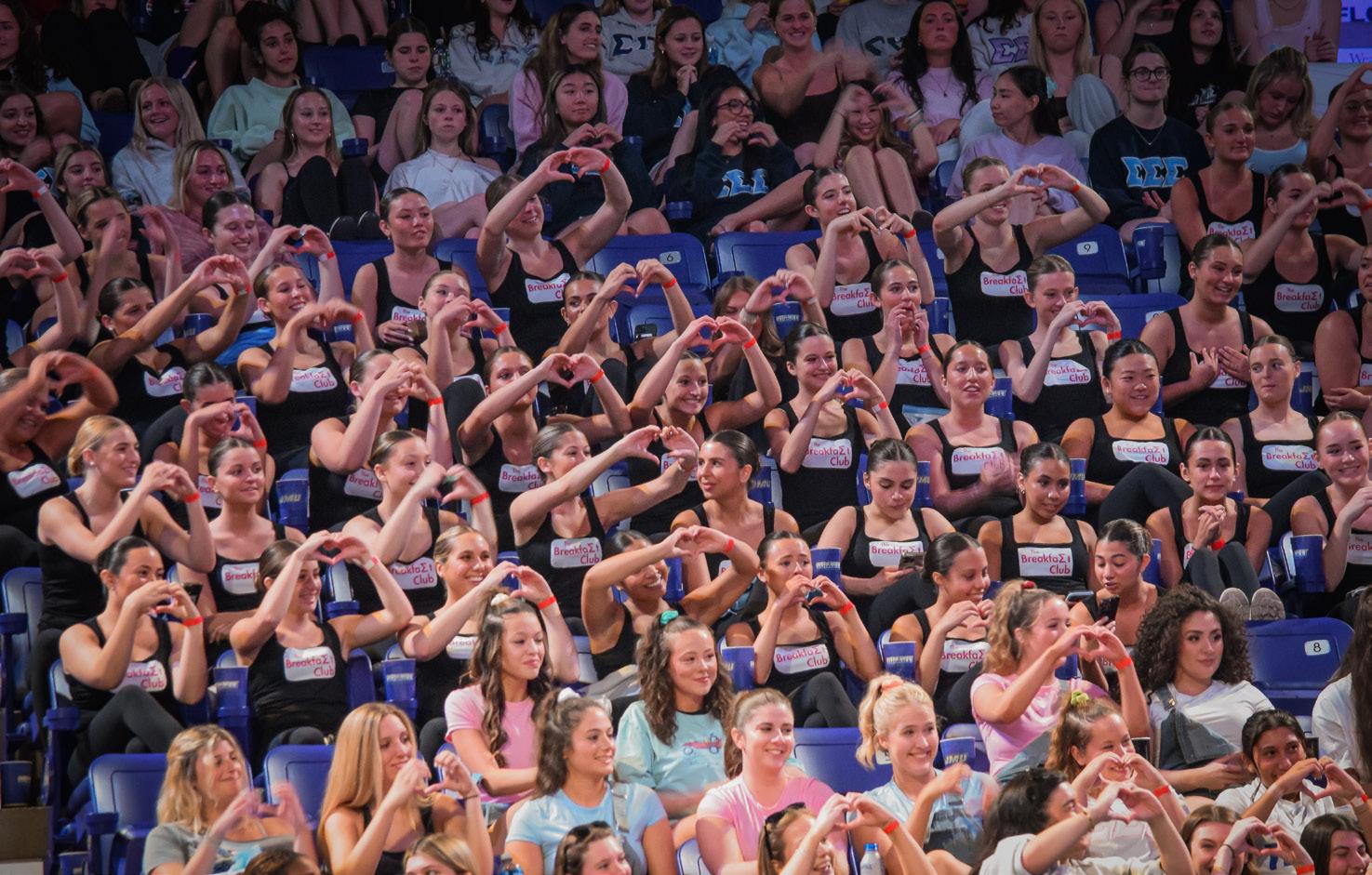
JMU’s chapters of Kappa Alpha (KA) and Zeta Tau Alpha (ZTA) rocked the Atlantic Union Bank Center (AUBC) on Tuesday in 2026 Greek Sing, raising money for The Arc of Harrisonburg and Rockingham in the process.
The annual Greek Sing competition, which dates back to the 1990s, featured dances, hand motions, lip sync battles, and fraternity and sorority chants on AUBC’s stage.
Twenty-three Greek organizations participated in themed performances, including “NASCAR” from Alpha Sigma Phi, “Beetlejuice” from Sigma Kappa, “Hamilton” from Alpha Sigma Alpha, “Michael Jackson” from Delta Delta Delta, “Back to the Future” from Kappa Alpha Theta and “2016 nostalgia” from Pi Kappa Phi.
After decisions from the judging panel, KA’s “Indiana Jones”-themed act and ZTA’s “Just Dance” on the Wii-themed act won in their respective fraternity and sorority categories.
Senior computer information systems major and KA member Ryan Brown was in charge of the costumes, props and music in KA’s performance. Brown was also a part of last year’s winning KA Greek Sing performance.
“It felt good to win last year,” Brown said. “It feels even better this year. No complaints there.”
Senior history major and ZTA member Gabby Pugliese was seen during the performance getting thrown in the air and walking on the backs of fellow performers. Despite the stunts performed, she said she had no prior dance experience.
“This is actually crazy, because I’ve never danced a day in my life,” Pugliese said. “I asked if I could join [the dance] and everyone was so welcoming. I never expected us to win.”
For Brown and Pugliese, winning a dance competition isn’t an easy feat — it takes time, practice and motivation.
“We put a lot of time and effort into this,” Pugliese said. “We practiced at least four times a week. We really wanted to put on a good show, but also, we know that all of this is for a good cause, and ZTA always wants to support a good cause and be there for the community.”
While KA and ZTA’s hard work won them the Greek Sing trophy this year, the proceeds of Greek Sing went to The Arc.
The Arc is a non-profit organization that supports the human rights of people with developmental and intellectual disabilities to
be functioning members of a community like everybody else, according to its website.
Executive director Angela Carter said the Greek Sing organizers selected The Arc, and she believes they’ve been connected for five years.
“What it spells out is the connection between all ages, all backgrounds, and that this is a really caring university,” Carter said. “I cannot explain in words what it means to us to receive donations for something that people have put so much time, energy and talent into. We are forever grateful.”
Before the competition began, representatives from The Arc ran on stage and received high fives and cheers from the members of fraternities and sororities.
“This is one of the few opportunities where in the public eye, everyone could really see that Greek Life really could do some good things,” Brown said. “Everyone can really unite for a good cause, support The Arc and join for a friendly dance competition.”
Carter said that while not every organization could come out on top, every participant is celebrating together. KA, ZTA and The Arc weren’t the only winners, many participating Greek organizations received recognition for their performances.
The second-place winners were Alpha Sigma Phi for fraternities and Sigma Sigma Sigma for sororities. The third-place winners were Delta Tau Delta for fraternities and Delta Delta Delta for sororities.
Theta Chi and Phi Mu were recognized for the best props, Lambda Chi Alpha and Kappa Alpha Theta for the best hand motions and Kappa Alpha and Delta Delta Delta for the best dance. After all the dancing, recognitions and fundraising for The Arc, it brings the winner to everybody at the Greek Sing.
“I think that this entire event is awesome,” Pugliese said. “Everyone put on such a great show, all the teamwork, effort that goes into it with JMU and the community is really heartwarming and good to see. I hope it goes on forever.”
CONTACT Edison Vranian at vraniawe@ dukes.jmu.edu. For more on the culture, arts, and lifestyle of the JMU and Harrisonburg communities, follow the culture desk on X @TheBreezeJMU and on Instagram @BreezeJMU.

By SOPHIA RANDAZZO contributing writer
Nearly 15 years ago, the Battle of Hogwarts was brought to life in “Harry Potter and the Deathly Hallows — Part 2.” The castle doors will open once again for a new generation of fans, as well as people returning for the magic.
“Harry Potter and the Sorcerer’s Stone” by J.K. Rowling, the first book of the all-time bestselling book series in the world, was first seen on screen in 2001. Harry Potter fans packed movie theaters around the world to see their favorite wizards and witches come to life, with the film grossing $974 million in its initial run. Each of the next seven Harry Potter movies saw similar success.
At the end of 2026, we will see the world of Harry Potter return to our screens for a second time, but now as a dramatic series with seven planned seasons. The plan to develop the show was announced in July 2023, with casting of major roles beginning in September 2024.
To find the new faces for the Golden Trio, the show had an open casting call, which attracted over 30,000 kids from across the U.K. Dominic McLaughlin has been cast as Harry Potter, Alastair Stout as Ron Weasley and Arabella Stanton as Hermione Granger.
Each season of the show will represent a book in the series, with the first season set to have eight, hour-long episodes. With this longer format, the series hopes to take on a more faithful adaptation of the books. The
extended runtime allows for the inclusion of subplots and characters that were previously cut and leading to deeper character development.
“What I like about the show is that it will give roughly eight hours dedicated to each book in the series and will include massive plot points omitted from the films, such as Peeves the Poltergeist, the backstory of the Maurauders and Hermione’s S.P.E.W. activism,” said freshman elementary education major CJ Beachboard, who’s a chaser on JMU’s quadball team (formerly known as quidditch).
The first trailer for the series was released on March 25, 2026, and gave the world the first bits and pieces of what the show will look like. It confirmed that fans will see entirely new
sets, costumes and portrayals of creatures and characters, which some are finding difficult to accept.
“You can’t replace faces like Daniel Radcliffe or Alan Rickman, making this one of the major hurdles for the series,” Beachboard said.
Major backlash erupted when the actor for Severus Snape was announced, previously played by the late Rickman.
Read more online at breezejmu.org
CONTACT Sophia Randazzo at randazse@ dukes.jmu.edu. For more on the culture, arts and lifestyle of the JMU and Harrisonburg communities, follow the culture desk on X @ TheBreezeJMU and Instagram @BreezeJMU
By ANNALISE JAMES SCOTT The Breeze
Hollywood actor Timothée Chalamet recently said nobody cares about opera anymore — but the passion of the performers and director of JMU’s “Cinderella” combined with the lively reception they got from the audience, suggest otherwise.
On April 11 and 12, JMU opera theatre performed “Cinderella: a classic fairytale opera” — a 35-minute opera based on the classic fairytale.
When most people hear the word “opera,” they tend to think about performances sung in Italian; however, this production was performed entirely in English. Captions were projected on the wall for people who were hard of hearing or struggled to understand the performers’ singing, making the show accessible to anyone.
“I think when people go and see their first opera, they’re generally pleasantly surprised. It’s a full-body experience,” Ye Lynn Han, the performer who portrayed Prince Charming, said. “Some of the voices that you hear will shake every bone in your body, and the emotions will leave you vibrating when you leave.”
The show told a Cinderella story that’s a bit different from the classic Disney version people are most familiar with. The biggest change is that Cinderella has an evil stepfather named Don Magnifico, instead of an evil stepmother.
Cinderella and the prince also meet while the prince is disguised as a beggar whom Cinderella treats with kindness, well before the ball happens.
In this version, Cinderella’s kind heart and desire for a more peaceful world are strongly emphasized. She wishes to meet the Prince to speak to him about the state of the kingdom and persuade him to rule in a way that prioritizes his subjects.
“Professor Borths has adapted it in a way that makes Cinderella strong,” Han said. “She has a strong idea of what she wants for the world and knows that she can cause good things to happen.”
The show was a comedic, light-hearted retelling of the classic fairytale geared towards young children. At the core of the opera was a strong moral lesson for kids: Through kindness, bravery and teamwork, anything can be accomplished.
“I want them to get that experience really early on, so they see that it’s really fun,” Han said, relating to what he wants children to take away from the show. “Singing is for everyone. It’s OK to be loud, and it’s OK to sing about your emotions.”
Before the show started, the writer and director of the opera, assistant professor in the School of Music Joshua Borths, came on stage and instructed the audience on when to clap, and stated that if they really liked a performance, they could make like the Italians and say “bravo!”
The audience did not disappoint. Raucous applause and a chorus of voices yelling “bravo!” were heard after every song.

The performance also incorporated interactive elements, with multiple instances when a performer would walk near audience members. In one scene, the Prince approached an audience member and asked her to try on the glass slipper left by Cinderella at the ball.
He wasn’t the only performer who broke the fourth wall. The fairy godmother, played by graduate student Augusta Nafziger, waved at kids in the audience as she entered and exited her scenes, eliciting charmed reactions.
Many children in the audience were decked out in their finest princess attire, which definitely came in handy when guests were given the opportunity to line up to meet and take a picture with Cinderella at the end of the show.
The show was filled with strong performances. Cinderella and the Prince carried the show with ease. The fairy godmother commanded attention with her bright and powerful voice. The king, played by Ian Amos, fascinated the audience with his physical comedy.
It was apparent that the performers poured a lot of effort and passion into their roles. Even though it was a short show, the actors did a three-hour dress rehearsal on the eve of opening day. They spent hours workshopping and re-doing scenes to make sure everything was perfect.
“As an opera singer, we don’t have a lot of time between roles, so we helped each other learn our music,“ Han said. “It’s been really awesome to see all the support that all the students have for each other.”
Being filled with children, the crowd could be a bit chatty at times, but during scenes where Cinderella and the Prince were together, a hush would fall on the crowd. The actors for Cinderella and the prince’s love demonstrated easy chemistry, holding the audience’s attention — due in no small part to the performers being married in real life.
When asked what it’s like to play love interests with his wife, Han said, “It’s really easy, we just get to get up there and have fun.”
With an opera so entertaining and accessible, it’s never been easier to support the arts.
“If you like beautiful music, go to the opera. If you like weird music, go to the opera. If you like crazy plots, go to the opera,” Han said. “There’s an opera for everyone ”
CONTACT Annalise James Scott at Jamessam@dukes. jmu.edu. For more on the culture, arts and lifestyle of the JMU and Harrisonburg communities, follow the culture desk on X @TheBreezeJMU and on Instagram @BreezeJMU.
By ALYSSA MILLER & BELLA ARIST
The Breeze
NASA’s latest mission crew, Artemis II, honored mission commander Reid Wiseman’s late wife, JMU alumna Carroll Taylor Wiseman (‘95), by naming a newly discovered crater on the moon after her, prompting tears and a group embrace in space.
Carroll graduated from JMU in 1995 as a biology major and then continued her education at VCU to become a pediatric nurse practitioner. At JMU, Carroll was a part of the Alpha Sigma Tau (AST) sorority. In 2003, Carroll married Reid, a NASA astronaut.
On May 17, 2020, Carroll passed away after a long battle with cancer. But even with her rapidly declining health, Carroll always encouraged Reid to keep training as an astronaut, according to TODAY.
This year, Reid commanded the four-person Artemis II mission crew through a 10-day flight with the goal of carrying astronauts the farthest from Earth than anyone in over half a century, according to NASA.
During this mission, the Artemis II crew identified a crater that mission specialist Jeremy Hansen said into the radio in a video shared by
NASA, it’s in a “really neat place on the moon,” and is visible from Earth during certain lunar transits.
“Carroll Crater is located on the far side of the moon. The designation serves as a tribute to her life and legacy,” according to JMU.
The Artemis II Crew asked Mission Control permission to name a crater after their spacecraft,
Integrity, and another after Carroll. Hansen made the request right before Monday’s lunar fly-around. Reid was too emotional to talk.
“Just for me personally, that was kind of the pinnacle moment of the mission for me,” Reid said from space Wednesday night, according to Houston Public Media.

Reid said his crewmates came up with the idea, adding that he was supportive of it, but said he shouldn’t be expected to give a speech.
“I can’t give the speech, I can’t give the talk,” he recalled during a crew news conference, according to U.S. News & World Report.
Then, on Monday, April 6, while in space, Reid and his crew orbited the moon and officially named the crater after Carroll.
“It was definitely a very emotional moment. I don’t think most of us knew it was coming,”
NASA lunar scientist Ryan Watkins told The Associated Press on Wednesday from Johnson Space Center in Houston. “There was not a single dry eye.”
“We lost a loved one. Her name was Carroll, the spouse of Reid, the mother of Katie and Ellie,” Hansen radioed, his voice breaking. “It’s a bright spot on the moon, and we would like to call it Carroll.”
CONTACT Alyssa Miller at mill26aj@ dukes.jmu.edu and Bella Arist at thebreezeculuture@gmail.com. For more on the culture, arts, and lifestyle of the JMU and Harrisonburg communities, follow the culture desk on X @TheBreezeJMU and on Instagram @BreezeJMU.








C h a n e l l o s p i z z a . c o m
f o r 2 0 % o f f y o u r E N T I R E o r d e r ! C o d e D U K E S 2 0


O r d e r t o d a y

b r e a k f a s t b u r r i t o
E g g s a n d c h o r i z o
c o l d b r e w - c h ata
c h a m p u r r a d o
h u e v o f r i t o
N o w s e r v i n g b r e a k f a s t 7 a m - 1 0 a m


EDITORS Madi Perini & Libby Mercer EMAIL
By PRESTON COMER
The Breeze
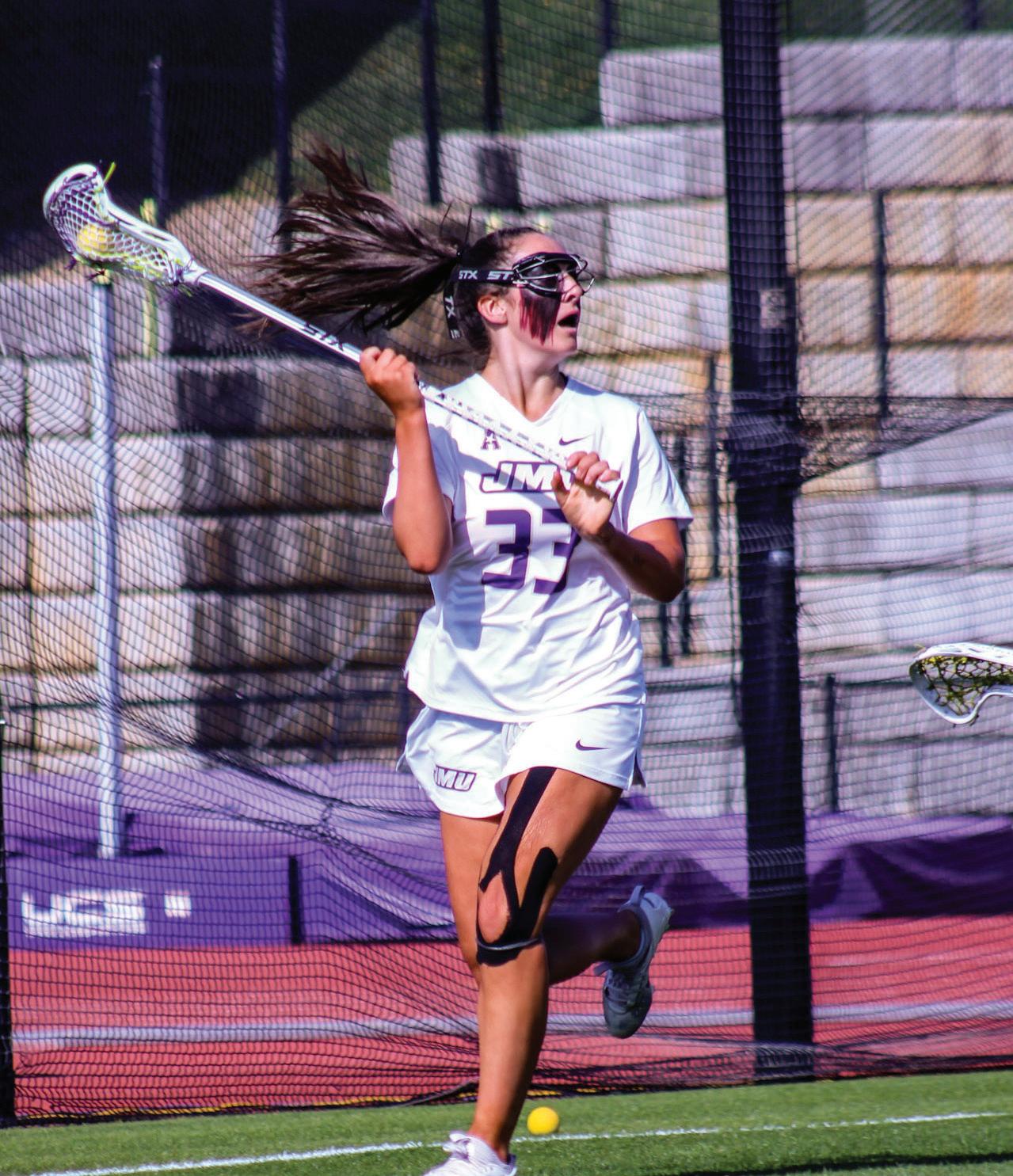
When JMU lacrosse traveled to face Charlotte on April 4, junior attacker Kaitlyn Carney realized she forgot something — her hair elastic.
She wears the same one every game, on top of the same hair bow and type of socks. When Carney noticed she didn’t have her elastic, she said she “got a little nervous.”
Regardless of the superstition, Carney scored two goals en route to a dominating 20-10 victory for the Dukes.
This two-goal performance is nothing new for Carney, as the win marked her fifth multi-goal game of the season. Now, Carney has 23 goals, starting the season with a five-goal performance against then-No. 1 UNC, matching her 2025 season total.
Carney said she plays her best when she “lets go,” which helps her get into a rhythm.
On March 28 against Temple, Carney topped her showing against the Tar Heels, netting seven goals against the Owls.
Carney said she was shocked at how open she got against Temple, adding that at one point, when she went to the sideline, her teammates told her she only needed one more goal to shoot seven-for-seven.
Before Carney’s last goal, sophomore attacker Payton Root wanted to see Carney get to seven and told her, “I’m going to feed you it.”
“It’s an amazing thing,” Root said of Carney’s scoring. “I have so much fun watching my teammates succeed and helping them succeed.”
Root leads the Dukes with 42 assists, meaning Carney regularly receives the ball from her when
Carney said the Temple game was when she and Root got into a “flow.”
Carney and Root spent a lot of time after practice working individually on cutting and passing, but their chemistry built when they focused on training together outside of team
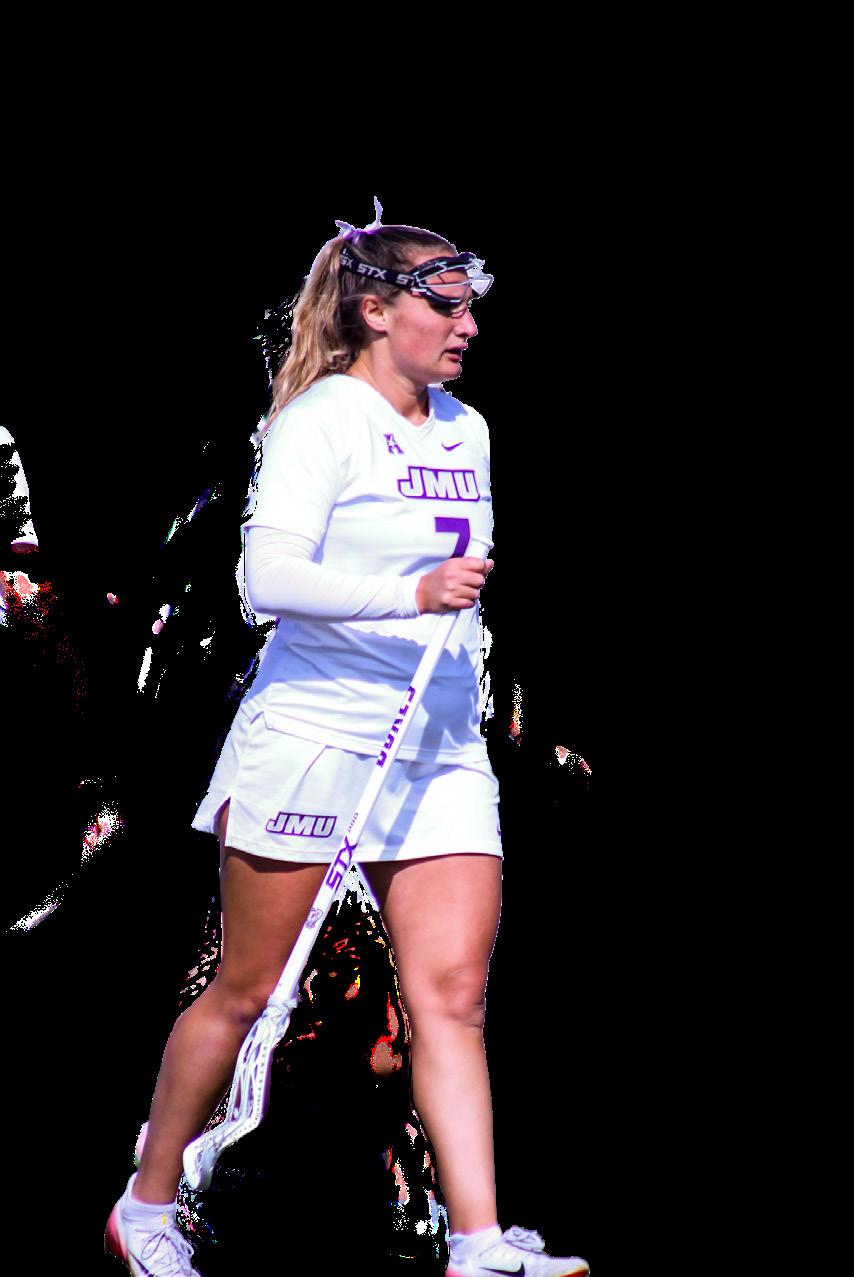
“[About] an hour after practice we’d be feeding, cutting,” Root said. “Even sometimes it’s not necessarily practice — it’s hanging out, creating a bond outside of lacrosse.”
Root said Carney is “one of my best friends,” adding that their connection grew because of Carney’s welcoming nature when Root first arrived at JMU.
Head coach Shelley Klaes said while Carney’s connection with Root has grown, her chemistry with other cutters has helped her improve as well.
“You’re seeing her set a lot more picks,” Klaes said. “She’s bringing that two-man play in off the ball, which not only opens up her, but other teammates as well.”
Carney has played in 15 games this season, already surpassing her 12 from 2025. Her role grew after attacker Savannah Derey graduated last season.
“I think my freshman and sophomore year, I was more of an impact player,” Carney said, “so I would go in if they needed momentum.”
Klaes said when Carney returned during the fall, she focused on preparing for her junior season. In years past, Klaes
said Carney struggled with muscle tweaks during preseason that would hold her progress back.
“We really challenged her on her overall fitness and mobility,” Klaes said. “She made great strides in that area, so that helped her kind of weather the storm of this year.”
Before committing to JMU, Carney played high school lacrosse in Franklin, Massachusetts. Carney said JMU was one of her top targets growing up, especially because of the 2018 National Championship team.
“I just liked how you didn’t have to be the most skilled, you had to be the most hard-working,” Carney said. “I think that’s something JMU takes pride in, and that’s why [it’s] good every year. We might not have 10 five-star recruits coming in … but our hard work is what makes us so good.”
Klaes said the Dukes were trying to “spread our wings” to the north when they were recruiting Carney.
“Massachusetts has a really good reputation for stick skills and high-level play,” Klaes said, “and she was dominating the sticks up in that area.”
Klaes pointed out Carney’s high energy on the field as a drawing factor while scouting her. She also liked that Carney’s mom, Kimberly, coached and played lacrosse.
“We love that she came from a pedigree that’s knowledgeable of what it takes to be successful in sports,” Klaes said. “She’s going to help us build character beyond talent.”
CONTACT Preston Comer at breezepress@gmail.com. For more lacrosse coverage, follow the sports desk on

By LUKE FAIRCLOTH The Breeze
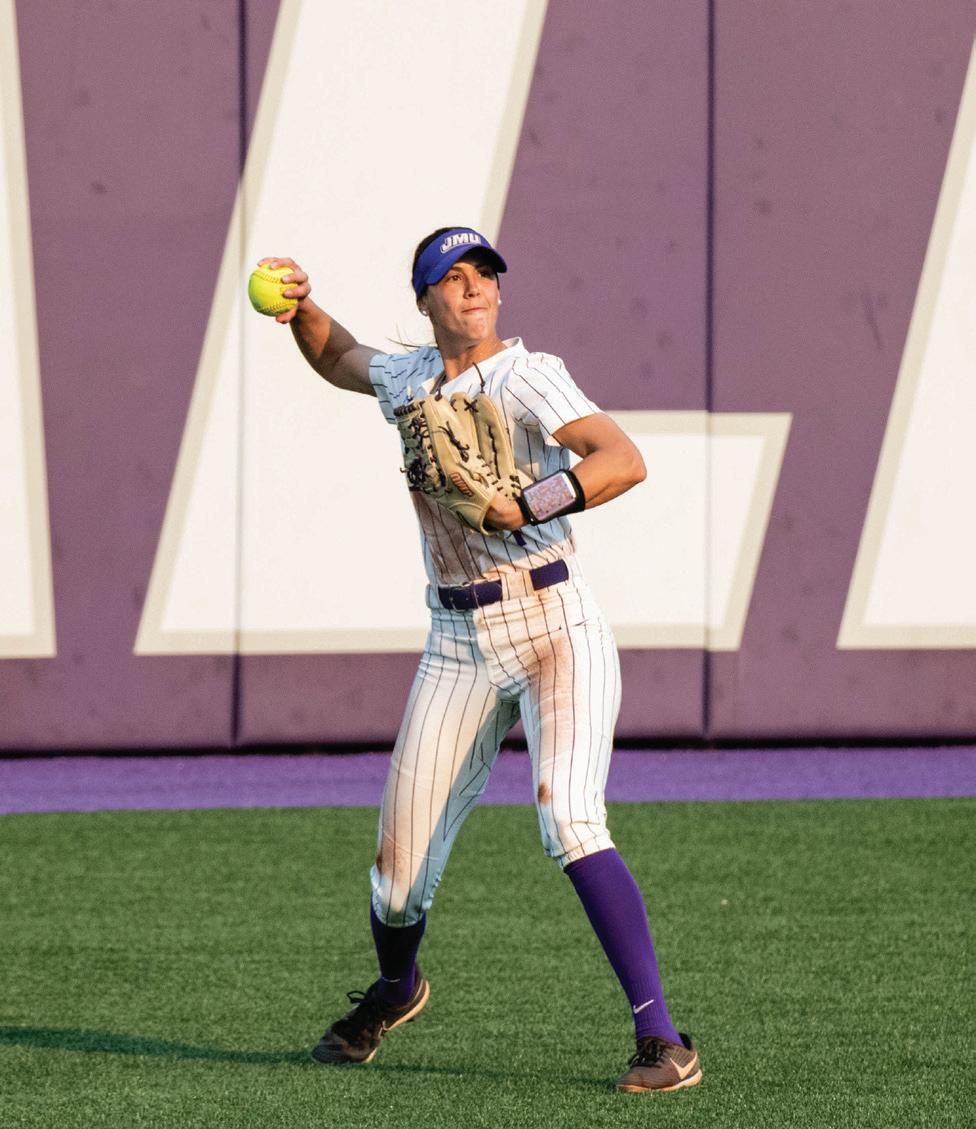
Before the rest of JMU baseball comes onto the field for practice, junior right fielder Ike Schmidly has already been putting in reps. He comes into the facility most mornings working through the same routine.
It usually starts with tee work, with some cuts isolating the top hand from the bottom hand, feeling out each independently. Then comes the heavy bat, one of Schmidly’s favorite tools.
“It just makes my whole game feel a lot lighter,” he said.
From there, Schmidly moves into open-side and closedside flips, helping him drive through the ball, focusing on his swing path and contact point. By the time the pitching machine turns on, Schmidly has already been hitting for an extended time.
“I like to hit most days,” Schmidly said. “Pretty much all day [and] every day.”
That discipline has paid off for Schmidly in 2026. He’s started 32 of the team’s 34 games this season and holds the team lead in RBIs with 25. He’s also tied for the team lead in home runs with six and ranks second in slugging percentage among players with at least 20 games played, boasting an impressive .512 mark.
“He’s been mashing for us this year,” JMU junior left fielder Kyle Langley said. “He’s been a cornerstone of our lineup in that three or four spot all year, and it’s pretty cool to see other teams starting to respect that and fear that.”
While Schmidly is known as a power hitter, he can run the bases as well. On a team that ranks fourth in NCAA Division I with 107 stolen bases, he’s one of six JMU players to reach double digits.
Schmidly has been on the team for three years and has seen playing time in each, becoming a full-time starter in 2025, but 2026 has been his true breakout season. Despite playing 10 more games last season, Schmidly has already racked up 13 more hits, 15 more RBIs and four more home runs this season.
“I think that [development] just shows his maturation process,” head coach Marlin Ikenberry said. “He’s hitting the ball to all fields now … [In the past,] he’d sometimes get a little pull-happy, so it’s really just keeping him focused on the middle of the field.”
Schmidly pointed to some of his teammates from his freshman year in 2024 when the team made its first regional appearance in 13 years as key to his development.
“When I played with Fenwick [Trimble] my freshman year, he told me … when you get up there, you should be so relaxed [that] someone could take the bat out of your hands,” Schmidly said. “That was one thing that clicked for me, just helped me stay relaxed … and letting the barrel and the strength that I have do the work.”
Few players were better positioned to offer advice than Trimble — the former JMU center fielder made All-Sun Belt First Team that year and was later drafted by the Miami Marlins in the fourth round of the 2024 MLB Draft, now ranking as the team’s No. 20 prospect, according to MLB Pipeline.
Now an upperclassman, Schmidly is a leader on the team, just like Trimble was in 2024.
“When he speaks, his words are heard,” Ikenberry said. “He works at a level like no other, which helps him lead by example.”
Growing up as a triplet and playing baseball with both his brothers, Schmidly is used to having close relationships with his teammates. Even without his brothers joining him
at JMU, Schmidly has found a brotherhood with his current teammates — specifically with Langley.
“[Schmidly] and I have been doing everything together since we stepped foot on campus in 2023,” Langley said. “We’ve been hitting together, throwing together, we’ve really been through the wringer together … But we’ve learned so much over the time that we’ve been here and growing together as teammates and as leaders.”
Despite his success on the field, Schmidly doesn’t want that to be the only thing people remember about his season.
“I just want people to know I play extremely hard and super aggressive,” Schmidly said. “I give 100% of what I have each and every game.”
That play-hard attitude is part of what drew Ikenberry to Schmidly during the recruiting process.
“[Schmidly] didn’t commit to play for us until October of his senior year … but after I watched him play in the summer, I just kept asking myself, ‘How is this kid not committed to play somewhere?’” Ikenberry said. “He was physical, played hard … and I was like, ‘This is a perfect fit.’”
With the season at its midway point, the rest of the team will look to emulate Schmidly and continue to play hard as JMU fights for ground in the Sun Belt race.
“Every game from here on out matters,” Schmidly said. “We just can’t take any of these games for granted, and really just give all we’ve got day in and day out.”
CONTACT Luke Faircloth at breezecopy@gmail.com. For more baseball coverage, follow the sports desk on X and Instagram @TheBreezeSports.

I just want people to know I play extremely hard and super aggressive. I give 100% of what I have each and every game. ”
Schmidly Junior right fielder


By LUKE FAIRCLOTH The Breeze
As the 2026 season sits just past its midway point, JMU baseball finds itself in a curious position: tied for 11th in the conference standings with a 6-9 record — but just three games back of second place and two back of third.
“This league is amazing. It feels like every weekend is opening day,” head coach Marlin Ikenberry said. “It allows for a lot of parity when you play in a league like this … and there’s still a lot of baseball left.”
JMU had a golden opportunity to gain ground in the standings last weekend against a Georgia State team that entered the series with a 4-8 conference record and sat at 1519 overall. However, the Dukes blew significant leads in both games one and three, eventually getting swept and falling behind the Panthers in the standings.
“They just pitched well late into ball games, and we didn’t,” Ikenberry said. “We missed our opportunities … Just [made mistakes] at the wrong time in the game.”
Close losses like the ones against Georgia State aren’t just a one-time occurrence, either. JMU lost a series against Arkansas State after allowing six unanswered runs in an 11-9 loss and leaving seven runners on base in a 2-1 loss in the series finale. In another game against Louisiana, JMU left 12 runners on in a 5-4 loss.
Had the Dukes won each of those games, they’d be tied with Texas State for second place in the Sun Belt, in an ideal position to make a run in the conference tournament. Instead, JMU is on the outside looking in, with only the league’s top 10 teams qualifying. Despite the uncertainty, Ikenberry isn’t looking back on where the team could be — he’s looking to where he believes they will be by season’s end.
“With baseball, you have to reset every day,” he said. “Every weekend is a new weekend … [This weekend] playing back at home, we’ll be in our comfort zone.”
Eagle Field has indeed been a comfort zone for JMU this season, especially in conference series. The team is 5-1 in conference games at home, but 1-8 in road games, allowing double-digit runs in seven of those games.
“The home atmosphere is awesome,” junior left fielder Kyle Langley said. “The stands were packed against Louisiana … and we were feeding off that energy all weekend … It’s also very hard to win on the road in the Sun Belt … We’re going to have to start stepping it up.”
JMU will look to continue its home dominance this week against App State, a team that sits one game ahead of the Dukes in the conference standings. It won’t be an easy task, though — the Mountaineers enter the game as winners of three of their last four conference series.
Following the App State series, JMU will face ULM, Marshall and Southern Miss — each of which is currently two games ahead of the Dukes in the standings.
“Every game means something in this league,” Ikenberry said. “If we just continue playing our type of game, we’ll be fine.”
JMU’s “type of game” is one of the more unique brands of baseball in the Sun Belt. With a .275 team batting average and a .428 slugging percentage, the Dukes can hit as well as just about any team in the conference. But what separates the JMU offense from the pack is its bunting and ability to steal bases — it currently ranks second in the nation in sacrifice bunts, and fourth in stolen bases.
“Legs shows up every day, and so if we can get a good bunt down, [there’s a chance] we’ll be safe,” Ikenberry said. “We pride ourselves in scoring runs and trying to create havoc on the base paths, and I think our guys have bought into that.”
Perhaps a lack of creating havoc was a part of JMU’s issue against Georgia State. Across the three-game set, the Dukes averaged two steals per game, a drop from their season average of 3.2 per game.
Regardless, pitching and situational hitting will be key to success in JMU’s upcoming matchups.
Read more online at breezejmu.org
CONTACT Luke Faircloth at breezecopy@gmail.com. For more baseball coverage, follow the sports desk on X and Instagram @TheBreezeSports.










EDITOR EMAIL
Cali Gilmer

Want to praise someone or get something off your chest? Darts & Pats is the place to do it. Submit your own at breezejmu.org.
An “I-love-caffeine” pat to my semester Alani can collection in my room.
From someone who is proud and mortified of their hard work on caffeine.
A “class-registration” dart to sleeping through my enrollment time.
From a student who may not graduate on time.
A “yay-Purple-Reign” pat to JMU hosting Flipturn this weekend to perform live.
From someone who is excited to sing “August” with the band.
A “give-me-somethingnew” dart to JMU Fits only posting one style on its Instagram page.
From someone who wants to see more variety in fashion.
CHARLES-NICOLAS OWEN Breeze columnist
We’ve all felt the pressure of overcommitment, especially in a college environment. As The Commonwealth Times observes, “saying ‘yes’ to everything can feel like the only way to succeed.” That urge to say “yes” when we should say “no” drives students to stretch themselves beyond what is sustainable, mistaking exhaustion for achievement.
Our “yes” starts to outweigh our “no;” often, we’re terrified of it, as if one “no” might, like a fission chain reaction, flip a thousand other switches that might have been “yes” to “no, never, thank you very much.” This is entirely possible, but consider how this constant motion prevents the kind of consistency that relationships depend on. Our success can’t be built on depletion, especially with summer vacation just around the bend. To let our yes be yes and our no be no does not mean cutting off, but a restoration of it: a commitment
made honestly, rather than reflexively. When students stop overcommitting and start committing with intention, they not only protect their own well-being, but also create a more truthful, dependable and humane community — one where presence matters more than sheer participation.
Overcommitment often comes from a good place: the desire to be included, to be generous, to not miss out, to not let anyone down. It feels easier to say yes, even when that yes is uncertain, stretched thin across too many places. But when every invitation is met with a tentative yes, those commitments begin to lose their weight, and we’re left unsure of who will actually be there. What starts as openness slowly turns into inconsistency.
There is also a quiet fear behind overcommitment — the sense that saying no might close off future opportunities, that one

refusal could ripple outward and turn other possible agreements into silence. That fear is not unfounded, but it often leads to a kind of constant motion that prevents anything from taking root. Moving from one place to another and one plan to the next divides attention until presence itself becomes shallow. When we try to be everywhere, we end up not fully being anywhere. What remains is a pattern of brief appearances instead of lasting involvement.
Minding our yeses and nos means choosing with clarity and following through with intention. A real yes creates expectation, and over time, that expectation becomes trust. A real no, just as importantly, protects the space needed to honor the commitments already made. In this way, clarity is what makes relationships dependable.
Showing up, then, isn’t just about being present, but about being consistent. It means returning to the same people and places often enough for familiarity to grow. It means choosing depth over variety, even when variety feels more exciting in the moment. There’s a quiet discipline in this kind of repetition, one that overcommitment often avoids. Community isn’t built in standout moments alone. The ordinary rhythm of shared time, where nothing extraordinary needs to happen, is where meaning might be made. A cookout, a conversation, a quiet gathering — these take on meaning through continuity. People begin to recognize each other, anticipate each other and rely on each other, and that recognition becomes the foundation of belonging.
Summer, especially, has a way of filling itself quickly, with plans stacking faster than they can be lived. Calendars look full, even hopeful, but in practice, they can leave us feeling scattered. In trying to do everything, it becomes difficult to stay rooted anywhere. The season passes in fragments rather than in something sustained. Anyone can overcommit, but community belongs to those who show up. Not perfectly, not constantly, but reliably enough to be known and expected. Choosing where to be, and then returning there, matters more than how much is planned; in the end, something lasting forms.
We’re almost to summer!
CONTACT Charles-Nicolas Owen at owen2cn@dukes.jmu.edu. For more editorials regarding the JMU and Harrisonburg communities, follow the opinion desk on X @TheBreezeJMU and on Instagram @BreezeJMU.
How basing your research on social media can be harmful to political

KATHERINE GAGLIANO
It’s no secret that politics is becoming increasingly polarized.
United States politics has somehow shifted from a competition over who can “Make America Great Again” to who can make the rudest TikTok insulting the other party. This is no new marketing tactic for either major political party, but the trends and outcomes it produces are. Many popular politicians have latched onto the idea of using “relatable” content and funny pictures to make fun of the opposing parties.
I will admit, the SNL political skits, photoshopped photos of JD Vance and the blaming of a bad grade on a test to Benjamin Netanyahu have all been things I find comedic joy in. I thought that I was invincible to propaganda, the false promises of either party and I knew what each candidate brought to the table. This all came crashing down on me as I peeled up the political carpet of my fresh new home, the TikTok algorithm, only to discover anything but beautiful oak wood or mosaic tile underneath. Below the carpet of promise was horrid, moldy wood floors of AIPAC, American Israel Public Affairs Committee, homophobia and more hate speech than you would expect out of a candidate whose page is trending on TikTok. This made me realize that genius media marketing and a political candidate are two completely separate things, and it causes our generation to fall into a negative political propaganda spiral.
I’ll confess, California governor Gavin Newsom is a conventionally attractive man with a conventionally aggressive track record of speaking out against our current administration. The edits, the memes and the Twitter posts
contributing columnist
that you would think make him a good candidate are all checked on my list. He’s clearly positioning himself to run for president in 2028. I was happy about this until I went to proper news sources instead of TikTok (I know, everyone point and laugh at me).
Newsom has a history of saying one thing and then completely retracting his statement. In an interview with Politico on YouTube titled “Inside Newsom’s plan to take on Trump,” the hard-cut question “Do you consider yourself a Zionist?” is laid out on the table.
Newsom responds, “I’m proud to support the state of Israel, I deeply oppose maybe not Netanyahu’s leadership but his opposition to a two-state solution.”
Based on how Newsom’s team markets itself, this statement can be surprising to some viewers. Newsom has a history of donating money to AIPAC and ignoring the genocide and instability Israel is causing in the Middle East.
In another interview, Newsom is asked about AIPAC and never offers a clear response; instead, he describes the lobby as “interesting” eight times and continues to shrug and choke on his words rather than directly answer the question.
Accepting donations from AIPAC and supporting Israel committing genocide isn’t interesting. It’s a defining political factor of the 2028 election and gives voters an insight into what Newsom might be capable of behind his “interesting” campaign.
Not only is Newsom in support of Israel, but he also has a history of opposition against transgender athletes. Furthermore, his approach to homelessness has focused on removing individuals from major cities rather than addressing the issue through more humane solutions, despite the increased cost of living. Even if Newsom is an


aggressively verbal candidate against the far right, he can’t make a statement without walking back his word when someone opposes it.
In an interview with Ben Shapiro on Newsom’s podcast titled, “Has Trump FINALLY LOST His Base? With The Daily Wire’s Ben Shapiro,” Newsom is called out for his comment on Twitter, calling the murder of Renee Good an act of terrorism. Read more online at breezejmu.org
CONTACT Katherine Gagliano at gagliaks@dukes. jmu.edu. For more editorials regarding the JMU and Harrisonburg communities, follow the opinion desk on X @TheBreezeJMU and on Instagram @BreezeJMU.








































EDITOR-IN-CHIEF Hannah Kennedy breezeeditor@gmail.com
NEWS EDITORS Charlie Bodenstein & Emma Brown breezenews@gmail.com
COPY EDITORS Kayla Katounas & Luke Faircloth breezecopy@gmail.com
PRINT MANAGING EDITOR Preston Comer breezepress@gmail.com
CULTURE EDITORS Bella Arist & Audrey Fletcher thebreezeculture@gmail.com
PHOTO EDITORS Landon Shackelford & Annabel Dewey breezephotography@gmail.com
ONLINE MANAGING EDITOR Emma Notarnicola thebreezeweb@gmail.com
SPORTS EDITORS Madi Perini & Libby Mercer breezesports@gmail.com
AUDIENCE EDITORS Isabel Lewis & Grace Heberer thebreezesocials@gmail.com

“Bang the Doldrums” by Fall Out Boy

“Break Free” by Ariana Grande (feat Zedd)
“Nomad” by Clairo
“Float On” by Modest Mouse
“Go To Town” by Doja Cat
“Peanut Butter” by RuPaul

“Dandelion” by Ella Langley
“G.O.M.D” by J. Cole
answers on our weekly Instagram poll @BreezeJMU!
1598 S. Main St. Harrisonburg, VA 22801 PHONE: (540) 568-6127 FAX: (540) 568-7889
OPINION EDITOR Cali Gilmer breezeopinion@gmail.com
ART DIRECTOR Summer Solis thebreezeartdirector@gmail.com
TV NEWS DIRECTOR Lauren Keller jmubreezetv@gmail.com

If you have any corrections, please contact the section editors via their designated email or the editor-in-chief at breezeeditor@gmail.com.




find the answers online
www.breezejmu.org/ site/crossword_ answers/
Madison Marketplace is open for business, and all text-only listings are FREE ! Post job listings, announcements, rentals and more using our online placement tool. Ads run two weeks online and in two print editions.
PT Professional Wanted: P/T by Project. Professional Assistant. Critical Thinker. Familiar with para-legal or related, court filings, start up Llc, research & record keeping. Advertising our performance, Attend Local / County meetings and establish contacts within VA. Positive Energy Required ....... will not be boring assignments - promise! 767 645-6868 540 456-2668
JMU Summer Student Worker
Summer Student Worker needed for JMU International Study Center. Part-time 10hrs/week. Duties include administrative support, student programming, and light tutoring. Resumes to littl2jr@jmu.edu.
Opportunity - Police Recruit - $10,000 HIRING INCENTIVE AVAILABLE TO NEW OFFICERS
The City of Harrisonburg is currently accepting applications for non-certified individuals interested in joining HPD, which offers a rewarding career plus an excellent benefits package, including enhanced hazardous duty through the Virginia Retirement System (VRS). $10,000 HIRING INCENTIVE AVAILABLE TO NEW OFFICERS* ...
*Find out more/apply online: https:// www.harrisonburgva.gov/employment. EOE.
Join our team of compassionate therapists!
Planning a career in speech language therapy or behavior therapy? Join The Speech and Language Center as a behavior tech/RBT, BCBA, SLP, or SLPA. Now hiring half/full day RBTs (undergrads welcome to apply!), school/clinic SLP, and school SLPAs for the 2026-2027 year. Contact Kristin Wenger: kristin@slccares.com.
John Van Deusen - 2026 Tour
https://www.songsforvalley.org/



Career Opportunity - Public Works Planning Manager
Are you searching for your next career move with an organization that values your subject-matter expertise while leading strategic transportation planning efforts? If so, consider applying to become the Public Works Planning Manager with the City of Harrisonburg! Find out more/apply online: https:// www.harrisonburgva.gov/employment. EOE.





SUMMER STUDENT STORAGE SERVICES. Going home for the summer? Leave your belongings in storage We will pick them up, store them and deliver them to your new place in August. Call 540-810-1196, email MikePackett@aol. com or check out www.Adventures-NTravel.com for details. Local business and competitive.
Hey JMU Students! SwiftHaul Moving Services makes your move easy and affordable! From dorms to storage, apartments, or home, we’ve got you covered with the best prices and friendly, reliable service.
Contact us today at 434-665-1259 or maceevan03@gmail.com for a stressfree experience!


by Tue, April 21 st .
Stop Donald Trump from Rigging the Midterms.
Donald Trump and MAGA Republicans are trying to rig the midterms to enact their dangerous agenda, including a nationwide abortion ban, even here in Virginia.
VOTE YES by April 21 st
You can register and vote on election day with your campus address.
Remember to bring an acceptable form of ID with you (including student ID!)