The SUN CITY

SCVA remembers those who never returned
(PHOTO BY WARD LITZENBERG)
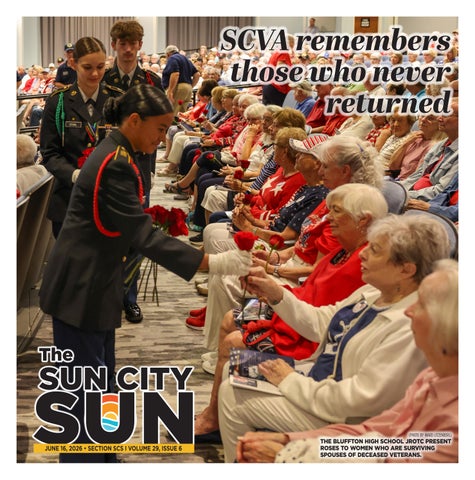
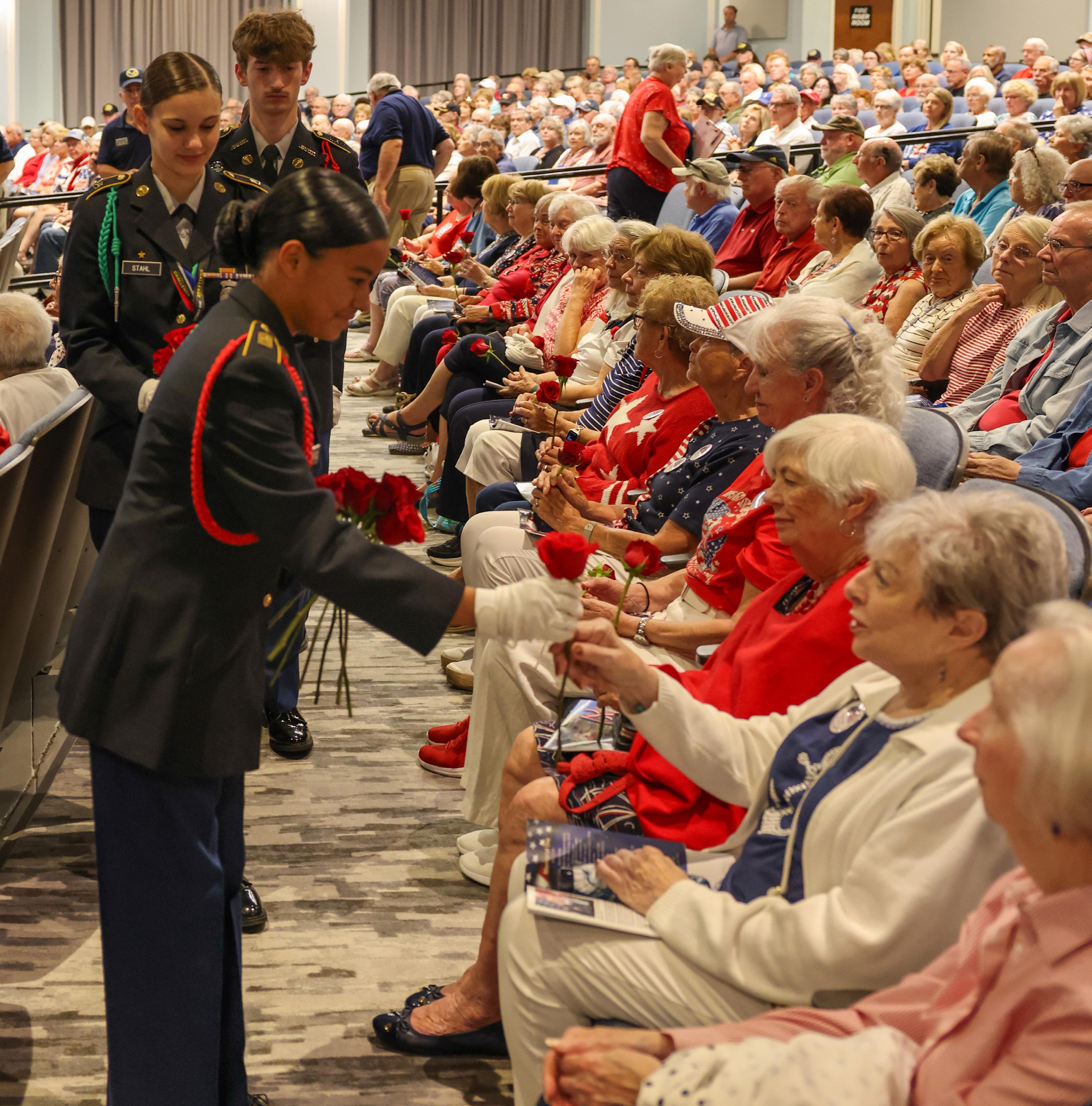
THE BLUFFTON HIGH SCHOOL JROTC PRESENT ROSES TO WOMEN WHO ARE SURVIVING SPOUSES OF DECEASED VETERANS.
SCVA remembers those who never returned
BY JOE TURINO Contributor
“Memorial Day is different. It’s a day to remember those individuals who went into combat and never came home.”
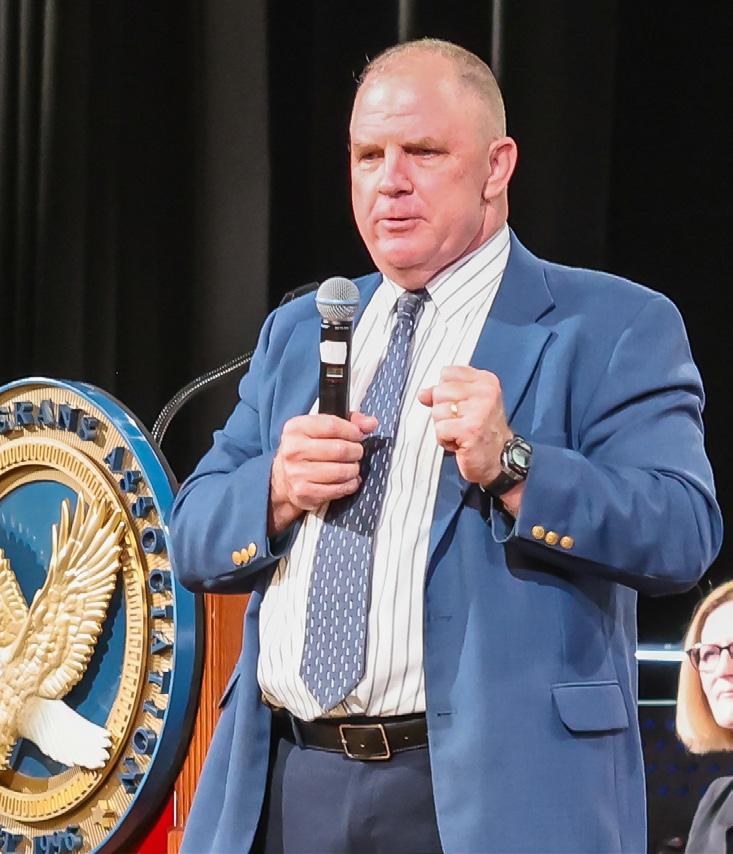
Those words from keynote speaker retired Maj. Gen. John F. Hussey of the U.S. Army Reserve, resonated throughout the Sun City Veterans Association’s Memorial Day ceremony as a packed Magnolia Hall audience gathered to honor America’s fallen heroes.
Hussey, a highly decorated Beaufort County resident whose military career included service in Desert Storm, Iraq, Afghanistan and Guantanamo Bay, urged attendees to look beyond Memorial Day as the unofficial start of summer and instead embrace its deeper purpose — a day of reflection, gratitude and remembrance for those who never returned home. He reminded the audience that the freedoms Americans enjoy today rest upon the sacrifices of fallen service members and the
families who continue to live with that loss. His remarks drew enthusiastic applause, particularly when he asked veterans to stand and be recognized and when he acknowledged the sacrifices made by military families on the home front.
Master of Ceremonies, retired Lt. Col. Carl Trovato of the U.S. Army Reserve captured the spirit of the day with a memorable observation: “Our flag does not fly because of the wind. It flies with the final breath of each service member who died defending it.”
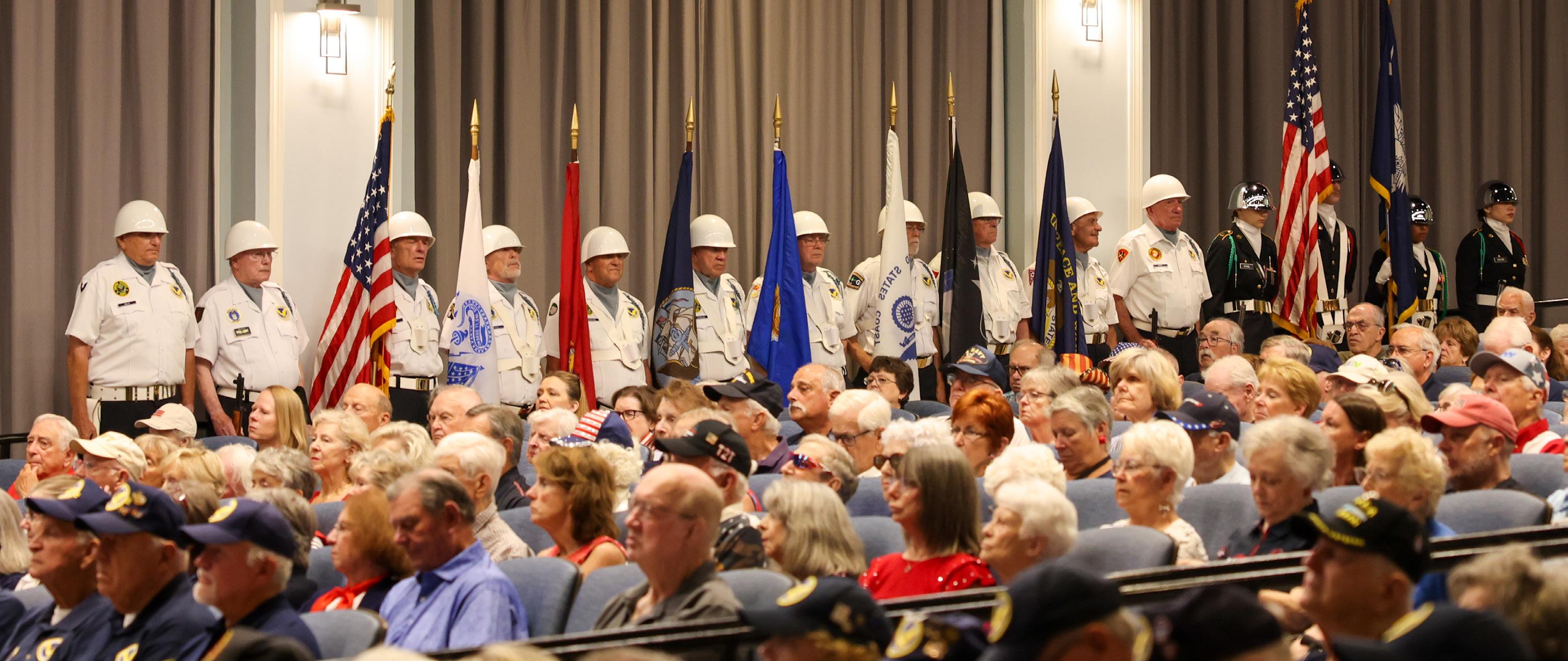
The observance blended patriotic music, military tradition and remembrance. Commander Al Richter welcomed attendees and reflected on the importance of honoring fallen heroes, supporting military families and remembering those currently serving around the world. Adding to the ceremony were the SCVA Marching Unit, led by retired Lt. Col. Michael Chorney; the SCVA Color Guard, led by William Field; and the Bluffton High School JROTC Color Guard. Their participation, along with the posting and retiring of the colors, underscored the
City Singers, under the direction of Nancy Laws, with Debbie Ratcliff on piano, provided an inspiring backdrop. Particularly memorable was their stirring rendition of “America,” which received a warm audience response.
One of the ceremony’s most touching moments came when members of the Bluffton High School JROTC presented roses to surviving spouses of deceased veterans, honoring both their loss and steadfast support of those who served.
event’s military traditions. Music played a central role throughout the program. The Bluffton Brass Quintet, directed by Pete Stephenson, and the Sun
Additional highlights included the Armed Forces Service Songs Salute, the tolling of bells for departed SCVA members, and the wreath-laying ceremony at the Veterans Monument. The ceremony also included a moving rendition of “Echo Taps,” featuring trumpeter Larry Hyatt and Charlene Gorrel with the Bluffton Brass Quintet. Together, the music, military honors, personal reflection and tributes to veterans and their families created a meaningful reminder that freedom is remembered through the sacrifices of generations of American service members.
THE SUN CITY VETERANS ASSOCIATION COLOR GUARD AND BLUFFTON HIGH SCHOOL JROTC PREPARE TO LINE UP TO MARCH AT THE OPENING OF THE SCVA MEMORIAL DAY EVENT AT A PACKED MAGNOLIA HALL.
KEYNOTE SPEAKER RETIRED MAJOR GENERAL JOHN F. HUSSEY, USAR ADDRESSES THE CROWD AT SCVA MEMORIAL DAY EVENT.
(PHOTO BY WARD LITZENBERG)
(PHOTO BY WARD LITZENBERG)






BY CHRIS ROOSA Contributor
When we were transferred to Houston some years ago, we had an introduction to what they called palmetto bugs. They were about an inch long, black and ugly. They certainly didn’t have the colorful array of a butterfly. Palmetto bugs, in layman’s terms, are better known as roaches.
While awaiting the move into our newly built home, we were asleep at a motel when my husband was awakened by a huge roach crawling on his face. You never saw two people fly out of a bed so quickly in your life. That did it for me — the minute we moved into our suburban dwelling, I immediately scheduled quarterly visits from an exterminator.
Years later, we retired to the same area. By then, I felt seasoned to the creepy-crawly insects and was no longer threatened by these unsightly bugs. I
Survival of the fastest
didn’t even hire an exterminator this time around. I used roach traps and never had a problem. Houston was known as the roach capital because of its hot, humid weather. Summers were near 100 degrees with 98% humidity.
From Texas, we moved to Bluffton. I never gave roaches much thought in the Carolinas since the weather was so much better than Houston. We had no problem here until a year ago. All the Sun City roaches must have spread the word that the Roosas’ enclosed sun porch was the new retreat in town. They arrived in droves.
My relaxing escape for morning coffee turned into a pet cemetery. I’d be drinking my brew while viewing the deceased critters with a smile on my face. Or I’d be eyeing stretched-out bodies kicking their legs while they lay on their backs doing a slow death dance for my sunrise entertainment. By the end of the summer, I
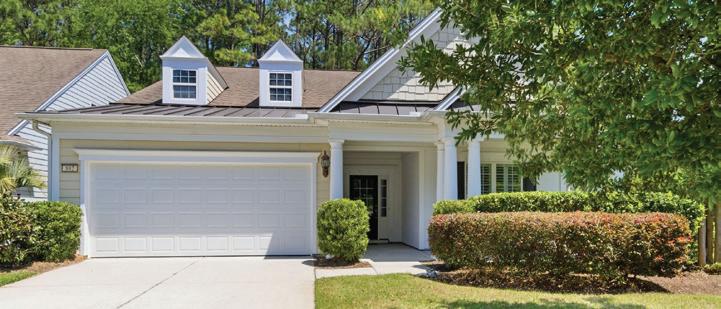
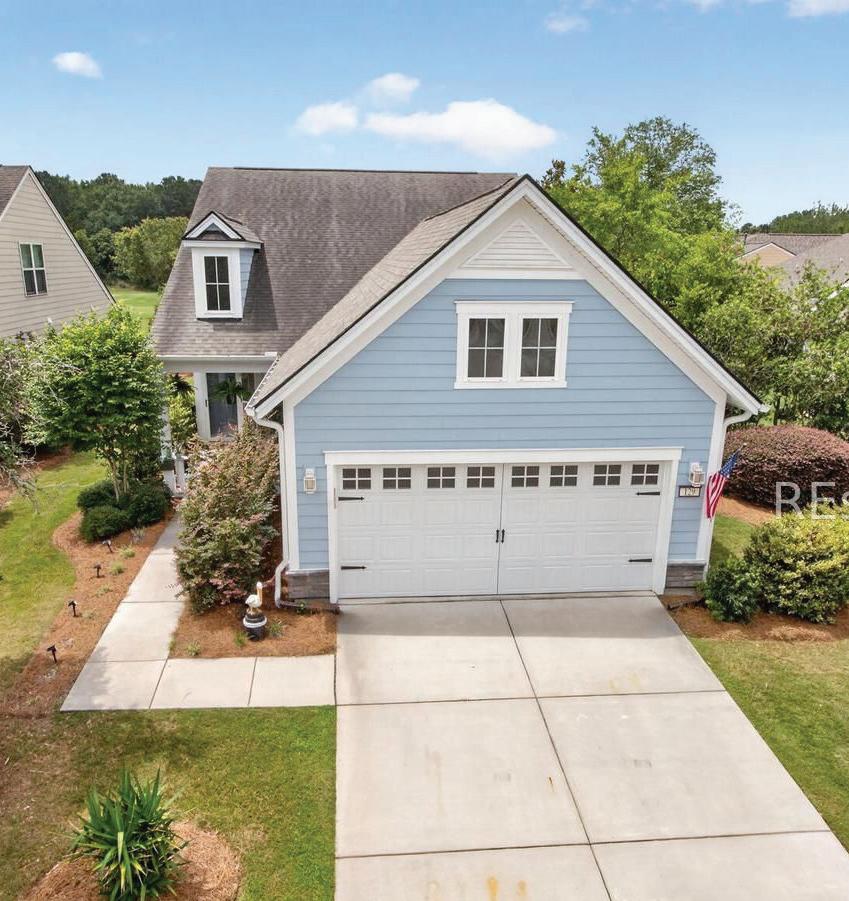
The Seabrook #2501
was out of Raid and out of patience. So this summer, I made up my mind that I would pay the hefty price for an exterminator.
One day I was doing some work in the dining room, which has a sliding glass door that opens to the sun porch. I happened to glance out there and stopped in my tracks. I thought it was a snake at first. But as I approached the door, it shot like a bullet behind my fireplace. Several times a day, I was terrified to go through there for the dogs’ potty breaks. The following morning, I saw this creature roaming again, but as soon as I opened the door, it once again disappeared in a flash. I got on Google and tried to identify this invader. It appears to be a skink. It’s 7 inches long, about an inch in diameter, and fast. Normally, I can catch an anole, which I always release back outside. But this thing was too fast and too big. Plus, there was no way I would touch it. I liter-

ally hate snakes, and it reminds me too much of a reptile with legs.
So now I’m stuck with this live-in squatter that I can’t charge rent. I can’t evict the thing, and I’m fearful of it biting my petite dogs. But every morning when I go to let the canines outside, I’ve noticed my pet cemetery is devoid of any new corpses. The new squatter has obviously made a nightly feast of my invaders and no doubt realized that he’s encountered fine dining on my porch. I even pondered putting down a water dish so he doesn’t die of thirst.
In the end, he has actually become my cheapest pet ever. I do him the favor of supplying him with delicious roaches, and he does me the favor of saving me a hefty exterminator’s fee.

Chris Roosa is a resident of Sun City Hilton Head.
Hurricane season is here:
A wind mitigation certificate may help lower your insurance costs
BY GARY SMYTHE Contributor
As hurricane season begins, many Lowcountry homeowners are reviewing their emergency plans, stocking supplies, and making sure their homes are ready for severe weather. What many homeowners don’t realize is that some of the same improvements that help protect a home during a storm may also qualify them for discounts on their homeowner’s insurance.
One of the best ways to find out is through a wind mitigation inspection.
A wind mitigation inspection evaluates how well a home is designed and built to withstand high winds. After the inspection, homeowners receive a wind mitigation certificate that can be submitted to their insurance carrier to determine whether they qualify for premium discounts.
What do inspectors look for? Several construction features can improve a home’s ability to resist wind damage:
Roof age and condition:
A newer roof that meets current building codes often receives favorable consideration from insurance companies. Homes with roofs installed under more recent hurricane-resistant standards may qualify for larger discounts.
Roof-to-wall connections: Inspectors examine how the roof structure is attached to the walls. Metal hurricane clips or straps create a stronger connection and can significantly improve a home’s wind resistance.
Roof deck attachment: The roof decking should be securely fastened to the home’s framing. Enhanced fastening methods can help prevent roof failure during strong winds.
Roof shape: Hip roofs, which slope downward on all sides, generally perform better in high winds than gable roofs and may qualify for additional insurance savings.
Opening protection: Impact-resistant windows, hurricane shutters, and impact-rated garage doors help protect a home’s openings from windborne debris. These features can often result in substantial insurance discounts.
Upgrades that may help: Not every improvement requires a major renovation. Depending on your home’s age and construction, some relatively straightforward upgrades may improve wind resistance and potentially reduce insurance costs:
• Install approved hurricane shutters.
• Replace older garage doors with wind-rated models.
• Upgrade entry doors to impact-rated versions.
• Add hurricane clips or straps during roof replacement projects.
• Replace aging roofs with materials

that meet current wind-resistance standards.
• Ensure all permits and documentation are retained for future insurance verification.
Is a wind mitigation inspection worth it? For many homeowners, the answer is yes. The inspection itself is relatively inexpensive compared to the potential annual savings on insurance premiums. Even if no immediate discounts are available, the inspection provides valuable information about your home’s strengths and weaknesses before a storm threatens our area.
As insurance costs continue to rise across South Carolina and the coastal Southeast, every opportunity to reduce premiums while improving safety is worth exploring.
Before you schedule: Talk with your

insurance agent first. Ask whether your carrier offers wind mitigation discounts and what documentation they require. An agent can also help you estimate potential savings before investing in upgrades.
Hurricane season reminds us that preparation matters. A wind mitigation inspection can help homeowners better protect their investment, improve storm resilience, and possibly keep insurance costs more manageable for years to come.
Gary Smythe is a local Real Estate Agent with William Raveis Real Estate specializing in Bluffton and Hilton Head Island. Gary@GarySmythe. com. www.WilliamRaveis.com/ GarySmythe


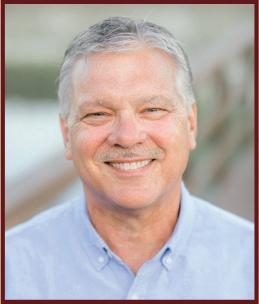
GARY SMYTHE
BY ED STRATTON Contributor
Amateur radio is alive and growing
Amateur radio, colloquially known as “ham radio,” is a hobby that permits licensed individuals to use noncommercial portions of the radio spectrum to communicate, experiment with technology and provide public service. Ham radio is more popular and accessible in the United States than ever before. There are well over 700,000 hams in the U.S., nearly 11,000 of whom live in South Carolina.
Sun City Hilton Head (SCHH) has had an Amateur Radio Club (ARC) for more than 20 years. The club began with a handful of hams who moved here as the community was getting started.
The current club has nearly 60 members, most of whom are licensed to operate a ham radio station. The SCHH club is affiliated with the American Radio Relay League, which is the national organization that promotes ham radio.
Hams use voice, Morse code and digital modes to communicate across the Bluffton area, across the nation and around the world. Some operators build equipment from scratch, while others use commercially available radios ranging from under $100 to several thousand dollars.
The SCHH ARC is an active group that welcomes newcomers who are interested in amateur radio and assists them as needed to become licensed hams.
As with many hobbies, ham radio provides an opportunity for lifelong learning because of the many facets of the avocation. Engagement in the hobby can include participation in operating contests, emergency communications networks and international goodwill activities. The SCHH group does all of that and more, including holding monthly meetings between September and June that provide programs related to the hobby and informative discussions.
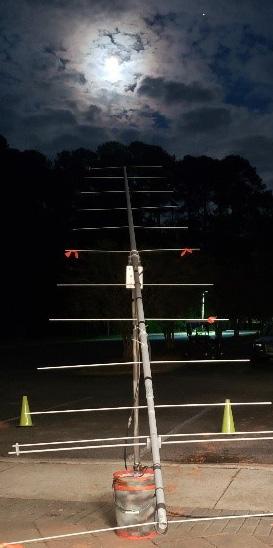
A recent highlight of the club’s many offerings was the setup and operation of a portable station that was able to bounce VHF (very high frequency) signals off the moon to briefly communicate with a station in Texas and another station in Italy.
A growing number of hams, including many here in SCHH, participate in Parks
on the Air (POTA) operations that encourage hobbyists to visit designated state and national parks and areas to set up portable stations to communicate with amateur radio operators at their home stations or in other parks.
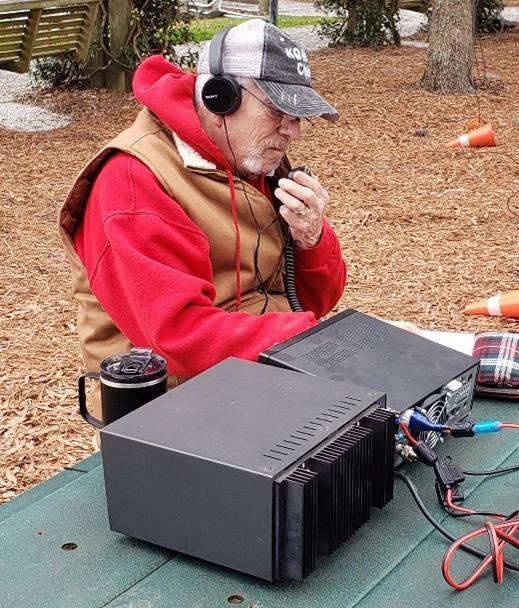
Hams from the Sun City group also collaborate twice a year to operate multiple outdoor stations using portable off-thegrid power and temporary antennas at Lake Somerset. Cold weather did little to dampen enthusiasm during the club’s recent Winter Field Day on Jan. 24. of the members who participated. ARRL Field Day (June 27) will be another day of ham radio fun at the lake. The public is welcome to stop by, and we may even be able to get you on the air.
The remote operations (POTA and Field Days) are not only fun but also serve as
training for operations during emergencies that knock out normal power and communications.
The Sun City club is working to maintain and strengthen its relationships with Sun City security as well as with Beaufort and Jasper counties’ emergency management professional and volunteer teams.
As current club president Bob McCormick, KD8IH, likes to note: “I have been a member of many amateur radio clubs, but the Sun City club is the best at promoting camaraderie and creating fun activities for all.”
For those interested in joining or for more information, email Bob McCormick, president of the Sun City Hilton Head Amateur Radio Club, at kd8ih@earthlink. net.
(top left) Chip Miller, KQ4JKI, at January’s Winter Field Day. (top) SCHH ARC shot for the moon and got it!
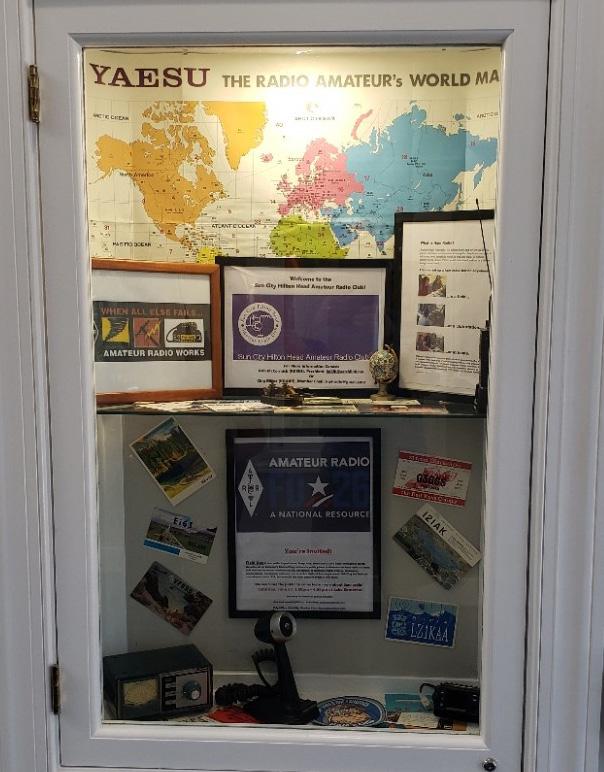
(above) The SCHH ARC display at Pickney Hall.
BY ANDREA HOERNER Contributor
“Reading gives us someplace to go when we have to stay where we are.” – Mason Cooley
The idea of sharing books has deep roots in America. The first successful subscription library in America was started by Benjamin Franklin in Philadelphia in 1731. Andrew Carnegie, a Scottish American steel magnate and philanthropist, donated more than $56 million to fund the construction of 2,500 free public libraries worldwide. The libraries were built between 1883 and 1929.Driven by his own childhood access to books, he championed libraries as “the best gift which can be given to a community.”
Speaking of libraries, Sun City is home to the Sun City Book Exchange Club. It began in 1998 and has grown to more than 2,500 members. Donations from residents and friends include fiction and nonfiction books in both hardcover and paperback formats, as well as movies, magazines, audiobooks and the ever-popular jigsaw puzzles. Volunteers sort through the donations, and because space is limited, more than 5,000 books a year are donated to libraries, nursing homes, prisons, laundromats and highway rest areas. Only damaged books are recycled. Criteria for keeping books include age and genre.
Using an honor system, there is no checkout, no return date and no fines. Though there is no card catalog, the exchange maintains a list of genres, takes reservations for specific titles and notifies members when items become available.
The exchange has moved several times, from where the Craft Center is, to Palmetto Commons when it was the Del Webb sales center, to Pinckney Hall and back to its current location in Palmetto Commons in 2022. The exchange has satellite libraries at Riverbend and Lakehouse and hopes to have one at Sun City West..
The exchange is run by a board of directors and 109 volunteers who receive training and work two-hour shifts seven days a week, excluding holidays. A spring volunteer appreciation lunch is held each year.
Speaking of Books
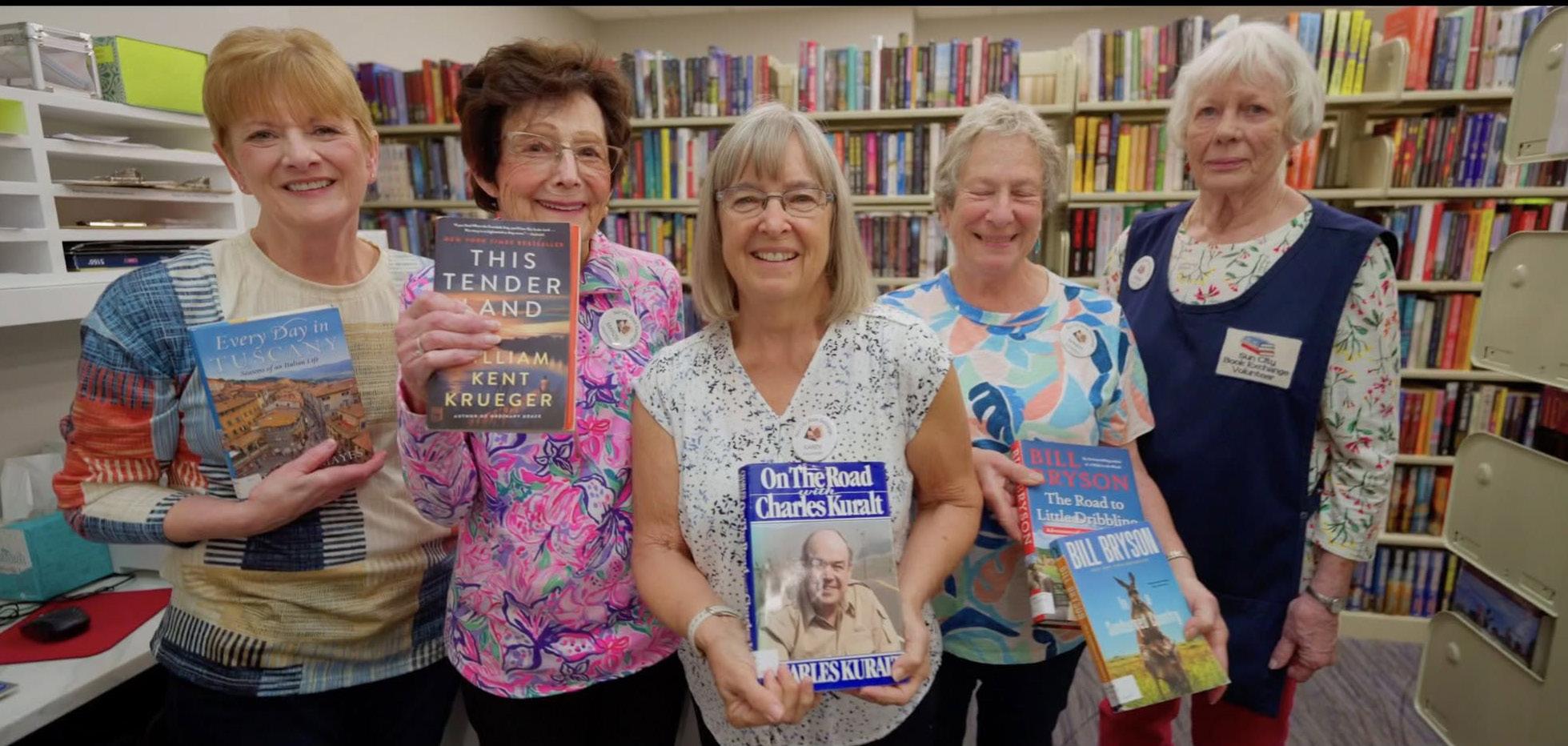
Sandy Holz, president, moved to Sun City with her husband, Stan, in 2018 from Whitefield, N.H., where Sandy served as the town librarian for 44 years before retiring. Sandy said, “We have no formal budget. Dues are collected in order to be considered a sanctioned Sun City club. Since our expenses are low, we donate annually to local literacy organizations. Last year, we gave $3,000 to three organizations in Beaufort County. This year, we will expand to include Jasper County libraries.”
The Sun City Community Association has been supportive of the exchange and what it means to residents. There are now two closer parking spaces, window shades have been provided, and a drive-up book drop is in the planning stages.
When asked why she is involved with the book exchange, board secretary Margie Crutchfield said: “I love the Sun City Book Exchange. It is built entirely on generosity. Every book, puzzle, DVD and magazine has been donated, and every hour is given by volunteers who care about this community. It’s a place to stop in, talk with a neighbor, discover something new and feel connected.”
The exchange has introduced Speaking of Books, which is popular and meets on the second Saturday of the month in the Tupelo Room at Palmetto Commons. Each person brings a book and has five minutes to talk about it, which is different from
other book clubs.
A 2026 Book Challenge Bingo has been introduced as a fun way to broaden one’s reading choices. For more information,
see their article in the June SunSations, or the Chartered Clubs catalog, or contact Sandy Holz at sandyholz117@gmail.com.