Blufft n Sun


By Sasha Sweeney Editor
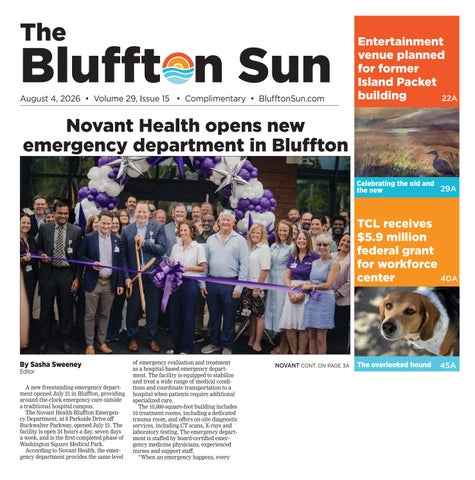
A new freestanding emergency department opened July 21 in Bluffton, providing around-the-clock emergency care outside a traditional hospital campus.
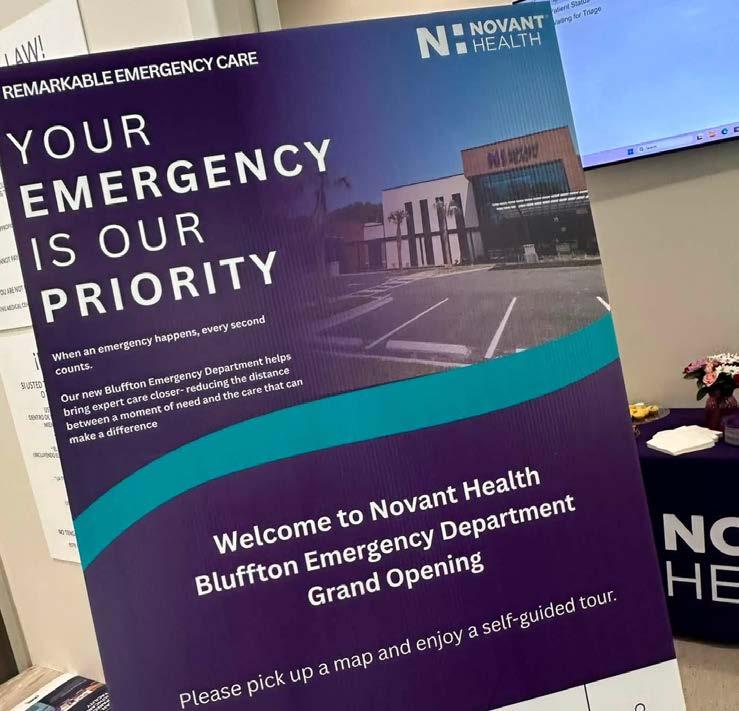
The Novant Health Bluffton Emergency Department, at 8 Parkside Drive off Buckwalter Parkway, opened July 21. The facility is open 24 hours a day, seven days a week, and is the first completed phase of Washington Square Medical Park.
According to Novant Health, the emergency department provides the same level


of emergency evaluation and treatment as a hospital-based emergency department. The facility is equipped to stabilize and treat a wide range of medical conditions and coordinate transportation to a hospital when patients require additional specialized care.
The 10,000-square-foot building includes 10 treatment rooms, including a dedicated trauma room, and offers on-site diagnostic services, including CT scans, X-rays and laboratory testing. The emergency department is staffed by board-certified emergency medicine physicians, experienced nurses and support staff.
“When an emergency happens, every
FROM PAGE 1

Beaufort Memorial Palmetto Medical Group has added Dr. Sreshtha Singh to its team of trusted providers, expanding access to high-quality primary care in the Bluffton area.
A specialist in internal medicine, Dr. Singh provides care for a wide range of acute and chronic conditions, including high blood pressure, diabetes, high cholesterol and obesity. He works closely with patients to develop individualized treatment plans that support healthier lives through prevention, education and ongoing care.
Driven by a lifelong passion for helping others, Dr. Singh was drawn to primary care because of the opportunity to make a meaningful difference in patients’ lives. Dedicated to delivering personalized, compassionate care, Dr. Singh focuses on building lasting relationships that help patients achieve their long-term health goals.

“I give all of my patients my undivided attention, providing them with personalized, accessible care and physician-patient transparency,” Dr. Singh said. “I want to build those long-lasting connections based on trust and open communication.”
University of Pittsburgh Medical Center (UPMC) Mercy Pittsburgh, Pennsylvania
Doctor of Osteopathic Medicine
West Virginia School of Osteopathic Medicine Lewisburg, West Virginia Bachelor of Science
The University of Pittsburgh Pittsburgh, Pennsylvania

minute matters,” said Dr. Erica McEnery, medical director for emergency services for Novant Health Hilton Head Medical Center. “This facility allows patients to receive expert emergency care where they live, with advanced diagnostics and experienced emergency medicine teams available around the clock.”
The emergency department is the first completed phase of Washington Square Medical Park. A 40,000-square-foot medical office building under construction will include primary care, cardiology, gastroenterology, outpatient procedures and other specialty services. The project is part of Novant Health’s broader expansion in Bluffton, which also includes Buckwalter Place Medical Park and the planned Bluffton Medical Center expected to open in 2028.Joel Taylor, president of the Hilton Head area for Novant Health, said the investment reflects the health system’s continued expansion in Bluffton as the community grows.
“This investment reflects our continued commitment to bringing remarkable care closer to where people live and work,” Taylor said. “Bluffton is one of the fastest-growing communities in South Carolina, and Novant Health is proud to
make long-term investments that ensure families have access to convenient, high-quality healthcare for generations to come.”
The Washington Square Medical Park is part of a broader expansion by Novant Health across the Lowcountry. Earlier this year, the health system opened Buckwalter Place Medical Park nearby, offering primary care, orthopedic services, an imaging center and rehabilitation services. The company also has plans to build Novant Health Bluffton Medical Center, a proposed 50-bed hospital that received state approval and is expected to open in 2028.
Bluffton’s rapid population growth has increased demand for medical services.
According to the U.S. Census Bureau, the town’s population has more than tripled since 2010, making it one of South Carolina’s fastest-growing municipalities.
The emergency department is the latest addition to Novant Health’s expanding network of medical facilities in Bluffton as the health system prepares for continued population growth and increasing demand for health care services across southern Beaufort County.




Current Circulation Via USPS is 24,510
Editor Sasha Sweeney
editor@blufftonsun.com
Page Designer
Cary Howard cary@blufftonsun.com
Advertising
Mary Ann Kent, Sales & Marketing Manager
843-575-4151
BJ Frazier, 843-422-2321
Claudia Chapman, 814-434-3665
Mary Pat Gifford, 912-414-7122
Contributors
Denise Benner
Abby Bird
Lisa Hostetler Brown
Chip Collins
Danie Connolly
Tom Dorsel
Collins Doughtie
Thomas Dowling
Matthew Emmer
Kevin Fitzpatrick
Ronald Finger
Rhoda Gordon
Emma June Grosskopf
Nabil El-Hag
James Hamilton
Annelore Harrell
Jean Harris
Channing Heiss
Kenneth Horup
Ken Kanter
Carolyn Lafond
Katie Licata
Nanette Makrauer
Nick Martin
Tamela Maxim
Dan Prud’homme
Leslie Rohland
Cinda Seamon
Murray Sease
Paul Tollefson
Larry Toomer
Matt Uppenbrink
Sandro Virag
Mark F. Winn
Tracy Winslow
By Mayor Larry Toomer Contributor
New technology often brings questions, and that’s a good thing.
The Town of Bluffton and the Bluffton Police Department have recently received questions about Flock Safety cameras following several acts of vandalism involving the cameras and a number of Freedom of Information Act requests related to the technology. As your mayor, I believe residents deserve answers about how these tools are used and the safeguards in place to protect privacy and maintain public trust. First, it is important to understand what these cameras are and what they are not.
Flock Safety cameras are automated license plate readers, or ALPRs. They are designed to identify vehicles by reading license plates and noting vehicle characteristics such as make, model, color and distinguishing features. They are not designed to identify people. They do not use facial recognition technology. They do not record audio, listen to conversations, access cellphones or collect information from mobile devices. Flock Safety manu-

factures the technology, and the cameras are named after the company.
Their purpose is straightforward: to help law enforcement investigate crimes, recover stolen vehicles, locate missing or endangered individuals and provide valuable leads when every minute matters.
In many ways, these cameras serve as additional sets of eyes on our roadways. In a growing community such as Bluffton, it is simply not possible to have a police officer at every intersection or on every street at every hour of the day.
Technology can help our officers work more efficiently and respond more quickly while allowing us to be good stewards of taxpayer resources.
Equally important is how this technology is governed.
Before a single camera was installed, the Bluffton Police Department established policies governing how the technology could be used, who could access it and what accountability measures would be required. Officers cannot simply search the system out of curiosity. Access is limited to authorized personnel for legitimate law enforcement purposes, and every search is logged and auditable.
The department also operates under an additional layer of oversight that many communities do not have.
In 2020, Bluffton Town Council established the Law Enforcement Citizens Advisory Committee as part of the department’s commitment to community-oriented policing and transparency. This six-member, resident-led committee
serves as a bridge between the community and the police department and conducts regular reviews of the department’s use of this technology.
That citizen committee exists to represent residents’ voices.
The committee reviews how the technology is used, audits access to the system and helps ensure that established policies and procedures are being followed. Its work helps provide transparency, accountability and confidence that these tools are being used responsibly and appropriately.
In Bluffton, public safety and privacy protections go hand in hand.
As our community continues to grow, our responsibility is to use technology thoughtfully, transparently and within clearly defined legal and ethical boundaries. The Bluffton Police Department remains committed to protecting both the safety and privacy of our residents, and Town Council remains committed to maintaining the public trust that makes community policing successful.
Questions are welcome. Residents are encouraged to attend the bimonthly meetings of the Law Enforcement Citizens Advisory Committee. For more information about the meetings, contact the department’s community relations manager, Eydie Moody, at emoody@ townofbluffton.com.
Larry Toomer is the mayor of the Town of Bluffton. ltoomer@townofbluffton.com.
If you could go back to when you were a student, what would you tell your-

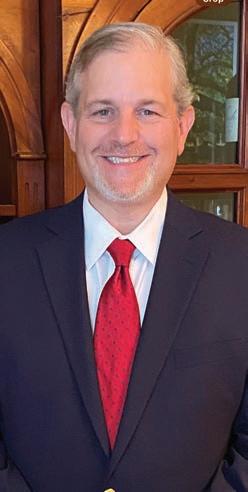
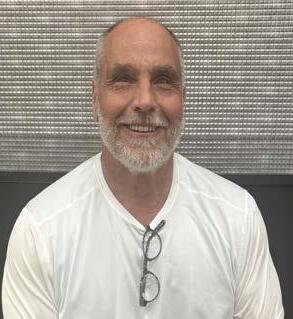
Michael Clementi Bluffton
in school!”





Nick and Izaac are a unique team characterized by the quality of their education their veteran backgrounds and their combined 24 years financial planning experience. They understand the shifting dynamics when preparing for retirement, transitioning to retirement and living in retirement. Market volatility is here, Bluffton Financial Planning is providing value through quality advice and effective communication. Let’s talk!
Beaufort County comprehensive plan survey remains open through Aug. 7.
By Sasha Sweeney Editor
County is asking residents to help shape the next phase of its long-range planning by participating in a public survey as part of the county’s five-year update to its 2040 Comprehensive Plan.
County officials said the plan, adopted in 2021, serves as the county’s blueprint for growth, development and public investment. State law requires comprehensive plans to be reviewed and updated periodically, and Beaufort County is conducting its scheduled five-year reassessment to evaluate progress and identify priorities for the years ahead.
According to the county, many of the action items identified in the 2040 Comprehensive Plan have already been completed. The current review is intended to reassess and reprioritize the remaining action items while giving residents an opportunity to recommend additional priorities for the next five years.



The online survey asks participants to review proposed actions across six sections of the comprehensive plan and select the items they believe should receive the highest priority. Residents also may submit comments recommending additional actions for consideration during the update process.
Topics included in the survey range from natural resources and housing to transportation, community facilities, economic development and the built environment. Participants may select as many priorities as they believe are important and are encouraged to provide additional comments at the end of the survey. Among the issues highlighted in the survey are protecting water quality, conserving land, improving flood resilience, expanding transportation options, supporting workforce housing and planning for future infrastructure. Other proposed actions address parks and recreation, cultural
resources, economic development and strategies to accommodate future growth while preserving the county’s character.
The survey will remain open through Aug. 7, according to the county.
The comprehensive plan is the county’s primary long-range planning document. It establishes goals, policies and implementation strategies intended to guide growth, infrastructure, natural resource protection, housing, transportation and other aspects of county government over the next 10 to 20 years. County officials describe the document as a “living” plan that is reviewed regularly and updated as community needs, population trends and local priorities change.
The 2040 Comprehensive Plan is organized around several core themes, including resilience, equity and preserving the Lowcountry’s unique character. It also outlines specific implementation strategies and timelines, identifying actions that should begin immediately, within the first several years, or over a longer period extending beyond a decade.
County officials have emphasized that public participation is an important part of the update process. Earlier this summer, the Planning Department hosted public meetings in Bluffton and Beaufort to gather feedback before launching the online survey. The county said comments received through the survey will help planners determine which remaining action items should receive the greatest attention during the next phase of implementation.
The public survey is available through Beaufort County Connect, the county’s online engagement platform. Residents interested in participating can complete the survey online at https://bit.ly/4yob8es before the Aug. 7 deadline. County officials said the feedback will be used to help guide updates to the comprehensive plan and shape county priorities over the next five years.

By Sasha Sweeney Editor
Beaufort County Mosquito Control has confirmed the first mosquito samples of 2026 to test positive for West Nile virus, prompting increased surveillance and additional mosquito treatment efforts in parts of the county. The positive samples were collected from mosquito surveillance traps in the City of Beaufort and tested in the county’s mosquito control laboratory, according to a Beaufort County news release.
In response, Beaufort County Mosquito Control said it is increasing mosquito trapping in the affected areas and plans additional truck-based treatment missions to reduce adult mosquito populations.
West Nile virus is the leading mosquito-borne disease in the contiguous United States and is spread primarily through the bite of an infected mosquito. Mosquitoes become infected after feeding on infected birds and can then transmit the virus to people and other animals. The virus is not

spread through casual person-to-person contact.
According to the Centers for Disease Control and Prevention, about 80% of people infected with West Nile virus never develop symptoms. About one in five people experience a mild illness that can include fever, headache, body aches, joint pain, vomiting, diarrhea or a rash. Fewer than 1% develop a severe illness affecting
the brain or nervous system, such as encephalitis or meningitis. Older adults and people with weakened immune systems or certain chronic medical conditions are at greater risk for severe disease.
County officials said West Nile virus occurs naturally in the area, although detections vary from year to year. Beaufort County Mosquito Control deploys up to 80 surveillance traps each week throughout
the county to monitor for mosquito-borne diseases, including West Nile virus, eastern equine encephalitis virus and St. Louis encephalitis virus.
Officials urged residents to take steps to reduce the risk of mosquito bites and mosquito breeding. Recommended precautions include:
• Draining standing water where mosquitoes can breed.
• Limiting outdoor activity at dawn and dusk, when mosquitoes are most active.
• Wearing long sleeves and pants while outdoors.
• Using an EPA-approved insect repellent.
• Keeping door and window screens in good repair.
Residents can report mosquito problems or standing water by calling Beaufort County Mosquito Control at 843-255-5800 or by visiting the county’s mosquito control website www.beaufortcountysc.gov/ mosquito-control. Residents also can sign up on the website to receive notifications about aerial mosquito spray missions.






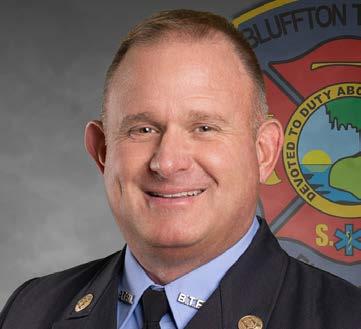
Fire captain recognized for 20 years of national EMS certification
Bluffton Township Fire District Station
Captain Brandon Stevenson has been recognized by the National Registry of Emergency Medical Technicians for maintaining National EMS certification for 20 consecutive years.
Stevenson earned his EMT-Basic certification in 2006 and has completed the registry’s biennial recertification requirements throughout his career.
A member of the Bluffton Township Fire District since Aug. 2, 2003, Stevenson has advanced through the ranks from firefighter to station captain. He has also served on the district’s hiring committee, fire investigations team, safety committee, honor guard and Combat Challenge Team.
He currently leads Station 37 at Palmetto Bluff.

Bell named chairman of BJWSA board
Michael L. Bell has been elected chairman of the Beaufort-Jasper Water and Sewer Authority Board of Directors, succeeding Gregory A. Padgett.
Bell has served on the board since his
appointment to the Bluffton Township seat in 1991 by then-Gov. Carroll Campbell.
Before retiring, Bell worked in community planning for the Town of Hilton Head Island and later served as data administrator and student information systems manager at Lowcountry Montessori School.
“As the longest-serving current board member, I have seen firsthand the dedication and professionalism that define BJWSA,” Bell said. “I am deeply proud of the authority’s accomplishments and grateful for the opportunity to help guide its future.”
Sparklight has awarded a $5,000 grant to the Boys & Girls Clubs of the Lowcountry through its Charitable Giving Fund.
The funding will support math and literacy instruction, technology-assisted learning and workforce readiness programs for students served by the organization.
During its latest grant cycle, Sparklight distributed more than $125,000 to 28 nonprofit organizations in communities it serves.
“We are grateful for Sparklight’s partnership in our mission to help every member reach their full potential,” said Ryan Wise, major gifts officer for the Boys & Girls Clubs of the Lowcountry.
Author and motivational speaker Dr. Jonas Gadson has been named a 2026 Global Speakers University ICON Speaker Award honoree.
Gadson will be recognized Aug. 22 during the GSU ICONS Celebration and Awards Ceremony in Maryland. He is the author of “Mastering Your Message: Pick Up Your Mic! We Need To Hear Your Voice!”
Mike Overton, founder and CEO of Outside Brands, has been named one of SCBIZ’s 2026 Icon Honors recipients.
The annual recognition honors South Carolina business leaders age 60 and older for career achievement, leadership and community service. Overton founded Outside Brands in 1979, growing the company into one of the Southeast’s best-known outdoor recreation businesses with opera-
tions that include kayaking, paddleboarding, bicycling and nature-based experiences throughout the Lowcountry.
Beyond building the company, Overton has been active in conservation, outdoor recreation and community initiatives, earning recognition for promoting environmental stewardship and sustainable tourism across the region.
Recipients will be honored Sept. 22 during the Icon Honors celebration at the Columbia Metropolitan Convention Center and will be profiled in the September issue of SCBIZ.
Optometrist Dr. Susan DiSario has joined Carolina Eyecare Physicians at its Bluffton office on William Pope Drive. DiSario earned her Doctor of Optometry degree from The Ohio State University College of Optometry and has practiced in Georgia and South Carolina since 1995. She provides primary eye care, contact lens evaluations, treatment of ocular disease and co-management of refractive surgery patients.
“I am excited to join the team at Carolina Eyecare Physicians,” DiSario said.
“After more than three decades caring for families throughout the Lowcountry, I’m thrilled to continue serving patients in Bluffton.”
Realtor marks 40 years in business
Associate Broker Lea Smith is celebrating 40 years as a full-time real estate professional serving Hilton Head Island, Bluffton and the surrounding Lowcountry.
Smith began her real estate career Aug. 15, 1986, with International Paper Realty at Haig Point and joined RE/MAX nearly 30 years ago. During four decades in the business, she has helped buyers and sellers through changing real estate markets while witnessing the transformation of Hilton Head Island and Bluffton from small coastal communities into some of South Carolina’s fastest-growing areas. Known throughout the local real estate community for her long tenure and local market knowledge, Smith has built her career serving clients across multiple generations of families relocating to or within the Lowcountry.
“I’ve been incredibly fortunate to spend my career doing something I truly love,” Smith said. “The greatest reward has been the relationships I’ve built over the years.”

Financial adviser ranked among state’s best
Jeffrey Baron has been ranked No. 3 among South Carolina’s Best In-State Financial Security Professionals for 2026 by Forbes and SHOOK Research.
Baron, a senior partner with Commonwealth Financial Group, said he was honored by the recognition.
According to Forbes and SHOOK Research, rankings are based on qualitative and quantitative factors, including industry experience, compliance records, client impact and firm nominations. The rankings are intended to help investors evaluate financial professionals and are not a guarantee of future performance.

Hilton Garden Inn completes renovation
Hilton Garden Inn Hilton Head has completed a propertywide renovation that includes upgrades to guest rooms, public spaces, meeting areas and amenities.
The renovation refreshed all 104 guest rooms with new furnishings, carpeting, paint and bathroom improvements. The lobby, fitness center, meeting rooms, outdoor patio and The Garden Grille & Bar also received upgrades.
The hotel is owned by Apple Hospitality REIT Inc. and managed by McKibbon Hospitality.
Stimulates collagen and elastin production to thicken and tighten skin. Lift with: No Needles. No pain. No numbing. No downtime.
Instant mini face and neck lift with dissolvable lifting threads. Minimal discomfort. Minimal recovery. Stimulates collagen and elastin.
Improves skin texture, sun damage, and blemishes. Minimal discomfort. Minimal downtime.
“My skin has never looked better.” - Client Testimonial
Restore facial volume with Sculptra, Renuva, Voluma, Juvederm, Restylane and more.




By Lisa Hostetler Brown Contributor
When was the last time you dusted off those old estate planning documents you completed when your children were still young? If you can’t remember the last time you looked over your will and power of attorney, now would be a great time to do so. You might be surprised by how much your life has changed since you signed those documents.
People sometimes think estate planning is a “one-and-done” endeavor: You sign some paperwork and never think about it again. That mindset could have serious, irreversible consequences for you and your family, especially when it comes to your power of attorney.
A power of attorney (sometimes called a durable, general or financial power of attorney) is a document that you (the principal) execute to appoint someone else (the agent) to represent you in legal and financial matters. For example, a power of attorney might grant your agent authority to access your bank accounts and sign checks on your behalf. This authority can be helpful if you end up in the hospital and need someone to make sure your bills are paid while you are temporarily incapacitated.
It is common for older powers of attorney, and even some newer ones, to contain just two or three pages of basic powers, such as signing checks, conducting certain real estate transactions and managing insurance policies. While a basic power of attorney is certainly better than having no power of attorney at all, which often leads to a lengthy and expensive court proceeding, it will likely fall short in one or more areas when it is needed most. Remember, basic planning does not cover complex situations. Let’s say instead of a brief hospital stay, you need long-

term care in a skilled nursing facility after a dementia diagnosis. Your basic power of attorney may allow your agent to pay your bills, but your agent’s hands may be tied when it comes to asset protection and preservation, including strategic gifting, or helping you qualify for available public benefits, such as Medicaid, to help cover the cost of care.
This is just one example of how a basic power of attorney can create problems for you and your loved ones, though the list is practically endless. A thorough power of attorney may be the only thing standing between leaving a lasting financial
legacy for your family and spending tens to hundreds of thousands of dollars on long-term care.
Don’t wait until it is too late. Contact a trusted elder law attorney today and take the first steps toward ensuring you have the right plan in place.
For educational purposes only. This is not legal advice. Lisa Hostetler Brown is a Certified Elder Law Attorney certified by the National Elder Law Foundation. 2 Hampton Hall Blvd, Ste 100, Bluffton, SC 29910. | 843-757-5294 | LawyerLisa.com.





The season community living was made for
By Matt Uppenbrink Contributor

Let’s be honest about August in the Lowcountry. It is hot. It is muggy. The heat index regularly climbs above 100. Thunderstorms build in the afternoons, hurricane season is in full swing, and the walk from a parked car to a grocery store entrance is enough to leave you damp for an hour. This is not the season of postcards. It is the season of tested resilience. And yet, there is a particular beauty to Lowcountry high summer that residents come to love once they know how to meet it on its own terms. The trick, as it turns out, isn’t fighting the heat. It’s arranging your life so the heat becomes a backdrop to the good parts rather than an obstacle in front of them. Which is exactly what community living is built to do.
When the small things are handled




The honest truth about August is that it’s the small logistics that wear you down. The yard that needs mowing at 95 degrees. The groceries melting in the trunk on the drive home. The dinner nobody wants to cook because turning on the oven feels like an act of aggression against the air conditioning. A hurricane forecast means someone has to think about shutters, generators and evacuation logistics.
In a community, most of that quietly disappears. Landscaping is handled for you. Meals arrive without the kitchen heating up. Hurricane planning is handled by the community, from shutters and backup power to communication and emergency protocols, rather than by you at the kitchen table with a legal pad. What’s left, once all of that is off your plate, is the summer itself. Which turns out to be worth having.
Early mornings on the course
Six-thirty in the morning in August is one of the great secrets of the lowcountry. The air is still cool enough to be pleasant. Mist is coming off the fairways and the course is quiet. A round played before eight is a different sport than one played at noon, slower, softer, more social and finished before the sun has any real teeth in it. Regular walking and moderate activity, the National Institute on Aging notes, remain among the most reliable contributors to health and mobility in later life. Doing that walking at seven in the morning, with friends, on a fairway lined with live oaks, is not a bad way to hold up your end of the bargain.
Afternoons at the pool
By two in the afternoon, the game changes. The CDC’s guidance on summer heat and older adults is clear and worth heeding: hydrate, avoid peak sun, know the signs of heat exhaustion and stay cool. In practice, this looks less like a warning and more like an invitation. A shaded chair by the pool. A cold drink. A neighbor drifting over to join you. The kind of afternoon that used to feel like a luxury on vacation, now available on a Tuesday.
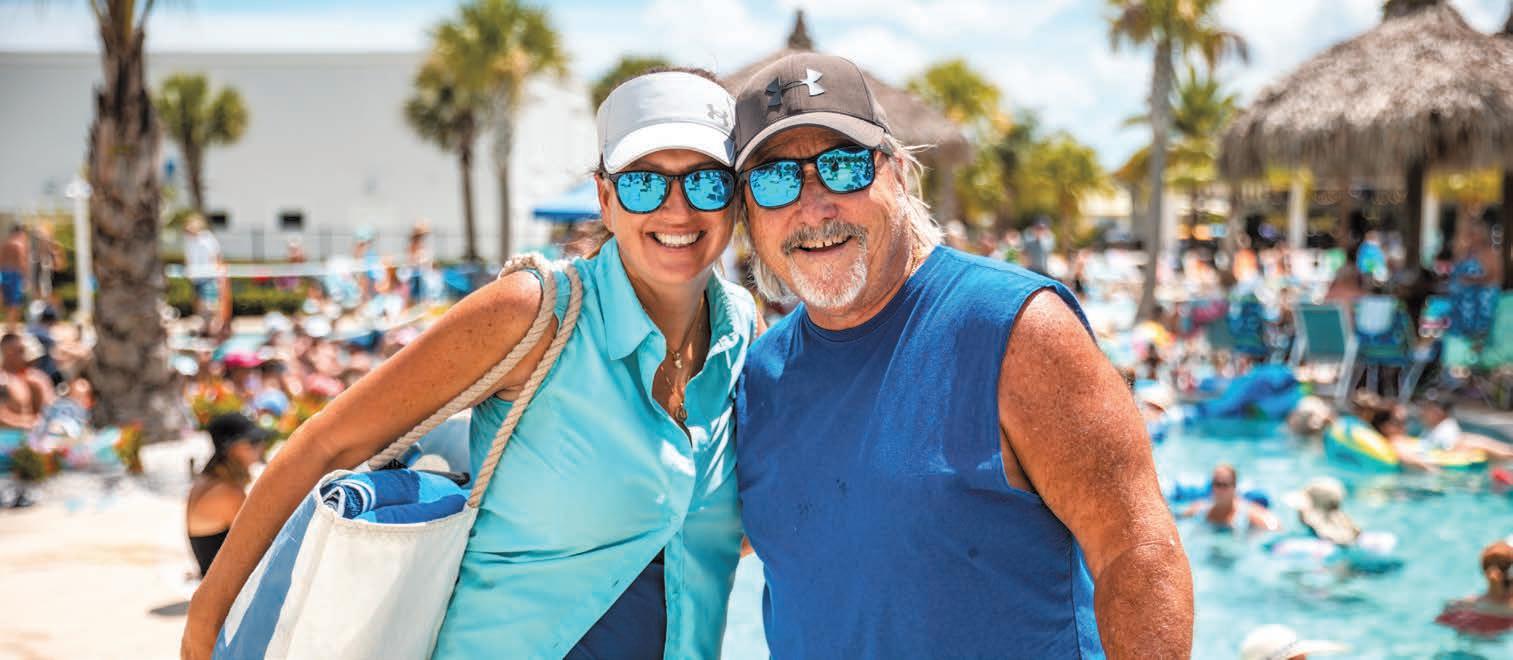
The beauty you have to sit still for August rewards those willing to slow down for it. Thunderheads towering over the sound at five in the afternoon. Cicadas starting up at dusk. The golden light around 7:30 that makes the marsh grasses look like they’re lit from inside. These aren’t things you drive to. They’re things you notice from a porch, a walkway, a bench, when the rest of your life has been quiet enough to let you. That’s the season community living was made for.
Matt Uppenbrink, MS Gerontology, is the Executive Director of The Seabrook of Hilton Head. Interested in learning more about The Seabrook of Hilton Head or if you would like to schedule a tour: https://www.theseabrook.com/ or call 843-842-3747.

Head Island Campus TUESDAY, AUGUST 25TH 10:00 AM - 12:00 PM 1 Sand Shark Drive, Room 115 Hilton Head, SC 29928
Hampton Inn and Suites - Sun City THURSDAY, AUGUST 27TH 10:00 AM - 12:00 PM 29 William Pope Dr., Okatie Room Bluffton, SC 29909


By Thomas Dowling Contributor








Money, finances and investing can cause fear, anxiety and uncertainty for many people. While money anxiety is often associated with those who struggle financially, it is surprisingly common among wealthy individuals and families who have financial security but do not necessarily feel secure. Financial fears can lead to significant challenges, and they are often rooted in negative experiences from childhood or earlier stages of life.
The good news? Financial fears can be overcome with a better understanding of what is causing them and a few intentional steps.
The impact of financial fear
Anxiety about earning, saving, spending and investing can affect anyone from time to time, especially after a job loss or during market volatility. For some people, however, those feelings become chronic.
Here are a few ways financial fear can affect daily life:
• Avoidance: Fear often causes people to avoid important financial decisions. That might mean putting off paying bills, delaying retirement planning or avoiding investing altogether. In some cases, people become so anxious about money that they hesitate to spend even on necessities.
• Overspending: Others respond in the opposite way by using spending as a coping mechanism. Without a budget or financial plan, excessive spending can jeopardize even a strong financial future.


• Poor retirement preparation: Financial fears may prevent people from saving and investing consistently. Others become either too conservative or too aggressive with investments, making emotional decisions that may work against their long-term goals.
• Lower workplace performance: A 2022 study published in the Journal of
Vocational Behavior found that people experiencing financial anxiety often have lower work performance, become more easily distracted and experience emotional exhaustion.
Action steps to consider If financial fears are holding you back, consider these strategies: Get clear on the cause: Financial anxiety is often connected to past experiences rather than current reality. Someone who grew up with financial insecurity may continue to worry despite being financially stable today. Others may feel pressure to spend based on family or social expectations. Understanding the source of those feelings is the first step toward addressing them.
Learn more about financial topics: Education can reduce uncertainty. Whether it is understanding how markets work, learning about retirement planning or gaining confidence in your financial strategy, knowledge often helps replace fear with clarity. A trusted financial adviser can also provide valuable perspective and answer questions as they arise.
Align money decisions with your goals: Having clear financial goals can make decision-making easier. Whether you are planning for retirement, supporting your family or creating a legacy, keeping your long-term objectives in mind can help guide your financial choices.
Have regular financial check-ins: Financial concerns often feel larger when we keep them to ourselves. Regular conversations with your financial adviser can provide perspective, help address concerns and keep you focused on your long-term plan.
Money should not be a source of constant fear or anxiety. If financial decisions leave you feeling overwhelmed or uncertain, know that help is available. With the right guidance and a thoughtful plan, it is possible to overcome financial fears, build confidence and develop a healthier relationship with wealth.

At Novant Health, we believe getting care shouldn’t be complicated. That’s why our new patient navigator does the work for you — helping you find a clinician and location that best fit your schedule, preferences and healthcare needs.
Easy, seamless matching to a primary care provider. We connect you directly to trusted doctors across our network — no legwork or online searching required.
Convenient access to all locations. Every clinic is welcoming new patients, and we’ll help you find the most convenient option.
Real human help with scheduling. Our navigator can view multiple clinician calendars and walk you through the best date and time for your first appointment — including same-day options when available.
Care you can count on. Our primary care and specialty physicians work together to deliver the compassionate, comprehensive care you and your family deserve.
Thomas M. Dowling, CFA, CFP®, CIMA® is the Head of Wealth Management at Alliance Global Partners of the Lowcountry on Hilton Head. He can be reached at infohh@allianceg.com or (843) 420-1993.
Find your care team by calling our new patient navigator at 843-471-1239 You can also visit NovantHealth.org/PrimaryCare to find a clinic near you.
© Novant
By Mark F. Winn Contributor
After more than 20 years of helping families throughout the Hilton Head and Bluffton area, I’ve learned that estate planning isn’t really about money. It’s about people. It’s about protecting the relationships you’ve spent a lifetime building and ensuring your wishes are carried out without unnecessary conflict, expense or uncertainty.
Unfortunately, many families don’t realize the value of a thoughtful estate plan until it’s too late. Without one, even close-knit families can find themselves
in probate court, facing delays, legal fees and disagreements over what a loved one “would have wanted.” Those costs are often measured not only in dollars but also in damaged family relationships.
A well-designed estate plan can help avoid unnecessary probate expenses, reduce the likelihood of family disputes, protect assets from creditors or future in-laws, and help keep wealth within your bloodline for generations. Trusts, in particular, offer flexibility that a simple will cannot.
Consider a family with three adult children but only one grandchild. The grandparents’ primary goal may be to treat their children fairly while also recognizing that this one grandchild represents the next generation of the family. They may want to give that grandchild opportunities they never had, such as help with education, buying a first home or starting a business.
jective in a thoughtful and balanced way.



By Dr. Jean Harris Contributor
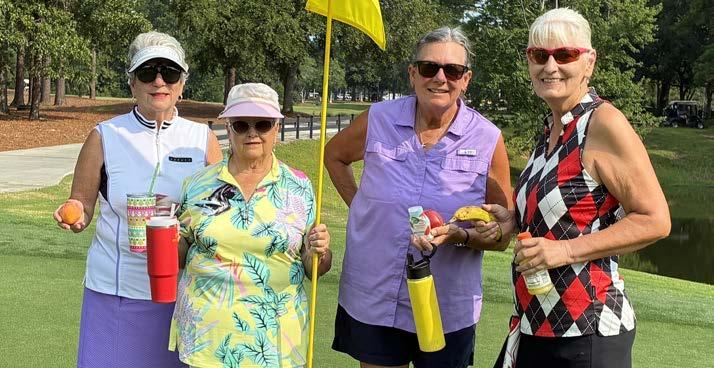
Have you grown tired of playing golf this summer in the severe heat? Do you lose your focus after a few holes? If so, it could be that you are not getting the proper nutrition and hydration before and during your round of golf. Without proper nutrition and hydration, your ability to concentrate, make decisions and control your golf swing can deteriorate quickly. Golf is demanding both physically and mentally.
Preparation for your round of golf should start hours before you tee off.
Nutritionists suggest eating several hours before you play. If you are playing in the morning, your breakfast should include some of the following: wholewheat bread, eggs, oatmeal, fruit and yogurt. Stay away from sugary cereals, white bread and orange juice. Hydration should occur throughout the day. A general guideline is to drink about half your body weight in ounces of water each day. During a round of golf, you should consume 16 to 24 ounces of fluids per hour, although individual needs vary. During a four-hour round, that amounts to 64 to 96 ounces of fluids, not just water. Electrolyte drinks or powders may be helpful during long rounds in hot weather because they replace sodium and other electrolytes
lost through sweat. Caffeine and alcohol also should be avoided because they can adversely affect your performance.
During your round, proper nutrition is important. Good snacks include bananas, apples and other sliced fruit, mixed nuts, trail mix, and quality energy bars that contain at least 20 grams of protein. Sandwiches such as peanut butter and banana on whole-grain bread are also good choices. Eat a small snack every couple of hours.
Avoid the following during a round of golf: beer, high-sugar drinks and caffeinated energy drinks. Some snacks with carbohydrates can briefly spike your blood sugar and contribute to dehydration. Candy bars also can increase your blood sugar. A hot dog or burger at the turn can be difficult to digest and may hurt your performance.
How can you tell if what you eat or drink is affecting your golf game?
Do you shoot higher scores on the back nine, especially from Hole No. 14 through the finish? When you experience physical or mental fatigue, you tend to swing the club faster and harder to make up for your lack of energy. To help solve this problem, try eating smaller, more frequent snacks and stay hydrated.
Dr. Jean Harris is an LPGA Master Professional and teaches at local golf courses. jean.golfdoctor.harris@gmail. com; golfdoctorjean.com.
An estate plan can accomplish that ob-



For example, the estate could distribute 6% into a trust for the grandchild. The remaining assets could then be divided equally among the three children. For the two children who do not have children of their own, their trusts could grant each the power to appoint up to 85% of their respective trust assets to anyone they choose upon their deaths. During their lifetimes, they could have full use, access and control of their assets while the inherited assets remain protected from most lawsuits. The remaining 15%, if any remains, could be directed to the grandchild and held in trust until the grandchild reaches a specified age, such as 25 or 30. This approach provides remarkable flexibility. The children retain substantial control over their inheritances while the estate plan ensures that a meaningful portion ultimately benefits the family’s only grandchild. Rather than disinheriting anyone or creating unequal treatment, the
plan simply “stacks the deck” in favor of helping the next generation succeed. Every family has unique goals. Some want equality. Others want fairness based on circumstances. Some wish to protect inheritances from divorce, remarriage or lawsuits. The beauty of modern estate planning is that trusts can be customized to reflect your values rather than relying on one-size-fits-all distributions. The question isn’t whether you have an estate. Nearly everyone does. The question is whether you have a plan. Taking the time to create a comprehensive estate plan may be one of the greatest gifts you ever give your family, not just financially but emotionally as well.
Mark F. Winn, Master of Laws (LL.M.) in Estate Planning, a local asset protection, estate planning and elder law attorney serving Bluffton and Hilton Head residents for more than 20 years. See, www.mwinnesq.com



By Dan Prud’homme Contributor

The Bluffton real estate market is heading into August with another drop in inventory, a welcome improvement in selling time, and continued strength in both pending and closed sales. The numbers are not all moving in the same direction, but the overall picture remains encouraging and continues to favor sellers.
There are currently 710 homes for sale in Bluffton, down 4.4% from 743 last month. This is especially notable because July already had the lowest inventory recorded for that time of year. Buyers now have even fewer homes to choose from, which should continue to support demand

for properties that are priced and presented well.
There also was a significant improvement in average days on market. Homes are now taking an average of 76 days to sell, down from 97 days last month. That is a 21.6% decrease in just one month. Buyers remain thoughtful and selective, but homes are clearly moving more efficiently. Sellers should remember that low inventory does not automatically guarantee a quick sale. Price, condition, presentation and location still matter.
Pending sales have reached 1,423 year to date, an increase of 186 from last month’s total of 1,237. That represents a 15% increase in pending sales. Closed sales have grown even faster, rising from 1,120 to 1,334. That is an increase of 214 closings, or 19.1%, since last month’s report. This healthy flow of contracts and closings shows buyers remain active despite continued concerns about interest rates and the broader economy. Bluffton currently has about 3.6 months of inventory. A balanced market typi-
cally has about six months of supply, so Bluffton remains firmly in seller’s market territory. Buyers have more room to be careful than they did during the pandemic market, but the limited supply still gives sellers the overall advantage.
The year-to-date median sale price is now $557,388, down just 0.9% from $562,403 last month. This small change suggests prices are holding remarkably steady, especially when considered alongside shrinking inventory, faster selling times and strong sales activity.
The main takeaway is that Bluffton remains a strong seller’s market. Inventory is shrinking, homes are selling faster, and transaction activity continues to grow. Sellers still need to price carefully, while buyers should be ready to act when the right home becomes available.
Dan Prud’homme is the Visionary & Success Coach of The Prudhomme Team at William Raveis Real Estate. dan@ danprudhomme.com, www.theprudhommeteam.com

By Cinda Seamon Contributor
As students head back to school, drivers should expect more buses, pedestrians and bicyclists on the road. Here are some backto-school driving safety tips.
Think of the morning craziness when dropping off kids: traffic congestion around the school, buses loading and unloading students, children riding bicycles, and parents hurrying to get to work. The same is true during afternoon pickup.
Slow down in active school zones and obey all crossing guard signals.
According to the National Safety Council, most children who lose their lives in school bus-related incidents are 4 to 7 years old and are pedestrians. These tragedies can occur when a motorist illegally passes a stopped school bus.
Don’t block a crosswalk at a red light or while waiting to make a turn. Doing so can force pedestrians to walk around your vehicle and into the path of moving traffic.
• Most schools have specific drop-off procedures. Be sure you know them.
• Don’t load or unload children across the street from the school.
Consider carpooling. It can reduce the number of vehicles at the school.
When school zone flashers are active, stop and yield to pedestrians crossing the street.
Pay attention to crossing guards.
Never pass a vehicle stopped for pedestrians.
Never pass a school bus from behind on an undivided road. It is likely stopped to load or unload children.
When stopping behind a school bus, leave enough space for children to safely enter and exit the bus.
Be alert. Children can be unpredictable and may cross midblock or step out from between parked cars.
Pay extra attention to children riding bicycles to school. Young children often are not able to accurately judge traffic conditions.
Drivers have a lot to pay attention to in school zones. As school begins, exercise extra care and caution, plan ahead, leave a little early and remember: Head up. Phone down.
Cinda Seamon is the Community Risk Reduction & Outreach Program Coordinator for Hilton Head Island Fire Rescue.

By Kevin Fitzpatrick Contributor
“...to talk of many things...”
And so we will use a line, not from a song this time, but from a poem by Lewis Carroll to kick off this piece. My first piece for the Bluffton Sun was published in the July 2, 2024, edition. I had been reading the paper since we moved to town in August 2021, and when I saw a small notice from the editor earlier in 2024 suggesting that anyone interested in contributing should get in touch, I did. I included a few examples of blog posts I had written to give a flavor of what I was interested in doing, but my message seemed to fall into an abyss. What I didn’t realize was that the paper was undergoing a personnel
change. When I followed up to check, I was delighted to be offered a regular contributor slot.
Over the past two years, I have had the great freedom and joy of writing about a variety of topics, from the local food scene to travel reflections, to a couple of pieces written from the point of view of Abbey the dog as she ran the last few laps of her race. Most of the time, ideas came to me while I was swimming laps or running.
Sometimes it was a struggle, but it was never a chore. It was always a very enjoyable exercise.
About a year ago, we started to realize that while we have had many wonderful experiences here, something was missing. The final light bulb went on as we were driving north last summer for what was planned as a three-week visit with friends and family. As I drove over the Tappan Zee Bridge, I started to tear up. It was at that point we decided to put a plan in place to head back to Connecticut. When we settled back in after our visit, we worked with the same realtor we had
used to purchase our home, got it ready, and in March of this year it went live. Almost exactly 90 days later, we were under contract, and then the stress of moving again began. Honestly, I didn’t expect to make another major move after our original landing, but life has a funny way of showing its cards.
I’m sure there are many reading this who will think us absolutely insane. Yes, we are taking on a far more expensive locale, not something to take lightly as two retired teachers. And yes, winter will once again last for months. However, being retired is a plus because when the weather gets bad, we don’t have to commute. We can simply lay low until it clears.
I, in particular, will miss 12 months of shorts and flip-flops, we are both looking forward to the wonder of four true seasons. While all of the analytics scream that this turnaround could be a huge error in judgment, suffice it to say that matters of the heart and soul speak an entirely different language. I’ve come to peace with leaving it at that.
The last five years have been wonderful. After decades of chasing our tails on the hamster wheel, this has been a spectacular way to decompress and take a long, five-year vacation. We remain grateful for the wonderful sunsets and for the way we have become like family at places such as The Bluffton Room and Wine Time. We started exploring the area during various spring breaks and likely will do the same again after a while.
I think this is the perfect time to conclude my final piece by having Jimmy Buffett play us out one more time.
“Drink it up, this one’s for you
It’s been a lovely cruise
I’m sorry it’s ending, oh it’s sad, but it’s true...
There’s wind in our hair and there’s water in our shoes...
...it’s been a lovely cruise.”
Kevin Fitzpatrick is a retired teacher who, along with his wife Sue (also a retired teacher) have enjoyed exploring life in the Lowcountry and all it has to offer.

By Sasha Sweeney Editor
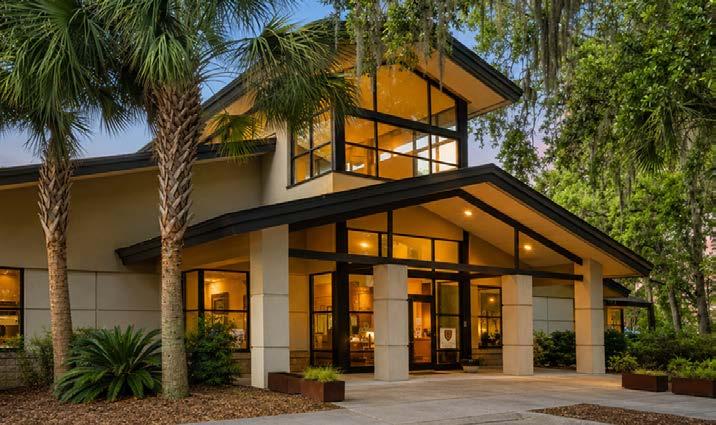
Moon King Entertainment Group, part of Watterson Brands, announced plans Tuesday to redevelop the former Island Packet newspaper building into a dining, entertainment and event venue. Watterson Brands owns several Lowcountry hospitality businesses, including Burnt Church Distillery and Ma Daisy’s Porch.
The project, called The Press Room, will be located at 10 Buck Island Road in the building that once housed the newspaper’s printing operations. Construction is expected to begin in September, with the first phase scheduled for completion by summer 2027.
According to the company, the project will redevelop the historic building in multiple phases.
The first phase includes an expansion of Side Hustle Brewing Co. into a full-service taproom restaurant with a commercial kitchen. The taproom is expected to seat about 200 people.
Additional seating is planned in a game room and a 15,000-square-foot beer garden with a 20-foot TV. Side Hustle Brewing Co. will continue brewing beer on-site while expanding its production space within the building. Plans for the first phase also include approximately 5,500 square feet of indoor arcade games and family en-
By The Bluffton Sun Staff
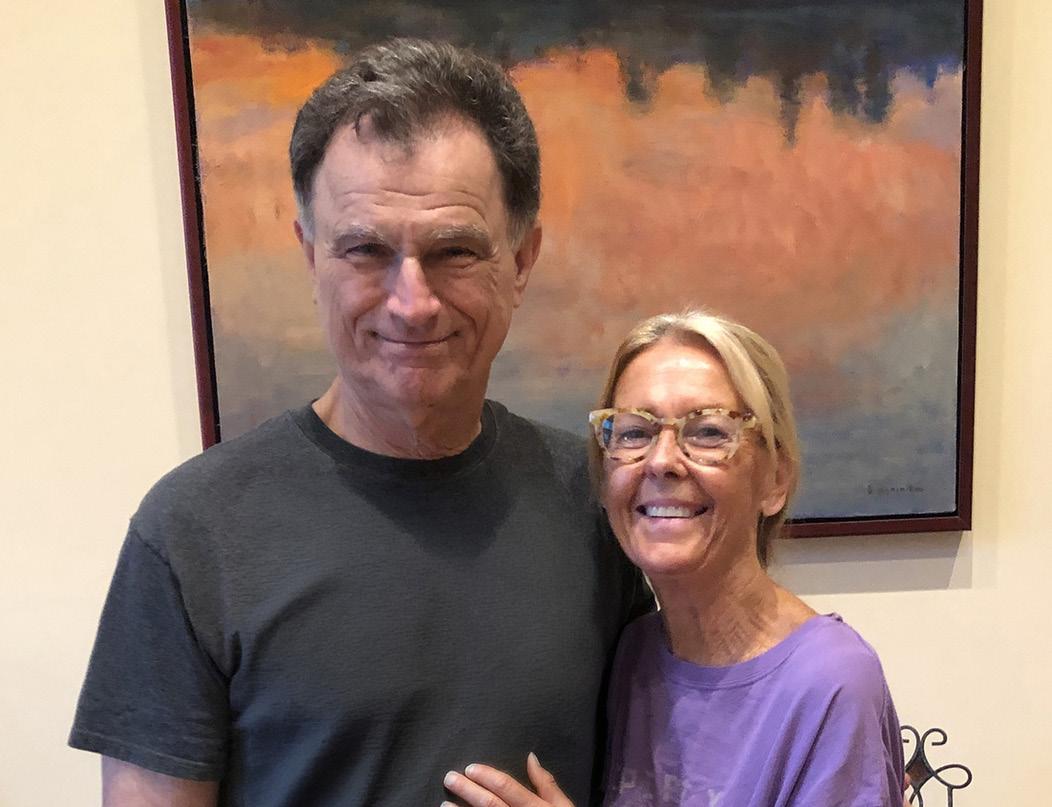
A Callawassie Island couple has pledged $50,000 over five years to establish a fund supporting experiential learning opportunities for University of South Carolina Beaufort students.
Kathleen and Jim Jordan created the Experiential Learning Fund to help students gain practical experience through activities such as research, clinical placements and internships.
“Experiential learning is an exciting advancement in higher-level education,” Kathleen Jordan said. “This program enables USCB students to relate their course work to the real world and better prepare them to face the challenges and seize upon the opportunities of the workplace upon graduation.”
According to the university, about 70% of USCB’s more than 2,200 students currently participate in at least one experiential learning opportunity during their college careers.
tertainment, multiple bars, an upscale coffee shop with seating for about 60 guests, an ice cream parlor and a 6,500-square-foot private event venue designed to accommodate more than 300 people for weddings, corporate events and other gatherings.
Future plans call for an 18-hole indoor black-light miniature golf course with party rooms. The company also plans to convert the building’s basement into a speakeasy with live entertainment and a separate upscale dining space. A timeline for the second phase has not been announced.
The building formerly housed the printing presses that produced the Island Packet newspaper. According to the company, the redevelopment is designed to preserve the property’s connection to Bluffton’s history while creating a venue for dining, entertainment and community events. The company said The Press Room is intended to serve as a gathering place for dining, entertainment and community events while preserving the property’s connection to Bluffton’s history.
“By repurposing the historic Island Packet building rather than replacing it, Moon King Entertainment Group continues our commitment to revitalizing meaningful local landmarks,” Billy Watterson, CEO of Watterson Brands, said in a news release.
For more information, visit www.thepressroombluffton.com.
Kim Dudas, provost and executive vice chancellor for academic affairs, said in a statement. “Learning beyond the classroom in a real-life setting is an essential part of a purposeful college experience and this gift from the Jordans will help make that possible for our students locally, nationally and globally.”
The Jordans have lived on Callawassie Island for 30 years following careers in corporate and international finance.

Kathleen Jordan serves on the board of the USCB Education Foundation and on the curriculum committee of the Osher Lifelong Learning Institute at USCB. Jim Jordan is an author and historian.
The university said the Osher Lifelong Learning Institute will present a program this fall for its members to learn more about experiential learning and hear from USCB students about their experiences.
For more information about creating opportunities for USCB students, contact Tim Daniels at 843-208-8258 or tdaniels@ uscb.edu.
“Our goal is for all USCB students to benefit from experiential learning,” Dr.


By Rabbi Ken Kanter Contributor
What an amazing commemoration and celebration we just experienced for the 250th anniversary of the founding of our country when the Declaration of Independence was signed!
In the history of our country, 250 years is a very long time, but as King Charles of Great Britain said when he spoke to a joint session of the House and Senate in April, “The Founding fathers were bold and imaginative rebels with a cause. Two hundred and fifty years ago, or, as we say in the United Kingdom, ‘just the other day,’ they declared Independence.”
Indeed, our history is very brief compared to the 1600 years of British
Monarchy, or the 2500 years since Roman history began, or the many thousand years of Egyptian or Babylonian culture. The history of the Jewish people in Ancient Israel is like the Egyptians and Babylonians, more than 3000 years ago. And how can we prove that these historical events happened? Well, we can go to the National Archives in Washington, DC to see the Declaration of Independence. We can go to London to see the Magna Carta. We can see hundreds of artifacts of ancient Egypt or Rome from the Pyramids in Cairo to numerous ancient statues, documents or tablets in museums around the world.
How can we prove the history of the ancient Hebrews and the Jewish people? Many of us turn to early Jewish history as described in the Torah, the first five books of the Hebrew Bible, or as some refer to it, the Old Testament. But an ancient book or scroll is not considered historically proven, even if it is sacred to us in our religion. Historicity needs to be proven using scientific evidence, something we can hold, dig up, see. For millennia, most of the Bible could not pass that scientific test. Outside of scriptural documentation like the Dead Sea Scrolls, which provided very early texts of the Bible, there was little substantive proof of stories or events found in the Bible. But that changed with modern archaeology in the late twentieth century when in 1993, a hugely important discovery was unearthed. Up until then, we had no physical proof of any kings of ancient Israel or Judea. There were no references in other ancient cultures, there was no evidence or documented history of the existence of King David or Solomon. That changed when Israeli archeologist Dr. Avraham Biran and his team were digging at Tel-Dan, when they discovered a piece of an ancient stone tablet from 2900 years ago. On that “stele” they read one of the earliest “extra-biblical” references to King David and the Davidic dynasty. Written in ancient Phoenician script, it is of enormous importance to the Abrahamic faiths because it gives us solid evidence of
the historicity of a significant part of our Holy Bible. Even more so, it is significant not only to members of the Jewish faith, but for Christians, as well, as the New Testament traces Jesus and his family as direct descendants of King David. That tablet found 30 years ago provides direct proof that David and his dynasty are historically documented.
In recent years, there are numerous important archeological discoveries which allow us to understand the historic foundations of the Bible. Many of these sites you have seen when visiting Israel and the Holy Land, and many others are sacred to us through our liturgy, ritual, and faiths.

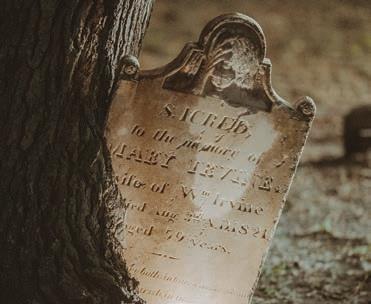
From the perspective of history, the story of our country is quite short. The history of our faiths is eternal.
















BUILD YOUR FAMILY TREE WITH US
Unlock your family history with the help of our volunteer genealogists! Whether you’re just getting started or facing a research roadblock, we’re here to guide you. Call 843.686.6560 to schedule your appointment today!
LEARN ABOUT LOCAL HISTORY
We preserve and share the rich history of Hilton Head Island, stewarding two historic sites listed on the National Register of Historic Places. Throughout the year, we offer engaging classes, tours, and events, with sessions available in the spring and fall. For full details and registration, visit HeritageLib.org.
EDUCATE & CELEBRATE –
250TH ANNIVERSARY OF THE AMERICAN REVOLUTION
Join us as we celebrate 250 years of American independence and honor the fight for freedom! Discover Hilton Head Island’s vital role in shaping our nation’s history at HeritageLib.org – your local resource for all things related to the American Revolution.
The Heritage Library is the heart of Hilton Head Island’s history and genealogy. Visit us soon!

Scan to visit HeritageLib.org
Bluffton Library Adult Programs
• The Empowered Caregiver Series: Supporting Independence
Aug. 11, 11 a.m.-noon
Program offering information and resources to help caregivers support independence.
• Plant It Forward Plant Exchange
Aug. 13, 11 a.m.-noon
Plant exchange for gardeners to swap plants and share gardening tips.
• Let’s Talk AI Aug. 18, 11 a.m.-noon
Discussion exploring artificial intelligence and its everyday applications. For information, call 843-255-6503.
(Aug. 21); a First Friday Lecture on Lowcountry raptors (Aug. 7); and a guided nature walk exploring the uses of native plants (Aug. 14). Some programs are offered online or require reservations. palmettobluff.com
Kellen Powers Live
Solo acoustic performances featuring covers and original music by Hilton
Head musician Kellen Powers.
Thursdays, 7-10 p.m. — Reilley’s Grill &
Bar Hilton Head Island
Fridays, noon-4 p.m. — Hilton Head
Beachfront Resort & Spa
Saturday, July 25, 5:30-8 p.m. — South Carolina Yacht Club kellenpowers.com
Palm Trees & Pistons Car Show
Palmetto Bluff Arts Initiative
• Hampton Watts Pop-Up
Aug. 8, 1-5 p.m.; Aug. 9, 1-5 p.m.
FLOW Gallery + Workshop, Palmetto Bluff
Artist talk and demonstration from 1-3 p.m., followed by Prosecco with the artist from 3-5 p.m. Aug. 8. Gallery hours continue Aug. 9.
Pups on Parade
Aug. 22, 10 a.m.-1 p.m.
FLOW Gallery + Workshop, Palmetto Bluff
Live pet paintings by artist Sheryl Stalnaker.
palmettobluff.com
Palmetto Bluff Conservancy Programs
Aug. 5-19

Open Monday-Friday
Palmetto Bluff Conservancy
August programs include Brown Bag
Lunch presentations on sea turtles (Aug. 5), invasive species (Aug. 12) and living with alligators (Aug. 19); Great Southeast Pollinator Census
By Murray Sease Contributor
La Petite Gallerie celebrates the old and the new.
The little art gallery with the red awning in downtown Bluffton has been home to many talented artists in its 11-year history. This summer, it is featuring two of them.
Among them is Bill Winn, an owner-artist who joined La Petite Gallerie in its early days. Bill is skilled in all media, with watercolor and acrylic among his current favorites. He creates lifelike still lifes and moody landscapes, figure drawings and shorebirds. He can and does paint just about anything. Bill draws on his career as a medical illustrator and a natural eye for capturing the beauty around him. In addition to enjoying his paintings, visitors to the gallery appreciate Bill’s wisdom, humor and insights into what makes great art. He is a master of both art and conversation.
The gallery also welcomes its newest owner-artist, Nancy Patrick Carney. Nancy creates imaginative art using paint and paper. Her bright colors, coastal themes and feminine figures are instantly recognizable. She often incorporates hand-painted papers, printed music and words into her work, creating pieces that are unique and cheerful. With a background in commercial art and illustration, Nancy brings her own perspective to Lowcountry art.
This summer, La Petite Gallerie is celebrating both artists. Visitors can also see the work of the gallery’s five other owner-artists, along with pottery, jewelry, garden art and more. There is something for everyone in the gallery and garden.
Murray Sease is an artist at La Petite Gallerie, 56 Calhoun Street, Bluffton, SC. lapetitegallerie.com.

Aug. 8, 9-11 a.m.
NALA’s Beach Bar & Grill, Hilton Head Island
Monthly car show featuring vintage, antique, exotic, muscle and specialty vehicles owned by local enthusiasts. Car owners are invited to display their vehicles, and the event is free and open to the public. Restaurant offers 25% off breakfast purchases during the event for attendees who mention Palm Trees & Pistons. Weather permitting. Held the second Saturday of each month.
Author Event with Michael Wayne Wojcik
Aug. 20, 2-4 p.m.
Emry’s Bookshop, Port Royal Plaza, Hilton Head Island
Author Michael Wayne Wojcik discusses his paranormal novel “Don’t Let Me In,” followed by audience Q&A and book signing. Limited copies available for purchase. 843-802-6143











By Leslie Rohland Contributor
bite
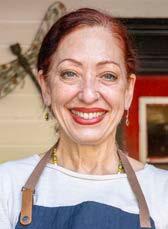
a time, alongside a warm cup of coffee. Italian almond cake falls beautifully into the latter category. With its delicate almond flavor, tender crumb and subtle sweetness, it’s the kind of cake that proves you don’t need rich frosting or elaborate decorations to create something truly memorable. In Italy, simple cakes like this have long been part of everyday life. The focus is on quality ingredients and balanced flavors that allow each bite to shine. Our Italian almond cake embraces that same tradition. It has a moist, airy texture, while sliced almonds baked into the top add a delicate crunch and a beautiful golden finish. A hint of citrus zest brightens the cake, complementing the warm notes of vanilla and almond extract without overpowering them. The result is a dessert that’s rich in flavor yet surprisingly light.
For those who shy away from overly sweet desserts, this cake is an excellent choice. Its gentle sweetness allows the nutty almond flavor to take center stage. Add a dusting of powdered sugar, a spoonful of whipped cream and a handful of fresh berries, and you’ve created a dessert that’s both elegant and effortless.
In the Lowcountry, we appreciate recipes that celebrate simple ingredients prepared with care. This Italian almond cakeis one of those timeless classics.
Italian Almond Cake
• 1 stick salted butter, softened
• 1 cup sugar, plus more for dusting
• 3 large eggs
• 1 teaspoon orange or lemon zest, or both
• 1 ½ cups sliced almond, plus more for topping
extract
flour

• ¼ teaspoon baking powder
• ¼ teaspoon salt
• Powdered sugar for dusting
• Berries and whipped cream
Instructions
1. Preheat oven to 325°F.
2. In a large bowl, whisk together melted butter and sugar.
3. Add eggs and whisk again.
4. Using a food processor, grind ¾ c of the sliced almonds. Or hand chop the almonds.
5. Add the orange zest, ground almonds, and both extracts, whisk together.
6. In a separate bowl, mix the flour, baking powder, and salt.
7. Add dry to wet ingredients and stir well until smooth.
8. Grease a springform pan or cake pan then line the bottom with parchment paper.
9. Pour the batter into the pan and spread evenly.
10. Sprinkle 1 tablespoon of sugar over the batter, then add some sliced almonds on top.
11. Bake in the middle rack for 30 minutes or until a toothpick comes out clean.
12. Remove the ring from the springform pan and let cool.
13. Finally, dust the top of the finished cake with a little powdered sugar and almonds.
14. Serve with fresh berries and whipped cream.
By Sasha Sweeney Editor
Hilton Head Distillery earned a total of nine medals in two 2026 spirits competitions, receiving recognition for several of its rum products ahead of the company’s 10th anniversary celebration this fall.
The Hilton Head Island distillery received three medals at the 2026 American Distilling Institute International Spirits Competition and six medals at the 2026 Bartender Spirits Awards, according to the company.
At the ADI International Spirits Competition, the distillery received silver medals for its Spiced Rum and Espresso Roast Rum, and a bronze medal for its Platinum Rum.
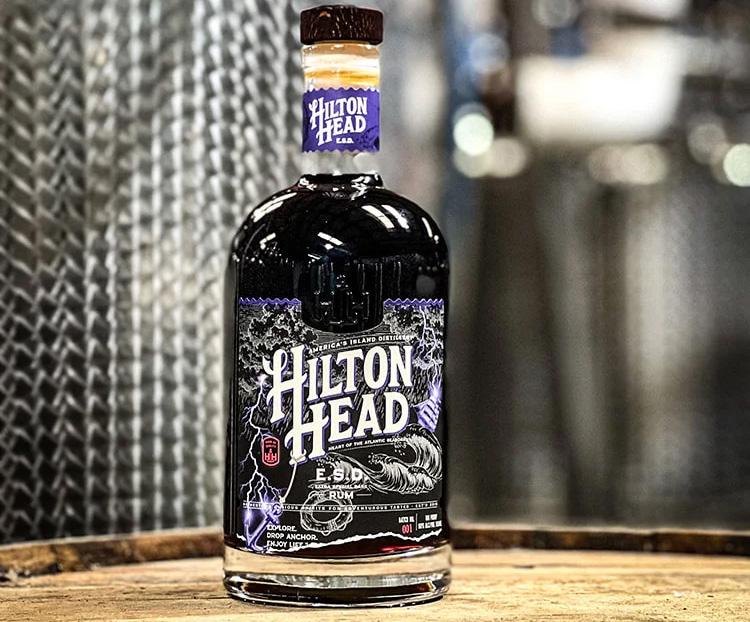
At the Bartender Spirits Awards, Hilton Head Distillery received a gold medal, with a score of 95 points, for its E.S.D. Extra Special Dark Rum. It also earned silver medals for Espresso Roast Rum, Platinum Rum, Toasted Coconut Rum and Spiced Rum, along with a bronze
medal for Bananas Foster Rum.
According to the American Distilling Institute, the annual competition is judged through blind tastings in which spirits are evaluated on aroma, flavor, balance and overall quality.
The Bartender Spirits Awards are judged by bartenders, beverage directors and hospitality professionals. According to the competition, entries are evaluated on mixability, versatility, value, packaging, aroma, flavor, balance and overall quality.
Master Distiller Cody Chinn said the awards reflect the distillery’s progress and provide feedback as it prepares to enter additional competitions.
“Everything we entered medaled this year and we received some great feedback from judges,” Chinn said. “This was a good first step to showcasing what we are doing at Hilton Head Distillery, but we intend to enter again next year and add the ACSA (American Craft Spirits Association) competition and the San Francisco World Spirits Competition to the lineup.”

Leslie Rohland, 2024 SC Chef Ambassador, Chef and Proprietor of The Cottage Cafe, The Bluffton Pasta Shoppe, the Juice Hive, and May River Coffee Roasters. (843) 757-0508, 38 Calhoun St, Bluffton, SC.
By Sasha Sweeney Editor
The League of Women Voters of Hilton Head Island-Bluffton Area will celebrate Women’s Equality Day with a community program highlighting the accomplishments and experiences of women in professional sports.
The free event, titled “Women in Sports,” will be held from 1:30 to 3 p.m. Wednesday, Aug. 26, at the Bluffton Library. The program is open to the public, and organizers recommend registering online by Aug. 24.
The event will feature two guest speakers with distinguished careers in golf and tennis: former LPGA Tour standout Rosie Jones and racquet sports professional Katie Ruth.
According to the League, the program will explore how sports shaped the speakers’ personal and professional lives while examining the opportunities and challenges women continue to face in athletics
and beyond. Organizers said the discussion also will recognize Women’s Equality Day, which commemorates the adoption of the 19th Amendment and women’s right to vote in the United States.
Jones is one of the most accomplished golfers in LPGA Tour history. She won 13 LPGA Tour tournaments during a career spanning more than two decades and represented the United States in seven Solheim Cup competitions. One of her most memorable moments came in 2002 when she made the winning putt that secured the Solheim Cup for the United States. Jones played collegiate golf at The Ohio State University, where she earned All-America honors before joining the LPGA Tour in 1982. During her career, she earned more than $8 million in prize money and later served on the LPGA Player Executive Committee. Since retiring from full-time competition, she has remained active in the golf community through instruction and golf travel programs.
Ruth, director of racquet sports at Moss Creek, has built a career as both a coach
and advocate for women in tennis. Originally from Wolverhampton, England, she played collegiate tennis at Clayton State University, where she earned All-America honors in doubles and helped lead the

team to NCAA Division II Elite Eight and Final Four appearances.
She has received several professional honors, including being named the USTA South Carolina Tennis Professional of the Year in 2023 and the PTR USA South Carolina Pro of the Year in 2025. Ruth has also been a featured presenter at national and regional coaching conferences, where she has shared strategies for player development and leadership in racquet sports.
League organizers said the program is intended to celebrate the achievements of women while encouraging community discussion about equality and leadership. Guests are invited to wear white in recognition of the suffragists who fought for women’s voting rights. An informal social gathering will follow the program at Side Hustle, 10 Buck Island Road, Unit 200, in Bluffton.
The event is free and open to the public. Additional information and online registration are available at bit.ly/Equality2026.

By Sandro Virag Contributor
Backstage at a ballroom competition is a mix of glamour, chaos, nerves and quiet moments you would never see as an audience member. The audience sees only the polished elegance on the floor, but behind the curtain, it is a completely different world.






The first thing you may notice is how busy a competition is. Dancers, instructors, makeup artists and volunteers are all moving at once. Garment bags are everywhere, rhinestones are being glued on at the last minute, and someone is always asking, “Which heat are we on?”
Schedules get shifted around, events run early or late, and everyone is trying to stay one step ahead.
Backstage is where dancers become performers. Hair and makeup are done with precision. It is not unusual to see someone literally being sewn into a dress minutes before stepping onto the dance floor.
Nerves are at an all-time high, even for experienced dancers. Some people pace, some stretch and some go completely quiet. Others run through their routines in the hallway. You will also see some backstage rituals: lucky jewelry, certain warm-ups or a pep talk from a partner or coach.
One of the more intense parts of a competition is the quick change. Dancers may have only a few minutes to switch costumes, shoes and accessories. A ticking clock adds to the pressure. Even though it is a competition, there

is a strong sense of community. Competitors help zip dresses, fix hair or lend earrings. People even cheer on others in their own category.
Backstage is where emotions hit the hardest. The excitement after a great performance, the disappointment of a missed step and the relief when it is over all show up here. Someone could be celebrating one minute and regrouping the next.
Beneath the sparkle and shine, ballroom dancing is deeply personal. By the time a dancer steps out under the lights, the chaos fades and all that remains is the performance. But backstage, that is where the real story is.
What makes ballroom competitions so special is that every dancer backstage is carrying a unique journey. Some are stepping onto the floor for the very first time, while others have trained for years, chasing a personal goal or dream. Behind every costume and every smile are hard work, sacrifice, dedication and passion. That is why the backstage atmosphere can feel so emotional and electric at the same time. It is not just about trophies or placements. It is about growth, courage and sharing something meaningful with an audience. Once you experience that world behind the curtain, you realize ballroom dancing is about far more than dance steps.
Sandro Virag is a partner and instructor at Hilton Head Ballroom Dance Studio of Hilton Head, hiltonheadballroom.com

By Danie Connolly Contributor
Some people read tea leaves, others find understanding in reading palms, and a few interpret tarot cards. My mother read clouds. She studied them by the way they floated on windless days and admired the gentle breezes that could turn into blustery chaos in the blink of an eye.
I remember when I was about 5 years old. She’d take a blanket, and we’d spread it on the grass and look up at the blue sky and the clouds suspended above us. The world drifted by before her eyes in a slow-moving panorama of shapes, almost like a carousel overhead. She’d point up and ask if I could see dragons, angels, fluffy birds with wings or playful kittens batting at white puffs. She’d point to a majestic cluster in the sky and tell me it resembled Mount Rushmore, which meant nothing to me at the time. Above all, she was keenly aware of whether the sky would change its disposition from a sunny day to flashes of lightning, creating foreboding shadows and coloring our world with rain.
My mother would watch the clouds above and know whether I’d be fine playing outside or whether it was time to grab umbrellas before a sudden downpour on a hot day.
As I grew more adventurous and my world became larger, she’d poke her head out the door and say, sounding like Don Kent, the weatherman on WBZ, “It’s going to be a nice day. There are unstrung pearls above us.”


In her language, that meant cotton-puff clouds spaced evenly across the sky like ducks floating by. I never questioned her interpretations. I respected her understanding of the skies because I’d seen it proven too many times. Over the years, her gentle prodding made me a believer, but rest assured, I was never going to be a weather girl.
Ironically, she never spoke much about her interpretations, nor did I. It was our sacred secret. She believed people might think she was crazy. Some things are better left unsaid.
Nowadays, people are less shy about sharing vivid dreams, premonitions, intuition and other gifts they believe they were born with. Today’s world seems more accepting of those experiences. We are all born with gifts. Some people keep theirs close to the vest.
I had a grandson who, when he was very young, could point out the moon no matter what time of day it was, even when it was faded or only the faintest sliver in the sky. I used to tell him it was his superpower, and like every little kid, he loved having “super vision” at only 3 years old.
I’m more of a watcher than a reader.
I believe we all have the ability to offer a hug or a prayer when we see someone in need of compassion or a kind word.
A smile does more than we can imagine. I’m a writer and a painter, mostly whimsical, and I seldom paint intricate clouds. There’s actually a cloud appreciation website that’s rather intriguing.
You can’t really make mistakes when you paint a cloud. It may look strange at first and never seem to resemble anything, but if you wait long enough, you’ll probably see that very shape floating overhead someday. That’s probably one of the reasons I love art and teaching. Just when you think you’ve run out of imagination, all you have to do is look up at the sky.
Thank you for supporting our local newspapers!

By Katie Licata Contributor
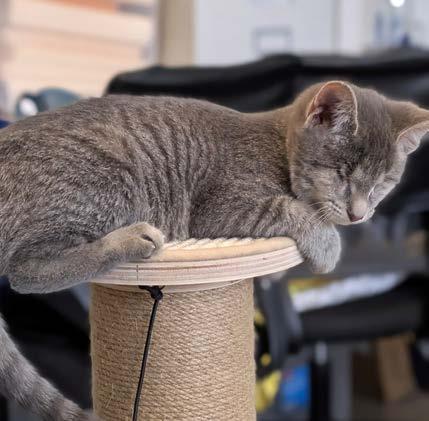
Blind cats are highly adaptable and can live happy, active and fulfilling lives without sight. While blindness may sound like a major challenge, blind cats use their other senses to live normal lives despite not being able to see. When a cat loses its sight or is born blind, its other senses become heightened to help it navigate the world. Exceptional hearing, a keen sense of smell and sensitive whiskers help blind cats adapt. Many of the blind cats at Palmetto Animal League also have a seeing companion cat, which helps them navigate by scent. Once they become familiar with their surroundings, blind cats can find their food and water bowls, use the litter box, run, climb, play and recognize their people.
Blind cats are just as affectionate, playful and curious as sighted cats. They enjoy cuddling, exploring, climbing cat trees and interacting with their families. They are not limited; they simply experience the world using different senses.
For families considering adoption, a blind cat can make an exceptional companion. Their resilience, trust and ability to thrive is inspiring. Like any other pet, they require care, love and time to adjust to a new home.
cats waiting to meet their perfect match. Visit to meet these remarkable cats and consider opening your home to a new family member who just might help you see the world a little differently.
Katie Licata is the Director of Marketing at Palmetto Animal League palmettoanimalleague.org
The Hilton Head Public Service District will host a free landscaping workshop Aug. 6 to help homeowners reduce outdoor water use and create lower-maintenance yards. The Carolina Yards workshop, presented in partnership with Clemson Extension, will be held from 10 a.m. to noon in the PSD Community Room at 21 Oak Park Drive. Clemson Extension Agent Ellen Sturup Comeau will lead the workshop, which will cover selecting plants suited to local soil conditions, watering landscapes efficiently, reducing stormwater runoff and incorporating South Carolina native plants into home landscapes.
According to the Hilton Head Public Service District, 40% to 60% of Hilton Head Island’s annual demand for treated drinking water is used to irrigate residential lawns and landscapes. The workshop will focus on landscaping practices that can help reduce irrigation and conserve drinking water. The workshop is free and open to the public. For more information, visit hhpsd.com/category/latestnews. The Hilton Head Public Service District provides water, sewer and recycled water service to more than 25,000 customers in the island’s north and mid-island areas.



By Matthew Emmer Contributor
When was the last time you stood quietly in a place and simply marveled at nature? Listened to birdsong drifting through the trees, watched white ibises glide overhead, or paused as a snowy egret patiently stalked its prey along the marsh’s edge? When was the last time you took a deep breath, slowed down and let the natural world do the talking?
When was the last time you visited a national wildlife refuge?
National wildlife refuges are federally protected public lands dedicated first and foremost to conserving wildlife and their habitats. Like our national parks, they belong to all Americans. But unlike many national parks that may require long-distance travel, wildlife refuges are often found in your own community. In fact, there is at least one refuge in every state and U.S. territory, creating the world’s largest network of lands and waters devoted to wildlife conservation.
Here in the Lowcountry, we’re fortu-
nate to have one just across the bridge. Pinckney Island National Wildlife Refuge encompasses more than 4,000 acres of salt marsh, freshwater ponds, maritime forest and open fields. It is home to painted buntings, roseate spoonbills, white-tailed deer, alligators, turtles, wading birds and countless other species that make this remarkable landscape.
The refuge is also a place where people connect with nature. Families introduce children to wildlife for the first time. Birders discover seasonal migrants. Photographers wait patiently for the perfect light. Walkers and cyclists enjoy miles of peaceful trails surrounded by the sights and sounds of the Lowcountry. Every visit offers something different.
One of the most rewarding partnerships at Pinckney is with Hilton Head Audubon through its Birdability program. Each spring, from March through May, volunteers provide weekly guided golf cart tours for people with mobility challenges, allowing them to experience areas of the refuge that might otherwise be inaccessible. These leisurely rides often include a stop at Ibis Pond, where visitors can
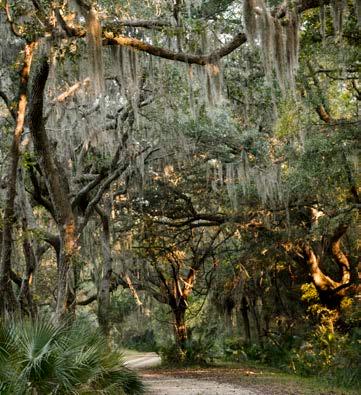
observe one of the region’s most spectacular nesting colonies of herons and egrets. It’s a reminder that the wonder of nature should be available to everyone. Registration is required, but the tours are free. Wildlife refuges do more than protect birds, animals and habitats. They preserve a sense of place and provide future generations with the opportunity to ex-
perience the same beauty and inspiration that have captivated visitors for decades. They remind us that conservation is not only about protecting wildlife. It’s about ensuring that wild places remain part of our lives.
So the next time you cross the bridge between Bluffton and Hilton Head Island, consider making a stop at Pinckney Island National Wildlife Refuge. Walk a trail. Watch the birds. Pause beside a pond. Listen to the wind through the pines or the chorus of life rising from the marsh.
You may discover that a wildlife refuge is much more than protected land. It’s a promise, one generation reaching forward to the next, ensuring that these extraordinary places and the wildlife that depends on them endure for years to come. Admission is free, and the refuge is open from sunrise to sunset.
Matthew Emmer is the President of Friends of the Savannah Coastal Wildlife Refuges, a nonprofit that advocates for refuges across the Savannah and South Carolina area.


By Sasha Sweeney Editor
Sallie Ann Robinson, a sixth-generation Daufuskie Island native whose cookbooks have helped preserve and share the traditions of Gullah cuisine, has been inducted into the James Beard Foundation’s Book Awards Hall of Fame, one of the nation’s highest honors in food writing. Robinson received the recognition June 13 during the James Beard Foundation Media Awards at the Art Institute of Chicago. The foundation’s Book Awards Hall of Fame honors an author whose book or body of work has “significantly impacted the way we think about food and cooking.” Each year, the foundation selects one recipient whose published work has made a lasting contribution to the way people think about food and cooking.
For Robinson, the award recognizes decades of work documenting the recipes, traditions and stories of the Gullah people, descendants of enslaved Africans who developed a distinct culture in the Sea Islands and coastal regions of South Carolina and Georgia. Through her writing, cooking demonstrations and educational programs, Robinson has worked to preserve a culinary heritage rooted in locally grown ingredients, seafood and family recipes passed from one generation to the next.

Robinson is the author of several books, including “Gullah Home Cooking the Daufuskie Way,” “Cooking the Gullah Way, Morning, Noon, and Night,” and “Sallie Ann


Robinson’s Kitchen.” Her books blend recipes with personal stories and history, offering readers a window into life on Daufuskie Island and the traditions that shaped its Gullah community.
Following the ceremony, Robinson told The Atlanta Journal-Constitution that she initially questioned whether the email informing her of the honor was real.
“I thought it was some AI thing,” she told the newspaper. After confirming the news, she added, “I went to the moon.” Robinson also said she hopes the recognition will bring greater awareness to Gullah Geechee history and culture.
Beyond her work as an author, Robinson has spent years teaching traditional Gullah cooking through classes, lectures and community events. She also serves as founder of the Daufuskie Island Gullah Heritage Society, an organization dedicated to preserving the island’s history, language and cultural traditions.
For many Lowcountry residents, Robinson has become one of the region’s best-known ambassadors for Gullah culture. Her induction into the James Beard Foundation’s Book Awards Hall of Fame places her among a select group of authors whose work has left a lasting mark on American food literature while bringing national recognition to Daufuskie Island and the cultural traditions it continues to preserve.




Featuring works in oil, acrylic, watercolor, pencil and mixed media by Mary Burrell Jane Capraro Nancy Patrick Carney | Murray Sease Bill Winn & sculpture by Sanders Black & Wally Palmer
Adjacent to “The Store” 56 Calhoun Street lapetitegallerie.com
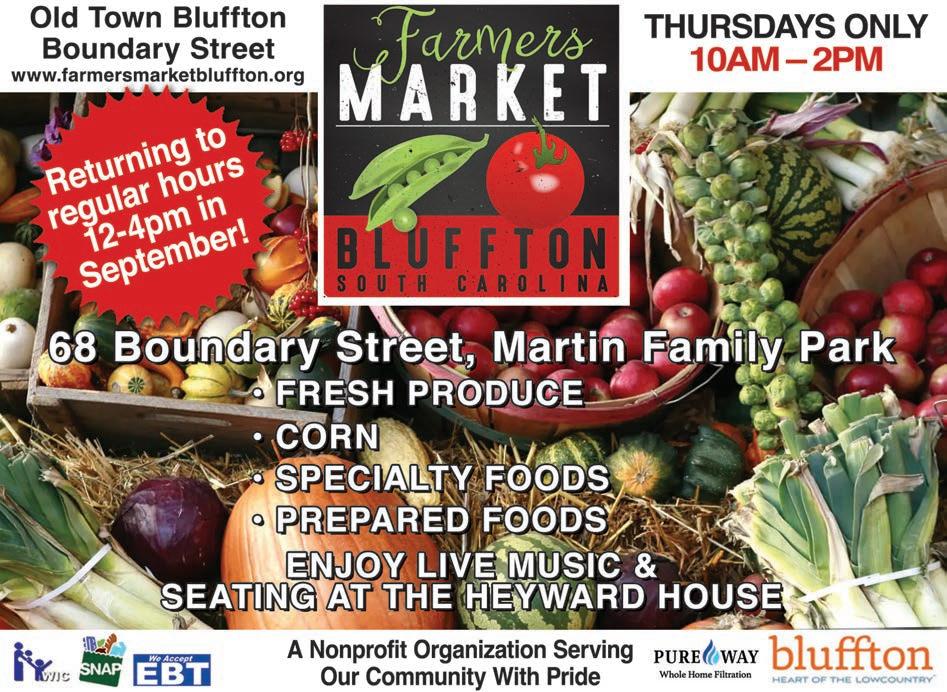


By Tracy Winslow Contributor
Lowcountry summer heat and humidity cling to my body like lingering guilt from a crime committed in a past life. They creep into my house through the lukewarm water pouring from the cold side of the faucet, and frizzle my soul before I’ve left my driveway. My hair immediately develops the texture and temperament of a Brillo pad despite my repeated attempts to shellac it into submission before climbing into my vehicular kiln and heading to work.
Smart people hide during this time of year, venturing out of the safety of the air conditioning only long enough to assure the neighbors that a wellness check is unnecessary. Then, exhausted by the exertion of being alive in eleventy thousand percent humidity, shuffle back into the dark cave our homes become every summer.
That is... with one exception.
The Haters On Alert.
You may know them by their government name: the Homeowners Association.
The HOA thrives as temperatures climb, swarming like wasps whose nest was just kicked by Spain in the World Cup final. They strike when we are least expecting it, as we lay stupefied by the heat, barely able to string a coherent sentence together. They know we’re at our weakest. Nature documentaries call this “the moment of the attack.”
I confess. I broke the rules.
Not by building an illegal shed. Not by painting my house chartreuse.
I put my garbage cans out before the allotted time.
My latest slap on the wrist arrived via email, complete with a time-stamped surveillance photo documenting my life of crime. Apparently, my garbage cans had been caught red-handed...approximately forty-three minutes too early. According to the HOA, this photographic evidence proved I was failing to “maintain a safe, beautiful and harmonious living environment for all residents.”
My offense was so egregious that they deployed the HOA’s elite tactical unit: the Architectural Review Board, better known on the streets as the Army of Residential Buzzkills.

I imagine the entire operation went something like this:
Somewhere, a walkie-talkie crackled to life at Haters On Alert headquarters.
“Control to all units. We’ve got an unauthorized early can deployment. Infraction: Trash Tote or Recycle Bin (8.21.1)* at the Winslow residence.”
The room erupts into chaos.
“Winslow? Again?”
“Didn’t she learn last year when we cited her for the wrong font with her mailbox numbers?”
“Apparently not.”
“This level of lawlessness cannot be tolerated.”
Silence.
“Call in the ARB.”
Audible gasps.
“The Army of Residential Buzzkills?”
“They’re our only hope.”
Moments later, an ARB agent straightens a reflective safety vest, grabs a clipboard, and whispers, “I’ve trained my whole life for this.” He slips behind my wax myrtle, pretending to inspect a drainage easement while snapping TMZ-worthy paparazzi photos of my garbage cans like
a full-blown crafting emergency.
“We’ve only got one sheet of corrugated plastic left!”
“Cannibalize Karen’s grandson’s science fair project.”
“But it won second place!”
“There are bigger things at stake here, Martha.”
“Who has a Cricut?”
Every hand in the room shoots into the air.
“Excellent. Who has enough red vinyl for twelve-inch letters?” Silence.
“I’m down to burgundy!”
“This is no time for compromise, Linda! We need red letters... and we need them STAT!”
Somewhere in the distance, the unmistakable whine of a Dremel fires up. It wasn’t necessary... but it added gravitas. By morning, another dangerous criminal had been neutralized, and suburban order had once again prevailed.
Civilization had narrowly escaped catastrophe.
As for me, I dutifully replied to my notice, acknowledging my descent into total anarchy and promised to delay my future garbage can deployments until the officially sanctioned hour.
The neighborhood was once again safe from my rogue trash cans.
Safe from the fiendish suburban uprising apparently brewing at the Scarlet ARB House.
they’d just been caught leaving a celebrity rehab clinic.
And I wasn’t the only casualty of this latest ARB sting operation. A few houses down, another homeowner committed a violation so flagrant that an emailed reprimand simply wasn’t enough.
It called for public shaming.
Like Hester Prynne, they were sentenced to display the suburban equivalent of the Scarlet Letter: a giant JOB SITE CLOSED BY THE ARB sign staked squarely in their front yard for the entire neighborhood to bear witness to their vile transgressions.
I can only imagine the emergency meeting that followed.
“People... we’ve got a live one.” Silence.
Someone slowly removes their reading glasses.
“An email won’t be enough.” Audible gasps.
“You’re not suggesting...”
“I’m afraid I am.” The chairman nods solemnly.
“We’re going to need... a yard sign.” What followed can only be described as
Safe from the dangerous path I was so clearly headed down next.
At this point, I can only assume my permanent file requires its own three-ring binder.
Nathaniel Hawthorne probably didn’t imagine that, nearly 175 years after The Scarlet Letter, public shame would evolve from an embroidered “A” into a corrugated plastic sign and a time-stamped JPEG. History doesn’t repeat itself. It just joined the HOA.
*Actual code from report
Tracy Winslow is the owner of Low Country Shrimp and Knits and One More Row Coffee Co. in Bluffton. She remains committed to maintaining a safe, beautiful, and harmonious yarn environment for all who enter. She continues to identify as a recovering suburban anarchist. Shrimp and Knits is an unofficial safe house for anyone hiding from the Haters, the heat, or both. Beginner classes and fabulous iced beverages available - shrimpandknits.com.
By The Bluffton Sun Staff
The Technical College of the Lowcountry has received a $5,928,210 grant from the U.S. Department of Commerce’s Economic Development Administration, completing funding for the Arthur E. Brown Regional Workforce Training Center planned for the college’s New River Campus in Bluffton.
U.S. Secretary of Commerce Howard Lutnick announced the award during the ribbon-cutting ceremony for Century Aluminum in Charleston.
The federal grant completes funding for the $27,428,210 project, which will include construction of a 52,000-square-foot workforce training center designed to expand training opportunities for students pursuing careers in advanced manufacturing and other high-demand fields.
According to the college, the new facility is expected to increase training capacity by approximately 850 students each year. The building will include flex-
ible learning spaces intended to meet the workforce needs of existing employers as well as companies considering locating in the Lowcountry.
The Economic Development Administration said the project is expected to create 420 jobs and leverage more than $118 million in private investment. The press release did not specify how those estimates were calculated.
The center is named in honor of retired U.S. Army Gen. Arthur E. Brown Jr., who played a longtime leadership role at the college. Brown served as chair of the Technical College of the Lowcountry Foundation for more than a decade before serving 23 years on the college’s Area Commission, including 15 years as its chair.
During Brown’s tenure, the college opened the Mungin Center in Hampton, the Angus Cotton Building on the New River Campus and the Culinary Institute of the South, according to the college.
TCL President Dr. Laurie A. Boeding said the project represents an investment
prepare students for high-demand careers, help employers build the workforce they need, and strengthen the Lowcountry’s economy.”
According to the college, the workforce training center is the result of years of collaboration among TCL, regional employers, the Southern Carolina Alliance, the Beaufort County Economic Development Corp. and local governments. Those organizations identified a need for expanded workforce training to support the region’s growing economy.
The Arthur E. Brown Regional Workforce Training Center will serve Beaufort, Jasper, Hampton and Colleton counties, providing expanded workforce training opportunities for residents across the four-county service area.
The Technical College of the Lowcountry offers associate degrees, diplomas, certificates, workforce training and continuing education programs serving Beaufort, Jasper, Hampton and Colleton counties.
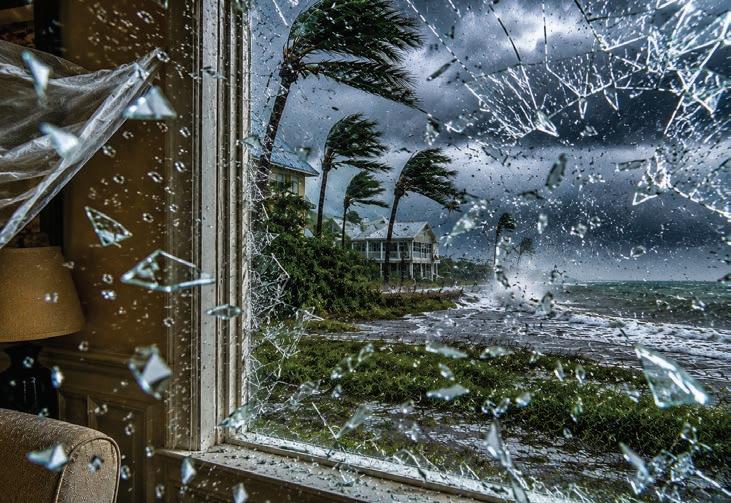

in workforce development for the region.
“This center is an investment in people,” Boeding said in a statement. “It will
By James Hamilton Contributor
A parents’ most important job is to create a safe and secure environment for the child to grow up in. An environment where the child can learn, feel, and experience the many emotions that come with the human experience: joy, pain, humor, anger, etc.
Unfortunately, many parents spend more time researching the next car they will buy than they do researching the adults they allow into their child’s life. It is difficult to watch the news without hearing of some sex crime being perpetrated against a child. Sometimes the subject is a stranger or, shockingly, a family member but oftentimes it is someone the family allowed into the child’s life - someone they trusted. Indi -

viduals like Pastors, Teachers, Coaches, and Troop Leaders have been accused of sexual misconduct with a child.
Let’s not assume that those types of atrocities happen elsewhere. Just recently in Pawley’s Island, we saw the arrest of a Church Pastor, his spouse, and a parishioner – who was a convicted sex offender. According to published reports, the offender was allowed to be in a building that had children which violated the conditions of his release.
Parents have filed a $25 million-dollar lawsuit against the Church.
Yes, most Pastor, Teachers, Coaches, and Troop Leaders, are exceptional people with a servant’s heart and they make a positive impact on the lives of the children they come in contact with.
But some individual, who have evil intent, use these roles to access what they desire.
Some quick recommendations for a parent or grandparent in this critical area.
• Honor Intuition: yours and the child’s. Remember, intuition is knowing something without knowing why. If something feels off about the adult in

the child’s life – listen to it. Additionally, listen to the child and give them your full attention if they have a concern. It most often starts with the feeling of curiosity or suspicion. Something like: “Hey Mom, the coach wants to have a pizza party at his apartment, and he did not tell the parents - this seems off to me.”
It is unfavorable to hear parents say things like: “Don’t be judgmental or How dare you think that.” This response stifles a child’s intuition and has a way of turning off their internal safety radar. In the book Protecting the Gift, Gavin de Becker advises parents to prioritize intuition over politeness.
• Be Inquisitive: get involved and ask questions to the organization about their vetting of a Coach/Teacher/Troop Leader, etc. What type of background investigation is conducted? Is it local or national? How often is the investigation done? What are some crimes that automatically disqualify an applicant? Are all part-time coaches, aides, or other helpers subject to the same scrutiny, if no – why not? Check the sex offender registry database (www. https://scor.
sled.sc.gov/ConditionsOfUse.Aspx) so you know who lives near your home, neighborhood, school, or playground.
• Create Boundaries: speak to the child about boundaries and certain areas that are off-limits. Things like texting an adult, social media messaging with adults, meeting with an adult alone behind closed doors, or anywhere alone off campus. Empower the child to look out for his/her friends who might be in an inappropriate relationship with an adult and empower them to speak up.
Don’t assume anything when it comes to this critical area of a child’s life.
James Hamilton is a nationally recognized security expert with more than 34 years of protection experience. He is a former FBI Special Agent and created the close protection training for the FBI. He is the founder of the Hamilton Security Group and can be contacted at: www. hamiltonsecuritygroup.com.



By Rhoda Gordon Contributor

When we think about taking family photos, we usually picture the big moments: birthdays, graduations, vacations, weddings and holidays. Those milestones deserve to be remembered. But after years of helping families organize their photo collections, I’ve noticed something surprising. The photos people treasure most are often the ones no one planned to take. Those are the images that bring people back to that moment in time. They are the ordinary moments that quietly become extraordinary with time. A grandmother rolling out pie dough in her kitchen. Grandpa reading the newspaper in his favorite chair. Dad grilling hamburgers while everyone laughs in the backyard. Children building a blanket fort

in the living room or setting up a candy picnic. These weren’t special because of the occasion. They became special because they captured everyday life exactly as it was.
Years from now, your family won’t just wonder what you looked like. They’ll want to know how you lived. What was your kitchen like? What books sat on your shelves? Which chair did Grandpa always claim? What did the family dog do while everyone ate dinner? The background in today’s photos often becomes tomorrow’s
One of my favorite suggestions is to spend a single day photographing your ordinary life. Take pictures while dinner is being made, while someone is gardening, reading, baking or fixing something in the garage. Photograph the family home, the mailbox, the front porch, the neighborhood and even the view from your kitchen window. These images may not seem important today, but they provide priceless context for future generations. Don’t forget to capture yourself as well.
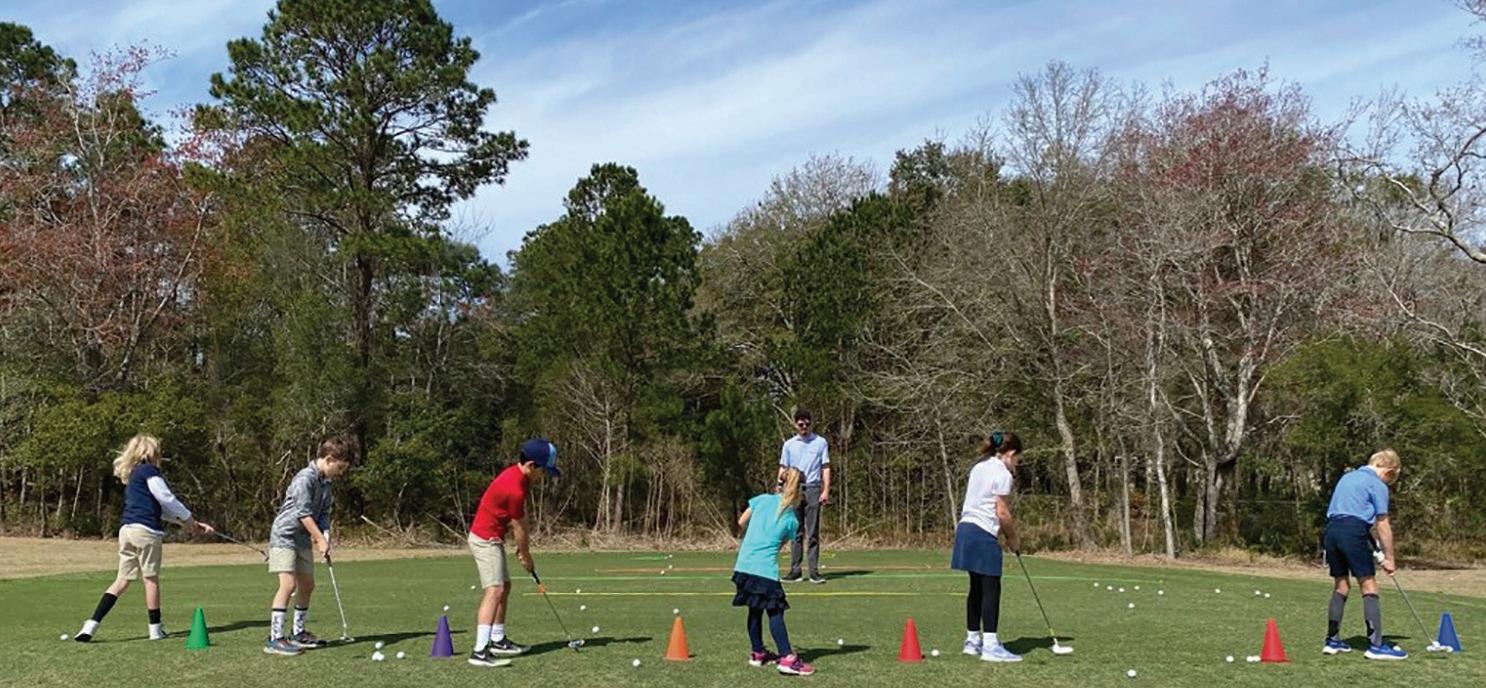
In many families, one person is always behind the camera, leaving surprisingly few photos that include them. Hand your phone to someone else, use the self-timer or prop it up to capture a candid family moment. Your loved ones will someday treasure seeing you in the story, not just telling it.
I often remind clients that preserving memories begins long before organizing them. It starts with noticing the moments that make up everyday life. This month, challenge yourself to take one photo that no one else would think to take. It just might become your family’s favorite picture someday.
Rhoda Gordon, a local Certified Photo Manager, is the owner of Sunflower Photo Solutions and the creator of DIG YOUR PHOTOS!™, a DIY photo organizing kit. For a decade, she has helped families and businesses sort, organize, digitize and back up their print and digital photo collections. Reach out if you need help with a project or photo gift. Discover more tips, tricks and how-tos on her YouTube channel, youtube. com/@digyourphotos, or visit sunflowerphotosolutions.com.
By Annelore Harrell Contributor
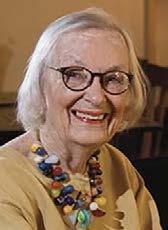
There is something extra special about swimming in salt water, floating with the tide in the river, catching waves on an ocean beach, splashing through ankle-deep water at the sandbar.
Think about how you put bath salts in the tub, how it softens, how silky the water becomes, not to mention whatever perfume has been added to fill the air with sweet scent.
In the estuarine waters here in Bluffton, the salts have already been added, the Gulf Stream slides lovely bits of marine life into the tides for a whiff of the sea. Stinky but nostalgic, there is no other smell in the world like pluff mud at low tide.
Born and raised in Savannah with summers in Bluffton, we were well aware that all roads began at the ocean and led westward to the sunset, where unfortunates had no access to the delights of the waterways that crept into our lives on an almost daily basis. The salt waters around us were part and parcel of the landscape. There were no beginner swimming classes for me or for any of my friends. They didn’t exist, and even if they did, I know for a fact that Mama and Daddy would never have spent good money on swimming lessons.

days when we waited impatiently for the tide to come in, time to put on our bathing suits and head down to the beach for our daily swim.
We’d stay in the water until our hands looked like prunes, all wrinkly.
Experience affordable golf on the Island with the only par-3 course–perfect for instruction, children, and senior play. Driving range and putting green are open to everyone.
$10 donation for adults, $5 donation for kids – all you can play. You don’t need to bring clubs – the pros at the First Tee will lend you a set at no charge! Hilton Head’s Only Public Par 3 Golf Course & On-Site Full Practice Facility including Driving Range!
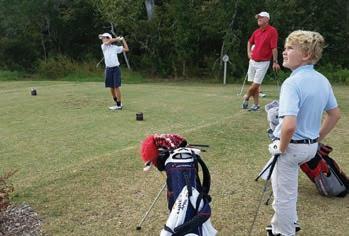


Visit our website for current hours. FirstTeeLowcountry.org
151 Gumtree Road
Hilton Head Island, SC 29926
843.686.2680
Life was simpler then. Tante Dora and Onkel Hermann Quante had a house in Bonna Bella, south of Savannah, on a small creek that fed out of the Herb River. It was on a Sunday afternoon visit in the days before we bought property in Bluffton when the decision was made. It was time for me to learn to swim. We had to wait until water came into the creek, which was bone dry at low tide. The dock was a homemade contraption of barely compatible boards collected from who knows where, the distance between the top of the dock and the water dependent on the height of the tide. Not a soul on the creek had anything resembling a floating dock. To get out of the water, there was a wobbly ladder, slippery with slime, nailed to the dock. Daddy, the Aquarian, was to be the instructor. Cousin Eleanor, who wore a new bathing suit of stretchable material that was just beautiful, watched from a safe distance.
I had on my old navy-blue wool one-piece that always smelled like a cross between mothballs and mildew. Cousin Eleanor, who was a year younger, had naturally curly hair, while mine was perpetually straight and so thin that barrettes slid right off. I hated her with the stolid passion of a six-year-old. But then, I was going to learn to swim, and she wasn’t.
The standard method of teaching someone to swim was to tie a rope around their middle and throw them into the water.
Ever hear the term “sink or swim”?
Just the other day, I thought about that moment of falling into the creek, going down with arms like a windmill connecting with empty air, legs pumping madly, head thrown back, a splashy mess, salt water up my nose, and burning my eyes.
Years later, when I took my Senior Life Saving exam at the outdoor pool in the Hotel DeSoto garden, we had to jump off of the high board. I was scared to death on the way up to the platform, and walking out on that skinny piece of diving board was even worse. But off I went with a face-saving kersplash and totally amazed that I had done such a daring thing, sat on the pool bottom until it dawned on me that you cannot breathe water, and I needed to push myself up to the surface or risk being ignominiously rescued.
When it came time for my baby brother Martin to be introduced to the wonders of our saltwater creeks and rivers, we headed out from the Quante’s in a bateau for a sandbar in the Herb River. Martin was encased in a rubber inner tube and happily floated up and down and all around. He must have been around three years old. All of a sudden, he kicked a little too much and overturned. As his pudgy toddler legs waved in the air, we ran frantically through knee-deep water to get to him and turn him right side up.
I’m surprised Mama didn’t have a heart attack right then and there. She never learned to swim. Daddy was smart enough not to throw her into the creek, rope tied around her middle or not.
I have never been fond of swimming in fresh water. There is none of the buoyancy we are used to in salt waters.
I learned that the hard way. At the Garmisch Partenkirchen indoor pool, they had a wave machine. Bells ring, everyone out, a third of the pool water is drained, bells ring, everyone back in, and the waves start rolling from one end of the pool and break on the far end. I thought, “This is great fun, I’ll float over the waves like we do back home,” and stood in the pool facing the oncoming waves. But, instead of lovely saltwater lifting me up gently as waves do on our Atlantic Ocean coastline, there I was, feet anchored to the pool bottom, sputtering and choking on chlorinated water as artificial waves smacked me in the face.
I don’t get to swim in the river like we used to, summer
Eunice, and Vernice, and Tootsie, and Cissy, and Sarah, and Porter, and Earl’s wife Gerri wore rubber bathing caps to match their swimsuits to keep their perm from getting wet and ended up with red marks around their face, squiggly lines that lasted for hours. But no one cared.
There is a feeling of total relaxation after swimming in salt water, a welcomed hot shower, body powdered dry, wet hair dripping, appetite at the ready. Who needs a spa? I miss the swims with Lucy, Julia, Carolyn, and Kathleen. I’d get the phone call. “Tide is about right,” and I’d slip on my bathing suit, grab a towel and be off. They would swim with the tide doing various versions of the Australian crawl and head for the cut by Myrtle Island Bridge while I stayed happily behind, bouncing on a noodle or chilled out on the dock steps that were completely submerged at high tide. When we swam at Kathleen’s where the tide stilled completely for an hour, then turned viciously, we hung onto a rope her husband John had strung as a safety line. Sometimes, bathing suits were superfluous. Conversations always desultory.
The tide comes in, and the tide goes out, or as my friend Wilt Persons, Retired Army TJAG, called to his wife the first time he witnessed the river rising, “Christine, come look, the water is advancing!”
Time to take advantage of a Lowcountry blessing. Come on in. The water is fine.
Annelore Harrell’s journey is a tapestry woven with fascinating experiences and extraordinary accomplishments. Even at 92 in 2025, Annelore’s energy and zest for life continue to inspire. Annelore Harrell’s story is a testament to living with passion, resilience, and an unquenchable thirst for adventure.
By Collins Doughtie Contributor
Yesterday, as I was driving home from magistrate’s court, where I pleaded for leniency after receiving my first speeding ticket in nearly 20 years, I concluded that people have been right all along when they say I am one strange bird. For as long as I can remember, which sadly isn’t as long as it once was, close friends, new acquaintances and even my children have always cowered when we head out in public together. “What is he going to say this time?” or “I hope he doesn’t embarrass me” tops the list of fears they all seem to have in common.
If you’re wondering what happened in court that took my thought process down this road, all I can say is my excuse for going a tad over the speed limit has probably never been heard in any courtroom in the country, maybe even the world. Because I am almost 100% positive my editor would strike it from my column before publication, I’ll simply say it had to do with a medical procedure near, and maybe in, my posterior that had me rushing home. I described it in extremely graphic terms to a fully packed courtroom. With that said, my ticket was reduced, and when I turned to leave, every person in the courtroom sat in stunned silence, mouths wide open and eyes as large as saucers.
I have two main philosophies in life that I often tried to teach my children. The first is: “Don’t shy away from saying something people might, or might not, find offensive because odds are you’ll never cross paths with them again.” The second, which also deals with saying something uncomfortable that may take you down the wrong path, is: “Go ahead and say it because you have everything to gain and nothing to lose.” Unlike today, when you’re vacationing




somewhere far away, even in another country, and people ask where you’re from, your answer of “Hilton Head Island, South Carolina,” almost always brings a response like, “Boy, are you lucky!” or “You must be rich.” Oh, how different that answer was when I was a kid. Not only was Hilton Head not known nationally, but those of us who lived on the island were considered country bumpkins by many of the kids I went to school with in Savannah.
I attended grade school in Bluffton until shortly after the school burned down. From then on, I commuted to Savannah each day with my brothers and sisters, along with some of the Fraser and Hack kids. While I wore blue jeans, T-shirts and Converse sneakers, the Savannah kids made fashion statements in khaki pants, alligator belts, tasseled wingtip shoes and barracuda jackets. I had some good friends, but overall, we islanders were viewed as outsiders. The “rich kid” comments didn’t start until the late 1970s and early 1980s.
Looking back, I believe it was during that slightly scorned period that I adopted my “what the heck” philosophy of saying whatever, and I mean whatever, was on my mind. Since I probably shouldn’t tell you exactly what I said in court, I’ll tell you about another episode from my formative years that no doubt added to my reputation for being weird, or more directly, goofy.
I was in seventh-grade science class when the teacher gave each of us a petri dish and told us to press a finger into the gel, put the lid back on and place it in a cabinet. He said we’d check on them in a week to see what had grown.
A week later, the teacher opened the cabinet and removed the tray of petri dishes. Every single one had a little mold growing in the middle except one. There it sat, and boy, was there mold. Actually,

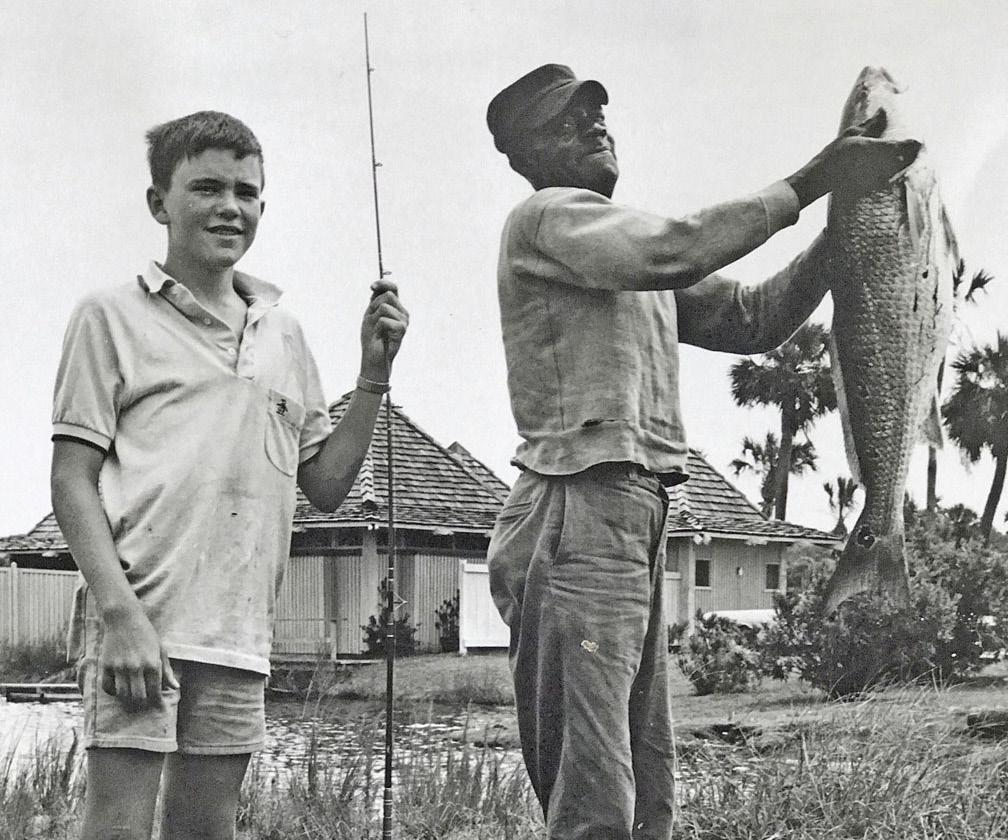
there was so much mold it had popped the lid right off the dish. My classmates gasped as the teacher donned rubber gloves and picked up the hairy specimen. Handwritten on a piece of tape on the bottom of the dish was the name “Collins Doughtie.”
In my defense, and I swear this is the truth, I had eaten a lollipop right before class the day we did the experiment. Sadly for me, that excuse didn’t fly with my classmates.
Seventh grade was tough because it was also when I realized girls were actually pretty. All I can say is that darn petri dish postponed my puberty by a good two years. After that day, I’m pretty sure the girls in my class whispered, “Collins? Ick,
no way. He has cooties!”
But despite the challenges of growing up here, when common everyday items often required long trips to buy, I wouldn’t trade my childhood for anyone else’s. I certainly wasn’t socially polished, but the culture I experienced was incredible. From ox-drawn wagons loaded with fresh shrimp and homegrown vegetables to the Gullah language and way of life, it was an exceptional education that few people have had the opportunity to experience. Do I still have cooties? Probably. Am I weird? Absolutely!
Collins Doughtie is a 60-year resident of the Lowcountry, is a sportsman, graphic artist, and lover of nature. collinsdough-




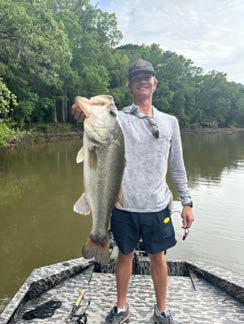
By Abby Bird aka Alphadog Contributor
People are aware that most rescues and shelters, if not full, are certainly overcrowded. A variety of dog breeds, mixes and sizes is always available. The largest number of dogs are usually pit bull-type dogs and mixes. In certain areas of the U.S., Chihuahuas and Labrador retriever mixes abound. In the South, a large percentage of dogs in rescue are hounds and hound mixes.
Hounds are used for hunting in the South and are kept in fairly large packs. They follow the pack leader when out on a hunt. They live in outdoor kennel packs and have limited contact with people. These dogs are not trained by people and do not grow up in a house or learn skills that people might want. Their entire existence is based on how well they hunt. Some kennels take good care of their animals in terms of veterinary care, but sadly many kennel operators
do not take care of them at all. They do not receive required vaccines or heartworm, flea and tick preventives, and most are unspayed and unneutered.
These hunting hounds are valued for only one thing: hunting and procreating. The best hunting hounds receive the best treatment. The others are viewed mostly as numbers and are considered disposable if they do not do their job well.
The reason there are so many in shelters is that hounds do what hounds do: They follow a scent. When they are on a hunt and following the leader, all is good. But they often get sidetracked by other scents and choose to follow those instead. They are unaware that they are now lost. Many have identification numbers tattooed on their sides to identify them as belonging to a specific kennel in case they are found.
The ones that are found and not claimed end up in shelters by the dozens. Kennel owners often do not both -

er to look for them since they have dozens more that do their job and stay with the pack. Only the special ones are looked for. So now they are put up for adoption. What are you getting in a hound? Inside the house, they become some of the most loving couch potato dogs you have ever owned. Outside, they do not even know your name. They do not learn easily because pleasing you is not important to them. Forget “come” when called. “Sit” is going to take a lot of work. They love other dogs. They are generally food-motivated if the reward is worthwhile. When looking for a new dog, do not overlook these sweethearts. They love to be right next to you indoors. Be patient, keep your expectations realistic, and you will have one of the most affectionate dogs you have ever owned.
Abby Bird is the owner of Alphadog Training Academy. AlphadogTrainingAcademy@gmail.com



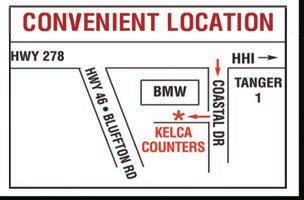
By Denise Benner Contributor
As our senior population continues to grow, many older adults and their families are unaware of the services and support available when life becomes more challenging. Planning ahead and understanding available resources can make the journey of aging easier less stressful and help seniors maintain their independence, dignity, and quality of life.
Research suggest that nearly half of adults over the age of 85 will experience some form of dementia. While there is no guaranteed way to prevent the disease, maintaining a healthy diet, staying physically active, exercising the mind, and remaining socially engaged may help support overall brain health. Even so, many individuals and families will eventually face decisions they never expected to make.
Aging brings unique challenges for every family. Some seniors simply need companionship to reduce isolation and loneliness. Others may require transportation to appointments, assistance with errands, help organizing their daily routines, or support as memory loss begins to affect everyday life. Family caregivers often find themselves balancing careers, raising children, and caring for aging parents, leaving them physically and emotionally exhausted.
Many people are surprised to learn about the variety
of community resources available to help seniors remain safe and independent. From home care and care management services to rehabilitation programs, hospice care, support groups, financial planning, legal guidance, and memory care resources, there are professionals and organizations ready to help families navigate each stage of aging.
Here in the Bluffton and Hilton Head area, families have access to a growing network of organizations dedicated to supporting older adults. Local senior centers, health care providers and organizations such as the Lowcountry Area Agency on Aging, Memory Matters, and Beaufort County’s Aging and Disability Resource Center can help connect seniors and caregivers with education, support groups, transportation resources, benefits counseling and programs designed to promote independence. Care management professionals can help families coordinate medical appointments, evaluate living arrangements and develop a plan as needs change over time. Their guidance can be especially valuable for adult children who may live out of town or for those that cannot be present for every appointment, emergency or day-to-day challenge. Acting as a local advocate, a care manager can help monitor changing needs, communicate with family members and connect seniors with appropriate community resources.
Support is also available for those who wish to remain at home if able. In-home care agencies can provide an array of services including companionship, personal care,

meal preparation, medication reminders, and respite for family caregivers.
The most successful plans are often made before a crisis occurs. Taking time to learn about available resources, having honest conversations with loved ones, and understanding personal wishes can ease difficult decisions later. Planning ahead also gives seniors a greater voice in how they want to live as their needs change. Learning about these services early gives families more options and greater peace of mind while ensuring seniors receive the care and support they need.
Growing older is a privilege, and every individual deserves to age with dignity, purpose, compassion, and respect. By becoming informed and seeking support when needed, families can feel more confident and seniors can continue living meaningful, fulfilling lives. If you or someone you love is beginning the aging journey, remember that you do not have to navigate it alone. Reaching out for information and guidance is not a sign of giving up. It is one of the most important steps you can’t take to preserve independence, reduce stress, and improve quality of life.
Denise Benner is part of the community engagement team at Part of the Family, LLC. Part of the Family provides personalized non-medical services to assist caregivers and seniors in the Bluffton and Hilton Head area. www.partofthefamily.care.


By Habitat for Humanity of the Lowcountry Contributor
As the Lowcountry continues to grow, so do the opportunities and challenges facing the region. Jasper County was recently recognized as the fastest-growing county in the nation, while Beaufort County has experienced significant population growth over the past several years.
Growth brings many benefits, but it also increases demand for housing.
As home prices continue to climb, many local families are finding it harder to buy a home in the community they love. The Beaufort Regional Chamber of Commerce has identified housing affordability as one of the biggest issues facing the area, affecting not only families but also employers trying to recruit and retain the workforce the growing economy depends on.
Habitat for Humanity of the Lowcountry works with families throughout Beaufort and Jasper counties, partnering with hardworking individuals and families who are ready to take the next step toward homeownership.
Habitat homeowners do not receive a free home. Families are selected through an application process, complete financial education, contribute hundreds of hours of sweat equity alongside volunteers and purchase their homes with an affordable mortgage. They work hard for the opportunity to become homeowners because they understand that a home provides far more than four walls. It creates stability, opportunity and a place where families can build their future.
Habitat’s work also extends beyond new home construction.
Many older adults, veterans and low-income homeowners simply need help making their current homes safe. Through its Critical Home Repair Program, Habitat provides wheelchair ramps, exterior repairs, stairs, handrails, siding and other improvements that allow qualified homeowners to remain safely and independently in the homes they already own.
This year, Habitat received a competitive AARP Community Challenge grant that will fund wheelchair ramps for eligible older adults in Bluffton through
December. While the grant is limited to Bluffton residents, Habitat’s Critical Home Repair Program continues to serve qualified homeowners throughout Beaufort and Jasper counties as funding allows.
“We meet so many people who simply want to stay in the homes where they’ve lived for decades,” said Ayaks Castellanos, program director for Habitat for Humanity of the Lowcountry. “Sometimes a wheelchair ramp or a few critical repairs are all that’s standing between them and being able to remain safely at home.”
Community support makes these programs possible.
On Monday, Sept. 28, Habitat will host its 29th annual Golf Tournament at Oldfield Golf Club. The tournament is one of the organization’s largest fundraisers, bringing together local businesses, community leaders, golfers and volunteers who support affordable housing and critical home repairs.
“Our annual Golf Tournament is much more than a day on the course,” said Stacy Floyd, development director for Habitat for Humanity of the Lowcountry. “Every sponsor, golfer and volunteer helps create opportunities for local families to achieve homeownership while also helping longtime homeowners remain safe and independent. It’s one of the best examples of neighbors coming together to make a lasting difference right here in the Lowcountry.”
Funds raised will support affordable home construction and critical home repairs throughout Beaufort and Jasper counties.
Communities grow stronger when neighbors invest in one another. Every home Habitat builds, every ramp it installs and every repair it completes represents a community working together to help families build a brighter future.
For more information about Habitat for Humanity of the Lowcountry, its affordable homeownership program, volunteer opportunities or the 29th annual Golf Tournament, visit www.lowcountryhabitat.org or call 843-681-5864.
Residents who may qualify for Habitat’s Critical Home Repair Program in Beaufort or Jasper counties, or for the AARP-funded wheelchair ramp program for eligible Bluffton residents, can call 843-681-5864 for more information.
in achieving your




By Tom Dorsel Contributor
Here is a picture of my little brother at age 2, and me at age 7. A friend saw this and kindly commented, “Two happy little boys.”
Yes, true, I thought; but then I thought further, “Whatever happens to happy little boys, that so many become too soon sad, then troubled teenagers, even juvenile delinquents, and eventually unhappy adults? I mean, even the grumpiest old man was once a happy little boy.”

Then, voila! — I remembered I published a poem some 40 years ago that might provide a glimpse into answering my question.
A Model for Health Psychology: What a Child Can Teach Us about Life
Tom Dorsel, 1984
When Johnny was a lad of five, Or maybe even younger, He didn’t yearn to stuff himself, His cue to eat was hunger.
He had no need to fill his plate Or clean it subsequently. When he was full he said, “no more” –
Leftovers were not tempting.
With mealtime done, more exercise, Though some would call it play; He’d run and jump and twist and stretch And breathe fresh air all day.
He’d practice social skills with friends, No problems with assertion; His rights he knew and stated with Appropriate emotion.
His feelings were, indeed, expressed, He’d laugh and cry and love; And he’d reveal spontaneously What he was thinking of.
Self-consciousness was not his bag, Embarrassment was foreign, And physical and eye contact Were natural decorum.
He didn’t say things to himself That caused him undue stress;

“Irrational assumptions” –Big words to him, at best.
He didn’t smoke or ingest drugs, No women, wine and song, Type-A behavior was unknown, No grudge was held for long.
He slept all night, awoke refreshed, And met the day with glee; His work was fun, and when all done, He sought more eagerly.
Well, half a century’s passed since then, And Johnny’s fifty-five; He smokes and eats and drinks and sits, Obese and half alive.
He exercises painfully, And starves himself at times, Forever trying to relax And free his cluttered mind.
He wrestles with stress management
And social skills a lot, With new ways to communicate Emotions long forgot.
What happened to that lad of five, Whose health came naturally? Somewhere along the way he learned To live so differently.
And as he struggles to regain His health of yesterday, Would not it have been easier To simply stay that way?
This poem was first published in a scholarly journal of the American Psychological Association (APA). Dorsel, T.N. (1984). A model for health psychology. Health Psychology, 3(6), 583-584. Tom can be reached through his website, Dorsel.com.
Is it just aging, or could it be neuropathy?
By Dr. Kenneth Horup Contributor

Living in Bluffton and Hilton Head has a way of keeping people moving. There are beach walks, grocery runs, church on Sundays, dinner with friends, chasing grandkids and at least one person in every neighborhood who still insists they can outwalk everybody else before breakfast.
So when your feet start feeling strange, it is easy to explain it away. “Maybe I’m just getting older” is what a lot of people say at first.
Then their feet start tingling a little. Maybe there is some numbness, or burning shows up at night. Or maybe balance feels a little off. Perhaps they feel like they are walking on marshmallows, rubber or thick socks bunched up under their feet

even when they are barefoot. Instead of thinking “neuropathy,” they think, “Well, I guess this is just part of aging.”
But here is the truth:
Getting older may increase the chances of nerve problems, but numbness, tingling, burning or losing normal feeling in the feet is not something to casually shrug off as normal aging. Peripheral neuropathy can cause gradual numbness, tingling, burning pain, the sensation of wearing socks when you are not, loss of coordination and falls.
That is one of the biggest reasons neuropathy gets ignored for too long. It usually does not show up all at once like a marching band coming through the
living room. It creeps in quietly. A little tingling here. A little numbness there.
Some nighttime burning. A little less confidence on stairs. It is easy to blame on age, bad shoes, “poor circulation” or sleeping funny.
Until one day, you realize you are watching every step as though you are crossing a wobbly dock in flip-flops.
Peripheral neuropathy happens when nerves outside the brain and spinal cord are damaged or stop sending clear signals. Instead of normal information, the nerves may send too much signal, too little signal or the wrong signal altogether. That is why a person can feel numbness and burning at the same time, which sounds
contradictory until it happens to you. And here is something else people do not always know: Sometimes the bigger problem is not pain. Sometimes it is the loss of normal sensation.
If you cannot feel the ground properly, balance becomes more difficult. Walking on uneven surfaces, stairs, grass, sand or in dim light can suddenly feel less automatic. Neuropathy can also cause loss of coordination and falls.
So no, not every odd foot symptom means neuropathy. But it is not wise to assume it is “just aging,” either. The Lowcountry is too good a place to spend your time staring at the floor and negotiating with your toes. If you have numbness, tingling or burning, or if your feet feel like they are walking on marshmallows, your body may be trying to tell you something. It may be time to get evaluated for peripheral neuropathy. Start early, before a small problem turns into a bigger one.


By Nick Martin Contributor

Despite multiple risks that emerged over the past year – tariffs, higher energy prices, upward pressure on interest rates and evolving growth and earnings outlooks –equities have shown remarkable fortitude.
The S&P 500 has gained 10% year-to-date (YTD) with eight of 11 sectors in positive territory for the year. Notably, the move higher was driven by earnings rather than multiple expansion. In fact, while the S&P 500 has moved higher YTD, the next 12-month price-to-earnings estimate has moderated from 22.2x to 21.4x. Contrarily, consensus estimates now point to a remarkable 24% year-over-year earnings per share growth for the S&P 500 in 2026 – levels usually seen only during recoveries following recessions.
Perhaps unsurprisingly, one of the biggest questions market participants have at this stage is: How have corporate earnings been so resilient despite the risks that have materialized thus far?

Fundamentals: remarkable strength despite higher energy prices
S&P 500 earnings have shown impressive strength in 2026 despite higher energy costs largely because the index itself looks very different than it did in prior cycles. Most importantly, it is far less energy-intensive than in the past. Over time, index earnings have become less exposed to traditional manufacturing, where higher energy costs directly pressure margins, and to energy-sensitive areas of consumer spending, where elevated fuel prices can weigh on demand.
Today, the composition has shifted decisively toward asset-light, service-oriented and technology-driven businesses. As a result, energy is a smaller share of total cost structures for the average S&P 500 company, dampening the direct margin impact of rising oil. This declining energy intensity reflects not only sectoral shifts but also operational changes within firms.
Advances in energy efficiency, more flexible supply chains and the increasing digitization of business models have all reduced the amount of energy required per unit of output. As a result, the sensitivity of corporate margins to oil price shocks is structurally lower than in prior decades.
Another important factor is improved pricing power across large-cap corporations. Following the post-pandemic inflationary period, many firms have demonstrated an increased ability to pass on higher input costs to end customers. While not universal, this has reduced the typical margin compression associated with rising energy prices, particularly among firms with strong competitive positioning and differentiated value propositions.
Margin resilience: cost discipline and operating leverage Another important, and often underappreciated, factor supporting earnings strength is the shift toward greater capital and cost discipline across large-cap corporations. In the years following the pandemic, firms have become more focused on efficiency, margin durability and return on invested capital rather than purely top-line growth. This has led to leaner cost structures, tighter control over operating expenses and more scalable business models.
At the same time, operating leverage has structurally shifted in favor of larger firms, particularly within asset-light and technology-enabled sectors where fixed costs are relatively high but variable costs remain low. This dynamic allows revenue growth, although uneven across the economy, to translate more efficiently into earnings. As a result, many companies are better positioned to absorb input-cost volatility, including energy, without a proportional impact on profitability.
Taken together, stronger cost discipline and improved operating leverage have reduced the sensitivity of earnings to external shocks, reinforcing the broader resilience seen at the index level. This evolution in corporate behavior, along with greater exposure to more insulated secular growth trends, is reflected in S&P 500 net margins projected to reach a record high of 15% in 2026, underscoring the durability of profitability even in a more challenging cost environment.
Concentration effects: the rising dominance of AI-driven earnings
Even more critical is the increasing concentration of earnings in a narrow set of AI-enabled industries, particularly semiconductors and cloud computing. The modern S&P 500 is now nearly half AI-focused when viewed through the lens of earnings contribution and index composition.
These industries are benefiting from powerful secular demand tied to artificial intelligence adoption, data center buildouts and enterprise digitization. Unlike traditional industries, their revenue growth is driven less by cyclical factors and more by structural trends, allowing them to offset cost pressures elsewhere in the index. In fact, 10 years ago, 30% of S&P 500 earnings were directly exposed to energy prices while only 11% were tied to today’s AI beneficiaries.
Today, AI-related firms are responsible for 40% of S&P 500 earnings while only 18% of index earnings are exposed to energy prices. Importantly, the AI investment cycle is also creating second-order support across the broader index. Data center buildouts and infrastructure expansion are driving demand for industrial equipment, electrical components and power generation, benefiting sectors that would otherwise be more exposed to higher energy costs. This capex-driven demand spillover further cushions earnings in aggregate.
Earnings divergence:

This divergence between macro pressures and secular growth themes is clearly visible in earnings revisions.
Over the last two years, 2026 earnings estimates for semiconductors and cloud computing companies have been revised higher by roughly 39%, reflecting strong pricing power, accelerating AI demand and sustained capital investment in AI infrastructure.
In contrast, the rest of the index has seen aggregate earnings estimates revised modestly lower, by about 1%.
In other words, while much of the S&P 500 is experiencing margin pressure from higher input costs, including energy, the outsized growth of AI-linked industries is more than compensating at the index level.
At the same time, this dynamic also points to narrower earnings breadth, with a smaller group of companies driving a disproportionate share of index-level growth, leaving aggregate earnings increasingly dependent on the durability of AI-driven demand and execution.
Bottom line: index construction largely responsible for resilient fundamentals

Taken together, the resilience of corporate earnings is less about uniform strength across all sectors and more about composition effects. A less energy-intensive cost base, combined with the increasing dominance of highgrowth, AI-driven industries, has allowed aggregate earnings to hold up even in the face of rising energy costs. This structural shift underscores why headline index earnings can remain strong even when underlying conditions are more mixed.
Nick Martin is a financial planner and the founder of Bluffton Financial Planning. Bluffton Financial Planning is not a registered broker/dealer, and is independent of Raymond James Financial Services. Investment advisory services offered through Raymond James Financial Services Advisors, Inc.
VISITORS: JOIN US FOR HIGH HOLY DAY SERVICES
ROSH HASHANAH
9/11 – 9/13/2026
YOM KIPPUR
9/20 – 9/21/2026
CONGREGATION BETH YAM HILTON HEAD ISLAND, SC
Serving Hilton Head Island, Bluffton, Greater Lowcounty. Affiliated with Union for Reform Judaism. An inclusive, egalitarian, interfaith, congregation.
Submit name, residential address, email, and cell number for each attendee to: communications@bethyam.org
Congregation Beth Yam, Our House By The Sea




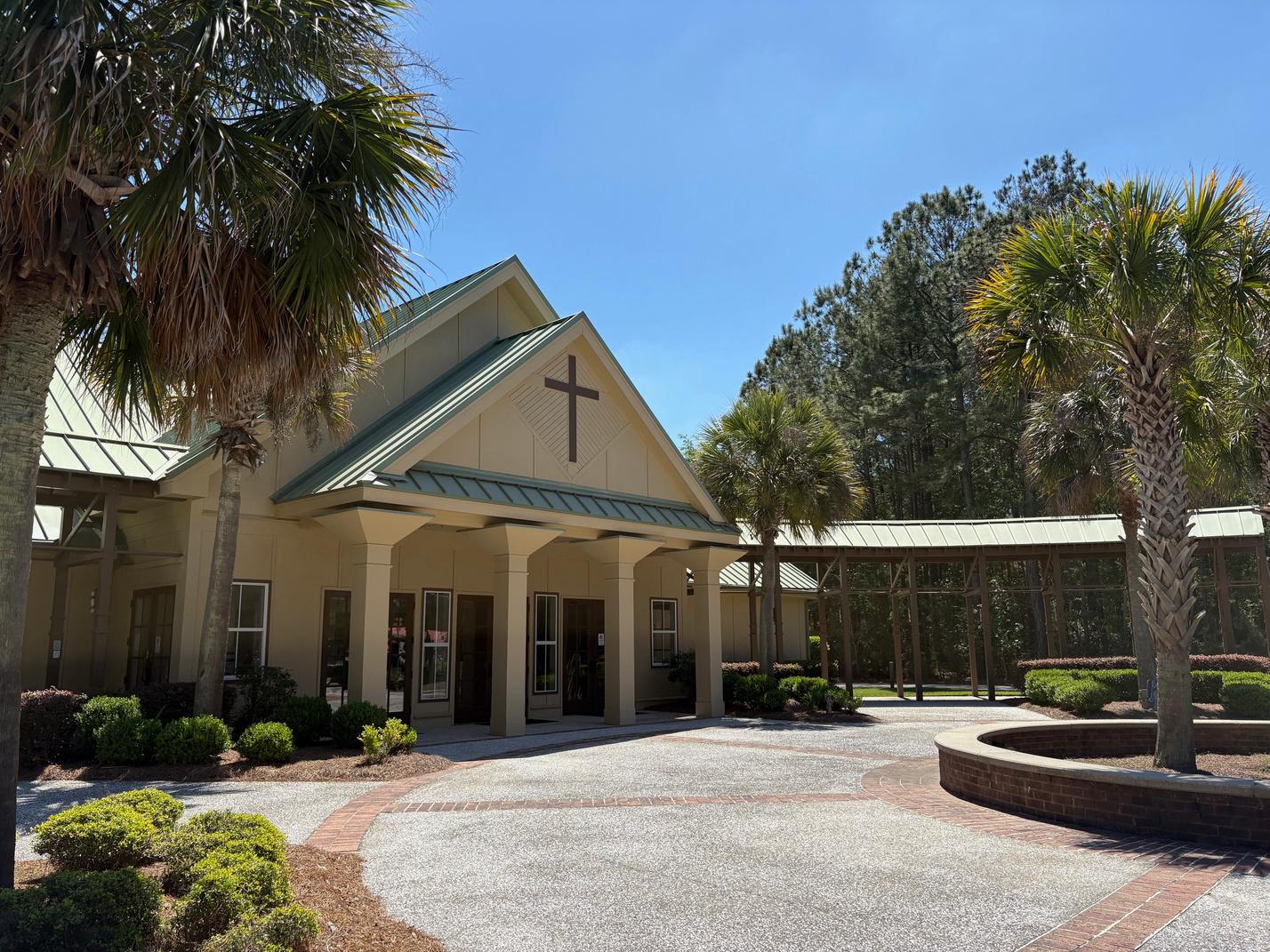


By Nanette Makrauer Contributor
The Medicare Part D program is complicated. Here, we’ll break it down into segments. Although Medicare does not require you to enroll in Part D prescription drug coverage, you may pay a late-enrollment penalty if you sign up later after going without creditable prescription drug coverage. As a result, enrolling when you are first eligible is generally recommended because most people will need prescription drug coverage at some point. There are two ways to receive Medicare Part D prescription drug coverage:
1. If you have a Medicare supplement
(Medigap) plan that works with Original Medicare Parts A and B, you also need to enroll in a stand-alone Medicare Part D Prescription Drug Plan (PDP) to cover your medications. Your health insurance card will be separate from your pharmacy card and may be issued by different insurance companies. (Two cards.)
2. If you have a Medicare Advantage Prescription Drug (MAPD) plan, it replaces Original Medicare Parts A and B and includes Part D prescription drug coverage. With this plan, your health insurance card also serves as your pharmacy card. (One card.)
Regardless of which option you choose, you should review your Part D coverage during the annual enrollment period, Oct. 15 through Dec. 7, to make sure it still meets your needs. Why? Insurance companies often change premiums and formularies from year to year.
As a result, a plan that was once a good fit may no longer be the best choice. For 2026, these plans have a $615 annual deductible, which generally
applies to higher-tier medications. There is also a true out-of-pocket (TrOOP) limit of $2,100. Once you reach that limit, covered medications cost $0 for the remainder of the year. If you take several medications and expect to reach the $2,100 limit, your pharmacist may be able to help you arrange a payment plan to spread those costs more evenly throughout the year.
Keep in mind that if a medication is not on your plan’s formulary, the amount you spend on that medication will not count toward your TrOOP limit. Medicare Extra Help (Low-Income Subsidy)
If paying for prescription medications feels overwhelming, Medicare’s Extra Help program may provide financial assistance. Also called the Low-Income Subsidy (LIS), Extra Help is a federal program that helps eligible Medicare beneficiaries pay for Medicare Part D prescription drug coverage. It can reduce costs such as monthly premiums, annual deductibles and prescription
copayments.
Eligibility is based on income and assets. In general, you may qualify if your income is below certain limits, which can change from year to year, and your financial resources, such as savings or investments, are within the program’s limits. Your home and primary vehicle are not counted.
Applying is easy at www.ssa.gov/extrahelp.
Even if you’re not sure you qualify, it’s worth applying. Many people are surprised to learn they are eligible, especially those with modest savings or a fixed income.
Nanette Makrauer is an independent insurance broker and Certified Medicare Advisor residing in Bluffton. To connect visit www.health-wealth-insurance.com or email nanette@health-wealth-insurance.com.
By Dr. Ronald Finger Contributor

Aging changes
1. Skin – age spots, wrinkles, loss of elasticity, sagging, large pores, and rough texture.
2. Hair – thinning or receding hair line
3. Loss of facial volume – Youthful faces are full and convex. Aging causes loss of volume in skin thickness, fat, and even bone, causing shadows and hollows.
4. Sagging brow – brows sag with age, particularly the outer brow. The arch should be between the middle and outer 1/3 of the brow. This may cause sagging upper eyelids.
5. Upper eyelids – excess skin and sometimes fat occur with age causing a “tired” appearance. Sometimes excess skin covers the lashes.
6. Lower eyelids – bags and/or excess skin may develop. Dark circles are usu-
ally shadows from volume loss and/or protruding fat pads.
7. Crow’s feet – wrinkles lateral to the eyelids usually from sun damage and animation. Also, frown lines and forehead furrows.
8. Lips – thinner upper lips and the distance between the nose and upper lip elongates. The corners of the mouth may turn down giving a sad appearance.
9. Jowls – these develop from loss of facial volume and elasticity.
10. Neck – excess skin and/or fat develop. Platysma muscle bands may occur.
Treatment options features
1. Good skin care. Cosmeceuticals, such as New Youth, combined with High technology lasers like Helix and/or UltraClear. These can be combined with the VirtueRF microneedle device. These combinations effectively “turn the clock back” several years.
2. Hair transplant with micro-grafts, using FUE (follicular unit extraction) with Neograft, or strip excision technology called FUT. To reduce hair loss Exosomes or PRP can be forced into the hair follicles with Ultrasound Plus resulting in better hair growth than with needles.
3. Fillers, such as Restylane products (e.g. Lyft), Juvederm products (e.g. Voluma), Sculptra, and Renuva, the longest-lasting filler, can be used and often in combinations for the best overall results.
4. Brow lift – local or general anesthesia according to patient’s preference.
5. Upper eyelid lift. Usually local anesthesia. For mild to moderate cases Helix laser or UltrraClear laser Micro-coring mode-very rewarding for more youthful appearance.
6. Lower lid lift to remove skin, fat pads or both. Laser resurfacing can be done at the same time or separately for fine lines. VirtueRF Exact microneedle will non-surgically reduce fat bags.
7. Botox or Dysport--for crow’s feet, frown lines, forehead furrows, and even elevation of the corners of the mouth to diminish mouth wrinkles.
8. Lip fillers can add volume and/or reduce wrinkles. An upper lip lift procedure can be done with inconspicuous scarring under the nose--an excellent procedure when indicated, called a “buckhorn” excision. Most aging lips become vertically longer making the upper lip turn under.
9. Jowls--Improvement can be achieved non-surgically with fillers on each side of
the jowl along the mandible, reduction of the fat with VirtueRF, and removing excess skin with Helix or UltraClear lasers. 10. A sagging neck. When the problem is only fat –liposuction. Reunion is added to the liposuction when skin also needs tightening. Often men want the excess neck skin removed with a simple direct excision. Recovery time is minimal, scarring inconspicuous, and it effectively removes the extra skin and fat. Alternatively, UltraClear micro-coring laser can be very helpful in selected cases.
11. Combination procedures are interesting because the result is like 1+1=3. Any combination of the following can be combined with any or all the others:
• EveresseRF. This device uses no needles, numbing, there is no pain. The result is thicker, tighter skin by stimulating collagen and elastin. No recovery time.
• Lifting PDO threads. Threads with barbs placed under the skin lifts and tightens skin.
• 3-D Miracle laser or Cool Peel laser.
• Fillers.
Dr. Ronald Finger, MD, FACS is a board-certified plastic surgeon in Savannah and Bluffton. fingerandassociates.com
If you have an event to share, please email it to editor@blufftonsun.com















By Carolyn Lafond Contributor
As summer comes to an end and a new school year approaches, many families are preparing for one of their child’s biggest milestones: starting preschool.
While parents often think about school readiness in terms of recognizing letters, counting, or learning shapes, preparing young children for the classroom involves much more than academics.
Preschool is a time when children build confidence, develop independence, and learn how to navigate new social experiences. Early childhood educator Carolyn Lafond recommends that families focus on the skills that support the whole child when preparing children for this transition.
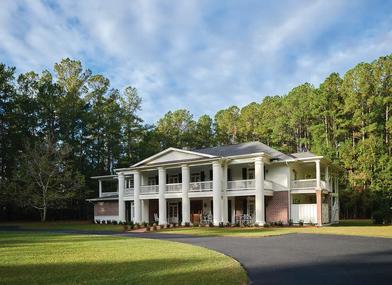

Here are five ways parents can help their preschoolers feel ready and confident for the school year ahead.
1. Create consistent routines
Young children feel more secure when they know what to expect. Establishing predictable routines before school begins can help children adjust to a new schedule and feel more comfortable with daily transitions.
Families can practice consistent bedtime and morning routines, including getting dressed, eating breakfast, and preparing belongings for the day. Giving children small responsibilities, such as choosing an outfit or packing a backpack, can also help them feel involved and build confidence.
2. Encourage independence at home
Preschool provides children with opportunities to practice doing things for themselves. Parents can support this development by encouraging children to complete age-appropriate tasks independently.
Simple activities such as putting away toys, cleaning up after meals, washing hands, putting on shoes, or making choices throughout the day can help children build confidence and problem-solving skills.
3. Practice separation and transitions
For some children, preschool may be their first extended experience away from caregivers. It’s natural for children to feel uncertain about a new environment, and separation anxiety is a
common part of early childhood development.
Families can help children prepare by practicing short separations before the first day of school, such as spending time with trusted family members or participating in activities without a parent present. A consistent “goodbye” routine can help children feel secure.
4. Build social-emotional skills
Social-emotional development plays an important role in helping children succeed in preschool and beyond. Skills like taking turns, sharing, communicating feelings, and asking for help allow children to build positive relationships with teachers and classmates.
Families can encourage these skills through everyday conversations, reading together, and practicing different scenarios through play. Talking about emotions and problem-solving helps children develop empathy and confidence.
5. Encourage curiosity and a love of learning
School readiness is not just about what children know; it is also about their willingness to explore, ask questions, and try new things. Parents can encourage curiosity by making learning part of everyday experiences.
Visits to the library, outdoor exploration, cooking together, or creative play all provide opportunities for children to learn naturally. Encouraging children’s interests and celebrating their efforts can help build confidence as they enter the classroom.
Starting preschool is an exciting transition for children and families.
While every child develops at their own pace, opportunities to practice independence, build relationships and explore the world around them can help children approach the new school year with confidence.
The goal is not for children to have mastered every skill before their first day. Instead, families can focus on creating a strong foundation that helps children feel supported, capable, and excited to learn.
Carolyn Lafond is the owner of Ivybrook Academy Bluffton and an early childhood educator dedicated to helping children build confidence, independence, and a lifelong love of learning. Learn more at www.ivybrookacademy.com/ bluffton or call (843) 836-1120.
By Emma June Grosskopf Contributor
Beaufort Memorial is continuing to expand cancer services with the addition of experienced, board-certified radiation oncologist Dr. Glenn Mieszkalski, who will see patients in Beaufort and Okatie. Dr. Mieszkalski brings decades of experience to the Lowcountry and will treat patients with a wide range of cancers – including prostate, breast, lung, head, neck and rectal – at Beaufort Memorial Radiation Oncology’s two locations: the Keyserling Cancer Center, located in Beaufort, and the New River Cancer Center in Okatie. At the practice, Dr. Mieszkalski will use external-beam radiation to treat a range of cancers, delivering focused external radiation beams to shrink or destroy tumors.
“We are proud to welcome Dr. Mieszkalski as we continue expanding cancer services in both Beaufort and Bluffton,” said Beaufort Memorial President and
CEO Russell Baxley. “His expertise, paired with his patient-centered philosophy and commitment to personally connecting with his patients, will make a meaningful impact for patients and families who are navigating a cancer diagnosis.”
A native of New Jersey and a longtime Pennsylvania physician, Dr. Mieszkalski was always interested in science and engineering, but found that he was drawn to connection and patient care after being inspired by a family friend who was a pediatrician.
After earning his medical degree from Drexel University in Philadelphia, Pa., his clinical focus shifted from the field of internal medicine to radiation oncology.
During his residency, he trained alongside leading specialists in cancer care.
Radiation therapy is one of the most common treatments for cancer with more than half of patients receiving it while on their treatment journey. No one wants to go through radiation therapy, Dr. Mieszkalski said, but he’s passionate about making sure the process is friendly and

relaxed, putting patients at ease during what is often one of the most difficult periods of their lives.
His approach is collaborative with an emphasis on building relationships with his patients that often continue after they complete their cancer treatment.
“I treat every patient as if they were family, tailoring their care to their needs, educating them about their cancer and treatment and making their process as comfortable as possible,” he said.
The Lowcountry needs cancer care specialists, he added, and he’s excited to bring his diverse experience to Beaufort Memorial and serve the Beaufort and Bluffton communities as the health system expands access to these much-needed services. He and his wife are no strangers to the region: they got engaged on Hilton Head Island and since have taken many vacations – and golf trips – to the Island with their family.
As part of the Beaufort Memorial cancer care team, Dr. Mieszkalski joins radiation oncologist Dr. Jonathan Briggs,
who also sees patients in both Beaufort and Okatie, and medical oncologist Dr. Eric Turner – as well as a skilled, compassionate team of oncology nurse navigators and social workers.
The Beaufort Memorial New River Cancer Center brings all the hospital’s cancer services closer to home for patients who live in southern Beaufort County. Equipped with the state-of-the-art Varian Halcyon™ Linear Accelerator radiotherapy system, the cancer center offers access to medical and radiation oncology as well as lab, imaging, chemotherapy/infusion and breast health services.
The New River Cancer Center is located in the Beaufort Memorial Okatie Medical Pavilion at 122 Okatie Center Blvd. North, Suite 130, in Okatie. The Keyserling Cancer Center is located at 989 Ribaut Road in Beaufort.
To schedule a consultation, call 843-5227800 in Beaufort, 843-273-7980 in Bluffton/ Okatie.


By Dr. Nabil El-Hag Contributor
Without energy, there is no life.
That simple law of biology explains why oxygen and our mitochondria are the ultimate partners in existence. Mitochondria are tiny parts inside cell units that act as power plants. Using oxygen they turn food into a chemical fuel named ATP (adenosine triphosphate).
ATP is the main energy currency of the body. It gives power to almost every job your cells do.
Roughly 80 percent of the oxygen we inhale is utilized by our mitochondria.
Every breath delivers this quiet, invisible molecule into our bloodstream, fueling every organ and the metabolic engine of survival. Yet ordinary breathing only taps a fraction of what this molecule can do.
Delivered in higher concentrations, oxygen has become an important treatment for a variety of illnesses and injuries — an agent for health, vitality, and longevity.
Many people first heard about concentrated oxygen through a misunderstood tabloid photograph of Michael Jackson lying inside an oxygen capsule in the mid1980s, amid rumors he was chasing eternal youth. The truth was more scientific: Jackson had been treated with concentrated oxygen for severe burns from his 1984 Pepsi commercial accident, and later donated the equipment to a burn center. The world laughed it off as eccentricity, but the underlying science was real.
I learned that lesson firsthand, more than 35 years ago, when I was diagnosed with Lyme disease. In the late 1980s, almost nothing was known about treating this tick-borne illness. My turning point came from a protocol that flooded my body with concentrated oxygen. It worked because of simple biology: Borrelia burgdorferi, the bacterium behind Lyme disease, is anaerobic — it thrives in
low-oxygen environments. Flooding my system with this element turned my own body into hostile territory for the pathogen, breaking the infection’s grip on me. That experience changed how I viewed oxygen therapy. It could heal far more than infection — it is a universal catalyst for tissue repair, cellular defense, and vitality. Decades later, sprinting on the track and training for judo, I still rely on concentrated oxygen to speed recovery, ease inflammation, and repair the small tears of hard training. I am hardly alone; elite athletes like LeBron James, Cristiano Ronaldo, and Tiger Woods use oxygen-saturation methods to accelerate healing from injuries, aid recovery from training and maintain peak fitness which will hopefully extend their careers.
The mechanism behind this has a name: hyperbaric, from the Greek for “high pressure.” Hyperbaric oxygen delivery means breathing pure oxygen while the body sits under mild environmental pressure, letting the molecule do what it cannot do on its own. Normally, oxygen travels through blood strictly aboard red

blood cells, a limited system. Under hyperbaric pressure, it dissolves directly into blood plasma and spinal fluid, reaching tissue circulation alone cannot adequately supply — triggering the release of stem cells, calming inflammation, clearing lactic acid, speeding the healing of burns and soft-tissue injuries, and can improve the metabolic function of dormant or hypoxic neurons after stroke or brain trauma. One study cited in the American Journal of Physiology-Heart and Circulatory Physiology demonstrated that a single two-hour session at 2.0 atmospheres of pressure while breathing pure oxygen can double the number of circulating stem cells, and a full course of treatments can increase them significantly more.
Emerging research suggests it may lengthen telomeres, the protective caps on our DNA linked to slower cellular aging. One study published in peer-reviewed journal Aging reports that the telomeres length of T helper, T cytotoxic, natural

killer and B cells increased significantly by over 20% following 60 sessions of HBOT.
What makes this protocol so remarkable is its dual identity. Hyperbaric oxygen is not only a treatment for disease and injury — it is equally a tool for everyday health, vitality, and peak performance in the healthy. The same principle that once broke a bacterial infection in my body now keeps me sprinting and competing in judo decades later. To this day, I still maintain a hyperbaric session on a monthly basis purely for sport recovery, and I leaned on it even more heavily during Covid and through seasonal changes to help support my immune system. That is the real gift of this molecule: it heals the wounded and elevates the well, using one natural process for both.
What began, for me, as a desperate search for a cure three decades ago revealed something far bigger: oxygen, the molecule that gives us life and fuels every beat of our mitochondria, is also one of the most versatile healing forces available. We spend our lives breathing without a second thought. Perhaps it’s time we started paying attention.
Dr. Nabil El-Hag, PhD, MPH in Nutrition Biochemistry, is a social entrepreneur, technocrat, philanthropist, and judo Olympian, and whose career has been recognized by Marquis Who’s Who in America. In his upcoming book, “Link to Vitality,” he shares the science and philosophy behind lifelong wellness. He also writes about wellness, vitality, and longevity.

By The Bluffton Sun Contributor
The Community Foundation of the Lowcountry has appointed three new members to its board of directors, effective July 1.
The new board members are Paula Harper Bethea of Bluffton, Gene Varn of Colleton County and Dr. Jane T. Upshaw of Bluffton.
Bethea, a Hampton County native, is chair of the board and CEO of J M Smith Corp. She previously served as chief advancement officer and senior adviser to the president of the University of South Carolina and as executive director of the South Carolina Education Lottery. She also serves as chair emeritus of the United Way of America’s Board of Governors.
Varn, a lifelong Colleton County resident, earned a bachelor’s degree in business from the University of South Carolina. He spent 25 years as branch manager of Enterprise Bank of South Carolina’s Cottageville office before moving to the bank’s main office in Ehrhardt, where he serves as chairman of the board. He also serves on the boards of the Lowcountry Artisan Center and the University of South Carolina Board of Visitors.




Upshaw is distinguished chancellor emerita of the University of South Carolina Beaufort. During nearly 30 years at the university, she served as an instructor, professor, director of development and dean of the campus. She became the institution’s founding chancellor when it transitioned to a four-year university in 2002. She retired in 2015 and received the Order of the Palmetto, South Carolina’s highest civilian honor. According to the foundation, board members serve three-year terms and may serve up to two terms.
The Community Foundation of the Lowcountry’s officers for the 2026-27 board are Lynn Jennings Taylor, chair; Steve Fanelli, vice chair; Doug Wetmore, treasurer; and Yolanda Branche, secretary.




By Channing Heiss Contributor
As discussions about growth and development continue in southern Beaufort County among everyone from political candidates to private citizens, the Town of Bluffton is continuing to take steps town officials say are intended to keep Bluffton economically vibrant while managing growth and protecting natural resources. The Town of Bluffton owns and maintains only 15 roads entirely within town limits, limiting its direct authority over many traffic issues. Even so, town officials have taken steps to improve traffic conditions within their jurisdiction, most recently by installing a four-way stop at Lawrence and Boundary streets. A news release said the goal of the project is to reduce speeds and improve safety at the busy intersection. Other roads passing through Bluffton are Beaufort
County-owned and state-owned, but Town of Bluffton Communications Director Debbie Szpanka said the town values its partnership with county and state officials in addressing traffic and other issues.
According to county and state documents, the state is the main entity determining speed limits, but the county and municipalities may conduct traffic studies and submit data and recommendations to the state DOT. The SC DOT also has policies in place to create buffers between roads and adjacent neighborhoods to control noise. These buffer options can include dense boundaries of vegetation to shield neighborhoods from noise. Szpanka said controlling development is not a simple process because municipalities generally cannot prevent development when proposed projects are funded and comply with applicable laws and regulations. Several candidates in this year’s Beaufort County primary elections campaigned

on limiting new development until infrastructure can accommodate additional growth, but Szpanka said doing so is more complicated than it may appear.
Bluffton town officials emphasized in their recent newsletter that they follow a “do what we can where we can” mantra when it comes to making Bluffton as safe, livable and enjoyable as possible. With that in mind, Bluffton is working toward a goal of preserving nearly 500 acres in the Buckwalter area through land acquisition for green space to manage development. They have already acquired 280 acres as part of the Buckwalter Conservation Initiative and are working with the Beaufort County Green Space program to continue toward their land preservation goal. It has been historically difficult for municipalities to deny permits to control overdevelopment and to prevent overwhelming the local infrastructure. That could change if a bill under
consideration in the South Carolina legislature becomes law. Senate bill 227, sponsored by Senator Tom Davis and known as the Concurrency Bill, was introduced in January of last year. If it becomes law, it would give towns including Bluffton more control over development by giving them the power to pass concurrency ordinances to allow denial of permits if infrastructure such as roads, water and sewer cannot currently handle the new development. Some towns and counties have passed such legislation, but the bill under consideration in Columbia would give those local initiatives state backing. H. 4050 is the House companion bill to the Senate legislation currently being considered.
Channing Heiss is a freelance writer and a member of the Beaufort County disAbilities Coalition.
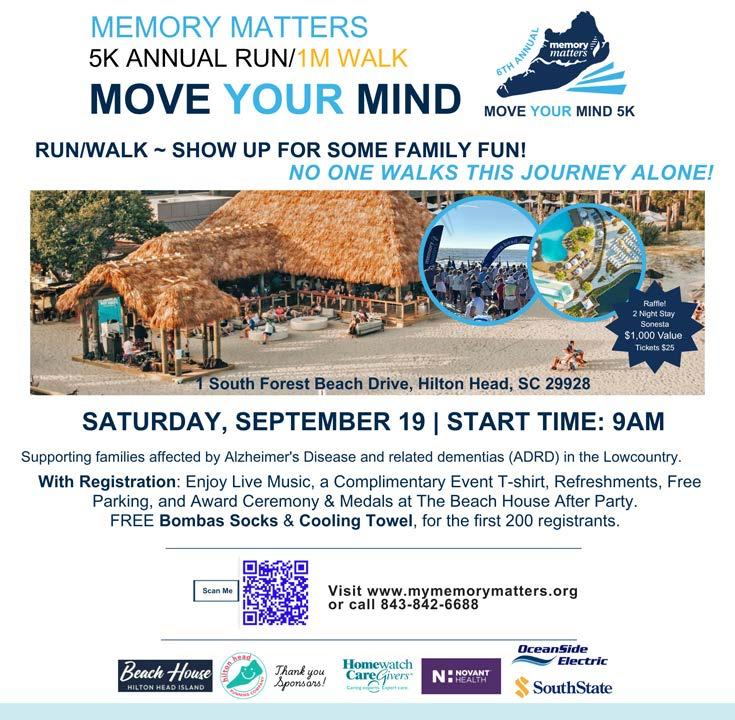
By Sasha Sweeney Editor
St. James Baptist Church and the historic Cherry Hill School will be relocated under a partnership between the Town of Hilton Head Island, Beaufort County and the church aimed at improving airport safety while preserving two of the island’s historic landmarks.
The agreement calls for relocating the church and school from their current location on Dillon Road to a new 4.67-acre campus on Union Cemetery Road in the Grassland Historic Neighborhood, adjacent to Union Cemetery. The announcement was made July 14 after the Hilton Head Island Town Council approved the final ordinances needed to move the project forward.
Founded in 1886, St. James Baptist Church is one of Hilton Head Island’s oldest congregations. Cherry Hill School, listed on the National Register of Historic Places, will also be relocated and will retain its National Register status through the approved relocation process, according to the town.

Town officials said the church and school are located within the Hilton Head Island Airport’s Runway Protection Zone, an area the Federal Aviation Administration identifies as incompatible with places of public assembly, including churches and schools. The relocation is intended to address those safety concerns while preserving the church and school.
“This initiative demonstrates that public safety and historic preservation are not mutually exclusive,” Mayor Alan Perry said in a statement. “Through patience, partnership, and a shared commitment to doing what is right, we have developed a solution that protects future generations, preserves irreplaceable history, and honors the faith community that has contributed so much to Hilton Head Island.”
Under the agreement, the town will purchase approximately 1.7 acres that include the existing church and school as part of the airport’s long-term runway mitigation program. The congregation will continue using the current facilities under a longterm lease while the new campus is built.

The town also will transfer approximately 4.67 acres on Union Cemetery Road to Beaufort County. The county will oversee construction of the new campus, including a new sanctuary, fellowship hall and relocation of the Cherry Hill School. Once construction is complete, ownership of the campus will be transferred to St. James Baptist Church.
Plans call for an approximately 11,975-square-foot church with a 250-seat sanctuary, a 120-seat fellowship hall and the relocated Cherry Hill School. Stainedglass windows donated by generations of church members will be preserved and incorporated into the new sanctuary.
“This has been a long journey, and we’re grateful for the collaboration from the Town, Beaufort County, airport leadership, and Senator Tom Davis in securing funding and helping move this vision forward,” said Herbert Ford, a trustee and spokesperson for St. James Baptist Church.
“This new campus will honor our history while creating opportunities for future generations,” Ford said. “We are excited for what lies ahead.”
Beaufort County Council Chair Alice Howard said the project reflects years of cooperation among local governments and the church.
“We are grateful to everyone who remained committed to finding a solution that respected both safety and heritage,” Howard said. “This partnership demonstrates what can be accomplished when governments and community institutions work together toward a common purpose.” Funding for the project includes a $300,000 town-county agreement, $1.29 million for the town’s acquisition of the current church property, a $4.75 million state appropriation, $3.5 million in Beaufort County general obligation bond funding, a $1.29 million construction escrow provided by St. James Baptist Church and the town’s donation of the future 4.67-acre church site. Construction is expected to begin in fall 2026 following Planning Commission review, zoning actions and public hearings.
A groundbreaking ceremony involving the congregation and community partners is expected later this year.


By Paul Tollefson Contributor
Long before Hilton Head Island became known around the world for its beaches and golf courses, it was a quiet Sea Island of sandy roads, moss-draped live oaks, winding marshes and close-knit Gullah communities. Life revolved around faith, family and hard work. For Black children growing up there in the early 1900s, opportunities were few. It was here, in 1904, that Edward Theophilus Graham was born.
Edward attended a small one-room schoolhouse in the Spanish Wells community, where the highest level of education available to Black children was the fourth grade. When young Edward proudly told his grandmother he had finished school, she smiled and simply replied, “That’s what you think.”
Believing her grandson was capable of far more, she made one of the greatest sacrifices a family could make. She sent Edward across the water to Beaufort to live with another family so he could continue his education. It could not have been an easy decision, but it changed not only his life but also the lives of countless others he would one day serve.
Edward embraced every opportunity that followed. At Benedict College, he earned a Bachelor of Science degree, served as president of his senior class and president of the college YMCA, and lettered in football, baseball and tennis. Graduate studies later took him to Columbia University in New York, where he worked for the New York City Department of Welfare before joining the YMCA at the 1939 New York World’s Fair. He later accepted a leadership position with the Carlton Avenue YMCA in Brooklyn, directing employment programs that helped young Black men find work during the final years of the Great Depression.
Long before he became known as a minister or civil rights leader, Edward Graham had already found his life’s purpose: lifting others.
That calling eventually led him to Miami.
As pastor of Mount Zion Baptist
Church, Graham became one of Florida’s most respected ministers and one of the state’s leading voices during the Civil Rights Movement. He helped establish Miami’s Urban League, delivered the eulogy for slain civil rights pioneer Harry T. Moore, stood beside the NAACP during some of its most difficult years, and helped peacefully integrate public beaches and lunch counters. His steady leadership eventually carried him into public service, where he became the first Black person to serve as acting mayor of Dade County. Yet for all he accomplished, Hilton Head was never far from his heart.
Hilton Head native Ms. Johnnie Mitchell remembers that every summer, the Rev. Graham returned home. He would sit on the porch of her parents, John and Lucinda Patterson, eating watermelon sprinkled with salt while sharing stories about the island, its people and its rich Gullah heritage. She remembers a man with a commanding voice who could captivate a room, yet was one of the most humble and approachable people she had ever met.
“He was very proud to be from here,” she recalled.
As Ms. Johnnie built her own life, opening her first business, becoming one of Hilton Head Island’s first Native Islander real estate agents, and later serving on the Beaufort County Board of Education, the Rev. Graham quietly celebrated each milestone. He often sent anonymous gifts of encouragement, never seeking recognition, simply wanting others to succeed. It was the same spirit that had led him to help unemployed young people in New York decades earlier.
His influence reached farther than most people realize. Among those who later credited the Rev. Graham with changing the direction of their lives was renowned motivational speaker Les Brown, who spoke of Graham’s guidance in helping steer him toward purpose.
His love for Hilton Head was more than words. In 1960, after becoming one of Miami’s most respected ministers, Graham returned home to write the history of First African Baptist Church, preserving the story of one of the island’s oldest congregations. In its pages, he did more than record names and dates. He lovingly described Hilton Head’s marshes, towering oaks, abundant wildlife and timeless beauty, revealing a man who never stopped carrying home in his heart. When asked what she remembered most, Ms. Johnnie Mitchell never spoke
first about the offices the Rev. Graham held or the history he helped shape. Instead, she smiled and simply said, “He is my hero of all time.”
Perhaps there is no greater tribute. Today, millions of people know Hilton Head Island for its beaches, golf courses and breathtaking beauty. Far fewer know the story of the young boy who left a one-room schoolhouse in Spanish Wells because his grandmother believed his education should not end after the fourth grade. Her faith in him helped shape a man who would spend the rest of his life opening doors for others.
While writing the history of First African Baptist Church in 1960, the Rev. Graham paused to describe the island he loved so deeply.
“An impressive sight to behold is the abundance of the Spanish moss clinging to whatever hardwood tree it chooses. No setting in the South would be complete without the moss.”
Those were more than the words of a historian. They were the words of a son remembering home.
The Rev. Edward T. Graham became a minister, educator, civil rights leader, public servant, historian and mentor. Yet perhaps his greatest accomplishment was something far simpler. Throughout every
By Chip Collins Contributor
When people think about the real estate market, they naturally focus on homes that are currently for sale or those that have recently sold. Those properties certainly provide valuable information, but another group of homes often goes unnoticed, and they can offer some of the most meaningful insights available.
experiences before a home ever reaches the market. Every expired or withdrawn listing represents a chance to gather valuable information about what worked and, just as importantly, what didn’t. The questions are often straightforward. Was the property priced too aggressively? Did it need repairs or staging? Were the marketing efforts strong enough to generate buyer interest? Did the home receive showings but no offers, or was buyer activity limited from the very beginning? The answers provide context that raw market data alone cannot.







chapter of his remarkable life, he never stopped believing in people. Whether helping a young man find work during the Great Depression, standing for equality during the Civil Rights Movement, encouraging a young Islander to chase her dreams, or preserving the history of the church where his own faith began, he quietly spent a lifetime lifting others.
Maybe that’s why his story deserves to be remembered here in the Lowcountry. Not because he became famous.
But because one of Hilton Head Island’s own showed the world just how far faith, education, humility and service can carry a person.
And perhaps, after all these years, it’s time we welcomed one of our greatest sons back home.
Paul Tollefson is the Director of Tennis at the Hampton Hall Club. After moving from Hilton Head to Bluffton he became enthralled with the history of the town and the people and cultures that call it home. He has found a passion in writing and enjoys being able to share the stories and pictures of long-time locals. He is the co-creator of the Facebook page “Bluffton Then and Now.”
I’m talking about unsold inventory. These are properties that were listed for sale but ultimately expired or were withdrawn from the market without selling. While many people simply overlook them, experienced real estate professionals know they can tell an important story about today’s market.
For buyers, unsold listings can create opportunities that don’t appear in a traditional property search. In many cases, these homeowners still want to sell but have become discouraged after an unsuccessful listing. A knowledgeable buyer’s agent can contact the previous listing agent to determine whether the seller is still interested in moving forward. Sometimes those conversations uncover opportunities that never make their way back onto the multiple listing service.
Beyond potential off-market opportunities, unsold listings can also provide valuable market intelligence. If several similar homes in a particular neighborhood failed to sell, buyers should ask why. Was the pricing unrealistic? Were there condition issues? Was demand simply lower than expected? Understanding these patterns can strengthen negotiations and help buyers make more informed decisions when evaluating comparable properties.
Sellers can benefit even more from studying homes that didn’t sell.
One of the biggest advantages of working with an experienced real estate team is the ability to learn from other people’s
The real estate market is constantly changing, and every listing provides another piece of the puzzle. While sold properties often receive the most attention, the homes that didn’t sell may offer equally valuable lessons.
Whether you’re buying your next home or preparing to sell your current one, don’t overlook what the market has already taught us. Sometimes the most valuable information isn’t found in what sold; it’s found in understanding why something didn’t. Those lessons can help you make smarter decisions, negotiate with greater confidence and ultimately achieve a better outcome.
Chip Collins is the Broker-Owner of Collins Group Realty founded in 2002. Find Chip at chip@collinsgrouprealty. com or collinsgrouprealty.com.






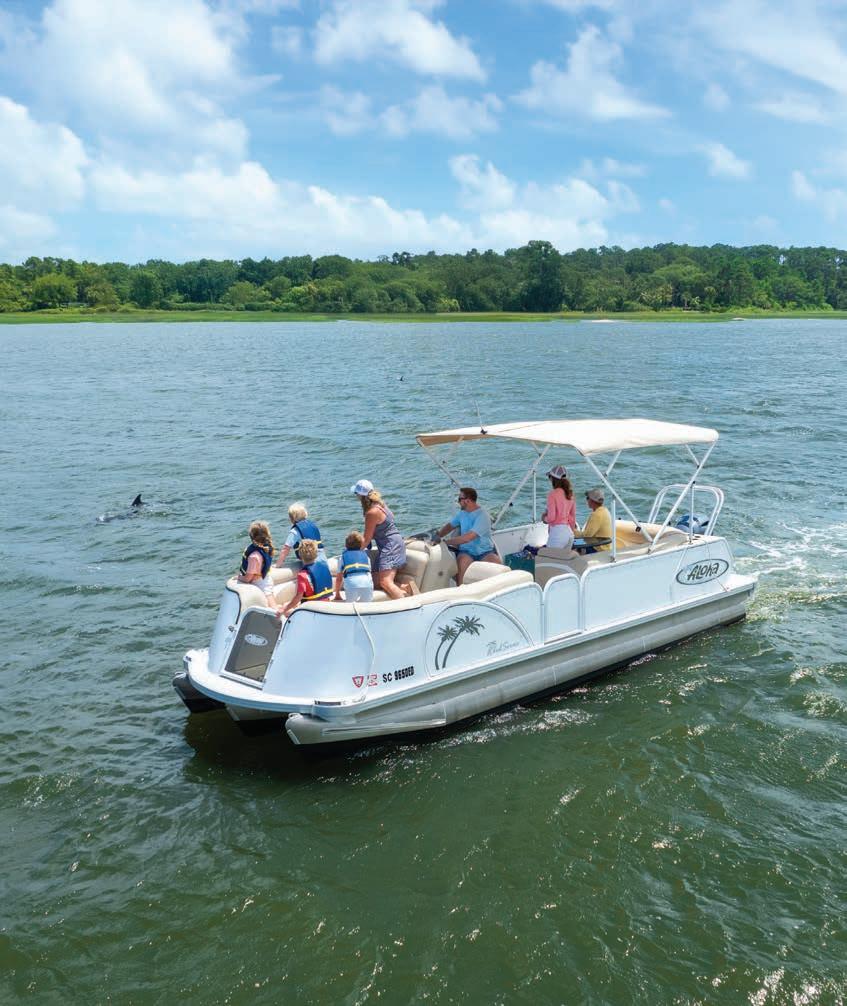









By Tamela Maxim Contributor
Bluffton began as a small summer retreat for Lowcountry rice and cotton planters seeking relief from heat and malaria. The town developed on two adjoining parcels in the Devil’s Elbow Barony, purchased by Benjamin Walls and James Kirk. Early homes were built in the 1800s, and by the 1830s the first streets were laid out. Originally called Kirk’s Bluff, the town was renamed Bluffton in the early 1840s as a compromise between the Kirk and Pope families.
In the 1840s, Bluffton became a center of political activism. Local planters gathered beneath an oak tree, now known as the Secession Oak, to protest the federal tariff of 1842. Robert Barnwell Rhett’s fiery speeches inspired what became known as the Bluffton Movement, a radical states’ rights faction of “fire eaters.” On July 31, 1844, more than 500 attendees gathered for a political dinner where Rhett called for a state convention and compared their cause to the American Revolution. These activists became known as the Bluffton Boys.
By the 1850s, Bluffton had grown into a small commercial hub. A steamboat landing was built at the end of Calhoun Street, making Bluffton a stopover between Savannah and Beaufort. The Church of the Cross, designed by Edward Brickell White, was completed in 1857 for a congregation of up to 600.
Bluffton was officially incorporated in 1852 as a onesquare-mile summer village overlooking the May River, a tidal estuary with no freshwater source.
Civil War and Destruction (1861–1865)
During the Civil War, Confederate Brig. Gen. Thomas F. Drayton oversaw the evacuation of rebel forces from Hilton Head Island to Bluffton. Rebel lookouts used the town’s high bluff to monitor Union activity.
On June 4, 1863, Union Gen. David Hunter ordered Bluffton burned. Roughly two-thirds of the town was destroyed, leaving only two churches and 15 homes standing. Most antebellum buildings were lost, which explains Bluffton’s limited surviving prewar architecture today.
Rebuilding (1870s–1900)
Reconstruction was slow, as many former landowners could no longer afford summer homes. A more substantial rebuilding period began in the 1880s, and Bluffton
gradually re-established itself as a quiet river village. Old Town Bluffton eventually earned a National Historic District designation, recognizing 54 historic structures that survived or were rebuilt after the war.
Pre-Bridge Era (1900–1956)
For decades, Bluffton remained a sleepy May River community. Families from Savannah and inland South Carolina vacationed in summer cottages. Life centered around fishing, crabbing, shrimping and river recreation. Bluffton’s eccentric spirit was already part of its identity. Edith Inglesby likely coined the phrase “state of mind” in her book Corner of Carolina long before it was adopted more widely.
The Bridge and the Rise of “Bluffton Eccentricity” (1956–1980s)
The first bridge to Hilton Head Island opened in 1956, transforming the region. As Hilton Head’s development
surged in the 1970s, Bluffton residents embraced their quieter lifestyle and proudly displayed “Bluffton is a State of Mind” bumper stickers.
In the early 1970s, Moss Creek Plantation was marketed as a private, nonresort community. Rose Hill Plantation followed in 1980, when Toronto developers John and David Welton began developing the community.
Bluffton’s first newspaper, The Bluffton Eccentric (1987–1991), was published by Graham Bullock, who promoted a town motto as “It’s a Bluffton State of Mind.”
Palmetto State Bank knew a good thing when it happened and began giving out “I’m a Bluffton Eccentric” bumper stickers.
Annexations began in 1987, expanding Bluffton far beyond its original one-square-mile footprint.
Modern Development Boom (1990s–Present)
The early 1990s brought rapid growth. Upscale golf communities such as Colleton River Plantation, Spring Island and Belfair were developed and sold quickly. When Del Webb purchased land in 1994, population growth accelerated dramatically.
Today, Bluffton is one of the fastest-growing towns in the United States, surrounded by miles of new neighborhoods, apartments and businesses. Its historic district remains small and charming, with moss-draped oaks, azaleas and camellias along a new riverside park, another beautiful park with a playground near the historic Heyward House, preserved architecture, artsy shops and restaurants, often offering live music in the afternoons and evenings. Bluffton’s eccentric, Carpe Diem personality is central to its charm
Bluffton Today
What began as a tiny summer refuge has become a thriving, eclectic community. Despite its explosive growth, Bluffton still holds onto its identity: creative, relaxed, river-centered and proudly eccentric. There are only two grandfathered billboards; green spaces and green buffer zones are included in development planning, and neon and tall buildings are nonexistent. In every era, Bluffton has remained exactly what its motto promises: A Bluffton State of Mind.
Tamela is a proofreader and book editor; she hosts paint parties for adults, art and drama camp for kids, and is the art teacher at May River Montessori. www.tamelamaxim. com www.artposseproductions.com
CLASSIFIED
CLASSIFIED
CLASSIFIED
CLASSIFIED