120 Grade 7 scholars to set foot on campus next school year
THE PHILIPPINE SCIENCE

HIGH SCHOOL–Bicol Region Campus (PSHS–BRC) welcomes its 120 regional qualifiers from the Stage 2 screening of the Requirements for Admission, Criteria, and Evaluation (RACE) conducted last December 2022. For the first time in nearly 25 years, BRC has finally broken the custom of bringing in 90 scholars each academic cycle. For the incoming A.Y. 2023–2024, 120 new students have been added to the BRC family. “We wanted to expand our service area and also to the number
of students that we cater,” Campus Director Lorvi Pagorogon stated in an interview. “Para mas ma-propagate natin ang mga magagaling na future STEM leaders of the country,” she added.
In light of this expansion, Pagorogon said that the school will be given a budget increase, as issued by the system and provided by the government. However, this budget is not enough to adhere to the needs of the dormitory. There are also no current plans for building additional classrooms or facilities for the next school year.

In light of these, the campus administration is looking at re -

moving 30 residents from the dormitories due to the additional younger students who need to be accommodated. Guidelines from the dorm shall be followed for the prioritization of scholars who will get the privilege to stay as interns.

“For the next year, hindi talaga natin ma-accommodate lahat ng scholars sa dorm. So, this will be by prioritization kung sino-sino ang makakapasok sa dorm,” Pagorogon clarified.
Accounting for the estimation of future school years, the admin also plans to adjust the projects, plans, and events based on the system school
calendar. Additionally, as the number of scholars rises, the need for teachers also rises.
“At the moment, hiring palang tayo kasi ‘di pa natin nafi-fill up ang teacher compliment from Grades 7 to 12, so we will be asking for the budget for additional teachers,” Pagorogon said.
As an ending statement, the campus director extended her congratulations to the new scholars and expressed hopes that they will be able to enjoy and get through the rigors of their upcoming academic challenges in the environment of one of the nation’s leading science high schools.
Grade 10 scholars enlist for Pisay-Taiwan exchange program
Grade 10 students brace for a system-wide student exchange program to be conducted by the end of the school year 2022–2023 with partner institution Wu Ling Senior High School in Taoyuwan City, Taiwan.

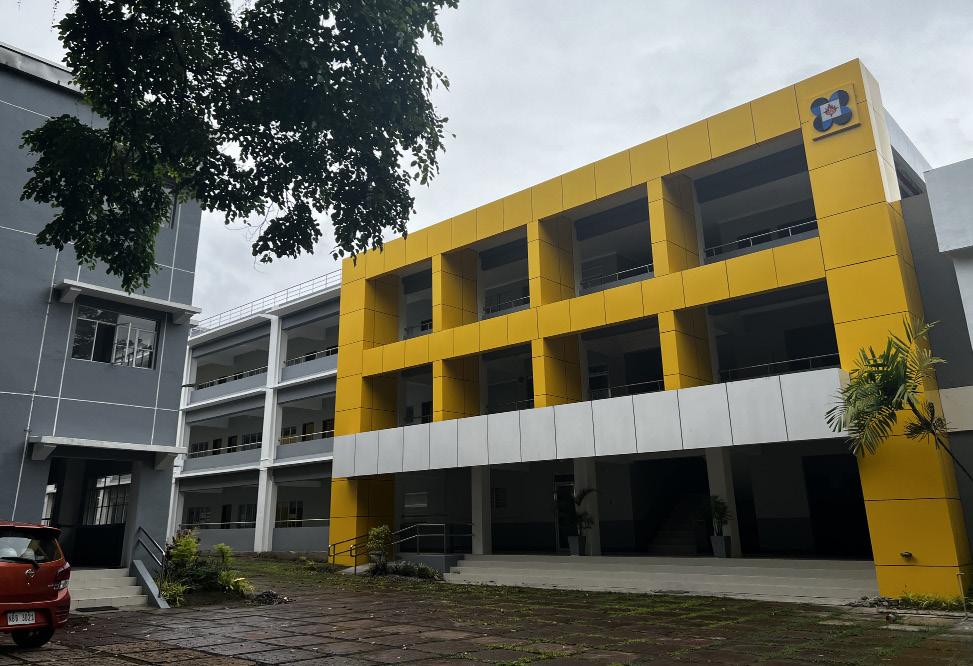
AMIDST THE PANDEMIC, the school administration of this campus utilized the two years of distance learning in renovating its buildings and facilities to prepare for the return to face-to-face classes and for the 120 scholars of the incoming Batch 2029.
The Academic (ACA) Buildings 1 and 2, Science and Technology Building, and the dormitories are some of the establishments that underwent major renovations while the Science Research Facility (SRF), Materials Recovery Facility (MRF), Administration Building, and parking areas are some new installments on campus.
According to resident engineer Juan Narvato, renovations for ACAs 1 and 2 started in December 2021 with a total allocated budget of Php 18,280,064.
Narvato said that a few of the changes made to the buildings are the addition of

what’s inside ?
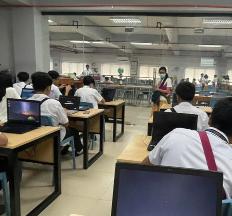
a bridge between ACAs 1 and 2, the conversion of the old library on ACA 2’s third floor into a computer laboratory, the conversion of the former school clinic to the Unit Heads’ Office, and the merging of the previous guidance office with the publication room.
Grade 11 student Rhys Eandrei Perez expressed his anticipation of the reopening of ACAs 1 and 2 since the Spe-



cial Years Program (SYP) scholars are temporarily conducting classes in the gymnasium, a building designed for PE activities.
“I believe that the buildings bear significant value in the accomplishment of the quotidian endeavors of the faculty and scholars and are great reminders of their countless achievements,” Perez said.
Filipino Unit Head Erma Bue also expressed her thoughts on the renovations and the SYP scholars’ transfer stating that it would greatly motivate the students in learning and studying during class hours because of minimized disturbances and noises from outside, larger classrooms for group activities, and more spaces that are designed for learning.
“Kailangan na sanang makalipat [ng SYP scholars] upang maranasan nila ang pagkakaroon ng komportableng silid-aralan subalit kung hindi pa tapos ang renobasyon sa ACA 1 ay kailangan munang magtiis para din naman sa ikabubuti at sa kaligtasan ng pangkalahatan,” she also added emphasizing safety as the priority.

Through a screening process, Grade 10 students Ariane Jane Apun, Maria Kyna Arizapa, Meredith Grace Bandojo, Nina Samantha Bolo, Denric Moses Camay, Maria Ricci Gelera, Emmanuel Gregorio, Jay Adrian Lotivio, Loren Sophia Mendiola, and Joefel Matthew Tugano were selected for the said exchange program.

The program is a systemwide project led by its overall chairman Bicol Region Campus Director Lorvi Pagorogon where student-representatives from seven PSHS campuses are expected to visit three of the Taiwanese partner schools namely Wu Ling Senior High School, Kaohsiung Girls’ High School, and Panchiao Senior High School.
“This was an opportunity that will enable me to develop esteemed skills such as intercultural communication, resiliency, problem-solving, critical thinking, and an improved sense of responsibility,” Arizapa said when asked about the deciding factors in joining the program.
PSHS–BRC’s focal person Joel Reginales told The Bicol Scholar that the campus was able to share its cultural experiences through dance, music, and delicacies presented during the opening program with a performance from Danza Serenata and yells from each school, “Yung focus nun [opening program] is to introduce the school, the culture, and [even] arts,” Reginales added.
THE OFFICIAL PUBLICATION IN ENGLISH OF PHILIPPINE SCIENCE HIGH SCHOOL –BICOL REGION CAMPUS Bicol Scholar The
BRC holds “Kislap-KutitaPISAY” With the last science camp conducted for school year 2017-2018, science-related Alternative Learning Activity (ALA) clubs opted to re-establish the event as an annual affair as they launched a two-day event coined as Siyentip-ISKO: Science Camp 2022 in the school gymnasium last December 1 and 2. The start of the historic 2022 Elections brought about many proposals for improving the country, but one that sparked floods of attention and undeniably countless debates was the idea of reviving the mandatory ROTC. Tara, Milktea: F2f na bhie! “Huy guys, tara, order tayo ng milk tea!” It got a bit dusty VOLUME XVIII – ISSUE NO. 1 SEPTEMBER 2022 – FEBRUARY 2023
STEAM Club revives Sci-Camp 3 In
13 Badminton’s Rise To Fame 19
Pursuit
of A Glorious Signal: The Pisay-WiFi Bullets, Batons, and Baneful Brotherhood
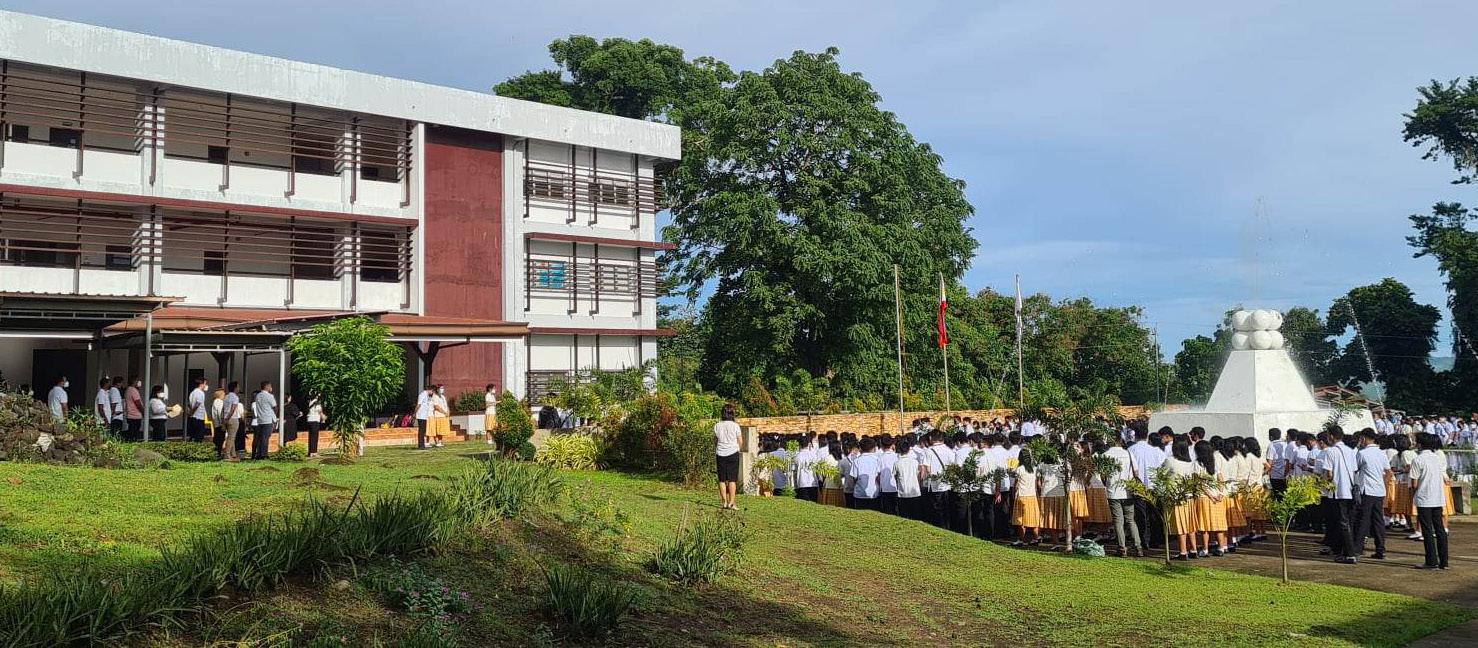
A BIGGER FAMILY NEXT SCHOOL YEAR. The Philippine Science High School–Bicol Region Campus is welcoming a new section of Grade 7 scholars as mandated by the PSHS System Board of Trustees, a practice that has been in place in several campuses. The increase of incoming of 30 scholars poses just another problem in terms of accommodation, budget, and available faculty, as well as in other school facilities.
John Richard Moreno
John Richard Moreno
NEEDED MAKEOVER. The Philippine Science High School--Bicol Region Campus underwent a major facelif afer two school years, just in time the students were at home for online classes.
AFTER TWO YEARS IN THE online setup, Philippine Science High School–Bicol Region Campus (PSHS–BRC) bounces back with the annual Family Day Celebration held last November 14, 2022, where the families of the scholars from the different Bicol Region provinces come together to celebrate a day with each other and with the BRC community as a whole.
Showcasing the rich Bicolano culture in connection to the scholars of the BRC community, the event consisted of various activities, highlighting the performances of both scholars and their parents during the field demonstrations of

Grades 7 to 9 and the PISAYAWITAN presentations.
After the field demonstrations, the scholars’ mothers exhibit the uniqueness of their hometown’s traditions as they dance their provinces’ respective festival dances during the Medley of Festivals, which is a part of the PISAYAWITAN segment of the campus event.
“Performing the festival dance during the Family Day was a memorable one for me because I never participated in such a dance during my younger years. It was fun,” shared Mary Ann B. Bumalay, mother of Grade 10 scholar Sofia Marielle B. Bumalay.
Meanwhile, the fathers belt out
The Beatles tunes as they join in the Singing Daddies Acapella Competition.
“It was one of my memorable and unforgettable experiences performing on stage—excited and slightly nervous. I’m so happy and thankful to be part of the singing daddies of the Rinconada Pisay parents,” expressed Gilbert Royong, father of Grade 10 scholar Steffani Luigi I. Royong.
Grade 9 scholar Eric Fabian Deiv Mendez shared that the Family Day, being a first time for his batch and the lower batches, was a refreshing event.
“Everyone, if not most of the celebrants, had fun while the program
was ongoing; a lot of shrills were heard during the dance competitions as the students cheered for their parents,” said Mendez.
Febay Villareal, mother of Grade 10 scholar Wystan Villareal, expressed that the bond and camaderie during their practices for the PISAYAWITAN will be treasured forever in their hearts. Villareal also shared that the celebration gave them the opportunity to reconnect and spend quality time with their son, along with the other parents and teachers.
“Indeed, we found a new family and we will do this again and again just for the love of our children,” she said.
Scholars express WiFi troubles amid blended learning modality
FOLLOWING THE RETURN of face-to-face classes in today’s new normal back on campus for the A.Y. 2022–2023, the blended learning modality greatly required a stable internet connection while scholars expressed their troubles regarding internet connectivity and how these have been an impediment to the accomplishment of their requirements.
“Inconsistent and unstable, there would be times that you have access, but most of the time it is very unreliable,” Grade 10 scholar Dwayne Jan Felix Rejesus posited when asked to describe the internet connectivity on campus. Issues concerning selective connectivity and time constraints were mostly brought up as well. “Kailangang bumaba palagi para makaconnect sa WiFi, pero minsan naman mabilis
siya sa second floor kapag mga 3 am, ganon,” Grade 12 scholar Mari Vivien Picar added.
“Bumababa ang productivity rate ko kasi parang nalilimit na rin ang knowledge [ko], imbis na marami akong mapag-aralan by researching, hindi ko nagagawa dahil wala akong source,” Grade 7 scholar Allyza Rafer remarked, and said she wakes up early in the morning instead when there are only few users to get access to stable internet.
With sentiments gauged from scholars, The Bicol Scholar had an interview with Mr. Marco Despi, a representative of the IT Unit, about what affects internet connectivity on campus.
Despi said that the users’ use of the Internet also affects the transfer rate of data from the Internet Service Provider (ISP) to their respective devices.
“Factors ay ‘yung technology ng WiFi at ‘yung dami ng users,” Despi added.


Despi said that, in an online learning set-up, all scholars and the faculty would be connecting to the Internet for online meetings and uploading and downloading learning modules, and the minimum bandwidth needed for such set-up is at least 5 Mbps for one user.
“Kumbaga sa traffic light, traffic talaga,” Despi added.
With the scholars back on campus while still following the Curriculum under Remote and Blended Learning (CRBL) guidelines and considering more than 500 users connecting to the WiFi per second, the demand would burst, whereas the supply is only limited, thus resulting in slower Internet.
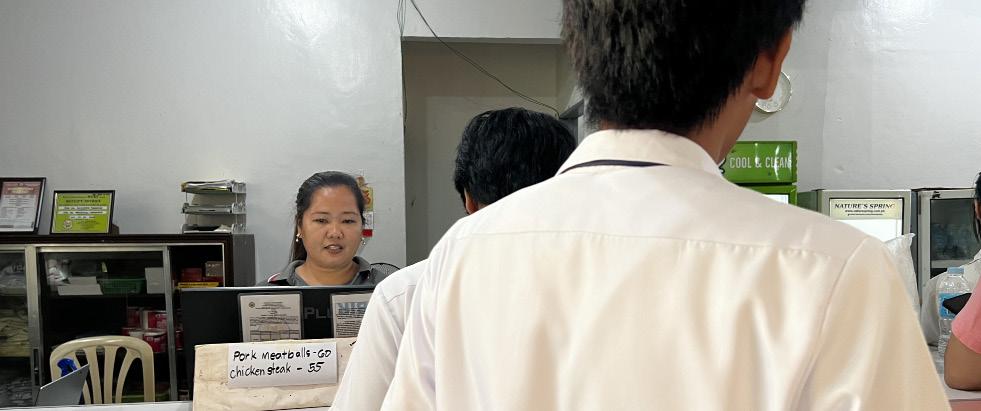
To minimize price increase brought by the nation’s rising inflation rate, the campus’ canteen headed by Manager Martin B. Brutas Jr. changed a key policy ensuring that students would still be able to buy food at a reasonable rate.
The new policy implemented by the canteen administration aims to procure goods such as meat, fish, and soft drinks directly from producers instead of resellers. This change prompted the school canteen to save around Php 40 when purchasing a kilogram of pork and Php 25 when procuring a kilogram of chicken.
Snacks being sold also had an increase compared to pre-pandemic pricing due to the surging costs of goods.
In an interview, Brutas stated that the increasing prices of commodities are unavoidable due to the current circumstances hounding the nation. In December 2022, the country’s inflation rate increased to 8.1% from 8.0% the previous month. However, the school canteen is continuously trying to improve its services and make rates more student-friendly.
“And also nag-offer kami doon sa mga pay-as ng pagpipilian. Somehow risk din ‘yun saamin kasi what if kung hindi maubos, pero tinatry namin na maimprove ‘yung serbisyo namin,” Brutas added. Brutas also boasted some of the canteen’s efforts to provide students with more viands during meals.
“Kung tutuusin, hindi man kami talagang nakapababa ng presyo ng mga pagkain pero may additional kaming naooffer sa mga iskolar gaya nung sopas at mga dessert. Wala kaming ginawang measure na bawasan ‘yung serving pag bumibili, ganu’n parin,” Brutas stated.
Meanwhile, according to Grade 11 student Bryan Jaluague, the increasing prices of goods in the canteen has been a huge blow to his weekly expenditures.
“‘Yung Php 300 ko dati kaya ko ‘yun sa isang week, tapos ngayon Tuesday palang ubos na. ‘Yung mga binibili ko mga pang-snack, ‘yung usual Coke, tapos minsan sandwich ‘yun lang naman. Para makasya, siguro nag less buy ako para at least yung Php 500 ko umabot pa rin ng Friday,” Jaluague added.
Select scholars join system-wide PMUNYS III
AFTER BEING HELD TWO times online via Zoom, the Philippine Science High School System (PSHSS) Model United Nations Youth Summit III (PMUNYS III), held last November 28 to December 1, 2022 in Baguio City with activities and conferences divided among four different committees.

The program began without a hitch, starting with team-building activities for the delegates from all the campuses of PSHSS, followed by committee sessions on the next day.
The Secretariat of the BRC MUN Organization assigned the delegates to their committees:
Simone Antoinette Chavez and Jay Adrian Lotivio for the UN Environmental Programme;
Prince Julius Babas and Svetlana Viktoria Roxas for the UN Women; Nina Samantha Bolo for the World Health Organization (WHO); and Jose Antonio Ursua for the UN Security Council.
“Every delegate must observe proper discipline and etiquette and speak diplomatically throughout the session,”
Babas shared of his experience.
He further said he was “mostly vigilant and quiet” as he listened closely to the other delegates’ speeches and studied how the proposed solutions written in their position papers could collaborate with his own ideas.
Babas stated that he was hesitant to communicate and was mostly confused about what to do during the committee sessions.
“The sessions felt very rigid
because it was a formal event and a simulation of a real UN conference, but I had so much fun due to the extent of knowledge I gained,” he said.
UNEP delegate Chavez said the sessions were enjoyable—such intensive experiences made her learn the most as it showed her the importance of diplomacy, communication, and connection.
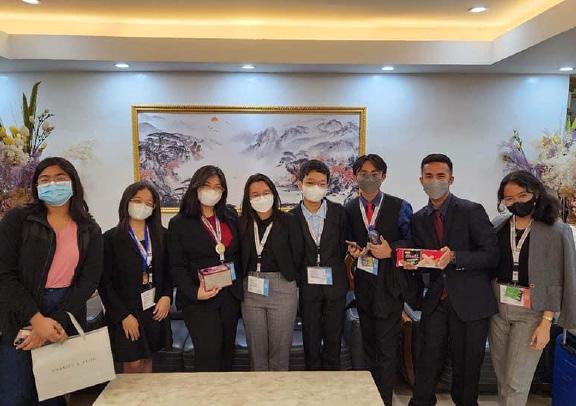
“Just like what this year’s Secretary-General, Ms. Jyan Rubillar, said in her opening speech, PMUNYS truly is a marathon and not just a sprint,” said Chavez.
At the end of the four-day event, the organizers held an awarding ceremony where WHO delegate Bolo snatched the Best Position Paper Award. This award was given to only three students from every committee.
NEWS 2 The Bicol Scholar @thebicolscholar thebicolscholar.medium.com VOLUME XVIII - ISSUE NO. 1 Bicol Scholar The THE OFFICIAL PUBLICATION IN ENGLISH OF PHILIPPINE SCIENCE HIGH SCHOOL – BICOL REGION CAMPUS ISSUE XVIII NO. 1 | SEPTEMBER 2022-FEBRUARY 2023
School canteen adjusts policy, hopes to limit inflation-caused price hikes
Juan Jaime Yet
Czarina Belarmino
New canteen consumer policies give rise to problems within canteen staff
NEWLY-IMPLEMENTED POLICIES in the Philippine Science High School–Bicol Region Campus (PSHS–BRC) canteen caused additional burdens to the staff as they are now required to exert more work in their daily tasks.
This A.Y. 2022–2023, BRC welcomed a suggestion from a parent during a General Parent Teachers Association (GPTA) meeting and students were categorized according to their preferred mode of payment for the meals they consume within the school canteen, the Pay As You Order (PAYO) and Fixed Meal categories.
Canteen Manager Martin Brutas Jr. said that new workloads are left to the canteen staff to deal with as they are required to put in double
FRESH FROM THE two-year online classes, the students of this campus were re-oriented on the rules on proper waste segregation at the school auditorium on September 2, 2022.
“The seminar aimed to instill discipline in the scholars,” Maria Benita Feliciana Eloreta, the school’s waste pollution manager, said. Eloreta aimed for the students to form their own definition of waste segregation to better understand the science behind it through orienting them about the colored trash bins around the campus and which specific types of waste be-
the effort in monitoring the students, accounting for their bills, and preparing their meals, which are time-consuming activities.
Brutas said that the staff remains open to new ideas and suggestions that students, parents, and teachers may have regarding the canteen’s current condition and system, adding that they wish to prioritize the students’ needs.
“Suggestions, ‘yung mga comments ng mga parents or estudyante [ay] kino-consider namin. Kung kaya namin maibigay, kaya naming magawa, bakit hindi?” he said. Brutas explained that the board already has existing plans and a good system concerning canteen operations.
Meanwhile, students say the new scheme is
long to each label.
Due to the recent COVID-19 pandemic, scholars from Grades 7 to 9 are experiencing face-to-face classes in Pisay for the first time, and have yet to fully understand the culture and system practiced in the campus.
One of the bins highlighted during the seminar was the yellow bin or Personal Protective Equipment (PPE) trashcan, where facemasks and other infectious wastes are disposed. Despite the presence of the PPE trashcan and other bins, some students claim that it is ineffective as not everyone makes use
beneficial as students now have options especially during lunch time.
“The categorization of meals gives freedom to the students regarding what they’d like for their meal and on how they’d like to pay for it. For me, these policies are actually more efficient than only having one option,” Jessica Lastrella, a Grade 10 student, said when asked about her opinion on the meal categorization.
Grade 11 student John Rex Funtilar also shared how the PAYO scheme helped him budget his weekly expenses following the rise in prices caused by the nationwide inflation.
“Other than that, mas dumami pa yung choices ng food like nung ulam dito and in terms of quantity ng meals mas dumami rin,” he also added.
of these trash cans properly.
Dr. Eloreta also commented that not all students follow waste segregation because their main priority is their academics.
Rules and regulations regarding proper waste management were also included in the seminar, along with some of the other operations done by the administration to make use of the trash around campus.
Some of the mentioned operations were the purification of restroom water to use for the fountain and the conversion of recyclable materials into products that can be used by the school
through the Materials Recovery Facility.
“I cannot call you as iskolar ng bayan because some of you are not yet properly well-oriented of what the world is in terms of the mass waste,” Dr. Eloreta added.
Despite the negative behavior that Dr. Eloreta observed, especially during her first classroom and dorm check-ups, she still believes that there will be visible change in the upcoming years, which can already be seen in the attitude of the student body through their implementation of waste segregation in SCALE projects.
BRC wraps ISO audit, marks 4th year with certification
FOUR SCHOLARS FROM THIS CAMPUS posted podium finishes by pocketing three gold and one bronze awards in the heat round of the online-held Hong Kong International Science Olympiad (HKISO) last November 22.
Grade 12 Chemistry students
Sophia Bianca Therese Bagnes, Juan Jaime Yet, and Grade 10 Electron student Svetlana Viktoria Roxas snatched gold awards, while Grade 12 Chemistry student Luis Miguel Mayor won a bronze award.
Despite facing problems such as insufficient time allotment for preparation, wide range of topics, and prohibition of being excused from academics, the victors of HKISO continued to search for strategies to prepare for the contest.
“Reviewing for the competition was a very difficult process, largely due to the contest’s expansive coverage as well as the lack of accessible preparatory materials available on the Internet due to the review material’s requirement of payment,” said Bagnes.
“It was also a grueling task having to balance reviewing for the contest alongside my other academic and extracurricular requirements,” she added.
Although the contestants were unable to undergo intense review sessions, Alpha Rowena Pimentel, a Chemistry teacher and also their coach, provided them with review materials that greatly aided their preparation. This was especially the case for the Chemistry portion of the test, resulting in a “wonderful although pressuring” experience for the contestants.
“The experience was both fun and stressful. I found it fun because it consisted of questions that really force me to think outside the box to be able answer the given problems,” Bagnes ex-
pressed. She also added that the “correct minus wrong rule,” time limit, and complex topics emphasized the need to think outside the box as these encouraged the need to strategically plan out their answers.
Moreover the contest proved to be a vital addition to the contestant’s future, possibly paving the way for greater possibilities.
“As I took HKISO, new doors of opportunity opened while adding to the student portfolio that is vital for my future. This assured me that I am on the right track on my learnings,” said Svetlana Roxas.
With the recent celebration of the new year, HKISO 2023 is anticipated to take place on March 25–26 2023 with registrations only being available until March 12, 2023.
The Philippine Science High School–Bicol Region Campus (PSHS–BRC) has recently concluded its yearly International Organization for Standardization (ISO) audit on October 11–12, 2022, as the campus keeps up with international quality standards.
According to Mr. Mark del Rosario, Head of the Quality Management System Office, there were issues from the findings of the 2021 audit that were quickly resolved before the succeeding audit.
“There were some observations from the external auditors, but gladly, these issues were addressed before the next audit,” del Rosario explained.
“The certification of the ISO is a mandatory process for government-run agencies. Failure to attain certification would mean some of our budgetary requests may not be granted,” the Quality Management Representative added.
“The auditing of ISO is based
WITH THE LAST SCI-CAMP CONDUCTED FOR A.Y. 2017–2018, science-related Alternative Learning Activity (ALA) clubs opted to re-establish the event as an annual affair as they launched a two-day event coined as Siyentip-ISKO: Science Camp 2022 in the school gymnasium last December 1 and 2.
The Science, Technology, Engineering, and Mathematics (STEAM) Club, along with the Advanced Programming Club (APC) and the Synergy for the Appreciation and Promotion of Science (SYNAPSE) Club organized the two-day program filled with science-related activities, booths, and contests.
STEAM Club Secretary and Grade 11 student CJ Colima shared that they wanted to bring back the science camp event as they felt that it was part of every scholar’s experience in Pisay.
“Especially since the pandemic hindered students from forming meaningful bonds amongst each other, it seemed necessary to make an event that they can enjoy and remember for the years to
on whether we are implementing and following the processes in our manuals,” Michael Mendoza, Values Education teacher, said.
The ISO audit also includes the selection of a random student, in which they are interviewed about their condition in the school and their records are reviewed.
According to Mendoza, this is part of the audit to ensure that the campus is following the appropriate procedures.
Josh Kristoff Dy, a student of 10 Graviton, was randomly chosen to be interviewed by the auditors.
“I was asked about the conditions of our learning facilities and the overall student comfort in our classroom,” Dy shared.
BRC received the ISO 9001:2015 certification starting December 20, 2018 with the fourth annual audit marking the fourth year of the certification of the campus.
The ISO external audit schedule follows a triennial basis, with annual internal audits. According to del Rosario, the next internal audit will be conducted around March to May in 2023.
WITH THE RESUMPTION of face-to-face classes in the country, College Entrance Tests (CETs) got back on track this school year and BRC scholars have geared toward preparing for their admissions tests since hearing announcements that began in September.
To study for the exams, they enrolled in tutorial centers that provide intensive online review sessions for college entrance examinations.
Most of the graduating BRC scholars took the examinations for the University of Santo Tomas (UST), Ateneo de Manila University (ADMU), De La Salle University (DLSU), and Bicol University (BU).
Physics Track student Claire Moraña shared her experiences with taking the USTET and ACET.
“I honestly found USTET the most difficult; it covered SYP topics, and there were many questions to answer for such a short period of time. The other tests focused more on FAYP topics,” she said.
In addition to this, she also mentioned that all of the tests had English, Abstract or Logical Reasoning, Math, and Science, except ACET, which was the only test that had an essay where they needed to explain their take on a given wordbased prompt.
Chemistry Track student Sophia Bagnes mentioned that with DCAT, some parts of the test were straightforward and covered the fundamentals learned during previous years.
“Overall, the experience was both frustrating and rewarding, as it pushed me to my limits and helped me to better understand my strengths and weaknesses as a student,” she said.
Before these exams, the batch requested school-organized review sessions from the CID, but was declined for the reason that such sessions were already held last year.
The batch council instead organized independently-structured review sessions with the help of volunteer teachers.
The sessions were held after class at the gymnasium and amphitheater a week before the ACET.
Incidentally, Batch 2023 posted 93.10% passing rate or 81 out 87 graduating students fared successfully in the UPCA.
the outstanding works of the students from this year’s Robotics elective and the “Scinehan” booth where they accommodated a number of scholars to watch the multi-award winning movies, “Inception” and “Arrival.”
“It was a meaningful first experience for me kasi I had a break from acads tapos there were a lot of opportunities to enjoy Science at its core even just as a spectator,” Grade 11 student Norwin Peñaverde responded when asked about his belated first-experience of the science camp as a senior.
come—and finally to celebrate the sciences that we pride ourselves in trailblazing,” Colima added.

For the first day, STEAM Club led by its Club President Archie Junio offered four booths namely Egg Drop Challenge, Bridge Design Challenge, Escape Room, and the Chemistry Bingo booths where 16 scholars emerged as winners.
On the same day, the Advance Programming Club led by its Club President Vina Saez also opened doors to “Roboothics” which showcased
On December 2, the SYNAPSE Club led by its Club President Emmanuel Gregorio supervised the whole second-day program through the Quiz Bowl joined by the 18 acquaintance party groups where Valkyrie, Cerberus, and Satyr bagged the first, second, and third place awards, respectively.
Lastly, the bonfire event proceeded in front of the Academic Building 3 grounds and around the fountain as a closing tradition to the event.

NEWS 3 The Bicol Scholar @thebicolscholar thebicolscholar.medium.com THE OFFICIAL PUBLICATION IN ENGLISH OF PHILIPPINE SCIENCE HIGH SCHOOL – BICOL REGION CAMPUS ISSUE XVIII NO. 1 | SEPTEMBER 2022-FEBRUARY 2023 VOLUME XVIII - ISSUE NO. 1 Bicol Scholar The
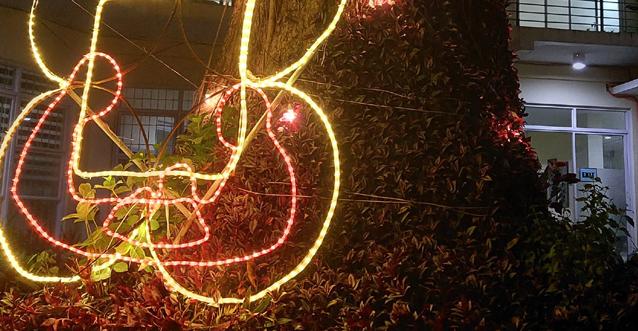
PiPsyche Club FB Page LIGHT UP THE WORLD. Students gather around the fountain area in preparation for the Christmas Tree Lighting activity held in consonance with the revived Sci-Camp on December 1, 2022.
TO PROMOTE THE Chemistry
Track to aspiring Grade 10 students amid the student shortage in the track, the Philippine Science High School–Bicol Region Campus’ (PSHS–BRC) Chemistry Unit conducted a career talk, “CHEMustahan: Career Pathways in Chemistry Seminar,” at the Auditorium last October 21, 2022.
The unit invited Adrian Richard Salazar, a second-year IN-
TARMED student at the University of the Philippines–Manila, and Frances Dominique Caparanga, a third-year medical student at the De La Salle Medical and Health Science Institute via Zoom.
The event, hosted by Junlee M. Vargas, a Chemistry teacher, kicked off with an opening program succeeded by panel discussions, an interactive game, a Q&A segment, and closing remarks by Chemistry Unit Head Alpha Rowena O. Pimentel.
Caparanga began with a talk about stoichiometry and chemical kinetics, where she highlighted the significance of these concepts in college courses. Meanwhile, Salazar discussed his experience in BRC’s Chemistry Track and explained its parallels with the INTARMED program. The unit also invited other BRC alumni to give testimonials about the track. Grade 10 scholar Rem Dominic Prudente commented on the entertaining yet informa-
tive manner in which the event promoted the track as a whole.
“As a person who plans to pursue Chemical Engineering in college, the career talk was a fun yet very comprehensive way of providing fellow scholars like me with the details on how I can learn about Chemistry courses and if they will be worth it in the long run,” Prudente said explaining his insights into the event. Apart from future events catered towards Grade 10 students, the
unit also considers the implementation of similar activities targeted toward Grade 7 to Grade 9 students.

“As of now, the planning for the next Chemistry Career Talk is currently underway. Due to the restrictions on laboratory exercises during the pandemic, my fellow Chemistry teachers are also considering the possibility of a bridging activity with the same purposes for students from Grades 7 to 9,” Chemistry teacher Mark Anthony Pelaez shared.
IN PREPARATION FOR THE anniversary of the Philippine Science High School System (PSHSS), filming for the “Silver Screen: Stories of Truth, Excellence, and Service” Video Project was concluded last October 18, 2022, at PSHS–Bicol Region Campus (PSHS–BRC).
The Silver Screen Project is an ongoing video series produced by the Office of the Executive Director (OED), with the goal of memorializing every PSHS campus story in film to advertise and promote the system and its schools nationwide and worldwide.
The video project consists of three separate videos, with one for the system’s renewed music video of the National Anthem, a milestone video, and a testimonial video featuring the Campus Director, Engr. Lorvi B. Pagorogon.
Around 40 students from Grades 11 and 12, and selected teaching and non-teaching staff participated as actors of the campus’ clip for the National Anthem, which was filmed on the flag ceremony grounds near the Academic Building 3.
Actress-for-a-day Jareese Gaile Cubias, a student of Grade 11–Physics, claimed, “Although
it was a first for me, na-feel ko pong maging artista for a day, and overall it was a fun experience. Although ang init the day of the filming, it was very fun filming with the other cast and it is a pleasure of being a part of the films.”
Featured on the Milestone video is a classroom scene, with Ma’am Erma Bue and some student actors, a robotics laboratory scene with Sir Rhayel Delos Santos and selected Grade 10 students, and an off-campus scene at a rice paddy in Barangay Buyo, Goa.
“Noong una, parang ayaw ko dahil naisip ko ma-eexpose ako nang paulit-ulit. Pero noong ipinaliwanag na, parang naramdaman ko na maganda rin na nakasama ka doon kasi magiging parte ka ng ilang taong kasaysayan na ipapakita noong video na ‘yun,” said Bue when asked about her thoughts on the video project.


BRC was the last stop in the OED’s system campus tour for the project, headed by a production team with Kyle Jumayne Francisco as the production’s director and Martin Joseph Simbulan as the team’s representative from the OED.
BRC holds ‘Kislap-KutitaPISAY’
AFTER TWO YEARS OF SPEND -
ING the holidays at home, the Pisay–Bicol community has finally been able to hold the Christmas Lighting Event on December 1 at the Administration Building’s flagpole area, along with the whole of BRC’s staff and student body. The event featured three main segments facilitated by the school’s different ALA Clubs, which are the bonfire event, lantern parade, and the Christmas tree lighting proper.
Scholars join in STEAM for Humanity Workshop in CLC
THREE GRADE 10 STUDENTS from this campus participated in a system-wide workshop titled “Science, Technology, Engineering, Art, and Mathematics (STEAM) for Humanity” at the Central Luzon Campus (PSHS–CLC) in Pampanga last October 26, 2022.
Grade 10 students Arturo Jozef Benedict IV Candeleja, Emmanuel Gregorio, and Wystan Villareal
were selected as participants in the one-day event that featured a series of activities and talks for the participants to engage in discussions relating to STEAM for the future.
Problems involving technological advancements, such as inability to communicate with the common public, were taken up during the workshop.
“The people should be the ones to start the movement to solve
these problems through the use of art. It allows its viewers or readers to feel the message it holds, which is something that complex scientific terms and wordy explanations could never do,” said Gregorio.
Gregorio added that as scholars of the nation, students like him strive to become the future agents of change—changing the world for the better—using art as a medium.
Gregorio also stated how gained knowledge should be or-
The lantern parade and Christmas tree Lighting program, organized by the PiPsyche Club, commenced with an opening message by BRC’s Campus Director Lorvi Pagorogon. After the scholars’ presentations, which followed Pagorogon’s opening remarks, the countdown to the Christmas tree lighting began with the scholars gathered around the campus’s Christmas tree. Students were then free to indulge in the snacks sponsored by the Supreme Student Government

ganized to enable more people to comprehend and learn.
“I became more aware of how it should be organized or presented to allow it to be more comprehensible for the readers,” he said.
The PSHS System collaborated with Ars Electronica FutureLab Academy to organize the workshop and invited students from all campuses.
Central Luzon Campus Director Theresa Anne Diaz kicked off the workshop with an opening message explaining that the event sought to collaborate with other communities and improve the
and socialize with their peers in the “Snacks and Socials” segment, which featured Minute Made, a band consisting of five Grade 10 scholars who performed Original Pilipino Music songs.
“Despite the cramming and stress, it was such a fulfilling and heartwarming moment to see that my fellow scholars were able to experience the Christmas spirit and enjoy the event simultaneously,” PiPsyche Club Vice President Aeon Jade Visitacion remarked.
quality of life.
Chief Technical Officer of Ars Electronica Center, Austria, Dr. Horst Hörtner served as the workshop speaker and shared existing and future issues that would negatively impact the people and the environment.
“Scientists might give 100 solutions to a problem, but it cannot save the world,” Hörtner said, explaining the inclusion of “Arts” in STEM as an integral part of implementing a solution.
The students were accompanied by Arts and Drafting teacher Ricky Oropesa.
BRC student researchers conduct OCRA
TWO THREE-MEMBER RESEARCH GROUPS from grade 11 participated in off-campus research activities (OCRA) held at the Central Bicol State University of Agriculture’s Pili Campus (CBSUA–Pili), Partido Development Administration–Partido Water Supply System (PDA–WSS) in Tigaon, and the Metropolitan Naga Water District (MNWS).
The first research group consisting Michie Sharizz Magdasoc, Isabella Therese Perez, and Abegail Rodriguez visited CBSUA–Pili to consult with
Dr. Allan Del Rosario, a plant pathologist and a director of the Taro Center in CBSUA–Pili, to verify their pictures and inquire about the manifestations of a specific plant disease their study tackles as well.
“It has helped our research in a multitude of ways. Because of this opportunity, we had finally finished collecting sufficient data for our research and we can finally start with the coding portion of our methodology,” Magdasoc responded when asked how the experience aided their research.
Magdasoc shared that vis -
iting the university’s library contributed to solidifying their RRL and methodology as they have also clarified their concerns with Dr. Del Rosario.
“Malaking tulong ‘yun kasi actual expert ‘yung nakausap nila, so ‘yung wisdom ng expert in terms of observing and identifying the disease, in terms of grading the plant and the different strategies kung paano siya puwedeng i-manage, nakuha nila ‘yun,” Research Unit teacher Jhetro Arthur Cledera told The Bicol Scholar.
“Nakabasa rin sila ng different studies, parang it supplemented
the context ng kanilang ginagawa, and kung paano possibly makatulong sa kanilang dinedevelop na application, kasi sila mismo, they have experienced how it was to identify the diseases manually,” Cledera added.
The second research group of Daniel Anthony Baloloy, Nikki Faye Bornilla, and Joseph Gabriel Llaneta visited PDA–WSS Tigaon and MNWS to inquire on water treatment processes, especially disinfection, and how residual-free chlorine is monitored.
“The interviews helped us in finalizing our research topic by
letting us understand the current situation and the needs of these facilities, as well as the availability of certain equipment that we may need in the future when pursuing our study. Consultation with experts outside Pisay also helped us in ensuring our study’s feasibility,” stated Baloloy.
Meanwhile, application for OCRA is open to grades 11 and 12, more specifically those who have approved research proposals and are in need of professional consultation, resources, or equipment unavailable on campus.
NEWS 4 The Bicol Scholar @thebicolscholar thebicolscholar.medium.com VOLUME XVIII - ISSUE NO. 1 Bicol Scholar The THE OFFICIAL PUBLICATION IN ENGLISH OF PHILIPPINE SCIENCE HIGH SCHOOL – BICOL REGION CAMPUS ISSUE XVIII NO. 1 | SEPTEMBER 2022-FEBRUARY 2023
PiPsyche Club FB Page CHRISTMAS LIGHTS. Afer two years of being locked up in their homes, the Pisay-Bicol community is delighted to light up its Christmas Tree in time for the holidays during the Kislap-KutitaPISAY on December 1, 2022.
Bullets, Batons, and Baneful Brotherhood
The start of the historic 2022 Elections brought about many proposals to improve the country, but one that sparked floods of attention and undeniably countless debates was the idea of reviving the mandatory Reserve Officers’ Training Corps (ROTC). This is due to its envisioned goal of instilling love for the country.
Although beyond the proponent-now-winner’s simple syllogism of military training equals nationalism equals change, the essence and effectiveness of ROTC as a tool for nation-building is something that needs to be re-evaluated—because bullets, batons, and the blind promise of brotherhood are not exactly the correct bandages for crises like impunity, inequality, and a disillusioned society.
The introduction of mandatory military training is not exactly the befitting antidote to ills such as the pandemic and inflation.

The Duterte administration’s hallmark of corruption and human rights violations was already a dark time for the Filipino people, and now we are put up to deal with the administration of an erratic president.
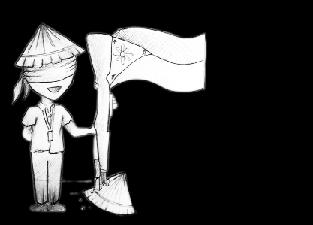
“Ang mamatay nang dahil sa iyo”—if change is the goal, then we already have millions of Filipinos brave enough to risk their lives to do it. One of which is Mark Welson Chua who was murdered by his fellow cadet officers in 2001 after exposing their unit’s practices of bribery, corruption, and extortion. His death is one of the main reasons why mandatory ROTC was abolished. More than 20 years later, will we let his suffering and those of countless unnamed others be wasted by reviving it?
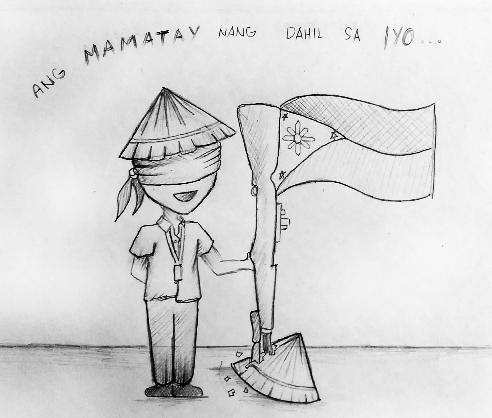
Saying that the revival of mandatory ROTC will be because of our country’s lack of discipline is failing to acknowledge the
Students vs. Infation

The only thing worse than high prices is that they can go even higher. This prospect is what Filipinos have been living in fear of since the start of the decade; what buys a kilo of spices today may account for a piece tomorrow. Such prices that skyrocket amid stagnant worker wages have stood at the forefront of national urgency as the face of a crisis more commonly referred to as hyperinflation.
Generally caused by a long-term imbalance in the supply and demand chain, hyperinflation is a touchstone of a dwindling economic climate. It pertains to rapidly accelerating prices of goods and services that devalue the currency and deplete the purchasing power of the populace.

The Philippines is on the precipice of this financial wane. According to the Philippine Statistics Authority (PSA), the inflation rate for the month of November 2022 was 8.0%, an increase of 4.3% from November of the prior year. This drastic rise is concretized by the price of red onions skyrocketing to approximately Php 720 per kilo in December 2022 from its Php 100 per kilo price in June of the same year.
These ludicrous spikes penetrate PSHS–BRC’s cafeteria. According to a student, the price of one pizza slice has gone up from Php 10.00 in 2018 to Php 22.00 in 2023. Since the canteen monopolizes the exchange of goods and services in the campus, the detriments brought about by these surges reverb through each individual who treads Pisay’s grounds. One instance is the depletion of consumers’ purchasing power. The list of items that fall within the students’ budget have been cut short by the soaring canteen prices. Consequently, we often find ourselves choosing between not getting our money’s worth and hunger. In worse cases, students aren’t given the privilege of choosing.
As disagreeable as price rises are, we cannot abolish them with the flick of a finger. Price spikes occur as a consequence of overlapping factors. These may include, but are not limited to, abnormally high demand rates and a need for extra profit to compensate for a lack of inventory pushing them to up their prices.
The canteen may innovate its products to accumulate smaller expenditures. It may utilize alternatives or substituents for pricey ingredients or serve new meals and snacks entirely, without going beyond the purchasing power of its customers. Besides broader options ultimately resulting in larger income, creativity and resourcefulness are integral components of a successful firm.

However, the changes that need to be implemented should be announced as a protocol. Another suggestion would be the canteen’s self-sufficiency through crop and livestock raising. Unfortunately, this comes with a downside: the resources
and investment needed to maintain such a facility raises doubts on feasibility and practicality.
The threat of hyperinflation lies in its capability to seep far and wide—into the tiniest crevice of the tiniest household and among billions—and its invulnerability from eradication, if not from the source. In our case, this source pertains to the seats of leadership and power burdened with the responsibility to serve the greater good of the nation. Only the government can and must overtake the wheels of hyperinflation. The price of incompetence in this area is a far greater sum than the higher-than-enough prices we are facing right now.
monumental efforts of the Filipino youth who have been constantly advocating for change. It is their creativity and vigor that should be seen, lest we want the truth to be crushed under the weight of a gun.
If there is anything that the election season has made us realize, it is how the education system fails to be fully transparent: not only in its unreasonable spending but also in the learning materials it feeds to students. For example, a Commission on Audit (COA) report showed how the DepEd bought Intel Celeron laptop units worth Php 20,000 for Php 58,000 each. This example of irresponsible and dishonest leadership within the education sector wasted 2.4 billion pesos.
Historical revisionism is also an alarming concern. DepEd-issued modules themselves have referred to the Martial Law period as the “New Society,” and it is obvious that the system has failed to teach the youth the true degree of atrocity, violence, and abuse of Marcos Sr.’s administration.
With his son now in place, ROTC’s culture of brute and blind obedience does nothing to solve this. Just like the program’s military uniforms, the new administration’s will to control and dictate the narrative is camouflaged as a false promise of nationalism.
“Sugod mga kapatid!” is one of the lines we all know to mark a revolution. As proven by the fervent Katipuneros and heroes of our past, the most genuine and fruitful fuel for this is nationalism. Baneful attempts at brotherhood are not the answer to bringing together a nation still bankrupt on justice. It is not through a country with the knowledge of handling bullets and batons that our people will be equipped with the passion to change it.
Cocoon of Equality
Butterflies are beautiful creatures with the freedom to fly, but how about those stuck in their cocoons, unable to come out safely? Will they ever be able to fly freely?
Like butterflies, many of us wish to spread our wings proudly. It is our constitutional right to be free and to express our truest selves, regardless of gender. However, gender prejudice is still widely seen today, especially in the education sector. Students do not feel safe in an environment that keeps them captive, like butterflies in a cage. In light of this, the Department of Education (DepEd) reiterated DepEd Order No. 32, s. 2017, better known as its Gender-Responsive Basic Education policy, in time for the opening of the Academic Year 2022–2023. This order aims to “undertake gender-mainstreaming to address issues and concerns related to gender and sexuality,” which translates to the target of liberty in student expression of gender identity and sexuality coupled with protection from gender-related bullying and harassment.
As Pisay scholars under the Department of Science and Technology, many are not aware of DepEd’s gender-related policies and how these extend beyond DepEd-covered institutions into the education sector as a whole. According to the PGB Gender and Development website, GAD, which stands for Gender and Development, seeks to achieve gender equality as a fundamental value that should be reflected on development choices. Both DepEd and Pisay teachers attend gender mainstreaming seminars and have units for the sole purpose of GAD. We participate in events which center around abolishing gender prejudice and bias within the STEM community, so the idea of gender-related policies should not be a surprise to us.
Most agree with the reiteration as it sheds light on those who face GADbased prejudice in the academe. Looking through the policies, one can say that DepEd is making an effort to make schools a safe place for students to be themselves. However, there remain doubts when it comes to realizing this vision through policy enactment.
In an interview with Ma’am Jennifer Magno-Lagoy, a member of PSHS–BRC’S GAD committee, she said the policies themselves are a “great improvement and a promising first step towards gender mainstreaming in the education sector.” Ma’am Jen mentioned that, although the policies themselves are good, the problem is rooted in the implementation of these policies and the scant means of
publicly monitoring their enforcement.
“It covers a lot of existing gender-related issues in the academe, but I would appreciate kung mayroon silang monitoring tool sa bawat divison,” Ma’am Jen explained. When asked about her opinion on the effectiveness of the reiteration, Ma’am Jen answered that it shows that DepEd’s implementation is not yet “well-oiled,” with the expectation that the department can do more to address these concerns. She suggests that DepEd gather data and use these to determine whether or not certain schools or divisions have gender biases and use that information in order to enforce the policies properly.
The fact that these guidelines are being hammered at is interesting enough. If they are effective and help address gender bias and prejudice within schools, there is no need to re-emphasize. The lack of accessible numbers and descriptions of their grassroot implementation hinders the supervision and adaptation processes. Research is made difficult with little to no online logs or documentation from schools or divisions about these policies. There is no transparency, so we cannot say that all schools are actualizing DepEd’s pipe dream when there is not enough proof of the policies in action.
Take for example the case of Japan. According to Japan’s Ministry of Foreign Affairs, their schools integrate gender perspective by performing gender mainstreaming, a process which studies the concerns of both men and women and clarifies these concerns through policy formation, project planning, and implementation. Post-completion and implementation, they conduct monitoring, evaluation, and basic feedback based on the gender perspective. The contrast between theirs and our own is stark, where we also conduct gender mainstreaming programs yet our data gathering and monitoring are not as streamlined as those in developed countries. Because of this, we remain as butterflies in captivity with a false sense of liberty.
Even with the correct materials and tools, when handled incorrectly, one can hurt the butterfly in its limited flight. The same can be said about the reiteration. Teachers and educators should understand how to properly enforce these rules in their respective divisions to ensure the most successful approach to manifesting positive metamorphosis. Through this, we set an environment more than ready to embrace the wings of equality—a world safer for all the butterflies deserving to fly.
OPINION 5 The Bicol Scholar @thebicolscholar thebicolscholar.medium.com THE OFFICIAL PUBLICATION IN ENGLISH OF PHILIPPINE SCIENCE HIGH SCHOOL – BICOL REGION CAMPUS ISSUE XVIII NO. 1 | SEPTEMBER 2022-FEBRUARY 2023 VOLUME XVIII - ISSUE NO. 1 Bicol Scholar The
Caroon by Erika Louise Nolasco
Paolo Jacob Matanguihan
Shatter the One-Way Mirror
One of the few institutions that get visibility in competitions nationwide is probably any campus of the Philippine Science High School System. The road to represent the school entails a battle way beyond any actual contest: scholars are pitted against each other on the campus level through code-mandated screenings to determine the school’s face in the inter-school arena. However, the screening process itself is a one-way mirror.
Administrators of such exams are well aware of the circumstances of their screening: the students, the exam, the contest’s skill requirements, and the specific percentage distribution for the criteria, among others. In essence, the coach is on the side of the one-way mirror where they see the whole process in its entirety—seeing everything unfold with the power of omnipotence.
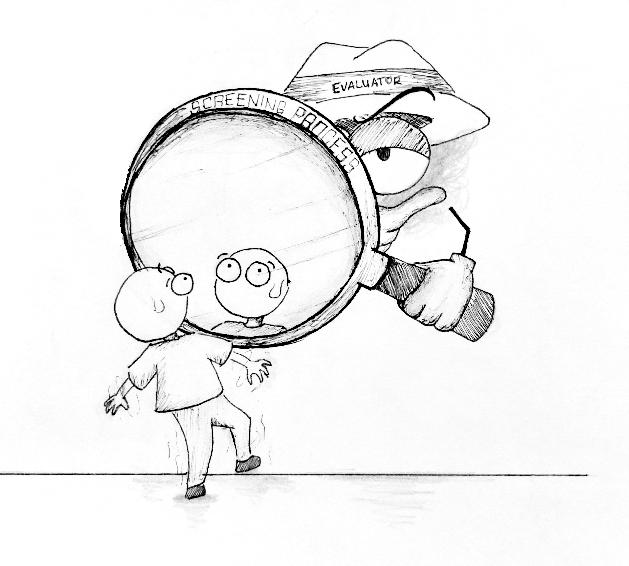
Meanwhile, the students only know a few things: the contest they’re screening for, the type of exam to be administered, and the contest coach. Many of them go blind into the process. They cannot view the screening beyond what they can see: they do not know the specifics of selection criteria—how they might even fare in the whole affair in the first place.
In PSHS–BRC, almost the same pool of students time and time again gets selected for a variety of contests. If this is the case, an air of unfairness will continue to shroud the screening policies until such are made transparent and open to scrutiny. Though students may argue that a standardized distribution of percentages for criteria must be established for all contest screenings in the future, such a move may not guarantee the flexibility needed by each set of criteria for individual contests due to the rigidity imposed by institutionalization.
Furthermore, criteria currently set in place even discourage some students’ participation from the start. Setting a standard for a high GWA by giving it the largest percentage as a criterion may cause the screening process to perpetuate bias and eliminate opportunities for growth. A promising student whose forte currently lies in the humanities may desire to join the press conference team or have a budding interest in STEM, and they might have a great skill set that merely requires focused training to blossom and reach its full potential. However, they may not fare as well as their peers whose pre-established forte lies in the STEM subjects, which make up most of the units in any year level.
With criteria highly valuing—sometimes influencing to more than half the final screening score—the GWA of a scholar, promising students who merely need focused attention or contest training experience may never be able to bloom during high school because the current policies favor those who are already excellent, not those who have the potential to be excellent—a bias covertly perpetuated by pre-existing standards.
Qualified students post-screening are still qualified in their own right, but an unfair and non-transparent system is nonetheless still set in place. This calls for the administration to amend its existing policies for the benefit of the students. It is time for the system to be made more transparent and to open itself to scrutiny: to shatter the one-way mirror and replace it with a window.
Bicol Scholar


Renato Bolo III
Julian Adrian Abonal
Ivan Anave Nina Samantha Bolo
Jay Adrian Lotivio
De-pressurize the hotpot
In most cases, a war of pre-eminence takes center stage on the battlefield of the classroom. This exact struggle is characteristic of the perceived-to-be-normal environment of “star sections” in many high schools around the country: students engage in a battle of wit and memory, reaching even to the extremes where sabotage and malignance flourish in their recipes for success and prestige.
Most people think that the school’s environment is cutthroat. Yet, even in the pre-pandemic era, Pisay, or at the very least BRC, never positioned itself as a toxic concoction; instead, it has always been known as a utopia of camaraderie and cooperation—the premier and harmonious melting hotpot of aspiring scientists in the Bicol Region. Or so it was.
When BRC returned to in-person classes after nearly three years, a return to the traditions of old was expected by the scholars leftover from the pre-pandemic era. Observing our new reality, in the words of Taylor Swift, it is apparent that “everything has changed.” Cultural trends have shifted, not only within the social sphere but also in the deepest roots of Pisay’s academic aspect.
My peers remember how card-giving activities were supposed to be fun and filled with the building of mutual support between scholars. It has remained the same for my batch; however, the near-opposite has plagued the lower-year batches.
From social media posts, I have seen that card-giving activities did not only entail the release of grades but also the public showcase of general weighted averages (GWAs). Several scholars of the “pandemic” batches have approached me, whether through disclosed or anonymous means, to ask for advice regarding “beating” fellow scholars and maximizing a grade-conscious mindset to obtain the highest rank among their peers.
This is not the world that our BRC ancestors have built. It is a toxic atmosphere that has become so universal that even the Department of Education revised its own policies regarding class rankings, which now favor a bracketing system where there are no restrictions to the number of students who receive honors.

Pisay already employs such a system where students obtaining a GWA better than the boundary of 1.500 are considered Director’s Listers, and such an honor is enough recognition for such a purpose.
Although the practice of showcasing individual GWAs is well-intentioned in its aim to appreciate achievement, it inevitably drives competition that becomes toxic. A drive to improve now manifests itself as a pressure for students to outperform their peers as if they were ingredients fighting for dominance to win over a chef’s taste buds.

This practice is a hallmark of meritocracy, a system that in its long-over-
Taming the wayward light
Ma. Czarina Thea Belarmino
Epryll Shnyl Malaya
Keith Daven Nacion
Kurt Andrei Relorcasa
Daryl Christian Rivera
Mark Kevin Gerbas
February Gomez
Caelyn Jahzara Nogoy
Vian Gabriel Spes Quiñones
Anna Mikhaila Serote
Linette Jane Janculan, Kian Gabrielle Cabral, Ariane Jane Apun, Jamuel Barrameda, Jamille Kyla Bragais, Mariam Abygaile Agbanlog, Cedric Owens Collantes, Aaron Carle Cordial, Lorinne Angelik Badiola | Svetlana Viktoria Roxas, Andrew Gabriel Broncano, Lynne Marie Nadal | Bernadette Borlagdan, Reya Grazielle Gomez, Sheykhinah Hermionnie Valerio, Cialina Deanne Ballon, Charles David Syjueco | Daevid Micko Zape, Angel Dominique Lansi | Simone Antoinette Chavez, Ron Andrei Corporal, Michie Sharizz Magdasoc, Sofja Marielle Peyra, Ron Joefrey Siapno | Erika Louise Nolasco, Paolo Jacob Matanguihan, Psalm Francis Serrano | Lovely France Olaguer, Juan Jaime Yet
Jerry M. Noveno
Lorvi B. Pagorogon
One should not experience a quarter-life crisis as a budding teenager. Unfortunately, it happens. Without owing much to its name, persistent uncertainty and anxiety over what lies ahead are prominent within the young generation, circling in on students like us who are constantly under the pressure of our school’s good name and academic rigor.
As PSHS students, we row through a meandering stream peppered with make-or-break deliberations at every curve. We blindly carry the responsibility of navigating through the unfamiliar in terms of academic passions and career trajectory—an onus that could be relieved by sharing the weight with others. Despite having guidance counselors whose job descriptions entail attending to these concerns, their expertise might lie in a different field, like psychology, making them able to do only so much for us in this respect. As such, the absence of a dedicated career counselor on campus proves to be a critical oversight shrouded by expectations of initiative and resourcefulness.
We have been conditioned to understand that high school acts as a preparatory stage for higher education. To this end, regular career counseling services would help steer us toward the direction shaped by
compromises between passion and practicality. For one, a considerable fraction of students struggles to settle into a scientific discipline of focus for the Senior Specialization Years Program, whereby enlistment season ends up in either a Russian roulette or a mindless trend between friends. Those lucky enough to have set foot on a track that ticks all their boxes would not have to be haunted by regret like the rest. This overwhelming current can be traced to the lack of representative accounts on the implications of choosing a particular track—its benefits, drawbacks, and potential applications, a gap that can be abridged through consultations with career counselors.
Furthermore, the lack of career experts leaves us standing still at the crossroads during college applications season when indecision surrounding target courses and universities saturates the atmosphere. Applying to colleges becomes a chore when one has limited options for guidance as those who are supposed to provide this know only as much as the inquirer does, giving us no other choice but to evaluate programs by our fingertips or initiate talks of our own. Some may argue for spoonfeeding, saying this lapse in a comprehensive and systematic procedure from the school administration hints at the avian way of teach-
Observing our new reality, it is apparent that “everything has changed.”
due years of glory has indeed promoted a passion for growth. However, there are better ways to induce a drive for excellence, and it is always not through pressure and competition: an atmosphere that values collaboration facilitates a studentry that lifts one another up. Rather than fight each other to cross the boundary of 1.500, BRC will be a better place where everyone cooperates in getting every single scholar across that boundary as equals. A hotpot’s savory harmony is, in the same way, achieved through the cooperation of its ingredients, where each component plays a role in ensuring the gustatory balance of the dish. In a dish as large as BRC, academic growth must be characterized by a collective and undivided student body thriving in a de-pressurized hotpot.
INKBLOT
Ma. Czarina Thea Belarmino
Those lucky enough to have set foot on a track that ticks all their boxes would not have to be haunted by regret like the rest.
ing independent flight and survival. However, such is obsolete if based on the assumption that additional effort need not be given, seeing that students can do it themselves. In the end, it is questionable to take credit for the achievements of a student when so little has been contributed to getting them there.
The time will not come when we are pulled apart by the riptide because if there is a thing or two that PSHS–BRC scholars embody, they are the values of adaptability and ingenuity. Relying solely on these is another matter; if students have already achieved this much when deprived of curated counsel, how much farther can we sail with a captain? Now—and no sooner—is the time for someone to tame the wayward light.
OPINION 6 The Bicol Scholar @thebicolscholar thebicolscholar.medium.com VOLUME XVIII - ISSUE NO. 1 Bicol Scholar The THE OFFICIAL PUBLICATION IN ENGLISH OF PHILIPPINE SCIENCE HIGH SCHOOL – BICOL REGION CAMPUS ISSUE XVIII NO. 1 | SEPTEMBER 2022-FEBRUARY 2023
EDITORIAL
SHARP EDGES
WARNING:
Renato Bolo III
“ ” ”
“
The THE OFFICIAL PUBLICATION IN ENGLISH OF PHILIPPINE SCIENCE HIGH SCHOOL – BICOL REGION CAMPUS EDITORIAL BOARD | VOLUME XVIII ISSUE NO. 1 - SEPTEMBER 2022 TO FEBRUARY 2023
The path worth taking
Tough love and sabotage are two rocky footpaths stemming from one crossroad. While both are hard to traverse, the former ushers us to the desired destination while the latter strays us farther from it. The challenge herein is discerning which is which. Such a hindrance persists in elucidating the ethics of PSHS–BRC’s measures to regulate its students’ Internet and media consumption as means to discipline or exhibitions of despotism.
I have surfed the internet via WiFi routers stationed around the campus, blue screens that display the PSHS logo above a text line that says, “This content is blocked,” has become a common sight. Among those blacklisted are adult content pages, public pirating sites, and more recently, social media and streaming services.
Filters are enforced to safeguard the organization from malware and data breaching. In Pisay–Bikol’s case, the corporate addresses we use to explore the web are interlinked; thus, accessing sites that are public or unsecure may expose all our personal information for the world to see and to do with them as they please.
Another justification for this initiative is the unpleasant influence select sites may bring. For instance, viewing nude content in public settings, accessing illegal sites, and the like incite distraction and defile integrity, thereby standing di-
rectly against one core value that the PSHS System aims to inculcate within its scholars. These grounds lay out the upright intentions behind Pisay’s Internet control. In the years prior to the COVID-19 pandemic, students’ Internet access was limited to set hours, after which they will be unable to go online, compromising students’ capacity to study and accomplish respective requirements. Subsequently, Netflix, Spotify, and TikTok, were banned, too. Although distracting and, at times, addicting, the restriction of these apps has engendered concern regarding the administration’s seeming disregard for scholars’ lives outside of academics.
BRC’s current approach to instilling self-discipline among scholars is inefficient such that it fails to simulate the real world, where distractions are omnipresent. Instead, students are hardwired to disregard the recreational aspect of the Internet altogether. One begs to wonder how this precept can persist when the scholars are unfettered from regulation, with all the means to access the lost opportunities of Internet leisure yet no capacity to moderate it. Being thrifty entails efficient management of budget more so than having no money to spend.
Although the network filters of BRC have started out as tough love, the modifications they are donning have shifted them to the other foot-
Hitting the bullseye
Every Monday at the height of the morning, we stand as one Pisay community and recite the Scholar’s Pledge. However, while its promises may be engraved into our minds, are we really able to apply the fervent scholar’s oath out of genuine conviction with our hearts?
The level of sociopolitical literacy for PSHS scholars continues to plummet as students’ apathy toward the matter persists. While we may be engaged with the system’s sizzling curriculum and rigorous programs, values such as compassion for one’s community are still cooked raw in the minds of many students.
However, the “cream of the crop,” no matter how well-equipped, will not be able to help the masses if they are detached from the latter. While we may view political apathy as a means to shed weight from our already burdened shoulders, every gram we throw away is a shackle to the future of our country’s long-awaited change and development.
To gold-frame this statement, we can simply look at the classroom setting. In the six long months of being on campus, I have rarely been able to hold substantial po-
NEUTRAL CORNER
What are your thoughts on the current academic housing situation concerning the Academic Building 3 and the Gymnasium, as well as the delayed turnover of the renovated Academic Buildings 1 and 2?
litical conversations within its four corners. It has also been a noticeable trait that students’ aversion to social problems hampers the level of appreciation they can give to lessons imposed by the curriculum, therefore limiting the circulation of productive and progressive reflections which could have been shared among us.
The seemingly digital isolation of the campus due to the deficiency of stable and sufficiently distributed Internet connection hinders scholars’ healthy access to the world beyond. Our lives being woven into on-campus living also inevitably limits the time we have to offer to programs such as community immersion and service.
Our experience in Pisay does give us the ability for scientific expertise, but it should also instill a corresponding sense of nationalism. Every day, we brandish the core value of service, which goes to say that science is political and should be made to serve the people. This is essentially the whole message of the Scholars’ Pledge. As Pisay scholars, we are the pioneers of systemic change; we should fight against the chains of discouragement caused by political carelessness. STEM, as it is presented to us,


To reach the top, there are steps in a staircase you need to walk on first. Similarly, there are factors that first need to be developed for a nation to flourish. From agriculture to healthcare, many sectors form the steps that will serve as the foundation for a country; but one stands out to be the most prominent in today’s society. Innovations in science and technology define a nation and its current status. A country should have already accomplished various milestones in this field to assist other sectors for it to advance. However, the Philippine government seems to not get that considering the measly Php 24.268 billion budget it has allocated to the Department of Science and Technology (DOST) for the fiscal year 2022. Compared to 2021, 2022’s budget has considerably dropped, having been lowered by almost a billion pesos. Meanwhile, the budget for 2023 has been projected to be even lower.
For context, in the Department of Budget and Management’s 2022 People’s Proposed
path. There is a fine line between wanting us to prioritize our studies and wanting us to do nothing else but study. On one hand, tough love is acknowledging that we, at our very cores, are kids who yearn for laughter and thrill every once in a while. Sabotage, on the other, is being all too aware of this fact, yet depriving us of them in spite of the consequences.
The blocking of social media apps and streaming services demonstrates the latter scenario, and this is only the beginning; more leisure-centered services may be blackballed, until the only webpages that comprise our digital landscape are scientific journals and research articles. The Pisay scholars are already under a lot of pressure to begin with; it would be wise for the BRC admin to rethink their decisions before they stray us farther from the best versions of ourselves and nearer to our breaking points.
The whole situation feels like we were given false hope. As Grade 10 students this was supposed to be our fnal year to experience ACA 1, but it seems that our Grade 7 stay in the building will be the last, a whopping not-even1-year residency in the building. Surely, I will miss the long corridors, the very narrow stairs, and its proximity to other buildings like the canteen and the Admin Building, compared to our “forever home” for our last 3 years, ACA 3.
the Pisay community.
is a vital step for nation-building. Political awareness is a staple of holistic development. Our training as STEM scholars in one of the most prestigious science high schools in the country arms each of us with the magazines of knowledge and the guns of change. Among the Pisay community is a plethora of marksmen, but one thing is for certain: not all are able to spike through the true target. Equipped with the best guns, the sights of many are still bleary while others fire dull shots. This quicksand of apathy is something we need to work towards halting. The firing of bullets as lackluster as plastic is an ill we need to stop from polluting the Pisay community.
Budget, the individual allocations for the top 10 highest-budget departments were disclosed. Education was at the top of this list getting a hefty Php 773.6 billion. In comparison, the DOST’s budget is merely 3% of this number despite science and education often going hand-and-hand. Following this train of thought, combining these two aspects builds one of the most important steps in attaining the greatest technological advancements. Science and technology heavily involve research. All of the world’s advancements thus far have required systematic investigation to be completed. However, successful research has prerequisites that first need to be considered: the facilities, the equipment, and even the incentives of the researchers, to name a few. Because of this, the Philippines’ scientific and technological advancement not only requires a higher budget but also calls for support from the Filipino people. For a country that ranked first globally in text messaging, it should go without saying that it would have
The students (specifcally Senior HS) are sufering, as they are generally in an area where it is impossible to conduct proper lessons as the PEHM subjects are also held in the area. Students and teachers alike have voiced out their concerns regarding this as well. What did the administration do during the 2 year pandemic, and why were the ACA buildings 1 & 2 not fnished before the star of F2F classes, as having workers in the area heightened the chance of the virus spreading in-campus.
At frst it was frustrating as the Aca 3 was meant for the higher years. In hindsight it is a blessing as Aca 3 is arguably worse than the Gymnasium.
Our classroom is quite alright except for some broken tiles. I am not bothered by the delay because the gymnasium ofers beter internet and is less cramped than the rooms in Aca 3, in my opinion.
greater respect for technology, but the reality is that this is not the case.
As scholars under the DOST, the minimal budget the Philippine government provides will undoubtedly impact us in one way or another. For instance, we each have our own dreams and professions that we set as our primary goals in life; may it be becoming president or going abroad, there are no limits to where we can set our desires. Studying in a science high school, this is usually within the dominion of science. However, due to the lack of facilities for these fields in the Philippines, these goals may just dissipate and we may be given no other choice but to change paths, and the possibility of producing future Filipino scientists may just dwindle even more.
The DOST, throughout all of its years of service, has always stuck with its mission: to accelerate the development of the country’s S&T human resources and promote S&T culture. It has been implementing science education programs such as scholarships and special-
I think it would be beter if the SYP students would be transferred to the ACA 1&2 instead of the ACA 3 bldg since it is closer to the laboratories and the STEM bldg considering that we have to tend to our research needs; it would be less hassle for the FAYP students also. Honestly, the Gym is a fne environment for us SYP students, but speaking from my point of view, we have the smallest classroom in the gym, and it is becoming quite a nuisance. It would really just be easier to place SYP in the ACA 1&2 bldgs.
ized training in order to foster and develop appreciation and interest in science. Additionally, the S&T advancements that the DOST strives for could cause huge economic advancements for the country. Hence, it is very much questionable for the Philippine government to choose not to invest in something that would be of benefit to the whole country.
In contemporary times, the Philippines is gravely in need of forward-thinking leaders and not ones that only think of the here and now. They ought to be more aware of what matters most and what can be put off temporarily for the sake of the nation. We need leaders that don’t just speak out their thoughts and ideas, but leaders that also take action for those ideas to become a reality.
If we wish to reach the top of a staircase, we must first walk on the different steps that lead up to it. The trail to a prosperous nation is a treacherously long journey, so there should be people above who make the path easier to climb.
OPINION 7 The Bicol Scholar @thebicolscholar thebicolscholar.medium.com THE OFFICIAL PUBLICATION IN ENGLISH OF PHILIPPINE SCIENCE HIGH SCHOOL – BICOL REGION CAMPUS ISSUE XVIII NO. 1 | SEPTEMBER 2022-FEBRUARY 2023 VOLUME XVIII - ISSUE NO. 1 Bicol Scholar The
“Justice and compassion, prudence, integrity, and humility…”
Cara Athea Silang 12-Biology
Jomel Paolo Apigo 11-Biology
Jay Adrian Lotivio 10-Electron
Sophia Natalie Sta. Isabel 11-Biochemistry
Bicol Scholar The INTELLECTUAL RANTS STANDPOINT Julian
Simone
“
”
Adrian Abonal
Antoinete Chavez
“ ”
One begs to wonder how this precept can persist when the scholars are unfettered from regulation, with all the means to access the lost opportunities of Internet leisure yet no capacity to moderate it.
The fring of bullets as lackluster as plastic is an ill we need to stop from polluting
Gio Salcedo 11-Physics
Water does not revitalize a plant that lacks sunlight. On similar grounds, what we think to be and what is actually needed can be mutually exclusive entities. Drawing the line that either distinguishes or conjoins these two is imperative to PSHS policymaking. As a discipline whose purpose is to act in the best interests of the institution, PSHS policymaking should accommodate representation for its largest constituency—the students. Despite the necessity, student insights have yet to budge from the receiving end of the PSHS System’s (PSHSS) disregard.
Throughout the 25 years following the establishment of the PSHSS by Republic Act No. 8496, legislation has been superintended by three governing bodies: the Management Committee (MANCOM) in every campus, the Executive Committee (EXECOM), and the Board of Trustees (BOT). No scholar has ever been involved in these panels; the sole outlet for one to broach their concerns is a council of student body officers. Though the involvement of these officers may vary across campuses, student roles in policymaking are generally restricted.
The incapacity to directly relay messages to the aforementioned committees, cast votes on proposed courses of action, and extend assistance in discerning the needed

amendments are the cores of this notion. While the PSHSS laudably devotes one of its three administrational divisions to student services—whose chief is a part of the MANCOM—the existence of this sector does not guarantee unequivocal and exhaustive representation, or even representation alone. These doubts stem from cases such as the prevalence of miscommunication between the PSHS–BRC admin and student body in spite of the campus’s active SSD. The question thus arises: is the Student Services Division neglecting the students’ collective standpoint or is it, itself, blackballed by the PSHSS?
As a consequence of exclusively indirect contribution, students are unable to engage in PSHSS referendums. In these affairs, responsive measures, or lack thereof, are finalized and geared for enforcement. The standards imposed on Pisay scholars are heavily influenced by these initiatives. For instance, any amendment to the Student Code of Conduct changes the expectations in which a scholar acts and behaves. Having no say in these matters, we are essentially no different from lab rats who are subjected to treatments without our willingness and well-being heeded.
Most importantly, the negligence of schol-
ars’ opinions is a factor in the PSHSS’s occasional inability to identify the apparent needs of the former. Part of the reason why plants are difficult to raise is their inability to explicitly state requisites; one would have to observe them extensively or try a plethora of methods to ensure optimum growth.
This is not the case for PSHS students, as they are perfectly capable of expressing demands—or of learning to do so, at the least.
The PSHSS does not utilize this principle, however, as its leaders continue to rely on secondary sources in recognizing student needs. These sources, usually from observations or hearsay, harbor less credibility than first-hand accounts. While the curators of these sources may have once been students as well, it is important to consider that education is in perpetual evolution. They may have had experiences entirely different from ours or, if ever the same, harbor different implications then than now. Yes, professional skill and experience render these executives more qualified to analyze and enact policies, but we plead for representation, not accession—to have our voices be heard alongside, not over, theirs.
Giving Pisay scholars a more immersive role in policymaking yields benefits not only to the students but also to the functionality of the PSHS System. Doing so would yield more thorough and passionate discussions along with decreased occurrences of misunderstandings as inputs from all parties are taken into account. Additionally, it would be an ideal means to ingrain a proactive, strategic, and service-oriented mindset in
the students gauged as future leaders of the nation. The University of the Philippines, which is the foremost national university and one of the most reputable educational institutions in the country, concedes such advantages. This is manifested in the Office of the Student Regent (SR), a student-appointed member of the Board of Regents (BOR), UP’s policymaking commission. The powers vested to the SR are identical to that of any BOR member, including participation in consultations and casting votes on decisions. The PSHSS would do well to follow in these footsteps.
A plant’s blooming, and ultimately, its fruition, all depend on whether its owner conscientiously conjures the prerequisite conditions. PSHS policies are the owners whose prime goal is to foster the pursuit of integrity, passion for excellence, and commitment to service in their juvenile plants, the scholars of Pisay. To ensure that we reach full bloom and bear the most luscious of fruit, these policies must meet our bona fide needs. Identification of these needs, in turn, entails acknowledgment of students and consideration of their welfare. These scenarios encapsulate student representation in policy making—the very aspect that the PSHS System lacks. As advocates of social development and nation-building, it is our duty as scholars to initiate and uphold change. By extension, it is our duty to revamp the current congressional landscape of the system—an endeavor the PSHS System would favor if they are truly intent on making us flourish.
You settle into your new dorm room as a freshman only to find yourself face-to-face with a chatty stranger. During the beginning of the school year, seniors would typically hop from one room to another, giving out four tips to survive the PSHS–BRC social life: smile, greet, bow, and mano. Everything was normal until it was not.
After having dedicated around two years of our high school dream to glaring screens, going about our lives in the new normal (for lack of a more representative term) is challenging, to say the least. This encompasses not only our academic performance as pressured scholars but also the sociocultural aspect as members of the PSHS–BRC community. The shift is more so apparent in the evolution of BRC’s “culture” of respect, a concern pointed out by old students, alumni, and faculty and staff. The characteristic fourfold culture of respect has seemed to root itself into occasion. What was once a ground where heads would fall like dominoes whenever people crossed paths or where students would take the hand of their teachers— muscle memory in action—is now plagued by conspicuous eye contact avoidance or brazen lack of acknowledgment. This concern highlights the dichotomy of two groups: the new generation of BRC students, or those who entered Pisay during the COVID-19 pandemic, and the old generation, or those who have by now been attuned to tradition.
From an outsider’s perspective, the tradition of being respectful has been attributed to an identity unique to scholars of our campus. A faculty member recounted their experience coming to the campus for the first time during their teaching demonstration. Though they were a foreign face to virtually everyone, they received greetings and pagmamano. However, the same teacher observed changes in these manifestations of politeness after the two-year gap, highlighting how “the tradition has died down,” particularly because of the newfangled tendency of students to ignore teachers as if invisible.
Although plausible, it is wrongful to accuse the higher years of negligence or failure to inculcate this long-standing practice. We cannot brush aside their efforts in milking every possible avenue where the importance of politeness can be expressed. Casual conversations, cause campaigns, consultative meetings, and even social media discourse are incomplete without hinting at the newest encounter with a junior oblivious—whether or not by will, we
cannot truly say—to the custom.
Perhaps out of nostalgia or a self-seeking urge to recriminate, we are, however, predisposed to denounce the lower years of not getting the message. It is a trust fallen short that the practice be diffused within just a few months after the return of face-to-face classes. The issue that persists lies in how those who have experienced the classic Pisay–BRC life convey their sentiments, from subtle initiation of bowing, which is commonly done the other way around, to unapologetic subtweets. One thing is for sure: it is unwarranted to resort to profanities or pick apart every single non-observance, no matter how innocent. It only begs the question: do we, as seniors, really deserve such respect? From where do we draw the entitlement when we have also gone through this stage of assimilation ourselves as lower years?
We need to cut the younger generation of Bikolanong iskos some slack. Often do we forget that they come from different ways of life, with entire worlds built on exposure to the Internet and Western media. Culture shock is a predominant experience; thus, one must realize that adjusting takes time. In the same breath, the two social groups of the BRC community both bear integral roles in our communal tango.
As seniors, not by authority but by experience, we bear the responsibility of employing instruction by example. These gestures must not be limited to deference but extend to a more umbrella form which is politeness. In this sense, bowing or greeting should not be linear from lower year to higher year; respect should rather be displayed across all social groups and ages in mutual dependence.
Moreover, juniors must heed the calls of those seasoned on campus. Adaptation to this culture follows awareness, acceptance, and appreciation. Realizing that such etiquette is not harmful to anyone or anything but ego and is instrumental when dealing with future interactions within and outside our circle is of paramount importance. As lower years, we must pick up from where we left off and carry on with an understanding that being asked to orient oneself with these practices does not come from the desire to be imposing nor dominant but is instead a plea for decency and a tribute to the BRC individuality.
It is with the short-sightedness of both sides that we have not stroked a balance. We cannot merely stare and watch as our culture slips through our fingers for intransigence marks its death.
From the inception of mankind to its modernization, religion remains one of its prominent driving forces. Currently, the Philippines is regarded as the fifth most religious country with 80% of its population baptized as Catholics as reported by Gallup International. This significant percentage would mean numerous religious activities are being practiced in diverse settings from which PSHS–BRC is not exempted. From prayers before classes, events, or flag ceremonies to first Friday masses, our school is no stranger to practicing and hosting religious activities—an observation that brings rise to a number of reservations.
So, what’s with the reservations? For one, these mainly come from Pisay’s identity as a research- and STEM-oriented school. It is discouraged from inclining toward religion. With each religious endeavor being hosted and practiced, one begs to raise the question: does a scientific educational institution need to imbue its students with religious doctrines?
Ever since the law establishing the PSHS System (RA No. 8496) was passed, there have been no official documents implying that PSHS campuses are required to hold religious undertakings. This is because the system does not include instruction of the Roman Catholic faith in its curriculum. Additionally, the law itself, the school’s mission and vision, the core values, and even the hymn do not mention religion. The Scholar’s Pledge hosts the lone mention of God, specifically in the passage “[I]n my service to the Filipino people [...] to whose uplift I must dedicate my God-given talents…” Despite this, it should be noted that Pisay emphasizes forward and critical thinking. If we objectively analyze the situation at hand, there is no definite reason for our campus to continue practicing religious activities, especially considering the presence of different beliefs. “Critical thinking” is blotted in ink several times in the student handbook, curriculum, and other documents under the PSHS System; therefore, it is only imperative that the said value be applied to the question of religion.
However, we cannot ignore the nature that PSHS–BRC is situated in the Philippines, a predominantly Catholic nation. With this in mind, halting such practices can be difficult. Religion, especially Catholicism, is deeply ingrained in our culture and tradition ever since it set foot on our islands more than half a millennium ago. It is intimately woven into the fabric of Philippine society and politics. Indeed, questioning the predominance of religious activities in a community that does not affiliate itself with a particular belief other than the scientific is valid.
However, if our campus were to continue practicing religious activities, a more progressive approach would be to strive for inclusivity first.
There has been an effort to incorporate inclusivity whenever religious undertakings are conducted and hosted on our campus. When the school organizes masses, non-Catholic students may opt not to attend. Students are also welcome to join a support and life-coaching group where activities such as thanksgiving, testimony-sharing, and Bible-reading are simultaneously conducted with the mass. These cracks at inclusivity, however, seem to alienate those who do not believe in a supreme being.
With all these said, it is evident that our campus does not stay true to its identity as a secular school, but there is still room for an embrace. One of the ways to achieve this is to ensure that the prayers being practiced are interfaith such that they can be applicable to students who are not Roman Catholic. Moreover, our campus should be firmer in laying emphasis on the freedom of choosing whether to participate in religious undertakings or not. It is with utmost importance that inclusivity be attained first as this is the first step in tackling the justification of these activities. A sudden halt to them could make people think that their religious beliefs are of no importance. Even if this change was done in the name of tackling its justification in a science high school, people might regard it as an attempt to shove the belief of others down their throats. In turn, these would make it more difficult to address the issue at hand.
On our campus grounds, one often hears a notable line in the PSHS hymn, namely “as we search for the untarnished truth.” The line perfectly encapsulates the goal that both science and religion wish to achieve. With the common aim of the two domains, we should always remember that it is not religion per se that is the concern. The concern is that in a non-religious school, where critical thinking is stressed, at least inclusivity when it comes to religious activities should also reflect these. Although small steps had already been taken, it might take us long before we can say that we’ve already addressed such a concern. If we skip these, we risk undoing all our steps.
Against the backdrop of red, blue, and yellow hues, our science-oriented campus must carefully waltz with religion so that the untarnished truth may be duly sought. The free exercise and enjoyment of religious worship is a right enshrined and protected in the 1987 Philippine Constitution. As such, may we continue to push and honor this right through our own ways at a steady pace.
OPINION 8 The Bicol Scholar @thebicolscholar thebicolscholar.medium.com VOLUME XVIII - ISSUE NO. 1 Bicol Scholar The THE OFFICIAL PUBLICATION IN ENGLISH OF PHILIPPINE SCIENCE HIGH SCHOOL – BICOL REGION CAMPUS ISSUE XVIII NO. 1 | SEPTEMBER 2022-FEBRUARY 2023
As the nation’s scholars, we are expected to excel and serve. Awards and distinctions are commonplace, and our legacies as future leaders in science and technology are woven onto the never-ending fabric of history. We shine like stars and reach for them, too, but are they even within our grasp?

From Sunday when we scholars flood the gates of the school until Friday when most of us leave, the Philippine Science High School–Bicol Region Campus’ (PSHS–BRC) canteen stands to serve everyone on campus with delicious food. They serve everything, from simple snacks and drinks, like energy bars and lemonades, to rice meals and desserts, like chicken and ice cream. However, the prices nowadays of the canteen’s products have been dealing a larger blow to our pockets. This is an event whose roots, if traced, lead to the downturn of the Philippine peso, causing what’s now known as “inflation.”
Inflation, according to Business News Daily (2022), “is the rate at which the cost of goods and services rises over time.” It has spiked the prices of all local products like ingredients for meals such as meat, garlic, salt, and the infamous red onion. This has affected all businesses that serve food, and the school canteen is no exemption.
In an interview with previous canteen manager, Mr. Junlee Vargas, he revealed that when he accepted the role of manager, the total price of meals per day was Php 120. However, in 2019, that value rose to Php 150, because the canteen was starting to feel the increase in the prices of raw materials or ingredients and labor. Continuing further to 2022 and skipping the years taken by the pandemic, what was in the past PhP 150 was raised to PhP 200 because of the same reason.
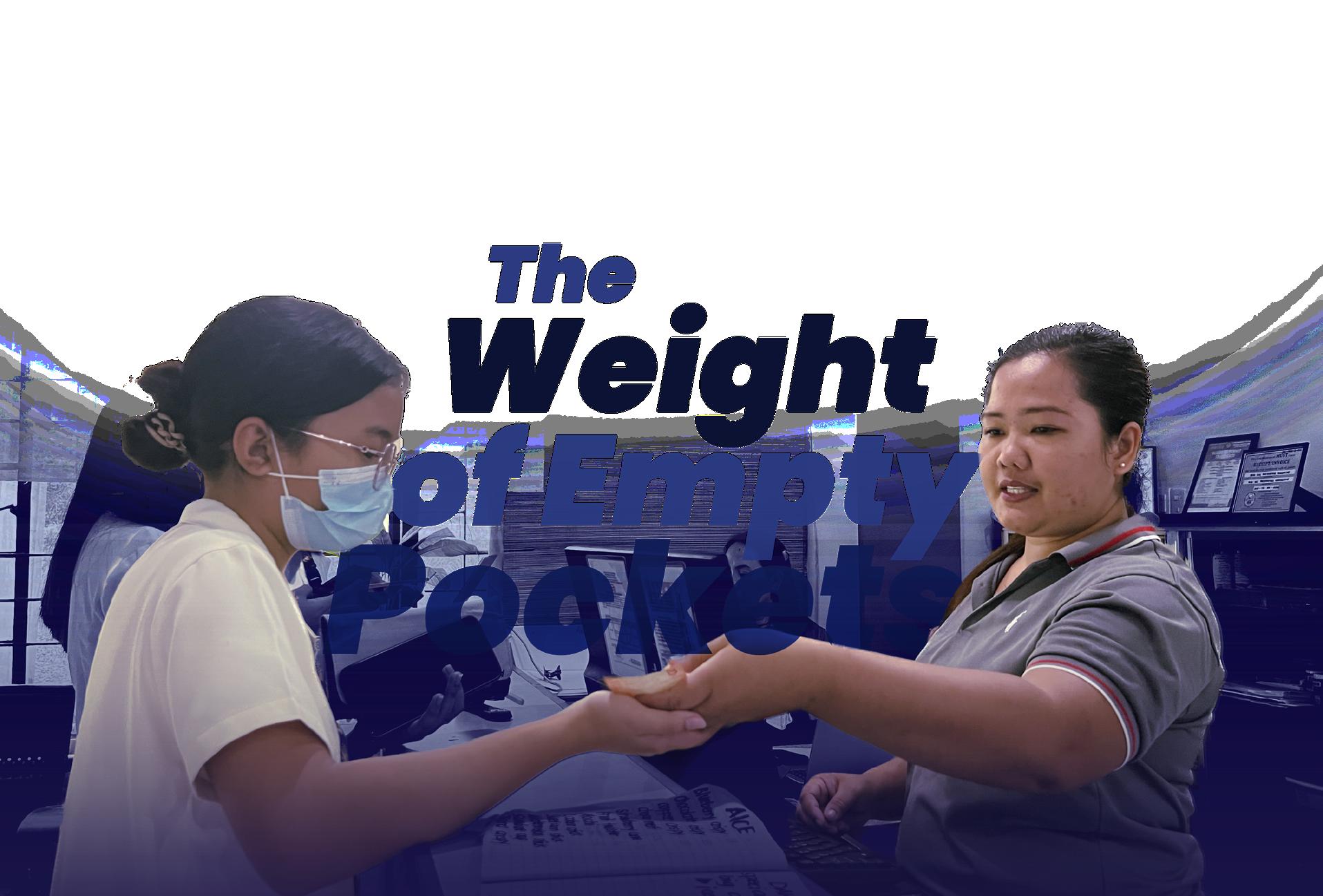
Since the prices of the canteen’s meals have increased, everyone it caters to is affected. To those privileged, this is barely a problem. The price increase, however, has forced a considerable portion of the student body to cut
expenses by starving themselves.
Scholars have subsequently shown dismay for the forced concession. Amanda Guzman of Grade 9 said, “Some of us scholars have chosen Pisay to aid their families’ financial states because of its non-existent tuition, and stipend. However, this seems all for naught as more money can be seen spent than saved because of the inflated prices.”
Bernadette Nolasco even joked, “We should’ve just taken out or dined in on some fast food or restaurant as the prices almost equal each other and the food there tastes better and is diverse.”
Staying true to our nature as Pisay scholars, we have innovated ways to circumvent these soaring prices. A scholar, Deiv Mendez, tries to limit his costs only to Php 180 daily—a budget that can fit the 2019 version of canteen prices. These means should not be encouraged, however, as sacrificing our access to apparent needs for the sake of getting by is indicative of a dysfunctioning economy.
Instead of the scholars, the canteen itself should be doing the
compromising. A good way to start is by providing cheaper alternatives to pricey meal ingredients. This not only increases their sales and makes goods more accessible for the scholars, but also adds variety to the products being sold. Inflation is the increase in the prices of goods due to decrease of value of currency. As such, our lives, which have certain affected goods as daily necessities, also get affected by these situations. They become harder and require more strength to surpass and conquer, but, in the end, have priceless learnings that can foster growth among ourselves. Pisay wants to develop scholars holistically, and these types of situations best do so. It helps us mature, act like adults, and develop our values in life.
From Sunday when we flood the gates until Friday when most of us leave, inflation is rampant and widespread. Through many adaptations and a sense of maturity, we conquer these challenges and develop our core values and personalities. It is these things that mold young, bright minds into the hope of the future.
NOBELwithout a throne ENTICED
 by the

The few years in isolation have bored us to the brim that we scour for time killers. Scrolling through social media, we come upon certain topics or trends that pique our interest which can be positive outlets for our pent-up frustrations.
Returning to campus and face-toface classes, I’ve found that a lot of people share the same newfound hobby as me—crocheting, which I’ve discovered online. Evidently, Pisay scholars are jacks of all trades!
No breadth of time is dull when crocheting.
Crocheting gives the power to breathe life into textile. What was once knots of premium-grade yarn is now a sunflower, a bucket hat, a goldfish, a bag, you name it. If you wish for a majestic rainbow, then crochet it into existence.
With yarn and hook in your hands, reality is at your disposal. After all, “Write it. Shoot it. Publish it. Crochet it. Sauté it. Whatever.
MAKE.” as Joss Whedon has said.
Amidst the high-tech life, which a numerable amount of people find stressful, crocheting is one of the many traditional ways of keeping oneself productive, creative, and most importantly, rich.
Nowadays, The yarn art’s growing popularity has surged in social media. Crochet commissions are the craze. That’s how you know they’re the modern day loom bands— just cuter and more eco-friendly.

“When I have a little bit of time to spend, I crochet random things that spark my interest, especially when overwhelming emotions coincidentally come along with
it,” Samantha Bolo, a Batch 2025 student, shared. She expounded on the catharsis brought about by the art, as if she’s in a trance. Her love for stuffed animals, bags, and flowers manifests in her works.
In the same way, Grade 9 Adrielle Consulta adores the repetitive nature of crocheting. “The way that it’s all muscle memory, the familiarity of the movement, is calming,” she explains. She makes use of her skill and talent to handcraft gifts and commissions to her friends, which she hopes would be a memorable item for them.
From providing marketing opportunities to being a way to replenish creative juices, crocheting is a 10 out of 10 would-recommend hobby. Why don’t you try it? Jump off the cliff of self-doubt and knit your way to crochet mastery!
Bright lights of flashing cameras and cheers of an ecstatic crowd, live trumpets in the background as your name is called to receive a prize of a lifetime’s work from the hands of Swedish royalty; it’s all going a little too fast. To stand front and center in such a historic moment, to be surrounded by great and kindred minds. Now, your name is eternalized as a Nobel Prize laureate. The Nobel Prize—the alluring golden medal awarded to the most exceptional minds, the fame and the fortune, the honor of being called a laureate for receiving such an esteemed distinction. Mia Formalejo shares her idea regarding the implications of a Nobel prize, thinking it to be a means of recognizing major contributors to society. Maybe that is what the Nobel Prize is all about—the contributions and the years of hard work. But is it not also proof that your work can change the world, an in signia that marks the prin ciple that hard work will never go unrewarded?
An alumnus who wished to stay anonymous reminisced about their days within the campus grounds, recalling that headaches and homesickness came hand-in-hand with studying and staying at the dorms, but the fulfill ment and growth that come as immediate products of be ing challenged far outweighs these troubles. Much like the laureates who strived to make their mark, we also strive for the stars. But is the school prepared to help us reach our dreams? Teachers like Ma’am Erma Bue believe that “napakalaking tulong [ang kurikulum ng PSHS–BRC] sa paghubog sa bawat iskolar,” even in the Humanities fields due to “pagsusulat ng panitikan na may kaugnayan sa agham at matematika.” How exactly does one become a Nobel Prize awardee? Well, one must first contribute to the fields of physics, chemistry, physiology or medicine, literature and peace–all of which our STEM scholars excel in. Svetlana Roxas, a Grade 10 student, believes that while the learnings in Pisay are a huge boost for those aiming for these fields, they have remained secondary in significance, and “the main thing that Pisay gifts its scholars is the drive to keep going.” Sir Mark Pelaez deems this persistence integral in the Nobel Prize journey. The unfaltering willpower to try again and find a fresh approach to a roadblock is the essence of the “Pisay advantage.” Ma’am Bue shares that she wouldn’t be surprised if a scholar will be deemed a Nobel Prize laureate in the far future. Other teachers feel the same way, confident that our school fosters minds that shape the future. But nothing is set in stone; only time, the presence of unwavering dedication, and passion will tell.
A red finger from the friction and a queasy feeling from hours of gazing at the masterpiece in the making. As I entwine more of the vibrant material, I think to myself: “The goddess, Athena, must be proud of me.” The tumbling of the soft fabric gives an unexpected comfort, reminding oneself of the endless possibilities, and the various things that can be created with crocheting.
FEATURE 9 The Bicol Scholar @thebicolscholar thebicolscholar.medium.com THE OFFICIAL PUBLICATION IN ENGLISH OF PHILIPPINE SCIENCE HIGH SCHOOL – BICOL REGION CAMPUS ISSUE XVIII NO. 1 | SEPTEMBER 2022-FEBRUARY 2023 VOLUME XVIII - ISSUE NO. 1 Bicol Scholar The
Jerry Noveno CROCHETING is a tedious and highly intricate process before one fnishes one piece. The creation causes a sigh of relief from the maker, one of tiredness and satisfaction that fnally, one piece is over.
Anna Mikhaila Serote
The New Faces of PSHS–BRC:


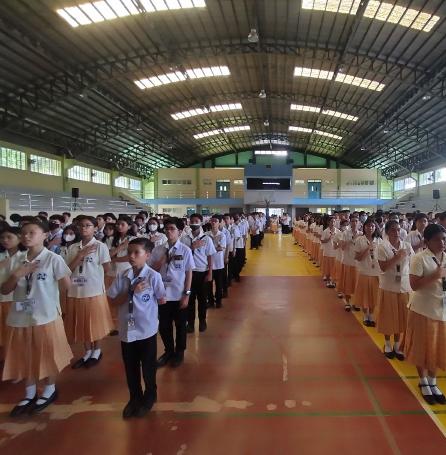
How ISOLATION
Two school years—a drastic interval between now and what could have been our last years at Pisay Bikol for us, returning students. It’s as if we’ve been sent into deep hibernation, sealed in a time capsule, and then awakening to find ourselves in an entirely unfamiliar landscape. The PSHS–BRC we face is not the PSHS–BRC we once knew.
Ioften find myself a witness to the exchange between three bright and talkative Grade 7 scholars who sit across from me. Their voices alone are enough to encourage me to be in on whatever hot topics they have in store. One thing to note, though: they are fluent English speakers, but this is a surprise since it’s not everyday you’ll find a fellow student who speaks English exclusively. This was, at least, my experience on the campus grounds prior to the lockdown.
Being one of the only few who spoke it naturally in 7th Grade, I was insecure of my fluency, but I’m glad to see that they probably aren’t. “Is this how I seemed to others back then?” I would comically think to myself. This is just one of the peculiar traits that I associate lower years with.
Two years after online learning, the same old concrete pave
ments and steadfast trees greeted us, but new, unprecedented faces, who barely knew how to act around their Ates and Kuyas, because as fate would have it, the two parties are just out of sync.
Hans—not their real name—ver balized their indifference on the matter: “Iba’t iba ‘yung personality nila in a way that, compared sa atin, parang wala silang galang.” But we can excuse this behavior although we should not tolerate such.
To further their observations, they recall a bitter experience with a lower-grade: “Kinuha ko yung bag ko sa Graviton room. May tatlong students doon na nakatambay sa may door, so naturally, I asked kung ano ang grade nila.” Needless to say, Hans knew the students were lower years although they merely wanted to strike up a conversation.
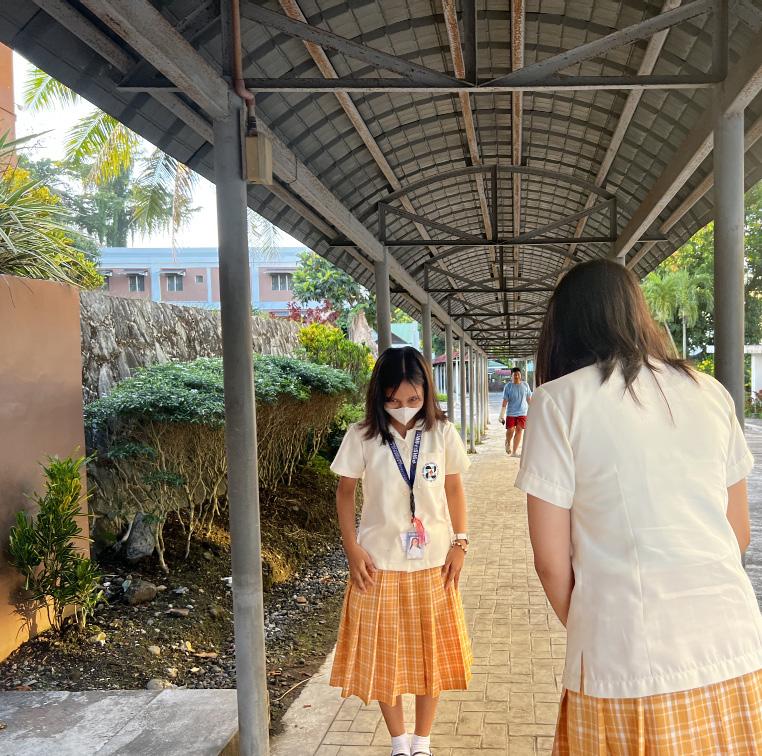
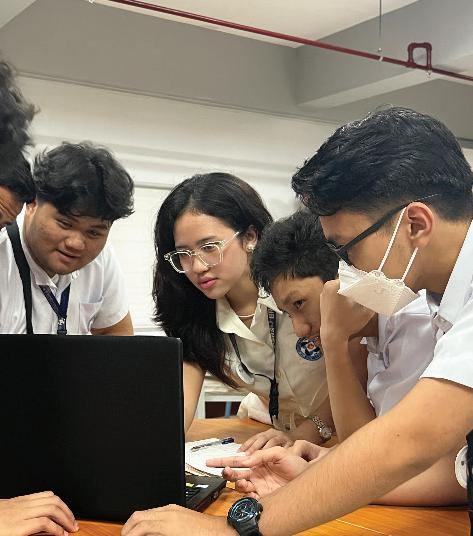
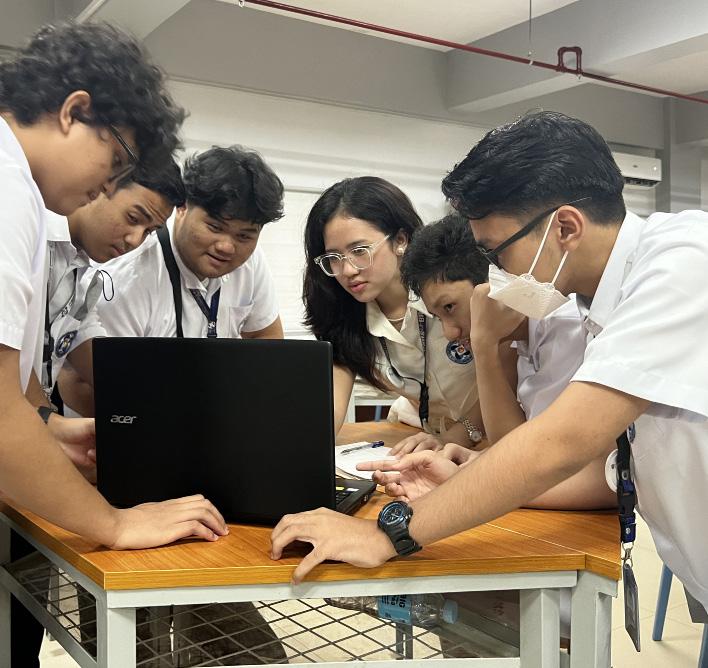
Stating they were in the 8th grade, Hans exuberantly replied, “Hello

The days that were (School)

Drought after drought. Flood after flood. “Weather-weather lang,” as Kuya Kim once said, but there’s more to it than meets the eye. When nature’s fury is eclipsed by her beauty, one finds heatwaves and downpours to mar not only the grounds we walk but also the oasis that is a scholar’s mind.
Given our country’s geographic landscape, it is no surprise that the Philippines is subjected to approximately 20 tropical storms annually. These storms range from ones where our houses protect us to ones where we try to protect our houses (in vain).
An instance of the latter is during A.Y. 2020–2021. We were barely in the onset of the 2nd quarter of A.Y. 2020–2021 when Super Typhoon Goni, referred to locally as Rolly, made landfall across Bicol and the rest of Southern Luzon. Pisay’s online classes at the time were put on hold for weeks on end, as the region experienced one of its longest power shortages to date. As the stagnant learning reached weeks, and as these weeks reached months, the apprehension of both the students and the Pisay admin burgeoned.
In comparison, A.Y. 2022–2023 has only faced tropical depressions, which are intermediate to heavy rains and storms, as of the third quarter. In spite of these weak variants, however, Pisay is obliged to adhere to memorandums from LGUs and suspend classes
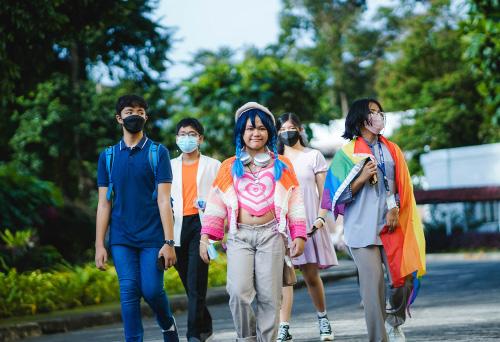
whenever the latter decrees so—a scenario that has taken place several times this year alone.
“Yes, ang dami. Sunod-sunod, especially sa December at January,” said Sir Junlee Vargas, the adviser of Grade 8–Rosal and the Supreme Student Government (SSG). “Na-sacrifice ‘yung ilang araw na suspended, though minsan hindi naman talaga siya maulan. Mainit naman pero suspended, so nasasayang ‘yung araw.”
To reclaim lost progress, Pisay Bikol has mandated make-up classes for each school day, scheduled 4:00 to 4:50 PM. Essentially being a new period inserted into an already-packed schedule, this set-up has garnered apprehensions from students and the faculty alike.
For Alyzza Rafer, a student from Grade 7–Diamond, recharging herself is vital due to a somewhat heavier workload and the fewer hours of leisure in the afternoon. “Instead of enjoying the little time we have for other activities like extracurriculars, we’re obliged to attend classes past the time they usually end. In the time when we should be resting, our physical and mental states get
notworn-out. Thus, we cannot really absorb anything that is happening during makeup sessions.”
“Kapag suspension, generally, masaya ang students. But sa part ng teachers, hindi siya masaya,” Sir Junlee pointed out. He was not one to hesitate on expressing his griev ances 6about the tighter schedule brought about by extended school hours. “Ngayon may makeup class es hanggang 4:50 PM, but the offi cial time of [teachers] talaga is until 4:30 only. ‘Yung 4:00 to 4:30 kasi, consultation time na ‘yun ng teach ers. Magpe-prepare na rin sila to go home.” Sir also mentioned that he has, in his own words, never felt such exhaustion until now—a sen timent shared by his colleagues. “Nagklase ka na maghapon ta pos may make-up class ka pa, so tiring talaga siya. And may mga ginagawa [pang iba] like pagcompute ng grades ‘pag magso-scholarship meeting, ‘pag magca-card giving.”

Despite being able to stay in the dormitory during a suspension, he still seizes the opportunity to ac complish unfinished tasks by go ing to the faculty room of the S&T building. Sir Junlee added that he makes the most out of the rest he is given on such days, as he can afford
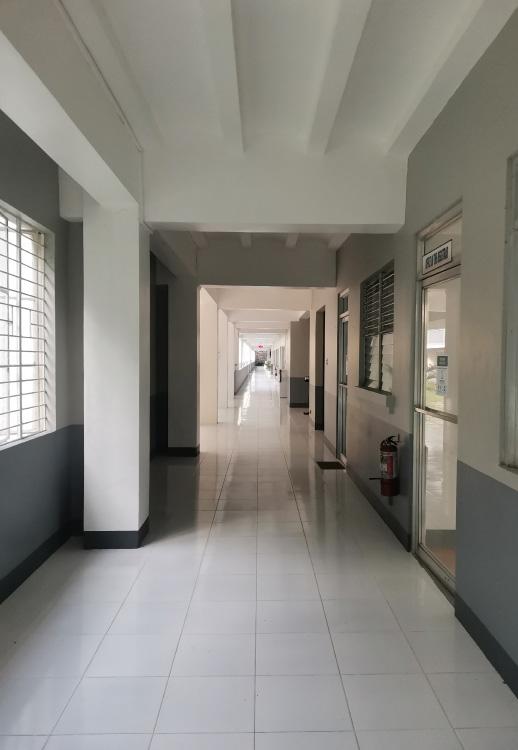
10 The Bicol Scholar @thebicolscholar VOLUME XVIII - ISSUE NO. 1 Bicol Scholar The FEATURE
Vian Quinones
When Hype Hangs from the

Thehype surrounding the current year is tenable, as it serves as Pisay’s return from a two-year hiatus of face-to-face school activities. From Scholar’s day to Humanities week, a multitude of celebrations have been rendered unfeasible because of nationwide quar-
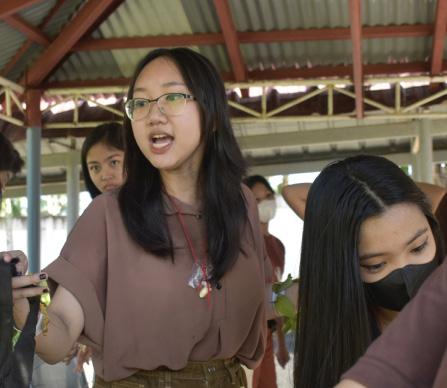



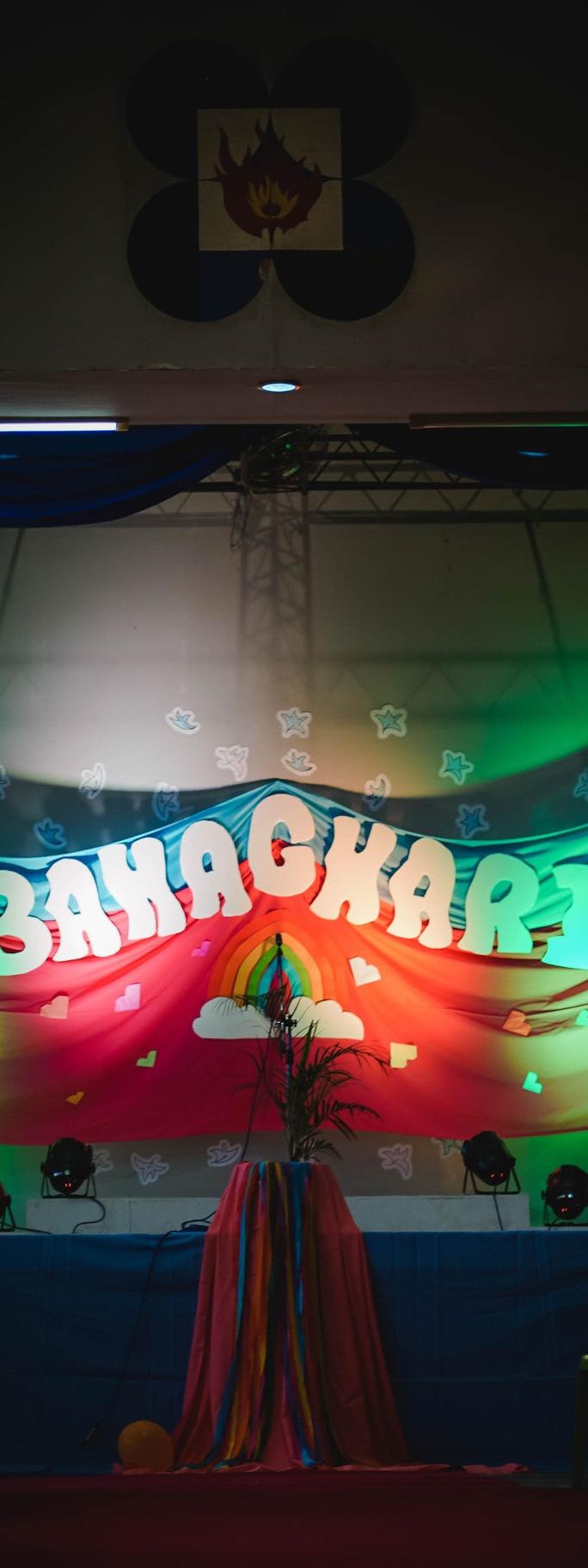
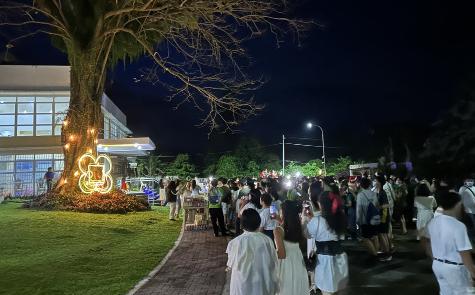
expectations comes great pressure. For an event to be carried out, it must be approved by the PSHS–BRC’s Management Committee (MANCOM). If an anticipated event becomes postponed or canceled, a wave
ward by the MANCOM, the SSG ultimately decided to abandon the event. In the memorandum posted along with the cancellation announcement, the main reasons were safety concerns.


Disappointment is not only engendered by cancellation. More often than not, expectations are not met and the hype is not lived up to. Usually, the proponents and organizers of campus events are students that are tasked with balancing their duties as leaders and learners; the execution of events are thereby compromised by the minimal prep time. Funds are another factor to consider. Events entail expenditures, and expenditures that extend beyond the set budget indicate a travesty in the works.
As of writing, the events carried out this school year have been successful. Aaron Baladia, a Grade 9 scholar, expressed his fondness for the Socials Night held last December 2022. He stated that the ball was one of the most memorable events, if not the most, during his first school year on campus. In another interview, Kate Nieva, another Grade 9 scholar, shared her thoughts
on Scholars’ Day. “Mas naging close ako sa ibang batches through the event. Masaya rin ‘yung mga stations sa race, and generally, fun talaga yung mga games. One thing lang na problema ko is that dapat binigyan naman nila ng mas maraming time yung mga groups to prepare,” she stated.
A new school year has started which shall set new experiences in motion for everyone in Pisay. As scholars trained in resourcefulness and critical thinking, a problem faced is not a problem that cannot be solved. To the SSG and those appointed to oversee school events, hats off to them, they bring the Saya in Pisayano. The wind blows again southwest, and students’ laughs can be heard all throughout. As events are held and parties ensue, a new school year now begins to sprout.
As the wind blows once more southwest, the leaves of nearby trees flutter along with it. As leather taps on wet pavement and bells ring at long last, it is finally time for our scholars to bring it. After two years of online set-up, the Philippine Science High School–Bicol Region Campus (PSHS–BRC) finally implemented face-to-face classes for the academic year 2022–2023. With the arrival of new and old faces, everyone is expected to look forward to the near future.

ra , : M i lk Te a F2f na Bhie!
us all. It took a virus to pose a threat to the health of strangers, their loved ones, our loved ones, and even ourselves. Unfortunately, the physical health of an individual was not the only victim of this gloomy season, but also one’s mental health. Life had become so mundane—despite food delivery services being one phone click away, it was just never the same. Camaraderie was lost in a thin stream of memory.
blue jargon from your English classes.
A nice, cold sip of that milk tea you waited hours for with your friends begs to tickle the nerves in your head with flavorful day- dream. What happens when these daydreams of drinks cloud into a mirage of a murky and endless ocean in your mind, threatening to swallow you whole?
uy guys tara, order tayo ng milk tea!”
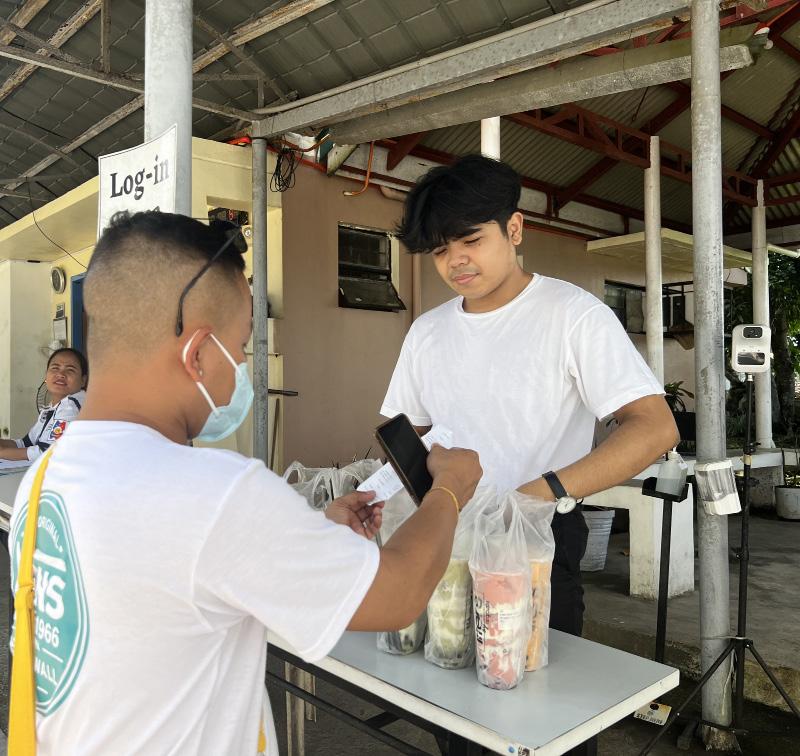
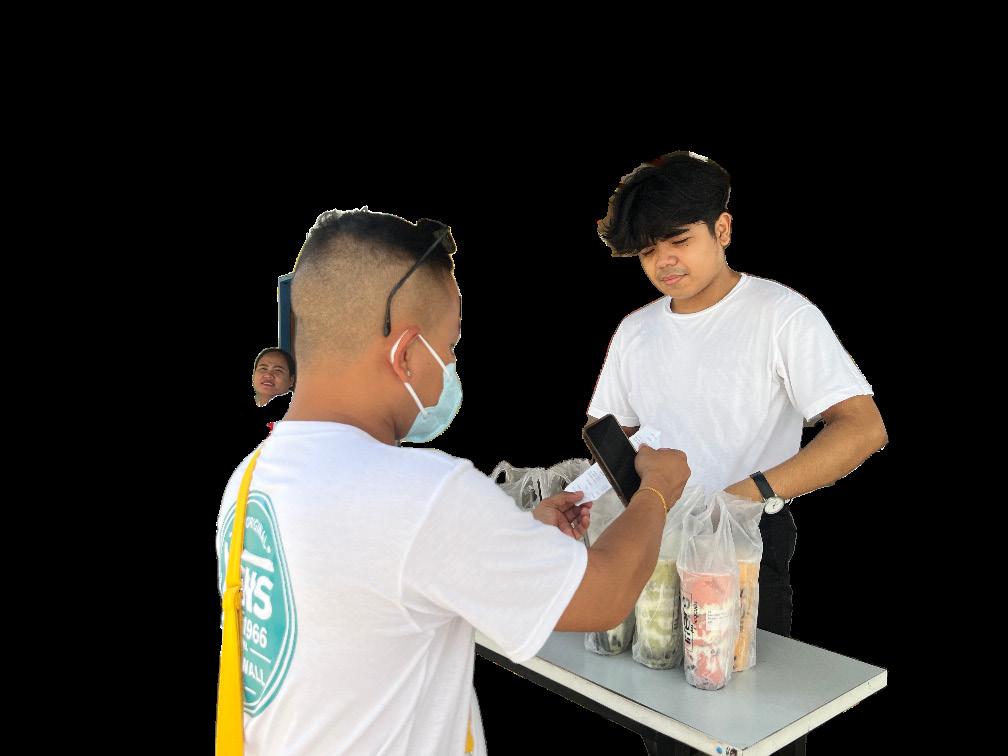
This was a common phrase among the students of Philippine Science High School–Bicol Region Campus. This expression came as a suggestion, followed by an order, then by impatient foot tapping, and the occasional fight over who hadn’t paid for their orders yet. In the blink of an eye though, the clash of voices heard from this usual routine of bonded friendships quickly muffled away into murmurs—replaced with silence so deafening, and memories of the experience rapidly fogging into a watered down, murky cup of daydream milk tea.

Murmuring and daydreaming. That was the routine most students learned to adapt to during gloomy days; not by heavy rain, but by a two-year-long, worldwide pandemic that flooded into our lives like perilous waves that unfairly took too much away from
“HFiona Vejerano of Batch 2025 highlights the well-known quote: “No man is an island”—how it feels to not just be isolated, but also alone with your shadows. How it is like carrying a permanent burden on your shoulders, and you have no one to pull you out of the bottomless ocean that threatens to swallow you whole.
“I could not live and develop as a person alone. There’s just something different about having a live classroom, there’s more life.”
Vejerano admitted her slowed progress in her learning, as her motivation seemed to poof into an ashy darkness when faced with a contrastingly bright computer screen. “I was able to learn, but not properly. This is mainly because modules are usually given and answered with the mindset of passing, not learning. What’s worse, they are usually given as individual tasks. So this drains my brain,” she remarked. The pandemic turned learning into a second priority, where the term “burnout” seemed to become part of everyone’s vocabulary, instead of some out-of-the-
On the other hand, Jhetro Cledera, the current class adviser of Grade 10–Electron, elaborated on the brighter side of his experiences during the pandemic. After being the class adviser to different sections and grade levels over the years, he reflected on the effects of the global crisis on everyone’s mental health, and how he learned to approach tough situations connected to this.
“Mas marami ring realizations, in terms of fairness, in terms of accommodating different learning styles, kasi I have tried na rin yung online…and I think mas dumagdag yung empathy and compassion ko towards my students, our Pisay parents, and my co-teachers,” he commented.
The common ingredient in the murky milk tea concoction the pandemic served us all is the notion of togetherness. Empathy and compassion for others are vital elements in someone’s well-being and mental health. It is important to understand each other, and to help each other up in times of struggle—it all starts in being aware of the looming darkness. Mental health is not just a second thought to discard, to be classified as something that’s “all in your head.” This topic has been ignored for so long, even described as taboo in many places. Unfortunately, school is no exception to the issue, but numerous events and organizations have risen to combat the apathetic world.
On a lighter note, the guidance counseling office is always open during school days, to help those in need of emotional support when faced with a cup of struggles filled to the brim. Scholars from different batches have also formed a volunteer group called the Peer Facilitators. They work in tandem with the guidance office to help their peers, knowing how much of a struggle it is to have no one to come to for support. These safe spaces in the Pisay campus have existed long before the pandemic appeared before us, and ever since face-toface classes returned, they were eager than ever to bring back that milk tea spirit!
Bringing back face-to-face classes finally brought that watered down, murky cup of daydream milk tea, into a flavorful dream come true! What is milk tea without that happy group of friends that enjoy their ordered drinks together? What are friends for, if we cannot help each other up no matter how rocky the road ahead seems to look like? But of course, we mustn’t forget to ask for help when we need it too. Mental health must not be overlooked much longer, especially when all of us have gotten the bitter taste of the pandemic’s wrath. It took a virus to pose a threat to not just our physical health, but our mental well-being as well. Now, it takes a compassionate heart to break all that threatens to break our scholarly bonds.
What are you waiting for? Tara na!
@thebicolscholar thebicolscholar.medium.com
ORDER TAYO NG MILK TEA!
11 THE OFFICIAL PUBLICATION IN ENGLISH OF PHILIPPINE SCIENCE HIGH SCHOOL – BICOL REGION CAMPUS ISSUE XVIII NO. 1 | SEPTEMBER 2022-FEBRUARY 2023 FEATURE
Horizon
Contributed photos
to go about the campus and savor the warmth of social interaction. No, she could not join her batchmates (especially her group) and participate in the speech choir.
TO PONDER IN
TO PONDER IN PLAGUE AND PROTOCOL
With the unforgiving clutches of the global pandemic having only allowed the population to breathe a little better again recently, it is of practical disposition that rigorous measures are still held in place to ensure the constant firing of our neurons and the uninterrupted rush of our blood.
To fear even just catching a common cold—not out of existential helplessness because the virus may or may not be COVID-19 in the guise of alarmingly similar symptoms—but with the unrelenting thought that you might miss something: moments saturated in emotion, mere instances of unspoiled smiles and precious tears…just anything that could happen in the day or two of your absence is, arguably, one of the most human things one can feel.
Take the case of Sophia Natalie Sta. Isabel (Grade 11–BioChem). On the very day she suddenly fell ill, the rest of Batch 2024 were tasked to create a speech choir (in groups) regarding the principles of economics as their first quarter alternative assessment in Social Science 5. On November 18, the assessment was to take place, much to the busyness of the whole batch especially that the choirs were met with positive reception from the audience and the judges.
So where was Pia during this time? Stuck in one of the isolation rooms of Residence Hall 3, or known as the dormitory for weekenders and seventh-graders, with only the Internet and her boredom as company.
“Nung day na na-isolate ako, ‘yung ilong ko parang gripo na. Hindi na ako nakakatayo sa sobrang pagkasakit ng ulo ko,” Pia recounted. She then consulted the school nurse who advised her to immediately isolate herself.
“Tsaka ko lang nabalitaan na hindi ako papalabasin,” referring to her being unaware that her physical solitude would have to last a minimum of 24 hours, and only finding out about such protocol during a later conversation with one of the dorm managers. “Umiyak nga ako no’n kay Ma’am. Nagmakaawa na ako. Lumuhod na ako sa harapan niya para palabasin ako. So wala na ‘kong nagawa. Nakatulog na ako.”
Pia emphasized her desperation to still live through the day—
Well, she managed to endure what seemed like an eternity. Pia recounted, “Nagpapara-IG (Instagram) lang ako since malakas ‘yung WiFi. Nanood lang ako ng movies and everything. Wala akong ginawa.”
Despite this vague sense of apparent freedom, she added that she did not actually enjoy the time by herself, primarily because of the creative undertaking that encompassed her entire batch. However, she was grateful that she received a satisfactory grade in the subject.

“Nagpapara-hi ako sa second floor. Hindi niyo ‘ko nakikita. Tapos ‘yan, sinundo na ako,” Pia further described the scene as she watched and waved to some of her acquaintances, who were already leaving the auditorium and heading to the gymnasium in the aftermath of the commentary-driven presentation.
To add to that, she was more than satisfied with how she was treated (the minutes of the opening door so numbered that she didn’t even get to see who they were, the circumstances of contracting a disease or another being relatively slim that you don’t have something else as a clear picture for comparison, of course) what with the, as she claimed, slightly better food (in terms of serving) that came in meal boxes.
Biology teacher Ma’am Hannah Emila said the work almost never stops even when one’s not feeling well
“Meron kang nararamdaman pero you still have to work. Iba pag physical na andito ka [sa campus]. Pag may concern, madali kang hanapin, madali kang makarespond. Halimbawa, chinat ka lang—hindi mo ma-aassess yung sitwasyon face-to-face. Pag andito ka, matatantya mo ‘yung facial expressions, kung may kailangan kang i-attend na advisee,” she explained.
When life changes for the worse, it is not the fear of death nor the promise of vaccines that may save us. Our salvation comes to be the peace of finally surrendering to protocols and the belief that this new, fever-inducing hell shall pass like a storm. After all, what is the prospect of having a day that went according to plan if you’re not alive to spend it in the first place?
selves. Stephen Covey’s “ e Seven Habits of Highly E ective People” concludes with this habit. According to him, it is about physical, social, mental, and spiritual self-renewal.
Pisay students work hard. Kenneth Murillo, a Grade 12 student, shared his experience with common procrastination and sleep deprivation during the online class setup. “Prevalent ang pag-all-nighter ko noong online class, hindi siya nag-work para sa akin, hindi ko na-achieve ‘yung maging DL noon,” he said.
ese methods may seem foolproof, but if habitual, will eventually lead to illness, anxiety, moodiness, and an unhappy academic life—take it from me. Most of us still try to achieve the long-desired balance of study and play.
Wystan Villareal of Grade 10–Photon has also shared that he has experienced both burning the midnight oil and skipping breakfast because of persistently delaying the academic inevitable. “I don’t recommend it, feel ko kapag may free time ako dahil sa hindi pag-cram, gagamitin ko yung oras na yun para sa pag-hone ng other skills like pag-gitara and pag-volleyball,” he explained.
Productivity, quality of submissions, and performance are expected to decline as more succumb to these mentalities. Teachers have spoken against these practices before, complaining about the incapability of competent compliance; “hindi pwede na, pwede pa,” as they like to put it.
Another value that needs resharpening is
mawawala, dahil buong system, kayo ang ti nitingala when it comes to respect.”
Among the rst rules of the “How to not be disliked: Pisay BRC edition guidebook” is to bow, greet, and smile a ably. Failure to abide by these essentially guarantees at least three hate tweets. Respect was, and is still, one of many qualities fostered on campus long before the virus took hold of our lives.
“Ano ang halaga kung sikat ka or matalino ka kung nakakasakit ka naman, or masama ang ugali mo?” Values Education teacher Sir Michael Mendoza stated. In these situations, it is critical to remember that the blade of a saw, or any cutting tool really, must be sharpened evenly and with ample considerations.
We are constantly reminded that Pisay is a second sun, per se, nurturing our capacity for pursuing science and devoting service to the nation. However, this alone may not be enough if we aspire for drastic and sustained change. Sharpening the saw does not happen overnight; the frequency can range from once every few months to incorporating it into our daily routine—etched between casual conversation and the hustle of educational obligations.
When our saw becomes blunt, when a lesson is somewhat more complex than how much we can handle, when we relapse into bad habits, or when we are simply overwhelmed, it is critical to step back, take a breath of relief, and sharpen our saws. Only then will we be in tiptop shape for seizing the greatness we all are destined to bask in.
In the dark of night, not a footstep is heard, not a silhouette is seen— the perfect time for a group of stealth burglars to pounce on any unsuspecting victim. With nimble feet and bright eyes, even the moon- less sky is no match for their prowess. Be careful, I’ve heard they’re aiming for your heart.
Breaking news! Robber group targeting the Pisay–BRC campus still at large even after multiple cases of burglary. Witnesses describe these rascals as small, cute, bright-eyed, and always making a distinct sound: meow! Best be sure to keep an eye out for these quick-footed criminals.
Lured by piles of food left behind every mealtime, these cat burglars seemed to have made the canteen and auditorium their base of operations as many student and faculty witnesses have claimed to see them lurking about and bathing in the sun around these areas.
In recent years, more and more cats have actually been found in the campus due to several reasons. “Dahil sa tirang food at dahil marami silang ‘friends’ dito,” remarked Ma’am Analiza Israel, “every four months nanganganak si Orange.” Orange—also known as Jungkook—being the beloved calico cat who seems to get pregnant almost immediately after giving birth.
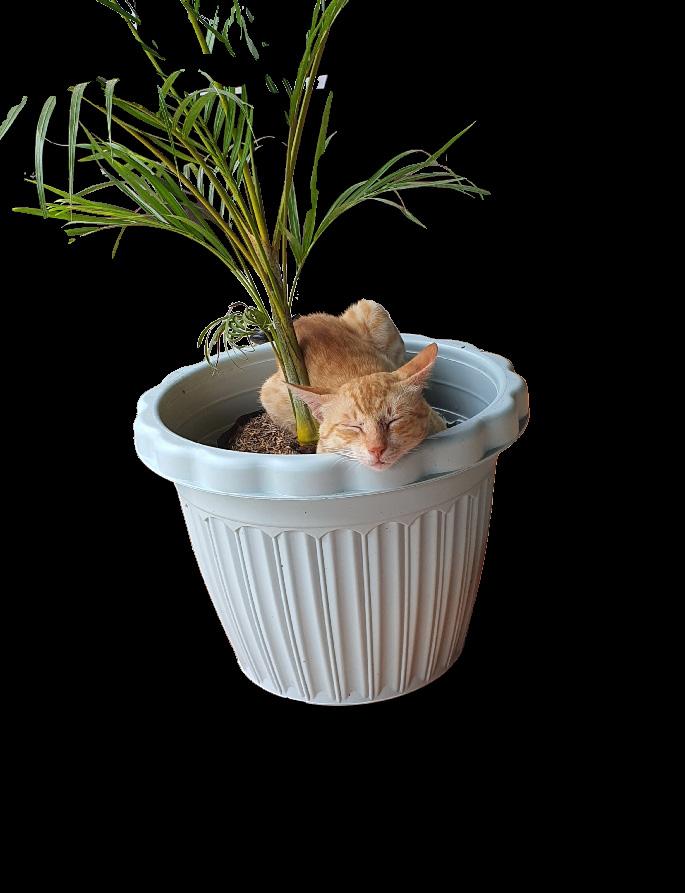
“Food, shelter, and the fact that they have no natural predators here is also a key factor,” stated Panaginip Bayani. The frequency of their offenses rises as they multiply; truly there is strength in numbers for these feline fiends!

But despite their mischief, people can’t seem to get enough of them. They aren’t all sunshine and rainbows; for example, Kenneth Murillo shared that he has read research in the past showing that cats can “have a detrimental effect on the natural ecosystem due to wild prey hunting.” Whoops, let’s hope there aren’t any endemic animals around here.
Sir Joseph de Chavez, campus cat whisperer, remarked, “The cats need to be seen by a vet.” He said so, likely due to worms, infections, sanitary problems, and wounds that Ma’am Ana claims are from fighting with each other. Perhaps their crimes are rightly punished through the various health risks sustained, but why should they be punished when their alleged wrongdoings really only consist of trespassing into our phone’s gallery and stealing our hearts and storage along with it?
With the matter of misdeeds in our midst, it’s only right for us to seek out the resident guards of our school. One meeting revealed that while not all of them have made contact with these kitty cats—a blessing in disguise really, since some cats bite—they do find them beneficial to the populace, aiding in food waste and pests-of-the-rodent-kind management.
The jump in their population from before the pandemic to the return of face-to-face classes has been so huge that the previous anonymous scholar thinks that the cats already make up 20% of our campus’ population. Of course, this is an exaggeration.
But truly, these beloved cats have been a sight for sore eyes— they’re our stress relievers. Of course, they are paid handsomely in food, or are they? Swarms of meowing tufts of fur shadowing scholars eating in the pavilion or at the canteen makes you think otherwise, but maybe they just want some attention, quoting Sir Joseph, “the clingy opportunists they are.”
FEATURE 12 The Bicol Scholar @thebicolscholar thebicolscholar.medium.com VOLUME XVIII - ISSUE NO. 1 Bicol Scholar The THE OFFICIAL PUBLICATION IN ENGLISH OF PHILIPPINE SCIENCE HIGH SCHOOL – BICOL REGION CAMPUS ISSUE XVIII NO. 1 | SEPTEMBER 2022-FEBRUARY 2023
Jerry Noveno
In Pursuit of a Glorious Signal:
a form of short-term data. RAM has a very significant effect on your WiFi speed: the higher the RAM, the faster your WiFi speed. With that much internet speed, you could run multiple sites, apps, and videos simultaneously: for example, the highest internet speed was 319 terabits, in which you could download 80,000 movies in one second. However, we do not have infinite RAM, and the 260 Mbps is shared among 600+ students, faculty, and staff. PSHS–BRC spends approximately Php 182,000 every month, equating to around Php 337 per student, which adds up to almost Php 2.1 million every year.
“Wala na naman bang WiFi?” is a sentence that many scholars, faculty, or even staff mutter, sigh, and shout a few times every day. The school is definitely well aware of the fluctuating quality of the campus WiFi, and everyone has definitely been in the same situation: helplessly looking at the “You’re not connected,” or the “Connected, No Internet” labels that flash on the screens of their laptops and cellphones.
WiFi (it is not an acronym by the way) uses radio waves to transmit data from your wireless router to your WiFi-enabled devices such as mobile phones, laptops, personal computers, televisions, and tablets. These radio waves are transmitted via frequencies, where two types of frequencies can be used depending on the amount of data transmitted: 2.4 gigahertz and 5 gigahertz—a hertz is simply a measurement of frequencies.
The two WiFi frequencies are separated into two channels to prevent high traffic and interference. When you share data across these channels, that’s where it all begins. The first step is initiated by the user, in this case, you. When you access the Internet on your device, it converts the data you’ve requested into binary code—a series of 1’s and 0’s—which is the language of computers.

This is also the same when you click on a link or enter a website: your request is translated into a bunch of 1’s and 0’s. If you are using WiFi, this code is translated into radio wave frequencies by the WiFi chip in your device. The frequencies travel across radio channels and are received by the WiFi router that your device is connected to. The router converts the frequencies back to binary code and translates the code into the Internet traffic you requested. The router then receives that data through a hardwired cable. Then it repeats the process until your website is loaded. It all happens really quickly that it is done in a blink of an eye; most routers run at 54 megabits per second (Mbps), the universal measurement for broadband speed. That means, on average, a whopping 54 million 1’s and 0’s are taken in or sent out in a single second.
Our school has two internet providers: PLDT and Converge. PLDT runs at 100 Mbps 24/7, while Converge runs at 160 Mbps from 7 am to 7 pm, and 80 Mbps from 7 pm to 7 am. This means that the campus receives up to 260 Mbps in the day, and 180 Mbps at night. One hundred Mbps is significantly faster than 10 Mbps, much like 100 km/hr is faster than 10 km/hr. Suppose a device has infinite RAM, or Random Access Memory,
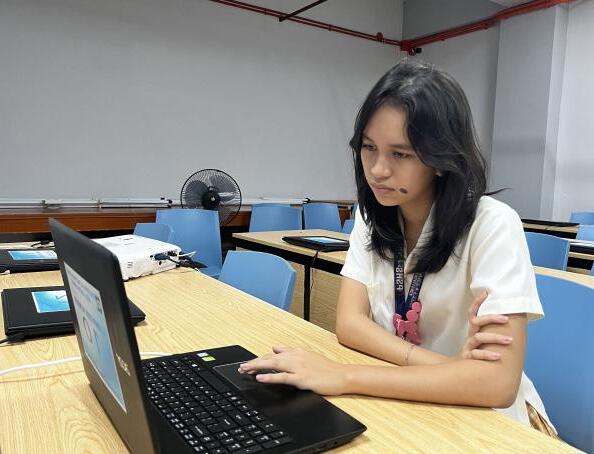
“The ratio between the budget and number of users, hindi naman deprived; it just so happens na ina-abuse,” explained Sir Sevedeo Malate, the Head of the Management and Information System (MIS). He said that for daytime usage, there isn’t much complaint; his number one concern is the girls’ dorm at night, where there is sometimes no connection at all, which he attributed to some reasons. First, the reconstruction of the infrastructures of the dormitories and academic buildings interfered with the campus-wide WiFi repairs and both Dorms 1 and 2 are using older WiFi facilities; in fact, only Academic Building 3, the Gymnasium, and Dorm 3 are equipped with a fiber connection.
A copper connection sends an electrical signal down a copper wire with a maximum speed of up to 300 Mbps. While it costs less to produce and construct, it is easily bested by the fiber’s superior speed of up to 10 Gigabytes per second. This is because fiber optic cables are made up of threadlike optically pure glasses where pulses of light are used to send digital signals at an angle such that Total Internal Reflection (TIR) is achieved, meaning that all of the light transferred stays in the cable. This results in a greater amount of data transferred, which in turn results in a faster Internet connection.
To properly visualize the situation, Sir Sev used an analogy, the WiFi users are cars and the highway is the Internet connection.
“Sa highway, ‘pag maraming dumadaan na sasakyan anong nangyayari? Nagkaka-traffic, especially kung mabagal ‘yung takbo [ng sasakyan],” he explained that the said two-laned road can be likened to a copper connection—but what if it was expanded into 20 lanes, still retaining the number of users? The more-advantageous fiber connections are more reliable and have a higher bandwidth capacity, thus allowing the students to have an easier exit out of the traffic jam.
Fortunately, it seems that this WiFi issue was already foreseen even before the school year began. To increase the efficiency of the internet, as rarely anyone uses Academic Buildings 1 and 2, the Internet is redirected to Academic Building 3 and the Gymnasium, where the majority of the students are located in the daytime. This is made possible by the concentration of access points in Academic Building 3.
However, even as the school year progresses, the renovations are still ongoing. A proposal has already been sent by the admin to upgrade the broadband speed of PLDT from 100 Mbps to 200 Mbps. When this is approved, the Internet speed would noticeably increase. With this, the WiFi’s monthly budget would then also increase to Php 222,000. In the meantime, additional access points are being added around the campus. As these are being set up, they are still looking for blindspots where the Internet would be unreachable. Unfortunately, after these changes are implemented, the issue would still not be fully eradicated; rather, the issue will be reduced greatly.
The MIS has had several ways of solving the ongoing challenge; however, Sir Sev declared that “If bandwidth improves and marami pa ring complaints, I will hit the users.” As he monitored the scholars’ usage of the Internet, he noted that non-academic sites such as Facebook and TikTok garnered a larger percentage of usage rather than academic-related sites. If this issue persists despite the planned changes, Sir Sev may employ “drastic measures.”
First of these measures is limiting the number of devices per person. Sir Sev mentioned the fact that scholars usually have more than one device connected to the Internet, further slowing the connection, which could be limited to two devices (a cell phone and a laptop) that can free up the stagnancy. The second measure would be whitelisting—blocking the users to all sites that are prohibited by the school—a constraint implemented in the Main Campus. Lastly, WiFi access may once again be restricted per account instead of the free usage BRC enjoys today.
In the first week of March, the changes would be fully applied and the Internet quality, speed, and connectivity will increase significantly. Sir Sev stated that he gets to project what technologies and equipment may be supplied to cater to the needs of the scholars. This includes ensuring a strong, stable internet connection for the said purpose. However, for him to properly address problems such as the current WiFi situation, he wants to hear feedback directly from the students.
So before uttering “Wala na bang bibilis ‘to?!” remember that these problems are on their way to being resolved by people with capable hands. Also, while the school provides what we need to be able to submit our requirements, we are obliged to use these technologies responsibly.
“If possible, I want all users, kahit mag-student, faculty, or staff, na magkaroon ng access, ‘wag lang nilang i-aabuse,” Sir Sev said.
PSHS–BRC’s WiFi troubles are less of a mishandling of the school’s budget but more of a mismanagement of priorities, from both the school and the students. Once the admin completes the renovations and the scholars rearrange their internet activities based on importance, then PSHS–BRC may experience a faster and more glorious signal.
An AI-created Wall to Greatness An AI-created Wall to Greatness
An AI-created Wall to Greatness
I am honored and grateful to be one of the respondents in your article regarding ChatGPT. I am thrilled to have the opportunity to share my thoughts and insights on this exciting and rapidly-evolving technology.
The entire paragraph above
was made by Artificial Intelligence (AI). More specifically, it was generated by the infamous chatbot, ChatGPT, after informing it that it will be interviewed for this article. AI, much like other fields in tech, is rising to become one of the most influential players in the modern world. One booming example of which we all might have heard is ChatGPT—which can write, respond to people, ask the weather. But what exactly is ChatGPT?
Computer Science teacher Tom Jordan Secundo explains that “ChatGPT stands for Chat Generative Pre-Trained Transformer.” Sir Tom says the chatbot, developed by the American AI research facility OpenAI, works by accepting a prompt through human language and delivers promising answers. The open-source AI is built upon OpenAI’s GPT-3 family of large language models, as well as a few learning techniques.
“Chat-GPT was trained in three steps,” shared Sir Tom, saying that it was trained using three methods: supervised training, a reward sys-
tem, and an optimization model.
“The AI is given punishment for giving undesired responses based on a policy under the SFT, or Supervised Fine-Tuning Model,” said Sir Tom. The punishment works through selective assessment, whereby only the AI’s wrong responses are examined by the developers and later fine-tuned. Furthermore, under Supervised Training, the AI is given conversations with human trainers, which help improve its performance.
The recent rise of Artificial Intelligence has left the world abuzz with its myriad of uses. The chat bot is perhaps set to break apart the boundaries between literature and technology, but could it really? Or will it be come a wall preventing us from reaching greatness?
Following along the line of procedures is the Reward System, under which, the human trainers rank the AI’s responses, using them to create reward models for further tweaking.
Lastly, there exists the Optimiza tion Model, where the AI is regulat ed using the Proximal Policy Opti mization (PPO) model. Towards Data Science says that the PPO (also created by OpenAI) is state of the art in Reinforcement Learning—“striking a balance between performance and comprehension.”
Sir Tom added that the response with the best rank will be its primary output as the answer to the
user’s prompt. However, concerns will arise along the way such as its proficiency in writing poses a problem of integrity in the academe. As an educator, Sir Tom shared his sentiments on the matter, saying “the technology is already available, [so] why shouldn’t we use it?” Business Insider reports a job application by AI, fooling recruiters and “beat more than 80% of human candidates to an interview.” However, students and teachers warn of the consequences of the extensive use of AI. Phil (not their real name) said, students should not be heavily reliant on AI, arguing that
“relying on ChatGPT limits our learning because it limits our research and curiosity of the subject matter to just a single click on the ChatGPT website.”
At any rate, Sir Tom shared that while ChatGPT is useful in general, it has its constraints. “[The AI] is very useful in assisting users when it comes to writing essays and letters, but really terrible in doing some math problems.”
But again, the AI’s usefulness in written outputs can—and should— warrant some restrictions. The school does not need to counteract these types of AIs; rather, the school should wield its power to the school’s advantage, he added.
On a more global scale, however, there is something that counteracts ChatGPTs. GPTZero is an Application Programming Interface (API)— different from AI, where an API is a way for two or more programs to interact with one another.
“It was primarily developed for the educators to detect plagiarism in academic submissions,” Sir Tom explained. The way that the API works is that it analyzes the written work’s perplexity and variation. Improving or training an API is different from training an AI,
as Sir Tom and his colleagues in the educators' group label responses that GPTZero identified as made by humans but were actually made by AI.
The chatbot’s amazing versatility and its potential to break down the long-held barriers of technological involvement in literature and writing.
“Aside from ChatGPT, there are also several amazing AIs like the Apprentice Bard, Magenta, Midjourney, and Claude AI,” Sir Tom expounded. Many artificial programs like those mentioned—that are free for public use—create quality poems, essays, artworks, and even real-life pictures just based on a description. As time progresses, AIs will undoubtedly become better until we see the day when AI will have a big impact on all of us.
“I am more excited to see AIs that can help us in statistical decision-making based on all available data, including our personal smart devices,” expressed Sir Tom.
Certainly, AI has improved our lives by leaps and bounds, and we have already seen some being integrated into some of the most personal parts of our lives. But as the saying goes, “everything should always be in moderation.” As students, we are responsible for learning and becomig full-fledged adults through school.

One of the most defining traits of PSHS-BRC is the PisayWiFi. Unfortunately, it is famous for its sluggishness, or sometimes, its non-existence. Well, we deserve to know the answers as to why, no?
Lovely France Olaguer
SCI-TECH 13 The Bicol Scholar @thebicolscholar thebicolscholar.medium.com THE OFFICIAL PUBLICATION IN ENGLISH OF PHILIPPINE SCIENCE HIGH SCHOOL – BICOL REGION CAMPUS ISSUE XVIII NO. 1 | SEPTEMBER 2022-FEBRUARY 2023 VOLUME XVIII - ISSUE NO. 1 Bicol Scholar The MK Gerbas
PISAY WIFI is set to improve in the last months of the school year as Sir Sev Malate explains the school is upgrading its WiFI facilities in time for the FAYP students’ trooping back to Academic Buildings 1 and 2.
and create new variants, as they essentially copy themselves when they spread. When it copies itself, it makes mistakes; these are what we call variants.
Of course, not all variants are threats; some variants actually cause the virus to be less deadly. However, in responding to the deadlier variants, the World Health Organization (WHO) has assigned classifications to these forms of the virus.
As of now, there are no COVID-19 variants of high consequence. The World Health Organization (WHO) has classified 5 variants
Have No Fear,
H


Healthcare is Here! Health SCI-TECH 14 The Bicol Scholar @thebicolscholar thebicolscholar.medium.com VOLUME XVIII - ISSUE NO. 1 Bicol Scholar The THE OFFICIAL PUBLICATION IN ENGLISH OF PHILIPPINE SCIENCE HIGH SCHOOL – BICOL REGION CAMPUS ISSUE XVIII NO. 1 | SEPTEMBER 2022-FEBRUARY 2023
as VOCs, named after Greek letters: Delta, Alpha, Gamma, Beta, and the most famous one, Omicron, as of February 2023. These variants have displayed deadlier mutations in terms of transmissibility, hospitalization, and mortality—they are, according to the WHO, “very high risk.”

Fortunately, we do not have to worry about most of these variants, as four variants are not in circulation and are classified as low risk. If these are so deadly, then why are they now not in circulation? It’s because of our healthcare system. It may seem surprising to some, but the current healthcare system—although quite fragile—is still up and running, especially when it comes to combatting the ongoing pandemic.
The WHO and the Department of Health (DOH) have developed Public Health and Social Measures or PSHMs to reduce the transmission of viruses and pathogens. Of course, these PSHMs range from the frequently- and widely-used face masks, hand washing, and social distancing. All of these measures have directly contributed to “flattening the curve,” or lowering the number of infected people.

Active:
When we hear Christina Perri’s “A Thousand Years,” we might be reminded of how the number is used to signify eternity; from the eyes of mortals such as us, the duration of our delicate human existence could barely even reach that extent. Although not talked about enough by people since it is overshadowed by the cone-shaped Mt. Mayon in the same region, there is a volcano near Pisay–Bikol that has not erupted once for thousands of years but was classified as active.
Mt. Isarog was deemed dormant by the Philippine Institute of Volcanology and Seismology (PHIVOLCS) due to its inactivity. However, because of several recent studies on the volcano, its classification switched from “dormant” or “potentially active” to “active.” One particular study by Karen Fontijn and Christopher G. Newhall is one that is titled, “Reconnaissance geology of Isarog volcano (Luzon, Philippines): Evidence

to 5,000 years ago.
The study explains that the volcano had Holocene activity, which means that Mt. Isarog has left evidence of its eruption in our current geological time period. Additionally, they described that it had explosive eruptive behavior based on the samples they have collected.
However, Timothy John E. Daita’s (with Newhall as his adviser) 2020 study titled “Paleomagnetic Determination of Pyroclastic Density Current Deposits in Tagongtong and Bagumbayan Grande, Goa, Camarines Sur, Philippines and The Identification of Isarog Volcano’s Latest Eruption Age” suggests otherwise. Mt. Isarog may have erupted as recently as 4,300 years ago, and that surrounding towns could be in danger in the event that it erupts.
This was discovered through radiocarbon dating, a process in which an object with organic matter (car-
With vaccines, people are now more prepared to face the virus.
COVID-19 and other kinds of viruses are considered non-living and only depend their existence on humans or living hosts. This is the reason why PSHMs like quarantines and other kinds of health protocols are effective. To put it simply, the fewer people move around, the fewer chances of viral mutation and persistence.
All of these reasons are a testament to the fact that, again, our healthcare system works. But we should not take it for granted. While the pandemic has done so much harm to everyone, it has done somewhat good in exposing the feeble frameworks of our healthcare system. According to an article from The Lancet Regional Health: Western Pacific, many public health workers report stress and mental health exhaustion.
Adding to the stress is the lack of government support. Looking at the salaries our nurses receive does not even show any semblance of the hard work and effort they put into their work as they strived to fight off the pandemic. Even before, however, health
workers have reported salaries, unsafe workplaces, and not even a stable supply of Personal Protective Equipment (PPE).
Other than that, the government is marred with corruption, has been flagged for a one-billion-dollar deficiency in terms of COVID-19 spending, and has also been criticized for its poor contact tracing system, implementation of unusually strict quarantine, and militaristic attitude towards fighting the health-focused pandemic. It is no surprise that protests erupted all over the country— demanding better working conditions, the release of risk allowance and hazard pay, as well as the resignation of then-Department of Health Secretary Francisco Duque.
While we may all breathe a sigh of relief that a variant of worldwide-quarantine levels will not return, let us not forget the people who made it that way. An excerpt from an unpublished The Bicol Scholar article reads, “just like us, frontliners are ordinary humans that deal with their struggles, and their alter-egos are no excuse to exempt them from being so.”
bon-based compounds that show up in nature) is measured and estimated according to the number of Carbon-14 in the sample. With a long half-life of around 5,700 years, Carbon-14 is especially useful in determining the ages of materials up to 55,000 years. The sample was of a burnt coconut tree root discovered close to Goa’s van terminal at the base of exposed rock layers. It was sent to the United States Geological Survey Radiocarbon Laboratory in Denver, Colorado and was later confirmed to be 4,300 years old.
“The identification of pyroclastic density current deposits in barangays Bagumbayan Grande and Tagongtong suggests that a future eruption of Mount Isarog could generate similar hazards that could reach the downtown area of Goa, Camarines Sur, Philippines,” Daita mentioned in his study, considering the population of the areas surrounding the volcano.
“This fast-moving volcanic hazard,








posed of pyroclastic materials and gases that have temperatures ranging from 200°C to 800°C, could lead to destruction of property and loss of life,” Daita continues, highlighting the catastrophic effects. This is especially important to those in Goa, such as Pisay–Bikol which is especially near, being situated at the foot of Mt. Isarog itself. Its eruption alone could affect more than 600,000 residents that reside in places near the area of Isarog—including Goa—which is why it is a cause for concern.
With the massive gap in time between its last eruption and our time at the present, it might dawn on us that 4,000 years is truly hard to conceptualize, especially with the thought that it might in fact erupt sooner than we could comprehend. It is with this notion that, combined with the efforts of PHIVOLCS, geologists, volcanologists, and other professionals who conduct studies on this matter, not to mention providing and enhancing already-placed
Potentially
It seems that the mountain our school sits upon hides an uncertain fate: one that could be detrimental to Pisay–BRC’s future.
Mount Isarog's Uncertain Fate .... .... ? Taken from welcometonagabicol.wordpress.com MOUNT ISAROG, a topographical landmark that sprawls across three congressional districts of the province of Camarines Sur, is a sight to behold from the point of view mountaineers, but the mountain’s uncerainties pose danger to areas around it, including PSHS–Bicol Region Campus.
8 W der
OF THE W RLD 8 W der
“Waterfalls in Pisay BRC” posts surfaced mid-September as harsh rain poured down on the campus, humorously labeling it as an addition to the already known 7 wonders of the world. The posts featured video snippets of PSHS–BRC’s gym stairs flooded by a generous amount of flowing water, the horrid sound coming from water battering the concrete
reports since 2011. The index determined these by considering two main aspects, with one being the “exposure” of the people to these natural disasters, and the second being the “vulnerability of society.”
This vulnerability of society is further divided
workers or beneficiaries.”
It expressed how unrecognized the local mapping communities are, that despite their efforts in mapping Guagua and Tacloban in 2013 concerning Typhoon Yolanda, the narrative was shifted to the foreign volunteers.
Truly the 8th wonder of the world is not something we should be celebrating. As
EDITORIAL
Nothing has changed—yet
The 8 billionth baby made its first cry on November 15, 2022. A celebration is in order!

The United Nations (UN) attributed this joyous event to improvements in general health and nutrition, leading to higher life expectancies. As perfectly stated by the UN Secretary General, Antonio Guterres, “This is an occasion to celebrate our diversity, recognize our common humanity, and marvel advancements in health…”
floors, and the current strong enough that its overall appearance is similar to that of Niagara Falls.
It is true that the weather has been quite strange these past few years, with storms that are becoming more extreme, floods that could leave houses flooded up to the roof, and predictions of cities sinking in the coming decade. This only adds to the manifesting climate change agenda that environmental activists and scientists have been protesting about ever since discovering concrete evidence from analytical data. It is hard to ignore these now that we are experiencing the effects firsthand.
In the World Risk Report 2022, the Philippines ranked first overall, which meant that the country responds poorly to these risks and is therefore the most exposed to disasters that result in damages. The country was given a score of 47 out of 100, with ASEAN countries within the top 20, such as Indonesia (3rd), Myanmar (6th), and Vietnam (12th).
The report is one of the analytical data reports involved in the climate change agenda, as they have been annually giving out
(3) “Adaptation,” which is developing strategies and adapting changes in order to prevent further destruction.

As an overview, the Philippines is categorized as “very high” in aspects such as exposure, vulnerability, susceptibility, and lack of coping capacities. Meanwhile, the country is categorized as “high,” a classification lower than the rest over the lack of adaptive capacities.
The report also emphasizes that one contributing risk factor that is often overlooked is the misrepresentation of the Philippines in terms of geospatial work which is concerned with modeling, visualizing, simulating, and analyzing geographical data. This was after “Now Go Build,” a documentary series about humanitarian organizations saving the country by providing technological help regarding geospatial work.
However, this was met with criticism. In a statement issued by the local OpenStreetMap (OSM) Philippines, it stated, “There is a very problematic centering of white, male, and western voices and perspectives all throughout the episode’s production and the relegation of Filipinos as mere
electrocution in these very same waters.
Incidentally, the Index had the theme “Digitalization,” so it highlights the impact of technology in the face of disaster preparedness and risk management.

It states, “Information and communication technologies (ICT) are used in all phases of disaster management for knowledge acquisition, information dissemination, communication, as well as control.”
We cannot control the weather nor can we reverse the effects of climate change completely, but we can make use of technology to gather data and acquire information, spread it for communication, and use it for monitoring and control. In relevance to its theme of digitalization, the report suggested that digital technologies should be made accessible and must be protected for them to be of use to everyone. It would take the combined effort of both public and private institutions, but mainly the government, to make plans and provide strategies to lessen the damages that these disasters caused, as well as lessen future losses.
Unfortunately, it seems that the 8 billionth child, who was born in the Dominican Republic, is birthed into a world marred with the events that Mr. Guterres has mentioned. The UN attributes the rising population to high fertility rates. However, the high fertility rates are unequal, with 84% of the world’s population in developing countries located in Asia, Oceania, and Africa. This number is expected to rise to 86% by 2050.
Multiple reports relating to the Sustainable Development Goals (SDGs), especially the 2022 SDG Report, show the world is not on track to achieve the said goals by 2030. Focusing on SDG 1: No Poverty, the World Bank has stated that three countries which contain a third of the world’s poor— Nigeria, India, and the Dominican Republic—“will not grow their economies faster than their populations.”
Another example is the Inclusive Growth Index (IGI) by the United Nations Conference on Trade and Development (UNCTAD). The IGI states that in over three-fourths of countries in Africa, almost half of their populations have no access to clean and safe drinking water. UNCTAD explains that almost 828 million people go to bed hungry every day in countries where the fertility rate is highest. Since the population is increasing, the demand will just keep on increasing as well.
The Philippines contributes to 1.4% of the global population; it had a population growth of 1.5% in 2021. In a World Bank report entitled “Getting a Grip on Climate Change in the Philippines,” the Philippines is among the most vulnerable countries to climate-related weather disasters. Ironically, it is ranked in the top 25% of greenhouse gas emissions among low- and middle-income countries, with significant increases projected in the coming decades. Furthermore, the world’s Human Development Index (HDI)—or the human development performance of the coun-
try—has generally decreased, which is why the country is now part of the bottom half of the index. Given the current downward trend in development due to the pandemic, neither the Philippines nor the world will be able to handle it.
Now let us say that you, as a less-developed country, have done your very best in fighting against pollution- or climate-related disasters. These efforts will inevitably be rendered useless if the world’s more-developed countries do not act. Developed countries are observed to have an increase in greenhouse gas emissions, noting their long-term consequences in food production and clean water and sanitation in less-developed countries. For greater context, an article by Wijaya, A.S. published in the Institute of Physics Conference Se-
ries: Earth and Environmental Science says, “Climate change and global warming have more impact on third world nations or developing countries rather than in developed nations,” indicating a vast inequality between the nations.
So, it seems that we know two things: (1) prosperity should not just be limited to our population but also in terms of our efforts to make the world a better place and (2) that efforts as a global collective must be taken, to ensure that a single country’s efforts will not go to waste. After all of these are achieved can we only start to try and see any semblance of a sign to celebrate.
In the end, there is no cause for celebration. Nothing has changed—yet.
The Philippines is getting recognized for being the first, but for one of the worst ways possible.
An increase in population signals many great things, but it may also signal one dangerous fact, that populations may grow too fast.
THE
SCI-TECH 15 The Bicol Scholar @thebicolscholar thebicolscholar.medium.com THE OFFICIAL PUBLICATION IN ENGLISH OF PHILIPPINE SCIENCE HIGH SCHOOL – BICOL REGION CAMPUS ISSUE XVIII NO. 1 | SEPTEMBER 2022-FEBRUARY 2023 VOLUME XVIII - ISSUE NO. 1 Bicol Scholar The
Psalm Francis Serrano
Anna Mikhaila Serote
Dr. Marthe Gautier

It’s simply sad how one-in-one-thousand, extraordinary women are snuffed out by men who seek to take their advancements for themselves. Now, we need to recognize and empower these women more than ever before.
About1 in 1,000 live births. That is the rate of incidence of having Down Syndrome, a genetic disorder characterized by cognitive delays and physical features that are distinct to the condition. In the past, the scientific community still was not aware of what caused it, but it is now understood that the disease entails having three copies of chromosome 21 rather than just two. This is formally called “trisomy 21” and was discovered in 1959. The discovery, while claimed by another man as his own work, is actually done by one brilliant woman, through her invented techniques and hard work: Dr. Marthe Gautier.
Dr. Gautier was born on September 10, 1925. She graduated in 1942 from Hôpitaux de Paris and lived with her sister Paulette in Paris,
where Dr. Gautier pursued her medical studies. Her sister eventually gave her words of advice: that women have to work twice as hard as men, more so if they did not come from influential families. It is unfortunate that years later, after setting off to the United States and mastering her craft while staying at Harvard, this same event that she was warned about happened to her.
Dr. Raymond Turpin’s pediatric group, who had the idea that there was a chromosomal link in Down Syndrome, was where Dr. Gautier opted to do the work of doing biopsies and cell cultures. Because the laboratory was the first of its kind in France that Dr. Gautier herself put up, she was working in conditions that were not optimal for doing laboratory activities. She even had to take up personal loans to purchase equipment. With this, she discovered that children with Down syndrome have 1 extra chromosome compared to the usual count of 46. With this knowledge, she now needed to take images of the slides. Unfortunately, the laboratory did not have powerful microscopes. That was when Dr. Jérôme Lejeune, a fellow researcher, offered to take pictures of the slides in another laboratory with powerful microscopes. It did not end well as Dr. Lejeune already took the claim for the discovery for himself.
“I think it’s not just about the injustice but the discovery in general,” said Prince Julius Babas, a student from Grade 10–Graviton, when asked about his opinion on the topic. He added, “The injustice is unforgivable, and knowing na walang madi-discover if not for those women—even without the prestige, the main goal of these discoveries is to help the human race in general. So, publishing research and scientific breakthroughs for the sake of fame and the fancy awards defeats its main purpose, and of course science ethics.” It is how Dr. Le-
jeune immediately announced the discovery, that at present, the findings itself would be associated with his name. It is
One of the things that serve as a staple to tropical countries like the Philippines— along with hot and humid climates—is rain. Even if people may argue about the omens it may bring, one cannot deny it is a resource that is desperately needed by humans. Nonetheless, this water resource has been dutifully used by the world, with rain collecting, informally dubbed “rain catching,” serving benefits for droughts, storms, and overall water conservation.



However, this resource is running out, so sustainable methods must be enforced. We take a look at two Pisay–Bikol facilities that notably use rainwater in different ways: one for aesthetics, and one for practicality, a testament to the school’s part in a global effort to conserve and effectively use water.
Walking through the sloped road of Pisay–Bikol can leave you breathless (both physically and figuratively). The towering buildings like the Academic Building 3 (ACA 3) can definitely leave someone a bit sweaty and tired. However, another figure sits quite close to the ACA 3 building, boasting a white facade and jets of water splashing bystanders, our fountain.
There are rumors circulating that the fountain water that defines the fountain and tickles our skin is from our urines and other bodily wastes. However, this was proven untrue by General Services Unit Head Sir Joenard Dizon saying that the water comes from non-filtered rainwater. When the rainwater collected is not enough for the fountain, a submersible pump will be used to get water from the water system. This is very beneficial since, not only that the water consumption is reduced, but also the bill. At the present, fishes now call the fountain their home, which means that the rainwater’s quality is fit to sustain life!
Interestingly, other fountains push water up against gravity to produce
evident as doing a simple online search with the keywords “trisomy 21” would lead to the name of Dr. Lejeune. In the published paper, Dr. Lejeune was the first author, followed by Dr. Gartier, and Dr. Turpin last; however, Dr. Gartier was actually Dr. Gautier, with Dr. Lejeune intentionally having it misspelled as most historical accounts would say.
It was common for women to be excluded in male-dominated fields such as science and engineering. Similar to the case of Rosalind Franklin, the rampant sexism in pre-21st-century science led to her being recognized only years after her death. At present, according to UNESCO Institute for Statistics, only 33.3% of women are in the STEM workforce, which meant that women are still underrepresented in the field and are statistically still given less research grant funding compared to men.
During the International Day of Women and Girls in Science celebration at PSHS–BRC, several solutions were presented by the speaker, Atty. Rachel Anne Herrera. She said that it is crucial to encourage women and girls to pursue STEM and reduce inequality, which included reviewing company policies to discourage and penalize discrimination and harassment in the workplace, thus giving women and girls the confidence by doing capacity-building activities to have skills to become leaders in STEM, as well as giving them equal opportunities for skills and recruitment.
The discovery of trisomy 21 helped the scientific community bridge the knowledge gap between the relation of chromosomal abnormality to conditions that involve hereditary materials, through opening up a new scientific discipline—cytogenetics. At present, Down Syndrome can now be detected as early as when the baby is still in the womb or when the baby is newly born. All of this would not have been possible if it weren’t for the skill and expertise of Dr. Marthe Gautier, who is one role model for not only thousands but millions of women and girls all over the world.
the illusion of falling water into a lower basin, but our fountain does not do this. A submersible pump is in an upright position and if it’s turned on, it sucks the stored water under it. This then becomes the output above and is divided again into five pipes that are scattered under the water in order for the fountain to present what we see every time it’s powered on. Due to the rising electricity costs, one might express concern about electricity consumption for the fountain, as it uses a pump. However, Sir Joenard says that it is not a problem for this structure.
Since the water used is from rainwater, the pumps that are used to collect water from the water system are not utilized that much. The submersible pump only consumes 350 watts, so it’s also not that expensive.


The reason why the fountain is turned on only so often is not because of the electricity consumption but because of a missing part waiting to be delivered. Based on what Sir Joenard said, the fountain is still waiting for permanent electrical wiring that will aid in supplying the submersible pump. Once this is supplied, the fountain could be powered on more often.
Now, let us trek down the slope, to the rocky road, and focus on three adjacent buildings: the dorms.
Since most of the school’s student population lives in the dorms, effective use of water must be observed. One highly beneficial facility is the rainwater toilet flush system, which is ac- tually used not just in the dormitories but also in the academic buildings.
It is common knowledge that a large amount of water is needed for each toilet flush. Since the water is used simply to flush away human waste, the water does not necessarily need to be sanitized and distilled before use. With that, rainwater is a suitable alternative water source and one that is relatively simple to gather. Rainwater from the rooftops of dormitories and academic buildings is collected and contained in a separate cistern—a tank for storing water, especially one supplying taps or as part of a flushing toilet. This water is then transported into a powerful pump that filters and directs the water into the toilet systems.
In most cases, this rainwater system only serves as a backup. Knowing Pisay still has an unstable water supply, having a backup source is a smart choice. With all this, water is a resource that is necessary for life, but it is also one that is versatile. Water boasts integral functions and can also serve some beautiful aesthetics. Since the school is playing its part in conserving water, we must also do our part—doing the little things that can hopefully conserve water, and let succeeding generations enjoy a catalyst of progress, change, and life.
DON’T GO AWAY!
RAIN. RAIN.
Taken from sfgenetique.org
It’s high time that we recognize a few of the engineering marvels all around Pisay, which make use of sustainable materials to effectively solve problems.
SCI-TECH 16 The Bicol Scholar @thebicolscholar thebicolscholar.medium.com VOLUME XVIII - ISSUE NO. 1 Bicol Scholar The THE OFFICIAL PUBLICATION IN ENGLISH OF PHILIPPINE SCIENCE HIGH SCHOOL – BICOL REGION CAMPUS ISSUE XVIII NO. 1 | SEPTEMBER 2022-FEBRUARY 2023 Anna
Serote
DR. MARTHE GAUTIER is one woman in science who has proven that women can take glorious and various positions in society which places emphasis on the equality between men and women for the common good of all.
Mikhaila
With the Ugnayan 2022 now in the books, handpicked Bicol Region Campus scholars competed against their counterparts from other PSHS campuses. The said meet supplied students with more opportunities to show their respective skills in different sporting events. As a consequence, the question of whether or not Science, Technology, Engineering, and Mathematics (STEM) student-athletes could enter the ranks of professional sports has floated around.
Professional sports have been a staple of entertainment in our country for a long time. Pro sporting leagues such as the Philippine Basktabll Association (PBA) and the Premier Volleyball League (PVL) have been breeding grounds for talents selected for our country’s national teams. However, the road to being a professional athlete usually starts earlier in a person’s life.
Initially, a series of scouting is done by coaches starting from the grassroots. Having said this, STEM students, particularly PSHS–BRC scholars are already at a disadvantage compared with their peers. They are required to take a science and technology-related college course that dictates their future career. However, this does not restrict students’ ability to excel in dual fields.
In the Philippines, athletic meets sponsored by the Department of Education (DepEd) are one of the best opportunities for students to showcase their skills. The participation of BRC in the 2019 District Meet was a first in its history. The school bagged various victories, including a bronze finish from both men’s basketball and women’s volleyball, as well as snatching two golds in the competition’s swimming events. The swimmers’ successes in the subsequently-conducted Camarines Sur Division Meet

GO PRO? CAN STEAM ATHLETES GO PRO?
prompt ed them to com pete in the Palar ong Bicol.
With Pisay–BRC opening doors for student-athletes to compete in these events, the chances of scholars being pro athletes in the future are improv ing.
Sports are a tool utilized by governments and non-profit or ganizations to promote an ac tive lifestyle for people, as well as safeguard children and adolescents from the

When support turns toxic
At some point in our lives as spectators, we’ve all seen that one individual from the crowd angrily shouting or cheering fanatically from the sidelines as if their life depended on it. As much as we want to ignore it, most of the time it’s the player’s parents who are the ones shouting profanities and threats if the performance of their child was inadequate. They at times shake their heads expressing their disapproval, then scold their child after the game. These methods always end up producing the same result: excessive stress and pressure.
The perception of support and encouragement in sports in modern times is severely warped. Most coaches will teach the players using intimidation and negativity focusing on winning and the competitive scene. Meanwhile, parents will discuss with their children what they should have done to perform better. Both will inevitably and negatively impact a child’s performance and confidence in the long run. Their self-esteem will continuously drop, their ability to trust will wane, and their fun and enjoyment will turn into laziness and unwillingness to play.
Coaches teaching players to “toughen up” and “play like a man” only continue to push the athletes to try and do better resulting in a mentality in which they suppress their emotions and learn not to cry in order to preserve their manhood. This mentality promotes a purview that hails male athletes to be superior to women— and it goes for both male and female athletes.
Toxic masculinity contributes to creating a vulnerable mental state for an athlete: at times giving them reasons to do
anything that may harm their career—for example, harming themselves and fellow athletes, telling exaggerated stories, and worst of all, committing sexual assault. Male athletes will feel that exerting physical power allows them to regain their pride as men; combined with the stress and confusion of undergoing puberty, sexual harassment becomes a common occurrence.
The only support that athletes would need is the appearance and encouragement of their supporters—not the unnecessary pressure pushed onto them by coaches and parents to do better and win more. A coach must be willing to talk to their athletes about kindness and empathy and help them play with these values in mind. Parents must not let their children feel the weight of needing to win; instead, they must guide their children to be better people and athletes without feeling the pressure of gender norms.
perils of drugs and violent acts. Some students also rely on athletic scholarships as a path to acquiring quality education in reputable schools and universities. In the long run, a diploma can help further their careers and accord a safety net from sports’ volatility. For students, sports are an escape from
The PSHS System curriculum includes four years of the PE, Health, and Music (PEHM) subject, alongside other humanities subjects in order to complement the heavy emphasis of the system’s education on STEM subjects for a more holistic approach to learning.
The curriculum planned for Physical Education sounds reliable on paper, but it is flawed in a number of ways: the preferences and appropriateness of sports activities for scholars, the lack of self-discipline among scholars, and the individual skills and progress not being measured accurately. Preferences for various sports activities among scholars can greatly affect their progress.
Fortunately, there is a possible program that can be utilized to mitigate the flaws aforementioned: a Sports and Fitness Elective Program. It is a system where every scholar from the FAYP, which is composed of Grades 7–10, will be given the chance to choose a sport and a workout routine that they will engage in throughout the school year.
In addition to that, for each elective, there will be some scholars from the SYP, which is composed of Grades 11–12, who may grab the chance to help their juniors while utilizing such an opportunity to complete their SCALE requirements.
Although it is not a novel idea, the proposal has been brought up repeatedly by previous scholars. It indeed can offer solutions to the flaws of the current setup.
The Sports and Fitness Elective Program will allow scholars to pursue their favored sports and routines, which can even possibly increase their chances in succeeding and achieving fitness goals. As previously mentioned, scholars who favor their activities will more likely succeed because they are motivated in their activities. This shall allow them to appropriate their sport to their fitness goals, which can help them bring their fitness goals further than what is expected.
As there are SYP scholars who will aid in the activities, they will be able to establish a closer relationship with the lower grades by utilizing their engagement to guide their juniors towards instilling within themselves self-discipline, a huge factor in reaching fitness goals. In turn, this will result in developing closer bonds among the
the academic rigors since these events fulfill their passions and aspirations in life.

Pursuing a professional career in sports is a life-long commitment. In the Philippines, however, chances of making it to the big leagues are mostly Manila-centered, with grassroots development of student-athletes still having a long way to go to better extract the finest talent possible from the provinces. For STEM students, particularly Pisay scholars, the path to pro sports is rocky due to the commitment to pursue a career in science and technology, as well as the general non-participation of the school in sports meets.
Pisay scholars do not lack the talent to excel in different types of sports. With the limited opportunities provided to develop in their respective sporting fields, the window for Pisay students to reach the pros narrows. Investing time, effort, and resources will aid in the development of topbrass Filipino sporting talents. Talent alone will not provide the solutions to solving our nation’s unbalanced sporting landscape. With the school’s enormous investments in science and technology, as well as in humanities, the school should give sports a chance to prosper within the campus. Increased focus on developing sports will aid in the more holistic development of student-athlete scholars and the ascension of interests in the field.
Can STEM student-athletes go pro? Escalating efforts to further the progress of sport development in Pisay–Bikol will make it only a matter of time before scholars enter the big leagues. With scholars’ skills and diverse interests in a variety of sports, nurturing talents will be the way forward in building a student’s path toward professional sports.
student body, which will not only improve their physical health but also their mental and emotional health, as well as the solidarity of the student body as a whole.
Close monitoring of the progress of scholars through the guidance of senior scholars in each sports elective will help them discover their areas for improvement. It will also help them find a perfect fit within the chosen sport, which will help them nurture the sport, thus, aiding them toward physical fitness.
While the program would seemingly solve the lapses of a highly science-based curriculum, it has a number of flaws that need to be addressed—one of which is the complexity of the program itself. Organizing an elective system for four grade levels with various sports is a difficult task, and when students are given options, one sport may be overloaded with members, making it difficult to handle, even with volunteer scholars. That there are not enough scholars to volunteer to aid the teachers is also another problem, causing it to be much more difficult not to mention the fact there are other areas of PEHM subject, hence bringing about issues that PEHM teachers will have to deal with.
Another issue is the schedule of scholars because of the large number of students that will be handled. To solve this, the schedule must be adjusted to accommodate the program, and doing so will affect the schedule of other subjects, teachers, and students from all grade levels. This is a humongous task, which is why its implementation is questionable considering that Pisay gives emphasis on STEM subjects and the current curriculum’s simplicity is preferred.
With regard to facilities, there are not enough spaces to make this program effective; furthermore, budget cuts pose a hindrance to the purchasing of multiple sports equipment to facilitate the program.
The Sports Elective Program is an unnecessary fix that makes Physical Education much more complex and time-consuming for everyone to implement, if not only to improve the PEHM curriculum. However, such a program is not a bad idea at all; sports and sports electives are not the focus of a science high school but these can benefit the students in more ways than one.

SPORTS 17 The Bicol Scholar @thebicolscholar thebicolscholar.medium.com THE OFFICIAL PUBLICATION IN ENGLISH OF PHILIPPINE SCIENCE HIGH SCHOOL – BICOL REGION CAMPUS ISSUE XVIII NO. 1 | SEPTEMBER 2022-FEBRUARY 2023 VOLUME XVIII - ISSUE NO. 1
The
Bicol Scholar
“ ”
TOUCH MOVE Angel Dominique Lansi
The only support that athletes would need is the appearance and encouragement of their supporters—not the unnecessary pressure pushed onto them by coaches and parents to do better and win more.
Infographic by MK Gerbas
Lovely France Olaguer WITH SCHOLARS’ skills and diverse interests in a variety of spors, nururing talents will be the way forward in building a student’s path toward professional spors.
In recent years, social media has had a huge impact on the sports sector. It has dictated how fans interact with their favorite teams and players, as well as how clubs and leagues market themselves and communicate with their audience.
One of the biggest ways that social media has impacted the sports industry is by providing a new platform for teams and players to connect with fans. In the past, the only way for fans to get to know their favorite athletes was through interviews and press conferences. Now, with the emergence of social media, fans can get a more personal look at the lives of their favorite players, with many athletes using platforms like Instagram and Twitter to share behind-the-scenes glimpses of their lives and careers. This has helped to build a deep-
er sense of connection between fans and players, and it has also made it easier for teams and leagues to promote their players and build their brands. For example, the English football club Manchester United has over 16 million followers on Twitter, which means that they can communicate and connect with a vast number of fans.
Another way in which social media has changed sports is its ability to reach a wider audience. On sites such as Facebook, Twitter, and Instagram, clubs and leagues can readily communicate news and updates to their followers. Meanwhile, fans can also share information with their followers, helping to spread the word about their favorite teams and players. This has
made it easier for clubs and leagues to reach out to new sets of supporters while also engaging with their existing audience in novel ways. However, social media can also harm athletes. The continual pressure to post and maintain an active online presence can be draining, and being publicly scrutinized can be upsetting. Athletes may also receive criticism and abuse from Internet trolls and haters, which can harm their mental health. This was observed in a 2019 article by The Guardian in which Olympian Tom Daley stated that he struggled to deal with the hate messages he was getting on social media, which affected his performance in the games. One of the difficulties for athletes on social media is balancing their desire to communicate with fans and promote their brand with the
need to protect their privacy. Athletes are routinely asked to share personal information about themselves with the public, but they may not always feel comfortable doing so. As a result, they may feel vulnerable and powerless over their online image.

Another issue is that athletes can be distracted from their preparation and performance by using social media. Athletes may spend too much time online interacting with fans and marketing themselves, rather than focusing on their sport, which can lead to decreased performance and perhaps injuries.

Athletes may also feel the pressure brought to them by fanbase expectations and overhype. An example
Behind the facade
People find amusement in sports, which reduces stress and makes spectators happy. However, behind this entertainment hides the hardships of the athletes. These hardworking athletes rely on funds that are responsible for providing their needs for the betterment of the transaction flow and included in these funds are those that they give to support their families. Without these necessities, it would be hard on the athletes.
Sports like weightlifting, boxing, tennis, skating, and others are underfunded, in a way that the athletes experience a lack of living allowance which is crucial to the athletes’ growth. But there are still upand-coming athletes that have been able to make a name for our country. Hidilyn Diaz represented our country in the 2020 Tokyo Olympics in weightlifting, and despite experiencing financial problems, she was able to bag a gold medal in the said category. For Filipino tennis player Alex Eala, the first Filipino Junior Grand Slam champion, despite bringing fame to our country in the world of tennis, her parents claimed that they never received the promised three million pesos for her training and travel expenses.
Some of the staple sports that Pisay scholars enjoy during their leisure time are badminton, volleyball, and basketball; however, there are also other less popular sports that are still patronized by many students. One of these is Ultimate: it was played by a majority of the pre-pandemic student body, but, due to the graduation of many of these scholars, the game has seemingly vanished.
Ultimate, or ultimate frisbee, is a non-contact sport that utilizes a disc. It is a lot similar to American football because it is commonly played on a similar field; sometimes, it can even be played indoors as long as the space is as large as a basketball court. The game also has end zones and a pull-up that is similar to American football’s end zones and kick-offs; however, the main kicker for ultimate frisbee is that it is self-officiated.
One must-have for this sport is the various throws and receives one can form in the game. The basic throws are backhand and forehand, which differ in the position of the palm when throwing the disc, while the catches consist of one-handed, two-handed, and pancake. The first two catches are self-ex-
planatory while the pancake catch is a two-handed catch that utilizes one hand above the disc and the other is at the bottom of the disc. Cutting is also a skill that involves breaking away from an opposing player to be able to receive the disc—similar to basketball.
The game starts with a toss coin, with the winner having the first possession. Both teams will proceed to opposite endzones (chosen by the team that is in first possession), and a pull-up will be performed. Similar to a kickoff, the defensive team throws the disc as far as possible until it lands within the playing field, in which the possessing team can start their play. The round commences once the player taps the disc to the ground. If the disc lands out of bounds, the play starts to the nearest playing area.
Then the team must essentially pass the disc to each other until one player holding the disc is within the end zone to gain a point. The possessing player, however, is only allowed to move two steps or pivot on a single foot once they receive the disc. They must pass it successfully within 7 seconds to another player or they will lose possession. The other players can move and
The funds that the Philippine Sports Commission receives are not enough to support athletes that have the potential to bring our country more prestige. The government should invest more in sports since, other than athletes bringing honor to our country, sports also give an opportunity to unite the people of our country just like how everyone unites in cheering for Manny Pacquiao during his matches.
All industries including sports must receive proper financing since all budget allocations play an important role in our nation’s growth. In exchange for the funds allocated to sports, it would provide our athletes with living allowances, transportation fees for competitions, and equipment that is used in training—they would
find a way to receive the disc.
For the opposing team, they can guard a player but they cannot make physical contact with the disc or other players; however, they can steal the disc once it is in midair to regain possession. They can also force the disc holder to remain holding the disc for 7 seconds or to move.
Common violations, such as physical contact, traveling (moving while holding the disc), 7-second rule, and out-of-bounds, all result in the loss of possession for the offensive team and restarting a play on the last location of the last disc holder for the defensive team. When a pass is intercepted or failed to be received by another player, resulting in a land to the floor
of this would be Filipino Basketball Player, Kai Sotto. Sotto was bombarded with expectations and exaggerations about his plays on Twitter to the point that when the time came to show himself to the world, he failed to meet expectations.
Despite these challenges, social media can be a powerful tool for athletes. It can help them connect with fans and build their brand, and it can provide a platform for them to share their passions and inspire others. However, it is important for athletes to be mindful of the potential negative effects of social media and to find a healthy balance between their online and offline lives.

The insufcient funding of diferent sports in the Philippines would be considered unfair treatment of our athletes. It is a must for us to provide support and properly fnance our sports picks
be able to do their best while representing our country under such support. If these athletes do not receive any funds or experience a severe lack of funding, they would not only be working hard to train themselves but are also working hard on finding resources.
Although underfunding the Philippine sports industry may benefit other government institutions, such as the Philippine National Police (PNP) in fighting crimes, giving the right treatment to each industry would be better since all budget allocations are significant in improving its own industry. But it is also possible for these funds for corruption to take place, and the finances that are supposedly for that particular industry are being pocketed by its high-ranking officials.
The insufficient funding of different sports in the Philippines would be considered unfair treatment of our athletes. It is a must for us to provide support and properly finance our sports picks—for us to empower and improve their welfare so that we can enhance our nation’s development in the field of sports and beyond.
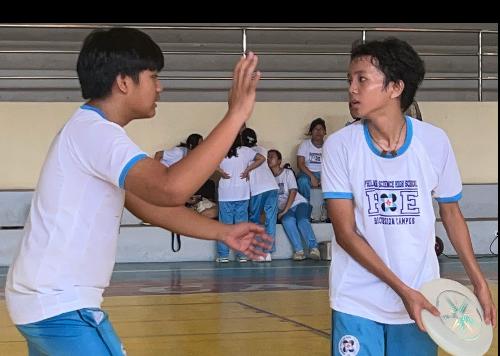
or to go out of bounds, the violation will be awarded to the player who has the last touch of the disc.
Since ultimate is a self-officiated game, the players themselves call for violations and settle disputes; therefore, they are expected to practice the “Spirit of the Game” or commonly referred to as sportsmanship and fair play.
Ultimate is a relatively simple and easy game for everyone to play. It is also much cheaper to play given that only one disc is needed. It is recommended to be played by everyone, particularly for people who want to try a new sport or an easy sport that can be played along with friends without having to worry about dealing with a skill curve.
FRIENDLY
”
FIRE Daevid
Micko Zape
“
SPORTS 18 The Bicol Scholar @thebicolscholar thebicolscholar.medium.com VOLUME XVIII - ISSUE NO. 1 Bicol Scholar The THE OFFICIAL PUBLICATION IN ENGLISH OF PHILIPPINE SCIENCE HIGH SCHOOL – BICOL REGION CAMPUS ISSUE XVIII NO. 1 | SEPTEMBER 2022-FEBRUARY 2023
ULTIMATE COMEBACK. A popular spor played by the scholars pre-pandemic times, ultimate frisbee takes a smooth comeback as scholars get to throw a disk, take an ofense, and make a score to victory in all free spaces on campus.
Lovely France Olaquer
BADMINTON’S RISE TO FAME
After a two-year hiatus from in-person learning, the fresh school year provided scholars with the prospect of fulfilling their sporting tendencies. Limited mobility of people has caused a lot of people to stop playing their loved sports. As the new school year opened last September 2022, a new breed of scholars entered the gates of a campus they knew so little about.
Fast forward weeks later, the school’s gymnasium grounds have been flooded by students playing badminton, a sport played by two people. Eventually, the sport’s popularity has dramatically skyrocketed, especially among scholars new to living on school premises.
This said trend raises the question of whether the pandemic impacted scholars’ sporting preferences. Among the policies implemented by the Philippine government to contain the COVID-19 virus was to only allow non-contact sports in moderate and low-risk areas around the country. With this said, badminton promotes minimum health standards imposed by the government. Its contactless nature helped it thrive during the pandemic along with the likes of cycling and tennis.
The unforeseen boom in badminton enthusiasts has indicated the arrival of a new wave of post-lockdown scholars. With basketball seemingly declining in interest with the new generation of students, badminton has taken the steps needed to become a major sport on campus. The simplicity of badminton stands out as one of the main reasons for its popularity. Aspects such as height and athleticism do not have a magnificent contribution in learning the sport as compared with the likes of basketball and volleyball, with repetition and proper feel for the racket being more critical.
Besides such reasons, being a non-contact sport provides a more recreational feel for players. Meanwhile, contact sports such as futsal and rugby dispense greater levels of
competitiveness and injury risks. According to Decathlon, a sports equipment company, badminton has numerous benefits among them being essential in helping one’s social being. Along with the cool air a typical school day afternoon provides, scholars are given a chance to unwind and enjoy quality time with friends by playing the sport, with the school being gifted with sufficient amounts of open spaces.
In an institution deeply immersed in science and technology, sports such as badminton have played a huge role in building up scholars’ social and sporting life in school. With the new school year, numerous changes around the campus environment have been noted—a shift in sports preferences being widely observed. With just a pair of rackets and a shuttlecock, students spend their much-deserved rest time serving and smashing after a busy day.
As badminton’s sphere of influence rapidly grew, two Grade 9 wonderkids shared their thoughts on the highly-acclaimed sport on campus. Francois Xavier Brehamel and Gian Marco Hinayon are both passionate lovers of the game they see as their go-to pastime.

In an interview, Brehamel looked back at events that made him love and cherish the sport.
“It was introduced to me by my friend, an athlete. That friend of mine brought me to his training center and there, I learned how to play badminton. Since then, badminton has become one of my favorites,” he explained.
Meanwhile, Hinayon emphasized the comfort the sport imparts to him.
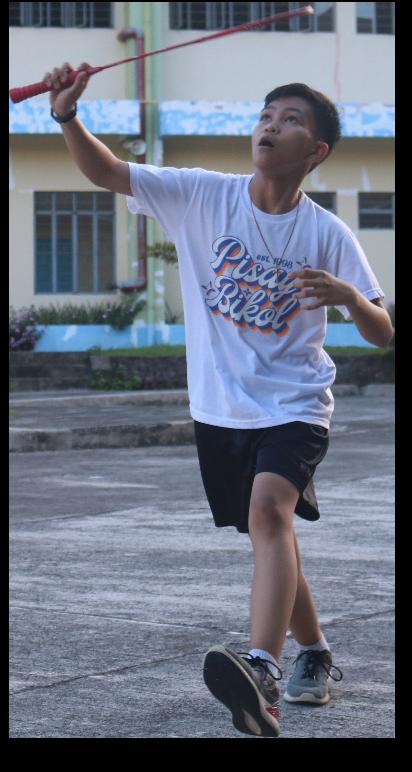
“Playing badminton provides me temporary relief from all my problems. Every time I play badminton, I am able to vent out my problems, my worries, and my grievances. Hitting those shuttlecocks serves as a medium for releasing my emotions.”
The emergence of badminton signals scholars’ inclination to a wide variety of sports


The game changer
Our country is brimmed with many talented athletes from different sports: the Ravena brothers, both are currently playing in Japan; Alyssa Valdez, arguably one of the greatest Filipino volleyball players; and Olympic gold-medalist Hidilyn Diaz, the Philippines’ most celebrated athlete due to her recent 2020 campaign that ended with a victory. There are many others who are talented or have the potential to be successful; however, they are not as successful due to the lack of proper training, resources, public support, and other factors.
It is easy to point fingers at the government for not allocating enough funding for athletes, but it is undeniable that resources are hard to be allocated, especially during the recession caused by the pandemic. Public support, on the other hand, can be encouraged through proper marketing, which is usually a product of success, development, resources, and public perception. Even with these factors, the success of athletes largely lies within their own development. If it is not prioritized, then all funds spent on other necessities of an athlete’s success will have been wasted.
There is a way for the development of athletes who will be much more efficient in resources and superior in terms of development over time: sports analytics, which is the application of data science and computer science within the sports industry.
Sports analytics play a huge role in determining the key strengths and weaknesses of players, which allows quick analysis for the improvement of players. There is a huge plethora of various statistics and metrics that players are measured with that can gauge various skills associated with their sport. An example of this is the Player Efficiency Rating (PER), which rates a basketball player’s contribution towards a single game. This is also great for creating a rapport on a player’s profile, thus allowing coaches and teams to investigate a player’s abilities before seeing them play. It can also note several key weaknesses of players that are not normally seen by simple observation, such as plus/minus rating which denotes a team’s performance when the player is playing or not.
Strategies also utilize analytics because the latter allows coaches to determine which strategies work better for their players, seeing that athletes perform differently depending on the coaching system. It is hard to determine using mere observation how well players perform within a system and how players impact the team within the system. Various comparative statistics will aid in determining what best works for players and how different systems affect players. There are various statistics on how well a team performs such as
“ ”
and that their skills and interests are not only in STEM-related fields. The question of the sport’s continued rise in the coming years will still be left unanswered. Among the numerous effects sports bring to the table, their ability to bring people closer together is something that was lost during the experienced periods of isolation. Badminton as a unifying force has
been proven as the school has reverted to fullblast in-person learning.
Shifts in sporting preferences do not matter as long as each one is given an opportunity to shine and have fun. New trends may sprout in the coming years, but the elements of unity and entertainment will still be deeply ingrained in upcoming sporting cultures.

STRENGTH IN NUMBERS: PINOY SUPPORT FOR EALA
hitting percentage, which determines a volleyball team’s success rate in attacks. Predictive modeling will allow management and teams to predict the performances of various players based on previous trends and current circumstances against various teams or strategies.
Analytics also allows coaches to make team construction more efficient because it can pre-determine the effectiveness of players, allowing them to construct the best possible roster for a team if a trial match cannot be performed. The statistics of a player compiled could be included in a report that can give the team and coaches a preconceived outlook on a player before seeing them play.
These are some analytics that teams can utilize to give their teams an edge given that such a technique is based on logic and statistics; this is most helpful for local teams, who traditionally base their analytics on mere observations that are usually not accurate. While collegiate teams indeed utilize some basic statistics, advanced metrics must be considered to allow more accurate and in-depth analyses that may be able to provide better conclusions and insights on team performance.
As an added flare to this method, it is not as costly compared to traditional strategies in analytics due to the usage of available analytics software.
However, as an added precaution to the usefulness and potential of statistics, these must be carefully utilized, as misinterpreted statistics can be detrimental to a team’s or coach’s decision. Furthermore, it must be noted that statistics is not the sole key to the development of players— it is instead just a powerful tool that can provide an opportunity for improvement alongside other strategies.
DESPITE A ROCKY START to the new year, Filipina tennis sensation

Alex Eala is still one of the young stars to watch out for in this year’s new tennis season. Bowing out of the W60 tournament in Canberra, Australia, she then suffered a comefrom-behind loss to experienced former world number 30 Japanese Misaki Doi in the Australian Open Qualifiers. Eala, dominating the first set of the match, saw a 5-2 lead squandered in the second set before losing in the tiebreak round. The game extended to a third set which ended her hopes of being the first Filipina to qualify for a main draw of an Australian Open.
Now, facing older and more experienced competitors, Eala’s age is seen by many as a glaring disadvantage; however, in the long run, her exposure to top-caliber competition increases her odds of being one of the top-ranked female players in the world. Despite her tender age, her calmness and composure on and off the court cover up for her lack of involvement in top-level grand slam tournaments.
Setbacks can be normal for athletes of all sports and 17-year-old Eala’s inexperience surely played a part in her losses. Despite this, the show goes on for the Quezon City-born player, with numerous tournaments coming soon
for her. A Rafael Nadal Academy scholar along with her brother Miko, Alex has put the spotlight on tennis in the country, a sport not much known by Filipinos until after her impressive performances in junior grand slam tournaments, even winning the 2022 junior singles title in the US Open.
A sport most commonly associated with the upper class in the country, Eala’s showings in various tournaments have escalated Filipinos’ interest in the sport. With her successes, more would surely be inspired to take the route of developing skills and interest in tennis.
Despite still being behind the likes of basketball and boxing, Eala’s rise can prove to be a game-changer in the development of the aforementioned sport. With the backing of some large sports moguls in the country, Eala now has the full support of the nation in reaching her aspirations of being a top tennis athlete.
In a single-player game such as tennis, the support of millions of Filipinos will be an undisputed advantage for Eala. With all the time, effort, resources, and facilities at her disposal, Eala is set for a colorful tennis career. It is essential that in her journey, Filipinos must understand that setbacks occur and that our nontoxic support would be vital in helping her and every Filipino’s dreams.
PLAYGROUND Kur Andrei Relorcasa
The development of sports analytics might be a simple step for many, but it can possibly be the giant leap our sport industry needs.
SPORTS 19 The Bicol Scholar @thebicolscholar thebicolscholar.medium.com VOLUME XVIII - ISSUE NO. 1 Bicol Scholar The THE OFFICIAL PUBLICATION IN ENGLISH OF PHILIPPINE SCIENCE HIGH SCHOOL – BICOL REGION CAMPUS ISSUE XVIII NO. 1 | SEPTEMBER 2022-FEBRUARY 2023
SPACES OUTSIDE THE GYM afer every school day get thronged by students playing badminton, which has risen to fame as students are now back to face-to-face classes.
Lovely France Olaquer
Strength in Numbers

Foul Park kneels to Siopau 21–14; Racers sufers blowout to Ped-X 21–4
RALLYING BEHIND ERIC FABIAN THIRDY Mendez’s near double-double (11 points, 9 rebounds), Siopau forces Foul Park to submit despite Denric Moses Camay’s lead contribution (7 points, 5 rebounds, 3 assists), with Kiertsan Sazon and Gabriel Merioles finishing the job with 8 points each and Ped-X destroying Racers (21–4) during a The Bicol Scholar-officiated 3x3 basketball scrimmage last December 14 at the school gymnasium.
Foul Park ignited the quiet scrimmage with a 4–0 lead through Camay and Sean Bueza’s quick open shots, which Mendez and Rix Bausa of Siopau quickly answered with multiple dishes to the inside, resulting in a tie within the first 10 minutes.
The score remained tight through Bueza and Camay, carrying the offense through their two-man game, which allowed the score to remain close, until Cedric Riñon increased his on-ball defense pressure that led to three steals, following a barrage of slashes towards the hoop. Mendez and Ewan Nehiloth Fernandez followed up with their own attacks and pass-outs, which Foul Park’s Noah Hagad tried to respond using the post; however, Riñon pressured him too much, resulting in multiple misses that Mendez, Bausa, and Riñon capitalized through grabbing multiple boards, ultimately giving way to a 21–14 victory for Siopau.
Ped-X commenced the game with Sazon’s jelly layups followed by Merioles’s hustle,
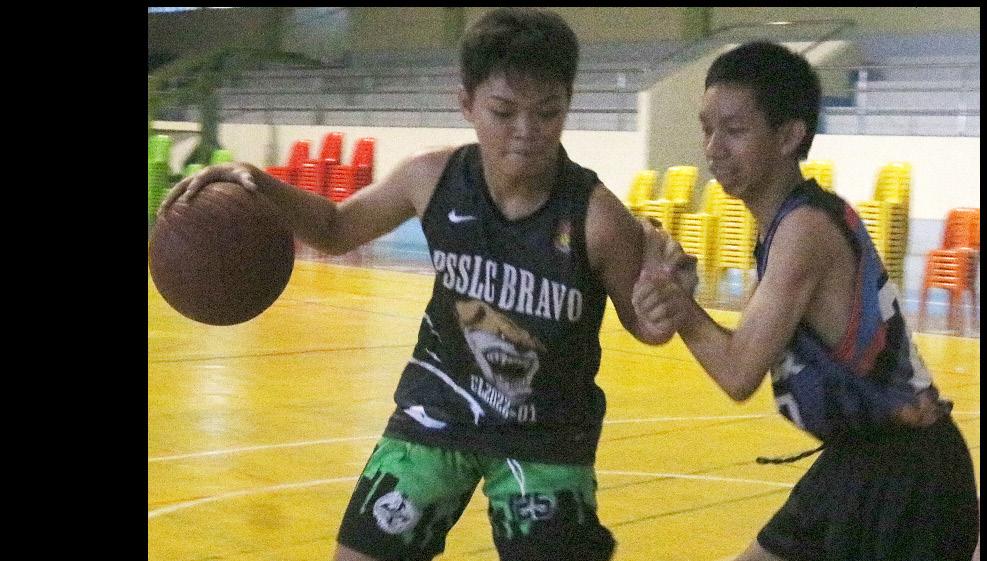
gaining a 5–0 lead early on. Racers’s Louiegi Navales attempted to initiate the offense, but Merioles quickly hounded him, stealing the ball four times, forcing him to move the ball resulting in more turnovers. Sazon and Merioles quickly took advantage of the disarrayed offense: slashing through the paint, followed by Sazon’s quick dishes to Benoni Berunio inside the paint, thus furthering the lead to 15–2.
Carlos Vito de los Santos pulled two shots, followed by multiple rebounds while Navales answered back with a deep two supported by Jahnmeir Del Rosario’s hustle plays, which earned the latter a couple of steals. Berunio and Merioles locked Del Rosario and Gio Salcedo, followed by Sazon

and Merioles’s rebounds, preventing them from having a chance to close down the gap, ending the match in a 21–4 blowout victory for Ped-X.
“Ano sila, mga players na strong offense kasi pag naiwan ng bantay madali sa kanila maka-score pero kahit nauulanan kami ng puntos nababawi agad dahil sa aming role player na si Cedric; nakaka-puntos agad kampi niya,” Mendez said, explaining on Foul Park’s performance.
“Sa offense kami kumulang, nu’ng last part ng laro na-sub si Navales para sa akin, mas nawala na tuloy ‘yung main scorer kaya tig-pursue ko na lang ang defense para at least matagalan mag-score kalaban,” Del Rosario inputted on his team’s performance.
CEDRIC & FRIENDS NOTCHED A COMEfrom-behind victory over Team Siopau in a volleyball exhibition match held last December 12, 2022, at this campus’s gymnasium.
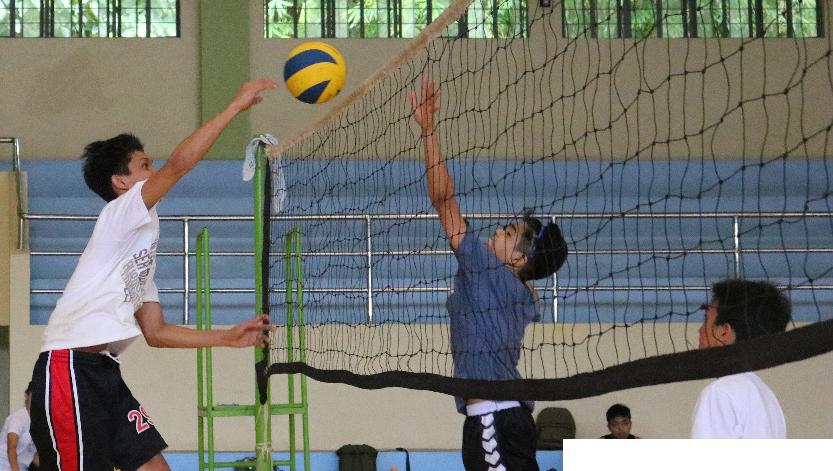
Unforced errors were the story of the first set, with Team Siopau drawing first blood 25–21 behind Ewan Fernandez’s four points and Franco Templonuevo’s three service aces.
In the subsequent set, Cedric Riñon led their team’s rally and recorded five points from attacks assisted by setter and team captain Luis Miguel Mayor. The lethal combination of the two was too much for Team Siopau as they gave away a two-point lead resulting in a 25–21 equalizer for Cedric & Friends.
With the game on the line in the third set, Mayor’s two crucial service aces proved to be the needed spark for their team to break away from Team Siopau’s late-game rally, beating them 27–25.
Mark Perez made his presence felt in the third set scoring three points to compliment Mayor and Riñon’s late-game heroics.
Leading the charge for the victors were Mayor and Riñon, both recording six and 10 points respectively. Meanwhile, Thirdy Mendez and Fernandez carried the offensive load for Team Siopau by both providing seven points.
According to Cedric & Friends Team Captain Mayor, unforced errors were the main culprit for their first set fall, where they recognized that they had faulty receives against the opposing team’s serves.

“During the second set, we adjusted accordingly to respond to the opponent’s serves. Once this problem was overcome, the very genius and oh-so-bright setter of the team ‘Cedric & Friends’ made strategic plays to ensure them a point,” he said.
Despite playing with a short rotation, Cedric & Friends managed to overcome the opposition’s depth.
“Them having a deeper player pool does not necessarily give them an advantage against us. Although three sets were played, adrenaline rushing within our team ignored the fatigue we were facing,” Mayor added.
With the participation of selected scholars, faculty, and staff in Ugnayan 2022 held last November 7–10 in Baguio City, the Philippine Science High School–Bicol Region Campus (PSHS–BRC) shares an overall second-place finish with three other PSHS campuses under the Blue Kallyaw cluster.
Ugnayan is a systemwide sports fest aimed at acquainting communities among the 16 campuses of the PSHS System. It was continued after almost three years of the pandemic with the theme “Breaking the Barriers of Stereotyping in Sports, Dance, and Music.”
A total of 40 delegates from BRC participated in the various sports and cultural contests where they garnered a total of 22 placements: 18 from sports events and four from cultural events.
In an interview, BRC’s campus coordinator for Ugnayan Mr. Mark Anthony Del Rosario shared that scholars, as well as employees, performed well in their respective events.
Particular feats during the Ugnayan are Grade 8 student Kiera Zapanta and Grade 10 student Ethan Mirabueno’s gold-medal victories in two separate badminton

events: badminton mixed doubles and badminton doubles men, respectively.
“All the efforts paid off. All the support of PSHS–BRC was not wasted, and I hope I have somehow brought honor to our school,” Zapanta responded when asked about her win.

Another highlight is the BRC chorale team’s second-place win in the employees’ Cultural Chorale Competition event. Chorale team member and English teacher Mr. Jerry Noveno shared that the high placement was unexpected yet very rewarding.
“[It] felt great, to be honest. It was like going back to high school once again,” he said.
Moreover, Technology teacher Rhayel De Los Santos also bagged a gold medal in the men’s table tennis doubles event while silver medals were also obtained from the employees’ team basketball event, the students’ 200-meter sprint for both men and women, the 3x3 basketball event, chess, and volleyball.
Ugnayan grouped the 16 campuses into four clusters, with BRC joining the Central Mindanao Campus, Cordillera Administrative Region Campus, and Zamboanga Region Campus in the Blue Kallyaw cluster.

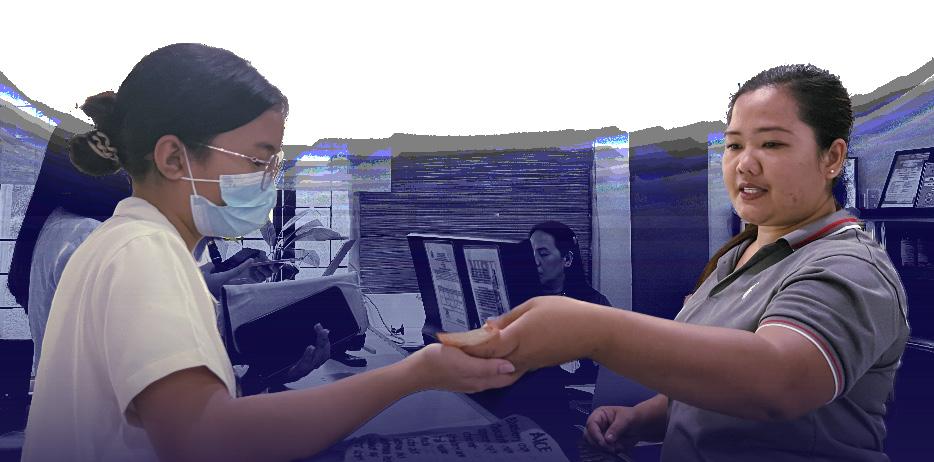
120 Grade 7 scholars to set foot on campus next school year For the first time in nearly 25 years, BRC has finally broken the custom of bringing in 90 scholars each academic cycle. Students Inflation The only thing worse than high prices is that they can go even higher. This prospect is what Filipinos have been living in fear of since the start of the decade; what buys a kilo of spices today may account for a piece tomorrow.
hype
the Horizon The wind blows again southwest, and stu dents’ laughs can be heard all throughout. As events are held and parties ensue, a new school year now begins to sprout.
When
hangs from
Despite a rocky start to the new year, Filipina tennis sensation Alex Eala is still one of the young stars to watch out for in this year’s new tennis season.
The weight of empty pockets Prices nowadays of the canteen’s products have been dealing a larger blow to our pockets. This is an event whose roots, if traced, lead to the downturn of the Philippine peso, causing what’s now known as “inflation”. One in a thousand: Dr. Marthe Gautier It’s simply sad how one-in-one-thousand, extraordinary women are snuffed out by men who seek to take their advancements for themselves. Now, we need to recognize and empower these women more than ever before.
what’s inside?
Lovely France Olaguer
Lovely France Olaguer
TUG OF WAR. Grade 11 Kiersan Zason of Ped-X dribbles the basketball and drives through Luigi Navales of Racers in an exhibition game held on December 14, 2022 at the school gymnasium.
BLOCK ATTEMPT. Paul Norman Occiano of Cedric and Friends atempts to block a spike from Ewan Nehiloth Fernandez during the volleyball exhibition held at the school gymnasium on December 12, 2022. Cedric and Friends won the volleyball match.
