Bikers of all ages hit the road






Since stepping into the role of publisher this year, I have had a lot on my plate. Running a company is entirely different from being one of its executives.
The best part of ownership is the autonomy — I no longer need clearance to launch new ideas and initiatives. The worst part, however, is the constant second-guessing. While I am lucky to have an exceptional team to strategize with and our retired founders as a resourceful sounding board, the reality remains: “The buck stops here.”

count, which limited our coverage. By combining both papers, we can provide even more information and resources to the readers of these two great communities. This region is deeply personal to me. My family originally emigrated from Germany to Baltimore in the early 1800s. My parents were both born and raised there, and some may say I still carry a few “Bawlmore” colloquialisms. It’s in my blood.
By Gordon Hasenei
We’re working on some exciting changes to better serve our readers. Among the many ideas we are considering, one is the easiest — and smartest — choice.
Next month, we will launch a new edition, one that merges the Baltimore Beacon with our Howard County Beacon. In the past, both papers were small in page
Being a military brat and a veteran, I have lived in many places and lost some of my accent, but rest assured, if you get me talking, my “hon” will come out sooner or later.
I have a soft spot in my heart for the O’s, and I still refuse to forgive Robert Irsay for moving my beloved Colts in the middle of the night.
When I was young, Howard County was just the rural farm area you drove through between Washington, D.C., and
The Beacon is a monthly newspaper dedicated to infor m, serve and enter tain the citizens of Howard County, and is privately owned. Other editions ser ve Baltimore, Maryland and Greater Washington, D.C.
Subscriptions are available via first-class mail ($50) or third-class mail ($20), prepaid with order. Maryland residents: add 6% for sales tax. Send subscription order to the office listed below.
Publication of advertising contained herein does not necessarily constitute endorsement. Signed columns represent the opinions of the writers, and not necessarily the opinion of the publisher.
Gordon Hasenei, Publisher, CEO
Steve Gurney, Associate Publisher
Margaret Foster, Editor
Kyle Gregory, Art Director
Roger King, Vice President of Operations
Advertising Representatives:
Jill Joseph, Steve Levin, M.K. Phillips
Ana Preger Hart, Assistant Editor
Tori Cleveland, Editorial Assistant
Stuart & Judy Rosenthal, Founders


The Beacon, 3720 Farragut Ave., Suite 501 Kensington, MD 20895
Baltimore. Much has changed over the decades. Howard County’s growth from a rural landscape to a highly affluent suburban county has been remarkable to watch.
My brother and his family live in Columbia, so I visit often and have witnessed this growth firsthand. Given that Howard County abuts Baltimore County, it simply made sense to combine the papers as geographic neighbors.
When we started the Howard County Beacon 16 years ago, it was our only publication focused on just one county. Over the years, it became apparent that this strategy limited our ability to provide as much compelling editorial as we wanted.
Moving forward, we continue to value our strong partnerships. Our collaboration with the Howard County Office on Aging & Independence remains important, and their newsletters will continue to appear
in this new edition as a useful resource.
Because our readers in both areas have been so loyal to the Beacon, we have decided to repay that loyalty with a more robust publication, packed full of compelling editorial content and relevant advertising.
So next month you may notice something different about the paper. It will have more pages than usual, which means more stories about fitness, nutrition, medical advances, clinical trials, technology tips, scam alerts, financial tips, travel destinations and local artists, authors and plays.
I hope you are as excited about the new Greater Baltimore edition as we are.

Readers are encouraged to share their opinions on any matter addressed in the Beacon as well as on political and social issues of the day. Mail your Letter to the Editor to The Beacon, 3720 Farragut Ave., Suite 501, Kensington, MD 20895 or email info@thebeaconnewspapers.com.
Please include your name, address and telephone number for verification.
Dear Editor Emeritus:
Your musical compositions are charming. As a creative type myself (basilandsage.substack.com), I have to admit that I’ve only listened to two or three of your lovely pieces, not because I’ve stopped, but because once I came upon “Pensive Stroll by a Playground,” I had to immerse myself, listening again and again.
Don’t think of this as too much of a stretch, but who can listen to one of Bach’s fugues once only? The palette of mood and emotion you portray in that little composition just sweeps me away. Bravo!
Of course, by the time you read this, I may have chosen another favorite. What a delight to know that there is more!
Thank you, Mr. Rosenthal, for sharing your talent and the things it discovers.
Jonathan Covington Via email

(301) 949-9766 • Email: info@thebeaconnewspapers.com Website: www.theBeaconNewspapers.com
Submissions:
Dear Editor,
This morning when I stopped at the
July 18+
grocery store, I picked up a copy of the Beacon
As I was thumbing through it, my eyes were drawn to the story on Robert Friedman, still writing books at age 92. It was his sweatshirt that attracted my attention, since it was a green alumni sweatshirt from my alma mater, Ohio University. I’d recognize it anywhere!
When I read the story, I couldn’t believe that the writer could make the mistake of saying that Friedman graduated from Ohio State!
I’m sure that if you check with Friedman, he’ll confirm that he graduated as a Bobcat, not a Buckeye. Or else if he did graduate from Ohio State, he decided to play a trick on all of you by wearing that Ohio University sweatshirt.
Bruce Goldberg Via email
From the Editor: You are absolutely correct. We will make that important change to the web version of the article.
Celebrate Native American culture at the 33rd Annual Whispering Winds Pow-Wow and Show, held on Sat., July 18 and Sun., July 19 at the Howard County Fairgrounds, 2210 Fairgrounds Rd., West Friendship. Enjoy dance performances, music, crafts, cultural activities and Native American food, including fry bread and buffalo stew. Gates open at 10 a.m. daily; the Grand Entry takes place at noon. Tickets are $15 for individuals 13 and older and $8 for children ages 3 to 12. For more information, contact Barry Richardson at (252) 532-0821 or powwow@vance.net.
“It’s as though I’m stepping from razor blade to razor blade.”
“It feels like my feet are under attack by fire ants.”
“Like I’m walking on wet paint with rolled up socks.”
And you’re in this kind of pain all the time.
“It’s relentless, keeping you up at night and preventing you from doing even the most mundane tasks. Things that I used to take for granted, like wearing shoes and going grocery shopping.
Two of my three children were getting married last year and I wasn’t even sure I was going to be able to attend their weddings,”
shares Rose W.
Rose was diagnosed with peripheral neuropathy in 2015, a degenerative condition affecting almost 5% of people over the age of 55.
“My doctor sat me down and said, ‘Rose I’m so sorry to tell you this, but you have peripheral neuropathy. I’m going to prescribe you gabapentin to manage the discomfort but overall, neuropathy is untreatable.’ My first thought was, ‘we can cure cancer but you can’t stop my feet from hurting?’ It felt like a cruel joke.”
While neuropathy can be caused by a number of things including diabetes
and chemotherapy, over 23% of neuropathy cases are classified as idiopathic. In layman's terms, the cause is unknown.
This was the case with Rose.
“Basically every question I had was met with an ‘I don’t know.’ It was depressing to say the least.”
Eventually, Rose was forced to quit her job because the numbness had started to set in and prevented her from driving.
Fortunately for Rose, she would see an article in the Baltimore Sun’s Best of Howard magazine featuring AIM Acupuncture & Integrative Medicine of Maryland and the work they were doing to treat peripheral neuropathy. “I thought it had to be a sham. After so many specialists told me there was no hope here was this doctor in the magazine saying she had a 90% success rate in treating neuropathy! I just had to call and I can’t begin to tell you how grateful I am that I did.”
Dr. Kristin Huza, DAC, founder of AIM Maryland, says that cases like Rose’s are incredibly common.
“Almost all of my neuropathy patients have been told at one point or another that there is no hope. I like to think I specialize in offering hope.”
To quote the New York Times,
“Chinese medicine proves itself where Western medicine fails.”
“Acupuncture has been treating complicated, chronic conditions like neuropathy for thousands of years,” shares Dr. Huza. “I start with a foundation based on this time-tested science and my two decades of clinical experience. I then tailor treatments based on a number of factors including the severity of your neuropathy, how long you’ve had it, whether or not there are any underlying factors, things of that nature. It’s because of these personalized treatment programs that we’re seeing such incredible results!”
Four months after treatment, Rose is back at work and thriving. “Being back at work isn’t even the most exciting part,” exclaims Rose. “Not only was I able to attend my son’s wedding, but I could walk down the aisle!
It was the most magical moment and I have Dr. Huza to thank for it. To think, I might’ve missed that.” Rose held back tears.
If you’ve recently been diagnosed with peripheral neuropathy, regardless of its cause, it’s time to call Dr. Huza and the staff at AIM Maryland.
Call (410) 730-5370 to schedule your very own comprehensive consultation. Visit AimMaryland.com to take advantage of their new patient offer, a $50 consult (normally $250).

For heart-healthy information, see page 8.
By Krishna Kumar
After Jeff, 82, lost his wife, his days grew quiet. He stopped meeting friends at a local diner because sitting there without her felt like a public announcement of his loss.
At home, the silence felt heavy. His loneliness deepened, and his interpretation of social events shifted. A missed callback from a friend, for instance, became proof that he no longer mattered.
Loneliness among older adults often develops from distorted or negative thinking patterns. Many people come to see themselves as burdens due to illness, disability or financial dependence, leading them to withdraw from others.
Many also fear that reaching out will be unwelcome or that they will be ignored, so they avoid social interaction altogether. Over time, loneliness becomes a vicious circle.
The good news is that cognitive behavioral therapy (CBT) has been shown to reduce loneliness by reshaping thought patterns.
The central premise of CBT is that events themselves do not directly determine how people feel or behave. Rather, it is the way individuals interpret those events that shapes their responses.
In other words, people are often disturbed not simply by what happens to them, but by how they think about it. Two individuals may experience the same event yet respond very differently because their interpretations differ.
In CBT, therapists help patients identify negative or distorted thinking and replace it with more realistic views.
For example, a lonely older person may believe that nobody wants to spend time with them. Rather than simply disagreeing, the therapist may ask the patient to examine the evidence for this belief. Research shows this method, which is similar to Socratic questioning, can reduce depression and anxiety.
When Jeff met with a therapist, she didn’t argue with his grief or minimize his loss. Instead, she prepared a plan combining cognitive work with practical reconnection.
First, Jeff learned to separate feelings from facts. “I feel forgotten” was true as a feeling, but not necessarily as a fact.
Second, the therapist and Jeff tried an experiment. He would send a short message to two old friends: “I’ve been thinking of you. Want to grab coffee this week?”
Jeff assumed they would ignore him, but within a day, both replied warmly and suggested a date to meet. The result didn’t erase his grief, but it showed him that reaching out is easier than he thought.
“Your brain predicted rejection; reality offered something more hopeful,” the therapist said.
Gradually, Jeff built a “connection portfolio:” one weekly breakfast group, one monthly volunteer session at the library, and two short walks with friends.
He also planned social outings for dif-
ficult weeks — especially anniversaries, when loneliness tends to surge. The plan included a “minimum dose” of connection: Even on low days, he would send one message and take one short outing.
After all, research shows that increased participation in enjoyable, meaningful activities improves mood. For lonely older adults, even small increases in social interaction can help dissolve feelings of hopelessness and isolation.
CBT helps patients recognize unrealistic or “all-or-nothing” thinking and develop greater emotional flexibility. Therapists often encourage patients to gradually reconnect with meaningful activities — exercise, hobbies, volunteer work, social gatherings or religious involvement. After several months, patients can break the cycle of loneliness.
This article was excerpted from the book Loneliness in Later Life: Causes, Consequences and a Path to Connection, available on Amazon (print $14.99, digital $10). Reprinted with permission.
By Adithi Ramakrishnan and Shelby Lum Ballerina Sara Mearns
was missing her cues.
She couldn’t hear what her dance partner was saying from across the studio. A New York City Ballet principal dancer, Mearns was late for her entrances because the music sounded too soft.
Without telling anyone, she finally made an appointment to get her hearing checked.
Mearns learned that she had hearing loss. After years of isolation, she got the tools to make sense of a world that had become muffled.
Now, she’s one of the first dancers with the New York City Ballet to wear hearing aids during performances.
“I feel like it’s a whole new chapter of my life,” Mearns, 40, said in an interview with the AP.
While hearing loss is common in older adults, it can happen at any age and can be caused by things like nerve damage, infection or head trauma. For Mearns, it may have been a blend of factors including genetics, medical conditions and ex-
posure to loud noise.
of hearing loss
According to the National Institutes of Health, less than a fifth of American adults aged 20 to 69 who could benefit from wearing hearing aids have ever used them. That’s due to lack of access, shame or embarrassment and just not knowing the symptoms.
“Hearing loss is often not detected by the person because what they can’t hear, they don’t know,” said Dr. Anil Lalwani, a hearing expert with Columbia University Irving Medical Center.
Still, “there are a lot of symptoms of hearing loss that are not hearing less,” said Dr. Maura Cosetti with Mount Sinai’s New York Eye and Ear Infirmary.
One thing to look out for is saying “what” more often, and not being able to hear friends and family in noisy settings like restaurants. Other symptoms include ringing, a sensation like something is stuck in the ears or conversations sounding muffled.
During the Covid-19 pandemic, Mearns couldn’t hear conversations when people were wearing masks.
“I realized that I was reading everybody’s lips to understand what they were saying,” she said.
Experts say to let a doctor know if you think you may be experiencing symptoms of hearing loss. They can help you connect with an audiologist or an ear, nose and throat specialist to get a hearing test.
Cosetti with Mount Sinai said the Mimi Hearing Test app can be a useful resource to get a sense of your hearing. Seeing a professional is the best way to figure out what’s actually going on — like whether your ears are just plugged up with wax or fluid.
Hearing aids fine-tune the sound signal that enters the brain, enhancing speech while lowering background noise. They can be expensive, but many are now available over the counter. Some Apple
AirPods also can be used as hearing aids. For more severe forms of hearing loss, doctors may recommend a device called a cochlear implant, which converts sounds into electrical signals that are sent to the brain. These include a surgically inserted component and can take months to get used to.
Mearns initially felt embarrassed to step into the booth for her hearing test, knowing she wouldn’t be able to hear all the words. Her audiologist, Dr. Marta Gielarowiec, helped her understand what she was missing and guided her to appropriate hearing aids.
“It’s definitely not a ‘one size fits all.’ There is a lot of adjustment, tuning and calibration involved,” said Gielarowiec, who runs a practice in New York. “Overall, the goal is to maximize the hearing that’s left.”
Addressing hearing loss can help boost mental health, improve communication
By Maureen Salamon
A nationally representative survey found that about one in four adults over age 50 take at least one supplement to improve their brain health with the promise of enhanced memory and sharper attention and focus.
The problem? There’s no solid proof any of them work.
“There’s no evidence to suggest there’s an ingredient in supplements that can improve brain health,” said Dr. Pieter Cohen, an internist with Harvardaffiliated Cambridge Health Alliance, whose research focuses extensively on dietary supplements.
“Nothing legally contained in supplements has been proven to improve your thinking or prevent memory loss.”
The main issue with all over-the-counter products is lack of regulation. The FDA doesn’t oversee product testing or ingredient accuracy; it just monitors for supplements that make health claims related to the treatment of specific diseases.
In the case of brain health, this means a supplement manufacturer can claim a product helps with mental alertness or memory loss — but not that it protects against or improves Alzheimer’s disease or any other form of dementia. Manufacturers don’t have to back up any claim that their brain health supplements are effective.
Even that level of oversight may diminish: The FDA announced in December 2025 that it is considering a rule change that would relax how often disclaimers must appear on supplement labels. That’s “a very important step in the wrong direction,” Cohen said.
“Consumers already face a slew of misinformation when they purchase supple-
From page 4
and slow cognitive decline for people at high risk of dementia.
When Mearns walked out of her audiologist’s office wearing her aids for the first time, she felt overwhelmed. She could hear the pattering of shoes on the ground, the chirping of birds across the street and the billowing of a flag a block behind her. Returning to her dressing room, she cried. She can now hear the full might of the
ments,” he said.
Real food is best
Many brain supplements contain omega-3 fatty acids (such as those found in fish oil), vitamin E, various B vitamins or other combinations. Why these?
There’s strong evidence that certain diets — like the Mediterranean diet, the Dietary Approaches to Stop Hypertension (DASH) diet, and the MIND diet (a combination of the two) — may help improve cognitive function. These diets contain foods with large amounts of the aforementioned nutrients.
But what’s not clear is whether it’s the combination of nutrients in these diets that’s beneficial, or whether it’s individual nutrients or certain amounts, or other factors entirely.
Researchers have tried to answer these questions by testing how these individual nutrients affect cognitive health. So far, the limited studies have found no evidence they help, with a few rare exceptions.
Still, this doesn’t mean that the brain supplements don’t work. It’s just that there isn’t much, if any, evidence from randomized clinical trials — the gold standard for research — on whether isolated vitamins or other nutrients improve brain health.
Here’s a summary of what science has found so far and what it means.
Omega-3 fatty acids help build cell membranes in the brain, and also may have anti-inflammatory and antioxidant effects that could protect brain cells.
There are three types of omega-3s. Eicosapentaenoic acid (EPA) and doco-
orchestra when she performs — and take phone calls in her ears.
The life she was living before, she said, was exhausting. At the end of every day she was tired from the strain of asking people to repeat themselves and missing out on conversations and the punchlines of jokes.
“I don’t want people to feel what I felt, where I was embarrassed and I was quiet about it,” she said. “Because now that I’m on the other side, I’m so happy.” AP
sahexaenoic acid (DHA) are found mostly in fatty fish like salmon and mackerel. Alpha-linolenic acid (ALA) is found in leafy green vegetables (Brussels sprouts, spinach), vegetable oils (canola, soybean) and nuts and seeds (walnuts, flaxseeds).
The best way to get high amounts of See BRAIN HEALTH, page 6
For free materials about area housing communities, just complete and clip this coupon and mail, or take a picture and email, to the Beacon.
o Brooke Grove (See ad on page 28)
o Charlestown/Erickson (See ad on page 8)
o Park View Colonial Landing (See ad on page 12)
o Park View Columbia (See ad on page 12)
o Park View Ellicott City (See ad on page 12)
o Park View Colonial Emerson (See ad on page 12)
o Residences at Vantage Point (See ad on page 1)
o Smell Test Study (See ad on page 9)
Name
Address
City State Zip
Phone (day) (evening)
Check the boxes you’re interested in and return this form to: The Beacon, 3720 Farragut Ave., Suite 501 Kensington, MD 20895 or take a picture and email to housing@thebeaconnewspapers.com

From page 5
EPA and DHA is by eating more fish, which is a staple in the Mediterranean and MIND diets, among others.
Studies have found an association between higher intake of fish and a lower risk of cognitive decline.
However, omega-3 supplements made from fish oil haven’t shown the same effect. Any benefit seems to come from a greater intake of fish and not from taking fish oil supplements.
“I’m not aware of any new evidence
about omega-3 supplements that indicates they’re brain-boosting,” Cohen said, “and I’m not prescribing or recommending them to patients.”
The fan-shaped leaves of the ginkgo tree are used in traditional Chinese medicine to treat all kinds of ailments. In the United States, the extract from the leaves is sold as a supplement commonly called ginkgo biloba. One of its main selling points is as a memory enhancer. However, as with other brain health supplements, the science doesn’t support the claims.

• Eye Care for All Ages • Specialists in Cataracts, Glaucoma, Diabetic Retinopathy and Macular Degeneration • Contact Lens Specialists • Plastic & Reconstructive Eye Surger

Full In-House Optical Depar tment Outpatient No-Stitch Cataract Surger y • Laser Surgery
MEDICARE ASSIGNMENT ACCEPTED
LENARD H. HAMMER, M.D., F.A.C.S.
GORDON LUI, M.D
SCOT T B. BECKER, M.D.
YI YUN ZHOU, M.D
VANESSA LIMA, M.D.
CRISTINA F. RO UILLER, O.D 410- 997-9900
8860 Columbia 100 Parkway, Suite 101, Columbia, MD

Join the listeners who make WAMU News the DMV’s top morning destination. From Morning Edition to 1A, thoughtful news meets calm, clear reporting.
YOUR LOCAL NEWS AND NPR STATION
Listen on air at WAMU 88.5, stream online at wamu.org, or ask your smart speaker to play WAMU.
One of the largest clinical trials that explored the possible link was the Ginkgo Evaluation of Memory (GEM) study. Researchers recruited more than 3,000 older adults (average age 79; 54% men) with normal cognitive function or mild cognitive impairment. Everyone was given either 120 milligrams of ginkgo or a placebo twice a day for almost six years. (This amount was chosen based on previous research.)
The results found that taking ginkgo biloba did not lower the overall rate of developing dementia.
The question remains: with no evidence, why do people still buy brain-
health supplements? A major reason seems to be that it’s easier to take a pill than to make lasting lifestyle changes. Instead, invest in doing more exercise and following a plant-based diet. These can help with memory and brain health in the long term more than any supplement.
“Because manufacturers can advertise without any evidence to support it, you really can’t rely on any of the claims made on the bottle,” Cohen said. “If you’re still interested in using one, talk to your clinician and, with their help, look at the evidence together.”
Maureen Salamon is executive editor of Harvard Women’s Health Watch. © 2026 Harvard University. Distributed by Tribune Content Agency, LLC.
This free speaker series, taking place in July, brings together leading experts in neurological conditions to share new research, treatments and insights for individuals living with a neurological diagnosis or supporting a loved one. Learn how to prepare for neurology appointments, how the circadian rhythm affects health, the power of laughter, about the Brain Injury Project, among other topics. All talks take place at 5570 Sterett Pl., Suite 303, Columbia. Register at neurorehabnetwork.org/summer-speaker-series. For more information, call (410) 656-2622 or (410) 645-1011, or email dorinda@renewspeech.com or julie@neurorehabnetwork.org.



With Tom Smith, Regional Manager, Business Development, Family & Nursing Care
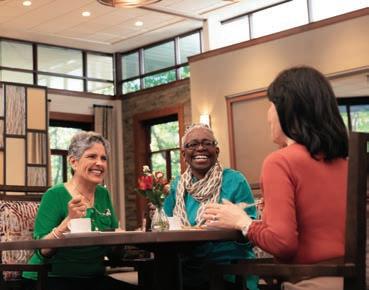
Summer travel offers a wonderful opportunity to spend time together, create lasting memories, and enjoy a change of scenery. When traveling with an aging loved one, a little extra planning can help ensure the experience is not only enjoyable, but safe and comfortable for everyone involved. Whether you are planning a weekend getaway or a longer trip, thoughtful preparation can make all the difference.
Before traveling, take time to consider your loved one’s specific needs and preferences. Review medications and pack more than enough for the duration of the trip, along with a current list of prescriptions and important medical information. If your loved one uses mobility aids such as a walker or wheelchair, confirm that transportation and accommodations can support those needs.
It is also helpful to schedule travel during times of day when your loved one typically feels their best, and to build in time for rest breaks along the way. Choosing familiar foods, staying hydrated, and maintaining elements of a regular routine can help reduce stress and support overall well-being.
Travel often introduces new environments, which can increase the risk of falls or confusion.
Simple steps can go a long way in promoting safety. Request accessible hotel rooms, check for features such as grab bars and adequate lighting, and minimize clutter in living spaces.
If your loved one is living with cognitive changes, consider bringing familiar items from home, such as a favorite blanket or photos, to create a sense of comfort in an unfamiliar setting. Maintaining a consistent daily rhythm can also help reduce anxiety and disorientation.
For many families, one of the most effective ways to ensure a smooth trip is to have a professional caregiver travel alongside their loved one. A caregiver can provide handson assistance with personal care, mobility, and medication reminders, while also offering companionship and reassurance throughout the journey.
“Travel should be an opportunity for families to connect and enjoy time together, not a source of stress,” said Kelly Salb, Vice President of Client Services at Family & Nursing Care. “Having a dedicated caregiver present allows clients to travel more safely and comfortably, while giving families peace of mind and the ability to fully enjoy the experience.”
you leave home. Having access to reliable, flexible support can help ensure continuity, whether you are traveling locally or long-distance. At Family & Nursing Care, we can arrange for experienced caregivers to accompany clients on trips, offering the same high level of support they receive at home. Our team is available 24/7/365 to help coordinate care that fits your plans and preferences.
With the right preparation and support in place, summer travel can be a positive and enriching experience for both older adults and their families. By planning

ahead and prioritizing safety, comfort, and flexibility, you can focus on what matters most: spending meaningful time together. To learn more about how Family & Nursing Care can support your travel plans, call 410-697-8200 or visit our website at familynursingcare.com.
Care needs do not pause when
By Howard LeWine, M.D.
Q: I thought heart attacks are caused by sudden complete blockage in a heart artery. But my father’s happened because his blood pressure suddenly got too low. Are there different types of heart attacks?
A: Yes, there are different types of heart attacks. Most often the underlying problem is the same. One or more of the coronary arteries (the vessels that supply blood to the heart) have some or often a lot of fatty plaque buildup. During a heart attack, not enough oxygen-rich blood — or none at all — gets delivered to an area of the heart.
There are two different mechanisms that cause this compromised blood flow. Doctors define them as type 1 and type 2 heart attacks. The distinction is important because they may be treated differently.
Type 1 heart attacks: With a type 1 heart attack, the cap over a plaque deposit ruptures and releases chemicals that trigger the formation of a blood clot. The clot blocks the artery, interfering with blood flow to part of the heart.
Type 2 heart attacks: A type 2 heart attack does not involve a ruptured plaque. Instead, it happens when there is a mismatch between the amount of blood a portion of the heart muscle needs and the blood supply in the coronary artery
feeding that area of the heart.
The trigger for a type 2 heart attack can be a condition that puts extra stress on the heart, like the flu or pneumonia, an abnormal heart rhythm resulting in an accelerated heart rate, or a sudden drop in blood pressure.
With any concern for a heart attack, the doctor will immediately order an electrocardiogram (ECG) and a blood test to measure levels of troponin, a protein in heart muscle cells that spills into the bloodstream when any type of heart damage occurs.
Doctors look for high troponin levels and certain changes in the electrical pattern on the ECG to make a diagnosis. Both tests are used because either one can be normal or show only minimal changes in the earliest stage of a heart attack.
If you’re diagnosed with a likely type 1 heart attack, the doctor will probably send you to the cardiac catheterization lab for angioplasty and stent placement to restore blood flow to the injured heart muscle and minimize permanent damage.
For a type 2 diagnosis, the goal is to improve the balance between blood supply and demand. It’s important to address any medical problem that stresses the heart, such as an infection, an abnormally fast heart rhythm, or low blood pressure.
Q: My brother was diagnosed with
an aortic aneurysm. Do I need to be tested to see if I have one?
A: The aorta is the thick-walled vessel that carries blood from the heart’s left ventricle to the rest of the body. It curves up and over the heart in a gentle arc, narrowing slightly as it extends down through the center of the body.
As with most heart problems, smoking and high blood pressure can heighten the risk of problems with the aorta.
But so can genes and certain medical conditions, which can weaken the wall of the aorta. As a result, the aortic wall may tear (aortic dissection) or bulge outward (aortic aneurysm) and possibly rupture.
About three-quarters of all aortic aneurysms occur in the center of the body, below the kidneys. Known as abdominal aortic aneurysms (AAAs), most grow very slowly and don’t cause any symptoms. But an undiscovered one can expand rapidly and burst with little warning.
Aneurysms in the chest area (thoracic aortic aneurysms, or TAAs) are classified by location.
Those in the descending aorta (the section after the arch of the aorta) are more common in older people who smoke and have high blood pressure.
Aneurysms in the ascending aorta (the section closest to the heart) usually
occur in younger people and may be linked to certain genetic conditions, including a bicuspid aortic valve, in which the valve has only two flaps instead of the usual three. About one in every 100 people has a bicuspid aortic valve, and half of them have an enlarged aorta.
You should ask your doctor about getting a screening test to see if you might be developing an aortic aneurysm. But which test you might need depends on the location of your brother’s aneurysm.
Screening for an abdominal aortic aneurysm involves a simple abdominal ultrasound, which the guidelines recommend for people at greatest risk: (1) anyone with a family history of an AAA, and (2) men ages 65 to 75 who smoked.
A heart ultrasound (echocardiogram) or CT scan can be used to screen for a TAA. You should be tested for a thoracic aortic aneurysm if you:
• have a bicuspid aortic valve; have had a bicuspid aortic valve replaced; or have a parent, sibling or child with one
• have had surgery to replace or repair an aortic valve before age 70
• have a parent, sibling or child who has a thoracic aortic aneurysm or who has experienced a rupture of an

By Margaret Foster
When people have Alzheimer’s disease, an estimated 20% to even 50% suffer from hallucinations and delusions; that is, they see or believe things that aren’t real or true.
It goes without saying that these symptoms are upsetting for not only the patient but everyone around them.
“These symptoms can be distressing for both patients and their caregivers. Researchers are studying whether this medication can safely help manage these symptoms and improve quality of life,” said Ronke Awojoodu, CEO, founder and research director at Patient First Clinical Trials in Lutherville, Maryland.
Fortunately, a new drug is being tested that could help. Manufactured by MapLight Therapeutics, a biotech company based in Redwood City, California, the drug passed
From page 8
aneurysm or an aortic dissection
its phase one safety trials two years ago and is now in phase two of development.
The clinical trial is underway in 40 locations, including in countries like Canada, France and South Korea. One of them is right here in our area: Patient First Clinical Trials on York Road.
“This study is evaluating whether an investigational medication can help reduce hallucinations and delusions in people living with Alzheimer’s disease,” Awojoodu said.
The study requires seven in-person visits. Patients and their caregivers go to Patient First Clinical Trials to take the study drug. Free parking is available, and, for people without a car, free transportation (a ride from Lyft) is provided.
They’ll take a pill once a week for
seven weeks. The study is “double-blind,” which means neither the patient nor staff know if the pill contains the drug or a harmless placebo.
After the seven weeks, staff will follow up with a phone call.
trial?
If the drug successfully reduces symptoms, Awojoodu said, it could change the future for Alzheimer’s patients.
Patient First Clinical Trials has other studies underway now for conditions like high blood pressure, diabetes, allergies,
asthma and COPD. Participants can make a big difference.
“Every treatment available today exists because someone chose to participate in a clinical trial,” she said.
“By taking part in this study, participants and their families can help researchers learn more about Alzheimer’s disease psychosis and contribute to the development of future treatment options. Their participation may help improve care for future patients and families facing similar challenges.”
For more information, email info@pfctrials.com or call (410) 832-3968.
For additional consumer health information, see health.harvard.edu.
© 2026 Harvard University. Distributed by Tribune Content Agency, LLC.
• have Marfan syndrome, Loeys-Dietz syndrome, vascular Ehlers-Danlos syndrome, Turner syndrome or certain other genetic conditions.
Ongoing smell loss may be one of the most important signals of brain health as we age.
A new study from The Michael J. Fox Foundation for Parkinson’s Research is exploring this link. We’re calling on everyone with and without Parkinson’s to request a simple scratch-and-sniff test and contribute to important research.
Request your test at
or scan the QR code.
Request your test at 877-525-PPMI (7764) mysmelltest.org/beacon or scan the QR code.
All Bluelene products contain Methylene Blue, clinically proven* to improve skin on the cellular level and repair aging damage.
• Doubles collagen and elastin production
• Boosts density and hydration of skin cells
• Outperforms retinol without irritation
• Protects against sun damage
• Smoother skin after just a few applications

Face & Neck Remodel Mask
lifts sagging neck, reduces undereye creases and smooths wrinkles and crow’s feet. In a study, 94% showed overall skin improvements, 86% showed fine line/wrinkle reduction, 88% showed smoother skin, 0% experienced skin irritation.


By Ed Warner
At age 84, former triathlete Sadj Bartolo is slowing down — but only slightly.
Over her athletic career, Bartolo, of Columbia, has participated in 13 triathlons, where competitors typically swim one mile, bike 25 miles, then run six miles. She even won two Half Ironman competitions in her age group, completing a daunting one-mile swim, 56-mile ride, and 13-mile run.
In a recent interview, Bartolo said she gave up competitions 10 years ago, when “it stopped being fun.”
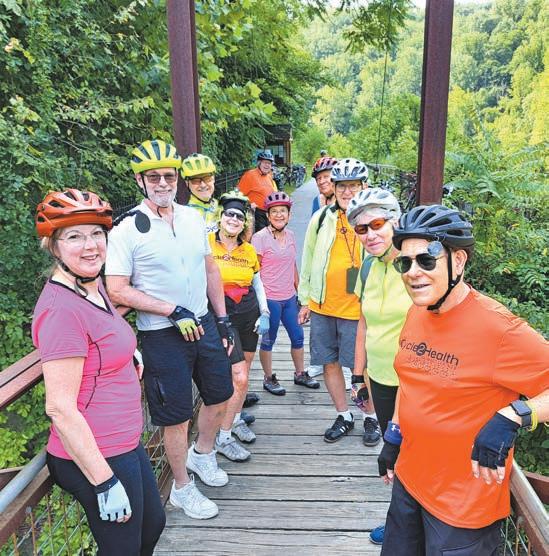
This year, for the first time, she’s cutting back a bit more. She no longer leads the longest rides in her Howard County biking group, Cycle2Health; now she leads rides less than 20 miles.
That’s not to say she’s cutting back on her riding of 60 miles per week, largely on Howard County roads.
Bartolo was among the early competitors in triathlons, which emerged in California in 1974. She competed in her first “tri” 45 years ago in Washington, D.C., and later moved up to running marathons, competing in about 13, including the New York City Marathon and Twin Cities Marathon.
Bartolo said she didn’t bike much as a child — she grew up in New York City — but that she fell in love with cycling after her dad gave her a bike as a graduation present after nursing school in Wisconsin. She later spent much of her career as a nurse in the D.C. area.
She got into triathlon and marathoning because it was “something different,” she said.
“I was never into my [race] times; I was just into participating,” she said. “I was just doing it for me; I was never competitive.”
Typically, a triathlon begins with the swim, then transitions to the bike ride and ends with the run, placing what might be the most dangerous — and often least popular — of the sports first, for safety.
“The training is hard,” Bartolo admitted. “You have to be comfortable doing that distance swim and then bike and then run, and after biking, your muscles are [saying] they don’t want to do this.”
Bartolo’s approach focused on endurance, both physical and mental. When a race became unbearable, she said, her trick was to tell herself, “You are never going to do this race again; this is it.”
Another mantra was: “This is not my job; there’s no reason to do it if I’m not enjoying it.”
Nonetheless, she persisted, and had a long triathlon career, racing until she was 74.
“I did it longer than a lot of other people,” she said. “I kept doing it until I was pretty old, and not that many other people were doing it.”
Although she used to run 20 miles per week, Bartolo now no longer runs at all. Instead, she walks three to five miles weekly, a change she said simply reflects how one must revise one’s expectations with age.
She said she likes the motto “Do what you can, when you can, with what you have.” In her case, that means using knees and hips that haven’t been replaced, though, she admits, “my knees get grouchy sometimes.”
Looking back on her triathlon career, Bartolo said, she hardly remembers what attracted her to those grueling races in the first place, except that “I like to bike.”
Bartolo still loves cycling. She and husband Bob, also a former triathlete, once biked 100 miles each day on a threeday charity ride that took them from Raleigh, N.C., to Washington, D.C. She’s also done multi-day bike trips in Spain and Ireland.
Locally, her favorite ride is the B&A Trail, often starting at Bruster’s Ice Cream on Aquahart Road in Glen Burnie
This group for caregivers of adults meets online on the third Monday of each month from 7 to 8:30 p.m. Discussions focus on everyday issues, including stress management, resources and caregiving techniques. For registration information and the link, contact Karen Hull at (410) 313-7466 or khull@howardcountymd.gov or Elaine Widom at (410) 313-7353 or ewidom@howardcountymd.gov.
CaringMatters has openings for members in the following grief support groups, offered at no charge: adult sibling loss (Tuesdays at 7 p.m.) and spousal/partner loss (Wednesdays at 7 p.m.). The meetings take place on Zoom. For more information and to sign up, email brandonb@caringmatters.org, call (301) 869-4673 (ext. 107) or visit caringmatters.org/supportgroups.
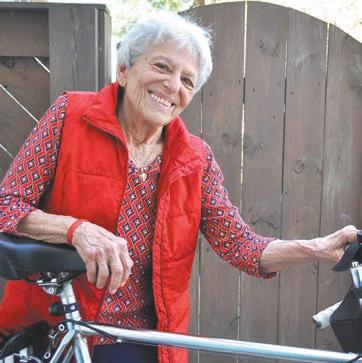
and riding 23 miles to Annapolis and back. Bartolo feels so warmly about cycling that she gave her bike a pet name, Xadina (“she-dina”), Maltese for “little monkey.”
“I always name [my bikes], and I talk to them,” she admitted. Xadina is a racing-type bike with narrow tires, “and she doesn’t like to go off-road.”
Bartolo’s motto of “do what you can with what you have” is reflected among other equally determined riders in her cycling group. Fellow biker Meme de Carvalho, also 84 — and, like Bartolo, a petite ball of energy — returned to cycling after being sidelined by an accident so severe it would likely have caused many other cyclists to never pedal again.
In 2008, de Carvalho hit a pothole on an 18-mile ride from Columbia to Baltimore. She spent a month in the hospital and a month in physical therapy afterward.
Nonetheless, she returned to cycling — only to be hit by a car while cycling in 2024, a crash that, she said, frightened her even more than the 2008 event.
“I was trembling. That woman almost killed me,” de Carvalho recalled. She is still cycling, but now she tries to stick to Columbia paths and avoids roads.
“Biking is the best thing for my health,” she said.
Bartolo and de Carvalho ride with Cycle2Health, a riding club sponsored by Howard County’s Office on Aging and Independence. From May to November, the club rides on Tuesdays and Thursdays on routes of up to 12 miles, 12 to 20 miles, and 20 miles and more.
The program, in place since 2013, usually has between 125 and 155 riders, who find it improves their health and independence and helps build friendships, said Cycle2Health Coordinator Rachel Filar, a county employee.
“One thing that consistently stands out is the camaraderie among the riders,” Filar said. “Every end-of-season celebration feels close-knit, with everyone eager to catch up and talk.”
Despite its name, Cycle2Health isn’t a rehabilitation program. A recent survey found many Cycle2Health riders want to participate in rides of more than 12 miles. Some bikers in the program are in their late 80s.
Bartolo said she’ll keep hitting the bike trails for as long as possible, no matter her age.
“I’m basically a rebellious person,” she said. Cycle2Health costs $15 per year. Helmets are required for all rides. For more information, visit howardcountymd.gov/ aging-independence/cycle2health.
Know someone who should be featured in the Beacon ? Send your idea to info@thebeaconnewspapers.com or call (301) 949-9766.


Learn the art of complaining well. See story on page 12.
By Rachael Green
Although the amount insurers pay out on home and car insurance claims has plummeted, the cost of your premiums have soared, according to a recent analysis by the Vanderbilt Policy Accelerator.
At a time when insurance companies are warning of the need for further rate hikes amid worsening climate change and the rising cost of home and auto repairs, this study says that they may already be charging most Americans far more than they need to remain solvent.
How did the study determine what portion of the premiums Americans pay was excessive? Where is all that extra money going if it’s not going to claims?
Most importantly, what can you do to cut your home and auto premiums at a time when all of your other bills are going up as well? Here’s what you need to know.
Rate setting in the insurance industry is a complex and not very transparent process. Every company has its own set of risk factors and its own methodology for rating that it’s reluctant to share with the public. Moreover, every state has its own set of rules around what insurers can and can’t use when setting those rates. Some states even require companies to submit rate proposals to the state insurance commissioner for approval before raising premiums at all.
With that complexity in mind, what exactly did this analysis measure, and how did it determine what portion of premiums constituted an overcharge?
The Vanderbilt study, which was obtained exclusively by the Associated Press, looks specifically at what’s called the loss ratio, or the gap between the
amount insurers charge policyholders in premiums and the amount they pay out in claims every year.
For every dollar earned in premiums in 2024, the study says, companies paid out just 62 cents on claims on average. That’s down nearly 20 cents since the 1990s, when companies averaged about 80 cents per dollar in claim payouts.
If the loss ratio in 2024 had instead been at that 80-cent level from years prior, Americans would have saved a combined $150 billion in that year alone.
According to the study, that $150 billion per year is going toward “corporate perks, corporate jets, stock buybacks, excessive executive compensation, excessive dividends, excessive advertising and excessive agent commissions.”
Insurance companies argue that’s not the case.
“Current loss ratios reflect the impact of enormous financial losses over the last several years and the steps insurers have taken [to] maintain and restore financial strength so funds are available to pay future claims,” Don Griffin, vice president for policy and research at the American Property Casualty Insurance Association, told AP in an email.
The Vanderbilt study proposed a set of federal regulations to enforce a standard loss ratio for insurers nationwide in order to prevent excessive premiums.
Right now, the insurance industry is regulated primarily at the state level, meaning the level of regulatory protections you enjoy depends almost entirely
INSURANCE, page 13
Dear Savvy Senior,
I keep hearing about AI in the news and how it’s being used in scams. I’m not very tech savvy and find it confusing. What should I know to protect myself?
—Cautious Senior Dear Cautious,
You’re not alone. Many older adults are asking the same question. Artificial intelligence, or AI, is becoming part of everyday life, from smartphones and internet searches to banking and customer service.

By Jim Miller
It’s also making scams more convincing and harder to spot, which is why a basic understanding helps. The good news is you don’t need to be a tech expert to use AI safely and with confidence.
Know the basics
AI is technology that can create and analyze information in ways that seem human. It can write emails, answer questions, recommend products, generate images and even mimic voices. While this can be helpful, it also means things you see or hear online may not al-
ways be accurate. If something seems unusual or too good to be true, take a closer look.
Use it wisely
A good way to get comfortable with AI is to start small. Many smartphones include voice assistants like Siri or Google Assistant that can set reminders, check the weather or answer questions. You can also try tools like ChatGPT or Claude to explain a news story, suggest recipes or help draft an email.
AI can also be useful for everyday tasks like comparing products, planning trips or organizing a to-do list. Think of it as a helpful assistant, not a decision-maker. Keep in mind that AI isn’t perfect. It can give answers that sound confident but may be outdated or incorrect. For important matters like your health, finances or legal issues, always double-check with a trusted source such as your doctor, bank or government website.
Take time to verify
Scammers are using AI to make their schemes more convincing. You may re-
ceive an email that appears to be from your bank or Medicare or a phone call that sounds like a family member. Be especially wary of urgent messages that pressure you to act quickly or warn that your account will be closed.
The most important habit for avoiding scams is to slow down. If you receive a suspicious call, text or email, stop and assess the message. Don’t click links, download attachments or respond right away. Instead, contact the company or person directly using a phone number or website you trust — not the one provided in the message.
Scammers now use AI to mimic voices and write convincing messages. Even if something sounds like it’s from a family member, friend or company, verify it another way before taking action.
Never share sensitive information like your Social Security number, bank details or passwords unless you initiated the contact and trust the source.
Remember, banks and government agencies, including Medicare and Social Security, will not ask for this information by phone or email. Urgent requests for payment by gift card, wire transfer or cryptocurrency are also red flags.
For added protection, use two-factor
authentication, and keep your devices updated. You can even consider call-blocking services from your mobile service provider.
If something doesn’t look right, take time to check it or ask a trusted friend or family member before responding.
Technology is always changing, but there are ways to stay informed. Many libraries and senior centers offer free classes on digital skills and online safety. Trusted resources like AARP’s Fraud Watch Network (aarp.org/fraudwatch) and the Federal Trade Commission (consumer.ftc.gov) also provide up-to-date scam alerts and protection tips. In addition, internet and mobile provider Cox Mobile (cox.com/mobilesafety) offers a library of research, tips and online safety tools to keep you informed and secure online.
AI may seem complicated at first, but a little awareness goes a long way. By staying cautious and building a few smart habits, you can protect yourself and make this technology work for you.
Send your questions or comments to questions@savvysenior.org or to Savvy Senior, P.O. Box 5443, Norman, OK 73070.
By Kevin Brasler and Jennifer Barger
There’s much to complain about in modern life, from flights that depart five hours late (or not at all) to deliveries that don’t arrive to repair services that fail to fix stuff.
Yet few of us — studies indicate it’s about one in four — complain to the companies that did us wrong.
“If you don’t complain, the company can’t make amends, and the problem will persist for other consumers,” said Robin Kowalski, a psychology professor at Clemson University who has extensively studied complaining.
The trick is to complain effectively and diligently follow up. Here are ways to get what you want:
Go to the top
To get results, let the company’s owner
or a manager know you are dissatisfied.
With a large business, start with the customer service team, and remain polite. If that doesn’t work, get the email address or phone number for the company’s CEO or president. Although the company’s big cheese probably won’t handle your complaint personally, their staff will likely find someone who can help.
“It’s usually about sheer persistence — stay on the phone with customer service, keep asking for the manager’s manager,” Kowalski said.
Succinctly explain the problem
Complain in writing, stating the facts as you view them, why you feel entitled to relief, and how the company can make amends.
Keep your request short — and reasonable. For example, don’t ask for a full re-
fund on a home improvement project if four out of five tasks were performed correctly.
Be firm but polite
Use firm language but avoid threats.
Even if you believe you were intentionally cheated, don’t use words like “crook,” “criminal,” “incompetent” or worse. If you speak rudely or unreasonably, what could have been a calm (and quick) resolution escalates into a feud.
Charly Rok, a New York marketing executive, recently stayed in a hotel where the hot water stopped working. Though she told the front desk, the problem wasn’t fixed quickly enough for her to shower before a big meeting. Later, she asked to speak to a manager.
“I was complimentary of the hotel and the staff and then shared that there was no hot water on the last day of my visit,”
The Greens at Hammonds Lane - 410-421-7223
Park View at Furnace Brance - 227-240-6288
Park View at Severna Park - 443-940-6735
Ednor Apartments 1 - 443-903-2847
Ednor Apartments 2 - 443-407-8882
The Greens at Irvington Mews 1 - 227-240-8179
The Greens at Irvington Mews 2 - 240-209-4809
Park Heights Place - 410-210-4889
Park View at Ashland Terrace - 443-233-0366
Park View at Coldspring - 443-238-0106
Cove Point Apartments 1 - 227-240-8710
Cove Point Apartments 2 - 240-981-5172
Evergreen Senior Apartments - 443-232-0241
The Greens at English Consul - 443-241-7976
The Greens at Liberty Road - 443-241-5393
The Greens at Logan Field - 844-431-2949
The Greens at Rolling Road - 443-280-9913
Park View at Catonsville - 240-303-8481
Park View at Dundalk* - 443-296-5284
Park View at Fullerton - 240-732-1542
Park View at Miramar Landing - 443-278-2376
Rok said. “The manager apologized, sympathized and added points to my loyalty program equivalent to a single-night stay.”
Document everything
When complaining in writing, provide copies of relevant documents or photographs.
“Have your ducks in a row before you approach someone — your receipt, your contract, the date you bought that gadget and the date it broke,” Kowalski said. “The more specific you are, the more likely you are to get a favorable response.”
Another option is to post your complaint — and your desired resolution — on social media sites and tag the business. This forces the company to decide whether it wants to attract good or bad publicity from your dispute.
Many companies have staff who monitor social media to resolve complaints quickly and show how responsive they are to customers.
That’s what Lawrence Luk, a photographer in the San Francisco Bay Area, did when his internet service was mysteriously out for two days
“I couldn’t get through to the provider’s customer service,” he said. “So I made an Instagram story and tagged them, and heard back in a few minutes. Not only did the company give me a discount that month, they explained what was happening.”
If you paid by credit card, you’re in luck. The federal Fair Credit Billing Act and the policies of credit card issuers provide enormous leverage by allowing you to withhold payment for goods and services you believe are defective or not delivered as promised.
After you’ve tried unsuccessfully to resolve the matter with the service provider, contact your credit card bank to dispute the charge (you usually can do this even after you’ve paid the bill).
Once you’ve requested this “chargeback,” your credit card bank will place a hold on the disputed charge and investigate. The service provider can protest the chargeback, but sellers rarely successfully reverse chargebacks if the customer has returned (or tried to return) the goods or can document the service defect.
Another option is to file a complaint with a government consumer agency. Consumer protection offices have legal authority over many types of businesses. Staff might go beyond resolving your complaint; they might get the merchant to agree to change business practices and/or provide relief to additional aggrieved consumers; or they might force
From page 11
on which state you happen to live in.
Aside from waiting for federal regulations or moving to a state with stronger consumer protection laws, what can you do to keep your insurance premiums under control?
The most important step you can take is getting new quotes for your home and car insurance ahead of every renewal.
Loyalty doesn’t pay in insurance anymore. Any loyalty discount you may be earning for sticking around is unlikely to outweigh the incentive pricing insurers offer to woo new customers.
In the worst-case scenario, shopping around for new quotes every year will just confirm that your current price is the best you’re going to find. In the best case, you could save hundreds every year for the exact same coverage.
Aside from switching your insurance every time you find a deal, here are a few
From page 12
the business to pay penalties.
You can also seek help from a private agency, such as the Better Business Bureau or Call For Action. But government agencies have the force of law behind them and can pursue legal action if evidence shows the merchant has violated the law.
Most states’ small claims courts have advisers to help you prepare your case. Filing fees are around $50 for disputes up to $5,000.
Unfortunately, the fine print of many contracts and the terms and conditions of most online businesses now include a prohibition on lawsuits; instead, you’ll have to seek restitution via the company’s arbitration program, which is often an onerous process.
other effective strategies for lowering premiums without changing your coverage:
• Pay your policy in full up front rather than in monthly installments as many insurers offer a “paid in full” discount. This should work for both car and home insurance.
• Take a quick defensive driving course to save up to 10% on car insurance.
• If you’re getting ready to buy a new car soon, check how much your favorite car models cost to insure first. Some models have far lower average premiums than others.
• Notify your insur er of any home safety upgrades you’ve made or plan to make, like installing a home security system or getting rid of a pool or trampoline.
• Look for membership-r elated discounts from places like AAA, AARP or even Costco.
• Ask your insurer about senior discounts for home insurance if you’re 55 or older.
• Always scr utinize your insurance renewal quotes. How is your insurer justifying those higher premiums? What discounts are they applying (or not applying)? Have any coverage terms changed? Remember, it doesn’t hurt to shop
July 4
around to see what other insurers are willing to charge. Even if you really like your current insurer, you can always use those quotes to try to negotiate a better rate. © 2026 The Kiplinger Washington Editors, Inc. Distributed by Tribune Content Agency, LLC
Howard County’s free annual fireworks display takes place at Columbia Lakefront, 10275 Wincopin Cir., on Sat., July 4. Visit food trucks, browse vendors and check out the live music. Free event parking is available at The Mall in Columbia, One and Two Merriweather Garage at 10970 Grantchester Way, Symphony Woods garage at 6275 Mango Tree Rd. and Merriweather District. For road closures and event details, visit howardcountymd.gov/july-4th-fireworks or call (410) 313-1668.
The Positive Aging Sourcebook has helped thousands of individuals and families find the right answers — whether planning for safe and accessible living at home, exploring communities for the future, or navigating a loved one's health care crisis.
Excerpted with permission from Washington Consumers’ Checkbook, a nonprofit organization with a mission to help consumers get great service and low prices. It is supported by consumers and takes no money from the service providers it evaluates.
Beacon readers can view Checkbook’s ratings and advice free for 30 days via Checkbook.org/promo/beacon. Also, check out the Consumerpedia podcast for more consumer news you can use at consumerpedia.org.


Volume 16, No. 7 | July 2026
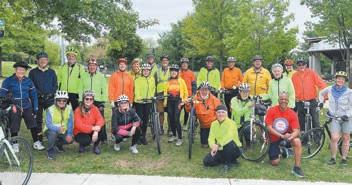
Now in its 13th year, Cycle2Health (C2H) is a volunteer-led cycling group, sponsored by the Howard County Office on Aging and Independence (OAI), which offers weekly group bike rides for cycling enthusiasts of all levels. The 2026 season kicked off in early May with 154 registered; a $15 fee covers the entire riding season from May through October. Rides depart from various locations in and around Howard County on Tuesday and Thursday mornings. Tuesday rides are geared toward the casual rider; Thursday rides are for moderate and more advanced levels. Volunteer ride leaders are experienced cyclists who develop and lead the various rides.
July is National Recreation and Parks Month, the perfect time to give Cycle2Health a try (registration continues throughout the season).
C2H participants who range in age from 30 to 80+ and share a common interest in being active outdoors and discovering new areas to explore on their bikes. “Riding the pathways without having to think about planning or navigation makes it so easy to go on a nice bike ride for my health,” says one. In addition to the health and wellness benefits of biking, the group format promotes camaraderie among the riders. “C2H is a group of great, friendly people who enjoy meeting new people and riding together,” says C2H coordinator, Rachel Filar. “Many participants have continued their friendships outside of the rides.” Interested? Visit www.howardcountymd.gov/C2H for full details about the 2026 riding season and registration information. You can register online or at any of OAI’s 50+ centers. Once registered, riders are encouraged to sign up for the listserv which sends out an email each week that includes the ride details for upcoming rides, plus notices of any cancellations due to inclement weather. To sign up for the listserv, email cycle2healthhowardcounty@gmail.com with the subject line “add to listserv.” For more information, call 410-313-6073 or email rfilar@howardcountymd.gov.
This month, Howard County joins our nation to celebrate 250 years of history and progress. We can’t celebrate this milestone without acknowledging the sacrifice of our military members and their families.

I was proud and honored to have recently unveiled our first Veterans Monument in Howard County. This impressive sculpture is our way of saying thank you to all who have served and remembering their sacrifices. A reflecting pond and bench circle the sculpture for anyone to come and spend a thoughtful moment. I encourage you to visit the monument to honor the sacrifices of our veterans throughout history. Pictured below, this monument wouldn’t have been possible without the enormous contribution from the Howard County Veterans Foundation who worked tirelessly to bring this vision to life. As the proud son and grandson of veterans, I am personally thankful to the Veterans Foundation for all the work they do to honor the extraordinary contributions of those in uniform. A dynamic team of historians, civic leaders, cultural partners, event planners, and county staff have been hard at work making America250 and HoCo250 a once-in-ageneration experience for everyone with meaningful, educational, and fun activities for residents of all ages. Stay tuned, get involved, and join us at events across the county as we honor our past, celebrate our present, and imagine our future together. For a schedule of upcoming HoCo250 events, visit www.visithowardcounty.com/hoco-250.


American History Trivia
East Columbia 50+ Center
July 1, 2 – 3:30 p.m. • #A04710.800
Celebrate the 250th Anniversary of the United States with U.S. History Trivia! We’ll play in teams, so bring your friends or join one when you arrive. Enjoy a patriotic dessert as you learn about the rich history of our nation.
Bain 50+ Center
July 2, 8:45 a.m. – noon • #A01452.800
Start off summer with a morning of Group Exercise Fun guaranteed to put you in a good mood. Join us for one class, or all five, starting at 8:45 am. Bring a friend for FREE!
The Industrial Revolution in the Patapsco River Valley
Ellicott City 50+ Center
July 23, 1 – 2:30 p.m. • #A02649.801


Creative Experience: Acrylic Painting Workshop
Elkridge 50+ Center
July 8, 10 – 11:30 a.m. • #A05504.801
Explore the joy of acrylic painting with Jillian Kohler in a hands on workshop designed for curious beginners and seasoned creators alike. All materials included in the $40 fee.
Magic: Tile & Glass Art
Bain 50+ Center
July 9, 1 – 2 p.m. • #A01511.800
As part of the Art & the Brain Series in honor of Brain Awareness Month, explore the use of tile, glass and found materials to create one-of-a-kind mosaic art designs. All materials included in the $15 fee.
Bain 50+ Center
July 21, 11 a.m. • #A01496.800
Your mood can be affected by your eating and exercise habits. Learn how eating well and staying active can help improve your outlook. Presented by Humana.
Glenwood 50+ Center
July 14, 11 a.m. – 12:30 p.m. • #A03620.801
Need to make repairs to your home? Learn more about Howard County’s Rehabilitation Fund Loan Program, which helps eligible county homeowners make repairs and improvements. For more information, contact Emily Leclercq, 410-313-5917.
OEM presents: Disaster Preparedness Jeopardy
Elkridge 50+ Center
July 16, 1 – 2 p.m. • #A05771.800
Disaster Preparedness Jeopardy is a take on America’s favorite answerand-question game! Join the Office of Emergency Management (OEM) to put your disaster preparedness knowledge to the test.
Now a destination for hiking, biking and fishing, the Patapsco River Valley played a key part in America’s Industrial Revolution. Factories lined the banks of the river from Sykesville to Elkridge producing flour, textiles, lumber, and iron. Join Dr. Mark Stout to learn more about its unique history.
Master Gardeners: Gardening in a Warming Planet
Glenwood 50+ Center
August 4, 11 a.m. – 1 p.m. • #A03611.802
Join one of Howard County’s Master Gardeners to learn about the challenges gardeners face as our climate changes. Bring your gardening questions to get answers! 9830 Patuxent Woods Drive, Columbia, MD 21046 410-313-6410 (voice/relay) •

East Columbia 50+ Center
July 28, 10 – 11:30 a.m. • #A30145.801
Join Nutrition Specialist and chef Alex Rhine and Jennifer Blevins, manager of The Loan Closet of Howard County, to explore helpful kitchen tools to make cooking easier, safer, and more enjoyable. Explore common issues faced by those with disabilities or limited mobility while working in the kitchen and try adaptive equipment designed to help create healthy meals at home, regardless of skill level. Participate in a live cooking demonstration, try adaptive tools firsthand, enjoy a healthy snack, and learn simple tips for preparing healthy meals with greater comfort and confidence. For more information, contact Alex Rhine at 410-313-4833 (voice/relay).

Join Howard County Recreation & Parks as we celebrate with FREE movie/game nights, fitness, food trucks, concerts, and more. There is something for everyone! Enjoy a month of free activities that are fun for the whole family. Info: www.howardcountymd.gov/recandparksmonth.
Bring a blanket and a picnic while enjoying the musical sounds of summer. Info: www.howardcountymd.gov/summerconcerts.
Don’t stay dry! Join us for our biggest summer event at the center. Enjoy water games and experiments for the whole family. Participate in a river treasure hunt. Meet live creatures that depend on rivers and streams. Explore the wonders of snow, ice and water in the “stages of water” area for little ones. Food trucks on-site. On-site parking is limited. (Free off-site parking with complimentary shuttle available.) Info: 410-313-0400 or www.howardcountymd.gov/wild-water-day.
All ages Robinson Nature Ctr $8 member; $10 nonmember; Free 0-2 yrs RP4828.801 Jul 12 10am-3:30pm Su
NEW! Celebrate National Ice Cream Day with a sweet community gathering! Enjoy a variety of ice cream flavors, toppings, music, and fun activities for all ages. It’s the perfect way to spend a warm afternoon connecting with neighbors and friends. Preregistration encouraged but not required. Info: 410-313-0860 or www.howardcountymd.gov/htcc.
All ages Harriet Tubman Ctr
RP4475.801 Jul 19 2-4pm Su Free

Come celebrate the beauty of classic, antique, hot rods, and modified cars on display outdoors at Rockburn Branch Park. Food available for purchase. Info: Susan Harry, sharry@howardcountymd.gov or 410-313-4635.
All ages Rockburn Branch Pk Free to visitors, exhibitor fees below Aug 8 10am-2pm Sa
RP4099.801
RP4099.802
RP4099.803
Car Entries $10, preregister; $15, on-site registration
Car Flea Market Vendor $25, preregister; $30, on-site registration
Car Sales $20, preregister; $30, on-site registration
NEW! Celebrate National Book Lovers Day with a program aimed at promoting literacy and the joy of reading. All are welcome to come read, review, exchange, and take a few! Book donations in good condition are accepted on site. Preregistration encouraged but not required. Info: 410-313-0860 or www.howardcountymd.gov/htcc.
All ages Harriet Tubman Ctr
RP4476.801 Aug 9 2-5pm Su Free




• Info: Tessa Hurd, 410-313-7311 or thurd@howardcountymd.gov.
Focus on strengthening your lower body and core through yoga poses and other exercises. Balance drills are included throughout the class using both body weight and hand weights. Light to moderate weights are used. Must be able to get up and down from the floor. Bring a yoga mat, towels and water. For virtual class, flat resistance bands and a chair are needed for certain exercises. Class is held online via Zoom.
50 yrs + Classes: 8
RP3515.802 Online Jul 10 9-10am F $64
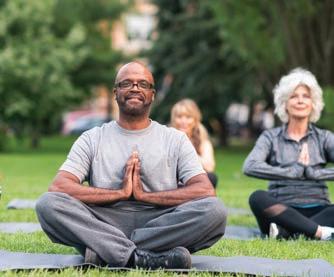
Relax while you take in the sights and surrounding beauty of nature as you get fit and improve your health in this outdoor yoga class. All classes held under the tent at the beautiful Belmont Manor and Historic Park. Walk away feeling refreshed, energized, and ready to take on the day that lies ahead. Join us for the classes that fit your schedule.
50 yrs + Classes: 1
RP3541.805 Belmont Manor Jul 1 9-10am W $15
RP3541.806 Belmont Manor Jul 8 9-10am W $15
RP3541.807 Belmont Manor Jul 15 9-10am W $15
RP3541.808 Belmont Manor Jul 22 9-10am W $15
RP3541.809 Belmont Manor Jul 29 9-10am W $15
Learn about the world of genealogy! Gain an understanding of the basics of family history research, the important tools needed to perform research, and how to navigate the information. Learn strategies to help you organize your research. You should have computer literacy. Bring a laptop or tablet to each class as there are hands-on activities that require using your device.
50 yrs + Instructor: Karen Giese Classes: 3
RP3500.801 Gary J Arthur CC Jul 10 1-2:30pm F $72
Learn how to connect your iPhone with your iPad. Discover useful free apps for your phone. Learn about backing up your phone and how to use voice communication to gain information. Bring your smart phone and/or tablet.
50 yrs + Instructor: Constance Lowe Classes: 1
RP3523.802 Gary J Arthur CC Jul 10 10-11am F $25

• Info: Tracy Adkins, 410-313-7279 or tadkins@howardcountymd.gov.
Tudor Place: Garden – Washington, D.C.
This museum is unlike any other in D.C. Its expansive landscapes, landmark architecture, and thousands of historic objects tell stories of the area and country. It was the home for six generations of Martha Washington’s descendants and houses the most extensive Washington collection outside of Mount Vernon. Tudor Place is a model of Federal-period architecture. Pack a picnic lunch to enjoy during the trip. Moderate walking required.
18 yrs + Bus provided
RP4593.801 Jul 16 9am-3pm Th $99
National Museum of African
American History & Culture
This Smithsonian Museum celebrates African American history through 37,000 artifacts spanning family, arts, religion, civil rights, slavery, and segregation. Highlights include Harriet Tubman’s hymnal, a plantation cabin, Michael Jackson’s fedora, and works by renowned artists. Enjoy lunch on your own at the onsite café. Moderate walking required.
18 yrs + Bus provided
RP4557.801 Jul 24 9am-3pm F $109
Kitchen Kettle Village
In 1954, Pat and Bob Burnley began a backyard tradition of fresh food and family fun. Three generations later, it thrives. Stroll through a village of shops, eateries, canning kitchen, and Inn. Meet cooks, quilters, and shopkeepers. Enjoy lunch on your own at the shop of your choice. Some walking required.
18 yrs + Bus provided
RP4595.801 Jul 30 9am-5pm Th $105
Discover the charm of New England on this unforgettable 5-day, 4-night getaway! Enjoy cozy lodging, daily breakfasts, and two festive welcome receptions. Savor lunch at the iconic Trapp Family Lodge. Enjoy three delicious dinners. Indulge in local flavors with a Ben & Jerry’s Ice Cream Factory tour, Cabot Cheese, and Lake Champlain Chocolates. Stroll through covered bridges, explore scenic landscapes, and uncover countless surprises along the way. This journey blends history, flavor, and fun into one extraordinary experience! Detailed itinerary available upon request. Significant walking required.
21 yrs + Bus Provided
RP4795.101 Single Occupancy Sep 14-18 M-F $2,059
RP4795.102 Double Occupancy Sep 14-18 M-F $1,759


By Cynthia Washam
Through three decades of traveling together, my husband and I avoided bus tours. We relished our independence, traveling on our own by train, bus or rental car — until we planned a trip to Peru.
Tourists typically fly from Lima to Cuzco, visit Machu Picchu, then fly home. But Bob and I wanted to see more of the country, so we asked Peruvian friends for advice.
Forget public transportation, they said; train and bus routes rarely extend outside major cities. As for renting a car, our friend Andres warned, “Driving there is anarchy.”
Our salvation was Peru Hop, a tour bus for people who dislike bus tours.
Peru Hop operates like a hop-on, hopoff city bus stretched across 700 miles. Passengers buy a ticket that allows them four to 10 stops. Our eight-stop pass cost us $219 each.
We would start in Lima, then travel along a U-shaped route to Cuzco. At every stop, we could choose where to stay, how long, and what tours we would take. English-speaking guides on the bus could help arrange tours and lodging, if we wanted help.
We took several of the paid tours they recommended but handled our own hotel accommodations. Bob and I also took the five free tours Peru Hop offers along our route.
We liked every destination enough to stay at least two nights. Peru Hop stops at each one daily. We could move on whenever we were ready, as long as we reserved our bus seats at least 12 hours in advance.
Our journey took us first to the seaside town of Paracas, known as the poor man’s Galápagos. We understood why as our tour boat floated thrillingly close to sea lions, Humboldt penguins and Peruvian boobies sunning on small, rocky islands.
Then it was on to the Andes. In Arequipa, we signed up for a day-long tour of Colca Canyon. Our group stood in awe atop a cliff as dozens of Andean condors, wings spanning up to 12 feet, soared endlessly overhead.
Only later, looking up from a hot spring we visited at the bottom, could I appreciate the canyon’s 12,000-foot depth, twice that of the Grand Canyon.
Next we rode the bus more than 10 hours from Arequipa to Puno, the longest leg of Peru Hop’s route. Traveling by land had eased the adjustment to Arequipa’s 7,660-foot altitude. Puno, though, would take us almost 5,000 feet higher.
“Dizziness, nausea and lightheadedness is to be expected,” our guide said as the bus started. “The time to take some-


thing is now.”
Bob and I tried chewing coca leaves but preferred drinking coca tea. The tea might have helped some, though we both felt lightheaded and out of breath during our first couple of days at high altitude.
From lakeside Puno, we traveled to Lake Titicaca, our favorite destination in Peru. There we stayed overnight in a wood-frame bungalow on one of the lake’s 125 floating Uros islands. Floor-toceiling windows gave us a panoramic view of the lake and mountains beyond.
Our English-speaking Airbnb host told us that when local men marry, they make an island and house from reeds for his bride and her family. To keep their homes from sinking, they add new layers of reeds to the island periodically.
Bob and I experienced a different culture two days later, when we joined some 30 others on a tour boat to Amantaní, the lake’s biggest island and home to speakers of the Quechua language. The tour included an overnight stay with a family who treated us to traditional meals and an evening of circle dancing for the entire group.
The next morning, we traveled by boat to nearby Taquile Island. Locals captivated us as they danced in the town plaza dressed in brilliantly colored vests, sashes, capes and feather-topped hats.
Bob and I skipped Machu Picchu and instead explored Inca ruins in the nearby, less crowded Sacred Valley. Peru has hundreds of Inca sites, and about a dozen survive in the valley, including temples and hillside terraces.
Archaeologist guide Wilbert entertained us with his insights on Incan culture.
“You drink 10 soles ($3) worth of corn beer, and you’ll be on another planet,” he said. “But the next day, no hangover.”
Three weeks after starting our Peru Hop tour, I was happy to board a 90minute flight from Cuzco to Lima. But I was happier we could travel between the two cities over land, thanks to a bus tour that beat the heck out of driving in anarchy.
For information and prices on Peru Hop routes, free tours and recommended paid tours, visit the website bushop.com/peru.
Lodgings offering discounts to Peru Hop passengers are listed on the website, too. We made our own reservations through Booking.com. In general, you pay less if you book while you’re in Peru rather than before you leave.
For information and reservations at the Lake Titicaca Airbnb in Puno, Peru, visit Airbnb.com.
By Glenda C. Booth
It may seem like we live in a couplesbased society, or, as Michigander Laura McCort puts it, “a Noah’s Ark world where all are expected to be paired up,” but traveling solo is a growing trend that appeals to many people.
When I travel alone, I have the freedom to choose — my schedule, sites to see, food to eat — without negotiating.
“Traveling alone affords you the luxury of adding or subtracting things from your itinerary to suit your preferences at the time without inconveniencing a travel partner,” said Lynn Thompson from Plano, Texas, who went to Portugal solo.
A solo vacation might also prove more restful. After all, when traveling alone you can sleep in and do nothing, if you choose. You can indulge in idleness without guilt, and recharge. When by yourself, you don’t have to courteously gab.
Then again, solo trips are often a way to meet more people, because you’re more apt to talk to fellow travelers or locals.
For instance, on African safaris, singles are incorporated into the larger travel group, according to Vicky Kohler, a Vermonter.
“Most of the safari camps usually have around 14 people, and usually everyone
is friendly to a single person. If not, I don’t need to talk when viewing rhinos, giraffes and elephants. More often than not, I get invited to sit with others there or someone from the camp will have meals with me.”
Taking off alone can mean adjusting your mindset, especially if you’ve been accustomed to a long-term partner or traveling companion.
“My advice on traveling alone is to be open and prepared for new adventures and people,” Thompson said, quoting a widower who said, “This upheaval in our lives forces us to reinvent ourselves and to prepare for novel experiences.”
When you navigate a trip on your own, you expand your comfort zone and learn to adapt to — and even enjoy — unfamiliar situations.
“Traveling alone bolsters my selfconfidence,” Thompson said. “I can care for myself, take calculated risks and find that, in conquering them, you gain the motivation to do and be more.”
Among the top negatives solo travelers cite are feeling lonely, eating alone and being unable to chat as couples do. You



won’t have a partner to help analyze situations, suggest new adventures or make observations.
On occasion, it may be harder to problem-solve on your own. You may be in situations like a train station in another country, unable to speak the language, for instance. You may have to find transportation, a museum or a doctor on your own. Many times, the kindness of strangers may surprise you.
Seasoned solo travelers and travel experts offer these tips:
• To overcome reluctance, take a weekend trip alone not too far away.
• Keep safety and prevention at the top of your mind and in your preparations.
• Be aware. While being safety-minded is important for any traveler, it’s especially important for solo travelers who don’t have a second set of eyes. A person alone can be at a higher risk of petty crimes like pickpocketing. Always be aware of your surroundings and keep an eye on your belongings. In a bar, don’t leave a drink unattended.
• Buy travel insurance, especially for trips abroad.
• Leave your itinerary and contact information, including hotels, with someone at home.


• Make copies of all important documents and leave a copy at home and another secure in your belongings.
• Research your destination, the logistics and plan ahead. Book reservations ahead of time. Consider buying an international phone plan.
• Pack as lightly as possible so you don’t have to lug heavy luggage.
• If traveling internationally, register for free with the U.S. Department of State’s Smart Traveler Enrollment Program before you go. This allows U.S. embassies to contact you if there’s a natural disaster, civil unrest or family emergency. Visit mytravel.state.gov/s/step.
If you don’t want to venture out alone, consider taking an organized tour with a company like Intrepid, Smithsonian Journeys or G Adventures.
Road Scholar, which specializes in group travel for older adults, has two types of trips for solo travelers. On their Go Solo trips, everyone in the group is single (some are women-only) and everyone has their own room, which is included in the trip’s price.
On their traditional group trips, since See TRAVEL ALONE, page 20






By Ed Warner
Perhaps because we’ve nowhere to be in a hurry or because we truly enjoy seeing the areas we travel through, retirees are notable for being fans of Amtrak and of bicycling.
So, for a vacation, why not combine the two?
Europeans, of course, have done this
for years, loading their bikes into baggage cars for a stress-free trip, say, to the Loire Valley. Not so long ago in the United States, however, getting a bike aboard Amtrak involved taking it apart and putting it into a sufficiently big box, on departure and when returning.
Not so much anymore. Amtrak has in recent years been making “bike closets”
Want to help immigrants and refugees learn English? The Washington English Center seeks volunteers to teach online or in person. No prior experience is required; training and support are provided. You can also serve as a writing tutor or an online conversation tutor. For more information, visit washingtonenglish.org/volunteers or call (202) 387-2222.
available on certain routes for $10 extra. That beats bringing a bike on a flight, which can cost $100, packed in an approved case.
Perhaps more crucially, Amtrak stations are typically located in downtown areas, not in the far exurbs typical of airports. This means Amtrak riders can take their bikes right out onto a city’s streets and pedal away, exploring the city via its bike trails.
There are three great ways of putting that concept into action right here in the DMV. You can, for instance, drive with your bike to Baltimore Washington International Airport and park at the BWI Amtrak station (about $14/day). Alternatively, you could put the bike in an Uber X vehicle, typically a van, and skip the
parking fee altogether.
From the BWI Amtrak station, there’s a morning Northeast Regional train to Boston that stops in New York City, arriving in either city while there’s plenty of daylight to bicycle to your hotel.
The next morning, you can check out the city — both are filled with bike lanes — or set out on regional bike trails that are among the best in the country.
For instance, you can ride from the center of Manhattan, or any of the other boroughs, all the way to Albany on the relatively new Empire State Trail.
Should you choose to take Amtrak to Boston, you’ll find a supremely bikeable city. Check out the Charles River Trail from downtown to Watertown — with the option to ride to Cape Cod.
To get to the Cape, start early to catch a morning ferry to Provincetown, at the Cape’s tip. “P-town,” a three-hour drive from Boston, is only about a 90-minute cruise aboard either of the two ferries that take bikes. (One leaves from 1 Long Wharf; the other from 200 Seaport Blvd.)
After you arrive and check into your hotel, you can ride the 5.5 miles of the paved
From page 19
hotel room and ship cabin charges are based on double occupancy, solo travelers typically pay extra for a room alone, but Road Scholar offers a roommate-matching option.
Of course, sometimes unexpected things happen, whether you are traveling alone or in a group.
“If things get screwed up, like airlines,” Kohler said, “I just deal with it.”
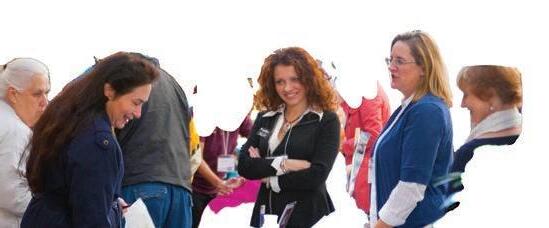
The Marylanders Online call center provides free one-on-one tech support in English and Spanish for Maryland residents. Techs can help with devices (software and hardware), internet service, digital skills classes and more. They are available Monday through Friday from 10 a.m. to 8 p.m. and Saturday from 10 a.m. to 5 p.m. Call (301) 405-9810 or toll-free at 1-866-2069467. For more information, visit marylandersonline.umd.edu.
Province Lands bikeway to either Herring Cove Beach, the closest, or Race Point.
Many riders simply use Route 6 to get to Herring Cove, thereby avoiding the $15 entry fee for the National Seashore beaches. (Look for the bikes locked along the roadside, then follow the trail to the water.)
Heartier cyclists will also want to ride the 26-mile Cape Cod Rail Trail, which runs southward from Wellfleet to Dennis. That trip, of course, usually involves reserving a motel in Dennis or beyond, for an overnight stay, and riding to Wellfleet on Route 6, with its constant traffic and narrow shoulders.
Nonetheless, the trip is worth it: You’ll glide along the pine-shaded trail, passing the occasional swimmable pond or beach.
C&O Canal ride
The third Amtrak-enhanced bicycle trip in the DMV is to ride the length of the C&O Canal. For this multiday trip, you can either choose to take your bike by car to Amtrak’s Union Station or get a ride to Rockville, Maryland. In either case, you’d catch the once-a-day afternoon departure of the Floridian westbound to Cumberland, Maryland.
You must reserve your Amtrak ticket in advance, as the C&O Canal trip is one
of the nation’s premier bike rides, and the bike closets on the Floridian fill quickly, especially on the westbound route. However, the Floridian requires bikes to go into the baggage car. Be sure to book the Cumberland Amtrak Station (CUM), as it’s where the baggage car opens.
Riding the C&O in the autumn usually means dry weather, which is important because the canal trail is paved in crushed gravel. In the spring, sections can flood when the Potomac River crests its banks.
A couple of years ago, when my wife and I rode the canal in the spring, we found a crucial passage, the mile-long Paw Paw tunnel (bring lights or headlamps) closed by a landslide, forcing us to drag our bikes up a muddy hillside detour. Days later, we were routed onto busy country roads, as sections of the canal were closed by high water.
Needless to say, we called a halt to our ride at Harpers Ferry — and luckily scored the last two bike reservations aboard that day’s westbound Floridian. Elated, we met other cyclists on board, including a couple our age who’d flown to D.C. from Seattle specifically to take Amtrak to the start of their canal ride.
If you take your bike aboard an Amtrak train, first check that the train serving your destination allows on-board
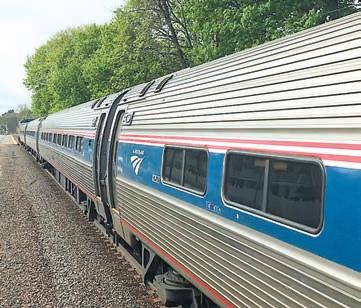
bikes. When boarding the train, look for cars that have a bicycle symbol near their doors; these indicate a bike closet.
Once aboard, remove the bike’s front wheel with its quick-release lever and hang the bike by its rear wheel on the closet’s hook. Then put the front wheel and your bags, if any, in the closet, and find a seat (hopefully a nearby one, to
The Maryland Accessible Telecommunications (MAT) program gives Maryland residents the opportunity to apply for State-provided telecommunications equipment to independently make and receive calls. The MAT program has a variety of FREE equipment solutions to support clearer communication, including:
keep the bike in view).
When disembarking, it’s best to let the other passengers, who often cluster near the doors, get off first. Also let the conductor know you’re removing a bike, so you’ll have a bit of extra time.
Read more about traveling with a bike on Amtrak at amtrak.com/bring-your-bicycle-onboard


By Timothy Cox
One of the top radio stations in the nation’s capital region is WHUR, 96.3 FM, according to Nielsen ratings during the first quarter of this year.
While the Howard University-owned station has perennially enjoyed high marks as an urban contemporary station, playing secular R&B, jazz and soul music, its gospel programming also manages to earn a significant share of advertising revenue.
That’s thanks to the station’s longtime gospel DJs, Jacquie Gales Webb, 70, and Winston Chaney, 72, who are on the air every Sunday.
“WHUR does very well on Sunday mornings,” said Al Payne, the station’s senior director of programming.
“Those two DJs are killing it. They’re both number one in their time slots. Jacquie is an institution and also does well with folks between ages 25 to 54. And surprisingly, Winston is a hit with listeners between ages 18 to 34, and that’s a very unique audience that loves gospel,” Payne said.
Both Gales Webb and Chaney are D.C.
radio veterans, having formerly worked at the Cathy Hughes-owned WYCB radio station, based in D.C., for 40 years.
During her decades-long career, Gales Webb won six local Emmy Awards, a Peabody Award, a DuPont Silver Baton and a Gracie Award. She recently retired from the Corporation for Public Broadcasting, where she was vice president of radio.
Before Gales Webb moved to the nation’s capital in the late 1970s, she lived in suburban Long Island, NY, where she graduated from Westbury High School. She attended college in Boston at Emerson College, earning a bachelor’s degree in mass communications with a focus on radio and television broadcasting.
While still in college, she worked at WILD in Boston, and after graduation she worked for a TV station there.
Soon after learning that an African American business conglomerate had purchased an AM radio station in D.C., Gales Webb was inspired to relocate to “Chocolate City” in 1978 to join a new group of broadcasters.


“This was important time of life. I wanted to pursue what I’d been trained to do in college — and relocating to D.C. provided me a chance to interact and learn from like-minded individuals who were in a startup mode as African American entrepreneurial media owners,” she explained.
She soon met a young Cathy Liggins (now Hughes), general manager of station WYCB. Gales Webb started on the air and six years later became the station’s program director.
After establishing herself as a viable broadcasting personality in D.C., Gales Webb held positions at Smithsonian Productions, WDVM and WUSA9-TV, where she became a news producer and won six local Emmy Awards for her work.
Now the widowed mother of two adult children, Gales Webb says working part-time on Sunday mornings is quite enough.
“This job is still as rewarding as it was 35 years ago. I still go out into the community and interact with my listeners, and they provide me the feedback I need to incorporate into my future shows,” she said.
Brushes with celebrity
Growing up in Danville, Virginia, Chaney realized radio was in his blood when he was in his teens. He recalls visiting the radio booth of a Black radio station in his hometown when he was 14 years old. Local DJ Doyle Butch Thomas invited him in, Chaney remembered.






Gales Webb is on the air on WHUR’s “Morning Gospel Experience” from 8 to 11 a.m., while radio host Chaney hosts his early-morning show from 5 to 8 a.m.
“He let me stay his whole shift, and that was very nice of him,” Chaney said. “He knew even at that age, I had a real interest in the business. Radio was always intriguing to me. The fact that you had control over thousands of listeners — that was real interesting to me, even after all these years,” he said.





By Joshua Z. Rokach
These days, some of us may find ourselves increasingly overwhelmed, trying to keep our families secure, economically and perhaps even physically.
Three recent books — two memoirs and a history — show that with luck, pluck and collective imagination, we can prevail.
Misunderstood: A Memoir, by Allen Iverson and Ray Beauchamp, 352 pages, Gallery/13A, 2025
Local basketball fans remember Allen Iverson’s glory years with the Georgetown Hoyas and his outstanding career in the NBA, mostly in Philadelphia.

A six-foot-tall guard, he revolutionized the position into a mainstay of offense. He introduced tattoos (inadvertently) to the NBA scene and had a tumultuous side.
In the pros, he vociferously refused to attend practice. He clashed with coaches and accused referees of picking on him. He stood out.
Born into squalor in Hampton, Virginia, Iverson experienced a rough childhood, losing friends to drugs and prison. He was incarcerated at 17 for a fight that white supremacists instigated and that occurred after he had left the scene. Fortunately, Gov. Douglas Wilder granted him clemency.
Iverson’s creative talent allowed him to conceptualize plays in football (his preferred sport) and basketball (as a scorer and playmaker).
That grit and an iron will led legendary coach John Thompson to take a chance on him despite his conviction. Thompson became a mentor, not just a college coach, and “saved his life,” Iverson said, paving the way to his many successes.
Now a peripatetic businessman, Iverson paints a fuller and riveting picture of his life in his memoir. Co-written by Ray Beauchamp, a Philadelphia native who is now a criminal defense attorney in New York, the memoir explores Iverson’s determination to live a decent life and the role of luck, both good and bad, in the journey.
Medicine River: A Story of Survival and the Legacy of Indian Boarding Schools, by Mary Annette Pember, 304 pages, Penguin Random House, 2025
In Medicine River, Mary Annette Pember, a member of the Ojibwe (Chippewa) Tribe and correspondent for ICT News, reveals new horrors Indian schools inflicted on Native children.
Pember reviews the history at the flagship Carlisle School, focusing on her mother, Bernice Rabideaux, who attended St. Mary’s Catholic Indian Boarding School in Wisconsin. Although Rabideaux enrolled voluntarily, others were kidnapped and sent to the school.

The basics of the tragic history of relations between the United States government and Native American tribes in the 19th and early 20th centuries have become well known. U.S. Supreme Court decisions have acknowledged the government’s deliberate attempt to annihilate Native Americans through broken treaties, land usurpations and death marches to inhospitable territories (the

of Wisconsin, won numerous awards for her writing.
Gotham at War: A History of New York City from 1933 to 1945, by Mike Wallace, 976 pages, Oxford University Press, 2025

Administrators severed contact with families, abused the students, forbade Native languages, cut their hair short (verboten for Native Americans) and gave the children Christian names. Pember underscores this particular insult, noting that Ojibwe believe that, to enter Heaven, souls must recite their Native names.
While her mother never recovered, Pember transcended her legacy of trauma and, after graduating from the University
This page-turner depicts the crosscurrents that buffeted the city that never sleeps during the Depression and World War II and the colorful characters — FDR and Mayor Fiorello La Guardia — who managed the maelstrom.
Somehow New York always emerged stronger. In Gotham at War , Mike Wallace, a history professor at CUNY, describes how the city creatively adapted to changing economic times. When slums proliferated, the city enabled clothing workers’ unions to build affordable housing to supplement government projects.
When World War II drove industries southward and westward, a city program enticed corporations to build their headquarters in the city, resulting in better-paying jobs. In fact, when the U.N. did not want to establish its headquarters in New York City, John D. Rockefeller Jr. decided otherwise, and the city became the de facto capital of the world.

By Hillel Italie
At 62, Ann Patchett is the rare and fortunate writer whose words resonate among friends and strangers alike. She owns one of the country’s signature independent bookstores, Parnassus Books in Nashville, with customers ranging from
local book lovers to Tom Hanks.
She’s also a popular and prize-winning novelist whose new books are inevitably among the year’s most anticipated, and whose older ones, including the acclaimed Bel Canto, published in 2001, continue to sell. She received a National

Humanities Medal five years ago for “putting into words the beauty, pain, and complexity of human nature.”
Her books have been translated into more than 20 languages, but her home is in Nashville, where she spent part of her childhood and now lives with her husband, physician Karl VanDevender.
Patchett spoke at Parnassus with The Associated Press on a sunny weekday morning, shortly before her 4,800-squarefoot store opened. She was there early to talk about Whistler, published in June.
Like other Patchett novels, it’s a story of improbable meetings and deepening bonds. In this case, 53-year-old Daphne Fuller and her husband encounter an elderly man, Eddie Triplett, at the Metropolitan Museum of Art. Realizing he was briefly her stepfather when she was a girl, Daphne forms a strong friendship with Eddie.
Patchett doesn’t write with any message in mind, but Whistler can be read as an ode to decency and benevolence. At one point in the novel, Daphne wonders if it’s safe to seek help, and Eddie assures her, “I swear to you, it’s mostly good people out there, with a few bad people around the edges.”
That’s Patchett’s everyday experience.
“The people that I interact with every
single day are good people,” Patchett said. “It is vanishingly rare when I meet someone who’s not nice.
“Now, if you watch the news and read the news, it seems like everyone’s terrible and murderous … I completely understand that there is incredible horror and cruelty in the world, but I also feel like incredible horror and cruelty is very well represented [in art]. And what I actually experience in my daily life is not as well represented in art.
“I don’t set out to write books about nice people,” she added, “but I like people.”
Patchett’s sense of citizenship was recognized recently by PEN America, which at its annual May gala in Manhattan presented her with its Literary Service Award.
In introducing her, author Patrick Ryan cited her wide range of contributions, whether working “to get books into the hands of children in underserved communities,” supporting emerging writers or inspiring readers “who recognize themselves in her novels.”
Patchett has a well-lived appreciation




From page 24
for connections, and how they can be broken by discord or ended by death.
A native of Los Angeles, she was in early childhood when her parents divorced and she moved east with her mother, events drawn upon for her novel Commonwealth
A bookseller who inspires
Patchett, a graduate of Sarah Lawrence College and the Iowa Writers’ Workshop at the University of Iowa, remembers telling stories even before she could read, a gap she said only intensified her appreciation of the printed word.
Raised before the rise of “young adult” books, she started out reading such children’s favorites as Charlotte’s Web and The Little House on the Prairie series, and ascended directly to the literary giants who became her formative influences: Saul Bellow, Philip Roth and John Updike.
By her early 20s, Patchett was accomplished enough to have a story published in The Paris Review. Patchett’s debut novel, The Patron Saint of Liars, came out before she had turned 30.
She has since published nine other works of fiction, including Whistler, along with four nonfiction books and three picture books, illustrated by Robin Preiss Glasser.
“I was at my cousins’ house a few months ago, and they had boxes of old papers of mine,” Patchett said. “And they were from grade school, middle school, high school — notebook after notebook, poetry and stories. I was shocked by the extent I was practicing my craft at age 10.”
Patchett’s life as a bookseller began around 2010, when the closing of two Nashville stores seemed to mirror a nationwide decline brought about in part by Amazon’s rise. Patchett and business partner Karen Hayes came up with a seemingly wild plan: open a new store — a decision met with some skepticism at
By Rick Detorie
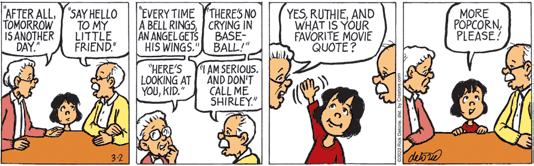
the time, but now a sign of the changing fortunes of independent sellers.
Membership in the American Booksellers Association has more than doubled over the past decade — including
From page 22
Chaney had two loves: basketball and radio. After a successful high school hoop career at George Washington High School, Cheney played briefly at Virginia Commonwealth University, where he graduated with a bachelor’s degree in office administration and landed a job with the Virginia Employment Commission.
After college, Chaney played in semipro summer basketball leagues in D.C. with future NBA players like Adrian Branch, Joe Pace, Eddie Jordan and Larry Spriggs, he noted.
While still in Richmond, Chaney got his first professional radio gig as an R&B music host.
Chaney moved to D.C. in 1980 not only
because “it was the largest major city closest to Richmond,” he said, but because of his experience with the basketball scene there.
Drawn to the local radio scene, Chaney immediately befriended legendary TV and radio host Ralph “Petey” Greene and worked as his board operator at WYCB. Greene, who won two Emmy Awards for his talk shows, was an excellent mentor. More than that, Chaney said, “He was my best friend.”
When Greene died of cancer in 1984, approximately 10,000 mourners lined up for the chilly January funeral.
Once again, Chaney was fortunate to be surrounded by greats, he remembered: He was a pallbearer, along with TV announcer James Brown and boxer Sugar Ray Leonard.
such author-run stores as Straub’s Books Are Magic in New York City and Jeff Kinney’s An Unlikely Story in Plainville, Massachusetts. Straub said that when she was thinking of opening her store,
she spoke with various friends who owned small businesses.
“They all told me not to do it, but when I talked to Ann, she said ‘Do it,’” Straub said. “She’s my hero.” —AP
“Wake Up With Winston Chaney” and “Gospel Spirit” with Jacquie Gales Webb air on WHUR 96.3 every Sunday beginning at 5 a.m.
July 12+
Visit the Artists’ Gallery in July to see Karen Jury’s “Eyes Wide Open” exhibit, featuring photographs that capture what might otherwise go overlooked. The receptions take place on Sun., July 12 and Wed., July 15 from 2 to 5 p.m. at 8197 Main St., Ellicott City. The gallery is open on Wednesdays from 11 a.m. to 3 p.m. and on Thursdays through Sundays from 11 a.m. to 6 p.m. For more information, call (443) 325-5936 or visit artistsgalleryec.com.
FOR SENIORS (VIRTUAL) Join Senior Planet from AARP for a weekly social hour to connect with other older adults in the LGBT+ community. This group meets on Mondays from 4 to 5 p.m. on Zoom. To join, email info@seniorplanet.org for the meeting link.

ACROSS
1. Missile Command missile
5. Peron or Gabor
8. “You are a royal pain in the ___”
11. Some who cross a border into Cambodia
12. Kissers
14. “Who, me?”
15. 2020 movie based on a classic 1903 book (with “The”)
18. One with high step-counts
19. Teacher’s helper
20. Those who work in a labrador laboratory
23. Rows on the back of a baseball card
24. David Lynch’s winner at the 1990 Cannes Film Festival
27. Its top-selling game was Super Mario Bros.
28. Fed. eavesdropping org.
29. Acronym of ERA and EAR
30. ___ and Hare (toon where Bugs Bunny turns into a monster)
33. “Oh no, ___ again!”
36. More like dogs than wolves
38. Billboard’s number one song for 4/28/79
42. Overwhelming assault
43. Feudal estate
44. Best hole cards in Mississippi Stud
48. “I refuse to join any club that would have ___ a member” (Groucho Marx)
50. It usually lets you pick your octane
52. After-dinner cheese accompaniment
56. Sigma Alpha Epsilon frat., briefly
57. Succumb to bacteria
58. Fable
59. “Some people die at 25 and aren’t buried ___ 75” (Ben Franklin)
61. A Redding singer
63. Cruise liner’s refueling location
66. One of the Four Corners states
67. Pillow-case material
68. Son of Zeus and Hera
69. Feline cereal-salesman since 1952
70. “You” in Shakespeare’s time
71. Use a calculator
Sherr
1. Like an irritating sweater
2. Committee head
3. Hall of Famer Steve Carlton holds the record with 90
4. Frequent flyer point unit, often
5. Santa’s assistant
6. Absolutely essential
7. Sap-sucking pest
8. “Who ___? (amnesiac’s panicked question)
9. Fill in all the white squares
10. Pistol or revolver
13. Car and Driver review category
16. “Either they write our story ___ do”
17. Dampens
21. There is one on Maine’s state flag
22. There is one on Arizona’s state flag
25. “Ignorance of the law ___ excuse”
26. Fashion-tops at the Kentucky Derby
27. Jitters
30. Dept. containing the CDC and NIH
31. Thumbs-up vote
32. Firehouse companion
34. Not quite right
35. ___ Fridays
37. “Stat!”
39. Part of a Waffle House All-Star Special
40. Danish toy company
41. In the distance
45. Donut filling
46. Sent through the interwebs
47. H-E-X-E-S
49. Daytime dramas
51. Double ___ (thicker Oreos)
52. It hardens between tiles
53. Numbers game
54. Mixture of ice cream and root beer
55. Capital of Western Australia
60. Org. that has awarded over 100 trophies to UCLA
62. Bashful
64. Fix a shoelace
65. X/X =
The Beacon prints classified advertising under the following headings: Business & Employment Opportunities; Caregivers; Computer Services; Entertainment; For Sale; For Sale/Rent: Real Estate; Free; Health; Home/ Handyman Services; Miscellaneous; Obituaries; Personals; Personal Services; Vacation Opportunities; and Wanted. For submission guidelines and deadlines, see the box on the right.
CAVEAT EMPTOR!
The Beacon does not knowingly accept obscene, offensive, harmful, or fraudulent advertising. However, we do not investigate any advertisers or their products and cannot accept responsibility for the integrity of either. Respondents to classified advertising should always use caution and their best judgment.
EMPLOYMENT & REAL ESTATE ADS:
We will not knowingly or intentionally accept advertising in violation of federal, state and local laws prohibiting discrimination based on race, color, national origin, sex, familial status or handicap in connection with employment or the sale or rental of real estate
WOULD YOU LIKE TO SAVE MONEY on Your Electric bill AND MAKE MONEY at the same time? Text ENERGY to: 6096903640.
$28-33/HR. SEEKING PRN SHIFTS in Pikesville, Md. Lovely elderly gentleman seeks help with fall prevention and companionship, and also light kitchen help 1012 hr. shifts for daytime and 1012 hr. shifts for overnight time are available. Also 36 hr. shifts daytime or evening could be available. Home is in a nice area with quiet neighbors. Please call 4435094095.
COMPUTERS, TELEVISIONS, CELL PHONE Help For Seniors. We offer patient and thorough help for seniors with all matter of technology. We come to your home. We service MD, VA and DC. Call Senior Tech Pro at 3013370028. Available 24/7 Ask for Philip.
SAVVY SENIOR TECH HUB - Friendly 1:1 tech support designed for seniors! Learn smartphones, tablets & computers at your own pace. Patient instruction, affordable rates. Don’t let technology intimidate you master it! Call/text Stefan at 443 281 3638.
UP TO $15,000.00 OF GUARANTEED
LIFE INSURANCE! No medical exam or health questions. Cash to help pay funeral and other final expenses. Call Physicians Life Insurance Company 8662121092 or visit www. Life55plus.info/beacon
GREETINGS, MY NAME IS BEATRICE
MILLER, I’m the founder and owner of Jonsaac Dynasty LLC. My product is my net hat collection. On May 15th 2026, I had the distinct opportunity of having my revolutionary hat design showcased on Fox 45 news station on their Preakness segment. This served as the Grand debut and launch of my net hat collection/designs. The Queen Bea Hat Collection, Signature Beehive Crown Design, Revolutionary net hat construction, Hand crafted embellishments, Statement pieces for discerning women Years of passion and perfection culminated in 2026 with the launch of The Queen Bea Hat Collection. My philosophy is, that every Woman deserves to wear a crown. Website: jonsaacdynasty.org. Join The Dynasty!
2 CEMETERY LOTS, part of estate sale, for sale in Crest Lawn Gardens of Memories of Howard County. 11K per lot, includes vault. Contact 3046710387.
NEW WINDOWS FROM WINDOW NATION. Special money saving offer zero down, zero payments, zero interest for TWO years AND buy 2 windows and get 2 FREE! Offer is valid for select models. Labor not included. Other restrictions apply. Call Window Nation today! 8559092278.
HOMECARE PROVIDER - Home With You
Senior Care offers inhome care with exceptional caregivers. Our mission is to help older adults live confidently in their own homes. We choose to make a positive difference. We offer a full range of services to assist in “the extra little things.” It’s good to be cared for... It’s great to be cared about! Call us today 4107560959 for a free consultation.
All classified ads must be submitted and paid for online, via our website, www. thebeaconnewspapers.com/classifieds.
Deadlines and Payments: To appear in the next issue, your ad text and payment must be entered by the 5th of the preceding month for the Greater Baltimore edition; and by the 20th for the Northern Virginia and D.C./ Maryland editions.
Cost will be based on the number of characters and spaces in your ad:
• $25 for 1-250 • $35 for 251-500 • $50 for 501-750 (maximum length).
The website will calculate this amount for you.
Note: Maryland contractors must provide a valid MHIC number.
• Each real estate listing qualifies as one ad. • All ads are subject to publisher’s discretion. Payment will be refunded if unacceptable for any reason.
To place your classified ad, visit www.thebeaconnewspapers.com/classifieds
RETIREES AND SENIORS: Supplement your income helping others feel better naturally. Work parttime from home with daily pay and free training. No experience needed. Text WELLNESS to 6402020791 for more information.
DENTAL INSURANCE from Physicians Mutual Insurance Company. Coverage for 400 plus procedures. Real dental insurance NOT just a discount plan. Do not wait! Call now! Get your FREE Dental Information Kit with all the details! 18443661003 www.dental50plus.com/320 #6258
DON’T LET THE STAIRS LIMIT YOUR MOBILITY! Discover the ideal solution for anyone who struggles on the stairs, is concerned about a fall or wants to regain access to their entire home. Call AmeriGlide today! 18663655170. NO MORE CLEANING OUT GUTTERS. Guaranteed! LeafFilter is the most advanced gutter protection for your home, backed by a noclog guarantee and lifetime transferrable warranty. Call today 18559776078 to schedule a FREE inspection and no obligation estimate. Plus get 20% off! Seniors and military save an additional 10%. Restrictions apply, see representative for warranty and offer details. THE BATHROOM OF YOUR DREAMS in as little as 1 day. Limited Time Offer $1000 off or No Payments and No Interest for 18 months for customers who qualify. BCI Bath & Shower. Many options available. Quality materials & professional installation. Senior & Military Discounts Available. Call Today! 18556530087.
BECOME A PUBLISHED AUTHOR. We want to Read Your Book! Dorrance PublishingTrusted by Authors Since 1920. Book manuscript submissions currently being reviewed. Comprehensive Services: Consultation, Production, Promotion and Distribution. Call for Your Free Author’s Guide 18339920110 or visit dorranceinfo.com/beacon
CONSUMER CELLULAR - the same reliable, nationwide coverage as the largest carriers. No longterm contract, no hidden fees and activation is free. All plans feature unlimited talk and text, starting at just $20/ month. For more information, call 18337421303.
COINS, STAMPS, PAPER MONEY, & AUTOGRAPHS WANTED. Paying top prices. Free estimates — Will travel. No collection too large or too small. 50 years of experience. Licensed. Member of major associations. Call Dirk at 3017045453 or email dirkkitchin@ earthlink.net.
PAYING TOP CASH FOR ANTIQUES AND COLLECTIBLES. House calls made with prompt, courteous service seven days a week and 25 years of experience! Buying toys, trains, militaria, glassware, advertising merchandise, paper items and much more! Contact Mason or Megan at: 4433068816.
CASH FOR ITEMS; ESTATES, MOVING, DOWNSIZING. Single item, or whole estate. I buy a wide range of items. Will travel to you. Gary Roman, TheAtticLLC.com, 3015200755.

Whether it’s strolling winding paths or socializing in sunny courtyards, residents of Assisted Living at Brooke Grove experience a warm, vibrant lifestyle and delight in our charming setting of open meadows and airy trees.
Private rooms filled with sunshine from over-sized windows and skylights
24-hour on-site clinical support from licensed and caring nurses
Secure courtyards and walking paths
Ornamental koi pond
Manicured flower and sensory gardens
Playground for visiting kids
For residents with Alzheimer’s or dementia, we offer a special assisted living option with:
Specially trained memory support staff
An interactive lifestyle that maximizes choice and independence
Tailored LIFE® enrichment programming that connects each resident to his or her past Group activities that allow residents to enjoy the outdoors and a thriving social life
Ask about our limited-time discount of up to $10,000 for qualified applicants.