This newspaper is an unfinished experiment. A work in progress. Something new.
After all, the BAC is best understood as a 137-year-old startup: an inclusive community, an innovative sandbox, a college rooted in Boston and branching outward like a banyan tree, extending beyond borders to connect people, ideas, and possibilities.
It is no coincidence that we are based in the city where a revolution began. Boston is a place of ideas with consequences: democracy, education, entrepreneurship, invention. The BAC belongs to that civic and intellectual tradition. It has always been a bold experiment. Now it enters a new phase.
We have a big vision for what this institution can become: more open, more connected, more inventive, more consequential in the world. That is what the inaugural issue of the BAC’s new magazine 89 is about.
Its name, too, carries several meanings.
1889: the year an idea and spirit came to life. 89 degrees: one degree off center, unconventional by design. What follows in these pages is not simply a portrait of the BAC as it has been. It is a statement of where it is headed.
Come explore this future with me. I invite you to contribute, debate, and help invent what comes next.
What follows is not simply a portrait of the BAC as it has been. It is a declaration of where it is headed.
Because the question is no longer whether design can change the world. It is whether we are willing to open the door and hold it open for others to walk through.
Dr. Mahesh Daas, DPACSA President ACSA Distinguished Professor
An Inconvenient Education
The BAC Declaration by Mahesh Daas
An inconvenient education is what this moment demands.
It refuses convenience as its highest value. It refuses the convenience of inherited forms. It refuses the convenience of stale hierarchies. It refuses the convenience of neat boundaries between theory and practice, campus and world, teacher and learner, discipline and profession, local and global.
Convenience is seductive. It makes institutions mistake repetition for rigor. It makes campuses mistake enclosure for community. It makes faculties mistake tradition for truth. It makes students mistake credentials for education.
But the world we inhabit isn’t convenient. Climate isn’t convenient.
Truth isn’t convenient.
Technology isn't convenient. Democracy isn’t convenient. Inequality isn't convenient. Work isn't convenient. The future itself isn’t convenient.
Education for this century must be inconvenient.
An inconvenient education is porous— open to the world, to practice, to contradiction. It welcomes failure, strangers, and new technologies. It makes room for futures. It lets life in.
An inconvenient education happens across mixed realities. It happens in classrooms, firms, communities, laboratories, workshops, job sites, homes, screens, streets, and networks. It happens synchronously and asynchronously. It happens in physical space and digital space and in the fertile frictions between them.
An inconvenient education does not treat work as contamination. It treats work as context.
It does not isolate knowledge from action. Practice is not the opposite of reflection. Practice is one of its crucibles.
An inconvenient education recognizes the working learner. The caregiving learner.
The first-generation learner.
The learner returning after interruption.
The learner building an education across time, institutions, formats, and responsibilities.
An inconvenient education does not confuse selectivity with excellence. It does not measure quality by how many people it excludes. Its greatness lies in what it unlocks.
Access without excellence is paternalism. Excellence without access is vanity. The work of the future is to bind them together.
An inconvenient education is interdisciplinary not as fashion, but as necessity. The great questions of our time do not arrive pre-sorted by department. Climate does not belong to one field.
Artificial intelligence does not belong to one field. Housing does not belong to one field.
Design does not belong to designers alone.
An inconvenient education is entrepreneurial in the deepest sense. Not merely in starting companies. Not merely in monetizing ideas.
But in cultivating initiative, agency, invention, and courage. Entrepreneurship is the capacity to begin.
An inconvenient education is global by necessity. Ideas, crises, labor, and culture already move across borders. The future university will not be defined only by where its main campus sits. It will be defined by the quality of its networks, the reach of its partnerships, and the seriousness of its local commitments in multiple places.
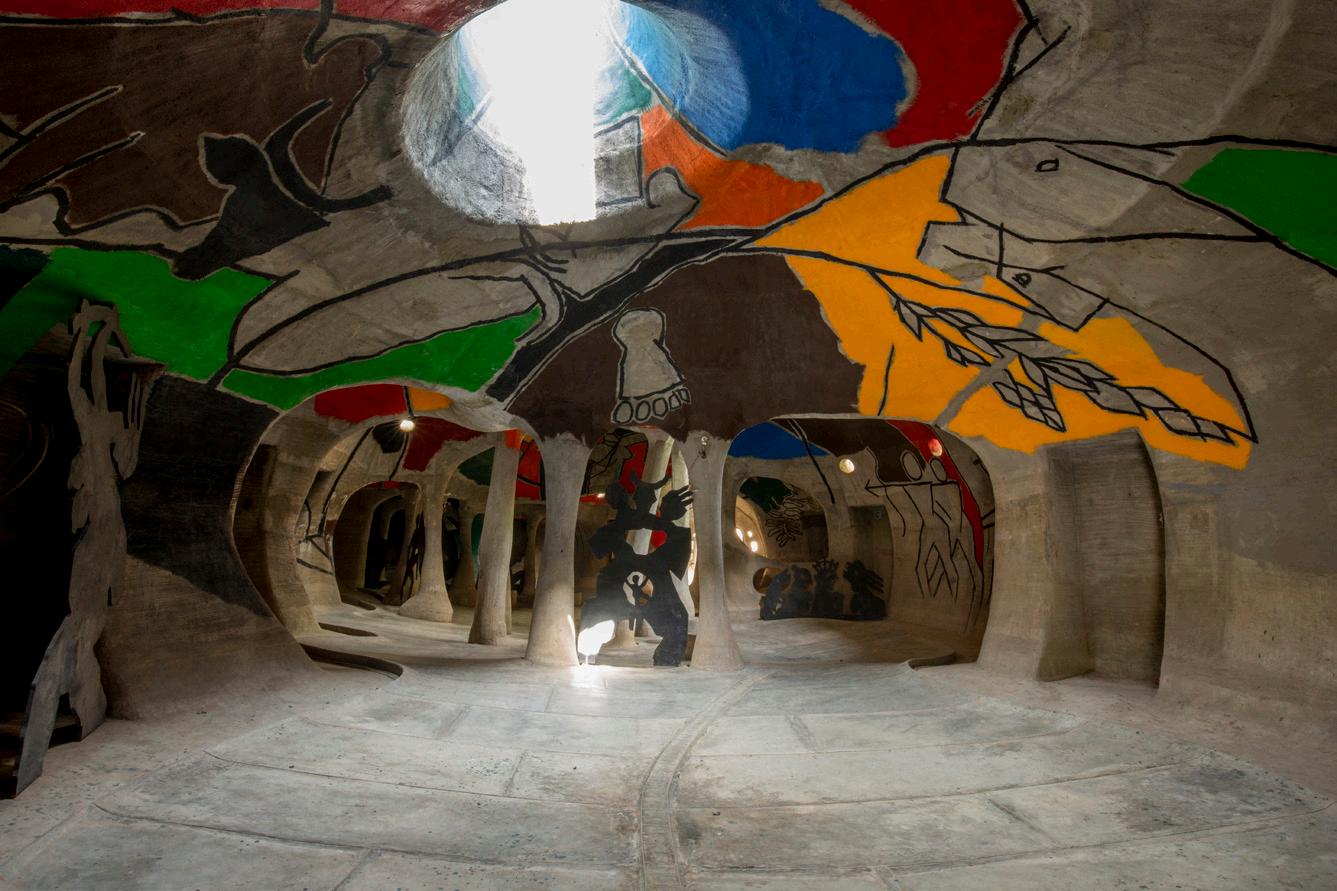
An inconvenient education is a banyan tree. It does not rise through one trunk alone. It grows by descent, extension, and return. Its roots fall from the air into new ground. Its canopy shelters many lives at once. It is not a hierarchy but a living network. It spreads by connection, not enclosure.
It makes room for learners, workers, strangers, and futures.
Under the banyan, knowledge is not delivered. It is gathered, tested, shared, and grown.
The old image of the university as a walled citadel is fading. A more truthful image is emerging.
The university as cloud canopy.
The university as network.
The university as bridge.
A place not only for learning, but for doing.
We need institutions brave enough to become inconvenient to themselves.
Inconvenient to their habits.
Inconvenient to their prestige rituals.
Inconvenient to their false binaries.
Inconvenient to the quiet arrangements that preserve inequity while speaking the language of inclusion.
The choice before us is simple.
We can preserve the conveniences of yesterday. Or we can build the inconvenient education the future requires.
One protects the institution as artifact.
The other renews education as a public act of imagination.
We choose an inconvenient education.
Because it is harder.
Because it is alive.
Because it changes us.
The future will not be educated conveniently. It will be educated courageously.
Four alumni journeys shaped by resilience, reinvention, and the enduring power of design. Stories of practice, purpose, and lives continually in motion.
Reaching Out and Speaking Up
Design shaped by disaster, climate, and equity
“Doing this work in resilient design is why I chose
architecture.”
After experiencing Hurricane Katrina and witnessing how disasters disproportionately impact minority communities, Octavia Pinckney M.Arch’23 set out to build a mission-driven career. At the BAC, they found their voice—learning to advocate for clients, collaborate with intention, and elevate African design as a vital part of the conversation. Now, Octavia is committed to
“Good design needs both
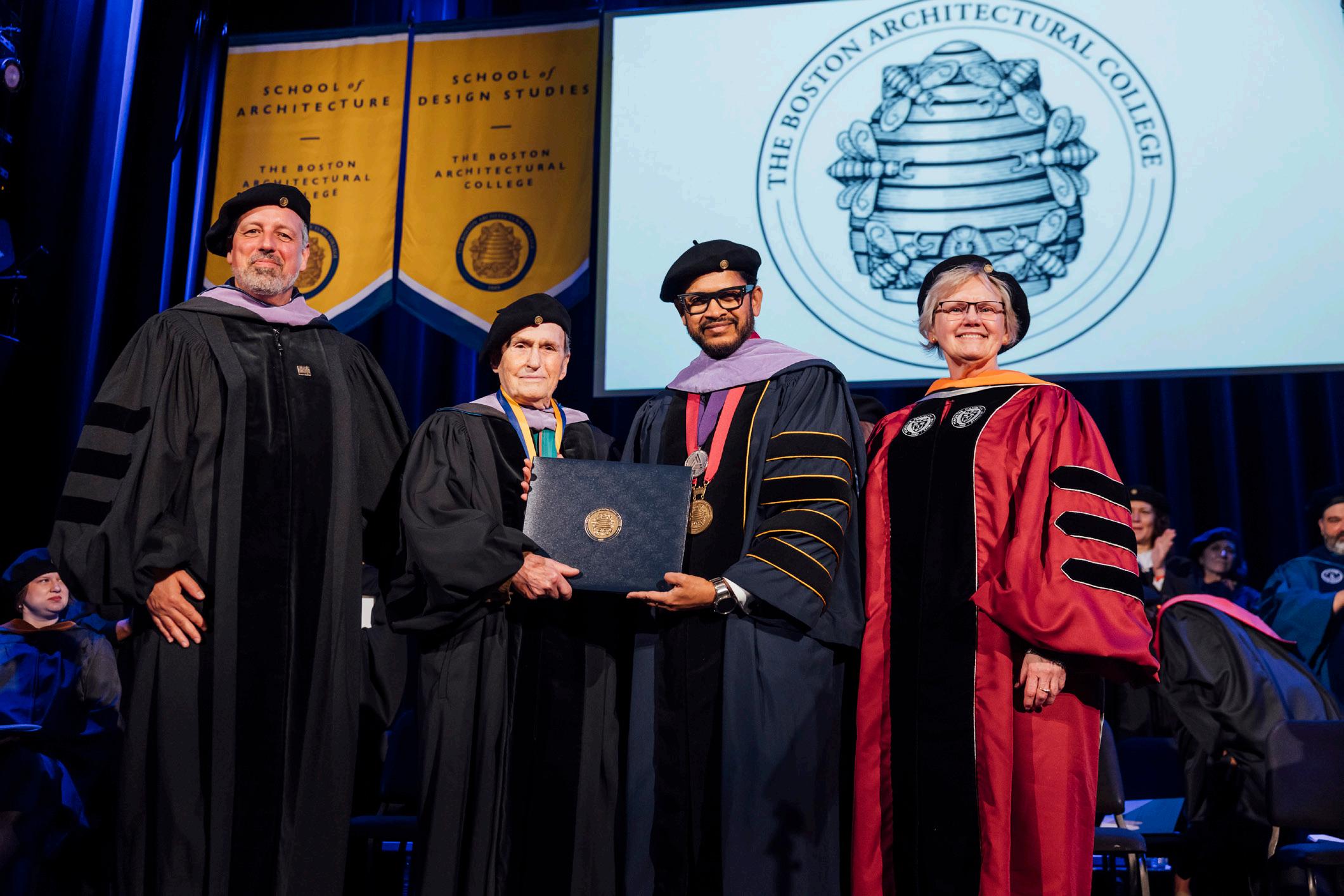
living BAC alumnus—was honored for a lifetime of impact in architecture. After immigrating from Italy with nothing, he rose from office boy to accomplished architect, shaping iconic Boston landmarks and giving back to his community. Proving that great design, like a great life, balances purpose and possibility. Now, his legacy stands as a testament to resilience, purpose, and the enduring power of design.
Nathan Rosazza
Rockstar Dreams to Designed Spaces
Reinvention after a nonlinear start
“I never really cared about school—I just wanted to be a rockstar.”
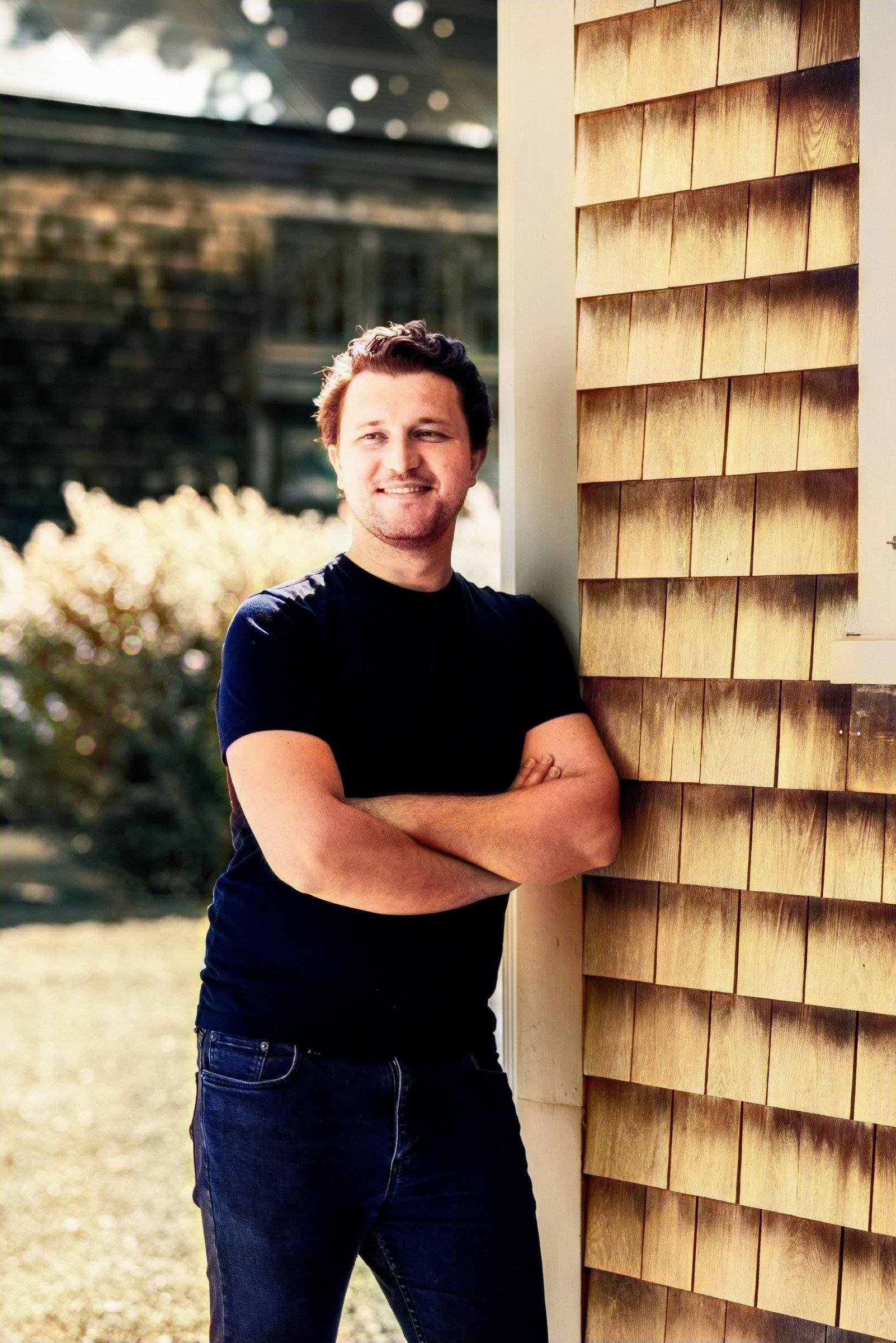
After years of music and warehouse jobs, Nathan Rosazza B.Arch’21 found his path in architecture. At the BAC, the IPAL program helped him fast-track his degree and licensure while balancing work and family. Now, Nathan brings a
Rebuilding Life Through the Immigrant Experience
“My plans for the future? Grit—and probably a little more grit.”
Stefan Angelovski
Read Nathan’s Full Story Here
Read Franco’s Full Story Here
Read Stefan’s Full Story Here
Octavia Pinckney
Read Octavia’s Full Story Here
A Lineage of Distinction brings together six influential architects and designers whose work spans cultures, disciplines, and generations. Mario Schjetnan frames landscape architecture as vital urban infrastructure, while Benedetta Tagliabue emphasizes listening and place-based design. Tatiana Bilbao centers sustainability and imagination, and Daniel Libeskind explores memory, meaning, and cultural resonance. Billie Tsien highlights responsibility to real people and institutions, and Balkrishna Doshi champions cultural understanding and enlightenment through design. Together, their perspectives define architecture as a force for resilience, equity, and human connection. Each honorary alum expands the role of design beyond form into process, impact, and lived experience.
Watch in-depth YouTube conversations in the BAC Channel Series with President Daas, offering deeper insight into their philosophies and work across diverse global contexts today.
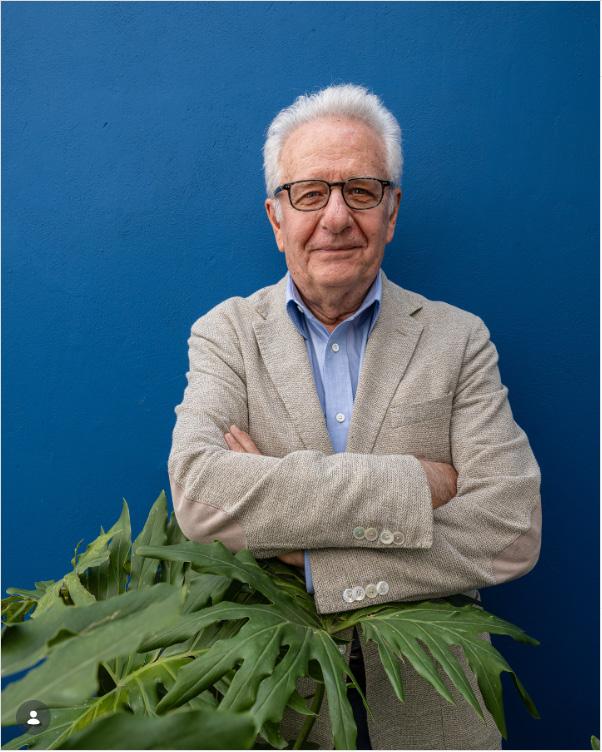
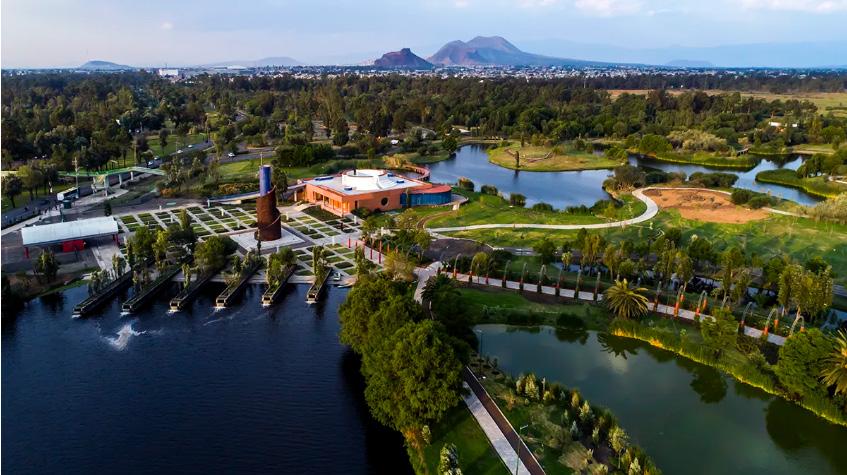
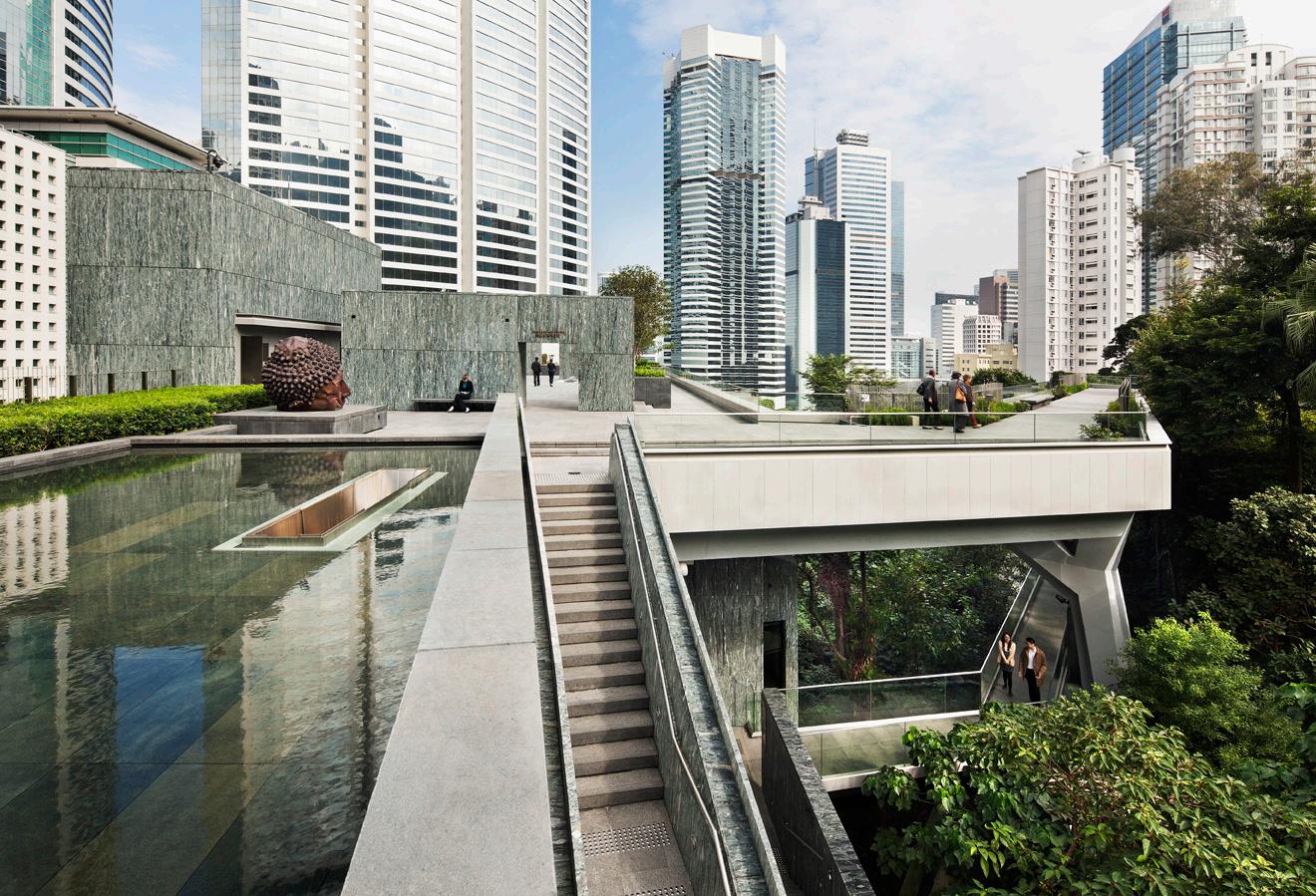
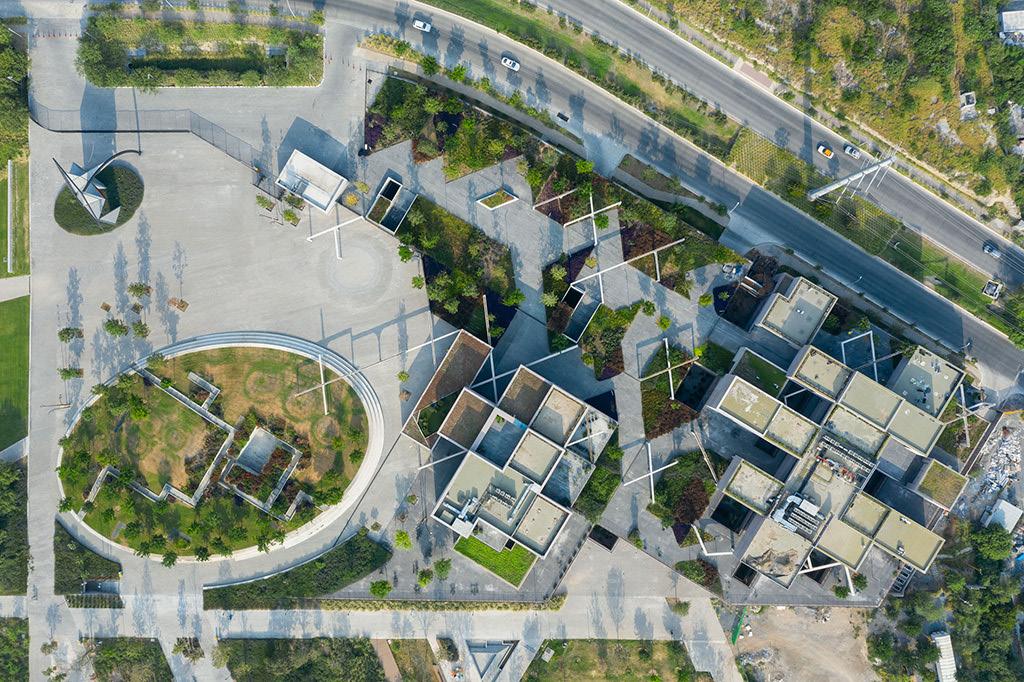
Founding Partner, Grupo de Diseño Urbano (GDU), Mexico City; Professor, Universidad Nacional Autónoma de México; Sir Geoffrey Jellicoe Award from the International Federation of Landscape Architects; The Cornelia Hahn Oberlander International Landscape Architecture Prize; and elected member of the American Academy of Arts and Sciences.
Views landscape architecture as critical urban infrastructure, integrating ecology and city systems to restore environments and shape resilient public space.
“Landscape architecture is not decoration. It is structure, it is process, it is life.”
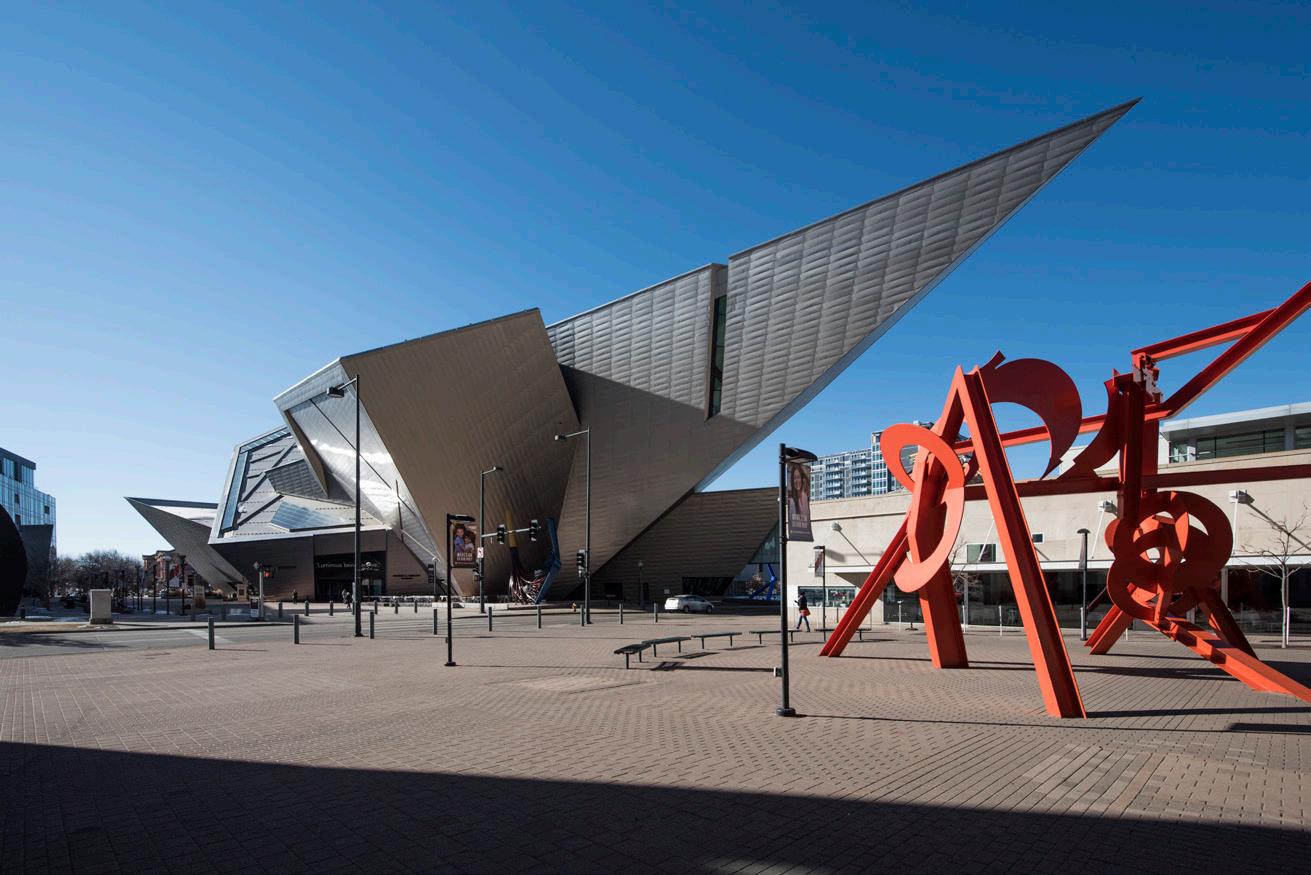
Daniel Libeskind, Hon’23
Founder and Principal Design Architect, Studio Libeskind; recipient of the Praemium Imperiale, RIBA Royal Gold Medal, Goethe Medal
Renowned for the ability to evoke cultural memory in his buildings, combined with an approach that draws from a deep commitment to music, philosophy, and literature, he aims to create architecture that is resonant, original, and sustainable.
“Out of a small change, a great revolution may arise.”
Mario Schjetnan Hon ‘26
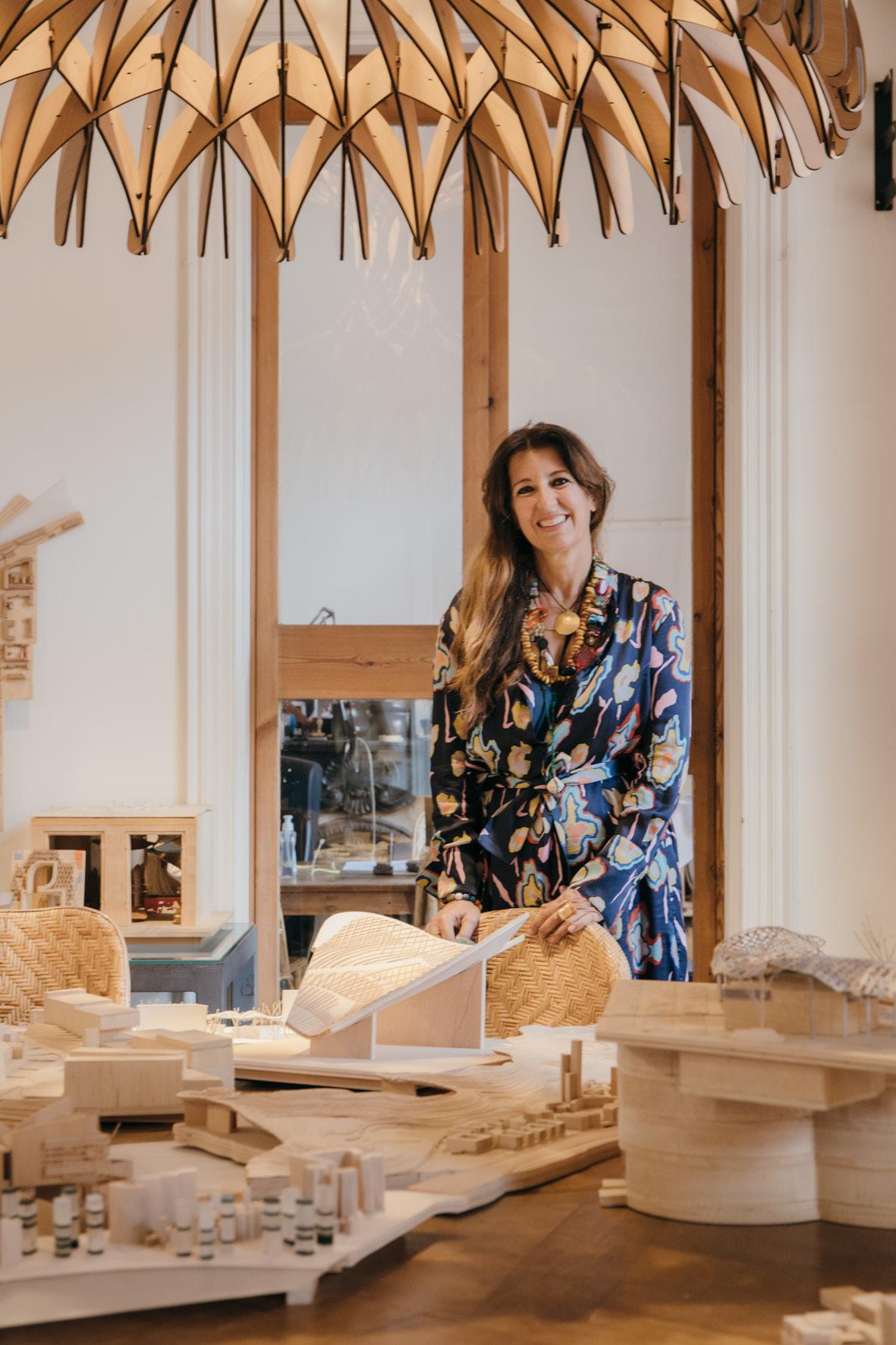
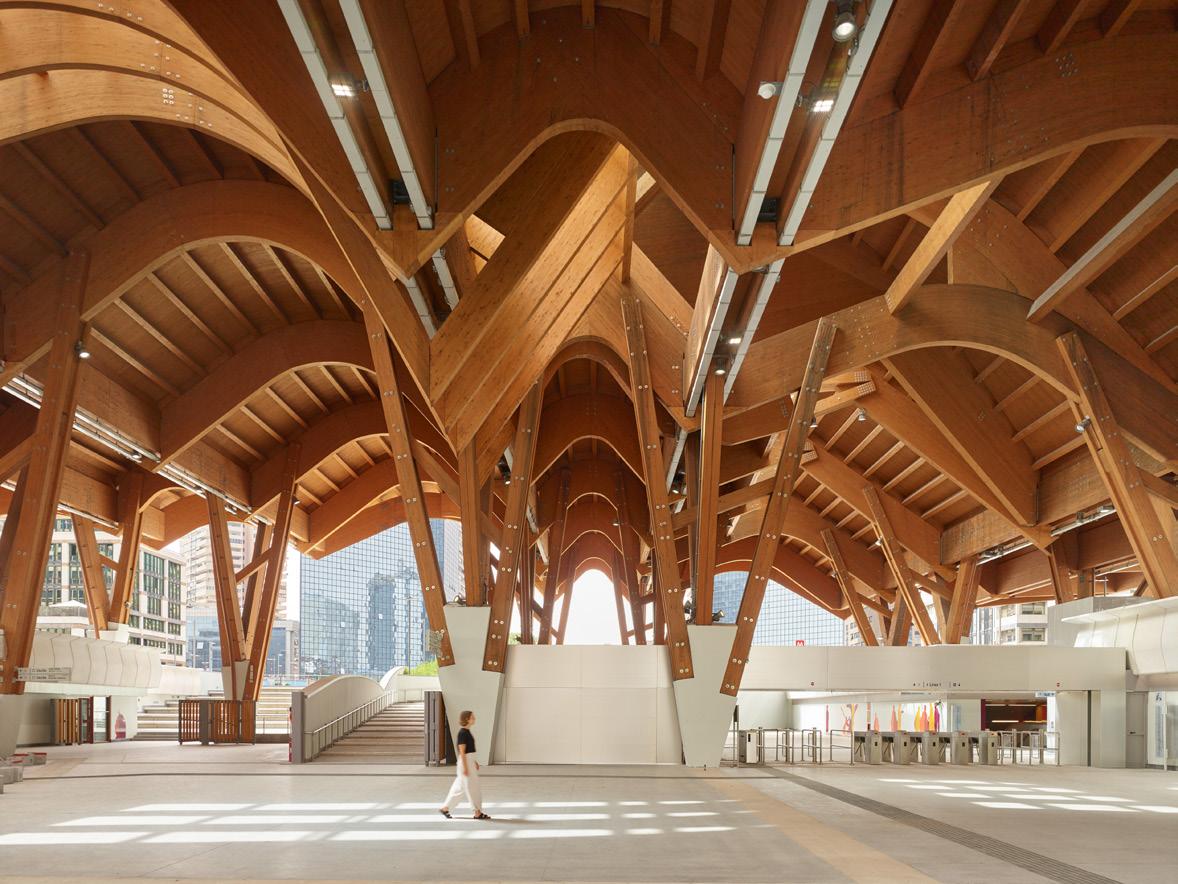
Benedetta Tagliabue, Hon’25
Co-founder and Principal Architect, EMBT Architects; Founder and President, Fundació Enric Miralles; Past Juror, Pritzker Architecture Prize; recipient of the Spanish National Architecture Award, RIBA International Fellowship.
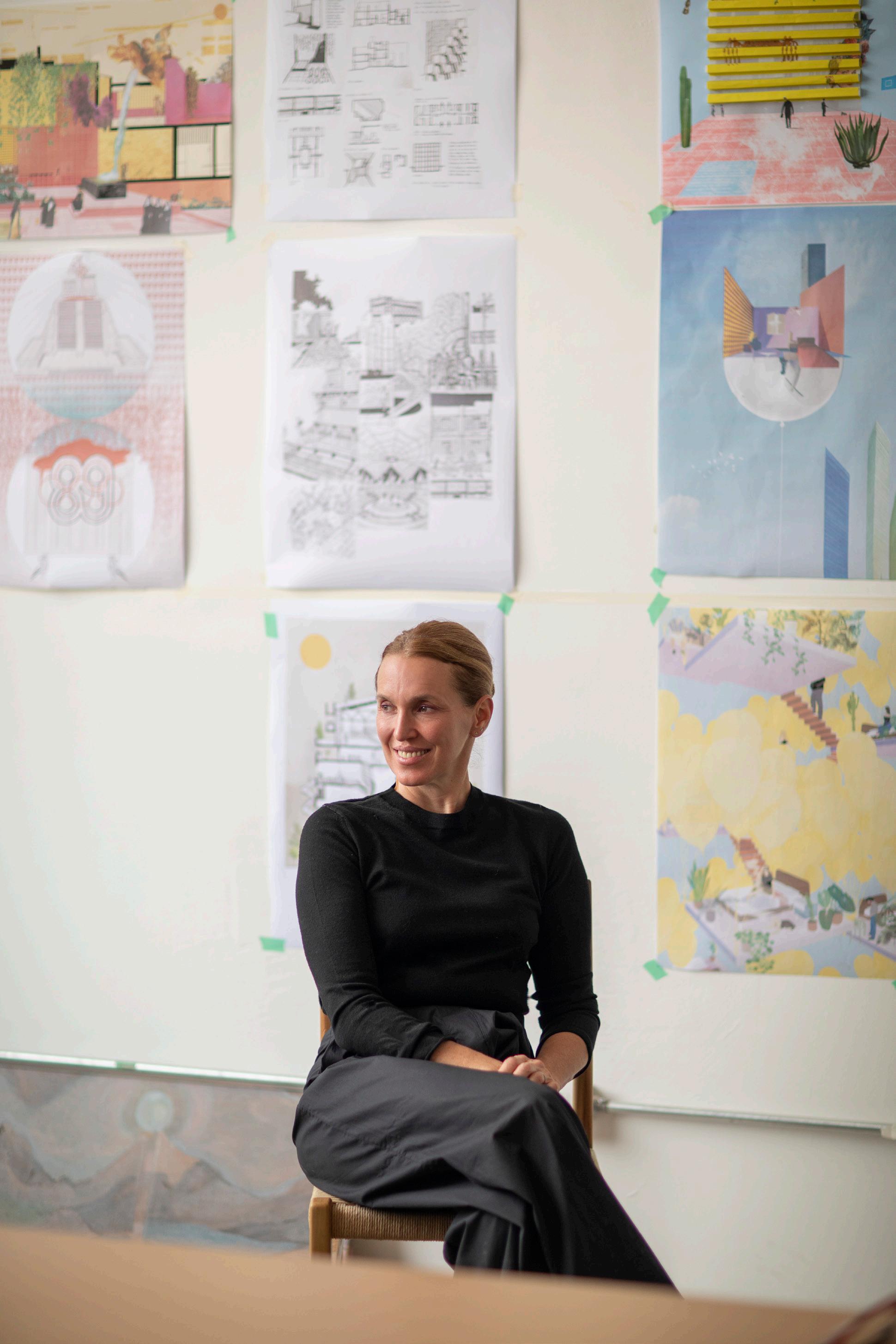
She shares a compelling vision of architecture as an act of listening: a thoughtful, place-based collage process that responds to political and cultural contexts while remaining deeply attentive to the everyday lives of the people it serves.
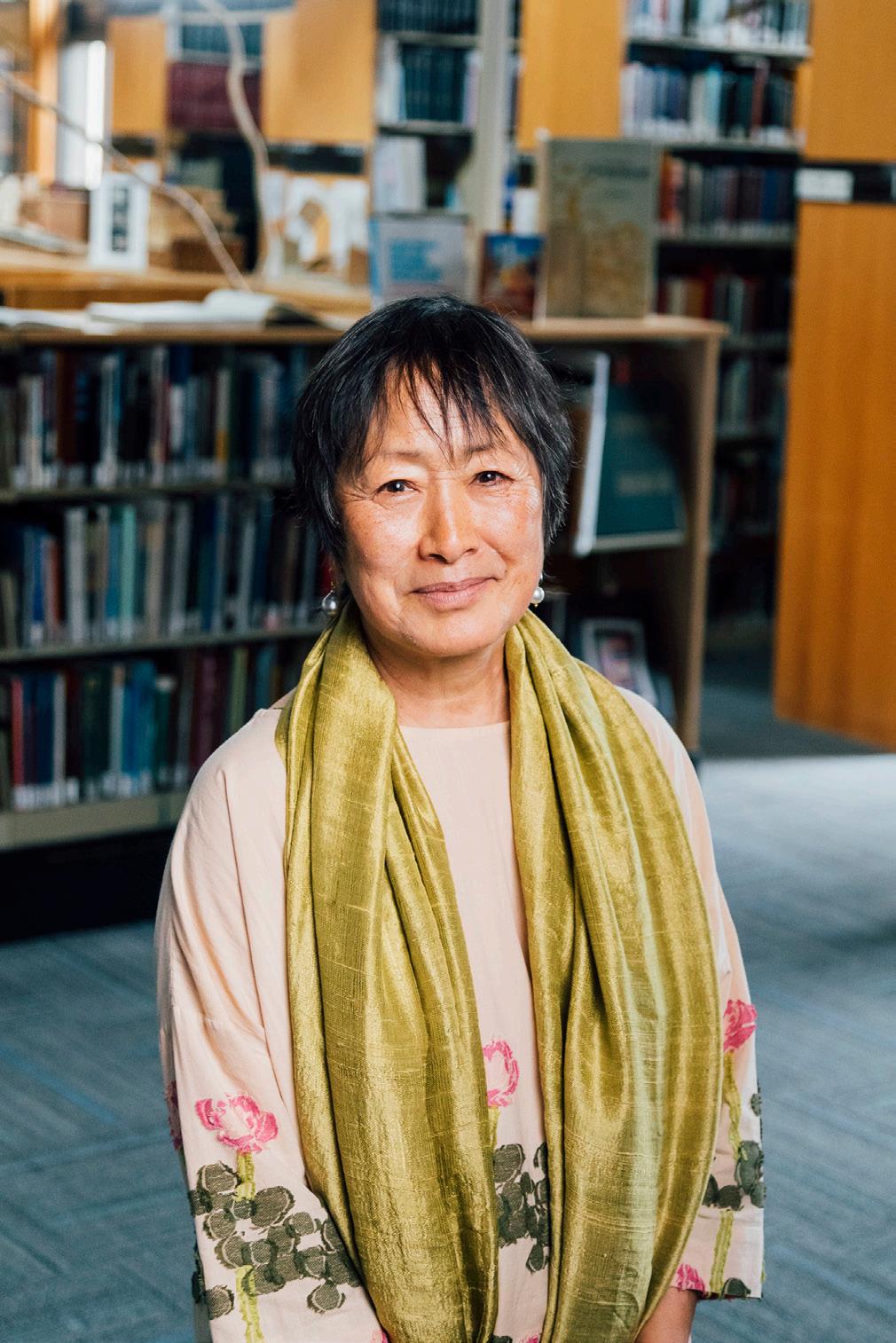
Billie Tsien, Hon’22
“Architecture is not just a passion and tool for entertainment, it's an incredibly powerful tool that can give back an immense benefit to the world.”
Founding Partner, Tod Williams Billie Tsien Architects Partners; recipient of the AIA Gold Medal, National Medal of Arts, Arnold W. Brunner Memorial Prize
Her practice is committed to reflecting the values of non-profit, cultural, and academic institutions toward an architecture of enduring vision.
“If you don' t dream, you can’t imagine. If you can’t imagine, you can’t
Balkrishna
“You are all powerful because you have all worked in a professional capacity… real people, real problems.”
Doshi, Hon’21
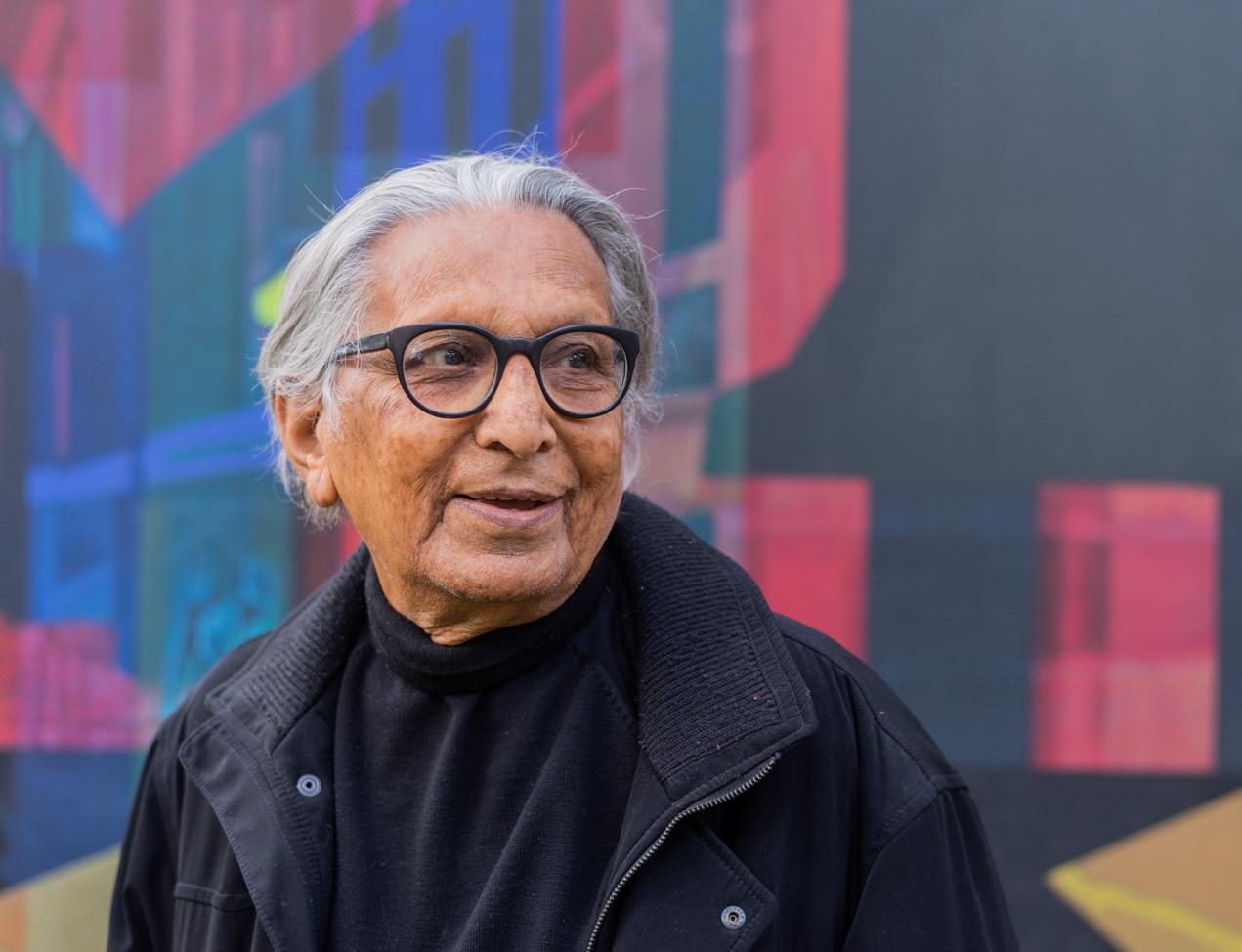
Founder, Vastushilpa Consultants; recipient of the Pritzker Architecture Prize, RIBA Royal Gold Medal, Padma Vibhushan
Doshi’s work respects Eastern culture while cutting across genres and socio-economic boundaries, and his approach to architecture has always provided a unique perspective—embracing culture and creative form.
“The question is not of building form etcetera. Instead, it’s how do we enlighten?”
951 Boylston Street
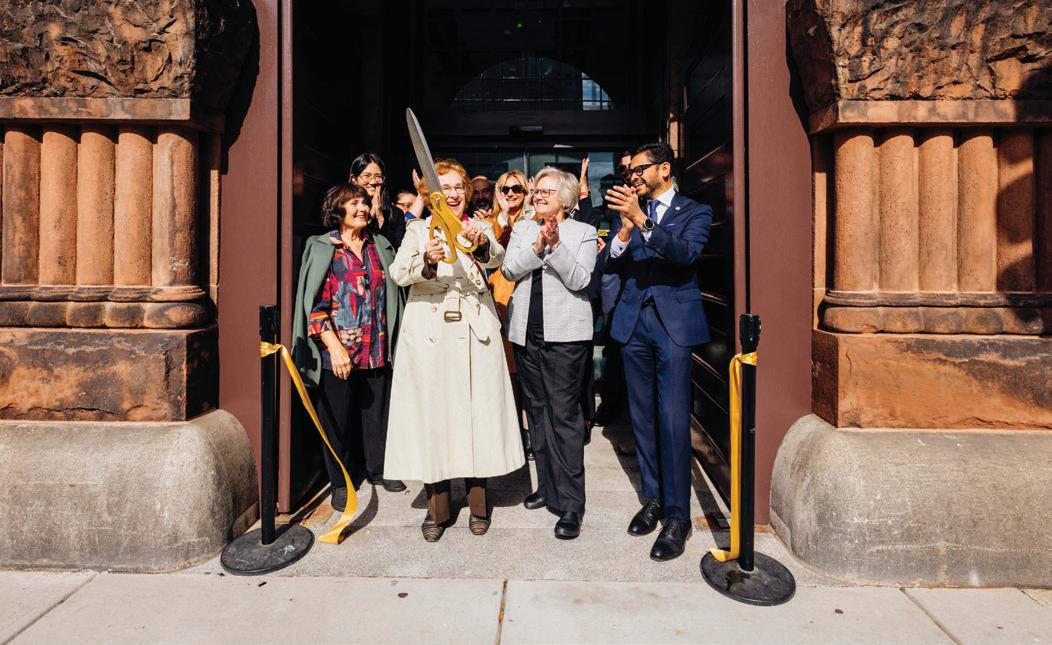
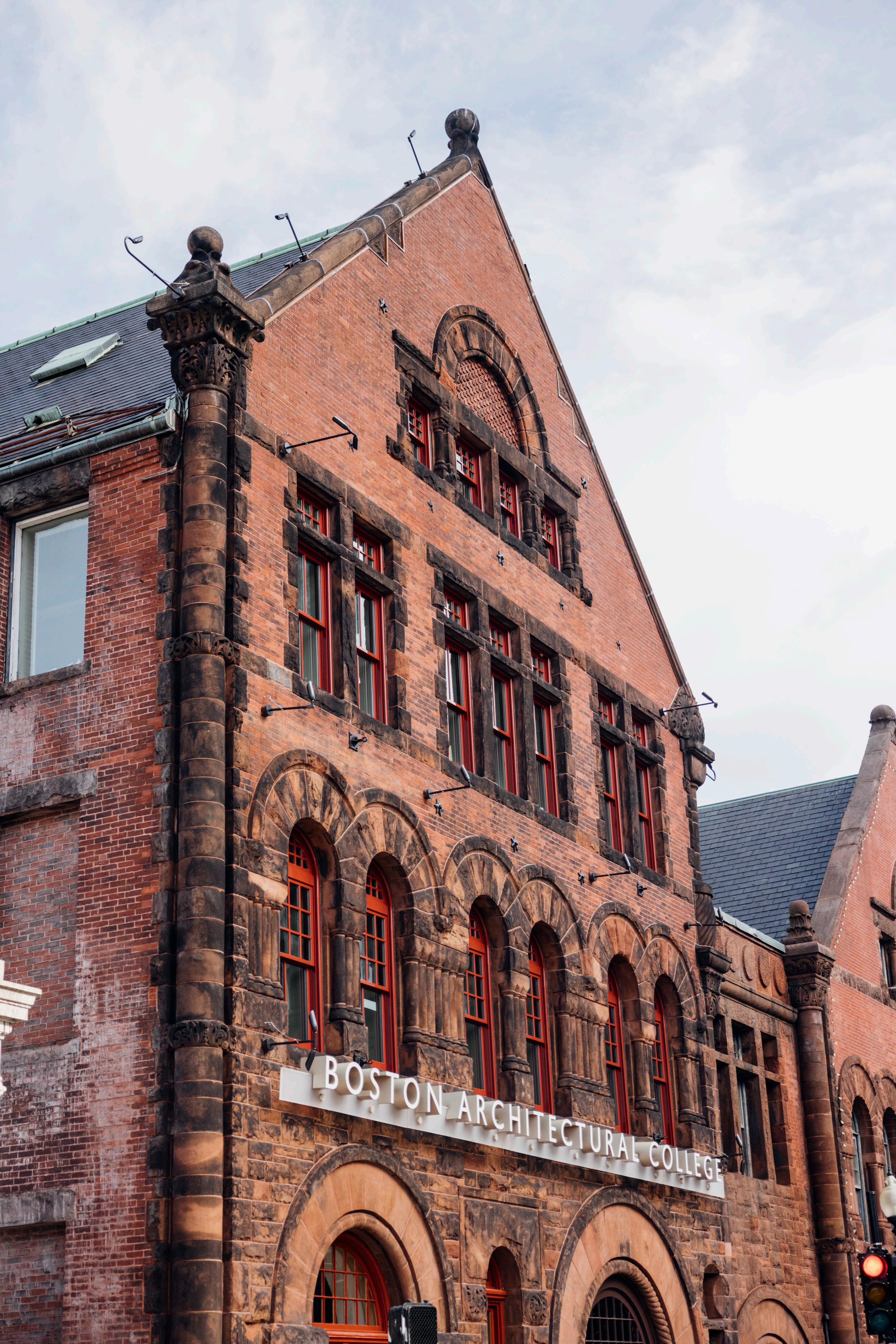
Built in 1887, this Romanesque landmark by Arthur Vinal carries the civic force of Boston at one of its great architectural moments. Its masonry, arches, and presence speak to permanence and public purpose. Carefully renewed, it remains fully alive in the work of the College and the city.
Rooted in Boston, Built for What’s Next
320 NEWBURY STREET
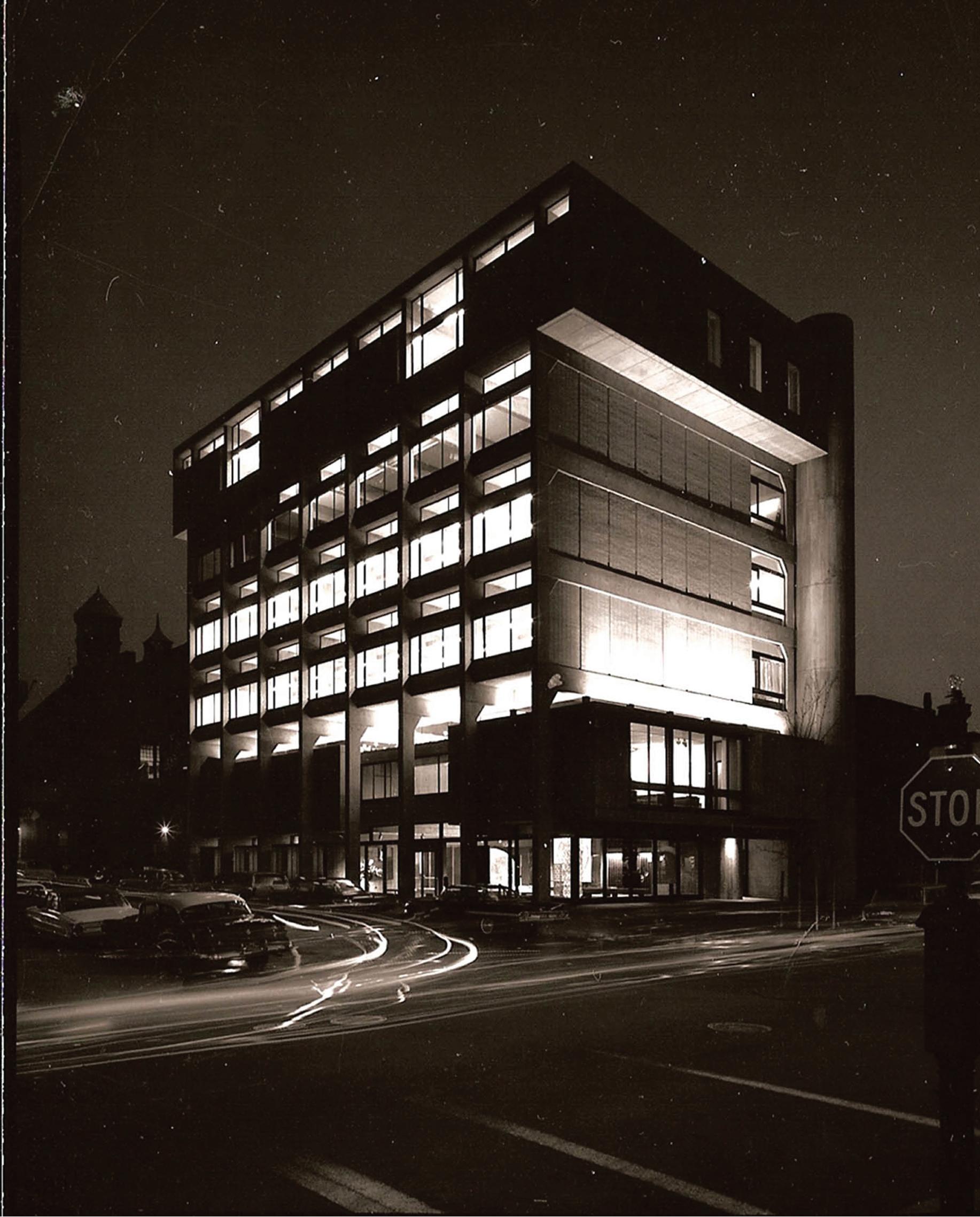
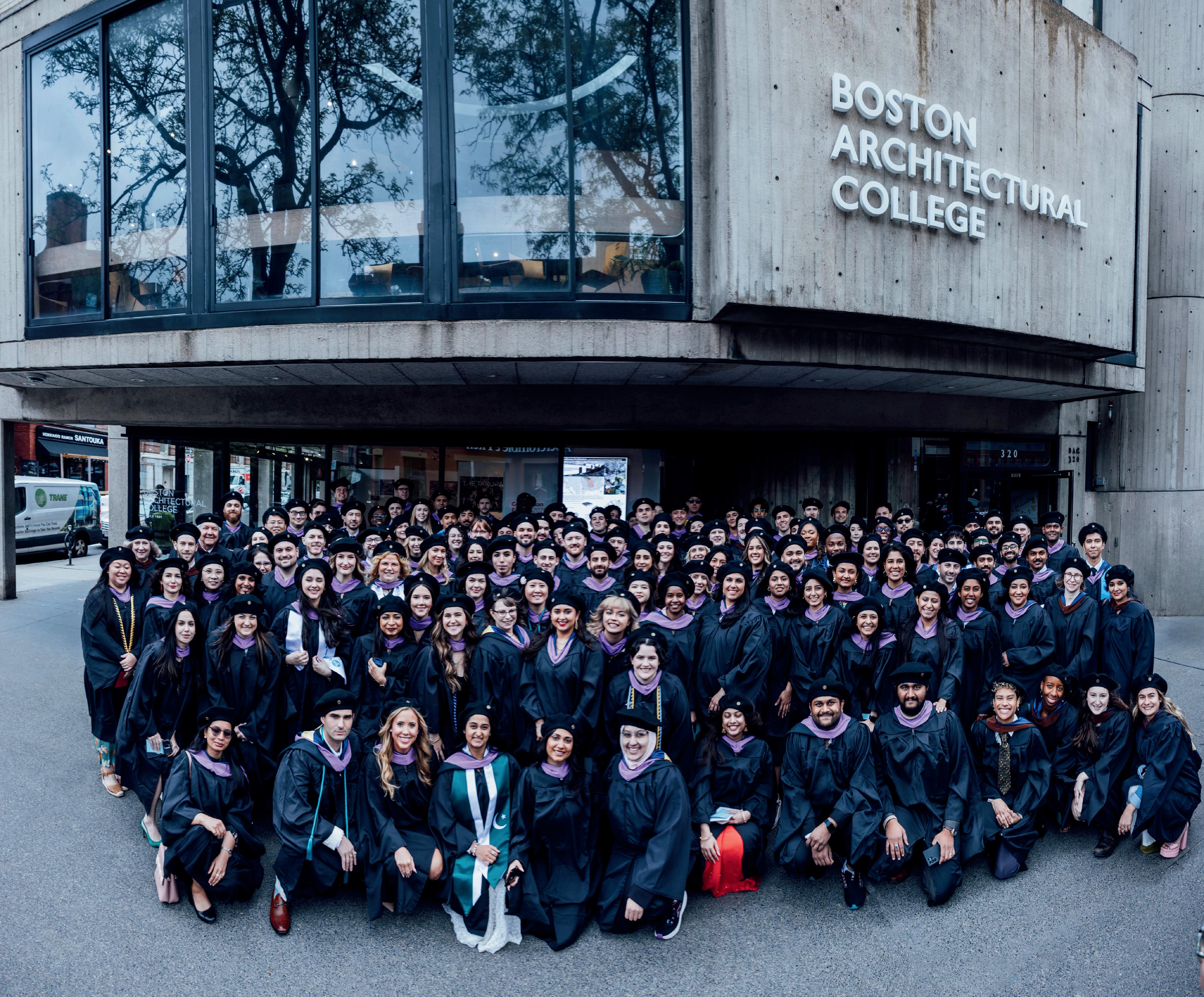
Now 60 years old, this 1966 competition-winning Brutalist masterpiece by Ashley, Myer and Associates has shaped generations of design education. Studios, exhibitions, critiques, lectures, and conversations have unfolded here through decades of change in the discipline, from hand drafting and analog photography to digital fabrication, construction robotics, virtual reality, and AI-assisted practice. It also appears in The Drama, as the workplace of Emma Harwood (played by Zendaya), placing the building inside a new cultural frame as well as an academic one.
These landmark buildings anchor the College at its core. They are Boston’s architectural engine for the BAC, the trunk of the Great Banyan Tree.
BUILDING OUR FUTURE
And the next chapter is already underway. The geothermal wells between these buildings will help power this headquarters more directly, tying the future of the campus to a more resilient infrastructure. Help power what’s next.
As part of our capital mini campaign, we have raised $3 million, with $3 million more to raise. Support the geothermal project and invest in the resilient future of the BAC’s world headquarters.
Donate Here
Practice in Motion
When education and practice are integrated, recognition follows.
The BAC has long rejected the divide that places practice outside education, adjacent to it rather than constitutive of it. Too often, practice remains disconnected from what is recognized as serious inquiry, experimentation, and prestige. Here, education is not sealed off from practice. It is shaped in contact with it, tested through it, and advanced by bringing knowledge and action into the same field.
That is why national recognition matters here. It affirms a model in which education and practice are already integrated.
What follows are four expressions of that model, each showing how the integration of education and practice can advance the field itself.
The BAC Practice Component
Education as Practice of graduates are employed on graduation day
Recognized with the 2025 AIA/ACSA Practice + Leadership Award, the BAC’s Practice Component stands as a leading model of practice-integrated design education. Led by Tina Maceri Bolden, Bethany Lundell Garver, Maria Sardinas, and Ashley Tannebaum, it brings classroom learning, community engagement, and professional practice into one ecosystem.
Students accumulate thousands of hours of practice-integrated learning through mentorship, interdisciplinary collaboration, and outcomes-based assessment, developing not only professional knowledge, but also reflection, ethical judgment, and agency.
The results are clear: 98% of graduates are employed on graduation day, 46% hold positions managing others, and the BAC achieves eight times the national average of students completing NCARB’s Integrated Path to Architectural Licensure (IPAL) before graduation.
98%
the national average of students completing NCARB’s IPAL before graduation 8X hold positions managing others 46%
Bethany Lundell Garver Leadership as Practice
Dean of Practice Bethany Lundell Garver works at the intersection of design education and professional formation, not refining the path into architecture but rethinking conditions by returning to first principles—who it serves, how it functions, and what practices it legitimizes.
As a recipient of the American Institute of Architects Young Architects Award, she is recognized among emerging practitioners advancing adaptive relationships between Practice and community.
Ashley Tannebaum Teaching as Practice
Dr. Ashley Tannebaum challenges the assumption that students are merely preparing for future practice. In her work, they are already participating in it. Learning happens in direct relation to professional environments, where doing and reflection develop together.
As recipient of the 2026 New Faculty Teaching Award, Part-Time Faculty, she is recognized for advancing an approach in which teaching is inseparable from active engagement with the field.
Read Ashley’s Announcement Here
Read Beth’s Announcement Here
Aisha Densmore-Bey Advocacy as Practice
Dr. Aisha Densmore-Bey expands architectural practice beyond built form into cultural production, representation, and visibility, working across design, film, writing, and education as a unified practice of authorship and access.
A 2024 Women in Design Award of Excellence honoree, she advances equity by creating platforms, narratives, and entry points that broaden participation in architecture and reshape how practitioners are seen within the field today.
Read Aisha’s Announcement Here
Our Students represent Nations
There is something remarkable at the BAC: a small college in Boston with this kind of global pull.
Students and alumni arrive with languages, histories, cultural memory, and lived experiences. That richness enters the studio, the classroom, the practices, the critique, and the daily life of the College. It sharpens the work. It widens the conversation. It gives the BAC a depth far beyond its size.
Boston Common has long been shared ground in the life of the city. In its own way, the BAC has become a global common: a place where people from many parts of the world gather, learn, work, and take root. People come here to study. Many become part of Boston. Through them, the city grows broader, and the College grows stronger.
Commitment in motion
In the last year, the BAC has secured $10 million in documented bequests, materially strengthening its endowment and moving the College closer to one of its oldest aspirations: a design education open to all, free of financial barriers, and true to principles present from the beginning, inspired by Cooper Union’s model of 1859.
A conversation with any BAC student reveals a sense of purpose and possibility. Our students are building futures in design while bringing ambition, discipline, and real-world experience to the work. They are advancing careers, expanding perspectives, and preparing to shape the built environment in meaningful ways.
At the BAC, widening access is not a new ambition. It is part of the institution’s original promise. These commitments help open the field to more talent, strengthen the path forward, and invest in the next generation of designers.
Make a planned gift to the BAC.
Include the College in your will or estate plans through a bequest or other legacy gift, and help widen access, grow the endowment, and advance a future in which a BAC education is free.
Enabling access to a design education
Stephanie Szneke, B.Arch ’98
“I couldn’t have afforded architecture school otherwise.”
“My life would have gone in a completely different direction. I really want to give that opportunity to someone else.”
Stephanie Szneke, B.Arch ’98 built her career on the opportunity the BAC made possible. Drawn to its work-study model, she was able to work by day and study by night, gaining both a design education and real-world experience that launched a decades-long career.
Now, through a $1.5 million planned estate gift, Stephanie is extending that same opportunity to future students, ensuring access to an education that can change the course of a life, just as it did her own.
Believing in the BAC
John H. Piling Cert’15, MDS’17
“I wasn’t there for the money. I was there to pay it forward.”
Leading by example
John H. Piling Cert’15, MDS’17 has been part of the BAC for decades—as faculty, alumnus, and leader. Across a global career in architecture, he kept coming back for one reason: the students.
“I believe in what the BAC does, and in the impact its students are having in the world.”
Now, through a planned gift of 10 percent of his estate, John is investing in future generations—expanding access, supporting opportunity, and ensuring more students can fully experience the kind of education that shaped his own journey.
Honoring a lifetime legacy
“We believe the College plays an essential role in helping students from many backgrounds pursue excellence and build meaningful careers in the design professions.”
“I worked my way through—and it changed everything.”
President Mahesh Daas and Mrs. Madhavi Daas
To catalyze our upcoming comprehensive campaign, President Mahesh Daas and Mrs. Madhavi Daas have made a $2 million estate commitment in establishing the Mahesh and Madhavi Daas First Generation Student Fund. A deeply personal gift for both of them, the bequest will primarily fund scholarships for students who are the first in their families to attend college.
“The BAC matters because it expands who gets to belong in design education,” Madhavi said. “Mahesh’s own path as a first-generation student and immigrant shaped his conviction that talent is everywhere, even when opportunity is not. He has devoted his life to widening that path for others.”
Judy Nitsch and Tony Magliozzi (James "Tony" Magliozzi, B.Arch'62)
James “Tony” Magliozzi, B.Arch’62 found his path at the BAC, where education met real-world experience and launched a lifelong career in architecture and construction. After his passing, his wife, Judy Nitsch—former Board Chair and current Trustee—honored his wishes with a transformative seven-figure bequest, the largest in the College’s history.
"The BAC is a critical institution because it provides access to education for people like Tony," Judy said. "He was the son of an immigrant, who didn't go right to college. His parents couldn't afford to pay for it-he worked his way through and had a fabulous career."