

THEATREWORLD EDITORIAL
As a devoted cinephile, 2026 has already emerged as another defining year for global cinema, with the theatrical industry continuing to evolve through technological innovation, premium experiences, and record-breaking box office successes. Across international markets, audiences are proving once again that cinema remains one of the most powerful collective entertainment experiences, especially when paired with cutting-edge presentation formats and event-driven storytelling.
The rapid expansion of premium formats such as IMAX, Dolby Cinema, ScreenX, 4DX, and RGB laser projection has fundamentally reshaped audience expectations. Exhibition chains across North America, Europe, the Middle East, and Asia are increasingly investing in luxury seating, immersive audio systems, and high-brightness projection technologies to position theatres as premium entertainment destinations rather than traditional movie halls. With Dolby Cinema rapidly expanding across India, premium theatrical experiences are entering a new phase, while Prasads Multiplex's PCX HDR by Barco is gaining strong audience acceptance and reshaping the landscape of PLF cinema in the country.
The ongoing war crises and global geopolitical tensions are impacting the cinema exhibition industry through rising operational costs, inflation, delayed film releases, and weakened consumer spending. As economic uncertainty grows, cinemas worldwide are facing reduced footfalls, disrupted expansion plans, and increasing pressure on theatrical revenues. But the resilience from exhibitors show the invariable commitment to the industry with structured and planned release strategies.
On the global box office front, 2026 has already delivered several major theatrical phenomena. Meanwhile, Michael, the much-anticipated Michael Jackson biopic, became a worldwide sensation, crossing $577 million globally within just a few weeks and establishing itself as one of the highest-grossing musical biopics of all time. Hollywood's theatrical resurgence has also been fuelled by diverse blockbuster offerings spanning action, family entertainment, sequels, and nostalgia-driven franchises.
At the Indian box office, 2026 has already witnessed historic milestones. The biggest phenomenon so far has undoubtedly been Dhurandhar 2: The Revenge starring Ranveer Singh. The film has shattered multiple box office records, grossing nearly INR 1,800 crore worldwide and emerging as one of the highest-grossing Indian films ever made. Its unprecedented theatrical run has reaffirmed the massive audience appetite for large-scale action spectacles and event cinema in India.
Industry reports also indicate that India's theatrical box office performance during the first quarter of 2026 has significantly outpaced the same period in 2025, driven by a healthy mix of blockbuster spectacles, regional hits, mid-budget entertainers, and international releases.
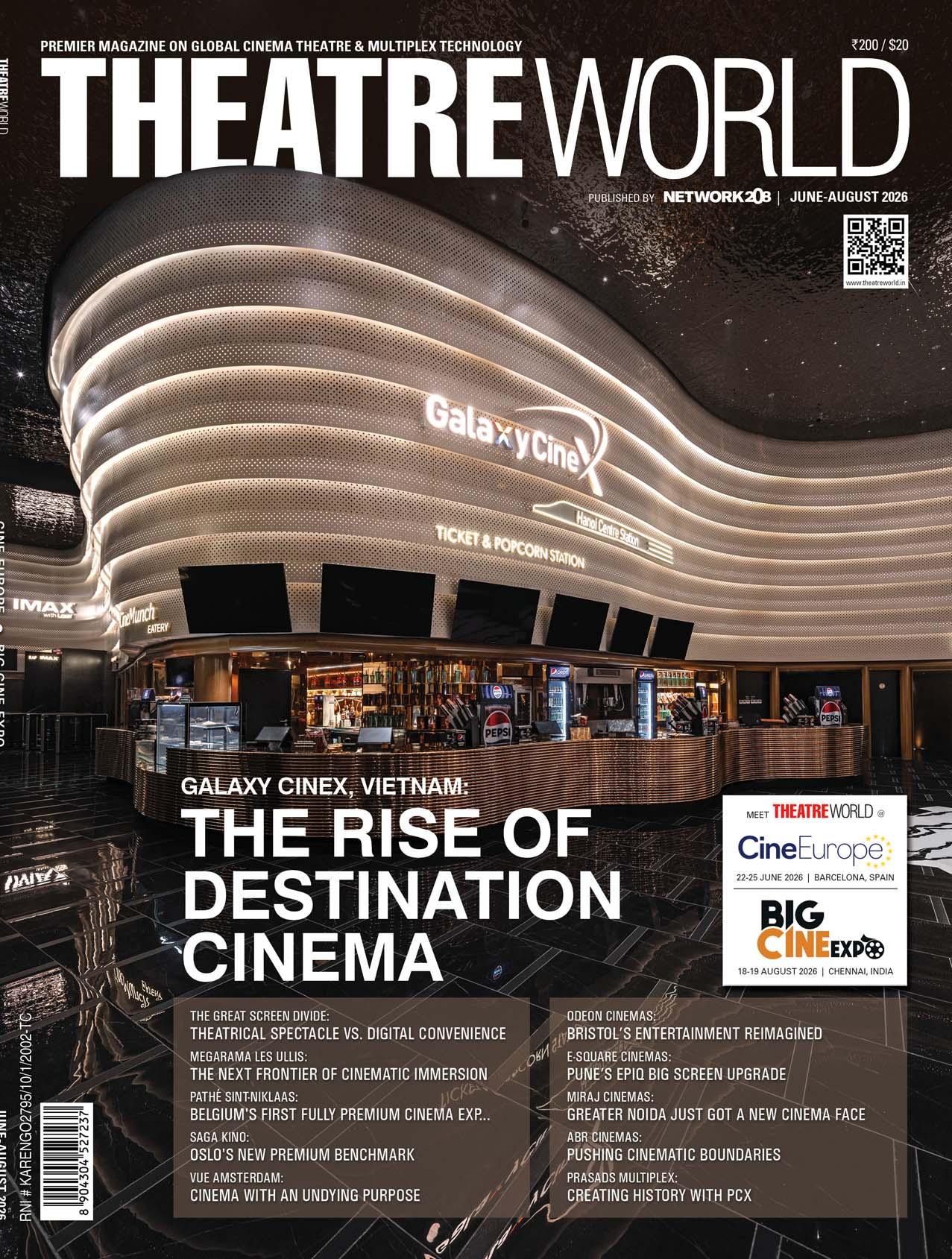
As the cinema industry continues to evolve, the 9th edition of Big Cine Expo returns bigger than ever. Experience the future of cinema at Asia's premier exhibition convention, happening on 18-19 August 2026 at the Chennai Trade Centre. Bringing together cinema professionals, technology innovators, and industry leaders, the event will showcase the latest in projection, sound, seating, immersive experiences, and theatrical distribution. Network, discover cutting-edge solutions, and explore the future of movie exhibition.
Before that meet us and pick your TheatreWorld copy at CineEurope commencing between 22-25 June 2026 at CCIB, Barcelona.
See you at CineEurope and Big Cine Expo 2026!
Raghavendra T (Raghav) Editor-Publisher
DISCLAIMER - TheatreWorld Magazine does not warrant or assume any legal liability or responsibility for the quality, accuracy, completeness, legality, reliability or usefulness of any information, product or service represented within our magazine or web site. The information provided is for knowledge or entertainment purposes only. TheatreWorld Magazine does not endorse or recommend any article, product, service or information found within said articles or advertisements. The views and opinions of the authors who have submitted articles to TheatreWorld Magazine belong to them alone and do not necessarily reflect the views of TheatreWorld Magazine or its staff.
Issue # 108 June-August 2026

Raghavendra T Editor-Publisher +91 9980 208 208 raghav@network208.com
Asha Ranjith Managing Director +91 9902 208 208 asha@network208.com
Himanshu Peshwani VP - Sales +91 9148 208 208 himanshu@network208.com
Shireen Mariam
Sr. Manager - Content & Marketing +91 9740 602 545 shireen@network208.com
Anand A Balan Editorial Assistant +91 8808 800 208 content@network208.com
Varsha Naidu Finance & Admin +91 9108 208 208 varsha@network208.com
Saravanan P Online
Published by Raghavendra T on behalf of NETWORK208 11/1, 7th Main, Indiranagar 2nd Stage, Bangalore 560 038, India Tel: +91 80 2529 0208 www.network208.com Printing Ramya Reprographic, Bengaluru
Sandeep Mittal Founder Editor-Publisher
RNI # KARENG02795/10/1/2002-TC
TheatreWorld is a quarterly publication, on the motion picture exhibition industry, for private circulation. It reaches out to subscribers, mainly theatre owners and trade professionals around the world. Additional copies are being promoted at major international industry tradeshows. TheatreWorld seeks the healthy promotion of the theatre industry through dissemination of useful information. Some of the information is compiled from industry sources, trade journals, company brochures for the benefit of readers, especially, theatre owners. TheatreWorld acknowledges with thanks the authors and publishers of these printed materials. Views expressed in the articles are those of the authors and not necessarily of TheatreWorld. TheatreWorld is a trademark under registration. The contents of TheatreWorld are under copyright registration. All rights reserved. Reproduction by any means in whole or part without written permission is prohibited. Unsolicited printed material is welcome but no responsibility is undertaken for the same and will not be returned. TheatreWorld does not take responsibility for the absolute accuracy of information published.
This issue of TW has two sets of page numbers - International pages TW-1 to TW-52 for TW, and India pages TM-1 to TM-50 for TM TM is inserted between pages TW-46 and TW-47 of TW.
TW-8
SPECIAL STORY
TW-20 GALAXY CINEX, VIETNAM: THE RISE OF DESTINATION CINEMA
TW-23 THE GREAT SCREEN DIVIDE: THEATRICAL SPECTACLE vs. DIGITAL CONVENIENCE
TW-27 MEGARAMA LES ULLIS: THE NEXT FRONTIER OF CINEMATIC IMMERSION
INSTALLS
TW-32 PATHÉ SINT-NIKLAAS: BELGIUM'S FIRST FULLY PREMIUM CINEMA EXPERIENCE
TW-37 SAGA KINO: OSLO'S NEW PREMIUM BENCHMARK
TRADESHOWS
TW-39 Review -
TW-41 Preview -
TW-42 ReviewTW-47


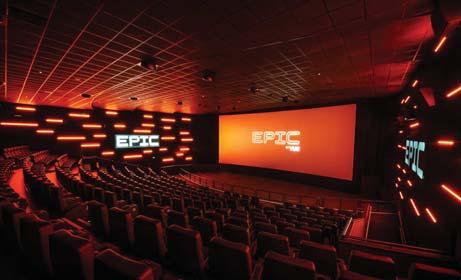
VUE AMSTERDAM: CINEMA WITH AN UNDYING PURPOSE
TW-35
TM-4
SPECIAL STORY
TM-20 E-SQUARE CINEMAS: PUNE’S EPIQ BIG SCREEN UPGRADE INDIA PLEXING
TM-27 MIRAJ CINEMAS: GREATER NOIDA JUST GOT A NEW CINEMA FACE
TM-30 ABR CINEMAS: PUSHING CINEMATIC BOUNDARIES
TM-34 BHARATMATA CINEMA: THE RETURN OF A CULTURAL LANDMARK
TM-46 PVR INOX: LEADING THE CINEMATIC ASCENT IN HIMALAYAS
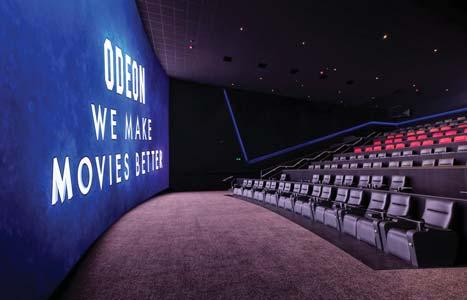
ODEON CINEMAS: BRISTOL’S ENTERTAINMENT REIMAGINED
TM-24 PRASADS MULTIPLEX: CREATING HISTORY WITH PCX
TM-43 GANESH CINEMAS: MADURAI’S CONTEMPORARY CINEMA REVAMPED
BROADWAY CINEMAS: A NEW BENCHMARK IN THE PLF GAME
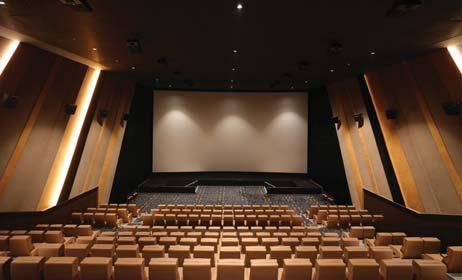

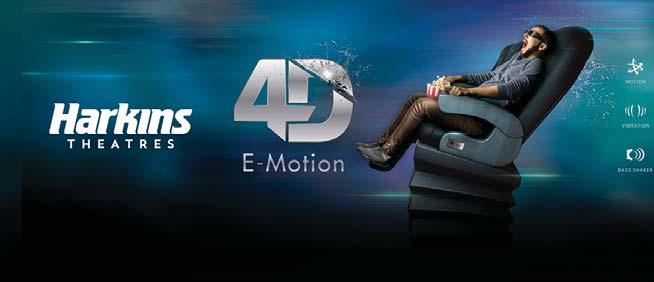
Lumma recently announced a strategic partnership with Harkins Theatres to introduce six 4D E-Motion auditoriums across the United States. This ground-breaking experience is set to debut this August at Harkins Norterra in North Phoenix. The six-location agreement includes three installations in Arizona, with three additional locations to be announced, bringing the first and only 4D moviegoing experience to the state. The 4D E-Motion Premium Format is currently performing exceptionally well worldwide and is the topgrossing premium offering. This unique cinematic experience allows moviegoers to feel wind, water, vibrations, scents and air shots among other effects, all perfectly synchronised with the on-screen action. Audiences worldwide have embraced 4D E-Motion with remarkable enthusiasm, with many fans eagerly awaiting major releases in the format. Titles include ‘Insidious 6,’ ‘Harry Potter and the Sorcerer's Stone,’ ‘Resident Evil,’ ‘The Hunger Games: Sunrise on the Reaping,’ ‘Jumanji 3,’ ‘Avengers: Doomsday,’ and other highly anticipated releases. "At Harkins Theatres, we pride ourselves on delivering the most innovative technologies and exceptional guest service in the industry.
Our partnership with Lumma 4D E-Motion brings an additional premium experience to our theatres and, more importantly, to our guests. This format, made possible through our partnership with Lumma, has been widely recognised by audiences worldwide as an immersive way to enhance the moviegoing experience. In the coming years, we look forward to continuing to build and expand our partnership with Lumma," said Mike Bowers, President and CEO at Harkins Theatres. "Lumma is thrilled to be working with Mike Bowers and the entire Harkins team in opening their first location with us, Harkins Norterra in Phoenix, AZ, with five more locations to follow. Harkins is well recognised for its forwardlooking approach to serving its customers. Their theatres are highly regarded and admired by both film studios and audiences. Bringing our 4D E-Motion to their locations is a tremendous boost to our company as we continue to expand our presence in the U.S. and worldwide. We're committed to delivering a best-in-class experience for our customers and their audiences. Thank you, Harkins team, for believing in us," said Rolando Rodriguez, Partner and Board Member of Lumma.
On stage at CinemaCon 2026, The Walt Disney Studios announced the launch of Infinity Vision, a new certification for premium large format (PLF) theatres. Done in collaboration with global theatrical exhibition partners, Infinity Vision will signify to audiences which auditoriums offer the biggest, brightest, and most immersive cinematic experiences.
Infinity Vision sets a new benchmark for theatrical presentation, certifying auditoriums that meet rigorous technical standards, including a focus on:
•The largest screens for maximum scale
•Laser projection for superior brightness and clarity
•Premium audio formats for fully immersive sound
With over 75 domestic and 300 global exhibitor PLFs currently available to consumers, the goal of Infinity Vision is to help audiences identify the best theatrical experience. Beginning with the September re-release of Marvel Studios' Avengers: Endgame and followed by the highly anticipated December release of Marvel Studios' Avengers: Doomsday, audiences will be able to seek out Infinity Vision-certified screens and see the film on the grandest possible scale, exactly as intended.

CINEMEX
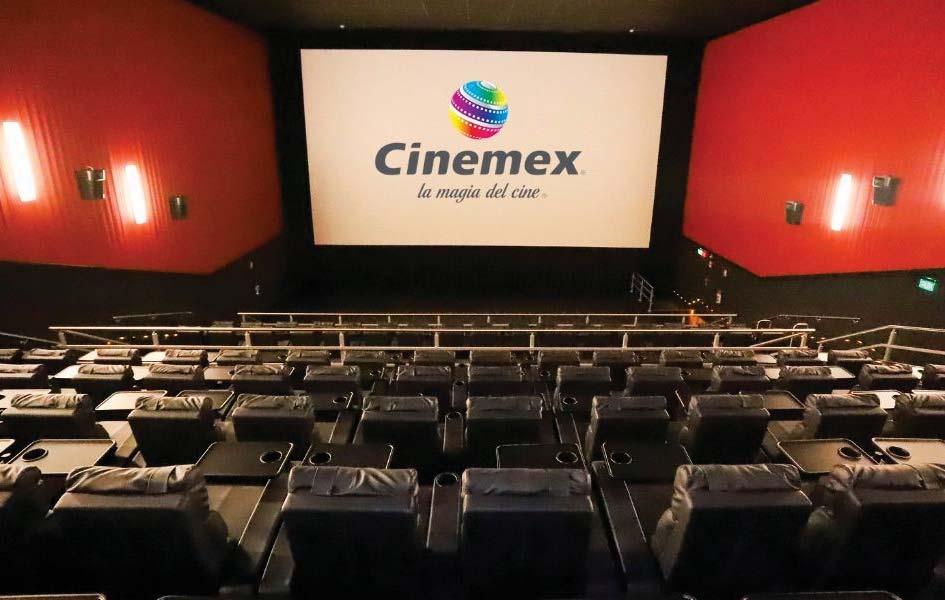
GDC Technology recently announced their three-year agreement to serve as Cinemex's exclusive digital cinema server supplier, replacing its legacy models. Installations will begin in 2026 and continue through 2028. Cinemex is one of Mexico's leading theatre circuits, operating nearly 3,000 screens in cities such as Mexico City, Guadalajara, Monterrey, Toluca, Juárez, León, Tijuana, Mexicali, Puebla and others across the country. This three-year agreement includes deploying 1,080 GDC SR-1000 Standalone Integrated Media Blocks, each equipped with CineCache 2TB built-in solid-state storage, ensuring a reliable and efficient system. Cinemex opened its first multiplex in Mexico in 1995 and is known for introducing innovations to enhance the moviegoing experience across all its theatres. Cinemex has always aimed to provide moviegoers with excellent customer service, value, and enjoyment through ongoing improvements. This agreement supplies Cinemex with GDC media servers built with the latest, most
advanced semiconductor technology, offering a low total cost of ownership, as confirmed by SGS, the world's largest testing and certification lab. "At Cinemex, we genuinely cherish our partnerships and look forward to working with GDC. We consider GDC as one of the most trusted and respected brands in the cinema industry," said Paco Eguren, Chief Operating Officer of Cinemex. Several factors influenced the decision to select GDC media servers, including its excellent post-sales support, its history of innovation, reliable products, and its genuine passion for improving our guest experience." "We're excited to strengthen our partnership and grow our presence with Cinemex," said Michael Fernandez, the Vice President of Sales for the GDC Latin America region. "Cinemex has been a trusted partner since 2012. By choosing GDC from the options available, Cinemex will benefit from highly reliable media server technology to support their mission of delivering the best entertainment to the communities they serve."
Unique X has confirmed a new collaboration with Cinergy Entertainment Group to deploy its cinema software solutions across Cinergy's entire estate. Through this agreement, Cinergy will roll out RosettaBridge TMS to every site, complemented by the implementation of RosettaNet CMS and BaseKey KDM. Together, these solutions will form a cohesive, circuit-wide platform designed to unify and optimise cinema management from a single ecosystem. RosettaBridge TMS will underpin daily site activity, enabling automation of scheduling, playlist assembly, system oversight and POS integration. Working in tandem, RosettaNet CMS introduces a centralised layer for managing content and programming workflows across all locations, supporting consistency and operational control. BaseKey KDM completes the solution by streamlining the secure distribution of encryption keys to help reduce manual intervention and ensure ontime delivery. Roger Harris, the Chief Executive Officer of Unique X, said, "This agreement marks an exciting step in our relationship with Cinergy. Adopting our platform across their full circuit demonstrates confidence in the robustness and flexibility of our technology. We're looking forward
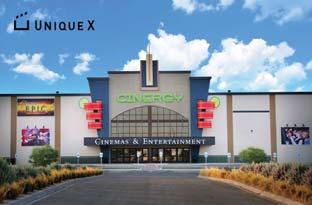
to supporting their continued growth with solutions that enhance efficiency and performance."
Cinergy Entertainment Group's David Zylstra added, "Delivering a high-quality and reliable guest experience is central to everything we do. By implementing Unique X's solutions across all locations, we're equipping our teams with the tools needed to operate more effectively and consistently. It's a meaningful advancement for our business as we continue to evolve our entertainment offering."

Ushio, the parent company of Christie, has announced the promotion of Michael Phipps to President and Chief Executive Officer of Christie Digital Systems and its subsidiaries. Phipps becomes President and CEO, succeeding Takabumi Asahi, who held the position for two years and continues as Chief Executive Officer of Ushio Group, Phipps joined Christie in 2008, becoming Chief
Financial Officer in 2019 and President and COO in 2024. "Over the past two years, Mike successfully implemented operational initiatives and drove improvements in our product offerings and processes to better serve our customers and markets. His leadership was instrumental in the company's transformation, and his passion for our cinema and ProAV industries will lead the organisation well into the future," says Takabumi Asahi, the Chief Executive Officer of Ushio Group.
"The industry is constantly changing, but what stays at the heart of what we do is our customers. We listen to their business challenges and work collaboratively to support their vision, so they can rely on our technology to create unforgettable experiences. I want to thank Mr Asahi for his guidance over the past two years and look forward to continuing to work with our customers and employees in my new capacity," says Phipps.
Strong MDI Screen Systems recently announced its official transition to MDI. This news is accompanied by the launch of a refreshed global brand identity, including a new logo, visual system, and market-facing branding. This evolution reflects the company's commitment to honouring its heritage by positioning itself for continued
growth across cinema, simulation, attractions, and professional AV sectors, as well as its intention to expand into untapped markets. By returning to the name MDI, the company reinforces the strength of its original foundation, recognised worldwide for engineering excellence and innovation in largescale projection surfaces, while embracing a more streamlined and future-focused identity. "This is both a return to our roots and a step forward," said François Barrette, President. "The name MDI carries decades of expertise, trust, and technological leadership. By bringing it back to the forefront, we are reaffirming who we are at our core, while evolving to meet the opportunities ahead." The new visual identity modernises the MDI brand through a redesigned logo, updated typography, and a cohesive system of market-facing logos that better reflect the company's expanding portfolio. This includes clearer positioning across its core sectors, from cinema to professional AV, as well as emerging attractions and experiential applications.
"Our business has grown well beyond its original scope," added Jean-François Gagnon, Senior Vice President, Sales & Marketing. "The new brand architecture allows us to better communicate the full scope of what we do while staying anchored in the values that built MDI; precision, reliability, and partnership." The global rebrand will be rolled out gradually across all communications, product lines, installations, and digital platforms in the coming months.

GDC Technology announced the appointment of Bernard Collard as Senior Vice President of Sales & Business Development for the EMEA region. In this role, Collard will work closely with GDC's regional team, including Sachin Shetty, Executive Director for EMEA to drive sales initiatives and develop marketing strategies that promote the next generation of immersive cinema based on the DCI HDR cinema standard, while delivering greater value to existing clients. With over 25 years of experience in the cinema industry, Collard brings deep industry expertise and a broad global network. He will help unlock new business opportunities in LED display technology across various stakeholders, strengthen partnerships throughout EMEA, and support GDC's long-term growth strategy. There remains a significant opportunity to upgrade projection and sound systems, as well as to support new builds or

renovations with premium cinema LED screens. Collard is thrilled to join GDC to transform the moviegoing experience and provide alternative solutions tailored specifically to the EMEA cinema market.
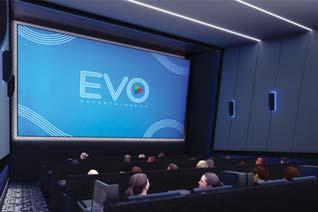
EVO Entertainment plans to equip its EVX Premium Large Format auditoriums with Dolby Vision and Dolby Atmos. The rollout will begin with a 17-screen deployment across eight cinema entertainment centres in Texas, New Mexico, and Florida, many of which are newly built facilities designed from the ground up to showcase next-generation presentation. "Exhibitors like EVO Entertainment understand that superior picture and sound quality are more than technical specs, but what deepens audience connection to the films they love and keeps them returning," said Jed Harmsen, Vice President and General Manager of Cinema & Group Entertainment, Dolby Laboratories. "When you combine Dolby Vision and Dolby Atmos, you create something truly special: an experience audiences proactively seek out again and again." "This partnership with Dolby represents an exciting step forward in how we think about the future of cinema," said
Mitch Roberts, Founder & CEO of Elevate Entertainment Group. "Our new flagship EVO Entertainment venue in Clearwater will bring that vision to life, the first multiplex in the world powered entirely by Dolby Vision and Dolby Atmos and anchored by the largest cinema screen on earth spanning more than 130 feet. "It's a bold expression of our commitment to pushing the boundaries of the theatrical experience and delivering unforgettable, differentiated experiences for our guests."
Cielo recently announced the launch of Cielo CineAI for Cinema Exhibitors and Cielo CineAI for network operations centres. Think of it as ChatGPT, but purpose-built for your cinema screens, projectors, servers, and IT hardware. Just as ChatGPT lets anyone ask questions in plain language and get intelligent answers, Cielo CineAI lets exhibitors and NOC teams do the same - except the knowledge base is your own live cinema infrastructure. Ask CineAI about a specific screen, a server that's been throwing errors, or playback performance across your entire circuit, and get a clear, instant answer without digging through dashboards or calling your tech team. Cielo CineAI's natural language processing engine is at the heart of both products. Operators and NOC technicians can type, or speak, questions the same way they would ask a knowledgeable colleague: "Which projectors in my
circuit have shown lamp degradation in the last 30 days?"
"Are there any servers showing abnormal temperatures right now?"
CineAI draws from Cielo's real-time monitoring data, device telemetry, playback logs, and historical records to deliver answers instantly - in plain language, not technical jargon. No SQL queries. No support tickets. No waiting. Beyond answering questions, Cielo CineAI continuously analyses the stream of data flowing in from projectors, servers, and IT hardware across your circuit to predict failures before they impact a single showtime. By identifying patterns in device behaviour, subtle shifts in lamp output, server response times creeping up, connectivity fluctuations that precede outages, CineAI flags at-risk equipment days or even weeks before a failure occurs. Teams receive proactive alerts with AI-generated guidance on what to inspect, what to replace, and how urgently to act. The result, according to Cielo, is fewer emergency callouts, less unplanned downtime, and a guest experience that never suffers because of a technical failure that could have been seen coming. For theatre operators, CineAI means having an expert always on call. Ask about the health of any screen in your circuit, get instant operational summaries, and receive predictive alerts tailored to your specific equipmentall without needing a technical background to make sense of the answers. For Network Operations Centre teams, CineAI amplifies what your technicians already do. Query the entire circuit in natural language, surface hidden patterns across thousands of devices, and let AI handle the first layer of triage, so your team focuses on resolution - not hunting for information.
Rick Cabrera, Cielo's Vice President of Product & Technology, says, "Imagine being able to ask your cinema operation a question the same way you'd ask ChatGPT, and actually get a useful answer. That's what CineAI does. It takes all the rich monitoring data and playback information we've always captured and makes it conversational, accessible, and actionable. And the predictive failure piece is a game changer - our customers are going from finding out a projector failed during a screening to knowing three days in advance that it needs attention. That shift, from reactive to predictive, is what we built CineAI to deliver."
National CineMedia, the largest cinema advertising platform in the United States, has named veteran executive Bernadette McCabe as the new Vice President of Exhibitor Relations for both NCM and Spotlight. McCabe will succeed industry veteran Jennifer Lupo. The two executives will work closely together over the coming weeks to ensure a smooth transition for NCM's exhibiting partners.

Cinema United President and CEO Michael O'Leary took to the Dolby Colosseum stage to deliver his annual State of the Industry address at CinemaCon 2026. O'Leary touted the current strength of the exhibition industry, including themes of unity and growing audience trends, while not shying away from issues concerning consolidation and theatrical exclusivity. "Theatre owners work every day to make their cinemas special, from reinvesting in technology and infrastructure to special events," said O'Leary, citing several examples of Cinema United members connecting with their communities. "And not surprisingly, audiences are responding."
Highlighting theatrical exhibition as a Main Street industry, O'Leary emphasised the importance of moviegoing and its cultural and economic impact on communities throughout history. He reinforced the need for unity by spotlighting the newly announced Cinema United Filmmaker Leadership Council, saying that "This

collaboration could not have come at a more crucial time, and I want to thank these world-class filmmakers and artists for their leadership and commitment to exhibition."
Addressing consolidation, O'Leary reiterated Cinema United's strong stance, stating: "Further concentrating marketplace power in the hands of a smaller group of distributors that dictate the terms, windows, scheduling, screenplacement of movies, and access to historic film catalogues will have a real and lasting impact on Main Street and millions of movie fans around the world. "On theatrical exclusivity, O'Leary touted a change in attitude among distributors: "After six-plus years of theories and experiments devoted to proving that theatrical's days have passed, there is a growing recognition of something we have always knowntheatrical exhibition is the foundation upon which the entire entertainment industry rests, and that will never change." O'Leary pointed out that in 2025, the average theatrical window for the top 100 films was 37 days, representing a three-day increase over the previous year. He added that if those releases last year benefited from a minimum 45-day window, the overall average would have been a full two weeks longer at 49 days, emphasising the critical nature of exclusive windows for theatres. O'Leary concluded his speech by looking to the future: "If we work together, if we stay disciplined and focused on the future, I know that someone, fifty years from now, will stand on a stage like this, in an auditorium full of theatre operators to celebrate the wonder of our industry and chart a path for yet another century of movies on the big screen."
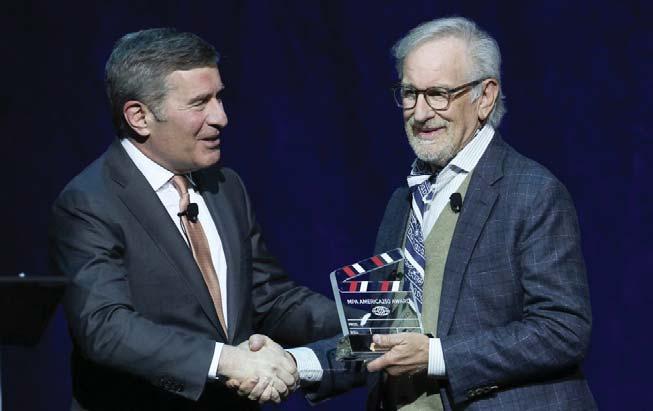
The Motion Picture Association has presented filmmaker Steven Spielberg with the MPA America250 Award, a one-time honour recognising his profound and enduring impact on American storytelling. The presentation took place during Spielberg's inaugural appearance at CinemaCon 2026.
The MPA recognised Spielberg as a defining American filmmaker who tells the nation's stories with empathy and conviction, one who honours the resilience, sacrifice, and shared ideals that bind Americans together while elevating their voices on the world stage.
"Every year, the MPA Awards spotlight leaders shaping filmmaking today and ensuring our industry thrives into the future. This year, we added the MPA America250 Award, a one-time honour for a one-of-a-kind visionary whose career speaks to cinema's central role in America's cultural impact, economic strength, and ideals of freedom," said Charles Rivkin, MPA Chairman and CEO.
"Steven Spielberg is an unmatched artist, a uniquely visionary creator, and a true American legend - no one
better represents the American spirit - and no one is more deserving of this special award."
"This award is deeply meaningful, made all the more special by the fact that it commemorates the 250th anniversary of our country and also because it comes from an organisation that is dedicated to preserving the creative freedoms that allow all storytellers to dream uncensored," said Spielberg. "I am thankful for all the MPA does to promote and protect our industry, and we owe them a debt of gratitude for always fighting the good fight."
The MPA is a supporting partner of America250, the bipartisan organisation leading the celebration and commemoration of the 250th anniversary of the Declaration of Independence. The annual MPA Awards ceremony will take place later this year at the MPA's global headquarters in Washington, DC. The ceremony will celebrate the 2026 honorees for the MPA Creator Award, MPA Industry Champion Awards, and MPA Creative Protector Award. Those honorees will be announced in the coming weeks.
National CineMedia, the leading cinema advertising platform in the U.S. and a leading provider of digital signage, experiential solutions, and media network management, and Creative Realities, a leading provider of digital media and AdTech solutions, announced a new partnership to significantly expand and modernise AMC Theatres' in-lobby media footprint across 285 locations nationwide. This new initiative will turn the lobby at the participating theatres into a network of digital displays, including multiple 75-inch screens per location, which will deliver highimpact video, brand storytelling, and interactive experiences. These upgrades create a premium video platform that expands opportunities for advertisers to reach audiences both in the auditorium and throughout the entire theatre location. "Going to the movies is an experience, from the minute you walk in and smell the popcorn to settling into your seat to immerse yourself in a great story," said John Calkins, EVP - Chief Corporate Development Officer, National CineMedia. "By partnering with AMC and Creative Realities, we are enhancing that experience across AMC's premium footprint, while creating scalable new opportunities for advertisers to connect with moviegoers starting the moment they step into the lobby and continuing until they leave the cinema." The upgraded lobby network is expected to deliver a more dynamic pre-show atmosphere, helping advertisers reach captive, target audiences. The network also complements NCM's existing on-screen cinema
advertising capabilities, providing brands with a more comprehensive presence to reach AMC guests. This new lobby initiative will also enable AMC to showcase AMC and studio content, such as trailers for upcoming theatrical titles. "We're excited to join AMC and NCM in this ground-breaking undertaking," added Rick Mills, Chairman and Chief Executive Officer of Creative Realities. "Working together, we will enhance the moviegoing experience at hundreds of locations and provide meaningful benefits to the theatres and their operators. We look forward to this rollout and the way it will highlight our technology across the country later this year." Under the partnership, NCM will manage in-lobby video advertising with Creative Realities serving as the in-lobby equipment and service partner, supporting installation, operations, and ongoing network management across all participating locations.
Samsung Electronics recently announced a new 14-metre (46 feet) standard size for its Onyx (ICD model) cinema LED lineup at CinemaCon 2026, expanding the platform into larger premium
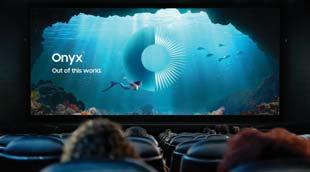
auditoriums. The new model is designed for premium large format (PLF) theatres and delivers the same picture quality, reliability and scalability that define the Onyx platform at a larger scale. As cinemas raise the bar on premium, differentiated experiences, larger-format auditoriums are becoming a key priority for exhibitors. Samsung's new 14-metre format is designed to meet this demand, enabling greater immersion, optimised seating layouts and more efficient use of theatre space. "People go to premium theatres for something they cannot recreate at home," said Hyoung Jae Kim, Executive Vice President of the visual display business at Samsung Electronics. "That raises the bar for every part of the auditorium, starting with the screen. Samsung's new 14-metre Onyx gives exhibitors a way to bring the premium experience to larger auditoriums, helping turn moviegoing into a destination again." Since its debut in 2017, Samsung Onyx has broadened what cinema LED can deliver with deep blacks, rich colour and striking contrast. Following last year's launch of the five-metre (16-feet) model for boutique theatres and the 10-metre (33-feet) model for premium auditoriums, Samsung is now expanding the lineup with a 14-metre standard size designed for larger theatre environments. The new model brings the same core Onyx experience - including support for up to 4K 120Hz,3 exceptional clarity and ultra-smooth motion - while introducing two distinctions tailored to the 14-metre format: 3mm pixel pitch: Optimised for the 14-metre format to deliver sharp, consistent image quality on a larger screen. Flexible scaling support: Enables the 14-metre
format to expand up to 20 metres (66 feet) - more than doubling total screen area without compromising presentation quality. Individual LED cabinets can be added to the sides and bottom to achieve the desired size, creating a seamless, floor-toceiling visual experience. As the world's first DCI-certified cinema LED display, Onyx supports both scope (2.39:1) and flat (1.85:1) aspect ratios. Samsung's HDR technology delivers peak brightness of up to 300 nits - approximately six times brighter than conventional cinema standards. Onyx also achieves 100 per cent colour volume at peak brightness, while its infinite contrast ratio enables true black levels for deeper immersion and greater detail in dark scenes. Designed in collaboration with Pathé's headquarters, the venue is positioned as a flagship destination comparable to Pathé Palace in Paris, with all four auditoriums equipped with Onyx displays in 10-metre, 5-metre and scaled 6.4-metre (21 feet) configurations. With 12 Onyx screens in total - including four of the latest Onyx screensPathé now operates more Onyx screens than any other cinema company in Europe.
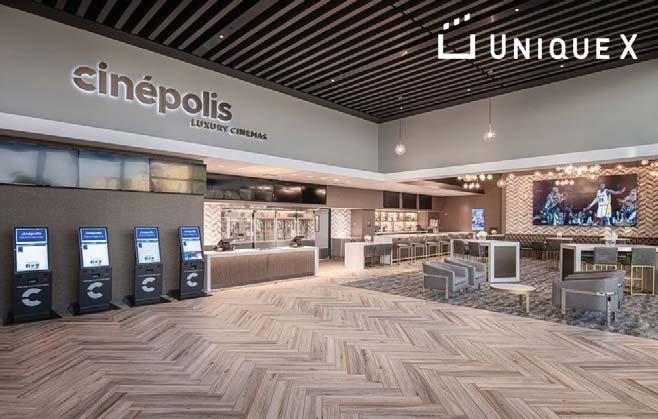
Unique X announced the completion of a full product suite deployment to Cinépolis, the world's third-largest cinema exhibitor, spanning 6,837 screens across 889 theatres in 18 countries. The deployment, which covered RosettaBridge TMS, RosettaNet Circuit Management System, Basekey, Smart Trailering, and Advertising Accord, was completed
in eight weeks from contract signature to full operational go-live, with zero downtime across the 1.5 million shows Cinépolis presented to its customers during the transition period. The migration, which replaced the Arts Alliance Media Screenwriter TMS across the entire Cinépolis global estate, was executed using Unique X's proprietary automated deployment tooling, a preconfiguration methodology that ensures every RosettaBridge TMS installation arrives at a cinema fully operational, requiring no site setup by Unique X or Cinépolis engineers. Equipment settings, user accounts, macros, smart programs, and preshow playlists are all in place from the moment the system comes online. "6,837 screens across eighteen countries, running on the Unique X product suite eight weeks after signing the contractincredible!" said Gabriel Morales Becker, global IT director, Cinépolis. "With RosettaBridge TMS and RosettaNet CMS Cinépolis has the operational automation, consistency and control that a circuit of our scale requires. By using their automated TMS deployment tools and team of experienced cinema solution
engineers, Unique X delivered the project in eight weeks, with our cinema operations running continuously throughout."
The deployment spanned Latin America, US, India, Spain and the Middle East, with Unique X deploying a territory-specific pilot site and quality assurance process in each of the 18 territories before full circuit rollout. A comprehensive train-the-trainer program, supported by multilingual training video libraries and the Unique X Product Knowledge Base, ensured more than 600 Cinépolis users were operational from day one.
The inclusion of Advertising Accord marks a significant expansion of Cinépolis's advertising capabilities. Pre-show integration across all Cinépolis territories is now enhanced, with campaign scheduling, delivery, verification, and inventory management handled end-to-end by the platform. The deployment positions Cinépolis as programmatic-ready - primed for an advertising ecosystem increasingly driven by data and automation.
Phil Morris, Chief Commercial Officer, Unique X, said, "This is a game-changer for the perception that migrating to a TMS vendor is
disruptive. The Cinépolis deployment reflects the depth of capability across the Unique X team - product, project management, installations, training and network operations all working in close co-ordination with Cinépolis's own team. Eight weeks across 18 countries, the full product suite deployed, and operations running continuously throughout. I'm proud of what everyone on both sides delivered."
MDI, a global leader in highperformance cinema screen solutions, announces the extension of its supplier agreement with IMAX Corporation for a new five-year term. This renewed agreement reflects a longstanding collaboration between the two organisations, with alignment on performance standards and technical requirements. "We are very pleased to continue working alongside IMAX," said François Barrette, President of MDI. "Over time, our collaboration has evolved into a relationship built on mutual respect, precision, and a shared dedication to delivering exceptional visual experiences. Extending this agreement allows us to continue contributing to IMAX's global presence with consistency and confidence." MDI's screen solutions are engineered to meet IMAX's stringent technical requirements, supporting high-quality image performance across IMAX locations through an exclusive product available only to IMAX. "Delivering the IMAX Experience requires consistent, high-quality
performance. MDI has a strong track record of meeting our technical requirements, and we look forward to continuing our work together," said Mark Welton, President, IMAX Global Theatres. Through this agreement, MDI will continue to support IMAX locations worldwide.
CinemaNext recently announced the successful completion of the sale of CinemaNext U.S. (formerly Sonic Equipment Company and its manufacturing division, Kneisley Manufacturing) to Strong Technical Services. This strategic transaction marks a pivotal milestone in CinemaNext's long-term roadmap, enabling the company to sharpen its focus on European market leadership while ensuring an unmatched level of service continuity for its U.S. customer base. For more than a decade, CinemaNext has built the most extensive cinema services network in Europe and Africa, now operating across 21 countries and serving over 13,000 screens. The company's integrated offeringspanning projection and audio equipment sales and services, TMS, equipment automation and content management, NOC support, consulting, seating, and outfittingprovides exhibitors with a complete, end-to-end technology and support ecosystem. This transaction brings together two of the industry's most respected service providers. By combining CinemaNext's robust remote support capabilities and the historic manufacturing excellence of Kneisley with STS's expansive field service and installation expertise,
the combined entity is positioned to deliver an unmatched end-to-end solution for exhibitors across North America. "This acquisition isn't just about expanding STS's map; it's about bringing together the best technical minds in the business," said Blake Titman, President and CEO of Strong Technical Services. "Our customers will benefit from a deeper pool of expertise, faster response times, and a continued commitment to the high-touch service they've come to expect from both organisations."
"Joining forces with STS is the right next step for our US colleagues and our American customers," said Donald McGarva, Group CEO of CinemaNext. "The combined resources of STS and CinemaNext U.S. create a technical powerhouse capable of supporting the evolving needs of the American cinema industry as technology continues to advance." For CinemaNext, the sale enables a deliberate and focused acceleration of its European strategy. This will allow the company to continue to expand and invest across the European region as well as in its CinemaNext Solutions division, expanding its portfolio of proprietary software, automation tools and hardware solutions designed to optimise cinema operations and elevate the moviegoing experience.
"This transaction is a forwardlooking step that allows us to concentrate our resources and talent where our competitive advantages are most pronounced," said McGarva. "We are confident that Strong Technical Services, a respected and capable industry leader, will ensure outstanding continuity and service for our U.S. partners, and we look forward to seeing what the combined team will achieve."
OneCinema has announced a new partnership with Nordisk Film Cinemas to modernise digital signage operations across Scandinavia. Starting this month, Nordisk Film Cinemas will roll out OneCinema Signage across all 47 of its locations in Denmark, Norway and Sweden, making it the first major deployment of the platform in the Nordic region. OneCinema Signage is the result of intensive development. Built as a fully cloudnative enterprise platform from the ground up, it communicates directly from the cloud to every endpoint, no local server infrastructure required at any site. The platform supports Android-based players and runs natively on Samsung Smart Signage and LG webOS professional displays. A defining capability of the new platform is automated campaign management: the system continuously reads live programming data and generates digital signage content in real time, matched to the genres currently showing at each location. For a circuit operating across three countries, this level of automation significantly reduces operational workload while ensuring every screen communicates content relevant to the audience walking through the door. "Two things made the difference for us: the platform is genuinely cloud-native, and the automated campaign management is unlike anything else we evaluated. The system generates signage content based on what is actually playing at each location in real time, that is a meaningful operational advantage for a circuit of our size. And the fact that we could deploy
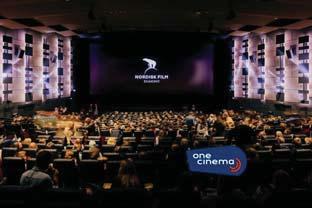
across all 47 locations with almost no hardware replacement made the decision straightforward," said Jan Rasmussen, Head of Screen Technology, Nordisk Film Cinemas. "Nordisk Film Cinemas is one of the most technically demanding operators in Europe. Their decision reflects what we have built: a platform that is cloud-native, hardware-agnostic, and designed for the operational reality of a modern cinema circuit," said Joachim Schmitt, CEO, OneCinema. "The partnership adds Scandinavia to OneCinema's growing presence across Europe and North America and marks the beginning of a longterm collaboration."
When the Santa Barbara International Film Festival opened the McHurley Film Center, it opened
with something the cinema world hadn't seen before: a five-screen complex outfitted entirely with Meyer Sound, anchored by Astrya cinema loudspeakers in its three Dolby Atmos auditoriums. For the festival, which has operated its single-screen Riviera Theatre with Meyer Sound for a decade, the decision was never in doubt. "State-of-the-art projection, sound, and curated programming are the three things that we think keep movie theatres thriving. That was what led to our decision to go with Meyer Sound," says SBIFF Managing Director Sean Pratt. The McHurley Film Centre is SBIFF's permanent home for year-round screenings, filmmaker events, and education, a five-auditorium expansion of a mission that began with the Riviera acquisition ten years ago. The building, a former Metropolitan Theatres multiplex, was fully gutted and rebuilt over nine months at a cost of approximately $20 million, with Dolby Vision projection, Dolby Atmos in three of its five auditoriums, and Meyer Sound throughout. Systems were designed and installed by Southern California Cinetech, whose principal, Michael Golin, has worked with SBIFF since the Riviera project. The brief, he says, was direct: "They wanted the
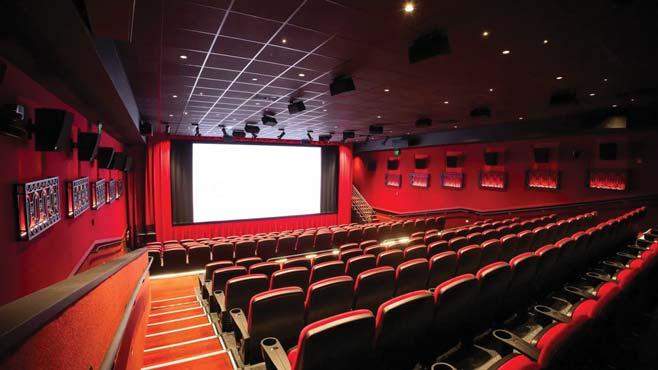
best." The first order of business was optimising the venue's acoustics. The team performed studies and applied treatments to eliminate bleeding between theatres. But gutting the former multiplex revealed the site's defining constraint almost immediately. Built beneath a parking structure, the theatres had limited overhead clearance. An acoustic isolation lid installed across the full ceiling to manage sound transmission from the parking deck above reduced that margin further, with direct consequences for height speaker selection in the Atmos rooms. The wide-coverage Meyer Sound Ultra-X23XP loudspeaker was the ideal solution, fitting within the remaining clearance without breaking the projection plane. "We have almost no room to play with from the top of the projection image to the ceiling," Golin says. The Ultra-X20 series is the only speaker of that size with that kind of power that will work in an Atmos installation. If a speaker were bigger, it would interfere with the image." All Ultra-X20 loudspeakers feature wide 110-degree horizontal coverage and measure only 7.44 inches (189 mm) in height when oriented horizontally. The three Atmos auditoriums are anchored by Astrya-140 screen channel loudspeakers with Ultra-X23XP overhead arrays and HMS-10 side surrounds; the two 7.1 rooms feature Acheron Studio screen loudspeakers and HMS-5 surrounds. Clusters of X-800C high-power cinema subwoofers serve all five screens; USW-210P compact narrow subwoofers provide bass management in the Atmos rooms. For SBIFF, the investment runs deeper than audience experience. "It's not just about the attendees' experience, it's
about the filmmakers' art that you're showing," Pratt says. "If they're putting their blood, sweat, tears, and money into it, shouldn't the exhibitor do the same?"
That commitment has earned SBIFF a new place in the industry. "Studios we've never booked with are knocking on our doors," Pratt says. Filmmakers now come not just for the festival but to present independent films for theatrical runs, drawn by the programming and by the rooms themselves.
Dolby Laboratories has now come up with new commitments from leading exhibitors in Taiwan and Vietnam for their Dolby Vision+Atmos theatre solution, as well as continued expansion with existing exhibitor partners across the region.
Shin Kong Cinemas, a major exhibitor in Taiwan, plans to open two Dolby Vision+Atmos auditoriums this summer. With that, Shin Kong Cinemas will become the first exhibitor in Taiwan with both Dolby Cinema and Dolby Vision+Atmos auditoriums.
Galaxy Cinemas, one of the top exhibitors in Vietnam, plans to open five Dolby Vision+Atmos auditoriums over the next three years, with the first opening this summer. In the past six months, MixC Cinemas opened its first Dolby Vision+Atmos auditorium in mainland China; SHOWTIME Cinemas introduced two Dolby Vision+Atmos auditoriums at its flagship Taipei Dome multiplex in Taiwan; Megabox expanded its Dolby Vision+Atmos footprint in South Korea with its fourth and fifth auditoriums, with the sixth set to open in May, and Major Cineplex
launched the first Dolby Vision+Atmos auditorium in Thailand. "The adoption of Dolby Vision+Atmos in Asia reflects a clear trend-moviegoers are seeking out premium audio-visual experiences that bring them closer to the story," said Michael Archer, the Vice President of Worldwide Cinema Sales and Partner Management, Dolby Laboratories.
"We are proud to partner with a growing number of leading exhibitors across the region to allow more audiences to enjoy movies they love in a more vivid, captivating, and unforgettable way."
"Shin Kong Cinemas has always been committed to bringing the world's most advanced cinema innovations to our patrons," stated Shin Kong Cinemas. "Dolby is synonymous with premium qualityour audiences trust it and actively seek it out. By bringing together Dolby Vision's stunning visuals and Dolby Atmos' immersive sound, we're able to deliver a more vivid, engaging moviegoing experience. By building on the success of Taiwan's first Dolby Cinema, we are excited to expand our collaboration with Dolby and offer Dolby Vision and Dolby Atmos in more auditoriums, bringing premium picture and sound to even more moviegoers across Taiwan." "We are excited to become the first exhibitor in Vietnam to introduce Dolby Vision+Atmos to moviegoers," said Nguyen Thi Mai Hoa, the Chief Executive Officer of Galaxy Cinemas. "The combination of Dolby's stunning image quality and multidimensional sound will completely transform how audiences in Vietnam experience movies. This is a major step forward in our mission to offer the most advanced and immersive cinema experiences in Vietnam."
The future of cinema is no longer defined by the screen alone. It is shaped by the spaces that surround it, the emotions it evokes, and the experiences it curates long before the film begins and long after it ends.
In a rapidly evolving entertainment landscape, one cinema operator in Vietnam is quietly redefining what it means to go to the movies, transforming exhibition into a layered cultural and sensory journey...
Galaxy Studio has emerged as one of Vietnam’s fastest-growing cinema operators by embracing a multisegment strategy that caters to a wide spectrum of audiences. Its exhibition formats range from accessible entry-level concepts such as CineO to standard experiences under Cine+ and extend into premium offerings through CineX. Across 28 locations nationwide, the brand has positioned itself to serve both metropolitan hubs like Ho Chi Minh City and Hanoi as well as rapidly developing urban centres, including Da Nang, Hai Phong, and Nha Trang. Each format is carefully tailored to local audience expectations, creating a flexible yet consistent exhibition model.
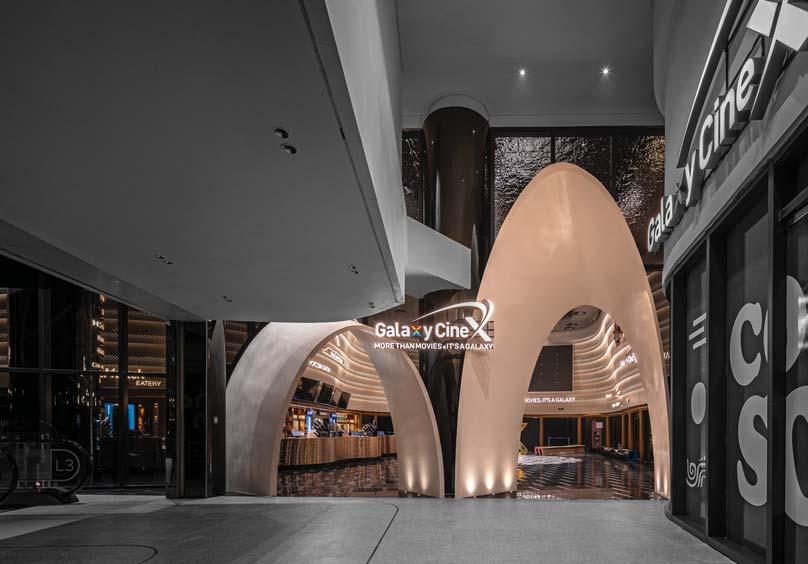
At its flagship location in Hanoi, cinema is reimagined as more than a place to watch films. It becomes a destination where architecture, technology, and emotion converge. Galaxy CineX – Hanoi Centre represents this philosophy. The venue is designed as a multidimensional entertainment space where guests engage with the environment from the moment they enter. The emphasis is not only on viewing but on creating a complete sensory journey.
Built on land once occupied by the historic Tien Bo Printing Factory, the cinema integrates elements of the site’s industrial past into a contemporary design language. Two symbolic references shape the interior. The first is the printing paper roll, expressed through flowing steel ribbons that move across the lobby, evoking continuity and the passage of time.
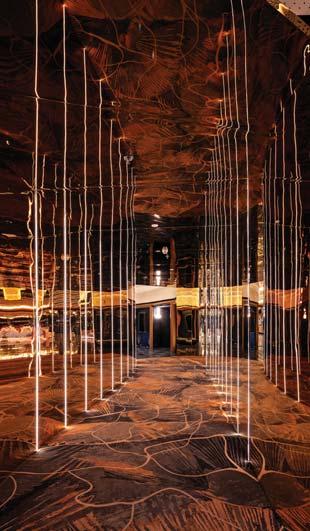
The second is the letterpress typeface, embedded into architectural elements such as carved columns, seating forms, and modular wall panels. Rather than replicating the past, the design distils its essence, creating a subtle dialogue between history and modernity.
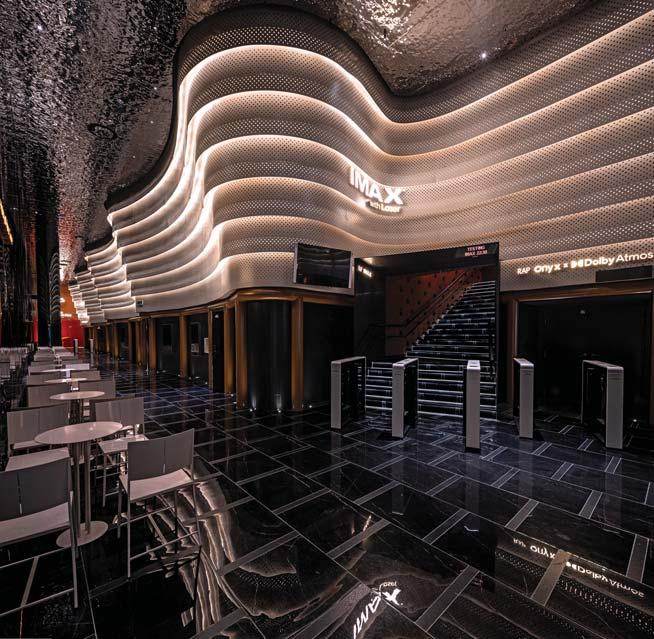
The cinema has introduced several firsts to the Vietnamese cinema landscape, expanding the boundaries of exhibition. Dedicated children and family spaces such as Cine de Kids and Cine de Play create immersive environments tailored to younger audiences. Concept-driven VIP halls, including Aqualis, Lagom, and Romantico, offer differentiated experiences for couples and premium guests.
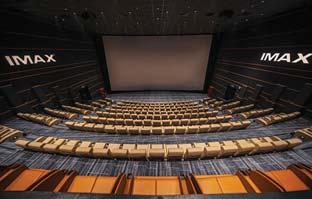
Technological innovation plays a central role. The introduction of IMAX with Laser in both Ho Chi Minh City and Hanoi delivers enhanced projection quality with greater contrast and colour depth. The combination of Samsung Onyx Cinema LED screens with Dolby Atmos creates a fully immersive audio-visual environment, marking the only setup of its kind in Vietnam. Interactive concepts such as DIDIM Playground further extend the experience beyond the auditorium, transforming waiting areas into active play zones for children.
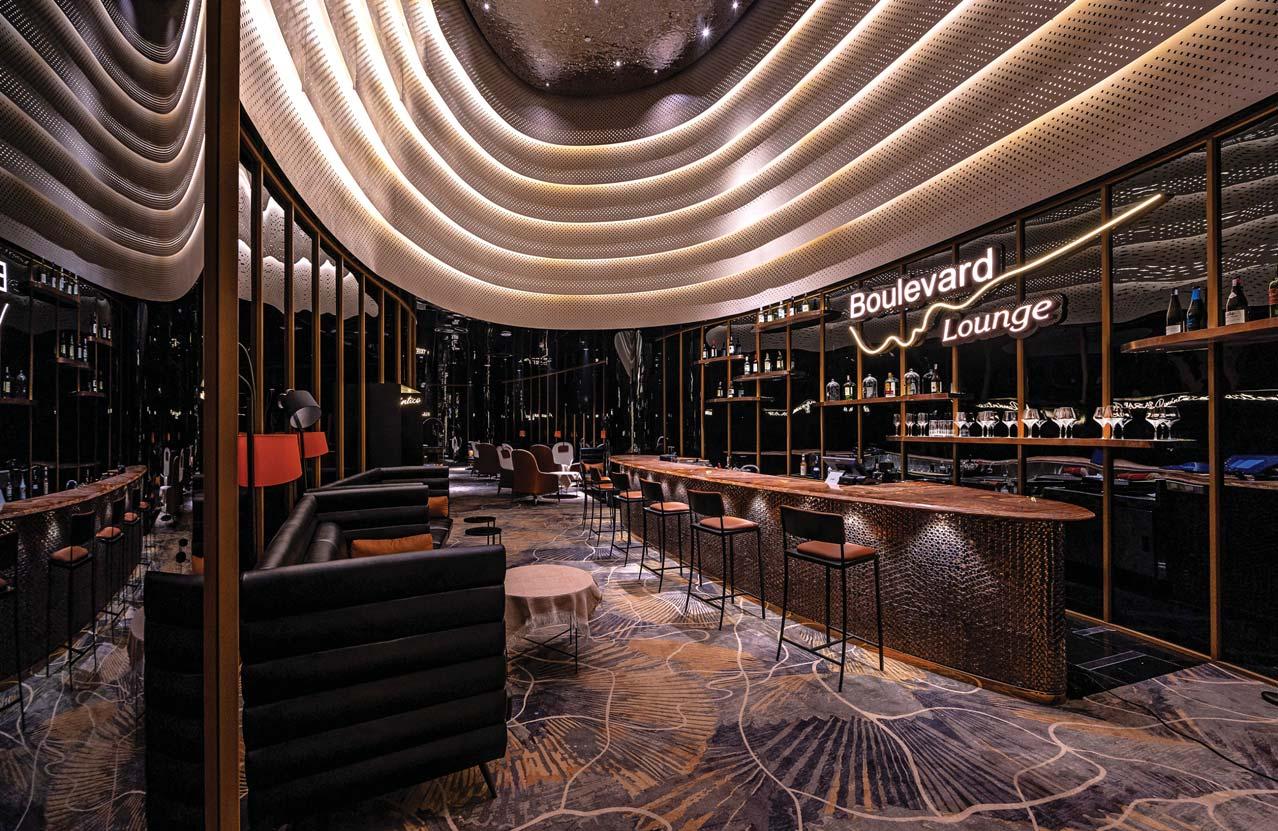
For audiences seeking exclusivity, Boulevard Lounge offers a private and immersive pre-cinema environment. Designed as an emotional foyer, it blends refined interiors with curated culinary offerings, creating a space suited for both personal and professional interactions. This premium layer reinforces the broader vision of cinema as an experience that begins well before the film itself.
The cinema presents a wide range of content, including Hollywood blockbusters, Vietnamese productions, Korean films, animation, and international
arthouse titles. Films are screened in Vietnamese dubbed formats for mainstream audiences as well as in original languages with Vietnamese subtitles, most commonly English and Korean. This dual language approach ensures accessibility while preserving authenticity. Premium formats such as IMAX with Laser and Onyx with Dolby Atmos are reserved for major releases and event films, strengthening the venue’s identity as a flagship destination.
Bringing this vision to life required overcoming several challenges. Balancing modern design with historical context demanded a sensitive architectural approach. Integrating advanced projection and sound technologies across diverse auditorium formats required precision and consistency. At the same time, positioning premium cinema experiences in a market still developing its appetite for luxury exhibition involved both risk and innovation.
Food and beverage offerings are designed not as the centrepiece but as a seamless extension of the overall experience. CineMunch

"Cinema
is not just about films. Cinema is an experience. As audience entertainment habits change rapidly, and as the public has an ever-growing number of choices, we believe even more strongly that a cinema should not merely be a place to watch movies; it must be a compelling destination."
– Nguyen Thi Mai Hoa, Chief Executive Officer, Galaxy Studio
Eatery adopts the character of a boutique café, offering a mix of comfort foods and beverages suited for casual visits and social interactions. In contrast, Boulevard Lounge provides a more intimate dining atmosphere with curated dishes and drinks. From everyday snacks to in-cinema catering for private events, the approach remains consistent: to complement rather than compete with the cinematic experience.
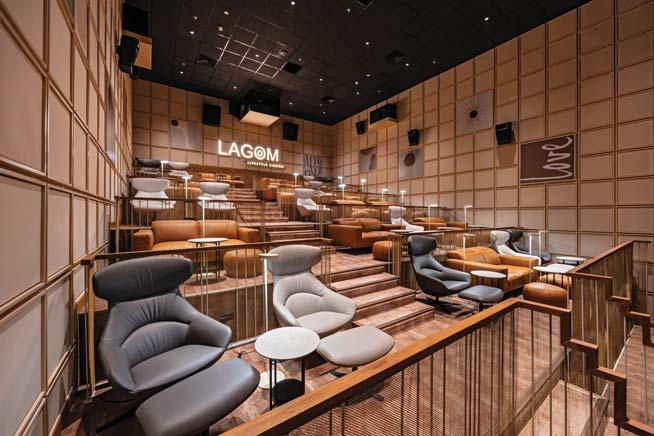
The cinema primarily serves highincome urban audiences, including professionals and younger generations such as Gen Z and Gen Alpha, who seek premium and immersive experiences. Families form a key segment, supported by specialised children’s formats and the venue’s location within a modern commercial complex. Its proximity to diplomatic and central districts also attracts a significant expatriate community. Vietnamese remains the dominant language, while English serves as a secondary language in programming, signage, and customer interactions, reflecting the international profile of its audience.
The successful launch of the Hanoi flagship marks a significant step in redefining cinema exhibition in Vietnam. From architectural storytelling to technological innovation and carefully curated guest experiences, the venue demonstrates a holistic approach to modern cinema. It is not merely about watching films. It is about creating a space where stories extend beyond the screen and where every detail contributes to a lasting emotional connection.
– Raghav
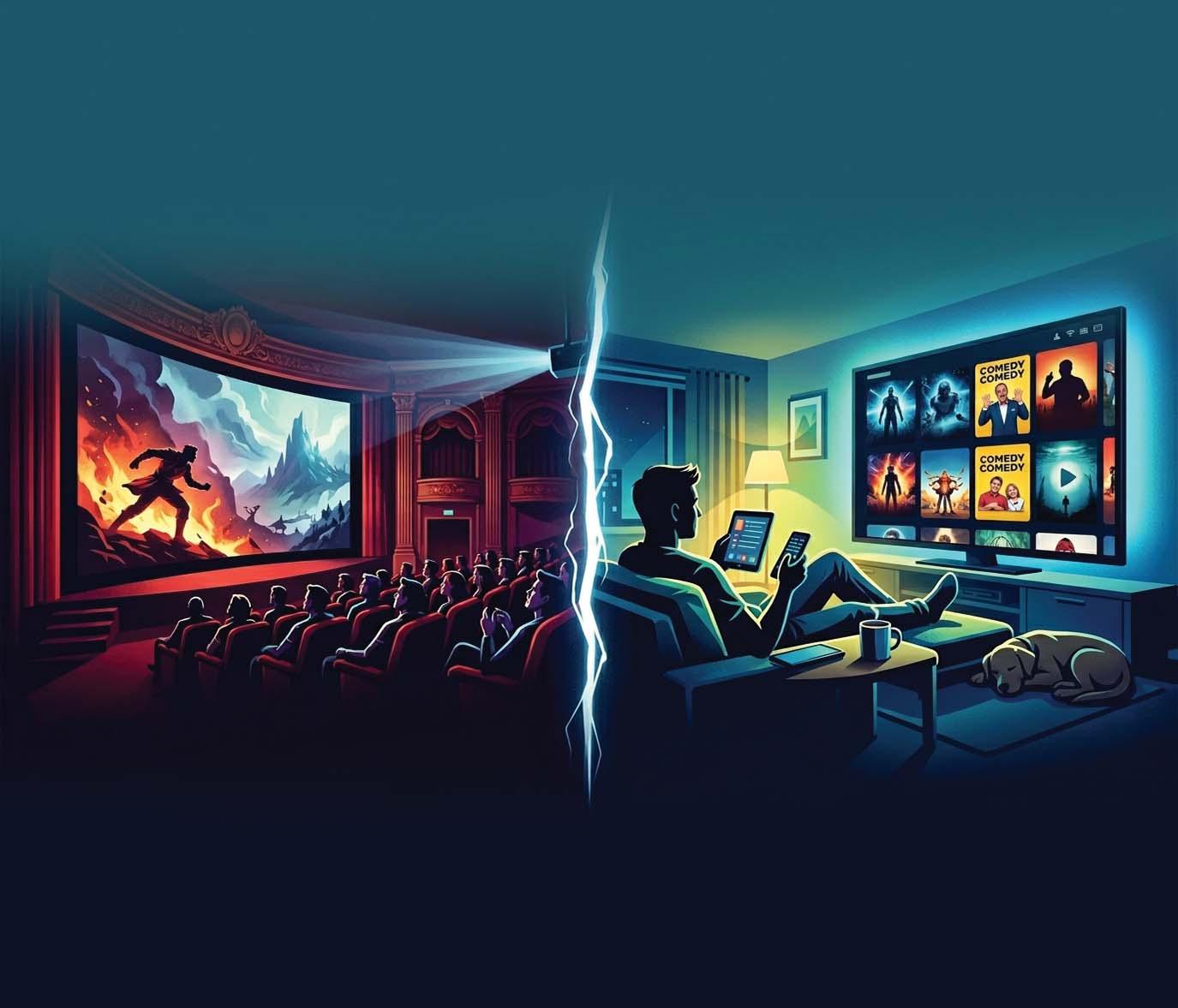
In 2026, the Indian film industry is no longer just 'making movies'; it is navigating a high-stake structural war. The battle lines are drawn between the communal magic of the big screen and the surgical efficiency of the smartphone. As the 'middle-class' moviegoing experience evaporates, a new, twotiered economy has emerged, forcing producers to choose between Spectacle and Streamability.
The revenue models for theatrical and OTT releases have flipped. During the pandemic, OTT was a 'safety net' where platforms paid high premiums. In 2026, that safety net has been replaced by a performance-linked trap: Revenue Model, Primary Cost, Current Trend, and Kill Factor. Theatrical releases have traditionally carried a high-risk, high-reward dynamic. With exhibitors typically taking around 50% share of box office revenues and producers investing heavily in out-of-home marketing, the financial stakes are significant. While event films increasingly cross the INR 1,000 crore mark, theatres still face fixed operational costs
such as staffing and maintenance, which remain constant even when average revenue per show declines.
In contrast, OTT-first releases operate with a very different cost structure. Physical marketing expenses are far lower, as promotion relies heavily on datadriven digital campaigns. Revenue models are usually based on fixed

licensing deals or performancelinked pay-outs from streaming platforms. As a result, production budgets for many OTT projects have reportedly been reduced by nearly 50% since 2021, a shift that some industry observers also link to emerging subscription fatigue among streaming audiences.
A significant drawback to theatrical recovery is the dwindling frequency of 'Star-Driven' content.
• Quality Over Quantity:
Top-tier stars focus on 'MegaEvent' films that take 2-3 years to produce, leaving theatres with a content drought for the rest of the year.
• The Operational Strain:
A theatre cannot survive on two blockbusters a year. Without regular star releases, empty seats during off-weeks make it nearly impossible for single screens to cover high monthly fixed costs.
The Window War: North vs. South Dynamics
The disparity in theatrical windows has created what many describe as a self-defeating cycle for certain films. In North India, national multiplex chains generally enforce a strict eight-week window for Hindi releases, protecting theatrical exclusivity but often leaving midand low-budget films less relevant by the time they arrive on streaming platforms. In contrast, Exhibitors from all five southern states officially proposed a mandatory 8-week (approximately 56-day) theatrical run for boosting poor theatre attendance before a film can premiere on OTT/satellite. But producers argue a 4-week window offers better revenue opportunities and flexibility. While event films can sustain theatrical momentum into the fourth or sixth week, the early OTT arrival can also cannibalise box office revenue. Once a film becomes available on personal devices through subscriptions, audiences frequently shift to the convenience of home viewing, causing theatrical momentum to drop sharply.
Negotiated Dreams: Emotional Toll of Digital Shift
Beyond the balance sheets, there is a profound human cost to this structural shift.
For every filmmaker, actor, and technician, the 70mm big screen remains the ultimate altar of validation.
• The Death of the Shared Gasp: A director's dream is to hear a thousand people gasp or laugh

in unison. When a film is relegated to OTT, that collective energy is replaced by a lonely play button.
• Creative Compromise:
Many producers now negotiate their artistic vision to fit the small screen. Cinematographers often have to compose shots keeping mobile-viewing in mind, and editors must prioritise fast hooks to prevent users from scrolling away.
• The Legacy Loss:
A theatrical release grants a film a certain prestige and cultural shelf-life. Direct-to-digital releases, while financially safer for some, often feel like content that disappears into an algorithm rather than cinema that stays in the memory.
Consumer behaviour has increasingly split into two psychological modes. The first is the 'spectacle' habit, where audiences treat cinema-going as a premium outing reserved for largescale experiences such as IMAX or 4DX. The second is the 'convenience' habit, where midbudget dramas are more likely to be consumed at home through OTT platforms. In this model, viewers engage with content on their own terms, often with little patience for slow pacing or extended theatrical runs.
The exhibition landscape is undergoing a structural shift. Stand-alone single-screen theatres continue to decline under the pressure of high overheads such as limited new releases, electricity costs and taxes. At the same time, multiplexes are repositioning themselves as premium entertainment hubs, where the overall experience, often symbolised by expensive concessions, has become almost as important as the film itself. Increasingly, theatrical performance is also acting as a quality filter for streaming platforms. OTT services now closely track box office results, and if a film underperforms in theatres, the valuation of its digital rights can drop by as much as 70 per cent.
The Indian film industry has become a 'Barbell.' On one end are the Goliaths, mega-budget spectacles. On the other are the Davids, lean, digital originals. For the middleclass filmmaker, the dream of the big screen is becoming a luxury that many are forced to trade for the survival of the stream. To illustrate the killing dynamic and the financial divide, let's look at Kalki 2898 AD (2024-2025). This film perfectly exemplifies the Barbell Economy: a massive theatrical event that
also set records in the digital marketplace.
A useful example is Kalki 2898 AD, one of the most expensive Indian productions in recent years. The film was mounted on an estimated budget of around INR 600 crore and was released theatrically in June 2024 across multiple formats, including IMAX, 3D and standard screens. Following its theatrical run, the film arrived on streaming platforms in August 2024, maintaining an approximately eightweek exclusivity window before its OTT debut on Amazon Prime Video and Netflix.
The film generated strong revenues across multiple streams, significantly contributing to the recovery of its budget. Its global box office gross is estimated at around INR 1,100 crore, accounting for roughly 183% of the budget. From this, the producer's share of the theatrical earnings is estimated to be in the range of INR 500-550 crore, which represents about 85% recovery. Additional revenue came from non-theatrical rights, with OTT and digital rights reportedly valued at around INR 375 crore, contributing approximately 63% of the budget. Satellite and music rights added a further INR 100 crore, accounting for about
16% of the total budget recovery. Together, these revenue streams underline the film's strong commercial performance across both theatrical and ancillary markets.
• Pre-Release Safety:
Even before the first ticket was sold, the film had recovered nearly 80% of its budget through non-theatrical deals (OTT, Satellite, and Music).
• Theatrical Dominance:
Despite the huge OTT deal (INR 375 Cr), the theatrical run remains the engine of the 'Blockbuster' status. The INR 1,100 crore gross provided the cultural prestige that allowed it to stay relevant on OTT months later.
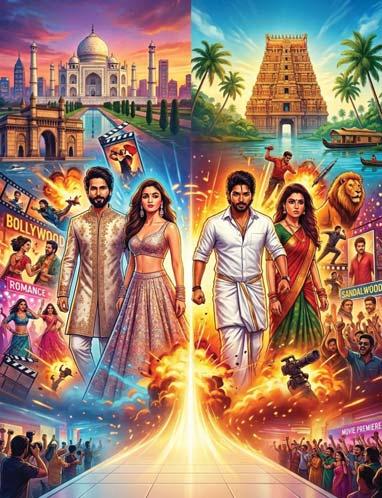
To further illustrate the 'Theatrical vs. OTT' divide, let's look at Pushpa 2: The Rule (2024-2025) and the horror-comedy sleeper hit Stree 2 (2024). These two films represent the extremes of the 'Barbell Economy', one is a global event spectacle, and the other is a highROI genre film.
1. The Global Spectacle: Pushpa 2: The Rule
Pushpa 2 serves as the ultimate case study for the 4-week window conflict and the massive weight of non-theatrical recovery. The film

was mounted on a massive budget of around INR 500 crore, which includes extensive marketing expenses and Allu Arjun's recordbreaking remuneration. At the global box office, it is estimated to have collected between INR 1,600 and INR 1,800 crore, making it the second-highest-grossing film in Indian cinema history. Even before its theatrical performance was fully realised, the film had already secured significant pre-release revenue through non-theatrical rights. The combined value of OTT, satellite and music rights is estimated at around INR 1,085 crore. A major portion of this came from the digital streaming deal with Netflix, which reportedly paid between INR 275 and INR 300 crore for the OTT rights, marking a record-breaking deal for a Teluguorigin film.
The Killing Insight:
Despite the historic success of Pushpa 2: The Rule, its theatrical run clearly reflected the growing impact of OTT platforms. On the film's 57th day in cinemas, the same day it premiered on Netflix, theatrical collections reportedly dropped by about 26% overnight.
At the same time, the producers had already de-risked the project before release. With a budget of around INR 500 crore, the film generated approximately INR 1,085 crore through pre-release OTT, satellite and music rights, effectively recovering more than double its budget even before theatrical revenue began.
2. The ROI King: Stree 2
If Pushpa 2: The Rule represents scale, then Stree 2 demonstrates how a mid-budget film can transform itself into a cultural event through theatrical momentum. Made on a modest budget estimated between INR 60 and INR 100 crore,
Stree 2 went on to collect around INR 875 crore at the box office, delivering an extraordinary return on investment of roughly 945%. The film's success also illustrates what can be called the negotiated dream of modern film economics. Rather than relying primarily on large upfront deals, the film's massive theatrical performance elevated its prestige and commercial value, eventually becoming the highest-grossing Hindi film of 2024. The theatrical phenomenon created significant leverage in the posttheatrical market. Because the producers held back digital rights until after the film had proven itself in cinemas, the OTT valuation rose dramatically. Platforms such as Amazon Prime Video and Netflix often pay substantially higher licensing fees for films that demonstrate strong theatrical performance, and in some cases, the final deal value can double compared to pre-release estimates.
The Dhurandhar franchise was strategically planned as a two-part theatrical event with long-term OTT monetisation built into its business
model. Instead of treating the films as separate projects, the makers reportedly shot both parts together and divided the story into two releases to maximise franchise value, audience retention, and revenue potential.
The theatrical strategy focused heavily on momentum and scale. Part 1 ended on a cliff-hanger while immediately building hype for Part 2, ensuring audiences stayed invested in the franchise ecosystem.
The first film became a historic theatrical success, grossing around INR 1,250-1,400 crore worldwide, depending on reporting sources, with nearly INR 950 crore coming from India alone. Part 2 then expanded the franchise even further, reportedly crossing INR 1,790 crore globally during its run and becoming one of the highest-grossing Indian films ever.
On the OTT side, the franchise used theatrical success to dramatically increase digital valuation. Initially, Netflix reportedly acquired streaming rights for both films together for around INR 130 crore. After Part 1 became a blockbuster in theatres and later trended strongly on streaming, the value of Part 2's digital rights surged. Reports suggest JioHotstar later secured the sequel's OTT rights alone for nearly INR 150 crore, showing how theatrical performance directly boosted OTT bargaining power.
Another key strategy was preserving the ‘event film’ identity across both platforms. The makers avoided heavy marketing for even the OTT release, relying instead on word-of-mouth and franchise hype. This created a perception that Dhurandhar was not just a movie
release, but a premium cinematic franchise that audiences first needed to experience in theatres before revisiting on streaming.
The recent success of films like Kalki 2898 AD, Pushpa 2, Stree 2, and Dhurandhar highlights how modern Indian cinema now operates through a dual-revenue ecosystem where theatrical exhibition builds cultural impact, while OTT and satellite deals provide financial security and longterm monetisation.
Large-scale spectacles such as Kalki 2898 AD and Pushpa 2 demonstrate that theatrical revenue still drives blockbuster status and audience perception, even though a substantial portion of their budgets was recovered before release through OTT, satellite, and music rights. Pushpa 2 reportedly recovered more than double its INR 500 crore budget through pre-release non-theatrical deals alone, while Kalki 2898 AD secured nearly 80% budget recovery before its OTT debut.
At the same time, films like Stree 2 show how theatrical success can dramatically increase OTT valuation after release. Rather than selling digital rights early, the producers benefited from the film's INR 875 crore theatrical momentum, which elevated its streaming demand and long-term licensing value.
The Dhurandhar franchise further evolved this model by strategically planning a two-part theatrical event while using OTT as a secondary monetisation layer. The massive theatrical performance of Part 1 reportedly boosted the digital value of Part 2, proving that strong box office performance now directly strengthens OTT bargaining power rather than competing against it.
MEGARAMA
A landmark transformation in the regional cinematic landscape has reached completion, signalling a new era for film exhibition in France. This strategic evolution replaces a long-standing legacy site with a state-of-the-art multiplex, reflecting a broader industry trend toward premiumisation and the integration of leisure offerings within high-traffic commercial hubs. By doubling capacity and incorporating cutting-edge audio-visual technology, the development aims to revitalise the local cultural scene while setting a new standard for the spectator experience.
A New Cinematic Chapter for
The cinematic landscape of Les Ulis has undergone a profound metamorphosis. After more than five decades of operation, the original four-screen, 639-seat complex has officially closed its doors to make way for a modern architectural marvel. The transition marks the culmination of a project
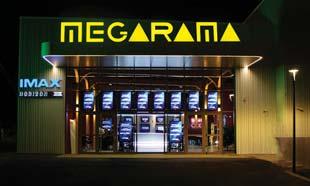
originally envisioned in 2019, designed to modernise and expand the local film offering to meet contemporary consumer expectations.
The new establishment, which opened its doors following approval from the Departmental Film Development Commission in December 2023, represents a significant scale-up in operations. Now boasting nine screens and a total capacity of 1,373 seats, the site is positioned as a premier destination within the Ulis 2 shopping centre.

Designed by renowned architect Olivier Palatré with an investment budget of •11 million, the 3,500-square-metre facility is an exercise in modern design. The exterior features a distinctive ribbed shell designed to filter natural light, while a striking gilded canopy marks the entrance. Inside, the spacious lobby is characterised by a warm wooden frame, housing a dedicated café area and high-tech digital kiosks to streamline the guest journey.
"We have also slightly redesigned the reception areas… and the project takes up what UGC had already planned in 2019, while adding our own specific touch." I remain optimistic… we are going to have a very strong summer with films by Christopher Nolan and Spielberg, followed by Dune 3 at the end of the year."
– Jean-Pierre Lemoine, President, Megarama Cinemas
Location and accessibility remain central to the site's business strategy. Situated adjacent to a 2,500-space parking lot and directly facing the local bus station, the multiplex ensures seamless access for both residents and visitors from the wider region. Furthermore, its proximity to a new food court with outdoor terraces creates a synergistic leisure ecosystem, encouraging longer dwell times and increased secondary spend.
The takeover and redevelopment of the Les Ulis site by Megarama highlights the group's unique standing within the European exhibition market. Founded and led by Jean Pierre Lemoine, Megarama has grown to become the fifth largest cinema operator in France, managing a diverse portfolio across France, Spain, and Morocco.
What sets the group apart is its aggressive 'Premium First' strategy and its role as an early adopter of disruptive technologies. Unlike traditional circuits that may prioritise standardised rollouts, Megarama focuses on highperformance, large-format installations. The group is notable for:
Technological Independence: By partnering with specialised integrators like CinemaNext and BARCO, the group has committed to a systematic transition to laser projection across its entire network, aiming for superior brightness and energy efficiency.
Signature Concepts:
The 'Horizon' label is a proprietary brand developed by the group to signify a THX certified, top-tier viewing environment. This includes wall-to-wall screens and specialised acoustic treatments that are often

“We have thought about this aspect and designed a cultural venue that, in keeping with a long line of entertainment venues and with the latest advances in cinema technology, can offer its users a space for interaction and leisure where they can create social ties through the sharing of a taste for and a culture of cinema.”
absent in standard multiplex configurations.
Inclusive Innovation:
The group's recent agreement to equip 25 sites with GRETA technology underscores a commitment to social responsibility, making inclusive cinema a standard operational feature rather than a speciality service.
The project is a flagship example of the premiumisation strategy currently sweeping the sector. Key features include:
IMAX Integration:
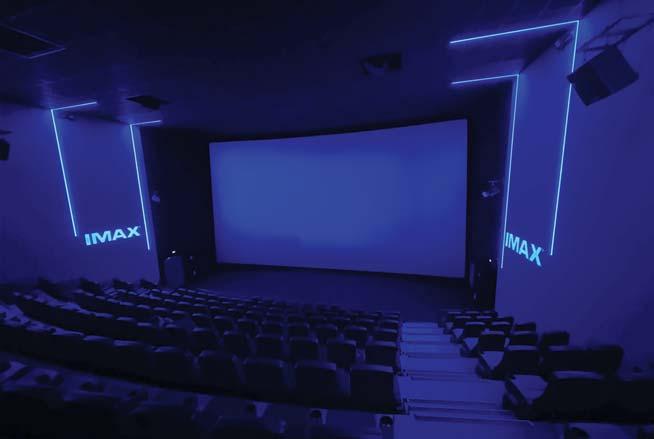
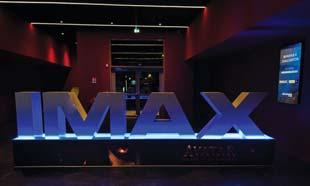
The site houses a 217-seat IMAX theatre, marking the group's fifth
such installation in France. This provides a massive format experience that serves as a major draw for blockbuster releases.
Horizon Excellence:
The 186-seat Horizon theatre offers a THX certified environment with fully reclining leather seats and superior acoustic engineering.
Operational Synergy:
Beyond the screens, the site leverages 4D E-motion capabilities in other locations, reflecting a broader group effort to provide 'unreplicable' sensory experiences that combat the rise of home streaming.
The transition from a 50-year-old facility to a 9-screen multiplex is a calculated response to the evolving demands of the B2B leisure market. By increasing seat capacity by over 100%, the operators are betting on the resilience of the theatrical experience when paired with luxury amenities. Through significant capital expenditure and a focus on the premium segment, the new Megarama Les Ulis is poised to capture a larger market share and serve as a cornerstone of the region's commercial and cultural redevelopment.
In every city, there are places where stories unfold on screen and in the lives of the people who visit them. Cinema has always been more than a building with seats and a projector. It is a shared experience, a gathering point where technology, storytelling, and hospitality meet. In Amsterdam, a new cinema destination has been designed precisely with that philosophy in mind.
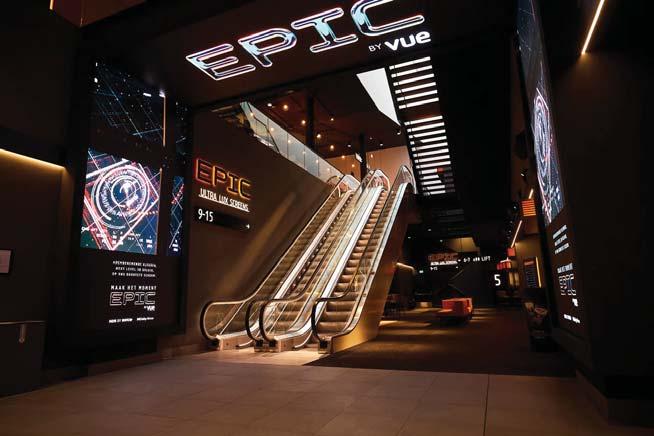
Vue Amsterdam represents a modern interpretation of what a cinema can be in the premium era of moviegoing. With 15 screens and nearly 1,000 luxurious reclining seats, the venue blends large-scale exhibition with intimate viewing spaces. From blockbuster premieres to art-house discoveries, the cinema is built not only to show films but to create memorable evenings. For operators, developers, and exhibition professionals, the venue offers an
interesting case study in how design, technology, and hospitality can merge into a single ecosystem. Designed With Precision
Modern audiences rarely think of a cinema visit as a quick transaction. It is increasingly part of a broader night out. Restaurants, social spaces, and immersive environments all shape the experience before and after the film. The venue embraces this shift. Located in the dynamic Houthavens
district of Amsterdam, the cinema sits within a lively neighbourhood of restaurants, creative offices, and waterfront views. Visitors can dine nearby, step into the cinema for a screening, and return to conversation afterwards. Inside the building, the first-floor foyer functions almost like a living room for the venue.
A luxury bar, lounge seating, and flexible areas allow the space to transform throughout the day. For event organisers, the foyer becomes an extension of the auditorium. Catering options allow the space to host lunches, dinners, or receptions, turning a traditional cinema lobby into a hospitality environment.
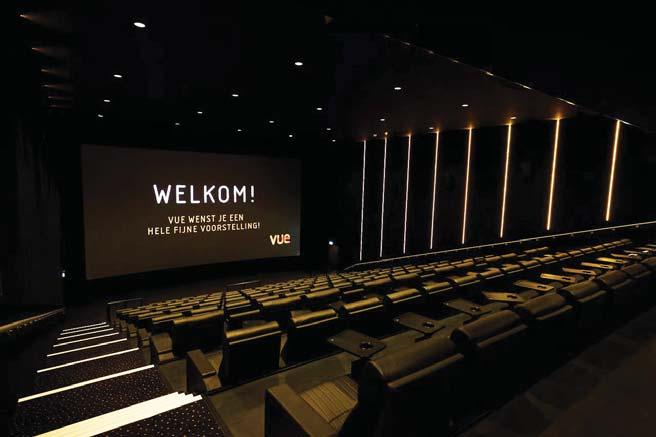
One of the most distinctive aspects of the venue is its scale. With 15 auditoriums and more than 950 seats, it is the cinema with the highest number of screens in the Netherlands. Yet the design avoids the uniform feel often associated with large multiplexes. Instead, the venue offers a spectrum of
auditorium sizes. Smaller rooms create intimate experiences with around 30 seats, perfect for niche screenings or private events.
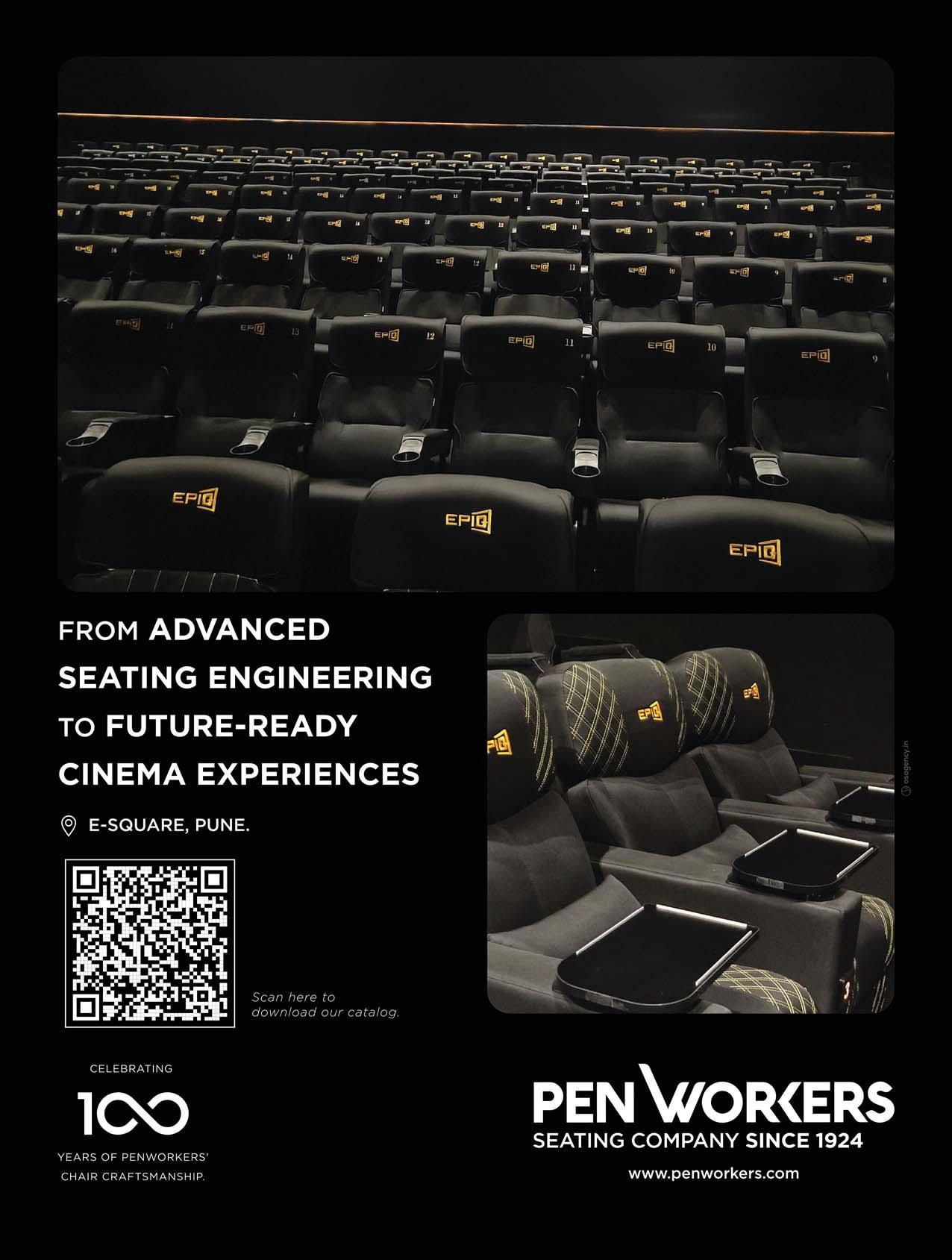
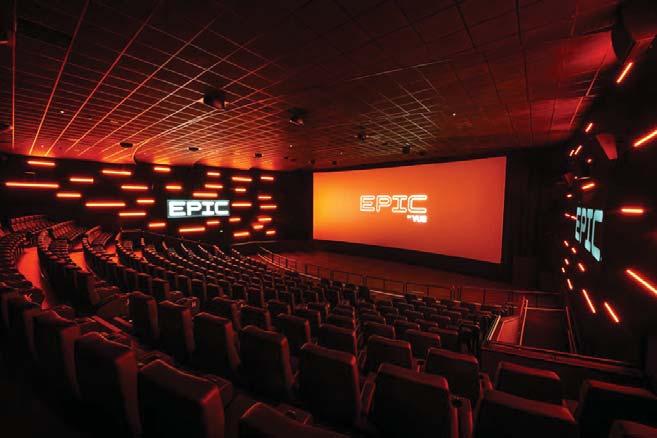
Mid-sized auditoriums host standard commercial programming. The largest spaces handle premieres and high-demand releases. The EPIC auditorium stands as the centrepiece, with 212 seats and two wheelchair spaces. In contrast, three boutiquestyle Ultra Lux auditoriums offer only 12 seats each, creating an almost private cinema atmosphere. This variety allows the venue to program films much like a wellcurated library. Large rooms serve the crowd pulling titles, while smaller spaces nurture speciality programming.
Comfort shapes how long audiences stay engaged with the screen. Every auditorium features electrically adjustable Lux seating.
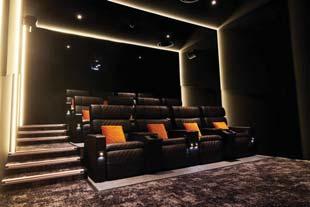

With the push of a button, the seat reclines smoothly, allowing guests to find their ideal viewing position. A small table integrated into each seat adds practical convenience for snacks and drinks.
The Ultra Lux seating takes the concept further. These seats provide additional space, integrated storage compartments, comfortable cushions, and a unique detail that reflects the cinema's hospitality focus: built-in wine coolers. It is a small feature, but like a well-placed detail in architecture, it signals a shift in how cinema experiences are designed. Watching a film here feels less like sitting in a public hall and
"The new multiplex had been designed from the ground up to offer a state-of-theart premium experience. We started going 200 miles an hour trying to make up for four lost years, so we have been doing a lot of innovations, a lot of new ways of doing business. And we've been testing them across Europe. And what you're in tonight is everything. It's everything. All has come together."
–
more like relaxing in a private lounge.
At the centre of the venue lies the EPIC auditorium, the first of its kind in the Netherlands. The screen itself measures an impressive 16.5 metres wide and nearly 9 metres tall. The Hugo Harkness screen features a 1.85:1 format with a 2.2 gain surface, ensuring bright and vibrant images across the entire viewing area. To power such a large canvas, the auditorium uses a dual laser projection system. Barco provides the HDR laser projection technology, delivering high dynamic range images with deeper contrast and enhanced colour detail. In simple terms, the projection system works like a painter using a richer palette. Blacks appear deeper, highlights shine brighter, and every shade in between gains clarity.
Tim Richards, Chief Executive Officer,
VUE
International
Dolby Laboratories powers the immersive audio through its Dolby Atmos system. Instead of sound travelling only from speakers at the front or sides, Atmos treats sound like moving objects in space. While the EPIC auditorium leads the technological showcase, the rest of the cinema is far from conventional.
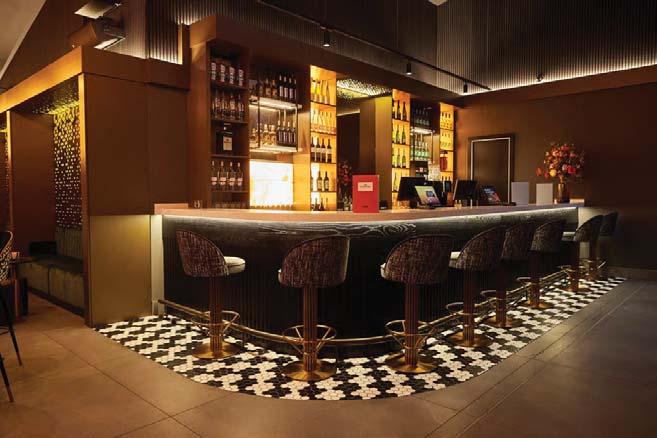
All standard auditoriums are equipped with Series 4 laser projection systems from Barco. Compared with traditional lampbased projectors, laser technology offers greater brightness, consistent colour accuracy, and longer operational stability. For operators, this technology also simplifies maintenance and energy efficiency. For audiences, the benefit is simple. The image looks sharper, brighter, and more stable throughout the screening.
The Boutique Cinema within the Cinema
Perhaps the most intriguing concept within the venue is the Ultra Lux boutique auditoriums. Each of these rooms contains only 12 seats. The environment resembles a private screening lounge more than a traditional theatre. Ultra Lux recliners, laser projection, and high-quality 7.1 sound create an exclusive atmosphere. These boutique spaces reflect a broader trend within exhibition.
Beyond comfort and technology, accessibility is woven into the design. The building is wheelchair accessible, both in public areas
and within several auditoriums. Dedicated wheelchair spaces ensure that accessibility is integrated into the seating layout rather than added as an afterthought. A spacious, accessible restroom further supports inclusive design. The venue also hosts screenings with reduced sensory stimulation. Sound levels are lowered, lights remain dimmed, and films are shown in 2D to create a calmer viewing environment. These screenings open the cinema experience to audiences who may prefer a more relaxed atmosphere. Additionally, weekly screenings with open subtitles make films accessible to broader audiences.
A cinema succeeds not only because of its technology but because of its relationship with the community around it. The venue actively collaborates with the neighbourhood for events, special screenings, and curated programming. Weekly film schedules are released through the website and mobile app every Monday evening. The programming spans the full spectrum of cinema. Children's films, art-house titles, horror releases, and blockbuster premieres all find a place in the schedule. This diversity mirrors the diversity of the neighbourhood itself.
For exhibition professionals, it stands as an example of how thoughtful design and technology can work together. Like a welldirected film, every element plays its part. The seating invites relaxation, the projection brings stories to life, and the spaces around the auditorium encourage people to stay a little longer. In the end, that may be the most important achievement of all. The cinema becomes not just a place to watch films, but a place where audiences want to spend their time.
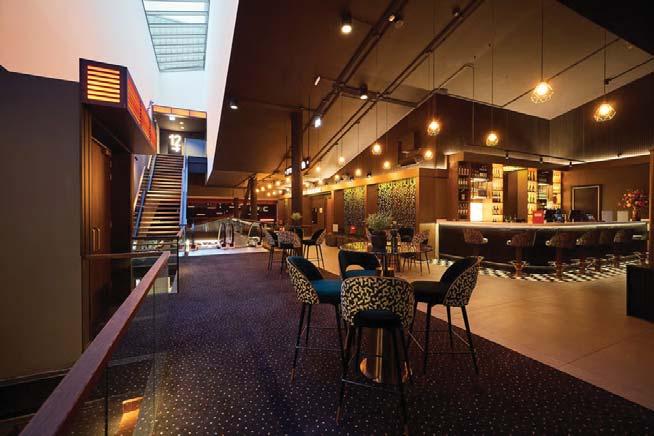
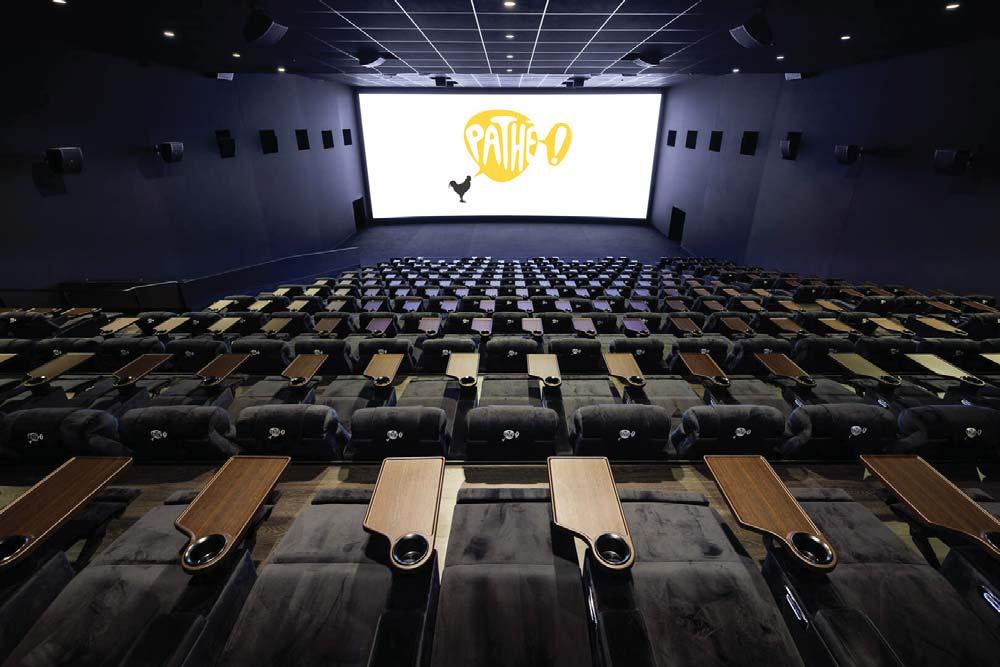
A landmark transformation in the Belgian cinematic landscape, marking a shift toward a new era of luxury and technical excellence. This comprehensive renovation signifies more than a mere update to a historic venue; it establishes a premium benchmark for the entire industry by prioritising guest comfort and immersive technology. By integrating high-end amenities as a standard feature rather than an exclusive upgrade, the project reimagines the relationship between the audience and the big screen.
The iconic Pathé cinema in Sint-Niklaas, formerly known as the Siniscoop, has completed
a major renovation that positions it at the forefront of cinema comfort and innovation in Belgium.
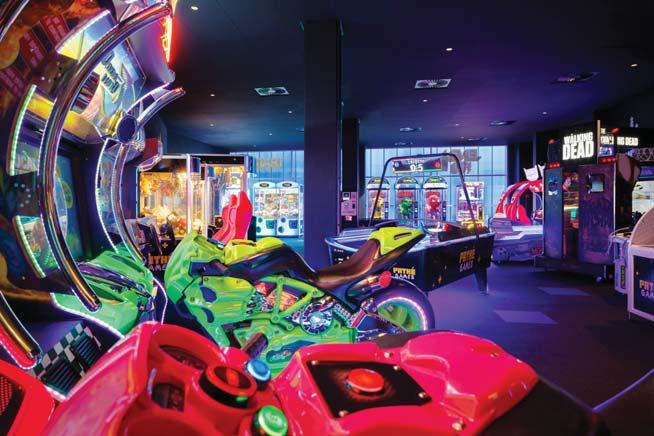
The venue has been fully transformed into the country's first cinema featuring premium electrically adjustable Relax Seats in every screening room, offering moviegoers an elevated experience that blends comfort with cutting-edge design.
The heart of the renovation lies in the introduction of Relax Seats, electric comfort chairs that allow visitors to recline with the touch of a button. These plush seating options, upholstered in soft black velour and equipped with individual snack tables, promise to redefine what cinema comfort means.
The redesign aims to provide an experience that rivals or surpasses the comfort of watching films at home, but with the immersion and scale only a cinema can offer. Pathé Sint-Niklaas is now officially the first Belgian cinema to offer this level of comfort as standard, and notably, without any additional cost above the regular ticket price. Even discounted initiatives like Pathé's traditional 'Monday is Film Day' offer access to this premium seating at lower ticket prices.
The upgrade project at Pathé Sint-Niklaas was meticulously executed through a phased approach spanning several months throughout 2025. This strategic scheduling ensured that the cinema could remain operational and continue serving the public while various sections of the complex underwent modernisation. By managing the renovation in stages, the venue maintained its presence as a local fixture even as it transitioned into a state-of-the-art facility. The rollout of the new amenities began mid-year with the introduction of the first Relax Seats. These premium seating options were gradually integrated across the building until all eight screening
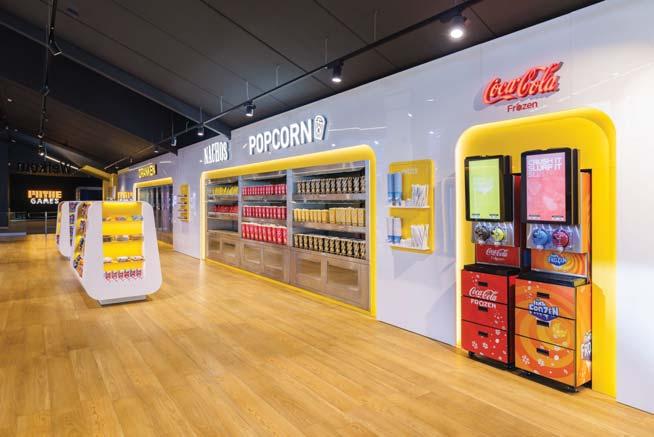
rooms were fully outfitted by the end of the year.
This transition provides every guest with a consistent level of luxury and physical comfort regardless of the specific film they choose to see. Beyond the ergonomic improvements, the cinema has significantly boosted its technical capabilities. One of the primary auditoriums now features Dolby Atmos sound technology, which utilises an intricate array of speakers to deliver threedimensional audio. This creates a deeply immersive environment where sound moves around the audience with incredible precision.
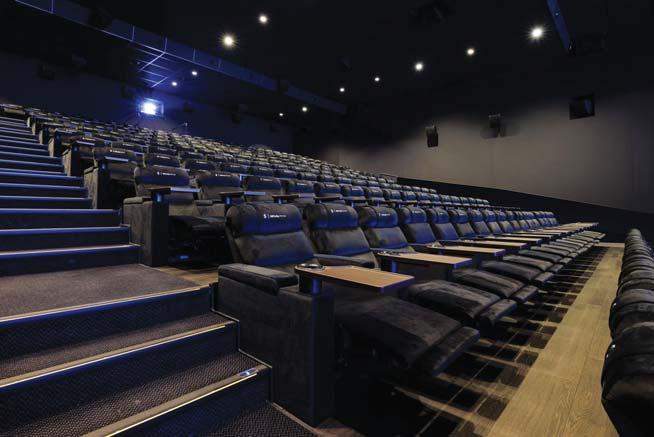
To further diversify its appeal, Pathé Sint-Niklaas expanded its entertainment footprint by installing a brand new arcade zone near the front of the cinema. Characterised by vibrant lighting and a wide variety of gaming options, this area serves as a lively prelude to the movie or a place for social interaction after the credits roll. By incorporating these interactive elements, alongside traditional screenings, the venue has successfully broadened its identity to become a comprehensive entertainment destination for visitors of all ages.
The renewal of Pathé Sint-Niklaas represents a strategic evolution in the cinematic industry, moving far beyond mere aesthetic upgrades to address the intensifying competition from home streaming services. By integrating cutting-edge projection technology and immersive audio systems, the cinema offers a sensory experience that remains difficult to replicate in a domestic setting.The redesign prioritises the holistic guest journey, blending physical luxury with modern functionality. Ergonomic, premium seating ensures comfort for long-form
storytelling, while the inclusion of expansive social spaces transforms the theatre into a multifaceted destination. Practical amenities, such as high-speed, free Wi-Fi and its strategic location immediately adjacent to the Sint-Niklaas train station, remove traditional barriers to attendance, making the venue as convenient as it is sophisticated. Ultimately, Pathé Sint-Niklaas has successfully transitioned into a vital community hub. The feedback from local patrons and dedicated cinephiles highlights a deep appreciation for this harmony of design and technology. This thoughtful approach does more than just show films; it revitalises the collective moviegoing experience, fostering a shared environment where the magic of the big screen is supported by the comforts of contemporary hospitality.
The renovation of Pathé Sint-Niklaas signifies a profound transformation rather than a simple cosmetic
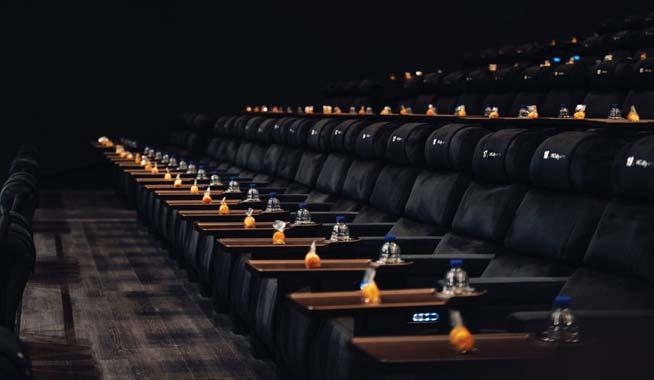
update. This initiative represents a sophisticated strategic investment in the future of theatrical experiences, occurring at a pivotal moment when the global cinema industry is actively redefining its role within the broader entertainment landscape. By elevating the theatre's infrastructure, Pathé is asserting that the physical cinema remains an essential pillar of cultural life. Furthermore, the addition of dedicated social spaces encourages guests to arrive early and stay late, fostering a sense of community and
shared excitement that streaming platforms cannot replicate.
Through these advancements, Pathé aims to ignite a renewed passion for the cinematic arts across Belgium. This flagship project serves as more than just a local upgrade; it acts as a potential blueprint for other theatres nationwide. By successfully blending hospitality with cuttingedge technology, Pathé Sint-Niklaas demonstrates how traditional venues can adapt and thrive, setting a high standard for the next generation of moviegoing.
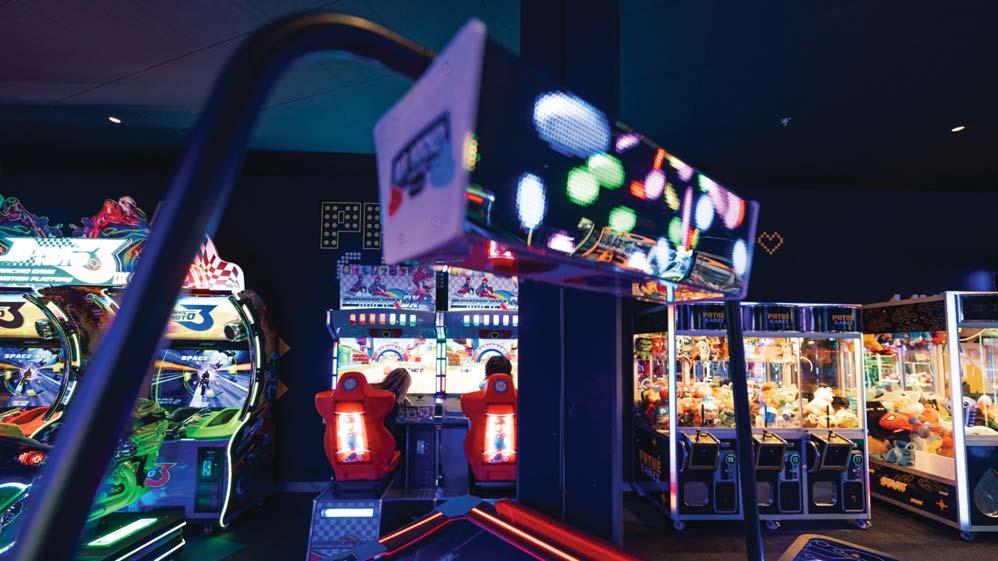
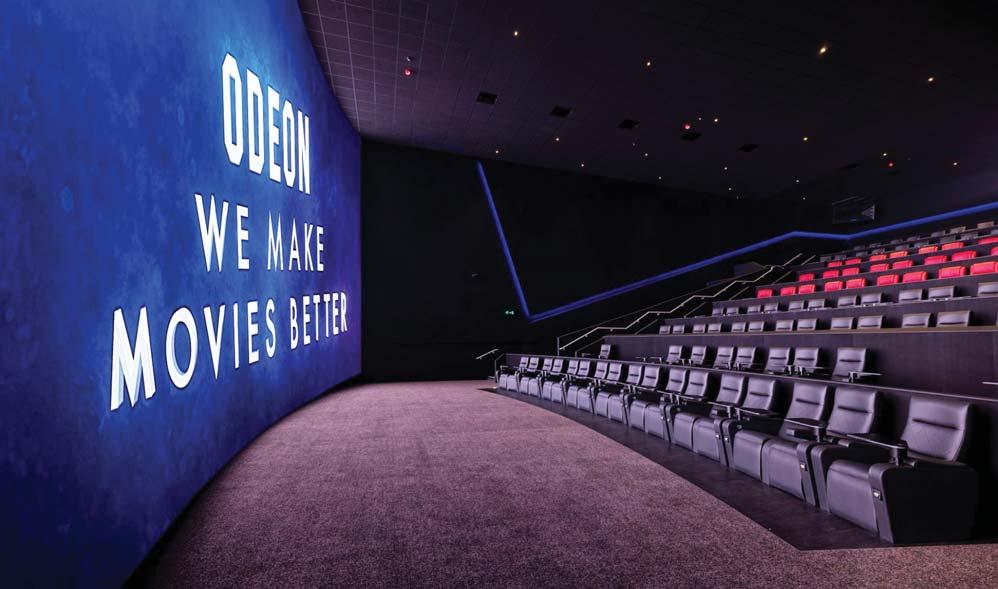
The Bristol entertainment landscape hasn't just been refreshed; it has been entirely recalibrated. In a swift metamorphosis, an 88-year era on Union Street concluded, making way for a high-specification flagship at Cabot Circus, Bristol, England. This isn't just a change of hands; it's a strategic pivot toward the experience economy that modern consumers crave.
For the first time since 2007, Bristol welcomes back the IMAX format, and it arrives with the force of a tidal wave. The screen is a literal wall of light, stretching 9 metres by 16.5 metres from the floor to the ceiling. In engineering terms, this is the 'Goldilocks' of visual immersion, massive enough to dominate the field of vision but calibrated so precisely that every seat in the

house sits within the acoustic and visual 'sweet spot.' As we all know, the pinnacle of experience IMAX is,
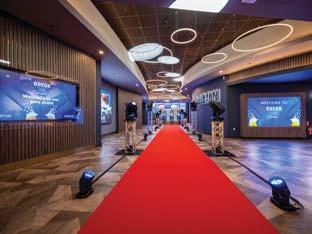
the quality of content and immersion will be top-notch. Sonic Architecture
If the IMAX screen is the heart of the facility, the audio system is its nervous system. One specialised theatre houses a surround sound array featuring over 50 individual speakers. This density acts like a high-fidelity blanket, wrapping the audience in a layer of sound that maintains surgical clarity even at
"We're excited to expand our longstanding partnership with ODEON on an exciting new IMAX location in Bristol. Audiences across the city will be able to experience the crystal-clear image and immersive sound of IMAX across an exciting slate of upcoming Filmed for IMAX titles, including The Mandalorian and Grogu, The Odyssey, and Dune: Part Three, through the rest of the year."
– John Schreiner, SVP, Theatre Development, EMEA , IMAX
high volumes. Whether it's a whisper or a thunderclap, the separation of sound ensures nothing gets muddy or lost in the rafters. The sensory precision Odeon has put forth is unimaginable for a place which is sentimental for the locals.
ODEON has abandoned the year-old philosophy of traditional cinema seating. The ground floor has been stripped to its bones and rebuilt using the brand's Luxe design language.
The result is a suite of options ranging from fully reclining seats to 'Luxe Pods.' These pods function like high-end business-class cabins on a long-haul flight, offering a cocoon of privacy and comfort that transforms a public screening into a personal retreat.
The venue functions as a sophisticated hospitality hub rather than a simple dark room for movies. The Luxe Suite represents the pinnacle of this design, integrating a full bar, hot food service, and premium partnerships with brands like Costa. It's an ecosystem designed to capture 'Dwell Time,' inviting guests to arrive early and stay late, turning a two-hour movie into a half-day event.
To grease the wheels of this transition, the cinema ran an aggressive strategy. Through its opening weekend, every seat, including the premium VIP beds and IMAX berths, was available for just £4. It is a bold handshake with the city, inviting film fanatics to sample titles like Hamnet and Wuthering Heights on a world-class stage before the standard £7.95 pricing took effect.
The iSense laser projection acts as the facility's surgical scalpel, delivering images with a sharpness

"We're so excited to open our doors and welcome our first guests to experience everything ODEON has to offer at our new Bristol home in Cabot Circus. We have an incredible £4 ticket offer for the first 11 days of showings, across all films and formats, including our Luxe Suite, iSense and IMAX screens. The team has done an amazing job to get the cinema ready, and I would like to say a huge thanks as they put the final preparations in place.”
– Suzie Welch, Managing Director - UK & Ireland, ODEON Group
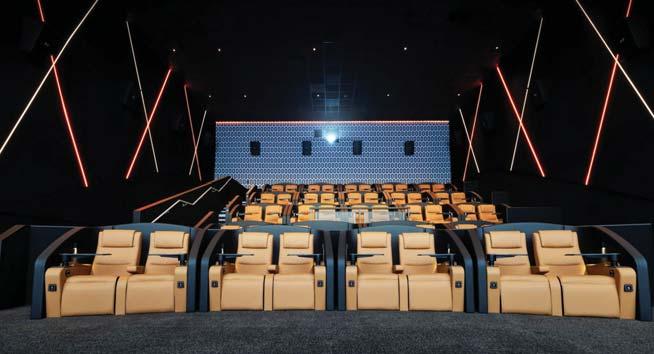
that standard digital projectors simply cannot touch. When combined with the high speaker density of the smaller rooms, the result is a 'Sense' experience that promises full cinematic immersion. It's a clear message to the market:
the era of the 'standard' moviegoing experience is over, and the era of the premium event has begun. And for Bristol, this venue now anchors as a place with pride, which everyone around the world looks upon.
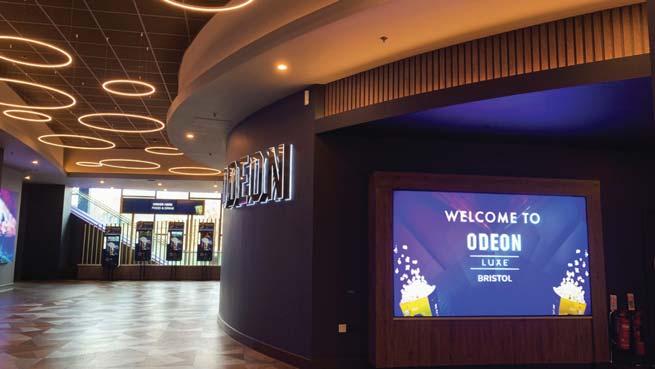
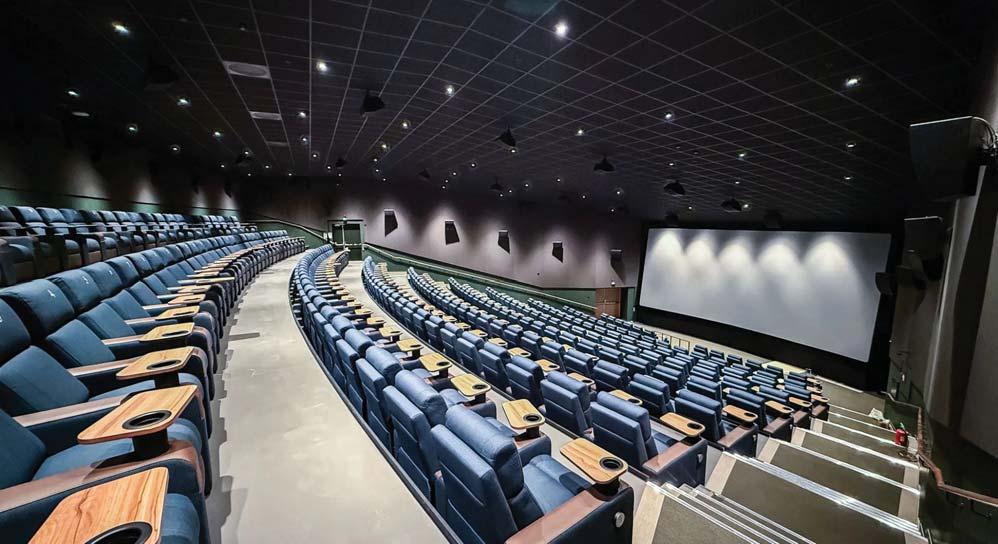
A historic cornerstone of Northern European cinema has undergone a sophisticated revitalisation, merging architectural heritage with the highest standards of modern exhibition technology. This recent transformation of a premier Oslo venue illustrates the industry's shift toward boutique, high comfort environments that prioritise sensory immersion over sheer seating volume. By integrating 1930s aesthetic preservation with top-tier laser projection and spatial audio, the project establishes a new benchmark for luxury urban cinema.
A Heritage Landmark Reimagined
Originally inaugurated on February 15, 1934, the venue has served as a cultural landmark for over nine decades. Designed by architects Gudolf Blakstad and Herman

Munthe Kaas, the site was a pioneer of the multiplex format in Scandinavia during the early 1980s. The latest refurbishment, however, addresses the complex structural challenges of its historic layout while celebrating its original character.
The renovation meticulously restored iconic features, including the famous lobby and the grand staircase leading to the basement level. Notably, the landmark mosaic columns have been preserved, ensuring that the venue retains its
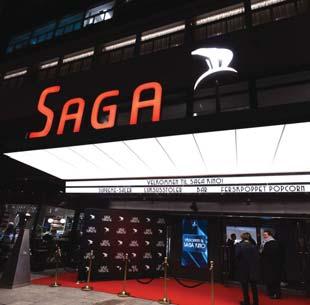
"The cinema and the screens really do look amazing. Saga is perfectly located and a go-to destination. It has been a pleasure to be part of this project, and I'm extremely grateful to Jan for sharing his level of technical expertise. The input and collaboration have been a fantastic process for us, and as a result, the IMB-S4 is now much easier to use. We're also offering an industry-leading five-year warranty and software updates will continue even after the warranty expires - it's a testimony to our confidence in the robustness of this product."
– Mark Kendall, Regional Sales Manager, Christie Digital
unique soul despite the comprehensive technological overhaul. This balance of old and new allows the cinema to maintain its prestige while shedding the limitations of its previous 2007 iteration.
By modernising such a significant landmark, the operators have ensured that the city centre remains a competitive destination for high-end entertainment. Its continued presence prevents the ‘Cultural Hollow Out’ often seen in urban centres, reinforcing the neighbourhood's identity as a premium hub for both business and leisure.
Updating a site with nearly a century of history required creative engineering solutions. One of the primary operational challenges involved the legacy high projection booths, which historically pointed down at difficult angles. The latest upgrade has mitigated these issues through the deployment of Christie RGB pure laser technology.
The installation includes:
Christie CP4415 RGB Projectors: These units provide high contrast, vivid colour reproduction, and industry-leading energy efficiency.
Ultra High Contrast (UHC) Lenses:
Specifically selected to ensure crisp image quality despite the unique architectural geometry of the auditoria.
Christie IMB S4 Servers:
Integrated into all six theatres to provide a seamless, highperformance playback workflow.
The operator, Nordisk Film, has pivoted the site toward a 'Supreme' premium branding strategy. The total capacity has been refined to 498 seats across six screens to

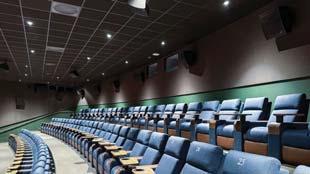

"What has really pleased me about being able to combine the Christie UHC lens with the RGB projector is that the image quality with high black contrast is really, really good - more so than I had expected. It clearly shows a better contrast than you get with a normal high brightness lens. It is a visible difference."
– Jan Rasmussen, Head of Screen Technology, Nordisk Film Cinemas
prioritise individual guest comfort. The flagship auditoriums, Supreme 1 (241 seats) and Supreme 2 (73 seats), now serve as the venue's technological vanguard.
A significant highlight of this reopening is the introduction of MAG Cinema's top-tier ERA series audio systems, used here for the first time in a Dolby Atmos configuration.
Supreme 1: Powered by flagship ERA 5 screen systems for maximum acoustic power.
Supreme 2: Utilises the more compact ERA 2 systems, tailored for mid-sized premium environments.
Unified Sonic Signature:
The remaining four intimate auditoria (ranging from 19 to 79 seats) utilise the MAG Cinema SCR series, ensuring consistent audio quality across the entire multiplex.
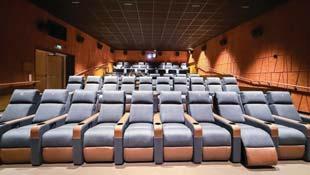
In a move to differentiate from home streaming and standard theatrical offerings, the venue has become the first in Oslo to offer fully reclining seats across all auditoriums. This commitment to 'boutique style' comfort, combined with the threedimensional sound of Dolby Atmos, positions the site as a leader in the premium leisure sector.
By combining large-scale premiere capabilities in the Supreme rooms with the exclusivity of the smaller basement theatres, the cinema provides a versatile platform for both major studio releases and curated film events. This strategic blend of architectural restoration and technological prowess ensures that the venue remains a vital, commercially viable asset in the heart of the city.



CinemaCon 2026, held at Caesars Palace in Las Vegas, wasn't just another industry gathering; it felt like a reset moment for global theatrical exhibition. Across four days of studio presentations, technology showcases, and industry discussions, the message was loud and consistent: the big-screen experience is not just alive, it's evolving aggressively.
The Big Picture: Theatrical is Back
One of the strongest takeaways from CinemaCon 2026 was the renewed confidence in theatrical releases. Studios and exhibitors emphasised longer theatrical windows, premium formats, and audience-first programming strategies. The industry narrative has clearly shifted away from the 'Streaming vs Theatres' debate to co-existence, with theatres reclaiming cultural and commercial relevance. Interestingly, beyond franchises, original films like Spielberg's Disclosure Day, Nolan's The Odyssey, and Iñárritu's Digger drew strong attention, signalling a creative revival alongside blockbuster dominance.
Technology Updates: The Premium Experience War Intensifies
Technology was at the heart of this year's convention, with studios and exhibitors pushing the boundaries of immersion and standardisation:
Infinity Vision by The Walt Disney Studios
A major announcement was Disney's introduction of Infinity Vision, a global premium theatre certification program. It standardises large-format experiences with laser projection, large screens, and immersive audio, positioning itself as a competitor to IMAX and other PLF formats.
Laser Projection & Immersive Audio Expansion
Across presentations, there was a
clear push toward RGB laser projection systems and nextgen sound formats, reinforcing premium cinema as the future revenue driver.
Custom Filmmaking Tech
Filmmakers like Christopher Nolan showcased the use of custom-built IMAX cameras, signalling a growing alignment between content creation and exhibition technology.
Eventisation of Cinema
Concert films, live experiences, and immersive screenings (including 3D concert presentations) highlighted how theatres are becoming multiformat entertainment hubs.
Studio Updates: A Power-Packed Slate across Hollywood
CinemaCon 2026 delivered one of the most diverse and ambitious studio line-ups in recent years. Disney showcased major titles including Avengers: Doomsday, The Mandalorian and Grogu, and Toy Story 5. Positioning itself aggressively in the premium format race with Infinity Vision. Warner Bros. revealed its new speciality label Warner Bros. Clockwork, focusing on indie and prestige cinema, which generated buzz with Supergirl footage and star-

22-25 JUNE
CINEEUROPE BARCELONA, SPAIN www.cineeurope.net
18-19 AUGUST
BIG CINE EXPO CHENNAI, INDIA www.bigcineexpo.com

21-24 SEPTEMBER
KINO EXPO ST. PETERSBURG, RUSSIA www.kinoexpo.ru
21-23 SEPTEMBER


CINELATAM
MIAMI, USA www.filmexpos.com
29 SEPT-2 OCT EXPOCINE SÃO PAULO, BRAZIL www.expocine.com.br

26-29 OCTOBER
AUSTRALIAN INTERNATIONAL MOVIE CONVENTION GOLD COAST, AUSTRALIA www.cinemaassociation.asn.au

9-10 NOVEMBER
META CINEMA DUBAI, UAE www.menacinema.com

7-10 DECEMBER CINEASIA
SEOUL, SOUTH KOREA www.cineasia.com

12-15 APRIL CINEMACON LAS VEGAS, USA www.cinemacon.com
driven presentations. Paramount & Others gave updates on Top Gun 3, Transformers, and Teenage Mutant Ninja Turtles sequel. Amazon MGM Studios announced an expanded theatrical strategy with 15 films annually by 2027. Showcased projects like Masters of the Universe and The Thomas Crown Affair reboot.
The convention concluded with the prestigious Big Screen Achievement Awards, honouring talent across the industry.
Key honourees included:
Spirit of the Industry AwardJames Cameron
Cultural Impact in Film- Queen Latifah
Star of the Year- LaKeith Stanfield
Award of Excellence in ActingAdam Scott
Star of Tomorrow- Noah Centineo
Rising Star of 2026- Catherine Laga'aia
Additionally, emerging filmmakers were recognised through initiatives like the Coca-Cola Refreshing Filmmaker's Award, reinforcing CinemaCon's role in nurturing future talent.
CinemaCon 2026 wasn't just about showcasing films; it was about redefining the theatrical ecosystem. With premium formats like Infinity Vision, a renewed studio commitment to theatrical windows, and a balanced slate of franchises and original content, the industry appears to be entering a new phase of stability and innovation. If 2025 was about recovery, 2026 is about reinvention, and CinemaCon made that unmistakably clear.
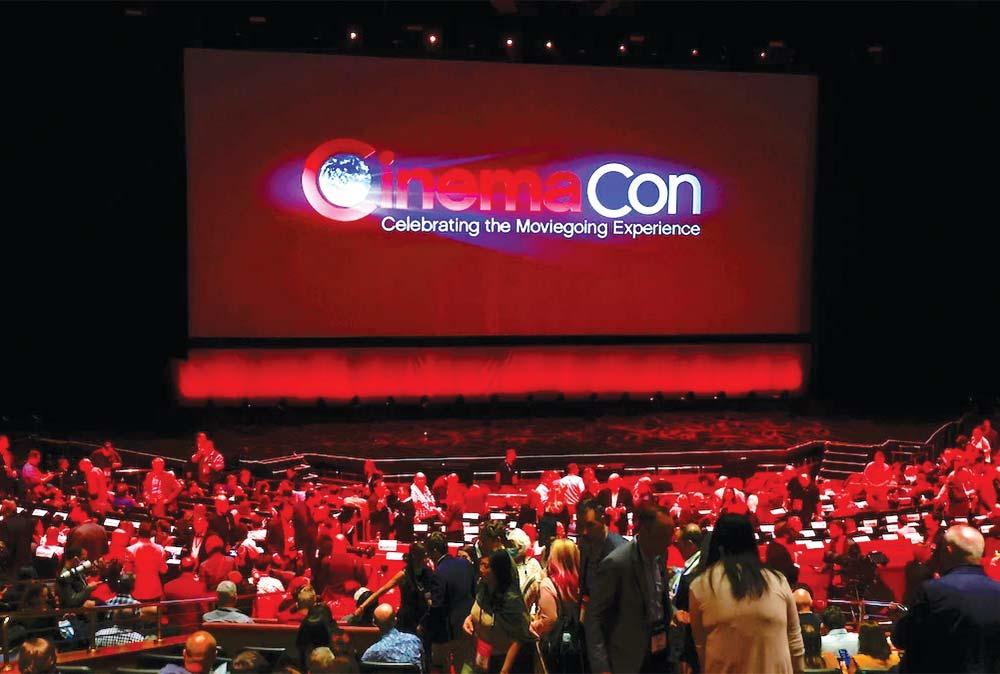

June 22-25, 2026
Barcelona, Spain
The 35th edition of CineEurope 2026 arrives at a pivotal moment for the global exhibition industry, one defined by rapid technological transformation, shifting audience behaviours, and renewed optimism around theatrical experiences. As the premier European convention for cinema operators, studios, and technology providers, this year's edition promises a compelling blend of insight, innovation, and industry celebration.
At the heart of the program is 'Best in Class: Lessons from Around the World,' a panel that brings together voices from diverse international markets. With exhibition evolving differently across regions, this session aims to decode what truly drives audience engagement today. From premium large formats and luxury seating to hyper-localised programming strategies, the discussion will highlight how cultural nuances shape cinema design and consumer expectations. More importantly, it will explore scalable ideas that exhibitors can adapt to strengthen footfalls and longterm growth.
Marking a major milestone, '35 Years of CineEurope - Then
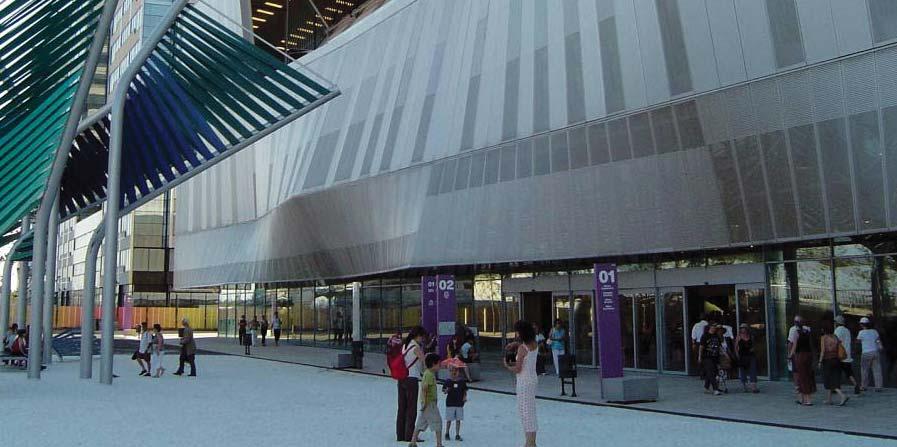
and Now' reflects on the journey of exhibition over the past three and a half decades. From the transition to digital projection and immersive sound to the current wave of AI-driven operations and data analytics, the session underscores how the industry has continuously reinvented itself. While technology has elevated the theatrical experience, the core appeal of cinema-shared storytelling in a communal space- remains unchanged. This retrospective is not just about nostalgia, but about understanding resilience and future readiness.
A strong focus on artificial intelligence and emerging trends defines this year's convention. As exhibitors increasingly turn to AI for dynamic pricing, personalised marketing, and operational efficiency, CineEurope 2026 positions itself as a platform to explore both the opportunities and the implications of these tools. Alongside this, the trade show floor will showcase cutting-edge advancements in projection, sound, and cinema design, offering a glimpse into the next generation of moviegoing experiences.
Studio presentations, a cornerstone of CineEurope, will once again deliver exclusive previews and strategic insights from major
Hollywood players, reinforcing the vital relationship between content and exhibition. These sessions are expected to set the tone for the upcoming theatrical slate while emphasising the importance of event-driven cinema in attracting audiences back to theatres.
The convention will also celebrate excellence through the prestigious Gold Awards presentation, organised in collaboration with UNIC. Recognising outstanding contributions to the industry, these honours serve as a reminder of the people and innovations driving cinema forward.
As it celebrates 35 years, CineEurope 2026 stands not just as a reflection of the industry's past but as a forwardlooking platform shaping its future, where technology, storytelling, and audience experience converge to redefine the magic of the big screen.
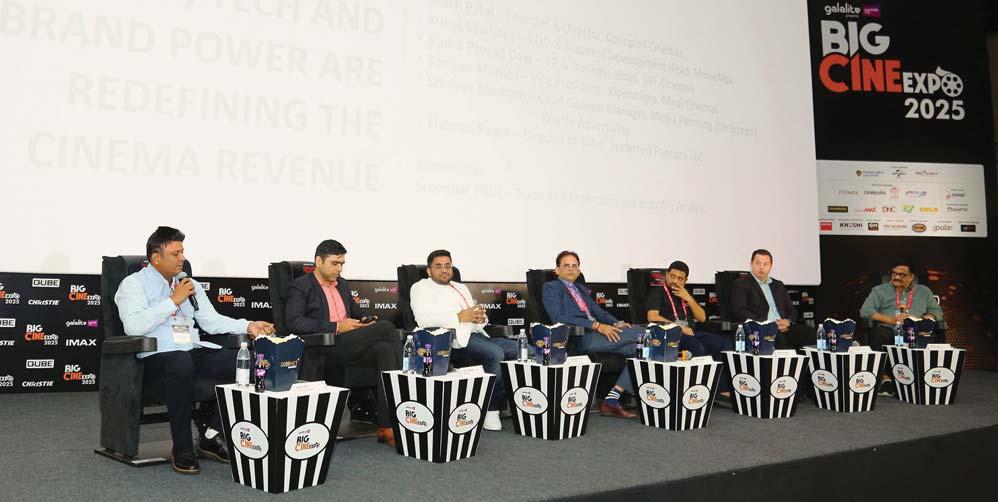
Panellists:
Anish Patel- Founder & Director, Connplex Cinemas
Kunal Sawhney-Chief Operating Officer & Business Development Head, MovieMax
Rudra Prosad Daw- Vice President & Business Head, SVF Cinemas
Sameer Munshi- Vice President - Operations, Miraj Cinemas
Srinivas Musham- Chief General Manager, Media Planning (On Screen), Khushi Advertising
Thomas Peace-Director of Sales, Preferred Popcorn LLC
Moderator:
Sreedhar Pillai-Trade and Entertainment Industry Analyst
For years, it has been an unanswered question how cinemas could unlock new revenue streams by combining AI-driven audience insights, targeted in cinema advertising, and branded food and beverage experiences. The discussion highlighted how ad technology, AI, F&B innovations and experiential marketing were coming together to transform the in-theatre environment. The session emphasised that with the right technology and strategic approach, cinemas could deliver highly targeted campaigns that improved advertiser returns and increased
per patron spending, making it an important conversation for exhibitors, F&B vendors, advertising networks, and marketers looking to strengthen future cinema revenue models.
Sreedhar noted that F&B has become the heart and soul of the theatrical business, now contributing nearly 50% of a theatre's total revenue. He reflected on how, during the 1980s and 1990s, major theatres, especially single screens, outsourced their F&B operations. It was only with the arrival of multiplexes that theatre companies began operating these services themselves. What once contributed barely 5% through outsourced contracts has today grown into a major revenue stream. As cinema attendance continues to rebound, he added that advertisers and brands are also paying close attention to this segment, making food and beverage one of the most important revenue sources for cinema theatres in India.
Anish explains that the trend of outsourcing F&B operations has largely vanished because modern cinema outlets frequently generate higher revenue than standalone fast-food franchises like Domino's. While he acknowledges that F&B is currently performing exceptionally well, he believes the next frontier lies in leveraging technology and AI
to further curate and expand the business. He notes that his cinemas have already moved away from in-house production for complex items, choosing instead to source the best local brands within a city to ensure high quality and authenticity. Looking toward the future, Anish envisions a pre-booking system inspired by the airline industry, where customers can reserve specialised, location-based meals that the cinema cannot replicate internally.
He suggests that by offering iconic dishes like Biryani through a pre-order model, theatres can provide a premium experience tailored to the specific film and audience. He maintains that by analysing the demographic and the movie, cinemas can use data to effectively program consumer behaviour and maximise F&B engagement.
Years ago, theatres used to display boards outside stating that no food or eatables were allowed inside. Sreedhar remarked on how much the industry has evolved since then and asked what kind of food choices cinemas offer today and why that change was crucial. Kunal explained that going to the cinema is no longer just about watching a movie and leaving. Food has become an integral part of the overall experience. He said that
earlier it was limited to basic items like popcorn and soda, often outsourced, but today cinema food has evolved to resemble a restaurant-style offering. Depending on the location and the category of cinema, menus can include a wide variety of options ranging from fresh Pizza and Tandoori items to even Sushi. He added that cinemas now aim to compete not just with other theatres but also with nearby restaurants, as audiences increasingly plan to have their meals inside the cinema rather than outside. Addressing the debate around high pricing, he explained that presentation and experience play a key role. For instance, a simple street snack like Bhel can be reinvented as a multigrain puffed Avocado Bhel and presented in a premium way, allowing cinemas to offer a more personalised and elevated menu.
Pricing is an important factor for patrons, and how cinemas address it without affecting the overall experience and service was one question Sreedhar put forward. Rudra emphasised that pricing is indeed a key consideration, particularly in a diverse country like India, where consumer behaviour, food preferences, and spending patterns change frequently across regions. Because of this, a uniform pricing strategy does not work. He explained that across their
28 locations, pricing is tailored to suit local audiences and market conditions rather than being fixed centrally. Even a small difference of five or ten rupees can influence how consumers perceive value. He also noted that audience preferences have evolved after the pandemic. While popcorn and cold drinks were once the main attractions, cinemas are now introducing live kitchens and a wider range of freshly prepared items. These changes reflect how cinemas are adapting their offerings to match evolving consumer expectations. Sameer added to this that brand power and brand recognition play an important role in pricing. He explained that cinemas cannot price products at the same level as well-known national brands and expect the same response from audiences. Pricing largely depends on the specific property, its location, the clientele it attracts, and the consumption habits of people in that particular area. He also noted that while concessions were earlier outsourced, the model gradually evolved into joint ventures, and today many multiplex chains are building and operating their own kitchens. According to him, this shift has played a key role in the evolution of cinema F&B and in generating additional revenue for theatres.
Sreedhar pointed out that advertising has become just as important as F&B for cinema revenue. He noted that intervals, which were once only five minutes long, have now expanded to around fifteen to twenty minutes, with some theatres running even twenty-five minutes of ads. With films often running close to three hours and theatres trying to schedule multiple shows a day, programming has become more challenging. However, he observed that ads during the interval have become a major revenue source and also help drive higher sales at the concession counters. He then asked how advertising in cinemas has evolved over the years. Responding to this, Srinivas explained that major box office releases today typically feature twenty to twenty-five minutes of ads, a trend that has grown both before and after the pandemic. He said advertisers' value cinema because it offers a captive audience, ensuring greater attention compared to digital platforms where viewers can easily skip or scroll past ads. As a result, brands are increasingly investing in cinema advertising. He also noted that the quality of ads has improved significantly over time, with many now produced with the same level of storytelling and filmmaking as movies.
Sreedhar then turned the discussion toward what he described as the king of cinema concessions, 'Popcorn'. He noted that many people believe theatres often make more profit from popcorn than from the films themselves, and asked how important popcorn has become to the Indian cinema business. Thomas noted that popcorn has long been an integral part of the cinema experience and continues to be highly profitable, often delivering margins of around 85-95%. Globally, he noted, popcorn contributes nearly 40% of cinema concession profits. Rather than moving away from popcorn in the name of innovation, he suggested that cinemas should build on it by introducing new flavours and regional variations that suit local tastes. He added that cinemas hold a unique advantage because they are one of the few places where audiences can enjoy freshly made hot popcorn. While ready-to-eat packaged popcorn is popular worldwide, he believes cinemas will continue to remain strongly associated with the classic experience of hot popcorn.
Sameer explained that in the area of F&B, they have developed their own API called 'Pop Express', which captures detailed customer data at the backend. Through this database,
they are able to understand the consumption patterns and behaviour of patrons who regularly visit a particular property. He noted that the system helps identify how frequently a customer visits the theatre and what they typically purchase, whether it is popcorn or other food items. Based on this information, the system can personalise the experience for returning customers. Sameer emphasised that AI will play a crucial role in understanding customer preferences from the moment they book a ticket until they exit the theatre.
Sreedhar asked how cinema programming changes when nearly 50% of theatre revenue comes from F&B. He wondered whether factors such as a film's runtime, scale, actors, directors, or overall hype influence the way shows are scheduled. Anish explained that exhibitors often adjust show timings to align with audience habits and increase F&B sales. For example, if a film begins at 17:30 pm and ends around 19:30 or 20:00 pm, many patrons may prefer to leave the theatre and have dinner elsewhere. Instead, theatres may extend the show time slightly so that the interval falls closer to 19:00 pm, encouraging audiences to purchase food inside the cinema. He added that exhibitors have the responsibility to ensure that patrons who spend nearly three hours in the theatre receive the best possible experience. With the help of AI and audience data, cinemas will also be able to better understand regional preferences and viewing habits, allowing them to curate show schedules more effectively based on customer interests and behaviour.
The impact of Hollywood screenings on F&B revenue, maximising sales, involves a sophisticated blend of sensory marketing and data analytics. Kunal notes that the strategy begins with the auditorium's ambience, emphasising that subtle details like aroma play a critical role; while a light, enticing scent encourages snacking, an overly heavy fragrance can inadvertently make guests feel full. Beyond the atmosphere, the approach relies heavily on customer behaviour and product placement. As a cashless cinema, the venue tracks purchasing patterns to effectively upsell items to 'easy targets' like children or groups influenced by social proof. Kunal highlights that the menu and pricing are dynamic, tailored specifically to the film's genre. For instance, high-octane Hollywood films like F1 drive sales of Nachos and Hot Dogs, whereas regional epics like Mahavatar Narsimha see a higher demand for traditional snacks like Samosas. By utilising targeted combos and time-sensitive discounts, the cinema ensures that the product mix aligns perfectly with the specific demographic of each screening.
The influence of audience demographics, noting that youth
viewers drive approximately 80% of the Indian film market and asking how these profiles dictate food and beverage sales. Rudra explains that cinema chains must remain highly agile, segregating their strategies based on the specific film and its corresponding viewership. Using the film Saiyaraa as an example, Rudra describes how the influx of Gen Z and Millennial audiences necessitated an immediate pivot. Despite having disposable income, these younger viewers are highly budget-conscious, leading cinema chains nationwide to introduce value-driven combo deals starting as low as INR 99. This tactical shift successfully captured a demographic that prioritises perceived value over premium single-item purchases. In contrast, transaction sizes fluctuate significantly depending on the social grouping. While action movies attract solo viewers or groups of friends and romances draw in couples, family-oriented films consistently generate the largest ticket sizes per transaction. Rudra highlights a unique cultural phenomenon observed with the animated film Mahavatar Narsimha, where the audience's devotional sentiment led them to remove their shoes before entering. This spiritual connection triggered a massive surge in demand for strictly vegetarian food, forcing the venue to adjust its menu to align with the cultural expectations of the crowd.
While explaining about leveraging AI and Tech in cinema F&B, Thomas explains that while butter and salted popcorn dominate 90% of the global market, distinct regional preferences exist, such as Germany's taste for sweet popcorn and China's favour for mushroom varieties. To navigate these nuances, he highlights
South Korea's CGV 'Popcorn Laboratory' as a model for customer-led R&D, where new flavours are trialled monthly and scaled based on real-time traction. He asserts that F&B possesses the same potential for innovation as cinema seating and technology. By leveraging AI, Thomas believes the industry can shift from broad regional data to hyper-personalised insights.
Anish describes a customer service innovation developed by his partner, Rahul, to provide wet tissues to all patrons regardless of their specific purchase. This initiative aims to enhance the sensory experience by offering a pleasant fragrance while ensuring guests can easily clean their hands at their seats. Beyond hygiene, Anish views this as a strategic touch point for brand experience and a potential new revenue stream. By treating the tissues as a
marketing canvas, the cinema can utilise custom prints for advertising, turning a simple functional item into a specialised tool for customer engagement.
Srinivas asserts that cinema remains an unrivalled medium for brand effectiveness, particularly when compared to digital platforms. He notes a significant shift in strategy as brands now allocate up to 20% of their budgets to offscreen amplification. This trend has seen major players invest heavily in F&B branding, turning popcorn containers and snack counters into high-value advertising real estate. Looking toward the near future, Srinivas highlights how AI will revolutionise this space by capitalising on audience dwell time to curate and place ads based on precise data. By expanding these data-driven advertising strategies into high-traffic spaces like airports
and malls, cinema operators are transforming the theatre environment into a sophisticated, multi-channel marketing hub. The discussion underscores a fundamental transformation in the cinema industry, where F&B and advertising have evolved from secondary services into the primary engines of profitability. By shifting from outsourced models to data-driven, in-house operations, exhibitors are now leveraging AI and sensory marketing to program consumer behaviour and hyper-personalise the moviegoing experience. Ultimately, the future of theatrical revenue lies in agility and integration. Whether through popcorn laboratories, regionalised pricing, or AI-targeted off-screen branding, cinemas are no longer just screening venues; they are sophisticated, multi-channel hubs capable of turning audience dwell time into high-margin engagement.
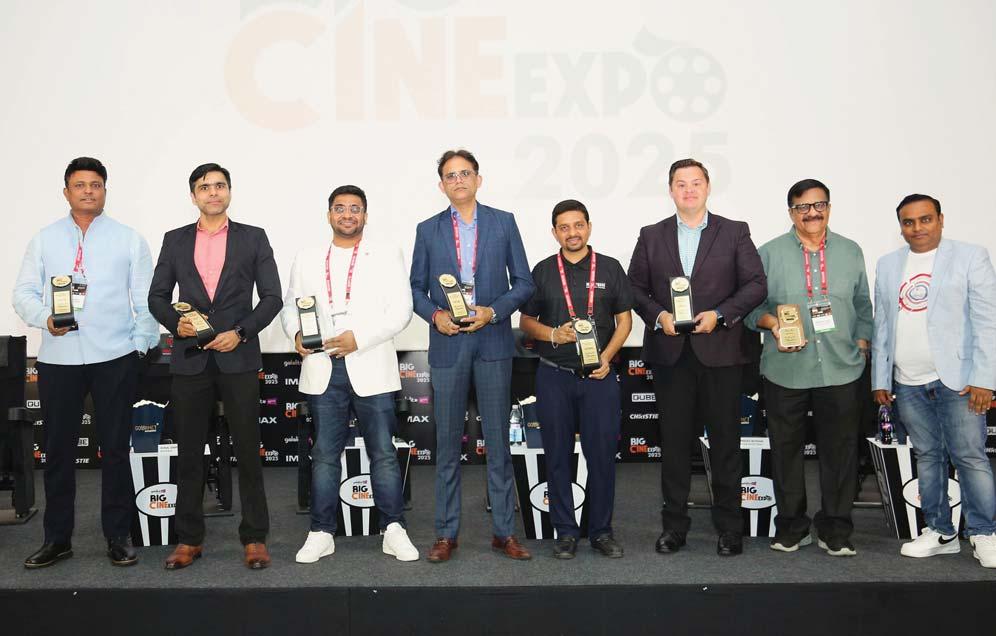
glimpse of movies coming soon… F U T U R E R E L E S E S A
A

Girls Like Girls

Supergirl

Production
Focus Features
Director
Hayley Kiyoko
Starring
Maya da Costa, Myra Molloy
Genre
Romance
Production
Warner Bros.
Director
Craig Gillespie
Starring
Milly Alcock, David Krumholtz
Genre
Action, Sci-Fi
Jackass: Best And Last

Production
Paramount Pictures
Director
Jeff Tremaine
Starring
Johnny Knoxville, Steve-O
Genre
Comedy, Sequel
The Invite

Production
A24
Director
Olivia Wilde
Starring
Olivia Wilde, Seth Rogen
Genre
Comedy, Drama,
Minions & Monsters

Production
Universal Pictures
Director
Pierre Coffin
Starring
Pierre Coffin, Allison
Janney
Genre
Adventure
Young Washington

Production
Angel Studios
Director
Jon Erwin
Starring
W Franklyn-Miller, Mary-Louise Parker
Genre
Biography, Drama

Moana



Production
Warner Bros.
Director
Sébastien Vanicek
Starring
Hunter Doohan, Luciane Buchanan
Genre
Horror
Production
Walt Disney Studios
Director
Thomas Kail
Starring
Dwayne Johnson, Catherine Laga'aia
Genre Family, Remake


Production
Universal Pictures
Director
Christopher Nolan
Starring
Matt Damon, Tom Holland
Genre Action, Drama
Production
Sony Pictures
Director
Destin Daniel Cretton
Starring
Tom Holland, Sadie Sink
Genre Action, Adventure
Production
The Horror Section
Director Eli Roth
Starring
Ari Millen, Benjamin
Byron Davis
Genre
Horror, Suspense
Production
Universal Pictures
Director
Will Gluck
Starring
Monica Barbaro, Callum Turner
Genre
Comedy


Production
Searchlight Pictures
Director
Jay Chandrasekhar
Starring
Jay Chandrasekhar, Kevin Heffernan
Genre
Comedy, Crime
Production
Lionsgate Studios
Director
Scott Mann
Starring
Harriet Slater, Tom Brittney
Genre
Thriller, Sequel

Production
Black Bear Pictures
Director
Andrew Patterson
Starring M McConaughey, Joey Shear
Genre Crime, Thriller
PAW Patrol: The Dino Movie

Production
Paramount Pictures
Director
Cal Brunker
Starring
McKenna Grace, Jennifer Hudson
Genre Adventure, Family
The Brink of War

The

Production
Angel Studios
Director
Michael Russell Gunn
Starring
Jeff Daniels, Jared Harris
Genre Drama, History
Production
Vertical
Director
Ben Gregor
Starring
Andrew Garfield, Claire Foy
Genre Adventure, Fantasy
Insidious: Out of the Further

Mutiny

Finding Emily


Production
Sony Pictures
Director
Jacob Chase
Starring
Amelia Eve, Lin Shaye
Genre
Suspense, Thriller
Production
Lionsgate Studios
Director
Jean-Francois
Richet
Starring
Jason Statham, Roland Møller
Genre Action, Thriller
Production
Focus Features
Director
Alicia MacDonald
Starring
Angourie Rice, Spike Fearn
Genre
Comedy, Romance
Production
Warner Bros.
Director
Dave Green
Starring
John Cena, Will Forte
Genre Action, Adventure


Peddi

Production
20th Century Studios
Director
Ridley Scott
Starring
Jacob Elordi, Margaret Qualley
Genre Drama, Adaptation

Production
NIK Studios
Director
Abhishek Nama
Starring
Virat Karrna, Nabha Natesh
Genre Action, Adventure
Production
Row K Entert.
Director
Jaume Collet-Serra
Starring
Lily James, Pierce Brosnan
Genre Action, Adventure

Production
Yash Raj Films
Director
Shiv Rawail
Starring
Alia Bhatt, Sharvari
Genre Action, Thriller
Production
Vriddhi Cinemas
Director
Buchi Babu Sana
Starring
Ram Charan,
Janhvi Kapoor
Genre Action, Sports

Production
Aamir Khan Prod.
Director
Rajkumar Santoshi
Starring
Sunny Deol,
Preity Zinta
Genre Period, Drama
Production
Maddock Films
Director
Homi Adajania
Starring
Kriti Sanon, Shahid Kapoor
Genre Romance, Drama

Production
Salman Khan Films
Director
Apoorva Lakhia
Starring
Salman Khan, Chitrangda Singh
Genre Action, Patriotic