A 16-year-old and an 18-year-old are dead in what police are investigating as a double homicide in Surrey.
In a news release, the Surrey Police Service (SPS) said officers were called to reports of a shooting in an underground parkade on 133B Street near 70B Avenue around 10 p.m. PT on Sunday. Continued on Page 10...
attacks leave New Zealand's Indian community feeling
Indian communities across New Zealand say they are feeling "hounded" after a surge in racist incidents.
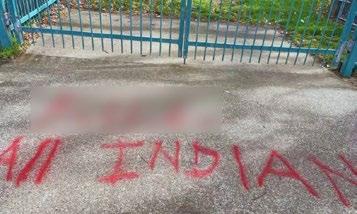
Graffiti targeting Indians has cropped up across Auckland, with racist and violent calls spray painted at three public spaces last month.
After New Zealand signed a free trade agreement with India last month, New Zealand First deputy leader Shane Jones, whose party opposes the agreement, said he would not agree with a "butter chicken tsunami".
His comment came on the heels of Auckland Mayor Wayne Brown calling an Indian staff member at the public broadcaster RNZ a "Muslim terrorist".
Continued on Page 8...
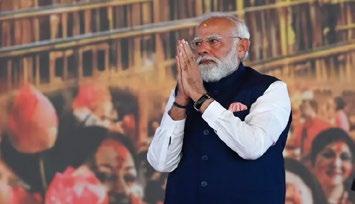
Indian Prime Minister Narendra Modi has appealed to the country's 1.4 billion citizens to work from home, avoid travel and stop buying gold, as the Iran War continues to send energy costs soaring.
Mr Modi on Sunday called for a return to workfrom-home arrangements and online meetings, measures adopted during the COVID-19 pandemic.
He also urged people to use public transport, and carpool wherever possible.
"In the current situation, we must place great emphasis on saving foreign exchange," he said.
Last month, he said there was no proposal to raise pump prices for diesel and gasoline, leaving it among the countries yet to raise prices despite the global surge. Continued on Page 10...
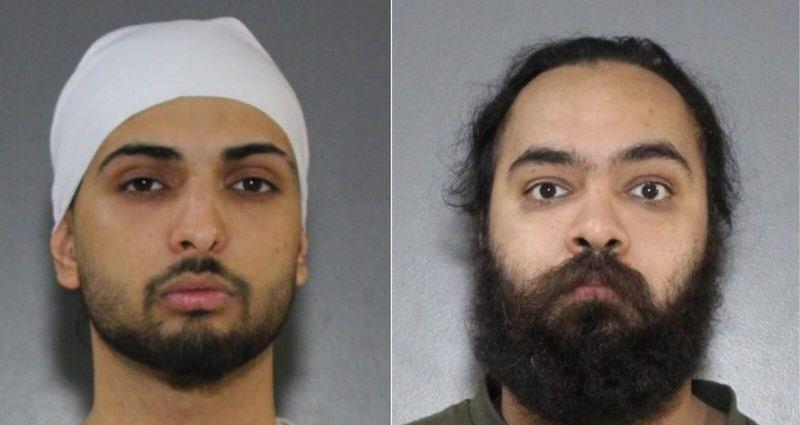
Two Punjabi youth living in Canada have been arrested and charged with Criminal Code offences following a Surrey Police Service investigation into an incident where shots were allegedly fired at a residence linked to extortion threats.
According to Surrey Police Service, the incident took place on April 22 at around 12:40 am, when frontline officers responded to reports of gunfire at a home in the 13400 block of 87A Avenue. Police confirmed damage to the residence and a vehicle, though no injuries were reported.
The Extortion Response Team took over the investigation, identified a suspect vehicle, and later executed a search warrant at a Surrey residence with support from the Lower Mainland District Emergency Response Team... Continued on Page 9...
When the FIFA World Cup was held in Qatar four years ago, Mymensingh native Partha Sarathee Ghosh fulfilled a lifelong dream by attending four matches live at the venue. He watched Brazil face Switzerland, Spain take on
Japan, Argentina’s clash against Australia, and Spain’s knockout meeting with Morocco.
For the then 42-year-old banker, it was an unforgettable experience. He had bought the four tickets for roughly Tk 1 lakh.
Partha had purchased the tickets through FIFA’s online portal and spent 12 days in Doha, staying at a friend’s home and relying mostly on public transport, which came free with the Hayya Card -- a World Cup document that doubled as an entry permit and provided complimentary access to Qatar’s metro and bus services. The card also offered free entry into the United Arab Emirates, Saudi Arabia and Oman. Continued on Page 10...
Kal Dosanjh said he warned one of the victims in Sunday’s double homicide that the lifestyle he was choosing would either lead him to jail or his death. While the longtime Vancouver police officer has “seen it all,” hearing the news of the weekend killing of his former mentee was still difficult.
“When you’ve invested so much emotionally into this kid and you’re working hard to keep them on the right track, you see they are achieving success, and it feels like there is a light at the end of the tunnel that they will make it out,” Dosanjh told Postmedia.
“It just hurts.”
The veteran officer met the teenager three years ago through KidsPlay Foundation, an organization based in Surrey helping youth stay out of gangs, drugs and violence. Dosanjh did not
want to publicly name the victim out of respect for his family, but said the victim he knew was the 18-year-old shot to death.
The two were introduced by the victim’s mother, who called Dosanjh to get her son connected with KidsPlay, he said.
“He was dealing with a lot of suffering and trauma,” he shared. “So she (the mother) reached out. She was working two or three jobs to make ends meet and give (him) the best life possible, but she recognized that (he) was easily influenced by the wrong people.”
The single mother asked Dosanjh to help her son, and for the first while, it was working, he said.
The teenager was one of two youths gunned down in an underground parking lot at a Newton apartment complex in the 7000-block of 133B Street on Sunday night. Despite the efforts of paramedics, both he and a 16-year-old boy died at the scene.
Surrey Police on scene following a double fatal shooting at a housing complex in the 7000 block of 133B St. in Surrey.
The 18-year-old was an active member of KidsPlay for a while, Dosanjh said. He would play soccer with the younger kids, help one girl in particular with her school work, and became an “older brother” to some.
The organization runs sports
programs, presentations at schools and community centres by former gang members to teach youth about the dangers of gangs, counselling services, and more.
“He had a big heart. He loved these kids, and they loved him. He had some incredible attributes and characteristics where he would have made a tremendous leader in the community.”
At the same time, he was dealing with “demons,” Dosanjh said.
Homicide investigators confirmed that both victims at the shooting were involved in the B.C. gang conflict, and had histories with police in relation to organized crime.
CCTV footage of suspects involved in a fatal shooting in the 6800 Block of 148 Street in Surrey on Tuesday, April 29, 2026.
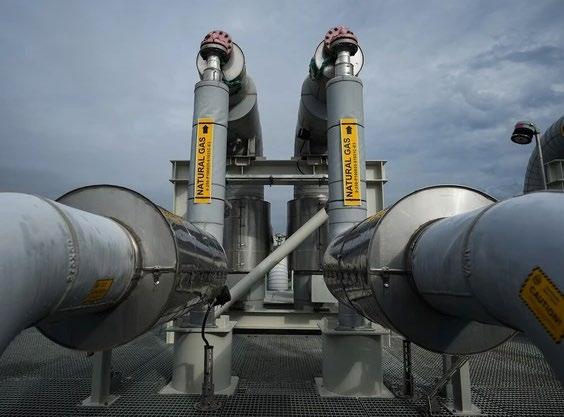
The minister responsible for energy and climate change solutions in British Columbia says four new windfarms will strengthen the province's energy sovereignty at a time of rising costs and uncertainty.
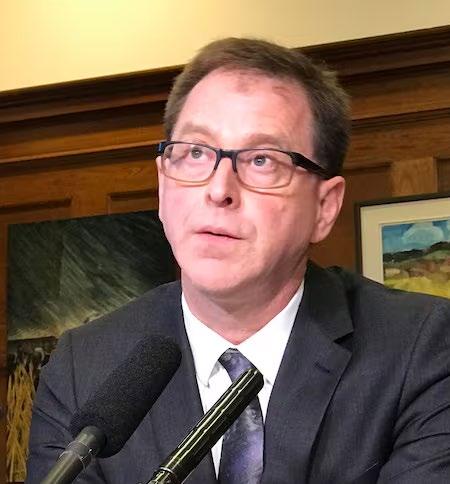
Adrian Dix says three projects in the province's northern region and one near West Kelowna, B.C., will not only generate enough electricity to power 350,000 more homes but also keep energy affordable, while also drawing $4.3 billion in private investment.
Dix says he feels the wind projects deserve more time in the spotlight.
"Perhaps we should rename the wind turbines, wind pipelines and get more attention," he said. The minister says the current conflicts in the world, including Russia's ongoing invasion of
Ukraine and the war between the United States, Israel and Iran, have profoundly impacted energy markets.
Dix says the conflict in the Middle East, for example, has disrupted oil and gas supplies, forcing countries to save electricity because of rising energy costs.
These conditions, he says, demand that B.C. become more independent when it comes to energy and lean into renewable sources such as wind and solar.
Current trade tensions with the United States, he says, also require B.C. to diversify its natural gas exports toward other markets in the world.
"We have got to lean in, because the conditions in the world are telling us that we, here in B.C., need to be more sovereign, and we are doing just that," he says.
B.C. police report declining extortions, but combating crisis is priority: minister
British Columbia’s public safety minister says that while police in the province have reported declining extortion cases in recent months, combating the crisis remains the government’s top public safety priority.
Nina Krieger gave the opening remarks at a roundtable discussion on extortion involving several police officials, saying they, along with the Canada Border Services Agency, have made good progress in holding extortionists to account.
RCMP Deputy Commissioner Dwayne McDonald says there has been an overall decrease in extortion-related activities in the province, attributing the progress to the work of the B.C. Extortion Task Force, its partners and others.
He told the online discussion that authorities have seen significant success in terms of laying charges and removing extortion suspects, along with an increase in co-operation by victims of extortion and the broader community.
While much work isn’t public-facing, he says there is a juggernaut of police resources tackling extortion, and the provincial task force is currently pursuing 36 investigative files with more coming as it focuses on “higher-tier” suspects.
Still, McDonald says extortion suspects are mobile, moving between provinces, and a sustained effort, co-ordinated across law enforcement agencies in Canada and internationally, would be necessary to keep up the progress.
The discussion was moderated by Paul Dadwal, chair of B.C.’s Community Advisory Group on
extortion, who says they’ve held dozens of meetings in the last several months with victims’ families, police, the South Asian Business Association of B.C., the CBSA and Fintrac, Canada’s financial intelligence agency, among others.
“To the community, to victims, your pain is real,” Dadwal said.
“We understand you’re hurting. We know some of you have relocated. We know some of your lives have been affected and kids have been affected.”
But Dadwal said the work of police and others is making a difference.
Police in Surrey released data earlier this month showing there were 44 extortion threats in January, with 17 in February, 14 in March and 20 in April.
Additional figures show there have been 98 reported extortions in the Metro Vancouver city as of May 11, with 16 involving gunfire. Nina Patel, a regional director for the Canada Border Services Agency, said the agency has opened 446 immigration investigations into foreign nationals suspected of being involved in or linked to extortion across the country as of May 7.
The agency has issued 118 removal orders and enforced 55 of them.
In the Pacific region, Patel said there have been 132 investigations and the agency has issued 52 removal orders, leading to the removal of 33 people. Those under investigation may be deemed inadmissible for reasons ranging from noncompliance with immigration conditions to “serious criminality,” Patel said.
U.S. DEA ‘keeping our eye on Canada,’ plans new offices to combat fentanyl
The head of the U.S. Drug Enforcement Administration (DEA) says his agency is “keeping our eye on Canada” as it combats the flow of fentanyl into the United States, and plans to open two new offices north of the border to reflect that increased focus.
But the DEA is refusing to share any details about those offices, which DEA Administrator Terrance Cole told a U.S. Senate appropriations committee hearing Tuesday are “projected” to open next year. Asked during the hearing about the evolving
fentanyl in Canada,” Cole said.
Those drugs are then trafficked into the U.S., something that Cole — who was appearing alongside FBI Director Kash Patel and the heads of the U.S. Marshals Service and U.S. Bureau of Alcohol, Tobacco, Firearms and Explosives — said “everybody at this table is worried about.”
He added there have been “significant seizures” of fentanyl in Canada, while Patel said production facilities were being dismantled in collaboration between FBI, DEA and Canadian authorities.
drug threat from abroad, Cole said officials are “very conscious” of the shipment of precursor chemicals from overseas through the Port of Vancouver, and then to fentanyl manufacturing facilities in Canada.
He said sustained pressure on China to stop those precursor shipments and the crackdown on Mexico’s Sinaloa Cartel and Jalisco New Generation Cartel in particular have been effective, but added “we need to make sure we keep an eye on our northern border as well” as a result.
“We see more precursors coming into the Port of Vancouver, coming into Canada, and the Canadians with the Mexican cartels in-country have started producing and manufacturing
“We’ve had some success there working with our Canadian partners, because the drug traffickers got smart with the securitization of the southern border and moved it up there,” Patel said. Later in the hearing, Republican Sen. Lisa Murkowski of Alaska noted that Vancouver “isn’t too far” from her state and suggested traffickers were moving fentanyl through Canada into Alaska.
Cole said the DEA has been working with the U.S. Postal Service to intercept fentanyl and other drugs being sent to Alaska through the mail, with seizures reported as recently as last month.
“From a DEA perspective, we’re keeping our eye on Canada,” he said. “We’re going to open two more offices in Canada, proposed for ’27.”
A DEA spokesperson said the agency does “not have anything to report at this time” when asked for additional details by Global News, including where those offices may be located.
The DEA currently operates two offices in Canada: one at the U.S. Embassy in Ottawa, and the other at the U.S. Consulate in Vancouver.
Metro Vancouver, Acciona settle lawsuits surrounding over-budget North Shore wastewater treatment plant
Metro Vancouver and Spanish conglomerate Acciona have reached a settlement in a massive legal dispute over the handling of a North Shore wastewater treatment plant that has gone over budget and is years behind schedule.
The two organizations released separate statements on Wednesday afternoon announcing the agreement, with Metro Vancouver also announcing that a separate independent review of the project would restart. "We are very aware of residents’ concerns about the project,” said Metro Vancouver chair Mike Hurley in a statement.
“It is important to us at Metro Vancouver to have a thorough, independent review of this project so our residents get the transparency they deserve." As part of the agreement, Acciona will pay
Metro Vancouver $235 million. “The settlement announced today between ACCIONA and Metro Vancouver reflects a negotiated resolution between the parties without any admission of liability," said an Acciona spokesperson in a statement.
"Resolving this matter avoids potentially years of prolonged litigation and ongoing costs."
The plant was originally supposed to be completed in 2020 with a budget of $700 million. By 2021 the budget had dramatically increased, with no firm timeline for completion in sight.
Metro Vancouver terminated the contract with Acciona, resulting in a lawsuit from Acciona and a counter-lawsuit from the regional government. The project is now projected to cost $3.9 billion and be finished in 2030.
Sixty-one per cent of B.C. residents support Enbridge's Westcoast natural gas expansion
A majority of B.C. residents are on board with the federal plan to move ahead with Enbridge’s Westcoast LNG pipeline expansion, according to new data from the Angus Reid Institute. This support is evidence of the changing landscape of support for pipelines in Canada’s most western province, says ARI.
There is majority support for the Westcoast LNG pipeline expansion across the country (55 per cent) and in B.C. (61 per cent). Support outnumbers opposition by three to one, according to ARI’s data.
The federal government approved a $4-billion expansion of the southern portion of Enbridge’s Westcoast natural gas pipeline system in April. The pipeline carries natural gas from northeastern B.C. to consumers and businesses in the province’s Lower Mainland.
“There is also a desire for more,” says a May 11 statement released by Angus Reid with the new data. “Half (48 per cent) in Canada, and more than two-in-five (46 per cent) in B.C., believe the federal government is ‘doing too little to build new pipeline capacity.’”
Now, according to ARI’s latest data, three in five say growing the economy should be the bigger focus. In B.C., the proportion of residents who oppose pipelines has shrunk over time, notes ARI. In the 2010s there were repeated majorities opposed to pipelines such as Northern Gateway (2012, 57 per cent) and the Trans Mountain expansion (2014, 54 per cent).
But the more recent ARI data also shows that British Columbians are much more accepting of pipelines. A majority (55 per cent) even said in February 2025 they would support a revival of Northern Gateway.
Nationally, three in ten (31 per cent) say the federal government’s approach is about right, while one in five (21 per cent) say there is too much of a focus on building pipelines.
The number of respondents who are in opposition has shrunk by six points compared to 2019, says Angus Reid, when the Trans Mountain expansion was under debate.
“Since 2019, there has been a major shift in priorities for Canadians when it comes to energy policy,” ARI says. “At that time, more believed in protecting the environment (55 per cent) as a priority over focusing on economic growth (45 per cent).”
A similar pipeline project, proposed by Alberta Premier Danielle Smith, starting in Alberta and travelling through northern B.C., was supported by 56 per cent and opposed by 33 per cent.
“Priorities have shifted significantly since then, especially in the wake of the economic threats from U.S. President Donald Trump,” says Angus Reid.
Now, three in five (61 per cent) Canadians believe economic growth should be a bigger priority over environmental protection. Only two in five (39 per cent) believe it should be the other way around.
SABA Hosts Inspiring Youth Mentorship Seminar
Surrey, B.C. — Last week, the South Asian Business Association of British Columbia (SABA) successfully organized a Youth Mentorship Seminar in Surrey, bringing together hundreds of students eager to gain guidance and inspiration from experienced professionals and industry mentors.
The event created an engaging platform for students and young professionals to connect with leaders from various industries, ask questions about career development, and build meaningful professional relationships. Attendees participated in interactive discussions, networking opportunities, and mentorship sessions designed to help youth better understand future career pathways and personal growth opportunities.
The seminar was hosted by SABA directors Supreet Gill and Waris Purewal, whose leadership
in Surrey
and coordination played a key role in the success of the event. They were supported by the collective efforts of all SABA directors and dedicated volunteers who worked together to ensure a wellorganized and impactful experience for everyone involved.
Participants praised the event for providing valuable real-world advice and encouraging conversations with professionals from diverse backgrounds. Many students described the seminar as motivating and informative, highlighting the importance of mentorship within the community.
SABA continues to strengthen its commitment to empowering youth, supporting entrepreneurship, and building stronger community connections across British Columbia through initiatives like this mentorship seminar.
City of Nanaimo loses bid to overturn $600K award in racial discrimination case
The B.C. Court of Appeal says the British Columbia Human Rights Tribunal was reasonable when it found the City of Nanaimo fired a Black employee and discriminated against him on the basis of race.
The city had unsuccessfully sought a judicial review in B.C. Supreme Court of the tribunal's decision that awarded Nanaimo's former chief financial officer, Victor Mema, more than $600,000 for racial discrimination after his dismissal in 2018.
The appeal court ruling released Wednesday says that Mema had been appointed in 2016 and the tribunal found that he was the victim of discrimination because his race played a role in the decision to suspend and later fire him.
The ruling says those decisions were made by city council, which had considered a misconduct
report against Mema over his use of a corporate credit card.
Mema was fired in May 2018, and he filed a human rights complaint a few months later, and though the tribunal found his card use for personal expenses "problematic," the issue was whether race factored into his "adverse treatment by the city."
The ruling says it didn't matter if the city had cause, because if his dismissal was racially motivated it would still violate the Human Rights Code.
"But the issue before the tribunal was not whether Mr. Mema’s misconduct was a factor in the city’s decision. Undoubtedly, there were many factors," the ruling says. "Misconduct and a racist motivation could coexist. Only the presence or absence of the latter was relevant."
Judge overturns Elections Alberta’s approval of separation referendum petition
The Alberta government says it plans to appeal a decision by an Alberta Court of King’s Bench justice that has quashed the approval of a petition seeking a referendum on Alberta independence. The judge's decision puts the future of Stay Free Alberta's independence petition, which the separatist group said has garnered more than 300,000 names, in question.
In two decisions issued Wednesday, Justice Shaina Leonard found that Elections Alberta's chief electoral officer Gordon McClure made an error in law to approve the second citizen initiative petition and failed to consider an earlier court decision that said separation would violate Indigenous people's treaty rights.
Leonard's conclusion says there was an error of law, "rendering the [chief electoral officer]'s decision unreasonable."
At an unrelated news conference, Premier Danielle Smith spoke about her government's plans to appeal Leonard's decision.
"We think that today's decision by the court will deny opportunity to well over 300,000 Albertans to have their petition verified by Elections Alberta," Smith said Wednesday afternoon.
"We think that this decision is incorrect in law and anti-democratic, and we will be appealing it as a result. "We want to be part ... [of] improving Alberta, not roadblocks in their efforts to appease a fringe minority."
A prolific offender from Vernon has been granted bail while facing dozens of charges related to an eight-day crime spree.
Sheldon Veness, 33, was released following a review hearing on Wednesday, May 6, under several protective conditions mandated by the court.
Veness is facing 38 charges connected to the June 2025 spree, including 15 counts of fraud, eight counts of break and enter and eight counts of possession of stolen
property. He is also charged with five counts of motor vehicle theft and four counts of resisting arrest.
While prosecutors stayed 11 additional charges from that same period, the majority of the original case remains active. Veness had been in custody since his arrest.
The matter is scheduled to return to Vernon court on June 1 at 2 p.m. for a fix-adate appearance to schedule future proceedings.
Ph: 604-591-5423
Fax: 604-591-8615
editor@theasianstar.com
Editor: Umendra Singh
Marketing and Sales: Ravi Cheema
604-715-3847
Shamir Doshi 604-649-7827
Harminder Kaur
778-708-0481
Parminder Dhillon 604-902-2858
Pre-Press: Avee Waseer
Production: Ozmo Media
www.theasianstar.com
How global apathy emboldens Pakistan’s rogue behaviour
Pakistan genuinely thinks that it can get away with anything and this belief is unfortunately bolstered by the international community’s indifference towards its unending litany of serious wrongdoings. Despite brazenly breaking almost every rule in the book, the international community continues to turn a Nelson’s eye on its serious transgressions and this has further encouraged Pakistan to continue with its cavalier behaviour. Recounted below are but a few instances that prove beyond any doubts that both Islamabad and Rawalpindi care little [if at all] about the international responsibilities and duties expected from a nation state country that prides itself as a democratic parliamentary republic.
Right from the mid eighties upto 2004, Pakistan provided nuclear technology and supplied centrifuge components for Uranium enrichment as well as nuclear weapon designs to North Korea, Libya and Iran but didn’t even get the symbolic rap on the knuckle for it. In 2004, under intense international pressure, Pakistan aired Khan’s ‘voluntary’ confession on national TV and its contents are interesting.
Taking “full responsibility” and seeking pardon for providing nuclear know-how to foreign countries, Dr Khan made it a point to emphasise that “There was never any kind of authorisation for these activities by the government.” However, Islamabad’s subsequent actions only ended up making Khan’s implausible confession of having acted in his personal capacity sound like a hilarious piece of fiction concocted by a juvenile.
Pakistan’s nuclear technology was a national secret and its intentional leak an extremely serious offence meriting exemplary punishment. Nevertheless, President Pervez Musharraf not only pardoned him but even allowed Dr Khan to keep the money illegally earned by him through the sale of nuclear technology, a clear indication that there was definitely more to the entire episode than what meets the eye.
Pakistan’s then Information Minister Sheikh Rashid Ahmed went on record to say, “Yes, we supplied Iran the centrifuge system,” adding, “Yes Dr Qadeer gave Iran this technology.” Yet, displaying barefaced defiance and complete disregard for international law and conventions, he outrightly refused IAEA’s
request to question Dr Khan to determine the full extent of his illegal nuclear technology transfer network, saying, “we are not going to hand over Dr Qadeer to anyone,” emphasising, “we will not.”
In the aftermath of 9/11, Pakistan joined America in its global war on terror but continued to provide safe sanctuary to Taliban leaders on its soil. Rawalpindi’s
brazenness can be gauged from the fact that various councils of Taliban leaders or shura directing attacks against US led coalition forces in Afghanistan were known by the name of the places where they were located, like the Peshawar shura, Quetta shura and
Miram Shah shura.
Rawalpindi’s policy of openly running with the hare and hunting with the hounds allowed Taliban leaders to sit in Pakistan and plan strikes against US led forces in Afghanistan. This deplorable arrangement of the Pakistan army sleeping with the Taliban which was its ‘official’ enemy would certainly have resulted in several US soldiers losing their lives and limbs. that’s why Washington’s decision to look the other way is indeed inexplicable.
Pakistan’s intense love for the Taliban before it seized Kabul in 2016 is no secret and the fact that Pakistani leaders and bureaucrats openly admittedan indication that they were not at all apologetic about it.
A decade ago Pakistani Prime Minister Nawaz Sharif’s special adviser on foreign affairs Sartaj Aziz boasted that “We have some influence on them [Taliban] because their leadership is in Pakistan, and they get some medical facilities, their families are [also] here.”
Total cost of World Cup to B.C. taxpayers to be released by end of May: Eby
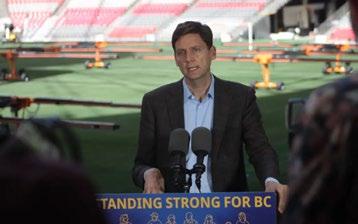
Premier David Eby says he has asked his office to have the total costs of the upcoming World Cup out by the end of the month.
“I understand the important need to have a final and full accounting of the cost of the event available to the public. Our intention was to release that with our partners closer to the date of the first game, but I have asked our team to bring that forward to ensure that we have the total out to the public by the end of the month,” Eby told media during a press conference and at BC Place Tuesday (May 12). The event was part of a tour of the facility to show upgrades that will be completed before the first game kicks off at BC Place on June 13.
He said the costs are a “key piece of information” for the public.
Less than a year out from the World Cup, it was revealed that the games could cost $43 million more than the previous estimate. A June 2025 estimate showed the costs ranging between $532 million on the low end and $624 million on the high end.
Eby didn’t address any estimates on Tuesday, but said the province has a number of partners and is coordinating with them in terms of releasing the full disclosure of costs.
“As you know, we just recently finalized an agreement with the federal government in terms of contribution to the security costs.”
At the end of April, the federal government announced $145 million for Vancouver and Toronto for security costs for the FIFA World Cup. The funding is meant to address the specific operational needs identified by the host provinces and cities ahead of the month-long event.
Eby emphasized the “remarkable impact” the World Cup is going to have on the province, “both economically in terms of hosting major investors interested in putting money into British Columbia’s economy, as well as on our crucially important and foundational tourism industry in the province.”
He said there will be an event on Thursday that will also better lay out ticketing policies and initiatives of the government ahead of the games.
He added that the government will also have “full details” of the province’s business initiatives related to the World Cup games and how and if politicians will be able to get tickets to the games.
“The previous government took a particular approach with Olympic tickets, where tickets were bought by the public for politicians to be able to attend games just to watch the game. Our government will not be doing that,” Eby said.
“Rest assured that this ticket policy will be consistent with the understanding that British Columbians who are excited about the game and want to pay for a ticket and show up at a game will get priority, not a politician getting a free ticket just to show up and watch the game on the taxpayer’s dollar.”
Surrey City Council narrowly approves King George Boulevard BRT concept, reignites SkyTrain and LRT debate
Voting along party lines in a 5-4 decision, Surrey City Council approved the preliminary design concept for the new King George Boulevard Bus Rapid Transit (BRT) line, clearing the way for TransLink to proceed into the project’s detailed design phase.
The narrow vote of approval led by mayor Brenda Locke’s Surrey Connect party followed a debate that renewed old divisions in Surrey’s municipal governance on how rapid transit should be expanded in the jurisdiction, with some city councillors arguing the focus should exclusively be on extending SkyTrain south along King George Boulevard from Surrey City Centre to at least Newton, while others insisted BRT would provide rapid transit improvements in a more timely manner.
TransLink’s proposed King George Boulevard BRT would span 19 km with 12 stations, running
along King George Boulevard between SkyTrain’s Surrey Central Station in Surrey City Centre and Semiahmoo Town Centre in South Surrey. The public transit authority asserts that compared to the existing R1 King George Boulevard RapidBus service, BRT would offer higher capacities, improved reliability, and greater travel speeds, and more competitive travel times — made possible by the construction of bus-only lanes along most of the route, as well as other bus-priority measures such as traffic signal priority at intersections. The BRT stations would also resemble street-level LRT stations, with passenger amenities such as extensive weather protection and real-time, next-bus digital displays.
Broadly, two general vehicle travel lanes in each direction would be maintained along the entire route, even with the extensive space needed for the bus-only lanes and BRT stations.
Victorian emergency department nurse faces deportation due to son's condition
Between night shifts in a busy emergency department in regional Victoria, registered nurse Christin Das tries to keep a brave face for her young children.
But she is facing a rapidly approaching deadline, May 29, when her family's bridging visas expire.
The family of four from Bendigo, in central Victoria, faces deportation after the Australian government rejected their permanent residency application due to their six-year-old son's developmental delay.
Ms Das said her son Jaziel's challenges were due to a condition called corpus callosum thinning, which affects the signals between the left and right sides of the brain. After three years working as a nurse in Bendigo, Ms Das has made a final plea for ministerial intervention.
"I just want the Minister for Home Affairs [Tony Burke] to get involved and look at my application and give me justice," she said.
"It really breaks my heart because when I am taking care of people, my own son is denied care from the government."
Australia's migration regulations allow a visa to be refused if a person's care will significantly cost the community.
In 2024, the policy was changed to exempt some Australian-born and residing children, and the Significant Cost Threshold increased from $51,000 to $86,000.
But some experts say the government should waive the health requirements for people working in high-demand industries. Ms Das and her husband, Jineesh Joseph, migrated from Ireland with their son Jaziel in April 2023.
Their two-year-old daughter, Hazel, was born in Australia.
Ms Das said Jaziel was experiencing respiratory issues in Ireland's cold climate, and she was open about his challenges when applying for their Australian visas.
Now settled in Bendigo, Mr Joseph is a chef at a hotel and Jaziel attends a specialist school and receives allied health support.
"There has been massive progress in [Jaziel's] development," Ms Das said.
"And then it's like we are going to take everything away from him."
The family applied in June 2023 for permanent residency as employer-nominated skilled workers.
The visa is subject to a health requirement, including being free from a disease or condition that is a significant cost to the community.
In a refusal letter seen by the ABC, a Commonwealth medical officer found services to support Jaziel would likely cost the Australian community $1.245 million, including NDIS, disability services and special education. But Ms Das said no-one could say what his future needs would be. "He may be able to have a normal life. Nobody can predict the future. I cannot tell you what tomorrow holds for me," she said.
"It's so stressful being a frontline worker, having a challenged child at home and going through all this for three years.
B.C. invests with SFU to create $20M strategic investment fund
The B.C. Crown corporation InBC Investment Corp. is partnering with Simon Fraser University (SFU) to create what could grow to be a $20-million strategic investment fund to invest in companies hatched at the university.
InBC and SFU are each investing $7.5 million into the fund. SFU then plans to raise up to $5 million in additional capital to pump the value of the fund up to $20 million.
The announcement comes about seven weeks after the B.C. government announced that InBC and the University of British Columbia would create the UBC Catalyst Ventures Fund, which is a similar fund. InBC and UBC are each investing $10 million apiece into that fund, with UBC aiming to raise $20 million in additional investment from private investors to ensure the fund has $40 million to invest in UBC-related projects.
"UBC and SFU are the only two funds of this kind in B.C.," B.C.'s Minister of Jobs and Economic Growth Ravi Kahlon told Business in Vancouver following a Tuesday, May 12 press conference at the technology conference Web Summit, which is taking place in Vancouver this week.
"SFU s fund will focus on investments in companies created by SFU faculty, staff, students, and alumni," Kahlon said earlier. "One hundred per cent of the fund will invest in B.C. innovation,
prioritizing investments in sectors with high economic potential, like life sciences, deep tech, clean tech. Through this fund, we're working with one of the best universities in the world to invest in early-stage companies with high-potential growth."
InBC chief investment officer Thomas Park told BIV Tuesday afternoon that InBC came up with the idea to create the fund and that the B.C. government supported the concept. He added that it is possible that similar such funds could be created at other B.C. universities.
Money should start to flow soon, he said.
"We have a whole bunch of companies in our pipeline," he told BIV. "I'm not going to name the specific ones. They have to go through a due diligence process. We have new, young clean-tech companies, life-science companies, deep-tech companies."
Mattrick in March doubled down on his commitment to Photonic by becoming its CEO. He has his own experience founding and growing a technology company in Burnaby, given that when he was a teenager, in 1982, he co-founded Distinctive Software Inc., which he and others sold to Electronic Arts Inc. (Nasdaq:EA) for US$11 million in 1991. Mattrick then went on to a long career at EA as well as Microsoft Corp. (Nasdaq:MSFT).
"He's wonderful," Simmons said of Mattrick. "This next phase of the company is a fun one. It's getting commercial. It's getting into the big market, and Don was willing to roll up his sleeves and be more hands-on."
Photonic had already made big strides with funding rounds. It raised $138 in 2023. Another $23 million in federal funding arrived in 2025. At the start of this year, Photonic raised $180 million from investors, such as the Royal Bank of Canada (TSX:RY) and Telus Corp. (TSX:T).
Racist attacks leave New Zealand's Indian community feeling 'hounded'
Continued from Page 1...
The mayor apologised a short time later.
But the incident that triggered the most complicated response was a performance by former Te Pāti Māori (Māori Party) president Che Wilson during a haka competition, which was directed at Parmjeet Parmar, an ACT party MP who was born in India.
The haka mocked Indian culture and called on Dr Parmar to "return to your own home, to vast land, to great poverty, to many problems".
Dr Parmar has supported policies attacking Māori scholarships, study spaces, and entrance pathways for Māori students, as well as compulsory Treaty of Waitangi courses for first-year university students.
Former Young New Zealander of the Year Shaneel Lal, who has Fijian and Indian heritage, said there was clearly a mismatch of intention and impact in the haka performance.
"Criticisms of Parmjeet Parmar and the ACT Party, and what they stand for and what they've been advocating for, are completely valid and justified," they said.
"In fact, I am one of those people who have very actively criticised the anti-Māori actions of the ACT Party." While the haka has historically been used as an instrument of political expression and resistance in Māori culture, many took issue with the derogatory references to Indian culture, especially given the two communities' shared experience of British colonisation.
"So it escalated from criticising her individual ideas to criticising her entire identity, which is shared by more than a billion people in this world," Shaneel Lal said.
They said it came at a heightened time, as the Indian community was reeling from a rising tide of anti-Indian sentiment.
New Zealand police's latest hate crime data
showed people of South Asian descent copped the most hate as victims of reported abuse in New Zealand between January 2022 and October 2025.
"The Indian community is being hounded from all ends," Shaneel Lal said.
"There's a clear escalation and a real pathway to catastrophe if this isn't stopped by the government."
Last year, the United Nations Committee on the Elimination of Racial Discrimination sounded the alarm about the state of racial discrimination in New Zealand.
It warned that the country was at serious risk of weakening Māori rights, and expressed concern about the persistence of racist hate speech by some politicians and public figures.
Māori party MP Hana-Rāwhiti Maipi-Clarke went viral last year when she performed a haka in New Zealand's parliament, symbolically ripping up a piece of legislation aimed at redefining the Treaty of Waitangi. In response, Dr Parmar made comments suggesting that imprisonment should be considered for utilising the haka. Anti-racism advocate Tina Ngata said the cultural temperature was particularly high in New Zealand with an election looming later this year.
"What we see every election year is that race is a particular topic that gets weaponised between communities," she said.
Every Canadian paying $1,400 for federal debt charges alone this year, taxpayers group says
The Canadian Taxpayers Federation is calling on the prime minister to cut spending after raising the alarm on the increasing per Canadian cost of servicing the federal debt.
“The PBO’s report shows that paying interest charges on the government debt will cost each Canadian about $1,400 this year,” Franco Terrazzano, CTF federal director, said in a news release this week. “That’s $1,400 that the
Canadian’s share of the total federal debt will rise from $33,592 this year to $38,295 in 2030.
The prime minister “needs to reverse course and put down the credit card,” said Terrazzano.
Ottawa’s Spring Economic Update showed debt interest charges will cost taxpayers $58.7 billion this year, said Terrazzano. “That’s more than the federal government will send to the provinces in health transfers or collect through the GST.”
government is taking from each Canadian that can’t be used to hire nurses, fix potholes or lower taxes because the government is wasting that money paying interest on the debt.”
The CTF pointed to the latest Parliamentary Budget Officer report, released on Monday, as evidence for its case to Prime Minister Mark Carney. “The interest burden, measured as public debt charges as a share of revenues, is broadly unchanged compared with Budget 2025,” the PBO report stated, “but still showing a concerning upward track.”
The report also said that Ottawa “expects (public debt charges) will rise from 10.6 per cent to 13.2 per cent of revenues between 2025-26 and 2030-31.”
And, significantly, on a “per capita basis, public debt charges are projected to climb from $1,409 in 2026-27 to $1,901 in 2030-31 reflecting low population growth and (rising debt).” Each
Throughout 2004, I worked at the Liu Institute for Global Issues at the University of British Columbia on a project that tracked polling and elections around the world. It was a special year that included the Canadian federal election, featuring Paul Martin as leader of the Liberal party and Stephen Harper commanding the Conservative party, as well as the American presidential election, where George W. Bush of the Republican party sought a new term against Democratic party nominee John Kerry.
“Debt interest payments continue to spiral out of control because spending continues to spiral out of control,” he said. “Carney just released his budget six months ago and he’s already on track to spend $6 billion over budget.”
Prime Minister Mark Carney announces the creation of a sovereign wealth fund, the Canada Strong Fund, on April 27, a day prior to the tabling of the federal government's spring fiscal update.
In Budget 2025, noted the PBO, the federal government contended that it would use available fiscal room for investments that will grow the economy over the long term, while ensuring the debt-to-GDP ratio remains stable, despite higher deficits. However, the PBO is cautious and noted that “debts remain repayable” independent of the success of objectives intended to spark economic growth. “Parliamentarians may wish to press for more comprehensive reporting (on implementation).”
John Fragos, press secretary at the Finance ministry, said in an email that the federal government is committed to the $11-billion deficit reduction set out in the Spring Economic Update. He also emphasized “stabilized net debt-toGDP, lower deficit-to-GDP, and considerable operational savings. The government has been clear: affordability is the utmost priority and is at the heart of our economic plan.”
2 Punjabi-origin youth arrested in Canada over extortion-linked shooting at Surrey home
Continued from Page 1...
Canada Border Services Agency and other SPS units. Damanjeet Singh, 22, faces charges of discharging a firearm into a place knowing or being reckless as to whether someone was present, and possession of a restricted or prohibited firearm without a licence.
Pardaman Singh, 30, faces the same charges. Both men have been remanded in custody, with Damanjeet scheduled to appear in court on May 19 and Pardaman on June 1. Surrey Police Service confirmed both are foreign nationals, and the Canada Border Services Agency has been engaged in the case. Police have released photographs of the accused, saying disclosure is necessary to assist ongoing investigations and urging witnesses, victims or associates to come forward
with information that may help uncover criminal networks linked to violent extortion.
Recently, the Financial Transactions and Reports Analysis Centre of Canada (FINTRAC) issued a special bulletin detailing a sustained campaign of coercion involving “financially vulnerable, young male Indian nationals in Canada on study permits who are being used as foot soldiers by gangs for targeted violence” against South Asian diaspora communities. FINTRAC identified the Bishnoi gang and the rival Bambiha gang as key drivers of this violence, noting that the Government of Canada officially designated the Bishnoi gang as a listed terrorist entity on September 29, 2025.
It further warned that copycat actors and smaller criminal groups are exploiting the reputation of these gangs to intensify extortion threats.
In the first six months of 2004, Harper managed to reduce Martin—whose tenure had started with high approval ratings—to a minority government. The architect of Canada’s economic recovery in the 1990s was no longer seen as infallible. In early 2006, Harper would get his first minority mandate, precipitating Martin’s retirement from political life.
In the United States, nationwide polling results, from August after Kerry was officially nominated until the early days of November, showed stagnation. Kerry began and ended the campaign with roughly the same proportion of voters (48 per cent) after failing to expand the base. As time went by, Kerry’s supporters grew more upset with Bush, but they were not joined by as many Independents or Republicans as they hoped for.
This year, Conservative Leader Pierre Poilievre finds himself in a scenario where he could channel 2004’s Harper or 2004’s Kerry. Our latest survey places the Liberals with a 15-point lead over the Conservatives among decided voters across Canada (46 per cent to 31 per cent), with the federal NDP at 11 per cent, the Bloc Québécois at seven per cent, the Green Party at three per cent and the People’s Party at one per cent.
Continued from Page 1...
Mr Modi asked citizens to cut non-essential travel, calling for collective restraint to help protect India's economy during the deepening energy crisis.
He urged people to avoid buying gold, which India spends heavily on during weddings
He has pushed for the adoption of electric vehicles and asked farmers to halve their use of chemical fertilisers and for families to reduce cooking oil consumption, describing that move as both healthy and patriotic.
India is not alone in feeling the pressure.
Governments across Asia are scrambling to insulate their economies from the ongoing energy crisis.
Overall oil imports to Asia, which take 85 per cent of Gulf crude shipments, fell sharply in April
following nearly two months of disruption to shipping through the Strait of Hormuz.
Governments across South Asia have been spending billions of dollars on subsidies and import duty waivers in an attempt to shield consumers from the worst of the price rises.
The economies of Pakistan, Bangladesh and Sri Lanka are considered the most vulnerable.
Pakistan is reportedly paying about $30 million above pre-war market rates to secure liquefied natural gas supplies after its supply was cut off from Qatar.
Analysts say the vulnerability of these nations is driven in part by their heavy reliance on statesubsidised energy.
"These countries use more of their resources on subsidising domestic public energy enterprises and basically shielding the final consumers from
CESG can add up to $7,200 to your child’s RESP
When your child turns six, they can receive an additional $1,200 from the B.C. Government.
the energy price shock," an economist at S&P's Asia-Pacific Economics unit told the Reuters news agency.
Indonesia, South-East Asia's largest economy, is looking to buy oil from Africa and Latin America and has plans to buy 150 million barrels from Russia by the end of the year.
Russia is also considering sending its first oil product cargo to Laos, according to Russia's Deputy Prime Minister on Saturday.
Vietnam, Thailand, the Philippines and Sri Lanka are among the countries that have been actively seeking Russian oil as they suffer shortages.
In Thailand, a state-owned refiner is reported to have paused crude purchases after national output of refined products stepped up, following a government ban on exports.
Japan, which sources about 95 per cent of its oil from the Middle East, has purchased more from the United States.
It is paying spot market prices plus significantly higher shipping costs, given that American supplies take roughly twice as long to arrive as those from the Gulf.
Continued from Page 1...
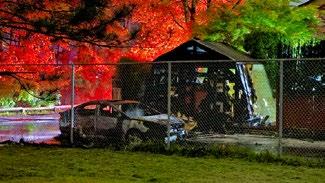
Police found two male youths with gunshot wounds who died at the scene despite life-saving efforts.
The Integrated Homicide Investigation Team (IHIT) said the victims, aged 16 and 18, were both Surrey residents.
IHIT said investigators are working with the victims' families to understand their activities leading up to the shooting.
Police believe the shooting was targeted and linked to the B.C. gang conflict.
“This shooting has left two families grieving the loss of young lives taken far too soon,” IHIT Sgt. Freda Fong said in a news release. IHIT said police recovered a burnt grey four-door sedan near 144 Street and 84 Avenue believed to have been involved in the shooting. Investigators have yet to make any arrests. It was the second shooting in Surrey on Sunday. Around 4 a.m. that same day, two men were shot outside a gas station at the intersection of 72nd Avenue and 152 Street.
Both men were taken to hospital. SPS reported the men were in critical condition, while B.C. Emergency Health Services said it transported one man in stable condition and the other in serious, but stable condition.
Police said they were still investigating a motive in that shooting, but that they didn't believe it was extortion related. "We share the concerns that undoubtedly the public have," SPS spokesperson Staff Sgt. Lindsey Houghton told CBC News. "We have all of our officers out there trying to prevent this," he added.
On Monday, Surrey Mayor Brenda Locke said she was "outraged" by the spate of recent shootings. Locke said she was calling on the Surrey Police Board to review a decision that saw members of the city’s gang unit redeployed to other roles when the SPS took over jurisdiction in Cloverdale.
"Surrey has always invested heavily in anti-gang messaging and fully staffed a specialist gang unit. This was recently discontinued by the chief of police," Locke said in a statement.
"It is critical that the Surrey Police Service have the right plan in place to combat gang violence in our city, and collapsing this unit at a time when we are experiencing heightened levels of gang violence sends the wrong message." SPS Chief Const. Norm Lipinski says the eight-person gang unit was “temporarily repurposed” to help address the extortion crisis in Surrey, and then again to help with the city's transition from the RCMP to the Surrey Police Service.
2026 World Cup funded by BC taxpayers is only for the super rich
Continued from Page 1...
Although Partha did not make use of those additional travel opportunities, the World Cup itself proved deeply fulfilling.
“It was a smooth experience, and a gratifying one for me because it was my first time watching World Cup matches live at the venue,” Partha fondly reminisced to The Daily Star.
Ever since, Partha, a passionate football fan and travel enthusiast, had eagerly awaited the FIFA World Cup 2026 in the United States, Canada and Mexico -- the biggest and supposedly the most inclusive World Cup in history.
Yet, long before the tournament has even kicked off, it has already begun to feel anything but inclusive for ordinary supporters like him.
FIFA began selling tickets for the 104-match tournament through phased online releases from September last year. Demand, however, has vastly outstripped supply, with an estimated 60 million requests expected for around six million tickets.
Like all member associations, the Bangladesh Football Federation received a limited allocation from FIFA -- only 330 tickets in total. Bangladesh received a relatively larger share for the group stage and progressively fewer for the knockout rounds, including just 10 tickets for the final.
Ticket prices allocated through BFF ranged from approximately Tk 29,000 to Tk 11.4 lakh, depending on the ticket category. Applications were accepted during a five-day window in January and, according to federation officials,
requests were submitted for 498 tickets before 330 allocations were finalised by mid-April.
Partha, however, opted not to apply through the BFF, anticipating a scenario of low supply and high demand. Instead, he once again turned to FIFA’s online portal, securing a ticket as early as September last year for the group-stage match between Curacao and Ivory Coast, scheduled for June 25 in Philadelphia. The reason Partha chose this match is that it is one of the lower-demand fixtures of the tournament, costing USD 150 (approx. Tk 18,000). His plan was simple: travel to the United States and try to purchase tickets for bigger matches from resellers, regardless of how expensive they became.
“All my excitement and anticipation turned into disappointment when I was rejected a visa for the USA. I have been to quite a few countries and I couldn't wrap my head around the fact that I was denied a visa for the World Cup, despite having secured a match ticket,” the 46-year-old said.
Unlike the Hayya Card system used during Qatar 2022, tickets for the 2026 World Cup do not function as entry permits. At best, they serve only as supporting documents in visa applications.
To make matters worse, the travel restrictions introduced by the Donald Trump administration have added fresh anxiety for supporters from several participating nations. Fans from Ivory Coast, Haiti, Iran and Senegal now face severe restrictions on travelling to the United States unless they already possess valid visas.
Girmit legacy lives on
THE ship Leonidas set sail from Calcutta, India, on March 3, 1879, carrying 462 Indian indentured labourers to work on cotton and later sugarcane plantations in Fiji.
They were the first group of indentured labourers brought to Fiji by the British colonial government.
Among hem were Dayaram and his wife Maikee, who had left behind their two sons, Mahend Singh and Sohan Lal, in India.
After a voyage of more than a month, the Leonidas arrived in Fiji on May 15, 1879. Soon after arriving in Suva, Maikee gave birth to a son, Mahabir Dayaram, whose birth was recorded on her immigration pass.
Dayaram later completed his girmit contract with the Colonial Sugar Refining Company on J. Barry’s plantation in Levuka.
Mahabir Dayaram is believed to have been the first Indo-Fijian born in Fiji.
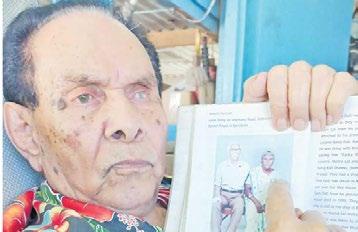
Evidence supporting this claim, including immigration passes and family records, was compiled in a book published in 2011 by Mahabir’s great-granddaughter, retired schoolteacher, the late Phulmati Nand.
“The couple gave birth to a baby boy and he was known as the first Indian to be born in Fiji,” the book stated.
“The boy was born in a place which is now known as Howell Road in Suva. The couple named the boy Mahabir.”
Mrs Nand wrote that she was proud to learn her grandfather was considered the first Indo-Fijian born in Fiji.
The book stated that Mahabir was nicknamed “Marvie” by British overseers. In 1881, another son, Munna Lal, was born to Dayaram and Maikee.
The family later travelled back to India with their Fiji-born sons, Mahabir and Munna Lal, where they reunited with their elder sons. After spending some time there, they returned to Fiji together.
Mrs Nand described her grandfather as a hardworking man who owned a small grocery shop and had a passion for horse racing.
“He reared horses and trained them,” she wrote.
Driver dies in Sigatoka crash
A 38-year-old man from Olosara, Sigatoka, is believed to be Fiji’s latest road fatality victim following a crash along Queens Road in Nayawa. Police said the victim was allegedly driving along the highway when he lost control of his vehicle, causing it to veer onto the opposite lane and collide with a minivan carrying 15 passengers. The driver was rushed to Sigatoka Hospital, where
medical officials confirmed his death. Police confirmed two passengers travelling in the minivan remain admitted at Lautoka Hospital receiving treatment, while the remaining passengers were treated and later discharged. Investigations into the circumstances surrounding the accident are continuing. The latest incident has pushed Fiji’s national road death toll to 18.
New rules for civil servants’ overseas travel
Government has revised overseas travel approval processes for civil servants, directing that travel will only be approved where it is considered essential for national interest, statutory obligations or critical service delivery. The directive was outlined in a circular dated May 6 issued by Permanent Secretary for Civil Service Pita Tagicakirewa.
Earlier, the Prime Minister had announced a ban on overseas travel as part of austerity measures related to the fuel crisis.
According to the circular, ministries and departments are now required to ensure that only fully funded travel arrangements are approved.
The document states that this includes incidental and transit allowances where such costs are not covered by development partners.
“Only fully funded travel arrangements are approved,” the circular noted. The directive further states that any additional expenses arising from
early arrivals or late departures must be borne by the respective ministries. Permanent Secretaries have also been instructed to continue submitting fully funded travel requests through the existing approval process.
The circular places additional scrutiny on travel requests from officers below Permanent Secretary level. It states that, except for fully funded travel and categories outlined under Finance Circular No.10/2025-2026, officers below the level of Permanent Secretary must submit requests to the Ministry of Civil Service for consideration.
The approved categories include travel deemed essential for national interest, statutory obligations or critical service delivery.
The move signals tighter Government oversight on official overseas travel as ministries face increasing pressure to manage operational expenditure carefully.
Fijian-descent lawyer appointed Associate Judge in New Zealand
A lawyer of Fijian Indian descent with strong ties to Fiji has been appointed an Associate Judge of the High Court in New Zealand.
NZ Chief Justice Dame Helen Winkelmann welcomed Attorney-General Judith Collins’ announcement today confirming the appointment of Auckland barrister Nischal Hasmukhlal
“Nick” Malarao. Associate Judge Malarao will officially take up the role on June 8 and will sit in Auckland. He is expected to be sworn in at the Auckland High Court on June 10.
According to details released by the New Zealand judiciary, Associate Judge Malarao graduated from the University of
Auckland in 1999 with a Bachelor of Laws and Bachelor of Commerce before beginning his legal career at leading law firm Chapman Tripp. He later joined the Auckland Crown Solicitor’s Office, Meredith Connell, where he worked extensively in civil, commercial and criminal litigation. Between 2002 and 2003, he worked in London in the litigation department of Lloyd’s of London before returning to New Zealand to continue his career at Meredith Connell.
Over the years, he rose through the ranks to become a Senior Litigation Partner in the firm’s commercial litigation division. He also led the firm’s regulatory and insolvency practice group and served on its management board.
More flights to Canada
A new code share partnership has been signed between Fiji Airways and Canadian airline WestJet.
According to the national airline, the new deal offers passengers access to networks between Canada and the South Pacific while also supporting Fiji Airways’ growing presence in North America.
The service will begin from June 18 operating three weekly flights all year round between Nadi and Vancouver on Tuesdays, Thursdays and Saturdays.
Fiji Airways will then introduce the Airbus A350 from September 8 to meet increased capacity demands.
In a statement, Fiji Airways managing director and chief executive officer Paul Scurrah said the partnership marked an important step in strengthening Fiji’s global connectivity.
Families
FAMILIES of the nine men who vanished at sea near Kadavu say they are now accepting their loved ones will not return, and have begun preparations for traditional farewell rites. Among them is Asena Vakaruru, the wife of the late Maciu Niubalavu, who said the reality of the tragedy is slowly sinking in as arrangements are made for the ‘burua’ (a traditional funeral feast or a specific offering of food). Mrs Vakaruru shared that despite this acceptance, she continues to struggle with disbelief following the maritime incident.
“It is all happening so fast that I don’t believe they are really gone,” she said.
“I am sad mainly for my children and my sisters whose husbands were among the nine men.”
The en are Osea Vakaruru and his three sons Lemeki Tikoitoga, Savenaca Balenatuvu, Julian Tavola, Pita Kinikini, Esekaia Boladuadua, Mateo Tikoitoga, Sitiveni Tekivakatini and Mr Niubalavu.
While families are coming to terms with their loss, Mrs Vakaruru said the emotional burden
“Canada represents a growing and high-value market for Fiji and the wider Pacific,” he said.
“This partnership with WestJet makes it easier than ever for Canadian travellers to experience the warmth, culture and natural beauty of Fiji while also supporting increased visitor flows into our region.”
Canada’s high commissioner to Fiji Jennifer Lalonde said the new partnership between the two airlines was a welcome development in strengthening the longstanding ties between Canada and Fiji.
“Improved connectivity will make it easier for Canadians to experience the South Pacific; while supporting tourism, trade and people-to-people links that are so important to our relationship,” she said.
ceremony.
Prayers and support has poured in from friends, relatives and church groups, including Columban priests, the Pacific Regional Seminary brothers and parish members. A soli (offering) will also take place at Nanuku Settlement in Vatuwaqa, Suva, to assist the families – particularly the women and children who depended on the nine men as their main providers. Those wishing to assist can contact Siteri on 2719690 or Asena on 9308977. Both numbers are also available for M-PAiSA contributions.
remained heavy as they prepare for the memorial
BRICS Foreign Minister meet gets underway in Delhi, EAM Jaishankar meets Lavrov, Araghchi
External Affairs Minister S Jaishankar on Thursday joined Russian Foreign Minister Sergey Lavrov, Iranian Foreign Minister Abbas Araghchi, Indonesian Foreign Minister Sugiono and other senior leaders for a family photo during the BRICS Foreign Ministers' Meeting at Bharat Mandapam.
The gathering brought together foreign ministers and representatives from BRICS member countries and partner nations to discuss key global and regional issues, including economic cooperation, multilateral engagement and international security.
The family photograph marked a symbolic moment of unity and diplomatic engagement among participating nations at the high-level meeting being hosted in New Delhi.
Earlier in the day, External Affairs Minister S
Jaishankar welcomed Russian Foreign Minister Sergey Lavrov at Bharat Mandapam for the BRICS Foreign Ministers' meeting, marking a key diplomatic engagement.
The EAM also welcomed other Foreign Ministers and representatives from the member and observer nations to the venue in the national capital ahead of the much-anticipated meeting.
Jaishankar first received Chinese Ambassador to India Xu Feihong, who will be representing the country in place of Foreign Minister Wang Yi, who is currently in Beijing as US President Donald Trump visits the country.
He also welcomed his counterparts from Indonesia, Foreign Minister Sugiono; South Africa, Ronald Lamola; and Ethiopia, Gedion Timothewos Hessebon.
EAM meets Indonesian counterpart, reviews progress under Comprehensive Strategic Partnership, ASEAN framework
External Affairs Minister S Jaishankar on Thursday met Indonesian Foreign Minister Sugiono in the national capital, ahead of the BRICS Foreign Ministers Meeting scheduled to take place later today. In a post on X, Jaishankar stated that he received the progress made with his Indonesian counterpart under the Comprehensive Strategic Partnership between the two countries and cooperation within the ASEAN framework.
"Glad to welcome FM Sugiono of Indonesia. Reviewed the progress of our Comprehensive Strategic Partnership and our cooperation with ASEAN," the post read.
India and Indonesia established the
Comprehensive Strategic Partnership back in May 2018 during Prime Minister Narendra Modi's first official visit to the southeast asian counrty.
New Delhi is poised to become a focal point of international relations from May 14 to May 15 as it is set to host the BRICS Foreign Ministers Meeting. This significant gathering serves as a cornerstone of India's 2026 chairship, highlighting its leadership within the newly enlarged multilateral alliance. India officially assumed the BRICS Chairmanship on January 1 this year, taking over from Brazil. This marks the fourth time India has held the presidency of the influential bloc, having previously hosted summits in 2012, 2016, and 2021.
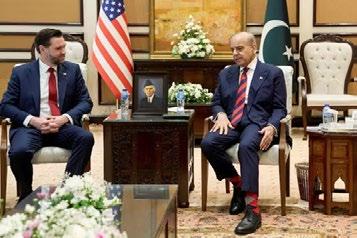
Pakistan emerges as a self-interested mediator in the Iran conflict
You can share an article by clicking on the share icons at the top right of it.
The total or partial reproduction of an article, without the prior written authorization of Le Monde, is strictly forbidden.
Sometimes, Donald Trump can be convinced to rein in his bellicose impulses. Pakistan, a client state
of the United States, demonstrated its influence by persuading Trump to halt "Project Freedom" on Wednesday, May 6, a plan to forcibly reopen the
Strait of Hormuz. "Pakistan has been fantastic.
And its leaders have been fantastic, the marshal and the prime minister," said the US president on Thursday, May 7, despite his frustration at Iran's closure of this maritime corridor crucial to the global economy. The bold Trump initiative had led Saudi Arabia, fearful of Iranian retaliation, to deny US forces access to its bases and airspaces. "Project Freedom" only lasted 48 hours.
Regardless of the reversal's fallout, Trump made no secret that he acted "on the request of Pakistan and other countries," including Riyadh, to avoid jeopardizing the "great progress" he saw in talks with the Iranian regime. Islamabad sent Tehran a framework agreement intended to open a monthlong round of negotiations.
The White House expected a response on May 8, seemingly turning a blind eye to the ongoing exchanges of fire in the strait. After the collapse of the April 11 talks in Islamabad, the Pakistani capital dared to hope.
India, Maldives review bilateral cooperation during meeting between EAM Jaishankar
External Affairs Minister S Jaishankar on Wednesday met Maldives' Foreign Minister Iruthisham Adam, who is on her first official visit to India. The leaders held discussions on the bilateral cooperation between the two countries.
Sharing the details in a post on X, EAM underscored India's commitment to the progress of Maldives and said, "Good to meet FM Iruthisham Adam of Maldives @IruthishamAdam on her first official visit to India. Underlined our Neighbourhood First policy and reviewed our bilateral cooperation. Reiterated India's commitment to Maldives'
progress and development."
"We reaffirmed our commitment to work closely on issues of mutual importance to enhance our relations . The 'Maldives First' Foreign Policy complements India's 'Neighbourhood First' Policy, fostering shared priorities and strengthening cooperation between our two countries", she wrote on X. Union Commerce Minister Piyush Goyal also held a meeting with Foreign Minister Iruthisham Adam and reaffirmed the strong and special partnership shared by India and the Maldives as both nations mark 60 years of diplomatic ties.
‘Main hoon Punjab, but not Indian’: Diljit Dosanjh acquired US citizenship in 2022
Popular Punjabi singer and actor Diljit Dosanjh acquired United States citizenship in 2022 and has since been travelling on a US passport, according to a report by The Indian Express.
The report stated that Dosanjh is no longer an Indian citizen and has been travelling to India on an e-visa since September 1, 2022. Sources quoted in the report said this also indicates that he does not hold an Overseas Citizen of India (OCI) card.
Known for his strong Punjabi identity and his popular line “Main Hoon Punjab”, Dosanjh’s last Indian passport was reportedly issued in Mumbai in 2018, while an earlier passport had been issued in Zambia.
The report further claimed that his wife, Sandeep Kaur, is also a US national. While applying for American citizenship, Dosanjh had reportedly listed a five-bedroom bungalow in California as his residential address. The development comes amid speculation over the singer’s possible entry into Punjab politics after a civil society group, Jaago Punjab Manch, appealed to him to take on a leadership role in the state.
The group, comprising retired bureaucrats, Army officers and professionals, had described Dosanjh as the kind of leader Punjab needs at a time when the state is grappling with financial stress and drug abuse concerns.
However, Dosanjh firmly dismissed the possibility of joining politics.
Sharing a report on social media platform X, the singer wrote: “Kadey v Nhi… Mera Kam Entertainment Karna. Am Very Happy in My Field. Thank You So Much.”
Punjab Chief Minister Bhagwant Mann also reacted to the speculation, alleging that the BJP was “pressurising” Dosanjh to enter politics. Mann said political parties had started looking at celebrities as potential mass leaders after the political rise of Tamil actor-politician C Joseph Vijay.
According to the report, even if Dosanjh changes his mind in the future, he would first need to regain Indian citizenship before formally entering politics in India.
Referring to provisions under the Citizenship Act, the report noted that a foreign national seeking Indian citizenship must fulfil residency conditions, including continuous residence in India for 12 months immediately before applying and residence for 11 out of the previous 14 years.
Thousands fail as English turns hardest subject in PSEB Class XII results
The Class XII results declared by the Punjab School Education Board on Wednesday exposed a worrying trend in language learning, with thousands of students failing in English and Punjabi despite the overall pass percentage standing at 91.46 per cent. The development has raised concerns among educationists over students’ weakening grasp of core subjects.
Board data revealed that 12,459 students failed in English this year — the highest among all major subjects. A total of 2,65,417 students appeared in
the examination, out of whom 2,52,958 passed, taking the pass percentage in the subject to 95.30 per cent. Last year, 10,274 students had failed in English.
What surprised many, however, was the number of students failing in Punjabi, the mother tongue of the state. As many as 3,791 students failed in Punjabi General, while another 1,361 students could not clear the Punjabi Elective examination. In Punjabi General, 2,65,040 students appeared and 2,61,249 passed.
Punjab political parties ramp up vigil ahead of special intensive revision of poll rolls
Wary of the impending Special Intensive Revision (SIR) of electoral rolls, the Congress and Shiromani Akali Dal (SAD) have put their boothlevel machinery on alert.
In the past a few days, both parties have directed their halqa in-charges and booth-level workers to closely monitor the exercise and assist voters, particularly in rural areas and urban migrant pockets where documentation gaps could lead to deletions. The Election Commission is expected to notify the SIR shortly, making it the first such intensive door-to-door verification in the state since 2003.
Punjab Congress chief Amrinder Singh Raja Warring said the party had launched a parallel verification drive from district presidents down to village-level committees. “Our workers are helping voters correlate their details with the 2003 electoral rolls. We are ensuring that no legitimate voter is
left out,” he said.
Punjab Congress general secretary (organisation) Capt Sandeep Sandhu added that the party had mobilised at least 25,000 booth-level agents (BLAs) across all 117 Assembly segments.
“They will work alongside official BLOs, especially in rural belts and migrant clusters where paperwork issues are common. We have also developed software to detect duplicate entries and multiple voters under the same name,” Sandhu said. Party insiders claimed that records of nearly 40 lakh traditional Congress voters had been updated and validated.
However, they expressed apprehension that the ruling dispensation could target deletions in Opposition strongholds while facilitating new registrations in areas where it hopes to gain ground. “We fear selective scrutiny,” a senior leader said. To counter any adverse impact, the Congress plans to convert its upcoming masscontact programmes, including padyatras, into voter-awareness drives.
The SAD has also swung into action. Following a core committee meeting chaired by party president Sukhbir Singh Badal on Monday, the party has authorised halqa in-charges to appoint block-level agents (BLAs) to oversee the revision process at the grassroots level. Party leader Daljit Singh Cheema said the BLAs would assist residents facing wrongful deletions or technical issues.
Explosive threat In Punjab
Two low-intensity explosive attacks near military installations in Jalandhar and Amritsar on May 5, 2026, within a span of a few hours, rocked the border state of Punjab, signalling a deliberate escalation in Pakistan’s proxy campaign aimed at destabilising the region. The first explosion occurred near the gate of the Border Security Force (BSF) Headquarters in Jalandhar, around 8 pm on May 5, 2026, when a scooter parked in a busy commercial area exploded as a delivery worker returned after making a parcel delivery. The blast destroyed the vehicle, damaged nearby infrastructure, and caused minor injuries to the worker. Preliminary investigations suggested that the explosive material may have been concealed in a dustbin near the scooter.
Approximately two hours later, another explosion occurred near the boundary wall of the Army cantonment area on Khasa Road in Amritsar. The blast damaged a tin sheet installed along the perimeter wall, with preliminary assessments suggesting that an explosive object had been hurled at the site.
The Khalistan Liberation Army (KLA), through a poster circulated on social media, claimed responsibility for the blast outside the BSF Headquarters in Jalandhar, describing it as part of Operation Nawa Savair and linking it to the February 25, 2026, killing of Ranjit Singh in a Police encounter in Gurdaspur. Singh was among the accused in the killing of two police personnel near the Pakistan border on February 22, 2026. The outfit falsely claimed that two BSF personnel were killed and three injured in the blast. Director General of Police (DGP) Gaurav Yadav dismissed the claim and attributed the attacks to Pakistan’s Inter-Services Intelligence (ISI)-backed ‘antinational elements’, allegedly timed to coincide with the first anniversary of Operation Sindoor.
Earlier, on April 27, 2026, an explosion occurred on a railway track near Bothonia village, between Shambhu and Rajpura in Patiala district,
killing a suspected militant, Jagroop Singh, while he was allegedly attempting to plant and detonate an improvised explosive device (IED). The blast caused minor damage to the railway track, which forms part of India’s Dedicated Freight Corridor (DFC). Investigators recovered his dismembered body from the site and seized wires, explosive materials, two motorcycles, and a damaged mobile phone during the subsequent search operation. This was the second attack targeting the freight corridor in 2026. Earlier, on January 23, a blast near Khanpur village in Sirhind, Fatehgarh Sahib district, injured railway employee Anil Sharma and damaged both a freight engine and railway track, just days ahead of Republic Day.
A day after the April 27 railway track blast, the Khalistan Tiger Force (KTF) claimed responsibility through a social media post allegedly issued by Germany-based operative Jaswinder Singh Multani. On April 28, 2026, Patiala police arrested four “highly radicalised” pro-Khalistan operatives – Pardeep Singh Khalsa, Kulwinder Singh, Satnam Singh aka Satta, and Gurpreet Singh aka Gopi – linked to a ISI-backed terrorist module connected to the blast. Security Forces (SFs) recovered a hand grenade, pistols, ammunition, communication devices, and laptops from Tarn Taran district. Subsequent searches on April 29 led to the recovery of a large cache of arms and explosives from Panjwarh Khurd village, Tarn Taran district, including an RPG, RDX, a metallic IED, detonators, grenades, pistols, cartridges, and timer devices.
Initial investigations indicated that the ISIbacked module was directed by a Malaysia-based handler operating under the alias Jujhar Singh, with financial channels allegedly routed through Malaysia. The network reportedly maintained links with US-based fugitive Surinder Singh Thikriwal akaBaba, classified as a “Category-A” criminal, and Pakistan-based Ranjeet Singh aka Neeta, a designated Khalistani terrorist.
Air India crisis deepens ahead of final Ahmedabad crash report
In under a month from now, India's Aircraft Accident Investigation Bureau (AAIB) is expected to release its final report on the crash of Londonbound Air India flight AI-171 that went down seconds after take-off from Ahmedabad in western India on 12 June 2025.
As the world awaits the findings on the devastating tragedy that claimed 260 lives, a cascade of formidable challenges has deepened the crisis at Air India.
A leadership vacuum, mounting financial losses, airspace closures and a Middle Eastern fuel shock have put the carrier's ambitious turnaround into question. A spate of recent incidents have also cast a shadow on the safety and operational track record of the airline.
Last month, Air India's chief executive officer, Campbell Wilson, resigned midterm as losses for the year ending March 2026 reportedly hit $2.4bn.
Air India is currently the biggest loss-making entity within the Tata Group - which took over the ailing carrier from the government in 2022 - and a point of growing consternation for the Tata board.
According to local media, the board met last week and is said to have discussed several costcutting measures and warned staff of "tough times". The arrival of senior Singapore Airlines leadership at the group's headquarters in Mumbai city in April, meanwhile, sparked talks of the latter deepening its involvement in the beleaguered carrier. Singapore Airlines is a 25.1% shareholder in Air India.
Air India said it would not comment on the BBC's detailed questionnaire, but aviation experts say Wilson's exit creates a void at a time when the airline desperately needs someone to steer it through the turbulence.
"They needed a clear vision right now. Air India
had given itself a five-year plan to revamp itself after the privatisation. But one can't really say that it's been a happy ride so far. Between their plan and its implementation, there have been big and growing gaps," Jitendra Bhargava, a former executive director at Air India, told the BBC. Bhargava points to internal and external factors that have compounded the airline's troubles even as it tries to recover from the Ahmedabad crash.
He says the Tatas had "underestimated the problems they inherited with the legacy carrier", and Wilson was unable to build a team quickly enough after coming in to set things in order.
Far from improving its brand image, Air India has had to continue answering for an array of embarrassing operational lapses and safety violations in the past year.
In March, its flight from Delhi to Vancouver was forced to return to the Indian capital after flying for nearly eight hours because it did not have regulatory approval to enter Canadian airspace.
Air India merely cited operational reasons for the goof-up but Alok Anand of Acumen Aviation consultancy, previously the head of maintenance for India's first low-cost carrier Air Deccan, says this is "highly unusual and shows there was definitely a breakdown of process somewhere".
Why welfare isn't winning elections in India like it used to
India's welfare politics is not collapsing - but its electoral magic may be fading.
Over the past decade, cash transfers, subsidised services and women-focused schemes have become the default grammar of state politics in India, with welfare increasingly used to soften the effects of a growth model that has struggled to generate enough jobs.
Across party lines, governments now promise a familiar basket of benefits: pensions, direct cash transfers, scholarships, free or subsidised electricity, cheap foodgrain, self-help group support for women and allowances for unemployed youth.
What began as a competitive advantage for a few regional parties has hardened into a bipartisan consensus: from the Dravida Munnetra Kazhagam
over whether to offer welfare than over how much. But recent state elections suggest that extensive welfare delivery alone is no longer enough to secure incumbency.
The DMK - long seen as the architect of India's most durable welfare-transfer model - has lost power in Tamil Nadu. Mamata Banerjee's TMC was swept out of office in West Bengal after three terms despite women-centric welfare schemes that had once been central to its electoral dominance.
The Congress-led United Democratic Front has returned in Kerala despite the Left Democratic Front government's expansive welfare record. All the three chief ministers who lost were known as welfarist leaders. "We should resist the easy binary: welfare won or welfare failed," says political scientist Bhanu Joshi.
(DMK) in Tamil Nadu to the Trinamool Congress (TMC) in West Bengal and the Bharatiya Janata Party (BJP) in Assam, parties now compete less
"Welfare is already the floor of Indian politics. What decides elections now is what parties build above it. Voters understood that long ago. Analysts are still arguing about the floor while the contest has moved to the ceiling."
That, Joshi argues, is why welfare can no longer be viewed in isolation from the broader political coalitions parties assemble around it.
In West Bengal, he says, the TMC's old "electoral equilibrium of welfare delivery, women voters, Muslim consolidation and enough Hindu support" may have fractured, contributing to its loss to the BJP.
How social media turned Indian film star Vijay into a political force
When pictures of Madhar Badhurudeen, campaigning in the recent assembly elections in India's southern Tamil Nadu state, emerged on social media, few thought he would stand a chance.
Badhurudeen belongs to the political party Tamilaga Vettri Kazhagam (TVK), headed by film star-turned-politician Chandrasekhar Joseph Vijay, popularly called Thalapathy (Commander) Vijay. He contested from the Madurai Central constituency, home to the Meenakshi Amman temple, a popular Hindu shrine.
Ahead of the elections last month, Badhurudeen, a 42-year-old meat shop owner, was seen seeking votes accompanied by a group of TVK supporters.
In contrast, his two rivals from the dominant regional parties - the Dravida Munnetra Kazhagam (DMK) and the All India Anna Dravida Munnetra Kazhagam (AIADMK) - had high-decibel rallies, colourful processions and high-profile senior leaders and celebrities campaigning for them.
They were also heavyweights - the DMK
candidate was state minister and senior leader Palanivel Thiaga Rajan and the AIADMK had well-known actor-filmmaker Sundar C.
So no-one, including political analysts, thought that Badhurudeen - a skullcap-wearing Muslim contesting from the Hindu-dominated central region of a famous temple city - would win. He was not from a prominent family or a political dynasty. Even TVK leader Vijay didn't visit his constituency to campaign for him.
But last week, Badhurudeen defeated his powerful rivals, winning with a margin of more than 19,000 votes.
"My only strength was our leader Vijay and the electoral symbol of the party (a whistle). I campaigned based on the principles of our leader, offering a corruption-free administration," Badhurudeen told the BBC.
In some places, his rallies were cancelled due to what the party described as logistical issues and lack of time.
India brings back COVID-era work-from-home rules and asks farmers to halve fertilizer use
Indian Prime Minister Narendra Modi is bringing back COVID-era work-from-home arrangements as the war in Iran cuts off a major oil lifeline.
In an address earlier this week, the prime minister said Indians should make arrangements to work from home and take more virtual meetings. If citizens must leave home, they should take public transportation, such as the bus or metro, or carpool if a private vehicle is necessary.
The prime minister also asked citizens to limit international travel and pause purchases to keep foreign currency in the country, and asked farmers to halve their fertilizer use, which requires oil to produce. Conserving oil and other resources is a patriotic duty as the war in Iran strains them, Modi said. “Patriotism is not only about the willingness to sacrifice one’s life on the border. In these times, it is about living responsibly and fulfilling our duties to the nation in our daily lives,” Modi said Sunday during a speech in the southern city of Hyderabad, according to the BBC.
Modi’s appeal to Indians to work from home is meant to reduce commuting in private vehicles, which are the dominant mode of transportation in India. In 2025, the country of 1.5 billion people registered 25 million new vehicles, 88% of which were private vehicles, either two-wheeled or cars, according to IMPRI, a startup research think tank. That’s compared to 16.3 million registered in the U.S. in 2025, according to Cox Automotive.
The prime minister’s comments come as the war in Iran has slowed traffic through the Strait of Hormuz, through which 20 million barrels of
oil passed daily before the war. This flow of oil has slowed to a trickle because of the conflict, and India may be one of the countries most at risk.
The country imports 85% of the fuel it uses. About half of its crude imports and 60% of its liquefied natural gas imports must pass through the Strait of Hormuz. India spent nearly $175 billion on petroleum product imports, about 22% of its total imports, as of the financial year ended in March.
Modi’s austerity measures were not popular with investors, and the Indian stock market fell sharply on Monday.
The BSE Sensex, which tracks the 30 largest companies listed on India’s oldest exchange in Bombay, closed down 1.70% on the day after Modi’s comments. The Nifty 50, which tracks the 50 largest companies across 13 sectors on the National Stock Exchange, closed down 1.49% Monday. And yet, India is not the only country that is being affected by the Iran war. Asian countries, many of which rely more on Middle Eastern oil than those in other regions, have implemented austerity measures to cushion the impact of the Iranian oil shock.
Centre brings back fugitive Iqbal Singh under bilateral extradition agreement between India, Portugal
The Government of India has successfully extradited Iqbal Singh alias Shera from Portugal, the Embassy of India in Lisbon said on Wednesday. Iqbal Singh is accused of several serious offences, including drug trafficking and terror financing. He would now be subject to trial before courts in India.
In a statement shared on X, the Embassy said that the extradition has been effected under the bilateral extradition agreement between India and Portugal, pursuant to the issuance of an Interpol Red notice.
It is further informed that the extradition was closely coordinated between the Ministry of External Affairs, Ministry of Home Affairs, National Investigation Agency (NIA), Central Bureau of Investigation(CBI) and the Embassy of India in Lisbon, in cooperation with the relevant authorities in Portugal. "The extradition of Iqbal Singh is an important step in the ongoing efforts of the Government of India to close down all avenues for criminal offenders, and bring them
before courts in India to face trial and justice.
The Government of India thanks the Government of Portugal and its agencies for their co-operation and support in the successful extradition of Iqbal Singh to India", the Embassy said in its statement. Meanwhile, the Patiala House Court on Wednesday granted two days transit remand of Iqbal Singh alias Shera to the NIA in the Hizbul Mujahideen-linked Narco Terrorism case.
He has been extradited from Portugal. He had absconded in 2020.
A native of Amritsar in Punjab, Shera had masterminded the conspiracy involving the smuggling of narcotics from Pakistan into the border state, the agency stated.
He had coordinated and overseen the trafficking and distribution of the smuggled drugs, and channelised the proceeds through hawala networks to Pakistan and Kashmir-based operatives of HM to facilitate terror activities, NIA said in a press release.
Rupee emerges Asia’s worst-performing currency in 2026, plunges almost 6%
The Indian rupee continued its losses on Thursday, closing at a new record low of 95.73 (provisional) against the US dollar in the face of ongoing dollar strength, growing fears about inflation, and rising global energy prices.
With this, the rupee has declined almost 6 percent in 2026 alone to a record level, making it the worst-performing currency in Asia so far.
The rupee opened downward versus the US dollar at 95.74 at the Mumbai interbank foreign exchange market. The USD/INR pair closed at 95.73, down 7 paise from the previous session, after hitting an intraday high of 95.61 and falling to an all-time low of 95.96 during erratic trading.
Tamil Nadu CM Vijay drops astrologer OSD appointment in 24 hours amid political backlash
Aday after astrologer Rickey Radhan Pandit Vettrivel was made officer on special duty (OSD) to the chief minister, the Tamil Nadu government hastily withdrew his appointment on Wednesday following widespread criticism, both from supporters and opponents of the party.
Vettrivel, who was to function as a political aide to chief minister C. Joseph Vijay, has been closely associated with the actor-turned-politician for a few years.
Vettrivel claimed he is a popular astrologer in the political front in the state as well as other parts of India, including Delhi and many leaders consult him regularly for advice. He also claimed to have advised top leaders at the national level, in several states and in celebrity circles.
But there was a backlash in Tamil Nadu after Vijay appointed him to the key position. DMK spokesperson TKS Elangovan wondered what an astrologer could do. “He can predict, that’s all,” he said.
appointment of the astrologer and his long association with Vijay whose victory he had predicted, many of the party’s allies objected to his being given the key position.
Forex analysts predict that inflationary worries, withdrawals of foreign funds, and the US dollar's ongoing gain will continue to put pressure on the Indian currency.
Meanwhile, the Sensex rose 789.74 points or 1.06 percent to settle at 75,398.72, while the Nifty gained 277 points or 1.18 percent to close at 23,689.60. Among sectors, most indices ended in the green with major gains witnessed in Nifty Pharma, Healthcare, and Metal indices, which advanced between 2 and 3 percent. However, Nifty IT remained under pressure and ended as the only sectoral loser for the session, as per the Bajaj Broking Market Commentary.
An astrologer studies the positions and movements of celestial bodies —such as stars, planets, and the moon— and tells people how it will affect their lives..
Desiya Murpokku Dravida Kazhagam (DMDK) legislator Premalatha Vijayakanth, condemned the appointment of an astrologer as the chief minister’s OSD. “What message do you want to send to the youth? If he is your astrologer, keep him as your personal choice," Premalatha Vijayakant, DMDK's lone MLA in the Assembly, told Vijay.
While some from the ruling Tamilaga Vettri Kazhagam (TVK) tried to defend the
Congress MP Sasikanth Senthil wondered what was the logic behind the appointment. “Beats me. Why would an astrologer require an OSD position?? Can anyone explain,” he posted on X.
Another ally, CPM leader Shanmugam P asserted that the government had a duty to promote scientific temper rather than institutionalise astrology through official appointments.
“This appointment by the government is unacceptable. It is also unacceptable that he will provide political advice,” Shanmugam told the media. But on Wednesday he welcomed Vijay’s decision to withdraw the astrologer’s appointment as an OSD. The government, on realising the mistake, has withdrawn the astrologer, he said. By accepting and correcting the criticism, the government took the right decision, he added.