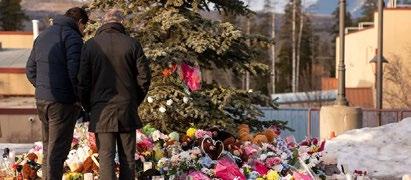
The family of a girl critically injured during a mass shooting at a Canadian school is suing ChatGPT-maker OpenAI, claiming it had been aware the suspect had been planning an attack but failed to alert the authorities.
Twelve-year-old Maya Gebala was shot in the neck and head in the attack in Tumbler Ridge on 10 February and remains in hospital. Continued on Page 7...
www.theasianstar.com
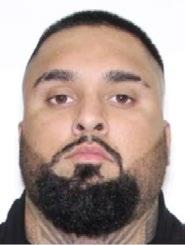
An alleged drug smuggler for accused kingpin Ryan Wedding – recently connected to a man charged in a sprawling Toronto police corruption investigation – has been moved to a special unit of a Toronto jail.
Gurpreet Singh's lawyer told a Toronto court the transfer occurred last Friday, two days after CBC News first reported on Singh's apparent ties to Brian Da Costa, an alleged organized crime figure described by York Regional Police as a key player
in their high-profile corruption probe known as Project South. Singh "has been placed in a special handling unit and has had limited access to counsel and the outside world since then," his lawyer Christopher Lutes said at a brief hearing on Wednesday.
Singh has been held at the maximum-security Toronto South Detention Centre (TSDC) since he was arrested in October 2024 at his then residence, on the 34th floor of Former Trump Hotel. Continued on Page 4...
A social media account promoting Sikh extremist views is claiming responsibility for the stabbing of a woman in the southwestern Ontario town of LaSalle this week.
LaSalle police on Wednesday identified 45-year-old Nancy Grewal of Windsor, Ont., as the victim in the stabbing. She died March 3 in the area of Todd Lane.
On social media, an account says in Punjabi that Nancy Grewal of Windsor was killed over her criticism of the Khalistani movement.
"This woman was saying bad things about religion and
Khalistan," a caption shown over a picture of Grewal states. "And she got the result of that. We don't have anything against any community or religion, and if anyone say something against our community and Khalistan like this, they will meet the same fate."
The Khalistan movement seeks to establish a homeland for Sikhs in India. Not all who support the Sikh separatist movement condone violence. But Khalistani extremists have been linked to violent incidents over the years, including the Air India bombing.
Continued on Page 10...
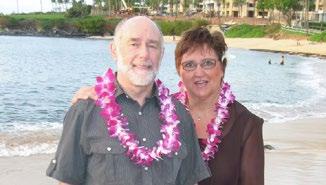
A prosecutor says three men accused of murdering an Abbotsford, B.C., couple kept a bat used to bludgeon one of the victims to death, displaying it with "pride" in videos recorded months later.
The B.C. Supreme Court in Abbotsford was shown the videos recorded by the men displaying the softball bat alleged to have been used to kill Joanne De Jong in a May 2022 home invasion.
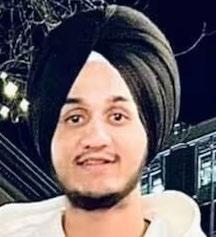
Police in British Columbia say a suspect in the killing of a 28-year-old woman two years ago may have fled the country, as they issued a Canada-wide warrant for his arrest. The province's Integrated Homicide Investigation Team says 24-year-old Amarbir
Singh was in a relationship with the victim, Navdeep Kaur, when her disappearance was reported by her family on Feb. 23, 2024.
Kaur was last seen in Surrey, and police say her remains were found five months later on July 23.
Continued on Page 10...
Crown prosecutor William Dorsey says the videos "show unmistakably" that the suspects "treasured" the weapon, with Gurkaran Singh seen smiling while holding it. Dorsey says in his closing statements that it was "the smile of a murderer."
Singh, Abhijeet Singh, and Khushveer Toor, all in the 20s, have pleaded not guilty to firstdegree murders of De Jong and husband Arnold De Jong. Continued on Page 7...
Market Activity Flounders
The British Columbia Real Estate Association (BCREA) reports that 4,516 residential unit sales were recorded in Multiple Listing Service®(MLS®) Systems in February 2026, down 9.7 per cent from February 2025. The average MLS® residential price in BC in February 2026 was down 2.9 per cent at $932,243 compared to $960,572 in February 2025. Total MLS® residential sales dollar volume was $4.21 billion, down 12.3 per cent from the same time the previous year. BC MLS® unit sales were 32.87 per cent lower than the ten-year average for the month of February.
“Housing market activity continues to
struggle, with sales declining from every region in the province compared to the same time last year,” said BCREA Chief Economist Brendon Ogmundson. “We hope that improved affordability conditions in most regions and stable rates will motivate prospective demand to enter the market and drive stronger sales activity over the rest of the year.”
Year-to-date, BC residential sales dollar volume is down 17.8 per cent to $7.3 billion, compared with the same period in 2025. Residential unit sales are down 15.8 per cent year-over-year at 7,832 units, while the average MLS® residential price is also down 2.4 per cent to $929,323.
A black man who murdered girlfriend gets reduced
sentence partly due to his race
A man who stabbed his girlfriend to death at a shopping centre in British Columbia received a lighter sentence partly because of his race.
Everton Javaun Downey, 35, stabbed his girlfriend, Melissa Blimkie, 15 times in a stairwell at the Metrotown Shopping Centre in Burnaby on Dec. 19, 2021. Downey fled the scene with the murder weapon before later turning himself in to police. Similar in function to Gladue reports for Indigenous offenders, IRCAs are designed to “help criminal justice professionals better understand the effects of poverty, marginalization, racism, and social exclusion on Black and racialized offenders and their experiences,” according to the Department of Justice. IRCAs were first developed by a Nova Scotia sociologist in 2014 and are now increasingly used in Canadian courts.
The IRCA in Downey’s case, authored by University of Calgary social work professor Patrina Duhaney, describes Downey as a “Black man of African Nova Scotian, African American and Jamaican ancestry.” However, it
notes that he did not experience “overt racism” in his early life.
“He grew up in Toronto in predominantly Black and racially diverse neighbourhoods and attended racially diverse schools, and felt that he did not experience overt racism,” according to Holmes’ decision. “Mr. Downey explained to Dr. Duhaney that his experience living in communities which normalized racial diversity shaped his early sense of identity and belonging.”
Jason Leo Tait “suffered the negative effects of intergenerational trauma as related to his mother’s family and the impact of the residential school system which, in part, resulted in her addictions,” the judge wrote.
“Here, he found a much smaller Black population, and the cultural norms among Black communities felt unfamiliar to him, and contributed to feelings of disconnection and isolation. He also experienced racism in ways he had not previously encountered, both in the community and in the institutional setting,” Holmes writes.
ICBC/Personal Injury
Immigration Law
Corporate / Commercial Real
This summer, Alex Alvarez will pack her belongings and make the 3,500-kilometre trek with her husband, young son and Boston Terrier from Anchorage, Alaska, to Nanaimo, B.C. — a city she’s never visited — to work as a registered nurse.
Alvarez is among hundreds of American healthcare workers the province says are relocating to B.C. to escape “uncertainty and chaos” in the United States.
“We need to make this move for our future,” Alvarez said.
Last spring, the province made changes to fasttrack the credential registration process for U.S. nurses. The BC College of Nurses and Midwives approved the registration of 1,028 U.S. nurses between last April and January, putting it on track for a tenfold increase compared to recent years. In 2023, the college approved 112 applicants, and in 2024, it was 127.
The college could not say how many nurses moved to Canada since some get their registration before starting a job search.
The province also made a recruitment push last summer with a $5-million ad campaign targeting doctors and nurses in Washington, Oregon and California, at locations within a 16-kilometre radius of health-care facilities, as well as on podcasts and Netflix shows.
Registration of U.S. nurses in B.C. soars amid recruitment push Retired
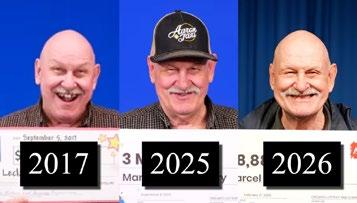
Most lottery players would consider themselves extremely lucky to win the lottery once, but one Canadian has now done it three times. In 2017, Marcel Leclaire of Sudbury, Ont., won his first lottery prize when he scored a $1-million Encore prize in a Lotto 6/49 draw. At first, the retired taxi driver who has been playing the lottery for decades said he thought he had won $1,000 until he noticed all the extra zeros. “My dream is to travel west to visit family, taking time to see the country and reconnect with the people I love,” he said.
He found himself back at the OLG Prize Centre in 2025 to claim his biggest prize yet: a $3-million top prize after splurging on a $30 Instant Platinum
Health Minister Josie Osborne said the campaign was B.C.’s way of “taking advantage of the uncertainty and chaos” in the U.S. after the election of President Donald Trump. Alvarez said she had wanted to leave the U.S. even before Trump’s re-election, but it was still a contributing factor.
“It feels more dangerous to stay than it does to leave,” Alvarez said, adding concerns about U.S. health care, rising cost of living and the lack of a social safety net also prompted her family’s decision to move.
Ken Swartz, a registered nurse who moved from California to Prince George around two months ago, gave similar reasons for his decision to accept a nursing job in B.C.
“The politics and the culture in the U.S. has dramatically changed in the past several years,” he said.
Both Swartz and Alvarez applied through the streamlined registration process and said it was easy to navigate.
Data from the Ministry of Health shows 1,800 U.S. health workers applied to join the B.C. system between May and September 2025, but only 174 had accepted job offers. Those who accepted include 104 nurses, 41 physicians, 19 nurse practitioners and 10 allied health professionals.
ticket. He said he bought the ticket because it caught his eye as it “was nice and shiny.”
“This is just amazing,” he said. “It’s an incredible feeling.” He said he planned to use his windfall to buy a house and share it with his loved ones.
South Asian man apologizes for fatal stabbing at Vancouver Starbucks
A man accused of a fatal stabbing on a Vancouver café patio nearly three years ago addressed the victim's family directly at his B.C. Supreme Court trial, saying he is "really sorry" and wishes he could "go back in time."
Inderdeep Singh Gosal pleaded not guilty last month to second-degree murder in the death of Paul Schmidt on March 26, 2023, that was captured on video and widely shared on social media. His apology came the end of his direct examination on Thursday, when his lawyer Gloria Ng asked
her client if he'd like to say anything to Schmidt's family, who have attended each day of the trial.
"I'm sorry for what happened. I hope you know I have a lot of remorse and regret over what happened. I didn't want to hurt him that day, but I also wasn't thinking right. I wasn't on my medications. I wish I could go back in time," he said.
"I'm sorry. I'm really sorry."
Gosal, who appeared in court Thursday wearing a blue sweater over a white collared shirt, had testified last week that he found the knife in an alley and took it as a "sign from God" that he needed to protect himself.
Ng told the court last week that her client suffers psychosis and schizophrenia and was unmedicated on the day of the killing.
Gosal had testified that he had been refilling his antipsychotic medication but stopped taking it about three months before the stabbing.
Ng said while he meant to cause harm when he stabbed Schmidt, he didn't have the mental capacity to understand that his actions would cause death.
The defence, Ng said during her opening statement on March 3, will ultimately ask the court to find Gosal guilty of manslaughter, not seconddegree murder.
Gosal had previously told the court that he had never been in a fight prior to the stabbing, but later signed an admission of fact that was entered at the trial on Thursday that said he had engaged in a physical fight at a SkyTrain station while drunk in March 2015.
The admissions of fact also cited two other incidents, in 2016 and 2017, when Gosal had encounters with police and was found to be carrying a knife.
CCTV footage was shown in court last month showing a verbal confrontation between the two men that turned physical when Schmidt approached Gosal, who was smoking something near the Starbucks entrance.
The altercation left Schmidt lying in a pool of blood after being stabbed six times in the chest.
During cross-examination later Thursday, Gosal was asked whether Schmidt said something to him about smoking on the patio that day.
"I don't remember," Gosal replied.
Crown prosecutor Daniel Pruim questioned Gosal, who often rested his head on his hands, obstructing his face from the gallery. He struggled to answer Pruim's questions directly, often requiring clarification. Gosal said several times that he did not remember certain details and would be guessing if he answered.
Verdict in May for 3 South Asian men accused of double murder in Abbotsford
The three men accused of killing two Abbotsford seniors in their home in 2022 will find out their fate on May 8. Justice Brenda Brown is scheduled to give her verdict that day in B.C. Supreme Court in Abbotsford for Khushveer Toor, Gurkaran Singh and Abhijeet Singh of Surrey. The three men are each accused of two counts of first-degree murder in the deaths of Arnold and Joanne De Jong.
Their trial by judge alone began Jan. 12. Crown’s closing submissions were presented last Friday (March 6), while the three defence lawyers gave their closing arguments on Monday and Tuesday (March 9 and 10).
A guilty verdict for first-degree murder results in an automatic life sentence, with no eligibility for parole for 25 years. The bodies of the De Jongs were discovered on the morning of May 9, 2022 in
their home in the 33600 block of Arcadian Way, a rural road in east Abbotsford. Arnold owned two trucking companies. The court heard that Joanne, 76, was found in her bed with her hands and feet tied by rope and surrounded by a “significant amount” of blood. A pathologist determined she had died as a result of “sharp-force trauma and blunt-force trauma.”
Arnold, 77, was also found in bed – in a separate bedroom – with his hands and feet also bound, and his entire head and face tightly wrapped in duct tape. His cause of death was determined to be asphyxiation due to smothering. The court heard that the three accused knew the De Jongs because Abhijeet Singh owned and ran a cleaning company, and the two others worked for him. The trio lived together in Surrey.
The Ministry of External Affairs (MEA) on Thursday rejected Pakistan's statement on the India-Canada nuclear cooperation agreement, asserting that India's credentials on nonproliferation are impeccable.
During a press briefing held in the national capital, MEA spokesperson Randhir Jaiswal said the statement by Pakistan is baseless. He emphasised that India's commitment to non-proliferation is well-recognised globally, while Pakistan, with its documented history of clandestine nuclear proliferation, lacks credibility in commenting on export controls or proliferation risks.
"We reject this statement made by Pakistan on the matter. India's credentials regarding nonproliferation are impeccable and well recognised by the global community. A country with a well-documented history of clandestine nuclear proliferation can hardly preach the virtues of export controls and proliferation risks. Such ludicrous statements are nothing more than an attempt by Pakistan to distract from its own abysmal record," he said. Earlier, Pakistan had expressed concerns over the long-term uranium supply deal between India and Canada, and potential cooperation on small modular reactors and advanced nuclear technologies.
weaken global non-proliferation norms and could destabilize regional and international peace and security, as per a report in the Pakistani daily Express Tribune.
Andrabi also criticised India for not placing all civilian nuclear facilities under International Atomic Energy Agency (IAEA) safeguards, raising questions about non-proliferation assurances accompanying the agreement. He suggested that assured external uranium supplies could free India's domestic reserves for military purposes, potentially accelerating the growth of its nuclear arsenal and deepening strategic asymmetries in South Asia.
India and Canada have significantly strengthened their bilateral partnership by sealing major agreements on the supply of uranium and critical minerals, while committing to a target of USD 50 billion in annual trade by 2030.
Following high-level discussions in the national capital on March 2, Prime Minister Narendra Modi and his Canadian counterpart, Mark Carney, finalised a strategic framework aimed at revitalising a relationship that has transitioned toward "new energy, mutual trust and positivity."
Asking rent in several major Canadian rental markets is starting to creep back up, but renters in one B.C. city recently saw the biggest drop in rent across the entire country.
Zumper, a digital marketplace for renters and property managers, has released its latest rent report, which tracks asking rent prices on sites with apartment listings.
Vancouver remains home to the priciest onebedroom rentals in the country, with a median price of $2,390 per month in March. This is down by 1.2 per cent compared to this time last year.
However, another major B.C. city saw an even larger year-over-year drop in asking price for onebedroom rentals.
Kelowna, which is also in the top 15 most expensive cities to rent in Canada, saw its median price for onebedrooms dip 11.9 per cent compared to 2025, down to $1,700.
Two other B.C. cities also beat out Vancouver for some of the largest drops in asking rent for two-bedroom apartments.
Pakistan's Ministry of Foreign Affairs spokesperson Tahir Andrabi argued that civil nuclear cooperation must follow a nondiscriminatory, criteria-based approach applicable to all states outside the Nuclear Non-Proliferation Treaty (NPT). He claimed that selective exceptions
A cornerstone of the visit was a USD 2.6 billion agreement for long-term uranium supply, intended to bolster India's civil nuclear energy sector.
Prime Minister Modi highlighted the depth of this collaboration, stating, "In civil nuclear energy, we have signed a landmark deal for long-term uranium supply. We will also work together on small modular reactors and advanced reactors."
Burnaby’s median price for two-bedroom suites sank 7.3 per cent compared to last March, sitting at $2,780.
compared to 2025.
According to Zumper, the country’s priciest markets are experiencing noticeable annual declines in rent, while cities in the Prairie provinces are maintaining relative stability.
“Saskatoon continues to post steady gains, while Regina and Winnipeg have remained more stable overall. Kingston also stands out this month, particularly for two-bedrooms, where rent saw an unusually large year-over-year jump,” said Zumper in its report.
“However, it’s worth noting that smaller markets with fewer listings tend to experience greater price volatility.”
Victoria also saw a drop of 7.3 per cent year-overyear, down to $2.550.
Vancouver still has the highest two-bedroom rents in the country, with an average asking price of $3,280. That number is down six per cent
Kingston, Ont., saw a 15.6 per cent jump in asking price for a one-bedroom compared to last year, while Halifax and Saskatoon experienced a 5.3 per cent and 4.8 per cent rise, respectively.
Abbotsford also cracked the top 20 most expensive markets for renters in Canada.
Vancouver Police are asking for the public’s help to find a missing 21-yearold woman.
Shayla Ignace-Guitar was last seen in the Downtown Eastside on February 2, 2026. She is known to frequent Maple Ridge, Surrey, and Coquitlam. Her family has not heard from Shayla and is concerned for her well-being. Shayla was reported missing to VPD on March 6.
Shayla is Indigenous, approximately 5’6”, and has a slim build. She has dark collar-length hair, a scorpion tattoo on her right forearm, a bear paw tattoo on both forearms, and a dragon tattoo on her left shoulder. She was last seen wearing a purple jacket, black and white leggings, and dark shoes. Anyone who sees Shayla, or knows her whereabouts, is asked to call 9-1-1 or Missing Persons Unit 604-717-2530.
Continued from Page 1...
He continues to fight extradition to the U.S., where the 32-year-old faces federal charges in connection with Wedding's alleged cocainesmuggling ring. Da Costa had been ordered to have no contact with Singh — and 34 other people — as part of the conditions of his recent release on bail.
Da Costa, an alleged drug trafficker, is accused of bribing Toronto police officers amid a conspiracy that investigators said they uncovered last year following an unsuccessful attempt to kill a TSDC manager.
Singh has not been charged in connection with Project South, but two sources told CBC that he is connected to the investigation. Authorities have not publicly laid out those ties.
Another one of Singh's lawyers, Brian Greenspan previously declined to say whether he or his client had spoken with investigators in connection with Project South.
It is not clear what prompted the move last week to the TSDC.
Greenspan's colleague Lutes told the court on Wednesday "we've made inquiries about his transfer to that unit, which have gone unanswered."
A 2018 report into institutional violence in Ontario said inmates can be moved to the special handling unit "following negative behaviour" in the jail. Brent Ross, a spokesperson for Ontario's Ministry of the Solicitor General, which is in charge of provincial jails, declined to comment to CBC.
York police announced last month that Project South had led to the arrest of seven Toronto officers, a retired constable and 19 other civilians, including Da Costa.
Deputy Chief Ryan Hogan said Da Costa, 43, was involved in a "sophisticated" operation which involved cannabis, cocaine and methamphetamine trafficking, and shipping drugs to Europe.
Ph: 604-591-5423
Fax: 604-591-8615
editor@theasianstar.com
Editor: Umendra Singh
Marketing and Sales: Ravi Cheema
604-715-3847
Shamir Doshi
604-649-7827
Harminder Kaur
778-708-0481
Parminder Dhillon
604-902-2858
Pre-Press: Avee Waseer
Production: Ozmo Media
www.theasianstar.com
Two-thirds of
Albertans
would vote to stay in Canada or lean that way, new survey suggests
Petition signings and packed town halls haven't swayed a vast majority of Albertans toward separating from Canada, new data suggests.
A survey released Monday by the Angus Reid Institute found that 65 per cent of the 979 Albertans polled say they would either vote to stay in Canada or lean toward voting that way if a referendum on Alberta separation were held today, while 29 per cent say they would vote or lean toward voting to leave.
Of the two-thirds who say they want to remain in Canada, 57 per cent said they would definitely vote to stay, while eight per cent say they would lean toward voting to stay.
Meanwhile, eight per cent of those in favour of separation would definitely vote to leave, while 21 per cent would lean toward vote to leave.
Five per cent of respondents said they still weren't sure. The survey also found that a majority of Alberta respondents say they disapprove of how Premier Danielle Smith has neutrally approached the separatism question so far, giving higher marks to other politicians who've taken more federalist positions, including Prime Minister Mark Carney, Alberta NDP Leader Naheed Nenshi and former premier Jason Kenney.
Shachi Kurl, president of the Angus Reid Institute, says the significant chunk of respondents who would lean toward voting to leave — representing about one in five Albertans — is "really going to be where the heart and soul of the fight for Alberta sovereignty versus Alberta remaining [in Canada] will boil down."
"In the end, do they tip all the way over into definitely voting to leave, or do they lean back and tip back to the stay side?"
Another survey, conducted by Pollara Strategic Insights last December, suggested that one in five Albertans would vote to separate.
The latest survey by Angus Reid was conducted online from Feb. 2 to 6. Kurl pointed to the "political division" within the United Conservative Party (UCP) on the issue of separation when compared to Alberta NDP voters, 93 per cent of whom are in favour of remaining in Canada, according to the
survey. "The UCP base is interesting because it is much more divided," Kurl said.
Of the respondents who identified as UCP voters, 41 per cent lean toward leaving, while 16 per cent say they would definitely vote to leave Canada.
Meanwhile, 26 per cent of those who identify as UCP voters say they would definitely vote to stay.
"The number of UCP voters who say that they would definitely vote to stay actually outnumbers those who say they would definitely vote to leave," Kurl said. Among the most convincing arguments for separation was the perception Alberta is not getting as much from Canada as it gives, and the idea that an independent Alberta could have complete control of its natural resources, the survey found.
Meanwhile, for those who would stay, economic challenges presented by Alberta becoming an independent nation, coupled with a strong sense of Canadian identity, were among the top reasons why respondents indicated they would want to stay in Canada.
When asked — in the event Albertans voted to leave Confederation — whether they would stay in the province, 74 per cent of the respondents who said they would vote "stay" in a referendum said they would move to another province or territory in Canada, while 23 per cent said they would stay in an independent Alberta.
The majority of Albertans in favour of remaining in Canada say a convincing reason to stay is the potential for the United States to annex an independent Alberta.
"There is very little appetite among Albertans to become American," Kurl said.
"You've even got a majority [of all respondents], just over half, who think that there would be attempts at military persuasion or military means," Kurl said, referring to the survey's findings. Smith has said she prefers "a sovereign Alberta within a united Canada" over separating but has repeatedly declined to criticize the independence movement that's most popular within her UCP base.
New lawful access bill would give police, CSIS more powers to track suspects online
The Liberal government has introduced a new lawful access bill that it says will help police and security services track and identify people who may be using tools like social media or artificial intelligence to commit crimes or threaten national security.
This legislation is the government's most recent crack at broadening the access law enforcement agencies have after Bill C-2, introduced last spring, raised concerns with civil liberties groups that the powers went too far.
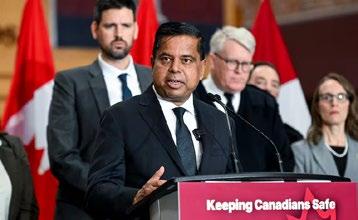
Minister of Public Safety Gary Anandasangaree said the reforms in the bill will bring the country's lawful access laws up to date, which he said are currently "woefully behind" Canada's allies.
"Bill C-22 balances the needs of law enforcement with the privacy and civil rights that Canadians demand," he said on Thursday.
"It is not about surveillance of Canadians going on about their daily lives. It is about keeping Canadians safe in the online space." In a technical briefing, government officials explained that Bill C-22 doesn't give police or the security services access to people's browsing or private social media history, their messages or emails, but is limited to information that identifies who and where they are. It will allow security services to compel telecoms like Bell and Rogers to provide them with a yes or
no answer when asked if a suspected criminal uses their services.
If police want to get more information, such as a suspect's email address, phone number or home address, they must convince a court that a crime has taken place, or will take place, in order to get a warrant.
The legislation also formalizes how Canadian law enforcement make information requests to foreign social media companies like Meta and artificial intelligence firms like OpenAI, which created ChatGPT.
The process does not compel AI or social media companies to share information identifying subscribers, but it provides a legal framework that government officials explained encourages these companies to work with police and security services.
South Asian suspects in double killing seen posing with alleged weapon
Continued from Page 1...
Dorsey's voice cracked with emotion as he described the killing of Arnold De Jong after his wife was bludgeoned to death in her bed.
He says the three accused could have let him live as he was tied up and in "no position to fight."
"All three of them collectively decided that they could not risk Mr. De Jong taking away what was most valuable to them, which was their freedom," Dorsey said on Friday. "They could not leave behind a living witness."
They didn't use weapons to kill Arnold De Jong to avoid a "mess" of blood that they'd left in Joanne's room, Dorsey said Friday.
Instead, his face was wrapped in duct tape and he died of asphyxiation.
The bat, Dorsey said, had been bought by Abhijeet Singh in the lead-up to the murders, and was found by police in the trunk of a car they shared.
Joanne De Jong's DNA was detected on the weapon, but Dorsey said the suspects kept it.
"They all wanted to maintain their connections to the bat while knowing full well what it had been used for, to take a woman's life," he said.
The court also heard that Abhijeet Singh had conducted “exceptionally damning” Google
searches about punishment of murderers in Canada after media reports of the deaths.
Dorsey said searches extracted from Abhijeet Singh's cellphone showed he was “deeply concerned” about punishment faced by murderers after the killing of the De Jongs in their home.
The public gallery was packed with family and friends of the De Jongs as Dorsey made his closing submissions.
The couple's three daughters, Sandra Barthel, Kimberley Coleman and Heather Hoogland were among dozens of people in attendance.
Coleman said outside court that the family had faith in police and prosecutors, and the courtroom being filled with supporters showed "a lot of love behind us."
"We have hope. We have the hope that there will be the right decision made in this case," Coleman said.
The De Jongs were found in their separate bedrooms on the morning of May 9, 2022, their hands and feet bound with rope, the court heard.
Dorsey said circumstantial evidence was a “major component” of the case against the three men, and he told the judge that the Crown had established the case for first-degree murder.
Family of child injured in Tumbler Ridge school shooting sues OpenAI
Continued from Page 1...
An initial ChatGPT account linked to the suspect, 18-year-old Jesse Van Rootselaar, was banned by OpenAI in June 2025 due to the nature of her conversations with the chatbot, but Canadian police were not notified.
OpeanAI told the BBC it was committed to making "meaningful changes" to help prevent similar tragedies in the future.
Eight people were killed in the attack, including five young children and the suspect's mother, in one of the deadliest shootings in Canadian history.
The civil lawsuit, brought by Gebala's mother Cia Edmonds, alleges Rootselaar set up an account with ChatGPT before she turned 18 - something users can do with parental consent.
The plaintiffs allege no age verification took place on the site.
The lawsuit claims the suspect saw the chatbot as a "trusted confidante" and described "various scenarios involving gun violence" to it over several days in late spring or early summer 2025.
Twelve OpenAI employees then reportedly flagged the posts as "indicating an imminent risk of serious harm to others" and recommended Canadian law enforcement was informed, the lawsuit alleges.
Instead, it is alleged the request to contact the authorities was "rebuffed" and the only action taken was to ban Rootselaar's account.
OpenAI has previously said it did not alert police because the account did not meet its threshold of a credible or imminent plan for serious physical harm to others. The suspect was able to then open a second ChatGPT account, despite being flagged by OpenAI systems in the past, and "continue planning scenarios involving gun violence".
The lawsuit claims the company "had specific knowledge of the shooter's long-range planning of a mass casualty event," but "took no steps to act upon this knowledge".
The plaintiffs state as a result of the company's conduct, Gebala, who was shot at three times after trying to lock a library door to keep out the shooter, has suffered a "catastrophic brain injury".
In a statement to the BBC, an OpenAI spokesperson called the events an "unspeakable tragedy", adding its thoughts remained with the victims, their families and the community.
"OpenAI remains committed to working with government and law enforcement officials to make meaningful changes that help prevent tragedies like this in the future," a spokesperson said.
On 4 March, the CEO of OpenAI, Sam Altman, virtually met Canada's artificial intelligence minister, Evan Solomon, and the premier of British Columbia, David Eby.
According to the Wall Street Journal, Altman "pledged to strengthen protocols on notifying police over potentially harmful interactions" and to apologise to the Tumbler Ridge community.
In an open letter to Canadian officials on 26 February, penned by OpenAI's vice-president of global policy and shared with media outlets, the company said it had implemented a series of changes in recent months, including enlisting the help of "mental health and behavioural experts" to assess cases and making the criteria for referral to police "more flexible". Canada's AI minister Evan Solomon said on 27 February that while legislators saw a willingness by the tech firm to improve its protocols, "we have not yet seen a detailed plan for how these commitments will be implemented in practice".
Man fatally shot in downtown Kamloops
Police say a man was fatally shot in downtown Kamloops early Wednesday morning.
Emmanual (Manny) Brooks died in a hospital after the shooting near a 7-Eleven store on Seymour Street, according to Kamloops RCMP. They say police responded to reports of gunfire around 4:30 a.m. PT Wednesday, and they believe the shooting was targeted.
Graeme Green, who lives nearby, told CBC News that he came to the 7-Eleven quite often, and he wasn't surprised to see police there. "They're here because of the drug activity, criminal activity," he said.
"What really scares me is that there's so much public space
around here. It's such an open public area, right? And such a dangerous, horrific place for gunfire to occur," he added. Officers were at the scene throughout Wednesday morning, and RCMP say they're releasing Brooks's picture as they investigate his death.
Man receives 7-year sentence minus time served for 2023 killing in Prince George
The 32-year-old convicted of manslaughter in a 2023 killing at a Prince George apartment building has been sentenced to seven years in prison, minus credit for time already served.
It means Dakota Rayn Keewatin will remain incarcerated for two years and eight months, RCMP say, after receiving credit of approximately four years and four months for his time held in pre-sentence custody.
The B.C. Prosecution Service confirmed to CBC News that when calculating credit, the default for time held in pre-sentence custody is at a ratio of 1.5 days to every one day served.
The investigation was launched March 7, 2023, at the Connaught Hill Residences, a highrise apartment building less than 500 metres from
Police were called to the scene following an altercation and reports of gunfire, where they found the body of Davis Smith. Soon after, they identified Dakota Rayn Keewatin as the suspect, and on Aug. 19, Keewatin, now 32, was found guilty of manslaughter in B.C. Supreme Court.
Manslaughter is typically used to refer to a homicide, or killing, committed without the intention of causing death, though there may have been an intention to cause harm.
There is no minimum sentence for manslaughter in Canada except in cases where a firearm is used, in which case it carries a mandatory four years in prison.
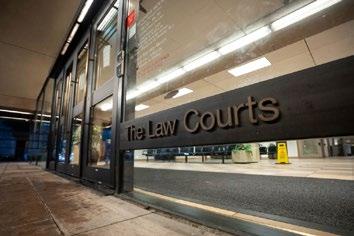
Vancouver city councilor Sean Orr sues Mayor Ken Sim for defamation
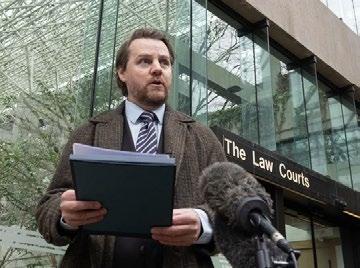
Vancouver City Coun. Sean Orr is suing Mayor Ken Sim for defamation after he accused Orr of distributing illegal drugs, comments the councillor said were made for political gain.
The lawsuit filed in B.C. Supreme Court says Sim acted "deliberately, maliciously and in bad faith" when he told Chinese-language reporters on Feb. 6 that Orr had handed out drugs on Christmas Day.
Orr said outside the court complex in Vancouver on Tuesday that Sim lied about him publicly and had "failed to provide any reasonable explanation."
He said Sim's behaviour was "flippant and reckless."
"Ken's lies spread across our city to this day, reaching potentially thousands of people who may not have heard his apology and who may not have even known he was lying," Orr said.
"You've heard me say, who does this kind of thing? Did this happen out of incompetence or was it intentional? Neither of which are becoming of the mayor."
Orr said he decided to sue because the issue was about democracy, accountability, and holding the position of mayor to a higher standard.
"And I'm willing to see it all the way through, no matter how long it takes," said Orr.
He said Sim's comments had caused serious harm to his reputation and damaged his ability to serve those who elected him. Orr said when he walks through his neighbourhood and greets people in the community, he wonders what they see — the councillor they elected or the criminal "their mayor invented."
"Because of Ken Sim's words, people have lost trust in me through no fault of my own, forming a dark cloud over this election and in my life beyond," said Orr.
Municipal elections will be held this October in B.C. and the lawsuit says Sim made the remark with the "ulterior motive" of furthering a perceived political benefit.
Orr, a socialist who was the top vote getter in a 2025 council byelection, said Sim was "going after the movement that elected me."
"His goal isn't to beat me, but to scare people into thinking people like us don't belong in power," Orr said.
Orr said the lawsuit aims to send a message to the mayor and his friends that "taking advantage of us, all of us, including the Chinese community," will lead to consequences. He said the mayor's office had been provided with a copy of the lawsuit. Sim's office said he was aware of the litigation.
B.C. man in sex assault cold case sentenced to 901 days in prison
A serial sexual predator who pleaded guilty in a cold case dating back more than 15 years has been sentenced to 901 days in prison. Arturo Garcia Gorjon was in court on Wednesday with his partner and his 20-year-old son.
Crown counsel was seeking three years in prison for the 46-year-old, who pleaded guilty in June to three counts of sexual assault against three different women in Vancouver in 2009 and 2010.
Defence counsel suggested a conditional sentence of two years less a day, followed by three years of probation.
In court on Wednesday, Judge Reg Harris said that a conditional sentence for Garcia Gorjon would not be proportional, nor would it adequately denounce Garcia Gorjon’s conduct to deter others.
“Mr. Garcia Gorjon stalked, hunted and preyed on women who were vulnerable by virtue of being out at night and typically alone with few people
around and in doing so, he caused immeasurable emotional harm and trauma to them,” Harris said.
“He also wrapped and enveloped the city in fear for a period of time.”
Two of the three victims in the case appeared via Zoom. From their statements, they noted the trauma caused by Garcia Gorjon that created deep emotional wounds, anger, anxiety, stress and depression.
Harris said Garcia Gorjon’s offences were serious, with a high degree of moral culpability.
He said Garcia Gorjon selected women who were alone and distracted on two of the occasions and he used the cover of night and the emptiness of the streets to his advantage.
However, Harris said Garcia Gorjon demonstrated remorse and his guilty pleas saved the victims from testifying. He also had no criminal record.
Critics say B.C.’s new FOI legislation enables more government secrecy
The B.C. government has introduced legislation to make it easier for officials to disregard or delay freedom of information (FOI) requests. Citizens’ Services Minister Diana Gibson claims this will enable requests to be met more quickly by a system overwhelmed by reams of data, but critics and transparency advocates are alarmed. One of those is B.C. Green Party MLA Rob Botterell, who led the legal team that drafted the province’s first freedom of information legislation in 1991. That bill passed the legislature with unanimous support the next year. “If these amendments get through, it’s just going to be the end of freedom of information as we know it,” he said. “And we’ll be back to where we were in the 1980s.” Working for the NDP government of the day, Botterell was instructed to create the most open system in Canada. Years of “whittling away” at the rules he helped create have left a system that is now far from this
measure, he says. Gibson introduced the changes on Feb. 26 as a bill amending the Freedom of Information and Privacy Protection Act, declaring that the modifications would introduce “practical efficiencies” and enable “more transparent, peoplecentred service delivery.” The bill to make the changes has been introduced but has not yet passed second and third readings. A government news release says the changes aim to make it easier for people to obtain their own personal information without an FOI request, “strengthen” provisions related to the specificity and clarity of requests, allow more flexibility for timelines to be extended and enable the government to disregard requests from applicants whose behaviour is deemed “abusive or malicious.” Gibson told reporters these changes are needed because the amount of data in an average request has grown considerably since the process was first introduced in the 1990s.
Canada-wide warrant issued for South Asian man murder suspect who may have fled overseas
Continued from Page 1...
Police say a timeline of events leading to Kaur's death was pieced together by investigators and submitted to the B.C. Prosecution Service for charge approval. Singh was then charged with second-degree murder last Friday.
Sgt. Freda Fong of IHIT says investigators are prepared to work with overseas police to track Singh down and bring him back to Canada.
“We are aware that Mr. Singh may have fled the country, but that will not stop us from pursuing him,” Fong said in a
statement. Kaur was last seen at around 10:30 p.m. on Feb. 22, 2024.
In a statement at the time, police said that family was concerned for her health and well-being, and it was out of character for her not to contact them.
On July 23, 2024, Richmond RCMP said they had found human remains in the Fraser River, in an industrial area at the end of Williams Street, and were working with the coroners' service to identify them. Later that year, the remains were identified as those of Kaur's.
Suspicious Chinese funds should have raised ‘Alarm Bells’ at Canadian banks
For eight years, Chinese property developer Chen Runkai used hundreds of wire transfers to move tens of millions of dollars into accounts at Canadian banks –– a technique experts say is a hallmark of money laundering.
Yet Canada's biggest banks –– including the Royal Bank of Canada, CIBC, TD and the Bank of Montreal –– all accepted the money without flagging it to the country’s financial regulator.
Only one financial institution acted: The Vancouver arm of Switzerland's UBS bank filed a suspicious activity report in 2012 after noting massive flows of unexplained money into a Chen family account.
"All kinds of alarm bells should have gone off,” said Garry Clement, a former Royal Canadian Mounted Police superintendent focused on proceeds of crime.
"It almost gives the impression they're asleep at the switch… It just shows that the system is broken," added Clement, who is now chief of antimoney laundering for VersaBank.
At a time when governments are wrestling with the impacts of illicit foreign funds entering overheated real estate markets in Vancouver and Toronto, the unquestioned flow of Chen's money has raised concerns about the due diligence and rigor employed by Canadian banks when it comes to anti-money laundering detection and reporting.
The Toronto Star and OCCRP reached out to banks that received Chen’s funds and asked why the money flows did not trigger concerns or formal reports to authorities. The banks each said they could not comment on individual customers. They added that they take their anti-money laundering obligations seriously, have implemented controls, and comply with all regulations.
The story of Chen –– how he moved to Canada from China in 2006 with modest means, then accumulated tens of millions of dollars and luxury homes in Vancouver, while facing charges in his home country for alleged bribery –– was detailed in a recent investigation.
The mysterious source of Chen's conspicuous wealth, and its movement to Vancouver where he now lives with his family, has been the subject of an investigation by Canada's financial intelligence
unit, as well as a probe by a British Columbia commission studying the impact of money laundering in that province.
In 2012, the year Chen's financial transactions were first flagged by UBS, his daughter bought a mansion with a tennis court and swimming pool near the beach in Vancouver for 14.7 million Canadian dollars. She paid for it without a mortgage, while listing her occupation as "student." Chen bought a CA$15.6 million mansion on the same street in 2016.
"He was successful in obtaining and making a lot of money in real estate development in China without being involved in corruption," said Lorne Waldman, a Toronto immigration lawyer representing Chen. "He didn't do anything wrong."
The Bank of Montreal received CA$83.7 million between 2009 and 2016, the records show. In 2013 alone, CA$52.2 million arrived in a Chen family account through 101 transactions. The following year, another CA$28.4 million moved to the accounts in another 59 transactions.
HSBC Bank (Canada) told the commission it received CA$41.5 million through 85 transfers in 2013 and 2014, all through a Hong Kong money exchange firm called Hing Wah China and HK Renminbi Exchange Co.
TD told the Cullen Commission it received CA$16.4 million to Chen family accounts via 43 transfers between 2011 and 2014. "We continue to believe that we complied with our regulatory obligations at the time," a spokesperson told the Star and OCCRP.
CIBC reported CA$14.7 million in U.S. currency through 13 transfers between 2009 and 2011. The Royal Bank of Canada received 24 transfers worth CA$11 million in 2013. Another CA$1.35 million arrived in accounts at Scotiabank in 2013 and 2014.
Social media account touting
Khalistani
extremism claims responsibility for death of Windsor woman
Continued from Page 1...
CBC has not independently verified the account or the information.
In a statement, LaSalle police said investigators are considering all information but cannot comment further to protect the investigation. However, police have said they believe the stabbing targeted Grewal and was not random.
In an email, the World Sikh Organization said that "while the account includes occasional Sikh or Khalistan imagery, it is clearly not an account representing a Sikh or Khalistani organization or movement and it doesn't describe itself as such either.
"It appears to be a page promoting individuals engaged in organized criminal activity, with a mixture of unrelated content including liquor, gang imagery, and extortion-related messaging (including a threat to businesses that if they refuse to take their extortion calls, they will be shot). These are contrary to Sikh principles."
Born in India, Grewal had a prominent social media presence in the local and international Punjabi communities. She often posted on social media platforms with her thoughts on South Asian news and politics.
She was known particularly for her antiKhalistan views. Grewal's mother, Shinderpal Kaur, has been speaking with Indian media, expressing grief and outrage over her daughter's
death. She said Grewal was stabbed multiple times.
Alishaa Grewal paid tribute to her sister in a social media post.
"I lost my sister, my strength, my forever friend. Rest in peace, my sister. You will always live in our hearts," she wrote.
At Windsor's South Asian Centre, program director Nandini Tirumala said Grewal's death has been "disturbing" to the community.
"Shocked, saddened to see that one of the members of our South Asian community has been so brutally stabbed," said Tirumala, who did not want to comment on Khalistani politics.
"And everybody all morning had been just talking about it, worried, and had a lot of questions. A lot of questions about how did it happen, and what were the circumstances around it."
LaSalle police say the investigation continues and have not yet announced any charges or suspects.
Responsible fuel use a ‘national obligation’: FCCC
“Responsible fuel usage is not just a personal choice, it is a national obligation.”
That is the message from Senikavika Jiuta, CEO of Fijian Competition and Consumer Commission (FCCC) as it urged Fijians to avoid panic buying and hoarding fuel amid rising global tensions affecting energy supplies.
FCCC said the situation surrounding the Strait of Hormuz remains volatile, with tanker traffic through the critical shipping route dropping by 70 to 80 percent since the conflict escalated. Iran’s Islamic Revolutionary Guard Corps has also confirmed that the strait has been closed to commercial shipping.
The development has already pushed global oil prices higher, with Brent crude reaching around USD $92 per barrel, compared with $73 before the conflict began in late February 2026.
Jiuta said Fiji remains heavily dependent on imported fossil fuels for transport and electricity generation, making responsible usage essential.
“Please do not hoard or stockpile fuel. Hoarding does not protect you and ultimately harms everyone, including yourself,” she said.
She warned that panic buying creates artificial shortages by draining service stations faster than supply can be replenished.
Law passed to allow tax relief for buildings damaged by termite outbreak
Parliament has passed amendments to the Income Tax Act to allow property owners affected by termite infestations to access disaster reserve funds in a tax-effective manner. While speaking in Parliament yesterday, Minister for Finance Esrom Immanuel outlined the rationale behind the Income Tax (Amendment) Bill 2026, which seeks to expand the scope of the Natural Disaster Reserve under Section 28 of the Act.
Immanuel said the proposed amendment will allow declared biosecurity emergencies, including the Asian Subterranean Termite (AST) infestation, to be recognised under the reserve.
“The amendment aims to include declared biosecurity emergencies, specifically the AST or termite infestation, within the coverage of the reserve. This inclusion is necessary due to the extensive structural damage caused by the AST termite outbreak, particularly in the Western Division,” he said. Currently, Section 28 allows businesses and homeowners to claim tax
deductions when depositing funds into a reserve account to cover losses caused by disasters such as windstorms, tidal waves or landslides.
“For commercial, industrial or agricultural buildings, the deduction is kept at 1.5 percent of the replacement cost of the building. For residential buildings, the deduction is limited to the lesser of 1.5 percent of the replacement cost or $500,” Immanuel explained.
He noted that Fiji experienced a major outbreak of AST termites in Lautoka and Labasa in 2009 and 2010, and the infestation has continued to cause widespread structural damage to both residential and commercial buildings.
“Notably, insurance coverage is not available for termite-related damages,” he said. Immanuel added that the Biosecurity Authority of Fiji classifies AST termites as one of the most destructive termite species globally and that the infestation remains a declared biosecurity emergency in Fiji.
Over 1,000 cane leases expiring by 2030 must be renewed, says Pillay
Opposition MP Viam Pillay has raised concerns in Parliament over the future of Fiji’s sugar industry, warning that more than 1,000 sugarcane leases are expected to expire by 2030.
Speaking during the debate on the President’s Address yesterday, Pillay said renewing the leases is critical to maintaining stability in cane production.
“There are more than a thousand sugarcane leases that are expected to expire by 2030. It is vital and in our
nation’s interest that these leases be renewed so that there is stability in cane production,” he said. Pillay also questioned claims that the sugar industry is improving.
“The first test is: is it true? Is it true that the sugar industry is growing? No. Production has continued to decline over recent seasons, and the 93,000 tonnes left unharvested proves the system is failing,” he said. He also criticised what he described as a lack of support for farmers.
Court orders release of COI audio, transcript
The High Court in Suva has granted an application by four individuals named in the controversial Ashton-Lewis Commission of Inquiry report to have the audio recording and transcript of the Commission of Inquiry provided by the State. The applicants are former Fiji Independent Commission Against Corruption
commissioner Barbara Malimali, Fiji Law Society
President William Wylie Clarke, the Society’s immediate past president Laurel Vaurasi, and former attorney-general Graham Leung.
The applicants are challenging the findings of the COI Report which is critical of their alleged actions. Justice Dane Tuiqereqere granted the application today, directing that the audio recording and transcript be made available by Monday, March 16.
He also granted an application by Justice Ashton-Lewis to be joined as an interested party in the proceedings.
The matter has been adjourned to April 10.
Minister warns of inflation risk
The rise in fuel prices as a result of the war in the Middle East could trigger a slight inflation in Fiji.
Minister of Finance Esrom Immanuel has acknowledged that rising global fuel prices linked to tensions in the Middle East could have a ripple effect on the local economy, including a possible increase in the cost of goods and services.
Mr Immanuel said fuel prices had recently increased in global markets as the conflict escalated, although there had been some easing overnight.
“The price, as we’ve seen in the world market, it has increased,” he said.
“But last night, this reduced again. It is based on what’s happening there.
Despite the volatility in international markets, the minister said the impact on Fiji would not be immediate because of the country’s fuel supply and pricing structure.
“For us, the pricing lags by around a month.
“And we have stocks for around 40 to 60 days.
“So that can hold for us for the next three months on the pricing.” However, the minister acknowledged that higher fuel prices could eventually affect the broader economy.
“Fuel prices increase, so does the price of goods, because fuel is one of the components in the calculation of the cost of living or inflation.”
HIV cases could reach 9,000 – Asst Minister tells Parliament
Fiji could soon have close to 9,000 people living with HIV, a figure that will place growing pressure on the country’s public health system, Assistant Minister for Health Penioni Ravunawa warned in Parliament yesterday.
Speaking during the debate on the President’s Address, Ravunawa said HIV is a chronic illness that requires lifelong treatment and medical monitoring.
“Furthermore, Mr Speaker, Sir, HIV is a chronic disease that requires lifelong treatment. Individuals diagnosed with HIV will now have to take antiretroviral medication every single day for the rest of their lives to keep the viral load low,” he said. He explained that maintaining a low viral load helps prevent the transmission of the virus to others but requires consistent medication and
medical care.
Ravunawa said projections show the number of people living with HIV in Fiji could soon approach 9,000. “Every one of these individuals will require continuous treatment, monitoring, and clinical support. This will induce further burden to our already stretched public health system,” he said.
He also highlighted the longterm financial implications of the growing number of cases, noting that treatment costs could run into millions of dollars in the coming decades.
“Mr Speaker, Sir, the cost of this treatment will run into millions of dollars over the coming decades, which is why prevention today is not only a health investment, but also a financial investment in our nation’s future,” Ravunawa said.
SATURDAY, MARCH 14, 2026
Pakistani convicted of plotting to kill Trump over death of Iran commander
A Pakistani man was convicted on Friday of planning to kill President Donald Trump and other prominent U.S. politicians two years ago at the behest of Iran, the Department of Justice said.
Asif Merchant was accused of trying to recruit people in the US in a plan targeting Trump and others in retaliation for Washington's killing of Iranian military commander Qassem Soleimani in 2020, when Trump was in his first term.
Targets in the 2024 plot also included thenPresident Joe Biden and Nikki Haley, who ran
against Trump that year for the Republican presidential nomination, federal prosecutors said.
Merchant was convicted of "murder for hire and attempting to commit an act of terrorism transcending national boundaries," directed by the Iranian authorities, the DOJ said in a statement.
The trial in the New York City borough of Brooklyn started last week, days before Trump ordered an assault on Iran, carried out with Israel, that has expanded into the region's biggest war in years.
Bangladeshi man accused of sexually abusing teenage girls over social media is transported to the US
You can share an article by clicking on the A Bangladeshi man accused of using social media to trick teenage girls into sending him sexually explicit images – and then threatening to share them with their friends and family if they didn't send more – has been transported to Alaska to face federal charges of child sexual exploitation.
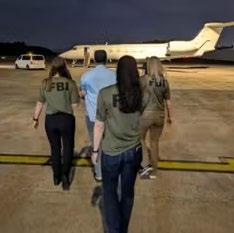
Zobaidul Amin, 28, pleaded not guilty during an initial court appearance in Anchorage on Thursday after the FBI took custody of him in Kuala Lumpur, Malaysia, where he had been studying medicine and facing related charges, US prosecutors wrote in a detention memorandum.
"Amin delighted in sexually abusing hundreds of minor victims over social media," the document said. "He bragged about causing victims to become suicidal and engage in self-harm. He shared hundreds of nude images and videos of minor victims all over the internet and encouraged other
perpetrators to do the same."
A federal grand jury indicted Amin in 2022 on charges including child pornography, cyberstalking and wire fraud. He adopted false identities, often posing as a teenager, to trick victims into sending him explicit images, prosecutors said.
The investigation began when a 14-year-old Alaska girl reported her abuse to law enforcement, saying that after she had stopped communicating with him, he followed through on his threats by sending pornographic images of her to her friends and followers.
In executing dozens of search warrants and subpoenas, investigators eventually learned his identity and realized he had done similar things to hundreds of minor victims, prosecutors wrote. The only way to get him to stop demanding more images, Amin told the girls, was to recruit other victims, the document said.
Nepal’s new government signals shift in India, China relations
Nepal’s incoming government has signalled it will pursue a more pragmatic foreign policy centred on national interests, as the newly victorious Rastriya Swatantra Party (RSP) seeks to recalibrate relations with both China and India after years of shifting political alignments.
In its election manifesto, RSP pledged to pursue “balanced and dynamic diplomacy” with both neighbours, emphasising economic cooperation, cross-border connectivity and trade while transforming Nepal from a “buffer state into a vibrant bridge”.
“Our relations with our neighbours and other countries will be based broadly on the national interests of Nepal,” Shishir Khanal, an RSP leader and newly elected parliamentarian, told This Week in Asia.
“We will focus on economic and development diplomacy, where we will build relationships for the economic growth of our country.” RSP secured a landslide victory in last week’s poll, an unprecedented feat for a party that entered national politics only four years ago.
Voters frustrated with corruption and unstable governments – grievances that erupted into a youth uprising last September – largely rejected Nepal’s three traditional parties, clearing the way for 35-year-old rapper and engineer-turned politician Balendra Shah to become prime minister.
While Shah has not put out a detailed foreign policy doctrine, analysts say his public statements and the party’s campaign messaging suggest a nationalist approach that does not favour any single partner over another.
The former Kathmandu mayor has criticised Nepal’s overdependence on Delhi, banned a Bollywood film over a cultural dispute and used profanity against India, China and others in a now-deleted social media post. On Tuesday, Shah posted on social media that “we will work
together to further strengthen, deepen and make more result-oriented” ties with India in response to a congratulatory message from Prime Minister Narendra Modi.
Two of Nepal’s oldest parties – the Nepali Congress and Communist Party of Nepal – were founded in India in the 1940s when parties were banned under the autocratic Rana rulers. While the Nepali Congress has historically maintained close ties with India, the communists have leaned towards China.
Communist leaders K.P. Sharma Oli and Pushpa Kamal Dahal have particularly deepened ties with China over the past decade, with Oli tilting towards Beijing as a counterbalance to Delhi. Nepal’s relation with Delhi cooled significantly under Oli after a spate of incidents – including India’s unofficial economic blockade in 2015 and Nepal’s approval of a map including contested area along India’s border – pushed the country further into China’s orbit.
Huang Yunsong, deputy director of Sichuan University’s Institute of South Asian Studies, said RSP’s victory presented “structural opportunities” to strengthen China-Nepal relations. He added that the previous governments’ handling of relations with China, which involved policy fluctuations with power changes, “provided great food for thought for RSP to pursue a better and more effective engagement with Beijing”.
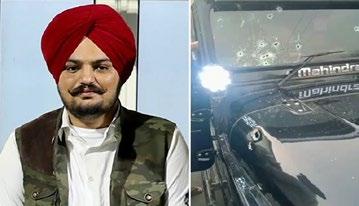
The Supreme Court on Thursday granted bail to accused Pawan Bishnoi and Jagtar Singh in the 2022 Punjabi singer Sidhu Moosewala murder case.
A Bench of Justice Vikram Nath and Justice Sandeep Mehta granted bail to Pawan Bishnoi and Jagtar Singh on their petitions challenging the Punjab and Haryana High Court’s August 1, 2025 order turning down their bail pleas.
Moosewala (28) was shot dead on May 29, 2022 by assailants in Punjab’s Mansa district, a day after the state government curtailed his security cover.
Punjab Police alleged that the killing of the popular singer was the result of an inter-gang rivalry and that the Lawrence Bishnoi gang was involved in it. Canada-based gangster Goldy Brar – an aide of Lawrence Bishnoi -- had claimed responsibility for Moosewala’s murder.
While Pawan Bishnoi was accused being a part of Lawrence Bishnoi gang and of providing logistical
support Moosewala’s assailants at the behest of Godly Brar, Jagtar Singh, Moosewala’s neighbour, allegedly helped in the reconnaissance of the slain singer’s residence. “The allegation against me is that I (Pawan Bishnoi) provided the Bolero which was used in the crime… Only my surname matches. I don’t have any other relation with Lawrence Bishnoi. It has been three years and 10 months since I have been inside (jail). I am seeking regular bail,” Pawan Bishnoi’s counsel Abhay Kumar told the Bench.
Who are Pawan Bishnoi and Jagtar Singh? First accused to get bail in Sidhu Moosewala murder case
Who are Pawan Bishnoi and Jagtar Singh, the first accused to get bail in the Sidhu Moosewala murder case and what are they accused of in the Sidhu Moosewala murder case?
The question has come into focus after the Supreme Court granted bail to the two accused — Pawan Bishnoi of Bhirdana village in Fatehabad district of Haryana and Jagtar Singh of Moosa village in Mansa district of Punjab, the same village where the slain singer lived.
The court granted them relief after reviewing the period of their custody and the slow progress of the trial before the Mansa sessions court. Both had been in custody for nearly three years.
The two were accused of playing markedly different roles in the conspiracy that led to Moosewala's killing on May 29, 2022. Pawan Bishnoi was arrested by Moga Police on June 2-3, 2022 along with his associate Naseeb Khan — also a resident of Bhirdana — and allegedly had links with the Lawrence Bishnoi gang, which claimed responsibility for the murder. According to the Punjab Police Anti-Gangster Task Force, Bishnoi and Naseeb are accused of procuring the white Mahindra Bolero vehicle used in the attack from Sadul Shaher, handing it over to the shooters through a conduit identified as Keshav of Bathinda, and also providing the shooters a hideout before the crime.
The Bolero proved to be a critical thread in unravelling the entire conspiracy. After the attack,
the vehicle was found abandoned near Khayala village, barely 13 kilometres from the crime scene. Inside it, investigators found a fuel receipt dated May 25 from a petrol pump in Fatehabad district — four days before the murder. CCTV footage from the pump allegedly showed one of the persons accompanying the vehicle, later identified as Priyawarat of Sonepat. Police claimed the footage established that the assailants had allegedly been staying in the Fatehabad area for at least a couple of days before the killing. That single fuel receipt led Punjab Police straight back to Fatehabad, and to Pawan Bishnoi and Naseeb Khan. Jagtar Singh is accused of a role that allegedly operated closer to the target. A resident of Moosa ( Musa) village, he lived approximately 200 metres from Moosewala's residence. Police claimed that CCTV cameras installed at his house were allegedly used to conduct recce of the singer, tracking his movements and daily patterns in the days leading up to the attack. His home is alleged to have functioned as a surveillance point for the conspirators planning the killing. Jagtar Singh was arrested at Amritsar airport while allegedly attempting to flee to Dubai. Immigration officials intercepted him and handed him over to the Punjab Police. His discharge application was subsequently dismissed by the Mansa sessions court when charges were framed against Lawrence Bishnoi and 26 others under IPC Sections 302 (murder) and 120B (criminal conspiracy).
The Punjab Police, in coordination with central agencies, on Thursday arrested fugitive Bhuvnesh Chopra alias Ashish after getting him deported from a Central Asian country, where he had fled to evade law in connection with multiple heinous crimes, including a triple murder and several narcotics trafficking cases.
DGP Gaurav Yadav said a Red Corner Notice and a Look-Out Circular had been issued to track and restrict the international movements of the accused. Sustained international coordination eventually traced his location to the Central Asian country, following which he was deported and arrested upon arrival at IGI Airport in New Delhi.
and Extradition Cell (OFTEC), set up under the Internal Security wing on the directions of Chief Minister Bhagwant Singh Mann.
A key role in the operation was played by the newly-constituted Overseas Fugitive Tracking
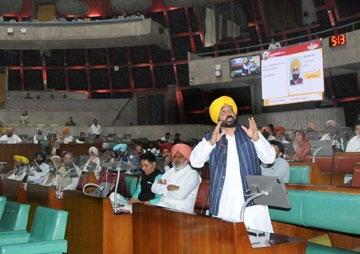
Treasury benches, led by Finance Minister Harpal Cheema, on Thursday moved a resolution to refer the conduct of Congress MLA Sukhpal Singh Khaira to the Special Privileges Committee of the House. The resolution was supported by MLA Sukhwinder Sukhi.
Congress MLAs objected to the resolution, accusing Speaker Kultar Singh Sandhwan of playing a partisan role during the proceedings.
As the treasury benches continued to raise the Khaira issue, Leader of Opposition Partap Singh Bajwa and other opposition members sought the Speaker’s reply on a condemnation notice moved against Chief Minister Bhagwant Mann for his remarks about women in Sangrur.
Despite opposition objections, the Assembly passed the resolution, referring the matter of Khaira’s conduct to the Special Privileges Committee for further scrutiny.
Mediation must precede trial in cheque-bounce cases; courts shouldn’t be turned into recovery agencies: HC
Observing that criminal courts are facing a “tsunami” of cheque-dishonour cases, the Punjab and Haryana High Court has directed that all matters under the Negotiable Instruments (NI) Act must be first referred to mediation.
The bench observed that the swelling docket of such cases required a structural shift towards mediation. “In the continuous tsunami of criminal cases being filed against the dishonor of the cheque, the proverb, ‘When you are at the edge of a cliff, sometimes progress is a step backwards,’ needs adherence,” the court observed.
Laying down the procedure, the court directed that every trial court (CJM/JMFC) must immediately refer all NI Act matters to mediation after service of the accused, unless the matter had
already been sent for mediation. Similarly, the sessions courts dealing with appeals and revisions must refer all pending matters to mediation after service of the opposite party if they have not already been mediated.
The court clarified that mediation remained voluntary and non-binding until approved by the court. The trial proceedings could resume without prejudice if mediation failed. “Wait, and it withers, rush, and it dies, only through prudence justice survives,” the bench added. It was assisted in the matter by advocates Viren Sibal, Divyanshu Goyal, Himanshu, and Amandeep Singh. The high court also directed that the state should ordinarily not be impleaded as a party in cheque-bounce cases, describing them as essentially private disputes.
Bhuvnesh Chopra, a resident of Ferozepur, was wanted in connection with at least nine FIRs registered in Ferozepur, Fazilka and Patiala districts. The DGP said Chopra was a major facilitator of narcotics smuggling from Pakistan into Punjab and had managed to escape abroad to evade arrest.
Beyond drug trafficking, Chopra has also been named as the prime conspirator behind a triple murder in Ferozepur in August 2024, in which a young girl and two others were killed following a rivalry between Chopra and one of the victims, Dildeep Singh.
BC Helps Parents Boost their Education Savings!
Indian Rights Activist raises cadaver organ donation issue at UN Human Rights Council
The need to strengthen awareness and systems for cadaver organ donation was highlighted during the 61st session of the United Nations Human Rights Council, where an Indian rights activist stressed that the shortage of transplantable organs remains a serious global health and human rights concern.
Gobind Gurbani, speaking through video conference, drew attention to the growing gap between the number of patients requiring organ transplants and the limited availability of donated organs. Gurbani, who heads the Sindhi Adhikar Manch Association in India and is also associated with the Eye Bank Society of Rajasthan, emphasised that the issue goes beyond medical limitations and directly affects the right to life and the right to health.
Referring to global health standards recognised by institutions such as the World Health Organization, he said thousands of patients die each year while waiting for life-saving transplants. According to him, cadaver organ donation--
donation of organs after brain death offers an ethical and effective solution that could help bridge this gap.
Gurbani noted that a single organ donor has the potential to save up to eight lives through transplantation. However, several barriers continue to limit the growth of cadaver donation programmes, including lack of public awareness, limited institutional infrastructure and social hesitation around posthumous organ donation. He also cautioned that persistent shortages of transplantable organs may create conditions that encourage illegal organ trafficking and exploitation, highlighting the need for stronger safeguards in the transplantation system. Calling for coordinated action, Gurbani urged governments to improve legal and ethical frameworks governing organ donation and transplantation. He also stressed the importance of strengthening brain-death certification procedures, improving hospital-based organ retrieval systems, and launching culturally sensitive public awareness campaigns.
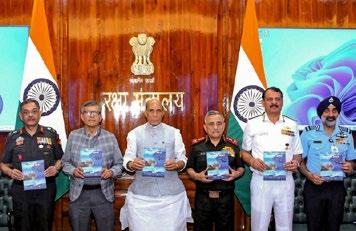
Drone agency, space command and expanded air defence system: MoD releases vision 2047
Ministry of Defence on Thursday unveiled a plan that includes creating dedicated separate entities for analysing data, operating drones, and geo-spatial mapping.
Full-fledged commands for space operations and cyber operations are to be raised while the expanded air defence system named ‘Sudarshan Chakra’ is expected by 2030.
Defence Minister Rajnath Singh on Tuesday released ‘Defence Forces Vision 2047: A Roadmap for a Future-Ready Indian Military’ at an event, and it was made public on Thursday.
As per the 47-page document, the plan is to expand the ballistic missile defence (BMD) and air defence systems for the defence of economic
and strategic assets, as well as civilian installations against multi-domain threats, as part of mission Sudarshan Chakra. India has tested a BMD and is looking to expand, analysts explained.
CBI serves High Court notice to Kavitha in excise policy case
CBI officials on Thursday served a notice of the Delhi High Court to the Telangana Jagruthi president K Kavitha here in connection with the excise policy case.
Kavitha in a post on X said she was served the notice by the central investigating agency.
In the notice, Kavitha, who was among those discharged in the case by a Delhi court recently, was informed that the application/petition filed by CBI against the trial court’s decision, is fixed for hearing on March 16.
“Should you wish to argue anything against the application/petition, you are at liberty to do so on the date fixed or any other date to which the case may be postponed. Also take notice that in default of your appearance on the date fixed and in the manner above, the application/petition will be heard and decided ex parte in your absence,” the notice read.
She further said she is in consultation with her legal team and will respond appropriately through official channels.
Indian national killed in attack by Iran against US-owned oil tanker in Iraqi waters
An Indian national has reportedly been killed in an attack carried out by Iran using a “suicide” boat against a US-owned oil tanker near Iraq.
US-owned and Marshal Island-flagged oil tanker Safesea Vishnu was attacked off Khor Al Zubair port inside Iraq’s territorial waters by an Iranian “suicide” boat, sources told PTI.
An Indian national, whose name is being withheld at the moment, has reportedly been killed in the attack while the remaining 27 crew and personnel on the oil tanker have been rescued and taken to Basra, the sources said.
Sources close to Safesea, speaking on condition of anonymity, said the company was devastated to learn of the loss of the Indian national in the attack.
They have called for the Indian government to strongly condemn the attack and take urgent action to ensure safety of crew onboard ships in the region amid the escalating West Asia conflict. The sources voiced concern that as Indians constitute over 15 per cent of the seafarers globally, irrespective of whichever ship Iran targets, Indian nationals would be “collateral damage”. According to information on website Vessel Finder, the 228.6 meters long and 32.57 meters wide Safesea Vishnu is a crude oil tanker built in 2007, currently sailing under the flag of Marshall Islands.
It has a gross tonnage of 42010 and deadweight tonnage of 73976.
The Iranian warship Iris Dena was given permission by India to dock three days before it was torpedoed by a US submarine, India has said.
Foreign Minister S Jaishankar said Iran had sought permission for three of its ships to dock at Indian ports on 28 February - the day the US and Israel began a war on Iran - and permission was granted by India on 1 March.
The ships' movements between 1 and 4 March are not clear and nor is why only one of them made it to India.
The sinking of the Iris Dena, with 130 sailors on board, in international waters off Sri Lanka's southern coast on 4 March marked a dramatic widening of the war - and raised questions about India's authority in its backyard. It was the first military strike outside the Middle East since the US and Israel launched their war on Iran. President Donald Trump has said destroying Iran's navy is one aim of the assault.
The three Iranian ships - Iris Dena, Iris Bushehr and Iris Lavan - had all participated in a military exercise hosted by India between 15 and 25 February in the coastal city of Visakhapatnam.
They left Indian waters on 25 February and were likely to have been in international waters on 28 February - when the US and Israel began attacking Iran. "The Iranian side had requested permission on 28 February for three ships in the region to dock at our ports. This was accorded on 1 March," Jaishankar told parliament on Monday. "Iris Lavan actually docked on 4 March in Kochi. The crew is currently in Indian naval facilities. We believe that this was the right thing to do."
On 4 March, Iris Dena sank after being hit by a torpedo fired from a US submarine, killing at least 87 of its crew members.
According to the Indian Navy, the Iris Dena was operating about 20 nautical miles - roughly 23 miles (37km) - west of Galle in waters that fall
under Sri Lanka's designated search-and-rescue zone on the day it was struck.
The US tracks vessels across the world's oceans, and a quarter of its submarine fleet of 65-70 is at sea at any given time, according to analysts.
Iran's Foreign Minister Abbas Araghchi said last week the US had "perpetrated an atrocity at sea, 2,000 miles away from Iran's shores" and that the warship was "struck in international waters without warning." Later, Sri Lanka said it had provided sanctuary for Iris Bushehr on 5 March, a day after it requested for docking following an engine malfunction.
Eventually, India also confirmed that Iris Lavan was docked in its southern city Kochi.
The BBC has written to the Iranian embassy in India and India's external affairs ministry seeking clarification on the movements of the three Iranian naval vessels after Delhi granted them permission to dock. US Defence Secretary Pete Hegseth has touted the attack on Iris Dena as an example of America's military prowess, claiming it was "the first sinking of an enemy ship by a torpedo since World War Two".
While it is the first time since 1945 that an American submarine has sunk an enemy ship this way, the UK and Pakistan have both sunk vessels using torpedoes since then.
The Iris Dena was one of about 20 Iranian navy vessels destroyed since Israel and the US launched co-ordinated strikes on Iran.
Millions of euphoric Indians celebrated on Monday what cricket great Virat Kohli hailed as a “phenomenal” display in winning the T20 World Cup for a record third time.
The co-hosts and pre-tournament favourites swept aside New Zealand by 96 runs in Sunday’s final in front of 86,000 spectators at Ahmedabad’s Narendra Modi Stadium.
India became the first team to lift the trophy on home soil, the first to retain it and are now the most successful side in the history of the global showpiece.
Indian newspapers praised Suryakumar Yadav’s men for their dominant performance, with the mass-circulation Times of India saying they had rewritten history in “bold strokes”.
“India didn’t so much win the title as stroll to it. It was a coronation rather than a final,” it said in a front-page report headlined, “Threemendous: T20 kings keep the crown.”
The English-language Indian Express said it was the first time India had won a showpiece event without a “larger-than-life megastar”.
It credited coach Gautam Gambhir with
“sowing the seeds” of belief in the team, calling him the “architect” of India’s triumph.
Cricket is a national obsession in the world’s most populous country, woven deeply into its cultural and social fabric. Star players enjoy adulation and the game serves as a rare unifying force in an otherwise diverse nation.
As the victory became inevitable Monday morning NZT, thousands of delirious fans converged on Delhi’s India Gate monument waving tricolour flags, beating drums and dancing to blaring Bollywood hits.
Drivers came out of their cars on the broad avenues around the monument to join impromptu street celebrations that stretched long into the next day. The scene was replicated in cities, towns and villages across the country.
The total curfew imposed in Meghalaya's East and West Garo Hills districts was relaxed on Thursday to allow people to procure essential items, officials said.
The curfew in East Garo Hills was relaxed for five hours from 8 am to 1 pm, while in West Garo Hills, it was relaxed for two hours from 2 pm to 4 pm. The district administrations said the relaxation was allowed to enable residents to procure essential commodities. The curfew was imposed in the two districts under Section 163 of the BNSS
after violence erupted in West Garo Hills during protests linked to the elections to the Garo Hills Autonomous District Council (GHADC), with demonstrators opposing the participation of nonGaro communities in the filing of nominations for the polls. The unrest has led to incidents of arson and damage to property in parts of the Garo Hills region, prompting authorities to deploy additional security forces, including five columns of the Army — three in Tura town and two in Chibinang — to restore order.
In a landmark ruling, India's Supreme Court has allowed the removal of life support of a 31-year-old man who has been in a vegetative state for more than a decade.
This is the first instance of court-approved passive euthanasia - the act of withdrawing or withholding life-sustaining treatment - in India. The man, Harish Rana, had not left a will specifying directives for his treatment before he had an accident.
India legalised passive euthanasia in 2018 but active euthanasia - any act that intentionally helps a person kill themselves - remains illegal.
Rana suffered serious head injuries after falling from a fourth-floor balcony in 2013. He has remained in a comatose state since then. Over the years, his parents petitioned courts several times to allow their son's life support system to be removed. They have said in interviews to local media that they had exhausted all their savings caring for Rana and were worried about what would happen to him after they died.
On Wednesday, Rana's father, Ashok Rana, said in a statement that his family was grateful to the Supreme Court for its "humanitarian" judgement.
"This is a difficult decision for our family but we
are doing what's best for Harish," he added.
Rana's case had sparked a debate in India around the ethics of court-approved passive euthanasia, with some noting that it goes against the principle of self-determination, which is the foundation of a living will.
A living will is a legal document which allows a person over 18 years to choose the medical care they would like to receive if they develop a terminal illness or condition with no hope of recovery.
For example, they could specify that they don't want to be put on life-support machines or insist that they want to be given adequate pain-relieving medication.
In this case, Rana was not able to give his consent or expressly state that he wanted to be taken off life support as he was in a coma since the accident.
On Wednesday, the Supreme Court noted that Rana has not been responding to treatment.
"He experiences sleep-wake cycles but exhibits no meaningful interaction and has been dependent on others for all activities of self-care," the judges said, according to legal news website Bar and Bench. Rana was an engineering student at Punjab University in Chandigarh when he fell from the fourth-flour balcony of his paying guest accommodation.
Since then, he has been breathing with the help of a tracheostomy tube and is fed through a gastrostomy tube. He cannot speak, see, hear or recognise anyone, his parents have said. In 2024, they approached the Delhi High Court seeking passive euthanasia for their son, but their plea was rejected on the grounds that Rana hadn't been placed on life-support machines and was hence "able to sustain himself without any external aid", the court noted.