Americans travel to Pakistan to free Christians trapped in modern-day slavery
Idaho resident Aaron Hutchings arrived at a Pakistani brick factory in January. The devout Christian told Fox News Digital that he was shocked to see children turning bricks under the hot sun to work off the debts that their families had incurred, sometimes over the course of generations.
Continued on Page 9...
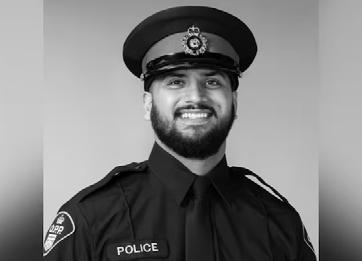
South Asian Police officer shot dead in Ontario
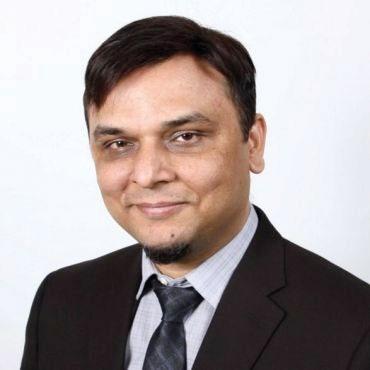
An Ontario Provincial Police (OPP) constable killed in the line of duty near Hearst is being remembered as a “selfless” and “courageous” officer whose death has left communities across the province and beyond grieving.
“He was a young man who put himself in harm’s way to keep the public safe,” said Patrick Brown, mayor of Brampton, where Const. Tarun Bali was raised and still has family.
Brown said Bali, 29, had volunteered for a backfill assignment in northern Ontario to help police services during staffing shortages. On Tuesday, the officer, who had been with the OPP for 2½ years, was seriously injured during an investigation near Hearst and later died.
Continued on Page 10...
www.theasianstar.com
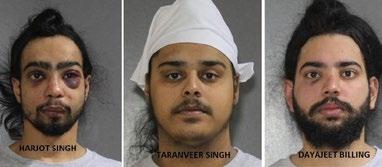
3 Punjabi youths jailed for extortion-linked shooting at Surrey home
Three Punjabi youths have been sentenced by a Canadian court for their involvement in an extortionlinked shooting incident at a residence in Surrey, British Columbia.
According to Canadian media reports, Taranveer Singh (19 at the time of the incident), Harjot Singh (21), and Dayajeet Singh Billing (21) pleaded guilty on June 9 in Surrey Provincial Court.
“Taranveer Singh pleaded guilty to reckless discharge of a firearm and was sentenced to five years in prison. After credit for time served, he'll serve nearly 4.5 more years behind bars.
Dayajeet Billing and Harjot Singh both pleaded guilty to throwing an explosive substance, and were sentenced to just over two years each in prison. After credit for time served, Billings will spend another 20 months behind bars, while Harjot Singh will serve 18 more months, followed by two years of probation each,” report.
The words of Fifa president Gianni Infantino when hailing this summer's World Cup across the United States of America, Mexico and Canada. Never afraid to hype football's showpiece event, the head of the world governing body has portrayed the first pan-continental version as the most inclusive, welcoming and unifying to date. But many others would choose different superlatives.
The most politicised, for instance. And the most expensive. Potentially the hottest, or the most polluting. Certainly the most lucrative for Fifa. Whatever one's perspective, it seems certain that away from the on-field spectacle, this super-sized World Cup could be among the most contentious ever.
Continued on Page 10...
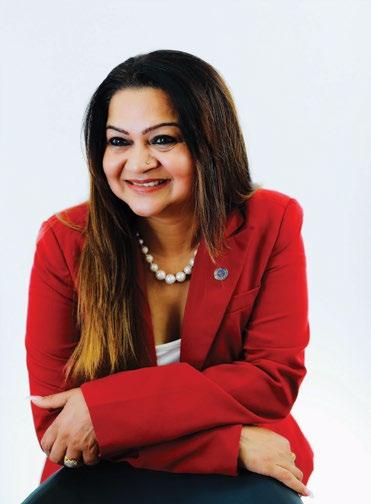
Randeep Sarai, Secretary of State (International Development), is proud of the new Groceries and Essentials Benefit, as well as the one-time GST Credit top-up that was issued to Canadians on, June 5, 2026.
This support represents a one-time 50% increase in the annual GST Credit and has reached more than 1.6 million British Columbians. Across the country, over 12 million Canadians will benefit from the Canada Groceries and Essentials Benefit.
Sarai says this is an important step for his government as it helps people in need.
The benefits will mostly help those families who are earning less than $40,000 a year. The cheques should be arriving this month and sink. Addition to other government benefits like GST, CT. etc.
Continued on Page 3...
Nithya Raman advances over Spencer Pratt to face Los Angeles Mayor
Nithya Raman will advance to the November election in the Los Angeles mayoral race after overtaking Spencer Pratt for second place as more votes were counted in the days after the June 2 primary.
Raman will face incumbent Mayor Karen Bass, who CNN projected on election night would advance to November.
She defeats Pratt, a Republican former reality TV star who generated buzz with a focus on homelessness and Bass’ response to the devastating Palisades fire. Raman, a city councilmember, may be a tougher opponent for Bass in November than Pratt would have been. While the mayoral election is officially nonpartisan, Democrats heavily outnumber Republicans in Los Angeles, and Raman has campaigned as a progressive outsider
against Bass. “Right now, we have a city that feels rudderless,” Raman told CNN’s Elex Michaelson before the primary. “So many positions that haven’t been filled, places where Angelenos feel abandoned on some of the most important issues facing this city. I will bring that urgency, I will bring that accountability, I will bring that focus that Los Angeles needs and that Angelenos need.”
Pratt was in second behind Bass on election night, but he lost ground to Raman as the vote count progressed. California elections often take several days to resolve, a function of the nation’s most populous state running a largely mail-in election in which properly postmarked ballots received up to seven days after Election Day can be counted.
Raman overtaking Pratt was becoming increasingly likely in recent days.
Votes reported after election night in California tend to shift toward Democrats, as they typically include mail ballots that were cast closer to Election Day itself.
Across all votes reported in the June 2 primary
since the close of election night counting, Raman had outperformed both Bass and Pratt through Sunday, gaining 43,000 votes on Pratt and increasing her overall share of the vote by about 5 points. Reports this weekend were her strongest of the contest, with Raman winning about 40% of each batch and Pratt around 18%. On election night last week, Pratt said that he appealed to any city resident “that just wants basic quality of life,”
regardless of party.
“I’m an Angeleno who said, ‘Enough is enough,’ and I had to step up,” he said. “I’m going to show everybody that I’m their mayor.” In recent weeks, Pratt, the one-time villain of MTV’s “The Hills,” gained national praise from Republicans and those in President Donald Trump’s orbit. A filmmaker who supports Pratt created an artificial intelligence video that portrays Pratt as Batman and Bass as the Joker, and features Los Angeles residents pelting the state’s best-known Democratic figures with tomatoes. Pratt’s supporters – and Trump –criticized how the city and state run elections in recent days as Pratt’s lead over Raman narrowed. Trump ended an interview Sunday with NBC’s “Meet the Press” after accusing local officials of “cheating.” California has long had a reputation for being slow to report the results. That’s because a significant number of the total votes come in as mail ballots are dropped off on Election Day, according to the California Voter Foundation, a nonprofit organization that seeks to improve the election process.
B.C. home sales down in May, with rising mortgage rates and weak labour market
Rising mortgage rates and a weaker labour market are weighing on home sales in British Columbia, especially in the Lower Mainland.
The B.C. Real Estate Association says home sales on the Multiple Listing Service System in May reached just short of 6,800 units, down two per cent from the same period in 2025.
Average residential prices also slid 1.4 per cent to just short of $946,000 from the May 2025 figure of about $959,000.
Association chief economist Brendon Ogmundson says the recent rise in mortgage rates "presents an unexpected headwind for the market this year and may further delay a recovery in activity.”
Residential sales dollar volume is down
eligible for
eight per cent to $25.1 billion, compared with the same period in 2025.
Unit sales also fell almost seven per cent so far this year compared with last year, reaching just short of 27,000 units.
grocery benefit, how is it calculated and when do payments start?
The federal government’s new Canada Groceries and Essentials Benefit will see its first round of quarterly payments go out today.
The benefit was known previously as the GST/ HST credit, so people who were eligible for that program likely will receive the new benefit. Here’s what you need to know about the program.
It’s based on your 2024 tax return. The government has set maximum income levels to qualify for the top-up, with the maximum 2024 income level for a single person with no children being $56,181, and $74,201 for a single person with four children.
Who’s eligible for the Canada Groceries and Essentials Benefit, and the one-time GST/HST top-up?
The government estimates about 12 million Canadian are eligible. Before the quarterly payments of the grocery benefit begin, eligible recipients will receive a one-time GST/HST payment topup to cover the transition period between the old program and the Canada Groceries and Essentials Benefit. Eligible Canadians are set to receive their one-time top-up payment on June 5. What’s the amount of the top-up?
The maximum 2024 income level for the topup for a married or common law couple with no children is a combined $59,481, while it’s a combined income of $74,201 for a couple with four children.
The maximum payment for a single person with no kids is $267, while the maximum for a single person with four children is $717.
The maximum payment for a married or common-law couple with no kids is $349, while the maximum for couples with four kids is $717.
What about the quarterly Canada Groceries and Essentials Benefit payment amounts?
Payments are based on 2025 tax returns. The first quarterly payment will begin in July, with other payments expected to follow in October, January and April.
The maximum annual benefit a single person can receive for the grocery rebate is $679.
The maximum annual grocery and essentials benefit for a married or common law couple is $890. The annual grocery benefit for each eligible child under the age of 19 is an additional $234 per year.
Trump is unlikely to rip up CUSMA, his trade deal with Canada and Mexico
Despite U.S. President Donald Trump once again flexing his power to scrap his country's free trade deal with Canada and Mexico, there's plenty of reason to doubt he would actually follow through on such a threat.
Trump signed the Canada-U.S.-Mexico Agreement (CUSMA) in his first term and at the time boasted of it as "the most modern, up-to-date, and balanced trade agreement in the history of our country."
On Wednesday, he told reporters at the White House he is "not looking to renew" the agreement when it faces a review on July 1.
Even without a renewal, the agreement remains in force until 2036. That changes only if a country gives six months formal notice of its intention to withdraw.
Canadian and Mexican negotiators have been expecting that the U.S. would not simply renew CUSMA, but instead would push for changes to the deal at the negotiating table.
Here are five reasons to believe Trump won't rip up CUSMA.
1. U.S. industries want it preserved Influential lobby groups representing every major sector of the U.S. economy are urging the Trump administration to renew CUSMA, or USMCA as it's called south of the border.
2. Formal negotiations with Mexico July 1 marks six years since CUSMA took effect, and it's also the date set in the text of the agreement
for a formal review by the three countries.
In that review, the options are: A) extending the agreement for another 16 years, or B) reviewing it annually, either until it expires or a deal is reached to extend it.
Canada and Mexico both want option A, and have said they're willing to negotiate tweaks. The White House has not made its position public.
3. Movement in Canada-U.S. talks
CUSMA is crucial to the Canadian economy because it covers some $1.3 trillion in cross-border trade with the U.S. and shields roughly 90 per cent of Canada's exports from Trump's tariffs.
Although the U.S. has not entered the same kind of formal negotiations with Canada as it has with Mexico, the top trade officials from each country held fresh online and face-to-face talks over the past few weeks.
4. Political pressure
There's an argument to be made that Trump and his Republican Party have enough political troubles on their plate without the economic time-bomb that a notice of withdrawal from CUSMA would almost certainly trigger. Trump's approval rating is averaging below 40 per cent, threatening to drag down the Republicans' prospects of maintaining their slim holds on the House and the Senate when the midterms come in November.
5. Trump's threats stop short of withdrawal
While it's true that Trump can at any moment give six months' notice to withdraw from CUSMA, his threats have not yet gone that far.
On Wednesday, although Trump said what's great about CUSMA is "the right to terminate," he didn't actually threaten to end it.
Talking tough in public is a classic Trump negotiating tactic, says William Pellerin, an international trade lawyer with McMillan LLP in Ottawa.
Continued from Page 1...
The world’s economic and trade landscape is undergoing a rapid transformation, thrusting countries, businesses, and workers into a period of uncertainty. Canada’s new government is responding accordingly, with a focus on what we can control: building a stronger economy at home, protecting Canadian jobs and sectors, and making life more affordable. Today, the Honourable Randeep Sarai, Secretary of State (International Development), highlighted that the Canada Revenue Agency (CRA) has begun issuing a onetime top-up payment under the new Canada Groceries and Essentials Benefit, equal to a 50% increase in the annual 2025-26 value of the Goods and Services Tax (GST) Credit. This measure will deliver $3.1 billion in immediate support to the 12
million Canadians who currently receive the GST Credit, including around 1,656,000 individuals in British Columbia. Starting June 5, anyone who received the GST Credit in January 2026 will automatically get this one-time payment. In addition, the new Canada Groceries and Essentials Benefit will represent a 25% increase over the GST Credit on which it is built. It will provide $8.6 billion in additional support over the 2026-27 to 2030-31 period, including to 500,000 additional individuals and families, with enriched quarterly payments starting in July. Combined with the onetime top-up, this means that a family of four will receive up to $1,890 this year, and about $1,400 a year for the next four years; and a single person will receive up to $950 this year, and about $700 a year for the next four years.
Bishnoi extortion gang gunman testifies he was paid $4,000 for B.C. shooting
A convicted member of the Lawrence Bishnoi gang testified at his deportation hearing on Thursday that he was paid $4,000 to open fire on a house on Vancouver Island.
Abjeet Kingra told the Immigration and Refugee Board that a co-worker at a Winnipeg moving company recruited him to shoot the B.C. home of Punjabi singer A.P. Dhillon.
“He told me that no one should be at home, and you just need to fire outside the house, and you will get money,” Kingra, an Indian citizen, testified at his hearing.
Asked why the co-worker, also an Indian citizen, offered him the contract, Kingra replied, “I don’t know, maybe I am an idiot, that’s why.”
“I’m not that much intelligent,” he said The Canada Border Services Agency has asked the Refugee Board to order Kingra’s deportation on the grounds that he is a member of a criminal organization, the Bishnoi group.
The Board said it would release its decision on Monday.
Kingra is one of the first alleged Bishnoi members to face a public deportation hearing amid a crackdown on extortion crimes targeting South Asian Canadians. The case is part of Canada’s response to the epidemic of extortions that have spread fear in cities with large South Asian populations, particularly in B.C., Alberta, Winnipeg and Ontario.
Testifying by phone from the prison where he is being held in Mission, B.C., Kingra offered a glimpse into the workings of extortion gangs.
As a witness, Kingra displayed remarkable memory lapses, responding to many questions posed by the CBSA with, “I don’t remember.”
He denied being a Bishnoi member and said he was unaware the gang was behind the shooting he carried out until after he had done it.
“I have nothing to do with this gang,” he said.
But like many extortion gang members, he said he came to Canada from India on a student visa in 2018 and worked a variety of jobs in B.C. and Manitoba.
The two of them drove from Winnipeg to Vancouver Island. They first scouted Dhillon’s house and then returned later in the evening. After Sharma used gasoline to torch the vehicles in the driveway, Kingra fired 14 bullets at the home. Kingra used a phone to record a video of the shooting.
He said Sharma told him to make the video because “only with the proof you can get money.”
He said he didn’t know how the video had found its way to the Bishnoi gang, which posted it online after taking responsibility for the incident. He denied knowing the Bishnoi group was behind the shooting until he heard news reports the next day, and saw the video he had recorded.
“Even I was surprised that it was everywhere on the news channels in the morning,” he said. “I made the video because he [Sharma] said, ‘I will set the fire and my hands won’t be free.’”
He also denied knowing who had contacted Sharma about the job, where he got the gun, how long they took to drive across Canada and where they stayed. He said Sharma paid him in cash a few days after the shooting. He said he did not know where Sharma got the money.
Sharma fled Canada following the shooting and is now wanted by the RCMP.
A CBSA official, Jasbir Sandhu, argued that the Bishnoi gang uses a system of insulation, so that each member only knows the person above them in hierarchy. The judge who sentenced Kingra found he had committed the crime “at the behest of a criminal organization known as the Bishnoi gang.” Dhillon was targeted because someone who had appeared in one of his music videos had “fallen afoul of this organization,” the judge wrote.
Court evidence released in Abbotsford double murder trial
One month after a Supreme Court judge convicted three men of the murder of an Abbotsford, B.C., couple, Global News has obtained some of the evidence that was shown in court.
One of the pieces of evidence showed two of the killers, Abhijeet Singh and Khushveer Toor, filming themselves on the roof of the victims’ home one month before the killing.
The court then also saw a TikTok posted by Toor, showing him putting one of the murder weapons in a car.
In May, three men were found guilty of firstdegree murder in the deaths of 77-year-old Arnold De Jong and 76-year-old Joanne De Jong.
The court earlier heard that Arnold died by asphyxiation, with his entire head and face wrapped in duct tape, while Joanne was bludgeoned and had her throat slashed.
The three men, including Gurkaran Singh, all in their 20s, were arrested in December 2022, after the De Jongs’ bodies were found in their Abbotsford home that May. Prosecutors say the suspects had done cleaning work there before the home invasion, and that the men killed the couple before stealing cheques, credit cards and a power washer.
News that one of the killers is trying to spend fewer years behind bars has left the De Jongs’ daughters furious.
“Our parents were tortured, they were murdered,” Sandra Barthel said.
“I’m sure our parents begged for mercy and we’re not shown that, and yet the irony of a faint hope clause in this case in which they can get released from jail, possibly after 15 years, just does not seem just to us.”
The trio was convicted of first-degree murder, which carries an automatic life sentence with no chance of parole for 25 years.
Toor’s lawyers have applied for a constitutional challenge, which can happen when there are multiple murder victims.
It’s expected counsel for the other two will join the challenge. That hearing is set for the first week of September, further delaying sentencing.
Daughter Heather Hoogland said the family is frustrated. “It’s like opening a can of worms for any person that is coming to Canada, and if they commit a crime, they can get off scot-free.”
Ottawa aims to cut grocery bills with $3.2B food security strategy
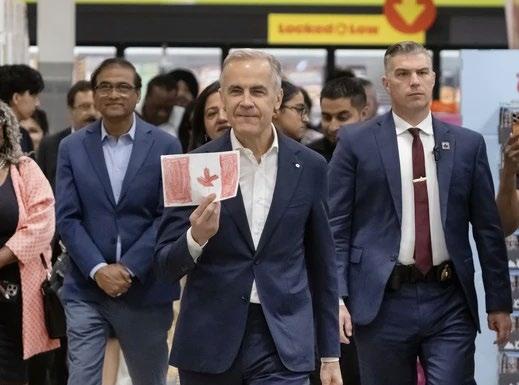
The federal government on Thursday unveiled a $3.2-billion national food security strategy aimed at lowering grocery bills by overhauling how food is grown, processed and sold in Canada.
The multi-year plan, titled “More Choice. More Control. More Canada,” seeks to reduce the country’s dependence on international imports and break the grip of a highly concentrated retail market that officials say has contributed to surging food inflation.
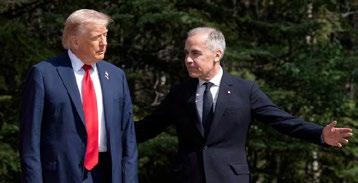
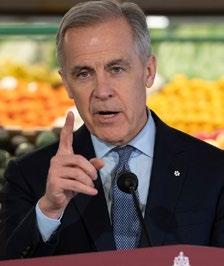
“A country that can’t feed itself or fuel itself or defend itself isn’t truly sovereign. It’s vulnerable to global shocks, it’s vulnerable to supply chain disruptions, vulnerable to tariffs,” Prime Minister Mark Carney said while announcing the strategy in Toronto.
“So to protect our sovereignty and truly take control of our future, we have to take control of our food system.”
A central pillar of the strategy is the creation of a so-called Food-Link Fund, which will see Ottawa provide $1 billion over 10 years to expand the Ontario Food Terminal and build new regional
“food hubs” across the country. Those hubs will then allow independent grocers and local farmers a way to bypass the “Big Five” retail chains that currently control 75 per cent of the Canadian market, according to the plan.
“We are trying to inject some competition, some alternatives,” a government official told reporters during a Thursday morning technical briefing.
“We’re really looking at the structural gaps and the pressures faced by independent grocery stores, different outlets where food can be purchased, restaurants, institutions needing to source food.” The strategy arrives as Canadians face food prices that have risen 31 per cent since 2020, an issue that has been repeatedly highlighted by opposition Conservatives and putting pressure on the Liberal government to address affordability.
That inflation, the government says in its strategy, is similar to food inflation in other G7 countries and has been caused by domestic and global pressures, including the Russian invasion of Ukraine and the war in the Middle East, which have driven up the cost of fuel and fertilizer.
B.C. sees 28 per cent drop in toxic drug deaths in April compared to previous year
The B.C. Coroners Service says 119 people in the province died due to suspected unregulated drug toxicity in April, averaging just under four deaths per day.
That is a substantial drop from the same moth last year, when 165 people died from toxic drugs.
Of the 119 deaths, 68 per cent were aged between 30 and 59-years-old, with 76 per cent of the total deaths being male.
Compared to previous months in 2026, April saw the lowest number of deaths per day and second lowest total behind February, when there were 115 deaths. So far in 2026, the Vancouver Coastal Health region has accounted for 145 deaths and Fraser health has seen 134 deaths, making up 53
per cent of all toxic drug deaths in B.C.
This year, 81 per cent of toxic drug deaths happened inside places such as private residences, social housing, shelters and other locations.
The remaining deaths happened in outdoor spaces including vehicles, streets and parks.
Fluorofentanyl, a highly potent synthetic opioid was the most commonly detected substance found in the deceased, with two-thirds of those tested being positive.
Cocaine, fentanyl and methamphetamine were all found in more than half of those cases as well.
The data from the BC Coroners Service says smoking continues to be the most common use of consumption, at 70 per cent.
Ph: 604-591-5423
Fax: 604-591-8615
editor@theasianstar.com
Editor: Umendra Singh
Marketing and Sales: Ravi Cheema
604-715-3847
Shamir Doshi
604-649-7827
Harminder Kaur
778-708-0481
Parminder Dhillon
604-902-2858
Pre-Press: Avee Waseer
Production: Ozmo Media
www.theasianstar.com
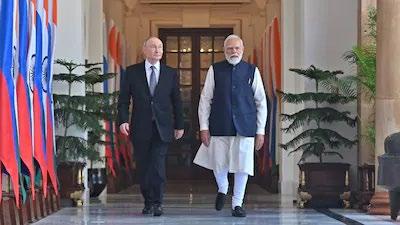
Twelve years, one voice: The diplomatic compounding of Modi’s India
On 10 June 2026, Narendra Modi surpassed Jawaharlal Nehru’s tenure to become India’s longestserving elected prime minister. The milestone is politically significant, but its larger importance lies in the fact that it offers a rare opportunity to assess what 12 years of strategic continuity can achieve in foreign policy.
Most governments operate within short electoral cycles, pursuing immediate gains. But foreign policy is rarely shaped by dramatic breakthroughs but by the cumulative effects of consistency. PM Modi’s tenure demonstrates precisely that.
The defining feature of India’s external engagement since 2014 has been multi-alignment. Critics would often dismiss it as indecision masquerading as strategy. Events have largely proved otherwise. India maintained its defence and energy relationship with Russia even after the 2022 invasion of Ukraine, while simultaneously deepening technologytransfer and defence co-production arrangements with the United States. It stood alone among major democracies in publicly challenging China’s Belt and Road Initiative in 2014, endured four years of Himalayan military brinkmanship following the Galwan Valley clashes of 2020, and then, with the unhurried patience of a state that understood the board better, negotiated a disengagement along the Line of Actual Control in late 2024.
By the time PM Modi met Xi Jinping in Kazan that October, the logic had become impossible to argue with. Even at the height of military tension, bilateral trade between the two countries surged and reached $151.1 billion in FY2025-26, with China overtaking the United States as India’s largest trading partner. Simultaneous rivalry and pragmatic economic interdependence is the texture of greatpower management, and calibrating it requires institutional capital that only accumulates over time.
The India-Pakistan military crisis of May 2025 tested the same doctrine under far more acute pressure. India held, and the multi-alignment framework is what gave New Delhi the strategic room to act without permanent rupture with any major power. From within India’s foreign policy establishment, the framing has been direct: “what
we are pursuing is a win-win foreign policy,” partnerships that cut across ideological and regional lines. What they mean, stripped of the diplomatic modesty, is that India will work with you on your terms, provided, and this is important, that those terms do not require India to abandon its own. There is a tendency in foreign policy circles to treat economic data as noise; everyone appreciates it, lauds it, but treats it as the dull numerics that precede the interesting part about geopolitics and grand strategy. This is a mistake of breathtaking proportions. Economic weight is not the backdrop to foreign policy. It is, in the 21st century, what drives foreign policy.
When Modi assumed power in 2014, India’s economy was the tenth-largest in the world. It now stands on the threshold of the global top four, a $4.15 trillion enterprise growing faster than any other major economy. India’s own year-end review claims the fourth position outright, having overtaken Japan; the IMF’s April 2026 assessment places it
sixth. The precise rank is a matter of methodology; the direction of travel is not. Between April 2014 and March 2024, India attracted $667 billion in foreign direct investment, roughly two-thirds of all FDI it had received in the previous 24 years.
As of May 2026, PM Modi has made 100 international trips to 80 countries, nearly double that of his predecessor. But each visit at its core is an economic proposition: here is what India offers, here is what India needs, and here is why, in the economy you are currently navigating, those two facts should matter considerably to you.
There is, however, one figure in this otherwise confident picture that deserves to be read without embellishment. China’s emergence as India’s largest bilateral trading partner in FY2025-26, with total trade reaching $151.1 billion, arrived alongside a record deficit of $112.6 billion, with India exporting $19.47 billion while importing $131.63 billion in return. This is frequently cited as evidence of a successful post-Galwan diplomatic reset.
19-year-old to be charged after Toronto police officer shot in investigation tied to U.S. consulate shooting
A 19-year-old will be charged with first-degree murder in the death of a Toronto police constable shot in an exchange of gunfire in the city's northwest end Thursday morning, police say.
The shooting happened as officers were conducting an investigation linked to several other incidents involving firearms around the Greater Toronto Area, Toronto police Chief Demkiw said, including one that took place at the U.S. consulate in March.
Const. Marc Pinizzotto, 43, was "a hero in life, not death," Demkiw said at a news conference outside Sunnybrook Health Sciences Centre. Pinizzotto was an 18-year veteran of the force who spent the last five years on the emergency task force (ETF), he said.
Demkiw said. "We are doing everything we can to support them at this difficult time."
A procession was held from Sunnybrook to the chief coroner's office at 1 p.m., according to a news release by Toronto police.
"There's a very heavy sorrow in our community right now," Demkiw told reporters through tears.
Special Investigations Unit spokesperson Monica Hudon said an "exchange of gunfire" broke out while police were carrying out a search warrant at a residential building near Tretheway Drive and Black Creek Drive around 5:40 a.m. The police watchdog is investigating the circumstances that led to the shooting and officer's death.
"No words can capture the impact on Marc's family, who expected him to come home today,"
Hudon said police executed several search warrants at a building in the area Thursday morning. At an apartment unit on the fourth floor, a suspect discharged a firearm and hit an officer, she said.
Another officer then shot multiple times at the 19-year-old suspect, Nicholas Bennett of Toronto, who is in hospital in critical condition, Hudon said. Bennett will be charged with first-degree murder of Pinizzotto.
She said four other people were in the apartment unit at the time. Demkiw said another 19-year-old suspect, Zara Jabbi, is still outstanding and urged the man to turn himself in.
He said the suspect was related to the broader investigation but he was not necessarily involved in the officer's shooting.
Demkiw warned residents to contact police immediately if they see the suspect, who is considered armed and dangerous. Pinizzotto's family is devastated by the "heartbreaking" loss, said Toronto Police Association president Clayton Campbell.
Police seek extension on warrant to search former mayor Jyoti Gondek's phone
Former Calgary mayor Jyoti Gondek hasn’t voluntarily provided police the passcode to her cellphone, which was seized as part of a municipal corruption investigation, court heard Wednesday.
But the lawyer for the ex-mayor said Gondek has an “unqualified” right under the Charter to maintain her silence.
Calgary Police Service lawyer Doug Taylor is applying for an extension to an order allowing police to seize Gondek’s phone in March after being granted a search warrant at her residence.
tabled by former councillor Sean Chu after a proposed land-use bylaw amendment failed on a 6-6 vote.
According to an affidavit from lead Det. Matt White which was read out in court by Taylor, Gondek has been linked to a criminal investigation of a municipal campaign contributor. White has been seconded to the RCMP to conduct the investigation. The CPS lawyer said the investigation focused on a reconsideration motion
The new vote, which allowed Gondek to participate after she was not present for the initial vote, passed 8-5, with Chu also changing his position. “Initial information received by police was that David White, who runs a company that assists developers navigate City of Calgary processes called CivicWorks, had been offering campaign donations that exceeded the maximum allowed to councillors in exchange for them tabling a reconsideration motion,” Taylor read from the detective’s affidavit.
“A search of White’s phone yielded evidence of the offences, and it was determined that Gondek had provided guidance to White on a tactic to approach another councillor in an effort to secure a reconsideration motion.
3 children targeted for sexual exploitation by 'violent' online group 764: West Shore RCMP
The West Shore RCMP say they are investigating several recent cases of children allegedly being targeted by a global online group known for grooming or coercing children into violence.
"We have three children between the ages of 10 and 14 years old who have been coerced into sexual exploitation online, they've been coerced into committing violence against themselves and then putting that content out, giving it to the perpetrator," said Cpl. Nancy Saggar, a spokesperson for the RCMP.
Extremist network 764, which is classified by the Canadian government as a terrorist entity, typically targets children between the ages of eight and 17 on popular social media, gaming and streaming platforms. From there, members of the group might build a relationship with the child, or ask them to film sexually explicit videos of themselves or others, harming themselves or others, or hurting animals.
Saggar says the three cases reported in recent weeks are not the first the RCMP have seen in the region — but it's a significant, concerning number to see in a short period.
The cases are being treated as independent of each other, she said.
"I'd characterize this group as a violent online entity, a group of people who are malicious, whose very intent is to harm children and to then spread that harm online and essentially feed off of it in the most disgusting manner," said Saggar.
It's an 'extremely traumatizing' experience for youth, outreach worker says Mia Golden, an outreach counsellor for the region's Mobile Youth Services Team, says she's worked with other children who have been
targeted by this group locally.
"There are probably more youth being targeted than we even know about," she said.
Several of the children she works with were "quietly suffering" for months before others in their life discovered it, she said. Golden says the youth were afraid to report their experiences, due to threats that they, or their family, would be harmed. From what she's seen, members of the group appear to be youth themselves, whose goal doesn't appear to be profit, but instead nihilistic violence.
"It's extremely traumatizing," Golden said.
"There's a lot of self harm, there is some suicide, suicidality, they are being forced to harm other people. This is happening in our community, but we feel that it's happening widespread across the country." Cases of children targeted by 764 — and some youth arrested on charges related to their alleged involvement with the group — have appeared across the country.
RCMP say 764 is part of a larger online network, known as the COM.
Mackenzie Hart, the coordinator for the Canadian Network for Research on Security, Extremism and Society and a PhD candidate in criminology at Simon Fraser University, says this type of nihilistic, violent extremist groups first began to emerge online in 2018.
It was during the early days of the COVID-19 pandemic that 764 specifically started to target children, she said, taking advantage of a generation that had been primed from a young age to invest in meaningful relationships online. This came as adults and children used the internet increasingly for work, school, and connection during pandemic restrictions.
Liberal
MPs have thoughts on whether Mark Carney is a 'demanding' boss
Some Liberals are defending Prime Minister Mark Carney’s leadership style, saying he can be tough when needed but has always stayed respectful in their experience.
Carney’s caucus management has been under close scrutiny ever since a report by the Toronto Star came out alleging he has lashed out at caucus members — with one saying he’s yelled at them — or made them feel like he is not interested in their concerns.
Ministers and MPs said this week they have never heard Carney yell at them or others.
Speaking on his way to question period, Charlottetown MP Sean Casey said the prime minister can be “tough when appropriate” but “not tough for the sake of being tough.”
“He has a good way with people, I would absolutely say that, and it’s genuine,” he said.
“He’s a no bullsh-t kind of person. If he says it, he means it.”
Élisabeth Brière, MP for Sherbrooke, said “no, never” when asked if she had ever heard Carney yell. But she said the 61-year-old former central banker has high standards for his caucus.
“Of course, he’s demanding,” she said. “As prime minister, you have to be.”
The National Post has reported that Carney
rapidly imposed his leadership style upon taking office last year. Insiders described him as running a tight ship, starting meetings on time, and not being afraid to call out underperforming members of his entourage.
As one person described it at the time, Carney “does not suffer fools.”
Montreal MP Anthony Housefather said he has never seen Carney act anything other than “respectfully” with caucus and that he appreciates the “back-and-forth” with him.
Winnipeg MP Doug Eyolfson was mentioned in the Toronto Star piece as having been told to not come to Carney with his concerns over the lack of federal response to controversial Alberta legislation that creates a two-tier health care system in the province.
Eyolfson acknowledged he had a disagreement with Carney but did not make light of it.
“I’m glad that we can disagree and still have a good working relationship,” he said.
Other examples cited by the Toronto Star included Nova Scotia MP Jaime Battiste receiving a rebuke for raising concerns over the government’s changes to the Indian Act and Laval MP Angelo Iacono asking Carney to visit his riding with Carney insisting he’d already been.
Culture Minister Marc Miller dismissed the report as “gossip,” while Whitby MP Ryan Turnbull said he had never seen Carney act in the ways that were described in the article.
“He respects caucus, he regularly meets with us, and I think he would have a lot of trust in our caucus,” said Turnbull.
Speaking in Shawinigan, Que., on Friday, Finance Minister François-Philippe Champagne said that Carney has “inspired” Canadians, judging by a recent Postmedia-Léger poll that found the Liberal government now has the support of half of all Canadians.
Surrey police board confirms Chief Norm Lipinski is out, gives no reason for the departure
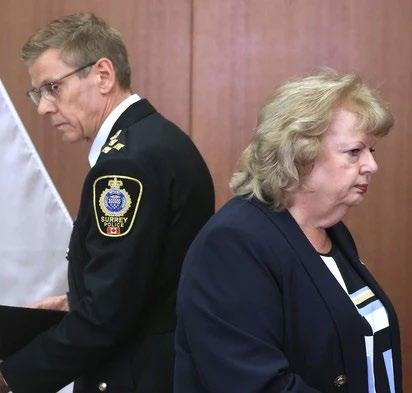
The City of Surrey found itself in a deepening crisis Tuesday following the abrupt ouster of its chief of police and the resignation of the chair of the police board who alleged “political tentacles” were reaching far too deep into police activities.
The sudden changes couldn’t have come at a worse time. The city is completing its transition away from the RCMP to a municipal force and dealing with a spate of shootings and extortionrelated violence.
The Surrey police board announced Tuesday that Lipinski had “left” the force but didn’t give any reason for his departure. Board member Hanne Madsen later said the board had decided to “terminate” Lipinski.
But another source told Postmedia News that Lipinski was placed on leave following a meeting Monday morning with Surrey police board members and that he was given until Thursday at 4 p.m. to resign or he would be terminated without cause.
A short time later, Harley Chappell, the police board chair, announced he had resigned, saying he was blindsided by the decision to oust Lipinski.
Before the meeting, Chappell said he asked the other board members if there were any motions planned for the closed meeting that he should be made aware of, and he was told there weren’t.
According to the agenda, the closed meeting listed numerous items from board members Madsen and Larry Thomas, including ones related to “operational, staffing and governance concerns” and “confidential personnel matter.”
“I believe I have gone above and beyond in leading an independent, non-politically influenced board to govern the SPS, unfortunately I feel the political tentacles and pressures have reached far too deeply into our newly formed SPS board, and I morally and ethically cannot be part of this moving forward,” Chappell wrote in his resignation letter.
Afterwards, he turned in his badge and left police headquarters, according to the source who didn’t want to be identified because they’re not authorized to speak on the matter.
It remains unclear if his departure is being classified as a resignation or a firing.
“We want to assure our partners and all community members that we remain focused on protecting public safety and providing uninterrupted service delivery to the community,” the board said in its statement Tuesday morning.
The board confirmed that Deputy Chief Todd Matsumoto has been appointed interim chief, and will begin a recruitment process soon to find a permanent chief of police.
When asked about his letter, Chappell said there has “obviously” been strife between the City of Surrey and Lipinski, and this decision was planned in advance.
He said that the board’s executive director, Jason Kuzminski, told him that two other board members communicated with Lipinski on Monday, and Kuzminski himself wasn’t present.
“There’s been inklings from certain directors around it over the years and over the time — and especially since new directors have been appointed in March, there’s been little murmurs here, but there’d never been any conversation, any direction, any meaningful conversation if Norm was the right person for the job,” Chappell said.
Attacker sought after sexual assault in Surrey's Clayton Heights neighbourhood
Police in Surrey are appealing for information about a person who sexually assaulted a teen girl on Saturday afternoon in the Clayton Heights neighbourhood.
Surrey police said the stranger sexual assault happened at about 4:30 p.m. near 188th Street and 70th Avenue. The attacker approached the teenage victim from behind and assaulted her. She was able to run to safety.
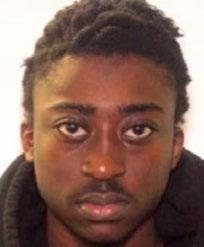
The attacker was described as black, about 20 years old, about 6-foot-1 or 6-foot-2, with a medium build. He had short, curly black hair, a short black beard covering the sides, chin and mouth, and was wearing a black T-shirt and dark pants. The attacker was last seen walking north on 188th Street.
Anyone who saw the incident, or has information about the identity of the attacker,
is asked to contact the Surrey Police Service non-emergency line at 604-599-0502 or Crime Stoppers at 1-800-222-8477 or solvecrime.ca.
Surrey police are also trying to find a second suspect in the sexual assault of a teenaged female a week earlier.
One man was arrested after the attack on a girl by two men in a forested area near the 9800-block of Whalley Boulevard at about 4:30 p.m. on May 30.
“Officers spoke with the victim who was able to provide the descriptions of both suspects,” said Staff Sgt. Lindsey Houghton of the Surrey Police Service. One of the alleged attackers was located nearby and arrested without incident. Ricki Randall Taysup, 38, has been charged with one count of sexual assault and one count of sexual interference. He is in custody until a bail hearing scheduled for June 15.
The second suspect is described as a Hispanic man in his late 30s, about 5-foot-6 and 170 pounds with long, dark-coloured hair. He was wearing a dark coat and ball cap, dark pants and lightcoloured shoes, and was carrying dark-coloured bags. “Police have exhausted efforts to try and identify the suspect and are now asking for the public’s help to identify him,” said Houghton, including releasing photos of the alleged suspect.
Anyone with information or who can identify the suspect is asked to call police at 604-599-0502 or Crime Stoppers at 1-800-222-8477.
Surrey home hit by early morning gunfire: police
Shots were fired at a home in Surrey early Thursday morning, according to authorities.
Officers were called to the scene near the intersection of 96 Avenue and 133A Street around 6:07 a.m., the Surrey Police Service said in a statement.
“Upon arrival, police located damage caused by gunfire to the exterior of the residence. The residence was occupied at the time of the shots fired and fortunately no one was injured,” the statement from the department said. The motive for the shooting has not yet been
determined, but police said it is believed to have been “targeted.” Anyone with information or video that could assist investigators is urged to call 604-599-0502 and quote file number 26-58932.
Americans travel to Pakistan to free Christians trapped in modern-day slavery
Continued from Page 1...
Within hours of his arrival, Hutchings paid off the debts for two enslaved Christian families and escorted them to freedom, breaking the "curse that they’ve had for hundreds of years."
There are up to one million Christians working in slave and bonded labor in Pakistan, according to Emma Hall, a persecution researcher working with charity Open Doors U.K. and Ireland, told Fox News Digital. This could comprise as much as 30% of Pakistani Christians, counted at 3.3 million in the 2023 census and accounting for 1.37 percent of the population.
Hall noted that "extreme poverty drives desperate families to accept advance loans (peshgri) for emergency and basic needs, trapping them in cycles of debt bondage where repayment systems are structured in ways that make exit extremely difficult."
Emmanuel Hernandez said he was shocked when he first heard that Christians in Pakistan were living in debt-based enslavement in Pakistan’s brick-making industry. After traveling to Pakistan to meet the woman who would later become his wife, Hernandez witnessed bonded laborers at a brick factory for the first time.
"Never in my life have I seen such hopelessness," he told Fox News Digital. "At that moment, I committed myself to rescuing one family a year for the rest of my life."
B.C. offender arrested after arriving for probation meeting in stolen truck
A young offender in British Columbia has been arrested after arriving at his probation appointment in a stolen vehicle, Mounties say.
The RCMP’s Integrated Municipal Provincial Auto Crime Team (IMPACT) was conducting surveillance on the stolen Ford F-350 pickup truck in Surrey on June 4 when officers saw the offender exit a residence and get into the truck’s passenger seat, the agency said in a news release Wednesday.
The surveillance team then followed the truck, which had been stolen in Coquitlam on May 31, to the offender’s scheduled meeting with his probation officer.“While the known offender checked in, the driver circled the area around the probation office,” police said.
“Once the offender returned to the truck, the vehicle continued its way toward Abbotsford.”
The officers stopped the vehicle, which was allegedly driving “carelessly,” and arrested both occupants without incident in Abbotsford, police said.
“This operation highlights how co-ordinated surveillance and strong partnership directly support community safety,” Sgt. Ben Bruneau said in a statement.
“By tracking the stolen vehicle across multiple jurisdictions, our team was able to intervene safely and prevent further risk to the public.”
Investigators have recommended charges against both individuals, police said.
In January 2025, Hernandez started the nonprofit Project Jubilee. He says that it is "by the grace of God" that people have already donated enough through the nonprofit to save 300 Pakistanis from slavery. Though Project Jubilee will save any bonded slave, regardless of race or faith, Hernandez said that "98% of the people we rescue are Christians, and that’s because they’re second-class citizens" in their country.
The average cost to help one family is about $8,500, Hernandez said, because Project Jubilee recognizes that slaves needed more than debt relief to escape the cycle of bonded labor.
"Our goal is for them to succeed in life and make sure that they never go back," he explained. To accomplish this, Hernandez and his team pay lawyers to take care of all applicable paperwork, and help each family with two months of rent and food. They also get families in touch with a local minister, pay for children to attend school and purchase every family a tuk tuk, a motorcycle taxi, which they can use to create income.
He said that in most cases, factory owners are grudgingly accepting of letting slaves go after their debts are paid off. But in some cases, he says owners have put a cap on the number of families Hernandez’s group can free in a month, or told them that they’re "never allowed to come back again."
A 28-year-old man from Telangana, southern India, was shot dead in the north-eastern US city of Philadelphia, Pennsylvania, while delivering pizza after receiving what was suspected to be a fake order.
The victim, identified as Anshul Kuncha, was shot multiple times, reported Indian news agency IANS. He was employed at a multinational company in the US and had also been working parttime as a pizza delivery executive to earn extra money.
Anshul’s family in Gundlapochampally suburb, in Medchal Malkajgiri district, received the news of his death overnight between June 5 and June 6. Anshul was said to have been shot at point-blank range when he went to a location to deliver pizza.
His family was told that he received a suspected “fake” delivery order to a deserted location past midnight. After reaching the spot, two unidentified men opened fire and shot Anshul multiple times in the head before fleeing the scene. He died on the spot.
Multiple questions are being raised about the motive behind the brutal murder, since nothing was stolen from him. According to reports, two masked gunmen with backpacks were spotted in the area around the time of the attack.
His family members claimed that the pizza delivery order was a trap to kill him.
“He was told to deliver pizza in an abandoned area, but we later learnt it was a decoy. There was no one there; it was a trap, meant solely to kill him.
add up to $7,200 to your child’s RESP
When your child turns six, they can receive an additional $1,200 from the B.C. Government.
From controversy over the costs to fans, the impact of geopolitics and immigration policies, to security, extreme weather, sustainability and the role of US President Donald Trump, it inspires trepidation as well as excitement.
So what will be the principal issues? How did we get here? And what is at stake? As the eyes of the footballing world focus on Mexico City before Thursday's opening match, the co-hosts provide a vivid snapshot of what makes the next few weeks so compelling and challenging.
Here in this footballing hotbed, a city that has provided the tournament with some of its most iconic moments, the legendary Estadio Azteca is ready to make history as the first venue to host the start of three different World Cups.
It is a tantalising prospect. But just as in the neighbouring US, where about 75% of the matches will take place, the high cost of tickets has caused concern, as has security in a country that has suffered from major cartel violence this year.
World Cup player statues in the capital have been toppled by protesters, with teachers demanding higher wages threatening to disrupt matches if their wishes are not met.
Meanwhile, in Tijuana, the presence of the Iran squad is a consequence of the complex political tensions surrounding the sporting action. No other World Cup has been spread over three countries. Nor has it involved as many as 48 teams and 104 matches.
But beyond its sheer scale, this tournament is unprecedented in other ways. Never before, for instance, has a host country been at war with a participating nation. Back in 2017, during Trump's first term, Infantino had suggested a US travel ban
on citizens from six majority-Muslim countries was incompatible with tournament regulations, and could invalidate the country's hopes to host the tournament in 2026.
"It's obvious when it comes to Fifa competitions, any team, including the supporters and officials of that team, who qualify for a World Cup need to have access to the country, otherwise there is no World Cup," he warned.
And yet, as a result of the immigration policies implemented by Trump during his second term in office, there will be four competing countriesIran, Haiti, Senegal and Ivory Coast - whose fans have faced full or partial travel bans, with the White House referencing a need to manage security threats. Since being elected in 2016, Infantino has regularly cosied up to the leaders of countries hosting his events. But his controversial awarding of a Fifa Peace Prize to Trump at the World Cup draw last year underlined the close relationship he has forged with the US president.
Since then, the US has taken military action in Venezuela, Nigeria and Iran, with Trump hinting at possible operations in Greenland, Mexico, and another World Cup participant, Colombia.
There have also been tensions between the three co-hosts on trade, immigration and drugtrafficking. Indeed, only last week, the president referred to Canada as "the 51st state", although there are also hopes that the tournament could provide an opportunity for diplomacy.
To add to the mix, the US is celebrating the 250th anniversary of America's independence, with Trump expected to take centre stage at the tournament, just as he did at the Club World Cup final last year, and then at the World Cup draw in December.
Ontario officer from Brampton killed, remembered as ‘courageous, selfless’
Continued from Page 1...
Justin Veronneau, 18, of Hearst has been charged with first-degree murder and several related offences, including dangerous driving and resisting arrest, OPP said Wednesday.
Officers were attempting to arrest him after he’d escaped from a hospital where he was being assessed under the Mental Health Act when Bali was struck by a vehicle, according to the OPP. The accused is scheduled for a court hearing on June 24.
The force's Criminal Investigation Branch is investigating the circumstances surrounding Bali's death, alongside the Office of the Chief Coroner and Ontario Forensic Pathology Service. Brown, noting Bali's deep ties to Brampton, said the officer’s family described him as "'courageous, selfless'" and someone who "'just wanted to protect the public.'"
The mayor said he has spoken with provincial officials, including Solicitor General Michael Kerzner and Premier Doug Ford, about plans to honour Bali. A memorial service is expected in the coming days.
Flags on federal buildings in Ontario, except for the Peace Tower in Ottawa, are being lowered to half-mast from Wednesday through sunset Monday. Brown confirmed Brampton has lowered
flags in Bali's memory.
"The entire policing community across the country is grieving today at this senseless loss. There are no words."
In Hearst, Mayor Roger Sigouin said the town has been left stunned, describing what happened as a shock for a small, close-knit community with a population of about 5,000.
“It’s not something you want to hear, something you don’t want to go through," Sigouin said. "It's a big shock for everyone."
He said the town has little experience with lineof-duty police deaths and he plans to check in with community members over the coming days. Bali's colleagues described him as “a perfect gentleman” who was well respected in the police force and the community, said Scott Mills, a spokesperson for the Ontario Provincial Police Association (OPPA).
“He was endearing to anyone that he met."
Mills said the association is in contact with Bali’s family and support teams are being made available, including 24/7 mental health resources for officers impacted by the loss.
The City of Kitchener, where Bali also had ties, was among other municipalities offering condolences. Mayor Berry Vrbanovic called Bali "a valued member" of Kitchener's bylaw enforcement team from 2021 to 2023 before joining the OPP.
Weather warnings across Fiji
A strong wind warning and coastal inundation alert remain in force for several parts of Fiji as rough seas, damaging swells and strong southeast winds continue to affect the country.
The Fiji Meteorological Service said strong southeast winds of up to 46 kilometres per hour, with gusts reaching 55 kilometres per hour, are expected over the coastal land areas of southern and eastern Viti Levu, Vanua Levu, the Yasawa Group, Taveuni, Lau, Lomaiviti, Kadavu and nearby smaller islands.
The warning remains in place for coastal communities from Natadola through the Coral Coast to Navua, as well as parts of Tailevu, Ra, southern Bua, Cakaudrove and Udu Point.
Weather officials have also maintained a coastal inundation alert for low-lying coastal areas of Yasawa, Mamanuca, southern Viti Levu, Taveuni, Lau, Lomaiviti and Kadavu, warning that sea flooding is likely, particularly during high tides.
According to the National Weather Forecasting Centre in Nadi, the adverse conditions are being
caused by a high-pressure system southwest of Fiji, generating moderate to damaging heavy southerly swells across the country.
The system is producing rough to very rough seas in affected areas, posing risks to small craft operators, coastal communities and marine activities.
Residents in vulnerable coastal locations are being urged to remain vigilant and monitor weather updates as sea conditions may lead to flooding of low-lying areas.
The forecast until midnight tonight indicates cloudy periods with brief showers over Navua, Suva, Nausori, Serua, Namosi, Naitasiri, Rewa, Tailevu, Ra, eastern Macuata, Cakaudrove, southern Bua, Taveuni, Lau, Lomaiviti and Kadavu. Elsewhere, mainly fine weather is expected, apart from isolated afternoon or evening showers.
Authorities continue to advise the public, especially those living along exposed coastlines, to take necessary precautions and stay informed through official weather bulletins.
Woman given community sentence over husband attack
A 34-year-old mother of four who struck her husband with a cane knife, causing an open skull fracture, has been spared imprisonment and instead placed under a community-based corrections order for one year.
Delivering sentence in the High Court in Labasa on May 28, Justice Lee Burney acknowledged the seriousness of the domestic violence offence but said the circumstances of the case warranted a stronger focus on rehabilitation rather than custody.
The woman had pleaded guilty on August 20, 2025, to one count of an act intended to cause grievous harm under the Crimes Act 2009. The court heard that she struck her husband with a cane knife, causing a severe head injury.
Justice Burney noted that sentencing was complicated by issues of domestic violence, emotional distress, mental health concerns and child welfare considerations.
“This is a difficult sentencing exercise in light of the context of domestic violence, emotional
distress, mental health concerns, and child welfare issues,” Justice Burney said. The court considered a pre-sentencing report prepared by the Department of Social Welfare, which described the woman as the primary caregiver of her four-year-old son and highlighted a history of instability, vulnerability in domestic relationships and unresolved trauma.
The report assessed her as presenting a low to moderate risk to the community because the offending occurred within a specific domestic setting rather than as part of a broader pattern of violent behaviour.
While prosecutors submitted that the offence was aggravated by the use of a dangerous weapon and the serious injuries inflicted on the victim, the defence pointed to the woman’s remorse, cooperation with police, early guilty plea and the approximately 12 months she had already spent in custody awaiting the outcome of the case.
Justice Burney said domestic violence offences of this nature generally required punishment that denounced and deterred such conduct.
Three dead, two rescued, one still missing after boat capsizes in Beqa waters
The death toll from a boat capsize in Beqa waters has risen to three, while search efforts continue for one remaining missing passenger.
Police confirmed that the body of a man in his 50s was recovered yesterday before search operations were suspended due to poor weather conditions.This morning, search teams recovered the bodies of two more victims, which have been taken to the Navua Hospital Mortuary.
Two survivors rescued on Thursday have since been discharged from Navua Hospital after receiving medical treatment. The capsized boat has
also been located and towed back to shore.
Police and community members are continuing the search for the sixth occupant as authorities work to determine the circumstances surrounding the tragedy.
$47m worth marijuana plants uprooted
More than 47,000 marijuana plants, with an estimated street value of $47.3million, have been uprooted during police operations targeting drug cultivation in Cakaudrove, Vanua Levu.
This was revealed by the Fiji Police Force in its report while updating district representatives of Cakaudrove of its drug operation in the Northern Division. In the report, the Fiji Police Force said a total of 47,397 plants had been destroyed through four waves of operations conducted in known drug cultivation hotspots. “Total drugs uprooted 47,397. It’s estimated street value is $47,397,000,” the report stated. Police said 13,007 plants were uprooted during wave one of the operation, while
20,226 plants were destroyed in wave two. “A total of 1332 plants were uprooted in wave three, while another 12,832 plants were destroyed during wave four.” Police said 23 arrests were made at farms linked to drug cultivation, while another 54 arrests were conducted through roadblock operations.
“Total number of arrest done at the farm was 23 and on road block was 54.”
The Fiji Police Force said roadblock operations had resulted in the seizure of 44 sachets of dried leaves, 17 bullets, 54 loose dried leaves and $4000 believed to be proceeds of crime. Apart from marijuana, police said, four arrests were made in Labasa for methamphetamine-related offences.
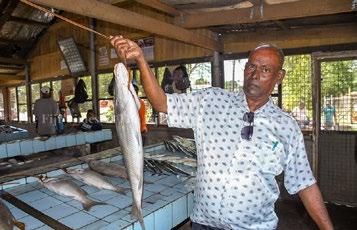
Gounder warns of rising fish prices
Krishna Gounder fears losing his fishing business to the continuous hike in fuel prices.
The Varadoli, Ba resident is one of the many fishermen in the West who have taken a hit by the increase in price of fuel.
“I have been selling fish for more than 40 years, and this fuel crisis is affecting us badly,” he said.
“The price of fish has gone up and the regular sales we can’t do.” Mr Gounder said fishing was a good trade for him and his family who depend on the business for their survival.
“I had sold my boat, but I have got a business licence to buy and sell fish in the market.
“When I bought a bundle from a fisherman last month it was $140 a bundle but now it has increased to $200 a bundle.
“Definitely the price of fish will increase in the
market.” He said the fresh fish are being sold to him by the fishermen from the Yasawas.
“The fuel crisis is making things so hard, everyone has to do something for a living now, no one in the family can stay home.
“They have to do find something for their bread and butter.”
World Bank-backed carbon programme set to end after Fiji fails to meet key requirements
Fiji’s access to a US$12.5 million World Bankbacked forest carbon financing programme is set to come to an end after the Government decided to terminate the project amid mounting delays, governance concerns and unmet obligations.
According to publicly released World Bank implementation support mission in February 2026, Fiji made limited progress in meeting critical legal, financial and safeguard requirements under the Forest Carbon Partnership Facility (FCPF) Carbon Fund Emission Reductions Program (ERP).
The report reveals that Fiji had not received any disbursements under the programme despite the funding arrangement being approved in 2020 and becoming effective in 2021.
The World Bank granted Fiji a six-month extension until June 30, 2026 to allow the Government time to establish systems needed
to distribute carbon payments to beneficiaries, including landowning units, communities and smallholder farmers. However, the Bank found progress had been insufficient.
Among the outstanding requirements were a revised Benefit-Sharing Plan, safeguards monitoring reports, final monitoring documentation and legal arrangements governing the transfer of emissions reduction rights. The Bank noted that Fiji remained in default of several obligations under the Emission Reductions Payment Agreement (ERPA) and assessed that it would be unrealistic for the country to meet conditions required for a further extension.
The Ministry of Finance subsequently informed the World Bank that it intended to request cancellation of the programme and suspend further activities, including stakeholder consultations on the Benefit-Sharing Plan.
Patients 'chained' at Sri Lankan nursing home where 13 died in fire
A "chained" patient was among more than a dozen people killed during a fire at an unregistered nursing home in western Sri Lanka, according to a staff member. Police said 13 residents died and eight others were injured at the home in Anguruwatota late on Wednesday.
Nursing home worker Danuja Chathuranga said there were two residents who were chained.
One was untied and rescued, while the other died, he said. His comments came as public outrage grew over the treatment allegedly meted out to residents at the home. "You only have to take your eyes away for one moment [and] they run away," Mr Chathuranga said.
"One of them had gone one day with the chair he was tied [to] and was found entangled in a barbed wire fence
"Another with sores on [their] legs was brought back from a muddy field.
"Our intention was not to harm them. They
were patients receiving psychiatric treatment.
"If they run away or fall into a pit, well or get run over by a vehicle, we have to take that responsibility." The fire-ravaged nursing home and two other nursing facilities run by the same management are unregistered but government officials and institutions have worked with them.
Amala Rajapaksa, the homes' chief administrator, said their residents included people referred from the state's main mental hospital, courts and police. Government doctors visit the residents to treat them. Authorities transferred 21 fire survivors to another nearby home run by the same management.
The area's government welfare officer declined to comment on the arrangements, citing restrictions on state employees to speak to the media.
Ms Rajapaksa said she had managed the homes for 22 years and that her late husband first started a home in memory of his late father.
Rudraksha farming
or three decades, Ashok Karki's family has tended to the towering Elaeocarpus ganitrus or Rudraksha trees that define the landscape of the Makalu Himalayan region. Once a product sold primarily to Hindu pilgrims in India, the Rudraksha has become a high-stakes commodity, driving a massive economic shift in Eastern Nepal. However, this newfound prosperity comes with a troubling cost: the heavy use of unregulated chemicals to meet the aesthetic demands of the Chinese market. For generations, Rudraksha seeds were valued for their spiritual significance, particularly among Hindus who consider them symbols of Lord Shiva. In recent years, however, a surge in demand from Chinese buyers, who
in Nepal
prioritise the seeds as ornamental jewellery rather than religious artefacts, has transformed the local economy. Before Chinese interest peaked, the common five-faced seeds sold for approximately NRS 30 per kg. Today, prices can soar to NRS 2,000 per seed, with rare, multi-faced varieties fetching millions. Sadananda Municipality, home to over 100,000 Rudraksha trees, now generates an estimated NRS 1 billion annually from exports, positioning itself as the "Rudraksha Capital of Nepal." To satisfy Chinese buyers, who prefer specific shapes and sizes, farmers have increasingly turned to chemical interventions. Traders report that they inject buds with Plant Growth Regulators (PGRs) up to four times during the early stages.
22 military personnel, including 3 officers, killed in PoK helicopter crash
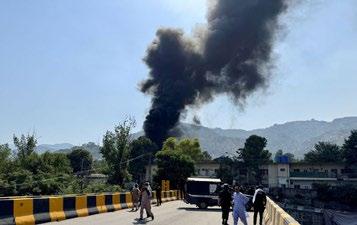
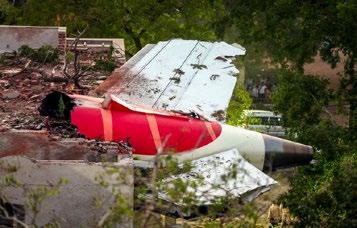
At least 22 military personnel, including three officers, were killed when an Mi-17 helicopter of Pakistan Army aviation crashed in Pakistanoccupied Kashmir, a media report said on Thursday.
The helicopter crashed "during take-off due to a technical fault" near Muzaffarabad in PoK on Wednesday, killing all personnel on board, the army said in a brief statement, without giving the number of those killed.
Citing a security official, BBC Urdu, however, reported that 22 personnel were killed in the crash, including one colonel and two majors.
The funeral prayers of the dead were held on Thursday before their bodies were sent to the respective areas of the victims for burial.
However, there is still no official word about the death toll or the identity of those killed in
the crash. It was not the first time that an Mi-17 helicopter had met with an accident.
In September last year, an Army Aviation Mi-17 helicopter crashed, killing five security personnel, including two majors.
In May 2015, seven people, including foreign ambassadors, were killed in a helicopter crash in Gilgit-Baltistan, north of Pakistan.
About 19 million from India, Pakistan, Bangladesh migrated to Gulf countries since 2010: Study
A study has estimated that about 19 million people, averaging 1.35 million per year, have migrated from India, Pakistan, and Bangladesh to Saudi Arabia, Qatar, Bahrain, and the United Arab Emirates (UAE) since 2010.
The data compares to 13.6 million movements from Mexico to the US over the entire period since 1990, researchers from London School of Economics and Political Science (LSE), International Institute for Applied Systems Analysis in Austria and the University of Hong Kong said.
Globally, the Middle East experienced the highest total inflow of migrants, chiefly from South Asia and the Philippines, with immigration
from Bangladesh to Saudi Arabia alone averaging around 3,00,000 people per year from 2010 onwards, according to a global migration map published in the journal Nature.
“Our annual data provides a clearer picture, revealing that this (migration) rate has actually risen since 2000,” co-author Guy Abel, a research scholar in the migration and sustainable development research group of International Institute for Applied Systems Analysis (IIASA) Population and Just Societies Programme, said.
“This upward trend appears to be driven by long-term demographic shifts and economic development rather than sudden, isolated crises,” Abel added.
Sikh Gurus, Banda Singh Bahadur part of Haryana Class VIII curriculum
Haryana has introduced the history of Sikh Gurus and legendary warrior Baba Banda Singh Bahadur in the Class VIII history curriculum in government schools from the current academic session.
The decision fulfils a long-standing demand and key commitment made by Chief Minister Nayab Singh Saini during last year’s commemorative events marking the 350th martyrdom anniversary of Guru Tegh Bahadur.
The Chief Minister had then assured that Sikh history, teachings and sacrifices of the Gurus would be formally incorporated in school education to ensure younger generations were rooted in the rich spiritual and historical legacy of Sikhism. Soon after the announcement, the Haryana Board of School Education swung into action and took steps to implement the decision.
Dr Prabhleen Singh, Officer on Special Duty to the Chief Minister, said an expert research committee was constituted to finalise the content. He confirmed that the curriculum had now been implemented following extensive academic consultation. Board Chairman Shankar Lal Dhopra said nearly 16 pages had been dedicated to Sikh history in the syllabus, covering major phases
from Guru Nanak Dev to Guru Gobind Singh.
“The inclusion of Sikh history will help students imbibe values of patriotism, service, social harmony and responsible citizenship,” he said. The syllabus traces the evolution of Sikhism beginning with the life, teachings and travels of Guru Nanak Dev under the section “Foundation of Sikh Faith”, followed by the development of the religion from Guru Angad Dev to Guru Arjan Dev.
Special emphasis has been laid on key Sikh principles such as sangat and pangat, the evolution of the Gurmukhi script and the institution of langar, which symbolises equality and community service.
The curriculum also deals extensively with the Sikh martial tradition, highlighting the roles of Guru Hargobind to Guru Tegh Bahadur in strengthening resistance against oppression.
A dedicated section on the Khalsa Panth delves into the life and sacrifices of Guru Gobind Singh, underlining his contribution to justice, courage and spiritual resilience. The syllabus includes a detailed account of Baba Banda Singh Bahadur’s military leadership and administrative achievements, including the establishment of Lohgarh as the first Sikh capital in the region.
Punjab seeks special category status, financial package for border areas from Centre: CM
Punjab Chief Minister Bhagwant Singh Mann on Thursday strongly raised the state’s long-pending concerns before NITI Aayog Governing Council, seeking special category status and a financial package for the revitalisation of border areas.
The Chief Minister demanded that Punjab should be accorded ‘special category status’ with 90:10 funding under all centrally sponsored schemes along the lines of hill states, north-eastern states and Jammu and Kashmir.
Addressing the meeting, CM Mann highlighted the extraordinary security, economic and social challenges faced by Punjab as a frontline border state and asserted that the state’s aspirations are fully aligned with the national goal of Viksit Bharat 2047.
Emphasising the unique challenges faced by Punjab, Mann said, “Punjab is a frontline state sharing a 553-km border with Pakistan. The state faces a deep and multidimensional crisis that includes persistent cross-border terrorism and drone-based smuggling of heroin and weapons. This has resulted in a drug addiction epidemic among youth, organised crime and daily hardship for farmers cultivating land between the security fence and the international border under the BSF escort.”
Highlighting the impact of natural disasters and
security-related disruptions, the Chief Minister, according to a statement, said, “Punjab also suffered the devastating impact of natural disasters such as the 2025 floods, which damaged more than 2,300 villages and caused losses estimated at Rs 12,905 crore. The onslaught that residents of Punjab had to face in the aftermath of Operation Sindoor was visible for the entire country to see.” He said densely populated villages and towns located close to the international border have been deprived of the economic growth witnessed by other parts of the country.
He also noted that decades of uncertainty and risk have resulted in negligible investment in border districts and, in many cases, led to a flight of capital and the closure or relocation of industries.
“Although Punjab acts as a buffer for the country against repeated hostilities from our neighbour, support from the Government of India has been grossly inadequate for the state and its border areas,” Mann said, according to a state government release.
Outlining the disparity in development initiatives, the Chief Minister said, “Only 107 villages have been covered under the recently launched Vibrant Village-II Programme, whereas more than 2,000 villages and towns are located in very close proximity to the border.”
Sidhu Moosewala’s father alleges family facing security concerns
On the birth anniversary of slain Punjabi singer Shubhdeep Singh, alias Sidhu Moosewala, his father Balkaur Singh today alleged that his family was facing increasing pressure and security concerns. He claimed that attempts were being made to target their property and said the situation was getting out of control.
“The kind of pressure and injustice we are facing now is unlike anything before. Now, even our property is being targeted and I believe this is being done with the backing of the government. I might have to make an appeal to
my son’s followers in the coming days to join a protest, something I have never done before. Our family’s safety is under threat and I will share more details through social media in coming days, if situation arises,” he said.
He claimed that the people identifying themselves as gangsters try to speak with him, saying they were planning to kill terrorist Satinderjit Singh, alias Goldy Brar, accused of masterminding his son’s murder. In the same breath, Balkaur said he did not support taking anyone’s life.
Currency ‘crunch’ in Punjab banks gives jitters to customers
With banks facing severe currency “crunch” across Punjab, customers are being asked to withdraw cash in a prescribed limit by bankers. Even automated teller machines (ATMs) are running dry in several areas and the currency loading exercise has extended from a few hours to several days.
This has led to panic among the people, who are wondering why despite having funds in their accounts, they are being denied withdrawals. Amit Kapur, who runs a pharmaceutical unit in Amritsar, said ever since the West Asia conflict began, shortage of currency has multiplied. “It has impacted our purchases and most pharma units in Amritsar are running at half capacity,” he said.
Senior bank officials said the problem was temporary and insisted
that the Reserve Bank of India had been urged to pump in more currency into the banks in the state. “The cash withdrawals in Punjab were record high during April and May. Generally, against the indent of cash sent to the apex regulatory bank for a region, the cash sent is 5-10 per cent. This has resulted in currency shortage at some banks. The situation is improving gradually and more cash will be pumped into banks during June,” a senior banker added. Aparna Sharma, lead district manager, Punjab National Bank, Amritsar, admitted that the problem was being faced in Punjab and Chandigarh due to restricted cash flow in the region. The politicians believe that cash flow was being deliberately slowed down ahead of the 2027 Assembly elections.
Golden ‘palki’ sent to Pakistan’s Nankana Sahib via Attari-Wagah border
Marking a spiritual bond between the Sikh fraternity of ‘Chadhda Punjab’ (Indian side) and ‘Lehnda Punjab’ (Pakistan side), a magnificently crafted golden ‘palki’ (palanquin) was dispatched to Pakistan via the Attari-Wagah border yesterday.
The ‘sewa’ (service) of the palki was undertaken by Amritsar-based Sant Baba Darshan Singh Kulliwale and his disciple Baba Gurdev Singh Kulliwale. It is learnt that the palanquin is meant to be enshrined at Gurdwara Janam Asthan, Sri Nankana Sahib. In addition, four packs of ‘rumala sahib’ were also dispatched for Gurdwara Sri
Kartarpur Sahib in Narowal district, Pakistan. At the border, officials of SGPC, led by Golden Temple manager Rajinder Singh, were present to assist the administrative staff while ensuring that Sikh ‘rehat maryada’ was maintained. The SGPCsponsored Sikh jatha crossed over through the Attari-Wagah joint check post to observe Guru Arjan Dev’s martyrdom. Amid constant recitation of ‘Satnam Waheguru’ jaap, the palanquin parts, to be assembled later at the final destination, were wrapped in brown packages and taken to the Zero Line through Integrated Check Post (ICP), Attari.
The crash site has been long cleared. Rescue operation ended months ago and compensation discussions have moved forward. But for the families who lost their loved ones in the Air India flight AI-171 crash last June, the most difficult wait continues--the wait for an answer.
As the first anniversary of the Ahmedabad crash approaches, the families of the 260 victims say they still do not know what caused the Boeing 787 to go down moments after take-off, leaving them trapped between grief and unanswered questions.
On June 12, 2025, the London-bound flight crashed into the BJ Medical College hostel in Ahmedabad's Meghaninagar, killing 260 persons, including 241 on board and 19 on the ground. Only one passenger survived.
In April, a group of bereaved families wrote to Prime Minister Narendra Modi seeking access to the aircraft's cockpit voice recorder (CVR) and
Air India crash victims' families awaiting closure
flight data recorder data, arguing that they had the right to know what happened in the final moments.
“We don’t want money, but only want to know what happened," says Nilesh Purohit, who lost his 24-year-old son.
The relatives of other victims also say that while financial assistance is important, it cannot replace clarity about the tragedy. “We want to know the truth about what caused the crash and whether there was any technical problem," they say in their appeal seeking access to black box information.
The demand for transparency has also been linked to the emotional struggle of identifying and recovering personal belongings of the victims.
A few families have complained that the process of searching through recovered items has added another layer of distress. Kinjal Patel, who lost her mother in the crash, raised concerns over
the difficulty the families faced while searching for belongings through digital platforms, saying thousands of listed items and unclear images made the process extremely challenging.
A few relatives also questioned the communication process, saying families needed more direct updates from authorities during the investigation. Romin Vora, who lost three members of his family, including his mother, brother and
daughter, highlighted the difficulties faced by families relying only on digital communication channels, saying many people were struggling to access the available systems.
The compensation process has also remained a point of discussion. Radhika Rupani, daughter of former Gujarat Chief Minister Vijay Rupani who was among those killed in the crash, has raised concerns over the compensation process. She questioned the requirement of families signing documents linked to final settlements before the completion of the investigation, arguing that families deserved transparency and clarity before closing their claims. In her communication, she said the families needed "answers" and "closure" rather than only financial assistance.
Air India, however, denied that the families were being pressured and said there was no deadline forcing them to accept final compensation.
Army receives 100 indigenous ‘Peacekeeper’ kamikaze drones
Indian defence manufacturer SMPP has completed the delivery of 100 indigenous kamikaze drones to the Army, marking a significant milestone in India’s growing unmanned warfare capabilities.
The delivery follows successful user trials in which the drone, named “Peacekeeper (Agniveg)”, demonstrated an operational range of about 180 km while operating in heavily jammed and spoofed environments, according to a company statement.
Designed to engage high-value targets deep inside enemy territory, the loitering munition combines long-range reach, precision-strike capability and high-speed attack profiles. The system provides the Army with a flexible and cost-
Hours after
effective option for engaging time-sensitive targets while reducing risks to personnel.
The induction comes at a time when modern warfare is increasingly being shaped by precisionguided unmanned systems capable of delivering significant battlefield effects at a fraction of the cost of conventional strike platforms. The drone is expected to bridge the gap between conventional artillery and long-range missile systems, giving commanders an additional precision-strike capability.
“The successful completion of deliveries to the Army within a short time frame of six months is a significant milestone for SMPP and for India’s indigenous defence manufacturing ecosystem,” said Ashish Kansal, CEO and Director of SMPP.
demarche, US hits another vessel carrying Indians
A day after three Indian sailors were killed in a US strike on a merchant vessel off the coast of Oman, American military on Thursday struck another commercial oil tanker, MT Jalveer, carrying 20 Indian crew members in the same area. All 20 of them were safely evacuated, the Indian Embassy in Oman said.
This was the third attack in a week by the US on merchant vessels that had Indian seafarers aboard. Today’s attack on the Guinea-Bissau flagged tanker came hours after New Delhi had issued a demarche to US Chargé d’Affaires Jason Meeks to protest the attack that killed three Indian sailors aboard Palau-flagged MT Settebello. While one casualty was immediately confirmed, the two missing mariners were declared dead later.
The US Central Command said it disabled MT Jalveer after the vessel allegedly violated the blockade against attempting to transport Iranian oil. An aircraft fired two Hellfire missiles into the ship’s engine room after the crew repeatedly failed to comply with directions from the US forces, it said. On Monday, the US had disabled Palau-flagged MT Marivex. It too had Indian seafarers aboard. As many as 21 Indian mariners were rescued from MT Settebello. According to the UK Maritime Trade Operations, Settebello was hit some 20 nautical miles northeast of Sohar (Oman). It was supposedly moving around as a “dark ship”, meaning its automated identification system was not switched on. The ship had not sunk, Indian sources said.
Forward Seamen’s Union of India general secretary Manoj Yadav said he believed the US naval forces would have known the nationalities of those onboard the vessels. “I refuse to believe the US lacked information regarding the nationalities of the people on board those ships. The US naval forces knew exactly how many Indians and foreign nationals were there. If the ships failed to heed their instructions, detaining them was a viable alternative,” Yadav told news agency ANI.
The opposition Congress expressed “profound grief” at the loss of lives and condemned the “reckless military actions” undertaken by the US. “Prime Minister Narendra Modi has repeatedly showcased his personal rapport with President Donald Trump as a diplomatic achievement. He cannot evade responsibility when that relationship fails to protect Indian lives and interests,” it said. Ministry of External Affairs spokesperson Randhir Jaiswal said, “We attach high importance to the welfare and well-being of our seafaring community. When this particular attack on MT Settebello occurred, we lodged a strong protest with the American side.”
Mukesh Mangal, Additional Secretary, Ministry of Ports, Shipping and Waterways, said more than 18,000 Indian seafarers, including 562 crew members aboard 13 Indian-flagged ships, remained in the Gulf region. Of them, 329 were on vessels on the west of the Strait of Hormuz and 233 on vessels in the Gulf of Oman, he said.
Putin Claims US Pressuring India Over Russia Ties, Praises
PM Modi
For Economic Growth
Russian President Vladimir Putin alleged that the United States is attempting to pressure India over its relations with Russia, while praising Prime Minister Narendra Modi for steering the country’s rapid economic growth.
Speaking about India-Russia relations, Putin said external pressure on New Delhi over its ties with Moscow is harmful to international relations.
“The US is trying to pressure India, for example, when it comes to cooperation with Russia. But putting pressure on Narendra Modi’s democracy is detrimental for international relations. It doesn’t matter where this pressure comes from," Putin said, as reported by Sputnik.
The Russian leader also expressed confidence that economic ties between India and Russia would continue to expand significantly in the coming years. He said bilateral trade between the two countries is expected to reach $100 billion, marking an increase of more than 30 per cent from current levels.
“In 2025, the trade turnover between the two
countries hit $68.7 billion. India is already one of Russia’s top trading partners," he said. Praising India’s economic trajectory, Putin credited the country’s growth to policies rolled out by the Modi government.
“This isn’t something that comes out of the blue. This is the result of the hard work that the Indian government has been doing under Prime Minister Modi," he said.
India and Russia have maintained close strategic and economic ties despite geopolitical tensions and Western efforts to reduce Moscow’s global influence. Cooperation between the two countries spans energy, defence, trade and investment, with both sides seeking to deepen engagement through long-term economic and strategic partnerships.
Putin will travel to New Delhi for the BRICS Summit, which is taking place on September 12 and 13. This will mark his second visit to the country in less than a year, following his previous state visit for the India-Russia Annual Summit in December 2025. During the December summit, Putin and PM Modi had underscored that the Russia-India relationship continues to be an anchor of global peace and stability that should be ensured upon the basis of equal and indivisible security.
The Leaders had underlined that India-Russia ties have remained resilient in the backdrop of the prevailing complex, challenging and uncertain geopolitical situation.
'Cockroaches never fear': Scores of Indian students angered by exam leaks take to streets
Hundreds of young students gathered in New Delhi on Saturday for the first street protest by the satirical 'Cockroach Janta Party' over alleged irregularities in recent major examinations.
Carrying paper cockroach masks and pamphlets, the protesters called for the resignation of Education Minister Dharmendra Pradhan who has faced criticism over the irregularities, including question paper leaks and technical glitches. "How is it that exam papers get leaked in this country? How is this right?" added Raj, 16.
Protesters were led by Abhijeet Dipke, a 30-yearold Boston University graduate who arrived in New Delhi from the United States on Saturday.
His parody party — "Cockroach Janta Party" (CJP), a play on Indian Prime Minister Narendra Modi's Bharatiya Janata Party (BJP) — has won millions of followers on social media since its launch last month.
"We want accountability from the government," Utkarsh Raj, a medical college aspirant, told AFP at the protest site, which was watched closely by police officers in riot gear.
="The youth of the country will no longer fear anyone, they will fight," Dipke, a former political communications strategist for the opposition Aam
Melbourne teacher's brother charged with murder after Sunil Sharma’s disappearance in India
The brother of a Melbourne father who disappeared in India has been arrested and charged with murder after allegedly confessing to the killing.
Sunil Sharma, a 66-year-old maths teacher at Diamond Valley College, travelled to India to sell two properties so he could return to Australia to retire. His disappearance was deemed suspicious, with family members saying his brother Sunny Sharma was the last person to see him alive.
Two weeks after Sharma went missing, Indian police have charged Sunny with his brother’s murder.
Sunny allegedly confessed to killing his brother and disposing of his body in a river with the help of his son, before the pair went on the run.
Authorities are yet to confirm if they have recovered Sunil’s body. Sunil’s daughter Surbhi, who spoke to media last week pleading for information about her father, has released an emotional statement.
“Anyone who’s met my dad will say he is intelligent, strong and funny, but he is also loving and sensitive. I count myself so lucky to have had a father like him,” she said.
She also thanked the students at Diamond Valley College where her father worked.
“It warms my heart to read and know he gave the gift of education to hundreds of students over the course of his life.”
In India, the charge of murder can carry a life sentence or possibly even the death penalty.
CJP Founder Abhijeet Dipke Euphoric At Jantar Mantar: 'Protest Was Just A Trailer'
After a charged demonstration at Jantar Mantar on June 6, Cockroach Janta Party founder Abhijeet Dipke signed off for the day with a personal note, claiming the protest was a mere trailer. Before heading home to meet his parents, Dipke also highlighted the threat and trauma his family underwent for over two weeks.
Aadmi Party, told supporters at the rally.
"Cockroaches don't ever fear, they never die either," said Dipke, as others shouted in unison.
The movement emerged after India's Chief Justice Surya Kant reportedly likened young people who criticised the government to "cockroaches" and "parasites" during a court hearing, sparking outrage among the youth. Kant later said his comments were taken out of context.
CJP's popularity has soared, using the slogan "a political front for the youth, by the youth, for the youth". 'No credibility'
Protesters said young people were justifiably angry. "India deserves better administration of such crucial exams by the government," said 20-year-old Sarthak, who gave only one name.
Last month, authorities scrapped the nationwide medical college entrance exam after investigators uncovered a question paper leak.
Indian media reported suicides of teenagers following the fiasco over the National Eligibility Entrance Test (Neet), one of the country's most competitive exams. That came on top of another scandal related to online marking system in tests taken by nearly two million high school students.
"Young people have to give these exams and they can't have a situation where these exam systems have no credibility left," said Sapan Gyan, 52, who accompanied his sons to the protest.
The CJP's Instagram handle has over 22 million followers — more than double the BJP's nine million followers on the same site, as well as the main opposition Congress Party's 13 million.
Despite rapid economic growth, millions of people in the world's most populous nation still struggle to find stable and well-paying jobs, fuelling discontent among the youth.
Youth unemployment in the country, typically covering people aged 15 to 24, was estimated at around 16 percent, according to the International Labour Organisation.
In recent years, some of India's neighbours including Bangladesh and Nepal have witnessed youth-led movements against perceived corruption and political apathy that toppled incumbent governments.
Hundreds turned up at Jantar Mantar, mostly youngsters donning cockroach masks and carrying flowers for the cops. A few school students were
also seen tagging alongside their parents. Climate activist Sonam Wangchuk, who had described himself as an "honorary cockroach," traveled from Ladakh to join the demonstration site at Janatar Mantar. Delhi Police deployed over 1,000 personnel across key locations and granted permission as a one-time exemption. He had told PTI that he was prepared for arrest upon arriving in India. However, threats against his family concerned him far more than those directed at him personally.