
Transportive stories by island-born hands, across shores
Transportive stories by island-born hands, across shores
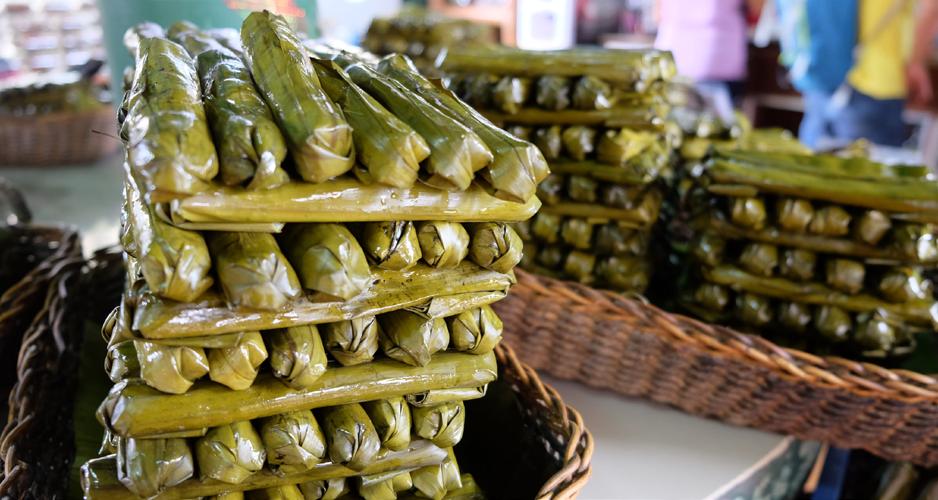
A roadside stop leads to a discovery of a town’s beloved delicacy.
Words and images by Gelyka Ruth Dumaraos
Suman, to me, is personal.
I grew up in Pangasinan, selling suman – the Philippines’ own glutinous rice cake – at the población market with my grandmother. I know what it feels like to wake up
early, wrap rice in leaves, that steamy, familiar scent filling the house. So whenever I travel and find suman somewhere new, I always pay attention.
Clarin, Misamis Occidental’s grabbed mine.
of Suman, a roadside suman shop located along the OzamizOroquieta National Highway.
We pulled over and walked in alongside a steady stream of people making their way in and out of the shop. The smell hit me first: warm, sweet, with that coconut and steamed rice scent I have known since I was small. It felt like home, but different.
Letter from the Editorial Team
BAYBAY is a four-part essay series that dives into the Filipino pre-colonial history as a people of crossings. Of water, of body, of spirit, of space: Babayi—Ba’ay–Baybayin— Baybayan.
Together, BAYBAY is a telling of how Filipinos navigate the liminal spaces: between genders, between lands, between leaving and coming in—always crossing, always becoming.
PART 2: LOOB turns inward, mapping the concept of kapwa that we carry and the communal identity of the Filipino psyche. It asks why we don’t subscribe to Maslow’s hierarchy of needs, and why kalooban is a sacred space we offer to guests. Filipino hospitality does not seek to elevate others above us, but to invite them inside.
Words and images by Ron Cruz
In college, we could sketch Abraham Maslow’s hierarchy
from bottom to top. We recited Erik Erikson’s stages like memorized Eminem lyrics. We threw around Jean Piaget and his tidy ladders of cognitive development in conversations as if development itself were a staircase we were destined to climb. Half-asleep in fluorescent classrooms and intoxicated by the smell of whiteboard marker, we learned that the self must individuate, must ascend, must arrive at its most realized and independent form.
After an event coverage in Tangub City, we had a quick side trip to this municipality, sitting between Tudela and Ozamiz. Someone in our group mentioned The House ... CONTINUED ON PAGE 2 ... CONTINUED ON PAGE 3
10 11 9 8 7 5 4 3 2 6
Culture & Heritage
» Culture & Heritage: Suman Tasting at the House of Suman in Clarin, Misamis Occidental
Culture & Heritage
» Loob
Outdoors
» Between Concrete and Current: Realizations on a Ride to the Manila Boat Club
Outdoors | Destinations
» Choose Your Own Adventure
» Quezon City Promenade: Where the Footbridge is More Than a Bridge
Entertainment
» Crossword Puzzle
» Poetry:
• On the Night of December 30th
Destinations
» On Foot in Samar
Events
» A Devoted Reader’s Glimpse Into the Philippine Book Festival 2026
Insights
» Life According to Burnham Park
Destinations
» Beauty & Contradictions: Sunsets and Local Life at Los Baños’ Laguna de Bay
Culture & Heritage
Breakfast, Lunch, Dinner: An Iloilo Museum + Foodie


To be a Filipino is to be in a constant state of passage. Our history is a map of crossings—through water, through land, through spirit, through community.
This issue buoys through that movement, beginning with a sensory passage through suman then the sacred Filipino psyche of loob We then navigate the muddy earth of Luzon, the currents of Pasig River, and a park “in the sky”, before walking the roads to friendship, to olden traditions, to sunsets, to poignant reflections, and finally, to an Ilonggo feast.
A passage is rarely just a bridge; it is a journey from who we were to who we have become, and who we still wish to be – individually and as a people. As you move through these pages, we hope you find that the distance between so near and yet so far is smaller than you thought.
The House of Suman is a source of pride for the men and women of Clarin. Every day, they make between 3,000 to 5,000 pieces, and most sell out before noon.
Back in 1992, the local government gathered independent suman form a production hub. They were only making 400 pieces a day then. With support from the Department of Trade and Industry’s One Town One Product program and the Department of Agriculture, the operation grew in 2009. The House of Suman was built to house the growing production and serve as a stop for pasalubong (souvenir) shoppers, opening up more livelihood opportunities to Clarin locals as farmers and suman
Suman Varieties and Other Offerings
Now in their 17th year, they offer 18 varieties, with the store remaining a beloved suman haven. What Clarin does is take the classic suman and stretch it in so many directions. Each flavor still tastes as it should, but also like something new to the palate.
want; for something new to offer. The list is extensive. You would have to try as many as you could in one visit and bring the rest home.
The classics are all here, including the plain suman—all rice, simple, clean, the same
Sweet, a little rich, and very easy to finish in two bites. There are more fillings— carrots, cheese, durian, buko (coconut), and moron (an Eastern Visayas specialty, which contains cocoa), among others.
More than suman, other rice
Ate Ruby, said that without this opportunity, she would not have been able to send her kids to school or save money for their future. Other makers bought their own homes, even their own vehicles – all thanks to suman and hard work.
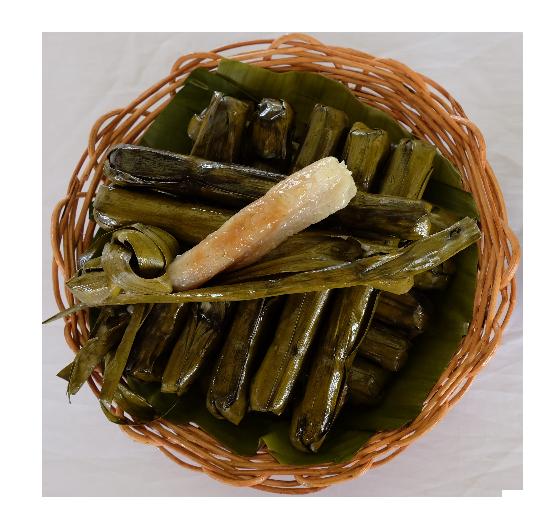
without being overly sweet. Suman with langka soft with that faint jackfruit sweetness running through the rice.
in classic and special versions. There are also neatly packed pasalubong boxes for undecided shoppers.
The makers themselves suggest new flavors, always on the lookout for what customers
Then, there is suman with ube whose purple color and mild flavor I personally enjoyed. Suman with tablea is something kids would definitely fancy.
One of the pioneer makers,
As someone who once helped as a kid, I know it is not easy work. The early mornings, the wrapping, the waiting, and the selling itself. There is something powerful about food that comes from that kind of passion.
That is the part that stays with me, especially as a travel writer. Not just the food or the privilege to taste it, but to truly understand it: where it comes from, who makes it, and what it means to them.
These women wake up every day and make thousands of pieces of something they are proud of. Something that carries their town’s name and represents it to the world. Something that has changed their lives for the better.
If you pass through Misamis Occidental, stop by here. Try the plain one first; then work your way through the rest. Enjoy it with a freshly brewed cup of coffee or sikwate. Bring a pasalubong
Severino Profeta Reyes FOUNDING EDITOR
Allandale Antenero FOUNDING TRAVEL WRITER
Gretchen Filart MANAGING EDITOR
Maia Imperial EDITORIAL DESIGNER
Carmelo Perlas
EDITORIAL CARTOONIST
CONTRIBUTING WRITERS
Alyssa Danielle Navarro
Bernard Supetran
Christian Sangoyo
Christine Fernandez
Gelyka Ruth Dumaraos
Heather Ann Pulido
Kara Santos
Karl Ren Lalas (Poetry)
Karlo Sevilla Lagman III
Rhea Claire E. Madarang Ron Cruz
GOT QUESTIONS OR SUGGESTIONS?
Email us at:
editorial@thearchipelagopress.com
Theopinionsandstatements expressedinthispublicationare thoseoftheauthorsanddonot necessarilyreflecttheviewsofthe editorsorTheArchipelagoPress.
Theinformationcontainedherein isforinformationalpurposes only.Whileeveryeffortismadeto ensureaccuracy,TheArchipelago Pressassumesnoliabilityorresponsibilityforanyerrors,omissions,oranyactionstakenbased ontheinformationprovided.
Nopartofthispublicationmay bereproduced,distributed,or transmittedinanyformorbyany meanswithoutthepriorwritten permissionofthepublisher.
©2026TheArchipelagoPress. Allrightsreserved.
box home. Most importantly, sit down with the women who made them. That part is just as nourishing as the suman itself.
But no one diagrammed the idea of kalooban
No one told us that long before the Western psychiatric revolution arrived in our textbooks, we were already living inside a fully operational architecture of the self.
Loob is often translated as “inner self,” or worse, “soul.” But the soul is an entity—something you possess, like a glowing marble tucked somewhere behind your ribs. Loob is not a thing. It is a space. And space, by definition, can be entered.
In the logic of Maslow, you secure yourself first. You climb toward self-actualization at the
do. You can be a friend of a cousin of a coworker and still find yourself seated at a plastic-covered table in a cramped living room with pictures of Jesus Christ and a Tanduay calendar girl in a bikini plastered on the wall. You are handed a plate with a heaping serving of pancit and rice. No printed invitation. No RSVP link. Just: “Tara, kain tayo (Come, let’s eat).”
Even travelers—sunburned, backpack slung over one shoulder, newly arrived—are startled to find themselves fed inside homes they passed on their way to their hostels. They come expecting beaches. They leave remembering the tacky interiors of someone’s house.
To outsiders, this looks impractical. Economically irresponsible, even. Why feed half the barangay? Why open your living room to people who may never return the favor?
the tambayan, that most misunderstood Filipino space. To tambay is to linger at the edge: sari-sari store benches, basketball courts, the strip of pavement just outside the gate. It is neither fully loob (inside) nor entirely labas (outside). It is the threshold where the interior spills outward and the exterior seeps in. Gossip, confessions, borrowed cigarettes, shared tagay (a shot of alcohol). No one schedules belonging; it accumulates through proximity.
A Japanese friend once asked me what single activity he should not miss. He expected karaoke, an island-hopping tour, perhaps a visit to the cathedral his grandfather almost destroyed in 1945. I told him, “Tumambay sa kanto.” Sit at the corner. Watch. Stay.
Tambay is not idleness. It is fieldwork. It is where the culture appears uncurated, unsponsored, and unfiltered.
apex. You become whole, then perhaps you share. In the logic of loob however, wholeness is never solitary. The self is not autonomous; it is relational. Kapwa—loosely translated as others—is not outside the self. It lives within it.
And during fiestas the doors are open.
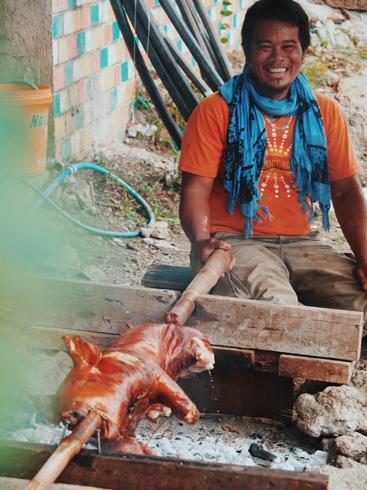
In many Filipino towns, when the brass band begins its procession and the lechon glistens like an offering, neighbors do not stop at the gate waiting to be acknowledged. They walk in. Sometimes even strangers
Because Filipino hospitality is not a transaction. It is a spatial expression. The goal is not to elevate others, but to relocate them. Not to lift them higher, but to move them inward.
Our language quietly preserves this architecture. Lakas-loob Utang na loob Saloobin Kusangloob. Courage is the strength of the interior. Gratitude is the debt of the interior. Thought is not just cognition but inner climate. Volition is something that rises from within.
Even our communal habits reveal the same model: consider
Free from tourism brochures and political branding campaigns. It is not a chance encounter but an immersion into the Filipino psyche, and a quiet initiation into kapwa
The concept of loob and labas predates colonial house architecture. Before capiz windows and concrete fences, there was already an understanding of inside and outside as moral categories. Labas is exposure, transaction, performance. Loob is trust, vulnerability, belonging. When we invite someone to eat during fiesta, we are
not showcasing wealth. We are dismantling distance.
This is also why utang na loob feels heavier than financial debt. Money can be repaid externally. Loob, once entered, rearranges the interior.
And so when a stranger finds themselves seated at a crowded table during fiesta, chewing lumpia slowly, unsure if they belong, bewildered by how easily they were welcomed
into private space, something irreversible has happened. They have crossed a threshold more significant than a doorway. They have been mapped into someone’s interior.
Loob is not a soul we guard. It is a space we enlarge.
Which is why during fiestas, every plate passed across a crowded table quietly proves that, for us, becoming whole has never meant becoming alone.
Insights from a bike ride to a historic boat club along Pasig River and how waterways can shape our cities.
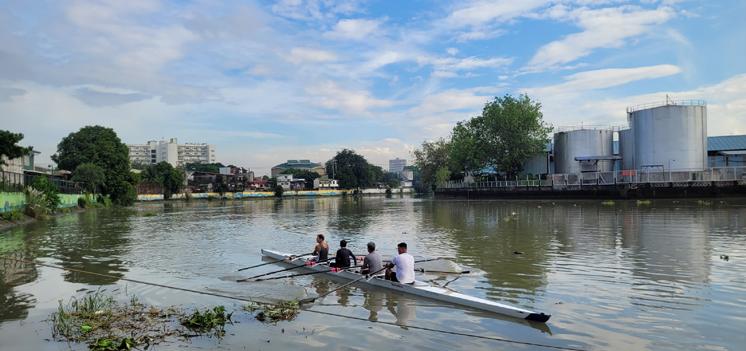
Hidden along the banks of the Pasig River in Santa Ana, Manila, stands the headquarters of Manila’s oldest sporting club.
Unknown to many – including me – the Manila Boat Club established in 1895 for rowing, sculling, and squash, still operates today. The historic clubhouse, which moved to Santa Ana in 1932, has remained there for almost a century.
I had the opportunity to visit this members-only club during a Manila Boat Club Open House tour, organized by heritage group Renacimiento Manila and bike shop Tambay Cycling Hub Through their “ride and row” World Rivers Day tour cyclists got to explore the sporting club, get free rowing lessons, and above all, learn from heritage talks on the Pasig River.
After biking 25 kilometers from my Quezon City home and joining a group of urban explorers from Pasig for another 10-kilometer ride, seeing the Manila Boat Club was a surprise. With its secluded dock, providing direct access to the Pasig River, the clubhouse offers guests a serene rowing experience, training, and a respite from city traffic.
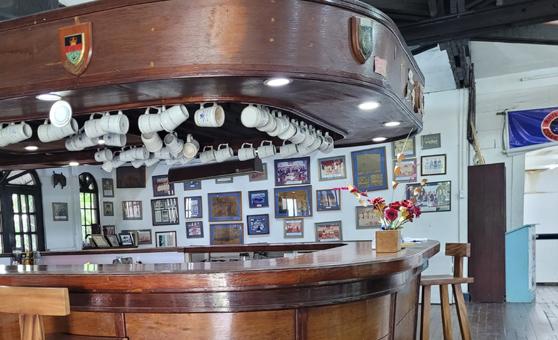
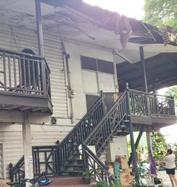
Adorned with sporting memorabilia, exploring the historic two-story wooden structure and seeing the view from the balcony felt like a step back into history books.
Over coffee with our hosts, we learned about the challenges and ongoing preservation facing the river amid moves to build an elevated expressway over it. Lead event organizer and heritage advocate Bea Dolores of Renacimiento Manila explained how many civilizations were built along rivers, and how the Pasig River served as the foundation of Metro Manila following the early settlements.
The Pasig River was once a clear, clean waterway and lifeline in the city and a vital transport route for people and goods, connecting Laguna de Bay to Manila Bay. The river was a reliable source of fresh water, food, and livelihood for the “Tagalog” settlers (“Tagalog” derives from the Filipino word taga-ilog meaning “those who live by the river”). Many residential settlements, commercial areas, churches, and government buildings were built along its banks.
Over the years, the river got heavily polluted primarily due to unplanned urbanization following World War II. In many countries, waterways are considered prime areas and key tourist spots meant to be preserved and protected. However, past decades in Metro Manila were marked by extreme neglect, industrial dumping, and untreated domestic sewage from a rapidly growing population being dumped directly into the river. By the 1990s, the river was considered biologically dead.

But there’s still hope. Massive rehabilitation efforts, including sewage treatment, ongoing dredging, and improved urban management, have significantly reduced trash and have improved water quality. Portions of the river have improved and even restored aquatic life. Recent projects to revive the river through the Pasig River Esplanade (PARES) in Intramuros which is part of an ongoing 25-kilometer walkway and bikeway project along the riverbanks, show the potential of the river for transport and tourism.
However, one of the main threats looming that could impede all the progress made is the Pasig River Expressway (PAREX) a proposed 19.37-kilometer, six-lane elevated expressway spanning the river in Metro Manila. While advertised as a way to relieve traffic congestion for car users and to provide a link from Manila to the province of Rizal, the project faces criticisms over its environmental, heritage, and social impact. Environmental groups point out the adverse effect on marine life of the river and on its heat effect in cities, already choked by concrete structures.
right about the bike, he clearly overestimated my abilities.
road – an endeavor that would require training and people to ride with. That’s when I met the friendly folks from MotoRepublic
mountains of Maragondon and Ternate. There would be random rides to Kinabuan Falls in Tanay, Rizal, and weekend explorations of the backroads of Lobo, Batangas.
Heritage advocates and cycling groups believe that expanding the river’s esplanade and improving ferry-based transport instead could help preserve heritage structures, such as the Manila Boat Club, while improving mobility and livability.
From a people-centered and environmental standpoint, an esplanade provides free public spaces for families, exercise, and leisure, and encourages nonmotorized transport (walking and cycling). Meanwhile, an expressway will exclusively benefit car owners and encourage more private vehicle use, leading to greater pollution.
As I biked back home through traffic-choked streets, weaving next to honking cars and jeepneys, I couldn’t help but wish for more walkable and bikeable riverside areas. I dream of the day when people-centric green spaces are prioritized over car-centric infrastructure.
We only value what we can see and appreciate. Seeing how the Pasig River looked from its banks made me realize that the river is very much alive and should be protected.
The next time you visit the Pasig River, go with the flow. Take the time to stroll or bike around to see that rivers are always meant to be part of city life, not something to be covered.
My girlfriend and I were on our way back to Cavite from Daet, Camarines Norte, when we suddenly found ourselves on a muddy mountain road in the middle of a downpour. This wasn’t the route I intended to take, but as Waze is wont to do, it encouraged us to take the path less traveled. With the terrain getting muddier and subsequently more slippery by the minute, I thought it was best to turn around, go back the way we came in, and exit the mountain roads of Gumaca, Quezon. But just as I was about to, a local on a Kawasaki Barako 175 said that if his motorcycle could do it, my Yamaha XSR 900 could too. While he may have been
Unsure how to navigate the muddy terrain and facing rising waters from the spillway, I asked my girlfriend, Chrissy, to get off the bike and start pushing. After over an hour of struggling through the detour’s slippery climbs and descents, we finally saw cement.
Intro-verse
I’ve always preferred to ride alone (or with Chrissy riding pillion). While I would usually find myself mile-munching on group rides a couple of times a year, I spent most of my saddle time riding to wherever my whims desired, at my own pace. It’s a lifestyle choice that has saved me from wasting time waiting for others or sitting around talking about upgrades.
But in 2024, my riding interests progressed off-
Quezon City Promenade: Where the Footbridge is More Than a Bridge
Behold the new park between parks!
So near and yet so far. Growing up and still a resident here in Quezon City, that expression is what comes to my mind every time I think of traversing the admittedly short distance between Quezon Memorial Circle and the Ninoy Aquino Parks and Wildlife Center
From the west side of QMC, one only has to cross the approximately 29-meter Elliptical Road to get to the equally popular park on the other end, whose gate stands immediately along the southbound side of Quezon Avenue. However, the roundabout is a busy eight-lane road, and it is as inconvenient as it is dangerous to cross with all the speeding
vehicles—especially during the daytime. Without delving into the details, let me just say that getting from one to the other entails, well, roundabout routes.
For decades, the successive administrations of the city didn’t make it easier for travelers to visit both tourist destinations in a day. I highly doubt that any mamamasyal (tourist) familiar with these spots invited friends or family with, “Let‘s visit Quezon Memorial Circle and Ninoy Aquino Parks and Wildlife Center this Saturday!” It’s either one or the other, and certainly not both in a day’s itinerary. Most probably, only those who take part in organized tours of the city or field trips set foot on both places in a day.
To my great relief, I learned – though belatedly – that a kind of footbridge connecting the two landmark parks was
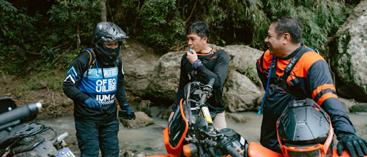
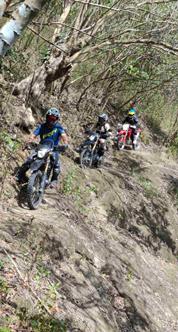
The Community MotoRepublic is a community of riding clubs that makes it easy for anyone to join rides. You simply register on their website browse the scheduled rides, and join the ones you fancy. They have everything for motorcycle enthusiasts of all skill levels and availability, from quick social rides to coffee shops and traditional Batangas lomi jaunts to weekend island loops and off-road adventures. It’s the kind of organization I used to actively avoid.
But after a few off-road training sessions organized by one of its member clubs, I found myself with something I haven’t had in a while – riding buddies.
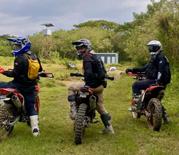
Sporadic sessions on the trails at Arden Botanical in Trece Martires would become weekend habits around the
opened to the public last November. I was left with awe, seeing the aerial night photos of what turned out to be not just a footbridge but a breathtaking park in its own right. The Elevated Landscape Promenade or simply, the QC Promenade is an ingenious new suspended mini park between two larger and older parks.
A mere 10-minute walk from home, I knew I had to visit this new infrastructure project under our current mayor, Joy Belmonte, soon—though I was a little apprehensive initially due to a February advisory on the QC LGU’s socials about an incident concerning opportunistic individuals charging pedestrians ₱10 to pass through—a scam I refuse to be a victim of.
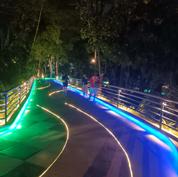
Fortunately, no opportunistic incident took place. After a lone security guard at the landing made a quick security inspection of my belongings, I feasted my eyes on the paved bridge sprawled before me under the night sky with an abundance of greenery strewn all over it.
In less than a year, MotoRepublic helped morph me from a lone wolf whose fate was left, in equal parts, to skill and chance to an honorary member of a motorcycle club.
One of today’s more influential adventure riders, Adam Riemann, says that “Like soldiers at war, sharing a ride experience with someone literally accelerates your relationship.” Few truer words have been said. Apart from sharing spectacular views and unique travel experiences, being responsible for each other’s safety on the road and the fun of it give you unique insights into a collection of diverse personalities. On the bike, you always tend to find the person who prefers the same pace as you. Off it, you gravitate toward those who like to drink and laugh as much as you do.
I still enjoy riding my bikes alone. But thanks to MotoRepublic and the Backroads Mountain Trail Crew, I have the option not to.

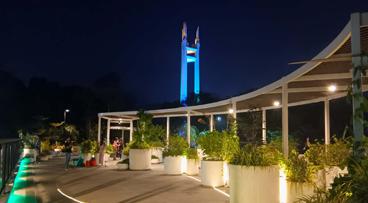
From one end to the other, a pergola winds through rows of tropical plants in white circular concrete planters, with the towering Quezon Memorial Shrine in the background. I found visitors taking photos, or sitting on the floor, some by the barriers on both sides, indulging in the urban nightscape of surrounding buildings and the cars cruising below.
Any pedestrian can pass or stop by to enjoy the promenade’s lush garden. In the early evening, from the railing overlooking the circular park and nearby buildings, one can sense how the dark subdues the city; how the latter, in turn,
puts up a semblance of a fight with its myriad artificial lights. Seeing the homeward-bound vehicles running underneath, their headlights leading their charge, reminds me that everyone is headed somewhere. It’s always a blessing to spend a few stolen moments when we can be still and just be even in the middle of a busy city.

*Tune into to the next issue for the answers!
Into This Week’s Crossword Puzzle
ACROSS
5. The Philippines’ largest lake
6. First provincial museum in Iloilo
9. Suspended mini park between the QC Memorial Circle and Ninoy Aquino Parks and Wildlife Center
DOWN
1. 2.16-km bridge spanning the strait from Samar to Leyte
2. 64-kilometer penitential walk around the province’s circumferential road
3. Local glutinous rice cake sold in 18 varieties in Clarin
4. Acronym for the Intramuros esplanade that’s part of a 25-km riverbanks
bikeway project
7. Creek that used to exist in Burnham Park in Baguio
8. Filipino word that translates to “inner self” or “inside”
With only a day to
It was 2009. Airline seat sales were still a novelty, and the competition for cheap fares was not yet as ruthless as it would later become. Mobile internet was rare, and if we wanted photographs worth keeping, we carried heavy cameras in our bags.
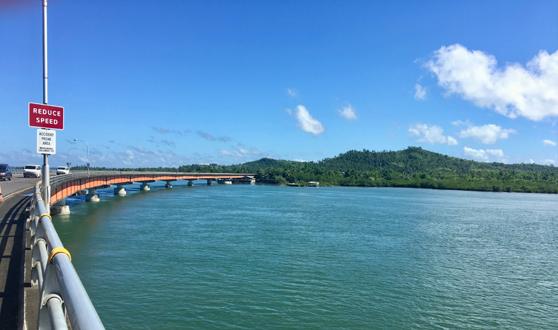
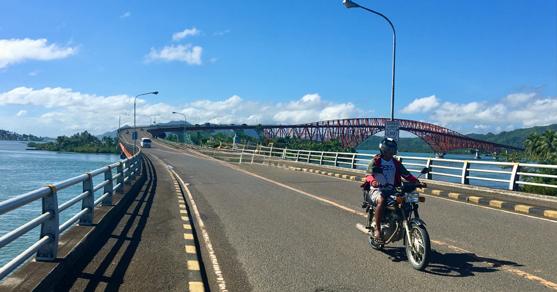
comfortable, while a slightly elevated pedestrian path ran alongside the road, allowing us to savor and appreciate the full span of the bridge.
The sun warmed our backs, its light gloriously bouncing off concrete and water. Below us, the San Juanico Strait shimmered. At its highest point, about 40 meters from the sea, we could feel the bridge tremble slightly as vehicles sped past. I paused there, steadying myself, aware of both the height and the thrill of standing between the two provinces.
Aurora
Limatik
International Women’s Month
On the Night of December 30th
By Karl Ren Lalas
The party doesn’t arrive until tomorrow.
But the pigs sang together with the truck’s engine.
None of them complained
When their master put them in the cage on wheels.
It was entrapment, yes. But it was something new.
Something different from the usual dirge

Something peculiar from their ordinary, swine life.
They had to endure whenever one of them didn’t return.
Together with the moon, they watched the concrete road
And the distant mountains slide in and out of the bars.
They raced with four-wheeled cars, Inhaled their carbon emissions.
The cold night bothered them,
But they didn’t wait for the sunlight to come.
When morning arrived, it was still dark for them.
The truck had unloaded its burden, and they were about to get dressed for the party.
One by one, they were pampered by delicate hands.
When the last of the pigs was next in line, It started looking for the familiar.
The old pit, the old face of the master,
And the old dirt. It prayed for its misery
Away from the happiness of man.
Karl Ren Lalas is an educator and a writer from Pangasinan. He writes essays about his experiences with his friends and poetry that seeks to make sense of the world.


The Archipelago Press 03082026
We accept previously unpublished poems on place, migration, movement, memory, and Filipino culture in English, Filipino, and other Philippine languages and dialects from Filipinos across the world. For non-English poems, please provide an English translation. Indicate your preferred byline (a pseudonym is fine).
Please submit just one (1) poem as a Word document or pasted in the body of your email to editorial@thearchipelagopress.com, with the email subject: Poetry: Your Name – Poem Title
Accepted poems will be paid 500 Php and featured in our weekly issue and our website.
If you don’t hear back from us within 30 days of submission, please give us a nudge.
My friend’s brows sank into her eyelids – a telltale sign that she was hyperfocused on a sale. When she called me and another colleague over, we stood behind her, watching as the page refreshed. Then, it appeared: the confirmation message.
Another flight secured—the cheapest I would ever book to date, too: only ₱56.02, tax included. The thrill of that small victory felt almost equal to the journey itself.
This time, we were headed to Tacloban a city in Leyte that serves as the gateway to Samar We knew very little about it; the main draw for us was the cheap flight. We were in our twenties, carrying the kind of stamina that comes naturally with youth. Seat sales let us fill our months with trips, leaving only a single day for this one. An overnight stay would have been ideal, but our pockets weren’t deep enough to afford it. Still, as hearty eaters, we came up with a simple plan that felt enough for us: breakfast in Leyte, lunch in Samar, and dinner back in Manila.
Back then, we still relied on travel magazines and brochures, so information gathering required a bit of effort. On the day of our flight, I rushed to the airport in whatever I could grab—a capri, a bright orange shirt, and slippers. On my shoulders
hung an overstuffed sling bag containing EZ Map, a few crumpled internet printouts, and the barest essentials.
We landed safely in Tacloban and stepped into streets still damp from earlier rain. Puddles and streaks of mud ran across the roads – a small
inconvenience for anyone in light-colored pants as I was. We quickly realized that getting around was actually easy, and people were happy to help.
After a breakfast of tapsilog and a short visit to a public park, we made our way to the San Juanico Bridge One of the Philippines’ most striking bridges, it stretches 2.16 kilometers across the strait from Samar to the neighboring province of Leyte. From the Tacloban Public Market, we rode a jeepney to the foot of the bridge and continued on foot. Most people crossed in vehicles, faster and more
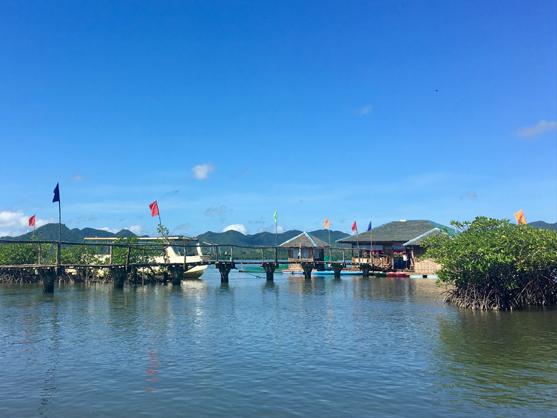
An hour and hundreds of photographs later, we reached Samar. Near the foot of the bridge, we stopped at the first beach resort we saw. We slipped off our footwear and dipped our feet in the water. I regretted not bringing extra clothes, though we were content laughing off our small misadventures.
We had lunch at a nearby eatery before flagging down a van back to Tacloban. After a cup of coffee, hunger set in again. On the jeepney ride to the airport, we spotted a barbecue stand and, without much discussion, hopped off to buy puso – rice wrapped in banana leaves – along with skewers of chicken and hotdogs. We ate quickly, savoring each bite before hurrying back to catch our flight.
We reached the airport just in time for our afternoon flight, slightly breathless and relieved. In a single day, we had wandered through new places, enjoyed simple meals, and returned home— all within the limits of time, money, and energy.
We were hearty eaters then. Seventeen years later, I am grateful that I still am.
Traveling on a tight schedule and budget might feel restrictive, but these constraints made us more aware of what we could do with what we have. We walked. We noticed. And the day, in a way, stretched longer than it actually was.
Words and images by
Alyssa Danielle Navarro
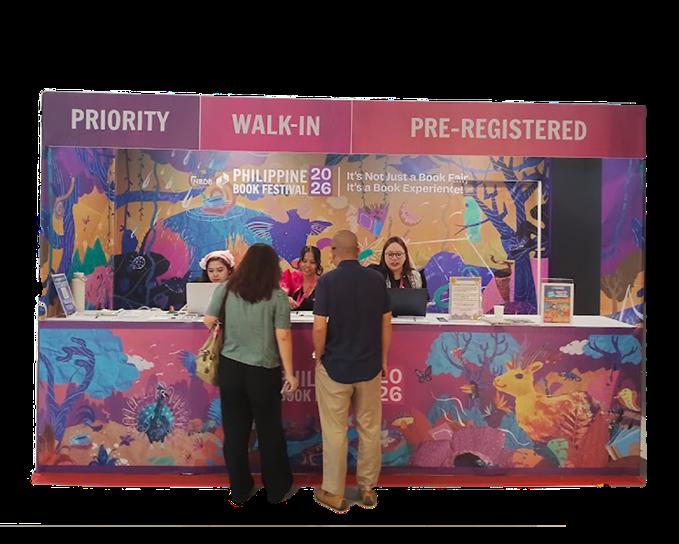
Most people take trips elsewhere around the country or across different parts of the globe to unwind and discover new things. Being a voracious reader, my version of this is usually a trip to the bookstore. This week, instead of the usual shops, I went to one of the biggest annual book events in the country: the Philippine Book Festival 2026
I checked beforehand what events were happening until evening for Day 2. I attended a discussion on Queer Fantasy at the Gubat Stage featuring two male writers: moderator and author Joel Donato Ching Jacob, and Steven Sy, who released his book, My Lady Hiraya, last year. Steven talked about how important it was for him that the process of writing itself was something he enjoyed. He said writing was natural for him and most times, he did it for himself and his friends.
catalogue at UP Press, however, was a bit less organized, so one must patiently sift through each shelf to find books.

Map in hand, I walked along the wide expanse of SM Megamall’s Megatrade Hall through a maze of stalls that represented part of our country’s local publishing landscape. As best as I can, I tried to be strategic: I relied on the paper given to me for navigation, so I could save time and be efficient in visiting the booths I wanted to see.
Launched in 2023, the Philippine Book Festival is a four-day cultural event organized by the National Book Development Board (NBDB). It brings together publishers, authors, illustrators, creators, and readers from all over the country in a dedicated marketplace for Filipiniana books.
After this discussion, I took my time checking out the booths. Thankfully, they were categorized into special zones: Collective Stand, Aral Aklat, Kid Lit, Booktopia, and Komiks The nearest to Gubat Stage was Aral Aklat.
Aral Aklat included stores by university presses, such as Ateneo, UP, UST, and FEU (in that order.) I was delighted to see how systematic the cataloguing was at the Ateneo Press booth. It was so easy to find books based on genre. UST, meanwhile, had a sale of books ranging from ₱100 and below. I scored two books by the poet Ophelia Alcantara Dimalanta for a total of only ₱100. The
I experienced another pleasant surprise: a zine called The Cat Named Moonstone caught my attention. Turns out the drawings inside were made by a seven-year-old girl named Zena Chelabian, who created the zine with the help of her mother.
I visited the Booktopia zone to check out the zines and books made by some writer acquaintances. I was happy to see the titles offered by Bente Bente Zine because as their name implies, their zines cost only ₱20. My only regret is that I did not wait until late afternoon to visit the Jonaxx Stories booth. When I left the venue, I saw a social media post saying the author herself was there.
Overall, I felt at ease attending Day 2 of PBF 2026. It helped that I strategized and used the map from the organizers. I felt less pressured to check out the booths, compared to my past experiences with other book fairs. Best of all, there were tables and chairs set up in the middle of each walkway, which meant that anyone whose feet or legs ached from walking all day could sit down and find comfort in-between browsing! I also appreciate the affordability of some books and zines, since most books cost quite a lot these days.
I’m excited to attend PBF again next year to see what our country’s creatives have produced. It was quite fun to do a mix of planning and spontaneity before and during the book festival. I made it a

A Baguio local’s life (re) told and (re)viewed through milestones spent in Burnham Park
Words and images by Heather Ann
Pulido
I have no recollection of the first time I set foot in Burnham Park But there is a photo of me as a toddler, standing in front of the park’s famous pine trees, wearing a red sweater with a black-and-white plaid skirt. Another photo has me in the same clothes, plopped on a rattan picnic mat with my Lola, Mama, Papa, and a few cousins. Only my mom flashes a big grin. I’m looking at the camera, but I don’t smile. Judging from how the picture was staged, I’d say one of the park’s photographers
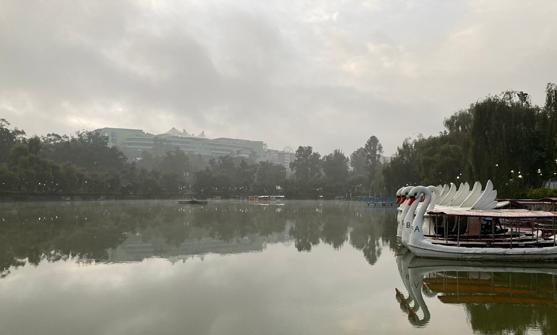
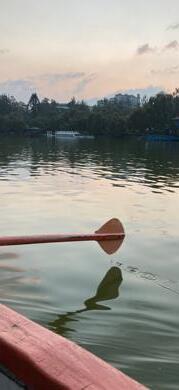
we rode a swan pedal boat. My uncle had to take breaks to rest his aching calves.
Burnham Park was one of the popular places to shoot music videos, short films, and commercials for high school projects in the 2010s. Then again, our school was much closer to the City Hall, and its gardens were good enough for us. So, as a teen, the only time I strolled around Burnham was during our yearly intramurals at the Athletic Bowl. I was not in any way sporty, but I aced my MAPEH tests because I memorized long lists of sports jargon. My participation in the intrams was limited to the bench cheering competition. I take pride in that to this day because our team often landed in the top three.
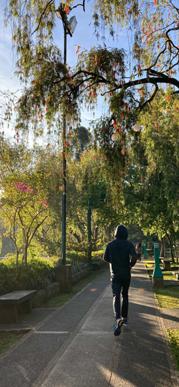
climbed down Hilltop every day before 6:00 a.m.. We’d circle the park until we reached 10,000 steps or so. We met lots
must have taken it. I’m not sure if these photos still exist. I have yet to dig into the boxes of my mom’s belongings. For now, I rely on mental images.
When I started going to school, I wasn’t brought to the park often. We weren’t the type of family that went to church or on vacations. Sometimes, when my father got his salary, we’d dine at a fast-food restaurant. Otherwise, we just visited my mom’s parents in Irisan.
But I remember when my uncle had just gotten married. He and his wife stayed with us on Asin Road for about a month. Once, they took us kids to Burnham Park and
Many of my college memories took place at the Igorot Garden After our debate training, we’d go to the Night Market to grab a bite. I almost always couldn’t afford the food, but I still tagged along to hang out with other club members.
Plus, the seniors would walk me home to Hilltop after dinner. When I was a junior, my brothers visited from Kapangan. I saved up so that we could go biking at Burnham Park. On that perfect weekend, I even bought them ice cream.
Like the rest of the world, I was stuck at home when the pandemic struck. When lockdown restrictions began to ease in 2021, my friend invited me to go on morning walks. I
of joggers and walkers along the way. Zumba coaches with their portable speakers gathered aunties near the Rose Garden.
The garden grounds belonged to the tai chi practitioners. Groups practicing kickboxing, calisthenics, or a mix of these, assembled near the biking area.
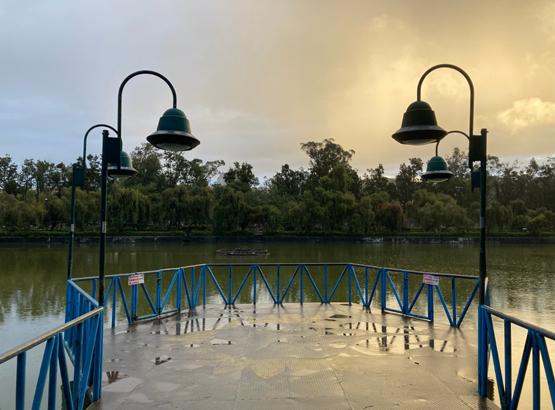
Two or three boxing trainers claimed the spot behind the Burnham Lake viewdeck. The pigeons, doves, and mayas were there every morning, too. After a week, I remember feeling that I was seeing Burnham Park with brand new eyes.
Months later, teenagers in white blouses and maroon skirts jogwalked across the park to reach school before the bell rang.
Tourists coming off overnight trips sauntered by with their luggage as they waited for the darkness to lift. Many broken dawns after, busloads of tourists would interweave with the morning sprinters.
One day, I just stopped going.
Do you ever pause to wonder how much history a place can hold? And I’m not thinking of history in the sense of the 32-hectare park being named after Daniel Burnham: the architect of Baguio, the colonial resort. I’m not even talking about how the park, along with City Hall, sits on land that used to be known as “Kafagway.” Don’t even get me started about how there used to be a creek there called Minac (or Miñac). I’m aware most people
only recall the man-made lake—that one’s been closed for renovations since October 2025.
I’m talking about the time a fortune teller stood from a bench and offered to reveal my future for ₱20. I gave her the money, but I was too busy to ask anything. Or maybe I already knew too much. My parents’ and my uncle’s marriage did not survive. The people I was in high school and college with no longer exist. My youth has raced past me. And just like the photographers at Burnham Park, happiness doesn’t last—at least, not as long as we want it to. Photo albums are forgotten. Memories, misplaced. Still, every day, the birds sing. The sun wakes. The trees bear witness.
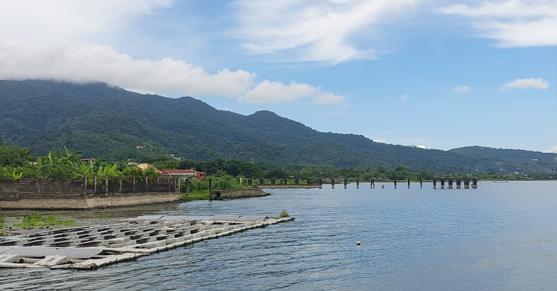
Beyond Mount Makiling, Los Baños’ Laguna de Bay gives visitors a taste of the local experience, though not without the issues hounding the country’s bodies of water.
Beyond the landmarks is a wide open space where vendors sell usual street food like fishballs and kwekkwek, and even sweet snacks like cheesy donuts. Students in uniform and other locals flock here during afternoons.
Los Baños is well-known and often visited for Mount Makiling with its ancient forest trails and rich wildlife, as well as the abundant greenery sweeping down its slopes to the University of the Philippines campus As a visitor – and later, a resident – of Los Baños, I always find myself in awe whenever I take my nature walks in these places.
However, for sunsets and a taste of local life outside the campus, my favorite place is the Los Baños Laguna de Bay shoreline I learned about it through locals, who gave me commuting directions and landmarks to look out for, as the precise name and location is not on Google Maps.
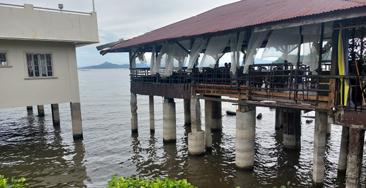
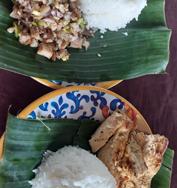
Closer to the lake’s shore is a huge I Love LB (Los Baños) signage, where some people take photos. Just near the signage is Dalampasigan a floating restaurant named for its location on the shoreline. Here, I would enjoy fresh tilapia or seafood on banana leaf-covered plates with a friend while taking in the hyacinth-dotted waters and the gentle lake breeze on my face.
Nearby are benches with couples, groups of friends, and families—some sitting on the concrete steps leading down to the water. Kids play and students practice a skit or dance for school. Occasionally, there are also bikers resting and enjoying the scenery.
As the lake is part of some locals’ livelihood, fishing boats are a common sight in Laguna de Bay. Sometimes I would chat with the fisherfolk to check out their catch. I learned that they can also take people around the lake, though I haven’t tried it myself.
Farther out to the left are the ruins of the old Spanish pier once used by steamboats for docking during the Spanish colonial era, and later for seaplane mooring during the American occupation. There are also lakeshore resorts, some with pools. I’ve only ever inquired with one, and still prefer the view from the signage or the floating restaurant.
During sunsets, everyone turns their gaze to the horizon. The lake, sometimes still as glass, sometimes with waves like sea, is painted in vivid oranges. It reminds me of Manila Bay’s own iconic sunset. Laguna de Bay does


look like the sea or part of it, with its horizon seemingly endless in the distance. In fact, I’ve heard locals call Laguna de Bay dagat (sea), not lawa (lake), which makes sense. As the country’s largest lake, with its sheer size spanning towns and cities beyond Los Baños, it feels as vast as the sea.
Like Manila Bay, however, Laguna de Bay’s beauty is beset by environmental issues. Local leaders have warned that it is becoming the country’s “biggest septic tank” with high fecal coliform, sewage, and other pollutants. Flooding has also become common. While there are ongoing rehabilitation efforts, environmental researchers recommend doubling down and increasing funding.
Among the proposed projects for Laguna de Bay is a ferry system to decongest Metro Manila traffic jams. In fact, in the 1990s, there was a short-lived boat service plying between Los Baños and Guadalupe in Metro Manila. The ride took only
40 minutes, far shorter than the two hours by bus now.
To me, an important rehabilitation on Los Baños’ Laguna de Bay lakeshores in particular is the addition of more benches and shaded areas, ideally with trees. Although the lakeshore serves as a third space for locals and visitors, it offers few seats and lacks a carpet of grass where anyone could simply spread out a mat and relax.
Yet, despite its issues, the lakeshore’s beauty and accessibility to locals cannot be denied. I myself cannot help but come back here, if only for its sunsets.
From UP Los Baños, take a Bayan-bound jeepney or any jeep passing by Bayan and ask to be dropped off at the lumang munisipyo (old municipal hall) or the Los Baños public market. From there, it’s a short walk to the shore.
Check out these (mostly) free museums and neighboring pocketfriendly food stops.
A jeepney away is Museo Iloilo. Built in 1971, it is the first provincial museum in the city and is the museum that first comes to mind, with its colorful façade. Despite its limited space, it houses the province’s invaluable heritage, from stone-age potteries to religious relics and artifacts from the Spanish, American, and Japanese occupation.
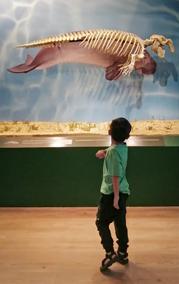
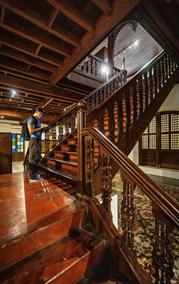
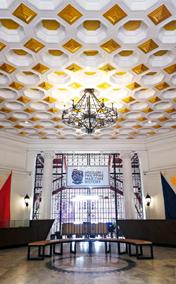
You can spend a whole day in Iloilo eating non-stop— visiting local restaurants and decades-old eateries. But most visitors are unaware that it’s also an excellent destination for spending the day hopping around the city’s numerous museums – most of which are free to enter.
Why not do both at the same time?
MUSEUM STOP #2: NATIONAL MUSEUM OF THE PHILIPPINES ILOILO
Cross Capitol Street and you’ll find the Iloilo National Museum Originally built by the Americans in 1911 as the city’s provincial jail, it now hosts a modern museum with revolving exhibits and
A few steps away stands the Museum of Philippine Economic History It has 13 galleries showcasing the evolution of the country’s economy and historical development. Its 1905 two-story bahay na bato is worth the visit itself.
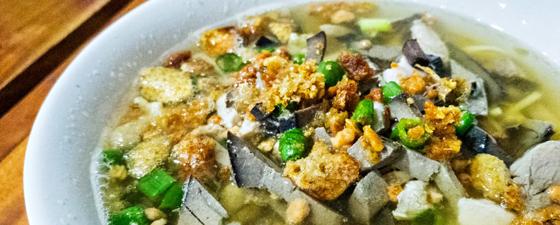
FOOD STOP:
NETONG’S LA PAZ BATCHOY + MADGE CAFÉ
Start your day with a hot bowl of Iloilo’s best noodle soup at La Paz Market One of the three restaurants claiming a stake as the first batchoyan in the city, Netong’s is a fave for both locals and tourists alike. Its clear butobuto caldo with miki, chopped pork innards, bone marrow, beef loin, and crushed chicharon is a heartstopper.
After a filling bowl, head over to Madge Café for a cup of legit Ilonggo coffee.
MUSEUM STOP #1: MUSEO ILOILO
two permanent ones: Habol Panay: The Woven Artistry of Western Visayas and the Geology and Paleontology Exhibition
FOOD STOP: ROBERTO’S
MUSEUM STOP #6: CINEMA EXMUNDO
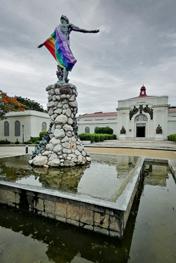
Also within UPV grounds, Cinema Exmundo rests inside UPV’s film theater - a curious white building with a strikingly red door. Its hallways are replete with movie replicas and pop culture icons. While not a museum per se, the film artifacts onsite and library are a worthwhile side trip, especially for cinephiles.
works from
MUSEUM STOP #3: MUSEUM OF PHILIPPINE MARITIME HISTORY
History buff? Take a jeep bound for Plaza Libertad and you’ll reach the Museum of Philippine Maritime History It documents the country’s past through marine voyages— from the prehistoric balangay to the modern steel ships we have today. Found inside the handsome 1916 Iloilo Adwana or Iloilo Customs House, the fantastic view of the Iloilo River out front, is a great bonus.
MUSEUM STOP #4: MUSEUM OF PHILIPPINE ECONOMIC HISTORY
Cross Calle Real and brave the lines at Roberto’s for their Queen Siopao—a massive bun packed with chicken-pork adobo, bacon bits, duck egg, and chorizo. Best paired with meatballs on a stick and lomi – one of Iloilo’s OG dishes.
MUSEUM STOP #5: UPV MUSEUM OF ART AND CULTURAL HERITAGE
Take a jeep heading to University of the Philippines Visayas (UPV) to visit the Old Iloilo City Hall – now the main building of UP Visayas. Inside its Art Deco halls –designed by National Artist for Architecture Juan Arellano – is a collection chock-full of artworks from regional artists and Filipino masters.
MUSEUM #7: BRANDY MUSEUM
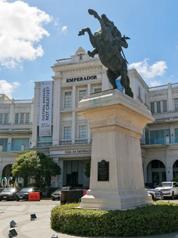
A jeepney ride to the Megaworld Business Park will bring you to Emperador’s— yes, that Emperador Brandy Museum This compact museum showcases not only the history of the brand, but also brandy-making in the Philippines through literature, tools, and production. They occasionally hold brandytasting activities, too.
MUSEUM #8: ILOILO MUSEUM OF CONTEMPORARY ART
Beside the Brandy Museum is ILOMOCA or the Iloilo Museum of Contemporary Art While there is a fee to enter, it is the largest and first modern art museum in

Cross the street and finish your tour at Ondoy’s Sugbahan for Ilonggo seafood dishes. Wokfuls of buttered garlic shrimp and fresh scallops can be paired with Iloilo’s KLB— kadyos, baboy, langka for an unbelievably affordable price. It’s the perfect way to cap off your Iloilo museum tour!





Address: 630 1st Avenue, PMB, 318, San Diego California, USA 92101
Phone number: +6195191063
Email: info@thearchipelagopress.com
Website: www.thearchipelagopress.com
media: www.facebook.com/thearchipelagopress https://www.instagram.com/thearchipelagopress https://www.tiktok.com/@thearchipelagopress https://x.com/TheArchipelagoP https://www.youtube.com/thearchipelagopress