
Transportive stories by island-born hands, across shores
Transportive stories by island-born hands, across shores
BAYBAY is a four-part essay series that dives into the Filipino precolonial history as a people Of water, of body, of spirit, of space: Babayi— Ba’ay–Baybayin—Baybayan.
Together, BAYBAY is a telling of how Filipinos navigate the liminal spaces: between genders, between lands, between leaving and coming in—always crossing, always becoming.
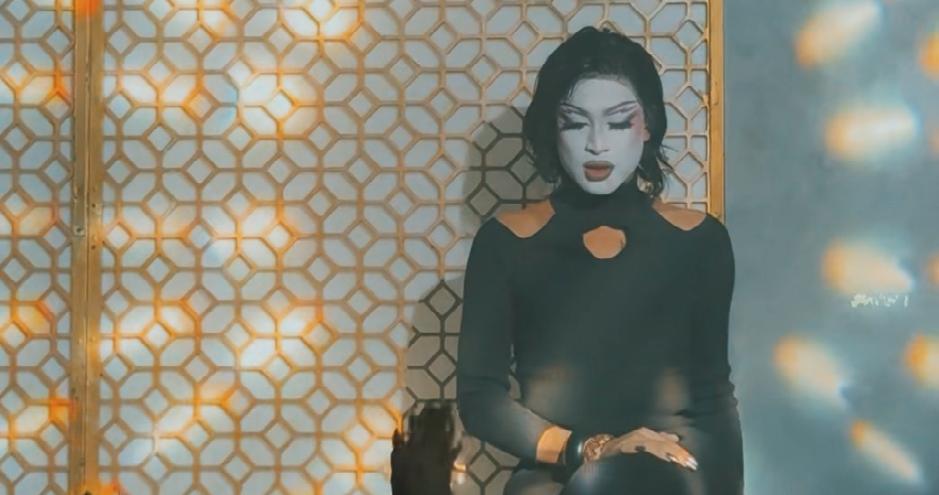
Part 1: BAYOGUIN opens the series by returning to the precolonial figure of womanhood and gendercrossing ritual leaders who embodied fluidity long before colonial binaries hardened our shores.
Words and images by Ron Cruz
In Manila, drag queens are not just about fashion and lip sync numbers; they perform a ceremony older than the city’s neon circuits. It is a
Words and images by Marky Ramone Go
For Women’s Month, we celebrate women who do exemplary work in promoting our local culture. From a long list, this writer has selected six women from a pool of countless equally impressive individuals who have contributed - and continue to contribute - to our society’s rich cultural heritage. Here are some of them.
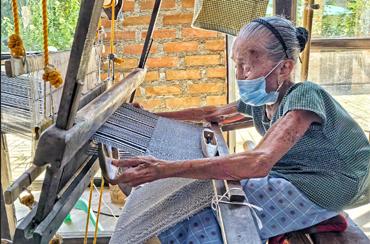
It is a rare privilege to encounter a national living treasure, and few personify that distinction like Lola (grandma) Magdalena Gamayo. When I met her, she was 99 years old. She celebrated her centennial in 2024. Even at that age, she continues to weave inabel , the traditional handwoven textile of Ilocos
rite that descends from a lineage rooted deeper than the centuries of colonial disruption, a tradition of sacred voices and just authority that once moved through the land with the divinity of prayer.
Before there were stage lights in Malate, and before the RuPaul Girls were icons of the scene, there were the bayoguin or asog. These were not fictional characters, nor footnotes in dusty history books; they were history.
... CONTINUED ON PAGE 2
Norte , while mentoring a new generation of artisans.
A recipient of the prestigious Gawad sa Manlilikha ng Bayan (GAMABA) award in 2012, Lola Magdalena is one of fewer than 30 Filipino artisans honored with this recognition. a swirling motif believed to ward off evil spirits. Even after nearly a century of life, her hands move with precision, weaving not just cloth, but the living legacy of her people.
... CONTINUED ON PAGE 3
Letter from the Editorial Team Insights
» Bayoguin
Culture & Heritage
Art & Lifestyle » Pagdaan, Pagdaraanan, at Daratnan: Film as Movement, Passage, and Destination 10 11 9 8 7 5 4 3 2 6
» Celebrating Women Who Preserve Philippine Culture
Destinations
» Wonder Spots for Wander Women
Insights | Destinations
» A Room of One’s Own: A Case for Women’s Spaces
» Bahay ni Io: A Haven for Feminism in the Heart of Quezon City
Entertainment
» Crossword Puzzle
» Poetry: Shitting Out Money
Skyflakes
Entertainment
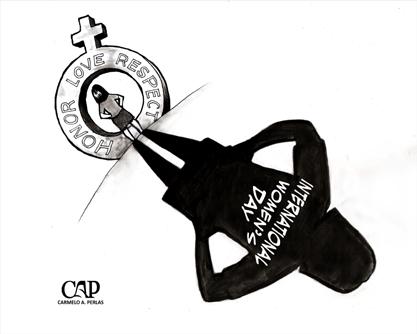
» Editorial cartoon
» Poetry
Sadkit Mornings -sand
Insights
» An Annual Long-Distance Affair with Oneself
Insights
» When the Mountains Get Steeper
Culture & Heritage
» The Art of Being BidiBidi


We have always held the commitment to stand for all that is just, equal, and empowering across all genders and identities. That means lifting the veil of influence from the world’s oppressive systems.
In this special Women’s Month issue, we remain committed to that credo by tracing lineage back to the babaylan and bayoguin — our pre-colonial spiritual leaders who served as our bridge between earth and sky, existing outside the gender binary. We then tread the path of the women whose hands kept traditions alive through centuries of change, before looking at the continuing fight of Filipino women to reclaim “a room of one’s own.”
We transition from that struggle for private and intellectual space to the modern woman’s sabbatical – whether a mother or child-free by choice – to find her own joy.
Finally, we take these pasts and presents to redefine our future through women-led collectives that understand: women are strongest when held by community—in struggle, in joy, and in their journey back to fluidity, to their roots, and to our collective power as a people, long before colonial laws told us who we must be.
colonist’s propaganda could call them heresy. She is retelling an older truth: that the body is as malleable as the rivers, and gender is as powerful and fluid as the waves of the sea.
Women, and men who became women, and spirits that existed between Church-forged binaries. Their authority was not merely symbolic. In many communities, it was the glue of society. They decreed seasons, healed bodies, and negotiated bonds with spirits of nature.
The Boxer Codex inked under the high noses of Spanish colonizers, documented the presence of male priests dressed in women’s garments, their roles intertwined with the female spheres of ritual and leadership. Within precolonial life, they were not oddities. They were citizens, mediators between realms, exemplars of a truth that gender in our islands was never a straight line, never split into two columns, but a colorful gradient, with no beginning nor end.
So, when a drag queen sashays from Orosa to Poblacion in heels that defy the laws of physics, she is not alone. She is stomping with the rhythms of those ancestors who danced in sacred circles long before a

Editorial Team
Severino Profeta Reyes FOUNDING EDITOR
Allandale Antenero FOUNDING TRAVEL WRITER
Gretchen Filart MANAGING EDITOR
Maia Imperial EDITORIAL DESIGNER
Carmelo Perlas EDITORIAL CARTOONIST
Modern Manila’s drag culture, however, is not the glossy fantasy polished solely for television. It is gritty, physical, and unapologetically political. It is queens performing on stages made of coco-lumber planks stacked on oil barrels, where sweat drips heavier than Swarovski crystals, where stunts can dislocate joints and a heel can snap mid-number. It has humor sharpened by survival and creativity born of necessity. The wit is multilingual, the references deeply Filipino,
shaped by telenovelas, Catholic guilt, karaoke ballads, and political oppression. They do not entertain for cash tips alone; they “werk” for rent, for chosen family, for the right to take up space in a nation that has always demanded proof of worth.
In Manila’s drag community, nowhere is this lineage more alive than among the Paper Dolls In the ’70s, they were not mere performers; they were matriarchs and cultural custodians. A split was a ritual, a lip-sync was a sermon, an “aura” was a prayer. They have lived through AIDS scares, martial law, street violence, rejection, commodification, and yet they stand, sequined and sovereign.
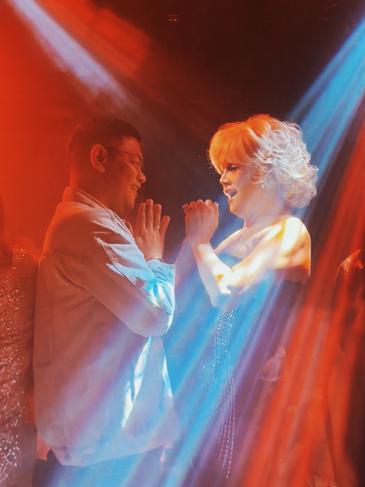

And in this renewed scene that buzzes in modern queer bars and spills into streaming subscriptions and TikTok, one name glimmers like a disco ball: Divine Amparo
This Paper Doll and Golden Gays icon was not born to drag; she was summoned by it. In the 1970s, when the Philippines was hollowed by dictatorship and bruised by fear, she took activism to the stage. She wore gowns that swallowed spotlights and painted her face with glorious defiance. In those days, she didn’t merely entertain; she performed salvation. For the young who had no mothers, for the closeted girls forced to comply with society, for the boys who felt imprisoned before language coined a name for them. She was a beacon of hope.
Now, in the revitalized drag renaissance of this city, Mama Divine Amparo returns—not as a relic, but as a proof of this hidden history. She still shows up for all the queens, newcomers and veterans alike, to make an enduring statement that their flamboyance is not a token identity but a
CONTRIBUTING WRITERS
Bernard Supetran
Christian Sangoyo
Christine Fernandez
Heather Ann Pulido
Jam Moreno (Poetry)
Kara Santos
Karlo Sevilla Lagman III
Marky Ramone Go
Mia Tijam (Poetry)
Nene Cadiog (Poetry)
Rhanydell Bien Baysa (Poetry)
Rhea Claire Madarang
Ron Cruz
GOT QUESTIONS OR SUGGESTIONS?
Email us at:
editorial@thearchipelagopress.com
Theopinionsandstatements expressedinthispublicationare thoseoftheauthorsanddonot necessarilyreflecttheviewsofthe editorsorTheArchipelagoPress.
Theinformationcontainedherein isforinformationalpurposes only.Whileeveryeffortismadeto ensureaccuracy,TheArchipelago Pressassumesnoliabilityorresponsibilityforanyerrors,omissions,oranyactionstakenbased ontheinformationprovided.
Nopartofthispublicationmay bereproduced,distributed,or transmittedinanyformorbyany meanswithoutthepriorwritten permissionofthepublisher.
©2026TheArchipelagoPress. Allrightsreserved.
reclamation. That every shimmer is a proverbial middle finger to the rules written by outsiders. That womanhood and all its colorful nuances are as native to these islands as their tides.
She actively participates in workshops at the Pinili Inabel Center in Nueva Era, sharing her mastery of patterns, techniques, and the cultural stories embedded in every thread.
During my visit, I watched her complete a piece featuring the Kusikok or Kusikos pattern, a swirling motif believed to ward off evil spirits. Even after nearly a century of life, her hands move with precision, weaving not just cloth, but the living legacy of her people.
Those who have visited Iloilo and perhaps all of Panay Island and hired a tour guide would know Erlyn Alunan: a woman who carries the history of the island like a walking library. She is filled with endless tales from each town’s traditions, backstories, characters, epic legends, and beliefs ranging from the religious to the superstitious, as well as her experiences as a young tour guide in the 1980s, showing around the likes of Aga Muhlach and Richard Gomez.
Tour guides like her are why I always recommend hiring a local guide to gain a deeper understanding of a place. People like Erlyn Alunan not only preserve local culture but also retell stories worth sharing about our country.
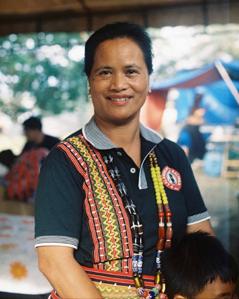
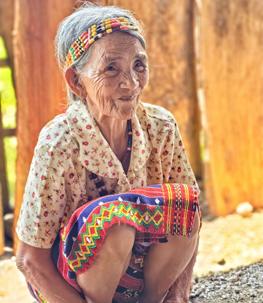
In the highland town of Pasil, Kalinga the Philippines’ first Indigenous Slow Food Community, I met two more female cultural bearers. Rowena Gonnay has rallied her neighbors to cultivate organic produce in backyard gardens, preserving heirloom recipes and serving healthy dishes to locals and visitors alike. “From seed to plate, it’s all labor and legacy,” she says, a philosophy evident in every harvest.
Nearby, Lola Kum-as, the village’s oldest living potter, reminds the community that even cookware carries history. Pasil’s earthen pots are shaped entirely by hand, without wheels or machines — a practice passed down through generations. During a brief demonstration, Lola Kum-as showed us the meticulous craft behind the pottery, her smile radiating the warmth of a doting grandmother.
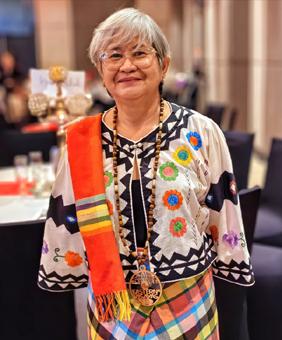
The youngest person on this list, Jhomaica is a recent college graduate now working as a staff member of Mayoyao’s Tourism Office. Despite her youth, she is already capable of serving as her town’s cultural ambassador, as she is knowledgeable in singing the Ifugao Hudhud chant
The Hudhud listed on UNESCO’s List of Intangible Cultural Heritage of Humanity is composed of narrative chants that the Ifugao people have traditionally sung
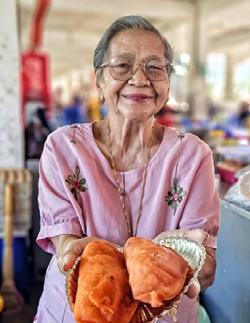
Bearers of Filipino culture also include those from the culinary world. Travelers often do not leave Batac without stopping by the famous row of empanada stalls fronting the church. The oldest stall still frying up empanadas is Glory’s Empanada founded by Gloria Aduana Cocson, now 83, who began making empanadas at 15.
Over the years, she perfected her ingredients and technique, turning her empanadas into Batac’s most beloved snack. Becoming a single mother at a young age, Lola Gloria persevered, eventually supporting her seven children through her business. Her dedication has earned her recognition among Ilocos Norte’s most celebrated culinary figures, including the Kalipi Award and the Gameng Lifetime Achievement Award.
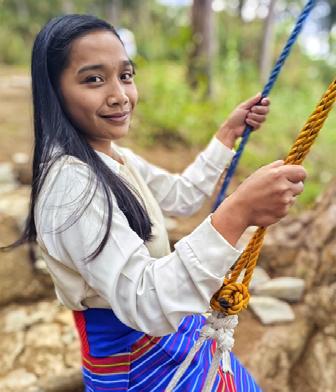
since as early as the 7th century. It consists of hundreds of chants recounting traditional practices, ancestors’ religious beliefs, epic tales of warriors, customary law, and history. In the past, these chants were usually sung or recited by elders holding significant positions in the community, such as historians or preachers, and completing a full recitation can take several days.
Check out these two Philippine destinations named after two outstanding women of their time.
Words and images by Bernard
Supetran
If you have traveled both here and abroad, chances are you have encountered the socalled “strong, independent women” who enjoy the time of their lives exploring beyond their comfort zones.
Interestingly, a good number of emerging destinations whose names take after Filipino women have left inspiring legacies and footsteps for the current generation to follow.
Here are two exciting getaways named after wonder women of their time that their modern-day counterparts should not miss!
Aurora
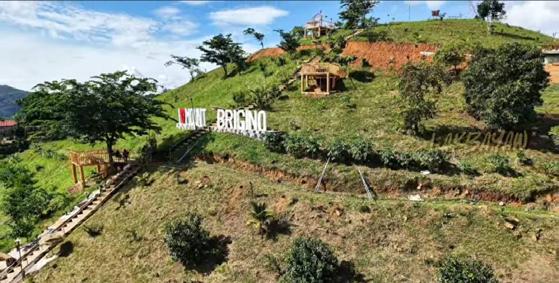
This province in Luzon was named after Aurora Aragon, the wife of Commonwealth President Manuel Quezon and a paragon of civic leadership and grace under pressure during the Second World War and the reconstruction period that followed.
The only province named after a Filipina, it once comprised the northern part of the long Tayabas province (now Quezon) until it was separated in 1979.
The town of Maria Aurora was also named after her.
Situated on Luzon’s Pacific seaboard, Aurora is a haven for surfing, beach bumming, chasing waterfalls, and everything in between. Reachable via the northern expressways, the journey going there is an exciting adventure in itself, with scenic coastal roads and endless twists and turns.
Bound by the Pacific Ocean and the Sierra Madre Mountain Range, the provincial capital of Baler shot into the global limelight with its surf sites, including Sabang Beach, Cemento Beach, Cobra Reef and Charlie’s Point where parts of the movie Apocalypse Now were filmed.
Apart from surfing, it also offers opportunities for beach recreation, history walks, and food trips. At its población or town proper, you can do the Heritage Walk and explore its rich history through the Quezon Memorial Park There’s also a replica of the former president’s bahay kubo (nipa hut) and birthplace; the Museo de Baler and the Aurora Aragon Quezon House, where the former First Lady was born.
Relive the glory of the Philippine Revolution at the San Luis Obispo de Tolosa Church where the last pocket of Spanish colonization was cornered, and the Lt. Gilmore marker where American forces were repulsed –both by Filipinos in 1899.
If you hang around a little longer, you’ll meet intriguing
lady wave riders who have made the area their stomping ground.
Hop around the unspoiled powdery beaches in the towns of Dipaculao, Dilasag, Casiguran, Dingalan, and Dicasalarin many of which are now luring freedivers and scuba divers.
Doña Remedios Trinidad
Regarded as “Bulacan’s last frontier”, this once obscure town has been attracting nature lovers and adventurers who want to experience the province’s rugged side.
Doña Remedios Trinidad was founded in 1977 by carving out remote barangays from neighboring towns, eventually becoming the biggest municipality in Bulacan but with the smallest population. It partially embraces two major portions of the Angat Watershed reservation, Bulacan forest reserve, and
the Biak-na-Bato National Park, and a vast swath of 32,730 hectares of alienable and disposable public land.
Nicknamed DRT, the town was named in honor of the late mother of then First Lady, Imelda Romualdez Marcos, who was a pure Bulakeña of humble beginnings who persevered despite the adversities of life.
A good portion of the sprawling Biak-na-Bato in San Miguel, once the main military quarters of Filipino revolutionaries and the 1897 Republic under General Emilio Aguinaldo, is actually part of DRT. The 659-hectare forest park abounds in endemic flora and fauna and a series of caves where the freedom fighters sought to buy time to fight the Spaniards another day.
Over the past decade, it has been drawing outdoor enthusiasts such as bikers, riders, and road trippers who want to see more than the
popular colonial-era houses, churches, and historic spots.
Framed by the majestic Sierra Madre Mountain Ranges, its tourist magnets include caves, rivers, forests, springs, limestone formations, gorges, a series of 13 waterfalls, mountain-top panoramic vistas, and backto-basics leisure activities.
Madlum Adventure Park is a must-go for those seeking an adrenaline rush with its extreme physical activities.
A good number of DRT’s visitors are women, Gen Z students, and millennials on motorcycles, mountain bikes, or four-wheel drives with families or friends.
Come chow time, there’s Madriao’s Jungle Edge Farm in Barangay Talbak, which prides itself with Lutong Kabundukan’s (mountain cooking) rustic dining, farm tours, camping, riverine activities, and a host of outdoor experiences — a sweet way to end a hectic day!

A surprising room in a heritage house illustrates the importance of women having their own space and respite amid society’s pressures and expectations.
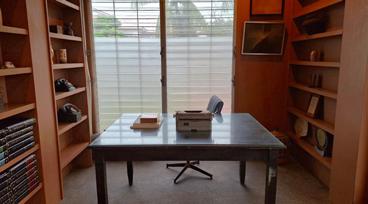
and translations of Noli Me Tangere and El Filibusterismo among other titles.
During a recent trip to Silay in Negros Occidental my friends and I stayed at a Spanish colonial ancestral house built in 1938, now repurposed as a bed and breakfast. What stood out for me in our room was the study. At the center of the wooden desk rested an aged yet functioning typewriter, and behind it, a leatherbacked chair. At the side was a phone with a rotary dial and an even older, heavier phone with tangled wires.
On the study’s shelves were encyclopedias, history books,
Beside the shelf with the most titles was a comfortablelooking leather sofa meant for one. I imagined the room’s original occupant alternately typing behind the desk, and curling up with a book on the sofa. The study, partitioned by glass from the bedroom, felt like a sanctuary where the owner could immerse in their own world without care or fear of distractions. Outside, the bedroom itself was spacious, with two large beds, one smaller bed, a sitting area, and a round dining table.
I pictured this book lover as male, as it was a time when patriarchy was more pronounced than ever, and men were more likely to have their own space.
To my surprise, the room’s owner was, in fact, a woman. Her name was Lourdes “Uding” Unson, the second among four children of the first generation of the house’s owners. She was also the eldest daughter. I found out through her niece, who also runs the B&B, that her Tita Uding had an active life. Among her activities was singing at the church choir, and in her own time, making rosaries for others. Known for her generosity, she also sponsored many scholars’ studies. She never married and lived up to 71.
As I sat on the study’s sofa and perused a few chapters of Noli, I could not help but feel awe at this glimpse of Tita Uding’s day-to-day experience. The words of Virginia Woolf’s A Room of One’s Own sprang to my mind. She argued that for a woman to fully pursue her craft, she needs money and her own room. I could imagine Woolf nodding in approval at Tita Uding’s space.
While Woolf wrote specifically about carving out time and resources for writing, her words resonate just as deeply for anything women choose to spend their time on, be it a creative project, a hobby, or simply rest. Tita Uding, bolstered by her own space and her family’s finances, was able to do things she wanted and even support others in need.
I found myself wondering what the world would be like if more women had their own space and resources like Tita Uding did.
In reality, few have this privilege. In the Philippines, women and children are the largest sectors experiencing poverty, according to national statistics. This is compounded by Philippine society’s expectations on women in their roles as mothers and homemakers.
I especially remember my own mother fully taking on the self-sacrificing, virtuous role of a mother, giving up things she loved, and me as her daughter subconsciously influenced by this standard.
And should mental health struggles, terminal or chronic illness in the family, or other stressors enter the picture, what was already difficult for women can become quietly overwhelming. One of my closest friends, a single mom to a boy diagnosed with autism, faces such multiple challenges everyday.
Still, I would like to believe most, if not all of us women, try to make space and time for ourselves, however small or

brief. It can even simply be a moment of respite, and not necessarily a permanent physical space like Tita Uding’s room. Making such moments possible may need help from others. For example, however imperfect, my single momfriend has a support system that helps her have time to “be myself, beyond being a mother.” In climbing mountains especially, she finds herself again.
I am also happy that aside from my mother picking up a newfound love for Chinese adventure dramas, I was able to see her child-like side when she sang and danced her heart out at an island videoke party. While she has a talent for music, she hadn’t practiced in years before that night. Because of that moment, our family trip became something truly unforgettable. I felt my happiness multiply as travel is already one of the ways I create that metaphorical room of my own.
It is heartening to see fellow women making time for themselves beyond their roles and constraints – something that can be expanded more through the support of government and society.
Bahay
wide range of issues affecting women globally, particularly those in the Global South.”
More than a charming place to stay for the night, Bahay ni Io is a place to learn about the International Women’s Rights Movement.
I first learned about Bahay ni Io through my sister’s partner last October. She stayed there along with her colleagues in Task Force Detainees of the Philippines (TFDP)- a prominent national human rights organizationand vouched for the staff’s warmth. “The staff was very approachable and accommodating. She was ready to answer our questions about the place and provide us with what we needed.”
As an avowed feminist, Bahay ni Io’s mission, “Facilitating spaces for feminist conversations, visions, and movement building”, was a big plus for my daughter, too. A graduating senior high school student, she already engages in fierce online debates in defense of women’s rights like reproductive health, equality, and others.
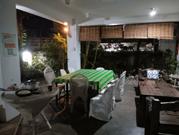
My daughter checked in for a night—a milestone as it was her first night away from home. While talking with their staff, Ate Flor, at the reception desk, two things immediately caught my attention. First was the conference room on the left that houses their Feminist Archives, which “provide free access to books, periodicals, articles, audiovisuals, and posters on a
I was then looking for a place where my 17-year-old daughter Karoly could stay in Quezon City every time she would train with the city’s judo team at its dojo in UP Diliman. I was relieved by its proximity to the university and its affordable rates, and charmed by the photos of its Filipiniana-inspired rooms and other interiors.
Second are the striking blue book copies of the autobiographical “Crossings and Blessings” atop a coffee table at the center of the lobby. Penned by Marianita C. Villariba, a former executive director of Bahay ni Io, the book narrates a woman activist’s personal journey in healing oneself and one’s social and political environments. It is about becoming a contemporary babaylan - a woman community leader/healer - in our tumultuous times.
Bahay ni Io is a three-story house with four conference rooms. For accommodations, it offers rooms for solo and

multiple travelers. Behind the building, one can relax or hold events at Marilee Karl’s Garden and Patio, named after one of Io International’s founders.
The place has become a favorite of non-government organizations for stay-in conferences, with its essential amenities and charming guest and conference rooms. It’s also conveniently located at Marunong Street, just a few blocks behind Quezon City Hall.
During a subsequent visit, another staff member, Ate Vilma, told me that they were hosting guests for a lesbian couples’ wedding who had chosen their venue for their special day. This comes as no surprise; hosting such occasions are aligned with their feminist

principles of inclusivity.
Bahay ni Io is also home to the acclaimed Feminist Activist School, which offers a training program designed to amplify the voices of women and reinforce their advocacies. These include addressing LGBTQ issues, peace building, and gender-based violence. The school’s aim is to “enhance the facilitative leadership of a new generation of feminist activists.” In achieving their aim, they partner with women’s groups, as well as individual feminists and women activists. The school will hold another training program soon. No definite date has been announced as of yet, but I’m sure my daughter will be interested to attend, and enjoy

*Tune into to the next issue for the answers!
Into This Week’s Crossword Puzzle
ACROSS
3. Coastal province in Luzon named after President Quezon’s wife
5. Blood-sucking leeches that are common in Mount Makiling
6. Pop-up cinema in Baguio specializing in indie and feminist films
7. An Ifugao narrative chant listed on UNESCO’s List of Intangible Cultural Heritage of Humanity
DOWN
1. Place in Camarines Sur previously known for embroidery
2. A woman community leader/healer in precolonial Philippines
4. Gender-crossing men/spiritual healers in precolonial Philippines
By Nene Cadiog
My mama loved cooking sadkit for breakfast when the rain wrapped around Buguias the way mist clings to repolyo* leaves. When the wind began to moan over the vegetable terraces and the clouds settled low like thick blankets pulled up to the chin, Mama would already be by the stove, the pan hot, the batter resting inside a reused plastic ice cream tub. We knew what was coming just from the smell, that warm, earthy scent of browned flour, sugar, and powdered milk curling through the small kitchen like a promise.

She called it sadkit. Not pancake. Not hotcake. Just sadkit. The word was soft and sweet on the tongue, the way my aunties said it too, easier to say, easier to love.
We didn’t have fancy syrup. Mama would sprinkle sugar on top while it was still warm, then roll it gently like a letter folded with care. My ading and I would sit by the window, our breath fogging the glass, watching the road that wound around the mountainside, curving like a sleeping snake between pine trees and terraces. That road was our television.
“Van,” my brother would say, guessing what vehicle might appear next.
“No. Elf,” I’d counter, certain the rumble meant something heavier was coming. We waited for the glint of metal, the stretch of shadow, the slow reveal around the bend. We’d squeal if we guessed right, keeping score with fingers sticky from sugar and warm from holding the sadkit too long. We didn’t have much, but those storm-heavy mornings in Buguias were full.
Outside, the trees swayed like they were dancing with the wind, and the rain tapped on our roof like hurried footsteps running home. Inside, Mama flipped another sadkit with the calm of someone who had done this a thousand times. Sometimes she hummed. Sometimes she said nothing, her thoughts as distant as the mountains hidden beyond the fog.
By Rhanydell Bien Baysa
Akala n’yo ba tumatae ako ng pera? —Every Filipino mom ever, probably
My mother used to say, whenever my sister and I would ask for chicken nuggets for breakfast, do you think I shit out money? did not really know at the time whether to take her seriously. Could it actually be possible for the human digestive system to churn chyme into legal tender? If yes, how many bowls of kilabban was needed to to shit out enough duit for a pack of chicken nuggets? Clueless was I. I mean, I was nine, maybe ten. My concept of money extended to only what I got for a serving of skimped meals at my school canteen in Malaysia, and everything else I asked for knowing who would give it but not what this person would do to give it to me. One December, while window shopping at a British-owned bookstore, she pretended to refuse to buy me a copy of the latest Geronimo Stilton, and the next time I returned to that special aisle and shelf in the children’s section, the last copy was gone, what was left was the absent altar of a guileless grief. My mother unwrapped it, under the tree, for a boy who still believed 圣诞老人3 came down the chimney, even though the apartment unit we were renting out had no space for a fireplace. It was, nevertheless, home. Mom believed in the myriad currencies of care, years of tending to strangers, saving money by mending her uniforms herself. When she left the ward for the last time, something in the house never recovered. Now, I’ve aged too, and I know a good year from a bad one by the price of books. We still haven’t figured out how to force our bowels to excrete coins. Let alone banknotes. Perhaps it all boils down on which side of the threshold equation you are born into—whether you hold choices, deploy hours you do not have. Elsewhere, under the same molten sky, someone out there is buying chicken nuggets by the thousand. People all over Trump’s green earth are killing each other for a bigger piece of the fry basket. Meanwhile, my mother speaks again of love in the waiting—in the vigil kept warm by the red pugon in the dirty kitchen near our backyard, the one only nillionaires can learn to love, that mellowing, grounded, timeless apparatus.
Leftover cooked rice (Ilocano).
2 Cash (Bahasa Melayu).
3 Santa Claus (Mandarin Chinese).
4 Wood-fired brick oven(Filipino).
Rhanydell Bien Baysa is from Johor Bahru, Tarlac, Pangasinan, Baguio, and Quezon City. His critical and creative works have been published in Hong Kong, Singapore, and the Philippines.
The sky flakes on packaged rice. Fifty-four holes to let out steam, thinning the dough and the declaration of a million deaths of la gente morena.

By Jam Moreno
We thank the arrival of Mark Yok San! for his invention in 1962: the staple pantawid gutom a bridge basted in bright white-red The solution to hunger is in chest pockets of Jeepney drivers and army men
We thank the skies for MacArthur! Blessed is he, for he had promised his return to nothing, Luzon has been breached fucked by the Japanese and the White Man’s hubris
See us bleed your reds and blues as the sun drowns us his tortures of seasalt waters
We thank the skies for Macapagal!
That after celebrating two decades of independence on 4th of July his declaration in 1962, his leadership of choosing any day but that finally freed the Filipino
I thank you my sisters and cousins! for always reminding each other that fitness comes sans eating rice the flabs of your tummy form lips and whispers: eat a cracker instead!
And even now, when I drink my morning coffee and the clouds sit low again over the city I am in, when the silence tastes familiar but thinner somehow, find myself staring out the window, waiting. The roads are wider now. Louder. No one guesses what vehicle is coming next. No one keeps score.
Buguias still wraps itself in rain. Repolyo still gathers mist on its leaves. But Mama no longer stands by that same stove, and the ice cream tub has long been thrown away.
Still, when the weather turns, when the wind begins to moan the way it used to, I taste sugar on warm bread and remember a road that curved like a sleeping snake, a television that needed no electricity, and mornings so full they did not know they would one day become memory.
And I wait, even now, for something to come around the bend.
*Repolyo – cabbage
Nene Cadiog is a Cordillera-based writer and communication practitioner whose work intertwines arts, literature, and culture. Her writings draw from highland landscapes, Indigenous lifeways, and environmental narratives, reflecting on identity, memory, and belonging.
We accept previously unpublished poems on place, migration, movement, memory, and Filipino culture in English, Filipino, and other Philippine languages and dialects from Filipinos across the world. For non-English poems, please provide an English translation. Indicate your preferred byline (a pseudonym is fine).
Please submit just one (1) poem as a Word document or pasted in the body of your email to editorial@thearchipelagopress.com, with the email subject: Poetry: Your Name – Poem Title
Accepted poems will be paid 500 Php and featured in our weekly issue and our website.
If you don’t hear back from us within 30 days of submission, please give us a nudge.

The city of light crossed the distance as a postcard twenty-four years ago, to arrive as summer here, tropical kilometers together spanned forty -eight seasons after. As typhoons came. And monsoons passed. Once there was this earth quake, sundered the ampersand, another forty -eight moons traveled apart, penned, unsent echoing from observatories: (…Happy birthday...Have you seen... Thank you… Where do I find... Sorry... I am...) Suddenly the capital of peace comes: How does the air taste... Here the sky is welling, a heart exhaling a blotch.
Mia Tijam is a Bicolana whose written, editorial, and translation work has garnered critical recognition and awards. Her book of stories, “The And That Was”, is forthcoming from Rosarium Publishing in June 2026.
Jam Moreno is an arts administrator and emerging filmmaker. He grew up in Davao City and recently graduated from New York University with a double degree in Film and Business. -sand an ekphrastic poem by Mia Tijam
told her was relatively easy. If I was able to do it years back, she definitely can now.
I woke the next morning, still in bed, with our son snuggled tightly beside me while BG started her morning with a bitter brew of Sagada coffee and a sea of clouds spread across the horizon. She left Banaue early that morning and is now at Sagada.
but two new viewpoints have opened—well, not that my wife would trudge toward it just before daybreak, anyway.
“Really? You went to a vegetarian restaurant?” I asked.
My wife left me and my son a couple of days before her birthday. All by herself, with a backpack in tow, she headed to the northern mountains of the Philippines.
For some years now, my wife and I have agreed that we should have a sabbatical once a year—traveling solo anywhere we want, a breather from the pressures of daily life. To experience oneself again outside of being an extension of anyone. A chance to reboot.
“Don’t forget to PM me your itinerary,” I told BG as she was preparing to leave. I call her BG sometimes – an acronym for Blissful Guro which is her blog name.
“I don’t have one,” she replied. She simply left me with the names of her lodging, and that was it.
Typical I thought to myself. We’ve been traveling this way for decades now, hitting the ground running and making travel plans on the fly.
Taking the midnight Coda Bus, she arrived at Banaue early in the morning. She sent a photo of a bangsilog meal with a steaming cup of coffee on her lodging’s balcony— the sun beaming down on the rice terraces as a background.
“Good morning, dito na ‘ko (I’m here)♡” she declared.
I was up early too, preparing our six-year-old son for school.
“Kid A’s been picked up by his school service already.”
BG has no plans to see anything in Banaue. She’s seen them before. So, I was amused when she messaged that her lodging’s host forced her to see the terraces of Batad. “Else, she’d be really sad,” she half-complained.
So, off she went on a tricycle rented for her, worrying about the hike to Batad, which I
“There’s no hiking needed!” she texted. Apparently, the road to Batad has already been paved. She was happy enough to humor her guide and let him drive her to other spots in town, like the famed viewpoint to the Banaue Terraces.
She finished the tour by lunch
“Are you at the Kiltepan Viewpoint?” I asked her.
“Nope, I’m at my lodging’s balcony.” Apparently, a sea of clouds is the norm in Sagada.
“What’s your plan?”
By afternoon, she sent me a photo of a half-liter bottle of Red Horse in hand. “Not too early for a buzz!” she exclaimed. That’s the first and last she’ll have that day; the restaurant ran out of beer.
“Happy birthday!” My son and I sent her a video greeting as soon as we woke the next day. Her plan for the day was, again, to just eat and drink.
“Napanood ko sa That Thing Called Tadhana kasi yun, haha (I saw it in That Thing Called Tadhana),” she chuckled.
Walking three kilometers, she stopped at the Misty Lodge.
Returning to the trails after a long break, I reflect on the effort, patience, and discipline it takes to climb again and enjoy the journey.
Words and images by Christine Fernandez
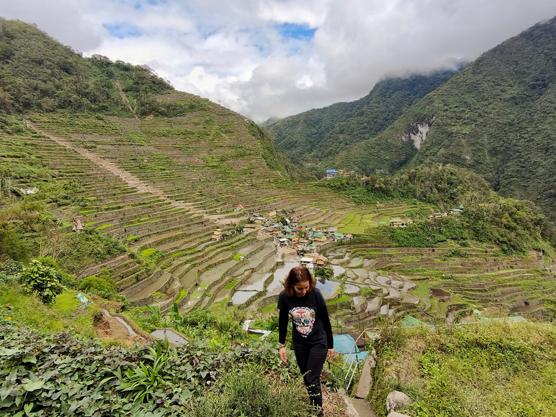
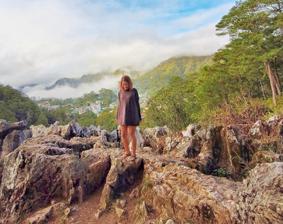
and told me she just had a really good plate of dinakdakan at a carinderia inside the public market and is now at a café with a bottle of Pale Pilsen in hand and a view of the terraces out front. Our chitchat ended when a group of aunties across from her, unable to quell their curiosity, finally joined her at the table, asking why she was traveling alone.
“Here we go again,” she told me.
“Wala (Nothing). I’ll just walk around, eat, and drink. Ang lamig! (It’s so cold!)” She was exploring only in shorts, a shirt, and a thermal jacket.
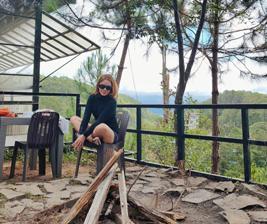
“Gagi, ang sarap ng yoghurt! (The yoghurt was delicious!)” she DMed me. Pairing it with an oversized hamburger and a cold bottle of Red Horse beer, it was the perfect place for unwinding. The restaurant had a great view of the pine forest and friendly staff, but evening was fast approaching.
She went back up to town and continued her beer at the balcony of the Yoghurt House. Their staff, however, weren’t the friendliest, so she decided to finish the day off at her lodge, which luckily, has beer too.
The owner found out it was her birthday and lit a bonfire for her. The inn’s guests all joined as the fire crackled and spread warmth around them, with a serving of sinanglaw and adobo infused with Sagada’s etag all prepared by the owner. Cans of beer were passed around, of course.
On her last day on the road, she had her final beer at the French Crepes restaurant at nine in the morning. The owner didn’t judge.
She told me how kind he was and asked why she was traveling alone. As my wife explained for the umpteenth time, the owner paused and just had to agree. “Oo nga, ‘no? Okay yan. Hindi puro trabaho. Ako matutulog, magigising, magwowork, matutulog, magigising, magwo-work, ‘tas ‘pag namatay, wala na. (That’s good – that it’s just work, work, work for you. Me, I’ll just sleep, work, sleep, wake up, work. Then I die, and that’s it.)”
Changes have spread throughout Sagada since we last visited. The town cemetery is now gated off, and you can’t access the Echo Valley without a guide. The town itself has extended a bit, lengthening the main stretch of the road. Kiltepan is also now off-limits,
After finishing a cup of Sagada brew while watching the sun creep over a sea of clouds, she immediately went out. By nine in the morning, she was having beer at Rust n’ Wood Café.
The waiter, amused, asked her if she really wanted a beer that early instead of coffee.
Then, it was Gaia Café, a vegetarian restaurant where she had beans and chilies and soybean coffee.
It was a fitting statement to finish off her solo jaunt this year.
Hours later, she’s back inside our home, our son’s and my arms wrapped around her. She’s the same BG we know, but somehow different— lighter, more herself.
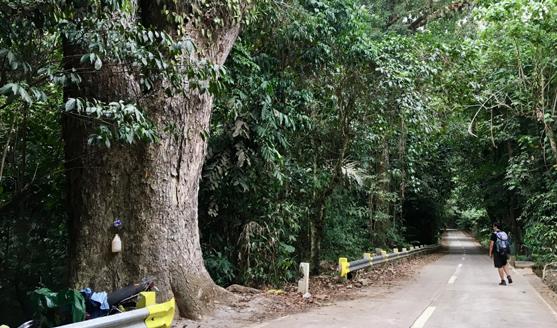
The trail began the way I remembered it: a punishing stretch of five kilometers on concrete. The road curved around the mountain, with eye-catching trees on both sides, offering shade but no shortcuts. Even before the forested section of the trail began, I was already sweating; some sections were steeper than I remembered from my last visit five years prior. This alone would have been a satisfying workout.
I returned to Mount Makiling in Los Baños older and much fluffier than the last time I climbed it. The Mariang Makiling Trail technically starts at the UP College of
Forestry, though the first part is all pavement. Years ago, I would have considered this a pleasant warm-up. That day, I noticed I was breathing harder than I used to. A few minutes in, I was already thinking about the food I’d have later. Before getting to the forest trail, a cluster of sari-sari stores offered local snacks, simple meals, and fresh coconut juice served straight from the husk. I was reminded once again, why this had always been one of my favorite hikes.
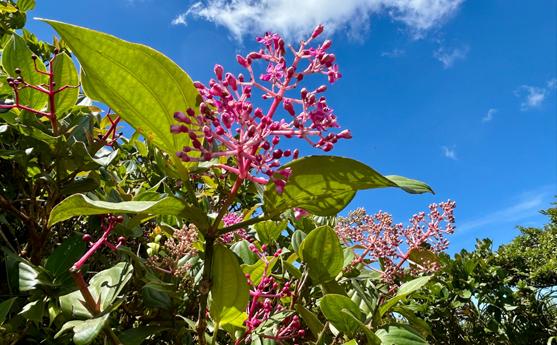
Entering the forest felt like a welcome from an old friend. A dirt path offered a break from the grueling concrete earlier, as we walked under a ceiling of trees, their branches stretched overhead, dimming the light like a cinema before a movie begins. Some were in bloom, others simply flexing their mighty limbs. I paused to notice the smaller details (and to catch my breath, too): the intricate leaves seemingly tattooed on the trunks, each one a tiny work of art. Since it was summer,
there were no limatik—the blood-sucking leeches that usually define a hike up Mount Makiling, but which I was more than happy not to encounter.
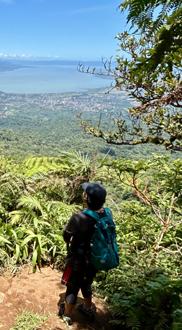
Walking through the forest also reminded me of how my approach to hiking has changed. Hiking used to be a way to organize my thoughts and let my mind wander. I also focused only on distance, enjoying the long walks and how they energized me. Once, a friend invited me to hike
Mount Guiting-Guiting considered one of the country’s toughest trails. I joined without a second thought. Back then, I was actively playing football and ran regularly, so steep sections weren’t a problem. Hiking’s main appeal was that it felt gentler than football, where aggression was the norm and I had grown almost immune to gaping wounds and deep bruises. Neither way is necessarily better; whether you take the trail at a leisurely pace or breeze through


it, these are just different ways to enjoy the outdoors.
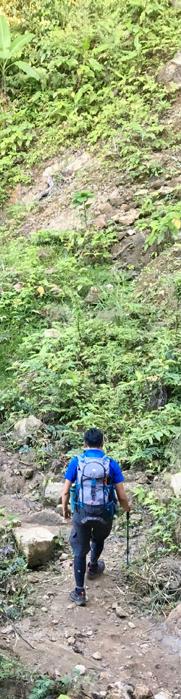
These days, I plan my hikes more carefully, thinking about how long they will take and whether the steep sections will be manageable. I had made peace with the days when I would say yes to every hike without considering whether I was physically ready. Now, it’s also a measure of discipline and a different kind of endurance: a commitment to doing what makes me happy, no matter how busy life gets. So I can carry that same energy into the rest of my life and share it with others. It is no longer about mileage; it’s about showing up, staying consistent, and making time for the things that matter.
Today, I train by walking about five times a week for at least 30 minutes, swimming, and staying mindful of what I eat—an even greater challenge for a devoted foodie like me.
The mountains are still steep, but I approach them now in a way that’s more sustainable for me. While the climbs remain challenging, they serve as a reminder that preparation, patience, and sustained effort carry over beyond the trail. There are still beautiful, long hikes I hope to tackle someday. But for now, I show up, I prepare, and I wrestle with my appetite.
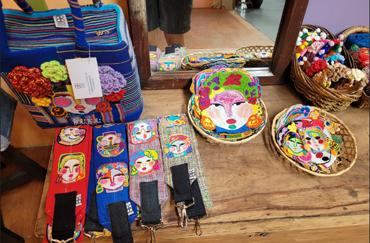
“A major turning point was in 2017 when I began intentionally working with rural women in Baao— embroiderers, seamstresses, and crochet artists— whose skills were inherited from their mothers and grandmothers. BidiBidi became not just a creative outlet but a livelihood platform.”
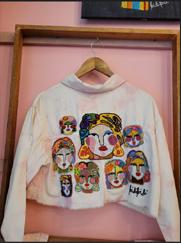
Bernadette De Los Santos, also known as BidiBidi is an artist and entrepreneur from Baao, Camarines Sur well-known for her wearable art – denim jackets adorned with embroidered portraits of women – and basket bags overflowing with whimsical floral details.
Using her quirky nickname as the brand’s name, Bernadette empowers rural women and has helped revive the nearly forgotten tradition of embroidery, for which Baao was once known.
In honor of Women’s Month, we spoke to the artist behind the proudly rural Bicol brand championing slow and sustainable fashion.
From participating in local and national trade fairs through DTI support and collaborations with development agencies and institutions, the brand flourished. Eventually, she launched her curated collections of bags and wearable art.
This soon expanded to jackets and statement pieces made from upcycled textiles. Most recently, she launched a new handcrafted shoe line that carries the same spirit of being “handcrafted, colorful, and rooted in local skill.”
Today, BidiBidi is both a brand and a movement anchored in sustainability, heritage craft, and women’s empowerment.
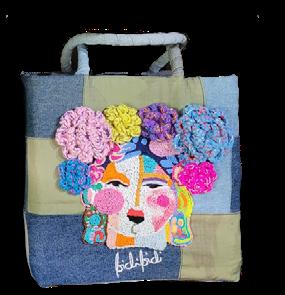
According to De Los Santos, her fashion line began “as a quiet whisper of creativity, long before it became a brand.”
“It formally took shape in the early 2010s, rooted in my lifelong love for textiles, color, and storytelling through buttons and fabrics. What started as a hobby making hand-embroidered pieces and patchwork creations made from upcycled clothes slowly evolved into a purposeful enterprise,” she said.
“BidiBidi is my love letter to color, culture, and community. It is proof that creativity can be circular—old clothes transformed into new stories. It is also proof that rural women’s hands hold extraordinary power,” she said.
The artist shared that in Baao, her rural hometown in Camarines Sur, many women possess beautiful hand embroidery and sewing skills, but lack steady market access.
She aims to bridge that gap by providing fair compensation for women’s craft and giving women flexible work, which they can do from home.
“For many women, the income supplements household needs, like school expenses, groceries, and small savings. But beyond income, it restores pride. Their artistry is no longer hidden—it travels. There’s dignity in seeing their work appreciated beyond the barrio.”
The women quietly working behind the scenes are “the

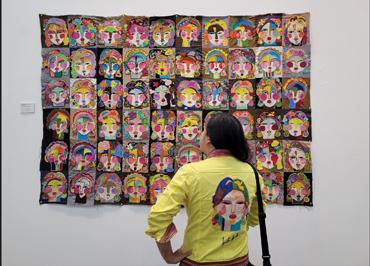
real heartbeat of Bidibidi,” according to the artist.
“Some are mothers who sew between tending to their gardens. Others are grandmothers who learned embroidery as girls and now see their stitches carried into cities. One of our embroiderers once told me, Dati po, pangbahay lang ang tahi ko. Ngayon, pang-Maynila na.’ (Before, my sewing was just for the home. Now, it’s for Manila).
That quiet statement held so much pride,” she said.
For many, BidiBidi became not just extra income, but validation that their skills matter. She recounted how one seamstress was able to help her child through school because of consistent projectbased work — showing the brand’s important role in giving rural artists new social standing and opportunities otherwise unavailable locally.
“Our crochet artists, too, infuse personality into every detail. When they see photos of clients wearing the pieces, they beam. The connection between maker and wearer is real and powerful.”
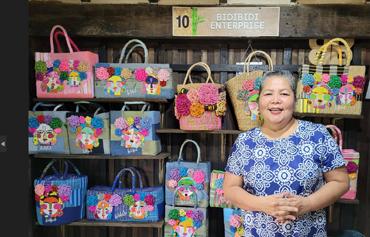
Bidibidi’s bags and jackets have become sought-after by the fashionista crowd.
Beauty queens, celebrities, and lifestyle icons are now among her regular clientele.
“I honestly did not anticipate the fashion crowd embracing BidiBidi the way they did. I was simply creating pieces that were authentic to me—bold, colorful, unapologetically textured.
Perhaps that authenticity resonated,” she said.
“The jackets especially—because
each one is unique—became statement pieces. Clients who appreciate sustainability and individuality gravitated toward them. Some wellknown personalities and friends in government, the arts, and business circles began wearing them to events, which helped the brand gain visibility organically.”
According to De Los Santos, what warms her heart most are the repeat clients. “That is the best endorsement.”
When asked for advice for budding entrepreneurs, the artist said to look inwards and follow one’s passions.
“Start where you are. Use what you have. Honor what your community already knows. A strong brand is not built on trends—it is built on truth. Know what you stand for. For me, it was sustainability, heritage craft, and women’s empowerment. Once that foundation is clear, growth becomes aligned.”
She also stressed the importance of meaningful community participation. “Involve your community genuinely, not as token partners but as cocreators. Shared success is more meaningful and more sustainable. And finally, do not wait for perfection. Begin with passion. The rest will follow.”
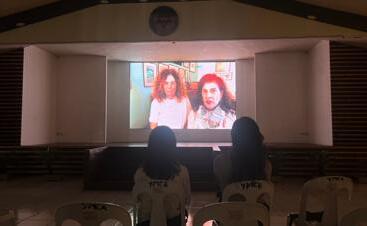
For Baguio girls Nam Desembrana and Abi Dango film has always been a medium of movement. To Nam, it was a portal to a life gentler than her own. To Abi, it was a twohour excursion into realms she could not have imagined herself.
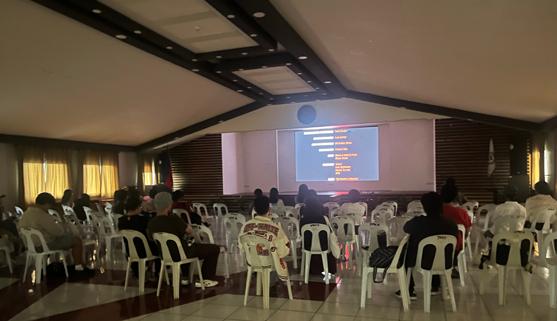
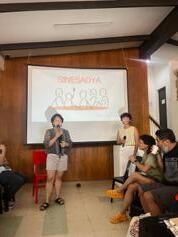
Today, the couple operates a pop-up cinema that brings local films to the city they call home. Through SineSadya they provide an alternative space for experiencing cinema in an increasingly individualistic society. SineSadya’s intimate screenings put the audience front and center. This is a map of their journey.
From Point A: Snapshots of What Was
for Baguio moviegoers. The city has only one cinemahouse, and it’s in the huge mall downtown. Empire Cinema was the last to stand against the said downtown mall cinema until 2013. The artdeco style Session Theater now houses Pizza Volante Other shuttered Baguio cinemas have also been repurposed, if not left to the ravages of time.
Average movie ticket prices are prohibitive, especially for minimum wage earners. Despite being dubbed the “richest city outside Manila” based on its 2024 Gross Domestic Product (GDP), Baguio pays a “regional” wage almost 200 pesos less than Manila’s.
Nam and Abi also noted that the mall cinema operates on maximum profitability. It screens the most popular Hollywood films instead of taking a bet on local or experimental films. For Baguio audiences, this has made Filipino indie films harder to come by.
SineSadya launched, I was thrilled to have greater access to indie films and more chances to discover hidden gems.
As of February 2026, SineSadya has shown 10 full-length films and 10 shorts across six Baguio locations. Their curation is intentional. “We choose films with female leads and dignified representation,” Nam explained.
This intentionality extends to the post-show “banlaw” (rinse) sessions facilitated by women and queer film enthusiasts.
“Since they are from the silenced classes, mas open sila (they are more open) to listen. There is fair treatment of voices from the audience,” Nam said. Abi added that since the films they show may not always have good female or queer representation, they prompt conversations to be more critical toward these portrayals.
I also admire SineSadya’s commitment to being a safe space. As they announced
Though raised in different cities, Abi and Nam grew up loving books, movies, and narratives in general. They have fond memories of renting DVDs or buying pirated copies from the sidewalk. One of the many benefits of a childhood without 24/7 access to screens is enjoying the spectacle of film, as Abi put it. Nam, who considers herself a visual person, said that movies affect her differently (“Iba ang dating”.)
Before the two opened SineSadya in 2023, they bemoaned the lack of options
Fortunately, the shared dream of bringing local films home has manifested not only in SineSadya but also in filmbased groups Kino Kunana and Film Society and the microtheater “Balanghai ni Iking” (formerly Cinematheque).
To Point B: Some “Stills” and Reel-toReals
I remember having to join social media campaigns to demand more show dates for local indie films at the mall. So, when
so frankly in a post: abusers, homophobes, enablers, or bigots of any kind, are not welcome.
SineSadya has partnered with progressive groups in Baguio, Cebu, and Bacolod City. Beyond screenings, they’ve led meaning-making workshops and other cultural work for children and Filipino-Palestinian migrants. In 2025, they instated a “pay-what-you-can” model.
Nam and Abi are glad that women have always had an undeniable presence in
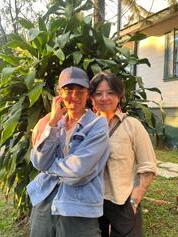
our cinema, from Vilma Santos and Nora Aunor to Nadine Lustre and Kathryn Bernardo. Kathryn stars in the highest-grossing Filipino film of all time, directed by Cathy Garcia-Sampana.
But there is still work to be done. According to Abi, who is also a filmmaker, we need more Filipinas taking charge of the narrative as writers, producers, and directors.
Historically, women’s stories were confined in boxes. Nam and Abi noted that most actors and filmmakers today come from well-off families. Naturally, they look similar. The movies they make are also indistinguishable. This is why women’s roles and values matter, Abi clarified.
When class-conscious women are at the helm, there is greater sensitivity and awareness.
Female characters are complex and complete. As Abi contends, “May paglaban sa kahon (They
resist being boxed.)” She offered the example of Laura Blancaflor from Carla PulidoOcampo’s 2019 short, Tokwifi Actress Laura is literally and figuratively trapped in a TV but transcends these limitations as she connects with Bontok lad Limmayug.
Abi expounded, “Kapag babae, ang tapang ng kuwento kasi nag-break through ka na. Andito ka na sa loob, ano ‘ikakatakot mo?” (Women [in filmmaking] tell brave stories because they’ve already broken through. You’re already inside, what more could you fear?”)
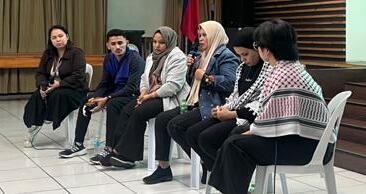
For the couple, film is an inherently collective experience—from production to consumption. When we watch a film, we deliberately co-exist. “Walang mauuna, walang mahuhuli. Sabay nating pinagdaraanan. (No one goes first or last. We go through it at the same time.),” they said. Because of this, they believe film is an ideal medium for the country to move women’s stories from the fringes to the fore.





Address: 630 1st Avenue, PMB, 318, San Diego California, USA 92101
Phone number: +6195191063
Email: info@thearchipelagopress.com
Website: www.thearchipelagopress.com
www.facebook.com/thearchipelagopress https://www.instagram.com/thearchipelagopress https://www.tiktok.com/@thearchipelagopress https://x.com/TheArchipelagoP https://www.youtube.com/thearchipelagopress