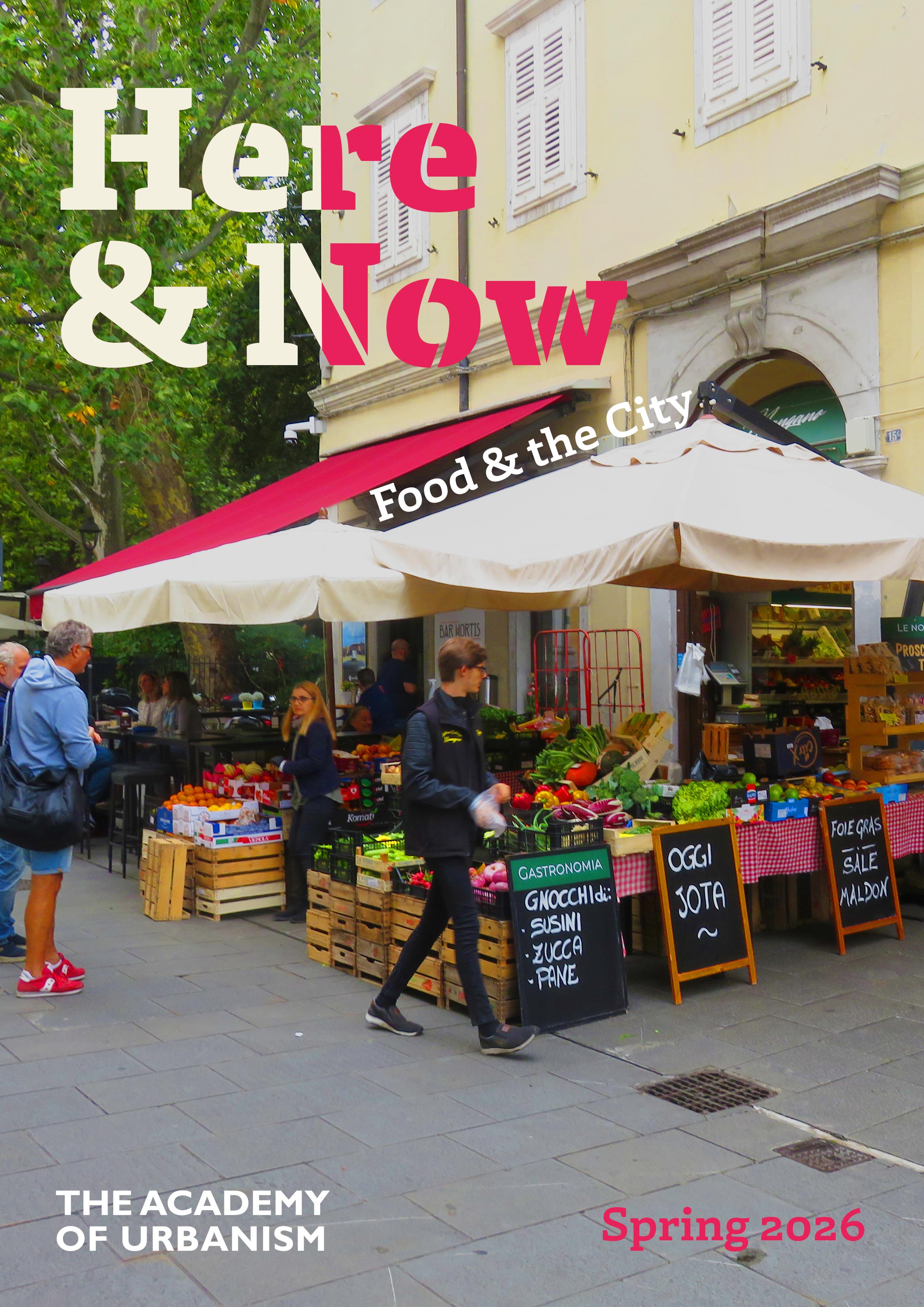
Christine Smallwood samples the current crop of urban food solutions from traditional to vertical farming.
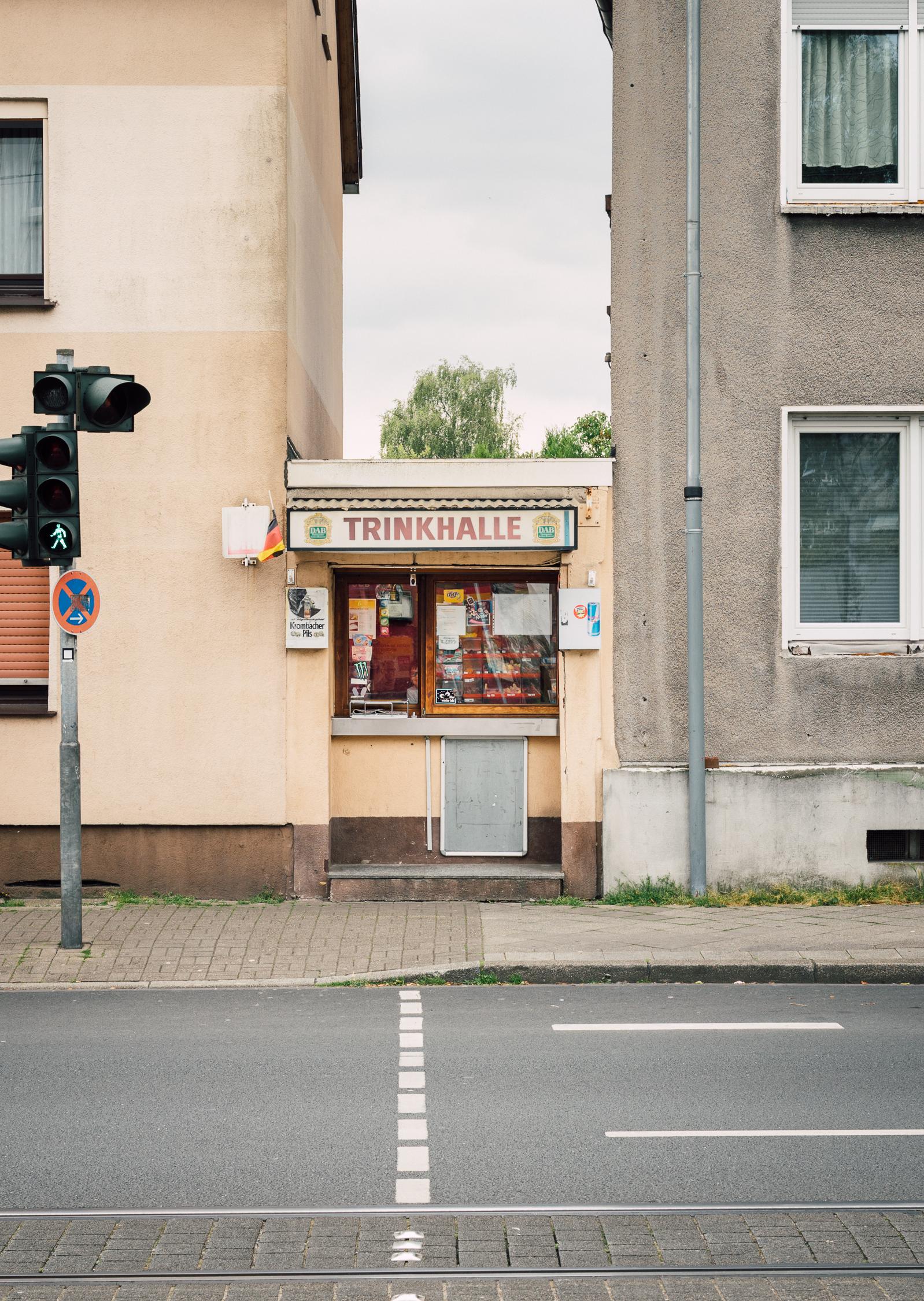
In Praise of the Street Kiosk
Mark Bessoudo interviews
Emilia Chegini on why the kiosk is more than just a small retail structure on the corner of a street.
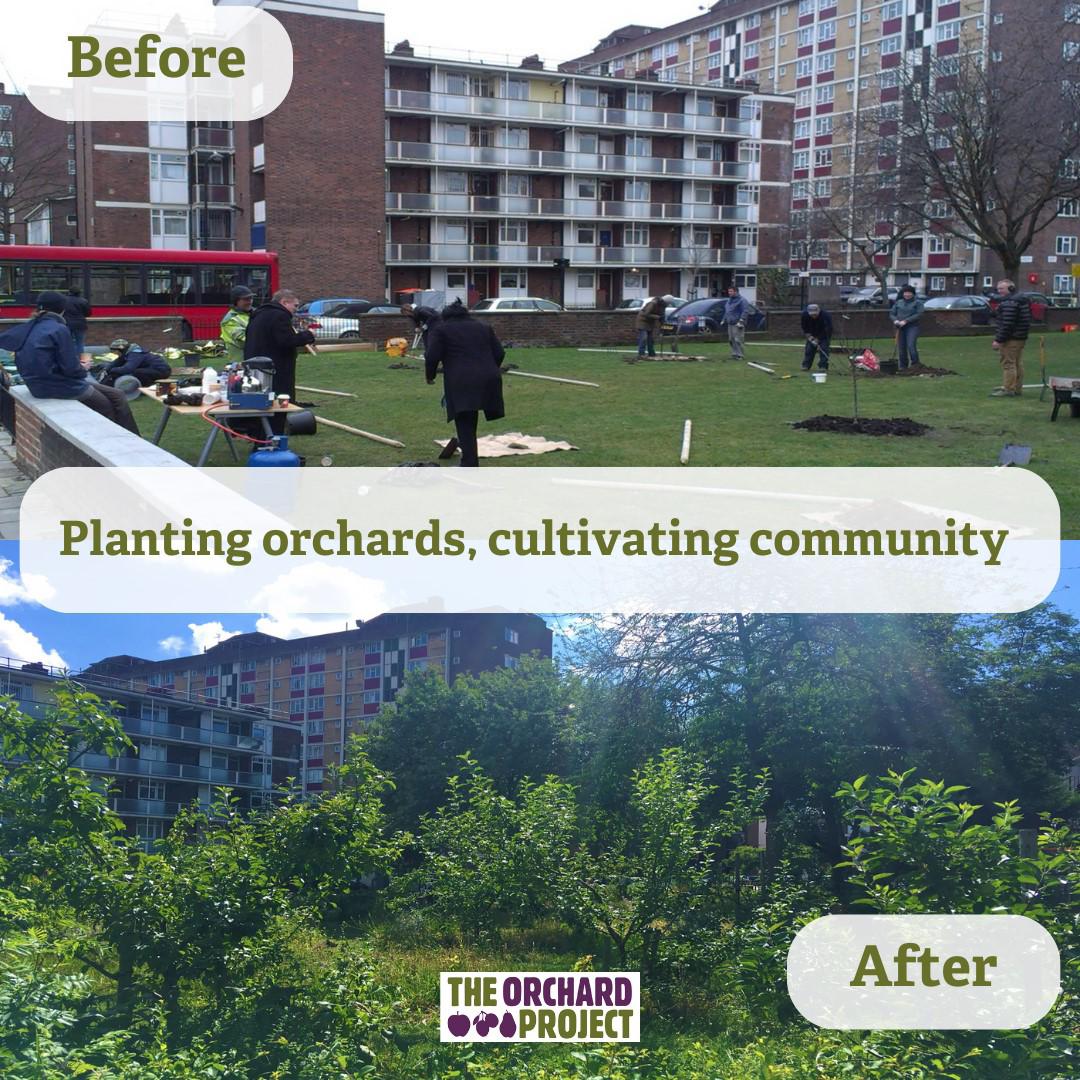
Orchard Commons
Kath Rosen on how cities can grow their way out of crisis.
Nick Miller establishes why food systems are critical to the creation of value, identity and resilience in places.
Taste
of Place
Shane Quinn explores how Ireland’s food traditions shape people’s experience of the island’s places.
What else can food unlock?
Eike Sindlinger argues that the true value of food may lie in its ability to connect across different systems.
ArtPlace: Every Plate a Sun Poem by Aisha Taj
Book Review: Gordon Cullen’s Townscape in USA
Supporting people and organisations to deliver and sustain great towns and cities
The Academy of Urbanism is an independent network that celebrates and learns from great places and the people who shape them. We create connections and share knowledge to influence and support towns and cities to thrive.
Join the Academy
Become an Academician, Young Urbanist, or Group Member at theaou.org/membership
Academy Team
Christine Smallwood
Managing Director
Connie Dales Comms + Events Planner
Roshni Thakker
Young Urbanist Network + Membership Coordinator
Sarah Hughes
Finance Manager
Welcome
The year is moving fast, and a quarter of the way through, with springtime signs of renewal all very real, there’s a lot to be excited about at the AoU.
Earlier in the spring, the AoU outlined its agreed Strategic Priorities for 2026-29. These are our collective commitment to where the organisation will focus its energy over the next three years. After a process of discussion and scoping amongst the Board and staff, three priorities emerged: securing a resilient organisation, ensuring a connected community, and extending meaningful impact. While they sound straightforward, what sits behind them is a genuine reckoning with what the AoU is about, who we serve, and how we stay relevant in a world that keeps shifting underneath our feet. Twenty years in, we’re not resting on anything.
Now is also a time to celebrate this year’s Young Urbanist Small Grants recipients. Caitlin Arbuckle-MacLeod is exploring what it might mean for Glasgow to join the Swimmable Cities Alliance, unlocking the River Clyde as a genuine place asset. Harrison Brewer is building a practical pattern book for community infrastructure, asking the question that too many housing schemes skip entirely: homes for whom? And Julia Darnia is developing accessible online resources to make Universal Design principles less abstract and more actionable. Congratulations to all three, and we’re looking forward to seeing their ideas develop.
The Academy of Urbanism
70 Cowcross Street
London EC1M 6EJ United Kingdom +44 (0) 20 7251 8777
theaou.org
Join The Academy of Urbanism on social media:
LinkedIn
The Academy of Urbanism
Instagram @academyofurbanism
Bluesky @academyofurbanism.bsky.
social
Spring also means the Urbanism Awards season is warming up. Finalists were announced a few weeks ago, with assessment visits to shortlisted places scheduled across the summer. These visits are genuinely one of the best things we do - they’re rich, immersive, and full of unexpected learning. We encourage as many of you as possible to get involved.
And then there’s this edition of Here & Now, with the theme of Food. It’s a theme that sounds everyday but is also quietly radical. Where (and how) food is grown, sold, cooked, and shared tells you almost everything about how a place works and who it works for. We hope this edition leaves you hungry in more ways than one.
Matt Lally and Shane Quinn AoU Co-chairs
Editorial team
Mark Bessoudo
Harrison Brewer
Connie Dales (AoU Exec)
Harry Knibb
Leyla Moy
David Rudlin
To join the editorial team or contribute an article to the Here & Now Journal, contact journal@theaou.org
Template design
Richard Wolfstrome
For all other enquiries, including sponsorship, contact Connie Dales at cdales@ theaou.org
Editorial
There are few topics so encompassing to the human experience as food and food-growing and few better topics for our Spring Issue of Here & Now. We’ve pulled together some fascinating insights from the Academy that investigates food from production to distribution to consumption and waste.
Our Managing Director Christine Smallwood introduces us to the myriad of ways people are growing good food in the city, and Kath Rosen from The Orchard Project shares how community orchards can bring the commons back into the city and build community resilience from the soil up.
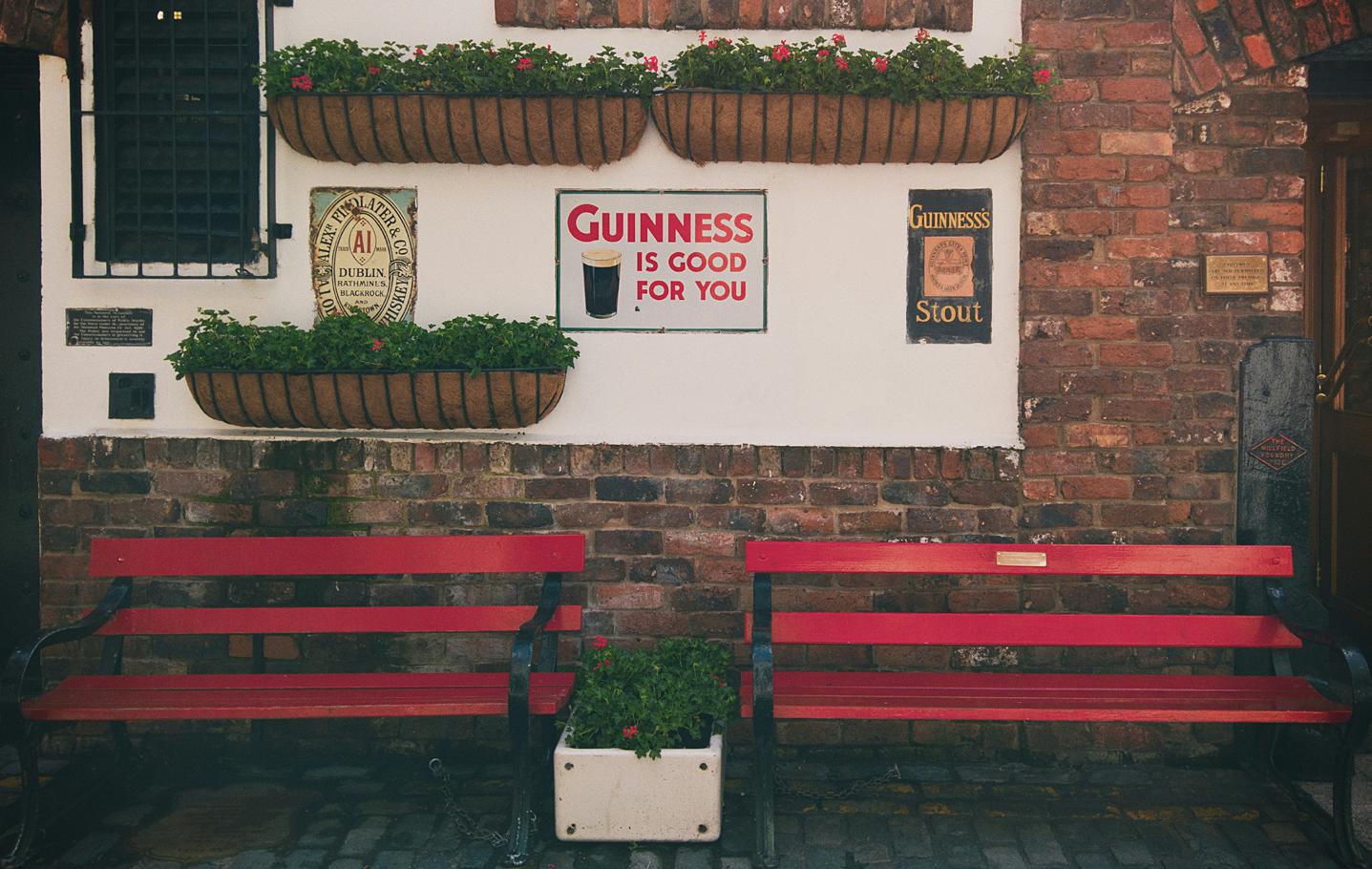
Tristan Searight leads us into the sticky-floored nostalgia of the British pub as a place for sharing, commoning, and community, asking us to focus not only on what, but how, we eat, before Mark Bessoudo shares his conversation with Emilia Chegini about the humble street kiosk and its essential role in our urban fabric.
Nick Miller frames food as more than just a meal but a definition of cultural identity and place economics with the power to support regeneration and improve long-term economic resilience. And Shane Quinn takes us across the sea to Ireland, unpacking how the island’s resurgent narrative has been flavoured by its culinary heritage.
Eike Sindlinger echoes the theme of our issue - that farming is about more than just food. He highlights the strength of urban agriculture in its ability to connect across different systems and deliver more than just food on our plates.
Finally, Aisha Taj spins food into verse in her delightful poem connecting small plates to cosmic magnitudes.
The topic of food, like cities, cuts across the whole nexus of modern life affecting and affected by economics, culture, ecology, politics, energy, and history. Food really is at the centre of the urban experience - we hope you enjoy our contributors taking you on a journey through food in all its facets.
The editorial team
The Academy in Action
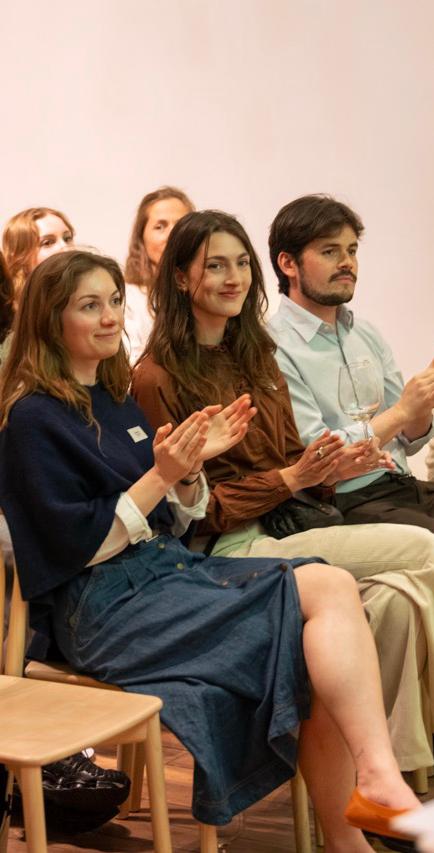
As winter has made way for spring, we’ve been busy at the Academy. We marked International Women’s Day in March with an evening discussing Urbanism Beyond the Nuclear Family, and in April launched this year’s Urbanism Awards finalists with a three-city event held across London, Edinburgh, and Dublin.And earlier this month we were hosted at Foster + Partners for Young Urbanists present: Where do good ideas come from?
Members can catch up on what they missed with event recordings and more in the Members’ Corner, but there’s plenty to sink your teeth into this summer so you don’t miss out again!
Coming up at the AoU:
• Urbanism Awards assessment visits Various locations and dates
Registration via theaou.org/events/category/16-the-urbanismawards
• The Urbanism Hour: Back to Back-to-Back Friday 29 May, online via Zoom
Tickets at theaou.org/events/back-to-back-to-back
• Authors of Urbanism: The Mack with Dr Robyne Calvert Wednesday 3 June, Glasgow
Tickets at theaou.org/authors-of-urbanism
For full details on all upcoming activity, visit theaou.org/events
If you have ideas, news, or want to find out more about getting involved, contact Connie Dales at cdales@theaou.org
The Urban Hunger Games: Feeding growing cities from traditional to vertical farming
Christine Smallwood samples the current crop of urban food solutions from traditional to vertical farming. Whether roof terraces, hydroponics or pig skyscrapers it is clear that there are good and questionable responses to the challenges of feeding growing cities.
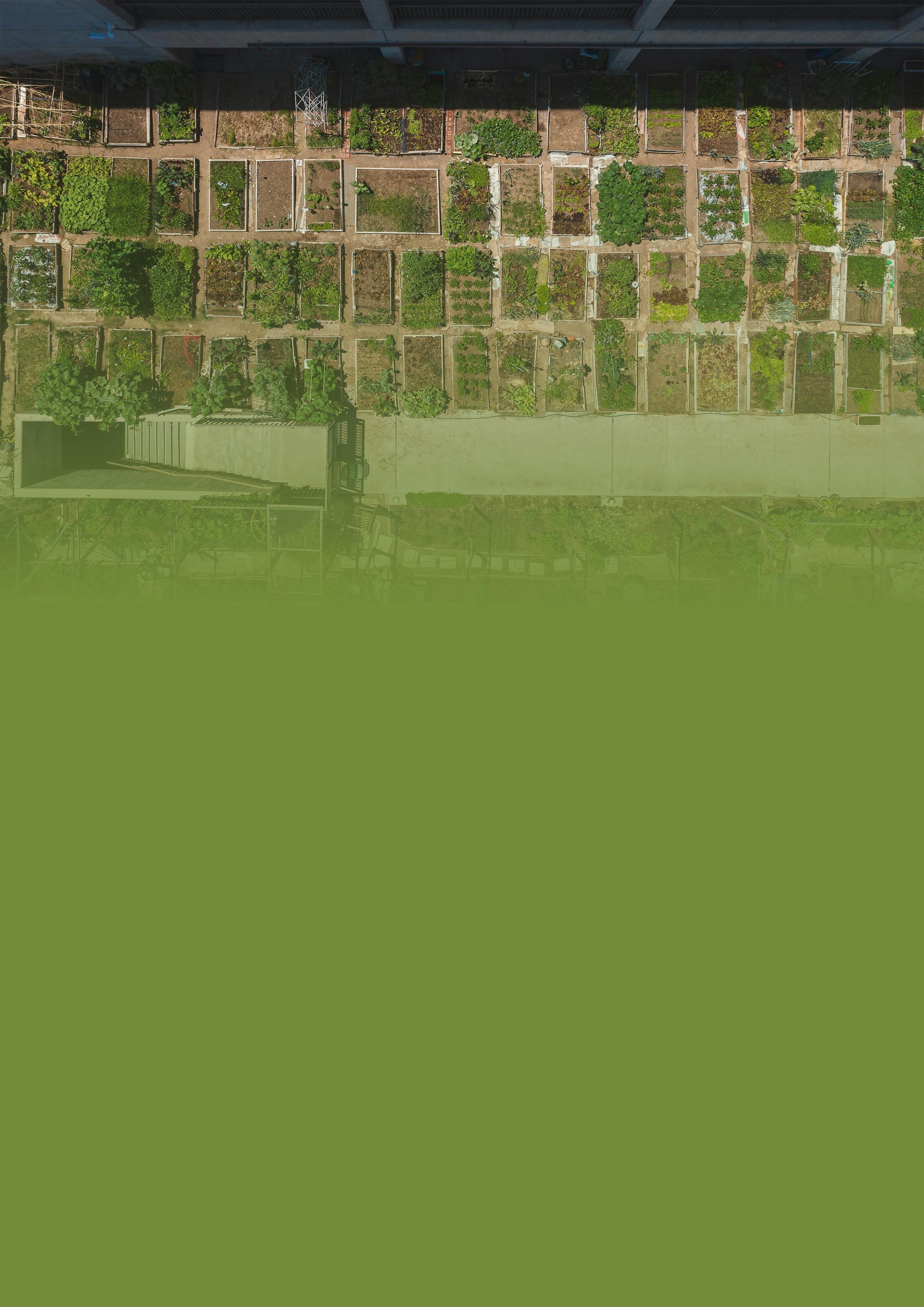
The challenge of feeding those who live and work in cities is not a new one. With increases in urban populations, and vulnerabilities in food distribution, the conundrum is becoming more crucial. The high cost of land and labour in cities means that the numerous urban farms (whether guerrilla gardens, allotments, conventional peri-urban plots or cutting edge Controlled Environment Agriculture) cannot feed everyone. So does food production in urban spaces make sense? And, given its limitations, how can we sustainably and nutritiously feed growing cities?
Even those without an interest in food security will be aware of supply risks caused by geopolitical and climate change disruption. And then there’s the thorny issue of feeding people healthily and affordably. Politicians and policy makers may be slow to solve these issues but local initiatives often lead the way, so what are citizens on the ground doing?
It’s no surprise that the big obstacle to farming a plot of land in or around a city is first finding one, and then being able to afford it. Danilo Ingannamorte runs a restaurant in Milan with its own urban farm 50 metres away. “At least the city of Milan has tried to address the issue, albeit thanks to pressure from the Green Party, because in the early 1990s the local government agreed to protect what was left of rural areas around the city.” Danilo’s restaurant, Erba Brusca and farm sit along the fashionable Navigli, on the edge of this protected land and within sight of the top of Milan’s Duomo, so living proof of the planning benefit.
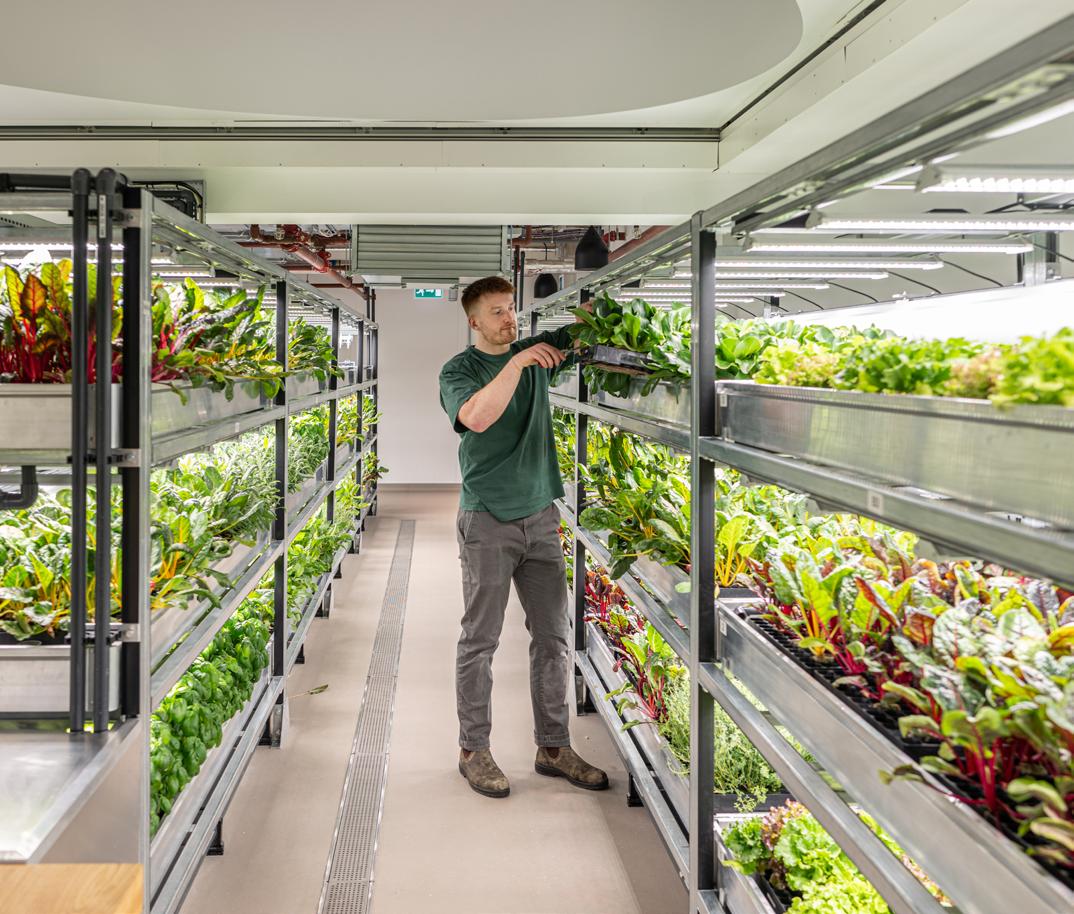
For those not in a city with such planning provisions, take a look at what Square Mile Farms are doing, namely using space in town centre offices. Next time you’re at Tottenham Court Road in London, visit The Orangery Restaurant on the ground floor of GSK’s office, in the shadow of Centre Point. It opened in 2024 with 134 sqm of growing space where impressively up to 2.5 metric tonnes of produce a year can be grown. “That is 98.3% less land needed for the same volume of production per annum compared to traditional agriculture” explains Hamish Grant, SMF’s Chief Growth Officer. It’s a compelling and appealing idea as shown by their increase from 12 office farms in 2018 to 115 today.
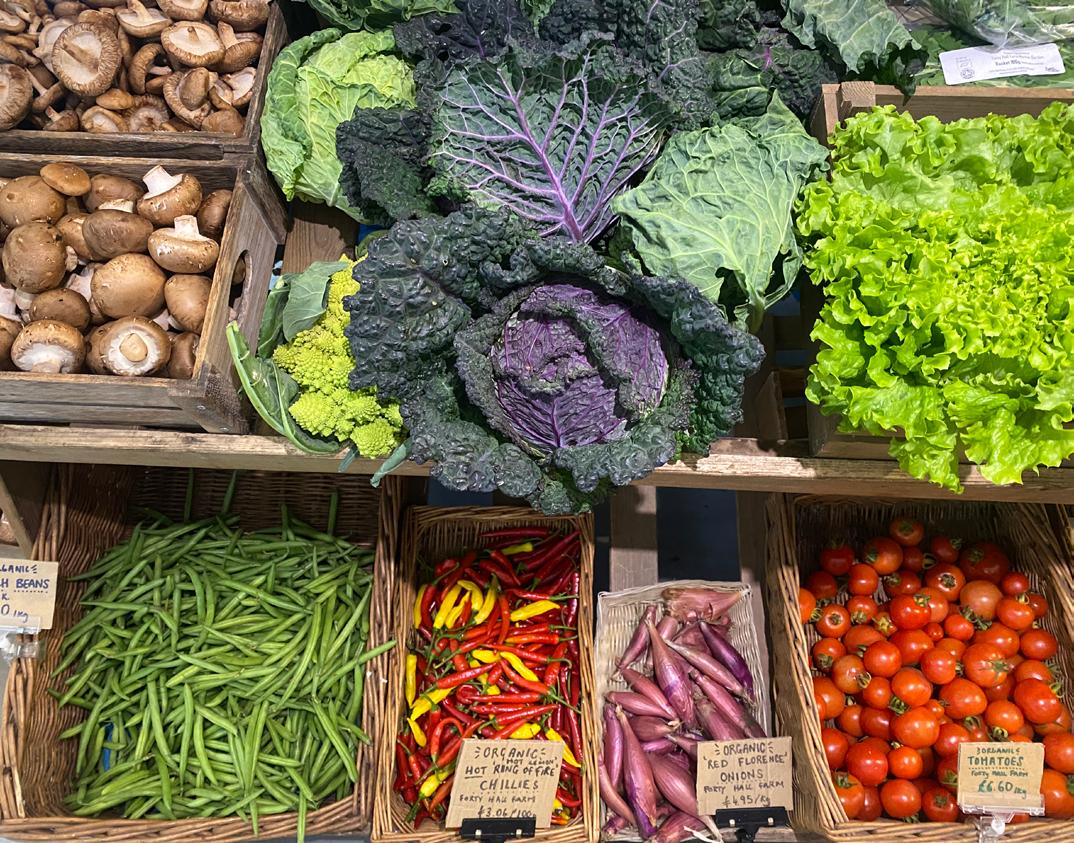
But for those using traditional cultivation methods in constrained urban places, does the business model add up? Danilo recognises that despite the laws and regulations to be navigated, “there is a big advantage in being very near or inside your market.” This is repeated by Emma Lundie who is the co-manager of Forty Hall Farm in the London Borough of Enfield, an organic, peri-urban farm. She agrees that “proximity to a large population of consumers enables us to support a farm shop and veg bag delivery scheme, although I think people are often surprised to discover the size of the farm we’re managing here, and that we are indeed farmers within London”. The 170-acre farm is run by Capel Manor College with rare breeds, a social enterprise vineyard and includes eight acres dedicated to organic veg cultivation.
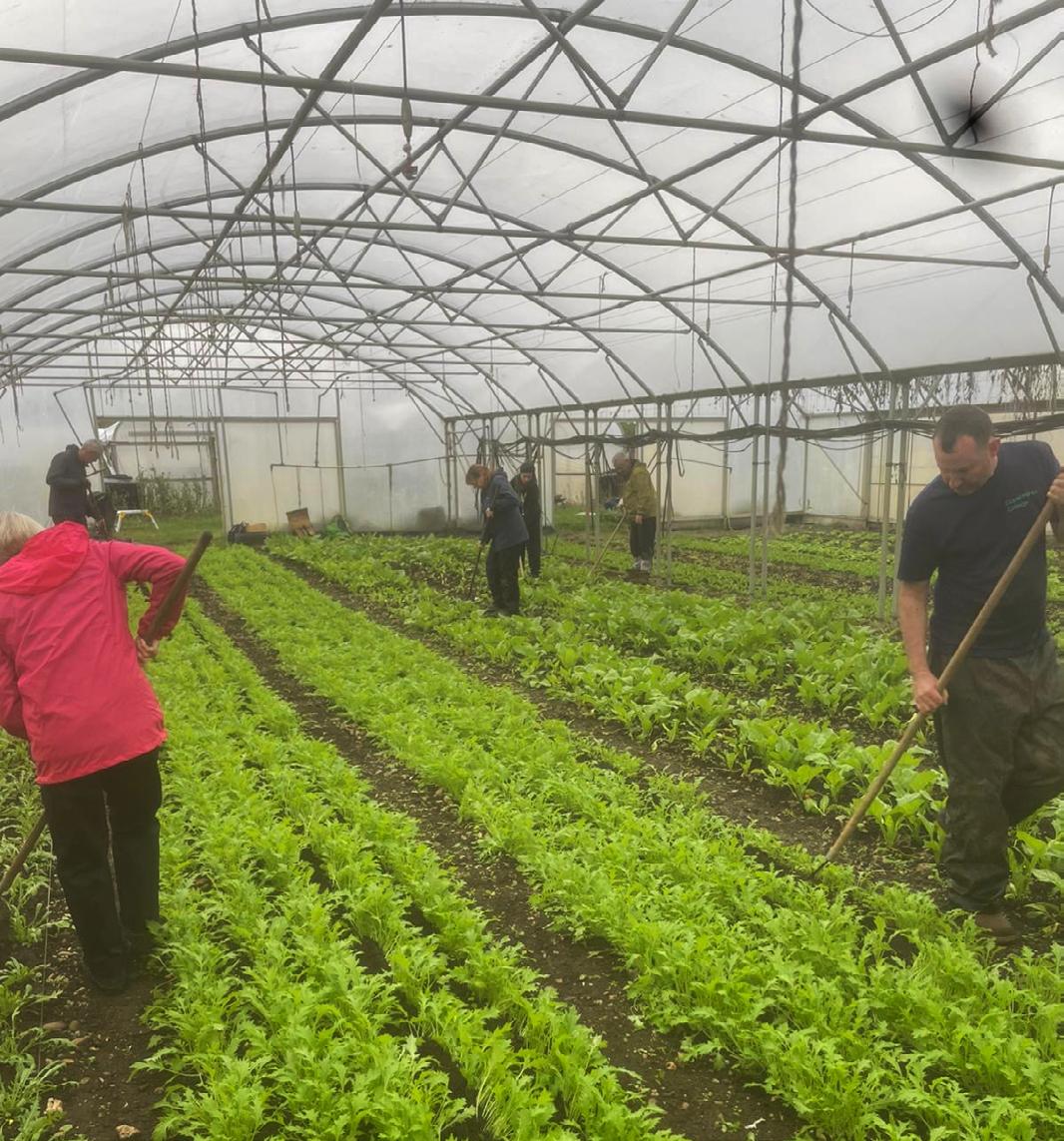
Emma stresses that it is the farm’s model that is essential to its survival. “Keeping prices affordable for our wider community, while striving to make our farm financially sustainable is a hard balance”. It’s certainly helped by the fact that she has a team of 100 volunteers working on the farm. “Our volunteer model is well-established and is mutually beneficial for the farm and the volunteers, who show amazing commitment. We support those with mild to moderate mental health conditions and working here improves wellbeing, but of course the programme does need structure and good management to ensure everyone is looked after and that tasks are carried out well.”
The social and community benefits are key at Forty Hall Farm, and that’s often the case with local food initiatives because as Hamish observes: “You can actually build a business where you use food as social glue. Food is a great way of building
community bonds, whether that’s in an office building or a local area”.
That is echoed by Huw Evans. “Most of the permaculture I’ve come across in cities was very much more on the community building, social care and nature connection side of intended outcomes rather than direct food production”. Huw runs Three Pools in Monmouthshire, a permaculture and regenerative agriculture farm and although far from urban, if we’re looking at how to feed cities sustainably, it is helping to provide the answer.
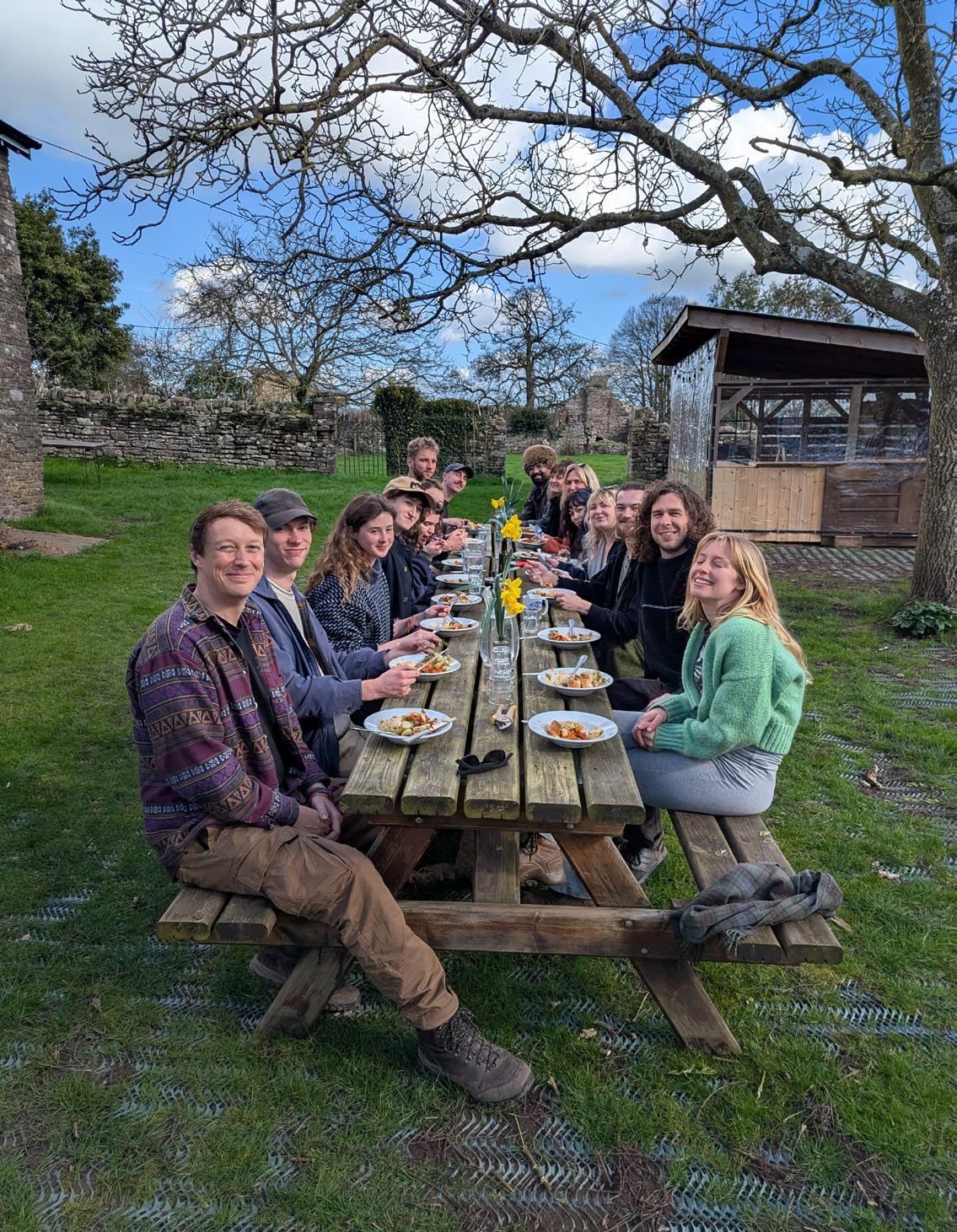
Set up in 2017, the goal was to demonstrate that permaculture can be an appropriate way of designing a large scale farm. “Permaculture and regenerative farming offer a different approach by creating food-producing landscapes that are not only more resilient and ecologically functional but also more productive in the long run”. Huw, Tom and their team are working to provide hard evidence that this can be done but of course, it takes time for a farm to become established. “Part of my whole business plan was for it to be a way to bring urban people to the countryside to explain how it works. In designing a farm system to look visibly different, the hope is to prompt questions”. And holding events, from small music festivals to guest chef dinners on the
farm, provides an income stream. It’s a sensible approach but how to persuade people to travel to a farm in Monmouthshire? “At the risk of generalising, the sustainable food and farming crew may listen more to folk music so we put on music events which are underground, drum & bass or techno. The aim is to appeal to those who are unlikely to have seen farming up close”.
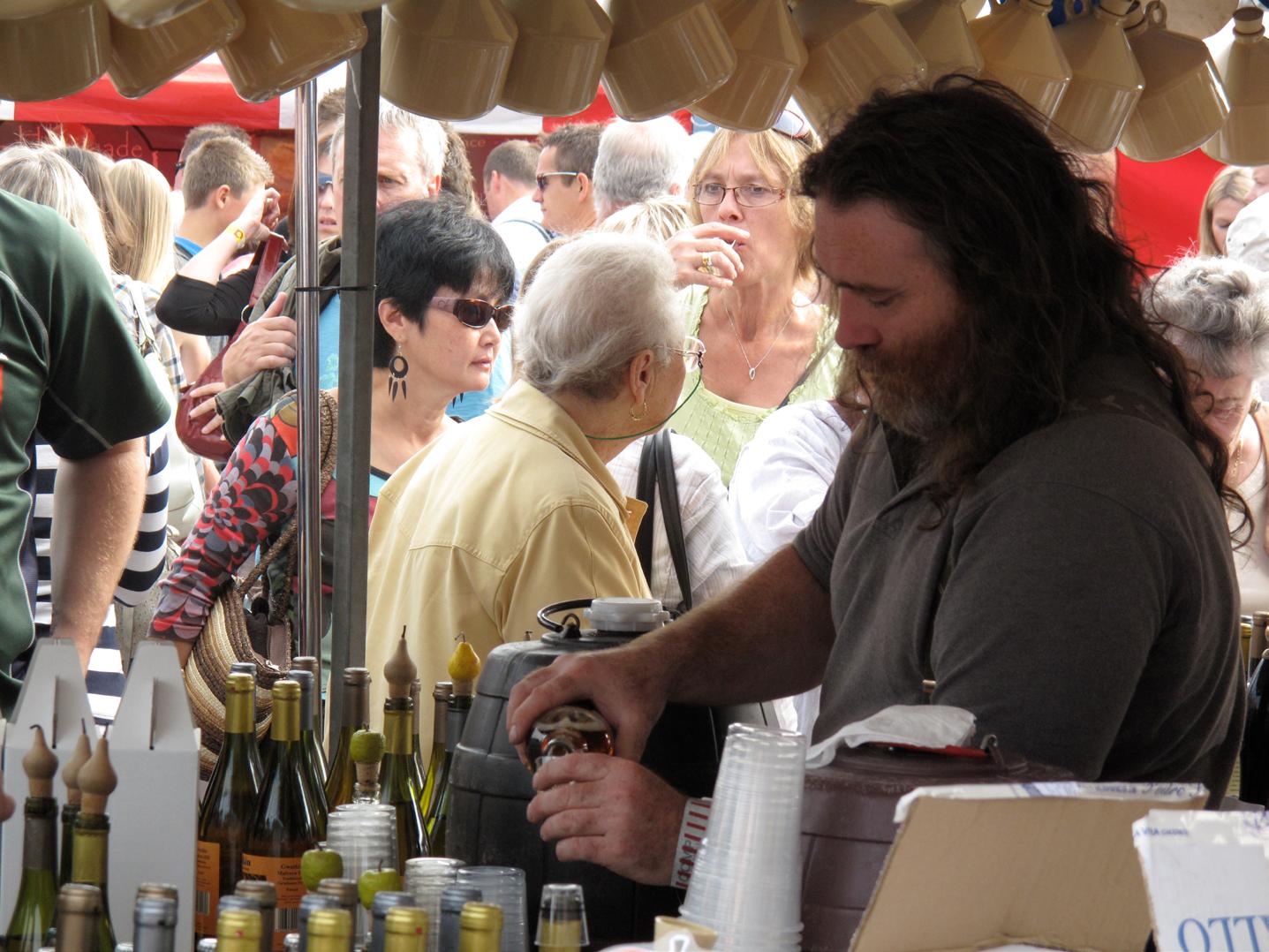
Although the farming side at Three Pools now stacks up financially it inevitably took a while, hence the benefit of event income. And Forty Hall in Enfield does a lot more than sell its produce too. “We hold free entry events on the farm, such as our monthly farmers’ market and these connect people with farming, the produce and the people working on the land here. That creates a sense of value and people begin to buy in, making choices about how they spend their money – on food that improves health and supports the local economy”. All this along with their direct educational work. Forty Hall welcomes students to learn rural skills and to open up farming to a much wider demographic as well as to a diverse range of school children who visit. Even back in the heart of London, Hamish of SMFs knows that people are very keen to learn about growing food “whether that’s doing it themselves or understanding how others do it, and there’s a massive level of interest in food growing in urban spaces – way more than people assume”. Part of the employee offer at the GSK building is the roof top garden which is so popular with employees that there is a waiting list to join the gardening group.
Aside from these heartening examples of urban food production, education and social benefit, what is the big picture? Alarmingly vertical farming is being taken to unseen levels in China with ‘pig skyscrapers’. The FT reported that 26-storey buildings in Ezhou city are “the most extreme example of Chinese livestock companies’ adoption of multi-storey industrial farming, a model they are now taking abroad”. The ability to rear up to 1.2 million pigs each year in two such buildings raises a lot of questions, as does all large scale, industrial farming.
As we’ve seen, it was the wish to change things by setting an example and providing hard evidence that drove Huw and his friends to take matters into their own hands. “For my master’s dissertation, I spoke to a number of people in government about the cost of food and they all said that touching food was political suicide so nobody there would try to proactively improve things”.
Hamish, like many others see that it’s supermarkets who are setting the agenda here. “There is no incentive for supermarkets to sell healthy produce. We’re inspired by Camden Borough Council’s plan to eliminate food poverty by 2030 by putting in place city co-ops, buying organisations, an urban farming officer and they’re managing food waste through changes to the planning regulations. Our view is that local government is best placed to set the agenda for food production in their area, but it has to be in conjunction or collaboration with food producers, developers, community groups and people like us, Square Mile Farms”.
Giacomo Mojoli, former International Vice President of the Slow Food Movement and lecturer in Design and Food at the Politecnico di Milano has strong views on leaving food decisions
to the commercial market, “we need to overturn the classic marketing paradigm of ‘supply and demand’. The quality of the offer, its well-crafted nature must educate and shape demand, not the other way round.” He argues that a lot of time has been wasted by ignoring advice from over a decade ago. That expert advice on how to deal with looming food threats is now being “selectively adopted by inferior quality businesses”. Giacomo knows from experience that “normality can be made exceptional and what is local can have global reach”.
And down the road from Giacomo, back in Lombardy, Danilo is encouraged by the number of private citizens who are creating community gardens on plots of land on the edge of the city. Promisingly, “Milan’s municipality has increased the number of plots available for retired people to grow veg in community gardens. These are managed and funded by the local administration and are free to use because encouraging older people to stay active and engaged with others is seen as a social care benefit”.
In the UK, Incredible Edible’s Right to Grow movement is showing how popular and helpful it is to allow people to garden on unused urban space. Should more attention be given to CPUL (Continuous Productive Urban Landscape), or any inclusion of food production and its distribution in the design of our towns? Absolutely it should. Huw sees how “It’s so easy to hide terrible quality food in an urban environment”. And of course, there are so many aspects of life affected by the way in which we feed ourselves. Do we nourish or do we fuel? Is food too cheap (lots of farmers can’t survive) or is it too expensive (look at the number of food banks)? “Food inflation has been huge over the last few years although food was far too cheap, but the cost will increase as environmental issues worsen. If people paid
more for food now, it would probably mean that the scale of the issue would be less than if we continue to accept cheap food. The wider benefits of improving the quality of food are significant and probably in the long run would pay for the cost now: better population health meaning a more productive population, better state of the environment, better quality of work for those in agriculture and more jobs in the food industry”.
It’s hard to see that the challenges of feeding cities will become easier any time soon, but there are some positive things happening. It’s up to all urbanists to stay engaged with these issues, and encourage sustainable, ethical food producers however we can. At the Academy’s Congress in Utrecht last year, our keynote speaker Carolyn Steel left her audience with the message that we should “attach more value to food”. Whether that is salad leaves produced hydroponically, organic rare breed beef from a peri urban farm, or root vegetables from a permaculture endeavour, let’s ensure that urban planning, design and development consider food seriously.
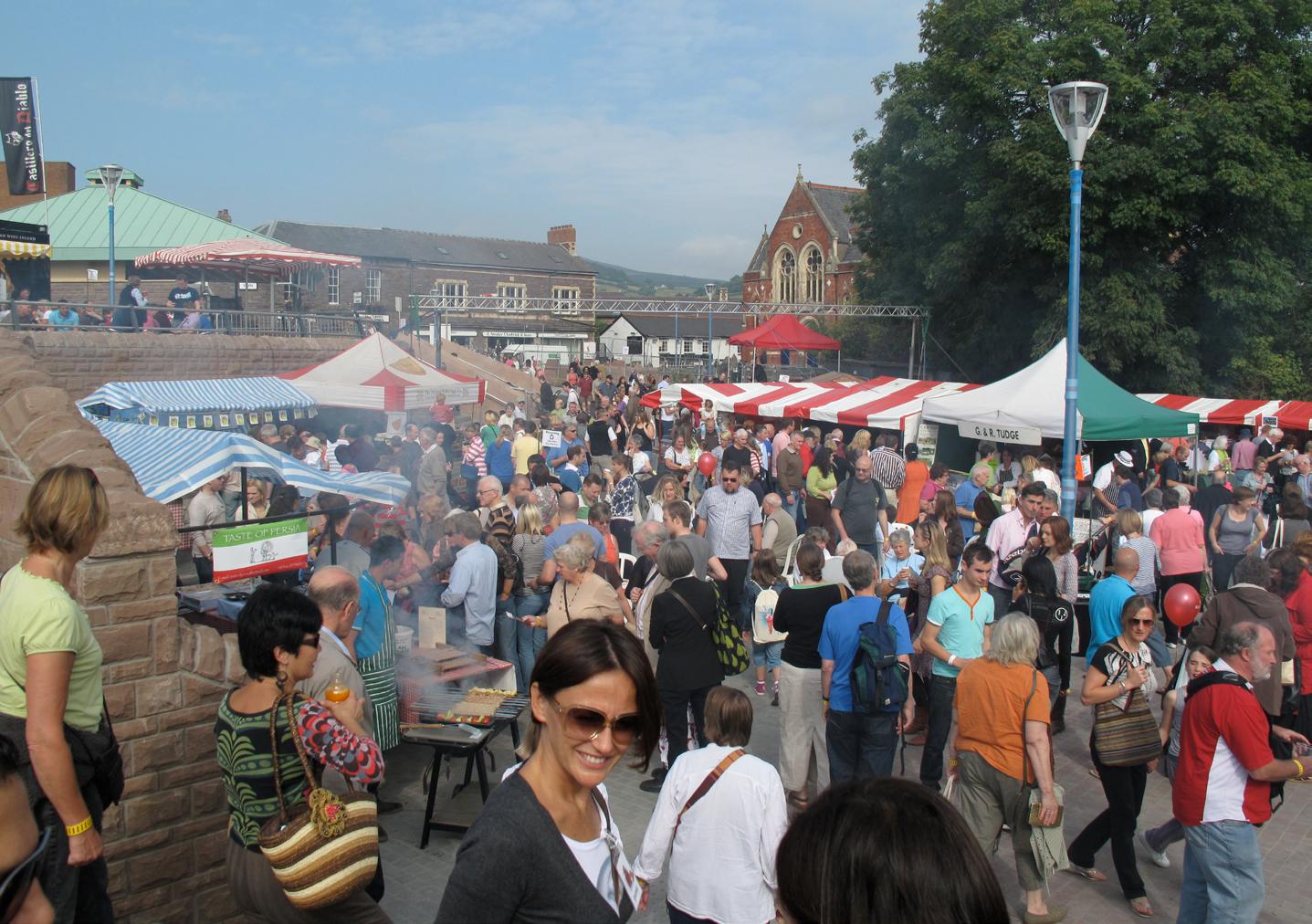
Christine Smallwood is the Managing Director of the Academy of Urbanism. She has published four books on Italian food and travel, and served as Co-chair of the Abergavenny Food Festival until 2025.
Erba Brusca, Milan erbabrusca.it
Forty Hall Farm, Enfield fortyhallfarm.org.uk
Square Mile Farms squaremilefarms.com
Three Pools, Monmouthshire threepools.co.uk
Imagery: Lead photo - Erba Brusca, photo courtesy of Danilo Ingannamorte; second page, left - The Orangery at Tottenham Court Road, courtesy of Square Mile Farms; second page, right - Forty Hall farm shop, courtesy of Forty Hall Farms; third page, left - Three Pools, Monmouthshire, courtesy of Huw Evans; third page, right - courtesy of Forty Hall Farms; previous page, left - photo by Jack Lee via Unsplash; previous page, right - photo courtesy of Danilo Ingannamorte / Erba Brusca; this page - Carolyn Steel at Congress 2025, photo by David Kennedy
Interview: In Praise of the Street Kiosk
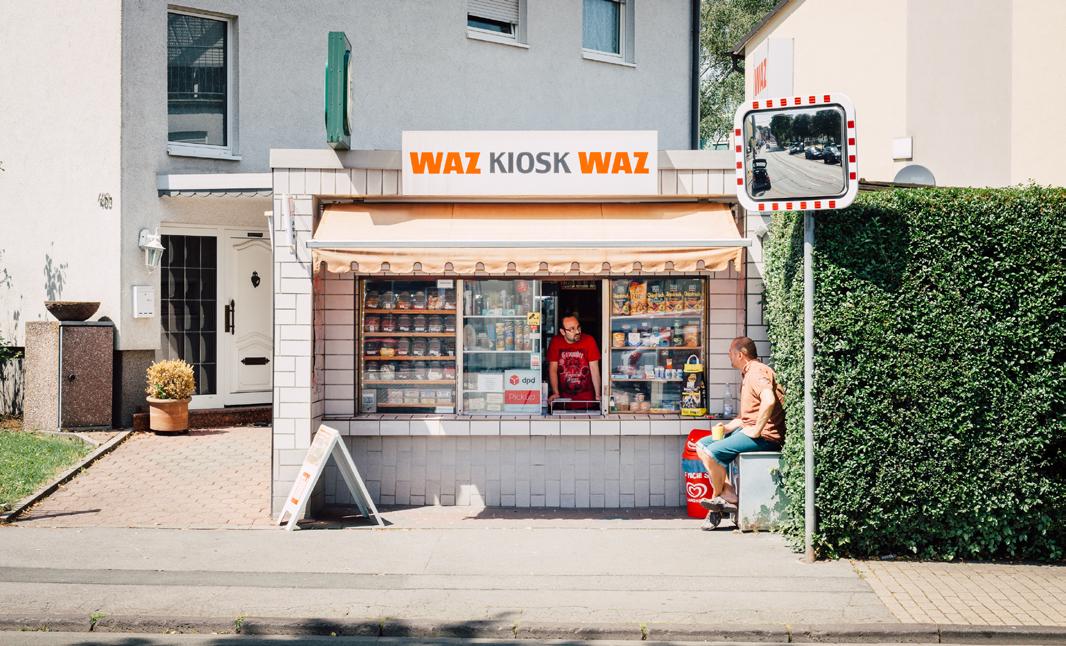
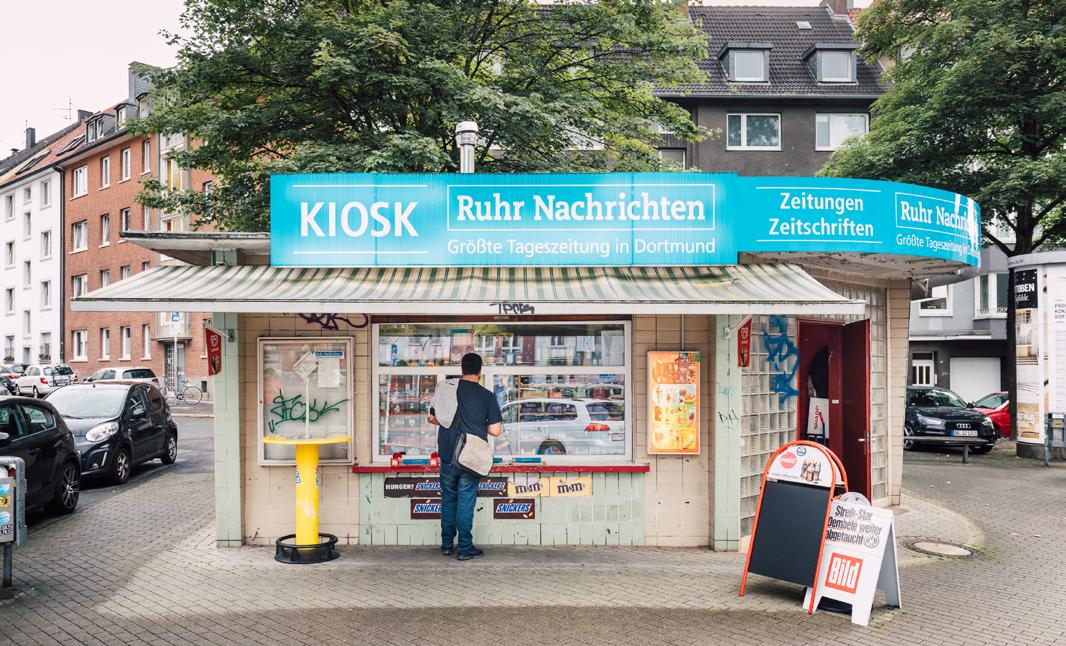
For Emilia Chegini, the kiosk is more than just a small retail structure on the corner of a street. It is a social device, a family enterprise, a neighbourhood landmark and, increasingly, an endangered urban condition. Chegini, a Swedish architect educated at the University of Dundee and now practising in Shanghai, grew up around her father’s kiosk and later reflected on its wider meaning in her essay that won the 2024 RIBAJ/Future Architects writing competition. In it, she argues that the disappearance of kiosks signals the erosion of everyday urban relationships that many take for granted. Here & Now editor Mark Bessoudo spoke with her about street kiosks, urban life and the everyday social ties that hold neighbourhoods together.
Your award-winning essay describes what you call “the death of the kiosk”. What do you mean by that, and why should cities care?
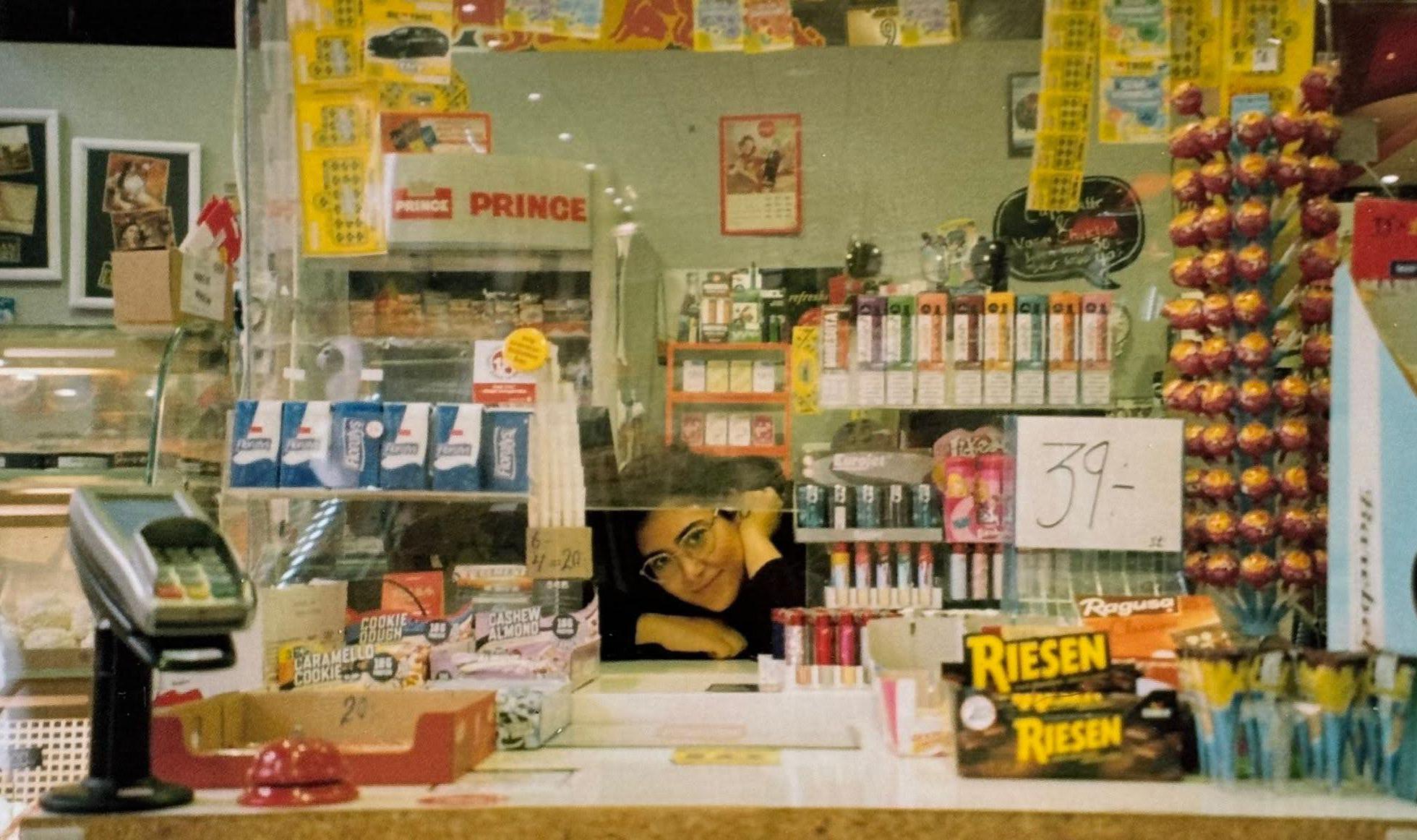
That essay was quite personal for me because I grew up around kiosks. My father, who immigrated to Sweden, ran a small neighbourhood kiosk when I was growing up. But in many cities these small, family-run kiosks are disappearing. Rising rents, chain convenience stores and changing consumer habits are slowly pushing them out of neighbourhoods.
When I talk about the death of the kiosk, I’m referring to that process and to the urban condition that disappears along with it.
If my family’s kiosk were taken down tomorrow, a 7-Eleven or something similar would probably replace it very quickly. Those chain stores are very strategic and polished, but they’re also sterile. They don’t have the same magic as a kiosk, which comes from familiarity between the owner and the people who pass by every day, whether they’re grabbing a coffee on the way to work or stopping for a quick snack in the afternoon. When that disappears, it’s not just the kiosk that changes, it’s the whole atmosphere around it that changes as well.
Kiosks often look like simple convenience
retail, but you suggest they play a social role in neighbourhood life. How does that work?
It’s related to what sociologists call “weak ties”. Kiosks create countless small connections between people who didn’t necessarily know each other well, where customers occupy a middle ground between anonymous and familiar. For example, my father kept what he called a “black book”. If someone didn’t have money for a drink or a snack, he would write it down and they could pay later. They might not even know each other’s names properly, but there was a familiarity built through routine and that repeated interaction built trust.
How do kiosks differ from cafés or other local businesses that also build regular customers? In many ways they are quite similar. Both can be family-run, informal places where regulars gather. The biggest difference is probably not what is being sold but how the interaction happens.
A café usually involves customers staying for a while. A kiosk works through quick encounters. It’s a 15- or 30-second exchange. Because of that there is a different level of informality. It’s acceptable for a kiosk to feel slightly chaotic. You step up, pick something from the display, perhaps talk briefly and move on. That informality is something chain stores struggle to reproduce.
Pictured: Emilia at her family’s kiosk in Lund, Sweden
Photo courtesy of Emilia Chegini
Some people might assume changing consumer habits — health consciousness or digital services replacing things once sold at kiosks — are also playing a role. Do you see that?
Kiosks tend to reflect demand rather than create it. They adapt to whatever a neighbourhood needs. If people suddenly wanted smoothies instead of fizzy drinks, a kiosk would simply start selling smoothies.
The more interesting question is whether we measure the kiosk only through the products it sells. If we look at it as a civic element — something that reduces social isolation — then the calculation changes. It would be fascinating to compare neighbourhoods with kiosks and neighbourhoods without them. Are people happier? Do they feel less lonely? Those are also forms of public health.
How would you like to see urban planners pay more attention to kiosks? What do you think planners often misunderstand about them?
I wouldn’t say I have a direct message for urban planners, but I do think kiosks should be seen less as objects and more as part of the life of a neighbourhood.
In many new developments everything is very clean and finished. There’s a narrative that new places should look orderly and perfect. But kiosks don’t really fit into that environment.
For me the idea of a kiosk is that it grows in the cracks of a city. It appears where there is a bit of leftover space, where people pass by and a small business can slowly take root. If you try to design that too precisely from the beginning, something essential gets lost. Sometimes cities need to leave room for things to emerge organically.
Recently there was a widely reported story in London about a much-loved newsagent kiosk inside Brixton Underground station
closing after 36 years because the cost of rent doubled. The reaction was extraordinary, with many people, from acclaimed food critics to documentary filmmakers, sharing memories and expressing grief over losing it. What do you think that reaction reflects?
I think it shows how these places are just there and people don’t really question them. You pass them every day and they become part of your routine.
But when they disappear people realise what they meant. In many cases it’s the same person or the same family running it for decades, so it becomes part of the neighbourhood. At the same time, rents are rising and many of the things kiosks once sold are no longer needed in the same way, so even places people care about can become difficult to sustain.
If kiosks continue to disappear, what do you think cities actually lose?
I think we lose small moments of familiarity. These places might seem very simple, but they are part of the rhythm of everyday life. They are places where you recognise people, where you have a quick exchange and where a neighbourhood quietly meets itself.
Once they’re gone, it’s very difficult to recreate that again. And that’s why cities should think carefully about how to leave space for these kinds of everyday encounters to survive.
Emilia Chegini is an architectural designer, writer and co-founder of the rooms+cities collective whose work focuses on the overlooked infrastructures of everyday urban life. Through close observation of the mundane, she explores the kiosk as a spatial and social device that supports micro-economies, routine encounters, and forms of belonging.
Imagery - Lead photo and this page, all, courtesy of Reinaldo Coddou H, photographer and author of Treffpunkt Trinkhalle
Orchard commons: How cities can grow their way out of crisis
Community orchards turn underused urban land into shared assets that provide food, connection and resilience. Treating food growing as core infrastructure, suggests Kath Rosen, can help cities respond to inequality, climate pressures and fragile food systems.
Picture yourself stepping outside and walking just a few minutes to pick fresh fruit from a shared orchard. It’s something that brings joy and feels like a natural part of everyday life in your neighbourhood.
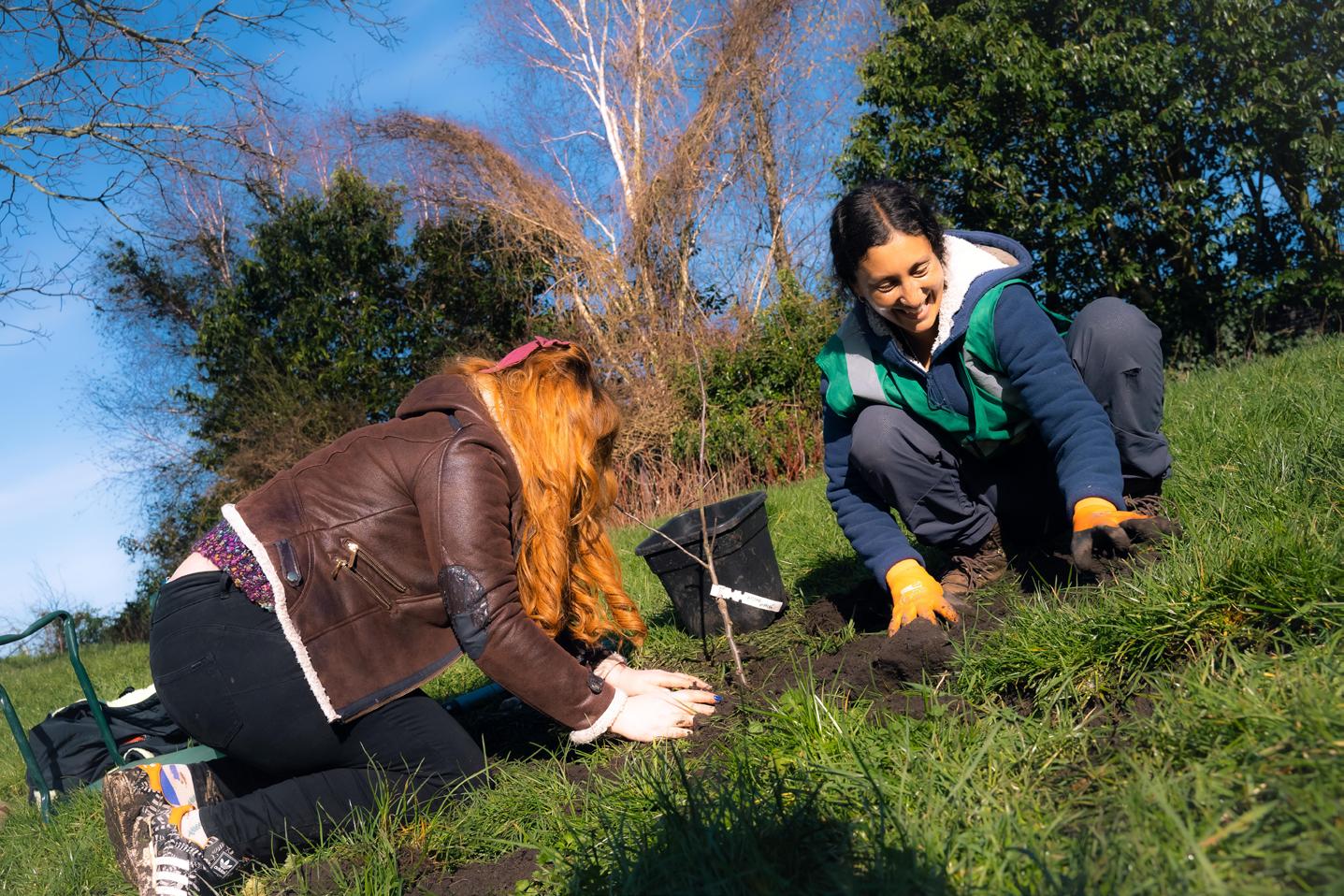
That is the ambition of The Orchard Project. We are a UK charity working at the intersection of climate, food and community. Since 2009, we have helped to create and care for more than 700 community orchards in towns and cities across the UK, working with schools, housing providers, local authorities, hospitals and community groups. We plant
fruit trees in urban spaces and support local people with the skills, tools and confidence to look after them for the long term. Apples, pears, mulberries, quinces and plums are all common, alongside apricots and even pomegranates in warmer urban microclimates.
At the heart of this work is a belief in the commons. Historically, the commons referred to land that was shared and cared for collectively so that everyone could benefit. Community orchards are a modern expression of that idea. They are shared natural assets, shaped and stewarded by the
people who live alongside them. In cities where land is often enclosed, monetised or under pressure, they offer spaces defined by participation and shared benefit.
This matters because cities are almost entirely dependent on external food systems. Vast supply chains bring food in, while very little is grown where people actually live. That model has always been fragile and is now showing real strain. Global shocks, from the war in Ukraine to instability in the Middle East, have exposed how vulnerable food systems can be.
At the same time, food insecurity is rising. Around 12 percent of UK households are affected, increasing to 15 percent for families with children. Fruit and vegetable supply is particularly exposed, with more than half imported and highly vulnerable to climate impacts. We are already seeing this in climate driven price increases, where extreme weather disrupts harvests and pushes up costs. The sharp rise in olive oil is one visible example.
Photo credit: Omari Taylor
The average shopping basket now costs around a third more than it did four years ago. Nutrient rich food is often the first thing to become unaffordable, particularly in lower income areas. This feeds directly into widening health inequalities. In the most deprived communities, childhood obesity rates are projected to exceed 40 percent by the end of primary school, sitting alongside food insecurity in a deeply entrenched paradox. This is why we focus our work where we do. Around 85 percent of our orchards are located in areas of highest deprivation in cities. These are places where access to fresh food is limited, green space is often poor quality, and the impacts of climate change are felt most acutely. They are also places where small, visible changes to the local environment can have a significant impact.
We work with communities to integrate food growing into the everyday landscape of cities. In school grounds, housing estates, parks, community centres, rooftops and former car parks. We design for long term stewardship from the outset, building in training, skills and shared ownership.
Where green space is limited or overlooked, orchards create places that people return to. They provide a reliable source of fresh food year after year, while reconnecting people with how food is grown. They also open up opportunities for people to be active, to connect with others and to take pride in their surroundings.
In a school, this can mean children developing a lifelong
relationship with food and understanding seasonality and taste. On a housing estate, it can mean residents transforming a neglected patch of grass into a shared, productive space. We have seen sites once used as informal dog toilets become well used orchards that foster community life. Orchards are often the catalyst for wider local improvements. In partnership with food banks, they can sit alongside emergency provision to build longer term resilience and dignity.
Our work is also evolving beyond traditional orchards into urban food forests. These are more diverse, layered systems that include culturally relevant crops alongside familiar fruit. They allow communities to grow food that reflects who they are, while introducing new species and flavours and building food literacy in an inclusive way.
For those shaping the built
environment, there is a clear opportunity to design food growing into cities from the start, as core infrastructure that supports health, climate adaptation and social cohesion.
Community orchards are one practical way to bring food production back into cities in a way that is visible, shared and built to last. They make fresh, healthy food part of the everyday landscape, not something accessed only through markets.
If we want cities that are more resilient, more equitable and more connected to the systems that sustain them, we need to start planting that future into the ground.
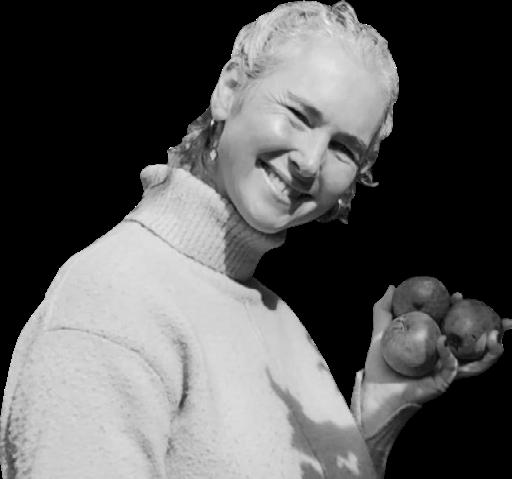
Kath Rosen is the CEO of The Orchard Project
Saved by the Pub
Tristan Searight makes the case for the pub as a vital piece of community and public health infrastructure, not just a nostalgic social space or a dietary problem to be managed. Perhaps, Searight argues, we should focus not only on what, but how, we eat. Planning policy makers take note.
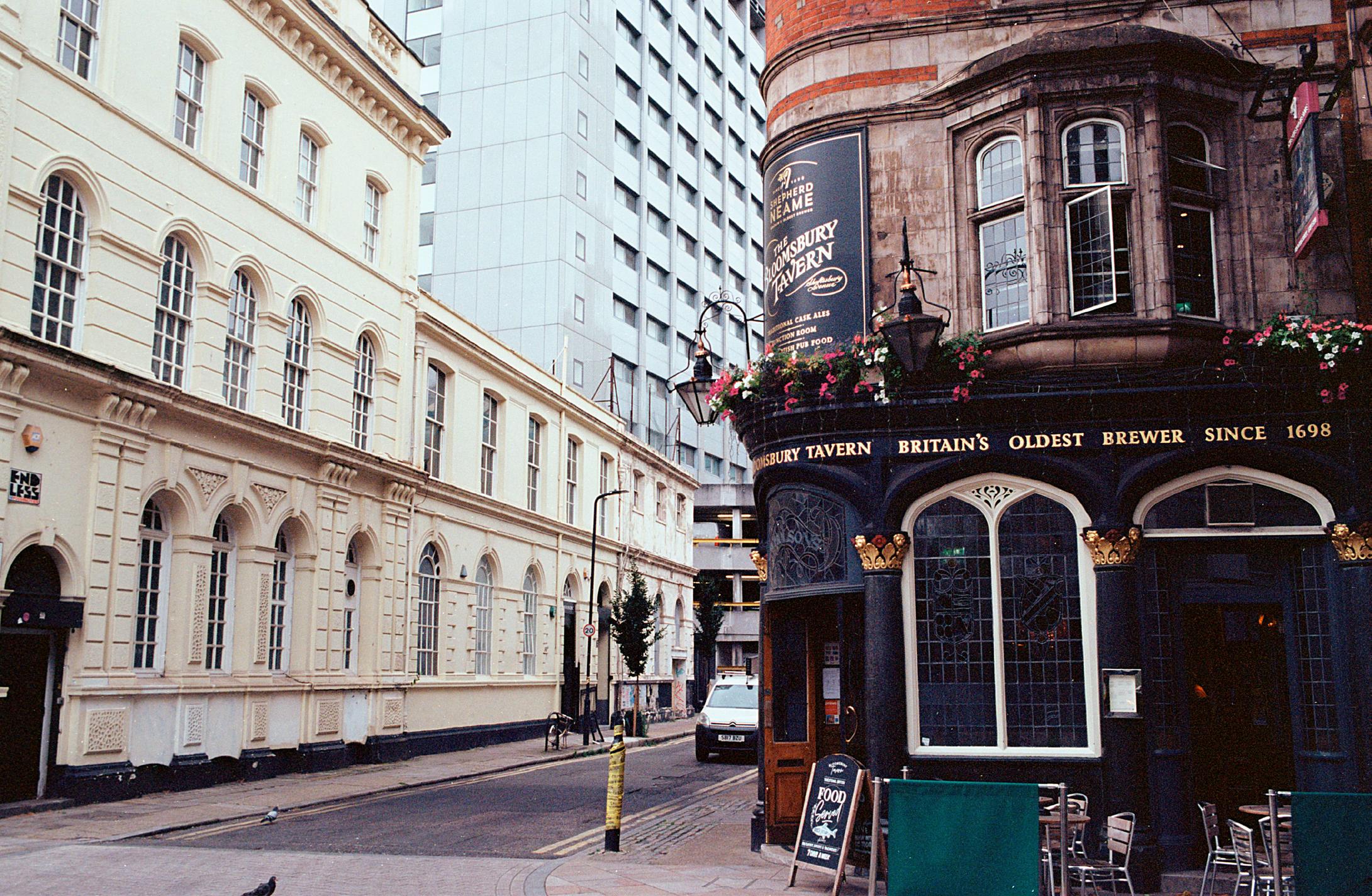
Food places have always been antidotes to social isolation. In the U.K., pubs have connected strangers and solidified friendships. Though cliché, after living in the U.S. for six years and studying food environments, I have come to appreciate the pub, not just as a space of tradition, but as a vital part of community infrastructure. As our planning system moves to protect pubs’ social value, we should use
this momentum to meet wider community needs, particularly public health.
The community success of pubs is not accidental. From their position on the street corner, to the layout of bar furniture, pubs offer social choice and an informal flexibility that makes them the beating heart of local connection. Pubs express privacy and intimacy, while occupying the public sphere, a
quality David Knight and Cristina Monteiro of the design firm DKCM describe as being “redolent of home whilst offering something fundamentally social and shared”1 .
Pubs provide an essential social catalyst: food and drink. With their foundations in drinking and scant healthy options, pubs have been scrutinised as the enemy of public health. This puts pubs in hazardous
waters as cities aim to shift people closer to a flexible, healthy and environmentally sustainable “planetary health diet”—mostly vegetables, whole grains and plant-based proteins, and limited sugars and red meats2. From a dietary perspective, pub menus are not much better than takeaways, which are currently being regulated in cities like Bristol3 , nor would they qualify for the tax incentives offered to healthy grocery stores in New York City4 .
Yet, this nutritional focus highlights a significant blind spot in urbanism. While we are increasingly focused on regulating what we eat, we overlook the importance of how we eat. Much of our daily social connection is anchored through meals and eating together. The importance of regular social interaction couldn’t be more clear; people with strong social bonds are happier, healthier, and live longer than those who are isolated5. A quarter of adults in the UK often feel loneliness, and alarmingly, young city dwellers like myself are experiencing loneliness and isolation more than older generations6 .
To tackle this dual challenge of dietary health and social isolation, we shouldn’t simply protect pubs, we should also support their evolution as healthy social hubs. Recent legislation is a step in the right direction. The government’s new High Street Strategy provides tax relief and protects pubs if they are the last community hub in an area alongside future intentions to make it easier for them to expand or add guest rooms7 . These looser rules respond to DK-CM’s call to move beyond
simply keeping pubs alive, and instead removing barriers so a pub can “deliver what its community needs.”
The intricacies of delivering healthy, socially active high streets, while protecting pubs should not be overlooked. Does a supermarket selling fresh groceries take priority over an old pub? Does a coffee shop filled with people working alone on laptops serve the same purpose as a restaurant that enlivens the street? These types of questions cannot be answered if we look at pubs in isolation, or only zoom in on the nutritional consequences of food places. As Gehl Architects have argued, a healthy food environment is an intersection between food places, public space, and daily life8. It’s more than just the ratio of healthy social food places to unhealthy ones, it’s about the particular ways food places interact with other civic infrastructure— like bus stops or parks—to invite social interactions. Put another way, a thriving food environment is inseparable from a well functioning public realm.
If we approach our food system and built environment as separate logistical problems, focusing simply on what’s on our plates instead of how we interact, we miss the full public health benefits they offer. The pub is poised to be a foundation of public health if they are supported in diversifying their menus and community offerings, keeping them relevant to new audiences while aligning with a city’s environmental goals. Keeping pubs alive and transforming public health are the same mission. By widening our planning lens to treat pubs,
food places, and the public realm as an interdependent system, we can ensure the essential spaces of our cities fulfil their role of bringing us together.
Tristan Searight is an urban designer at OverUnder in Boston, MA. His work focuses on the spatial dimensions of urban food culture.
Nick Miller establishes why food systems are critical to the creation of value, identity and resilience in places, and questions if strengthening local food economies can support regeneration, reduce inequality and improve long term economic resilience
For urban professionals, food is often present but rarely considered central, other than as a retail opportunity. It appears in town centre strategies as cafés and restaurants, in rural development plans as agriculture, and in tourism strategies as branding. Yet food is more than this - it functions as economic, social and cultural infrastructure that shapes how value is created, circulated and retained within place. When towns and cities become more homogenous and less distinctive, the quality, diversity and cultural relevance of food declines; all too-often locked into generic offerings of ultraprocessed food and globally uniform menus.
Understanding food as a placebased economic system opens up new ways of thinking about regeneration. It allows us to see how value is created, retained or extracted, how identity translates into competitive advantage and how inequality is spatially embedded in everyday access to good food.
For those concerned with longterm prosperity, resilience and inclusive growth, the relationship between food and place deserves closer attention.
Food as Identity - and Economic Asset
Distinctive food has long anchored the identity of places. Parma ham signals a region; Staffordshire oatcakes speak to local industrial heritage; landrace crop varieties and heritage livestock breeds reflect
generations of adaptation to soil and climate. Across the UK and beyond, food tells the story of landscape, labour and culture.
Giving space to a rediscovery of these assets supports places in flourishing. Provenance underpins premium pricing, protected designation schemes create export opportunities and culinary tourism drives footfall and overnight stays. Local produce becomes the raw material of regional branding.
Where food and place remain connected, economic value often circulates locallythrough farm shops, markets, independent retailers and hospitality businesses that trade on local distinctiveness. The challenge is how to protect and extend these linkages in the face of structural change.
Independent food economies matter not only for identity, but for economic resilience, because they retain ownership, employment and decisionmaking locally. Local producers and independent retailers typically generate local multiplier effects and retain a higher proportion of spending within the local economy. Independent food shops and pubs also function as social infrastructure. They provide spaces for interaction, strengthening community bonds that, in turn, underpin economic collaboration and local problem-solving.
Consolidation, Monoculture and the Hollowing Out of Place
Over recent decades, the growth of supermarkets and highly centralised supply chains has reshaped both rural and urban economies. Ultra-processed food supply chains stretch across continents, weakening the visible link between production and consumption. Agricultural production has moved towards monoculture, favouring efficiency and scale over diversity and local embeddedness, at huge cost to the environment.
However, the picture has become more nuanced in the period post-Covid, with increased working from home and a trend amongst younger people in particular to
rediscover their high street and seek out independent, artisan and sustainably sourced food. The growth in plant-based diets, interest in natural wine and low alcohol alternatives has fuelled a renaissance, especially in more urban areas of the country.
However, food also exposes spatial inequality. Where you live shapes your access to fresh, affordable food. In some neighbourhoods, residents face limited retail choice, relying heavily on convenience stores or takeaway outlets. Food security remains closely associated with household income and employment status. Long-term unemployment
correlates strongly with reduced food security, reinforcing cycles of disadvantage.
These patterns are not incidental; they are structured by land values, retail margin models and risk assessments that shape where investment flows. Retail investment often bypasses lower-income areas or replaces diverse local provision with limited, lowermargin options. Independent food and drink retailers have declined disproportionately in some areas, altering not only consumer choice but also local ownership patterns. Regeneration strategies that ignore food systems risk overlooking a central
mechanism through which inequality is experienced daily.
Resilience,
Diversity and the
Economic Future of Place
This matters because economic diversity underpins resilience. Monoculture increases vulnerability to shocks and whilst consolidated supply chains can deliver efficiency and lower prices, they also centralise decision-making and concentrate risk. Professor Tim Lang’s work for the National Preparedness Commission highlights the need for Civil Food Resilience to be taken as seriously as threats from terrorism or climate change. Recent global shocks have highlighted the fragility of long supply chains and risks to food supply are no longer abstract. They have tangible impacts on prices, availability and business viability.
Diversity, in both ecological and economic terms, offers a pathway to resilience. Landrace varieties preserved in seed collections, rare livestock breeds adapted to specific landscapes, and shorter supply chains linking producers directly to consumers all contribute to
a more flexible system and function as forms of economic insurance.
For places, rebuilding or strengthening these linkages can support resilience. Local processing facilities, regional distribution networks and collaborative producer organisations can anchor more value locally while reducing exposure to global volatility. Food becomes part of strategic economic infrastructure, ensuring that places retain sufficient embedded capacity to adapt and respond to shocks.
Re-linking Food and Place in Practice
Food and drink offer a significant opportunity for building and consolidating communities. Where leadership has been woefully lacking in political terms, communities have been able to build cohesion and enhance resilience by supporting independent retail, investing in food hubs and protecting agricultural diversity though buying choices.
The celebration of food is a fundamental human activity. Whether through food festivals,
corner cafes, markets or allotment growing, food can bring us together and allow us to develop as communities. The global model of production, concentration of retail power and rise of home delivery services can take that away from us if we let it.
When the link between food and place weakens, so too can local economic resilience and distinctiveness. When that link is strengthened, places gain not only identity but adaptive capacity.
Treating food as core economic infrastructure reframes its role. It invites practitioners to consider not just what is built, but what is grown, processed, sold and shared. In doing so, it positions food as a lever for inclusive, distinctive and resilient local economies.
In an era of economic uncertainty and climate risk, that reconnection may be less a cultural choice than an economic necessity.
Nick Miller is Chief Executive of Miller Research, a public policy consultancy specialising in building sustainable communities through better governance. He has worked across the UK on issues around food and farming, retail distinctiveness and factors affecting climate resilience. In his spare time he farms 300 organic sheep in the Black Mountains of Monmouthshire and has recently planted 5,000
Taste of Place: How Ireland’s food traditions shape
people’s experience of the island’s places
Shane Quinn explores how Ireland’s distinctive food traditions shape people’s emotional and cultural connection to place, often more powerfully than formal planning or design. Can food rooted in landscape, craft and local production quietly redefine urban identity, regeneration and place branding across the island?
Stand on Ballycastle’s seafront on a sunny August day and you’ll encounter dulse. Seaweed, harvested from the rocky north
Antrim coastline, and sold at the town’s Auld Lammas Fair since at least the 17th Century, it is salty-sharp and inseparable
from the identity of this small town on the edge of the chilly North Channel.
Photo by Betty Hadden from Pixabay
Shane Quinn
Across Ireland, from Ballycastle to Clonakilty, food has, for generations, done what no masterplan can, binding people to specific places with emotion. Urbanists know this, instinctively. But do we do enough to recognise the impact of food on how we seek to shape places today?
A generation ago, Belfast’s identity was defined by ‘The Troubles’. Today, Condé Nast Traveller ranks it among the UK and Ireland’s best city breaks. Belfast’s people have long sensed food’s role in that, even if we’ve struggled to articulate exactly how. But we know that restaurants across the city, from Michelin-starred venues to more cheap-and-cheerful locations, build their menus around local provenance. Some make a carefully tended local supply chain their whole identity.
Food has shaped the city’s geography too. The Cathedral Quarter’s cobbled streets feel alive because of the lively independent restaurants and bars there, inspired by the enterprising efforts of Nick Price’s eponymously named Warehouse, opened 35 years ago when the area was
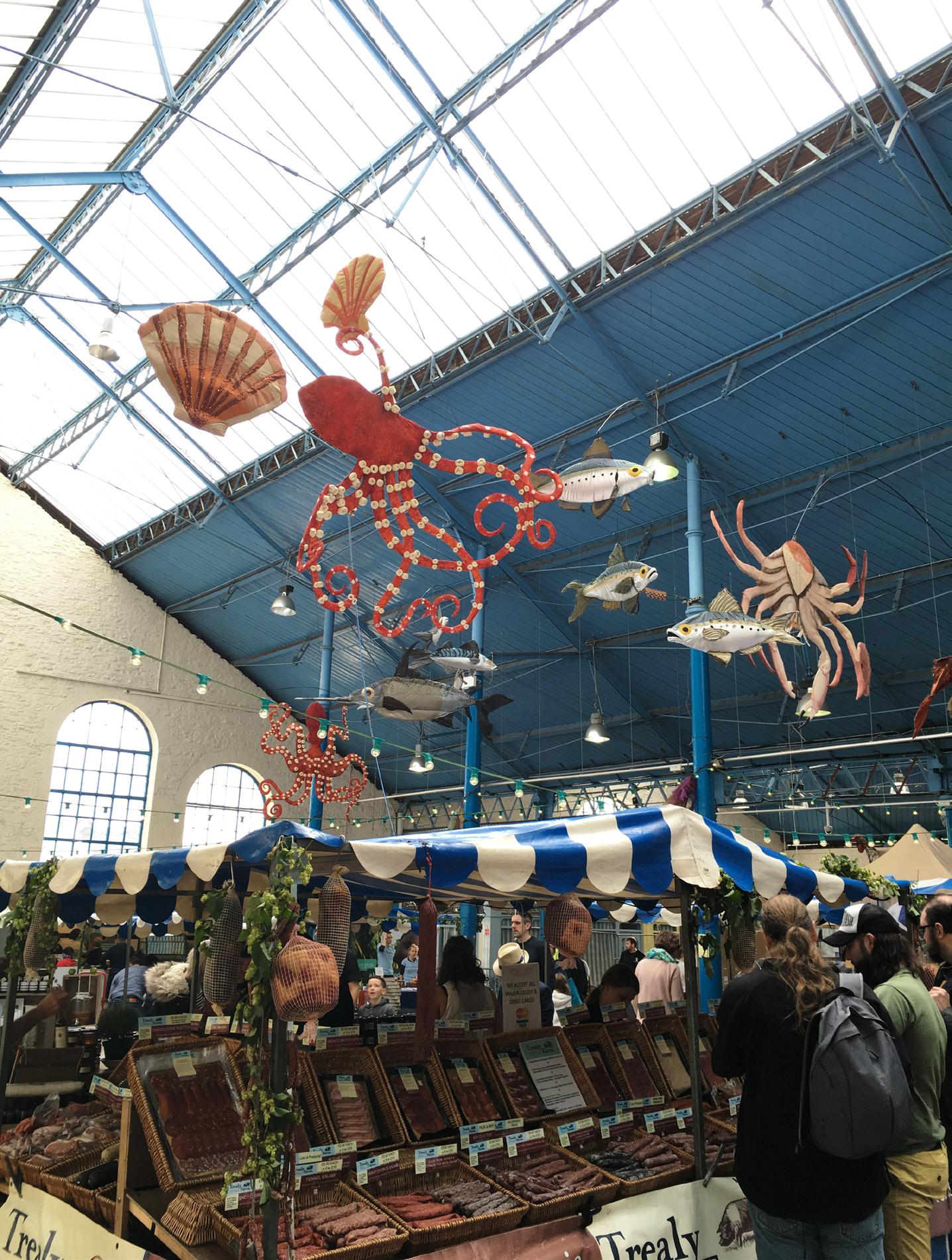
derelict. The Ormeau Road and Ballyhackamore, known more often as Ballysnackamore, are bohemian urban villages defined by independent restaurants and cafes. The vibrant Victorian era and restored St. George’s Market is home to Clandeboye cheese and global street food under one roof. Food NI, the region’s food promotion body, and Tourism NI have made provenance a place brand, and Northern Ireland’s 2024 Food Strategy Framework weaves food culture, health, and economic prosperity into a single vision.
A similar story plays out across the island. In Clonakilty, a black pudding made to a 19th Century recipe has helped give West Cork towns and villages a global reputation. From the oyster beds and salmon smokehouses of Connemara to the ice cream and cheese producers of Counties Tipperary and Down, despite being rural in nature, each is a chain of meaning that defines a sense of place, running from rocky shorelines to restaurant tables.
Part of what makes Ireland so good at this is that none of it was designed. The food identity
and sense of place it shapes grew from landscape, craft, and community, accumulated over generations rather than being crafted for a tourism strategy.
It helps that the physical fabric of so many of Ireland’s places still carries the imprint of food. Belfast’s Victorian market, its cobbled lanes, and its stubbornly independent producers and chefs are not backdrops; they’re the reason the food culture took root and keeps growing.
And at the heart of it all are the producers. Carolyn Steel, at last year’s Congress in Utrecht, put it simply: “If you value food, it is the single most powerful thing we can do to improve our places.” Ireland understands this instinctively. The dulse harvester and the cheesemaker are the food scene. Yet, even if they’re rurally based, they are urbanists precisely because their contribution to how we feel about and experience place far outweighs their scale.
Dulse tastes of a particular sea, at a particular latitude, harvested by particular hands. That is how food feeds urbanism. It is what great urbanism strives to enhance. The two have more in common that we sometimes allow.
Shane Quinn is Co-chair of the Academy of Urbanism and the Development Director of Belfast Buildings Trust.
Photo by K. Mitch Hodge via Unsplash
What else can food unlock?
Urban farming is often framed around yield and efficiency, but, argues Eike Sindlinger, the true value of food may lie in its ability to connect across different systems. By treating food as shared infrastructure we can create more resilient cities and landscapes.
The design world (architects in particular) get very excited about urban food production and the new technologies that are emerging to support it. The appeal is understandable – a dense, highly populated city that can grow part of its food demand locally would represent an incredible achievement. The objective being lower food miles and sustainable supplies of healthy food which are affordable for local people. And there are other environmental and social benefits in the mix like increasing local biodiversity and fostering community cohesion. There’s a clear almost utopian draw to this idea of a truly self-sustaining city although perhaps this is another example of the phenomenon of cities talking only to itself. There is an element too, of designers trying to convince themselves that food production could address many challenges that good design cannot resolve.
But as is sometimes the way when we ponder the future, the hopes and aspirations placed on urban farming can become a little unrealistic and the reality is more complex. Food is a low profit margin industry and while urban food production can deliver many benefits, it has to compete with higher profit margin industries for valuable land (or space) resources. Even if that was not the case, we would still need to justify growing food within a city that’s surrounded by rural areas and explain why it’s desirable to concentrate food production within already constrained urban areas. And beyond that, we need to ponder which foods we should even commit to growing in cities.
Reality on the ground
The viability of urban farming must be seen
through a local lens. Each city will have a different approach to developing urban farming solutions that are contextually relevant and sustainable, by reconciling the desire for local food with the most effective growing and distribution system it can actually support. And above all it is a matter of prioritising the desired outcomes.
So what goes into the priority setting process? If it’s not just commercial/market-led, how does food production take root in a city in a useful, scalable, significant way? How does it become a genuine contribution to the food culture and practice of a community?
The first decision is to determine where your desired outcome lies on a scale between creating community cohesion and delivering localised environmental benefits, and creating a profit and productivity maximising food business. Each approach could be valid, but the drivers and goals for each are very different. If you want to prioritise social and environmental benefits, targeting maximum yield and revenue should perhaps not be your primary concern. However, if you want to generate maximum revenue from food growing, you may be less keen on public access to your food production area to ensure you have control of growing and avoid issues with food hygiene and safety. Those two are not mutually exclusive. What is important is to understand where on the spectrum you want to end up.
The next question is about location and context – clarity here might also help with answering the first question. Singapore for example adopted the
ambitious “30x30” farming goal policy, to improve its domestic food security and resilience. Its stated goal was to produce 30% of the nutritional needs of the country in Singapore itself. The careful wording around “nutrition” allowed them to focus on producing protein and perishable vegetables rather than staples such as wheat.
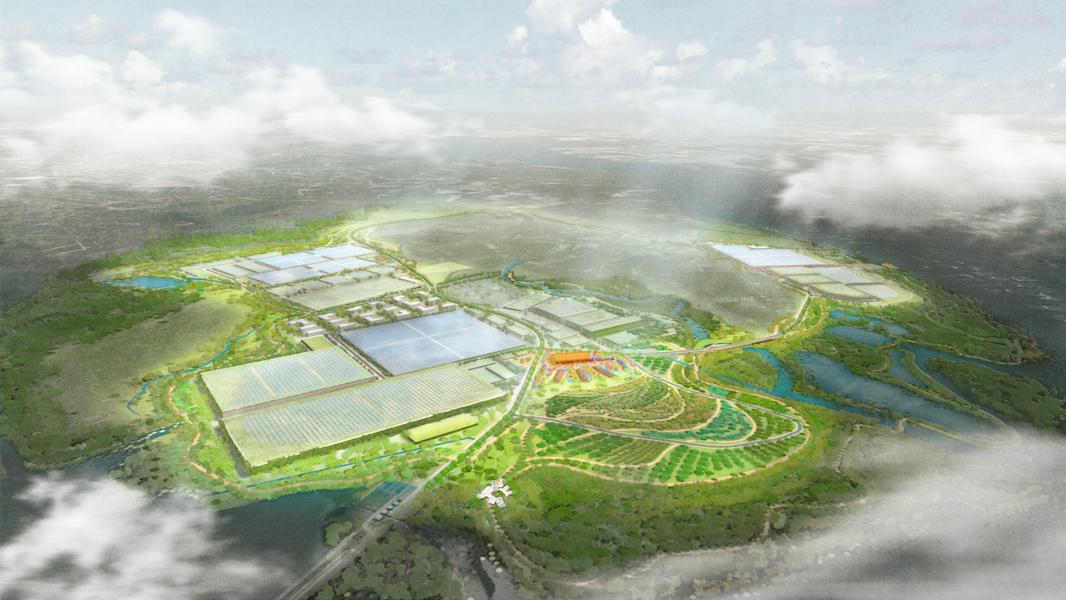
Given that Singapore is severely land constrained, aiming for high-tech, controlled environment farming is the obvious choice. In that context, the Singapore Food Agency asked my colleagues at Arup to help them to understand what a 390ha agri-tech hub designed to produce 22% of the country’s nutritional needs would look like. And we were able to help them understand the needs that modern high-tech farming has in terms of scale, energy demand, access but also skills and experience. And in the end, we developed a concept masterplan to illustrate how that could work and what that could look like. Even though the policy was revised in 2025 in light of global pressures, the policy has fostered a lot of innovation and the nation remains on a trajectory to increase food production locally.
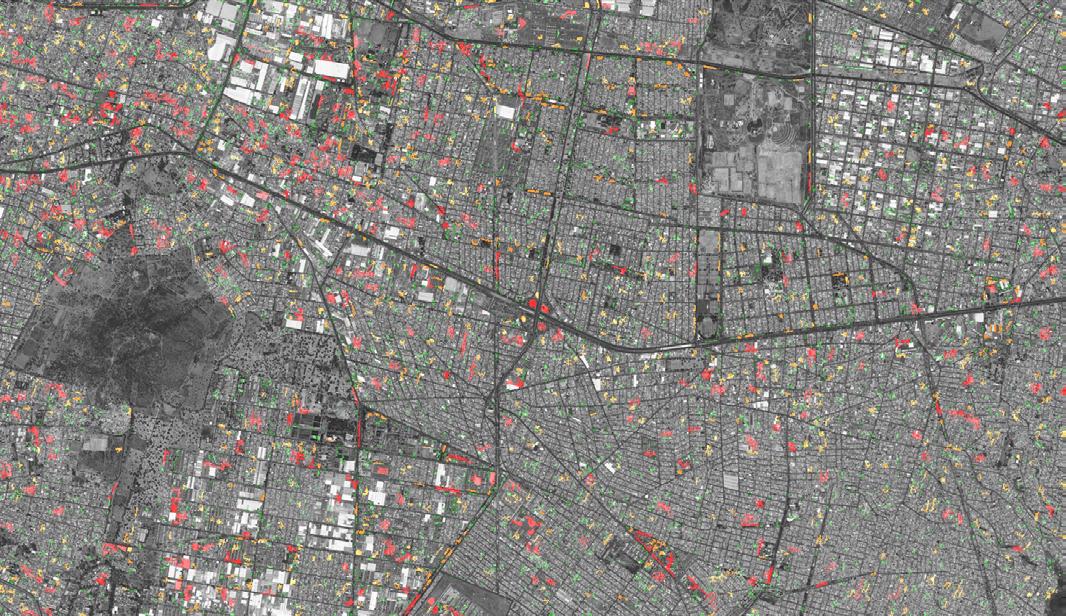
By contrast, Mexico City had a different focus around promoting urban food growing. Building on the social and community benefits of around 50 existing successful urban food gardens, they wanted to funnel investment into this type of green infrastructure to mitigate urban heat island effect, noise and air pollution as well as landslides. To attract finance, the city needed to demonstrate the potential for scalability of these environmental and community led initiatives which in turn would also provide nutritious healthy food for poorer communities. Working with Sedema, UNEP and Eco City Builders and using our terrain tool we were able to identify more than 2000 possible sites within a 35sqkm, densely populated and built-up sample area
around the Francisco Villa neighbourhood, thus proving the potential for scalability.
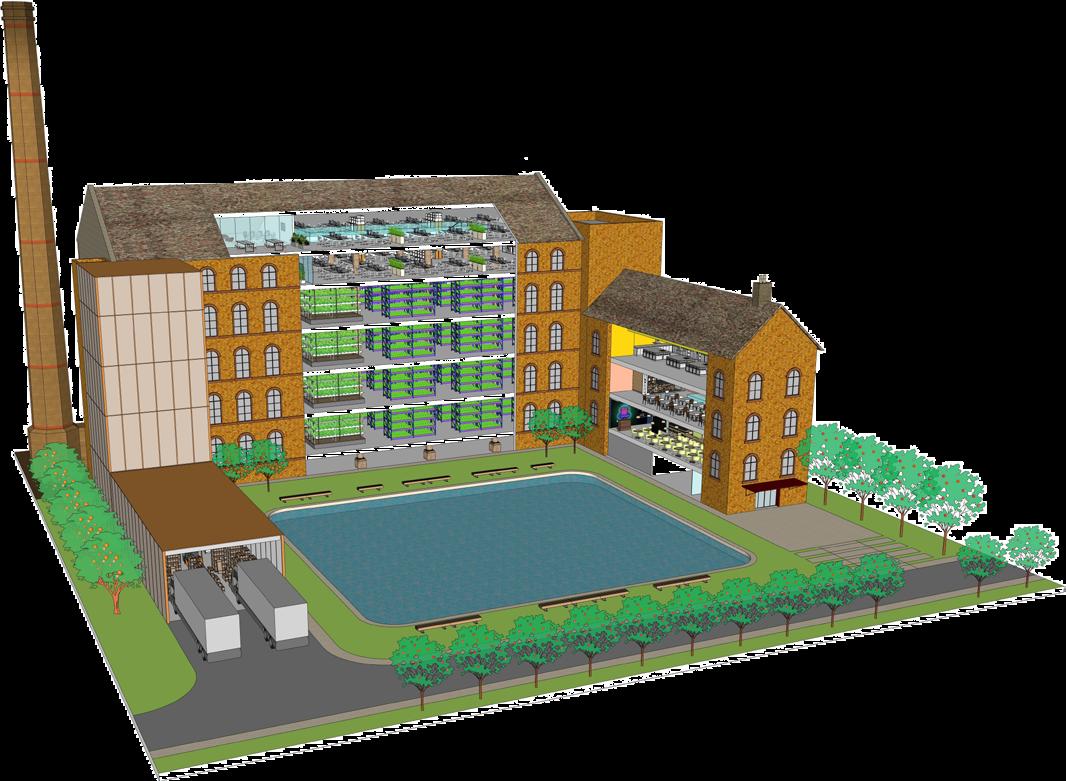
Bradford Council on the other hand had another goal through food. The council wanted to know if it was technically and financially feasible to retrofit a vertical farm into a disused listed mill building, fusing the city’s rich industrial legacy, diverse food culture and the agricultural landscapes it is surrounded by. While the technical feasibility was straightforward, answering the economic feasibility required a broader perspective.
Candidly, the economics were never going to stack up alone on the basis of growing food in the city instead of the surrounding countryside. Instead, we focused on a particular strength of food production: the ability to bring a diverse community together around a disused asset and in doing so, helping to regenerate a local area. Our investment case focused on building support among businesses and within the community, alongside identifying a niche for speciality crops that work well with the diverse food landscape of Bradford. We used these insights to develop and shape the business plan. Viewed through that wider lens, the elevated cost of retrofitting seemed manageable – by taking a broader
Three cities, each with utterly different goals underlying their interest in expanded urban food production. One thing these examples share is that their goal is to deliver more than just the most food at the lowest cost. Urban farming will always struggle to compete with food produced in rural areas on cost and quantity alone. Being clear about the additional value that growing in cities can deliver, is how you make a case that stacks up and will gain support.
Grow food, strengthen the community?
As urbanists and thinkers, why should we limit our thinking to the administrative boundaries of the city? What if our focus was less on the quantity of food that can be produced within a city, and was instead on how we can produce healthy food for cities at scale? In too many cities populations on lower incomes struggle with health issues driven by reliance on poor quality food – so a solution that addresses these issues and generates positive benefits for urban and rural communities alike could be really powerful.
Further, what if food growing is a constituent element of our urban infrastructure, in the same way we treat water, energy and transport? None of these are expected to be provided entirely within the boundaries of our cities. They always require deep, albeit often hidden, connections between the urban and the rural. I would argue that we are missing a trick by not making those connections more intentional and purposeful.
By considering food as an integral part of a wider environmental system, we can overcome the far too transactional approach to food we have today. Instead of simply trading food for money, city dwellers could support rural communities in their transition towards producing healthier food more sustainably through application of regenerative farming techniques which improve soil health, biodiversity and reduce dependency on non-renewable inputs such as fertilisers and potentially harmful ones like pesticides. Regenerative agricultural approaches and healthy soil support biodiversity, sequester carbon, produce less run-off and store more water, making the land more drought and flood resilient. Downstream this reduces flooding and improves water quality while also producing more nutrient dense, fresh food.
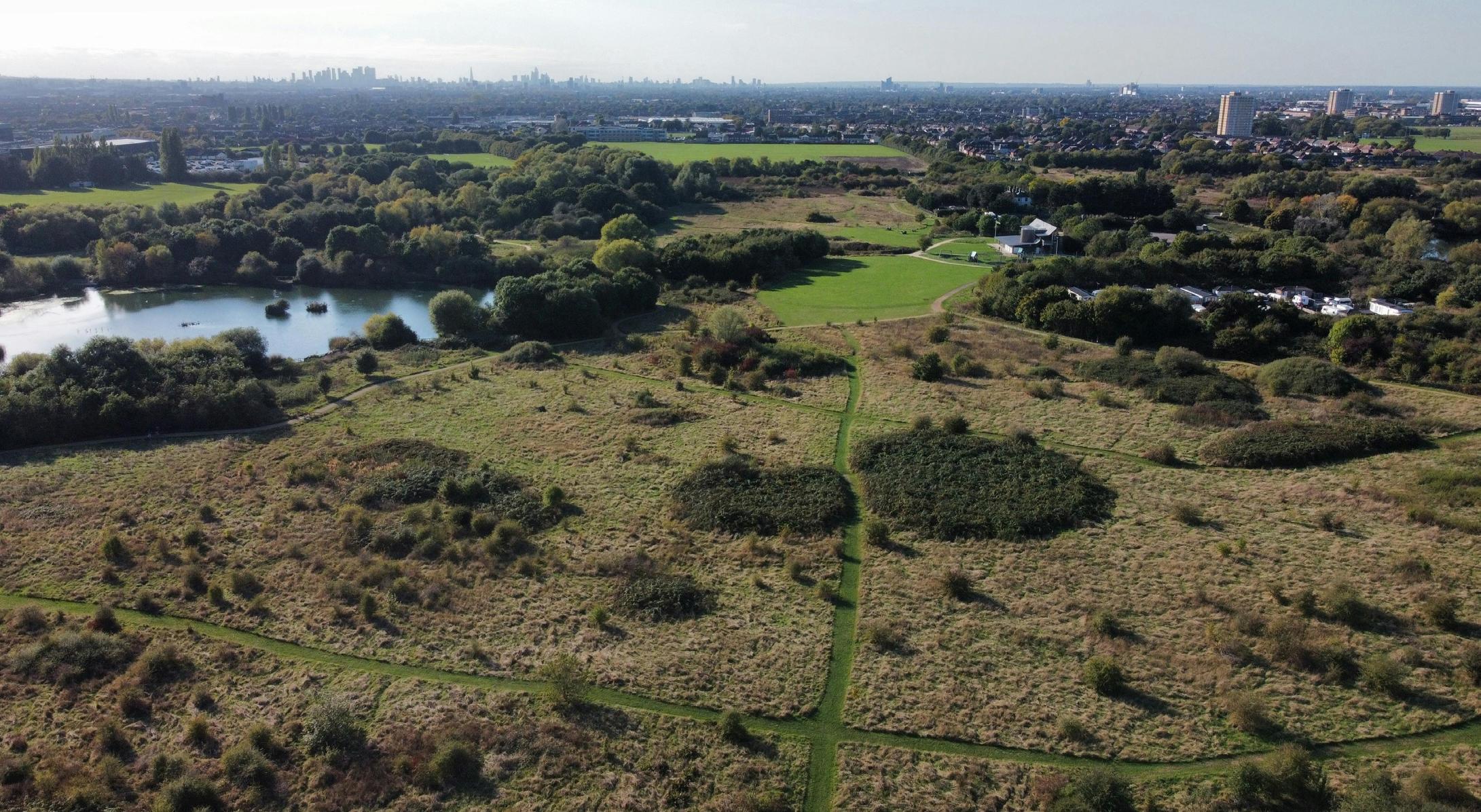
So how do you connect more enlightened food growing with these wider benefits? Recently at Arup we explored what connecting key challenges in the East of London to food growing in nearby Essex and Hertfordshire could deliver, for both city and countryside, using the river Lea and its catchment as the geographic connection. In London, there are acute pressures to build more housing in areas that are at high risk of flooding, such as the Lea Valley. Additionally, building new homes will create carbon emissions and potentially negative impacts on biodiversity. So, this is where a regenerative approach to farming can help: with healthy soils in the
catchment soaking up more of heavy rainfalls, flooding is reduced. By sequestering carbon, some of the construction emissions might be absorbed. And by increasing biodiversity, potential adverse impacts of land use change on biodiversity could be mitigated. What’s more, the water running through the new communities in the Lea Valley would be cleaner, the food from the farms being sold in London would be healthier and could be produced more sustainably.
To realise these benefits would require a trading mechanism where those who benefit (i.e the urban areas) could share the value with those who help create them (the rural communities) to establish a mutually beneficial relationship. It would require an integrated, systems-thinking approach to catchment management, credit trading and the creation of a marketplace. Examples for parts of this market exist globally in the form of stormwater credit trading in the US, the Somerset Nutrient Market or landscape enterprise networks in Cumbria.
Food can bring together urban and rural communities. Actions that build a common understanding (and stake) in the way that the food we eat is produced and distributed, the more rural and urban populations could overcome their divisions or misunderstandings – and recognise that ultimately we are part of one single community. So, our role as designers and planners is to encourage this reconnection between cities and the countryside, by fully embracing the beautiful and complex world of food growing. When we identify the right mix of urban, peri-urban and rural farming we will be able to deliver better outcomes for both urban and rural communities at last.
Eike Sindlinger trained architect and urban designer and leads Arup’s global food and agriculture systems practice
ArtPlace
Every Plate a Sun
Aisha Taj
Every plate a sun every city a solar system of steaming stars every soul circling desire paths of food planet me, planet you flung by hunger caught by a table spun on a detour pulled by a queue that wasn’t there an hour ago somewhere on a road only known by nose somewhere in a kitchen with recipes hand-written somewhere at a food hall where your name means the usual somewhere on a street with a table for six + one more sharing here with there and there with here laughter tossed in a bowl
we eat star after star powering up and down and up planet me, planet you orbiting the same samosa as if someone had planned it
Aisha Taj is a planner and poet based in London, where she regularly hosts poetry nights. Her work explores the connections between community, place and environment. Through poetry, she creates space for forms of expression often lost within formal consultation processes. She holds an MSc in International Planning from UCL.
Background photo by Victoria Shes on Unsplash
Gordon Cullen’s Townscape in USA Book review
Many lost masterpieces are being rediscovered and restored to the public. The films that comprise Elvis Presley in Concert 2026 were stored and lost in a Kansas salt mine for 50 years. The David Bowie film You’re Not Alone is just released and uses archive pieces lost in his archive for 50 years.
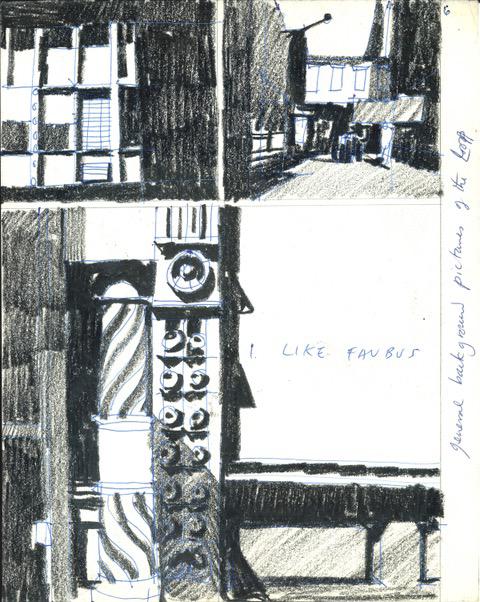
Such a rediscovery has now happened to Gordon Cullen, 1914 -1994. He was a key figure in Urban design thinking as an architect, urban designer, illustrator, and editor of the Architectural Review. He inspired the Townscape movement in the 1950s and now we have renewed access to
his brilliant mind.
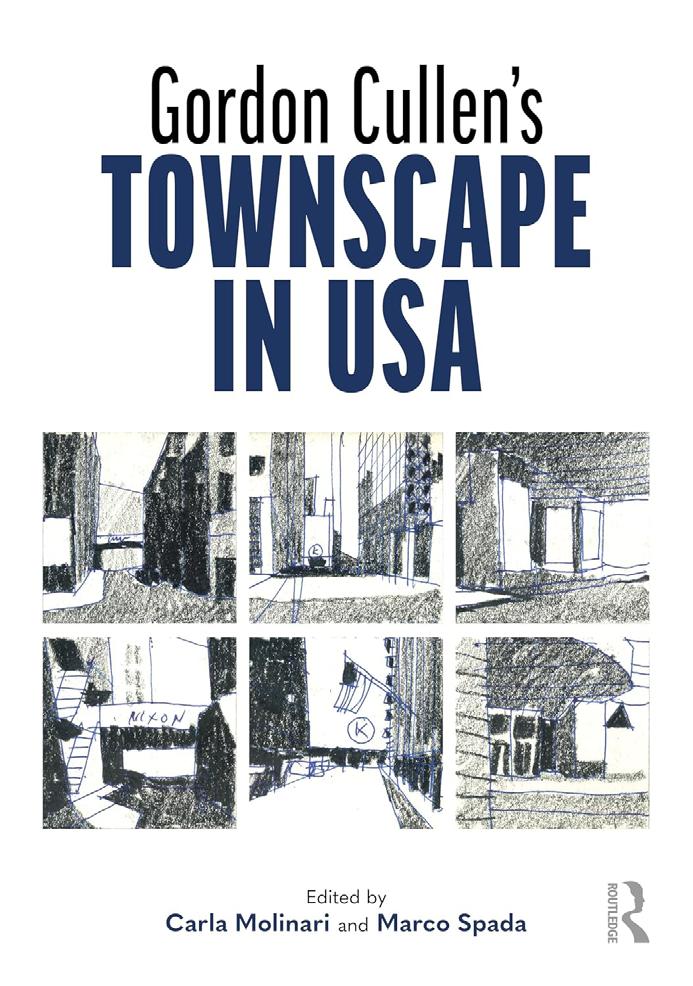
Carla Molinari of Anglia Ruskin University and Marco Spada of University of Suffolk were immersed in academic research at the Gordon Cullen Archive at University of Westminster five years ago. This Archive contains 118 boxes of his life’s work and they were surprised to find that four boxes contained a lost manuscript called The Urgent West, Townscape in USA. They have now brought together the draft book, photographs, and a stunning collection of Cullen’s sketches along with footnotes, bibliography and four essays. This is an exciting mix of rigorous research with passionate observations and beautiful sketches. This
confirms Cullen’s position as an urban design theorist, writer, and practitioner. In current urban design there are many people shouting for attention on many channels. Cullen shows here how urban sketches and observations have a quiet power.
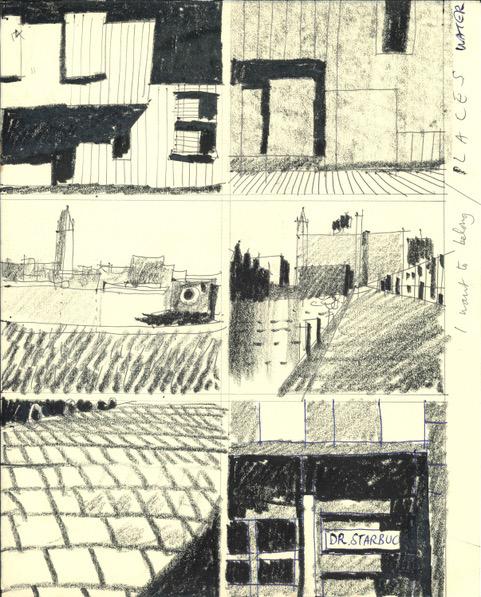
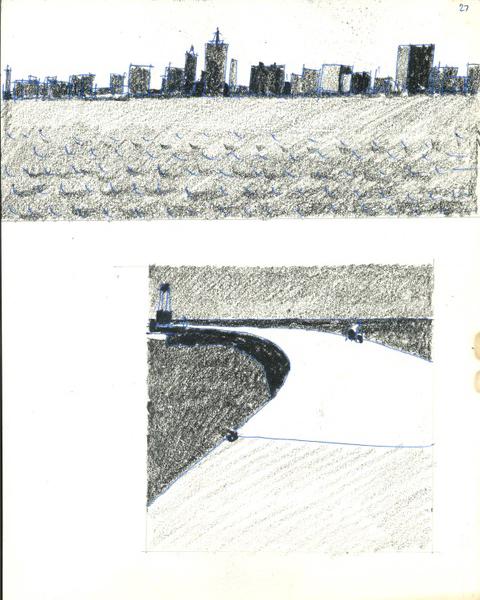
In April to June 1960 Cullen spent six weeks in America. He visited New York, Philadelphia, Pittsburgh, Chicago, Washington, and Boston and produced a cascade of text, photographs, and Townscape sketches. We are lucky to read it for the first time alongside four expert essays which explain and enhance his opinions. Molinari and Spada comment that it is “a treasure trove of unfulfilled visions; we believe that designers need this vision even more today”.
Today’s readers may feel that some of Cullen’s analysis of these six cities is a little naïve but travel to the USA was novel in 1960. I believe this give the text a raw power as he is describing American modern urban planning for the first time to most Europeans. He is incisive, acidic, and uncompromising which makes for an enjoyable read. For example, his dissection of why
the relentless New York grid iron planning produces sterile streets with no sense of place is controversial but rigorous.
The idea of planning for people is a thread through all his thinking and in 1960 this was a radical thought because form over function and traffic planning were dominant. The criticism always ends with an optimistic note showing how creation of a human centred places could improve the issues. This pattern of criticism followed by a vision is very compelling. His introduction says he is “a merchant of ideas …who discloses the idea of a city which has depths of awareness, in a layered construction which stands up to the restless desire and movement of people.” This book shows and explains this layering of ideas.
He is scathing about the Pierre Charles L’Enfant masterplan of 1791 in Washington but accepts that as it was never completely built it could be improved now. “The tiny Beaux Arts candle that flickered on the impenetrable darkness of the marshy Potomac has gone out. Here is a new light”.
Even when he is being overly harsh there is always his strong
belief that putting people first in the design process can improve the situation. You may not agree with Cullen’s analysis, but the sketches shine through as excellent examples of analytical work. It would be great to know the captions that Cullen would have on the sketches but only a few conjectures are made in the footnotes as that final addition to the manuscript was never made.
This book shows how the right people can rediscover lost material and then enhance our understanding of it by clear commentary, editing and explanation.
Alistair Barr is an Academician and former Board Director at the AoU. He was a Senior Lecturer at ARU until 2025.
Gordon Cullen’s Townscape in USA is edited by Carla Molinari and Marco Spada and is published by Routledge. It is available for £46.99 at routledge.com/Gordon-CullensTownscape-in-USA/MolinariSpada/p/book/9781032876184
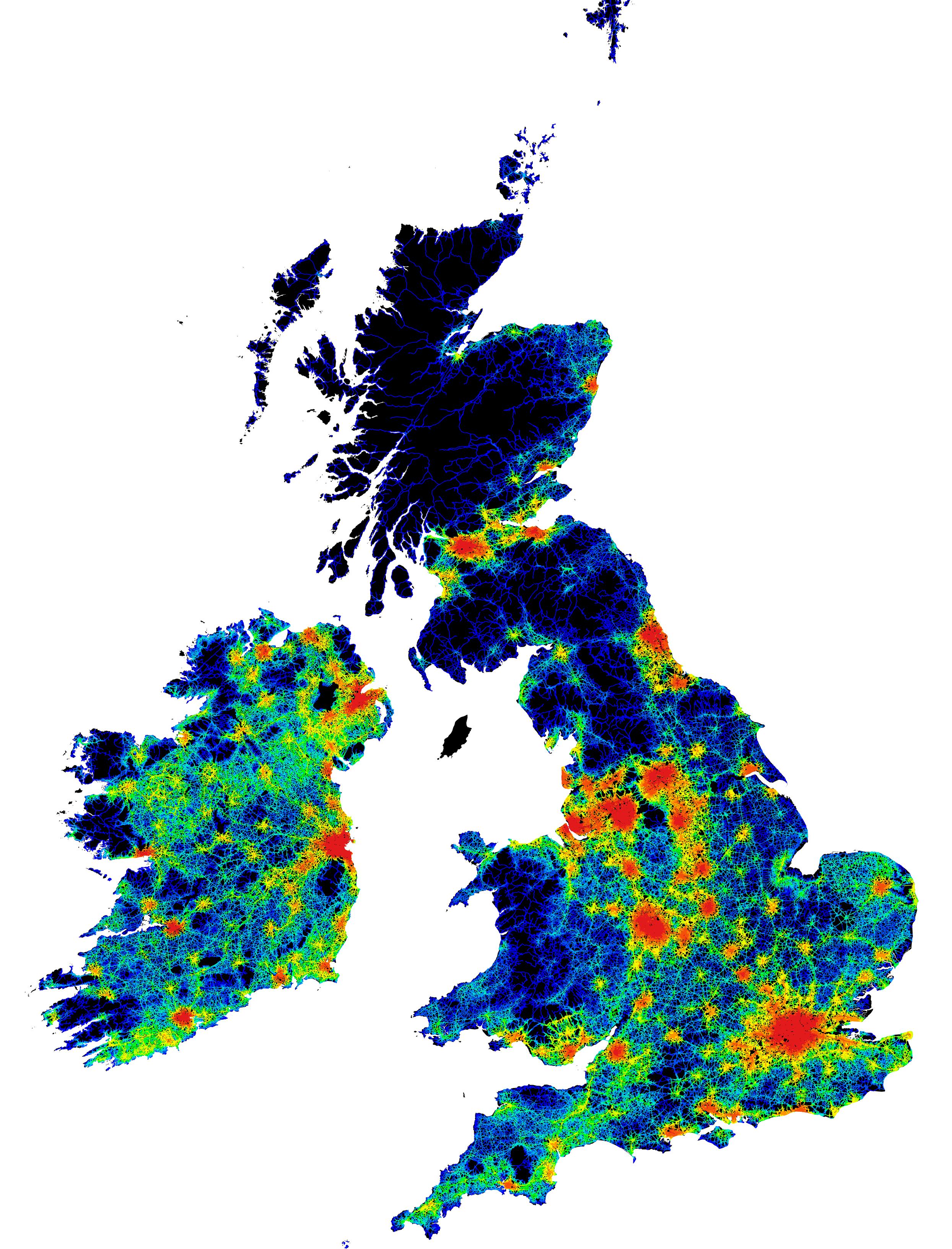
Urban Model of the United Kingdom & Ireland Large urban modelling allows analysis of spatial inequalities providing insights that influence national and regional policy on issues including mobility, land value, health and carbon.