


Undergraduate students can vote from April 22 to 26 on the ASUCD elections website
BY VINCE BASADA, JORDAN POLTORAK, VILLEGAS AND LILY FREEMAN campus@theaggie.orgThe following candidates are running in ASUCD’s 2024 Spring Elections for official positions in student government.
Four out of 15 Senate candidates, the sole International Student Representative candidate, the sole ASUCD President and Internal Vice President ticket, the sole External Affairs Vice President candidate and the sole Transfer Student Representative candidate all did not respond to The California Aggie’s request for an interview.
Elections take place from Monday, April 22 at 8 a.m. to Friday, April 26 at 8 p.m. Students can vote online on the ASUCD elections website.
Senate: Andrea Guillen (she/her)
a third-year political science, public service major, is running for Senate as an independent. As a transfer student, Guillen will work toward creating an inviting community for transfer students. Specifically, she wants to help student organizations become registered as a club, believing the current process to be too difficult. She also wants to make menstrual products more accessible at the university as well as to continue work on legislation that has already been passed toward having more gender-neutral bathrooms. Student safety is also a large part of Guillen’s platform, where she wants to work with the Davis City Council to fix bike lanes and create shade at bus stops. Lastly, she is looking to make the ASUCD Senate more transparent and wellknown among the student body, especially for transfer students. Guillen has served on the External Affairs Commission this past year, which she says has given her the experience to serve as a senator.
Amrita Julka (she/her)
a first-year political science, public service major, is running for senator with the ‘Bitch’ slate, a slate dedicated to having more women in positions of power within ASUCD. If elected, Julka has numerous plans for her term, including working with the UC Davis Police Department to better put out WarnMe emails to students, as well as working to “better protect the identities of victims on campus.” She also wants to address the rising costs of UC SHIP insurance which will be increasing 30% by the next academic year, according to Julka. Julka wants
to introduce better services for students with children and increase workshops for first-generation, undocumented and international students regarding scholarships. Julka has previous experience working with the Student Health and Wellness Committee for the past year. Her prior projects include working to facilitate Wellness Week and restocking condoms in the second floor of the Memorial Union.
Benjamin Bartel (he/him) , a second-year economics major, is running for Senate as an independent. While never being associated with ASUCD student government, he has been a Unitrans driver for the past year and recently got promoted to route supervisor. As a senator, Bartel strives to have not only a Unitrans representative in the Senate, but he also hopes to provide a voice on budgeting. Bartel strives to bridge the gap between the Senate and Unitrans, and he specifically wants to make sure that “no one is left behind at a bus stop.” Bartel said that, as a supervisor and driver for Unitrans, he has the proper skills to be an ASUCD senator that the people can trust. On the Senate table, he will make sure there is a better bus schedule and budget if he is elected.
Dhilena Wickramas (she/they) a second-year sociology major, is running with the ‘Bitch’ slate. Wickramas’ platforms include: expanding sexual health resources and implementing preventative measures against sexual violence; advocating for underrepresented groups and protecting student workers and activists. She plans to increase the number of Safe Ride vans and expand sexual health resources provided by the university to be closer to residence halls. They also plan to work with cultural Registered Student Organizations (RSOs) and with the Ethnic and Cultural Affairs Commission to plan events that promote cultural expression and community. Wickramas also plans to highlight neurodivergent and disabled communities, such as through working with the Bike Barn to provide mobility aids. Wickramas wants voters to know that she wants to advocate for those who do not feel represented and bring more transparency to ASUCD. They are currently a member of the ASUCD Sexual Assault Awareness and Advocacy Committee (SAAAC) and a staffer for current Senator Chasa Monica, which she believes has given her the experience needed to be a senator.
Ezra Rubin (he/him), a first-year undeclared major, is running with the
‘Empower’ slate. His platform includes uplifting student voices, improving lighting on campus alongside the city of Davis and making the student housing more available and accommodating. Rubin believes diversity is one of the campus’ greatest assets and wants to make sure that all voices are accounted for. He intends to plan cross-cultural events that lead to dialogue and bring communities together. Rubin plans to act as an intermediary between students and the administration to make them aware of student concerns around safety and lighting on campus. Rubin also plans to advocate for students’ needs at city council meetings. Lastly, he wants to work with organizations like Housing Advocacy for Undergraduate Students (HAUS) to advocate for the development of new housing, which would increase housing availability and reduce prices. Rubin feels at home in Davis, and because of this, he wants to make sure this sense of home is brought to all students on campus. He wants students to feel safe, comfortable, heard and at peace.
Nanki Kaur (she/her), a secondyear biomedical engineering major, is running on the ‘Five Rivers Party’ slate. Her first goal is to work toward the academic success of students by securing more 24-hour spaces for studying and by restarting the Library Committee. Her second goal is to provide specialized mental health and academic support based on cultural and religious identity. Kaur wants to shift to a more community-centered approach toward mental health which addresses a person’s cultural background. This approach would destigmatize mental health issues and teach all students and communities that it’s okay to get help. Her third goal is to increase representation of women across campus as well as the Senate. She wants to increase access to women’s resources on campus along with more access to resources for sexual violence.
currently serves their needs, and if elected, he wants to make sure that the Senate is solely serving the students. With this, he says that he will improve Senate outreach and make ASUCD more student-friendly. As a political organizer who has worked with the Revolutionary Student Union, Mantramurti believes that he can serve as a voice for struggling students and minority groups on campus as a senator.
Student Advocate:
Ojas Batra (he/him), a second-year managerial economics major, is running for the Senate as an independent. His campaign platform revolves around three issues: mental health, parking and entertainment. He aims to advocate for students’ mental health, improving the accessibility of parking for students and providing an enriching college experience that combines entertainment and academic rigor. Batra brings nine years of leadership and managerial experience from working in finance, marketing and education, as well as being on the board of one of the biggest business clubs on campus. Lastly, he asks students to vote. If you resonate with a candidate’s values, vote — it only takes 20 seconds.
Mia Cohen (she/her), a second-year international relations major, is running to be a senator with the ‘Empower’ slate. Her platform is three-pronged, where first, she wants to promote the wellbeing of all students by raising awareness for resources that support a healthy mind and body. Second, she wants to increase the interconnectedness of the student body, specifically bridging the gap between Greek life and ASUCD. Lastly, Cohen is looking to improve resources that make academic life easier for students regardless of their learning abilities. She is specifically looking to make tutoring services more accessible and efficient for students, and she is also passionate about making menstrual products free and accessible on campus. Cohen believes that a face-to-face connection is the best way to reach students, and she wants to encourage all students to share their beliefs and opinions. She said that her leadership within her sorority and on the board of Chabad at UC Davis has given her the necessary experience to become a senator.
Rohit Mantramurti (he/him) , a second-year history major, is running as an independent. Looking to be a progressive voice on the Senate table, Mantramurti’s platform both prioritizes services for struggling students and better represents marginalized communities on campus. He specifically wants to promote access to services such as The Pantry, Aggie Reuse and Housing Advising for Undergraduate Students, improve the current Safe Ride program to have more vans and work with clubs on campus to make sure that they are able to both register and receive adequate funding. Mantramurti recognizes that most students do not feel that the Senate
Noblejot Singh (he/him), a thirdyear political science — public service major, is running with the ‘Five Rivers Party’ slate. His platform, NOW, includes three main goals: “Nothing is negligible,” which seeks to advocate for basic necessities, namely bike lights, awareness of rent negotiation and laundry supplies; “Open the Outdoors,” which seeks to promote the awareness and education of safety both on and off-campus and “We are Davis,” which seeks to advocate for initiatives to connect student organizations and faculty to build community. Singh has experience interacting with different offices within ASUCD, as well as participating in local, district, state and federal-level government, which has given him considerable experience with materializing policies and people’s ideas.
Audrey Jacobs (they/ them) , a second-year Asian American studies and gender, sexuality and women’s studies double major, is running as an independent. If elected, Jacobs has several main priorities for their term. First, addressing the disproportionate amount of international students having cases with the Office of Student Support and Judicial Affairs. Second, they are looking to address the rise of AI usage and policies for students on campus, such as having professors be required to state their AI policy on syllabuses.
Third, Jacobs wants to help students navigate the resources and accommodations available with the Student Disability Center and provide more outreach to underrepresented communities on campus. Jacobs has previously worked for the Office of the Student Advocate as the director of publicity and outreach and believes this experience, along with their work with the Mental Health Initiative, has prepared them to represent the students on campus as the Student Advocate.
Nur Ambaw (he/him), a second-year political science and religious studies double major, is running for Student Advocate as an independent. He has served as senator this past academic year, during which he has not closely worked with the Student Advocate Office but is increasing his efforts to do so now. He wishes to increase international, transfer and minority student representation. International students make up roughly 37% of the Office of Student Support and Judicial Affairs cases while being 20% of the student population. Ambaw seeks to lower this statistic by increasing international student-specific services, as he worries there is inequitable treatment occurring. He also wishes to increase minority student retention, saying that many students drop out due to a lack of minority-specific resources available to them.
With this, he wants to address ASUCD bylaws and systems in order to create a more equitable ASUCD.
If TGIF is not passed, they will be forced to dissolve
BY MADISON PETERS campus@theaggie.orgThe Green Initiative Fund (TGIF) is up for renewal on the Spring Election ballot for the fourth and final time. If they do not succeed this election cycle, all of TGIF’s funds will be exhausted, and they will be forced to dissolve if they cannot secure an alternate source of funding, according to the TGIF Renewal Referendum. TGIF’s mission statement states that they strive to promote sustainable development and innovation by providing the necessary funds to various sustainability projects run by the UC Davis community. Annie Kanjamala, TGIF committee member and environmental science and management major, described how the program works.
“TGIF is a sustainability grant program, so if [undergraduate] students had any sustainable events, projects or research they want to do, they could come to us and we can grant them up
to $20k for their project,” Kanjamala said. “It is [about] sustainability in the broad sense. It [relates] to the 17 UN Sustainable Development Goals, so [we fund projects] about environmental sustainability but also food security, biodiversity and education for all.”
In addition to being a resource for undergraduate students, TGIF grants are also open to faculty, staff and graduate students, so long as the project directly involves and benefits undergraduate students.
Since 2016, TGIF has awarded over $850,000 to more than 100 prominent projects at UC Davis including the Sheep Mowers, Arboretum Waterway, Texas Trees, Freedges and Aggie House, according to the TGIF project database.
The TGIF Renewal Referendum states that in order for the program to be reinstated, it needs 20% student voter participation and a 60% approval rating.
In a recent presentation that TGIF members gave to campus leadership, it was revealed that in all three previous attempts to pass TGIF, the popular vote surpassed 60%, but has failed to achieve
the 20% voter participation.
The student voting participation rate has been as low as 5.8% in past years and is the main hurdle to TGIF being passed, according to Carla Fresquez, interim director of Sustainability and TGIF grant program manager.
Fresquez delved into the disparity surrounding the 20% student voter participation requirement by revealing that all other non-student fee-based items on the election ballot, such as ASUCD student government elections, don’t adhere to this minimum and can have as low as 5 voters to be passed.
Fresquez spoke on the struggles of student voting and the need for more support from campus leadership in getting the voting rates up.
“When you are working in a system that does not share the same goals as you, it’s really hard to get things done,” Fresquez said. “We’ve gotten so much support from ASUCD and others. They love TGIF [and] it’s really hard to find any faults with this program, but we can’t get voter participation rates increased without significant campus
support.” TGIF has been successfully passed at all of the UC campuses except UC Davis, according to Daphne Crother, TGIF committee member and political science major. Additionally, Crother revealed that UC Davis has the lowest student body voter participation rate out of all of the UCs.
If passed, there will be a $3.50 student quarterly fee starting fall 2024 which is established by a W16 student referendum, according to the TGIF financial analysis. Due to an increasing demand for sustainability research funding, this fee will be increased by 50 cents per year, for 10 years after it is passed with a 25% return for student aid.
votes on the ASUCD elections website from the morning of April 22 to the evening of April 26.
If TGIF passes, Fresquez says that possible future plans include collaborating with the Undergraduate Research Center and the Office of Research to open more opportunities for grant receivers, although none of these ideas have been finalized or discussed in detail. Students will be able to cast their READ
The benefits of outdoor study spaces

Students, staff and faculty can participate and log activities that reduce their carbon footprint
BY JORDAN POLTORAK campus@theaggie.orgThe Cool Campus Challenge, organized by ASUCD’s Environmental Policy and Planning Commission (EPPC) started on April 8 and will take place until April 29. Students, staff and faculty can all participate in logging activities that lower their carbon footprint on the website for the challenge. The challenge was created in 2013 with the goal of carbon neutrality across the entire University of California system in 2025.
Kelly Abey, a fourth-year environmental policy analysis and planning and sustainable environmental design double major as well as EPPC chairperson, discussed the importance of this challenge.
“This shows students that it’s easy to take actions to improve your carbon footprint,” Abey said. “Things like walking or biking to school are things that we don’t even realize improve our carbon footprint.”
The website allows participants to sign up as individuals or in groups.

The top ten winners will receive prizes. “It’s like a social media platform where you can log your actions for the day,” Daphne Crother, a fourthyear political science major and vice chairperson of the EPPC, said . “Then, you get points and it shows you how much CO2 you have saved.”
The challenge was originally designed to see which of the 10 UCs was the most sustainable. However, it has evolved to an individual campus competition.
“We want to encourage students to take sustainable actions in the month of April, but also take them and apply them to life year-round,” Crother said. “All the small things you do can add up.”
The website lists the actions users can take and the amount of CO2 they would save from the action. Their Instagram page states, it is a “studentled movement to fight climate change through individual action.”
“[The challenge] allows you to see how much of a difference you can make with your individual actions,” Abey said.
Abey and Crother wanted to emphasize the importance of individual actions but also the influence of large corporations.
“As much as students can do, it’s also important to remember the impact that these large fossil fuel companies have as well,” Crother said.
To take part in the challenge, students can go to the Cool Campus website.

The purpose of the event was to empower survivors during Sexual Assault Awareness and Prevention Month
BY RAGAVI GOYAL campus@theaggie.orgThe UC Davis Center for Resources, Advocacy and Education (CARE) organized their annual Take Back the Night event on April 9 as part of the Sexual Assault Awareness and Pevention Month events series. The event aimed to create a space that supported survivors and promoted action.
“It was a way for folks to come together in particular, around an evening event to demand safe environments, environments free of sexual violence and sexual assault,” Sarah Meredith, CARE director, said.
Take Back the Night is an internationally celebrated event that has been around since the 1970s with the purpose of ending and raising advocacy for sexual assault and violence.
The event started with the speech of the keynote speaker, Cecily Roberts, the director of the Women’s Resource and Research Center (WRRC) of UC Davis. She held space for all of the survivors in the room and commemorated the collective efforts to dismantle systemic oppression.
This was followed by a UC Davis master’s student, who shared their experience with pelvic floor physical therapy as a part of their healing journey.
Next was a presentation on the resource of physical therapy, specifically pelvic floor therapy, by an individual from the physical therapy team at the Student Health and Wellness Center.
Vice President Aarushi Raghunathan called the April 18 meeting to order at 6:18 p.m. After roll call, she read the UC Davis Land Acknowledgement.
Next, the table confirmed three new commissioners for the Gender and Sexuality Commission.
The table then moved on to discussing new legislation.
This started with Senator Jonathan Ng, on behalf of Senator Binh Do, introducing SB #83, where the bill was moved to treat the bill like an emergency. Specifically, the bill would give the necessary funds to provide food accommodations for volunteers setting and cleaning up Lawntopia.
“I bring this forward as an emergency bill because it needs to be passed now if we want to have the proper budget for the entirety of the event,” Ng said.
The bill was unanimously passed. After this, the consent calendar was passed with no objections, after which the Senate moved on to considering and revising the Memorandum of Understanding (MOU). ASUCD Controller Allyson Francisco explained the significance of revising this.
“We must approve and revise this to cut off the problem now, and consider inflation and the natural level of growth within the company,” Francisco said. “I strongly urge [that] we do this as it’s the smart financial decision in the long run.”
The purpose of an MOU, according to an ASUCD document, is to create a sustainable increase to the ASUCD operating budget in the coming years to better support ASUCD operations and to increase paid student positions and minimum wage over time.
After a couple of questions about the MOU and light discourse to understand the budgetary concerns, a vote was conducted on approving MOU revisions, and it was passed.
The Senate then moved to consider old legislation. First, SB #80, which would amend section 2401 of the ASUCD bylaws to set the general reserves annual replenishment amount to 15% of the annual operating budget from the three-month operation budget, passed unanimously.
Next, SB #81, which would reorganize the composition of the interviewing committee for interim senators, was deliberated on.
“The goal of this bill is to get more people appointing interim senators that aren’t senators,” Senator Curtis Chen, the author of the bill, explained.
“I feel as if it’s wrong for senators to choose their successors”
“We both took an oath and were voted in because of our platforms.” Senator Katia Bouali responded. “It’s only fair for us to have a say in who takes our spots.”
After much deliberation and discourse on the topic, SB #81 eventually passed.
With the final bill voted upon, the Senate moved into open discussion.
Raghunathan started by asking about the availability of the senators for a meeting with Chancellor Gary May, and discussed if that would be something that the entire group still wanted to do.
“I would prefer for him to not be here at all but if he shows up, I am a gracious host,” Senator Yara Kadaan said.
After the public forum, the meeting minutes for the previous two meetings were confirmed, and Raghunathan adjourned the meeting at 8:44 p.m. with no objections.

Housing crises in the nine undergraduate UC campuses make affordable housing for all hard to come by
BY SABRINA FIGEUROA features@theaggie.orgThe University of California is known to be among one of the top educational and research institutions in the United States, with nine undergraduate campuses all across the state. In 2023, the nine campuses were ranked within the top 40 public universities in the United States, with UC Berkeley and UCLA tying for the best public university in the country and UC Davis and UC San Diego tying for the 6th best.
College rankings by the U.S. News & World Report have given the UC schools tremendous prestige, and on top of that, these campuses are located near popular beaches or majestic redwoods that give these schools more appeal. Even UC Davis’ small town charm has been used to market the university to students, coining the phrase, “California’s College Town.”
But inside the beautiful scenery of these campuses roams a silent problem: gentrification. Gentrification occurs when there is an influx of both capital and people, according to the Urban Displacement Project — a research initiative at UC Berkeley in collaboration with UCLA. Thus, it can cause increased housing prices, crises and urban displacement of lowincome residents.
So, do the UCs contribute to gentrification around the areas they are placed in?
“It’s been my experience as a pelvic floor physical therapist to witness how empowering rebuilding these connections can be,” the physical therapist said. “Reclaiming our body’s ability to control [pelvic floor] muscles, their function in our sexual experiences and their function in our pleasure.”

This was followed by several spoken word poems by from several different members of CARE which focused on uplifting survivors and calling attention to sexual violence.
This was succeeded by a dance performance piece by a different UC Davis student. Then, a story of a human trafficking survivor was shared.
This was followed by a sharing of experiences around identity-based shame, bleeding into an unseen vulnerability for sexual violence by a different UC Davis student.
The event was concluded by a grounding exercise to ease out the heaviness of the event.
“Feel the Earth’s energy nurturing and supporting and loving you, providing solid foundation, tapping into the Earth’s reservoir of home and peace and bringing it back into our bodies,” a speaker at the event concluded.
Since UCs are prestigious and create a great amount of economic mobility for their students, people — and thus, capital — are constantly moving to these cities to attend these universities and benefit from their resources. For example, the UCs hit a record-breaking number of enrolled students in 2023 after the California Department of Finance urged UC to enroll more full-time students who are residents.
More students relocating to the area means more demand for housing and consequently, more is built.
Shane Phillips, an urban planner at UCLA, explained that areas that build more housing tend to be more affordable while areas that build less housing tend to be less affordable, following the concept of supply and demand.
to most Davis residents, a UC Davis housing report found that 16.6% of renter households experience excessive housing cost burdens, while another 39.4% experience severe housing cost burdens.
On top of that, when the cheapest housing option in Davis for the year 2023 was compared to the cheapest housing option in 2010, it was found that what a “student could once afford with the same amount of money had shrunk drastically.”
In an article for CalMatters, Alexandra Olvera, a 2021 UC Davis first-generation and Latinx alum, described her story of struggling due to Davis’ overpriced housing after her father was deported and her mother had lost her job.
“[My family’s] income dropped considerably, and I suffered unstable housing in California my first two years in college,” Olvera stated. “Even though I worked as hard as I could to pay for housing, I was no longer able
being built in Oak Park, Sacramento under the claims that it would contribute to gentrification. The lawsuit was later dropped, but unfortunately Aggie Square did and still does contribute to urban displacement in the Oak Park neighborhood.
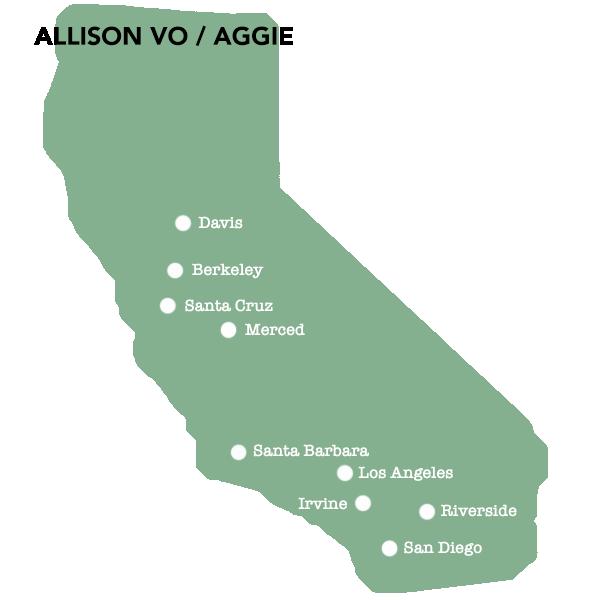
This problem does not stop in Davis, either. Many of the UC campuses face housing crises for not only their students, but the residents around the area as well.
The average rent for apartments in UCLA’s surrounding neighborhood, Westwood, is currently $3,652, and the average rent for apartments in Berkeley is $3,224, according to reports by RentCafe — a listing service for apartments and homes.
Fatima Mushtaq, a third-year political science major at UCLA, shared her experience with finding somewhere to live in Westwood.
Although Davis has been working on creating more housing for students and residents, strict zoning laws in Davis require measures or building proposals to be passed in local elections before any land is used or anything is built, creating a barrier to affordable housing.
In Davis, annual household incomes usually must exceed $100,000 to afford a home in the city. However, as of 2022, the median individual income in Davis is $35,091 and the median household income is $83,592.
Additionally, since 27% of Davis residents live in poverty, these high prices add to the challenge of getting housing.
It’s also not limited to buying a home; renting is severely impacted as well. Although renting is considered more affordable to owning a house
housing prices were Black, Hispanic or Latinx. Olvera also stated that being at risk of homelessness had other implications for her future as she was an out-of-state, low-income student.
“After losing my housing in Davis, I no longer had a California address: I lost my residency status and my financial aid, and was almost forced out of the university as a result,” Olvera said. “I could not afford to pay the exorbitant out-of-state tuition that I was suddenly on the hook for. Thankfully, [UC Davis] was able to resolve this issue — I gained my residency status back. I did not have to drop out, and my future wasn’t ruined. Many aren’t as lucky.”
The city of Davis’ housing problems are also not the first time this UC has been accused of gentrification in the greater area.
In 2021, Sacramento Investment Without Displacement filed a lawsuit against the UC Board of Regents and UC Davis’ Aggie Square project for
“I knew that I didn’t want to get housing outside of UCLA,” Mushtaq said. “The problem is, the apartments here are really pricey. They’re like $1,500 or $2,000 for one person, and I didn’t want to pay that much. We’re [currently] living in an apartment with seven people. Either way in LA, you have to make a sacrifice. Either you’re sharing your space or you’re spending a lot of money that you might not have.”
Mushtaq also explained that it’s apparent which areas in Westwood are gentrified and which aren’t.
“You can tell which areas are gentrified because that’s where the newer shops are,” Mushtaq said. “Where the older shops are, that’s where more of the homeless population is.”
UC Berkeley — and the Bay Area in general — also faces a great amount of gentrification and soaring housing
Namrata Paudel, a secondyear cognitive science major at UC Berkeley, shared that her housing-search experience was also shaped around how many roommates she had. “It wasn’t super difficult for us, but that’s because [my roommates and I] had a fairly flexible budget with the four of us together and our expectations for a place were also not super high,” Paudel said. “It’s definitely harder for people looking for specific or single rooms or for people with a stricter budget.”
UC Davis, UCLA and UC Berkeley are not the only campuses having housing crises due to being in an area with many people and too little housing. In the fall of 2021, UC Santa Barbara, UC San Diego and UC Merced had to place students in hotels due to the shortage of housing, and some even had to live in vans on the streets.
However, it is important to note that UCs, other universities and students are not 100% to blame for gentrification in an area. There are many other factors that come into play such as the city’s proximity and access to highways or freeways, high quality elementary schools, middle schools and high schools and job market growth.
The more we know about what drives gentrification, the more we can take precautionary measures to prevent it from happening and putting even more low-income or minorities at risk of being homeless or displaced.
The city of Davis commission made recommendations at a recent meeting
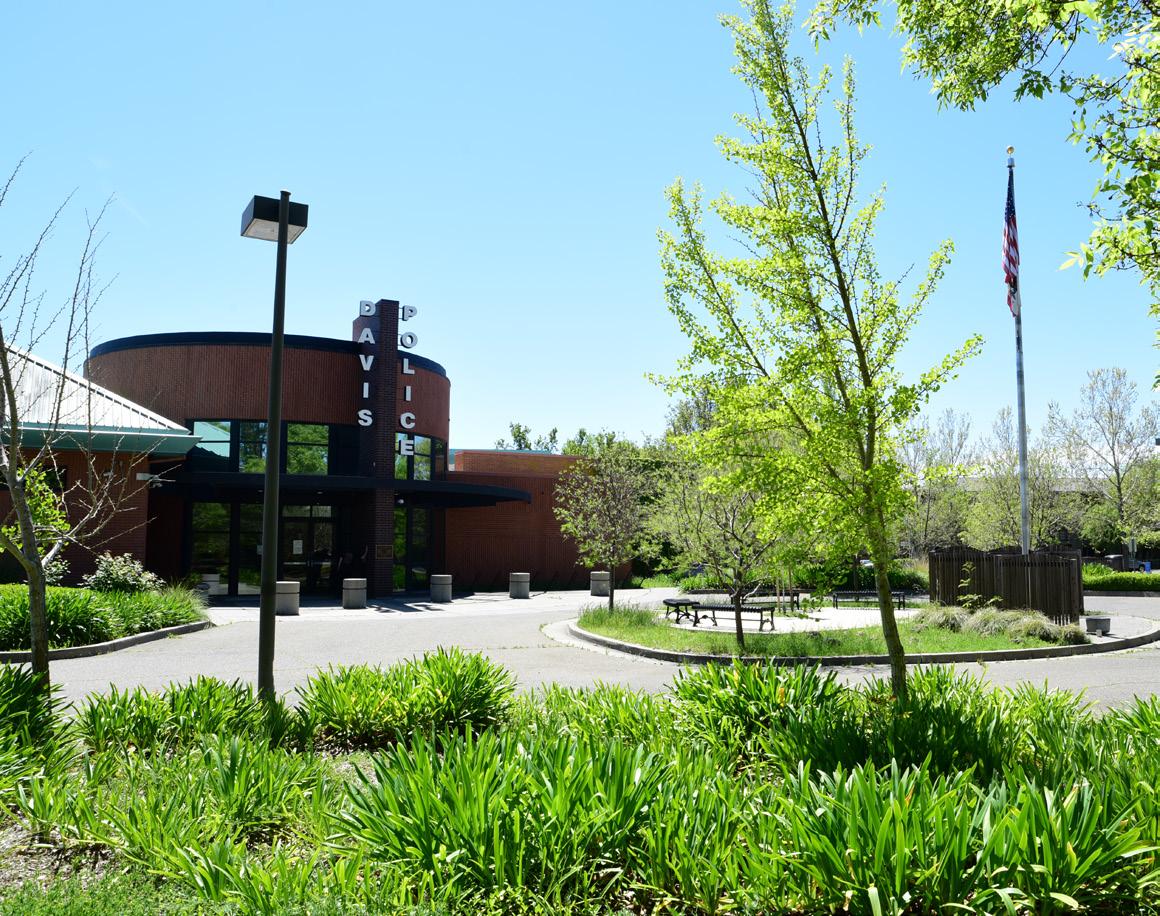
BY HANNAH SCHRADER city@theaggie.orgOn April 1, during a city of Davis Police Accountability Commission meeting, the facial recognition subcommittee proposed information and their recommendations regarding a ban on this software to the commission.
The facial recognition subcommittee is composed of Cecilia Escamilla-Greenwald, Dillan Horton and John Meyer. Commissioner Horton opened the discussion of this agenda item by giving a brief overview of the commission’s current position on the use of facial recognition technology.
“Myself, Commissioner EscamillaGreenwald and Commissioner Meyers [had a meeting on] March 22 to discuss the virtues of pursuing a ban on the use of such technology [facial recognition] by the city of Davis government, particularly the Davis Police department,” Horton said. Horton then commented on why he and Escamilla-Greenwald supported the recommendation for a full ban on the Davis police department’s use of facial recognition technology.
“Myself and Commissioner Escamilla-Greenwald remain convinced that the reliability concerns with this technology present too great a risk to the fair pursuit of justice in our community,” Horton said. “If the technology is only reliable for cis-gendered heterosexual white men, then it simply isn’t fit for law enforcement use. It’s perhaps this wide array of reliability concerns for people of color, women and gender nonconforming individuals that has led the Davis police department never to request this technology from the Davis city council.” Horton then noted how this technology could be harmful to the Davis community at large.
“The fact that we as a city have
never used this technology puts us in a perfect position to protect the integrity of our policing, bring our community’s values into legislation and ban the use of this harmful and discriminatory technology for the city of Davis,” Horton said.
Escamilla-Greenwald then spoke about her fervent opposition to implementing potentially discriminatory facial recognition technology in any capacity.
“So when we’re talking about misidentification or finding children that have [been] kidnapped, stolen, robbed, we’re also talking about children of color being misidentified and taken in,” Escamilla-Greenwald said. “And I can’t live with that.
I cannot live with supporting technology that is going to be biased against people of color.”
Meyer then discussed the aspects of Horton and Escamilla-Greenwald’s position and shared that he feels it’s worth looking at the pros and cons.
“It is clear that when we balance the pros and cons of this, which is the correct way to do it, there is plenty

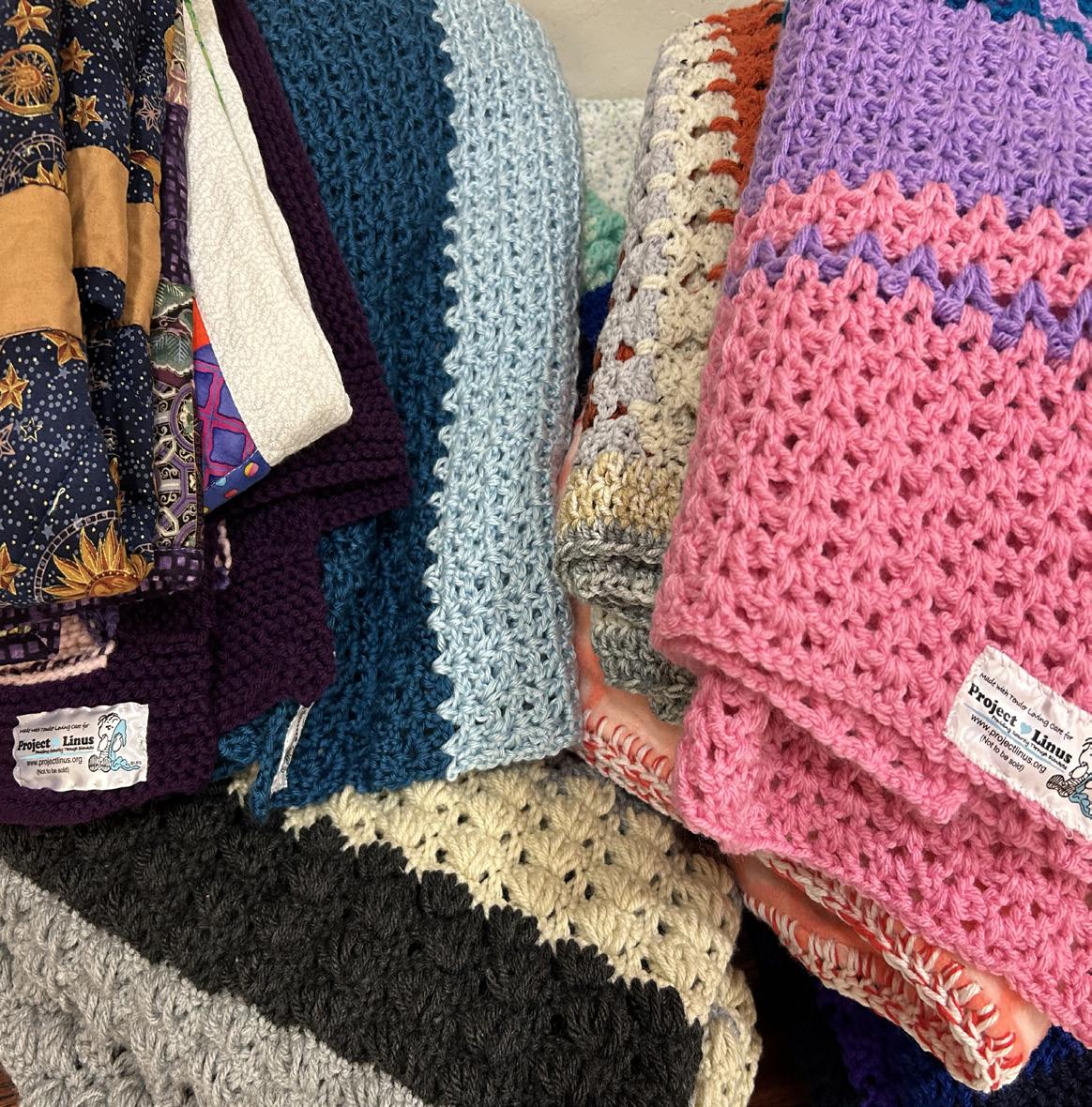
On April 10, the Yolo County chapter of Project Linus met at the Davis Senior Center to help make blankets for children in need. Project Linus, inspired by the character Linus from “Peanuts” and his comfort blanket, is an organization that provides handmade blankets for children across the country. With more than 300 branches across the United States, Project Linus is providing hundreds of thousands of blankets for children. In its nearly 15 years of existence, the Yolo County branch has made and donated over 23,000 blankets.
Deanne Meyer, the Yolo County chapter coordinator of Project Linus, shared how the organization is providing more than just blankets. “We have a two-fold mission,” Meyer said. “The first part is to provide blankets to children who need a sense of love, comfort and security. The second fold is to give people who are creative an outlet for their creativity.”
Meyer originally got involved with Project Linus because her daughter was looking for a public service opportunity. She has since become the coordinator for the Yolo County chapter and continues to encourage and admire the creativity of her volunteers, also referred to as “blanketeers.”
Over 30 citizens gathered at the Senior Center to donate the blankets they made and sew on the Project Linus labels. The type of blanket varies depending on the skills of the
person. Some blankets are crocheted or knitted, while others can be tied or sewn together with leftover blanket pieces to reduce waste. They also focus on making different-sized blankets to promote the inclusion of all children ages zero to 18.
A Super Blanketeer, Deedra Johnson, expressed her admiration for the mission of Project Linus and the creativity of those involved.
“It is a group of incredible women, and one man, who are working together. It’s social, it’s productive [and] the product is stunning,” Johnson said.
After sewing on the Project Linus labels and doing a quality check, the blankets are then ready to be distributed to various Yolo County organizations. Some of the organizations they are donating to this month include ComuniCare, EmpowerYolo, Progress Ranch and Yolo Crisis Nursery.
In 2023, the Yolo County branch donated around 1,750 blankets. Every year they aim for a higher number than the last in order to meet the needs of local organizations.
“It’s just great knowing the blanket’s going to someone who needs a big hug and a lot of love,” Meyer said.
The inspiring and creative group of blanketeers meets the second Wednesday of every month from 1:30 to 3:30 p.m. No skill is required to volunteer with Project Linus.
“It is inspirational — the creativity. Doesn’t it make you want to go sew?” Meyer said. “When someone says ‘I don’t sew,’ the answer is ‘yet.’”

After eight weeks of training, the city of Davis Fire Department expands fire team
 BY ALMA CULVERWELL city@theaggie.org
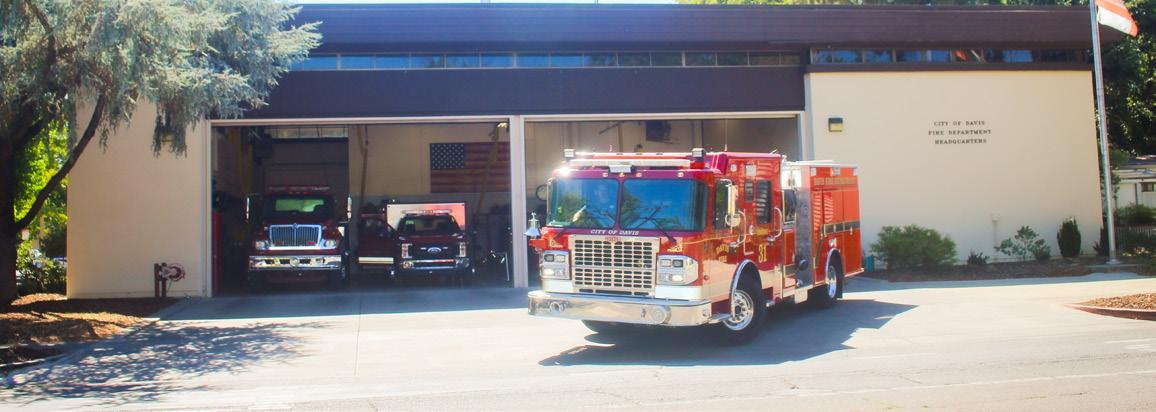
The Davis Fire Department recently swore in four new firefighters after an eight-week training program.
of evidence that facial recognition technology is used all the time to solve serious crimes,” Meyer said. Meyer then talked about his biggest problem with the proposed full facial recognition technology ban.
“To me, what bothers me the most is that you’re completely with this proposal cutting off the ability of the Davis police department to use any lead generated by any agency: federal, state or local, from protecting children, protecting victims of serious crimes,” Meyer said. Horton then responded to Meyers’s concerns, stating that he had failed to address the discriminatory problems in his grievances with the recommendation.
“There’s very clearly a discrimination concern here that [...] just speaking for myself and Commissioner Escamilla-Greenwald, is a high concern, and I really didn’t see any effort to kind of mitigate that in the response from Commissioner Meyer on this particular topic,” Horton said.
The Davis Fire Department is currently staffed by 36 shift personnel, who are divided into shifts to work a 24-hour day. The Fire Department has three stations including ones in Central, West and South Davis.
As part of his introductory speech, the current police chief Joseph Tenner, who has been serving the Davis Fire Department since 1989, highlighted the importance of these training programs and developing the team as a unit.
“There are many other areas under review such as staffing, resource deployment, training, emergency preparedness and communications,” Tenner said. “My primary goal as the new Fire Chief is to move the department forward as a cohesive team maintaining the highest professional service to the Davis community.”
Tenner, along with the rest of the department, hopes to focus on team and technology development moving forward.
The city of Davis Fire Department partnered with the West Valley Regional Training Consortium to coordinate and oversee all training programs for the department. The West Valley Regional Training Consortium is an organization founded in 2012 that aims to enhance and better support fire agencies by providing quality training programs. Their training program typically includes a range of preparatory and precautionary activities including classes in hazardous materials mitigation, wildland firefighting, firefighter survival, high rise response and safety, forcible entry, Emergency Medical Services (EMS) certification and maintenance, ventilation practice and technical rescue. The program emphasizes practicing confined space rescue, trench rescue and water rescue in order to ensure the firefighters are adequately prepared for any possible issues. Employment by the city of Davis Fire Department includes several basic criteria including a minimum age of 18 years old, a high school diploma or GED, a California Driver’s License, a California State Firefighter I Certificate and an Emergency Medical Technician Certificate. The Fire Department also has several other desired, though not required, criteria including a college degree, prior paid or volunteer firefighting experience and any other related relevant specialized training including paramedic, hazardous materials first responder, swift water rescue and more.
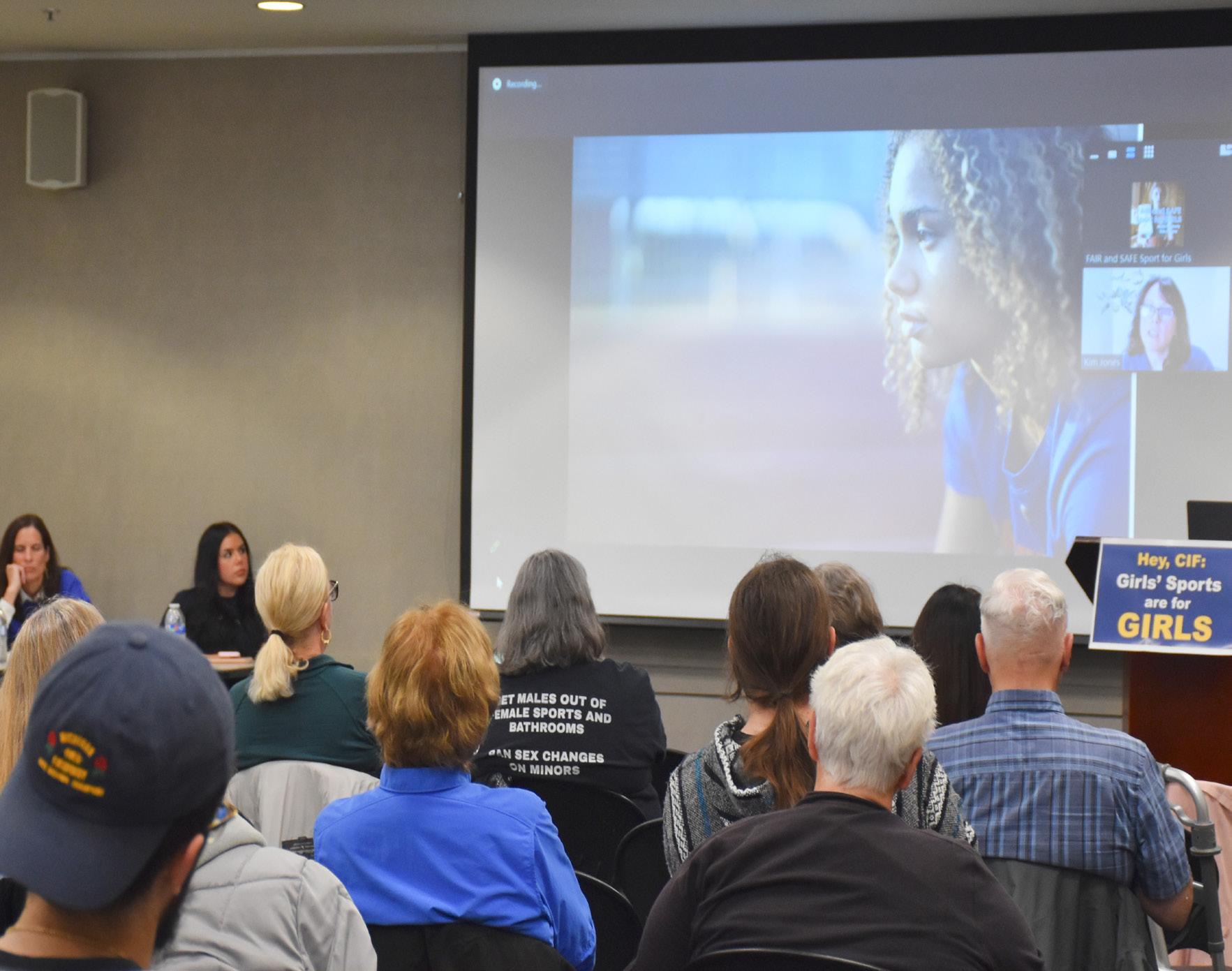
The Moms for Liberty Yolo County chapter held a public forum with guest speakers on April 13 to discuss alleged gender discrimination in the California Interscholastic Federation’s (CIF) policy.
The event was held at the Mary L. Stephens Davis Library, lasting from 2 p.m. to 4 p.m., was free and open to the public.
One of the first speakers was Kim Jones, a co-founder of the Independent Council on Women’s Sports. Jones discussed alleged inequities in female sports.
“A culture either chooses to celebrate and respect women or it chooses to subjugate women,” Jones said. “Sport is a microcosm of society, and women’s sport is a reflection of how we value women in society. The fundamental question that we are asking right now is, do women and girls deserve access to fair sports?”
Jones then used an anecdote of an adult competing with a child to portray the alleged unfairness that arises when transgender women, referred to as the adult, compete in the women category, referred to as the child, of their respective sport.
“Advantage is not determined by finish,” Jones said. “If a tenyear-old beats a thirty-year-old [in a competition], the thirty-year-old still
has a massive advantage with a fully mature and developed body. And yes, this happens: I was this ten-year-old. The results simply show that the [tenyear-old] did not have enough of an advantage to compensate for the skill, training and talent of a [thirty-yearold.]”
Towards the end of her speech, Jones claimed that a majority of women support sex screening in female sports. Sex screening is the process by which athletes have to have their biological sex verified to be eligible for a sport.
“When asked, women in sports want sex screening and a protected female category over 80 to 90 percent of the time,” Jones said. “In summary, this issue is not complicated. It’s actually very simple, but it is contentious because the concept of gender identity is in direct conflict with the objective realities. You have to choose one.”
The next speaker was Richard Wharton, an elite and development cycling coach, who discussed his personal anecdotes of observed anatomical differences between men and women in the sport of cycling.
“We’ve got a spirometer alright [...], and I challenge any genetic, biological, physiological male to go up against any genetic, biological, physiological female and compare your lung capacity,” Wharton said. “It’s not even close.”
The next speaker was Beth Bourne, chair of the Moms for Liberty Yolo
County chapter. She discussed a supposed tool called the “gender-bread man” that is used in schools to teach students about gender expression.
“This is the gender-bread person,” Bourne said. “This is one of the first images that kids start to see in their health and their science classes starting about fifth grade. It tells kids that your identity, your gender identity is something in your brain and that your biological sex is something in their body parts, and that their gender identity is somewhere between womanness and manness.”
Later in her speech, Bourne made clear her disdain for people who articulate their pronouns.
“And this is one of my favorites, which is the use of pronouns,” Bourne said. “If I see pronouns on your email, I’ll still try to read it, but usually it means I don’t.”
Bourne then closed out her speech, reiterating her condemnation of schools teaching gender-inclusive curricula.
“I’ve got all kinds of information about library books, school curriculum and what’s happening in our schools,” Bourne said. “I just want to say, we’ve just got to do what we can to help our kids know that they’re being lied to and that there’s no child that’s born in the wrong body. And this idea that you can play sports as a different gender — that doesn’t make sense.”
If you’ve never been on “booktok,” you’re missing out. It’s a subcultural corner of TikTok that discusses, promotes, reviews and whole-heartedly embraces books and literature; and it’s a lovely space to be in.
As a result of booktok and other similar social media trends (ie. “Bookstagram,”), reading as a hobby has come into the center of the trend cycle in the past couple of years. Obviously, reading has always been a popular way to relax and pass time, and it’s likely that it always will be. But as the internet has risen in relevance, reading has declined as social media consumption has become the favored form of leisurely entertainment. In a roundabout sort of way, as internet creators began to make content about books, reading has come back into the limelight. The media that people have been consuming instead of reading is pointing them back in the direction of books.
I, like many of my fellow victims of gifted-kid burnout (you), was a voracious reader as a child (I liked reading before it was cool). So it makes my little book-lover heart very happy to see reading for pleasure get the hype it deserves. One of the most appealing aspects of literature-centric online communities is the simple pleasure and joy that is shared between audiences as they interact over mutually beloved stories. The vast abyss of the internet is so full of negative and downtrodden content, which makes positive, inspiring conversations welcome. Bookish material online is dominated by a contagious enthusiasm for stories — a sort of joy that I haven’t encountered since I devoted my childhood summers to the reading challenge at my local library with fervent avidity. It’s refreshing to witness uplifting dialogue in the midst of a space plagued with controversy
and hostility. It can’t be ignored, though, that the books typically embraced by booktok are not the most intellectual. While there certainly are pieces made popular by the internet that are quite profound and challenging, the majority of viral novels are easilydigestible rom-coms. But the thing is,
books can be entertaining, why shouldn’t they be celebrated?
Reading for pleasure has been linked to stronger memory, better academic performance, mental wellbeing and even longer lifespans, as well as commonly cited benefits like increased vocabulary, critical thinking, conversation skills, empathy, etcetera. It would be remiss to dismiss the merits of reading for the sake of reading, regardless of what the content

that. Allow me to get on my soapbox for a second please: the perceived superficiality of a book does not reflect on its inherent value. Of course, there is value in reading books that expand your horizons, teach you lessons and demand more effort — but that doesn’t demerit books that are just for funsies. Reading is meant to be an enjoyable activity. One of the reasons that people choose not to read is that it can be more strenuous and less rewarding than other available forms of content. If lighthearted, “fluffy”
What does this change mean for both customers and employees?

On the other hand, franchise owners and customers are actively feeling some added pressure caused by AB1228. Some businesses are forced to cut worker and store hours due to lack of funding or raise product prices by a margin of 5% (and even 10%), a change that is being felt by many customers. Fast food, generally known as an affordable option, may see an increase that deters an entire class of customers that previously relied on the accessible prices.
It is important to note, however, that there are many ways for fast food companies to accommodate this new change while keeping profits up and customers coming back: a negative outlook on this new legislation is much too early to reflect the actual effects of AB1228. Rather than raising prices, companies can focus on leveraging hours, scheduling accordingly and introducing new products and promotional materials to maintain customers.
from $16 to $20, like me, $4 extra seems enormous.
With this in mind, as a fast food worker with some inherent bias, I believe that this wage increase is essential for securing a close-to-liveable wage for workers and ensuring that companies aren’t exploiting the labor of demographic groups usually employed in the fast food industry — such as women, students, migrants and semiskilled workers.
The previous minimum wage of $16 requires workers to dedicate themselves to a full-time job to afford basic necessities. Even then, a 40-hour week on a $16 wage is difficult to survive on, especially with the inflation we are currently experiencing and the instability of prices post-pandemic. “Cheap and disposable food” that is often associated with the fast food industry shouldn’t extend to how we
perceive laborers working in fast food.
Even though a fast food job doesn’t require a college degree or a Ph.D., fast food workers go
I don’t care if you crack open Dostoevsky or Emily Henry, you’ll reap the benefits nonetheless. You’ll doubtlessly take away different conclusions, but they’re not meant to serve the same purpose. Reading can be productive, relaxing, stimulating, entertaining, enlightening, educational, rejuvenating and fun; consuming playful, bubbly literature can be all of those things in the same way that deep, intellectual writing
In fact, it’s the fact that many viral books are lighthearted that has given booktok its flourishing growth. The literary community has long sung the praises of highbrow, scholarly compositions, but those who aren’t routine readers often aren’t apt to reach for a dense novel. More than ever, people are dipping their toes into the proverbial pool of fiction because the most popular books are easy and enjoyable to read. Booktok introduces people to the fun and benefits of reading, and once they pick up the habit, they’re more likely to venture into more challenging genres. Booktok is creating a welcoming environment for people to try their hand at consuming literature. It’s casting a fun and leisurely light on reading, and my hope is that it can reframe the “have to”/chore/ homework mentality books tend to provoke, which turned so many people off for so long. Social media is opening up conversations for more people to join than they ever would have before, and it’s beneficial for all of us. Reading is cool.
What leads even the smartest people to be so stupid?
 BY MALCOLM LANGE mslange@ucdavis.edu
“Everyone is stupid!” This is an exclamation that most, if not everyone, has made at some point in their life. Unfortunately, this declaration of frustration is pretty much true. Everyone is stupid, even the smartest person you know.
Obviously, it seems like a fallacy to say that a smart person is stupid, as they are clearly defined as “smart.” It would be easy for me to say that no one is smart about everything — you can be a world-renowned physicist but not know simple Eastern European history and therefore stupid in that case.
Harsh, I know. I don’t even know you — who am I to say that you are stupid? I have no level of authority or credibility on the matter. Don’t worry though, I am stupid too. I like to think that I am smart, or at least smarter than most, but this level of arrogance appears to make me dumber than most. I am sure that many people have heard of the “Dunning-Kruger Effect” where those who have a little amount of knowledge tend to believe that they are experts on the matter. That is, once they start to gather more knowledge on the subject, they realize how dumb they actually are. This is not a new idea, nor is it a revolutionary concept as it appears to be known and widely accepted — to the best of my knowledge, who knows, maybe I am at the peak of stupidity and know nothing about what I am talking about.
How then, if we are all stupid — especially when we think ourselves to be smart — are we to move forward and learn? The first step, it would seem, is to admit your own uncertainty. Come to the understanding that you might not understand everything — or not just everything, but that one thing you are so sure of. Humans (which I assume everyone who is reading this is one of) are incredibly fallible creatures, and to assume or declare one’s own infallibility is detrimental to the pursuit of knowledge and truth. To completely shut out someone else’s statement due to the fact that you “know” that you are correct is stupid. Don’t get me wrong, there are many stupid beliefs or statements out there and we do not need to take them as true, intelligent or even respect them. However, to dismiss someone else’s opinion or belief on the sole reason that it does not coincide with your own, and yours must obviously be the true belief, is incredibly stupid. It may be the truth that their belief is wrong and yours is correct, but there should be a path of critical analysis or deductive reasoning to come to this conclusion, not a mere “I am right because I say so.”
One instance where I have seen this happen constantly is when referring to politics. Not about which side is being truthful or is the correct side (I mean, yes, it does pertain to that, but I would need way more than two pages to attempt to tackle that beast) but instead when a person says, “I think if people don’t agree politically, they shouldn’t talk about politics.” On the surface, it seems like a polite statement to keep everything cordial. That could be exactly what it is, trying to maintain a friendly rapport with someone, as political conversations can become increasingly aggressive or hostile. It also makes an implicit assumption that whatever you have to say is wrong, because I already know I am right. Or even worse, nothing you say can convince me even if I end up being wrong in the end.
While I understand not everyone enjoys talking about politics, and it can be a sensitive subject for some, being able to engage in meaningful conversations or arguments is essential to a functioning democracy. Is that a very dramatic sentence? Yes, yes it is. But there is a level of truth there as well. If everyone becomes stuck on their own opinion and does not open themselves up to the possibility that they are wrong, even in their political beliefs, how could we ever progress as a society? It is incredibly unlikely that one person has all the answers to life’s questions, so it would be ridiculous to attempt to shelter yourself from all opposing views. Those views just might be right. And if they aren’t, you being able to disprove them in a legitimate and logically sound way can help solidify the concepts that you know to be true. Relying solely on whatever your parents, religious leader or any other community figure says as the absolute truth simply because they said so is a very stupid way to live. There is a silver lining in everything, and, as it was stated before, the best way to rise above this stupidity that plagues the world is to understand that you can be wrong. It is totally possible if not incredibly likely that you are wrong
— there are over seven billion people on the planet, and if everyone has their own opinion on a matter, there is no way that everyone is fully correct all at once. The more you open yourself up to the possibility of being mistaken, the more likely you are to stumble upon the truth, or at least an answer, opinion or belief that is one step closer to the truth.
The Editorial Board endorses The Green Initiative Fund fee referendum, as well as four candidates for ASUCD Senate and one candidate for Student Advocate
WRITTEN BY THE EDITORIAL BOARDASUCD’s 2024 spring elections began on Monday, April 22, and voting will be open through Friday, April 26 at 8 p.m. Undergraduate students can cast their votes on the ASUCD elections website.
This election cycle, there are 15 candidates running for six available Senate seats and two candidates running for the Student Advocate position. There are also several positions this election cycle that are running unopposed: the ASUCD President and Internal Vice President executive ticket, the External Affairs Vice President, the Transfer Student Representative and the International Student Representative.
Each year, The California Aggie reaches out to each candidate to set up an interview in order to put together ‘Meet the Candidate’ blurbs introducing each student, as well as choosing candidates who stand out to us as especially qualified or passionate to endorse. Any candidates who do not respond to the Editorial Board’s request for an interview are not considered for an endorsement — this year, that included some of the Senate candidates, as well as each of the candidates who were running unopposed.
We strongly encourage all students to participate in this election, especially considering the impeachments of both the ASUCD President and Internal Vice President which took place earlier this academic year. In order to encourage competitive elections and ensure that ASUCD elected officials accurately represent the interests of the student body, students should both vote and consider getting involved in student government in the future.
Here are The California Aggie’s endorsements for the spring 2024 elections:

Senate:
Amrita Julka (she/her) —
Running on the ‘Bitch’ slate
The Editorial Board was extremely impressed by first-year political science, public service major Amrita Julka. Her comprehensive platform, including implementing more technology and transparency surrounding student safety, improving the health and wellness of students and creating community within underrepresented groups on campus, addresses a wide range of issues currently facing the UC Davis community. If elected, Julka is specifically looking to revamp the WarnMe system, implement digital student ID cards, establish more childcare facilities for student parents, increase the number of gender-neutral bathrooms on campus and create more social events for minority groups to find community. These objectives, along with Julka’s experience working on the Student Health and Wellness Committee this past year, make her a compelling candidate for Senate.
Rohit Mantramurti (he/him) —
Running on the ‘Independent’ slate
Second-year history major Rohit Mantramurti impressed the Editorial Board with his plans to address the concerns of struggling students and marginalized communities on campus. If elected, he wants to improve the Safe Ride program to be more widely available and promote access to services that students may be unfamiliar with, such as The Pantry, Housing Advising for Undergraduate Students and Aggie Reuse. Mantramurti believes that the purpose of the Senate is to serve students, so he wants to improve outreach to make ASUCD more transparent, studentfriendly and a place where students feel they can voice their concerns. We believe that his experience as a political organizer will help him to be an effective advocate for all students on campus as a senator.
Dhilena Wickramas (she/her/ they/them) — Running on the ‘Bitch’ slate
Dhilena Wickramas, a secondyear sociology major, wowed the Editorial Board with her experience and specific plans to address several issues and groups on campus. Broadly, her platform surrounds expanding sexual health resources on campus and advocating for and protecting underrepresented groups. If elected, she wants to increase the number of Safe Ride vans available to students, plan events that uplift cultural expression and community and work with the Bike Barn to provide mobility aid to students with disabilities. She believes that ASUCD and the Senate do not collaborate with other units, committees and Registered Student Organizations enough, and she wants to change this if elected. Wickramas currently serves as a committee member on the Sexual Assault and Awareness Committee and as a Senate staffer, which is part of why we believe that she has both the drive and the experience to achieve her agenda as a senator.
Nanki Kaur (she/her) —
Running on the ‘Five Rivers Party’ slate
The Editorial Board endorses Nanki Kaur, a second-year biomedical engineering major, because of her extensive and creative platforms. These include creating and promoting resources to help students achieve academic success, destigmatizing mental health and increasing the representation of women in leadership positions across campus. In line with these broader goals, she plans to advocate for more 24-hour study spaces, as well as for increased access to women’s resources across campus and specialized mental health support based on cultural and religious identities. The Editorial Board believes that these issues are pressing to many at UC Davis and that, if elected, Kaur would succeed in addressing them.
Student Advocate:
Audrey Jacobs (they/them) — Running on the ‘Independent’ slate Audrey Jacobs, a secondyear Asian American studies and gender, sexuality and women’s studies double major, impressed the Editorial Board with their notable platform ideas, such as better supporting international students who have cases with the Office of Student Support and Judicial Affairs and working with university leadership to require more transparency regarding student AI usage. Jacobs is passionate about helping underrepresented communities on campus navigate resources and accommodations available to them through increasing outreach. From their experience working in the office of the Student Advocate this past year to their work with the Mental Health Initiative, we believe that Jacobs would make a great advocate for students.
Measures:
The Green Initiative Fund fee referendum
The Green Initiative Fund (TGIF) is a campus grant program run through the UC Davis Office of Sustainability which provides funding for on-campus sustainability projects through student fees, such as the ‘Sheepmowers’ you may have seen on campus. If passed, there will be a $3.50 student quarterly fee starting in the fall of 2024 which will increase by $0.50 every year for the 10 years. TGIF is popular among students, with a large majority voting ‘yes’ on the ballot measure for the past few years. However, it has not passed for renewal due to a failure to meet the 20% voter turnout that is required for an ASUCD fee referendum to go into effect. This will be the fourth and final time that TGIF is on the ballot, and if they do not succeed, they will be forced to dissolve due to lack of funding. The Editorial Board strongly encourages students to vote for TGIF in this election because it would benefit student sustainability projects and further reflect the campus’ commitment to sustainability.

 BY JOAQUIN WATERS jwat@ucdavis.edu
When the world shut down in March 2020, I often thought that my high school graduating year — the class of 2021 — got the worst of the whole mess. We went on to spend the better part of a year locked in our homes, unable to celebrate our upcoming graduation and being presented with sad socially-distanced proms as compensation. What should have been a landmark year in our lives in all the best ways became a landmark year for the world in all the worst ways. We were robbed, through no fault of our own or our faculty, of our year to be the big kids on campus. But there were silver linings to our predicament, chief among them being exempt from the SAT exams, since nobody figured out how to distribute them digitally in the first month of the pandemic. My slightly older peers go green with envy when I tell them that little tidbit, and I can’t say I blame them. And of course, however sad our year of Zoom classes, virtual plays and pretending our laptop cameras were permanently broken may have been, at least the class of 2021 went into it relatively prepared. So no, I no longer believe we got the worst of it. Now my heart instead goes out to the year before mine, the class of 2020, who came so close to the finish line only to have it snatched from them mere months before the end. My graduating year never had the illusion that things would be normal. We all knew that our moment of joy — that coveted diploma in our hands, that dumb flat-topped hat on our heads — would at best be tainted by a year of hell. The class of 2020 knew no such thing. Those who went on to college were greeted by the dreaded Zoom University, an experience that has yet to be fully purged from academia. But now it has been four years since that horrid March, and at long last the majority of these same college-going members of the class of 2020 — now the class of 2024 — will have a normal graduation. Well, barring any other massive worldclosing events taking place within the next two months (Knock on wood).
My friends among this circle (the same friends who blow steam out of their ears when I remind them I didn’t
have to take the SAT) seem largely to view their coming graduation as a very different event than the one they never had in 2020. I can understand that. After all, college is not high school, and thus a college graduation is a wildly different affair than a high school graduation. One marks the nominal end of childhood, the other the nominal beginning of adulthood. College represents a strange, deeply formative between-time. But the fact remains that a celebration of the type that was snatched from them four years ago is incoming for them, and I am happy for them.
Ceremonies are important. Not in any literal sense; functionally there is no difference between being handed a piece of paper on stage and being sent one in the mail. But they matter in a tribalistic sense. A prom, a play, a graduation — these are things American students are conditioned to expect and to associate with specific phases in their lives. Whether this expectation is a good or bad thing, I leave up to socio-political philosophers to debate. But the fact that the class of 2020 was promised these things and had them denied at the last second must have left an indelible mark on how they remember that final year, as much as any of the myriad world events that shaped that time. That one of these things they were denied — a graduation ceremony — will finally occur to those graduating in June of this year is a good thing in my view. This has been a strange four years to come of age in. I am far from the first person to point this out, but it is undeniable that going through this incredibly formative phase between childhood and adulthood in a confused and confusing world with one foot in our bedrooms the entire time has had an impact. It remains to be seen what kind of people we will become, and just
Davis artists and UC Davis organizations are bringing art to life through free community events, bringing people together for a greater appreciation of artwork and representation.
The Artery, an art co-op located at 207 G St., is celebrating its 50th anniversary by holding free monthly art events sponsored by the city. According to Brigitte Chertok, an artist and one of three of The Artery’s co-managers, these art events will take place on the last Sunday of each month.
Chertok noted the co-op and the Arts and Cultural Affairs program’s attempts to transform G Street into an artistic and community-based environment.
“G Street is mostly bars and restaurants,” Chertok said. “So you really have to attract people to The Artery [an art store and gallery], especially now that G Street is closed to vehicles. Since the city is trying to bring people to G Street for more than just drinking, they encouraged me to apply for a grant so I could host monthly events outside The Artery.” Chertok went on to describe what attendees can expect from The Artery’s first event, “Clay Fun,” on April 28 from 12 to 4 p.m.
“If [attendees] build something and they want to go home with it, they’re welcome to take their art,” Chertok said. “They are welcome and encouraged to participate in making the big sculpture, but the group sculpture will stay in the store so we can fire it. The goal for the monthly events is to make something simple that everybody can enjoy and go home with.”
Chertok emphasizes the
community’s involvement by noting the organization’s interest in hiring volunteers.
“I may be looking for student helpers who are art-oriented for future events, helpers will be paid minimum wage,” Chertok said. “People hoping to volunteer can contact us and give us their names, and we will call them if we are hiring for that month’s event.”
Less than a week after The Artery’s community building and publicity event, La Familia will be hosting their first Queer Quinceañera on May 4 at 7 p.m. at the Student Cross-Cultural Center (SCC), multi-purpose room.
Bianca Alvarado, La Familia’s copresident and a fourth-year English and Chicana/o (CHI) studies double-major, shared the event’s theme.
“Our theme is ‘Flores de Mayo’,” Alvarado said. “We’re trying to make [the event] inclusive of different identities. We want whoever attends to feel comfortable with their identity and safe enough to express it.” Alvarado continued to note the immense support La Familia has received from organizations that play a big role in Queer Latine’s intersecting identities. “We’ve reached out to different organizations,” Alvarado said. “El Centro and the LGBTQIA+ center have funded [the event]. We are now in the works of asking the CHI department, who got back to us trying to gauge how much money we need.”
Expanding on the flier’s advertisement of “una noche de música, flores, baile, y drag performances,” Alvarado shared the value of hosting such an artistic and inclusive event.
“The work that we’ve been doing this year is to create an archive of our existence on campus,” Alvarado said. “We go through so many difficulties pursuing higher education [as Queer
Latines] which kind of limits us from fully enjoying this academic experience. [Through events like our Queer Quince, we are trying to] contribute in creating more paths for future generations to look back and see, ‘Oh, this is what they were doing and how they were celebrating it.’ We are making sure that we are taking up the space that we rightfully deserve.”
Another event that has been generating excitement for students and community members alike is the Whole Earth Festival (WEF). Emma Mele, a fourth-year environmental policy analysis and planning major and the codirector of WEF, noted the upcoming festival happening over Mother’s Day weekend and its roots.
“It started out as an art class project, called ‘art happening,’” Mele said. “And then they put it on the quad and it expanded slowly. It stemmed from art and activism, and that came hand in hand with sustainability.”
Mele furthered on how WEF plans to transform the Quad this May 10 to 12.
“The whole quad will be lined with craft vendors, food vendors, student vendors and two domes,” Mele said. “We have a bunch of activities for kids and service booths where they can braid your hair and do henna. The list goes on and on. We also have an education space. We’re trying to make sure that that space is really highlighted with everything going on in the world and climate change.”
These events embody the shift from gloomy weather to a time of growth and new beginnings that the spring weather embraces. Each event provides a space for joy and relaxation away from academics, emphasizing the importance of the communities’ identities as artists and people in Davis.

 BY AALIYAH ESPAÑOL-RIVAS arts@theaggie.org
TV Show: “Young Sheldon” by Chuck Lorre (2017)

Ever wonder where the iconic phrase “Bazinga” originated from? Well, if you tune in to “Young Sheldon,” you might just find out. “Young Sheldon” follows Sheldon Cooper, a “Big Bang Theory” fan-favorite character as he navigates his life as a child prodigy. The show is full of charm as the seven seasons explore Sheldon’s personal life growing up in Texas, giving much-needed depth to his character. While the first three seasons display his growth from a child to his tweens, the later seasons delve more into more of his familial relationships and the individuals that have shaped him. While, yes, Sheldon can be annoying There are very rare cases when a sequel is better than its precursor and “The Princess Diaries 2: The Royal Engagement” is a perfect example of that. While the first film does take place in beautiful San Francisco and features the iconic makeover scene, the second installment is pure rom-com magic. The film follows Princess Mia Thermopolis (Anne Hathway) as she embarks on her journey of becoming queen

sometimes, there is no doubt that he is a witty genius who genuinely cares about those around him. So no, the show isn’t just Sheldon being a pretentious kid who spews fun facts constantly, but rather an exploration of his upbringing that explains his character in the subsequent seasons of “The Big Bang Theory.” While the final season is currently airing on television, you can binge the past six seasons on Netflix.
Movie: “The Princess Diaries 2: The Royal Engagement” dir. by Gary Marshall
of Genovia. However, despite the numerous strides of feminism made by 2004, without a husband, Mia cannot become queen. Following this news, Mia, with the help of her grandmother, Queen Clarissa (Julie Andrews), attempts to find Mia a husband in 30 days. But when an insufferable suitor with ulterior motives arises, things become confusing for Mia. As she grapples with the severity of her situation she must confront her feelings: does she do what’s best for her kingdom, or what her heart desires?
Album: “Journals” by Justin Bieber (2014)
“Journals” is undoubtedly Justin Bieber’s most underrated project. Most likely due to the negative perception of Bieber at the time (his infamous dui and accompanying mugshot) and lack of promotion from his label, “Journals” remains a hidden gem of his discography. The project, which is not an album but rather a compilation album created during his “Believe” tour in 2012 steers away from his typical teen heartthrob sound to a more explicit R&B style. Due to this shift in sound, his label decided to not release the album physically, further adding to its obscurity in society. However, the 16-track album is by far the best thing that Bieber has created. From the sultry

opening track “Heartbreaker” to the soulful closing track “Flatline,” the album soulfully articulates Bieber’s struggles in a relationship, and covers more mature topics related to his sexual experiences. While the album also features some questionable and forgettable collaborations, it is drastically different from what Bieber usually releases. Though the project is mostly loved by die-hard “beliebers” like myself, one listen may change your perspective of Bieber, if you just beliebe.
Springtime is a fresh start for nature, and it’s the perfect time for you to refresh your reading list with new and delightful reads. In true spring spirit, these books are enchanting and whimsical, with plenty of magic and adventure and romance captured in the midst of the season’s lush bloom. If you have a beautiful afternoon to spare, take one of these novels and curl up beneath the shade of a tree to read for the day — you will tumble into a wonderful world that captures the unique beauty of springtime!
“Anne of Green Gables” by Lucy Maud Montgomery (1908)
Though trouble seems to follow where she goes, Anne’s bold personality makes her an inspiring and charming young heroine in a classic and unforgettable novel.
Between its beautiful fictionalized setting and playful adventures that only a young girl could have fallen into, this novel is quintessentially spring. Reading Anne’s tales, you’ll discover along with her the importance of living life to the fullest and embracing what makes you different from others. It’s an inspiring and endearing book perfect to read on a sunny day out in nature, and Anne Shirley is certain to leave an impression on you with every page.
“Sense and Sensibility” by Jane Austen (1811)
When orphan Anne Shirley is sent by mistake to a household seeking a boy, she finds herself navigating triumphs and misfortunes in the town of Avonlea. Wild-spirited, imaginative and outspoken, Anne deals with complicated and humorous situations with her friends and foes in the town.

In “Sense and Sensibility,” Austen tells the tale of two sisters: Elinor and Marianne Dashwood. Though bound together by shared blood, the two young women could not be more different — Elinor cautious and reserved, Marianne free-spirited and romantic. They each fall into their own complex and emotional love lives, but their companionship as sisters is the heart and soul of this novel.
Charmingly romantic and hopeful, Austen’s novel is a lovely standalone read for spring. Whether you find yourself reflected in Elinor’s quiet sensibility or Marianne’s wild passion, there is delight to be found in this book for readers of every personality. If you find yourself enamored with Austen’s playful writing style, it is absolutely worth it to check out her other novels as well, and enjoy the romantic joy of the season.
“Stardust” by Neil Gaiman (1997)
In Neil Gaiman’s enchanting fantasy novel “Stardust,” a series of threads weave together to create a beautifully mystical adventure. In the village of Wall, Tristran Thorn swears to the girl he has fallen for that he will bring her a fallen star in exchange for her love. Upon leaving home, he discovers that the star he watched fall from the sky is a girl named Yvaine. Meanwhile, the Lord of Stormhold dies and leaves several sons vying for his throne and who must obtain the pendant that Yvaine wears to inherit the title — all whilst a wicked trio of witches pursue Yvaine’s trail to take her heart and restore their youth.
Beautifully immersive and extraordinarily unique, “Stardust” has it all — magic, romance, politics, adventure and humor, blended together
brilliantly into an unforgettable read. It’s as enchanting as catching a fallen star with your own two hands, and spring is the perfect time to fall into a world of fantasy and wonderment like that which this novel offers.
“The Hobbit” by J.R.R. Tolkien (1937)
Bilbo Baggins is very content living in his cozy, well-furnished hobbit hole with good food and plenty of books, thank you very much. That is, until a wizard comes knocking at his door, along with an assortment of dwarves seeking to reclaim their gold-filled mountain from a fire-breathing dragon.
As the homebody hobbit finds himself caught in the center of this wild and dangerous quest, he discovers that a life
truly worth living is not in the hidden safety of his home, but in adventure, wilderness and friendship.
Tolkien’s fantasy classic “The Hobbit” is a fantastic choice to add to your spring reading list, full of curiosities and cleverly written characters that come together to create a memorable and delightful novel. It’s the precursor to the widely beloved “Lord of the Rings” trilogy of novels, so if you’re enchanted by Tolkien’s Middle Earth, there’s plenty more to find beyond this iconic standalone adventure.
If you’re hoping to start your spring off on a lovely note, there’s no better adventure than one of these pleasant and lighthearted novels.

The Bay Area artist discusses the methods and meaning behind her sustainable practice
BY SAVANNAH ANNO arts@theaggie.orgIn between the top and bottom floors of the Pence Gallery, visitors can find the Stairway Display. Engaging patrons with art even on their journey from one story to another, the transitional exhibit features a different local or regional artist each month.
On March 1, the gallery debuted the work of San Francisco-based artist Bussie Parker Kehoe. Her solo exhibit, “Lucky Seven,” highlights the range of possibilities that a sustainable art practice can inspire. Kehoe, a mixed-media artist, utilizes discarded house paint to create her pieces. Intricate and kaleidoscopic, Kehoe dries and then layers paint to create a range of shapes, patterns and textures. Arranged and glued onto wood panels, Kehoe’s work jumps off the stairway wall directly into the eyeline of visitors.
In her “Lucky Seven” series, Kehoe tested the limits of her creativity by setting up parameters. She had to create seven pieces, each manipulating the dried paint in a different way while only using seven colors, hence the exhibit’s name.
“I like to be a little surprised with the final product,” Kehoe said. “This series allowed me to consider and enjoy my unusual process.”
The unusual process she refers
to came to exist in a moment of serendipity. Kehoe became inspired while creating her earlier pieces, pouring acrylic paint onto paper.
“The short story is that I discovered my process by accident,” Kehoe said.
“I had errant paint drops that landed on the plastic sheeting covering the floor. Once dried, I could peel them off the plastic and play with them. That’s when I started to work entirely with poured paint skins.”
In “Lucky Seven,” Kehoe showcases the variety of ways in which she can shape and layer her paint skins. Some pieces — square-shaped and layered in geometric patterns — resemble Bojagi, a type of Korean textile technique that reminds Kehoe of her childhood. Other paint skins take on more of a rounded, flower petal shape, layered almost like CD discs or fish scales.
Mainly made up of warm pinks, oranges and yellows, the pieces within “Lucky Seven” remain consistent through color despite their varying textures.
Similar to the origin story of her process, Kehoe stumbles upon her colors by chance. Each can of house paint she receives is through donation. Within less than three years, Kehoe has acquired at least 50 gallons of old paint, all from the San Francisco area.
Known for being difficult to get rid of, Kehoe provides a solution to San Francisco residents who don’t have the
time or don’t know where to take their house paint for proper disposal. When disposed of improperly — thrown in the trash or put down the drain — exposure to paint chemicals can cause both environmental contamination and health issues.
“I switched to upcycled house paint in an effort to have a more sustainable practice,” Kehoe said. “I saw an unlimited supply that I could use and keep out of landfills. I also have a soft spot for things that are unwanted. Strangely, I felt sorry for those dusty old cans.”
Not only does the use of recycled materials make for a more sustainable way of creation, but for additional meaning. Each small piece of paint Kehoe uses was once purchased for a completely different use, possibly intended to cover a bedroom wall, a garden fence or the outside of someone’s home.
In her work, these short histories collide, layered on top of each other to reflect Kehoe’s own life and feelings. Climbing the stairs of the Pence Gallery, each work within “Lucky Seven” builds on the last, coming together to support each other; the shared meaning is a purposeful decision on Kehoe’s part. “[I] intentionally place each dried paint peel so that it connects to the others surrounding it, which is directly related to my own life experience of moving and searching for those
This A24 film will make you question the unimaginable boundaries of love and violence
BY INDRANIL BASU arts@theaggie.org“Love Lies Bleeding” is a 2024 romantic thriller film directed by English filmmaker and screenwriter Rose Glass, co-written by her and Weronika Tofilska. Glass’ second feature film after “Saint Maud” (2019) is a co-production between the United Kingdom and the United States, developed by A24 and Film4. It had its world premiere in the Midnight section at the 2024 Sundance Film Festival on Jan. 20 and was released in the U.S. last month on March 8 to mostly positive reviews. The ASUCD Entertainment Council held a free screening of the film on campus on April 11 at Cruess Hall. They advertised the film on Instagram as “a shocking Stranger Things turned vecna-gymbro-monster” flick, which is pretty accurate. The theater of room 1002 was quite filled, with a lot of queer and/or sapphic students showing up for the film with great anticipation, making the experience even more exciting and communal. Set in a small town in New Mexico
in 1989, the film tells the story of Lou, an introverted gym manager, played by queer icon Kristen Stewart, who falls in love with Jackie, an itinerant, buff bodybuilder, played by Katy O’Brian in her first lead role. Lou is a butch lesbian with the aesthetic of a contemporary teenage boy, whereas Jackie is a more androgynous bisexual, both depicted aptly through their costumes designed by Olga Mill. Their sapphic love story starts with a series of steamy sex scenes which elicited great cheer from the audience. The filmmakers and actors are clearly authentic to the sapphism of the film, the camera framing them with empathy and capturing the affectionate intimacy in their lust. The script gives them vulnerability and space to talk about each other’s bodies, which, coupled with the sex scenes, makes them more cherished, beautiful and organic. The film follows several canon events of sapphic relationships with its own twists, making the queer audience identify and respond to them yet shocking them at each turn of the story. It appears to be a small-town love
story — especially with the setting of Lou’s small apartment, the constricted men-dominated gym and the contrast of Jackie’s immediate aspirations with Lou’s reclusiveness. It’s not until Lou’s sister’s hospitalization due to extreme domestic violence that Jackie is sucked into Lou’s family’s harrowing criminal affairs. The film has brilliant cinematography by Ben Fordesman, editing by Mark Towns and a palpable score by Clint Mansell, which together intensify the story considerably beyond its plot.
Ed Harris as Lou Sr., Lou’s estranged father and weaponry crime lord, looks more formidable than Voldemort, even without any special effects makeup. Jena Malone as Beth, Lou’s sister as the tragic victim of domestic violence, Anna Baryshnikov as Daisy, a femme sapphic who pursues an irritatingly one-sided love interest in Lou and Dave Franco as J.J., Beth’s husband and the insidiouslooking perpetrator, deliver equally brilliant performances.
LOVELIES on 10
The artist’s iconic dots and vibrant colors create a kaleidoscope world for viewers
BY SOFIA BOZZO arts@theaggie.orgYayoi Kusama is a Japanese artist renowned for her use of dots within her work as a means to understand the world around her. Her newest exhibit in the San Francisco Modern Museum of Art (MOMA) titled “Infinite Love” focuses on the use of large-scale dots to create a microcosmic perspective, juxtaposing love and the universe. The first room in the exhibit is called “Dreaming of Earth’s Sphericity,
I Would Offer My Love.” The viewer’s attention is immediately drawn to a large white box in the center of the room. The box features Kusama’s characteristic dots wrapping the exterior. A small door allows entrance into the box, opening up into a stunning, kaleidoscope-like world. Originally constructed in the 1960s, the room is filled with infinity mirrors, reinforcing Kusama’s message surrounding her perspective of love as an infinite force. The room is truly aweinspiring. With vibrant dots opening along the structure, Kusama captures a certain energizing tranquility ever

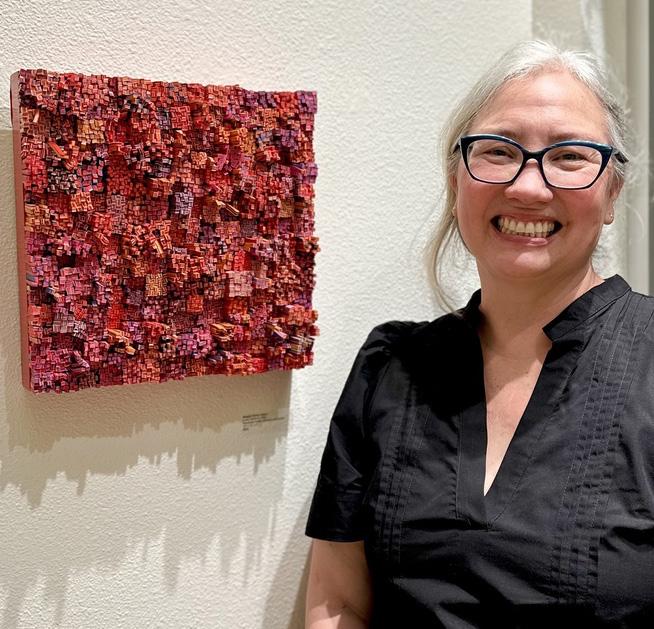
pieces. (Courtesy)
Synth-pop beats and lyrically crowded songs mark Swift as a musical innovator — for better or for worse
BY ELIZABETH WOODHALL arts@theaggie.orgTaylor Swift released “The Tortured Poets Department” on April 19 at 12 a.m. EST, following soon after with an anthology of 15 songs at 2 a.m. EST. The anticipation had been amping up for fans worldwide as she announced this album on Feb. 5 — barely two months before she was set to release the album. Swift hasn’t been a stranger from the spotlight these past few years, between releasing one of the alltime top-grossing albums ever with “Midnights” and her whirlwind romance with Travis Kelce, an NFL football player for the Kansas City Chiefs. On top of that, just a few shows into her worldwide stadium tour the news broke that she had separated from long-time boyfriend Joe Alwyn, and quickly found herself
in the tabloids as she struck up a new relationship with Matty Healy, the frontman of English band The 1975. She’s far gone from her “reputation” days of exile and confinement, a time when, despite fans speculating that Swift would directly address her disappearance, she instead crafted an album that talked about love, deception and forbidden relationships. Surprisingly enough, “The Tortured Poets Department” does a great deal in addressing the public’s opinion of who she is and who she should date. Swift is known for continuously transitioning between genres in the name of remaining innovative and groundbreaking. Jumping from indie albums like “folklore” and “evermore” to the synthpop “Midnights” is a leap that not all artists would survive and land on their feet — but that’s the enchanting nature of this pop star.
TSWIFTPOET on 10
present within her work.
Upon entering the second part of the exhibit, Kusama departs from her use of primary colors within the first room, using a striking neon palette instead. The room features various large tentacle-like sculptures that hang down from the ceiling, almost summoning the audience below. Additionally, the “tentacles” sprout from below at around seven feet tall, towering well above most. Almost menacingly, the sculpture present within the space departs entirely from the repose of the first room, demanding the attention of the viewer.
“LOVE IS CALLING” also features an audio of Kusama reading her own poem, steeped with messages of love, death, life and the universe. The exhibit certainly expresses the breadth of Kusama’s artistic abilities, reaching beyond her affinity for dots as her sole expressive artistic tool. While equally breathtaking, the atmosphere of this room was largely less tranquil than the last.
Despite the breadth of artistic mediums displayed within the exhibit, the brief experience felt like a rapid, one-dimensional look into the art of Kusama, leaving behind so much of her artistic sentiment and expertise. The exhibit is beautiful, and not to be missed, yet its brevity clouded my ability to fully enjoy the experience.
If you are previously aware of Kusama’s work, the installation provides a glorious, immersive look into her perspectives on love and life through her ever-so-famous and striking dots. The exhibit will be up until May 28.

Restaurants throughout Yolo County, including Scrubs Cafe, Spokes and The Gunrock, will feature vegan options throughout the month
BY RODRIGO VILLEGAS campus@theaggie.orgFor the month of April, restaurants throughout Yolo County will have special vegan menu items to take part in the Vegan Chef Challenge (VCC). The month-long event is hosted by Vegan Outreach, a non-profit organization that promotes veganism to end animal violence, and challenges local restaurants to present new vegan menu items.
With the theme of “Go Green, Yolo!,” chefs were encouraged to create plant-based menu items. Throughout the month, diners can try out the dishes and vote for their favorite item on the Vegan Chef Challenge website. Once the challenge ends, businesses are encouraged to add popular vegan items to their menu.
“One of our major programs is the Vegan Chef Challenge,” Jackie Va, director of events at Vegan Outreach, said. “We ask chefs to add new vegan options because we want people to go vegan, but we also want to give them local options to help them go vegan.” Vegan Outreach revitalized the VCC in 2022 after the COVID-19 pandemic prevented them from conducting the challenge. They held 10 VCCs nationwide in 2022, according to Va. The following year, the number of VCCs increased to 30 nationwide.

“Before Vegan Outreach handled the Vegan Chef Challenge, one [organizer] would do all the work,” Va said. “The process has gotten so much easier for volunteers to pick up since we’re doing a lot of the work for them: we’re advertising, we’re sending the press releases for them, we’re creating websites — they don’t have to worry about it too much.” The VCC returns to Yolo County again this year, with a total of 11 participating restaurants, including Scrubs Cafe, Spokes and The Gunrock. These dining services have introduced masala dosa ($8.95), a mojo mushroom burger ($9.99) and a falafel plate ($13), respectively.
Last year, the mushroom carnitas tacos by Executive Chef Janos Levin and Sous Chef Michael Chiu of Scrubs Cafe and Sage Street received the award for “Most Voted and Best Entrée.” Levin stated that he and his team chose to participate in the event again for multiple reasons: they are the defending champions; he is always looking for ways to grow the menus at campus dining services, especially to expand the number of vegan options and lastly, he aims to demonstrate that delicious food can be made using only vegetables.
“We want to show that you can make really good food out of simple, whole ingredients,” Levin said. “[The VCC is] an opportunity for us to showcase our skills in a different way. It’s always fun to showcase flavor through vegetables versus animal proteins and adding additional butters and fats.”
However, before finalizing the dishes for the VCC, the items underwent several iterations that

incorporated vital student feedback. Levin and Mary Schertzer, directors of retail dining operations, emphasized the importance of student feedback to craft dishes that represented vegan cuisine. “We go through multiple iterations before we present the dish,” Levin Schertzer said. “We’ll have an idea, but we hone them, and as part of that process, we do involve our students. We ask for their feedback, and we utilize that feedback to develop the dish further.”
Levin Schertzer continued to describe the importance of team input.
“A lot of it is getting feedback from our team members where [veganism] is a part of their lifestyle,” Levin Schertzer said. “We want to make sure they feel represented and that we are not trying to imitate something.” Levin Schertzer mentioned that he would like to continue participating in the VCC in future years, stating that it fosters camaraderie yet maintains a friendly competition between the dining locations involved. Furthermore, he also added that this is one of the outreach programs where members around Davis visit the various locations.
To learn more about the new items available and vote, visit the Vegan Chef Challenge website before the end of April.
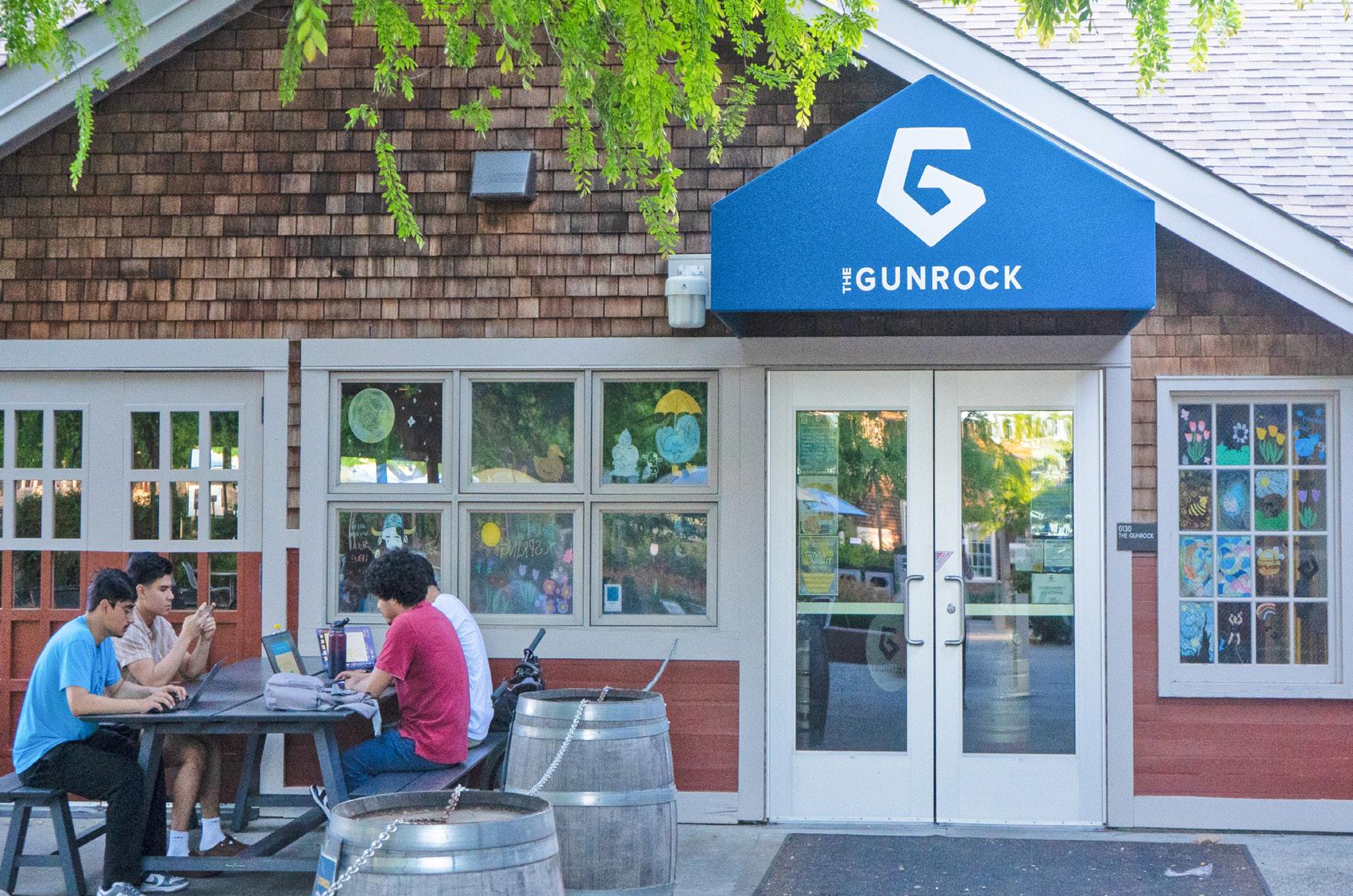
The Davis Police Department is investigating the occurrences as hate crimes
 BY CHRIS PONCE city@theaggie.org
On April 15, the city of Davis Police Department announced they are investigating two incidents, one of which was caught on camera, of a suspect or suspects who vandalized Israeli flags that were hung at residents’ homes. The footage shows someone with a “large knife” who sliced an Israeli flag and stole it. Both incidents, which occurred on April 12, are being investigated by authorities as hate crimes.
“During the early morning hours of Friday, April 12, 2024, a person with a large knife entered the front yard of a residence located in east Davis and sliced an Israeli flag that was also taken,” Davis police said on Facebook. “The Police Department is aware that another vandalism, also regarding an Israeli flag, occurred not far from the one captured in the video.”
The footage shows the suspect in shorts, a hooded jacket and wearing a face mask approaching the home with the knife and making incisions on the flag. Authorities have called these incidents hate crimes because of possible motives.
“Both incidents are being investigated as hate crimes because it is believed the crimes were meant to terrorize the residents of these homes because of actual or perceived religious beliefs,” authorities said.
The incidents come six months after antisemitic graffiti of an Israeli flag with a swastika replacing the Star of David was found near Highway 113 and antisemitic flyers were left downtown.
The Davis Phoenix Coalition shared their response to these incidents and the most recent occurrence on Facebook.
“In our experience, these acts range from deliberate provocation by white supremacists to adolescent desires to shock by school-aged children,” the Davis Phoenix Coalition said in their post. “Some of these acts are perpetrated by people outside our community; others from those who live here in Davis.”
The group said that regardless if the incident was intentionally an act of antisemitism or meant to be a political statement about the Israeli government, “the effect was the same.”
“The Davis Phoenix Coalition draws a bright line between reasoned criticism of the Israeli government and hatred against all Jewish people,” the Davis Phoenix Coalition said. “The latter is never acceptable. Last night’s act of vandalism was also an act of intimidation, spreading fear among our Jewish neighbors. All forms of prejudice are interconnected, and when one marginalized community becomes the focus of hate, it makes our community as a whole feel unsafe. This ripple effect damages our bonds of trust unless countered with solidarity.”
Authorities are asking anyone with information about these crimes or who recognizes the suspect to contact the police via phone (530-747-5400) or email (policeweb@cityofdavis.org).
“The Davis Police Department stands with all hate crime victims; incidents of hate cannot be tolerated, they will be investigated to the fullest extent possible, and those found to be responsible will be arrested,” authorities said.
Family-owned neighborhood store now features over 15 vendors offering vintage clothing, handmade accessories and jewelry in-store
BY ALEXANDRA SHAPIRO city@theaggie.orgDavis’ Neighborhood Market, founded in 2022, is held every other Saturday afternoon. The pop-up was initially held at University Mall but has since moved to G Street. The market started with six siblings who were passionate about meeting new people and sharing creativity. “Our family upbringing instilled the entrepreneurship spirit into all of us,” Alex Barreto, one of the primary founders, said. “We’ve all vended at markets in Sacramento but slowly transitioned to full-time collectors.” Alex Barreto’s brother, Eric Barreto, attended UC Davis and saw a rich fashion culture but a need for more opportunities. “There weren’t many events or places to go and gather with your friends to find cool stuff,” Alex Barreto said. “We all came up with the idea [for the market] and haven’t looked back since.”
To secure the necessary permits to operate the market, the Barretos have “worked closely with the city of Davis” to continue hosting events. With the market’s success, the Barretos decided to venture into a new business. Alex Barreto suggested to Jake Starnes, the owner of Vault Board Shop, to
the store
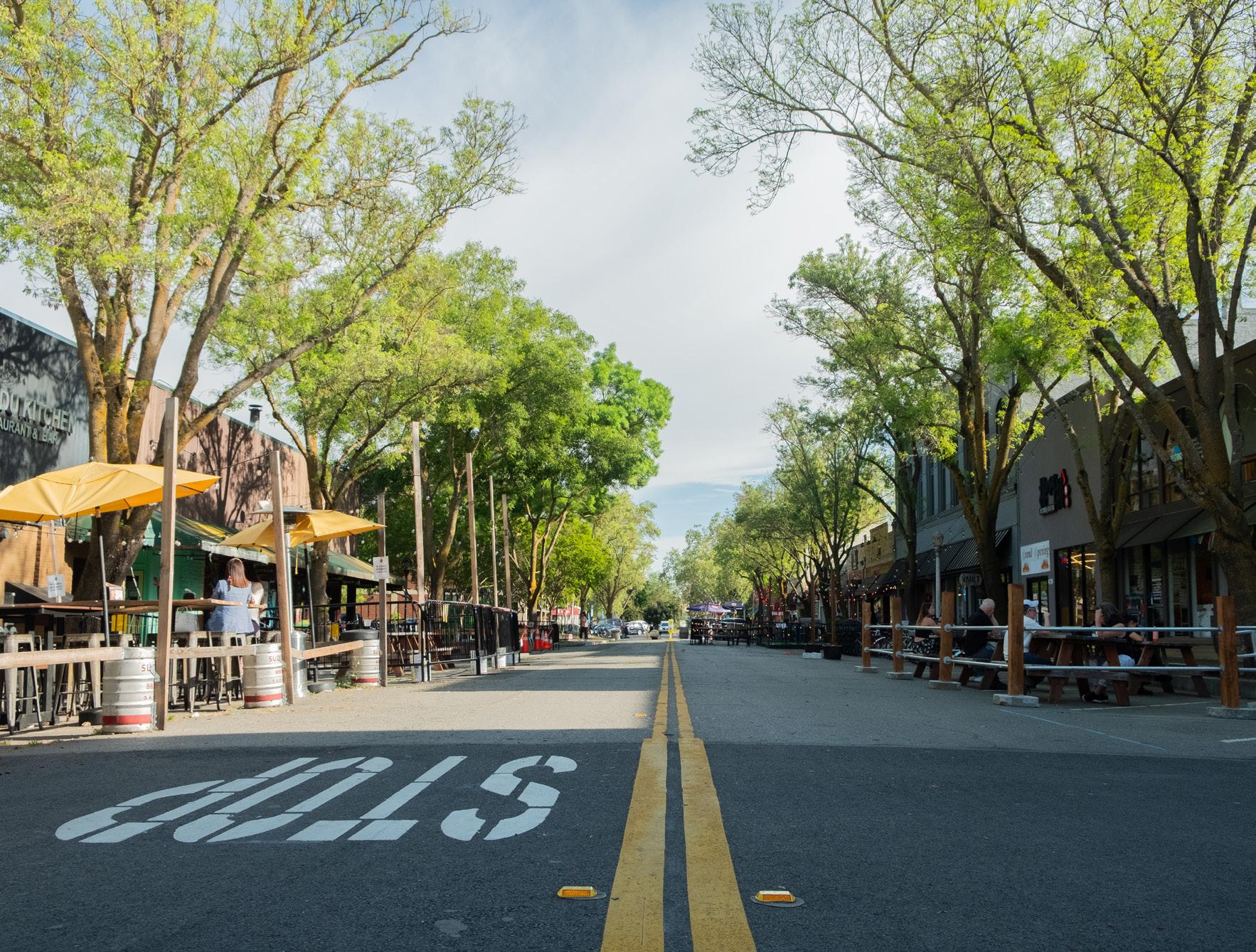
Gosse said. “I feel that I have grown so much.” Alex Barreto says the best part of their job is building relationships with vendors and patrons. “[It’s] creating a space where the community can share their passion for past fashion,” Alex Barreto said. “The most recent examples are seeing
parents and grandparents find a past item they remember and telling the younger generation about it.”
Des, a fourth-year clinical nutrition major and vintage vendor, began thrifting as a hobby. Over time, an overflowing closet led him to start selling lesser-worn pieces.
“To my surprise, sales were going up consistently, which brought me to where I am today,” Des said.
Des emphasized the advantages of supporting small businesses beyond the unique shopping experience.
“Shopping small helps against fast fashion, unfair international clothing manufacturers practices and to reduce clothing waste in the landfills,” Des said.
Des also shared advice about how to manage a small business.
“My advice is to be yourself as individuality is important, to have good customer service skills and to be consistent,” Des said. “Also, it’s crucial not to overstock inventory until you make a consistent profit. Lastly, the most important step in this process is to have an optimistic mindset and to do what you love.”

Enter digits from 1 to 9 into the blank spaces. Every row, column and 3x3 square must contain each digit. Each Sudoku has a unique solution that can be reached logically without guessing. Answer

Sorry professor, this book was just too interesting to put down
BY ALLISON KELEHER adkeleher@ucdavis.eduIn my history lecture, there’s a student that resides in the front row who consistently raises his hand to ask irrelevant questions and offer strange opinions to the professor. In the first week of class, it really annoyed me, but lately I’ve gotten used to it. Sometimes if he talks for long enough, it derails the lecture so much that I don’t need to pay attention. Whenever he raises his hand, my professor’s face drops so slightly that you have to be focusing in order to catch it. It’s become one of my favorite parts of lectures.
So, you can imagine my confusion when one day, the lecture was running smoothly — too smoothly. My hand was beginning to cramp from actually taking notes rather than listening to my classmate argue with the professor. I decided to investigate. I looked toward where he normally sits, and he wasn’t missing. So, what’s wrong?
Suddenly, I felt concerned. Maybe he lost his confidence.
As I brushed away a tear, I noticed that he didn’t have his laptop out, but he was reading a book. Actually, he wasn’t even paying attention to the lecture at all.
My professor noticed his indifference at the same time I did and
actually stopped her lecture. “Excuse me, is my lecture too boring for you today?” she asked with an attitude. I think all this time she’s spent respecting his opinions has caught up with her. He didn’t respond at first, so my professor called out his name. His head popped up and his face appeared to be shocked. “Oh, I’m so sorry professor, I was just really interested in this book I found at the library.” “Now, what book could be more interesting than my lecture?” My

professor was developing some sass. She walked over and took it from his hands to look at the cover. Her face softened a little bit. I was confused watching this interaction, but it was made clear a second later when she said, “All right. I know my writing can be mesmerizing, but why don’t you listen to me in lecture while you can. Save the book for outside of class.” No way. He was reading her book in class. My annoyance for him came back in full force as the lecture continued. After class, I noticed my classmate having a deep conversation with the professor. She didn’t look annoyed at all anymore. Nothing like a little bootlicking to get in
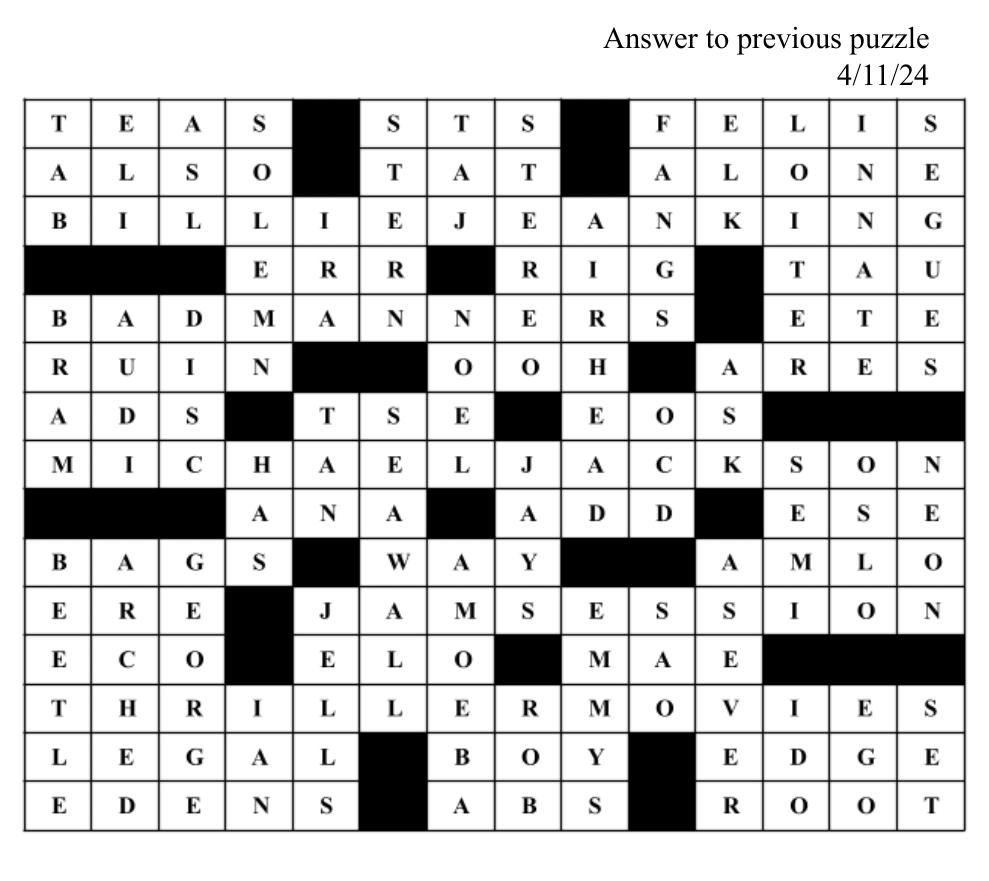

I left some of my brain cells at Picnic Day
BY CARMEL RAVIV craviv@ucdavis.eduIf you don’t know what the TikTok rizz party is, congratulations, you’ve salvaged some of your frontal lobe and you can waste it doing homework or something stupid. This article is for the sigma alphas like me, who understand culture, who understand society and who are regarded as intellectual philosophers. When you think about it, the Tik Tok Rizz party analysis is basically a candid Breakfast Club, friend group dynamics that extrapolate from an adolescent need to break free from hierarchical roles. From a high schooler’s party to ours, here’s the California colleges as Tik Tok Rizz party members.
UCSB Deltopia: Group Leader Deltopia is the indisputable leader of California College partying. Emerging from a dark past, everyone looks to Deltopia when it comes to alcoholism and John Summit wannabees. The more your local police hate you, the more the world loves you.
UC Davis Picnic Day: Turkish
Quandale Dingle Picnic Day is climbing the ranks in recognition and respect. Spies drove down from Davis to Isla Vista to take
Faculty and students dispel common myths about office hours and highlight their importance
BY EMME DUNNING features@theaggie.orgCollege can be challenging. Particularly at a competitive institution like UC Davis, it's easy for students to become overwhelmed with mounting assignments and get lost in the shuffle of a large research institution. In these moments, many students don’t know where to turn for academic help.
Office hours can provide the solution. Nearly all teaching staff at the university offer office hours, providing students with the unique opportunity to learn from professors in a one-onone setting, a method of teaching that is otherwise unfeasible at a large institution.
Despite the potential benefits, office hours are not a widely used resource. Meeting with a professor one-on-one can seem daunting, and there is a common misconception that they are solely for students struggling to grasp a specific concept or subject. This narrative deters students from utilizing this essential resource.
In reality, office hours should be seen not as scary or intimidating but instead as a low-stakes educational opportunity offered by teaching staff and available for all students. The benefits of office hours go far beyond answering clarifying questions and working through course material. Instead, office hours provide an opportunity to connect with teaching staff and build strong connections outside of the classroom.
Professor Eleftheria Arapoglou, a continuing lecturer in the American Studies department, has renamed her office hours to student hours in an effort to dispel the stigma surrounding the resource.
“I like calling them student hours,” Arapoglou said. “They are here for you.”
Arapoglou also asserted that there is no “right way” to approach these student hours. “You don’t have to need advice to come [to office hours],” Arapaglou said. “Students can definitely ask clarifying questions and get hands-on advice on problem areas or muddy points, [but] another very important aspect is establishing connections with members of the campus community. When it comes to, for example, applying for graduate school or applying for a job, faculty members and people you work with can serve as references or even provide insights and tips as to how to go about applying for a position.”
Arapoglou also highlighted that she sees increased interest and growth from students who attend office hours in contrast to those who do not.
“The minute a student reaches out and establishes contact, most of the time what they get out of it is a positive experience. It reinforces their motivation, reinforces their determination. I typically see students doing much, much better both in their classes and also with respect to their life plans,” Arapoglou said. Although certainly rooted in academic success, attending office hours also has social benefits. Kate Andrup Stephensen, current director of the University Honors Program, emphasized this social aspect. “[Office hours] gives you the opportunity to get to know the person that’s teaching you, and that could lead to a whole slew of different things,” Stephenson said. Beyond using office hours to excel in her coursework when she was
Students report that taking advantage of the spring weather can increase academic performance
 BY ZOEY MORTAZAVI features@theaggie.org
To many college students, productive studying is often associated with dark, stuffy library rooms and secluded corners. Whether this reasoning stems from trying to cut off distractions, staying away from people or just because libraries are a typical study space, consider changing the scenery as we plunge deeper into the spring quarter.
Studies show that spending time outside can have numerous health benefits. Davis is a place where students can access both indoor and outdoor study spaces. When it gets closer to being time for midterms and finals, Davis students are commenting that utilizing outdoor study spaces can boost their productivity, as well as benefit overall mental health.
“I do think that outdoor study spaces are beneficial. For me personally, being outside puts me in a better mood,” Violet Ichel, a first-year agricultural sciences major, said. “This motivates me to do work, although it’s better for me to be in an outdoor study space by myself rather than surrounded by people. I’d recommend for people to go outside to study because it’s good for their health, and it’s a nice break from the constant indoors of classes.”
While utilizing the outdoors to focus on work for some more difficult classes may be easier said than done, attempting outdoor studies may actually be good for your health.
Students can demonstrate increased coherence and a more detailed understanding of academic subjects after being taught them outdoors as opposed to an indoor class setting, according to Psychology Today. In addition, variation in study settings has been shown to increase productivity and memory retention.
UC Davis students have access to many different outdoor study spots on campus. Popular spots include the Quad and the Arboretum, as well as the lawns near each of the student dorm areas. Students have reported that changing up where they choose to study can help bring a fresh perspective to their coursework.
“I definitely utilize outdoor study

in college, Stephenson also formed personal connections with instructors solely through attending office hours. “I’m still close with a couple of faculty [members] that I took classes with and I really only got to know them because I took the time to go and chat with them in office hours,” Stephenson said. “I spent Thanksgiving with a faculty member once because I couldn’t go home for Thanksgiving. It’s that kind of benefit that you wouldn’t necessarily think of. It’s a much more human experience if you get to know the people that are teaching you.” Stephensen is also aware that
Caspar Schulte, TGIF committee member and managerial economics and international relations double major, commented on the overall impact that TGIF has within the UC Davis community.
“What’s important to note about TGIF’s importance is that it really promotes student development,” Schulte said. “UC Davis prides itself on its students being able to build their resumes and their best future selves, and TGIF gives the opportunity for students to directly engage in sustainability and research.”

spaces a lot,” Sonia Boughaffour, a second-year English major, said. “Being outside rather than holed up in the library all day is very beneficial. As an English major, I do a lot of reading, so taking the time to study at the Arboretum or Quad is helpful and I would definitely recommend it to others as a way to enhance their learning experience.”
For many students, adapting to a new environment for college can be a very challenging experience. Becoming aware of what type of studying environment works best for you can be an important aspect of adjusting to university life and ensuring that you are completing and comprehending your work.
Melissa Caltacci, a first-year nutrition science major, shared her experiences with accommodating and learning to study productively as a new college student. “As a first-year student at UC Davis, I think I can speak for most new students when I say that finding your groove and efficient study habits as well as areas [to study] can be difficult to find,” Caltacci said. “Especially with the seasonal changes, depression can hit harder during the winter, making it harder to focus with all the rain and gloomy nights.” Caltacci continued by giving advice to students, explaining that students should take the warm weather as a way to improve their mental health.
“Since we’re now entering spring quarter, the sun is shining again — being outside is proven to boost serotonin levels, which really motivates me to get my work done. Campus is also beautiful this time of year, especially areas [on] campus like the Arboretum,” Caltacci said. “People should reconnect with nature during the springtime; it can help relieve their stress while also increasing concentration. Plus, it always puts you in a better mood.”
Whether you tend to combine productivity and the outdoors in your day-to-day life, consider taking some of your books outside in the upcoming months to see if outdoor productivity will click for you. As many students have reported, having access to a campus with so many scenic study spots is definitely something that shouldn't be taken for granted.
FROM PAGE 7
The writers do a genius job of characterizing each and every role as people we might know in real life but capable of unimaginable harm, making them all the more monstrous and surprising to the audience. Their complexity makes the film narratively rich and deeply thrilling.
Although it does place love at its core, the film turns violently from its genre of romance into that of thriller, jolting the audiences and subverting their expectations of what this thriller would deliver. In their signature style, A24 brings the flavor of independent cinema with its niche story (or rather niche twist on a popular plot), strong aesthetics and convention-defying narratives.
As the film went on, its “lying” twists and “bleeding” turns made the audiences cry out versions of “what the hell is happening?” The film’s many close-up shots of bloody and violent gore or surreal body horror contrast with the sequences of starry night skies of the New Mexican landscape, shots of cuddling and making breakfast for one’s lover. The film ultimately triumphs in its surreal euphoric return to sapphic love despite violence.
This is the question the film seems to explore: what is love? What are its boundaries? And what happens when those are tested by such violence? Along with dilemmas of family, romantic relationships and their transgressive violations, the film is as entertaining, weirdly cathartic and mythological as it is complicated and murky. It definitely left everyone at the screening wondering what to make of it or even where to start processing what they saw.
For watchers, leaning into the movie’s sapphism and not personally questioning its narrative until later is probably the best way to approach this genre-defying film. “Love Lies Bleeding” is playing in theaters now.
students can find the process of office hours extremely intimidating but hopes to dispel those stereotypes.
“We’re nervous to talk to you all too. We’re human. We’re curious. We’re excited. We want to talk to you all, that’s literally why we’re here,” Stephenson said. “If we didn’t want to engage with the younger generation or get to know students we wouldn't be in this work.” Kera Reinig, a third-year environmental science and management and economics double major, has seen the benefits of attending office hours firsthand during her time at UCD.
“I think [office hours] are very

FROM PAGE 7
“Fortnight (feat. Post Malone)” is the first track and leading single of the album. It’s slow, and retains the lyrical ambiguities and intricate self-referential lyrics of “folklore” and “evermore,’ but the beat is now synth-pop — a sound reminiscent of “Midnights.” Combining aspects of two eras that brought her back onto the scene is not an unusual technique for Swift to employ — but it falls short of her greatest works. The track “The Tortured Poets Department” confirms its muse: Healy, with reference to him being a “tattooed golden retriever.” This track starts with referencing marriage, a topic which was allegedly part of the rift between Swift and Alwyn. In the song, someone grabs Swift’s ring and “put[s] it on the one people put wedding rings on.”
Fans can suspect that Alwyn is also mentioned in “My Boy Only Breaks His Favorite Toys,” where she elaborates on the breakdown of their relationship and the dissembling of Swift — attributing herself doll parts that he takes apart and keeps the “tortured hearts.” This track is more upbeat than the past two as well.
The track “Down Bad” talks about feeling physically and emotionally abandoned. The concept of being “down bad” insinuates that the passionate feelings she holds for this person are unrequited.
The next track, “So Long, London,” is speculated to be about Alwyn — someone whom she frequently resided in London with. This track speaks to the relationship that had once been seen as a perfect match. Who could think otherwise when “reputation” and “Lover” shadowed the narrative — and the truth?
“So Long, London” is reminiscent of “Down Bad’s themes of abandonment and holding on past the finish point. She is trying her hardest to keep them close together — “Pulled him in tighter each time he was driftin’ away / My spine split from carrying us up the hill” — but he is already gone. Despite this ending, she still exists in everything he does: “I founded the club she’s heard great things about,” referencing Alwyn’s interview where he shared that he, Paul Mescal and Andrew Scott were all in a group chat called “Tortured Man Club.” It wouldn’t be a stretch to think that Swift mentions that club through her album title. We’ve had similar instances of these seemingly obvious references to past love, such as in “Dear John” and “Style.” “But Daddy I Love Him” is a commentary on the public’s outrage where she claims that, “These people only raise you to cage you.” There is visual imagery of a wedding happening, something that she’s always wanted: “They slammed the door on my whole world / the one
helpful,” Reinig said. “I think a lot of people just miss them or they think it's not worth their time, but what I’ve found as the years go on is that they’re just as helpful as you think they might be. That’s why they’re set up for you.”
As students approach midterm season, it is more important than ever to utilize the resources available to us. By choosing to attend office hours, students can gain much more than a higher grade in their courses. Office hours provide students valuable opportunities to ask questions, gain career insights from faculty and form connections with other campus community members.
thing I wanted.” She goes on to call this uproar “bitchin’ and moanin’” and seems to poke fun at this criticism by making a joke about “having his baby” — she’s not, but she’d love to see their faces as they reacted to that line. “Fresh Out the Slammer” hints that Healy served as a rebound for her relationship with Alwyn. “Florida!!! (feat. Florence + The Machine)” has beautiful vocals from Florence and Swift, referencing crime and drugs, escaping responsibilities by leaving to Florida. Despite the ambiguities, the track stands strong because of its vocals and beat build-up.
“Who’s Afraid of Little Old Me?” fights against this assumption that Swift is powerless against rumors and controversies. Perhaps her silence about most scandals and breakups has laced this narrative — but she’s saying that she has more power than people think. To say that she is “little” but that they “should be” afraid of her shows the cultural impact she has —even when her reputation is tainted.
“I Can Do It With a Broken Heart” talks about Swift’s triumphant tour as she’s experiencing various heartbreaks. A time that is filled with success in her career is also shadowed by her personal life and the collapse of the relationships she thought were going to last. “The Smallest Man Who Ever Lived” allegedly is about Healy, as she says that he tried to buy pills “from a friend of a friend.” Healy has been accused of dealing with drug abuse, as well. Listeners gain insight into what led to the end of their relationship: ghosting, inflated public image and disappearance when things got hard.
“The Alchemy” is filled with football metaphors —- “touchdown,” “winning streak” —- seemingly referencing Kelce throughout the track. It’s one of her most slow-beat romance songs, and it does not really stand out beyond this relationship plastered across all gossip magazines.
The final track before entering the extended version of the album, “Clara Bow,” talks about making it in the industry. It’s something that she’s mastered, but it’s not easy to be competing against other artists fighting to take her throne. In the end, she views what sometimes feels like fading stardom and urges other artists to be careful of what the media wants. They’ll be glad that people are saying they have an “edge” against other artists, and enjoy the reviews saying their future looks “dazzling” because of it —- but this won’t last forever.
“The Tortured Poets Department” is an album that’s filled with everything fans love about Swift, coupled with genuine and beautifully crafted songwriting. Despite this, there are times when these songs went on longer than they should’ve. Some lyrics go in the book of memorable lyrics by Swift — others induce confusion and perhaps a shake of the head. This album gives Swift an edge by responding to the public and taking over her narrative, calling out past relationships and setting the record straight.
Fans are already raving about it online while others are expressing their concern that this record is too similar — or different — from her past work. Swift’s lyricism is what makes her such a good artist, and with songs that seem to be crowded with metaphors and allusions, it’s an album that places the artist dangerously close to a new genre of music that her fans might struggle to get into. Nonetheless, it’s an album that will get you through heartbreak or make you feel on top of the world. As always, Swift makes music for anyone going through the various stages of life.
The on-campus organization provides resources, mentorships and professional development workshops for student-led businesses
BY LYNN CHEN features@theaggie.orgThe UC Davis campus provides students with a variety of services and locations to pursue their passions — those with an entrepreneurial spirit may be drawn toward the UC Davis Student Startup Center.
“The mission of the Student Startup Center is to help students launch, grow and sustain startups that solve major problems in the world,” Aaron Anderson, director of the organization, said. Anderson went on to describe what the Student Startup Center can provide to UC Davis students.
“Whether you’re an undergraduate [or] graduate student — whatever major you might be — if you want to launch a startup or even if you’re just interested in enhancing your job skills to be a phenomenal employee one day, the Student Startup Center can help you,” Anderson said.
The center offers many resources to support its entrepreneurs. They have a series of events where startup founders come to share valuable experiences with students and student managers lead skill-building workshops, according to Anderson. They also offer an educational course for students interested in studying
entrepreneurship where they can earn a “Certificate in Entrepreneurship” if completed.
Furthermore, the Diane Bryant Engineering Student Design Center is a physical space members of the Student Startup Center can access to innovate products for their startups.
“We have a hot-desking [collaborative] space for student teams to operate [in], a rapid prototyping lab if you need to build something [and] a [virtual reality] or [augmented reality] lab if you’re interested in the metaverse,” Anderson said. “[These are] all free for students around campus.”
Currently, those involved with the Student Startup Center are looking forward to “PLASMA Demo Day,” which is an event that originated from the PLASMA program, a 12-week accelerator program for undergraduate entrepreneurs.
Demo Day is where undergraduates pitch their startup ideas to a panel of judges made up of investors and entrepreneurs, as well as hundreds of fellow students in the audience. This year, Demo Day will be held in California Hall on May 2 from 6:30 to 9 p.m.
PLASMA seeks to support earlystage student companies with “an extensive mentor network, educational
lessons with industry leaders, seed capital and a rich entrepreneurial work environment,” according to its website.
“PLASMA is our capstone program,” Anderson said. “It’s the preeminent effort our students go after, so all of our classes and resources funnel up to PLASMA.”
Anderson explained that in the program, the 10 or so best undergraduate startup teams found across campus will be paired up with industry mentors to meet on a weekly basis.
“It’s just this really aggressive effort to help rapidly accelerate what the student team is able to do,” Anderson said.
The goal at the end of PLASMA is for students to have their startups be “accelerator ready.” This means that the businesses will be competitive enough to join professional accelerator programs, such as Y Combinator, and receive real funding from investors.
“In the last couple of years, we’ve had approximately seven or eight student teams that have raised venture capital funding or angel investor funding and generated 10s and even 100s of thousands of dollars in revenues from their startups,” Anderson said.
A promising startup from this
cohort is EpiSense, an everyday-use headband intended to warn patients of seizures 30 seconds in advance.
The Co-Founders are Jaya Athluru, a third-year undergraduate cognitive science major, and Simran Lallian, a second-year neurobiology, physiology and behavior major.
Another business with potential is Fit Candy, which was founded by Dion Skaria, a fourth-year food science major. His idea uses watermelon rinds to make healthy and sustainable candy.
Even though talented, ambitious individuals join the Student Startup Center in hopes of successfully launching their ideas, some still face the disappointment of failure.
“It tends to be discouraging when you do fail or something doesn’t work out the way you think it will, but I’ve noticed that folks like to bounce ideas off one another [after the failure],” Brianna Todaro-Ellsworth, a fourthyear managerial economics major and current student outreach manager for the center, said.
Todaro-Ellsworth elaborated by saying that students who are a part of the center often focus on their growth rather than the results of their startups. They use the setback to learn from and discuss with their peers why their ideas failed as well as how to improve next time.

“You kind of see failure as a way to guide you and not as an end,” TodaroEllsworth said.
Overall, the Student Startup Center is a home for passionate and self-driven students. Olivia Bates, a second-year managerial economics major and the outreach manager of the center, added onto this idea.
“For me, what really excites me is just the initiative of everyone working here,” Bates said. “I really appreciate it when people involved in projects that I’m excited about are excited to take that extra step to make things happen. I think that relates a lot to the entrepreneurial mindset.”
Researchers at UC Davis have published a study that has shown the Engrailed-1 (EN1) protein supports the advancement of pancreatic cancer and its spread to other parts of the body (metastasis) using laboratory cultures and mouse models.
“Pancreatic cancer is the third leading cause of cancer-related deaths in the United States with [a] 12% 5-year relative survival rate, lowest among all common cancers,” the study reads.
The researchers discovered a correlation between high levels of EN1 and the severity of pancreatic cancer, particularly its tendency to metastasize, in human patients. This finding can lead to possible treatments for pancreatic cancer, which is currently one of the hardest cancers to treat. The project started out by studying the metastatic process of pancreatic cancer. The metastatic process refers to the spread of cancer cells from the original (primary) tumor to other parts of the body, where they can form new tumors.

“Metastasis is an important component of pancreatic cancer progression, but researchers have not been able to identify genetic mutations responsible for it,” an article from UC Davis states.
Reno Jihao Xu, a doctoral student involved in the project, commented on the process of discovering the protein.
“Initially, we were studying the metastatic process of pancreatic cancer and through various analyses we identified a transcription factor which is a protein,” Xu said. “Transcription factor goes into the cell nucleus, turning on or off the transcription of certain genes. What this means is that it controls the genotype to phenotype process, therefore carrying out a subsequent function; in this case, promoting the metastatic process. So this project is about characterizing the functionality of this protein by looking at what genes this protein targets as well as how the protein regulates this gene through various experiments.”
In order to identify this protein, the teams used a non-traditional technique.
”We identified this protein through the utilization of a technology called Organoid, which is a 3D modeling of cells,” Xu said. “This technology well-preserves the
UC Davis Health has been using AI to predict the risk of liver cancer
BY MARLE LAMOUNTRY science@theaggie.orgThe liver, one of the largest organs in the human body, plays a major role in numerous body functions. Taking care of your liver is crucial, as, without it, you could not survive.
Liver cancer is a global health concern, and it is often diagnosed at advanced stages when treatment options are limited. Early detection and prevention are key to successful treatment, but they have been historically complex tasks — until now.
A team comprised of health professionals and data analysts at UC Davis Health has created a machinelearning tool that better predicts which patients with metabolic dysfunctionassociated steatotic liver disease (MASLD), are more likely to develop a more prevalent type of liver cancer known as hepatocellular carcinoma (HCC). The team used vast amounts of MASLD and HCC patient data from both UC Davis and UC San Francisco, predicting that those with MASLD will develop HCC within a year of diagnosis.
The study, published in Gastro Hep Advances, explained the importance of the research.
“Hepatocellular carcinoma (HCC) incidence is increasing and correlated with metabolic dysfunction-associated steatotic liver disease (MASLD; formerly NAFLD), even in patients without advanced liver fibrosis who are more likely to be diagnosed with advanced disease stages and shorter survival time, and less likely to receive a liver transplant,” the study reads.
Souvik Sarkar, a UC Davis associate researcher, commented on the significance of machine learning for cancer detection.
“The diagnosis of fatty liver is a bit more complicated, as [the causes have] many variables,” Sarkar said. “You know if a patient has cirrhosis (serious liver scarring), they have an increased risk of liver cancer, making the use of Artificial Intelligence (AI) unnecessary as we already know to screen [for liver cancer]. But if you have a multitude of [risk] factors, it is best to use machine learning.”
The model was trained using data from UC Davis and then validated against data from UC San Francisco. The study found that there was 92.12% accuracy when predicting MASLD in patients diagnosed with HCC. The researchers at UC Davis Health will continue expanding their research, further developing their model to increase its accuracy and predictability. Sarkar entails that applying this model to the real world will need some fine-tuning, but will
be invaluable, as he hopes it will be used in healthcare facilities as a readily available tool.
As AI technology advances, we will begin to see the emergence of innovative technologies that combine different disciplines. As the tool developed by the UC Davis Health team is one of the first of its kind, it has the potential to revolutionize the way healthcare providers approach patient care, paving the way for future medical advancements.

biological characteristics of a tissue, in this case, the cancer cells, which allows us to characterize or identify the differences between the different stages of cancer progression, such as primary tumor versus metastasis.”
Due to the recently discovered nature of EN1, finding effective ways to stop the progression requires less traditional methods and creative thinking.
“There are no therapeutics that can target this protein on the market because of the unique structure that does not allow for the development of therapeutics,” Xu said. “So, what we can go about is identifying what other proteins can interact with this protein that are important to carry out its downstream pathways. To do this, we perform an experiment called immunoprecipitation followed by mass spectrometry. This experiment allows us to identify all the proteins that interact with this protein, and one of them is called DH2. It modifies the histones on the genetic level to regulate gene expressions, so perhaps we could combine these DH2 inhibitors with chemotherapy to see if there’s any differential regulation or differential response from the combination of therapy.”
Finding the protein responsible
was incredibly difficult and complicated for the team.
“For a very long time we tried different strategies to identify the genomic binding regions of the EN1, and that took up about two years,” Xu said. “We tried almost everything and finally it worked out.”
When further asked what helped make the project successful, Xu highlighted the importance of collaboration and communication amongst all members of the scientific community.
“I started the project when COVID first hit,” Xu said. “So, it was basically just myself inside a lab, and it was really difficult to interact with other labmates. Science is a collaborative effort, so I definitely felt powerless doing the science by myself.”
Xu mentioned what he finds to be one of the most important parts of making the project come to life.
“I would really like to emphasize teamwork because innovation doesn’t come through one single individual; it comes through daily interaction with colleagues, or with other investigators,” Xu said. “All of this is teamwork, and without teamwork, there is no discovery, [and] there is no scientific achievement.”

The Aggies outscored their opponents 12-6 across all three victories
BY LUCIENNE BROOKER sports@theaggie.orgSOFTBALL bring down the lead to 2-1, the Aggies responded soon after to maintain their two-run advantage with a hit from first-year Marley Panziera who brought her teammate, second-year Gia Felice, home for another point. The 3-1 scoreline held, and Davis had finally broken their losing streak just in time to face off against CSUN for the second time.
The start of April was an unlucky time for the UC Davis women’s softball team. With a string of five consecutive losses, including a 2-11 blowout against Saint Mary’s College, things were looking dire for the Aggies. With NCAA regionals only six weeks away, a quick turn-around was needed to make a comeback.
On April 12, the Aggies played at La Rue Field for the first time in four games against rivals — the CSUN Matadors. With the home-field advantage being the edge the Aggies needed, Davis’ team claimed not just one, but all three much-needed victories.
Despite the chilly weather, the Aggies got off to a quick start with a score from fourth-year Anna Dethlefson in the first inning. In the third inning, Dethlefson was able to recreate her success for another run under similar circumstances. While CSUN scored in the fourth inning to
The second game of the series started off with a bang as fourthyear Bella Pahulu gave the Aggies the lead early on in the game with a home run. Unlike the first game, the Matadors responded relatively quickly on a Davis error to score two runs and take the lead. However, that triumph didn’t last them through the rest of the game as Davis clapped back with an impressive six-run performance in the third inning. Although CSUN capitalized an additional two times, they were unable to overcome the Aggie’s skill in the third inning, and the game finished 7-4. With a 2-0 series record, the Aggies’ chances were looking high, but
The Oakland Athletics to play in Sacramento through 2027 before their Las Vegas relocation
BY CAROLYN (CARI) FENN sports@theaggie.orgDespite Oakland fans’ efforts to keep the Athletics (A’s) at the Oakland Coliseum, on Nov. 16, 2023, Major League Baseball (MLB) owners unanimously approved the team’s move to Las Vegas, Nevada starting in the 2028 season.
After this heartbreaking decision was announced, Oakland fans had no choice but to accept that they would lose the major league franchise come 2028. The heartbreak was further
complicated when, on April 4, 2024, the Oakland A’s had yet another announcement where they declared that they would be leaving Oakland and heading to Sacramento for the 2025 to 2027 seasons before their big move to Las Vegas. With both decisions, 2024 marks the team’s last season in Oakland. While the A’s lease with the city of Oakland expires at the end of the 2024 season, they were reportedly attempting to negotiate a short-term lease with the city to allow the team to play at the Oakland Coliseum for the remaining time before the move.
with one game left to be won before the end of the series, there was more work to do. After the weather delay, the teams finally took the field and were eager to compete in the series finale. CSUN came out swinging with early-on pressure and a score by the Matadors in the second inning, determined to leave the city of Davis with a victory.
Unlike their high-scoring performances from both of the prior days, the Aggies struggled to hit. Although they came close several times, it wasn’t until the sixth inning when they tied the match and took the lead. Fourth-year Sarah Nakahara scored off of the triple hit by thirdyeaer Maddie Grissom. Additionally, Felice had yet another strong performance as she raced to home plate and scored the final point of the sets. Even though CSUN didn’t give up until the last pitch, the Aggies held on to clinch the series win. La Rue Field has proven to be a vital key to the Aggies’ success: at home, they have a record of 14 wins
However, after negotiations reportedly collapsed with Oakland, the A’s began looking at California’s capital for their temporary home.
The A’s will play at the San Francisco Giants AAA affiliate, the Sacramento River Cats’, home stadium — Sutter Health Park. During the A’s time in Sacramento, they have chosen not to change their name to reflect the new city, instead opting to just go by their nickname. For their time in Sacramento, they will also be sharing the stadium with the River Cats, meaning that during the three seasons the A’s are in Sacramento, the stadium will host a total of 156 games a season — 81 A’s games and 75 River Cat games.
Along with the move will come a downgrade in the seats available for fans within the stadium. The Oakland Coliseum contains 63,000 seats for fans while Sutter Health Park contains only around 14,014 seats, including the outfield lawn open seating. Although the team is having a downgrade in seating capacity, in Oakland, the A’s only averaged 6,243
and 10 losses. Their record on the road isn’t quite as pretty with two wins, two games canceled due to weather and 11 losses. With a conference record of six wins and nine losses, they’ll be looking to rack up some wins in their final sets of matches before NCAA regionals.
Regionals kick off on May 19. If the Aggies are successful, they’ll move on to Super Regionals on May 25 and then potentially to NCAA Women’s College World Series, held in Oklahoma in early June.

attendees in their first 13 home games of the season. This year, Oakland has had the lowest number of attendees out of any MLB team with 81,167 people.
While attendance has never been high for the Oakland-based MLB team, the fan’s turbulent relationship with franchise owner John Fisher hasn’t helped the cause. Many Oakland A’s fans have shown disdain for the team’s owner as he refuses to invest in building a competitive team, having the lowest payroll in baseball at a total of $47,275,000. Oakland’s payroll is nearly $30 million below the next lowest team, the Pittsburgh Pirates, with a payroll of $72,014,000.
After years of poor records, low attendance and an unstable relationship between fans and the franchise owner, the A’s move to Sacramento will mark the end of their 57-year run in the East Bay. The A’s official exit from Oakland at the end of the season will also mark the third and final professional sports team to leave the city in the past six years, with the Golden State Warriors having
left in 2019 and the now Las Vegas Raiders having left in 2020. Despite the move marking the end of an era for Oakland, it is just the beginning for the city of Sacramento. For Sacramento, the next three years will be a tryout to the MLB, proving that the city can be the home to an MLB team if an opportunity arises. More specifically, Sacramento hopes that if the A’s deal with Las Vegas falls through, they could become the final landing spot of the team. With Las Vegas yet to break ground on the new stadium and debates being heard from groups against the stadium’s construction, it could very well be a plausible occurrence.
Even though the A’s will soon be heading to Sacramento, a piece of the team will always belong to the city of Oakland. From four World Series titles to the infamous Moneyball era under General Manager Billy Beane, Oakland A fans will always be able to remember the good times they had with the team.
UC Davis alum and eight-time Emmy winner Amy Gutierrez publishes another children’s book that shatters the glass ceiling
BY SAVANNAH BURGER arts@theaggie.org
Currently, she is a permanent lecturer in communication studies at Sonoma State University and a best-selling author of the Smarty Marty series, a series of books detailing the experiences of Marty, a 10-year-old girl with a passion and ambition in the male-dominated game of baseball. The series began with Gutierrez’s first book, which turned out to be a best-seller, “Smarty Marty’s Got Game” back in 2013.
The book follows Marty as she shows her younger brother the fun and appreciation of baseball. She does so by teaching him all of the terms and nuts and bolts of baseball while attending a major league game. “There seemed to be a need for books about sports for new readers on the cusp and also to tackle the lack of a female representation in sports,” Gutierrez said. “When I do school visits, I have very candid, open discussions with the stereotypical roles we see boys in versus girls in sports.”
Gutierrez’s first book was a hit, and she followed it up with an
originally designed “Smarty Marty’s Official Gameday Scorebook” in 2015 that directly teaches kids how to score games themselves.
“The first book was about learning how to score, so let’s give them a scorebook to actually, you know, go put their knowledge to use and take it to a game,” Gutierrez said.
Smarty Marty stands out as a character that all young children can love but is especially important for girls, as she is the embodiment of what girls can achieve in male-controlled fields.
With every new installment of the series, Marty becomes more bold and ambitious with her role in baseball. While she just scores games in the first book, she goes further in the second, a chapter book, “Smarty Marty Steps Up Her Game.” In this story, Marty calls a baseball game, despite what qualms people may have about a girl doing so.
“I had Marty get an opportunity to call a game,” Gutierrez said.
“And this was long before we had women calling baseball [...] now we have several teams [with] female broadcasters. One of my best friends is Jenny Kavanaugh, who just got hired by the A’s to be the primary play-by-play announcer, and she’s the first female in major league history to be the primary play-by-play. I wrote this back in 2015 and it’s 2024, so it takes a little while to see progress. I’ve
always felt Marty was just a little bit ahead of her time. So that book was super cathartic for me because she could be my voice for things I couldn’t say myself in public.”
On March 19 of this year, Gutierrez published the third installment of the Smarty Marty series: “Smarty Marty Takes the Field.” This next story continues the trend of Marty progressively becoming more daring while she challenges gender norms in baseball.
“Where else could we go? And I’m like, well, at the Major League level, we haven’t seen any women manage,” Gutierrez said.
Thus, Marty takes the helm in the third picture book, managing a baseball team independently with confidence. She has to weather much gender-based adversity, as the team of boys doubts everything about her managing, including her qualifications, given that she’s never played baseball herself before.
“I really push that message with Marty, and she has to deal with the backlash of being the one who says ‘yes,’ of being the first, of being questioned and being told she’s not qualified,” Gutierrez said. “She has that conversation with the boy on the team. They say, ‘You’re not qualified. You play softball. What do you know about baseball?’ And she says, ‘How could I get qualified if I’ve never been given a shot And as a boy, you
The Aggie athletes behind the resurgence of historically Black Greek life
BY MI’ZAUNI REESE sports@theaggie.orgBeing a university student can be very demanding emotionally and physically, which can be amplified for student-athletes who must additionally balance a sport.
probably don’t know what that’s like. You’ve never experienced it.’”
“Smarty Marty Takes the Field” is a must-read for all genders and ages alike. Complete with beautiful illustrations by award-winning illustrator and author Anika Orrock, Gutierrez’s newest book is a testament to how promising a future with gender equity in sports can be. You can purchase the book at Abrams Books or your local bookstore. Remember, if not you, then who?
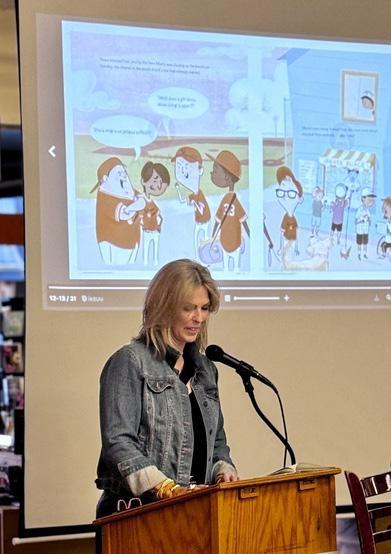
However, fourth-year Bria Shine and fifth-year Alexys Ford, both student-athletes at UC Davis, have expanded their activities even further as they are two of the core four members responsible for the resurgence of the Mu Kappa Chapter of the Alpha Kappa Alpha (AKA) Sorority Incorporated. This historically Black sorority has existed at UC Davis since 1978 but has lacked a strong presence since the COVID-19 pandemic. Shine and Ford, along with fourthyears Dorian Mendoza and Mehalet Shibre, have refused to let the legacy of AKA sorority falter and took it upon themselves to spearhead the beginning of a new era for the sorority amidst their seasons as Aggie athletes.
her blackness and its proximity to her trajectory and success here at UC Davis.
Shine, a double major in human development and African & African American studies, has been essential to the women’s basketball team all four years she has participated. Starting her Aggie career in 2020, Shine has made a name for herself not only on the court as a successful point guard but also as a diversity advocate. Featured in Black Futures Month celebrations, Shine discussed the importance of
“Black organizations and Greek life are diluted at predominantly white institutions such as UC Davis, and knowing the characteristics and reputation of AKA women, [I] felt drawn to the organization [and] finding [my] identity outside of sports in the sisterhood,” Shine said.
Ford, a psychology major, is a captain of the track team and is finishing her final season as an Aggie. As a short-distance sprinter, Ford has set team highs numerous times in the course of her career while also receiving recognition as an All-Academic Mountain Pacific Sports Federation (MPSF) scholar. Her academic and
athletic achievements have culminated in a desire to be a part of something bigger than her current legacy, the AKA sorority. Their “commitment to service in their local communities and nationwide” is what initially led Alexys to align herself with the sorority, as she described her “anticipation and excitement” for signs of the sorority’s resurgence. Both Shine and Ford express heavy support from their teammates and coaches in all their endeavors and look forward to their individual seasons while maintaining their roles in AKA. They are certain that “when it is time [for them] to focus on their individual seasons, [they] can depend on each other to pick up the slack where others cannot.”
“Be unapologetically true to yourself and embrace your Blackness, especially in athletics at UC Davis. Being a part of the small community of African-American student-athletes is something to be proud of. We are a small but mighty community and join together to illustrate our strength in numbers,” Shine said.
The sisters of the AKA sorority hope to create a solid foundation on which to build the new generation of the Mu Kappa chapter at UC Davis while remaining proud and strong. These women have cultivated a supportive environment in which they can pursue everything they desire, while still upholding the AKA sorority as one of their utmost priorities.