Active Magazine // Stamford & Rutland // December 2021
Sycamore Stamford are delighted to invite you, your families & friends to join in the festive fun at The Sycamore Stamford 2021 Christmas Market on Saturday 11th December, 11:00AM – 6:00PM.
As part of The Sycamore Stamford new centre launch we will be hosting a German themed Christmas Market at Sycamore Stamford, West Street, Stamford, PE9 2PR.
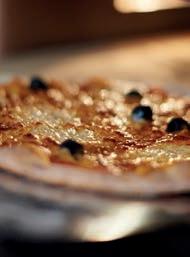
The event will see Christmas market favourites such as German Bratwurst & Frankfurters, Sweet & Savoury Crepes, Mulled Wine, Hot Chocolate, Mince Pies, Popcorn & Churros.
Alongside Christmas food and drink stalls we are inviting local businesses in Stamford & the surrounding areas to occupy a market stall totally
free of charge as part of the #ShopStamford community.
Stalls include Arts & Crafts, Handmade Jewellery, Handmade Home Goods, Handmade Candles & Aromatherapy, Christmas Decorations, Christmas Gifts and much more!
We hope to see you at Sycamore Stamford’s very own German Christmas Market.
18 LET THE BELLS RING OUT
Bell ringing is more difficult than it looks
26 WHERE’S WILL
Now Will is a bestselling author he needs to smarten up his act
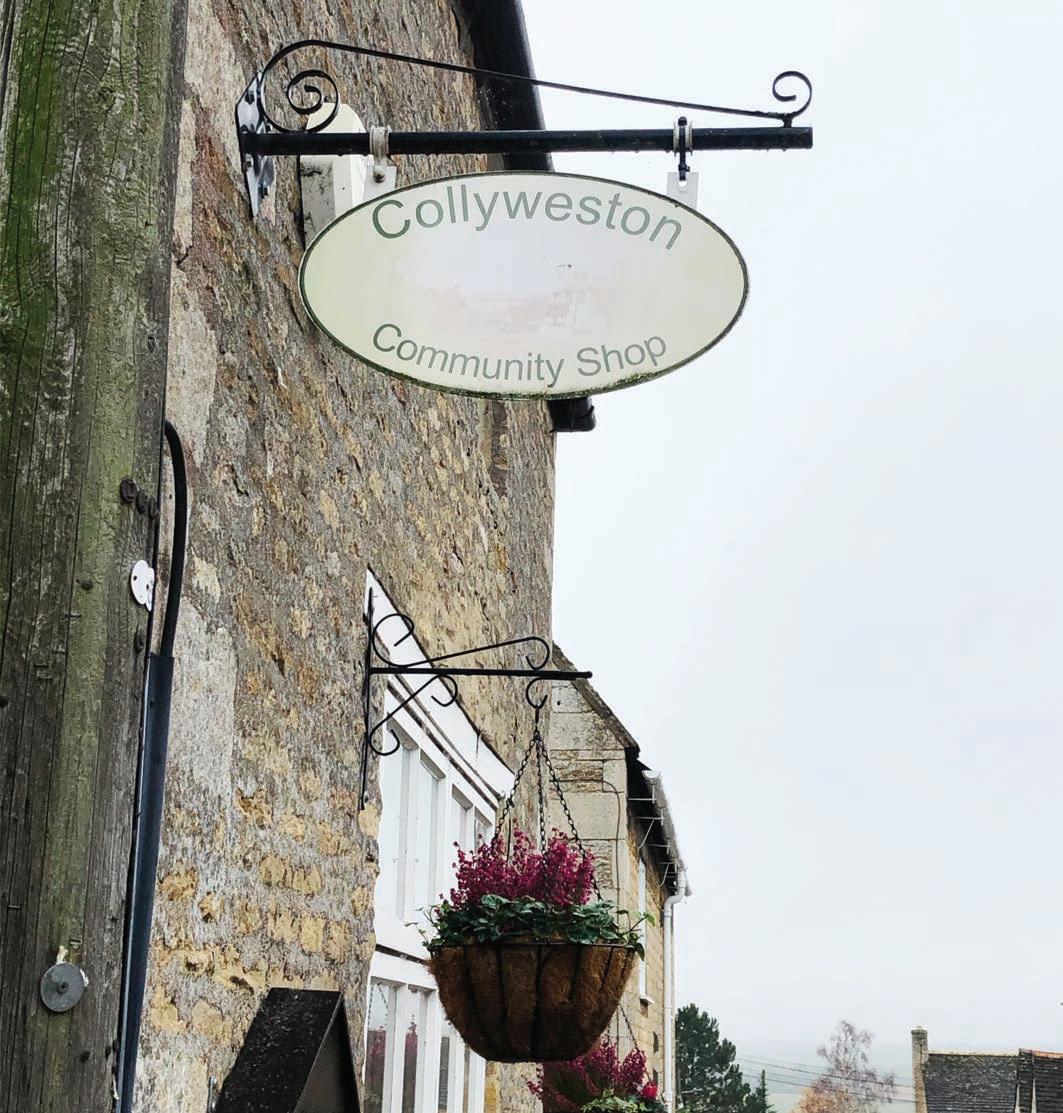
30 COMMUNITY SHOPS
The village shop used to be at the heart of the community
38 THRIVE, NOT SURVIVE
Meet a family who have started recipe box deliveries using their own meat
SERIES
40 MANAGE YOUR LIFE
Why you should use a local estate agent
58
STAMFORD YOGA
Classical
Beginner
Power
Slow
Yoga
Yoga
Yin
Yoga
Core
ActiveLife
Let the bells ring out | Will has a makeover | Thrive not survive
Manage your life: why you should use a local estate agent | Gong meditation
EDITED BY MARY BREMNER
The heart of a village, the community shop p30
THERAPIES BY LIZ
17 High Street Oakham
Open Tuesday to Sunday
THERAPIES BY LIZ
£100 £50
SPEND £100 IN DECEMBER & RECEIVE A £20
GIFT VOUCHER TO SPEND IN JANUARY (MINIMUM SPEND IN JANUARY £50)
CALL OR DM LIZ ON 07843 750077
Terapies by Liz Luxury Mobile Beauty Service
Swedish Massage, Gel Nails, Lashbomb Lashlif & Tint, Brows, Hot Stone Massage, Reiki, Indian Head Massage, Universal Contour Wrap & More!
For more information and to book call Liz on 07843 750077
Fully qualifed & insured Based in Melton Mowbray Gif Vouchers available
SPEND £50 IN DECEMBER & RECEIVE A £10 GIFT VOUCHER TO SPEND IN JANUARY (MINIMUM SPEND IN JANUARY £30)
CALL OR DM LIZ ON 07843 750077
Rutlandʼs newest independent menswear shop
Christmas pop up shop opens in Stamford
C ARDS FOR GOOD Causes, the charity Christmas card and gift retailer, is once again open. The pop-up shop will, as usual, be in St John’s church at the end of the High Street and will be open from 9.30am-4.30pm, Monday to Saturday, plus 10am-4pm on Sunday. The not-for-profit organisation always has a huge selection of charity Christmas cards and seasonal gifts with proceeds donated to local and national charities. In the last ten years alone, they have raised over £40 million for charity and last year the Stamford community raised an incredible £40,000 from the sale of charity cards and gifts in the pop-up shop. This year it’s hoping to reach the heights of £100,000 and more which was raised each year prelockdown.
Shoppers will be able to choose from hundreds of different Christmas card designs, as well as traditional advent calendars and candles, wrapping paper, gift tags and stocking fillers. They are always looking for volunteers to help man the shop and it’s a fun and festive place to be for just a few weeks in the run up to Christmas. Pop along to the shop to see what’s involved. www.cardsforcharity.org.uk
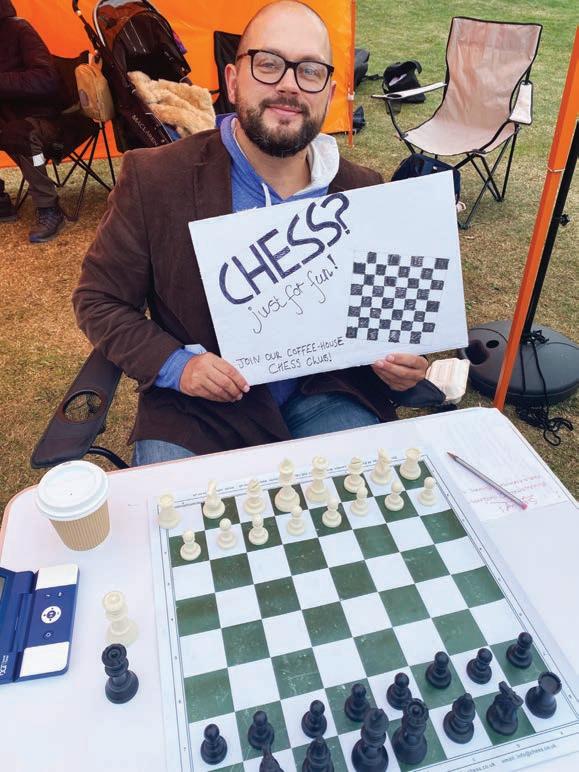
Anyone for chess?
MINDSPACE STAMFORD HAS recently launched a Coffee-house Chess Club at its centre in Broad Street in Stamford. Coffeehouse is an informal style of chess which emphasises the social aspects of the game and is popular all over the world.
Chess is currently experiencing a boom in popularity following the success of Netflix drama ‘The Queen’s Gambit’ and because millions of people discovered online chess for mental diversion and escapism during the pandemic.
MindSpace’s new club offers an opportunity for new and experienced chess players of all levels to meet and enjoy a social game of chess over coffee and cake on Wednesday evenings at 7pm.
MindSpace volunteer, club organiser and chess enthusiast, Jamie Sutherland, says: ‘What I love about chess is that it offers people from different backgrounds, ages and cultures the chance to connect but traditional chess clubs can be a little bit intimidating, especially for beginners. Coffeehouse Chess offers a friendly environment for people of all levels of experience to play for fun, improve their game and meet new people.’
Coffeehouse Chess takes place at MindSpace’s premises at 39 Broad Street, Stamford on Wednesday evenings at 7pm. Full details can be found at mindspacestamford.com/join-in
New kitchen for Cottesmore
COTTESMORE VILLAGE HALL Trust, a charitable organisation is delighted to announce it is the beneficiary of a grant from FCC Communities Foundation.
Residents, hirers and visitors to the Parish of Cottesmore in Rutland are set to get a newly refurbished kitchen within the Cottesmore Community Centre thanks to a grant to the value of £16,759.73.
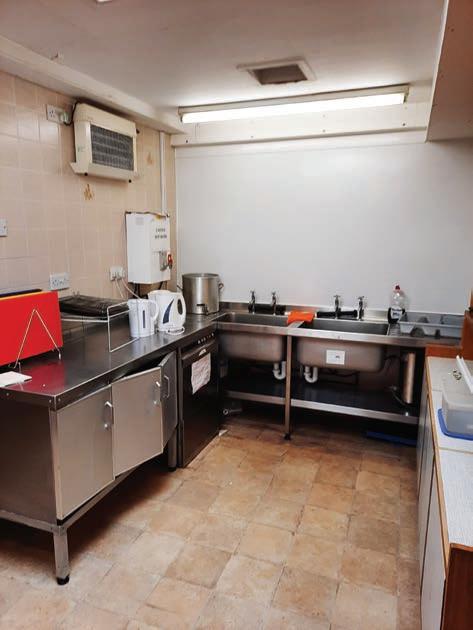
The grant funding money is to be used to replace and upgrade the original 1970s kitchen, which was looking extremely tired, and lacking modern facilities. The project for the kitchen refurbishment will renew, replace, refurbish and improve the kitchen area within the Cottesmore Village Hall in Main Street, Cottesmore.
The investment will see the entire kitchen cleared of the original units, equipment and floor, and repairs made to the leaking skylight before the installation of a new floor, restyled kitchen units, creating an enhanced workspace with new electrical equipment, sink and re-tiling. This will provide a much needed modern kitchen to meet the needs of the Community Centre in the future.
The Little Book of Stamford
SHOP STAMFORD HAVE recently launched the second Little Book of Stamford along with The Little Map of Stamford. The book is available to pick up in virtually every independent business in the town. A guide for visitors and locals alike it recommends places to visit, park and stay plus a list of many of the local independent businesses; the map is a quick reference to how to find these businesses. And enjoy the walk around the town on page 14. #shopstamford
Well done Alfie
STAMFORD’S ALFIE GARFORD has clinched the 2021 junior British kart championship. Twelve-year-old Alfie was crowned champion at the final round of the championship when he finished third, giving him enough points to clinch the title. The championship has launched the careers of formula 1 stars including Lewis Hamilton, Jenson Button and George Russell. Watch this space!
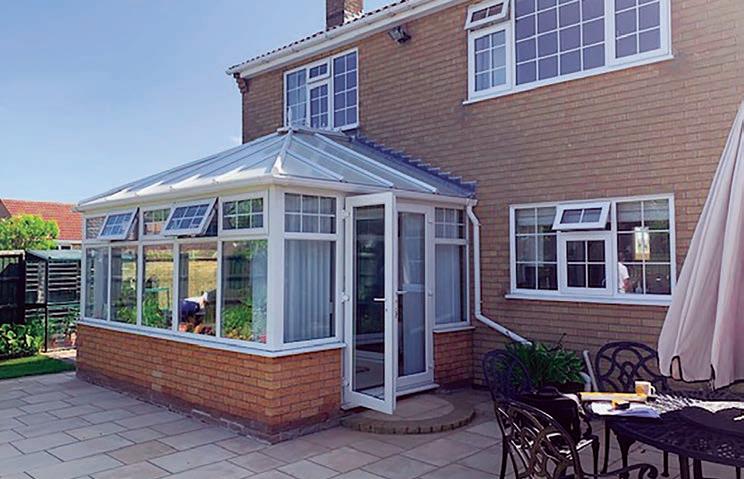
Conservatory too hot in the summer and too cold in winter? visit our showroom 12 St Leonard’s Street, Stamford, Lincs PE9 2HN Open: Mon-Fri 9am-4.30pm, Sat 9am-2pm
Classic have the answer to this problem and you do not even have to change the existing windows/ doors, although you can. Structurally very strong which means your new sun room meets full Building Regulation Approval.
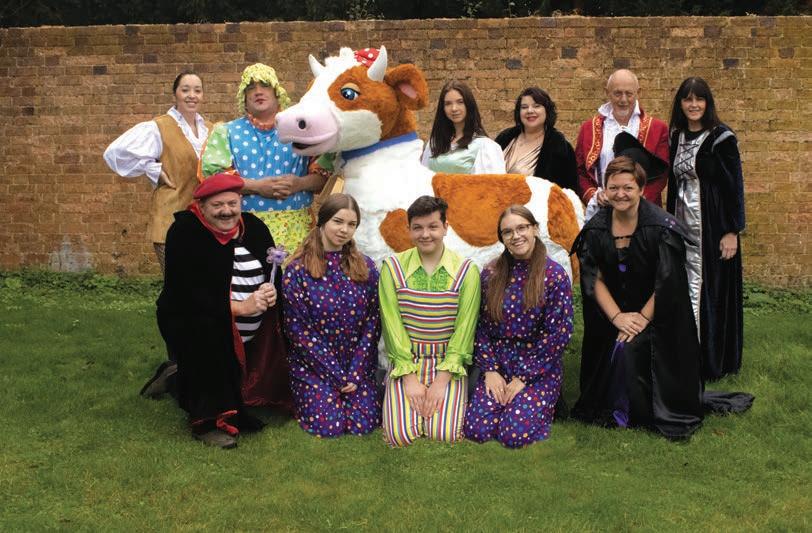
STAMFORD PANTOMIME PLAYERS have the pleasure of bringing you their 70th Anniversary Show and are returning to their first pantomime from 1951 bringing us the family favourite Jack and the Beanstalk. The panto runs from December 23 to January 1 at Stamford’s Corn Exchange.
This lively pantomime, with over 80 cast members singing and dancing, will whisk you away to some old and new-fashioned pantomime magic this Christmas. Tickets are onsite now. 01780 766455
A RANGE OF artists and makers will be selling their wares at Hallaton Christmas Fair on December 4 from 10-4pm. The entrance fee to Hallaton church automatically gives you entry into the raffle. There will be an artisan tombola, carol singers, a pop up café and other festive treats.
CHRISTMAS LATE NIGHT SHOPPING
This year the shops are open and we can shop until we drop. Our local towns are hosting late night shopping events with Uppingham and St Mary’s Street, Stamford on December 2, Market Harborough on the 3rd and Oakham on December 13. Local shops and businesses will be staying open to welcome you and to help you enjoy the event.
STAMFORD SHOESTRING THEATRE, the resident company at Stamford Arts Centre, will be presenting John Mortimer’s version of Charles Dickens’ A Christmas Carol over two weeks in December, at 7.45pm on the 8-11 December and from 16-18 December with a matinee on Saturday 11.
A large cast of 23 will be bringing this classic tale to life in John Mortimer’s lively witty version of the famous story. Tickets cost £12 (Concessions £10) and are available from the Stamford Arts Centre box office, phone 01780 763203, or on the website, stamfordartscentre.com
FOLLOWING THE GREAT success of its last attempt in September to encourage newcomers to bowls, the Stamford Indoor Bowls Club is hosting another introduction morning on Saturday, January 8 (from 9.30am to noon).
More than 30 bowlers signed up last time for regular Saturday morning coaching and encouragement, most of whom have joined as full members and are about to embark on a series of organised friendlies and competitive domestic league matches.
Experienced players and coaches will be available at the world class, six rink facility in Exeter Gardens. Tuition is free as is all equipment, just wear trainers or flat shoes. www.stamfordindoorbowls.co.uk
Fresh ideas, fresh approach
Bulley Davey is a firm of Accountants offering a complete business and financial support service.
Whatever your needs, we can help.
Contact the Stamford team on 01780 769303 or email bdstamford@bulleydavey.co.uk to set-up your free consultation.
www.bulleydavey.co.uk
Email: sales@classicstamford.co.uk www.classicstamford.co.uk Installers of
Corby Baldock Boston Holbeach Oundle Peterborough Spalding Stamford Wisbech
RECIPE
RWinter warmer risotto
ISOTTO IS A favourite of mine which I always find very satisfying to make; enjoying the stirring and watching the rice absorb all the liquid; it’s always worth the wait. This vegetarian risotto is the perfect way to get plenty of vegetables into the family, simple to make and delicious.
INGREDIENTS
• 1 butternut squash
• 2 tbsp olive oil
• 1 onion, fi nely chopped
• Pinch of nutmeg
• 1 vegetable stock cube
• 3 crushed garlic cloves
• 500g arborio rice
• 100g frozen peas
• 1 can sweetcorn
• 2 tbsp grated parmesan
• Large handful of spinach
METHOD
• Salt and pepper to taste
• Cut the butternut squash into cubes, put in a roasting dish, drizzle over 1 tbsp olive oil and mix together. Season with salt and pepper and the nutmeg then roast for about 30 minutes until cooked.
• Heat the remaining olive oil in a large pan and gently cook the onion for 5-10 minutes without letting it colour. Then add the garlic and cook for another minute.
• Dissolve the stock in 1.5 litres of boiling water.
• Add the rice to the onion and mix well and cook for another minute. Then slowly add a little of the stock at a time, stirring all the time, then keep adding a little more until the rice has absorbed all the stock and is cooked through and creamy; this will take 15-20 minutes.
• Add the squash, peas and sweetcorn to the risotto and stir in. Then add the spinach and stir until it wilts. Take the pan off the heat. Season to taste then add the Parmesan. Cover with a lid and leave for 2-3 minutes longer before serving.
The Romans and old chestnuts
Rowan Griffiths gets to grips with sweet chestnuts
REPUTEDLY, THE SWEET chestnut tree (along with the stinging nettle, turnip and a very long wall) was introduced by the Romans. Although recent research would suggest no evidence of it in the medieval pollen records so that might be a myth.
The chestnut is a native of Southern Europe which thrives in light chalky soils and, in the right conditions, can live over 600 years. Growing to around 30 metres and with a girth that can reach to two, this magnificent tree has a smooth grey-purple bark which fissures with age. The leaves are long and spear shaped with serrated or toothed edges and in the spring produce yellow catkins, the female basal flowers which develop after pollination into the familiar Christmas favourite, the shiny red brown chestnut still wrapped in its spiny green husk.
The nuts can be harvested from late October. Gardening gloves are vital as the closely packed spines are wickedly sharp, but it is worth the effort. You will all have heard Nat King Cole crooning ‘Chestnuts roasting on an open fire,’ which is fine as long as you like wearing welding gauntlets and enjoy frightening the cat when the nuts start to split and some explode. Some of you might remember the chestnut sellers who used to pop up in London on street corners at this time of year and the evocative smell that reminds you of Christmas.
Since the skins are tricky to remove the easiest method of cooking is to cut a cross in the base of the nuts and par-boil them for 8-10 minutes before letting them cool enough to peel. Then return them to the water to boil again for a few minutes to make them soft and sweet enough to eat. They can then be lightly salted and enjoyed as they are, or pickled, candied and even souped.
GARDENING
December days
December; what to do in your garden and how to look after your Christmas tree
ONE PLANT CLOSELY
associated with Christmas is mistletoe. This is a hemiparasitic plant which means it gets its nutrients and water from the host tree it grows on. We have all heard of the romantic notion of being kissed under the mistletoe, courtesy of the Victorians.
But, in ancient Britain it was considered a sacred plant that could only be cut by druids. Mistletoe was seen as a symbol of peace and those that met underneath it were banned from fighting.
There is nothing quite like a real Christmas tree but it needs to be looked after when inside; here’s how:
• When you bring your tree home cut the stem about 1cm from the bottom and stand it in a bucket of water overnight, somewhere cool such as a garage or porch.
• Keep away from direct heat including radiators and keep your stand topped up with water.
• Needle drop is always a concern and the Nordman Fir is the best one for needle retention. At the end of the season please consider recycling your tree. Many local authorities have recycling schemes available.
And now jobs to do in December in the garden.
Pruning: Now is the time to winter prune roses, wisteria and fruit trees.
Lift and store dahlia tubers: This will prevent the tubers from rotting if the ground gets too wet or covered in heavy frost and snow.
Feed the birds: stock up on seed and fat balls to help the birds during the winter months.
Look after your lawn: Remove fallen leaves to prevent dead patches on the grass and avoid walking on the lawn if there is a heavy frost or snow.
If the weather is bad, it’s time to be an armchair gardener and start planning for the following year.
A favourite houseplant for the season is the Poinsettia, which originates from Mexico. This plant will flower from December through to January. Red is its predominant colour but it can also be white, cream and even pink. In Mexico they are referred to as Flowers of the Holy Night. Poinsettias like humid conditions so if in a heated room keep them misted. Happy Christmas! www.bosworthsgc.co.uk
Keeping tradition alive
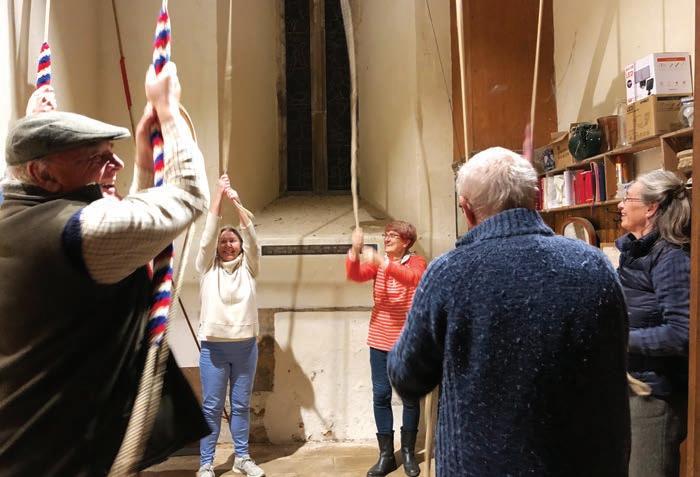
Kate was introduced to the quintessentially English practice of bellringing in Seaton church. And what a merry band of ringers she met
IN MY OPINION there is nothing so charming and steeped in tradition as hearing the church bells ring calling people to prayer, to celebrate special occasions or in remembrance. I grew up in a village and church bells formed the aural backdrop to my life. But apart from a cursory glance at the bellringers during church services I’ve never considered what it involves. Until now.
I was invited to Seaton church by Henrie and Charles Kiddle to watch their Monday evening practice. And what a lot I learned in just two hours! For a start they don’t call it campanology as I thought; that is the study of bells.
Initially church bells were fixed to spindles but in England in the 1500s it was discovered that, by attaching bells to wheels so the rope pulls the bell the whole way round a circle, it makes the bells sound louder. Elsewhere in Europe bells still hang down and just chime dong, dong, dong, but English full circle ringing has migrated to countries like Canada, Africa, Australia and USA. It starts with the bell upside down and when you pull the rope it goes round one way and when you pull the rope again it moves the other way round.
Generally a bellringing practice starts with ringing up the bells in rounds which goes from the highest to the lowest note, which is the tenor bell. They can be as heavy
as 82 hundredweight like the one in Liverpool cathedral.
As bells are huge they can only swing at a certain speed so in order to make a variation which is more than just a round, call change ringing was developed. This is a scheme where the order of just two bells are swapped at a time so you might have 123456 then 213456 or 214356, etc. You can’t ring tunes as such so ‘methods’ were developed which are based on mathematical permutations. You don’t learn the number of the bell, you learn the pattern of red or blue lines on a page. If you’re the first bell, you learn the pattern belonging to bell one, and so on. One member of the band told me that non-ringers sometimes comment that the bells ‘sounded lovely at the beginning of service, then got a bit messy in the middle, then sounded more melodious at the end.’ That’s when they’ve moved from doing harmonious rounds to complicated methods
and then back to rounds again to finish off!
If I’m honest, even after studying the book of methods, and watching the practice I still didn’t fully understand how it works. I don’t have a particularly logical brain but Henrie insists you don’t have to be a mathematician to ring bells. She told me that bellringing is one of those skills, like playing bridge, where it’s a lifelong learning skill and you build up knowledge as you go along. Some people are really clever and ring all sorts of complicated methods and others just like to go along and ring rounds on a Sunday.
And that was what was so appealing about the group. There are all sorts of different standards, ages, shapes and sizes. Henrie has been ringing since she was 16 as she lived in a village with nothing going on,
'Generally a bellringing practice starts with ringing up the bells in rounds which goes from the highest to the lowest note, which is the tenor bell.'
'One gentleman said ‘it’s like rubbing your stomach and patting your head at the same time,’ it definitely requires focus but once the penny drops it’s a wonderful moment.’
then a new curate set up a youth group and collared her and her friends for bell ringing practice. Her husband Charles only started learning three years ago when they met. He’ll never have the same skills as Henrie as it’s much easier to learn when young, like playing chess. The younger you start the better you’ll be but it’s not to say that older learners aren’t valuable. Seaton Tower Captain Bob Williams and his wife Hilary took it up eight years ago as a retirement project and they’ve learnt to ring complicated methods. You have to memorise the patterns which is fantastic for your brain.
Bellringing is a skill that, once learned like riding a bicycle or a horse, is there for life. One gentleman said ‘it’s like rubbing your stomach and patting your head at the same time,’ it definitely requires focus but once the penny drops it’s a wonderful moment.
David Coop from Seaton learnt to ring with his nine-year-old daughter and the night I was there Lyddington resident Sharon and her 12-year-old son Harry were ringing in the group for the first time. Henrie had given them one-to-one lessons during half term and they were excited to practise what they’d learned. Harry had heard the bells ringing in Uppingham one day after lockdown had ended and was so drawn to the sound they wandered into Uppingham church and were invited up to the belfry and then on to Lyddington church to have a go. ‘We’ve got our L-plates on,’ Sharon told me, ‘but the training has been great and the group has been so welcoming.’ You don’t have to be religious or attend church to be a bellringer and you can ring any full circle bell anywhere around the world. You just roll up and introduce yourself. Bellringers are notoriously sociable people, it’s a team activity after all. Bells and beer (and cake) apparently go very well together. Ringers practice in different churches and also swap around for weddings and funerals depending on
availability. It’s not unknown for ringers to get on their bikes and do three different services in three churches on a Sunday morning. It’s a world where everyone knows everyone else and social events and outings are a great excuse to get together. Safety is vital. Non-ringers must not touch the ropes. When you’re ringing you must do as you’re told, but the most likely accident is to get rope burn if you catch the rope at the wrong time. Henrie has twice had someone’s feet whiz past her ear and that’s when they have to ‘let go’ as soon as they’re told so they don’t crash to the floor. When the cleaners, flower ladies and vicar are also sharing the same ground floor space they do have to be careful and not
enter when the bells are being rung. Since the millennium more young people have been learning to ring; 95% of churches rang on 1 January 2000. There are national youth competitions and it can be accredited as a skill for the Duke of Edinburgh award. Henrie told me: ‘Bellringing is a mixture of an art and a science. Anyone can do it, providing you have hands strong enough to handle the rope. Being a little bit rhythmic would help like being able to march in time but anyone from any background, age or culture can do it. You can be 100 years old and still ring.’
For more information contact Bob Williams on 01572 747044
It’s good to be back
Harborough Singers are celebrating their return with a festive double bill. Sue Peet tells us more
TWO FOR THE price of one! It sounds like a Christmas bargain that’s too good to be true but this year, for their celebrity Christmas concert, the Harborough Singers will be welcoming not one but two very special guests. A ticket to their 2021 Christmas Concert offers an opportunity to relax as the Singers perform a wide range of traditional and modern Christmas music, while also being delighted by the reading talents of renowned actress of stage and screen, Jemma Redgrave, and award-winning composer and actor, Simon Slater. The concert will take place on Saturday December 18 at 7:30pm at St Dionysius Church, Market Harborough.
Under the guidance of Musical Director Charlie Penn-Jones, and with the accompaniment of Harborough Singers’ great friend, organist and pianist, Andrew King, an evening of Christmas songs, carols and readings beckons, ranging from the exquisitely beautiful to the humorous and roof-raising. For many, this annual event marks the start of Christmas festivities and, for singers and audience alike, the Christmas Concert this year has an additional resonance after a long, enforced absence. It’s so good to be back.
Little did we know. On December 21 2019, with festive corsages pinned, bow-ties tweaked and music folders organised, we made our way on stage with no inkling that this would be the last time that choir and audience would meet in person to share the joy of music-making for almost two years.
Zoom rehearsals initially had a certain novelty and provided the means of retaining focus and cohesion as a group of singers. During this time, we successfully completed the remote recording of four pieces, available to listen to on the HS website. This was achieved due to the considerable technical wizardry of musical director, Charlie, despite the not inconsiderable angst of choir members faced with the prospect of singing their part into a phone or tablet with just the stripped-back sound of their own voice for company. Never were we more
aware of the truth that the sum of a choir is greater than its individual parts.
The Harborough Singers began life as a school choir in 1978 and still retains three original members. Today’s membership, however, includes singers covering a wide range of ages, from people living as far afield as Shropshire, Oxford and London, representing many interests, musical backgrounds and walks of life. Over the years the choir has performed extensively both in the UK and abroad. Along the way we have worked with fabulous musicians such as, most recently, distinguished violinist Christopher White, a host of singers including Dame Felicity Lott, and numerous leading actors from Patricia Routledge and Josette Simon to Sam West and Martin Jarvis.
Choir highlights include: singing the weekend services at St Paul’s Cathedral; performing the 250th anniversary concert commemorating the first recital of Handel’s Messiah in an English parish church, and touring major European cities in The Czech Republic, Poland, Spain and Switzerland. Our repertoire is drawn from both sacred and secular music, including church music representative of the core of the choral tradition while also featuring madrigals, spirituals, folk songs and much more. We have performed premieres and commissioned works, as well as exploring pieces written in French, German and Hebrew to complement the more usual English and Latin. At its core, a choir is a group of individuals coming together with just their voices to take part in that most
'The Harborough Singers began life as a school choir in 1978 and still retains three original members.'
Jemma Redgrave and Simon Slater
human of activities: making music together. In the words of Finnish composer, Sibelius: ‘music begins where the possibilities of language end.’
It is thought that the vocal production of tones which we now call ‘singing’ may even pre-date language itself. This perhaps partly explains why music can offer a profound, inspiring or comforting experience, helping access thoughts and emotions that words fall short of expressing. The physical and mental health benefits of singing in a choir are widely recognised, with evidence of beneficial effects on breathing, stress and depression, as well as promoting well-being and abating loneliness. Being part of the Harborough Singers feels like belonging to a family in which a love of choral music, shared goals and friendship combine to create a unique bond.
But the choir is just one half of the equation. The essential balancing element of any performance is the audience. In the words of Harborough Singers’ musical director, Charlie: ‘audiences now have the option to stream professional recordings of our entire programme from the comfort of their own living rooms, with the added bonus of a glass of wine at their elbow. But the reason they turn out to concerts on drizzly Saturday evenings in November is to
witness the creation of live music.’ A choir’s experience of communicating musically with one another and the privilege of performing to an audience is why we turn up to rehearsals, shiver in draughty churches on concert days and produce our best come show-time. From whichever side of the equation, music maker or listener, live performance is wholly addictive.
We currently have vacancies for two tenors and two basses in the choir and, although our soprano and alto sections are now at full strength, we are always interested to hear from enthusiastic singers with a blending voice. The ability to read and follow a line of music is required; the ability to project Nessun Dorma to the far reaches of Wembley Stadium isn’t. If you think this might be you, please do get in touch.
Our rehearsal pattern of a Friday evening plus a whole day Saturday rehearsal once a month means choir members who live out of the area are able to attend. Our extended monthly Saturday rehearsal of 10am to 4pm provides a concentrated period of time within which to work, while also providing opportunities to catch up over lunch or during that other choir institution known as ‘coffee and cake.’ With the tenor section acting as the choir’s self-appointed official tasters, the standard of baked goods remains high. Cake lovers or not, we are always delighted to hear from potential new recruits.
'In the words of Finnish composer, Sibelius: ‘music begins where the possibilities of language end.’
If you would like to find out more about one of the East Midland’s foremost amateur choirs, buy tickets for forthcoming concerts, join the mailing list or enquire about membership, please visit the Harborough Singers’ website.
Tickets for the Christmas Celebrity Concert 2021 are available through our website harboroughsingers.com/ Ticket prices start at £7.
Where’s Will?
Mary drags Will off for a styling session at newly opened
Cromwell’s in Oakham
NOW THAT WILL is a bestselling author we decided it was time we smartened him up. As many of you will know he is usually to be found either in shorts or jeans, the inevitable walking boots, a gilet and, depending on the time of year, a tweed cap. Well this will not do now that he has become a minor celebrity!
Oliver’s moved from Uppingham to Mill Street in Oakham in April 2021 and sold women’s clothes with men’s upstairs. It has done so well that owner David has now split the shops with Cromwell’s, solely for men, opening on the High Street on November 1, run by Matthew. And David and Matthew are just the pair to sort Will out and give him a few tips.
Cromwell’s specialises in casual and casual/smart clothes so David, who came to style Will, was not going to terrify him! ‘We sell relaxed smart clothes and shoes, and accessories too,’ says David. ‘We stock Danish designs which use eco-fabrics where possible. The fabrics are good quality that last and wash and iron well. The clothes are mainly classic designs so not too ‘out there’ but with up to date colours, fabrics and
patterns.
‘Matthew and I style quite a few of the men who come into the shop. Men are generally terrible online shoppers buying only what they know and sticking to the same style year after year. Will agreed: ‘there’s no way I can be bothered to return anything so I just buy what I know and is safe.’
Will and I had a quick look around the shop and were pleasantly surprised by the prices, nothing too steep and good value with shirts starting at £35. There was plenty of choice and Will immediately honed in on a terracotta coloured zipped sweater.
David very quickly assessed Will (without either of us noticing) and soon had something for him to try on. The aforementioned terracotta coloured sweater, a patterned shirt that Will said he would never have picked and jog jeans which David says fly out of the shop. I can see why as they are soft with stretch and Will can verify for their comfort. David even got Will in some suede Chelsea boots which he didn’t think would fit him - they did. And he looked great! Still like Will but a more ‘on trend’ one. I could tell that he was comfortable in everything that he had on. David gave him the odd tweak here and there and that was it.
And then for the second outfit. This was slightly smarter with black trousers, patterned grey shirt and a leather jacket. Whilst Will was changing David filled me in a bit about styling.
‘The look at the moment for men is skinny, tight jeans and over-sized tops. But we’re not all 20 and built like whippets, so it’s not a look that suits everyone, or many men to be honest.' Will is broad-chested with shortish legs in relation to his body and is the wrong shape for skinny jeans. I have to admit that it was me who suggested this, with Will shouting down the stairs, ‘I heard that!’
‘If you’re broader, tailored clothing works well,’ says David. ‘A slimmer tailored fit is neater and can look really smart. And broad chests carry off slimmer tailored shirts well. Will’s dark colouring means strong, deeper colours work better on him. He should avoid creams and beiges as they can make him look washed out (particularly in the winter) and never wear stripes, but patterns are fine. Short jackets will suit Will’s build and height. Jackets to mid thigh will make you
look shorter. And always wear your shirt tucked in, this gives an illusion of height too.’
And then Will appeared in the next look. I’ve known Will for over 20 years and don’t think I’ve ever seen him wear black. The smart black trousers were an excellent cut and suited him. The leather jacket did too, but wasn’t quite Will (or the one we know anyway). But what was good was for Will to try what David suggested then he could accept or reject what he was given. And what was brilliant is that Will would never have tried some of the clothes David picked for him. The patterned shirt with the terracotta jumper, for example, but he really liked it and appreciated David’s tips and advice.
David obviously knows what he is doing. ‘We are more than happy to make suggestions to our customers and there’s absolutely no pressure to buy. Many of our gents come in a few times to try things on before making a purchase, and that’s fine with us. Thankfully we are finding since the lockdowns people have discovered their high streets again and since re-opening we are getting lots of support which is what all of us retailers need.’
And the final word must go to Will.
‘Like a lot of men I am not keen on clothes shopping online, and I tend to buy exactly the same items over and over again because I don’t dare make a change without seeing, touching and trying a new shirt, for example for size, fit and feel. So to be able to pop into a friendly shop with a well-priced range of smart casual clothing is really important. You can’t beat having somebody with experience and knowledge to steer you in the right direction, particularly if you are looking for something different. If you don’t want to just keep buying the same jeans, shirts and jackets over and again, or you want something a bit special for Friday or Saturday night then you won’t go far wrong here. And it feels good to shop on the actual high street again.’
Oliver’s, Mill Street Oakham. Cromwell’s, 17 High Street Oakham 07426 871859 @cromwellsmenswear_oakham @oliversandcooakham
Walk with Will this Christmas
Volume 1 and 2 of Will’s Walks, 21 rambles around Stamford and Rutland are now available to buy and they make the perfect Christmas present. These really handy walk guides help you pick the perfect spot for a quickish walk or a longer weekend stroll. Available in local bookshops and village shops or online at www.theactivemag.
The Ministry of Sound
Mary experienced her first gong bath, but she didn’t get wet
WHEN I WAS asked to go and try a gong bath I had no idea what it was, having never heard of one. I assumed it was something to do with yoga. I didn’t think any more about it until I did some research a few hours before the class. Lots of lying down by the looks of it; I thought that will suit me on a Friday evening after a busy stressful week.
It’s not quite as simple as that, as I found out when I arrived at the Rosewell Shiatsu Centre in Castle Bytham to meet Sally Warr who was going to be running the gong bath.
‘A gong bath bathes you in an ocean of good vibration,’ said Sally. The vibrations from the gong help you move from your head to your heart. The sounds from the gong aren’t music but, similarly to music therapy, you tune into the sounds. The gongs help you get into a delta state, which is between being asleep and awake, hence it is referred to as gong bath meditation. Your whole body and mind should start to relax. Some people do go to sleep during the
process.
‘The bath lasts an hour and like sleep,’ Sally told me, ’it is rejuvenating and regenerating and helps the whole body feel more in balance; this time can help you unravel things. It connects you to what is real and for some people can be life changing. This hour also allows you to do nothing, and we are allowed to do nothing; it’s good for you.’
This was going to be interesting, particularly for an old cynic like me! But first of all I wanted to know how Sally had come across a gong bath. ‘I’ve led an eclectic, rich life with lots of experiences and have travelled a lot,’ she says. ‘I was in Australia and a friend took me to one. I knew immediately that I wanted to learn how to do it so on my return to the UK found somewhere to train.’ Sally also runs a counselling practice.
‘A gong bath should be had once a month at the most,’ says Sally. ‘It is quite a treat but you do feel quite knocked out afterwards.’
There were eight of us in the class. Everybody arrived carrying mats, pillows, blankets and eye masks. I’d arrived early so had been able to inspect the gongs which were impressive. They were set up in the middle of the room with other instruments placed around the room. We all settled down, wrapped in blankets, the lights were turned off and Sally started playing. First of all there were bell-like sounds, then a smaller gong and then, as the class progressed Sally started on the large gongs. I have to be honest, it was a strange
sensation. For the first half of the class I do feel that I completely relaxed and was halfway between sleep and consciousness. The sound from the gongs was very atmospheric and initially I found them soothing. About half way through, when a couple of the class were snoring away, (which I found quite distracting) I became very aware of the vibrations from the gong passing through my body. It wasn’t unpleasant but it was quite unsettling and very intense. How those ladies were snoring was beyond me as I was not finding it relaxing! (this is quite normal apparently on the first time). We then had a period of complete silence (apart from the snoring) and then Sally started playing the bell-like instruments to start bringing us all round.
I did feel quite odd afterwards, initially; light headed and spaced out; what exactly had happened? There were two of us who had never experienced a gong bath before and we both wondered if we were fit to drive. The others were all booking themselves in for a month later whilst I was quite shell shocked.
On the drive back along deserted country lanes the moon was out shining on the wet road. I did feel something had shifted. I was taking more notice of my surroundings. I do feel that the vibrations from the gongs had certainly re-set something and I felt quite calm and relaxed. And I had a really good night’s sleep as Sally said I would; and that’s something I rarely get.
As one attendee said: ‘It’s a unique experience and very intense.’ I would agree.
www.gongbathmeditation.co.uk
gongbathmeditation@gmail.com
For counselling services www.
oceanswithinwellbeing.co.uk
THE HEART OF THE COMMUNITY
Village shops are a dying breed and becoming quite scarce, but community shops are looking to the future. Mary finds out more
THE VILLAGE SHOP traditionally was always the staple part of a village. The shopkeeper knew everyone, knew their business and mainly looked out for them. And the villagers supported the shop buying most of their weekly food there, and if it had a post office, even better.
But those days have long gone. The arrival of supermarkets along with increased car ownership started the death knell and then the closure of many small post offices within the village shops was the final nail in the coffin. Without the footfall of people using the post office (and the income) virtually every village shop could not survive. And this has been the case for many, if not all the villages in our area.
But in many villages, particularly the larger ones, the community has begun to fight back. Like-minded residents realised the damage not having a village shop and a hub for the community was doing to village life and decided to do something about it. Committees and steering groups were set up and community shops in the last ten years or so have begun popping up around the area, and they are very welcome.
A community shop is different to the village shop as it is not owned by an individual but by the village itself, made up of shareholders with a committee and the shop being run mainly by volunteers. This means that the community must pull together, commit itself and work alongside each other; which, let’s be honest can be problematic in some villages so the chairperson needs to be pretty diplomatic.
The Bythams Community shop is one of our area’s newest community shops opening in June 2020. But, as with many of these shops, it took a long time to get to this stage as there’s an awful lot of work, planning and paperwork to do.
Castle Bytham and the surrounding villages of Little Bytham, Holywell, Careby, Clipsham and a few more hamlets had a village shop and post office until it closed in 2013. This meant that the nearest local shop was three miles away and a supermarket ten, so to go and buy a pint of milk meant a six-mile round trip or a twenty-mile round trip if you wanted more choice. And if you didn’t have a car you were stuck in the village with no shop and very little public transport available to get to one.
A steering group was quickly set up in the village to assess the feasibility of a community shop, and where it would be located and then to draft a business plan. The committee quite sensibly decided to work in phases so different committees with different strengths could be brought in at different stages. By 2017 there was an agreement to go ahead and that it was feasible. The village was very much behind the process.
Raising finance, sourcing grants, knowing who to talk to and carrying a village with you is not an easy task. But initial chairman Peter Hinton did a good job of it. And after initially finding a site for the shop, gaining planning and so on, in 2017 the process to raise funding started. This involved applying for grants, organising the architect and managing the build as well. Villagers were offered shares at £20 each, and there are 143 shareholders in total.
In 2019 building work started. The shop is located on the edge of the village on Station Road, purposely so that it is easily accessible by Little Bytham and Holywell as it is a community shop for more than just Castle Bytham. It is also strategically placed as future development is planned for around it. All was going well with building and planning and then of course Covid struck.
This rather set the cat among the pigeons as suddenly volunteers were no longer available and sourcing supplies
became very difficult as many suppliers had stopped production. But they managed to open in June 2020 and the committee handed the role on to another committee as a different skillset was now needed.
The shop was well supported but lessons were quickly learned. Stocking was understandably a bit of trial and error as no one really knew what people would buy and mistakes were made. A community shop is, of course, owned by the community so at a shareholders meeting in summer 2021 questions were asked about the running of the shop and the committee was given a bit of a rough ride. It was no one’s fault as it was new to everyone. This subsequently resulted in the committee resigning so a new band of people were now needed to run the shop. But the shareholders and village had learnt their lesson. They needed a committee with proper retail experience and a qualified accountant. So that is what they went and found.
Steve Barratt is the new chairman who has years of retail and HR experience and is now a director at Curry’s. He then appointed six other committee members. ‘We are made up of a team of individuals who are united to keep the shop open. All have been appointed for their skill, not their enthusiasm.’ So there is an accountant, a brand designer, an ex-military person who knows all about governance, someone with experience of running and training a group of volunteers and someone who is an expert with electronic tills as well as another who has purchasing and buying experience; all live in the village.
The ethos of the Bythams shop, as it is with most
community shops, is that local produce and artisanal producers are to be used. Yes, goods such as tins, basics and papers are bought from a wholesaler but everything else is locally produced and made. This reduces the carbon footprint of the shops, supports local businesses and reduces food miles. This is what the community wants. And this is what Bythams shop provides. Bread is from Hambleton, meat from Grasmere, local cheeses and yoghurts as well as flour and porridge are all produced nearby. Visiting the shop four times a week is the post office van which shares their car park; another service which is used by many in the village.
When the new committee took over they shut the shop for two weeks at the end of August this year. This allowed them to take stock, set out a plan, organise the volunteers and set up systems that would enable the shop to run effectively. It also allowed them to redecorate, rearrange and sort out stock and suppliers. Within the shop is a very popular takeaway selling bacon rolls, sausage rolls and the like which was also rejigged.
More volunteers came forward and the shop reopened in September 2021. This time round everyone knows exactly what they are doing and what is expected of them. There is one paid member of staff, the manager, with the rest of the staffing manned by volunteers. Steve is at the shop every morning opening up and greeting the early paper buyers. He also works there on a Sunday.
Volunteers are always welcome and can be added to the roster. At the moment there are 20 of them plus the DofE children who help at the weekends. They are all trained to use the till and man the shop. Men and women volunteer and age range varies. ‘The volunteers know everyone in the community and are very much part of it,’ says Steve. ‘They are also very community driven and want to see the shop do well. It’s also sociable so you get to see plenty of people during the day. In stocking the shop we have catered for the whole community and this is reflected in our sales. We are learning what people like and want and are stocking the shop accordingly. And we are delighted that so many people in the villages are supporting us. We plan to be here for many years to come.’
www.bytham-shop.com
The heart of the village
Kate meets stalwarts of Barrowden and Wakerley community shop
WHEN THE BARROWDEN postmistress, who was in her nineties, was required to start using a computer, it was understandably a step too far. So unfortunately the post office closed. Then there wasn’t a shop in the village for about five years but when the villagers were formulating their parish plan, many decided it would be good to have one again. In 2005 a steering group was established after a meeting at the village hall. According to resident Gill Coleman, anyone who turned up was roped in. Gill was the only person at the meeting with a pen and pencil so, of course, she became the secretary, later the treasurer. Gill steered the group all the way through and is still the one in charge!
First of all they had to get planning permission for a new building. The site, next to the village hall, was full of brambles and nettles owned by the Burghley estate. The steering committee negotiated a lease, involved a local architect and were subsequently given planning permission. Then building work commenced. According to Gill: ‘If I asked on a Friday night for a work party to turn up to help on the Saturday morning I could usually count on a group from the village to come. I’d bribe them with coffee and a sausage roll.’
Community shops were flavour of the day back then so finding money to fund the build was possible. The committee received grants from various pots and as the shop was serving both Barrowden and Wakerley the committee was able to access funding from Northamptonshire council too. The shop opened in 2009 with a post point, not a full post office, where they process parcels, signed deliveries, and so on.
Bread is from King’s Cliffe, meat is from Grasmere and Nelsons, jam and preserves from Spalding Saints and Sinners and there’s plenty of other local products. ‘We have basics but we also offer extras that are different and more interesting,’ Gill continued. ‘You’ve got to try and cater for demand. There are people with different tastes and budgets, so it’s quite a balancing act.’
Local artists’ work is displayed in the tearoom which
offers drinks, cakes and sandwiches. ‘We tried to do lunches but it was so unpredictable,’ said Gill. ‘It’s very hard with just two people if you suddenly get a crowd in so we stick at what we’re good at.’
The village is spread out but in terms of households the committee were always told it wasn’t big enough to support a shop. Thankfully that’s not been the case. ‘Because we’re run by volunteers it’s viable,’ Gill says. ‘ We are able to pay one manager to be on site, but If we had to pay two members of staff it wouldn’t be.’
Helen Coop was a volunteer before taking over as a manager and she shares the role with David Lewis. The shop mostly runs with one manager and one volunteer.
‘Some volunteers like to come two or three times a week,’ says Helen. ‘Others drop in as and when they can fit it in. We have some people who just do the till; others make coffee and tea and some do everything like cleaning down the shelves. Our work experience and DofE students stack shelves and clean, and we have a separate team who do the garden. Basically we can find a job for anyone who wants to help.’
The shop is at the heart of the village and the team of volunteers are what keeps it beating. ‘A lot come in because they want to meet people especially if they live on their own,’ says Helen. ‘It also gives a structure to your week. Occasionally people forget and ring up later absolutely mortified but it’s rare. Recently we’ve had some volunteers who are new to the village as it’s an ideal way to meet other people, and some who are heading for their nineties have just packed up. But we can always count on a good group in the village who will turn their hand to whatever needs doing to keep the shop going.’
www.barrowdenshop.org
Welcome, refreshment and support
Kate met Sue Aspinall, committee management member for the Cottingham village store to find out what goes on behind the scenes
WHEN THE SITE of the former post office in Cottingham went up for auction in 2009 very many villagers made it known to the parish council that they were keen for it to remain as a shop. As we all know, village shops are not just there to buy the basics, they are the hub of village life. Thankfully a not-for-profit Christian organisation led by locals Jeremy Sharman and Jane Gaffney stepped in and bought the property.
They developed two cottages next to and behind the store that bring in income to service the debt and then the management committee, two paid staff and a team of volunteers need to ensure the shop is a viable business.
Sue, who is a retired NHS consultant, is one of six members of the management committee, all with diverse skills. She told me: ‘Initially the shop benefitted from grants. We had money from the European programme LEADER that supports rural developments; some from the National Lottery and some from the Plunkett Foundation which is a charity that supports community businesses, advising them on legal, practical and financial matters.
‘The shop issued two share options which were taken up mainly by villagers, parish councils and copyholders who own land around the village. Local sports clubs and businesses also donated.
‘The shop opened with this motto in mind: We’re “a place of welcome, refreshment and support” for the village and I’d say that’s exactly what we are. We came into our own during Covid, carried on serving at the door, delivered
goods and papers to vulnerable people and became an informal meeting place for people socially distancing outside.’
As is always the case with community shops, they rely on volunteers for viability. Sue continues: ‘Initially we opened with four paid staff and 30 volunteers. Many volunteers, often aged over 70, have felt too vulnerable to return after Covid. We are open just mornings at present with two paid staff, Alison and Bernie, who work a total of 45 hours a week, and 12 volunteers who generally do a couple of hours a week in the shop and tearoom. Three other people help with DIY, our accounts, stock taking and pricing. Committee members also do shifts at the shop. Bernie’s husband comes in every morning at 6.30am to sort the newspapers. Some people are initially a bit frightened by the till but it is a learning curve for everyone. Volunteers benefit from the social contact and acquire new skills.
‘The shop doesn’t make a lot of money and the small footprint is challenging. We opened in the afternoons pre-Covid and that’s what we’re aiming for again. We’d like to have another paid person to open three afternoons initially as we get most of our funds from food and drink sales. We have a meeting space upstairs for people to use, and ramblers and cyclists like to sit outside. We can serve paninis, soups, sausage rolls, bacon baps and milkshakes, and our cake makers are amazing. We also sell Hambleton bread and cakes that can be ordered, also Joseph Morris and Grasmere meats which go very well.
‘The shop did sell artisan products as people requested them but then didn’t buy as much as expected. We wasted a lot of food so we went back to basics. People want things they run out of like good branded coffee, poop scoop bags, dishwasher salt, foil, washing up powder. Anyone can make suggestions about stock and the committee then works out if we can make any money on it.
‘I’m very positive about our shop as it does great things for the village but it is vulnerable if people don’t use it. We’ve gone out a few times with a ‘Use it or Lose it’ campaign to encourage every household to volunteer, donate or buy a few extra purchases each week. If everyone came and bought a pint of milk each day we’d be solvent all the time, that’s all it would take.’
01536 770097
STAMFORD
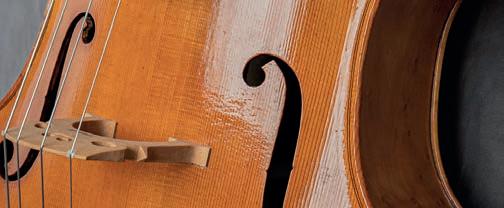
STRINGS stamfordstrings.co.uk
- Restore, repair, conserve
- Buy and sell antique and new instruments of the string quartet family
- Fantastic range of instrumental bows, cases and accessories
- BAM cases and cello accessories designed and made in-house
- Bow repairs and re-hairs
- Appraisals and Insurance certifcates
- Catering for all players, age ranges and abilities
- Part exchange available
Direct train from Birmingham, Leicester and Cambridge Less than an hour by road from Nottingham and Lincoln London is 45 minutes by train from nearby Peterborough
Castor Lodge Care Home
Castor Lodge Care Home provides the highest standards of family-led residential and dementia care. Our home is luxurious and beautifully furnished, whilst retaining a warm family atmosphere that makes Castor Lodge feel extra special.
• 68 Spacious en-suite bedrooms
• 6 Premium self-contained suites
• Bistro Café and themed Pub
• Sociable lounge and dining areas
To fnd out more about life at Castor Lodge Care Home contact Laura Mills on 07725 799 217 or laura.mills@countrycourtcare.com
are freshly prepared every day. All ingredients are British and farm assured and much of the beef comes from their farm. Not many counties can claim to be feeding their children grass fed, free range beef.
As the Howes already had a kitchen set up it was very easy for them to start the recipe box business. It was all very well the primary school children of the county enjoying their beef, but it would be nice for the rest of us to have the chance too. And, of course, red meat is not something we, or the children, should be eating every day.
Vicky is very interested in gut health so was keen to produce gut friendly recipes. ‘If we choose to eat meat - as many of us do - we should eat the best quality meat and that is usually regeneratively farmed, free range meat. I have planned recipes to eat our beef twice a week. Usually a quick meal during the week with either a roast or steak at the weekend.
‘If we look after our gut health our immune system is boosted which helps produce hormones that influence the way you think and feel. We have a local supplier of kimchi and kefir and use this a lot in our recipes. Seaweed is really good for us so we use seaweed salt
'The recipe box business is very new - ten days old when we spoke - but it is generating a lot of interest and excellent feedback.'
and we use a lot of bone broth (prepared in our kitchen) as it has wonderful healing properties.’
Virtually all of their vegetables are British, with most of them coming from within 20 miles of the farm. Vicky has sourced her ingredients carefully. Only lemons and the like come from abroad.
The recipe box business is very new - ten days old when we spoke - but it is generating a lot of interest and excellent feedback. New meals are going live each week but do be aware that many of them will be seasonal. You won’t be offered asparagus until it is in season, which is the right way for us to eat. Slow cooked meals are in development (Vicky is just working out the packaging) and more are in the pipeline.
‘I feel so fortunate to live on a farm,’ she says. ‘A couple of years ago, we came up with the idea of wanting to sell products from our farm directly to customers. It was something we both felt really passionately about, and still do, especially as the way we rear our cattle is, we believe, really quite special. To be able to share a flavour of that and offer foods that I genuinely feel so passionate about is so very exciting.’
Everything you need for your recipe is in your box (apart from oil). This means you don’t have to buy the more obscure ingredients and nothing is ever forgotten. Vicky has made sure there is a minimum prep time needed and the recipes are straightforward to follow. Cooking times vary and what is most interesting and impressive is that there are often ingredients in these recipes which are quite unusual, so perfect for experimentation with very little thought or effort.
The business is quickly growing with a subscription option now being available which might make the perfect Christmas present. You can opt for weekly, fortnightly or monthly deliveries which don’t necessarily have to be the recipe boxes. Freezer packs of steaks and the like are also an option as well as family meat packs. Bone broth will soon be available (perfect to add to gravies and casseroles) and small packs of mince too. Chicken will soon be available, reared on the farm shortly following the same ethos as the cattle; pasture raised, free range, moved daily.
Vicky has put a lot of thought and energy into this fledgling business. All packaging is recyclable and Woolcool is wrapped around the food to keep it fresh. This is compostable, ‘great to put on the garden too,’ says Vicky. She comes up with the recipes herself and makes sure portions are a healthy size.
The boxes are packed on the farm and delivered nationwide. Prices start at £5.38 a head with free delivery over £45. There is an introductory offer on at the moment.
www.thriveboxes.co.uk
You get what you pay for
Moving house can be extremely stressful, but it doesn't need to be. Mary finds out why you should stick to a local agent
SELLING YOUR HOUSE is easy isn’t it? You find an online seller, pay your money up front, usually just a bit shy of £1,000; take a few photos, they put it on rightmove and Bob’s your uncle, you have an offer in a couple of weeks. Job done.
But it’s not quite as simple as that as many of you who have sold a house know. If it’s in a chain things can go wrong, sellers and buyers can have meltdowns and pull out; searches and surveys can show up real horrors, or what would initially appear to be real horrors, so you lose your buyer; solicitors can go AWOL just when you need some really quick answers or the chain just grinds to a halt and no one seems to want to do anything about it. And the list goes on and on and on. So you ring your online agent for help, but they’re not interested. You are speaking to someone in a call centre and they’ve already seen the colour of your money so you can clear off and sort it out yourself, they’ve got someone else to get a fee off. Hard luck if your sale falls through, you’ve already paid your fee and you won’t
be getting a refund. This is when most of us would have to go and lie down in a darkened room.
Death, divorce and house moving are classed as some of the most stressful moments in our life, and unfortunately they can sometimes coincide. Buying and selling a house is up there on the top of the list of stress related moments in your life, and most of us do it more than once. Many of us numerous times. And we do not want to experience that dreaded scenario I’ve just written about, but sadly many of us do. And very interestingly, it’s more often than not a case of ‘once bitten, twice shy’ if you have ever tried selling through an online process as you quickly find out you get what you pay for. So initially you pay less with your fee but realistically it’s probably going to cost you more in solicitor’s fees, complications and a much slower transaction. Can your stress levels really cope with that?
Sowden Wallis have had a high profile in Stamford since Emma Sowden and Tom Wallis set up the business in May 2014. They had worked together previously as estate
agents and when the company they worked for was bought by a large chain they decided to go it alone. ‘We didn’t want to work for a large chain of estate agents,’ says Emma. ‘We wanted to be independent so we could make our own decisions and offer the type of service we wanted to; the large corporate world wasn’t for us.’
And it’s paid off. Sowden Wallis are rightly proud of their reputation for excellent customer service. And because of this reputation they get a lot of referrals and repeat business. Basically they will hold your hand from the minute you instruct your sale to the moment you hand your keys over to the new buyer. As Emma said: ’we don’t get paid until the money is in the bank so it is in our interest - as well as the seller's - to make sure the sale goes through as smoothly as possible. This is what we are here for. Many problems that occur in a chain are usually easily sorted by a few phone calls. We usually know the solicitors and other agents in the chain so are on top of what is going on. You really do need a ‘human being’ to sort things out, keep the
WILL’S WALK
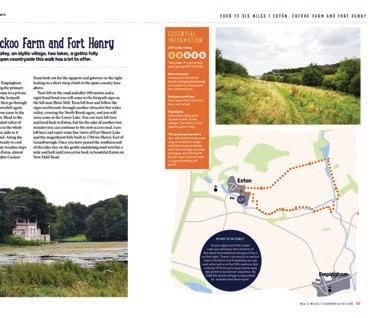
The Chater valley
Three villages in the heart of Rutland and blissfully quiet countryside make for the perfect Sunday stroll.
By Will Hetherington
Images: Will Hetherington
The Chater valley here is good for the soul.
Difficulty rating
I PARKED ON Morcott Road at the eastern end of Wing, but you can park anywhere along the main road in the village. Walk eastwards out of the village and just after you pass the last houses on the left you will see a lane running downhill to the left. Don’t walk down the lane but you will see a footpath sign in the trees just after the lane on the left. Take this path and follow it through two small fields, past a farm on the left and then across another larger field. You will then cross the minor road that runs down to Lyndon and keep heading east across the next bigger field. If the path is not clearly visible (it wasn’t when I last walked this way) aim for the left hand edge of the block of trees ahead.
You will find the next stage starting in a gap in the hedge to the north of this wood. From here there is a path with a tall hedge on the left and a fence on the right, which leads to Pinfold Lane on the edge of Pilton. It’s worth a very short stroll into Pilton, one of Rutland’s very quietest settlements, but to continue the walk turn left on Pinfold Lane and head downhill along the road.
ACTIVE INFO
Just off Glaston Road in Wing there is a turf cut maze, one of just eight remaining in England. Technically it’s a labyrinth, 14 metres in diameter, with one grass path that winds and backtracks before leading to the centre. There are many theories about the origins of these turf mazes, including references to the classical Cretan labyrinth. The Wing maze follows the Chartres pattern which copies the design of pavement mazes found in European cathedrals.
You will soon pass the signposted entrance to Chater Valley Farm on the left and then go underneath the railway before reaching the junction. Turn right here, cross the bridge and continue uphill along the magnificent tree-lined avenue towards Lyndon. Just as you reach Lyndon take the path on the left and pass one stunning red brick house and then Lyndon Hall itself. Perhaps you can allow yourself a few delusions of grandeur as you do so. Follow the path into a narrow band of woodland and then turn sharp left, followed by a right turn along the next hedgerow. Another left turn at the end of this field will put you on the farm track which winds down to the bridge over the Chater, a good spot for the dogs to have a dip and a drink. Cross the bridge and now you have a choice. You can keep going straight uphill (over the railway) on the farm track, which will bring you out on the eastern edge of Wing. Or you can turn right immediately after the bridge and then left in 100 metres and follow the path over the railway and then up into Wing where Church Street meets Bottom Street. This second option is more scenic but there are often cattle in the last field before you get into the village. Either way you will end up in the vicinity of the wonderful King’s Arms, which is never a bad thing.
The heart of Rutland.
•
•
•
•
•
WORK FOR US:
• Award winning Mercury business team of the year
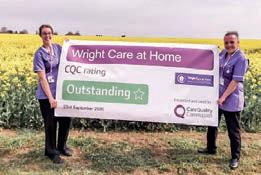
• Rated outstanding by the CQC
• High rates of pay and contracted hours.
• Family ethos providing high levels of care.
• Promotion and growth offered.
• Regular incentives
• Awarded top 20 home care provider in East
WHERE TO PARK
On Morcott Road (the main street) in Wing.
DISTANCE AND TIME
Three and a half miles/an hour and a half.
HIGHLIGHTS
The peace and quiet of the Chater Valley, the tree-lined avenue into Wing and the grandeur of Lyndon Hall.
LOWLIGHTS
None spring to mind.
REFRESHMENTS
The King’s Arms in Wing.
DIFFICULTY RATING
Two paws. Half the walk is on farm tracks and country lanes and the rest is not challenging.
THE POOCH PERSPECTIVE
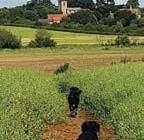
The Chater comes in handy at the right time. There can be cattle in the field below Bottom Street in Wing at the end of the walk, but you can take the farm track back into the village (after the bridge over the Chater) if that’s a problem.
For your own safety and navigation make sure you have an OS map with you when you go out walking. You won’t regret it.
The way to Pilton
FINISH
Tree-lined roads are a feature of this walk.
ActiveBody
EDITED BY KATE MAXIM
Heartless arthritis
There is more than one type of arthritis; physio Sarah Babbs explains
MANY PEOPLE COME to physiotherapy for help with their arthritis and there can be confusion around the different types as well as the different types of management that can be offered. The name comes from the Greek ‘arthro’ meaning joint and ‘itis’ meaning inflammation. But often pain and swelling can be present without active inflammation present. Inflammation is the normal response of the body’s immune system to harm - be that physical; a cut or sprain, chemical; a bee sting, or infection. It serves to isolate the injury, remove damaged tissue and lay down new tissue to rebuild.
Acute inflammation generally lasts a few days while chronic inflammation can be affected by many factors including poor diet, smoking, stress, leading to diseases such as diabetes and cardiovascular disease.
The most well known arthritides are osteoarthritis and rheumatoid arthritis. In osteoarthritis (OA) the inflammation causes build up of fluid in which chemical factors are present. These chemicals called cytokines can become overwhelming and cause damage to the lining of joints, usually the larger ones such as knees, hips and shoulders. There is often a familial factor, most of those with hip OA will report the same in a parent or sibling. Weight is often quoted as a factor but it is thought that the inflammatory factors in fatty tissue are increasingly to blame rather than the mechanical load put through the joints. This is part of the argument why those who regularly run a reasonable distance, so loading the joints, have less OA than those who are sedentary.
Rheumatoid Arthritis (RA) has chemical inflammation at its source causing redness, swelling and pain at the smaller joints. This leads to damage and often disfiguring joint changes, particularly the hands and shoulders. There are effective disease modifying drug treatments which limit these
changes and are often used sooner rather than later in the disease.
Gout is usually a single joint problem, can be incredibly painful and is due to uric acid crystals occurring in the joint. Uric acid is naturally occurring but if it is not adequately excreted by the kidneys, crystals form and pain and swelling occur. Gout can be affected traditionally by dietary factors, port being the most famous but also some medications. Medication is usually the first line of management.
Spondyloarthropathies are joint diseases which occur generally before the age of 45, the most famous being Ankylosing Spondylitis. The flags for this are stiffness of the joints lasting more than half an hour in the morning and blood tests sometimes reveal a genetic marker. Over time this can cause a stooping posture but exercise can limit this.
And what can physiotherapy do to help? One of the first questions I am often asked is: ‘Will I need a new hip/knee?’ This can be the case, but is a last resort. Exercise has enormous effects on pain, stiffness and mobility. Years ago a gentleman asked for help with his hips as he was unable to lift his
leg over the motorcycle he had stored over winter. He was concerned his hip stiffness meant a new hip or at the least a new motorbike. Strength and mobility exercise ensued and over ten years later he is still riding on his very own hips, a good result we think.
Exercise can help to keep the joints supported and strong and can be both specific as well as, according to the WHO guidance, more general with 150-300 minutes of moderate or 75-150 minutes of vigorous exercise per week being the most recent advice as well as two or more sessions of weighted exercise for strength. This includes the more inflammatory arthritides though respect must be given during a painful flare up when the management will include the updated POLICE principles (protection, optimal loading, ice, compression and elevation). Exercise can include simple loading and aerobic exercise done at home or in a gym, walking, cycling, always remembering that the best exercise is the one you enjoy and especially the one you actually do.
To contact Sarah ring 07780 900201.
Vital Vitamin C
Gary
Trickett knows vitamin C is not just about keeping colds and flu at bay, although it does
help
VITAMIN C IS a water-soluble vitamin, meaning it dissolves in water. Because the body can’t produce it and can only store a small amount, we need to source vitamin C on a daily basis. This isn’t too hard to do as there are plenty of food sources of vitamin C and lots of vitamin C supplements to choose from. But why do we need it in the first place?
Vitamin C is important for many reasons but especially so for immune health, collagen synthesis and wound healing. It’s also an important antioxidant.
Vitamin C deficiency is a well-known cause of scurvy, historically associated with sailors being at sea for a long time. Scurvy is relatively rare today, but a poor diet, smoking, alcoholism and eating disorders can all lead to low levels of vitamin C. This causes symptoms such as fatigue, dry or bumpy skin, slow-to-heal wounds, bleeding gums, painful joints, hair loss and, of course, poor immunity.
One of the main reasons people take vitamin C supplements is to boost the immune system. Vitamin C is welldocumented for aiding the prevention of colds and other infections. One way it does this is by encouraging the production of white blood cells that help protect the body
against infection.
Not so well-known is the role it plays in helping the body to absorb iron, which in turn is needed to transport oxygen around the body, keeping cells healthy and fighting fit.
Vitamin C is also important for the production of collagen, the main component of connective tissue, which is needed for healthy joints and mobility. Collagen is also important for healthy skin, which contains large amounts of vitamin C, especially in the epidermis, or outer layer of skin. Vitamin C also helps to keep skin healthy by protecting it from oxidative damage.
And since vitamin C is needed for collagen production, low levels of vitamin C can slow the rate of tissue formation, so wounds heal more slowly. Research has shown that people with chronic, non-healing leg ulcers are significantly more likely to be deficient in vitamin C. Slow wound healing is one of the more advanced signs of vitamin C deficiency and typically not seen unless you’ve been deficient for some time.
The good news is there are lots of dietary sources of vitamin C. From brassicas to berries there are plenty of foods that are naturally rich in vitamin C. Strawberries especially are an excellent source of vitamin C, pipping the average orange to the post
when it comes to total vitamin C content. Other good food sources are acerola cherries, blackcurrants, kiwis, red peppers, Brussel sprouts, broccoli and kale. All of these foods contain good amounts of natural vitamin C.
But what about supplements? There are, of course, plenty of vitamin C supplements to choose from but do try to source your vitamin C from food first. Your body recognises vitamins in their natural food state best. Many vitamin C products are made synthetically and the body has a hard time recognising and absorbing synthetic vitamin C.
If you are looking to top up, a natural vitamin C supplement can help.
A Vogel’s Nature-C provides naturally occurring vitamin C sourced from real fruits, including acerola, gooseberries and blackcurrants, in a chewable tablet form. It’s perfect for gently supporting your immune system and great if you’re not keen on swallowing tablets. An equally natural Nature-C for Kids is also available for children as young as four – perfect for when that curly kale just isn’t hitting the spot!
For further information visit Gary and his team at Healthy Route, 18 Silver Street, Leicester.
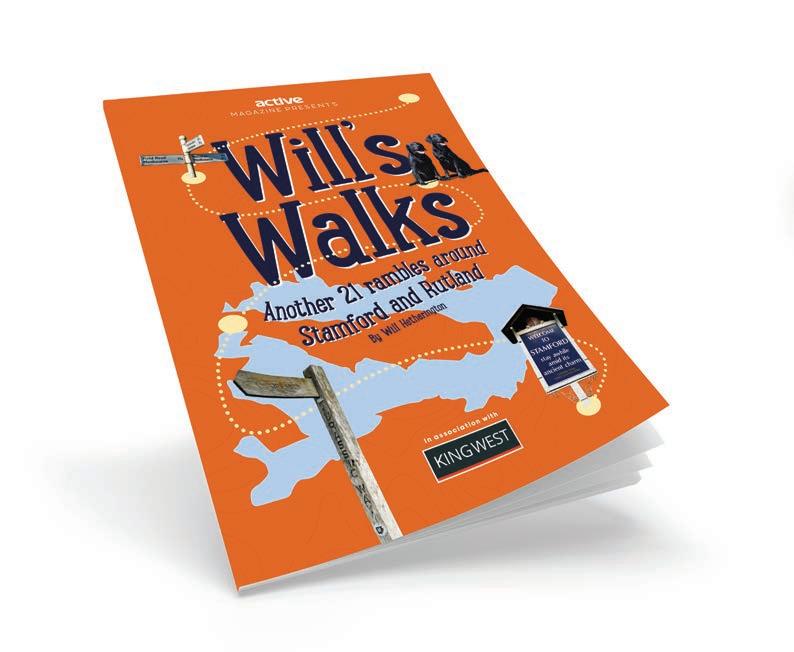
Volume 2 of Will’s Walks Another 21 rambles around Stamford and Rutland
masses with our first Will’s Walks book, so Will has got his boots on again and found you 21 more walks to enjoy. Some are short and sweet for those busy days and others are lengthier and more arduous for when you want to spend longer exploring the area; and we’re sure you’ll enjoy them all.
The perfect present and only £8.95 plus P&P. For more details and to order your copies, visit www.theactivemag.com. Also available from many local shops and bookshops.
Community connections
Stamford GP Dr Dan Petrie explains
the importance of maintaining good mental health
WE ALL NEED to look after our mental health. But how many of us either don’t have the words to explain our feelings and emotions or anyone close enough that we feel we could open up to, even if we are articulate enough? From our experience, lots of us.
Our belief at MindSpace Stamford is that maintaining mental health is all about community. It starts in childhood. We need to nurture children and promote emotional literacy and how to maintain well-being, giving it as much importance as academic work.
We need adults to have a shared language which is why MindSpace promotes the use of the NHS 5 ways to mental well-being. It gives a base for conversations, understanding and, ultimately, improving your emotional state. By being active, connecting, giving, slowing down to take notice and being open to learning new things, evidence would suggest you can support yourself for a better wellbeing if you are just a little bit down or severely mentally ill. This is based on the social concept that good mental health is made in your life, not fixed by a doctor or nurse.
Loneliness and social isolation are killers, it’s as simple as that. You are more likely to die young from being lonely than smoking 15 a day or having diabetes. Poor mental health is both a cause of loneliness and an outcome of struggling with it, but it doesn’t have to be. MindSpace Stamford is now a partner of the local NHS mental health support services and uses the principle that ‘community is the answer.’ We are promoting and encouraging safe spaces where it’s OK to not be OK. All of us, neighbours, colleagues, friends and family can learn how to support one another.
MindSpace started for me as a hobby to help support Stamford residents with their wellbeing and mental health. But it became
more real to my family when my wife Cassie was hospitalised in 2016, the first of several admissions. We now have an understanding of what really matters and a better idea of things that help (or don’t – not ‘fixing it’ was my biggest challenge.) As a family we have worked out priorities, and made life changes to reflect them including part-time working, travelling less and spending more time as a family. This has made life better for each of us.
A lot of what our rushed, frantic society tells us is good (or we just get swept into) is so bad for our wellbeing. But stopping is often hard, or just not even considered. When did you last pause to think about your real priorities? A lot of stress comes from the gap between what you feel you should be doing and what you’re actually doing. Do you need to work less to spend more time with family? This might mean a cheaper holiday or a second-hand car. We all have choices; some aren’t easy, but they are yours to make.
Christmas can be tough because of high expectations and pressure. But take it back to what really matters, interpersonal connections. This is the biggest thing you can do to ensure this Christmas is better for your wellbeing, and reach out to someone if you are alone. I’d also suggest a Boxing Day walk to blow the cobwebs away and enjoy some fresh air.
My family will be joining me for Stamford’s Santa Fun Run this month trying to raise £5,000 because in 2022 we want to be able to open the MindSpace premises on Broad Street every day, especially in the evenings when people struggle more. Please support us if you can; thank you.
INSPIRING A LOVE of learning, Leicester Grammar Junior School is enriching the curriculum through an extensive range of clubs. Pupils can enjoy a wealth of experiences, and this year the variety of clubs on offer is ever more varied. From learning how to play chess to coding robots, journalism to Indian Dance, from yoga to learning the ukulele; there’s something for everyone!
Autumn Concert Spectacular
OAKHAM SCHOOL RECENTLY hosted its first major music concert since the pandemic, giving local people, parents and staff a fantastic performance in its Chapel and saw pupils put on a spectacular evening of music.
Three major ensembles rose to the occasion brilliantly, with the performances starting with the Concert Band who played with great commitment and vigour. Opening with spirited performances of Erickson’s Toccata and Vaughan Williams’ March: Seventeen come Sunday, they went on to play a medley of Eric Clapton songs that embraced a combination of rock grooves and lyrical melodies.
The Chamber Choir then came to the platform to introduce the French theme of the remainder of the programme. After imitating instrumentalists in the Renaissance dance, Tourdion, they excelled in the lyrical choral music of Saint-Saëns and Fauré.
The second half of the concert was given over to the Symphony Orchestra, who tackled major French orchestral works with both vigour and skill. The finale of Saint-Saëns’ Organ Symphony featured a kaleidoscope of colourful orchestral playing, which continued in Bizet’s contrasting suite of incidental music for the play L’Arlésienne.
Back of the net
OAKHAM SCHOOL IS celebrating after three of its netball teams got through to the regional finals following successful matches in the County Championships.
The U14 and 1st VII (U19s) teams both secured their places in the regional tournament, which is set to take place in 2022, after being crowned County Champions during their matches. The U16 team finished runners up, meaning they’ll also be playing in the regionals.
In other news, Lauren Nicholls, director of netball, has joined Superleague netball team Wasps from Loughborough Lightning.
Lauren, who joined Oakham in September 2017, has represented Loughborough Lightning in the Netball Superleague for nine years, reaching the Grand Final twice and winning the Final in 2021.
She said: ’I have enjoyed nine incredible seasons with Loughborough Lightning and winning the Superleague title this year was a dream come true. I am now looking forward to a new challenge with Wasps.’
Oakham School is also now an U15 Academy Hub for young netball players in the Superleague Netball Club, Loughborough Lightning.
Meet Oakham Rugby Club’s new coaches | Enjoy a winter trail run Jeremy looks back on the year in the Roundup
ActiveSport
Distance: 40.82km
Elevation: 739m
Ride Type: Road
Est. Moving Time: 1:41:23
/ FINISH
On your bike!
This month Gary Waterfall sets us a pre-Christmas challenge which is not for the faint hearted; 25 miles and 2,500 feet climb.
START FROM THE King’s Arms in Wing and head south towards Seaton on a hilly undulating road that gives as much as it takes. Take care crossing the A47 and enjoy the steep downhill before the gentle climb into Seaton where you’ll turn right past the George and Dragon pub (good for an early stop). Then head towards Uppingham but turn left before you get there to enjoy the cruise into Lyddington.
Next is my personal nemesis – the hill out of Lyddington to cross the A6003. I hated it when I first started cycling, and I still don’t enjoy it now.
Cross the road then take care on the hill down to Eyebrook Reservoir as it often has loose gravel. Then enjoy the views at the bottom.
Next follows a gradual climb all the way through Stockerston, Allexton, Belton-in-Rutland and Launde Park wood; you’ll notice the legs burning! Turn right at the top where you will reach 630 feet above mean sea level which isn’t bad for Rutland. Head north east to Braunston-in-Rutland before tackling another steep hill that will take you past Ridlington, on to Preston and then back to Wing. Now you can enjoy a drink and something to eat, safe in the knowledge that it has been well earned. Happy Christmas!
https://www.strava.com/routes/2890223377554269854
Or scan the QR code for this month’s route.
When life gives you lemons…
One minute you are knocking on England’s door and then the next your career is over. Mary finds out what professional rugby player Will Hurrell did next
WILL HURRELL IS Oakham
Rugby Club’s new coach and they are lucky to have him as until January 2020 he was playing professionally for Bristol; so brings a wealth of experience with him from the elite rugby world.
Will was not expecting to be coaching Oakham. Brought up near Melton Mowbray and starting out at Leicester Tigers Will played professionally for many years (managing to gain a maths degree at the same time) and was coming to the end of his contract at Bristol when he was injured, ironically at Leicester Tigers so you could say his professional career went full circle, starting and finishing at Welford Road.
‘Initially what appeared to be a bad tackle and a standard head injury turned out to be much more serious as I’d had a bleed on the brain which meant I would never be able to play again. This resulted in trouble remembering things, I couldn’t sleep and suffered from panic attacks and anxiety. I have slowly recovered and got back into the gym but still suffer from memory problems. There have been long term effects but I can manage it.’
To go from being at the top of your game, literally to losing everything must be hard to take. Will lost his job, his home and lifestyle and had to come home to be cared for by his family.
‘I thought I was invincible and was the fittest I’d ever been. I had been very lucky with injuries, getting very few, but I’d looked after myself, training lots in the gym and doing any rehab that needed to be done, and it had paid off; until that match. But it is what it is and you’ve got two choices; get on with your life or wallow. I’m obsessed with rugby and had been doing some of my coaching
training so really wanted to stay in the game.’
And he did, until Covid came along. Now in this transition period for Will, Oakham have been able to benefit. A very close friend at the club, Peter Rawlinson, suggested that Will come to them for the season and train the boys, and that’s what he’s done.
‘There’s a great attitude at the club and I enjoy running about and practicing skills with the boys. I missed pre-season training (thank you track and trace) so we didn’t start the season that well. But I knew this would be the case and wasn’t worried. The team has only just been promoted and the first three teams we played were really strong ones. The lads have been learning new skills and structures so it took a while for it all to click in. I would have been rattled if we hadn’t won the Oakham/Stamford derby though. The boys had trained really well and it paid off.
‘The amateur game is obviously very
different and the main problem I have as a manager is to sometimes get enough players to make up a team and to get consistency. Obviously everyone has jobs including working shifts or away so it can be difficult to get cohesion. But we’re getting there. The amateur game is played out of love for the game, so enjoyment is the main thing. As well as training and getting fit of course. We’ve got some good players.’
Will is at the club to help put systems in place and build a pathway for the future. He sometimes joins the colts for training and the girls' teams too and is also training Oakham School’s 1st XV.
Professional rugby’s loss would appear to be Oakham’s gain who are very lucky to be able to benefit from Will’s experience and knowledge of the game. Watch this space.
Oakham Owls
Oakham Rugby Club has a thriving junior section and Kate met Giles Taylor, one of six coaches building up the girls’ side; the Oakham Owls
ONGSTANDING CLUB
LVOLUNTEER and Leicestershire
RFU president, Barbara Crellin, has been instrumental in resurrecting the girls’ section of the club. She was heavily involved in ‘Tag to Twickenham’ in 2019 which was a mixed tournament for boys and girls in primary schools. Rutland put a team together and this was where Giles’ youngest daughter was first introduced to playing rugby. Training sessions took place at Oakham Rugby Club. As boys and girls are not allowed to play contact rugby together after the age of eleven, the idea was mooted to start a girls’ side. A head coach was brought in to set one up.
‘Two years later and we have 60+ girls playing,’ explained Giles. ‘It started with an advertised open day which was attended by a decent number of players who really enjoyed it and stayed and it’s built from there. Many girls have been encouraged and brought along by friends from surrounding schools and colleges.’ All the coaches have daughters and are fully invested in its success. In addition to being one of the U18 girls’ coaches Giles also liaises between the parents, Oakham RFC and other clubs.
‘We have U18, U15, U13 and U11 teams who are all at different stages so we adapt
sessions accordingly. There are different numbers in each, which is quite normal in youth rugby. We have a full squad of U13s but fewer U18s so we’re looking to build that side. It’s only been two years since we started and one of those was taken out with Covid so we’re doing very well.’
It’s an impressive set up at Oakham: the facilities are excellent with good pitches and a brilliant club house. As Giles points out: ‘It’s not a bad experience for the parents either on a Sunday morning. We’re very well supported by local company and sponsor Lands’ End which has been hugely beneficial. They provide a big impetus to the club and have made a huge difference.'
There are six girls’ coaches altogether. The previous head coach moved on recently and it was decided to to share the role amongst them to spread the load as it’s a huge job. The ex-head coach should be applauded for his work and for identifying his successors from the parents on the touchline who had an
interest or background in rugby.
‘I’ve played a lot of amateur rugby since starting at school,’ said Giles. ‘I never expected to go onto the coaching side but coming up every Sunday with my girls, I became naturally involved. It’s challenging but going on the different coaching courses has been great, it stretches you a bit. We have a range of coaches and we all add different elements to the coaching process. It’s very different playing senior rugby to coaching girls’ youth teams but it’s highly rewarding and all having daughters of our own helps.
‘All the age grades are taught how to tackle aiming to play contact games, but we can also adapt these when we play against other clubs depending on the numbers that each side has. It is fluid and flexible and adapted to the experience of the girls. Because of Covid it’s been difficult for the girls to get game experience so far, but we are now able to play more regular games.
‘It’s always been incredibly important to make it as much fun as possible for the girls but we also introduce the rugby virtues of hard work, discipline, teamwork and respect within the different age groups and within the whole Oakham Owls setup.’
The England Ladies rugby team is currently ranked No 1 in the world, having recently beaten New Zealand twice (which some of the Oakham Owls witnessed in Northampton) so there has never been a better time to get involved in girls’ rugby.
For further details visit www.oakhamrfc.com/ girls-orfc/ or email: girlsrugby@oakhamrfc. com
Jeremy Smithson-Beswick looks back over the last year and some very strange times
AS WE REACH the turn of the year it’s a time both for reflection on the past twelve months and for looking forward to the spring. As I was flicking back over 2021’s previous columns I realised how easy it is to forget, now winter has arrived, what a strange last spring and summer it was for all of us involved in local sport. It’s only six months ago, for example, that I was bringing you long reports of Leicester Tigers in this column because there was no grassroots rugby to watch. The Premiership might have been in full swing but the local game was still moribund, forbidden to return to close contact and, without scrums or mauls, no proper matches were possible. We had to make do with ad hoc touch rugby tournaments at best.
Going further back, the cricket season the previous year had started but then stopped, so there had been no tales of promotion and relegation to bring you and almost all other sporting activity around the area was affected to some degree. The Burghley Horse Trials, the Rutland Show and Burghley Park’s Cricket Week just three of the more notable casualties. It really was quite a barren landscape back then.
And then this year’s cricket season finally, tentatively, got under way, although with no one knowing at that time if a full campaign was going to be possible. Thankfully it was,
and Uppingham CC for one are particularly grateful for that. It was an almost perfect year for them, going into the last game of the season with a chance to have all three of their senior sides promoted. In the event the second eleven just missed out, but the firsts will be back in the Premier division again to resume their friendly rivalry with Oakham which, together with the elevation of the Sunday Rutland League side, makes them by some way the most improved club of the year.
Oakham also deserve credit for a season that demonstrated that they’ve now firmly established themselves in the top flight, even
heading the table briefly in May and have proved they can give anyone a run for their money on the day. They were also Leicestershire and Rutland’s Twenty20 Champions, which qualified them for the regional round against some semiprofessional outfits and reached the final of that tournament too. Given their Sunday side were promoted as champions ahead of Uppingham in second place, that’s not a bad end of term report.
Another highlight was Bourne winning the Lincs Premier at something of a canter and, of course, there were many individual performances worthy of note scattered across
‘Another highlight was Bourne winning the Lincs Premier at something of a canter and, of course, there were many individual performances worthy of note scattered across all of our local sides.’
Bourne’s title winning 1st XI
all of our local sides. Too many to list here but surely Alex Birch’s double century for Stamford was one of the best innings of the year and we also can’t ignore Oundle’s Harrison Craig. To be picked for Cambridgeshire to play against Essex is some achievement but to then go on to claim a 5-fer, including the wicket of one Alastair Cook, is not something he’ll forget in a hurry.
Overall we were rewarded for our long period in purdah with a compelling and intriguing season - and next year should be equally fascinating, especially with the Oakham Oakham Uppingham derby back in play.
As for the rugby, things brightened up there too as the authorities lifted the restrictions on close contact (that had stopped all fixtures last winter) just in time for the new season. So it seems, fingers crossed, we’re now going to get a full one just like the cricket.
If Oakham Uppingham is the pick of the cricket grudge matches, then Oakham Stamford is its rugby equivalent and, as many of you will know, we’ve already had the first instalment. With Oaks going into the match having lost each of their opening three fixtures by a country mile, and Stamford having won all three of theirs. It was perhaps inevitable that the inherent cussedness of
rugby should dictate that Oakham ran out winners, if only in order to embarrass all would-be local pundits (including this one).
The big question for the rest of season for Oaks fans is can new coach Will Hurrell (ex Tigers, Bristol and Bath) turn their season around in the new year? In October we described his appointment as a ‘coup’ but it hasn’t gelled so far and they currently sit in the relegation positions. Injuries have played a big part but they need to hit form soon or it’s going to be a painful start to 2022. Stamford acolytes, on the other hand, will be hoping that that defeat against Oaks hasn’t taken the wind from their collective sails and that the following 10-67 home defeat against Olney isn’t the beginning of a trend.
Over in the world of the round ball, the first part of 2021 was as sterile a desert as the rugby, but thankfully we’re now back in full swing. Stamford Daniels had a tricky September, perhaps partially down to the curse of being tipped for great things by yours truly that month, but have improved markedly since. Recent league results include 6-1 and 5-0 wins against good sides and they have climbed to seventh in the table as a result. Who knows, they might even live up to my pre-season prediction of promotion.
I’ve found it’s best to make lots of these tips because, strangely enough, my chances of at least one being right increase with the more of them I make. Expect me to claim to be a prescient expert in a few months - and if you could conveniently forget all those forecasts that went down the tube that’d be nice, thanks.
Merry Christmas and a Happy New Year. Please make a resolution to get out and about to enjoy your local sport in 2022. Almost all of it is free to attend, you’ll make new friends and I know how much the players really appreciate you being there watching.
Will Hurrell, Oakham RFC coach
Trail Run
Bruce and Lisa from Wild Dog Events give us a circular run starting in Exton which will help blow the cobwebs away
THIS MONTH’S TRAIL run starts and ends in the beautiful village of Exton. We chose to start from outside the Fox & Hounds pub at the village green.
Starting with your back to the pub turn left and then immediately right up the High Street. At the T-junction turn left on to Top Street and follow the road round to the right and to West End. Follow West End into the farmyard and then take the track to the right following the Viking Way.
Follow your nose along this track for approximately 1 km and at the end of Tunneley Wood turn left and keep on the Viking Way for another 600m. Make sure you admire the magnificent oak tree on your right. Fifty metres before the coppice ends turn right and follow the avenue of small trees heading east for 2 km. Part way along this track you will enter a wooded area. Your next cue for a right turn to follow the stream is when you arrive in a clearing and are heading down the hill. At the bottom of the hill is a set of steps that will take you down to the stream which you will follow.
As the lake comes into view take time to listen and watch the splendid array of water birds. See how many different species you can spot. Keep on going a little bit further to enjoy a magnificent view of Fort Henry.
Situated in the grounds of Exton Park, Fort Henry is a pleasure house that was built in 1788 for Henry, the Earl of Gainsborough.
After admiring the view carry straight along the path to the track. Turn right here and just as you get to the bridge that crosses the lake turn left over a stile and follow the brook through the valley. At Pug’s Park Spinney the path takes a noticeable curve to the right to a stile. Cross the stile and follow the path to the road.
Turn right on the road and follow it for 600m to the public footpath on the right-hand side. The footpath sign is very obvious and has the sign for the 63 National Cycle Network on the pole. This will lead you back to Exton but before it does you will cross the stream, run around Cuckoo farm, through a nature reserve and cross the stream twice more before following the path and the stream back on to Empingham Road in Exton.
Turn right on Empingham Road for 600m and then turn left back towards the Green and some well-deserved refreshment in the Fox & Hounds.
Essential information
DISTANCE: 6.5 miles (10.5km)
DIFFICULTY RATING: 2 out of 5
PARKING: On street parking in Exton
DISTANCE AND DIFFICULTY: Six and a half miles of relatively flat terrain
LOWLIGHTS: The 600m of road. This is a country road so traffic is light
HIGHLIGHTS: The lake with the bird life and Fort Henry.
OS MAPS REFERENCE: OS Explorer 234 https://osmaps.ordnancesurvey.co.uk/ osmaps/route/10527455/exton-forthenry-exton