

Dr. Megan Duncan Executive Director m.duncan@theaaea.org
Dr. Karla Neathery Assistant Executive Director k.neathery@theaaea.org
Sarah Jerry K-12 Elevate Portal Supervisor s.jerry@theaaea.org
Sharon Chuculate Fiscal Services Coordinator s.chuculate@theaaea.org
Alyse Mattox Communications & Technology Specialist a.mattox@theaaea.org
Melanie Thrasher Business Analyst m.thrasher@theaaea.org
Molly Franxman Administrative Assistant m.franxman@theaaea.org
Mike Mertens Consultant m.mertens@theaaea.org
Lenett Thrasher Consultant l.thrasher@theaaea.org
AACTEA Tour - Caddo Academy, April 7, 2026 Caddo Hills Schools, Norman
Women in Leadership Conference, April 15-16, 2026 Robinson Center, Little Rock
Certified Facilities Director Classes, April 21, 2026 OUR Co-op, Harrison
CASBO Classes, April 22-23, 2026 UCA Brewer-Hegeman Conference Center
AACTEA/ACTE Region IV Joint Conference, April 29-May 1, 2026 Embassy Suites, Rogers
AAFC Spring Conference, April 29-May 1, 2026
Hot Springs Convention Center
ASBA/AAEA Joint Conference, May 5, 2026 Wyndham Riverfront Hotel, North Little Rock
School Law & Finance Conference, June 1, 2026 Veterans Park Community Center, Cabot
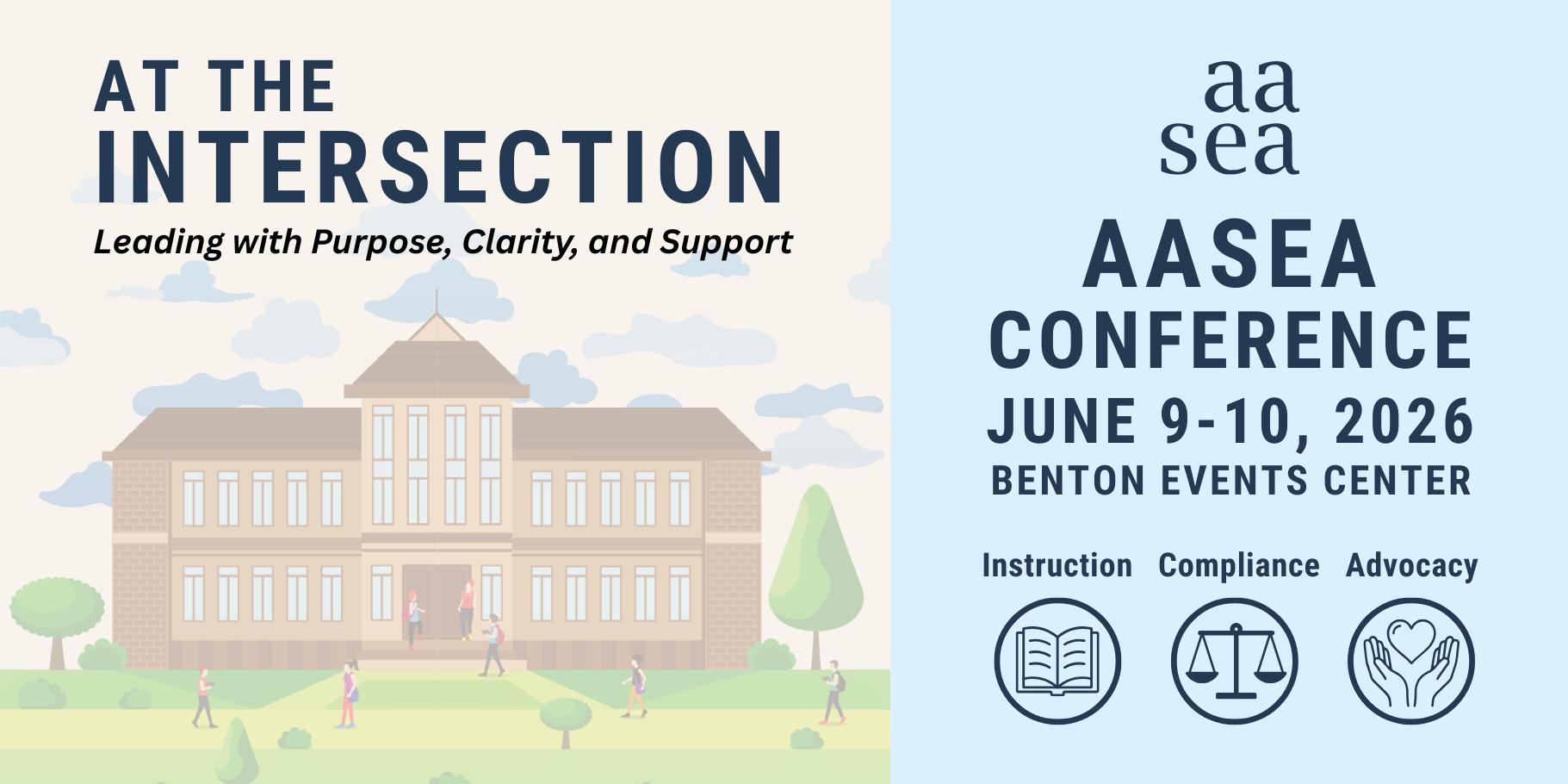
AASEA Conference, June 9-10, 2026 Benton Event Center
ASPMA Custodial Conference, June 11, 2026 Searcy High School
Certified Facilities Director Classes, Date TBD Location TBD
AAEA Summer Conference, July 27-29, 2026 Statehouse Convention Center/Marriott Hotel
For more information, visit theaaea.org/events.
Charles Warren AAEA President Chief Financial Officer, Fort Smith
Dr. Debbie Bruick-Jones AASA President Superintendent, Bentonville
Shavon Jackson AAESP President-Elect Principal, Russellville
Melissa Powell ArkASPA President Assistant Superintendent & Director of HR, El Dorado
Justin Robertson AASBO Past President Chief Financial Officer, Russellville
Molly Davis AAMLA President Principal, Rogers
Dr. Megan Duncan AAEA Executive Director
Dr. Jason Reeves AAEA President-Elect and AASSP Past President Superintendent, Mountainburg
Dr. Jeremy Owoh AASA President-Elect Superintendent, Jacksonville/ North Pulaski
Steven Helmick AAESP Past President Principal, Little Rock
Shantele Raper AACTEA President Assistant Superintendent, Rivercrest
Domonique Alexander AASEA President Special Education Supervisor, Fort Smith
Randall Bolinger ASPMA President (until Oct) Maintenance/Facilities Supervisor, Siloam Springs
Dr. Jared Cleveland AAEA Secretary Superintendent, Springdale
Dr. Karen Walters AASA Secretary Superintendent, Bryant
Jason Selig AASSP President Director of Instruction, Lake Hamilton
Lea Metcalf-McDonald AAFC President Executive Director of Curriculum, Texarkana
Dr. Kelli Martin AACIA President DeputyGreenbrierSuperintendent,
Raymond Reynolds ASPMA President (begin Oct) Maintenance/Facilities Supervisor, Searcy
Stacy DeFoor
AAEA Past President Assistant Superintendent, Sheridan
Betsy Laughter AAESP President Principal, Marion
Charles Nelson AASSP President-Elect Principal, Greene County Tech
Pam McCammon AASBO President BusinessGreenbrierManager,
Valerie King AAGEA President Director of Gifted Programs, Siloam Springs
B.J. TEL-ARBurgessPresident Director of GreenbrierTechnology,
Elite
American Fidelity Assurance Co.
Coryell Roofing and Construction
TIPS The Interlocal Purchasing System
Presidential Curriculum Associates
Educational Benefits
NIET - National Institute for Excellence in Teaching Solution Tree
Prestigious
Renaissance Learning
Stephens
Distinguished ABCover Apptegy
Bailey Education Group Bark
Capturing Kids’ Hearts
Colleges of Education & Health Professions - UofA
Lexia Learning
Distinguished (continued)
Lifetouch National School Studios
Modern Classrooms Project
Nabholz | Entegrity Energy Partners
Diamond
Baldwin & Shell
Conscious Discipline
First Security Beardsley
Imagine Learning
The Kirkland Group
Platinum
AAMSCO
Architecture Plus
C.R. Crawford Construction Goalbook
Hight Jackson Associates PA
HMH | NWEA
Just Right Reader
Legacy Construction Management
Phoenix Contractors
Polk Stanley Wilcox Architects
Powers of Arkansas
Platinum (continued)
Pro Service Builders
Progressive Technologies
SEAS Education
TRANE Gold
CDI Contractors
Cromwell Architects Engineers
Cynergy Rehab Group
ESS
Kinco Constructors
Middleton Heat and Air
Paragon Architecture
Reach University
Sibme
White River Services and Solutions
Silver
American Bus Sales
French Architects, PA
K12 Tutoring
Staying Home Corporation Strategos Group


As the school year comes to a close, the month of May provides us with a natural opportunity to build and develop plans for the upcoming year. This focuses on all the options on the horizon. This allows us to think through and design the upcoming year and determine what the next school year should look like for the children and educators we serve.
Near the end of one school year, I sat with a principal who shared a simple story. A child had struggled for much of the year because the systems around them were not quite aligned. Late in the spring, he made a small adjustment, he shifted the schedule, a support was added, and a trusted educator committed to regular check-ins. The change did not draw attention; however, it made a difference. The child completed the year confident, connected, and ready for what came next.
That conversation stayed with me because it reflects what May offers us as leaders. This season allows us to learn from what we have seen and use those lessons to plan more intentionally for the year ahead.
Throughout the year, our children grow academically, socially, and emotionally. Along the way, we are tested as leaders to evaluate and determine areas for improvement. This evaluation gives us space to ask important questions as we prepare for the next school year:
● Where did children thrive and what opportunities are available to provide better support?
● How well did we support teachers in their professional learning?
● What feedback from children, families, and staff should shape our planning for the upcoming year? These reflections help ensure that changes are thoughtful and grounded through real experience and outcomes. May is also an important time for professional learning. Thoughtful planning allows learning opportunities to feel supportive, relevant, and connected rather than overwhelming.
As leaders prepare for summer, AAEA can serve as a foundation for reflection and growth that naturally carries into the AAEA Summer Conference. Together, these learning opportunities provide space to reflect on the year behind us, learn with peers, and prepare for the work ahead with clarity and confidence. By taking time to learn from the past year and investing in purposeful professional growth, we strengthen our ability to lead with care, intention, and hope for every child we serve.

What are the steps I need to take before placing a student in ALE for intervention, guidance and counseling?
In accordance with ASBA Policy 5.26, the Superintendent or their designee will appoint an Alternative Education Placement Team to manage all ALE enrollments. Students may only enter the ALE via a formal referral from this team. Mandatory team members include the referring school’s counselor, the ALE administrator or teacher, the building principal or assistant principal, a parent or guardian, and at least one regular classroom teacher. If applicable, an LEA special education/504 representative will join, and the District may also include the student.
Before or upon entry, the ALE program will assess the student to tailor intervention services to their specific academic and behavioral requirements. Behavioral interventions will focus specifically on fostering longterm self-regulation and improved conduct.
If you have questions for Dr. Neathery, email her at k.neathery@theaaea.org .

Submitted by the National Institute for Excellence in Teaching
Across Arkansas, instructional leaders are refining their skills in observing lessons and providing feedback grounded in student learning. Through training facilitated by the National Institute for Excellence in Teaching (NIET), leaders are building a shared understanding of what effective instruction looks like. Hear from voices in the field on their recent trainings with NIET to grow their own skills, to, in turn, grow students:
• “I used to think observations were about rating teachers,” said Instructional Supervisor Malorie Berry of Dardanelle School District. “Now I’m asking a different question: How do I know students are learning in that classroom?”
• “Emphasis on evaluating lessons, not teachers, promotes a growth mindset and helps create a culture where feedback is seen as support,” said Park Elementary Principal Shelby Burkheart of Corning School District.
• “I used to think evaluations were about a teacher’s ability to deliver a solid lesson,” said Mountain Springs Elementary Assistant Principal and Instructional Facilitator Macy Welch in Cabot Public Schools. “Now I know it’s more about the impact on learning for students with teacher intentionality.”
By helping instructional leaders across Arkansas develop a shared lens for effective teaching and learning, NIET works to support stronger classroom instruction and deeper student understanding, moving observation past the dimension of compliance and into effective change.

Charles Warren, AAEA Board President
May is the month school districts move into a “wind down” mode. School schedules are filled with graduations, AP tests, athletic banquets, and field trips. Students, parents, and teachers can start dreaming about summer vacations, water parks, and baseball games.
However, May is when district Human Resources (HR) teams start “winding up.” They begin releasing and collecting contracts. They spend May joyfully celebrating retirements, reluctantly accepting resignations, and heavily recruiting for the new school year. Hiring is just getting started in May. The function of hiring alone is a year-round job, but in the summer the dial goes to 11 (R.I.P. Rob Reiner).
HR is a common department in corporate America, or the real world as I call it. HR has a significant role in Arkansas public schools, too. The work and the goals of HR teams in the real world and public schools may align, but the approach to HR issues can be different on several fronts. The difference is mostly driven by law and there’s a huge amount of law to deal with in HR.
The real world manages the same HR statutes across many industries. The HR team works on the same issues at the manufacturing plant or the retail store or the doctor’s office. The four big labor laws are considered the Fair Labor Standards Act (FLSA), Family and Medical Leave Act (FMLA), Title VII of the Civil Rights Act, and American with Disabilities Act (ADA). These federal laws are enforced by the Department of Labor and the Equal Employment Opportunity Commission, and they govern wages, benefits, antidiscrimination, and safety, respectively.
Public schools in Arkansas start with these federal laws but they also include legislation regarding hiring, firing, licensure, minimum wages, minimum teacher salaries, maternity leave, and teacher contract rights, just to name a handful. The regulation of many of these issues changed with the LEARNS Act.
This begs the question – Is a public school HR department better served with experienced HR professionals from the real world with little experience with teacher labor laws or with an experienced educator from the school system with little experience with federal labor laws?
When I thought about the depth of HR law, I thought of Terri Raskiewicz. HR law is as complicated as pronouncing her last name. Not only is she a School Business Official (SBO) – she’s a lawyer. Insert lawyer joke here. She has served as the Chief Financial Officer at the Siloam Springs School District since 2014. She’s the current Secretary of the AASBO Board.
There’s not too many SBOs like Terri. She has an MBA with a Juris Doctor degree and a CPA’s license (inactive). I felt as though she was qualified to talk to me about an SBO’s perspective of HR. She confirms that the complexity of HR law is real. Having taken the CPA exam and the bar exam, she should know.
Terri believes that a school district that navigates the HR world successfully is one that encourages collaboration and communication – especially with the payroll team. These teams often must convert the personnel conversations, both good and bad, into changes affecting how and when an employee is paid. It can be very hard to see where HR ends and payroll begins. That’s true in the real world as well.
The value of the HR department is the ability to recruit, support, and retain effective employees in and outside the classroom. They manage certification verifications, coordinate employee evaluations, administer investigations and discipline, and provide conflict resolutions. That’s just a sample of the work, but that’s a lot of work.
That’s also a lot of words ending in the letters T-I-O-N. The suffix “tion” turns verbs into abstract nouns. It
indicates action, process, condition, or the result of something. Like I said, that’s a lot of work. Is it any wonder that the same workload also applies to the word “education?”
The HR team is typically made up of “people” people. You know, those extraverts that can carry on a conversation with anyone at the checkout line at Walmart. However, they have accepted the challenge of learning and understanding and applying all the laws that Terri studied.
These “people” people care about the well-being of school employees. They also care about the same employees being compliant and knowledgeable, to some degree, of the workplace and classroom rules and regulations surrounding student and staff interactions.
You start to see that the work of an HR team can be a wild swing of emotions. They bask in the joy of offering a person a job. Sometimes, it’s the first job of a brand-new teacher ready to fulfill a dream of impacting generations of students. They encourage these rookies along the way. They observe all employees, not just the rookies, excelling throughout the day. They also must bear the burden of disciplining an employee that didn’t follow the rules.
My brother Jonathan, the most beloved son, is a recovering HR administrator. His years in the HR office have really aged him. Physically, he’s eight years younger than me. Emotionally, he’s eight years older than me now. If you are an HR administrator walking into a school and the principal greets you with a startled look of fear, sometimes blurting out “why are you here?”, it can take a toll on your soul.
Fortunately, there is a constituency group of AAEA for HR administrators called the Arkansas Association of School Personnel Administrators (ArkASPA). It’s more of an emotional support group for HR administrators than it is a constituency group. The “people” people need people. Their conference speakers are peppered with attorneys that work full-time in employment law. Insert another lawyer joke here. I’ve been to a couple of their conferences. I think it’s a worthwhile endeavor for all school administrators to attend if possible. There’s a fall conference in September and another held in between ice storms in February each year. They also hold HR workshops at the AAEA Summer Conference. Please look for all these opportunities in the future. These “people” people need more people.

Thank you to everyone who participated in the AAEA Board election. Each candidate is highly respected and well-qualified to represent our members, and we appreciate their willingness to serve.
We are pleased to announce that Stephanie DeFoor, Principal of Caldwell Elementary in the Benton School District, has been elected as the 2026–2027 AAEA Secretary/Treasurer, effective July 1. Congratulations, Mrs. DeFoor. We are excited to have you on the board and look forward to working together!

Assistant Superintendent of Human Resources and Campus Support, Fort Smith School District

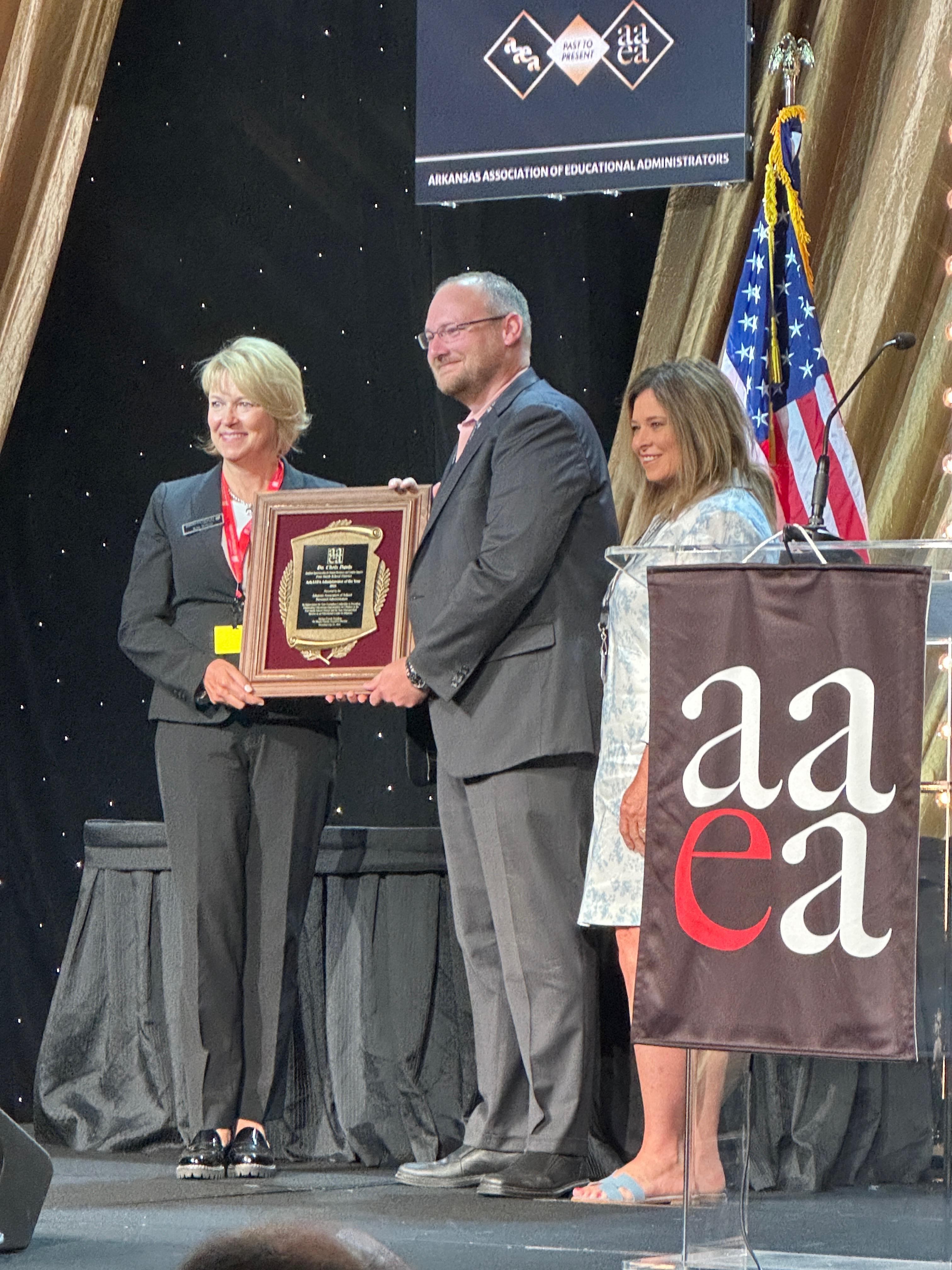
Dr. Chris Davis, Assistant Superintendent of Human Resources and Campus Support for Fort Smith Public Schools began his career as a band director in Mountain Home. He says, "Music was my entry point into education, and I had some incredible music teachers who made a lasting impact on me. They didn’t just teach skills, they built confidence, discipline, and a sense of belonging. That’s what drew me into education, and it’s something I still carry with me." He was encouraged by other leaders to pursue a future in administration, serving as middle school principal and high school assistant principal in Huntsville for a year before joining Fort Smith Public Schools as an assistant principal at Northside High School in 2016. He states, "Being able to return to my hometown and serve in the school I graduated from was especially meaningful." In 2019, he moved into district leadership as Supervisor of HR and in 2021 he moved into his current role. "I’m grateful to work alongside a group of educators and leaders who continue to challenge and support me every day," he remarks.
Dr. Davis says his favorite thing about his job is visiting with new teachers as he offers them their first jobs and helps them begin their careers in education. "I also value the opportunity to work alongside principals and supervisors to solve complex problems and support our schools," he says. "Those moments are what make the work meaningful to me." The most challenging part of the job is balancing the needs of individuals with the needs of the organization. He explains, "In HR, decisions often carry significant weight, and it’s important to approach each situation with fairness, consistency, and empathy." However, he advises anyone interested in the career to "focus on people first. The technical side of the work can be learned, but the ability to build trust, communicate clearly, and lead with integrity is what ultimately makes the difference." He says that this advice has served him best personally, particularly when the people you put first in your life are your family. "Education can be very demanding, and I’ve learned you have to be intentional about remembering that the people who love and support you deserve your time and attention first," he asserts. "When you keep that perspective, you’re able to lead and serve others in a healthier, more sustainable way."
What are the goals you are still working toward?
I’m continuing to grow as a leader, especially in areas of organizational leadership. I’m fortunate to work with some outstanding colleagues who push me to keep getting better. One of my long-term goals is to serve as a superintendent, so I’m focused on continuing to grow and prepare for that opportunity.
What might other administrators be surprised to know about you?
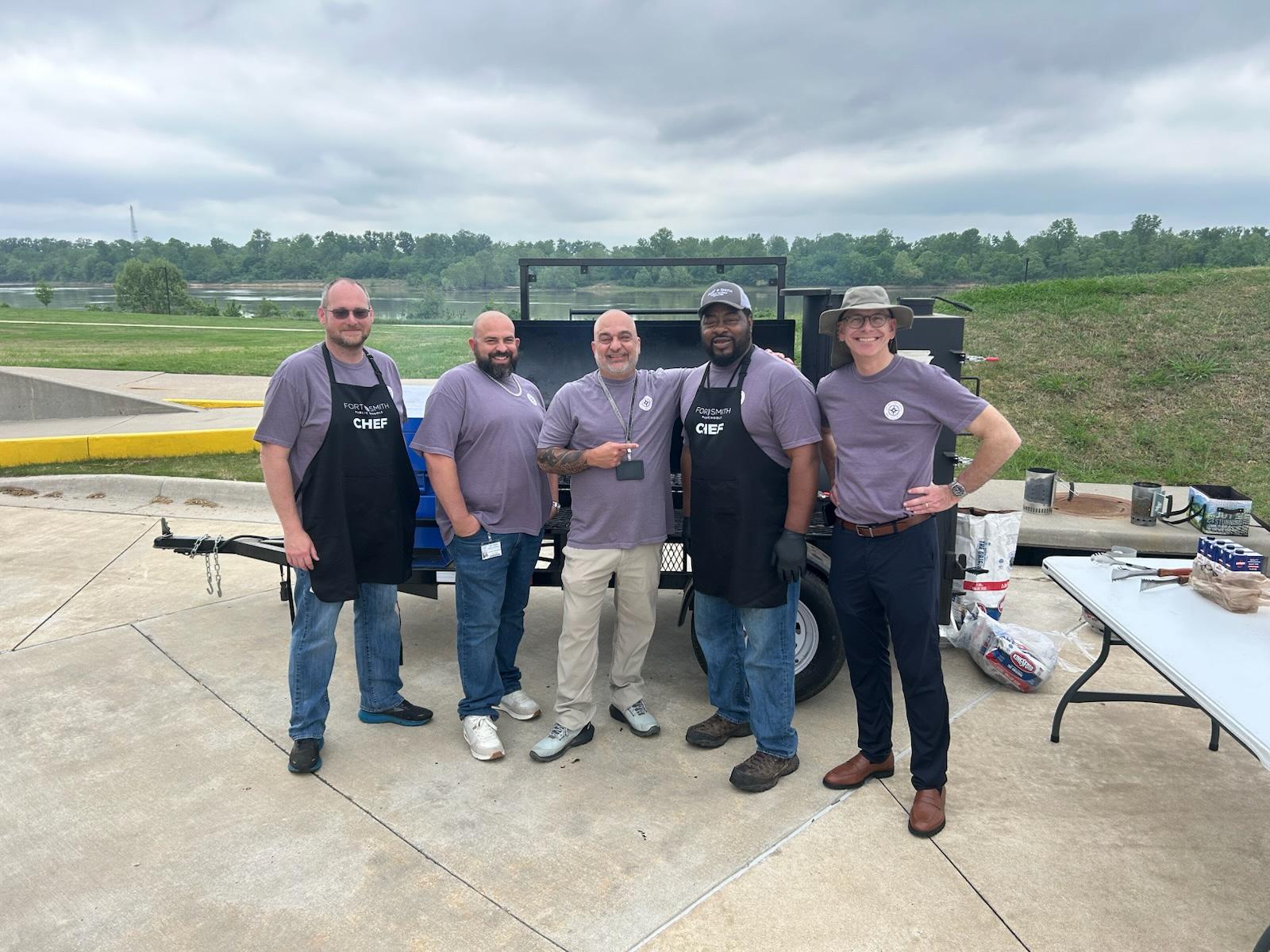
Many are surprised to learn that my background is in music education. That experience taught me discipline, creativity, and the importance of connecting with students. They’re often even more surprised to find out I’m part of a competition BBQ team—and that I’m constantly searching for the best brisket and the latest BBQ rub.
What’s something that amazes you?
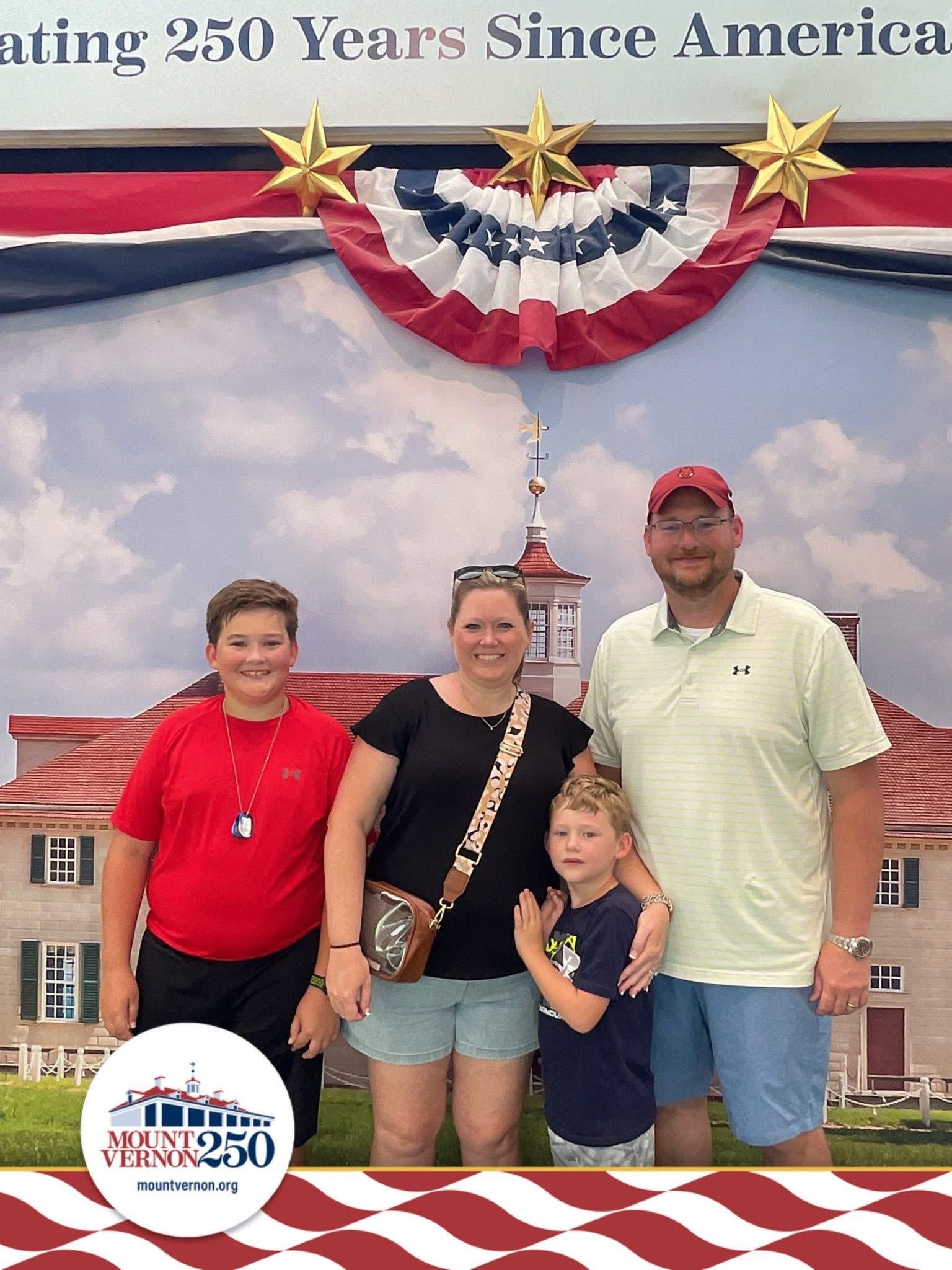
I’m continually amazed by my wife—she’s an incredible wife, an even better teacher, and an amazing mom to our two boys. The way she balances our busy schedules while continuing to make an impact in the classroom truly makes her a superhero.
What do you enjoy doing during your time off?
I enjoy spending time with my family, staying involved at church, and enjoying some good BBQ. These experiences remind me of what’s most important in life.
My bucket list has changed over time. It used to be about places I wanted to go, but now it’s more about being present for the moments I don’t want to miss with my family and creating memories that will last a
do you see yourself in five
In five years, I hope I’ve grown as a leader, but also as a husband and a dad. I want to be better at leading and serving others at work, while also being present and intentional with my family. If I’m doing both of those well, I’ll feel like I’m where I’m supposed to be.
What do you see as the biggest benefit of AAEA membership?
One of the biggest benefits of AAEA membership is the opportunity to connect with other leaders across the state. It provides a space for professional growth, shared learning, and collaboration. Educational leadership is hard, but it doesn’t have to be lonely. AAEA and its constituency groups help bring leaders together to share, support, and grow.









Join us for the 2026 AAEA Summer Conference, Vision to Impact: Be the Change, on July 27-29, 2026, at the Statehouse Convention Center and Marriott Hotel in Little Rock, AR. The event will feature keynote speakers, over one hundred breakout sessions from inspiring educational leaders, an exhibit hall, and hospitality events. Join administrators from across the state to learn, network, and celebrate your love for public education!

Submitted by Dr. Gene Kerns, Chief Academic
Officer, Renaissance
Arkansas students are reading — and with the right tools, every student can become a fluent, confident reader. Accelerated Reader (AR) is a proven literacy development platform that motivates K–12 students, supports core instruction, and builds the skills identified by Science of Reading research. With over 220,000 quizzes and personalized reading recommendations, AR gives every learner a path forward and every teacher the data to guide them there.

Motivated Readers: Personalized goals and engaging quizzes inspire students to read more — and more widely — building stamina, word recognition, and language comprehension over time.
Actionable Insights: Detailed reports show exactly who is growing, who is on track, and who needs additional support, so teachers can respond quickly and confidently.
Connected Practice: Comprehension, vocabulary, and literacy skills quizzes tie independent reading directly to classroom instruction — reinforcing learning every step of the way.
Differentiated Support: From individual students to small groups, AR helps teachers personalize learning based on real reading data.
Every year, Renaissance publishes What Kids Are Reading — the largest annual study of K–12 students' reading habits. The 2026 edition includes popular print and digital titles by grade, new research on reading time and student growth, favorite series, notable nonfiction, and special features celebrating 40 years of Accelerated Reader.
Download the 2026 What Kids Are Reading report and see the research for yourself. [Download Now]
CoSN is a great resource for school technology administrators. Check this page monthly for links to articles to assist technology leaders as they navigate through digital learning transformations.

Setting Conditions for Success: Guidelines for Responsible Use of Technology for Schools
EmpowerED Superintendent edLeader Panel
Broadcasts
CoSN Membership


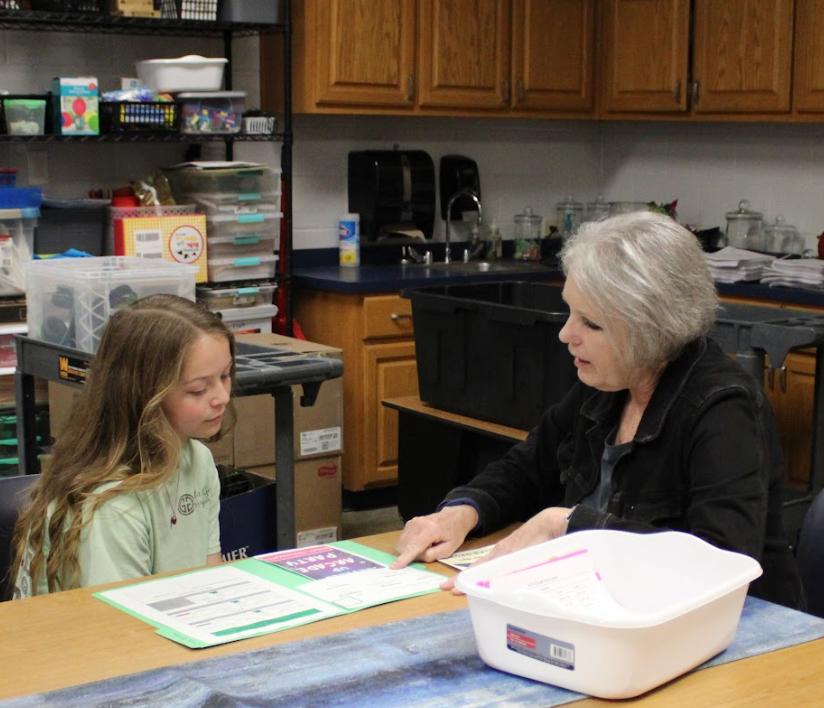
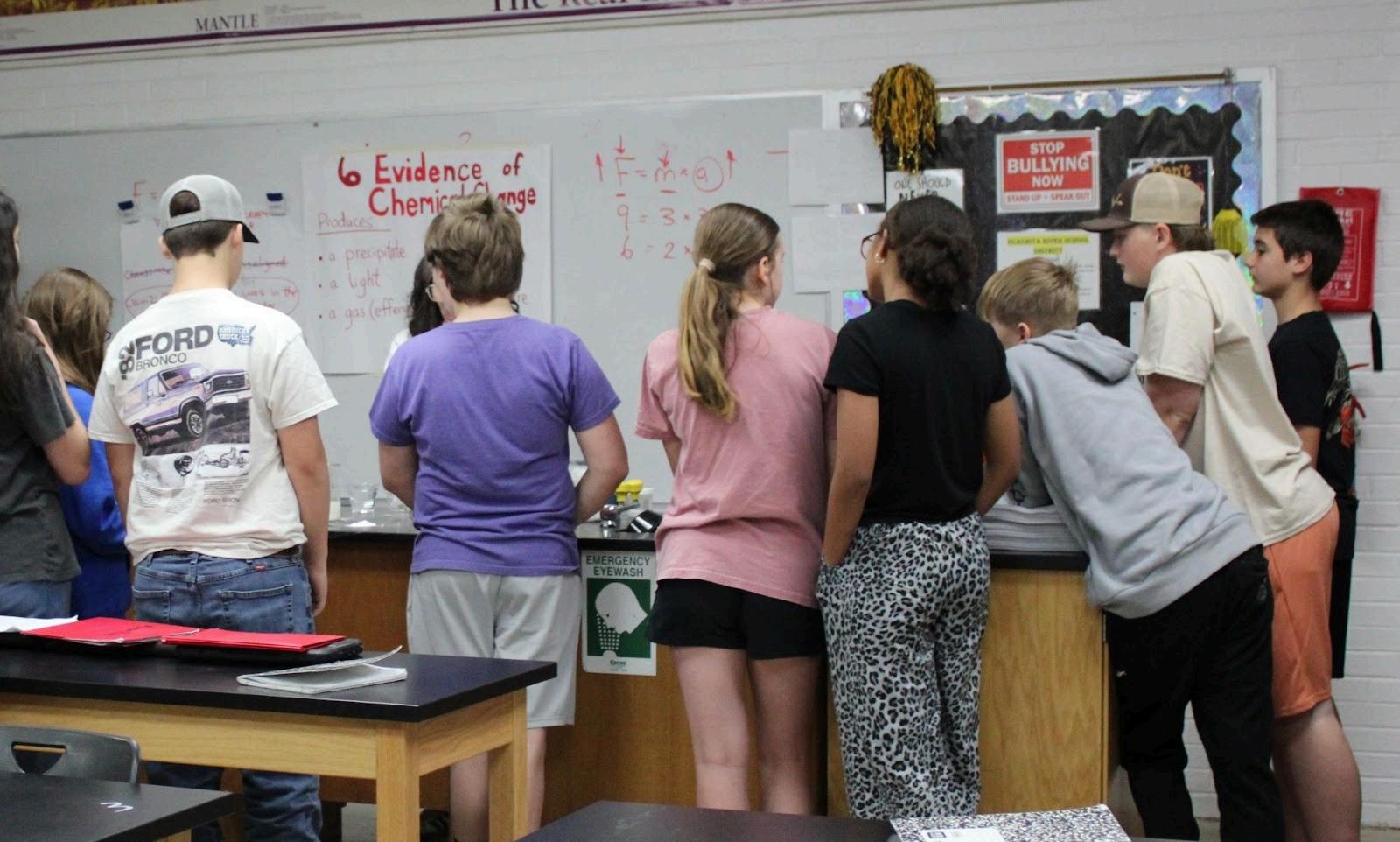
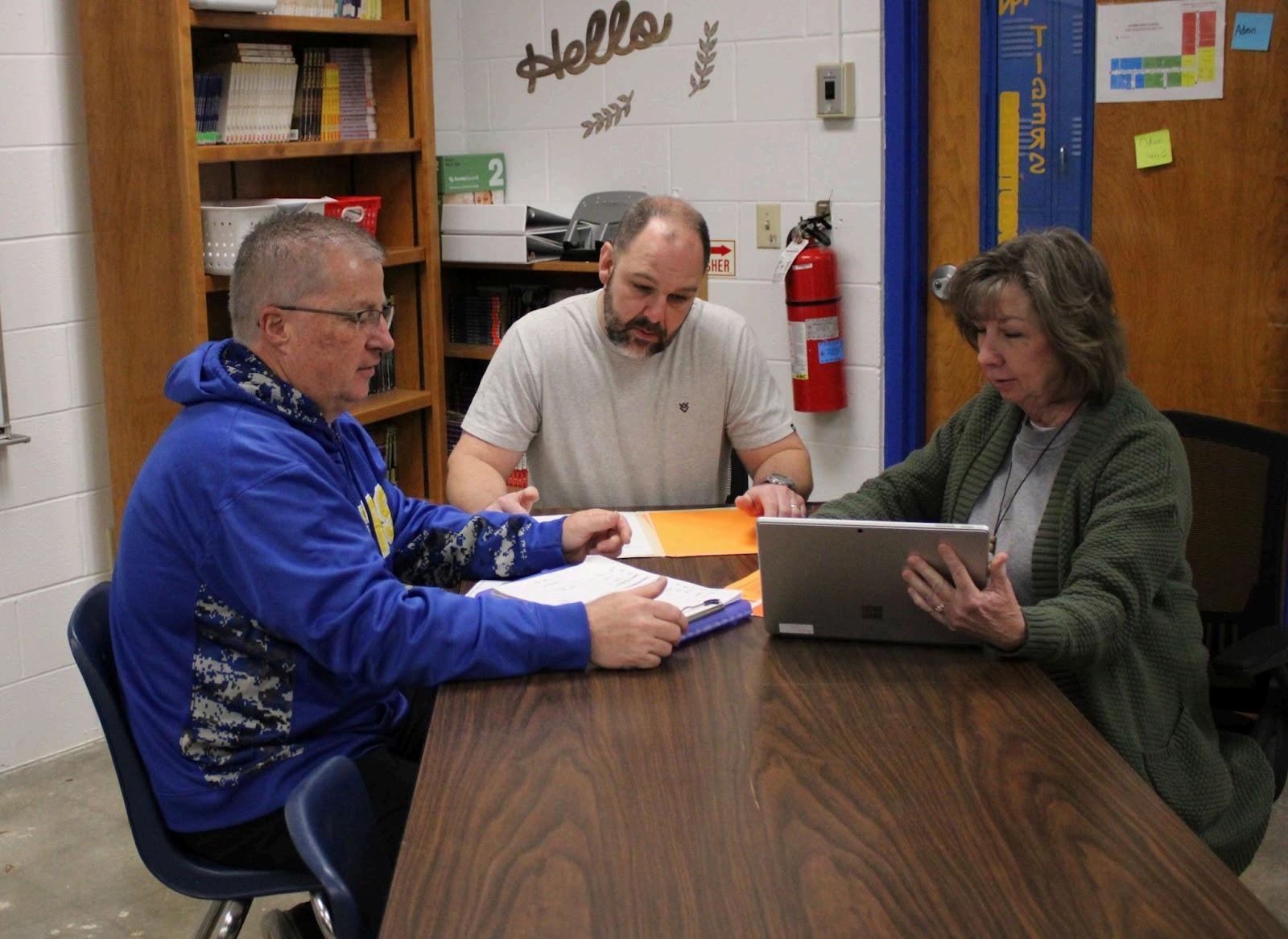
In the Ouachita River School District, growth is not treated as a trend or an initiative of the year. It is a shared belief that shapes conversations in classrooms, meetings in offices, and expectations across campuses. Superintendent Jerry Strasner and Curriculum Director Davelynn Lane speak about growth in a way that feels both practical and deeply personal. For them, student growth is the work of educators.
Serving the rural communities of Acorn and Oden, the district operates in a setting where relationships matter and schools are central to community life. That context shapes the district’s approach. Leaders talk openly about children needing strong, stable schools now more than ever. In response, they have built systems that focus less on isolated moments and more on steady progress over time.
Conversations with district leaders consistently return to one idea: every child can grow. That belief drives instructional decisions and guides professional learning across campuses.
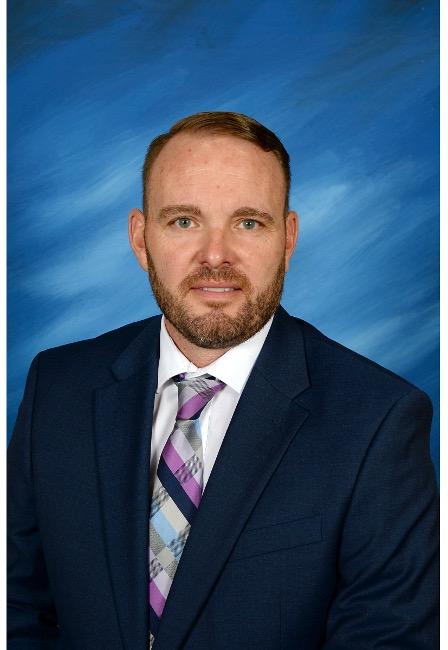
At each school, principals lead regular team discussions centered on child progress. Teachers examine growth data together, identify where children are making gains, and determine what adjustments are needed when progress slows. The tone of these meetings is not about compliance. It is about responsibility. The question is simple: what do our children need next?
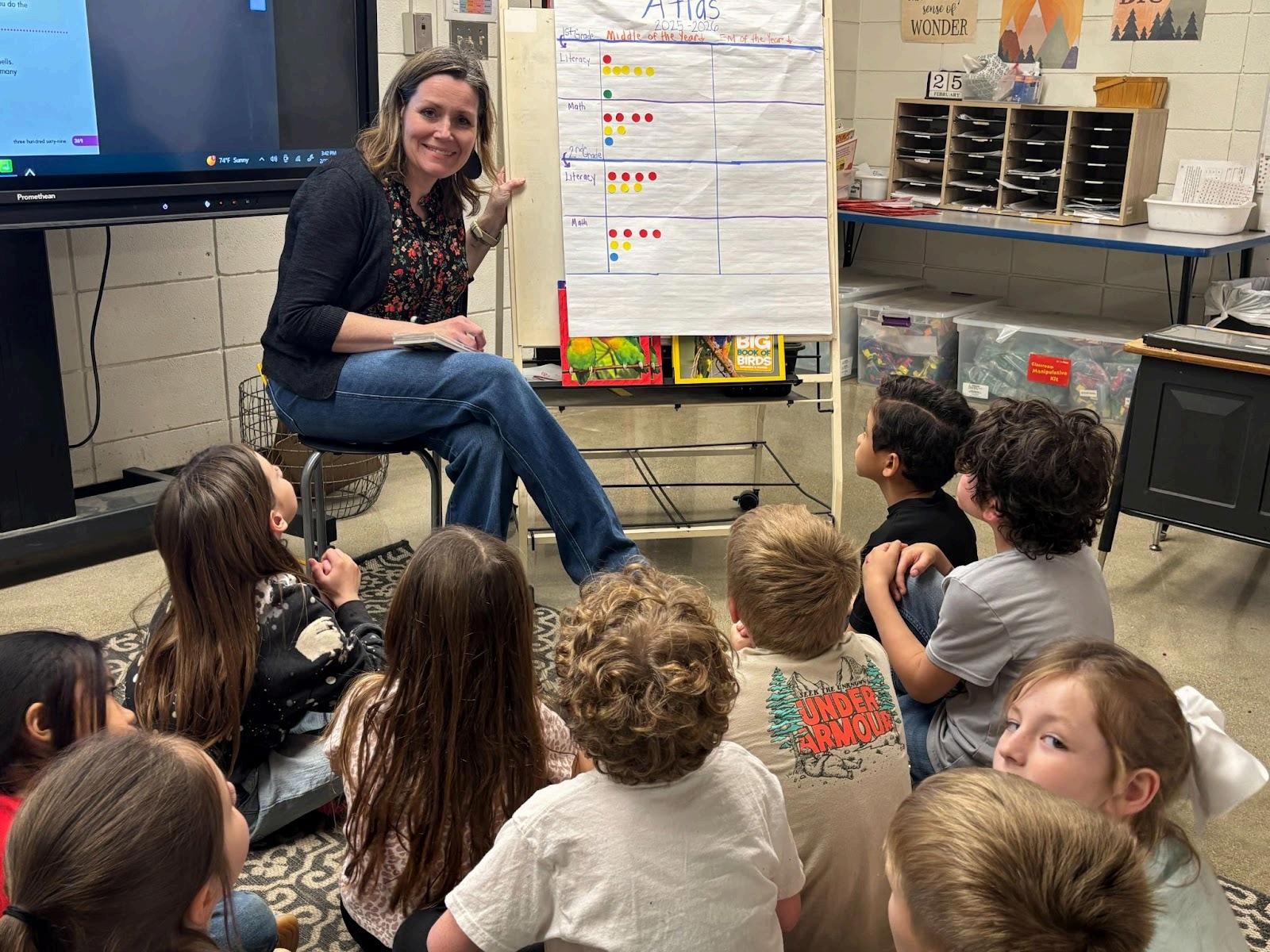
Lane describes this work as moving beyond looking at numbers and toward meaningful action. Teachers are given time to reflect, collaborate, and respond. When something is not producing results, they adjust. That flexibility reinforces a culture where improvement is expected and supported.
At the elementary level, this commitment becomes even more personal. Leadership teams meet individually with children to review growth and set goals. Each child understands where he or she stands and what the next step looks like. Growth is openly
discussed and regularly celebrated. That clarity builds confidence. It also reinforces the message that progress is possible for every child.
Strasner centers himself and the team often with questions of purpose. What are we here to do? How can we best serve our children? For Ouachita River School District educators, the answer is clear. The district exists to help children learn, grow, and prepare for life. Every decision is measured against that purpose.
The district leadership’s focus on growth extends beyond academics. Leaders describe a staff culture rooted in care, high expectations, and shared responsibility. Teachers collaborate intentionally and support one another. Professional learning is viewed as essential work, not an added obligation. Adults model the same growth mindset they expect from children.
Preparation for life after graduation is woven into that culture. Each year, seniors participate in a tradition known as Senior Stories, where they share their plans and reflect on how their school experiences have shaped their futures. Some speak about college. Others discuss military service or career pathways options. The common thread is readiness and confidence.
Strasner and Lane emphasize that growth is not limited to test scores. It includes character, resilience, and the ability to see a future beyond high school. In a rural district where schools anchor the community, that broader definition of growth matters.
In the Ouachita River School District, the student focus remains steady. Children deserve adults who believe in their potential and are willing to do the daily work required to move learning forward.
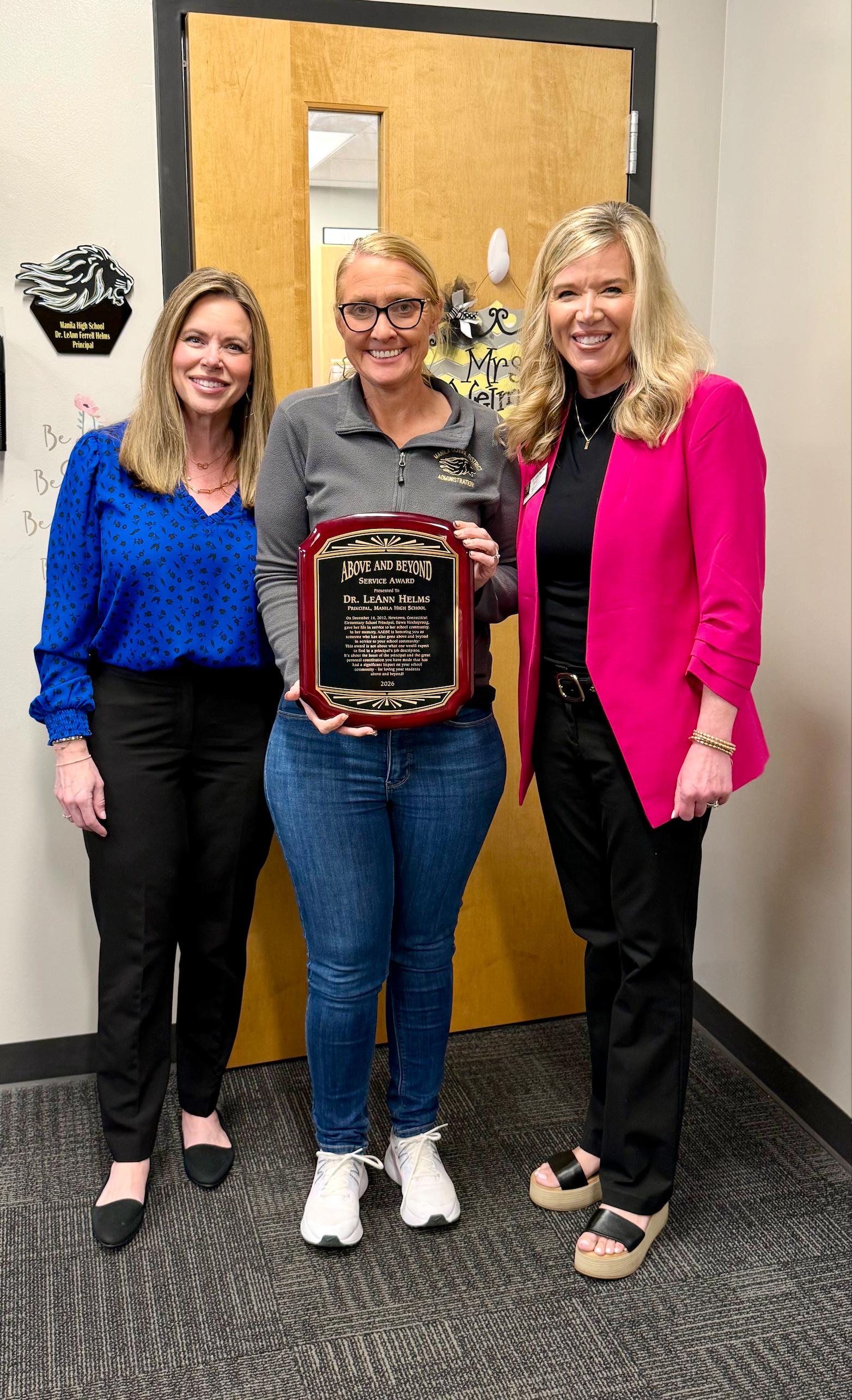
Dr. LeAnn Helms, principal of Manila High School in the Manila Public School District, has been named the 2026 recipient of the Arkansas Association of Elementary School Principals (AAESP) Award for Service Above and Beyond. The award was presented on April 17 by Dr. Megan Duncan, AAEA Executive Director; Dr. Karla Neathery, AAEA Assistant Executive Director; and Mr. Jason Evers, Superintendent of the Manila School District. Now in her sixth year as principal, Dr. Helms has dedicated more than two decades of service to the Manila School District in a variety of roles. Colleagues describe her leadership as deeply rooted in service to others. Dr. Helms consistently prioritizes the needs of students and the community, working selflessly and without recognition to make a difference in the lives of others. Congratulations, Dr. Helms, on this well deserved honor.
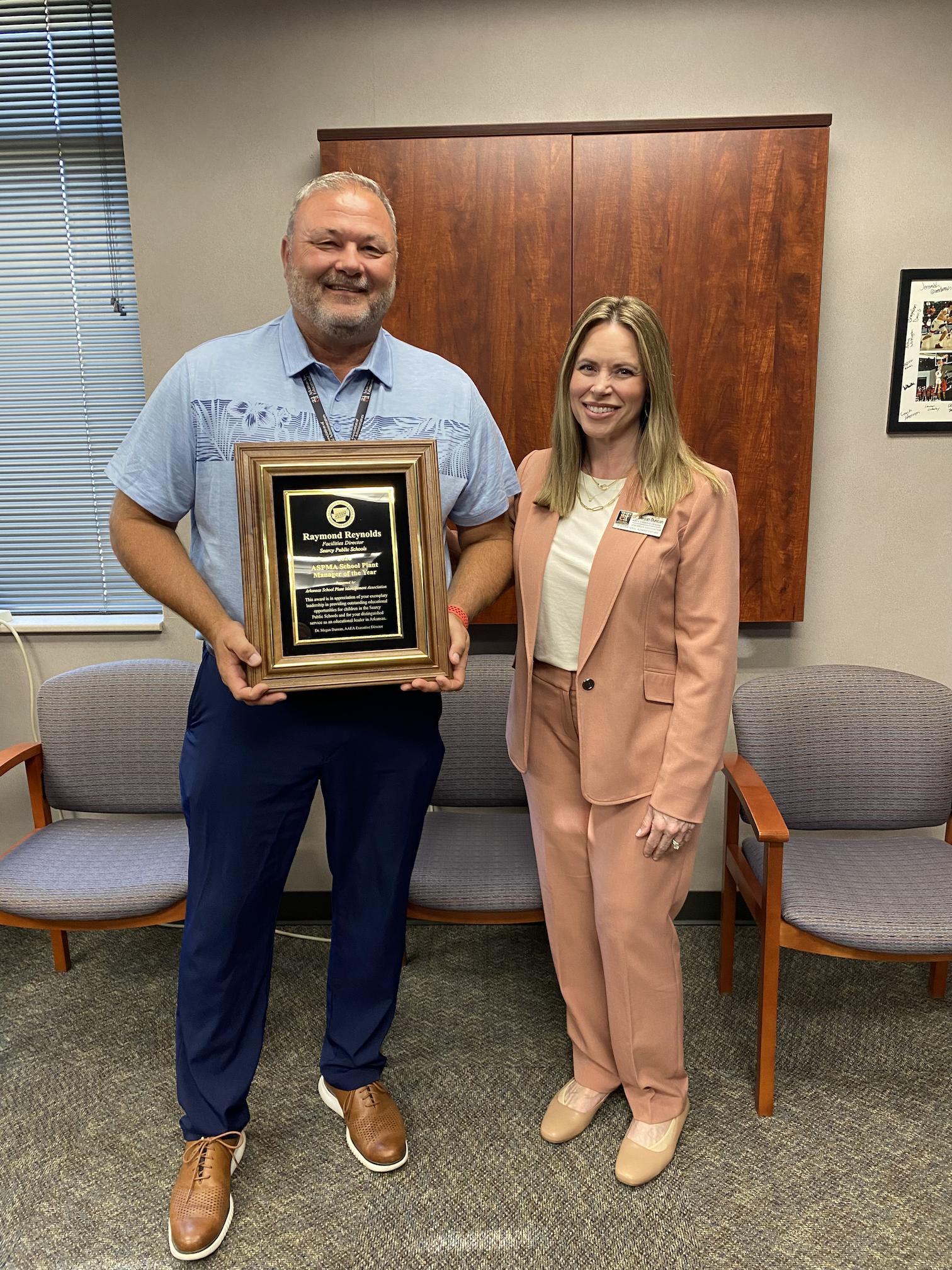
Raymond Reynolds, Facilities Director for the Searcy School District, has been named the 2026 Plant Manager of the Year by the Arkansas School Plant Managers Association (ASPMA). The award was presented during the Searcy Board of Education monthly meeting by education leaders including Dr. Megan Duncan, AAEA Executive Director; Dr. Bobby Hart, Searcy School District Superintendent; and Mr. Mike Mertens, AAEA Consultant. Mr. Reynolds was recognized for his dedication to maintaining safe, clean, and efficient school facilities while leading innovative improvements across the district. School officials say his attention to detail and commitment to students and staff have made a lasting impact. District leaders praised Reynolds for his rock solid leadership and passion for service, calling the honor well deserved. Thank you, Mr. Reynolds, for your service and congratulations on this prestigious award.

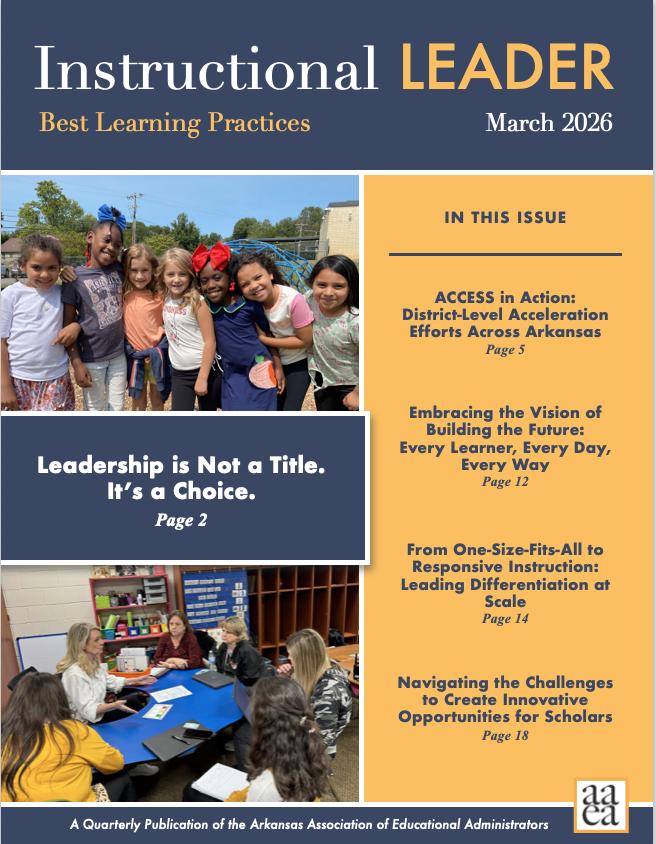
This segment features content from other AAEA publications. Instructional Leader is a quarterly publication available to subscribing districts. The following excerpt

Contributor: Susan Gilley, Executive Director, Instructional Technology & Federal Programs, Harrison School District
This year marks my 41st year in education and while many things have changed—and will continue to change—many things remain the same. My educational philosophy has always revolved around “what is best for students.” When every problem, obstacle, or decision is viewed through that lens, the answers often become clearer. It is much like remembering your “WHY.”
As a federal coordinator and CTE director, I can easily get lost in the loss of funds, budgetary shortfalls or the day-to-day processes that often lead back to the same question: “But who’s going to pay for that?”
Ultimately, our children are the ones paying for everything. They are paying with their time, focus, interests and passions. It is our responsibility as educators to prepare them for their future. How we decide what that looks like is increasingly difficult. Their future workplace in today’s artificial intelligence world continues to be an ever-evolving, changing landscape. We must ask ourselves, “Are we preparing them for a future career that will be replaced or respaced by AI?
Of course, in many ways it all comes down to money. How will we fund the student opportunities we want to make available in a fiscally responsible way? This makes my unique role of federal continued
coordinator, CTE director, and other duties as assigned a perfect fit. It allows me to focus on keeping opportunities cutting-edge for students while also identifying creative and sustainable ways to fund the work that prepares them for the future.
Which leads to the question, “What are we doing at Harrison School District?” and I am proud to share about several programs that we are working on to support our mission of Building the Future: Every Learner, Every Day, Every Way. These include the WOLF program, our teacher apprenticeship program, and an innovative middle school collaborative literacy initiative.
● Let’s start with WOLF. The "Arkansas Wolf Program" primarily refers to the WOLF (Work-Based Opportunities Leading to Future Employment) program, a vocational training program for students with disabilities through Arkansas Rehabilitation Services.
This collaborative partnership between our district and Arkansas Rehabilitation Services provides work readiness skills and experience to help students achieve competitive, integrated employment after high school. We are at the beginning of the process this school year of integrating these pre-employment transition services for students with disabilities into our high school program of possibilities. A district can have up to 40 students employed each semester. Currently, we have reached about half of that number, but hope to have the full allotment employed in a variety of places on campus as cafeteria, custodial, office, lab, library, teaching, or technology staff assistants. We also want to work with area businesses to expand the program to area business establishments so that students really are on their way to their work life future. To learn more about the WOLF program and pre-employment transition services, please visit the Department of Workforce Connections, Arkansas Rehabilitation Services website. For more information from there, you can click in the center of that web page where it says Click here for more information and the questionnaire for new schools interested in Pre-ETS.
● Next, is our teacher apprenticeship program which includes two interconnected pathways. The first focuses on building a pre-educator pipeline for high school students interested in teaching. In our first year, seven students have already passed their paraprofessional praxis exam allowing them to be hired as classified employees. Two of those students have been working as aides in our after-school program and one began serving as a substitute in an elementary school this semester. The second pathway supports our current paraprofessional staff. More than 20 classified staff are actively pursuing bachelor’s degrees with the goal of becoming licensed teachers. We have already revised our paraprofessional salary schedule to incentivize degree completion by
providing increased pay for continued education. Through the Arkansas Teacher Registered Apprenticeship Program, paraprofessionals partner with master teachers who support their coursework while providing on-the-job training and mentorship. Because apprentices are aligned with approved postsecondary institutions, they are able to complete student teaching without leaving the district—a true win-win-win for staff, students, and schools. To learn more about the Arkansas Teacher Registered Apprenticeship program, please check out the state website here
● Finally, our middle school literacy teachers are expanding a project they have refined over several years. The basic premise of the original project was “What is one well-informed action members of your community can take to promote healthy, sustainable food choices or contribute to environmental improvement.” This project that requires a researchbased solution to address a community health issue has consistently impressed community panels with innovative ideas—many of which have been implemented locally. For the 25-26 school year, they chose to kick-start the program into overdrive by launching a student-led initiative called Homegrown Stories funded in part by the Harrison Public School Foundation. Through this project, students are working to preserve the stories of local farmers by bringing them to life in a series of children’s books. Partnering with local author Brandy Mincer, students conducted interviews with a local farm family, wrote the story with author mentorship, collaborated with a student illustrator, and managed the marketing plan. The students are excited to announce the launch of their first book, Farmer Jack and the Never-Ending Puzzle on January 27. This has been an amazing learning experience for all involved in creating, producing, and publishing a book while integrating community experiences with student-led initiatives. I, for one, can’t wait for them to share their experiences, and I plan to share my newfound knowledge of book publishing at the Spring Arkansas Association of Federal Coordinator’s Conference. To learn more about their book and this project, click here. They will also be presenting at the National Agriculture in the Classroom Conference in Rhode Island this summer.
I am proud of the work happening at Harrison School District and the opportunities that we are creating for students. It truly is a privilege and blessing to “show and find the money” to our students, staff, and community in order to fund projects that truly are: Building the Future: Every Learner, Every Day, Every Way #GoGobs

The AAEA Job Board is a calendar-year subscription that assists districts with the ever-increasing challenge of recruiting quality staff. It is a significant resource for educators, both in-state and out-of-state, seeking employment in Arkansas schools.
Over 165 school districts are participating in the program, which has been extremely helpful to schools and educators over the years. The site is used year-round and is accessed extensively during the second semester. It is not unusual to see over 400 jobs posted on the Job Board at one time. With an account, school districts may post unlimited job vacancies throughout the year.
To subscribe (by district) or to post job openings, contact our office at 501-372-1691.
District Position
Ashdown School District
High School Principal
Batesville School District Director of Special Programs/ LEA Supervisor
Beebe School District School-Based Mental Health Coordinator
Benton School District
Calico Rock School District
Caldwell Elementary Principal 26/27 SY
School Business Official
Camden Fairview School District Dawson Cooperative (ALE Administrator)
Camden Fairview School District Dean of Students (CFHS)
Cossatot River School District
Crossett School District
High School Principal
Elementary Assistant Principal
District
Position
Elkins School District District Treasurer
Farmington School District
Huntsville School District
Junior High Assistant Principal
Pre-K / Early Childhood Programs Director
Huntsville School District Principal
Jonesboro School District
Elementary Assistant Principal of Student Services
Mayflower School District Director of Special Services/LEA Supervisor
Mountainburg School District Superintendent
Pea Ridge School District
Poyen School District
Prairie Grove School District
Prairie Grove School District
Riverview School District
Rose Bud School District
Russellville School District
Russellville School District
Searcy School District
Vilonia School District
Woodlawn School District
High School Principal
District Technology Coordinator
Assistant Principal Primary School
High School Principal
Elementary Principal
High School Principal
Assistant Principal-Russellville Junior High School
Assistant Principal-Oakland Heights Elementary
Junior High School Principal
District Artificial Intelligence Coordinator
Assistant Principal