






introduce Sidhu and Davis.
On Friday, the Charles H. Diller Jr. Center for Entrepreneurial Leadership and Innovation, the College of Business Dean’s Office, the President’s Office and Small Business Development Center collaborated for a special event featuring two entrepreneur guest speakers, Jay Sidhu and Sherrod Davis.
The event was open to students, faculty, staff, business owners and the Shippensburg community.
Before the speakers went on stage, the attendees were encouraged to enjoy a hot lunch and opportunities to network.
Once everyone was settled, Robin Burtner, director of the Diller Center and Small Business Development Center, took the stage to
Sidhu is currently the executive chairman of Customers Bancorp, Inc. and Customers Bank. He joined Customers Bank in 2009 when it was known as New Century Bank, and the company was a $250 million asset-troubled bank. Today, it is a high-performing bank with over $21 billion in assets.
Sidhu also served as the chairman and CEO of Sovereign Bancorp Inc. and Sovereign Bank from 1989 to 2006. After he retired from Sovereign, Sidhu served as the chairman and CEO of Sidhu Advisors, LLC. He has received various recognitions, such as Financial World’s CEO of the Year, Turnaround Entrepreneur of the Year, and Large Business Leader of the Year by the Chamber of
Commerce.
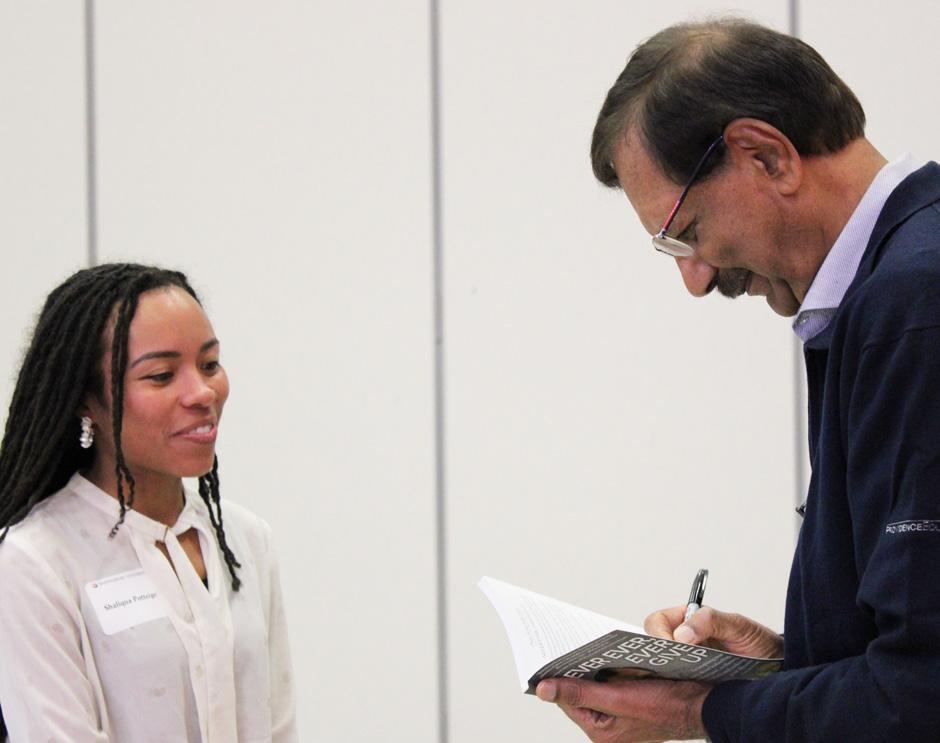
Sidhu’s memoir, “Never Ever, Ever Give Up,” details his American dream journey. He touches on his experiences in banking, raising a family, leadership tips and more. Each attendee received a free book and a chance to have Sidhu sign it at the end of the event.
Sherrod Davis is the co-founder and CEO of Ecomap Technologies, where he drives AI-powered solutions that strengthen entrepreneurial ecosystems. His work earned him a “Best in Tech” Executive award and “40 Under 40” recognition from the Baltimore Business Journal.
The two shared the stage throughout the interactive session and Q&A. Sidhu spoke on his inspiring true story that features values of leadership, commitment,
resiliency and happiness, while Davis discussed his challenges, failures and the eventual success after working through a crisis.
“I believe two things really strongly: we can control our attitudes, and we can control our efforts,” said Davis. “Things are going to happen in life, and we have the power to decide how we are going to handle them.”
Todd Whitman, professor and faculty chair in the Counselor Education Department at Shippensburg University, gave the closing remarks on the event by recapping the highlights from the speakers.
All in all, the event proved to be an inspiring and educational session. Attendees were encouraged to dream big and never ever, ever give up their dreams.

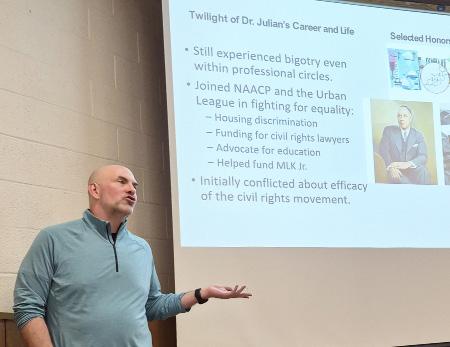
In celebration of Black History Month, students and professors gathered in Franklin Science Center for Professor Joseph Shane’s lecture to remember the Civil Rights Movement progress and scientific breakthroughs that Percy Levon Julian accomplished during his life.
With motivation from his son, Julian made great strides in the Civil Rights Movement. Julian joined the NAACP and Urban League, fighting for equality by helping with housing discrimination, getting funding for civil rights lawyers, was an advocate for education and helped fund Martin Luther King Jr.
during Julian’s later years in life. In the beginning, he spent his time focused on growing his scientific knowledge.
Julian was born in 1899 in Montgomery, Alabama, having a childhood where his grandparents and parents encouraged his educational growth every step of the way. He attended school until eighth grade, followed by two years in a teacher training program. Then he went on to attend DePauw University, leaving as valedictorian and starting an extensive career in science. According to Shane, when Julian passed away in 1975 at age 76, he held over 130 chemical patents.
Two plants Julian worked with led him to make innovations for people’s health that were revolutionary. He
worked for the Glidden Co., first with the Calabar bean, and then later soybeans. Julian developed physostigmine, derived from the Calabar bean, which was the first effective medication for treating glaucoma.
Another achievement while he was working at the Glidden Co. was developing a means of synthesis for a precursor of cortisone drugs at a low cost. Cortisone, a pain-relieving medication, allowed individuals with crippling arthritis to function.
He held the role of director of research at the lab in Chicago’s soybean laboratory and processing facility, funded by Henry Ford.
Shippensburg University’s Student Government Association
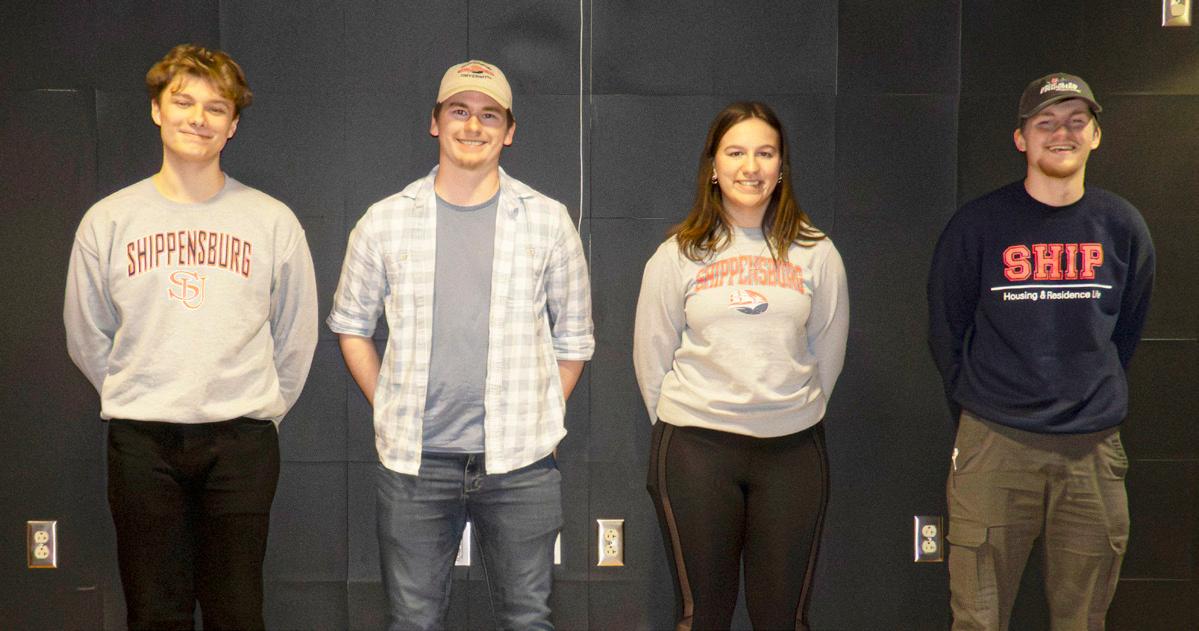
(SGA) serves as the university’s elected student representative body and allocates funding to student organizations. SGA held its officer election forum Thursday at McFeely’s Cafe, where four unopposed junior candidates outlined their priorities for the 2026-27 academic year.
The uncontested candidates are Emily Wojnarski for president, Daniel McCleary for vice president, Ryan Mills for vice president of finance and Chase Garrison for vice president of student groups. Each delivered opening remarks and answered questions about
leadership, campus life and their goals if elected.
Wojnarski, currently serving as vice president of finance, said her campaign centers on visibility and communication. She told the audience that many students she encounters do not know what SGA is or how to bring concerns forward.
“I came across many students during my time at SGA who do not even know that we exist,” Wojnarski said.
Her top priority as president would be “bridging the gap between students and administration,” beginning with greater transparency. Wojnarski said she plans to strengthen SGA’s internal culture while increasing engagement across
campus by attending more events, collaborating with student organizations and better promoting office hours and public meetings.
“On an individual level as president, I promise to listen to student concerns and advocate for them to the best of my abilities,” she said.
McCleary, the current vice president, is seeking re-election. He described his role as largely administrative and behind the scenes.
“Most of what I do within student government is just in the background,” McCleary said. “In essence, my job exists so that your senators are able to represent you even better.”
McCleary said the vice president
position combines duties that were previously split between internal and external affairs and that he hopes to continue refining the role. Mills, a junior chemistry major and current senator for the College
of Arts and Sciences, is running for vice president of finance. He said he wants to make the budget request process more understandable for student organizations.
Megan Sawka Managing Editor
I am graduating this May. My last edition of Your World Today explored my feelings of anxiety and excitement about the milestone (we’re down to 72 days). What makes me more nervous than graduating is the idea of finding a full-time role.
I have been able to gain a lot of experience during my time at Shippensburg University. I have had five internships in my field, leadership in on-campus organizations and plenty of projects to train me for the future. I feel prepared. I am prepared. But will an AI bot scan my resume and toss my application out?
Will a company that seems legitimate invite me for an interview and turn out to be a scam?
I am confident in my abilities, but I am nervous that others out there are simply better than me. My own mind can run in
“Will an AI bot scan my resume and toss my application out?”
circles, discounting my hard work and experiences. As a result, I am applying to any position that is related to my ambitions. Ideally, I would like to work in social media marketing, as that is where my experience is the strongest, but I am applying for positions in many industries across the country. However, I also worry that I will accept a job offer that is not right for me due to desperation. I want a job, but I want to enjoy my job and build a career. Applying for positions can be maddening at times. I have not felt this unsure of myself since I was in high school. I remember
applying for internships during my sophomore year; it was tough, but I was able to see the fruits of my labor fairly quickly. Today, I am submitting applications left and right and receiving rejection emails or simply being ghosted. It is frustrating, but I am reminding myself that it is early. I do not need to stress myself out. I am not a failure if I am not hired for the first role I apply to. Or the 10th. Or 20th.
If you are stressing about getting a job after graduation, know that you are not alone. Focus on why you’re doing this, why you chose your major in the first place. I chose communication, journalism and media because I am passionate about storytelling. I know that the right role will find me, even if it takes some time. And you will too.
Evan Dillow News Editor
Shippensburg University has announced its partnership with the StudentMade Store in establishing an online platform for SU students to market and sell their products, according to an article by Ship News.
This new resource will be available for student entrepreneurs in the renovated Kriner Hall alongside the Charles H. Diller J. Center for Entrepreneurship
Leadership and Innovation and the Mr. and Mrs. Milton K. Morgan III Makerspace. The store is set to launch in fall 2026.
According to their website, Student-Made is an organization that works with colleges and universities across the country to support and promote student creators. They pride themselves on being run by a team of students.
This service seeks to give student entrepreneurs the technical support necessary to produce products such as
handmade clothing, bags, jewelry, art, stickers and more, according to the Ship News article. Student-Made’s technical support includes business strategy assistance in areas such as marketing, shipping, promotion and collaborations.
Additionally, StudentMade plans to select a team of student managers to run the Shippensburg University branch.
More information on the launch of Student-Made Shippensburg is to come.
Ezra Lehman Memorial Library is pleased to announce the continuance of its status as a Gold Star Library through the PA Library Association’s (PaLA) PA Forward® Star Program for the 2024-2025 cycle.
The PA Forward initiative is a state-wide effort to empower libraries as vital information centers through the promotion of five key literacies: basic, information, civic and social, health and financial. Participating
exhibit have been restored this week at the site of the former President’s House on Independence Mall.
PHILADELPHIA (AP)
— A U.S. appeals court
late Friday said the Trump administration can halt work on a National Park Service slavery exhibit in Philadelphia while it appeals an order to reinstall it. About half of the large panels at the outdoor
U.S. Circuit Judge Thomas Hardiman, in his order, said the exhibit as it stood Friday must remain in place and the remaining materials must be preserved.
The appeals court will now weigh the dispute between the city and the federal government, which began

Soybean research led to innovations because of the proteins. Julian developed “AeroFoam,” which was used in World War 2 for fighting fires on navy ships, along with a wide variety of uses in paints, plastic, food additives and linoleum. Even ushering in developments in large-scale steroid chemistry, pioneering the future for birth control medication research and affordability.
After working at Glidden Co., he created his own company known as Julian Laboratories making better, more affordable cortisone and other steroids. He sold these products at as low a cost as possible, even though he could have made more money to an excessive degree. He believed everyone should have quality medicine without a driven-up price because it was the morally correct thing to do. His path prior to working at Glidden
when the administration abruptly removed the exhibit in January, amid an effort to remove information it deems “disparaging” to Americans from federal properties.
Senior U.S. District Judge Cynthia M. Rufe had set a 5 p.m. Friday deadline to restore exhibits on the lives of nine people enslaved at the site under former President George Washington in the 1790s, when Philadelphia served as the nation’s capital. That order is now on hold.
The Park Service describes the exhibit as one “that examines the paradox between slavery and freedom in the founding of the nation.”
The Interior Department has said in court papers that it planned to replace it with its own narrative on slavery. Rufe had said it must work with the city on any new material under a longstanding cooperative agreement.
Co. and getting the degrees he worked diligently for was bombarded with obstacles. Before his discoveries and pivotal research, he spent his time at multiple universities. Julian taught chemistry at Fisk University in Nashville, Tennessee. Afterward he set his sights on attending Harvard for further education.
Initially denied attendance at Harvard because, while academically prepared, they said he would not be able to get a job after. After continued perseverance, he got accepted to Harvard and went there for four years to get his master’s degree. Upon completion, he was denied for its doctoral program.
Deciding Europe would be his next stop, he completed his doctorate at the University of Vienna with funding from the Rockefeller Foundation, doing research in the isolation of alkaloids from Corydalis Cava plants in 1931. There, he learned German so he could publish papers, as German
“(T)he government can convey a different message without restraint elsewhere if it so pleases, but it cannot do so to the President’s House until it follows the law and consults with the city,” Rufe, an appointee of Republican President George W. Bush, wrote in an opinion Friday.
In its own filing Friday to the 3rd U.S. Circuit Court of Appeals, the Justice Department called her ruling “extraordinary” and “an improper intrusion on the workings of a co-equal branch of government.”
One of the panels being rehung Friday morning — titled “History Lost & Found” — details the surprising discovery of artifacts from the President’s House during an archaeological dig in the early 2000s, as work was being done on a new pavilion for the Liberty Bell.
was the language used for all chemistry publications in Vienna. He also became avidly interested in learning piano and tennis, and he developed a liking to opera. After his doctoral studies, he joined the faculty at Howard University after a brief time at West Virginia State College. He then returned to DePauw University as a research associate after resigning from Howard University. His resignation came from of a dispute instigated by university president Mordecai Johnson, Julian and another chemistry professor, Jacob Shohan, ending each other’s careers at Howard University.
After the turmoil, Julian went back to working at DePauw University with undergrad students. He also published 11 papers and received a U.S. research grant.
With his portfolio piling up with success, he was unable to get a faculty position at DePauw.
libraries are encouraged to develop programs and services that support these literacies while fostering meaningful community engagement.
As a Gold Star Library, Lehman Library has fully integrated these five literacies into its programming and outreach efforts. The library staff is grateful to its partnerships across campus and the Shippensburg community that have made this achievement possible. To learn more about the PA Forward program, visit: https://paforward.org/paforward-star-program/

vice president of student groups, focused on campus involvement.
“[Students are] like, ‘We requested for this and you gave us $0 for it why is that?’” Mills said.
He cited apparel as an example, noting that if it is not a uniform, it is unlikely to qualify for funding.
“It’s no longer ‘budget and finance hates you.’ It’s ‘These are rules. This is how we’re gonna interpret what you say,’” Mills said. He suggested additional training sessions, betteradvertised office hours and workshops for student groups seeking funding. Garrison, the current







Gotta read ‘em all! Read more stories online!
“Majors are where you get educated, and student groups are where you try that education,” he said. Garrison said he hopes to maintain a healthier environment for approving and supporting student organizations. Although the positions are uncontested, students were encouraged to vote. Ballots will be distributed through students’ university email accounts, with voting opening Monday at 8 a.m. and closing Thursday at 4 p.m.





Team USA won gold in men’s ice hockey against Team Canada on Sunday, marking the first time the USA has won the top prize since the “miracle on ice” occurred against Russia 46 years ago during the 1980 Lake Placid, New York games.
We congratulate all of Team USA on the indomitable spirit they brought to all their events in the Milano Cortina Winter Games. That spirit hoisted the Stars and Stripes to tremendous heights, earning them 12 gold medals, which is the most they have ever earned in a single Winter Games.
While this winning spirit allowed our athletes to soar to new heights, it also cushioned the fall as favorites to win in figure skating and skiing events left disappointed with stunning falls and upsets.
As is too often the case, though, politics and public criticism have crept in, bringing questions of athletes’ politics and perceptions of favoritism from the media. With this is also the usual question of whether the games remain relevant. And more troubling is that, as has occurred too often in the history of the games, the specter of another war lingers in the background.
* * *
The Winter Olympics remain relevant, in our view. They rival the entertainment value of any Summer Olympic event. The hard work, dedication and passion that can be seen in every athlete’s performance remain constant, irrespective of the season.
The excitement comes from the fact that the winter sports are creative in design, especially with how risky some events are.

Think of the adrenaline of sliding headfirst in skeleton, or how people defy gravity and fly in ski jumping.
The Winter Games also benefit from their optimal scheduling — existing in space between the end of football season and the start of baseball’s spring training. This is a time when drab February weather here in the Northeast and elsewhere keeps people trapped inside.
Some stars of the game “disappointed,” only if you define that by the media and advertisingcreated standard. Ilia Malinin, “the
Quad G0d,” fell during his free skate and did not make the podium for the event.
But a young star, Mikhail Shaidorov of Kazakhstan, was able to bring home the first figure skating gold in his country’s history.
Malinin is still a champion for his gold medal performance that he shared with other skaters for the USA’s gold medal in the team event, and he delivered an emotional and elegant performance in the closing figure skating gala.
The difficulty associated with
Hogan Asst. News Editor
Snowboarding can easily be defended as having the Winter Olympics’ most iconic events.
Many people learned the name Shaun White after he won multiple gold medals. If I walk past a TV, plenty of Olympic sports get a few seconds of my time, but snowboarding tends to have that needed action and be more gripping to watch. Nonetheless, the history of snowboarding had plenty of ebbs and flows before its later success on the world stage.
I remember playing “SSX On Tour” on the Nintendo GameCube in late middle school or early high school, right around the time I took my first snowboarding lesson.
Trying a sport that was not similar to anything I had done prior, was an eyeopening experience. It was convenient that I found snowboarding in the mid 2000s, since it did not have the masses behind it prior to the 1990s.
In the same way that skateboarding culture was more like punk rock, both holding a more negative connotation, snowboarding at the start was put into a similar category. Nonetheless, the first modern-day starting point for snowboarding did not begin that way.
The idea of a snowboard started to take
shape in 1965, when Sherman Poppen nailed two skis together to entertain his daughters so they could sled in Muskegon, Michigan. His wife, Nancy, coined the term Snurfer, blending “snow” with “surf,” according to the Vermont Ski and Snowboard Museum.
The Vermont Ski and Snowboard Museum said that in 1968, Poppen got a patent approved by the U.S. Patent and Trademark Office for the Snurfer. In that same year, Muskegon Community College organized the first Snurfer contest.
Just two years later, the first individual to be considered a “pro” was Paul Graves through Brunswick Corp, a crucial contributor to prototypes leading to the snowboards we have today.
The term freestyling is deeply ingrained in the snowboarding world. This was propelled into existence by Graves, who showcased multiple 360-degree spins during the downhill.
Along with him was Jake Burton Carpenter, founder of Burton Snowboards, at the 1979 championship in Muskegon, even though he was only allowed to compete in the special “open” category since he developed foot straps, which differentiated his board from the usual Snurfer board.
Read the full story at theslateonline.com.
Shippensburg University students, staff, faculty, administrators and affiliated people are welcome to submit letters to the editor for publication.
• Letters must be no more than 500 words and may not contain derogatory language or messages of hate or discrimination. The Slate may reject letters for any reason.
• Letters become property of The Slate. Letters without a name and title (affiliation to SU) will not be accepted.
• Letters should be sent to The Slate one week prior to the day of publication. Late letters may be accepted but published the next week.
The views and opinions expressed in this section are those of the writer and not of The Slate or University.
• The unsigned staff editorial, “The Slate Speaks,” represents the views and opinions of The Slate as an organization. Participating editors help shape the staff editorial.
inspiration for current and future athletes.
* * *
Though the Olympics represent a world coming together for peaceful competition, they too often have lingering global conflicts lying in wait in the background.
The Summer Games were cancelled in the early 20th century due to World War I, and both the 1940 and 1944 games were canceled due to World War II — this on the heels of the 1936 Olympics where Nazi Germany was on the rise while also hosting the games.
reaching the Olympic medals in these sports is extreme, and the dedication to earn the chance to compete is proof enough of the game’s relevancy.
But alongside the so-called disappointments were tales of success that will live on for years.
Figure skater Alysa Liu is creating new ground in her sport. From facing challenges when she was younger to walking away from the sport, only to come back and take gold with her infectiously joyful routines, she serves as an
As flags lower, so
Jordan Neperud Ship Life Editor
I am so tired of homophobia.
It is an obvious sentiment, yet it is one that does not seem to get any better with passing time. In fact, it only gets worse.
On Feb. 9, the National Park Service removed the historical rainbow flag from Christopher Park, where the Stonewall National Monument is located.
Christopher Park is across the street from The Stonewall Inn, which is credited as the birthplace of the modern gay rights movement.
On June 28, 1969, the police raided The Stonewall Inn, which was a regular occurrence for the bar, as it was illegal to serve gay people alcohol at the time, according to The Stonewall Inn’s website. This raid turned into a riot, which was the catalyst for a series of protests that became the gay rights movement.
This one night in history started a chain reaction — one that led to the celebration of Pride every June and the rights that the LGBTQIA+ community now has.
To say that the removal of the pride flag from this space is disrespectful may just be the understatement of the century.
The flag was removed because of a memo sent out by the U.S. Department of the

These would not be the last, either. The 1972 Olympics saw the “Munich Massacre,” where 11 Israeli athletes and coach were killed in a mass shooting, and 2022 Russia would invade Ukraine days after the 2022 Beijing Winter Olympics, starting a conflict that still lasts today. Now war is on the horizon again. The United States currently has a fleet — the most firepower since the start of the Iraq War — sitting outside of Iran. While the world looks on anxiously, one should remember the endearing symbol of unity represented by the Olympic Games in the symbolism of its ever-burning torch. May we one day embody its ideals.
Interior, which forbade any flags that are not United States flags or flags of the DOI from being displayed in spaces maintained and operated by the National Park Service. This includes Christopher Park.
When I first came across this news, I could not put into words how I felt. Angry? Frustrated? Devastated? The conclusion I came to was that I am simply not surprised by this. This is far from the first attack the Trump administration has made against the LGBTQIA+ community. From banning transgender people from the military to wiping out medical protection for queer people, it really seems like the community just cannot get a break.
Amidst all of this, all I can really say is how tired I am. I am tired of opening my phone to see another attack against my community, my family, my friends.
I am tired of acts of blatant homophobia and transphobia. It truly feels like all the progress that has been made in the last 50 years is going completely down the drain. Every day feels like a battle, and not one that we are winning.
I try to hang on to what little hope I have. I hang on to the silver lining that is the protests that broke out after the flag’s removal.


Evan Dillow News Editor
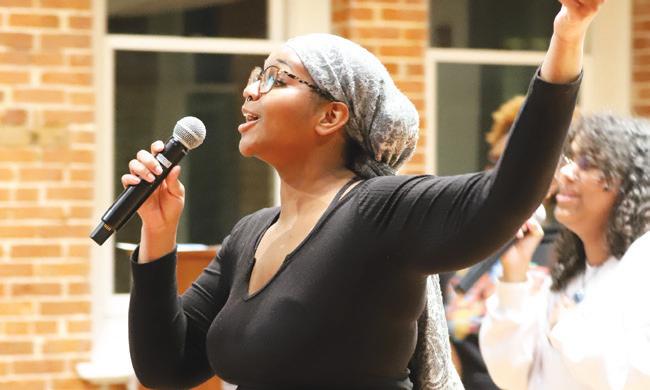
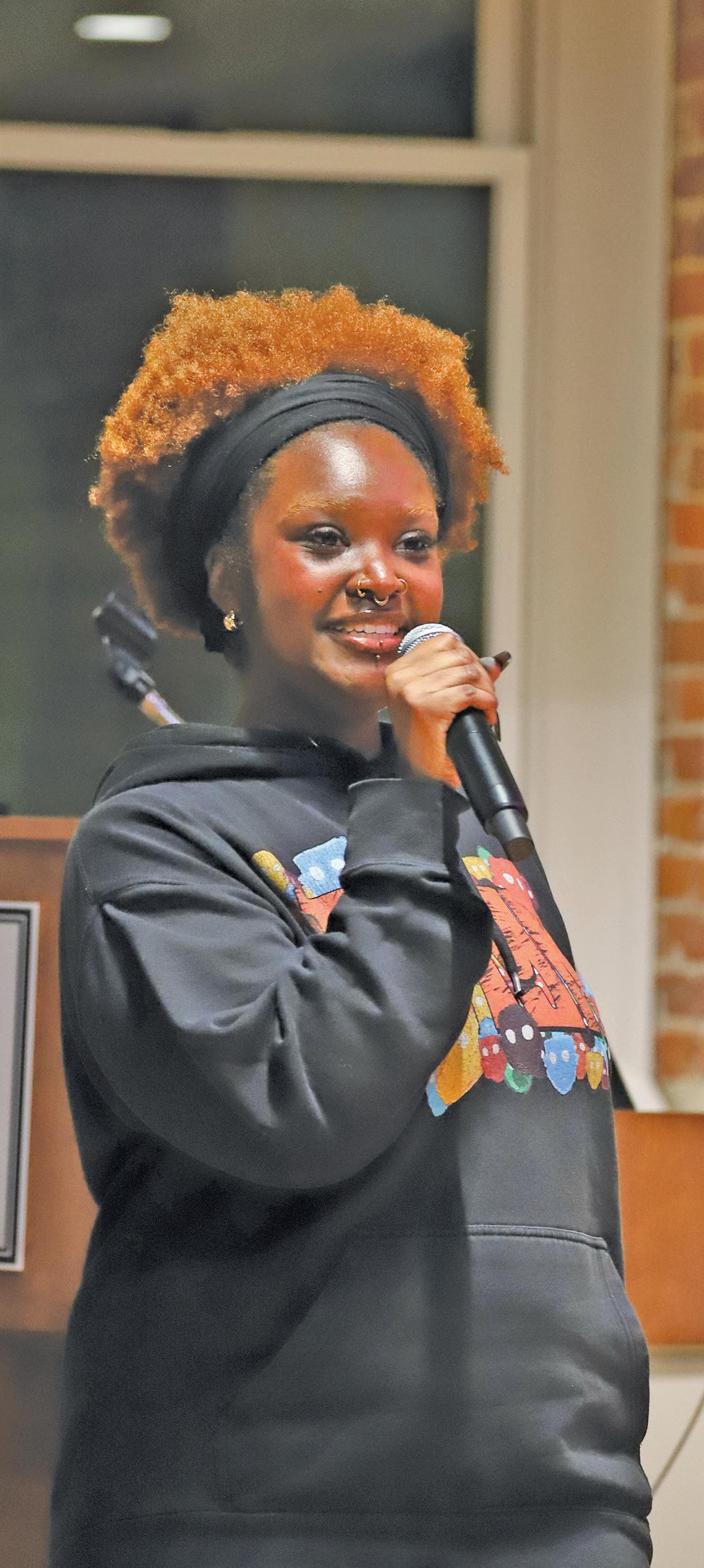
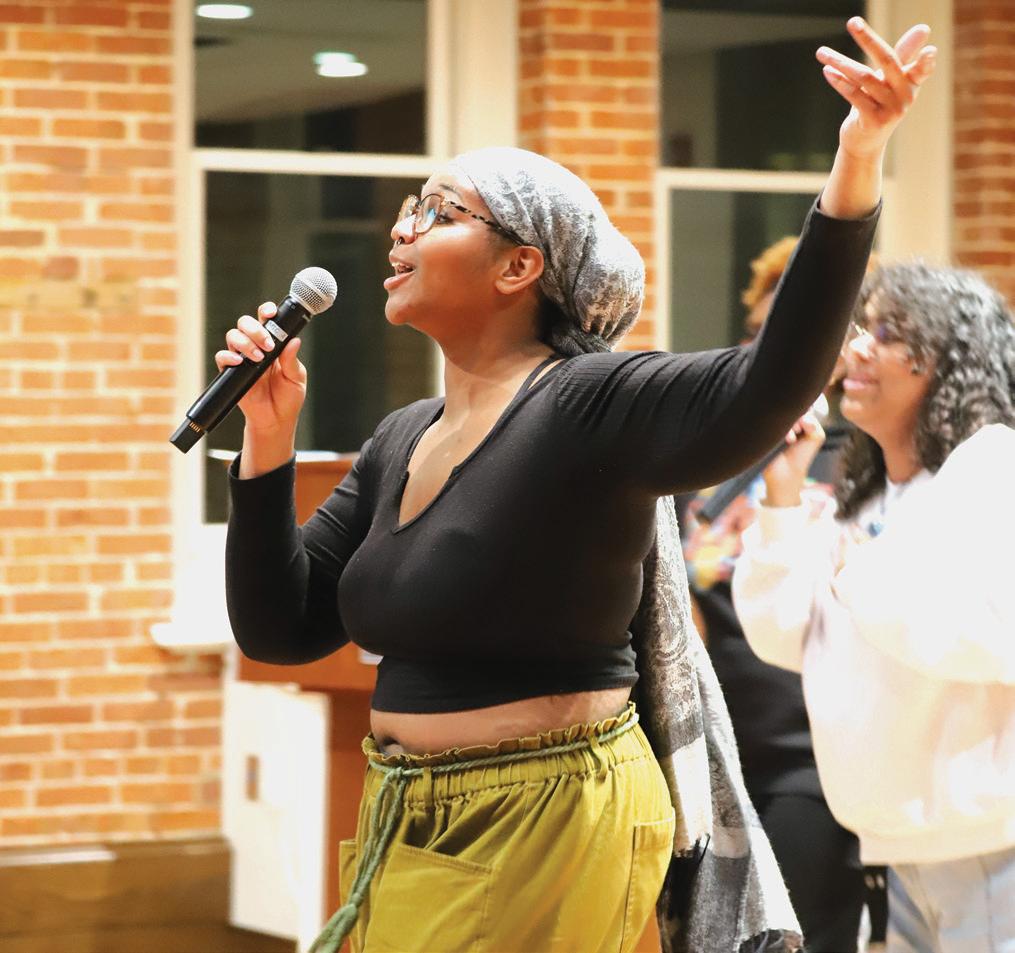
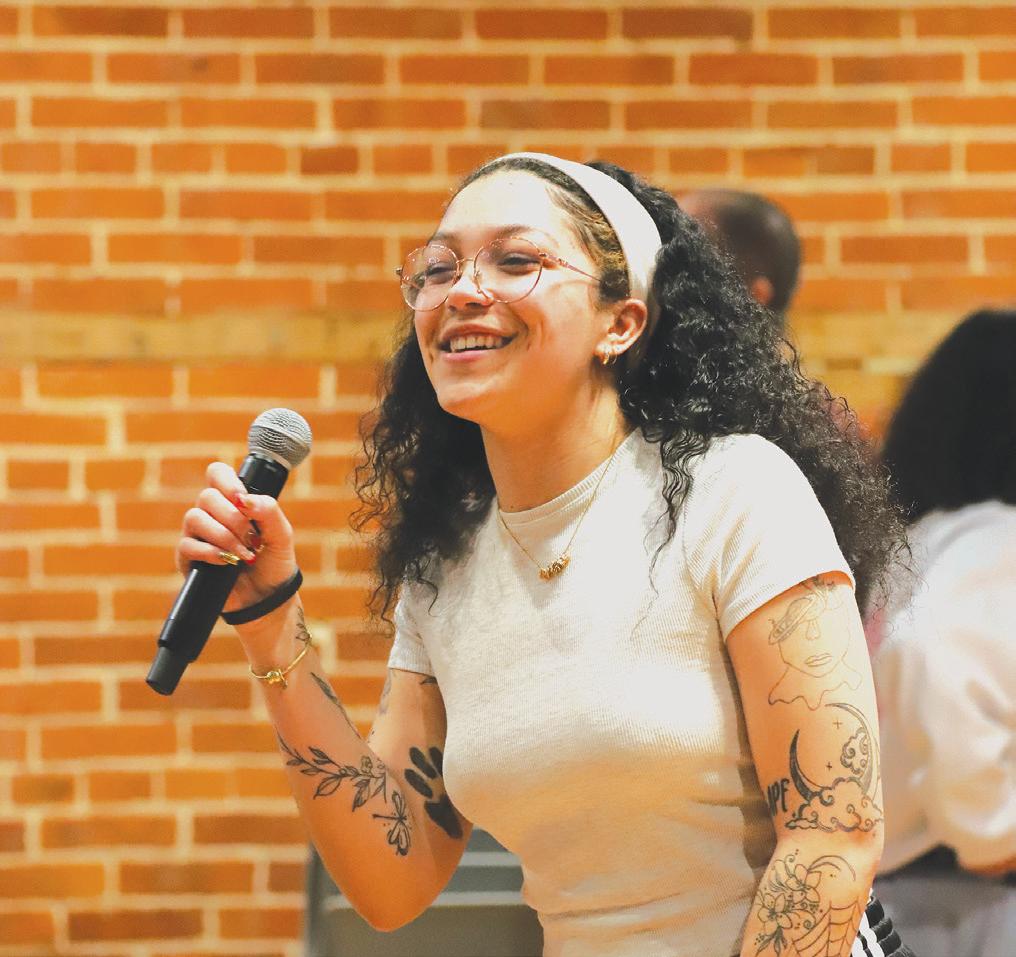
“Live at the Apollo” made its annual return to Shippensburg University on Thursday, Feb. 19.
The event featured energetic karaoke performances by students and faculty celebrating the history of the famous Apollo Theater in Harlem in New York City.
Stewart Hall was packed with attendees who performed, participated in the raffle and enjoyed the food and festivities. Some performances were accompanied by singing and laughter from the crowd, adding to the festive atmosphere.
The event was sponsored by the Residents Hall Association (RHA) and the Diane L. Jefferson Multicultural Student Association (MSA).
The Apollo Theater is famous for contributing to the widespread popularity of the jazz, gospel and blues genres, and its impact on the careers of artists like Aretha Franklin. The back of Stewart Hall was lined with infographics that placed a spotlight on the many artists who performed at the Apollo. Members of RHA and MSA had more to share about the
impact of the Apollo.
“Live at the Apollo is a celebration of culture, productivity and community. It honors the stage that uplifted a lot of performers of color,” RHA member Caroline Russel-Dezala said. “Bringing in and shining a light on the artistry that our students have here at Shippensburg University and recognizing all the work that Apollo Theater did for them and for people of color in general.”
This year’s “Live at the Apollo” night featured over a dozen student performers. The performers covered songs by famous artists like Brandy and Monica, Michael Jackson and Lil’ Wayne.
Between performances, Manuel Ruiz, assistant vice president for inclusion, belonging and social equity, pulled raffle tickets and announced the winners of the three prizes. The thirdplace prize was three paintby-numbers kits, followed by a JBL speaker and then a record player for the firstplace prize. The raffle prizes were provided by RHA.
To round off Thursday night’s festivities, students were encouraged to uplift each other’s voices on campus and to participate in student organizations to lead change.
Shippensburg University’s Feminists of Shippensburg hosted a game of “Jeopardy” on Feb. 16 to promote their club and teach the SU community about historical feminists.
The event took place in CUB 119. The room was filled with an excited energy, as the three teams clapped and cheered with every correct answer.
The “Jeopardy” categories were powerful princesses, Black history, pop culture and influential leaders. Each question gave a summary of the accomplishments and background of a notable woman. Some of the women featured included Ida B. Wells, Jackie Kennedy and Marsha P. Johnson.
The winners of the game were students Samual Martin and Kathryn Davis. They won a self-care basket, with products like skin care items. The second-place winner received a $25 gift
card to Texas Roadhouse.
While the game mostly followed the traditional rules of “Jeopardy,” the Feminists of Shippensburg altered a few to make the game run more smoothly.
The primary change was allowing the teams to look up answers. Each team had a “looker-upper” who could try to find the answer online if the team could not figure out the answer on its own. This meant every team could look up the answer, but the points would go to whoever was the fastest.
This decision was made because some of the historical figures were more niche or less likely to be taught in standard history classes.
President and founder of the Feminists of Shippensburg, Natalie Woleab, explained “that made it so people learned new voices and learned new faces that aren’t really taught by history.”
While Woleab hoped to educate SU students on historical women,
she also wanted to promote her club.
The Feminists of Shippensburg was established last year, having received SGA approval in early October.
Woleab is working on raising awareness of the club so she can “do more and spread more change.”
Woleab has plans of hosting fundraisers to donate to various causes, namely women’s shelters and displacement funds. One idea for a fundraiser is to hold a craft night where students would pay a small fee that would then be donated to a charitable cause.
The Feminists of Shippensburg are currently limited by their lack of budget, but that does not stop it from holding events to educate the Shippensburg community about feminism and women’s history.
For more information about the Feminists of Shippensburg and their future events, check out its Instagram @feministsofshippensburg.
The Shippensburg University College of Arts and Sciences (CAS) hosted a social hour for students and faculty to connect and build human connections and relationships on Feb. 17 in the Dauphin Humanities Center Fishbowl.
Beignets and hot chocolate were provided to the attendees. Dean Sabita Manian, along with other faculty, mingled and engaged with students, fulfilling the purpose building friendships at the event.
“It creates some wonderfully informal spaces for interaction that’s outside the classroom,” said Manian.
“That reinforces a sense of
belonging and community both for faculty as well as for students.”
Manian explained the importance of social events like this for students. She wants to make sure students feel at home with the mix of on-campus and commuter students in the college.
“That to me is the most exciting part about creating a community and strengthening it,” said Manian.
But creating and strengthening a community was not the only benefit of the social hour. It also supported the college’s efforts of outreach and making students aware of what they do and welcoming them to build human connections. One of the ways the college
is doing this is by working with the Shippensburg chapter of the Public Relations Student Society of America (PRSSA) to create an Instagram account for the college.
Chapter President Luke Rainey explained some of the background on why the account is important to CAS.
Rainey said that they are trying to create an account “that depicts the interdisciplinary and the creativity of the students across all majors within the college.”
Rainey also said PRSSA has done organizational research in preparation for the account launch, such as looking into the best practices for social media management in academic
APB brings the whimsy at ‘Under the Same Sky’
Gabby Lovett Business and Advertising Director
The Shippensburg University Activities Planning Board (APB) hosted the “Under the Same Sky” event on Feb. 21 in the CUB Multipurpose Room (MPR).
The event lasted from 8 p.m. to 10 p.m., and it had different activities in which students could participate. Upon walking in, the room was lit up with purple mood lighting, string lights and candles set up on the tables.
Sound bowls and the sound bowl healer were on the stage, creating a relaxing environment in combination with the calming music that was playing.
After checking in, students were given a ticket to put into one of the three giveaway baskets, which were provided by Luna Chic, a local business.
The raffle baskets included a protection and spell basket; a de-stress and focus basket; and a self-love basket. Luna Chic also had a giveaway with its own basket, as well as three wooden boxes with different herbs and a homemade necklace.
There were yogurt parfaits and toppings provided by APB, with strawberry and vanilla yogurt, strawberries and blueberries, granola toasted coconut, and honey.
Trinity Queitzsch, the sound bowl healer, said, “I am an energy practitioner and sound healer. Being here shows how passionate I am about spreading spiritual awareness and the power of sound healing. Being here to support Emberlynn, my longtime friend, is also a major reason I am here, as she has always supported my journey.”
settings.
CAS and PRSSA are still finalizing plans for the account launch in the future.
Manian hopes that the use of social media spreads the word about CAS and the sense of community it is creating.
“We’re all here for one another,” Manian said. “Though we might feel thoroughly alone at times, this… [gives] the students a sense that they have family outside their own families.”
Manian plans on hosting more social events for CAS in the future to further promote building human connection at SU.
For more information and updates on CAS, visit https:// www.ship.edu/academics/ cas/.
There were many tables throughout the room for people to interact with. There was a table with different colored stationery, along with jewelry making with a variety of charms. Another table had “fairy dust” with different scents and herbs to put into small potion bottles with glitter, essential oils and more. There was also tarot card and astrology readings available.
Luna Chic also had its own table at the event where they showcased many products, from body scrubs and wax melts to crystals. They also provided knowledge on their different crystals.
Throughout the event, people went up on stage and interacted with the sound bowls. Toward the end, there was a tapestry attendees could sign, documenting their time there and getting to take in the relaxing sounds.
Emberlynn Allen, a general APB member who held the event, said, “I am very grateful that I did this event; so many people came together for a night of soul and mental health work. We have never done an event like this in APB, so I thought it was a good opportunity to introduce something new that has helped me.”
Queitzsch has her own business and services regarding sound and energy healing. To learn more, she can be contacted through Instagram @trinitysouljourney
To see what else APB has to offer and upcoming events, visit its Instagram @shipapb for more.

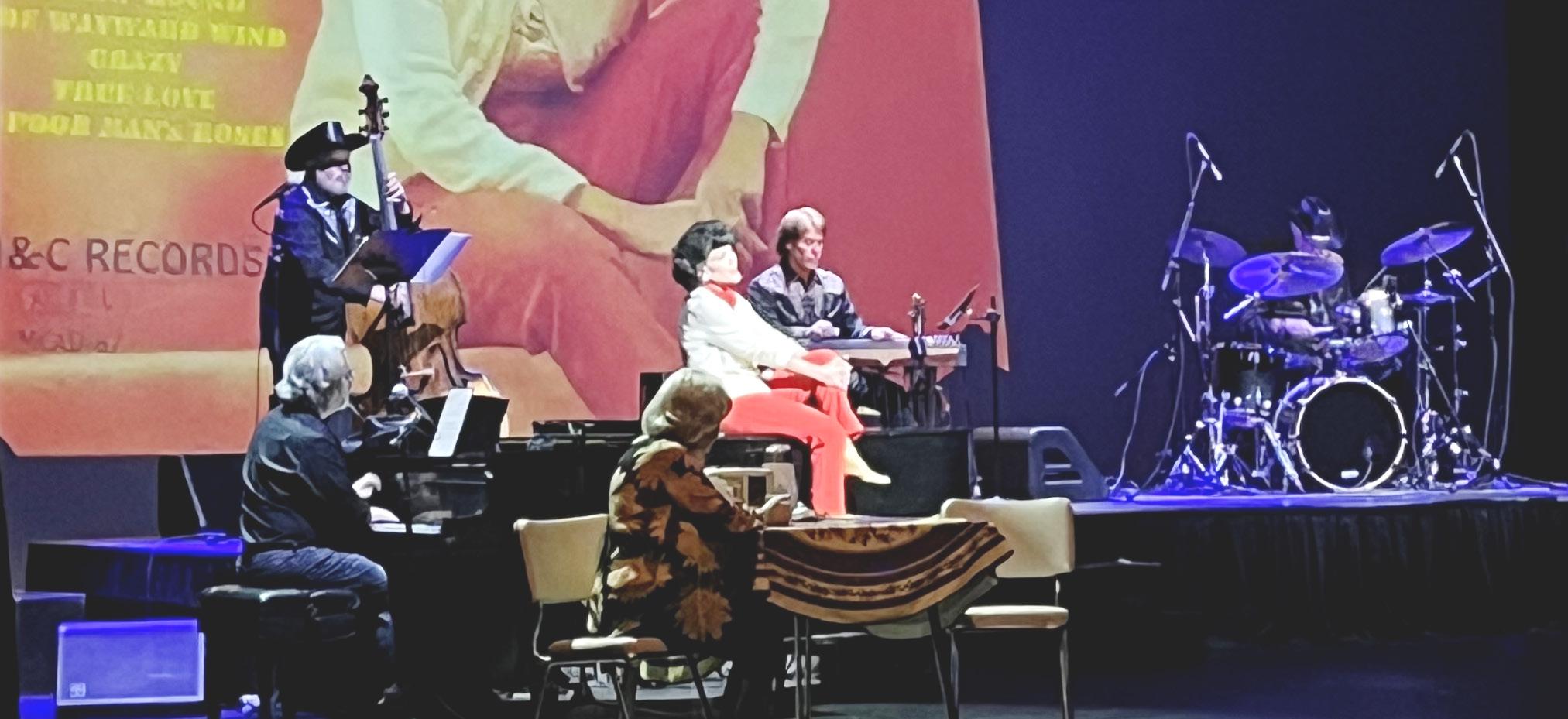
“Always...Patsy Cline” at Luhrs Sunday night
A true testament to womanhood, friendships and enduring courage, “Always…Patsy Cline” warmed the audiences’ hearts on Sunday at the Luhrs Performing Arts Center.
Cindy Summers and Misty Rowe joined together on stage as Patsy Cline (Summers) and Lousie Seger (Rowe). Cline was an American singer and country music legend in the 1960s, a pioneer for the “Nashville Sound,” which is a combination of country and
pop music. Her rising career was cut short when she died in an airplane crash, which led to the deaths of four individuals, including Cline, at the young age of 30. The play follows the narrative of fan and friend Louise, whose keen interest for Cline’s music led them to meet and become close confidants during their trials and tribulations in life and love.
Louise’s recollections brought good, old-fashioned country humor, and Cline’s songs brought the audience back to a simpler time. From her iconic hits like “I Fall to Pieces,” “Crazy” and
“Walking After Midnight,” to her feelgood “Back In Baby’s Arms” and a cover of Connie Francis’ “Stupid Cupid.” This was a true honky-tonk tribute.
The show also featured a live band, including Paul Haaker, Karl Kimmel, Darrin Newhardt and Tom Versen.
The audience got to sing, and even dance along, with Louise, Cline and the band, creating a beautiful, heartfelt experience, just as Cline did all those years ago.
For more information about the “Always… Patsy Cline” show, contact the H. Ric Luhrs Performing Arts Center.
Abbygale Hockenberry A&E Editor
The intro was by far my favorite scene in the entire movie. The screen is black, and we hear a person moaning. I am convinced someone is having a good time, but then I start to wonder as the sounds continue. What sounded like
a noise of pleasure suddenly turned into a sound of someone being hurt. Then the camera reveals a man being hung, and it is the sound of his last moments.
My jaw dropped, and I gasped out loud. I went into this film with high expectations and that standard was met. Eight out of 10; “Wuthering Heights” is a masterpiece.
“ I recommend seeing it twice. First so you can cry and appreciate the performance the first time, then a second so you can deep dive into the intention behind the production.”
Keira Knedeisen
Asst. Multimedia Editor
Keira Knedeisen
Asst. Multimedia Editor
“Wuthering Heights” may be one of the most visually compelling movies I have ever seen. Going into the movie without knowing anything, I was immediately blown away by the cinematography. The color schemes with hidden meanings and the costumes with secret representations were very appealing to the eye and even more interesting to learn about after the movie. The movie is one I recommend seeing twice. First so you can cry and appreciate the performance the first time, then a second so you can deep dive into the intention behind the production. “Wuthering Heights” was a beautifully made movie that I cannot wait to cry at again soon.
“Nothing but two hours of pretty scenery and Jacob Elordi’s fingers in Margot Robbie’s mouth.”
Viper Neperud Ship Life Editor
Jordan Neperud
Ship Life Editor
I tried to go into “Wuthering Heights” with an open mind. I had seen all the reviews ripping it to shreds for being an abysmal adaptation of the book. I had seen the controversy over casting Jacob Elordi as Heathcliff, who is a person of color in the novel. I tried to push this out of my mind while watching the movie,

Hannah Stoner Asst. Sports Editor

If you liked “The Housemaid,” you’re going to love “Verity” by Colleen Hoover. Despite Hoover being a controversial author, she completely delivers with this novel. I often read Hoover’s books whenever I am in a book slump and cannot find the motivation to read anything.
My friend Emily had told me to read this book because she loved it, and often when a friend recommends me a book, I hyper fixate on it and try to read it immediately. There is just no other feeling that can be matched when you can talk to someone about a good book. Majority of the time I read and then there is no one else who has read the same book as me, and sometimes it is complete torture (especially when it is the only thing I can think about).
When I was watching “The Housemaid,” I got some of the same eerie vibes that I got when I read “Verity.” Even though the storyline is different, “Verity” still carries those same psychological thriller elements of a domestic relationship, an affair, a psychotic spouse, an outsider living inside, and a child that is a little suspicious.
Lowen Ashleigh is a writer who is hired by a bestselling author’s husband, Jeremy Crawford, to help ghostwrite the final three books of his wife Verity’s very successful series. Verity is unable to write the rest of the books because she is bedridden and unresponsive after a severe car accident.
Lowen lives and works at the Crawford’s residence to focus on performing her end of the deal. She is given the
permission to work in Verity’s office for the time being and goes through the detailed notes — and discovers a manuscript that Verity wrote that gives insight into her life pre-accident. It is basically a confessional to what really happened and Lowen begins to fear for her safety in the house.
The goose bump feeling that you get while reading is the fact that Jeremy and Verity had three kids, but only one of them is alive. The entire time I was scratching my head trying to figure out the truth. There is a letter at the end that was written by Verity post-accident, that tells a completely different version of the story.
The ending of the novel is super ambiguous, and the reader is faced with having to choose whether they believe the manuscript or the letter (two completely different endings). To this day, Emily and I have debates on the ending because she believes one side and I believe the other. I love endings that are like that because it allows the reader to choose which ending, they think actually happened.
The love I have for this novel reignited whenever Amazon Studios announced it is in the process of making this film. I nearly jumped out of my seat when I saw the cast, too. Dakota Johnson is starring as Lowen and Anne Hathaway as Verity. Now, I did not necessarily picture someone like Hathaway as Verity, because the descriptions of the character are vastly different — but I have high confidence that Hathaway will outperform any of my expectations. The film is set to release on Oct. 2 of this year.
but it did nothing to soften my opinion of it. I walked out of the theater wondering what the point was. The film had nothing to say. It was two hours of insufferable and annoying characters being petty and vindictive to each other. Without the original themes of race relations, class disparity and domestic violence, this pathetic excuse of an adaptation is nothing but two hours of pretty scenery and Elordi’s fingers in Margot Robbie’s mouth.
As someone unfamiliar with the contents of the book, the movie “Wuthering Heights” was an enjoyable watch for its entertainingly tragic plot and visual symbolism. Each character had flaws that really made them hard to root for, but I could not help but hope the main characters found a happy ending; however, I knew it would not be a cheerful one. The opening builds a darkness that seeped throughout the film and set the tone for the characters
Madison
Sharp Multimedia Editor
Watching this movie felt like walking on eggshells (if you know, you know). While I enjoyed certain parts, I could not help but raise my eyebrows at the rest. I did not read the book prior to watching the film, and frankly I do not think that
as guilty. At times, the movie felt more like a horror than a drama or a romance. Red symbolizes the guilt of the characters as Cat is wearing it in most scenes. One of my favorite visual parts of the film was when they transitioned from Cat lying down, crying in a beautiful red dress, to Heathcliff looking off into a fiery sunset. With her wardrobe, it felt like Robbie had a second chance to play Barbie. Heathcliff’s desperate pleas once she died included him saying, “I cannot live without my soul,” which demonstrates his love for Cat and how difficult life will be without her.
would have helped me feel any less uneasy. From what I have gathered, they did not do the original story justice. The fact that they changed so much and placed famous white actors at the center made it feel more like a cash grab than anything. It is unfortunate, but I feel like most movies today lack the authenticity that makes good storytelling.
This R&B playlist is celebrating Black History Month and the evolution of this music genre.


Ben Hummel Asst. Sports Editor
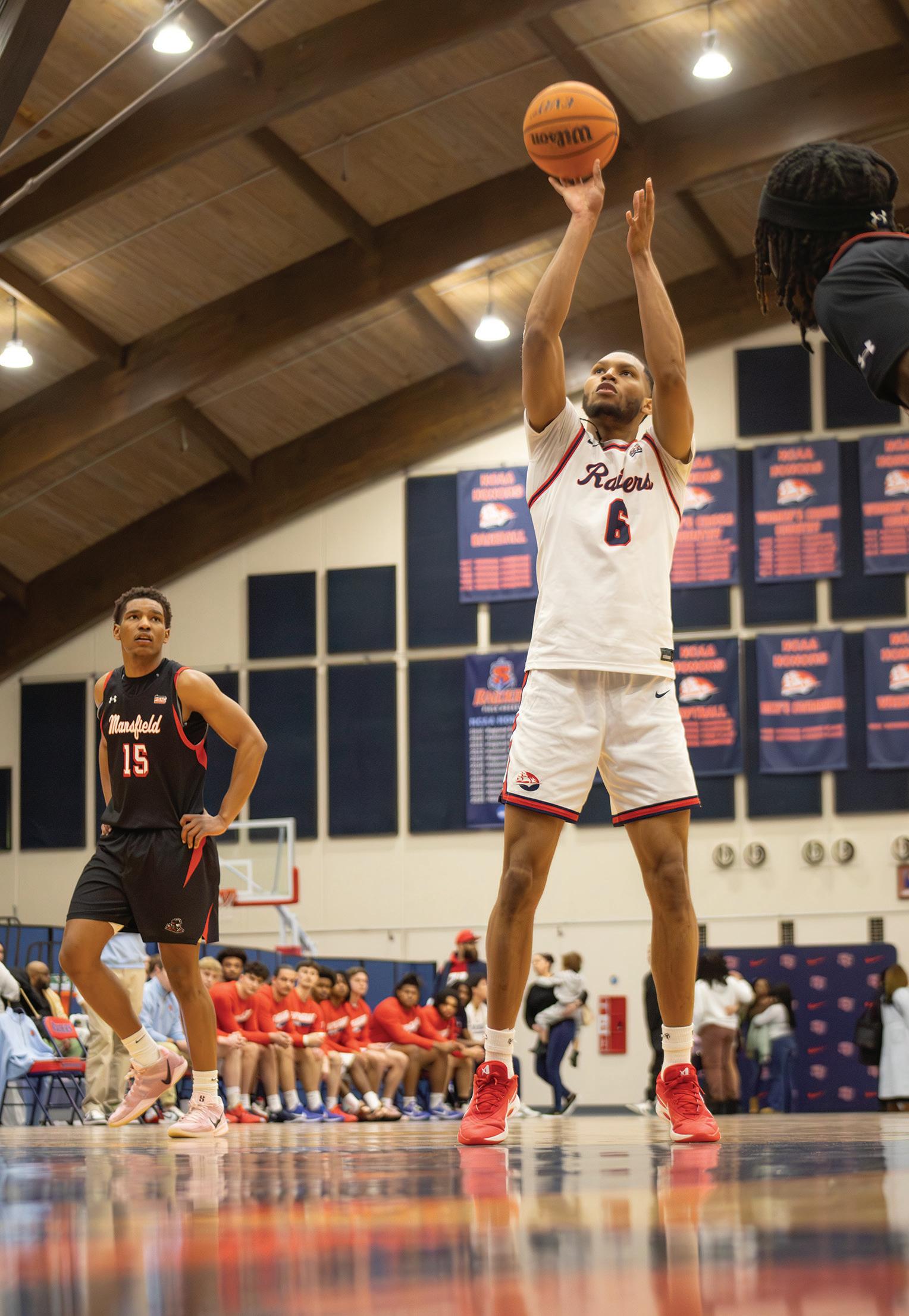
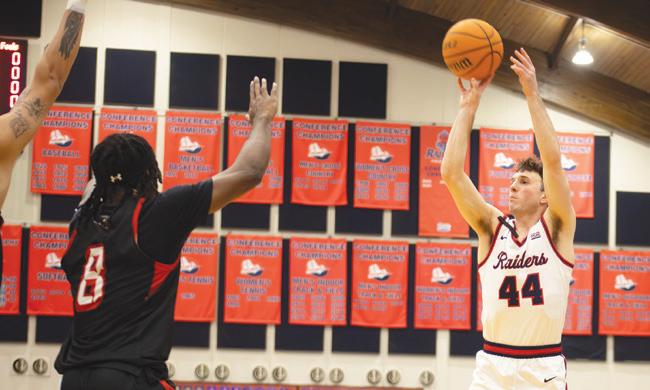
The Shippensburg University men’s basketball team clinched a Pennsylvania State Athletic Conference (PSAC) Tournament berth with a resounding 96-72 victory over Mansfield on Senior Day Saturday at Heiges Field House.
Shippensburg (13-13, 8-11 PSAC) shot a seasonbest 57 percent from the field, including 64.3% in the first half, to withstand a hot-shooting start from
Mansfield (3-23, 2-18) before pulling away.
Redshirt junior Michael Dickson went off against his former team, netting a gamehigh 25 points on a white hot 9-of-11 from the field, or 82%. He also dished out six assists.
Mansfield temporarily kept pace with the Raiders thanks to a 46.2 first half three-point percentage, as the two teams combined for 12 three-point makes before halftime.
The Raider lead was just one, 19-18, before a 7-0
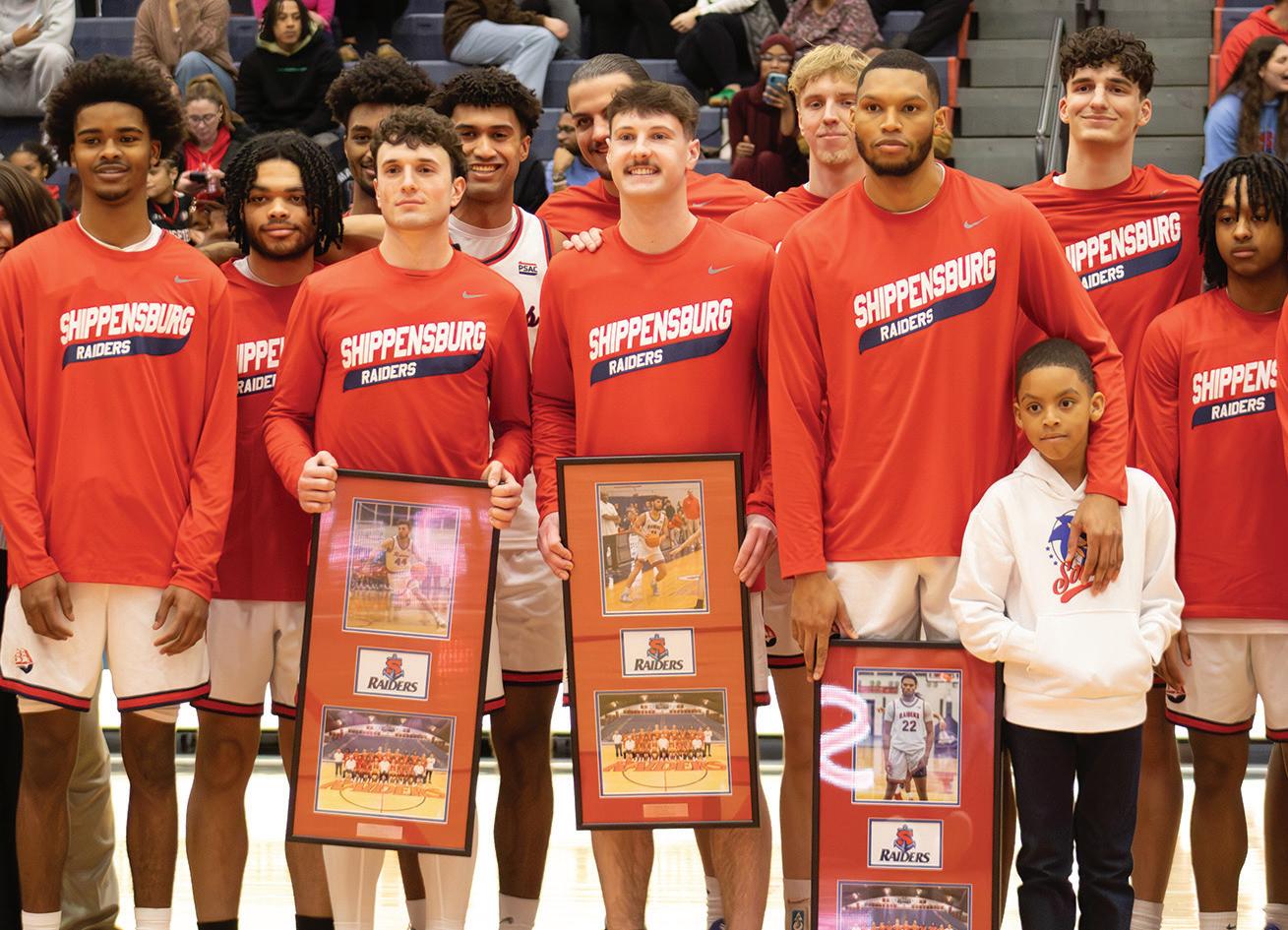
Madison Sharp / The Slate
SU seniors celebrate before Saturday’s match.
run capped by a Dickson fastbreak bucket opened up an eight -point advantage, 26-18, and facilitated a Mountaineer timeout with 8:34 remaining in the first half.
Shippensburg upped its lead to 12 by halftime and did not look back.
Senior Timmy Conner scored 19 points, including 14 in the first half and a 4-of9 night overall from beyond the arc.
Senior Denzel Figueroa nearly had a double-double, contributing 11 points, nine rebounds and a pair of blocked shots. Sophomore Jaydon Smith was the fourth Raider to finish in double figures, scoring 11.
Redshirt junior Markus Frank scored nine points in limited minutes in his return from injury.
Shippensburg’s men’s basketball Head Coach Chris Fite said he felt the team’s energy was better defensively in the second half after a closer first half which helped tip the scale in the Raiders favor.
Figueroa said in the locker
room the team harped on defense and that carried over onto the offside side of the ball.
With the win, the Raiders clinched a PSAC Tournament berth for the second straight season, and for the 10th time overall under Fite. They are locked into the No. 5 seed with only two regular season games remaining, with their first-round opponent still yet to be determined.
With two games remaining in the regular season, SU is hoping to make a deep run in the playoffs.
“We want to win every game that we play,” Fite said. “We want to have momentum going into the playoffs, but we still have a lot to prove and a lot of work to do.”
“We’re trying to build momentum,” Figueroa said. “We feel like we could play with the best of them. We could really upset any team honestly, so just each day come back in and work as hard as we can.”
The 2025-26 SU men’s basketball senior class, consisting of Conner, Figueroa and Trey Martin,
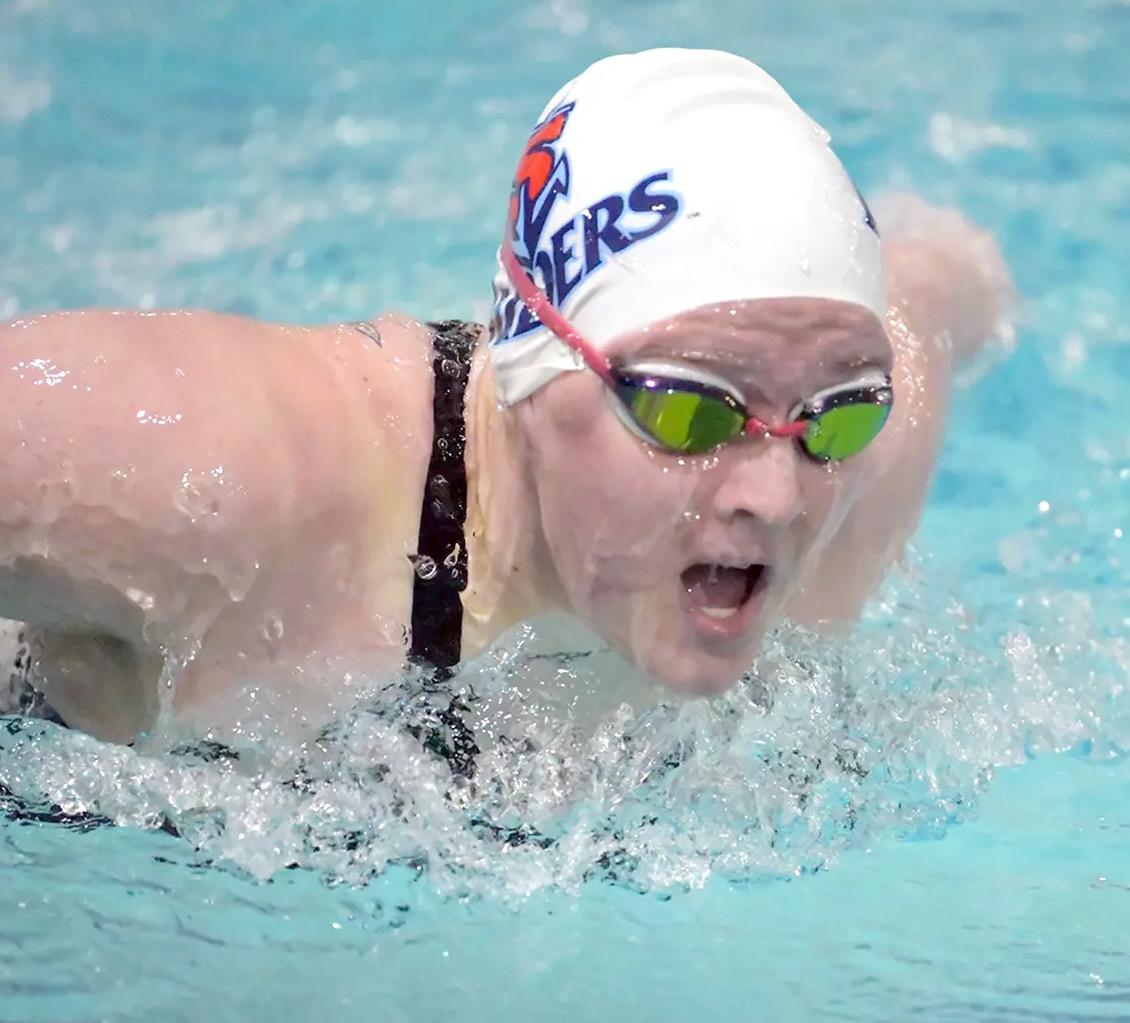
The Shippensburg University men’s and women’s swim teams competed at the Graham Aquatic Center last week for the Pennsylvania State Athletic Conference Championships. The men’s team placed sixth and the women’s team placed 10th. Day one worked out well for the Raiders. Graduate Josh Wall finished in 13th place for the consolation “B” finals of the 200-yard IM, with a time of 1:54.24. He moved into Shippensburg’s No. 4 spot all-time in the 200-yard IM.
Junior Robbie Ferlick finished 12th overall in the evening “B” final of the 50 free, with a time of 21.32 seconds.
Junior Mason Koeth, junior Connor Ludwig, Wall and Ferlick achieved SU’s fastest time in the PSAC championships this century in the 800-yard freestyle relay, with a finish time of 6:52.14. This was the highest Raider finish in the event since 2019.
On the women’s side, sophomore Olivia Carver
placed 12th in the 1,000yard freestyle, with a time of 10:39.57.
Junior Michelle Kubiak qualified for the preconsolation “C” final of the 200-yard IM. She finished in 22nd place, touching the wall at a time of 2:13.17. Freshman Ella Nick finished with a time of 24.94 seconds in the 50-yard freestyle, which was SU’s fastest time for the event.
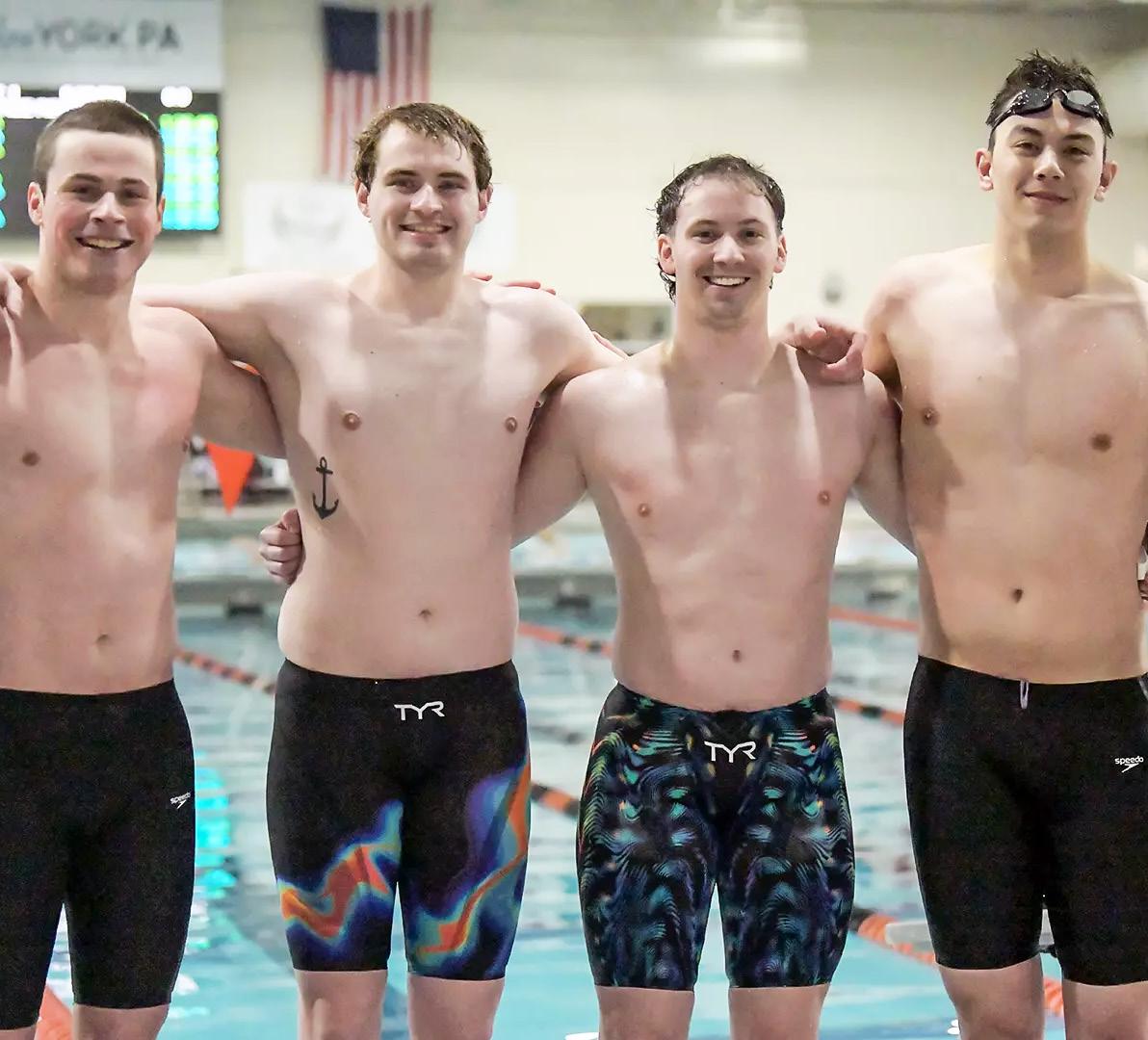
Carver earned a new personal best over 200 yards of freestyle, as her leadoff leg from the 800yard freestyle relay produced a split of 1:55.95. The relay team, consisting of Carver, Kubiak, sophomore Elyse Arnold and senior Hannah Hudson, placed seventh with an overall time of 7:55.60. Day 2 began with many swimmers shattering previous records. Marking SU’s first All-PSAC relay since 2021, Senior Kevin Noldy, Ferlick, Ludwig and Koeth improved the school record in the 200-yard freestyle relay. The relay team finished in third place, with a time of 1:22.42. Freshman Ezekiel Eberly, sophomore Kiran George, sophomore Josh Einolf and

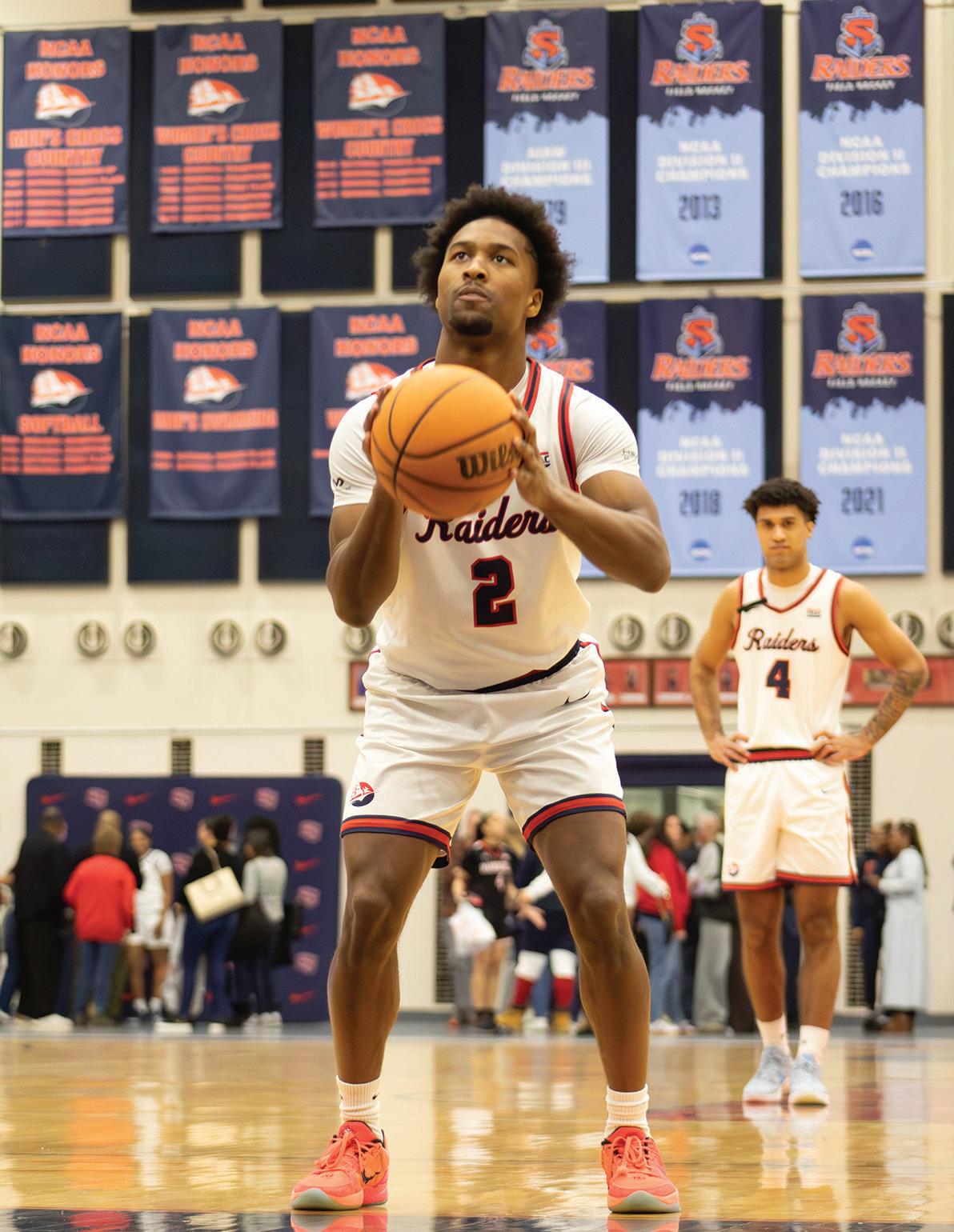
was recognized prior to tip off.
Conner currently ranks 15th all-time in program history with 120 made threes, Figueroa is tied for seventh all-time in career blocks with 81, and Martin is a four-year starter and standout contributor on the defensive end.
Ludwig finished the 400yard medley relay in fifth place, with a time of 3:25.63. This is the fastest time by an SU quartet in more than two decades.
Einolf swam with a time of 49.06 seconds in the 100yard butterfly, which ranks him ninth in the event in school history.
On the women’s side, freshman Izzy Ketterer placed 21st overall in the 100-yard butterfly in the preconsolation “C” final, with a time of 59.15 seconds.
Junior Carol Fabian, setting a new collegiate best, placed 20th overall in the 400-yard IM during the “C” final, with a time of 4:43.91. Carver placed 13th in the event during the consolation “B” final, with a time of 4:43.06.
Kubiak, setting a new collegiate best, placed 18th in the 200-yard freestyle during the “C” final, with a time of 4:42.89.
Freshman Ann Secord, Hudson, freshman Zoë Midura and Nick placed eighth in the 200-yard freestyle relay, with a time of 1:39.59.
Day 3 brought even more shattered records for the
Raiders.
Eberly broke the 51-second mark in the 100yard backstroke during the consolation “B” final. He placed 10th with a time of 50.89 seconds, which moved him to the No. 3 ranking for the event in school history.
Sophomore Alex Kissinger broke the 1:55 mark while placing ninth in the 200-yard butterfly, achieving a time of 1:54.26.
Freshman Ian Deck placed 13th in the 500-yard freestyle during the “B” final, with a time of 1:54.26.
Wall finished 13th in the 200-yard butterfly during the “B” final, with a time of 4:46.44.
Eberly, George, Einolf and Ferlick placed fifth in the 200-yard medley with a time of 1:32.76.
On the women’s side, Carver finished seventh in the championship “A” final, with a time of 5:12.78. This placement improved by one place from her qualifying seed.
Kubiak placed 16th in the 500-yard freestyle during the consolation “B” final, with a time of 5:14.73.
“Four years fly by quick, so I just took each and every day and was grateful for this opportunity.”
The Raiders wrap up their regular season schedule against Shepherd on Wednesday at home at Heiges Field House at 8 p.m. They will then travel to Lock Haven on Saturday for a 3 p.m. tip off.
“It’s been an honor, stepping foot here and with the legacy left by all the other players,” Figueroa said.
Track and field delivers noteworthy performances at Bucknell tune-up
that improves his No. 6 alltime spot on the school’s Top 10 list for the event.
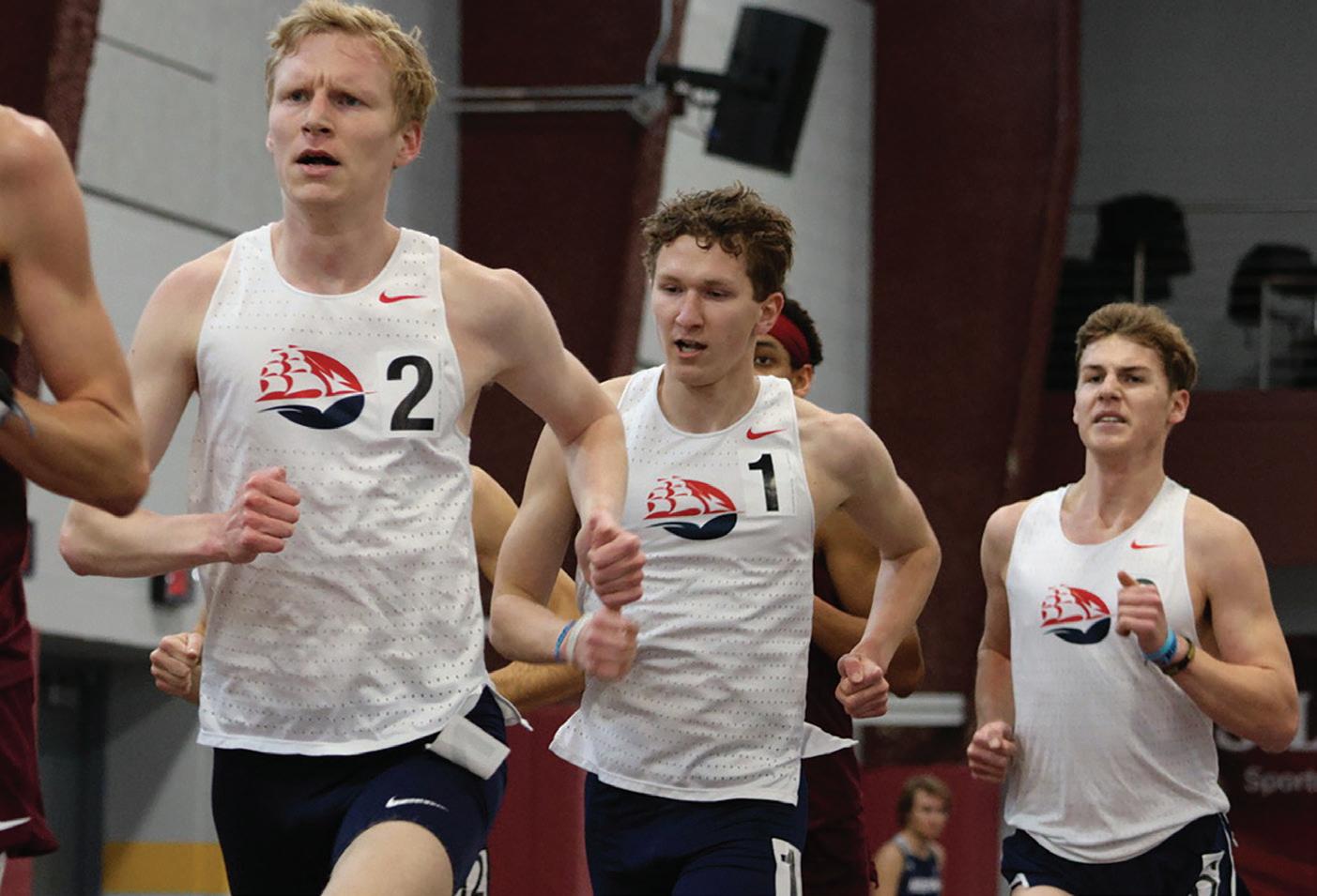
Shippensburg’s men’s and women’s indoor track-andfield teams wrapped up the regular season at Bucknell’s Bison Tune-Up on Friday night. Several Raiders posted noteworthy performances.
Freshman Ke’Aune Green and senior Quinton Townsend ran hundredths of a second off their respective PRs in the 200 meters, which rank among the school’s Top 10 performances in the event.
Junior Lavar Jackson earned a season best of 6.94 seconds and a PSAC Championship qualification in the 60-meter dash. He also tied junior Jak Kearney for third place in the 200 meters. Kearney won the long jump with a season best and his first seven-meter mark of the season.
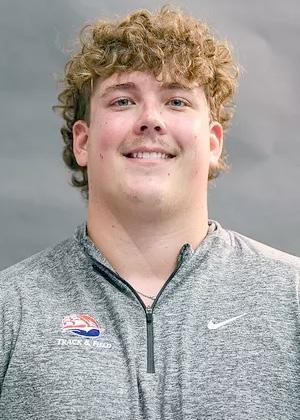
Junior Gian Greggo won the shot put with a throw of 58 feet, 0.5 inches, and took third in the weight throw on a top mark of 56 feet, 1 inch. He exceeded the NCAA provisional qualifying standard in the shot put in all six of his meets this season.
Junior Donovan Kitchen landed a new indoor personal best in the shot put of 54 feet, 4.5 inches. The score is an NCAA provisional qualifier
Sophomore Tyler Rossi, junior Ridge Crispino, freshman Josh Durika, and sophomore Ethan Conrad earned PRs in their respective events. Junior Jackson Gutekunst, senior Ryan Wolfe, and freshman Daniel Naylor secured PSAC qualifying times in the mid-distance events.
On the women’s side, freshman Izzy Slezak, senior Emily Calamia, and junior Elliot Oliphant delivered noteworthy personal bests.
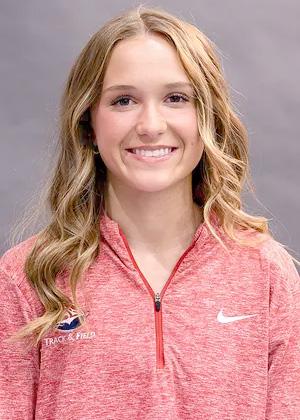
Slezak won the 200-meter dash event in 25.43 seconds while Calamia took second place in 25.62 seconds. Slezak moved up one spot on the all-time Raider Top 10 list by taking No. 3. Calamia claimed the No. 4 spot.
Oliphant cleared 5 feet, 5 inches for the first time indoors. The new PR puts her into a four-way tie for ninth place in school history.
Senior Madison Malcolm won the 60-meter hurdle while her teammate redshirt freshman
The Raiders will return at the 2026 PSAC Championships, which will take place on Feb. 28 and March 1 at
Patrick Crean / The Slate
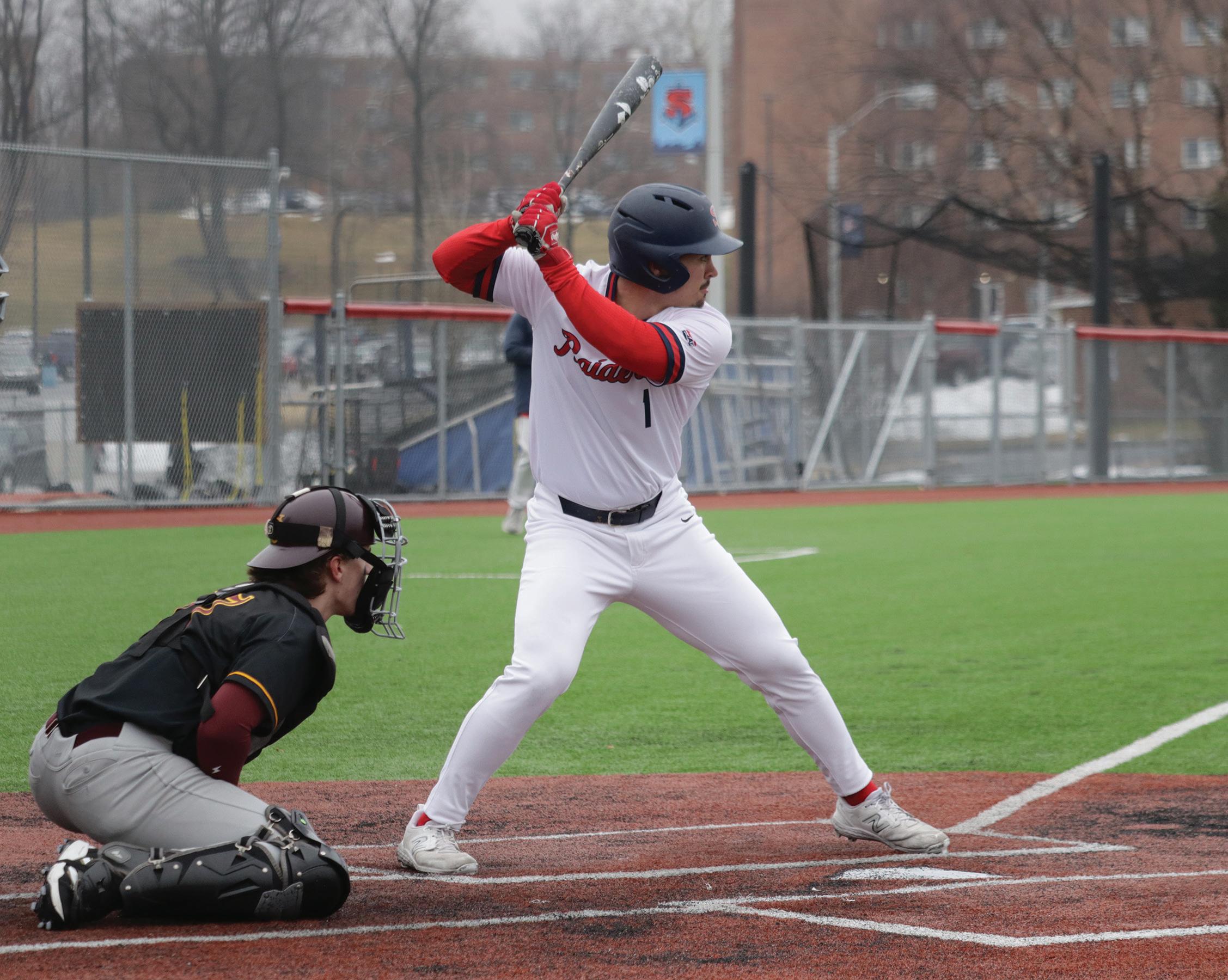
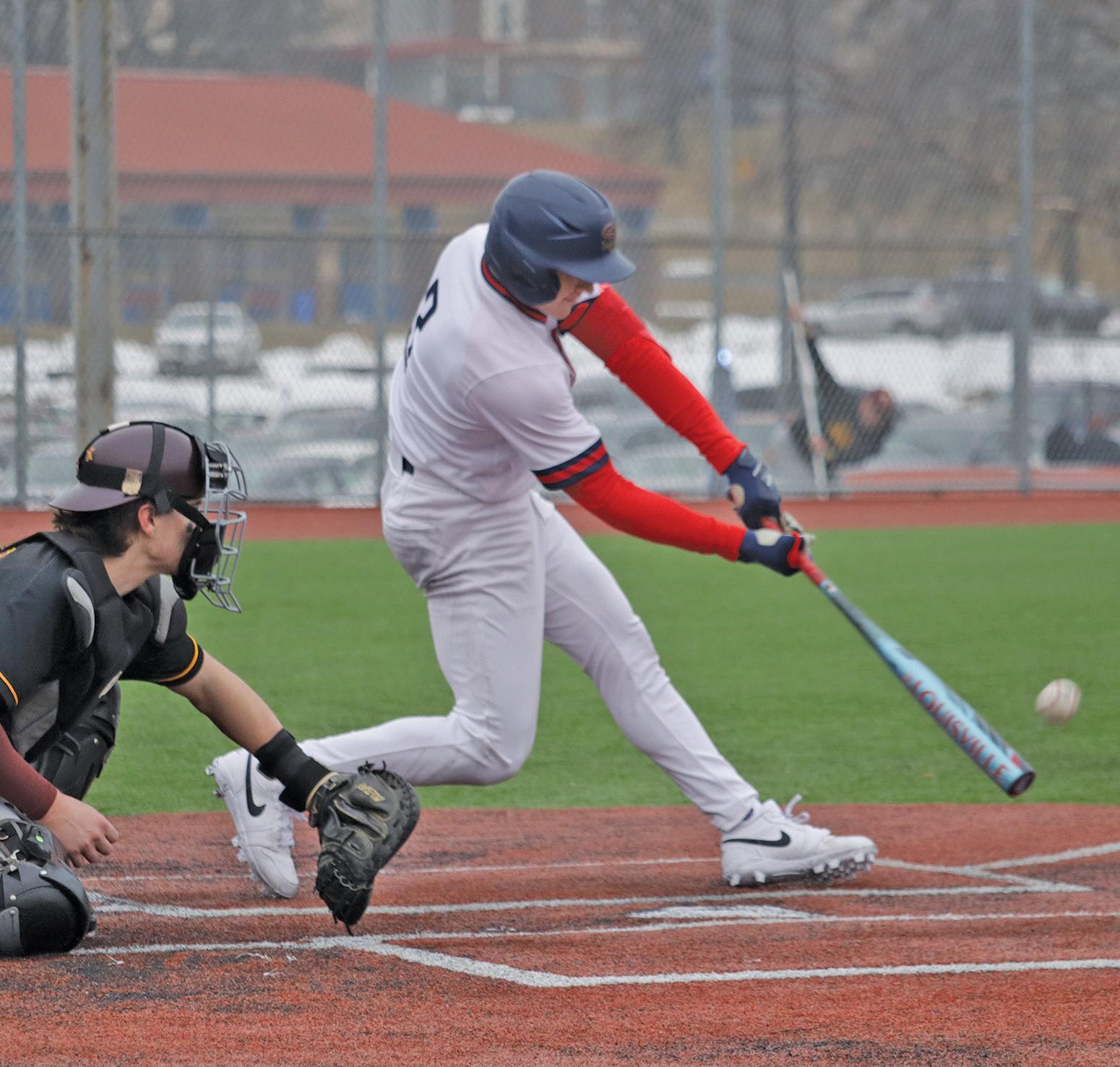
Will Oates takes a swing against Gannon on Friday. Shippensburg managed to win the final game of the series on Saturday, holding on for a 3-2 victory.
free-throw percentages.
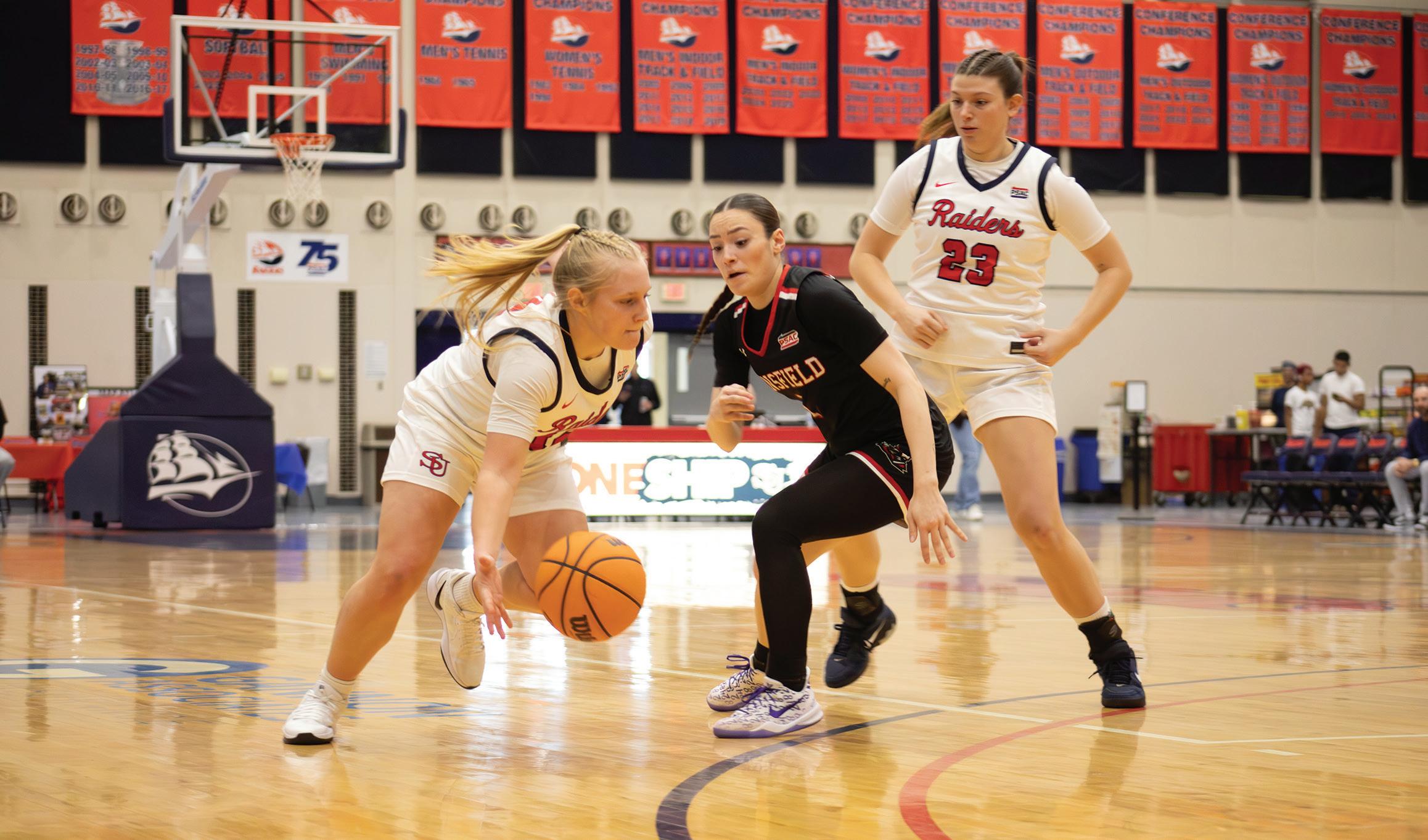
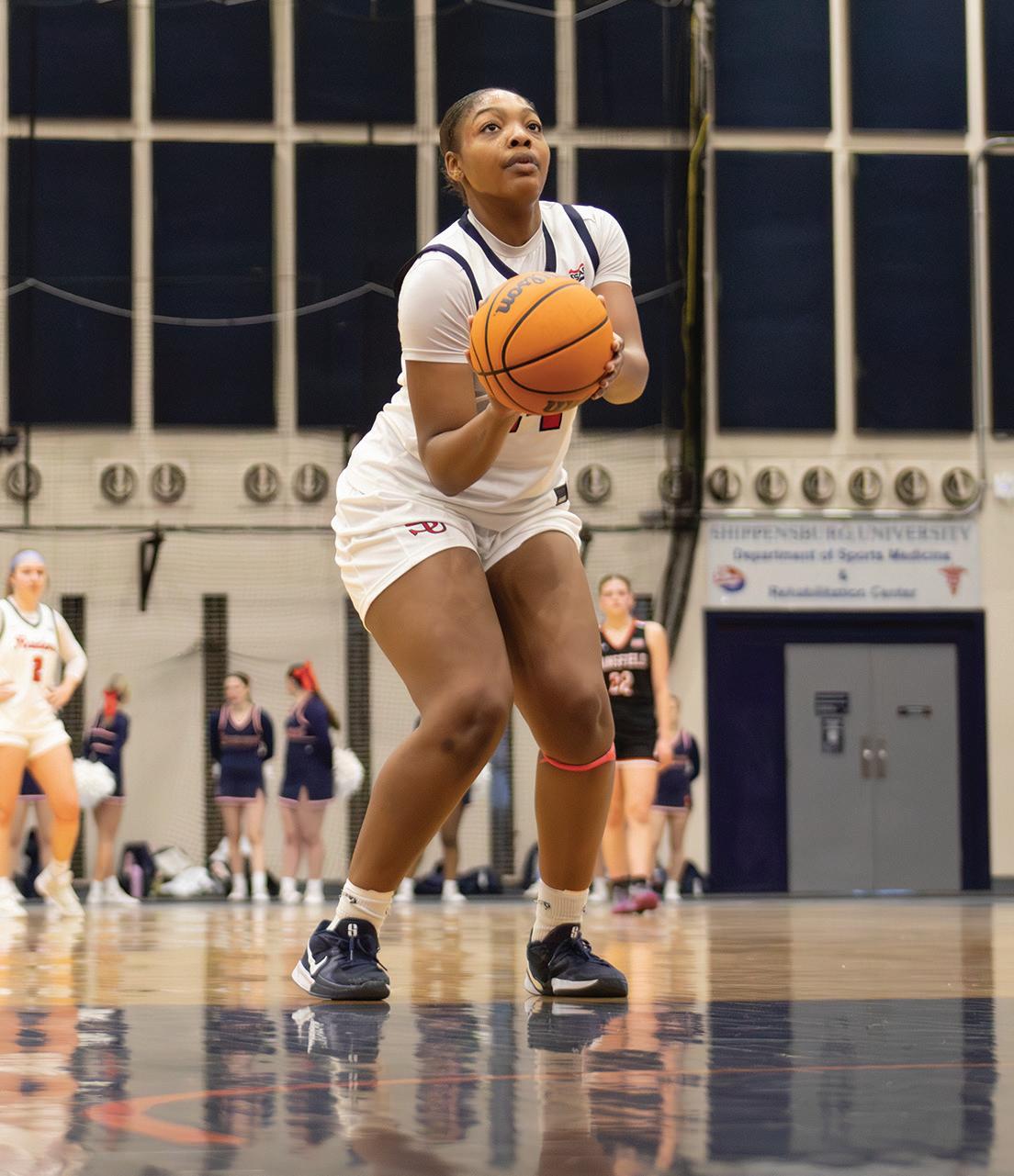
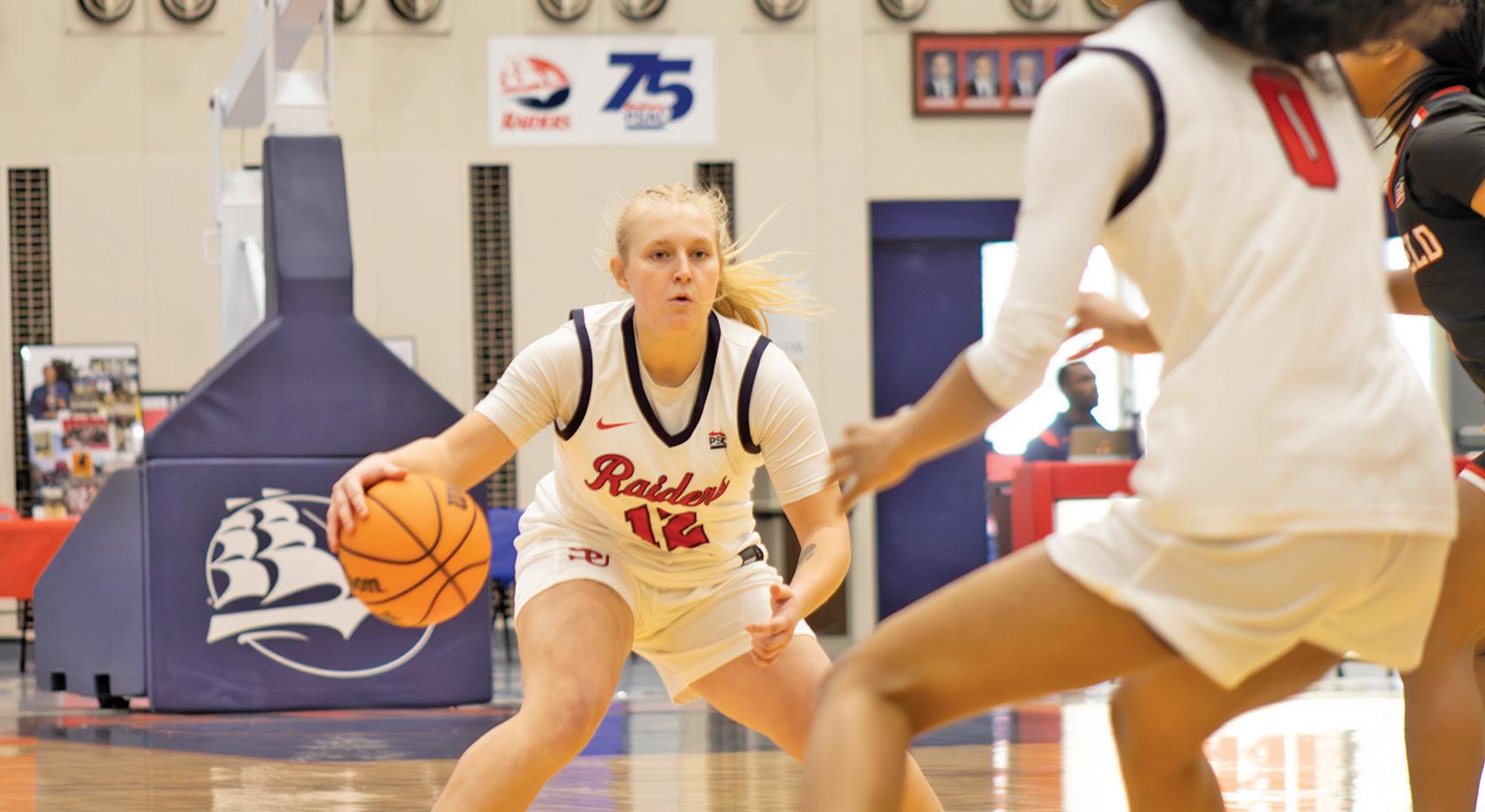
Shippensburg University’s women’s basketball team suffered a tight loss of 5350 against Mansfield on Saturday’s senior day game in Heiges Field House.
The Raiders trailed in the first quarter against the Mountaineers offense, scoring eight points compared to Mansfield’s 13. Shippensburg answered back in the second quarter and closed the scoring gap, trailing 25-24 against Mansfield. Despite the backand-forth on the floor, Shippensburg shined at the free-throw line going 6/6 in the second quarter, with an overall percentage of 85.7% compared to Mansfield’s 76.9%. Freshman Melana Eyer, sophomore McKenzie Thomas and sophomore Abbie Johns all had perfect
The Mountaineers continued to guard their lead after the end of the third quarter, pulling in front of the Raiders with a score of 43-38.
Although the Raiders managed to score two more points than Mansfield in the final quarter, their efforts were not enough to secure them the win. The Mountaineers closely beat the Raiders 53-50 after the fight against the final buzzer.
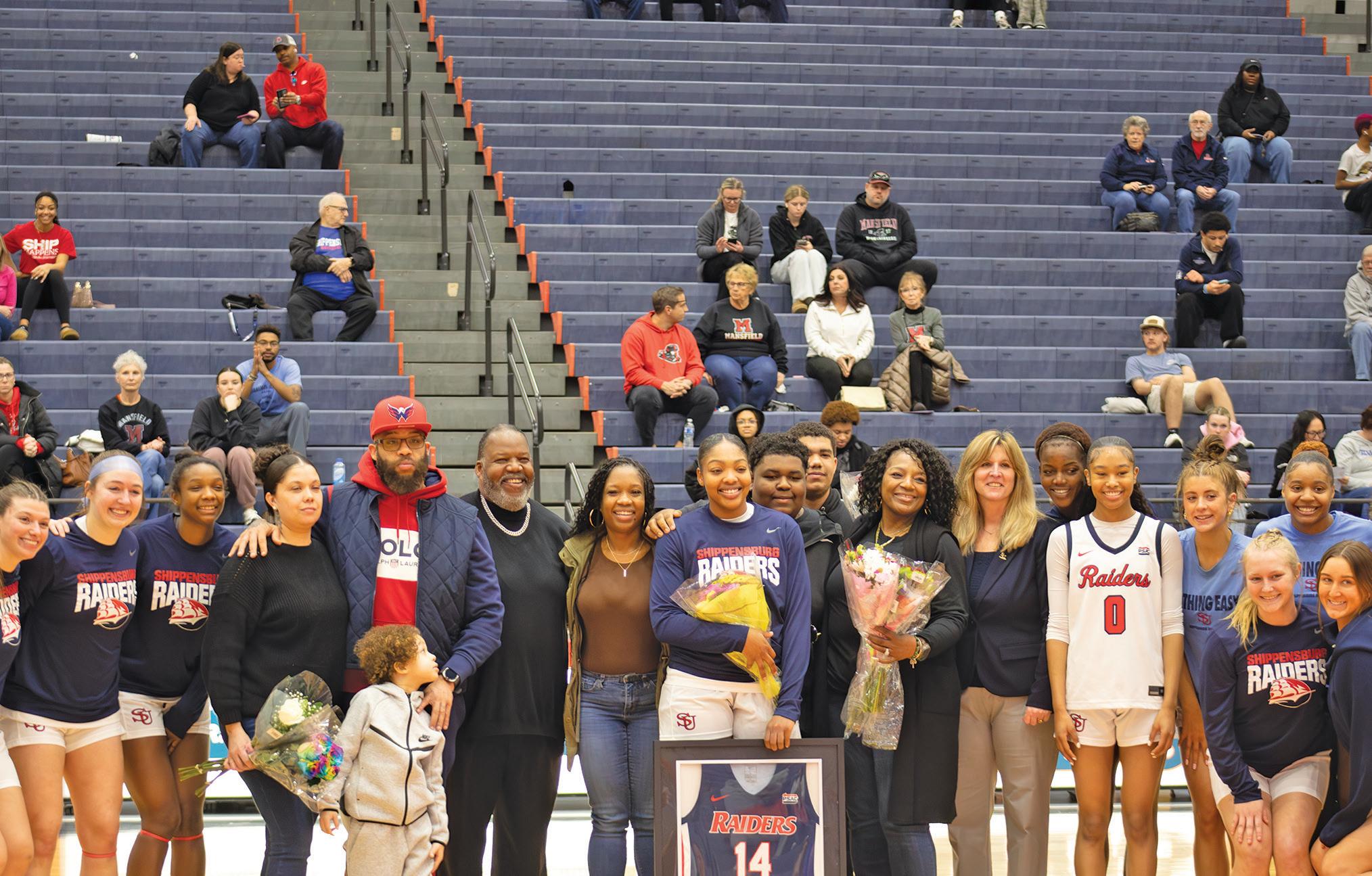
Even with the loss at home, Shippensburg celebrated Makayla Foddrell, the only senior on the 2025-2026 team. Scoring 13 points, Foddrell had the second highest individual score of the game against Mansfield.
Shippensburg University women’s basketball head coach Kristy Trn commented on Foddrell’s impact on the team.
“She has been one of the
hardest workers in her four years here,” Trn said. “She is an outstanding leader, an outstanding person and she does everything with care and compassion for her teammates. I know she’s going to be extremely successful in whatever she does. I can’t talk highly enough about her.”
When asked about the team’s mindset going into the last two games, Trn voiced her goals.
“We’re just trying to play for some pride and for some growth,” Trn said. “We’ve got to start developing things out on the floor that we can carry over with us into next season.”
The Raiders have two more games left in the 20252026 season, where they are home against Shepherd on Wednesday and ending the season at Lock Haven next Saturday.
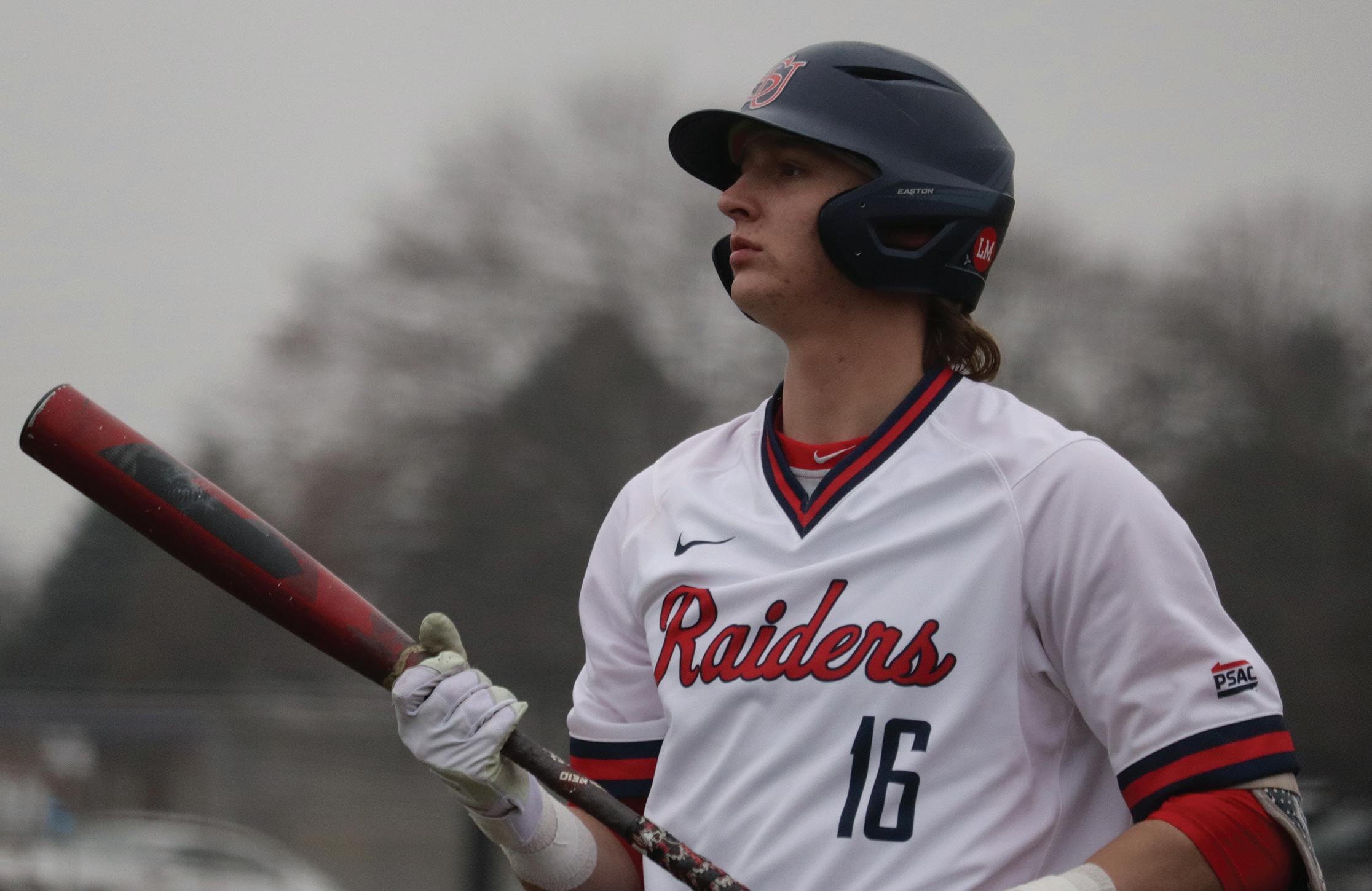
Shippensburg University baseball went 1-2 at home this week, falling to Gannon 11-7 on Friday before splitting a Saturday doubleheader. SU lost the first game 11-3 before salvaging a 3-2 win in the nightcap.
Friday’s contest saw Gannon jump out to a 7-0 lead in the third inning, but the Raiders clawed their way back. Sophomore Evan Shoffler and freshman Lucas Ream each had two RBIs as part of the comeback, with SU tying the game at 7-7 in the sixth.
Gannon would respond immediately, getting three runs off sophomore pitcher Jacob Dennis in the seventh and adding an insurance run in the ninth. Dennis would take the loss after 4.1 innings of relief, striking out a careerhigh nine batters.
Eight different Raiders had a hit in the game, with
Shoffler, Ream and junior Mason Morris each having two. Junior Conner Barto went 2.1 innings in his start, allowing seven runs (six earned) on five hits and four walks.
The Raiders got on the board first Saturday via an RBI single from freshman Caden Lloyd, but it was all Golden Knights from there.
Gannon jumped out to an 8-1 lead by the sixth, cruising to a win from there.
Lloyd and redshirt sophomore Brady Harbach each had two hits, with Mason Morris socking a solo home run in the sixth inning.
Redshirt sophomore Brady Kain took the loss in his first start of the season, allowing three unearned runs in 3.2 innings.
The final game of the series was a proper pitchers’ duel, with both starters shining in their collegiate debut.
Freshman Jonah Mayer went 5.1 innings allowing two runs on five hits and two walks, striking out six.
Gannon’s Nolan Smith also allowed a pair of earned runs, going 5.1 innings in his outing.
Each team scored a run in the fourth inning, with Harbach’s double tying the game at one. Matt Smith put Gannon ahead with an RBI groundout in the sixth, but senior AJ Wenrich put the Raiders in front with a 2-run home run in the bottom of the frame, moving the score to 3-2.
Chances were limited for both teams, only combining for nine hits. Harbach had two for SU, with Shoffler and Wenrich each providing one. Junior Bryce Amos earned the win with 1.2 perfect innings of relief.
Shippensburg now sits at 4-2 on the season and will make its first road trip of 2026 next weekend.
The Raiders will head to Slippery Rock on Friday for a doubleheader at 1 p.m. and 3:30 p.m., before a Saturday doubleheader at 1 p.m. and 3:30 p.m.
Friday,
Baseball: at Slippery Rock, 1 p.m. & 3:30 p.m.
Saturday,
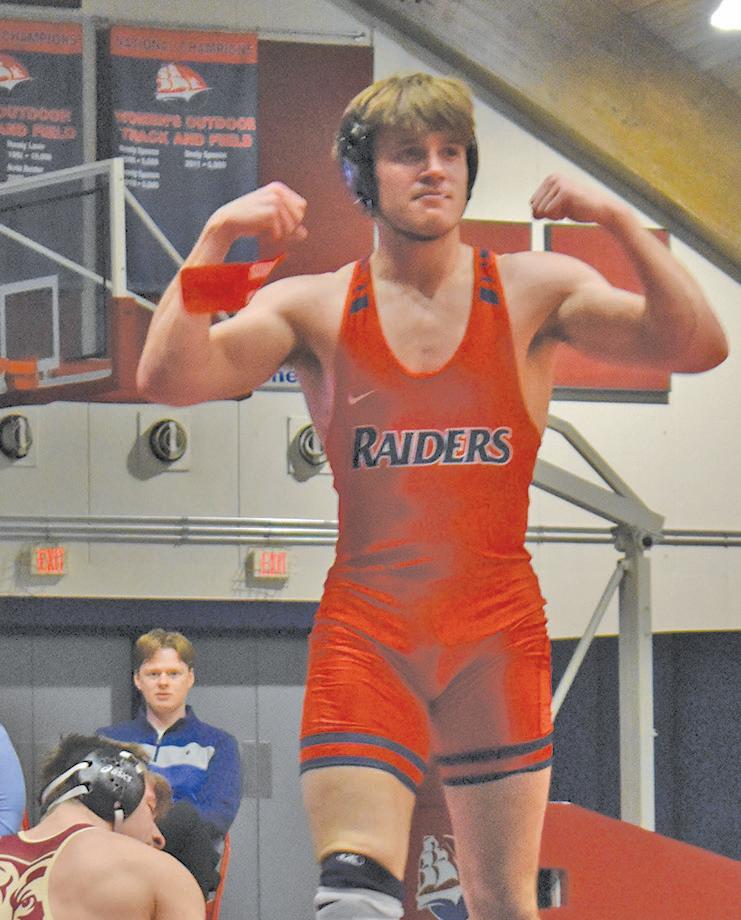
Wrestling: NCAA Regional Championships (at East Stroudsburg), 10 a.m.
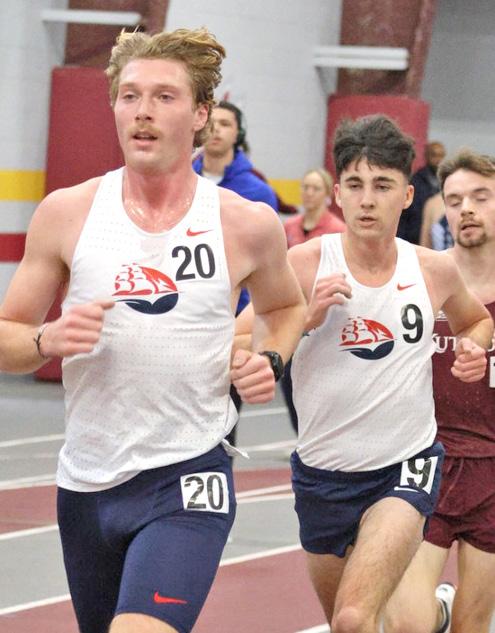
Track and Field: PSAC Championships (at Lehigh), 11 a.m.
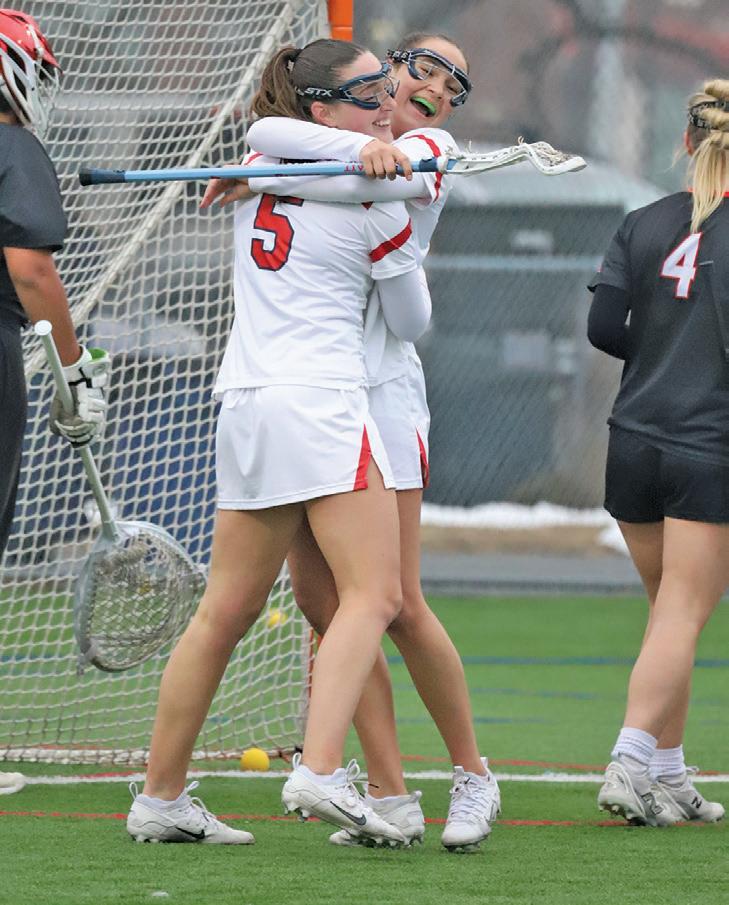
Lacrosse: vs Jefferson, 12 p.m.
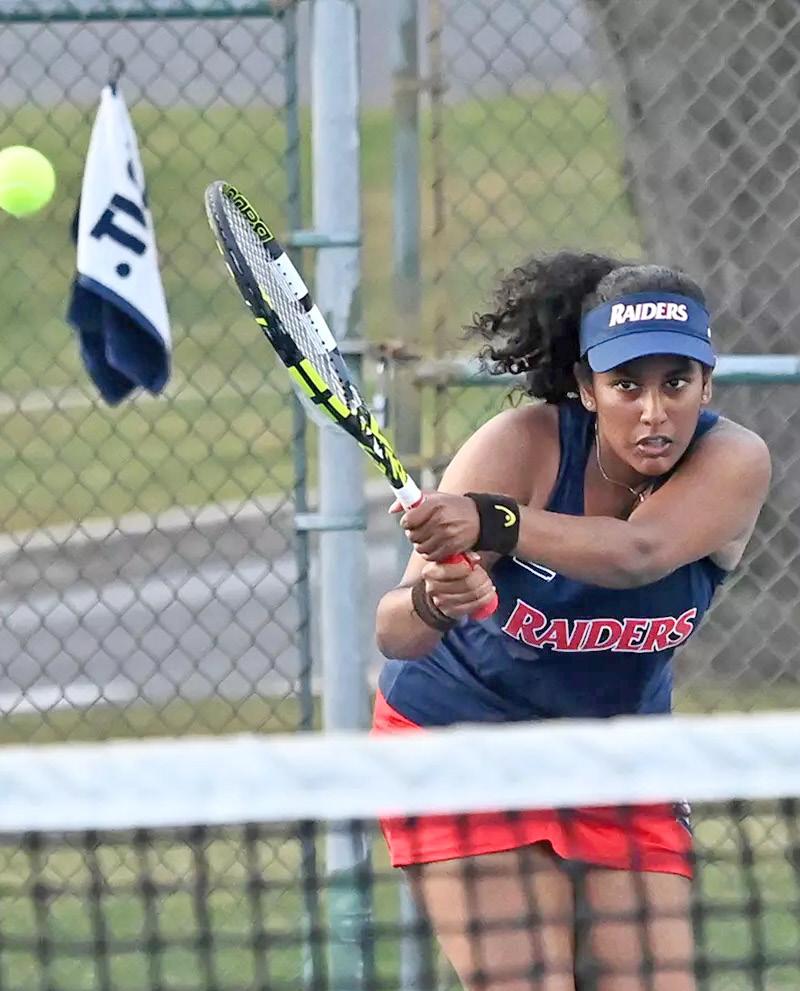
Tennis: at York, 1 p.m.
Women’s Basketball: at Lock Haven, 1 p.m.
Softball: at Catawba, 1 p.m. & 3 p.m.
Baseball: at Slippery Rock, 1 p.m. & 3:30 p.m.
Men’s Basketball: at Lock Haven, 3 p.m.
Sunday, Mar. 1
Track and Field: PSAC Championships (at Lehigh), 11:30 a.m.
Softball: at Wingate, 12 p.m. & 2 p.m.
Monday, Mar. 2
Men’s Basketball: PSAC First Round, TBD
Wednesday, Mar. 4
Lacrosse: at Lock Haven, 2 p.m.
Men’s Basketball: PSAC Quarterfinals, TBD
Friday, Mar. 6
Tennis: vs Juniata, 12 p.m.
Softball: vs IUP, 1 p.m. & 3 p.m.
Saturday, Mar. 7
Tennis: vs Elizabeth City State (at Bowie State), 10 a.m.
Softball: vs Pace, 12 p.m. & 2 p.m.
Lacrosse: at Frostburg State, 12 p.m.
Baseball: vs Lincoln, 1 p.m. & 3:30 p.m.
Tennis: at Bowie State, 4 p.m.
Men’s Basketball: PSAC Semifinals, TBD