







gage the audience and spark their interest in the topic.
Throughout the talk,
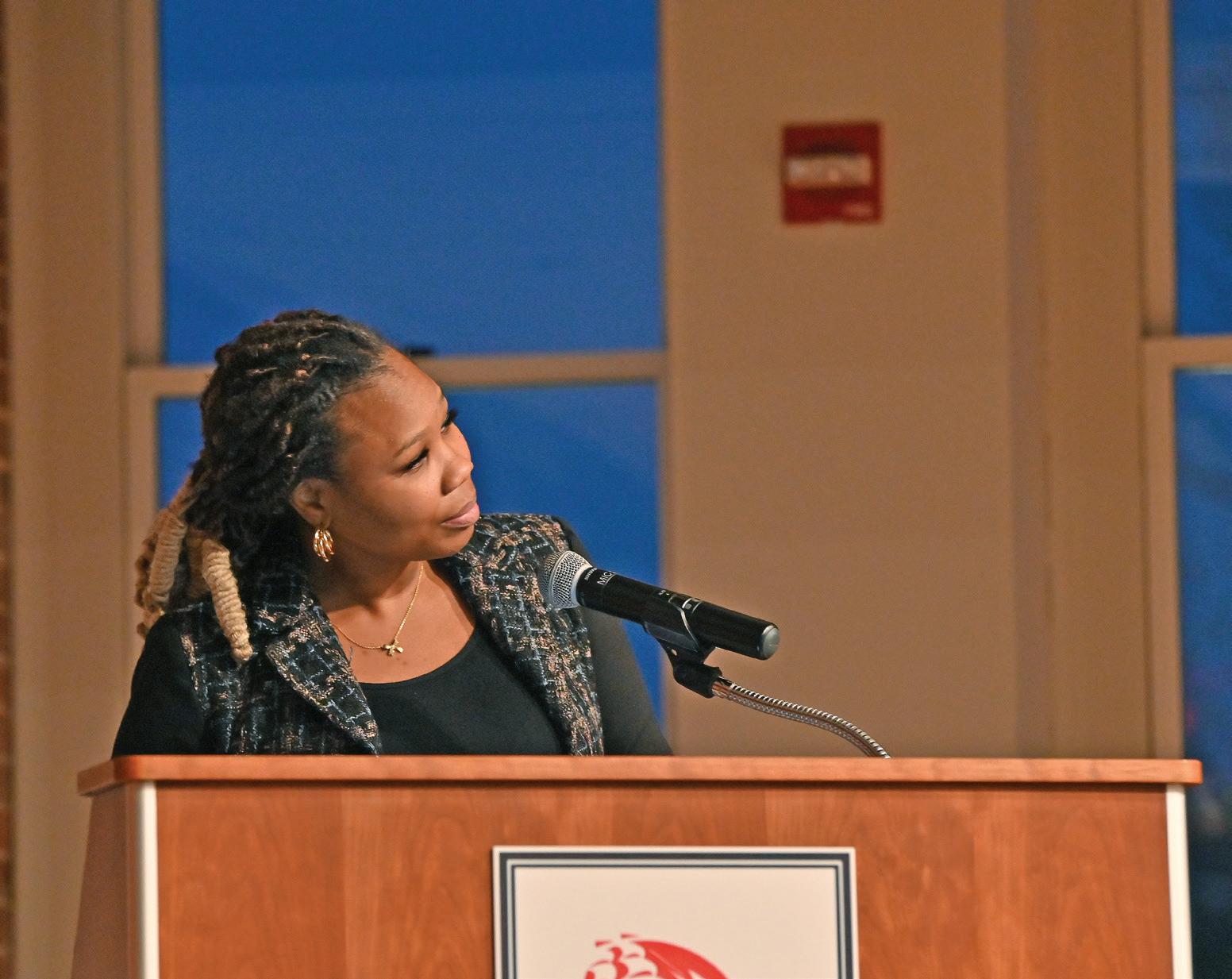
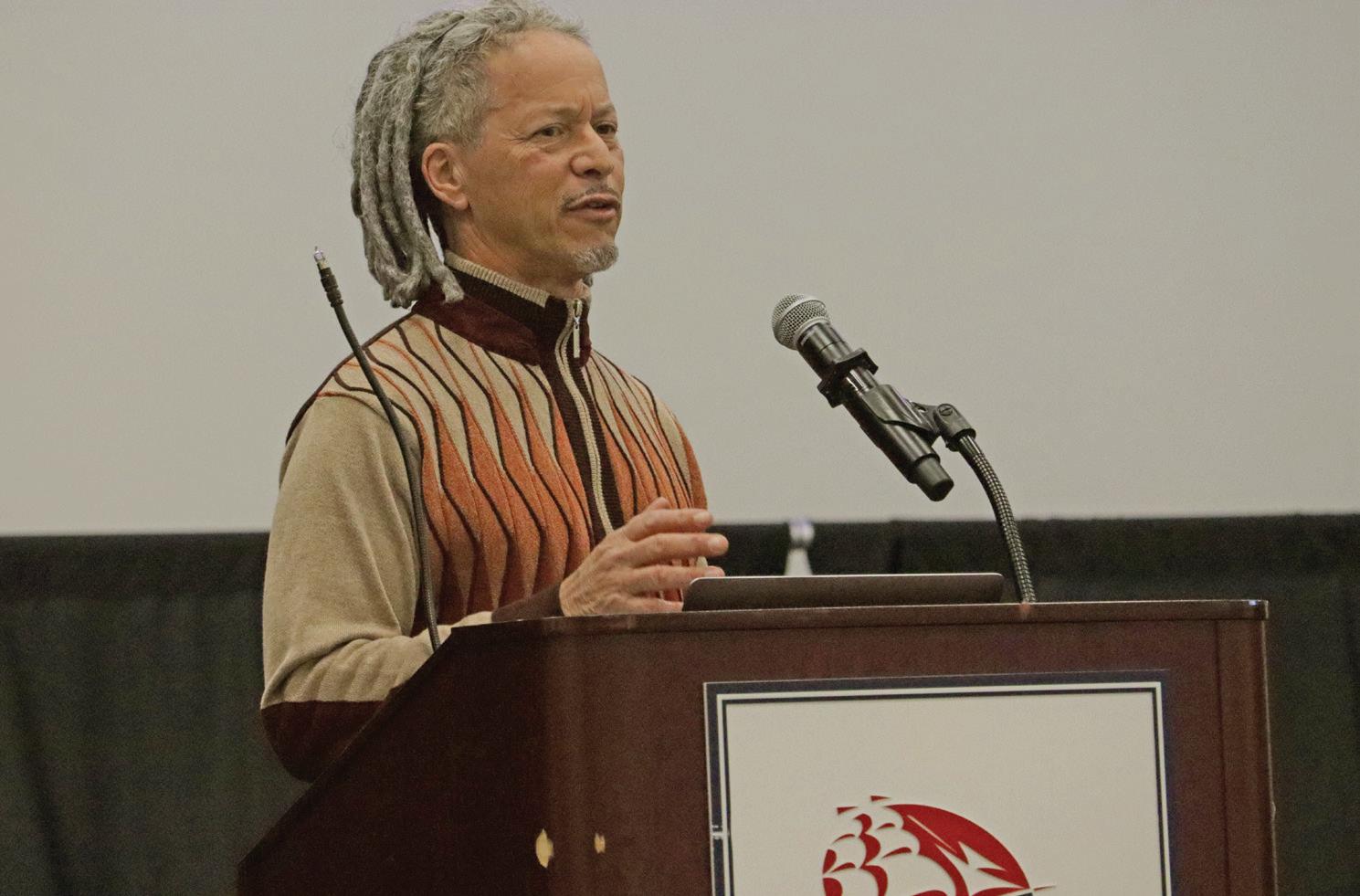
Stacey Pearson-Wharton gave an interactive presentation titled “Difficult Dialogue in a Divided World” at the CUB on Monday night.
During her talk, Pearson-Wharton shared valuable tools for engaging in authentic, healthy conversations about controversial or “scary” topics.
Pearson-Wharton is an educated consultant psychologist. She earned her bachelor’s degree from Norfolk State University, her master’s degree from Indiana University of Pennsylvania, and her doctorate from Penn State University.
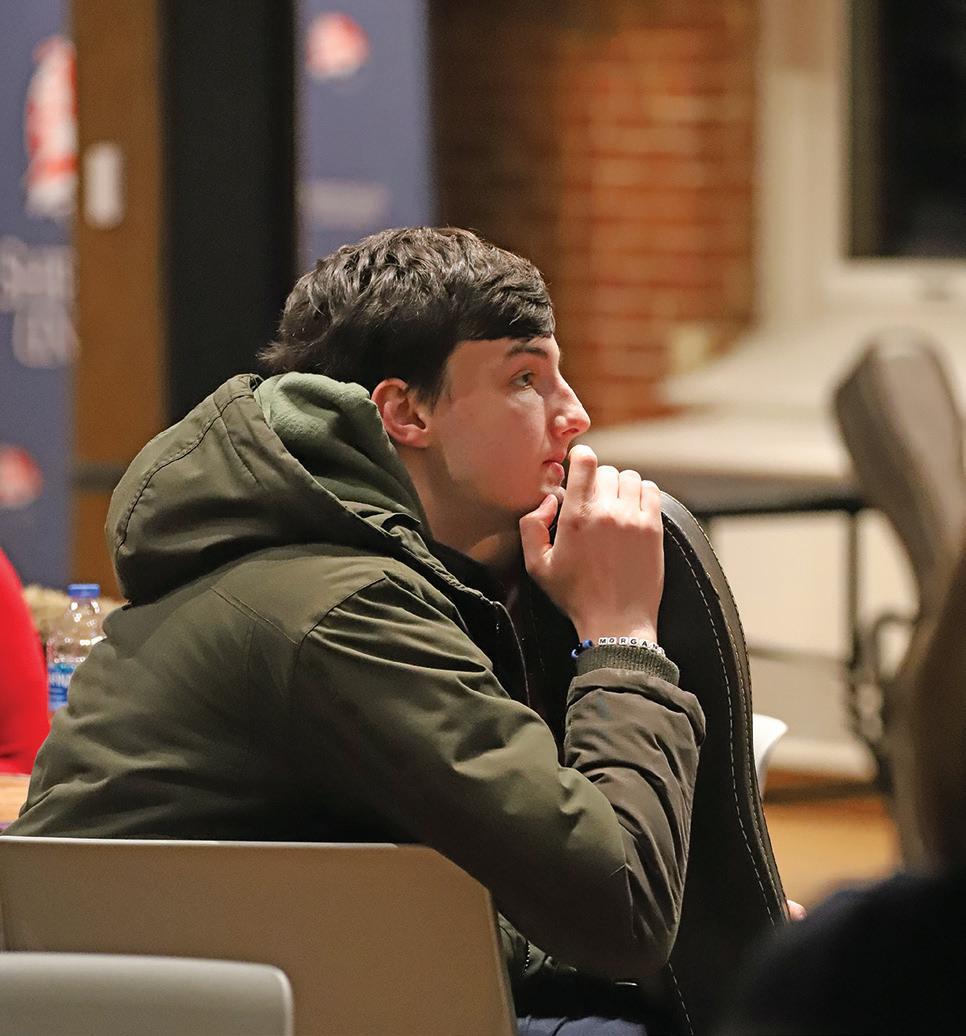
The presentation began with visual diagrams illustrating the concepts of perspective, followed by examples of challenging conversations designed to en-
Pearson-Wharton used real-world examples to help the college-aged audience relate to her points. She referenced Kendrick Lamar’s diss track music video and his Super Bowl performance as examples of conflict and how not to handle it.
“You don’t need to say everything you think, just because you think it,”
Pearson-Wharton advised.
“In the process of having a difficult dialogue, I challenge you to listen twice as much as you speak, to achieve a shared understanding.”
She introduced her first main topic: the importance of shared understanding, illustrating it with a personal story about a real-life situation with a friend.
Mara Eberle Asst. Ship Life Editor
Gettysburg Col-
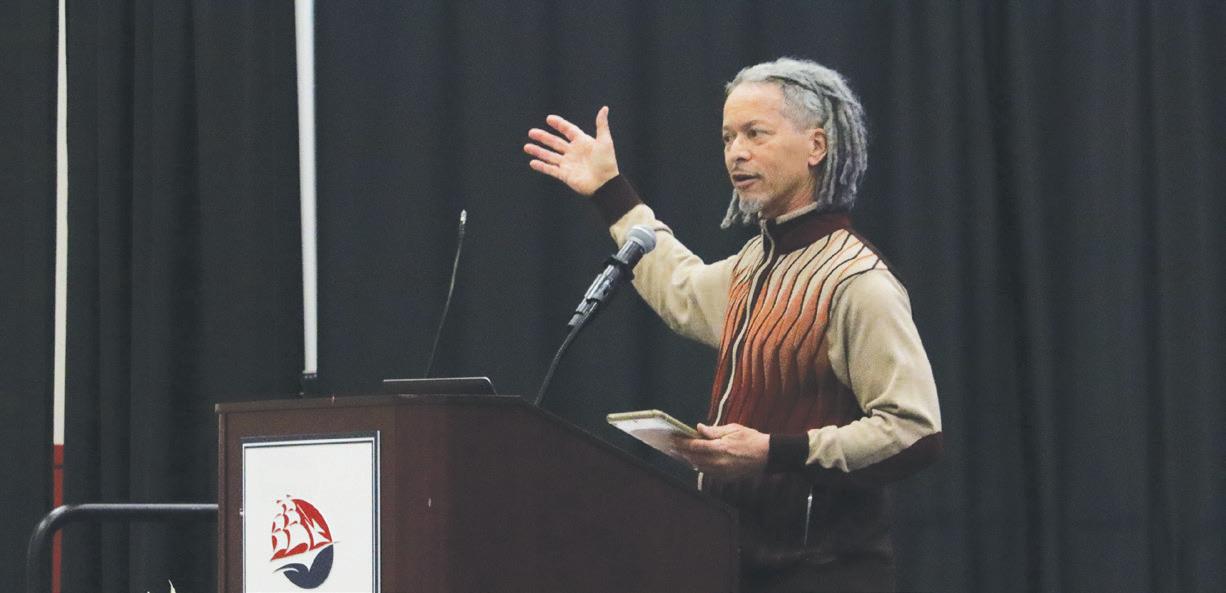
lege professor Scott Hancock, visited Shippensburg University to give an interactive presentation about the national theme of Black History Month on Wednesday evening in the CUB MPR.
During the presentation, Hancock explored the impact of slavery on America and the imbalance of appreciation for Black labor and work throughout America’s history.
He introduced and emphasized the word “Sankofa,” which means “to go back and fetch what you forgot.”
In the context of Black history, Sankofa refers to reciting one’s family history dating
back up to seven years.
“History matters because it provides us with clues and possibilities of solutions for our present and future challenges,” Hancock said.
The audience was encouraged to participate throughout the evening. Many responded to Hancock’s slides and volunteered to share stories about the tough jobs their families have experienced. He used these stories to drive his points further and make it easier for the audience to connect with his message.
Hancock also taught about the injustice African Americans faced in America and the workforce despite being so beneficial to the country. According to
Ian Thompson News Editor
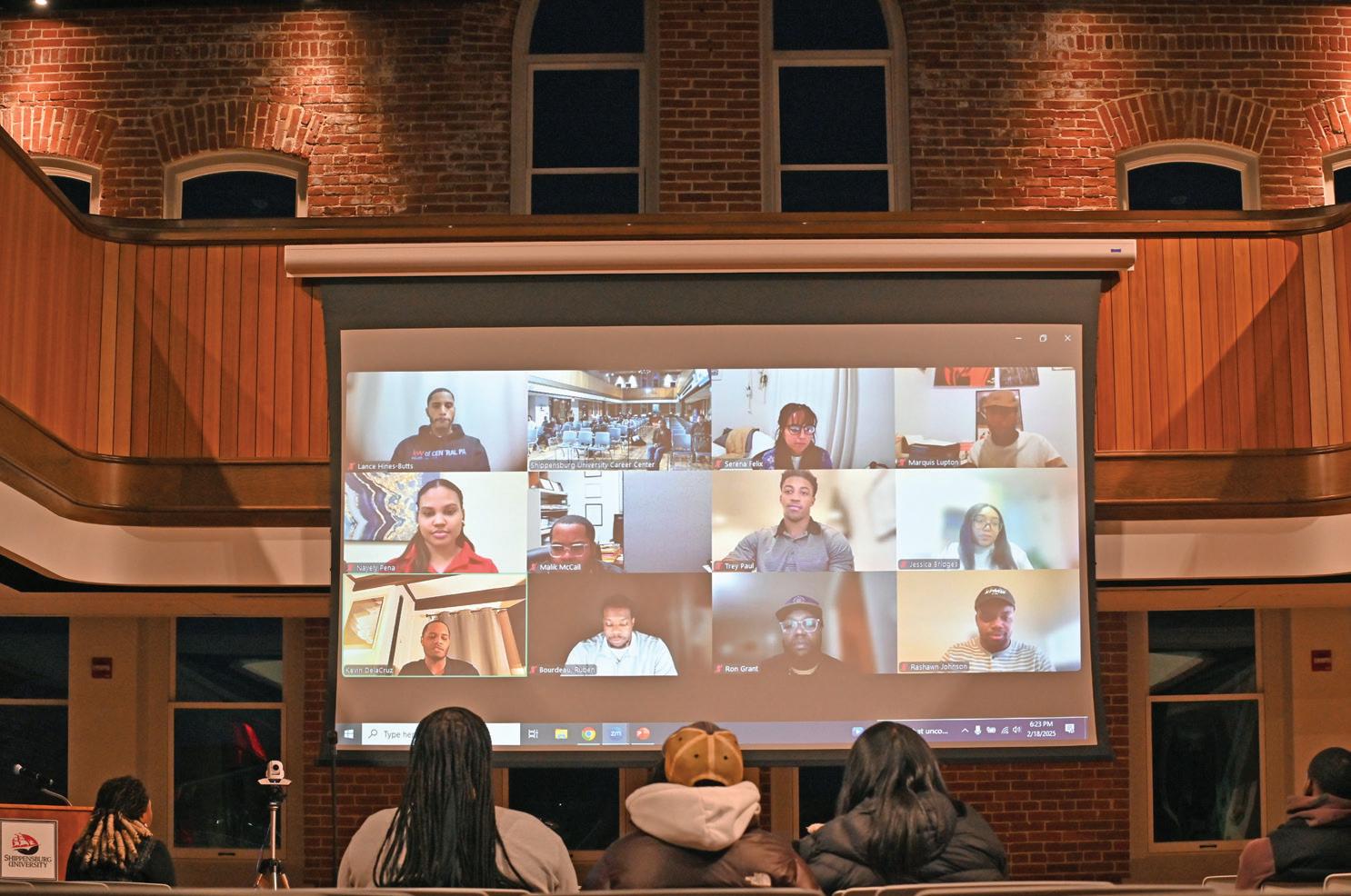
A dozen Shippensburg University alumni were welcomed back to their alma mater last Tuesday to discuss their diverse professional experiences with current students.
The event, titled “Working while Black,” was sponsored by the Career Center and the Office of Multicultural Student Affairs (MSA). WITF onair host and producer Marquis Lupton served as a facilitator for the evening’s discussion.
After a delayed start, the night began with opening remarks from MSA associate director Kapri Brown and Alix Rouby, the Career Cen-
ter’s director of internships and experiential learning.
Lance Hines-Butts, a 2022 graduate of Shippensburg University, spoke about his entrepreneurship. Since graduating, he has become a real estate agent and launched several real estate related ventures.
Serena Felix ’21 told attendees that she had launched a freelance marketing agency. While she works with businesses in the Lancaster area, she is pursuing an MBA in marketing analytics. “I’ve been really passionate about those projects, working individually by myself,” Felix said. “It’s been really fun.”
The panelists spoke
about their experiences entering the workforce and finding their place in careers. Kevin Delacruz, a 2022 graduate spoke about the difficulty of realizing that he needed to move on from a job. “I realized it wasn’t for me, and I had to pivot,” Delacruz said.
Two alumni, Trey Paul and Ruben Bourdeau, work together as engagement financial advisors at the accounting firm Deloitte.
Jordan Neperud Staff Contributor
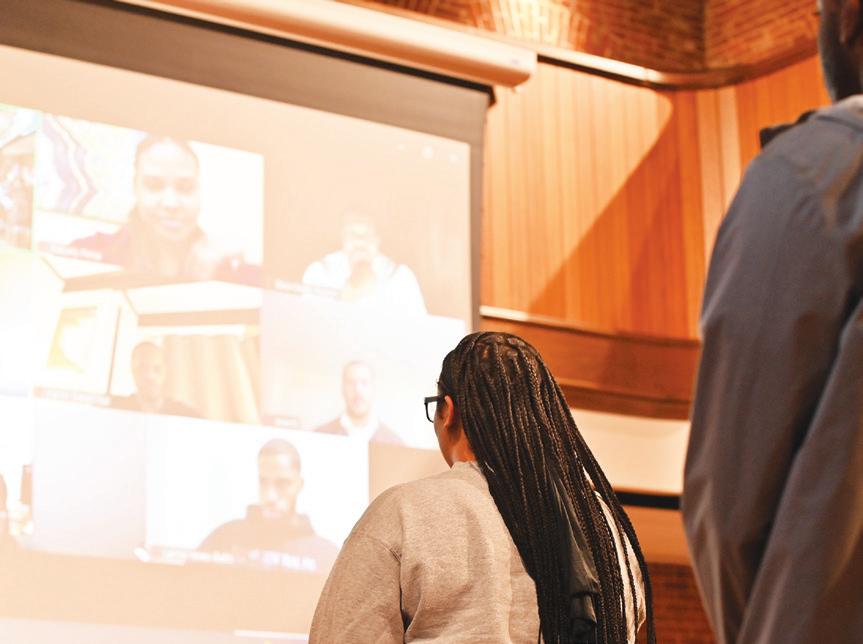
Shippensburg Univer-
sity’s celebration of Black History Month kicked off with the Persistent Racial Disparities in Employment Outcomes Panel on Feb. 5. Manny Ruiz, assistant vice president for inclusion and belonging and director of social equity, began the panel by delivering a land acknowledgement. He said Shippensburg University was built on Susquehannock land, and that the university is committed to working alongside all Indigenous and First Nation peoples. The panel was split into two sections. The first half was a presentation while the second half
was a discussion with the audience.
Ying Yang, associate professor of sociology, opened the presentation with a series of data tables and graphs which showed the historical pay gap between white people compared to people of color, particularly Black Americans. Yang transitioned to the modern wage and employment gaps. She showed the disparities across different races and genders. She demonstrated how different factors, such as education level, impact different races differently. Yang emphasized intersectionality and how these factors can affect women, especially women of color, differently.
Yang said, “We need to understand the causes. They tend to get overlooked. We tend to blame the individuals.”
“We need to understand the causes. They tend to get overlooked.
We tend to blame the individuals.”
Ying Yang Assoc. Professor of Sociology
David Monaghan, associate professor of sociology, began his part of the presentation by explaining how to see if differences in employment across races is due to discrimination.
He said that certain control groups, such as age and education, would be considered when interpreting the data. The difference within employment outcomes that could not be explained by one of these control groups could be attributed to discrimination. Monaghan then gave examples of experiments that could be used to prove if discrimination was taking place. One example was sending two identical resumes with one key difference. One would have a stereotypical white name while the other would have a stereotypical Black name.
Hancock, enslaved African Americans accounted for about 20% to 24% of the American economic growth in the 20 years before the Civil War. He continued to explain the struggle freed African Americans faced when exercising their citizenship, including seeking the ownership of land they worked on.
The presentation had an overarching theme of realizing the impact of Black workers in America and showing the proper appreciation.
When asked about the importance of the presentation and Black History Month as a whole, Hancock emphasized education.
“My hope is always
that it’s part of a longer process of people thinking through things and helps them think critically and analytically,” he said.
“We have to figure out how to make connections among different groups to start building effective alliances.”
Ian Thompson News Editor
The Student Government Association (SGA) Budget and Finance Committee released on Friday their draft of the 2025-2026 operating budget.
Student groups can see the draft budget awards in an email sent by SGA President Lillian Sellers on Friday morning. A physical copy of the document has also been posted publicly in the display window outside the SGA office (CUB 201).
After several years of drastic cuts, many groups may be surprised to learn that their budgets have remained consistent or grown slightly. This change in momentum is largely thanks to revenue from an increase to the Student Activity Fee which went into effect for the 2024-2025 fiscal year. While the fee increase was implemented too late to be factored into student group budget decisions last year, the increased funds gave the committee more flexibility in
awarding student groups’ requests for the upcoming year.
Sellers’ email encourages student groups to review their budget awards and to consider meeting with the Budget and Finance Committee to discuss their awards. The dates for these meetings are Feb. 25 and March 4. Links to sign up for these meetings were included in the email on Feb. 21.
The next step for the budget is to be approved by the university president before being officially adopted by SGA in April.
In total, the draft budget estimates revenues — largely from student activity fees — at $3,016,025. Expenses are budgeted at $3,034,315.60. That leaves a $18,290 deficit, which according to SGA VP of Finance Nathan Garber, will be offset with leftover funds from special funding requests.
Despite being available, only a handful of special funding requests have been received, and only a small fraction of the $120,000 allocated for the program has been distributed to groups.
Athletics Changes to the Budget and Finance standing rules last year placed a limit on the percentage of expected activity fees that could be awarded to intercollegiate athletics at 60%. For the 2025-2026 budget, that comes out to $1,570,557.60. Unlike other student groups, the budgets for intercollegiate athletics are handled by the athletics department, which receives a lump sum. This appears to be an increase of about $110,000 from last year’s allocation of $1,459,203.20, but that does not account for funding that athletics received from the university last year to make up for cuts from SGA. As for club sports, the draft budget allocates $44,226 compared to this year’s $39,951.
For the 20242025 budget, the additional revenue from student activity fees was allocated to several reserve funds, including $120,000 set aside for special funding requests. These requests are available to most student groups, in amounts up to $1,000 for clubs and club sports, and $2,000 for organizations, boards, performing arts and student media.
Speeches for the 20252026 Student Government Association leadership election took place this past Thursday, Feb. 20, at 5 p.m.
Four SGA candidates delivered speeches at McFeely’s in hopes of securing an elected position.
The event began with SGA President Lillian Sellers offering remarks to the candidates. She also expressed her bittersweet feelings as she prepares to graduate, marking the end of her term as SGA president.
When asked who would like to deliver their speech first, Class of 2027 Senator and Budget and Finance Committee member Emily Wojnarski eagerly stepped forward.
“I’m confident that I have the experience necessary to fulfill the duties of VP of Finance to the fullest extent, which is what I hope to prove to you all throughout the duration of this speech,” Wojnarski stated.
Wojnarski is running for Vice President of Finance and believes her experience as a senator has prepared her well. She emphasized her strong connections with various campus organizations and, if elected, vowed to do “what is best for the students” — a quote written on the wall of the SGA office that has resonated with her.
Next to speak was Matt
Jones, a senator representing the Class of 2028 and member of the Shippensburg wrestling team. Jones is running for vice president and aims to improve SGA’s social media presence.
“Through social media, we can promote our events, clubs, athletics and performing arts across campus to help build a sense of community. This would also help increase transparency and awareness for SGA,” Jones said.
Jones hopes to expand the SGA Instagram page to match the following of other university-affiliated pages, such as athletics and football. Jones believes SGA deserves the same level of recognition and support.
Daniel McCleary, transfer student senator, was next to speak. He is also running for vice president alongside Jones. McCleary believes his experience as a transfer student gives him a unique perspective, which he hopes to use to assist others on campus.
“Most students don’t even understand what the student government does. I believe that through the communication committee, we can interview our senators, interview our officers, and increase visibility of what each of them does and the students they represent,” McCleary said.
Overall, McCleary hopes to make Shippensburg University’s student government more representative and in-
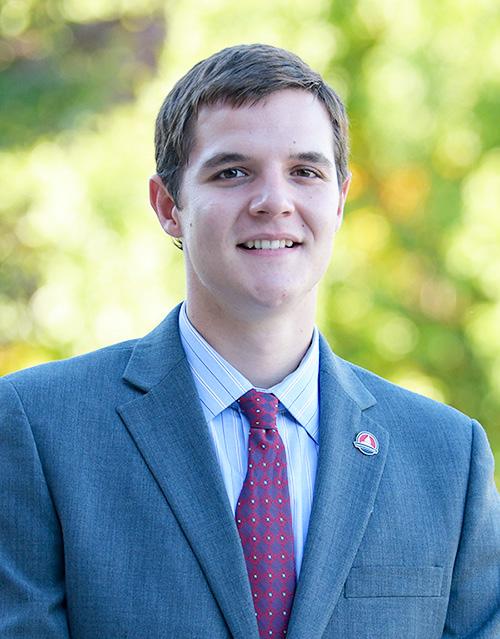
Nathan Garber Candidate for President
I’m Nathan Garber, and I’m running for Student Government Association President. I’m a senior accounting major, and my primary goal for this position is to make SGA more visible to the campus community and present opportunities for students to represent their various communities.
I’ve had the privilege of serving on the Budget and Finance Committee for the past 2 years, and gained valuable experience and understand the importance of fiscal responsibility and transparency, and ensuring that money is used effectively to support student initiatives and programs.
I’m excited about the opportunity to serve in SGA and would appreciate your vote.
clusive as he once felt underrepresented as a transfer student entering Shippensburg.
Vice President of Finance
Nathan Garber has decided to take a different path this election season. While he did not expect to be able to attend and did not have a prepared speech, he improvised one. During his time as VP of Finance, Garber realized his passion lies in helping students beyond just their financial needs and student
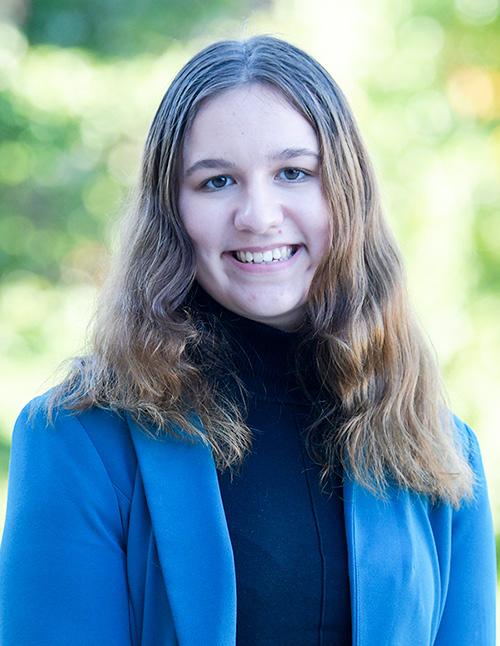
Emily Wojnarski
Candidate for VP Finance
My name is Emily Wojnarski and I am a sophomore business management major with a concentration in human resources management. I currently serve as Senator Class of 2027 in SGA and I am also a member of the budget and finance committee. I have decided to run for VP of Finance as it combines my two favorite aspects of SGA, the financial operations behind the B&F committee as well as the opportunity to connect with fellow student leaders across campus.
As your VP of Finance, I will listen and offer assistance to your financial concerns to the best of my ability.
Editor’s
not
organization budgets.
“I found that I’m extremely passionate about helping students — not just with their finances but in a broader sense. I think that experience and that passion leads to a good foundation to serve as your Student Government Association President and continue growing that,” Garber said.
Garber is now running for SGA President and emphasized his passion for want-
Lately, I’ve been a traveler. By traveler, I mean that I have been taking a trip or two a month to see things that I do not see every day. Expanding horizons is humbling, and personally, I know I have thought plenty about how vast our humanity is from these recent experiences. I have always had the mindset that my existence is so small from the perspective of our universe; however, I know that I am an
From “BUDGETS,” A1
That is an increase of just over $4,000. A large portion of this increase is accounted for by the Ice Hockey Club, which saw its budget grow from $6,300 to $8,676.
Student Groups
Compared to other budget categories, student clubs saw the most substantial increase. Put together, clubs saw a 114% increase, from $4,385 to $9,370. The awards vary in size, with the lowest being $50 for the Investment Club, and the highest being Chess Club’s award of $1,950.
Part of that 114% increase was due to several clubs receiving a budget for the

Daniel McCleary Candidate for VP
Hey Ship! I’m Daniel McCleary, and I’m running to be your Student Government Vice-President.
As a senator, I’ve met countless students, shaping how I represent you in Student Government. I’ll bring that same approach as VP by visiting your clubs and organizations to truly understand what you need to thrive. Together, let’s build a Student Government that not just works for you, but with you as well. I hope you’ll consider voting for me, Daniel McCleary as your Student Government Vice President!

I am running for SGA Vice President because I have the experience and skills to maximize student government’s efficiency. I have experience as the Student Council President of my High School and as a Class Senator here at Shippensburg.
My role as a member of SGA’s Budget and Finance Committee has given me a deep understanding of how student activity fees are distributed to clubs and programs. I am committed to making student government more effective and responsive to student needs. Make Ship Happen, Vote Matt Jones.
ing to grow the public face of SGA as the other candidates also discussed.
“I feel like people don’t even know that SGA exists, and I strongly want to work on that,” Garber said.
Following the speeches, each candidate answered questions from current SGA President Lillian Sellers on topics such as conflict resolution, and Garber was the first to respond.
“I think a lot of resolving
conflicts happens when we recognize that everyone’s input is valued and that the perspectives they bring to the table are important,” Garber said.
Candidates also fielded questions from audience members who were eager to learn more about their platforms.
SGA elections will take place from Feb. 24 — Feb. 27, with results being announced after Feb. 27 at 4 p.m.
important factor in the way that the universe revolves, along with every other person, animal, ecosystem or molecule in the air that we breathe.
I just took a trip to Pittsburgh for a birthday.
On the second day of the trip, I visited the Carnegie Museums of Art & Natural History. While walking through the museums, I saw dinosaur fossils, ancient sculptures, extinct international animal remains, clay pots from 33 million years ago and many other jaw-dropping sights. I was utterly inspired by the number of things that came before me. I looked at the creatures from the Cretaceous period, and I was mesmerized by the thought that there have been trillions of experiences before humans ever existed. Then, I thought about the fact that humans have only
first time — Ski/Snowboard, Urban Flow, Investment, Reach Out, Tau Kappa, Social Work, Human Resources Management, Golf, Honors Student Organization and Not So Hidden Figures.
Student Organizations
This category saw an increase of $2,200, split across groups such as the Residence Hall Association, Green League, the three Greek Councils, MSA-related organizations as well as several others.
One of these groups, the International Students Organization, saw their budget increase from $400 to $705.
Of the three Greek
existed for roughly 4 million years.
Oral language is half the age of human existence. Not that long ago, compared to Earth’s age, did people learn to communicate. In that time, we have learned how to love, support and, unfortunately, hate.
I believe that humans are naturally and instinctively selfish. After all, humans have a long history of fearing for their lives for many different reasons. Due to this, that fear has been instilled inside of us for different reasons than before. Now, we act out of emotion rather than factual rationality.
Selfishness has led us to making decisions that did not benefit nor encourage the outlook that we all should have, which is love and appreciation for all that we are and all that we came from. I have always
Councils, MESA saw a $100 increase to their current $1,900 budget, while Panhellenic Council went from $75 to $400. Meanwhile, IFC saw a cut from $845 to $400.
Performing Arts
As a group, student performing arts saw a $1,660 increase. Most groups saw a small increase to their budget of a few hundred dollars. There are two groups, however, that stand out.
Marching Band, which received $79,400 in the 20242025 budget, was awarded $82,000.
Meanwhile, Shippensburg Community Orchestra saw a budget cut of 62%, from $5,000 to $1,900.
Boards
resonated with the poem titled, “I’m a mosaic of everyone I’ve ever met” by The Union International. The poem describes the feeling of being one with all that we have come from, loved and wanted. No matter who you are, you are a collage of your own life that lived before you.
During trying times where it seems like hatred is the most notable emotion that we experience, it is important to understand that without love, we could not have hate. Love for life, others and experiences gives us the opportunity to hate.
Hate is not linear; what we hate, we actually love. We just might not know it yet. The opportunity to push forward and recognize that all people are equally valuable people, all animals have emotions and feel pain, all trees grow and breathe, and all things must live
There are only three boards, the Activities Programming Board (APB), Homecoming and Student Government itself.
All three boards saw their budgets remain the same. APB received $90,500. Homecoming remains at $14,000, and SGA at $2,825.
Student Media
All five student media organizations saw small increases to their budgets. Shippensburg’s chapter of the Public Relations Student Society of America and SUTV both saw a $40 increase. The Reflector and The Slate were awarded an additional $200, while WSYC saw their award
increase by $250. In total, an additional $730 was allocated to student media groups. Management and Student Services
The final category includes line items for various student services and related expenses. Among these are payroll for Fiscal Office employees and CUB staff, as well as funding for Memorial Auditorium. This area saw an increase of just over $100,000, growing from $896,819 to $998,372. These expenses, however, are largely out of control of the Budget and Finance committee’s control.

and die is a privilege. The privilege to be surrounded by so much life and breathe the same air that floats around the planet is astounding, and, often, I wish people could understand it in that way.
What an honor it is to wake up and look at the same sky that 8 billion other people are looking at. We live our lives wanting the same thing: equality.
Regardless of who you are, you are eternally etched into the earthly ground that we walk every day. Your footprints are a part of the same mosaic that you came from and what will come from you.
Everybody always says, “Look at the bigger picture,” when it comes to global events or human interactions, but what if the pictures we are supposed to be looking at are of ourselves? Each person has an energy that is irreplaceable for another’s. We give and we get. We take and we lose. Mirrors exist for a reason, both literally and figuratively. Take a moment to reflect on how you can make a difference. We are all for one, and we are one for all.
Gabe
Rader Staff Contributor
Shippensburg University’s Forum met on Tuesday, Feb. 18 in the Ezra Lehman Memorial Library.
The forum reviews and discusses matters related to curriculum, student life and university policies.
The University Curriculum Committee, in charge of regulating undergraduate and graduate classes, briefed forum members on the courses that have not been taught for five years that are set to be dropped.
Annually, the dean’s office receives a list of these courses. They then reach out to the applicable departments for input. The
respective departments confirm the inactivity of the courses. Now, with the forum’s approval, those courses have been officially removed.
University Provost and Vice President for Academic Affairs Darrell Newton, updated the forum on the recent budgeting webinar he was a part of that addressed various budgeting issues and will be released to the public within the next few weeks.
Vice President of Student Affairs and Dean of Students Lorie Sheetz updated the forum on the upcoming election for the Student Government Association, which has had good turnout with all slots filled and some with competition.
Connor Niszczak Editor-in-Chief
Officials from the Pennsylvania Department of Environmental Protection briefed Shippensburg residents Thursday about trace amounts of contaminated water detected in Middle Spring Creek. Limited amounts of per- and polyfluoroalkyl substances, commonly referred to as PFAS, were detected in the creek in August of 2023, according to environmental protection specialist Crystal Wolf.
Pennsylvania American Water first tested the samples before contacting the state’s Department of Environmental Protection (DEP) in 2024, which then sampled several homes within a half-
mile radius of the creek. Levels of PFAS above the maximum contaminant limit were found in seven residential wells, Wolf said, and three homes have been supplied with gallon jugs of water since Oct. 14.
As the PFAS were detected, letters were sent to homes most likely to be in affected areas before expanding the testing zone. In the coming weeks, homes within an additional quartermile of the creek will be tested, but some homes have already been determined to be safe.
“The plan is to move concentrically out in circles around the worst of the [impacted] areas,” Wolf said.
Exposure to PFAS can lead to health
problems like high cholesterol, increased risk of kidney and liver cancer and lower odds of becoming pregnant, according to the Illinois Department of Health.
When asked by Shippensburg resident Tamela Trussell, DEP environmental cleanup manager Ben Thonus noted that impacted residents
were tested for exposure to PFAS, but no specific medical agency is handling this case. “We would like to know if there are any plans to evaluate the risks associated with” hunting, fishing and consuming food resources “from the stream and associated lateral ecosystems,” Middle
Spring Watershed Association president and SU earth sciences professor Sean Cornell said.
Wolf clarified that further details about the exact cause of the PFAS contamination is unknown, as dealing with the immediate human impact continues to be DEP’s focus in this investigation.

I hope that everyone has had a good start to the Spring 2025 semester so far. Spring break is almost here, something to look forward to. A lot of amazing things have been happening on campus as well as off, representing Shippensburg University well. Before I address the recent Council of Trustees meeting, I’d like to highlight some of those things.
I attended the March for Humanity. It was very well attended, and the speakers were very well spoken. The former Pennsylvania Secreatary of Education Dr. Khalid Mumin, the keynote speaker, spoke on the importance of our diversity and the dream of Dr. King. Over winter break, the Shippensburg University Catholic Campus Ministry and I attended the annual SEEK conference, held in the nation’s capital this year. We represented Shippensburg University among 4,000 other students, and over spring break, a group will be going on a mission trip in Baltimore, making SHIP HAPPEN!
You may see more of ROTC this semester. The Raider Battalion will be out
conducting military training at Britton Park and the surrounding areas to recognize some accomplishments. Nine cadets received fully funded internships across five different states and 11 cadets are preparing to commission this spring. Track and field will be competing at the indoor PSAC championships during the weekend of March 1. We congratulate them on all their hard work and dedication. This is just a taste of the many great things happening around campus. Please continue to share with me what your club, group or team is doing around campus.
On Feb. 21, the Council of Trustees held its quarterly meeting and were updated on many of the great initiatives taking place and the work
Connor Niszczak Editor-in-Chief
Shippensburg University’s Council of Trustees approved upcoming rates for on-campus housing and dining during its first meeting of 2025.
Proposed for a vote by Dean of Students Lorie Sheetz, the council approved housing and dining costs for the 2025-26 academic year and housing costs for the 2026-2027 year.
All on-campus housing, from the lowest cost of a $2,757 room in McLean to the most expensive $5,665 E suite, will see a price freeze for 25-26. The following year, most rates will increase by about $20 to $50, a B suite will go from $3,979 to $3,999 and McLean from $2,757 to $2,785.
As the university continues to deal with inflation, dining plan costs are set to increase for 2526. The standard plan of 14 weekly meals with $300 in Flex will rise from $1,914 to $1,943, an increase of about 1.5%.
Sheetz also noted a donation of $5,000 of period products from the Proctor and Gamble distribution center on Olde Scotland Road in Shippensburg to support the university’s free period product initiative.
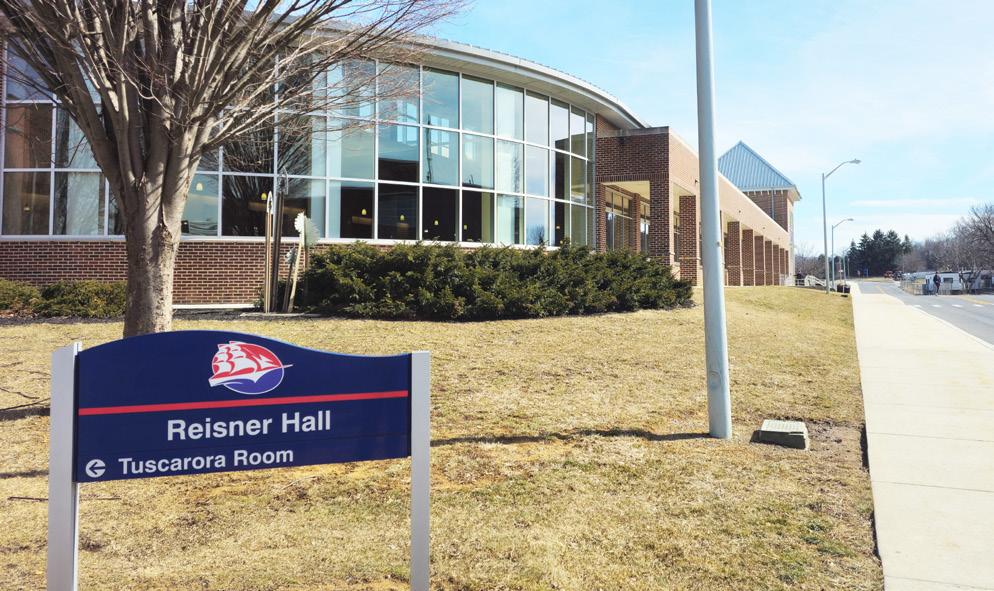
Council of Trustees approved a proposed increase to meal plan costs for the 2025-26 year.
Vice President of Enrollment Management and Marketing Megan Luft noted an uptick in enrollment compared to spring 2024 and in the number of dual enrollment students involved in SU’s ShipStart program. With hopes to further expand the university’s dual enrollment programs, Luft said her team applied for a $1 million grant through the state government for additional funding and expects to learn more later this year.
In President Charles Patterson’s report, he updated the trustees on the ongoing search for the next Chancellor of the Pennsylvania State System of Higher Education, noting a “desire to have a Chancellor in place sometime this year.” Chancellor Dan Greenstein announced his resignation last summer.
Before their postmeeting tour of the Milton Engineering Lab, the Trustees heard from several students involved in both the Engineering department and BAJA Club, an organization within the Society of Automotive Engineers that challenges students to design an offroad vehicle.
Marc DiPiano and James Rettew told the Trustees about the BAJA club’s work over the last two years, which involves “learn[ing] to master 3D modeling, develop hands-on problemsolving skills and get manufacturing experience in labs,” DiPiano said.
SU students involved with BAJA traveled to the national conference in 2023 and 2024 and plan to compete later this year in a national competition.
mittee.
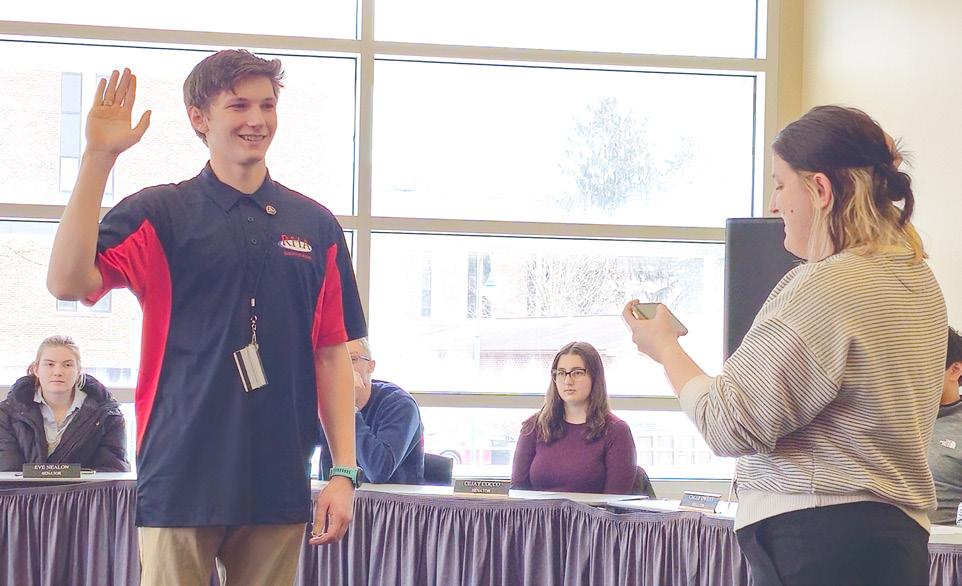
SU’s Student Government Association began its first meeting of the academic year by swearing in Residence Hall Association Senator Ayden Kurtek. He was met with many warm welcomes from numerous SGA members.
“I’m glad to see a senator in an RHA position who is so passionate about the needs of students living in residence halls on campus,” Transfer Senator Daniel McCleary said.
being done to ensure a continued bright future for our university.
Work has begun at the Franklin Science Center, and the Shippensburg University Foundation continues to find success with its very generous donors supporting students, and fundraising continues for the Kriner renovations.
There are many exciting things happening around campus. Please continue to voice your questions or concerns to me at ca6053@ship. edu, or just stop me if you see around campus.
The next public Council of Trustees meeting will be held at 2 p.m. on Friday, May 16. It truly is an honor and privilege to serve as your student trustee.
From “WORKING,” A1
Bourdeau spoke about the difference in how you are evaluated as an employee versus as a student.
“When you go into the real world, you really don’t understand that there is no letter grade for it,” Bourdeau said. “Your performance is your performance.”
Aven Bittinger, who graduated in 2020 and received a master’s degree in 2021, spoke about the stability that comes with a career. Bittinger said that as a student, he had several beater cars. “When I got this new job just two years ago, I was finally able to make some good money, and I said ‘I’m going to buy a car for my first time,” Bittinger said. “I was really thankful for that little small moment.”
On the importance of taking whatever opportunities come your way, Tyron


Following the swearing in of Kurtek, the vice presidents all presented brief reports. Vice President of Internal Affairs Katie Huston gave a few reports on behalf of members who could not attend the meeting, and she also talked about applications to graduate for seniors.
Huston plugged the International Women’s Day Celebration hosted by the Global Education Office and PAGE Center, which will take place on March 6 from 3:30-5:30 p.m. Several student groups and organizations will be participating, along with local businesses.
Huston concluded her report by speaking about the need for committee chairs in several SGA committees, particularly the Diversity and Inclusion com-
Grant spoke about his internship experience.
His first internship was in Kansas City, a 15-hour drive from his home in Pennsylvania.
“I would have never got my dream job if I didn’t take the opportunity to drive and take that internship,” Grant said. Networking is also important though.
Rashawn Johnson gave an anecdote about going to a professor’s office, where she had a rolodex full of contacts for internships. The contact she gave him led him to a meeting and then an internship.
While some panelists spoke about mentors, Malik McCall explained that at least for his career, he did not see himself as having one. “I believe that a mentor will present himself when a student is ready,” McCall said. “Maybe my goal is to
“We think that this committee is important to the campus and to representing the student body,” Huston said.
During senator reports, Multicultural Student Affairs Senator Marlon Aristy spoke about the numerous Black History Month events that both have occurred and will occur over the course of February.
Following senator reports, the Activities Programming Board and the Campus Media Board both gave reports. APB’s report included plugs for many upcoming events, such as Feb. 22’s mini golf night. The Campus Media Board gave updates on SUTV, Public Relations Student Society of America, WSYC and The Slate.
SGA President Lillian Sellers gave a report for the ADA/504 Committee and highlighted the opening of a student lounge in the Office of Accessibility Resources in Mowrey Hall.
At the end of the meeting, the SGA members voted on amending both the SGA Constitution and by-laws to include a Graduate Student Senator position. Both motions received unanimous support. Both measures will be voted on by the student body this week.
SGA meets next on March 6 at 4 p.m.
be a mentor versus to have a mentor.”
At that, both Lupton and Brown spoke up, telling McCall that they would connect him with someone. Brown, having spoken with Rouby, said she knew of someone in his field that would be perfect.
“We’re going to make that happen,” Brown said. On networking, Bourdeau argued the most important thing is to “Be you.”
“You being yourself and being your true, authentic self will put you in a different area than others because there’s only one person that’s you,” Bordeaux said. “State your name, state your credentials, but after that, be you. I got my job not because of what was just on my resume, but because of how I presented myself.”
Nayely Pena told the audience about her experience jobsearching right out of college. “I had all these flyers and little business cards from networking events, and I just started calling people.” According to Pena, these calls helped build her network and explore different fields and industries. Working through your mistakes is also an important lesson to learn, the panelists agreed. “You can work your way out of most situations,” Delacruz said. “Don’t beat yourself up too much about it.” The importance of knowing where you fit in a company was brought up by Jessica Bridges. “Wherever you go, whatever you decide to do, take time to learn your role,” Bridges said. Rouby finished off the event with a pitch for the Career Center. “Use your resources. The Career Center is here to help you.”


Politics and media have always coexisted in unique ways. During a time in which constant media evolution is prevalent, misinformation and disinformation are spread daily due to differing beliefs, controversial topics and failure to digest facts.
According to Gallup’s Yearly Institutional Trust Poll, roughly 70% of Americans expressed little to no trust in the media, as of Oct. 14, 2024. Additionally, national newspapers had mixed opinions about endorsing a presidential candidate in 2024, with The Washington Post and Los Angeles Times choosing not to endorse a candidate, whereas The New York Times and The Washington Times did. This caused a renewed discussion of political bias and distrust in the media.
fed things. Ideas, thoughts and beliefs can permeate your brain without you even realizing.
In a media environment that so often puts clicks and profits before its readers, do yourself the favor of not getting fooled by a sensationalized headline.
Find context and dig deeper than just your initial emotion. Question things that you are told and fact check. Misinformation and disinformation, as previously mentioned, are rampant today. Any scroll on social media can tell you that, but by looking beyond the shock value, you can learn and understand the full context of whatever it is that you are reading about.
During and especially after the election, it was easy to find safety within an al-
As student journalists, many of whom aim to work in national media, it is essential to prioritize accuracy — no matter where you land on the political spectrum. Not only do student journalists have a duty to spread factual information, but we also have a duty to consume it. It is crucial to stay educated about global events, as the responsibility lies within journalists’ hands.
If we ourselves are uninformed of what is happening in our communities and across the globe, the general public will suffer.
Whether a journalist or not, we all should become informationally well-rounded and read the news that upsets you. It’s important as lifelong learners to strive to take in as much news about relevant topics as possible. By doing this, it allows you to dissect news headlines that sound too good to be true or misleading and make sense of the overwhelming amount of information available.
If it sounds too good or too outlandish to be true, it probably is not. It is important to stay updated on ongoing stories, too. Looking for up-to-date information is the best way that we all can stay informed. Additionally, read beyond the headline. It sounds simple, but it is true. By letting headlines deter you from reading without actually digging deeper, it is easy to be
gorithm’s echo chamber. This was fine for a while, but eventually it became crucial to once again be open to opposing viewpoints and unbiased, realistic information. With misinformation comes fear mongering, and it can be easy to fall into a pit of despair. This is very apparent on TikTok, where creators use scary headlines as introductions to their videos, usually without any real research or cited sources. To avoid things like this, one should be aware of laws, regulations and legal processes. Essentially, know what political leaders are actually able to do, rather than what they say they will do. An easy way to stay informed is to avoid clickbait-like news altogether and stick to unbiased news websites, or even said news sources’ Instagram accounts. As much as we rely on it, TikTok, unfortunately, is almost never a reliable news source.
Without fact-checking, facts cannot be listed as such. Journalists have, or should have, a priority to give readers’ news that matters and is true.
The future of the media is up to the generation who decides to stop fake news. Truth is difficult to decipher; however, all of us doing our due diligence is the key to trust in the media.
Shippensburg University students, staff, faculty, administrators and affiliated people are welcome to submit letters to the editor for publication.
• Letters must be no more than 500 words and may not contain derogatory language or messages of hate or discrimination. The Slate may reject letters for any reason.
• Letters become property of The Slate. Letters without a name and title (affiliation to SU) will not be accepted.
• Letters should be sent to The Slate one week prior to the day of publication. Late letters may be accepted but published the next week.
The views and opinions expressed in this section are those of the writer and not of The Slate or University.
• The unsigned staff editorial, “The Slate Speaks,” represents the views and opinions of The Slate as an organization. Participating editors help shape the staff editorial.

Cultural Wars Are Nothing but a ‘Battle of Billionaires’
Matthew Scalia Opinion Editor
Politics is often like physics: “For every action, there is an equal and opposite reaction.” For more than a decade, we watched Newton’s Third Law of Motion as the political pendulum has swung first to the left, then to the right, and farther left and so on.
This began during Barack Obama’s time in office when he famously quipped, “I’ve got a pen and I’ve got a phone, and I can use that pen to sign executive orders and take executive actions that move the ball forward,” should Congress not act in a manner in which he desired. Using his power is exactly what he did.
Obama had his Department of Justice grant citizenship to migrants through the Deferred Action for Childhood Arrivals executive action. He and his party had the Affordable Care Act passed through a budget reconciliation process when it was clear it could not break the Senate filibuster.
He laid the groundwork for diversity, equity and inclusion (DEI) programs in 2011 with an executive order titled: “Establishing a Coordinated Government Initiative to Promote Diversity and Inclusion in the Federal Workforce,” which would kick off an entire industry that Republicans would later campaign against. Obama would go on to staff these executive agencies with loyal Democrats.
And so the pendulum swung, and around came Donald Trump. The first version of Trump did not quite use the pen and phone Obama left behind as much as he is now, but he and the Republicans would use some of the Democrats’ playbook. Most obvious of these was the dispensing of the Senate filibuster for judicial appointments, which the Democrats used in 2013, despite the warnings from Republicans that they would come to regret it.
Trump would go on to try to seize money for his border wall and cast aspersions against the media and “deep state.” For all the love Trump
supporters currently have for Robert F. Kennedy Jr., they seem to forget that Operation Warp Speed, which granted money and legal protections drug makers in order to produce a COVID-19 vaccine, was a Trump initiative. But, hey, do not let pesky inconsistencies get in the way of your dogma, I suppose. And oh, that pendulum, it swung again, bringing about Joe Biden. He would use his Occupational Health and Safety Administration to mandate vaccines on all workers in the United States, which, whether you are a pro-vaccine or anti, was illegal. He would, with a stroke of his pen, attempt to cancel on student loan debt. He would turbo charge the deeply unpopular DEI sector and leverage his Department of Justice to protect his son and prosecute his political opponent, pulling that pendulum back to the left like an arrow at full draw. Now that is where we live.
The opposite reaction. The agencies that existed in a corrupt cycle of serving interest groups loyal to the billionaires that fund them are
being dismantled. In their place are loyal sycophants dedicated to serving different billionaires. What does that have to do with the price of eggs in Peoria? Nothing, but you will notice a surprising lack of discussion about consumer prices, or anything that is intended to make American life more prosperous.
What you get now is the world’s richest man, Elon Musk, playing with a chainsaw on stage. You get rightwing figures throwing out Nazi salutes with alacrity at the Conservative Political Action Committee summit. You get an oligarchy actively fueling an AI revolution that will finally free them from being accountable to those annoying workers and voters.
I do not know where this all goes next. Will it swing back even harder in the opposite direction or is our system finally broken? When we were fighting over the left and the right, were we just fighting the battle of the billionaire? I do not know. I just hope that whatever happens next, it is better than this.
The Scadenfreude of Saying ‘I Told You So,’ to those Who Vote for Leopards
Ian Thompson News Editor
I would wager that just about everyone has experienced both sides of an exchange centered around the phrase “I told you so.” We are all human, and despite ample warnings from our friends, colleagues or even total strangers, we often do stupid things.
The opposite is often just as likely. Despite our best efforts to persuade someone from doing something dangerous or ill-advised, they end up stepping right on the proverbial rake.
In that moment, as “I told you so” escapes your mouth, it is so easy to feel a sense of vindication. One might even get a bit of schadenfreude — a hint of joy from the downfall of whoever ignored your advice.
As we near the halfway point of Donald Trump’s first hundred days, many are beginning to feel the effects of his second term.
Grocery prices continue to rise, despite Trump’s pledge to bring them down “on day one.” Meanwhile, consumers are getting surprised when they have to pay a tariff on their dropshipped goods.
None of this is surprising, at least not to the people
who spent months trying to explain how tariffs actually work. Despite those warnings, people who voted for Trump are still confused as to why their Shein package is being held by customs until they pay the tariff. Whether you call it comeuppance. just desserts or getting their due, it is hard not to find a morsel of entertainment in the irony of the situation.
There’s a popular community on Reddit called r/ LeopardsAteMyFace. The name is a reference to a tweet from 2015 by a user named @Cavalorn that reads “‘I never thought leopards would eat MY face,’ sobs woman voted for the Leopards Eating People’s Faces Party.”
The subreddit is full of stories of those who are facing the consequences of their support for Trump. Small business owners who have lost federal grants. People who have had their job offers rescinded. Civil servants who have been employed by the federal government for decades, only to be fired via email. Among all of this was a screenshot of a Facebook post from a former federal employee. In the post, addressed to Trump, she writes that she voted for him in the past three elec-

tions. She worked for the USDA for 16 years and was terminated by “the Doge” at 9:00 p.m. on Valentine’s Day. She tells Trump that she believes the work she does is “vital and important.” Despite her termination letter saying she was let go for “performance reasons,” she writes that all her colleagues agree that she is an important asset to the USDA’s mission in Kentucky. So, she pleads. “Each time I voted for you, it was because I knew you’d make things right and you’d fix the wrongs,” she wrote.
“I’m counting on you now to make this right too. I’m pleading with you to reinstate my employment and give me my job back. Please, Mr. President.” Your first reaction might be that gut feeling of schadenfreude. To scoff and say “I told you so.” To see this as embarrassing and pathetic. Despite all the damage Trump has caused, even to them personally, people will still believe that he is looking out for them. That he gives one ounce of thought to their struggles. I feel sorry for these people. I don’t know what it is — cognitive dissonance, sunk cost fallacy, obstinance. In the face of tangible,
material harm to their livelihoods and security, it is depressing that so many Americans still cling to such blind loyalty and faith to a man who has demonstrated in every possible way that he has always been a con man.
I hope these people have that revelation. That they can take off their partisan blinders and see the reality that they have been led astray from.
I do not know if that is possible, though. On an individual scale, maybe. But for the millions who still believe that Trump is going to be their savior, I do not know what will change their minds.
I did not want to be right. I never wanted to gloat and say “I told you so.” Millions of Americans saw the plans laid out bare, from Project 2025 to the tariff policy. They were warned, countless times, from every authority under the sun. In the end, those warnings were right on target.
I wish we had gone down the path where these people, like the rest of us, get hurt. But in the end, the adage “Play stupid games, win stupid prizes” rings true. Or to refer to a less polite idiom, we are in the “Find Out” phase.


Hayden Highlands Staff Contributor
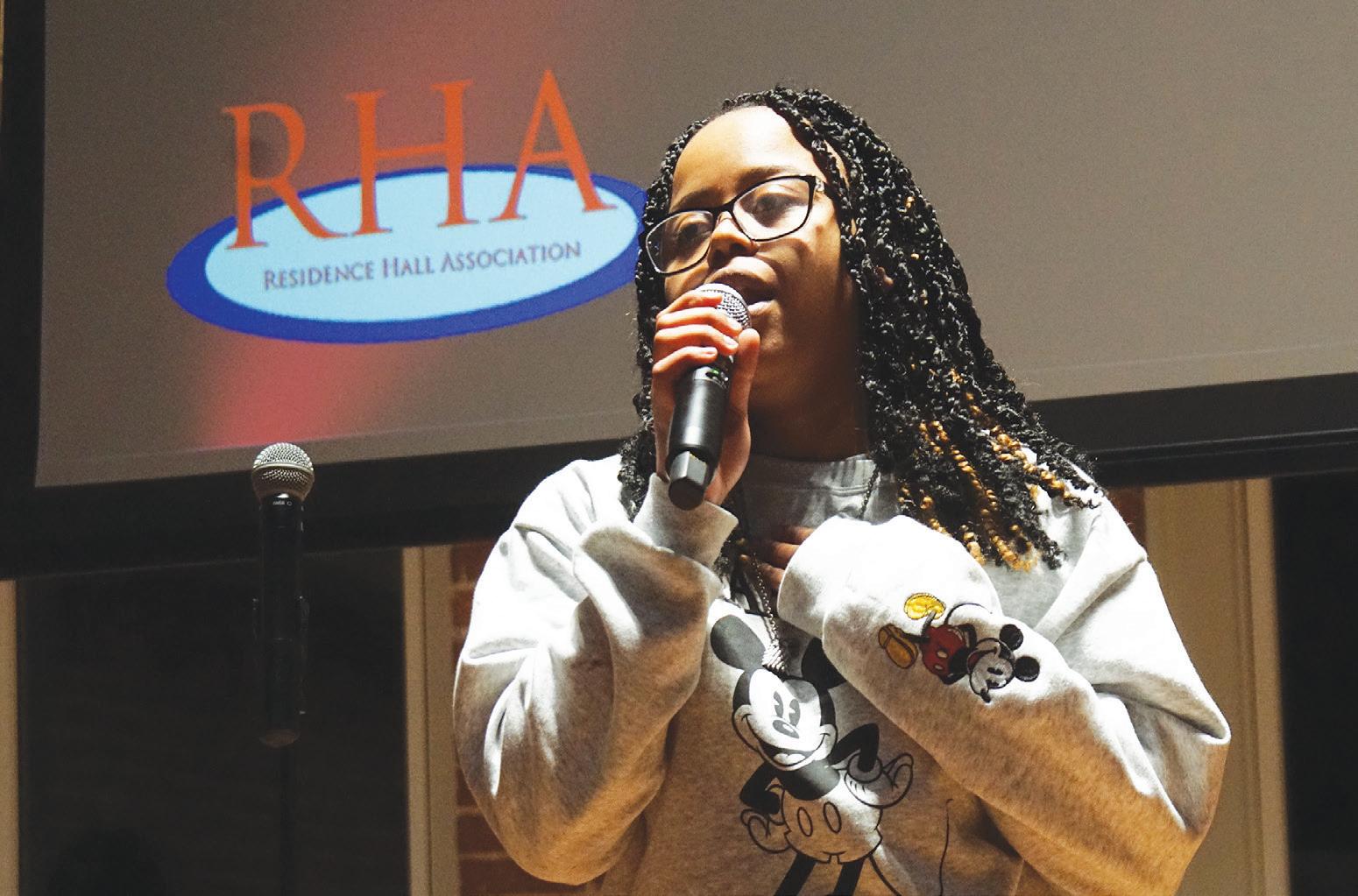
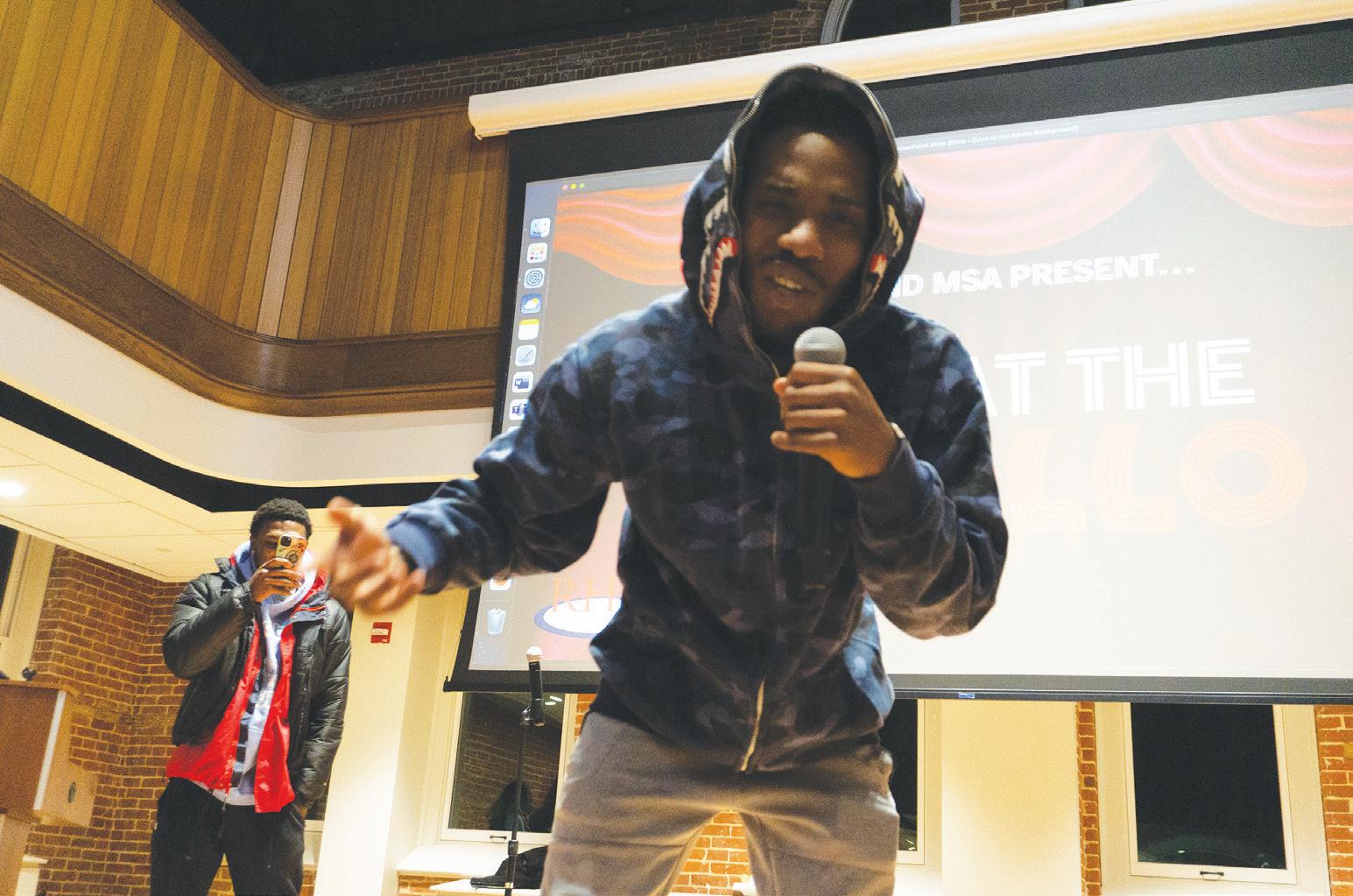
Students at Shippensburg University took center stage Thursday night for “Night at the Apollo,” an annual event celebrating the history of the legendary Apollo Theater and the artists who made their mark there.
Held in Stewart Hall on Feb. 20, the showcase featured more than 10 student performers who covered songs by icons such as Michael Jackson, Bill Withers, Tevin Campbell
and John Legend. In a nod to the Apollo’s legacy of musical diversity, the evening also included rap performances and theatrical numbers, including “Never Enough” from “The Greatest Showman.”
The event, hosted by the Residence Hall Association (RHA) and Multicultural Student Affairs (MSA), drew more than 50 students.
Attendees enjoyed the scheduled performances as well as students who volunteered to show off their musical talents. Students
went on to perform solos and duets, with one group performing “Party in the U.S.A.” by Miley Cyrus.
Beyond the music, RHA and MSA kept the energy high by giving away raffle prizes to lucky audience members. The event also featured videos from popular performances at the Apollo Theater, like Destiny’s Child in 1998 and Jay-Z in 1997.
Stewart Hall was lined with pictures of performers and entertainers who had the opportunity to showcase their talents at the Apollo
Theater.
“It was interesting to learn how much talent came out of the Apollo Theater,” one student said.
The event honored the Apollo Theater’s role in launching the careers of legends like Aretha Franklin and Lauryn Hill while giving SU students a platform to showcase their talents.


“Watch your thoughts, they become your words. Watch your words, they become your actions. Watch your actions, they become your character.”
For SU junior Marlon Aristy, those are words to live by.

Aristy’s involvement across campus is extensive. He serves as the treasurer of the Latino Student Organization (LSO), a member of Multicultural Student Affairs’ B.RO.T.H.E.R.S. Organization, a student facilitator for Building Bridges, a participant in the Reach Out Program and an MSA senator for the Student Government Association.
Despite his long list of responsibilities,
Aristy’s goal is simple: create an inclusive and supportive environment.
“LSO is like a family away from home,” Aristy


said. “If you need help, you text in the group chat and we’re going to help you. It’s just good vibes, always.”
Building Bridges is another organization close to his heart. Through this MSA program, he facilitates conversations with first-year students about race, diversity and culture shock.
“These students are going to shape the culture of Shippensburg in a few years,” Aristy said. “We want them to know that diversity isn’t just about color; it’s about experiences, backgrounds and perspectives.”
Aristy’s passion for leadership extends beyond campus. As a political science and international studies major, his political aspirations led him to an internship as the director of International Social Affairs for the Maryland Democratic Party. Through connections made in MSA and the Office of Diversity, Equity and Inclusion, Aristy secured a mentorship that introduced him to key political figures in Maryland.
“I was basically in charge of outreach, sending emails and making connections,” Aristy said. “It gave me the opportunity to sit in meetings with the mayor and the governor, which was an incredible experience.”
Despite his packed schedule, Aristy finds balance in nature. His favorite way to unwind is by taking his goldendoodle, Luna, on mountain drives and disconnecting from the world for a few hours.
“My parents hate it because there’s no signal, and my car is not exactly built for off-roading,” Aristy joked. “But it’s how I recharge.”

Aristy’s leadership is driven by his strong personal philosophy. His commitment to this mindset is evident in every aspect of his life, including guiding first-year students through their transition to college. And through the Study of the U.S Institutions program with the U.S. Department of State, Aristy had the opportunity to mentor student leaders from Europe during the summer of 2023.
“The things I did for those students are what I would want someone to do for me,” Aristy said. “I just wanted to make sure they felt welcomed and had the chance to explore.”
Aristy’s journey has not been without challenges. At one point, he felt lost, unsure of his path after transferring schools and stepping away from athletics. But through family, faith and self-reflection, he found his way.
“I realized that if I stay stuck in the past, I’ll miss out on the present,” Aristy said. “I’ve learned to focus on what I can control and to always move forward.”
As he looks ahead to his final year at SU, Aristy is weighing his next steps; whether that’s law school, graduate school or even becoming a professor one day.
But no matter where he ends up, his impact on Shippensburg University will be lasting.


Community CARES held its Coldest Night of the Year walk in downtown Shippensburg on Feb. 22.
Community CARES is a nonprofit organization that provides help and resources to those experiencing housing insecurities.
The Coldest Night of the Year walk is an annual fundraising event in support of local charities, raising money for those experiencing hurt, hunger and homelessness.
Among those helping run the event was Sherry Collins, volunteer coordinator for Community CARES, who shared some thoughts about the meaning of the walk for the community.
“This event means a lot to me because we are bringing awareness to homelessness,” Collins said. “We aim to give people some hope, rest and reassurance in this really cold season.”
This is the first year the walk was held in Shippensburg, but it is also held in numerous other states, and elsewhere in Pennsylvania, including Carlisle. There were around 50 particpants who walked the route and a dozen volunteers to help make sure the event ran smoothly
The walkers walked their one-quarter mile route along King, Queen and Burd streets downtown, with the volunteers cheering them on as they made their way to the finish line. Upon completing the walk, the volunteers led the walkers inside to enjoy a warm meal and converse with one another.
Reagan Gardenhour Managing Editor
Spring is returning soon, and I am sure that we are all very excited about the upcoming warmth. The cold seasons bring several exciting moments, such as Thanksgiving, Christmas, New Year’s Eve and many others, but after those moments are over, the cold becomes brutal.
I am the type of person who always feels cold regardless of what time of year it is. Even in the summer, I find myself wearing sweaters or jeans. Rarely do I wear shorts, but most people are very fond of the ease that shorts bring. Since the spring seasons are on their way, I wanted to talk about flowers. However, I want to mix those flowers in with the idea of fashion. Fashion is constantly evolving, and in this way, it is also blooming. Flowers are a beautiful way to appreciate what’s in front of us, and so is fashion. It tells a story that, sometimes, cannot be told with words.
Some of my favorite flowers that bloom in the springtime are tulips, peonies and daffodils. They grow with a range of sizes, colors and appearances, just like each person. We are all

different and beautiful in our own ways. With that being said, let’s discuss how our outfits can be inspired by such gorgeous additions to our planet.
Tulips
Tulips are a flower with rounded petals and are usually narrower. Their stems are a bright green, and their petals can be yellow, orange, pink, red, white or purple. My personal favorite color of tulips is pink, so I am going to base the outfit around the color pink.
While envisioning a tulipbased outfit, I am picturing the color combination of both baby pink and sage green. These colors mesh extremely well, and they offer a coquette aesthetic that can be admirable for spring.
Since March, April and May bring warmth and plenty of sunshine to our lives, I am immediately thinking of the opportunity to have picnics with loved ones.
To further implement this idea, the tulip outfit could include a sage green T-shirt with baby pink gingham shorts. Gingham is picnic plaid. This could also be paired with a red pair of thin sunglasses and a matching red tote bag to tie in the two colors even more.


Peonies
Peonies are another springtime flower, primarily a darker pink, and they are very intricate. Peonies feel classy to me, so I would expect to visualize a more elegant look based on the inspiration.
Many restaurants open their outdoor seating during warmer months, so a peonyinspired outfit screams maxi dress to me. The maxi dress would be flowy, as the petals on a peony are frilly, and it would be a dark pink with a floral design. Maxi dresses are elegant, but they are also casual. They are able to be worn walking around downtown, sitting at a restaurant or purchasing chocolates from a store.
With a long, floral dress, I would wear ballet flats or a sandal with minimal designs. It finishes the outfit, but it does not take away from the moment — the dress. To further the look, I would add a purse that matches the shoes as well as possible to complete the “sandwich method,” which usually is between a shirt and shoes; however, the purse is acting as the shirt in this scenario.
Daffodils
Daffodils are pretty flowers that range between yellow or white, but they always have a yellow center. They are dainty flowers, but their petals are wide. Their stems and leaves are a dark green, and the pairing of white, dark green and a bit of a light yellow would make for
a perfect spring outfit.
For this outfit, I am picturing a graphic tee that has a design of your choice that accompanies the colors white and light yellow. For me, I could see myself finding a graphic tee of the movie “Call Me by Your Name.” The cover of the movie is blue, yellow and white, so I would wear loose blue jeans and tuck the shirt. For accessories, I could wear a dark green purse with dark green sunglasses, and if I am feeling up to it, I could even tie my hair into a French twist with a dark green clawclip.
Basing your outfits on objects that you love is a fun way to imagine yourself in a different light. I chose flowers because we are entering our spring months, but I also just adore flowers. You could do this exact method with other things, such as fruit, vinyls, books, songs or pastries.
Instead of feeling pressure to always look a certain way or follow a trend, dress your own way that shows others who you are and what you love. Fashion is fun; it should not ever feel like a chore. Be as casual or sophisticated as possible, but — whatever you do — always stay true to yourself.
No flower grows the same way. No song is written with the same lyrics. No movie has the same plot. No fruit has the same flavor. No person like you can be compared to someone else. Keep on blooming.
So far this year, The Coldest Night of the Year walk has raised over $5,000 in Shippensburg alone and Community CARES has been shown immense amounts of support from those involved in helping fund their cause.

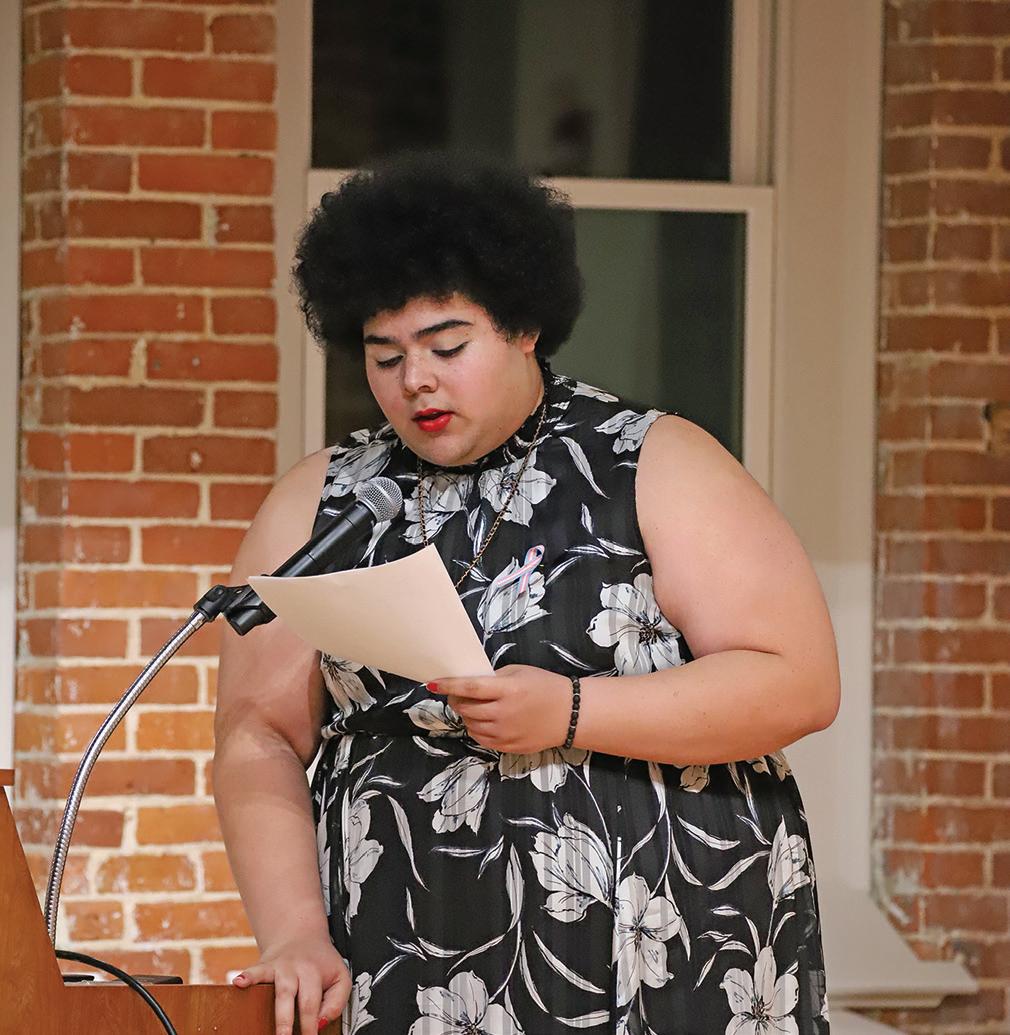
Despite the windy, cold night, Stewart Hall was warm with love on Feb. 13 during the Self-Love Soirée Open Mic, jointly hosted by The Reflector and the PAGE Center.
The event drew a crowd of students and faculty alike with everyone being encouraged to sign up to read, sing or even just talk about their day.
“There’s so much power in this room right now… you should sing us a song, you should do some poetry, you should, I don’t know, tell us about your day. There’s power in that. We made it through another week together.” Jenny Russell, the editor-in-chief of The
Reflector, said. There was indeed power in the air. Students delivered both original and existing poems of love of all kinds: romance, self-love, the love of family and the rediscovery of oneself. These pieces ranged from lighthearted, gentle, nostalgic and even funny as some students poked fun at Valentine’s Day through their poems. No matter the art, the sense of love and belonging brought warmth to the chilly night.
The Reflector will be hosting its Post-Love Open Mic on Thursday, Feb. 27 at 7 p.m. in Stewart Hall. The poetry publication Spawning Pool about power is also open for submissions until Feb. 27.



Abbygale Hockenberry
A&E Editor
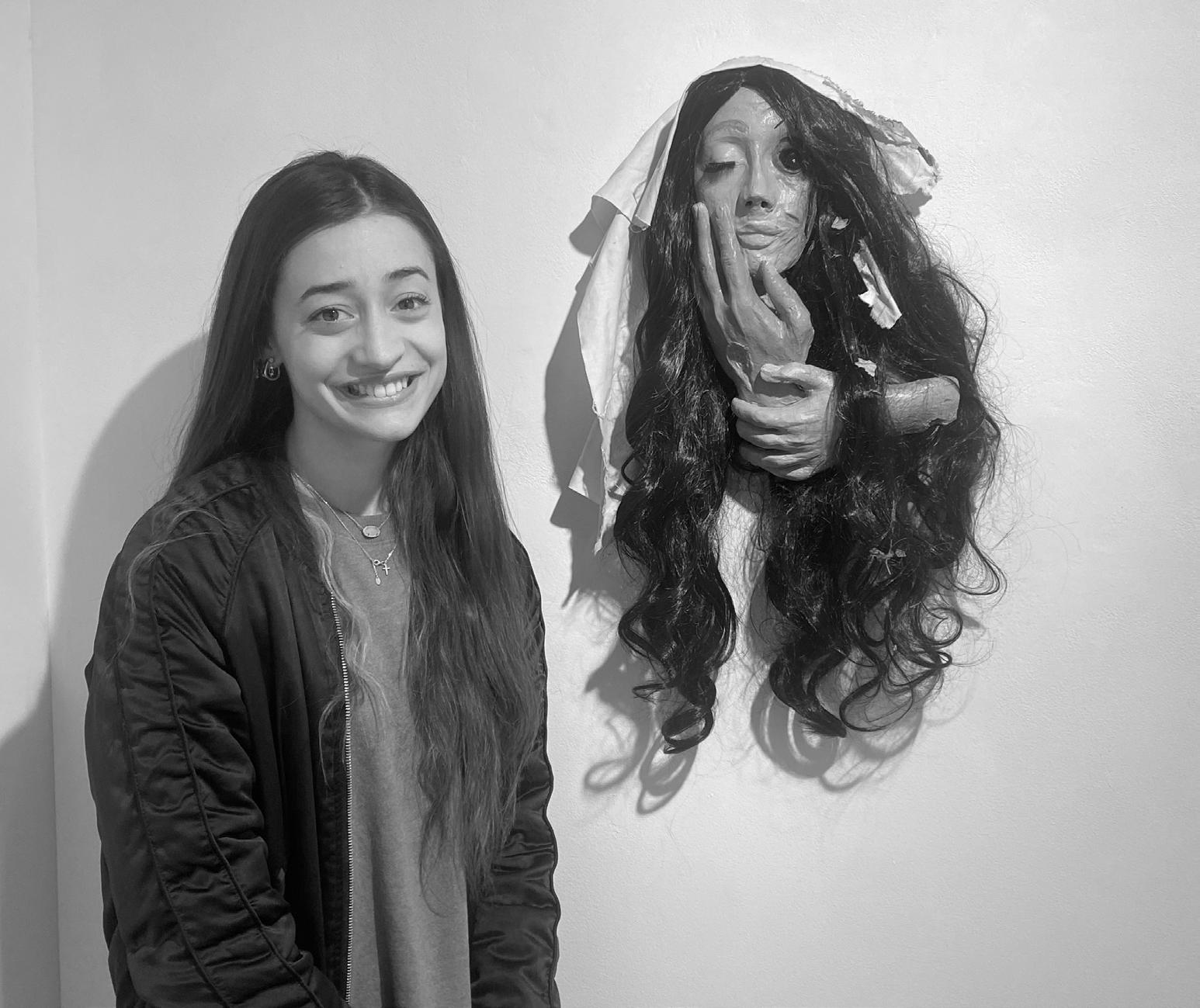
Alyssa Sanders, a senior art education major, takes you onto a journey with her exhibit “Exploring Art” in the Brindle Gallery. Sanders’ exhibit features eight pieces of art, each with a different story and style to them.
Sanders’ favorite medium is ceramics, even though it is the most time consuming. Two of her pieces in the exhibit, “Jar of Clay” and “Mary Magdalene,” took the longest to make.
“Mary Magdalene” holds a reference to the Bible and how she was possessed by seven demons, until she was saved by Jesus’ touch.
“That’s why half of her face looks like it’s
from Feb. 17–27.
being possessed or overtaken by the evil in this world, and then one is obviously Christ’s hands touching her and casting out those demons,” Sanders said. Sanders’ love for art began when she was in kindergarten. Her art teacher during this time, Mrs. DeStefano, had a way of bringing that passion to her students. Sanders felt connected through the lessons and ever since then, it just blossomed from there. Sanders even got to go back to her classroom and job shadow, which she described it as a “full circle moment.” Her painting “Societal Influences” is grayscale, with a singular ribbon of red coming out of a woman’s mouth who is reading a newspaper. This piece feels closest

to Sanders because it is only one out of a series of paintings that she will be submitting into the Kauffman Gallery for the Senior Art Exhibit. The theme reflects religious oppression by authority figures, and the red is symbolizing the oppression. In “Societal Influences” her goal was to highlight how society plays an impact on people’s beliefs and being told what to think.
Sanders had a beautiful way of depicting what art means to her. It is a form of expression, yet a way to reflect personal beliefs. She believes she was put on this Earth to produce art, and by doing that it is her way of giving back to God.
“I credit all of my artistic talent from him and use it to point it back to him and his

Courtesy of Wikimedia Commons
Tate McRae’s highly anticipated album released on Feb. 21. McRae has also announced another world tour.
Abbygale Hockenberry
A&E Editor
“Dear God,” Tate McRae’s third studio album, came out on Friday with 15 new tracks to dance to.
“So Close to What” opens with “Miss possessive,” where Sydney Sweeney starts the track with a singular line, “No, seriously, get your hands off my man.” McRae sings to this catchy pop beat and repeatedly says, “Keep your eyes off him.” It is the most ‘stuck in your head’ songs off this album, competing with “Revolving door.” McRae released a music video of “Revolving door” a few hours before the album release to get her fans excited. Jaw dropped, might I say. “Revolving door” is so upbeat, yet the lyrics are sad. The music video has a unique way of tying this all together. McRae is first talking about how she thinks she is finally good after this relationship, but as the song moves, she realizes she is not OK. She
sings, “I need a minute” over and over at the end of the song. In the music video, McRae was shown crying on the floor at the end. This was so powerful and added depth to the song.
“bloodonmyhands,” featuring Flo Milli, comes right after “Revolving door,” and packs a punch. It is almost like McRae is laughing at her ex through the words. Almost like she is shoving it in his face that she has moved on and is happier. We see that happiness reflected in the most romantic song off the album, “I know love” featuring her boyfriend, The Kid LAROI. The pair making a song together did not come as a surprise since they have performed together once, and the reaction from the fans that followed. Their voices blend well together. The lyrics to “Purple lace bra” and “Greenlight” are crafted cleverly. In “Purple lace bra,” the mellowness in
her voice just sounds like she is disappointed and upset at this guy only wanting her for one thing. In “Greenlight,” she expresses that this relationship took so much out of her and that she lost herself in the process. She was trying to be someone else so he would like her more.
“Maybe it’s a green light, but I can’t go,” brings this song together and leaves you thinking about it, much like how she is feeling.
McRae has a strength of delivering an attentiongetting chorus. This strength is shown in “Signs.” “For “You should know me better,” / see the signs / Should’ve have to tell you or / whatever, read my mind, oh.” She often says the opposite of what she is feeling, and the other person should pick up on that and know the signs. The concept and meaning to it resonates. This chorus is special like “2 hands,” where it seems like the song is over, but then she brings it back.
The track that is receiving the most attention is “Sports car,” surpassing “Greedy” on Spotify. “Sports car” is my personal favorite off the album, because of the whispering she does in the chorus. The bass adds a little danger to the song that makes it so sexy and addictive, then there is also a sports car.
“So Close to What” comes to an end with “Nostalgia,” the slowest song on the album. On her other albums, she also ended those with slow, lullaby-like melodies. McRae’s first album, “i used to think i could fly,” comprised of a lot of sad songs that fans of this era have come to identify as McRae speaking. The more pop induced songs we see on “Think Later” is her alter ego she calls Tatianna. After listening to “So Close To What,” it is obvious that Tatianna has taken over a lot of these tracks. If you are a fan of pop, you will be a fan of “So Close to What.”
glory,” Sanders said.
The creativity flows within the room and in your bones. “Mobile” is a piece that was made up from an assignment. Sanders was given a deer bone and a chunk of balsa wood and tasked with carving a replica. She likes to make most of her pieces on the uplifting side, but she found it hard to do with a bone. She added sea glass and wire to make it look like a baby mobile.
Sanders draws inspiration through listening to Christian music and gets ideas from words that jump out at her. After graduation, Sanders plans to pursue teaching the arts to high school students. Her artwork
“Exploring Art” is worth exploring and will be in the Brindle Gallery until Feb. 27





Mason Flowers Asst. Sports Editor
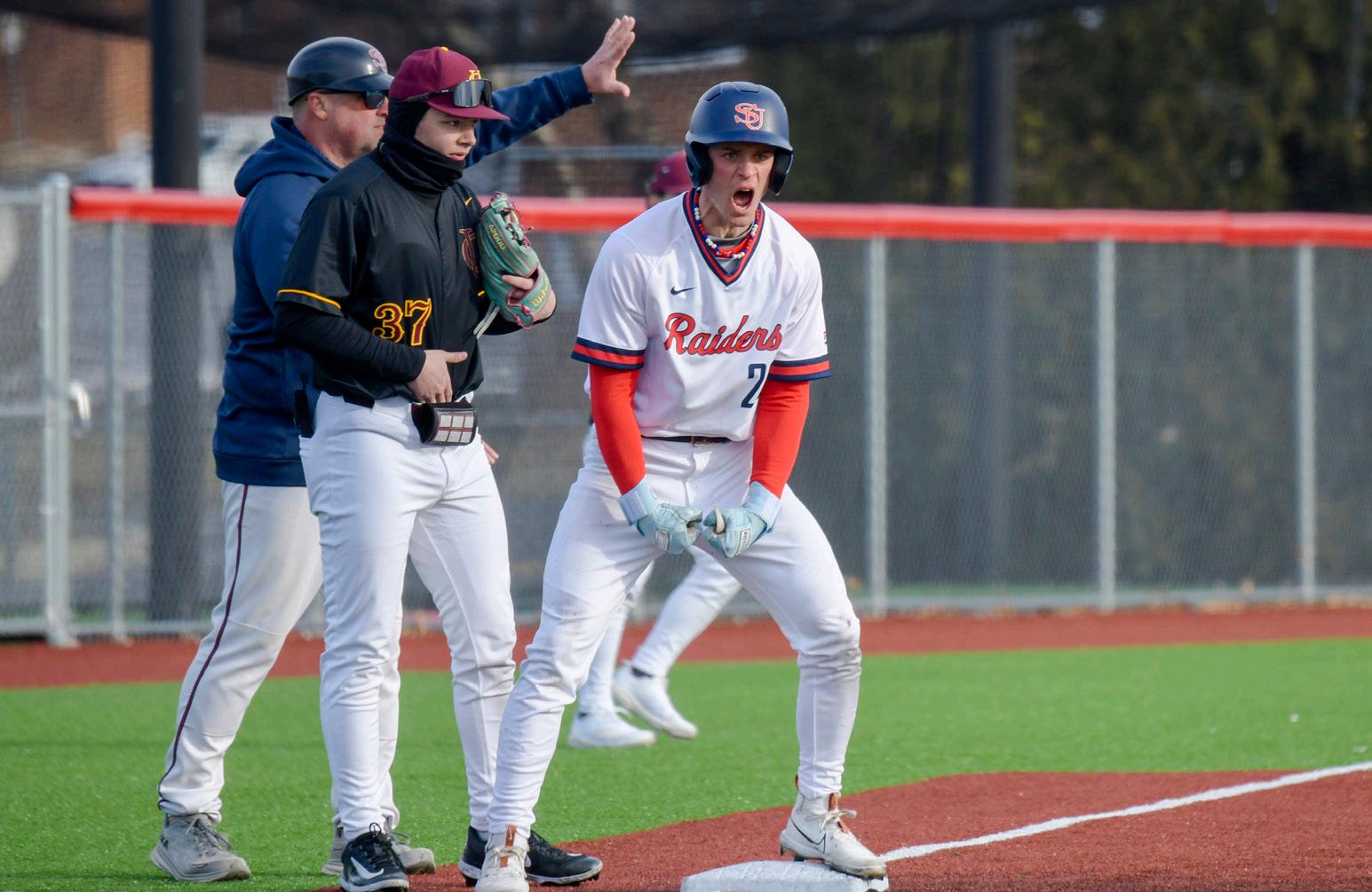
Shippensburg University’s baseball team won a pair of home games this past weekend against Gannon, taking both Saturday games 5-4 and 8-7 before falling 5-4 on Sunday. The results put the Raiders at 4-3 on the young season.
The first game of the series was a seven-inning contest on Saturday, where SU came from behind for a 5-4 victory. The Raiders scored one run in each of the first three innings, with the game being tied at 3-3 after the third.
The tie held until the seventh, with Gannon taking the lead on an RBI single in the top half of the frame. The Shippensburg offense responded. Freshman Mason Morris tied the game with a single before freshman Kyle Ausgotharp hit a walk-off single to center field, giving SU the win.
Ausgotharp and Morris each had two hits in the game, with Ausgotharp driving in a pair of runs. Junior
AJ Wenrich had the other RBI for the Raiders. Graduate Jaxon Dalena started on the mound for SU, going five innings, allowing three runs on seven hits and six walks, striking out five. Freshman Thomas Davenport got the win in relief, pitching the last two innings.
Game 2 was scheduled for nine innings, with Gannon jumping ahead early with three runs in the first. SU responded and tied the game after five innings with the help of two RBI singles from Wenrich.
Gannon rebounded to take a 7-3 lead in the eighth, but the Raiders would not go down easily. Senior Carter Hinds provided an RBI single with the bases loaded to make it 7-4, before senior Gio Calamia cleared the bases with a three-run triple to tie the game at seven. The game remained tied into extras, and it seemed likely that the game would only go 10 innings at most due to loss of daylight. Wenrich was the hero in the 10th, singling down the left field
line to score freshman Will Oates and give SU an 8-7 win to cap off a frigid day.
The walk-off was Wenrich’s fifth single of the day and third RBI. He was the first Raider to have a five-hit game since Cash Gladfelter in 2017. Calamia went 3-for6 with three RBIs, with Oates picking up three hits as well.
Junior J.T. Weaver went 5.1 innings in his start, allowing six runs on nine hits and two walks, striking out five. Junior Jack Robinson got the win, pitching two scoreless innings in relief.
SU head coach Matt Jones was proud of his bullpen in the doubleheader. “We had some interesting outings down south when we were trying to figure it out, but they’ve been lockdown ever since,” Jones said. “We have a bunch of guys that we have confidence in.”
The final game of the series saw Gannon take the lead in the second inning, but SU responded immediately with a solo home run from freshman Thomas Cano-Piszel to tie the game 1-1.
Gannon pulled ahead, taking a 5-1 lead in the fifth. The Raiders chipped away at the deficit, with Oates driving home a run in the fifth and junior Mike Heckman hitting a sacrifice fly in the eighth.
Shippensburg trailed by two entering the bottom of the ninth but got a two-out rally going with Oates hitting an RBI double to make it 5-4.
Gannon pitcher Zach Tkatch rebounded, getting the final out for the away win.
Hinds, Wenrich, Cano-Piszel and Oates each had two hits in the game, with Morris and Heckman earning RBIs. Redshirt senior Cam Goble took the loss for the Raiders, going 3.2 innings in his start, allowing three runs
for three games.
The series begins Friday at 2 p.m., followed by a Saturday doubleheader beginning at noon at Fairchild Field.
Shippensburg University’s swimming teams competed at the Graham Aquatic Center last week for the Pennsylvania State Athletic Conference Championships. The men’s team placed sixth and the women’s team placed ninth.
For the second year in a row, the men’s team had its entire 15-man squad qualify and compete. The class breakdown was one graduate student, three seniors, three juniors, five sophomores and three freshmen.
The women’s team had 17 swimmers travel and compete. The class breakdown was one graduate student, three seniors, four juniors, four sophomores and five freshmen.
Day 1 started off well for the Raiders, with five scoring performances from the men’s team and two podium finish-
es from the women’s team.
Junior Kevin Noldy achieved a lifetime best of 21.09 seconds in the 50-yard freestyle to earn ninth overall. He joined SU’s record book as the fifth all-time in that event. Sophomore Robbie Ferlick also competed in the 50-yard freestyle and finished 12th overall.
In the 1,000-yard freestyle, graduate JC Greenwood and junior Carter Hawkes finished 14th and 16th, respectively.
The last scoring performance for the men’s team came from the quartet of Ferlick, sophomore Mason Koeth, senior David Johnson and senior Nathan VanNatter.
On the women’s side, graduate Laurel Gingrich had an electric start to the meet with a third-place finish in the 50-yard freestyle.
Freshman Olivia Carver swam her way to sixth overall in the 1,000-yard freestyle
and earned her spot in the record book as SU’s seventh all-time best in that event.
Sophomore Michelle Kubiak also had a scoring performance on Day 1, scoring 20th overall in the 200yard IM.
Day 2 kept the Raiders momentum with the men grabbing two scoring performances and the women earning four individual scoring performances.
Freshman Josh Einolf had an impressive outing in the 100-yard butterfly. He crushed his times from the season and in the finals, he became the second Raider to ever break 50 seconds in the event. He ended up winning the ‘B’ final and placed ninth overall.
Senior David Johnson finished 16th overall in the ‘B’ final of the 400-yard IM at 4:15.70
Gingrich continued to stun with a fourth-place finish in the 100-yard butterfly final.

With a time of 57.21, she moved to fourth all-time in school history.
In the 400-yard IM, Carver, Kubiak, and senior Gracie Wetzel earned 12th, 15th, and 20th place, respectively. Carver and Kubiak achieved lifetime bests with Carver swimming a 4:41.86 and Kubiak swimming a 4:45.74.
Moving to Day 3, both teams shattered school records.
On the men’s side, the quartet of Noldy, Ferlick, sophomore Connor Ludwig and VanNatter earned a time of 1:22.80 to break the 35-year-old school record for the 200 free relay.
Earlier that day, another quartet of Koeth, freshman Kiran George, Einolf and Ferlick nearly broke another school record for the 200yard medley relay, but they were 0.3 seconds away. They were able to take fourth overall at 1:32.69.
On the women’s side,
Gingrich, taking her fourth run at the 50-yard freestyle, broke the school record at 23.22 seconds.
The final day marked the final competition for Greenwood, VanNatter, Johnson, Zaidian Van Orden, Emily Newton, Lauren Croll and Wetzel.
Hawkes and Greenwood competed in the early morning and earned scoring performances in the 1,650-yard freestyle. Hawks delivered a lifetime best and grabbed 133rd place and Greenwood followed close behind in 14th place.
VanNatter swam two lifetime bests in the 100-yard freestyle. He etched his name into ninth place in school history.
The Koeth, George, Einolf and Ferlick quartet who reached for the 200-yard medley relay school record on Wednesday achieved their goal by Thursday night. They broke a 1:32.16 to shatter the school record.
Carver found her way to ninth of SU’s all-time with a lifetime best in 1,650-yard freestyle. It was the best finish by a Raider in that event in over a decade.
Sitkowski also performed well in the 1,650-yard freestyle, achieving a lifetime best and scoring performance.
Croll and Wetzel completed their careers with lifetime bests in the 200-yard breaststroke. Croll finished 13th and Wetzel followed in 14th. Gingrich broke another school record in the 100yard freestyle. She posted an All-PSAC second place finish with a 51.14-second swim.
She hopes to extend her career as the only Raider with NCAA ‘B’ cut this season. She awaits the announcement of the NCAA Championships qualifiers next week.
The men’s team ends their season 4-3 and the women’s team end their season 3-5.

Shippensburg University´s tennis team started its road trip successfully with a 5-2 win over D’Youville on Friday but ended with a 5-2 loss to Daemen on Saturday. Both games took place indoors in the Miller Tennis Center in Williamsville, New York.
Against D’Youville on Friday, the Raiders won the doubles point and claimed three of the five singles decisions and accepted a fourth singles victory by forfeit.
At doubles, D’Youville won the No. 1 doubles match, but had to forfeit at No. 3 doubles. The winner of the No.2 doubles match would therefore notch the doubles point. Junior Corinne Markovich and freshman Jade Miller teamed up for a dominating 6-1 win to claim the doubles point for SU.
Sophomore Rachel Gallagher won at
No. 4 singles 6-0, 6-0. Senior Brooklyn
Rupert followed suit, winning her No. 5 singles match 6-0, 6-0 as well.
Gallagher and Rupert´s victories ensured the Raiders’ victory, with sophomore Ava Kalist accepting the victory at No. 6 singles.
Miller played in the No. 3 singles match that went into the tiebreaker. She dropped the first set 7-6 (7-5) but came back and won the second set 6-1.
Supported by her teammates, Miller won the tiebreaker 10-5 and claimed the match victory.
At No. 1 singles, Markovich won four games.
Senior Yasmin De Meyer made her debut for the SU tennis team at No. 2 singles. Over the last three years, De Meyer was a part of the successful SU field hockey team.
On Saturday afternoon, the Raiders were only able to win two singles matches against Daemen.
Unable to win a doubles match against Daemen, the Raiders still put up a good fight at No. 1 and No. 2 doubles. Markovich and Miller showed another strong performance, forcing their No. 2 doubles into a tiebreaker, but ultimately lost 7-6 (7-5). Rupert and De Meyer won four games at No. 1 doubles.
After losing the first set at No. 5 singles, Rupert rallied and claimed the second set 6-2.
In the match-winning tiebreaker Rupert stayed in control and won 10-6.
Kalist also lost the first set at No. 6 singles 6-4 but came back to claim the second set 6-4 and the tiebreaker 10-7.
Miller won four games at No. 3 singles.
The Raiders will go on another road trip next weekend to play three matches in three days. They will face Bowie State on Friday, Virginia Wesleyan on Saturday and Norfolk State on Sunday.
Shippensburg University’s women’s basketball team suffered a tough comeback from Kutztown on Wednesday night after leading for three quarters. The Raiders’ record moves to 8-17 overall.
The Golden Bears were the first to put points on the board. Their small lead on the Raiders did not last, however.
SU kept a steady seven-point lead over KU in the second quarter and expanded it to a 15-point lead in the third.
Despite the Raiders strong efforts, Kutztown scored 34 points in the fourth quarter to earn a comeback victory.
Kutztown ultimately overcame Shippensburg, 76-70.
Senior point guard Taja Colbert led scoring with 22 points and collected a career-high matching seven assists.
Senior Abbie Miller earned 18 points on six-of-12 shooting and sophomore Bella Chimenti finished with 12 points and five rebounds.
Junior Makayla Foddrell was a force under the basket with a team-high eight rebounds.
As a squad, SU shot a season-high matching 50% from three-point range and outscored KU in the paint 36-24.
The Raiders will look to end their regular season on a high note next week. They will travel to Shepherd on Wednesday and finish at home against Mansfield on Saturday.
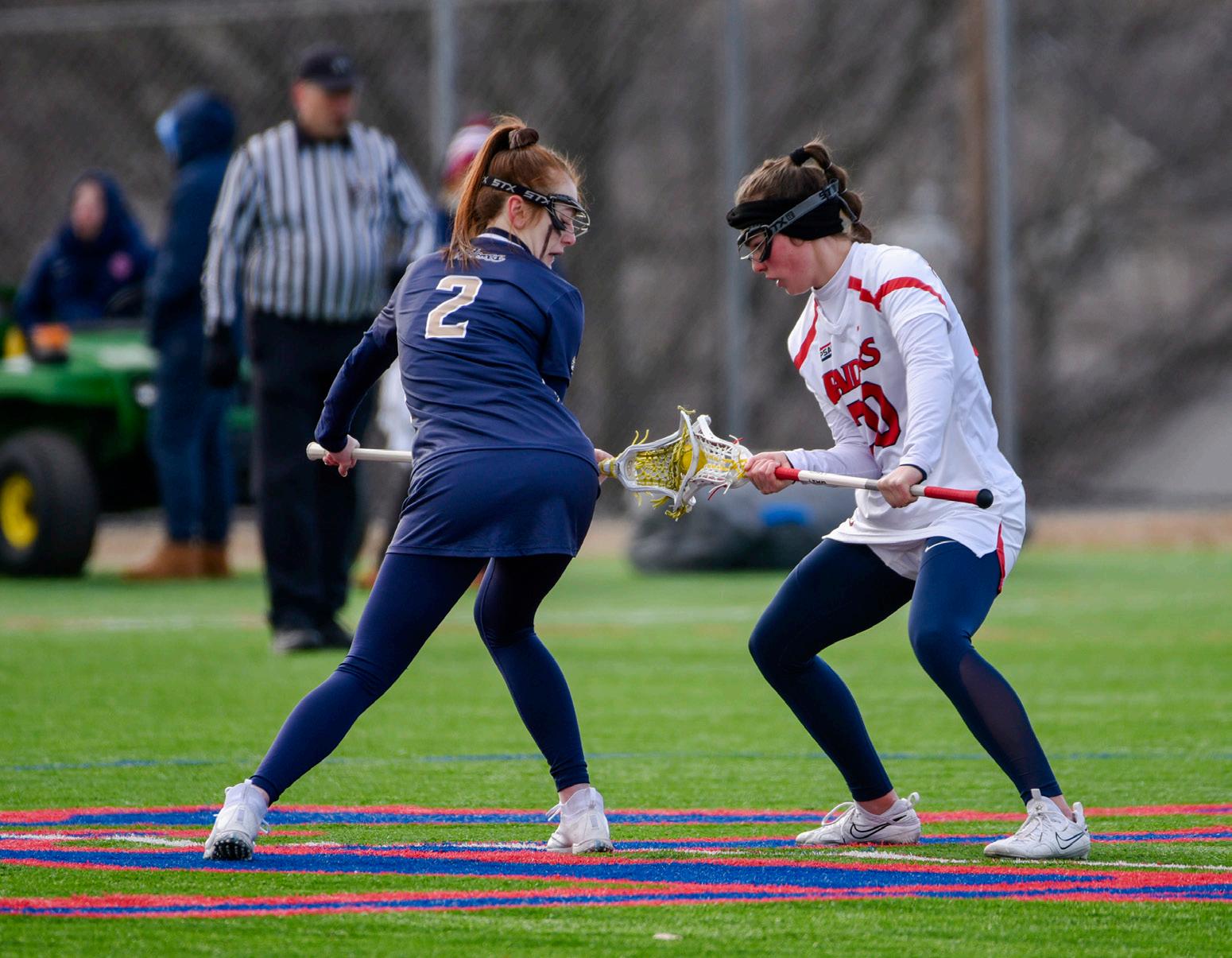
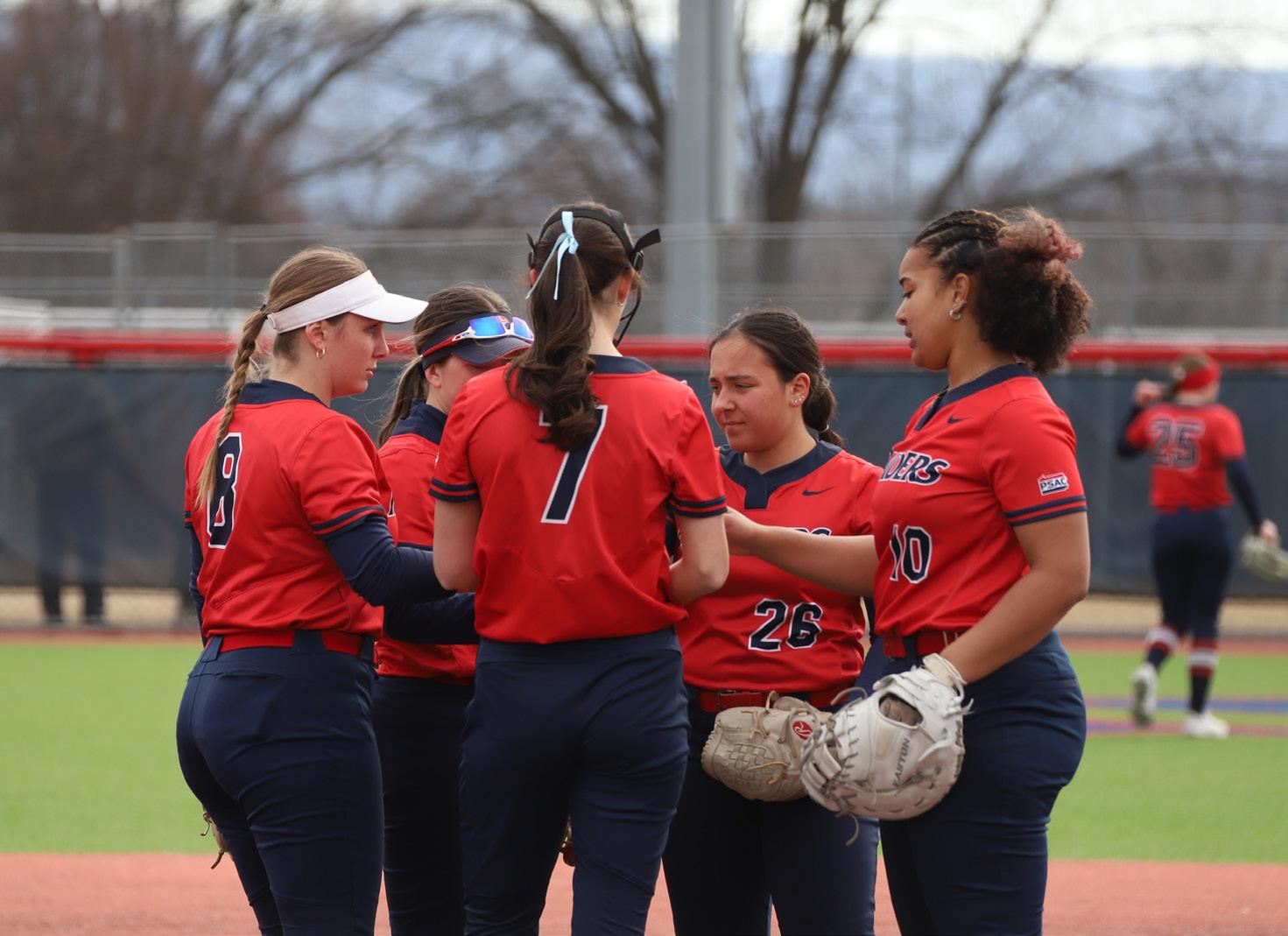
Shippensburg University’s lacrosse team had two home games last week, one on Wednesday and one on Saturday. On Wednesday, they fell to Shepherd 9-8 in their season-opening conference matchup.
On Saturday, they hosted Wilmington and won the match 13-8. This upcoming Wednesday, lacrosse will host Georgian Court at 3 p.m.
The Raiders’ softball team hosted Slippery Rock for a doubleheader on Sunday. After losing the first game of the day 5-4, the Raiders rallied and came back with a 9-1 victory in game two to split the doubleheader. The team will host Pace for a doubleheader on Saturday.