




Evan Dillow News Editor
The Shippensburg University Sociology and Anthropology Department will undergo a major change following the spring 2026 semester as the only professor of anthropology, Karl Lorenz, will be retiring after a 32-year career at SU.
Following Lorenz’s retirement, the remaining seven courses offered for the anthropology minor will be placed in moratorium until new anthropology professors are hired.
Lorenz reflected on his career at Shippensburg University, the importance of the anthropology program and the impact that will result from the program being suspended.
At SU, anthropology is offered as a minor under the conjoined Sociology and Anthropology Department.
Lorenz recalled asking the university administration for approval in hiring a fourth full-time anthropology professor in the mid-1990s.
Had they been able to do so, the department would have hired a biological anthropology professor, who along with two cultural anthropology professors and an archaeology professor would have covered three of the four subdisciplines of anthropology.
According to Lorenz, anthropology could not be offered as a major as the university did not approve of hiring a new anthropology professor. Over time, faculty retired, and their positions were not filled by new professors.
“Because the administration has every step of the way not replaced those positions with an anthropologist, our program has gotten smaller and smaller because we can only offer fewer and fewer courses,” he said. “Even though three courses are offered in the gen-ed program.”
Currently, there are seven offered

courses in the anthropology program at SU. The three required core courses for anthropology minors are Great Discoveries in Archaeology, Cultural Anthropology and Physical Anthropology. Additionally, the program includes Introduction to Archaeology, Ancient Americans, North American Indians and Aztec and Maya Archaeology.
According to Lorenz, the immediate future of the program is not optimistic, as opportunities to replace positions have been repeatedly rejected.
“There is no future. The future would be to see it taken out of moratorium. The future would be to see full-time anthropology tenure-track professors hired here. The future would be to see anthropology courses offered again,” he said.
For current anthropology minors, Lorenz suggested that they will have to enroll in online anthropology courses through other universities like West Chester or Millersville following his retirement. These courses can then be transferred into Shippensburg as free elective credits.
What the government shutdown could mean for student financial aid
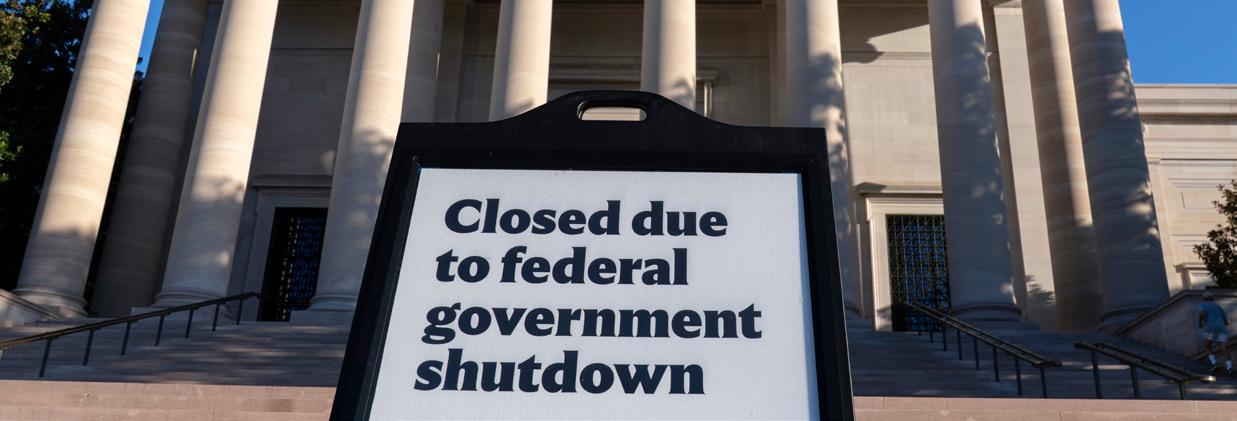
sign that reads “Closed due to federal government shutdown,” is seen outside of the National Gallery of Art on the 6th day of the government shutdown, in Washington.
Behr Staff Contributor
The U.S. government has shut down for the first time since Dec. 2018 during Trump’s first term in office. The current shutdown began on Wednesday, Oct. 1.
The government shutdown in Dec. 2018 lasted 35 days. Many Americans saw the effect on their lives as social safety nets and government services were left unavailable.
Government shutdowns have not historically lasted over a month like the most recent example, with 12 of the 15 shutdowns since 1980 lasting five days or less according to the United States House of Representatives Archives.
According to political science Professor Lonce Bailey, the following are effects that could be felt by students on campus.
“In the short-term most people won’t feel anything, if they do it is because they get some sort of regular money from the federal government like the military or ROTC students on campus,” Bailey said.
When asked about what could happen in the case of a longer shutdown, Bailey said, “A mediumor long-term shutdown will be much more painful for students with parents who work in the federal government as they will be asked to work without pay. Certainly, long term, you may see disturbances to student loans and Pel Grant disbursements.”
The possibility of the government returning from shutdown seems to be halted now as both Republicans and Democrats seem to be refusing to budge on their desired outcome.
The impact will not just be felt for anthropology minors. Many other programs at Shippensburg offer anthropology general education credits. The list of programs includes Peace Corps prep, the ethnic studies minor, the international studies major and the sociology major.
“Sadly, it’s about budget and numbers, and the big programs attract more students and fill more classes than the small programs,” Lorenz said, speaking on what programs are prioritized at Shippensburg University. “Small programs wither on the vine because they aren’t supported. If you don’t support us, how can we grow?”
As the anthropology minor program has grown smaller, so has its student body. According to Lorenz, there are about 10 students currently enrolled with an anthropology minor. He recalled that when there were three professors, the program served between 40 and 50 anthropology minors every year.
Read the full story at theslateonline.com.


through history where it happened
University.
History was shown in a different lens during Peter Miele’s “History Where it Happened” lecture at Stewart Hall on Sept. 30.
The discussion revolved around “power of place” and how it can be used to uncover what and how ordinary people thought about the world. This idea can be used to learn more about everyday life, not just the major parts of the world’s history.
Miele noted that being somewhere is not a substitute for doing research, but rather it can inform and inspire different questions and conclusions. That is the impact the “power of place” can have when delving into an area’s history.
Miele said that there is a “perspective and feeling that you can only get by standing where historical figures stood.”
Miele knew he wanted to be a historian since visiting the Lincoln Memorial in February 1998. Years later he studied at Shippensburg University, and Miele talked about “how influential the Applied History Program has been in public history in Central Pennsylvania.”
The program was put on by the Pennsylvania State for Preservation Office of Shippensburg and Indiana
After Miele moved to Gettysburg, new opportunities arose. He shared how important it is to immerse oneself in a new community and try something new, like public history. He then found an avenue to work at a local museum.
Leading to his arrival at Gettysburg and during that time discovering more about Seminary Ridge, located along Gettysburg National Military Park’s auto tour, they called it the “Ship to Seminary pipeline.”
He followed by saying, “I always knew that hiring Shippensburg graduates would be good and I haven’t been proven wrong.”
On his walks to Seminary Ridge, he would pass by the original Lutheran Seminary building and knew it was in the final stages of being rehabilitated. Miele decided he wanted to work there, so he began making connections with the people doing the rehabilitation. He found himself spending the next 11 years of his life discovering the power of place there.
The Seminary Ridge Museum is the only museum in Gettysburg that is an original building.
Evan Dillow News Editor
The Shippensburg University chapter of Turning Point USA welcomed conservative influencer Shane Winnings to campus on Wednesday, Oct. 1, in the CUB MPR.
Winnings was invited to speak on a topic titled “America Needs Godly Men,” which focused on Winnings’ perception of a lack of faith and masculinity in modern American men. Students were encouraged to debate his views during the forum.
Wednesday night’s forum began with Winnings introducing himself to the audience as a former police officer, combat veteran and father of two. Winnings, who runs a YouTube channel with over 450,000 subscribers, currently runs a nonprofit ministry called Promise Keepers, which focuses on men’s issues. Winnings started by
defining what the title of his tour means and what his discussion was based around.
“I think that all of the problems in our nation can be traced back to men not doing what we’re supposed to be doing,” he said. “And now, I look at the country that I served 15 years ago when I was at war, and I don’t even recognize it anymore.”
Prior to opening the floor for debate, Winnings spoke to the men of the audience of the importance of faith and how he thinks men should live by God.
“Either you’re sold out for God, or you are pursuing to have a wife and a family. If you are not one of those two things, then what are you,” he said.
Winnings said his view that men should spend their lives focusing on three things: being a priest, a provider and a protector. “Woke ideology” was among the list of issues that Winnings believes is a
threat to men.
“This ideology is destroying our country from within,” he said.
“We as men have allowed it because we have been silent.”
Winnings outlined abortion access and LGBTQ-rights issues as the major threats that he believes American men should rally against. His views on the LGBTQrights movement took up several minutes of his speech.
“I don’t recognize an LGBTQ marriage. I don’t think it’s real,” said Winnings. “Marriage is between one man and one woman. You want to make America great again? We need to only allow one man and one woman to be married.”
He continued, speaking on how he would change the country regarding policies on the issue of LGBTQ rights and access to genderaffirming care.
“If I had the ability to sit down and say whatever is best for our country
by the numbers, that’s what we’re going to do. LGBTQ would be off the table. There would not be all these laws that’re enabling it; we wouldn’t be promoting it,” Winnings said. “When we are talking Gen Z, one in four identifies as LGBTQ. That should break your heart.”
After finishing his speech, the floor was open for students to debate his ideas or ask him questions. Many of those who spoke to Winnings agreed with his viewpoints and had further questions to ask about faith or politics. Some sought to challenge his beliefs.
“What do you feel about life, liberty and pursuit of happiness? To people going for LGBTQ rights and how they feel about pursuing happiness in that way. Why should we take that away from them,” one student asked.


We live in tragic times. Life is seemingly discarded on a mass scale almost daily, yet we persist. And those who remain must carry the burden of trying to make sense of loss in a world that seems more indifferent than ever before.
But none of this is new. The only guarantee in life is death, and while that may be grim, our strength as a species, and a great deal of what makes us human, is derived from how we handle death and tragedy, whether it be someone close to you or some distant act of violence.
An important way to honor the passing of someone important to us, whether they are family or friend, is to reflect on the impact that they had on us and others.
Grief and sadness are natural, and they are processed with time. However, reflecting on the value someone added to the world is something that should be done for the rest of our lives.
For example, if someone important to us has passed and they were a valued member of our community, reflect on why and act based on their example. If they imparted wisdom and life values to us, live by that wisdom and those values. To live virtuously is to live how the virtuous did in our lives, as Aristotle mused.
In civilization’s infancy, before the
internet and a globally connected world, this was how values and traditions were passed down. Songs were sung and communities honored their forbearers by orally passing down their memory for generations.
Death is a natural part of life, and while grief will pass, the example that the departed set can remain for generations. Even as loved ones physically grow old and pass, their spirit and memory will live on forever.
But do we as a society honor those within our community appropriately? Sometimes, but more often than not, we state that someone has passed and offer “resources” for those who grieve.
We think that messages about an individual who has passed should be more relevant to who they are and the examples they set. Tell us about their family and friends, their goals and joys.
These are messages that are more human. It is fine to say that resources are available and provide for people who are grieving, but this lacks the community honors of old.
The term closure is a misnomer. It is not meant to be an acceptance of the bare and raw feelings of no longer seeing someone we loved. It should be the turning of the page, where someone goes from physical influence on us to an ephemeral one that lives on in our hearts and in our spirit.
Gabby Lovett Staff Contributor
The way that the current administration has handled health-related issues and human aid shows its skepticism and disregard for the well-being of people in the U.S. Recently, Department of Health and Human Services
Secretary Robert F. Kennedy Jr. decided to vote on the MMRV vaccine, choosing a very select panel, while downplaying any scientific evidence other than showing it in a negative light.
On Sept. 18, a panel that was cherry-picked by Kennedy voted on the MMRV vaccine, after he fired everyone on the Centers for Disease Control advisory panel for immunizations and hired a group of vaccine deniers just like himself, bringing in another bias in our politics.
Among this panel were Martin Kulldorff and Vicky Pebsworth, noteworthy figures in the vaccine debate.
There was an 8-3 vote on the separation of the measlesmumps-rubella vaccine, and then another to change the guidance to give the varicella vaccine separately for children 12 to 15 months old.
Separating the MMRV vaccine was already an option in some circumstances, and
now that choice has been stripped away from not only the child, but the parents as well.
As we know, children do not enjoy getting vaccinations, and separating the MMRV vaccine may sway parents from wanting their child to get it. With the debates already high about vaccines in our administration, I do not doubt the vaccination rates will decline.
Political Influence Is Weakening the Trust of U.S. Vaccine Policy
As the skeptics continue to argue about the MMRV vaccine, they mention side effects like seizures, fever, sleepiness and fussiness, which are extremely common among small children getting a vaccination. They also bring up the hepatitis B vaccine, a vaccine that has saved a multitude of children from dying before or at birth.
Medical professionals gave their opinions as well.
Dr. Sean O’Leary, chair of the American Academy of Pediatrics’ Committee on Infectious Diseases, said, “I think the primary goal of this meeting has already happened, and that was to
Shippensburg University students, staff, faculty, administrators and affiliated people are welcome to submit letters to the editor for publication.
• Letters must be no more than 500 words and may not contain derogatory language or messages of hate or discrimination. The Slate may reject letters for any reason.
• Letters become property of The Slate. Letters without a name and title (affiliation to SU) will not be accepted.
• Letters should be sent to The Slate one week prior to the day of publication. Late letters may be accepted but published the next week.
The views and opinions expressed in this section are those of the writer and not of The Slate or University.
• The unsigned staff editorial, “The Slate Speaks,” represents the views and opinions of The Slate as an organization. Participating editors help shape the staff editorial.
Sofia Bartash Staff Contributer
I am not ashamed to say that I am single as of the 2025 Halloween season. There is no Edward to my Bella, no Jack to my Sally and no Gomez to my Morticia. My singlehood, however, has not prevented me from noticing that some couple’s costumes do not work as well as others. These can be distasteful, problematic or just plain gross. Here are eight suggestions of how not to dress up with your significant other this Halloween.
Horse Costume

As charming as this classic costume is, do not forget that someone always has to be the butt. No one wants to be the butt. The hunching over is bad for your back, and you are vulnerable to receiving a face full of noxious gas. However, if it is one of those horse-withrider costumes, then it is fine.
Frankenstein and the Bride
sow distrust and instill fear among parents and families.”
Other medical professionals commented on the obvious — the related seizure and fever symptoms are already common in children, and that constant questioning is undermining a system of health that was at first created to benefit us, not debate on human life.
States are now forming their own vaccine guidelines against the Advisory Committee on Immunization Practices (ACIP), going against their newest vote and to show which side they are on. California, Hawaii, Oregon and Washington, which are all Democratic-led states, are creating their own vaccine schedules after the panel declared that people will now have to pay the full price if they do want to get the combined MMRV vaccine. This inconveniences the normal American people for a power trip and publicity.
We will see what happens with the hepatitis B vaccine and our public health system now that most of us have little trust in the systems in our country. Letting the administration dictate vaccine policy and science is playing with our lives.

You might be surprised that I would include this on this list, since these two seem to go together like fish and chips. They are considered an iconic monster power couple. So, what is the problem? Well, if you have ever actually seen the 1935 film “Bride of Frankenstein,” which first introduced the monster’s counterpart, you would know that they did not exactly hit it off.
Spoiler warning for a 90-year-old movie: The “Bride” only showed up in the last few minutes of the movie, and all she did was hiss and shriek at Frankenstein in terror. Then, the anguished monster decided to commit murder-suicide by pulling a lever that blew up the castle.
Not super romantic. If this does not discourage you and you still want to rock these costumes with your significant other, then go right ahead. I only suggest that you do not watch “Creature Commandos.”
The Joker and Harley Quinn

These costumes were super popular for couples in 2016, so maybe it has a bit of nostalgic charm now. Regardless, this is another case of the characters not being a good romantic pairing. While “Suicide Squad” depicted the pair as an unhinged but genuinely loving couple, that is not how they are usually shown. It was made clear with Harley Quinn’s introduction in “Batman: The Animated Series” that their relationship is mostly one-sided. I do not have enough room to list every example of “Jarley” being a toxic couple, so just trust me.
Read the full story at theslateonline.com.
All Illustrations by Sofia Bartash / The Slate


Hannah Stoner Asst. Sports Editor
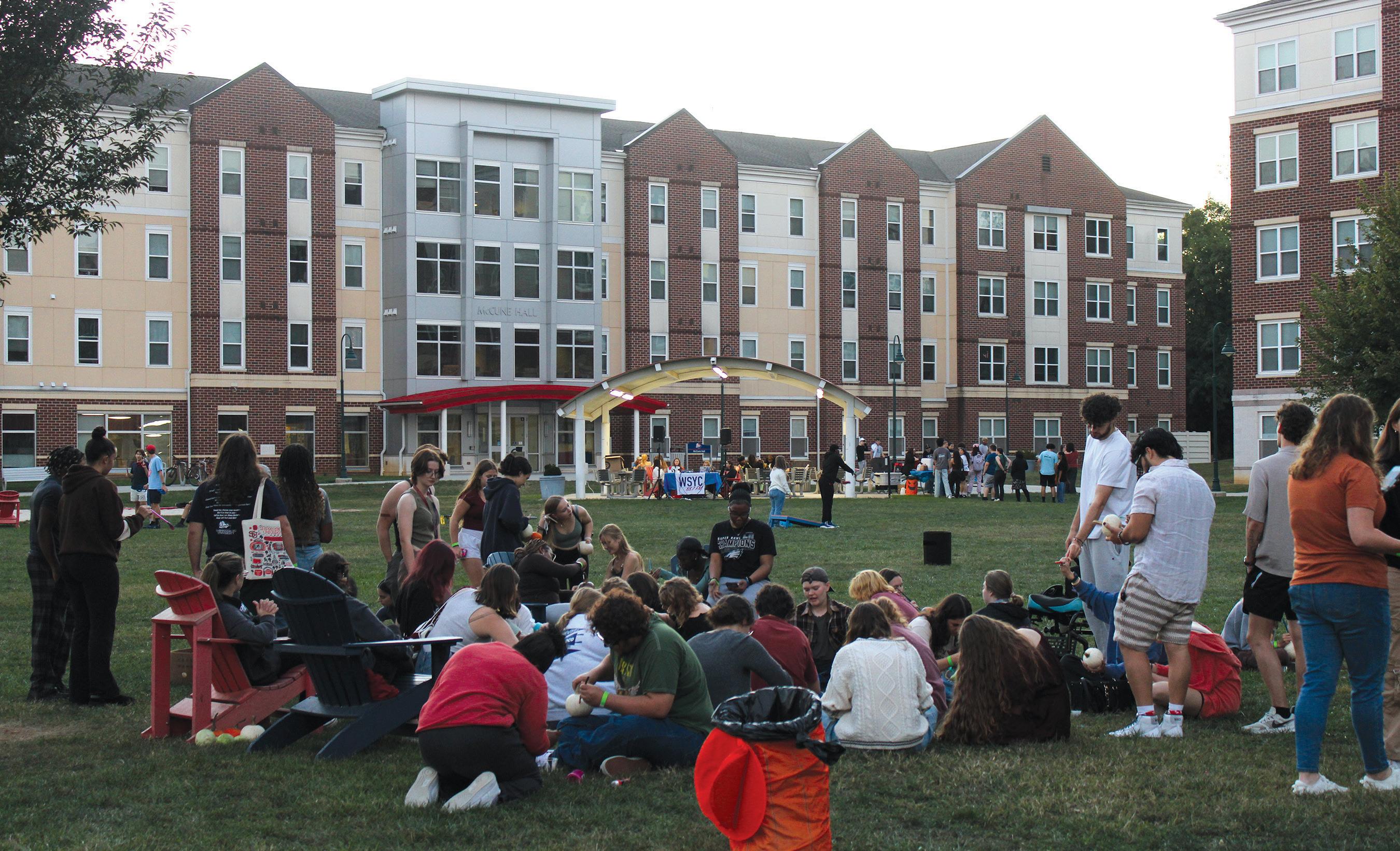
Shippensburg University’s Activities Programming Board (APB) hosted its first Fall Fest this past Friday night on the West Side Quad.
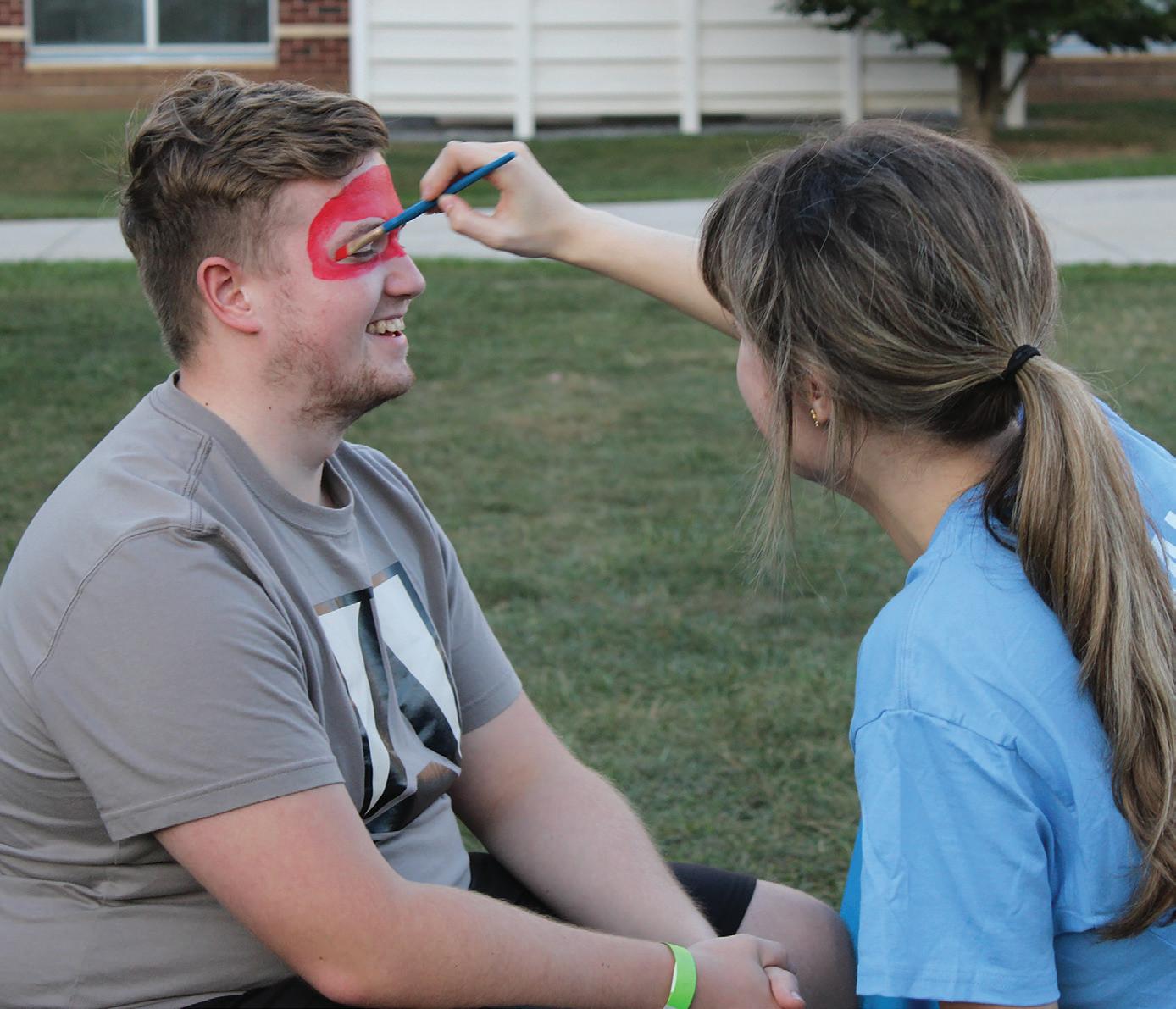
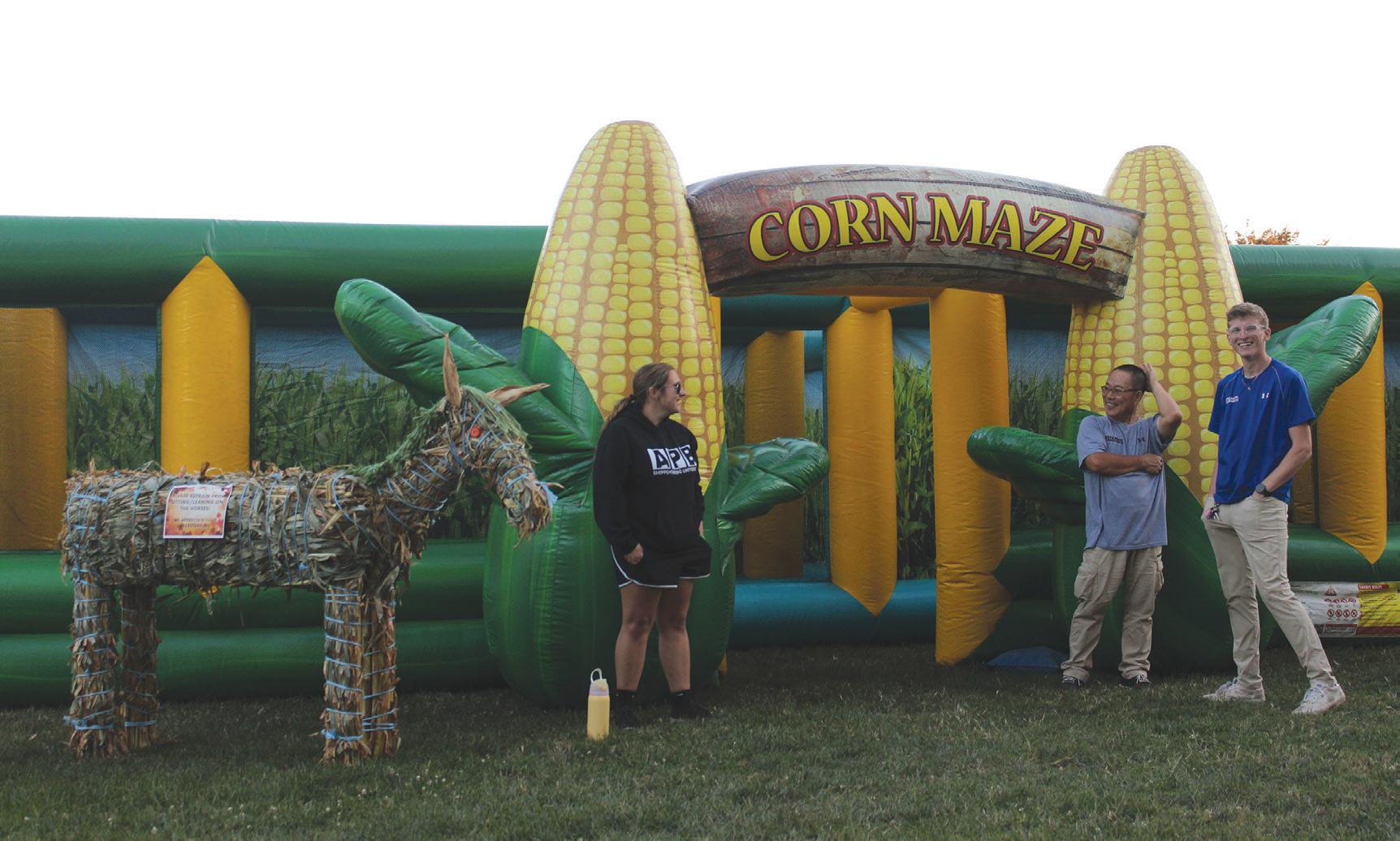
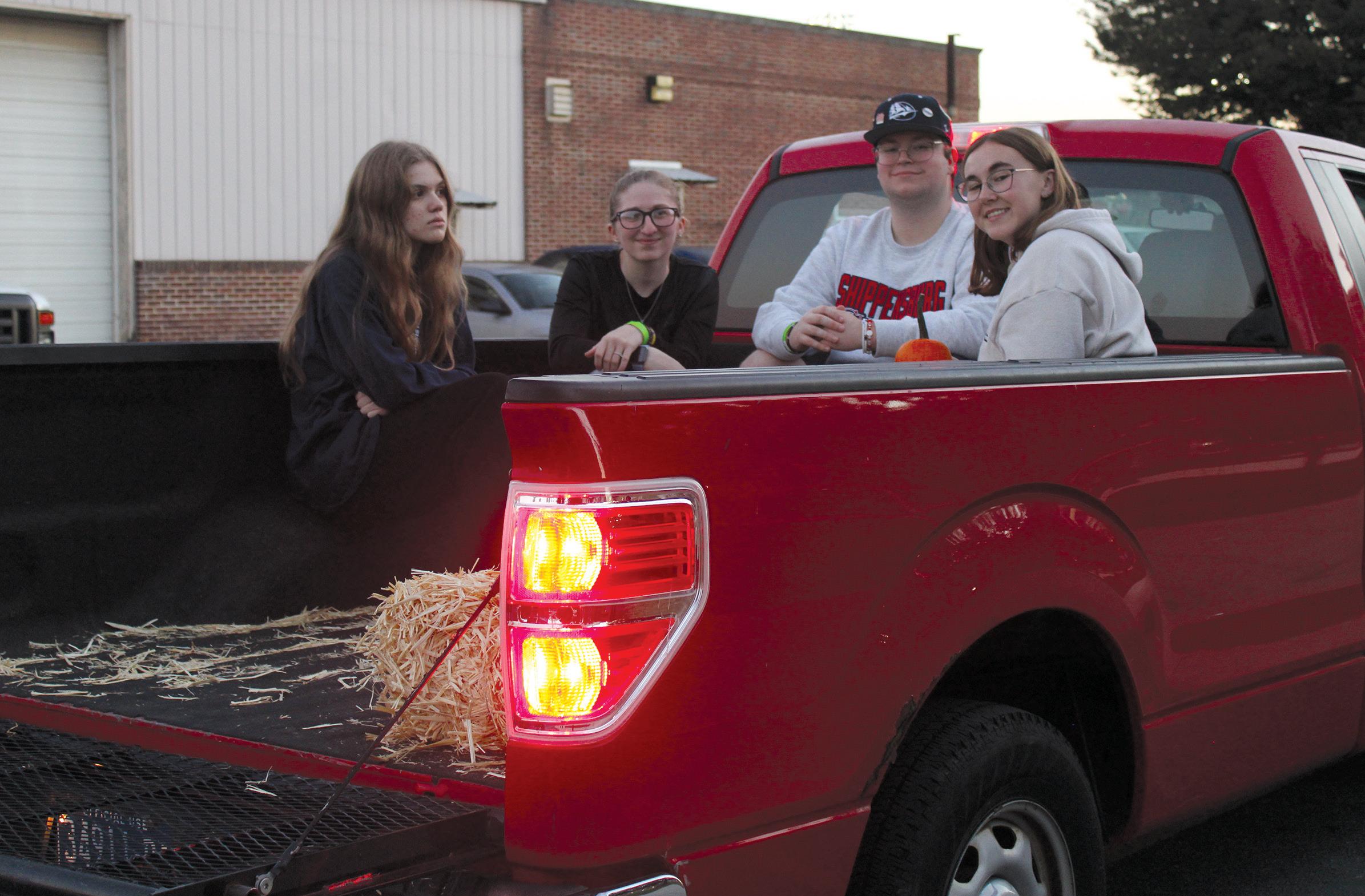
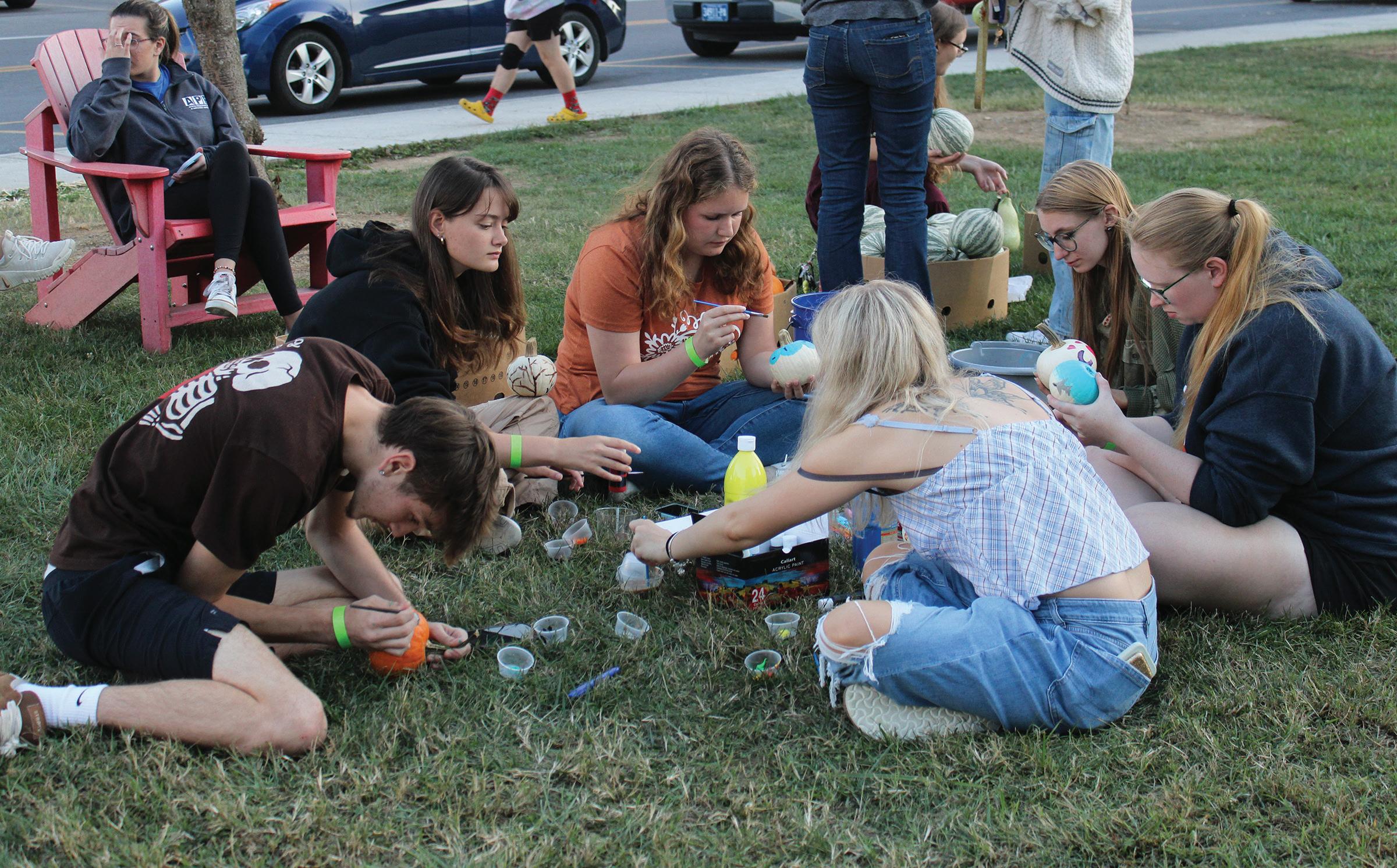
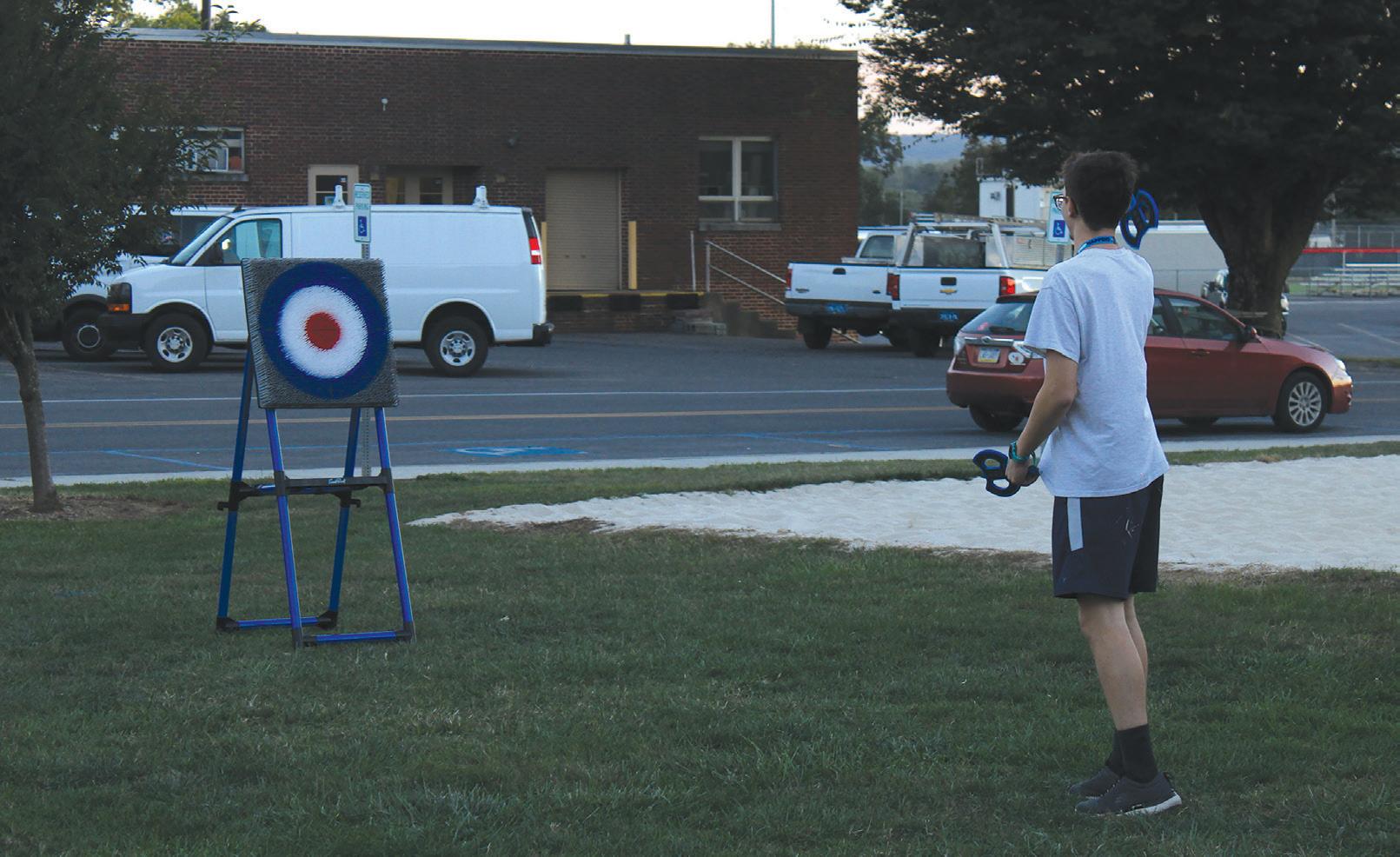
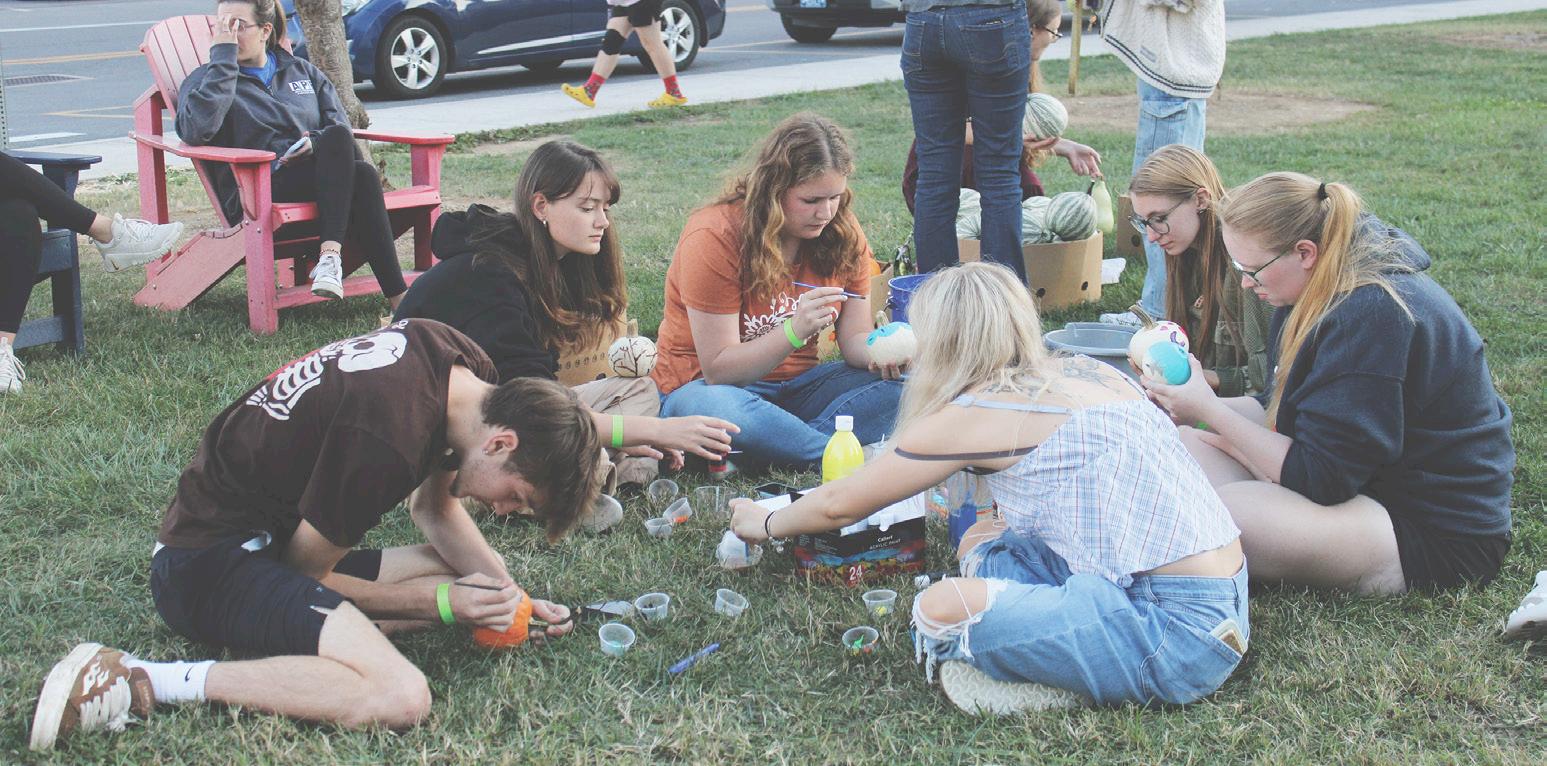
Students gathered to participate in fall-themed activities including face painting, hayrides, yard games, a corn maze, pumpkin painting and hanging out with goats.
APB member Kayce Cook was behind organizing the event. She said she took inspiration from other local festivals in the area.
“I just wanted to bring something like that to campus. The corn maze was a no brainer, I was like ‘How do we get a corn maze here on campus?’ We found a blow up one, even like the hayride, I thought that was just iconic and very fall-like,” said Cook.
There were also several seasonal snacks provided, such as caramel apples, apple cider, popcorn and slushies made from the cider.
Participants were excited for the lighthearted fun, the ability to create core memories and all the seasonal elements of the event.
People were also attracted to Fall Fest because of the community element.
SU sophomore Ayden Kurtek said, “Honestly, I enjoyed just like the community, coming out, and the variety of things to do is also very nice.”
Bringing the community together allowed APB to
accomplish their goal with hosting the event.
“It’s super fun seeing everyone have a good time, especially [since] there’s goats here today and everyone was freaking out about the goats,” Cook said. “I just like the community feeling that it brings here.”
Along with bringing people together, the event provided opportunities for students that they might have otherwise missed out on.
SU freshman Danielle
Brasch came to fall fest for something fun to do with her Friday night and was interested in the activities provided, specifically the pumpkin painting.
“I liked a lot of the different activities and easy accessibility to things that we would have to go somewhere else to get like pumpkins we could easily just get here,” said Brasch.
Fall fest was a comforting event for students to socialize and get outside during the start of the cooler fall season.

Madison Sharp Asst. Multimedia Editor
Shippensburg University campus group D.I.V.A.S. hosted an open mic show called “Hour of Power” in McFeely’s on Oct. 2. The group aimed to showcase different mediums of art, including music, poetry and comedy.
The acronym D.I.V.A.S. stands for “Developing Dignity, Inspiring Intellect, Voicing Victory, Acquiring Assertiveness and Satisfying Self.” These values were featured at “Hour of Power,” where they strived to create an uplifting space for creativity and self-expression for all.
D.I.V.A.S.’s “Hour of Power” Instagram post said, “Whether you’re here to perform or just soak in the energy, this is the place where voices rise and stories shine.”
McFeely’s was the perfect spot for the open mic night, where LED candles, decorations and a variety of
food was added to create a cozy atmosphere for everyone to enjoy the performances.
Students were able to sign up via email to perform the art medium of their choice, but most participants decided to sing along to their favorite songs.
The first performer sang along to the song “Pora Domoy,” by the Russian band Sektor Gaza. Pora Domoy translates in English to “time to go home,” and it is a song about anti-violence and anti-war.
The next song was “Love,” by Keyshia Cole, in which multiple students sang along in a pass-the-mic fashion. Some other songs featured were “Trip,” by Ella Mai; “Best Thing I Never Had,” by Beyoncé; and “Spread Thin,” by Mariah the Scientist. Hour of Power served as a place for students to express themselves and a fun night for everyone who attended. For more information about D.I.V.A.S. and their future events, check out their Instagram @ship_divas.
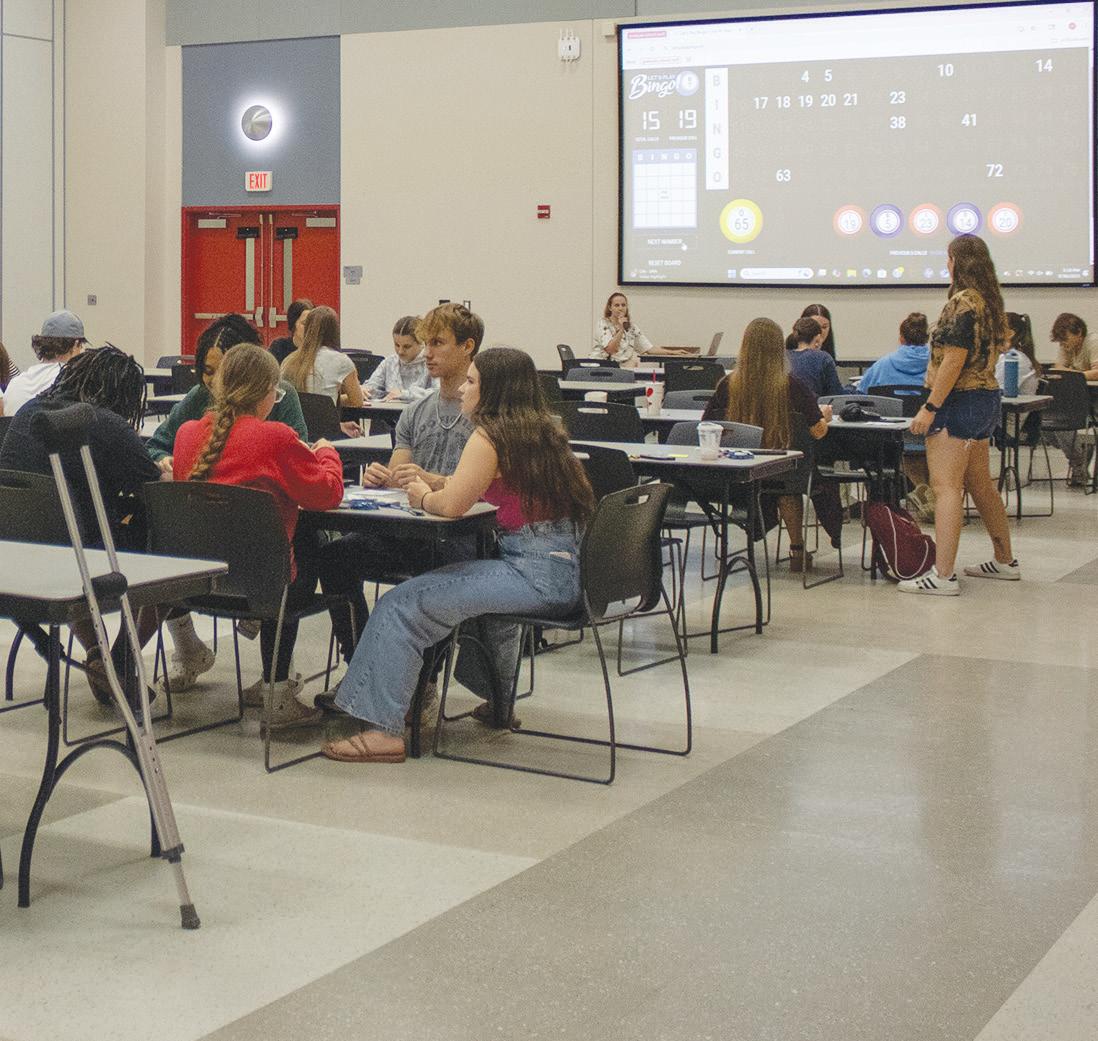
Shippensburg University students gathered in the CUB MPR on Sept. 30 at 5 p.m. to play plant bingo, hosted by SU’s National Alliance on Mental Illness (NAMI) club.
Students had the opportunity to win plants, big or small, for their dorm. NAMI saw a larger turnout than expected, printing more bingo cards for students as they came in to participate in the games.
Upon walking in, students were given one bingo card along with sticky tabs to cover each number. The event began with three rounds of traditional bingo, with the small plants as prizes. The small plants were succulents, and they gave out the names of the plants to those who won them.
After three rounds of traditional bingo, the rounds became “special” bingo rounds, consisting of speed rounds, four corners and an X shape, bringing more competition to the games. These special rounds also had bigger plants as prizes, which consisted of leafy plants of different colors.
The rules of the game were that if a student won a small plant, they could still get a big plant, and if they got a big plant, that student
was no longer able to get anything, which made it fair for everyone else playing. When there was more than one person with a bingo, they conducted a tiebreaker.
To break the tie, they called out more numbers until one of the students got it, which sometimes took many tries. As students got more competitive, they got quieter and focused on the numbers in hopes of calling “Bingo!”
The final round, blackout bingo, was the quietest round of them all. Students rushed to fill their numbers in and hoping to be the final winner. After almost all the numbers were called, one person called out, and the games were done.
After the games were over, NAMI announced that they will be planning another Plant Bingo at the beginning of the spring semester, with even more fun plants and prizes.
“Plants are shown to improve mental health,” said NAMI President Hayley Diehl.
They said they want to encourage a safe space for anyone and everyone to feel welcome.
NAMI is always excited about new interest in their club. For any information on the club and events, you can visit their Instagram @ shippensburgu_nami.
Rader Staff Contributor
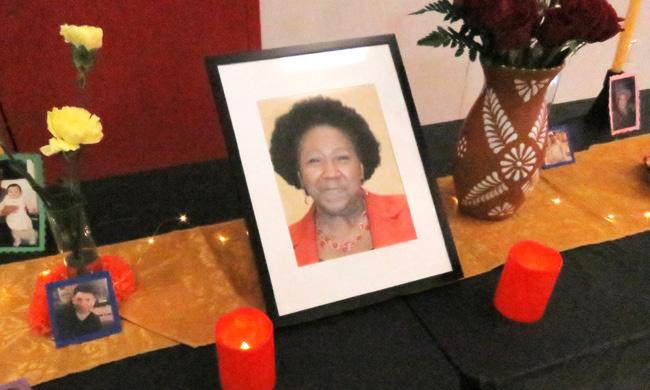
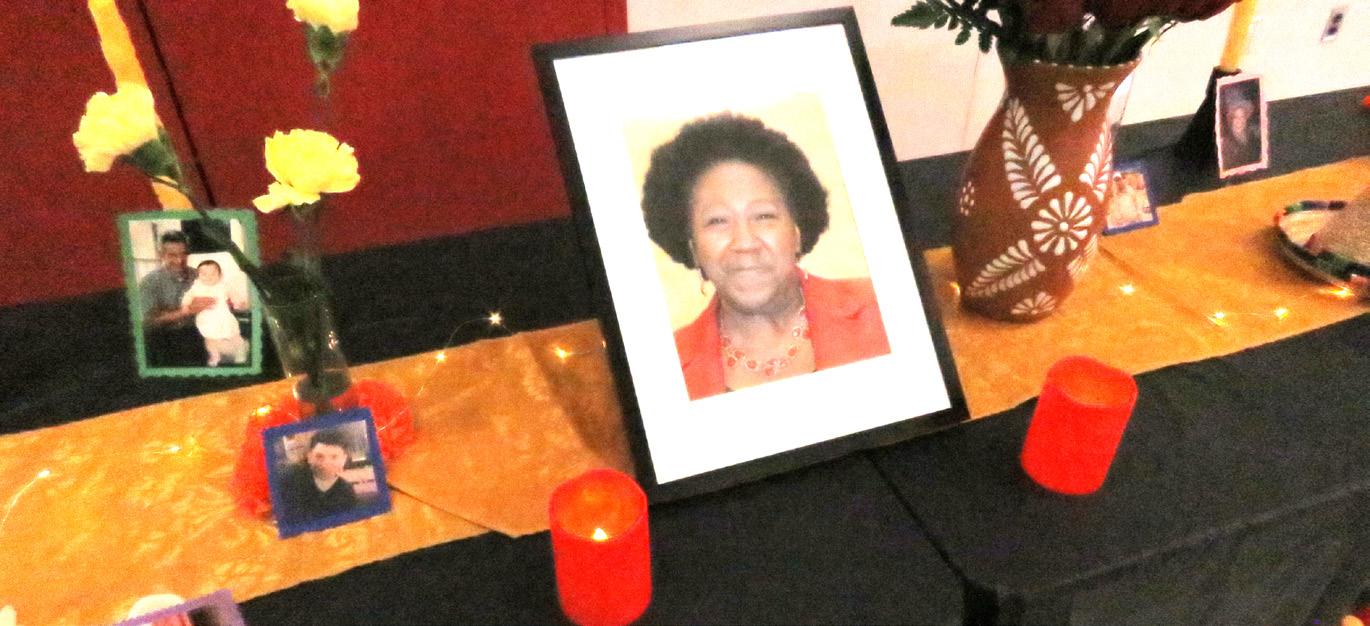
On Oct. 4, Shippensburg University’s Latino Student Organization (LSO) hosted its first Latino Explosion of the semester, featuring a memorial for Diane Jefferson, the late founder and director of the Office of Multicultural Student Affairs (MSA), who passed away over the summer.
The event’s theme, “La Casita,” which means “the little house” in Spanish, symbolized the many cultures, communities and traditions that create a sense of belonging and a taste of home.
Students and family members gathered in the CUB MPR to watch professional dancers with a live band while eating quesadillas, empanadas, pulled pork, chicken thighs, corn cake and horchata, a traditional sweet rice drink.
“In la casita, there are always those people you look up to, people who are there to guide and lead you.
Unfortunately for us, we lost that person this past summer,” said LSO President Marlon Aristy, who dedicated the
PAGE Center
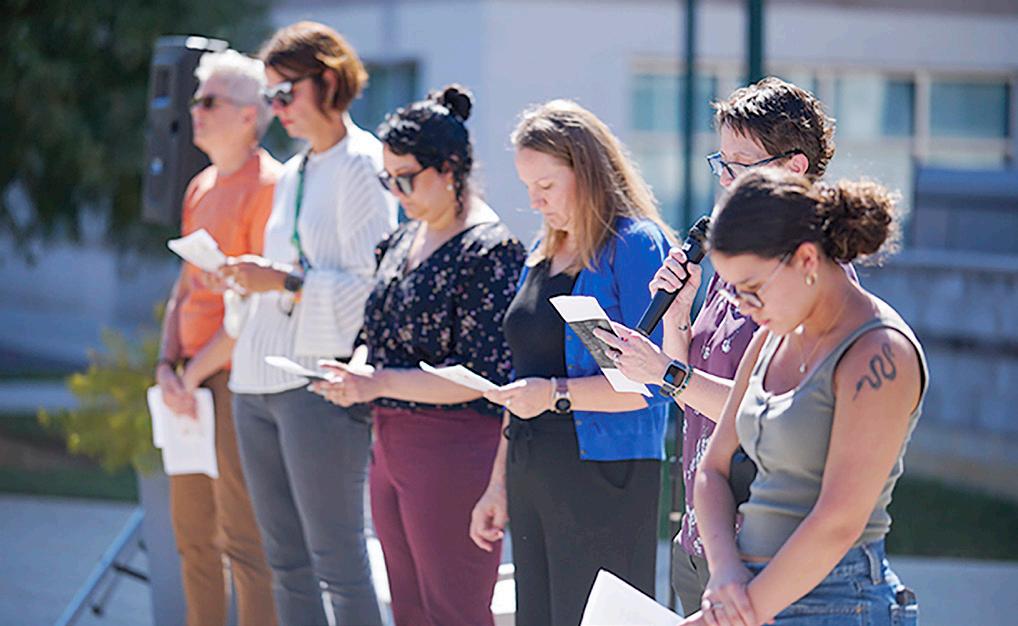
The Pride and Gender Equality (PAGE) Center held their annual Tulip Planting Ceremony on Wednesday, Oct. 1, at 12 p.m. to remember victims of domestic violence outside of Lackhove Hall in the Wright Memorial Garden.
The ceremony is held each year in early October to begin Domestic Violence Awareness Month (DVAM), both to educate students on DVAM and raise awareness.
This year’s theme was “With Survivors Always” and featured many speakers. These included domestic violence survivor Megan D., who told her story, and Starr Hoffman, who shared her experience with someone who experienced domestic violence.
Other speakers included Shippensburg University criminal justice majors along with representatives from Domestic Violence Services of Cumberland and Perry
evening to Jefferson, known to many as “Miss Di.”
“She was a second mother. She cared about us and where we were going. She was an inspiration; she saw what we couldn’t see in ourselves all the time,” Aristy said.
Jefferson was honored with an ofrenda, a traditional altar decorated with photos of her surrounded by friends and family, to remind students that she is “always here with us in presence and in spirit,” Aristy said. He emphasized that the event was not
Counties (DVSCP); YWCA Carlisle and Cumberland County; and Women in Need (WIN) Victim Services.
According to the Department of Justice, domestic violence is a pattern of abusive behavior in any relationship that is used by one partner to gain or maintain power over another intimate partner.
Last year in Pennsylvania, there were 106 deaths caused by domestic violence, with 71 being women and 35 being men.
“When people think of domestic violence, they think that just being a thing that happens to married women. Clearly, [that] is not the case,” said Anna Nasser of DVSCP. “We don’t rationalize how much domestic violence attacks someone’s self-sufficiency, emotional well-being and even their financial ability to sustain themselves.”
This makes access to resources for victims all the more important.
PAGE Center Director
only a tribute to her memory but also a celebration of the lives she touched for over thirty years as director of MSA.
“She was the one that kept us together,” said LSO Vice President Cassidy Vangas, who added that student engagement has “literally tripled” this semester.
Witnessing all the growth Jefferson sparked and the many students who came to celebrate her that night was bittersweet but showed that her legacy and spirit lives on and still keeps the SU community together.
Miller Hoffman said:
“They [victims of domestic violence] are our colleagues. They are our community partners. They are our friends.”
More DVAM events will be hosted by the PAGE Center throughout October. Visit the PAGE Center website for more information.
For on-campus resources, please contact the sources below.
PAGE Center: 717-4771291
Counseling Center: 717477-1481
SU Police Department: 717-477-1444
Organizations with offcampus resources can be found below.
Domestic Violence Services of Cumberland and Perry Counties (DVSCP): 1-800-852-2120 or https:// dvscp.org/ YWCA Carlisle and Cumberland County: 1-888-727-2877 or https:// ywcacarlisle.org/ Women in Need (WIN) Victim Services: 717-2644444 or https://winservices. org/



Caroline Cooper Staff Contributor
Imagine you’re a world-renowned pop artist selling out stadiums across the globe, about to be engaged to the love of your life and a billionaire. You have got what seems like everything, so in your free time during your tour, you sit down and pen a couple songs. You announce it on your boyfriend’s podcast, and now you once again have the world enthralled, captivated and anticipating your next moves.
How does Taylor Swift do it? Why does she do it? Because the world is her stage, the crowd is her king, and we are witnessing the beautiful, frightening and rapturous life of a showgirl.
Swift opened her new album “The Life of a Showgirl” with the track, “The Fate of Ophelia,” based on the Shakespearean character in “Hamlet” who dies in a miserable loneliness, airing her grievances to all of the terrible men in her love life, except for one. This song is a classic Swift pop hit. She sings, “Now I can see it all (see it all),” because now “you’re mine.” A catchy chorus with lyrics of love.
I think “Red Queen,” by Victoria Aveyard, was the only time I was conflicted on which brother to choose in a love triangle.
Normally, I hate love triangles because there is always an obvious option. If it’s done well – and most are not – then I should be battling with which one to side with. I will always choose the bad boy. They’re more interesting, cause more drama, lowkey kind of toxic, always have a soft spot for the girl and might even drive a motorcycle or have tattoos; dare I say that is attractive. Why should she choose the boring and safe option? Love should be wild and exciting.
Mare Barrow lives in a divided world of those who have red blood, who are the poor, and those who have silver blood, who are the rich. If you are born with silver blood, then you have a superpower – unless you are Mare. That was all it took for me to fall in love with the storyline. Mare is a skilled thief, and she tries to steal from a wealthy looking man. That wealthy looking man was the crown prince of Norta, Tiberias “Cal” Calore VII. He gets her a job as a servant at the royal palace instead of acting like how the average person would when someone just tried to steal from you.
At one of the palace events, Mare discovers she has lightning powers. The Silvers do not want people to know that someone with red blood can have powers, so they cover this public display by saying she is a long-lost silver noble and betroth her to the second prince, Maven. Through the entire novel, you can tell Cal and Mare have feelings for each other, but they both cannot trust each other

because of this division between the Reds and the Silvers. It is a torturous ‘will they, won’t they’ thing going on. Then, I start to not trust Cal because he sides with the Silvers despite knowing their blatant and cruel intentions.
Diving a little deeper, the division between the Reds and Silvers reflects modern notions: Democrat or Republican, conservative or liberal, Black or White, etc. These systems thrive on keeping division in place so the one in power can stay in power. One is always viewed as “lesser.”
Even with Cal and Maven both growing up to believe Silver ruling, Cal later realizes the truth mirrors the world we live in today. You might grow up to believe one way and be told the other way is wrong, but then cross over to that “wrong” side and realize the whole time you were rooting with the real enemy.
With that, Maven begins to show feelings for Mare as he works with her for the Scarlet Guard, the rebellion against the Silvers. At this time, I begin to like Maven better than Cal because he is fighting by her side and validating her feelings. He is not actively trying to oppress her people, and he wants to end it as much as she does. Maven and Mare even share a cutesy kiss.
Little do we know, it was all a lie. Maven was manipulating Mare to get information on the Scarlet Guard. He frames Cal for the king’s assassination, who is Maven’s stepfather, so that everyone will turn against Cal, and Maven can get the crown instead.
Sometimes the nicest people are the ugliest. Aveyard is a mastermind, and I was completely blindsided by this plot twist that I so much as threw my book across the room..
Read the full story at theslateonline.com.
I just have one question: how long has Swift been gatekeeping “Elizabeth Taylor”? This track sounds like it is straight out of her album “Reputation,” not only in the powerful vocals and lyrical prowess, as she describes the tumultuous love affairs of Elizabeth Taylor. Swift’s love life has been both highly publicized and criticized in the past, and she questions, “Tell me for real / Do you think it’s forever?”
But does she know, Travis Kelce isn’t messing around. Turns out, you can get something for a girl who has “everything and nothing all at once,” and that is true and trusting love. My personal favorite song is “Eldest Daughter.” For context, my Swiftie trifecta is “Reputation,” “Folklore” and “Evermore,” and I am the oldest kid in my family. So, I knew this song would hit. To. The. Core. Track five leaves a legacy of heart-wrenching lyrics and emotion; please consider “So Long, London” on “The Tortured Poet Department”, “You’re On Your Own, Kid” on “Midnights” and “All Too Well” on “Red”, just to name a few. This track five was no different, as Swift anguishes over the struggles and pressures of being
the oldest daughter, but the song carries a double meaning as she’s not only “the first lamb to the slaughter” in the home, but in the music industry as well.
Despite the constant pressure for perfection, she recognizes the importance of prioritizing what she loves singing, “But I’m never gonna break that vow / I’m never gonna leave you now, now, now.” Once again, there’s a double meaning to this line. Honestly, I do not even think it is Swift saying this line. Eldest daughter syndrome is centered around the idea of being there for everyone, dealing with everything all the time, no matter what. Stepping back to the full message of the album of her finally finding that unconditional love, it is not Swift saying this, but Kelce instead. She has finally found the love where she is validated, supported, seen, and most importantly, someone else is caring for her.
Yes, I agree that the overall song “isn’t savage,” but we have to remember, she is a millennial at the end of the day. Swift is trying to remain hip and cool in whatever way she can.
Originally came for the art, but was basked in the community
There is nothing like seeing a piece of art in person. The graphite markings, oil streaks and invisible stitching emphasize the humanness of such creativity.
Sept. 19, Harrisburg’s Susquehanna Art Museum had free admission from 5-8 p.m. This was courtesy of 3rd in the Burg, a monthly occurrence that spotlights different venues and events that showcase artists and amplify community.
My mother and I arrived around 6 p.m., and we were greeted by the smooth notes of a saxophone and keyboard.
The St. Christine’s, a talented cover band, created a soothing atmosphere that accompanied our viewing, and the silky sounds welcomed us in.
Tea and snacks were provided on tall round tables, and there were a few clusters of people chatting.
The atmosphere was calm, opposite the outside, where everything was lively and bustling.
The exhibit “Common Ground: Works by Betsy and
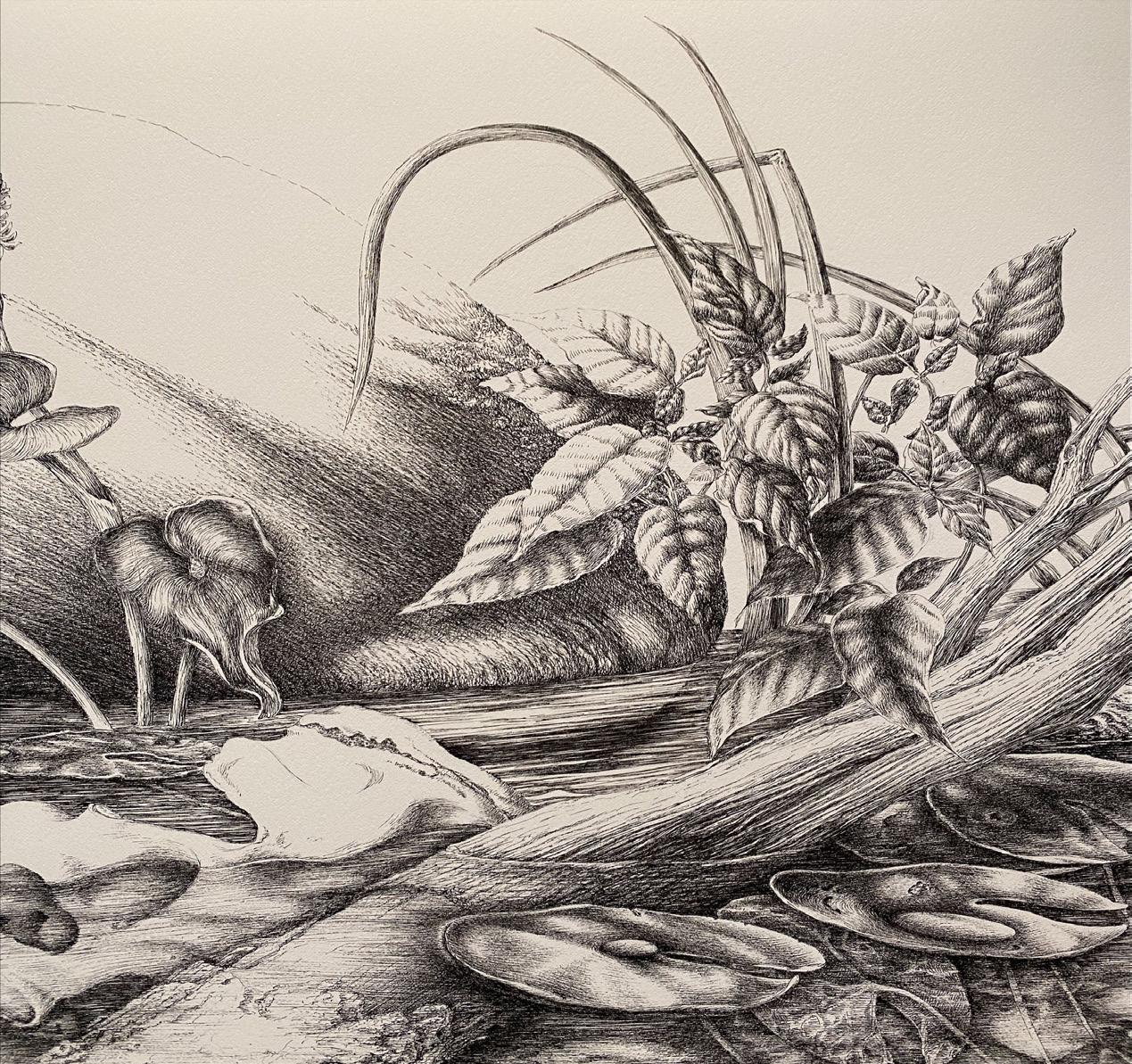
Gerry Bannan” was stunning and one of my favorite shows. Using a similar foundation of connection between humans and nature, the Bannan’s pieces couldn’t be more different. They are thoughtprovoking and captivating. Bannan’s “What Might Have Been and What Has Been” can only be seen in person and up close to grasp the intricacies evident and the stories told in this piece.
The upstairs exhibit, “Future Fossils,” was fascinating. I tried to digest the artwork and, at the same time, wrap my head around these artists, how such ideas formed and the materials used. Thankfully, information cards were provided next to or near each piece.
I have not stopped thinking about Do Ho Suh’s “Specimen Series: Refrigerator, Apartment A.” It’s a life-sized stainlesssteel wire and fabric refrigerator representative of Suh’s previous home. Simultaneously, it works as a souvenir and a future fossil. The style of the fridge is an older one, while the coloring of the lights and transparency of the fabric
exudes futurism. Suh’s fridge makes me feel at home, or like I’m looking at a piece of someone else. I see an earlier version of Suh when I look at his well-crafted structure.
The Susquehanna Art Museum was welcoming and held some of the largest, most mesmerizing pieces I have seen. Along with the museum, 3rd in the Burg makes space for community, a chance to build and become involved in what many yearn for. These artworks, the environment and humanity that is poured into it all have inspired me to keep seeing. To keep viewing other people’s work, keep talking and keep contributing. It is worth it.
With an admissions fee of no more than $8, you can see the Bannan’s exhibit until Oct. 5, the Future Fossils exhibit until Nov. 2 and more by visiting Susquehanna Art Museum’s website at https:// susquehannaartmuseum. org/. For further information about past and future 3rd in the Burg events, visit their website at https:// thirdintheburg.org/.




Mason Flowers Sports Editor
No. 1 Shippensburg
University field hockey remained undefeated with two more wins this week, defeating Frostburg State on the road and No. 5 West Chester at home in a pair of 4-1 results.
The week’s games began on Wednesday with Frostburg State taking an early lead with a first quarter goal. SU responded quickly, as graduate Savannah Silvestre scored her second goal of the season off an assist from sophomore Emily Bitters to even the score.
SU senior Agus Garibaldi added a goal to give Shippensburg a 2-1 lead after one quarter. They Raiders added on early in the second, with senior Lilly Cantabene scoring off a reverse hit to double the lead.
The game remained 3-1 at halftime before SU scored the game’s last goal. Sophomore Anne Gardner scored off a Cantabene deflection for her third goal of the year, capping off a 4-1 Raider win.
Shippensburg outshot the Bobcats 24-9, holding Frostburg State to five shots on goal, four of which were saved by graduate Emma Albee.
The team returned home on Saturday, taking on the Golden Rams on a very warm afternoon. SU got off to a hot start, with senior Kelly Naudé’s sixth goal of the year, making the score 1-0 after the first quarter.
Cantabene scored off a penalty corner assist from junior Carme Caracotche Picone to extend the lead, making it 2-1. It was Canatbene’s eighth goal of the season, now having scored the most goals of
anyone on the team.
The score remained 2-0 at halftime, but SU came out of the break strong. Just two minutes into the half, Gardner scored once again via an assist from sophomore Elaina Fragassi, making it 3-0.
West Chester scored soon after to close the gap, but Shippensburg added an insurance goal late in the fourth, as Fragassi scored her third goal of the year after Bitters’ first shot was saved.
Fragassi spoke postgame about the great effort, saying, “It’s huge for this team because we want to play a full 60 minutes, getting a goal in each quarter is important to keep the momentum in our half.”
SU held the Golden Rams to just eight shots on goal in the match, outshooting them 21-12 overall. The Raiders earned eight penalty corners,
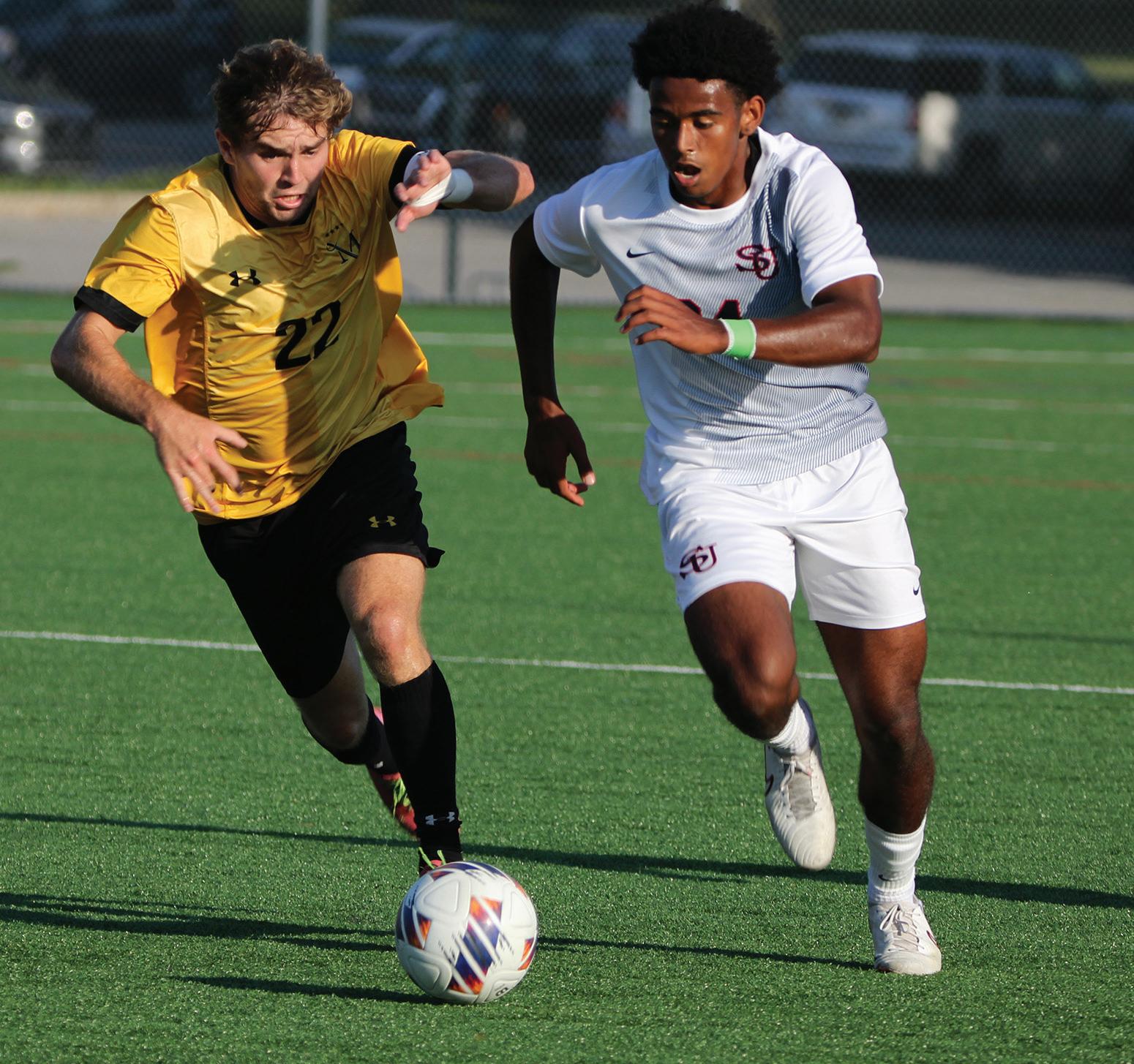
Shippensburg University men’s soccer team opened Pennsylvania State Athletic Conference (PSAC) play this week with two tough games — a 3-1 away defeat at Shepherd on Wednesday and a last-minute home loss to Millersville on Saturday.
On Wednesday, the Raiders faced the Rams in an intense back-and-forth contest.
The Rams opened the scoring at the 24th minute when Josh Petty scored off an assist from Sterling Harris. Shippensburg responded quickly, finding the equalizer in the 31st minute as sophomore forward Kyle Ganley tallied an unassisted goal to level the score 1-1.
The game remained tied until the 67th minute when Petty scored again, putting Shepherd ahead 2-1. Less than two minutes later, he completed his hat trick with an unassisted shot to extend the Rams’ lead and seal the match 3-1.
SU battled but could not come back from two goals in less than two minutes.
The Raiders finished with three shots on goal, with one shot each from senior forward Ethan Paulukow, sophomore forward Ganley and sophomore midfielder Conway Brown II, compared to Shepherd’s six shots on goal.
The Rams also generated more corner opportunities, holding a 10-6 edge. SU junior goalkeeper Ryan Krumenacker made three saves in the match.
On Saturday, the team hosted Millersville.
The game was largely played in the midfield, with neither team generating many clear scoring opportunities. Both defenses held strong, limiting shots and keeping the game open to any of the teams.
The Raiders’ best chances of the first half came early. In the 9th minute, redshirt sophomore midfielder Maddox Davies had a low, fast mid-range shot on the left post, but Millersville’s goalkeeper made the save.
Another promising moment arrived in the 38th minute, as SU’s attack developed down the sideline and set up freshman defender Pat McNamara for a clean look that went just over the crossbar.
In the second half, the Marauders came out applying high pressure, challenging the Raiders’ defense throughout.
With 10 minutes remaining, Millersville’s front line broke through to take the lead. Forward Kayden Sowell set up Zander Leik, who finished with a quick one-touch strike to make it 1-0.
Shippensburg finished the match with eight shots, including two on goal, while Millersville recorded 15, nine of them on target. Krumenacker made eight saves to keep SU competitive.
SU recorded five corner kicks to Millersville’s six. Fouls were very similar, too, with the Raiders committing 10 compared to 12 for the Marauders.
The team will return to action on Wednesday at 4:30 p.m. at David See Field to face Bloomsburg, and on Saturday, they will travel to East Stroudsburg for a 1 p.m. away game.
only allowing four, all in the second half.
This was the second matchup between the teams this season, with SU winning in double overtime at WCU in their second game of the season.
Shippensburg head coach Rayell Wallace spoke on the growth of the team since that first game.
“Staff and players are understanding each other, the players understand what we want, and we have been able to push them a lot. Everything is really moving in the right direction this far into the season,” said Wallace.
This week’s schedule for Shippensburg field hockey features a pair of road games. The team will travel to Millersville to play at 6 p.m. on Wednesday before taking on East Stroudsburg Saturday at 1 p.m.

Shippensburg University’s men’s and women’s swimming teams traveled to Bloomsburg last weekend to compete at Nelson Field House pool.
The women’s squad completed a tri-meet with Bloomsburg and East Stroudsburg, while the men’s squad competed in a dual meet against the Huskies.
The women’s team had a handful of standout performances.
Sophomore Makennah Fickett was an event winner in the 200-yard individual medley with a time of 2:18.28.
Sophomore Olivia Carver and freshman Ella Nick recorded PSAC qualifying swims in the 200-yard freestyle, 100-yard freestyle and 50-yard freestyle.
Sophomore Elyse Arnold, junior Michelle Kubiak, sophomore Emma Gerlinski and Carver posted a third-place finish in the
200-yard freestyle with a time of 1:44.92. On the men’s side, SU fell short in their dual meet but completed worthy performances.
Junior Mason Koeth, sophomore Kiran George, sophomore Josh Einolf and junior Robbie Ferlick earned a first-place time of 1:35.68 in the 200-yard medley relay. Another medley group with Koeth, Ferlick, graduate Josh Wall and junior Connor Ludwig joined up to earn a freestyle relay win of 1:27.52.
In the 100-yard butterfly, Einolf and Wall earned the 2nd and 3rd spots with PSAC cuts of 52.22 seconds and 52.73 seconds, respectively.
Ferlick was runner-up in the 100-yard freestyle while Koeth was runner-up in the 100-yard backstroke.
The Raiders’ next competition will be at home against IUP on Tuesday, Oct. 7, at 5 p.m.
Ben Hummel Staff Contributor
The Shippensburg University Football team was handed a 49-0 shutout loss from No. 4 Kutztown on Saturday in a Pennsylvania State Athletic Conference (PSAC) Eastern Division matchup at Andre Reed Stadium. Shippensburg is now 1-4 overall and 1-1 in the PSAC East.
It was Shippensburg’s second shutout loss this season after losing 42-0 against then No. 4 Slippery Rock two weeks ago.
Kutztown scored early and often, scoring four minutes and 38 seconds into the game off a 42-yard pass to receiver Trevor Amorim. At halftime, they held a 21-0 lead before running away in the second half.
Kutztown’s No. 9-ranked total defense held SU to 94 total yards and seven first downs throughout the game. In the fourth quarter, Kutztown picked off Raider quarterback Riley Gunnels and took the ball for a 49-yard interception return touchdown.
The Raider offense only had the ball in Kutztown’s territory once during a secondquarter drive that ended on a failed fourth-

down conversion. Kutztown possessed the ball for over 36 minutes.
Shippensburg did have some positives on the game. Senior Ely Ghameshlougy recorded nine tackles for the second straight game while sophomore Alex Sauve added eight tackles.
Redshirt sophomores Nate Myers and Connor Black each had six tackles. Black recorded SU’s only sack.
Redshirt freshman Tom Smyser registered his first three collegiate receptions for a total of 20 yards.
Kutztown quarterback Judd Novak threw for 287 yards and three touchdowns, going 18-25. Running back Steven Burkhardt led the Golden Bears in rushing with 146 yards and two touchdowns.
The Raiders have only won one game in their last 10 matchups between the Golden Bears.
Shippensburg returns to Seth Grove Stadium Saturday, Oct. 11, at 1 p.m. to take on Millersville.
The game will be streamed on the PSAC sports digital network and broadcasted by SUTV.