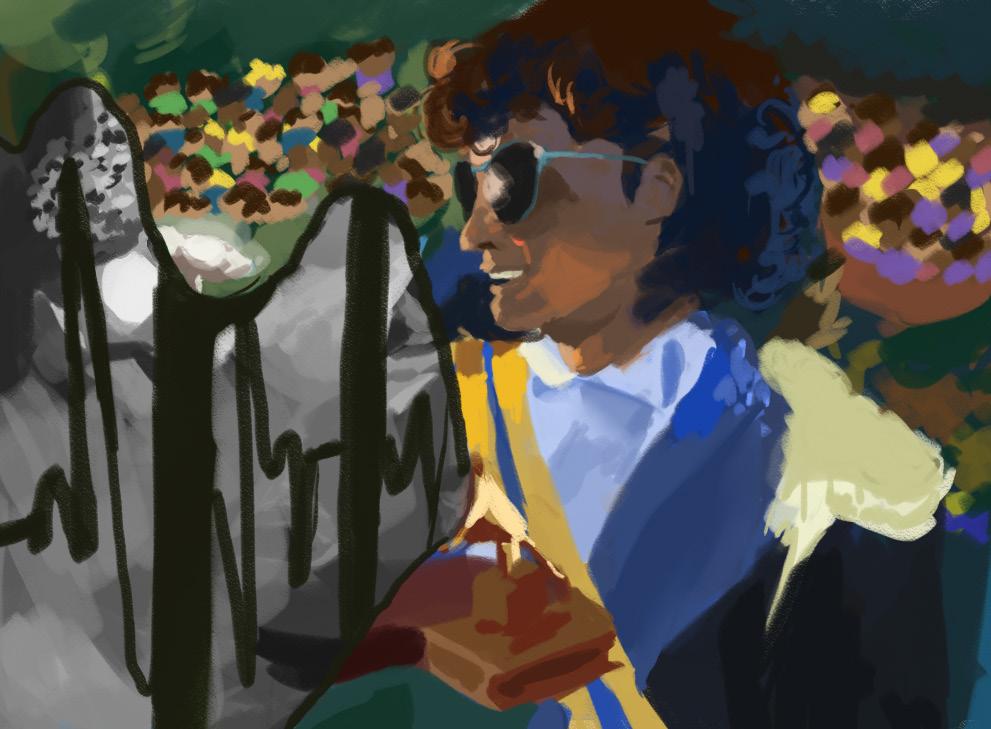
CONCERT Maisie Peters’ ‘Bloom’ tour drifted from her roots, says Sophie Erlinger (CAS ’29). B2
CONCERT Juan Almanza (CAS ’29) praises the richness of Natalia Lafourcade’s ‘Cancionera’ tour. B4
THEATRE Anandita Agarwal (SFS ’28) says The Oedipus Project’ showed the urgency of climate action. B6
APRIL 24, 2026
‘Michael’ Only Shows Man in the Mirror
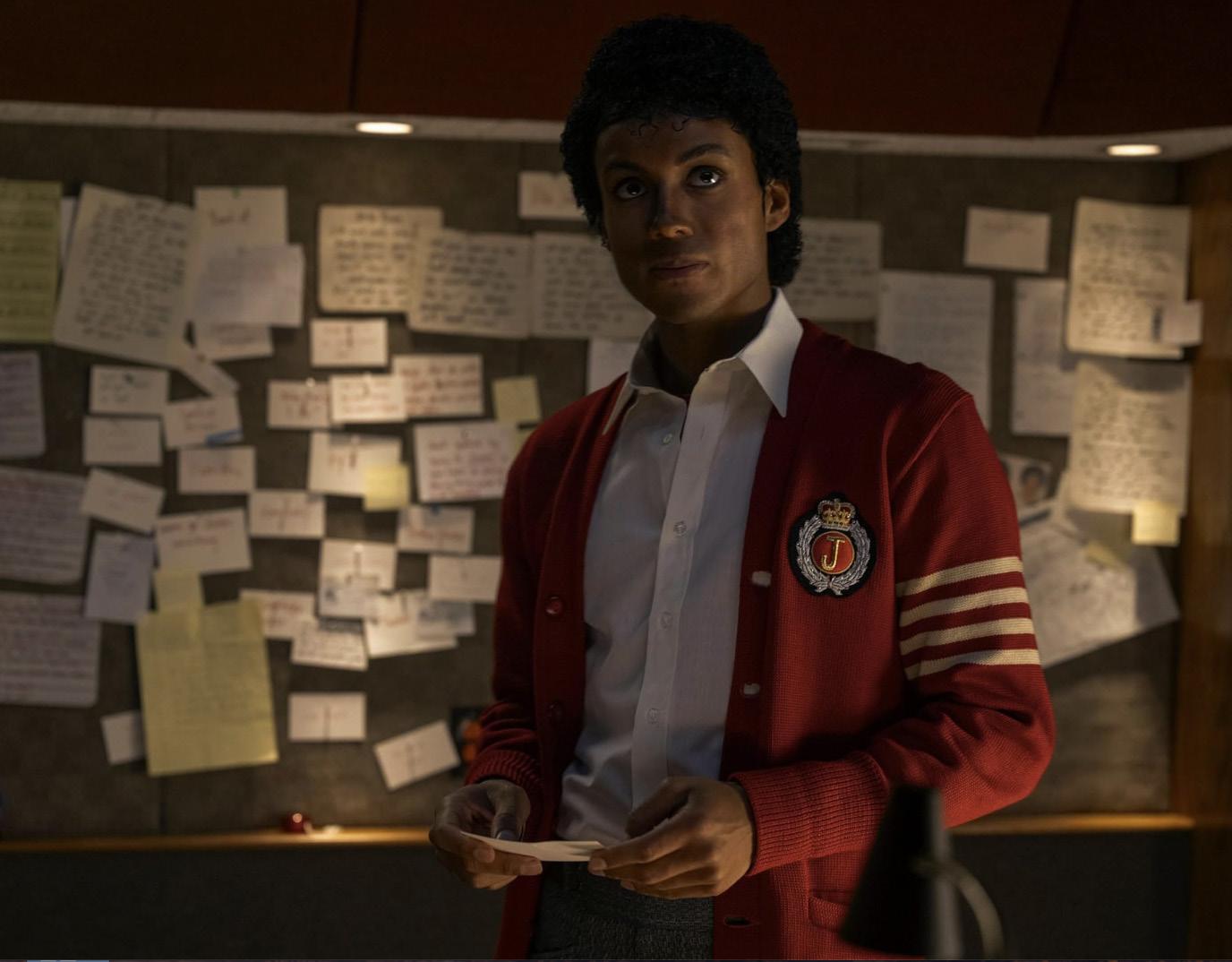
Michael Jackson biopic is too shallow a look at the King of Pop, should make a change. B3
Brad Derfner Guide Columnist
Back in Bloom, Maisie Peters Blossoms on Tour
Sophie Erlinger Hoya Staff Writer
Nearly three years after her last performance in Washington, D.C., British singer-songwriter Maisie Peters played to a sold-out 9:30 Club on April 14. Performing 14 songs from across her decade-long career, Peters set the scene for her third studio album “Fluorescence,” which releases May 15. In doing so, Peters also set the record straight on her identity as an artist.
I have been a fan of Peters for almost five years and have seen her live a dozen times across three cities. On her “Before the Bloom” tour, she dialed back the rockstar persona synonymous with her sophomore album, “The Good Witch,” putting on a show so genuine it felt like a confession. This flower-wielding, flowy-dress-wearing, acoustic-guitar-playing Maisie Peters is the artist she has been all along.
Before Peters graced the stage, indie-pop artist Bella Kay came on as the opener. I didn’t know anything about her going into the set, but later found out her final song, “iloveitiloveitiloveit,” is viral on TikTok. Though Kay’s powerful voice and relatable lyrics were great leadins to Peters’ performance, her music failed to
SOPHIE ERLINGER/THE HOYA Sophie Erlinger (CAS ’29) was invigorated by Maisie Peters’ concert featuring her upcoming album.
stand out to me. Currently, nothing sets her apart from the other artists in her genre that I know and love, but I could definitely see myself listening to her once she develops her own personal brand and distinct style.
Shortly after, the cricket and wind ambient noises that marked the downtime between sets went quiet, the lights dimmed and the recording of Peters’ poem titled “Before the Bloom” began to play. Here, Peters set the intention for the space. In the spirit of the poem, the concert saw Peters aiming to crawl “through the mud of the past” and “sing the songs that put you back together” with “the people who matter most to you.”
Peters opened her set with “Love Him I Don’t,” the lyrical power ballad from her debut album “You Signed Up For This,” which is not only her most played song but one she has previously called her favorite. Every time I hear this song live, I am blown away by Peters’ vocal range and poetic writing style. If you are new to Peters as a musician, this is the perfect place to start. She followed up with “Lost the Breakup,” which I was surprised she played, given the criticism following her performance of it on “The Eras Tour.” The bridge, a talking verse mocking her ex, earned the most hate from social media com-
menters. Yet on the 9:30 stage, it was tackled with confidence, as if writing over her past.
Next were two already released singles from the upcoming album, “Audrey Hepburn,” followed by “Say My Name in Your Sleep,” which was seamlessly blended with a cover of “Silver Springs” by Fleetwood Mac. Though I love both songs by Peters, her choice to play them back to back gave me emotional whiplash. In “Audrey Hepburn,” she reflects on the quiet moments of a new love, while in “Say My Name in Your Sleep,” she hopes a past love will never forget her.
After playing another “You Signed Up for This” favorite of mine, “Volcano,” Peters shifted the tone from remorseful and angry to hopelessly in love. She introduces “Vampire Time,” an unreleased song from her upcoming project, which features journal-style narration. Peters tells the story of how she met her current boyfriend, saying she needed to know “what you’re doing tomorrow / And the rest of your life.”
The sound is a twist on the 2010s hey-ho style, incorporating a folky guitar riff, heavy bass and a fiddle solo from keyboardist Tina Keys (Christina Hizon). For someone who doesn’t write many hopeful love songs, Peters was able to perfectly capture the giddy, butterfly-stomach first stages of
a crush. Even without having heard the rest of the album, I am confident this will be one of the hits.
“You You You,” the strongest lyrical offering from “Fluorescence” so far, was followed by her two most poetic tracks from “The Good Witch,” being “History of Man” and “There It Goes.” Peters’ writing style has always been authentic, which was particularly expressed by this section of the show.
She closed out the set with “My Regards,” the most recent single from her upcoming album. Twangy and cheeky, this song pays homage to female country artists. Peters shared that this song allowed her to play “the role of fierce protector instead of simpering love interest.”
The music video for “My Regards” is directed by Amelia Dimoldenberg with Georgetown graduate Benito Skinner (COL ’16) starring alongside Peters. It includes a line dance, which Peters and Tina Keys taught the crowd in a comedic sketch. During the final chorus, the whole crowd joined in, clapping and twirling in perfect harmony.
Overall, I love Peters and her work. While her performance was incredible as usual and I understand the purpose of this tour is to promote the whole album, I wish she had taken this opportunity to play some deeper cuts, especially if the space’s intention was, as it initially seemed, to go back and reflect on her career with her truest of fans.
That being said, this concert succeeded in building my anticipation for Peters’ upcoming album. Here is hoping that she brings her radiance back to the District soon.
Antoine Fuqua’s ‘Michael’ Is a Smooth Enough Watch, Lacks the Magic of the
Brad Derfner Guide Columnist
If you are an everyday Michael Jackson fan, then you’ll likely enjoy “Michael.” If you love him, then “Michael” might just be your favorite movie of the year. But, if you’re watching “Michael” for the artistry, then the film offers surprisingly little.
After years of production hell, Antoine Fuqua’s biopic has finally reached theaters, and it delivers exactly what you would expect: a polished look at Jackson’s rise from the Jackson 5 to solo superstardom. However, as a standalone piece of storytelling, “Michael” is not at all interested in uncovering anything new about Jackson. Instead, it would rather affirm what fans already believe. In place of a strong, independent plot, the film traces a series of familiar performances, at times positioning itself as a curated highlight reel.
With its 127-minute runtime, the film flies through Jackson’s early life, particularly the Jackson 5 years. This era of Jackson’s life is compressed to only a couple of songs and
risks feeling entirely underdeveloped. Major transitions — including Michael’s decision to become a solo artist — arrive abruptly, creating an overly manufactured timeline rather than an organic analysis. This approach prioritizes maintaining high energy in the film rather than any significant emotional development, leaving the story secondary to the spectacle it supports.
Where “Michael” thrives, though, is in the performance sequences. These concert scenes, a requirement of the music biopic genre, are scattered throughout the runtime and provide a level of energy that the narrative entirely lacks. Each concert is staged and filmed with a unique visual identity, combining strong cinematography and production design to differentiate scenes from distinct eras. Jaafar Jackson, Jackson’s nephew, dominates in the leading role with a remarkably convincing and praiseworthy physical performance. Jaafar’s dancing is one of the best aspects of the film, almost accurately capturing the real-life stage presence of the King of Pop.
Moonwalk
The Motown 25 performance, which was Jackson’s first televised moonwalk, stands out: As Jaafar sings “Billie Jean,” the camera is often fixed on Jackson’s feet, allowing the viewer to appreciate Jaafar’s execution of the demanding choreography.
Not all of these scenes land quite as effectively. “Michael” loves to recreate iconic televised moments, so, of course, we watch the filming of the “Thriller” and “Beat It” music videos. Rather than attempting to reinterpret these moments for a more cinematic experience, the scenes feel overly literal and mirror the originals that are already available on YouTube. Though the plot’s scope is limited, the central relationship between Michael and his father, Joe Jackson (Colman Domingo), is a suitable attempt to hold together an emotional core. Domingo has been prolific in recent years. Here, he portrays Joe Jackson as a true, consistent villain, dictating every scene that he is a part of. The film itself leans heavily on the trauma Joe caused Michael, which focuses the film but leaves
IMDB
“Michael” makes up in energy what it lacks in storytelling, argues Brad Derfner (CAS ’27).
less room for “Michael” to discuss other aspects of Jackson’s life. Particularly, Michael’s relationships beyond the walls of the Jackson Estate fall by the wayside, as does his creative and artistic journey.
By ending the film in the “Bad” era, “Michael” completely avoids engaging with the sexual abuse allegations that, today, are a defining aspect of Jackson’s public image, from the 1993 lawsuit to the recent uptick in discourse caused by the critically acclaimed “Leaving Neverland” documentary. This omission is clearly intentional, as the movie is mostly focused on elements that give a celebratory and overall feel-good tone. This decision is likely to be controversial, but, given the fact that the film feels overstuffed as is, I honestly could not see Fuqua expanding the scope to tackle Jackson’s time in court. For now, there is still a possibility that we will see the rumored “Michael: Part Two,” which would focus on reconciling Jackson’s legacy. Interestingly, a sequel is teased in the credits of “Michael,” but only time will tell if it actually sees a release.
From a technical perspective, the film is strong across the board. The makeup and hairstyling stand out, with transformative work on Jafaar and Colman, while the costume design perfectly captures Jackson’s unique style. The production design also adequately reaches the requirements for a period film. The cinematography is inconsistent, but the concert work is one of the film’s standout aspects. Obviously, if the film appears in Best Picture nominations, we could also anticipate Sound category recognition, but the narrative gaps might prevent it from reaching the seven-nomination haul that I had once predicted. In fact, at the time of writing, the film is holding a 38 on Metacritic, far below the 49 of “Bohemian Rhapsody,” likely its best comparison as an awards contender given the genre similarities.
In the end, “Michael” is a film that knows exactly what it wants to be and accomplishes exactly that. Fuqua does not want to resolve any of the contradictions that defined Jackson’s life, but, instead, offers a performance-driven version of his story with a consistently engaging experience built around the best songs that you’ve ever heard. If that sounds like a good time to you, then “Michael” is easy to recommend.
Natalia Lafourcade’s ‘Cancionera’ Tour Is
Deeply Intimate, Heart-Piercingly Thoughtful
Juan Almanza
Deputy Guide Editor
Natalia Lafourcade is an artist who I have grown up with my entire life. I can recall the soft hums of her 2015 album “Hasta La Raíz” playing over the speakers in my home on Sunday mornings or the guitar on songs like “Soledad y El Mar” washing over me like waves on a shore. The Veracruzana Latin pop/folk singer has been making music since her youth. Her self-titled debut album in 2002 was a compelling mix of bossa nova, Latin folk and rock influences and in the decades since, she’s only further refined her craft. Her latest project, “Cancionera,” explores a multifaceted alter ego that pushed her to her creative limits. Fittingly, the April 14 “Cancionera Tour” at Maryland’s Strathmore was an intimate and intentional experience with new acoustic arrangements drawing from her entire discography.
“Cancionera” is fundamentally and conceptually rooted in Mexican culture. More specifically, Lafourcade grounds it in her hometown of Veracruz, Mexico, and its local musical genre, “son jarocho.” When entering the auditorium, the first thing that stood out was one of her set pieces, a dummy dressed up in bright red garbs, its head made of a splayed floral arrangement and a mask resting on its knee. Once the lights dimmed, a dual arrangement began, melding “Apertura Cancionera,” during which Lafourcade unpacked a bag full of papers to find a piece of sheet music, and “Lagrimas Cancioneras,” when she took a seat on her piano to play alongside the haunting tune.
The “Cancionera” tour is simultaneously one of solitude and community. While the tour is a solo performance from Lafourcade — consisting of her vocals, guitar and an occasional piano — she builds an environment of togetherness in the venue. “Este espacio es bastante íntimo”
(“This space is plenty intimate”), she said to the audience on how to treat the show. “Deja lo que te pesa” (“Leave behind what weighs you”).
Though Lafourcade was alone with her guitar in the massive venue for the majority of the concert, her performance never felt small. Her voice was powerful but calming, and every tap of her guitar reverberated through the venue. Her acoustic arrangement of “De Todas Las Flores,” the title track of her 2022 album, was masterfully done, with clever uses of dynamics to mimic the breadth of the instrumentation and rhythm of the original. Even when stripped back, the song still conveyed the beauty of its original composition, all while drawing in the audience with clever lighting tech that engulfed the venue in darkness, except for her and her stagepiece.
Part of the familiarity that comes with Lafourcade’s performance is the authenticity she brings to the stage, unafraid to put her performances and
JUSTIN GALDAMEZ LAZO/THE HOYA
Juan Almanza (CAS ’29) revels in Natalia Lafourcade’s emotive and personal performance.
workinthegreatercontextoftheworld.Atonepoint in the show, she drew a small Statue of Liberty from her bag that she got in New York City. “Hay mucho mexicano quien lo tiene mal ahorita” (“There’s a lot of Mexicans who have it really bad right now”), she said to the audience as she looked at the statue. It was at this moment in the show that two audience members, a mother and her child, ran to the front of the stage and gave her a Mexican flag, which she draped over her legs as the audience erupted in joy. She draped the flag over her legs, as she said their voices were important, “porque reclamos libertad” (“Because we demand freedom”). In that moment, the venue felt like home, united under the Mexican flag, in a time when U.S. attitudes toward Latinos have taken a turn.
As the show went on, this feeling of solidarity continued. Lafourcade’s setlist transitioned into her more popular songs like “Nunca es Suficiente” from her 2015 album “Hasta La Raíz.” The entire venue was singing along in a harmonic symphony of voices, and the best part came in her acapelle-esque redux of “Tú Sí Sabes Quererme.” The original version of the song, which came from her 2017 album “Musas, Vol. 1,” was remarkable because of the way all of its parts came together — from the rhythm section to the call-and-response vocals from both Lafourcade and her collaborators to the guitar duo Los Macorinos. The nature of Lafourcade’s acoustic concert made it impossible to fully recreate the original, thus Lafourcade instead commanded the audience, having each section of the venue vocalize these different features of the original track. Someone would scat a bass section, while another person would do the calls and responses. The result was a fun and bouncy semi-acapella arrangement that tops my list for best audience participation.
The “Cancionera” tour was magical, and Lafourcade’s thoughtful and intimate arrangements transported me away from Bethesda, Md., all the way to Veracruz. She fully embodied what it is to be a “cancionera” in the Mexican spirit.
The Inescapable, All-Pervasive ‘Beef’ With the System
Grace Ko Guide Columnist
Experiencing the first season of “Beef” three years ago was cathartic.
Watching Steven Yeun on a phone call with his parents on KakaoTalk promising an empty future in a rundown apartment … Never had I felt such an immediate connection to a character and their story.
The devolving, ridiculous anger of the show’s first season was visceral. It’s the anger of living stuck and trapped knowing that you’ve never lived to your full potential. It’s the anger of believing that the American Dream was meant for people that look like you, that such a dream is achievable for an Asian American. It’s all the anger I’ve seen in the people around me and an anger that was starting to fill me too.
After such a strong debut, it’s hard to take the idea of a second season seriously. I certainly didn’t know what to expect at all from what was pitched as an anthology of different people’s metaphorical “beef,” especially when the first season’s beef was constructed as a creative mechanism through which to explore Asian American identity.
As an anthology, the show inevitably has to evolve, and, with that, it has to create new but relevant chaos with different, bigger drama.
The second season of “Beef” focuses on two couples. The first is Josh (Oscar Isaac) and Lindsay (Carey Mulligan), who enjoy the connections and privilege that come from Josh’s role as a manager at a popular country club. The second is Ashley (Cailee Spaeny) and Austin (Charles Melton), who work at that same club. Their beef begins when Ashley and Austin witness a horrible fight between Josh and Lindsay.
It proves quick to be a tad too unserious. The two couples trade a couple barbs, a few petty pushes here and there, particularly from Lindsay. But, what becomes clear is that the issues that these two couples have are with their respective partners, not with the other couple. The most vicious the couples ever get with the other pair is some disgusting tampering of drinks, which is nothing compared to the heinous acts that Ali Wong’s Amy and Yeun’s Danny were committing in the previous season.
Yet this season still manages to grow massively out of control. What seemed to be a matter between these four characters turns into a corporate conspiracy in which these two couples are ultimately at odds with the power of a Korean mega-corporation.
ON YOUR RADAR
‘THE MINUTES’
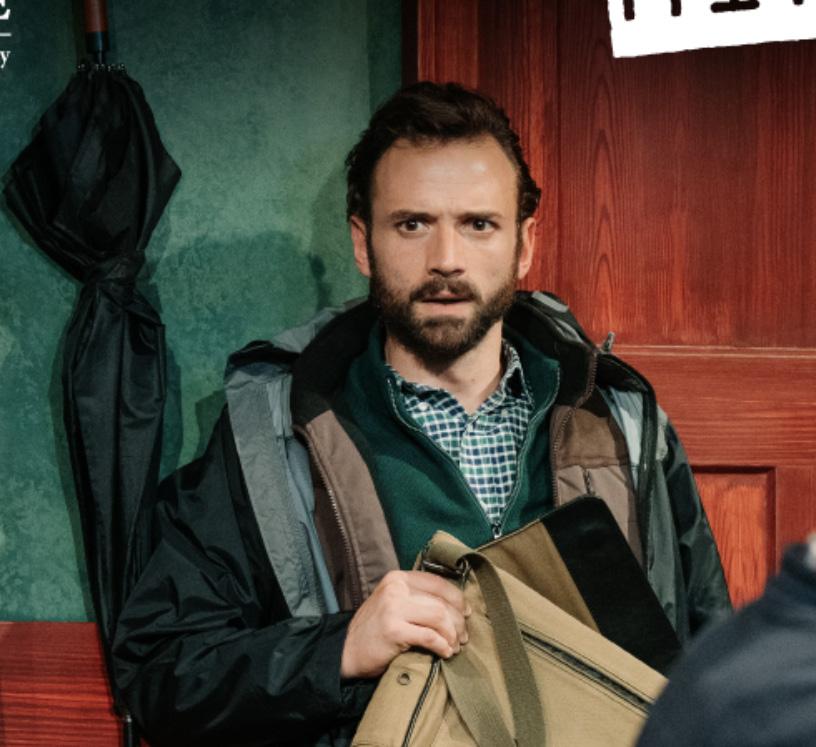
Washington, D.C., has long been known for its political secrets, and “The Minutes” leans right into that. The play is a satirical mystery set at a small-town city council meeting where the truth keeps changing. The show will be running at the Keegan Theatre through May 3, and tickets can be reserved online, starting at $55.
It was a slightly baffling turn of events. I nearly had to pause the show to take a break when a supporting character got run over by a truck on the orders of the corporation’s cool leader, Chairwoman Park, played by a precise Youn Yuh-jung. The truck run-over is a staple of Korean dramas that I particularly have beef with (as my mother would say, you can’t have a K-drama without a truck). Where was the realism of Yeun with his rundown apartment and KakaoTalk?
It isn’t fair to expect “Beef” to forever remain a show about Korean American, or even Asian American, identity. Nothing and no one is ever defined solely by their identity. Yet, it’s hard to understand when a show you’ve grown to associate so closely with yourself becomes something else entirely. Within the anger of the first season, what I saw and connected with was the feeling of “han.”
A Korean word considered untranslatable, “han” is a representation of an inherent communal anger that Koreans share due their common past pain of colonialism. It’s a pain that’s a result of systematic oppression but also a pain that is defined by the individual experience stemming from living within any sort of system. It is presumptuous to say that I could feel or understand even a tad of “han.” At the same
By Aarushi Maskara
MASK AND BAUBLE’S FINAL PERFORMANCE
Georgetown University’s Mask and Bauble Dramatic Society is putting on their rendition of “Gruesome Playground Injuries” this weekend. The play follows two people with a complicated bond developed as children, shaped by tragedy and emotional entanglements. The play explores this through dark humor. Catch it Saturday, April 25, at 8 p.m. or Sunday, April 26, at 1 p.m. at Poulton Hall Stage III. Spots are limited, so reserve your seat online.
time, what other word could describe the weight in my stomach every time I fail and I think of my parents? What other word could describe being so aware of my physical difference every time I look into a mirror? It is an experience that not only defines me individually, but is so common amongst Asian Americans. A shared pain. For better or worse, season 2 blows this pain to a bigger proportion. Compared to the previous season’s parting shot of just Amy and Danny, season 2’s last frame features all the characters trapped in their own place in a circle, constantly destined to play the part they’ve been born into. It’s this realization that they can’t free themselves from the cycle that causes that constant spark to boil underneath their exteriors. It is a damning realization, nearly a curse. What was catharsis and reconciliation in season 1 becomes acceptance and submission in the show’s second run.
There is no dramatic hurl of blood and violence. There is no more screaming and crying at the end. Indeed, maybe that is precisely why this season of “Beef” is so hard to grapple with. It is the cold awareness that there is no true release for all the pain we hold within ourselves — that, instead, we must learn to come to terms with it and simply try our best to survive.
WEEK’S THEME: The Show Must Go On
‘44: THE MUSICAL’
“44: The Musical” follows the life of the 44th U.S. president, Barack Obama. The production, put on by the Shakespeare Theatre Company, combines humor with pointed political commentary and is running through May 10 at the Klein Theatre. Fittingly, tickets start at $44 and can be reserved online.
THE KENNEDY CENTER’S ‘SHAKESPEARE IN LOVE’
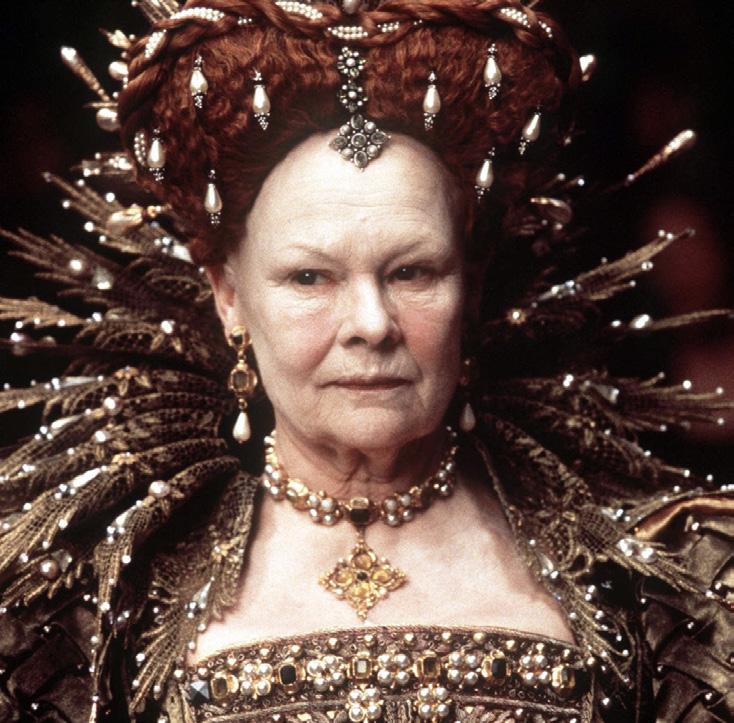
The Kennedy Center is screening the 1998 best picture winner, “Shakespeare in Love,” this Sunday, April 26 at 3 p.m. The film follows the journey of a young William Shakespeare as he navigates writer’s block and a forbidden romance that may just turn into the muse for his next project. The screening is free and advance reservations can be made online, but seats are not guaranteed.
Advocating Against Climate Change, ‘The Oedipus Project’ Excels in Performance Art
Anandita Agarwal
Senior Guide Editor
On April 21, acclaimed performers and public servants gathered at Gaston Hall to draw attention to one of the most pressing issues of today: climate change. Hosted by a collaboration of Georgetown University groups as part of Washington, D.C.’s Climate Week, “The Oedipus Project” strived to use Sophocles’ “Oedipus the King” to analyze ecological disaster, leadership and environmental justice, framed by the play’s themes of arrogant leadership and denial. Georgetown students, graduates and visitors gathered to witness one of the most memorable and dynamic events I have ever attended.
Starring Jesse Eisenberg as the eponymous Oedipus, “The Oedipus Project” featured a twoscene read-through of the play followed by a panel-moderated discussion that involved both the real-life audience in Gaston Hall and thousands of Zoom spectators. The organizers set the theme of the evening around the tone of democratic pluralism, where speakers did not preach to audiences but, instead, conversed with them.
In addition to Eisenberg, the read-through also featured Maryland native and actress Erika Rose, Senate Minority Leader Chuck Schumer (D-N.Y.), renowned circus clown Bill Irwin, Emmy award-winning actress Mare Winningham, New York City Public Advocate Jumaane Williams, health policy leader Dr. Anthony Fauci and celebrated actor Craig Wallace.
With such an eccentric and unique cast, the read-through was invigorating, equal parts tragic and humorous. Particularly, Fauci’s cinematic entrance as Tiresias the blind prophet, with sunglasses coolly perched on his nose, sparked many laughs. Though it was evident that rehearsal time for the read-through had been limited — one of the organizers said it was less than 45 minutes — the momentary mistakes often worked to elevate the performance as moments of improv and reprieve. It never felt like a stilted table read but, rather, like the first beginnings of something that could truly impassion and enact change.
Much credit for this must go to the sheer talent and acting ability Eisenberg brought to his role. Despite mixing up the pages of the script once (he covered up the mistake
in a manner that was both seamless and charming), Eisenberg was confident and assured, speaking with a conviction that allowed audiences to believe he truly was the arrogant Oedipus. Even with his ratty nondescript hoodie and red Indiana University cap, Eisenberg shone in his role.
For those unfamiliar with the play, “Oedipus the King” follows the story of Oedipus, newly-crowned king of Thebes, as he confronts a plague on his city. For this retelling, the two performed scenes were of the conversations between Oedipus, his wife Jocasta (Mare Winningham), his brother-in-law Creon (Jumaane Williams), Tiresias, the priests of Zeus (Bill Irwin, Erika Rose and Chuck Schumer) and the Shepherd (Craig Wallace) as they try to alleviate the plague’s effects. Over the course of the first scene, the priests reveal that the plague is a godly curse on Thebes for the cruel unsolved murder of their previous king, Laius. According to the priests, exiling the murderer will rid the city of the disease. Hence, the play becomes a whodunit mystery story wrapped in a Greek tragedy.
Of course, the main twist is that the murderer is actually Oedipus, fated to kill his fa-
HAAN JUN (RYAN) LEE/THE HOYA
“The Oedipus Project” is the perfect mix of performance and politics, writes Anandita Agarwal (SFS ’28).
ther, marry his mother — revealed to indeed be Jocasta — and have horribly deformed children. Although almost every audience member knows this twist, the tense and emotional execution of it during the read-through was still impactful, as each member of the line-up pulled out their best acting chops. Moreover, what was striking were the casting choices, such as Eisenberg as Oedipus and Fauci as the blind truth-teller that Oedipus denies and rages against. The real-life parallels in these casting choices, from Eisenberg’s previous role as controversial tech tycoon Mark Zuckerberg in “The Social Network” to Fauci’s stint as advisor to President Donald Trump during the COVID-19 pandemic, transformed the performance from a simple read-through into its own poignant interpretation.
Eisenberg made the brilliant artistic choice to play Oedipus with the same nervous condescension with which he played Zuckerberg. This, along with the other casting of Williams as Oedipus’ rational foil, Creon, helped seamlessly connect the play to the issue of the evening: the importance of climate justice.
After the performance elapsed, the audience — who were meant to be cosplaying the troubled citizens of Thebes — were invited to join the panel. From a comparison between Oedipus and today’s arrogant rich men to the display of how nature guided the characters to the truth, audience members found much with which to connect. Throughout the discussion, a somber and silent atmosphere engulfed Gaston as we all grappled with what we had just witnessed. The startling similarities of our reality and Oedipus’ fate became all too clear.
With such a crucial and reverberating message successfully delivered, “The Oedipus Project” was a remarkable evening that was able to accomplish exactly what it set out to do. It not only served as a model for how to execute art-based activism skillfully but also was a stark reminder of the climate crisis humanity must reconcile with. One can only hope we are able to reverse our own prophecy before it is too late.
May Day Solidarity Concert Pushes for Continued Advocacy
Juan Almanza Deputy Guide Editor
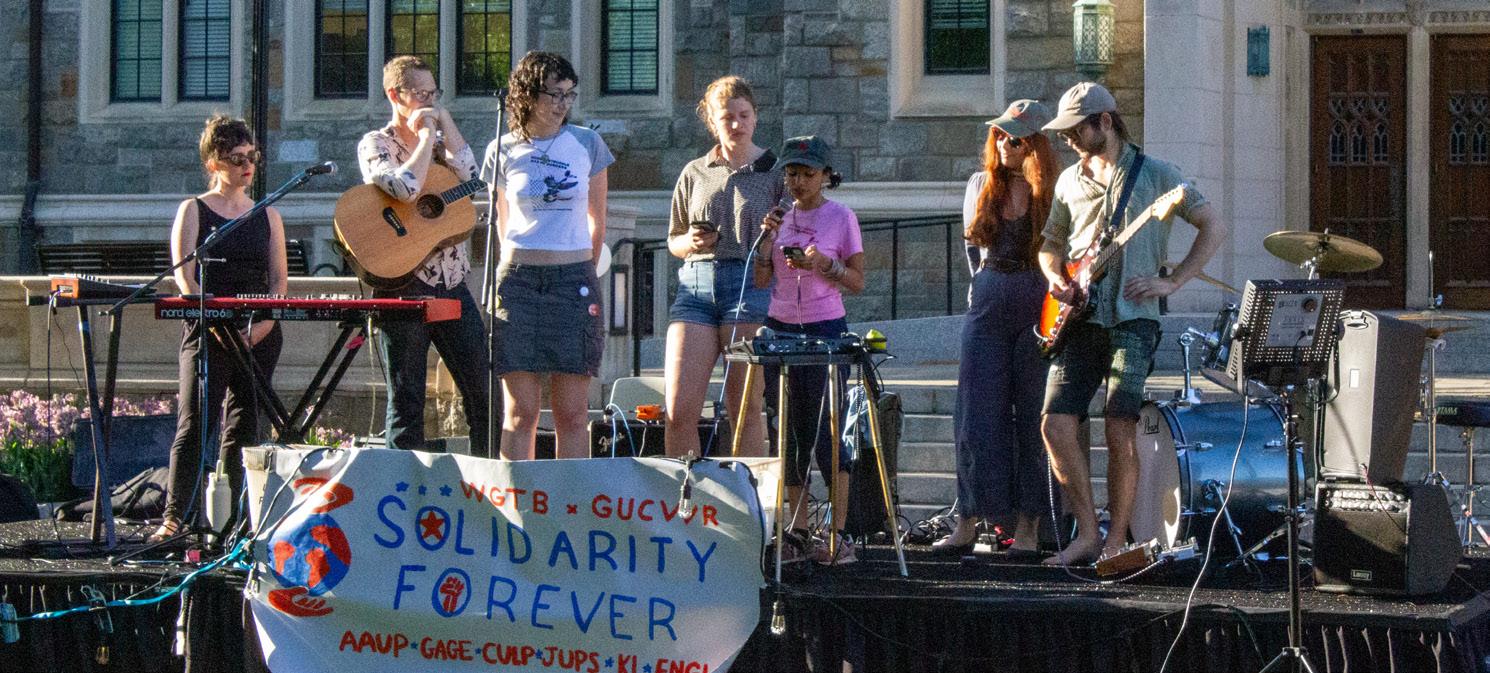
Following a year of continuous uncertainty surrounding the employment status of Georgetown University Transportation Shuttle (GUTS) bus drivers and recent facilities department contract renegotiations, the Georgetown Coalition for Workers’ Rights (GCWR) and Georgetown Radio (WGTB) hosted a May Day Solidarity Concert. May Day, otherwise known as International Workers’ Day, is celebrated worldwide to recognize laborers and labor rights (The United States does not recognize May Day, as it instead has historically celebrated Loyalty Day on May 1 to combat Communist Party May Day rallies.) The concert was sponsored by the American Association of University Professors (AAUP), Georgetown Alliance of Graduate Employees (GAGE), the Kalmanovitz Institute, the culture and politics department, the justice and peace studies program and the English department. The collaborative and rich performance was a celebration of workers everywhere as well as a powerful battle cry to continue the fight for the workers of Georgetown University.
The lineup began with indie rock and experimental pop group The North Country, a sextet band with a folkish edge that did a wonderful job in kicking off the show. Their synth work cut through the crowd nicely, and the choice to alternate vocalists brought a variance to the set that kept things interesting. Their song “We The People” from their latest 2024 album “The Future’s All We Need” was especially powerful and the spoken-word delivery had me singing along as
they sang, “We just want someone to believe in / Someone not working for the man.”
After The North Country finished their set, Fiona Naughton (SFS ’26), a member of GCWR’s board, said she was passionate about the May Day concert and commented on the community she has found within the movement for the workers of Georgetown.
“May Day means a lot to me,” Naughton told The Hoya. “It’s a very historic day of international worker solidarity.”
“We have workers here who have been completely screwed over by this university, and yet they’re still showing up because they feel deeply affiliated to it,” Naughton added. “By having this space, we’re trying to break down the divides imposed by the university between students and workers. The workers here are my family. It’s such a special community and I feel really lucky to be a part of it.”
After The North Country, Candidates, a Georgetown University student band, was up next. I was already familiar with Candidates’ work from the Badar Khan Suri benefit concert earlier in the semester, and their set was stellar as always. Lead singer Elliot Anderson’s (CAS ’28) harrowing but powerful vocals stunned, and David Patnaude’s (SON ’28) drumming was soft but sharp as a razor. Saathvik Poluri (CAS ’28) shredded on guitar with an amazing solo at the end of their song “A Match You Can’t Unlight.”
When addressing the crowd, Anderson said Georgetown’s workers play an integral role at the university.
“An especially big thank you to all our workers for making Georgetown what it is,” Anderson said at the event.
Singer-songwriter Lucia Zambetti (CAS ’26), better known by her stage name “Lucia” and also the final act of the concert, said the performance is a celebration in the spirit of May Day.
“I think having such a nice celebration in the sun and all this happiness and community is exactly how it should feel today,” Zambetti told The Hoya. “May Day represents taking the power back for workers; we shouldn’t be the ones who are always feeling bad.”
Like Naughton, Zambetti said she has found community through the Georgetown workers, recalling their welcoming presence throughout her years at the university.
“There were so many times where I would come up to my room, crying about something, and seeing Maria, the woman who cleaned our dorm floor, and having her there was this
reminder that there are actually people who support you along the way,” Zambetti said. Lucia’s performance was heart wrenching and intricate, and her voice was soft and inviting, even if her lyrics were piercingly intimate. With only her and her guitar, it was as though the audience was watching a musician who was floating away from the stage. Towards the end, with her song “No barracks, No men,” I joined arm in arm with the other students at the concert to celebrate what a wonderful evening it had been.
To sum up the May Day Solidarity Concert in a single word would be community, as the community of workers that the concert was dedicated to sang along in the audience. In a night that will hopefully define the future, the barriers between students and workers dissolved for just a moment.
‘Mile End Kicks’ Understands Your Young Adult Angst
Eliana Kut Hoya Staff Writer
If I’m going to be completely honest, I watched “Mile End Kicks” for Barbie Ferreira and Devon Bostick, due to both my “Euphoria” obsession and my middle school crush on Bostick as Rodrick Heffley in the “Diary of a Wimpy Kid” movies. The allure of a campy, coming-of-age, indie film with an original soundtrack really solidified that decision and I don’t regret it in the least.
A sweet yet poignant film about a young music critic attempting to move away from home and write her first book, “Mile End Kicks” dives into the real emotional hardships of trying to make it on your own. The film’s fantastic screenplay, hilarious performances and fun soundtrack made it a wonderful viewing experience.
The film follows Grace Pine (Barbie Ferreira), a twenty-something film critic who moves to Montreal to write a book about Alanis Morissette. On her first night
there, she is introduced to local indie rock band Bone Patrol and, after befriending guitarist Archie (Devon Bostick) and getting romantically entangled with lead singer Chevy (Stanley Simons), becomes their publicist. Difficulties with her publisher and personal relationships ensue and Grace struggles to set her life straight again.
Though I’m not a Canadian music critic in a relationship with a disrespectful band member, so many of the film’s emotions and experiences resonated with me. As a young woman in the worlds of writing and criticism, Grace has to deal with disrespect at almost every turn. Her attempts to feel seen and heard often fall flat and she regularly makes bad decisions or procrastinates her responsibilities. She falls behind on her rent and doesn’t communicate her writing struggles with her publisher. Grace isn’t perfect and neither are her actions, a reality that needs to be explored more often. “Mile End Kicks” accomplishes just this, portraying the messy struggles and experiences of youth
honestly. Young women are often overlooked and inauthentically represented. The film’s use of imperfect characters felt extremely refreshing in a world where it seems like everyone is trying to hide and disguise themselves and their genuine personalities.
The film’s punchy screenplay added to its resonance and originality. The actors’ deadpan humor and effortless delivery had the whole theater laughing. None of the dialogue felt forced, and, though some of the scenes might have felt a little silly and exaggerated, I could still imagine a scenario in which they could occur. Director Chandler Levack based much of the movie on her own life, which added to the film’s personality and authenticity. Every scene felt personally crafted, shot with the careful attention someone would give if they had lived through those scenes themselves.
The 2016 Tumblr aesthetic, exemplified in the film’s cool yet vibrant tones and color grading, as well as its chaotic fashion, also did much to set the film’s atmosphere. The indie setting felt very authentic and cool. The vivid
tones are mixed with some camcorder shots to help elevate that aesthetic.
Composed of Alanis Morissette songs, indie tunes and Bone Patrol’s ridiculous but catchy “originals,” the soundtrack of “Mile End Kicks” also enhanced the film’s aesthetic and story.
Parts of the film, however, dragged. I think the scenes between Grace and Chevy could have been slightly more condensed. The time spent on their relationship would have been better spent focusing on a deeper exploration of Grace and Archie’s friendship. Because of the brevity of their screentime together, the ending, though satisfying in plot, fell slightly flat in emotion.
Still, “Mile End Kicks” proved to be moving and came close to the unabashed messy and fun campiness I was hoping for. We need more hilarious, deeply relatable films we’ll all remember for at least a few years. If you currently are — or have ever been — a young adult, I highly recommend watching “Mile End Kicks” to feel seen and heard.
CONNOR EMMERT/THE HOYA
The concert was a beautiful tribute to workers, says Juan Almanza (CAS ’29).
‘Normal’: I Swear I Read a Jack Reacher Book Just Like This
Just when I thought I was done with my movie-reviewing career for The Hoya, my editors dragged me back in for one final romp (everyone say thank you to Iz and Anandita). If you got the “The Godfather Part III” reference back there, maybe you’ve spent too much time reading my reviews — you should probably go touch some grass. I started off my critic career with a rather forgettable but nonetheless enjoyable James McAvoy movie, so it felt only right that I would end my critic stint at The Hoya with another humorously forgettable popcorn flick, this time starring none other than Bob Odenkirk. So, dear reader, join me for one last ride as I apply my snobbish, self-appointed film fan takes to Ben Wheatley’s “Normal.”
The premise is quite simple: Ulysses (Bob Odenkirk) is the interim sheriff for the town of Normal, Minn., ever since their last sheriff was found in the buff in a snowstorm. Everything appears normal until out-of-towners Lori (Ree-
na Jolly) and Keith (Brendan Fletcher) decide to hold up the town bank in order to finance their dreams of becoming something — talk about a generic plot device. You might be thinking this is just another boring heist movie, but hold your horses. It turns out the town of Normal has actually decided to rent out its bank vault to none other than the totally friendly and definitely non-violent yakuza (the Japanese crime syndicates). Ulysses, unaware of this agreement, is almost fragged by his subordinates before banding together with the bank robbers against a mob of angry Minnesotans. Of course, the yakuza make their appearance as well, because, after all, what else says Minnesota like a couple of ruthless Japanese killers?
The plot is so unreal that writing out that summary made me lose a couple of my (already limited) marbles. This movie is by no means the next “The French Connection” (are my references too dated for you, anonymous reader?). As you likely already surmised, the storyline is absurd, but it’s just zany enough to make it entertaining. I mean, come on, the yakuza coming to Minnesota, the “Fonz”
(Henry Winkler) playing a corrupt small-town mayor and Bob Odenkirk’s general presence (the “Better Call Saul” jokes are low hanging fruit) make for an unbeatable combination. While the bizarre premise might seem like it would make for a bad film, “Normal” is ironically saved by its even more bizarre script. Many lines are delivered with the philosophical severity of the average Rust Cohle line from the first season of “True Detective”(do yourself a favor, go watch it right now), but the actual content falls more into the vacuous range of an Adam Sandler movie (all love to Adam Sandler; “Grown Ups” was great). If that reference didn’t land, imagine if every line felt like it was being delivered by Keanu Reeves. This dissonance makes for an odd effect on the viewer. It reminded me of my first time driving, the car lurching as I anxiously switched between the gas and the brake pedal (sorry to my father, he wasn’t so amused, but in my defense, I was 16 and we were in a high school parking lot).
What the movie lacks in terms of any sort of character development or catchy dia-
logue, it makes up for in truly jaw-dropping, blood-spurting action. The characters are forgettable (caricatures might be too generous a term), and the dialogue could put a prime Ozzy Osbourne to sleep (think about it), but each death will have you asking yourself how someone could even come up with that. To the decent denizens of polite society, don’t fear, as the violence is done rather tastefully. Don’t get me wrong, there is still a lot of blood and death, but it is done more in the style of a “John Wick” movie than the 2008 “Rambo” remake (talk about unnecessary gore). Plus, let’s be honest, Bob Odenkirk can’t really miss. It’s like Robert De Niro doing “Meet the Fockers”; the actor is too good not to shine (I did just make this comparison as a shoutout to De Niro, the Scorsese scion, for absolutely killing it in some of the dumbest movies of the 2000s). So if you’re squeamish about blood and stock action movies, go look elsewhere. But if you need a way to kill 90 minutes of your day without having to exercise too many brain cells, “Normal” is your huckleberry.