

ON THE COVER
THE ‘ROCKY’ ROAD TO SURVIVAL
MARCHING AT MAGIC KINGDOM
SETTING THE STATUS QUO
TURNING A NEW PAGE
SECRETS UPON SECRETS
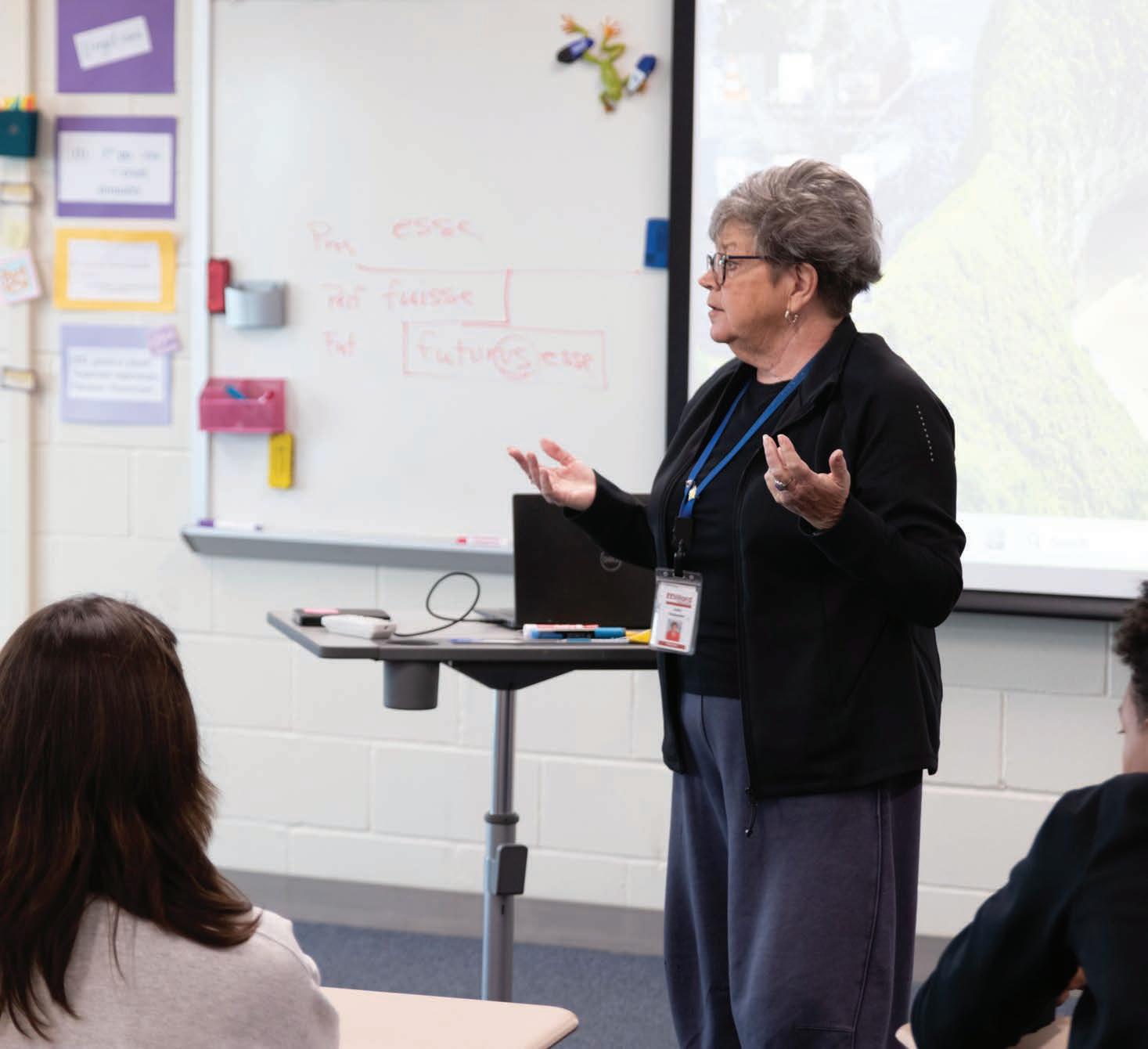
Magistra Julia Kolander encourages students for the AP Latin Exam. They prepare for this by in class review and games.
SUPPORTING
CHECK OUT THE MINI

ON PAGE 13
The Hoofbeat staff will publish six issues of the paper at Millard North High School (1010 South 144th Street, Omaha, NE). Type is set with the use of Macintosh and HP computers. Printing is done by White Wolf Printing, Sheldon IA. The Hoofbeat is a member of the Nebraska High School Press Association and JEA. The Hoofbeat exists for the express purpose of student information and learning.
Advertising: Advertising will be sold at $7 per column inch or by special quarter, half, or full page rates. Information can be obtained by calling 402-715-1404.
Responding to the Hoofbeat: Letters to the editor may be submitted to Room 1105 or sent to sacrotzer@mpsomaha.org. Names will be published. Letters must not contain attacks against an individual and may be edited for clarity.
Co-Editors-in-Chief
Argyrenia Pipinos
Mira Mukherjee
Front Page Editors
Grace Evert
Sarah Robey
News Editor
Katelyn Judd
Opinions Editors
Jayden Maple
Lucas Day
Nathan Yeh
In-Depth Editor
Mira Mukherjee
Lifestyle Editor
Argyrenia Pipinos
Sports Editor
Lydia Harlow
Online Editor
Sarah Robey
Cartoonists/Artists
Nadirah Johnson
Rosie Scherbarth
Photographers
Lydia Harlow
Lucas Day
Staff Writers
Matthew Um
Miley Huynh
Parker Neville
Teja Sridher
Camilo Padilla Guzman
Adviser
Sarah Crotzer
Principal
Aaron Bearinger



MN Band goes to Disney World over Spring Break, with the opportunity to perform in front of the park
KATELYN JUDD News Editor
Known as the most ‘‘Magical Place on Earth,’’ Walt Disney World is situated in the bustling city of Orlando, FL., where tourists are only a short drive from the beach, and are exposed to the many different attractions the park offers. As the most visited theme park in the world, Disney World houses and enchants 58 million visitors annually.
Of those millions, 120 of them were MN band members during their spring break, where they prepared for their highly anticipated performance hosted at the Magic Kingdom Park itself. Students were given the chance to march on Main Street, where iconic attractions like Cinderella’s Castle are located. They were able to perform as a part of the evening parade, which easily held thousands of people.
MN band members only get this opportunity once in their high school career as a chance to really experience larger crowds and environments. For senior tuba section leader Cicily Blaker, it has been her inspiration to keep pushing herself to greatness with her instrument.
“All my four years in band, I’ve known I was going on this trip. So, the entire time, it has been a motivating factor. Don’t get me wrong, I love band, but there are some moments where it gets to be a lot. [I would just remind myself] that I love band, and that I get to go to Disney my senior year,” Blaker said.
Magic Kingdom the following day.
Craig Mathis, MN’s new band director following the retirement of Ryan Placek last year, thought that the unique part of their performance was actually what happened beforehand.
“It was a really cool opportunity for the kids. We all met in the park, and then a Disney cast member took us backstage, which is neat, you normally don’t see Mickey with his head off, or Rapunzel without her makeup. They got to go backstage and see kind of behind the scenes, while getting ready for their performance,” Mathis said.
Senior drum leader Emma Schlick’s favorite part of their performance was looking out into the sea of tourists, and being able to find comfort in the transfixed gazes of awed kids.
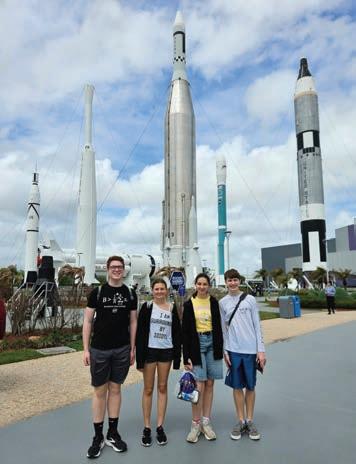
Looking at the Stars
Monday, after flying out extremely early from home, the band went straight to EPCOT, taking advantage of the international cuisines and exhibits of different cultures. Tuesday, they explored Universal Orlando in the morning, then returned to their hotel for a rehearsal, practicing for their long-awaited performance at
Garret Schultz, Emma Kreikemeier, Cicily Baker, and Olivier Mann stand in front of an exhibit at the Kennedy Space Center. The band learned about the Vehicle Assembly Building where rockets are built.
Photograph by Carri Dyer
“It was so cool to see all of the little kids get super excited. They told us before we had started that we should wave at the little kids or babies, because it makes them feel seen. I thought the trip was just super magical,” Schlick said.
On the other hand, Blaker was at first intimidated by the crowd, never having performed in front of children or families, let alone thousands. However, she used that intimidation of the unique experience to remain calm and collected, as she had practiced time and time before.
trip back home.
Despite all of the activities, for Schlick, the best part was simply being able to get closer to people she may not have expected beforehand, and how she hopes it will form a strengthened community within the group.
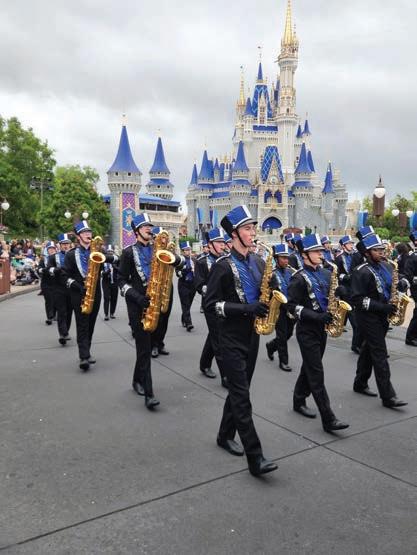
MNHS Marching Band marches down Main Street at Magic Kingdom playing their parade song, “Mirada.” They were one of many bands performing this week.
Photograph by Wendy Lund
“I was just happy that I was able to perform for people and bring joy to people around me. It was scary, but not terrifying scary.
It was like, ‘ooh they’re looking at me.’ But also, these people are here for me, you know? The audience was very full and kids on the side were really excited. And I don’t get to perform for kids. Normally, I get to perform for teenagers or adults,” Blaker said.
After their performance on Wednesday, students soaked-in the educational and research environment at the Kennedy Space Center, dividing Thursday into two sections, visiting Disney Springs as well. On their last day, members socialized at Hollywood Studios before beginning their
“I roomed with a few girls [that I didn’t know well], but I feel like we were able to have some deep conversations in our room, and I just liked learning more about them. It allows us to understand what everyone is going through. We’re not all going through the same things, and it makes it easier for us to support each other when we know those background details,” Schlick said.
For both Schlick and Blaker as current seniors, this trip served as their concluding act of their time with MN band.
“My favorite part was hanging out with my friends. I got to hang out with people that I like talking to and being around. [I’m going to miss that most], because I’ll never experience something like that again with the same people or the same community,” Blaker said.
Especially for Schlick, this trip gave her the opportunity to reflect back on her previous experiences in the band, and how she aspires to take that leap of faith once again in her next steps in life.
“I’m just trying to emotionally prepare myself for that last concert. I know I’m going to be very upset, but I’m trying to prepare all of my underclassmen to embrace their time in band,” Schlick said. “I look back with so much joy, with how much our band has grown, and also me. I used to be super shy, and I’ve grown to a high leadership position. It shows me that I can do that in the future as well.”
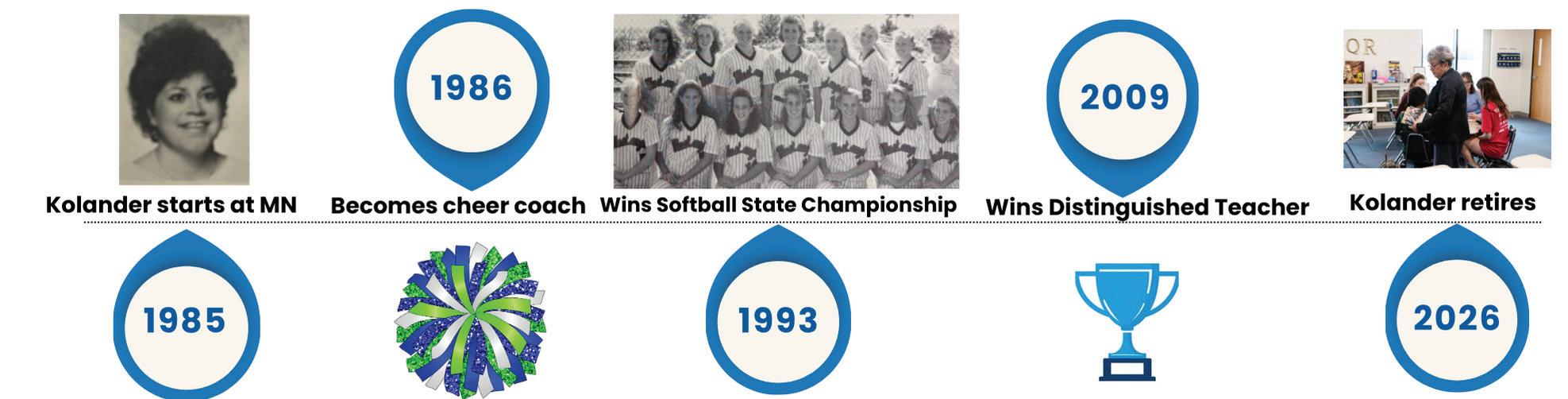
Latin teacher Julia Kolander retires after 41 years, leaving a lasting impact on students and the Latin program
LYDIA HARLOW Sports Editor
1 years, 7,380 school days, or 51,660 class periods of teaching. Throughout entire generations of students passing through, one teacher has remained, teaching class after class of Mustangs.
After over four decades of teaching and developing the Latin program that she herself flagshipped, Julia Kolander plans to retire this year.
“I am looking forward to a little more freedom in my travel, volunteering, and general day-to-day life,” Kolander said.
Throughout her time here, Kolander has impacted hundreds of students’ lives, especially those in the close-knit community fostered by her own Latin program.
She has poured into these students for decades, occasionally even teaching multiple generations of the same family. While her teaching structure has changed year to year, her love for her students and content has never faltered.
“Although, of course, my delivery has changed a wee bit, I think that my enthusiasm has never wavered. I think that it has always been there, because I truly enjoy being around kids this age,” Kolander said.
This passion is tangible in the way Kolander interacts with her students. Each year, she deliberately reinvents how she teaches each unit to accommodate and resonate with each particular grouping of students.
“I try to translate my love of my field and reinvent it -- I don’t think there’s been one day I’ve taught the same in 40 years. I have a different audience, different levels of understanding, and a different set of students,” Kolander said. “It’s kind of fun to figure out ways to communicate with each unique set of students, and you have to accept that. You have to know it’s going to be fun for you to do this; otherwise, don’t be a teacher.”
This effort and intentionality in her teaching have not gone unnoticed by her students, such as senior Isaiah Jacobson.
“It’s always been a different type of vibe from her [than with other teachers]... she’s good at being the interactive teacher who is very chill, but also really pushes you,” Jacobson said.
Kolander has taught Jacobson for three of his four high school years, as well as proctoring the Latin Club, which he is a part of. Throughout their numerous interactions, he’s not only learned Latin but also the power of consistency and determination.
“One of her [Kolander’s] mottos is ‘just a little bit every day’. I try to live by that. She says that you just have to put in something every day; it doesn’t have to be perfect, it doesn’t have to be a lot. You just keep putting in something every day, and you build that consistency and go from there,” Jacobson said.
Coming straight from grad school at UNL to building the Latin program in the Millard district, she grew the program until, after three years of back-and-forth between here and Millard South, it became large enough that she could take on a full-time position at MN.
“When I came from Lincoln and was starting here, one of the things I had heard was ‘North’s a gunner school. If you’re going to teach there, you better be prepared every day to work hard, because that’s the expectation in that high school,’ and I went ‘bring it on’,” Kolander said.
Starting here in 1984, she launched the new Latin program, building the curriculum and starting the trend throughout the district. Originally, she traveled back and forth from MN and Millard South before eventually settling here in a full-time position when the program grew large enough to support it.
While the Latin programs in the other two Millard schools have since been discontinued, the program here at MN has been maintained throughout the decades.
“All the high schools have had it [the Latin program], but ours is the only one that maintained enough enrollment, enough interest, and, this is the key thing, administrative support… when you get support from your administration, that makes all these things possible, and that was what allowed me to continue and
grow this program,” Kolander said.
These factors, not to mention Kolander’s consistent effort, have allowed the program to flourish at MN. What started as a couple of students in small classes has grown into a fully developed program with classes almost every hour of the school day.
“At first, Latin was just a few classes, but she grew it into what it is today. She has definitely made her mark on the way Latin has been taught here, [and on] countless students and their love for classical languages and the ancient world,” Latin teacher Matt Meyer said.
With Kolander’s retirement, Meyer will assume the role of Latin Department Head, switching from teaching Latin, AP World, and IB Theory of Knowledge to teaching Latin exclusively.
[I’m hoping] to maintain all the excellent things that Magistra has done over the years… and I’m really looking forward to teaching [solely] Latin. I love the kids, Latin kids are just excellent students, and so that’ll be fun to have them throughout the years,” Meyer said.
Meyer is hoping to keep much the same, continuing the programs and activities thoughtfully designed by Kolander, while simultaneously adding his own insight and design to the curriculum.
“I am excited for every new perspective and technique he will bring to the program. My current scholars will appreciate hearing new jokes--for sure,” Kolander said.
Throughout the development of the Latin program, it has seen many unique eras, and this one is no different. Like with challenges of the past, like adjusting to new technologies or culture shifts, the Latin program will adapt to those changes while remaining true to its roots.
“Things have to change. It’s like having a child grow up: one day, they’re crawling on the floor, and now they’re running in a race on the track. It’s bittersweet, but you accept it; it is what it is. You may have nostalgia for when they were crawling, but you see the beauty in each stage too,” Kolander said.
state-of-the-art Omaha Central Library opens as one of the first of its kind in the U.S.
PARKER NEVILLE Staff Writer
t’s midday on a Sunday, and traffic has ground to a halt on Dodge Street as an unusually high number of cars try to press forward. While such a jam is unusual for a weekend, there’s a good reason. As people find parking spots and set out into the crowd, they arrive just in time for the blue ribbon to be cut for the long-awaited opening of a new building.
After four years of construction, the Omaha Central Library opened on Apr. 19th, with an opening ceremony with over 1,000 people in attendance. Since then, people from all across Omaha, such as junior Charlotte Slimp and sophomore Auspy Li, have visited to see what the place is like.
“I really like it, I think it’s pretty interesting, and it’s a big development for libraries in the city. I really like the Zen Coffee and the study rooms, they’re nice amenities that make the study process more dynamic,” Slimp said.
A three-story building with over 100,000 square feet, the Omaha
The “Book Robot” and its role at the new Omaha Central Library
Official Name:

Automated Storage and Retrieval System (ASRS).
Function:
Manages over 600,000 items, using it’s “robot” arms to retrieve and store the books.
Purpose:
Uniquely organizes the books into bins rather than shelves, to maximize space.
Central Library is now the largest library in Omaha.

“There’s actually a decent amount of room that you’re able to study in around the building. I thought it would be really full and packed, because it was kind of new, but it’s big enough that it can hold [the visitors],” Li said.
One of the first people to visit was MN Librarian Rebecca Kegley, who had signed up for the library’s monthly silent reading club. She and the other members of the club were invited to visit for their first meeting, until they found out that they would instead be given a special opportunity.
“The preview night was going there to join others to just have a reading night. But when we got there, they surprised us and said that we had full access to the library to walk around and see it for the first time, so that was really special,” Kegley said.
One of the standout features of the library is the automatic storage and retrieval system, a robot that can find and sort books into thousands of bins throughout the library.
“The automated retrieval system is the only one of its kind in this country. They said it holds over 500,000 books, it’s three stories high, and it’s the most incredible thing you’ll see,” Kegley said.
But not all of the library’s improvements involve revolutionary technology: despite its advancements, it hasn’t lost its identity as a library. It still serves as a safe haven for students like Li who want the quiet and collected environment of the study rooms.
“I had gone to the Omaha Public Library a few times, but I didn’t really like the study rooms that much. It was kind of dark, and I definitely prefer the windows in the other one. The study rooms are a lot nicer, and they have a TV in there,” Li said.
The Omaha Central Library has also expanded its Do Space, where people can access all the technology they need to create what they want. From 3D printers to laser cutters to sewing machines and even recording spaces for music and podcasts, there’s something for everyone who visits.
“I love that they’re keeping up with what people are using media for. And the podcasting element is something I would like to incorporate here in my own library, so I appreciate that it’s out there for people to use and to become familiar with,” Kegley said. With all of these factors combined, plus the new centralized location on one of the busiest intersections in the city, the Omaha Central Library gives people more reason than ever to visit a library.
“I think the library’s taking on this idea of being a third space for people, and this helps bring people to the library for things other than just reading and books… But I also think that there’s a lot of old school readers out there who still want a book in their hands, and I think the combination of all those things gives a little something for everyone,” Kegley said.
Whether you visit to check out a book, or to check out the new Do Space, the Omaha Central Library is a one-of-a-kind place in Omaha. With its opening, it has opened a new chapter that has redefined what a library can be.
Omaha farmer’s Market opens for its first weekend (May 3).
Gunman taken into custody after shots are fired at the White House Correspondent’s Dinner (Apr. 25).
Supreme Court controversially reinterprets racial gerrymandering in Section 2 of the Voting Rights Act (Apr. 29).
Spirit Airlines shuts down after 34 years, leaving many passengers stranded (May 2).
The World Health Organization puts a cruise ship on quarrantine, after three people die from hantavirus (May 1).
CAMILLO PADILLA GUZMAN Staff Writer
The typical play experience includes buying your ticket, sitting down, and enjoying the show.
However, Millard North hosted a play that was completely different from the standard sit-and-watch play. It captivated the audience and made the night memorable for everyone who watched it. It’s called “Trap.”
‘‘Trap’’ first started as a book and was written by screenwriter Stephen Gregg, who then adapted it into a play that many high schools have performed and taken inspiration from.
Something different about “Trap” compared to other productions MN has done was that it was advertised on ever-changing posters around the school, which were adorned with secrecy, to spark conversation and excitement among the students.
Very little information was given out to students about what was going on during the play since there was a lot of novelty surrounding it, such as the immersive experience, new, minimal costuming, and interaction with the audience.
The immersivity of the show was unmatched. It was one of the most immersive shows Millard North has done yet.
side the main character, through all the adventure and fear, while still being acknowledged, is what added to and created the captivating experience.
However, a key thing that made the experience so riveting was that some of the cast were hidden among the audience, sitting in the seats with them until it was their time to shine.
This is very scarce to find in any normal production. The planning it took in preparation was immense, and for three straight days, it went according to plan.
Once the first person came out, people were looking around, trying to identify if it would happen again and if so, who would be next. It was like one big game of hide and seek.
“Trap.”
One distinct difference is in the costume choices. Since “Trap” was a modern show, the costumes in this production were more laid back, and it wasn’t heavily reliant on costumes.
“Other productions [like “The Addams Family” or “Little Women”] were more intense on costumes, but this is not really set in a certain time period. It’s a more modern time period, so finding clothes was easier because people could just take stuff from their closets,” junior costume chief Emma Larsen said.
However, even though the production wasn’t heavily reliant on costumes to drive the story, that doesn’t mean they didn’t play a big role in it.
“Trap” actors rehearsed for their performance on the weekend of May 1-3. Students and parents were horrified as cast members jumped out from walkways and scared viewers. The members in hiding went undetected due to their ordinary costuming, blending in perfectly with the crowd, achieving the psychological aspect of the play.
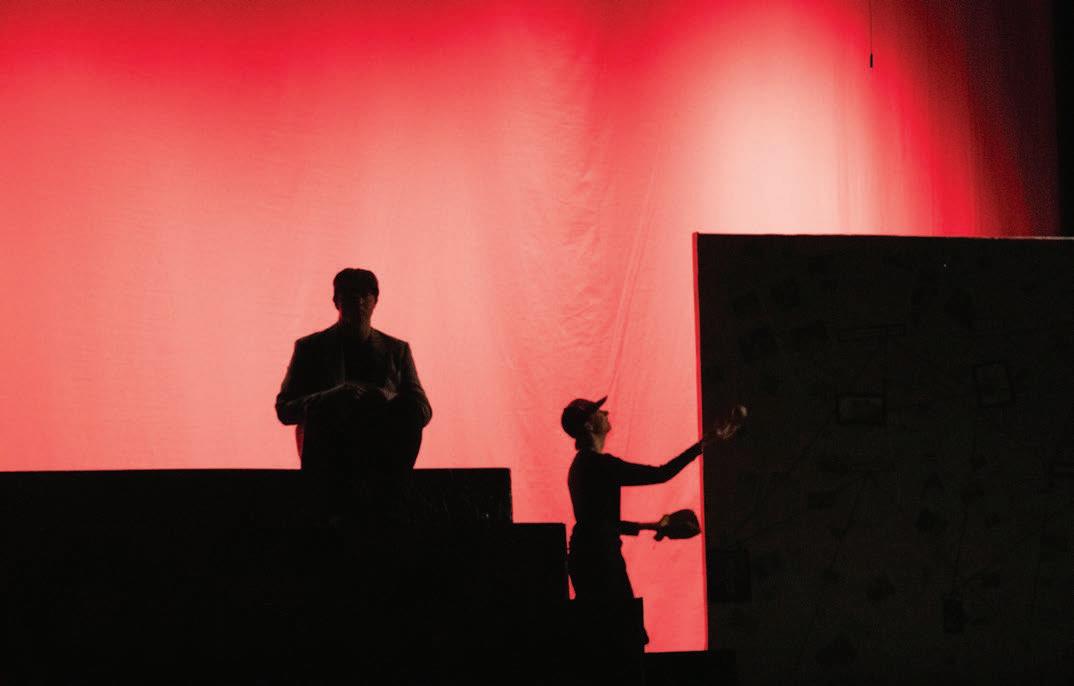
“It’s supposed to be audience interactive in a way, and it’s supposed to make you feel the fear of what’s going on [compared to just seeing] monologues on a stage,” senior set chief Gracelyn Beukenhorst said.
Another aspect is that during the production, rather than treating the audience as spectators, the cast involved them in the play.
“It’s not like normal productions where the actors pretend the audience isn’t there. We acknowledge the audience in this show,” theater director Michelle Williamson said.
The feeling viewers had of being right there along-
Another reason why the play was so different is that a mysterious play like this hasn’t been shown at Millard North in the past.
“[The play] ‘Trap’ is modern and contemporary, and it’s kind of scary. We haven’t done a psychological, scary show in a long time,” Williamson said.
The other productions done these past years, including “The Addams Family” and “Lord of the Flies”, have been something you can watch without feeling any fear of what may lurk around the corner.
While students may have felt a little discomfort in a production like “The Addams Family,” viewers didn’t experience any true fear like they had while watching
During the show, there were a variety of different costumes, ranging from actors wearing older vintage clothing to the main character wearing modern teenage clothes. This helped the audience distinguish whether the character was older or younger, and it showed pieces of their personality as well, since some characters’ costumes included accessories like trench coats or jackets.
There were a multitude of contributions the cast made, such as making the audience immersive, suspenseful, and unexpected, to make this show enjoyable and memorable for everyone.
Even the people behind the scenes, like the light crew or set crew, worked tirelessly to provide the audience with the best version of “Trap” that they could.
“It’s one of our more unique shows of the year, and it’s not the most generic production you’ll see. There’s a special twist to it that I think is really cool and [I hope people found it] interesting,” Beukenhorst said.
THE HOOFBEAT Staff Editorial
Returning from spring break, students and staff mourn the free time they once had. Concentration flies out the window when irritating fluorescent lights replace bright skies, and everyone’s brains function about as well as a laggy school laptop that was left untouched since break started.
Entering the “home stretch,” some students are eager for summer to sweep them away. Seniors quietly count down to their last day on May 19th. Like previous years, all other grades must be thrilled to leave shortly after the seniors do, before Memorial Day.
However, this year holds an unexpected surprise. For the 2025-26 school year, the last day of school is on May 28th, three days after Memorial Day, which is on May 25th. Compared to last year’s calendar, students were out on May 23rd, with Memorial Day being on the 26th.
People claim that it feels ridiculous to be out after Memorial Day and ask why it can’t be the same as previous years, when school was out before the holiday. Let’s be real—going from ending school three days before Memorial Day to three days after? Why don’t we get it over with? Is it really worth cramming in the extra three days?
A fair share of students have expressed discontent with the decision. One of many complaints include plans abruptly put on pause, such as ones arranged for Memorial Day week. Overall, students are irritated with putting summer vacation on hold.
What are you most looking forward to this summer?

[I’m
most looking forward to] going to Florida. I’m going to Universal, Disney, and probably the beach for like 10 days. Ryker Hehr Junior
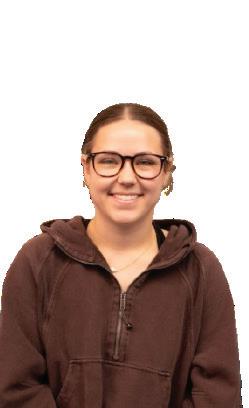
Payton Ladehoff Senior
I’m going to Hawaii for my graduation trip. We’re going to spend some days hiking and going to the beach.
On the contrary, some students hardly mind the pushback and act as if nothing changed. For them, they’re patiently waiting for school to wrap up, no matter what day it ends on.
Before we snatch up our pitchforks and light our torches, though, we should take a moment to understand why our last day is after Memorial Day. Some people argue that it should be on the same day as last year, May 23rd.
However, the school administration has affirmed that the district calendar committee has a logical reason for the last day’s unusual date. It’s not as simple as picking one day, like May 23rd, and setting it as the official last day for all the following school years.
The school calendar is composed of 176 school days and is split between two semesters, which is why the district tries to go for 85 days first semester and 90 days second semester. This is the time required by the state Department of Education.
According to the administration, the biggest factor this year that’s different than most years is that we’re coming back after Memorial Day. This is due to the fact that the holiday is earlier than it normally is. Consequently, in order to get the number of days that we need for second semester, we must return after Memorial Day.
Similarly, this reasoning applies to the placement of the first day of school. In the 2024-25 school year, the first day of school was on August 9th, whereas our first day this year was on August 13th. Therefore, because our starting date is later than last year, we are getting out later.
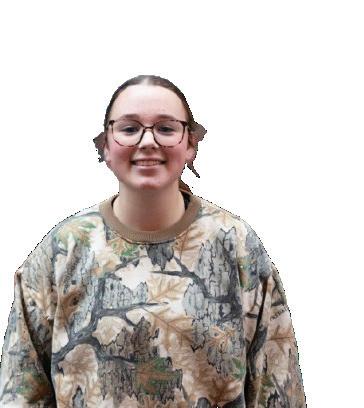
Abby Scritchfield
I applied for a job at an ortho clinic, and I’m going to be a rehab aide. I’ll be making sure all the physical therapy stuff is set up and ready.
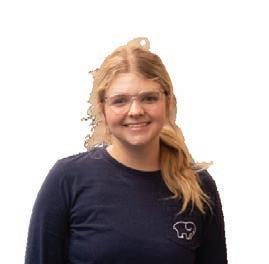
I have dance nationals for The Next Step Dancing with Maren in Florida in mid-June, and I’m excited to be at the beach. Grace Rishling
As students, it is more than fair to be upset about this. To us, we value summer break because it gives time to de-stress and enjoy our youth when we aren’t buried under mountains of work.
When we return after Memorial Day, we shouldn’t be surprised to see people sluggishly dragging themselves through the doors with the light completely drained from their eyes. Imagine how soul-crushing it is waking up after Memorial Day and remembering, “Shoot, it’s not over yet?”
Why do some students feel conflicted? There are plenty of reasons: to name one, we feel robbed of a summer that could’ve started earlier—plans, jobs, and vacations, all pushed back just to stay a little longer. Even if the amount of total school days is technically unaffected, the idea that we’ll still be here in late May feels discouraging.
Moreover, students will lose motivation because it seems like break is farther away. The closer we get to the end of the school year, the faster energy and effort plummets. People simply want to get their exams and work over with so they can go and skip merrily out of the school, totally stress-free (not totally, but temporarily).
It makes sense that this is necessary to fulfill the time requirement for school. Nonetheless, it doesn’t make it less frustrating for those who are clawing at the walls and waiting for summer break.
How many more energy drinks can we stomach? How many more hours of sleep can we lose? When will we see the sun again? We’ll have to find out. Unfortunately, what more can we do but wait?

By Rosie Scherbarth
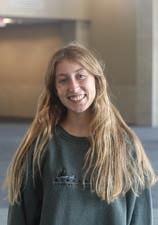
rom the moment I entered high school, people always gave me the same advice. Take challenging courses, get involved, and surround yourself with good people. What stood out to me the most was the importance of the people you meet and surround yourself with in your life. From freshman Sarah to senior Sarah, about to graduate, I have changed in many ways. I have grown and learned a lot due to the people I’ve been surrounded by and the ones I’ve met along the way.
My freshman year, I was quiet and shy. Even when I knew the answer, I rarely raised my hand or asked questions. I was so nervous that my hands would become sweaty and my heart would pound. I often left class wishing I had said at least one small point but the fear held me back. I admired the students who could do it so easily. A girl I knew in my Spanish class, who I had gone to middle school with, was always participating. Even when she was wrong, she went for it. speak up.
select softball team. I was excited but also nervous to be on the team since most girls had been playing at this high level for several years, while this was my first time. At the first practice, I was unconfident in my abilities. I felt like I did not belong.
One girl on the team, the catcher, carried herself with confidence in every game and practice. She encouraged and helped me find confidence in myself, not only on the field but in other parts of my life as well.
As I continued into junior year, there were new challenges. A lot of things were out of my control, which bothered me. I didn’t know how to just let it go, and would get so caught up in the negative. I spent so much of my time dwelling on these things.
for the school musical for the first time and to go to State Journalism which was very exciting.
Every person you meet leaves something with you, even if you do not realize it at the time. Many of them don’t know how they have impacted my life.
One of my classmates always had a positive mindset. She showed me how to just let things go and that it’ll always work out in the end. This helped me finish out the rest of the school year feeling optimistic and to remember all the things that were going well in my life. I had the opportunitiy to play piano in the pit orchestra
SARAH ROBEY CO-FRONT PAGE EDITOR “ “

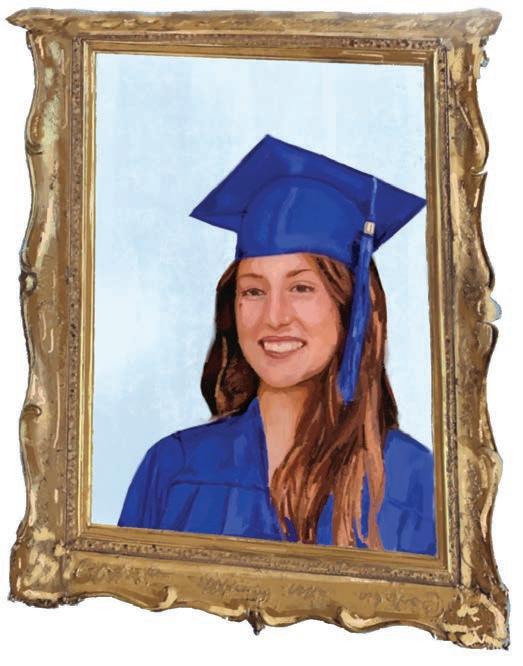
One day during senior year I was talking to someone and realized that a lot more than I ever thought had happened in their life. You truly don’t know what someone is going through and what they carry everyday. It is important to always be someone that people can rely on, whether it is giving them a smile or being available to listen. As I have become more extroverted and come out of my shell, I have become more talkative to my friends, family, and even strangers. I went from not wanting to speak up to oversharing. This especially happened during senior year. I was scared of accidentally offending anyone if I had even something remotely critical to say, or was worried about what they might think. I would try to get ahead of most likely their nonexistent judgments by constantly justifying myself.
For example, when asked about college, I would feel the need to overshare why I applied to these certain schools or programs, and how it was that I was halfway through the second semester and I still hadn’t decided on a school. While catching up with a friend who had graduated last year, she also felt that she had overjustified herself a lot and how she had worked on it. This is something that I have been trying to work on this year.
When I graduate, I hope that I have left an impact on one person, the way other people have done for me. If it is a small smile or hi in the hallway that makes someone’s day better or being a should to lean on, I hope I have helped somebody for the better. Even if I never fully see the effect I’ve had, I hope that something I said or did stays with someone and helps them keep going.
As all of us seniors are nearing graduation, many of us have been reflecting. No one can believe how close we are to actually graduating. This far-off thought is becoming reality. We have all learned from one another and grown together.
Looking back on these experiences, each of these people has helped shape a different part of who I am. Every person you meet leaves something with you, even if you do not realize it at the time. Many of them don’t know how they have impacted my life. As I continue on to college and the rest of my life, I will continue to learn from others.

Exploring the impact of supporting local businesses on a community scale

NATHAN YEH
Co-Opinions Editor
hat started as creative outlets has turned into real businesses for two MN students. Recently at MN, two businesses have stood out: The Banner Bar and Totes by Natalia. Each student-run business has carved its own unique path in the world of entrepreneurship.
“Small businesses are a big part of the American Dream — starting something on your own, competing in the market, and making a name for yourself,” DECA Sponsor Trent Jacobi said.
Junior Ellie Hill, owner of The Banner Bar, has built her business from the ground up this year, turning her creativity into a thriving small business. She specializes in creating banners for special events, such as parties and other celebrations.
“I hand-design and paint custom butcher paper banners, creating each one from scratch for people who want something personalized for a party, event, or special occasion,” Hill said.
Hill’s passion for the arts drives her business, giving her a way to turn creative ideas into something tan-

Totes, Totes, Totes
Some examples of Totes by Natalia designs. Customers are able to choose exactly how their tote looks, contributing to a versatile, unique look.
Photograph contributed by Natalia Martinez
gible.
“I’ve loved painting since I was little, and I wanted a flexible way to make money while being busy with school,” Hill said.
During her time as an entrepreneur, she has developed a process for carrying out each order, from the initial design stage all the way through to the final painted product.
Finding the balance between school and their other activities has proven to be difficult.
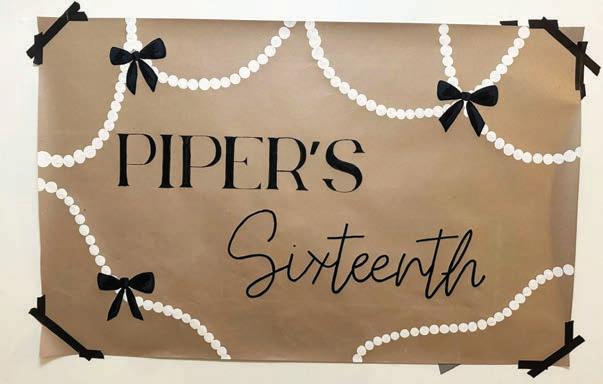
A banner Hill created for a birthday party. Hill provides banners for a wide variety of events, from birthday parties to baby showers.
Photograph contributed by Ellie Hill
“I start by creating a design from scratch on Canva, then use that as a guide to freehand it onto the large paper—after that, I hang it up and paint it,” Hill said.
Like Hill, Junior Natalia Martinez has seen substantial growth since starting her business earlier this year. Her business, Totes by Natalia, specializes in custom-painted tote bags.
“I’ve always loved art, but I couldn’t take art classes because of my music schedule, so I started painting on my own,” Martinez said.
Her love for art pushed her to continue creating on her own, leading her to find a creative way to apply her skills. Her experiences reflect the slow and sometimes uncertain process of building a business from scratch.
“I’d say it’s a slow process, but if you make the most out of it, it can be really fun—and having support from friends and family makes a big difference,” Martinez said.
While growth has come for both businesses, the coming of challenges on an entrepreneur’s journey is inevitable. Starting a business can be challenging, especially at the beginning, as highlighted by Martinez’s experiences this year.
“The hardest part of starting a business is getting started, reaching out to people you don’t know, and putting yourself out there,” Martinez said.
“Balancing school and extracurriculars has been challenging because I don’t get home until around six most days, so there isn’t much time to work. The hardest part has really been trying to find a good balance and manage my time,” Hill said.
Both Hill and Martinez have worked incredibly hard to navigate the challenges of entrepreneurship as they have continued to grow their businesses.
Despite the challenges, managing their own businesses became a defining experience that shaped both students’ independence and resilience.
“Learning about business teaches real-world skills like communication, networking, and problem-solving, while also helping students build confidence, make connections, and better understand how the real world works,” Jacobi said.
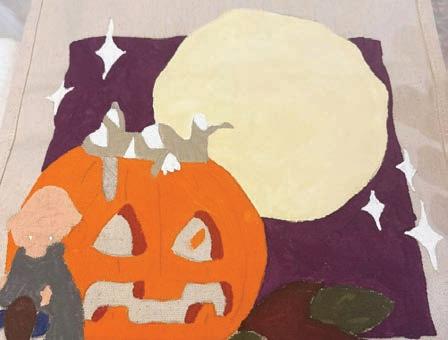
Behind the Scenes
The process behind designing custom-made tote bags. Martinez utilizes her passion for painting to make designs come to life.
contributed
GRACE EVERT
Co-Front Page Editor
Have you ever bought a sweater from Albany & Avers or a fern from Sheelytown Market? Although these businesses might sound unrecognizable, they were actually founded and operate here in Omaha.
Small businesses are a crucial part of Omaha’s economy and charm. May, known as Small Business Month, is the perfect time to learn about what small businesses do for our communities, and how we can support them. While it may seem like students don’t have a big impact on the economy or the success of our neighbors, our everyday choices matter more than we think.
One of the easiest ways to support small businesses is simply by choosing them over large chain stores when possible. Greater Alliance Federal Credit Union states that, “Mega e-tailers, like Amazon and Walmart, may monopolize commerce, but it’s small businesses across the country that keep the economy going. In fact, according to the Small Business Administration (SBA), the 30 million small businesses in the United States account for 54 percent of all sales,”
Whether by grabbing a drink from a local coffee shop instead of Starbucks, or shopping at a boutique instead of online, choosing local over global keeps money circulating within the community.
“A local business is more likely to hire local workers and donate profits back into the community. The owners are also more invested in their neighborhood, so they’re less likely to move out of town or close up shop without warning. Additionally, these shops tend to sponsor local events and donate items for silent auctions or raffles,” Like a Local Tours tours company said.
Students can also make a difference without spending much at all. Following local businesses on social media, liking and sharing their posts, or leaving a positive review can help them reach new customers.
Forbes explains that, “Many businesses either do some or all their work online so positive reviews are becoming more important to new customers who are learning about them for the first time. Whether you have just visited it once or have been going for years, take a few minutes to leave some positive praise for the
businesses that deserve it,”
In a time where so much business depends on online visibility, even a quick post or recommendation can go a long way. Word of mouth is also just as powerful as the internet, so make sure to shout out your favorite local shops to friends and family.
Although supporting small businesses often takes a conscious effort, ironically, some students are supporting small businesses without knowing it. Local events, such as farmers markets and craft fairs, have become popular among young people looking for a weekend activity. These events not only support multiple vendors at once, but also create a sense of community that large corporations often lack.
“As consumers increasingly seek out unique and personalized shopping experiences, craft markets and artisan fairs have emerged as popular destinations. For market vendors, these events offer a valuable opportunity to showcase their goods, connect with customers, and extend their reach in meaningful ways,” Bespoke Market said.
Supporting small businesses isn’t about making one big purchase, it’s about returning to local vendors and spreading the word. By choosing to shop small, students can play a meaningful role in helping Omaha’s small businesses grow and thrive.
1301 Nicholas St, Omaha, NE 68102
Locally owned businesses in the Omaha-Metro area
421 S 11th St, Omaha, NE 68102
12965 W Center Rd, Omaha, NE 68144
13132 Davenport St, Ste 4, Omaha, NE 68154
1207 Howard St, Omaha, NE 68102
5018 Underwood Ave, Omaha, NE 68132
5022 Leavenworth St., Omaha, NE 68106
Local farmers markets selling goods and produce in the summer months
11th & Jackson Street, Omaha, NE 68102
Admire historic architecture and a wide variety of local restaurants and bakeries while strolling through this market.


9102 North 30th Street, Omaha, NE 68112
Located at a historic mill, this market is rife with local goods, crafts, food, and music.
Washington Park, 20th & Franklin Street, Bellevue, NE 68005
Gazebos and murals characterize this market. Located in Washington Park, it is ideal for families and pets.

Source:Visit Omaha
Co-Editor-in-Chief
The hallway feels louder this time of year. College decisions, future plans, and constant questions about what’s next echo off the lockers like it’s something we’re all supposed to have figured out already. Everywhere you turn, someone is talking about majors, careers, or where they’re committing, and it creates this pressure that if you don’t have a clear plan, you’re somehow behind. But the truth is, most of us don’t, and we shouldn’t feel pressured to.
There’s this unspoken expectation that high school is where your entire life path gets decided. Pick the right classes, join the right clubs, build the perfect resume, and suddenly everything is supposed to fall into place. It sounds structured and reassuring, but it’s not how life actually works. People change, interests shift, and what you think you want at 17 might not be what makes you happy at 25.
What matters more than having a perfect plan is actually figuring out what makes you feel fulfilled. That doesn’t come from sitting in a classroom trying to map out your future. It comes from experience. It comes from putting yourself in different environments, meeting different people, and seeing how you feel in those moments. Without that, you’re not choosing a path. You’re guessing.
For me, that realization didn’t come from a test or
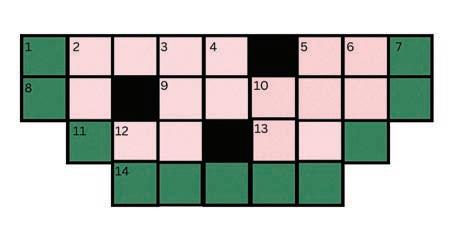
12. Expressing realization Across: 1. Sandy shore 5. See homophone 8. Colorado (abbrv.) 9. __ Eleven 11. Nonverbal agreement 13. &
14. Listened
a college search website. It came from spending time working at a nursing home as a CNA, helping take care of elderly residents and being part of their daily lives. It wasn’t something I had planned out years in advance, but it ended up teaching me more about myself than anything else I’ve done. It showed me what it feels like to genuinely care about the work you’re doing and to find purpose in small, everyday moments.
“Just try things,” my father, Iraklis Pipinos, said, “you’ll figure it out as you go.”
That advice sounds simple, but it completely shifts how you and I can look at our futures. Mainly that you don’t need to have everything figured out before you start. You figure it out by starting. Trying new things, even when they feel random or uncertain, is how you learn what fits and what doesn’t.
Taking every opportunity that comes your way is one of the most underrated ways to find your path. Whether it’s shadowing someone in a career you’ve never considered, volunteering somewhere new, or taking a class that doesn’t directly connect to your plan, those experiences add up. Each one teaches you something, even if it’s just realizing that something isn’t for you.
The problem is, a lot of people don’t give themselves that chance. Instead, they follow the path that’s already been laid out for them. Parents, teachers, and even friends often have ideas about what you should do, and sometimes those expectations are hard to

Trade schools are specialized school designed to help students in careers related to specific industries. Examples include welding, carpentry, and cosmetology.
ignore. It’s easy to confuse their vision for your life with your own.
That pressure can quietly shape your decisions without you even realizing it. You start choosing what looks right instead of what feels right, and over time that gap gets bigger. It might lead you somewhere impressive on paper, but that doesn’t mean it will make you happy.
Choosing your own path doesn’t mean you have everything figured out, and it definitely doesn’t mean you won’t make mistakes. It just means you’re willing to take control of your decisions instead of letting others make them for you. That takes confidence, especially when your choices don’t line up with what people expect, but it’s worth it in the long run.
High school isn’t a final decision point. It’s a starting point. It’s where you begin exploring, not where you lock yourself into one direction forever. You’re allowed to change your mind, to try something and realize it’s not for you, and to start over if you need to. That’s not failure. That’s part of the process.
At the end of the day, your future isn’t something you’re supposed to have completely mapped out right now. It’s something you build over time through the choices you make and the experiences you take on. So instead of stressing about having all the answers, focus on finding what makes you happy. Take the opportunities, try new things, and trust that you’ll figure it out, not all at once, but step by step.
Taking a gap year can allow students to explore other career options, traveling, or getting work experience.
Opportunities like internships allow students to immerse themselves in real world situations, bettering their understanding of different career fields.
Types of post-secondary options

Benefits like free training, payment for college, and exposure to different career opportunities makes this appealing option.

More traditional colleges can be suitable for students who would like a more typical college path. Taking certain classes and joining clubs can be a formative experience.
How MN journalism has shaped my high school experience
MIRA MUKHERJEE Co-Editor-In-Chief
y favorite app is Voice Memos. I know, not Instagram or TikTok -not even Pinterest. Why Voice Memos, an unassuming app most people probably leave forgotten in the seas of their device?
Well, I, for one, use Voice Memos a lot more often than the average person. Dozens of recordings -- ranging from a minute long to over an hour -- span my “All Recordings” tab, reflecting a compiled history of my three years on The Hoofbeat.
For me, Voice Memos is more than an app; it’s a carefully preserved archive of some of the best memories of my high school career as a student journalist. Coming into high school, inundated with the dizzying array of clubs and activities MN has to offer, I knew one thing: I wanted to write for the school newspaper. After taking the prerequisite class freshman year, I became a staff writer my sophomore year.
And truthfully, I felt extremely out of place. I loved writing, but there was one slightly crucial detail I failed to forget about the crux of journalism: interviews.
What do you mean I suddenly had to pull out a big scary senior I had never met from their AP Gov class? Or the principal, or a teacher, or any other member really of the MN community that I was not on speaking terms with?
My introvert self was freaking out. Before I joined the newspaper, I thought I had a general understanding of the kind of person a journalist is: bold, outspoken, and relentless -- basically everything I wasn’t. I had grown up seeing journalists on TV thrust their microphones into people’s faces, interrogating them on what could be the worst day of their life.
I, in contrast, would have rather done anything but that, believing I was too timid and shy for that kind of role. I was happy to simply write, shying away from the seemingly brusque nature of the occupation, my only slip of identity an indiscreet byline.
But honestly, looking back now as the Co-Editor in-Chief, I’ve actually found that my favorite part about journalism is… the interviews. I’ve learned that journalism has far more nuances than what I originally believed. Yes, to be a journalist means to seek
the whole truth; we take risks and perhaps wind up in situations that are uncomfortable.
But throughout my three years on the newspaper, I’ve also been a part of the gentler, humanistic side of journalism. From covering a beloved staff member’s cancer journey and having a press conference with the superintendent to learning about a student’s passion for fashion design and highlighting the ACP program, I’ve been able to connect to and share the stories of people who I might not have ever met.
Journalism has taught me a myriad of things about myself, and I would say the main one is I’ve learned I’m capable of more than I think.
My only limiting factor was my mind; I realized through courage and the willingness to step out of my comfort zone, I too could be confident and discover character traits that I once thought I didn’t have, but in reality they were just hidden. And through journalism, I’ve been able to discover these traits and grow as a listener, a writer, a leader, and a friend.
I’m going to miss The Hoofbeat -- with such a fantastic advisor and staff, it’s going to be hard to say goodbye to this amazing environment I’ve had the privilege of being a part of for the past three years.
But I know that my journalism career is not over, and I’ll forever keep these recordings and will be ready to add another Voice Memo the next time I hit record.





A comparison between the novel and movie adaptation of ‘Project Hail Mary,’ released in late March
KATELYN JUDD News Editor
rowing up, one of my most prized possessions was a book. I read it cover to cover, day after day, and never once got bored, reliving the same excitement I felt the first day of owning it.
The item in question was a picture book about our solar system; more specifically the planets within. Before I could add or subtract, I knew the planets and their correct orders from closest to furthest away from the sun.
In other words, I have always loved anything to do with space. The nostalgia from that book has always been a constant comfort, even after so long.
It was no surprise that my interest piqued when ‘Project Hail Mary’ was released in late March. After breaking numerous box office records and being heavily debated as a 2026 Oscar contender, the success of the film caught my attention.
However, before I could watch the movie, I felt obligated to stick to my roots and read the book first.
‘Project Hail Mary,’ written by author Andy Weir, was published in May of 2021. The book follows scientist Ryland Grace as he suddenly jolts awake in a panic, finding himself alone on a spaceship. All the while not having any idea who he was or why he was there.
This was the first main difference I noticed between both versions. In the book, it takes Grace days in isolation for him to remember who he was, finding little to no clues about himself on his spaceship. Conversely, in the movie, a machine database immediately tells Grace who he is once he wakes up.
Here, I much preferred the book. Grace had been forced to look for things that would trigger memories, where he gained pieces of his memory back; almost like building blocks of the foundation to his whole mission. It not only allowed us to see more about Grace’s life before his mission, but also about the people he interacted with daily. The film utilized flashbacks, but significantly less.
Weir invents the novel’s main antagonist, ‘The Petrova Line,’ as a paradoxical phenomenon, where scientists on Earth had noticed an arching line that connected the Sun and Venus. A line that had defied all natural laws, especially that it was thought to have
been harnessing energy from the sun, effectively dimming it.
Scientists had launched an urgent mission to collect a sample, and were horrified to find microorganisms that lived in the line were in fact, eating the sun’s energy, and the energy of every star within a certain range, minus one. They had projected the Earth would enter an ice age in the following years.
This was named ‘Astrophage’ by Grace himself. His mission was to go to Tau Ceti, the only star that had been seemingly unaffected, and figure out why. This was something that I was grateful stayed the same in both productions. I think if any of this storyline were tampered with, it would not be the same story.
Yet, I did feel as if the ex- planation of the predicament was more ambiguous in the movie. In the
book, I wasn’t confused about the Petrova Line or the Astrophage. Grace constantly ran experiments or tests, and went into explaining the physics behind them. In the movie, I felt the explanations were vague and sometimes confusing, only being briefly mentioned in the beginning.
Next, the majority of the movie and book were centered around what Grace had encountered in space: another life form.
Through trying to convince himself against interacting with it, as a scientist Grace cannot ignore his curious nature. Over the course of several days with trial and error from both parties, Grace becomes the first human to facilitate contact with another intelligent life

author Andy Weir -
From the planet of Erid, Grace meets the ‘Eridian’ creature, who almost resembles an arachnid made out Cleverly, Grace names the creature Rocky.
Following their meeting, Grace discovers that Rocky himself is a scientist, and also needs to find a way to combat the Astrophage to save his own planet. But first, they have to find a way to communicate with each other, since Eridians talk using musical cords. Through a few programs and many hilarious interactions, Grace and Rocky create a translator to understand each other.
This was something I thought that the movie was far better at, in their differing attempts to create Rocky’s personality.
In the book, Grace and Rocky are still close, but Rocky is much more reserved and solitary. In the movie, the duo grow close, and quickly grow to become partners in crime, where personally, I think that Rocky is funnier than some humans. Seriously, he had me

VFX team - created a believable hybrid (CGI + practical) Rocky
While there were subtle differences between the book and the movie, there is no doubt that ‘Project Hail Mary’ is one of the best book-tomovie adaptations I’ve seen, where the original integrity of the plot is prioritized. The little girl in me was easily blown-away, and the current version was so happy to revisit that nostalgia. It was a five-star rating from me, or as Rocky would say: Both thumbs down. Amaze, amaze, amaze.
The moments, medals, and results behind a back-to-back state championship finish
ARGYRENIA PIPINOS
Co-Editor-in-Chief
The auditorium lights hit the stage as names start getting called, one after another. The journalism team sits close together, leaning forward and reacting to every placement as if it were their own. By the time the championship ends, the result feels clear. Eight gold medals, nearly the entire newspaper staff qualifying, a team score about 100 points ahead of the runner-up, and a state trophy they get to bring home and call theirs.
It is their second state title in a row, but this one stands out more, not just because they won again, but because of how many people contributed across broadcasting, newspaper, and yearbook. Instead of relying on one or two top finishes, the team built points across almost every event.
worth it in the end when he left with a silver medal hanging around his neck. That mindset carried across the yearbook staff, where strong individual performances continue to build.
“I remember thinking that this was a risky choice,” Neville said. “So if I could make it work, it would just make my entry more impressive.”
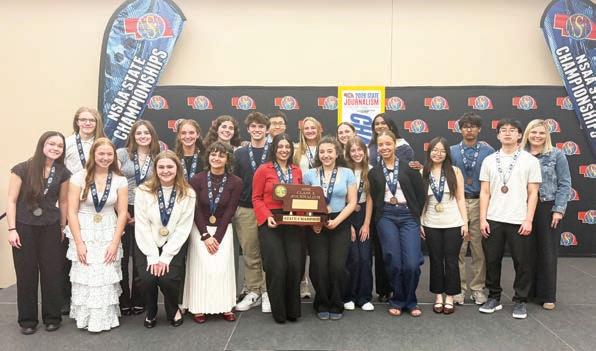
MN’s state journalism team (yearbook, newspaper, and broadcasting) is posing for a photo after recieving the Class A State Champion award. All of these students competed and won numerous individual awards; adding up to a total of 404 points, while the runner-up had 310.
Photograph contributed by NSAA
“The moment I won a gold medal was honestly surreal,” junior Lucas Day said. “I didn’t even expect to make state in that category, nonetheless place gold.”
Day earned first in Newspaper Sports Feature Writing and second in Yearbook Feature Writing, contributing major points for the newspaper team. His performance reflects how strong the group is overall, with almost the entire staff qualifying and placing in multiple events.
“I just remember thinking, ‘Don’t get last, don’t get last,’” Day said.
That same pressure shows up in yearbook events, where time limits and unfamiliar prompts make every second count. Senior Parker Neville worked through that pressure and earned second in Theme Copy Writing, pushing through a slow start and finishing without time to edit.
“The time limit was the biggest challenge,” Neville said. “I had to use every last second.”
Instead of playing it safe, Neville took a risk with his theme choice and tried to stand out, and it was
That approach pays off with multiple top finishes, including a gold medal from sophomore Scarlett Schmit in Yearbook Sports Feature Writing. Her story focused on emotion, helping it stand out even under pressure.
“I wanted to try and be as descriptive as possible,” Schmit said. “I tried capturing an angle that people would be interested in and would be able to see the emotion through.”
Her win adds to the team’s total of eight gold medals and shows how underclassmen step into big moments. That depth becomes one of the biggest reasons the team pulls so far ahead.
“When my name was called for first place, I was honestly shocked,” Schmit said.
Broadcast adds just as much to the total. Senior Sahana Kumar earned both first and third place for her Broadcast Feature stories, finishing her senior year with two strong placements.
“Focusing on emotion in feature stories helps the audience feel connected,” Kumar said.
Her work shows how storytelling across different formats still connects in the same way. Whether it is writing or video, the goal stays the same. Tell real stories that people care about.
“It was a great way to end my senior year,” Kumar said.
Other placements continue to build the team score. Junior Lydia Harlow placed in both Advertising and Column Writing, contributing points while competing in events she has not had much experience in before.
“The hardest part was definitely managing that nervousness with the time constraints in an unfamiliar
atmosphere,” Harlow said.
That willingness to step into new challenges adds to the team’s overall strength. Every placement matters, especially when so many people compete.
“We have an incredible group of writers, editors, photographers, and broadcast crew who have a genuine passion for journalism,” senior Sarah Robey said.
By the end, it didn’t feel like individual events anymore. Instead, it’s one shared effort that was carried through every room, deadline, and moment under pressure.
Broadcast News
7th–Sophia Phillips, Mady Thinnes 6th–Angela Zheng, Srihith Kasyap Madduri
Broadcast Feature
3rd–Sahana Kumar 2nd–Sophia Phillips, Mady Thinnes 1st–Angela Zheng, Sahana Kumar Newspaper Column Writing 7th–Nathan Yeh
4th–Lydia Harlow 2nd–Katelyn Judd
Advertising
5th Place–Lydia Harlow Newspaper Sports Feature Writing
1st–Lucas Day Newspaper In-Depth 5th Place–Sarah Robey, Mira Mukherjee, Grace Evert, Nadirah Johnson, 3rd Place–Mira Mukherjee, Renia Pipinos, Nadirah Johnson
1st Place–Mira Mukherjee, Katelyn Judd, Teja Sridher, Nadirah Johnson, Grace Evert
Editorial Cartooning
1st–Rosie Scherbarth
Editorial Writing 1st–Renia Pipinos
Headline Writing
3rd–Grace Evert
Entertainment Writing 8th–Katelyn Judd
2nd–Mira Mukherjee
1st–Matthew Um Newspaper Feature Writing 1st–Mira Mukherjee
Yearbook Feature Writing
“I’m just so unbelievably proud of everyone,” senior coeditor-in-chief of the Hoofbeat, Mira Mukherjee, said. “All the latenight edits, long layout weeks, dozens of interviews, and a million more behind the scenes of hard work culminated in our achievement.”
Winning the State Championship for the second year in a row confirms what the team already knows. It is not about one moment. It is about everything adding up.
“Even if we didn’t win, that doesn’t take away from our staff’s dedication,” Mukherjee said. “But this was a very nice end to the best three years of my high school newspaper.”
2nd—Lucas Day
Yearbook Sports Feature
Writing
3rd–Oliviah Hopkins
2nd–Jessica Bray
1st–Scarlett Schmit
Yearbook Theme Copy Writing 2nd–Parker Neville 6th-Oliviah Hopkins
Students share their stories on why they decided to graduate early
JAYDEN MAPLE
Co-Opinions Editor
The usual route for students to get a cap and gown takes about 13-14 years of their life, three different types of schools, multiple classes, taking the ACT, and the courage to continue on every year.
However, it’s not that uncommon to deviate from the traditional route; it might mean go ing into programs like Millard’s career academies, taking more advanced classes, or taking a leap and ending your high school career early through early graduation.
Many students recently have decided to take that leap and move on to their inter a year earlier than expected. Rather than choosing to stay the normal four years, it’s becoming more com mon for students to choose their own route towards that short walk on stage to obtain a degree.
I volunteer,” junior Laura Flaugh said.
Flaugh is participating in a volunteer group that will travel to Argentina and Tanzania over the next school year before heading to col-
“I wanted to get out while I was younger because I have a lot of things set up for me out in [Los Angeles], so I didn’t really want to spend another year in Omaha,” junior Carter Mohning said.
Mohning is one example of a student taking that leap, pursuing a career in music and entertainment in Los Angeles, and making pop and rap music while attending school to earn his bachelor’s in music production.
This is not the only rea son why students are leav ing school early; students have also decided to ex plore the world through study abroad programs, getting a sense of cul ture outside of the US.
“Its been my goal since I was a freshman, I want to study abroad because I want to broaden my hori zons and have fun while
These are some of the reasons why students have decided to graduate from high school a year earlier, but some students think that it can be an opportunity to challenge themselves in new beginnings.
“I wanted to start my career earlier because I couldn’t see myself furthering my career if I had just stayed in school,” junior Claire Savage said.

For these reasons, these students have been weighing the ups and downs of their decision, especially regarding relationships and the loss of opportunities
my life, I’m living it right now, the city I want to live in, and I call my own,” Mohning said. of that, students in this route lenge of a stacked schedule classes and electives to get years in high school.
Even with the downsides of this path, many students have also looked on the bright side, focusing on what they want to do next and how they will start earlier than their class.
“I was applying to colleges without the pressures of the rest of my grade and I was just going
through that on my own,” Savage said.
With the pressure of college applications and the concept of senioritis, they have taken a huge sigh of relief that they got their business taken care of early.
While early graduation may seem like a daunting task for people who don’t go through with it, these students know how to work with the system and know what they want to do in their lives, wherever they end up in the future.
“I always thought that like, this might be a weird way to look at life, but in a 100 years, you’re gonna be in a hole underground, so basically go for it,” Mohning said.
- About 87% of students finish high school in 4 years, following the standard path. This is the most common timeline for graduation.
- Only fewer than 5% of students graduate early, finishing ahead of schedule. Most students stay on the traditional track, while a small group moves faster through extra credits or advanced coursework.
source: National Center for Education Statistics



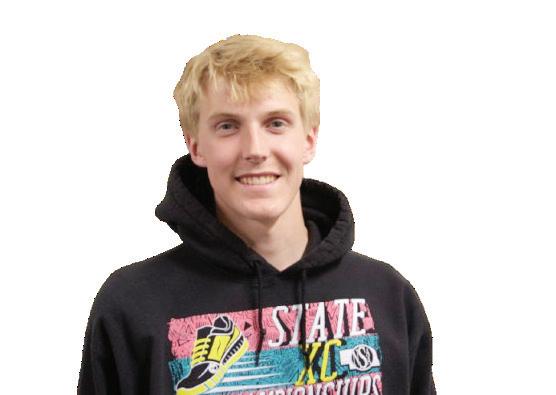
“Cross Country focuses more on endurance, track more on speed, and I do swim because that helps with overall fitness and efficiency of oxygen and muscles... they all definitely boost my performace in the other sports.”
Senior Marc Louthan
“In school, I do volleyball, track, wrestling, and cheer, but outside of school I do football... I think with track, the speed and agility helps with all my other sports, football especially.”
FRESHMAN ella ackerson





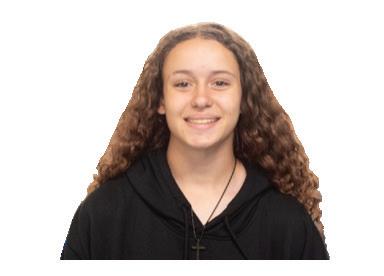
Participating in multiple sports across various disciplines greatly benefits athletes’ performance




After suffering an injury that cut his previous season short, sophomore Dylan Jarose steps back up to the plate
LUCAS DAY Co-Opinions Editor
or most watching on the sides, the first swing of the season seems like nothing remarkable – but for sopho
able to walk for the first time… my dad and I were out of town for softball, and my mom sent a video of him walking, and that was so cool to see because he hadn’t walked in months,” M. Jarose said.
After months of physical therapy, Jarose was able to start training again. Though limited in what he could
still hard. It has its ups and downs, and a lot of it is downs… I mean, I have a rod in my leg and multiple nails, so it’s just hard,” Jarose said.
Persevering in the face of adversity, Jarose worked his way to the top, becoming an even better athlete than he was before. As he made it to his first game, all
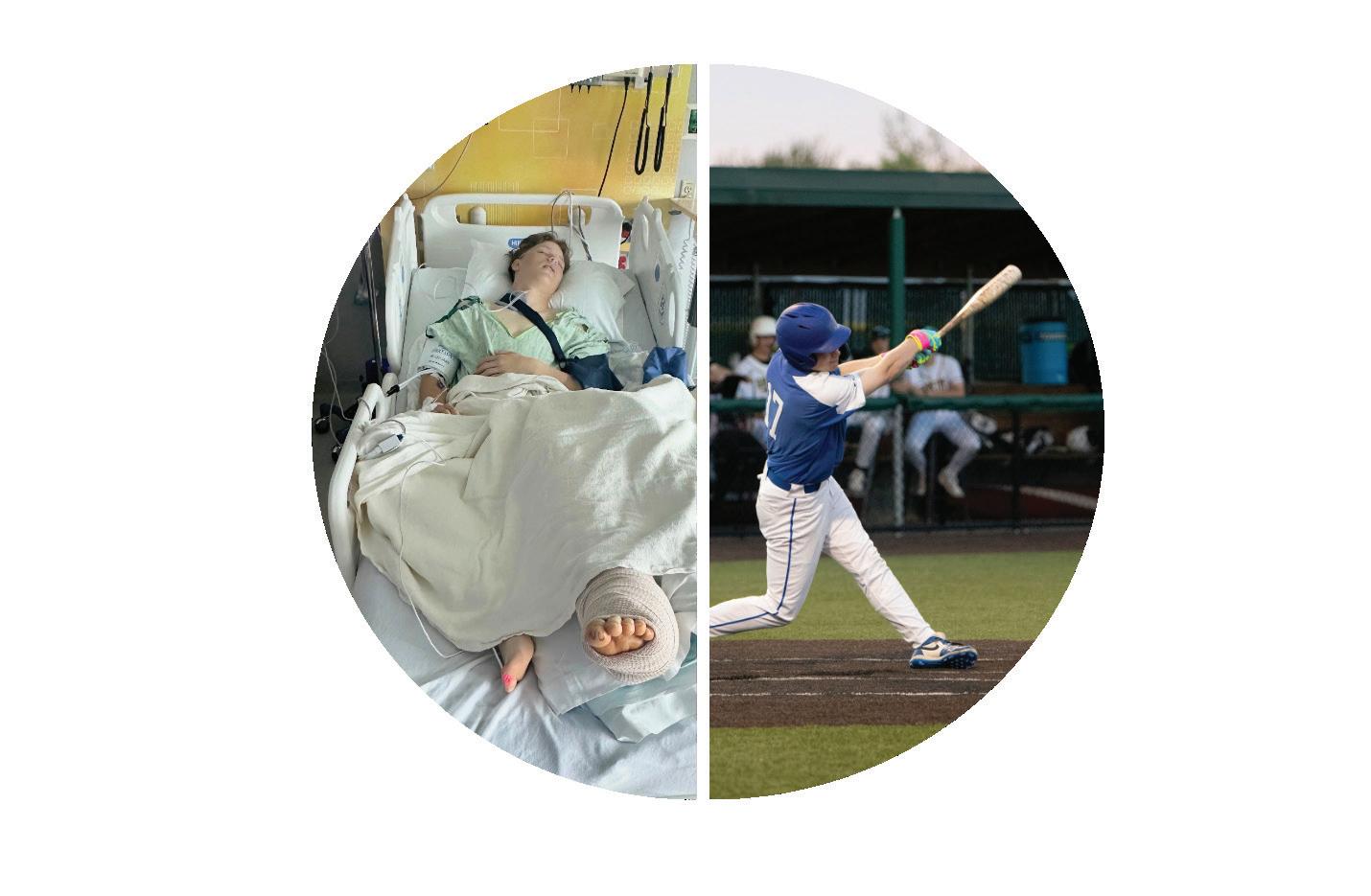
Left: Sophomore Dylan Jarose recovers in bed after surgery. While there, his teammates visited him, hoping to boost morale.
Photograph contributed by Macey Jarose
Right: In his first game back from injury, sophomore Dylan Jarose gets a hit. This marks his full recovery and return to the sport he loves.
Photograph by Emanuel Baiz
Additional surgeries and missed time made Jarose’s recovery anything but easy. He pushed through multiple months of physical therapy, regaining his mobility, strength, and motivation.
However, despite its setbacks, his recovery was also full of milestones. From being able to leave the wheelchair to going to his first practice, Jarose’s injury wasn’t enough to keep him down.
“One memory [from his recovery] was when he was
“The biggest part of [recovery] is mental. It’s just depending on how you bounce back, and always know you’ll get more opportunities out of it… just be grateful to be out there,” Jarose said.
Now back in uniform, Jarose has found both joys and challenges in his return. For starters, stepping up to bat again was a dream come true; however, coming back from an injury is never easy.
“It was for sure [hard to come back]. It’s definitely
or hits but by the small victories – his first step, his first practice, and his first hit. Each victory he made strengthened him, shaping him into the athlete he is today.
Now, as he takes the field each game, he doesn’t take even a single step for granted. His comeback isn’t just about his return to baseball – it’s about him refusing to let the hardest year of his life define him, proving to everyone that he’s still here and ready to swing.
TEJA SRIDHER Staff Writer
The stadium starts to quiet down, with everyone watching closely to see if the athletes are able to clear the height. It’s at this point that an athlete will find success after weeks of hard work, or they will get eliminated from the round, forced to wait in the hopes of scoring better at the next track meet.
World Athletics says that pole vaulting, a field event, is a highly technical sport involving intense speed, accurate timing, and gymnastic strength to launch over the bar. Junior Austin Ruhter has recently found great success in this event.
“Right now, I have a personal record of 12 feet. I think I am the ninth-best vaulter in Millard North history right now,” Ruhter said.
His passion for track and field didn’t just spark during high school, as he had experience in middle school and wanted to continue learning more about the sport.
“This is my first year doing pole vaulting, and I really just wanted to try something new this year. I’ve always been encouraged to try new things, and I’ve always kind of had a little bit of the adrenaline junkie gene, so I decided to give it a try. I loved the people and everything about it,” Ruhter said.
“My mom was honestly a big influence. She always told me she feels like it’s something that I would have a gift for. Both of my parents were in track in high school, and they did a bunch of different events, so they always encouraged me to do whatever I wanted to try,” Ruhter said.
MN’s pole vaulting coach, Baden Luna, works closely with Ruhter and believes that he has a great amount of potential to pursue even more in the future.
“First things first, he works very hard. And then second, he’s very technical, and he thinks about every step of the vault. Once he’s done, whether he’s cleared the height or missed the height, he asks me questions, and if he needs to make a change to swing his leg harder or try to invert better,” Luna said.
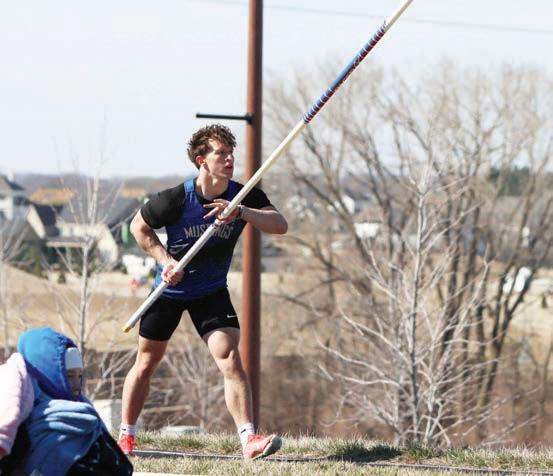
Junior Austin Ruhter hoists his pole, preparing to take off at the JV Millard Triangular Meet. He placed 2nd with a height of 12’0.
Photograph by Megan Feng
His inspiration to pursue pole vaulting stemmed from his family and their experience in high school and college athletics.
What are your hopes for state or the end of the spring season?
Sarah Frazier Junior “ “ Metros is coming up, which is huge... I hope to get top 4 in the 300 hurdles and just compete and leave it all out there.
Additionally, Luna believes Ruhter has shown good consistency in his approach and takeoff in vaulting, even though it’s his first year.
“He was a long jumper before he actually jumped over to pole vaulting with me. You have to be very precise on a takeoff when you’re long jumping. And so if I move him back at a 10 foot 6 inch on takeoff, he pretty much hits it every single time,” Luna said.
In terms of Ruhter’s future plans, he’s looking forward to getting as good as he can in his event.
“I’m kind of looking at a bunch of college camps
Tanner Evans Senior “
Going into the season, we’ve had this goal of winning the state championship... we’ve just been working towards that.
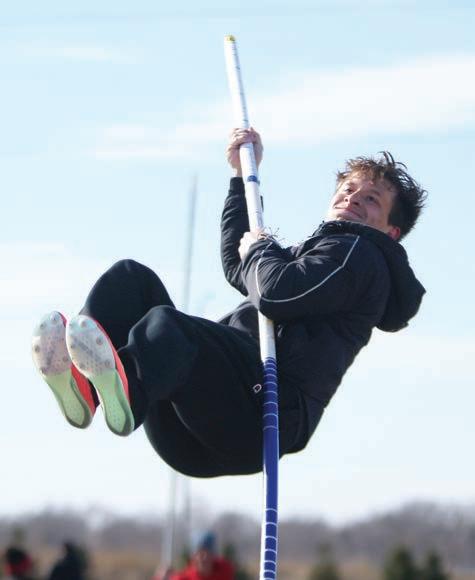
Junior Austin Ruhter pushes off, catapulting himself into the air. Throughout the year, he’s improved his best cleared height by 4 feet.
Photograph by Evan Cordes
I can go to. There are a couple of camps in Washburn, Kansas, and in the Midwest. I’d love to learn everything I can do to improve it. I love to just be around this sport. I am thinking about coming back and coaching maybe a few years from now, like whatever keeps me involved with the sport,” Ruhter said.
His short-term goals for high school include matching or breaking the school record.
“I feel like that would be something that, with hard work, would be attainable. And I think my goals are beyond just me, where I want to be able to pour out into my teammates, too. I want to be a positive influence and help them grow too, where I’m not just pushing myself and pushing other people too, and I’m encouraging them daily,” Ruhter said.
Being just six inches away from tying the junior record, Ruhter seems to channel his inner drive and motivation toward this sport. The future looks bright for him, seving as a reminder that after every mistake comes an opportunity to try again, to give every jump 110%.
Avery Ruhter Freshman “
I hope we win [districts] so we can advance to state, by working together well and being composed.
Santiago Ortiz Sophomore “
Our goal obviously would be making it to state, and winning... it’s all about working hard these next couple days to be ready for this competition.