THE HOOFBEAT


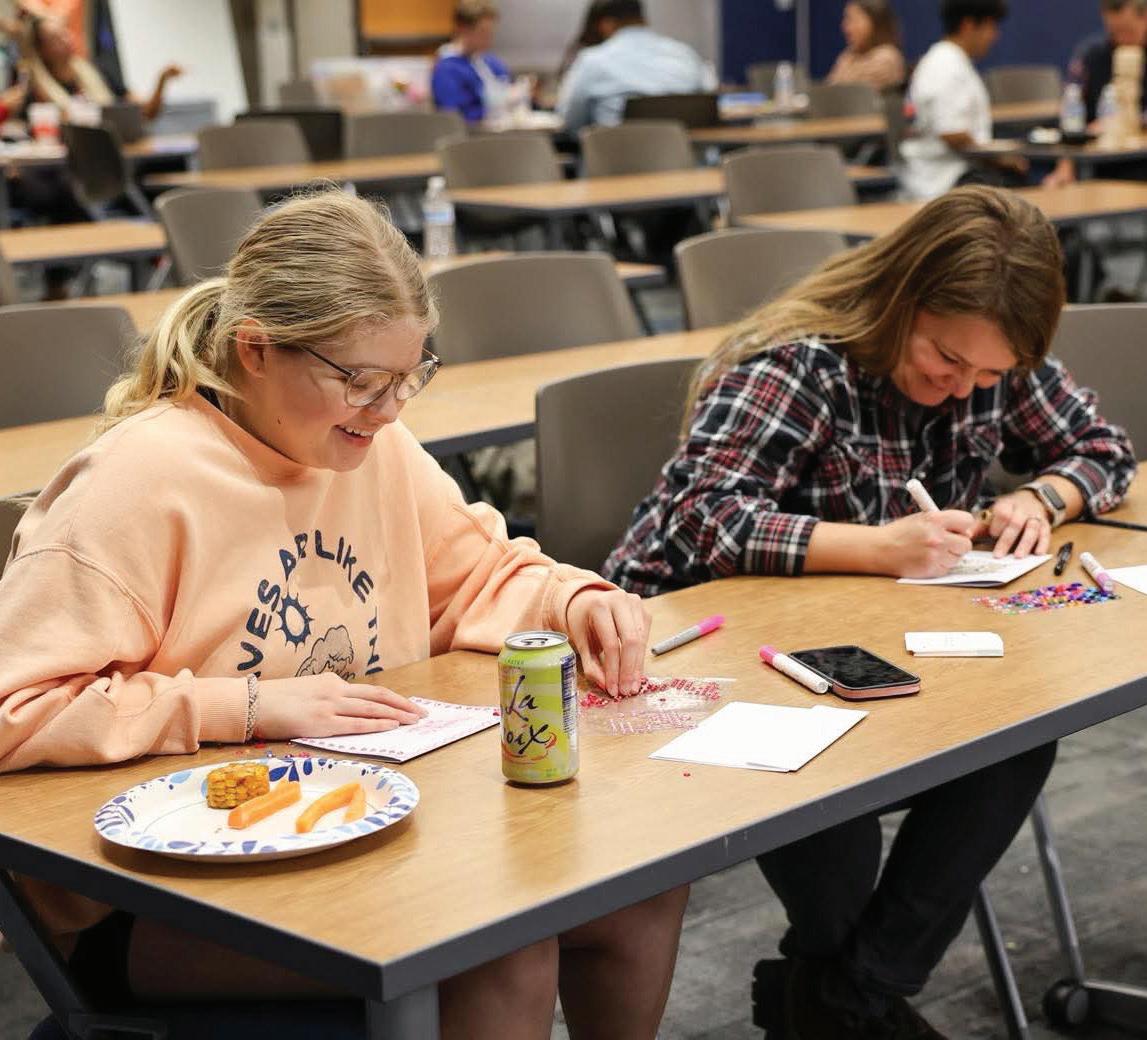

ON THE COVER
Junior Grace Rishling and mentor Abby work on crafts during an after school event for the MentorU Program. These events occur once a month.
BETWEEN THE CANVASES
#15
#16
THE STRINGS OF FRIENDSHIP
DISTRICTS DEBUT

CHECK OUT THE WORD SEARCH ON PAGE 13
The Hoofbeat staff will publish six issues of the paper at Millard North High School (1010 South 144th Street, Omaha, NE). Type is set with the use of Macintosh and HP computers. Printing is done by White Wolf Printing, Sheldon IA. The Hoofbeat is a member of the Nebraska High School Press Association and JEA. The Hoofbeat exists for the express purpose of student information and learning.
Advertising: Advertising will be sold at $7 per column inch or by special quarter, half, or full page rates. Information can be obtained by calling 402-715-1404.
Responding to the Hoofbeat: Letters to the editor may be submitted to Room 1105 or sent to sacrotzer@mpsomaha.org. Names will be published. Letters must not contain attacks against an individual and may be edited for clarity.
Co-Editors-in-Chief
Argyrenia Pipinos
Mira Mukherjee
Front Page Editors
Grace Evert
Sarah Robey
News Editor
Katelyn Judd
Opinions Editors
Lucas Day
Teja Sridher
In-Depth Editor
Mira Mukherjee
Lifestyle Editor
Argyrenia Pipinos
Sports Editor
Lydia Harlow
Online Editor
Sarah Robey
Cartoonists
Nadirah Johnson
Rosie Scherbarth
Artist
Nadirah Johnson
Rosie Scherbarth
Photographers
Lydia Harlow
Lucas Day
Katelyn Judd
Staff Writers
Jayden Maple
Matthew Um
Miley Huynh
Nathan Ye
Parker Neville Adviser
Sarah Crotzer
Principal
Aaron Bearinger



The MentorU Program has fostered a close-knit community through academic enrichment and interpersonal connections
MIRA MUKHERJEE
Co-Editor-in-Chief
The library doors at Millard North are incessantly in motion; the ever-busy space boasts a multitude of uses, from a quiet sanctuary for reading to study spaces for last-minute revision. People from all over the school have stopped by at least a few times in their high school years, and for some, it’s a regularly scheduled occurrence. Nestled in the spare library classroom is an example of one of these consistent activities: the MentorU Program.
Starting at MN in January 2024, MentorU, which stems from Big Brothers Big Sisters of the Midlands, is a program designed to aid students in a variety of life skills. Run by MentorU coordinators Michelle Cox and Jackie Halsey, who both have extensive teaching backgrounds, the program aims to achieve a safe, inclusive space for all students. Although the program is open to all students, Cox and Halsey communicate with middle school and high school counselors to find students who would benefit the most.
“A lot of them like their time with us because it gives them a break during the day,” Cox said. “They can truly be themselves, we’re trusted adults that care about them. You can’t ever have too many people in your corner.”
Taking place during 5th hour study hall on Wednesday’s and Thursday’s, Cox and Halsey utilize a flexible curriculum to instill confidence and prepare students for post-high school success.
“They teach us normal life skills, for example they’ve taught us what is a healthy relationship and also help us fill out resumes and apply for jobs,” junior Gabby Ives said. “It’s life skills that help us become more prepared for after high school.”
Ives has been a part of the program since freshman year after her parents were sent an e-mail about the program. Ives has also had the opportunity to be paired with a mentor through the MentorU program.



“They match you with a mentor based on how they know you as a person, so you get matched with a mentor that’s like you and has the same interests as you, so that’s been nice,” Ives said.
Ives and her mentor, along with other student-mentor pairs through the MentorU program, have been able to establish a strong connection.
“She’s super cool; we talk a lot and have a lot of things in common,” Ives said.
To become paired with a student in the MentorU program, volunteers need to go through extensive background checks, a 90-minute interview, and two references in order to ensure positive and safe relationships. Additionally, students and mentors use a monitored app for 24/7 messaging.
“So they can tell them, ‘Hey, I did great at my wrestling match, or they could be like, I’m really stressed because so-and-so won’t let me sit with a group at lunch.’ You know, whatever they want to talk about, but they can message back and forth as much as they want,” Cox said.
The flexibility of the MentorU curriculum and personalized agendas allows the program to tailor objectives to every student’s unique needs.
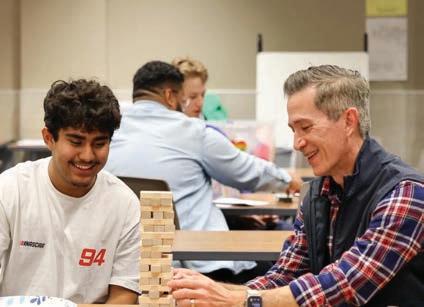
Junior Sebastian Cacho-Aviles and mentor Angel play Jenga at a MentorU after school event. The MentorU Program hosts these events once a month, creating many memories.
Photograph by contributed Michelle Cox
The long-lasting connections of these student-mentor pairs highlight the mission and success of MentorU.
“It’s really fun to see the relationship between the student and the mentor just grow from the first time that you match them to reading their messages and what they’re sharing with them and how their mentor responds,” Halsey said. “It’s really cool to see that relationship grow into someone that they really trust and see the advice the mentor gives them; it’s a really cool program.”


“It’s like you get to pick all the best parts of it [teaching], and that’s this job,” Halsey said. “It’s just really nice to have that flexibility too, to do what they need the most.”
Over the past two years, the program has built momentum and is bound to continue to make an impact on an individual and community level.
“It doesn’t matter what kind of student you are. It doesn’t matter what home life you come from, what activities you’re in, just any kid who feels like they want more connection or more support from a caring adult,” Cox said.

The MentorU Program offers students opportunities to explore options for life after high school. One excursion was a visit to Metropolitan Community College. Juniors and seniors were able to see different programs and tracks offered like culinary sciences, electricians, construction, and more.
KATELYN JUDD News Editor
At 2pm on January 29, an estimated 100 students were missing from their seventh-hour classrooms.
Instead, they could be found across the street, at the 144th and Pacific intersection. Students lined the crosswalks, adorned with different signs, posters, and slogans as they chanted: “No hate. No fear. Immigrants are welcome here.”
The Immigration and Customs Enforcement, or ICE, has been the center of many heated debates and events across both of the political parties.
Approximately two weeks ago, ICE found itself as a center of conversation at Millard North as countless students were driven to protest against what they saw happening in their communities. One of whom was junior Ruby-Beeler Streff.
“Seeing the news pretty constantly was a big influence [on why I protested]. It’s hard to open up my Instagram and swipe through stories, where one is a cute picture of friends at a coffee shop, and the next is a jarring headline about ICE. Realizing how important that was really pushed me to come,” Beeler-Streff said.
The walkout’s organizer, junior Miya Scarpino, chose the date Jan. 29 for the walkout to be aligned with a walkout at her old school, Fremont High School. The following day was the national ICE strike, where, in protest, many chose not to work, spend money, or even go to school. The timing of the event was chosen in order to be the most impactful as possible.
But Scarpino has a personal reason for organizing the protest, ICE’s prevalence within the states hitting her close to home and influencing her daily life.
“My abuelo (grandfather) came from Puerto Rico when my mom was little … he was here for 40-50 years, and lived in El Paso, Texas. Early December, he got de-

ported while he was leaving work. He didn’t have a criminal record, and he just came here because my abuela (grandmother) was sick, and they needed more resources. It just hurts,” Scarpino said. “Citizen or not, black, white, blue, green, we all bleed red.”
Principal Aaron Bearinger was informed about the walkout by teachers, and instructed them to carry on their regular days in an effort to not disrupt the learning environment for other students.
by their protest against ICE

“I appreciate [the students] wanting to get involved and exercise their rights, but obviously, my preference is for them to do it outside of the school day, so it doesn’t interfere with their learning,” Bearinger said.
Bearinger and the other principals contacted the organizers of the protest and ensured that they knew the boundaries and limitations they were restricted to as student protesters.
“You can’t be on school grounds protesting, because anything that could potentially disrupt the educational environment isn’t allowed. [It was established] by the Supreme Court in case Tinker v. Des Moines … the students went across the streets so they weren’t on MPS property, so they understood the parameters,” Bearinger said.
Junior Miya Scarpino holds up a sign alongside a sea of people who attended the walkout against ICE. She organized the protest and placed flyers around the school to spread the word.
Even with attempts by Scarpino, Beeler-Streff, and other protesters to remain as cordial as possible, it wasn’t always reciprocated from the people driving by. The individuals hurled trash and profanities at them as they did their best to remain calm and respectful, protecting the integrity of the peaceful assembly.
Photograph by Katelyn Judd
“We’ve become so polarized that we can’t
Students proudly face the road at 144th and Pacific as cars drive by during the walkout. Many of the protestors made their own signs and held them up for everyone to see.
Photograph by Katelyn Judd
even see other people voicing their opinions without being consumed by anger. Obviously, while I feel very strongly about this, I wouldn’t ever throw things at people [who didn’t]. It’s hard to see people have that much hatred. Especially towards high schoolers,” Beeler-Streff said.
Scarpino tried to focus on ensuring that the protest remained a safe environment for everyone there, but also standing her ground when she wasn’t met with the same respect.
“I tried to just keep going about my day and showing my support. At the end of the day, people are going to have their opinion, just like I have mine. If you want to exercise that, by all means, do it. It just definitely showed a bit of immaturity from these grown adults,” Scarpino said. “But we can’t be silenced. We’re going to fight for what we believe is right.”
While the protest has ended, students will still voice their opinions about relevant issues. For some students, advocating for their rights is a non-negotiable.
“I just want to be on the right side of history. I think it’s our job as the youth of today to try and make a change,” Beeler-Streff said. “Stand up. Stand out. We’re all a little scared, but once you get out here, it’s worth it.”
The orchestral quintet, Calamari, takes on exciting performances as they work together to
LYDIA HARLOW Sports Editor
ingers hover mere centimeters above the still-vibrating strings, as the sound resonates throughout the Orpheum’s auditorium. Silence reigns for a moment, then the hall erupts with applause for the musicians.
During their freshmen year, junior violinists Jackson Mu and Angela Qi, junior cellist Ethan Sarkar, junior bassist CeeCee Soderlin, and sophomore violist Phoebe Meade founded this orchestral quintet, Calamari, which has since performed numerous gigs around the Omaha area.
“In orchestra, freshman year, everyone does a chamber music project. We all got together as a group because we were all the first chairs of our sections, so we thought we’d be a really good fit together,” Soderlin said. “From there, Mrs. Martinez kept asking us to do performances for the school and stuff, and so we became an official group and continued the quintet throughout the year.”
Every freshman orchestra student participates in one of these chamber groups, each consisting of 2-8 students who rehearse and perform one song for the class. For most groups, this performance marks the end of their ensemble; for Calamari, it was just the beginning.
“It’s always exciting to have student groups form like this, organically. We’ve had a few over the years, and they just make it look easy,” orchestra teacher Debbie Martinez said.
What had once been simply a small group for a class project quickly grew and transformed, and as they competed and performed in non-curricular events, they took on an autonomy of their own.
“I’m just a facilitator [for the quintet] more or less. Sometimes, if they want me to listen or give them feedback, I do. But otherwise, they’re pretty much a selfrun group,” Martinez said.
The group books its own gigs, runs its own rehearsals, and selects its own repertoire.
“We have a set list of songs that we know and can pull out and play any time,” Soderlin said. “We also have a signature piece that we play at all the performances, the one we started with freshman year. It ‘s called ‘Por Una Cabeza’”.
“One of our biggest performances has been at the Orpheum. We performed for last year’s Chinese New Year’s festival, and we’re going to do that again this year,” Soderlin said.
Playing the Lunar New Year festival was one of the first largescale performances the group attended, and they were honored to be invited back this year.
“[Playing at the Orpheum] was pretty fun. There were a lot of people there, so being able to showcase what we’ve done was pretty cool. We played one or two pieces there,” Mu said. “The atmosphere, the big crowd, it was a pretty highly-anticipated event [for us]”.
Whether for an immense crowd or an intimate one, the quintet has been received with overwhelming support and applause, most especially in their recent performances in nursing homes.
“[Playing for the nursing home] was really fun, you could tell that the elderly people really enjoyed hearing that kind of thing. [We were there] as a part of an art showcase. Actually, we were supposed to be like the background music, but then they all crowded around and were listening to us,” Soderlin said.
No performance is the same: from a grand stage to a quaint nursing home, Calamari has played in a variety of settings. Additionally, quintet performances vary greatly from traditional full-ensemble performances, requiring Calamari members to learn to embrace adaptability.
“With the quintet, it definitely requires a lot more precision and less room for error [than a full orchestra ensemble]. Obviously, the group is smaller, so there’s less noise to cover up your mistakes, and it requires a little more teamwork and a little more connections,” Mu said .“It’s all about adapting and knowing what everyone needs to do.
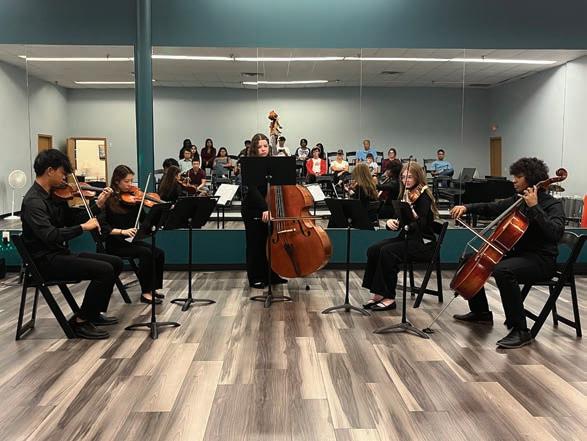
‘Por Una Cabeza’ is the piece that started it all, and they play it at almost every performance; it reminds them of their roots and brings a cohesiveness to every recital, no matter where it may take place.
Calamari’s Crescendo Calamari gathers together to perform for a school fundraiser, held by the Sound and Mind club. Their music brought people together for fun crafting activities and enjoying the tunes.
Photograph contributed by CeeCee Snoderlin
To achieve this cohesiveness, team members must have an intricate knowledge of the music, knowing what role each person plays, and a large part of doing so is knowing your bandmates.
“We’re a pretty close community. We have to be close in order to enable teamwork, and I feel like it’s just a big part of being successful,” Mu said. “After practice, or after a performance, we always just hang out together. We grab something to eat, or just always do something fun.”
The group’s camaraderie is one of the most vital components of their ensemble, enabling them to thrive and grow as musicians as they share their talent with their community.
“I hope that we can continue to play for other people, like how we got invited back to the Orpheum this year, and hopefully we can find more opportunities to play more music,” Mu said.
Fremont High School student is injured after being struck by a car during ICE walkout (Jan. 29)
Black History Month celebrates its 100th year anniversary, appreciating black contributions in society (Feb. 1)
The 2026 Winter Olympics begins its debut in Milan and Cortina d’Ampezzo, Italy (Feb. 4)
The last nuclear arms treaty between the U.S. and Russia that limits nuclear warheads expires with no extensions in place (Feb. 5)
PARKER NEVILLE Staff Writer
After around two and a half months of planning, hundreds of hours spent perfecting documents and reaching out to organizations, the day had finally come. The competitors gathered together in the lecture hall, chatting and doing their last-minute reviews before the testing and events began.
Every year in March, HOSA has the State Leadership Conference, an event where students participate in competitive events to potentially qualify for an international competition. However, having just this one event meant there were very few opportunities to compete, until senior Gowtham Sathi suggested the idea of hosting a district-level competition.
“I’ve had the idea a few times, and we’ve talked about it during our leadership meetings, but it never really materialized until this year. We have a second leadership team called the HOSA Chairs. Usually, we
“Our leadership team of officers and chairs quickly mobilized and wrote tests, planned the entire competition, organized sponsors and guest speakers, and organized colleges to come speak at the event too, and literally made the entire event possible,” Preuss said.
Despite having a limited number of participants due to the event being scheduled on the same weekend as events for Forensics and DECA, the conference got more than 60 competitors. Events included tests relating to medical topics and Health Professions Events, where they could showcase their hands-on skills, and they could participate in as many events as they liked.
“There’s everything from competing in biomedical debates to developing a new piece of medical equipment and making a mockup of how it might work, or completing a skills assessment on an actual patient like a CNA would do, and a lot more. There are so many different events that they can compete in that they truly get to pick things that interest them,” Preuss said.
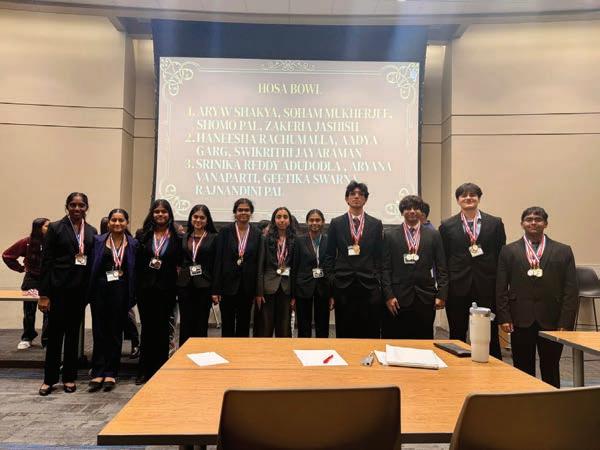
Bound for the Bowl
Members pose at their HOSA bowl event here at MN. Students can watch as participants are quizzed over health-related trivia, after all other events have concluded and await scoring.
Photograph contributed by Angela Cui
just have an officer team, and now with more leadership, we thought we would be able to make this event happen,” Sathi said.
The Inaugural District Leadership Conference, or DLC, was hosted at MN, and invited students from each of the district’s three HOSA chapters to participate in an event similar to State. The whole event was primarily organized and led by the students, with some help from HOSA sponsor Christina Preuss.
Once the events began, the leadership teams from each of the chapters served as judges and monitored events, making sure that everything went according to plan.
“We never had any major hiccups or anything like that. It was just minor stuff that we were able to fix on the fly, so I think it went really well in terms of how smoothly it went, considering how big it was, and it was our first time,” Sathi said.
Having these events before state also allowed the students to get a better expectation of what a competition may look like. Even returning members like senior Angela Cui, who had competed at the International Leadership Conference in the past, noticed the benefits of having an additional event around the corner.
“Because it is a little earlier, [the participants] might not be as prepared, but it’s good just that they’re thinking about it because in the past I wouldn’t think about it until, like, February, and that’s not good. So just having them remember that HOSA’s coming around and
having them prepared [is good],” Cui said.
In addition, the DLC gives competitors more motivation to succeed, as performing well there can increase their odds of earning one of the team’s limited spots at State.
“I think that it might get more competitive because in the past, at least in our state, HOSA is not too competitive; you don’t have to live and breathe it. But just knowing that more people are having that practice under their belt and probably just getting a placement and knowing where they stand can motivate some people,” Cui said.
After the success of the DLC, HOSA’s leaders have already agreed to bring back the event next year. Even if many of the seniors who helped plan it won’t be returning next year, they still have high hopes for the event expanding in the future.
“We called it the Inaugural HOSA Millard District Leadership conference for a reason; we wanted it to be a yearly thing. A lot of the leadership who are currently juniors and sophomores definitely saw what we actually did and how much planning we had to go into, and I think they learned a lot from it too,” Sathi said. “Now that we have a foundation set up, it’s going to be a lot easier to build off and then grow from here.”

THE HOOFBEAT Staff Editorial
As the bell rings and the halls roar, seniors quickly pack their things and race for the door. In a blink of an eye, they’ve left just as study hall begins, leaving juniors longing in the dust.
The freedoms seniors are allowed are undoubtedly well deserved. After three years of juggling academics, extracurriculars, and social lives, free periods and open lunches are hard-earned luxuries.
However, as seniors leave each study hall, juniors are left behind to bask in the awkward, thirty-minute silence. If juniors are excelling in their classes and keeping their attendance up, why shouldn’t they be granted the same freedoms?
Juniors are allowed to leave campus each day for their lunch as long as they are in good standing. This privilege, while not new to us, dates back only a few years.
During the 2020-2021 school year, administration allowed juniors to leave campus during their lunches in order to clear space in the cafeteria. While this junior open campus policy has strictly applied to lunch, recently some changes have gone into effect.
Starting this school year, juniors with no tardies and decent grades are allowed to leave during the study hall period on Fridays. According to the administration, the new policy was put into effect hoping it would reduce juniors’ number of tardies. As of now, it has seemed to work.
Using the new policy as a motivator, many juniors have made an effort to cut down their tardies and keep
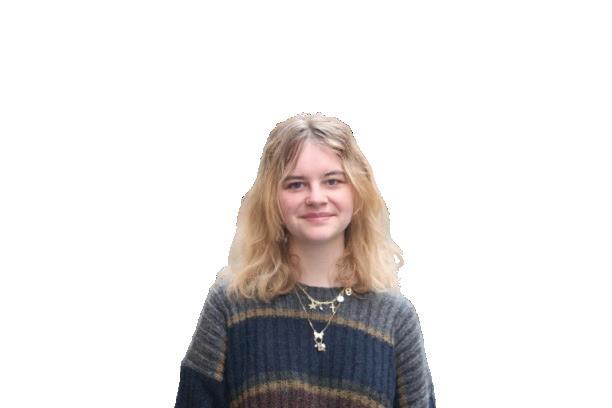
you spend your time during open campus?
their grades up. The fear of missing out on their friend’s Friday fun has improved students’ timeliness across the board.
But if juniors are actively working to improve their attendance and grades in order to leave study hall early, why shouldn’t the policy extend to all days of the week?
If juniors could leave study hall every day, there would be more at stake to be on time to class. The open campus extension would still prohibit students with tardies from leaving campus early, however on an even broader scale.
It would prevent students with tardies from leaving each week or month, incentivizing students even further to get to class on time.
If juniors could leave study hall each day, there’d be more time for students to travel to and from home if need be. For students with younger siblings, household-obligations, and things to do, this would provide even more comfortability to get their tasks done.
Furthermore, having more time to leave study hall would allow more students to get back to school and class on time, decreasing the number of tardies postlunch.
As students get to junior year, the training wheels are off as they’re offered more academic flexibility with schedules and workload. However, with this comes more expectations and stress, and the policy could help accommodate this.
Juniors’ academic schedules are jam-packed with AP classes, sports, volunteering, and more. It’s the last full school year before college applications, and many students are determined to make it count.
Amid these academic pressures, many juniors work
relentlessly to keep up with schoolwork and maintain punctuality. For the students who need to finish some last-minute homework or studying, the thirty-minute study hall is a blessing. For those who are already caught up on their to-do lists, it’s a nuisance.
Juniors who choose to utilize the study hall for studying or homework are able to as they please, but juniors who are up-to-date on their assignments should be allowed to leave if that’s what they choose.
Some study halls are also loud, chaotic, and far from an academic environment. For juniors who wish to find quieter places to work, having an open study hall would be tremendous. On top of that, students who need assistance from teachers or peers could leave study hall freely to get their help.
Of course, there are reasons why juniors aren’t allowed to leave every day. Leaving for study hall daily is a senior privilege, and after four years of dedicated work, special treatment is deserved. Moreover, juniors can seem irresponsible when given too much freedom.
As of now, the administration plans to continue the policy for the foreseeable future. But if the current policy is extended to all days of the week, wouldn’t the threat of missing out each day motivate students even more?
If students wish to use their provided study hall to work – which some students very much need – then they are more than welcome to do so. However, the juniors in good standing with their work finished have no real reason to stay.
When the bell rings and seniors race to leave, juniors shouldn’t be left staring at the door – they should be trusted to walk through it.
campus, I use my time to catch up on assignments read and just hang out in
“

I just go to some fast food place, get some lunch, eat in my car and hang out with
Noah Maniskas “

I’ll work on homework and get lunch, and just get my mind back to where I’m ready to actually do stuff after lunch again.
Lillian Twohig “

I usually go and sit in the library on my computer, or I catch up on my math homework and other
“
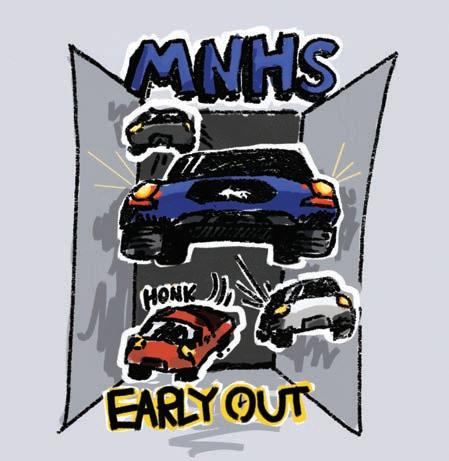
By Rosie Scherbarth

LYDIA HARLOW Sports Editor
e can’t pick and choose when to value people’s lives. Empathy for human lives should not be conditional; we can’t only care when doing so affirms our political beliefs and remain complacent when it does not.
Recently, it has felt like people’s desire to adhere to their political stance is outweighing their consideration for the human lives lost.

When Charlie Kirk was killed, people had very mixed reactions. Many rushed to condemn his shooting and mourn his death. Others dismissed it, claiming his killing was justified, citing his own views on gun violence and framing his death as a sort of karmic justice.
Analogously, with the recent events regarding ICE in Minneapolis, namely the shootings of Renée Good and Alex Pretti, political reactions have almost seemed a direct reversal of the past; opposite groups condemn and justify these deaths in accordance with what suits their agenda. Responses seem based less on trying to preserve life than on political convenience; more a digging in of heels than a consideration of the intrinsic value of human
We can’t truly stand against political violence if we excuse it the second it becomes inconvenient to our own belief system. We cannot condemn Kirk’s death while remaining silent about the shootings in Minneapolis, and vice versa.
I recognize the circumstances differ — one was an assassination of a political activist, the other a shooting of civilians by government agents — but this contrasts public reactions all the more starkly. We’ve been treating murder differently based on who died, and our opinions of them and their aggressors.
Every loss of life deserves at least some basic level of empathy and moral consideration. You can feel more strongly about one event or the other, but the complete disregard for selective circumstances and certain human lives is wrong.
Yet increasingly, it feels as if people solely view murder through the lens of politics, not seeing the victims as real human beings.
I am honestly scared that, as a society, we are justifying violence and death just to back up a set political ideology. Politics shouldn’t dictate when we protest murder. Regardless of where you may fall on immigration or any other issue, we need to see through the politics and address the humanity underneath. We need to value the lives at stake more than we value our side being ‘right’.
We can’t truly stand against political violence if we excuse it the second it becomes inconvenient to our own belief system. “ “
It’s astounding that we can rationalize and justify murder to fit a preferred narrative. Through videos, we can watch the events for ourselves, and often from multiple angles and points of view.
We can see death with our own two eyes, but if speaking out doesn’t further the agenda we already adhere to, we choose
We need to stop residing in comfortable complacency, as it creates the illusion that murder is acceptable when it aligns with our political affiliation.
Loyalty to a political party should not override our loyalty to the human race. Typical agreement with a certain mindset or political group shouldn’t mean blind allegiance to them. We shouldn’t lose our moral judgment to partisanship.
Speaking up against violence and death shouldn’t be seen as an attack or argument on or for a certain party; it should be considered basic human decency.
The political tension may feel higher than ever, but I think it’s important for us to reflect in light of that. People are not just their political beliefs. Everyone believes what they do for a reason, and everyone thinks they are right in believing so.
If we want to preserve our sense of humanity and morality, we need to see through the veil that politics has cast and return to the humanity underneath. We need to extend our empathy, even to those who don’t agree with us on everything, even when it’s uncomfortable. In a time when hate feels increasingly rampant, we need to extend compassion.

The influence of shopping addictions and the fast fashion industry in terms of mental wellbeing and the environment.

GRACE EVERT Co-Front Page Editor
Have you ever heard a friend remark, “I’m about to do some serious retail therapy” after receiving their monthly paycheck? Although the term is often used as a harmless joke, “retail therapy” is actually a sign and symptom of a much more serious condition called Compulsive buying disorder (CBD). CBD is the clinical diagnosis of a shopping addiction.
“Compulsive Buying Disorder is characterized by excessive shopping cognitions and buying behavior that leads to distress or impairment. Found worldwide, the disorder has a lifetime prevalence of 5.8% in the US general population,” the National Library of Medicine said.
Given that CBD impacts less than 6% of the US population, simply loving to shop doesn’t equate to a CBD diagnosis. Clinical shopping additions require expert evaluation and can sometimes warrant treatment.
“Persons with CBD are preoccupied with shopping and spending, and devote significant time to these behaviors. The two aspects - shopping and spending - are intertwined. Persons with CBD often describe an increasing level of urge or anxiety that can only lead to a sense of completion when a purchase is made,” the National Library of Medicine said.
The relief following a purchase led to the concept of “retail therapy” being coined. Retail therapy describes shopping with the goal of improving mood or avoiding difficult emotions. Turns out, hormones such as dopamine, serotonin, and endorphins can be released during the shopping experience.
“Some people think these hormones only get released when you actually purchase an item, but it begins well before that. It can start before you even leave the house because you’re delighting in all the possibilities. Your happy hormones surge through the whole journey,” Dr. Susan Albers said to the Cleveland Health Clinic.
A study by the National Library of Medicine found that the onset of shopping addictions often occurs in one’s early to late twenties. Unsurprisingly, this correlates with financial independence and the establishment of a credit account for many young adults. Additionally, shopping has become easier than ever in the digital age.
“Not only does the growing presence of online shopping options make it so much easier to buy anything and everything, but constant advertisement and
the culture around trends make it feel more necessary to spend online like everyone else,” junior Katelyn Omer said.
Unsurprisingly, research has observed a positive correlation between the digitization of shopping and cases of shopping addictions.
“A recent study tracked the online shopping habits of people with a shopping addiction and found that a third of the participants had devel oped an online shopping version of CBD,” a publication by Addiction Cen ter said.

Excessive,quick shopping sprees with high intensity and instability are key factors to this addiction. A loss of control and feelings of guilt can also be present.
Given the financial and mental burden that shopping addictions have on affected individuals, it is import ant to seek resources to avoid monetary ruin. If access to resources is limited, positive behaviors and hobbies such as mindfulness and art can help regulate hormones and calm anxiety.

The Cleveland Health Clinic also sug gests that, “Applying the theory of antici pation and saving up for your reward gives you something to look forward to, which creates excitement and a release of dopa mine over time. You’ll be surprised at how happy you can feel working toward those positive results,” Dr. Albers said.
Omer echoes this sentiment, shar ing that, “One time, I saved for a few weeks to buy a dress I wanted. Saving definitely makes buying more reward ing because you know you earned it and can feel excited about your pur chase.”
With consumerism and overcon sumption becoming a norm in many societies, the National Library of Medicine predicts that the preva lence of shopping addictions will only increase. However, establishing healthy relationships with money from an early age can prevent you from becoming a chronic customer.

While
many people collect specific items, it becomes a challenge once one prioritzes expanding their collec- tion over their financial situation or wellbeing.

This type of is characterized unprompted, shopping sprees no thought reason behind


Typically, tion allows to rationalize expenses alwayspurchases theyitemscoupons,

BUYING of addiction characterized by unprompted, sporadic sprees with process or behind them.
Typically, this addicallows individuals rationalize their expenses as they are always justifying their purchases because might be getting items on clearance, coupons, or special deals.
How would you personally describe your own shopping habits?
At times, humbling. When I’m getting reading in the morning and trying to find an outfit to wear and I’m like wow, I have no clothes, but when I walk in [my closet] and see this mass amount of articles [of clothing], I’m like wow, there’s lots of people that don’t have this, and I’m sitting here feeling ungrateful because I want to buy more things. I think that’s why it’s humbling because, wow, I am so privileged to have all these things that I buy for myself, and other people don’t have that privilege. I feel like in the moment when I’m out shopping with my mom or shopping online I don’t always take that moment to be like, wow I’m so grateful to be doing this.
How much of your closet would you say you actually use?
I’ve been doing this thing this year that I saw on TikTok, where I start the year with my hangers backward, so then when I use a piece of clothing, I then put it back where it is facing forwards. I’ve noticed that I do use most of my clothes, but the clothes I don’t lean towards are more going out or other things I’ve had for a while and I need to sell... I just have so much stuff where it’s just like, why did I even buy that, I wore that one time and I’m never going to wear that again. So definitely having my hangers backwards has shown me there’s a lot fo things that I could get rid of or wear more.


Do you think fast fashion brands, like Amazon or Shein, are contributing to a loss of individuality?
Oh, 1000%. I would definitely say that a lot of my style comes from me seeing it on other people. It’s not me trying
Junior Morgan Strong describes her experiences with shopping in the age of mass consumerism, detailing the impact the Internet has had on fashion individuality and spending habits.
How do you think social media has impacted the accessibility and frequency of shopping?
new things, it’s me seeing other people. I do have my own style in a way, but it’s like I get my own style from other people and seeing what they’re wearing. It’s just so easy with the click of a button. Q Q Q Q Q A A A A A
Honestly, I think that social media has definitely made an impact on me personally because it’s so easy to just go and scroll and see what everyone else is buying and what everyone is wearing. I also think that in the past year and a half the uprise of influencers and micro-influencers receiving PR and showing everything they are getting just shows you ‘wow, I want to do this’ and it just makes so many people want to be influencers. That just gives brands so many opportunities to send their stuff out and people will just buy it. When I’m scrolling and see that something is from TikTok shop, I’m like, wow, that’s so cool. I’m such an easy person where I just click it and buy it because they made it look so cool. It’s wild to me because it’s just so easy, and all these trends go so fast. They go so fast and then they just end up in landfill and it is just horrible. You see all these things on shelves that would have been so popular six months ago, but now it’s just nothing.
Are there any things you want to do or do more of to be a mindful consumer?
Definitely limiting myself with not only buying things but also whenever I clean out my closet, I always like to do it in mass amounts. I do it once a year and I just get a bunch of stuff. I think I need to start doing that in small amounts so that I’m not being as wasteful.
SARAH ROBEY
Co-Front Page Editor
hile scrolling through TikTok, you come across a clothing haul video. An influencer has gone viral for showing a clothing haul of the latest trending clothing, ranging from that butter yellow sweatshirt to a polka dot patterned top. Later, an ad comes across your feed promoting other similar clothing items, encouraging you and other viewers to keep up with the quickly changing trends, fueling fast fashion.
Fast fashion is a business model that focuses on rapidly producing clothing items inspired by recent runway trends and putting them on the market in stores or online as fast as possible. The goal is to produce and sell these trendy clothes before the next cycle of trends rolls around to repeat the process again. Fast fashion also refers to cheap, low-quality clothing items. Brands like Zara, H&M, and Shein are all well-known fast fashion companies.
Shopping can be addictive, and fast fashion can fuel it. According to a study from MIT, Stanford, and Carnegie Mellon, researchers found that when someone sees something that they want to buy, the pleasure center of the brain activates. In addition, getting the item at a lower price maximizes the sense of pleasure in the brain. This can influence people to buy more and more clothes.
Social media also plays a role. Many fast fashion brands use social media to show their products with ads and limited-time deals. Consumers are constantly exposed to these new trends, making it easier for the consumer to buy their product. Influencers also promote products that make the viewers feel that they should have that same clothing item to fit in or stay in style.
However, since these clothing items are cheaply made and may only be trending for a short time, these pieces are often discarded after only being worn a few times. Earth.org states, “Many items are worn only seven to ten times before being tossed.”
Due to this cycle of quickly buying and discarding clothes, fast fashion has led to negative consequences on the environment.
Around 92 million tons of textile waste are produced every year. In order to meet the high demand for clothing, the industry uses large amounts of energy. According to the UN Environment Programme, the fast fashion industry is responsible for about 10% of global carbon emissions. This is more than maritime shipping and all international flights combined.
In addition, the fast fashion industry is extremely resource-intensive and is the second-largest consumer of water. Every year, around 93 billion cubic meters of water are used by the fashion industry. Not only does it require large amounts of water, but the industry is also one of the top polluters of water due to the dyeing processes of textiles. The excess water is released into rivers, streams, and ditches.
The materials used to create these low-quality clothing items are usually synthetic fibers like polyester and nylon. These fibers can take hundreds of years to biodegrade.
“Synthetic fibres like polyester and nylon can take between 20 and 200 years to decompose. So, say you buy a dress in your senior year, and you’re 18, it would still exist on the planet by the time you are 40 and could be longer,” AP Environmental Science teacher Jessica Young said.
Overconsumption is a problem and is affecting the entire world. It is estimated that there are enough clothes in the world to clothe the next six generations. The constant buy-and-dispose cycle is filling landfills with clothes.
“There are people who buy from fast fashion brands with the intent of donating their clothes to a thrift store whenever they don’t want them anymore, but only around 10% of clothes that are donated actual ly end up in stores to be purchased. The rest are adding to the landfill,” Young said.
In order to reduce fast fashion impacts, there are many initiatives being taken and steps that everyone can take to help.
The United Nations Alliance for Sustainable Fash ion is an initiative that is committed to reaching Sus tainable Development Goals by creating projects and policies that work to reduce social and environmental impacts.

Examples of this could include thrifting, online marketplaces, and companies focused on reselling certain goods.


Buying a few pieces that are more durable and and long-lasting rather than the cheapest variety clothingprevents waste.

When buying clothing, consumers may check out different options like local thrift stores to extend the lifespan of clothes to reduce waste. For buying new clothes, people can choose sustainable brands and materials like organic cotton and linen that will last a long time.
Fast fashion has reshaped how people consume clothing. This comes at a high cost to the environment and contributes to a cycle of overconsumption and waste. More awareness of our purchasing habits and where we buy clothes from can contribute to efforts to reduce these harmful impacts of fashion and make progress toward a more sustainable future.

The organizationnonprofit B Lab provides labels for items that meet a high level of environmental standards.
from the classroom

Editor-in-Chief
t five years old, school is where children learn how to read their first sentences, make friends, and understand how the world works. It should not be the place where they are sent home for mistakes they are still learning how to control. Yet Nebraska lawmakers are considering a bill that would allow schools to suspend students from kindergarten through second grade again.
Current Nebraska law largely prohibits suspending students in those grades unless they bring a deadly weapon to school. A proposal backed by the governor would restore suspension as a disciplinary option because some teachers say their hands are tied when behavior becomes disruptive. Another proposal would also allow suspensions if young students engage in violent behavior capable of causing physical harm. While classroom safety matters, bringing back suspensions for very young children ignores a bigger issue: many students at that age are still developing emotionally and behaviorally. Some children who act out may have undiagnosed learning disabilities, be-
havioral disorders, or mental health needs. Removing them from school does not solve the problem -- it delays the support they may need.
Too often, suspension becomes a quick solution to a deeper problem. When a young child struggles with behavior, it is usually a sign they need attention, structure, or professional support. Sending them home may remove the disruption for a day, but it does nothing to teach the skills they need to improve.
According to the Center for American Progress, children ages three to five with disabilities or emotional challenges make up about twelve percent of early childhood programs but account for nearly seventy five percent of suspensions and expulsions, showing that students with underlying needs are disciplined far more often than their peers.
Kindergarten through second grade are some of the most important academic years. Students build reading skills, social habits, and learning routines that shape the rest of their education. When children miss school, they miss foundational lessons that are difficult to catch up on later.
There is also the question of what happens when a child is suspended. Many families cannot stay home from work, meaning some children are left without supervision or fall further behind academically. Instead of correcting behavior, repeated removals from school can create frustration, embarrassment, and a growing dislike for learning.
Created by Lucas Day and Lydia Harlow


According to research published in Youth Today, families of suspended students report not only lost wages and job challenges but also increased family conflict and stress when they have to pick up their child and adjust schedules for disciplinary meetings and reintegration.
We also have to remember something simple: children will be children. Expecting perfect behavior from a six-year-old is unrealistic. Schools should focus on guidance, intervention, and support rather than punishment for behavior that often reflects immaturity more than intent.
According to the American Academy of Pediatrics, guidance-based discipline and early behavioral support are more effective than suspension for young children because they help teach self-control and coping skills rather than simply removing the child from the learning environment.
Schools should be places where mistakes turn into lessons, not punishments that push students away from education.
When schools rely on suspension,
What is Statue 79-265.01 in Nebraska?
- Stops suspension/expulsion for Pre-K to 2nd Grade Students
- Only Exception: Deadly weapons brought to school
- Schools must use in-school discipline and support instead
- Reduces racial disparities in early suspensions
- Encourages restorative discipline and keeping kids in school
- Suspensions themselves are not a clear indicator of behavior change
- Allows for increased social-emotional support rather than resorting to only suspensions
they miss the chance to actually teach students how to manage behavior, emotions, and expectations in a classroom setting.
Early intervention programs, stronger communication with families, and access to school psychologists can make a lasting difference by identifying issues early and giving children the tools they need to succeed. When schools respond with support rather than exclusion, they help children grow instead of labeling them as problems at such a young age.
However, there should be a clear line. If a student is seriously hurting others -- not just disrupting class but causing real physical harm -- schools must be able to protect students and teachers. Safety should always come first.
But those extreme cases should remain the exception, not the reason to discipline every young child more harshly. Policies should be built for the majority of students, not the rare worst-case scenario. Suspending early elementary students risks sending the message that struggling learners are problems instead of children who need help.
Instead of expanding suspensions, lawmakers should invest in counselors, behavioral specialists, and early intervention programs. Supporting children early prevents bigger problems later, both academically and socially. Young students do not need fewer opportunities to be in school -- they need more support while they learn how to succeed there.

MILEY HUYNH Staff Writer
ith dreary, dark skies, a blinding phone screen, mountains of blankets, and the washing machine clanging aggressively in the dead of the night, doomscrolling on Instagram reels sounds like the perfect way to wrap up the day. Curiously, a video of a girl appears on the feed, words falling out of her mouth: “What are we wearing this year?”
This is one of many well-intentioned questions frequently seen on social media: “Can we normalize wearing this”, “can we normalize doing that”, “let me know what we’re wearing this spring”, and plenty more. But what seems to be the harm in asking these things?
According to Collabra: Psychology, a study conducted from 2000 to 2020 revealed a 4.28% increase in concern about public perception. People were more anxious about what others thought about them, resulting in a suppression of their personal beliefs, styles, and opinions in fear of societal consequences.
Clothes are merely one example of how these fears hold individuals back from expressing themselves. The dread of standing out, being ostracized for dressing differently, and dropping from a “social ranking” prevents some from chasing after their desired fashion.
The pressure to conform is at a high in our time, especially as social media is rampant in our

generation. The tendency to worry about keeping up with new trends and current styles is a direct effect of longing to feel a sense of belonging in society.
When dressing outside of the societal norm, there is a chance for a person to be subjected to alienation, rejection, and exclusion. Being able to find a style that makes one happy comes at the risk of encountering people who bring them down for looking unique.
Conformity is a defense mechanism for people who fear isolation and strive for acceptance from others. Consequently, wearing the same thing as the majority creates an illusion of belonging by “becoming” one with the rest of the crowd; by looking like everyone else, it is less likely to become the “odd one out”.
On social media, a person can be influenced by others through observing how they dress and how they are treated. For instance, certain styles are stigmatized because some people perceive individuals with that style negatively. If someone had an interest in that fashion taste but noticed how widely disliked it was, it could drive them away from a desire for self-expression and towards a need for social acceptance.
Namely, I used to show alternative hair or clothing ideas to my mother because I liked the style and believed I would be happy if I could dress in a similar fashion. She always shot me down and told me not to “associate with that crowd”, implying that alternative people were “strange” and “weird”. Furthermore, I frequently see people online mocking alternative styles, especially emos, dragging an entire subculture through the mud with harmful stereotypes.
Moreover, when an item becomes “trendy”, many people will buy it simply because of its popularity. Trending things shift their attention towards material goods that other people enjoy, not things that they enjoy. This re-emphasizes the idea that having similar things to the majority makes one part of it, fostering a sense of community.
In the end, what would be more gratifying: the relief of feeling protected by blending in with the majority, or the freedom to go against the norm and embrace a style that aligns with one’s identity?
Fashion has been a cherished form of self-expression for years; humans adorn beautiful garments as a visual representation of who they are and what they are proud of. They carry their identity on their body, and how they are perceived by others outweighs how they perceive themself.
In my experience, I learned that personal style mattered more than a homogenous one. Before, I wanted to follow all the trending sub-styles I saw online: Y2K, “down-town girl”, lolita, dark academia, and shoujo. I bought clothes that never got worn twice because they lost popularity. When I noticed how they rotted away in my closet, the truth dawned on me. I
never liked those styles enough to imagine wearing them; what I did was impulsive, in an effort to be accepted.
Gradually, I stopped trying to force myself into one “aesthetic”, choosing to experiment with the clothes I had already. Being able to dictate what I wore, without fear of perception, made me more confident. Additionally, I embraced my culture more. The traditional clothes I thought made me look different from everyone else were no longer shameful, but glorious. Once you learn to stop caring about what everyone thinks, you become your truest self.
Forget about what’s in season. Forget about what microtrends people are obsessed with. Forget about what others think. How you dress should be influenced by what you like, not another person’s opinion.
Ultimately, to answer the question, “What are we wearing this year?”, it’s simple. Whatever you’d like.
What are your favorite ways to express yourself?

“Basketball helps me not overthink and calm down,”sophomore Ava Goddard said.

“I really want to put my emotions into my artwork, depending on my mood for the week, how I’m feeling, or just events that have happened to me during the week,” senior Addy Edwards

“I produce music, so music is probably my favorite way,” senior Dylan Flores said.

“Some of my favorite ways to express myself is speech, and I really like to pain and draw,” senior Sanna Kunnath said.

The unique experiences of Elle Ok in art in South Korea and the
NATHAN YEH Staff Writer
rom her periodic moves between the United States and South Korea, Elle Ok has gained a deeper understanding of her connection to art. Ok was born in America but moved to South Korea at an early age. Ok and her family have been moving back and forth between countries.
Ever since she was a child, Ok has been in love with art. Her first art lesson took place when she was five to six years old, in a group class for children in Korea.


she found her true talent in the violin. Even though she had a head start in art, we simply found our own distinct paths,” Ok said.
“My parents originally signed up my older sister, and I just tagged along. Since I was younger, I depended on her a lot, and I basically copied everything she did because I admired her skills,” Ok said.

Elle Ok
Passing Glance - 2023
Poster paint on paper. Awarded the Audobon Society’s Highest honor “Best of Show” and “Excellence” in overall completion. Two birds, one in flight the other peaks out of the corner exploring the movement of the flower.
Looking back on her experiences in art in Korea, she began to see differences in the styles.
“In Korea, because so many students attend hagwon and train hard, the overall skill level is high… The American mindset is often “everything is art” …I feel like skill and technique should matter too — not just the story behind it,” Ok said.
Elle Ok
Still Waters - 2021

In Korea, Ok would train at a hagwon to develop her art skills. Hagwons are intensive, after-school programs that focus on academic achievement, a strict curriculum, and portfolio building. In addition to art, they offer instruction in the core subjects, including English, math, science, and language arts.
“Hagwon culture is very competitive. Normally, students usually take classes that are 4-5 hours long, 2–3 times a week,” Ok said
Studying at a Hagwon from an early age allowed Ok to develop faster than most would at her age. Her gift for art continued to grow between moving between America and South Korea every few years.
While they were settling into New Orleans, her community began to recognize her and her sister’s artistic talent. Subsequently, they joined a special class at their school, Encore Academy.
“As we grew, our artistic strengths naturally separated. I eventually surpassed my sister in art, while

When Ok moved to Nebraska, she continued to progress as an artist. Over the course of her time at MN, her mentor, Art Teacher Tony Brisbois, has seen her talent in action.
“She has advanced technique knowledge—she knows how to paint and understands whatever drawing medium she is working with. Her ability to render and show dimension is beyond what most kids have learned up to this point,” Brisbois said.
Ok has made some amazing projects at MN, many of which are on display outside the art classrooms.
“I usually go back to traditional, fundamental techniques (Korean college prep style)... My style is detailed but fast, and I love using bright, vibrant colors,” Ok said.
She also has a unique process when it comes to her work on her art projects.
“I love working on the details, so I skip straight to them instead of building base layers first… I don’t enjoy long planning or sketching, but I do make detailed sketches once I settle on an idea,” Ok said.

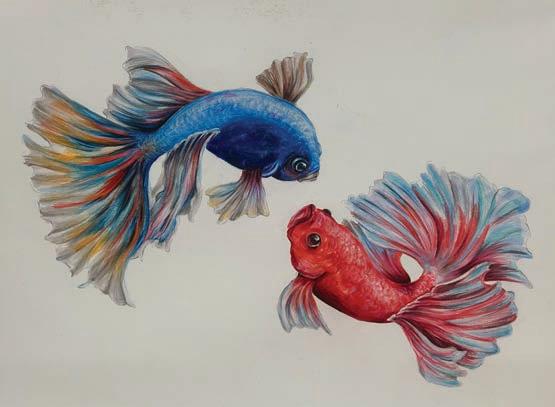
Colored Pencil and marker on paper. Drawn in South Korea during free practice time. Two betta fish expand their fins emphasizing balance, color, and silent interaction.
Her talent has also been recognized by her peers during her time at Millard North. Senior Dania Baiz, a friend of Ok, shows admiration for Ok’s art.
“It is very beautiful and eye-catching. It’s the kind of media that makes you want to stop and just stare at it,” Baiz said.

During her experiences working in the different environments of South Korea and the US, Ok has truly grown as an artist.
“She was the complete package the moment she walked in. People like that don’t just happen; it isn’t regular, and it isn’t normal by any stretch of the imagination,” Brisbois said.
Elle Ok
Nocturnal Gaze - 2023
Poster paint on paper. A great horned owl rendered with an emphasis on stillness and quiet intensity, inspired by the artist’s fascination with the species.

I’ve met so many people I’m grateful for and love greatly,” Wirth said.
three-foot amp stands proudly on the stage in the rehearsal room at School of Rock, its sound magnifying off in waves, colliding with everyone and everything in the room.
The low hum of a bass guitar thunders as the student playing it concentrates on the tune, keeping up with the fast-paced song “I Was Made for
In the corner sits junior Rosie Scherbarth, who prepares for her bass guitar and vocal part of the song. Scherbarth, along with many other kids of varying ages, are taught the music of their choosing, whether it be guitar, drums, or vocals, at School of Rock here in Omaha.
Scherbarth moved to Omaha in sixth grade, and she and her parents decided on School of Rock as a new extracurricular activity she could be involved in to feel more at home.
Little did anyone know that it would shape the rest of her musical career and the relationships she still has today, leading her to form a band people she had met.
As a band, they have performed at various venues, the majority of being local bars, like The Beach House.
Scherbarth, being the PR manager for the band, also runs the advertising and social media accounts as well.
“Every [practice] we try to film a promo video, whether it be serious or silly, just to get our names out there,” Scherbarth said.
One of whom is Caleb James, a teacher at School of Rock and a close mentor of the band.
“I’m a diehard fan. I’ve been to all but one of their shows,” James said. “I’m so proud of these guys…it’s overwhelming to see them up on that stage, it gets me in my feels.”

“When you’re in an environment like School of Rock, it really sets you up for success in the way [of creating your own band], because you’re surrounded by musicians all the time,” Scherbarth
Junior Rosie Scherbath and her band members Matthew Worden, Eli Wirth and Jon McDonald are performing their orignal songs at the Beach House bar and Grill.You can catch them next time at Duffy’s in Lincolon on April 11th.
Photograph contributed by Rosie Scherbath
After the combination of their social media posts, their ads, and Scherbarth reaching out to bars, they prepare to actually perform at a show, playing for all ages.
Even after the rush and excitement from performing their music, they all agree that it isn’t the best part. It’s the con nectedness the bandmates experience as a result of it all, even shaping the way they view the world.
“To me, the band is like making a bad thing good. I’ve had anxiety for the longest time, but with my band, it creates a positive relationship with the word. Instead of thinking of anxi ety as an emotion, I think of my band mates and all the fun we have togeth er,” Wirth said.
While Scherbarth intends to con tinue her music career as long as she can before eventually becoming a psychiatrist, the band has always known where Anx iety will take them.
Scherbarth and her School of Rock classmate Eli Wirth, who plays guitar, started three years ago to put the pieces into place, to create their band, Anxiety.
Just recently, they added drummer Matthew Worden.
“I decided to start a band and create music because the community that is created is like no other.
“There’s a lot of communication we have to do as a band [at a show],” Scherbarth said. “After we set up, we all talk, get together, and remind ourselves that we’re going to present ourselves professionally, and we try to play music for all the people the best we can.”
Depending on the venue their gig is at, the band chooses a plethora of songs that will elicit a surge of excitement from the audience, deciding between popular grunge songs and their own originals.
“We pick songs that are high energy and are fun to listen to,” Scherbarth said. “If you can play songs that really light up the crowd and bring energy into a place, then you’ve succeeded in really grabbing people’s attention.”
From the stage and looking out into a sea of people, Anxiety sees many familiar faces staring back at them.
“Each of the mem bers has plans to pur sue individual careers … but we all know that we won’t ever disband. The music we play and the bond we’ve all made together has become such a special and important part of our lives,” Scherbarth said Scherbarth, not hav ing made the decision lightly, knows that mu sic will always reso nate and remain at the forefront of who she is.
“There’s no good comparison that’s equal to playing on stage and having a crowd cheer for you and be excited to see you. It’s such a wonder ful feeling that can not replaced by anything ever found,” Scherbarth said.

Stranger Things 5 emphasizes the difficulty of satisfyingly concluding longstanding
MIRA MUKHERJEE Editor-in-Chief
As David Bowie’s “Heroes” began to play during the end credits, I stared in shock as the culmination of one of my favorite TV shows finally hit me. The emotional music interspersed with the meticulously detailed graphics of the characters I grew to love over the years blurred in my eyes as I struggled to come to terms with the end of the Hawkins-Upside Down universe.
I was struggling because I was not satisfied. “Stranger Things 5,” released almost four years after “Stranger Things 4,” was rife with unanswered questions and awkward dialogue, contributing to an overall vibe that felt starkly different -- and not in a good way -- from all the other seasons.
“Stranger Things,” created, produced, and largely directed by Matt and Ross Duffer, was first re leased in 2016, captivating the world instantaneous ly with the mysterious disappearance of Will Byers, a young boy who vanished in the seemingly ordinary town of Hawkins, Indiana.
The crux of the show is the memorable charac ters. Throughout the show, we watch Dustin, Lucas, Mike, and Will’s tested and strengthened friendship, Steve Harrington’s redemption arc, Eleven’s self- discovery, Max’s resilience, Nancy’s unwav ering determination for answers, and Hopper and Joyce’s continued bravery to protect those they care about.
So what happened to the high ly anticipated finale of this fantastic show? The downfall of “Stranger Things 5,” in my opinion, can be summarized in three simple categories: tension, tone, and consistency.
First of all, season five, assumed to con clude all questions surrounding the Haw kins-Upside Down universe, fell short. The budding suspense of what the Upside Down represented was disappointing, for it end ed up being a bridge into the alternate di mension of the Abyss (which did not seem entirely terrifying as the heavily used CGI effects seemed to dull its realism). I could tolerate the weak plotline of the Abyss be ing essentially an extension of the Upside Down but that “Final Battle” between the characters and Vecna…no.
It seemed Vecna gave up within five min utes, and all the characters unscathed really
left me feeling like there was no great risk throughout the fight. I think a huge reason as to why “Stranger Things 5” fell flat was that there was no real tension or thrilling risk for the characters. I didn’t want anyone in particular to die, but I feel that the Duffer Brothers were too hesitant to kill off any characters, resulting in a yawn-inducing final battle.
I also believe that starting the timeline for season five a year and a half after season four really diluted the anticipation for that final battle, for everyone in Hawkins seemed to be acclimated to the government
characterized by moody lighting, practical effects, gripping dialogue, and the mid-80’s time frame, contributing to heartfelt nostalgia and thrilling anticipation for many viewers. Overuse of CGI, insipid script writing, and a forced humorous tone created a very jarring dynamic that made characters’s lines fall flat and the overall season to lose the magic of what made viewers originally fall in love with the show.
But tone and tension aside, for I still respect the creative control of the Duffer Brothers, the most problematic part of “Stranger Things 5” was its glaringly obvious inconsistencies. The most frustrating part about the last season is it left us viewers with so many unan-

Where did all the demogorgons go during the final battle? Why did Vecna need exactly 12 children? Why didn’t Will die when Vecna was killed? Additionally, it seemed like the Upside Down was treated almost casually by all the characters, a stark difference from the hazmat suits government officials once donned in season one to enter the dimension. Military involvement also became muddled toward the end of season five, for we don’t really know what happened to Dr. K, and characters like Hopper and Nancy, who killed many military officials, seemed to bear no repercussions. But for me, the most painful ambiguity was Eleven’s ending. Self-sacrifice or harrowing escape, no one will ever know really if she was able to make it to that paradise with three waterfalls.
I still love this show; the sheer creativity of the Duffer Brothers and the cast and crew that helped bring their vision to life will never be forgotten.
“Stranger Things 5,” for all its loopholes and plot inconsistencies, has at least ingrained just how difficult it is to master the ending of a beloved, long-running TV show. For now, I’m content with rewatching Stranger Things from when it was just about four kids searching for their friend -- I’ll leave season five in the Upside Down for now.

12, 15, 19, 22
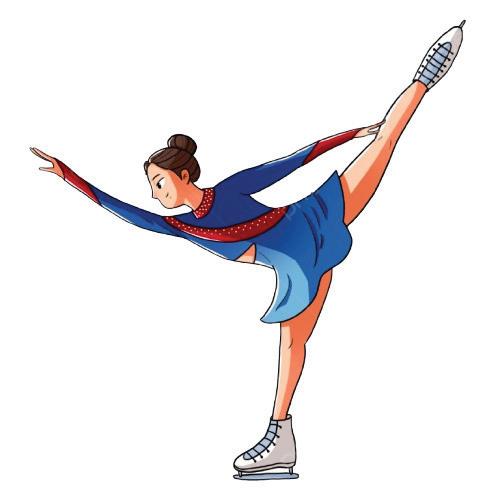




nd Finals: Feb. 14



This years Winter Olympics are located in Italy, with events taking place between Feb. 6 and Feb. 22
Athletes to Watch

Ski Mountaineering, or “SkiMo”, is the newest sport being added to the Winter Olympics. It contains both uphill climbing and technical downhill descents, as well as combining elements of Alpine skiing, cross-country skiing, skinning (uphill skiing) and boot packing into one single race.


Chloe Kim-
- 2x USA Olympic Gold Medalist
- World, Olympic, Youth Olympic, and X Games champion in the halfpipe, and the first to win the title in all four major events
- Youngest woman to win an Olympic snowboarding gold medal Snowboarder
Mikaela Shiffrin-
- 2x USA Olympic Gold Medalalist
- Won the most World Cups of any alpine skier (5)
- Only alpine skier to have 100 victories Alpine Skier
Red Gerard-
- USA Olympic Gold Medalist
- Youngest Olympic snowboarding gold medalist ever
- Started a non-profit organization, Red’s Backyard, enabling kids to take part in sports for free Snowboarder
Track athletes practice and race indoors at the College of Saint Mary, getting race experience before the season even starts
JAYDEN MAPLE Staff Writer
Breathing steadily, waiting for the starting gun, athletes prepare to compete, each hoping to be the first one to cross the finish line. As the gun fires, the race starts, and pressure mounts, each runner trying to beat their personal best, moving towards a chance to improve their times before the season truly begins.
This winter, MN’s track team has been invited to conduct practice and race at the College of Saint Mary, giving athletes a chance to improve their times early and excel during the season.
“It just gives me a benchmark of how I’m doing based on how I did, and it shows me what I need to work on,” senior hurdler Dylan Lee said.
The events are structured like typical outdoor meets, giving athletes a feel for competition before the season starts. Events include a variety of sprint, distance, and field events; the students select the ones they prefer.
The College of Saint Mary hosts open-track practices on Tuesdays and Saturdays, as well as hosting three races throughout the winter season. Two preliminary races took place on Jan. 11 and 25, and the finale will take place on Feb. 15. These meets are open to the public, allowing athletes from any school in the metro to attend.
“Athletes are entered in specific events, compete in heats or sections, and receive times or marks just like a regular meet, but on a small-

er scale than large outdoor competitions,” MN track coach Monte Scheef said.
For some of these athletes, this was their first opportunity to see their skills in action, while the team’s veterans are using it to identify what they can improve on before the season starts.
“It just helps me see where my training is at to see all the work that we’ve been doing paying off,” freshman Kellen Brady said.
Many athletes are already preparing for this season’s “peak,” reserving their potential high times for the season for other high-stakes meets, such as district and state meets, but they still put in their best effort.
“The stuff that we’re working on is real improvement, but I’ll say that during the season the races we do would help me improve [enough to where I don’t hit my peak,]” junior distance runner Caleb Thome said.

prove their times in distance and sprints, while coaches got more time to structure training sessions and give other athletes attention to their skills.
“It’s a great way to develop race awareness, confidence, and competitive toughness while still building toward peak performance in the spring,” Scheef said.
It’s a great way to develop race awareness, confidence and competitive toughness while still building toward peak performance.
However, one aspect that athletes say can be a challenge is the smaller track, which shortens the 100-meter dash to 60 meters. It also affected the students’ performance in events, particularly having a different feel for the smaller track.
“
Many of the students did show a glimpse of their skills, with many MN athletes placing in competitions; sophomore Aaliyah Perry placing 1st in the 60-meter dash and senior Ali Scheef placing 1st in the high jump, both on Jan. 25, for example.
One of the underlying differences between outdoor and indoor racing is that, instead of their usual outdoor practice area, they can practice in a climate-controlled environment. Athletes can practice without the worry of the cold winter weather, helping them make the most out of their winter preseason period.
“When it’s really cold outside, it [an indoor track] provides a normal temperature environment that isn’t cold,” Lee said.
Overall, the meet had a positive impact on the students and coaches, as they saw their progress pay off over time. Students saw themselves im-
Q: Where are you committed to for college and why’d you choose that school?
A: I’m comitted to the College of Saint Mary and I committed there because I really like the environment, the coaches and the girls that I’ve met there are really nice.
Q: How’d you get connected with them?
A: I’ve known him [the head coach] for a long time, because I’ve done club track and he used to coach... we talked to them and then went on a visit and got an offer.
“Curves are a lot tighter, so you feel like you’re running around and around. The air is dry, and it can make your throat really dry,” Thome said.
Although these meets are optional, many of the coaches and students seem to enjoy the opportunity for their students to improve their skills without the effects of the elements.
“These meets build confidence and motivation. Athletes get to see their progress, compete against strong competition, and experience the excitement of racing again,” Scheef said.
When it comes to the students, they encourage others within their team circle to join up and get some extra practice to get ahead before the season truly begins.
“It’s all fun because we all push each other, we’re really competitive when we push each other to be better,” Lee said.
For now, the track team pushes to prepare for the start of the spring, encouraging each other to go above and beyond. Each hoping to make it to their next goal after the preseason: racing in districts and even, with luck, state.
Q: What have you done with track in the past?
A: I placed my sophomore year in Long Jump and made it to State every year except for freshman year.
Q: What are your hopes for this season?
A: To make it to State in both events [long jump and high jump], and place in both and overall have a great season.
Q: Did racing at CSM helped you to make your college descision?
A: Yes, with getting to know the environment and meeting some of the girls.
Junior Alaina Hutchinson trades in her jersey for a clipboard to coach the Lady Junior Mustangs in basketball
LUCAS DAY
Co-Opinions Editor
As children dribble across the court, their coach calls out from the sideline. She’s prepared them for this tournament all week, and as the game unfolds, she can’t help but get lost in the moment.
As the buzzer sounds and they’re given hard-earned medals for their narrow victory, almost nothing can surmount the pride swelling in her chest. She joins her team, high-fives the players, and takes her sister home with a smile on her face.
Junior Alaina Hutchinson began coaching for the Lady Junior Mustangs earlier this year. While she’s new to coaching, she’s certainly not new to the game. A basketball player for nine years, Hutchinson has a long-held love for the sport.
“I love the people playing it [basketball], and I also like the adrenaline you get, especially when you win,” Hutchinson said.
After playing basketball for both the Junior Mustangs and the high school team, Hutchinson was hoping to take her love for the sport to the next level. Soon enough, she found coaching to be the perfect fit.
“I enjoy teaching kids basketball, and it seemed like something nice where I can still stay with basketball without playing,” Hutchinson said.
ing,” Bearinger said.
Beyond her growing passion, Hutchinson seems naturally suited for coaching. Basketball teammate junior Layla Ali sees Hutchinson’s inherent love for leading others as simply who she is.
“Coaching is the perfect fit for her. She’s very good at helping people, and she’s a natural-born leader in
at the table.
“Being a teenage girl and having to go against forty-year-old dads is a very weird dynamic,” Hutchinson said. “Respect is kind of a struggle.”
Nevertheless, Hutchinson pushes through the obstacles and stands firm in her coaching, regardless of what parents think.
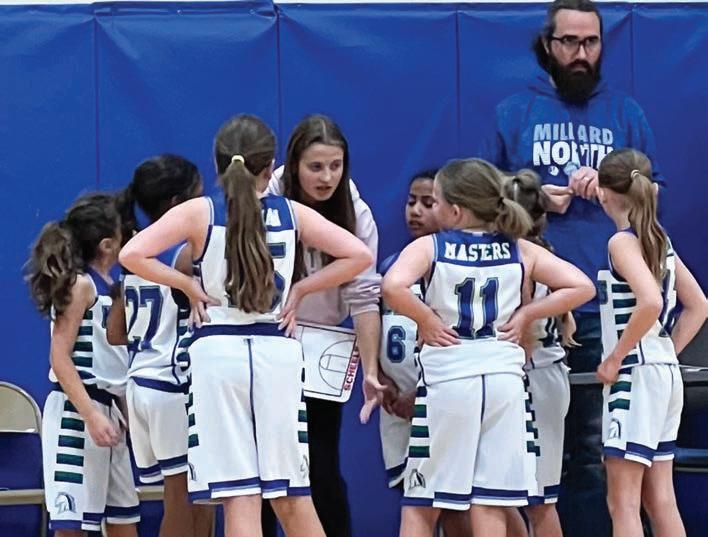
The 3rd grade Lady Junior Mustangs huddle together as their coach, junior Alaina Hutchinson, gives them a pep talk. Hutchinson works to always end huddles on a positive note, reinforcing their spirits. Photograph contributed by Alaina Hutchinson
Each practice, she reviews drills, tactics, and gameplay with her team. As her players have slowly adjusted to the rules of the game, Hutchinson has developed a newfound passion for coaching.
“I enjoy the feeling that they enjoy basketball. I’ve had many parents tell me that I’m making basketball become their favorite sport, and they love the fact their kids enjoy playing,” Hutchinson said.
Junior Grace Bearinger, watching the games each week, has seen a change in her own sister’s love for the sport.
“She [my sister] really enjoys basketball, and she’s gotten a lot tougher and more aggressive in her play-
What are your thoughts on the student section of your sport?
Ainnara Jimenez Freshman

I think when people do come, it’s really nice and they’re really hyped... It just makes you really energized and want to play well.
giving directions and talking to people,” Ali said.
Although much of coaching comes naturally to her, it still has its challenges. For starters, athletes are expected to accept the referee’s calls even if they don’t always agree. However, as a coach, Hutchinson has a greater responsibility to speak out.
“As a coach, you have the safety of your players in your hands, so if something happens, you’re gonna have to be vocal about it, because otherwise it’s on you,” Hutchinson said.
On top of that, with referees and parents all around, being a teenage coach can feel like fighting for a seat

a big motivation... The support is huge. It’s always nice to have a crowd behind you.
“It’s not about them, it’s about the players. You just got to let it roll off your back,” Hutchinson said.
Proving herself through consistent dedication to the team, Hutchinson is always overjoyed to see the smiles of her players as they take their medals home in victory.
“[My favorite memory from coaching was] getting second place in our first-ever tournament. They were so excited and happy,” Hutchinson said. “I felt accomplished because they were doing so much better than I was at their age.”
While every coach’s dream is for their players to steal an unexpected win, Hutchinson’s pride bursts even further as one of her Junior Mustangs is her own sister.
“I love it [coaching my sister] because I get to hang out with her, even if sometimes she can get on my nerves,” Hutchinson said. “There are tense moments where she wants to make me proud, so when she does something wrong, she gets upset, but after every game I tell her she did a good job.”
While she’s only a beginner coach, what she lacks in experience she makes up for in dedication. Her devotion to the sport and her players makes her an inspiring mentor to the Lady Junior Mustangs program.
“Alaina is very outgoing and kind. She’s a very good teacher, and the girls [Junior Mustangs] learn a lot from her,” Bearinger said.
Alaina’s commitment to her players has allowed them to grow not just as players but as people. Her love for the game and her players has made her more than a coach, but an uplifting leader to the Lady Junior Mustangs.

I think we have a good student section. It’s a good way to bring the whole school together.

It gets pretty rowdy... I just love people coming, they don’t even have to be doing chants or anything they just need to be loud.