THE ENERGY AND CARBON PROFESSIONAL PATHWAY: FROM PRACTITIONER TO LEADER
ENERGY MANAGEMENT AWARDS 2025 – WINNERS ANNOUNCED
THE EVOLUTION OF ENERGY AND CARBON ANALYSIS AND M&T: FROM MANUAL LOGS TO AI-POWERED INSIGHTS
Layng
MAKING ENERGY MANAGEMENT YOUR COMPETITIVE EDGE: LESSONS FROM DATA CENTRE INNOVATION
Drew Barrett
By
Dear Reader,
Welcome to the latest edition of The EMA Magazine, our final edition of the year.
As we approach the end of the year, it’s a natural moment to pause and take stock, to celebrate what we have achieved, acknowledge the challenges we have navigated and appreciate the strategies and creativity that have fuelled our progress. It’s also a time to recognise the lessons that have shaped us, the innovations we have welcomed and the resilience that has kept us moving forward in an everchanging environment.
As energy and carbon management continue to evolve at an astonishing pace, it’s more important than ever to stay informed, proactive and willing to share both challenges and insights. A commitment to continuous learning, collaboration and open knowledge exchange will be key to keeping up with, and advancing within, the industry. By joining forces and learning from one another, we can better navigate complexity, spark innovation and drive meaningful progress together.
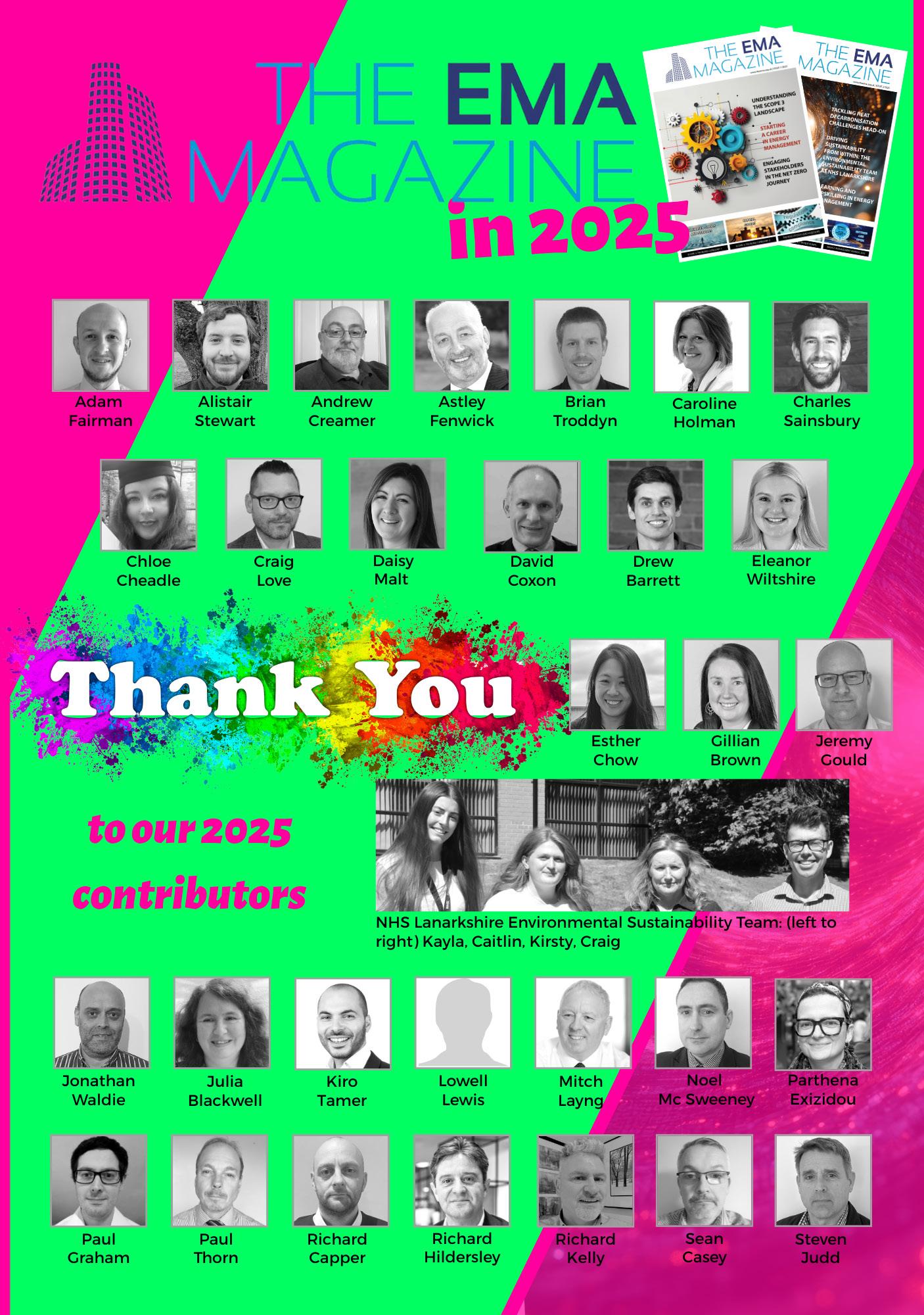
This time of year is also a perfect moment to say thank you to everyone who helped bring the Magazine to life. I am very grateful for our dedicated team and all our contributorsfeatured on the next page - who lead by example and inspire others through their passion and expertise. Thank you for all that you do!
I wish a merry Christmas and a happy New Year to all our readers, contributors and advertisers. Without all these pieces of the jigsaw, the Magazine would not exist.
We look forward to being part of your continuing energy management journey in 2026 but, for now, we hope this edition of The EMA Magazine encourages you to reflect, reenergise and step confidently into the next year with fresh purpose and inspiration.
Warmest wishes,
Jana Skodlova CEO, Energy Managers Association
PUBLISHER
The EMA Magazine is published quarterly by the Energy Managers Association (EMA).
EDITORIAL
The Energy Managers Association www.theema.org.uk Tel: 0203 916 5516
CONTACT
Edita Krupova; Editorial Enquiries & EMA Membership Services Manager edita.krupova@theema.org.uk
CONTRIBUTORS:
Nopi Exizidou, Jonathan Waldie, Richard Capper, Caroline Holman, Paul Graham, Mitch Layng and Drew Barrett
The EMA would like to thank to the above contributors for their time and effort in providing the content and making this issue possible. Their willingness to share experience and knowledge is exemplary and inspiring, and we hope it will encourage others to come forward and contribute in the future.
ADVERTISING SALES
The EMA Team Tel: 0203 916 5516 enquiries@theema.org.uk
ABOUT EMA
The Energy Managers Association (EMA) was set up in February 2012 and represents Energy Managers across all industries. Our priority is to improve the position of energy management experts and their profession and act as their united voice. We aim to develop the skills, knowledge and experience of professionals through our training, high-quality peer to peer guidance and best practice exchange.
@2025 Energy Managers Association, Registered in England and Wales, Company No 07943728, VAT No 151339624, Registered Address: Suite 77, 95 Mortimer Street, London, W1W 7GB.
No part of this publication may be reproduced, stored in, or introduced into a retrieval system, or transmitted in any form or by any means (electronic, mechanical, photocopying, recording, or otherwise) without prior written permission. Any information or material sent by advertisers and contributors, including advice, opinions, drawings and photographs, is the view and the responsibility of those advertisers and contributors, and does not necessarily represent the view of the EMA.
By Nopi Exizidou, Jonathan Waldie and Richard Capper
Energy and Carbon Management Trends 2026
As 2025 draws to a close, three energy management experts share their perspectives on the emerging developments set to shape the industry and their roles in 2026. From evolving regulatory expectations to technological innovation and shifting customer needs, their insights highlight the forces that will influence how organisations approach energy efficiency and sustainability in the year ahead. For professionals across the field, staying informed about these trends will be essential to remaining effective and competitive in an increasingly dynamic landscape.
TRENDS TO LOOK OUT FOR IN 2026
Nopi Exizidou Head of Net Zero Transition
British Antarctic Survey
AI and Digital Transformation
The rapid rise of AI and digital transformation is a very complex topic from a sustainability point of view. The expansion of AI caused a sharp increase in energy demand leaving sustainability professionals with little to no time to adapt strategies and be ready for this shift.
At an organisation/business scale,
the focus is and will continue to be in understanding the impact of the digital transformation on carbon footprint, designing strategies to reduce it while also identifying the role of new digital tools in the net zero transition.
Energy consumption by data centres is a growing concern. The computational demands of AI models along with extended cooling demands have led to sharp increases in power demand. In the UK, data centres currently use 2.5% of the electricity but this is expected to rise four-fold by 2030 and reach 10% by 2050 (Source: Data centres: planning policy, sustainability, and resilience, Research Briefing, House of Commons, November 2025).
At the same time businesses integrating AI and Machine Learning tools can have a significant impact
in reducing emissions and enabling the net zero transition through data analysis, developing forecasting models and digital twins as well as improving efficiency in operations and logistics. Regulatory frameworks and industry initiatives will determine whether the outcome will be positive or negative for GHG emissions.
Regulations
and Compliance: Tighter Rules on Reporting
Global regulations around sustainability reporting and accountability are expected to tighten. The UK’s new Sustainability Reporting Standards (UK SRS) aims to align with global standards developed by the International Sustainability Standards Board (ISSB). This move brings in the requirement to report on all sustainability related risks, opportunities and transition plans
alongside energy use and emissions, and introducing the requirement for Scope 3 reporting.
Expanded reporting requirements will increase the need to improve data quality, robustness of data collection processes across value chains and transparency. Efforts need to focus on engagement and collaboration across the supply chain of a business to ensure reliability of data and the development of common goals and values around sustainability. We need to work closer together in partnerships to increase resilience and adaptability to overcome existing and future challenges around climate change.
The new rules on reporting alongside increased awareness by consumers and investors will force businesses to backup claims and prevent greenwashing. Transparency will bring an opportunity to earn trust and a competitive advantage across the industry.
Circular Economy Focus
New regulations coming up in the next couple of years also reveal a stronger shift towards circular economy, like the EU’s Circular Economy Act and the UK's Deposit Return Scheme (DRS). The focus is currently on high impact areas such as electronics, packaging and construction materials. For example, digital tools are being developed with product/ material passports tracking a product's lifecycle with the aim to improve
transparency and facilitate closedloop manufacturing.
Consumers are also increasingly demanding products that are more sustainable, last longer and can be repaired, pushing the industry to adopt more sustainable practices. Businesses will need to prove their ethos and demonstrate that they have robust processes to reduce waste and move away from dispose and replace models.
For businesses, on the other hand, adopting circular economy methods are actively helping them to minimise waste, reduce material costs, build supply chain resilience and create new revenue streams from repairing and reselling services. These practices will be embedded into stricter sustainability reporting frameworks as discussed above.
Author’s profile:
Nopi is an engineer by background with more than 15 years of experience in sustainability. At the British Antarctic Survey, she leads on the strategic delivery of the net zero programme of the organisation with a focus on infrastructure, transport and logistics and supply chain decarbonisation.
AREAS OF FOCUS IN 2026
Jonathan Waldie
National Sustainability Energy and Asset Manager Haven Holidays
On-site Generation
The rise in holiday guests and the growing popularity of holiday home ownership across the UK are driving higher energy demand, both for accommodation and the wide range of facilities guests and owners use. As more visitors remain on-site, facilities such as pools, restaurants and arcades are operating for longer hours, further increasing consumption. At the same time, many parks face ageing infrastructure and rising utility costs, making on-site generation an increasingly attractive solution. Beyond cost savings, on-site generation enhances sustainability credentials and strengthens the positive image parks present to current, potential and future guests. Technologies such as solar generation, heat pumps and voltage optimisation are increasingly becoming common features across holiday parks, helping operators balance efficiency, resilience and environmental responsibility.
Sustainability Credentials
Across the holiday park industry, the call for genuine sustainability is becoming impossible to ignore. Guests are increasingly making choices based on environmental credentials, while investors are scrutinising operators’ ability to meet ESG targets with transparency and credibility. This shift reflects a broader societal demand for accountability, where sustainability reporting is no longer a peripheral exercise but a central measure of trust and competitiveness.
Tightening carbon regulations are raising the stakes, requiring holiday park operators not only to comply but to demonstrate proactive management of energy risks. From tracking and reducing emissions to publishing clear and verifiable carbon reports, the industry is entering a new era in which sustainability performance is as critical to long-term success as guest experience and financial returns.
Smart Metering and Data
Data is the critical enabler of meaningful progress. Accurate measurement of energy use, emissions and efficiency allows any organisation to move beyond broad commitments and demonstrate tangible results. By harnessing data, operators can identify inefficiencies, track improvements and validate the impact of new technologies. Ultimately, data transforms sustainability from aspiration into accountability, driving both environmental responsibility and longterm resilience.
Holiday park operators
are increasingly adopting smart metering and integrated dashboards to gain deeper insights into energy consumption patterns across both holiday accommodation and shared facilities. By analysing these consumption profiles, operators can identify opportunities to reduce unnecessary usage and improve efficiency. This datadriven approach not only helps to curb overconsumption but also highlights areas where outdated mechanical and electrical systems can be upgraded or replaced with more efficient technologies, driving long-term sustainability and cost savings.
Author’s profile:
Jonathan has worked in the holiday park leisure industry for over 20 years in various roles before moving into a central role overseeing aspects of facilities and sustainability for all the Haven estate. He manages capital and planned preventative maintenance for all mechanical and electrical plant, swimming pool plant operations, water infrastructure, drainage and energy management, including team engagement and behavioural change.
Richard Capper Group Operational Energy Manager
Ibstock
Brick
Ibstock plc, a manufacturer of bricks and pre-cast concrete products for the residential, commercial and infrastructure markets, has ambitious carbon reduction targets with the aim of reducing our scope 1 and 2 carbon emissions by 40% by 2030, from a baseline year of 2019. To achieve this operational efficiency, renewable energy and alternate fuels are all key elements of our decarbonisation plans all enabled by improvements in metering and monitoring.
Alternate Fuel / Fuel Switching
Electrification – the Climate Change Committee expects 57% of carbon reductions to come from electrification by 2040. During 2026, the aim for Ibstock will be to continue to switch from liquid fuels or gas to electrification where viable and to work on operational efficiency plans across our factory estate.
Hydrogen – the manufacture of clay bricks uses natural gas to fire the product at high temperatures to achieve the strength, durability and resilience that enables these products to last beyond 150 years. During 2026, we will continue to work with our partners to investigate the
possibility of fuel switching to green hydrogen from natural gas.
HVO – while a smaller emitter of carbon, switching our diesel fleet within our factories and quarries to a cleaner fuel is an area we have targeted in our strategy. As a business we are classing HVO as a transition fuel, until we can switch our FLT fleet to electric. Our vehicle leases mean we can gradually replace fleet over time, allowing us to improve the sites infrastructure and grid connections to enable sufficient power for EV charging.
During 2025, we carried out small scale trials at our Sittingbourne concrete works, replacing diesel with HVO, with successful results. While HVO is priced 20% higher than diesel, we have seen an improvement in efficiency results.
During 2026, a wider large-scale trial will take place at a number of Ibstock sites to prove suitability and to ensure we work with suppliers who can prove feed stock suitability.
Energy Efficiency
While alternative fuels and renewable projects are seen as key in meeting our carbon targets, we must first ensure we are running as efficiently as possible. Over the last 3 years we have released an improved
energy best practice, which covers our significant energy users across all divisions, as well as an improved energy and awareness training for all employees to help identify more efficient processes.
The key areas we will continue to target through 2026 are our kilns and dryers, compressed air systems, and motors and drives to ensure that we are using the latest technology and driving forward with our targets set within our ISO50001 procedures.
One element which could affect energy efficiency plans is the extra relief in non-commodity costs within our electricity bills, which we are seeing increase in 2026 through Network Charging Compensation Scheme (NCCS). This is welcome in tough commercial market and with imports from Europe benefiting from lower energy costs, we will need to re-assess paybacks on renewable projects. Our hope is they remain attractive enough to secure investment.
Metering,
Monitoring & Targeting
In my opinion the first step of any energy improvement process is to understand where, when and how we are consuming energy. Over the last 18 months we have improved our Metering, Monitoring and
Targets (M,M&T) with the purchase of new analytical software and the addition of large-scale sub metering across the Ibstock estate, monitoring our largest energy consuming equipment.
During 2026, we are aiming to increase our metering profile further with installations within our clay and concrete division, which will allow us to target further efficiency projects while also crucially being able to verify projects. We can also use data as evidence towards our publicly available ESOS action plan.
To also help continue to drive employees' awareness and understanding of energy consumption, we will be using the data from billing and sub meters to set up live dashboards which will be displayed across our sites. Employees can see their performance by key assets as well as showing energy improvements following key projects.
Author’s profile:
Richard has 20 years’ experience in energy management where during that time he has been Group Carbon & Energy Manager at Marshalls PLC and Group Operational Energy Manager at Ibstock Brick. Richard is a Chartered Energy Manager and a lead ISO50001 auditor.
Net Zero Targets: Driver or Burden
STRATEGIC PRIORITIES: SHIFTING MINDSETS AND LANGUAGE
At LCP we are taking a risk rather than compliance based approach. Net zero means different things to different people. So, we’re focusing on future-proofing the business and developing clear, unequivocal language to engage people. For some, the term ‘net zero’ draws blank stares but when we talk about efficiency - doing more with less, it resonates. This drives a greater focus on greater added value throughout the value chain and across internal and external stakeholders.
How is the net zero agenda influencing decision-making at the top managerial level?
By Caroline Holman and Paul Graham
Net zero is no longer a distant ambition, it’s a present-day imperative. Whether embedded in corporate strategy, public sector operations or frameworks, the transition demands collaboration and clarity. However, are these goals a catalyst for innovation or a burden on operations and budgets? Two energy management professionals explore the topic from a strategic, financial and operational dimensions of the net zero agenda. They emphasise that clear language matters and that focusing on efficiency, rather than abstract carbon metrics, can drive resilience, innovation and long-term value.
In the NHS, net zero isn’t front and centre because patient care must come first. However, sustainability supports that mission. Better lighting, better heat controls create better environments for patients, so we’re building connections between sustainability and clinical care, which isn’t easy. Financial discussions have dominated the conversation and justifying heat pumps is far from easy. However, we’ve made progress at board level, and we’ve articulated a journey, even if funding is unreliable. We have support from NHS England and GB Energy, so we’re moving in the right direction.
Caroline Holman
Paul Graham Energy and Sustainability Manager Kingston and Richmond Hospital NHS Foundation Trust
Caroline Holman ESG Manager LCP Group
Paul Graham
FINANCIAL PLANNING: MAKING THE CASE FOR INVESTMENT
How is your organisation balancing the long-term net zero goals with financial planning?
Caroline Holman
We don’t have all the answers, and no single company does, but we’re approaching this with curiosity and focus, especially as we face some unique challenges driven by our rapid growth.
We have moved from no reporting obligations to significant UK reporting requirements in a very short space of time. We’ve gone back to basics measure to understand and target action. In parallel, we’re developing a broader, long-term definition of value, one that goes beyond pure financial return. There still needs to be a business case, but we’re also looking to capture and quantify the wider benefits, including sustainability and risk management.
It’s not just about carbon or the cost of energy and water. It’s about mitigating both net zero transition and physical risks associated with climate change. We need to articulate to internal and external stakeholders, how these efforts protect and enhance the value of our assets in the long term.
Unlike many property companies, we both own and operate our assets, which gives us control, and a platform for collaboration, shared learning, and common purpose. We’re trying to capture the full spectrum of ESG benefits.
Where we continue to challenge ourselves is in quantifying the social impact beyond traditional metrics. That includes not only health, safety, and wellbeing, but also the wider community benefits.
So, as part of our net zero journey, we’re focused on understanding and measuring these co-benefits, and fostering genuine collaboration across our entire value chain; from suppliers and contractors through to our current and future tenants.
Paul Graham
Our planning processes can be complex and, at times, fragmented. We face multiple drivers with each clinical department understandably seeking additional resources, which creates internal competition for limited funding. In addition, the constraints of annual financial cycles make it challenging to plan effectively beyond one-year periods.
Despite these challenges, having a structured plan in place has proven extremely valuable in securing funding. Even a simple pipeline of potential projects, without fixed timelines, provides clarity on what is feasible and enables us to respond quickly when opportunities arise. Capital availability fluctuates; there are periods when we are well supported, and others when funding is limited. NHS England also provides short-term, ad hoc funding, so ensuring that feasibility and design work is completed in advance allows us to take advantage of those opportunities. For example, by having clarity on how many solar panels we could deliver if funding became available, we are able to act decisively when the time comes.
In terms of assessing impact, we have recently begun implementing a streamlined impact assessment process. While it would be ideal to quantify all impacts comprehensively, waiting for perfect data would risk delaying progress. Instead, we are embedding a culture of inquiry - asking key questions around financial impact, social value and environmental outcomes at the decision-making stage. This approach is helping to shift mindsets and encourage broader consideration of value across the organisation. Both staff and management have been supportive of this direction.
Ultimately, we believe that by integrating these impact considerations into our planning and investment decisions, we can deliver value across multiple dimensions, not only financial, but also social and environmental, which is increasingly important in the current context.
Net zero for some draws blank stares. But when we talk about efficiency - doing more with less - it resonates.
CAROLINE HOLMAN
NET ZERO: RELEVANT OR LOSING TRACTION
Is the terminology surrounding net zero still widely supported, or has it begun to lose favour?
Caroline Holman
I’ve found that the term net zero rarely resonates. Instead, we focus on risk and opportunity, viewing them as two sides of the same coin. Actions such as reducing waste and increasing efficiency not only improve the bottom line but also future-proof the business.
Our company has ambitious growth plans, and by doing more with less, reducing environmental impact and enhancing reputational value, we gain access to better funding opportunities, free up capital, optimise asset utilisation, and strengthen long-term tenant relationships.
Certainly, there is a lot of noise. In a company as diverse as ours, opinions range from scepticism to uncertainty. Yet, by framing the discussion around risk mitigation, value creation, and long-term resilience, rather than abstract climate terminology, we can engage effectively. The nuances of the messaging may vary depending on the audience, but the core drivers remain the same.
The term net zero is, in many ways, a compromise, as achieving it requires carbon removals or abatements to offset remaining emissions. While it remains a valid and worthwhile goal, the term has become politically charged, particularly in the United States, which can sometimes lead to backlash.
In practice, I’ve found that talking about greenhouse gases communicates the same idea without the political baggage and people readily understand it. Framing the issue positively is particularly effective, for example focusing on energy efficiency or improving local air quality. These approaches allow us to achieve the same outcomes while emphasising practical benefits such as cost savings, lean operations, and reduced waste.
Ultimately, there are many opportunities to achieve our sustainability goals without relying solely on terminology that may be divisive. While our staff are generally open-minded and still engage with the concept of net zero, we have learned that it is far more effective to focus on practical, actionable steps rather than abstract or alarmist arguments, which rarely motivate meaningful change.
If we wait until we can quantify everything, we’ll never do it. So, we ask: pounds, people, planet?
PAUL GRAHAM
Paul Graham
SCOPE 3 AND SUPPLY CHAIN: COLLABORATION OR MANDATES
What approach do you take in the area of Scope 3 emissions?
Paul Graham
In the NHS, the procurement stage for the supply chain is increasingly subject to government-led requirements, which are expanding regularly. These include requests for carbon reduction plans, KPIs and social value metrics. Currently, these requirements only apply above certain thresholds, but those thresholds are gradually being lowered. As a result, we are prioritising the largest contracts first and encouraging compliance, which allows us to lead by example and gradually influence smaller contracts over time. Within our trust, we have taken a similar approach, focusing initially on the largest and most engaged contracts.
Staff engagement also varies: some groups are primarily responsible for driving these initiatives, while others are implementers. Celebrating early successes helps to build momentum, though maturity across the organisation is uneven.
Some trusts have undertaken formal ISO-accredited Scope 3 calculations, but in our case, this has not been mandated. Instead, we rely on the NHS-wide carbon footprint, recognising our resource constraints and prioritising action over exhaustive measurement. While ideally we would do both, our current approach focuses on initiatives that deliver measurable improvement wherever possible.
Additionally, there is an Evergreen Sustainable Supplier Assessment that, although not currently mandatory, is being increasingly promoted across trusts. This encourages suppliers to address sustainability questions and improve performance, particularly given the significant volume of goods and services we procure.
Finally, as part of our long-term commitment, we aim to achieve net zero emissions across all scopes, including Scope 3, by 2045. This makes engagement with the supply chain an essential part of achieving our sustainability goals.
Caroline Holman
I would summarise our approach as being grounded in pragmatism and realism. We recognise the importance of putting our own house in order and practising what we preach. Our strategy has therefore been a softly-softly approach, creating an open forum for discussion, collaboration, cooperation, and constructive challenge.
A recent example of this is the introduction of green leases, on an optional basis for renewals and new leases. The primary purpose of this initiative was not to engage in superficial ‘greenwashing’ across our supply chain, but to foster genuine partnerships through commitments to data sharing and collaboration on efficiency initiatives. This emphasis on preparation, planning and openness is critical, particularly given the challenges around accessing third-party data, whether that access is granted by consent, default or through policy mechanisms. We believe progress must begin with people and with trust.
Encouragingly, the response from our tenants has been overwhelmingly positive. Of the 156 leases that have come up for renewal since introducing this initiative, only one tenant has chosen not to sign. Our tenants range from small independent businesses to large national occupiers.
In the context of Scope 3 emissions, our focus is on readiness and collaboration. We know these requirements are coming and they represent a vital part of our broader sustainability agenda. Addressing them effectively will depend on leveraging the collective skills, knowledge, and expertise across the entire value chain.
NET ZERO IN OPERATIONS: EMERGING PRACTICES AND PRIORITIES
How is the net zero agenda driving operational changes?
Operationally, we have hired clinical leads for sustainability who are actively engaging our operational staff. These teams generally have a strong aversion to wastage and inefficiency, and are wellaccustomed to compliance-driven, procedural work.
For example, staff in theatres have quickly embraced initiatives such as the Green Theatre Checklist, which provides a detailed set of steps to ensure all sustainability measures are checked and implemented. This structured approach resonates well with their workflow.
While measuring impacts can sometimes be discouraging, as in the case of campaigns like ‘Gloves Off’, which may represent only a tiny fraction of our total carbon footprint, the tangible actions still have value. The ability to see progress and take action significantly enhances engagement and motivation.
In terms of adaptation, we are still in the early stages. A new adaptation assessment tool released this year is gradually being introduced to our business continuity and risk assessment teams. This is helping shift their perspective from thinking narrowly about simple measures, such as reducing paper use, to considering broader climate adaptation and resilience strategies.
Authors' profiles:
Caroline Holman, ESG Manager, LCP Group
The main changes relate to a greater focus on consumption. This shift is particularly helpful as most people find it easier to understand consumption than emissions. By consumption, I mean the entire system, including cash, energy, water, raw materials and services, and the interdependencies across the value chain.
This broader understanding encourages collaboration and helps teams recognise the inevitable trade-offs. While individuals may be responsible for managing a specific asset, they are increasingly being asked to consider the broader environment and value chain. These are the subtle yet significant changes I am seeing and actively encouraging.
That said, there remains a tendency to focus too heavily on regulatory drivers and compliance. While we are working to shift the emphasis toward risk and opportunity, the most notable change at board level is a stronger awareness of materiality, understanding the wider risks, impacts and the associated opportunities.
Caroline is an engineering and sustainability professional with experience across various sectors including automotive manufacturing, water and real estate. She is a Fellow of the Institute of Engineering Technology (IET), Chartered Environmentalist (Institute of Environmental Managers and Assessors - IEMA) and Chair of the EMA Board of Directors.
Paul Graham, Energy and Sustainability Manager, Kingston and Richmond Hospital NHS Foundation Trust
Paul has been an energy manager for 9 years and has been employed by Kingston and Richmond Hospital NHS Foundation Trust for 16 years within the Estates and Facilities Department. He leads the energy, waste and sustainability agenda for the Trust as they serve the local population in Southwest London. Paul is a Member of the EMA Board of Directors.
Caroline Holman
Paul Graham
Become an ESOS Lead Assessor course 23RD 28TH 30TH
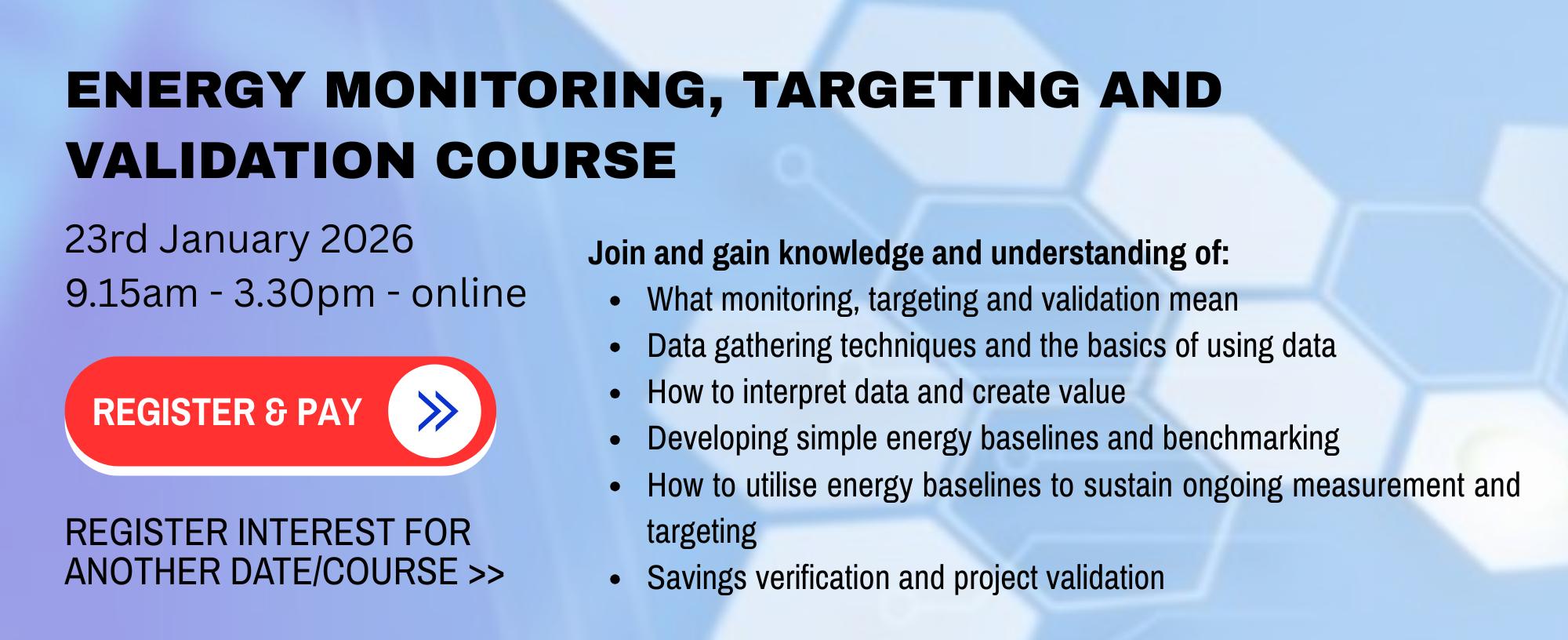
Energy Monitoring, Targeting and Validation course
Fundamentals of Energy Management course
L E A R N A N D U P S
L E A R N A N D U
4TH 5TH 9TH 13TH 18TH 20TH
Energy Management in Building Services course
Energy Champion course
SECR Compliance course
Essential HVAC Control and Optimisation course
Net Zero Fundamentals and Strategies course
Energy Auditing Techniques course 11TH 17TH 18TH
Reaching Net Zero course
Understanding and Delivering Behavioural Change course (In-person/London)
Lighting – Basic Understanding course
24TH 29TH
Become an ESOS Lead Assessor course
Energy Procurement course
By The Energy Managers Association
The Energy and Carbon Professional Pathway: From Practitioner to Leader
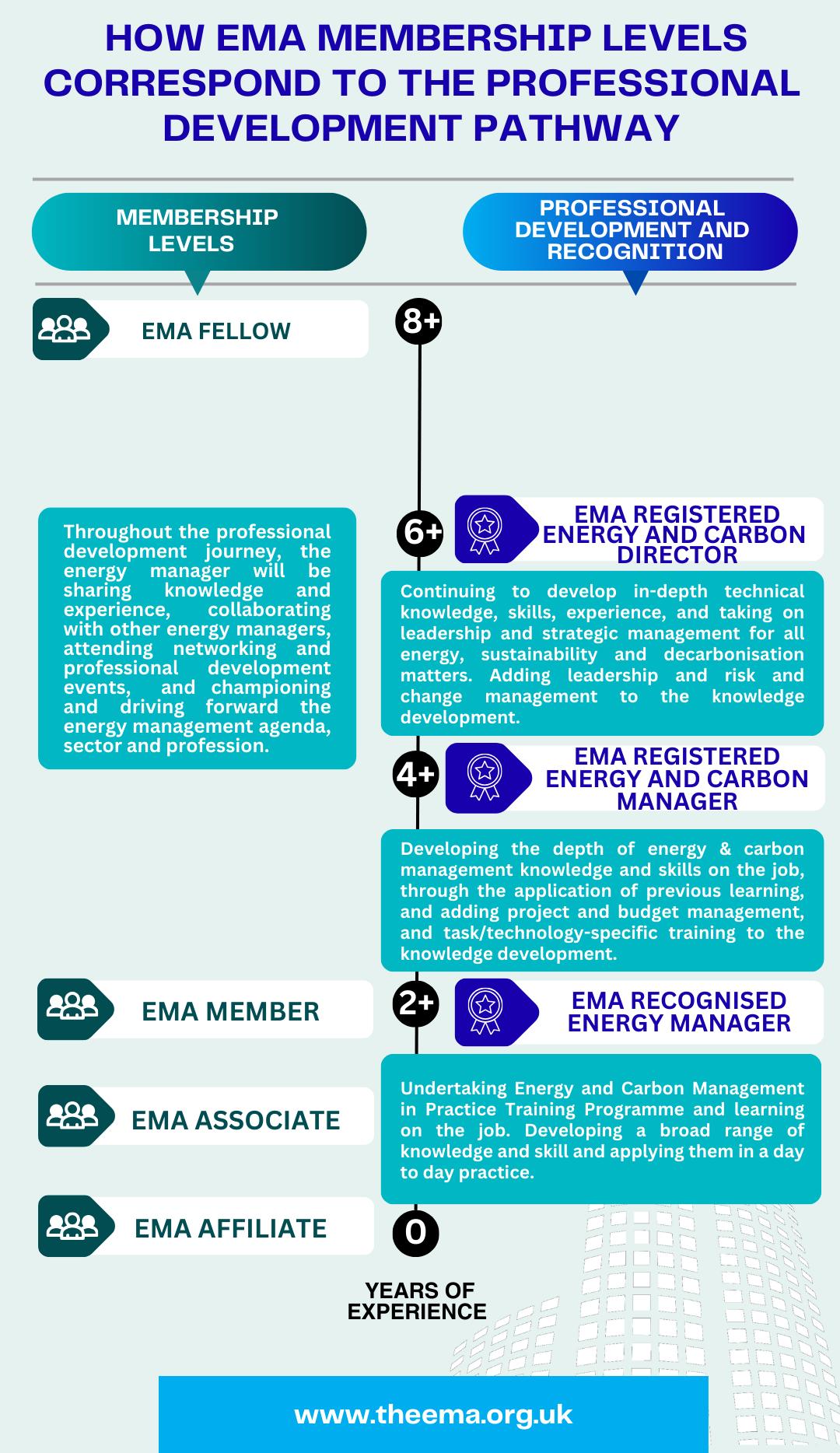
The UK’s journey to greater energy efficiency and net zero is not just about technology or policy - it is about people. Organisations need professionals who can cut through complexity, manage resources effectively and inspire change at every level. Recognising this, the EMA has established a professional pathway that supports and validates the growing community of energy and carbon managers. This pathway spans three levels of recognition:
• RECOGNISED ENERGY MANAGER,
• REGISTERED ENERGY AND CARBON MANAGER, AND
• REGISTERED ENERGY AND CARBON DIRECTOR, each reflecting increasing levels of responsibility, expertise and influence. Together, they form a career structure that advances individuals and strengthens organisational capacity to deliver on climate and sustainability goals.
The Rise of the Recognised Energy Manager: Managing and Driving Organisational Change
There has never been a more exciting or more urgent time to work in energy management. The UK’s net zero commitment, regulatory imperatives and reporting requirements are reshaping the way organisations think about energy, carbon, sustainability and long-term resilience. Against a backdrop of volatile energy costs and growing concerns about energy security, organisations need leaders who understand the technical landscape and who can also inspire change.
A BENCHMARK FOR ENERGY MANAGEMENT PROFESSIONALS
Awarded by the Energy Managers Association (EMA), the Recognised Energy Manager status is more than a title - it is a professional benchmark that signifies a proven knowledge and ability to deliver results in energy and carbon management.
Unlike traditional qualifications, the status is awarded through the EMA Knowledge and Skills Gap Analysis interview, an informal yet rigorous conversation that explores a professional’s knowledge and experience to date. This approach ensures that recognition is grounded in real-world practice, not just theory.
2+ years
BEYOND TECHNICAL EXPERTISE: THE COMPETENCIES THAT MATTER
A Recognised Energy Manager is expected to demonstrate a broad suite of competencies that go far beyond technical know-how. Yes, they must master engineering fundamentals, energy auditing, carbon management, compliance, procurement, but the role extends further.
The most impactful energy managers are also strategists and communicators. They know how to embed energy and carbon management plans into the DNA of an organisation, how to motivate colleagues to adopt sustainable behaviours and how to align energy efficiency goals with broader organisation’s objectives.
Alongside this, ancillary skills such as water and waste management, sustainable transport, and ICT integration are becoming increasingly vital as organisations take an all-inclusive approach to energy/ resource efficiency.
WHY ENERGY MANAGER RECOGNITION MATTERS NOW
Those who achieve it join a growing community of professionals who carry the credibility and confidence to influence the energy transition within their organisations.
In many organisations, energy managers start by supporting estates, sustainability or facilities teams, gradually taking on responsibilities that touch every part of the organisation. Within just a few years, they are expected to understand, but more importantly, apply energy management principles, navigate regulatory
frameworks and conduct on-the-ground energy audits.
By awarding Recognised Energy Manager status, the EMA is not just validating technical competence, it is creating a trusted signal to employers and stakeholders that the individual has the expertise and the vision to lead on sustainability commitments.
The Benefits for Professionals, Organisations and Society
• For professionals, the status enhances career prospects and provides recognition in a field that is rapidly gaining prominence.
• For organisations, it offers assurance that they have skilled people capable of reducing consumption, controlling costs and meeting sustainability targets.
• For society, it ensures that the UK has the talent pipeline needed to deliver on its energy transition ambitions.
THE ENERGY MANAGER AS CHANGE MAKER
Ultimately, the Recognised Energy Manager is more than a technical specialist. They are change makers, bridging the gap between organisational ambition and operational reality. They combine energy and carbon data-driven decision-making with the human ability to inspire colleagues to view energy not as a cost but as an opportunity for efficiency, conservation, innovation, resilience and environmental leadership. They are the professionals who will help organisations navigate the complexity of the energy transition and, in doing so, play a pivotal role in shaping a sustainable future.
In the Recognised Energy Managers' Words: Joel Kirby, Energy and Sustainability Manager, Parwood Leisure
• What prompted you to assess your knowledge and skills and undertake the Knowledge and Skills’ Gap Analysis Interview with the EMA?
“When I first started working in energy management, I had only developed my knowledge through my experience in the job role but had nothing to
demonstrate the skills I had learnt and the level of my competency. The EMA Knowledge and Skills’ Gap Analysis Interview not only allowed me to gain some recognition for my time working in the sector but also highlighted areas where I needed to improve at a time when I was still learning and developing as an energy manager. I have no doubt that this significantly helped to improve my ability to make a bigger impact on the industry in my career.”
• Do you think that the EMA Recognised Energy Manager status has allowed you to highlight your credentials as an energy manager?
“Absolutely, and this was one of the main reasons I wanted to become a Recognised Energy Manager. I believe that this has also helped me to demonstrate my competence over the years and get me to the position that I am today. It helped from a confidence point of view if nothing else, knowing that your knowledge has been validated and that you do know what you are talking about.”
Mohammad Monir Rafique, Head of Sustainability, Crown Prosecution Service
• What prompted you to assess your knowledge and skills and undertake the Knowledge and Skills’ Gap Analysis Interview with the EMA?
" I have been working in this field for 10 years and achieved a number of academic and professional qualifications within this period. I wanted to find out the areas of skills and knowledge for my continuous professional development. EMA’s gap analysis interview really gave me good insights."
• Do you think that the EMA Recognised Energy Manager status has allowed you to highlight your credentials as an energy manager?
“I believe this credential has given me a strong recognition of my skills and knowledge in this field. This is evidence of my continuous development journey that I am connected to current good practice and being up to date with knowledge.”
4+ years
The Registered Energy and Carbon Manager: Leading Organisational Transformation
Organisations across every sector are under pressure to reduce emissions, manage costs and embed sustainability into the very core of their operations. To achieve this, businesses need more than compliance managers or project leads - they need strategic leaders who can steer complex organisations through the energy transition. This is where the Registered Energy and Carbon Manager comes in.
A NEW STANDARD OF PROFESSIONALISM
Introduced by the EMA, the Registered Energy and Carbon Manager status is the profession’s higher benchmark recognising individuals who not only manage energy day to day but also lead on strategy, transformation and large-scale impact.
Practitioners at this level are typically Senior Energy Managers or Energy and Carbon Managers, with between three to six years’ experience managing the energy consumption of large organisations. They take ownership of the carbon reduction agenda, balancing efficiency, compliance, financial control and innovation to make their organisations exemplars of environmental best practice.
Similarly to the Recognised Energy Manager, the pathway to recognition is through the EMA Knowledge and Skills Gap Analysis interview. At this higher level, the assessment, built around professional experience and continuous learning, allows candidates to demonstrate the full scope of their expertise and application of their energy management knowledge. Successful applicants are awarded the Registered Energy and Carbon Manager status - a mark of distinction within the energy management profession.
THE COMPETENCIES OF A REGISTERED PROFESSIONAL
At its core, this recognition reflects technical ability and also strategic leadership. Registered Energy and Carbon Managers must show mastery in areas such as:
• Technical and Operational Expertise – deep understanding of building, process and transport energy systems.
• Energy Auditing and Assessments – advanced auditing at site and organisational scale.
• Monitoring, Targeting and Validation – ensuring transparency and accountability in energy performance.
• Regulation, Compliance and Voluntary Schemes – leading organisations through a complex policy environment.
• Carbon Management – setting and delivering ambitious reduction pathways.
• Behavioural Change, Motivation and Communication – motivating colleagues across departments.
• Energy Strategy and Planning – aligning energy goals with organisational objectives.
• Procurement and Onsite Generation – securing cost-effective and resilient supply.
• Project and Financial Management – delivering large-scale initiatives within budget.
ANCILLARY COMPETENCIES
• Water and Waste Management – integrating energy with wider resource efficiency.
• Sustainable Transport – supporting greener mobility solutions.
• ICT and Smart Systems – harnessing technology for performance optimisation.
What sets the Registered Energy and Carbon Manager apart is not just depth of knowledge, but the ability to lead the energy and carbon reduction strategy for entire organisations. These professionals are entrusted with:
• Minimising energy consumption and resource use.
• Designing and leading energy projects across multiple sites.
• Managing the environments of buildings, processes and transport.
• Overseeing budgets and managing risk.
• Collaborating with stakeholders to embed energy and carbon management into daily practice.
This is a role that requires excellent organisational skills, a track record of successful energy audits, assessments and projects and the vision to align technical measures with corporate sustainability goals.
WHY RECOGNITION MATTERS
While many practitioners already manage energy and carbon reduction on a large scale, few are formally recognised. The EMA’s Registered Energy and Carbon Manager status provides a trusted signal to employers, peers and stakeholders that an individual has the expertise, experience and leadership potential to drive meaningful change.
For organisations, having Registered Energy and Carbon Managers on board offers assurance that they can navigate the complexities of compliance, manage risk effectively and achieve tangible results in reducing consumption and emissions.
For professionals, the recognition enhances career credibility and positions them as leaders of the sustainability agenda.
SHAPING THE FUTURE OF SUSTAINABILITY
The Registered Energy and Carbon Managers don’t just fulfil an operational role, they fulfil strategic leadership tasks. These
professionals are the ones making decisions today that will determine whether organisations thrive in a lowcarbon economy tomorrow. They are the individuals capable of turning ambition into action, managing complexity at scale and ensuring that businesses are not only compliant but also competitive in the emerging net zero world.
In short, they are the leaders of the energy transition and their recognition by the EMA ensures that their expertise does not go unnoticed.
In
the Registered Energy and Carbon Manager’s Words:
Victoria Limbrick, Head of Sustainability – Energy & Decarbonisation Strategy, Balfour Beatty
• What prompted you to assess your knowledge and skills and undertake the Knowledge and Skills’ Gap Analysis Interview with the EMA?
“Working in energy management for a long period of time and in various roles with different focus areas and demands, I felt it was a good stage in my career to reflect on and have external validation of the breadth of my knowledge and experience, and check for gaps and blind spots to direct future development.”
• Do you think that the EMA Registered Energy and Carbon Manager status will allow you to highlight your credentials as an energy manager?
“Absolutely, achieving this status through the rigorous process, backed by the EMA as an established industry body, enables me to demonstrate my capabilities within my business and when engaging externally. Giving a firm foundation to the work I need to do to successfully deliver in my role.”
The Registered Energy and Carbon Director: Steering and Influencing Organisational Strategy
The energy transition is gradually becoming a defining factor for organisational resilience, competitiveness and long-term survival. Organisations require leaders who can combine technical mastery with board-level influence, they need individuals who can translate ambition into strategy, and strategy into measurable results. This is the domain of the Registered Energy and Carbon Director.
SETTING THE STANDARD FOR STRATEGIC LEADERSHIP
Recently, the EMA has introduced the Registered Energy and Carbon Director status as the highest professional recognition in the field. It acknowledges those with six and more years of experience who hold senior positions such as Head of Energy Management, Head of Energy or Director of Energy.
These professionals are accountable for the entire spectrum of energy, sustainability and decarbonisation within their organisations. They act as subject matter experts, strategic advisors and implementation leaders, trusted to align operational practice with corporate vision.
practice, significant projects, leadership and continuous professional development. Successful completion earns professionals the Registered Energy and Carbon Director title - a mark of excellence and authority in the energy management profession.
BEYOND MANAGEMENT: THE DIRECTOR’S COMPETENCIES
Registered Energy and Carbon Directors are expected to demonstrate not only the full range of technical and operational expertise, but also the strategic, financial and leadership skills to influence at the highest levels.
Core Competencies
• Technical and Operational Expertise – ensuring energy systems are optimised for efficiency and resilience.
• Energy Auditing and Assessments – overseeing organisational-wide audits to drive continuous improvement.
As with the two other recognitions, this recognition is achieved through the EMA Knowledge and Skills Gap Analysis interview. At this level, the interview represents experience-based assessment that validates years of
• Monitoring, Targeting and Validation –embedding data-driven decision-making across operations.
• Regulation, Compliance and Voluntary Schemes – safeguarding organisations against risk while exceeding industry standards.
• Carbon Management –delivering robust net zero roadmaps.
• Behavioural Change and Communication –embedding a culture of sustainability across the workforce.
• Energy Management Strategy and Planning –
designing strategies aligned with long-term corporate goals.
• Procurement and Utility Contracts – leading negotiations, managing budgets and securing resilience.
• Onsite Generation and Technology Integration –unlocking innovation in renewable energy and digital systems.
• Project and Financial Management – delivering capital projects with clear ROI.
At this level, responsibilities are both broad and deep.
Registered Energy and Carbon Directors:
• Lead carbon and energy reduction projects across multiple sites, portfolios or regions.
• Oversee procurement and renegotiation of utility contracts, balancing cost control with sustainability.
• Develop and implement Energy and Environmental Management Systems (e.g. ISO 50001, ISO 14001).
• Manage budgets and provide insightful reporting to senior leadership and boards.
offering employers and stakeholders assurance that the individual represents the very best in the profession.
For professionals, the recognition validates years of experience and achievement, opening pathways to greater influence and opportunity.
For organisations, it provides confidence that energy, sustainability and net zero strategies are in the hands of leaders who can deliver measurable outcomes while safeguarding long-term resilience.
SHAPING THE NET ZERO ECONOMY
Registered Energy and Carbon Directors are the stewards of the energy transition. They are not just managing projects - they are shaping corporate strategy, influencing investment decisions and redefining what organisational leadership looks like in a decarbonising economy.
• Supervise energy and sustainability staff, fostering capability and succession.
• Influence designs and proposals, ensuring projects align with sustainability objectives from the outset.
This is a role that blends engineering insight with financial acumen, and strategic planning with people leadership. It requires the ability to manage complexity, scale impact and communicate in a language that resonates at every organisational level - from technical teams to executive boards.
WHY RECOGNITION AT DIRECTOR LEVEL MATTERS
Many organisations already rely on individuals who perform these functions. However, until now, few have been professionally recognised for their leadership, vision and contribution. The EMA’s Registered Energy and Carbon Director status formalises this recognition,
As the UK strives to meet its climate commitments, these Directors will determine whether organisations succeed in transforming ambition into action. They are the professionals who will ensure that sustainability is not just an aspiration, but a measurable and lasting reality. In short, the Registered Energy and Carbon Director is not only the highest level of recognition within the EMA framework - it is the embodiment of leadership needed for the delivery of more resilient and sustainable future.
In the Registered Energy and Carbon Director’s Words:
Astley Fenwick – Electrical and Energy Consultant
• What prompted you to assess your knowledge and skills and undertake the Knowledge and Skills’ Gap Analysis Interview with the EMA?
“The role and aspirations of an energy manager have never been so crucial in the challenging times we are experiencing regarding climate change and the reduction on the reliance of fossil fuels. As a member of the EMA for many years, I have always valued their contribution in this scenario and as such, concluded that to reach the status of becoming a Fellow member would be a significant achievement in my professional life. To
achieve this, I was required to complete a Knowledge and Skills' Gap Analysis Interview, based on my past experiences and knowledge in 16 topics. My interview, for the Fellowship membership with two Fellow members, was based upon my responses to the various topics.”
• Do you think that the EMA Registered Energy and Carbon Director status will allow you to highlight your credentials as an energy manager?
“This is a newly introduced professional status and represents a progression from EMA Registered Energy and Carbon Manager and Recognised Energy Manager. Prior to my application for Fellowship, I wasn’t aware
of the above progression and to be awarded this along with Fellow membership is indeed a honour. To those energy managers who achieved recognitions with the EMA, this achievement can demonstrate to others their commitment to their work and increase their confidence knowing that their knowledge has been validated by an industry recognised body.
As for myself, it represents an accomplishment and reward for all the years in the profession which has mainly been driven by a desire to reduce wasted energy and improve the sustainability of our country’s manufacturing, financial and competitive status.”
NEXT STEPS AND FURTHER INFORMATION
For professionals inspired to take the next step on the EMA recognition pathway, there are several resources and support tools available:
• Download the EMA Energy Management Competency Skills Mapping Guidance (below) - Gain a clear overview of the knowledge and skills required across the competencies to achieve each level of professional recognition.
• Arrange Your Knowledge and Skills' Gap Analysis Interview (below) - The interview is the gateway to recognition.
• Self-Assess Against the Competencies - Access and complete the EMA self-assessment form (below) to evaluate your skills. The online form can be submitted to the EMA for free advice on where to upskill and which training courses may help close any gaps.
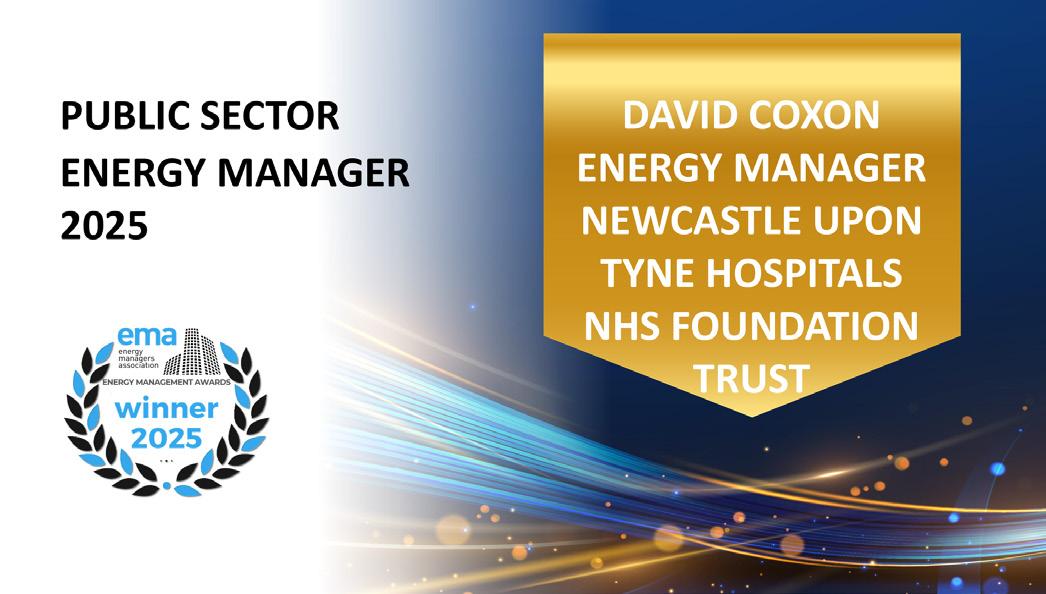
David is a Chartered Energy Manager with a strong background in IT data management and analysis. In his previous roles, he applied this expertise to optimise systems, achieving a 50% reduction in energy consumption and associated carbon emissions over five years. In his current role, David has secured substantial funding for sustainability initiatives, delivered significant cost savings through effective resource management and contributed to the development of a strong, highperforming sustainability team. As co-chair of the NHS National Performance Advisory Group for Energy and an active member of the North East and North Cumbria NHS Energy Managers Group, he works closely with professional networks to advance best practice. He uses his skills in data management, analysis and communication to improve energy efficiency and accelerate progress toward Net Zero goals. David’s professional passions include data science, decarbonisation, energy efficiency and sustainability.
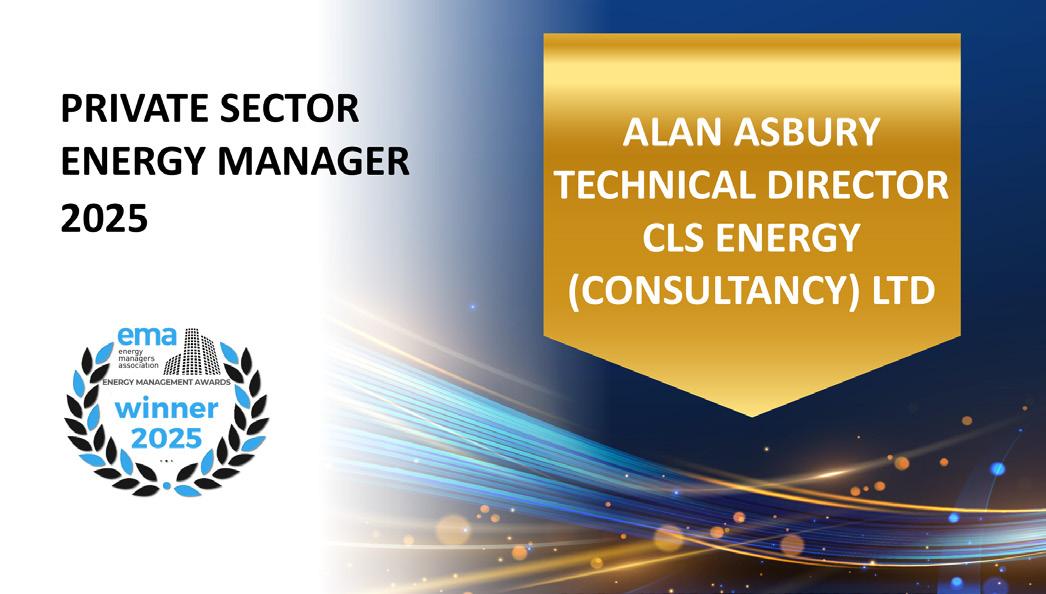
Graduating in 1999 with an MSc in Environmental Management, Alan has been a full-time Energy Manager since 2006 and Fleet Manager since 2004. Holding Royal Charters in Energy Management, Fleet Management, Environment and Waste, he was trained by the Energy Institute to its highest European Energy Manager level in 2010; and awarded Energy Institute Fellowship (FEI) in 2018 and IEMA Fellowship (FISEP) in 2020. Alan has personally completed compliant ESOS Building, Process and Transport audits for over 200 companies specialising in manufacturing, construction, haulage and logistics. He delivers training for companies in energy efficiency and lectures on Environmental Tools, Sustainability and Climate Change to MSc students at Middlesex University. Alan has maintained CMVP® status with the UKAEE since 2014; allowing for demonstrable guaranteed savings to IPMVP global standards. He is an ESOS (EED) Lead Assessor since October 2014, Alan is registered, qualified and experienced in delivering mandatory four yearly EED energy and fleet assessments for large companies across the UK, Denmark, Ireland and Sweden.
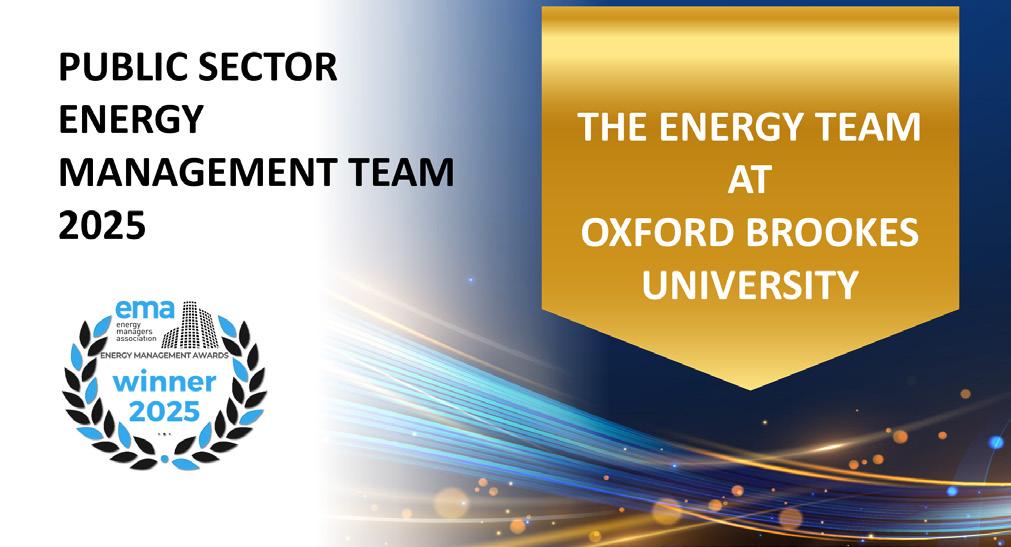
The Energy Team at Oxford Brookes University oversees energy, water and carbon management across the estate. The team combines technical expertise with effective engagement to drive the University’s ambitious goal of achieving net zero carbon emissions by 2040. The team includes: Gavin Hodgson – Decarbonisation Lead: Chartered Energy Manager responsible for delivering the long-term decarbonisation strategy; Paul Spencer –Carbon Reduction Manager: Certified Energy Manager and Performance Measurement and Verification Analyst, leading carbon-reduction initiatives and performance management; Edward Boyle – Energy Management Systems Specialist: Specialist in building management systems and lighting controls, optimising energy efficiency and system performance; Laura Hu – Sustainability Engagement Officer: Leads behavioural-change programmes that embed lasting sustainable practices across the University community. During the 2024/25 financial year, the team delivered a range of utilities-reduction projects to cut energy consumption and optimise building operations. These efforts generated a significant return on investment: for every £1 invested, approximately £3.50 was returned in energy savings. Gas-related cost avoidance alone reached approximately £433k compared with the budgeted amount and previous consumption levels.
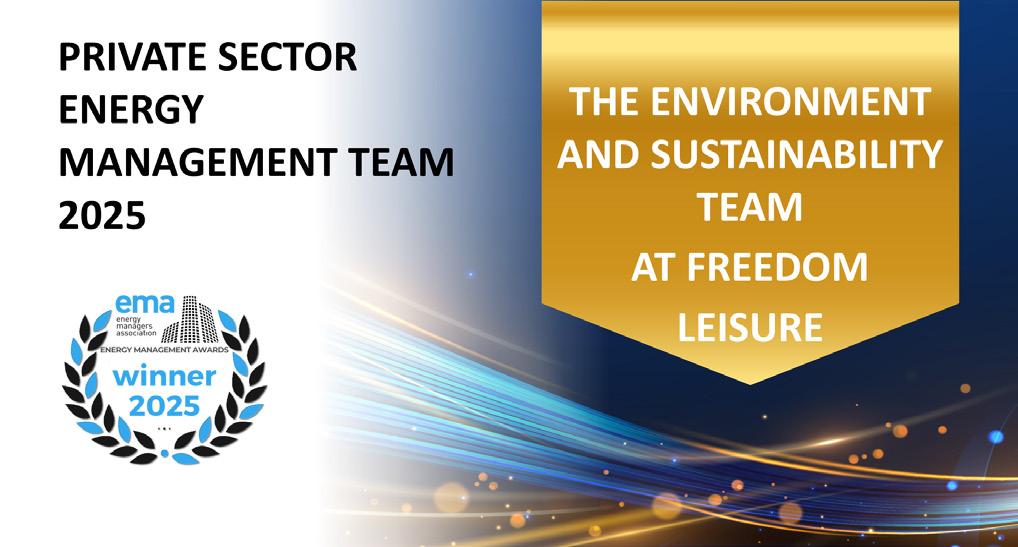
The Environment and Sustainability Team at Freedom Leisure, led by Chief Operating Officer Matt Wickham and Head of Environment and Sustainability Angela Brown, supports the organisation’s mission to improve lives through leisure by embedding strong environmental performance across all operations. The team recognises that sustainable practices are vital to creating longlasting, positive benefits for the communities the organisation serves. Within a workforce of more than 5,000 colleagues, the team understands that meaningful
progress relies on strong networks and clear, consistent communication. A central pillar of its strategy is fostering a mindset of sustainable operations throughout the organisation. To achieve this, Freedom Leisure has established a cross-functional Working Group and a network of Environmental Ambassadors across more than 100 centres, providing guidance and empowering local action. The team also hosts regular online drop-in sessions and masterclasses, sharing best practices alongside an extensive library of tools and resources. These efforts enable colleagues to develop their environmental and energy management skills, and actively contribute to strengthening the organisation’s environmental performance.
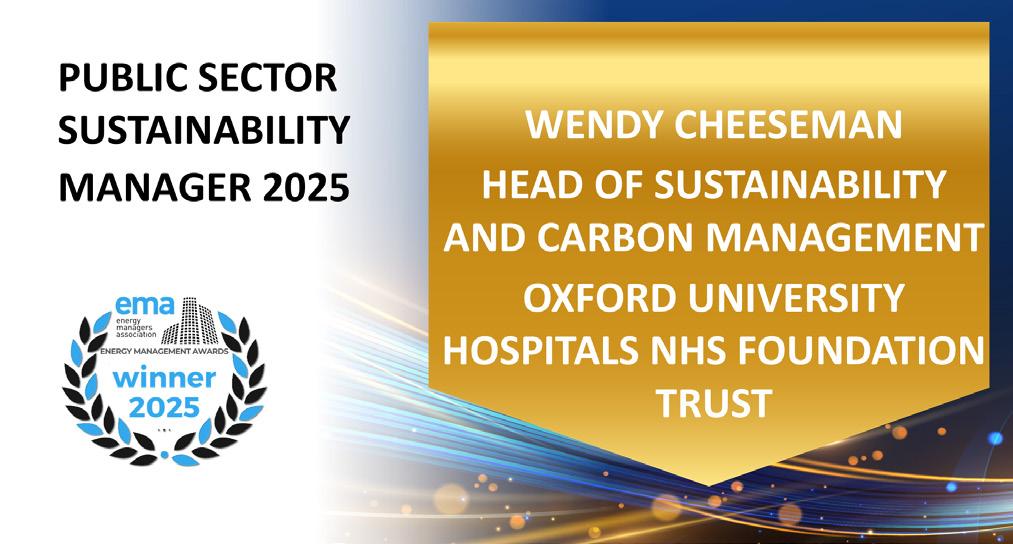
Wendy is an experienced energy and carbon professional, she manages the Transport, Energy and Carbon Teams. Firmly believing in the Greener NHS strapline ‘lower emissions mean lower admissions’ motivates her to improve the patient experience and wider population health. She has previously worked for over 20 years in the commercial sector on energy and carbon reduction strategies, compiling GHG inventories for large and complex organisations as well as small public sector clients, and delivering regulatory carbon reporting.
Wendy's energy reduction behaviour change projects have won the UK National Energy Efficiency Award. In addition, in December 2023 she won the Net Zero Hero award for achievements over her career. Wendy was the 4th accredited energy conscious organisation (EnCO) practitioner globally, driving energy reduction through peopleled interventions and solutions. She is a relentless advocate of obtaining quality, granular data to facilitate change.
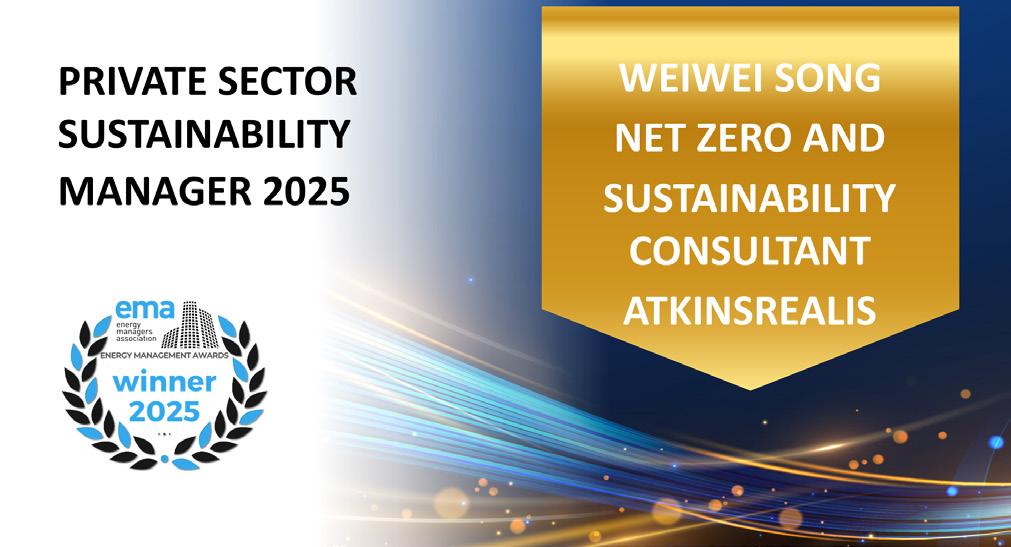
Weiwei is a leading Net Zero and Sustainability Consultant with nearly 15 years of experience spanning HVAC engineering design, low-carbon technologies and strategic sustainability advisory. Her career began in China’s HVAC design and manufacturing sector, where she gained deep technical and commercial insight into the built environment and facility engineering. At AtkinsRéalis, she spearheads Heat Decarbonisation Plans and energy strategies for nationally significant buildings, guiding programmes from concept to measurable carbon outcomes. Her leadership ensures projects move seamlessly from early-stage strategy and funding through design, implementation and performance verification. She has contributed to Salix PSDS4 guidance and serves as a Salix Technical Assessor and QA reviewer, having supported the assessment of projects representing multiple millions of pounds in public-sector funding, and safeguarding technical integrity and compliance. Her approach combines engineering precision with practical clarity, transforming complex challenges into actionable, evidencebased solutions. Beyond project delivery, she represents AtkinsRéalis at EMA and NLA events, elevating industry dialogue and mentoring the next generation of sustainability professionals.
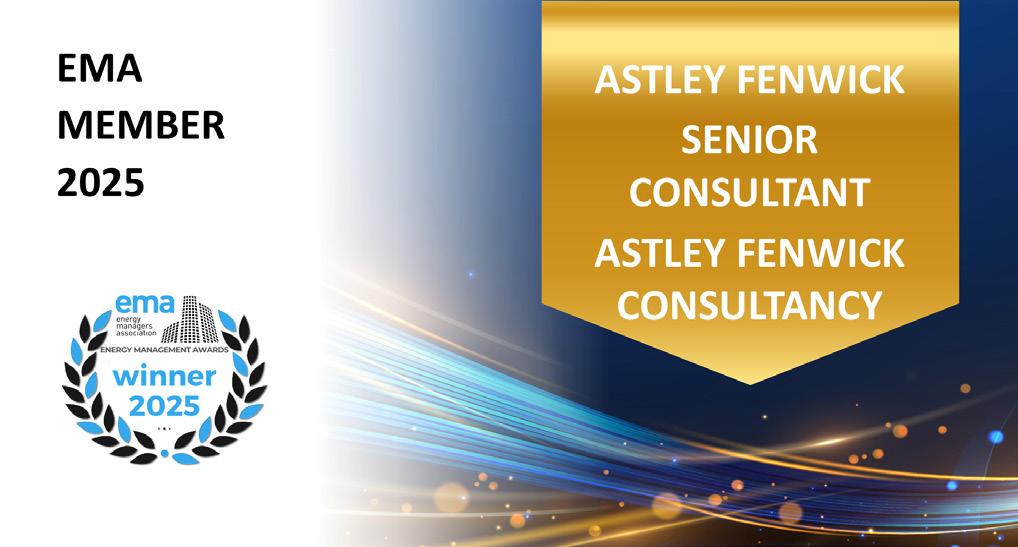
Astley is a chartered professional electrical engineer and has over 50 years’ experience within the building services sector and 35 years’ experience with industrial facilities. His previous role was as Site Electrical Engineer and Energy Manager at GSK. Leaving GSK in 2004, he became an Electrical and Energy Management Consultant, carrying out electrical design, installation and commissioning, and energy management audits, reporting and overseeing projects improving energy efficiency. To date, he has carried out over 230 energy
audits ranging from SMEs to large organisations. He has a wealth of knowledge regarding energy matters and also advises on the road to Net Zero, and transition methods to replace fossil burning energy equipment. Astley’s main expertise lies within the industrial, commerce, education and health sectors. He is passionate about reducing energy consumption and improving sustainability to maintain the earth’s resources for future generations.
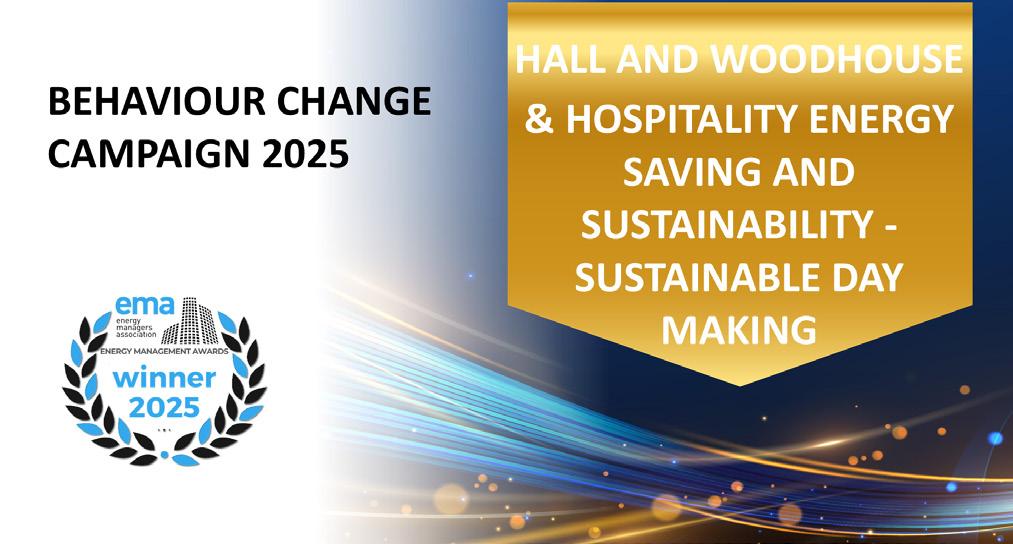
Hospitality Energy Saving & Sustainability (HESS) is proud to support Hall & Woodhouse (H&W) on their journey to Net Zero. Together, they developed “Sustainable Day Making”, a pioneering behaviour change campaign rolled out across H&W’s 180+ pubs. The campaign focuses on practical, daily actions to reduce utility waste, cut food waste and embed sustainability into company culture. With data-led insights, training, site-specific guidance and the introduction of “Top Ten for 10%” actions, the initiative has delivered a 12% gas and 7% electricity reduction, saving over £200,000 and avoiding 500 tCO₂e in the first year. Crucially, energy performance is now linked to staff bonuses and team ownership, with “Energy Heroes” driving the change on the ground. The campaign proves that real savings come not just from technology, but from empowering people, and showcases what’s possible when operational brilliance meets bold sustainability ambition.
CHECK OUT ALL
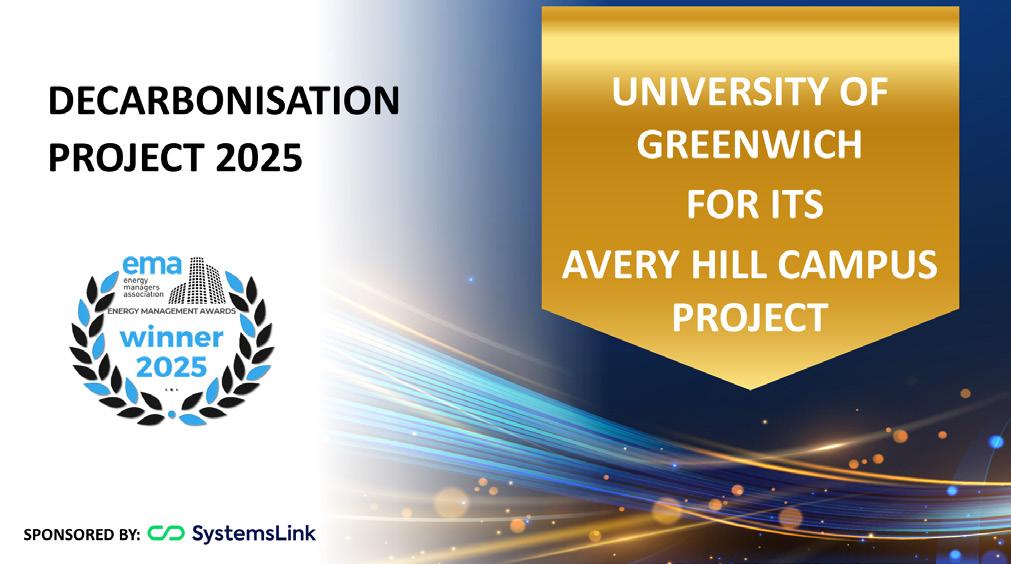
Decarbonisation is often framed as a question of technology; heat pumps and capital spend. For the University of Greenwich, it represents a broader cultural shift grounded in belief, consistency and collaboration. With £1.1m of Salix PSDS 3a funding, the university’s first major decarbonisation project replaced a 30-year-old gas district heating network that supplied 60% of the campus’s heat. The team adopted a robust, long-lived model: a central ambient loop powered by three 244.6 kW ASHPs, supporting five hydraulically separated buildings, each operating its own water-to-water heat pump. Delivery works installed 1.2 km of new buried district pipework, a new 1,000 kVA HV supply and key flow strategies designed to progressively lower system temperatures as buildings undergo refurbishment. This pioneering project provides a blueprint for achieving the university’s broader decarbonisation ambitions: Avery Hill by 2030, Medway by 2030 and Greenwich by 2033.
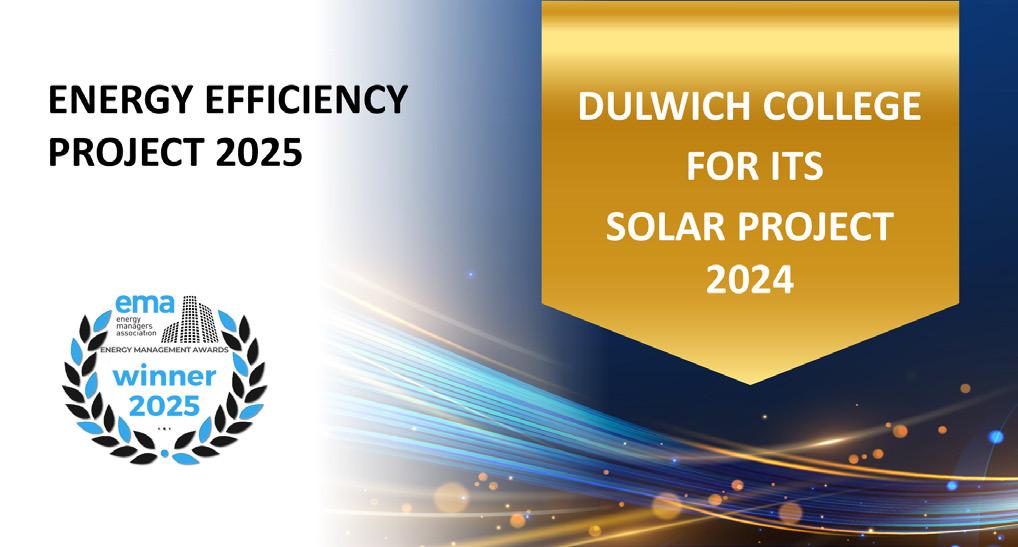
Tendering for the Dulwich College Solar Project began in early 2024 through a tightly managed process designed to ensure the selection of the most capable installation partner. With multiple arrays planned across two areas of the campus, careful coordination and planning were essential. The works started in early summer, following the completion of design work along with construction and condition surveys. Strict safeguarding requirements within the school environment meant roof access had to be carefully controlled and fall-arrest systems were
installed to ensure contractor safety at all times. Despite a minor delay caused by planning regulations, commissioning of the photovoltaic panels across four rooftops, each completely hidden from ground level, was completed by mid-October. In total, 874 new panels were installed, with an estimated annual generation of 412,000 kWh. This is expected to reduce CO₂ emissions by approximately 80 tonnes per year. The College is now more than 20% less reliant on the national grid, securing a significant portion of its ongoing energy needs.
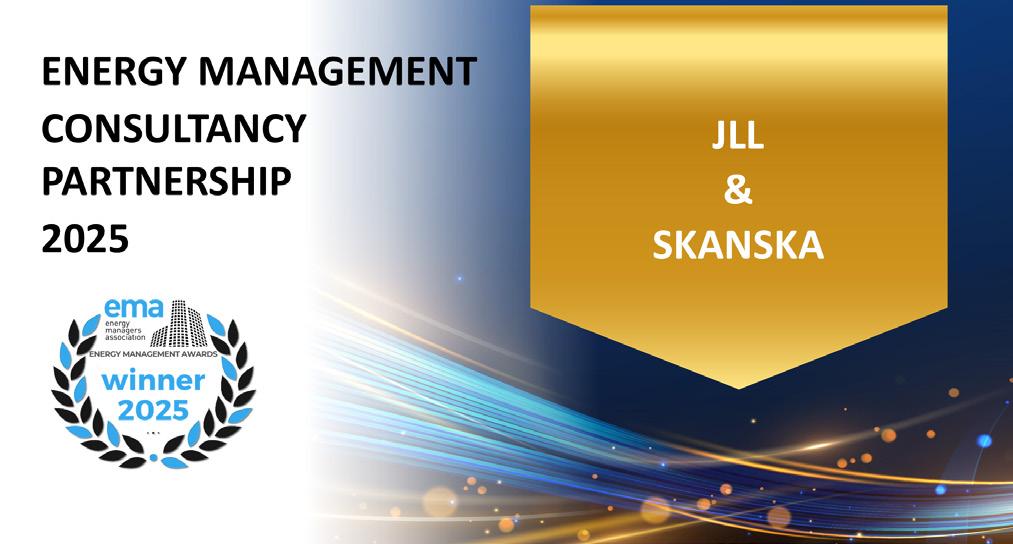
Skanska and JLL’s partnership encompasses the delivery of planned and reactive maintenance services while embedding environmental innovation and compliance. To further strengthen sustainability within FM services, the organisations implemented a pioneering energy optimisation pilot across two large commercial buildings in London, guided by the Better Buildings Partnership’s Managing for Energy Performance framework. The pilot delivered impressive results over five months: Building A achieved a 25.1% energy and carbon reduction and £17,200 in cost savings, while Building B delivered a 16.8% reduction despite already operating efficiently. By integrating the framework directly into the FM delivery model, the project not only enhanced sustainability outcomes but also empowered site teams through improved data visibility and performance ownership. Its success has re-enforced the successful partnership in place and also prompted consideration for a wider rollout across other buildings.
By Mitch Layng, Energy Manager at London Fire Brigade
The Evolution of Energy and Carbon Analysis and M&T: From Manual Logs to AI-Powered Insights
At its core, the development of energy and carbon analysis reflects our growing capacity to understand what was once invisible. This article traces how our understanding of energy use has progressed from basic utility tracking to the integrated, datadriven discipline essential for today’s decarbonisation efforts.
As digital metering, real-time analytics and carbon accounting reshape how organisations measure and manage performance, M&T has evolved from a cost-control tool into a strategic foundation for achieving net zero goals. The progress highlights a key point: progress in energy and carbon management is not driven merely by technology, but by insight, the ability to interpret data, understand systems and act with intention. It underscores the importance of integrating carbon metrics with traditional energy management practices, ensuring that every kilowatt saved and every emission avoided contributes meaningfully to organisational resilience and global sustainability goals.
1970s
Although a few forward-thinking organisations employed a version of energy monitoring and targeting (M&T) before the 1970s, the main impetus for this emerged in that decade because of the oil crisis. This occurred due to Middle Eastern conflicts resulting in oil supply issues and significant price increases.
Early methods of energy saving were rudimentary and focused on behavioural change, and in the late 1970s and early 1980s the first M&T programs were founded, which included the development of analytical techniques using utility bill data analysis. Most systems were manual and did not consider variances such as weather or activity, and did not have the effect that today’s processes have in terms of energy saving. The processes involved taking consumption data and manually inserting onto paper logs or records, a laborious process.
1980s
The introduction of computerisation in the 1980s made M&T systems
more practical and accessible. This period saw M&T being used widely and in a more developed way. Computerised M&T systems could take into account relevant factors such as degree days for space heating and activity. Government organisations led the way in promoting M&T, with subsidies being provided and trade bodies becoming involved. Another approach that emerged in this period was the use of performance indicators for focusing attention. This was particularly effective in local authorities in the form of Normalised Performance Indicators (NPIs) developed by the Audit Commission and implemented as a national system.
During this period a key technology that emerged was Building Energy Management Systems (BEMS). These were widely adopted by owners of large portfolios, such as local authorities and government agencies, and this resulted in several benefits, such as alarm handling and control of building services. Early systems used minicomputers as central stations and were extremely
expensive to install but costs fell as personal computers were introduced, and more "intelligence" was added to outstations, thus reducing field wiring costs. During this period, digital submeters became more affordable and could be linked to the BEMS, enabling closer monitoring and management of consumption.
This period also saw the rise of the energy management consultancy market with many large organisations bringing in consultancy teams to establish M&T systems, carry out audits, implement projects, and deliver communication and awareness schemes. Another major development in this period was the introduction of Contract Energy Management (CEM), which initially went under various names including "Third Party Financing", "Energy Performance Contracting" and "Energy Service Contracting".
1990s
During the 1990s and beyond, energy reporting became more important, not just because of the cost of energy rising, but the increased importance of reducing carbon emissions. Organisations felt they had a social and sustainability obligation to limit carbon emissions, which had several benefits including cost saving, reducing reputational risk and attracting customers. In particular, in the built environment, forward thinking developers and building owners realised that it was becoming a necessity to demonstrate green credentials.
2000s
Operational metrics were starting to develop, with the Energy Performance of Building Directive introduction in the 2000s being the main driver. This introduced Energy Performance Certificates (EPCs) aimed at reducing energy waste and emissions supporting UK’s climate goals. Also, Display Energy Certificates (DECs) became a legal requirement for all buildings in the public sector and where members of the public accessed public buildings. As the UK’s targets became more stringent, the ratings required in an EPC have increased. There has been a lot written about the benefits of EPCs and DECs, and although they do have their drawbacks, there is no doubt they have helped in reducing energy consumption and carbon emissions. Other metrics and standards have
provision and therefore closer monitoring and management was when electricity consumption was recorded and provided in half hourly (HH) intervals. The 2011 Energy Act introduced the concept of half hourly metering to the UK market. For larger consumers, the availability of HH data offered more granularity giving a much more detailed view of consumption. It enabled building owners and managers to monitor energy almost in real time, enabling immediate adjustments to reduce costs and improve efficiency. It also introduced the potential to improve automatic control and streamline energy audits, and identify hidden energy saving opportunities.
begun to gain traction in recent years, such as NABERS UK, which has two product offerings for office buildings, “Design for Performance” for new buildings and “Energy for Offices” for existing buildings.
2010s
A game changer in terms of data
Advances in technology have made it easier and more affordable to interrogate and present large data sets in an easy-to-read format. Cloud based energy systems enable real time monitoring, integration with other systems, automated reporting, along with cost reporting. They can take advantage of the increase of the “Internet of Things” (IoT), data analytics and artificial intelligence to optimise energy efficiency, reduce cost and support sustainability initiatives. These platforms provide real-time insights and analytics into energy consumption, support automated controls and demand-response strategies, further improving energy efficiency and reducing operational costs. Additionally, they provide automated reporting tools that strengthen compliance and support informed decision-making.
Security of these platforms is an issue that needs to be considered, but this can be addressed through the implementation of robust encryption methods, regular security audits and strict access controls.
Automated alarm reporting is now becoming a common facility with energy management systems. This means the role of the energy manager could be more strategic and corroborative, rather than having to spend time interrogating systems to discover where energy is being wasted.
2020s
Artificial intelligence is transforming energy management. It is doing this by predictive analysis and optimising energy performance. For example, algorithms can analyse the large amount of half hourly
electricity data from meters and can predict where energy is being wasted or where there is a spike in consumption. This can be done in seconds and displayed in a userfriendly way on screen, with the option of downloading reports with cost benefit analysis.
The future of energy management will continue with enhanced machine learning which is giving the capability of improved data integration along with real time analytics. This gives more accurate forecasting using larger datasets and picking up complex patterns in the data. This will allow seamless integration with other systems and datasets, giving insights into performance that could never be seen before. It will facilitate energy managers and others to be able to respond quickly to changing conditions.
All of this advancement means, rather than being reactive as experienced under a traditional M&T system, it will enable a proactive approach with operational changes being made in real time. My view is that there is still a place for a manual M&T approach for some organisations, but the pace of AI, the scalability of the IoT and improvement in controls will result in opportunities for many organisations to take advantage of much more automated processes than have ever existed.
Author’s profile: Mitch works as Energy Manager for the London Fire Brigade. He has been involved in energy management for over 40 years, from being a design engineer, through to facilities manager and energy manager in both the public and private sectors.
By Drew Barrett, Co-Founder and COO at Zendo Energy
Making Energy Management Your Competitive Edge: Lessons from Data Centre Innovation
In the last five years, energy management has undergone a drastic transformation. Once considered a back-office operational task, it is now a frontline role that can define a business’s competitiveness, resilience and reputation.
Nowhere is this shift more visible than in the data centre sector. Data centres already consume about 1% of global electricity and demand is expected to more than double by 2030 with the rise of AI and high-performance computing. At that scale, the industry’s electricity consumption could match that of Japan.
For data centre operators, electricity is their single largest cost: up to 70% of customer bills can be traced directly to power. Forwardthinking operators are responding with innovative new approaches focused on measurement, efficiency and cleaner power. Increasingly, leading data centres see energy management and measurement not just as a necessity, but as an opportunity to gain a powerful competitive edge.
1
Inside the Energy Demands of a Data Centre
Data centres are the backbone of the ever-expanding digital economy. They house servers, storage, networking, and the supporting power and cooling systems that keep data flowing for cloud services, banking, streaming and enterprise applications.
They are also extreme energy users. The processors inside servers contain billions of transistors, each switching on and off billions of times
and high-performance computing. Research1 shows that average rack density has doubled in eight years, from 6kW to 12kW. The pace of change is unrelenting: today’s ultrahigh-density racks designed for AI workloads can now reach 100kW - roughly the electricity demand of 200 UK homes and a data centre can host hundreds, if not thousands of these racks.
The exponential growth in demand for data centres creates two major energy burdens: the direct demand from servers and the additional requirement to cool them.
per second. Each switch consumes energy and generates heat, and as workloads intensify, processors demand far more power, often running in “turbo” modes that boost speed but release even more heat.
Inside data centres, servers are arranged in racks, and the power density of these racks has been rising sharply with the rise of AI
From Measuring to Managing Efficiency
The sector’s standard efficiency measure is Power Usage Effectiveness or PUE, which compares the total power consumed on site against the power actually used to run servers. A PUE of 1.0 would mean all energy goes to servers - theoretically perfect but impossible in practice.
Traditional data centres often operate with a PUE of 1.6–2.0, meaning almost half the energy is spent on cooling and overheads.
Today’s best-in-class data centres achieve 1.1–1.2, largely thanks to innovations in cooling such as liquid cooling and even locating centres in colder climates. Hyperscale operators like Google, Microsoft and Meta are at the forefront of these improvements.
However, over-reliance on PUE as a metric poses two risks. First, it averages consumption across a year, which overlooks the opportunity to align usage with times when electricity is cleanest and cheapest. Second, incremental improvements become increasingly difficult and expensive as facilities approach the theoretical limit of 1.0. Scope for further cost and carbon savings can only come from actively managing the compute loads themselves - something that depends on collecting and analysing detailed energy data.
Google, Microsoft, Amazon, Apple and Meta - but hyperscalers only represent part of the picture.
These companies operate vast facilities and attract headlines with their renewable procurement
the sector, but they are not easily replicable by most organisations hosting their digital presence in third-party ‘colocation’ facilities.
In practice, “good” compute load management means keeping utilisation rates high (avoiding under-used servers idling but still consuming power), scheduling noncritical tasks when energy is cheaper and cleaner, and consolidating workloads to cut wasted capacity. With access to detailed data, operators can identify patterns such as GPU (Graphic Processing Unit) spikes, uneven rack distribution or workloads running during periods of high carbon intensity, and report opportunities for application owners to shift, optimise or automate them.
Two Sides to the Story: Hyperscale and Colocation
Outside the sector, most attention focuses on the energy strategies of the largest technology firms, such as
programmes and engineering innovations. Google and Microsoft are working toward 24/7 carbon-free energy, matching consumption with renewable generation on an hourly basis. Amazon and Meta, by contrast, are making greater use of offsets and renewable certificates. Given the challenges of delivering 24/7 power from intermittent renewables, all of these companies are considering nuclear power to secure stable, lowcarbon supply; from Microsoft’s deal to restart a portion of the Three Mile Island nuclear plant in Pennsylvania to Google’s power purchasing agreements with small modular reactors.
Hyperscalers are also aggressively pursuing corporate power purchase agreements (CPPAs) that lock in clean supply at scale. Almost 50% of the CPPA market can be attributed to just five tech companies (Microsoft, Google, Meta, Amazon and Apple). These efforts are important in setting direction for
The majority of global capacity lies in these colocation data centres - shared facilities where multiple businesses rent space and rely on common infrastructure. Here, the challenges are different. Operators procure energy for the facility as a whole but serve a highly diverse customer base - each with distinct sustainability, risk and cost objectives. These customers’ needs and usage profiles vary dramatically and are becoming increasingly hard to predict due to the rise of AI (which some projections suggest could account for 70% of total data centre capacity by 2030) and high-performance computing.
This misalignment - between the operator’s responsibility for infrastructure and their customers’ control over workloads - leads to inefficiencies in energy procurement. Energy costs are typically passed through to these customers via fixed-rate monthly bills that do not reflect the timing or profile of their actual consumption - nor incentivise shifting compute loads to the greenest, cheapest times. In many colocation centres, measurement practices remain basic, with meter readings in some cases still taken manually and only once a month. The resulting loss of insights is staggering.
The next step towards true innovation is access to real-time usage data. With it, operators can track patterns, identify inefficiencies and adjust pricing or operations
accordingly. This visibility also enables new commercial models, shifting from static monthly billing to time-based, usage-linked pricing that better aligns incentives between operators and their customers.
Real Progress Starts With Real-Time Data
Not all electrons are created equal: the carbon intensity and cost of electricity can vary dramatically by time of day, source and even grid conditions. Without detailed, real-time data opportunities for optimisation remain invisible.
With this visibility, data centre operators can plan capacity more efficiently, adjust schedules or source power differently - turning energy efficiency into operational efficiency. AI adds another layer of potential, with machine learning models able to forecast demand, shift non-critical workloads and adjust cooling in real time.
Advanced metering, sub-metering and IoT-enabled monitoring systems can pinpoint inefficiencies, guide investment decisions and highlight the true cost of consumption. They can also expose the hidden cost of “risk premiums” in energy contracts - charges suppliers add to protect themselves against uncertainty, which can make up as much as 10% of a bill. The more an organisation understands its consumption profile, the better it can negotiate to reduce that premium.
Considerations for Energy Managers
For many organisations hosting their digital presence in colocation facilities, the data centre bill is essentially an energy bill - and it should therefore be viewed as part of their broader energy procurement strategy. Treating it this way
allows managers to align digital infrastructure contracts with their broader objectives on cost, risk and sustainability.
A first priority is measurement and transparency. Energy managers should ask their providers for detailed metering, ideally in real time, with reporting that translates compute activity such as GPU use into kilowatt-hours and related emissions.
Flexibility is another area to examine. Once managers have a clear view of their contract terms and consumption profile, they can consider whether their organisation’s workloads could be shifted to periods when power is cheaper and less carbon intensive - and whether tariff structures reward that behaviour.
Procurement strategy at the data centre level also matters. It is important to know what share of supply is matched to renewables in real time and whether contract terms include risk premiums that add unnecessary cost.
The Bottom Line
Data centres exemplify the pressures facing all energy-intensive industries: rising demand, volatile costs and the need to decarbonise. Significant improvements in cooling and infrastructure have already been
achieved, but further progress will rely on more granular measurement of compute loads as well as closer measurement and alignment between customer demand and energy sourcing.
For energy managers, data centre costs should be treated as part of the wider energy strategy. Providers should be expected to deliver transparency in consumption data. Contracts should incentivise efficiency and flexibility - and energy sourcing should be aligned with organisational objectives, whether financial, environmental or reputational.
With AI forecast to account for 70% of data centre capacity by 2030, organisations that integrate these lessons into their strategies will be better positioned to manage costs and emissions effectively. Done well, it can power lasting competitive advantage.
Author's profile:
Drew has over a decade of leadership in sustainability, technology and renewable energy markets. He is co-founder and COO of Zendo, a British company building the ‘Energy OS’ to reduce energy costs and optimise capacity in data centres. Previously, he spent 13 years at Octopus Energy, leading green power sourcing for the UK’s largest energy supplier.