Star guard John Blackwell plans to enter the transfer portal, test NBA draft waters
+ SPORTS, PAGE 8
Thursday, April 9, 2026
UW PICKS PATTERSON
Best-selling author James Patterson to deliver spring commencement keynote address
+ NEWS, PAGE 3
Regents oust Rothman in unanimous vote
By Annika Bereny CAMPUS NEWS EDITOR
In a 17-0 vote Tuesday evening the University of Wisconsin System Board of Regents voted to terminate President Jay Rothman’s contract, effective immediately.
“The Board is grateful for President Rothman’s service and recognizes the meaningful work undertaken during his tenure,” the Regents said in a statement immediately following the meeting.
“However, despite these accomplishments, based on the annual performance review and subsequent discussions, the Board has lost confidence in President Rothman’s abil-
ity to lead the UWs moving forward.”
Rothman, the ninth UW System president, is the first to be fired in system history.
Vice President of University Relations Chris Patton will serve as the ‘Acting Executive-inCharge’ as the Regents search for both an interim president and the next System President. The system will also be searching for a new University of Wisconsin-Madison chancellor.
Though Rothman’s appointment as president ended on Tuesday, he will be paid at his current salary of $600,943 through Oct. 8, 2026, according to UW System spokesperson Mark Pitsch.
Rothman refused to resign last Thursday on principle after he said in letters to the Regents that they requested he resign or retire without cause.
“Since to date you have not provided any substantive reason or reasons for the Board’s finding of no confidence in my leadership,” Rothman wrote on March 26, “I am not prepared, as a matter of principle, to submit my resignation.”
Board President Amy Bogost cast doubt on Rothman’s claims that the call for his resignation came as a surprise in a Monday statement that she also read during the Tuesday meeting, but offered limited explanations as to why the
TAYLOR ELECTED TO COURT
Liberal-backed Court of Appeals Judge Chris Taylor elected to Wisconsin Supreme Court, expanding majority
By Audrey Lopez-Stane SENIOR STAFF WRITER
Liberal-backed Court of
Appeals
Judge Chris Taylor defeated conservative-backed rival Maria Lazar for a seat on the Wisconsin Supreme Court, strengthening the liberal majority on the state’s highest court to 5-2.
Taylor thanked Wisconsinites for standing up “for a strong Supreme Court that will protect the independence of [the] beloved state” and called it an “honor” to win the position.
The Associated Press called the race for Taylor at 8:36 p.m. when she had 61.6% of the vote and Lazar 38.3%, with approximately 36% of the vote in.
According to a March 24 Marquette Law School poll, Taylor led at 23% among registered voters, compared to Lazar’s 17%. The poll reported 53% of voters were undecided and 7% said they wouldn’t vote.
Taylor worked as an attorney until 2003 and served as a Democrat in the state Assembly from 2011 to 2020. She was then appointed by Gov. Tony Evers to the Dane County Circuit Court in 2020 before being elected to the Court of Appeals in 2023.
“I have worked with Judge Taylor in the
past on the Dane County Circuit Board,” Supreme Court Justice Susan Crawford told The Daily Cardinal. “I know what kind of hard worker she is, and I know what kind of commitment she has to justice.”
While both Lazar and Taylor championed partisan independence throughout this race, Taylor told the Cardinal in an interview last month her opponent is the only one “bringing politics to the bench.” Taylor said she believes what she learned from her time in the Legislature “made her a better judge.”
“I work to ensure that the cases and the people before me get a fair and deliberate consideration,” Taylor said at the party. “Politics has no place in the judiciary.”
Liberals flipped the court for the first time in 15 years when Justice Janet Protasiewicz won the race in 2023. Protasiewicz told the Cardinal that calling Taylor’s win “incredible is an understatement.”
“It tells us... people care about our Wisconsin values,” Protasiewicz said. “They care about women’s right to choose, fair maps, clean water, everything.”
Liberals maintained control of the court when Crawford beat Republican Attorney
General Brad Schimel last year in the most expensive judicial race in U.S. history, tallying over $100 million in spending.
While this year’s race was lower profile, Taylor’s campaign and her supporters outspent Lazar’s nearly 9-to-1. Taylor’s backing is nearly $8 million while Lazar’s is just under $1 million.
In their April 2 debate, Taylor raised concern over the SAVE Act, a federal proposal requiring photo ID and proof of citizenship to vote in federal elections. She also said she would’ve voted with the liberal majority last year to overturn the 1849 abortion law that had banned the procedure.
“I’ve always valued every woman’s ability to make her own personal, private healthcare decisions,” Taylor said during her speech.
In the crowd of approximately 200 Taylor supporters chanting her name at the party, she emphasized her victory was for “everyone who believes the court should work for all of us.”
“Tonight, we stand strongly for a state supreme court that prioritizes the people of Wisconsin,” Taylor said. “I will be a justice for you, the people of Wisconsin.”
Regents wanted to terminate his contract. She cited an annual performance review of Rothman where she had met with Regents, chancellors and other members of the UW community.
“This process consisted of multiple meetings with the full Board of Regents, including direct conversations and clear feedback regarding leadership expectations,” she said. “President Rothman was not without notice, nor was this process sudden. The Board has engaged with President Rothman in good-faith discussions over the past several months.”
+ Rothman page 2
Zhang wins D8 election
Ellen Zhang won Madison’s District 8 Common Council seat
By Alaina Walsh and Alexa Cattouse CITY NEWS EDITOR & STAFF WRITER
University of Wisconsin-Madison
sophomore Ellen Zhang won the contested District 8 Common Council election Tuesday night defeating sophomore Bobby Gronert, by over 1,200 votes.
“Tonight, the voters of District 8 have spoken, and I am deeply grateful for the trust you’ve placed in me,” Zhang said in a statement. “This campaign was powered by an incredible community: everyone who knocked doors, made calls, donated or simply believed in what we were building together. Thank you.”
Zhang’s platform advocates for affordable housing, expanding public transit and pedestrian safety and accessibility across Madison. The College Democrats and the Democratic Party of Wisconsin, Mayor Satya RhodesConway and outgoing District 8 alder MGR Gonvindarajan endorsed Zhang, while the Young Democratic Socialists of America endorsed Gronert.
The race drew heightened attention hours before the election after Gronert publicly addressed past inappropriate messages to women that he described as “overbearing and unintentionally creepy.”
District 8, which primarily represents the UW-Madison campus, serves as one of the most politically visible seats on the Madison Common Council because of its large student population and its role in issues affecting campus life, housing and city-university conversations.
In 2023, the District 8 Alder elections saw a total of 4,507 votes, nearly double the 2026 election which saw 2,098 total. Zhang succeeds Govindarajan, a former UW-Madison student and Common Council vice president. He served on the Council for 3 years after being elected in 2023.
“Congrats to Ellen Zhang on her impressive victory tonight! She ran a campaign focused on the student experience and focusing on the issues impacting our community. I look forward to meeting in the coming weeks to begin the alder transition process,” Govindarajan said in a statement.
“…the great state University of Wisconsin should ever encourage that continual and fearless sifting and winnowing by which alone the truth can be found.”
TOMMY YONASH/THE DAILY CARDINAL
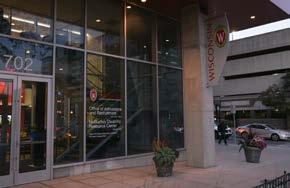
How new federal rules will impact disabled students at UW
By Jackson Baker LIFE & STYLE EDITOR
A new federal rule mandating digital content be more accessible for disabled students will go into effect across the country on April 24, changing how those currently requiring accommodations experience the University of Wisconsin-Madison.
The rule, which was expanded to the Americans with Disabilities Act (ADA) in 2024, requires UW-Madison to adopt new digital accessibility standards for all its online resources. Tools like captions for live video content, audio descriptions for prerecorded content, screen readers and a specific contrast ratio for better conveying visual information will all be mandated.
These technical standards will help ensure disabled students have seamless access to necessary materials without the need for other accommodations.
Under this update, technologies that ensure ease of use will be readily accessible for disabled individuals at the same time as non-disabled individuals. Where students requiring these assistive technologies currently have to request accommodations
through the university, the new rule requires these online tools and digital materials be accessible by default.
“It helps a lot to already have it for the students,” said Dauntae Green, a deaf masters student at UW-Madison.
Green wears a cochlear implant to aid his hearing. Every semester, he says he must put in a list of separate requests for accommodations, including video closed-captioning.
“I think that having live captions when it comes to digital [tools] and Zoom, and all that stuff in general for people, should be a common sense thing,” Green said.
Web content that is not already up to the new ADA standards can make it difficult or impossible for people with disabilities to access content quickly available to others, according to the DOJ’s website.
UW-Madison staff and faculty will update their own web content and course materials under the new requirement. Making materials accessible requires the university to educate staff and bring awareness to accessibility changes.
“Unlike buildings, which undergo a rigorous and multistep design and review process that ensures accessibility is included, anyone can
Bestselling author James Patterson to speak at spring commencement
By Zoey Jiang ASSOCIATES NEWS EDITOR
New York Times
bestselling
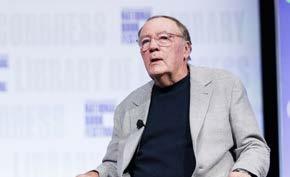
author James Patterson will be the keynote speaker at the University of Wisconsin-Madison’s spring commencement ceremony on May 9, the university announced Wednesday.
As one of the world’s most wellknown authors, Patterson has published more than 250 novels, won many major literary awards and worked with former president Bill Clinton, singer-songwriter Dolly Parton and most recently actress Viola Davis, who he co-authored a book with in March.
“James Patterson has shown what it means to make the most of your education — and what it means to give back,” UW-Madison Chancellor Jennifer Mnookin said in the press release. “We are thrilled to welcome him as this year’s commencement speaker.”
Beyond the literary world, Patterson has also made a name for himself as a passionate education advocate.
Patterson and his wife Susan,
a co-author with her husband and UW-Madison alum herself, have donated more than $240 million to literacy-focused programs and granted 5,000 college scholarships for teachers. The couple’s contributions support more than 150 students each year.
“The whole philanthropy thing is important to me and my wife,” Patterson said in a university press release. “We’ve been given a lot, so we give away a lot.”
Patterson emphasized the significance of storytelling and simple living.
“Whatever it is, the story is going to either move you forward or move you backward,” he said. “I’m always open to changing everything and I always do, especially the endings. Have a general idea but be open to change.”
Patterson described his approach to life as both intentional and joyful.
“I don’t work for a living. I play for a living. My time here is short. I am continually asking myself, ‘What can I do most beautifully?’ That’s how I choose what I do,” he said.
create digital content,” said Ruben Mota, the ADA coordinator at UW-Madison, in a statement to The Daily Cardinal. “People who create digital content may be unfamiliar with what digital accessibility means and how to create accessible documents and webpages. Awareness and training are important.”
To help educate faculty and staff about digital accessibility, UW-Madison has created the Digital Accessibility Hub which outlines all the necessary changes. Its goal is to help instructors make
Rothman
Continued from page 1
Several Republicans in the legislature criticized the decision as a political maneuver and a perceived lack of transparency from the Regents.
Rep. David Murphy, R-Hortonville, who serves as the chair of the Assembly’s Committee on Colleges and Universities, wrote in a Friday statement that he was “troubled” by reports that Regents provided little reasoning for this decision, adding he worried the decision might be political in nature.
Murphy also announced Tuesday that he plans to hold a public hearing featuring 10 Regents appointed by Gov. Evers who have not been confirmed by the Senate. The Senate dismissed two Regents in March 2024 who had voted against the controversial 2023 ‘DEI deal.’ If unconfirmed, Regents can be dismissed at any time by the Senate.
Rothman penned two letters, one to Bogost with his initial refusal to resign and another to Regents Ashok Rai and Jack Salzwedel after a Tuesday meeting the three had, with Rai and Salzwedel again urging him to step down in order to ‘preserve his legacy.”
Bogost said the decision was about the future of higher education.
“The Universities of Wisconsin must be led with a clear vision that both protects and strengthens our flagship, supports our comprehensive universities and ensures we are meeting the evolving needs of our students, workforce and communities across all 72 counties,” Bogost wrote in a statement Monday.
“It is disappointing that the first I heard any sort of defense of their position was when they communicated with the media,” Rothman said in a Tuesday afternoon state-
their fall 2026 courses accessible.
The key requirements outlined by the hub follow the Level AA guidelines outlined in the ADA. In addition to synchronized captions for videos and transcripts for audio, Level AA mandates text descriptions for images, known as alternative text, and the ability to use all content by keyboard only. Universities that fail to comply could face legal challenges and a potential loss of federal funding, according to the University of Wisconsin System website.
ment before the meeting. “I am left to conclude that, at best, this reflects an after-the-fact rationalization of a decision that was previously made.”
Rothman first assumed the position in 2022. Before that he served as chairman and CEO of Foley & Lardner LLP, one of the largest law firms in Wisconsin.
His term has been plagued by administrative turnover and branch campus closures. This year alone, there have been chancellor searches at UW-Stevens Point and UW-Eau Claire, with University of Wisconsin-Madison Chancellor Jennifer Mnookin also announcing in late January that she would depart the university to become the president of Columbia University next fall. As of November 2025, six UW System branch campuses have closed in the last three years.
Rothman has also faced opposition from the Legislature — resulting in controversial deals in the last two budget cycles that eliminated DEI positions and increased teacher workloads — and received criticism over his handling of free speech measures, especially as it related to pro-Palestine protests on campuses.
More lawmakers weigh in
In the days since Rothman’s letters, prominent Republican lawmakers have joined Murphy in Rothman’s defense.
“It’s clear that the Board of Regents, made up entirely of Evers appointees, is attempting to push President Rothman out so they can install someone more closely aligned with their progressive agenda—particularly as they look toward selecting the next chancellor of their flagship campus,” Committee on Colleges and Universities Vice Chair Rep. Amanda Nedweski, R-Pleasant Prairie, said in a statement to the Daily Cardinal.
Continuereading@dailycardinal.com
MARY BOSCH/THE DAILY CARDINAL
Gronert apologizes for messages to women Madison zoo continues state’s conservation education
By Avery Chedda
FEATURES EDITOR
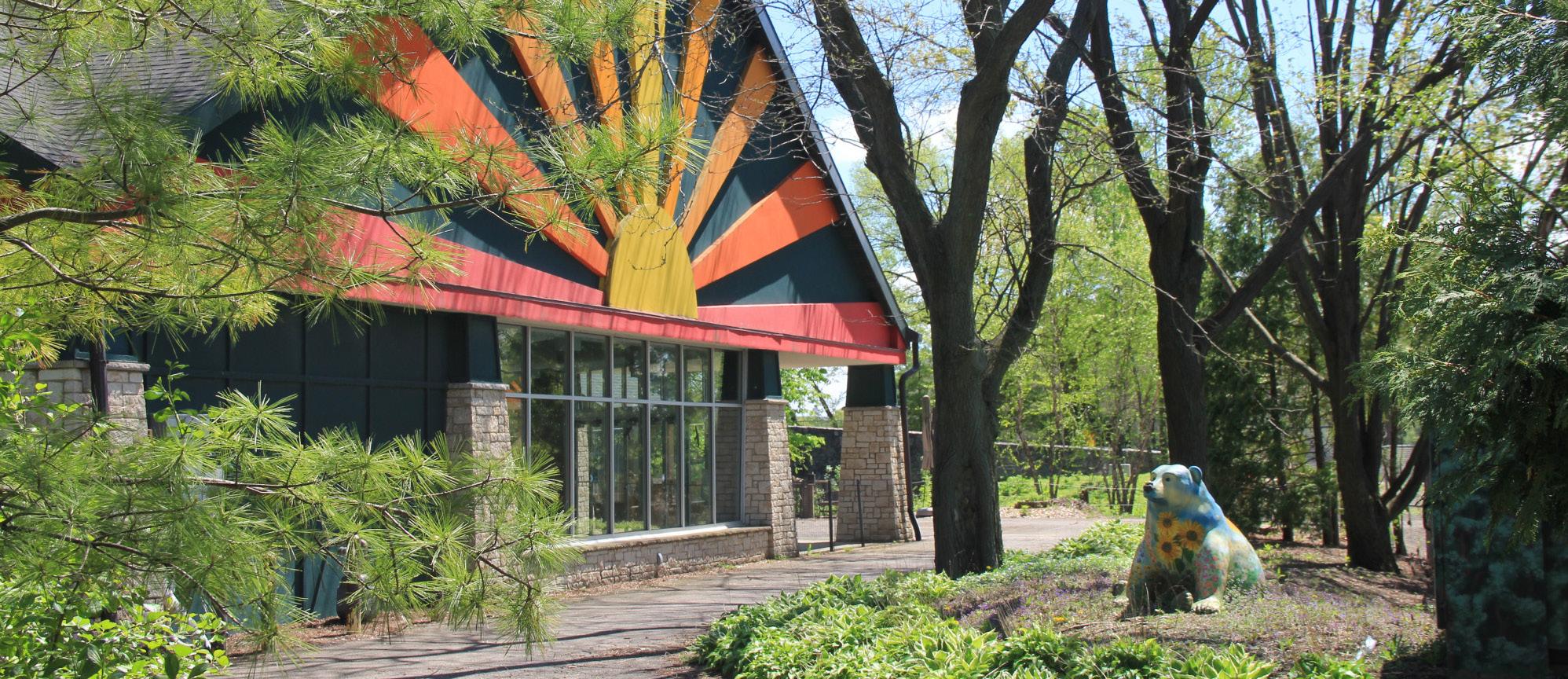
Just over one mile from the University of Wisconsin-Madison campus sits a lush, century old park in the heart of Madison. With Lake Wingra on one side and the quaint Greenbush neighborhood on the other, the Henry Vilas Zoo is Madison’s own picturesque living classroom, reflecting Wisconsin’s rich history of conservation education.
Wisconsin’s conservation story stretches back to the 1800s, but a serious legal framework didn’t follow until the 1930s. Today, the Henry Vilas Zoo as one of only 10 free zoos in North America, creates a welcoming and accessible atmosphere, prioritizing outreach, education and research for audiences of all ages.
Researchers and leaders at the zoo say their work is possible thanks to the legacy of notable Wisconsin environmentalists “Fighting” Bob LaFollete and Gaylord Nelson.
LaFollette broke partisan barriers as a Republican, connecting Americans across party lines as he cemented conservation as a unifying, civic cause rather than an ideological one.
His approach, the Wisconsin Idea, combined the expertise of UW faculty and government officials in legislative decisions and laid the groundwork for Wisconsin’s conservation centric mission.
The Wisconsin Idea lives on as UW professors combine in-class learning with fieldwork.
Wildlife Extension Specialist David Drake engages with community members in their surroundings about his research.
“I think it’s important that people not only see a giraffe, but they see something that they may normally see around here,” Drake said. “The more familiar you are with something, the more invested you’re going to become in that.”
Decades after LaFollete, Nelson organized a nation-wide teachin in 1970, prompting 20 million Americans to mobilize in support of the environment, culminating in the first annual Earth Day.
Meanwhile, the Henry Vilas Zoo served the Madison community as a local conservation hub, and today, the zoo partners with over 10 different conservation partners and runs on-site education programs for all ages.
Even zoo-goers over 18 can participate in adult-only events like
Halloween Trivia night.
The key to the zoo’s conservation efforts lies among its 650 different animals.
“We see our animals [here] at Henry Vilas Zoo as ambassadors,” the zoo’s conservation and education curator Jess Thompson said. “By having them here at the zoo, we’re able to connect [and] inspire people to go out and take action on behalf of wildlife.”
Starting with their Stroller Safari, parents can bring their young children to the zoo for a nursery song and a 30-minute guided tour.
Children ages two to four can also participate in Preschool Pride, an hourlong themed program on Fridays and Saturdays.
Some families participate in Stroller Safari or Preschool Pride as a pastime, unaware of the strength of connections children can build with animals, their peers and teachers over the years.
Children this young may not yet be able to lead a lecture about conservation, but these programs foster their connections with wildlife as the zoo transforms into nature’s classroom.
The initial inspiration for conservation is caring about something,” Thompson said. “You know, when I asked you [interviewer], why did you want to come do a story on the zoo, you said, ‘I’ve always loved animals.’ That’s where it starts, right?”
From age four, children can also experience the zoo behind-thescenes while learning about animals, scientific reasoning, and problem solving during the zoo’s four annual camp programs.
“We have staff at this point who have gone through all through our summer camp program and been part of our teen program, and then come back to work for us and are really passionate about conservation issues,” Thompson said.
Education at the zoo also links to campus expertise. Professors and students collaborate on curriculum, applying research across state lines.
UW Integrative Biology professor Robert Johnson said his outside research reflects local environmental issues.
“It’s a different type of expertise that I bring to the faculty here,” Johnson said. “The ideas of conservation [elsewhere] can still apply more locally here in Madison.”
Beyond the walls of the Henry Vilas Zoo, partnerships with local
businesses further the zoo’s mission.
The zoo, along with other educational organizations like the Madison Children’s Museum, Aldo Leopold Nature Center and the Olbrich Garden Center, are a part of Nature Net. A network of nature centers, parks and museums, Nature Net’s collective mission is to provide school-aged children with prime environmental education experiences.
The zoo’s focus on native wildlife helps bridge the gap between humans and nature.
“We think a lot about our local animals, which are just as important as those living across the world,” Thompson said.
Henry Vilas Zoo’s conservation efforts don’t stop in Wisconsin. Between their countless partnerships, the zoo contributes to programs all over the world.
From Vietnam to Mexico and Northeast Russia to Tanzania, the Henry Vilas Zoo is putting themselves at the forefront of conservation.
“Anything we can do to walk the talk in terms of sustainability, conserving our resources, making good choices about where we’re getting our energy and trying to be as efficient as possible is not only going to help us, but help animals all over the world,” Thompson said.
To foster international relationships, the zoo has maintained the highest level of accreditation possible. Since 1976, the Henry Vilas Zoo has continuously renewed their accreditation from the Association of Zoos and Aquariums (AZA).
The AZA accreditation is crucial to keeping the zoo operational, helping secure funds and continuing educational opportunities. Every five years, animal experts conduct a multiple day evaluation, analyzing animal welfare and care methods.
The Henry Vilas Zoo proudly wears this badge of honor, symbolizing their commitment to conservation. But the zoo is just one piece of Wisconsin’s environmental advocacy puzzle. From Dane to Bayfield County, Wisconsinites continue to be an environmental beacon.
There are endless opportunities to further your conservation knowledge, starting at the Henry Vilas Zoo, or in your backyard.
“I think you’d be surprised at how your life is going to benefit from being outside,” Drake said. “Act locally, think globally.”
By Alaina Walsh CITY NEWS EDITOR
District 8 Common Council candidate and University of Wisconsin-Madison student Bobby Gronert addressed past inappropriate messages to women in a statement and in Discord messages obtained by The Daily Cardinal on the eve of the April 7 election.
Gronert wrote that an anonymous person submitted a complaint about his inappropriate messages roughly two months ago to a committee at the Madison chapter of the Democratic Socialists of America. He said the committee reviewed the complaint and ultimately decided it “did not warrant any action,” but encouraged him to continue reflecting on his behavior. A few weeks earlier, Snapchat messages detailing an advance Gronert made had surfaced on YikYak and Snapchat.
“The unanimous decision, however, by YDSA and MADSA leadership, was not to publicize the proceedings of the investigation,” Gronert wrote in an internal Discord message. “I’m sorry for the lack of transparency that happened as a result.”
In a statement, a YDSA spokesperson said the DSA committee “encouraged Bobby to continue to do all the things he’s done in the first place to do better, like receive mentorship from women in our chapter” and said the anonymous complaint was the only direct report on Gronert’s conduct.
“Everything else is just stuff people put online, as far as I know none of it is from any woman themselves,” they said.
Gronert acknowledged what he described as “harmful” and “overbearing” behavior toward women during high school and his freshman year at UW-Madison.
“While I can say I am proud of my political history, I can not say the same of my personal history, particularly when it comes to attempts at dating,” Gronert wrote in the Discord message.
“I had told some people at the beginning of the campaign that I had messaged girls embarrassing things in the past, but did not have any screenshots to show them at the time, leading to different views about the severity of the comments.”
In an image circulated on YikYak and the WiscoChicks Instagram, Gronert wrote “Just saw you on tinder, I’m just going to be honest. You’re hot as fuck
and I’ve been on a dry streak for a while, whatever you’re down for I am down for. Ik I’m not the hottest, but I assure you I more than make up for it with enthusiasm and technique.”
One anonymous UW student who went to high school with Gronert told the Cardinal he made advances toward several female students. The student said these advances never crossed the line into harassment to their knowledge.
“He’s a flirt… he’s horned up as shit,” they said.
Gronert issued a separate public statement on Instagram Monday night saying he had “grown and changed as an organizer and as a person” and attributed that growth in part to his political organizing work.
“Like a lot of young men, I absorbed messaging that gave me entirely wrong ideas about how to talk to women online,” the statement said. “I recognize now that I was ignorant, selfish and misogynistic.”
Gronert also addressed the Snapchat screenshot, calling the message “extremely embarrassing” and said he deleted it shortly after sending.
“We’re proud of the work our chapter has done on this campaign. We’re also proud of who Bobby is today, and we firmly believe that no one is defined by the most embarrassing stuff they’ve done,” YDSA said. “Women deserve to be free from unwanted attention, and the women of our chapter feel confident that Bobby is not the same person he was when he sent that message.”
He also denied separate anonymous claims that he had stalked women, writing that those allegations were “completely false” and describing them as part of what he called a “bad faith and coordinated smear campaign” tied to the District 8 race.
Gronert also addressed what he described as the tone of the local political climate surrounding the race.
“This has been a crash course for me in the ways even small, local elections can bring out the worst in people,” the Instagram statement said.
He also alleged that one of his campaign volunteers had received a death threat.
The controversy emerged as District 8 voters headed to the polls Tuesday in one of Madison’s closely watched council races, which includes much of the UW-Madison campus area.
JAKE PIPER/THE DAILY CARDINAL
COURTESY OF HENRY VILAS ZOO
Behind two students’ plan to simplify operating rooms with AI
By Sonia Bendre SCIENCE EDITOR
Doctors usually spend 10-15 minutes writing reports after performing surgery, which are used to extract specific codes corresponding to surgery type — something professor and UW Health surgeon Tuo Peter Li called a tedious post-operating charting process.
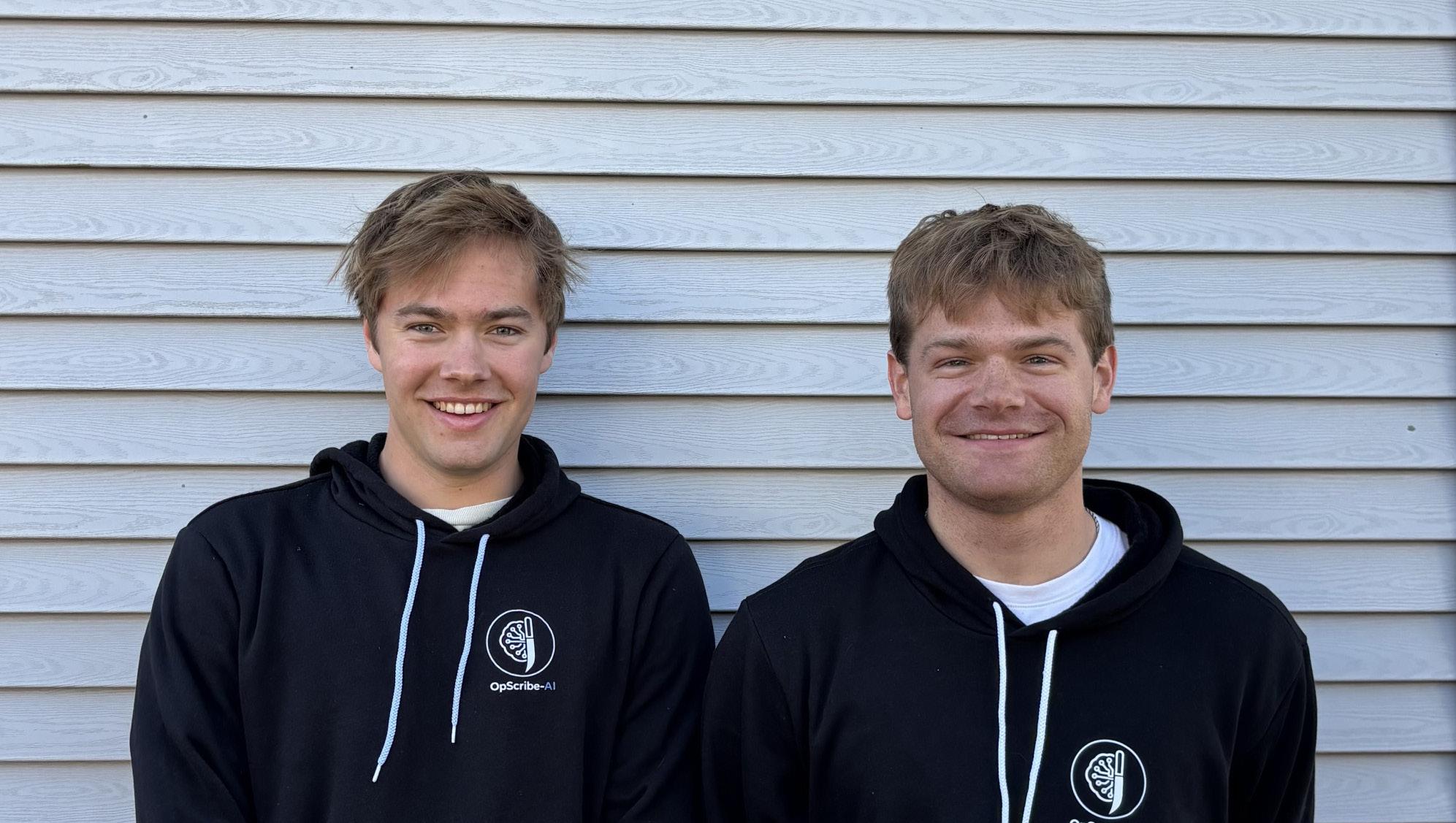
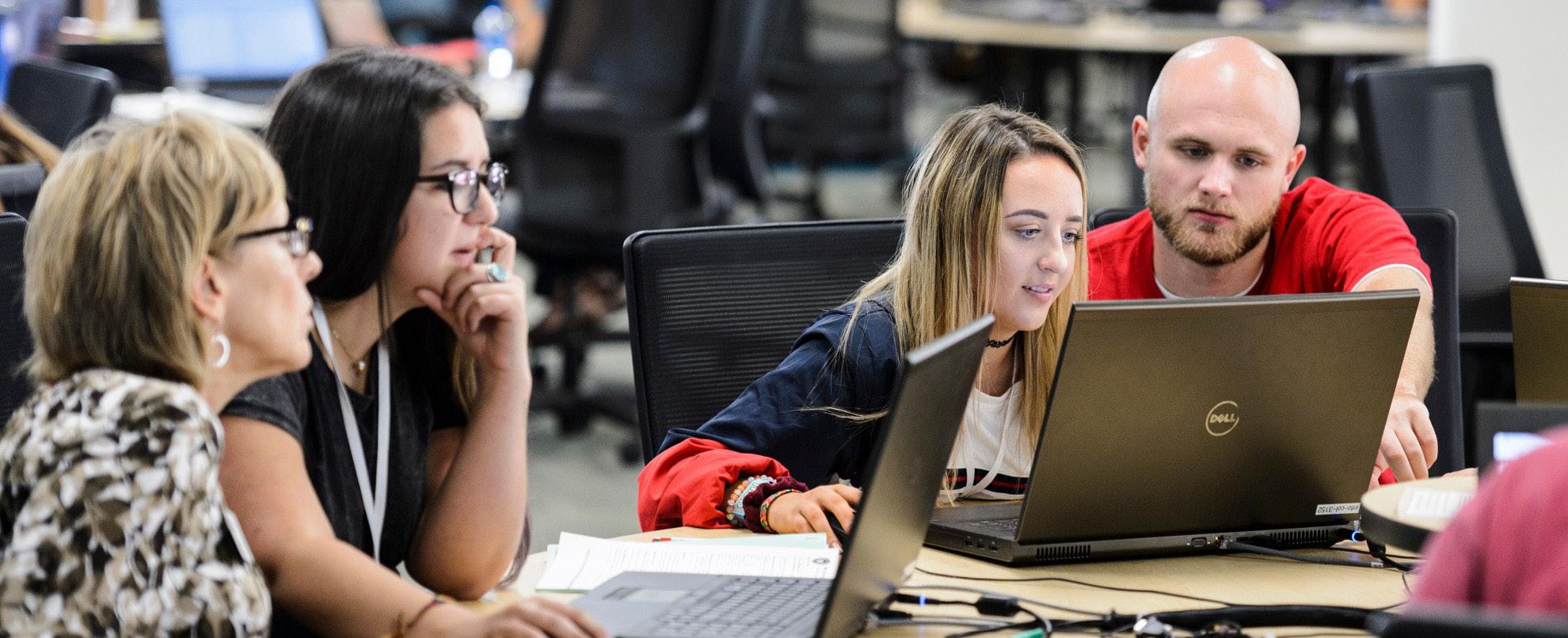
When he pitched the issue as a potential project in courses BME 200 and 300, where students solve problems drawn from real-world clients, roommates and University of Wisconsin-Madison juniors Ruffin Bryant and Noah Kalthoff used his suggestion as a springboard. They formed the basis for student startup OpScribe-AI, an artificial intelligence surgical documentation tool.
Now, they plan to create their own dataset by hiring medical residents to perform surgeries on cadavers.
“We go to school in the morning, and then the entire rest of the day, we’re running a company,” Bryant told The Daily Cardinal.
Details from surgical reports are used to extract ICD-10 codes — specific alphanumeric codes corresponding to surgery types, patient afflictions and procedures performed. Hospitalemployed medical coders use surgeons’ reports to identify these ICD-10 codes and submit them to insurance companies, who determine the proper charge for the procedure.
Both Bryant and Kalthoff were interested in using AI to assist with these reports, solving Li’s problem. They wrote a short essay to win their top choice, and got started right away.
“We were committed,” Kalthoff said. “This was kind of our baby from the beginning.”
Currently, surgeons must write a post-operative report after every surgery describing its events, including the medical need for the operation, the equipment used, complications, estimated blood loss and a comprehensive list of all procedures. The report is passed to a hospital’s medical coders, who parse through the report, forming a pricing estimate of the surgery to submit as a claim to the patient’s insurance.
“This is the last thing [surgeons] want to do at the end of the day,” Kalthoff said. “We’ve talked to multiple surgeons. They’ve all said the same thing: this is the worst part of their job. It is not why they went to medical school.”
The accuracy of an operative report is vital. In the case of a botched surgery or one with complications, the ICD10 codes and resulting pricing estimates differ. A recent paper analyzed 158 cases of prostatectomy surgeries, finding 27.2% of surgeon operative reports had at least one “clini-
cally significant discrepancy.”
With the paper’s AI model, only 12.7% of reports had a significant error.
Kalthoff said these reports can be inaccurate because of surgeons falling back on “cookie-cutter templates.”
Surgeries are getting longer and occur frequently amid a national shortage of professionals in the field, creating an unmanageable workload for many. Additionally, Kalthoff said insurance agencies want more codes to justify additional costs, making the reports themselves longer.
Inaccuracies often lead to over-billing or under-billing insurance companies, incidents for which doctors can be held legally liable for fraud. If a surgeon does not fully explain their procedure in the report, medical coders may not find the keywords they need to prepare the correct ICD-10 codes, causing under-billing. Alternatively, if a report is ambiguous, medical coders might upcode, or insert codes relating to procedures that did not occur, causing over-billing.
In the best-case scenario, a medical coder will speak to a surgeon to correct potential inaccuracies, adding time to the process. In the worst-case scenario, “you can’t bill the insurance the right amount of money [and] the hospitals end up fronting the cost,” Kalthoff said.
OpScribe-AI can generate its own report, using images or video from the operating room. “It can do it in a live fashion or a drag and drop, where it’s recorded and the surgeon drops it into our user interface,” Kalthoff said.
With OpScribe-AI generating the reports and extracting ICD-10 codes, Bryant and Kalthoff hope to reduce the entire process down to five minutes with just an AI report and a human review.
How does it work?
OpScribe-AI is a multi-system agentic AI running on a Qwen AI model, said Dharanjay Bhaskar, the team’s advisor and a RISE-AI professor in the biomedical engineering department. Qwen is a Chinese AI company whose product is similar to OpenAI’s ChatGPT.
Using a Qwen model, Kalthoff and Bryant optimized separate AI agents tailored to specific surgeries, specifically endoscopic and laparoscopic surgeries — minimally invasive, robot-assisted surgeries with a camera attached to a small device the surgeon manipulates inside the body — as well as open reduction surgeries, where the surgeon primarily operates on the patient.
Bryant and Kalthoff said endoscopic and laparoscopic training footage was relatively easy to obtain for the model, but open reduction footage proved a challenge. To try and combat this, they recruited a group of medical residents from UW Health, who will be paid for their time, to perform full-length surgeries on cadavers, creating their own dataset. The procedures will be recorded with headmounted and overhead cameras, with angles similar to cameras embedded in surgical lamps in operating rooms.
A large language model analyzes each phase of the surgery separately, extracting surgical publications from the internet to gather medical context about the procedures performed. Then, using the publications and its existing datasets, the model transcribes each surgical phase into a text summary.
“We are relying on existing medical literature to give ourselves the correct terminology and medical context,” Bhaskar said.
Another AI summarization
agent then assembles the separate summaries into a long transcript, from which ICD10 codes and final operative reports are generated in hospital or department-specific formats. Yet another AI agent reviews the operative reports, comparing them to the video to identify and fix information.
Bryant and Kalthoff currently run their model on Bhaskar’s lab processors. The founders recently partnered with Amazon Web Services to host their datasets and train the model in a secure online location, meeting HIPAA patient privacy standards if surgeons wanted a trial of the product.
“We can’t just take patient specific data and throw it into a model and then analyze it, because it’s illegal,” Bryant said. “You need a protected, HIPAA-secure infrastructure… This Amazon partnership is the last hurdle we need to run real clinical pilots with a small niche customer base.”
Bryant said their next iteration includes “federated learning,” where OpScribe-AI will identify patterns in its report data — such as instruments used, anatomical findings and procedural steps — and sell these trends back to the hospital. He said the data could help hospitals identify niche inefficiencies, like tools surgeons keep on the prep table but rarely use, or a specific complication with geriatric knee surgeries.
How did they find the time?
Bryant and Kalthoff met in Dejope Residence Hall their freshman year, and are both biomedical engineering majors with business minors. Li’s medical charting problem was both of their top picks in BME 300, among project ideas aggregated from industry partners, hospitals and “anyone who might have an engineering-solvable issue” in
the greater Madison community, Bryant said.
The medical charting team comprised three juniors and three sophomores. During the fall semester, Bryant and Kalthoff averaged two to three hours a day on the project outside of class. Bryant said he was “lowkey obsessed with the idea.”
After the two officially formed the startup, their workload increased to more than four hours a day, made more feasible because they currently live in the same house, across the hall and are “attached at the hip, for the most part,” Kalthoff said, though hopefully not requiring surgery any time soon.
“It makes it easy for communication, for sure: he’ll shout down the hallway, ‘Did you do this?’ or ‘Did you get this?’ or ‘What do you think about this?’” Bryant said.
To accelerate the creation of OpScribe-AI, the team relied on generative AI for coding assistance.
“We definitely used the help of AI to build AI,” Bryant said. “In a space where everyone’s moving at lightning speed to try and get the next thing out there, you’re falling behind if you’re not.”
They’ve since been accepted into gener8tor, a competitive startup incubator, as one of five teams out of around 1,100 applicants. Through the program, they attend weekly meetings at Waukesha’s Applied AI Laboratory with experienced entrepreneurs in the field called a “mentor swarm.”
All six team members are contributing to an upcoming research paper comparing OpScribe-AI’s performance to similar medical transcription AI models.
“From an academic side, we’re showing that our model is top-tier,” Bryant said.
Madison Circus Space ‘Bizarre Bazaar’ highlights local acrobatics arts
By Sonia Bendre SCIENCE EDITOR
The Madison Circus Space’s banana-oriented “Bizarre Bazaar” shows took viewers through a whirlwind of local performance acts, including contortion, aerial silks, lyra, hoops, dance numbers and Cyr wheel on March 27 and 28.
Each separate act showed the circus skill of Madison Circus Space’s performers — the venue, located on Winnebago Street, offers classes and clubs accessible to many skill levels aimed at raising awareness and appreciation of the circus arts — and told a story of its own. But the banana mime interludes, while funny and masterful, didn’t always fit into a coherent emotional piece with the acts.
Upon entering the large brick building, a smiling woman in a yellow Starfleet jumpsuit checked me in. I found the two-act program online by scanning a QR code taped to a banana-costumed actor. I would be seeing a lot of these banana mimes throughout the show: cartwheeling, dancing the macarena, juggling, swordfighting and taking selfies in small skits between each act, always to the increasingly repetitive tune of “Orpheus and the Underworld.”
After an episode of banana mad libs, Act I kicked off with “Blood Countess,” an aerial silks and dance performance with performer Emily Shelton playing a countess who uses young women’s blood to obtain eternal youth. Dancing around the silks, Shelton does the best she can to rid the audience of lingering banana malaise, though the seriousness of this act also suffered from the color of the silk: tiedye blue, green and purple. Later in the performance, Shelton swings up onto a second, newly unveiled red silk which I wonder why they didn’t use that the whole time.
Shelton’s act was followed (after the banana interlude) by “The Fallow Season,” with performer SarahLouise Rillard striking in a bob and gauzy white costume on the lyra, a large ring. Rillard, who had shoulder surgery in 2022, rose and fell on the ring with grace, spinning to cheers from the audience.
Then came “The Birds,” an act on the dance trapeze with performer Elise Swenson in a sparkling black jumpsuit. A spoken word recording recalls a prehistoric bird in a land with “only birds and air,” with no Earth or a place to land and “circling around and around.” When birdSwenson’s lark-father dies, there is no land to bury him, so she buries him in the back of her head, discovering the concept of memory. Swenson is a perfect bird, spinning at first gracefully, then with crazy desperation on the trapeze, finally lying still as it rotates around her.
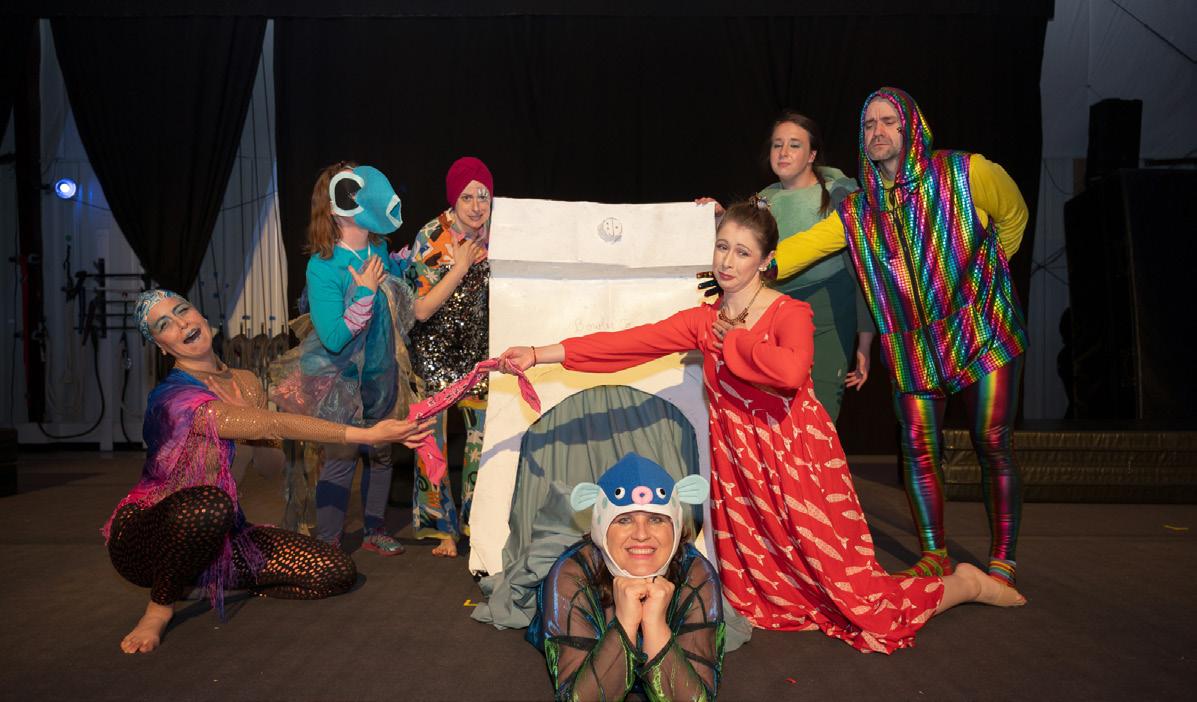
The 8-member dance number “Pablo Picasso” is the first piece whose tone didn’t immediately contrast the bananas’ interlude zaniness. Set to “Pablow the Blowfish” by Miley Cyrus, the number involved synchronized sea creatures, including a shining jellyfish, two fish in green-and-purple garb and Pablow himself, an actor wearing a plush blue fish head who is eventually cast into an oven on stage as Cyrus croons, “Pablow the blowfish/I miss you so bad.”
In “The Last Waltz of the Faerie King,” Chris Roberson plays a majestic king who wields a spinning orange hoop, called a Cyr wheel. The performer first dances with a mortal (Stina Alvarez) as the hoop spins on its own, then, when she leaves, uses the negative space of the hoop, now at a skew, to waltz alone around the space it touches. As the hoop loses momentum and twists closer
and closer to the ground, the king crumples along with it.
In “The Frizz,” Amberlee James, cosplaying Ms. Frizzle with a dress and an orange wig as bright as her kilowatt smile, balances and throws around a small hoop to the theme of “The Magic School Bus” set to a trap beat. The lightheartedness and James’s knack for performing made this my favorite piece.
The last act before intermission, “The Dead Dance,” follows a cast of Addams family characters, including someone dancing in a head-to-toe green hairy costume with pink sunglasses and a character I nicknamed the skele-boob because the costume consisted of a tan skinsuit with two skeleton hands clutching the breast areas. Within this cast, Morticia and Gomez have a romantic moment that works, twisted together on a rising swing with Gomez clutching a rose in his teeth.
After an episode of “cannibananabalism” and a 10-minute intermission, the “Bizarre Bazaar” resumed.
In “Control,” twins Cassy Smithies and Lizzy Kirkland performed on the duo lyra, dressed inversely in red and white. Their friendship darkened into a fight for control on the lyra, ending in one twin strangling the other, who fell dramatically off the ring in a remarkable display of acrobatics.
The most egregious banana interruption happened during the next act, “Nocturnes Pas de Deux.” Grand orchestral music and AnnMarie Liesch Kivi and Anna Tiffey’s performance as spinning white angels on the duo sling came to a grating halt for a mid-act rickroll. It was at that point that my mild annoyance at the bananas turned into rage.
In “For the Birds,” Bri Marvell plays a roadrunner-esque squirrel clawing dramatically, and hilarious-
ly, up a lyra to get to a birdhouse at the top.
Following Marvell’s excellent squirrel acting, William Rapisand takes to aerial silks in “Goodbye,” playing a wounded warrior ascending slowly on the silks to dramatic music that crescendos as he rips off his shirt, revealing deep bruises.
In “An Ophidian Voyage,” Rachel Sanderson and Shea Weidenkopf, contortionists fully dressed in slithering cobra suits, seemed to have as few bones in their backs as the animals they imitated. They crawled themselves over a playpen and up a series of straps, bending themselves into splits and excruciating legs-over-head positions, sometimes winding so close to each other that they appeared to be a single unit.
The bazaar ended with a skit. “A Dog and Pony Show” left me with sympathy both for the pony and the man playing the pony, who spent the majority of the skit galloping around the stage with a cardboard pony mask covering his eyes, neighing pitifully. A black-clad narrator on the side told the story: a showmaster is hoping to put on a dog and pony show, but while the dog is wonderful, the pony consistently underperforms and the showmaster
has to literally and figuratively lower the bar. Eventually, the showmaster buys a new pony and boards a train with the dog and new pony, leaving the old pony behind. “Ohhh, pony,” the narrator says sardonically as the pony lets out a sorrowful whinny.
“Bizarre Bazaar” demonstrated impressive feats of acrobatic intensity by local performers, and the banana mimes between skits showed that same talent, whether juggling, stacking themselves up into a banana pyramid or jumping into back handsprings. I especially enjoyed three acts: the energetic “The Frizz”, “For the Birds,” whose roadrunner story made me laugh and the unnerving choreography of “An Ophidian Voyage.” All three of these acts teemed with the bizarreness I’d expected to witness as soon as I saw the banana costumes. My only gripes were the odd note struck by the ending of “A Dog and Pony Show” and my desire for a stronger emotional throughline connecting lighthearted pieces to the serious ones.
The acts that matched the outthere hilarity of the bananas gained energy from these intermissions, but the more solemn acts hit with lower emotional depth as a result.
MSO celebrates final organ concert of the season
By Ryan Kim ARTS EDITOR
The Madison Symphony Orchestra presented its final organ concert of the season, filled with warm, intimate music and conversations on March 31.
After the audience filled their seats and the lights dimmed, the music ensemble silenced the crowd with Samuel ColeridgeTaylor’s Finale from Nonet in F Minor, Op. 2, as a dense note held the air before the romantic and melodic song began.
Greg Zelek, who played the organ, said he rearranged the song’s piano part for the organ because the piece sounded wonderful with the organ, calling it the “perfect way to open the program.”
“There [is] a moment when the main theme comes back, where [JJ Koh, principal clarinet] played so softly that I had to play the absolute softest sounds on the organ,” Zelek said. “But …it was so effective because you had this gorgeous melodic line, soaring through the hall with the organ just very subtly playing like a heart beating underneath it.”
After performing Coleridge-Taylor’s piece, Zelek spoke to the audience about the nine chamber musicians from the MSO and what the rest of the evening would sound like. Six musicians performed solos with Zelek, based on works by Mozart and Piazzolla, before concluding the night as an ensemble.
The first solo work began with Izumi Amemiya (oboe) playing Antonín Dvořák’s Largo from the Symphony No. 9 in E minor, Op. 95. During each solo piece, Zelek or the musician would share the history of the piece or how they practiced it, weaving some humorous anecdotes. After Amemiya, Koh played next, performing Wolfgang Amadeus Mozart’s Adagio from Clarinet Concerto in A major, K. 622.
Then came Potter, who played the French horn to Mozart’s Allegro from Horn Concerto No. 3 in Eb major, K. 447.
Zelek rearranged most of the pieces performed in the concert, as many compositions written for the organ didn’t include the variety of instruments played during that evening. Through his rearrangements, Zelek focused on highlighting the versatility of the organ while ensuring the audience would always hear the musicians.
As Potter left the stage, Zelek performed his first solo piece for the night, Émile Waldteufel’s Les Patineurs Skater’s Waltz, through its light and airy notes, followed by an occasional blare of a note.
Next was Cynthia Cameron (bassoon), who played two different pieces. One was Michel Corrette’s Allegro from Sonata in D minor, Op. 20, No. 2, and the other was Henry Mancini’s Pink Panther Theme. In her anecdote for Pink Panther, Cameron said that while she practiced, her dog would sit by her and sleep on a chair
beside her. However, when practicing for this piece, she would try snapping as loudly as she could, accidentally scaring her dog. As a result, the next time she practiced, her dog glared at her, causing the audience to roar with laughter.
When Cameron performed Pink Panther, members of the audience snapped along with her, recalling her story. Zelek said he loves attaching these stories and anecdotes to each organ concert, as it’s not just the music the audience listens to, but the stories behind the music.
“It really helps the audience feel very relaxed in the hall, making it feel like they’re almost sitting in someone’s living room, surrounded by family and friends, as opposed to being in a very formal classical environment,” Zelek said. “It also allows the audience to get to know the performers on stage, so that when they perform, they not only feel like they understand them musically, but they understand them personally.”
Afterwards, Leanne Kelso (violin) and Karl Lavine (cello) played Astor Piazzolla’s Invierno Porteño. The piece was executed harmonically, as the violin, cello and organ sounded like a melancholic tango. Zelek immediately launched into the next solo: Wilhelm Middelschulte’s Perpetuum Mobile for Pedals Alone. This piece was fast and technical as he moved across all the pedals on the organ, making it an intense
moment. Zelek said he wanted to engage with the audience in a multitude of ways, and this was one of the ways he wanted to catch their attention.
“It created this sort of energy in the hall, where everyone suddenly, like ‘Oh, what’s going on?’ And then they were really engaged, because I’m playing something with only my feet,” Zelek said. “So I thought it was just an effective way to transition and into something that’s just naturally very exciting.”
Finally, the whole ensemble came together again to perform their final song of the night: George Frideric Handel’s Organ Concerto in G minor, Opus 4, No. 1 (HWV 289). After much applause and calls for an encore, Koh and Zelek came together to perform Benny Goodman’s Sing, Sing, Sing. As a celebratory jazz piece, the piece marked the end of the performance and the season, while showcasing the various assortments of music.
Zelek said this was one of the most successful seasons to date in terms of ticket sales, and he looks forward to the 22nd season, which starts Sept. 27.
“I’m so grateful to our audiences, because they’re the reason that I enjoy what I do so much,” Zelek said. “The enthusiasm from the crowd and the support that I feel is so special here in Madison. I’m very grateful for this past season, and I’m really looking forward to next year.”
COURTESY OF JOE BURKHOLDER
UW Weird Science Fair’s oddities science
By Sophia Han STAFF WRITER
The University of WisconsinMadison embraced its strange side with its second-annual Weird Science Fair at the Steenbock Library March 25, inviting students and community members alike to digest the oddities of niche, underrepresented science realms.
The event, curated by Steenbock’s scientists-turnedlibrarians, was held as a study break for students to discuss unique science topics with researchers from across campus before spring break.
Graduate students and faculty led engaging activities like energy conservation demonstrations from the Wisconsin Energy Institute, creating fake wet specimens with librarians and busting sleep myths with the Wisconsin Institute of Sleep Consciousness. Booths ranged across science disciplines from the Department of Physics to the Wisconsin National
Primate Research Center, offering hands-on experiences that made science exciting for everyone. The fair encouraged crosscampus interaction by being open to all, fostering a sense of community and excitement for science among students, faculty, staff and community members.
Allen Centennial Garden: Natural dyes and the science of color
At the Allen Centennial Garden, a free public garden near the Lakeshore dorms, horticulturist Jenny Zinniker is the caretaker year-round. The garden is an educational facility for the horticulture department and 27 distinct gardens showcase horticultural techniques. It is a great place for students to relax, but also hosts a lot of educational workshops, events and classes in the garden. Their exhibit tested natural dyes and the effects of differing pH levels on fabric.
UW Sea Grant: Building Shorelines and Battling Waves
Marian Azeem-Angel, a ‘coastal amazement’ fellow with the Wisconsin Sea Grant, lived up to her title. At the fair she did a wave tank demonstration of coastal engineering structures, allowing people to make literal waves: placing rocks, plants and Legos to represent houses and materials, and then adding waves to visualize how engineering structures mitigate wave action.
Azeem-Angel talked to people about wave action and how it impacts coastal shorelines, and then showed different engineered solutions, as well as a mix of protective and green infrastructure, to show how engineers work to mitigate the impacts of strong wave action.
Veterinary anatomy: Learning humans through animals
The UW School of Veterinary Medicine professors taught anatomy by bringing various animalrelated courses to the fair. Their main objective was to show the importance of dogs, cats, horses and cows, since those are what UW primarily studies in the veterinary school. The professors taught their booth-seekers that the best way to learn a human example is to compare it to an animal. Since animals share much of the same anatomy as humans, they had models and real specimens to excite the public about the UW-Madison Veterinary School.
Wisconsin Energy Institute: Engineering petroleum replacements
Scientists at the Wisconsin Energy Institute are trying to figure out how to make petroleum replacements. In this event, they walked community members
through making oil out of plants. Participants could feed yeast one of four plant options. If the yeast fermented over time, it showed the plant substitution would be a good petroleum replacement.
Busting sleep myths with the Wisconsin Institute of Sleep Consciousness
Graduate students and faculty presented a program called the Sleep Health Ambassadors: high school students educated about sleep health, sleep medicine and sleep research. In return, they expect high schoolers to engage with their peers and the greater community in outreach programs about the importance and hygiene of sleep.
Along with their ambassadors, their booth featured pieces of sleep technology and the debunking of common sleep myths.
Nobel Laureate tunnels into quantum computing
By Lauren Eno SENIOR STAFF WRITER
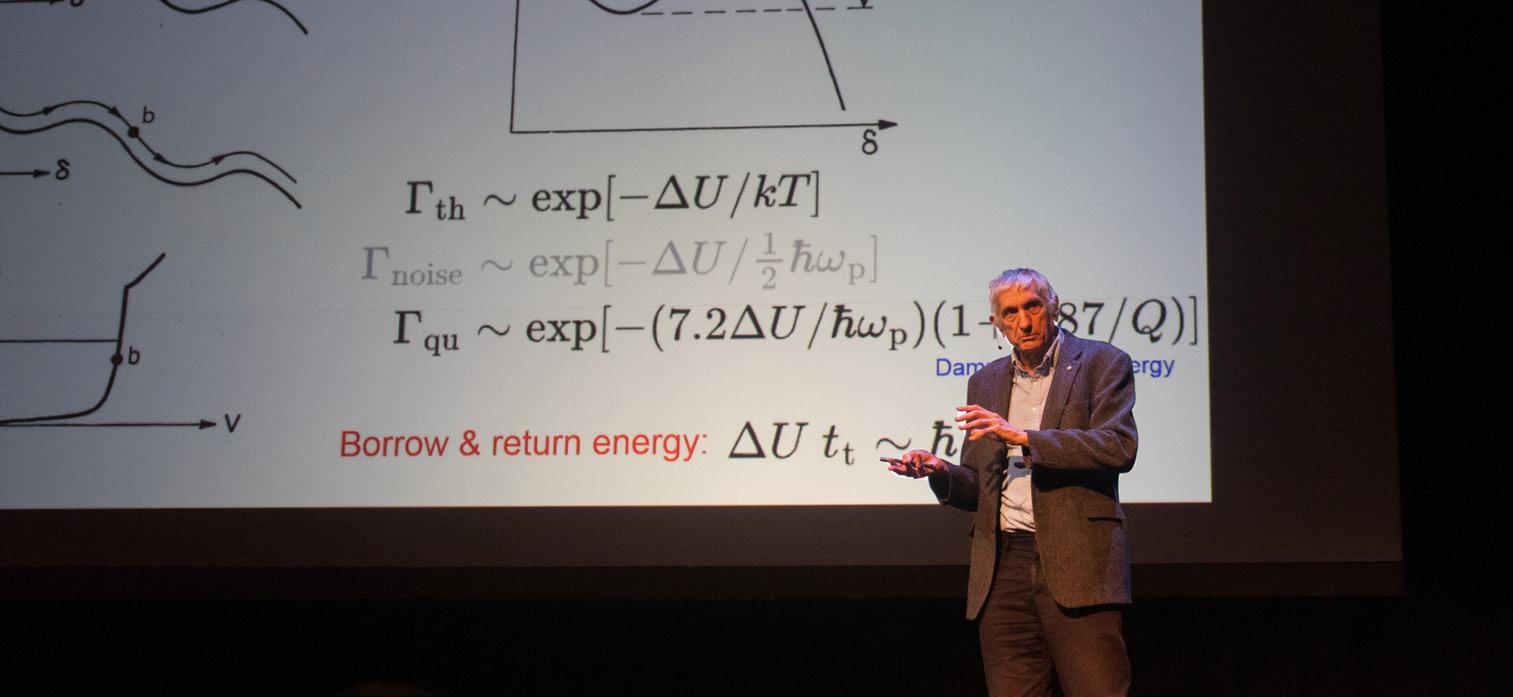
Nobel Laureate physicist John Martinis discussed his work in quantum mechanics, criticized a lack of transparency in his field and predicted his death would come earlier than useful quantum computers in a March 23 lecture.
In the hour-long lecture introduced by University of Wisconsin-Madison physicist Robert McDermott, Martinis offered students and community members a look at the complex science and evolving future of quantum computing as part of an event organized by The Wisconsin Union Directorate Distinguished Lecture Series, in collaboration with the College of Letters & Science.
Martinis’ search to answer questions about macroscopic quantum theory and quantum computing have led him from Nobel-winning experiments to recent breakthroughs in quantum computing.
From Schrödinger’s cat to Nobel Prizewinning experiments
Martinis and two colleagues won the 2025 Nobel Prize in Physics for their proof of macroscopic quantum tunneling. A macroscopic object refers to any object larger than atomic-scale.
To explain the principles behind his work, Martinis referenced the famous thought experiment known as Schrödinger’s cat. In the experiment, a cat in a closed box is in an indeterminate state until observed.
“Before you open the box, you’re tempted to say the cat is in a superposition of dead and alive states because you haven’t measured it yet,” Martinis said. “Of course, that seems very strange for a macroscopic object.”
Macroscopic objects, like circuits, behaving in a quantum manner forms the basis for quantum supercomputer technology. A ball behaving in a classical manner always hits a wall when thrown at it, but a ball behaving in a quantum manner has a chance of tunnelling or slipping through the wall.
“Do macroscopic variables evade quantum mechanics? That’s what we set out to deliberately answer,” Martinis said. “Physicists don’t like that there are two parts of a theory, they like only one part. So this has always been a little bit strange.”
He conducted his Nobel-winning research in the 1980s as a graduate student at University of California-Berkeley with professor John Clarke and postdoctoral student Michel H. Devoret. Their work con-
sisted of experiments with an electronic circuit of superconductors, materials that can carry current with zero resistance at low temperatures.
When Clarke, Martinis and Devoret powered up two separated circuits that both utilized superconductors, they were able to induce quantum behavior in the circuits, allowing the team to study quantum mechanics in a way that was visible to the human eye. Previously, quantum behavior had only been observed in atoms, not entire circuits.
“The currents and voltages of that circuit obey quantum mechanics… that opened up a new playground for physicists to build these quantum devices,” Martinis told The Daily Cardinal.
“Normally, quantum mechanics is the physics of the small, but here we’re doing quantum mechanics with something you can actually see,” he added.
This work proved quantum mechanics could govern macroscopic systems and laid a foundation for superconducting qubits, the basis for modern quantum computers.
How quantum computing works
Classical computers process information in binary bits, either 0 or 1. By contrast, quantum computers use quantum bits (qubits) that can exist in multiple states at once. Like Schrödinger’s cat being alive and dead simultaneously, a qubit can hold both 0 and 1. This allows a system to explore many possibilities at the same time, and in the case of a computer, hold a lot more memory.
“With three qubits, it’s eight states. Four is sixteen. Five is thirty-two… it grows really, really rapidly,” Martinis said about the exponential scale of qubits. “By the time you get to 300 qubits, that’s a number bigger than the number of atoms. So clearly you’re doing something different.”
Qubits can also be entangled so the state of one directly influences another, exponentially expanding computing power. But without careful design, entangling qubits can pose more problems than it solves, Martinis cautioned.
“You have to design very special-purpose algorithms… it’s hard to take advantage of that power,” he said.
Martinis’ career: From government labs to Google
Martinis spent 17 years at the National Institute of Standards and Technology devel-
oping instruments for precision measurements and materials characterization. In the early 2000s, he returned to quantum circuits to explore whether quantum mechanics could provide a computational advantage, first as a researcher at the University of California, Santa Barbara and later at Google.
At Google, he led the superconducting qubit hardware program, including a widely publicized 2019 quantum supremacy experiment where using a 53-qubit processor, Google’s scientists ran a calculation in 200 seconds that they estimated would take the best non-quantum computers 10,000 years.
“It really was a big moment for the field. It showed that a macroscopic quantum computation could outperform classical systems,” Martinis said.
Superconducting qubits rely on the same superconducting electronic circuits whose discovery won Martinis and his team the Nobel Prize.
“There wasn’t any new physics out there,” he added, emphasizing how the achievement validated existing theories rather than rewriting them.
Martinis on the future of quantum computing
Martinis now co-leads the startup Qolab, aiming to build scalable, reliable quantum computers using professional semiconductor foundries rather than small lab fabrication.
“No one in their right mind in the semiconductor industry makes complex devices the way we currently make qubits,” he said. “We want to scale it up, make it cheap and mass-produce it.”
He also acknowledged the long road ahead for quantum computing to reach a benchmark one million qubit computer.
“If I look at the current pace…by the time we get there, I will certainly be dead,” he said. “All the students in the audience, you should be worrying too.”
He highlighted the potential of quantum computing in chemistry and materials science, including creating more efficient materials and energy systems. Quantum computers have the potential to vastly accelerate computational science research — for example, when designing molecules and chemical reactions, Martinis said.
“You can map a quantum problem into a quantum computer and solve it more effectively,” he said.
Another application of quantum computers could be simulating operation of motors in electric vehicles, optimizing for cheap, effective motors with lower reliance on expensive, environmentally costly metals.
“If you could make these motors out of less rare earth [metals]… that would make a huge, huge deal,” he said.
Competition and a lack of transparency among researchers remain a challenge in the field.
“No one talks about what’s wrong with their qubit…I told you very explicitly what we have to fix,” he said.
When asked about alternative approaches by audience members, such as Microsoft’s Majorana project that promises to reach a million qubits, Martinis said, “It’s not clear to the majority of the field how exactly that’s working in the lab…If they were going to get to a million qubits, we would have heard more results. It could be great, I don’t know.”
Despite these challenges, he underscored why quantum computing captivates scientists: “You’re not doing science just because your next-door neighbor is working on it. You’re trying to answer some fundamental questions.”
HAYDEN LUND/THE DAILY CARDINAL
Course enrollments are around the corner. Help from UW should be too opinion
By Sungyun Jung OPINION EDITOR
With spring slowly settling over campus, another season of change approaches: fall enrollment.
Toward the end of every semester, students are repeatedly reminded to enroll in courses for the upcoming term. Emails, Canvas announcements and advising portals all echo the same message: be prepared, plan ahead, enroll on time. On paper, the process appears structured and accessible. In practice, many students find themselves navigating it alone.
The University of WisconsinMadison prides itself on fostering independence. From the moment students arrive on campus, they are encouraged to take ownership of their academic paths, explore freely and build schedules that reflect their goals. Tools like DARS (Degree Audit Reporting System) are designed to support
this independence, offering a detailed breakdown of degree requirements and progress.
But independence without sufficient guidance can quickly turn into confusion.
While DARS is undeniably useful, it is also highly technical and often difficult to interpret without prior knowledge. Requirements are presented in dense categories, exceptions are not always clearly explained and course eligibility can feel like a puzzle rather than a plan. For many students, especially first-generation college students, transfers or those navigating multiple majors or certificates, the system can be overwhelming.
This confusion is not happening in a vacuum. For most students, their only formal introduction to these systems comes during SOAR sessions in the summer before their freshman or transfer year. While SOAR is intended to
prepare students, the guidance is often brief and overwhelming rather than comprehensive. In a short period of time, students are expected to absorb a large amount of technical information about tools like Course Search & Enroll, MyUW and the course catalog, often without developing a clear understanding of how to use them independently.
As students’ academic paths become more complex, the limitations of these tools become even more apparent. DARS, for instance, typically allows students to run an audit for only one major or certificate at a time, making it difficult to see how requirements overlap or interact. Without a clear way to visualize these intersections, students are left to piece together their academic plans on their own, increasing the likelihood of confusion and error.
Academic advising, which should serve as a bridge between independence and clarity, often
falls short of meeting student demand. Limited appointment availability, short meeting times and inconsistent advising quality leave students with unanswered questions. In some cases, students report receiving conflicting information depending on the advisor they meet with, further complicating an already stressful process.
The consequences of this lack of guidance are not minor. Students frequently discover too late that they are missing key requirements, have taken unnecessary courses or misunderstood sequencing for their major. As a result, many are forced to extend their time at the university, enrolling in summer sessions or additional semesters beyond their original expected graduation date.
This is not simply a matter of poor planning on the part of students. It is a structural issue.
A university that encour -
College is a gamble. Is it worth
By Safa Ravzi
OPINION EDITOR
College can sometimes feel like years of work and money spent leading to nothing more than a name on a piece of paper. Between the cost, effort and time required to earn a degree, the question becomes hard to ignore: is college actually worth it?
For many, the incentive of attending college is simple: money. There’s a noticeable gap in earnings, with college graduates earning around $1,543 in median weekly salary compared to $930 for those with a high school diploma.
Beyond salary, there are lifetime advantages associated with a degree. Higher wages can lead to better quality insurance, stronger savings and more financial stability overall. College graduates also tend to experience lower unemployment rates, especially during economic downturns.
A college degree functions like an investment. There is a 10% annual return for those with degrees, outperforming
the average stock market return. That return doesn’t just show up in salary, but in promotions, networking opportunities and access to professional circles that are difficult to enter.
There’s also a less tangible side. College is often marketed as a time for growth. Clubs, student organizations, internships and research labs all support personal and professional development. It’s also where making friends can feel easier, built on shared environments and interests. These social networks can last lifetimes, even past graduation.
However, these benefits aren’t guaranteed.
Student debt in the United States has climbed to around $1.8 trillion, with the average borrower owing about $29,000. This debt delays homeownership, limits savings and pushes back major life milestones. For about 25% of grads, the return on investment is minimal or nonexistent.
Outcomes drastically depend on major, school and cost. Many gradu-
ages independence must also ensure students are equipped to succeed within that independence. Clearer communication of requirements, more proactive advising and improved accessibility to academic support systems are not luxuries. They are necessities. Independence should not mean isolation.
UW-Madison has the resources and reputation to provide an exceptional academic experience. Strengthening its advising infrastructure and simplifying the way information is presented would not undermine student independence. It would empower it.
As fall enrollment approaches once again, students will log into Course Search & Enroll, crossreference DARS and do their best to map out the future. The question is whether they will be doing it with confidence — or simply hoping they got it right.
the risk?
ates are underemployed, working outside their field or struggling to find jobs. This raises an important question: is it the degree or the skills that matter more? This question becomes more significant when seeing the recent prioritization toward experience or ability rather than your degree.
The field of study also plays a major role. The gap between STEM fields and lower-paying majors is significant, especially factoring in time and cost of the program. For example, someone studying medicine with hopes to become a doctor faces years of additional schooling and debt before seeing a return. Not everyone can afford to go straight to graduate school. Many work first, hoping an employer will eventually cover the cost of a master’s degree. So will you make your money back? It depends. Consider the level of debt you’re in, the cost of your university’s instate or out-of-state tuition and whether your program has strong job placement outcomes. Some schools and majors
simply open more doors than others. There’s also a plethora of long-standing myths about attending college. Many think either you pursue higher education or you are bound to fail. This narrative is outdated. Many people who never attended college or left due to cost have built successful, fulfilling lives through trades, entrepreneurship or their hustle. Those who call college “useless” miss the point too. The real issue is the risk. Making a $100,000 decision at 17 years old is no less risky than gambling. You’re betting on yourself. While parents may help guide the decisions, the loans are yours. The debt is yours. That reality reflects deeper structural weaknesses in the education system. Access, cost and outcomes don’t always align.
There is no straightforward answer. Who you are, where you come from and what you want all shape whether college is worth it. The question isn’t just if college pays off. It’s for whom and under what circumstances.
Badger men’s hockey to appear in first Frozen Four since 2010 sports
By Aanya Agrawal STAFF WRITER
After a come from behind win against Michigan State in Worcester, the Wisconsin Badgers will play in their first Frozen Four in 16 years.
Following the Badgers’ embarrassing loss to Ohio State on home ice in the Big Ten quarterfinals, the hope of appearing in the NCAA Tournament hinged on the outcome of other conference championships across the country.
Results in the Big Ten and ECAC tournaments fell Wisconsin’s way, and the Badgers entered the tournament ranked No. 12 in the nation and the No. 3 seed in the Worcester region.
Wisconsin faced the Dartmouth Big Green, the winners of the ECAC conference, in the regional semifi-
nals. After a 1-1 tie through two periods of play, senior Jack Horbach scored a goal off a pass by freshman Vasily Zelenov to give the Badgers the lead in the third period. With a 5-1 win, Badgers advanced to the regional finals, marking the Badgers first NCAA Tournament win since 2010.
Wisconsin matched up against Michigan State in the regional finals. The Badgers faced the Spartans twice in the regular season, splitting the season series two games a piece.
After a scoreless first period, junior Quinn Finley put the Badgers on the board less than 30 seconds into the second period. Michigan State responded with a power-play goal that deflected off goaltender Daniel Hauser’s glove into the net, tying the game.
The Spartans took the lead
soon after with a dazzling assist from Tommi Mannisto to Patrick Geary, ending the period up 2-1. Midway through the third period, the Spartans capitalized on the power play to extend their lead by two.
As Wisconsin’s hopes of entering the Frozen Four seemed to slowly fade away, freshman Luke Osburn scored the Badgers’ second goal to bring them within one with less than five minutes to go. Within 34 seconds, sophomore Gavin Morrissey scored the game-tying goal to send the game into overtime.
Key saves from Hauser in the third period gave the Badgers momentum and held the Spartans at three goals. Senior defenseman and captain Ben Dexheimer scored the gamewinning overtime goal less than
30 seconds into overtime.
Wisconsin will now face the No. 2 North Dakota Fighting Hawks (29-9-1) in the Frozen Four semifinals in Las Vegas.
Long time rivals in the WCHA up until 2013, they last played each other in October 2023, where the Fighting Hawks won 2-0.
Part of the NCHC conference, North Dakota comes off of two consecutive shutout wins against Merrimack and Quinnipiac in the regionals of the NCAA tournament.
They are favored to advance to the Frozen Four finals, entering at -200 odds compared to Wisconsin’s +154. However, as head coach Mike Hastings has often said, the adversity Wisconsin faced in the regular season has prepared them for moments like these. Wisconsin’s
comeback win against Michigan State in the regional finals is proof of that resilience.
The last time the Badgers played in the Frozen Four was in 2010, before they joined the Big Ten Conference. Then led by head coach Mike Eaves, the Badgers entered the tournament ranked third in the nation, earning them a No. 1 seed in the West Region where they ultimately lost in the Frozen Four championship to Boston College.
Wisconsin last won the Frozen Four title back in 2006 against Boston College. Sixteen years later, this Wisconsin team has the opportunity to return to the national stage and add a new chapter to the program’s history.
Puck drops at 4 p.m. CDT Thursday at T-Mobile Arena in Las Vegas.
Blackwell enters transfer portal, explores NBA draft
By Matthew Schultz SENIOR STAFF WRITER
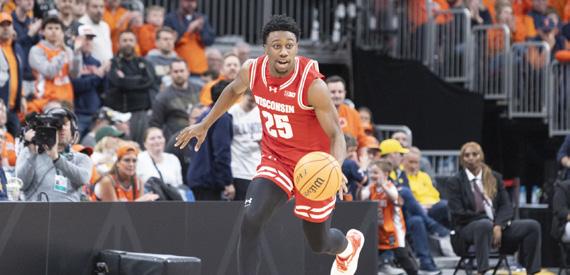
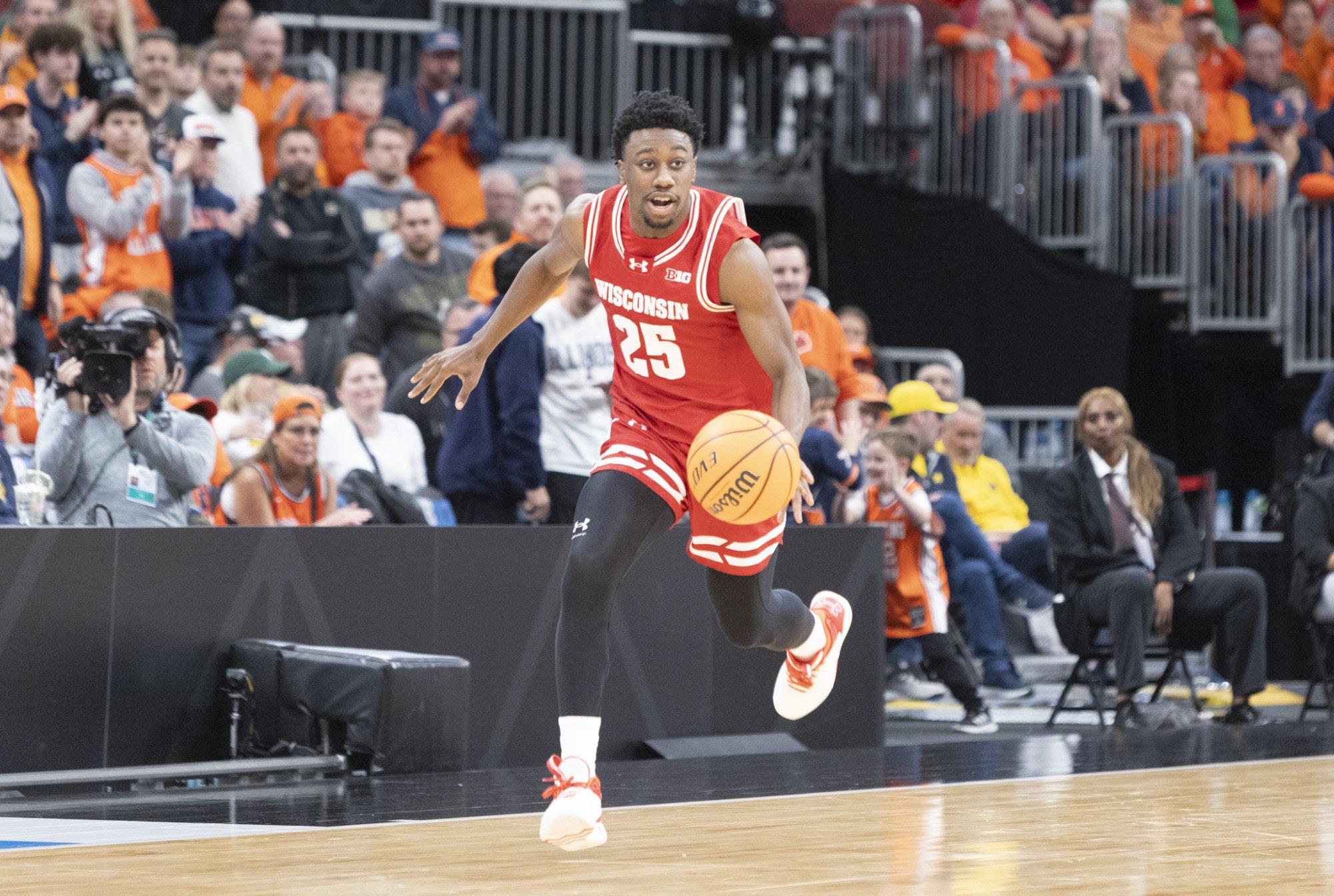
Wisconsin star John Blackwell announced Monday that he plans to enter the transfer portal while exploring the NBA draft process. The now senior guard averaged a career-high 19.1 points, 5.1 rebounds and 2.3 assists this season while shooting just under 39% from 3-point range.
After arguably the best season of his collegiate career, Blackwell earned All-Big Ten Third Team honors, helping lead the Badgers to a 5-seed in the NCAA Tournament, where Wisconsin ultimately fell short of expectations losing to High Point in the first round.
In a heartfelt farewell post on social media, Blackwell thanked Madison and the Badger faithful for their support, saying the fan base “showed up with unwavering support” through “every high and every tough loss.”
The 6-foot-4 guard dominated in the Big Ten Tournament, scoring 34 points against Washington and 31 against Illinois. In his lone March Madness game, Blackwell scored 22 points, with 20 coming in the first half.
Blackwell praised head coach Greg Gard and his staff, saying their guidance and direction “helped [him] grow into a player [he] didn’t know [he] could become,” but said that growth fueled
his decision to transfer.
“I believe I owe it to myself and my family to chase the highest level I can reach, and this is the right time to take that step and leap of faith,” he said.
Each year as a Badger, Blackwell took major leaps as an all-around player, jumping from 8 points per game his freshman year to over 15 in his sophomore year and eventually 19.1 this season. Still, Blackwell never established
himself as a true number one, playing as the second option to John Tonje and Nick Boyd over the past two seasons. Team success also played a major role in Blackwell’s decision, he said in a statement to ESPN. In each of his three seasons at Wisconsin, Blackwell never made it past the second round of the NCAA Tournament, losing twice in the first round. This year’s 83-82 upset loss to No. 12 High Point may
have added fuel to the fire.
“I’m looking for a place where I can enhance my skills for the NBA and a place where I can compete for a national championship,” Blackwell said. “A place where that’s the standard and what we’re striving for.”
While NIL numbers aren’t officially released, Blackwell will garner heavy interest from some of the nation’s top college programs. 247Sports predicts he could command up to $5 million from teams like Duke, Alabama and 2026 national champion Michigan. One Big Ten school that’s certainly not out of the question is Illinois. Blackwell’s father, Glynn, played for the Illini from 1984 to 1988 and was a team captain as a senior. The departure leaves yet another gap in the roster for Greg Gard to fill. All-Big Ten Second Team guard Nick Boyd played his sixth and final season, Aleksas Bieliauskas announced his entry into the portal on Tuesday, while Nolan Winter’s future is still up in the air.
Gard did flip Australian guard Owen Foxwell from LSU on April 3. The 22-year-old NBL veteran played for the South East Melbourne Phoenix. Still, much more roster construction work is needed heading into next season. The transfer portal officially opened Tuesday morning.