UW’s leadership shakeup, pg. 2 Mifin dorm restrictions, pg. 3 Flip phones are the future, pg. 6

UW’s leadership shakeup, pg. 2 Mifin dorm restrictions, pg. 3 Flip phones are the future, pg. 6
By Annika Bereny COLLEGE NEWS EDITOR
A domino of leadership exits have shaken the University of Wisconsin System as of late.
Former Provost Charles Isbell Jr. announced he would depart the University of Wisconsin-Madison to become the chancellor of the University of Illinois Urbana-Champaign last July. Six months later, Chancellor Jennifer Mnookin shared that she too would depart UW-Madison to become president of Columbia University. Then, in early April, UW System President Jay Rothman was fired by the Board of Regents. And just last week, UW-Madison announced Athletic Director Chris McIntosh would depart to take a role with the Big Ten Conference.
While the situations are not wholly congruent, the UW System and UW-Madison are facing a serious problem. They have lost 12 chancellors in the last five years, with ten of those coming during Rothman’s tenure, a fact cited by Board of Regents President Amy Bogost in an April 9 hearing on Rothman’s firing.
“For various reasons, we’ve lost ten chancellors,” Bogost said at the hearing. “We don’t want that. We want stability.”
An April 2023 survey from the American Council on Education revealed that the typical tenure of a university president has been steadily decreasing for the past 20 years. In 2006, the average tenure was 8.5 years, but in 2023, it had fallen to just 5.9 years.
While being a university leader anywhere is getting harder, with federal scrutiny from the Trump administration and increased visibility on social media, UW System chancellors occupy a di cult place, sandwiched between political pressure from the GOP-led legislature and lagging pay.
UW System chancellors are paid significantly less than their peers at other systems. Regional chancellors have a base pay of $287,061, according
to a 2024 analysis by the Milwaukee Journal Sentinel. The national median pay for chancellors, however, stands around $350,000.
“We have a scenario in the state where there are decades of underfunding and where you have a legislature that’s kind of openly hostile,” Shelton said. “You know, that’s a scenario where it’s di cult to be a chancellor.”
Wisconsin ranks 44th in the country in public funding for fouryear universities, according to a 2025 national study.
“Wisconsin is renowned for its a ordable and accessible public universities,” Rothman said at the time. “We can’t languish at the bottom anymore without seriously jeopardizing Wisconsin’s economic vibrancy.”
Two years ago, in the last cycle, the UW System and legislators were locked in a stando . Some lawmakers characterized this process as the legislature holding UW employees and their salaries “hostage” in order to pass a deal that ultimately froze DEI positions across the system.
And, following the last state budget cycle, the UW System was saddled with a highly unpopular budget compromise that increased teacher workloads. Rothman, and individual chancellors, have been heavily criticized by faculty over Act 15.
Shelton says he, and AFTWisconsin, will lobby for a UW
System President that works with faculty and the faculty unions throughout their tenure.
“I’ll be pushing the regents to hire somebody who’ll truly be collaborative,” he said, “and really, who is not just doing damage control [over Act 15], but healing the real fracture that exists between administration and faculty and sta on our campuses.”
Constrained chancellors
While low pay and political pressure may be significant factors in the UW System’s high administrative turnover rate, others have suggested the system itself is to blame.
“The conversations I’ve had with really highly effective chancellors who leave is just feeling that the system is too constraining for them to act as creatively as they could in the context they’re in,” former Regent Robert Atwell told the Cardinal.
In April 2022 UW-Whitewater interim chancellor Jim Henderson abruptly resigned from his post, citing a lack of support from the UW System.
“I felt like I could not in good conscience encourage any of my friends, colleagues to apply for a chancellor job at UW-Whitewater, or in the UW System as a whole, because of the lack
of support from UW system leadership,” Henderson told the Chronicle of Higher Education at the time. “Unless that leadership is really focused on supporting the campuses and doing what’s right as determined by the campus leadership, it’s not going to be a successful system.”
At the time, signs seemed to point to Henderson’s resignation being over a free speech survey that interim UW President Michael Falbo, who served as interim before Rothman’s appointment, had promised not to participate in and later reneged on.
“I acknowledge that some chancellors were disappointed in that decision, and it regrettably led to a resignation,” Falbo said in a statement.
Four years later, in Jennifer Mnookin’s farewell address to the Board of Regents this past February meeting, she, too, alluded to tensions and a lack of prioritization of UW-Madison in systemlevel decision-making.
“Please make UW-Madison’s long term strength and excellence one of your North Stars,” she told the regents. “As you engage with future challenges and changes, please continue to ask explicitly and consistently, how will this impact our flagship campus, UW Madison? And if the answer is, well, it might be not so great for UW-Madison, please think about whether there might be another path forward.”
Atwell characterized the relationship between Madison and the UW System as necessary but strained at times.
“I think it’s this relationship of necessity,” he said, “but not one of a ection and desire.”
The future of the system
Shelton said a lack of internal candidates in leadership searches may lead to chancellors less tied to their individual institutions.
Continue reading @dailycardinal.com

By Clara Strecker & Audrey Lopez-Stane STATE NEWS EDITOR & SENIOR STAFF WRITER
Tony Evers has spent over three decades committed to public service. Before becoming governor in 2018, Evers climbed virtually every rung of public education in the state, from high school biology teacher to principal, district superintendent and state superintendent.
As Evers leaves the governor seat this November, current and former colleagues applaud his dedication and say his background in education shaped his governorship.
“Governor Evers is an educator first and foremost,” Regent Edmund Manydeeds told The Daily Cardinal. “His values and the way he thinks about the Universities of Wisconsin mirror what he brings to the governorship.”
Former UW System President Kevin Reilly told the Cardinal that state superintendents often focus more on K12 education when they serve on the Board of Regents. But Evers was not only dedicated to the job, he was interested in the “wider world of education.”
“I think his record as governor is very supportive of higher ed,” Reilly said. “He did not always get everything he asked for… but he kept pressing for higher levels of funding, for more support for the system, for appreciation of what it brings to the life of the state. I’d give him high marks as an education governor, and higher education governor.”
Manydeeds mirrored that sentiment, saying Evers’ passion for education followed him all the way into the governor’s seat.
Evers began his education career in 1976 as a teacher in the Baraboo School District. He later served as principal in the Oakfield and Tomah school districts and district super-
intendent for Oakfield and Verona.
Evers received his PhD at the University of WisconsinMadison in 1986 for educational leadership and policy analysis before becoming state superintendent from 2009 to 2019.
In his 2025 State of the State address, Evers announced the “Year of the Kid,” which aimed to invest in education at all levels.
State Superintendent Jill Underly told the Cardinal she is “deeply grateful for his unwavering advocacy for public education at every level.”
“What I’ve admired most is that he consistently starts from a simple, but powerful place: what is best for kids,” Underly said. “He has approached this work with a genuine desire to leave Wisconsin stronger for the next generation.”
Manydeeds and Reilly said Evers balanced trusting the regents to make decisions with advocating for the UW System.
“He told me that he was not going to interfere with what the regents would do, that he trusted us to do our jobs,” Manydeeds said. “He never overstepped.”
Given increasingly polarizing approaches to higher education nationally, Reilly said Evers’ respect of the regent’s autonomy was especially valuable.
“The idea here is, how do we get together a group of smart citizens who are interested in higher education to be the governors of it?” Reilly said. “We don’t have a Ministry of Higher Education. The government does not directly run our campuses, and that’s a really healthy thing in a democracy in terms of freedom of thought and freedom of speech.”
He added that Evers knows he has a lot of authority as governor but understood that “[the regents] are the governors of this system, and
they should be. I’m not the governor of the university. I’m the governor of the state,” which Reilly believes is a “healthy attitude” to have.
In the past, Evers told the Cardinal he would turn to the regents when it came to bills pertaining to higher education, like when Republican lawmakers brought forward legislation earlier this year to cap UW System tuition to the rate of inflation.
Reilly said part of that willingness to cooperate might stem from Evers’ time as a regent.
Manydeeds added that Evers fulfilled most of the regents’ budget requests because he understood what the UW System requires to run.
In his 2025-27 budget address, Evers proposed $856 million for the UW System, which would have been the largest higher education budget increase in state history. After months of negotiation and potential cuts to the budget, the Republican-controlled legislature and Evers agreed to grant the UW System its largest funding increase in 20 years at $256 million.
In previous budget cycles, the UW System struggled heavily from funding cuts leading to tuition raises and multiple branch campus closures.
“I think you take the wins that you can get,” Reilly said. “The atmosphere has been tough, not only here, but around the country for funding of higher education.”
In prior budget cycles, Evers struggled to secure funding due to resistance from the legislature’s Republican majority, and former Republican Gov. Scott Walker gutted large portions of the UW System budget in his two terms.
Walker cut $250 million from the system in 2015, which was one of the largest cuts to higher education in U.S. history, and put the UW System under a decade-long tuition freeze in 2013.
By Mary Al-Bazi STAFF WRITER
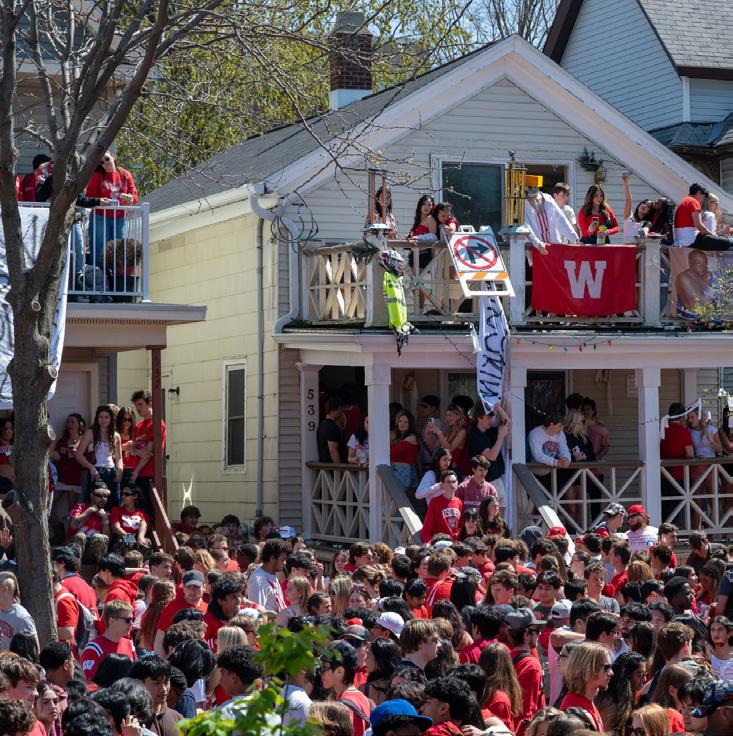
University of Wisconsin-Madison Housing residents will be limited to one guest each during Saturday’s Mifflin Street Block Party, which typically draws in thousands of visitors to Madison.
The enforcement is a departure from policies put in place during Halloween weekend last fall, where students were required to register guests and pay a $100 fee.
Guests hoping to stay in the dorms are required to be accompanied by residents at all times on Saturday, and residence halls’ exterior doors will also be locked, according to the email.
“Mifflin is a one-day, daytime event which does not need the same level of resources as Halloween,” Brendon Dybdahl, University Housing’s director of marketing and communications, said in an email to The Daily Cardinal. “We do, however, recognize that Mifflin brings a lot of added activity and visitors to campus, and resident safety is vital.”
Check-in stations at Witte, Sellery and Ogg will require residents to show their Wiscards to staff in order to enter the buildings during the day on Saturday.
House fellows are expected to conduct additional rounds throughout the day.
The email said that University Housing anticipates an increased presence of UW-Madison Police Department surrounding the Southeast residence halls.
An April 14 message to residents also said alcohol containers like BORGs will be confiscated by housing staff.
“University Housing treats the date of the Mifflin Street Block Party differently due to the high level of activity and events,”
Assistant Director of Residence Life Beth Miller said in the email. “Our goal is to maintain your safety.”
Wisconsin ranked 44 out of 50 in public funding for four-year universities in 2024, according to the State Higher Education Finance report.
Evers wanted to extend the tuition freeze in his first budget in 2023, but only if it was paired with an increase to the UW System budget. The Republicancontrolled legislature rejected his proposal, which tightened UW System funding across the board.
“This present state of the Universities of Wisconsin is a result of many years of not being allowed to raise tuition,” Manydeeds said. “If the state would increase its portion of the budget that we need to operate on, in my mind, it would be perfect to keep tuition low forever. But that’s just not the case.”
Reilly said he believes we need to continue highlighting the “value” of higher education and do a better job convincing the public to elect officials who support it.
“Tony’s always, as I’ve heard him, taking a chance whenever he can to speak up about the value of University of Wisconsin to Wisconsinites of all kinds around the state,” Reilly said.
Managing partisan divide
Higher education has become more politicized over time, with debates over free speech heightening on campuses across the country.
Chancellor Jennifer Mnookin rolled out the Wisconsin Exchange: Pluralism in Practice this spring, aiming to promote open dialogue and conversations among individuals with differing viewpoints.
“What’s reflected in higher education now is where we are as a country where there’s so much more partisan division,” Reilly said.
UW System President Jay Rothman was fired by the
Board of Regents in April, and Republican lawmakers have raised questions over the decision, calling it “secretive maneuvering” and politically charged.
Reilly pointed to a time in his own tenure when the board — which was composed of appointees from both former Republican Gov. Tommy Thompson and former Democratic Gov. Jim Doyle — would “leave politics at the board room door.”
Although Reilly said leaving politics outside was never entirely practiced, he said it was an “ideal they aspired to.” But now it’s a trend he sees in many boards across the country who feel their role is to represent the party in power.
Reilly said one of Evers’ greatest strengths was his ability to reach Wisconsinites on important issues like education.
“He was able to convince people in big cities and medium sized towns and out in rural areas that he was going to do the right thing for the education of their kids and their young people, and I think that’s quite an accomplishment for a governor,” Reilly said.
While Evers may leave the governor’s seat as one of the most education-focused leaders in the state’s history, Manydeeds said he is not afraid for the future.
“All of the governors that I have seen come and go in the state, even if they have cut budgets, even if they have had ideas which lessen the amount of money we’re allocated to education, all loved the state of Wisconsin,” Manydeeds said. “They all thought or believed that what they were doing [was] in the best interest of the entire state.”
Manydeeds said if a governor whose ideas he disagrees with is elected, he believes it is the job of the regents to be open to discussion and debate.
$25 million Morgridge donation brings new engineering building closer to
finish line
By Zoey Jiang ASSOCIATE NEWS EDITOR
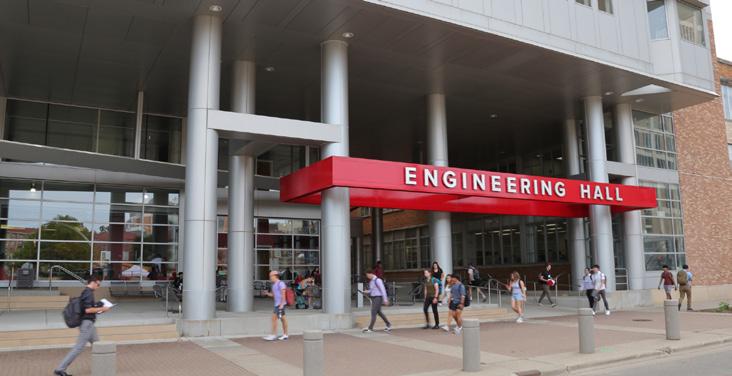
The University of Wisconsin-Madison’s College of Engineering announced Tuesday that Philip A. Levy Engineering Center received a $25 million donation from alums and donors John and Tasia Morgridge, pushing fundraising efforts closer to the building’s initial goal of $150 million.
The new engineering building was approved for construction by Gov. Tony Evers in 2024 after a long stand-off between UW officials and the legislature in hopes of expanding the college to educate about 1,000 additional undergraduates in engineering.
This is not the Morgridges’ first gift. The couple have consistently supported new facilities at their alma mater for decades.
“Our first check to UW was for $5 in 1967,” John said in a 2005 commencement speech.
Since then, the Morgridges’ gifts have founded the Morgridge Center for Public Service (1996), launched the Morgridge Institute for Research (2004), created an endowment to launch the Fund for Wisconsin Scholars (2007), invested in faculty with UW-Madison’s largest single contribution at the time of $100 million (2014) and opened Morgridge Hall with a lead commitment of $125 million for the School of
Computer, Data & Information Sciences (2021).
Philip A. Levy Hall, named by brothers and alumni Marvin and Jeffrey Levy in memory of their older brother Phil, is set to have equal space for both learning and research within its seven stories.
This project marks the third time the university constructed a new engineering building over the past 60 years to meet demand. The university says it currently only has space to educate about one-tenth of all applicants to the engineering school.
“This combination is a win for our students who want to pursue an engineering education, for Wisconsin employers who are urgently asking for well-educated engineers, and for all who benefit from our pioneering faculty research,” Chancellor Jennifer Mnookin said in a 2025 press release.
Philip A. Levy Hall is set to open in 2028.
By Peter Fishman STAFF WRITER
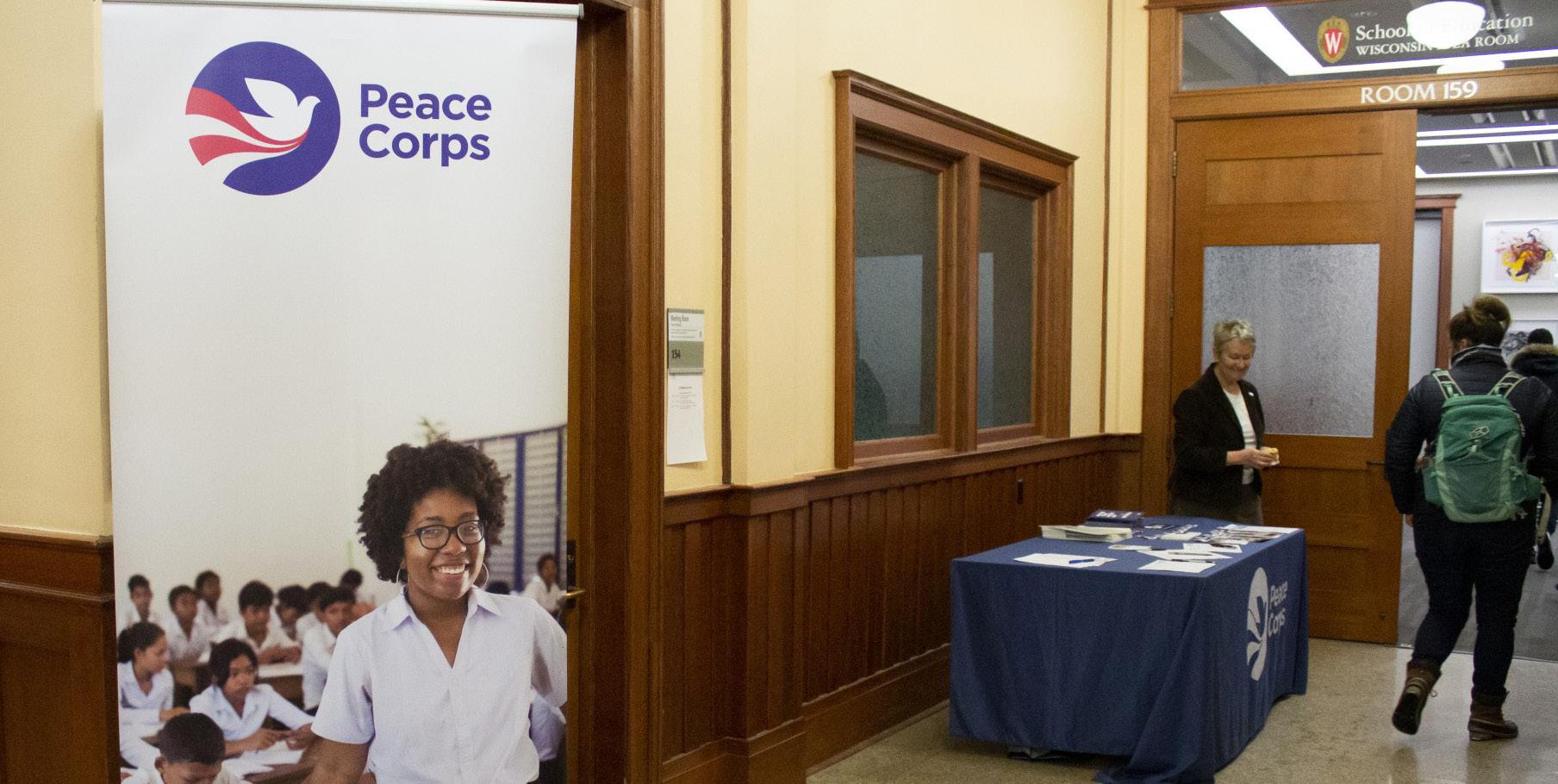
The University of WisconsinMadison ranked first on the Peace Corps’ 2026 Top VolunteerProducing Colleges and Universities list, according to an April 7 Peace Corps press release.
The university also ranked first in 2025 and sustained its second place ranking for all-time volunteer-producing institution
UW-Madison has consistently ranked at the top of volunteer-producing institutions since the Peace Corps’ founding, with close to 3,500 alumni serving since 1961.
“I think we have a really strong international studies program, and we have a lot of international students, so I think that naturally generates interest,” Hannah Bennett, a UW-Madison Peace Corps representative, told The Daily Cardinal.
The Peace Corps was established in 1961 by former President John F. Kennedy with the intent of sending American volunteers abroad to help developing countries.
The three outlined goals of Peace Corps are to help countries interested in meeting their need for trained peo-
ple, to help promote a better understanding of Americans on the part of the people served and to help promote a better understanding of other peoples on the part of Americans.
Five continents currently host the Peace Corps, operating in over 60 countries.
Bennett reflected on being a volunteer in Ecuador, highlighting her experience during and after her time in the Peace Corps.
“I just hung out with people on a day-to-day basis and helped with farming and crop processing,” Bennett said. “When you come home, you’re supposed to share what you know — this deep experience that you’ve had. You’re able to bring that back and share it with people in the United States.”
Bennett worked on agriculture in Ecuador, one of six sectors outlined by the first goal of the Peace Corps.
The other sectors are community economic development, education, environment, health and youth in development, with education and health as the most popular sectors.
She credited the UW-Madison study abroad program with generating interest in the Peace Corps.
“I’ve worked with lots of students who say, ‘I did this short study abroad thing in Uganda, and I want more, you know? And so I was thinking [about the] Peace Corps.’ There’s a culture here that encourages people to look beyond the normal path,” Bennett said.
Anthony Hying, a UW-Madison alumni who volunteered in Colombia, also credited the university.
“UW students are so good at focusing on the whole picture and looking for further opportunities for learning, and I think that is a big reason why so many become volunteers,” Hying told the Cardinal in a statement. “The Peace Corps is not for everyone, but the folks that do it gain a critical understanding of people, di erent cultures and life experience that puts them at an advantage in the workforce.”
During his time in Colombia, Hying helped facilitate community classes, conversation clubs and local green initiatives, along with creating a curriculum to help business owners practice English through community partnerships. He said this ultimately helped promote ecotourism in the Colombian lowlands.
“Peace Corp puts a lot of onus on

the volunteers to make the most out of their time. I had the flexibility to choose where I wanted to work in my community and what projects I wanted to prioritize,” Hying said. “The Peace Corps prioritizes the well being of the volunteers…the independence of the volunteer experience can be challenging but also one of the most rewarding aspects of service.”
Both former volunteers expressed their hopes that future UW-Madison students would display interest in volunteering for the Peace Corps after college.
“It’s a really unique opportunity, and when I did it, I don’t think I realized how unique it was,” Bennett said.
“I think of it as this is an opportunity for you to go live in another country for two years, experience it very deeply and all of your expenses are covered. I can’t think of another program that would be like that. So, I hope more people start taking advantage of it.”
Hying said he is hopeful for the future of the Peace Corps, especially among UW-Madison students and alumni.
“I hope that the Peace Corps continues to do meaningful work and that Badgers are going into service with the right intentions,” Hying said. “It will be challenging, rewarding and it will change a person’s perspective on what it means to be a cultural ambassador.”
By Madison Moris
LIFE & STYLE EDITOR EMERITUS
Data center proposals have spread across the country, but with one Dane County town winning its battle against a project, eyes are now on DeForest for inspiration.
When Virginia-based QTS, a Blackstonebacked data center company, announced a project in DeForest, residents began voicing their concerns about environmental impacts and a lack of transparency.
Emails show DeForest sta were strategizing with QTS representatives and Alliant Energy as early as March 2025, months before announcing the proposal last October. Dan Jansen, a member of No Data Centers in DeForest, questioned if DeForest Village President Jane Wolfgram Cahill had remained neutral in the process.
On Jan. 27, the Village of DeForest released a statement saying “QTS’s data center proposal is not feasible.”
Tricia Boehlke, a No Data Centers in DeForest’s leader, said that night was her first full night of sleep in months.
“I just felt this complete sense of calm,” Boehlke told The Daily Cardinal.
Boehlke helped start No Data Center in DeForest because of her concerns surrounding the project. “I had been reading about how our electrical bills were going to go up and how there were not a lot of regulations,” Boehlke said.
A lot of things went right in DeForest’s organizing, Boehlke said. The group kept a small leadership team to prevent “too many cooks in the kitchen” and ensure they were approaching the issue from every possible angle.
The group started a petition to change a village ordinance, organized protests and attended board meetings to speak during the public comment period. “We built the plane while we were flying it,” Boehlke said.
One day after Deforest’s announcement, Wisconsin Watch reported that at least four Wisconsin communities have signed non-disclosure agreements with data center companies.
In Menomonie, city o cials signed an agreement a year before the public was made aware of a proposal. Now, activists there are turning to their DeForest peers strategy.
Dunn County residents follow DeForest’s lead
Before Balloonist, a Delaware-registered com-
pany, proposed a Menomonie hyperscale data center in July 2025, Blaine Halverson joked data centers were reminiscent of Mission Impossible scenes. “Nobody knew about it until all of a sudden,” Halverson said. “It was a secret thing, and it [was] already moving fast.”
Halverson began working on an ordinance to prevent a development with the group “Stop the Menomonie Data Center.” Halverson said Balloonist and other large tech companies are preying on smaller communities, which do not have strong zoning regulations. “They’re targeting communities that have weak zoning ordinances so they can steamroll [them],” he said.
In January, the city council passed an ordinance restricting where and how any potential future data centers can be built. It would require land be rezoned for a data center development, including land already purchased by Balloonist. The company would have to reapply for a permit with the city.
Halverson said the ordinance gave organizers breathing room and the opportunity to educate other communities before they are faced with a data center proposal. The group hosted a town hall with people who have fought data center projects to discuss the ordinance and discuss ways communities can “uncover a data center project that might already be in the works.”
Rep. Clint Moses, R-Menomonie, proposed legislation prohibiting data center companies from entering non-disclosure agreements that conceal information from local governments or property owners.
Moses said residents and lawmakers alike knew very little about Balloonist’s proposed
data center.
“We knew nothing more than the average person walking down the street in Menominee, my hometown,” Moses said. “I think that people should be [able to] get information so they can make a decision… this [bill] should be a no-brainer.”
If a developer violates the transparency requirement, the bill would bar local governments from approving that project.
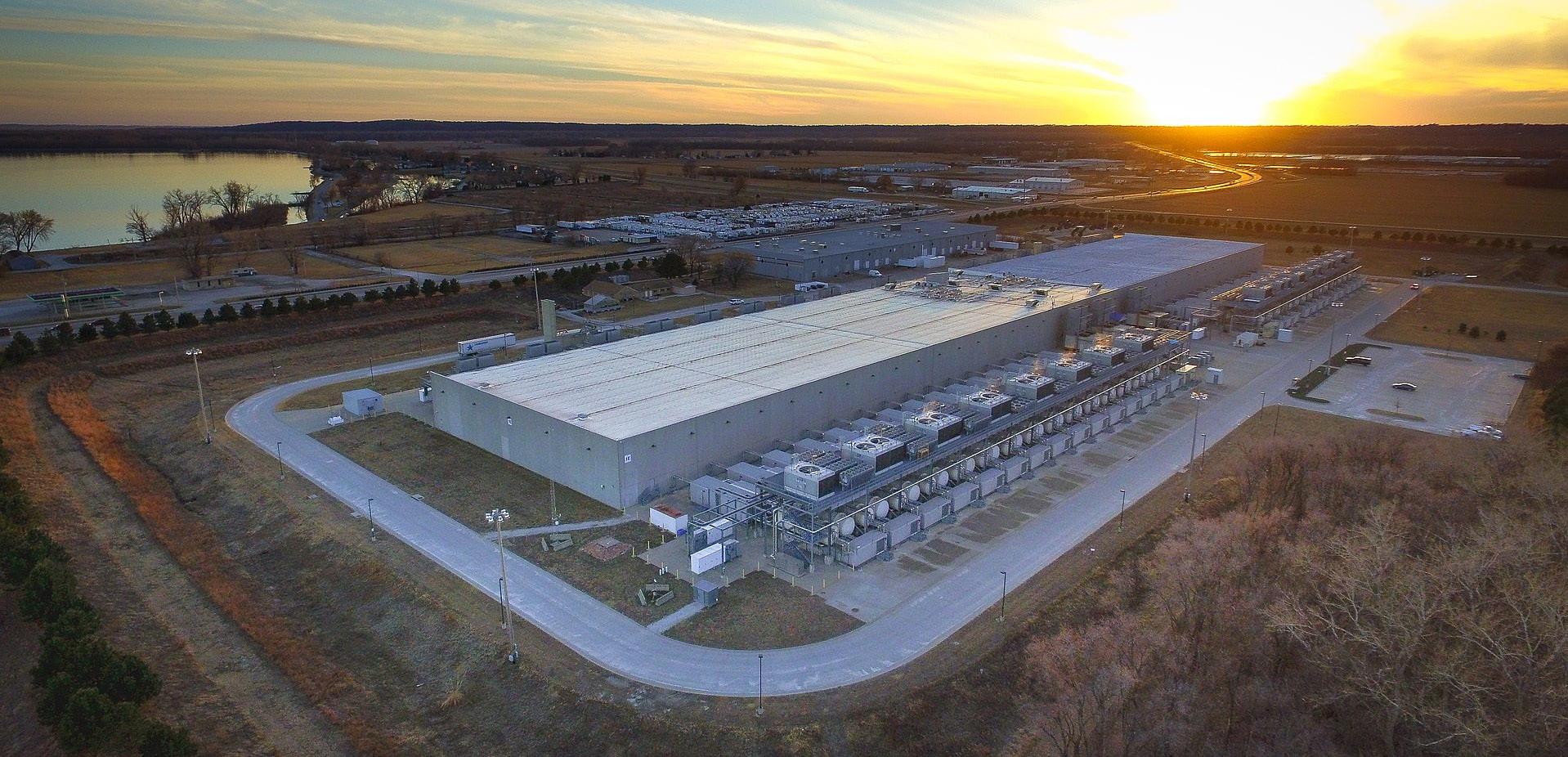
Port Washington’s data center is already under construction despite widespread opposition. Residents said the project cited imminent domain concerns and opposed the project due to the potential for increased electric bills. The city has approved 24-hour construction on weekdays, and residents are frustrated with the constant lights, noise and tra c.
That inspired comedian Charlie Berens to make a video about the Port Washington site.
“I was surprised by how so many people spoke out against their data center . . . and then the common council unanimously approved the data center anyway,” Berens told the Cardinal. “This isn’t how democracy should work.”
Berens is known for the “Manitowoc Minute,” a satirical news channel that pokes fun at Midwest stereotypes. With nearly three million subscribers on YouTube and one million Instagram followers, Berens is now using his platform to highlight concerns about data centers, including limited transparency.
“I think the community should be able to vote on if they want these or not,” he said. “I don’t think it’s fair that just a handful of elected ocials who have been wined and dined by the tech
industry should decide the fate.”
Environmental groups are also advocating for community input in these decisions. Wisconsin’s Green Fire Executive Director Meleesa Johnson says local organizing e orts in Greenleaf and communities across the state brought the issue to her organization’s attention.
“We were really appreciative of those folks at the local level for raising the alarm and asking really di cult questions that no one seemed to have the answer to,” Johnson said. “So we started looking for the answers.”
Wisconsin’s Green Fire promotes sciencebased solutions and policy to address the state’s conservation challenges. The organization published a toolkit for community action against data centers in 2025 in collaboration with the Sierra Club Wisconsin Chapter, Midwest Environmental Advocates and Healthy Climate Wisconsin. Johnson said the guide provides information about the impact of data centers and a template for communities who want to take action.
Wisconsin’s Green Fire is not against the development of data centers if there are community protections in place, Johnson said. Examples of community protections in other places include regulations that ensure residents do not foot the bill for increased energy use and sound barriers to protect from noise pollution.
“Until we have something that can provide that level of scrutiny and protection for communities, we’re going to continue to look at this and promote helping communities,” Johnson said.
Halverson is concerned how fast these projects receive approval, like in Port Washington, despite significant pushback. However, he is inspired by DeForest’s organizing e orts to keep speaking out. “They didn’t quit and they had tireless leadership,” Halverson said. “You need that.”
Boehlke said she appreciates how this issue has brought people together. “People from both sides of the aisle were working together for a common goal and actually got to know each other on a di erent level to start a conversation that maybe could go somewhere else.”
Berens also emphasized the importance of continued organizing. “The more organized you are, the more you can make your voice heard [and] the less likely something like a Port Washington will be forced on your community,” he said.
By Mia Warren STAFF WRITER
University of WisconsinMadison student organiza -
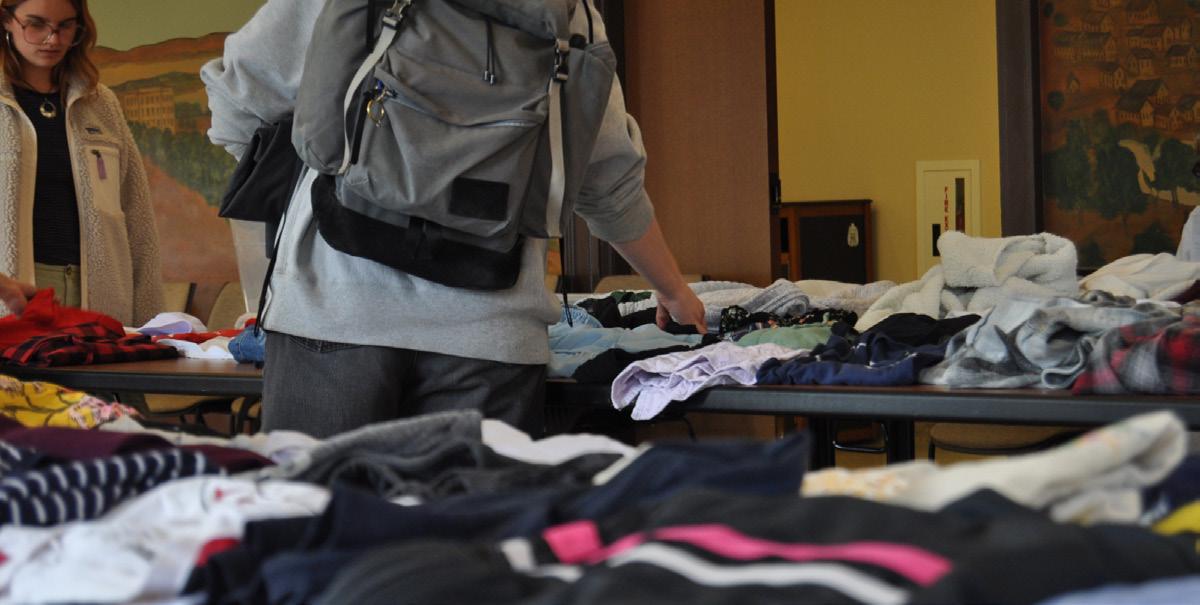
tion Re-Wear It Wisconsin collaborated with The Issue on Monday for a clothing swap, the first event lined up in a week of Earth Day ‘Swapathon’ celebrations. Students traded gently used clothing, accessories and shoes in Re-Wear It’s ongoing fight against textile waste and fast fashion.
“We think that working against fast fashion is a huge part of environmentalism, so implementing Re-Wear It into Earth Week is super important,” Swap Director Rachel Moglowsky told The Daily Cardinal. “We can help try to keep clothing circular and maintain a campus environment where people are able to get the resources that they might not be able to get otherwise.”
The Monday swap was a collaboration with The Issue, a student-run fashion magazine.
Moglowsky said Re-Wear It wanted to collaborate with them to put focus on other fashion clubs, especially near the end of the year with upcoming final projects. “They can trade and use whatever [clothes and textiles] they might need in preparing for their final projects,” she said.
On Earth Day itself, Re-Wear It will swap with the Wisconsin Alumni Student Board in a “long running collaboration.” The swap is a campus wide, outdoor event.
“WASB always brings so much energy and so much fun. [That swap] is always one of my favorites every year,” Moglowsky said.
The Global Health Alliance will work with Re-Wear It Friday in the final Earth Week celebration. Moglowsky said this collaboration
is important because “health and environmental safety go together.”
Naana Dampare, a student at UW-Madison, began attending Re-Wear It swaps after their collaboration with Posse and the GSCC o ce in April.
“I know there’s a bunch of stu in my closet that’s never worn, so I love the mission of giving back to the community, and to look around and be able to [see] other people’s styles and such,” she said.
Regarding textile waste, Dampare thinks the issue is “very unfortunate” and fast fashion culture has driven clothes to be wasted instead of getting passed down. “I feel like we’ve lost the art [of passing down clothes], especially as we’ve gotten into the years of fast fashion where people immediately shop for things and just throw them away,” she said.
“I think clothes are something
By Cole Zich STAFF WRITER
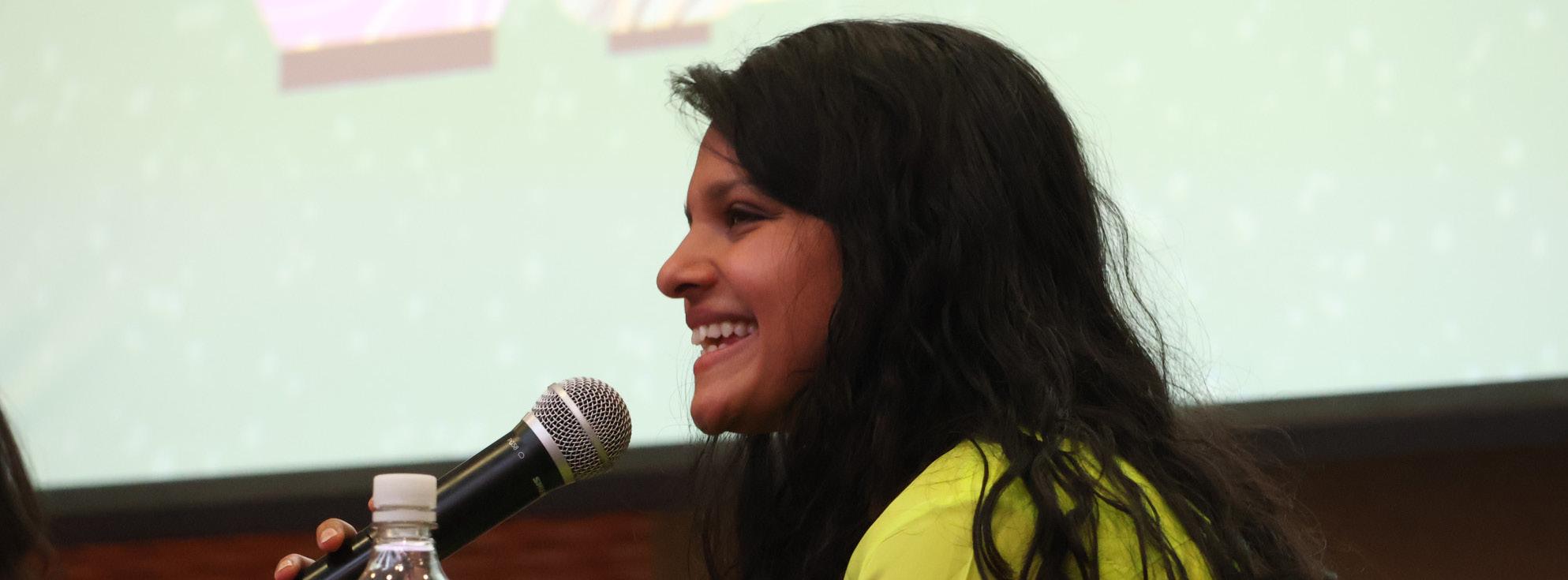
Author Sarah Thankam Mathews spoke about her relationship with writing and her experience immigrating to the U.S. last Thursday as part of the Asian Pacific Islander Desi American Heritage Month keynote speech.
Mathews is a University of WisconsinMadison alum who published her debut novel, “All This Could Be Different,” in 2022. The book follows a young woman in Milwaukee in 2008 as she navigates relationships and employment during the Great Recession.
“I would say it’s about a young, queer, Indian woman who moves to Milwaukee, Wisconsin, a city where she knows not a soul, and proceeds to reckon with her first job, her first love and her first real friends,” Mathews said.
This year’s theme for APIDA Heritage Month is “Beauty in the Brokenness,” based on the Japanese art of Kintsugi, where cracks in pottery are filled with gold. Mathews said the theme heavily aligns with the story of her life, which is a lot more complex than the upward trajectory life is typically presented to follow.
“The reason why I say that is not an honest characterization of my story is because, throughout my journey, in the interstices of the things I’ve talked about, are periods of meaningful challenge and difficulty,” she said.
Mathews came to the U.S. as a teenager and initially attended high school in the Chicago suburbs. She studied English at UW-Madison before working a number of miscellaneous jobs, culminating in a stable position in
Washington, D.C. She ultimately left that job to become a fellow at the Iowa Writer’s Workshop, a creative writing program at the University of Iowa.
While in Iowa, Mathews worked on a book that she did not end up publishing. “All This Could Be Different” is technically the second novel she’s written, she said, but only the first to be publicly available.
“I left that program having worked for almost eight years on a book that I could not sell, that I could not even get to a point where I loved it,” she said. “[‘All This Could be Di erent’] is the first book of mine that other people could read.”
Mathews emphasized that her personal connections are what kept her writing. She spoke of one college friend who constantly read her stories and encouraged her to write consistently.
“All through college, he would be like, ‘Got any writing for me? Got any writing for me?’ and I’d be like … ‘no, we’re in the middle of finals,’” Mathews said.
Without that support from her friends, Mathews said she wouldn’t have felt comfortable enough to publish a full-length novel. She called for writers in the audience to establish connections that can provide an unadulterated perspective on their works.
Mathews came to the U.S. as a teenager and initially attended high school in the Chicago suburbs. She studied English at UW-Madison before working a number of miscellaneous jobs, culminating in a stable position in Washington, D.C. She ultimately left that job to become a fellow at the Iowa Writers’ Workshop, a creative writing program at the University of Iowa.
to be passed down, like given to others. And I think style is something that’s supposed to be a community based thing,” Dampare added.
Ahead of Earth Day, Dampare encouraged students to recycle things they don’t use rather than throw them away.
“Find a way to repurpose it or give it away to other people that
need those resources.”
Moglowsky encouraged students to pursue environmental action this Earth Day.
“I think a good reminder is to keep using your voice and to make sure you are still voicing your opinions and worries about environmentalism,” she said. “Nothing is going to happen if no one’s talking about it.”
‘Bon voyage, Bandit’: Red panda to leave Henry Vilas for conservation breeding e ort

By Alaina Walsh & Zoey Jiang CITY NEWS EDITOR & ASSOCATE NEWS EDITOR
Bandit, one of the Henry Vilas Zoo’s two red pandas, will leave later this week because of a breeding recommendation from the Association of Zoos & Aquarium (AZA) as Bandit and Betty, the zoo’s female panda, did not successfully breed despite getting along well.
Bandit will move to another AZAaccredited institution as part of a conservation effort aimed at protecting the endangered species, the zoo announced Monday.
“Introducing them to new companions does increase the likelihood of offspring,” said Kristin Moala, the zoo’s marketing manager.
Moala said Bandit will be paired with a mate to support further breeding efforts. Moala told The Daily Cardinal the new zoo location cannot be disclosed until after the transfer.
Bandit’s move is a part of the AZA’s Red Panda Species Survival Plan, which aims to support wild red panda populations by partnering with zoos equipped to coordinate breeding and conservation efforts. Red pandas are classified as endangered, with fewer than 2,500 adults estimated to remain in the wild.
“While it’s always difficult to say goodbye to an animal who has meant so much to our staff and guests, we are proud to play a role in the larger conservation mission,” Dane County Executive
Melissa Agard said in a press release. “Bandit’s move is an important step in ensuring the long-term sustainability of red pandas in accredited zoos.”
The 5-year-old panda’s going away party will happen Wednesday in front of the red panda exhibit at noon where guests are encouraged to learn more about the zoo’s ongoing conservation efforts and to sign Bandit’s “bon voyage” card.
“My personal favorite memory is from last fall when I was feeding him apple sticks and his pseudo-thumb hooked around my fingers briefly,” Moala told the Cardinal. “It was almost like he held my hand for just a second.”
Bandit’s primary zookeeper Tara Lee said in the same statement his care team will deeply miss him.
“Bandit will always have a special place in my heart, but we are excited for this next chapter for him,” she said.
Henry Vilas first welcomed Bandit in July 2022 after his great-grandfather Tarrei passed away in December 2021. Bandit was moved from the Columbus Zoo in Ohio, where an anonymous donor gave him his name for the dark markings on his face that give the appearance of a mask.
The zoo said it has worked closely with veterinary and animal care sta to ensure Bandit’s move is handled safely and with minimal stress. Henry Vilas expects to welcome another red panda later this year, which will join Betty.
By Jackson Baker LIFE & STYLE EDITOR
Last summer, University of Wisconsin-Madison junior Rachel Gerhardt accidentally left her phone in an Uber. She never got it back.
For two weeks, a phoneless Gerhardt wrote down notes on a pad of paper, took calls from the landline at her job and walked around campus without headphones.
“I think that is when it became like, ‘Okay, this is something I could actually do.’ If I needed to, I could not have a phone,” Gerhardt said. By the time she bought a new iPhone, Gerhardt was just starting to enjoy life without one. A few months later, she shelved her brand-new device in favor of a flip phone.
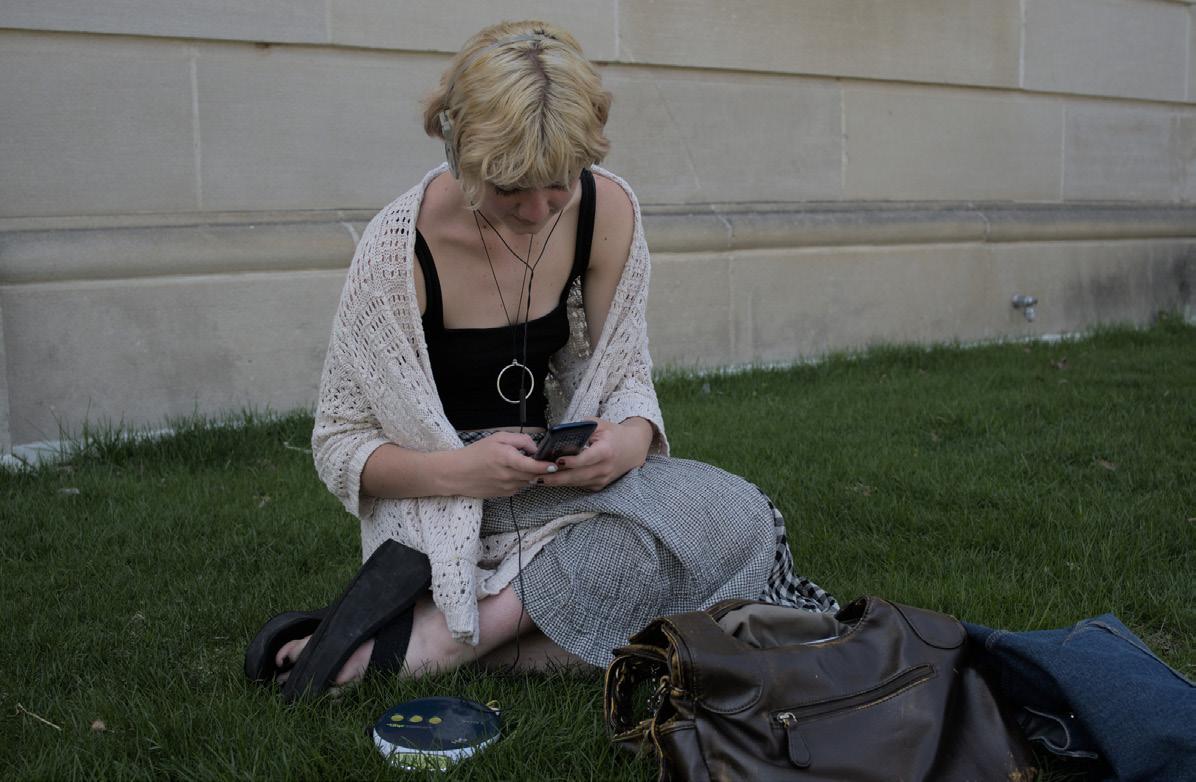
But Gerhardt isn’t the only one opting for a ‘90s lifestyle in 2026. Today, as more young people report feeling unhappy with the amount of time they spend on phones, a swath of students are flocking to older technology and physical media.
In late 2025, trends like “going analog” and “friction-maxxing” began picking up steam on social media. Despite the irony of going o ine trending online, users posted videos showcasing the benefits of their digital detoxes. The trends involved deleting social media, journaling and embracing forms of physical media, like DVDs and vinyl.
“Seeing all these videos, I was like, ‘I might as well try it out,’” Gerhardt said.
For Gerhardt, extreme measures like switching to a flip phone have worked better than any other method of reducing screen time. When she no longer had an option to scroll social media, the urge to open the apps disappeared within just a few days.
“People are trying to step away
from relying on social media,” Gerhardt said. “Social media kind of makes you feel more alone than it does actually connect you.”
Ayla Carli, another UW-Madison student who switched to a flip phone in 2025, has fully embraced an o ine lifestyle. Today, Carli checks out CDs from the library, rents DVDs from home video shops and visits record stores.
“It feels good to be disconnected,” Carli said. “I don’t feel tied down to anything. I can just walk around, be chill and not feel stressed about having this piece of technology connected to me.”
As the younger generation looks for ways to combat their overdependence on devices, interest in physical media has surged. For the first time this century, vinyl sales reached $1 billion in a calendar year.
Steve Manley, the owner of B-Side Records on State Street, said he’s noticed the recent increase in interest.
A 42-year veteran of the record business, he attributes the trend to grow-
By Yareli Gutierrez STAFF WRITER
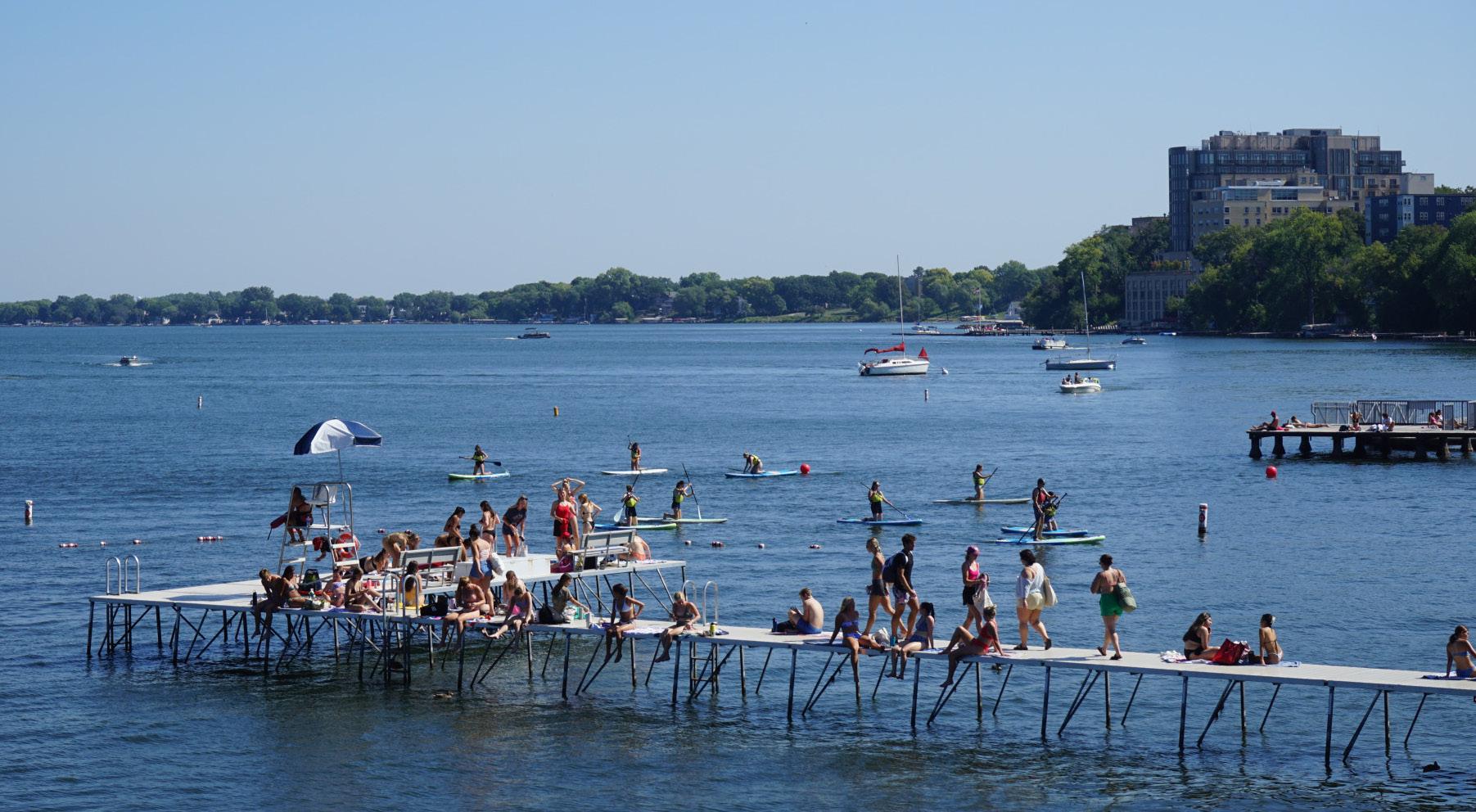
Madison, despite being a summer vacation destination for thousands of Wisconsinites, loses a substantial portion of its population in the summer as students flee the city back to their hometowns. But, the small isthmus sitting between two glassy lakes has plenty to o er for the lucky students who choose to stay.
University of Wisconsin-Madison sophomore Timmy Beck will stay in Madison this summer to work as a supervisor for Student Desk Services. Outside of his work commitment, he plans to try recently-opened restaurants and find new study spots to return to during the fall semester.
This is the first time Beck will spend his entire summer in Madison, but he said he enjoyed the first few weeks he spent here last summer, especially the “beautiful weather’’ and the less crowded farmers’ markets. Beck said he appreciated the campus itself during the summer, especially the scenery.
“Our campus is gorgeous during the summer, even if there aren’t always a lot of people,” Beck said. “Walking down the Lakeshore Path and walking up Bascom Hill, as much as I hate it, looks beautiful.”
Ava Patrow, another UW-Madison sophomore, is spending her second summer in Madison while working as an administrative assistant for Residential Operations desk services at UW-Madison. Like Beck, she said she plans to spend the summer exploring new restaurants, especially anywhere that serves ice cream.
With many of her friends also staying in Madison, Patrow said she expects to spend
much of the summer going out to eat, relaxing at Memorial Union and enjoying the lakes.
“I plan on going tanning and jumping o the dock,’’ Patrow said. “I can’t wait to do a lot of water activities like the mega paddleboard that can fit me and my friends at Memorial Union.’’
While some students, like Patrow and Beck, already have ideas for how they want to spend their summer, there are plenty of opportunities for those staying in Madison with no set plans.
Wisconsin Union events
The Wisconsin Union provides students with a variety of events and activities to keep them busy during the summer. Between outdoor activities, arts, film and music, the Union has something for everyone.
David Elsmo, director of Outdoor UW, encouraged students to check out their new page, Thrive Outside, made with help from the Lakeshore Nature Preserve, where students can explore a map of outdoor campus spaces where they can relax and reset.
Students looking to try a new outdoor activity this summer also have access to the many equipment rental options supported by Outdoor UW. “It gets people interested, to come in and rent a paddle board, a canoe, a kayak, you name it,” Elsmo said. “You can also rent sleeping bags, tents, so if you want to go out camping for the first time, you don’t have to make the big dive yourself.’’
Elsmo also emphasized Outdoor UW’s Outdoor Explorer Series, which is o ered at a low cost. “We generally keep it at a buck, so people show up,’’ he said. The program o ers
ing frustration with algorithms and social media. “Going to a place, touching the physical things and looking at them that way is better than staring at a screen,” Manley said.
Gerhardt agreed and added that artificial intelligence may also be contributing to dissatisfaction.
“People are very frustrated with the AI automation of it all,” Gerhardt said. “People want creativity that’s not from a robot.”
Switching to a flip phone, albeit a drastic change for most, is one way that some students are avoiding unhealthy relationships with their devices. But for Gerhardt, the trend also marks their generation’s nostalgia for a phoneless era when connections were made in-person instead of online.
“A lot of people are really missing that sense of community,” Gerhardt said. “And maybe they’re going to social media feeling like they should be finding community there, and it’s really not the same.”
Editor’s note: Gerhardt writes for theCardinalopiniondesk.
everything from car camping, mountain biking, cooking and campfires to advanced wilderness first-aid and first-responder courses. Students can even take part in sailing, scuba and fly fishing without ever leaving campus.
Candie Waterloo, director of Wheelhouse Studios, said the studio’s summer programming kicks o in early June. Wheelhouse o ers Terrace Art Zone, a free drop-in art event for students and community members on the Terrace every Thursday, Friday and Saturday from 5-8 p.m.
“We provide all of the materials for the di erent projects…there is a new project every week,’’ Waterloo said. “We’ve got a lot of di erent mobilities and modalities of art-making all summer long, even using tooling foil and molding clay.’’
Wheelhouse Studios also o ers paid art classes beginning the first week of June, with opportunities to try out ceramics, stained glass and even jewelry. “So we’ve got lots of di erent ways to engage with us, both free and paid,’’ Waterloo said.
This summer, Waterloo is most excited for the upcoming collaboration between the Wheelhouse and Allen Centennial Gardens, a continued partnership that leads summer classes for students and community members during the summer, both on-site and o -site.
“I am really excited. We will be introducing a couple of culinary classes, and they’re going to be our partners for one of the Terrace Art Zones where we will be making pressed flower sun catchers,’’ Waterloo said. “We love the gardens, and we are happy they want to work with us.’’
For students looking to fill out their Letterboxd diaries this summer, WUD Film Advisor Robin Schmoldt highlighted opportunities at Lakeside Cinema. The Film Committee creates a free outdoor movie experience every Monday at 9 p.m on the Terrace. The Lakeside Cinema series runs from June 1-Aug. 24.
“When it comes to film, every night is a lovely one because you can’t beat hanging out to watch a movie as the sun is setting over the lake. There is just a vibe to it that can not be beat,’’ Schmoldt said.
WUD Music Advisor Sean Michael Dargan said students can look forward to music shows this summer.
“The students book up to six fabulous music shows. We have two or three shows every week. It is very fun and well-attended,’’ he said.
Dargan said there is an open mic night every Wednesday on the Terrace, and WUD also o ers a Behind the Beat show featuring jazz artists,
band performances and singer-songwriters on Fridays at 4 p.m. at the Rath.
Dargan’s personal favorite event of the summer is a collaboration they do with Hoo ers and Outdoor UW called Lakefront Live. “99% of the time the bands are set up on the Terrace facing the Memorial Union building, but on this one show during the summer, occasionally twice, we turn the band and face the water,’’ Dargan said. Outdoor UW and Hoofers o er watercraft rentals during the event. “They make it very a ordable and create a little lagoon right in front of the stage so people can paddle board, paddle up, kayak and use their canoes and sailboats as the band plays to the water,’’ Dargan said.
Beyond campus
For students looking to explore beyond the iconic Terrace, the World’s Largest Brat Fest is a great option for students, and is one of Madison’s most popular summer traditions. The festival has been held every Memorial Day weekend since 1983. This year, it will take place at the Alliant Energy Center.
The festival features free admission, free parking and free live music. Students and patrons can expect a weekend full of food and entertainment from local vendors. Brat Fest gives students a chance to socialize with locals in Madison, all while enjoying brats.
If you’re looking for summer apparel on sale, Maxwell Street Days is one of downtown’s biggest shopping events of the year. The event itself o ers discounts on clothing, jewelry, gifts, books, artwork and more from local shops and businesses. On Street Days, State Street is closed to bike and bus tra c, allowing pedestrians to enjoy a lively outdoor experience full of food, cafe dining, shopping and even live music.
For students looking to celebrate the Fourth of July, the Monona Community Festival is the perfect option. This two-day event runs from July 2-4 at Winnequah Park in Monona, featuring live music, classic American food and group activities including Drag Bingo, Trivia, a carnival, face painting and rock climbing.
At this festival this year, there’s also a new two-day art fair showcasing work from local artists. The festival will wrap up with a fireworks show at 9:20 p.m.
Whether students decide to spend their summer in Madison trying new restaurants, attending outdoor Union events or exploring beyond campus, there is plenty to do for those who choose to stay.
By The Daily Cardinal Editorial Board
The University of Wisconsin System has undergone a striking series of leadership changes over the past few months. In February, University of Wisconsin-Madison Chancellor Jennifer Mnookin announced her departure for Columbia University.
A couple weeks ago, the Regents terminated President Jay Rothman, and most recently, Athletic Director Chris McIntosh announced his exit.
Eric Wilcots, dean of the College of Letters & Science, will step in as interim chancellor, tasked with leading UW-Madison during a period of mounting uncertainty.
Leadership turnover, while disruptive, is not always catastrophic, and with these changes, the UW System has a unique opportunity to reevaluate the values guiding one of Wisconsin’s greatest institutions.
Future leaders of UW System campuses will have no easy task, facing decisions around artificial intelligence and rising distrust in higher education institutions.
On the ground, students are looking for answers, not only about who will lead the system, but about what priorities will shape their education: how AI will be integrated into classrooms, how environmental and bud-
geting concerns will be addressed and how leadership plans to rebuild trust with faculty and students after a period of instability.
Looking forward, leaders on the Board of Regents emphasized the need for a visionary rather than reactive leader. Regent President Amy Bogost attributed Rothman’s ouster to policies and priorities shaped by immediate pressures like budget constraints.
Rothman’s slow approach to defining a systemwide AI policy became a sticking point for regents. They publicly criticized the lack of guidelines or guardrails on AI, and student Regent Desmond Adongo warned unequal adoption across campuses risked creating a two-tiered educational experience depending on whether a professor or campus had the resources to engage with the technology.
In the last few years, AI has become entrenched in students’ daily lives. While initiatives like the new College of Computing and Artificial Intelligence signal institutional investment, they fall short of addressing the pace and scope of the change.
There is no clean, simple answer for how universities should integrate AI into the classroom or research, especially coupled with environmen-
tal and academic concerns. But uncertainty from leadership makes inaction more consequential.
Wisconsin ranks near the bottom in the country in a metric on AI revolution preparedness, creating a stronger need for clarity.
In an op-ed, Rothman addressed concerns, stating, “Our approach is simple: innovation must be paired with integrity.” However, this does not meet the root of the issue. Without consistent standards or direction, AI use across UW remains fragmented, reinforcing the perception of an institution reacting to change rather than shaping it.
To move forward, leadership must be more transparent and intentional about the research and investments they make in AI. Just as importantly, the university needs to create space for ongoing, meaningful conversations with students, faculty and stakeholders across the state about what they actually need from these technologies.
At every step of the process, UW needs to keep student, faculty, environmental and statewide concerns at the heart of its AI approach, while also ensuring their work protects the integrity of a public higher education.
Recent leadership has struggled to clearly define, not just in rhetoric, but in action, who UW is for. By many administrative standards, Mnookin’s tenure as chancellor of UW-Madison was successful: launching Bucky’s Pell Pathway, expanding financial aid through the Wisconsin Tribal Educational Promise and elevating UW-Madison’s research standing. Similarly, Rothman helped guide the system through financial strain, eliminating structural deficits across all campuses ahead of schedule.
But these successes all existed upon one persistent critique: leadership that felt distant, reactive and insu ciently transparent.
Students and faculty alike often described Mnookin as inaccessible, with engagement that felt structured but limited in substance. Whether in response to protests, labor concerns or student outreach, the perception was less of an administration in dialogue with its campus and more of one managing issues from above. That same dynamic appeared at the system level under Rothman, whose “top-down” leadership style and reluctance toward open communication were cited by the Board of Regents as one of the key reasons for his removal.
Taken together, these critiques reveal more than individual leadership flaws. They reveal an institutional
pattern in which decisions were made without a clear communication.
The Wisconsin Idea — the philosophy that education and research at UW should improve people’s lives beyond the classroom, directly benefiting the state, nation and world — is a valiant and inspiring goal. Yet, with recent leadership, this principle was too often used to operate as branding rather than a true governing framework.
For many students, especially those from rural and working-class Wisconsin backgrounds, that gap is significant. UW-Madison represents more than just a research institution or a secondary education. It is a pathway to opportunity for the state.
The next chancellor and system president need to be people who understand the university’s role as a public steward in the state of Wisconsin. This goes far deeper than administrative experience. It requires a leader who sees the Wisconsin Idea as integral to how the state operates beyond campus boundaries, recognizing UW-Madison as a public institution of trust and its ties with Wisconsin’s identity. Without that shift, leadership changes will continue to feel like resets rather than progress. With it, UW has an opportunity to rebuild trust and realign itself with the people it was built to serve.



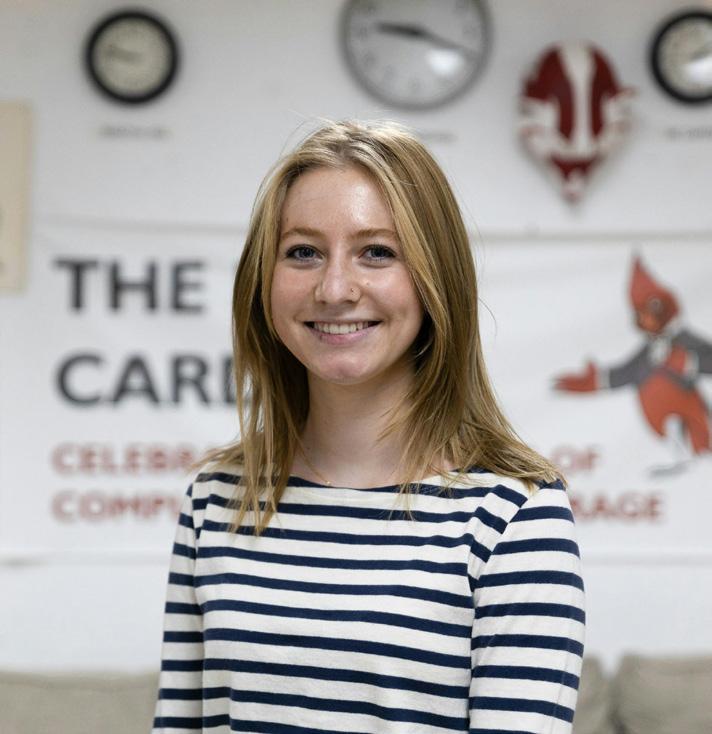
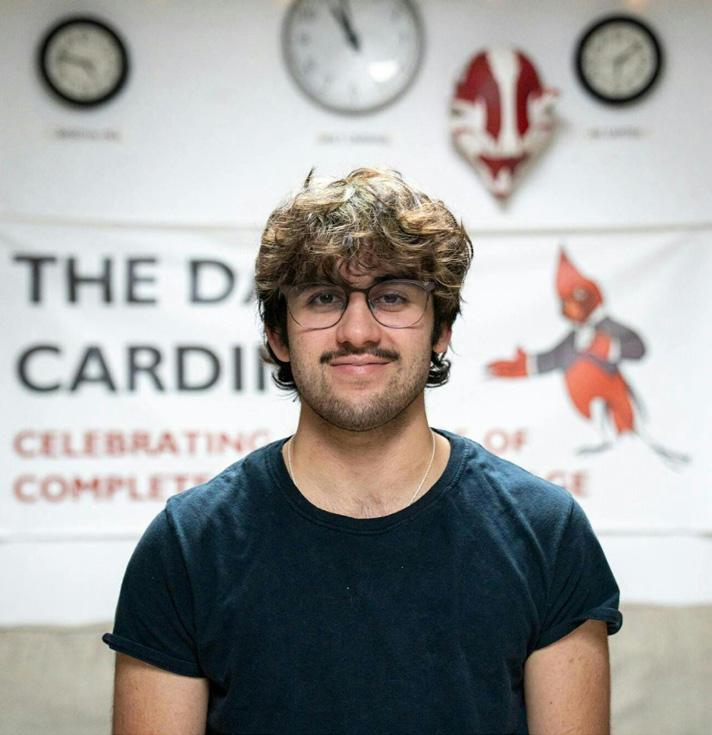

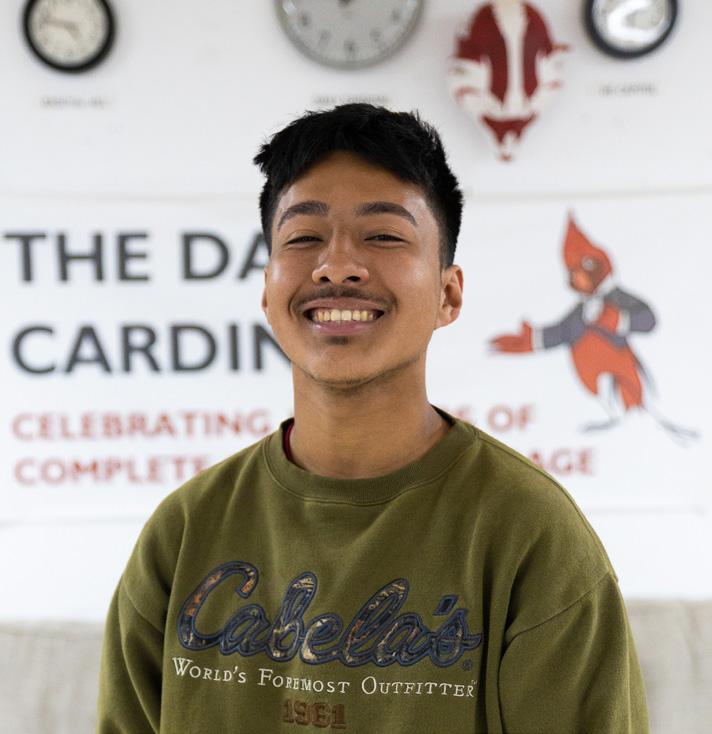
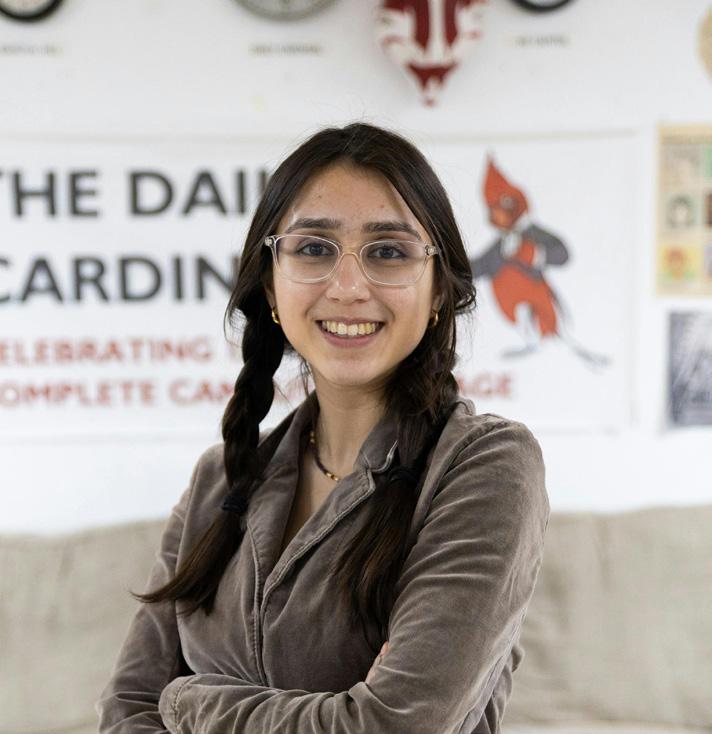



ever
Favorite memory: Covering UW's 12-day pro-Palestine encampment. The work felt meaningful and I loved collaborating with all of the writers, photographers and editors on nearly around the clock live updates. Favorite memory: Live election night coverage and the time I found a source at Brats Bottomless Cup Night Favorite memory: Traveling to the DNC in Chicago back in summer 2024! We got to interview and write about a ton of important politicians! Also I got stuck on the roof for 30 minutes and Ava had to email the DNC help line for help. Favorite story written: "'This





By Kira Rath STAFF WRITER
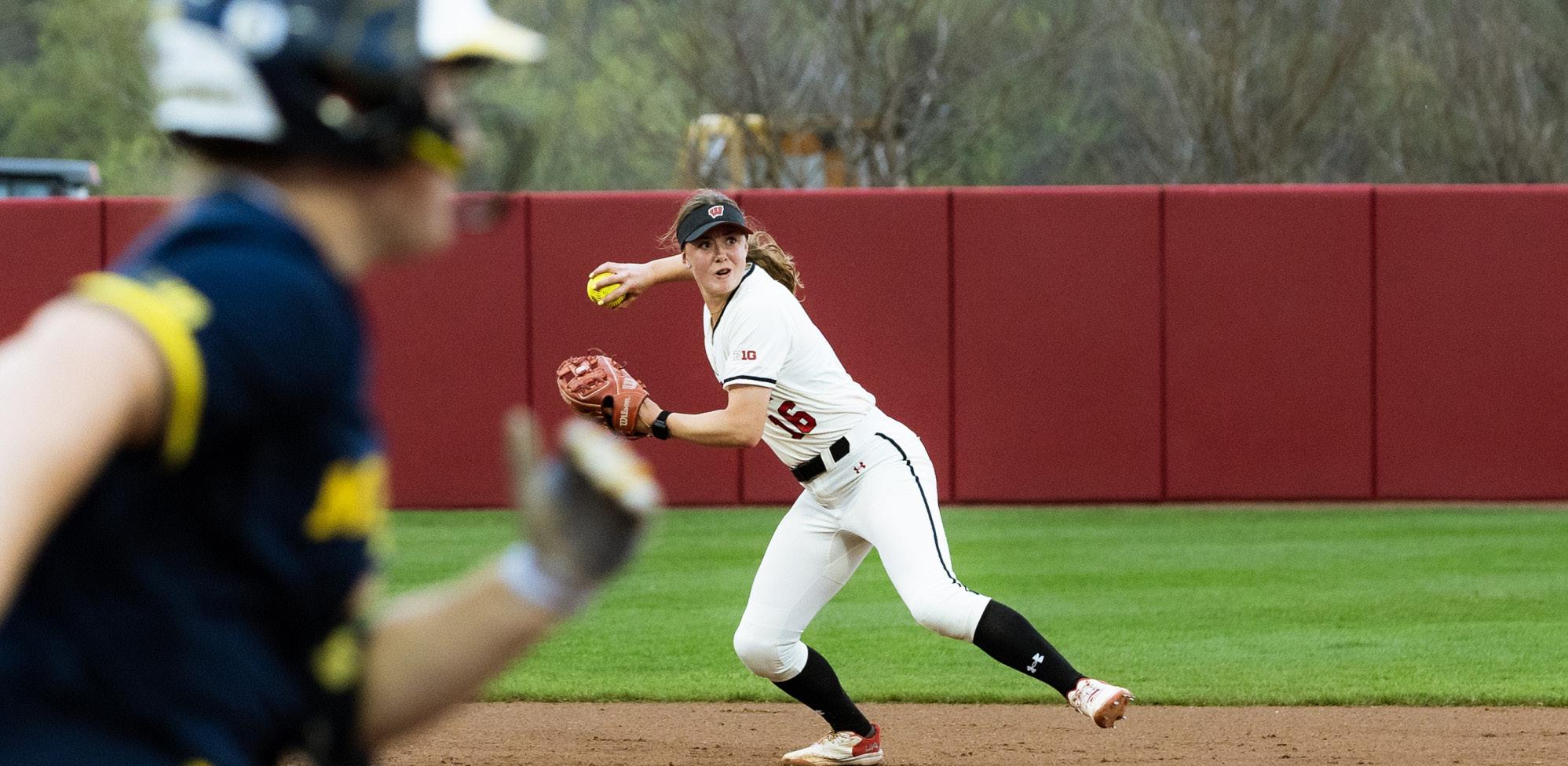
In a dramatic series that featured a come-from-behind walkoff victory on Sunday, Wisconsin softball exercised some demons, picking up their first win against Michigan since 2017 and first series win against the Wolverines since 2014.
Michigan started the series with a three-run first inning on Friday o an Ella Stephenson three-run home run to left field.
The Badgers responded in the bottom of the first, as lead-o hitter Emily Bojan answered with a home run on a full count to get the Badgers on the board. Wisconsin continued to get runners on base throughout the inning and cashed in on a two-run double from Kaylie Whidden to tie the game at 3.
But despite the fast start, game one was stopped during the third inning due to weather circumstances and postponed to Saturday.
When play resumed on Saturday, Michigan took the lead in the fourth inning, bringing in two runs in the fourth inning, including a basesloaded walk on a full count.
Hilary Blomberg led o the fifth inning with a home run to right field, her team-leading 13th, to narrow Michigan’s lead to 5-4.
The Wolverines were able to get on base consistently throughout the game, bringing in a run on a wild pitch in the fifth. A home run from Maddie Erickson in the seventh inning brought in Michigan’s last run, ending the game with a score of 7-4.
Game two started immediately after, with a two-run home run
from Blomberg giving Wisconsin an early 2-0 lead and paving their path for Wisconsin to end their 14-game Wolverine losing streak.
Blomberg stayed hot at the plate, racking in another run in the second inning with a single to right field.
Michigan struggled defensively throughout the second inning, giving up a run with a walk on bases loaded. Wisconsin then scored on a defensive error, extending their lead to 5-0. A single from Makenzie Foster drove in another run for the Badgers in the fourth inning.
The Wolverines were finally able to get on the board, bringing in
three runs in the fifth inning.
Kendra Lewis came in to pitch in the fifth inning and was able to hold the Wolverines at three until the end of the game, which ended with a score of 6-3.
Whidden broke the ice in a wild rubber match game on Sunday, with a sacrifice bunt to bring in Danielle Lucey in the second inning. A twooutRBI from Rylie Crane extended the Badgers lead to 2-0.
Wisconsin ran into some defensive trouble in the third inning, allowing the Wolverines to get on the board after a wild pitch.
Michigan continued to get on base in the fourth inning. RBIs from Madi Ramey and Janelle Ilacqua
allowed Michigan to take a 4-2 lead.
Michigan doubled their lead in the fifth inning, with a double from Ramey bringing in two of those runs, making the score 8-2.
But the Badgers were able to awaken their o ense in the bottom of the fifth inning, sending 13 players to the plate and scoring seven runs. RBIs from Alivia Bark and Foster got the rally started, and a Rylie Crane single continued the rally with two more runs.
After Bojan earned a bases-loaded walk, Blomberg immediately followed with a two RBI single to take the lead 9-8.
Wisconsin continued to add to their lead in the sixth, with
Whidden and Bojan both bringing in a run.
The Badgers ran into some defensive trouble at the top of the last inning, with back-to-back errors allowing the Wolverines to bring in a run. Lauren Putz produced a three-run home run to take back the lead, making the score 12-11 with the Badgers down by one going into the bottom of the inning. With their backs against the wall, a Lewis walk and Lucey single put runners on first and second. After a fielder’s choice moved them to second and third, Whidden smashed a three-run homer to center field to walk-o the Wolverines for a well-deserved series victory.
By Hannah Sarno STAFF WRITER
After their heartbreaking national championship loss to Denver on April 11, Wisconsin men’s hockey will return next season from their first national title appearance in 16 years, looking to build on their Frozen Four run as they reshape their roster for 2026-27.
While Wisconsin has not lost anyone to the transfer portal, they will lose nine players from the 2025-26 roster. With seniors graduating, and forwards Quinn Finley and Blake Montgomery turning pro, the Badgers will be without seven forwards and two defensemen.
Finley signed a two-year entry-level contract with the New York Islanders, where he was drafted in the third round of the 2022 NHL Draft. In his three years at Madison, Finley tallied a total of 89 points.
Montgomery turned pro after his first year with Wisconsin, signing a three-year entry-level contract with the Ottawa Senators. The winger was drafted in the fourth round of the 2024 NHL Draft. His nine goals this season led all Wisconsin freshmen.
Senior defenseman and captain Ben Dexheimer signed a one-year entry-level contract with the Minnesota Wild and joined the Wild AHL a liate Iowa Wild on an Amateur Tryout Agreement for the remainder of the 2025-26 season.
Senior forward Christian Fitzgerald signed a one-year entry-level contract

with the Dallas Stars. Fitzgerald reached the 100-point milestone this year during the 2026 NCAA Tournament.
Seniors Jack Horbach, Simon Tassy and Aiden Dubinsky all signed entrylevel contracts with di erent AHL teams.
Despite the loss of key talent from the roster, the future looks bright for Wisconsin as they add 10 new players to their roster. The incoming class of Badgers includes seven freshmen. From the transfer portal, the Badgers acquired Cornell goaltender Alexis Cournoyer, Penn State forward JJ Wiebusch and Northeastern defenseman Dylan Compton.
Cournoyer, the Montreal Canadiens 5th round pick in 2025, averages 2.05 goals against. The Quebec native recorded 603 saves for a save percentage of .915 in his 28 games played with the Big Red. Wiebusch recorded a total of 69 points with 30 goals and 39 assists in his two seasons with the Nittany Lions.
Compton will look to make an immediate impact on the blue line for the Badgers. He tallied a total of 10 points and 28 blocks in 36 games played for the Huskies.
As for freshman additions, the Badgers will add six forwards and one defenseman to their roster.
Players coming from the USHL include forwards Chase Jette, Eetu Orpana, Brett Solomon, Gavin Uhlenkamp, Zach Wooten and defenseman John Stout.
Wisconsin also signed forward Lukas Zajic from the U.S. Under-18 National Team Development Program.
Among returning players, forwards Gavin Morrissey and Vasily Zelenov have shown promise for next season. Morrissey led the Badgers in points and assists with 36 points and 27 assists this past season. While Zelenov had a slow start to the season, he made key plays in the NCAA Tournament to help Wisconsin reach the championship game. The freshman ended the season with six goals and 13 assists.
On the blue line, junior Joe Palodichuk and freshman Luke Osburn bring a strong defensive presence that will be crucial to Wisconsin’s success next season. Palodichuk led the Badgers in number of blocks with 74, while Osburn’s skating and ability as a two-way defenseman helped the Badgers to the Frozen Four Championship.
Freshman goaltender Daniel Hauser backstopped the Badgers to a championship appearance. He recorded 681 saves throughout the season for a save percentage of .900.
With incoming talent and a solid core of returning players, the Badgers will look to build on this season’s success as they aim for another deep postseason run.
By Britta Sevcik
SENIOR STAFF WRITER
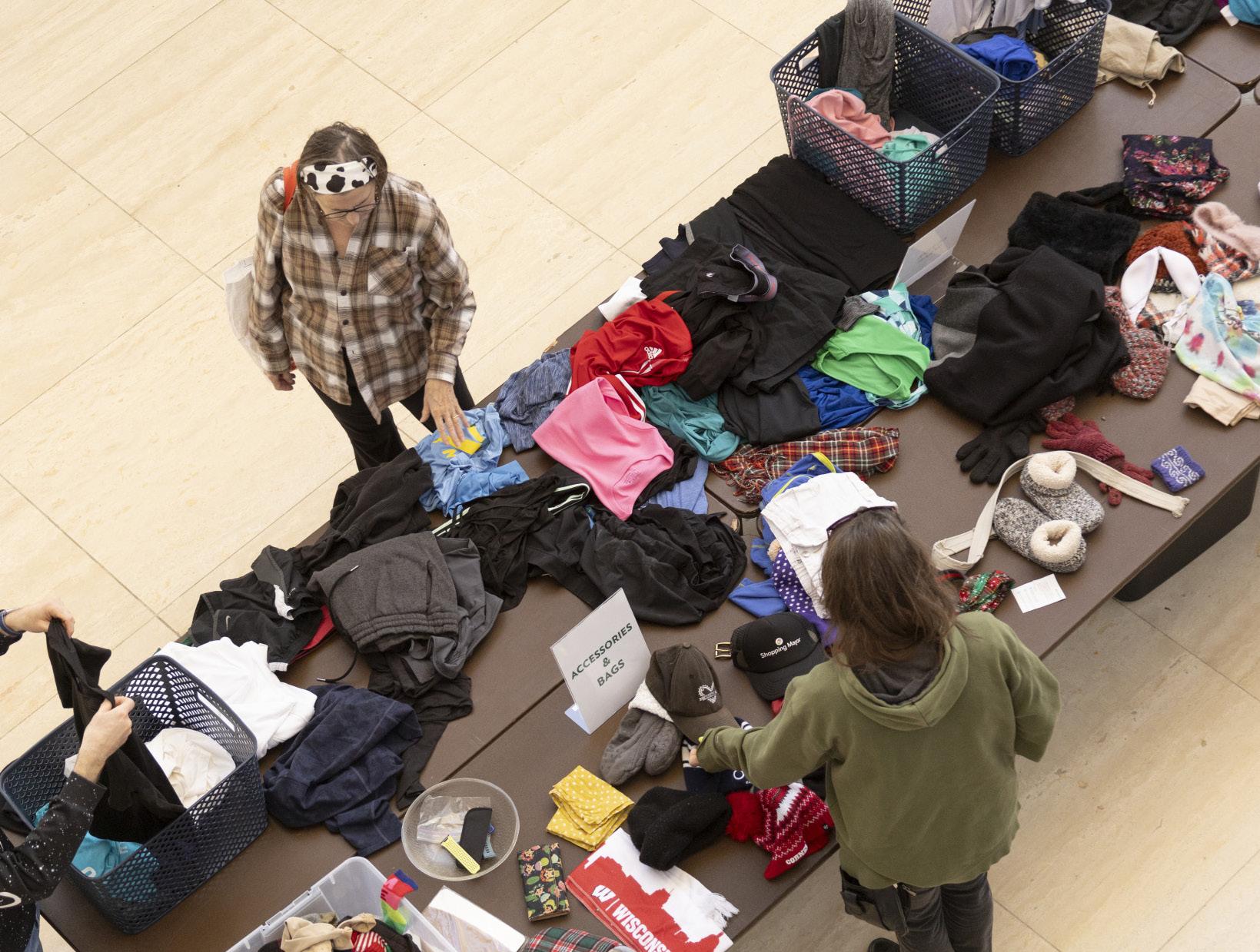
Overture Center hosted its first clothing swap April 18 in celebration of Earth Month, highlighting the importance of sustainable fashion and allowing locals to build community and fight clothing waste.
My friends and I arrived at 9:30 armed with old clothes and ready to dig for treasures.
The first thing I noticed was how organized the event was. I’ve attended clothing swaps in the past where there were piles upon piles of clothes haphazardly thrown on top of tables, but this event could not have been further from that.
As you arrived and dropped off your donations, the workers immediately started sorting the clothing by type and bringing it out onto the floor. They handed you an Overturebranded tote bag and sent you on the hunt.
According to Rachael Reis, a member of Overture’s sustainability committee, the venue has done a couple of staff-only clothing swaps in the past, so they had some experience with events like this one and were excited to involve the community.
Also stationed at the entrance was DaneNet, a local organization that connects nonprofits with “accessible and a ordable” technology and collects old electronics.
Shawn Steen, the current executive director of DaneNet, had an idea: if people were not using old computers, DaneNet could refurbish and distribute them to people who needed access to these important providers who they could not see in-person during the COVID-19 pandemic. Years later, they are still collecting old electronics to
change and save clients’ lives.
This clothing swap is just one example of Overture Center’s year-round commitment to sustainability. Michael Conway, the Overture Center’s Co-CEO, COO and member of the sustainability committee, shared how they keep their systems and services sustainable.
“The sustainability committee is actually involved in a lot of di erent aspects of how Overture runs, because there are so many opportunities here,” Conway said.
The sustainability committee examines things like building mechanics, the HVAC system, water softeners and lights to figure out what could be more sustainable in the future. Since the committee’s formation in 2023, Overture Center has won numerous climate and sustainability awards due to its commitment to the cause.
Overture Center also has plans for sustainability projects in the future to keep its status as a “climate champion.” “We’re looking into CO2 sensors that will say how many people are in the room,” Conway said. “[We’re] trying to automate a system so it can work as eciently as possible.”
The committee also aims to establish a composting plan in the future.
“It lessens our charges from the city. If we take advantage of that [I think it will get to the point where] it will pay for the service to do the compost,” Conway said. “Finding wins like that is great too.”
The event’s atmosphere was lively and exciting, with numerous attendees sharing their excitement for the event itself, how it championed sustainability and how it encouraged community.
Iman Omer, new to the
By Eloise Slipper SENOIR STAFF WRITER
The quintessential enemies-tolovers story has taken the Mitchell Theatre stage just in time to kick o a romantic, picturesque springtime in Madison. University Theatre’s “Much Ado About Nothing,” directed by Baron Kelly, is a production of the classic Shakespearean comedy that finds a way to put a smile on the face of every member of the audience.
This classic comedy follows the cynical Beatrice (Malika Daikawa) and her nemesis, Benedick (Logan Vennemann), both sworn to unmarried life and engaged in an endless verbal war. When the army’s triumphant return to Messina brings Benedick and Beatrice together again, their friends and family scheme to transform their rivalry from war to wedding without letting either of the two witty characters discover their plan.
Daikawa and Vennemann complement each other delightfully in wit, timing and energy. As the essential dynamic duo of sharp-witted enemies, their performances are incredibly engaging, especially in moments when the two characters interact.
Madison area, shared her thoughts about the event being free and inclusive.
“I think it’s really nice that [the clothing swap] encourages people to interact with the city more because there’s such a barrier to entry in terms of price or ticket to entry, and it makes people less likely to come,” Omer said.
According to Conway, 37% of Overture’s programming this year has been free or low-cost.
“Of course, [Overture is] known for theatrical performances or comedians or whatever reason people might go there for,” Emily Vaillancourt, another member of the Overture’s sustainability committee, said. “But I think there’s a lot more to Overture than that.”
And the community showed up for this event. When I arrived only 30 minutes into the event, the numerous attendees were already buzzing with excitement.
“I think this is just another way to bring community into the space, bring people in who maybe wouldn’t come see a show or something like that, but can come to the space to experience this opportunity,” Vaillancourt said.
All the attendees I spoke with expressed excitement about the possibility of this becoming an annual celebration of Earth Month, a sentiment echoed by the members of the sustainability committee.
“Maybe in the future we can [hold the event] with some educational opportunities and bring in some of our partners or people in the city that work on the same ability as well,” Reis said. “I think as it relates to this specific event, there’s a lot of room for growth.”
between the three.
After an eventful and entertaining first act, the scene-stealing constable Dogberry (Andrew Thompson) and his watchmen open the second act with their hilarious entrance into the storyline, just in time to ease the tension of the main plot’s rising conflict.
The beginning of the second act immediately raises the bar for the production’s comedic potential thanks to Thompson’s full-on commitment to the ridiculousness of Dogberry’s character. His outrageous rants and quips are easily some of the most memorable parts of the play as a whole. Supported by an ensemble of equally dedicated and comical watchmen, Dogberry’s scenes alone establish this production as a top-tier comedy.
The production’s Edwardian-era design brings new meaning to the classic script, which notably features some of Shakespeare’s more feminist depictions of female characters. By dressing the characters — particularly the female ones — in Edwardian attire, the show’s design evokes images of women’s su rage and the first-wave of the feminist movement.
While Benedick and Beatrice’s rivalry often dominates the stage, the story also centers around the love a air between Beatrice’s cousin Hero (Ella Price) and Benedick’s friend Claudio (Dylan Juni), a lovestruck pair whose upcoming wedding leads to chaos and misunderstanding as the villainous Don John (Niko Valcin) attempts to foil their marriage.
Price and Juni both demonstrate their range throughout the play’s progression. Price maintains a strong grasp on the audience’s hearts throughout Hero’s complicated journey, while Juni’s dramatic shifts in Claudio’s portrayal give the audience a rollercoaster of emotion, toying with their sense of empathy and justice towards his character.
The trio of Benedick, Claudio and Don John’s half-brother Don Pedro, the Prince of Aragon (Christian Carter) plays o of each other nicely, allowing each of the three performers’ individual takes on the characters to shine through. Benedick’s stubbornness, Don Pedro’s charisma and Claudio’s passion blend together to create wildly entertaining banter
This costuming, designed by Willa Peterson, also serves an aesthetic purpose, creating beautiful and memorable images of the play’s vibrant characters against the backdrop of scenic designer Rob Wagner’s stunning construction of a lavish household in Messina. Visually, “Much Ado” is a delightful work of art with refined, elegant details similar to a Merchant Ivory film or an impressionist painting.
A subtle, yet pleasant aspect of this uplifting production is its musical elements. Bits of singing and dancing contribute greatly to the sense of joyful togetherness that makes this ensemble cast so delightful to watch. Details such as a delightful serenade from Balthasar (Caleb Clark) to the story’s leading men in the first act and a couple of charming group dances pleasantly complement the narrative. Though its story contains many emotional shifts and shocks, “Much Ado” ultimately leaves a lasting feeling of joy. With playfulness and drama radiating from every member of the lively ensemble cast, the Shakespeare classic has perfect romantic comedy energy.

By Dominic Violante BEET EDITOR
AllarticlesfeaturedinTheBeetarecreative, satiricaland/orentirelyfictionalpieces.Theyare fullyintendedassuchandshouldnotbetaken seriouslyasnews.
University of Wisconsin System President Jay Rothman was removed from o!ce on April 7, 2026 in what many have called the most audacious operation conducted by the University of Wisconsin System Board of Regents. The Beet obtained and compiled the following timeline of how these events unfolded.
14:02, 4/6 - Regents announce intentions to remove Rothman
The UW Board of Regents released a statement detailing their intentions to remove Rothman from o!ce, giving him a 24-hour deadline to resign or be removed forcefully. They said this was due to him being a “sub-eight male” and a “soyboy beta cuck with a negative canthal tilt,” terms experts believe the Regents learned from the Kick streamer known as Clavicular, who has become quite popular with the Regents according to emails obtained by The Beet.
14:05, 4/6 - Rothman refuses to leave his o!ce
Rothman responded to the UW Board of Regents ultimatum by promising to stay in his o!ce at Van Hise Hall perpetually, save for bathroom breaks, out of protest until the calls to remove him ceased.
16:30, 4/6 - Negotiations collapse
Negotiations turned sour after Rothman responded to the Regents’ various offers of $1 million exit packages by sending them an email simply saying “Board of Regents? More like bored of regents”. The Regents responded with an email reiterating their claims he was a “beta male” and promised to “mog him”.
19:45, 4/6 - Regents announce blockade
At a press conference that night, the Regents announced they’d put a blockade around Rothman’s o!ce, promising to block any and all attempts from Rothman to leave to use the bathroom or get food delivered by Doordash.
20:49, 4/6 - Mnookin posting controversy
Later that night, UW-Madison Chancellor Jennifor Mnookin, whom The Beet has confirmed helped the Regents plan their ousting of Rothman, posted the following statement to her Snapchat story in an apparent attempt to express support for the regents actions and to threaten Rothman directly.
“Tommorow will be Rothman O!ce Day and New UW President Day all wrapped up in one in Madison. There will be nothing like it!!! Leave the Fuckin’ O!ce you crazy badger or you’ll be living in Hell - JUST WATCH! On, Wisconsin.
Chancellor JENNIFER L MNOOKIN”
This prompted an uproar on social media leading even Mnookin’s closest allies, such as District 8 Alder MGR Govindajaran, to condemn the statement.
23:35, 4/6 - Regents begin Operation Roaring Freedom
The Regents voted unanimously to begin Operation Roaring Freedom with the expressed goal of removing Rothman from o!ce.
Helicopters and Wisconsin National Guardsmen, supplied by Wisconsin Gov. Tony Evers, left Truax Field National Guard Base in Northeastern Madison, acting as the spearhead of Operation Roaring Freedom.
03:55, 4/7 - Rothman captured
After entering Van Hise, National Guardsmen grabbed Rothman, took him to Mnookin’s personal Boeing C-32 and flew him to Bascom Hall where he’s been held to this day.
By Dominic Violante
BEET EDITOR
All articles featured in The Beet are creative, satirical and/or entirely fictional pieces.Theyarefullyintendedassuchand shouldnotbetakenseriouslyasnews.
Billionaire CEO of ParamountSkydance David Ellison has announced plans to replace The Daily Cardinal’s Beet Editor and Chief Ethicist Dominic Violante with CBS Editor-in-Chief Bari Weiss at a press conference yesterday afternoon. This follows his company’s purchase of The Beet last weekend.
“My purchase of The Beet will surely drive profit revenue to ParamountSkydance. This is an exciting new venture and I have full trust in Bari’s abilities to lead The Beet into a new frontier,” Ellison said at the press conference.
Violante seems to be optimistic despite his firing.
“The Beet couldn’t be in better hands! If Bari can’t get the job saving UW as chancellor, at least she can save The Beet,”
Violante said.
Violante also expressed gratitude for his exit package, which was a crumbled $20 bill and a slightly soggy room temperature ham sandwich, according to open record requests by The Beet.
Ellison’s purchase of The Beet, and his subsequent ousting of Violante, has drawn praise from across the political spectrum.
“VERY exciting BEET is going to BE GrEAT AGAIN! VERY TRUTHIFULY DESK being saved from WEAK WOKE FAILGIN RAG!!! Faily Cardinal CANT AFFORD to keep BEET. SAD! Thank you for your attention on this matter,” President Donald Trump said in a Truth Social post minutes after the buyout was announced.
Left wing commies also celebrated the change in leadership.
“As long as Tony Donkopill is on the new Beet and doesn’t criticize the reckless spending of the Madison Common Council, I’m fine with Bari taking the wheel,” student organiser Libby Demi said.

McIntosh spent 90% of last year applying to jobs, 2% on Badger football, The Beet finds
By Dominic Violante BEET EDITOR
All articles featured in The Beet are creative, satirical and/or entirely fictional pieces. They are fully intended as such and should not be taken seriously as news.
University of Wisconsin-Madison Athletic Director Chris McIntosh spent roughly 90% of his 9 a.m. to 3 p.m. work days sending out job applications, updating his resumé and posting superficial comments on LinkedIn to impress potential future employers, while only spending 2% of his time looking into ways to improve the Badger football team, an investigation by The Beet uncovered.
The Beet used McIntosh’s LinkedIn updates and email messages and hacked a Flock surveillance camera’s video feed to create a timeline of the AD’s work hours this past year.
On a daily basis, he’d spend at least four hours conversing with ChatGPT on how best to get a job with The Big Ten, three hours emailing associates on advice for potential job interviews and one hour a day talking to a private investigator he’d hired to get informa-
tion on the Big Ten human resources team. Around ten minutes a day he spent talking to Badger football head coach Luke Fickell about the sports betting app Kalshi.
McIntosh, Fickell and Chancellor Jennifer Mnookin declined The Beet’s request for comment. The UW-Madison Public Relations Office, though, did not decline the Cardinal’s request for comment.
“Ask us about McIntosh or Fickell again and you’ll get the Rothman treatment!” The UW-Madison Public Relations Office said in an email to The Beet.
Some UW-Madison students are overjoyed with the thought of McIntosh leaving.
“Honestly, good for him. If Mnookin and Fickell can fail upwards and get rich in the process, McIntosh should be able to too!” said UW-Madison student Sally Murpler.
Other students aren’t so enthusiastic about McIntosh’s departure.
“Without McIntosh, how else will guys like Fickell become millionaires?” said UW-Madison student Frank Chrysslar.

By Dominic Violante BEET EDITOR
AllarticlesfeaturedinTheBeetarecreative, satirical and/or entirely fictional pieces. They are fully intended as such and should not be takenseriouslyasnews.
Former Vice President Kamala Harris promoted what many are saying is a new tell-all book as shocking as it is scandalous called “107 Days,” documenting her time in the Joe Biden White House and her historic 107-day presidential campaign during a visit to the University of Wisconsin-Madison campus last Sunday.
“A lot of people were saying [Biden] was acting all weird because he was so old and his brain was fried. Nope! He was just pregnant the whole time. He actually refused to tell us who the father was, I don’t even think he knew. I think he was embarrassed by how promiscuous he had been on the campaign trail. I can’t imagine how Jill must’ve felt, probably like Jackie O,” Harris said.
Over the course of her event, Harris highlighted the book’s more salacious details, like former Secretary of State Antony Blinken’s infamous tuna salad sandwiches and former Speaker of the House Nancy Pelosi’s alleged love a air with Biden’s son, Hunter Biden.
“And whenever Antony would unwrap one of those sandwiches we’d all roll our eyes and pinch our noses. Joe even threw up once cause the smell worsened his morning sickness. But no matter how awful the sandwiches were, nothing was as gross as walking in on Nance and Hunter boinkin’ it in her o!ce, which actually sounded surprisingly similar to Antony’s eating,” Harris said.
While Harris had many self proclaimed
“K-Heads” celebrating her book tour’s stop in Madison, she also had some critics. During the Q&A portion, one student asked a question about Biden’s dogs and their exclusion from the book, before being escorted out by security.
“Major and Commander were critical figures in the administration and I think we can all agree that they weren’t removed from the White House for biting secret service agents, they were removed for wanting to make their barks heard!” The student allegedly shouted before being forced to leave.
The student appeared to be referring to the Biden family dogs, former Kibble Defense Commander ‘Major’ and former Chief National Security Major ‘Commander’, who also served as and former Biden administration cabinet o!cials, and their secretive firings which drew criticism from both sides of the aisle in late 2023. The o!cial White House narrative was that they attacked one too many secret service agents, but doubts remain among the public.
“Biden knew they were gonna blow the whistle on his dirty dealings sooner or later. So, just like what the deep-state did to Snowden and Kiriakou, Biden sent them to the kennel,” Dog rights activist Linda Willopen said.
Senate Minority Leader Chuck Schumer retweeted a viral clip of the student asking the dog question attached to an AI generated video of himself singing “Who Let the Dogs Out” by Baha Men with the caption “Who let those dogs out?!,” swiftly prompting a social media firestorm. He has declined The Beet’s requests for comment.
Signed copies of “107 Days” left over from the event are on sale at the Badger Market in the UW-Madison Memorial Union for just $89.99.
By Peter Fishman STAFF WRITER
The University of WisconsinMadison Space Place Outreach Center announced it will be closing its doors at the end of June after 35 years of astronomy outreach, due to campus budget cuts.
UW Space Place is among the latest program closures due to the university enacting 5-7% cuts in departmental budgets.
“The damage coming from the budget cuts runs the gamut,”
James Lattis, the director of UW Space Place, told The Daily Cardinal. “It has dispersed research teams and researchers who have to go looking for other jobs, [and] programs that even if the funding came back, you wouldn’t be able to get going again right away without doing years of rebuilding.”
Established in 1990, UW Space Place is an education and public outreach center in the UW-Madison Astronomy Department. The center was famous for hosting various activities, scientific lectures and presentations to 10,000 visitors annually, being the source of gen-
eral astronomical research to the wider public.
During the partial solar eclipse in Madison on April 8, 2024, Lattis said the UW Space Place acted as a primary source of information for local news outlets.
“There’s a constant demand for astronomical information that goes all the way from just somebody saying, ‘What is that bright thing I see out my window at night?’ to ‘How do I prepare for these upcoming events, like an eclipse or a meteor shower?” Lattis said.
The UW Space Place is one of three major outreach programs created by the astronomy department: the other two are the Washburn Observatory on campus and Universe in the Park, an educational program held at state parks.
Since Universe in the Park has largely private funding and the observatory has been a campus building since 1881, Lattis said these programs didn’t su er fallout from the budget cuts.
Schoolchildren made up the majority of the thousands of annual visitors who frequented
Space Place.
“We had a set of space science and astronomy workshops that school teachers like to fit into their science curriculum and [science] classes and things like that,” Lattis said. “Many thousands of schoolchildren over the years have visited Space Place and hopefully been inspired to think about astronomy, to learn more about it, and of course, that’s going to be gone.”
Aside from students and teachers, the Madison Astronomical Society (MAS), who frequently hosted meetings at UW Space Place, were also a ected by news of its closure. The MAS is an organization focusing on astronomical observation and engages in public outreach, usually in partnership with UW Space Place.
“Space Place’s demise marks the end of a long partnership. It’s nearly 30 years in real terms, but in more basic ways, our group has partnered with the astronomy department at the UW since the club’s founding in 1935,” John Rummel, long-time member and former president of the MAS, told the Cardinal.
Along with other events, the UW Space Place and MAS collaborated on a yearly event called Moon Over Monona Terrace, “a huge star party once or twice a year in downtown Madison on the rooftop gardens of the Convention Center,” Rummel said.
“Those never would have happened without Space Place,” Rummel said. “That type of focus on astronomy and space science will be hard to replace.”
UW Space Place’s closure coincides with broader discussions around budget cuts for NASA and the National Science Foundation by the Trump admin-
istration. Both organizations provide significant grant funds to UW-Madison. The National Science Foundation made up 13% of UW-Madison’s 2023-24 federal research awards, only beaten out by the U.S. Department of Health and Human Services.
Congress passed a $24.4 billion budget for NASA in January 2026, rejecting President Trump’s FY2026 budget, which would’ve cut $6 billion from NASA’s budget for the year. The National Science Foundation also received a nearly $9 billion budget from the bill, as opposed to the president’s proposed $3.9 billion budget.
By Lindsay Pfei er SCIENCE EDITOR EMERITUS
Amid federal funding cuts, the University of Wisconsin-Madison has strengthened its ties with the U.S. Department of Defense, including by hiring Dave Schroeder as the Director of National Security Initiatives at UW.
DoD research topics are relatively broad, and by establishing a relationship with that agency, UW-Madison aimed to diversify its research portfolio and ensure the university wasn’t completely dependent on any one funding source, Schroeder said.
The university has been successful in increasing funding over the past few years, including the last year under the Trump administration.
Since 2015, UW-Madison has received more funding from DoD every year, receiving $57,946,000 in 2024. Schroeder said that so far in 2025, the university has five fewer awards than 2024, but annualized award numbers are a volatile measure, meaning they fluctuate from year to year.
“Awards are dependent on the timing of award notices and funding obligations, which shift from year to year, so usually the metrics are a full fiscal year behind,” Schroeder told The Daily Cardinal in an email statement.
What new research projects have been funded?
Research funded by the DoD is vast and supports topics such as agriculture, disease prevention and cybersecurity.
According to Schroeder, new awards to UW include “Investigating and Remediating Pollutants Using Site Soils,” “Shark Antibody Radiopharmaceuticals for the Treatment of Prostate Cancer” and “Advanced Data Science for Improved Physical Mobility and Injury Recovery,” among others.
These awards, like all federallyfunded research, are based on the pri-
orities and interests of the government, which may change with each fiscal year or administration, Schroeder said.
National security research tends to be aimed at solving a specific problem and is more applied, and UW-Madison researchers decide if they have the expertise based on the research opportunity. If so, Schroeder said the university O ce of Research and Sponsored Programs submits a proposal to the DoD on the researcher’s behalf.
Much of the DoD funded research on campus has benefits to civilians too. According to Schroeder, many “dual-use” technologies researched with funding from DoD have created a positive impact, created new industries or saved lives.
Since 2017, UW-Madison’s College of Engineering has housed the PANTHER program, a $15 million program funded by the U.S. O ce of Naval Research. The program, led by UW-Madison mechanical engineering professor Christian Franck, studies methods
to prevent traumatic brain injuries (TBI), something approximately 2 million Americans su er from each year. This program has been instrumental in understanding TBI from blunt force, ballistic missiles, blasts or directed energy and can be applied to both military personnel and civilians.
According to Franck, the program started with a partnership with Team Wendy, a company that makes helmets for first responders, military personnel and outdoorsmen. He said the idea was to make a “truly brain-protective helmet” and rapidly translate science to a mass produced product.
“Panther’s mission is (and we’re close) to solve that puzzle [how the brain was injured], and by doing so, provide actual solutions for protection — and we want to make those available to all people, including our military service members,” Franck told the Cardinal in an email statement.
According to Franck, the DoD is a
great source of funding for basic science and is unique to the United States. His work is all unclassified. So is most of the other DoD-funded research at universities, although Franck said there are exceptions.
“I love working with the O ce of Naval Research, I love working with my program manager and all the folks there. I love the fact that I can help to make our warfighters and everyday citizens safer at the same time,” Franck said.
PANTHER is among the projects funded by Omnibus IV, a $10 billion DoD-funded military health research initiative with eight university and 64 industry partners. UW-Madison has been involved in this initiative since 2022.
“The research done by the PANTHER team is world-renowned, and they are a global leader in this kind of research, which would not be possible without funding from the Navy,” Schroeder said.
In 2024, UW-Madison researchers also received nearly $11 million in DoD funding for pulmonary fibrosis research.
Establishing a relationship with the DoD does more for UW-Madison than increasing its research funding. Schroeder said students benefit from this goal by increasing workforce preparation. DoD-funded research o ers opportunities for students to get involved in national security careers and enables collaboration with government, industry and Wisconsin partners.
For example, Schroeder said Bart Miller, a computer science professor at UW-Madison, works with the Wisconsin National Guard’s cyber teams to protect infrastructure such as power plants from cyber attacks.
“UW-Madison is in a unique position to provide workforce to DoD. If we could bring more research here and engage with the DoD research done by graduate students, we could become one of the national hubs for workforce development in STEM domains,” he said.