



By Marshall Niles Staff Writer
People interested in making changes for the betterment of Rose State and their community, as well as raising awareness about certain issues in everyday life, might be interested in joining the Social Sciences Club. The Social Sciences Club is for students who are concerned about social issues and want to help improve the status of their school and their community.
“Our club’s mission statement is to raise awareness about current social issues and to provide support to the diversified population of the Rose State College community. The Social Sciences Club will also focus on community engagement, community service, degree completion support and transfer guidance and support,” Tanierra Jackson, Social Sciences Club president, said.
Jackson said anyone can become involved and the club only has three active members, but they are helping the members of the club with degree completion and resources.
“Our club currently meets once a month, but if need be we can make two meetings to accommodate day and evening students,” she said.

In regards to community service, Jackson said the club plans to do some community service projects once the number of its participants increases. Until then, the club will continue degree support and guidance for its members.

The next club meeting is scheduled for 2 p.m. April 3 in the Social Sciences Conference Room (SS 107).
For more information about the club, contact Jackson at tjackson@rose.edu or at 733-7413.




By William Washington Assistant Editor
States saw many discriminatory remarks in a number of sections inside the Executive Order: Protecting the Nation from Foreign Terrorist Entry into the United States. Washington and Minnesota, along with many other states, saw fit to take legal action against the order. What ensued was a temporary restraining order on the executive order and halting of the execution of the order.
The state of Washington thought the EO violated U.S. codes, acts and even the Constitutional rights by causing physical, emotional and economic damage.
“When the court grants a TRO, or temporary restraining order, it orders a party to stop certain conduct pending further litigation. In order to issue a TRO, the court must find that the party requesting it is likely to prevail on the merits. In other words, the court decides who they think will probably win,” Brandon Burris, professor and director of the Paralegal Studies program, explained.
Washington Attorney General Robert W. Ferguson, Solicitor General Noah G. Purcell and Colleen M. Melody, Civil Rights Unit Chief Office of the Attorney General, presented their Complaint For Declaratory And Injunctive Relief to the United States District Court Western District of Washington.
The state of Washington argued the 1,409 Iranian, 2,275 Iraqi, 360 Libyan, 2,883 Somali, 165 Sudanese and 187 Syrian visa holders were an integral part of the state’s economy and, due to the order, were impeded from carrying out their normal lives.
Washington introduced in Sec. III § 12 that more than 5,000 H-1B visa holders are employed by many Washington-based hightech companies, including Amazon, Expedia, Starbucks and Microsoft.
Employees were not the only Washingtonians complaining, students were included, with more than 200 students who attended Washington University and Washington State University alone.
States referred to the rhetoric during the presidential elections where there was much
talk about preventing certain groups from entering the United States. During the time of Trump’s campaign, he promised to stop Muslims coming into the United States in an effort to protect its citizens.
The Dec. 7, 2015, entry made on the Trump campaign website backed up these allegations stating, “Donald J. Trump is calling for a total and complete shutdown of Muslims entering the United States.” Trump claimed he would continue to push for this ban until the country’s representatives could decide “what is going on.”
Trump, his advisers and Press Secretary attempted to explain the EO in a softer way to the press and public for support in the court by arguing the difference between the presidential campaign and the presidency. The court was not swayed by the White House and Justice Department’s denial of the word ban. The government proclaimed the EO declared a 90-120 day delay was necessary for extreme vetting to determine if certain individuals coming into the U.S. from eight specific countries were doing so with the intent to harm citizens.
The Trump Administration took the decision higher to the United States District Court of the Ninth Circuit, which heard the appeal quickly and caught both sides off guard.
On Feb. 7, the government then appealed for a stay on the TRO granted to Washington and Minnesota.
“The federal government argued that the case must be dismissed because it was brought by states, rather than individual immigrants harmed by the ban,” Burris explained. “Washington argued that it had standing because its public schools/universities were deprived of students who could not start or continue their studies due to the immigration ban.”
August E. Flentje, Attorney with the Department of Justice, argued the government was under threat of groups wanting to perform acts that would cause damage to the citizens of the U.S.
“The first irreparable injury has to do with the assessment of risk that the president made in balancing our interest in welcoming people into this country with our interest in making sure our procedures are secure
so that the risk of terrorism is acceptable,” Flentje said.
Purcell defended the TRO granted to the United States District Court Western District of Washington in front of the United States Court of Appeals for the Ninth Circuit on behalf of the states of Washington and Minnesota.
He argued that the damage was not only done to the government but even more so to the states of Washington and Minnesota.
“We detailed a number of irreparable harms, your honor. We had students and faculty at our state universities who are stranded overseas. We had families that were separated. We had long time residents who could not travel overseas to visit their families without knowing they would be able to come back. We have lost tax revenue,” Purcell said in a court hearing.
Another promise Trump made during the campaign was to nominate and appoint a conservative Supreme Court Justice to replace the late Supreme Court Justice Antonin Scalia.
Republicans refused to consider moderate Merrick Garland, Chief Judge of the United States Court of Appeals, for the District of Columbia Circuit as a nominee for the empty seat left by conservative Justice Scalia. Congressional conservatives cited the Thurmond Rule with 11 months in the final term of then-President Barack Obama.
The Thurmond Rule states if the president has little time in office, Congress should wait for the incoming president’s nomination. However, the rule is not a law and the American Bar Association does not recognize it.
Senate Majority Leader Mitch McConnell from Kentucky fought against the rule in the past. “Senator Specter has researched that thoroughly and there is no such rule,” McConnell said. “Anyway, I am concerned that this seeming obsession with this rule that doesn’t exist is just an excuse for our colleagues to run out the clock on the qualified nominees who are urgently needed to fill vacancies.”
On April 6, Republicans used its numbers in the Senate to trigger the nuclear option, which allows the number of votes necessary to confirm a Supreme Court Justice to be changed from 60 votes to 51.

By Payton Hayes Staff Writer
While everyone was partying and having a great time over spring break, what happens when it is time to go back to school? There is a short amount of time to pack in a lot of information. Here are a few study tips that every student must know before finals:
Find a Quiet Study Space
First, students should find a study space. It might be a quiet room with tons of pillows, candles and a hot cup of coffee. It might be a desk with a bowl of snacks at the ready. Tune out distractions with an ambient noise machine. Simple habits, like reading daily, effectively reduce the work that must be done.
One student provided a few tips for getting the material to stick when studying. “Listen to music to tune out noises, read daily and take breaks,” Gary Akins, a concurrently-enrolled high school student at Rose State, said. “Make a schedule and don’t procrastinate.”
Don’t Procrastinate: Set Aside Time to Study
Second, waiting until the last minute leaves students feeling stressed, so be sure to set aside time for studying. Students reading from the textbook can answer the chapter questions for extra practice. Use colorful pens and index cards to take fun notes. Color-coding helps keep information separate, yet contained in one place.
Some students prefer recording lectures as opposed to taking notes by hand so they can play the lecture back later while studying. Other students keep a stopwatch handy so that they can time themselves while they study.
When it comes to reading lengthy chapters from a textbook, timing oneself can help with staying on task. Set a stopwatch for 30 minutes or so, then take a five-minute break. Repeat.
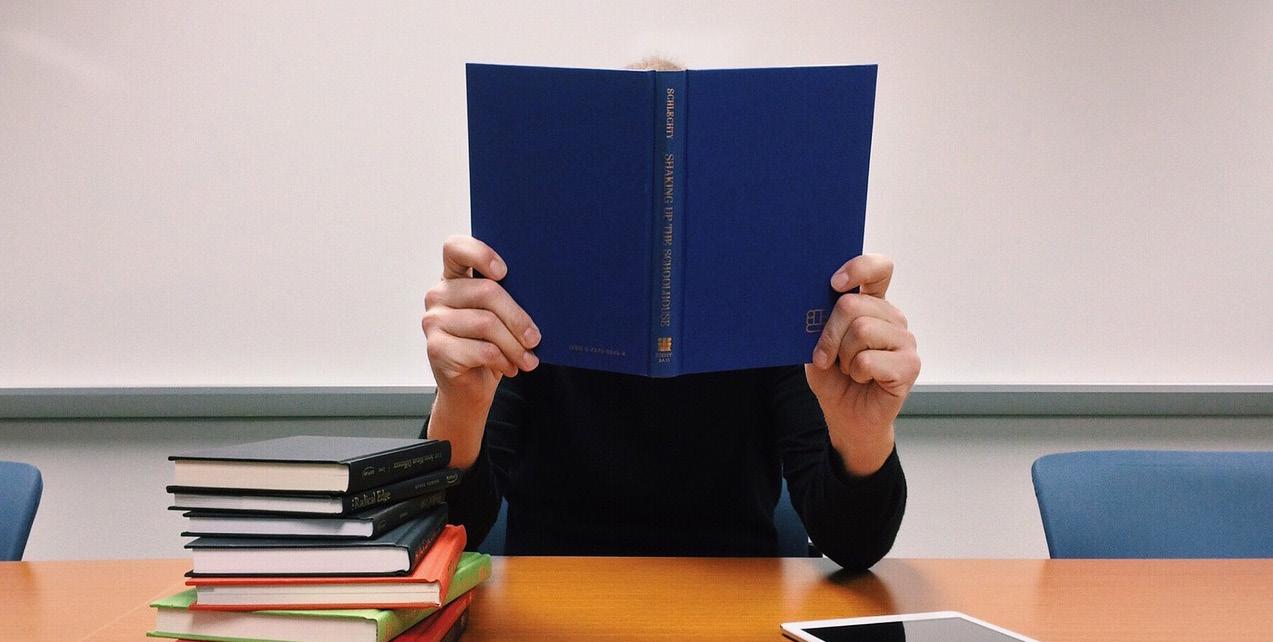
Students should take care of themselves. Studying is often looked at as this great and scary task looming over them. But it doesn’t have to be that way. Studying can be fun, and it should be—because it is making each student smarter, every day. Get plenty of sleep, drink a lot of water and eat often enough to have the energy to get through those long study days.
“Make sure you’re well-rested before studying and before test days. Being well-rested is a proven factor in higher test scores,” Christy Johnson, a site administrator from Whiz Kids in Oklahoma and author of Love Junkies, said. She provided a few handy study tips for college students preparing for finals. “If you’re a visual learner, take lots of notes. If you are more of an auditory learner, record lectures,” she said. Know What Works for You
Students who aren’t quite sure what kind of learners they are can visit the Rose State College Student Success Center for an assessment of student learning styles.
“Stay organized in college. Often, it becomes
an easy habit of stuffing homework in your backpack or all into one folder, but don’t do it. Be sure to keep your classwork and notes organized to make it easier on yourself, when you go to study,” Johnson said. “My ideal study space is at my desk where I can concentrate, completely quiet,” she said.
She also said it is very important to set aside study days ahead of time so students aren’t stressing out at the last minute. For students who don’t quite grasp the material they’re studying, tutoring services are available in the Rose State College Student Success Center, as are studying and skills workshops throughout each semester.
Students should find out what kind of learners they are and how they do their best studying. They should figure out their ideal study space where they can effectively retain the material they study. There are all sorts of ways to study and different habits can be formed to ensure that students are doing their best to succeed. Rose State offers many different resources and services to currently enrolled students.
“What are your plans after graduating from RSC?”
By Ashley Fansler
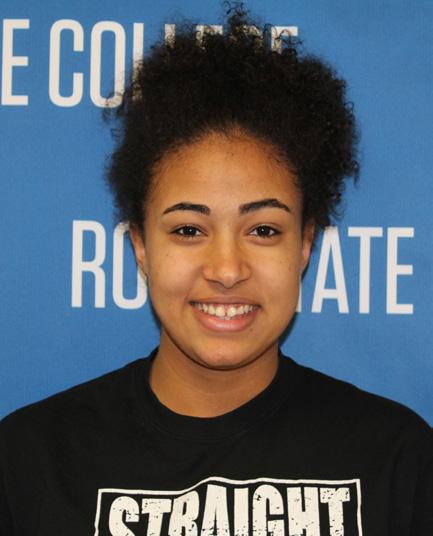

Jacob Slayter Accounting
“I just got accepted at UCO’s nursing program and plan on getting my bachelor’s and master’s degree there. After UCO I want to be an ER nurse and then a traveling nurse.”
“I plan to attend Oklahoma State University for three more years to receive my master’s and take the CPA exam. I also plan to continue playing soccer through intramurals.”

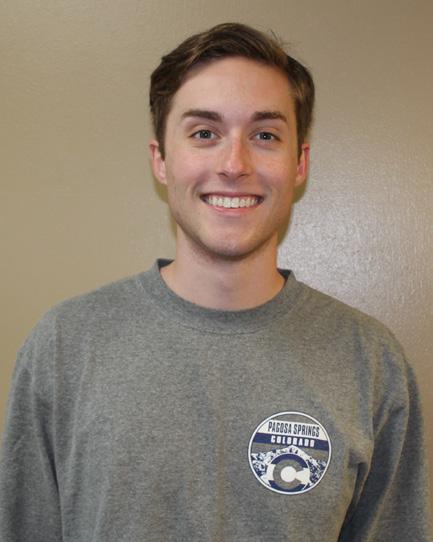
“Get my master’s in kinesiology while building a personal trainer clientele and hopefully my own physical therapy clinic once I get my Ph.D.”
“I plan to attend UCO in the fall and attain by bachelor’s in finance. After I receive my bachelor’s degree, I plan to pursue my MBA.”
By Carlos Salinas William Washington Multimedia Editor & Assistant Editor
Members of the Trump Administration, including Administrator of Environmental Protection Agency and Oklahoma’s own Scott Pruitt, have debated climate changes existence. However, scientists claim climate change is a real and tangible natural event, and humans have accelerated the “greenhouse effect” due to human expansion. Greenhouse effect is a term used when the heat radiating from Earth toward space is trapped in the atmosphere, according to nasa.gov when referring to “Global Climate Change.”
“Most scientists would agree that humans are at least partially responsible for accelerating climate change,” Professor of Geology Eric Johnson said. “While there is little debate about the significance of our contributions and the long-term implications of them, for the most part, scientists have reached a consensus about our role in modern climate change.”
Whether it’s caused from the pollution of water, the littering of trash in nature or the fumes from a car or factory, humans are affecting the environment. With Arbor Day on April 28, the environment’s significance becomes even more apparent in terms of the atmosphere and the air humans breathe. Oxygen is provided from trees. Mammals
breathe in oxygen and breathe out carbon dioxide, which trees use to produce more oxygen. Putting it simply, without trees life would not be possible.
March 18 to April 16 marked the 2017 National Cherry Blossom Festival in Washington, D.C. People from all over the world celebrate around the Washington Monument, Warner Theatre, Ronald Reagan Building and International Trade Center and the Titanic Memorial.
In 1910, Tokyo’s mayor, Yukio Ozaki, presented 2,000 trees as a gift to the United States. The original trees became diseased and Former President William H. Taft burned the trees down to prevent further spread. Then, two years later, as a sign of deep commitment to the friendship, the U.S. received more than 3,000 trees from their ally.
“This is a time of year when we have people coming focused on a natural resource. These trees are greatly valued because they are a wonderful symbol of friendship between nations,” said Dorene Ruffing, National Parks Service Interpretive Ranger.
The festival is a large part of the capital’s culture and economy. Diana Mayhew, President of the National Cherry Blossom Festival said, “annually the festival attracts about 1.5 million people. It’s estimated from the visitors who attend the National Cherry Blossom Festival that they put in about $150 million worth of economic impact to this area.”
The evening of March 13 and morning of March 14, Washington, D.C. received around three inches of snow across the city. The
White House received 2.5 inches, while the National Zoo recorded 3.1 inches. This late freeze damaged the cherry blossoms.
About half of the blossoms were reported to have survived the freeze, the rest wilted and died off. Though humans have caused problems with the cherry blossoms indirectly, they have directly caused damage to forestry in another area of the world by the deforestation of the Amazon Rainforest.
The Amazon Rainforest is arguably the most important area of rainforest or forest in the entire world, as it produces 20 percent of the world’s oxygen supply.
According to Phys.org, the consequences for illegally logging in the Amazon is a fine of only about $4,207. However, fines have a minimum of $980 and a maximum of $48,181. Illegal mahogany logging can bring in up to $1,600 per log. If each log is sold at $1,600, they need only sell three to have cleared the median fine for illegal logging. Imprisonment for illegal logging is no more than two years, while hearings are being conducted. Currently, enforcement for these actions do not outweigh the potential benefit of illegal logging.
Although April 28 is a day reserved to plant and care for trees, that does not mean it is the only day to plant and care for trees. Most trees should be planted in early spring or in the autumn in Oklahoma, according to the Arbor Foundation. The Foundation also offers 10 free trees to anyone who becomes a member. Membership is $10 a year.
For more information or to become a member and receive free trees, visit arborday.org.




By Kat Tabak Circulation Manager
Rose State is planning its next bus trip this semester to Crystal Bridge Museum for the Passport to Learning program. The trip will be Saturday, April 22.
This will be the third time Rose State has made the trip to Crystal Bridge. Last year, 45 students attended the trip.
Those interested in going on the trip should enroll as soon as possible to be able to attend, as there are already quite a few students planning the bus trip.
Students are not the only ones who are allowed to go on this trip. Friends and family, as well as anyone interested can join the Passport to Learning program. However, there is a difference in tuition. The program costs $40 for students and $60 for non-students. There is no admission fee for the Crystal Bridge Museum. Attendees can view any of the permanent exhibits. Some special displays do have an additional fee.
Those who take part in the Crystal Bridge trip will also have the opportunity to see Frank Lloyd Wright’s house. While general admission is free, those who are interested in seeing this must schedule admission before the trip takes places. Guided tours are also offered to visit Wright’s house. The guided tours are an additional $10.
The Crystal Bridge Museum will be a full day trip. Thus, those who are going to be going on the trip will want to take that into
consideration as to what they wish to bring with them and how they want to dress.
The bus will be parked at the Community Learning Center and will depart Rose State by 7:45 a.m. on the April 22. Attendees are advised to arrive at least 15 to 20 minutes early in order to make sure everyone is seated by the time the bus leaves.
The bus is expected to arrive at Crystal Bridge, Arkansas, by noon. Students will have free time from noon until 2 p.m. to either eat or explore the area near the museum.
Food is not prepaid, so passengers either have the option of bringing their own lunches or they can chose to eat at the museum café or a of the restaurants nearby.
“While art is definitely the focus at Crystal Bridges, it also has activities as well as a beautiful landscape with peaceful walking paths surrounding the museum,” Humanities Professor Lori Morrow said.
The museum itself is located on 120 acres that provides visitors with both walking trails and outdoor works of art that can be viewed.
The guided tour for the museum is from 2 to 3 p.m. and afterward there will be a chance for more free time to look around the museum more or to stop by the gift shop.
By half past 4 p.m., the trip back to Rose State will start, with a stop being made in Van Buren for dinner before reaching Rose State by 9:30 p.m.
For more information or to enroll in the trip, contact Professor Sherri Mussatto at smussatto@rose.edu or 733-7503, or Professor Lori Morrow at lmorrow@rose.edu or 7337507.
Are you missing a pet? Oklahoma City Welfare has partnered with the 15th Street News to reunite owners with their lost pets or for adoption purposes. If you recognize a pet, contact OKC Animal Welfare at 297-3100 or awinfo@okc.gov. Visit the shelter at 2811 SE 29th, OKC, OK.
Photos Courtesy of Oklahoma City Animal Welfare



By Toni Ross News Editor
Photographer Stephen Shore once said, “If you see one person with autism, you’ve seen one person with autism.”
World Autism Awareness Day was recognized April 2. For those affected by autism, this day was not about special events, statistics or even what the public associates with autism awareness.
In an interview with Rene’ Daman, co-director of the Oklahoma Autism Network, an organization that works to research and educate the community about autism, she described Autism Awareness Day as an opportunity for families, organizations and professionals to broaden the public’s understanding when they are actively seeking information.
Autism is often categorized as a disorder that is the same for everyone who identifies with it, similar to traditional mental disorders. That idea is not accurate. Autism works like a personality, it’s individualized and different for everyone. Autism spectrum disorder (ASD) cases can range from mild to severe, and so many levels in between. This is an important characteristic to know when referring to the disorder.
Susan Dawson-O’Brien, former Rose State Mass Communication Professor and author of the blog “Adventures in Autismland,” writes honestly about the real lifestyle that comes with her son’s case of autism.
Dawson-O’Brien explained that her experience with autism as a parent is not like a TV show. Her son, referred to as nickname “S-man,” was diagnosed with autism when he was around 2 years old, in the early 2000s. The resources available with autism at that time were not as accessible as today. This made it harder for the family to find a specialist in the disability to get the correct information and tools. Since autism awareness is more prevalent in today’s society and there is no known cure, family members are encouraged to look for signs in children at a young age. If diagnosed, the family is encouraged to seek early intervention programs. These programs typically include speech therapy and applied behavioral analysis (ABA) therapy.
According to Dawson-O’Brien, S-man’s “flavor” of autism is classified as non-verbal, although he verbally approximates a handful of words, such as “dah-yee” (daddy) and “pee-zah” (pizza). S-man was raised in Oklahoma until the family’s move in August 2015. Before the move, the family found ways to accommodate his environmental needs, so they implemented therapeutic instruments in their home in the hopes of increasing S-man’s functionality.
“We turned our enclosed porch ... into a therapy room for him, with a variety of sensory-oriented activities, oversized foam “cloud” to lie on, swing mounted into the ceiling with a variety of swing options, platform, sling or cocoon. We had both in-home speech and occupational therapy, often at our own expense,” she said. “We took him to play therapy at a local speech and occupational therapy office, only partially covered by insurance. We took him to countless doctors,
therapists and evaluators trying to find answers to his unique needs. We and our family, have spent countless dollars on all sorts of toys and therapy items in the hopes that they would help unlock his ability to communicate and engage in typical play activities.”
Children and adults like S-man require the right type of care to have the opportunity to succeed. Just like every other child, school is vital for those on the spectrum.
After attending public school in Oklahoma’s metro-city district, S-man and his family quickly realized his needs could not be met in a general special needs classroom. He needed an individualized education plan, behavior management and curriculum geared toward autism.
During this time, there were centers in Oklahoma that worked with autism behaviors, but were only short-term programs. Although, the school administration did not believe he needed any more specialized education.
Dawson-O’Brien explained how they exhausted personal funding to send him to a day and residential school in Wichita that provides students with education, residential living, psychological and medical care, as well as speech and occupational therapy. He attended the school for five years and, according to Dawson-O’Brien, made great progress from the therapy and treatment he was provided. In the fifth year, the personal funding ran out. They weighed all of their options to provide funding to keep him there, and even reached out to the school district he previously attended in Oklahoma - explaining his progress, but they declined. They were faced
with the realization that they could no longer afford to send him to the residential school, so the O’Briens moved to Kansas so he could attend a different specialized day school.
“We were never going to be able to get what our son needed in Oklahoma,” she said.
When they were living in Oklahoma, the nearest day schools designed for students with intensive-based autism care and curriculum were in Dallas or Kansas. The O’Briens uprooted themselves from the closeness of family, friends, co-workers and careers. She described how this move was hard on the family. They did not want to leave their home, but it was what was best for her son.
“If there would have been a school in Oklahoma, we would have stayed,” Dawson-O’Brien said.
During the time since the family moved, S-man has worked to transition into adulthood and his first group home. Dawson-O’Brien said that the family is happy where he’s at now, “it has so much promise for his adult life.”
“In reality, most of us spend our days planning, advocating, juggling, surviving and loving our children, on too much caffeine and too little sleep. That doesn’t exactly make a great plot for a TV sitcom or film. But I think that we, as parents, are always grateful for all things that raise autism awareness, whether they reflect our families or not. It reminds us that we are not alone on our journey,” Dawson-O’Brien said.
Autism is more than a disorder, it is a lifestyle. Use this month to advocate for those navigating the world of Autismland.

By Toni Ross News Editor
A gift that many writers possess is the ability to allow readers into the mind of their own. A good writer can make their reader feel what they felt, visualize what they saw, hear what they heard and somehow be able to relate their lives to the writer’s works.
Upon attending the 29th year of Poetry at Rose, audience members had that experience as listeners. The poets who participated showcased the best of their own poetry. The poets consisted of students and faculty - all of which were published in the Rose State Spring 2017 edition of “ Pegasus .” The reading welcomed guest poet Alan Bezecka, poet laureate of Corpus Christi, Texas. The event took place in the Atkinson Theatre March 3.
The night also unveiled “ Pegasus” Spring 2017. “ Pegasus” is Rose State’s annual publication of art, fiction, photography and poetry created by Rose State students, faculty and staff. This year’s edition was dedicated to Rose State Regent Betty J.C. Wright. Wright has served on the Board of Regents for 25 years.
Carl Sennhenn, adjunct humanities professor and Oklahoma Poet Laureate in 2001 and 2002, participated in reading a few of his works this year. Sennhenn has been called one of the originals for Poetry at Rose because he has read in the event every year since it began. This year, he was the last of

the originals to participate. In an interview with Sennhenn, he mentioned how Poetry at Rose has been very popular even since the first year when they had standing room only in the Atkinson Theatre.
“I’m very appreciative for the opportunity that Poetry at Rose gives ... It’s fine to write but it’s better to have an audience [and] even when you’re published that audience is far removed. With Poetry at Rose you get immediate feedback,” Sennhenn said.
The reading was free and welcomed all ages. People were encouraged to come whether they had knowledge in poetry or not. The guests received a free copy of the new edition of “ Pegasus” and were provided with appetizers and drinks. First-time audience members were impressed with their experience. One student explained how she
was excited to understand the writer’s poetry in more depth.
“My favorite was listening to the poets read their own poetry so that I could hear their attitude and expression behind the words. It helped the poetry make more sense to me,” Kathy Davis, Rose State digital graphic design major, said.
Davis was featured in the this year’s edition of “Pegasus” for her photography.
The reading allowed listeners to experience a variety of different poets. Each poet had a sense of personality that was expressed in their poetry, ranging from melancholy to humorous and everything in between.
If interested in the poetry featured at Poetry at Rose, pick up a copy of the Spring 2017 edition of “Pegasus” at the Humanities Division office. Copies are available for $3.
By Bella Kok Staff Writer
On the morning of April 19, 1995, the largest act of domestic terrorism on American soil took place. The beautiful blue skies were quickly filled with the black smoke coming from the Alfred P. Murrah Federal Building. A fertilizer truck bomb went off, killing 168 people at 9:02 that morning. This year, marks 22 years since that fateful day. After all of these years, a movie called, “Beauty For Ashes” is in the production stage.
“Beauty for Ashes” is a movie that tells the story of four people who were greatly impacted by the bombing. The stories include a mother who fought for the passing of three laws, which aim to make the world a safer place in honor of her daughter who perished in the bombing, a firefighter and his battle with PTSD, a doctor at the time of the bombing who went back to school to become a lawyer to help people and their fight with insurance companies and a
woman who lost half her leg in the bombing. These touching experiences tell the story of the Oklahoma City bombing.
Princella Smith, the screenwriter of “Beauty for Ashes,” explained her reasoning for making this film.
“I hosted a radio show in Arkansas for a few years. In 2015, I interviewed someone about their experience of losing a loved one in the Oklahoma City Bombing. We ended up speaking more and more about her experience, and then one day, I thought: “America needs to know about the backstories of the bombing,” she said.
“This isn’t a ‘terrorism film,’ and it is not an ‘action film.’ We really dug deep into personal stories and more so the aftermath of the bombing in order to give people a real glimpse of the heart of the situation.”
The movie focuses on the good things that came out of the bombing, with Smith’s primary inspiration for this film being God. She said the title of the film, “Beauty for Ashes,” came from Isaiah 62:3. Smith wanted to show how these four individuals, as well as many others, took a horrible event and did amazing things.
Smith explained the process she went through when deciding whose stories to tell.
“The stories we highlight have the common theme of regular ‘everyday Americans’ who were just trying to live, work and raise their families when the most unspeakable horror shattered their worlds,” she said. “Each of these people found ways to overcome their tragedies and even make the world around them better. I was incredibly moved and in awe of their [ability] to do this. These people don’t wear a cape and tights, but they are American heroes.”
The movie is already becoming a success. A recent announcement revealed the movie’s script was one of the top three out of 1,300 entries in the Nashville Film Festival. The Nashville Film Festival is one of the biggest film festivals in the world. The winner will be announced within the next month. The movie is set to start filming in the fall of 2017.
For more information on the movie and to view the teaser trailer, visit beautyforashesmovie.com, the movie’s official website or like their page on Facebook to receive regular updates on the movie’s progress.
By Mina Onar Features Editor
There is wide participation in the Islamic State of Iraq and Levant, or commonly known as the Islamic State of Iraq and Syria, from various countries around the world, including Western countries. They abandon their civil conditions, their social status, their families, their jobs, their schools and their homeland to join the jihadist terror organization known as ISIS or ISIL.
“They do not view it the same way as we do. They do not view it as ‘leaving’ civil conditions. They see it as fulfilling obligations to their people, their communities and their faith,” said Tara Kay Hall, professor of Sociology at Rose State.
The number of members is not fully known, though intelligence officers estimate that around 30,000 people fight in the ISIS ranks in various countries, particularly Iraq and Syria. Some of the foreign fighters participating in ISIS have received radical Islam-based education, but some do not even have the basic knowledge of Islam.
Scientists are studying the behavior of foreign fighters participating in ISIS. They are investigating the psychological and sociological reasons why they join, trying to profile the most deadly terrorist organization in history.
According to terrorism researchers, the most important reason that lies behind the desire of joining ISIS, whether or not their beliefs are common, is that the fighters see the world as a place of unrest. These people are told it is impossible to change the way the world is headed, so they need to make a sacrifice. The best and only way for them to make a sacrifice is to die for virtue and honesty. This frame of mind has been taken from the views of many people who have been part of terrorist groups. Terrorists who believe they are going to make the world a better place are mostly young adults. It is easy to reach people who have psychological and sociological issues through social media and they are told that the only way to fix their problems is to fight for the bigger problems.
“There is some discussion about the altruistic nature of those who select this path. They truly believe that the society’s, or in this case the religion’s, goals are far more important than their
own personal goals,” Hall said. “It is a deeply held belief that they are doing this for the greater good and that it is the sacrifice that they must make. That is a belief that is less common among western cultures than in eastern and middle-eastern cultures.”
Two British jihadists were identified on the Internet as having received books titled “The Koran for Dummies” and “Islam for Dummies.” It was obvious that some individuals decide to join such terror organizations with little or no Islamic knowledge.
“I would argue that they know it very well in most cases, it is that they know a radicalized version of it. Just as we see with any world religion, there are multiple versions of interpretations,” Hall said.
Those who pursue this kind of search have the need to feel important and to be a part of a whole. People who consider joining ISIS, or people who have already joined, tend to believe life is either black or white, and there is either right or wrong. They consider this system of thought as “consistency,” so they think they need to show the same consistency while they plan their attacks. They separate the right from the wrong a certain way, so it is clear that to become an ISIS fighter is beyond cultural and religious background.
In the fall of 2016, two men from Milwaukee, Jason Ludke and Yosvany Padilla-Conde, were busted for trying to join ISIS by traveling through Mexico to get to Syria. Their plan was to obtain passports for Arab countries in Mexico and then travel to Yemen where they would study Arabic. They would then travel on to Syria where they would join “the path of truth” by fighting the “infidels.”
Ludke, who converted to Islam in 2003, was the most insistent on traveling to Syria. Padilla-Conde, in fact, told agents he tried to talk his friend out of the idea, but finally agreed to travel after losing his job and facing eviction from his apartment. Ludke is a registered sex offender following a 2002 conviction for second-degree sexual assault of a child.
Even though Ludke and Padilla-Conde failed when they attempted to travel to Islamic lands, about 150 fighters from the United States entered Syria or Iraq and are either fighting for the
Islamic State or were killed in battle.
Nick Rasmussen, the Chief of the National Counterterrorism Center, said “the rate of foreign fighter travel to Syria is without precedent, for exceeding the rate of foreigners who went to wage jihad in Afghanistan, Pakistan, Iraq, Yemen or Somalia at any other point in the past 20 years.”
Rasid Tugral, who was a Turkish physician, graduated from the Middle East Technical University (METU) which is one of the top universities of the country, joined the Islamic State after he dropped out of graduate school. He was pursuing his master’s degree in physics in Finland. His friends described him as a genius student with religious beliefs, but they said he started to become more radicalized toward the end of his undergraduate studies. Tugral traveled back to Turkey from Finland to illegally cross the Syrian border with many other foreign fighters. Tugral started to write a 14-page letter. In his letter he wrote about the life inside the Islamic State and their ideology. He was proud of his “brothers” and what they do to enemies. He basically refers to everyone but them as enemies, and supported the inhumane actions of ISIS such as beheading civilians or selling women as sex slaves.
“Our actions target our enemies to frightened them. It is the best way to punish people who are the slaves of the United States and people who refuse sharia,” Tugral wrote.
He was 27 years old when he died while fighting the Kurdish in Raqqa, Syria.
“Maybe it feeds into and explains all of the issues that they have faced in their past. Perhaps it is because these organizations have charismatic leaders that are capable of convincing individuals,” Hall added.
In his letter, Tugral also wrote that he met a man who had been a professional kick-boxer from Germany, a mechanical engineer from Bangladesh, a British man who brought along his son and another man who paid $15,000 to travel from China to Syria. The reasons behind the fighters’ decision to join ISIS are considered as the lack of knowledge of the religion of Islam and to become a useful Muslim, but they will never be considered as a true Muslim or good people. The fighters of the Islamic state are terrorists and an inaccurate representation of standard Muslim people.
April 11
Baseball Game (away) RSC vs Oklahoma Christian JV
April 13
Softball game (home) RSC vs Western
April 18-21
Earth Day Presentations Sponsored by the PASA
April 22
Baseball game (home) RSC vs NEO
April 25
Baseball Game (away) RSC vs Redlands
April 29
Baseball Game (away) RSC vs Arkansas Baptist
May 4
Baseball Game (away) RSC vs Seminole
April 13
Faculty Recital
Hudiburg Center 7 p.m.
April 15
Baseball Game (home) RSC vs Eastern
April 20
Student Art Show
Hudiburg Center 4 p.m. to 6 p.m.
April 22
Softball game (home) RSC vs Seminole
April 25
student Recitals
Hudiburg Center, Room 128 3:30 p.m.
May 2
Wind Ensemble Concert
Hudiburg Center, room 128 7:30 p.m.
May 4
Instrumental Concert
Hudiburg Center, room 128 7 p.m.
April 13
Baseball Game (away) RSC vs Eastern
April 16
Easter Sunday Learning Resources Center will be closed.
April 20
Baseball Game (away) RSC vs NEO
April 24
Choral/Vocal Concert
Hudiburg Center Lobby 7 p.m.
April 28
Baseball Game (away) RSC vs Arkansas Baptist May 2
Baseball Game (away) RSC vs Cowley County
May 5
RSC Graduation Ceremonies Contact graduation services for details
Editor-in-Chief, Graphic Artist
Michelle Rojano
Assistant Editor
William Washington
Chief Photographer
Cassandra Hernandez
Features Editor
Mina Onar
Multimedia Editor
Carlos Salinas
Circulation Manager
Kat Tabak
News Editor
Toni Ross
Sports Photographer
Alexis Harris
Staff Writer
Marshall Niles
Hana’ Ahmad-Coleman
Payton Hayes
Emily Siddiqui
Bella Kok
Adviser
Darcy Delaney
Stevens
The 15th Street News welcomes and encourages letters to the editor. Letters should be a maximum of 300 words and are subject to editing for obscenity, clarity and space. Submissions must include name, major and phone number. 15th Street News reserves the right to not publish submitted letters.
Letters to the editor may be hand-delivered to FA110.
The 15th Street News is published monthly and is a designated public forum. Student editors have the authority to make all content decisions without censorship or advance approval. Columns, commentaries and letters to the editor are personal opinions of the writers and do not necessarily reflect the views of 15th Street News or other students, faculty or administrators of the college.
Anyone having a complaint may contact the Editor-in-Chief, 733-7400.
15th Street News is a member of OCMA, OPA, ACP, Great Plains Journalism Association, and the Society of Professional Journalists.
This publication is printed by the Edmond Sun, issued by RSC and authorized by the Advisor of Student Publications.
RSC in compliance with Titles VI and VII of the Civil Rights Act of 1964, as amended, Executive Order 11246, as amended, Title IX of the Education Amendments of 1972, Americans with Disabilities Act of 1990 and other federal laws and regulations does not discriminate on the basis of race, color, sex, age, national origin, religion, disability, sexual orientation or status as a veteran in any of its policies, practices or procedures.
This includes, but is not limited to, admissions, employment, financial aid and educational services.