
Basketball program dunked
Andrew Knittle News Editor
Newly-signed Raiders hit revolving door
After the conclusion of the 2006-2007 season, men’s and women’s basketball will no longer be played at RSC and the cheerleading program will end.
The fate of the programs was decided at the joint meeting of the RSC Board of Regents and Board of Trustees’ March 23 session, held in the Regents’ Conference Room.
According to Dean of Student Life Dr. Jay Kinzer, eliminating particular programs is nothing out of the ordinary at RSC.
“In order to provide students with the best possible programs, those programs must be continually evaluated,” Kinzer said.
“They must then be changed, deleted and/or replaced according to the outcomes of the evaluations. As the needs of the student body change, so must our programs.”
Kinzer said the annual cost of maintaining the basketball program – financed by the student activity fund – is around $250,000. That covers scholarships, team travel, coaches salaries and other staff, program-related supplies and uniforms for players.
The demise of the basketball program should translate into new programs at RSC. According to Kinzer, that may or may not be the case.
“Next year we will experience a decrease in student activity funds, so $250,000 will not necessarily be available,” Kinzer said.
“However, there should be enough money available to allow the college to offer
new programs that will positively impact the lives of many more [RSC] students and constituents than does our current program.”
In fact, RSC has already formed a group to figure how to use the
money. “A committee has been formed and charged with responsibility of identifying student needs and making recommendations regarding the new programs,” Kinzer said. Although it is unclear what will
come from the cancellation of the programs, Kinzer sees the shortterm future as a period of change and adjustment.
“The coming year will be a transitional year through which the basketball program will continue and the athletic scholarships will be honored,” he said. “At
Graduates plan to feed, teach local youth through donations
America.
Project Graduation is a national service program that combines the food and book contributions of students, club members and the community with commencement exercises


in May.
Students involved in campus activities – such as Project Graduation – benefit from the skills and experiences they acquire, as do the recipients of their giving.
Project Graduation began in 2002 and has since donated more than 220,000 food items and 190,000 books to various relief agencies, literacy organizations and schools.
“We are coordinating with some of the area schoolsSooner Rose Elementary, Midwest City High School, Harrah High School and Choctaw High School are some that we have so far - and some community businesses to fight two of America’s largest social problems - hunger and illiteracy,” Angie Rasberry, vice president of service with PTK, said.
Donation boxes have been placed in many of the buildings on campus like the Learning Resources Center, Student Center, Administration building and Social Sciences building, as well as in local schools.
The large number of donation sites are part of the effort to make sharing books and food easy for students, faculty, staff and community members.
“Usually people give a lot and volunteer the most at holidays,” Rasberry said. “As a result, most service agencies are hurting and depleted by summer.

This is a way that RSC can partner with the community to help fill in the gap.”
Collections began Monday, April 12 and will continue throughout the evening of graduation.
Graduates, their families and friends may bring the nonperishable food items and adult or children’s books prior to or on the day of commencement exercises.
Graduation is scheduled for Friday, May 5 in the Communications Center.
Collected donations will be given to local organizations and to the adopted elementary schools Telstar and Willow Brook.
Nonperishable foods suggested are canned goods such as vegetables, fruits, soups, canned meats and beans, cereals, rice, powdered milk and other commonly used foods that have a long shelf life.
Phi Theta Kappa was founded in 1918 and serves more than 1,000 two-year colleges around the globe.
Their efforts benefit others around the world through chapters located in places such as Canada and Germany, along with those in all 50 states.
For more information about PTK or donations for Project Graduation, contact Angie Rasberry by calling 413-5149. jray@rose.edu
the end of that time, new programs will be implemented that will better serve the needs of the student body. Until the specifics of these new programs are identified, including personnel needs, we will not know the effects of the changes on current staff.” aknittle@rose.edu
Tuition fee limits among topics to be discussed
Andrew Knittle News Editor Students who want to witness firsthand just how it is that tuition and fees get raised in Oklahoma’s institutes of higher learning would be well advised to attend the Oklahoma State Regents for Higher Education’s upcoming hearing.
The April 27 hearing, which is open to the public, including students, will begin at 11:30 a.m. in the Regents’ Conference Room, located at 655 Research Parkway, Suite 200 in Oklahoma City.
According to a release by Chancellor Paul Risser, the three topics up for discussion and analysis are: tuition and mandatory fee limits for undergraduate and graduate programs, tuition and mandatory fee limits for professional programs and academic service fee proposals.
While the first two are apparent and need little explanation, academic service fees refer to the cost of the use of the school’s equipment in such classes as photography, biology and any class where use of the institution’s facilities is required to successfully complete the course. In his release, Risser states that the Regents will take action on the aforementioned items at the board’s June 29 meeting.
To attend, call 225-9120 by 5 p.m. April 21 to notify the organizers of the hearing of their intentions.
For more information about fees and tuition costs in Oklahoma’s public universities and colleges, visit www.okhighered.org. aknittle@rose.edu

Springfest provides students, like Daniel McClure and Baine Hadick, a short break from classes and a way to test their strength and balance.
Campus celebrates semester, holds 1st Rose State Idol, entertains student guests
Johnna Ray
Assistant Editor
Students, faculty and staff were treated to an end-of-the-year celebration, Springfest, on Wednesday, April 19 and Thursday, April 20.
Free pizza, soft drinks and live entertainment were provided on the Campus Mall, with additional food and drink available in front of the Health and Environmental Sciences building.
Minutes Too Far, an Indie power-pop band from Oklahoma City, performed at the stage located between the Fine Arts building and the gymnasium. Their first nationally released CD, “Let it Roll,” will be available in stores Tuesday, July 25. The band is scheduled to perform at the Conservatory on 89th and Western Friday, May 26.
Chairs, tents and other items were set up the night before in preparation of the event.
A two-lane bungee inflatable, various club booths, Frisbee golf and volleyball were also available.
Rose State Idol auditions were held on the Campus Mall the first day of the event. As of this publication, the results of the Idol contest, held April 20, were not yet known.
Look for Idol winners and a complete recap of Springfest, including pictures of the event, in the April 28 issue of the 15th Street News. To learn more about Minutes Too Far, visit their Web site at www.minutestoofar.com.
jray@rose.edu

Johnna Ray Assistant Editor Alpha Etta Alpha, the Phi Theta Kappa Honor Society chapter at RSC, has organized a project to promote both healthy eating and literacy in
A two-lane bungee jump at
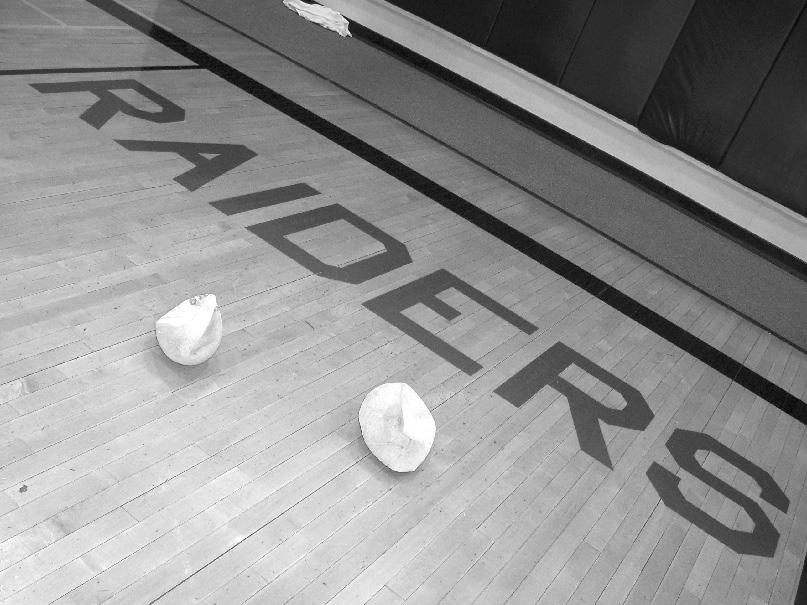
Newly-signed basketball players are discovering, only days after signing contracts, that Regents have decided to cut their program following the 2006-2007 season. Once the program has ended, the gymnasium will remain open for students and faculty.
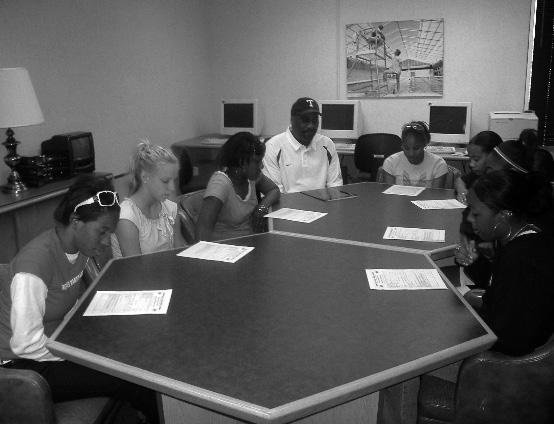
Vice president Angie Rasberry and other Phi Theta Kappa members accept donations of books and food to benefit Oklahomans.
Photo by STACEY McENTIRE
Photo by JOSH CARRASQUILLO
Photo by STACEY McENTIRE
Photo by STACEY McENTIRE
There will be a resume writing workshop held that afternoon in SS227. For more information, contact Monique Bruner at mbruner@rose.edu.
Dianetics Workshop
A workshop on L. Ron Hubbard’s “Dianetics, the Modern Science of Mental Health,” will be offered from 1-5 p.m. Saturday, May 6 at the Warr Acres Community Center. Cost for the event and a copy of the book will be $15. Refreshments will be served. The community center is located at 4301 N. Ann Arbor Ave. To reserve a place, send a check for the cost of the event to Janet Stein, P.O. Box 32604, Oklahoma City, OK 73123.
Summer GED Prep Courses
Several four-week GED preparation courses will be offered at RSC from a cost of $5. Enrollment for the courses began April 3. The first session will take place from 6-9 p.m. Tuesdays and Thursdays May 23-June 15. The second session will take place from 6-9 p.m. Tuesdays and Thursdays July 11-Aug. 3. RSC also offers GED preparation during the fall and spring semesters in 16-week session format. To enroll or for more information, call 733-7392 or visit the Continuing Education Office in the Tom Steed Center at 6191 Tinker Diagonal. Payment is expected at the time of enrollment. All materials are provided free to students.
Dental Hygiene Program Seeks Patients
The 2006 graduates of the RSC Dental Hygiene Program are in search of patients who will qualify for their regional clinical board exam. The board exam for state licensure consists of an approximately four-hour time commitment by the patient to have their teeth cleaned on either June 10, June 11 or June 12. Patients must be at least 18 years old and their last teeth cleaning must have happened at least three years ago. There will be no cost to the patient. If interested, call 733-7337.
Shannon Hoverson Assignment Editor
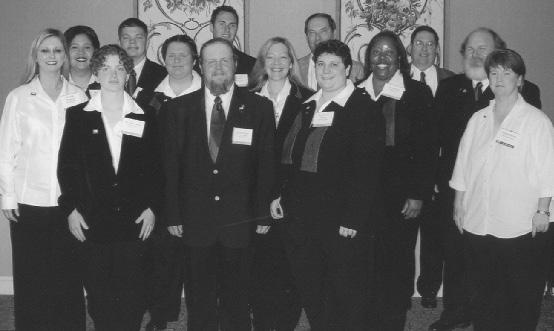
The RSC Students in Free Enterprise team attended the 2006 Regional SIFE Competition in Memphis April 6. The 10 students and four advisers who were in attendance at the competition were Sarah Salmon, Hedi Chapman, Jill Evans, David Eble, Brenda Kalbert, Janie Mahan, Dara Hays,
Shannon Hoverson Assignment Editor
The Friends of the RSC Library Club hosted a poetry reading by professor Carl Sennhenn in the Learning Resources Center Wednesday, April 19. Sennhenn read selections from his new book “Travels Through Enchanted Woods.”
Some of the poems he read were “That Kind of Summer Noon,” “Traveler from the Enchanted Wood,” and “Gestures.”
The event was attended by several from the faculty, staff
Joyce Hinton, Arlene Haynes, Austin Hays, Kevin Brokish, Gary Murray, Art Zenner and Rodney Holden.
The team won four awards and competed against three other colleges in their league. Of the six individual topics, the RSC team won three. They also won first runner-up in their league.
SIFE is a global non-profit organization that is working
and students in the reference area of the LRC where refreshments were served after the event.
“Sometimes one writes poems in at least pseudo or mainly only ersatz philosophical vein and I think this is one of those,” Sennhenn said of his poem “Nothing Empty.”
Sennhenn ended with a poem called “I Leave No Mark” that was also the last poem in his book “hoping that it’s an ironic comment on the book.”
Sennhenn also had his autographed books available for
on changing the world through highly dedicated student teams on more than 1,600 university campuses in 40 countries.
The RSC chapter of SIFE was established about five years ago and has been a vital part of the campus since.
Students in this club are given the opportunity to develop leadership, teamwork and communication skills by learning,
purchase after the event for his fans.
Professors Michael Lovegood and Craig White also spoke of their latest accomplishments at the event.
Lovegood recently had an article published in the Chickasaw History and Culture Journal and White will have one of his compositions featured in an upcoming movie scheduled for release sometime this year.
For more information or to purchase Sennhenn’s book, call 733-7512. shoverson@rose.edu
practicing and teaching the basic principles of free enterprise.
This is done with the hope that they will improve the standard of living for millions of people.
For more information about the club, go the RSC Web site at www.rose.edu and look under student activities for SIFE or go to the SIFE Web site at www. sife.org. shoverson@rose.edu
April raises awareness of animal cruelty prevention
Shannon Hoverson Assignment Editor
The American Society for the Prevention of Cruelty to Animals designated April as Prevention of Animal Cruelty Month.
Being cruel to animals does more than cause other living beings to experience anguish and pain – it can also be an indicator that people are in danger.
“Usually if someone is abusing an animal they are also abusing their children or may in the future,” Kim Bowers, owner of OK Save a Dog Animal Shelter, said. “Mean people are mean to everything, not just their animals.”
Animals experience pain and fear just like people, but often they are helpless in the face of cruelty simply because they cannot say what has happened to them.
Columns, commentaries and letters to the editor are personal opinions of the writers and do not necessarily reflect the views of 15th Street News or other students, faculty or administrators of the college. Editorials are written by the editorial staff.
Letters to the editor may be hand delivered to FA110; sent by mail to 15th Street News, Rose State College, 6420 SE 15, Midwest City, 73110; e-mailed to the secretary, [cbenefee@rose.edu] or recorded nights on PhoneMail at 733-7400 between 8 p.m. and 8 a.m. Letters must include the writer’s full name, Social Security Number or ID number and telephone number. Letters will be printed with full name and must be 500 words or less. Editing may be necessary for space, clarity or to avoid obscenity, libel or invasion of privacy, but ideas will not be altered. Publication of all materials is at the discretion of the editor. Anyone having a complaint may call the editor in chief, 733-7400, or the Student Publications Board chairperson, Towry Barnard, 733-7379.

“Animal cruelty is a national problem,” APCA Supervisory Special Investigator Annemarie Lucas said on the APCA Web site, www.aspca.org.
Animal cruelty can be defined as physical abuse as well as lacking the basic fundamentals needed to survive such as
15th Street News, a student newspaper serving the Rose State College community, is published weekly, except school holidays, on Fridays during the fall and spring semesters by the Office of Student Publications, 6420 SE 15, Midwest City, OK 73110. 15th Street News is a member of Oklahoma Collegiate Press Association, which has designated this paper top junior college newspaper six years, and Associated Collegiate Press, which has rated it All American 30 semesters. This publication is printed by Edmond Sun, Inc., issued by RSC and authorized by the Coordinator of Student Publications. Cost to the state taxpayers is $301.81 for 4,000 copies per issue and $56.40 for spot color. This paper is recyclable. RSC, in compliance with Titles VI and VII of the Civil Rights Act of 1964, as amended, Executive Order 11246, as amended, Title IX of the Education Amendments of 1972, Americans with Disabilities Act of 1990 and other federal laws and regulations, does not discriminate on the basis of race, color, sex, age, national origin, religion, disability, sexual orientation or status as a veteran in any of its policies, practices or procedures.
This includes, but is not limited to admissions, employment, financial aid and educational services.
food, water and shelter.
The best way to overcome animal cruelty is to educate people.
Sowing the seeds of kindness early in life may prevent some cruelty later. Adults also need to become aware of what animal cruelty is and know how
to prevent it.
Many ASPCA chapters throughout the U.S. are promoting Prevention of Animal Cruelty Month. In states that do not have a chapter, the shelters are urging people to become educated about animal cruelty.
According to www.aspca.org, there are three reasons why people abuse animals:
1. Most people do not abuse animals intentionally.
They harm animals because they do not think about or realize what they are doing.
Usually it involves the care of animals, such as correct shelter or space constraints.
2. The next group abuses animals on purpose but they do not do it repeatedly.
These people will throw rocks at a dog or hurt a stray cat.
Often the people in this group are young and do not really un-
Staff Members
derstand that they are hurting the animals.
3. The final group is considered the worst of the offenders because these people intentionally harm animals because they enjoy causing pain and it makes them feel dominant. Fortunately, this group is also the least common.
Animal cruelty can be prevented if more people become aware there is a problem and become educated on how to put a stop to it.
“If everyone would join in, be aware and inform the authorities, people would be less likely to take the risk [of abusing animals],” Bowers said.
For more information about preventing animal cruelty, visit the ASPCA Web site or www.animalabuse.com. shoverson@rose.edu
Photo by ERIN WALTMAN
Photo by JOSH CARRASQUILLO
Photo provided by SIFE
Animals are often silent victims of cruelty and abuse.
Internet predators avoidable
Erin Waltman
Editor in Chief
While I hate repeating what everyone else is already saying, I feel it would be good to address the issue that seems to be in the public eye: safety on the Internet.
Predators now have a simple way to hunt down victims, thanks to the connection the World Wide Web provides. No longer do people need to offer candy to children from vans or pretend their car has broken down and that they need help. The young girls being abducted lately seem to have something in common: MySpace. com, a site that allows members to chat with people near and far about a wide variety of things.
There is nothing wrong with MySpace itself – I use it to keep in touch with friends in other states and to chat with people who have interests similar to my own. A problem arises when people do not
know simple rules of Internet safety.
Rule number one is this: never give out personal information that could lead a predator to you. This means do not use your first and last name together. If your first name is unusual or rare, then go with a nickname – for example, if your name is Tamaralinda, shorten it to “Tammy.”
This also means do not be specific on where you live, especially if you live in a small town like Del City. Saying you live in Oklahoma is fine – saying you live in the brown brick apartments a block away from Quail Springs Mall is not fine.
Rule number two is simply be aware that people are not necessarily who they say they are. I am a 23-year-old woman, but I could easily say I am a 35-yearold man.
With search engines like Google and Yahoo, it is easy to find photos of people who match a certain description and present those to anyone.
Be cautious – a photo and a promise from someone that they are male and 17 does not mean that they are not female and 42.
Rule number three is that even if someone is who they say they are, it does not mean that they are not a threat.
One sad thing about living in the world is that even the most innocent-looking people can be murderers and rapists. Teenage girls can be child predators as easily as a middle-aged man.
The easiest way to safeguard against this is to remember there is no way of knowing if people on the Internet are safe. Make sure personal information is just that: personal. Do not trust anyone to tell the truth online.
Parents: get involved with your children. Find out who their friends are and what information they have shared. It is not impossible to stay safe online and future tragedy is completely avoidable as long as people are cautious and aware. ewaltman@rose.edu

10 best value colleges revealed
Johnna Ray Assistant Editor
The Princeton Review recently released a list and descriptions of what they consider the best-value colleges in America, which students opting to transfer after completion of an associate degree from RSC might find useful.
The University of Oklahoma, located in Norman, Okla. was named as the 10th best value college in the U.S. It was described by the Princeton Review as having recently “elevated its academic status from ‘regional’ to ‘national.’” Further, the review stated that OU “provides need-based assistance to 100 percent of all aid applicants who demonstrate need.”
The University of California, Berkeley, was said to offer a “Saks education at Target prices,” by the review and was listed as the ninth bestvalue college.
A bit closer to Oklahoma
than Berkeley was Texas A&M University, College Station. The review said this eighth-ranked college “offers students a respected degree at an affordable price,” that it makes non-needbased assistance available to all students and described it as “an icon of the Lone Star State.”
The No. 7, Princeton Reviewranked, best-value college was the University of Virginia. This school was described as “one of the premier public universities in the country” and the review stated that it “exerts a tremendous effort to make sure its undergraduates have access to an affordable education.”
The University of North Carolina at Asheville “offers students a private-school educational experience at a public-school price,” the review, who placed it at No. 6, said. Top programs for business, jazz, nursing, nutrition and premed, along with “some of the lowest in-state tuition rates anywhere in the country” were reasons the
review placed the University of North Florida in the No. 5 bestvalue college spot.
Another college close to Oklahoma – located in Missouri – that made the top 10 list was Truman State University. This public liberal arts university was described to offer “one of the nation’s most rigorous and most highly praised liberal arts core curricula.”
California State University, Long Beach, was listed in the top three of all recognized colleges.
“For state residents, the bottom line at Long Beach is about as good as it gets -- tuition is free,” the article by the Princeton Review said. “They pay only $2,864 in fees. And the school does well by students in terms of its academics and diversity, as well.”
National recognition for programs in such fields as architecture, textiles, engineering and agriculture were among the reasons for the selection of North Carolina State University’s placement
as the No. 2 best-value college in the U.S. by the review.
Although the other schools in the nation who made the top 10 list all exhibit value and excellence for students, the 2006 No. 1 best-value college in the U.S., according to the Princeton Review, was New College of Florida. This college is a “public honors college at which students enter into academic contracts that enable them to work closely with individual faculty members,” the review said.
Higher education is a goal of many Americans and with the rising costs of tuition, finding a quality school with affordable rates can sometimes be a challenge.
Students interested in applying for entry into any of these or other universities should speak with the adviser for their specific degree program or contact the institution they are interested in attending for more detailed information. jray@rose.edu


Counseling Tip No. 10
Eating disorders are not due to a failure of will or behavior. They are real, treatable illnesses in which certain maladaptive patterns of eating become a way of life.
If you or someone you know has problems with eating disorders, help is available. For more information or for free confidential assistance, contact the RSC counselors at 733-7373.

Raider Response
Look for the results of last week’s Raider Response question next week. The question and answer will run biweekly in order to give those who would like to comment ample time to respond.
Remember to send responses or question ideas to jray@rose. edu or hand-deliver to the Fine Arts building, Room 110.
The question from April 14 follows

Raider Response Question 3: What is your opinion of the quality, comfort and condition of the classrooms and laboratories on campus?
How to... Minimize stressors, learn relaxation
Shannon Hoverson Assignment Editor
Stress – that evil six-letter word that gnaws at your nerves and causes frown lines to appear between your eyebrows. How many times have you said, “This stress is killing me”?
I, too, have become a victim to the foul monster lovingly referred to as “stress” and I can tell you it is not fun. The past week was particularly stressful for me because I had run out of ideas on what to write my “how to” over. Just as I was ready to explode, I realized that, for once, stress had actually helped me. So, here it is – the answer
to how to get rid of stress and worry. The best thing to do when you start getting stressed is to take a deep calming breath. And I do mean deep. Fill up your lungs to capacity, allowing your rib cage and belly to expand as you inhale. Then slowly exhale. Go ahead, try it with me … breathe in … exhale slowly … breathe in, you get the idea. It might also help you to get away from your workplace for a moment or two. Go get a drink of water, making sure to actually look at people and things as you go. If you can, go outside for a minute and just soak up some fresh air and
sunshine.
Try doing some desk stretching. Arch your back, rotate your neck, lift your arms and extend them fully. You can also stretch your legs out and swiv-

el your ankles back and forth. This will loosen up your body and make you more relaxed. If you want, you can even get one of the stress balls or even a bag of marbles. Do not laugh, it really does work, try it.
Another way to relieve some of that stress is to listen to some soothing music. Personally, I listen to Irish folk songs to relax, but if System of a Down is soothing to you, go ahead and listen to it (whatever floats your boat).
If you have a good imagination you can slip off into a small fantasy of your favorite vacation spot. I like to think of being on a nice sunny beach with the sound of the waves beating hypnotically against the sand as Jacques – oh, sorry. Anyway, use your imagination.
You can also look at different meditation techniques like yoga or Tai Chi or you can try
my meditation technique: sitting in front of the TV with a pint of Ben and Jerry’s Cherry Garcia. It may not help my hips, but it sure gets rid of stress. Also make sure you eat lunch and get enough sleep. It always seems I am more stressed after I have had only five hours sleep and then skip lunch. If you follow my guidelines, you should see a reduction of the everyday stress you encounter. For more information about stress, visit www.mindtools. com. By the way, you can exhale now. shoverson@rose.edu
Spotlight On: ‘Prof’ reaches for stars in Oklahoma
Johnna
Ray Assistant Editor
Professor of physics Chad Ellington has been watching the sky from a new perspective since 2000 when he and his wife moved to Oklahoma from Florida. He has now become the focus of this week’s Spotlight On. Ellington was born in Fort Lauderdale, Fla. and began
teaching at RSC in August 2001. He was hired as a fulltime professor in 2002.
“Honestly, I started teaching here because of the proximity to my residence and to utilize my master’s degree in astronomy, instead of fighting wildfires,” he said.
Ellington attended Florida International University in Miami, Fla. where he received an
Q: What are some of your most memorable moments at RSC?
associate of arts degree and later transferred to the University of Florida where he received both bachelor’s and master’s degrees in astrology.
Ellington wanted to be a mountain-top prophet when growing up, but said being a professor is “as close as it comes” to that childhood dream. He and his wife do not currently have children, but are
A: The opportunities provided by the [Engineering and Science] division to attend conferences around the region have been wonderful. I would have to say the best times have been on field trips with students to the University of Central Oklahoma’s SLL Observatory. The excitement shown by students after seeing various heavenly bodies for the first time is priceless.
Q: What would you say makes you unique?
A: The organization of my neurons.
Q: Do you have any animals?
A: Two cats own me - one acquired from an animal shelter and another that lived under my dormitory at the University of Florida. Their names are Spunky and Cense. A couple of wild rabbits own the backyard though they haven’t revealed their names yet.

Q: What do you enjoy most about RSC, Oklahoma or life in general?
A: The northwest corner of Oklahoma has become close to my heart, mostly due to my involvement with the SLL Observatory. The Wichita Mountains National Wildlife Refuge is also a great place to go hiking around and doing some “bouldering.” As far as life in general, the constant challenge of learning new things and making new discoveries in life makes the experiment worth the effort.

Q: What person, animal or thing do you most relate to, find most fascinating or admire most?
A: I feel a direct connection with the cosmos. It has sparked so much of the human intellect, offering clues to our origins in a tantalizing fashion and driving our inquisitiveness into new frontiers.
Q: What would you want others to know about you?
A: I am the one who called the litter hotline when you threw that trash out your car window coming to and leaving campus.
Q: What goals or plans do you have for the future?
A: I want to go back to school and work on a [doctorate degree] in astronomy and have fun being “Mr. Mom.”
Bryan Trude Sports Editor
It is getting to be the end of the academic year. Students are starting to show up less often to class – sorry, Mr. Barrett – and instructors and students alike are starting to dream about which beach they will get smashed on for three months. In addition, there are a lucky, select few – myself and former movie critic/current Editor in Chief Erin included – who face the exciting yet grim spectre of graduation.
Almost in synchronization with the shift of winter into
spring – although it seems this year Mother Nature gave winter and spring the roundabout and went straight from fall back into summer – young minds begin to shut down for the three months of mental hibernation ahead, thus resulting in a complete lack of inspiration and critical thought. I am no stranger to this malady.
However, like many before me, when I have no ideas I fall back to the grand standard: find a topic related to cinema, pick a side and rant in favor of it. Since mid-2005, I have
heard whisperings about the ultimate death of the videocassette.
expecting a son near the end of the spring 2006 semester.
“I have been married since 1999 and am proud to say that we were wed on a prime date – and the math folk understand what I’m talking about,” Ellington said.
In addition to teaching and family, Ellington enjoys such hobbies as backpacking, hiking, motorcycling, geocaching, ultimate Frisbee, soccer - which he calls the “real football” - appreciating nature and astronomy.
One of the most interesting things Ellington remembers doing was when he hiked 30 miles through the swamps of Big Cypress National Preserve over the course of four days two years ago.
“I got very sick the first day,” Ellington said. “My hiking partner thought we were done and would have to turn back the next day. Instead, I awoke early and felt like a champ.
“It made me feel more alive than the day before and I looked forward to every sight and sound for the rest of the hike… we came across a fresh panther track in the mud, probably left behind within the previous 24 hours. The thought of being in the vicinity of such a rare, dangerous creature was exhilarating.”
Ellington said it felt “unnatural” to walk on grass and concrete again when he reached the end of the hike.
“I got really used to the ‘swish’
Mart at the Tri-City exit on I-44 in Newcastle carries only DVDs now.
of every footstep in water from the previous few days,” he said.
In addition to his degrees, Ellington is proud of his accomplishment of coming as far as he has in “understanding the earth and the universe,” he said.
But he added that he is also appreciative of an award he received from the 15th Street News for faculty/staff cooperation.
Ellington said he believes “societal pressures will be humanity’s downfall” and offered suggestions to overcome these pressures.
“Care for the environment and those around you and do not be fooled into thinking you need the biggest or best of what our capitalist society makes available,” he said. “This is a downward spiral of materialism that only leads to our own doom. Feed your brain and your soul.” jray@rose.edu
Honestly, I could not be happier.

Aries March 21April 19... This week you will receive some unexpected news, so now that you have been warned, act surprised!

Taurus April 20May 20... The moon is in the second house; do not go out after midnight.

Gemini May 21June 20... This week buy shoes. They are on sale, so splurge. Remember, you never have enough shoes.
Cancer June 21July 22... You find beauty in unusual places, so spend the week looking under stones and in the garden.

Leo July 23-August 22... Remember, it is quantity not quality that matters. Or is it the other way around? Oh well, just do a lot of good things this week.

Virgo August 23September 22... I see a stranger coming into your life. Invest in caller ID and buy some mace.

Libra September 23-October 22... When life gets you down, why bother? Being depressed is “in” this season.

Scorpio October 23-November 21... Watch out for government controlled squirrels this week. They are out to get you. Trust me – would I lie?
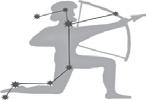
Sagittarius November 22December 21... The stars predict something horrible will happen, so hide under your covers this week and do not come out until next week.
Capricorn December 22January 19... Being noble might win you brownie points, but it will not pay the bills.
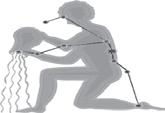
Aquarius January 20-February 18... The spirits say you will have an OK week. Not great, just OK. It could be worse – you could be Sagittarius.

Pisces February 19March 20... Do not trust anybody this week. Even your mirror will lie to you. In fact, there is a small chance that I am lying to you right now.
o r o s c o p e s

Wal-Mart and other major retailers are rumored to be planning to remove VHS sales completely, moving to a DVD standard. Already this is beginning here. I scoured the electronics section at the new Target on 29 th and the only VHS that I found on sale were children’s programming and a few select new releases. Heck, the Wal-
Also, fewer and fewer movies are seeing VHS releases, as the movies that are released in multiple formats today are released in DVD and the burgeoning Sony Universal Media Disc (UMD) format, relegating the VHS to grainy classroom presentations of old History Channel shows about the American Revolution.
Rose-Colored Glasses
If you had asked me three years ago, when DVD players cost at least $100 next to the $40 VHS players, I would have had a different opinion.
However, in this day and age, DVD players of good quality can be found for as low as $50. If memory serves, Symphonic sells a compact player for that price – with VHS decks most often found for slightly more pricey DVDVHS combo units.
Even the VHS’ role as king of home movies is threatened, as many camcorders either burn video directly to DVD
within the unit, or have the ability to upload the video to a home computer, on many of which disc drives that can burn DVDs are becoming standard equipment. So, for those few who are still hemming and hawing over purchasing a DVD player and converting to the new standard, put down that dusty old VHS of the “G.I. Joe” movie, stick it in a box destined for the attic with all your other VHS gear, and spit out the $50 to get started on catching up with the rest of creation. You will not regret it. btrude@rose.edu

by
Erin Waltman
Photo by STACEY McENTIRE
Ellington