
MAY 7, 2026 | FREE
IN THIS EDITION
WESTFIELD
Blessed Buys Thrift Shoppe readying to open new space
Blessed Buys Thrift Shoppe
has been busy this winter preparing a new space in the basement of the First Congregational Church at 18 Broad St., directly behind its current store in Old Town Hall.
Page 3
SOUTHWICK Board approves MassDOT program that monitors car speeds
The Police Department was successful in getting a state grant from the state Department of Transportation to install several speed feedback signs at fixed locations and two movable trailers.
Page 6
Residents’ input needed as Southwick reorganizes zoning bylaws
For over six months, the Planning Board has been working with the Pioneer Valley Planning Commission to reorganize the town’s bylaws. Page 6
Hilltown service providers share resources
By Amy Porter aporter@thereminder.com
HUNTINGTON — Several
dozen Hilltown service providers gathered in Stanton Hall on April 30 to share information and look for ways to work together in the face of funding cuts and rising costs.
Kim Savery, director of community programs and grants for the Hilltown Community Health Center, handed out different scenarios describing challenges faced by families and individuals seeking assistance in the Hilltowns. She said each scenario was one that she and other providers have encountered. She then asked people to find resources in the room that could help.
“The purpose is to get to know each other as community resource providers and have an opportunity to talk. One thing we do really well in the Hilltowns is partner together,” Savery said. Represented in the room were several services offering help and support for families with young children, offering a continuum of care and resources from birth to age four.
Sarah Lynn, developmental outreach specialist with Thom Child & Family Services in Westfield, said her agency offers early intervention for children from birth to 18 months.
Lynn said children are referred to Thom with a medical diagnosis or who are medically complex, or if a family has concerns about a child’s development. She said that depending on the assessment of the child, the agency will connect them with a specialist who has the ability to monitor the child weekly, monthly or quarterly in their home.
Lynn said Thom works closely with HCHC’s Parent Child
Plus program of the Hilltown Community Health Center, which offers home visits from an early learning specialist for children ages 16 months to 4 years old. Chris Bresnahan, coordinator of Parent Child Plus, said they provide 80 visits a month to families in the Hilltowns. She said both programs refer families to each other, and both are covered by insurance.
Bresnahan said she also refers families to It Takes a Village, which runs the Village Closet on 2 Main St. in Huntington, offering free family resources, including diapers, clothing, furniture, in addition to parent groups, classes and home visits by volunteers.
HCHC’s Hilltown Family Center runs play groups, story times and activities three days a week in four different Hilltowns,
said Director Kate McKennedy. Play groups are held on Mondays from 9:30-11:30 a.m. in the Worthington Library, on Wednesdays from 10 a.m. to noon at the Chester Railway Station and at 10 a.m. at the Porter Memorial Library in Blandford. On Thursdays, story time with Maggie occurs at 10 a.m., as well as story time, sensory play and crafts at 11 a.m. in the Hamilton Memorial Library in Chester. A monthly game night for all ages takes place on the third Thursday of each month from 4-6 p.m. in the Huntington Library.
Bresnahan said that families with young children in the Hilltowns have resources available to them, but isolation is still an issue for families living in remote areas, especially with no public transportation available. She said
sometimes people are one broken car away from homelessness if they can’t get to work.
Members of the Southern Hilltowns Domestic Violence Task Force were also present at the gathering. Co-Coordinator Donna LaRocque introduced her new co-coordinator, Rachel Maiore, to the group. Maiore said she was happy to meet so many of the area providers in one place.
The task force works in partnership with Hilltown Safety at Home, another HCHC program represented at the meeting by Patti McManamy and Victim Advocate Mary Krol. Both work closely with area police departments, who send referrals to them when someone calls for help with a domestic violence incident, a

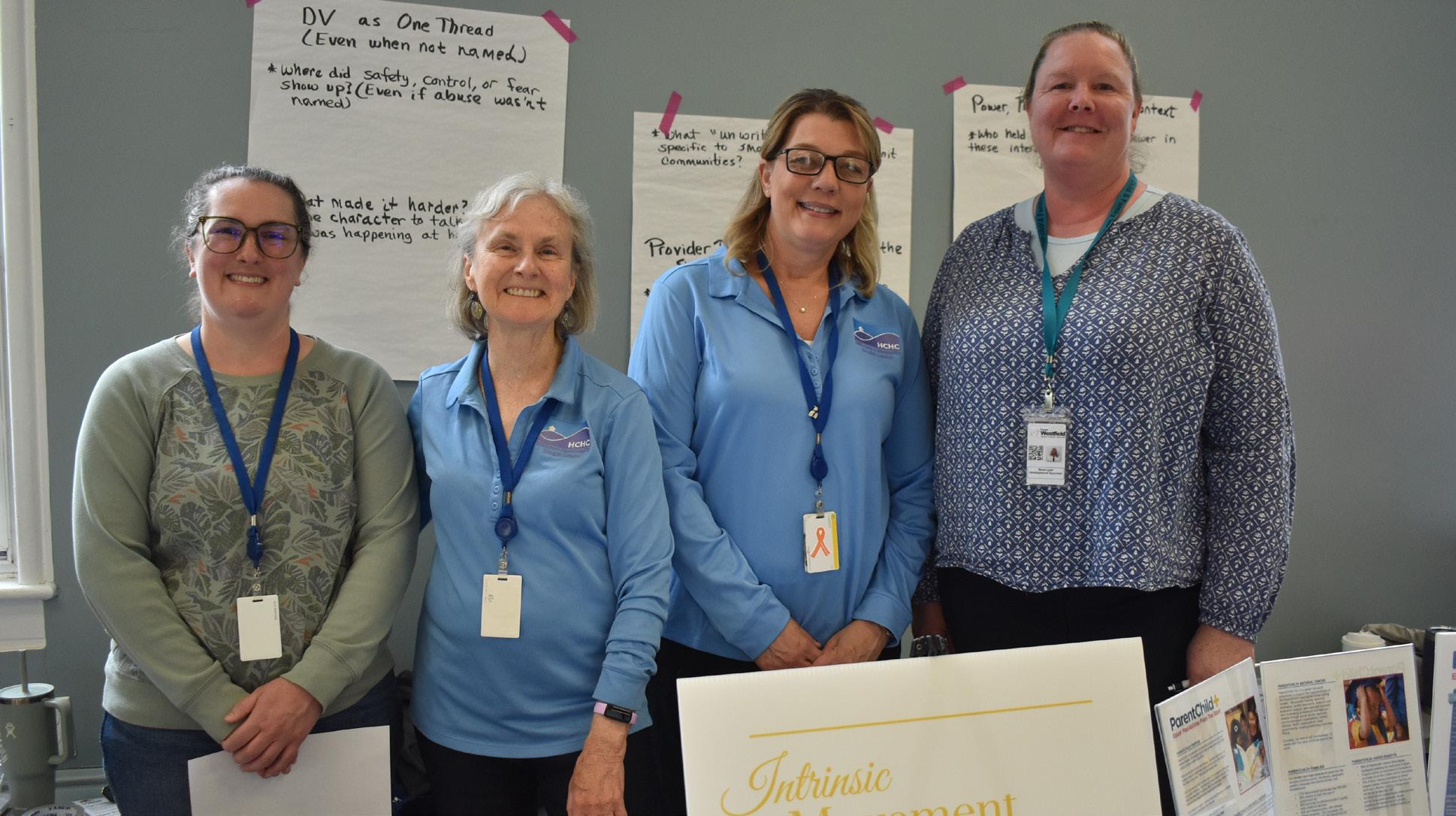
Already providing a continuum of care for young children are HCHC’s Hilltown Family Center Director Kate McKenney, HCHC Parent Child Plus Director Chris Bresnahan, Early Learning Specialist Kiirsten Cooper, and Sarah Lynn, developmental outreach specialist with Thom Child & Family Services.
Reminder Publishing photo by Amy Porter
See
2
Baystate Health to absorb Mercy Medical Center
By Sarah Heinonen sheinonen@thereminder.com
SPRINGFIELD — Mercy Medical Center, which has been affiliated with Trinity Health of New England for more than a decade, is slated to become Baystate Mercy Hospital by the end of the year.
In announcing Baystate Health’s acquisition of Mercy, Baystate Health President and CEO Peter D. Banko stated, “Mercy and the Sisters of Providence have been a fixture in our community since 1874. This is an investment in both the past and the future of health care and economic development in Western Massachusetts. Today, access forces too many patients to leave the region to seek care, and we need to ensure that care is compassionate, high quality, affordable, and local.”
A joint press release from Baystate and Trinity about the transition cited “inadequate reimbursement for care, industry-wide shifts — such as declining payment rates, changing consumer preferences toward outpatient services and persistent staffing shortages,” at Mercy as reasons behind the move.
Mercy has taken steps in recent years to bolster its financial position. Among them, Mercy Medical Center’s Certified Nurse Midwives moved maternity delivery services to Baystate Medical Center in December 2025. Baystate’s website states, “We have rigorously prepared for an additional 800 deliveries annually, including actively recruiting more OB/GYNs, midwives and nurses.”
Mayor Domenic Sarno released a statement on the merger. “I am very thankful to Baystate Health’s efforts to preserve two hospitals in the city. There was a distinct possibility that Mercy/ Trinity would simply close down. That was unacceptable,” Sarno said. “From the beginning, with
my continued interaction with Baystate Health and Mercy/Trinity officials, as well as state officials, notably Gov. Maura Healey and Lt. Gov. Kim Driscoll, I indicated that it was imperative that Springfield and the region must preserve two top notch hospitals for health care accessibility for the residents of Springfield and the surrounding areas. I am thankful to Baystate Health President & CEO Peter Banko, Gov. Healey, Lt. Gov. Driscoll and all parties involved for their efforts, and after long negotiations, that this has come to fruition.”
U.S. Rep. Richard Neal, who represents the state’s first congressional district, including the greater Springfield area, also praised the move. “I am pleased that Baystate Health and Trinity Health have reached an agreement that will allow these two vibrant hospitals to continue serving our communities,” Neal said. “As the country continues to grapple with unprecedented health care cuts resulting from President Trump’s One Big, Ugly Law, this acquisition will expand access to health care and improve services throughout the Pioneer Valley and beyond.”
Neal continued, “Together, these institutions represent more than three centuries of service to western and central Massachusetts. Ensuring their viability and continued success is vital to the health of our families and our local economies, and this announcement represents a critical step in strengthening our regional health care system for generations to come.”
Baystate issued a statement thanking the Healey-Driscoll administration, Neal, Sarno and the Western Massachusetts Legislative delegation “for their steadfast and unwavering support of this hospital partnership in Western Massachusetts.”
Despite this statement, some

members of the Western Massachusetts legislative delegation have questions about the change.
State Rep. Carlos Gonzalez said he has reached out to Banko to request a meeting with himself and the rest of the Springfield delegation to discuss the implications for local health care services and personnel.
“The announcement of the acquisition raises significant concerns regarding the future of our health care landscape,” said Gonzalez. “It is vital that we ensure the continued operation of both hospitals in Springfield. Protecting our dedicated workers and staff is essential, as is guaranteeing that our community retains access to critical medical services.”
Like Gonzalez, state Sen. Jake Oliveira, who represents portions of Springfield, also said

he has many questions about Mercy becoming affiliated with Baystate. However, he said the priority is to ensure that both Mercy and Baystate Medical Center continue to operate.
“If Mercy shut their doors, it would send a ripple effect” through Western Massachusetts health care, he said, adding that the hospital serves a lot of people on Medicare and Medicaid. “It’s my hope that we have two hospitals operating in Springfield because there is such a great need.”
Oliveira said he hopes that Mercy will keep its character, as he said other hospitals have done after being absorbed by Baystate. He said many people seek treatment at Mercy because it is a Catholic hospital and people “value that kind of care.”
The legislator said he was
Services
Continued from page 1
big problem in rural areas where there is less access to services.
Also present were representatives from the Blandford Council on Aging, Highland Valley Elder Services with Meals on Wheels and other programs for seniors, and HCHC’s Health Outreach Program for Elders (HOPE), which offers free home visits for preventative and health maintenance care.
Jake Russell, new director of Community Food Resilience for the Hilltown CDC, said the agency offers grocery delivery of farm-fresh meats and vegetables to Hilltown residents from purchases at its nonprofit farm store that also takes SNAP benefits. The store, currently located at Sawyer Farm in Worthington, will move to Cummington later this year.
Michele Kenney, director of the Southern Hilltowns Adult Education Center, which offers GED, computer, business and sustainability classes for people of all ages, talked about the impact of funding cuts on SHAEC, an off-campus program of the University of Massachusetts Amherst. Kenney promoted a plant sale fundraiser on May 16 in front of the SHAEC classroom on 26 Main St. in Chester from 10 a.m. to 4 p.m. during Chester on Track.
Erica Wells represented Hilltowns CARE, a grassroots community group led by volunteers that focuses on mutual aid and civic engagement. She said they host multiple events in the Hilltowns every month, from potluck-style gatherings to skill-sharing workshops and virtual meetings. All of the events are all ages, free, and open to the public and are posted on their website at hilltowns-care.org.
Hilltowns CARE’s next event is a Community Planting Day on Sunday, May 17, at 2 p.m. in the CARE Garden space at 9 East Main St. in Huntington.
concerned about health care consolidation but pointed out that Baystate hospitals are not people’s only options in the Pioneer Valley. Cooley-Dickinson Hospital in Northampton is affiliated with Mass General Brigham and Holyoke Medical Center is an independent hospital.
Trinity Health of New England stated on its website that no immediate staffing changes are planned. The health care group declined to make any other comment. Reminder Publishing reached out to Baystate with questions about staffing and personnel changes, but did not receive a response by press time. Provided that the transition is approved after the regulatory review process, Mercy will be absorbed on Nov. 1.
Everyone is welcome to participate in planting seeds and starts for the upcoming season, while sharing space with friends and neighbors, Wells said. They will also celebrate being selected for the Community Greening Award from the New England Botanic Garden at Tower Hill.
Christina Beeke, Medicare insurance agent, and Laurie Martell, Huntington branch manager for Westfield Bank and president of the Jacob’s Ladder Business Association, were among area businesses represented at the meeting. Martell said she was happy to get the information, as a lot of people are coming into the branch asking about community resources. Also stopping by for information was Gateway Regional Superintendent Melissa Matarazzo.
After the networking portion of the meeting, Savery gathered people back together to discuss the challenges faced by residents in the different scenarios they were given. The lack of any public transportation came up frequently. Others mentioned accessibility to some of the programs that are available.
“As a provider, you feel hopeless, limited, and wish you could do more,” said one participant in response to Savery’s question about whether anyone has felt constrained as a provider.
“That is one of the reasons we’re doing this exercise,” Savery said.
After the meeting, Savery said she thought it was a good opportunity for resources in the community to get together.
“The turnout and engagement reflect the strength and resilience of our community. We have agencies that genuinely work together, guided by the needs of families and individuals. That kind of collaboration doesn’t happen by accident, it comes from shared commitment, relationships, and a belief that supporting families early helps the entire community thrive, even during challenging times,” Savery said.
Baystate Health recently announced that it will absorb Mercy Medical Center (pictured), which has been operated by Trinity Health of New England since 2015.
Reminder Publishing photo by Sarah Heinonen
Blessed Buys Thrift Shoppe readying
By Amy Porter aporter@thereminder.com
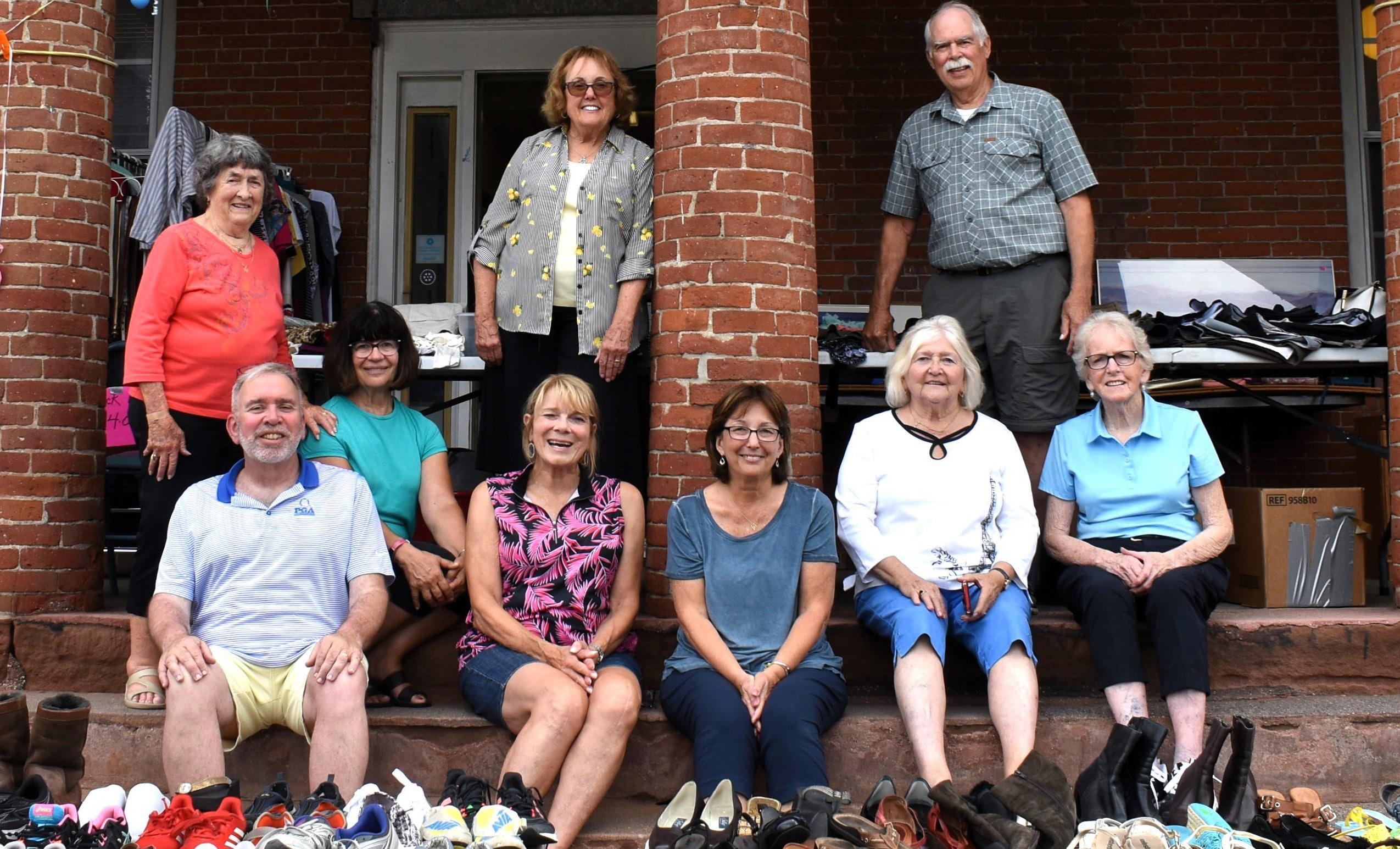
WESTFIELD — Blessed Buys Thrift Shoppe has been busy this winter preparing a new space in the basement of the First Congregational Church at 18 Broad St., directly behind its current store in Old Town Hall.
A grand opening of the new location, where volunteers have been placing new donated inventory since January, is on Thursday, May 14, from 10 a.m. to 2 p.m.
Cindy Gaylord, a volunteer at the shop, said the new space has been cleaned and painted and looks beautiful, with a new art gallery displayed in the hallway. “We had an artist that set the whole thing up for us,” said Gaylord. “It just looks so nice.”
The new store will continue to feature clothing and shoes, jewelry, an expanded men’s clothing, shoes and hats section, and an expanded area for home decor and appliances.
“We’re hoping to have more small furniture, too. We don’t have a lot yet, but we do have a spot for it,” Gaylord said.
The Blessed Buys location on 20 Broad St. in the Old Town Hall will remain open through the end of May or until everything is sold.
The Blessed Buys Thrift Shoppe is run entirely by volunteers from the First Congregational Church, and all of the items for sale are donated. “A lot of the items that we moved over still have the tags on them; they’re brand new,” Gaylord said.
The store has also given 20% of its profits every quarter since it opened to area nonprofits. The rest of the money raised goes toward the costs of the church, Gaylord said.
The Blessed Buys Thrift Shoppe is moving its location due to the pending sale of the Old Town Hall to DOMUS, Inc. for veterans housing.
Westfield Earth Day cleanup collects over 100 bags of trash
By Amy Porter aporter@thereminder.com
WESTFIELD — Conservation
Coordinator Nicholas Balick said the city’s 14th annual Earth Day cleanup on April 25 was extremely successful, as more than 80 registered participants gathered 106 bags of trash and larger items that were picked up by DPW crews on April 28.
Registration took place in the morning at the Mount Moriah Lodge on Broad Street, where people came and picked up supplies for their groups provided by the Westfield Walmart and Stop & Shop on Main Street. “We’re thankful for the supplies,” said Balick. The volunteers returned for a lunch of hamburgers and hot dogs provided by the Masons at noon.
Balick was assisted in the coordination of his first Earth Day clean-up by former Conservation Coordinator Karen Leigh. The city also partnered with the Westfield River Watershed Association, which helped to facilitate the event and brought a large group of volunteers. Also participating were City Councilors Karen Fanion, Brent Bean and Bridget Matthews-Kane, along with girl scouts and Westfield State University students.
Volunteers were sent out to Lockhouse Road, Servistar Industrial Way, Whitney Park, Columbia Greenway Rail Trail, downtown Westfield on Elm Street, South Broad and Main Street, Route 20 along the railroad tracks by Walmart, the east end of Union Street, the Dog Bark and by the river next to the Salvation Army Thrift Store.
Fanion said her group of 25 volunteers from Ward 1 filled 40 trash bags and pulled numerous bulk items out of the tree belt and

woods for the DPW to collect.
“It was astonishing to see what had been discarded: tires, a car battery, a countertop and cabinet, a chair, large metal piping, and even a wire and conduit box,” she said, thanking all the residents who turned out, with special thanks to the young people who participated.
“As rewarding as it felt to clean up, it would be even more rewarding if such efforts were not necessary — if people simply refrained from littering. Most of what we collected were paper coffee cups, plastic drink cups with lids and straws, plastic water bottles, fast food bags and wrappers, and, most disturbingly, plastic nip bottles, beer bottles and other alcoholic beverage con-
tainers,” Fanion said.
Balick said a lot of the trash comes from traffic. Comments were made to him about the unbelievable number of nip bottles that were picked up. Some volunteers said they picked up more than 200, filling an entire trash bag. He said there were tons of residual litter, such as fast food wrappings and grocery store bags. “A lot of single-use items,” he said.
“The volunteers came back dirty and excited about the positive impact they made,” Balick said, adding it is gratifying to see the difference before and after. He sent younger families out to different parks to collect trash. “They had a great time. The kids had so much fun.”
Balick said the city is com-







mitted to repeating the Earth Day clean-up next year, which he plans to refine and expand. “This
event matters. It definitely had an impact on litter across Westfield and its waterways.”
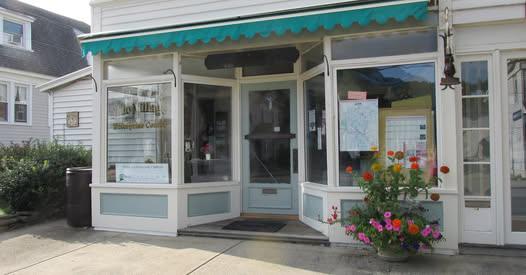
Blessed Buys Thrift Shoppe volunteers include, standing from left, Mamie Lajoie, Barbara James and Doug James; and seated, from left, the Rev. Paul Nesbit, Tina Dunlop (kneeling), Cindy Gaylord, Dorothy Cichonski, Anne Gelinas and Carol Whalen.
Reminder Publishing photo by Amy Porter
Volunteers from Ward 1 collected 40 bags of trash.
Reminder Publishing submitted photo
Board approves MassDOT program that monitors car speeds
By Cliff Clark cclark@thereminder.com
SOUTHWICK — The Police Department was successful in getting a state grant from the state Department of Transportation to install several speed feedback signs at fixed locations and on two movable trailers to help manage roadway speeds and safety.
“We would ask that you approve that,” said Police Chief Rhett Bannish during the board’s meeting on April 27. “That is a fully funded grant at no cost to the town.”
Bannish was referring to the MassDOT Municipal Speed Feedback Signage Program, which was announced by the state in December.
The program provides municipalities with solar-powered, data-capable, and standardized speed feedback signs that will be installed along Feeding Hills, South Longyard, and Mort Vining roads, Bannish said.
The locations, Bannish said, were chosen by the state, and the town will be responsible for the signs’ installation and maintenance.
The town will also share the speed data collected from the signs to help support statewide speed management research and decision-making, according to the MassDOT website describing the program.
The data collection requirement prompted a question by board member Douglas Moglin.
“Is there any requirement that we have to supply the
By Cliff Clark cclark@thereminder.com
SOUTHWICK — For over six months, the Planning Board has been working with the Pioneer Valley Planning Commission to reorganize the town’s bylaws, which have been described as awkward due to a piecemeal approach the town has used for over 50 years.
With that process nearly at its conclusion, the board will move into the next phase of revising the bylaws, and Town Planner Alvin Allen said it is vitally important for residents to participate in an important survey that will guide the board as it moves forward.
“We really need the town’s residents’ input from this survey,” Allen said about the survey that is now available online or can be picked up at the Select Board or Planning Department in Town Hall.
Zoning bylaws are vital for
data that’s gathered from those signs anywhere else outside of town?” he asked.
Bannish said part of the grant requirements was that the data collected is provided to the state.
However, he said the data collection requirement was only for a full year after the signs are installed.
According to the program, the data collected will include vehicle counts, speeds, and directions to help support statewide speed management research and decision-making, according to the program.
Of the speed feedback signs mounted on the trailers, one will be placed on Powder Mill Road.
Bannish said the other would be somewhere else.
An email sent to Bannish asking for additional details about the program and where the other trailer would be stationed was not returned.
Over the last several years, the town has been applying for grants to secure funding of at least $1.86 million to get Powder Mill Road completely restored.
In 2022, the town was awarded a $115,500 grant from the state’s Rural and Small Town Development Fund for the redesign of the road, Brown said.
The design, which was done by Westfield-based Tighe & Bond, was completed in 2024.
When DPW Assistant Director Jon Goddard was asked if the speed data collected by the state would help the town’s effort to secure grant funding, he

said it was a possibility.
Once the project is completed, it will connect the regional district’s schools, the Southwick Recreation Center, Whalley Park and the rail trail with sidewalks.
The road will also need to be realigned. A portion of the
every municipality, helping maintain a community’s unique character while regulating land use in residential, business, agriculture, and industry areas to balance the needs and wants of its residents.
To achieve that balance, the Planning Board is exploring ways to revise the bylaws when it comes to certain uses of land, including the Business Restricted zone.
The Business Restricted zone was at the center of a lawsuit filed by a Connecticut company that sought a special permit to build the Dollar General on College Highway.
In July 2024, the Carlito Development Group filed two lawsuits after the board turned down its request for a special permit to build the retail store: one questioned the impartiality of two board members, and another questioned the criteria used by the board when making a final determination on granting a special
permit in the Business Restricted and Business zoning districts.
The lawsuit pointed out the vagueness and subjectivity of the bylaw regulating the Business Restricted zone that might be used by the board to justify a decision including that the business needed to be “suitably located” in town, “be reasonably compatible with the character and scale of other uses permitted,” that the “use will not constitute a nuisance by reason of … visually flagrant structures and accessories,” that the “use is in harmony with the general purposes and intent” of the zoning regulations, “the public good will be served” and “the proposal reasonably protects the adjoining premises against detrimental or offensive effects of the site, including, but not limited to, unsightly or obnoxious appearances.”
The first issue the board must address is the by-right use in the Business Restricted zon-
current road is not in the center of the town’s right of way, and if it isn’t shifted, the sidewalks would be built on private property, which is not an option for the town.
Also included in the rehabilitation will be new drainage and an upsized water line.
ing district.
The current bylaw allows only a bank as a “by right” use in the Business Restricted zone, so any other retail business, like an auto parts or convenience store, currently has to request a special permit from the board.
When tasking the board to think about revising the Business Restricted zone bylaw, board Chair Jessica Thornton said the members needed to do some forward thinking about how to expand the Business Restricted zone in the future and what kind of uses could be included as by-right usage.
The survey will help determine the board’s decisions using residents’ responses to it by providing ranking planning priorities between housing, economic development, infrastructure and transportation, preservation of open space and farmland, College Highway corridor revitalization and environmental protections.
The signage program is supported with federal Highway Safety Improvement Program funding for federal fiscal year 2026 and aligns with MassDOT’s broader Safe System approach and Vision Zero strategy to eliminate traffic fatalities and serious injuries.
The survey will also ask about housing options, including whether there’s enough for firsttime homebuyers, older adults, moderate to low-income and families with children.
The survey also asks what businesses should be allowed in the various zoning districts, like restaurants, grocery stores, convenience stores, indoor or outdoor recreation, light manufacturing, schools and museums.
As for housing, the survey will ask residents if they support or oppose single-family homes, duplexes or townhouses, senior housing, small apartment buildings, low or moderate income housing, or housing near major corridors like College Highway or Feeding Hills Road.
All survey responses will be kept confidential, Allen said, adding it should take about 10 minutes to complete. For other questions, email Allen at aallen@southwickma.gov.







The Southwick Police Department was successful in getting a state grant to install several speed monitoring signs around town, including two that will be mounted on trailers like this one used by the Westfield Police Department on Springdale Road.
Reminder Publishing photo by Cliff Clark
Candidates for Select Board address issues
By Cliff Clark cclark@thereminder.com
SOUTHWICK — Current Select Board member Diane Gale is running for a second three-year term on the board and is squaring off against former Select Board member Joseph Deedy. The election will be held on Tuesday, May 12. Reminder Publishing asked both candidates the same questions. Here are the answers
Q. Why are you running?
Gale: When I first ran — and still today — I heard from too many neighbors who felt shut down or ignored by “the establishment.” It was accepted that you had to “know the right people.” My philosophy is simple: every concern matters, whether it’s an individual issue or a community-wide vision. A prime example is the Southwick Master Plan; despite thousands of hours of community input, it has been dismissed by some long-term officials as fantasy. To the contrary, I believe the Select Board’s role is not to filter those visions through our own personal or political desires. Our job is to hear, understand and work toward the goals of the people. I am committed to ensuring every voice is heard, regardless of party affiliation, family name, or whether you have deep roots or are new to our town.
Deedy: I’m running because I care deeply about Southwick and believe our town deserves steady, common-sense leadership that puts residents first. We need to restore trust in local government, improve communication, and make sure taxpayer dollars are being spent wisely and responsibly.
Southwick is a strong community with hardworking people, proud neighborhoods, and a lot of potential. But many residents feel unheard and frustrated. I’m running to bring a practical voice to the Select Board, someone who listens, asks tough questions, and focuses on solutions instead of politics.
My goal is simple: protect the character of our town, strengthen services, plan responsibly for the future, and make sure Town Hall works for the people again.
Q: Is there any action or decision the current Select Board has recently made that you would have done differently?
Deedy: Like any board, decisions are made with good intentions, but I believe some things should be handled differently. One concern I hear often from residents is that public meetings have become shorter, agendas lighter, and meaningful discussion seems to happen outside the public view rather than at the meeting table, where residents can hear it.
Town government works best as a team, and when people can see the process, not just the final vote. Public meetings should be a place for discussion, questions, updates and accountability. For example, regular reports from town leadership about ongoing projects, challenges, and weekly progress help keep residents informed and build trust.
I believe we need to bring more transparency back to the forefront. Residents deserve open communication, clear explanations, and confidence that decisions are being made in the public’s interest. If elected, I would work to make meetings more informative, more transparent, and more respectful of the people we serve.
Gale: Early in my term, I introduced a five-year trend analysis that identified COVID-inflated carryovers heading into fiscal year 2025. It was extremely



frustrating to be outvoted by my peers on the Select Board when I recommended expense reductions based on the data. It took persistence and another year of undeniable data to finally get a good amount of those reductions approved for fiscal year 2026.
I disagree with the Finance Committee’s practice to annually micromanage departmental budgeted line items. Instead, after this reset last year, I supported our chief administrative officer working directly with departments to find sustainable cuts -those that they have to live with and function under. Many remain married to the methods and formats employed for decades in the budget development process - a once-a-year task, without regular, onging monitoring or forecasting. Going forward, I would like to continue advancing these objectives, creating hybrid tools that will bridge the old, comfortable ways and transition to updated, multi-year models. These tools will ensure that both the town and school budgets are reviewed as a collaborative, rolling forecast rather than two isolated tasks each year.
The small changes implemented this year did not eliminate or reduce the intensive scrutiny that the budget demands, but did result in departmental ownership of a more fine-tuned budget. Despite this, these improvements were met with challenges and interference that created unnecessary confusion, delayed productivity, and interrupted lines of communication.
Q: Do you support the meals tax? Be specific as to the reasons for or against.
Gale: I do not “support” new taxes, but I believe it is my duty to bring the community’s questions forward. I don’t believe in “squashing” ideas just because a few people in power don’t like them. Many residents ask why surrounding towns benefit from meals tax revenue for road repairs while Southwick does not; it is up to the voters, not the board, to decide that. It’s your money, so it should be your decision.
Deedy: I do not support adopting a meals tax … even though some are for it is just the wrong time to do it. While some may describe it as a small amount on a single purchase, those costs add up for working families, seniors, and anyone already feeling the pressure of higher everyday expenses. Before asking residents and visitors to pay more, the town should first focus on controlling the costs already within its own budget. Tax increases should not be the first answer when better management may be the smarter one.

Q. It’s no secret that the annual assessment from the Southwick-Tolland-Granville Regional School District, which has increased from 39% in fiscal 2024 to the proposed 47% in fiscal 2027 as a portion of the town’s total operating budget, has forced the town to make increasingly difficult decisions regarding funding its general government operation. At joint meetings between the Finance Committee and Select Board, it’s been said that fiscal 2028 could be the year the assessment forces more drastic measures like asking Town Meeting for a Proposition 2½ override, or cutting essential services for town government, or urging the regional school committee to start cutting non-essential education funding like sports, band, etc. Outside of significant financial support from the state, what do you see as a long-term solution?
Deedy: The long-term solution starts with being honest about where we are. Costs keep rising, whether it is minimum local contribution, insurance, special education or everyday operations. If those trends continue, it becomes harder and harder to balance a budget without eventually talking about a Proposition 2.5 override. Pretending otherwise does not help anyone.
First, taxpayers deserve clear information early. People can handle tough news when they are treated like adults. We should be explaining the challenges now, not waiting until the last minute and forcing rushed decisions. An informed community makes better choices.
Second, town leaders, finance leaders, and the School Committee need to keep working together and reviewing budgets every year for any efficiencies or savings that can be found. That means town side and school side alike. Nobody should be above scrutiny, and nobody should be carrying the blame alone.
Third, we have to keep pushing for fairer state aid, especially rural aid. Our representative has been raising the issue, but too often these proposals do not get the support they need when it comes time to vote. That is frustrating, but it means we keep fighting, keep building alliances with similar communities and keep making the case.
Fourth, we need to remember what makes our district strong. Families choose to come here, and many students stay here because of the quality of education and opportunities available. We should be careful about treating programs like sports, band, and activities as easy targets. Those
programs are part of why families choose this district.
At the end of the day, the answer is balance. Protect taxpayers, protect essential town services, maintain a strong school system, and be honest about the numbers. If we start now, we have a better chance of solving this together instead of being backed into a corner later.
Gale: The regional school is not alone in suffering the effects of outdated state funding formulas and uncontrollable fixed costs like fuel, utilities, and insurance. These are the same drivers affecting our town budget, and I view them as a unified challenge. While our town employees work to find efficiencies every day, we cannot solve these shortfalls through administrative tweaks alone. The town and the district must work together to seriously explore the regionalization of services wherever practical. As enrollment continues to decline, the district must also face the difficult reality of consolidating classes and potentially eliminating “non-essential” activities, a challenge many neighboring communities are already confronting.
The fiscal forecasting I have advocated for will help identify “trigger points,” allowing us to adapt preemptively rather than reactively. However, the most critical long-term solution is stronger advocacy. We must demand that the Legislature correct decades-old funding formulas and acknowledge the unique challenges facing Western Massachusetts rural communities. While our chief administrative officer, Nicole Parker, and the district already do a great job with advocacy, I believe the Select Board should join them more vocally and frequently to ensure Southwick’s voice is heard in Boston.
Q. There seems to be a perception in town the transfer station isn’t being run as efficiently as possible. Do you agree with the perception or do you think there are steps that could be taken to make it more efficient.
Gale: I believe many of these perceptions are rooted in direct observations by our residents. While some observed actions may fall under “allowable uses,” there are clearly a number of abuses occurring. I have been told directly by some individuals how they use the transfer station, often in ways that do not align with the posted rules. There is a common misconception that the cost of a sticker covers the entire operation and justifies any type of disposal -- legal or illegal. We are exploring low-cost
See Q&A on page 10

Diane Gale
Joseph Deedy Reminder Publishing file photos
Earth Day Clean Up
Thank you to all the residents who came out on Saturday, April 25, 2026, for the Earth Day Clean Up. A special thank you to my Ward 1 residents. I am incredibly proud of the roughly 25 volunteers who represented our ward.
The clean up was extremely successful. In Ward 1 alone, we filled 40 trash bags and pulled numerous bulk items out of the tree belt and woods for DPW to collect. It was astonishing to see what had been discarded: tires, a car battery, a countertop and cabinet, a chair, large metal piping, and even a wire and conduit box.
It was especially wonder-
BOSTON — As camping season gets underway across the state park system, the Massachusetts Department of Conservation and Recreation is urging residents

ful to see young people participating. They will be the future stewards of our environment. As rewarding as it felt to clean up, it would be even more rewarding if such efforts were not necessary if people simply refrained from littering. Most of what we collected were paper coffee cups, plastic drink cups with lids and straws, plastic water bottles, fast food bags and wrappers, and, most disturbingly, plastic nip bottles, beer bottles, and other alcoholic beverage containers.
I am proud to have co sponsored a recent amendment to the City’s Litter Ordinance. This effort was spearheaded by Sandi Gil, Chair of the Garden Club of the Westfield Woman’s Club, who brought the issue to the at-
and visitors to take precautions to prevent wildfires, as new data shows a continuing trend of longer periods of time each year when fires are likely to occur.
tention of the City Council and Officer John Blascak of the Westfield Police Department. The amendment adds the word “plastics” to the definition of rubbish due to the overwhelming number of discarded nip bottles. It also increases the noncriminal littering fines to $100 for a first offense, $200 for a second offense, and $300 for a third and subsequent offenses. Thank you to Officer Blascak for advising the Committee on the penalty structure. I am pleased to report that the amendment passed the City Council unanimously.
Even with this strengthened ordinance, more work remains. One suggestion under consideration is installing cameras in common illegal dumping ar-
DCR’s 2025 wildfire data also shows wildfire activity has returned to more typical levels following unusually high numbers of wildfires in late 2024.
“As more people head outdoors this time of year, it’s important to understand that the risk of wildfires in Massachusetts is increasing and we’re having longer fire seasons than in the past,” said DCR Commissioner Nicole LaChapelle. “The vast majority of these fires are caused by human activity — and it’s on all of us to help prevent them. By taking simple steps, we can protect our parks, forests and communities from damage.”
In 2025, Massachusetts experienced 1,161 wildfires burning a total 925 acres. Those numbers are down from 2024, when 1,300 fires burned 4,623 acres

Dorothy
June
eas. This idea is being explored, though there are logistical challenges to resolve. In the meantime, if your dash cam or home security camera captures someone littering, please report it to the Police Department so the matter can be investigated.
To help reduce littering please keep a small trash bag in your car or truck and dispose of waste properly instead of tossing it out the window. The volume of nip bottles in particular was overwhelming. To help in reducing the discarding of nip bottles the State Legislature is currently considering a bill to place a deposit on nip bottles to help deter roadside disposal. I will be following this legislation closely as it moves through the process.
— a spike driven by an extended drought, dry soils and dry windy conditions. Late in 2024, several factors made fires more likely, including multi-day wind events, low humidity and fallen leaves that added more fuel for fires.
Despite the year-over-year decline in wildfires, the data continues to show a broader trend of fires occurring earlier in the year, extending Massachusetts’ wildfire season. In the past decade, Massachusetts has continued to see consistent fire activity in earlier months of the year, when winter snowpack has historically helped reduce the chance of fires. Shorter winters with less snow have allowed for dryer conditions, which have contributed to longer windows of wildfire risk across the state.
“Since nearly all of the wildfires we are experiencing are caused by some form of human behavior, we can have a good chance of bringing our numbers down through educating the public,” said Chief Fire Warden Dave Celino. “We want the public to understand that wildfires indeed happen in Massachusetts and that humans are the main cause. If we all take responsibility, we can prevent a lot of damage and potential injury.”
Less than 11% of last year’s wildfires were due to natural or undetermined causes. More than 89% were caused by human activity, the vast majority of which were accidental. Improper brush burning, open burns, illegal debris burning and failure to fully extinguish fires are among the most common causes of accidental wildfires.
Below are tips for preventing some of the most common causes of wildfires:
Finally, a huge thank you to Conservation Coordinator Nick Balik for organizing the event, and to Karen Leigh for her assistance. Thank you as well to Mount Moriah Lodge for hosting our supply pick up and drop off and for providing breakfast and lunch of hamburgers and hot dogs. After three and a half hours of hard work, the smell of the grill was truly appreciated. And thank you again to Officer Blascak for keeping everyone safe along Lockhouse Road.
Let’s make every day Earth Day - PLEASE DO NOT LITTER.
Karen Fanion Westfield
• Always fully extinguish a fire by pouring water on the site and stirring the burned materials until there is no sound of hissing and they feel cool to the touch.
• Clear fallen leaves, dry grass or any other flammable vegetation or material within a radius of at least 10 feet of the fire prior to lighting it.
• Avoid lighting fires during stretches of dry weather, or on particularly windy days.
• During burning season, obtain a permit from your local fire department. Have extinguishing materials on hand at all times, including water, shovels and rakes. Burn one small pile of material at a time and add to it slowly.
• When using a charcoal grill, properly dispose of coals using a metal container with a lid once they have fully cooled. Do not dispose of coals outside. When using a propane grill, check tanks for leaks months ahead of use.
All grills should be positioned away from structures and deck railings, and out from under building eaves or overhanging branches. To reduce the risk of fire damage to your house, homeowners are recommended to:
• Regularly clear leaves and pine needles from roofs and gutters. Clear leaves from under decks and stairs, as well as within a 5-foot radius of all structures.
• Maintain lawns and native grasses to a height no higher than 4 inches. Additional guidance for fire safety, as well as a list of requirements enforced by the state’s open burn law, can be found online.
DINING ENTERTAINMENT
Scoreboard oozes traditional sports bar feel at every corner
By Ryan Feyre rfeyre@thereminder.com
AGAWAM — No matter the season, an avid sports fan such as myself usually spends my weekends on the lookout for the perfect spot to watch the game. There are very few things more exhilarating than experiencing the highs and lows of your favorite team with total strangers at a local spot. Heck, why spend hundreds of dollars on gas, parking and tickets, when you can capture a thrilling atmosphere five minutes away?
When I first walked into the newly renovated Scoreboard Bar & Grille in Agawam, I had a feeling the place could accomplish just that. Boston sports memorabilia graced every corner of the 15 King St. restaurant, TVs ran highlights of the prior night’s Boston Bruins and Boston Celtics playoff games, and the wooden rectangular bar invited guests to chat about their daily minutiae. Between the decorations and the exterior ambience generated by the Front Street rail crossing just outside, it truly felt like I was pregaming at a bar adjacent to Fenway Park.
Despite it being 3 p.m. on a random Tuesday, I could immediately sense the vibe the bar is going for. The owners’ sister bar, Murphy’s Pub on 664 Suffield St. in Agawam, has become a staple weekend gathering spot for those in Western Massachusetts who want drinks and a late-night bite while the big game is on. Although Scoreboard captures a similar sentiment, I noticed
By Amy Porter aporter@thereminder.com
CHESTER — The Friends of the Southern Hilltowns Adult Education Center will host its annual fundraising plant sale on Saturday, May 16, from 10 a.m. to 4 p.m. in front of the SHAEC classroom at the Village Enterprise Center on 26 Main St.
The plant sale, which will offer annuals, perennials, bulbs, flowers, herbs and vegetables, is concurrent with Chester on Track and the Jacobs Ladder Business Association’s business

that the new renovations yielded much more space to walk around, and based on its location and compact menu, it appears the bar is trying to capture a chiller, more localized atmosphere.
Most of the food is standard bar fare. Handheld sandwiches, burgers and classic appetizers like mozzarella sticks grace the brief menu. I opted for a bacon cheeseburger and fries on my solo adventure, but patrons have
expo, all happening in beautiful downtown Chester that day.
SHAEC Director Michele Kenney said the timing of the sale is important, as grant funding for the center has been reduced. If anyone has plants they would like to donate to help raise money for adult education classes, call SHAEC at 413-3541055 or email southernhilltownsaec@gmail.com.
The Friends of SHAEC is a 501c3 nonprofit organization that supports the work done by the Southern Hilltowns Adult Education Center, an off-cam-
the option of building the burger however way they want. My personal preference is a burger that‘s cooked to medium, but the one I had at Scoreboard was essentially well-done. Still, I thought the charred fusion of blackened burger, crispy bacon and ooey-gooey American cheese in between a warm and slightly toasted brioche bun was enough to satiate my hunger, even if the taste profile’s uniformity didn’t elevate it
pus University of Massachusetts Amherst program offering free GED prep and other classes supporting residents of the Western Massachusetts hilltowns of Chester, Huntington, Middlefield and Russell. Friends of SHAEC sponsors classes and provides funding for materials, supplies and supplemental GED testing fees through the Southern Hilltowns Adult Education Center.
Donations may be made to the Friends of SHAEC and mailed to SHAEC at 26 Main St., Chester, MA 01011.
to a higher status. The fries, in my opinion, were the best part of my meal because they embodied that perfect blend of crispy and fluffy, while the seasoning accentuated the flavor without diminishing the core qualities of the side dish. Like any good fry, it carried that addictive quality where, even when full, you don’t want to stop picking at them.
Food aside, I do think Score-
board’s strengths lie in its atmosphere and proximity to the Agawam and West Springfield border. They truly nail the traditional sports bar feel without relegating itself to a Murphy’s 2.0.
One day, I’ll have to visit on a Friday and Saturday night to really experience the local spot at its fullest capacity. Maybe by then the Red Sox are out of this early season slump.







The bacon cheeseburger and fries at Scoreboard Bar & Grille.
Reminder Publishing photo by Ryan Feyre
The Southern Hilltowns Adult Education Center Reminder Publishing submitted photo
Select Board approves Town Meeting warrant
By Cliff Clark cclark@thereminder.com
SOUTHWICK — After a joint meeting between the Select Board and Finance Committee to hammer out the final details of the fiscal year 2027 budget, the board approved a 20-article warrant that includes a vote on levying a meals tax and offering a Southwick company tax increment financing.
“The is for W … do I have it in there? Yeah, I have the … WGI, and not even sure if it’s an inc., so that I’m looking into … and the address,” said Chief Administrative Officer Nicole Parker about Article 9 for a TIF on the warrant during the board’s meeting on April 27.
Parker then said that the explanation of Article 9 will include more details.
“The years and the amounts,” Parker said.
When Select Board member Diane Gale was asked after the meeting who Parker was referring to, she said Westfield Gage Co. Inc, which is the business name registered with Secretary of the Commonwealth William Galvin.
WGI, according to its website, is a leading supplier of precision parts for the aerospace and medical industries and a leader in engine aircraft component main-
Q&A
Continued from page 7
Radio Frequency (RF) readers -similar to E-ZPass -- to monitor entry and use existing cameras for actual enforcement.
Additionally, a resident recently suggested implementing a “commercial” rate for different types of entities, which would see them pay a higher rate for disposals than residents. I believe this is a suggestion that should be fully explored. Our goal must be to ensure the facility is used fairly and that the residents aren’t subsidizing private enterprise.
Deedy: I think if you look at anything in town, there is always room for improvement, and the transfer station is no different. That does not mean it is being poorly run. It means every department should always be looking for ways to operate smarter and more efficiently new technology should also play a role in this.
The transfer station has done a solid job with the resources it has had.
That said, I do think there are practical steps we can explore. The sticker process is one example. There may be ways to improve convenience, hours, or how stickers are handled, but some of that would require discussions through the proper channels and negotiations where needed.
My approach would be simple: review operations honestly, talk with the people who do the job every day, listen to residents, and make common-sense improvements where they help. Not every issue needs a dramatic overhaul. Sometimes it just needs better communication and guidance from all involved.
Q. Do you support authorizing a bond of between $20 million and $40 million to repair the town’s roads?
Deedy: I do support the idea of bonding for roads, because the reality is we are not going to “pay as we go” our way out of this backlog. We’ve seen it already. We chip away at sections of road, and then when we finally get to a stretch that really needs full reconstruction, the cost jumps quickly and eats up whatever we had planned for other projects.
Right now, borrowing small-
tenance and repair. It’s located on Hudson Drive in the town’s Industrial Park.
Gale said in a text message that board member Douglas Moglin and Parker were to meet with them “about their project, and discover their needs and negotiate.”
A tax increment financing agreement in Massachusetts is a negotiated property tax exemption between a municipality and a business, lasting five to 20 years, to encourage development and job creation. It freezes taxes on the base value while exempting 5-100% of the newly added value from improvement.
“By the time we get to Town Meeting, there will be more discussion and disclosure. Details will still be worked out,” Gale wrote in the text.
The TIF must be approved by the Select Board and get a simple majority during Town Meeting.
Also on the warrant will be a vote on whether residents want to adopt a meals tax.
As Parker was reading down the list of articles during the meeting, she placed that question as Article 6.
Moglin said later in the meeting that he thought the article should be one of the last on the warrant.
er amounts like we’ve done on top of Chapter 90 funding still comes with real cost. Roughly speaking, a million dollars borrowed ends up costing around $140,000 a year when you factor in principal and interest. That adds up fast, and over time it still comes out of the same taxpayer base.
So yes, I understand the argument for a larger, planned bond in the $20 million range, because it would allow us to actually address roads in a meaningful, organized way instead of constantly reacting year to year. That said, the hard truth is the math doesn’t disappear. Whether it’s spread over a bond or handled through annual budgets, it is still a commitment the town has to absorb.
That’s the part we have to be honest about. If we move forward with something like this, it has to come with a clear plan: what roads get done, what the timeline is, and how it fits into the overall tax picture without creating surprises later.
So I support the concept, but I also think it has to be paired with discipline elsewhere in the budget and full transparency to taxpayers about what it means long term.
Gale: It depends on what the data tells us. We just finished an AI-assisted road study, and we need to see if those results align with our DPW’s manual assessments.
Once we have a clear, long-term work schedule and incorporate the costing model, we have to do the math: is it cheaper to bond the money now, or pay as we go, allowing for inflation? I am not in favor or a “blank check” without a data-backed, multiyear plan that proves bonding is the cheapest way to get the work done. I will support whichever path is the most cost-effective for our taxpayers.
Q. What is the biggest challenge facing the town right now?
Gale: Affordability. Rising property values doesn’t equal cash in the pockets of our residents. We also have a housing gap. A lack of entry-level homes makes it difficult for young families to move here, which directly contributes to declining school enrollment, stressing the district budget. We face an internal conflict: residents understandably want lower taxes but are hesitant to accept small business and low-im-
“In my opinion, I think the meals tax should move past the FY27] town budget … and possibly pass the school budget,” Moglin said.
He said that any possible revenues from a meals tax, if adopted, haven’t been incorporated into the budget.
“So, regardless of the outcome of that vote, it’s not effectual on the budget … it’s going to be controversial,” Moglin said.
The meals tax article was pushed to 17 on the warrant.
Another notable article will have residents weigh in on lowering the age a senior can qualify for a property tax exemption from 70 to 65.
Article 8 will ask residents to appropriate $1.1 million, or any other amount, to replace the Fire Department’s Engine 1.
Article 7 is related to purchasing the new fire engine. It will ask residents to approve reallocating $200,000 left over from the $2.6 million appropriated in FY22 to replace Town Hall’s HVAC system and roof.
Article 15 will ask residents to approve borrowing $1 million for road repairs, which has been the standard borrowing amount for several years.
Before the board members settled on the warrant, they
pact industry. Balancing our rural character desires with fiscal reality is a difficult job.
We’ve reached the point where local belt-tightening isn’t enough. We need to get those formulas from Boston corrected so we can get our own tax money back to maintain our services and fix our roads without constantly asking our residents to dig deeper into their own pockets.
Deedy: The biggest challenge facing the town right now is funding stability, especially what we’re getting back from the state.
Year after year, the pressure increases on the local side while state aid doesn’t keep pace with the real costs we’re carrying. Schools, insurance, special education, and basic town operations keep going up, and the local taxpayer ends up absorbing more of it. We’re not alone in this most communities in Massachusetts are dealing with the same squeeze but that doesn’t make it any easier.
At the same time, our population hasn’t really grown, but the complexity and cost of what we’re responsible for has. That gap is where the strain shows up. It forces harder conversations about priorities and sometimes about slowing down or pausing certain things we’d like to do.
There are no easy answers here, and pretending there are just sets people up for frustration later. The only real path forward is facing it together town, schools, and residents being honest about the numbers, and making decisions based on what we can realistically sustain, keeping the quality of life that the people of Southwick want and expect is most important.
Q: Is the town headed in the right direction?
Deedy: I think the honest answer is yes…. but not because everything is easy, and not because every problem is solved. It’s because people are still engaged, still working through tough issues, and still willing to have the hard conversations instead of avoiding them.
We are dealing with real pressures right now budget constraints, rising costs, state funding that doesn’t always keep pace, and infrastructure that needs attention. None of that is simple. But the direction a town goes isn’t defined by whether things
held a meeting with the Finance Committee to finalize the details of the budget, including capital expenses.
The two boards approved $7,000 for a new copier for the accounting office, $13,025 for poll pads used by the Town Clerk’s office for elections and $20,000 to accept several streets. They approved $15,000 for new PCs, laptops and docking stations for Town Hall administration and $2,850 for handicap accessibility to Town Hall.
For the Police Department, they approved $109,000 for a new cruiser and truck, $12,000 for portable radios as part of the upgrade to public safety’s radios, $16,000 for computer equipment, defibrillators for $7,000, tasers for $9,000, replacing the floor in the police station’s sally port for $42,500, and $105,500 for security cameras, servers and door locks for the station and the animal control shelter.
For the Lake Management Committee, they approved $2,600 for new buoys and $5,700 for beaver dam removal.
To purchase new equipment for Channel 15, they approved $6,000.
are easy in the moment. It’s defined by whether people keep showing up and doing the work.
To me, it’s a bit like not always seeing the full path ahead clearly, but still being responsible for taking the next right step in front of you. You don’t need every answer at once you just need enough honesty and teamwork to keep moving forward in a way that makes sense for the community.
Gale: I believe the town’s eyes are open, and the challenges of our future are being recognized. However, to be headed in the right direction, we must be willing to adapt our “old ways” to stay clear of the edge. Change is never easy, and often uncomfortable, but it is necessary. We are at a turning point where we must choose between the comfort of past habits and the data-driven, forward-thinking leadership required. I am confident that we are making that turn, but we must stay the course.
Q: What other issues do you believe the town is facing, and what would be your solutions?
Gale: As previously mentioned, Southwick faces a lack of “low-impact” business growth and a shortage of suitable locations for it. I support the Planning Board’s current comprehensive review of our zoning bylaws. A modernized zoning code will encourage smart business development and hopefully update residential requirements to allow for a greater variety of home types. This transition to denser, more cost-effective street infrastructure is vital for our long-term fiscal health. By refining our land-use policies, we can grow our tax base while preserving the rural character that makes Southwick home.
I am not here to serve a party or a particular circle, but to serve the entire community of Southwick. I care deeply about the concerns that are brought to our doors, and I promise to continue approaching every decision with an open mind, a fair assessment, and a commitment to viable solutions.
Deedy: There are a few issues I think the town is dealing with right now, and they’re all connected. First is trust and communication. I do think there’s a feeling in town that things aren’t al-
The total General Government Budget of $14.5 million for FY27 was approved, which is composed of $3.14 million for general government, $4.12 million for public safety, $2.34 million for public works, $408,301 for human services, $751,500 for culture and recreation, and $3.74 million for total debt, interest and insurance.
Finance Committee member Joseph Deedy asked Parker about the health insurance budget increase expected, as the split paid between town employees and the town will no longer be 50/50.
“Where did we end up with the health insurance? [Is the town] still negotiating it now, or are we done?” Deedy asked.
“We’re still in negotiations with the unions,” Parker said, which prompted another question from Deedy.
“Will it be done in time for Town Meeting?” he said.
“I think so,” Parker answered. Special Town Meeting will begin at 6:15 p.m., Tuesday, May 19, and Town Meeting follows at 6:30 p.m. The meetings will be held in the auditorium of Southwick Regional School.
The two boards agreed to fund $60,000 for the replacement and parts for the grinder pumps used by the DPW Sewer Department. They also approved the budgets for the town’s major departments.
ways communicated clearly, and when that happens, people fill in the gaps themselves. That’s not healthy for anyone — town hall, employees, or residents. If people don’t feel informed or heard, it creates frustration on all sides. Rebuilding that trust has to be a priority. Not with slogans, but with straightforward communication and consistency.
Second is internal morale and structure. I’ve heard and seen the same concerns, that employees sometimes feel guarded or unsure where they stand. Whether that perception is fully accurate or not, perception matters in a small town. People need to feel supported so they can do their jobs well without unnecessary tension. That comes from leadership, clarity, and respect going both ways. We need to start working as a team.
Third is growth, or really the lack of balanced growth. We’re not a farming-only town anymore, and we’re not a fully developed suburb either. We’re somewhere in between. That means we have to be careful and selective. Smart growth, not anything aggressive, but growth that actually helps stabilize the tax base so the same pressure isn’t always falling on homeowners. At the same time, we do have to be willing to say no when something doesn’t make sense longterm. That’s not negativity, that’s responsibility.
And underneath all of the budget reality, we’re a town of about 9,500 people with housing needs that are greater than they’ve ever been before. At the end of the day, young families are finding it harder to afford to live in Southwick, and that’s something we have to be honest about if we want to plan for the future. So the solution isn’t one single fix. It’s rebuilding trust through better communication, supporting employees so they can do their jobs effectively, being honest about what growth we want and can sustain, and making financial decisions based on what the town can actually afford — not what we wish it could afford.
If there’s a theme to all of it, it’s this: this only works if it’s all of us working with the same facts and the same direction, not pulling in different ones. Community first.


By Katie Castellani and Ella Adams State House News Service
BOSTON — Republican delegates qualified two out of three possible gubernatorial candidates for the September primary ballot: Mike Minogue and Brian Shortsleeve. Minogue earned the convention’s endorsement by a landslide.
Minogue received 70.38% of the delegates’ votes and Shortsleeve earned 15.5% — narrowly surpassing the 15% threshold needed for his candidacy to survive.
Mike Kennealy, secretary of housing and economic development under former Gov. Charlie Baker, received 14.11% of the delegates’ votes, spelling an end to his bid for the party’s nomination. A small number of delegates chose not to cast a vote for a gubernatorial candidate.
Minogue, former CEO of Danvers-based biotech firm Abiomed, opened his convention speech by asking the audience questions, including if delegates were ready for the voter-approved legislative audit and to “get criminal illegal immigrants off our streets.”
The DCU Center audience erupted in cheers.
Minogue leaned on his faith, saying he believes “all things are possible with God.” He touted his work leading Abiomed, a company he said was on the path to bankruptcy when he took over. As governor, Minogue said he would do something similar for Massachusetts, helping the state address its affordability woes as well as what he called waning economic competitiveness and an “illegal immigration crisis.”
“So, how do we get on the right path? We elect a leader with integrity and common sense and compassion,” he said. “We elect a new kind of governor with a blueprint to accountability, affordability, opportunity and keeps communities safe.”
Minogue promised to take several actions as governor, including, auditing the Legislature and budget; cutting taxes and spending by getting rid of “waste and fraud”; cutting energy utility
By Ella Adams State House News Service
BOSTON — Gov. Maura Healey announced on April 28 the expansion of an existing homebuyer assistance program that will provide up to $25,000 at 0% interest with deferred payment for firsttime homebuyers.
MassHousing CEO Chrystal Kornegay said she thinks the expansion will open up homeownership for about 1,000 more homebuyers, doubling the around 1,000 that already benefit from the program yearly.
According to the administration, first-time homebuyers who earn up to 135% of area median income and “lock in” their MassHousing mortgage between April 27 and July 31 are eligible for up to $25,000 at 0% interest with deferred payment terms to help cov-
SOUTHWICK — Grab your gloves and get down to the Daily Grind Café, 568 College Highway, on Saturday, May 9 (rain or shine), anytime between 9 and 11 a.m. for the Southwick Spiff Up.
Now in its third year, the Southwick Spiff Up is a roadside clean up effort that is part of the Great Global Cleanup®, a worldwide campaign to remove roadside litter, beautify our planet and combat the more than 15 million tons of plastic waste produced in the US annually.
Participants will start at the Daily Grind with some old-fashioned community spirit served with a side of free coffee and Mrs. Murphy’s and Blossoming Acres Farm doughnuts, as well as pastries from Pasticceria Italia. Volunteers will receive brightly-colored garbage bags,
fees; investing in energy sources like natural gas and nuclear, which he said were safe, clean and more affordable; canceling and repeal the state’s net zero emissions mandates; and growing jobs by retaining and recruiting entrepreneurs and businesses.
“I’m the only candidate and CEO that has actually built a company and sweated the details, so I will cut red tape. I know how it works,” he said.
Shortsleeve and Kennealy made similar promises to delegates during their speeches.
A former MBTA chief administrator and acting general manager, Shortsleeve leaned on his time as a Marine and small business owner while introducing himself to the convention.
“We need a new governor with the determination of a Marine, the mindset of a businessman, the perspective of an outsider and the urgency of a father who knows the clock is ticking until the time when my kids and yours decide whether to stay or whether to go. I will be that governor,” he said.
Shortsleeve also backed a legislative audit — similar to the one Auditor Diana DiZoglio is attempting — saying he would audit every agency and program in state government if elected. He added that part of his work at the T involved agency audits, including one he said uncovered millions in fraud.
Shortsleeve also advocated for cutting the income tax rate, saying he would support a proposed ballot initiative to cut it from 5% to 4%.
“Middle class tax relief that that ballot question would deliver is the first step in restoring affordability,” Shortsleeve told the News Service during the convention.
Additionally, Shortsleeve said he would strip “state mandated green fees” out of utility bills and fire the Parole Board, which he said “treats criminals like victims and victims like afterthoughts.”
Kennealy’s camp could not immediately be reached after the convention results were announced Saturday evening.
Delegates also gave all three candidates for lieutenant gov-
er a down payment, closing costs, prepaid mortgage insurance or reduce their interest rate.
The area median income ranges “from $205,335 in eastern Massachusetts, to $165,645 in Worcester County, to $137,565 in the Berkshires and $129,870 in Hampden County,” per Healey’s office.
“Buying a home is the key that unlocks so many goals for so many people. It’s a route to financial security. It’s how you build wealth and have something to pass on to your children. It’s a way to put down stakes in a community,” Healey said at a State House press conference.
Massachusetts is in a housing crisis, both in terms of affordability and stock. The Healey administration has said there must be at least 222,000 homes built by 2035 to meet the needs under
and from there, head over to one of the targeted areas to get busy spiffing up the town. DPW will collect filled bags. The spiff up will finish when everyone does, so the end time is flexible.
The Southwick Land Trust will also be holding a native plant sale at the Daily Grind site, with plants grown by the Native Plant Trust. A variety of flowering perennials along with some
ernor enough support to secure their name on the ballot. Minogue-backed Anne Brensley secured the party endorsement receiving 1,100 votes, about 56% of delegates’ support.
“If we have four more years of the Healey-Driscoll administration, then what we’re losing each day will be gone forever. The real repercussions of these policies cut deeply, are relentless and do not spare anyone,” Brensley said.
At around 5 p.m., to a crowd of delegates who were frustrated with voting delays, Brensley said, “I don’t know about you, but I want to hear from some governors, so my speech is going to be real short: Thank you all so much for believing in me, we’re just starting. Let’s go.”
Gubernatorial candidates had not given their speeches yet, putting the convention hours behind its tentative schedule.
Anne Manning-Martin, running with Kennealy, received 27.33% of the votes with 536. Delegates cast 325 votes, or 16.57%, for Shortsleeve’s preferred running mate Shawn Oliver.
“In Peabody and in local government, you don’t get to hide from the people you serve, especially when you’re looking for their votes. You don’t get to duck responsibility,” Manning-Martin told delegates, railing on the Healey administration for much of her speech.
A New Bedford city councilor and state correction officer, Shawn Oliver spoke about his experience as a first-generation Portuguese American, criticizing the state’s criminal justice system, “sanctuary policies,” cost of living, and outmigration, arguing that “Beacon Hill has made it nearly impossible for the next generation to build a life here.”
“Families all across Massachusetts are being pushed to the edge. Businesses are closing and our young people are leaving,” Oliver said. “Heck, that little girl that I had when I was 17 — she did it. She couldn’t afford to stay in Massachusetts, and is living over the border in Rhode Island. As a father, that disgusts me.”
a mid-range population growth scenario. Healey said on April 28 that the state already has “100,000 homes in the pipeline.”
“If you work hard, you do the right things, you should be able to afford a home in Massachusetts. And that’s our goal, as a team, as an administration,” Healey said.
MassHousing already offers up to $25,000 in down payment and homebuyer assistance loans to moderate- and middle-income households buying their first home, according to the administration, though the assistance “was offered in the form of a 15-year second mortgage with interest rates ranging from 2 to 3 percent, depending on household income.”
Housing Secretary Juana Matias said recent Federal Reserve data reflect that the median net worth of a homeowner is
shrubs will be available for sale, with all proceeds benefiting the Southwick Land Trust’s endowment. This year, they will have Virginia bluebells, a variety of trilliums and more.
The Southwick Land Trust is a new non-profit, non-governmental all-volunteer organization formed in early 2024 by a group of town residents seeking to protect lands within


An elongated voting and counting period for the lieutenant governor endorsement caused a ruckus among delegates. MassGOP Chair Amy Carnevale said the delay stemmed from the time it took delegates “getting up and down the DCU Center and the stairs,” the larger number of members present in some districts, and the desire for privacy among voters.
“In a couple of districts, some of the leads wanted to assure that their delegates had a more private experience,” Carnevale said.
“That caused a little bit of a delay in a couple of the districts.”
In a pre-convention webinar Friday, MassDems Chair Steve Kerrigan told Democrats that the party expects to have “a clear picture of this race after this weekend.”
“What we do know is we have seen an unprecedented level of self funding in this race,” Kerrigan said. “All three of these candidates have been pouring their own money into the race, and on top of that, they all have super PACs affiliated with them, as well. All of these factors really set up this race to be probably the most expensive governor’s race in our commonwealth’s history.”
In the first quarter of 2026, Minogue led the fundraising pack
$400,000, compared to around $10,000 for a renter or non-homeowner. A 2024 report from the global nonprofit Aspen Institute reflects that, based on 2022 federal data.
“That gap is not just a number — it reflects access to opportunity, security and a stronger financial future,” Matias said, adding that the 0% interest rate will save homebuyers up to $31,000 over the life of the loan.
“That is the difference between waiting and buying, between being priced out and being able to compete, between being on the sidelines and finally becoming a homeowner,” Matias continued.
Healey said the $25 million supporting the program is coming from existing MassHousing dollars.
“We’ve been doing a down
the community of Southwick. Its mission is to conserve important ecological, scenic, historical, and agricultural land and to promote appreciation of open space while providing ac-
among statewide candidates, bringing in more than $7.5 million — $7 million of which came from Minogue himself. Shortsleeve brought in about $646,500 throughout the quarter and Kennealy raised around $438,900, according to the Office of Campaign and Political Finance.
“Each of these candidates seeking their nomination are going to be focused on bringing Donald Trump’s harmful agenda to Massachusetts,” Kerrigan said. “This convention is basically going to be a race to the bottom to satisfy the MAGA base of delegates who are really going to decide the GOP nominee. Our job always is to stay focused on fighting against the misinformation and the attacks we know are coming.”
Massachusetts Democrats hold their nominating convention May 29 and 30, also at Worcester’s DCU Center.
GOP candidates will now be eyeing voter support for the next few months leading up to the Sept. 1 primary.
Katie Castellani and Ella Adams are reporters for the State House News Service and State Affairs Massachusetts. Reach them at kcastellani@statehousenews.com and ella.adams@statehousenews.com.
payment assistance program for many years,” Kornegay said. “When we started out, about 35% of our first mortgages needed down payment assistance. Now, it’s like, 95% as home prices have increased. And so, we’ve just been moving money around” to get the program financed. Repayment of the loan is due upon sale or refinance, Kornegay said. The administration also said it is “advancing” a Massachusetts Homeownership Tax Credit that was created in the 2023 housing law and provides up to $10 million annually for five years through 2029 to support the production of new homeownership units. Ella Adams is a reporter for the State House News Service and State Affairs Massachusetts. Reach her at ella.adams@statehousenews.com.
cessible recreational opportunities for all, as well as to protect Southwick’s rural heritage and its diverse ecology. Visit SouthwickLandTrust. org for more information.

MassGOP-endorsed gubernatorial candidate Mike Minogue waves at the crowd at the DCU Center in Worcester on April 25, 2026. State House News Service photo by Ella Adams



WESTFIELD HIGH VS CHICOPEE
VOLLEYBALL
The Westfield High Bombers boys varsity volleyball team played the Chicopee Comp Colts April 28 in Westfield, losing 3 sets to 2.
REMINDER SPORTS PHOTOS TAKEN BY MARC ST. ONGE

Jacob Satkowski rises up to tap the ball over the net.
Andrew Yerak fires the ball past a Comp defender with Jacob Satkowski looking on.
Senior Leo Dziuban serves one up.
Arlen Messier bumps the ball near the sideline.




Outside hitter Andrew Yerak angles the ball over Comp defenders.
The 2026 Westfield High boys varsity volleyball team.
Bogdan Kuzin and Max Yurtuc block a Comp spike at the net.
Max Yurtuc sets the ball for the Bombers.
Westfield High senior Giovanni Gonzalez digs out a Comp serve.











SENIOR LIVING OPTIONS
IN WESTERN MASSACHUSETTS
Presented by the Retirement Marketing Directors Association of Western Massachusetts








EAST VILLAGE PLACE

RIVER
ASSISTED LIVING


GLENMEADOW

THE OBJECTIVE OF THE RMDA
We gather our talents and resources to better educate and inform the general public, families and professionals about senior communities in Western Massachusetts. In a cooperative spirit, we to better present our individual communities in a clear and unified manner to simplify the selection process.
DIFFERENT COMMUNITY TYPES
IL – Independent Living is the choice when you are ready to downsize to a more carefree lifestyle. With spacious apartments or cottages and an array of amenities, retirement living is active and worry-free.
AL – Assisted Living provides personalized supportive services in a home-like setting. Assistance is tapered to the individual’s needs with activities of daily living, but not skilled medical care.
AL, MC – Assisted Living with Memory Impaired Care gives your loved one with Alzheimer's or other dementia 24-hour supervision and days filled with activities and care by professionally trained staff.
CCRC – Continuing Care Retirement Communities provide independent living, plus additional services such as assisted living & skilled nursing care. A CCRC is an environment where a person can secure additional care and services on an “as needed” basis.
LC – Lifecare Communities offer the continuum of options, independent
assisted living (with memory care) and skilled nursing. The initial set rate remains constant even if the resident’s needs change.
Board approves MassDOT program that monitors car speeds
By Cliff Clark cclark@thereminder.com
SOUTHWICK — The Police Department was successful in getting a state grant from the state Department of Transportation to install several speed feedback signs at fixed locations and on two movable trailers to help manage roadway speeds and safety.
“We would ask that you approve that,” said Police Chief Rhett Bannish during the board’s meeting on April 27. “That is a fully funded grant at no cost to the town.”
Bannish was referring to the MassDOT Municipal Speed Feedback Signage Program, which was announced by the state in December.
The program provides municipalities with solar-powered, data-capable, and standardized speed feedback signs that will be installed along Feeding Hills, South Longyard, and Mort Vining roads, Bannish said.
The locations, Bannish said, were chosen by the state, and the town will be responsible for the signs’ installation and maintenance.
The town will also share the speed data collected from the signs to help support statewide speed management research and decision-making, according to the MassDOT website describing the program.
The data collection requirement prompted a question by board member Douglas Moglin.
“Is there any requirement that we have to supply the
By Cliff Clark cclark@thereminder.com
SOUTHWICK — For over six months, the Planning Board has been working with the Pioneer Valley Planning Commission to reorganize the town’s bylaws, which have been described as awkward due to a piecemeal approach the town has used for over 50 years.
With that process nearly at its conclusion, the board will move into the next phase of revising the bylaws, and Town Planner Alvin Allen said it is vitally important for residents to participate in an important survey that will guide the board as it moves forward.
“We really need the town’s residents’ input from this survey,” Allen said about the survey that is now available online or can be picked up at the Select Board or Planning Department in Town Hall.
Zoning bylaws are vital for
data that’s gathered from those signs anywhere else outside of town?” he asked.
Bannish said part of the grant requirements was that the data collected is provided to the state.
However, he said the data collection requirement was only for a full year after the signs are installed.
According to the program, the data collected will include vehicle counts, speeds, and directions to help support statewide speed management research and decision-making, according to the program.
Of the speed feedback signs mounted on the trailers, one will be placed on Powder Mill Road.
Bannish said the other would be somewhere else.
An email sent to Bannish asking for additional details about the program and where the other trailer would be stationed was not returned.
Over the last several years, the town has been applying for grants to secure funding of at least $1.86 million to get Powder Mill Road completely restored.
In 2022, the town was awarded a $115,500 grant from the state’s Rural and Small Town Development Fund for the redesign of the road, Brown said.
The design, which was done by Westfield-based Tighe & Bond, was completed in 2024.
When DPW Assistant Director Jon Goddard was asked if the speed data collected by the state would help the town’s effort to secure grant funding, he
said it was a possibility.
Once the project is completed, it will connect the regional district’s schools, the Southwick Recreation Center, Whalley Park and the rail trail with sidewalks.
The road will also need to be realigned. A portion of the
every municipality, helping maintain a community’s unique character while regulating land use in residential, business, agriculture, and industry areas to balance the needs and wants of its residents.
To achieve that balance, the Planning Board is exploring ways to revise the bylaws when it comes to certain uses of land, including the Business Restricted zone.
The Business Restricted zone was at the center of a lawsuit filed by a Connecticut company that sought a special permit to build the Dollar General on College Highway.
In July 2024, the Carlito Development Group filed two lawsuits after the board turned down its request for a special permit to build the retail store: one questioned the impartiality of two board members, and another questioned the criteria used by the board when making a final determination on granting a special
permit in the Business Restricted and Business zoning districts.
The lawsuit pointed out the vagueness and subjectivity of the bylaw regulating the Business Restricted zone that might be used by the board to justify a decision including that the business needed to be “suitably located” in town, “be reasonably compatible with the character and scale of other uses permitted,” that the “use will not constitute a nuisance by reason of … visually flagrant structures and accessories,” that the “use is in harmony with the general purposes and intent” of the zoning regulations, “the public good will be served” and “the proposal reasonably protects the adjoining premises against detrimental or offensive effects of the site, including, but not limited to, unsightly or obnoxious appearances.”
The first issue the board must address is the by-right use in the Business Restricted zon-
current road is not in the center of the town’s right of way, and if it isn’t shifted, the sidewalks would be built on private property, which is not an option for the town.
Also included in the rehabilitation will be new drainage and an upsized water line.
ing district.
The current bylaw allows only a bank as a “by right” use in the Business Restricted zone, so any other retail business, like an auto parts or convenience store, currently has to request a special permit from the board.
When tasking the board to think about revising the Business Restricted zone bylaw, board Chair Jessica Thornton said the members needed to do some forward thinking about how to expand the Business Restricted zone in the future and what kind of uses could be included as by-right usage.
The survey will help determine the board’s decisions using residents’ responses to it by providing ranking planning priorities between housing, economic development, infrastructure and transportation, preservation of open space and farmland, College Highway corridor revitalization and environmental protections.
The signage program is supported with federal Highway Safety Improvement Program funding for federal fiscal year 2026 and aligns with MassDOT’s broader Safe System approach and Vision Zero strategy to eliminate traffic fatalities and serious injuries.
The survey will also ask about housing options, including whether there’s enough for firsttime homebuyers, older adults, moderate to low-income and families with children.
The survey also asks what businesses should be allowed in the various zoning districts, like restaurants, grocery stores, convenience stores, indoor or outdoor recreation, light manufacturing, schools and museums.
As for housing, the survey will ask residents if they support or oppose single-family homes, duplexes or townhouses, senior housing, small apartment buildings, low or moderate income housing, or housing near major corridors like College Highway or Feeding Hills Road.
All survey responses will be kept confidential, Allen said, adding it should take about 10 minutes to complete. For other questions, email Allen at aallen@southwickma.gov.
The Southwick Police Department was successful in getting a state grant to install several speed monitoring signs around town, including two that will be mounted on trailers like this one used by the Westfield Police Department on Springdale Road.
Reminder Publishing photo by Cliff Clark
Candidates for Select Board address issues
By Cliff Clark cclark@thereminder.com
SOUTHWICK — Current Select Board member Diane Gale is running for a second three-year term on the board and is squaring off against former Select Board member Joseph Deedy. The election will be held on Tuesday, May 12. Reminder Publishing asked both candidates the same questions. Here are the answers
Q. Why are you running?
Gale: When I first ran — and still today — I heard from too many neighbors who felt shut down or ignored by “the establishment.” It was accepted that you had to “know the right people.” My philosophy is simple: every concern matters, whether it’s an individual issue or a community-wide vision. A prime example is the Southwick Master Plan; despite thousands of hours of community input, it has been dismissed by some long-term officials as fantasy. To the contrary, I believe the Select Board’s role is not to filter those visions through our own personal or political desires. Our job is to hear, understand and work toward the goals of the people. I am committed to ensuring every voice is heard, regardless of party affiliation, family name, or whether you have deep roots or are new to our town.
Deedy: I’m running because I care deeply about Southwick and believe our town deserves steady, common-sense leadership that puts residents first. We need to restore trust in local government, improve communication, and make sure taxpayer dollars are being spent wisely and responsibly.
Southwick is a strong community with hardworking people, proud neighborhoods, and a lot of potential. But many residents feel unheard and frustrated. I’m running to bring a practical voice to the Select Board, someone who listens, asks tough questions, and focuses on solutions instead of politics.
My goal is simple: protect the character of our town, strengthen services, plan responsibly for the future, and make sure Town Hall works for the people again.
Q: Is there any action or decision the current Select Board has recently made that you would have done differently?
Deedy: Like any board, decisions are made with good intentions, but I believe some things should be handled differently. One concern I hear often from residents is that public meetings have become shorter, agendas lighter, and meaningful discussion seems to happen outside the public view rather than at the meeting table, where residents can hear it.
Town government works best as a team, and when people can see the process, not just the final vote. Public meetings should be a place for discussion, questions, updates and accountability. For example, regular reports from town leadership about ongoing projects, challenges, and weekly progress help keep residents informed and build trust.
I believe we need to bring more transparency back to the forefront. Residents deserve open communication, clear explanations, and confidence that decisions are being made in the public’s interest. If elected, I would work to make meetings more informative, more transparent, and more respectful of the people we serve.
Gale: Early in my term, I introduced a five-year trend analysis that identified COVID-inflated carryovers heading into fiscal year 2025. It was extremely
frustrating to be outvoted by my peers on the Select Board when I recommended expense reductions based on the data. It took persistence and another year of undeniable data to finally get a good amount of those reductions approved for fiscal year 2026.
I disagree with the Finance Committee’s practice to annually micromanage departmental budgeted line items. Instead, after this reset last year, I supported our chief administrative officer working directly with departments to find sustainable cuts -those that they have to live with and function under. Many remain married to the methods and formats employed for decades in the budget development process - a once-a-year task, without regular, onging monitoring or forecasting. Going forward, I would like to continue advancing these objectives, creating hybrid tools that will bridge the old, comfortable ways and transition to updated, multi-year models. These tools will ensure that both the town and school budgets are reviewed as a collaborative, rolling forecast rather than two isolated tasks each year.
The small changes implemented this year did not eliminate or reduce the intensive scrutiny that the budget demands, but did result in departmental ownership of a more fine-tuned budget. Despite this, these improvements were met with challenges and interference that created unnecessary confusion, delayed productivity, and interrupted lines of communication.
Q: Do you support the meals tax? Be specific as to the reasons for or against.
Gale: I do not “support” new taxes, but I believe it is my duty to bring the community’s questions forward. I don’t believe in “squashing” ideas just because a few people in power don’t like them. Many residents ask why surrounding towns benefit from meals tax revenue for road repairs while Southwick does not; it is up to the voters, not the board, to decide that. It’s your money, so it should be your decision.
Deedy: I do not support adopting a meals tax … even though some are for it is just the wrong time to do it. While some may describe it as a small amount on a single purchase, those costs add up for working families, seniors, and anyone already feeling the pressure of higher everyday expenses. Before asking residents and visitors to pay more, the town should first focus on controlling the costs already within its own budget. Tax increases should not be the first answer when better management may be the smarter one.
Q. It’s no secret that the annual assessment from the Southwick-Tolland-Granville Regional School District, which has increased from 39% in fiscal 2024 to the proposed 47% in fiscal 2027 as a portion of the town’s total operating budget, has forced the town to make increasingly difficult decisions regarding funding its general government operation. At joint meetings between the Finance Committee and Select Board, it’s been said that fiscal 2028 could be the year the assessment forces more drastic measures like asking Town Meeting for a Proposition 2½ override, or cutting essential services for town government, or urging the regional school committee to start cutting non-essential education funding like sports, band, etc. Outside of significant financial support from the state, what do you see as a long-term solution?
Deedy: The long-term solution starts with being honest about where we are. Costs keep rising, whether it is minimum local contribution, insurance, special education or everyday operations. If those trends continue, it becomes harder and harder to balance a budget without eventually talking about a Proposition 2.5 override. Pretending otherwise does not help anyone.
First, taxpayers deserve clear information early. People can handle tough news when they are treated like adults. We should be explaining the challenges now, not waiting until the last minute and forcing rushed decisions. An informed community makes better choices.
Second, town leaders, finance leaders, and the School Committee need to keep working together and reviewing budgets every year for any efficiencies or savings that can be found. That means town side and school side alike. Nobody should be above scrutiny, and nobody should be carrying the blame alone.
Third, we have to keep pushing for fairer state aid, especially rural aid. Our representative has been raising the issue, but too often these proposals do not get the support they need when it comes time to vote. That is frustrating, but it means we keep fighting, keep building alliances with similar communities and keep making the case.
Fourth, we need to remember what makes our district strong. Families choose to come here, and many students stay here because of the quality of education and opportunities available. We should be careful about treating programs like sports, band, and activities as easy targets. Those
programs are part of why families choose this district.
At the end of the day, the answer is balance. Protect taxpayers, protect essential town services, maintain a strong school system, and be honest about the numbers. If we start now, we have a better chance of solving this together instead of being backed into a corner later.
Gale: The regional school is not alone in suffering the effects of outdated state funding formulas and uncontrollable fixed costs like fuel, utilities, and insurance. These are the same drivers affecting our town budget, and I view them as a unified challenge. While our town employees work to find efficiencies every day, we cannot solve these shortfalls through administrative tweaks alone. The town and the district must work together to seriously explore the regionalization of services wherever practical. As enrollment continues to decline, the district must also face the difficult reality of consolidating classes and potentially eliminating “non-essential” activities, a challenge many neighboring communities are already confronting.
The fiscal forecasting I have advocated for will help identify “trigger points,” allowing us to adapt preemptively rather than reactively. However, the most critical long-term solution is stronger advocacy. We must demand that the Legislature correct decades-old funding formulas and acknowledge the unique challenges facing Western Massachusetts rural communities. While our chief administrative officer, Nicole Parker, and the district already do a great job with advocacy, I believe the Select Board should join them more vocally and frequently to ensure Southwick’s voice is heard in Boston.
Q. There seems to be a perception in town the transfer station isn’t being run as efficiently as possible. Do you agree with the perception or do you think there are steps that could be taken to make it more efficient.
Gale: I believe many of these perceptions are rooted in direct observations by our residents. While some observed actions may fall under “allowable uses,” there are clearly a number of abuses occurring. I have been told directly by some individuals how they use the transfer station, often in ways that do not align with the posted rules. There is a common misconception that the cost of a sticker covers the entire operation and justifies any type of disposal -- legal or illegal. We are exploring low-cost
See Q&A on page 10
Diane Gale
Joseph Deedy Reminder Publishing file photos
Earth Day Clean Up
Thank you to all the residents who came out on Saturday, April 25, 2026, for the Earth Day Clean Up. A special thank you to my Ward 1 residents. I am incredibly proud of the roughly 25 volunteers who represented our ward.
The clean up was extremely successful. In Ward 1 alone, we filled 40 trash bags and pulled numerous bulk items out of the tree belt and woods for DPW to collect. It was astonishing to see what had been discarded: tires, a car battery, a countertop and cabinet, a chair, large metal piping, and even a wire and conduit box.
It was especially wonder-
BOSTON — As camping season gets underway across the state park system, the Massachusetts Department of Conservation and Recreation is urging residents
ful to see young people participating. They will be the future stewards of our environment. As rewarding as it felt to clean up, it would be even more rewarding if such efforts were not necessary if people simply refrained from littering. Most of what we collected were paper coffee cups, plastic drink cups with lids and straws, plastic water bottles, fast food bags and wrappers, and, most disturbingly, plastic nip bottles, beer bottles, and other alcoholic beverage containers.
I am proud to have co sponsored a recent amendment to the City’s Litter Ordinance. This effort was spearheaded by Sandi Gil, Chair of the Garden Club of the Westfield Woman’s Club, who brought the issue to the at-
and visitors to take precautions to prevent wildfires, as new data shows a continuing trend of longer periods of time each year when fires are likely to occur.
tention of the City Council and Officer John Blascak of the Westfield Police Department. The amendment adds the word “plastics” to the definition of rubbish due to the overwhelming number of discarded nip bottles. It also increases the noncriminal littering fines to $100 for a first offense, $200 for a second offense, and $300 for a third and subsequent offenses. Thank you to Officer Blascak for advising the Committee on the penalty structure. I am pleased to report that the amendment passed the City Council unanimously.
Even with this strengthened ordinance, more work remains. One suggestion under consideration is installing cameras in common illegal dumping ar-
DCR’s 2025 wildfire data also shows wildfire activity has returned to more typical levels following unusually high numbers of wildfires in late 2024.
“As more people head outdoors this time of year, it’s important to understand that the risk of wildfires in Massachusetts is increasing and we’re having longer fire seasons than in the past,” said DCR Commissioner Nicole LaChapelle. “The vast majority of these fires are caused by human activity — and it’s on all of us to help prevent them. By taking simple steps, we can protect our parks, forests and communities from damage.”
In 2025, Massachusetts experienced 1,161 wildfires burning a total 925 acres. Those numbers are down from 2024, when 1,300 fires burned 4,623 acres
Dorothy
June
eas. This idea is being explored, though there are logistical challenges to resolve. In the meantime, if your dash cam or home security camera captures someone littering, please report it to the Police Department so the matter can be investigated.
To help reduce littering please keep a small trash bag in your car or truck and dispose of waste properly instead of tossing it out the window. The volume of nip bottles in particular was overwhelming. To help in reducing the discarding of nip bottles the State Legislature is currently considering a bill to place a deposit on nip bottles to help deter roadside disposal. I will be following this legislation closely as it moves through the process.
— a spike driven by an extended drought, dry soils and dry windy conditions. Late in 2024, several factors made fires more likely, including multi-day wind events, low humidity and fallen leaves that added more fuel for fires.
Despite the year-over-year decline in wildfires, the data continues to show a broader trend of fires occurring earlier in the year, extending Massachusetts’ wildfire season. In the past decade, Massachusetts has continued to see consistent fire activity in earlier months of the year, when winter snowpack has historically helped reduce the chance of fires. Shorter winters with less snow have allowed for dryer conditions, which have contributed to longer windows of wildfire risk across the state.
“Since nearly all of the wildfires we are experiencing are caused by some form of human behavior, we can have a good chance of bringing our numbers down through educating the public,” said Chief Fire Warden Dave Celino. “We want the public to understand that wildfires indeed happen in Massachusetts and that humans are the main cause. If we all take responsibility, we can prevent a lot of damage and potential injury.”
Less than 11% of last year’s wildfires were due to natural or undetermined causes. More than 89% were caused by human activity, the vast majority of which were accidental. Improper brush burning, open burns, illegal debris burning and failure to fully extinguish fires are among the most common causes of accidental wildfires.
Below are tips for preventing some of the most common causes of wildfires:
Finally, a huge thank you to Conservation Coordinator Nick Balik for organizing the event, and to Karen Leigh for her assistance. Thank you as well to Mount Moriah Lodge for hosting our supply pick up and drop off and for providing breakfast and lunch of hamburgers and hot dogs. After three and a half hours of hard work, the smell of the grill was truly appreciated. And thank you again to Officer Blascak for keeping everyone safe along Lockhouse Road.
Let’s make every day Earth Day - PLEASE DO NOT LITTER.
Karen Fanion Westfield
• Always fully extinguish a fire by pouring water on the site and stirring the burned materials until there is no sound of hissing and they feel cool to the touch.
• Clear fallen leaves, dry grass or any other flammable vegetation or material within a radius of at least 10 feet of the fire prior to lighting it.
• Avoid lighting fires during stretches of dry weather, or on particularly windy days.
• During burning season, obtain a permit from your local fire department. Have extinguishing materials on hand at all times, including water, shovels and rakes. Burn one small pile of material at a time and add to it slowly.
• When using a charcoal grill, properly dispose of coals using a metal container with a lid once they have fully cooled. Do not dispose of coals outside. When using a propane grill, check tanks for leaks months ahead of use.
All grills should be positioned away from structures and deck railings, and out from under building eaves or overhanging branches. To reduce the risk of fire damage to your house, homeowners are recommended to:
• Regularly clear leaves and pine needles from roofs and gutters. Clear leaves from under decks and stairs, as well as within a 5-foot radius of all structures.
• Maintain lawns and native grasses to a height no higher than 4 inches. Additional guidance for fire safety, as well as a list of requirements enforced by the state’s open burn law, can be found online.
DINING ENTERTAINMENT
Scoreboard oozes traditional sports bar feel at every corner
By Ryan Feyre rfeyre@thereminder.com
AGAWAM — No matter the season, an avid sports fan such as myself usually spends my weekends on the lookout for the perfect spot to watch the game. There are very few things more exhilarating than experiencing the highs and lows of your favorite team with total strangers at a local spot. Heck, why spend hundreds of dollars on gas, parking and tickets, when you can capture a thrilling atmosphere five minutes away?
When I first walked into the newly renovated Scoreboard Bar & Grille in Agawam, I had a feeling the place could accomplish just that. Boston sports memorabilia graced every corner of the 15 King St. restaurant, TVs ran highlights of the prior night’s Boston Bruins and Boston Celtics playoff games, and the wooden rectangular bar invited guests to chat about their daily minutiae. Between the decorations and the exterior ambience generated by the Front Street rail crossing just outside, it truly felt like I was pregaming at a bar adjacent to Fenway Park.
Despite it being 3 p.m. on a random Tuesday, I could immediately sense the vibe the bar is going for. The owners’ sister bar, Murphy’s Pub on 664 Suffield St. in Agawam, has become a staple weekend gathering spot for those in Western Massachusetts who want drinks and a late-night bite while the big game is on. Although Scoreboard captures a similar sentiment, I noticed
By Amy Porter aporter@thereminder.com
CHESTER — The Friends of the Southern Hilltowns Adult Education Center will host its annual fundraising plant sale on Saturday, May 16, from 10 a.m. to 4 p.m. in front of the SHAEC classroom at the Village Enterprise Center on 26 Main St.
The plant sale, which will offer annuals, perennials, bulbs, flowers, herbs and vegetables, is concurrent with Chester on Track and the Jacobs Ladder Business Association’s business
that the new renovations yielded much more space to walk around, and based on its location and compact menu, it appears the bar is trying to capture a chiller, more localized atmosphere.
Most of the food is standard bar fare. Handheld sandwiches, burgers and classic appetizers like mozzarella sticks grace the brief menu. I opted for a bacon cheeseburger and fries on my solo adventure, but patrons have
expo, all happening in beautiful downtown Chester that day.
SHAEC Director Michele Kenney said the timing of the sale is important, as grant funding for the center has been reduced. If anyone has plants they would like to donate to help raise money for adult education classes, call SHAEC at 413-3541055 or email southernhilltownsaec@gmail.com.
The Friends of SHAEC is a 501c3 nonprofit organization that supports the work done by the Southern Hilltowns Adult Education Center, an off-cam-
the option of building the burger however way they want. My personal preference is a burger that‘s cooked to medium, but the one I had at Scoreboard was essentially well-done. Still, I thought the charred fusion of blackened burger, crispy bacon and ooey-gooey American cheese in between a warm and slightly toasted brioche bun was enough to satiate my hunger, even if the taste profile’s uniformity didn’t elevate it
pus University of Massachusetts Amherst program offering free GED prep and other classes supporting residents of the Western Massachusetts hilltowns of Chester, Huntington, Middlefield and Russell. Friends of SHAEC sponsors classes and provides funding for materials, supplies and supplemental GED testing fees through the Southern Hilltowns Adult Education Center.
Donations may be made to the Friends of SHAEC and mailed to SHAEC at 26 Main St., Chester, MA 01011.
to a higher status. The fries, in my opinion, were the best part of my meal because they embodied that perfect blend of crispy and fluffy, while the seasoning accentuated the flavor without diminishing the core qualities of the side dish. Like any good fry, it carried that addictive quality where, even when full, you don’t want to stop picking at them.
Food aside, I do think Score-
board’s strengths lie in its atmosphere and proximity to the Agawam and West Springfield border. They truly nail the traditional sports bar feel without relegating itself to a Murphy’s 2.0.
One day, I’ll have to visit on a Friday and Saturday night to really experience the local spot at its fullest capacity. Maybe by then the Red Sox are out of this early season slump.
The bacon cheeseburger and fries at Scoreboard Bar & Grille.
Reminder Publishing photo by Ryan Feyre
The Southern Hilltowns Adult Education Center Reminder Publishing submitted photo
Select Board approves Town Meeting warrant
By Cliff Clark cclark@thereminder.com
SOUTHWICK — After a joint meeting between the Select Board and Finance Committee to hammer out the final details of the fiscal year 2027 budget, the board approved a 20-article warrant that includes a vote on levying a meals tax and offering a Southwick company tax increment financing.
“The is for W … do I have it in there? Yeah, I have the … WGI, and not even sure if it’s an inc., so that I’m looking into … and the address,” said Chief Administrative Officer Nicole Parker about Article 9 for a TIF on the warrant during the board’s meeting on April 27.
Parker then said that the explanation of Article 9 will include more details.
“The years and the amounts,” Parker said.
When Select Board member Diane Gale was asked after the meeting who Parker was referring to, she said Westfield Gage Co. Inc, which is the business name registered with Secretary of the Commonwealth William Galvin.
WGI, according to its website, is a leading supplier of precision parts for the aerospace and medical industries and a leader in engine aircraft component main-
Q&A
Continued from page 7
Radio Frequency (RF) readers -similar to E-ZPass -- to monitor entry and use existing cameras for actual enforcement.
Additionally, a resident recently suggested implementing a “commercial” rate for different types of entities, which would see them pay a higher rate for disposals than residents. I believe this is a suggestion that should be fully explored. Our goal must be to ensure the facility is used fairly and that the residents aren’t subsidizing private enterprise.
Deedy: I think if you look at anything in town, there is always room for improvement, and the transfer station is no different. That does not mean it is being poorly run. It means every department should always be looking for ways to operate smarter and more efficiently new technology should also play a role in this.
The transfer station has done a solid job with the resources it has had.
That said, I do think there are practical steps we can explore. The sticker process is one example. There may be ways to improve convenience, hours, or how stickers are handled, but some of that would require discussions through the proper channels and negotiations where needed.
My approach would be simple: review operations honestly, talk with the people who do the job every day, listen to residents, and make common-sense improvements where they help. Not every issue needs a dramatic overhaul. Sometimes it just needs better communication and guidance from all involved.
Q. Do you support authorizing a bond of between $20 million and $40 million to repair the town’s roads?
Deedy: I do support the idea of bonding for roads, because the reality is we are not going to “pay as we go” our way out of this backlog. We’ve seen it already. We chip away at sections of road, and then when we finally get to a stretch that really needs full reconstruction, the cost jumps quickly and eats up whatever we had planned for other projects.
Right now, borrowing small-
tenance and repair. It’s located on Hudson Drive in the town’s Industrial Park.
Gale said in a text message that board member Douglas Moglin and Parker were to meet with them “about their project, and discover their needs and negotiate.”
A tax increment financing agreement in Massachusetts is a negotiated property tax exemption between a municipality and a business, lasting five to 20 years, to encourage development and job creation. It freezes taxes on the base value while exempting 5-100% of the newly added value from improvement.
“By the time we get to Town Meeting, there will be more discussion and disclosure. Details will still be worked out,” Gale wrote in the text.
The TIF must be approved by the Select Board and get a simple majority during Town Meeting.
Also on the warrant will be a vote on whether residents want to adopt a meals tax.
As Parker was reading down the list of articles during the meeting, she placed that question as Article 6.
Moglin said later in the meeting that he thought the article should be one of the last on the warrant.
er amounts like we’ve done on top of Chapter 90 funding still comes with real cost. Roughly speaking, a million dollars borrowed ends up costing around $140,000 a year when you factor in principal and interest. That adds up fast, and over time it still comes out of the same taxpayer base.
So yes, I understand the argument for a larger, planned bond in the $20 million range, because it would allow us to actually address roads in a meaningful, organized way instead of constantly reacting year to year. That said, the hard truth is the math doesn’t disappear. Whether it’s spread over a bond or handled through annual budgets, it is still a commitment the town has to absorb.
That’s the part we have to be honest about. If we move forward with something like this, it has to come with a clear plan: what roads get done, what the timeline is, and how it fits into the overall tax picture without creating surprises later.
So I support the concept, but I also think it has to be paired with discipline elsewhere in the budget and full transparency to taxpayers about what it means long term.
Gale: It depends on what the data tells us. We just finished an AI-assisted road study, and we need to see if those results align with our DPW’s manual assessments.
Once we have a clear, long-term work schedule and incorporate the costing model, we have to do the math: is it cheaper to bond the money now, or pay as we go, allowing for inflation? I am not in favor or a “blank check” without a data-backed, multiyear plan that proves bonding is the cheapest way to get the work done. I will support whichever path is the most cost-effective for our taxpayers.
Q. What is the biggest challenge facing the town right now?
Gale: Affordability. Rising property values doesn’t equal cash in the pockets of our residents. We also have a housing gap. A lack of entry-level homes makes it difficult for young families to move here, which directly contributes to declining school enrollment, stressing the district budget. We face an internal conflict: residents understandably want lower taxes but are hesitant to accept small business and low-im-
“In my opinion, I think the meals tax should move past the FY27] town budget … and possibly pass the school budget,” Moglin said.
He said that any possible revenues from a meals tax, if adopted, haven’t been incorporated into the budget.
“So, regardless of the outcome of that vote, it’s not effectual on the budget … it’s going to be controversial,” Moglin said.
The meals tax article was pushed to 17 on the warrant.
Another notable article will have residents weigh in on lowering the age a senior can qualify for a property tax exemption from 70 to 65.
Article 8 will ask residents to appropriate $1.1 million, or any other amount, to replace the Fire Department’s Engine 1.
Article 7 is related to purchasing the new fire engine. It will ask residents to approve reallocating $200,000 left over from the $2.6 million appropriated in FY22 to replace Town Hall’s HVAC system and roof.
Article 15 will ask residents to approve borrowing $1 million for road repairs, which has been the standard borrowing amount for several years.
Before the board members settled on the warrant, they
pact industry. Balancing our rural character desires with fiscal reality is a difficult job.
We’ve reached the point where local belt-tightening isn’t enough. We need to get those formulas from Boston corrected so we can get our own tax money back to maintain our services and fix our roads without constantly asking our residents to dig deeper into their own pockets.
Deedy: The biggest challenge facing the town right now is funding stability, especially what we’re getting back from the state.
Year after year, the pressure increases on the local side while state aid doesn’t keep pace with the real costs we’re carrying. Schools, insurance, special education, and basic town operations keep going up, and the local taxpayer ends up absorbing more of it. We’re not alone in this most communities in Massachusetts are dealing with the same squeeze but that doesn’t make it any easier.
At the same time, our population hasn’t really grown, but the complexity and cost of what we’re responsible for has. That gap is where the strain shows up. It forces harder conversations about priorities and sometimes about slowing down or pausing certain things we’d like to do.
There are no easy answers here, and pretending there are just sets people up for frustration later. The only real path forward is facing it together town, schools, and residents being honest about the numbers, and making decisions based on what we can realistically sustain, keeping the quality of life that the people of Southwick want and expect is most important.
Q: Is the town headed in the right direction?
Deedy: I think the honest answer is yes…. but not because everything is easy, and not because every problem is solved. It’s because people are still engaged, still working through tough issues, and still willing to have the hard conversations instead of avoiding them.
We are dealing with real pressures right now budget constraints, rising costs, state funding that doesn’t always keep pace, and infrastructure that needs attention. None of that is simple. But the direction a town goes isn’t defined by whether things
held a meeting with the Finance Committee to finalize the details of the budget, including capital expenses.
The two boards approved $7,000 for a new copier for the accounting office, $13,025 for poll pads used by the Town Clerk’s office for elections and $20,000 to accept several streets. They approved $15,000 for new PCs, laptops and docking stations for Town Hall administration and $2,850 for handicap accessibility to Town Hall.
For the Police Department, they approved $109,000 for a new cruiser and truck, $12,000 for portable radios as part of the upgrade to public safety’s radios, $16,000 for computer equipment, defibrillators for $7,000, tasers for $9,000, replacing the floor in the police station’s sally port for $42,500, and $105,500 for security cameras, servers and door locks for the station and the animal control shelter.
For the Lake Management Committee, they approved $2,600 for new buoys and $5,700 for beaver dam removal.
To purchase new equipment for Channel 15, they approved $6,000.
are easy in the moment. It’s defined by whether people keep showing up and doing the work.
To me, it’s a bit like not always seeing the full path ahead clearly, but still being responsible for taking the next right step in front of you. You don’t need every answer at once you just need enough honesty and teamwork to keep moving forward in a way that makes sense for the community.
Gale: I believe the town’s eyes are open, and the challenges of our future are being recognized. However, to be headed in the right direction, we must be willing to adapt our “old ways” to stay clear of the edge. Change is never easy, and often uncomfortable, but it is necessary. We are at a turning point where we must choose between the comfort of past habits and the data-driven, forward-thinking leadership required. I am confident that we are making that turn, but we must stay the course.
Q: What other issues do you believe the town is facing, and what would be your solutions?
Gale: As previously mentioned, Southwick faces a lack of “low-impact” business growth and a shortage of suitable locations for it. I support the Planning Board’s current comprehensive review of our zoning bylaws. A modernized zoning code will encourage smart business development and hopefully update residential requirements to allow for a greater variety of home types. This transition to denser, more cost-effective street infrastructure is vital for our long-term fiscal health. By refining our land-use policies, we can grow our tax base while preserving the rural character that makes Southwick home.
I am not here to serve a party or a particular circle, but to serve the entire community of Southwick. I care deeply about the concerns that are brought to our doors, and I promise to continue approaching every decision with an open mind, a fair assessment, and a commitment to viable solutions.
Deedy: There are a few issues I think the town is dealing with right now, and they’re all connected. First is trust and communication. I do think there’s a feeling in town that things aren’t al-
The total General Government Budget of $14.5 million for FY27 was approved, which is composed of $3.14 million for general government, $4.12 million for public safety, $2.34 million for public works, $408,301 for human services, $751,500 for culture and recreation, and $3.74 million for total debt, interest and insurance.
Finance Committee member Joseph Deedy asked Parker about the health insurance budget increase expected, as the split paid between town employees and the town will no longer be 50/50.
“Where did we end up with the health insurance? [Is the town] still negotiating it now, or are we done?” Deedy asked.
“We’re still in negotiations with the unions,” Parker said, which prompted another question from Deedy.
“Will it be done in time for Town Meeting?” he said.
“I think so,” Parker answered. Special Town Meeting will begin at 6:15 p.m., Tuesday, May 19, and Town Meeting follows at 6:30 p.m. The meetings will be held in the auditorium of Southwick Regional School.
The two boards agreed to fund $60,000 for the replacement and parts for the grinder pumps used by the DPW Sewer Department. They also approved the budgets for the town’s major departments.
ways communicated clearly, and when that happens, people fill in the gaps themselves. That’s not healthy for anyone — town hall, employees, or residents. If people don’t feel informed or heard, it creates frustration on all sides. Rebuilding that trust has to be a priority. Not with slogans, but with straightforward communication and consistency.
Second is internal morale and structure. I’ve heard and seen the same concerns, that employees sometimes feel guarded or unsure where they stand. Whether that perception is fully accurate or not, perception matters in a small town. People need to feel supported so they can do their jobs well without unnecessary tension. That comes from leadership, clarity, and respect going both ways. We need to start working as a team.
Third is growth, or really the lack of balanced growth. We’re not a farming-only town anymore, and we’re not a fully developed suburb either. We’re somewhere in between. That means we have to be careful and selective. Smart growth, not anything aggressive, but growth that actually helps stabilize the tax base so the same pressure isn’t always falling on homeowners. At the same time, we do have to be willing to say no when something doesn’t make sense longterm. That’s not negativity, that’s responsibility.
And underneath all of the budget reality, we’re a town of about 9,500 people with housing needs that are greater than they’ve ever been before. At the end of the day, young families are finding it harder to afford to live in Southwick, and that’s something we have to be honest about if we want to plan for the future. So the solution isn’t one single fix. It’s rebuilding trust through better communication, supporting employees so they can do their jobs effectively, being honest about what growth we want and can sustain, and making financial decisions based on what the town can actually afford — not what we wish it could afford.
If there’s a theme to all of it, it’s this: this only works if it’s all of us working with the same facts and the same direction, not pulling in different ones. Community first.
By Katie Castellani and Ella Adams State House News Service
BOSTON — Republican delegates qualified two out of three possible gubernatorial candidates for the September primary ballot: Mike Minogue and Brian Shortsleeve. Minogue earned the convention’s endorsement by a landslide.
Minogue received 70.38% of the delegates’ votes and Shortsleeve earned 15.5% — narrowly surpassing the 15% threshold needed for his candidacy to survive.
Mike Kennealy, secretary of housing and economic development under former Gov. Charlie Baker, received 14.11% of the delegates’ votes, spelling an end to his bid for the party’s nomination. A small number of delegates chose not to cast a vote for a gubernatorial candidate.
Minogue, former CEO of Danvers-based biotech firm Abiomed, opened his convention speech by asking the audience questions, including if delegates were ready for the voter-approved legislative audit and to “get criminal illegal immigrants off our streets.”
The DCU Center audience erupted in cheers.
Minogue leaned on his faith, saying he believes “all things are possible with God.” He touted his work leading Abiomed, a company he said was on the path to bankruptcy when he took over. As governor, Minogue said he would do something similar for Massachusetts, helping the state address its affordability woes as well as what he called waning economic competitiveness and an “illegal immigration crisis.”
“So, how do we get on the right path? We elect a leader with integrity and common sense and compassion,” he said. “We elect a new kind of governor with a blueprint to accountability, affordability, opportunity and keeps communities safe.”
Minogue promised to take several actions as governor, including, auditing the Legislature and budget; cutting taxes and spending by getting rid of “waste and fraud”; cutting energy utility
By Ella Adams State House News Service
BOSTON — Gov. Maura Healey announced on April 28 the expansion of an existing homebuyer assistance program that will provide up to $25,000 at 0% interest with deferred payment for firsttime homebuyers.
MassHousing CEO Chrystal Kornegay said she thinks the expansion will open up homeownership for about 1,000 more homebuyers, doubling the around 1,000 that already benefit from the program yearly.
According to the administration, first-time homebuyers who earn up to 135% of area median income and “lock in” their MassHousing mortgage between April 27 and July 31 are eligible for up to $25,000 at 0% interest with deferred payment terms to help cov-
SOUTHWICK — Grab your gloves and get down to the Daily Grind Café, 568 College Highway, on Saturday, May 9 (rain or shine), anytime between 9 and 11 a.m. for the Southwick Spiff Up.
Now in its third year, the Southwick Spiff Up is a roadside clean up effort that is part of the Great Global Cleanup®, a worldwide campaign to remove roadside litter, beautify our planet and combat the more than 15 million tons of plastic waste produced in the US annually.
Participants will start at the Daily Grind with some old-fashioned community spirit served with a side of free coffee and Mrs. Murphy’s and Blossoming Acres Farm doughnuts, as well as pastries from Pasticceria Italia. Volunteers will receive brightly-colored garbage bags,
fees; investing in energy sources like natural gas and nuclear, which he said were safe, clean and more affordable; canceling and repeal the state’s net zero emissions mandates; and growing jobs by retaining and recruiting entrepreneurs and businesses.
“I’m the only candidate and CEO that has actually built a company and sweated the details, so I will cut red tape. I know how it works,” he said.
Shortsleeve and Kennealy made similar promises to delegates during their speeches.
A former MBTA chief administrator and acting general manager, Shortsleeve leaned on his time as a Marine and small business owner while introducing himself to the convention.
“We need a new governor with the determination of a Marine, the mindset of a businessman, the perspective of an outsider and the urgency of a father who knows the clock is ticking until the time when my kids and yours decide whether to stay or whether to go. I will be that governor,” he said.
Shortsleeve also backed a legislative audit — similar to the one Auditor Diana DiZoglio is attempting — saying he would audit every agency and program in state government if elected. He added that part of his work at the T involved agency audits, including one he said uncovered millions in fraud.
Shortsleeve also advocated for cutting the income tax rate, saying he would support a proposed ballot initiative to cut it from 5% to 4%.
“Middle class tax relief that that ballot question would deliver is the first step in restoring affordability,” Shortsleeve told the News Service during the convention.
Additionally, Shortsleeve said he would strip “state mandated green fees” out of utility bills and fire the Parole Board, which he said “treats criminals like victims and victims like afterthoughts.”
Kennealy’s camp could not immediately be reached after the convention results were announced Saturday evening.
Delegates also gave all three candidates for lieutenant gov-
er a down payment, closing costs, prepaid mortgage insurance or reduce their interest rate.
The area median income ranges “from $205,335 in eastern Massachusetts, to $165,645 in Worcester County, to $137,565 in the Berkshires and $129,870 in Hampden County,” per Healey’s office.
“Buying a home is the key that unlocks so many goals for so many people. It’s a route to financial security. It’s how you build wealth and have something to pass on to your children. It’s a way to put down stakes in a community,” Healey said at a State House press conference.
Massachusetts is in a housing crisis, both in terms of affordability and stock. The Healey administration has said there must be at least 222,000 homes built by 2035 to meet the needs under
and from there, head over to one of the targeted areas to get busy spiffing up the town. DPW will collect filled bags. The spiff up will finish when everyone does, so the end time is flexible.
The Southwick Land Trust will also be holding a native plant sale at the Daily Grind site, with plants grown by the Native Plant Trust. A variety of flowering perennials along with some
ernor enough support to secure their name on the ballot. Minogue-backed Anne Brensley secured the party endorsement receiving 1,100 votes, about 56% of delegates’ support.
“If we have four more years of the Healey-Driscoll administration, then what we’re losing each day will be gone forever. The real repercussions of these policies cut deeply, are relentless and do not spare anyone,” Brensley said.
At around 5 p.m., to a crowd of delegates who were frustrated with voting delays, Brensley said, “I don’t know about you, but I want to hear from some governors, so my speech is going to be real short: Thank you all so much for believing in me, we’re just starting. Let’s go.”
Gubernatorial candidates had not given their speeches yet, putting the convention hours behind its tentative schedule.
Anne Manning-Martin, running with Kennealy, received 27.33% of the votes with 536. Delegates cast 325 votes, or 16.57%, for Shortsleeve’s preferred running mate Shawn Oliver.
“In Peabody and in local government, you don’t get to hide from the people you serve, especially when you’re looking for their votes. You don’t get to duck responsibility,” Manning-Martin told delegates, railing on the Healey administration for much of her speech.
A New Bedford city councilor and state correction officer, Shawn Oliver spoke about his experience as a first-generation Portuguese American, criticizing the state’s criminal justice system, “sanctuary policies,” cost of living, and outmigration, arguing that “Beacon Hill has made it nearly impossible for the next generation to build a life here.”
“Families all across Massachusetts are being pushed to the edge. Businesses are closing and our young people are leaving,” Oliver said. “Heck, that little girl that I had when I was 17 — she did it. She couldn’t afford to stay in Massachusetts, and is living over the border in Rhode Island. As a father, that disgusts me.”
a mid-range population growth scenario. Healey said on April 28 that the state already has “100,000 homes in the pipeline.”
“If you work hard, you do the right things, you should be able to afford a home in Massachusetts. And that’s our goal, as a team, as an administration,” Healey said.
MassHousing already offers up to $25,000 in down payment and homebuyer assistance loans to moderate- and middle-income households buying their first home, according to the administration, though the assistance “was offered in the form of a 15-year second mortgage with interest rates ranging from 2 to 3 percent, depending on household income.”
Housing Secretary Juana Matias said recent Federal Reserve data reflect that the median net worth of a homeowner is
shrubs will be available for sale, with all proceeds benefiting the Southwick Land Trust’s endowment. This year, they will have Virginia bluebells, a variety of trilliums and more.
The Southwick Land Trust is a new non-profit, non-governmental all-volunteer organization formed in early 2024 by a group of town residents seeking to protect lands within
An elongated voting and counting period for the lieutenant governor endorsement caused a ruckus among delegates. MassGOP Chair Amy Carnevale said the delay stemmed from the time it took delegates “getting up and down the DCU Center and the stairs,” the larger number of members present in some districts, and the desire for privacy among voters.
“In a couple of districts, some of the leads wanted to assure that their delegates had a more private experience,” Carnevale said.
“That caused a little bit of a delay in a couple of the districts.”
In a pre-convention webinar Friday, MassDems Chair Steve Kerrigan told Democrats that the party expects to have “a clear picture of this race after this weekend.”
“What we do know is we have seen an unprecedented level of self funding in this race,” Kerrigan said. “All three of these candidates have been pouring their own money into the race, and on top of that, they all have super PACs affiliated with them, as well. All of these factors really set up this race to be probably the most expensive governor’s race in our commonwealth’s history.”
In the first quarter of 2026, Minogue led the fundraising pack
$400,000, compared to around $10,000 for a renter or non-homeowner. A 2024 report from the global nonprofit Aspen Institute reflects that, based on 2022 federal data.
“That gap is not just a number — it reflects access to opportunity, security and a stronger financial future,” Matias said, adding that the 0% interest rate will save homebuyers up to $31,000 over the life of the loan.
“That is the difference between waiting and buying, between being priced out and being able to compete, between being on the sidelines and finally becoming a homeowner,” Matias continued.
Healey said the $25 million supporting the program is coming from existing MassHousing dollars.
“We’ve been doing a down
the community of Southwick. Its mission is to conserve important ecological, scenic, historical, and agricultural land and to promote appreciation of open space while providing ac-
among statewide candidates, bringing in more than $7.5 million — $7 million of which came from Minogue himself. Shortsleeve brought in about $646,500 throughout the quarter and Kennealy raised around $438,900, according to the Office of Campaign and Political Finance.
“Each of these candidates seeking their nomination are going to be focused on bringing Donald Trump’s harmful agenda to Massachusetts,” Kerrigan said. “This convention is basically going to be a race to the bottom to satisfy the MAGA base of delegates who are really going to decide the GOP nominee. Our job always is to stay focused on fighting against the misinformation and the attacks we know are coming.”
Massachusetts Democrats hold their nominating convention May 29 and 30, also at Worcester’s DCU Center.
GOP candidates will now be eyeing voter support for the next few months leading up to the Sept. 1 primary.
Katie Castellani and Ella Adams are reporters for the State House News Service and State Affairs Massachusetts. Reach them at kcastellani@statehousenews.com and ella.adams@statehousenews.com.
payment assistance program for many years,” Kornegay said. “When we started out, about 35% of our first mortgages needed down payment assistance. Now, it’s like, 95% as home prices have increased. And so, we’ve just been moving money around” to get the program financed. Repayment of the loan is due upon sale or refinance, Kornegay said. The administration also said it is “advancing” a Massachusetts Homeownership Tax Credit that was created in the 2023 housing law and provides up to $10 million annually for five years through 2029 to support the production of new homeownership units. Ella Adams is a reporter for the State House News Service and State Affairs Massachusetts. Reach her at ella.adams@statehousenews.com.
cessible recreational opportunities for all, as well as to protect Southwick’s rural heritage and its diverse ecology. Visit SouthwickLandTrust. org for more information.
MassGOP-endorsed gubernatorial candidate Mike Minogue waves at the crowd at the DCU Center in Worcester on April 25, 2026. State House News Service photo by Ella Adams
WESTFIELD HIGH VS CHICOPEE
VOLLEYBALL
The Westfield High Bombers boys varsity volleyball team played the Chicopee Comp Colts April 28 in Westfield, losing 3 sets to 2.
REMINDER SPORTS PHOTOS TAKEN BY MARC ST. ONGE
Jacob Satkowski rises up to tap the ball over the net.
Andrew Yerak fires the ball past a Comp defender with Jacob Satkowski looking on.
Senior Leo Dziuban serves one up.
Arlen Messier bumps the ball near the sideline.
Outside hitter Andrew Yerak angles the ball over Comp defenders.
The 2026 Westfield High boys varsity volleyball team.
Bogdan Kuzin and Max Yurtuc block a Comp spike at the net.
Max Yurtuc sets the ball for the Bombers.
Westfield High senior Giovanni Gonzalez digs out a Comp serve.