
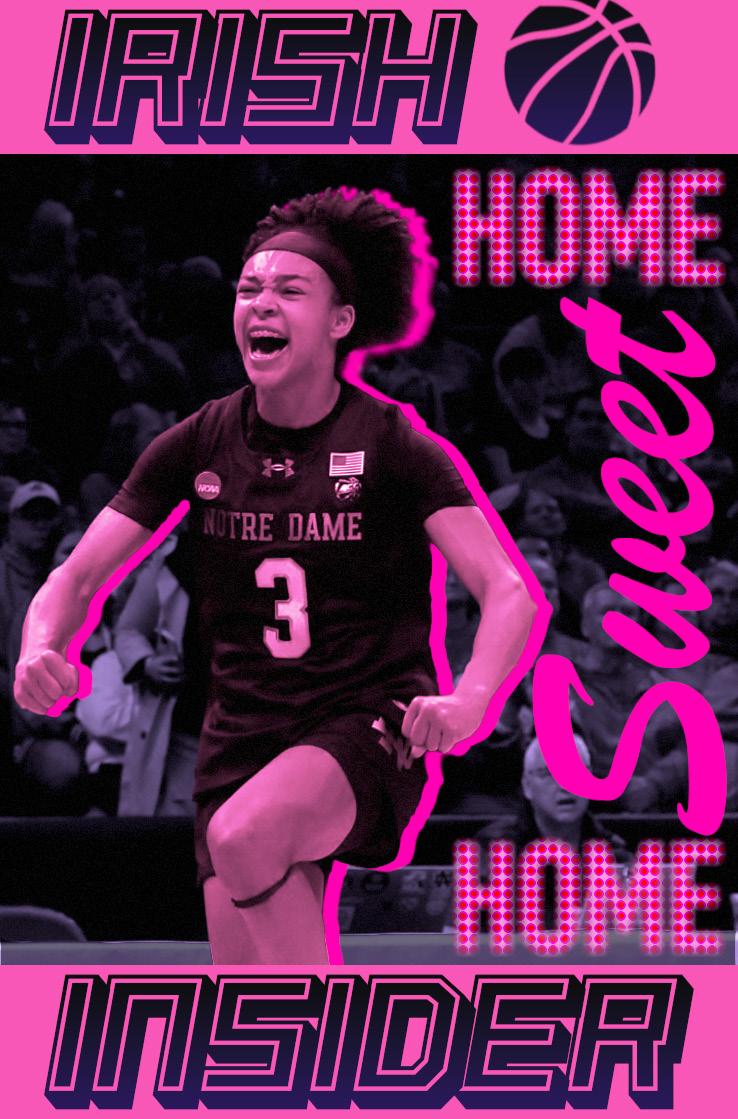
KK Bransford has remained a spark for the Irish
By Ben Hicks Sports Editor
With the Irish preparing to compete in their fifth straight Sweet 16 in Fort Worth, Texas, head coach Niele Ivey and star junior guard Hannah Hidalgo said that they wouldn’t be there without one player. Despite seemingly middle-ofthe-road counting stats of 7.5 points, 4.2 rebounds and 1.3 assists per game, senior guard KK Bransford has emerged as a spark plug off the bench since returning from injury Feb. 1.
The knee injury she suffered against Morehead State back on Dec. 11 didn’t immediately provide much promise for a return this season. Despite being heavily wrapped up and reduced to crutches, Bransford was determined to return and help her sisters in the Irish locker room. After all, this wasn’t the first blow of adversity she endured during her career in South Bend.
Coming out of high school, the Cincinnati native was a top-10 high school recruit, pursued intently by every major program in America. After leading Mount Notre Dame High School to Ohio state championships in 2019 and 2021 (the 2020 tournament was canceled due to COVID-19, with the Cougars sitting at 280), Bransford took her talents
to South Bend to play for Niele Ivey.
She immediately made an impact, averaging 8.2 PPG across 33 games as a true freshman to earn a spot on the ACC All-Freshman Team. That season ended in the Sweet 16, and her sophomore year followed suit. While preparing to play an even larger role on last year’s team, perhaps the most talented in school history, Bransford redshirted to recover from lingering lower body injuries that had hindered her strength throughout her time at Notre Dame.
This year, Bransford returned from the second of her setbacks on Feb. 1 for a crucial 78-66 win against perennial power Stanford. The Irish had struggled all year on the road, but her return eased some of the stressors that came with basketball away from home. Her athleticism, rebounding and basketball IQ sparked an Irish resurgence, moving them all the way from the bubble to a No. 6 seed in just a month.
The resiliency of Bransford has carried over to the rest of her team, especially as Notre Dame has reeled off 11 wins in 13 games since her return.
“This group is resilient. They’ve established a confidence in themselves and in our group, in our identity. It took us a while to kind of really
have that consistent identity. We were working through it a lot this season,” Ivey said before Friday’s showdown with Vanderbilt.
Just like Bransford, Notre Dame struggled with adversity all season, but led by Bransford and her infectious energy on the court, it battled back and worked its way into the Sweet 16 for the fourth time in Bransford’s four years. Asked about how her team responded to setbacks in December and January, Ivey said, “We added KK. That’s a big part of it. We were playing with six scholarship players at that time. KK being back with our team helped a lot.”
Bransford’s best performances have come on the biggest stages, and she was back in her home state for the first two rounds of the NCAA Tournament. In the same building where she captured two state titles, the two-time Ohio Ms. Basketball showed out in front of friends and family to help propel the Irish to the Lone Star State.
In the first round against No. 11 Fairfield, Bransford scored five points and pulled down nine rebounds. In the fastpaced second round showdown with the third-seeded Ohio State Buckeyes, Bransford’s presence off the bench ignited the Irish comeback from an
ND WOMEN’S BASKETBALL
11-0 hole. She was a +14 in the first half alone and finished the evening with 10 points, six rebounds and three assists en route to the 83-73 win.
Even with her own stat line of 26 points, 13 rebounds and eight steals, Hidalgo understood just how important Bransford was in giving the Irish life in the first half.
“KK brings so much for us on a different level,” Hidalgo said. “She knows the system so well. She brings something that we were lacking when she was out. So now to finally have her back you can tell. It makes a big difference with how we’re playing on the floor. She brings that spark off the bench that
we really need and we didn’t have.”
“It means everything. I had a lot of fans out there. My high school team or my high school team was out there. So just to be able to play in front of them, to see my family, my sister, my brother, this whole trip has been amazing,” Bransford said of her performance following Monday’s victory.
If Notre Dame is to move beyond the Sweet 16, a round that has proven challenging throughout the careers of Ivey, Hidalgo and Bransford, it will need KK, just as it has all year.
Contact Ben Hicks at bhicks3@nd.edu
Six seniors depart women’s basketball team
By Nikki Stachurski Associate Sports Editor
The Irish have made their fifth consecutive appearance in the NCAA tournament this year under the direction of head coach Niele Ivey, reaching the Sweet 16 for the fifth year in a row. They take on No. 2 Vanderbilt today at 2:30 p.m. at Dickies Arena in Fort Worth, Texas. As the Irish eagerly hope to advance, many seniors could potentially play their last game. On their 12-player roster, six women are listed as seniors and will not return for next season. As they leave, they take their experience and competitiveness with them, leaving fans to wonder whether Ivey’s team will find success next season.
Vanessa de Jesus
A guard hailing from Valencia, Calif., de Jesus has been a strong presence for the Irish after transferring from Duke last year. She has only played one year with the Irish, recording 291 points, 91 rebounds and 97 assists in 34 games. Standing at 5-foot-8, de Jesus is not the biggest player on the court but one of the scrappiest. She excels at finding gaps in defense and nagging the ball, as evidenced by her 63 steals on the
season. She is a smart playmaker, and her impact is felt despite her short tenure with the Irish.
Malaya Cowles
Since transferring from Wake Forest this season, forward Malaya Cowles has been a dynamic presence in the paint. So far, in her single season wearing Blue and Gold, Cowles has recorded 170 rebounds — a higher tally than any other season with her former Demon Deacons. The Wilkesboro, N.C., native has also amassed 53 steals and 26 blocks in her 31 games played for the Irish. At 6-foot-3, Ivey placed Cowles in the paint, where she has thrived by attacking on offense and protecting the basket on defense. She is not relied on as a shooter, but she is unafraid to put herself in the midst of a battle for possession and keep the Irish from turning the ball over.
Cassandre Prosper
As the only true senior on the team, guard Cassandre Prosper could return for another year of eligibility as a graduate student; however, she has yet to announce whether she will don the Irish uniform for another season. Reigning from Montreal, the 2024 Olympian represented
Canada during the 2024 Summer Games in Paris. The 2025-26 ACC Most Improved Player has been a fantastic guard for the Irish during her entire collegiate career spent at Notre Dame. In her time so far, she has 823 points, 315 field goals and 459 rebounds. Irish fans have witnessed the immense growth Prosper has displayed since joining the team in January 2022. In her senior season, she has played significantly more minutes and increased her career highlights by wide margins compared with previous years. With such growth and positive performance throughout her tenure, it seems promising that she would want to remain in South Bend for her final eligible year.
Jordyn Smith
Since transferring from Holy Cross to play as a graduate guard, Jordyn Smith has played 15 games and 46 minutes for the Irish. The Granger, Ind., native has been a steady presence on the Notre Dame bench and serves as a positive influence and strong motivator for the team. She recorded a season-high 10 minutes against Bellarmine on Dec. 21 and a season-high of four points against Morehead State
on Dec. 11. As she departs, the Irish bench and locker room will feel the absence of her grounding presence and ability to uplift those she plays around.
Iyana Moore
After playing three years of undergraduate basketball for Vanderbilt, guard Iyana Moore opted to leave the SEC in pursuit of competitive ACC play, transferring to Notre Dame as a graduate. The Milwaukee, Wis., native has played over 4,220 minutes in her career and recorded 1,701 points as her final season nears its end. She is consistent at the free-throw line, with a .832 shots made percentage. She averages just over 12 points a game and is not afraid to chase a rebound on defense.
Although she stands at 5-foot8, she has no problem defending other guards, as evidenced by her 175 career steals. Moore has not only been a dependable player but also one who has gone above and beyond in her growth; the Notre Dame coaching staff will find it difficult to replace her in the seasons to come.
Gisela Sanchez
Gisela Sanchez, the powerhouse forward from Barcelona,
has been a fan favorite after transferring from Kansas State to play as a graduate for the Irish. Named a two-time Academic All-Big 12 First Team in 2024 and 2025, Sanchez has played 33 games for the Irish this season. Standing at 6-foot-4, Sanchez is a fierce forward. She has made 13 blocks and 19 steals this season to pair with her 199 points. She is a dominant player on both sides of the floor and has stepped up when the Irish needed a different approach in the paint. An all-around consistent player, Sanchez was a great acquisition and a strategic forward to have in the Irish arsenal.
What’s next?
Looking ahead to next season, a couple of concerns arise for a Notre Dame team primarily guided in postseason play by players in their final year of eligibility. As the Irish compete in their fifth straight Sweet Sixteen, Ivey and her team must focus on one game at a time. That is a task easier said than done for the six players who will not be returning next season, given every game could be their last.
Contact Nikki Stachurski at mstachu2@nd.edu
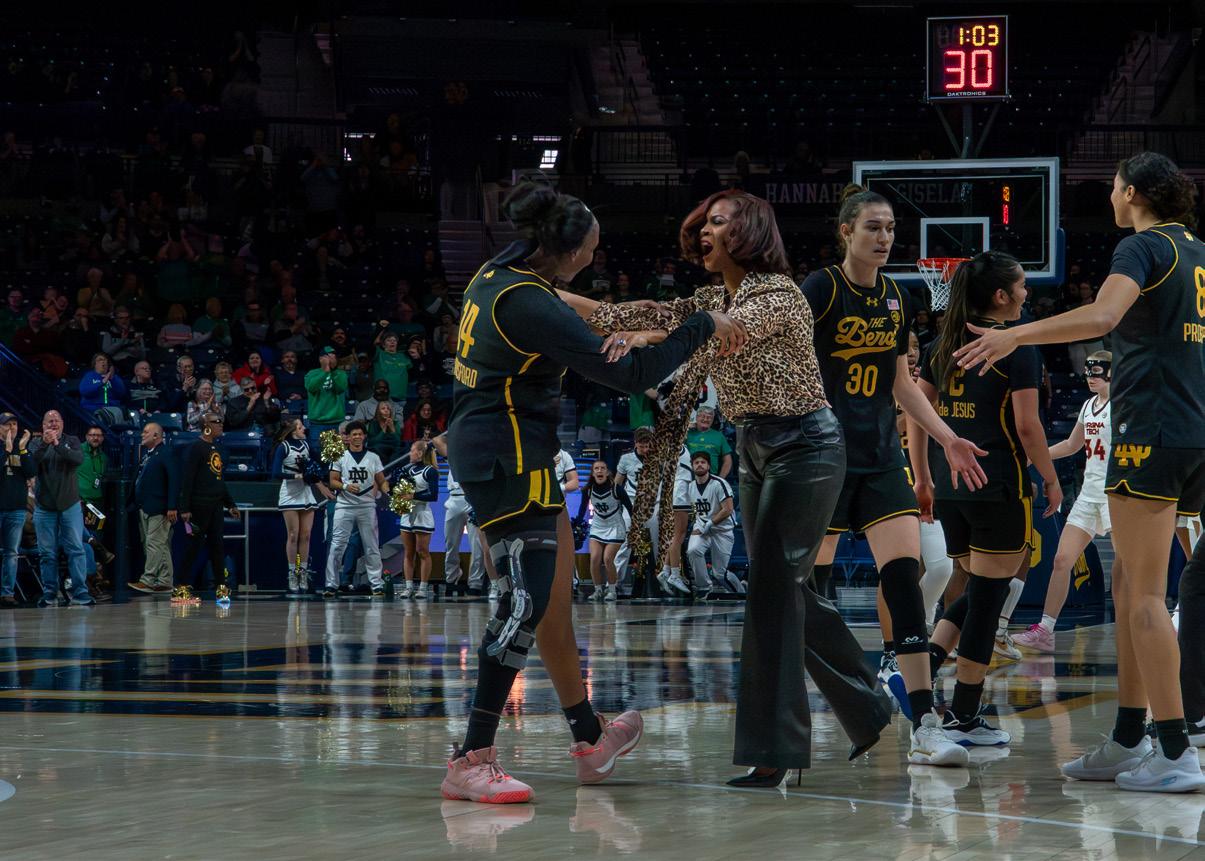
DECLAN LEE | The Observer
Head coach Niele Ivey embraces junior guard KK Bransford during the Irish victory over Virginia Tech in Fort Worth, Texas, on Feb. 5, 2026.

THE INDEPENDENT NEWSPAPER SERVING NOTRE DAME, SAINT MARY’S AND HOLY CROSS
FRIDAY, MARCH 27, 2026 | VOL. LX, NO. 54
Dylan Gossett to perform at annual Sound of SUB
By Marie Stier News Writer
Sound of SUB, the Student Union Board’s annual spring concert, will bring headliner Dylan Gossett to Stepan Center Friday. Gossett is a rising country singer-songwriter, known for his single, “Coal,” which made the Billboard Hot 100. Gossett is joined by opening acts Sons of Habit and Brayden Stewart, as well as student opener The Mourning Doves.
“I’m excited to go to the concert because Dylan Gossett is, like, genuinely one of my favorite artists to listen to,” freshman Emma Van Bramer said. “I’m going to try to be one of the first people there. I know they’re going to kick people out if they’re standing in line before 5:30, but I will be there at 5:30.”
In previous years, SUB put on two concerts, one in the spring and one in the fall.
Felix Smolen, SUB’s Concerts Committee chair, explained why SUB decided to host only one concert this year.
“Last year, promotion was
a little hurried because SUB did a fall and a spring show. Booking for the spring artist Del Water Gap, a killer performance, had a tight promotional timeline,” Smolen said. “800 people showed up, which is nothing to scoff at, but we had hoped to continue to justify the importance and the excitement of the concert committee, so the better chance was to have a larger show in the spring.”
Smolen was hired in April 2025 and began planning for Sound of SUB in the summer.
“I really love live music, I play a lot of music and I really love immersing myself in shows. Back home in Baltimore, I go to a lot of local venues, so it’s really small and I had a band in high school, so it’s really easy,” Smolen said. “But for these larger touring acts, I had no idea where to start.”
Smolen began the process by reaching out to booking agents, inquiring about pricing and availability for various artists and genres. In September, once SUB had determined the concert’s date,
the list narrowed even further. The process required lots of communication between SUB and the agencies, but Smolen highlights how it became more manageable as it progressed.
“It was fun to realize that some of these things, like reaching out to artists, are a little bit more accessible than you might think,” Smolen said.
From there, the committee gauges interest in what types of performances the student body would like to see. This year, SUB aimed to increase visibility and excitement by booking a larger artist: Dylan Gossett. Although SUB booked Gossett in October, the legal contracting process took longer than expected. Due to contracting delays, SUB was unable to promote the concert as much as they would have liked. However, Smolen predicts the concert will be near Stepan’s full capacity of 1,800 people.
“We really tried to dig deep and see what people wanted. And it seemed like a lot of people would be interested in Dylan Gossett, or at least the genre of this concert. It was
Editorial: Let them eat over break
The Observer Editorial Board
For tri-campus students who remained on campus during spring break, access to food was severely limited with the closure of three of the four dining halls across the tri-campus. Access was especially limited at Saint Mary’s College and Holy Cross College, which had no open dining halls over the week.
While it is understandable that Saint Mary’s and Holy Cross College may rely on Notre Dame for support at times, the barriers students face to finding food over breaks is inexcusable.
The only dining hall open across the three campuses was North Dining Hall, which was open a paltry 5 hours each day: 10 a.m. to 1
NEWS | PAGE 5
Honorary degrees
Notre Dame prepares to hand out seven honorary degrees during 2026 commencement.
p.m. for brunch and 5 p.m. to 7 p.m. for dinner, effectively limiting students’ dining hall access to two meals a day and requiring students at Saint Mary’s and Holy Cross to walk 30 minutes each way to eat.
Spring break began on March 7, but the dining halls at Saint Mary’s and Holy Cross closed on the evening of March 6.
Saint Mary’s students are given limited other options for food based on worker availability, including 1844 Grill, Starbucks and the campus’ convenience store, along with two days during spring break for in-person food pantry hours.
Holy Cross students face even greater difficulties. Their only cafe on campus is closed along with their main dining hall, leaving them
OPINION | PAGE 7
Doomsday mirage
Silicon Valley’s billionaires need you to fear artificial intelligence for the sake of their businesses.

really cool to experience the Zach Bryan concert at the beginning of the year, which is in a similar vein. I think a lot of people had fun with that, so we felt very motivated,” Smolen said.
SUB first announced the openers, Sons of Habit and Brayden Stewart, for Sound of SUB on Instagram in February
and revealed Dylan Gossett as the headliner March 20. Because SUB invested in a larger performance for the spring show rather than hosting two concerts, ticket sales increased to $20 this year. Smolen notes that, in recent years, artists have become
Corcelli to become dean of science
with no options other than heading to Notre Dame. Students are required to fill out a form to indicate the number of days they will be staying, in which they are offered two meal tickets a day for each.
Most Saint Mary’s and Holy Cross students must head to Notre Dame for food, but not before facing another challenge: transportation. The Sweep 17 bus that runs throughout the tri-campus community does not run during fall or spring break, leaving students to walk nearly two hours each day just to get to and from their two meals.
Students from these institutions shouldn’t be obligated to walk more than a mile to find food, especially
see “Editorial” on page 7
SCENE | PAGE 9
PEMCo production
The company puts on a delightful rendition of “ The Drowsy Chaperone.”
Observer News Staff
Steven Corcelli, current interim dean of the College of Science at the University of Notre Dame, will assume the role of dean on April 1, the University announced in a press release Tuesday.
According to the statement, Corcelli will head six various departments housing more than 280 faculty, over 600 doctoral students and 1,726 undergraduate student majors.
Corcelli has served as interim dean of the College since July 1, 2025, replacing Santiago Schnell, who left to serve as provost at Dartmouth College.
“Steve has consistently earned the respect of his colleagues and proven to be a wise and visionary leader who is deeply dedicated
INSIDER | PAGE 15
Hannah Hidalgo
Is the junior guard the greatest of all time for Irish women’s basketball?
to our Catholic mission,” University President Fr. Robert Dowd stated in the announcement.
Corcelli joined the University in 2005 as an assistant professor. He earned a bachelor’s degree in chemistry from Brown University in 1997 and a Ph.D. in chemistry from Yale University in 2002.
The interim dean has held multiple leadership roles at Notre Dame, including serving as associate dean for interdisciplinary studies and faculty development from 2019 to 2022 and chair of the Department of Chemistry and Biochemistry from 2022 to 2025.
Provost John McGreevy called Corcelli a “superb dean” and stated, “Over the
INSIDER | PAGE 16
Irish face Vanderbilt No. 6 women’s basketball prepares to face No. 2 Vanderbilt in fierce Sweet 16 matchup.
Courtesy of Wikimedia Commons
Dylan Gossett is set to headline the annual Sound of SUB concert on March 27 in Stepan Center with a mix of campus and outside openers.
was your favorite TV show growing up?
Cristobal Martinez freshman
Graham Family Hall “The Spectacular Spider-Man.”
Ernesto Ramirez freshman
Graham Family Hall “Adventure Time.”
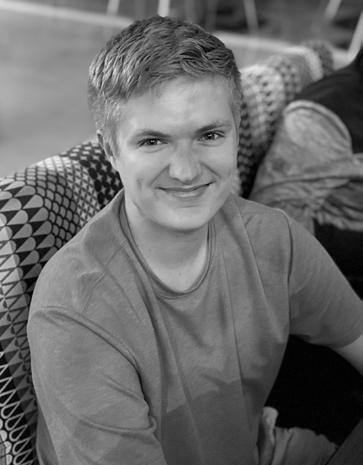
Troy Thorsen freshman
Graham Family Hall “SpongeBob Squarepants.”

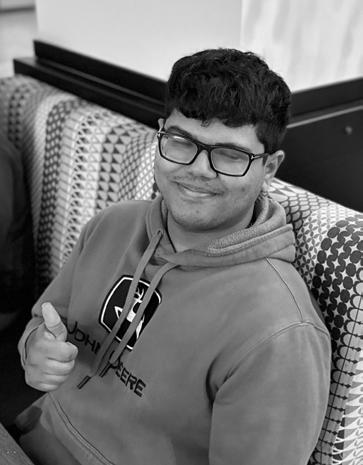
Yash Warren freshman
Graham Family Hall “Voltron.”
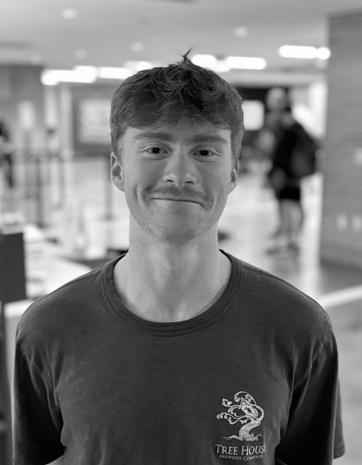
Connor Furey sophomore Siegfried Hall “The Simpsons.”
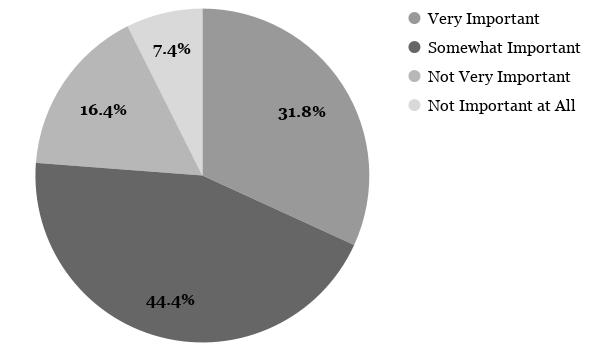
How important is the commencement speaker to your graduation experience?
Friday
Pasquerilla East Musical Company: “The Drowsy Chaperone” A parody of 1920s musical comedies with dance and laughter. Washington Hall Mainstage Theatre 7 - 9:30 p.m.
Saturday
Not-So-Royal Shakespeare Company: “As You Like It” Rosalind and Celia, banished, find a motley crew of people. Washington Hall Lab Theatre 7 - 9:15 p.m.
Sunday
Notre Dame baseball vs. North Carolina The Irish face the Tarheels in a top-25 ACC series finale. Frank Eck Stadium 1 p.m.
Monday
Democracy in Dialogue: “What Comes Next for Human Rights?” Amnesty International executive director presents. 5 - 6:30 p.m.
Tuesday
Interfaith Dinner: A celebration of Many Faiths at Notre Dame A dinner celebrating Eid, Easter, Passover, Nowruz and Holi. Jenkins Nanovic Halls 6 - 7:30 p.m.
PHOTO OF THE DAY | DECLAN LEE
Reisenauer family funds new institute
By Mara Hall Associate News Editor
With support from a gift by the Reisenauer family, the Notre Dame College of Science will establish an Institute for Rare Diseases to foster collaboration in research, patient advocacy and education for people with rare diseases. The amount of the Reisenauer family’s gift has not been made public.
According to a University press release, Dave and Cathleen Reisenauer are the parents of Peter, Cayla and Andrew Reisenauer. Peter and Andrew graduated from Notre Dame. Peter and Cayla live with Glycogen Storage Disease Type III. Cathleen Reisenauer also serves on the advisory council for the College of Science. Dave Reisenauer said the family has been involved with research focusing on rare diseases at Notre Dame since 2008.
“When we first started having conversations, they were very open to taking a look to see if there was an opportunity for Notre Dame to look at the disease my kids have,” Cathleen Reisenauer said.
Professor of chemistry and biochemistry Olaf Wiest said that, as of two or three years ago, more research was needed to validate the target enzyme involved in GSD before researchers could approach it from a chemistry perspective.
Cathleen Reisenauer said Notre Dame has already brought on two researchers from the University of Chicago and the University of Iowa who have been working on Niemann-Pick disease type C and have also offered to work on GSD Type III.
Rich Taylor, a professor in the department of chemistry and biochemistry, said he and several colleagues were introduced to Niemann-Pick disease type C in the mid-1990s by the Parseghian family.
“It is a disease that took three of their children, Cindy and Mike Parseghian’s children, the grandchildren of Ara Parseghian,” Taylor said. Ara Parseghian led Notre Dame’s Fighting Irish football program as head coach from 1964 to 1974 and is renowned for winning Notre Dame’s national championships in 1966 and 1973.
Taylor said pharmaceutical companies often focus on drugs with broader markets, while Notre Dame’s mission created an opportunity to build a community of researchers committed to rare diseases.
“The vision was always that this would start with NiemannPick Type C, but that would be far from where we would end,” he said.
Dave Reisenauer said, in general, rare disease work centers on four areas: policy, research, education and advocacy. About seven years ago, he said his
family began discussing how to expand Notre Dame’s work beyond research and into advocacy. Those conversations led to the endowment of the director of rare disease patient advocacy position and, later, the creation of the patient advocacy minor. That position is currently held by Barbara Calhoun, who was unavailable for comment.
Dave Reisenauer said the new institute is designed to bring together the four major pillars of rare disease work, build partnerships around the world and address what he described as more than 7,000 rare diseases. He also said the institute is currently developing a model for research workshops that connect researchers directly with patients. The first workshop for GSD Type III was held last June, and a second is scheduled for this June.
“The power of that is not only do the researchers get to see patients and talk to them in real time, but again, the patients are getting to see there is a network, there is a group of folks that are hearing them, seeing them for who they are,” he said.
For Rare Disease Day on Feb. 28, Notre Dame hosted an event that drew its largest group of patients yet, with 20 to 30 patients representing a variety of rare diseases in attendance, Dave Reisenauer said.
In a written statement to The Observer, Steve Corcelli,
William K. Warren Foundation interim dean of the College of Science and professor in the department of chemistry and biochemistry, said the new institute will bring together more than two decades of work in rare disease research under “a unified structure” consistent with Notre Dame’s mission.
A University spokesperson also wrote in a statement to The Observer that the Institute for Rare Diseases will serve as “a central organizing framework,” bringing together the Boler-Parseghian Center for Rare Diseases, the Patient Advocacy Initiative and the Ara Parseghian Medical Research Fund. The spokesperson said those entities will remain distinct but will operate within the institute to strengthen coordination and create new opportunities for collaboration.
In his statement, Corcelli wrote that ND Day remains an important moment for the Notre Dame community to support rare disease research.
“Last year, we raised more than $720,000, driven largely by enduringly strong support for the Ara Parseghian Medical Research Fund,” he wrote in a statement to The Observer.
Contact Mara Hall at mhall27@nd.edu
7 honorary ND degrees to be awarded
Observer News Staff
The University of Notre Dame has announced that seven individuals will receive honorary degrees at this year’s commencement ceremony.
Honorary doctor of laws degrees will be awarded to Marguerite Barankitse, Eamon Duffy, Christopher Murphy III, J. Christopher Reyes, Sister Raffaella Petrini and Cardinal Joseph Tobin. Mary Boyce will receive an honorary doctor of engineering degree.
According to the press release announcing the recipients of the degrees, Barankitse is “a humanitarian leader and teacher, is credited with saving more than 50,000 children and providing them with access to health care, education and culture through her organization, Maison Shalom (House of Peace).” Through her work across Burundi, Rwanda and the Democratic Republic of Congo, she has sheltered and supported children affected by war. Since 2015, when she was forced to leave the Democratic Republic of Congo, she has been working in exile in Rwanda.
Duffy is an emeritus professor of the history of Christianity at the University of Cambridge.
“Duffy is a renowned scholar of
Christianity in the Middle Ages and the Reformation, the history of the papacy, and Christian material and visual culture.
Duffy has written extensively for both scholarly and popular audiences, and two of his books, ‘The Stripping of the Altars: Traditional Religion in England, 1400-1580’ and ‘The Voices of Morebath: Reformation and Rebellion in an English Village,’ are widely credited with reshaping the modern understanding of Catholicism in late medieval England as a vibrant and popular faith rather than a dying institution,” the press release stated.
Murphy is an alumnus of Notre Dame, having received his undergraduate degree here before receiving degrees in law and business from the University of Virginia and Harvard University, respectively. In 1972, he joined with his father-in-law and a group of investors to purchase the First Bank and Trust Company of South Bend, now 1st Source Bank. According to the press release, his work, centered on the banking and business industries, has supported “numerous organizations seeking to address some of society’s most critical needs — including health care,
economic development, education and support for the arts — at the regional, state and national levels.”
Reyes is the co-founder and chair of Reyes Holdings LLC — a large global food and drink distribution company.
“Reyes founded the company with his father and brother in 1976, beginning as a small beer distributor in South Carolina, and today delivering 1.3 billion cases of food and beverages globally each year,” the press release stated.
He has been a member of Notre Dame’s Board of Trustees since 2003.
Tobin was named a cardinal by Pope Francis and serves as the sixth archbishop of Newark — a role he has held since 2017.
“After serving as superior general of the Redemptorists, he was ordained archbishop in 2010 and appointed by Pope Benedict XVI to serve as the Secretary of the Congregation (now Dicastery) for Institutes of Consecrated Life and Societies of Apostolic Life. From 2012 to 2017, he led the Archdiocese of Indianapolis. In addition to his responsibilities in the Archdiocese of Newark, he serves on the Vatican’s Dicastery for Institutes of Consecrated
Dean
Continued from page 1 dean” and stated, “Over the past two decades at Notre Dame, he has shown a commitment to collaboration and innovation in the laboratory and the classroom.”
“I look forward to working with our community to strengthen partnerships across the University and beyond; support our faculty, students and staff in their pursuit of discovery and learning; and advance an intellectually ambitious vision for science in service to the common good,” Corcelli stated in the release. “Notre Dame has a unique opportunity to integrate scientific discovery with its Catholic mission in ways that serve both the University and the broader world.” more expensive to book, and production advances have risen. To make the concert accessible to more students, financial aid for tickets is available in SUB’s student body-wide email.
SUB
Continued from page 1
Life and Societies of Apostolic Life, the Synod of Bishops, the Dicastery for Culture and Education, the Dicastery for Promoting Christian Unity, the Council for the Economy, the Dicastery for Bishops, and the Joint International Commission for Theological Dialogue between the Catholic Church and the Orthodox Church,” the press release stated.
Cunningham Boyce is a provost emerita and professor of mechanical engineering at Columbia University, having worked at MIT for 25 years before Columbia.
“A leading researcher of polymeric materials and soft composites, her groundbreaking contributions include creating new modeling methods for the use of engineers in commercial products, transportation vehicles, and biomedical devices, among others,” the press release stated.
An honorary degree will also be awarded to Sister Raffaella Petrini, the principal speaker of this year’s commencement. She was set to receive an honorary doctor of laws degree at commencement last year but deferred her reception of the award following the death of Pope Francis.
“We were disappointed that we had to up [ticket prices] to $20 to break even and utilize our budget effectively,” Smolen said. “This should be accessible to all students and I certainly want everyone to go. Concerts are the best.” Freshman Hannah Wolfarth is a member of the SUB Concerts Committee who will work backstage during the production and hopes to meet Dylan Gossett.
“I’m excited to see all of it put together, all the hard work that’s been done. It’s such a unique experience that not a lot of other schools get, because it’s not open to the public, only students. You get to be in a floor seat, essentially, to a really great concert,” Wolfarth said.
In addition to being SUB’s Concerts Committee chair, Smolen is also the opener with his band, The Mourning Doves, and suggests arriving early to the concert.
“The two touring openers, Brayden Stewart and Sons of Habit, are incredible. Lots of times, those smaller artists go unnoticed. I’m a really big fan of that sort of thing, so I strongly encourage people to show up and support them and support their music,” Smolen said. “It’ll be good, cathartic, and the musical experience is going to be dynamic and incredibly engaging and really authentic and honest.”
Contact Marie Stier at mstier@nd.edu
Sayler outlines Judicial Council president plans
By David Murphy Associate News Editor
Student union historian
Monica Sayler will assume her role as Judicial Council president April 1, replacing Elijah Jones for the 2026-2027 calendar year. Student body president-elect Jones, who will begin his term on the same day, nominated Sayler, a sophomore, to be his successor. Her nomination was approved by the senate Feb. 18.
“When I became Judicial Council President, she surpassed what I was able to accomplish as Historian, building the Student Union Archives from the ground up and forming the first-ever Historian Team,” Jones wrote in a statement to The Observer.
He continued, “I have no doubt that the way she leads the Historian Team with dignity will transfer over to this new role.”
Tasked with overseeing the actions of the student government members, the Judicial Council has the sole power of interpretation according to its website and
the student union constitution. It determines the constitutionality of student union resolutions and enforcement enactments, “[issuing] binding opinions regarding questions of interpretation.” The group is also responsible for peer advocacy, helping students navigate hearings and conferences from the Notre Dame Office of Community Standards.
In addition to serving as chairperson of the Judicial Council, the president also serves in other roles within student government, including as chairperson of the ethics council and as a non-voting member of the student senate.
Originally setting her sights on the position of vice president of elections, conversations with other Judicial Council officers changed Sayler’s perspective.
“When all the other officers started to decide what they were doing for next year, many were going abroad, and so we would have had a high turnover rate,”
she said. “So that influenced me a bit because I really wanted to make sure that we could continue with the things that we’ve started that have been so successful.”
Student outreach is a top priority for Sayler, who felt that most students only see the public-facing role the Judicial Council plays on campus. She hopes that utilizing social media can increase Judicial Council’s transparency by enabling them to communicate more effectively with the student body.
“Using [social media] to promote the peer advocacy program, to promote voter turnout around elections, is something that we really want to do,” she said. “We are also working to get a flyer sent out to students in the first couple weeks of school … so that they know the [peer advocacy] options available to them.”
The purpose of the Judicial Council, according to the student union constitution, is to “ensure that the Student Union operates ethically and within [the]
Constitution, bylaws, and statutory codes.” Regarding accountability, Sayler highlighted the need for proper communication with student body members.
“I think the process we have right now has been working pretty well. I think that the one thing that lets a lot of things slip through the cracks is reporting. I think that a lot of times, people don’t know that other people are breaking the rules. I want to make sure that we’re communicating the rules as effectively as possible so that those kinds of things can be caught before they get out of hand.”
“I think that our hearing process does a pretty good job of getting the information from both sides and of debating an appropriate sanction,” she added.
When asked what a successful term as Judicial Council president would look like, Sayler emphasized high voter turnout as a metric for success, with the addition of impartial enforcement of constitutional conduct.
“Obviously, I want to have minimal amounts of ethics and election violations, but I also don’t want that to be because people aren’t reporting things that are wrong,” she said. “Some things are out of your control, so if we do have a high number of cases, I want to make sure that they’re dealt with as fairly as possible.”
Outgoing student body president Jerry Vielhauer expressed confidence and support for Sayler and her upcoming tenure in a written statement to The Observer.
“She has a lot of experience as a historian, and everyone that has worked with her speaks very highly of her,” he wrote. “Next year, I’m confident that we will see the Judicial Council continue to uphold the integrity of the constitution and help to increase voter turnout for elections, as they have done quite well this year.”
Contact David Murphy at dmurph23@nd.edu
Reilly Center to establish disability studies minor
By Jessica Mayor News Writer
This upcoming fall, the Reilly Center for Science, Technology, and Values will be increasing its offerings of Disability Studies courses, speakers and events. Although the minor is not yet available, in response to an increased interest gathered from a student and faculty-wide survey, the center will explore officially establishing a minor program within the next couple of years.
Student body president Jerry Vielhauer announced in a March 3 email that the minor is being “soft launched” through an increase in disability-focused courses in the Reilly Center’s Health, Humanities and Society minor.
Associate professor Robert Goulding credited the spark of initiative to sophomore Benjamin Gallei, who directs student government’s Department of Disability Advocacy. Goulding said Gallei “compiled a report based on a lot of student feedback, showing the depth of student interest in a new Disability Studies minor.”
Gallei and his department researched Disability Studies programs at other universities and compiled a list of courses the minor could include in its efforts to advocate for its creation.
The interest in a new Disability Studies minor did not just stop at the student level but continued to gain support across multiple departments, including English and anthropological studies.
“One challenge to founding a new interdisciplinary program has been in finding a place for it to be administered and sustained. It doesn’t fit very neatly into any one department. So, I
was really happy that the Reilly Center could offer it a home,” Goulding said.
Laurel Daen, an assistant professor in the Department of American Studies, continued to highlight how the new developments, in providing classes and events related to Disability Studies, are because of the efforts of students.
Junior Finley Shinnick aided in conducting surveys based on the initiative built by Notre Dame alumna Jill Maudlin to gauge students’ interest in a Disability Studies minor. “I analyzed and visualized this data and included
this information in a proposal for a soft launch of the minor in early Spring. With this data, we demonstrated that there was both broad student interest and existing infrastructure at Notre Dame to accommodate a minor,” Shinnick wrote.
Speaking on the course of action and most recent progress that the department and students have made, Daen stated, “The Department of Diversity & Inclusion: Disability Advocacy within Notre Dame Student Government wrote a proposal for a minor this past fall. I circulated their proposal with faculty at the
Reilly Center, and the director approved pursuing the minor.”
Although no class list has been officially published, Daen encourages students who are interested in taking a new course to look toward the fall semester offering of Introduction to Disability Studies, writing to The Observer, “This course will ultimately serve (we hope!) as the introduction to the minor. The course will originate in the Health, Humanities, and Society minor with crosslists in American Studies and other departments/programs.”
Daen believes a minor in Disability Studies would be
an asset to the University, as it would emphasize the education and action of Notre Dame’s mission of learning and service.
“Disability Studies is an academic discipline that explores social categories and lived experiences of disability in order to create a more equitable and accessible world. Scholars in the field center the voices and experiences of disabled people, challenge ableism through scholarship and service, and promote the rights and dignity of disabled people,” he wrote.
Contact Jessica Mayor at jmayor2@nd.edu

PAID ADVERTISEMENT
Editorial
Continued from page 1
given that most students live in dormitory rooms, not apartments with equipped kitchens.
This is also an accessibility issue. If you are a student with a
physical disability, trekking one mile to Notre Dame is not feasible. Saint Mary’s Campus Safety department says the furthest they can drop off students is the Grotto of Our Lady of Lourdes, which still leaves half a mile.
The closure of dining halls also disproportionately affects
low-income students, who are more likely to stay on campus over breaks. They are left with either purchasing groceries out of pocket for the week-long duration if they have a car or ordering out each day for meals, which adds on extra cost to delivery.
Students at Saint Mary’s and
Holy Cross deserve better from campus dining. Campaigning and awareness on this issue is not new, but no meaningful action has been taken.
Even if classes are not in session, our tri-campus offers a home for all of their students; campus dining should follow by
opening the dining halls at Saint Mary’s and Holy Cross College, even if for just an hour or two each meal period and with more limited menus. In doing so, Holy Cross and Saint Mary’s administrations can provide greater support and accessibility for their students.
Off the dome: Campus dining edition
By Allison Elshoff Columnist, “Asking for a Friend”
North Dining Hall is a busy place. On any given day, over 5,000 students will swipe in to enjoy their Southwest Salads and General Tso’s tofu. Between the snaking food lines and crowded tables, it’s easy to get lost in the shuffle.
DeRhon Pines
DeRhon Pines — better known as “Mr. NDH” — doesn’t let his regulars become just another face in the crowd. As the closing manager at North Dining Hall, you can often find him walking from table to table, greeting students by name and asking how their midterms went. “You wake up and you don’t mind going to work, you know?” he explained.
Yet, if you had told Pines five years ago that he’d find fulfillment as a campus dining
By Graham Wolfe Guest Contributor
In a series of lectures in 2025, Peter Thiel, co-founder and chairman of the defense analytics firm Palantir, attempted to map the modern history of artificial intelligence onto a JudeoChristian end-times posture. He employed the literary lens of the Book of Revelation, where St. John bears witness to the core end-times prophecies that define Christian cosmology. Thiel described AI developers as having “conjured up a demon in whose existence they claim not to believe,” and broadly asserted the idea of a demonic dimension to AI that if entertained will quicken the arrival of the rapture. His claim is not that AI itself will become the Antichrist, but that it is an affordance to the Antichrist’s aims to displace the “human logos” and ready the world for its end.
Amid the ongoing generative AI revolution, most people are concerned about job loss, autonomy or misinformation, but for many prominent tech titans, their chief concern has been the end of the world as we know it — either apocalyptic or utopian. Part of enduring the past three years of the “generative revolution” has been putting up with the scientists actively engineering our AI future, namely some experts in deep learning, tech CEOs, their VPs and senior AI
manager, he would have laughed. In college, he dreamed of being a lawyer — and his dream came true. He graduated from Purdue University, got into law school and landed an internship at a great law firm.
But during that internship, Pines realized something. “Everybody made great money, but they were just miserable,” he explained. “I just [couldn’t] see myself doing that.”
So Pines did the one thing a high-achiever is never supposed to do: He quit. “It was the best decision I’ve ever made,” he said.
Now at Notre Dame, Mr. Pines’ job isn’t about climbing the social ladder or maximizing profit. His work is keeping Notre Dame’s students fed — but it’s about more than that. From curating the music to asking his regulars about how they did on exams, Mr. Pines wants to make everyone who enters the dining hall feel like they
belong.
“This is students’ home away from home,” he explained. “This is their kitchen. This is their living room. Just having those little interactions, and being the person who actually cares about how [their] day is ... it made me really solidify my love for what I do.”
Matthew Brower
Meet another campus dining hero at Notre Dame: Matthew Brower.
Mr. Brower is the manager of Decio, a small cafe nestled into the first floor of Decio Faculty Hall. “Either we’re your favorite place on campus, or you’ve never heard of us,” he laughs.
Despite flying under the radar, the cafe has developed a cult-like following over the years. When Decio is closed, many regulars opt to bring lunch from home rather than eat elsewhere on campus. Others are loyal because of the
cafe’s vegan options: “We know that certain vegans like a certain vegan soup on a certain day. If we don’t see them, we’ll actually save a soup for them so they have leftovers,” Brower explains.
This attentiveness leaves an impression on the people Decio serves. “One of our friendliest regulars actually chose to be a grad student at Notre Dame because she liked the cafe so much,” Brower said.
Brower goes the extra mile for his staff, too. He often lets his workers infuse Decio’s menu with their own personal touch — items like “Janet’s Chicken Sub” are the result of a worker’s signature dish making it to the official menu. During finals week, he makes his senior student workers their favorite off-the-menu items as graduation gifts. And for Thanksgiving, Brower makes a “cheese pot” dish for the staff to enjoy together: “It’s one of our
The doomsday mirage

engineers, claiming that AI will lead to the destruction of humanity — genuine, straight-faced, doomsday predictions from the makers themselves. Others claim that it will create a world where prosperity of unrecognizable proportions will be commonplace. All in all, tech leaders seem to be less concerned with the day-to-day externalities of their inventions; they’re thinking about transcendence: heaven or hell.
Why is this? One possible explanation is that Silicon Valley needs you to think of AI as something with immeasurable potential in order to sustain its otherwise wishful profit
objectives. Founders and CEOs from Sam Altman to Dario Amodei have prophesied that AI will change the world in ways we can’t even fathom, and these claims appear to coincide with an urgency to deliver on equally unfathomable promises they’ve made to investors. A world that is convinced AI can put a man on Mars or solve the climate crisis is more likely to support leaving the AI industry unregulated, and a society that puts AI and the Antichrist in the same conversation is more likely to overlook the audacity of $1.4 trillion in spending commitments. One way or another, Silicon Valley leadership has to fight an uphill battle
to achieve profitability, and this rhetorical strategy might afford them the economic and social power to do so.
Sam Altman, co-founder and CEO of OpenAI, has made clear his transcendent beliefs around ChatGPT. In 2023, when OpenAI’s market cap was just 6% of what it is today, he spoke before the U.S. Senate, urging lawmakers to pass thoughtful regulation that would mitigate the chief risk of AI overpowering humanity. Later, in the summers of 2024 and 2025, amid a more anti-regulatory political paradigm, Altman wrote a series of manifestos where he painted a picture of a world
student worker’s favorites, but it’s never been on the menu because the brie is too expensive. So I actually pay for that and bring it from home,” he says.
This is why Brower loves what he does — the soup-saving, the staff celebrations, the small gestures that mean something bigger. “Food is just a conduit for service,” Brower explained.
For both Brower and Pines, filling empty stomachs is the job description. But making people feel seen — leaving a lasting impression on every person they serve — is the real work. And that’s a pursuit worth waking up for.
The views expressed in this column are those of the author and not necessarily those of The Observer.
Contact Allison Elshoff at aelshoff@nd.edu
unrecognizable to our grandparents. Alarmist or optimistic, his rhetoric casts generative AI in an otherworldly light, channeling an almost dream state when he describes in detail the digital future we’re in for: “Although it will happen incrementally, astounding triumphs – fixing the climate, establishing a space colony, and the discovery of all of physics – will eventually become commonplace.” Summing up his ambition, he says, “I believe the future is going to be so bright that no one can do it justice by trying to write about it now; a defining characteristic of the Intelligence Age will be massive prosperity.” He offers another take in a similar, less visible piece: “In the 2030s, intelligence and energy—ideas, and the ability to make ideas happen—are going to become wildly abundant.”
We’ve grown used to these promises of transcendent prosperity, even as the pendulum swings arbitrarily between optimism and pessimism. In an interview with Tucker Carlson, Elon Musk sardonically raised more pessimistic, even apocalyptic, concerns about the technology, claiming there is a “non-trivial” chance AI could cause “civilization destruction.” In late 2025, Musk doubled down, saying, “Mark my words, AI is far more dangerous than nukes… If AI has a goal and
see “Doomsday” on page 8
BEN SMITH | The Observer
Continued from page 7
humanity just happens to be in the way, it will destroy humanity as a matter of course.” In a January 2026 essay, Anthropic CEO Dario Amodei claimed that “Humanity is about to be handed almost unimaginable power, and it is deeply unclear whether our social, political, and technological systems possess the maturity to wield it.” In a September 2025 DC summit, he more bluntly added that “there’s a 25% chance that things go really, really badly.” Bill Gates, Geoffrey Hinton, Peter Thiel and a dozen other tech titans have contributed their thoughts to this discourse. Presently, it would be great to know how urgent or true these predictions really are, so we can pressure test the credibility of these alarmist tech titans. Technologists will debate whether or not the state of the art is really as dangerous as it’s being made out to be, but if we assume it all to be true … OK then. We give in to the pressure to trust Elon Musk and we believe AI is going to lead to extinction. Let’s do something about it then — but why is the tone of Silicon Valley so anti-regulatory? Case in point: in late 2025 Silicon Valley flooded the government with $150 million, lobbying for a ban on state-level AI regulation. They cited core themes of
burdensome regulations that chill innovation in the face of a growing global techno-arms race. This anti-regulatory insistence appears to be working, as policy evidence shows the Trump administration has afforded Silicon Valley significant self-regulatory power.
Observing their behavior in the aggregate, they insist that AI has the capacity to existentially threaten humanity, yet they crucially circumvent democratic institutions — emphasizing these existential threats alongside an implication that only they hold the power to tame this powerful technology.
Why would Silicon Valley want to simultaneously convince us that (a) AI is this transcendent, transhumanist technology that could end the world, and (b) we need a hands-off-the-technology paradigm? The aim is to render AI ungovernable in the public imagination — too powerful to regulate, too important to restrain — leaving these companies free to spend, build and chase new financial highs while the question of economic recklessness goes unasked.
Some of these Silicon Valley tech titans may genuinely believe that their inventions are truly transcendent of human comprehension, and some others may not even buy their own talk. Much like their insistence on deregulation, this transcendent rhetoric is best understood
as being necessary under present profit ambitions. Frustrating to investors, tech leaders have yet to point to any hard evidence of genuine economic benefits that would justify their lofty revenue projections — so what fills that void? Transcendent rhetoric that keeps investors optimistic, the news cycle fixated and users coming back. The mirage of doomsday rhetoric matches the mirage in the balance sheet.
These companies are ballooning in size off ambitious valuations from investor sentiment, then investing, loaning and trading that capital with one another — a closed-loop (likely) bubble propped up by ambitious longterm revenue potentials. Right now, investors are willing to pay around $50 (sometimes as high as $100) for every $1 in revenue that these tech titans bring in, exemplified in what many analysts see as overinflated P/E ratios. The existence and success of this entire system, trillions of dollars of market cap, depend on (a) continued optimism from Silicon Valley investors and (b) AI companies having a longterm path to realize these revenue goals.
Right now, little evidence suggests Silicon Valley is prepared to deliver. Exploring OpenAI as a prime example, along with their recent restructuring as a for-profit company, they released highly ambitious revenue goals for the coming years. According
to company projections, OpenAI expects to grow revenue from $13 billion in 2025 to nearly $200 billion in 2030, with annual negative net cash flows of up to $50 billion (in 2028) attributable to data center construction. HSBC estimates that the company still won’t be profitable even into the next decade, and is short $207 billion of realizing its vision for more computing power and data centers. In essence, the company needs a business model that reconciles its ambitions for profitability and data center capacity with its underperforming top-line revenue.
For all the talk that Sam Altman does about AI ushering in an era of unfathomable prosperity, it’s curious why his most recent strategic move was to release Sora 2 with a shortform video format and social media interface. OpenAI also announced a move to make more intimate/sexually explicit content accessible to adult users and in January 2026 it announced it would begin selling ad space on the free version of the ChatGPT interface (view ironic responses from their competitor here). All of these announcements suggest an urgent strategic divergence from supposedly world-changing AI toward more monetizable products, grounded in the cultivation of user attention.
Why did Altman decide to introduce ads, restructure as a for-profit and release a hellish
version of TikTok after years of prophesying an AI heaven? Because OpenAI is screwed, not the world.
On a November 2025 podcast appearance, OpenAI CEO Sam Altman responded to doubts about revenue viability with an exasperated “Enough.” Seated in front of two framed images depicting human space travel, Sam Altman appears defensive, as many comments noted. After a minute-long rant that called into question OpenAI’s revenue viability, contrasting their current $13 billion in revenue with their ambitious $1.4 trillion in spend commitments, Altman cut off the host with an exasperated “Brad, if you want to sell your shares, I’ll find you a buyer… enough.”
Perhaps the tendency to prophesy apocalypse or utopia is better understood as just being good business when under otherwise ordinary, but urgent, financial circumstances. I argue that the existential threat AI poses right now isn’t to humanity; it’s a threat to companies like OpenAI who have wagered their existence on an unsound, highstakes “AI bet.”
The views expressed in this essay are those of the author and not necessarily those of The Observer.
Contact Graham Wolfe at gwolfe@nd.edu
Why does no one talk about grief in college?
By Mia Drake Opinion Copy Editor
“If you are going through a hard time because your boyfriend broke up with you the week before the exam, email me and we will work something out.”
The closest admission I have heard across my four years at Notre Dame that life really does happen outside of the classroom is a singular expression of solidarity from a professor at the start of the semester.
In many ways, it is fair to expect students to soldier on through the hardships of life; the time keeps passing, and the “real world” stops for no one’s mourning. Or does it?
During my four years at college, I have shouldered my fair share of grief — the death of a friend, the passing of both of my family dogs, heartbreak, friendship breakups, you name it — and the world does seem to slow down. Assignments take the back seat to time at the Grotto, dining hall dinners linger longer, lake walks with friends become necessary for coping. And yet, missing class for anything less than a hospitalization is strongly frowned upon. Believe me when I say I am in no way an advocate for skipping class unnecessarily. I mean someone is paying a lot of money for you to sit in DeBart

101. However, I cannot help but to think maybe we should not push suffering under the rug in favor of academic success. As evidenced by the seemingly perpetual waitlist for a therapy appointment at the UCC during the spring semester (I have been waiting four weeks), many students are suffering alone. While calling your hometown best friend may feel like a substitute for proper therapy, I strongly encourage you to begin to take more steps toward navigating whichever hardship had you in “Drop In Counseling” to begin with (until we can get off the waiting list, of course).
My unwarranted and unlicensed advice for how to navigate the never-ending list of stressors and things that go wrong on campus? Let yourself cry about it. Now I know that sounds like surface-level advice, but hear me out. Whether experiencing a failed exam, first heartbreak or severe homesickness, spending time listening to Adele’s “Hold On” while lying on the floor of your bedroom and hoping your roommate doesn’t walk in is a valid coping mechanism. Now this next step is very important, so throw on your reading glasses and come close. Grab your favorite snack
from the Huddle (I am partial to Ben and Jerry’s and/or pickles), throw on your comfiest sweatpants that I do not encourage you to wear to NDH and turn on the first movie on your “to watch” list that you never got to. Bonus points if you had no clue it was sad (no one told me what “Dead Poets Society” was really about). Then and only then are you ready to begin the healing process. After you complete night one, the healing journey truly becomes a “choose your adventure” game. The sun will come up earlier than you would like. You will immediately remember
whatever made you cry on your floor and school will be right there waiting for you to come back. However, there are a few things that I suggest you don’t do at this time.
1. Go on Instagram reels as soon as you wake up. This has never set anyone up for success, perhaps ever.
2. Let your laundry pile up. It only gets more daunting the more socks you add to the pile, so show yourself an act of kindness and fold it as soon as it’s done.
3. Drink your feelings. See reasoning for point one.
4. Isolate yourself from your friends. Leaning into the support systems around us is the best way to pull yourself toward your new normal. Schedule frequent coffee breaks, lunches and gym dates to give yourself something to look forward to. At the end of the day, the world will keep turning and school will continue, but your experiences outside of the classroom are what life is all about. So while the “real world” may not stop for grief, it is safe to say that your world might.
The views expressed in this column are those of the author and not necessarily those of The Observer. Contact Mia Drake at mdrake3@nd.edu
BEN SMITH | The Observer
Gloriously unhinged: “The Drowsy Chaperone”
By Isabela Garza Sanchez Scene Writer
Let’s travel back to the roaring ’20s with The Man in the Chair as he pulls us into a world of surprisingly talented tap dancing, in-sync musical numbers and dancing bananas. As someone familiar with the demands of the genre (shout-out to my favorite role Marty from “Grease”), none have been as chaotic while simultaneously comical as PEMCo’s “The Drowsy Chaperone.” And yet, one might wonder what hides between the amusing jokes and its vivacious characters?
With the houselights down, sophomore Jack Jubar, playing The Man in the Chair, appears seated with the audience, walks onstage, and plays us his favorite record: the cast recording of a fictitious 1928 musical. The story comes to life in his own living room.
Founded in 1997 by a group of students from Pasquerilla East Hall, PEMCo is the leading producer of musical theater at Notre Dame, presenting two musicals and a revue every year, last fall assembling “Little Shop of Horrors,” directed by senior Carolyn Dell. This spring, the company produced “The Drowsy Chaperone,” directed by sophomore Victoria Khomenko. Through choreographed dances, live orchestra and amazing voices, PEMCo captures the diverse and eccentric characters from the vivid musical.
“The Drowsy Chaperone,” a winner of five Tony Awards, including Best Book and Best Original Score, is a parody of the Golden Age musicals. It debuted in 1998 as a short cabaret-style show in Toronto, Canada, originally created as

a wedding gift for Bob Martin and Janet Van de Graaff (the main characters in the story). The show later premiered on Broadway at the Marquis Theatre in 2006, becoming a critically acclaimed hit. Now, it is being performed by our own student body and is running on Washington Hall’s main stage March 26-28. Alongside our fanatic guide, we dive into the wedding eve of glamorous star Janet Van De Graaff (sophomore Charlotte Schaub) and Robert Martin (sophomore Gabriel McInnis). The event hosted by Mrs. Tottendale — played by Joscie Lefevre — and the butler Underling — played by Bryce Bustamante — becomes a whirlwind of “Wedding Bells” and an “Accident Waiting to Happen.”
The standout performance has to be between the groom Robert and his stressed-out best man George, played by freshman John Ellis, and a final appearance by the butler, Underling. With a dazzling tap routine choreographed by Sarah Wiseman, the male ensemble defies traditional
expectations, breaking the misconceived argument that “men can’t dance.” Alongside this surprising dance, the alcoholic diva’s solo, “As We Stumble Along,” sung by freshman Gretchen Nessinger, served as my personal favorite number. The Chaperone, responsible for watching over the bride-to-be, but frequently ignoring her duties, is relatable yet humorous. However, the demand for the Chaperone’s looming presence feels slightly dimmed between big musical numbers, making her standout solo her most memorable moment on stage.
While the ensemble numbers provides the spectacle, the production’s success rests on its comedic archetypes. Aldolpho, excellently performed by junior Cameron Jones, perfectly captures his narcissistic and overly dramatic attempts at seduction. His acting is funny yet very traumatizing, relentlessly committed to the role. If I ever saw an Adolfo in the streets, I would run the other way and I recommend you do
the same.
Similarly, the “Pastry Chef” gangsters, freshmen Deborah Nishimwe and Sara Arellano, have on-point accents, refreshing acting and really good jokes, unbothered by the exaggerated performance and amusing costumes. They threaten Broadway producer Mr. Feldzieg, played by sophomore Jason Magistre, who frantically tries to sabotage Janet’s wedding to save the show the gangsters funded, all while assisted by amusing “dumb-blonde” companion Kitty, played by junior Cat Viner. As the gangsters increase the stakes, Magistre’s acting aligns perfectly with the role of desperate producer while Viner’s fondly exasperated character adds humor. And of course, we can’t forget the bride and groom at the center of it all. McInnis commits fully to Robert’s old-timey charm, excelling in capturing the essence of the decade, though at times tipping from endearing into exaggerated. Schaub’s voice is impressive, highlighted by a surprisingly graceful
split, but Janet occasionally lacks the magnetic Broadway star presence the character demands.
However, the production faces a challenge in visual immersion. While most of the performances soar, others are a bit lacking in execution and the sparkling glamour of the twenties, not all are convincing the audience of who they were trying to portray. I wanted more characters to have a bit more seasoning, attempting to become the characters themselves.
Some unhistorical clothing pieces, like very short dresses and day-to-day women’s pants, slightly prevent the audience from the full immersion of the decade. Bob Martin’s musical won a Tony for Best Costume Design, and while PEMCo often excels in spectacle, matching the level of authenticity through this commemorated category would have increased the immersion of The Man in the Chair’s nostalgia and historically accurate knowledge of the decade.
Despite these minor oversights in historical cohesion and character development, the production succeeds where it matters most: the show is unapologetically fun. PEMCo’s “The Drowsy Chaperone” is not only a love letter to the beauty of live theater and lighthearted entertainment but also a break from reality into a world full of quirky characters, chaotic scenes and sheer spectacle. For three nights in a row, PEMCo invites us to share The Man in The Chair’s dream, reminding us that an escape from life is sometimes all we need.
Contact Isabela Garza Sanchez at igarzasa@nd.edu
A worthwhile Shakespearean adaptation at ND
By Marguerite Marley Scene Writer
Like most people, I am most familiar with “As You Like It” not for the contents of the play but more for a singular line from Act 2, Scene 7: “All the world’s a stage, and all the men and women merely players.” So when I learned that the Not-SoRoyal Shakespeare Company was performing it, I decided that I had to go see it. I have never seen a bad show from NSR and am happy to report that I still have yet to see one. It has everything that you would expect from a Shakespearean comedy: cross-dressing, loads of musical numbers and, of course, a wedding at the end. And though it was not well known
to me, I did find it an incredible show. I had to trek up the back of Washington Hall to get to the black box theater, but it was well worth it.
It works incredibly well as a romantic comedy. The physical comedy throughout was wonderful, from the wrestling match at the beginning, to the way in which Orlando (Brennan MacDonald) picks up his older brother Oliver (Lily Brustkern) like a sack of potatoes. The physical elements really elevated a lot of the comedy.
The black box theater is sparsely set, with only three pillars covered in posters for the show and plastic vines dotting the walls all around. Throughout the performance, they fell off the pillars several times, which I found a
little distracting, but overall this didn’t really diminish the overall performance. The black box venue allows for a very intimate experience. Most of the asides in the play are delivered a member of the audience. It feels great to get that really close contact with characters, which is not usually available on a larger stage. The more intimate experience also allows a lot of the romances to flourish in an incredible way.
The two lead characters, Rosalind (Sam Rough) and Orlando, have incredible chemistry from the moment they meet. However, Rosalind disguises herself as a man, and at their reunion at the end of the play, you can really see the sparks fly between the two actors. The other romances are
also incredible, and the ability to see the expressions on people’s faces so clearly elevates the performances.
I also really enjoyed the costume design. The Forest of Arden is meant to be a very bohemian place, and I really enjoyed how that was interpreted into a very cottage-core vibe. The costumes are chock-full of corduroy pants, cozy sweaters and jewelry and they make the show incredible to watch. It also felt fairly thoughtful that Rosalind’s outfit blends in well with the other people in the forest, while the more naive Orlando looks a bit more like Danny Zuko in a low-budget production of “Grease” (which he still looks amazing in).
I also loved the live band, which performs more modern
songs on everything from a violin to a saxophone. Two standout performances are “Jesse’s Girl” right before intermission, with amazing vocals by Lianna Joseph; as well as an amazing performance of David Bowie’s “Life on Mars?” performed by Miriam Rice, who also plays the keyboard and saxophone incredibly well.
If you have some free time this weekend, I would recommend spending some time in “The Forest of Arden” with these incredible actors. The show will run from March 2629 at the Washington Hall Lab Theatre. Tickets are $5 and available at the LaFortune box office or at the door.
Contact Marguerite Marley at mmarley01@saintmarys.edu
BEN SMITH | The Observer
By Ethan Laslo Associate Sports Editor
Laslo: Previewing men’s Sweet 16
I said in my first bracket preview I knew my bracket wouldn’t be perfect. I told myself that I wouldn’t be upset when my bracket got busted this year. But I’d be lying if I said I wasn’t a little sad when I went 1-for-3 on my first round upset picks. I was even more upset when none of my four Cinderella picks made it to the second weekend. Nevertheless, the Sweet Sixteen has arrived, and I can take solace in the fact that all of my Final Four picks are still in it. But first, there’s been quite the pressing issue plaguing the NCAA Tournament in recent years: What happened to the Cinderella?
The death of the Cinderella
This year, all 16 teams remaining are from the five power conferences of college basketball: SEC, Big Ten, Big 12, Atlantic Coast and Big East. The first four are more common because of their prevalence in football, but the Big East has historically been one of the greatest college basketball conferences. Last season ended a 49-year streak of at least one non-power conference team making at least the Sweet Sixteen. It was an anomaly. Then it happened again in 2026.
So, what on Earth has happened to the Cinderella? The answer can be found in the latest trends of not only college basketball, but college athletics as a whole.
The only teams left with a case to be Cinderella are No. 11 seed Texas, No. 9 seed Iowa and No. 4 seed Nebraska. Texas, while being an No. 11 seed, is not a Cinderella. Their endowment is second only to
Harvard. Their athletics have a storied history, and their football has one of the largest NIL budgets in the country. Iowa and Nebraska have slightly better cases. Iowa upended No. 1 seed Florida on a last-second 3-pointer, while Nebraska had never won an NCAA Tournament game prior to this season. But something about these three teams just doesn’t scratch the Cinderella itch, and leaves fans wondering what changed.
Mid-majors seem to have fallen off the map in recent years, and three factors can be held responsible. The first two are the obvious culprits in college athletics: NIL and the transfer portal. Athletes at smaller schools are naturally enticed by the opportunities of bigger schools monetarily and professionally to change their lives by transferring. The third comes from another angle. Mid-majors in college basketball suffer from modern football conference re-alignment and scheduling.
No team has been a greater example of this than Miami (Ohio). The Redhawks went an astounding 31-0 in the regular season and finally dropped their first game of the season in a shocking upset loss to UMass in the Mid-American Conference tournament quarterfinal. The last team to end a regular season unbeaten was Gonzaga in the 2020-21 season, and they were rewarded with a No. 1 seed. Miami was rewarded for an incredible season with a debate of whether or not they should even make the tournament, followed by an No. 11 seed and a trip to Dayton for the First Four as one of the last four teams to qualify for the tournament. That lack of respect doesn’t exclusively stem from a shift in the basketball
world. Now, should Miami have been a top seed? Absolutely not. But that doesn’t mean that outstanding achievement should not be rewarded.
Conference ties have become the priority, and teams outside of power conferences receive less respect due to strength of schedule, perceived roster strength and a host of other factors. Miami won zero Quad 1 and 2 games and was power ranked well below the remaining at large teams, due to their scheduling and conference opponents. College basketball has been a sport where any team can win any given game, and the very existence of Cinderellas is evidence enough for that. The strength of schedule argument is particularly concerning for the future of mid-majors as their limited opportunities to prove merit decreases with the modern changes of schedules.
Previewing the Sweet Sixteen
This weekend will see the remaining 16 teams duke it out in the Sweet Sixteen and Elite Eight, with regional semifinal play beginning Thursday. Let’s take a look at each matchup, along with who I’m picking to go to the Elite Eight and why.
West Region: No. 11 Texas vs. No. 2 Purdue
Texas may be the “Cinderella” of the tournament to some, but I don’t buy it. Their luck has to run out eventually. Purdue has been humming since the beginning of the Big Ten tournament and even before as they finished the season on a strong note, so I’ll take Braden Smith and the Boilermakers to the Elite Eight.
West Region: No. 4 Arkansas vs. No. 1 Arizona
To me, this is the game of the
day on Thursday. John Calipari and Darius Acuff have brought Arkansas basketball to its highest point since the 1994 national championship. Acuff scored a dazzling 36 points in the round of 32 game against High Point. On the other hand, Arizona has embodied consistency thus far, winning the Big 12 and consistently proving arguably the highest floor in all of college basketball. I’ll take the Wildcats.
South Region: No. 9 Iowa vs. No. 4 Nebraska
Who would’ve thought that arguably the biggest IowaNebraska matchup of the last 15 years would be on the hardwood and not the gridiron?
This game just screams a good time. I’ve heard that it may begin with a ceremonial punt in honor of the offensive football woes, but, Nebraska has shown that their fanbase travels better than any team in the tournament. The Cornhuskers set a new decibel record in the Oklahoma City Thunder’s home arena, so give me Nebraska to continue the streak.
South Region: No. 3 Illinois vs. No. 2 Houston
This matchup comes down to the duel between Illinois’ offense and Houston’s defense. In a game taking place in Houston, I’ve got to give the edge to the home team. I’m pleasantly surprised Illinois got this far, but their time has come. The Cougars will stifle the Illini and advance to the Elite Eight.
East Region: No. 5 St. John’s vs. No. 1 Duke
This is the game of the weekend. Two storied programs square off in the biggest Pitino vs. Duke matchup since Christian Laettner sent Rick
Pitino and Kentucky packing in the 1992 Elite Eight. Duke has struggled at times this tournament, and if St. John’s can score, they have a good chance to earn the upset. I may have taken Duke to win it all a week ago, but give me the Johnnies to win one for their coach.
East Region: No. 3 Michigan State vs. No. 2 UConn
This game features another loaded coaching matchup between Tom Izzo and Dan Hurley. Since their loss to St. John’s in the Big East Tournament final, the Huskies have looked improved and primed for another deep tournament run. Michigan State is no pushover, but I have to favor the experience of Hurley and the Huskies here.
Midwest Region: No. 4 Alabama vs. No. 1 Michigan
After their loss in the Big Ten Tournament final, Michigan has looked like they could be playing their best brand of basketball. Their dispatching of St. Louis really proved that in round two. The loss of Aden Holloway has to bite Alabama back eventually, so I give the edge to the Wolverines here.
Midwest Region: No. 6 Tennessee vs. No. 2 Iowa State
The Vols have flown under the radar throughout this tournament, but now they find themselves squaring off with an angry defensive juggernaut Iowa State team. The Cyclones are back on the tear they carried into their heartbreaker against Arizona and are hungry for more. Tennessee has been very quietly good, but Iowa State wins this on.
Contact Ethan Laslo at elaslo@nd.edu
Belles split season-opening double-header
By Claire Watson Associate Sports Editor
After the rescheduling of multiple games due to inclement weather, Saint Mary’s softball was finally able to step foot on its home turf for the first time this season to face Aurora in a doubleheader. The doubleheader was also the annual Morgan’s Message game, aimed to raise awareness for athletes’ mental health. Saint Mary’s took the first win of the day 4-3 but lost in the second game 15-4 to split the series.
Game one
The first inning started off scoreless, but the Belles were the first to score in the latter
part of the second. Hits from freshman infielder Maggie Voliva, senior captain Sam Mikitka and sophomore infielder Hunter St. Peter combined gave the Belles the lead early in the bottom of the second inning 1-0. Sophomore catcher Lydia Hinga followed, stepping into the box and singling into left to drive in Mikitka and advance St. Peter. Next, sophomore Talia Jorgensen singled to right and reached second on a throwing error, which allowed St. Peter to score. This effort by the offense put the Belles up comfortably 3-0 going into the third inning.
Aurora responded to the
deficit by scoring two runs of its own to cut the margin to 3-2. Saint Mary’s was able to respond in the bottom of the fourth courtesy of a SAC bunt from sophomore catcher and first baseman Arianna Vazquez. This put the Belles up 4-2, but Aurora was not finished fighting. The Spartans were able to score one more run against the Belles in the fifth inning to cut the margin to 4-3, but it was not enough. Junior Pitcher Sammy Schrader came in relief in the sixth inning to earn her first save of the season, allowing only two hits. Sophomore Ashlyn Yeo earned the win for the Belles, throwing five innings with two strikeouts.
The team effort helped Saint Mary’s earn its first home victory of the season.
Game two
In the second half of the day, Saint Mary’s did not get off to nearly as strong of a start. Aurora began fighting, scoring two runs in the top of the first and shutting out the Belles offense to lead 2-0. In the second inning, Aurora continued their offensive momentum, scoring six runs to take the 8-0 lead over the Belles, seemingly picking apart the Saint Mary’s defense. Aurora scored two more runs in the top of the third inning to lead 10-0. In the bottom of the inning, the Belles scored three runs to
cut the margin to 10-3. Aurora scored five more runs in the fourth inning. With the Belles only able to score one more run in the fifth, Aurora won 15-4, run-ruling the Belles.
The mound saw Mikitka for the Belles and Emma Way for the Spartans. The Belles offense struggled in game two of the day, only having a team total of seven hits.
With this, the Belles are now 7-11 on the season and prepare to host a doubleheader against Anderson on Thursday. Game one is set for 3 p.m., and the second to follow at 5 p.m.
Contact Claire Watson at cwatson01@saintmarys.edu

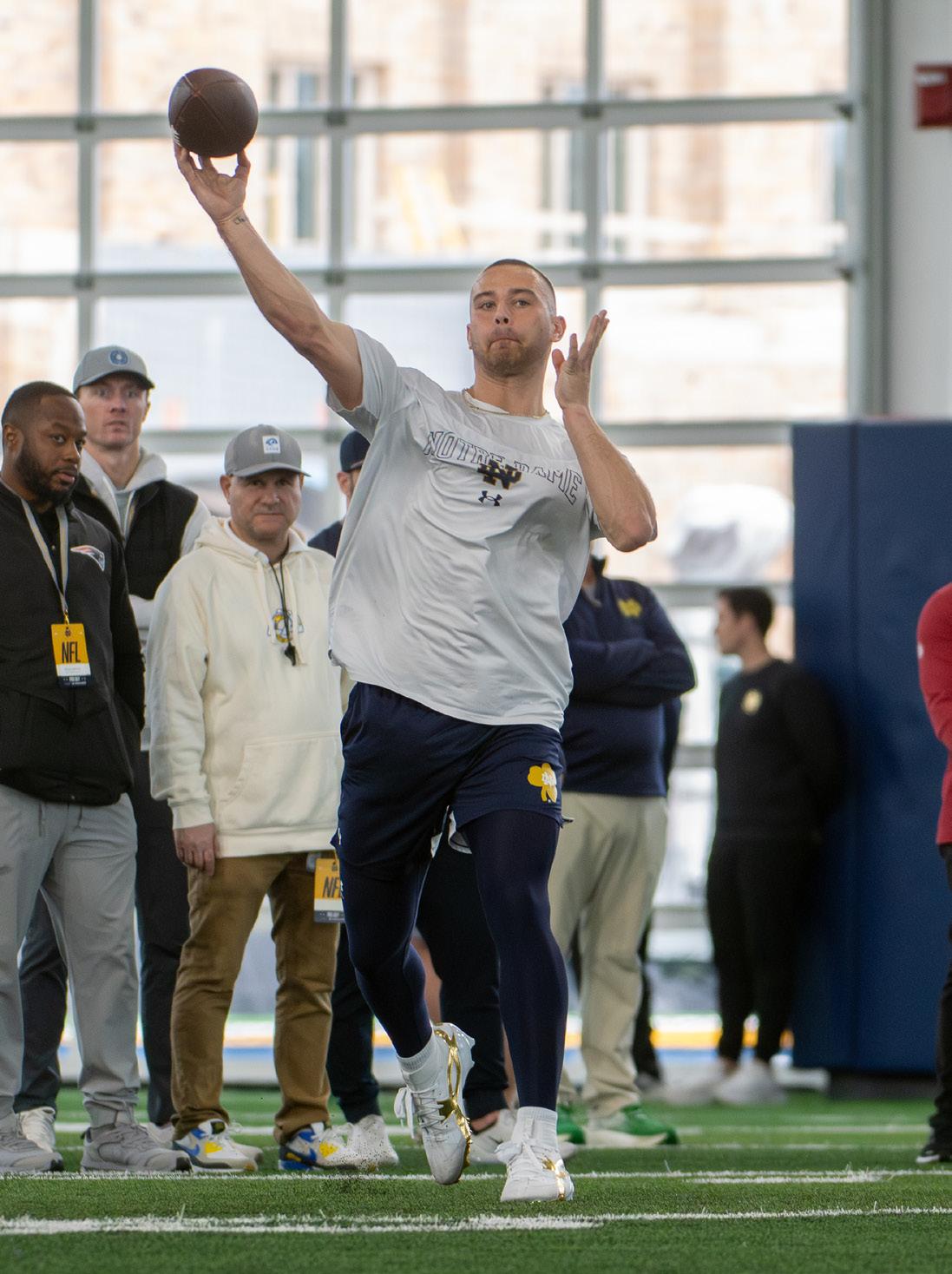
ND football Pro Day
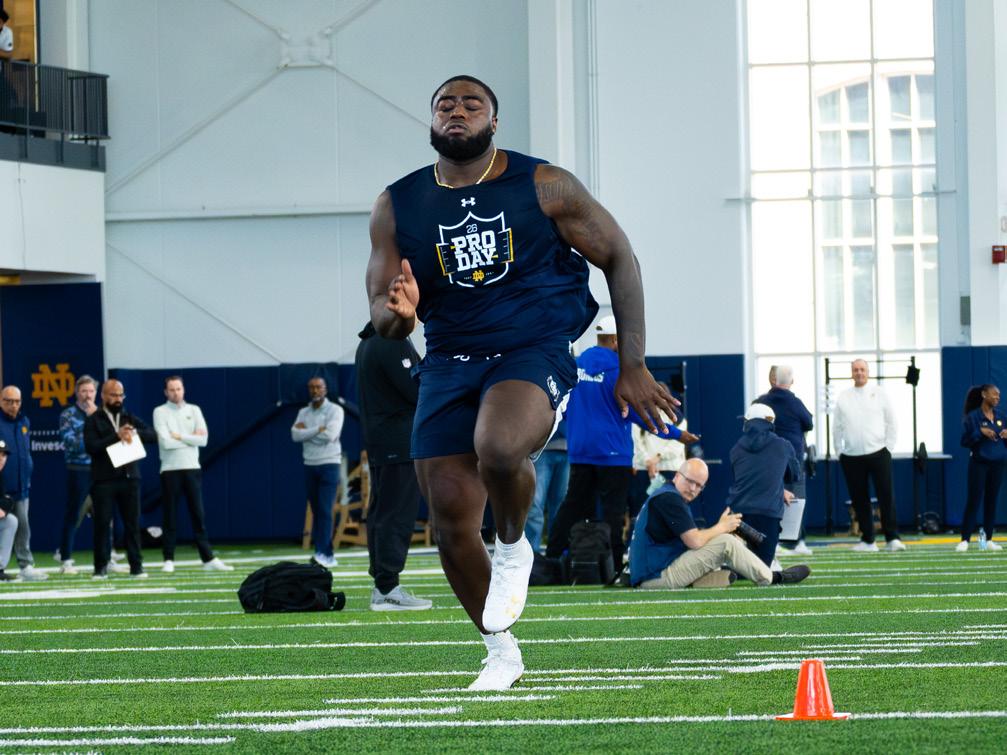

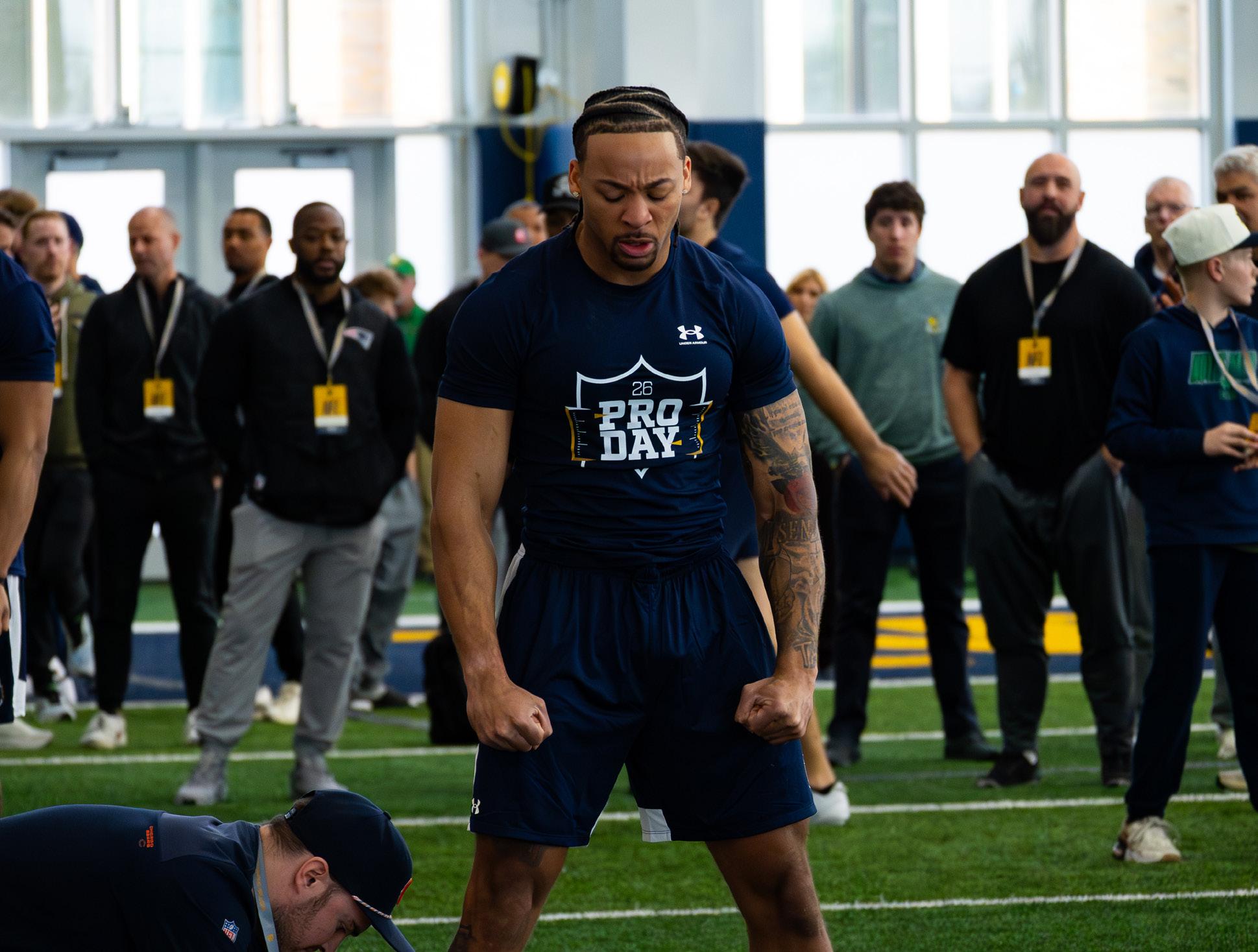
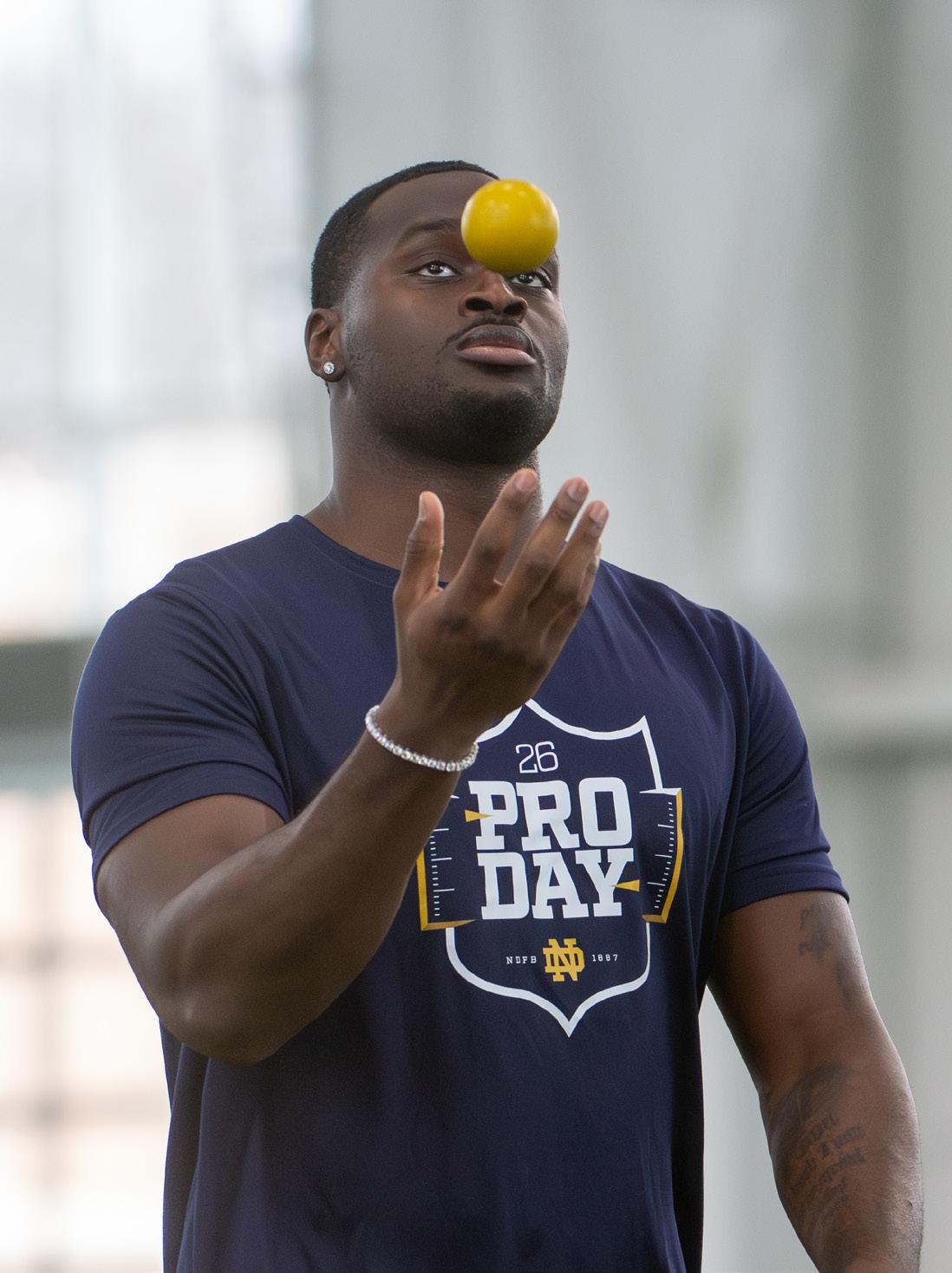
The football team’s seniors showed out Tuesday for a last chance to boost their NFL Draft stock.
Photography by Keira Jones and Declan Lee
Irish off-season is facing a rough start already
By Henry Lytle Associate Sports Editor
After a disappointing 13-18 season for Micah Shrewsberry and Notre Dame men’s basketball, Notre Dame is struggling to retain players with the transfer portal looming. Notre Dame battled injuries throughout the season that sidelined junior guard Markus Burton and senior forward Kebba Njie with season-ending injuries and freshman guard Jalen Haralson for four games. Notre Dame missed the conference tournament and suffered its biggest home loss in program history against No. 1 Duke on Feb. 24. The hope of salvaging a forgettable season in Micah Shrewsberry’s third year at the helm is contingent on player retention. So far, that’s not off to a great start in March.
Although the transfer portal window won’t begin until hours after the NCAA Tournament is over, Notre Dame has already had four players declare departure for the next season. First, Carson Towt signed an NFL contract with the Indianapolis Colts
to move over to be a tight end after seven seasons of college basketball. Towt only played one season for the Irish as a graduate transfer and averaged 9.0 rebounds per game and will join Mo Alie-Cox as a former basketball player turned tight end. Towt was out of eligibility regardless, but the move would not be the most shocking report in the month of March for Notre Dame.
Sophomore guard Sir Mohammed was the first Irish player to declare an entrance into the transfer portal. As a former top-100 recruit and 4-star player, Mohammed averaged 5.7 points this season for Notre Dame but saw inconsistent minutes throughout the season. Mohammed kept his commitment to the Irish through the coaching transition of Mike Brey to Micah Shrewsberry, and it will be a disappointing loss for the Irish.
Sophomore forward Garrett Sundra has also announced his departure from the team into the transfer portal. The 6-foot-10 forward was part of Shrewsberry’s 2024 recruiting class alongside
Mohammed and averaged 3.5 points and 3.2 rebounds in the 2025-26 season.
Freshman 4-star Ryder Frost is the most recent player to enter the portal. The 6-foot-7 forward is widely regarded as one of the premier shooters in the 2025 class and averaged 2.7 points on 38.5% shooting from beyond the arc. Although young, all three of these players showed immense promise for the Irish. Losing a group to develop will hurt the Irish depth immensely and force the leaders to carry more of the scoring load into the next season.
Alongside the shuffling of the roster, rumors floated around South Bend about Micah Shrewsberry’s future following the seasons and particularly the end to conference play. The Irish only won four conference games and missed out on the ACC tournament as one of the bottom three teams in the conference. Despite the rumors, Shrewsberry publicly denied all reports of a coaching change or interest in any other programs and reinforced his commitment to the Irish.
Notre Dame will retain Micah Shrewsberry and the remainder of the 2025-26 roster alongside three new freshmen as part of the 2026 recruiting class. Only one season ago, Shrewsberry brought in the best-rated recruiting class in school history, headlined by Haralson, Frost and forward Brady Koehler. This 2026 class is made up of 6-foot-2 four-star point guard Jonathan Sanderson, threestar 7-foot center Gan-Erdene Solongo and 6-foot-5 shooting guard Nick Shrewsberry, who are all committed to Notre Dame. Clearly Micah Shrewsberry can recruit at a high level to Notre Dame, and looking deeper, the issues of player retention and buy-in stem are indicative of far deeper problems than the Notre Dame coach.
On Thursday, March 26, Irish Tribune reporter Tom Noie released an article detailing future concerns for Notre Dame basketball. According to the article, the Notre Dame athletic department is reportedly spending less than $5 million in NIL for the team, which ranks well below other comparable
ACC schools. In fact, the number would rank Notre Dame in the middle of Atlantic 10 Conference schools in terms of spending, such as VCU or Dayton. The standard for an NCAA Tournament roster is up to $10 million in NIL money per year to fill a competitive roster. Additionally, with the limited budget, Noie projects the Irish to lose Burton, Haralson and guard Cole Certa this offseason for financial reasons. When the Observer reached out for comments, Noie confirmed the reports on spending, transfers and coaching future of Notre Dame.
While concerning, Notre Dame still has the opportunity to change the structure of its basketball spending and player acquisition before the transfer portal opens at the conclusion of the NCAA Tournament. If the athletic department refuses to change its current model, Micah Shrewsberry will be tasked with picking up the pieces to build a truly competitive roster. Contact Henry Lytle
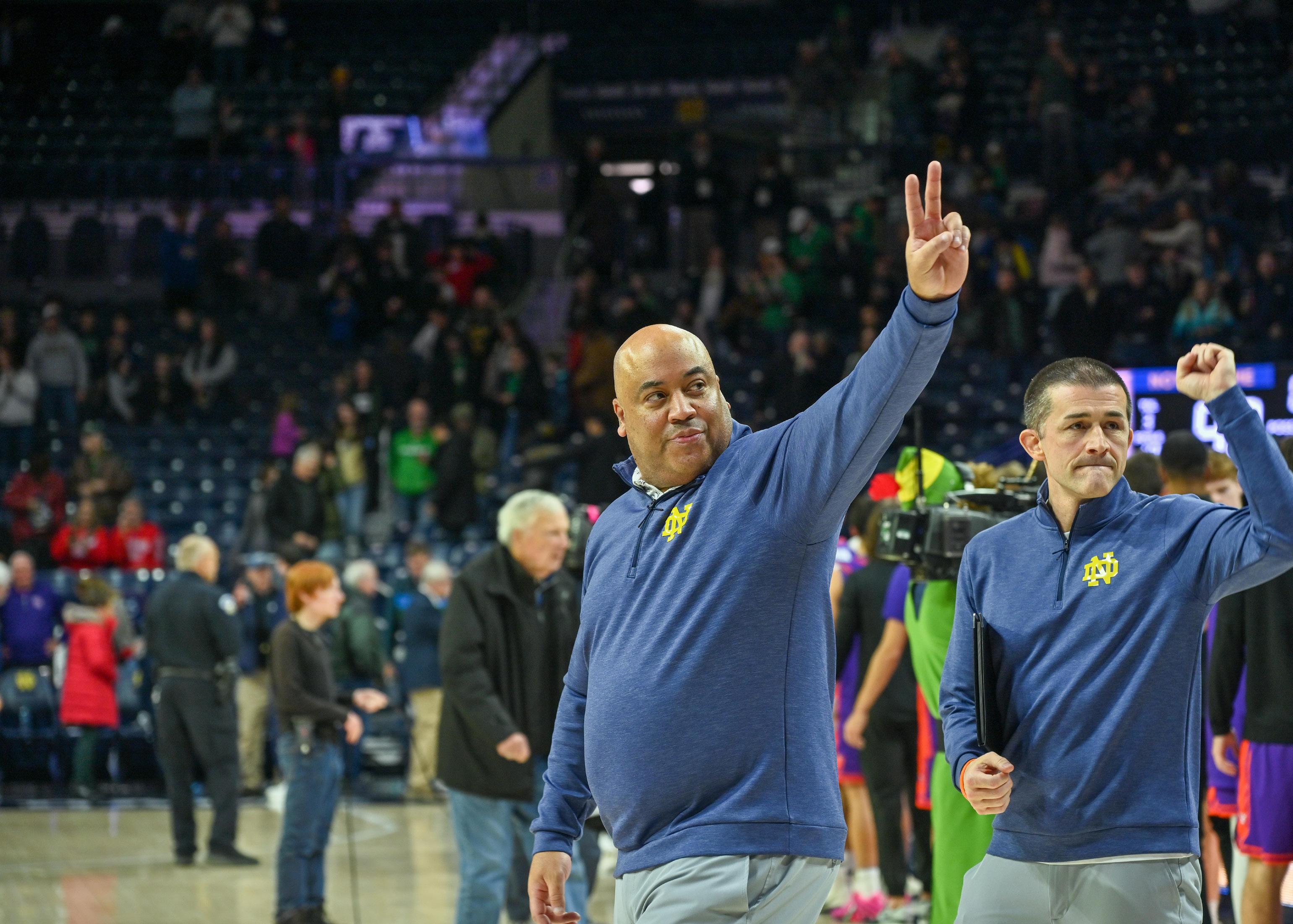
MARIELLA TADDONIO | The Observer
Head coach Micah Shrewsberry and assistant coach Mike Farrelly acknowledges the student section following a 82-58 win over Evansville in Purcell Pavilion on Dec. 13, 2025. The coach’s offense struggled at the end of the season, injuries contributing to the slump. The Irish fell to Boston College 77-69 to end the regular season and missed the ACC tournament.
FOOTBALL
Irish standouts impress at Pro Day
By Jack Muething Sports Writer
Just over halfway through the regular season, Notre Dame men’s lacrosse is 6-0 and is the top team in the country, according to Inside Lacrosse. It has put together an incredible resume, beating three ranked teams in those six games, and it had this past weekend off to give it time to recover after the tough schedule it had to start the season. However, even though the first part of the schedule consisted of some incredibly tough opponents, the five games left for Notre Dame are arguably the five most important of the season. All four Atlantic Coast Conference opponents are still on the schedule, as well as the No. 2 Richmond Spiders, anxiously awaiting the Irish.
To open up ACC play, the Irish will travel to take on the Cavaliers on Saturday, March 28. The Cavaliers are in the middle of a down year, where they are 5-4 and 0-3 against ranked opponents. However, they have a potent offense that can score at a very high level as they are No. 7 in the nation in goals per game, anchored by McCabe Millon, who leads the nation in assists per game and has 19 goals, along with his brother Brendan, who has 20
goals and 24 assists this year. The Irish defense will need to continue its good form, and the offense will need to take advantage of a defense that allows 14.67 goals per game.
The Irish will then face their final nonconference opponent of the year, and it has a chance to be their toughest one. They will travel to the Windy City for Lacrosse Day in Chicago as they take on the No. 2 Richmond Spiders Saturday, April 24. The Spiders are incredibly well rounded as they are No. 4 in the country in both goals per game and goals allowed per game. Starting close defenseman Hunter Smith, the reigning A-10 Defensive Player of the Year, averages three turnovers per game. Notre Dame has faced tough defensive players this season, and Smith will be among the best of those. On the offensive side, the Spiders run a very balanced attack with five players scoring double-digit goals this season. Overall, the Spiders have played a weaker schedule than Notre Dame this season, but they have still defeated top teams such as No. 9 Cornell and No. 14 Georgetown. Their well-balanced team has led them to an 8-0 record and cemented itself as a top team in collegiate lacrosse.
After the Spiders, the real meat of ACC play starts with the Irish returning home to take on the No. 4 North Carolina Tar Heels Saturday, April 11. The Tar Heels have fallen just short of what the Irish have done this year, averaging 14.67 goals per game and allowing 9.00 goals per game. Their attack is led by one of the best attacking duos in the nation, in Owen Duffy and Dominic Pietramala. The Tar Heels are 8-1 overall and 4-1 against ranked opponents, the only loss being a two-goal loss to the No. 3 Princeton Tigers. Not only are they well rounded, but they have also impressed amidst a very tough schedule. North Carolina could very well be the best team Notre Dame faces this year.
The Irish will then enter the second half of ACC play to take on the No. 6 Duke Blue Devils Saturday, April 18, in Durham, N.C. Right now, Duke scores 17.13 goals per game and only allows 6.86, but those statistics are a bit misleading. Whereas most ACC teams, such as Notre Dame and Syracuse, have played incredibly tough schedules to start the season, the Blue Devils have only played one ranked opponent in eight games. With that being said, they are 8-0
HOCKEY
and played mostly drama-less lacrosse. They have the best short-stick defensive midfielder in the country in Aidan Maguire, who has caused eight turnovers and picked up 20 ground balls. For a short stick, those numbers are incredibly impressive. Duke does have some key threats, and they are 8-0 right now, but they haven’t played a strong schedule, so there are still questions about how the Blue Devils can fare against the best of the best.
To cap off the season, the Irish will face off against the reigning ACC Champions in the No. 5 Syracuse Orange. Their final regular-season home game will take place Saturday, April 25. Syracuse has not made things easy on itself by any means. It has played eight ranked opponents in its first 10 games and has impressed going 6-2, its only losses coming to No. 3 Princeton and No. 7 Harvard. Its attack is led by arguably the best lacrosse player in the nation Joey Spallina. Spallina is third in the nation in points this season with 21 goals and 28 assists to his name, and he’s been the leader of a Syracuse offense that averages 13.20 goals per game.
Defensively, the Orange boast one of the top goalies in the nation in Jimmy McCool,
who has maintained a 0.57 save percentage, the best in the ACC. The intense matchup could very well decide the ACC.
The Irish have put together an incredibly impressive season so far, but in order to ensure a spot in the tournament, the Irish need to pick up at least a few wins in these next five games. They have an incredibly well-rounded team with strong players on both the offensive and defensive sides. The graduate transfer from Air Force, Josh Yago, has scored a team-leading 15 goals in his first six games and he leads an attacking trio of sophomore Luke Miller and junior Brock Behrman that has been deadly so far this season. The defense, anchored by arguably the best close defenseman in the country in junior Shawn Lyght, has only given up 8.45 goals per game this season, which is tied for the seventh best in the nation. The Irish have earned a 6-0 record with massive wins against No. 14 Georgetown, No. 12 Maryland and No. 8 Ohio State. The Irish must continue their strong form if they are to beat these tough teams remaining on their schedule.
Contact Jack Muething at jmuethin@nd.edu
Stachurski: It’s time for varsity women’s hockey
By Nikki Stachurski Associate Sports Editor
Notre Dame’s hockey program has received recent attention in head coach Brock Sheahan’s first season, but Notre Dame has limited itself by only having a men’s team. Notre Dame has had a men’s Division I hockey program since 1968, but it has never had a varsity women’s team.
Club hockey
The Notre Dame women’s club hockey team has been on and off for a decade, with its 2025-2026 season being one of the most active in recent memory. The club hockey program is a wonderful opportunity; however, the Notre Dame Athletic Department should follow the direction of other local schools and instill a varsity women’s program.
Conferences
The men’s program competes in the Big Ten, among fierce competitors such as Michigan, Michigan State, Ohio State and Wisconsin, among others. The women’s programs at the very
same schools compete in the Western Collegiate Hockey Conference. The WCHA is a Division I conference based in the Midwest, and would be the most reasonable fit for Notre Dame’s program. Just like the men’s team, they would face Minnesota, Wisconsin and Ohio State, among other Midwestern schools.
Other conferences include Atlantic Hockey America, where Mercyhurst, Penn State and Robert Morris play. The men’s team played each of these teams last season, and the women’s program could follow suit.
Another viable option for nonconference competitors would be those in Eastern College Athletic Conference hockey, mostly Ivy League programs. Hockey East, located in the Northeast, and the New England Women’s Hockey Alliance are two other leagues home to fierce competitors.
Among the five Division I conferences mostly located in the Northeast, 45 schools have a women’s program, signifying no shortage of competitors and conferences to join.
Title IX
When talk begins of adding a new sport to a university’s athletic department, immediately questions are raised concerning Title IX logistics. The law states that there must be an equal number of men’s and women’s varsity sports at an institution. If Notre Dame were to add women’s hockey, it would also have to add a men’s sport. An easy choice would be men’s rowing, for Notre Dame already has a championship-winning women’s team and an active men’s team at the club level.
Growth nationwide
Women’s hockey is also growing at a rapid pace in the United States. With the establishment of the PWHL in 2024, the league has seen unprecedented attendance despite concerns from critics. With Team USA’s gold medal at the 2026 Milano-Cortina Olympics, USA Hockey reported that it had officially crossed the threshold of 100,000 participants in women’s hockey, just for its organization alone.
The head coach for the gold-medal-winning team was Notre Dame alum John Wroblewski ’03, and one of his assistant coaches was Josh Sciba ’07. Their impact was felt in the world of women’s hockey, and if alumni have no issue in supporting women’s hockey, why shouldn’t the University?
Facilities
Notre Dame would not even be required to build additional facilities for a varsity team. The Compton Family Ice Arena, completed in 2018, holds two sheets of ice: one standard and one Olympic.
All Notre Dame would need to do is build two designated locker rooms for the home and visiting teams, a feat easily achieved in a facility as large as Compton.
In the 2025-2026 season, the men’s hockey team went 9-23-5, and of their 18 home games, they sold out 13. If the Irish fans can support a team through consistent years of struggle, they can support a women’s team through hardships and success.
Testimony
Ella Merritt, a freshman from Appleton, Wis., played hockey all through high school. She was disappointed she would not have the opportunity to play at the varsity level at Notre Dame and instead plays as a forward for the club team.
“Notre Dame is in the perfect position to welcome a women’s varsity team coming off the excitement of women’s hockey winning gold at the Olympics and the rapid growth of women’s hockey nationwide,” Merritt wrote.
“Notre Dame [also] has quality facilities and proximity to standout teams such as University of Wisconsin at Madison and Ohio State.” Notre Dame has the budget, the facility and the crowd to back a women’s team. All it is missing is the willingness to commit to a program that has been consistently overlooked. But in the age of hockey expansion, Notre Dame will surely regret its oversight if it continues.
Contact Nikki Stachurski at mstachu2@nd.edu
Irish offense dominates against Robert Morris
By Lauren Ryan Sports Writer
After a statement 22-3 win Saturday over Florida State, the University of Notre Dame women’s lacrosse team picked up right where it left off Tuesday, taking on the Robert Morris University Colonials at home. The Irish steamrolled Robert Morris from the first whistle to the last, posting another impressive final score of 20-2 to improve to 5-1 on home turf.
The Irish dominated every aspect of the field on Tuesday night. The offense found its rhythm early and led the rest of the way.
“We pushed the fast break early and that set the pace for the rest of the game,” said freshman midfielder Charley Bacigalupo, who tallied a first-half hat trick and added an assist to finish the game with four points.
The Irish did indeed push the fast break well, outpacing the Colonials and executing textbook transition offense. They had opportunities in large part thanks to the relentless full-team ride that made it difficult for Robert Morris to even cross their own offensive restraining line.
The Irish applied constant high pressure in their transition defense, appearing overwhelming for Robert Morris. The Irish finished having caused 16 turnovers. Graduate defender Julia
Carr’s speed and effort on clears stood out, and the Irish seemed to have scored before Robert Morris was even in position to defend.
The number of quality offensive sets for the Colonials was limited by an aggressive Notre Dame defense. Notre Dame freshman goalie Ceci Patterson only needed to make four saves, and graduate goalie Isabel Pithie, who took over in the fourth quarter, did not see a shot on goal.
Notre Dame’s ability to win 50/50 balls was dominant in this contest. Notre Dame secured more than twice as many ground balls as Robert Morris, which had a profound impact on the momentum of the game.
Freshman midfielder Maura Irish and sophomore midfielder Madison Rassas led the team with three ground balls each, and 11 different players tallied at least one ground ball. The Irish were equally dominant at the draw circle. Freshman midfielder and draw specialist Uma Kowalski grabbed 12 draw controls and pushed even more to her teammates in the draw unit. The effort that Notre Dame displayed consistently as a team in fighting for the draw controls and ground balls was remarkable.
Another positive from the game was the well-distributed offensive production from the Irish. Junior attacker Kate Timarky and Rassas had four goals apiece,
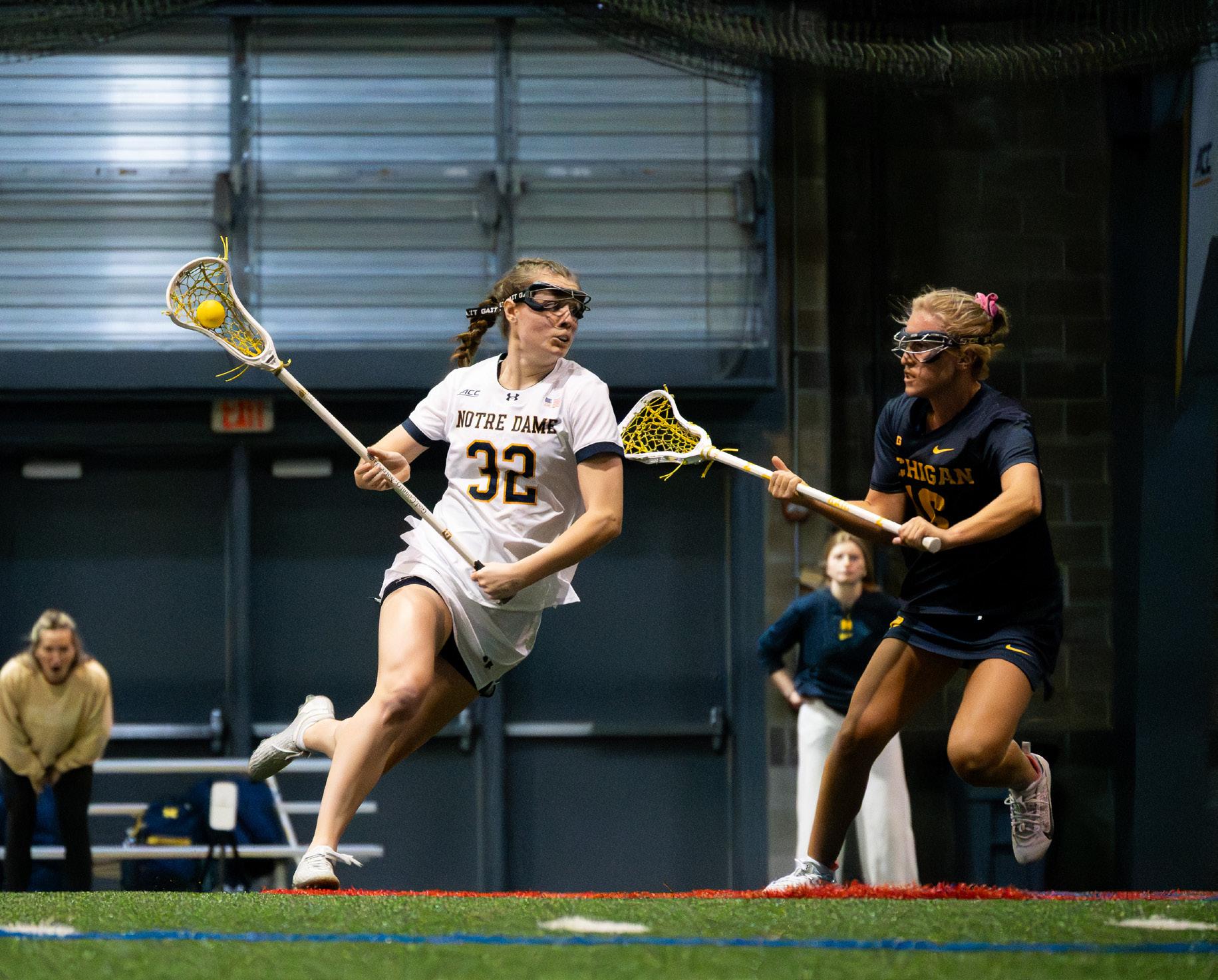
leading the Irish offense as a dynamic scoring duo. Six additional Notre Dame players scored. Furthermore, the offense showed not only multiple scoring threats but also the ability to create opportunities in a variety of situations. The aforementioned fast break play was certainly one key factor, but the Irish looked comfortable in settled attack situations as well.
Though the Robert Morris
defense had yet to see a team with as much offense as the Irish this season, most of their 20 goals were a testament to better offense.
Scoring 20 or more goals is clearly unsustainable, especially as their schedule difficulty slowly ramps back up before a critical test against Syracuse in a few weeks, but the Irish can certainly draw confidence in the offense on display against Robert Morris
and Florida State.
Looking ahead, the Irish finish their three-game home stretch Saturday, when they will face UC Berkeley and celebrate Senior Day. There, they hope to extend their win streak before traveling to Virginia to face Virginia Tech and Liberty in the first week of April.
Contact Lauren Ryan at lryan5@nd.edu
Irish defeat Western Michigan in mercy rule
By Zach Jones Sports Writer
Notre Dame baseball throttled regional foe Western Michigan on Tuesday afternoon, March 24, 2026, by a dominant score of 14-3.
The Irish entered the contest with a 14-6 record and wind in their sails after sweeping No. 19 Clemson last weekend. The confident Irish aimed to protect home turf against a pesky Broncos squad sitting at 10-11 overall.
Tuesday’s contest was Notre Dame’s first opportunity to defend its No. 23 national ranking before No. 13 North Carolina comes to South Bend for three games this weekend.
The Irish took control of the game with a five-spot in the bottom of the first.
Leadoff man and graduate center fielder Drew Berkland singled up the middle to begin the romp. Sophomore shortstop Noah Coy brought him home with a double down the right-field line, and junior catcher Mark Quatrani then blasted a two-run homer to left, bringing
himself and Coy home.
Sophomore left-fielder Bino Watters cranked a moonshot to deep left-center field to make it back-toback homers. It would take five batters for the Broncos to record an out. The Irish stood strong, and the entire Notre Dame lineup batted in the opening frame, recording five runs on five hits and a walk.
Sophomore right-handed pitcher Kellan Klosterman started on the mound for the Irish. Klosterman struggled to find the strike zone, walking three batters and plunking two, but limited the Broncos to two runs through 2.1 innings of work. Freshman rleft-handed pitcher Dylan Singleton replaced Klosterman and spun 1.2 innings in relief.
Notre Dame scratched across one run in the second, six runs in the third, and two in the fourth to take a 14-3 lead through four complete innings.
Highlights included sophomore right-fielder Jayce Lee’s three-run jack in the third, Berkland’s triple in the same inning, and two backto-back fourth-inning singles by
Quatrani and Watters that scored a run apiece.
Due to the 10-run lead, the contest ended in the seventh inning in a mercy rule victory for the Irish at a final score of 14-3. Freshman righthander Aiden Zerr came on in the fifth and provided 2.1 clean innings, while freshman right-handed pitcher Garrett Snyder closed out a scoreless seventh.
Offensive leaders for the Irish included Watters, who went 4-4 with a home run and a trio of singles, and Berkland, who scored every time he came up to bat, totaling four runs on the afternoon.
The Irish offense swatted 14 hits and collected nine walks in the contest.
Notre Dame will host No. 13 North Carolina for three games this weekend at Frank Eck Stadium. First pitches are scheduled for Friday, March 27 at 4:30 p.m.; Saturday, March 28 at 2:00 p.m.; and conclude the series Sunday, March 29 at 1:00 p.m.
Contact Zach Jones at zjones3@nd.edu
KEIRA JONES | The Observer
Freshman attack Mackenzie Conley runs around midfielder Kassidy Isaacson during a 12-10 victory over Michigan in the season opener in Loftus Sports Center on Feb. 6, 2026. The Irish are No. 13 in the country.
DECLAN LEE | The Observer
Freshman pitcher Will Jaisle unloads on the mound during a 14-3 win over Western Michigan at Frank Eck Baseball Stadium on Tuesday.
Lytle: Hannah Hidalgo is already the GOAT
By Henry Lytle Associate Sports Editor
Through three years in blue and gold, junior guard Hannah Hidalgo has submitted her legacy as one of the most iconic and proficient players in Notre Dame history. From her first game scoring 31 points and snatching 3 steals against No. 6 South Carolina, Hidalgo has been a force for Niele Ivey’s team. Starting each game she has been available to play, Hidalgo has sharpened her craft each season to become a more complete player and leader for Notre Dame. This season leading a limited Irish team far beyond expectations, Hidalgo has broken defensive records en route to a third consecutive Sweet 16 appearance in Fort Worth this weekend.
Hannah’s freshman year was punctuated by a slew of awards including ACC rookie of the year, ACC defensive player of the year, ACC all-freshman team, and the ACC tournament MVP. On top of the accolades, Hidalgo averaged 22.6 points, 6 rebounds, 5.5 assists and 4.6 steals. Hidalgo led the country in the steals category for the
first of three straight seasons in her career. Hidalgo recorded a record setting 12 steals in the second game of the season, a preview of the defensive motor to come. Leading the team to the Sweet 16, where it eventually fell against Oregon State. Hidalgo’s freshman year was an unrivaled success alongside Juju Watkins as two of the best freshman seasons ever for women’s college basketball in the same year.
In her sophomore season with the return of Olivia Miles and Maddy Westbeld from injury, Hidalgo’s stats shifted to 23.8 points, 5 rebounds, 3 assists and 3.7 steals. Overall, an improvement from the season before, although her offensive role changed with Miles as a facilitator back from injury. The Irish defeated the eventual national champion UConn Huskies at home in a game where Hidalgo led in scoring with 29 points. The Irish also defeated No. 4 Texas in overtime and No. 3 USC on the road. Three top 5 victories in a month stretch in games where Hidalgo led in scoring gave Irish fans hope at a deep run in March Madness and belief
in the talent to make the Final Four. Realistically, this 202425 season was Hidalgo’s best opportunity to win a championship, with the sheer versatility and capabilities of the roster, but Niele Ivey’s team fell short against TCU in the Sweet 16.
In 2025-26, Hidalgo has set new records for Notre Dame and the country at large. Only three games into her season, Hidalgo recorded 16 steals in 28 minutes, which set a Division I record for the most steals in a game in the Irish win over Akron. Hidalgo also added 44 points to provide the highest scoring game in ND women’s basketball history.
This season in 2025-26 is arguably the most impressive for Hidalgo increasing her individual stats to 25 points, 6.7 rebounds, 5 assists and 5.6 steals, but also uplighting a team of nearly all transfers into the Sweet 16. Of Notre Dame’s top 10 players in minutes and points from a season ago, Hidalgo and Prosper are the only two remaining players.
Additionally, Hidalgo is not sharing the backcourt with superstar Olivia Miles, and third overall WNBA pick and runner up for rookie of the year Sonia Citron.
Comparing Hidalgo against other Notre Dame greats starts to give a better picture to her transcendent impact on the floor. Some of the greatest Irish players include Skylar DigginsSmith who led Notre Dame to two national Championship games and is third in points and second in steals in her career. Ruth Riley who also brought Notre Dame to the
In January, Hidalgo became the fastest player in ACC women’s basketball history to reach 2,000 career points at 86 games. She also passed Notre Dame and WNBA legend Skylar Diggins to become the Irish’s all-time leader in steals with 382. Currently Hidalgo has 468 steals at 11th in women’s basketball history. At her current pace, with one more season, Hidalgo will be top-3 all time in steals, potentially fighting for the first or second spot. Hidalgo is Notre Dame’s all-time leader in 30-plus-point games, 20-plus-point games and consecutive 10-plus-point games, which accounts for all 101 of her games.
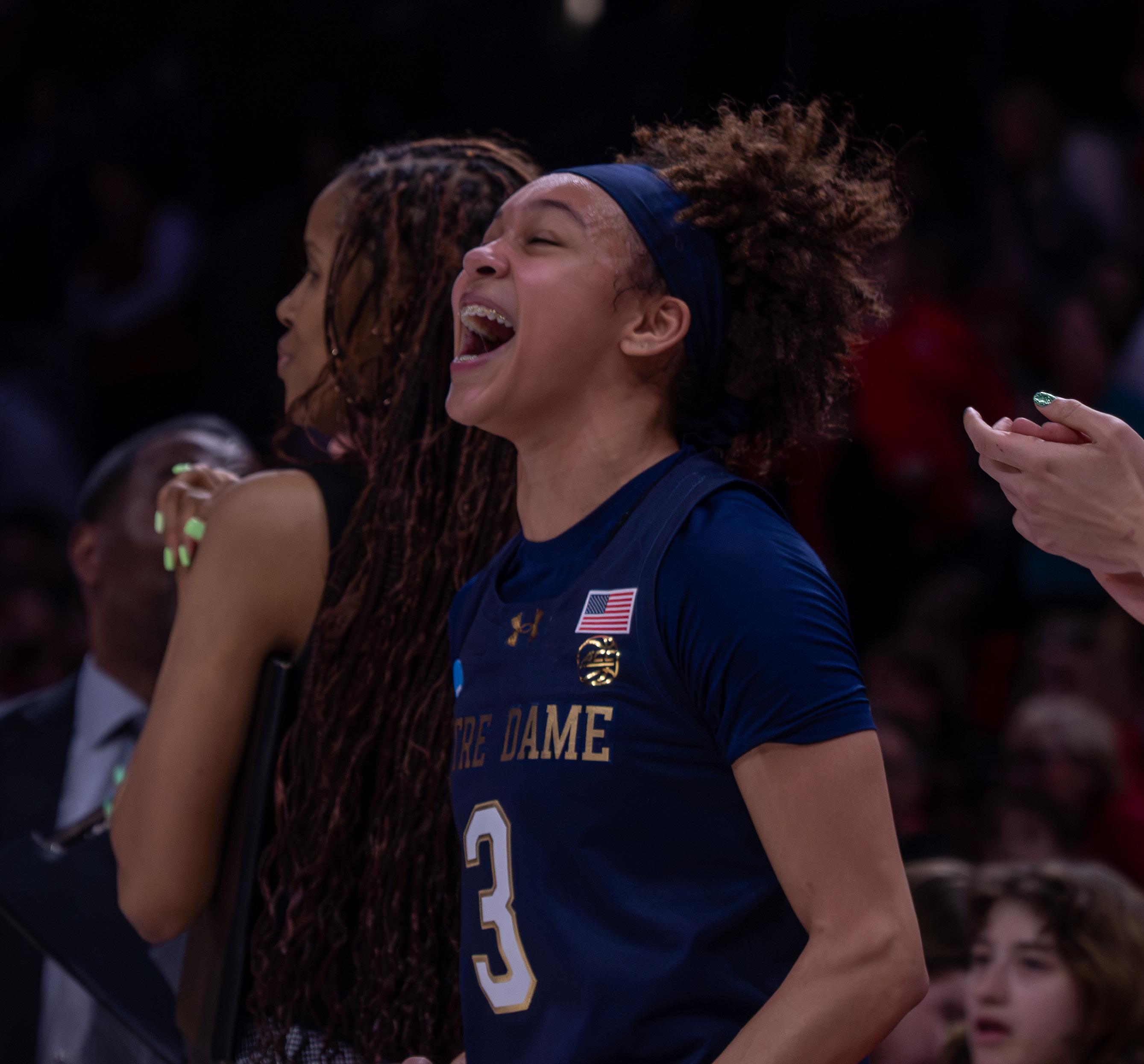
national championship twice and won one in 2001. She finished her career with the most rebounds and blocks in program history. In terms of truly clutch and game-changing shot making, Arike Ogunbowale helped the Irish win the 2018 national championship with back to back game winning buzzer betting shots. She also leads the Irish in career points, with Hidalgo only 2019 behind. While all of these greats boast accolades and historic resumes for Notre Dame, none truly measure up against Hidalgo’s total impact on the game. If you mesh the impact of all these players between scoring, defensive presence, clutch scoring, and leadership you start to see the impact that Hidalgo brings to the Irish this season. She has the ability to make clutch game winning shots, as she did against No. 11 USC. She leads the program in steals, and is already second in points in only three seasons of work. Truthfully, the only trait that all three other players share is the Final Four and Championship pedigree. Hidalgo still has two more opportunities including this season already in the Sweet 16 to take on No. 2 seed Vanderbilt. It would be nearly unfathomable for Hidalgo to lead the Irish past Vanderbilt AND UConn to make her first Final four but one thing Irish fans have learned is do not count out Hidalgo. She just posted a game of 26 points, a career high 13 rebounds, 8 steals and two assists to defeat No. 3 seed Ohio State gaining national recognition for her performance. Vanderbilt is a fantastic team who has yet to be tested in the tournament making easy work of No. 7 seed Illinois. Hidalgo has a chance to submit her ballot for player of the year as she will guard Mikayla Blakes, a sophomore guard for Vanderbilt averaging 27 points on the season. If the Irish can pull off the upset, they will face the undefeated and clear No. 1 overall seed UConn sitting at 36-0. The Huskies beat the Irish 85-47 back in January holding the Irish to 1-16 from 3-point range.
Hidalgo has already lifted this team beyond what many even thought possible after the mid-season woes for Notre Dame. This March Madness run can only add to another historic season for the junior. All Hidalgo has left to do to cement herself as the greatest player in the history of Notre Dame women’s basketball is make a deep run in March Madness. Despite the odds, she has her team right back in the position to do so.
Contact Henry Lytle at hlytle@nd.edu
GABRIELLA MARTIN | The Observer
Notre Dame junior guard Hannah Hidalgo celebrates as Notre Dame defeats No. 3 Ohio State in the second round of the NCAA Tournament. In the 83-73 Irish victory, Hidalgo had 26 points, 2 assists and 13 rebounds. Hidalgo started the game and played just shy of 39 minutes in the win.
No. 6 Notre Dame will face No. 2 Vanderbilt
By Ellie Collins and Ben Hicks Associate Sports Editor and Sports Editor
On account of its 83-73 victory over No. 3 seed Ohio State on Monday, Notre Dame women’s basketball will make its fifth-consecutive Sweet 16 appearance under head coach Niele Ivey in Fort Worth, Texas, as it faces No. 2 seed Vanderbilt. No. 6 seed Notre Dame hopes to finally get over the hump and earn an Elite Eight berth for the first time since 2019. The Commodores, meanwhile, eye their first regional semifinal win since 2002; plus, Vandy is likely motivated by last season’s first-round elimination after a 77-73 overtime loss to No. 10 Oregon.
Star junior guard Hannah Hidalgo paces the Irish squad on both ends of the floor. In her last game, Hidalgo put on another phenomenal show in Columbus against No. 3 seed Ohio State with 26 points, 13 rebounds and eight steals. The ACC and Defensive Player of the Year now averages 25.2 points per game on the season and leads the country with a staggering 5.6 steals per contest. She is not a one-woman show; four of her teammates netted double-figure scoring nights against the Buckeyes. Graduates Vanessa de Jesus and Iyana Moore — a former four-year Commodore herself — and seniors Cassandre Prosper and KK Bransford round out an elite guard contingent.
Ivey agreed, saying, “I’ve learned how to allow [Hidalgo]
to be her. That’s her superpower, the way that she defends.”
She also spoke of her team’s culture and camaraderie, adding, “They’re unselfish, and I think you can see that on the floor. They just really care about each other. Again, they’re family, and they’ve developed a really close-knit bond together.”
Recently, the Notre Dame has been impressive in a string of high-profile matchups, with Hidalgo and the team challenged by elite players like Ohio State’s Jaloni Cambridge. If there is anyone capable of matching Hidalgo’s heroics, however, it may be Vanderbilt’s Mikayla Blakes.
In addition to being a defensive stalwart, the sophomore guard amassed 25 points and nine rebounds in the Commodores’ dominant second-round 75-57 blowout against Illinois; the FirstTeam All-American leads the country with 27 points per night. Blakes undoubtedly presents a stiff test, but Hidalgo likely will look to prove she also deserved AP First-Team All-American honors after being relegated to Second-Team for the first time in her career.
Hidalgo recalled a matchup she had with Blakes during their high school days. “It was a show. Two dynamic guards. I had to guard her the whole game. I think just her ability to do what she does, you know, the things that she brings to her team is so different,” she said.
However, she was adamant that the best team, not the
Collins:
By Ellie Collins Associate Sports Editor
Last month, I asked whether Notre Dame women’s basketball head coach Niele Ivey had hit her ceiling, given her failure to advance her program past four consecutive Sweet 16 appearances. At the time, Notre Dame was projected to be a No. 7 seed heading into March Madness, sporting an 18-9 record and a 10-6 mark in ACC play.
Despite the Irish’s inconsistency throughout the season, most evident in their lackluster conference performances, they secured a No. 6 spot on Selection Sunday. Their strong finish to the season included a crucial road win over then-No. 10 Louisville, and Notre Dame entered the tournament with a 20-9 record.
“The sense of urgency went to an all-time high in
best player, would prevail Friday night. “This whole game is just about playing together. You know, it’s not about me versus Mikayla. It’s about Notre Dame versus Vanderbilt,” Hidalgo said. “It’s really just the way that we’re going to win the game tomorrow is by playing together like we’ve been doing the past couple of months.”
Blakes expressed a similar sentiment, saying, “I take it how I take every game, just focus on the team really. It’s a team sport — we have to be together as a team offensively and defensively. Whatever it takes for me to do that, I’m willing to do.”
And, like the Notre Dame, not all of Vanderbilt’s firepower is concentrated in one player. Three Commodores besides Blakes average double digits — guard Aubrey Galvan (likely to be the primary assignment on Hidalgo), wing Justine Pissott and forward Sacha Washington. The matchup may well boil down to which supporting cast outbattles the other. Yet this remains a contested matchup that cannot be won by Hidalgo or Blakes alone.
Hidalgo understands that and recognizes the importance of the bond in Notre Dame’s locker room. “I’m so excited to be able to be alongside these
women and play with them and to be able to win together with this group of girls. It just means so much more, and it’s a lot deeper than basketball,” she said.
Tipoff between No. 6 Notre Dame and No. 2 Vanderbilt is set for 2:30 p.m. Friday at Dickies Arena in Fort Worth, Texas. With a spot in the Elite Eight against either top-seeded UConn or No. 4 North Carolina on the line, the game will be nationally broadcast on ESPN.
Contact Ellie Collins at ecollin9@nd.edu and Ben Hicks Collins at bhicks3@nd.edu
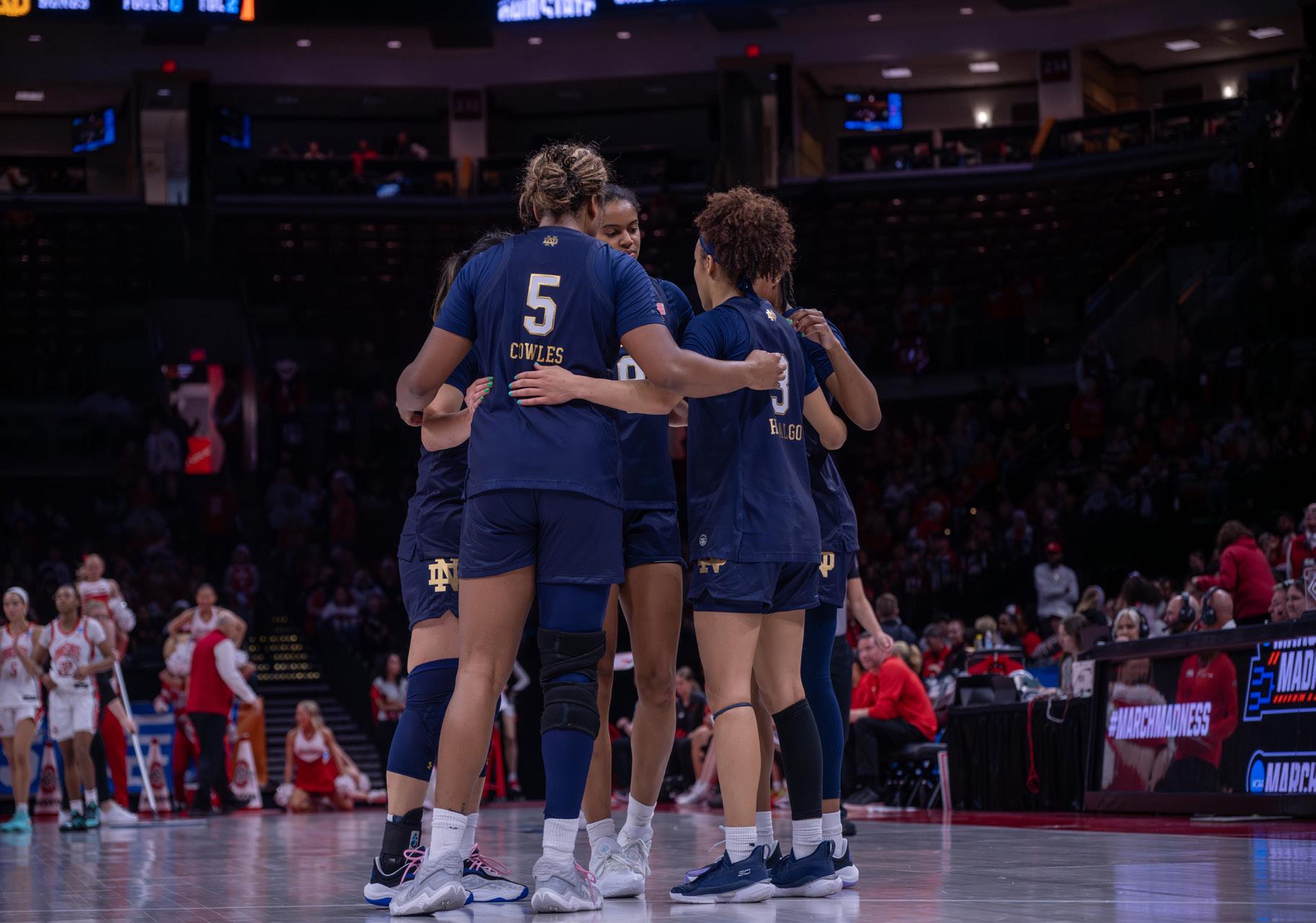
The time is now for Ivey
February,” Ivey said following the 65-62 victory at Louisville on March 1. “Every next matchup is the most important game for us.”
The Irish breezed past Fairfield 79-60 in the firstround and notched an impressive 83-73 second-round victory over No. 3 seed Ohio State. Notre Dame is one of three programs dancing into its fifth straight Sweet 16 this year, joined by South Carolina and UConn, who have been top-3 seeds every year since 2022. The Gamecocks, who currently boast a 33-3 record with only one conference loss, have maintained a 94.7% winning rate over the past five seasons, while the undefeated and top overall Huskies hold an 88.8% rate over the same span. They are undoubtedly the two most elite women’s basketball programs of the modern era. Whether or
not they rank higher than the Irish at their height under legendary coach Muffet McGraw is a debate for another day. All of this to say that Ivey’s ability to get her team to the second weekend despite uneven play through mid-February is undeniably a testament to good coaching. Some may argue that in her sixth year at the helm, with such a lack of late-March relevance, Ivey’s excellence ends at her strong recruiting capabilities. But five straight regional-semifinal appearances are nothing to sniff at. Under her leadership, the Irish, without fail, play their best ball down the tail end of the season. In Notre Dame’s final five regular-season matchups since 2021-22, it has gone a stellar 20-5 and won the ACC tournament in 2024.
Now, while a lot of this team’s success is attributable
to wunderkind All-American junior guard Hannah Hidalgo, she has plenty of company, particularly in the backcourt. Graduate guard Vanessa de Jesus has been a key transfer after leaving Duke with her steady play, and double-figure scorers senior Cassandre Prosper and graduate Iyana Moore round out the elite guard corps.
With a veteran team, Notre Dame gets its chance to return to the Elite Eight for the first time since 2019. It will be no easy task against No. 2 Vanderbilt, which boasts an electric All-American guard of its own in Mikayla Blakes. This late-season run shows Ivey can get her team to come together and win big road games against higher-seeded opponents in the Big Dance. However, in their win over the Buckeyes, only seven Irish players saw action — six of
them were seniors, and the other, of course, was Hidalgo. Now more than ever, the current season is the only one that matters in the environment of big-money name-image and likeness and the whirlwind transfer portal. The Irish may or may not be in rebuild mode next season, depending on Hidalgo’s intentions, their portal haul and the actual impact of a touted incoming recruiting class. There are no guarantees after Friday. Even a Sweet 16 appearance next season or thereafter is no sure thing. Ivey has proved it will not be her last chance as the coach in South Bend, but it is a great opportunity to elevate her profile as an emerging force in the sport. The time is now, and the place is Fort Worth, Texas.
Contact Ellie Collins at ecollin9@nd.edu
ND WOMEN’S BASKETBALL
MARIELLA TADDONIO | The Observer
Graduate forward Malaya Cowles, senior guard Cassandre Prosper and junior guard Hannah Hidalgo huddle with their teammates during a contest against No. 3 seed Ohio State in Columbus, Ohio, on Sunday.