Print Edition of The Observer for Thursday, April 7, 2016
student performance promotes discussion
Loyal Daughters and Sons show encourages conversations on gender, relationships and identity
By COURTNEY BECKER news writer
The 10th annual loyal daughters and sons (lds) show, a student performance exploring sexuality, gender relations and relationships, previewed at saint mary’s in little Theatre last night. The show will open on notre dame’s campus Thursday night at 7 p.m. in the carey auditorium in hesburgh library.
The production, which consists of monologues adapted from anonymous interviews and written submissions from students about their past experiences, is intended to start a dialogue about sexuality and sexual violence on campus, said notre
dame alumna emily weisbecker
Farley ‘07, the show’s creator, in a statement included in the show’s program.
“i wanted to challenge the audience and make them think, and i wanted the material to be undeniably real and honest and relevant,” she said. “drawing from the campus community and including as wide a range of experiences as possible was a way to try to give each audience member something to connect with, which might in turn leave them more receptive to hearing and digesting the rest.”
senior skyler hughes, coexecutive producer of the show,
see show paGE 5
consecrated virgin speaks on vocation at smc
By NICOLE CARATAS
saint
mary’s e ditor
Jessica hayes, who is the first consecrated virgin in the diocese of Fort wayne-south bend in the last 25 years, spoke about her journey discerning her vocation during the latest installment of Theology on Fire at saint mary’s on wednesday.
hayes said during her time in
catholic grade and high school, she only met two religious sisters.
“i remember them being there,” she said, “but it didn’t teach me much about what religious life was like because they were on their own and they didn’t really talk about it. There was also nothing that striking wabout what they were
see vocaTion paGE 4
‘What’s
Vatican official explores
Catholic higher education
By SELENA PONIO a ssociate news e ditor
a s part of the 11th year of the Keeley vatican l ecture series hosted by the nanovic i nstitute for european studies, Fr. Friedrich b echina spoke wednesday night about the role of c atholicism in higher education.
university p resident Fr. John Jenkins introduced b echina, who was named the underswecretary of the c ongregation for c atholic e ducation in 2013 by pope e meritus b enedict X vi and has represented the holy s ee internationally in areas of higher education.
b echina began his lecture by saying that problems and academic credits should not be the sole focus of an academic institution.
“o ne of the most significant changes in higher education today is a shift towards what we call student-centered learning,” b echina said. “ we should not emphasize too much on higher education on the input … but that we should more look on the processes of learning.”
b echina spoke about his 15 years of service to the holy s ee, which he described as a sovereign entity and a subject of international law that can maintain diplomatic relations. he said it was important to recognize the holy s ee as an international entity.
“The c hurch is both universal and local at the same time,” b echina said. “ we represent 1,500 c atholic universities worldwide with, roughly speaking, 6 million students. This is kind of an educational empire that we have. we should be proud of what’s going on.”
b echina said the type of education the students were receiving was what mattered, not just numbers.
“i think the important thing is that these 6 million students are educated differently,” b echina said. “ we believe that because of our c atholic identity we have more to offer.”
b echina said the c hurch and the university are similar because of how they each retain their identity with the “pulse of time.”
“people say the two oldest
institutions in the world are the c hurch and the university,” b echina said. “ w hy have they been able to survive for thousands of years? b ecause they were able to change when it was time to change, without losing their identity. “ we are not bound to political programs … and the university has its own rules and is bound to truth and not to the opinion of the day.”
he said globalization was yet another factor that united the c hurch with higher education.
“The c hurch is the same one, universal c hurch in different languages and different cultures,” b echina said. “a nd there is the same with higher education. h igher education is becoming more and more globalized.”
he talked about current academic issues such as the “brain drain,” which he described as the occurrence of talented individuals leaving a country to study and work abroad because of limited resources in their home country. b echina went on to say
see bechina paGE 5
MONICA VILLAGOMEZ MENDEZ | The Observer
Jessica Hayes, a consecrated virgin, urges Saint Mary’s students to uncover their vocations as she reflects on her own experience.
BECKI JEREN | The Observer
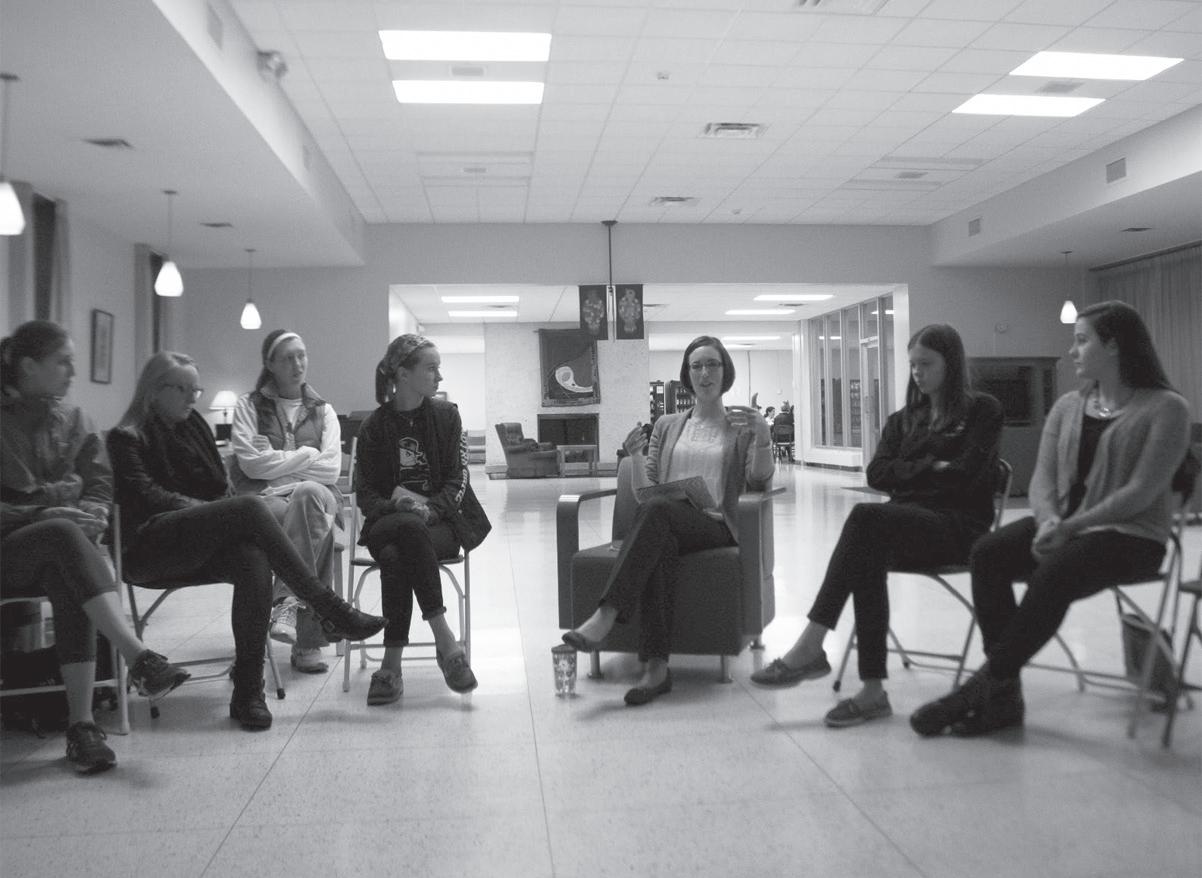
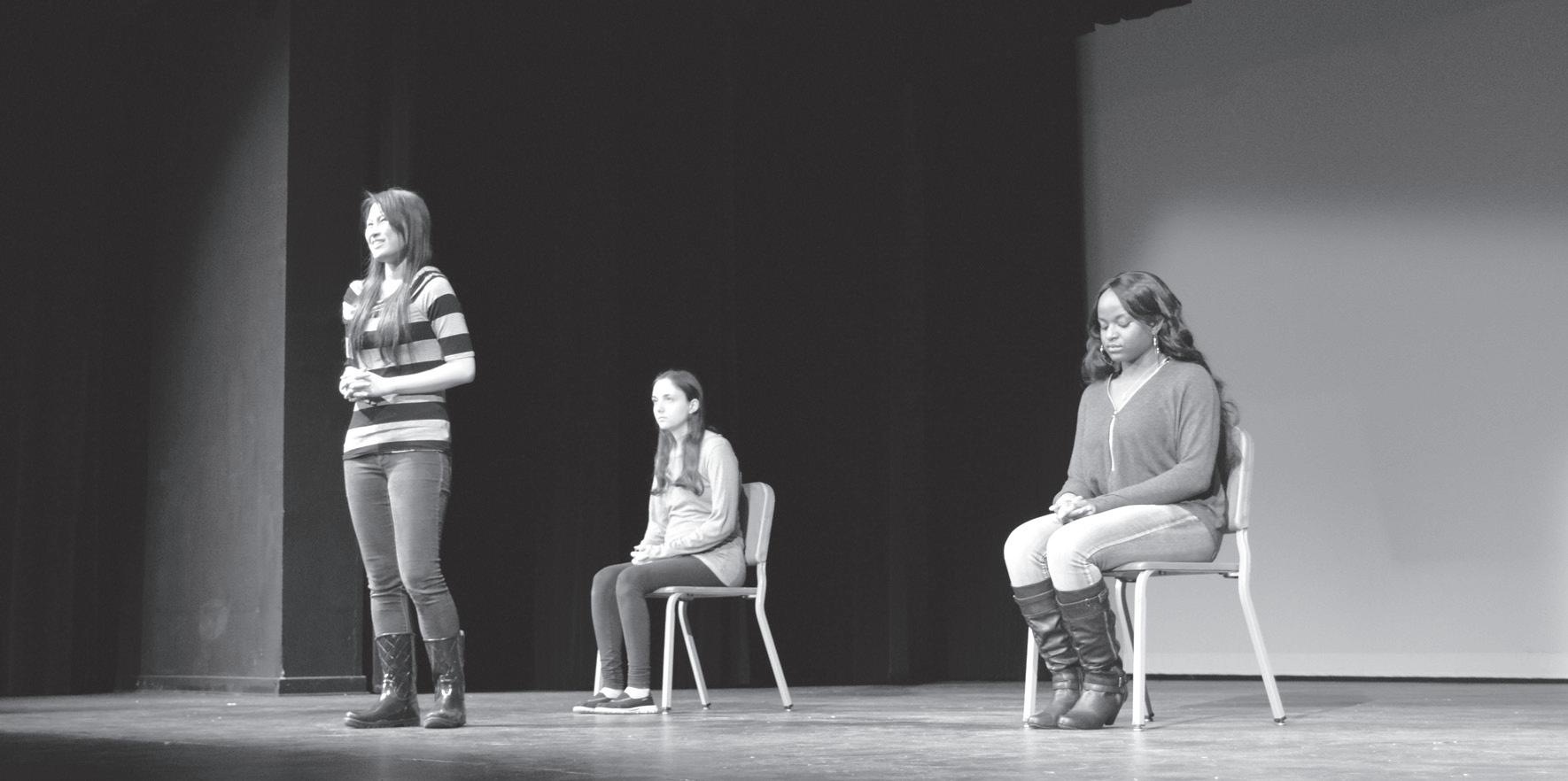
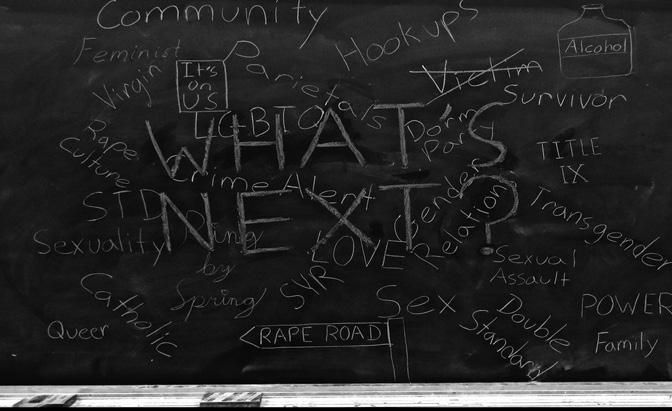
Students deliver monologues in the 10th annual Loyal Daughters and Sons performance. The show, titled
Next?,’ opened at Saint Mary’s on Wednesday night and will open at Notre Dame on Thursday.
Question of the Day:
Have you ever had a cake with your face on it, or did you ever want one?
Scene Desk (574) 631-4540 scene@ndsmcobserver.com Saint Mary’s Desk ncaratas01@saintmarys.edu
Photo Desk (574) 631-8767 photo@ndsmcobserver.com
Systems & Web Administrators (574) 631-8839
Policies
Today’s Staff
Corrections
The
Courtney Kelly sophomore pasquerilla east hall
“no, and why not!”
Jamon Ford junior dillon hall “no.”
Graham Johnson junior sorin college “no.”
Quinlan McWilliams junior Keough hall
“sure. i’ve had it before, though.”
Kara Snyder sophomore pasquerilla east hall “ yes.”
Audrey Fetsko sophomore pasquerilla east hall
“no, and i don’t think so.”
catcher Maddie
Thursday
Easter 1916: The Irish Rebellion Hesburgh Library 5:30 p.m.
Guided tour of Special Collections exhibit.
“Ingrid Bergman: In Her Own Words” DeBartolo Performing Arts Center
5:15 p.m. - 6:15 p.m. Documentary film.
Friday
Bengali New Year Celebration
Coleman-Morse Center
6:30 p.m. - 8 p.m.
Experience culture and traditional dinner.
ND Women’s Tennis vs. Clemson Eck Tennis Pavillion
3:30 p.m. - 5:30 p.m.
The Irish take on the Tigers.
Saturday
“Agency, Persons, and Kant” McKenna Hall
8 a.m.
Philosophers discuss Kant’s works.
Eucharistic Adoration Basilica of the Sacred Heart
11 p.m.
24-hour Eucharist celebration.
Sunday
National Robotics Week Event
Compton Family Ice Arena
12 p.m. - 4 p.m. Play with robots.
Men’s Lacrosse vs. Duke Arlotta Stadium
12 p.m. - 2 p.m.
The Irish take on the Blue Devils.
Monday
“God Lives in the City” Hesburgh Center for International Studies
5 pm. - 6:30 p.m.
Lecture on Pope Francis’ theology.
Zumbathon Rockne Memorial Gymnasium
6 p.m. - 8 p.m.
Workout event open to the community.
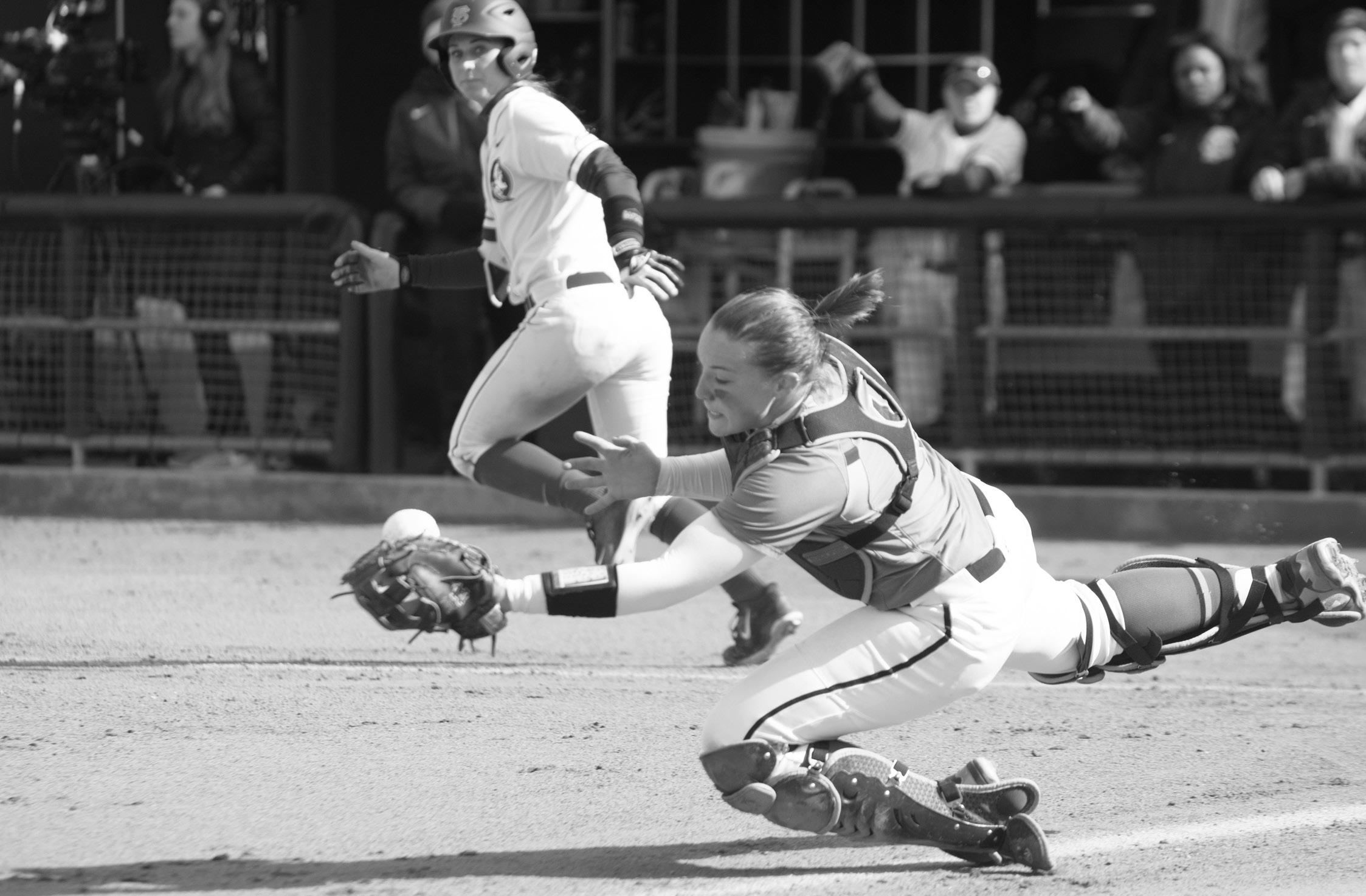
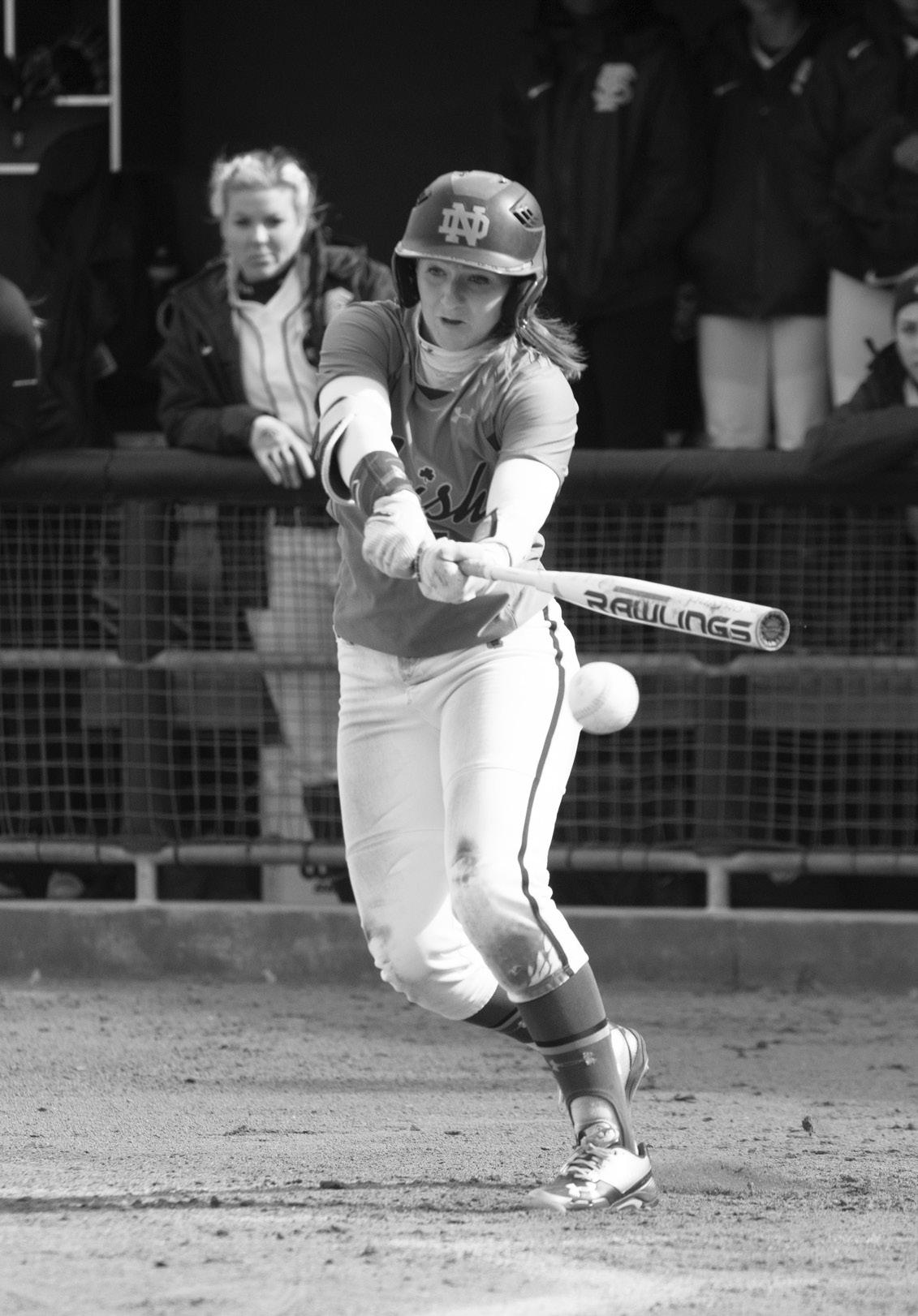
KATHLEEN DONAHUE | The Observer
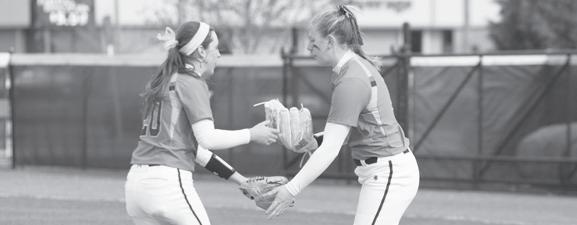
McCracken, who has 13 hits and 11 runs on the year, dives for a ball during Notre Dame’s 5-4 home victory over Florida State on Sunday. This weekend, the Irish are scheduled to play a three-game series against Pittsburgh.
robinson, blais address new group members
By JUSTINE WANG news writer
This past wednesday’s senate meeting marked the first senate meeting of the robinson-blais administration.
Junior student body president corey robinson and sophomore
vice president becca blais were sworn into office, as they stated their commitments to upholding the constitution of the undergraduate student body. Following their oaths, the new senators of each dorm were also sworn into office.
This administration’s senate
will follow a new model, which places some senators into four different committees as a part of each meeting. These committees are health and wellness, sustainability, community engagement and campus a ffairs. senators also have been assigned to different executive
cabinet departments.
“we are trying to make it more effective and efficient by separating [senate] into smaller committees and by approaching this with a interdisciplinary and multidisciplinary approach to these problems. we are excited to see what you all come up with and what you guys want to change,” robinson said to the senators.
The new senators for the 20162017 academic year approved the following individuals in their incoming student government positions including chief of staff, junior michael markel and parliamentarian, freshman monica montgomery.
sophomore a lexandra eisele will take over as secretary. executive controller will be sophomore daniel swanson, and junior erica Tabor will serve as director of communication.
a ndrew recker was named athletics representative, while junior maKenna siebenaler was approved as the campus ministry representative.
s enior r achel wallace will serve as the student union representative to d iversity c ouncil. The senate also approved freshmen david hopkinson and nabila mourad as the First undergraduate e xperience in l eadership (F uel) directors.
director of the department of academic affairs will be junior eva niklinska and the director of the department of campus technology will be freshman bryce badura.
Juniors caitlyn hodges and Kimberly sullivan will take over as director of the department of community relations and director of the department of constituent services, respectively.
sophomore Xun chris wang will be the director of the
department of gender issues for the new administration, and freshmen Julia dunbar and stephanie mastorakos will serve as the director of the department of health and wellness, and director of the department of internal affairs, respectively.
The new senators also approved freshman prathm Juneja as the new director of the department of national engagement and outreach.
Freshmen Joseph sierotko will take over as director of the department of residence life and director of the department of social concerns is freshman a ndrea Tong.
director of the department of university affairs is junior a ndrew helmin and junior grace watkins was named the university policy liaison.
“The purpose of the committees is to really empower those senators to have a voice,” blais said. “a lot of people are shy or nervous about raising their hand and sharing their opinion, but when you break people down into smaller groups and they get to share their perspective of their committee, their department, their dorms, their clubs, the people they represent ... then it really gives them a chance to be vocal.”
“w hat i am hoping for ... the senate is, first of all, greater collaboration between senate, sub, and executive cabinet,” blais said. “The second thing i would hope for is ... that they utilize the time to work in those small groups and work in the big group to form resolutions about the issues that they really care about, to really get to discuss the issues that affect our university every day.”
Contact Justine Wang at jwang27@nd.edu
Vocation
con T inued F rom page 1
doing or who they were.”
s he said what drew her away from the religious life of sisters was the fact that the sisters she met were from her grandparents’ generation.
“To me, it looked like the religious life was something that people didn’t really do anymore,” she said. “That’s not a bad thing. it’s just not something that young women chose.”
h ayes visited religious communities to see if that path was for her, but she did so half-heartedly — in the same manner that she dated, she said.
“ i could see marriage and religious life as good,” she said. “ i n the deepest part of my life, i knew neither one of those were for me.”
s he believed her vocation was to marry and have children since she was young,
“I could see marriage and religious life as good. In the deepest part of me, I knew neither one of those were for me.”
Jessica Hayes consecrated virgin
she said. a s her life went on, she met more women in religious orders and started to see the religious life as a possible path for her, though it was not something she truly wanted, h ayes said.
“ i knew it was a good thing,” she said. “ i t was a beautiful vocation and i was seeing women live it joyfully, but at the same time, i knew that wasn’t where my heart was.
“For me, for all of this time, there was either life in a religious community or married life. s o i thought, ‘ i f i ’m not called to [the religious life,] then i must be called to marriage and i just haven’t found the person yet.’ That was my attitude for some time.”
a ccording to h ayes, the main role for a consecrated virgin is to commit her life to prayer above all else. h ayes is able to hold any occupation, and throughout history, consecrated virgins have been doctors, teachers, accountants and other odd jobs, but the job the women choose cannot take precedence over the life of prayer, she said. s he also has to be of service to the parish and her community, h ayes said.
h ayes, who is a teacher of theology at b ishop d wenger h igh s chool, did not want to live in a religious community because she wanted to continue being a spiritual mother to her students, she said.
“ i really enjoyed my students,” she said. “a ll of us are called to mentor some people. m y students were allowing me to guide them in that life. They had good questions about prayer, and i really enjoyed being a mentor to them in that way.”
a ccording to h ayes, she was guided to her consecration by studying the Theology of the b ody during her later life.
“That’s when i started realizing how much i love learning about the faith,” she said.
“ i think learning the truths about the theology of the body and how stamped it is into our very being teaches us much about how we are called to love and be loved.”
h ayes found a spiritual director to help her navigate through the difficulties in life regarding her occupation, she said, but he recognized his guidance was needed to help h ayes figure out her vocation, instead.
“ h e really challenged me to think more deeply about how i was going to give myself,” she said. “ i had someone posing challenging questions and then holding me accountable for those answers. i couldn’t just think about them and then not get anywhere — he wanted an answer.”
a ccording to h ayes, her decision to become a consecrated virgin came through the process of trying to figure out what she truly loved. s he realized she loved the faith, teaching teenagers about the faith and being around her parish community.
“There were so many things about my life that i already liked, and i think this priest could see that in a way that i couldn’t, because, to me, there was still this one unanswered question that i didn’t want to talk about,” she said. “ h e could see there
were places of joy for me and wanted to help me to draw those out.”
s he had to think critically about whether her life plans were what she wanted or what others wanted for her, she said.
“There [was] so much pressure, which i didn’t notice up to that point, to marry and have kids,” h ayes said. “They’re all really good things to want, but i could finally explain that these were not the things i wanted. … i needed to have the courage to take the next step forward.”
This decision helped her fill in the gaps she had been trying to fill throughout her life, h ayes said.
“For a really long time, i had tried to get myself to accept that i was going to be single,” she said. “ i moved from accepting it and putting up with it … to a wholehearted desire that this is all i really wanted in my life is to be united with c hrist in a spousal way, where i give myself completely and publicly over to him, but also in the world, so that i can continue living in the way that has brought me so much joy, but now with that extra step … because i choose to.”
h ayes said she wants to be an example for women to demonstrate there is another way to fulfill their vocation.
“ we know what marriage is, and we know what the religious life is, even if we haven’t experienced it by living around religious communities,” she said. “ b ut there is this other way, this union with c hrist, but where we live in the world.
“ i think [with] the witness of women living in the world as consecrated virgins, there’s this constant reminder that living a chaste lifestyle is one that brings great joy and it looks really weird
because no one thinks about living that way by choice — it’s more by consequence. b ut
“In any discernment, what is really [important] more than anything is knowing yourself.”
Jessica Hayes consecrated virgin
i think that kind of a witness is really powerful, because it makes a woman available to those around her in a way that she can’t be if she’s living in a religious community, where she has those responsibilities to community life or to the life of a family.”
a ccording to h ayes, people have thanked her for her courage and for giving her life away, though she believes it is the easiest and most natural part of her life.
“ i n any discernment, what is really [important] more than anything is knowing yourself,” she said. “ w henever it is, we find what g od is calling us to — there’s really no sense of loss. i t’s like he’s offering you the
opportunity to be yourself in the greatest way possible, in the greatest joy possible.” h ayes said she feels she truly found her vocation in becoming a consecrated virgin.
“ i n my discernment, i feel what happened is it opened up my whole heart,” she said. “ n ow, i live with my whole heart and it’s a much better live than not really knowing ourselves.”
a ccording to h ayes, looking into the life of m ary and m ary’s acceptance and willingness to be the mother of g od helped her realize this was what she truly wanted and what g od wanted for her.
“ i feel like for me, a common thing with m ary’s annunciation was that i had that one moment of absolute clarity that this was what the l ord was asking of me and this was what i most desired,” she said. “ i don’t know that i ’ll ever have that for the rest of my life, but i don’t know that m ary did either. b ut she was absolutely certain that this was what the l ord wanted. … That was true with me, too.”
Contact Nicole Caratas at ncaratas01@saintmarys.edu
said the show’s theme this year, “w hat’s next?” is intended to recognize the progress still needed.
“we were thinking, okay, so lds has been around for 10 years now [and] it started a conversation on a lot of issues, but now that there’s a conversation going, what’s next?” he said. “w hat’s next on dealing with sexual assault as a community, but also, what’s next on lgbT issues? w hat’s next for gender relations?”
The show highlights the community’s need to move forward with this conversation, sophomore co-writer dominic acri said in an email.
“writing [and] editing the stories for stage helped me realize that no matter how much we
spread awareness about these topics, we can only see change if we are willing to ask, ‘what’s next?’” he said. “now that we are comfortable sharing our stories and hearing the stories of others, it is time for us to move forward and continue to conversation.”
senior a nthony murphy, the show’s director, said he credits the students willing to share their stories with the community for the production’s success.
“w hat i’ve learned in the past week, even, is just how important the stories are,” he said. “it’s not the acting, it’s not my direction — the stories are what hold this performance up.”
This year’s show was able to feature a balance of monologues about different subjects due to the increased number of student submissions, hughes said.
“This year, we got more submission than we have in the
paid a dverT isemen T
past couple years,” he said. “we were lucky that it covered a broad range of issues and we were able to show that onstage.”
The performance is framed as a tour of notre dame’s campus for prospective students, with each location mentioned featuring two or three monologues relevant to that specific place. This aimed to emphasize the fact that these stories all come from members of the notre dame community, murphy said.
“The objective was kind of to make these topics salient, based on location,” murphy said. “These things do happen on campus and that our friends, our classmates, our colleagues, are walking around with this baggage and maybe we’re not all alone. we’re not all so different.”
w hile lds is a helpful step in addressing issues surrounding gender and sexuality at notre dame, the community needs to take specific action, hughes said.
“i think that l oyal daughters and sons can be a really good part of how we move forward on these issues as a community, but it does take action outside,” he said. “part of what somebody can do is come and hear these stories, and then that helps them learn more and know more and know what needs to be addressed. but there also needs to be concrete action taken … There are actionable steps and this show, i think, is a starting point in a conversation, but it’s definitely not an end in itself.”
“w hat’s next?” runs until saturday and will feature a panel discussion at 3:30 p.m. after the saturday matinee performance.
Contact Courtney Becker at cbecker3@nd.edu
Bechina
the holy s ee’s role is to navigate these issues and make sure the c hurch remains involved.
“The idea up to the year of 2000 was we have to defend our c atholic identity. That
“We will not survive if we just defend our faith, but the faith will survive if we are missionaries and convince people who are able to take out the faith and engage in dialogue.”
Friedrich
Bechina undersecretary for the Vatican
Congregation for Catholic education
came with an image of a big wall around us that protects us from all negative influence outside of us,” bechina said. “we are discovering that we are defending something that we lose. That the identity is vanishing within the strong walls built around it.
“we will not survive if we just defend our faith, but the faith will survive if we are missionaries and convince people who are able to take out the faith and engage in dialogue.”
he spoke about how the c hurch once viewed academic freedom as a threat to its institution, but says times have changed.
“universities and c atholic higher education are protected on academic freedom and good argumentation,” bechina said. “we have to understand what academic freedom is. nobody can be obliged to believe
something. Faith is an act for the free person. a nd so is the same for truth.”
bechina said it was impossible to fully possess the truth, but countered that by saying that this impossibility does not mean society as a whole should give up on seeking it. he said humility as a virtue is indispensable, because pride can obstruct one’s vision of the truth.
“i n truth a university has always been … called to be a house where one seeks the truth,” he said.
he used pope Francis as an example of a world learner by talking about how Francis’ degree was in chemistry, which meant he had hands-on experience learning about “earthly reality.” he said Francis is an example of someone who used education to move forward.
“we should always have the courage in our universities to go forward anchored in our values, but at the same time always moving forward,” bechina said. “e ngage, mingle, be missionaries again.”
he said one of the biggest problems of today is a lack of hope and said c atholic universities should always make sure they are institutions that foster hope in their students.
“c atholic universities are the places that should provide more. it is the place where we open beyond these earthly realities,” bechina said. “no one would do research without the hope to find something. so these attitudes are in a certain sense a preparation of hope. but it’s not enough.
“we should teach subjects that [go] beyond a good career, but prepare people to be people who make good decisions, who will be able to change the world for the better because they have encountered hope.”
Contact Selena Ponio at sponio@nd.edu
iNsidE ColumN
Losing a lost art
Megan Valley news writer
m y best friend from high school, a lex, recently graduated from boot camp for the n avy. o bviously, i ’m super proud of her and all, but the best part of her graduating was she got her phone back.
For two months, i wrote a lex letters; it was the only way we could communicate. e very couple of days, i would type up and send her a several page document with updates to my life, g rammy winner lists, a description of b eyonce’s s uper b owl performance and updates regarding Kanye west’s Twitter rants and subsequent drama.
e very Thursday — she was only allowed to send mail out from g reat l akes, i llinois on s undays — i would receive what were, essentially, journal entries about what she was up to each day since the last time she wrote me. e verything would be handwritten in all caps, because that’s how she was told to practice writing.
e ven when we were living in the same state and attending the same high school and living only a few miles apart, a lex and i were in constant contact: texting. i ’m even in a very animated group chat with her and her brother. e ver since a lex and i both had cell phones, i don’t think we’ve ever gone more than a couple of hours without some sort of communication.
o ccasionally, i ’ll see an article about the “lost art” of letter writing — usually accompanied with statements of how “impersonal” texting is — and i wonder if those people longing for the forms of communication of old have ever been in a situation where that was the only way they could communicate with someone. a lex was only out of my texting inbox for eight weeks and we weren’t completely out of contact, but only getting one letter’s worth a week of conversation was still highly irritating, at a minimum. h ere’s a short and incomplete list of things we missed out on for eight weeks: horribly unflattering s napchat selfies, links to articles and videos we thought the other would like, live-texting n etflix binges, instantaneous advice, comfort during a rough night, sharing small town gossip from home.
p erhaps i sound whiny. b ut even if i ’m a bit melodramatic, look at things from the perspective of a lex. you’re leaving home for the first time. you’re surrounded by people you don’t know and probably won’t bother to get to know well because, in eight weeks, you’ll all be separated anyway. you have no sense of privacy: community bunks, community showers. you’re exhausted and frustrated and every so often, you get to stand perfectly still while someone screams at you. you get a few minutes of break here and there throughout the day, so you read letters from your friends and family. For longer breaks, you write your responses until your hand cramps. you think about how these letters won’t even be read until the following week. you’re lonely and miss all your loved ones.
Contact Megan Valley at mvalley@nd.edu
The views expressed in the Inside Column are those of the author and not necessarily those of The Observer.
corporations, campaigns, and the constitution
Eddie Damstra dinner Table Talks
i f you have listened to b ernie s anders speak for more than five minutes, the chances are high that you heard him mention the need for campaign finance reform. a nd while some positions s anders holds may be considered distinctly unique from most other candidates, his emphasis on reforming campaign finance laws cannot be classified as such. i n fact, many people from both parties have advocated for weakening the financial influence wealthy individuals, corporations and unions may have on political campaigns. h owever, many of the reservations such people have with the current campaign finance system stem from misunderstandings of a major s upreme c ourt case and fundamental rights to free speech and expression. e ssentially all those who vocally emphasize the need to radically alter current campaign finance laws are staunch opponents to the 2010 s upreme c ourt case: c itizens u nited v. F ec . This is the court case that practically birthed the era of super political action committees ( pac s). This case is the rallying cry for many advocates of increasing the policing power of the government when it comes to campaign finance. i mmediately following this court case, many people were terrified and told of the immense “danger” that such a ruling would cause. p erhaps most notably, television personality Keith o lbermann said, “This is a s upreme c ourt sanctioned murder of what little actual democracy is left in this democracy … it is the dark ages; it is our d red s cott.” w hile one can recognize this as an obvious utilization of hyperbole and demagoguery, in the days following the decision, this was common rhetoric employed by many media outlets. i n fact, there was, and still is, a general sentiment of fear and anger invoked by the s upreme c ourt’s decision in c itizens u nited v. F ec h owever, many people’s fear and anger is generated by either a misunderstanding of the stipulations of the court decision or — and possibly in addition to — a misunderstanding of the extent of freedom of speech and the importance such a principle possesses. c itizens u nited v. F ec was a case that originated when the conservative lobbying group c itizens united was disallowed from airing and advertising a film critical of 2008 presidential candidate h illary c linton. c itizens u nited was prohibited from airing such a film because it violated the b ipartisan c ampaign r eform a ct, also known as the m c c ain-Feingold a ct. under the b ipartisan c ampaign r eform a ct, communications via broadcast, cable or satellite that mentioned a candidate 60 days before a general election or 30 days before a primary election were outlawed. c itizen’s united found such a proscription as a limit to its freedom of speech and consequently filed a complaint. The case eventually reached the s upreme c ourt, which sided with c itizens u nited. The majority opinion, authored by Justice a nthony Kennedy, noted, “ i f the First a mendment has any force, it prohibits c ongress from fining or jailing citizens, or associations of citizens, for simply engaging in political speech.” c orporations are, according to the c ourt, associations of individuals and are, thus, granted the same First a mendment rights as any single individual would be granted. The c ourt stated that since money is vital in circulating speech, restricting the amount of money an association of individuals can spend is a direct violation of the First a mendment.
w hen identifying what c itizens u nited v. F ec establishes, it is also important to note what the case does not establish. The court case did not suddenly allow corporations and unions to give directly to political parties or campaigns — there is still a ban
on such an action in races for federal office. r ather, c itizens u nited v. F ec allows corporations and unions to contribute money to independent expenditure committees, now classified as super pac s. These pac s have no limits on independent political spending, but may not coordinate with or directly contribute to political campaigns.
a dditionally, c itizens u nited v. F ec does not permit corporations to spend without public disclosure. a ccording to the majority opinion, “The First a mendment protects political speech; and disclosure permits citizens and shareholders to react to the speech of corporate entities in a proper way. This transparency enables the electorate to make informed decisions and give proper weight to different speakers and messages.” The s upreme c ourt, in its decision, established that organizations, comprised of individuals, have a right to engage in political speech and other individuals have the right to listen to what the organizations have to say.
m any people who want c itizens u nited v. F ec to be overturned claim to champion freedom of speech. The irony of this is found in the restriction of free speech that such a reversal would create. d ictating who can speak about political matters and to what extent fundamentally violates the First a mendment. i t is not only the rights of the corporations or unions that are at stake when debating this matter, but also the rights of the voters as a whole. i t is the right of the people to be able to hear information and ideas. The free and flourishing competition of political speech is beneficial for everyone, including the listeners. The government should not have the right to limit such competition and subsequently tarnish the democratic process. i do not doubt that those who desire to reform campaign finance laws have good intentions. i n fact, many concerns they have with the current system are valid. w hile the extent to which corporations can control politicians is often exaggerated, it is undeniably true that current laws enable organizations to purchase influence over government officials. This is certainly a problem, as politicians should represent the interests of their entire constituency, not solely those of a certain union or corporation. h owever, the solution to the problem is not to strip the constitutional rights of certain groups, but to enhance transparency and voter awareness. we, the people, must demand that politicians and corporations be more transparent with where money is coming from and where it is going. This information is already publicly available, but it should be highlighted more significantly. voters must utilize such information to make informed decisions on who to support. i t is easy to write off the a merican political system as corrupt and controlled by corporations, but the reality is that the true power in a merican democracy lies in the hands of the individual voter.
a llowing organizations and individuals to contribute in an unrestricted manner to super pac s does not inhibit freedom but rather promotes it. There is no such thing as too much political speech. we must embrace the ability of corporations and unions to speak politically and listen to what they have to say. The government does not get to decide who are legitimate political speakers. we are all granted the right to engage in political discussion — that is the essence of a merican democracy.
Eddie Damstra is a freshman from Orland Park, Illinois. He is majoring in political science and is considering attending law school after his time as an undergraduate at Notre Dame. He can be reached at edamstra@nd.edu
The views expressed in this column are those of the author and not necessarily those of The Observer.
Courtney Phelan
How to tell someone you love them
starting in 2012, most of the united states adopted the common core state standards. ccss, or the common core, as it’s commonly (pun totally intended) called is a set of educational standards, or learning targets, that aim to ensure all students have the same expectations and opportunities. They’re rather controversial and misunderstood, and i’m not going to put myself in the middle of that debate right now. because i’m an optimist, i’m going to focus on the good parts of the ccss
one of the differences between ccss and previous education standards is the focus on literacy and e nglish language arts, including speaking and listening. my heart soared when i first read that ccss places emphasis on speaking and listening, because i have always been a strong proponent of encouraging oral and aural skills in the classroom. plus, now i can tell future job interviewers that both my lesson plans and educational philosophy are c ommon core-aligned.
i love the inclusion of speaking and listening skills because speaking and listening are essential parts of communication that are often left out of classrooms. students spend a lot of their days listening to teachers, reading books, worksheets or other media, and writing down what teachers say, with occasional chances to write what they think as well. i n some classrooms, a student is more likely to speak out of turn and be reprimanded than to have a chance to talk about their own thoughts.
students coming from classrooms that emphasize
speaking and listening skills will — hopefully — be more prepared for colleges, careers, and the world. a student who has learned how to speak clearly and eloquently will be much more effective at selling their team’s pitch in a meeting than someone who stares at the floor and doesn’t give evidence. similarly, i would feel much safer at night knowing that members of our military can listen attentively to verbal instructions and follow through accordingly, rather than listening passively or immediately planning what they’ll say next.
but outside of the world of ccss and the goals of college and career readiness, i like the emphasis on speaking and listening for my students’ personal lives. Quite simply, i want my future students to be good, respectable, happy people outside of their working lives too, and i think this section of ccss can help ensure that. l et’s do an example of how good speaking skills, as defined by ccss, can help someone in their personal life, shall we?
according to the ccss, 8th grade students will be able to, “present claims and findings, emphasizing salient points in a focused, coherent, manner with relevant evidence, sound valid reasoning, and wellchosen details; use appropriate eye contact, adequate volume, and clear pronunciation.”
l et’s say that we want to tell someone that you love them. For this example, i’ll use my good friend mary. now, i could walk up to mary, stare at my shoes, and mumble, “i lovoo.” i f she was able to hear what i said, despite my unclear pronunciation and downward trajectory of my sound waves, she might appreciate it. however, she would appreciate it a lot more if i looked at her, smiled and made sure that exactly what i said was clear, so that we both are absolutely sure that i
my catholic vote
love her.
but let’s say that i want to make mary’s day by letting her know that i really, really love her. according to the ccss, i should present my claims clearly and using good evidence. i nstead of just saying, “i love you,” to really make her day, i should tell her why i love her. i should say things like:
“mary, i love you because we have the same taste in music and love to listen to 70s rock and 80s punk vinyl together.”
“mary, i love you because you’re a talented artist whose works make other people happy and comforted.”
“mary, i love you because, despite your incredible talent in art, you still take the time to do little projects with me, like designing my French tutoring posters or painting c hristmas presents for my friends and family.”
“mary, i love you because when we order c hinese food and i ask, ‘is it okay if i get eggrolls?,’ you say, ‘it’s not okay if you don’t get eggrolls.’”
“mary, i love you because when i sing, ‘dark-ness,’ you immediately respond with, ‘no par-ents.’”
“mary, i love you because when it started snowing the other day, you texted me and asked me if i had an electric blanket to go put on the flower beds to make sure that the new spring flowers didn’t freeze and die.”
Courtney Phelan is a junior English major living in Le Mans Hall. All she wants is for her cats to be proud of her someday. She can be reached at cphela01@saintmarys.edu
The views expressed in this column are those of the author and not necessarily those of The Observer.
on monday i attended wendy davis’ talk sponsored by the notre dame college democrats. she contributed her views as well as her personal experiences to the political dialogue on campus, discussing important and contentious issues such as minimum wage, healthcare and the role of gender discrimination in those arenas. s everal weeks ago, i voted in the ohio primary election. i come from a very traditional catholic family in which my parents had always made it clear that they supported republican candidates, and they cited pro-life beliefs as their primary reason for doing so. Though i too treasure my catholic faith and oppose abortion, i voted for bernie sanders, because i believe that he is the candidate with the most respect for the dignity of human life, despite his pro-choice platform. davis’ comments on the ideology that underlies the democratic party further convinced me that i made the right choice. There are no perfect candidates, and i disagree with senator sanders on more than just his position on abortion. however, more than any of the other candidates, i find his priorities and agenda are more consistent with my faith and hopes for our country, especially when one considers the s even Themes of catholic s ocial Teaching. These themes are far from being realized in our society today. l ife and dignity of the human person are compromised by more than just abortion. l ife and dignity are also currently subjugated by practices like capital punishment and a lack of commitment to solving conflicts abroad using peaceful means. The theme of “option for the poor and vulnerable” is ignored every time we do not put the needs of the disadvantaged above the privileged. The current minimum wage is not a living wage, which is an affront to the “dignity of work and the rights of workers.” The widespread disregard for environmental initiatives stands in opposition to “care
for g od’s creation.” Though bernie’s positions on the economy, healthcare, the environment and international policy were not formed on the basis of c atholic social Teaching, they seem to me to put the poor, the planet and peace ahead of the interests of businesses and billionaires, which is exactly what the c atholic church calls us to demand from our government. i believe that life begins at conception, and, thus, the right to life for an unborn child outweighs any rights of a mother aside from her own right to life. wendy davis provided examples of situations where many believe abortion is an appropriate and necessary course of action, which all involved medical conditions that already served as a preexisting threat to a fetus’ life. i n these cases, i believe there should be an active debate surrounding whether abortion is moral. The abortions that i oppose entirely are those chosen based on non-medical reasons.
however, i hold a deep empathy for all women who choose to have abortions and a deep frustration with the circumstances that lead to that choice. a bortion is a result of desperation. Fixing the issues that cause this desperation is the only lasting solution to this problem. a sanders presidency could provide for key changes in our society that would dramatically reduce the perceived need for abortions. This need was born out of a lack of support for mothers and respect for women, especially those who have to deal with poverty, racial discrimination, gender inequality and gendered violence, and the intersections between these struggles. bernie has been fighting to find solutions to these problems for decades.
a bortions will continue to occur as long as women are deprived of better options, even if their right to them is no longer protected by our legal system. i want to live in a world where an unplanned pregnancy does not completely derail a woman’s career, end her education or sentence her to a lifetime of struggling to clothe, feed and shelter her child when she was already struggling to do the same for herself. i want to live in a world where children are blessings,
not burdens. Though mothers who choose life are heroes, i want to live in a world where the decision to “keep the baby” is expected and supported, not heroic. The way forward is to give women more options, not take them away. universal healthcare, gender equality and an overhaul of the adoption system would all be necessary to guarantee life and dignity to unborn children. s enator sanders’ bold challenges to our unequal system, which often puts mothers at a severe disadvantage, makes him the most dedicated fighter for human dignity in the presidential race. we are blessed to live in a democracy. however, this blessing comes at a cost — at times, we must come to terms with the fact that our beliefs are not always popular. a nd though i do not believe that women have a natural right to abortion, the supreme c ourt has granted us a legal right to them. i respect davis’ and senator sanders’ dedication to advocating for all women’s rights, including this one. a s long as this right exists, efforts to undermine it through executive channels are threats to our democratic system and undermine the role the courts play in protecting all of our rights.
until we provide mothers with the support they need, they will continue to seek out abortions. i n my opinion, anti-abortion legislation is not sufficient to protect the dignity of life. The republican candidates — who all identify as pro-life — lack understanding of issues that lead women to choose abortion and are not dedicated to solving them. i voted for bernie in the primary because bernie’s dedication to equality and vision for the future of a merica are the most consistent with my own views. i don’t think my decision opposes my catholic faith, and i pray that i will have the opportunity to cast a vote for him again in november.
Karen is a senior majoring in sociology. She can be reached at kgilmor2@nd.edu
The views expressed in this column are those of the author and not necessarily those of The Observer.
e nglish major in the real world
Karen Gilmore guest columnist
By JIMMY KEMPER scene writer
a few years ago, critics scrutinized weezer as just another washed-out, creatively-dead band, lingering on the fumes of a career that burnt out a few decades ago. Then, everything changed with 2014’s “everything will be a lright in the end,” frontman r ivers cuomo’s equivalent of turning around a class with an allnighter paper after an entire semester of messing around. like most all-nighters, though, it wasn’t perfect, lacking the cohesiveness and just plain fun that had encapsulated weezer’s best works.
cue april 1’s eponymous “weezer (The w hite a lbum).” stripped of the anxieties and desperation that came with creating a “redemption” record after a decade or so of critical misfires, weezer has finally returned to doing what they do best: having a great time.
i’m going to leave the vague comments about the color white as a symbol of rebirth or the glaringly obvious allusions to the beatles for the pretentious kid in the front row of your introductory writing classes. because honestly, this record has much more in common with brian
wilson than paul mccartney. on “The w hite a lbum,” cuomo and the gang are done with classes for the summer, heading to the beach and jamming to the beach boys’ “pet sounds.”
From the very first track, psychedelic rock vibrations are everywhere. The introduction to “california Kids” sounds like it could have come straight out of the beach boys’ recording studio with its cawing seagulls, airy guitar riffs and crashing waves — all leading up to the swirling “pet sounds”-esque harmonies of the chorus in less than a minute. This californication pervades throughout the whole album, forming the thematic unity lacking in “everything will be a lright in the end.”
The music of “The w hite a lbum” never feels gimmicky or overdone, however, as the noise extends beyond this surf rock influence, delving into the grungy, ‘90s power pop sound that defined weezer’s two biggest albums, the also eponymous “weezer (The blue a lbum)” and the sadder, more introspective “pinkerton.”
This fusion of california fun and classic weezer goodness is no more apparent than on the album’s second track, “wind in our sail.” This song jumps between
poppy piano melodies and euphoric, high rising, guitar-driven choruses on a dime. combine that with cuomo’s nerdy lyrics that only he could pull off (“breathe in the salt / slicing waves at 40 knots / cumulonimbus in the sky / This is what we’ve waited for”), and we’ve got ourselves a great weezer track.
it’s not necessarily a return to form, though, as weezer has always had the geeky motifs and rocking power chord structure; it’s just been buried in the sand underneath l il wayne collaborations and hurley-from-“lost” concept albums. Thankfully, we’re well past that part of the band’s history now, as weezer is finally acting their age.
speaking of acting their age, cuomo demands that of potential mates in the quirky “l a girlz,” throwing that in among references to lewis carroll’s “Jaberwocky” and the 2014 film “w hiplash.”
Then there’s “(girl we got a) good Thing,” which takes all of the whacky lyricism, shoves it into a tambourineand-electric-guitar infused melody and comes out rocking as weezer’s best summer jam since “island in the sun.”
Just about every track on this record is
awesome. at times, “The w hite a lbum” sounds like a greatest hits album, except it’s all original material. neither does it overindulge in this great sound, coming it at a remarkably tight 34 minutes. in short, “The w hite a lbum” is a love letter to the weezer of the ’90s, mixed with some shameless beach boys riffs. it’s cuomo embracing his inner dork, full of oddball lyrics, a jamming nostalgia trip with the best of intentions and an all around great time.
Contact Jimmy Kemper at jkemper2@nd.edu
‘Weezer (The White Album)’
Weezer
Label: Crush Music
Tracks: “(Girl We Got A) Good Thing,” “L.A. Girlz,” “California Kids” If you like: Foo Fighters, Beck, Pavemen
By BRIAN BOYLEN scene writer
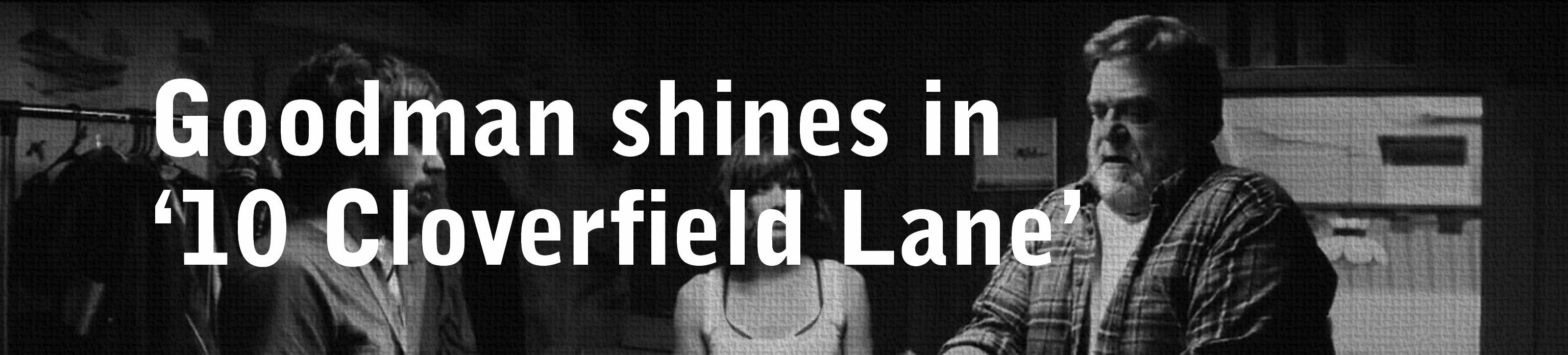
i watched the original “c loverfield” on a plane, thousands of feet in the air. it was an interesting experience, to say the least. The shaky camera style of cinematography that “c loverfield” employed is known to cause theatergoers motion sickness, and even worse for those viewing the film in a turbulent plane. yet, despite all the stomach pain, i thoroughly enjoyed “c loverfield” and was left eager for more by the end of the film. Thankfully, “10 c loverfield l ane” answered my desire for more, albeit in an unexpected way. i nstead of being a direct sequel to the original, “10 c loverfield l ane” is considered a spiritual successor. The movie eschews many aspects of “c loverfield” that were key to making the movie what it was. i nstead of a shaky cam, “10 c loverfield l ane” uses a more traditional style of filming; instead of
taking place in a massive metropolis as in the original, it limits its focus to a cramped, underground bunker for the brunt of the film.
The film begins with a young woman named m ichelle ( mary e lizabeth w instead) waking up after a car crash, chained to a wall in a makeshift holding cell. her apparent captor howard (John g oodman), quickly introduces himself before explaining how he saved the young woman’s life. The imposing howard then claims that there was an attack on the united states and the two must remain in the bunker he has built, as the air above was supposedly contaminated with an unknown poison. m ichelle, skeptical of this pronouncement, as any rational person would be in her situation, begins to calculate an escape plan. yet, as the movie progresses, more and more contradictory details emerge, obscuring the reality for both m ichelle and the viewer alike.
The final character introduced in the
film is e mmett (John g allagher, Jr.), another apparent survivor. e mmett’s story differs from m ichelle in that he claims to have fled to the shelter when he witnessed the attack. e mmett plays a smaller role than either howard or m ichelle, but he is absolutely vital to the films development. Throughout the film, e mmett acts as a link between the two other characters. he both assuages m ichelle’s fears about howard’s story — as he claims to have seen the attack himself — and acts as a fellow skeptic, welcoming m ichelle’s ideas that howard isn’t who he claims to be.
m ichelle’s decision making throughout the film is a welcome relief from the status quo of modern horror movies, chiefly that her decisions actually make sense. she approaches her situation with an impressive amount of levelheadedness, considering how she is trapped underground with two strange men. m ichelle is willing to accept evidence that howard is telling the truth, but she never loses her skepticism
— she is always on the lookout for cracks in his story.
mary e lizabeth w instead did a fantastic job portraying this realistic character, but the real stand out performance was given by John g oodman. g oodman almost doesn’t even need to speak — his presence alone contributes a palpable tension throughout the film. it is clear that howard is in the position of authority in the shelter, and g oodman’s performance makes this clear for every second the camera is on him.
v iewers expecting “c loverfield 2” may be disappointed. “10 c loverfield l ane” does not have the nonstop action of its predecessor. i nstead, the second installment offers more of a slow burn: a building of tensions that culminates in a heart-pounding conclusion that will leave audiences with their jaws dropped, if nothing else.
Contact Brian Boylen at bboylen@nd.edu
By JOHN DARR scene writer
“synthia” opens with a whisper: a bubbling little synth that seems to barely break the surface of the speaker as electric guitar chords echo faintly in a far-off canyon. The sounds swell, alternating snare and bass drums beat out a backbone, other synths ripple hesitantly at the edge. a woman’s voice hums into being from fractured noise, resurfacing and disappearing like snippets from some futuristic, mangled voicemail tape. For the next seven minutes, gorgeous vocal lines intertwined with spoken word bursts flow over the plush instrumentation. The track dances, collapses, and explodes until it bows out with the beat of a snare drum
This is “stand and deliver,” The Jezabels’ version of a pop song. b ecause yes, it’s catchy and uplifting and addicting as hell.
pop music, whether or not it appears on a billboard chart, has a habit of using its immediate appeal as a crutch.
c atchy melodies and memorable choruses allow artists and producers to slack off in areas that will go unnoticed. s ong structures are stagnant, forgettable lyrics fill in between vocal hooks and the production, while clean, rarely employs the type of sonic detail that modern technology makes possible. “synthia” spits in the face of these low standards, paying meticulous attention to detail and taking risk after risk without losing a stronghold on the immediate pleasures and accessibility that make pop music so wonderful to listen to.
a s if opening their record with a seven-minute, half-spoken-word epic wasn’t enough, The Jezabels follow up “stand and d eliver” with a track that utilizes guitar lines that sound like jet planes. “my l ove i s my d isease” opens with the hum of a bass that ripples threateningly as if to explode into an earthquake while electric guitars crack and ripple with the whirr of a helicopter. a panicky snare rhythm propels the track into a throttling groove, and the
guitars shriek against the edges of the soundscape as lead singer haley mary’s vocals float with a barely concealed power through the mix. w hen the chorus hits, it’s an explosion, and mary’s voices swells with impressive power. powerful moments like this one are scattered across the record’s runtime. “unnatural,” the most standard pop song on the record, launches into a wordless chorus that’s bigger than any stadium the group could ever fill. “c ome a live” establishes a relentless groove over the course of three minutes only to abandon it for a stomping dissonant freakout. “pleasure d rive” launches from a sexy ’80s lounge track into a blindingly bright, sky-gazing chorus.
i n addition, “synthia” benefits hugely from the striking perspective on femininity presented through its lyrics. i n standout track “smile,” haley mary seductively half-whispers, “ you can whistle at me on the street where i am walking i’m hardly incorruptible with things i might say yes to,”
before flipping the tables: “don’t tell me to smile / w hen for all you know i just buried my mother. i’ve been burying my mother for an eternity.” o n “a message From my mother’s ground,” mary ends the gorgeous ballad with a scathing indictment of the modern male need for power in a relationship, lilting that, “ you wanna be stronger, stronger, stronger, but not too strong / l ie safely in the middle ground.” The lyrics are consistently fresh, portraying the political through a personal lens while avoiding clichés that wracks artists covering similar content.
i n essence, “synthia” is a record that stretches the pop music format to its potential. every risk it takes regarding song structure, lyrical turns and production style pays off. it is undoubtedly experimental and yet sacrifices no popular appeal in order to be so. “synthia” is one of the first truly great records of 2016; here’s to hoping it’s not one of the last.
Contact John Darr at jdarr@nd.edu
weekend at a glance
friday saturday
What: Loyal Daughters and Sons present “What’s Next?”
When: 7 p.m.
Where: Carey Auditorium, Hesburgh Library
How Much: $3 for students, $5 for faculty and public
by bringing to life the anonymous stories from community members about gender issues, gender identity, sexuality and sexual assault at notre dame, The l oyal daughters and sons aim to foster healthy conversation in their latest show, titled “w hat’s next?”
What: 10 String Symphony in concert
When: Doors open at 7 p.m., music at 8 p.m.
Where: LangLab
1302 High St., South Bend
How Much: $8 at the door
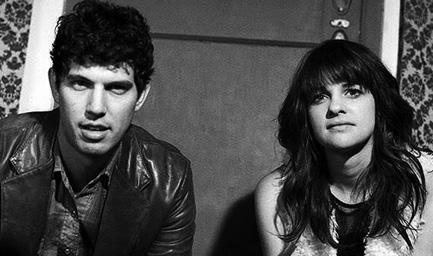
nashville-based a mericana outfit 10 string symphony will be taking their innovative take on tradition fiddle music to south bend at l anglab for what is sure to be an interesting concert experience. c ome check out what npr a ll songs consided has called “the newest and most promising voices in a mericana”
Breed Cat Show When: 9 a.m. - 4 p.m.
Where: Century Center
120 S. Saint Joseph St., South Bend How Much: $7 for adults, $6 for kids and seniors
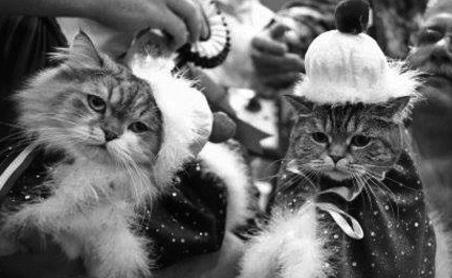
sure to be cat-tastic, the festival of felines, known as the T ica a ll breed cat show, will bring a smile to the face of any cat lover. boasting an array of cat product vendors, an assortment of exotic cats and even a cat agility course, this year’s cat show is likely to be a blast.
Weekly Watch is a series in which a Scene writer picks a movie or show available on an instant streaming service, and then discusses it for Monday’s paper.
paul Thomas a nderson’s “boogie nights” — which was voted the greatest movie of all time in a poll of Kentucky film critics — is finally available to stream on netflix. be sure to watch a nderson’s masterpiece this weekend, as scene writer nick l aureano will dive deep into its complexities for monday’s paper. a re you ready?
What: TICA All
happy birthday: a watchful eye will be necessary when dealing with your reputation, status and getting ahead. you’ll face competition that will not play fair. your precision and dedication will help you overcome anyone who tries to mess with you. honor and glory will be your ticket to victory. c hange is inevitable and preparation will be essential. c hoose your battles wisely. your numbers are 5, 13, 22, 24, 31, 37, 46.
birthday baby: you are practical, impatient and secretive. you are opportunistic and bold.
aries ( march 21- april 19): be careful not to push someone who is likely to push back. be willing to work alongside your competition and you will gain respect. l et your discipline and energetic enthusiasm shine and you’ll be hard to beat.
Taurus ( april 20- may 20): be brave and express your thoughts and plans. d on’t be afraid to try something new or to get involved in an unusual event or activity. The outcome will be enlightening and give you food for thought. romance is on the rise.
gemini ( may 21-June 20): helping someone out is fine, but if you loan out cash, it could ruin your friendship and leave you holding a bad debt. a secretive approach to something you want to develop will enable you to reach your goal without interference.
cancer (June 21-July 22): you’ll be tempted to help someone who has a sob story. back up and rethink your position. you will gain far more if you put your effort in to your own ideas rather than someone else’s. romance will enhance your personal life.
leo (July 23- aug. 22): c heck out the online job market and something will grab your attention and spark an idea that will enable you to advance. Finding ways to entertain your peers or employer will put you in the running for a cushy position.
virgo ( aug. 23- sept. 22): d on’t give in to personal conflict. Take care of business before you opt to have fun. reassure those who put demands on you that you will take part when the time is right. o ffering alternative incentives will lead to help, not hindrance.
libra ( sept. 23- oct. 22): d on’t let emotional matters cloud your vision. make a point to learn something that will help you move in a positive direction and improve your chances of getting ahead. a business partnership will lead to an interesting alternative.
scorpio ( oct. 23- nov. 21): a n old friend will play a role in a creative endeavor you want to pursue. o ffering to help one another will pay off and make your quest for success much easier. romance will enhance your day.
sagi TTarius ( nov. 22- dec. 21): d on’t leave anything unfinished or you will face complaints. someone will be eager to make you look bad. add to your comfort at home and make sure to take the time to enjoy your hobbies and friends.
capricorn ( dec. 22-Jan. 19): d on’t give in to someone’s demands or pushiness. stand your ground and make it clear what you believe is best for you. put your thoughts on paper and draw up an agreement if necessary. better to be safe than sorry.
aQuarius (Jan. 20-Feb. 18): recognize and market your skills. w hat you have to offer can bring in extra cash and change the way people view you. home improvements should be geared toward making a space conducive to getting a project up and running.
pisces (Feb. 19- march 20): Know what you want, but go about getting it in a diplomatic manner. being too forceful will invite arguments and opposition. Try to attract opportunity by offering incentives to the people you need help from.
To receive The observer in your home, complete the form below. make checks payable and mail to: The observer p o
notre dame, in 46556 enclosed is $130 for one academic year
is $75 for one semester
JumBlE | david hoyT and JeFF KnureK
sudoku | The mepham group
Just add watEr | John roddy & eric carlson
FliNG By spriNG | riley mccurrie
UConn is not hurting the sport
Brett O’Connell sports writer
The g olden state warriors are 69-9 on the season. o nly a sparse handful of teams have been able to keep a close game with the phenomenal talent on their roster. i hate to punish them for being great, but they’re killing the nba not that the warriors shouldn’t try to win all of their games — and we certainly don’t want to impose rules or regulations to limit their effectiveness. b ut it’s not fun for viewers and it’s not good for the sport. w ho, after all, would want to watch superior basketball when we could simply watch a lowerquality — but more competitive — product? g olden state’s dominance is not good for the nba or the promotion of basketball as a sport.
This, of course, is a ridiculous argument. nobody would ever in a thousand years accuse the g olden state warriors of being bad for the nba , much less the sport of basketball as we know it. a nd yet there are pundits, amateur writers and fans across social media whom seem convinced the dominant c onnecticut women’s basketball team, who just won its unprecedented fourthstraight national championship, are just that: bad for the game.
The argument seems to be not that uc onn is too good at what they do, or that women’s sports are inherently less interesting than men’s. i believe that those who hold the opinions listed above are genuine when they say they are not speaking from an anti-women’s sport position. r ather, they seem to think the uc onn women are an uninteresting team because they have no rivals. There’s no competition, and therefore, they are turning fans off to what has become a “boring” sport. i n the interest of full disclosure, i am a major women’s basketball fan. b eing able to play in the band and having the opportunity to support the women’s team as i have in the past four years of my college career, i’ve seen my fair share of games featuring great teams, the huskies being among them. notre d ame has played uc onn a number of times in recent years, and i distinctly remember every game being competitive and full of energy. Those two teams excelled at the sport of basketball, and the drama that ensued on the court in each matchup was compelling
and interesting.
it is true that, in the past, parity has proven hard to come by in the women’s game on the collegiate level. uc onn’s success is unprecedented, but the alleged issue goes deeper than that. upsets are rare, and picking chalk seems to be the preferred method of prediction when setting a women’s bracket up for m arch m adness. however, i would argue that, since uc onn began its dominant streak, parity in the women’s game has actually increased significantly. Teams like fourth-seeded s yracuse and seventh-seeded washington competed with perennial heavyweights like stanford and m aryland — and won, sometimes handily. o nly a single no. 1 seed — uc onn — made it to the Final Four in the women’s tournament — a statistic that was mirrored in the men’s bracket. The level of competition in women’s college basketball is rising, but some observers are too short-sighted to look past the success of one of the most dominant sports teams in history to see the development of the sport occurring right in front of their eyes.
i truly do believe that critics of the state of women’s college basketball do not believe that they are speaking from a position of privilege when they suggest that uc onn’s success is bad for the sport. That being said, i suspect the words of uc onn head coach g eno a uriemma deserve a bit more attention than perhaps they were afforded when first spoken.
“ w hen Tiger [ woods] was winning every major, nobody said he was bad for golf,” a uriemma said. “a ctually, he did a lot for golf. he made everybody have to be a better golfer. we don’t appreciate people for how good they are and what a good job they do; we always have to compare it to something. it’s only in women’s basketball. it’s the only sport where that happens.”
i am by no means a huskies fan — their dominance has vexed me on a number of occasions. b ut i would never presume their success to be bad for the sport. r ather, i think it is important that we realize how damaging and retroactive that viewpoint can actually be.
Contact Brent O’Connell at boconne1@nd.edu
The views expressed in this Sports Authority are those of the author and not necessarily those of The Observer.
yankees dominate a stros for first victory of year
Associated Press
new yor K — s tarlin c astro looks perfectly comfortable in pinstripes.
The yankees’ new second baseman homered and drove in five runs, m ark Teixeira had four rbi s and n ew york trounced the h ouston a stros 16-6 for its first victory of the season wednesday night.
i n his first two games with n ew york, c astro has a record seven rbi s. The previous yankees mark for rbi s in a player’s first two games with the team was set by Todd g reene, who knocked in six runs in 2001, according to s T a T s
“ s tarlin c astro is playing T-ball right now,” teammate c arlos b eltran said. “ i t’s good to see him swinging the bat like that. h e’s a big key.”
Teixeira and c astro each hit a three-run homer. b eltran also went deep and c astro finished with four of the 17 hits for the yankees, who chased c ollin m c h ugh (0-1) in a six-run bottom of the first inning that lasted 36 minutes.
c astro was obtained in an offseason trade with the
c hicago c ubs, where the three-time a ll- s tar had an up-and-down tenure and was moved from shortstop to second base last year to make room for rookie a ddison r ussell.
“ i just want to be the player that i used to be, to show everybody that i can be the player that i am,” said c astro, who set a major league record with six rbi s in his big league debut for the c ubs in m ay 2010 against c incinnati.
“ i t’s a good opportunity for me to be in this organization,” he added. “ i don’t really feel pressure either way, but i think here it’s less.”
c arlos c orrea went 4 for 5 with two home runs and g eorge s pringer had his first career grand slam for h ouston, a 5-3 winner Tuesday in the frigid opener (36 degrees at game time). This one started with the temperature at 43 degrees and took 3 hours, 45 minutes to complete.
n ew york’s bats were hot all night, though.
b rian m c c ann had a tworun double in the first, b rett g ardner walked a careerhigh four times and pinchhitter r onald Torreyes hit a
two-run triple in his first atbat with the yankees. c astro followed with a run-scoring single to make it 16-6 in the seventh.
“ n ice pace that he’s on,” yankees manager Joe g irardi said. “ we felt that he would be big in our lineup, that he gave us a lot better balance than we’ve had.”
m ichael p ineda (1-0) benefited from the offensive outburst, taking home a win despite allowing six runs and eight hits — including three homers — in five innings.
i van n ova, beaten out by cc s abathia for the n o. 5 spot in the rotation, finished with four scoreless innings on a windy night for his first major league save. i t was his first relief appearance since June 2013.
“ h e did a really good job,” g irardi said. “ i t was tough conditions for pitchers tonight.”
m c h ugh, a 19-game winner last season, managed to get only one out in the shortest start of his career. h e beat p ineda twice last year and entered with a 1.88 era and 16 strikeouts over 14 1-3 innings in two starts against the yankees.
Howard makes 30 saves as Detroit moves into third
Associated Press
de T roi T — i f the d etroit r ed w ings make the playoffs for a 25th straight year, they can thank Jimmy h oward.
h oward made 30 saves, d arren h elm, a ndreas a thanasiou and Kyle Quincey scored for d etroit, and the r ed w ings took a step toward another postseason appearance with a 3-0 win over the p hiladelphia Flyers on wednesday night.
The r ed w ings (93 points) lead b oston (91) in the race for third place in the a tlantic d ivision. p hiladelphia (91) is tied with the b ruins for the second wild card.
“ i think it’s just the paying attention to detail,” h oward said. “ we’ve been a lot smarter with the puck — not forcing things, and just taking what’s given.”
w hile teammate p etr
m razek has struggled in net, h oward has won all three of his starts this month. wednesday was his second shutout of the season.
The Flyers have three games remaining, while d etroit and b oston have two each. The b ruins host the r ed w ings on Thursday night, and a win would put d etroit in the playoffs.
“From day one, we’ve had to grind out wins. e verything’s been close,” r ed w ings coach Jeff b lashill said. “ we’ve never been truly comfortable in a playoff spot. a t times, we’ve been on the outside looking in.”
h elm scored in the first period and a thanasiou added a short-handed goal in the second for d etroit, which hasn’t missed the postseason since 1990. Quincey’s goal was an empty-netter.
d etroit took a 1-0 lead on h elm’s goal. p hiladelphia’s s hayne g ostisbehere was trying to help clear the puck by flinging it around behind the net from near the corner, but instead it went toward the goal and bounced in front, where h elm was able to flip it past Flyers
goalie s teve m ason for his 13th goal of the season. a n even more glaring mistake led to the second goal. p hiladelphia’s Jakub voracek let the puck get past him near the boards with the Flyers on the power play. There was nobody back to prevent a thanasiou from going in alone on a breakaway, and his eighth goal of the season made it 2-0.
“They played a good game. we played a good game too,” p hiladelphia’s c laude g iroux said. “They got a couple bounces. we had chances on the power play and at even strength.” m ason made 23 saves. h is most impressive sequence came in the second when he stopped a breakaway by h elm, then recovered in time to deny l uke g lendening’s follow-up attempt.
voracek hit the crossbar with a wrist shot in the second, and that’s the closest the Flyers came to beating h oward.
Nhl | red wings 3, Flyers 0
Notre Dame set for Senior Day
By JOE EVERETT sports writer
This Friday is s enior d ay for n otre d ame, and its competition, a familiar acc foe, will likely be its toughest test of the season.
The i rish will face off against n o. 1 n orth c arolina, which has retained the top spot of the i T a n ational rankings for three straight weeks. The Tar h eels (21-2, 6-2 acc ), who won the 2016 i T a i ndoor n ational c hampionship back in February, arrive in s outh b end fresh off a loss. l ast time out, n orth c arolina fell to n o. 6 wake Forest at home, 4-3. The i rish (12-12, 4-6 acc ) will look to send their seniors out with a win at the last home match of the season. a lthough n otre d ame will be the underdog entering the match, i rish head coach r yan s achire knows the i rish will give it everything they have on s enior d ay.
“ i ’m hoping and expecting to see a very spirited effort from our guys,” s achire said. “ n orth c arolina has a great team but i think we’re going to play well and have a lot of energy and excitement.”
a fter this match, the i rish will travel to n orth c arolina s tate next weekend for their final acc regular season match before beginning preparation for the acc championships. s achire referenced the grueling schedule the i rish have faced this year and said it will help in preparation for this match and the acc championships.
“ we’ve played one of the best schedules in the country
this year, so our whole season has prepared us for the acc championships and for this match,” s achire said. “ we’re not putting a lot of extra effort in this week because it’s just enough match for us, but it’s also s enior d ay and our last home match of the season, so its important to recognize that and play well with a lot of energy.”
Following the match, the i rish will honor their five seniors — a lex l awson, Quentin m onaghan, n icolas m ontoya, Kenneth s abacinski, and e ric s chnurrenberger. l awson currently holds 89 career doubles wins, which puts him into third place on n otre d ame’s all-time doubles win list.
m onaghan was an ncaa singles championship semifinalist last year and was named an a ll- a merican, while this year he is ranked n o. 33 in the latest singles poll. s achire commented on his deep senior class and what they have meant to the program.
“This group has been a really special group,” s achire said. “ e ach of them throughout his career has made really big contributions to this program. They’re great people. we’re gonna miss them for who they are, first and foremost, but also obviously for what they’ve done on the court and what they’ve brought to this program.”
The match against n orth c arolina will begin Friday at 3:30 p.m. at c ourtney Tennis c enter.
Contact Joe Everett at jeveret4@nd.edu
p istons win close game, remain in no. 8 spot
Associated Press
orlando, Fla. — reggie Jackson scored 24 points and Kentavious c aldwell-pope added 18 to help lead the detroit p istons to a 108-104 win over the o rlando magic on wednesday night.
The win kept the p istons (42-37) in contention in the e astern c onference playoff race. They remained a halfgame behind i ndiana, which beat c leveland, for the no. 7 spot.
The magic’s three-game home winning streak ended. They held a 96-92 lead late in the fourth quarter, but then saw it slip away.
a fter going back and forth for much of the first three quarters, the p istons took control late in the fourth quarter.
Tobias harris, c aldwell-pope and Jackson all hit big shots in the final five minutes to rally the p istons. c aldwell-pope gave the p istons 97-96 lead late in the fourth quarter on a 3-pointer following a turnover by o rlando’s v ictor oladipo. evan Fournier led five o rlando players in double figures with 19 points.
The magic made it interesting down the stretch, but
the p istons converted seven of eight free-throw attempts in the final 24.6 seconds to stay out front. Jackson sank four free throws during that stretch and marcus morris hit his final two free throws to put the game away.
The p istons shot 45 percent from the field and 41 percent from 3-point range for the game, while the magic converted 48 percent from the floor but were just 4 of 15 from 3-point range. o rlando also committed 14 turnovers.
detroit opened the second half much more aggressively, outscoring o rlando 16-6 in the first 5 ½ minutes to claim a 60-57 advantage. harris scored five points and c aldwell-pope also had seven points during the run to begin the second half. but the magic did manage to recover late in the third as Fournier broke from his early slump to add 12 points in the third to help o rlando reclaim the lead and take a 77-73 lead into the fourth quarter.
The magic’s offense wasn’t nearly as fluid as it had been in the previous five games but it was good enough to claim a 51-44 lead going into halftime. o rlando claimed its
paid a dverT isemen T
largest lead with a strong finish in the final five minutes to erase a 41-35 deficit. o rlando outscored the p istons 16-3 down the stretch in the second quarter to claim a seven-point advantage halftime -- its largest lead of the half.
t ip-ins
detroit small forward Tobias harris returned to o rlando on wednesday night for the first time since being traded in February. The magic sent harris to detroit in exchange for F e rsan i llyasova and pg brandon Jennings. ... The p istons had 13 fast-break points, compared to 11 by the magic.
The magic entered wednesday night’s game averaging 119.2 points per outing in their last five games. They had also won four of their last five game and three straight at home. ... c nikola vucevic continues to come off the bench since returning to the floor last week after a groin injury kept him out for an extended time. c oach s cott skiles says vucevic is still a starter, but right now both he and the team are playing well with him coming off the bench.
KATHLEEN DONAHUE | The Observer Irish senior Quentin Monaghan follows through on a forehand shot during Notre Dame’s 5-2
over Duke on March 18.
Irish look to bounce back against Clemson
By MICHAEL IVEY sports writer
notre dame is set to host conference rival clemson on Friday afternoon at eck Tennis pavilion at 3:30 p.m., looking to rebound from a loss to no. 8 duke.
irish head coach Jay louderback said he liked the way his team performed last weekend against the blue devils (15-4, 8-2 acc) and expressed the need for his team to play well in their final matches before the upcoming acc championships.
“we competed well last weekend and we need to keep that up,” louderback said. “leading in to the acc championships, every match is important and we need the entire team to keep working toward each match.”
The irish (10-9, 4-6 acc) were last in action on sunday when they suffered a 4-1 loss in durham, north carolina. in the singles competition that day, sophomore brooke broda emerged as the victor in her match 6-2, 7-6(3) on court no. 5. however, senior Quinn gleason did not find the same success, losing 7-6, 6-3, on court no. 1. Junior monica robinson had the
same result, suffering a 6-3, 6-3 loss on court no. 2, while sophomore a llison miller was bested 6-3, 6-4 on court no. 3. in a close match, junior mary closs was victorious in her first set 7-6(5) before falling in the second set 6-4. she was losing 4-0 in the third and deciding set, when the match was discontinued on court no. 4. Junior Jane Fennelly won her first two sets, 6-4 and 5-3, before her match was discontinued on court no. 6. in doubles competition, the match between the doubles team of gleason and robinson and their opponents, duke senior beatrice capra and and freshman ellyse hamlin, ended 4-4 on court no. 1. closs and senior Julie vrabel were shut out 6-0 on court no. 2, while broda and miller suffered a 6-4 loss on court no. 3.
looking ahead, three of the irish’s last four regular season matches will take place at their home court, eck Tennis pavilion. louderback said he thinks playing the majority of their final games at home will be good for his team, considering how its earlier schedule has been so road heavy.
Irish junior Monica Robinson returns a serve during Notre Dame’s 6-1 victory over Indiana
Pavilion on Feb. 20. Robinson lost 6-3, 6-3 in singles competition against Duke last weekend.
“Finishing with three of our last four matches at home will be key for us,” louderback said. “we have been on the road quite a bit in the past few weeks and having the chance to play at home comes at a great time.” clemson (8-7, 6-4 acc) is coming off of a 7-0 loss against no. 7 miami, but has won three of its last five games. some notable wins for the Tigers this season has been victories over louisville, north carolina state and wake Forest.
paid a dverT isemen T
a fter the contest against the Tigers, the irish will welcome no. 17 georgia Tech (13-6, 8-2 acc).
The yellow Jackets will take on louisville on Friday before traveling to south bend for sunday’s matchup with the irish. The last time the yellow Jackets were in action was last sunday, when they defeated no. 12 virginia 4-3, with their season also including wins over clemson, syracuse and Tennessee. louderback said the mood of his team is upbeat and he
believes his athletes will be ready to play two matches in three days.
“we have had really good, positive practices this week and i think we will be ready,” louderback said.
The irish and the Tigers will square off at 3:30 p.m. Friday, while the matchup with the yellow Jackets will take place at 11 a.m. sunday.
Contact Michael Ivey at mivey@hcc-nd.edu
CAITLYN JORDAN | The Observer
at Eck Tennis
a lights-out 92-93 miles an hour fastball, but, with the type of pitcher he is, it’s incredibly important that he commands both sides of the plate with the fastball. a nd typically he does. h e’s pretty darn good.”
The i rish will likely need that to continue if they are to build on their winning ways in the second half of the season. b eyond h earne, each of the other three i rish starters — junior r yan s moyer and sophomores s ean g uenther and p eter s olomon — have era s under 4.
o n the offensive side of the ball, n otre d ame has been led in part by junior c avan b iggio and seniors r icky s anchez and Zak Kutsulis. a ll three players have batting averages well over .300, while b iggio is tied for the ncaa lead with 35 walks this season already.
The reason they have been able to put up so many runs recently, however, is that they have had contributions up and down the lineup. i n the win over m ichigan, for example, every single starter found his
way on base at least once as they combined for 14 hits and six walks, while six different players recorded an rbi
a nd with the highestranked team they’ve played all season — n o. 3 m iami — coming to s outh b end for a three-game set over the weekend, the i rish will need to keep up their consistency on both sides of the plate. They’ve proven they can do it, with wins over the wolverines, o regon and n o. 14 n orth c arolina s tate as well as back-to-back conference series wins over v irginia Tech and wake Forest so far.
a s the team moves through a pril and into m ay, n otre d ame will have to show it can hang with similar top teams if it hopes to make any kind of run in the conference and earn a berth in the ncaa tournament in June. i f recent performances say anything about the state of this team, the i rish certainly have the ability to play with, and beat, anyone.
Contact Hunter McDaniel at hmcdani1@nd.edu
The views expressed in this column are those of the author and not necessarily those of The Observer.
paid a dverT isemen T
Football
kick off their season s ept. 5 in austin, Texas against the l onghorns.
“i think one thing that we’re realizing is we did a lot of things offensively [last season] that we did not do with malik in camp that we did as we evolved offensively during the year,” he said. “s o there’s a lot of things he’s doing for the first time, so knowledge base for malik has been important in terms of the spring. he’s needed this spring to pick up things we did offensively during the year.
“ w ith d e shone, it’s across the board reads. it’s red-zone efficiency. it’s consistency.
“ … s o it’s hard to evaluate who’s ahead of who.”
hold on a second
Just to throw another wrinkle into the quarterback position this spring, junior quarterback montgomery vang order took first-team reps holding for the field goal unit at the beginning of practice wednesday morning.
Kizer held for sophomore kicker Justin yoon all last season and had continued that role throughout spring ball, but Kelly said yoon made a personal appeal for vang order
to get a shot.
“ w ith d e shone and everything we’re asking him to do, we felt like, ‘l et’s take a look at montgomery,’” Kelly said. “l ook, i’ll be honest with you we had a conversation with our kickers and he [ yoon] had been lobbying a bit for vang order, and so we said we’d give it a shot. a nd there’s a pretty good connection there, with that group.
“s o we’ll continue to work it. he obviously has a little bit more free time in terms of being able to get over there and spend a little bit more time with [ yoon], so we’re going to move in that direction right now and montgomery will be with that battery right now.”
Kizer still took snaps with the second specialty unit, holding for senior kicker John c hereson.
a s for yoon himself, Kelly said the sophomore has added a few yards to his comfort range, going from 43 yards to somewhere between 47 and 50 yards.
“it looks like he’s got a little bit more pop in his leg,” Kelly said.
Crawford shining at nickelback
shaun c rawford took firstteam reps at the nickelback position wednesday morning and the sophomore defensive back has impressed the coaching staff so far this spring, Kelly said.
“ we like his ability to play man [coverage],” Kelly said. “ very smart player, instinctive player. i think you have to have a real good sense of the field [to play nickel]. c orners play out by the numbers, and they have a friend with them: it’s called the sideline.
“[a] guy that plays inside has got to understand the field a lot better. he’s got to have an instinct that can play inside, and [ c rawford] just has a natural instinct to play inside a lot better.”
c rawford, who was on track to earn playing time at the nickel as a true freshman last season before tearing his acl
in fall camp, has moved up to fill the void left by an arm injury to junior cornerback nick watkins. watkins fractured his left humerus in practice last week and underwent successful surgery s aturday night, Kelly said.
watkins was at practice today with his arm in a sling and is expected to be out of action for six weeks, though there should be no longer term worries, Kelly said.
watkins and senior defensive back c ole l uke had been splitting time at the nickel throughout spring so in case one of them gets injured, the i rish won’t be limited in their packages and play-calling abilities on defense, Kelly said.
Jones still seeking confidence in return to field
The first-team defensive line wednesday morning consisted of senior i saac rochell, sophomore Jerry Tillery and juniors daniel c age and Jay hayes while graduate student Jarron Jones saw time with the second string.
Jones, who missed all of the 2015 regular season after tearing his mcl in fall camp, is physically 100 percent, Kelly said, but he added the interior lineman is still dealing with confidence issues.
“Jarron is still playing a bit tentative,” Kelly said. “a nd i think he understands that he’s got to play with more confidence. a nd i’m confident that he will when the lights go on.
“but having said that, he’s going to be challenged. There’s a lot of good players in there, and he’s going to have to really bear down and make that concerted effort to really challenge himself, because we know he’s got real unique qualities: his size, his ability to push the pocket. Those things are still there. i think a little bit of his confidence is going to come back and when it does, i think he’ll definitely be able to help us.”
Zach Klonsinski at zklonsin@nd.edu
Contact
WEI LIN | The Observer
Irish senior defensive lineman Isaac Rochell rushes the passer during Notre Dame’s 19-16 win over Boston College on Nov. 21.
Kelly examines quarterback situation, injuries
By ZACH KLONSINSKI
a ssistant m anaging e ditor
notre dame will not be like ohio state last season when it comes to the quarterback position, i rish head coach brian Kelly said following wednesday morning’s practice.
i nstead, Kelly said the i rish will have one clear starter and leader on the field in the fall.
“it seemed to me that ohio state found their identity after the m ichigan state game, where i think in a lot of ways e zekiel e lliott can be credited with waking up their entire coaching staff and saying, ‘ w ho are we?’” Kelly said. “s o i think the lessons learned there are, ‘ w hat’s your identity going to be?’ a nd they clearly decided who they were going to be after that game. They went with [J.T. b arrett] and said, ‘This is what we’re going to be,’ and that’s who they were against us [in the Fiesta b owl].
“s o i’ll make sure that doesn’t happen to us.”
however, who that identity will be based around
— whether it’s senior signal caller m alik Zaire or junior quarterback d e shone Kizer — isn’t a question that will be answered anytime soon, Kelly reiterated.
“i don’t think we’ll make a decision after spring,” Kelly said. “i will say this, i mean the two quarterbacks are really good players. … They’re both no. 1s. They both probably can’t play at the same time. s o one’s going to have to be the starter, and somebody is going to be unhappy.
“but i can’t keep them all happy, and we’re not going to go into the season with a team that does not have an identity. we’re going to have an identity as to who we are, and it doesn’t mean we can’t play more than one quarterback, but we’ll have a quarterback and we’ll get that established.”
Kelly said Zaire has some catching up to do after being sidelined most of last season, but also added both Zaire and Kizer have plenty of improvement to do before the i rish
see FooTball paGE 15
Ali Wester shines in freshman season for Irish
By BEN PADANILAM a ssociate sports e ditor
For the last two seasons, notre dame has had the benefit of junior center fielder Karley wester setting the table for the offense.
but this season, the i rish have doubled down on the wester family at the top of the order due to the emergence of her sister, freshman second baseman a li wester.
a li wester was a premier talent at the high school level over the course of her career at edison h igh school. i n three of her four years, the huntington beach, california, native eclipsed a .420 batting average, including a .520 mark her senior year. she stole at least 20 bases in three seasons, was a two-year captain and was named to the max p reps a llstate team her senior year.
a nd in her first year for the i rish, wester has carried that success over to the collegiate level, making the transition seem almost effortless. her .434 average ranks fourth in the acc through 34 games, and in
nd righting ship at midseason
a s the i rish approach the midway point of their season this weekend, they are clearly trending in the right direction. They have won eight of their last nine, as well as 10 of their last 13 games.
n otre d ame (16-11, 6-6 acc ) has seemingly found a formula for success in recent weeks, combining quality starting pitching with consistent offensive success — they have now scored at least five runs in 10 consecutive contests and have averaged 9.8 runs per game in the same stretch.
a nd in the last nine games
— a 15-run outburst from wake Forest aside — the pitching staff has held opponents to just 3.5 runs per game.
a fter Tuesday night’s win over then n o. 17 m ichigan, i rish head coach m ik a oki commented on n otre d ame’s success after struggling early.
“a ll along, i felt like this was — the way we’ve been
playing for the last two or three weeks — is how i thought we’d play the whole thing,” a oki said. “ l ike i said, we got off to that slow start. b ut i think it speaks volumes to our team that they’ve stuck with it, and they’ve hung in there and they didn’t let the little bit of disappointment of the way we started the year affect anything else.”
o ne of the reasons the i rish have been playing so well so far this season has been senior starting pitcher m ichael h earne. The lefty improved to 3-0 on the season with his win Tuesday, and n otre d ame is now 6-0 in games he starts.
h earne leads i rish starters with a 3.18 era , has 21 strikeouts to only 10 walks and is holding opponents to a .228 batting average against.
“For m ichael, it’s always about the fastball — being able to command the fastball on both sides of the plate,” a oki said Tuesday. “ i t’s not like his fastball is
BasEBall
FootBall
KATHLEEN DONAHUE | The Observer
Irish freshman second baseman Ali Wester slaps the ball into play during Notre Dame’s 5-4 win over Florida State on Sunday.
CAITLYN JORDAN | The Observer
Irish senior quarterback Malik Zaire scrambles outside the pocket during Notre Dame’s 34-27 victory over
Virginia at Scott Stadium on Sept. 12. Zaire suffered a season-ending ankle fracture in the fourth quarter.