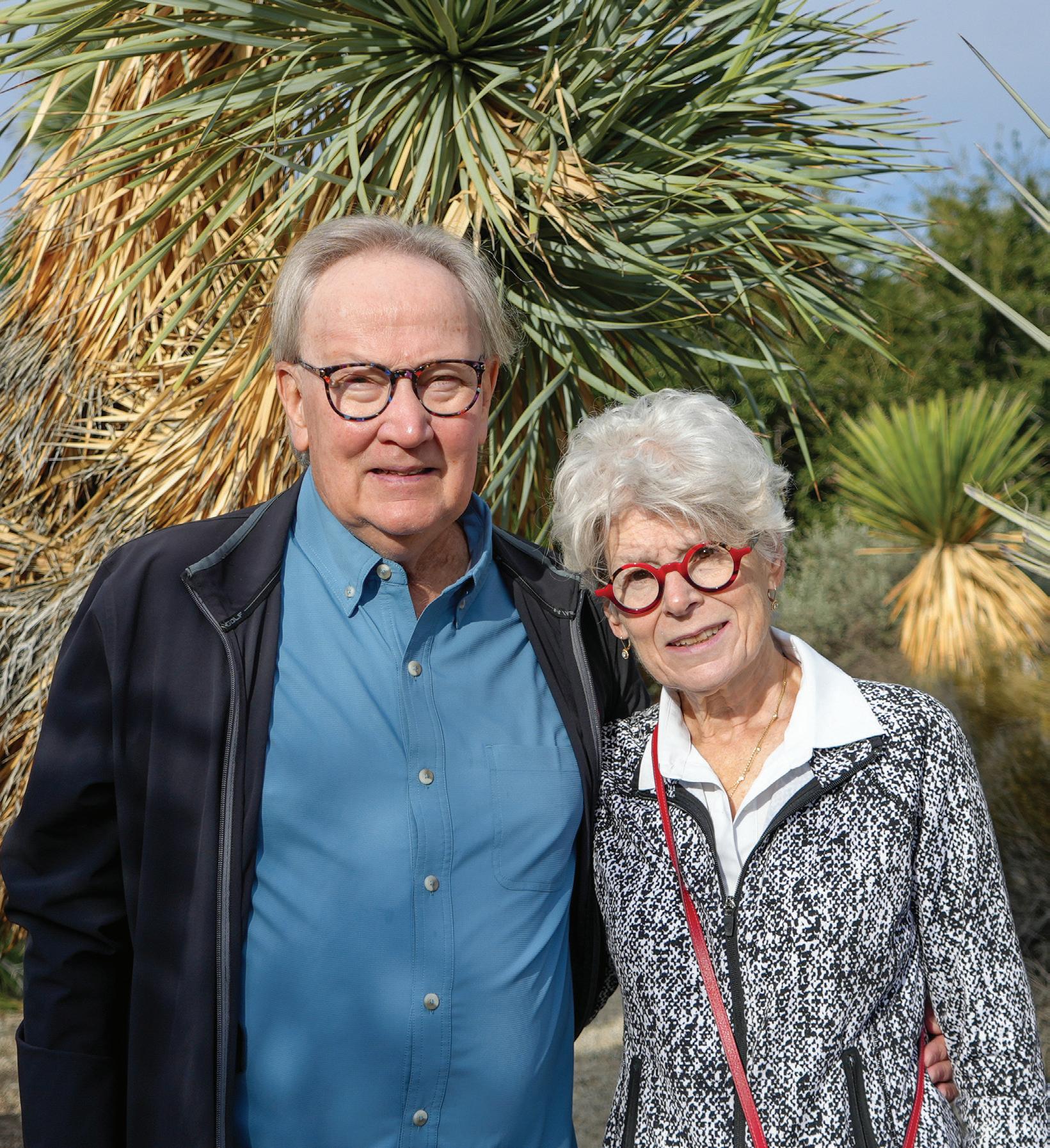
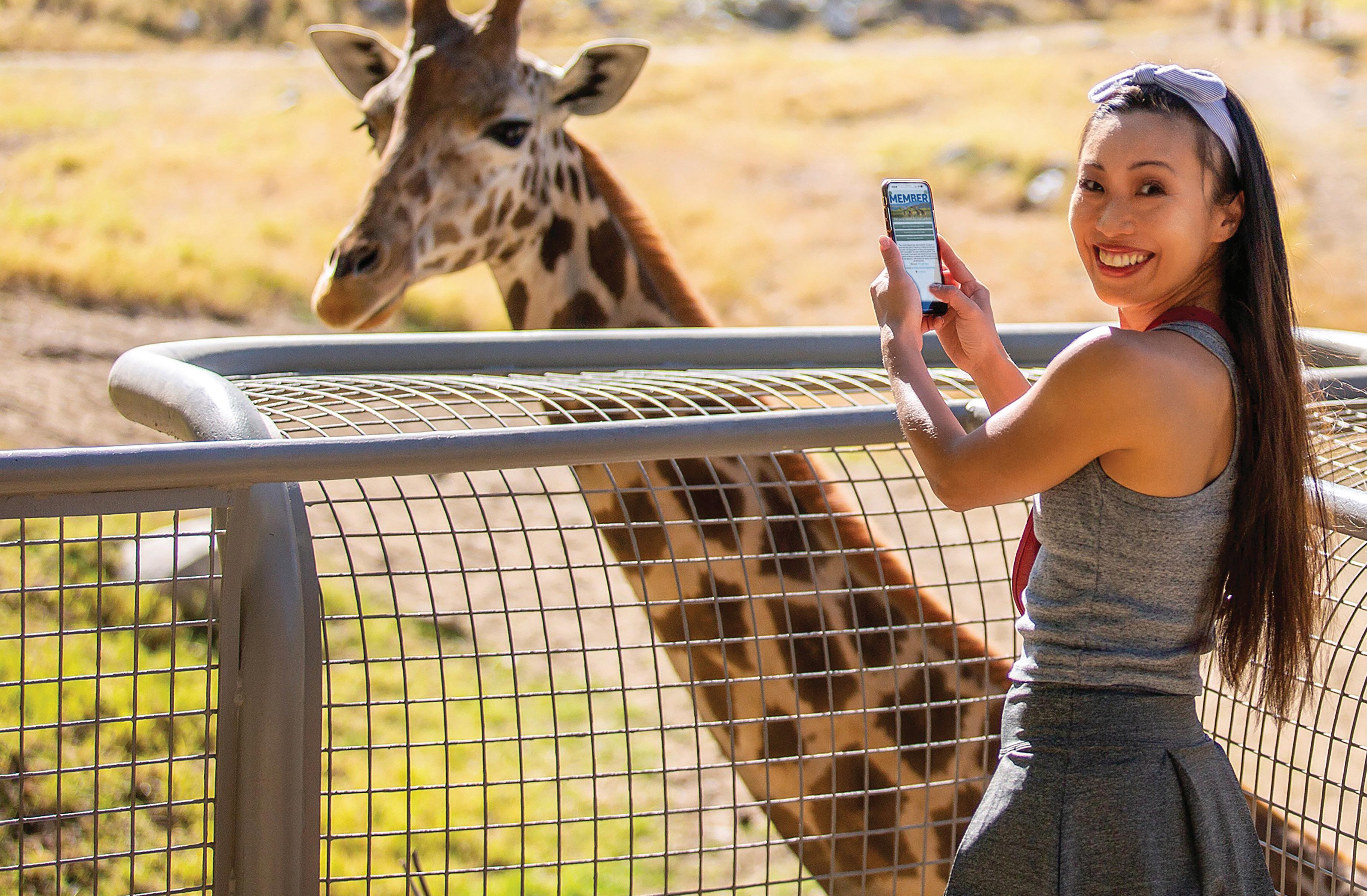
AFTER VISITING PALM SPRINGS for the first time in January 2020, Steve and Mary Moore fell in love with the area and kept returning for extended stays. They are now part-time Coachella Valley residents, splitting their time between homes in the desert and St. Louis, Missouri.
“What an escape from St. Louis to wake up in the morning and see palm trees, mountains, and sun,” Mary shares. Not wanting to leave their kitten behind on longer vacations, they began looking for property here to call their own. In 2024 they found a place in Palm Desert, not too far from the Zoo.
When they are not strolling around the Zoo during Walking Club, the Moores participate in many of the Valley’s unique activities. They enjoy the local farmer’s markets and culinary scene, which has allowed them the opportunity to meet many people and forge new relationships. The Valley’s rich culture and history provide ample opportunity to engage in another of the couple’s favorite pastimes: local museums and historical tours. Through their personal garden, which Steve tends, the couple are great representatives of our new Desert Defender actions by eating locally grown and raised food.
For this couple, The Living Desert is just another part of their everyday life when in the Valley.
What inspired you to become a Zoo member?
Obviously, membership is a bargain for a regular user. We joined the members’ Walking Club. We are particularly impressed by the knowledge and friendliness of the volunteers.
Membership Moment
How often do you visit, and do you have a must-see stop every time?
We come for the walking group twice a week and also often on a weekend day. We love the bobcats, who are most entertaining. Another favorite spot is the Giraffe Savanna, where we first met Daniel as a young calf. Now that he has grown up, he has moved to the Saint Louis Zoo, and we love that we can visit him there!
Do you have a special Zoo experience or fond memory you will never forget?
Learning about the feeding schedule for the animals and seeing the live feeding of the painted dogs. We also liked going to the special event, Wine and
Whiskey with the Wallabies. At Coffee and Conservation, Gana Wingard, Curator of Conservation –Mongolia was inspirational speaking about the preservation of species, like the cinereous vultures.
How has the Zoo experience inspired your curiosity or interest?
It has made us more aware of the various factors affecting the survival of species and the necessity of their conservation.
What would you tell someone who’s thinking about becoming a Zoo member?
It is well worth it on so many levels. You meet interesting people, learn about desert habitats, and get to know the animals and the friendly, informative volunteers — all while having a great time.
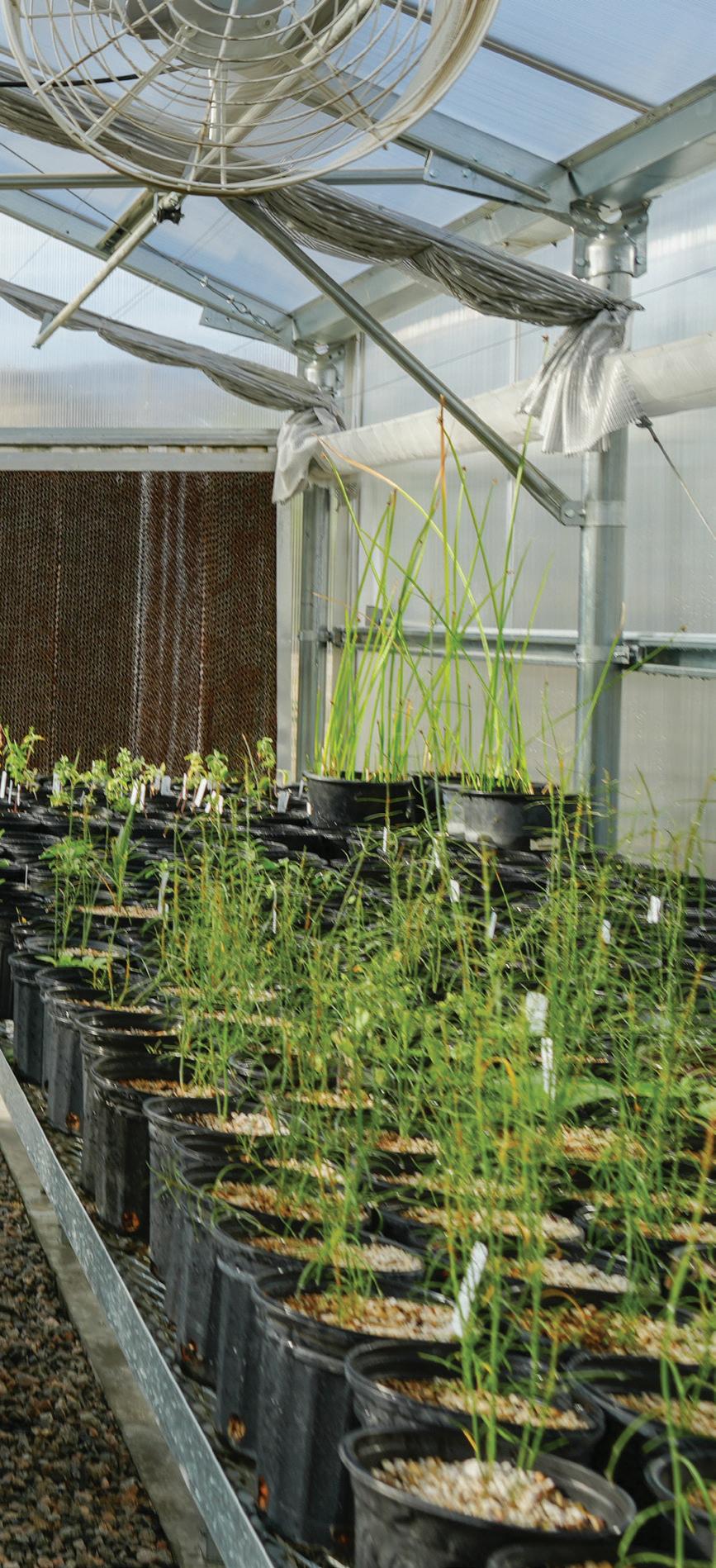
Seeds begin their journey in a variety of different pots or flats, depending on their species-specific preferences. From there, they’re allowed to grow at their own pace. For some, this is a relatively quick process. Others can take months or even years to reach reproductive maturity. When at last they do, our plants transition to open-air “hardening zones.” At this stage, we gently introduce the plants to fluctuating temperatures, water scarcity, and shifting sun intensity. The goal isn’t just to grow plants, but to prepare them for the realities of desert life.
When established plants are eventually moved out of the
Our new Conservation Greenhouse is focused solely on propagating plants that will be transplanted in natural areas across Southern California.
greenhouse into a temporary location to get them used to our dry, hot desert air, they are placed into protected plots where they are monitored for vigor, drought tolerance, and pollinator interaction. Many will eventually be replanted in restoration sites across the California desert region or in urban pollinator gardens throughout the Coachella Valley. Others will provide seed stock for future conservation work, ensuring that native populations remain genetically diverse and resilient.
We are glad to join with our many other partners dedicated to protecting and restoring the unique plants and ecosystems of
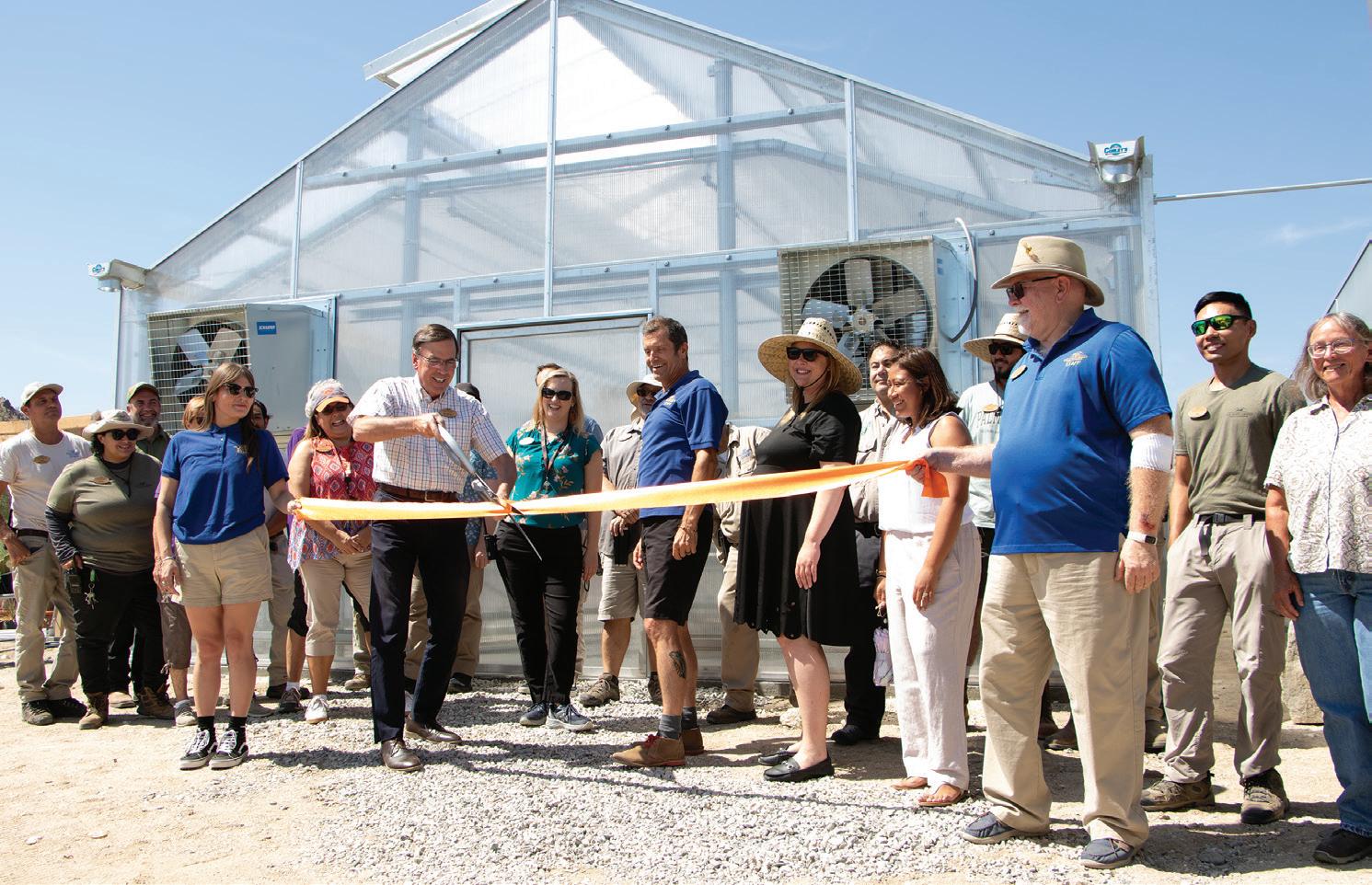
our arid home, including the Bureau of Land Management, Coachella Valley Conservation Commission, California Department of Fish and Wildlife, United States Fish and Wildlife Service, as well as a dozen local land conservancies. Before the new Conservation Greenhouse, we routinely lost huge numbers of plants to heat and exposure, losses that will no longer happen! We would like to thank all our native plant-loving partners, especially our generous grantors at the Coachella Valley Mountains Conservancy, whose contribution made our Conservation Greenhouse possible and will enable us to conserve desert natives on an even greater scale.
Sean Deighan waters some of the thousands of native California plant species being propagated in the new Conservation Greenhouse.
The Conservation Greenhouse officially opened in June 2025 with funding provided by the Coachella Mountains Conservancy through California Proposition 68.
Spring Blooms at the Zoo
By Arian Noorzai, Gardens Curator
IN THE DESERT , the vernal season springs to life with all sorts of fascinating flora. The horticultural stage transforms from neutral beiges and tans into a vibrant display of life, as some of our favorite botanical denizens put on their spring best. Take a stroll, and return again and again throughout the season, to fully experience the ever-changing bounty of the Zoo’s gardens.
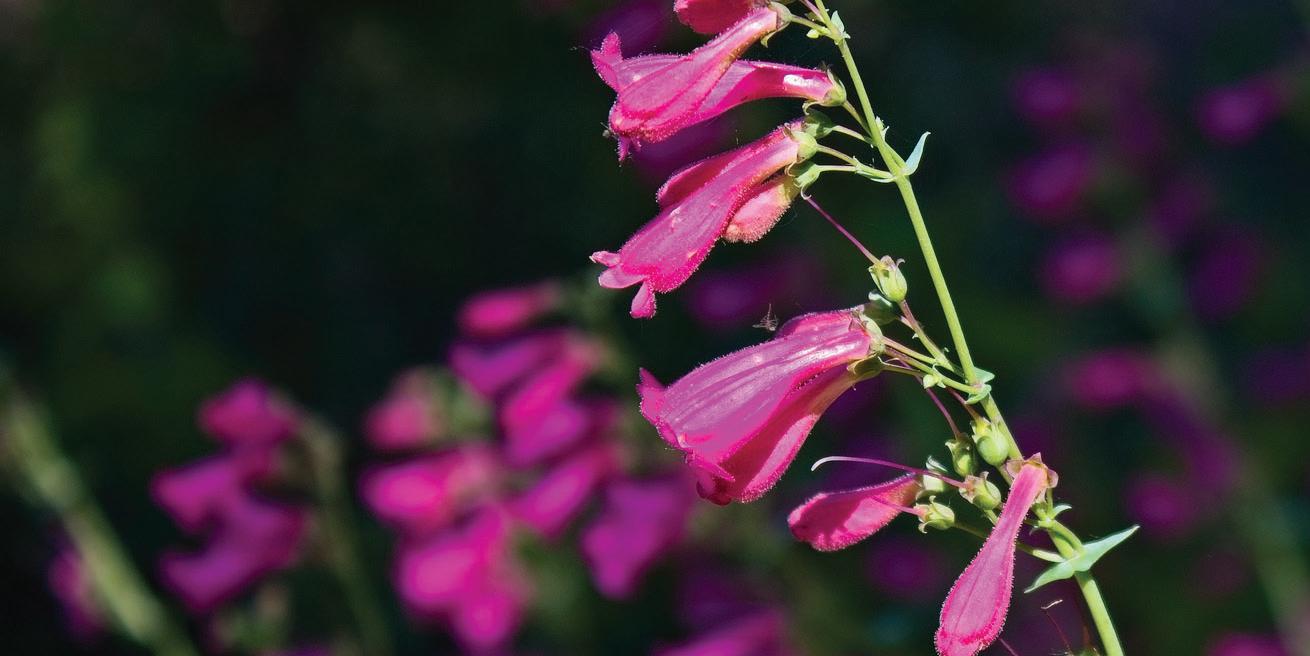
Our first stop is the Tribute Garden, where butterflies are bound to be seen flitting about the blooming plants. Within these winding paths you can find Parry’s beardtongue (Penstemon parryi). This Sonoran native has stunning pink flowers that rise up from the ground on stalks, called pedicels. Did you know? You can honor a loved one or celebrate a joyful occasion with a commemoration in the Tribute Garden. Visit LivingDesert.org/Support to learn more.
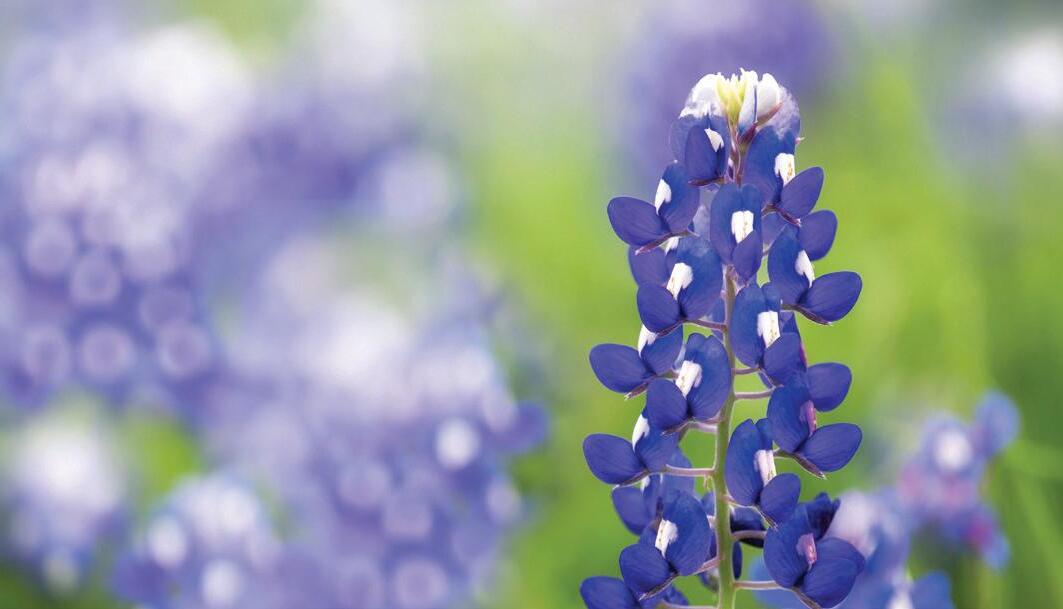
Just a short walk away in the Chihuahuan Garden, one can expect to find Texas bluebonnets (Lupinus texensis) in bloom. These plants are annuals, meaning they complete their life cycle in one season — so see them while you can! Collection Gardener Olivia Cebreros caringly sowed bluebonnet seeds during the recent rainy season. If they survive the eager teeth of our local rabbits, these striking blue flowers should be quite a jovial sight.
Tribute Garden Baja Oasis Garden
Chihuahuan Garden
Ethnobotanical Garden
Wild Prairies
Hoover Discovery Center
Tennity Wildlife Hospital & Conservation Center
Carousel
In the Wild Americas section of the Zoo, ocotillos around our Baja Garden bloom during the late spring and continue into summer. Fouquieria splendens is a well-known representative of this plant family and features bright crimson flowers at the top of their waxy whip-like stems. The common name ocotillo comes from the Nahuatl word “ocotl,” meaning torch, a reference to these scarlet blooms.
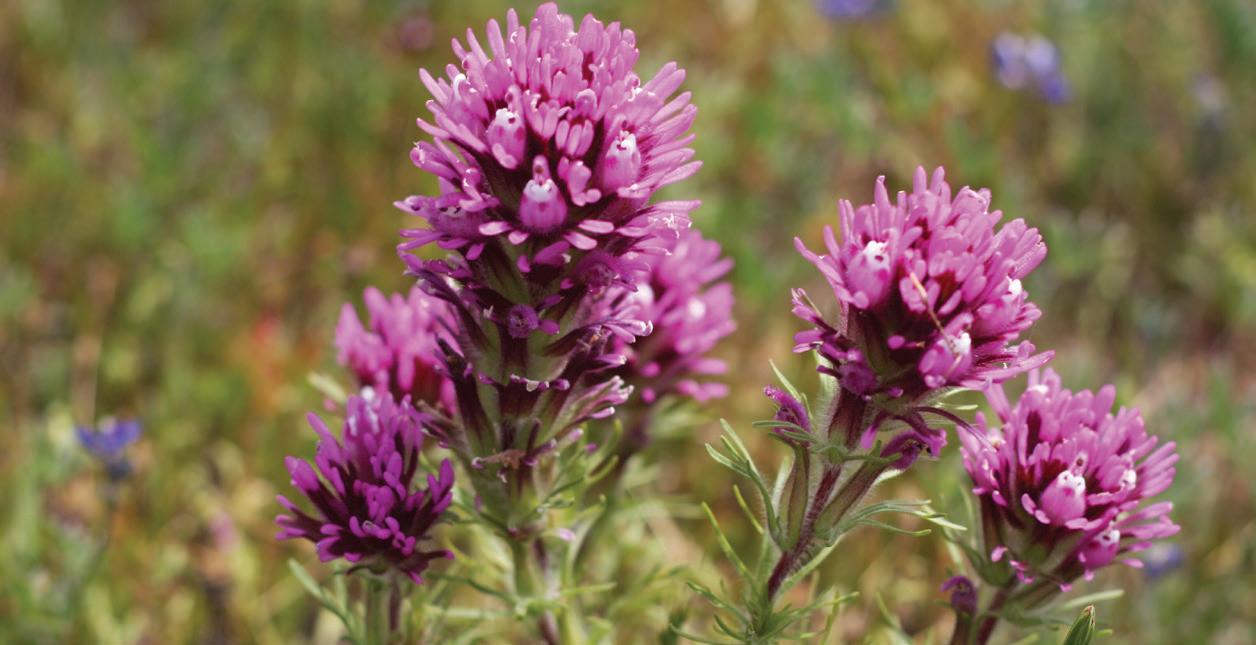
Just across from our carousel, one can anticipate all sorts of regional forbs to pop up in our wildflower berm. Its name may sound like a financial magazine, but in botanical science, a “forb” is a broadleafed flowering plant whose stem never turns woody. These plants are zealous contributors to biodiversity and are essential for supporting pollinators with nectar and pollen. Stunning orange swaths of California poppies (Eschscholzia californica) are set to adorn the desert floor in this garden, intermingling with purple owl’s clover (Castilleja exserta), a personal favorite of mine.
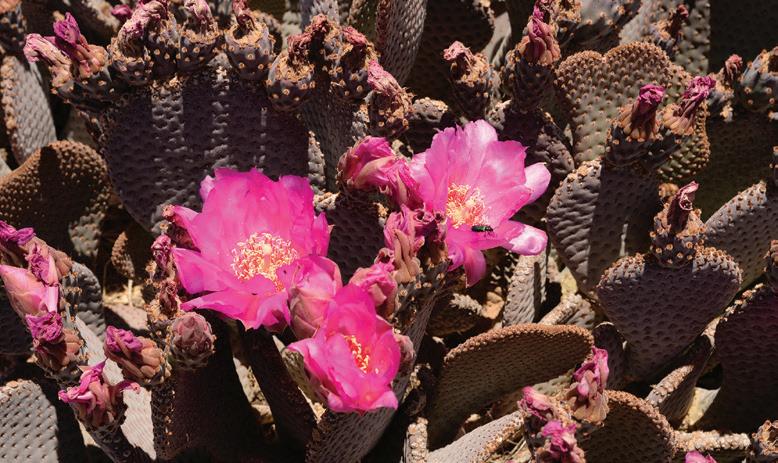
A little further up the path leads to our bighorn habitat and garden, which features many plants that these amazing animals would eat out in their natural habitat. You may also find the beavertail cactus (Opuntia basilaris), which is native to our region and reliably blooms in the spring with a brilliant magenta flower. These prickly pears might not be the first choice for a hungry bighorn, but they haven’t escaped taste tests from the sheep!
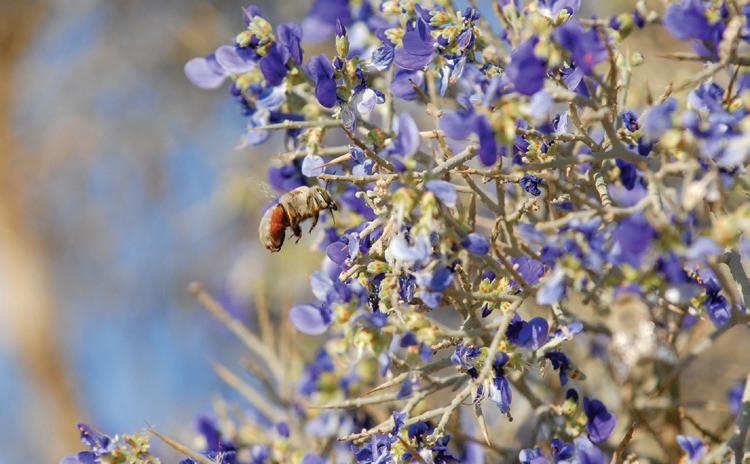
Our last stop takes us to our wonderful Nature Trail, where the smoketree (Psorothamnus spinosus) resides alongside other native plants. This iconic desert tree is actually a member of the pea family. It has the ability to convert atmospheric nitrogen into a form that can be used by plants and plays a vital role in enhancing soil fertility. It is particularly beneficial to native bees, its primary pollinators. Standing as a herald of the heat, multitudes of clustered purple flowers ornament the otherwise wispy branches as spring passes once again, giving way to summer.
San Andreas Fault Exhibit & Nature Trails
Bighorn
A New Volunteer Program Desert Pathways:
By Zoe Bearse, Volunteer Coordinator
VOLUNTEERS have played an essential role in The Living Desert since our founding in 1970. From guest relations and interpretation to animal care, conservation, and office support, they can be found yearround in almost every department.
Over the years, we have expanded our volunteer community to better reflect the diversity of the Coachella Valley. One of our newest initiatives focuses on ensuring that adults with accessibility and accommodation needs have meaningful opportunities
to contribute their time, talents, and passion to The Living Desert. In response to the growing demand for supportive spaces, the Desert Pathways Program was established.
Desert Pathways is designed for adults who may benefit from additional accommodation or individualized approaches. Its purpose is to ensure that every volunteer, regardless of need, can fully participate and thrive as part of The Living Desert community.
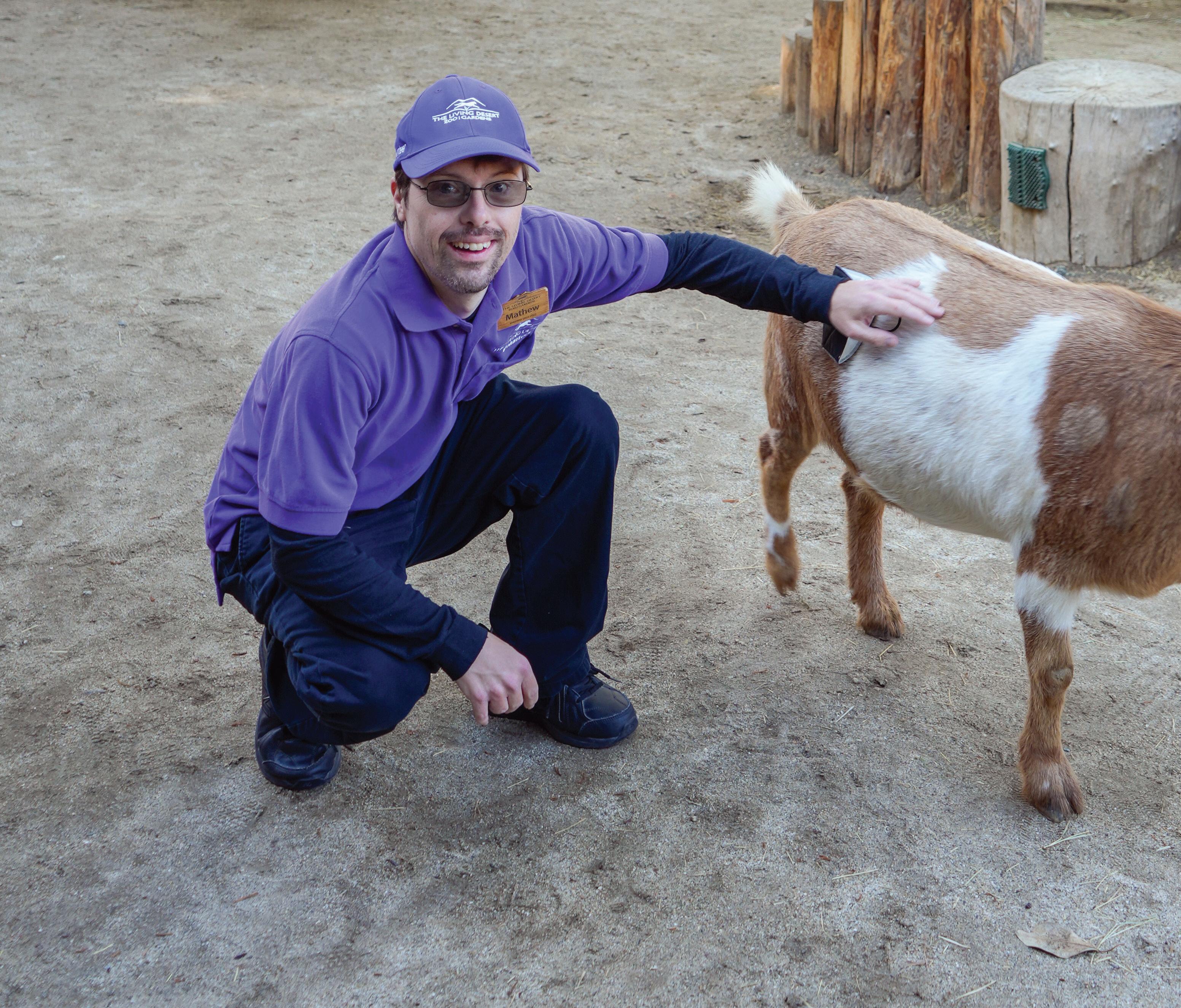
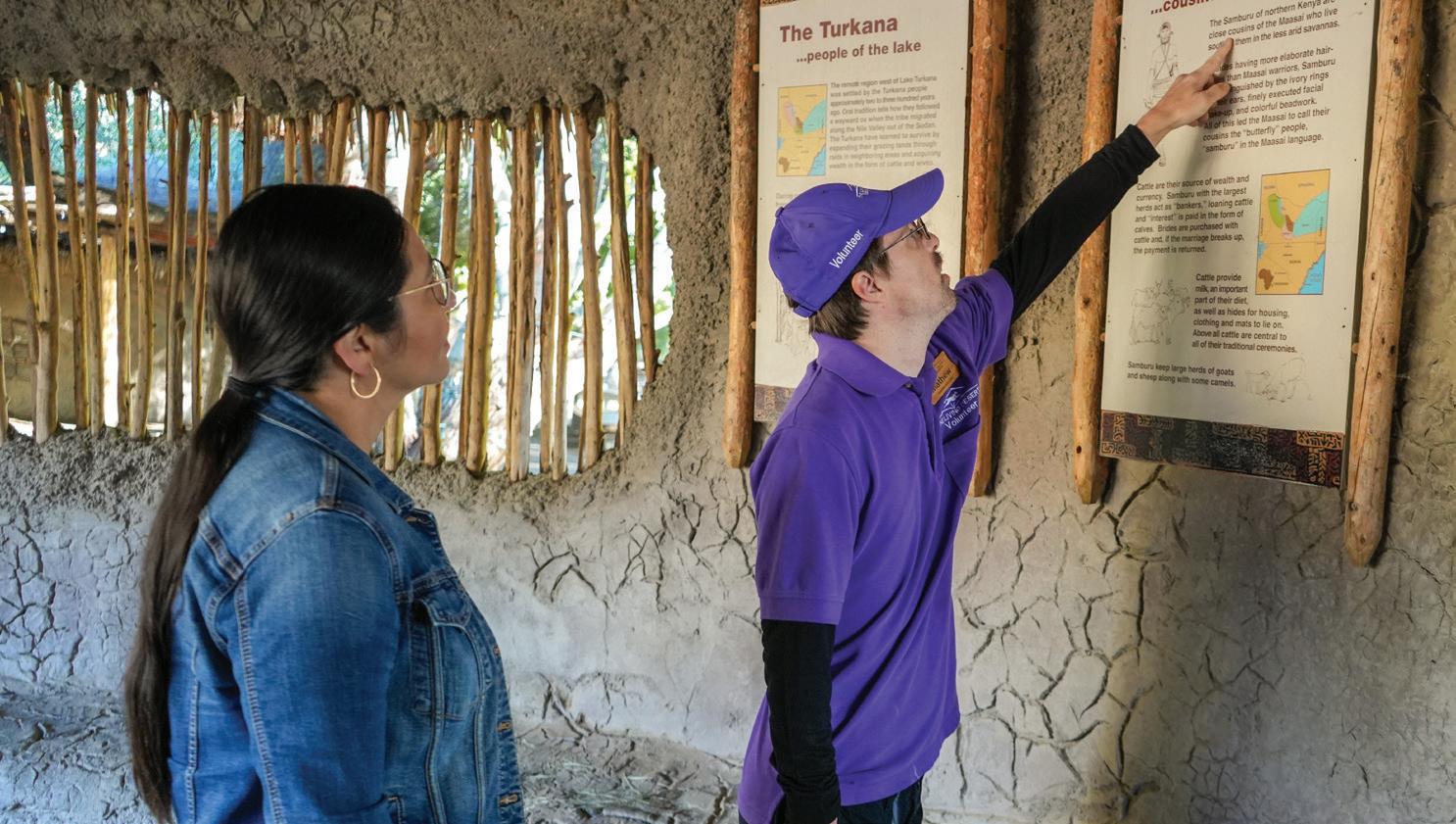
One of our valued Desert Pathways volunteers who makes this program possible is Mathew, who joined the team in October 2022. An adult with cerebral palsy and Down syndrome, Mathew approaches every shift with enthusiasm, curiosity, and a determination that inspires everyone around him. He has become a valued presence at the Goat Kraal, the Discovery Center, and now the Wildlife Hospital, where he engages guests, supports his fellow volunteers, and takes on new responsibilities with confidence.
When challenges arise, Mathew takes a moment, resets, and comes back stronger — showing resilience and heart, qualities that make our team better every day.
By opening doors for every individual to contribute in meaningful ways, we are strengthening both our mission and our connection to the community. As Desert Pathways blossoms, we look forward to welcoming new voices, talents, and perspectives that will help shape the future of volunteering at The Living Desert.
“As Mathew’s life skills coach, I’m grateful
for the opportunity to support him as he serves his community. Volunteering at The Living Desert has been a meaningful experience for him. It has helped him practice social skills, build confidence interacting with guests, and learn more about animals which genuinely interests him.”
— ERIKA, MATHEW’S COACH
Desert Pathways offers support tailored to each volunteer:
A one-on-one onboarding process customizes training, tasks, and learning to the individual’s strengths and interests.
Volunteers have the ability to work alongside their own coaches and mentors while on site.
Flexible scheduling options, including shorter or modified shifts, make volunteering more accessible to more people.
Open communication among volunteers, coaches, caregivers, and partner organizations ensures emerging needs are met, fostering a truly inclusive and supportive environment.
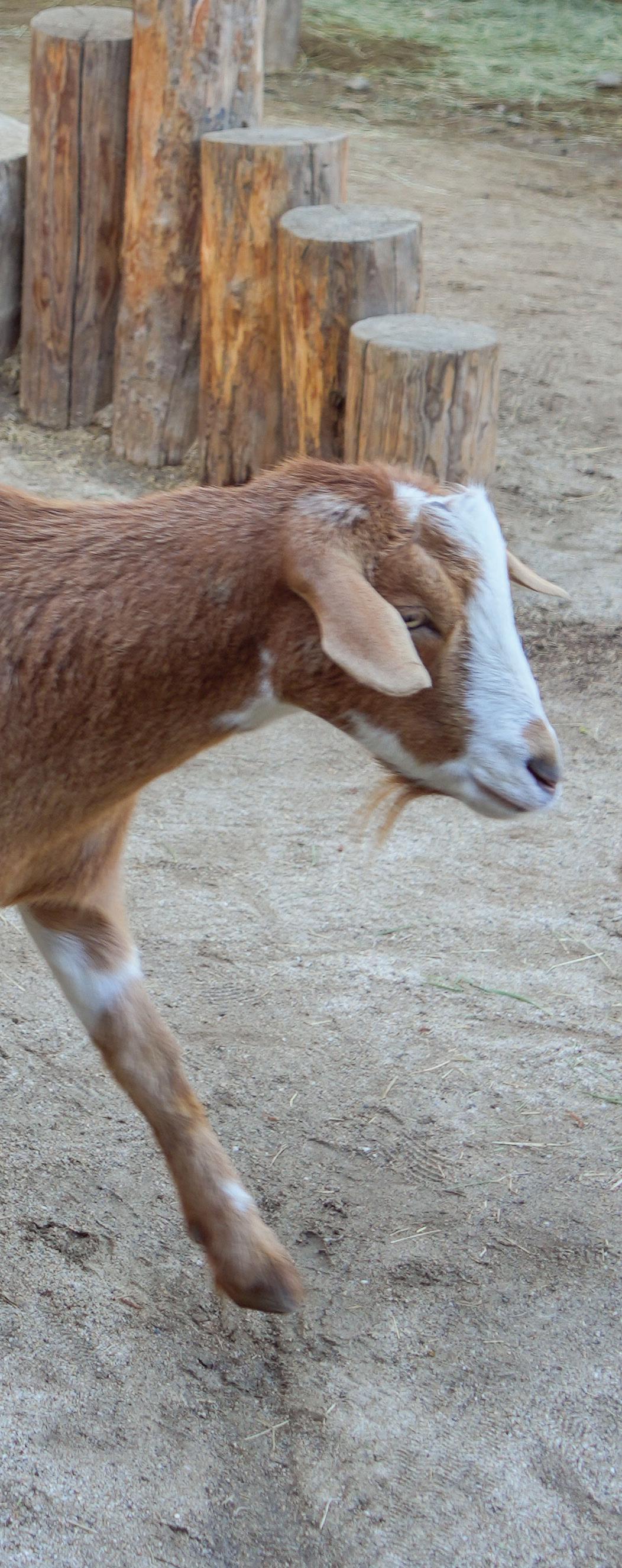
Mathew, one of the Desert Pathways’ key volunteers, brushes one of the Zoo’s Nigerian dwarf goats.
Volunteers play a crucial role in the Zoo’s operations, donating tens of thousands of hours each year.
the Planting Seeds
AT THE LIVING DESERT , conservation isn’t just about protecting wildlife — it’s about inspiring people to become advocates for nature. Through a variety of initiatives, we are working to empower young people to see themselves as the next generation of conservation leaders.
Building the Next Generation of Desert Defenders
By Dr. Anna Young, Vice President of Learning and Engagement
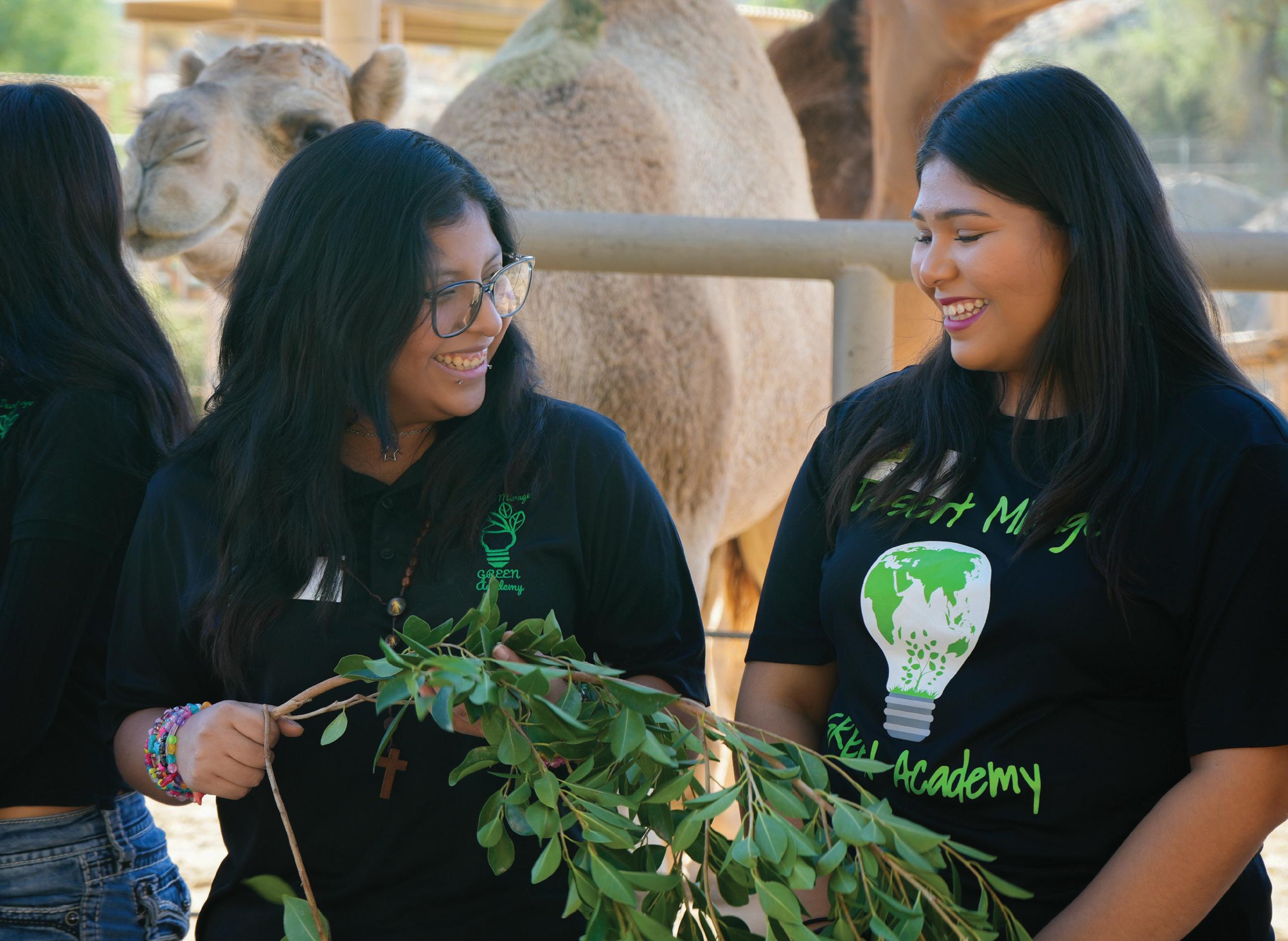
THE LIVING DESERT has partnered with the Coachella Valley Unified School District (CVUSD) to create hands-on learning opportunities that merge education with impact. Through Career Technical Education programs, CVUSD students combine classroom learning with real-world experiences that prepare them for purpose-driven careers. One example is Desert Mirage
During the Desert Defender Career Exploration Camp, students learned about conservation careers at the Zoo and beyond.
High School’s Green Academy, which focuses on sustainability and environmental science, helping students turn their passion for the planet into professional pathways.
Last year, Green Academy students participated in a 20-week jobshadowing program alongside the Zoo’s Sustainability and Behavior Change team. Together, staff and students dug into real-world projects like compost management and waste audits — work that connects directly to creating a more sustainable future. They showcased their findings in a presentation at the mid-year conference of the Association of Zoos and Aquariums, demonstrating the power of collaboration between students and conservation professionals.
Building on that success, the Zoo partnered with Storyliving by Disney to launch the Desert Defender Career Exploration Camp, an immersive one-day camp designed to give students a behindthe-scenes look at the wide range of careers that make conservation happen. From animal care to horticulture, guest engagement to marketing, students discovered that saving wildlife takes a full team of passionate people. They also met Disney scientists who shared their own career journeys. Students were empowered to see themselves as Desert Defenders: young changemakers who understand how their talents and choices can shape a better future for the desert and beyond.
We’ve expanded the Green Academy job-shadowing experience this year, giving students the opportunity to learn about native planting and habitat care alongside our expert Gardens team. Together, we’re growing more than plants — we’re cultivating the next generation of conservation leaders.
Empowering Indigenous Voices
By Katie Shaw Conservation Social Scientist
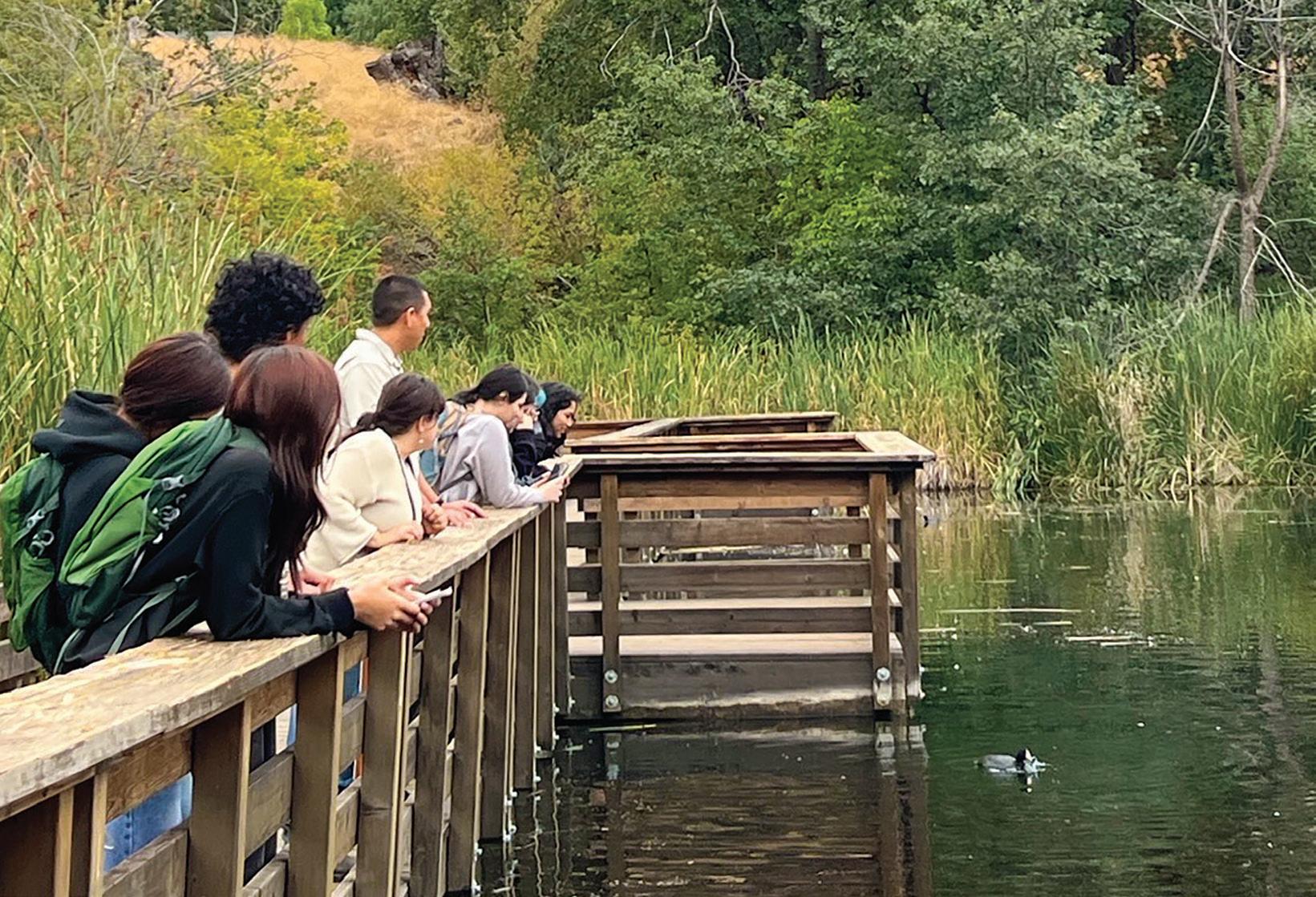
IN PARTNERSHIP with the Torres Martinez Desert Cahuilla Indians, The Living Desert has extended its Youth Environmental Ambassador (YEA) program for a third year, thanks to ongoing support from the California Natural Resources Agency through California Proposition 64 and the Heimark Foundation. The YEA program aims to develop future conservation leaders in part by reconnecting youth with their ancestral land. YEA participants visit regional nature sites (including overnight camping trips) and take part in local conservation projects.
The Zoo also completed the second year of the Native American Conservation Workforce Development (NACWD) program, which aims to enhance career opportunities for local Tribal members. A generous grant from the Coachella Valley Mountains Conservancy (CVMC) Climate Resilience and Community Access Grant program enabled
Firsthand experiences in nature can reconnect youth with their ancestral land — and spark a commitment to its conservation.
the NACWD program to provide 9-month paid conservation workforce trainings.
Now, with ongoing support from CVMC, NACWD has transitioned into a 6-month paid internship program for NACWD and YEA graduates. Eight new internship positions were created at The Living Desert to provide in-depth training and hands-on experience, further developing conservation job skills. We currently have three interns working on developing a Youth Environmental Ambassador Program with the Soboba Tribe, creating a native plant garden at the Torres Martinez Senior Center, and conducting plant surveys to inform desert tortoise conservation.
The field of conservation urgently needs more Indigenous voices. Lasting conservation success is only possible when people from every community are empowered as ambassadors, advocates, and leaders. Through programs like YEA and NACWD, we are fostering an ethic of land stewardship among the next generation — and helping to bring Indigenous perspectives to local conservation projects.
Photo by Katie Shaw
Surprising Desert Pollinators and Seed Spreaders
By Mike Barnes, Director of Animal Care and Health
WHEN PEOPLE ENVISION desert pollinators, they usually think of bees flying into cactus blooms or butterflies fluttering between wildflowers. But, while bees and butterflies get all the buzz, other hardworking plant propagators are often overlooked. These less-celebrated species, large and small, are just as important in maintaining thriving desert ecosystems.
Surprising Pollinators
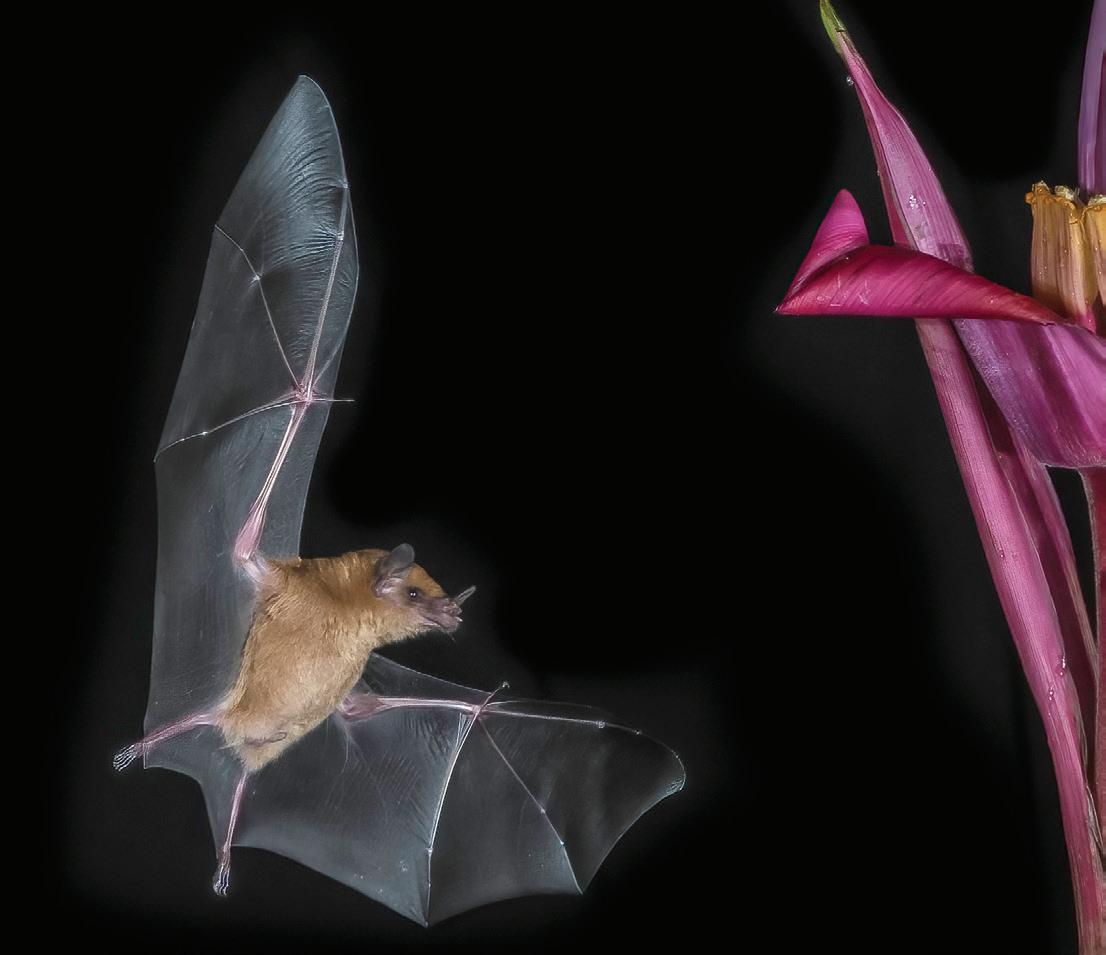
Long-Nosed Bats
These nectar-feeding bats hover over blooming agaves and saguaro cacti, dusting their faces with pollen just as — and often more effectively than — bees do.
Pollinators and seed spreaders are two types of plant propagators — organisms that help plants create new plant life.
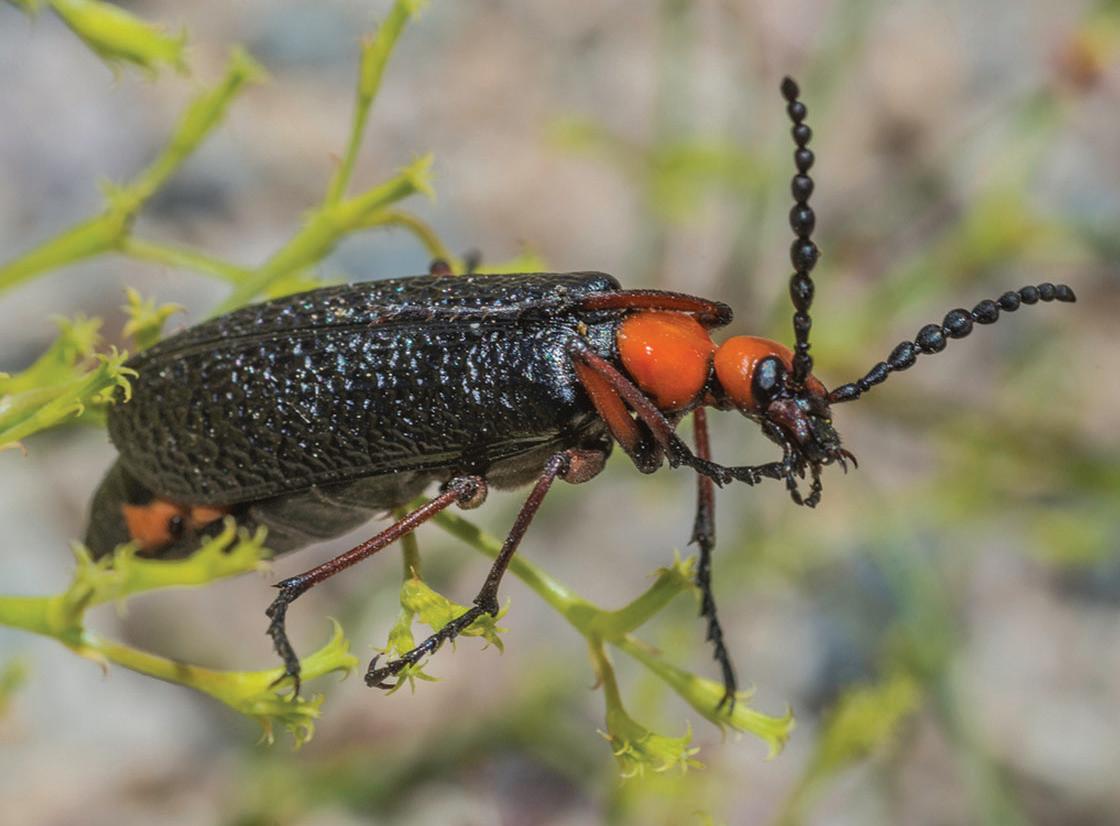
Beetles
Many desert shrubs depend on beetles climbing across and through their flowers to spread their pollen far and wide.
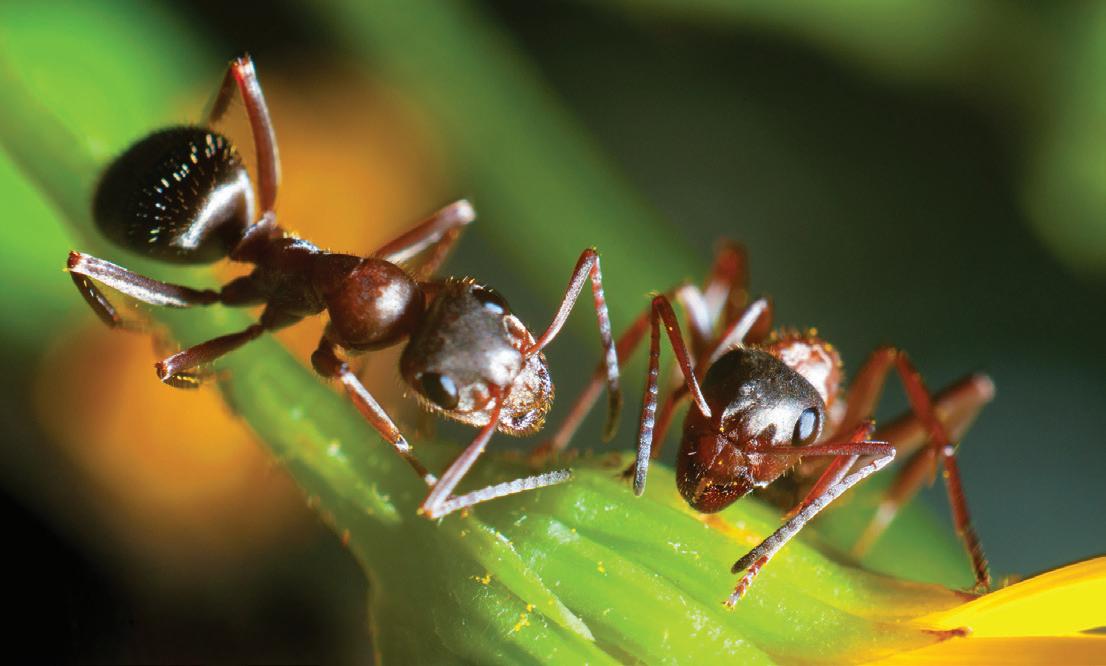
Ants
Often seen as more of a nuisance than a helper, ants are small but mighty pollinators. They are often the only insects able to penetrate the dense foliage that may surround low-growing flowers.
Seed Spreaders
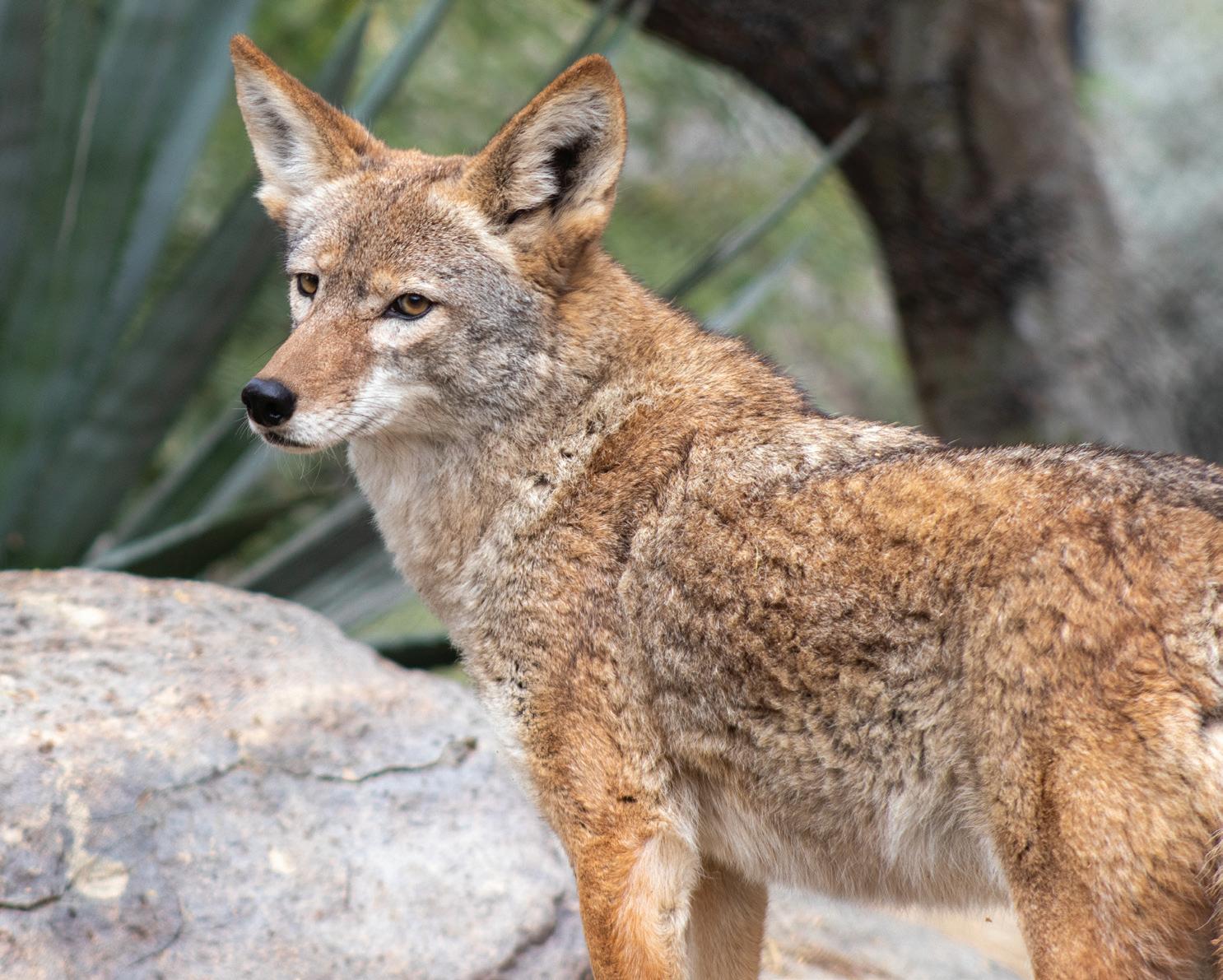
Coyotes
Larger animals rarely get recognition for the role they play in plant propagation. Coyotes will eat fruit from the prickly pear or desert hackberry and then deposit the seeds miles away in a nutrient-rich package (their scat!).
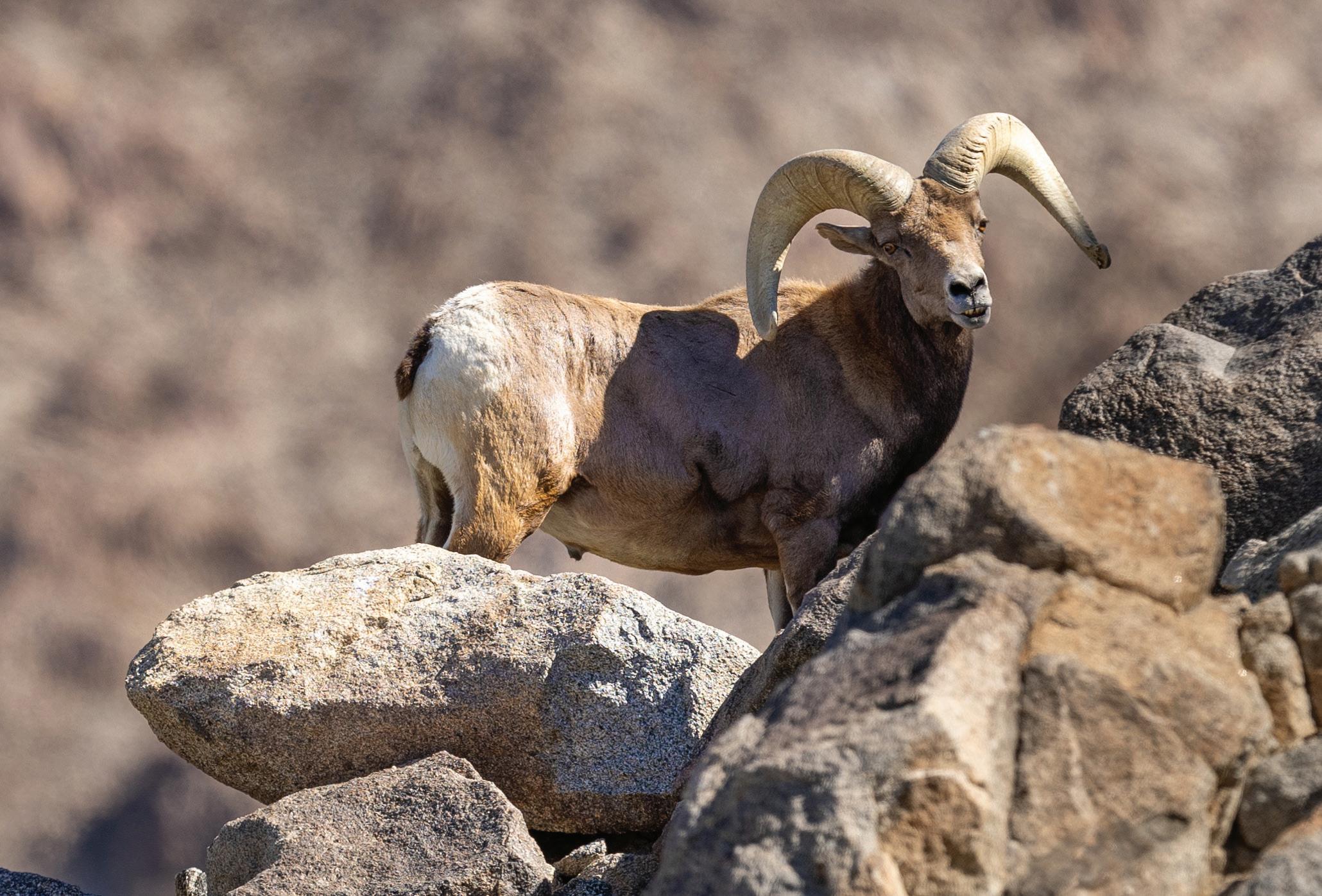
Bighorn Sheep
While bighorn sheep are browsing on shrubs, they pick up sticky seeds in their fur, often carrying these hitchhikers several mountain ridges away to start new life.
EVENTS CALENDAR SPRING 2026
ONGOING
Me & You at the Zoo
Tuesdays and Fridays, 9:30–10:30 a.m.
This interactive, parent participation program is designed for toddlers and their accompanying adults. This program is free with membership or paid park admission. No advance registration is required, so drop in anytime!
Happy Hour
Mondays through Thursdays, 3–4:30 p.m.
Join us at Bighorn Cafe for exciting Happy Hour appetizers and 50% off the entire bar menu! Access is included with your membership or paid park admission; food and beverages are an additional fee.
Walking Club
Tuesdays and Thursdays, 8–9:30 a.m.
Lace up and set off on an exciting, members-only walking adventure at The Living Desert! During this 2-mile journey, you’ll uncover fun Zoo facts and trade your favorite wildlife stories. Afterwards, refuel with a complimentary iced tea and coffee at Bighorn Cafe.
Coffee and Conservation
First Saturday of each month through May, 9–10 a.m.
At this members event, you’ll hear firsthand stories about conservation projects and infield adventures from the teams leading the charge — while enjoying a complimentary coffee and pastry!
Yoga at the Zoo
Select Saturdays through May, 9–10 a.m.
Zoo members are invited to join us throughout the spring for a relaxing group yoga session. No pre-registration required, all yoga experience levels are welcomed.
FEBRUARY –APRIL
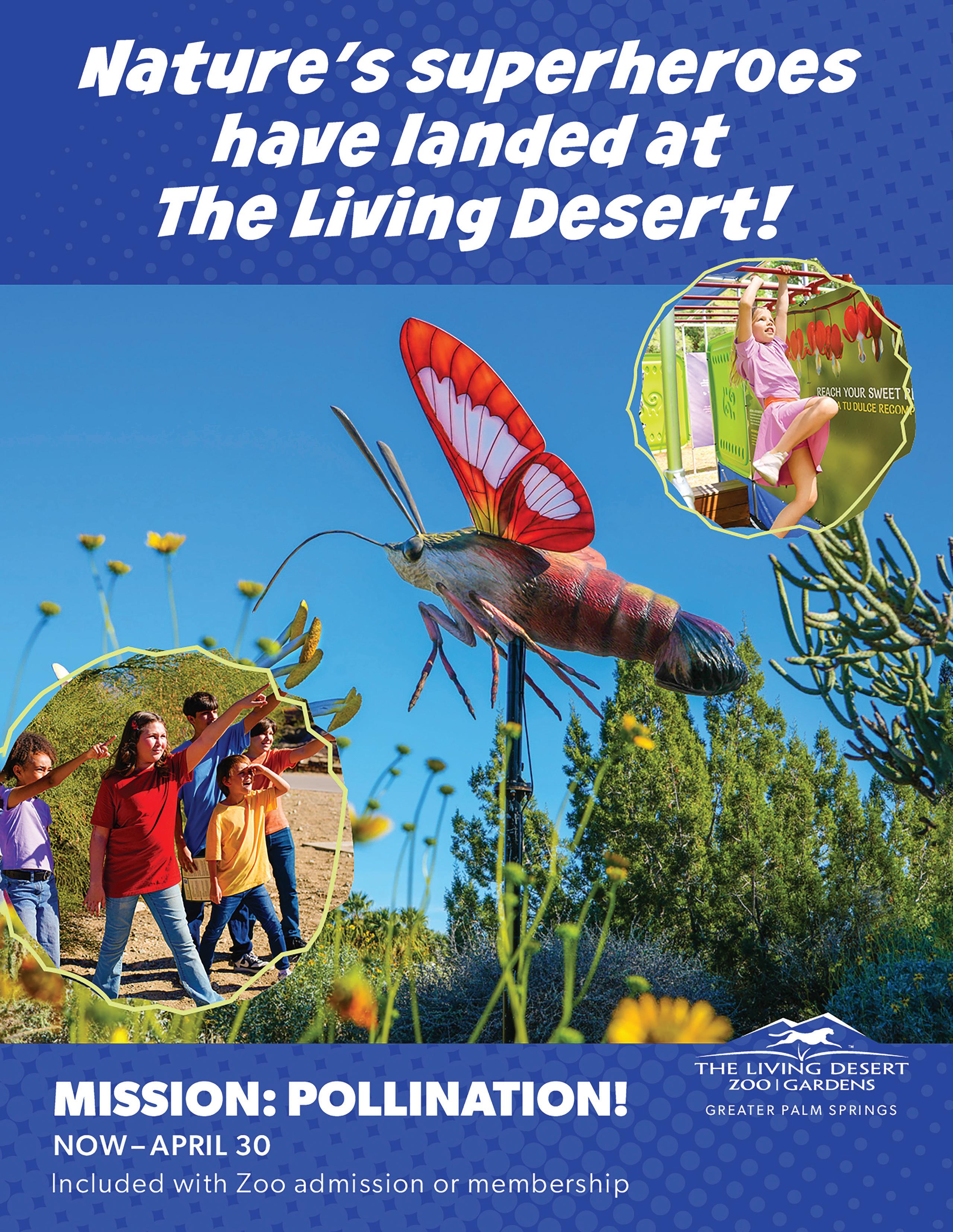
Mission: Pollination!
Now through April 30
events.
Pollinators are responsible for producing one-third of the food we eat, and we are enlisting you to join our mission to celebrate and protect these incredible species!
This brand-new experience features an interactive educational maze, largerthan-life pollinator sculptures, and engaging activities for all ages. This immersive experience highlights the vital role pollinators play in sustaining ecosystems all over the world.
Mission: Pollination! is included with your membership or paid park admission.
Wild at Heart: ZooCamp for Adults
Select Fridays, 9 a.m.–12:30 p.m.
February 20
March 20 – SOLD OUT
April 17
The Living Desert is thrilled to offer ZooCamp for the young and wild at heart. Participants will explore the amazing world of wildlife like never before! Registration is now open; visit LivingDesert.org/ZooCamp to learn more.
2026 Zoobilee Gala
February 28 – SOLD OUT
This swanky soiree is The Living Desert’s premier fundraising event! Your support allows the Zoo to continue our mission of desert conservation through preservation, education, and appreciation. Visit LivingDesert.org/Gala for more information.
EVENTS CALENDAR
SPRING 2026
ZooTeen Applications Open
March 1–April 10
Students ages 14-18 are invited to apply to our ZooTeen program. ZooTeens have the opportunity to gain valuable life and job readiness skills while volunteering in a fun and collaborative environment. Visit LivingDesert.org/ZooTeens to learn more.
Xerophilous: A Desert
Botanical Festival
March 28
Xerophilous plants are adapted to hot, arid climates. Celebrate the Zoo’s 1,000+ plant species and 52 gardens at this fabulous festival of desert flora! Guests can purchase California native plants, attend intimate talks with botanical professionals, and tour gardens with the experts. To learn more visit LivingDesert.org/Events.
Travel with The Living Desert
Adventurers wanted! Explore the world’s wild places with The Living Desert through exclusive travel experiences led by senior staff and local guides. Learn about the remarkable species you will see along your journey, and the conservation efforts to protect them and their habitat. Each trip is hosted by knowledgeable experts and limited to only 16 travelers, making every excursion intimate and informative.
NEW: Baja California, Mexico has been added to our schedule. There’s still time to join us. Visit LivingDesert.org/Travel or scan code to learn more.
Spring ZooCamp
April 3, 8:30 a.m.–12:30 p.m. (K-6)
April 6, 8:30 a.m.–12:30 p.m. (K-6)
April 21–23, 8:30 a.m.–12:30 p.m. (K-3)
Spring is the perfect time for young explorers to connect with nature! Our Spring ZooCamp invites kids to learn through hands-on activities, up-close animal experiences, and creative projects inspired by the natural world. Whether joining us for a one-day camp or a multi-day experience, campers will enjoy an engaging and memorable spring adventure. Book your child's space today at LivingDesert.org/ZooCamp.
Namibia and South Africa October 14-30, 2026
Baja California, Mexico February 14-21, 2027
Kids The Fastest!
The Living Desert is home to three of the world’s FASTEST animals! Trace the path to the center of the maze to help each animal reach the finish line.
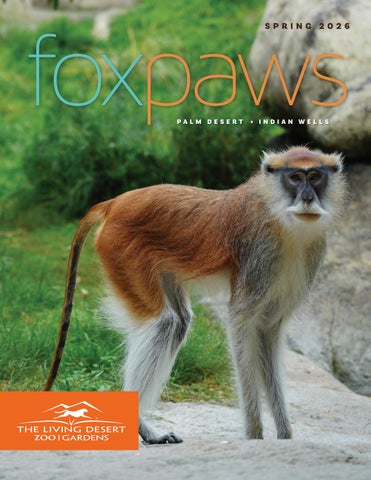
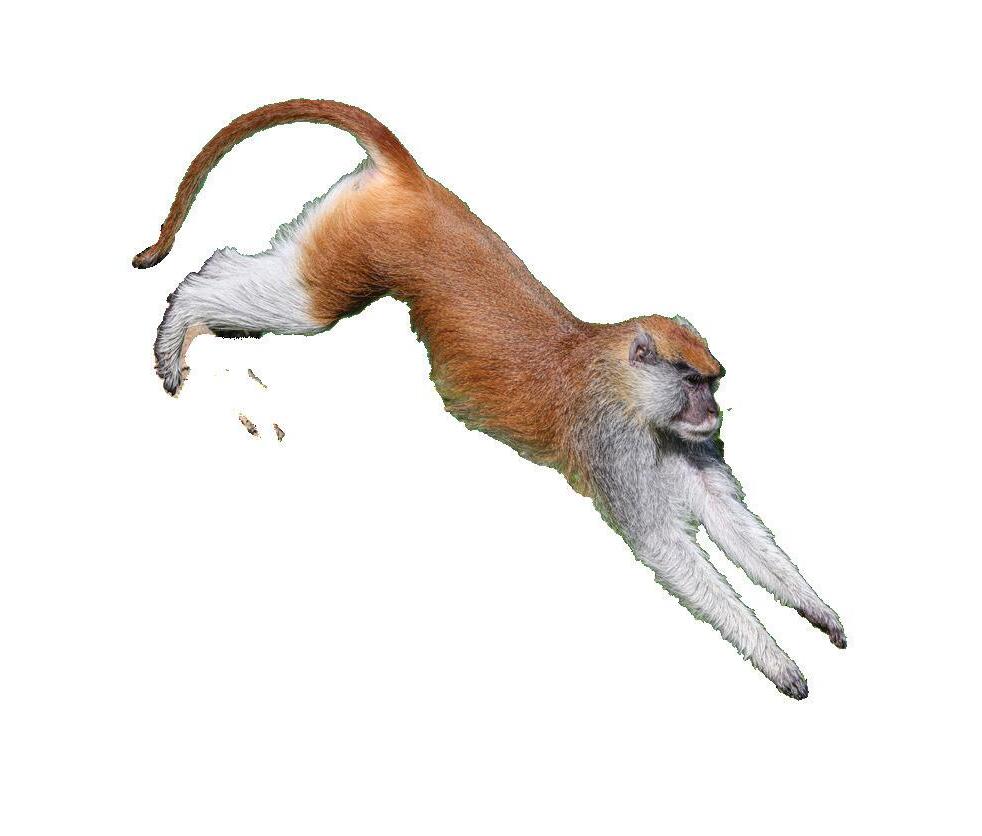
PATAS MONKEY
Erythrocebus patas
The Fastest Primate on Earth!
They can run over 34 miles per hour! Patas monkeys rely on their speed to hunt for food and water and to escape predators.
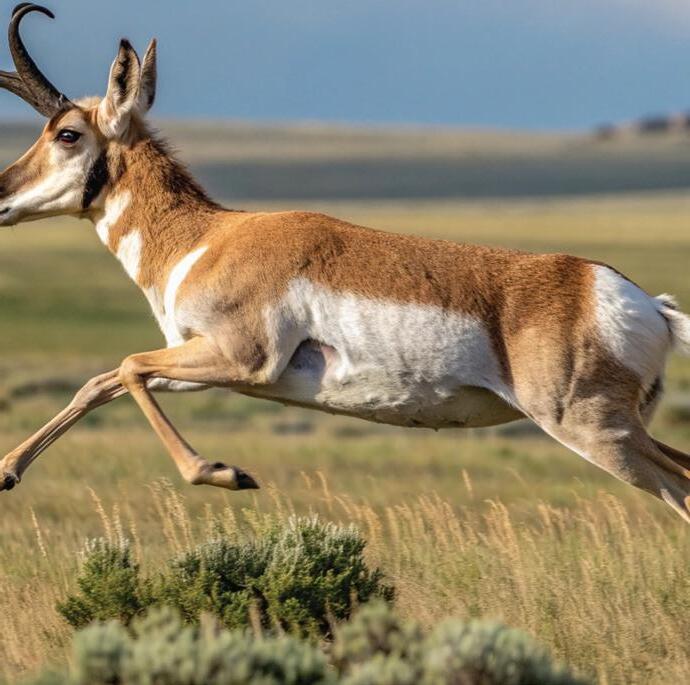
PENINSULAR PRONGHORN
Antilocapra americana
The Fastest Land Animal in North America! They can run at speeds of 40 to 60 mph for long periods of time, a useful adaptation that allows them to evade predators.
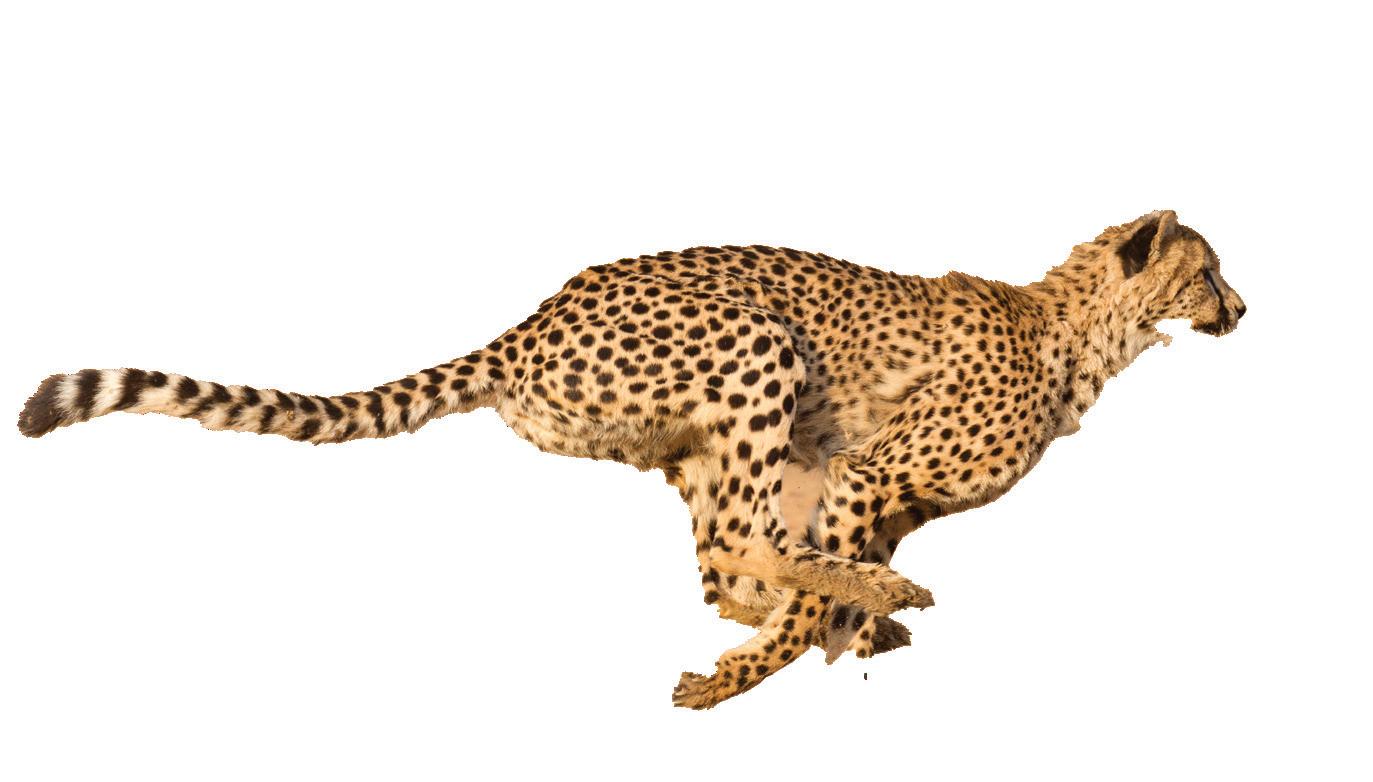
CHEETAH
Acinonyx jubatus
The Fastest Land Animal on Earth!
While running as fast as 70 mph, the cheetah’s flat-shaped tail acts like the rudder of a boat, allowing swift turns midair with superior steering and balance.