SAYING GOODBYE TO AN ANIMAL that you have a relationship with is never easy. Most of us can relate to losing a beloved pet at home and know that saying goodbye is one of the hardest things to go through when an animal is considered part of the family. It can often take a considerable amount of time to allow the wounds to heal from the paw prints left on our hearts. When the animals at the Zoo get sick, injured, have geriatric issues, pass away, or even move away to another zoo, the goodbyes associated with these events can also be painful. The keepers work alongside these animals every day and therefore have strong relationships that make it difficult to say goodbye. The aspect of end of life, whether naturally or made on an animal’s behalf, can take a toll on The Living Desert team and most closely with the animal care team. These days, animal care professionals are not only thinking about the animals’ wellbeing but also the humans who take care of them.
Tahoma the moose was rescued as an orphan and lived his remarkably long life at Cheyenne Mountain Zoo. There, RoxAnna formed an incredible bond as she trained him and shared his story with guests. Though she was working at The Living Desert at the time of Tahoma’s death in 2020, RoxAnna still deeply grieved the loss of this incredible ambassador animal.
Leadership in the zoo industry has made a mental shift in how we care for the humans who must endure these animal losses. When many of us were young keepers, we were expected to say goodbye and move on quickly to care for the rest of the animals without any thought of our feelings of grief. Today we care about those feelings in a much more compassionate way. We now understand that team members need time to grieve and an outlet for sharing their feelings. After these heartfelt events, we ensure the team works in pairs, provide additional hands, and even provide professional emotional support services if they are wanted. We understand that if the humans are not at 100% then the care they provide may not be at 100%.
The Living Desert takes the responsibility of caring for the nearly 600 animal lives who call the Zoo home very seriously. This responsibility is for the animals’ full life and, however we say goodbye — whether that be of natural causes, tragedies, or by making the heartfelt decision for them — we need to consider the human lives that are affected as well. We understand it is up to us to make hard decisions so that animals can go peacefully and respectfully. This is our final gift of love that we can bestow on them. We now also ensure the humans are cared about just as deeply.
The amount of love and support we see from our community when we share our goodbyes is overwhelming. Salem the mountain lion left a lasting impression on all who were lucky enough to meet her — from The Living Desert team to the many visitors of the Zoo. When she passed away in 2022, a tribute by her habitat allowed guests to leave a memory, note, or drawing for Salem’s caretakers.
GRAZE: Growing
Resiliency for Aquarium and Zoo Employees
In the care and keeping of animals comes the eventuality of end of life for an animal that team members have intimately cared for. The zoo industry has begun to understand the importance of proactively supporting zoo professionals during this time. This new way of thinking has led to the need and existence of organizations like GRAZE — Growing Resiliency for Aquarium and Zoo Employees. This team, with over 30 years of experience in the animal field, bring their knowledge and expertise in times of crisis and grief to provide mental health support services that are specialized for animal care professionals.
Over the last few years, we have partnered with GRAZE by providing an outlet for The Living Desert team to express their feelings, learn about coping techniques, and create a community. This peer support can be a way to support mental health after experiencing a loss.
ANIMALS IN FOCUS Native Animals
As you explore The Living Desert Zoo and Gardens, you’ll notice an array of native wildlife throughout pathways, trails, and habitats. Keep an eye out for these desert animals that co-exist within the park.
ROADRUNNER
You will usually spot these unique, quick birds on the ground, as they prefer to walk or run rather than fly.
GAMBEL’S QUAIL
These distinctive birds are easily recognized by a teardrop-shaped topknot of feathers.
CHUCKWALLA
At approximately 10 inches in length, these large lizards are herbivorous and adept at maneuvering our local rocky terrain.
BLACK-TAILED JACKRABBIT
Jackrabbits are actually hares, not true rabbits. Their very large ears help with hearing and to dispel heat.
DESERT COTTONTAIL RABBIT
When compared to jackrabbits, cottontails are generally smaller, and have a characteristic white, cotton ball-shaped tail.
GOPHER SNAKE
Often mistaken for rattlesnakes, gopher snakes are not venomous. In fact, gopher snakes help to control small rodent populations and are beneficial to our ecosystem.
A Memorial Resolution for Dadisi
ON JULY 5, 2024, California Assembly Member Greg Wallis visited The Living Desert to present a Memorial Resolution for Dadisi, the beloved, 23-year-old giraffe. Animal care team members who worked directly with Dadisi joined the beautiful ceremony. Greg and his wife, Desiree, have a special connection to the Zoo, especially the Giraffe Savanna. Greg was sworn into office on the Lurie Patio and the couple was married at The Living Desert.
Dadisi was born on February 8, 2001, at the Oakland Zoo, and was the first giraffe to arrive at The Living Desert in 2002, marking the beginning of an era in the Zoo’s history. On June 3, 2024, Dadisi was compassionately euthanized, passing peacefully on a soft bed of sand while surrounded by her loving caretakers.
The touching Memorial Resolution spoke to Dadisi’s incredible life, her role as an ambassador animal, and the countless hearts she touched. Excerpts from the Memorial Resolution:
Whereas, in addition to serving as a reminder of the potential for extinction that giraffes face in the wild due to habitat loss, including through human development and drought caused by climate change, along with poaching, Dadisi was an active part of species conservation efforts, leaving a legacy of 37 descendants, including grandchildren and great grandchildren who live in locations from New York to Hawaii at various institutions accredited by the Association of Zoos and Aquariums.
Resolved by Assembly Member Greg Wallis, that he joins with countless people from Palm Desert, the State of California, and throughout the world in celebrating the legacy of Dadisi, a treasured giraffe whose spirit will live forever in the hears and memories of all those who have heard her inspiring story or were fortunate enough to encounter her at The Living Desert Zoo and Gardens.
Dadisi was the first giraffe to arrive at The Living Desert.
BELOW: Assembly Member Greg Wallis presents a Memorial Resolution for Dadisi. Many of The Living Desert animal care team who cared for Dasisi were in attendance for the ceremony.
WILDFILE
NEW ARRIVALS
Striped Skunks
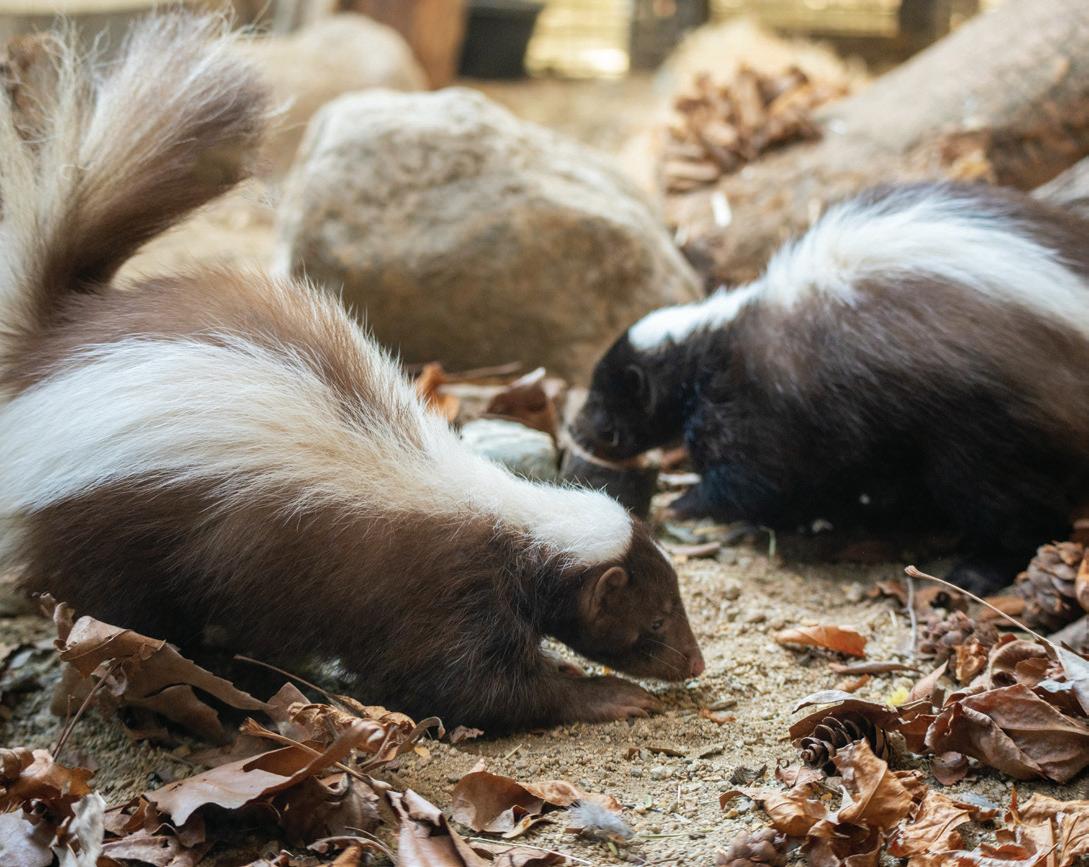
In June, two new striped skunks arrived on habitat at Eagle Canyon. Named Mischief and Mayhem, these brothers came to The Living Desert from Cheyenne Mountain Zoo in November, when they were four months old. After acclimating behind the scenes, Mischief and Mayhem are now thriving in their new Eagle Canyon home.
Killdeer
Two killdeer chicks hatched on July 23 and July 24 to Bitty (mom) and Stubs (dad). The chicks are currently behind the scenes with their parents and will eventually move back to the Wild Prairies Aviary when they have matured and grown to the appropriate size.
Spur-winged Lapwing
A quartet of spur-winged lapwing chicks hatched in late April to first-time parents Peeper Parker and MJ. These small, speckled chicks were very active since hatching and reached adult size roughly one month later, which is typical for this species. Spur-winged lapwing chicks are cared for by both parents, who also share incubation duties. Stop by the African Aviary to see them on your next visit!
Northern Bald Ibis
Two northern bald ibis chicks hatched in mid-May, joining the African Aviary flock. Born to Bastet (mom) and Ra (dad), these new arrivals are significant due to the endangered status of their species. With population numbers estimated to be less than 300 in the wild, The Living Desert is proud to be part of the Northern Bald Ibis Species Survival Plan® (SSP). The three northern bald ibis chicks who hatched last April are now fully grown and thriving!
Channel Island Fox
On San Nicolas Island, a young Channel Island fox with a compound fracture in the lower part of her right hind leg was found during a population survey. The young pup — now named Sylvie — needed treatment. The Santa Barbara Zoo took in the fox with the approval of the California Department of Fish and Wildlife (CDFW). Under Santa Barbara Zoo’s expert care, she recovered after a few months. Sylvie was deemed non-releasable and recommended for placement at a CDFWapproved mainland facility, where she could serve as an ambassador for her wild counterparts. As one of only three facilities who care for this species, The Living Desert was thrilled to welcome Sylvie to her forever home. On your next visit to Eagle Canyon, be sure to visit Sylvie at her new habitat, where she has settled in with Beauregard, AKA “Beau” — a San Clemente Channel Island fox.
Scan the QR code to see a video of Sylvie and Beau in their Eagle Canyon habitat! The two Channel Island foxes will live together as a non-breeding pair.
WILDFILE
A Different Kind of Animal
Introducing an event venue of an entirely different animal — The Living Desert Zoo and Gardens! A private event at the Zoo transports your guests to breathtaking deserts across the globe. With many unique and unforgettable indoor/outdoor venue options and gardens to choose from, The Living Desert offers a setting unlike anywhere else in Southern California. Whether you are hosting a lavish cocktail party, wedding reception, holiday celebration, corporate mixer, team-building event, or a social gathering of almost any size, there is a perfect venue for each occasion. For more information and to book a complimentary site tour, call 760-346-0301, or visit LivingDesert.org/PrivateEvents.
$1 for every pint of El Lobo sold at Luchador Brewing Company goes to supporting The Living Desert’s mission of protecting vulnerable wildlife here and around the world.
Cheers to Conservation
The Living Desert is thrilled to announce a collaboration with Luchador Brewing Company on the new “El Lobo” Mexican lager, crafted in honor of the magnificent Mexican wolf. Brought back from the brink of extinction thanks to the intervention of zoos — including The Living Desert.
This refreshingly smooth and crisp Mexican lager is available on-tap at the Cathedral City Luchador Brewing Company. At The Living Desert, guests can enjoy El Lobo at the Crash Cafe.
1970s
By the 1970s, Mexican wolves were nearly extinct in the wild after decades of over-hunting due to fears of them preying on livestock.
1976
The Mexican wolf was placed on the U.S. Endangered Species List and the seven remaining wolves were brought to U.S. zoos to increase the population as the first step in a long-term plan to save the species from extinction.
1990s
The Living Desert spearheaded the Mexican Wolf Recovery Program and, in 1998, eleven Mexican wolves were released back into their native habitats.
2024
The Mexican wolf would be extinct today without the breeding efforts at zoos, such as The Living Desert. There are more than
600 Mexican wolves today:
at least 257 in their native habitats and 350 under human care.
WILDFILE
Mongolian Conservation Initiative
A conservation partnership between The Living Desert and the Mongolian Conservation Initiative (MCI) began in July of 2023. This innovative, transnational collaboration amplifies and extends the current conservation work of the MCI to benefit both wildlife and nomadic herder livelihoods within Ikh Nart Nature Reserve — located in the Gobi Desert.
Throughout the past year, nine team members from The Living Desert — representing animal and veterinary care, learning and impact, gardens, and conservation — have traveled to Ikh Nart where they collaborated with MCI staff on habitat restoration, veterinary medicine, conservation biology, and livestock-wildlife disease. Stay tuned and visit LivingDesert.org/ Blog for more updates from the field!
The Living Desert Welcomes New Director of Animal Care and Health
In March, the Zoo welcomed Mike Barnes as the Director of Animal Care and Health, to lead an incredible team of veterinary and animal care professionals. “In my new role at The Living Desert, I am dedicated to ensuring the highest standards of welfare and wellness for all our living residents, while advancing conservation efforts and fostering the ‘best day ever’ for our guests,” said Mike. Coming from Florida, Mike previously worked as an animal care manager at Zoo Miami, where he specialized in rhinoceros and African hoofstock for five years.
“I was born a zoo brat; my dad was in the field for 44 years, so my love for animals was fostered at a young age,” said Mike. In 2009, Mike began his career in animal care as a volunteer at the Los Angeles Zoo and Botanical Gardens. From there, he went on to work as an animal keeper specializing in ungulates and an animal registrar. “I pride myself on having risen through the ranks learning as much as possible the whole way through.”
Beyond his impressive tenure in Association of Zoos and Aquariums (AZA) institutions, Mike is also one of 25 on the AZA Safety Committee, co-chair of the Escapes and Unwanted Encounters sub-committee, and the coordinator for the Przewalski’s Horse Species Survival Plan® (SSP). The Living Desert team is thrilled to have Mike oversee the wellbeing of all animals under the Zoo’s care.
Mongolia
photos courtesy Alix Morris and O. Rentsen
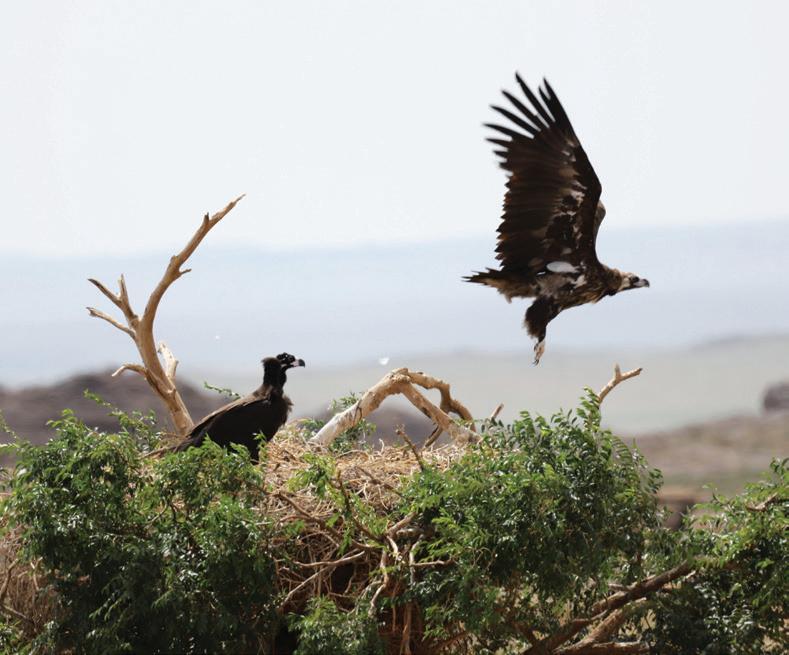
Cinereous vultures in Ikh Nart Nature Reserve
Gana Wingard (right) is the leader of the Mongolian Conservation Initiative.
EVENTS CALENDAR FALL/WINTER 2024
Season Hours Return
Starting October 1
The Living Desert returns to regular operating hours of 8:00am-5:00pm daily, with last admission at 4:00pm. The hiking trails and carousel will also resume regularly scheduled operating hours.
Me & You at the Zoo
Starting October 1: Tuesdays and Fridays, 9:30am-10:30am
This interactive, parent participation program is designed for toddlers and their accompanying adults. This program is free with membership or paid park admission. No advance registration is required, so drop in anytime!
Hoppy Hour
Starting October 1: Every Tuesday and Thursday, 3:00pm-5:00pm
Join us at Kookaburra Cafe for exclusive Hoppy Hour appetizers and 50% off the entire bar menu! Access is included with your membership or paid park admission; food and beverages are an additional fee.
Hotdogs with Heroes
October 6, 11:00am-2:00pm
Families, local businesses, and first responders will gather for an afternoon of fun, learning, and community connection. The first 100 families to register will receive a free hotdog kids’ meal. This free public event requires prior registration and does not include Zoo admission.
Wild at Heart: ZooCamp for Adults
October 12, 9:30am-12:30pm
The Living Desert is thrilled to offer this new ZooCamp for the young and wild at heart. Participants will dive into the world of birds! Registration is now open, visit LivingDesert.org/ZooCamp to learn more.
the QR code for more information about upcoming events.
Coffee and Conservation
October 5, 9:00am-10:00am
At this new, members-only event, you’ll hear first-hand stories about conservation projects and in-field adventures from the teams leading the charge — while enjoying a complimentary coffee! The event kicks off October 5 and will be held the first Saturday of each month. Visit LivingDesert. org/Events to learn more.
ZooCamp
Saturday Mini ZooCamp: October 19
Grades K-1 and 2-3, registration now open. Fall ZooCamp: November 25-27
Grades K-6, registration now open.
Zookeeper Academy: December 23
Grades 7-9, registration opens October 7.
Winter Mini ZooCamp: December 27
Grades K-6, registration opens October 7.
Winter ZooCamp: January 2-4
Grades K-6, registration opens October 7.
ZooCampers learn about wildlife through STEM activities, arts and crafts, upclose animal encounters, and more. Visit LivingDesert.org/ZooCamp to learn more.
Howl-O-Ween
October 26-27, 9:00am-3:00pm
Celebrate the spooky season at the Zoo’s annual Halloween weekend event. Guests can enjoy family-friendly activities, costumes, trick-or-treat stations, and seasonal surprises at this fan-favorite celebration. This event is free for members or with paid park admission.
Native Plant Sale
October 26, 9:00am-12:00pm
Purchase your own California native desert plants — propagated on-site at The Living Desert — to start your own home garden! This plant sale is open to the public and does not include admission to the Zoo.
EVENTS CALENDAR FALL/WINTER 2024
NOVEMBER–DECEMBER
Zoo Families: Wildly Diverse
November 11, 9:00am-12:30pm
This family program invites you and your pride to learn about the animal families here at the Zoo and includes an up-close animal experience, story time, a craft, tram tour, and admission to the Zoo afterwards. Registration now open, visit LivingDesert.org/Events to learn more.
WildLights
Member Preview Night – November 25
Select Nights November 26-December 30
Adults Only (18+) Night – December 19
Returning for its 32nd season, this year’s WildLights brings new festive features along with seasonal fan-favorites.
Discounted, early bird tickets on pre-sale October 1 at LivingDesert.org/WildLights
Travel with The Living Desert
Adventurers wanted! Explore the world’s wild places with The Living Desert through exclusive travel experiences led by senior staff and local guides. Learn about the remarkable species encountered along your journey, and the conservation efforts for animals and spaces. Each trip is hosted by knowledgeable experts and limited to only 16 travelers, making every excursion intimate and informative.
Visit LivingDesert.org/ Travel or scan the QR code to learn more.
World Desert Day
January 11, 2025
Teacher Open House
January 18, 2025
International Desert Conservation Summit
February 7-9, 2025
Women in STEAM Career Day
February 15, 2025
Zoobilee Gala
February 22, 2025
Glow in the Park
Select Nights, March 19-April 27
Botswana, South Africa, and Zimbabwe — SOLD OUT! October 31 – November 12, 2024
Zimbabwe and Zambia May - June 2026
Ecuador and the Galapagos Islands July 24 – August 4, 2025
Tanzania and Zanzibar June 2025
Kids
Desert animals
Can you spot these desert dwelling animals?
n Desert Tortoise n Chuckwalla
n Roadrunner n Gopher Snake
n Desert Cottontail Rabbit
To learn more about native desert animals, turn to page 20!
47900 Portola Ave.
Palm Desert, CA 92260
HOWL-O-WEEN
Saturday and Sunday, October 26-27
9:00am-3:00pm Free for members or with paid park admission.
WILDLIGHTS
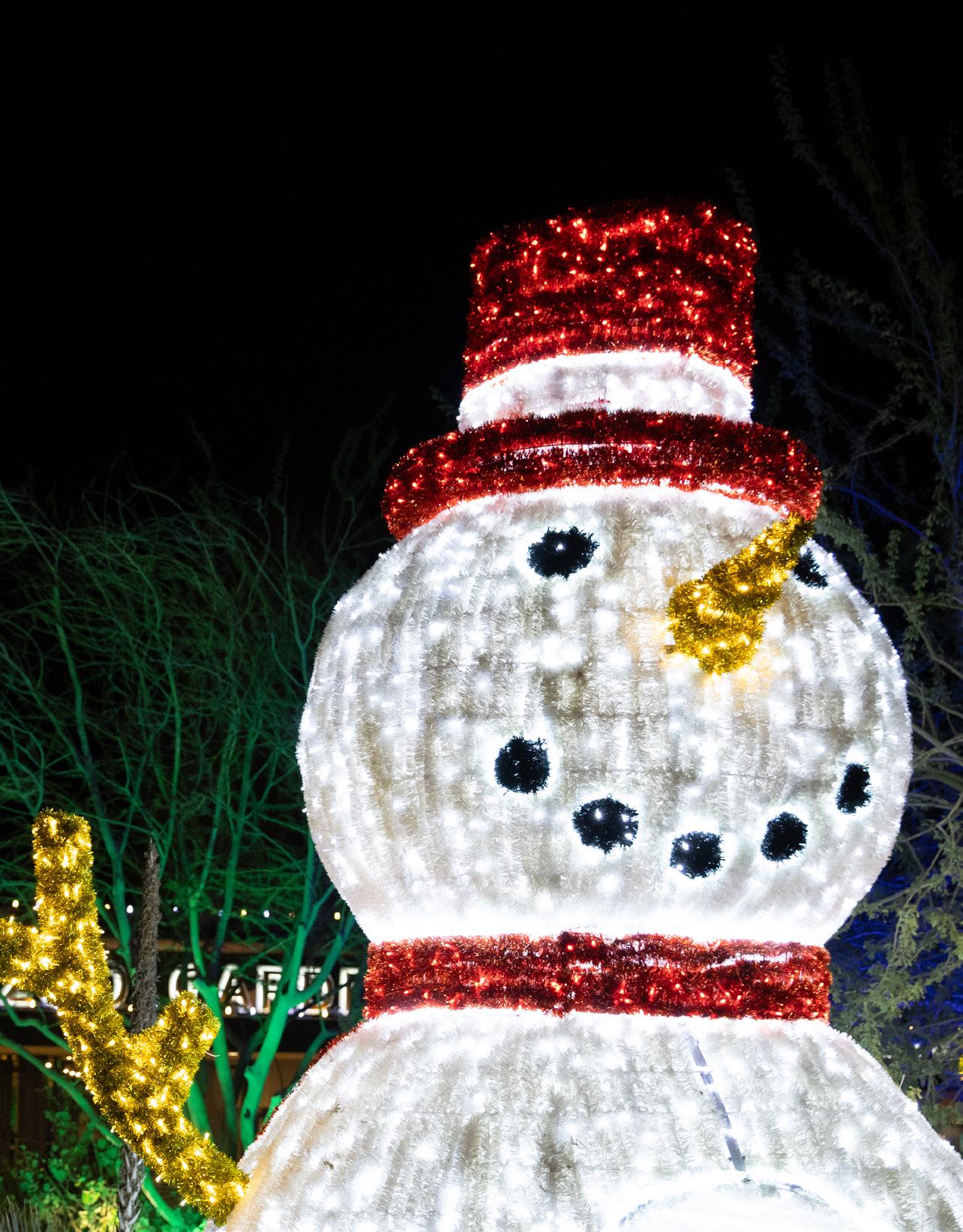
The 32nd annual WildLights features festive fan favorites and sparkling new displays!
Member Preview Night – November 25 Select Nights November 26-December 30 Advance registration is recommended.