FROM THE ENERGY INDUSTRIES COUNCIL
ENERGY FOCUS
VIEW FROM THE TOP Andrew McKeran, Lloyd’s Register
RISING EAST
Four lessons the West cannot ignore
EUROPE: HYDROGEN
The hardware is ready. The policy is not POWERING AMERICA
The grid of tomorrow is being built today

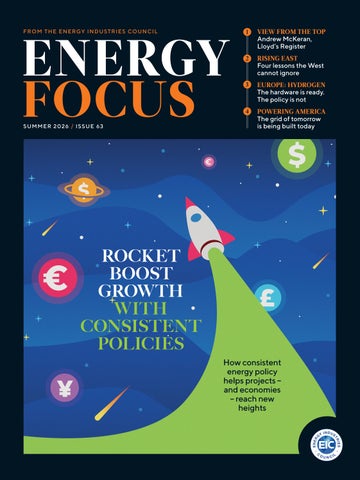
ROCKET BOOST GROWTH WITH CONSISTENT POLICIES
How consistent energy policy helps projects –and economies – reach new heights
Additive manufacturing, backed by real engineering
Additive manufacturing, backed by real engineering
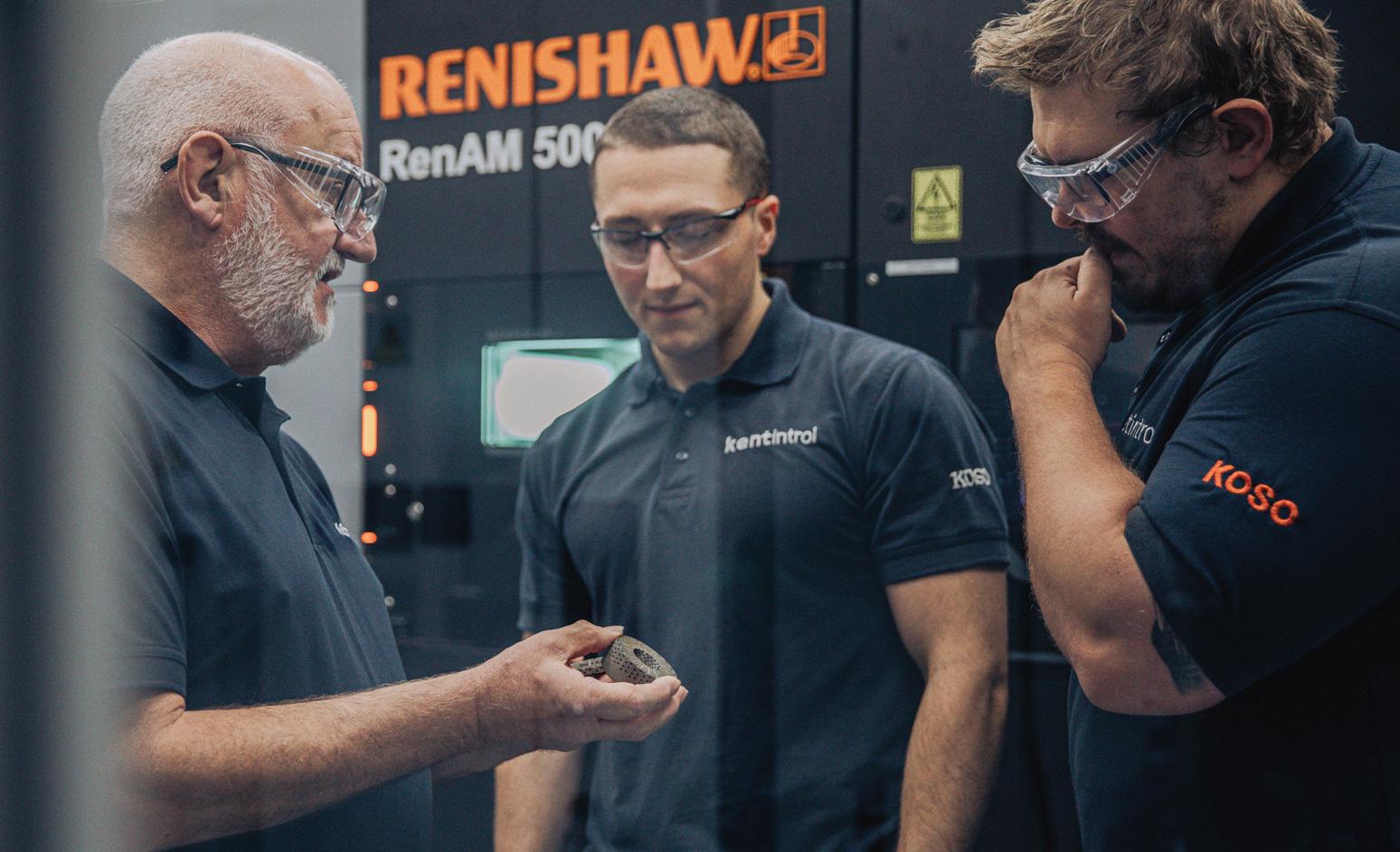
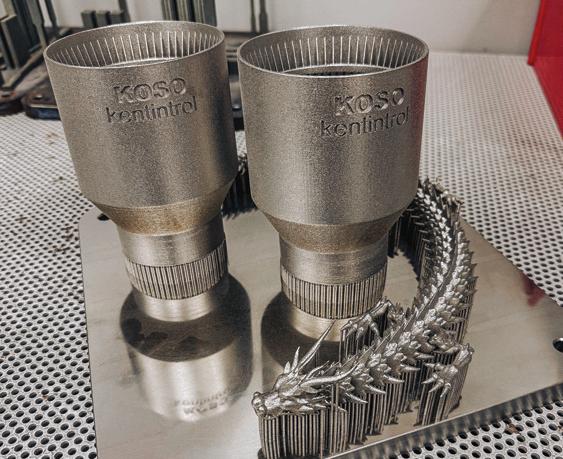
AddLab is KOSO Kent Introl’s dedicated additive manufacturing division, combining the speed and freedom of advanced AM with the rigour, certainty and infrastructure of a global engineering organisation.
While others focus on the printer, our strength lies in everything around it. Supported by KKI’s established
component. The result is additive manufacturing you can trust, from prototyping through to serial production.

Our approach is built on TRAV:
Four principles that underpin every design, build and inspection stage.
Powered by RenAM 500Q Flex technology and deep engineering expertise, AddLab integrates in-house testing, FEA and CFD analysis, R&D, and design-for-additive collaboration to deliver smarter,
Additive manufacturing with the assurance of real engineering behind it.
KOSO Kent Introl and AddLab are part of the KOSO group of companies.
FROM THE ENERGY INDUSTRIES COUNCIL
SUMMER 2026 / ISSUE 63
From the EIC
5 Foreword From the Chief Executive
6 View from the top Andrew McKeran, Chief Growth Officer, Lloyd’s Register
10 News and events Updates from EIC
12 Supply chain capability and the true cost of uncertainty
Rebecca Groundwater, Global Head of External Affairs, EIC UK
14 What Asia is teaching the West Stuart Broadley, CEO, EIC
16 Special feature: Building the launchpad for growth
Tom Wadlow, Partner, WD Editorial
20 Feature: Why the UK must prioritise energy sovereignty above security Stuart Broadley, CEO, EIC
38 A day in the life of… Silvian Baltac, Partner, ERM, and Steven Lofaro, Regional SVP Energy, Ports & Projects Americas, Blue Water Shipping
The Energy Industries Council
89 Albert Embankment, London SE1 7TP
Tel +44 (0)20 7091 8600 Email info@the-eic.com
Chief executive: Stuart Broadley
Should you wish to send your views, please email: info@redactive.co.uk

Editors Sairah Fawcitt +44 (0)20 7880 6200 sairah.fawcitt@redactive.co.uk Helena Bezerra +55 32 98410 1731 helena.bezerra@the-eic.com
Production director Jane Easterman
Senior designer Gene Cornelius Lead designer Craig Bowyer Picture editor Akin Falope Content sub-editor Kate Bennett

Sales and advertising +44(0)20 7324 2763 energyfocus@redactive.co.uk
Energy Focus is online at energyfocus.the-eic.com ISSN 0957 4883 © 2026 The Energy Industries Council
ENERGY TRANSITION
24 From industrial strength to strategic resilience: Europe’s hydrogen moment Thorsten Herbert, Founder, Hydrogen Now
RENEWABLES
26 Building Africa’s renewable energy future Abdoulaye Touré, CFO, Qair Africa
OIL AND GAS
30 Venezuela’s upstream revival Guilherme Bié, OPEX and Decommissioning Analyst and Mariana Messere, Energy Analyst, EIC South America
POWER
32 Building the grid America needs now Matt Neal, President, Siemens Energy, North America
NUCLEAR
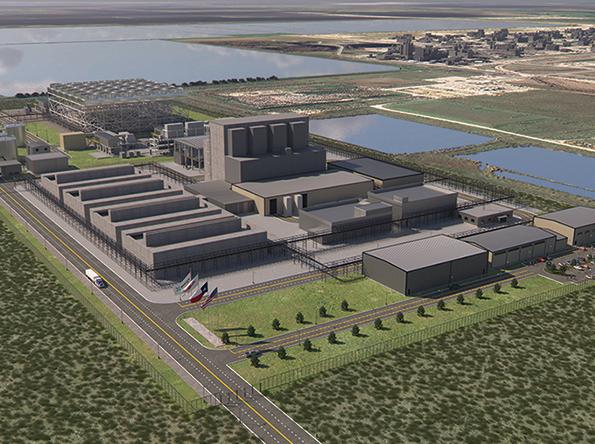
35 How X-Energy’s Xe-100 is redefining the nuclear landscape
Jack Boggis, Energy Analyst, EIC UK
Energy Focus is the official magazine of the Energy Industries Council (EIC). Views expressed by contributors or advertisers are not necessarily those of the EIC or the editorial team. The EIC will accept no responsibility for any loss occasioned to any person acting or refraining from action as a result of the material included in this publication.
Publisher Redactive Media Group, 9 Dallington Street, London EC1V 0LN www.redactive.co.uk



Recycle your magazine’s plastic wrap – check your local LDPE facilities to find out how.

HYDROGEN, CARBON CAPTURE, UPSTREAM & DOWNSTREAM

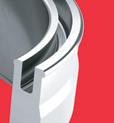
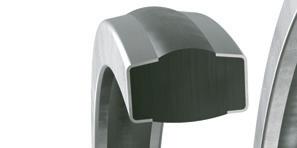
Sealing solutions



• Local gasket manufa turing
• Sealing solutions
• Bolting technology
• Expansion joints
• On-site services
• Ultra-high pressure seals
• Bespoke engineered solutions
• Media validation and testing
• Low temperature sealing














































































STUART BROADLEY
From the chief executive
The price of uncertainty: why policy stability is the new global currency. As political shifts drive capital and talent away from the West, industry leaders call
for a return to long-term consistency and integrated industrial strategy

The global energy landscape is increasingly defined by a sharp divide between regions that offer long-term stability and those that are hampered by political volatility. This edition explores the high cost of short-term politics, examining how the West’s frequent policy shifts and election cycles are actively eroding investor confidence. When project timelines are subject to change with every political recess, long-term planning becomes impossible – driving capital and capacity toward markets that offer a more predictable horizon.
A primary consequence of this inconsistency is the accelerating supply chain and skills drain. As UK and European projects face persistent delays, highly skilled workers are relocating to more stable regions. This leads to not only a loss of labour, but also a depletion of the domestic engineering capacity required for energy sovereignty. While some countries grapple with policy whiplash, regions such as the Nordics, the UAE and China are attracting significant investment by providing the steady, multi-decade mandates that industrial projects require. Amid this uncertainty, Lloyd’s Register (LR) provides a critical model for resilience. In our View from the Top interview,


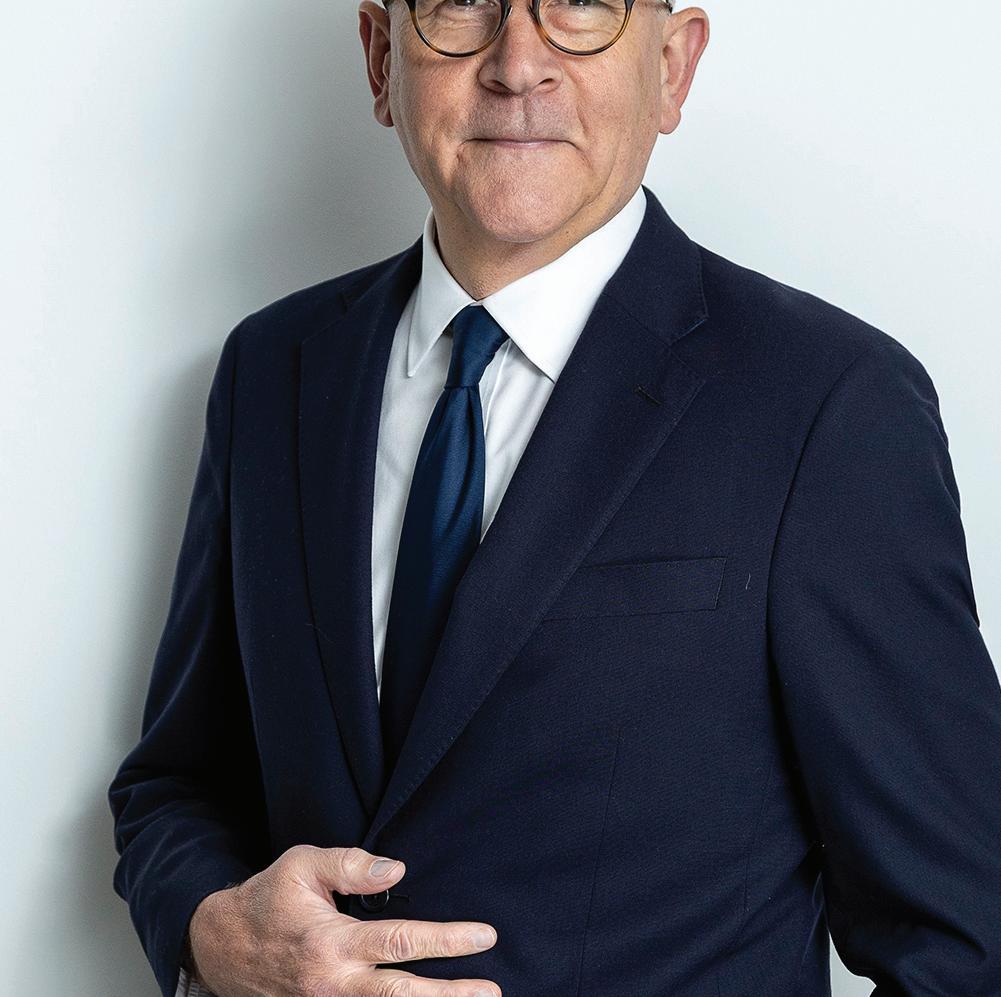


Chief Growth Officer Andrew McKeran outlines how LR is leveraging its 260-year ‘legacy of curiosity’ to navigate the energy transition. Unlike shareholder-driven firms, LR’s ownership by the Lloyd’s Register Foundation enables it to act as an independent ‘system steward’, reinvesting profits into safety research rather than specific technologies.
True sustainability requires a triad of environmental protection, economic viability and social responsibility. To
True sustainability requires a triad of environmental protection, economic viability and social responsibility
achieve this, LR is bridging the gap between rapid digitalisation and workforce readiness, ensuring that AI adoption is underpinned by human-centred design. Furthermore, it is aggressively breaking down industrial silos; by treating offshore wind, grid infrastructure and ports as a single, connected ecosystem, the organisation aims to resolve the bottlenecks that currently hinder large-

scale projects. Ultimately, rigorous engineering and consistent data are now perhaps the only ways to scale new technologies without compromising safety. Adapting to this volatility will require a shift in how companies and governments approach the transition. Industry leaders are no longer waiting for perfect conditions; instead, they are diversifying into different sectors and geographies to mitigate risk. However, for domestic resilience to take root, the West must learn from Asia’s approach to energy, focusing on consistent regulation as the bedrock of competitiveness.
The recurring theme in this edition of Energy Focus is that stability is the ultimate ‘dial-shifter’. Whether it is updating port infrastructure to support modular movement or aligning energy security with national defence, the path to growth will rely on a unified industrial strategy. By moving away from ‘sticky tape’ decisions and towards rigorous, connected thinking, all countries can begin to turn political uncertainty into a foundation for sustainable global success.
STUART BROADLEY Chief Executive Officer, Energy Industries Council stuart.broadley@the-eic.com



VIEW FROM THE TOP

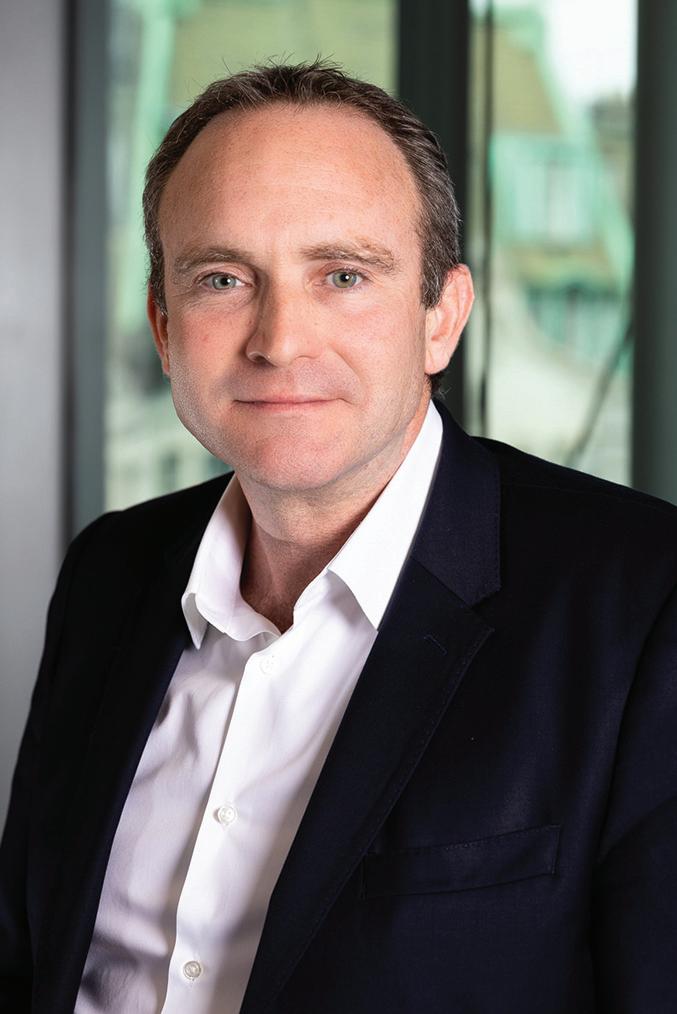
Andrew McKeran
Andrew McKeran, Chief Growth Officer at Lloyd’s Register, talks to Energy Focus about engineering trust, navigating the energy transition and why responsible growth must underpin every step of the journey ahead

At the Top: Andrew McKeran



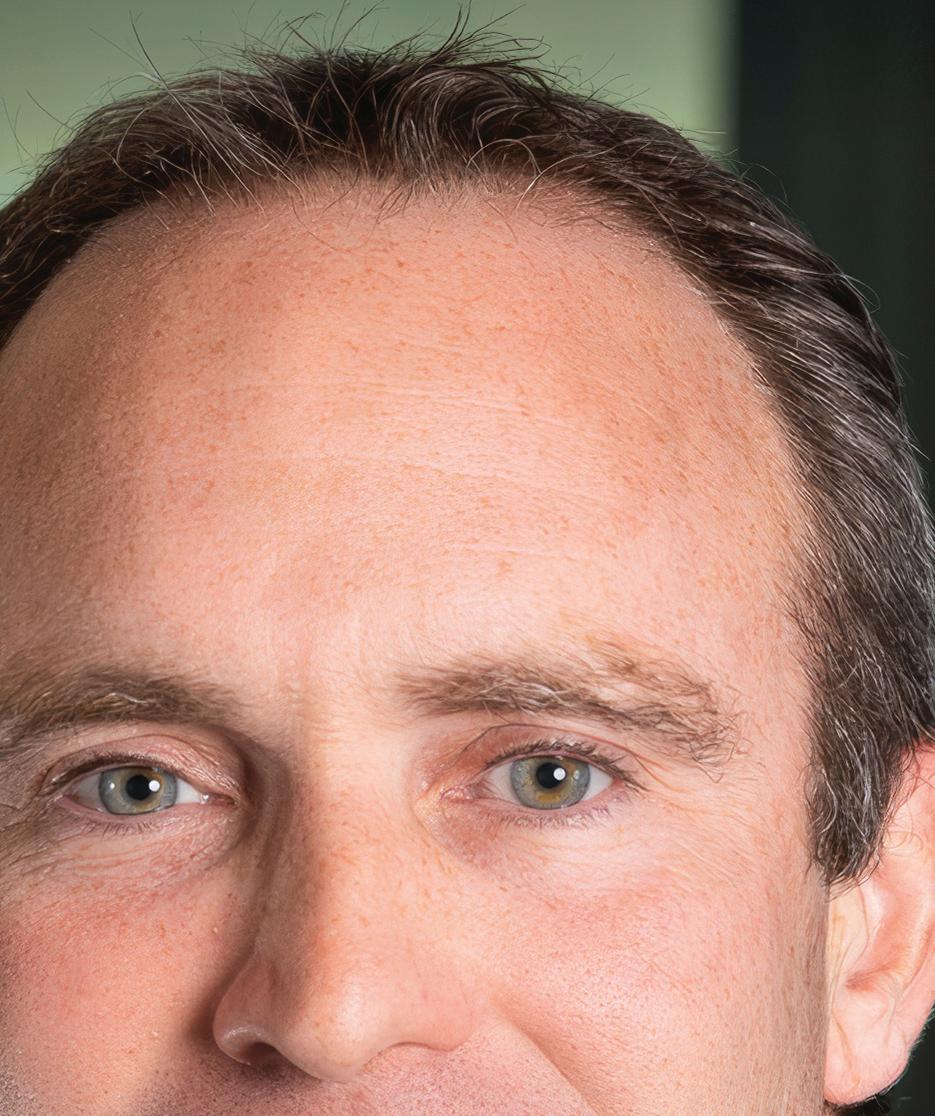





Andrew McKeran was appointed Chief Growth Officer at Lloyd’s Register (LR) in September 2025, a role that also encompasses the role of Managing Director at OneOcean. Responsible for driving growth across class, LR Advisory and OneOcean, he previously served as Chief Commercial Officer. Andrew joined LR in 2019, bringing more than 25 years of experience across the marine, offshore and naval sectors, spanning shipyard commissioning, project management and global business leadership roles with Cegelec, Alstom, Converteam and GE.






What is the core purpose and vision of Lloyd’s Register?
Lloyd’s Register (LR) is dedicated to engineering a safer world by helping industry to manage risk, assure performance and make better decisions across increasingly complex systems. That purpose has remained consistent since 1760, even as the technologies, markets and risks have changed profoundly.
How important is LR’s 260-year legacy of curiosity as you look to the future?
COUNTRIES OPERATED IN

Today, that vision is expressed through LR’s role as a trusted adviser across maritime, energy and related industrial sectors, combining deep technical assurance, digital capability and advisory insight to support safety, sustainability and commercial resilience across the asset lifecycle. Whether we are assuring complex assets, supporting offshore and onshore energy projects or enabling digital compliance, our focus is on helping clients operate safely while navigating change with confidence.


Importantly, LR’s vision acknowledges that true safety and sustainability are inseparable, and that sustainability extends beyond environmental concerns. For projects and operations to thrive, they must be economically viable and socially responsible. The transition to new fuels, digital systems and autonomous technologies will only succeed if underpinned by rigorous engineering, transparent data and trusted standards. That is why LR invests heavily in industryfirst guidance, applied research and collaborative frameworks that help turn ambition into practical, scalable solutions.
LR’s 260-year legacy is not a historical footnote – it is a strategic advantage. Since its founding in 1760, LR has repeatedly adapted by listening closely to clients, understanding emerging risks and developing solutions before they are demanded by regulation or markets. That mindset is exactly what the energy transition requires today. These industries are entering a period where there are no simple answers: multiple technology pathways, fragmented regulation, digital disruption and capital uncertainty all coexist. LR’s heritage allows us to operate in that ambiguity. We are comfortable asking difficult questions early, whether that is about safety, infrastructure readiness, digital interoperability or skills gaps, because our role has always been to protect life, assets and the environment under changing conditions. LR’s ability to combine historical perspective with forward-looking engineering judgment allows clients to move faster without taking unacceptable risk.
How does ownership by the Lloyd’s Register Foundation affect decision-making, vision and investment?
Being wholly owned by the Lloyd’s Register Foundation fundamentally shapes how LR thinks, decides and invests. The Foundation is an independent charity with a mission to engineer a safer world, giving LR a unique strategic horizon compared with shareholder-driven organisations.
260-year legacy is not a historical footnote – it is a strategic advantage

YEARS OF MARITIME EXPERTISE AND INNOVATION
4,000
EMPLOYEES, REPRESENTING 85+ NATIONALITIES
>63m
TONNES OF NEW CONTRACTING SECURED IN THE 2024/25 FINANCIAL YEAR WITH CLASS, LR ADVISORY & ONEOCEAN, LR CAN SUPPORT A VESSEL’S END-TO-END LIFECYCLE, INCLUDING DESIGN, CONSTRUCTION, OPERATION, CREW TRAINING & RECRUITMENT, DECOMMISSIONING & RECYCLING
The Foundation reinvests profits from LR’s commercial activities into research, education and applied insight that benefits industry and society. This includes funding work on maritime decarbonisation, skills, safety systems and emerging risk. Foundation ownership reinforces independence and trust. LR is not incentivised to promote a single technology or geography. Instead, we focus on helping clients navigate uncertainty objectively, whether that’s validating new concepts, highlighting constraints or challenging assumptions when evidence demands it. In investment terms, the structure enables sustained commitment to areas such as digital platforms, alternative fuels assurance and skills development. This allows LR to act as a system steward, not just a service provider, to support safer, more sustainable outcomes.
What opportunities and challenges do you see as Chief Growth Officer?
The opportunity is to help clients connect compliance, performance and
Growth must be responsible –scaling solutions that are trusted, interoperable and aligned with real operational constraints
sustainability into a single, coherent operating model. Too often, these have been treated as separate challenges, when in reality they are deeply interdependent.
The scale of opportunity is significant: energy clients are navigating new fuels, digital regulation, geopolitical risk and rising capital pressure simultaneously. LR’s combination of technical assurance and advisory capability positions us uniquely to support decision-making across the whole lifecycle, from concept and design through operation and optimisation.
The challenge is pace and integration. Regulation is evolving unevenly, technology maturity varies and the industry’s digital baseline is inconsistent. Growth must be responsible – scaling solutions that are trusted, interoperable and aligned with real operational constraints. The role is ultimately about helping the industry to move faster, without compromising safety or credibility, during one of the most complex transitions it has ever faced.
What targets have you been tasked with achieving in the next three to five years?
Growth is defined by our ability to help the energy and related industrial sectors navigate transition safely, competitively and at scale. Priorities include accelerating the
adoption of integrated digital and advisory solutions to help clients manage regulatory complexity, emissions exposure and operational performance in one framework. Finally, there is a strong people dimension. The industry faces a growing skills gap as systems become more complex. Ensuring that digitalisation and decarbonisation are matched by workforce readiness, through training, guidance and human-centred design, is essential to deliver sustainable growth rather than create new risk.
How is LR embracing change such as artificial intelligence (AI), tariffs, energy security and net-zero delays?
AI, trade friction, energy security concerns and delayed net-zero action all interact, and clients must manage their combined effect. On digital and AI, LR is focused on decision support rather than automation for its own sake. AI and analytics are applied to areas where they add tangible value: emissions forecasting, risk modelling, compliance planning and operational optimisation are always grounded in verified data and human oversight. Specifically, LR is exploring how AI can generate deeper insights from the data we already hold from the thousands of engineering reviews and asset surveys we complete each year. The aim is to provide
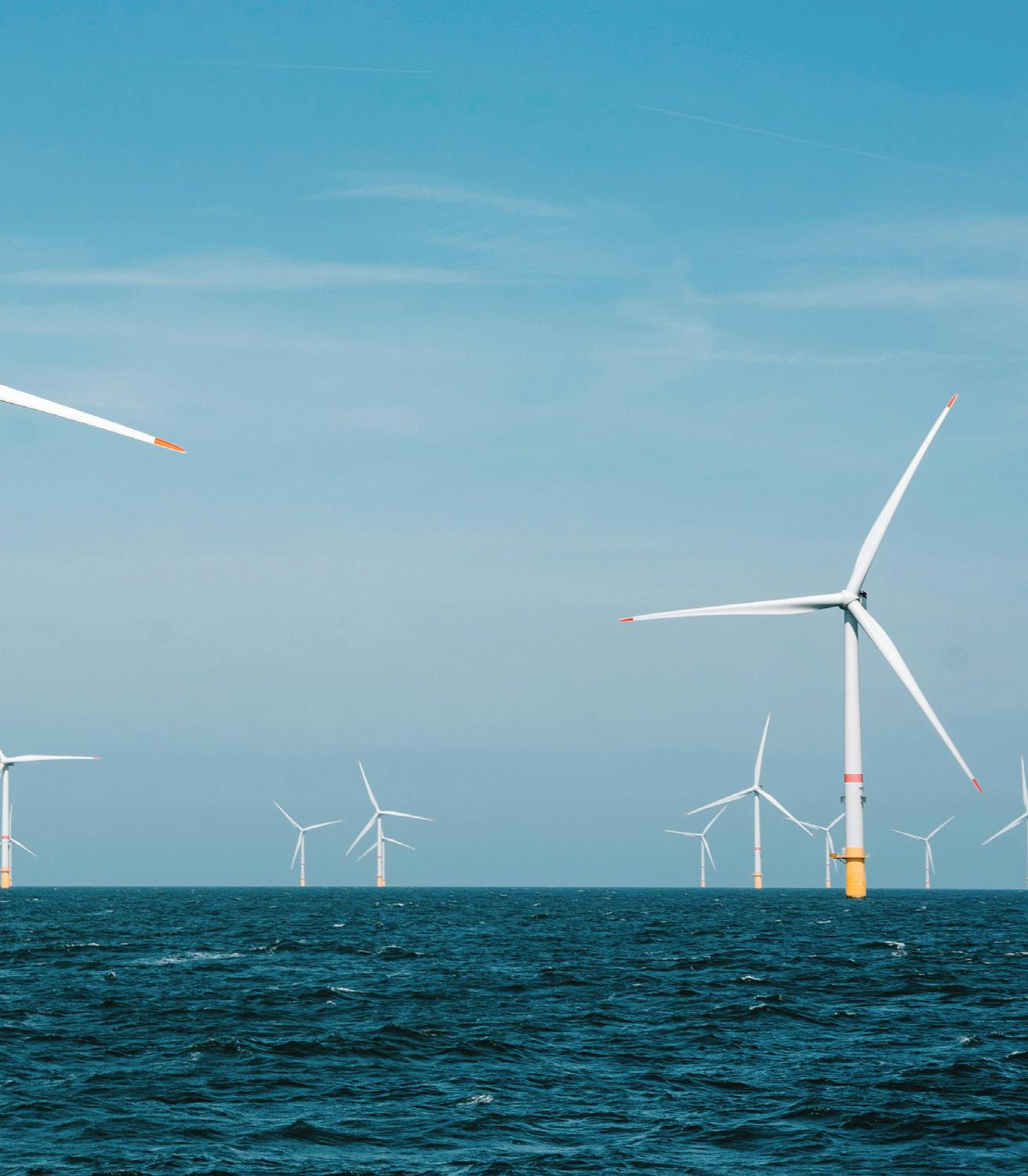
Lloyd’s Register provides advisory services across maritime, energy and related industrial sectors
benchmarking and trend insight that helps clients to strengthen their processes, improve performance and reduce risk.
As a trusted independent organisation, we also see an opportunity to extend these benefits by applying similar techniques to client data sets (where appropriate and agreed). By combining operational and engineering data, we can help to identify the drivers of asset performance and leading indicators that support earlier intervention and better outcomes.
Energy security and geopolitical uncertainty have reinforced the need for optionality and resilience. LR supports this by assuring multiple technology pathways, validating emerging solutions and helping clients to stress test strategies against regulatory and market scenarios.
Regulatory uncertainty increases risk, capital hesitancy and technology lockin. By providing independent assurance, scenario analysis and evidence-based guidance, LR helps clients to move forward without overcommitting too early or standing still for too long.
How important are consistent policy frameworks?
Consistent policy frameworks are crucial to enable certainty and confidence
across the maritime, energy and industrial sectors. Clear, predictable policy allows organisations to plan, invest and innovate with assurance that their efforts will be aligned with regulatory expectations.
For LR, consistency in policy provides the foundation for our independent assurance and technical advisory services. It enables us to support clients in navigating regulatory complexity objectively, and helps to create an environment where industry and regulators can collaborate on solutions that are safe, scalable and sustainable. In practice, this means clients can move forward confidently, knowing that their investments are grounded in a stable regulatory context rather than shifting requirements or unforeseen constraints.
Why is LR diversifying beyond maritime?
LR’s expansion into energy and adjacent sectors is a natural evolution, building on more than 60 years of operational experience in this field. The same capabilities that
underpin safe, reliable operations –systems engineering, risk management, assurance and lifecycle thinking – are increasingly critical across offshore energy, renewables and complex infrastructure. Our long-standing experience helps us to address the evolving needs of these sectors with confidence and proven expertise.
As the energy system decarbonises, the boundaries between energy production, distribution and enabling infrastructure are dissolving. Floating wind, alternative energy carriers, grid and port infrastructure and digital systems form a connected ecosystem. LR’s diversification allows us to support that system holistically. Key steps include targeted investment in energy assurance, digital platforms such as OneOcean, and advisory capability that connects technical insight with commercial reality. The objective is coherence, to help clients manage interconnected risks across sectors safely and efficiently.
A message for governments, partners and future talent?
The future will reward those who build trust, capability and collaboration early. Governments must provide clear, consistent frameworks that enable long-term investment. Industry partners must share risk, data and learning to scale solutions safely. And the next generation should see the energy and industrial sectors not as legacy industries, but as places where engineering, digital innovation and sustainability intersect with global impact.
The transition ahead is complex, but it is also an opportunity to build systems that are safer, cleaner and more resilient than anything before. Those who engage early, think systemically and act collaboratively will shape that future.
Lloyd’s Register is expanding into energy and adjacent sectors, such as renewables
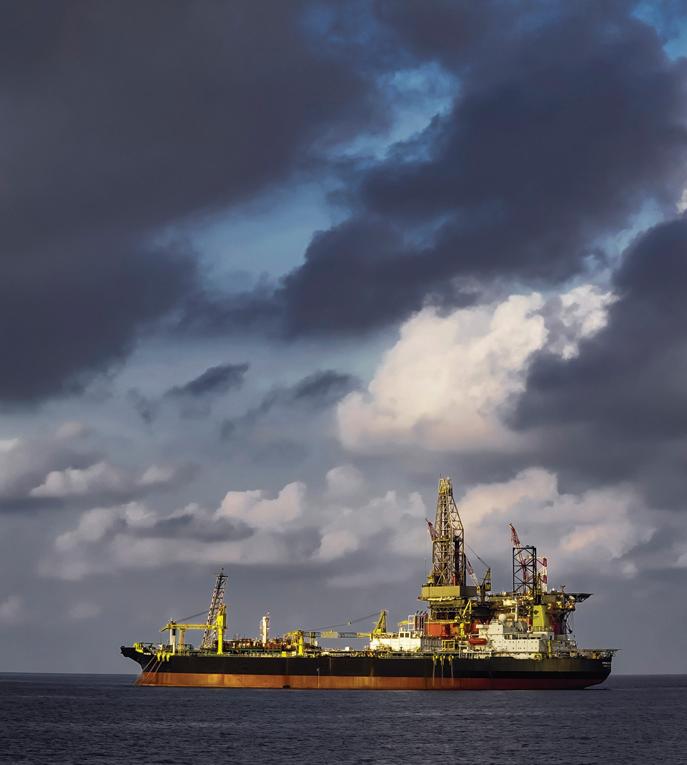
A floating production, storage and offloading vessel
NEWS & EVENTS
Reflections from the front line of energy
Ten years of Survive & Thrive have captured how energy supply chain companies navigated crises, embraced diversification and transformed adversity into opportunity – lessons more relevant than ever in today's volatile market
BY HELENA BEZERRA, EDITOR & INTERNAL COMMUNICATIONS COORDINATOR, EIC
When EIC launched the first Survive & Thrive Insight Report in 2016, it was against one of the toughest backdrops our industry had faced in decades, with the 2014 oil price crash forcing companies across the supply chain into cost-cutting, restructuring and a fight for survival.
We wanted to go beyond documenting the downturn. Our aim was to understand how companies responded: which strategies worked, how leaders navigated uncertainty and which businesses managed not just to survive, but to grow.
That report featured just 26 UK-based companies. A decade on, Survive & Thrive is a global initiative. Our 10th edition, due in July 2026, will include around 150 companies in oil and gas, renewables, nuclear and transition technologies – our most comprehensive report yet.
We have kept the name Survive & Thrive deliberately; while the context has shifted, the challenges have not gone away. The sector still operates in a volatile environment that is shaped by geopolitics, trade disruption and fluctuating energy markets – but how companies respond has changed.
Over the past 10 years, we have conducted more than 750 in-depth interviews with senior executives.
By aggregating insights annually, we often identify market shifts before they become widely recognised

Following the oil crisis, the focus was firmly on survival – efficiency, cost reduction and cash preservation. This reappeared during the Covid-19 pandemic, when resilience again became critical.
More recently, in stronger markets, companies are adopting ambitious, growth-oriented strategies by developing integrated services and
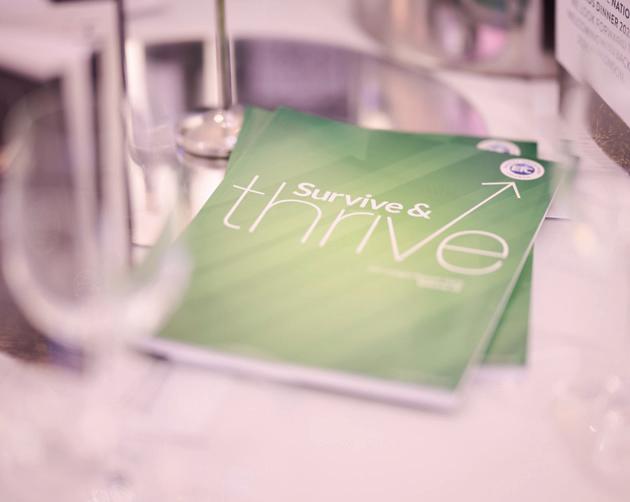
EIC Survive & Thrive: a decade of industry resilience

long-term, relationship-based solutions. Diversification remains a defining trend, initially moving from oil and gas into renewables. Today, companies are branching into data centres and pharmaceuticals to spread risk and capture new opportunities.
Some trends have remained stubbornly consistent. Notably, expanding into new export markets has ranked as the least favoured growth strategy for nine consecutive years. That said, with global trade patterns evolving, 2026 may be a turning point.
A key strength of Survive & Thrive lies in how we gather insights. Rather than relying on submitted case studies, our senior team conducts detailed, face-to-face interviews with business leaders. These candid, consultative conversations explore not just successes but also the challenges behind them. This approach provides
both depth and early visibility of emerging trends. By aggregating insights annually, we often identify market shifts before they become widely recognised.
Survive & Thrive’s influence extends beyond the report. In 2017, we aligned our awards programme with the strategies that we were tracking, later rebranding them as the World Energy Supply Chain Awards (WESCA) – now the largest programme of its kind globally. Survive & Thrive participation feeds directly into WESCA, amplifying companies’ achievements.
For our 10th anniversary, the initiative continues to grow. This year, awards will be held in seven cities, including Berlin and Milan for the first time, with 15 categories reflecting the sector’s diversity.
Above all, Survive & Thrive has built a strong community, with more than 95% of participants remaining loyal to EIC membership for at least three years.
Looking ahead, EIC’s members across the global energy supply chain will undoubtedly face further complexity and disruption, but a decade of Survive & Thrive research has shown leaders’ resilience, entrepreneurial spirit and proven ability to adapt and diversify, following the money to unlock new opportunities.
Upcoming events
EIC Connect Energy Brazil 2026
13 August 2026
Rio de Janeiro, Brazil
the-eic.com/Events/EICConnect/ ConnectBrazil
Offshore Northern Seas (ONS) 2026
24-27 August 2026
Stavanger, Norway
the-eic.com/Events/Exhibitions/ OffshoreNorthernSeas(ONS) 2026%7CEIC
Oil & Gas Asia
2-4 September 2026
Kuala Lumpur, Malaysia
the-eic.com/Events/Exhibitions/ OilGasAsia(OGA)2026%7CUK Pavilion%7CEIC
WindEnergy Hamburg 22-25 September 2026 Hamburg, Germany
the-eic.com/Events/Exhibitions/ WindEnergyHamburg2026
Check out our full calendar at the-eic.com/Events/Calendar
Latest reports
EIC Insight Report: APAC Hydrogen
EIC Insight Report: Q1 Cross Sector Decommissioning
EIC Insight Report: Global Upstream
Access to these reports and more is free to EIC members on EICDataStream. If you are not a member and want to know more, visit the-eic.com/Membership
WESCA:
global energy supply chain
Supply chain capability and the true cost of uncertainty


With shifting political priorities and delayed project pipelines eroding investor confidence, the energy supply chain is facing a quiet crisis. As businesses struggle to plan for an uncertain future, we see the risk of a critical drain on domestic experience and highly skilled professionals

BY REBECCA GROUNDWATER, GLOBAL HEAD OF EXTERNAL AFFAIRS, EIC UK

Since 2024, EIC has consistently lobbied for stability, but stability across all areas – across policy, a stable long-term project pipeline, stability in our global trade links and in our finance models.
Policy is shifting because in many regions – the UK, the US, New Zealand, Europe – the political system has allowed for large swings between parties, which results in swings in which energy systems are in or out. What EIC has asked for, and where we are not yet at with any region, is a clear project pipeline that works backwards, that is elevated above political manifestos and whims – but which sets long-term goals and understands the integrated nature of grid planning, of ‘the one supply chain’, and takes energy out of silos and puts the jigsaw together. Without it, we see one term courting one energy technology; power changes hands; we see a 180˚ in priorities and favoured technologies; and businesses who have invested and planned for A are now dealing with Z. The gap can, and has been, that wide.

With a plan such as this, business could move forward with confidence, investors would see return on investment and know how the pieces fit together. We can talk supply and demand together, not one at a time. And let’s not be too hard here – this is hard to achieve in among many other competing demands. But it does need to be done.
Having a three to five-year business strategy that straddles a political shift is not easy, nor is it sustainable.
And the reason EIC has been asking for a long-term energy plan? It is so that there is a sense of reliability in the work. We have government strategies, plans and objectives – all headline statements – but not much in the way of backing that up with a clear pipeline of which projects, when and where to hit those targets. No country or region has this yet.
We see statements made and then delayed. We see money put into technologies and then years of wrangling with the other policy areas –planning, skills and so on – to get them off the ground.
Once work starts coming around to be re-bid for, as our Bankable Energies Report showed, front end engineering design (FEED) fatigue is a major issue. If projects are constantly in FEED stage but do not reach final investment decision, and then are paused just to be brought back, our members find themselves having to re-bid for the work at years-old prices. And once a project is pushed out, the risk profile to investors increases – it does not matter why it was delayed, the fact that it was is enough. That will spook investors, and that will delay the project more as investors are sought, and then the supply chain no longer has a project to tender for... and then the politics changes. And then there is no project for the next nine months. Then it starts again. This uncertainty in the pipeline is also having an impact on the workforce. Without projects to work on, companies are ‘streamlining’ resources, redeploying expertise and looking at how to proceed. We saw companies move the workforce to where the opportunities were. Recently this has been the Middle East, but now
Stable countries and regions, and those moving forward at pace, are attracting the supply chain – and they are keeping it
this once-stable market has become uncertain. We used to rely on the fact that if companies sent out workers, they would return to their ‘home’ country when the work came online, but this isn’t the case now.
What we see is that stable countries and regions, and those moving forward at pace, are attracting the supply chain –and they are keeping it.
What does this really mean for supply chain capability?
This volatility in policy and long-term planning directly threatens a national company’s ability to grow in-country. For an organisation to seed and root in the country in which it was formed, it needs certainty in where it is going and an ability to pick up work. This certainty is required in order to plan development and attract business.
Without this stability, we see companies in these unstable regions become hollowed out. Yes, they
maintain a ‘local’ presence, but the growth is happening overseas. Great for the company, not great for domestic capability when it will inevitably be required. In fact, in the UK, we typically see more international companies bid for work more cheaply than those in the UK can.
Companies are doing this, and they aren’t quiet about it. We regularly hear that they are making the choice to redirect investment overseas because it is more stable. With the US and the UK leading the way in this refocus, other regions are not immune.
Conversely, those countries providing stable policy at pace and a clear timeline of project development, or those understanding that energy isn’t a binary choice, are attracting more capability and expertise. This provides a base level that these regions can lean on and grow into, helping them capture the market. Those countries who are not doing this are at risk of impeding their own objectives.
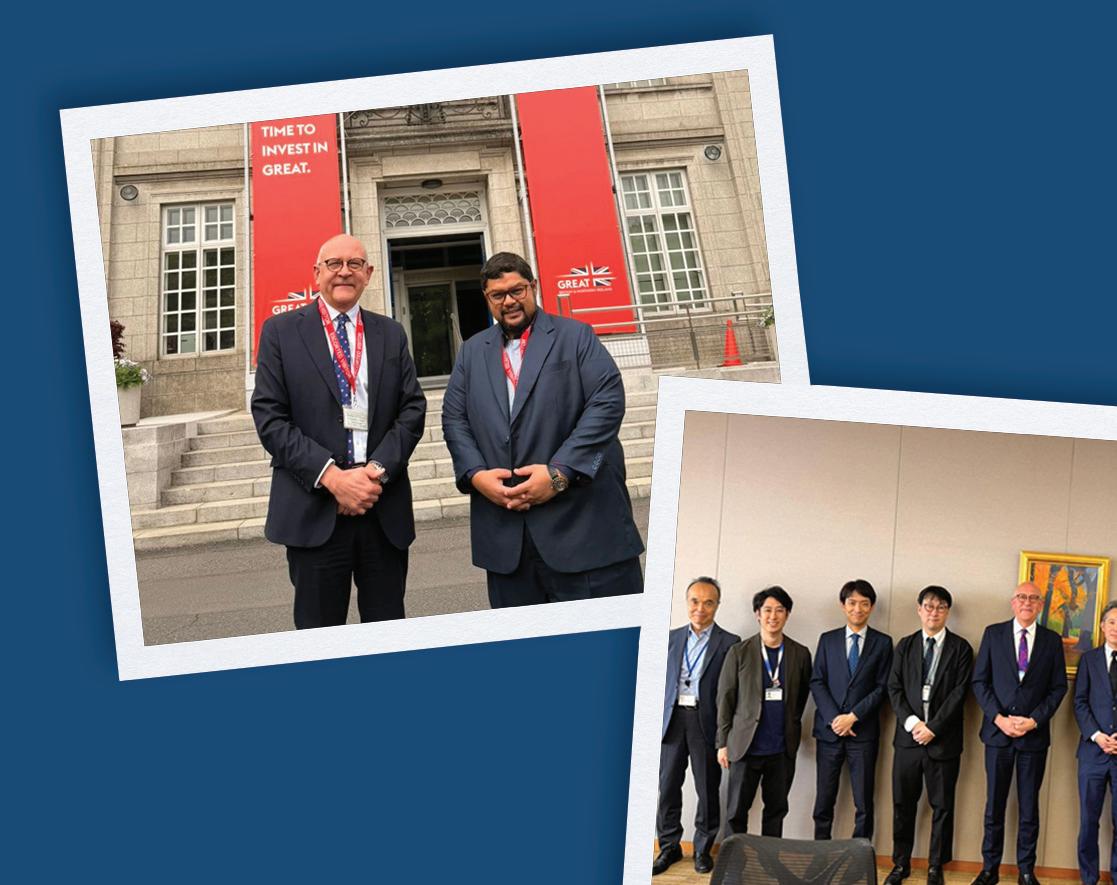
usiness travel is an expensive necessity, demanding a clear return on investment. My April tour to Malaysia, China and Japan aimed to engage directly with EIC teams and partners, and to decipher the trajectory of Asian energy and trade to inform the discourse back in the UK.


BThe trip highlighted four enduring energy transition trends. First, the geography of vulnerability remains paramount; net energy importers are susceptible to price volatility and have fewer levers to meet net-zero targets. Second, the resurgence of nuclear power is undeniable as nations realise that intermittent solutions such as solar PV and battery energy storage systems are insufficient alone. Third, while coastlines are coveted for floating offshore wind, belief in a technology is not synonymous with its bankability. Finally, energy security is increasingly reframed as ‘energy sovereignty’, with nations aggressively narrowing their circle of trust.













The Malaysian launchpad Malaysia’s approach is a study in calculated ambition. Having legislated in 2023 to reach net zero by 2050 via its National Energy Transition Roadmap, it faces an uphill road, aiming for 40% clean power by 2035. Currently, it relies on coal for nearly 50% of its power, with gas accounting for 40%. Structural challenges are evident. Malaysia’s GDP remains 20% reliant on oil and gas revenues, keeping it fiscally









From





What Asia is teaching the West
Malaysia to China to Japan,
four lessons from Asia that the UK energy industry cannot afford to ignore
BY STUART BROADLEY, CEO, EIC
POWER SHIFTS







this, the country lacks wind resources, is hesitant to allocate land for utilityscale solar, and public sentiment remains largely anti-nuclear.



Yet the government has identified three pillars for progress: persuading a sceptical population about nuclear power, developing a hydrogen economy –evidenced by the 60MW green hydrogen plant under construction in Perak – and advancing its role in the ASEAN Power Grid.
Despite palpable enthusiasm for Rolls-Royce small modular reactors, Malaysia remains neutral. Russia’s Rosatom is actively positioning its bargemounted nuclear solutions as a viable alternative.
For companies willing to navigate this, there is a vacuum in the nuclear supply chain awaiting investment.
China: open for business
In China, the energy transition is anchored by the ‘3060’ goals: peaking CO2 emissions by 2030 and achieving neutrality by




largest electricity consumer, accounting for a third of global power demand while contributing 20% to the world’s GDP.
While China has installed more than 50% of global renewable capacity for five consecutive years, coal remains the bedrock of its power generation. However, it is unmatched in terms of industrial capability – home to eight of the world’s top 10 wind turbine manufacturers.
The UK’s recent rejection of £1.5bn of investment from Ming Yang for a floating offshore wind turbine factory was a missed opportunity, failing to rectify decades of importing 100% of our offshore wind turbines.
When I asked Chinese policymakers about this rejection, they were sanguine, dismissing it as a “bump in the road”.
Walking in Shanghai, China’s momentum is evident; more than 50% of the cars on the road are electric vehicles. China is investing heavily in energy across all sectors, including nuclear, with 62GW of

China’s progress is relentless; the West should adapt to the dragon rather than attempting to fi ght it

existing capacity and 38 new units under construction, aiming for 120GW by 2035.
Japan: the island fortress
Japan, having legislated net zero by 2050 with an interim 46% emissions reduction goal by 2030, is struggling. Japan shares the UK’s status as an island nation and net energy importer, but its vulnerabilities are more acute. It lacks the luxury of interconnectors – a significant advantage for the UK.
Japan’s energy challenges are daunting, as it imports 90% of its energy. Nuclear generation was halted after the Fukushima nuclear accident in 2011, although 15 reactors have since been restarted, with Japan targeting 20% nuclear power by 2030. Like the UK and Malaysia, land is at a premium, ruling out utilityscale solar. Deep coastal waters necessitate floating offshore wind, but no large projects have reached final investment decision.
Furthermore, Japan’s seismic activity makes local CO2 storage impractical, prompting it to look at
Energy security is increasingly reframed as ‘energy sovereignty’, with nations aggressively narrowing their circle of trust
carbon exporting. A joint venture between France’s TotalEnergies, Malaysia’s Petronas and Japan’s Mitsui is expected to be sanctioned in 2027 to capture 5mtpa of CO2 from Japan’s energyintensive industrial sector.
A Japanese regulator I met expressed confusion over British “green government” policies, viewing them as contradictory to the priority of energy security – a sentiment likely fuelled by Japan’s status as having the world’s highest strategic reserves, with 200 days of oil reserves compared to the International Energy Agency minimum of 90.
The Asian sun is rising My tour provided a clarifying lens for the global energy transition. China’s progress is relentless; the West should adapt to the dragon rather than attempting to fight it. Japan remains largely closed, yet its net zero aspirations mean that it will eventually require new partners –particularly in floating wind. Malaysia remains an essential launchpad for firms investing in the Asia Pacific region – an affordable, English-speaking gateway that is hungry for global expertise. As the Asian sun rises, my message to EIC members will be to take the heat, rather than stand in the shadows.
EIC CEO Stuart Broadley during his tour of Asia



SEEKING CONSISTENCY
BUILDING THE LAUNCHPAD FOR GROWTH




Exploring the link between a consistent policy environment and energy sector growth prospects
BY TOM WADLOW, PARTNER, WD EDITORIAL




Every rocket needs a launchpad. In the energy sector, that launchpad is policy stability – and without it, even the most ambitious projects risk never reaching the heights they promised.
The relationship between policy stability and economic growth is well known and broadly accepted. When governments set clear, durable frameworks and stick to them, businesses are more likely to invest with confidence, supply chains are more likely to develop and deepen, and economies are more likely to grow. When they don’t, projects stall, capital migrates elsewhere and capability erodes in ways that are slow and expensive to reverse.
Few sectors illustrate this more acutely than energy. Capital-intensive, long-horizon and heavily dependent on regulatory certainty, the sector is uniquely exposed to the consequences of political short-termism.
The International Monetary Fund estimates that resolving policy uncertainty could raise global output by 0.4% in the near term. That may sound modest, but in an industry where the margin between a project reaching financial close and falling away can be wafer-thin, it is anything but.
The real cost of stop-start policymaking
EIC insight consistently shows that the cost of policy instability is far from abstract. In the latest Bankable Energies Report, published in March 2026, 32% of energy executives and CEOs identified political, policy and regulatory uncertainty as the single biggest blocker to project bankability –ahead of funding constraints, permitting delays and grid capacity.
“The industry’s demand for certainty is far from rhetorical,” says Mahmoud Habboush, EIC Communications Adviser. “It is about real frustrations that are already affecting investment, project delivery and the wider prospects for the energy sector.”
When projects stall, the consequences extend well beyond the ventures themselves. Supply chains lose visibility, companies cannot commit to hiring, and skilled workforces migrate to sectors or geographies that offer more consistent opportunity.
“If the supply chain starts moving its focus to other sectors – or, worse, to other geographies – getting that capacity back is expensive and slow,” Habboush warns. “Contractors are often booked three to four years ahead. In some cases, firms have resources for only 10 of 30 opportunities in front of them – so they choose where to commit and the rest falls away.”
Dr Martin Hanton, Green Energy & Sustainability Director at TÜV SÜD Northern Europe, has experienced this firsthand. “When we make significant investments to develop new business areas and then government direction, policy and regulation change in a way that renders these investments misplaced, it means that, in future, the business is much more cautious and wary about responding quickly,” he explains. “Delays have a similar impact –we have had several areas where we have made significant efforts to staff up and gear up for incoming regulations, only
The industry’s demand for certainty is far from rhetorical. It is about real frustrations that are already affecting investment, project delivery and the wider prospects for the energy sector
Mahmoud Habboush, Communications Adviser, EIC
What stable economies do differently
Unger Steel is responding to global data centre demand with a strategy that combines proactive planning, intelligent design and effective local compliance management.
The contrast with markets that have sustained long-term strategic policy frameworks is instructive. China, the UAE and the Nordic economies are each frequently cited as benchmarks for policy coherence, and each has generated tangible economic returns from their commitment to consistent direction.
China is the most dramatic example. According to the International Energy Agency, the country invested US$625bn in clean energy in 2024 alone – almost double what it did in 2015 and equivalent to 31% of total global clean energy investment.
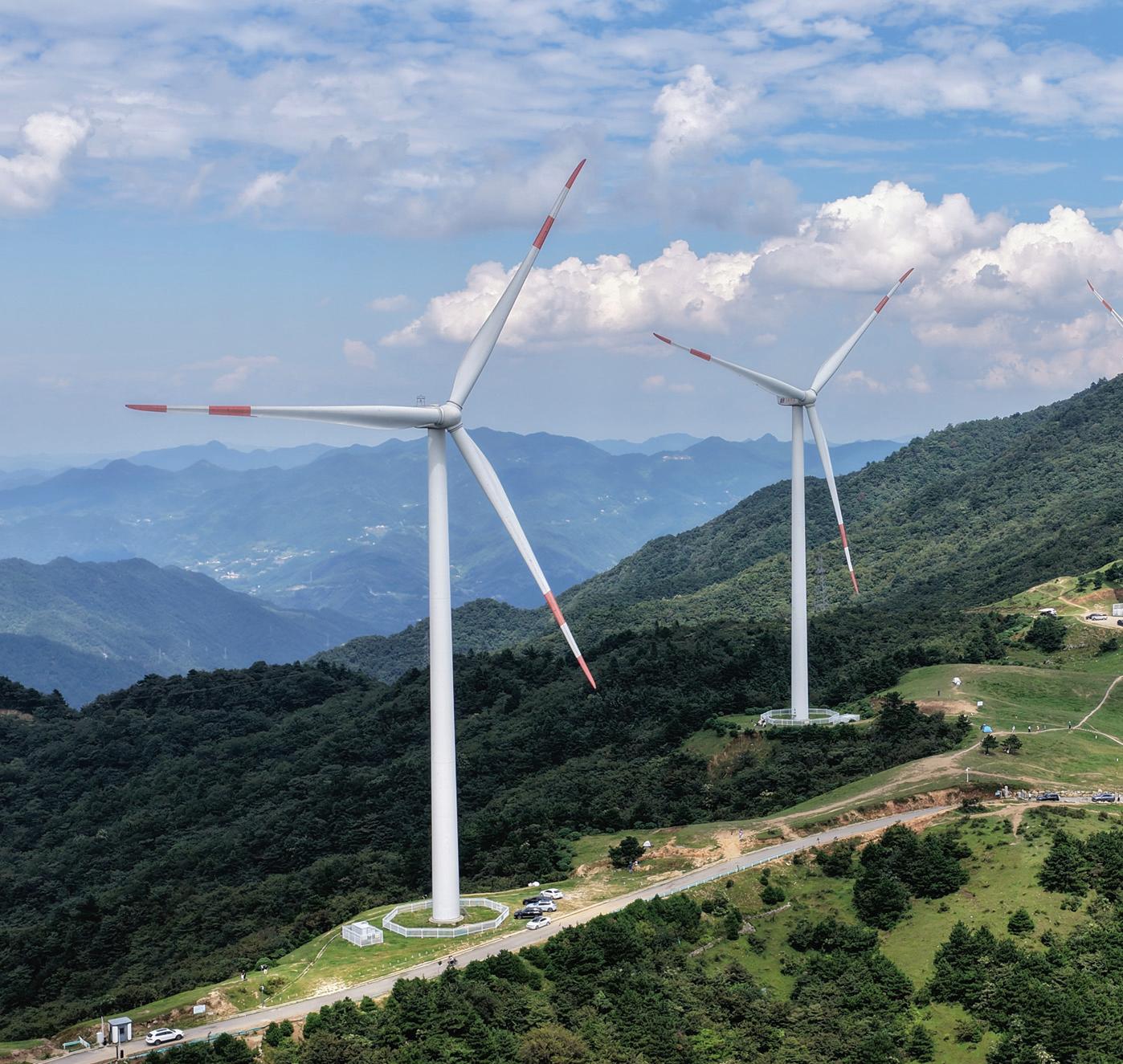
Crucially, it achieved its 2030 wind and solar capacity targets six years ahead of schedule. That pace is not coincidental – it is the product of industrial policy, infrastructure investment and financing that move in the same direction over many years.
The UAE presents a different, but equally coherent, model. Its Energy Strategy 2050, backed by a commitment to invest up to US$54bn in clean energy by 2030, has given investors a clear and stable commercial backdrop. Installed renewable energy capacity grew by 70% in 2023, and the country is on track to surpass its target of tripling that capacity by 2030.
Norway, meanwhile, generates approximately
98% of its electricity from renewables, principally hydro, and between 2009 and 2019 its GDP grew by 16% while total energy consumption rose by just 3%. This is genuine economic decoupling from demand growth, underpinned by decades of consistent policy.
“What the most successful markets have in common is consistency, coordination and follow-through,” says Habboush. “Investors can see what the direction of travel is, what role the state is playing, what infrastructure is being built and where the commercial opportunities are likely to be. The lesson for others is not to copy any one model exactly – it is to be more coherent.”
Killen draws a sharper distinction between statedirected and shareholderdriven models: “In places like China and the UAE, if they make a decision to invest in a certain type of energy or technology, they’re doing it for the long term, and that is what provides the stability,” he says.
In places like China and the UAE, if they make a decision to invest in a certain type of energy or technology, they’re doing it for the long term, and that is what provides the stability
Tim Killen, Head of Growth, Fracht Group
for those to then be delayed by several years – which, of course, has a hugely negative financial impact.”
The structural mismatch at the heart of the problem
The challenge is partly structural. Political cycles run to five years; energy project lifecycles run to decades. From concept to final investment decision, a major project can take five to 10 years. Construction adds another two to four. The operational life of the resulting asset may then span 20 to 30 years or more.
Tim Killen, Head of Growth at Fracht Group, a global logistics and project freight forwarding organisation that serves original equipment manufacturers and firms in the engineering, procurement and construction sector across the energy
Wind turbines in China’s mountains. China achieved its 2030 wind and solar capacity targets six years ahead of schedule
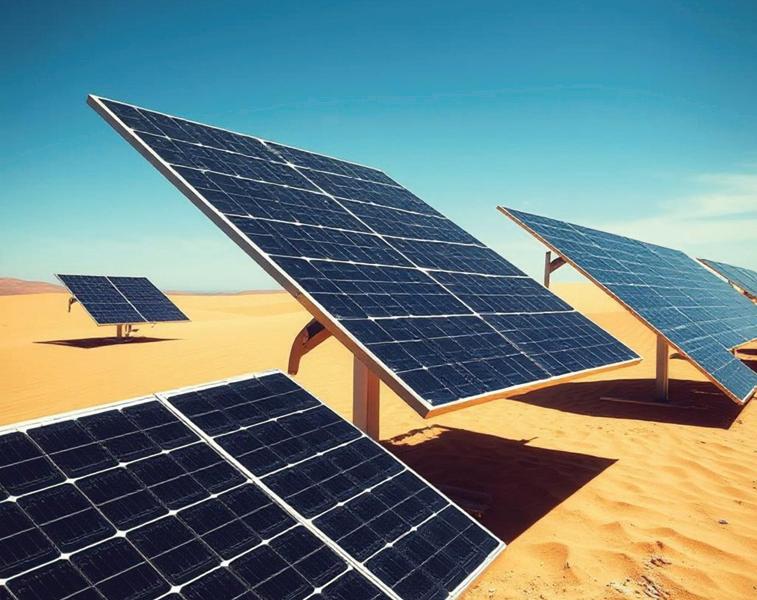
The UAE’s installed renewable energy capacity grew by 70% in 2023, and the country is on track to surpaass its target of tripling that capacity by 2030
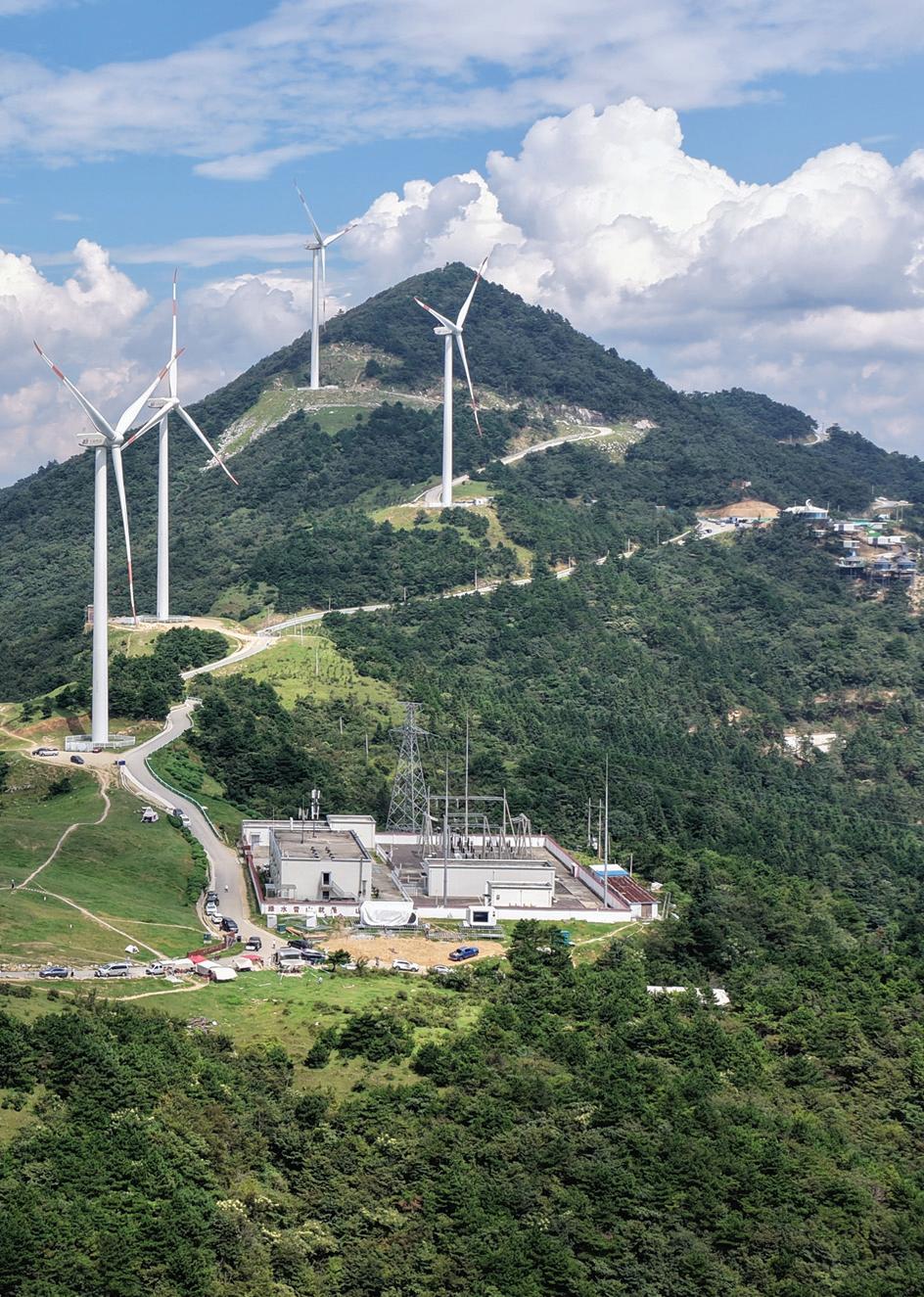
supply chain, sees this tension play out directly. “If there isn’t that certainty and confidence in policy, regulation and return on investment, then that is a huge challenge for industry to decide how and if they want to move forward,” he says. “And if companies and investors want to de-risk, they’re going to go into what they know, which is probably more traditional energy types.”
The absence of cross-party political consensus only adds to the problem –a point made by Martin Layfield, Vice President of Engineering Consultancy at CB&I Asset Solutions. “When governing parties can change every five years, that is far too short to support investment confidence in our industry. Not having cross-party consensus on energy is unhelpful – alignment only appears evident for nuclear currently.”
The ripple effect across industry and the economy
The stakes extend well beyond individual projects or companies. According to EIC data, the UK energy supply chain comprises more than 3,600 businesses, with 82.9% remaining reliant on oil and gas. Yet nearly half of that oil and gas supply chain has already diversified into renewables and other net zero technologies. The two are deeply intertwined, which means that policy instability in one part of the sector is rarely contained there.
This year’s Bankable Energies Report captures the mood clearly. Nearly half (44%) of respondents said that project bankability had not improved in 2025, with only 38% saying it had. “Policy inconsistency does not just dent confidence,” Habboush says. “It raises costs, stretches timelines and weakens growth by making delivery harder and more expensive.”
What business needs from policymakers
The industry’s ask is consistent: a policy framework that holds long enough for companies to hire, invest and deliver against it. Layfield is careful to draw a distinction here. Energy sector businesses do not expect or demand the elimination of uncertainty – they are accustomed to it, and, in some cases, it can even create opportunity. The problem arises when policy shifts are so fundamental that they destabilise the very foundations on which investment decisions are made.
“This isn’t unusual, but a drastic change in course or a fundamental policy position that hits the heart of our industry is very problematic,” he says. “There are many in the supply chain and operators who are feeling this firsthand with the position on oil and gas exploration and the tax regime in the North Sea currently. Conversely, we see more momentum and confidence in the
There is a strong link between policy and regulatory certainty, investor confidence and the confidence of businesses to invest – and therefore economic success
Dr Martin Hanton, Green Energy & Sustainability Director, TÜV SÜD Northern Europe
north-west of England from the HyNet programme that the government is backing so effectively.”
Hanton adds that businesses broadly respond to uncertainty in one of two ways: by becoming more cautious and waiting until conditions are clear, or by becoming more agile and reacting faster to change. However, he suggests, neither is a substitute for the stable frameworks that allow businesses to plan and grow in the first place.
“There is a strong link between policy and regulatory certainty, investor confidence and the confidence of businesses to invest… and therefore economic success.”

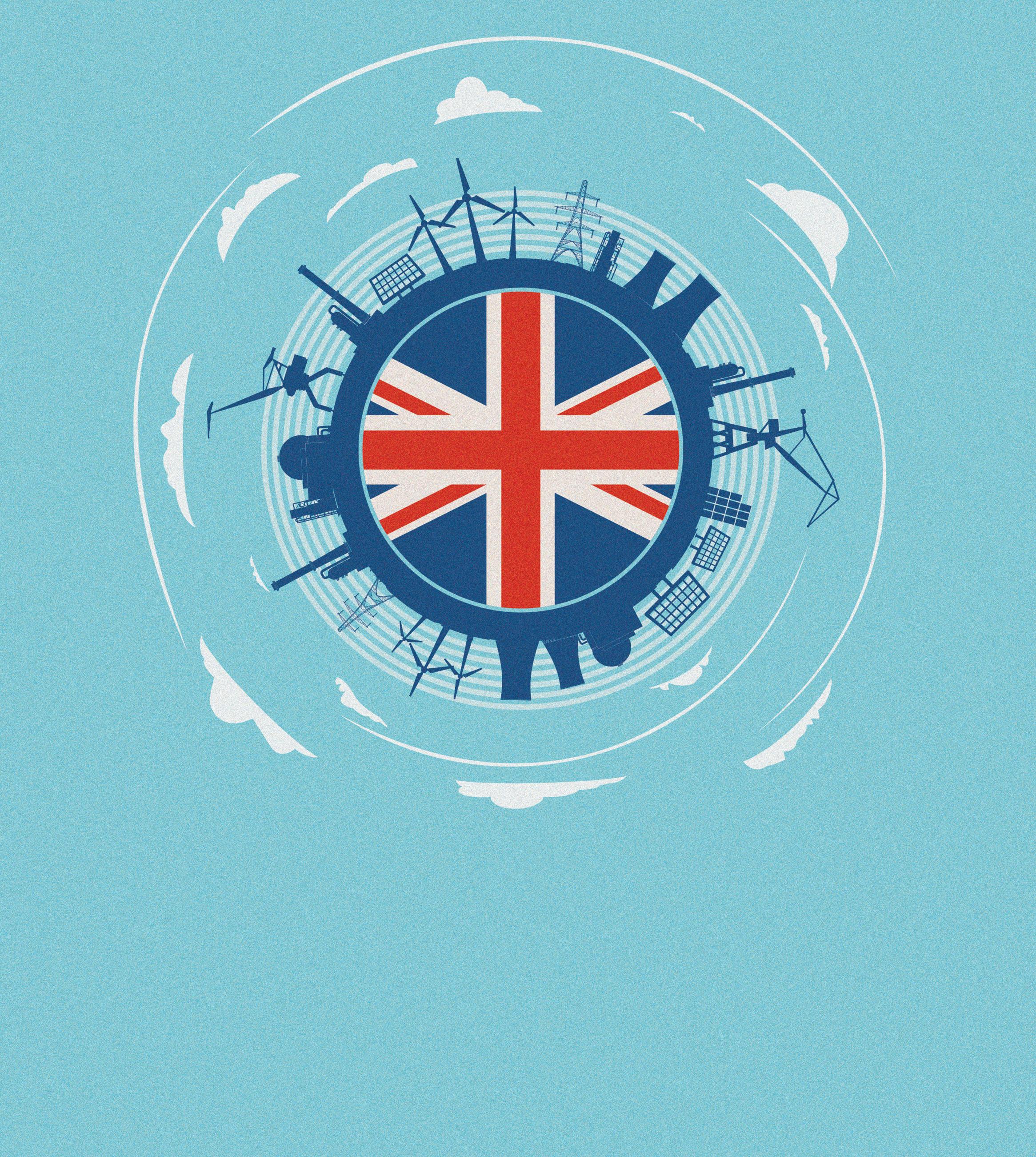
Why the UK must prioritise energy sovereignty above security
Energy security and resilience matter – but without sovereignty, they are built on sand. Britain must establish domestic control as the foundation of its entire energy strategy
BY STUART BROADLEY, CEO, EIC


HOME GROWN

UK energy policy has long emphasised security and resilience. Diversified imports, interconnectors and crisis plans are important – they enable flexibility, efficiency, trade and cost optimisation, and help to manage geopolitical risks. But these benefits only matter if the UK first secures sovereignty. Security and resilience are tools, not substitutes for control. Energy sovereignty does not mean isolating from international energy markets or ending imports, nor does it oppose collaboration. It means having the domestic capacity and control to protect against the worst-case scenarios, ensuring that dependence cannot dictate the UK’s energy, industrial or economic fate. Without sovereignty, security is conditional, resilience is fragile and the country remains exposed.
Sovereignty is not isolation –it is control Energy sovereignty does not mean self-sufficiency at all costs, withdrawal from global markets or abandoning the UK’s legally binding 2050 net zero commitments. It means retaining meaningful control over national infrastructure, supply chains and domestic resources. Great British Energy embodies this approach –focusing on domestic investment, coordinated infrastructure and the ability for the UK to make its own energy choices.

Without sovereignty, security is conditional, resilience is fragile and the country remains exposed
Security and resilience are still necessary. They support flexibility, trade, efficiency and cost optimisation, and help to manage geopolitical risk. But they can only deliver those benefits once sovereignty is guaranteed. Without it, security is conditional, resilience is fragile and policy becomes reactive, rather than strategic.
The supply chain case for retaining domestic hydrocarbons
Supply chains and skilled jobs are deeply integrated. Engineers, supply chains, ports and fabyards, offshore workers – all are transferable between oil, gas and other energy technologies. Prematurely exiting domestic hydrocarbons risks eroding these capabilities just as they will be needed in the long-term to maintain fuel sovereignty, support industrial expertise and underpin the transition to lowcarbon energy. Without these domestic foundations, future energy infrastructure – offshore wind, hydrogen and nuclear – will increasingly have to be supplied by global supply chains, increasing strategic vulnerability and leaving the UK dependent on external expertise for technologies that are critical to its energy independence.
Maintaining a domestic oil and gas sector while developing renewables is therefore not a contradiction –it is a necessary pillar of sovereign energy policy.
Other nations, such as Norway and the UAE, understand this. They are protecting and reindustrialising their oil and gas sectors for the
supply chain, technical expertise and workforce foundations that they provide. The UK should follow suit: protect what it has, invest in it and leverage domestic supply chains to underpin sovereign energy policies. Delivering net zero is compelling, but it can be delivered in a more effective and coordinated way.
Sovereignty can also reduce energy costs
The current policy mix also inflates costs unnecessarily. Today’s high energy prices reflect three factors: exposure to volatile global markets, financing uncertainty and the high total levelised costs of decarbonisation and renewables, including grid build-out, last-mile connections, curtailment and storage. Sovereignty can mitigate these with domestic generation stabilising prices and predictable policies that reduce financing risk. Local supply chains, under the umbrella of energy sovereignty, also make it easier to reduce energy costs by improving control over project delivery, stabilising investment and capturing efficiencies within the domestic economy.
A unifying goal in a divided debate
Sovereignty would be a clear, unifying goal, countering current green policies that are dividing the nation – policies that enjoy strong support among younger voters but increasingly worry older voters and SME business leaders, who bear most of the burden of job insecurity and higher energy costs.



DEFINITIONS
Energy sovereignty
The capacity of a territory to meet its energy needs in an autonomous way to guarantee its independence, having direct control over its energy resources, production and infrastructure.
Energy security
The uninterrupted availability of energy sources, whether from domestic or international sources, to ensure a reliable, consistent and economical supply of energy to keep homes and businesses running smoothly.
Energy resilience
The ability of an energy system to prepare for, withstand, adapt to and quickly recover from disruptions such as blackouts, cyberattacks or extreme weather, ensuring a reliable fuel and power supply.
Sovereignty is not optional; it is the foundation of security, resilience and real energy independence
Energy and defence: two sides of the same coin National security policy underscores the point. The British Government has committed to raising existing lacklustre defence spending from 2.3% of GDP today to 5% by 2038. If the UK is willing to make this investment to protect its borders and alliances, it must also align other critical sectors, such as energy, food, manufacturing, pharmaceuticals and data centres. Defence without industrial and energy sovereignty would leave the country further exposed.
Sovereignty as the foundation, not the alternative
The UK does not need to abandon energy security, resilience or international collaboration. But these must
become outcomes of sovereignty, not substitutes for it. Prioritising energy sovereignty protects domestic supply chains, strengthens resilience, reduces costs and underpins long-term economic and strategic autonomy –all while still allowing imports and cooperative engagement with global energy markets.
In energy, as in geopolitics, sovereignty is about choice, protection and independence, not isolation. Without it, the UK remains vulnerable and dependent. With it, the country can make its own decisions on energy, industry, decarbonisation and the economy while still engaging internationally. Sovereignty is not optional; it is the foundation of security, resilience and real energy independence.
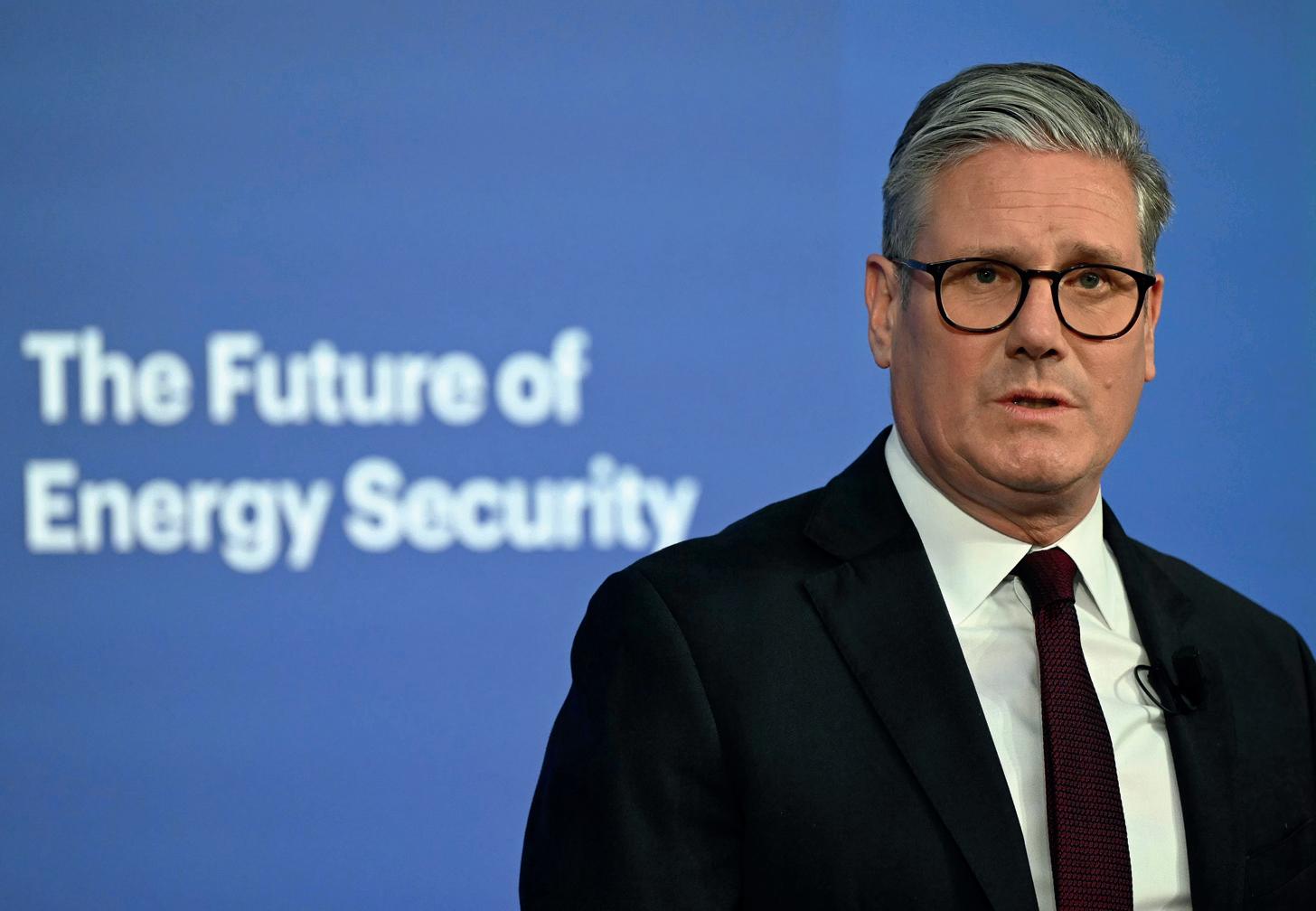
Prime Minister Keir Starmer at the International Energy Agency’s Summit on the Future of Energy Security in 2025


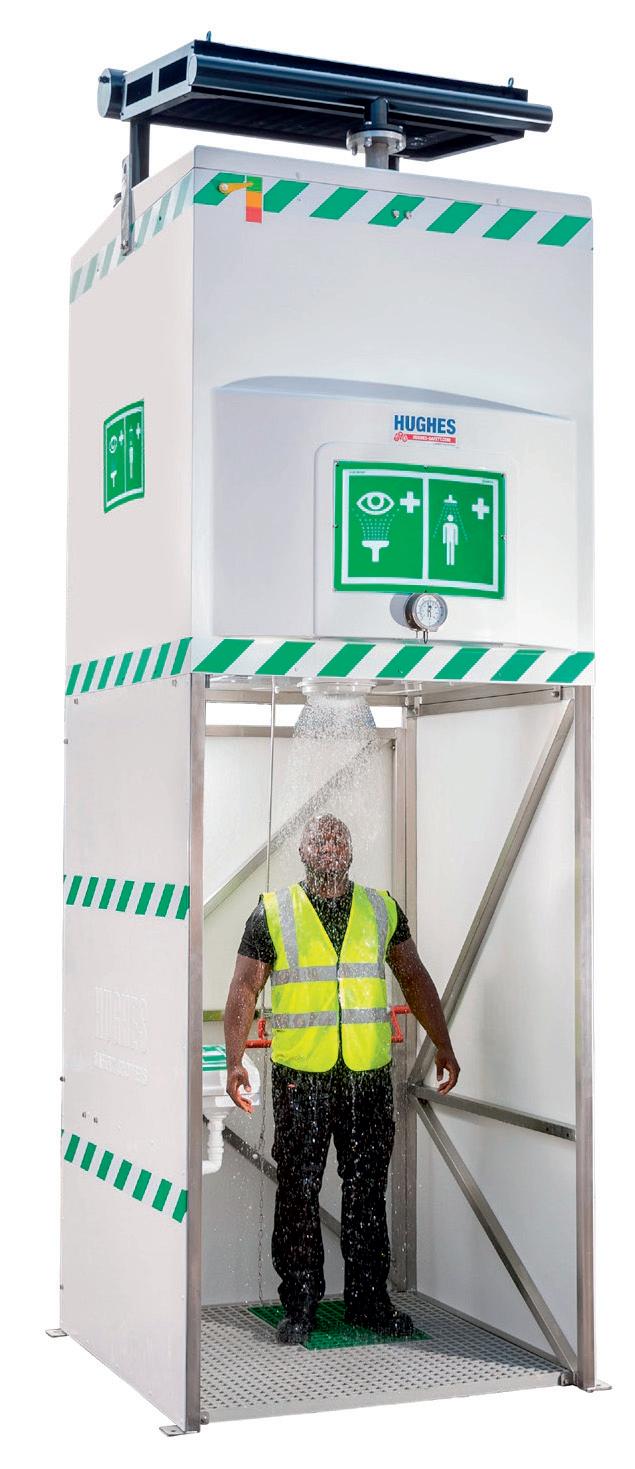
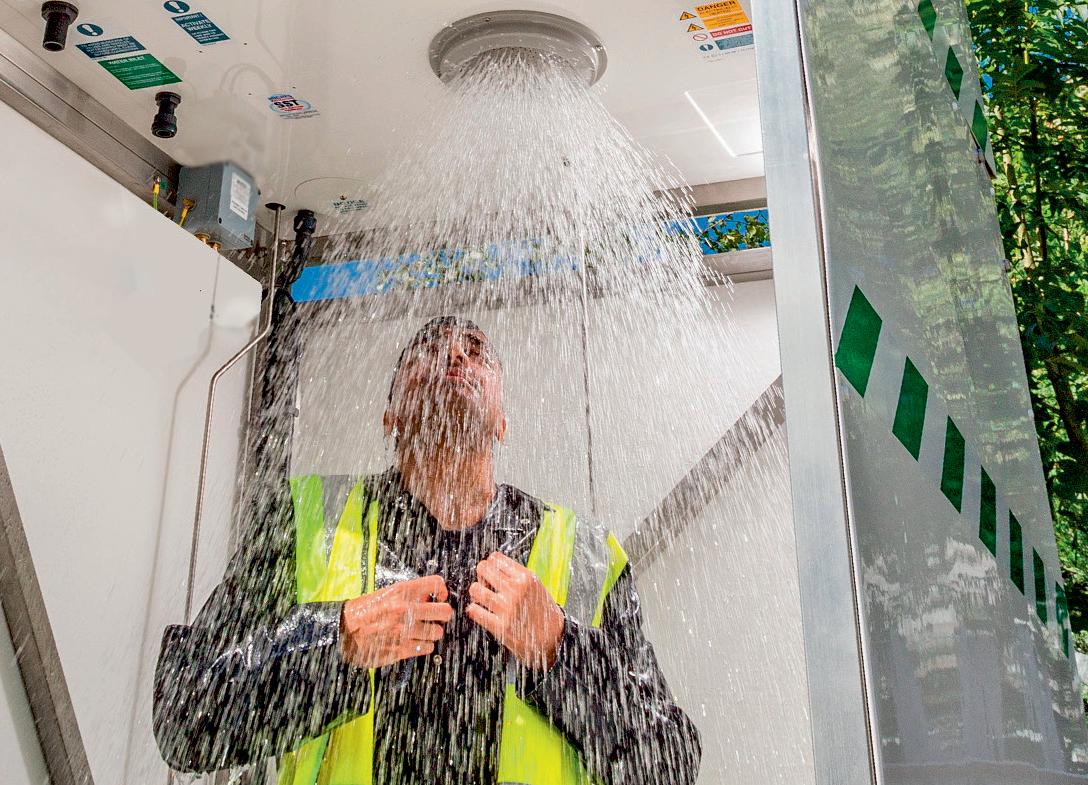
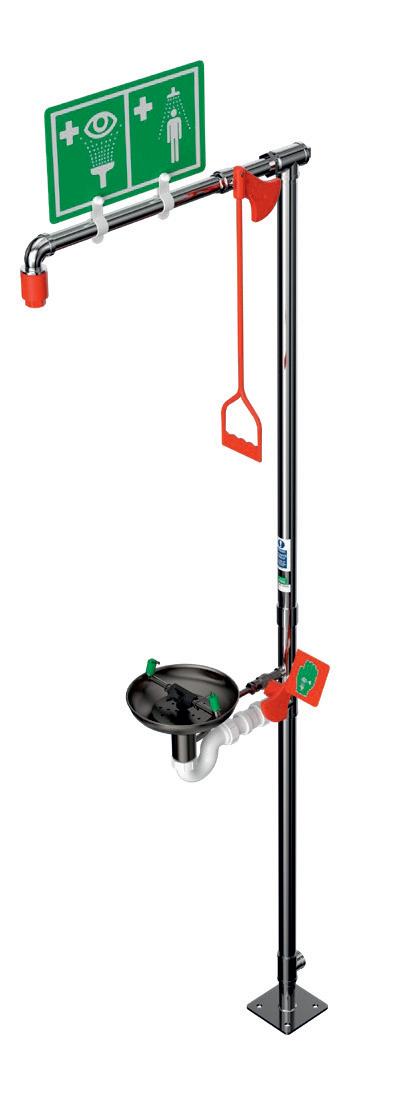
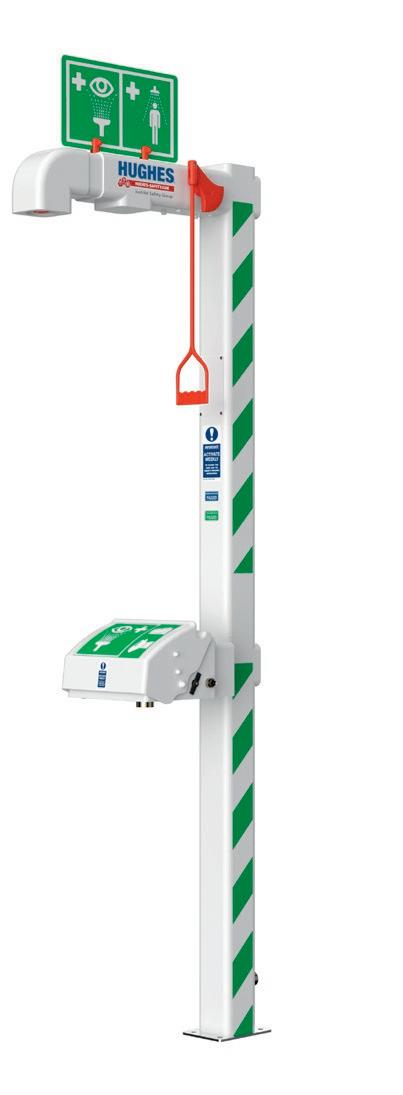
Hughes offer an extensive range of safety showers and eye/face washes designed to operate in all locations and climates. Mains-fed or self-contained, insulated or heated - whatever your site requirement, we have a model to fit.

From industrial strength to strategic resilience: Europe’s hydrogen moment
Europe’s electrolyser industry scaled tenfold in five years and kept its promise. The policy system has not. With projects cancelled, capital stalled and China accelerating, the continent’s green hydrogen lead is far more fragile than the targets suggest
BY THORSTEN HERBERT, FOUNDER, HYDROGEN NOW

I’ve spent more than two decades in hydrogen – as a development engineer working on fuel cells at GM, as head of the transport and infrastructure division at NOW GmbH in Berlin, as Director of Market Development and Public Affairs at Nel. I’ve watched this industry go from curiosity to credibility, from PowerPoint to gigafactories. What I’m watching now genuinely worries me: Europe is in real danger of giving away a lead that it spent years earning.
Let me explain why, and why there is also reason for carefully calibrated hope.
European electrolyser manufacturers have scaled annual production capacity from 1GW to more than 10GW since 2020. Companies such as Sunfire, thyssenkrupp nucera, John Cockerill, Nel and Topsoe have delivered what most of the world cannot match. They kept their promise. However, less than 1GW is installed and in operation. The policy system has not kept its end of the deal.
What separates ambition from reality here is not hardware. It is the missing policy architecture to turn industrial readiness into market momentum.
Resilience is the argument
In a world of geopolitical instability and weaponised energy, resilience is no longer political language. It is the capacity to keep factories running without depending on hostile actors for critical molecules. More than 95% of Europe’s hydrogen is still fossilbased – most of it imported. Electrolysers are the most direct path out of that dependency.
Refineries alone represent 58% of Europe’s hydrogen demand, with a potential electrolysis capacity of up to 45GW. Ammonia production adds another 20GW. European manufacturers hold around 30% of global electrolyser manufacturing capacity. The green hydrogen value chain could unlock up to €200bn in export value and 1m direct jobs across the EU.
The numbers, though, are difficult to ignore. The European Resilience Alliance (ERA), a CEO-led cross-value-chain initiative, is direct about the situation: despite a massive project pipeline, fewer than 7% of clean hydrogen projects have reached final investment decision (FID). In its latest market monitoring report,
the EU’s Agency for the Cooperation of Energy Regulators (ACER) puts installed EU electrolyser capacity at just 308MW, against a 2030 target of 40GW. More than 50 projects have been cancelled in the last 18 months alone. Renewable hydrogen costs around €8/kg, against just over €2/kg for the fossil alternative.
Europe has no shortage of targets. It lacks a regulatory framework to make them real.
Four things that must happen
The ERA’s diagnosis is familiar: fragmented national regulations, overly complex rules for Renewable Fuels of Non-Biological Origin (RFNBO), uncertain infrastructure timelines and, above all, the absence of bankable demand.
Demand must drive production through immediate transposition of the Renewable Energy Directive III (RED III), lead markets in hard-to-abate sectors via Carbon Contracts for Difference, and mandatory clean procurement criteria. The support framework must be simplified because electricity accounts for up to 70% of levelised hydrogen production costs; grid fee relief, long-term carbon-free power purchase agreements and revised RFNBO rules are essential. Private capital must be unlocked through a predictable carbon price under the Emissions Trading System, a state-backed portfolio guarantee mechanism and a dual-auction system linking hydrogen supply and demand. Finally, infrastructure must be treated as a lifeline for an integrated European energy market, with accelerated delivery of Projects of Common Interest, coordinated crossborder planning and long-term visibility on the European Hydrogen Backbone.
None of the following is hypothetical: industrial job losses, capital flight, stranded assets, missed climate targets and defence vulnerabilities as energy dependencies are exploited geopolitically. China is accelerating. Europe needs to respond with equal seriousness.
A signal from Germany Germany has taken a significant step, with the German Bundesrat passing an updated greenhouse gas reduction quota (the
Treibhausgasminderungsquote) that implements RED III in national law. A binding RFNBO sub-quota for the transport sector steps from 1.5% by 2030 to 10% by 2040, backed by a penalty of €14/kg of hydrogen (€120/GJ). Sunfire estimates that this could unlock demand for up to 5GW of electrolyser capacity over the next five years.
Nils Aldag at Sunfire notes that the 2030 level came in lower than the industry
had argued for, and that earlier ambition would have been industrially important. Other sectors beyond transport still need to be addressed. But the demand anchor for transport now exists, changing the investment calculus. Twenty-four other Member States now have a template. Industry has delivered. Germany just helped to build the market. Every month of delay is a project that will not reach FID in time.
Hydrogen in a multi-technology race
EICDataStream highlights that the energy transition sector continues to attract substantial capital, with total investments reaching US$2.33tn across 2,298 projects focusing on low-carbon fuels and floating offshore wind.
Hydrogen dominates the pipeline at 43.2% (993 projects), followed by carbon capture (22.9%), biofuels and sustainable aviation fuel (SAF) (22.7%) and floating offshore wind (11.2%). Hard-to-abate sectors are the frontier, with clean hydrogen derivative projects targeting steel, chemicals, shipping and aviation. But investment decisions hinge on bankable demand and long-term offtake agreements; projects with secured offtakers are best placed to reach construction.
Robust policy frameworks are proving decisive. SAF mandates, hydrogen/ammonia blending obligations and Contracts for Difference are shaping demand and de-risking projects. In Europe, the Clean Industrial Deal and the Industrial Accelerator Act aim to reduce costs and create markets for low-carbon products. In Asia Pacific, Australia’s Future Made in Australia Act is channelling capital into green metals and renewable hydrogen.
Top 10 global markets for energy transition sectors (excl. China)


GLOBAL TRENDS
Building Africa’s renewable energy future from the ground up
Africa’s energy deficit is growing. Closing the gap demands developers who understand local markets, can structure complex finance and have the patience to build for the long term
BY ABDOULAYE TOURÉ, CFO AT QAIR AFRICA
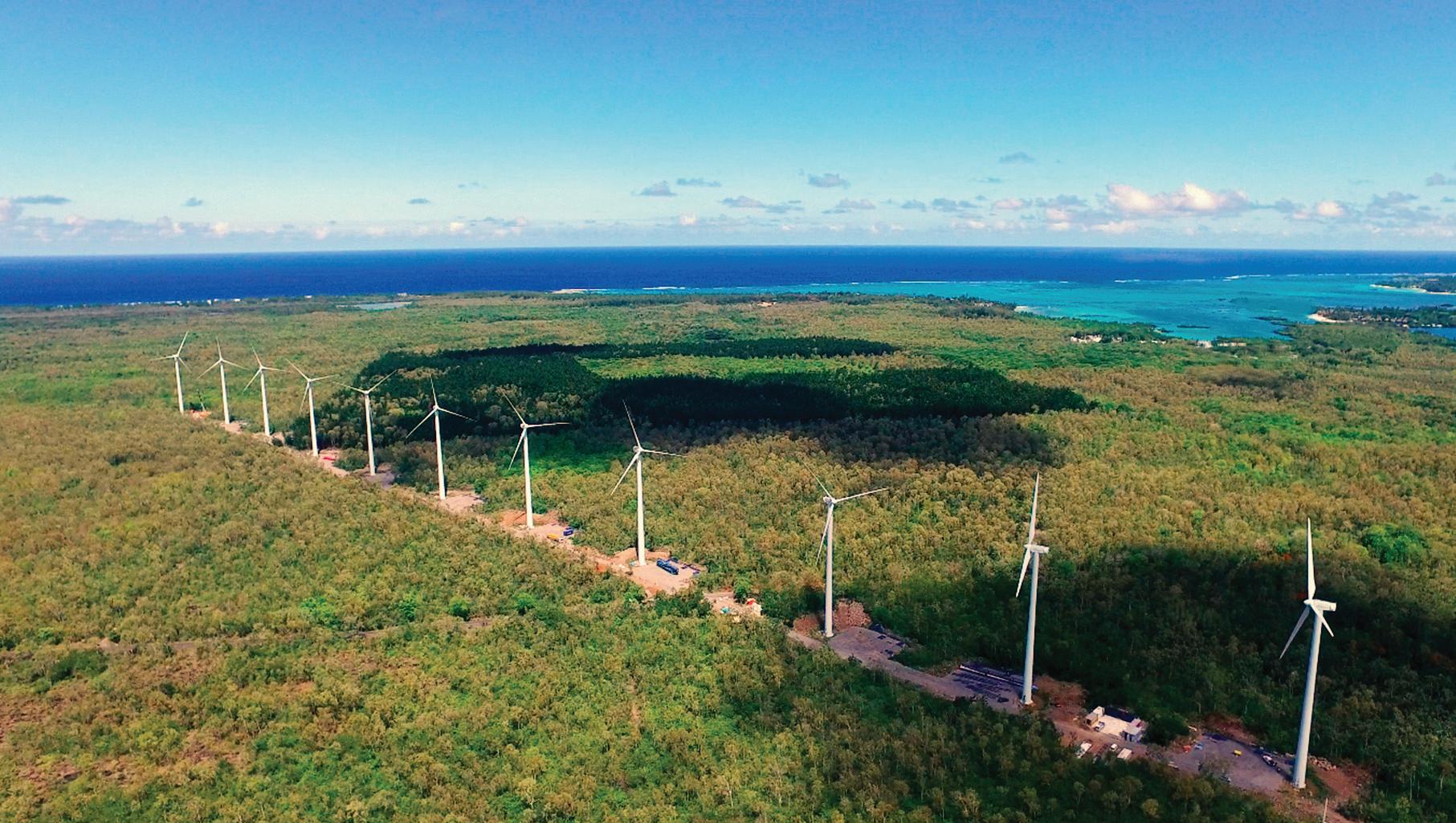
Plaine des Roches Wind Farm, Mauritius
As Africa accelerates its energy transition, success requires combining technological innovation, local expertise and resilient business models. Leveraging more than a decade of experience, Qair is applying this strategy as a major player in the market, with 85MW already operational in four countries, 521MW and 264MWh of battery storage under construction or financing, and a solid 1.5GW in the development pipeline.
A multi-local, multi-technology approach
Closing the energy gap will require a diversified, region-specific approach, ensuring that solutions are tailored to local conditions and challenges. Developers must prioritise markets where regulatory frameworks, resource availability and energy demand converge, proving their ability to structure bankable projects and execute in complex environments. Aiming to establish a leading panAfrican renewable energy footprint, Qair’s strategy centres on this approach, leveraging strong market positions in Mauritius and Tunisia while expanding into sub-Saharan Africa.
In North Africa, Tunisia and Morocco offer high levels of solar irradiation, maturing regulations and strong government commitment to renewables. Here, securing long-term power purchase agreements (PPAs), stable offtakers and access to longmaturity financing is crucial to reduce risk and enable large-scale deployment, as shown by projects such as the Feriana solar plants in Tunisia.
In West and Central Africa, acute energy deficits and reliance on expensive fossil fuels make renewables an economic necessity. In these markets, ensuring smooth renewable energy dispatch into the grid is crucial to improve energy access and reduce the need for costly grid upgrades. Qair is addressing it in Burkina Faso and Chad through

its Gassi and Lamadji storage projects (30MW solar and 8MWh).
Meanwhile, in the Indian Ocean, Mauritius and Seychelles are highpotential markets that are driven by ambitious renewable targets (for example, Mauritius’ goal of reaching 60% renewables by 2035), supportive regulations and high energy costs. Innovative projects such as the Stor’Sun hybrid solar and BESS project in Mauritius (100MWp and 256MWh storage) and the Seysun Lagoon floating solar farm in Seychelles, address grid stability and land constraints, leveraging local expertise and partnerships to enhance viability and reduce intermittency risks.
Strategic partnerships: reducing risk and accelerating deployment Government collaboration is essential; long-term PPAs with national utilities, such as 25-year agreements with the Tunisian Electricity and Gas Company, secure revenue streams and provide financial certainty. These collaborations reduce risk, mobilise capital and accelerate deployment. Qair’s ability to execute complex projects at scale is supported by strategic partnerships with governments, financiers and supply chains. In Burkina Faso, Qair’s Zano and Dedougou solar projects benefit from public-private partnership agreements, including government guarantees that mitigate risks such as offtaker creditworthiness.
Financier engagement is important, too. Partnerships with development finance institutions such as the African Development Bank Group, European Bank for Reconstruction and Development, European Investment Bank, FMO (a Dutch entrepreneurial development bank), International Finance Corporation and Proparco, as well as local banks, have mobilised US$250m for projects in six countries, with another US$200m expected soon. Qair Africa is also mobilising €150m


Qair Africa: a catalyst for efficiency and scalability
In markets with varying regulatory and operational challenges, leveraging local expertise while maintaining centralised oversight is critical.
To enhance operational efficiency, scalability and risk mitigation, developers must standardise processes from development to operations, ensuring consistency, quality and compliance with international standards. Furthermore, by pooling resources across regions, developers can significantly reduce costs and improve project economics.
At the core of Qair’s response to these industry demands is Qair Africa, an investment holding that consolidates its subsidiaries in Mauritius, Tunisia, Morocco, Burkina Faso, Chad and the Seychelles into a unified regionally autonomous platform. Through this structure, financing, procurement, construction management, and operation and maintenance expertise are shared, allowing even smaller projects to benefit from economies of scale.
Successfully navigating Africa’s energy landscape also requires rapid responses to market opportunities, optimised resource allocation and more predictable project delivery. To achieve this, the goal for developers should be to manage the entire value chain – from development and financing to construction and operations – with minimal external support. Qair’s African platform is specifically designed to function as this type of autonomous organisation, enabling the efficient delivery of complex projects.
GLOBAL TRENDS
Beyond Africa: a world of renewable opportunity
Record renewable capacity additions and surging global investment are transforming the energy landscape
In 2025 alone, around 692GW of new renewable capacity was added, pushing total capacity to nearly half of global electricity supply. Currently, EIC DataStream is tracking 7,167 renewable projects globally across all sectors, with 12% coming from offshore wind, 26% onshore wind and 47% solar. Solar is the cheapest form of renewable electricity and remains the dominant driver, accounting for the majority of new installations and expected to deliver nearly 80% of total capacity growth through 2030; onshore wind follows behind. Offshore wind continues to expand, while emerging technologies such as energy storage are gaining importance in supporting grid flexibility with a major increase in co-location.
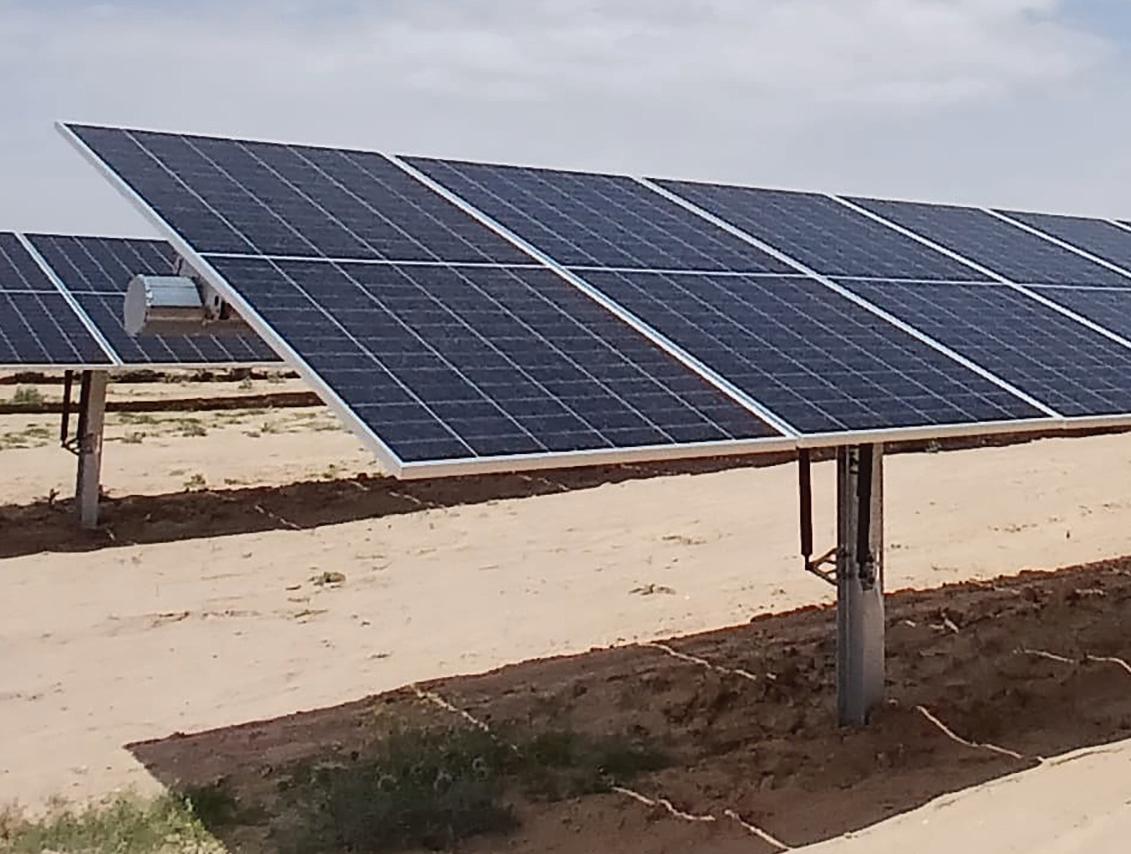
Global renewable capacity is expected to more than double by 2030, driven by strong policy support such as Contracts for Difference schemes in the UK and other countries, the EU’s Fit for 55 scheme, falling technology costs, and energy security concerns caused by war and conflict. Growth is particularly concentrated in Asia, with China and India leading solar and wind deployment, while Europe accelerates offshore wind. The US faces policy-related uncertainty but boasts one of the highest markets in project pipeline. The sector continues to attract significant investment, with renewables playing a central role in decarbonisation, improving energy security and reducing exposure to volatile fossil fuel markets worldwide.
Renewable developments: by country
to accelerate its strategy and finance construction over the next three years.
Supply chain synergies are the third factor. We manage engineering, procurement and construction (EPC) for small to mid-sized projects in markets where we have a strong local presence. For example, in Tunisia, the Feriana solar project saw major work packages contracted directly by the project company under Qair’s management. Moving forward, we plan to fully internalise EPC for larger projects where we have construction expertise and an execution track record, acting as the main contractor while subcontracting specialised tasks.
Regulatory and grid challenges: ensuring long-term viability
Consistent regulation is crucial to attract investment and guarantee project viability. Stable legal, tax and foreign exchange policies are fundamental to project performance over their lifetime. Challenges include overcoming regulatory barriers by streamlining administrative approvals and foreign exchange processes to accelerate project implementation.
Grid development is another priority, requiring investment in infrastructure and smart solutions to integrate new generation capacity. Hybrid storage projects such as Stor’Sun are critical to overcome grid instability and ensure seamless renewable energy integration.
By addressing regulatory, financial and operational challenges, Qair is advancing sustainable energy and driving inclusive growth across Africa. Our integrated platform enables us to scale up our operations, deliver effective projects and contribute to Africa’s longterm energy security.
Contact: nabil.ahmed@the-eic.com




Penta Global Delivering innovative and sustainable solutions







At Penta Global we deliver innovative, sustainable EPC solutions to the ever-evolving energy sector across the Middle East, Southeast Asia and beyond.
Founded in the UK and headquartered in the UAE, Penta Global has two decades of rich experience in construction and fabrication, catering to the rising demand for global energy conversions. Our diverse and highly skilled workforce delivers Engineering, Procurement, Construction, Mechanical, Civil and E&I capabilities across field-based contracts with safety, quality and sustainability at the core.

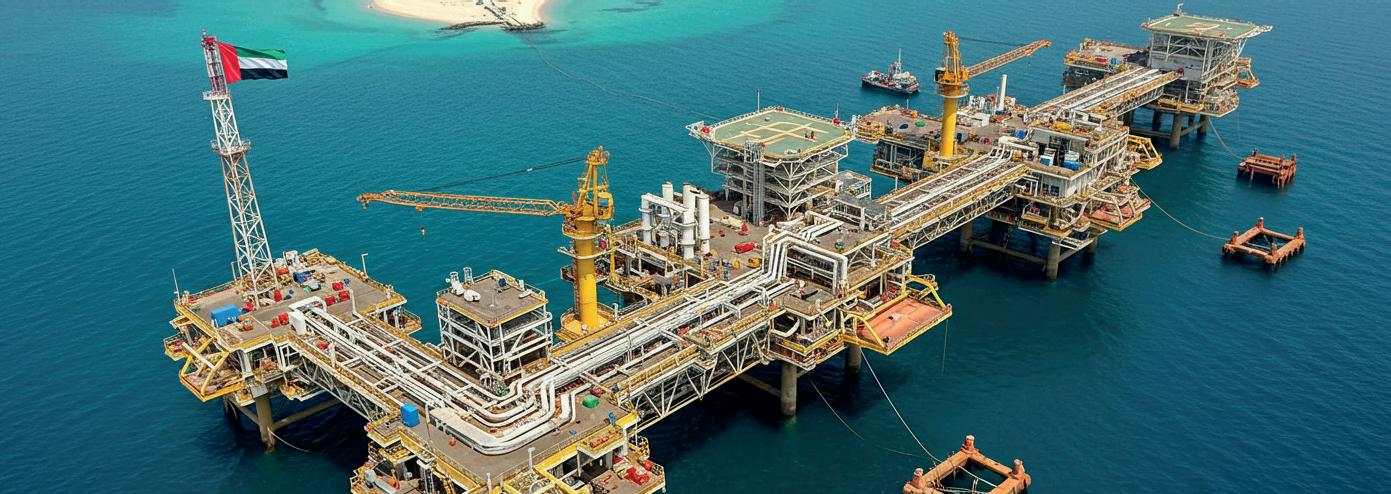


Headquartered in the UAE with a global reach
4,500+ Global Workforce


Recognised by leading international organisations for our commitment to Safety including RoSPA Silver Award for Health and Safety Performance 2025 and British Safety Council International Safety Award 2025
For more information visit: www.penta-global.com or contact: Enquiries: sales@penta-global.com Supply Chain: procurement@penta-global.com

The removal of Nicolás Maduro from Venezuela’s presidential chair in January 2026 has quickly brought the South American country back to the centre of international oil and gas discussions. The country holds a massive exploration and production potential: approximately 303bn barrels in proven oil reserves (17% of the global total) and total proven gas reserves of 200-300tn cubic feet.


Despite this, Venezuela is yet to see concrete returns from its resource base. Years of disinvestment and international sanctions have left the country’s oil and gas infrastructure in a critically deteriorated state, with weakened refining


capacity and several deactivated upgrade units. The challenge facing the sector is therefore not only one of production, but also of processing, whether that means exporting crude overseas or modernising local infrastructure. On that front, US President Donald Trump has already declared his intention to bring Venezuelan oil to the US for refining and re-exportation.
Regulatory reforms attract foreign investors
Government reforms under Acting President Delcy Rodríguez are aiming to facilitate international players’ entrance (or re-entrance, in some cases) into the Venezuelan oil and gas business. The reform of


the Organic Law on Hydrocarbons, announced in late January 2026, introduces fiscal flexibility measures that aim to provide greater assurance to foreign investors. These changes mitigate the risks for foreign companies and serve as an invitation to tap into the country’s vast natural resources, as the US simultaneously advances efforts to ease its sanctions on the country.





As this landscape consolidates, several major international operators are closely monitoring Venezuela’s movements and are likely candidates to return or pursue new business opportunities. Among the most prominent are American majors Chevron, ExxonMobil and ConocoPhillips, alongside European heavyweights Shell, Eni, Repsol and bp. China’s Sinopec, Chinese National Petroleum Corp and China Concord Resources Corp are also understood to be watching closely. On the services side, Halliburton and
Venezuela’s upstream potential
Following political shifts in early 2026, Venezuela’s vast oil and gas reserves are drawing renewed international interest. Regulatory reforms and foreign investments aim to revitalise the country’s struggling infrastructure and unlock its offshore gas potential


BY GUILHERME BIÉ, OPEX AND DECOMMISSIONING ANALYST AND MARIANA MESSERE, ENERGY ANALYST, EIC SOUTH AMERICA






SLB have already established footholds through involvement in several ongoing and planned projects, signalling broader industry confidence in the market’s trajectory.
Key joint ventures and operator movementss
Several concrete commercial moves have already emerged in 2026. Repsol has announced plans to increase its Venezuelan production by 50% in a year and triple output over the following three years through higher gas production, renewed oil infrastructure and the resumption of the Carabobo development via the PetroCarabobo joint venture (JV).
Chevron and Petróleos de Venezuela, S.A. (PDVSA) have agreed on an asset swap in which Chevron will divest its 25.5% stake in the Petroindependiente JV to PDVSA, which will assume control of the Loran and Macuira offshore gas discoveries. In return, Chevron will raise its stake in the Petroindependencia JV to 49% and gain rights to develop Ayacucho 8 through the Petropiar JV. Eni and Repsol have shared plans to advance extraction from the Perla gas field by increasing production from the Cardon IV block from 580 to 645MMfc/d, alongside additional drilling and infrastructure upgrades. Eni and PDVSA have also agreed to relaunch the Junin 5 heavy oil project in the Orinoco belt. Through JVs with other global players such as Indian Oil, Maurel & Prom and ONGC Videsh, PVDSA is advancing operations across Venezuela’s major resource plays, including heavy oil, light oil and offshore gas.
Unlocking offshore gas
Heavy oil and gas projects are the Venezuelan upstream industry’s two main levers. Looking at the location of these reserves, and at major projects such as Cardon IV, Macuira and Loran, around 40% of the country’s gas potential sits in its offshore acreage. These projects are particularly vulnerable to geopolitical risks, given their heavy dependence on crossborder cooperation, liquefied natural
gas export routes and the availability of third-party infrastructure. That combination of factors heightens exposure to political and commercial uncertainty and held back the pace of investment and development in the offshore gas sector throughout the Maduro years.
The challenge is now to develop a market that can capitalise on this offshore gas potential. As regulatory reforms and commercial activity gather pace, tangible effects are expected to emerge over the coming months – with Venezuela firmly in the spotlight of the international oil and gas industry.
Where the capital is flowing
EICDataStream data reveals the regional trends and investment priorities that are shaping the global oil and gas landscape
EICDataStream is tracking 2,712 projects with an estimated CAPEX of US$4.12tn, led by Asia Pacific (APAC), North America and the Middle East. The oil and gas market in APAC is predominantly downstream-led. This sector accounts for approximately 50% of the region’s total CAPEX (US$635.6bn), driven mainly by the refining and petrochemical industries in India, China and Indonesia. The region is also advancing e-fuels such as e-methanol and e-sustainable aviation fuel. Upstream follows with US$285.9bn, supported by active exploration and licensing rounds across Malaysia, Indonesia, Brunei, Vietnam and India. Strategic moves such as Eni’s collaboration with Petronas under SEARAH reinforce
regional energy security and upstream investment momentum.
Led by the US, Canada and Mexico, North America’s market is driven by midstream expansion, aligning with rising natural gas production and supportive infrastructure policies. Major initiatives such as the Alaska liquefied natural gas export terminal and pipeline by Glenfarne Group and the Alaska Gasline Development Corporation are steadily progressing towards a final investment decision. In the Middle East, upstream activity represents US$358.7bn in CAPEX, dominated by brownfield expansions in Saudi Arabia, major gas developments in Qatar and the UAE, and offshore exploration in Kuwait.
Top 10 global markets (CAPEX $bn) for oil and gas
GLOBAL TRENDS
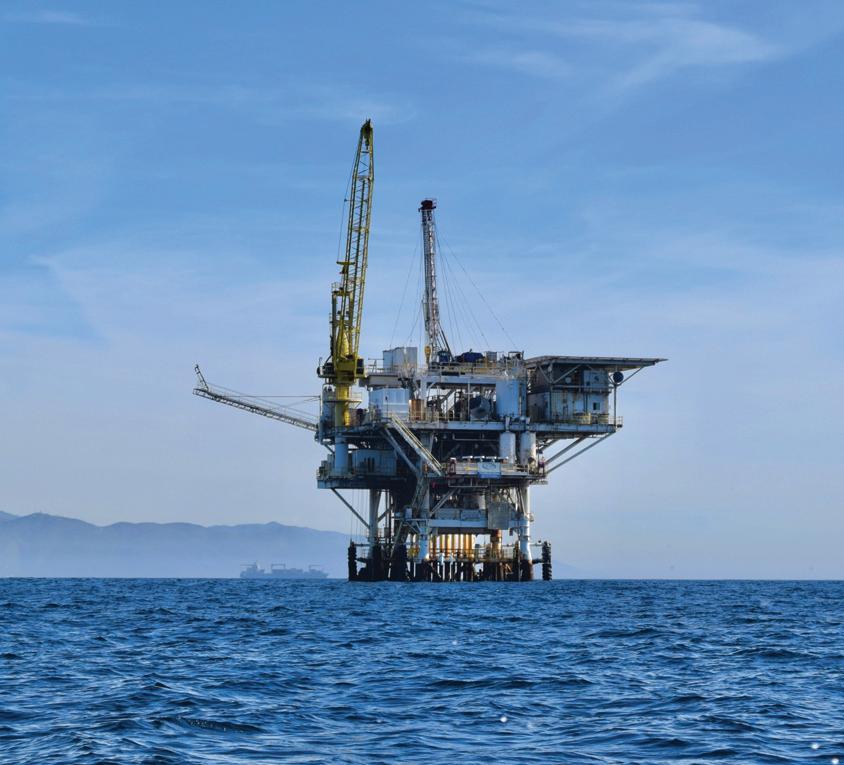
An oil platform in Lake Maracaibo, Maracaibo, Venezuela
Building the grid America needs now


As artificial intelligence and electrification rewrite the US’s energy future, Siemens Energy is seizing the moment – investing US$1bn, creating 1,500 jobs and helping to build the grid of tomorrow


BY MATT NEAL, PRESIDENT, SIEMENS ENERGY, NORTH AMERICA
Just a few years ago, there was a sense that transformational shifts were underway in the US power sector.
Electrification of the transportation, industrial and commercial sectors was driving a surge in power

consumption that required both expanded generation capacity and robust grid infrastructure. Data centres were already prevalent at this time, as digital storage, web hosting and cloud computing had become mainstays of the technological landscape. But the projections of our future power needs


changed drastically as the giants of Silicon Valley and power suppliers coast-to-coast started to grapple with the buildout of artificial intelligence (AI). These trends have converged to make the US the hottest electricity market on the planet – and a once-in-a-generation opportunity for Siemens Energy.

BRIGHT FUTURE
The Sunrise Wind offshore wind farm supplying New York State is a partnership between Siemens Energy and Ørsted
Growth mindset
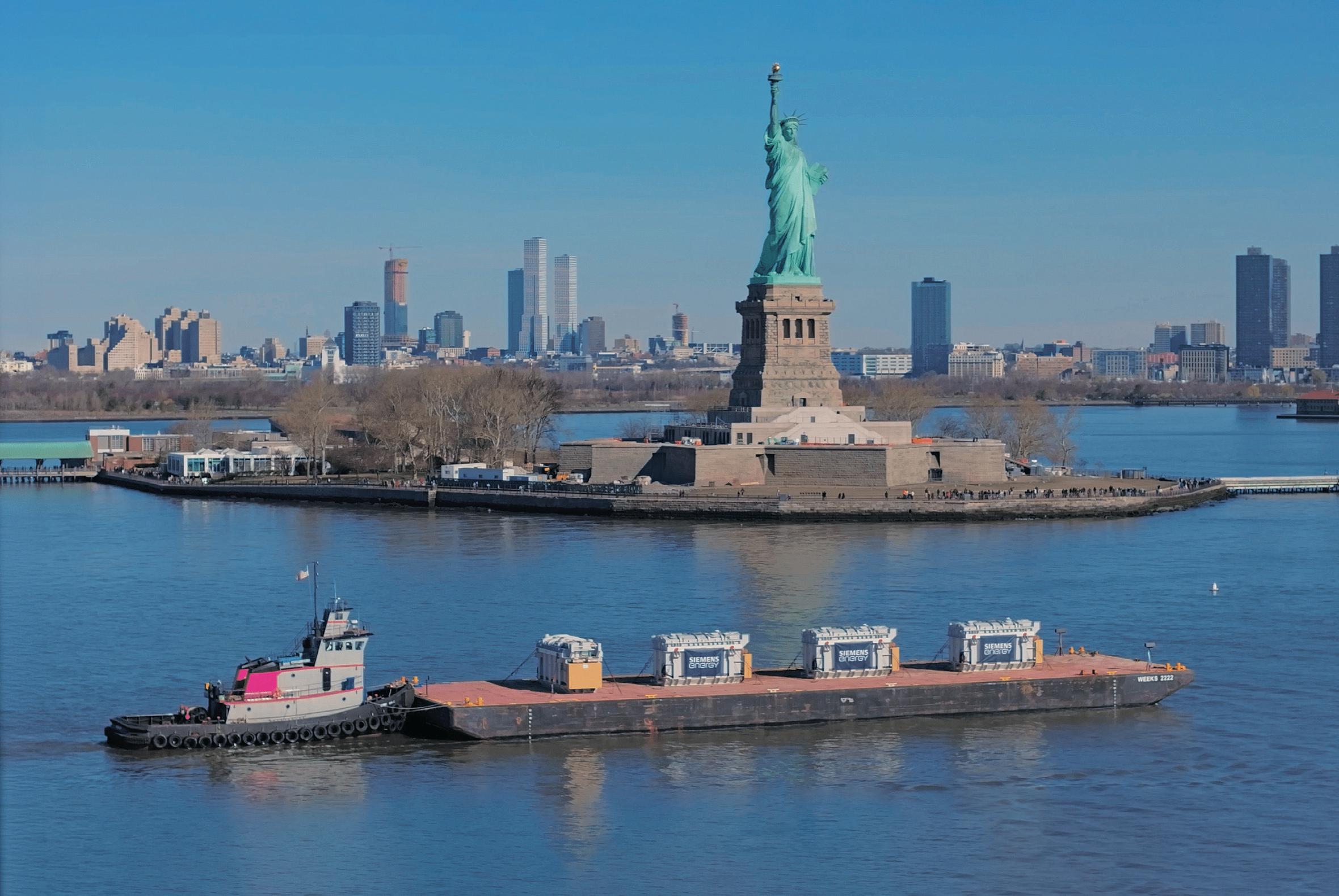
On February 3, 2026, Siemens Energy CEO Christian Bruch and I were in New York to announce a US$1bn expansion in the US, with projects in Mississippi, North Carolina, Florida, Alabama, New York and Texas. The investment spans the full breadth of power infrastructure: production of critical components for generation, transmission and distribution; a new factory for high-voltage switchgear; ramped-up large power transformer production; resumed gas turbine manufacturing; and a strengthened supply chain for all of the above.
The expansion is grounded in core technologies, including gas turbines, generators and grid components, alongside solutions designed to help the energy delivery system adapt to changing needs, such as synchronous condensers, high-voltage power lines and innovative steam turbine applications. Investment is also going into emerging areas such as additive manufacturing, grid management tools and a new Grid AI lab in Orlando, Florida, where work with utilities focuses on building multifaceted grid models to optimise operation and improve resilience after weather events.
People powered
Alongside the physical infrastructure, Siemens Energy is bolstering research and development capabilities across multiple locations and establishing several training facilities. The goal is to fill 1,500 jobs – highly skilled manufacturing positions that require significant education and training.
Building that talent pipeline starts with the education system. Our involvement with technical schools and specialist educational institutions near our manufacturing sites helps us to shape curricula that foster the skills needed for the 21st-century energy economy. We provide internships and apprenticeships in our facilities; once hired, employees undergo further training to specialise in specific areas of our business.
This is a continual journey. I have worked at Siemens Energy for nearly 20 years, and there

We are ramping up large power transformer production, resuming gas turbine manufacturing and strengthening the supply chain that makes the components for all of these pieces of equipment
are still so many opportunities for me to learn and grow. It is common for employees to move between functions, receiving training to take on new responsibilities. This employee journey is a key reason our US$1bn investment focused mainly on brownfield expansion rather than greenfield construction. We value our relationships in these communities, the established talent pool and the human infrastructure that supports our ongoing success.
Confidence in the future
Our 12,000 employees in the US – and the many more whom we are looking
to hire – are invested in the US’s energy future. And from where I sit, the future is bright in this country. Our regulatory atmosphere fosters a spirit of innovation that is spurring this once-in-a-generation growth, driven by the data centre buildout, the deployment of AI and the resurgence of US manufacturing. An ongoing, predictable and consistent policy and regulatory landscape is essential, not only for Siemens Energy but also for the broader industry. Regulatory stability allows companies to plan, invest and innovate with confidence – and we are. You can see that in our investment announcement and in our
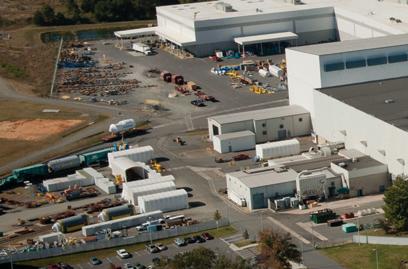

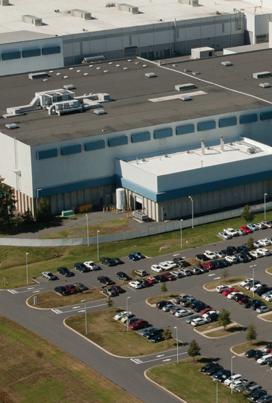
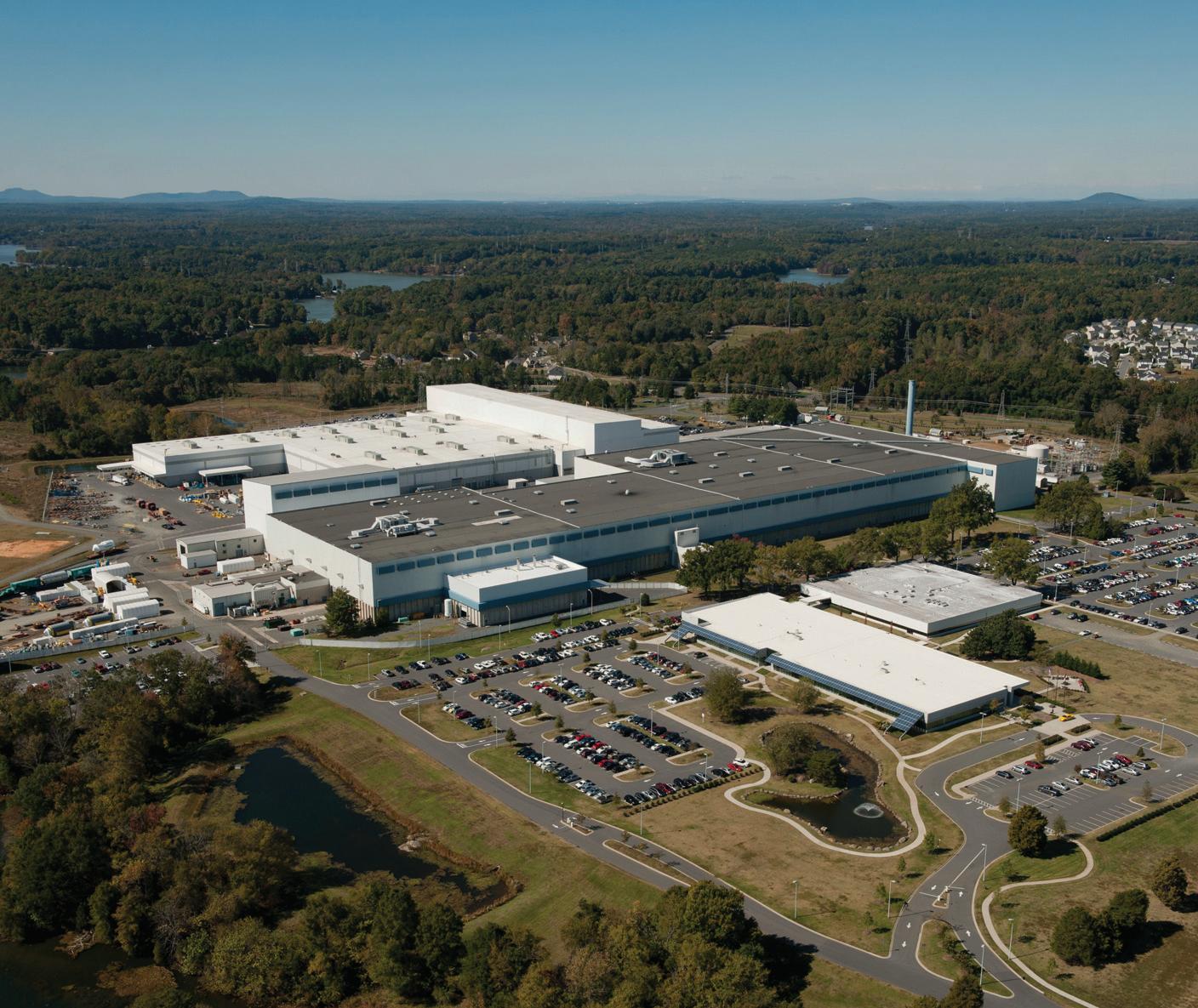



The Siemens Energy Charlotte Hub, North Carolina
Gas fires up the grid
From the US to the Gulf, surging demand for baseload power is triggering a dramatic surge in gas-fired generation investment as grids scramble to keep pace.
Up until 2025, the number of new gas-fired power plants announced year on year had remained flat. However, that year saw a significant increase in the number of new announcements as demand for baseload power generation continued to rise. Two regions in particular have seen increased development momentum.
North America, specifically the US, has experienced a sizeable increase in the number of gasfired power generation plants being announced. Alongside this, the amount of overall capacity (MW) reaching final investment decision (FID) has increased. In 2023, just over 5GW of projects were sanctioned; this rose to 12.5GW in 2025. Data
centres, AI and the onshoring of manufacturing are the primary drivers for the increased demand for gas-fired power generation, and expectations are that capacity additions will continue to grow in the coming years.
In the Middle East, just 229MW of new gas-fired power generation reached a final investment decision in 2023. This rose significantly to 11.2GW in 2025, with 10.2GW located in Saudi Arabia. As part of Vision 2030, Saudi Arabia has mandated the cessation of oil-fired power generation to reduce domestic carbon emissions. Consequently, gas-fired plants and expanded renewable energy projects will replace these retiring oil-fired assets.
Overall capacity (MW) of projects to reach FID since 2023
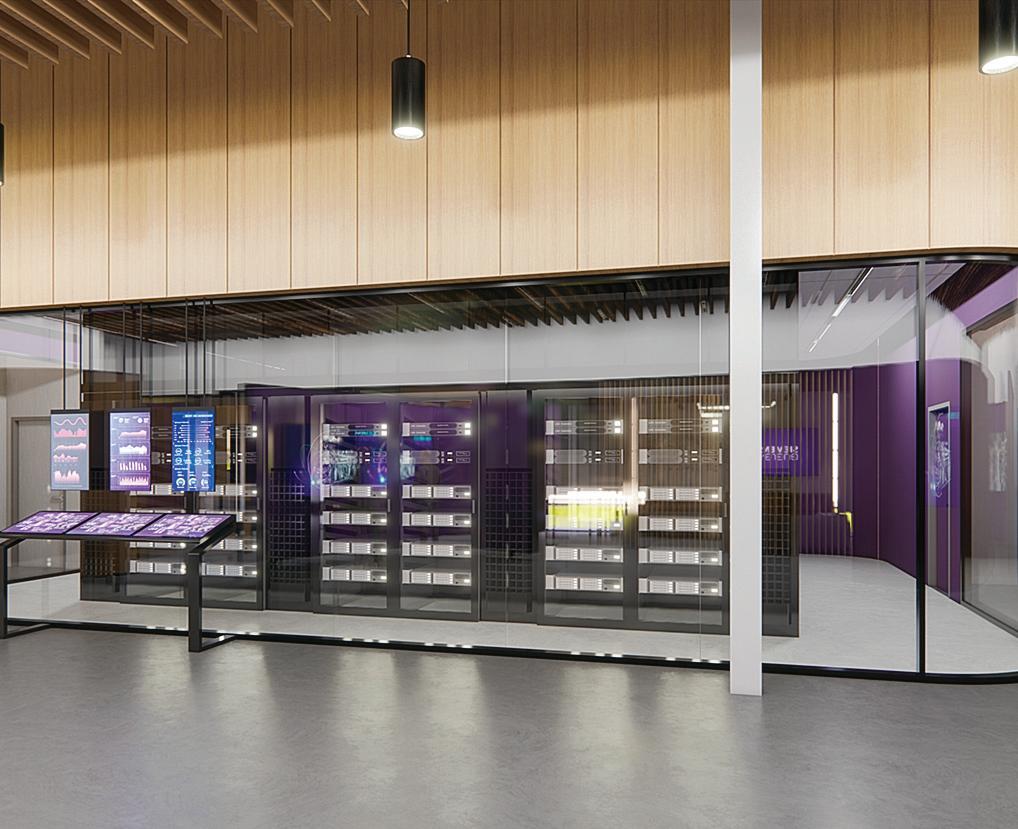
There is a lot of uncertainty throughout the globe, but the fundamental direction remains clear: the demand for reliable and expanded power infrastructure is only increasing
customers’ capital expenditure plans, which look out 10 or 20 years. There is a lot of uncertainty throughout the globe and within pockets of the energy sector, but the fundamental direction remains clear: the demand for reliable and expanded power infrastructure is only increasing. As an energy equipment manufacturer, our unwavering mission is to deliver more energy to more people. While the strategies and pathways may evolve over time, the commitment to powering communities and supporting the US’s energy future continues to guide every decision we make.
Siemens Energy’s Grid AI lab in Orlando, Florida



How X-Energy’s
Xe-100 is redefining the nuclear
landscape



X-Energy is rapidly establishing itself as a pioneer in advanced nuclear energy, with the Xe-100 high-temperature gas-cooled reactor at the forefront of its small modular reactor (SMR) offering.


As the global energy transition accelerates, X-Energy’s innovative Xe-100 small modular reactor is attracting billion-dollar investment and reshaping how industry thinks about clean, dispatchable power
BY JACK BOGGIS, ENERGY ANALYST, EIC LONDON


Capable of generating 80MW as a standalone unit, the Xe-100 can be scaled into a ‘four-pack’ configuration to deliver a combined electric output of 320MW. Using helium as its coolant, the Xe-100 produces a thermal output of 200MWth, and it is this capability that truly sets it apart from competing SMR designs. Unlike conventional nuclear power plants, which serve a single purpose, the Xe-100’s high-grade thermal output enables it to simultaneously feed clean electricity to the grid and supply process heat directly to energy-intensive industries. That dualpurpose functionality means it is not merely as simple power source, but a flexible industrial energy solution with transformative potential.
A fuel like no other
At the heart of the Xe-100’s performance credentials lies its pebblebed core, packed with thousands of tristructural isotropic uranium fuel particles, which undergo the fission reaction. Tristructural isotropic uranium fuel also offers enhanced safety and is considered ‘meltdown proof’ due to the design of the particles: each has its own containment system,


Small reactors, big ambitions: the appeal of SMRs and AMRs
Across 10 nations, small modular reactors are reshaping energy futures
Of the 270 nuclear projects currently being tracked on EICDataStream, 103 (approximately 38%) are small modular reactor (SMR) and advanced modular reactor (AMR) initiatives. Their appeal is clear: advanced nuclear technologies deliver consistent, low-carbon baseload power, are considered safer than traditional reactors, and are increasingly cost-competitive, making them an attractive solution for hard-to-abate industries and power-hungry data centres.
Ten nations are driving the 79 SMR and AMR projects in active development, with all expected to come online by 2035. The US leads the way with 21 projects, accelerated by the introduction of the Reactor Pilot Program,
SMR and AMR developments: by country
which aims for three advanced reactor technologies to reach criticality by 4 July 2026 and to fast-track these designs towards commercialisation.
In Europe, SMR and AMR interest is growing as nations target net zero by 2050. Poland leads the way as it looks to transition away from coal. The nation’s main developer, Orlen Synthos Green Energy, has signed an agreement with GE Vernova Hitachi to explore deploying the BWRX-300 reactor across seven proposed Polish projects. More projects are expected to be announced in the coming years as nations look to nuclear and its emerging technologies to increase energy security and reduce reliance on fossil fuels.
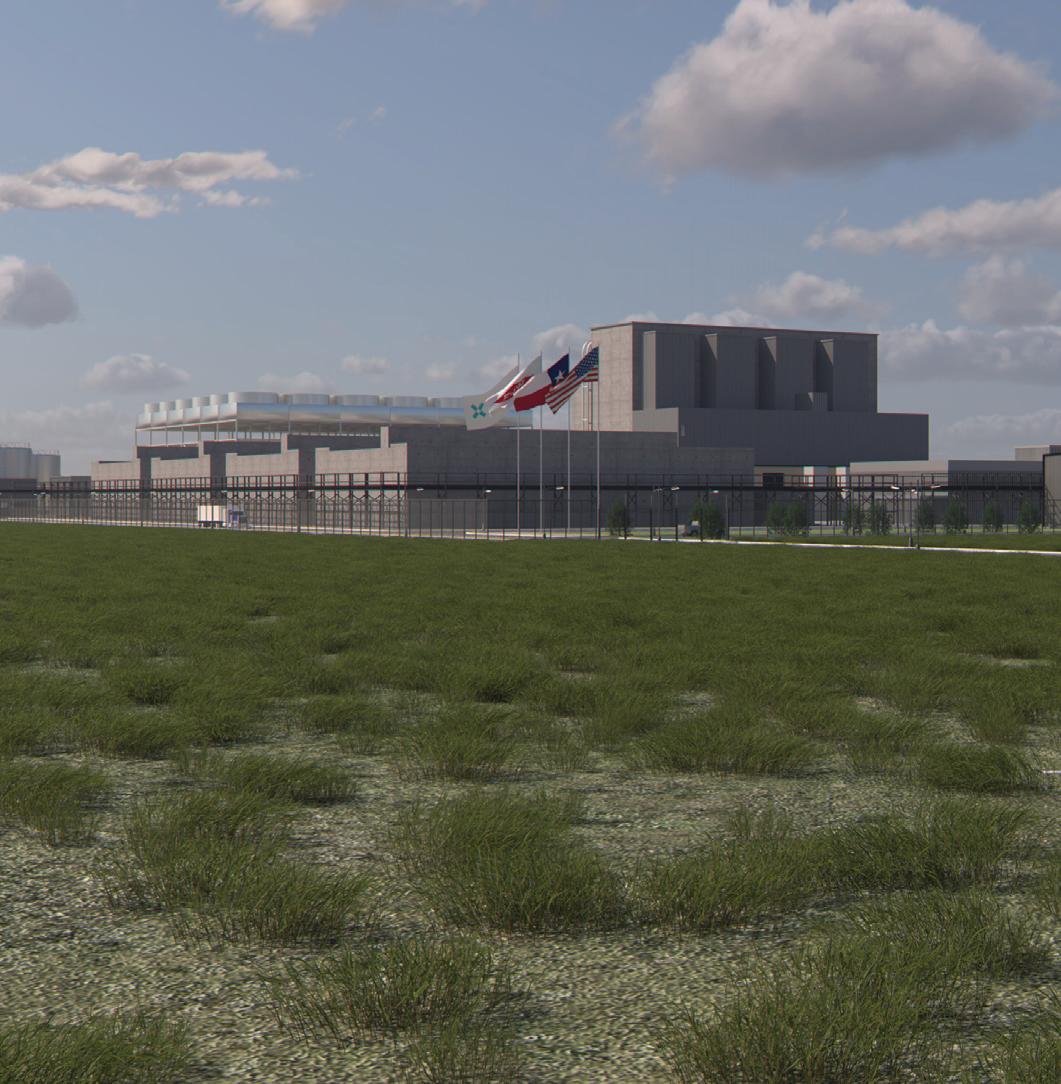
allowing the fuel to be more resistant to corrosion, irradiation, oxidation and high temperatures. The Xe-100 is in high demand thanks to these impressive design features, with plans already being made for 12GW of deployment.
Amazon’s US$500m vote of confidence
The commercial momentum behind the Xe-100 crystallised in October 2024 when Amazon announced a US$500m investment in X-Energy through its Climate Pledge Fund, targeting the development of 5GW of new nuclear capacity by 2039.
The first project under this agreement is the Cascade Advanced Energy Facility, which is being developed alongside Energy Northwest in Washington, US. The project will be built near the existing Columbia Generating Station and will consist of four Xe-100 reactors giving an initial capacity 320MW; this will increase to 12 reactors with 960MW of capacity.
Amazon has the rights to purchase electricity from the initial phase of 320MW,
The Xe-100 can simultaneously feed clean electricity to the grid and supply process heat to energy-intensive industries
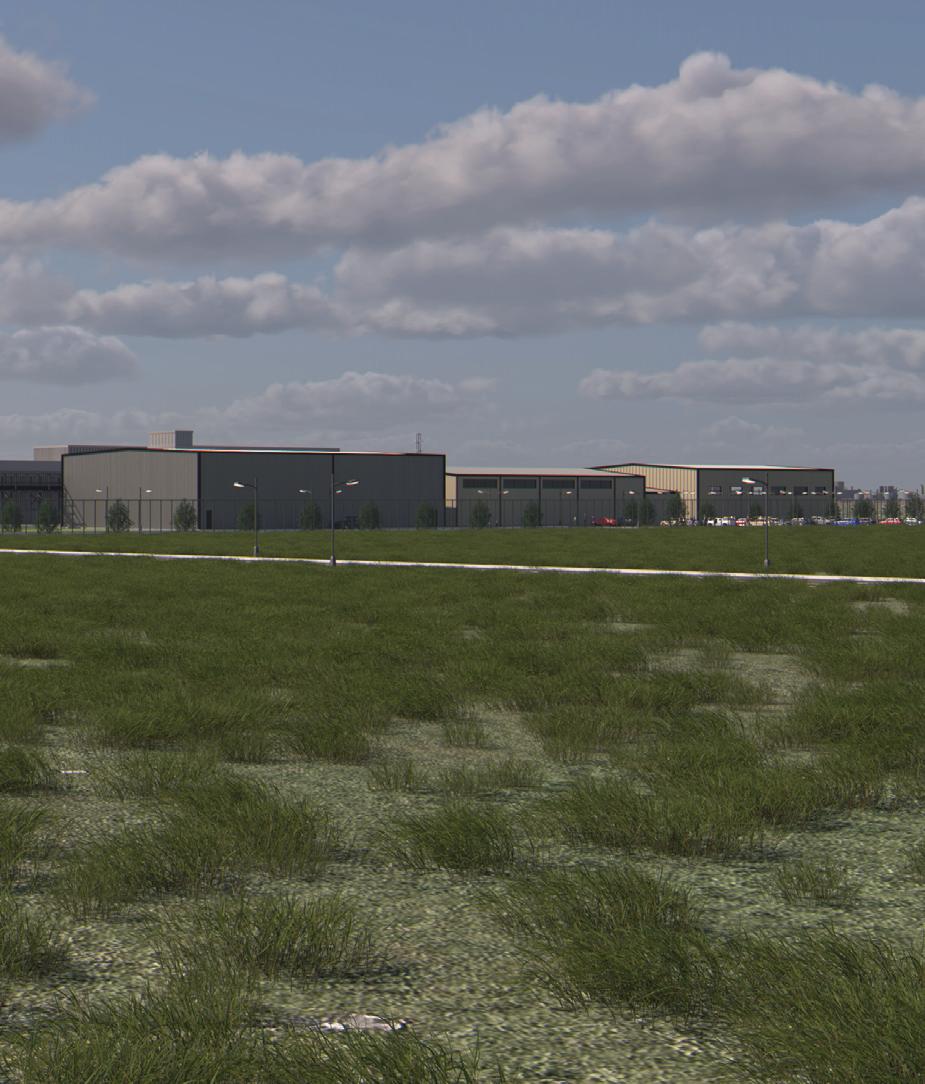
which they intend to use to power artificial intelligence tools and cloud services in the region. The facility will also support the technology giant’s sustainability goals, specifically by offering around-the-clock carbon-free energy to reduce carbon emissions. Energy Northwest is currently engaging with the US Nuclear Regulatory Commission regarding pre-application activities to obtain a construction permit for the project.
Cascade: building the supply chain
The project has already made considerable progress compared to other SMR projects being developed globally, with the appointment of a joint venture between Aecon, Kiewit Nuclear Solutions Co and Black & Veatch in October 2025, one year after the announcement of the project. The joint venture, known as Cascade Nuclear Partners, will be responsible for designing and building the initial phase of the project, with construction expected to begin by the end of the decade and the reactor to become operational in the 2030s.
More than 1,000 construction jobs will be created for the project, with 100 permanent roles in nuclear operations, engineering and other specialist positions. An education centre, the Energy Learning Center, is being developed to support this workforce; it has received funding from the US Department of Energy and will house an education simulator that mimics the control room for the Xe-100 reactor.
With more than 11GW already planned globally, X-Energy is fast becoming one of the defining forces in clean energy
Students from the Columbia Basin College will be able to obtain valuable skills and experience at the education facility to help them enter the advanced nuclear energy sector.
Contracts have also been signed with Doosan Enerbility and SGL Carbon LLC. Doosan Enerbility are to supply forgings for the Xe-100 reactor, signed in December 2025, and at the beginning of 2026, a 10-year framework agreement was signed with SGL Carbon LLC for the supply of graphite, which will also be supplied for the reactor. Graphite reserves have been made for the project, with production expected to commence in the second half of 2026.
Texas, the UK and beyond
As well as the Cascade Advanced Energy Facility, X-Energy is deploying Xe-100 reactors at Dow’s Seadrift facility in Texas, also in a 320MW four-pack configuration with agreement, with SGL Carbon LLC applying to the project. Graphite production has already begun in a US$100m contract over the next three years.
In addition, the Xe-100 reactor is being explored for deployment in the
UK. Centrica and X-Energy signed a Joint Development Agreement in September 2025 as part of the UK-US Atlantic Partnership for Advanced Nuclear Energy, and plan to install a 6GW fleet of Xe-100s across the UK. The first 960MW is being planned for development in Hartlepool and will be built adjacent to the operational Hartlepool Nuclear Power Plant. In March 2026, Centrica and X-Energy submitted a joint proposal to the UK government’s newly established Advanced Nuclear Pipeline, which aims to accelerate the development of advanced nuclear projects. Alberta, Canada, is also emerging as a potential deployment location, further expanding X-Energy’s geographic footprint. With more than 11GW of capacity already planned globally, the company is no longer simply a technology developer – it is fast becoming one of the defining forces in the clean energy transition.
WANT TO KNOW MORE ABOUT THE CURRENT STATE OF THE NUCLEAR MARKET?
Email: jack.boggis@the-eic.com
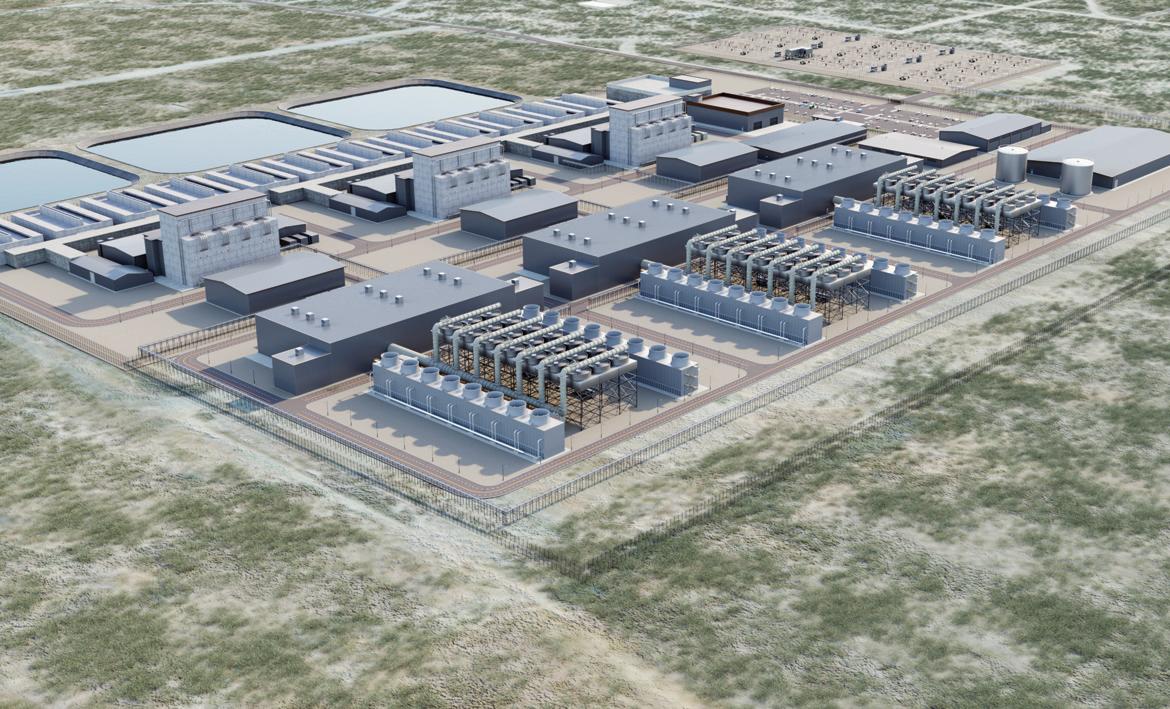
Cascade Advanced Energy Facility: A proposed 12-unit Xe-100 plant (960Mwe/ 2,400Mwt) under development with Energy Northwest in Washington State, part of X-Energy and Amazon’s commitment to deploy at least 5GW by 2039
Long Mott Generating Station: A proposed four-unit Xe-100 plant (320Mwe/800Mwt) at a Dow manufacturing facility in Texas, supported by the US Department of Energy’s Advanced Reactor Demonstration Program






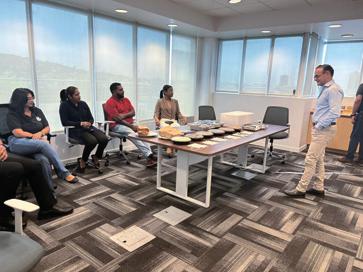


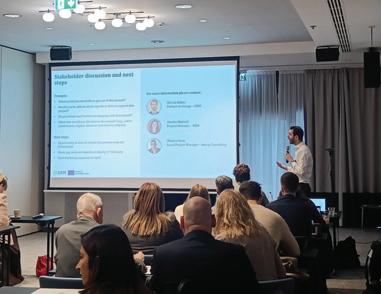

Can you tell us a little about Blue Water Shipping?
Since 1972, Blue Water Shipping has delivered efficient, reliable logistics solutions across diverse industries. Our strength lies in the knowledge and experience of our people, and our culture remains one of our greatest assets. Our founder, Kurt Skov, still walks through the halls of our headquarters and our Foundation Chair, Anna Skov, continues to champion our spirit globally through initiatives such as the Blue Water Games.
How is a day in your role?
A typical day for me starts with a workout, breakfast and coffee before heading into one of our offices across the region. I’m very hands-on and stay visible in all locations because meeting our teams, customers and vendors is the best way to understand the heartbeat of the business. Being present allows me to see challenges early, help solve them and identify niche solutions that we can scale to other markets.
What has been your greatest achievement as a company employee?
We are not a ‘big box’ forwarder, and that’s intentional. We are a niche, customer-centric organisation that thrives on doing what others could only dream of. One of my proudest achievements is helping to build the operational foundation in Australia and Papua New Guinea. I’m equally proud of the role we played in shaping how Blue Water Shipping is structured globally today compared to five years ago.
What has changed since your first day at the company?
Now, I am based in Houston, Texas, and I love it. The breadth of the business spans six countries and two continents, and the size of the team is larger than anything I’ve led before. I’m excited to diversify our business across all markets we serve and expand our footprint into new countries by 2027.
Silvian Baltac
Partner at ERM

A DAY IN THE LIFE OF…
Steven Lofaro
Regional Senior Vice President Energy, Ports & Projects Americas at Blue Water Shipping








Can you tell us a little about ERM?
ERM is a global sustainability consultancy that helps organisations to accelerate the energy transition. With more than 8,000 consultants worldwide, we combine technical, commercial and regulatory expertise to turn sustainable ambitions into investable plans and credible actions.
How is a day in your role?
I lead the Low Carbon Industries & Molecules practice in London – approximately 45 consultants acting as a global centre of excellence. The practice began in the UK, advising industrial clusters such as Humber and Teesside on carbon capture and storage (CCS) as well as e-fuels, biofuels and hydrogen project developers. The approaches we developed there underpin our ability to support clients internationally. Daily work reflects this global reach: early discussions with Middle Eastern clients on industrial decarbonisation pathways, alignment with government and industry stakeholders on CCS projects in Europe, reviewing contributions from Asia-Pacific colleagues as our day ends and theirs begins.
What’s your favourite part working at ERM?
Building long-term client relationships. Working with industrials, investors, governments and technology providers, I support clients across a wide range of issues – always evolving as the global policy landscape shifts and creates new uncertainties. Our techno-economic assessments and policy analysis shape investment decisions and long-term net-zero implementation. Being there for clients of all types is a part of the job I particularly enjoy.
What has been your greatest achievement as an employee?
Equally important is shaping the strategy of the practice and developing our people – mentoring consultants, building capabilities, defining our service offerings and ensuring we stay ahead of emerging market needs. Seeing the team grow and succeed is one of the most rewarding aspects of the role.
Left and centre: Blue Water Shipping; right: ERM





ive experiences shaping the future of the

Listen to exclusive conversations with C-level leaders as they share insights, strategies, and experiences shaping the future of the energy supply chain.



PODCAST