

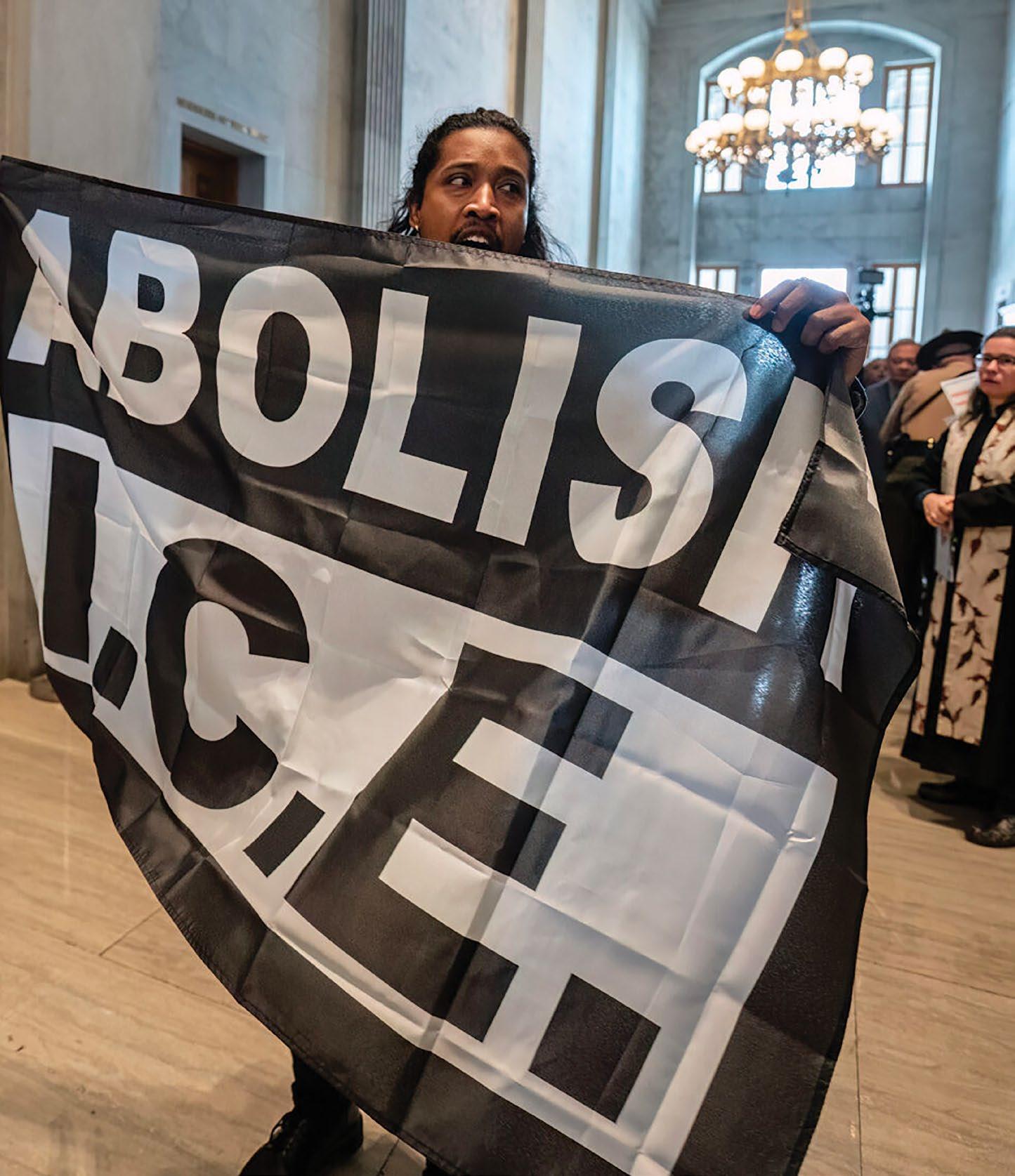

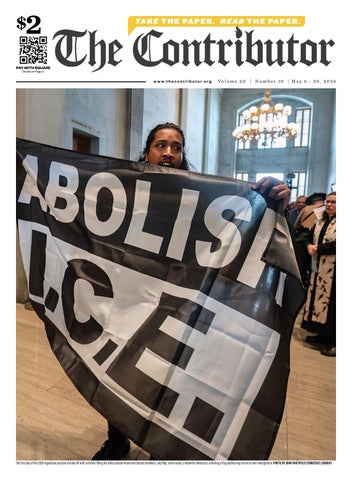









La Noticia, one of the

Venmo has canceled our account, but you can still pay using Square! You must identify your vendor so we know where to send the payment. Here's how:
your phone camera and scan the QR code on this page. This will take you to the landing page: thecontributor.org/pay.
After clicking “checkout,” type your vendor's name and four-digit badge number in the “Required” field. This allows us to know which vendor to pay.
Please consider paying a minimum of $2.37



Since The Contributor started in 2007, more than 3,200 different vendors have purchased $2.3 million worth of The Contributor and sold over six million copies, generating over $15 million in income for themselves.
In 2019, our C.O.V.E.R. Program (Creating Opportunity for Vendor Employment, Engagement, and Resources) was the natural expansion of our mission of removing obstacles to housing. We now offer full case management, assistance with housing and rental expenses, addiction recovery, health insurance, food benefits, and SSI/SSDI assistance.





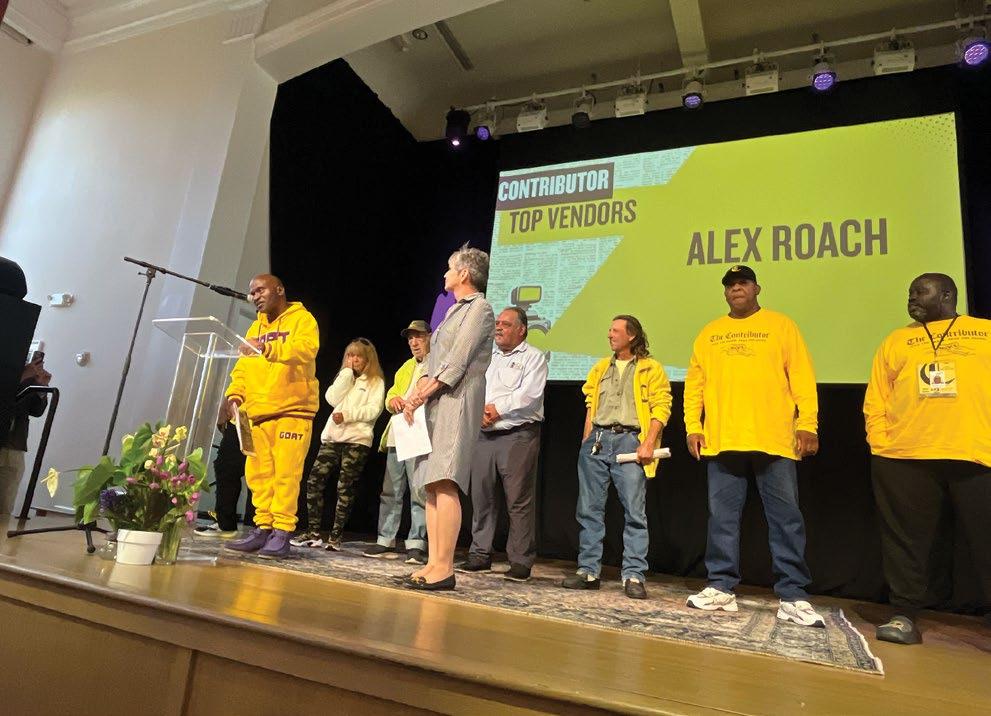
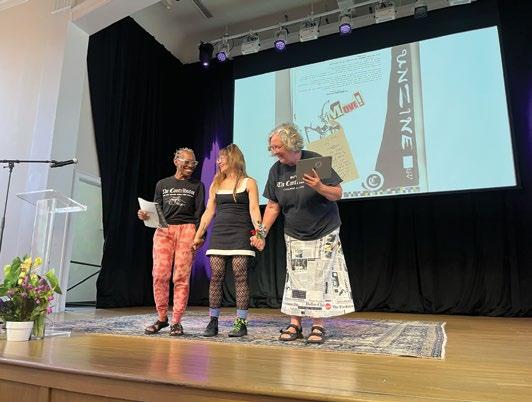
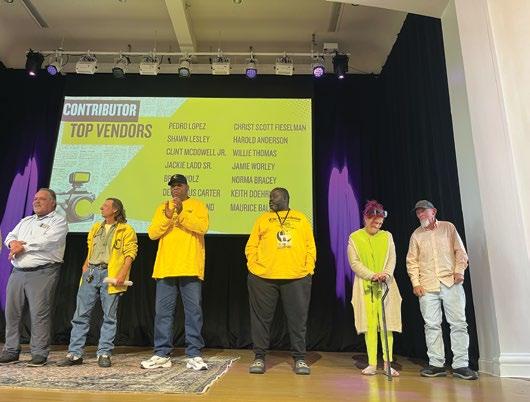
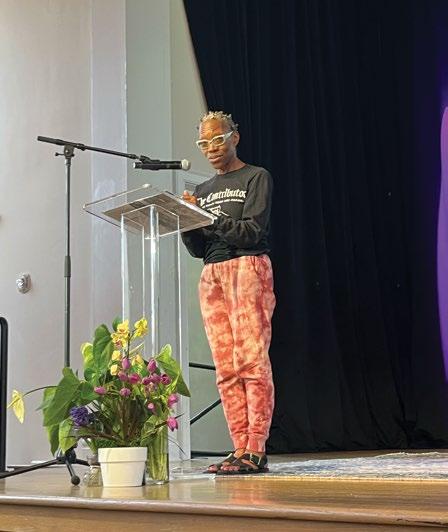
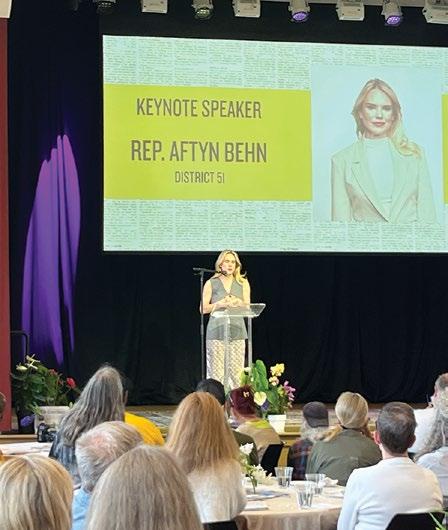
The Contributor is honored to recognize our Top 15 selling newspaper vendors for their dedication and hard work. Each of these individuals has shown resilience and determination, and we are grateful for their contributions to our community.
1. Alex R.
2. Maurice B.
3. Sharon H,
4. Keith D.
5. Demetrius C.
6. Norma B.
7. Brian W.
8. Jamie W.
9. Jackie L.
10. Willie T.
11. Clint M.
12. Harold A.
13. Shawn L.
14. Christ Scott F.
15. Pedro L.
We also proudly presented special literary awards to contributors whose writing has brought insight, honesty and creativity to The Contributor. Their stories and perspectives are a vital part of our publication, and we’re excited to celebrate their voices.
• Paul Collins – Zine Machine
• Jen Alexander – Vendor Editor Emeritus
• Barbara Womack –Contributor Connector Award
• Fynalle Fre – Emerging Poet Award
Stephen Watts, 29, works as the cooperative housing developer for the Southeast Center for Cooperative Development.
Previous to his current job, he worked as youth safety and advocacy manager with the Black Mental Health Village and prior to that was the senior manager of social justice and advocacy with the YWCA Nashville & Middle Tennessee. He’s a young Millennial with a Gen Z sensibility.
Watts has as intersectional view of how his generation works in social justice and advocacy.
“There’s that group who sees political advocacy as primarily having to be bottom up,” Watts says about his generation. “We’re not really seeing a lot of opportunities for social mobility that are attractive to us. So instead of thinking about how we get to the top of a system that has already been built and make change, we’re primarily thinking about how we can be in solidarity with the people who we’re already standing beside.”
Do you feel your generation is reflected in the power structure that sets the rules in society?
No, I don’t. But I think the important thing that I remember is that being in the power structure is not the only way or even the best way to wield power. I think we also understand that being in that power structure limits power as well.
Not to get too political, but we see in Washington, D.C., right now where Congress seems powerless. And so one of the things I think about is not so much how do I move up this system to have more access to power? It’s more like, what power do I have access to right now by being in community, and how do I use it well. I think that’s really like the co-op spirit, which is really instead of saying, “Oh, I want to be an owner. I want to be part of this class.” It’s really saying, “Actually, let’s think about how we redistribute power because we are most proximate to what needs to happen.”
You are an upcoming leader and advocate in the low-income housing development arena. What are the biggest hurdles you see in Tennessee when it comes to access to housing for low-income people?
There are so many hurdles. The first one, and maybe even the most important one that comes to mind is this huge power imbalance between landowners and landlords and residents [that] is just so normalized. I think of it as renters are expected to be powerless, and that’s just the way it is. Landlords are expected to be powerful, and that’s just the way it is. And the same for people who own their home. They’re supposed to be powerful, and that’s the way it is, so that you aspire to either be a landowner or a homeowner or a landlord who is renting out space.
One of the things that I’ve encountered is that there are a lot of questions of how we can get people on the right side of this dynamic so that they have more power. There’s not a whole lot of questions about whether this dynamic is right.
One of the ways I’ve seen it recently was
BY JUDITH TACKETT

[when] I went with Court Watch 615 to Eviction Court at the opening of the winter storm docket. And even with all the work that so many advocates have put in to make sure that there are alternatives to evictions, I was so appalled by what we have normalized of people not being expected to deserve a place to live.
So when we’re thinking about low-income housing, before I’m even thinking about infrastructure, before I’m even thinking about policy, I’m really thinking about beliefs and the beliefs we’ve created around power, safety, who deserves it, who does not, and the things that you are expected to do to earn it.
What is the Southeast Center for Cooperative Development?
At the Southeast Center for Cooperative Development, a lot of our work has been in worker co-ops, thinking about worker-owned, worker-controlled workplaces. Instead of thinking of this idea of nicer bosses, you can think about it either as no bosses or everyone is a boss. So the values are really around transparency, accountability, and shared power.
When we think about cooperative housing, the values are the exact same. And when you think about worker co-ops, we’re talking about one of the most important things that we do in our life, which is labor. How do we spend our days in order to make enough money to provide for our basic needs. When you think about the home, it’s also one of the most important things that we do in our life, which is where do I feel safe? Where do I want to build community? Where do I want to stay?
At the Southeast Center, we’re really interested in working with faith-based partners, especially churches, but also other institutions of other faith traditions as well. They have land that they’re not sure what to do with or how to steward it well. And so the Southeast Center for Cooperative Development, we really want to be proactive in working with faith-based partners and
thinking about how we use this land and place them in community land trusts or just make sure that they are long-term committed to public good. That’s something that we’re actively trying to build out.
Prior to working for the Southeast Center for Cooperative Development, you worked with youth around social justice and safety. Tell us a little about your goals and how you present yourself as a young leader in this work? What has gotten you where you are?
I’ll start by saying I’ve done a lot of things, and I do a lot of things. And I think of all of the work that I try to do in this city as community safety work, because it’s all about either making sure that there are systems that can meet people’s basic needs or that the harm that is caused by people’s basic needs not being met can be addressed. So there’s prevention on the front end. There’s harm reduction on the back end.
[When] I worked as the senior manager of social justice and advocacy at the YWCA Nashville, that was really impactful for me.
YWCA Nashville runs the largest domestic violence shelter in the region. When people are escaping a bad situation, one of the hardest parts of getting them to a better situation is if there’s no housing in the city, there’s no place for them to go. And so the shelter is often, if not always, full. And when people are ready to go, because they’ve been through the program, there’s often no place for a permanent exit in Nashville.
That taught me a lot about the infrastructure concern. We want to care about folks who have been harmed and women who have been harmed and the most vulnerable in our society. But how can you do that if you don’t have the infrastructure for them to actually have a place to live or a place to leave people who are harming them?
Nashville seems to be focused on more affordable housing development. Is the city doing enough? What can Nashville do
to improve its approach to equity, which includes access to affordable housing?
The first thought I have is, of course, we’re not doing enough. We’ve done so many studies about what needs to be done and how many houses need to be built and who they need to be built for. And every time we do a new study, we’re falling farther and farther behind.
We’re not concerned enough about just doing. Part of that is because we are so addicted to weighing institutional concerns [more heavily than] people’s needs that we’re kind of stuck because we’re just moving at the speed of comfort, and we’re moving at the speed that current infrastructure has capacity for instead of increasing that capacity by bringing new people, new voices, into the work, which would require sharing power.
I think we’re limited by the reluctance of people who have benefited from a vacuum of policy, rules, procedures, or accountability to actually share power. It limits the way that we can actually address this work. And because they’re not being harmed by it, I don’t know how that system changes.
What I would say in terms of things that I would like to change, there are a couple of things that immediately come to mind. I really do think there just needs to be more invested in cooperatives and other social housing projects that don’t expire into unaffordability.
When you see LIHTC (Low-Income Housing Tax Credit) properties, they usually have 15- to 30-year affordability restrictions and then quickly become market-based properties. One of the goals needs to be preservation and not just preservation as ideology, but preservation as policy. And the easiest way to do that is to redistribute power to the residents already living in some of these properties, making sure that there are policies that give them either the option to make decisions or run it or to own it and buy it. That’s the cooperative model. There are other social housing models that others know more about.
[Another thing] that immediately comes to mind is, what are we going to do with all this public land that Nashville has? We see it given away to billionaires, but we don’t see it being given away to the people that we’re saying we need to serve or that need it way more badly than Teslas need it.
What else would you like to share?
I just want to say the way we think about economics, traditionally, we look at metrics that tell us how much rich people are accumulating. That’s a lot of the obsession with home prices going up and with the market. I think it’s really important to reevaluate what those metrics are actually measuring. Especially Nashville, that’s a city that is both obsessed with growth and concerned with growth. We don’t have the metrics to measure the actual impact well.
What’s been hard for me is to see decision makers, who are really far from the impact, value only the metrics that impact them. Because what it means for them for the economy to be improving, like stock prices increasing, has no effect on what it means for people on the ground.
State of Metro Outlines O’Connell’s Next Steps
Mayor Freddie O’Connell’s outlined a series of initiatives as part of his vision for a Nashville that is “affordable, safe, healthy, welcoming and prosoperos” at the 63rd annual State of Metro address on April 29. Pointing to the city’s Unified Housing Strategy, which he touted as already created or preserved nearly 3,000 homes, O’Connell announced plans for a 40 percent increase in housing funding, which would mark the largest cumulative investment in housing in Nashville’s history if it passes through the budget cycle. He also introduced a new revolving loan program aimed at building a more durable, long-term financing pipeline for affordable housing. “When I talk about my vision for a Nashville where everyone belongs,” he said, “we know that it’s made possible by lowering the costs of housing and transportation,” noting that rents are beginning to level off while transit ridership rises. Beyond housing, O’Connell outlined a series of initiatives aimed at easing the cost of living and expanding opportunity. His upcoming budget proposes cutting the grocery tax by a half-cent, a move he says he expects to save the average family about $72 annually, alongside a commitment to tighten Metro’s budget. He also announced two new programs to support small businesses: a Legacy Business Fund to help long-standing neighborhood establishments manage rising costs, and a Workforce Advancement Grant to help employees build skills and access better-paying jobs. The mayor emphasized continued investments in early childhood and education, including expanded funding for the Nashville Strong Babies program, which supports mothers and infants through the first 18 months of life, and the rollout of Begin Bright little libraries across childcare centers in partnership with Nashville Public Library. New legislation is also streamlining the process for opening childcare centers and expanding access to home-based care. In Metro Schools, students are seeing academic gains, with new high school start times and an expanded University MNPS partnership — including a new collaboration with the University of Tennessee — aimed at improving student outcomes and college access. Transportation improvements were another focus, with O’Connell highlighting progress under the Choose How You Move initiative, including expanded bus service, new sidewalks and upgraded “smart” traffic signals.
Throughout the address, O’Connell framed these initiatives as part of a steady, intentional approach to governing. “Progress will not always be loud or linear. But it will be purposeful,” he said. “Every decision we make… is a statement about who this city is for.” O’Connell

also signaled his intentions to run for a second mayoral term.
Family Safety Center Opens New Clinic
The Office of Family Safety is slated to host a ribbon cutting May 12, 2026, at 10 a.m. to celebrate the opening of a new on-site medical clinic at the Family Safety Center, according to a release.
The clinic will provide trauma-informed forensic medical exams for victims of physical violence, including domestic violence and strangulation. “The new clinic allows survivors to receive urgent care and forensic documentation of physical injuries in the same location where they access advocacy, case management, resource referrals, and other crisis interventions. In Nashville, 51 percent of survivors report experiencing strangulation by a partner, and 36 percent of domestic violence offenders are identified as stranglers. Among survivors, 63 percent report being strangled to the point of unconsciousness. Visible injuries are often absent, making timely medical intervention critical. This space ensures survivors have immediate access to care that can identify hidden injuries and potentially save lives,” the release reads. The ribbon-cutting ceremony will bring together local leaders, healthcare professionals, advocates and community partners to highlight Nashville’s coordinated, multidisciplinary response to
interpersonal violence.
Homelessness Symposium Date Announced
The Office of Homeless Services announced at the ended of April plans for a 2026 State of Homelessness Symposium on June 23. The event will feature Donald H. Whitehead, Jr., executive director of the National Coalition for the Homeless, Rori Knight Durham, CEO at RK Durham Consulting, LLC, John DeCarmine, principal consultant at OrgCode Consulting and Richard Cho, Managing Director at Manatt Health. In a save the date notice, OHS says the event will “bring together powerful voices, bold ideas, and real solutions to move our community forward. This year’s State of Homelessness Symposium brings together leading homelessness experts, public sector leaders, and advocates for meaningful conversations focused on today’s most pressing challenges. From capacity demands and sustainable funding streams to network expansion, system innovation and cross-sector collaboration, attendees will gain actionable strategies to strengthen our collective response to homelessness.”
Nashville’s first Foam Recycling Drop-Off Program was opened on Earth Day. Mayor Freddie O’Connell attended
a ribbon-cutting event at East Convenience Center, where he also placed the first piece of foam into the new Foam Cycle system to mark the start of the service. An equipment donation from Polystyrene Recycling Alliance (PSRA) allowed for a foam densifier system at the Metro-operated East Convenience Center at 943 Dr. Richard G. Adams Drive. The service is a free-of-charge way for Davidson County residents to recycle polystyrene foam (commonly referred to as Styrofoam) and foam packaging at a city-operated recycling drop-off center. This program is believed to be the first in Tennessee to accept both food - service foam and foam packaging at a city- operated recycling drop - off center. Residents will be able to drop off a range of foam items, including food-related packaging such as meat trays, egg cartons, takeout containers, plates and cups, as well as protective packaging like foam coolers, appliance packaging, and large molded foam pieces commonly used to protect furniture, electronics, and household appliances. “We all get foam packaging in the mail, and most of us aren’t sure what to do with it,” said Tracey Thurman, Director of the Nashville Department of Waste Services. “Now we have an answer. This program gives residents one more tool to keep material out of the landfill and supports the work we’re doing to improve how Nashville manages its waste.”
Written by Chris Scott Fieselman, Vendor #0015
How Much Does It Cost to Park?
Words on a page are a long way’s away, From being considered a work of art. I’ve been warned all along, It’s the wrong place to start. Like an engine racing, With a whole lot of missing, Necessary and Needed parts. Like making my way down, A lonely lost road, that I know, No matter how far I’ve come? The road that I’m on?
Won’t get me that far? How Much Does It Cost to Park?
The cost of living keeps costing more? Then it has ever - Costed Before. And there are those, who lack, the ability, To take on and tackle, Technology, Who are Socially Designed, To be Left Behind, And better off Simply Ignored. And then? There are folk, Who have figured out how? To outsmart and beat the system, And somehow still manage, To somehow still stay, Still “One Step Ahead of The Law.” And people like me, Who are willing to be? “The Vigilante” With big plans to even the score.
A Loser … A Dreamer … A Schemer … A Fool … And a Dirty Job that Someone? Sooner? or Later? Had to take on The Powerful, For the Sake of The Few, And not just talk about, But get around to do?... What does it take? To Bend and not Brake, And still manage to make, Losing look Cool?
I know I don’t stand, “A Snowball’s Chance,” Of standing against, Those Local, Law-Abiding Politicians, Who have The Last Say, And The Final Decision, And play by Their Own Rules. But? … “I do Love a Challenge?” So? … How Much Does It Cost to Park?
Written by Chris Scott Fieselman, Vendor #0015
Can Poetry? Make a Difference? Well, I believe it can. Like a recipe, for someone to read, Using words, like ingredients. Can a poet? Paint a picture? Is a poem? A work of art? Can it tear down walls? Or build bridges to touch? And change, a person’s heart?
Can Poetry? Make a Difference? Can Poetry? Right the wrong? When you add a little bit, of music to it, Can a poem? Become a song? Is there Wisdom? In what’s been written? Is it something? Someone, wants to sing?
Can Poetry? Make a Difference? Can Poetry? Change a thing?
Can Poetry? Make a Difference? Some things, are better left un-said. Words that are worth, remembering, Are something, that you never forget. When you take the time, to make it rhyme, And it all makes, Perfect Sense. Can a Poem? Persuade you, to change your mind? Can Poetry? Make a Difference
Written by Chris Scott Fieselman, Vendor #0015
There’s nothing so bad … That you can’t rise above it. It’s a simple fact … You’ve got to love it. It’s not a dress rehearsal … Remember this: For better or worse … It is what it is.
Live Life like it’s your only one. Don’t forget to have yourself, a little fun. We’re all riding off into the setting sun. So, Live Life like it’s your only one.
You can’t see the forest … Through the trees, When you’re singing … “Oh, Poor, Poor Pitiful Me.” They can’t take away … What you refuse to give. So, make today the day … You choose to live.
Live Life like it’s your only one. So much to do … So much to get done. Don’t waste it waiting for … That day to come. Live Life like it’s your only one.
Tomorrow’s not promised … The past is past. Make the most of every moment… They go by fast. You’re wishing for your happiness to come along, But missing it … Looking at it all wrong.
Live Life like it’s your only one. It’s here today… And tomorrow gone. The only thing that matters when it’s said and done? Is Live Life like it’s your only one.
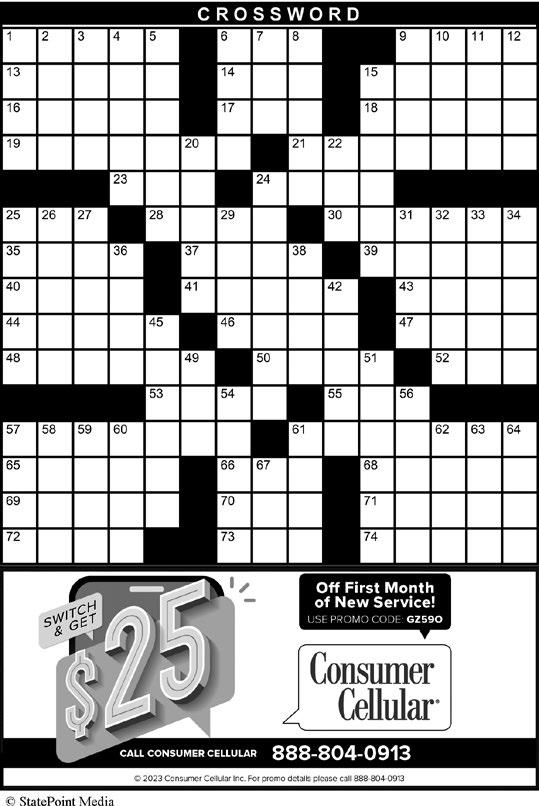
ACROSS 1. Ionic and Corinthian predecessor 6. Good times 9. AI fodder
13. Offer two cents 14. Doctor Dolittle, e.g. 15. Interior designer’s concern
16. Not fiction, pl. 17. Big head 18. Fear-inspiring 19. *”Good Times” mom
21. *”The Sopranos” mom
23. Possessive pronoun 24. Gumbo pod 25. Protrude
28. Catcher’s catcher
30. *Marvelous Midge Maisel’s first name 35. “Metamorphoses” poet
37. Chows down 39. Millionaire maker
40. Time for eggnog
41. Sure sign of fire
43. “Frasier” actress Gilpin
44. TSA PreCheck alternative
46. Mosque V.I.P.
47. Arabian bigwig
48. Received salary
50. At the apex
52. Masseuse’s office
53. “Where the Red ____ Grows”
55. Likewise
57. *”Arrested Development” mom
61. *”Fresh off the Boat” mom
65. Circumvent
66. French vineyard
68. Open disrespect
69. Dewey Decimal System, e.g.
70. 252-gallon cask
71. Cause anxiety (2 words)
72. Back talk
73. Extra point
74. Vanish without this
DOWN
1. Take of a hat, e.g.
2. Traditional October birthstone
3. Puerto follower
4. Opening, colloquially
5. #55 on periodic table
6. Part of an eye
7. *”Married with Children” mom
8. Investor’s asset
9. Hold as a conviction
10. Unit of land often featuring a home
11. Load sixteen tons, e.g.
12. Geometry calculation
15. Divert from course
20. Between washes and styles
22. Casino’s pull
24. Foot rest
25. *”Stranger Things” mom
26. Throat dangler
27. Mosaic artist
29. *”Friday Night Lights” mom
31. Tug-of-War gear
32. List entries
33. Like anchor aweigh
34. *”Schitt’s Creek” mom
36. Martin of Rat Pack
38. 3-handed card game
42. Bring character to life
45. Response to stimulus
49. Ctrl+Alt+____
51. Lemony cream dessert
54. Right-hand page
56. Academy Award
57. Orchid garlands
58. Forearm bone
59. Cow chow, pl. 60. “Beware the ____ of March”
61. *”The Handmaid’s Tale” mom
62. Letter before kappa
63. Nile dweller, for short
64. Writer Rice
67. ____-D.M.C.
“ … We Need Roses, Too.”
BY FREEPRESSGMA, CONTRIBUTOR VENDOR
My Uncle Harry is 81 years old this year. He is vital and funny and very technically oriented. He had a great life as a software and hardware engineer in computers. We spent 40 years not being able to find each other, but found each other during Covid. He helped me repair my truck. Every year, we try to get together for a couple days.
Yesterday, my uncle took me on a ride on the incline railway. This thing is a mile long and climbs out of pretty much vertical rate up to the top of Lookout Mountain. It was a thrilling experience that I never wish to repeat.
Today, he took me to the Tennessee Aquarium where we decided that our favorite fish was something called the Paddlefish. You have to look at the picture on this page to really understand the meaning of this name!
Paddlefish are designed with highly specialized, electro receptors, covering their large Rostrom or paddle. These receptors allow them to detect, navigate and feed on microscopic zooplankton in murky, muddy water, showing a sophisticated design for survival. They have survived for millions of years in this form and indeed look prehistoric. They are a great source of caviar and food. They live in Tennessee rivers.
Imagine having the ability to detect tiny microscopic animal life in murky water!
This is how I know he is my uncle on my father’s side. We are fascinated with all things and what makes them work. What was really important to me about this time together was not feeling guilty over the enormous sum of money being spent on me, but the joy and camaraderie of connecting with family, connected to a long line of people (ancestors) and immediate family.

Created by Mccollonough Ceili

Recently, I was trying to calculate the rent for a single-income family of three. Let’s call them the “Smith” family. Mom Smith is working full-time and has been with her company, a large local employer, for many years. She does not want her workplace to know about her current housing instability.
When I examined her income and monthly debt payments, she was clearly unable to rent a market-rate apartment for herself and her two children. The rent for the three-bedroom apartment she needed was between $1,700 and $1,800 a month, plus water and some maintenance fees, which came to an additional $95 per month. This did not include the monthly electricity bill, which at that apartment complex was estimated to run between $150 and $200 a month. In short, the housing cost would add up to roughly around $2,000 per month. For her to afford this rent according to HUD standards, she would have to have a monthly income of $6,000.
In reality, she made far less than that. And after she shared her monthly debt payments with me, I calculated that the Smith family had about $1,500 left over to pay for rent, utilities, food, clothing, medical needs, gas to fill up the car, and any other necessities. I concluded that the monthly housing cost the Smith family can realistically afford is $500 at most.
Before you start judging the Smith family, consider that Mom Smith has been working full-time. Some of her biggest debts are car payments and medical bills. She is a survivor of domestic violence and getting her children in a safe environment has been her priority.
Do you think she will find a safe, healthy place for her and her children to live for $500 a month in Nashville?
About one third of Americans are renters, and according to the U.S. Census, about 49 percent of those renters are cost burdened. That means they pay more than 30 percent of their gross income for housing costs.
The federal Department of Housing and Urban Development (HUD) describes affordable housing the following way, “Affordable housing is generally defined as housing on which the occupant is paying no more than 30 percent of gross income for housing costs, including utilities.”
According to the information I have, the Smith family should pay no more than $1,000 a month for housing and utilities based on their gross income from her full-time job. By the way, the Smith family’s monthly income is too high to get them to qualify for currently available assistance. And if they apply today for a federal housing subsidy to supplement their rent in Nashville, it will take an average of about two years — if they’re one of the lucky families — to get approved for a Housing Choice Voucher (Section 8). The reason is that Congress only funds enough vouchers for one in the four extremely low-income families that qualify for it.
This example clearly shows that the biggest affordability issue in this country is a lack of a living minimum wage combined with a lack of access to affordable housing. No wonder families have become one of the fastest growing populations in homelessness, next to individuals 65 and older. It’s not just the working poor that suffer,
BY JUDITH TACKETT
“The biggest affordability issue in this country is a lack of a living minimum wage combined with a lack of access to affordable housing.”
but the middle class — and that includes older adults who have worked all their lives — who are increasingly forced to make decisions between paying for medication, food or rent/mortgage.
Mom Smith’s dream is to get out of debt, increase her income, and eventually purchase her own home. However, that dream of homeownership seems to be moving into an increasingly distant future for her and for many Americans.
Or is it?
This is where social housing comes in as one of the options for people to consider and governments to invest in.
The Alliance for Housing Justice defines social housing the following way:
“Social housing is a public option for housing. It is permanently and deeply affordable, under community control, and most importantly, exists outside of the speculative real estate market.
“Social housing can exist in different forms. It can be owned by public entities, residents or mission-driven nonprofits and occupied by renters or homeowners. It includes public housing, community land trusts, new construction, existing affordable housing, and conversion of current market-rate housing, and should meet the scale of the housing crisis.”
Here in Nashville, one form of social housing that recently has garnered some attention is a cooperative housing project called the Cottages at Drakes Creek, which is a 60-unit property located in Goodlettsville. It is the first cooperative housing project in Davidson County.
A housing cooperative, according to the National Association of Housing Cooperatives, is a form of homeownership where a property is collectively owned and controlled by its residents.
The cooperative owns the land, building and common areas, and residents purchase a share in the cooperative and obtain the exclusive right to occupy a specific unit. In essence, they own the unit.
Stephen Watts, cooperative housing developer with the Southeast Center for Cooperative Development (see Q&A on Page 4), said, “Cooperative housing is resident-owned, resident-controlled housing properties.
“When we’re thinking about homeownership, usually we’re thinking about maybe one person or one family owns a home. The difference between cooperative housing is you’re looking usually at bigger properties,” Watts explained. “You’re looking at properties [where] ownership is collectively shared among the residents. Residents have governance power.
“They make the decisions about what monthly payments are going to look like, about priori-
tizing property repairs and managing property management. So all of those things that you normally think of a homeowner doing, cooperative housing is that, just on a much bigger scale.”
In cooperative housing, the goal is to keep monthly costs as low as possible “because the annual equity is capped at a certain amount,” Watts said. “So if homeownership or a homeowners’ association is colluding to raise home prices, co-op homeownership is colluding to keep prices low.”
This focus, he said, is what makes it possible for people to come and buy into this property at low and affordable rates in the future.
Watts explained that Drakes Creek was an existing, 60-unit rental property that was built about 30 years ago. The Southeast Center for Cooperative Development, William Franklin Buchanan Community Development Corporation (formerly The Fifteenth Avenue Baptist CDC), and Free Hearts submitted a joint application to the Barnes Fund and received about $7 million to start what is now Nashville’s first limited equity housing cooperative.
A limited equity cooperative legally is a corporate entity. It is “a type of affordable residential arrangement in which residents purchase shares in a cooperative corporation that owns the housing property,” as described by the Legal Information Institute of Cornell Law School. “In exchange for the right to occupy a unit, residents buy a share at below-market cost and pay ongoing monthly fees to cover operating expenses.”
The Legal Information Institute further explains on its website that the limited equity cooperative differs from market-rate housing cooperatives in that they limit how much equity a resident receives when they leave the cooperative. “The resale price is capped by a formula, often tied to inflation or a small percentage of appreciation, to ensure that the unit remains affordable for future residents. These restrictions prevent owners from capturing full market appreciation, preserving long-term affordability.”
Cooperative housing models are not new and have been around in the U.S. since the mid-twentieth century. Usually, they are financed through a mortgage that covers the entire building with all its units and operated by a nonprofit cooperative corporation.
That’s where the Southeast Center for Cooperative comes in at Drake’s Creek with Watts as the advisor and coordinator to help residents establish and run a smooth operation.
“There are two parts of a housing cooperative,” Watts explained. “There’s the housing part, that’s self-explanatory, that’s the physical development. But then there is also the cooperative piece.”
Watts describes his job as helping the new homeowners form a residence board that is capable of governance. Specifically, in a housing cooperative, residents buy equity shares and manage the building through bylaws and a democratically elected board. When I spoke with Watts, he highlighted the importance of creating a power shift in which residents develop their own voice and learn to advocate for themselves and their community.
When a resident decides to leave, they sell their shares back to the cooperative for the initial price paid, adjusted for inflation, plus some additional allowances made for improvements to the unit while they were living there. All of that is based on a formula that is outlined in the bylaws. This approach ensures the affordability of the units for future residents.
When we talk about upward mobility and wealth-building, homeownership is an important part of the conversation. While a cooperative housing model as described here may not lead to huge payouts once homeowners sell their units, the benefits are still tangible once low-income residents understand the concept.
For one, low-income homeowners are no longer beholden to the landlord for maintenance and rent increases that — as we have seen in Nashville — can quickly become unattainable, forcing people to move. Instead, what formerly were rent payments turn into a monthly maintenance fee that goes to the cooperative. That fee is applied to the mortgage, insurance, and other operational expenses to maintain the property. Secondly, even in a limited equity model, property owners gain some equity, increasing their wealth. And while many cooperative housing models, such as Drake’s Creek, limit the income level of new owners, their housing cost does not increase proportionally once they earn more.
Drake’s Creek is also utilizing a land trust, which holds the land upon with the building stands to ensure that the property remains permanently affordable. However, recent difficulties in turning Drake’s Creek into a housing cooperative have surfaced, as described in a recent Nashville Banner article by Eden Turner (see their piece from March 25, 2026).
The main issue that surfaces is that Barnes Fund dollars required that residents can only participate in the housing cooperative when their income is at or below 50 percent of the Area Median Income, which leaves some renters unable to join, dashing their hopes of being part of this housing cooperative.
If all of this sounds complex, then we need to talk about the reality that housing in the United States has become a commodity for the rich while the poor are left to fight for themselves. And before you blame individuals for their plight, consider that a full-time worker making minimum wage is unable to pay the average market-rate rent of an apartment on a 40-hour-a-week income.
In order to make the safe choice and leave an abusive situation, Mom Smith and two kids had to live in unstable housing for more than a year. She paid for motel stays and slept in her car with her kids when the money ran out for motels, all while she was deemed to make too much money through her full-time job to qualify for any government assistance right here in Nashville.
And mercifully, it is over.
With little money to play with this year, Tennessee lawmakers spent the 2026 session exerting control over nearly every facet of life in Tennessee before, finally, adjourning to go home, raise money and run for reelection, except for those weary of the legislative life.
It’s tough riding herd on an entire state.
With blue counties in their cross-hairs, lawmakers took over Memphis Shelby County Schools by creating an oversight board that must approve nearly every policy and budget move by the locally-elected school board, using the excuse that the folks there can’t handle their money and the kids aren’t learning. The measure is certain to be challenged, in part because it prohibits the elected board from suing the oversight board, likely a separation of powers violation.
They also put the state in charge of overseeing Shelby County District Attorney Steve Mulroy, requiring him to report on the adjudication of every arrest made by the Memphis Safe Task Force and giving the state attorney general authority to investigate him and call for a replacement.
Unsatisfied with efforts to cut the Metro
BY SAM STOCKARD
Nashville Council in half and vacate the airport authority, both of which are tied up in legal challenges, the legislature set up a new capital tourism board that will direct the revenue of the Nashville Convention Center. The panel, which will be chaired by a governor’s appointee instead of the Nashville mayor, even has the authority to bail out Lower Broad bars hit with high property tax appraisals.
It also gives House Speaker Cameron Sexton more say on directing Nashville money to the East Bank Development Authority, on which he serves. He also could appoint himself to the Memphis Shelby schools oversight board.
Democratic Rep. Aftyn Behn referred to Sexton as the “shadow mayor” of Nashville (and Memphis) when she balked at the new capital tourism board. The nickname apparently caught hold. But considering it’s illegal to hold two political positions anymore, would it be OK to serve as “shadow mayor” of two cities?
Getting into the weeds, other new measures hinder the ability of local governments to control sewage and, believe it or not, the use of shopping carts.
Taking things further, the Tennessee Highway Patrol will have authority to patrol tourist
areas such as downtown Nashville, because, apparently, Metro Police can’t do the job. The measure gives the Department of Tourist Development authority to override local laws.
The legislature even created a new police force to run a Capitol protection zone.
Those come down from on high as the Tennessee National Guard remains in Memphis as part of a safe task force ordered by President Donald Trump to turn the Bluff City into a police state so white folks will feel secure when they go to Grizzlies games.
Last year, Gov. Bill Lee’s administration pushed through a measure creating a secretive immigration enforcement bureau within the Department of Safety and Homeland Security, followed up this year by making Homeland Security exempt from the Public Records Act.
With that in place, along with the ability to make grants to police and sheriff’s departments that take on immigration enforcement, the legislature strong-armed every local department in Tennessee into doing the bidding of Immigration and Customs Enforcement.
Lawmakers adopted another measure giving the attorney general authority to investigate state agencies and universities to determine
whether they’re using diversity, equity and inclusion policies.
And under the guise of cracking down on prediction markets and illicit online gambling sites, the legislature, with SB2136, gave the attorney general broader investigative powers, not just into illegal gambling.
The list could continue ad nauseam.
Democratic Sen. Jeff Yarbro of Nashville believes those in control are finding they enjoy power and want to expand it. He went as far as to say Republican leaders are taking on a newfound ability to project force.
“You really have unchecked, consolidated power being used in a centralized government and deployed against citizens and the governments that are closest to them,” Yarbro said.
House Speaker Pro Tem Pat Marsh of Shelbyville agreed that the legislature is taking on more authority. But he took a different view, saying that if the state’s largest school district is struggling, it needs to step in.
“I think it’s probably been going on like this forever,” Marsh said. “Maybe it’s no different this year than it normally is. I know we’ve done some things this year that sort of surprised me, but I think some of them really needed to happen.”
CONTINUED FROM PAGE 9
The question is whether the legislature can rein itself in at some point.
Resurrection day
Call it the Lazarus effect.
A day after a negative vote, the Senate revived a measure Thursday allowing private schools that accept Education Savings Account vouchers to offer a nationally-recognized achievement test instead of the state’s standardized test.
Thus, the state won’t have a way to directly compare public school students’ test results against those of voucher kids, who are doing no better in private schools than they were in regular K-12 digs. At least that’s what a state report shows.
SB1585 fell a day earlier, mainly because of opposition to a House amendment that would have expanded the Education Savings Account program dramatically.
The program is designed for low-income students in Metro Nashville, Memphis and Hamilton County, but the House bill would have added Knox County, dropped the cap on the number of vouchers allowed, raised the income level to $240,000 for a family of four, and eliminated a provision paying back districts that lose voucher students.
Senate Majority Leader Jack Johnson acknowledged Thursday the House version of the bill contains those items but said he would not accept the changes.
“It will be this or nothing,” he said.
The bill passed 22-11, picking up six more votes.
Later Thursday, the House passed the measure 54-39 after Rep. William Slater promised he was dropping all changes dealing with expansionism.
Look for the expansion deal to return in 2027. After all, we’ve been told the most important “metric” in education is giving parents what they want, in this case $9,700 a year.
Democratic Chairman John Ray Clemmons referred to it as the state’s first voucher “scam” and pointed out the “rich” kids who took the money are escaping the state’s test.
Still, Republicans dug their way out of requiring the state’s test, which is the focal point of all public school efforts.
Yet another promise broken.
Obligatory dust-up
In a spirited debate over one of Republicans’ “Immigration 2026” bills, crafted with White House deputy chief of staff Stephen Miller, Democrats blasted the bill that would crack down on undocumented truckers with a commercial driver’s license from out of state.
House Bill 1706, sponsored by Republican Rep. Jason Zachary of Knoxville (he who flipped on 2019’s infamous voucher vote), would make it a misdemeanor for undocumented immigrants to drive through Tennessee with a CDL. It also would allow legal action against companies that hire those drivers.
Zachary accused “blue states” of giving out CDLs in violation of federal law and blamed undocumented people for committing thousands of crimes and a spate of recent accidents. The biggest problem, though, was that he continually referred to the targeted people as “illegal aliens,” catching the ire of Democrats, who said he was “dehumanizing” a large group.
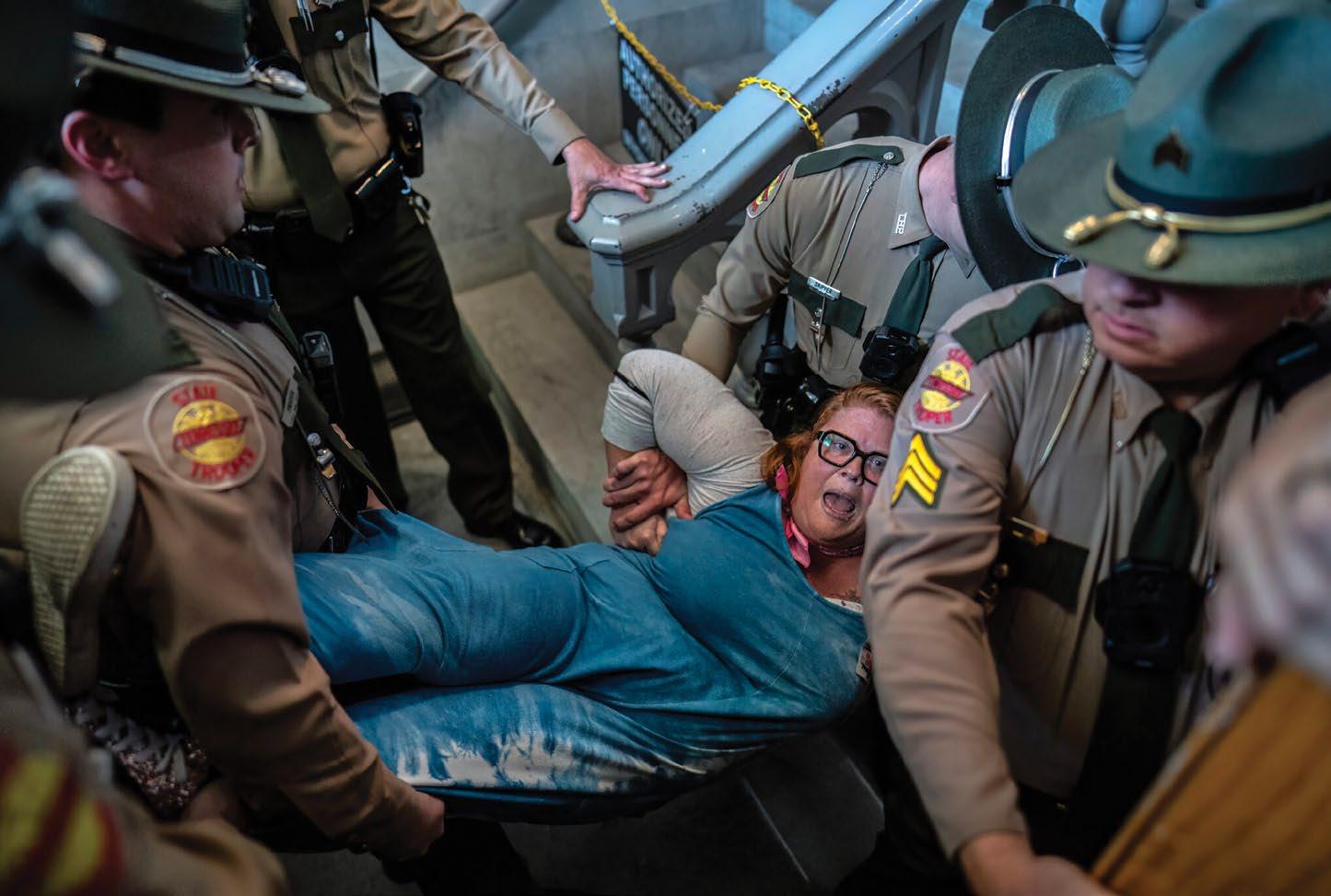
Democratic Rep. Justin Jones of Nashville asked Zachary how his family came to be in Tennessee. And after Zachary accused him of
“race baiting,” Jones responded, “How about a round of applause for white supremacy y’all.”
Clemmons reminded the body that U.S. Sens. Marsha Blackburn, a gubernatorial candidate, and Bill Hagerty have done nothing to fix the nation’s broken immigration system, yet state Republicans “follow them around like puppies.”
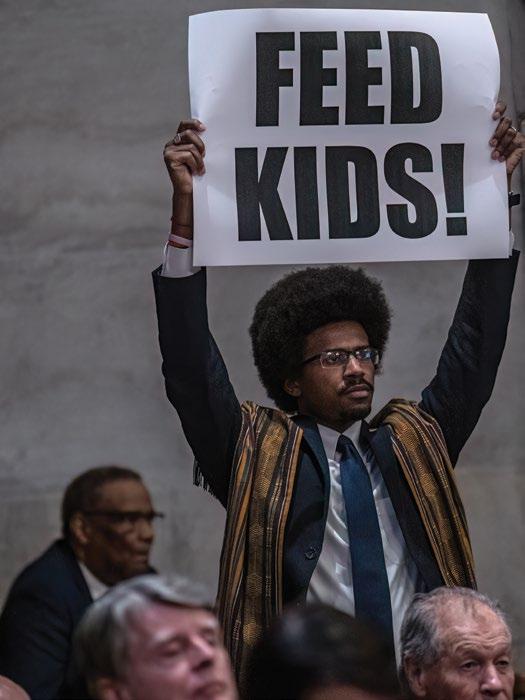
In a discussion over Tennessee Republicans’ slate of anti-immigration measures, Rep. Jason Zachary, a Knoxville Republican, accused Nashville Democratic Rep. Justin Jones of “race baiting,” (Photo: John Partipilo/Tennessee Lookout)
“How about a round of applause for white supremacy y’all,” Jones responded to Zachary. (Photo: John Partipilo/Tennessee Lookout)
Zachary claimed his bill had nothing to do with “scoring political points” and pointed out that Sexton led talks with the White House on the slate of immigration restrictions.
Yet another gubernatorial candidate, Rep. Monty Fritts of Kingston, reminded the chamber that “our nation was being invaded.” So, of course, the bill passed 73-20 along party lines.
It wouldn’t be long, either, before Sexton would chastise Jones for blasting Republican Rep. Dennis Powers of Jacksboro over HB1710, which would require local governments to verify the citizenship of any person seeking a public benefit.
“If you’re gonna go down this road today, we’re going to cut it off,” Sexton warned.
Jones retreated to using Bible verses.
No more falling trees?
Lawmakers pulled out the slogans in debate over SB2102, which would change the Nashville Electric Service board of directors in the wake of Winter Storm Fern.
The measure would add board members from surrounding counties that receive service from the utility.
Readers might recall the worst storm in Middle Tennessee history this February when trees froze and snapped, falling on power lines and knocking out electricity to thousands of people.
People of every political stripe were outraged at NES’s communications with customers. Even an NES report found that the utility’s planning for such a storm was weak.
Still, Democrats weren’t enthused, and Sen. Heidi Campbell called the move another “power grab.”
That spurred Republican Leader Jack Johnson to bring out this goody, “No electrification without representation.” (Say that fast three times.)
The bill passed the Senate despite opposition from several Republicans, raising the question whether board members from Williamson and Sumner counties will be wielding chainsaws after the next bad storm.
It also affects board members on Memphis Light, Gas and Water, a portion added at the last minute.
But the wider impact deals with longstanding contention between municipal utilities and electric cooperatives and the annexation of service areas.
They just couldn’t keep it simple.
After a chilly reception in the House, the bill wound up in a committee to work out differences, making it one of the final measures approved before the legislature adjourned the two-year session.
Uprising in the House
Legislation dealing with vaping products hit a snag at mid-week, leading to a revolt on the House
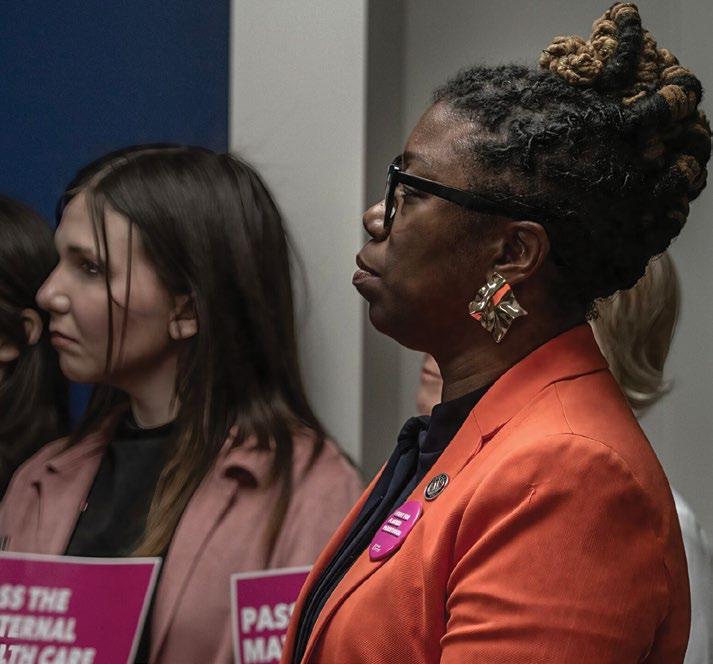
floor where Republicans teamed with Democrats to upset the sponsor and House leader.
Republican Rep. David Hawk of Greeneville was trying to pass an innocuous bill on vape shops and enforcement of vaping laws by the Alcoholic Beverage Commission when Democratic Rep. Bob Freeman of Nashville passed an amendment banning the stores within shouting distance of schools.
“Vaping products are targeting children,” Freeman said, shortly before the chamber voted 75-13 in favor of his amendment.
Even an effort to send it back to the finance subcommittee failed. But House Majority Leader William Lamberth came to Hawk’s rescue and rolled the bill to the end of the calendar. He just couldn’t let Dems claim a win.
“It’s all good,” Sexton said amid a den of uncertainty.
Ultimately, the measure passed Wednesday night, without Freeman’s amendment, as Republicans retreated from their early stance.
Every once in a while …
The House turned down a move to reduce state employee protections, voting 42-40 on HB2540, an initiative of Gov. Bill Lee’s administration. The number was eight short of the constitutionally required number for passage.
Sponsored by Lamberth, the bill would have dropped some due process policies for state employees.
In a Government Operations Committee earlier this session, Lamberth complained that the Tennessee State Employees Association didn’t negotiate in good faith.
Others didn’t see it his way.
Republican Sen. Mark Pody of Nashville first said he wouldn’t bend on his bill requiring public schools to post the Ten Commandments.
Well, it turns out he’s more malleable than advertised.
In a committee to work out differences between his version and that of Republican Rep. Michael Hale of Smithville, Pody blinked. Hale said he prefers to call it “compromise.”
The 5th Circuit Court of Appeals this week ruled that Texas can require schools to display the Ten Commandments. But Hale persuaded Pody to change his version of the bill only to allow schools to post the Commandments, then wait and see what the U.S. Supreme Court says about the First Amendment argument.
“We can always come back next year and amend it,” Hale said.
Trotting back to Springfield House Sergeant at Arms Bobby Trotter is leaving his post after 18 years and a career as a Tennessee Highway Patrol officer.
The House honored the affable but stern Trotter Thursday morning with the entire chamber gathering for a farewell.
In his closing remarks, Trotter called it “divine intervention” that he was able to spend years working in the legislature. He also managed to get a little dig in at Sexton, referring to him as the “mayor.” Sexton didn’t even cut off the mic.
Trotter, who serves as a Springfield alderman, can go home in peace.
The irony of it all
In their rush to adjourn for the session (sine die), the Senate worked through lunch Wednesday (dining on Five Points Pizza from either East Nashville or Sylvan Park, those liberal bastions of Nashville). They had to get out early so Republican members could attend a farewell party for outgoing Lt. Gov. Randy McNally at the Springfield home of Sen. Kerry Roberts, who is in a legal battle over the foreclosure of his home, the Tennessee Journal reported.
Roberts borrowed $4.6 million to turn the historic home into an AirBnB and event business but has had trouble paying the note. He blames the bank.
No matter the outcome, it was a fitting location for the Senate to gather for McNally’s sendoff. After all, most of the big bills they pass wind up in court, so a house caught up in a foreclosure fight should make them feel right at home.
“If I leave here tomorrow, would you still remember me? / ’Cause I’m as free as a bird” *
*”Free Bird,” Lynyrd Skynyrd
The U.S. Supreme Court struck down part of the Voting Rights Act, spurring TN GOP to discuss eliminating the state’s only Democratic-held U.S. House seat
The U.S. Supreme Court struck down a key provision of the Voting Rights Act on April 29, triggering a call from Tennessee’s senior U.S. Senator for the state to redraw its U.S. House map and eliminate its only Democratic-held district.
The Supreme Court ruled that states are no longer required to draw majority-minority districts, stating in a 6-3 decision by the conservative majority that using race to create these maps amounted to its own form of discrimination.
Tennessee, with a Black population of around 16%, was previously required by the Voting Rights Act to draw at least one of its nine congressional districts as majority-minority, effectively helping Democrats hold on to a Memphis-based seat.
“I don’t think anybody is shocked by the ruling,” said Tequila Johnson, the head of the Tennessee Equity Alliance, a Nashville-based organization promoting civic engagement among Black Tennesseans. “They are deliberately trying to dilute Black voting power.”
Tennessee Republican U.S Sen. Marsha Blackburn, who’s also running for governor in 2026, called on state lawmakers to hold a special session to draw new maps ahead of the 2026 midterm election.
She shared a photo on social media of a congressional map showing nine Republican districts, adding that she would do “everything I can to make this map a reality,” adding it was “essential” to cement President Donald Trump’s agenda and “the Golden Age of America.”
The Lookout reached out to Gov. Bill Lee, Lt. Gov. Randy McNally and state House Speaker Cameron Sexton to see if they favored a special session to redraw the maps.
BY ADAM FRIEDMAN
Sexton said by email his office was “reviewing the recent opinion” and having “conversations with the White House and other individuals.”
McNally said the current maps are “strong, fair and legal,” and have already withstood court scrutiny.
“I will be talking with leadership in both the House and the Senate to discuss the feasibility of the question over the coming days,” McNally said by email.
Lee did not respond by the time of publication.
Tennessee has a long history of gerrymandering for party advantage by both Democrats and Republicans. But since the passage of the Voting Rights Act of 1965, courts over the years have required the state in its congressionaland state legislature maps to maintain a certain number of majority-minority districts to not intentionally dilute Black votes.
Another consequence of the Supreme Court ruling is that Republicans are likely no longer required to draw a court-mandated majority-minority state House district in rural West Tennessee. The seat currently held by retiring Democratic lawmaker Johnny Shaw has already been shifting toward Republicans and is considered in play for the GOP this year, according to a Lookout analysis.
State Sen. Raumesh Akbari, a Memphis Democrat, said in a statement the ruling made “it harder to challenge unfair maps and practices designed to dilute the voices of communities like ours.”
“It hands Republicans across the South the legal cover to redraw districts in ways that will cost Black and Latino Americans seats in Congress, seats in state legislatures and seats at
every table where decisions about their lives are made,” she said.
Tennessee Republicans in 2022 were legally able to eliminate a Democratic-held seat in Nashville by splitting it across three congressional districts. This led Democrats to lose the 5th district seat, which the party had held since the end of the 1870s Reconstruction era. The seat is now held by Columbia Republican U.S. Rep. Andy Ogles.
Republicans currently hold an 8-1 advantage in congressional seats over Democrats. Tennessee is a Republican stronghold that Trump won with around 64% of the vote in 2024. But if party representation were equally distributed without gerrymandering, Democrats would likely hold two or three of the state’s nine U.S. House seats.
The Republican advantage is even stronger in the state legislature. Republicans control 75% of the state House seats and 81% of the state Senate.
State Sen. Charlane Oliver, a Nashville Democrat, said the Supreme Court ruling would be “devastating” if it led to a redrawing of the Memphis congressional seat.
“When we saw this happen in Nashville, it led to constituents having less access to their congressional representative,” Oliver said. “None of Nashville’s three Republican representatives has an office in Nashville.”
How fast could these maps change?
Lawmakers would need to move fast to change the maps before the 2026 midterm elections, as Tennessee’s Congressional primaries will be held in under four months on Aug. 6. The qualifying deadline to run in those elections has already passed, and campaigns are already in full swing, a concern expressed by McNally.
“With the filing deadline passed and qualified candidates already running for election, redistricting congressional seats at this time would present several logistical challenges,” McNally said.
U.S. Rep. Steve Cohen, the current Democrat representative for District 9 in Memphis, faces a primary challenge from Memphis state Rep. Justin Pearson. Cohen has held the district for almost 20 years. But Pearson, who rose to national prominence after being temporarily expelled from the state House in 2023 over a protest for gun control, is Cohen’s toughest challenger in recent memory.
Democrats are also hoping to challenge Ogles in his District 5 seat. The nonpartisan Cook Political Report rates Tennessee District 5 as a likely Republican, favoring the party by eight percentage points.
Republicans are also holding a competitive primary in Tennessee District 6, where state Rep. Johnny Garrett and former U.S. Rep. Van Hilleary are vying to replace U.S. Rep. John Rose, who’s running for governor.
Across the country, Republicans and Democrats have been locked in a mid-cycle redistricting back-and-forth. Traditional redistricting has occurred every 10 years after the U.S. Census, but Texas redrew its map in 2025, hoping to help Republicans win five additional House seats. This has prompted Democratic-run states like California and Virginia to redraw maps to potentially net the party more House seats. These stories first ran at https://tennesseelookout. com/. They are being republished under Creative Commons license CC BY-NC-ND 4.0.
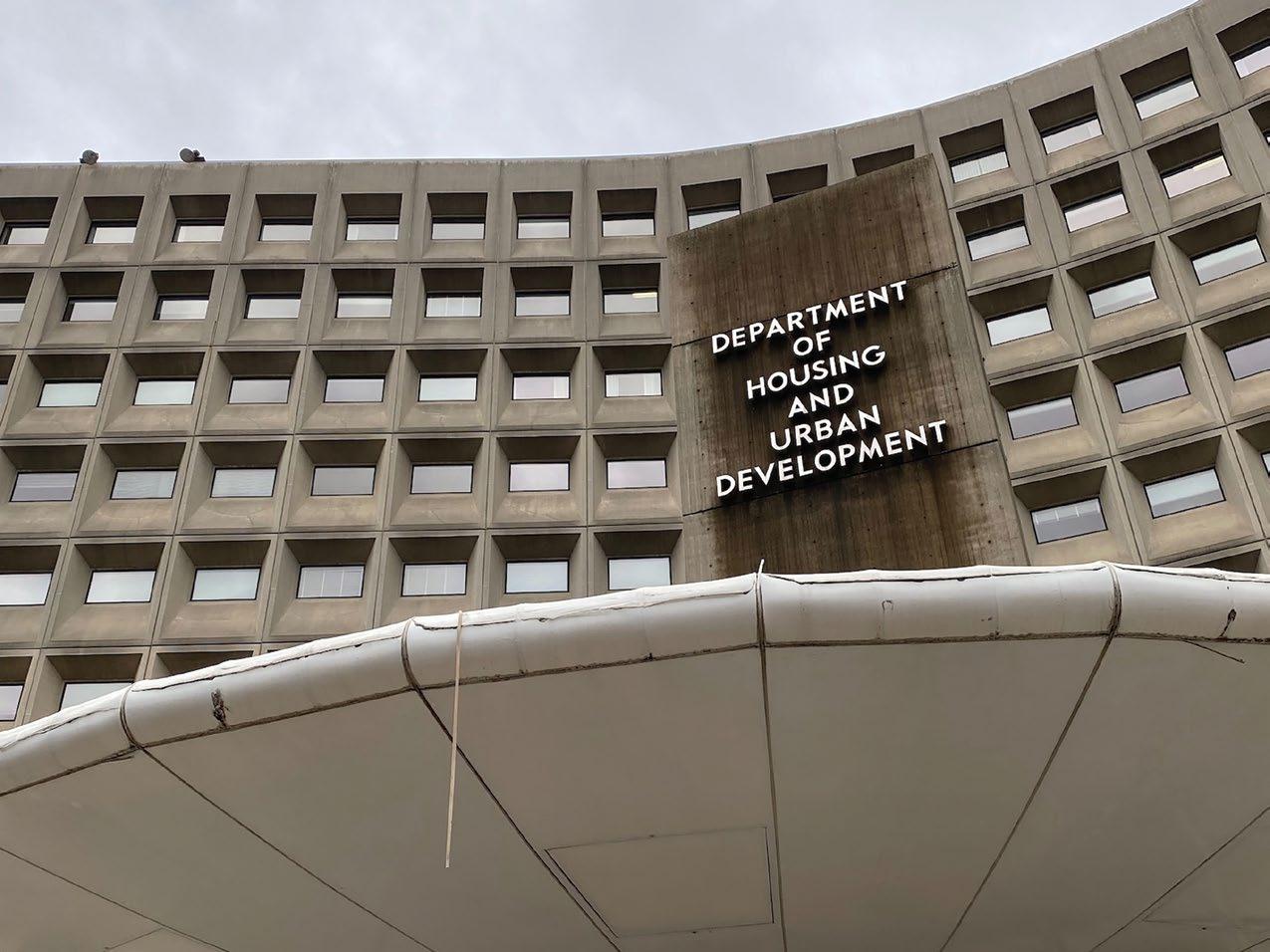
On April 1, a federal appeals court upheld an injunction preventing the US Department of Housing and Urban Development (HUD) from implementing its proposed funding plan for supportive housing and homelessness programs. The plan, released by the agency under the Trump administration, would have reallocated up to $3.9 billion in funding for major homelessness services programs and left at least 170,000 people at risk of losing housing, according to homelessness services advocates.
In November 2025, HUD rescinded its initial funding plan for fiscal year 2025 and announced a new plan, which included sweeping changes to its grant opportunity for supportive housing programs. The new guidelines would have redirected some funding from permanent supportive housing toward temporary housing and treatment programs, impacting hundreds of thousands of people who rely on these programs across the country.
The National Alliance to End Homelessness (NAEH) estimated that this new funding plan would cause DC programs to lose up to $22 million in federal funding, potentially forcing nearly 1,500 people out of permanent housing in the District.
BY ELIZABETH SHORT
The new funding plan is just one example of the Trump administration’s efforts to dismantle Housing First programs, which focus on providing housing to recipients without prerequisites like being sober. Most experts say that the historically bipartisan programs are the most effective way to end homelessness.
In late November and early December, a coalition of state attorneys general and a group of nonprofits, including the NAEH, filed two lawsuits against HUD, arguing that the new conditions were unlawful. In a preliminary decision late last year, a federal judge temporarily blocked the changes while considering the case.
In March, the Department of Justice appealed the preliminary injunction on behalf of HUD. The appeal “underscores HUD’s commitment to reform the misguided ‘Housing First’ approach that funded the self-serving homeless industrial complex, rewarded activists, and ignored solutions,” according to a HUD statement. Last week’s ruling denied that appeal.
“The record paints a disturbing picture of the harms that would flow to the plaintiffs, their constituents, and the public from issuing a stay,” the decision reads. “Conversely, HUD does not face irreparable harm from injunc-
tions ‘bar[ring] enforcement of an unlawful [Notice of Funding Opportunity].’”
The new decision means that the block on HUD’s proposed overhaul will remain, and that the agency will have to return to its initial pre-November funding plan until a final decision on the case is made.
The federal budget, signed on Feb. 3, included language ensuring that these permanent supportive housing grants, under the original funding plan, are awarded as quickly as possible. The budget requires HUD to renew all grants expiring in the first three months of 2026 for a 12-month period.
On March 31, HUD announced nearly $350 million in renewal funding for over 600 projects across the country that had expired over the last three months. This includes $15 million in awards to 15 projects in DC.
HUD awarded The Community Partnership, which runs the city’s continuum of care and helps to oversee many HUD-funded programs, nearly $600,000. Tom Fredericksen, chief of policy and programs, said that the organization expects delays in funding every year, and is always prepared with gap funding. “But we are getting the award announcement later than usual,” he said. “I don’t know in this
case how long it will be until HUD is able to start to execute grants.”
This decision came just a day after the US District Court in Rhode Island’s Judge Mary McElroy ruled against HUD’s efforts to require programs and jurisdictions it funds to adhere to the Trump administration’s views on immigrants and transgender rights. This plan, which HUD tried to implement for a smaller, related homelessness funding program, included blocks to programs that offered harm reduction services and were inclusive to transgender people, but this ruling prevents these changes. McElroy is the same judge who initially issued the injunction in the permanent housing funding case.
According to the NAEH, the organization still awaits the court’s final decision on the permanent housing case. “As the Trump-Vance administration continues to weaponize federal funding and attempts to hold hostage support for people experiencing homelessness — including families, seniors, veterans, and people with disabilities — we are relieved that the appeals court has left the order we earned late last year in place,” NAEH said in a statement.
Courtesy of Street Sense Media / INSP.ngo


















As a Taurus, you’re probably keenly aware of the paleolithic cave paintings in Lascaux. I would expect you’ve spent a lot of time contemplating the 17,000 year old images of ancient bulls depicted on those stone walls. And I’m sure you’ve wondered if the pre-proto-European artists who covered that subterranean chamber in the faces and forms of the animals they hunted to survive ever thought about you. Or maybe you’re just finding out about all this. Maybe you’re only now realizing that humans have been turning anxiety into art for millennia. In any case, Taurus, this is a good day to paint your fears and hopes to life. Spend a little time in the cave today.
This morning I was driving home from my night-shift and there were already people lining up outside the hardware store. Any idea what’s going on over there today? Oh! I bet they’re releasing that new Bizz-Kull double sided indoor-chainsaw. People go crazy for Bizz-Kull products with all their bright colors and clever attachments. You can use this one to slice through branches or open plastic packs of AA batteries! So versatile! Anyway, Gemini, if you’re gonna get your current project done, I think you might need a more specific tool. It might be worth some investment to get it right. Get the pink one if they’ve still got it!
I thought I should learn to identify the songs of the various birds in my yard but they all keep tweeting over each other so it’s hard to distinguish one from the other. I’ve been sitting out here for 20 minutes and so far I think I’ve got: crow, cardinal, the grey one, and the little bouncy one with the spiky hair. The rest are a blur. Maybe I should look up the names of these birds first? Is there an app for this? Are we all increasingly a culture of people with no mentors? No friends? No ancestors? No one to tell us which bird says “too-too-wheet” and which “coor-ROO?” I’m not here to judge, Cancer. but maybe before we ask a chatbot for advice or information, we could run it by a next door neighbor first.
Ever since they remodeled the grocery store by my house I get a real uneasy feeling when I walk down the chip aisle. Like maybe the Doritos don’t want me around. Has anybody else noticed this? Do grocery store aisles ever get haunted? Can salsa have bad intentions? Or is it just my memory of the time I was there and I ran into my old roommate? I guess we never really worked anything out at the end, we just kind of moved out and stopped talking. I guess that’s a more likely cause of my unease than vengeful tortilla strips. Thanks for helping me explore this, Leo. Are there any aisles you’re avoiding that might need a little attention?

My earliest memories are probably mostly constructed from stories I’ve told myself since childhood. Do I remember being chased by an angry goose while I wore my blue sweater or was that just a photograph in the kitchen? Do I remember waiting for my dad to come home, scoop me up, and lift me over his head while I cheered or did I just hear about that often enough to make a movie in my head? It’s hard to say what’s going on in these brains, Virgo, but it’s good to realize that the stories you tell yourself about yourself aren’t as solid as we pretend. If any of those stories are stopping you from doing the next thing you need to do, maybe you can just stop telling them for a while.
Well, this is surprising news. The Zodiac has recently ruled that Libra is being redistricted into Scorpio and parts of Capricorn. You’ll still receive a horoscope, of course, but it will no longer be based on what The Stars indicate for you in particular. As an amateur astrologer, I never get a vote on these kinds of big decisions–but I don’t think this will stand the test of time. Surely we can get this changed. Until then, Scorpio, I mean, uh, Libra, I hope you’ll keep speaking up for yourself. And, in case you get tired of having to defend yourself all the time, I’ll be speaking up too.
This afternoon has been a real rollercoaster. I ordered a large dipped-cone with that chocolate that gets all crunchy when it gets cold. Perfect! But after one bite the ice cream was melting all down the sides of the cone and getting all over my fingers and astrologer’s-robe sleeves. Miserable! But I’m pretty resourceful, so I asked for a cup and a spoon. Brilliant! But as I turned the cone over into the cup, the base cracked and got all over my thumb and I flinched and dropped most of the ice cream onto the table. Wretched! It’s important, Scorpio, to be able to identify your responses to circumstances and understand that they are just emotional reactions and not reality. Think about that while I wait for the brownie sundae. Much safer!
I think I’ll just have a salad, Sagittarius. No, wait, the Improbable Burger with extra soy cheese. I’m sorry. Could I still change to the Chickn’t Strips? Wait, hang on, I really am just gonna get the salad. Waiters always think I’m indecisive, Sagittarius, but really I’m just trying on new realities. Saying things out loud to see how they feel. Stepping through doorways into alternate futures and then stepping back to the present before making my final decision. Don’t let anybody tell you not to change your mind, Sagittarius. You’ll know what you want when you get there. Can I actually just switch to the bottomless chilli and bread sticks? That should work.
When you finally write your book, Capricorn, I hope it’s a novel. I hope you take all these experiences you’ve had and use them as the setting for characters who can work out problems you’ve had to work out. I hope it’s got something in it that feels like that one summer you got it all together. And I hope you won’t be afraid to include the things you still haven’t figured out yet. And I hope it has robots. And maybe a parallel-story in an alternate past with a talking reindeer. That’s just the kind of novels I’m into, though. Write what you know, Capricorn. But in any case tell your stories. And tell them true.
In the late Cretaceous period, maybe 90 million years ago, there were 60-foot long octopus-like molluscs who were apex predators of the sea. They probably spent their days crushing and eating giant aquatic dinosaurs with their enormous arms and terrifying beaks . And, since we all know octopuses are very smart, we can only assume that colossal octopuses would be even smarter. So they probably spent their spare time writing poetry and doing long-division at the bottom of the sea. If you find yourself down in the dark places, Aquarius, feeling lower than you’ve ever been and unsure how you’ll find a way back up, keep an eye out for the poetry of the ancient-deep. And if you send us a text, maybe we can come down there and hang out for an afternoon. We can make it back to the surface if we go together.
I got one of those apps where you can bet on anything! It’s great! First I lost $10 betting that there would be a snow storm in the spring (I would have made a killing!). Then I lost $50 betting that Bruce Springsteen’s middle name was Athanassius (probably should have Googled that first). If I lose this next one, I think I’m gonna delete the app. Maybe you could help me out, Pisces. Do you think humanity is inherently good but acts selfishly out of fear? Or do you think we’re inherently evil but act charitably out of self-preservation? Or, are good and evil artificial descriptors invented ephemeral apes to justify subjugating equals? Think it over if you need to. I’ve got $150 riding on this one.
I was weeding my garden this morning, Aries, and my little hand-spade hit something hard down in the ground. It felt kind of hollow, so I could tell it wasn’t a rock. I dug around a little with my fingers and, sure enough, I pulled out an old Matchbox firetruck. Some kid must have been playing out here decades ago and forgot to bring it inside. I like thinking of them pretending a little Matchbox emergency and then here comes the tiny firetruck, tiny siren blaring. And it felt so real and exciting and now it’s just a story that I’m making up. It’s strange how the urgent can age into the anecdotal. When was the last time things felt this dire, Aries? What happened next?
Mr. Mysterio is not a licensed astrologer, a trained waitstaff member, or a certified chainsaw operator. Want more? Visit mrmysterio.com Or just give him a call at 707-VHS-TAN1.
CREATED BY BRADLEY B., CONTRIBUTOR VENDOR
To solve this weeks cipher use the Crime 101 movie review found on Page 19 of the April 22 - May 6th issue. Enjoy!
1:40:7 1:1:2 1:5:2 / 1:5:1 1:1:5 / 1:1:8 1:3:3 1:10:5 / 1:10:1 1:2:1 1:11:3 1:3:5 / 1:13:8 1:8:6 / 1:3:4 1:10:2 1:13:2 / 1:18:5 1:12:2 1:14:4 / 1:1:6 1:13:1 1:9:5 1:1:3 1:16:2 / 1:10:4 1:21:3 1:4:2 1:1:7 1:5:3 1:3:1 1:6:1 1:11:5 1:16:5 , / 1:27:1 1:18:2 1:12:5 1:22:1 / 1:23:3 1:9:3 1:41:3 1:18:3 / 1:28:1 1:13:9 1:22:3 / 1:1:1 1:5:4 1:12:3 1:13:4 1:30:5 / 1:14:3 1:34:1 1:23:2 1:21:1 . — / 1:8:1 1:11:2 1:13:7 1:34:6 1:8:2 1:5:5 / 1:1:4 1:23:6 1:38:1 1:15:1 1:24:2 1:16:3 / 2:2:4 1:8:5 1:8:7 1:1:9 / 5:76:4 1:20:2 .
BY SEAN L., CONTRIBUTOR VENDOR
There he goes once again, up to his usual thing!
Has anyone yet noticed there’s a clown on the wing?
Day in and day out, He might dance, he may sing; Even though I will look, I won’t give him a thing!
Does this guy not know how the world works for real? Am I part of his joke? What’s really the deal?
Either way, He’s still out there; Now, he stands by ‘yon tree, But I’ve got to keep moving. Makes no difference to me!
I really do hope, in my deepest of hearts, that he gets a real job and moves on from these parts!
Well, until that day comes, or you’re locked up in the bing, wave at me once more Mr. Clown on the Wing!
BY SEAN L., CONTRIBUTOR VENDOR
Survival’s the key to the world today, lest the bills take over the lead. Yet, where is a person to lay their head when facing the greatest of need?
Call Ye upon the Father, in fact, upon the Mother too; These gentle souls are called Parents, so “Pay-Rent” is what they should do!
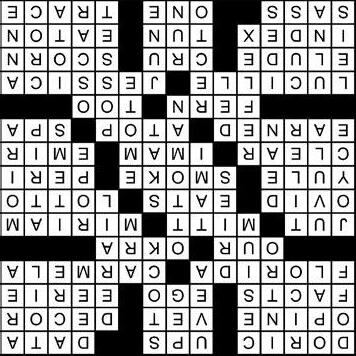
Solution to this cipher will be in our next issue!
SUBMITTED BY HOWARD P., CONTRIBUTOR VENDOR
It is hard to find a joke today without a dirty word or two in it, but here is one: Two tall trees, a Birch and a Beech, are growing in the woods. A small tree begins to grow between them, and the Beech says to the Birch, is that a son of a Beech, or a son of a Birch? The Birch says he cannon tell, but just then a Woodpecker landson the Sapling, the Birch says, “Woodpecker, you are a tree expert, can you tell if that is a son of a Beech or a son of a Birch?”
The Woodpecker takes a taste of the small Tree and replies, “It is neither a son of a Beech nor a son of a Birch. It is, however, the finest piece of Ash I have ever poked my pecker into.” Now wipe that smile off of your face!!
BY JAMES “SHORTY” R., CONTRIBUTOR VENDOR
You never know what people are going to hand you when they roll the window down. They give you anything and everything. While money is already cool, in the summertime people often give you plenty of water. I’m grateful for everything I’m given like snack bags with water bottles, socks, toothbrush and toothpaste, small Bibles and two dollars for the paper. Sometimes they give me Little
Caesar’s Pizza still hot with a bottle of water. Sometimes you get gift certificates. The craziest thing I got is a jar of gum. When I looked in it there was no gum. There was three, $1 bills and three dollars in quarters.
Another time someone gave me a pouch with a label that said, “candy.” I waited a week to open it it. I had put it on the sink counter and one day I was in the kitchen
and the pouch fell on me so I finally opened it. In it was $8 in change. That was a surprise and a blessing. Sometimes they empty their console out and you get a bunch of change. Some are funny coins. I got a coin once that said, “Good for one dog wash.”
It is truly amazing what you can get when it is all said and done for the day. Thank God for everything I get!
“Into this world” They have brought us, the rest said can be taken by hint. Let us never forget these wise sayings when our poor, little money is spent!
The joy of their lives is their purpose: To take care of gifts sent from Above. How rudely we claim that “We’ve got it!” How dare we deprive them of Love?
Therefore, let us learn the tough lessons of Prudence defeating our Greed; And, to always call upon our dear Parents when there’s poor, little mouths to feed!
BY LORA V., CONTRIBUTOR VENDOR
There was a man trying to make a life by writing comic books. He really was not making enough money at it. Not even enough to pay the bills. So, one day he made a change up. He made up his own Zine magazine up. He started selling the Zine. They started selling like hotcakes. He made so much money he had to hire a personal accountant. I think it is funny because the paper is trying to sell the Zine. Some vendors are telling me they are selling more Zines then the paper.











BY JOE NOLAN, FILM CRITIC
In the early days of the pandemic, after the novelty wore off and the uncertainty and anxiety began to wind up, RZA launched an online cinema featuring pay-per-view screenings of 35mm prints of classic kung fu cinema titles like my favorite Shaw Brothers film, The Five Deadly Venoms, and Shaolin vs. Wu Tang — the movie that gave the Wu-Tang Clan their name. The screenings teamed up with local cinemas to share profits at a time when indoor theaters were shuttered, and they featured a live audience chat and commentary from RZA and martial arts cinema personalities like Michael Jai White. In addition to RZA’s rap career, he’s done scores for movies by Jim Jarmusch and Quentin Tarantino, and he’s made four feature films including his new contemporary crime-fu drama, One Spoon of Chocolate.
RZA hosted his pandemic screenings via his 36 Cinema platform. As viewers returned to theaters, RZA pivoted his project into 36 Cinema Distribution — they’re releasing the new film which is being promoted as a Quentin Tarantino production. Writer-director RZA crafted One Spoon of Chocolate as a satirical action thriller that blends blaxploitation homage with contemporary social commentary. The film starts with a brutal cold open before cutting to a dramatic epic title sequence homage that reveals Randy “Unique” Jackson training martial arts in a cramped jail cell. In a handful of wordless scenes scored to lo-fi beats and a mournful Spanish guitar, RZA shows us Jackson serving his time and being released from jail, fully establishing viewers’ solidarity with the antihero before they even know his name. It’s a masterful beat and RZA’s capacity for shifting deftly and purposefully between moods is part of what makes this such an accomplished collage of genre mashing. Cinematographer Brandon Cox shot the film, editor Joe D’Augustine assembled it, and Tyler Bates composed the score alongside RZA.
Randy “Unique” Jackson (Shameik Moore) is a military veteran and ex-convict seeking a fresh start when he lands at a shelter for veterans hoping to have his parole transferred to Ohio so he can be closer to family. In an enigmatic bit of foreshadowing, Jackson — who’s known for his temper — blows a gasket about the “one spoon of chocolate” that somebody left in the bottom of the cocoa tin. An old timer stirs that last portion into a big glass of cold white milk saying, “One spoonful of chocolate can change the whole glass. One spoonful of chocolate, that’s why they fear you. They scared of the changes you bring.” It’s the kind of prophetic line you’d hear from a monk or a mad forest wizard in a Hong Kong fisticuffs fantasy, and it’s emblematic of the East meets West, Hong Kong Hip Hop aesthetic that’s defined RZA’s sprawling WuTang universe.
After getting transferred to the small town of Karensville, Ohio, Jackson has an altercation with a local gang. He begins investigating the disappearance of young Black men in the area,

including his cousin Lonnie (Isaiah R. Hill). His search reveals a horrifying conspiracy that finds One Spoon of Chocolate wandering into gore territory and adds RZA’s movie to a list of violent contemporary films like Django Unchained, Nope, BlacKkKlansman, and Sinners featuring Black heroes set against organized, ritualized — even medicalized — white supremacist cults. One Spoon of Chocolate doesn’t reinvent the revenge movie arc, but RZA uses his story transitions to decorate this movie with character-driven scenes that ground the film in reality and give Jackson more emotional gravitas than viewers may find in the blaxploitation and kung fu cinema classics
that inspired this film. Instead of waiting to become the next victim, Jackson studies a survivalist manual, builds an arsenal of improvised weapons and forms a small platoon of his own. And if that’s the kind of sentence that gets you excited for a crime/drama/ horror/martial arts film, this one is for you.
One Spoon of Chocolate is now playing in limited release nationwide.
Joe Nolan is a critic, columnist and performing singer/ songwriter based in East Nashville. Find out more about his projects at www.joenolan.com.
“The Contributor” está trabajando con uno de los principales periódicos en español La Noticia para llevar contenido a más lectores en Middle Tennessee. Nuestros vendedores de periódicos han pedido durante mucho tiempo que nuestra publicación incluya contenido que apele al interés de residentes de habla hispana en nuestra comunidad.
“The Contributor” is working with one of the leading Spanish-language newspapers La Noticia to bring content to more readers in Middle Tennessee. Our newspaper vendors have long requested that our publication include content that appeals to the interest of Spanish-speaking residents in our community.

E n l o s ú l t i m o s años, el ayuno ha pasado de ser una práctica tradicional vinculada a la fe a
c o nve r t i r s e t a m -
bién en un tema de interés científico y
d e b i e n e s t a r M á s allá de las tendencias, esta práctica

Por Yuri Cunza Editor in Chief
@LaNoticiaNe ws
m i l e n a r i a c o n e c t a dos dimensiones fundamentales de la vida humana: el cuer po y el espíritu
¿Qué es el ayuno y por qué impor ta?
El ayuno consiste, en tér minos simp l e s , e n a b s t e n e r s e d e a l i m e n t o s
d u r a n t e u n p er i o d o d e t e r m i n a d o
Existen diferentes for mas, desde el ay u n o i n t e r m i t e n t e h a s t a p r á c t i c a s más prolongadas, siempre bajo supervisión adecuada. Lo que hoy sor prende es que la ciencia moder na ha comenzado a validar algunos de sus beneficios más profundos
U n o d e l o s c o n c e p t o s m á s e s t u d i a d o s e s l a a u t o f a g i a , u n p r o c e s o b i o l ó g i c o m e d i a n t e e l c u a l e l c u e r p o “ s e l i m p i a ” a s í m i s m o D u r a n t e e l ay u n o , l a s c é l u l a s e l i m i n a n c o m p o -
n e n t e s d a ñ a d o s o e nve j e c i d o s , r e c i -
c l á n d o l o s p a r a g e n e r a r e n e r g í a y
p r o m ove r u n a m e j o r f u n c i ó n c e l u l a r
Autofagia y re generación celular
L a a u t o f a g i a f u e o b j e t o d e
r eco n o ci m i en t o ci en t í f i co cu a n do el
i nve s t i g a d o r j ap o n é s Yo s h i n o r i
Ohsumi recibió el Premio Nobel en 2016 por sus estudios en este proceso Se gún la investigación, el ayuno activa mecanismos que ayudan al cuer po a:



• Re d u c i r l a i n fl a m a c i ó n
• Mejorar la función metabólica
• Eliminar toxinas a nivel celular
• Optimizar la respuesta del sistema inmunológico
Además, algunos estudios sugieren que el ayuno puede estimular la producción de células madre, fundamentales para la re generación de tejidos Estas células tienen la capacidad de transformarse en distintos tipos celulares, contribuyendo a la re paración del cuer po.
Aunque estos beneficios son prometedores, los exper tos coinciden en que el ayuno debe practicarse con responsabilidad y considerando las condiciones individuales de cada persona
Más allá de la ciencia: el ayuno como práctica espiritual
El ayuno no es un descubrimiento
Conoce tus derechos: ¿Que hacer en caso de una redada?
Mantenerse callado
Sólo dar nombre y apellido
No mentir
Nunca acepte/lleve documentos falsos
No revelar su situación migratoria
No llevar documentación de otro país
En caso de ser arrestado, mostrar la Tarjeta
Miranda sados en la Quinta Enmienda de la Constitución, derechos de guardar silencio y contar con un ogado fueron denominados Derechos Miranda go de la decisión de la Suprema Corte de Justicia Estados Unidos en el caso Miranda vs Arizona, 4 U S 436, de 1966
moder no Ha sido par te esencial de tradiciones religiosas durante siglos
E n e l c r i s t i a n i s m o, e l ay u n o e s u n a p r á c t i c a p r o f u n d a m e n t e a r r a i g a d a
q u e s i m b o l i z a s a c r i f i c i o, d i s c i p l i n a y
c o n e x i ó n e s p i r i t u a l
Uno de los ejemplos más conocidos es el de Jesús, quien se gún los Evangelios ayunó durante 40 días en el desier to (Mateo 4:1-2) Este periodo no solo re presentó una pre paración espiritual, sino también una pr ueba de for tale za, fe y propósito
El ayuno, en este contexto, no se limita a la abstención de alimentos Es t a m b i é n u n a c t o d e i n t r o s p e c c i ó n , oración y renovación interior Muchas comunidades cristianas lo practican durante la Cuaresma o en momentos de reflexión personal, buscando una conexión más profunda con Dios
Un puente entre cuer po y espíritu
Para muchos, el ayuno se convier te en una her ramienta de disciplina que va más allá del cuer po Es una for ma de pausar, reflexionar y reenfocar prioridades en un mundo acelerado
Consideraciones impor tantes
A pesar de sus beneficios potenciales, el ayuno no es adecuado para todas las personas Mujeres embarazadas, personas con condiciones médicas específicas o quienes toman cier tos medicamentos deben consultar a un profesional de la salud antes de iniciar cualquier práctica de ayuno.
El equilibrio es clave Tanto la ciencia como la fe coinciden en que el ayuno debe practicarse con intención, conocimiento y respeto por el propio cuerpo
El ayuno, lejos de ser una simple tendencia, es una práctica con profundas raíces culturales, religiosas y ahora científicas Desde la activación de procesos como la autofagia hasta su significado espiritual en tradiciones como el cristianismo, re presenta una opor tunidad para reconectar con uno mismo
En un mundo donde el bienestar se bu s c a d e s d e m ú l t i p l e s á n g u l o s , e l ayuno emerge como un recordatorio de que, a veces, el verdadero crecimiento c o m i e n z a c o n u n a p a u s a
Envíenos sus sugerencias por correo electrónico: ne ws@hispanicpaper com|615-582-3757