
















Venmo has canceled our account, but you can still pay using Square! You must identify your vendor so we know where to send the payment. Here's how:
After clicking “checkout,” type your vendor's name and four-digit badge number in the “Required” field. This allows us to know which vendor to



Since The Contributor started in 2007, more than 3,200 different vendors have purchased $2.3 million worth of The Contributor and sold over six million copies, generating over $15 million in income for themselves.
In 2019, our C.O.V.E.R. Program (Creating Opportunity for Vendor Employment, Engagement, and Resources) was the natural expansion of our mission of removing obstacles to housing. We now offer full case management, assistance with housing and rental expenses, addiction recovery, health insurance, food benefits, and SSI/SSDI assistance.





LEARN MORE ABOUT
I was first introduced to homelessness by befriending a middle-aged man called Earnest who was living on the streets of Nashville. Earnest would have been considered as a person experiencing chronic homelessness. All I knew at that time was that he was sleeping in places not meant for human habitation, sold pencils on the streets and heard voices in his head.
At one opportunity, I went to church with Earnest. He sent me inside, so he could sell his pencils as parishioners who knew him entered the Cathedral. I obliged and sat in a pew until Earnest joined me. Earnest had a habit of grunting and whipping slightly back and forth. The looks I received from people clearly wondering what I was doing sitting with him in this place of worship were eye-opening to me.
May is National Mental Health Awareness Month, which aims to confront the stigma around mental illness.
According to the Merriam-Webster dictionary, stigma is “a set of negative and unfair beliefs that a society or group of people have about something.”
When we talk about homelessness, one widespread belief is the assumption that people living on the streets all suffer from mental illness, have a substance use disorder — or both. While it is certainly true that some people, like Earnest, suffer from severe and persistent mental illness, a fact is that when you are in survival mode 24/7 for months or years, the likelihood of developing mental health issues is extremely high — if not to say likely.
But what we also have to consider is that the majority of Americans who struggle with a mental health issue are housed, have jobs, and raise families. They are not living on the streets or in an emergency shelter.
When you are without a home, it becomes extremely hard to address a mental health crisis, which is likely to worsen the longer someone is on the streets or in shelters where access to individualized care, maintenance of a healthy diet and continuation of needed medication are hard to secure and maintain.
The stigma and stereotyping that people on the streets encounter poses an additional barrier. Earnest, for example, did not drink alcohol as long as I knew him. He did not abuse drugs. He had many complex health issues, and one of the things that stood out was his mental illness. But, he could teach all of us, who came together to help move him into permanent housing, when it came to knowing how to survive on the streets. Earnest struggled, but he was creative, funny and he brought people together. Once you got to know him, you could not help but love Earnest.
Earnest is why I am still involved in trying to convince government folks, business people, nonprofit leaders and anyone willing to listen that we can make a difference if we invest in long-term solutions that include access to proper mental health care even for people who are still on the streets. Instead, the current political will focuses on already tried and failed quick-fixes promoted by
BY JUDITH TACKETT
“When you are in survival mode 24/7 for months or years, the likelihood of developing mental health issues is extremely high — if not to say likely.”
government administrators who are focused on making homelessness invisible rather than solving it.
The Earnests of this world deserve better than being holed up and put away wherever they can be stashed indoors (made invisible) with nice propaganda slogans along the way. They deserve someone who listens to them and hears what their goals are and how we can come together to achieve certain milestones along the way.
Ultimately, we all have the same goal. “I don't want to see homelessness anymore either.” But my priority is to do it in a way where all of our neighbors are part of a community and have a place that they feel is their home.
What I am saying is that we need to learn to listen to people like Earnest rather than take the easy option and dismiss their own wishes and dreams. We love to solve issues with a cookie-cutter approach that is predictable and ideally time-limited. I have heard too many so-called experts say they know better what “these people” need. They may think so because someone does show signs of or has a diagnosed mental illness. To prove that they are doing the right thing, cities like Nashville keep bringing in big-name consultants from out of town. They bring great messaging and somewhat cookie-cutter approaches that they can take on the road from city to city.
I once spoke with a veteran experiencing homelessness. He had a campsite he shared with a buddy. He opened up to me and asked if the city could help clean up an encampment across from his where the trash was piling up, attracting rats that then spilled over to his campsite. During the conversation I asked what kind of housing would be ideal for him. What was he truly looking for?
This veteran was very clear that he needed to have his own place, a trailer or something small in nature, away from people. That’s how he could handle his mental health issues due to PTSD (post-traumatic stress disorder). What stood out to me is that he knew exactly what type of housing would work for him and how much he could afford based on his benefits and current budget. He also was willing to share a place with his camp buddy since they were already used to each other.
Unfortunately, those were not the options that the government (neither the at the federal nor local levels) had available at that time. It did not fit into the funded solutions. And it was not what the consultants from out of town were promoting either.
Government folks frequently use terms like best practices and “evidence-based.” However, they don’t seem to stick with any of those practices long-term. The solutions governments promote seem to follow certain patterns, like a pendulum on a clock. But long-term funding for subsidized housing with the right wraparound supports are not high on any government’s wish list because they take time to build and seem to be too expensive. Politicians want to see high housing placement rates. They are less interested in paying for the same 100 people for 10 years, even though research shows that it does not cost more than keeping people with severe and persistent mental illness fending for themselves on the streets.
That cost of living on the streets for people with severe mental health issues often includes frequent emergency department, hospital, and jail stays. That’s costly — about as much as it would cost to subsidize their rent, pay for the medications, health care, and support services.
Currently the pendulum has swung to the right, where the U.S. Department of Housing and Urban Development (HUD) has made it clear that they want to invest in temporary housing and force people into accepting treatment that they may not even want or need. Prior to the Trump administration, the pendulum swung to the left where HUD promoted a Housing First philosophy and took away funding from temporary programs that offered intensive services for people who wanted recovery housing.
What we need is a system that focuses on our neighbors at the local level and listens to what they think they need at the moment, so that they can choose to go directly into permanent housing with support or into a temporary recovery program that actually leads to permanent housing. We need truly individualized approaches and investments in a system with options that are not dictated by administrators and incompetent leaders who prefer to listen to politicians rather than people with lived experience.
And these systems need to lead to accessible housing for everyone. For that, the federal government has to be on board and invest in its own citizens — either by creating policies that allow for everyone to have living income and/or subsidize housing to where people are no longer pushed onto the street by our own governments lack of investing in safety nets.
This government has already proven that this is doable.
Between 2010 and 2016, street and
sheltered homelessness in this country decreased by roughly 14 percent. When we look at homelessness among veterans, the decrease since 2010 to the present has been around 55 percent — regardless of where the partisan pendulum swung.
Why is that? Because when it came to Veteran homelessness, Congress decided that a focus on permanent housing with the right support was needed, and politicians actually invested the money for programs that focused on ending Veteran homelessness.
In other words, when the federal government is willing to invest long-term into housing and support services, including those that address mental health and substance use issues, we see results.
Unfortunately, the pendulum has swung in an extremely conservative position where powerful think tanks like the Cicero Institute live. Their lobbyists moved from state to state, mainly focusing on Republican-led governments, to convince lawmakers to:
1. Outlaw the existence of folks like Earnest (being homeless in a public space is essentially illegal in Tennessee, even if a person has no place to go); and
2. Lock people up in institutions that are touted as comprehensive services centers (like the one proposed in Salt Lake City, Utah).
The Salt Lake City proposal is highly controversial and concerning. In essence, it closely resembles an internment camp where some people will be on lock-down once they are given the choice to go either to this proposed service center or to jail. While the rhetoric around the Utah campus proposal that would stash away 1,300 people in one location may sound convincing, we already know it won’t work with one exception: it certainly would make 1,300 people who were living on Salt Lake City’s streets invisible.
If Earnest were still alive today, he would likely be scooped up from the streets and given a choice between jail or temporary housing, where due to his severe and persistent mental illness, he would be restricted from leaving.
The sad truth is that Nashville leaders are not far from endorsing this type of approach. They are too focused on making the numbers work and homelessness invisible rather than listening to the local community, including people like Earnest and the Veteran who wanted a trailer in nature.
What can you do?
One way to start paying attention is to read some of the articles written by The Contributor vendors in this paper. I also encourage you to sign up for Unseen Nashville (email unseen@thecontributor.org), our new street tour led by vendors with lived experience and get into conversations with them. And however you get involved, keep asking the question, “What do we really do as a government, as nonprofit providers, as churches, and as businesses to ensure that everyone has access to housing, health, and mental health care?”

Vanderbilt University Medical Center is conducting a study called “INtubation with Sedation Only to Preserve Independent Respiratory Effor t” (INSPIRE). The study seeks to learn whether seriously ill patients being placed on a breathing machine should receive a medication that makes them sleepy (a sedative) by itself or also a medication that temporarily immobilizes their muscles (a neuromuscular blocker)
For patients being placed on a breathing machine in the VUMC emergency depar tment or intensive care unit:
- When doctors feel giving only a sedative medication would be best, the doctors give only a sedative medication
- When doctors feel giving both a sedative and a neuromuscular blocker would be best, the doctors give both medications
- When doctors do not have a preference, the patient par ticipates in the INSPIRE study and is assigned to either receive only a sedative or receive both a sedative and a neuromuscular blocker
To learn more about the study, contact the primary investigator Dr Stephanie DeMasi, or visit the study website.
stephanie.demasi@vumc.org
www pragmaticcriticalcare org /current-trials/inspire/
BY ANGELINA C., CONTRIBUTOR VENDOR
Since I’ve been in Nashville, I've met a lot of new faces and been to a lot of new places. The city is a beautiful place to visit. Even though I haven’t seen too many things here, I still enjoy the museums and the parks with all the beautiful flowers and statues.
The big castle in the Centennial Park on West End is a very unique building with so much fancy art details. So many tourists come to see it. From the unique trees they have there and the beautiful ducks swimming in the ponds, it is so relaxing to go there and meditate.
The big crowds down on Broadway are really a site to see from day to day. So many people from other states and countries are in the street walking and window shopping. All the tourist busses
are traveling to take people around town to view the beautiful sites.
Some days I spend my time at the Wendy’s across from the park. When I’m finished eating, I head right over to the park to listen to my peaceful music and walk my dog, YadiPoo. I enjoy watching the college kids at Vanderbilt playing soccer and volleyball. It’s always something going on in the park to help you enjoy your day.
The beautiful churches and hotels are something to see. The beautiful detailed art they have is like the buildings in Greece. So much to see here for sure. The Grand Ole Opry is sure a site to go visit. And the Johnny Cash Museum is one of my favorites.
“The world is a book, and those who do not travel read only a page.” St. Augustine.
BY FREEPRESSGMA, CONTRIBUTOR VENDOR
I was having a reasonably successful day out on my corner, when two nice looking people walked up to me. They wanted to chat! One shorter rounder man was holding a pink tea cup. The other had on a shirt that said, “Made by Free Women.”
Mysteriously, I knew I could trust them! (Giggle)
“Made by Free Women” asked me, “How long have you been on this corner?”
“Not long,” I answered. “I had to find a good spot for morning hours because I got heat exhaustion too easily.”
He said, “I remember you from the other day, because you smiled directly at me. It is so good to see a Contributor vendor who is smiling.”
“Yes, I think, largely because of the car, people are very lonely,” I said. “Disconnected from each other and from their neighbors. I’d like to think that even a momentary connection helps people feel connected.”
Rosa Taza looked at me very kindly and said, “It’s nice to meet you.” He told me his name, and I told him mine. Then my curiosity overcame me and I said, “You’re holding a pink tea cup!”
“Yes,” he said.
“It looks like a cup our grandmothers would have had,” I said. “So are you taking it to a special person or a child?”
“No,” he said. “I just like tea cups.”
“Oh that’s so sweet!” I exclaimed. “So do I. It’s a weird thing because I can’t really hang onto them for very long, what with all the disruption and moving and camping out and all that.” They both nodded. “I like to remember what a friend of mine once put on a button. It said, ‘The one who plays with the most toys wins.’ He meant, not the one who dies with the most things!”
Everybody laughed.
Then I turned to “Made by Free Women” and said, “That is a great saying on your shirt. I want one of those. What brand is that?”
He laughed and said, “That is the brand-name.”
“You young’uns are so … clever!” I said.
We laughed some more, and they left. Later, Rosa Taza drove up, bought some papers and promised to read my articles.
So I had a wonderful day. Thank you dear customers, you are the biggest sweethearts.
BY S. LESTER, CONTRIBUTOR VENDOR
As each day brings new business, signs a ’glare, horns that beep; There’s a man on the sidewalk, laid out, fast asleep.
No thing at all seems to stir this Pro-snoozer. Not even the lights of the watching Cop cruiser! Maybe things got too hard. Could be “Out of his head.”
What made such poor soul call a sidewalk his bed?
And what of the rest of Society’s kin? Should we all feel ashamed as we walk through his den?
Something must now be done, though surely not by me. Let’s blame Life for his plight; Better yet, Poverty! Either way, he’ll be right there, Sun-up ‘til Sun-down. He looks like the comfy-est person in town!
I’ve just got to keep stepping, There’ll be two if I’m tardy.
I’m in no mood to join the Sidewalk Slumber-party! Yet, as tonight comes and my prayers have been said, I’ll pray also for him with concrete under head.
BY RAVEN NYE, CONTRIBUTOR STAFF
When I’m gone
When I’m laid to rest
That final breath
Don’t cry for me
Fight for me
Fight for my unhoused siblings Fight for my queerness Fight for those society casts aside The world may be bleak now But know there is hope
Hope we cultivate and care for Hope we build upon and nurture
Don’t cry for me
There is hope to be spread
Hope to care for
When I am gone
The battles pass on
Please take the helm
And make this world a better place
For you, for the unhoused, for the queer And everyone in between
Because when I’m gone
I can no longer fight
When I’m gone
My story ends
But the battle is not won
Written by Chris Scott Fieselman, Vendor #0015
Made for So Many? & So Many More?
Wondering: “What in the Hell?... Am I doing this for?”
They say that: “I’m likely, Probably just trying, To even up the score?” But no-one really knows? What, The Good Lord, Has in store?
To stand up for: Justice and Liberty? A Good Man must sometimes?... Endeavor to:
Pretend to Be an Outlaw…
They say that: “I’m Reaching, And Teaching and Preaching, To: The Good People of Nashville, Music City, Tennessee. That my words may last, And live on forever, Found in a Homeless, Street Sold, Newspaper.” Leaving my mark upon History, While Learning my Lessons in Futility. It means so much more, When it’s not for the Money. Sooner or Later? Someone had to be there, To make it happen, Eventually?...
Made for So Many? & So Many More? Wondering: “What in the Hell?... Am I doing this for?”
I’ve got enough problems of my own, Without trying to create an environment, For the un-housed to create a home. What does it take? To stake a claim, And then have someone, take it all away, All that you Possess?... & Everything you Own?... A well-maintained tent, And warm sleeping bag, May offer an Opportunity, That may lead to a Possibility, To reach for and achieve, A well-deserved, hard-earned, Challenging, Victory, That some have never known?...
Made for So Many? & So Many More? Wondering: “What in the Hell?... Am I doing this for?”
Written by Chris Scott Fieselman, Vendor #0015
Wondering what’s coming. Want to make it count for something? Doing something nice for someone, Just because they cross your path… Make the most of moments. Like a river that keeps flowing, Time flies by before you know it, Your present is your past…
Redeem the Time, And make it worth, The moments we spend, Upon this earth.
The Life we lives’
A Gift God gives us.
Don’t let it slip away.
Redeem the Time today.
Redeem the Time, Cause time flies by.
From the day we’re born, To the day we die.
Redeem the Time, It goes by fast.
Only heaven knows, How long it lasts?
Redeem the Time…
Redeem the Time…
What you say and do for others, For your sisters and your brothers. Taking care of one another. Let the Love, Come,
Shining Through… The time you spend together. Make their Life a little better. To the World it may not matter. How much is it worth to you?...
Redeem the Time, And make it worth, The moments we spend, Upon this earth. The Life we lives’
A Gift God gives us.
Don’t let it slip away.
Redeem the Time today.
Redeem the Time, Cause time flies by. From the day we’re born, To the day we die. Redeem the Time, It goes by fast.
Only heaven knows, How long it lasts?
Redeem the Time…
Redeem the Time…

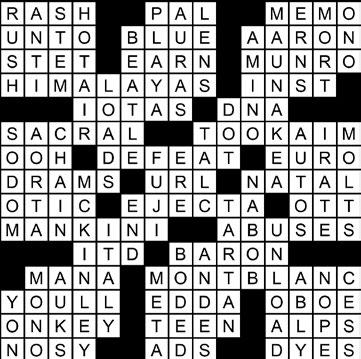
ACROSS
1. Ill-considered
5. Mate
8. "I didn't get the ____"
12. Biblical preposition
13. Down in the dumps
14. Rodgers of NFL fame
15. Proofreader's mark
16. Get bacon?
17. *Any mountain over 3,000 feet, in Scotland
18. *Mount Everest mountain range
20. Research facil.
21. Itsy-bitsy bits
22. Forensic evidence, acr.
23. Relating to sacrum
26. What Cupid did (2 words)
30. Amazement interjection
31. Not victory
34. Eurozone money
35. Whisky measure, pl.
37. Dot-com address
38. Birth-related
39. Auricular
40. Volcanic ash, e.g.
42. Pro baseball's "Master Melvin"
43. Borat's swimsuit
45. Cruel treatments
47. It would
48. Munchausen's title
50. Supernatural life force
52. *Mountain inspiration for a pen name (2 words)
56. You will
57. Icelandic epic
58. Double reed woodwind instrument
59. Like a good singer (2 words)
60. Not quite an adult
61. *Matterhorn site
62. Like a busybody
63. Commercial break contents
64. Coloring substances DOWN
1. *Mount ____more, South Dakota
2. A in ABS
3. Opposite of stern
4. Balloon filler (2 words)
5. "Vamos a la ____"
6. Saintly glows
7. Carl Zeiss' product
8. *Tallest mountain from base to peak (2 words)
9. European sea eagles
10. Dead, in France
11. Yoko of music fame
13. #11 Down's late husband, e.g.
14. Kind of acid
19. Dump truck quantities
22. Email period
23. Bible's wicked city
24. Blood circulation artery
25. ____ gang
26. Baby powder ingredient
27. Sting Rays and Mustangs
28. Angry
29. Sheds skin, as in snake
32. *World's most climbed mountain
33. Before, poetically
36. *Denali, 1917-2015
38. British East India Company millionaire
40. Fairy tale's last word
41. Scottish clan identity
44. *Vesuvius location
46. Take care of cargo
48. Foreshadowed
49. *World's longest mountain range
50. As opposed to stereo
51. Puffins and guillemots
52. Facebook's parent company
53. Competently
54. Uh-uh
55. British tax
56. Old-fashioned "far"
This past week I moved out of Mercury Courts Apartments where I have been housed for almost 19 years, to the MDHA property Centennial Towers off of West End avenue. Having been permanently housed for 19 years, it was time for me to reflect on my journey from chronic homelessness to permanent housing. After years of shelter living and cheap motels and transient housing, I finally arrived at the quite evident fact that my situation was not getting any better and my health was declining quickly. I began to investigate the housing op-
BY CHUCK C., CONTRIBUTOR VENDOR
tions I had and stopped listening to the word on the street about the impossibility of getting housing in less than three months.
I applied to Urban Housing Solutions Mercury Court Apartments in February of 2007 and my wait time was only 47 days until I was gratefully housed in Apartment 114 at 411 Murfreesboro Pike. I moved to a larger nonSRO kitchen unit in 2016 and remained there until May 1, 2026.
My thoughts today are with those folks who through the mercy shown to me when I
was experiencing homelessness guided me to my recognition of my own worthiness to be housed and my own self worth and the ability to make positive changes in my own life.
My dear friend Father Charles F. Strobel (1943-2023) repeatedly instilled in my brain, “Do you know how good you are!!” I was humbled by his mercy going back to 1991.
I was humbled by the tireless efforts of thousands of volunteers at the Rescue Mission, Room in the Inn and dozens of churches citywide. I was humbled by the mercy of a MNPD
BY WILLIAM B., CONTRIBUTOR VENDOR
Well, I’ve got a lot of medical operations coming up. I have a hole in my heart and they are either going to mend it or do major surgery.
I won’t know until next month. I also have to get my esophagus stretched again and I need a knee replacement and a hip replacement. I’m 77. I’m falling apart, but I’m still coming on strong. I’m not gonna give up selling The Contributor.
I’m having a ball playing my music for people downtown while I sell the paper. They say, “You’re great! You’re really good. You are amazing. How old were you when you learned?”
I’ve had a lot of jobs in my life you would not
believe. I’ve been a mailman. I’ve worked for the city cleaning streets and working at two different parks. I’ve been an offset printer’s assistant. I’ve been a carpenter, and a plumber and I’ve worked with electricians and locksmiths. I’ve had jobs at gas stations and restaurants. Right now I’m trying to get a job at Room in the Inn. When somebody tells me I can’t do something, they don’t know me, because I will struggle harder and harder to do it and they won’t know what they were talking about. Sadly, I’m loosing connection with my family. They keep forgetting me, but they won’t let me forget them and ask me to send them
BY JAMES “SHORTY” R., CONTRIBUTOR VENDOR
Gas prices are going up. Maybe you want to reconsider going a long way from home this Memorial Day weekend. Instead, consider a shorter trip closer to home. There are plenty of sights closer to you
and there is water everywhere. For your pleasure try fishing, swimming or boating. You can always go to the dock and look at the stars. You can always lay out in the sun and tan for free.
BY LORA V., CONTRIBUTOR VENDOR
Strawberries are ripe on the vine. So go pick some. When strawberries are fresh and ripe they are so good for making jams, jellies, and preserves. You can jar them and eat them all year round. They are good for dipping in whip cream, chocolate, peanut butter, ice cream and
cream cheese and good to use in smoothies and shakes. Try them in anything you like. Make them as pies or cakes. You can eat them naturally with nothing on them. They are sweet. So eat them up. But stop before you get sick. Don’t forget they are good for you.
SUBMITTED BY JIM P., CONTRIBUTOR VENDOR
“It’s a small world, but I wouldn’t want to have to paint it.”
- Steven Wright
Redneck Engineering Exam:
something. When they keep forgetting me it makes me not want to do anything. I call them once in a while and it makes me feel bad. I’m the youngest one living out of 12 and there are five of us left.
I will always love Nashville because I was born and raised here. My family is number one, my church is number two, and The Contributor and Room in the Inn are number three. I’m still at my same church, Ethos. They knew I was sick and couldn’t attend service for three weeks, but I told them I’d be back. I have a wonderful church family.
The Contributor is in my heart and has
officer who took me to Room in the Inn rather than jail. I was humbled by the mercy of the Criminal Court of Davidson County in allowing me to get my citizen rights restored, voting rights restored, and gun possession privileges restored (2025).
I was truly humbled by the generous outpouring of love and support of the thousands of my Contributor customers who have supported my efforts and bought papers from me since 2008.
I am truly humbled by mercy.
given me so much. I don’t buy as many papers as I used to because I’m not selling as many, but I don’t want to quit. My customers love to hear my music. I can’t stay out as long as I used to though, because my leg won’t take the beating of the spoons. I stay out for three hours now and that’s good enough for me. What they want to give for the paper is fine with me. Even if it’s a quarter. I’m an old man but I still feel blessed in my heart. Until I’m gone from this world, I’ll be published in The Contributor. To the other Contributor vendors out there, keep on trucking. It will work for you because it works for me.
$10,000 - You In?
BY FREEPRESSGMA, CONTRIBUTOR VENDOR
The SOAR team at The Contributor has done so much for me and I now have a secure apartment, but there are still many people on the street.
In Stockholm, Sweden, officials gave 50 homeless people $10,000 each with no conditions, no checks and balances — just cash. Then, they waited a year to see what would happen. Critics predicted failure, addiction, and wasted money. Instead, 72 percent of people secured housing, found jobs, and even launched businesses, while only 11 percent of people spent it poorly.
Denver launched a similar program called The Denver Basic Income Project, which provides unconditional cash transfers to residents experiencing homelessness.
Early results showed that nearly 45 percent of participants secured housing after one year. This program gives a $1,000 monthly payment for 12 months. The mayor has asked for the program to continue. This program is so much cheaper than the millions that are being spent to try to control homelessness.
So how about it, Nashville? Contact your favorite politician or CEO and ask them for a donation for this program to be launched in Nashville. Since we are the Athens of the south, we could ask the universities to form a consortium that both collects the money and does the research. The Contributor would be an excellent organization to dispense the funds. You in?
SUBMITTED BY HOWARD P., CONTRIBUTOR VENDOR
1. Calculate the smallest limb diameter on a persimmon tree that will support a 10-pound possum.
2. Which of the following cars will rust out the quickest when placed on blocks in your front yard? 66 Ford Fairlane, 69 Chevrolet Chevelle, 64 Pontiac GTO.
3. If your uncle builds a still that operates at a capacity of 20 gallons of shine per hour, how many car radiators are necessary to
condense the product?
4. A woodcutter has a chain saw that operates at 2700 RPM. The density of the pine trees in a plot to be harvested is 470 per acre. The plot is 2.3 acres in size. The average tree diameter is 14 inches. How many Budweisers will it take to cut the trees?
5. If every old refrigerator in the state vented a charge of R-12 simultaneously, what would be the decrease in the ozone layer?
Esarrah Hopkins serves as the operations and health equity manager of Black Mental Health Village. Prior to joining this North Nashville organization, she worked in the public health sector, most recently at Meharry Medical College.
Hopkins holds a master’s in public health and is a certified health education specialist, which she feels is a great fit to help develop and build out the model of Black Mental Health Village.
Even though she said she never expected to be in the nonprofit field, she enjoys learning and serving the community from this grassroots level. Hopkins joined Black Mental Health Village in 2024, after being recruited by Benaias Esayeas, founder and executive director of Black Mental Health Village.
With her history in program management, development, leading teams and as a health education specialist, it made Hopkins a great fit. She has not looked back.
What is the Black Mental Health Village, and how did it come to be?
Black Mental Health Village is a nonprofit organization based here in Nashville, Tennessee. We work to increase mental health education, awareness and access for black and minority communities specifically, but we create spaces for all to receive the care and support that they need in regard to mental health.
We also support advocacy and policy work as it pertains to health justice. We do a lot of community engagement and outreach to provide community members with free educational opportunities as well as some free resources related to mental health or harm reduction, sexual health. And we partner with organizations and individuals to create spaces that are culturally affirming because cultural wellness coincides with our overall well-being, and we recognize that. Especially for black and minority communities in a place like Nashville, it's very important that those strengths are focused on and are nurtured to better support our communities in health and overall well-being.
You are the Operations and Health Equity Manager for the Black Mental Health Village. What does your work include?
On the operations side, I help and support our HR and our people management. I'm making sure that our interns, our staff and our contractors are aware of their deliverables. They have the resources to complete those deliverables and they are making that impact in the community.
I also support the coordination of our community engagement program, as well as our health equity program. Under our health equity program, I support our Health Justice Coalition, which works to build our policy and advocacy education knowledge as it pertains to tobacco and menthol. In addition, I support stakeholder engagement, making sure that we are out in the community building and sustaining relationships, making sure that we are mission aligned with organizations wanting to get in on this amazing work that we do, and just making sure that we are building our ecosystem of support for the community.
BY JUDITH TACKETT
I also support our marketing and communication. I make sure that we are letting people know what's going on with Black Mental Health Village, making sure our social media is up to date with all the amazing work that we're doing, making sure that we are getting those regularly scheduled communications and meetings on the book with people involved in our work and making sure that our data collection is up to date and that our evaluations are being managed to make sure that the programs are running smoothly.
How do people go about finding your services?
We have a few avenues. We have an online intake form. Once that intake form is completed, whether for adults or youth, we have our case management intern who connects you with our in-house clinicians or our master level interns, or we can support you with an external referral to a provider that can meet your needs.
One thing that Black Mental Health Village is able to do is provide free therapy services for individuals who do not have insurance. And so, if you do not have insurance, we can make sure that we can connect you with one of our clinical interns so that you can get the mental health support and care that you need. And if you do have insurance, we make sure to work with you. A lot of people who come to us are looking for providers who look like us, though, black providers who kind of understand more about what they're going through. And so we make sure we support them in connecting them with what they need.
Let’s talk a little about the gap in access to mental health for minority populations. What are some of the biggest hurdles the Black Mental Health Village is working to overcome?
The gap in mental health access for minority populations includes a range of things: not having people who look like us in the field providing that care, the cost for the mental health care, as well as accessibility, transportation or anything like that. Also having major distrust for medical institutions because of things that have happened in history. There's a lot of stigma as it relates to mental health care, especially in the black community, [including from] people who are experiencing mental health issues being criminalized.
At Black Mental Health Village, we are definitely working to make sure that we're operating from a trauma-informed approach, but also a healing-centered approach. We know about the negative things the communities that we are in have gone through historically. But we are also building on their strengths.
We're working to make sure people know about the free care that we're able to provide. But we've also taken it a step further, and we have implemented a better case management and referral system. We know that a lot of times people struggling in mental health, they come and they get the therapy services, but when they walk out their door, it's a whole list of other things that they may be struggling with — whether it's rent, whether it's taking care of their children, things like that.
And so what we've done now is better integrate a referral system and partnerships with [other] organizations to make sure that individuals’ needs across the board are being met.
So working with our ecosystem definitely is important, to avoid working in a silo, and to make sure that we're connecting not only ourselves but also the people we serve with other organizations doing amazing work as well.
Are there enough African American mental health care providers in our community?
No, unfortunately, there aren't enough African American mental health providers or health care providers in general in our community. It's definitely why Black Mental Health Village has been extremely intentional about supporting black master-level interns with completing their practicum requirements and getting the experience with us to make sure that they go on to get their license and to make sure that they're developing into amazing professionals and getting all of the tools and educational experiences while they're here.
We really are striving to continue building that clinical intern program to make sure that we're supporting as many black students reaching those goals because there definitely is a need for more of us in the field who look like us, and more of us who understand the intricate experiences that we face as black people.
There is still a huge stigma attached to mental health care. How do you work to overcome those?
I think for Black Mental Health Village specifically, we create so many spaces where we make people feel comfortable talking about their experiences. Stigmas are held because not enough people are talking about their experiences and not enough people are being validated in their experiences.
So whether it is a webinar, whether it's a community engagement event, whether it's a wellness program, or anything that we have going on in the community, we make people feel seen and we make them feel heard. But beyond that, we're making sure that they are getting connected to the health care that they need.
But also Black Mental Health Village, we have a diverse team. We have people who are LGBTQ, people who work with the justice system, people who work with youth, the homeless population as well. So we have a team that understands the diverse needs of different communities and the things that they may be afraid to talk about in regard to mental health. So we're definitely making sure that our team is adept and embraces a lot of those things to make sure that all communities are comfortable talking about their experiences.
What are the biggest goals for Black Mental Health Village?
[One of the goals is] creating that self-sustaining ecosystem of care, making sure that clients and community members are supported through clinical care, through communal engagement, on the policy and advocacy side, and as well as the cultural side. We want to make sure those four domains are working together efficiently because all of them in-
tersect in regard to well-being. We also want to continue expanding our network and the model that we have here in Nashville to other regions. Right now, we have just completed the creation of our Memphis chapter, and they now have confirmed leadership, so they're getting ready to launch. We want to continue spreading the Black Mental Health Village model across regions, especially within regions with a black population that are not having their needs met.
We also want to continue to develop the skills of our interns and our employees because we know that they won't be here at Black Mental Health Village forever. But when they go out in the community or they go out beyond in their professional careers, they have learned a good fundamental knowledge about the things that are affecting the community and the ways to better serve the community.
You are a chapter chair for an organization called Sisters in Public Health. Can you talk a little bit about what that is and why it is important, also important to you?
The founder, Angela Frazier, was a public health student in Texas, and she found that there was a need for the women in public health to have a space where they could gather and empower each other and make sure that their overall wellness was being nurtured as they were doing public health work. It grew into this national thing where there are chapters in a bunch of major cities.
I noticed that there was [no chapter] here in Nashville. I knew that here in Nashville, there is an amazing network of women in public health that I had met along the way or that I just have been admiring from the work that they do in the community. And so I applied to usher in the Nashville chapter, and I got the opportunity to do so. Our first event went really well. We got to meet a lot of women in public health, and we are connected and we're looking forward to implementing more events throughout the year for even more women in public health to come and connect with each other and just pour into themselves.
As a young leader working for a nonprofit organization that serves minority populations in Nashville, are there any barriers you observe and experiences that make it difficult to serve at the grassroots level?
I will say the lack of funding as well as the harmful policies that are being implemented have impacted organizations that serve minority populations. It made it more difficult for us to have the resources and the capacity to do the work.
Those are really the main barriers, but we come across so many individuals and organizations who are really passionate about their work, especially here in North Nashville. We work with so many organizational leaders who are very adamant about persisting in light of a lot of the attacks on organizations that serve these populations. That has been a big motivator for us to continue doing the work that we do. And as long as there is a need in the community, we will continue to work to meet those needs of the community.






There’s a quote seen online often from George R.R. Martin — or more likely it’s just my algorithm serving it up to me — that says a man who doesn’t read only lives one life while one who does lives a thousand lives before he dies. Especially as I wake up to new horrors each day in this world, I wonder if that quote feels as relevant in 2026. A thousand lives? Stressful. But maybe the more important part of what Martin means here is that we gather more of the human experience. For all of our daily work to train the perfectly curated expe rience through likes and swipes, books more often take us places unexpected. As is our annual tradition, The Contributor brings you our annual list of books that can take you somewhere the algorithm might not allow.





Virginia Evans
By Brad Ketch
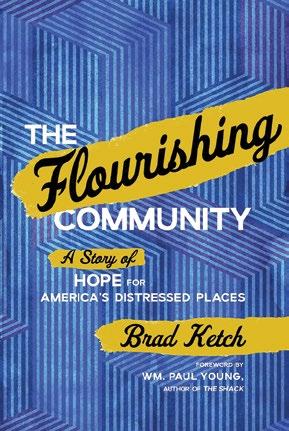
I like reading books from authors I met in a meeting. Brad Ketch is all about community building and has written a handbook of how to go into a poor neighborhood that has been seemingly overlooked. The premise is that no one will come to save these struggling communities. The saving will have to happen from within, starting with asset mapping and lifting up local leaders. This is the story of Rockwood, Ore., and how its resident leaders organized to work on building a flourishing community. JUDITH TACKETT
By Brian Goldstone
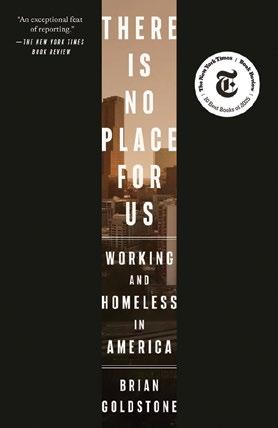
In his Pulitzer-prize winning book, Goldstone reminds us that homelessness often does not look like tents or sidewalk-sprawled sleeping bags. Approachable and heart wrenching, There Is No Place For Us weaves the very real stories of working Atlanta families living in their cars, motels and crowded apartments with the history and politics that got us to this moment not only in Atlanta but across America. INDIA PUNGARCHER
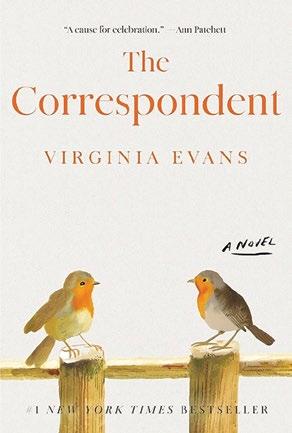
This was my absolute favorite work of fiction I’ve read in the last 12 months. Evans takes us into the world of Sybil Van Antwerp, a cantankerous protagonist who generally communicates with the outside world via letter writing despite living in the present day. Readers follow Van Antwerp’s life through her back-and-forth relationships on paper and as she progressively loses her sight. The story highlights the value of written communication, shared secrets and the opportunity to forgive oneself. EMILY WEST
By Elyce Arons
I remember reading about when Kate Spade died by suicide. What I didn’t expect was to learn all about her life through her best friend, Elyce Arons, years later in her memoir about their friendship. Told sequentially, Arons takes us back to their first meeting in college and to the moments they decided to launch their worldwide brand, Kate Spade. The memoir — which is raw and vivid — makes us feel like Arons and Spade are our best friends, too. EMILY WEST
By Brooke Nevils
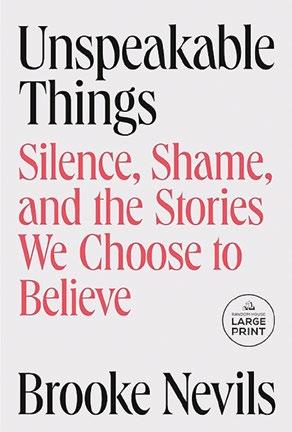
I watched Matt Lauer my entire childhood growing up, with my parents avid watchers of the TODAY Show. But Nevils shows a different side of the TV star public persona in her tell-all memoir that demonstrates how sexual assault can shatter a soul. Nevils — who came forward as a survivor of sexual assault at Lauer’s hand — takes readers through her life both before and after the assault that changed the course of her life. This was a memoir I couldn’t put down, no matter how hard and chilling it was to bear witness to that level of trauma. Nevils shows what it’s like to be a true journalist, even when it comes to reporting on herself. EMILY WEST
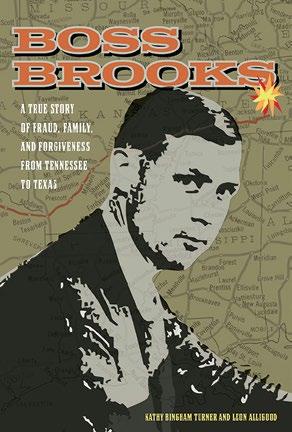
Boss Brooks: A True Story of Fraud, Family, and Forgiveness from Tennessee to Texas
By Leon Alligood and Kathy Bingham Turner
If you’ve ever felt you had a less than conventional family, you could grab a coffee to catch up with one Kathy Bingham Turner. Or you could read the book written by Turner and longtime local journalist Leon Alligood that outlines Turner’s grandfather’s tale of a faked death. Turner’s grandfather had been the subject of local lore for years, and she and Alligood dig in on what actually happened to him. It’s a lovely story of how a family manages after one member changes their history. AMANDA HAGGARD

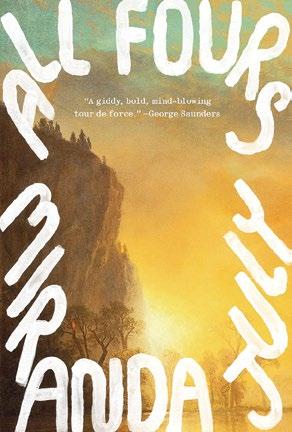
By Miranda July
When I decided to listen to this audiobook, I was under the very wrong impression that July’s book was a memoir. It somehow made the idea of a woman taking off on a cross-country trip and only making it a couple towns over to do her own thing seem even more powerful. “Do her own thing,” goes a little further than one might expect. And needless to say that while July does incorporate some life experiences into her work, it was indeed not a memoir. It’s still worth a read even if you are a more informed reader than me. AMANDA HAGGARD
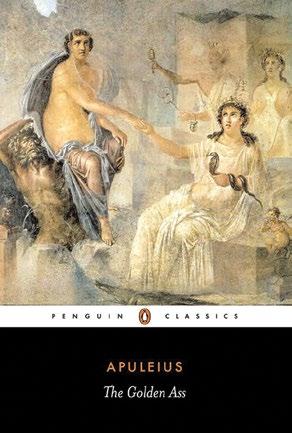
Apuleius, born under Roman rule in what is now Algeria, and writing for a Roman audience, bequeaths to us his comic masterpiece
The Golden Ass: a rollicking, off-color, satirical proto-novel that feels surreally modern. In it, his alter ego, a young man named Lucius, is transformed from a man into a donkey by his reckless new girlfriend, who dabbles in black magic. We travel with Lucius-as-donkey for a year as he desperately tries to get his mouth on some roses, the antidote that will turn him back into a man. As he passes from owner to owner, increasingly imperiled on his unwitting adventure, a series of hijinks ensue. Can a text from the second century really be a fun beach read? Yes. It can. LAURA BIRDSALL

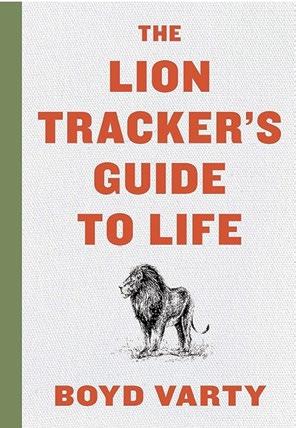
By Boyd Varty
The Lion Tracker's Guide to Life is a beautifully written blend of memoir and life philosophy, following a real-life lion tracking expedition in the South African wilderness. As Boyd Varty tracks a lion alongside mentors from childhood who are master trackers, he reveals how the ancient art of tracking becomes a powerful metaphor for navigating our own lives, stressing intuition, and reconnecting with our “wild” inner selves. We don’t know where we are going, but it certainly helps to know how to get there. The audio book is wonderful, and is read by the author. CATHY JENNINGS
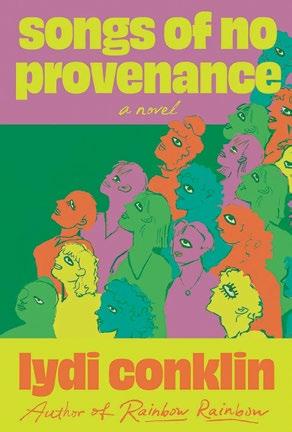
By Lydi Conklin
I’ll be honest, I love everything I’ve read by Lydi Conklin. The way they approach narrative is refreshing. There are plot twists in their stories that don’t feel trite. In Songs of No Provenance, Conklin explores discomfort, self-awareness and shame in ways that most authors would shy away from. The main character reckons with a pee fetish (somehowI promise that’s not a spoiler) as well as a career in music that leaves them confused and searching for who they actually are. Conklin’s not one for a traditional moral arc so if you can’t handle a complex character, this one may not be for you. AMANDA HAGGARD
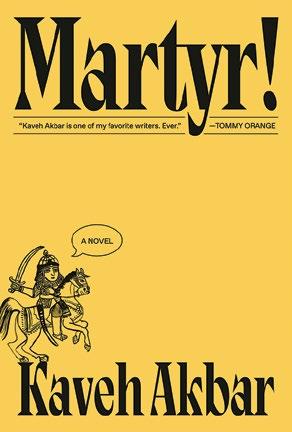


By Kaveh Akbar
This book is one a reader could absolutely fly through if they’re not careful enough to slow down and take it all in. The story follows a young, Iranian recovering addict with a complex family history through his deep interest in people who want to die for a “purpose.” After a series of discoveries about his own history and he attempts to write a novel about modern martyrs, the man thinks to himself that there is as much to make of being here as there is to make of not being here. Akbar’s prose about death and dying makes you want to pause, and you should because this book is worth savoring. AMANDA HAGGARD





By Tom Piazza
In a review for BookPage, I wrote that there would never be a memoir by John Prine, but that this book was the next best thing. The beloved, Nashville-based singer-songwriter died in 2020 from complications of COVID-19 right as New Orleans-based music writer and novelist Tom Piazza had started interviewing him for a memoir. Piazza took his first couple of interviews and notes from their friendship and wrote this. If you’ve ever cried, laughed or swayed to a Prine song, this one is a must. AMANDA HAGGARD




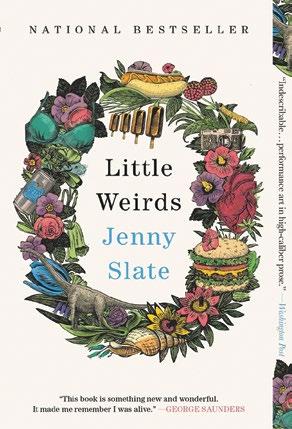


By Jenny Slate
Anyone close to me knows when I describe someone I’ve met as a “true weirdo,” that it’s meant with a deep love and admiration. I’ve never met Jenny Slate, who folks might remember as Mona Lisa from Parks and Rec, and real ones would know as Marcel the Shell with Shoes On, but I’m certain she’s a true weirdo. Her book of essays Little Weirds proves such. She reads the audiobook, which is part poetry, part stream of consciousness, part ramblings. And it’s all very delightfully weird. AMANDA HAGGARD




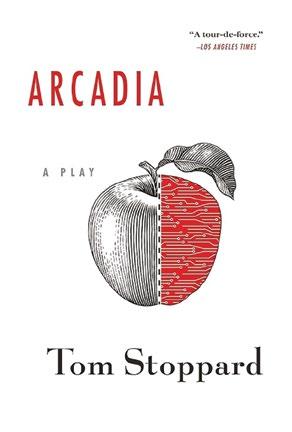
Tom Stoppard, who took his final bow late last year, leaves behind so many heady, dreamy plays that it’s hard to pick just one. While it’s tempting to suggest everyone just start with Rosencrantz and Guildenstern are Dead, his iconic, surrealist tragicomedy that would have tickled Shakespeare himself, I offer one of his quieter plays here. Arcadia, first staged in 1993, bears the classic Stoppard hallmark - dialogue that builds a monument to the misheard and misunderstood, yielding in the end something transcendent. But at its heart is a precise, perfectly rendered romance unfolding across centuries at a country estate. Like all Stoppard plays, Arcadia stands alone as a text and can be easily consumed in print on a lazy afternoon. LAURA BIRDSALL

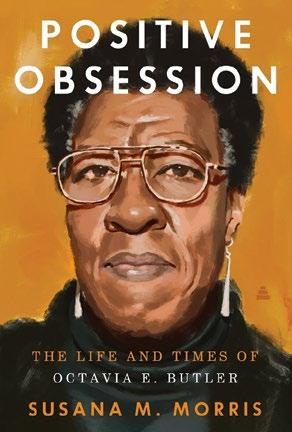
By Susan M. Morris
As I read this biography of science fiction author Octavia E. Butler, who, as genius as she was, struggled to pay her bills and settle into life well into her adulthood, I found myself thinking about all the incredible writers and artists I’ve known who’ve lived on the streets. As Butler studied life and wrote about gender, race, violence and climate change via tales of science fiction, she often wondered where her next paycheck was coming from. Despite her struggles, she wrote at libraries almost religiously like so many writers on the streets I’ve known. And she also passed at the young age of 58, much too soon. There’s so much more there to gather from this book, but if anything, you’ll learn what financial struggles can do to an otherwise brilliant person. AMANDA HAGGARD
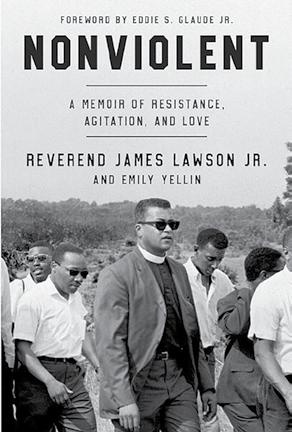
By
Most of us like to think we are good people. But we’re not in the league of the Rev. James Lawson Jr. I envy the readers who know little about Lawson, an unsung hero of the civil rights movement. His son and co-author both call him the most moral man they knew. When you hear his story, it’s tough to disagree. Nonviolence is not boring. In this life story, it is gripping, fascinating and complex. JIM PATTERSON

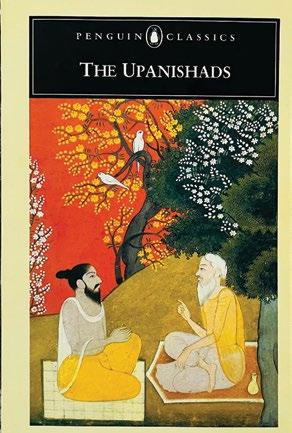
Translated by Juan Mascaró
It was nearly 100 years ago when poet and scholar Juan Mascaró first set about his translation of the Upanishads. English was not his native tongue, which perhaps accounts for the striking alchemy of his translation from the Sanskrit. This small volume of spiritual treatises, composed between 800 and 400 B.C., are rendered here in achingly lucid verse. Mascaró’s introduction itself stands alone as a joyful and meticulous treatise on the divinity that animates our shared culture. “I go to the Imperishable Treasure,” he incants. “By his grace, by his grace, by his grace.”
LAURA BIRDSALL
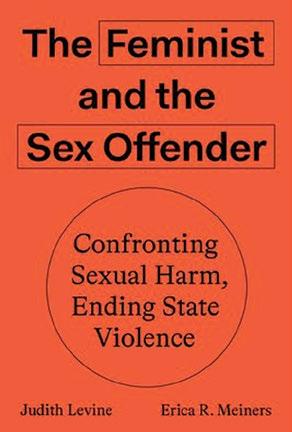
By Judith Levine and Erica Meiners
Since its inception in the 1990s, the sex offender registry has been used to track the movements of those convicted of sexually-based offenses not only for the length of their sentence, but for their lifetime. While not excusing sexually-based offenses or demonizing those who are convicted of them, The Feminist and the Sex Offender: Confronting Sexual Harm, Ending State Violence, holds this tension and offers a path forward that honors individuals and sexual liberation, upholds accountability without buying into mass incarceration, and allows for alternatives which keep everyone safe. If you have ever been curious about how to separate the individual from the conviction, particularly as it pertains to this subset of offenses, and how to live in the gray area in a society that swings from ignorance to over-correction, this is worth the read. LINDSEY LONGORIA



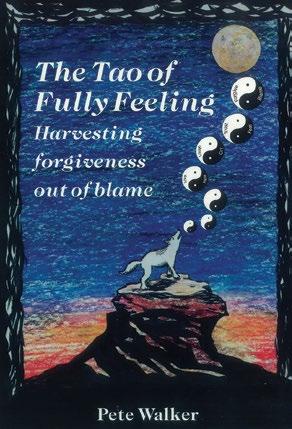
At 47, this book found me at the right time. Growing up in the South, I learned how to work, perform, joke and push through, but not always how to feel. Pete Walker writes with a kind of hard-earned compassion that made me feel less alone and less defective for struggling with the full spectrum of emotion. The Tao of Fully Feeling helped me understand how much emotional life can get buried under survival, shame, and performance. An old book, but still deeply relevant to all of us who were taught to stay composed instead of staying connected to themselves. WILL CONNELLY







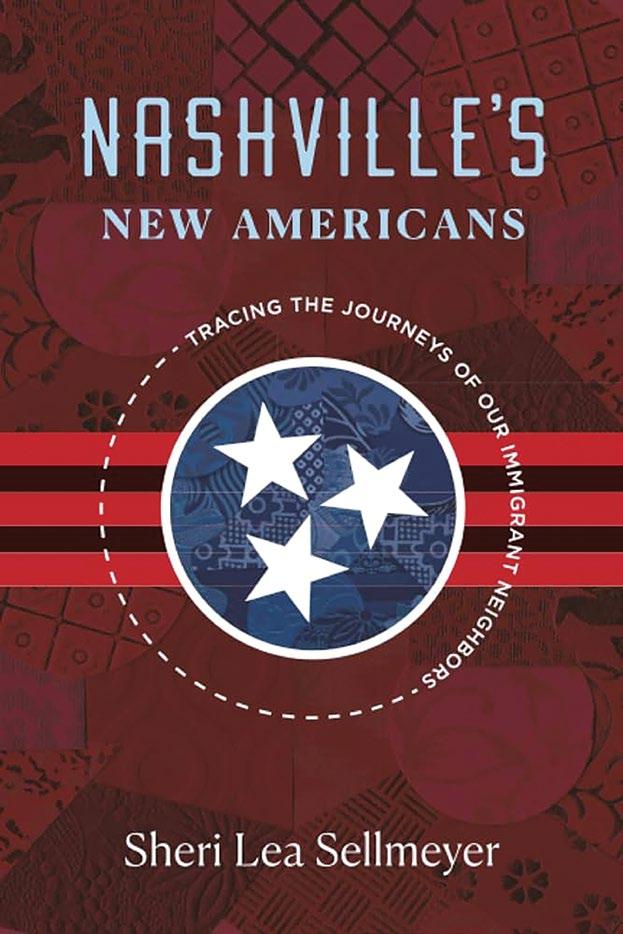
Nashville’s New Americans: Tracing the Journeys of Our Immigrant Neighbors
By Sheri Lea Sellmeyer
Vanderbilt University Press
200 pages
$27.95
Sheri Sellmeyer profiles a multicultural city, one immigrant at a time
It’s easy to get stuck in a neighborhood rut, wearing deep grooves in the paths we take every day to work and school and back. That’s why I was so grateful to read Nashville’s New Americans: Tracing the Journeys of Our Immigrant Neighbors by Sheri Lea Sellmeyer. The book serves as a powerful reminder of the immense diversity the city contains — and why it’s worth venturing outside the familiar.
Sellmeyer profiles more than 30 first-generation immigrants from all over the world, describing the often long and sometimes harrowing roads they took to make Nashville home.
James Makuac, one of the Lost Boys of Sudan, has made a home, a living, and even a name for himself as a visual artist since arriving in the city. He left Sudan when he was 11 and walked thousands of miles with 27,000 other young boys fleeing civil war. They traveled across Ethiopia to a refugee camp in Kenya. Only 12,000 boys from the original group survived the journey. Makuac spent nine years in the camp, where he was able to learn English and math, before receiving the news that he would be resettled in Nashville. “When I saw my name on the board,” he tells Sellmeyer, “I told my whole group, ‘I’m going to America!’ I was so happy.” He now makes a living as a Swahili
BY CAROLINE SIEGRIST AND CHAPTER16.ORG
interpreter at Tyson Foods, and he depicts his long journey across Africa through his paintings, which have been exhibited at the Frist Art Museum and Belmont University.
Edgar Martinez immigrated to the United States from Mexico with his parents when he was seven. He faced the challenges of learning a new culture and language, translating for his Spanish-speaking parents, and being undocumented: “That’s when I had to grow up pretty fast and try to understand what we were dealing with, whether we were paying a bill or signing up for soccer tryouts or ordering some food,” he explains.
Martinez started working as a brick mason with his dad when he was only 15 years old, and he had laid brick for 20 homes by the time he graduated from high school. Though he enrolled at a community college, it quickly became too expensive because he was considered an out-of-state student and forced to pay higher tuition. Despite these hurdles, he tells Sellmeyer that when DACA (Deferred Action for Childhood Arrivals) was signed, it was “the happiest day of my life.” He was able to get a Social Security number and a driver’s license and start expanding his business.
Some of Sellmeyer’s profiles are more lighthearted. One details the journey of the
Dozzi sisters, three Australian siblings who moved to Nashville to pursue a career in country music. Though they’d reached the top of the Australian country music charts, they knew Nashville held more opportunity. Another follows German scientist and conservationist Hans-Willi Honegger, who has worked with a group called Radnor2River. Their organization helped save a waterfall and the adjacent land in West Meade from development and is now fighting to establish an “ecological corridor” between Radnor Lake and Beaman Park.
I was surprised to learn that Nontombi Naomi Tutu, daughter of South African Archbishop Desmond Tutu, lived and worked in Nashville for 19 years. (She has since moved to Atlanta.) For most of her life, she resisted entering the priesthood because she wanted to be her own person, outside of the shadow of her formidable father. That changed after a varied career as an activist, consultant, and educator. “But as the decades passed,” Sellmeyer writes, “there was still something percolating in her spiritual life that led her to earn a master’s in divinity from Vanderbilt and complete her Anglican studies in Virginia.”
Sellmeyer notes that the topic of immigration has become highly polarized, but she
stops short of delving into politics. Instead, she uses a “show not tell” method to illustrate how vital immigrants are to the city. They work in our hospitals, build our houses, make the food we eat, play the music we enjoy. One man she profiles works as a supervising engineer at NES, literally helping create the power that runs our homes.
She also attributes much of Nashville’s economic growth over the past several decades to immigrants, noting that “foreign-born workers have helped change Nashville from a midsize city known for country music to an increasingly diverse, multicultural destination.”
Nashville’s New Americans serves as an introduction to Nashville’s many cultures, but it’s also a gentle call to engage with our immigrant neighbors, especially in the current political climate. That could mean learning Spanish, trying the Laotian restaurant in Columbia or finally going to see that folk artist from Canada. Sellmeyer makes it clear that these opportunities abound, and we are all the richer for seeking them out.
For more local book coverage, please visit Chapter16.org, an online publication of Humanities Tennessee.












I had to go into the bank this morning to get some things sorted out. Mostly that they keep saying I’ve got no money, but I’m almost certain I’ve got at least some. It didn’t go great, but they did have a tray of oatmeal raisin cookies by the door. I figure they at least owe me one of those. But while I was unlocking my car, I dropped the cookie in the parking lot. I picked it right back up, I mean, three-second-rule, right, Gemini? But now I feel broke and there’s asphalt-flavored raisins stuck in my teeth. Sometimes you’re keenly aware that you live in the consequences of your own actions. Those are good days to try some different actions, Gemini. Start by marching back into that bank and taking the untainted free-cookie you deserve.
Remember that time we were walking back to my apartment on Cedarcrest and there was a weird pile of stuff in the middle of the sidewalk? It was, like, a stack of model-train magazines and a broken 3-hole punch and a film-canister full of buffalo nickels from the 1920s. Bunch of other stuff, too. I think I still have those nickels somewhere. I guess each of those things was valuable to somebody at some point, and then one day they just weren’t anymore. One day they changed from important personal artifacts to a pile of stuff by the curb. It’s weird, but I wonder if you’re hanging on to anything this week that might be better off left on the sidewalk, Cancer. Check your mind for junkpiles. That stuff may not be serving you anymore.
Have you ever seen one of those cruise-ships up close, Leo. Absolutely terrifying. They’re nearly as long as The Empire State Building is tall. When you get close, your body can’t interpret the size. It’s like being next to an enormous, reptilian creature just before it crawls out of the sea and flattens a nearby city. So, that’s the only reason I don’t go on cruises. But if your problems start feeling too large to look at, Leo, I recommend approaching them from a different angle. Maybe buy a ticket and get on board. You’ll be able to take them one deck at a time.
The ancient Greek poet, Homer, would have loved the 2010s sitcom Modern Family. I think he would have been amazed by it’s narrative efficiency. Within the first 3 minutes of each episode, a primary conflict arises. Over the following 19 minutes, that conflict is resolved. The “A” plot usually runs parallel to a “B” and sometimes “C” plot which interweave to varying degrees. Characters are seldom, if ever, killed in battle, and seduction is only used to demonstrate steadfastness. Homer would have binged the entire 11 seasons in a week and, certainly, would have been inspired to compose a 12,000 line epic poem summarizing the lives of the Dunphy family. Find something that holds your interest, Virgo. Find something that makes you want to create. Each of us delights in work that suits us best.

I wanted to show you that little film-cannister full of buffalo nickels I found, Libra. I bet those are worth something, right? I used to keep it on my desk next to the action figures, but I got rid of that desk when I moved and the action figures live up on the bookshelf now. Maybe it’s in one of those banker-boxes in my closet? But I think those are mostly papers I couldn’t throw out and junk mail I never opened. Maybe it’s with the broken stereo stuff in the basement? If something is important to you, Libra, keep it close and keep an eye on it. Don’t just mix it in with the junk. Maybe it ended up in that box with the baseball cards?
Sometimes when I can’t sleep I go for a drive. And when it’s really late, I often notice that there’s nobody working out in the 24-hour gym by my house. You know, they’ve got those big windows that face the street because they want you to see all the fit people running in place and lifting heavy things over their heads. But when it’s empty, all I can think about is how there’s probably really energetic music playing in there. Something inspirational and serious. An empty room echoing with “Eye of the Tiger” or “Lose Yourself.” Anyway, Scorpio, sometimes you need inspiration but you’re in the wrong room. Try another space. Maybe they’re playing your song.
I remember allergy-season being much shorter than this. Don’t we usually confine pollen to a 6-week period at the beginning of spring? I’m afraid this will never end. I’m tired of sneezing in public. Tired of feeling bleary-eyed in the afternoon. Tired of having to hold my head at just the right angle if I want to be able to breathe and sleep at the same time. We’ve all got struggles, Sagittarius, and it always feels unfair to have extra-irritations on top of the primary ones. But whatever arises will eventually pass away. That goes for the good stuff too. What can you do to experience this moment without the story that it will last forever?
I’ve been going through all my old boxes looking for that film-cannister I have that’s full of buffalo nickels. No sign of it, but I did find a bunch of mix-CDs that I made, like, 20 years ago. I have no idea what songs I put on these. Shiny discs with some nonsense-title that I sharpied on the top like “Songs for Jerks” or “Slamdangle!” I found one I titled “Summer Circus Magic” and popped it in the CD player in my car (because that’s the only CD player I own anymore). I think this CD was my entire personality from May through September of 2006 but I haven’t thought about these songs in years, Capricorn. Music is powerful stuff. And it’s nice to remember what I was like then and how much I’ve changed since. You’re changing too, Capricorn. You may not be able to see it until you’ve had time to forget this summer, but you’re gonna like where you end up.
When I was a kid I would watch He-Man in the mornings before school. I loved it. The swords, the monsters, the muscles. One morning my dad walked in and flipped the switch on the TV. “That’s not a show we need to watch.” I’ve never been sure if he was tuned-in to the growing cultural fear of “the occult” or just tired of hearing the cheesy sound-effects while he was trying to worry about work. In any case, I learned that He-Man isn’t a right, it’s a privilege. And whatever you think of as “yours,” might disappear in an instant. So you’ve got to be secure in who you are on the inside, Aquarius. You’re more than what you passively consume. You have the power..
They’re building a statue of you in the middle of town, Pisces! I know, I couldn’t believe it either. They said it’s gonna be 20-feet tall! It’s an amazing likeness — you look fantastic. They based it on that one day where you couldn’t believe how perfect your hair was. They asked me if I had any ideas for what to put on the plaque and I told them I’d check with you. Maybe you could write out just like three sentences that explain why you’re such an important person. Start it with “This is a monument to one of our greatest citizens, Pisces…” and just go from there. If you could get us something by this afternoon, that’d be great.
Great news! I spent all day digging through boxes, and I finally found that film-cannister full of buffalo nickels I wanted to show you! The bad news is, it’s not quite how I remembered it. Yes, there were two buffalo nickels on top, but the rest is just a few regular nickels from the 90s, some Chuck-e-Cheese skee-ball tokens, and then a couple of mismatched washers, a cool-looking rock. So this probably isn’t worth much, right? Sometimes we overestimate what we’ve got going for us, Aries. But the best thing you can do is take it out of the box and look right at it, add it up, and figure out what else you might need going forward.
They say comedy is just tragedy plus time. But I prefer science fiction, Taurus, which is just tragedy plus time machines. You can fix any sad story with a time machine. Just go back to before things got sad and figure out a whole other direction for the plot. If I could, Taurus, I’d go back to right before things got hard for you and I’d give you some new technology, or special-future-wisdom, or stock-tips that would turn things right around. But I guess reality is more of a comedy. So we move forward from where we are and we try to not take the past so seriously. We learn from our mistakes and we lean into a future that might be better. And it might have time machines.
Mr. Mysterio is not a
DJ Want more? Visit mrmysterio.com Or just give
Merik had learned to read a town before he ever stepped fully into it — the way people looked up when he passed, the way conversations dipped or sharpened. Some places felt neutral, a few even warm. Others carried a quiet hostility that settled in his chest like a warning bell. He kept moving because staying too long invited questions, and questions too often turned into judgment.
He had not chosen this life, not in the way people assumed. To them, he was a drifter, a man who wandered because he couldn’t commit, because he was “different,” because something about him didn’t fit.
They weren’t entirely wrong — he didn’t fit — but not for the reasons they believed. The truth was heavier, complicated, not something he owed to strangers who had already decided who he was.
One evening, he stopped in a small town just as the sky dipped into orange. He found a bench outside a grocery store, hoping to rest his feet. A group of men leaned against a pickup nearby, their laughter loud, their eyes sharper than their smiles.
“Hey,” one of them called. “You lost, or just passing through like the rest of your kind?”
Merik kept his gaze steady on the pavement. Silence, he’d learned, was sometimes safer than words.
BY BRADLEY B., CONTRIBUTOR VENDOR
Another man stepped closer. “Don’t ignore him. We’re talking to you.”
There was a shove. Nothing that would leave a mark, but it was enough to send a message. Merik caught himself, said nothing, and stood. He walked away before the situation could turn worse, their laughter following him like a shadow.
It wasn’t the first time. It wouldn’t be the last.
Being misunderstood was one thing; being hated for it was another. People saw the surface: the worn clothes, the careful distance he kept, the way he avoided eye contact too long. Some saw more—the way he flinched at raised voices, the way he scanned exits without thinking. But few asked why.
And fewer still cared to listen.
But then there were the exceptions.
In another town, days later, Merik found himself standing outside a small diner, debating whether he could afford even the cheapest meal.
The door opened, and a woman in her fifties stepped out, wiping her hands on an apron.
“You look like you’ve been walking a long time,” she said, not unkindly.
Merik hesitated. “Just passing through.”
She studied him for a moment, then nodded toward the door. “Come on. Coffee’s fresh. I’ve got extra soup.”
Inside, the warmth wrapped around him
BY MAURICE B., CONTRIBUTOR VENDOR
Let’s look at “community” by understanding and accepting that “tawheed-tawhid” or “the oneness of Allah/God” is the core of each and every single situation and relationship. If that’s true then the universe is indeed “The Divine Body.”
It’s a given fact that all circumstances or conditions encompass various elements, including context, events, emotions, interactions and outcomes. In essence, a situation can be viewed as a complex interplay of various factors that together define a particular moment or experience. The matter of unfolding and understanding a particular or specific situation often requires analyzing these components to grasp its implications, fully creating the observer astute.
How are we all humans created alike? To-wit all human-beings have been created from nutfah This progresses through defined biological stages
like alaqah. Then, the formation of bones covered with flesh and become a new creation. In short, a “seed” is embedded into the soil of an endometrial lining of the uterus or “the womb.”
During youth age, the young mind acts out, but is being guided becoming of a changeable age and mindset. Our conduct and character become more self aware as our actions make us model viceregents on Earth that possesses a natural disposition (fitrah) to recognize Allah/God and exercise our limited free will. The diverse forms of misguidance and reckless teachings seem to be complicated only because of the focus of the differences and not the similarities. The similarities are more subtle actions than those of the vigorous forms of philosophical differences in which the mental growth and teaching process of each seed differ only because concepts were developed in
like something unfamiliar but welcome. She didn’t ask him to explain himself. Didn’t question his presence. She just set a bowl in front of him and said, “Eat.”
It was a small kindness, but it anchored him.
Another night, caught in a sudden storm, he found shelter in a half-open barn on the edge of a field. He expected to be chased off. Instead, the owner—a quiet older man—handed him a blanket and said, “Storm’s bad tonight. You can stay till morning.” No judgment or suspicion, just understanding.
Merik carried those moments with him. They didn’t erase the cruelty, but they balanced it and reminded him that the world wasn’t only made of hard hands and harsh voices. There were still people who saw him—not as a problem to solve or a stranger to reject, but as a person passing through, doing the best he could.
So he kept walking.
Not just because he had to, but because somewhere ahead, beyond the towns that didn’t understand him, beyond the voices that tried to define him, there might be a place where he didn’t have to brace himself at every glance. A place where he could stay. And until he found it, hope — small, stubborn, and quietly resilient — walked beside him.
changed positions.
Our attention should be directed towards the circle that starts with Allah/God and ends with Allah/God, whereas He returns our nafs/soul back into our control from a night’s rest daily into a temporary test, a purposeful journey designed to cultivate faith, gratitude and good actions serving as a passage to the eternal afterlife which is the eternal return to Him.
Even though here on Earth it’s accepted that “justice” is blind or has its blindfold on, Allah/God has written life itself and only gives us the power to be vicegerents over this Earth. His judgement will come from the act of carrying out our intentions of every personal act that is done. He is the creator of all and there’s nothing new up under His creation. Every circumstance or situation, every action or reaction or response, He owns and holds the master copy to. He has all control as we humans plot and plan ways to control certain situations and move within certain actions.
Finding the truth of “feelings” is an important part of growth within the dialect of common
CREATED BY BRADLEY B.
Solve the cypher by using "The Drifter" to the left of this puzzle. Solution will be in next week's issue!
/
, /
Last Issue Solution: You do not have to see the whole staircase, just take the first step. — Martin Luther King Jr.
sense even though “common” varies between the different cultures. Since “common” varies then the aspect of “sense” varies as well. Therefore to use the phrase of “common sense” or “common knowledge” and even “common understanding” isn’t a fair gist as not everyone is on the same level or on the same degree of awareness as the next, even though Allah/God has each individual seed in their rightful position. As Allah/God has all control and makes the moves beyond what the human mind could begin to fathom, humankind finds ideas to debate and argue and fight or even kill having wars over things that are mainly materialistic.
When it actually comes down to worshipping Him, it’s an imaginary fine line that brings up the difference. On both sides there’s only one true creator which holds various names, and who is just worshiped differently, With respect of the historical teachings of both sides of that imaginary line of Tawheed/Tawhid and or the Trinity is where the similarities of the universe is the Divine Body. Our worship is to and for Him.

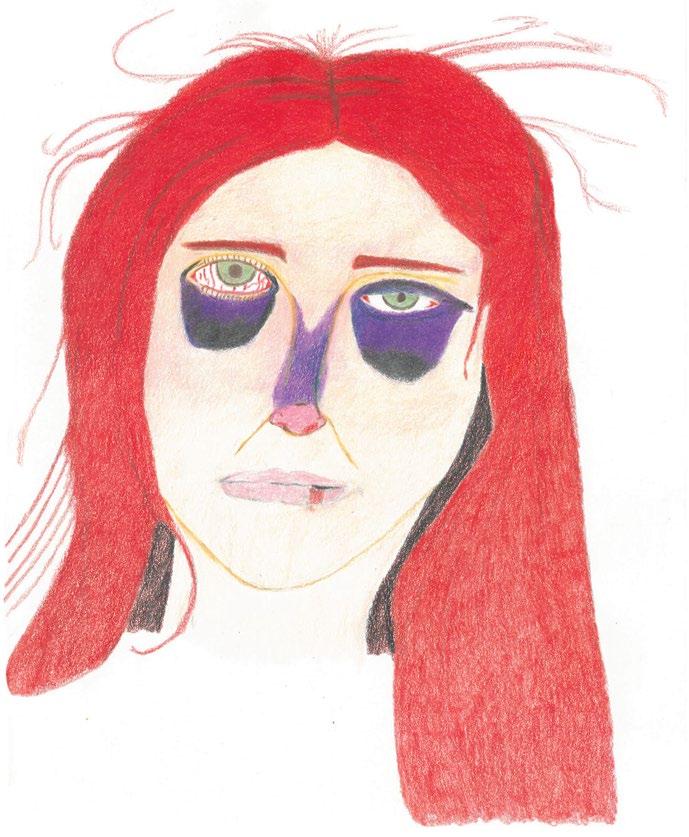
ILLUSTRATIONS BY WENDELL J., CONTRIBUTOR VENDOR
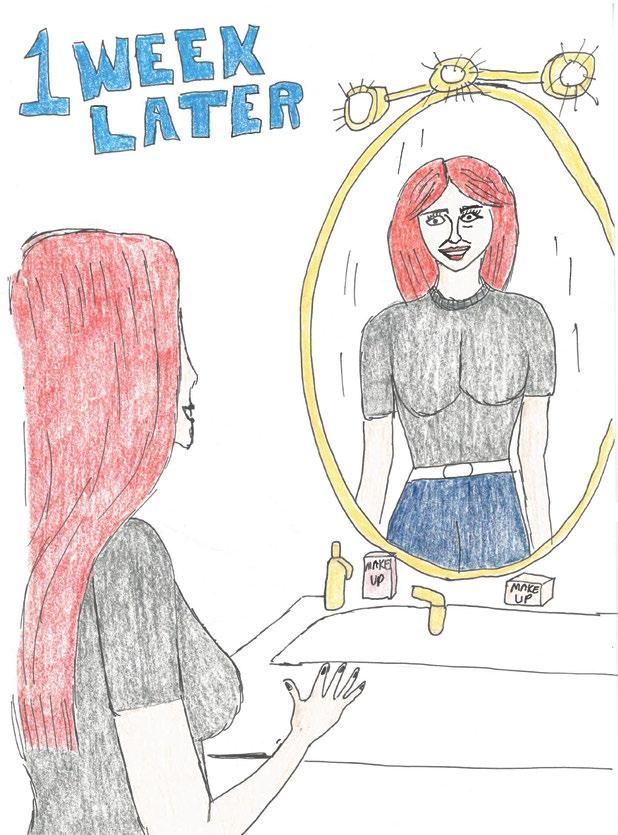
As I walked along my spot on Old Hickory Boulevard and Central Pike picking up trash all along the side of the bluff, I noticed a bunch of papers just blowing around in the wind. Once I collected them and took a closer look, I noticed that it was 13 pages of a document someone must fill out to obtain an Order of Protection. I wondered why it discarded. Was it out of frustration?
The paperwork did ask A LOT of detailed personal questions which I suppose makes sense. To obtain such an order, you need to provide evidence of the different times that something has occurred including dates and times the abuse that has taken place and photographs of any injuries sustained — the more detailed the better.
Why is that so significant? These are often things that people go to great lengths to cover up and keep hidden with makeup, sunglasses, clothing (i.e. long sleeved shirts even in the heat of summer to cover bruises, etc.). Adding insult to injury, victims must recount these horrific incidents to the authorities. Forcing victims to relive such traumatic events could jeopardize their mental health leaving victims vulnerable to experiencing post traumatic stress.
Perhaps the papers were discarded out of fear, with the victim reasoning that the consequences of actually filing them out would be worse than what they are currently going through. I mean how much protection does it really offer? It’s just a piece of paper, right? What good could it possibly do? It’s easy to
BY NORMA B., CONTRIBUTOR VENDOR
see why someone might feel that way, isn’t it?
At this point, many readers may find themselves thinking: Why would someone take such abuse? Why don’t they just leave? The reality is that they may feel like they have no where else to go, or maybe they don’t want to put anyone else at risk, especially family members or other loved ones fearing the abuser might turn their wrath on their protectors. Or it could be that they are economically dependent on their abuser, and they feel they cannot provide even the bare necessities for themselves or their children if they leave.
By now, many readers may be thinking: This could NEVER happen to me. I too once felt that way. Life lessons though have taught me differently. From my personal experience, I found out that you never really know what you will take from someone you “LOVE” until you are actually faced with a situation, and even then, how you respond must be determined by the individual in that moment in time.
Here are some sobering statistics that tell the REAL story of domestic abuse in Tennessee:
• 40 percent of women will experience domestic violence in their lifetime, but it may surprise you to know that men also experience domestic abuse.
• In 2024, there were 60,635 domestic violence incidents reported, 70.79 percent (42,897) of domestic violence victims were women. That means 29.21% (17,704) males reported being victimized as well. (Statistics available in the 2024 Report on
Domestic Violence @ Tn.gov)
• In 2025, Tennessee passed Savanah’s Law, which requires the TBI to create and maintain a registry of individuals who have been convicted of domestic violence offenses after January 1, 2026. In addition, other crimes may also be included such as stalking, sexual assault and even homicide when they are deemed domestic offenses. (BWJP.org)
• So far in 2026, 16 people have died as a result of domestic violence homicides across the state. That is a 23 percent increase over last year, according to Jennifer Escue, CEO of the Tennessee Coalition to End Domestic and Sexual Violence (WKRN News 4/2026)
Bottom Line: If you haven’t experienced domestic violence personally, chances are you know someone who has.
One effort to fight against domestic violence is an initiative to ensure that individuals convicted of domestic violence surrender any firearms they may have. Currently they are supposed to do so within 48 hours, but there is no way to track what actually happens to these guns. Those working this new law are revising the firearms disposition affidavit to list the recipient of any gun owned by those convicted of domestic abuse.(Channel 5 News 3/17/26)
Why is this significant? In 2024, 67 percent of domestic violence incidents leading to murder were committed with a firearm, and offenders
who have access to a gun are five times more likely to kill their victims. (ofs.Nashville.gov) Even more recently on April 7, a new law was passed allowing parents to challenge the cause of death ruling in the case of a child’s death that was ruled a suicide. This process was previously limited to only the spouse for married couples. The case that inspired this bill involved a woman who challenged her daughter’s death, which was ruled a suicide, but was in fact a case of domestic violence committed by the child’s father. 4/13/26 Updated 4/14/26 WZTV News
Though these things will take time to develop, it is well worth the effort to have more tools to fight against domestic violence. What can be done now to assist and support victims of domestic violence? Help is available, if you or someone you know are experiencing domestic violence please contact:
The National Domestic Hotline 1-800-799-7233 or Text BEGIN to 88788 Website: www.the hotline.org
For additional resources in Davidson County contact:
The Office of Family Safety 610 Murfreesboro Pike Nashville, Tn 37210 Phone: 615-880-1100
Email: ofsnashville.gov





BY JOE NOLAN, FILM CRITIC
Director Baltasar Kormákur (Everest, Adrift, Beast) returns to survival-thriller territory with Apex, a cliff-climbing, white-water, cat-andmouse game in the wild. The film opens with Sasha (Charlize Theron) and Tommy (Eric Bana) making a winter ascent of Norway's Troll Wall. They're an adventurous couple who've teamed up on many challenges, but where Tommy is cautious and a little superstitious, Sasha is headstrong and impatient. When a sudden avalanche strikes during their descent, Sasha makes a crucial error and Tommy plummets to his death. By the time the title credits roll we know that Sasha is a determined, but flawed, outdoor adventurer, and that she's wracked with guilt.
Five months later, Sasha's still grieving as she drives alone to the remote fictional Wandarra National Park in Australia's wilderness. Cinematographer Lawrence Sher shot the film in Australia's Blue Mountains, capturing the region's rugged beauty and isolation. The look of Apex's wild spaces is one of the highlights of this movie, with its shifting terrains of snowy mountains, desert sunsets, and ice-cold rivers playing like part of an ensemble cast. Sasha is planning to honor Tommy's memory by completing a challenging solo kayaking and climbing expedition, but don’t expect her listen to warnings or heed knowledgeable locals. A park ranger warns Sasha about a string of unexplained disappearances in the area, but she proceeds anyway. Another warns her about exploring the wilds alone, but she can’t be bothered.
Sasha manages to navigate rushing rapids, cliff dive and traverse the wild Australian landscape. Theron performs her own physically demanding stunts through the first act, which focuses on Sasha's journey through the wilderness, processing grief while courting natural extremes. After much rowing and swimming and hiking and gazing into the breathtaking distance, Sasha encounters Ben (Taron Egerton), who initially presents himself as a friendly local guide familiar with the terrain.
Apex, like Wake in Fright (1971) and Wolf Creek (2005), will remind viewers that there's no creepy rural character as creepy as an Australian rural character. Apex shifts into a brutal hide-and-seek thriller when the film takes on the shape of the short story "The Most Dangerous Game" with a crossbow-wielding psycho as the hunter and Sasha as the prize. This is writer Jeremy Robbins' first feature film and his script is the weakest link here. Great writing is the difference between an outdoorsy frat house comedy like Up the Creek and a stone-cold classic like Deliverance. Man against nature, man against himself, man against man — Apex contains many of the great themes, but seems to get confused by the fact that it's a story about a woman. Robbins' attempts to cast Sasha as a lone wolf badass result in predictable errors that most screenwriters make when they create a strong female lead by simply inserting an actress into a role that comes off as if it was written for a
man, by a man. Why demonstrate how Sasha's impatience and arrogance lead to Tommy's death, and then show her ignoring every warning about going into the outback alone, if Robbins had no plans for Sasha to learn and grow into a better version of herself? These moments served the plot, but Sasha's just sort of oblivious to the consequences of her own choices. And Robbins' smaller players are cutouts who dribble clichés — again — only to crudely steer the plot. In a movie like Deliverance or First Blood or even the original Predator film, the secondary characters are fully formed and they enhance the mood and authenticity of those pictures in addition to
assisting the plot in believable ways that seem natural to their stories. Like so many Netflix features, Apex feels paper-thin and pinned together. That said, Theron and Egerton do their best, and some of the stunts and the action are fun to watch. As of this writingApex is the number one film on Netflix, but its days are numbered as we head into summer movie season.
Apex is streaming on Netflix.
Joe Nolan is a critic, columnist and performing singer/ songwriter based in East Nashville. Find out more about his projects at www.joenolan.com.
“The Contributor” está trabajando con uno de los principales periódicos en español La Noticia para llevar contenido a más lectores en Middle Tennessee. Nuestros vendedores de periódicos han pedido durante mucho tiempo que nuestra publicación incluya contenido que apele al interés de residentes de habla hispana en nuestra comunidad.
“The Contributor” is working with one of the leading Spanish-language newspapers La Noticia to bring content to more readers in Middle Tennessee. Our newspaper vendors have long requested that our publication include content that appeals to the interest of Spanish-speaking residents in our community.

M i l l o n e s d e
m e n o r e s v i v e n ho y entre violenc i a , d e s p l a z amiento y hambre , e n c r i s i s q u e e l m u n d o a ú n n o lo g ra detener
En medio de los titulares sobre conflictos ar mados en G a z a , U c r a n i a , Irán y otras re giones del mundo, hay una realidad que con demasiada frecuencia queda en se gundo plano: el impacto devastador que la guer ra tiene sobre los niños y las poblaciones más vulnerables
M á s a l l á d e l a s p o s i c i o n e s p o l í t i c a s o g e o p o l í t i c a s , e x i s t e u n h e c h o q u e d e b e r í a u n i r n o s a t o d o s : l o s n i ñ o s n o s o n r e s p o n s a bl e s d e l o s c o n fl i c t o s , p e r o s o n q u i e n e s m á s s u f r e n s u s c o ns e c u e n c i a s
Se gún un reciente infor me de UNICEF, más de uno de cada cinco niños en el mundo vive actualmente a menos de 50 kilómetros de un conflicto ar mado
Esta proximidad no es una estadística abstracta; es una sentencia cotidiana de riesgo, trauma y privación
En 2025, millones de niños enfrentaron una combinación letal de violencia, h a m b r e , d e s p l a z a m i e n t o fo r z a d o y colapso de servicios esenciales
Escuelas destr uidas o conver tidas en zonas militares, hospitales atacados o inaccesibles, y comunidades enteras obligadas a huir en busca de se guridad son par te de una realidad que se re pite en múltiples re giones del planeta
Pero el daño no es solo físico UNICEF también documenta un aumento signi-

ficativo en violaciones g raves contra m e n o r e s , i n c l u ye n d o r e c l u t a m i e n t o forzado, abuso, mutilaciones y violencia sexual Estas experiencias dejan cicatrices profundas que trascienden generaciones
La situación se ag rava cuando se limita el acceso a ayuda humanitaria En varios escenarios de conflicto, el acceso a a l i m e n t o s , a g u a p o t a bl e , at e n c i ó n médica y educación ha sido bloqueado o restringido, exacerbando condiciones d e h a m b r u n a y e n f e r m e d a d e s p r evenibles En algunos casos, incluso los t r a b a j a d o r e s h u m a n i t a r i o s s e c o nvier ten en víctimas, con cifras récord de ataques en los últimos años
A esto se suma una crisis silenciosa p e r o c r í t i c a : l a f a l t a d e r e c u r s o s .
UNICEF solicitó casi 10 mil millones de dólares para atender necesidades h u m a n i t a r i a s e n 2 0 2 5 , p e r o s o l o r e c i b i ó a l r e d e d o r d e l 3 1 % d e e s e financiamiento Esto significa menos a l i m e n t o s , m e n o s va c u n a s , m e n o s p r o t e c c i ó n y m e n o s o p o r t u n i d a d e s para millones de niños
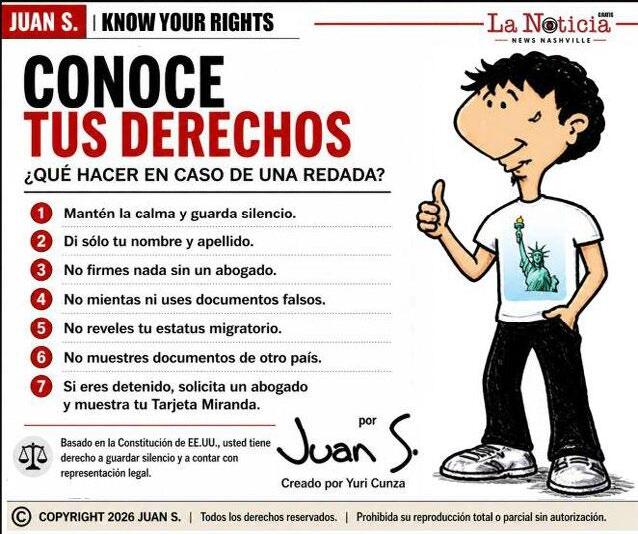
En medio de este panorama, también debemos ser responsables con la información que consumimos y compar timos Las denuncias sobre abusos en contextos de guer ra son g raves y deben investigarse con rigor, pero también requieren verificación cuidadosa. La desinfor mación no solo distorsiona la realidad, sino que puede desviar la atención de las víctimas reales y de las soluciones urgentes que se necesitan Lo que sí está claro y respaldado por evidencia es que los conflictos modernos están fallando en prote ger a los más vulnerables El derecho inter nacional humanitario establece límites claros para la conducta en la guer ra,
Frente a esta realidad, la pre gunta no es solo qué está ocur riendo, sino qué estamos dispuestos a hacer como comunidad global
En este contexto, el papel de Estados Unidos y de otras naciones desar rolladas es fundamental Más allá de su influencia política y militar, tienen la capacidad y la responsabilidad de lid erar esfuerz os humanitarios, promover el respeto al derecho inter nacional y apoyar soluciones que prioricen la protección de civiles, especialmente de los niños Esto incluye no solo asistencia financiera, sino también el for talecimiento de la diplomacia, el acceso a ayuda humanitaria y el respaldo a iniciativas que busquen estabilidad y paz a largo plazo
Porque, al final, el impacto de la guer ra en los niños no es un problema lejano Es un reflejo de nuestras prioridades colectivas
En un mundo donde millones de niños crecen rodeados de violencia en lugar de opor tunidades, el verdadero desafío no es solo detener los conflictos, sino reconstr uir la humanidad que los conflictos destr uyen
Envíenos sus sugerencias por correo electrónico: ne ws@hispanicpaper com|615-582-3757