
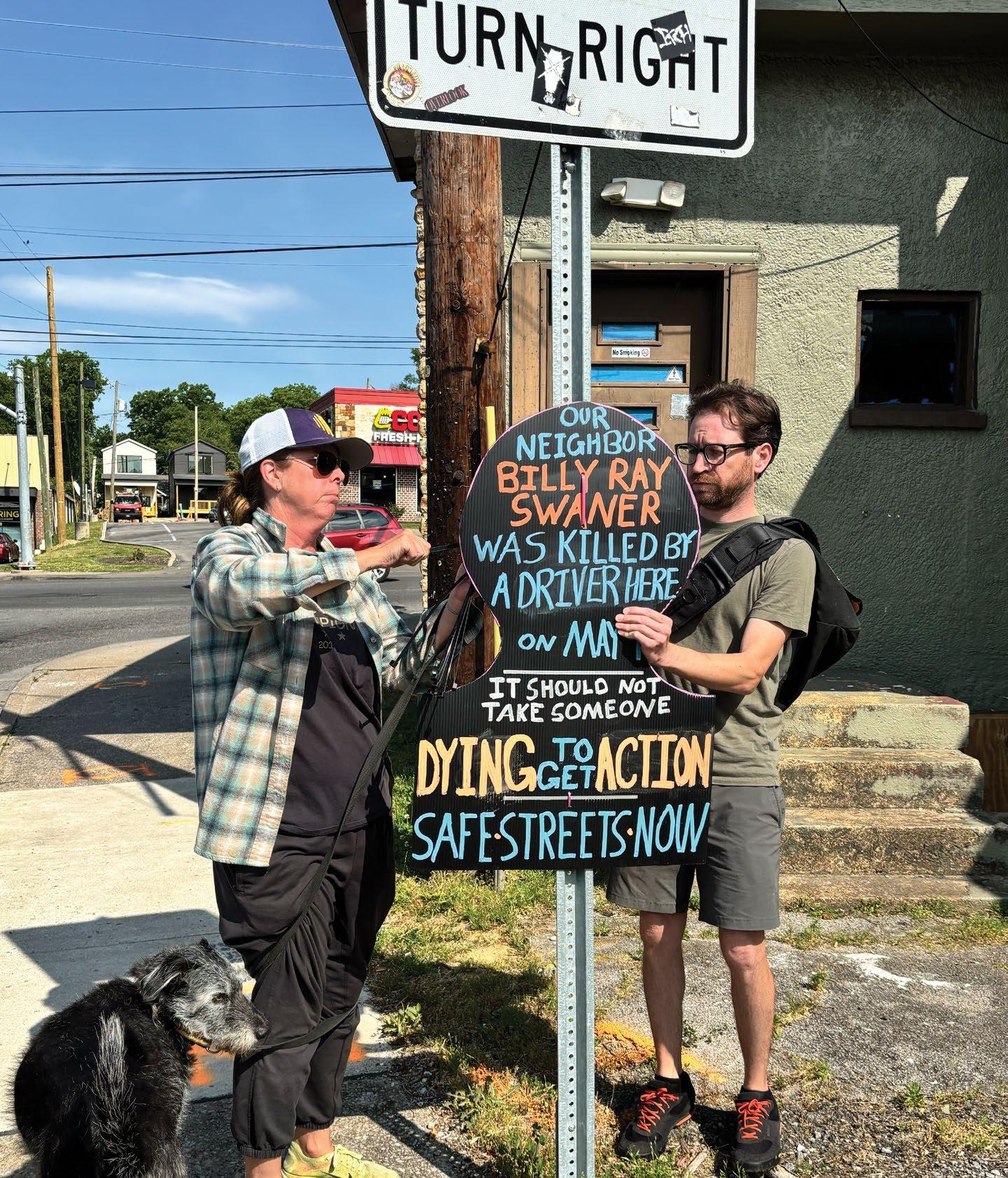
Whitney Pastorek and District
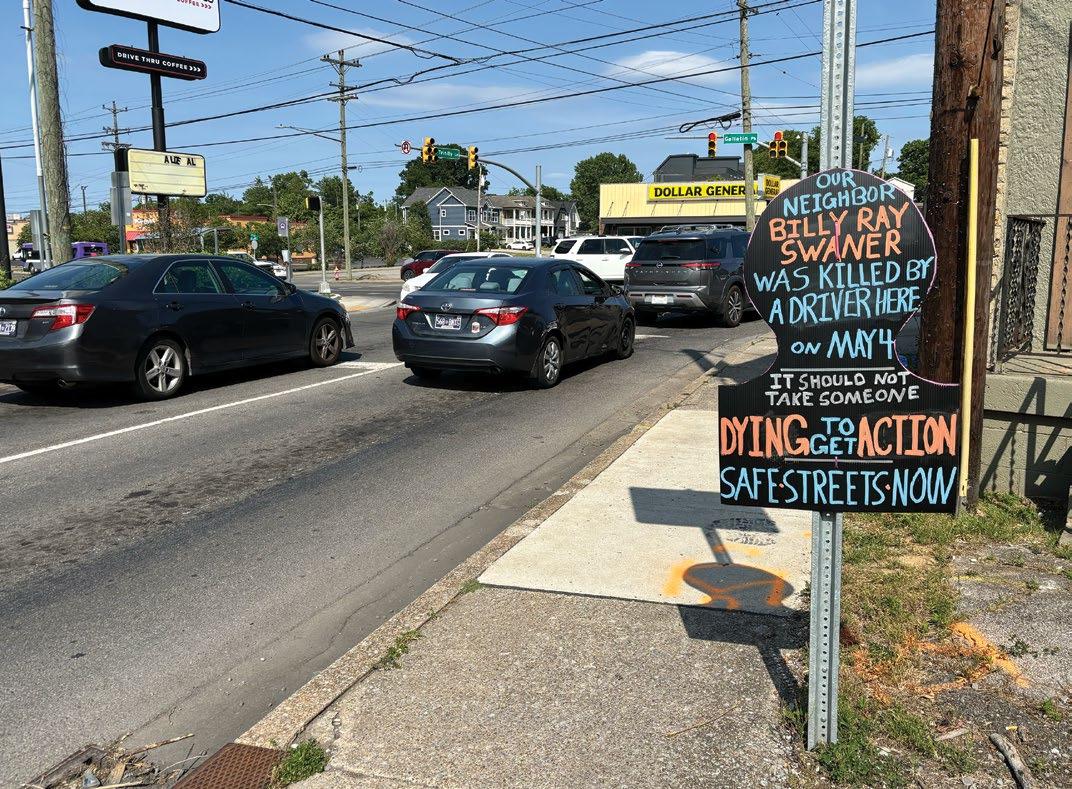
5 Councilmember Sean Parker place a marker on the corner where Billy Ray Swaner died last month.
PHOTO BY JUDITH TACKETT





Venmo has canceled our account, but you can still pay using Square! You must identify your vendor so we know where to send the payment. Here's how:
After clicking “checkout,” type your vendor's name and four-digit badge number in the “Required” field. This allows us to know which vendor to pay.



Since The Contributor started in 2007, more than 3,200 different vendors have purchased $2.3 million worth of The Contributor and sold over six million copies, generating over $15 million in income for themselves. In 2019, our C.O.V.E.R. Program (Creating Opportunity for Vendor Employment, Engagement, and Resources) was the natural expansion of our mission of removing obstacles to housing. We now offer full case management, assistance with housing and rental expenses, addiction recovery, health insurance, food benefits, and SSI/SSDI assistance.





The math is simple: Metro has invested millions of dollars into homelessness since 2022 at unprecedented levels for Nashville. Yet overall homelessness during that time has increased by 14 percent. In comparison, Metro’s homelessness budget was relatively flat prior to 2022, remaining stable at $1.5 to $2 million annually. But homelessness decreased by 15 percent from 2016 to 2022.
What has happened?
For one, rent has been increasing rapidly since 2016, with huge rent jumps during the height of COVID, which have since tapered off. I did a quick AI search to look at the federal Fair Market Rate (FMR) for one-bedroom apartments. Between 2016 and 2022, the FMR rent increase was $353 and between 2022 and 2025, it was $550. The U.S. Government Accountability Office (GOA) published a study in 2020 that estimated that for every $100 in rent increase in an area, homelessness increases by approximately 9 percent. I am unsure how accurately those findings can be applied to local changes in homelessness numbers because cities (including Nashville prior to 2022) have clearly shown decreased in homelessness while rent increased. Nonetheless, I believe the main causes for increases in homelessness happen due to market changes. Specifically, when the rich get richer and the poor get poorer while the government safety nets are being eroded, individuals and families are left with no place to go. This makes it difficult for a single department to control the actual level of homelessness.
While I believe a homelessness system is unable to control how many people become homeless due to the lack of an overall safety net, cities like Nashville would do best to work increasingly with housing, healthcare and justice systems to stem the tide. To do so, we need local leaders who understand what systems building entails and what preventative measures could look like. In my opinion, we don’t have that leadership here and continuing to bring in more national and outside consultants while ignoring local voices clearly has not worked.
When I look at the Metro budget for homelessness, I see a continuation of increasing bureaucracy. I see a strengthening of power consolidation under the Mayor’s Office via OHS, power grabs, a decrease in collaboration and systems building, and an erosion of mutual trust among government and service providers doing the actual work. I see a lot of talk and less action that truly focuses on the needs of the people experiencing homelessness. I see a lot of show and propaganda to secure voter satisfaction — and little result to reduce actual outdoor homelessness, which is the priority of this Mayor’s Office.
I see a city that is more concerned with making homelessness invisible than actually ending it for the people suffering through it.
And I see millions of dollars spent with little or no accountability.
Metro’s Office of Homeless Services Budget
Metro does not outline a clear homelessness strategy for the millions of dollars it spends on homelessness. Rather OHS leaders cite a community strategic plan put together by the Continuum of Care,* but then regularly removes programs funded by Metro directly from oversight, scrutiny, or even the coordinated entry process the CoC tasked OHS to manage on its behalf. Let’s
BY JUDITH TACKETT
look at the overall dollars the OHS had direct control over since 2022.
The Metro Council allocated $50 million in American Rescue Plan (ARP) funding to OHS. Those funds expire at the end of 2026 and OHS struggled to fully spend them down as originally intended — looking further into that will have to wait for a future column. To be fair, only $25 million was under direct control of OHS. The remaining $25 million was managed initially by the Metropolitan Development and Housing Agency (MDHA) and then Metro’s Housing Division/the Barnes Fund to build actual permanent supportive housing units.
During that time, OHS’ budget (including that of the Homeless Impact Division, which the OHS department was formed out of) increased by 245 percent. Here is an annual budget breakdown:
• FY22/23: $3,364,000
• FY23/24: $5,524,900
• FY24/25: $6,097,300
• FY25/26: $11,628,300
• FY26/27 (proposed by the Mayor): $16,961,200
That last line of $17 million is what Mayor Freddie O’Connell proposes to allocate to OHS to make up for the annual loss in ARP funding. In essence, that means no additional services will be added.
While most departments will have to make do with flat budgets for the next fiscal year, OHS is receiving a 41-percent increase in its General Services District (GSD) budget, the largest percentage increase of any Metro Department in GSD dollars.
OHS also anticipates an increase in its Special Purpose Fund (SPF), which refers to funding that is restricted based on specific revenue sources. Grants would fall under this category. Usually, these are what Metro terms “non-tax supported budgetary funds.”
Requested Funding versus Mayor’s Office
Proposed Budget
OHS asked for a budget increase this year totaling more than $10 million, which may provide an insight into Metro’s overall vision. Departments are required to list their requests in order of their priorities, which were as follows for OHS:
1. $1.5 million to move 15 positions funded by federal ARP dollars to the Metro budget. OHS told me these positions worked in Coordinated Entry (data entry), Landlord Engagement, Individual Placement Services (employment navigation), HMIS Specialist (HMIS is the community’s Homeless Management Information System database that OHS manages on behalf of the Continuum of Care), and an Administrative Services Officer.
2. $2 million for community case management. OHS explained to me that these dollars are “intended to continue housing stabilization and support services for people already connected to permanent housing programs and other similar participants in the future.”
3. $2.5 million for interim housing, “including the current motel-based program operated with Hospitality Hub at the former Rodeway Inn site.” Furthermore, OHS stressed to me that “any interim housing options funded by OHS will always include robust supportive services for participants.”
4. $800,000 for a collaborative prevention and diversion fund in partnership with the Metro Action Commission and Metro Planning.
5. $2.7 million in shared funding with the Metro Nashville Police Department (MNPD) to implement a rapid response for unhoused individuals in Downtown and surrounding areas. This request included the goal of increasing downtown tourism, which speaks volumes in terms of a department's vision for homelessness.
6. $109,100 for a team member to work after hours Downtown alongside the Mayor’s Office of Nightlife and MNPD.
7. $500,000 “to enhance mental health services for residents recently placed into housing.”
8. $90,800 for a position to serve as OHS’ liaison for community support efforts, communication coordination, and collaboration between OHS and “Metro key administrative functions to strengthen system alignment and responsiveness.”
The mayor recommended funding Priority 1) at $1.5 million to give the department a total staff of 59, 10 of which are seasonal positions to staff Metro’s Cold Weather Shelter; Priority 2) at $2 million for supportive services; and Priority 3) at $1.25 million for interim housing. These three allocations will shift the staff and services from federal funding to local funding. In essence, it is a status quo approach based on results that were underwhelming to begin with.
Even in her budget presentation to Metro Council in early May, OHS Director April Calvin explained that her department typically does not carry a caseload.
“We don’t provide a lot of direct service delivery,” Calvin said. “We rely on our community partners for housing, supportive services and our goal is to increase access to services and housing options by operating a system that allows for increased flow into our database and increased outflow out of homelessness.”
She explained that about $4 million of the current $11.1 million Metro budget is allocated to service providers. So then why would OHS need to be so staff-heavy?
Looking at the impact of the $50 million federal investments over the past 3.5 years would be helpful to see the added value that this Metro budget increase will bring.
The impact report of those $50-million investments that Calvin delivered as part of her budget presentation did not provide much useful information. For one, it mostly included outputs of services, which did not offer any insight into how they helped reduce homelessness. I think it’s safe to say that more people were helped than without the $50-million investment. The question is how many more could have been helped with a focus on ending homelessness rather than making it invisible — as is clearly the charge from the Mayor’s Office to OHS?
The so-called impact slide also included a list of investments to developers, some of which were no longer accurate as one developer returned all their funds because they no longer wanted to receive referrals to house people through OHS. But the impact report was representative of OHS approach to flooding Metro Council with data that does not stand up to scrutiny.
I outlined my concerns about this specific “impact infographic” to an OHS representative on April 8 and said I did not intend to write
about those flaws. However, Calvin did include the confusing and mostly useless information in her presentation to Metro Council. When OHS was told that I may comment about it in this column, Demetris Chaney Perkins, the OHS public information coordinator, said that they are not done with the ARP infographic yet and wanted to have all the data before making a final report. OHS plans to schedule meetings with partners and hold a public listening session on what they learned, but it’s necessary to point out that data reports listing outputs do not present a data analysis showing impacts, especially since Calvin proudly presented herself as a data-driven leader throughout her budget presentation to Metro Council.
Without clear data analysis that provides accurate information on the true impact of the millions of dollars in investments over the past few years, it is hard to tell what difference an overstaffed, bureaucratic department like OHS makes in terms of building a solid and efficient system that actually is capable of reducing homelessness in our city.
The mayor’s proposed budget for OHS sends a message to keep doing what the city has been doing, which is what exactly?
• Homelessness numbers in Nashville are up.
• Only 41-61 percent of the folks from the seven encampment closures that Metro spearheaded since 2022 ever made it to permanent housing. If you wonder why I cite a 20-percentage point difference, that is because the numbers change depending on whether you believe OHS’ data report to Metro Council or Calvin’s sworn affidavit to a federal judge.
• Data also shows that if OHS knew how to run an efficient system, the 2025 one-night homelessness count could have stayed flat rather than show an increase of 4 percent over the prior year.
To elaborate on that last point, OHS publicly stated that they kept 80 temporary beds open for one year in anticipation of a camp closure. In a functioning system, at least 200 folks could have been served through these 80 beds over the course of that. Metro had the budget and means to do that but chose publicity and fanfare of closing a large encampment over humanity.
As a side effect of that choice, the data shows that housing only 86 of those 200 people could have avoided an increase in the annual onenight count.
Leadership matters, and how budgets are managed matters. But what matters most is how we treat people, especially when they are amongst some of our most vulnerable neighbors.
The OHS director is a direct report to Mayor Freddie O’Connell, and her job is following the vision and direction of the Mayor’s Office. That’s where the lack of oversight and accountability starts.
* A Continuum of Care (CoC) is a regional or local planning body that coordinates housing and services funding for individuals, families, and unaccompanied youth experiencing homelessness. A CoC creates a collaborative community effort that provides a strategic systems approach that focuses on connecting people to housing and services to end their homelessness.
Judith Tackett is a longtime homelessness expert and advocate for housing-focused, person-centered solutions. Opinions in this column are her own.
Melissa Thomas is the Executive Director and CEO of The Branch of Nashville, which is a community resource center on the property of the Antioch United Methodist Church on Tusculum Road.
Thomas came to this work after doing disaster relief, first on the Gulf Coast in response to the aftermath of Hurricane Katrina, then as the Executive Director of Southeast Nashville Recovery that managed the repair and rehab of hundreds of homes after the 2010 flood.
“As we finished doing flood work between 2010 and 2012, we had seen deeper needs in the community,” Thomas said. “We reached out and asked community leaders about what they thought we should all use our collective energy to address next. Food insecurity rose up.”
Thomas said that after talking to Second Harvest, they identified the need of having a good food pantry in the Southeast area.
What is The Branch?
We started out as a food pantry. But from the very beginning, we wanted to look at long-term solutions and provide ways to support our neighbors in a way that could get them into a better place and not just always being food insecure. It's been years of journeying through that to understand, hear, and learn what our neighbors express as needs.
And so, we are positioning ourselves as a community resource center. We have a social worker on staff. She is building a team of resource navigators and people that can do case management. We take care of some specific work with older adults. We come alongside people to learn about and coach them towards what they need to fill their personal gaps. We do a lot of food assistance, and we teach English language learning classes. So those are basically the things that happen at The Branch right now.
What does community building mean to you, and how did you get onto this particular career path?
This whole effort from the flood recovery to where The Branch is now, is just a journey of walking together with the community and neighbors and learning what people want or need or what the gaps are.
One of the things I think is very important is that community building reflects the collective voice of everyone. I'm not saying that we've gotten there. I'm saying that the goal in this community-building effort is that we know what the whole of the community sees as their needs, and that's going to be people who are struggling and that's people who are maybe doing OK. What do they see as the needs in this community?
And then as you identify what thriving looks like or what a healthy community is, I think it's all of us locking arms together to work towards that. Each of us has a role and a place. It could be as simple as a grandma at home [baking] cookies to take to neighbors to just give them hope. We've all got places and parts to play.
So it's not like I set out and said, “Hey, I'm getting on this path to do this community building.” It was more about, “OK, there are these needs around us, people that are struggling to have enough food and don't have enough work and other things. How best can we support those individuals?” Which then grows into a larger group of people, which organically leads to,
BY JUDITH TACKETT
“We've all got to work together because we all have a part in that.”
What are some important values that carry you forward as a leader in this work?
I would say that for me, one of the most core values is how we view others. That is extremely critical. I believe that every single human is an image bearer of God. And if we recognize that and agree with and believe that … it drives how we treat others. So I believe that the way we view others is critical.
I also believe that in community building, we have to recognize a term that I learned back in 2017 from an organization in Atlanta called the Lupton Center. I went there on a field trip. They've been working for many years in community building and one of the terms that they taught is mutuality. Mutuality recognizes that we can all learn and grow from each other. The person we may see as needing help also brings assets to a relationship. So what can I learn from them? How can they help me? We have to remind ourselves that while we may view ourselves as a helper to others, we have to remember that the other person has much to give, to offer, and likely has solutions to their own situations. So I find mutuality to be very important and not as understood as it needs to be.
Humility and teachableness will open roads ahead for us. Maintaining that posture as a leader [and recognizing that] I don't know everything, I think is very important. It puts others in a place where they feel safe with you.
Another element of leadership is the willingness to speak for others who can't speak for themselves. I think all of us have responsibilities in that area. All of us have some way that we need to speak up for someone else.
And then obviously, leadership involves tenacity, drive, bite, persistence, determination, faith, lots of things that you would typically attribute to leadership to move a community or an agenda forward.
Tell me about The Better Futures Coalition of Southeast Nashville.
Well, I would say that I instigated The Better Futures Coalition, but The Branch does not own this coalition. In fact, when we have the meetings at The Branch, we often say that in the room because we want everybody to realize this is a coalition. It's not The Branch’s. It belongs to the community.
We began meeting in December of 2022 as we were recognizing the need for our community to figure out a way to convene, to be in space together, to network, collaborate, that kind of thing. The idea was, “What if we all meet together and know each other and work together?” Part of that idea includes community members, not just nonprofit leaders, some business leaders and some educational institutions, but also community members.
You can look up betterfuturesco.org. We work to bring community members, service providers, and stakeholders together to identify needs, share knowledge and coordinate support. And then at our meetings, we work. We may talk for a few minutes about what is going on that is mutually affecting each of us as a community. But then we break off into work groups.
Those work groups currently consist of a group that is working on housing solutions, a
group that is working on education and economic mobility, and then another group that is working specifically on issues related to immigrants and refugees. As we break into those groups, we spend 45 minutes to an hour on solving problems, brainstorming on what we're seeing and how to increase access to services for folks and discussing how we can lock our arms and make this community better. So we'll convene anywhere from 25 to 40 people who meet regularly once a month to do this work.
In this coalition, my role is that of one member. I'm just one voice and we're all trying to elevate everyone else's voices.
Describe how you have seen the Antioch/ Southeast Community change over the past few years?
I'm only one viewpoint. So I want to make sure that people understand that I can't speak for the whole of the community.
I think life has gotten better for some. You can look at Antioch, and you can see real economic growth with the Tanger Mall, restaurants, shopping and new apartments. You can see some visible signs that things have gotten better for so many people.
Then, on the other side, life has gotten harder for many people as rent and affordability impacts a significant portion of neighbors we're working with and neighbors who are barely surviving. We see [tremendous] need amongst older adults who thought they'd saved enough money, but the declining value of the dollar has affected them [to a point] where they never ever could have imagined they would need to come get some food assistance.
We see the affordability issues in housing in Southeast Nashville, which are also reflective of the whole of Nashville. Many neighbors are moving even farther south than Antioch. So we've seen a lot more movement towards Rutherford County and other outlying counties where it feels like life might be a little more affordable.
How would you define Antioch/Southeast Community?
We've taken our lead from a man by a name you will probably know, Jay Voorhees. He was the minister of Antioch United Methodist Church back during the flood. His church hosted the initial flood recovery, and that's where I came to at that time. Jay spoke up and said, ”I would consider Southeast Nashville 37013, 37211, and 37217.” We have adopted that and kept with that same attitude.
Now the Coalition would add 37210.
What are some of the biggest concerns you have when you look at this community?
Along the lines of the concerns are the rhetoric about immigrants. It feels like an attack on humanity. It feels like an attack on our neighbors and an attack on our community. There are many false narratives that are repeated so often that people believe they're true, and they believe them without doing their research. And so, as I mentioned earlier, we're going to speak up for those who can't speak for themselves, and we're going to tell what we know to be the facts, what we know the truth to be.
Along that same line of concern about our neighbors who may be the victim of marginalization and un-factual rhetoric is the need to
educate everyone, including other members of our community who may not know what's true. Ultimately what we want is a community where we're walking shoulder to shoulder and in appreciation for each person and what assets and beauty they bring to the community.
And then there are just some typical gaps and services that we see as concerns in our neighborhood. We see gaps that are with people experiencing homelessness. We see gaps in service for the aging, gaps in mental health. And so these are issues that The Branch works to address, but we do so with the broader Coalition.
Where do you see some of the biggest opportunities?
As we work harder to convene conversations and hear from neighbors of all [backgrounds] as to what they want this community to look like, that's going to be very important. It’s a great opportunity.
The Branch is starting to expand towards those more focused, intentional conversations so that we can expand the resources our community wants and needs in order to thrive.
In addition to that, we currently lease property here at 41 Tusculum Road from the Antioch United Methodist Church. We're working towards an arrangement with our two parties to negotiate an eventual purchase that would support the future and the continued legacy for the church congregation at Antioch United Methodist, and it would also increase our ability to work with our community towards mutual thriving.
And then bigger picture, as we partner with the Coalition, we can do so much more than we can just than we can do by ourselves. So The Branch can do a certain amount of things, the Coalition can do so much more.
What are your goals for the next five years?
To increase community interaction and mutual support. To build a robust team of people who can walk with neighbors towards their better futures. To establish resource solutions in partnership with the community that create a healthy community resource center. We want to support additional attainable housing solutions in Southeast Nashville. And we want to see the Coalition become more established as a recognized entity that is supporting neighbors towards their own better futures.
Is there anything else you would like to add? I want to emphasize something that I haven't said through all of this and that a typical CEO may not say. And that is that love is the basis of all of this.
I'm a woman of faith and my holy book is the Bible. It should, for a person who is a follower of Christ, inform how we live and how we conduct ourselves. And I'm reminded of a passage in 1 Corinthians 13, that's called the Love Chapter, that basically says, we may speak with flowery words and say great eloquent things, or we may give everything we have to the poor, or we may become a martyr for our faith, or we may be able to expound the mysteries of God, but if we don't have love we're nothing, we're bankrupt. And so the base of what we do and why we do it on this property at The Branch is love. It's that we recognize how much we've been loved by God and therefore, that allows us to love others. That's it.
Written by Chris Scott Fieselman, Vendor #0015
Somewhere... Not America… Where Christianity? Costs a whole lot more, than mediocrity belief. The dangers of professing, You’re a Follower of Christ, Could end you up in prison, Loss of property or your Life.
It’s there, where True Believers? Meet in secrecy to share, Their faith, through praise and worship, Teaching, fellowship and prayer. Hoping no-one knows, What’s going on behind closed doors. In such a situation, You have got to “Love the Lord.”
I can’t forget the night, That I would never be the same, Because I chose to stand and die, And not deny his name. I thought about not going, Something troubling me inside, But I felt the spirit urging me, And it could not be denied.
Rumors of armed men attacking, Christians in the street, With no remorse or pity for, The victims that they beat. Our little flock had gathered, Specifically, to pray, For God’s Hand of Protection, And his help along the way.
We didn’t see it coming, They came storming through the door. Wolves with sub-machine guns, And black ski masks that they wore. No-one said a word, As moments slowly ticked away, Waiting for the predator, To move against the prey.
“You say that you are Christian, And believe in the after-life. Well, how many of you are really ready? To Die for Christ tonight? You’re free to leave right now, And live to see another day, Or prepare to meet your maker, If you decide to stay.”
“Father, please forgive them, For they know not what they do.” Ten of us remained, Where there once stood twenty-two. I knew I did the right thing, By deciding not to leave. By staying I was saying, “I will live, what I believe.” What happened next was un-expected, When he turned and locked the door. They put down their guns, They took off their masks, And said: “Now, Let’s Praise the Lord.”
Written by Chris Scott Fieselman, Vendor #0015
When you’ve lost all that, you own. Left behind the Life you’ve known. It doesn’t matter, how it happened? All that matters, is it’s gone. How do you begin again? As a broken and beaten, American. Like a seed in need of, a place to be planted, Labeled, Criminal-Street-Repeat-Offender, ohh…
Can we find it in our heart?
To help them? Find A Place to Start?
Without the help to help themselves, they won’t get very far. If we’re willing then we can, help them re-build their lives again. If we can find it in our heart? To help them, Find A Place to Start.
Now, listen to the voice of experience, And the arguments, that make perfect sense.
In the Land of Opportunity, There’s room for you and there’s room for me. There’s got to be more, than streets and sidewalks, And over-passes and loading docks. And “No Trespassing” signs everywhere. There’s no-one to count on, when no-one cares? …
Can we find it in our heart?
To help them? Find A Place to Start?
Without the help to help themselves, they won’t get very far.
If we’re willing then we can, help them re-build their lives again.
If we can find it in our heart? To help them, Find A Place to Start.
When you’re down to, your rock bottom? And you’re so far in the hole?
Feeling like you’ve been forgotten, hungry, tired, wet and cold. “I’ve Seen My Children Suffering, and I’ve Heard My People Cry.” The neglected left with nothing, struggling just to stay alive. It’s how it is, but it’s not right…
Can we find it in our heart?
To help them? Find A Place to Start?
Without the help to help themselves, they won’t get very far. If we’re willing then we can, help them re-build their lives again. If we can find it in our heart? To help them, Find A Place to Start.
Written
by
Chris Scott Fieselman, Vendor #0015
Assuming the truth, Without any proof, Makes a fool out of me and you. When a Rumor begins, it starts out true. As a pebble, starts rolling, down a mountain.
To the story is added, some mistakes and half-truths.
While one pebble starts in motion, a great many other pebbles. But something gets taken away from the story, and it slowly distorts. As the pebble gets Chipped and Changed. Then you hear the story, and the pebble stops rolling. The story seems true, and the pebble un-changed. But how many times? How far has it rolled? Will we ever know? Where it all began? Which pebble started, The Avalanche?

ACROSS
1. Family room staple
5. Refrigerator sound
8. *One of original Life Savers flavors
12. Diabolical
13. Supernatural life force
14. Dust allergy triggers
15. Magnesium silicate
16. Thor's father
17. Audienceís approval
18. *Coconutty candy bar (2 words)
20. Baltimore player
21. Dip a ____ ____ the water
22. Acronym, abbr. 23. *"The Freshmaker" candy
26. Deck painter, often
30. Flight info
31. Russia's plain
34. Nat of Jazz
35. N in RN
37. Across, in verse
38. *Inspired by "Willie Wonka & the Chocolate Factory
39. Under the weather
40. Lipase or sucrase, e.g.
42. Part of a match
43. English traveling courts
45. Ones with title
47. ____ Aviv
48. Sign of life
50. Between Phi and Kappa
52. *Once known as Chicken Feed (2 words)
56. Trollop, in the olden days
57. Eyeball rudely 58. "I ____ wed"
59. Opposite of fires
60. Bear's den
61. Gives a hand
62. Between ids and super-egos
63. Symbol of industriousness
64. *Dad's ____ Beer Barrels candy
DOWN
1. ____ ____ good example
2. Like West Wing's office
3. 35mm, e.g.
4. "Little Men" author
5. Mecca pilgrim
6. Teamsters group
7. "Out of ____, one"
8. *Good & Plenty flavor
9. It will
10. Animal protein
11. Is, in France
13. Unassuming
14. Muhammad's birthplace
19. Gallows loop
22. *Polished off candy, e.g.
23. High IQ society
24. Lady's pocketbook
25. Narcotics agents
26. Light on one's feet
27. Relating to Scandinavia
28. Village V.I.P.
29. Catches one's breath
32. Ages and ages
33. *Pfefferminz, for short
36. *"Taste the Rainbow" candies
38. Broadway's news boy
40. Ray-finned fish
41. Decompose
44. Ardors
46. Bee's favorite drink
48. Like a Druid
49. Without illumination
50. Place for mutinous sailor
51. France's currency
52. *Other Rocket Fizz product
53. Kent State state
54. Do over
55. Hatchling's home
56. CafÈ alternative
During Nashville’s historic ice storm this winter, one of our newspaper vendors died on the streets from hypothermia. Her name was Sharon, and she had a way of speaking that stayed with people. She spoke in biblical language that was mixed with survival, humor, intensity and deep conviction. She made strong eye contact, eye contact that was uncomfortably strong sometimes. You knew she was paying attention to you, and she expected you to pay attention back. Metro recently confirmed Sharon’s death, and Molly Davis and Evan Mealins reported on it in The Tennessean . Sharon believed in The Contributor. She preached the benefits of selling newspapers to almost anyone who would listen because she understood that the work represented more than income. It gave people purpose, structure, dignity, and connection to a community. She was always trying to help someone else, encouraging another vendor, talking someone through a hard moment or trying to pull a new person into the fold.
I have been thinking about her death a lot lately, partly because it feels connected to the larger conversation happening in Nashville about homelessness. We continue to debate encampment closures, the removal of benches, public visibility, downtown development, and emergency responses, but we still struggle to build something that functions like a true system. We have many organizations, many talented and caring people, and many separate initiatives. What we do not have is shared ownership of the whole.
Almost 20 years ago, when I was doing street outreach as a younger and far less experienced worker, I found a man dead in an alley north of Broadway. I remember noticing that his posture looked strange before realizing what I was actually seeing. I still think about that moment sometimes because I honestly believed our communi-
BY WILL CONNELLY
People experiencing homelessness are often expected to navigate complicated networks of referrals, eligibility requirements, appointments, waitlists, transportation barriers, and institutional rules while already under enormous physical and psychological stress.
ty would eventually become much better at coordinating care for people experiencing homelessness. In many ways, it has. There are more outreach teams, more funding streams, more partnerships, more data systems, and more public attention than there were back then. But, people are still dying outside.
That reality should force us to ask harder questions about what we mean when we say “system.” A homelessness system is not simply a loose collection of nonprofits, government departments, hospitals, shelters and outreach workers operating in the same city. An effective system requires shared responsibility, shared goals, and leadership capable of seeing beyond organizational boundaries.
Right now, too much of the work remains fragmented. Organizations understandably become focused on their own grants, reporting requirements, staffing pressures and organizational survival. Government agencies operate within their own mandates. Hospitals focus on discharge planning. Outreach workers focus on immediate crises unfolding in front of
them. Everyone may be working hard while the overall experience for someone living outside still feels chaotic, confusing and disconnected.
When systems become fragmented enough, people begin falling through spaces that nobody fully owns, and that is where some of the greatest harm occurs.
I think that is why the language of “system leadership” matters to me lately. To me, it means leadership that is willing to see the larger picture and remain accountable to outcomes that extend beyond a single organization’s or department’s success. It means leaders who can build trust across institutions instead of becoming defensive and protecting turf. It means including people with lived experience of homelessness in meaningful leadership roles instead of limiting them to storytelling or advisory positions with little actual authority. It also means being honest about the fact that no organization, including The Contributor, is outside of these tensions and contradictions.
Homelessness is connected to housing costs, mental health care, addiction,
poverty, trauma, transportation, wages and isolation. Because of that, no single intervention will solve it. At the same time, fragmented systems can create their own form of trauma. People experiencing homelessness are often expected to navigate complicated networks of referrals, eligibility requirements, appointments, waitlists, transportation barriers, and institutional rules while already under enormous physical and psychological stress.
Over time, it becomes easier for systems to speak in categories instead of human beings. Someone becomes “high acuity,” “chronically homeless,” “service resistant,” “a difficult case,” or a “frequent utilizer.” Those terms may serve administrative purposes, but they can also create distance from the actual person standing in front of us.
Sharon resisted that kind of distance naturally. She saw people and remembered them. She believed people could matter to one another even while living through tremendous hardship.
I do not think Nashville lacks compassion. I see compassion every day among outreach workers, healthcare staff, nonprofit employees, volunteers, street newspaper vendors and ordinary residents. What I think we lack sometimes is the ability and urgency to move beyond fragmented compassion toward coordinated responsibility. A city that truly wants to reduce homelessness has to build systems that are capable of acting collectively and coherently, especially during moments of crisis. We need leadership that understands the systems we build should ultimately work for people like Sharon, not the other way around.
Otherwise, people will continue dying in the gaps between our organizations, our priorities, and our systems, and we will continue acting surprised when it happens.
Nashville has looked at the problem of food deserts, and done a few things to solve it. For instance, you can double your EBT at the downtown Farmer’s Market. Edible Nashville publishes a yearly guide to local farmers and regional farmers that offer CSA’s.
The town of Andernach, Germany, with a population of 30,000, has managed over the last 16 years to create a complete Food Island. They have 38,000 square feet of food growing in all public spaces. In outlying areas, they have a permaculture garden, sheep, pigs, chickens, and beehives.
Here’s how it works: Instead of landscap-
BY FREEPRESSGMA, CONTRIBUTOR VENDOR
ing with inedible ornamentals, the citizen’s landscape with edible plants. Homeless people, refugees and the chronically unemployed work in the gardens year-round. People can pick the produce freely throughout the year. The excess produce is picked up by local shops who sell it to the tourists who come to the area. This creates a self funding loop where everyone is paid who works.
Dr. Lutz Kosack began the project, using his degree in landscaping, as well as in the science of biodiversity. It began by planting as many varieties of tomato as they could in the city center. This was to prove how biodiversity can
BY JAMES “SHORTY” R., CONTRIBUTOR VENDOR
One of my favorite places to visit in Nashville is only a short WeGo bus ride from the house. It is the farmer’s market. I like the things they have for sale at the little flea market, and there are also vegetables and fruit for sale. I love the little walk through to see the dinosaurs and the flowers and plants and the little gardens.
Next, I stroll to the inside restaurants. They decorate for whatever season it is. I get a little something to eat and drink. Next, a trip to the restroom.
Then, I go back outside to read about how
Tennessee became a state and it’s other history. There are plenty of benches to sit on and rest for a few minutes before you walk to the rest of the trail. After the trail, you see the Tennessee flag waving in the wind.
The final part is my most favorite. It’s the Tennessee Map Plaza where you can walk across the state of Tennessee. You can take the whole trip without spending any money on gas!
The real final part though is the Visitor Center and Gift Shop with picnic tables to enjoy. This is all under a railroad track.
BY LORA V., CONTRIBUTOR VENDOR
I’m glad Nashville’s Nissan Stadium got picked to host a Super Bowl. It’s still three years away, but first things first, let’s finish building the new stadium. It’s still about six months to a year away from being completed and then they can start playing football in it. We need
to get the feel of the ground and playing area.
Second, let’s start winning games and seasons. It would be a crying shame if they played a Super Bowl game in Nashville and the home team was not even playing in the game. It would hurt my feelings.
BY LASHIKA, CONTRIBUTOR VENDOR
Homeless people who have a medical condition should not be out on the street. They should have somewhere to go when they get released from the hospital. Y’all need to quit turning the homeless people down. That’s not good to do. People like that don’t even know when or where their next meal will come from. Y’all should not do them homeless
people like that. Y’all wouldn’t want nobody to do y’all's kids like that. The places that get grants should take care of the homeless people. God sees how y’all treat the homeless people. You should treat people how they should be treated. Sometimes you gotta send them to rehab when they have a drinking problem and a drugs problem.
SUBMITTED BY JIM P., CONTRIBUTOR VENDOR
“The greatest enemy of knowledge is not ignorance, it is the illusion of knowledge.” - Stephen Hawking
create strength in an environment. At first, the attitude was skeptical. People thought that people would just trample the plants and destroy them, but they found that the opposite was true. They put out a green sign for when produce is ready and a red sign for when it is not. People not only respected this, but came out to volunteer and help. Over the last 16 years, they have planted everything from kiwis to pumpkins to chard to every vegetable imaginable.
Just imagine if every district in Davidson county were to start a similar program. Not only would homeless people and other poor folk be helped, but our city would become a beautiful
place with an additional tourist attraction. The benches that Downtown is now planning to reinstall could be surrounded by lovely edible plants and trees. Areas that are currently under utilized could have raised garden beds in them. Restaurants would have easy access to produce that they need to make special dishes for our population and for our tourists. Fresh produce stands could be licensed to harvest and sell right on the street corners.
Wouldn’t it be fun to just stroll through downtown and pick your picnic lunch as you go? Plus it would be another way to help our homeless neighbors.

SUBMITTED BY HOWARD P., CONTRIBUTOR VENDOR
Redneck Engineering Exam:
1. A front porch is constructed of 2x8 pine on 24-inch centers with a field rock foundation. The span is eight feet and the porch length is 16 feet. The porch floor is one inch rough sawn pine. When the porch collapses, how many hound dogs will be killed?
2. A man owns a Tennessee house and 3.7 acres of land in a hollow with an average slope of 15%. The man has five children. Can each of the children place a mobile home on the man's land?
3. A two ton truck is overloaded and proceeding 900 yards down a steep grade on a secondary road at 45 mph. The brakes fail. Given
the average traffic on secondary roads, what are the chances that it will strike a vehicle that has a muffler?
4. A coal mine operates a NFPA Class 1, Division 2 Hazardous Area. The mine employs 120 miners per shift. A gas warning is issued at the beginning of the third shift. How many cartons of unfiltered Camels will be smoked during the shift?
5. At a reduction in gene pool variability rate of 7.5% per generation, how long will it take a town that has been bypassed by the interstate to breed a country western singer?
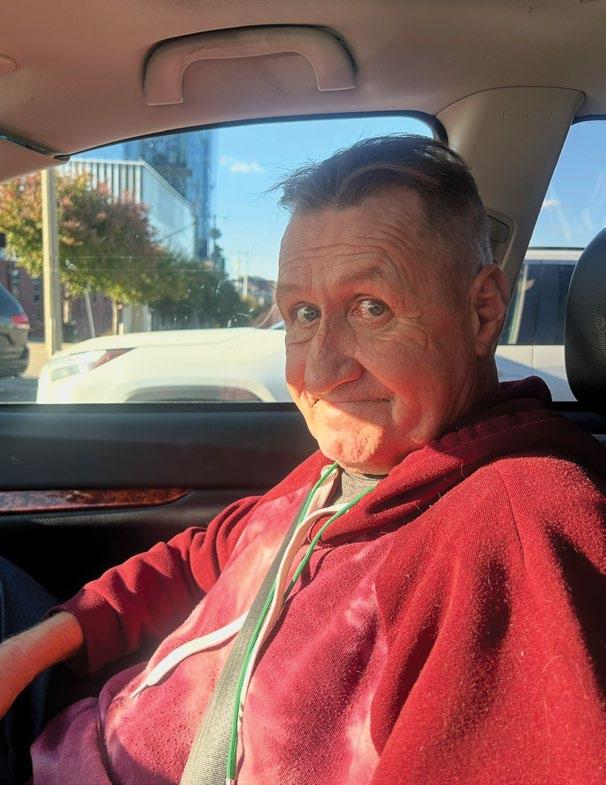
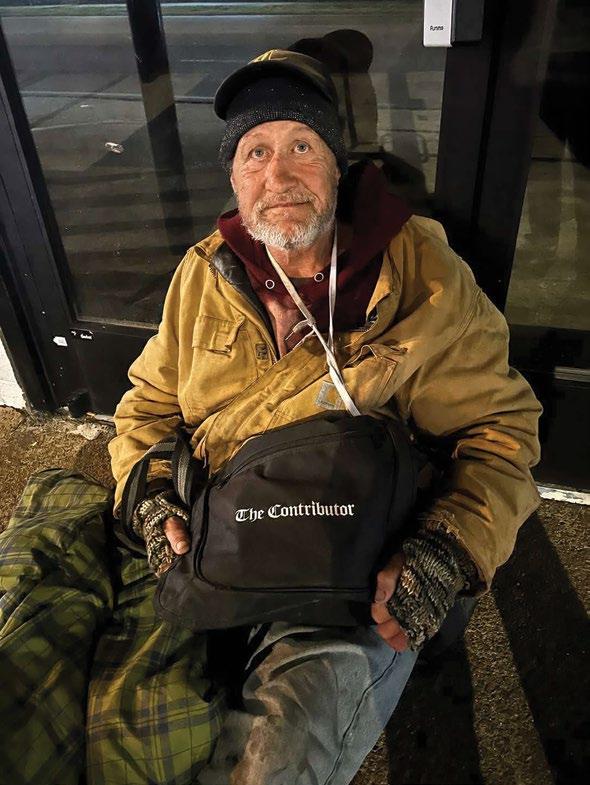
Contributor vendor Billy Ray Swaner, aged 58, passed away unexpectedly on May 4.
Caroline Lindner, who leads the vendor office at The Contributor, said Swaner will be remembered by staff as a “great guy” who was “always positive, always smiling, always saying ‘I love you,’” Linder said after his passing. Swaner and Lindner had spoken about recovery, and Lindner connected with him. Staff and volunteers also said they recalled his kind eyes and a gentle spirit.
“I’m in recovery as well so it definitely hit home on a note of understanding where he was coming from, what he wanted and what he wanted to achieve,” she said in local
media interviews.
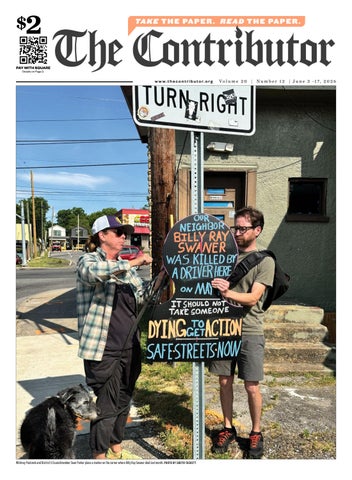
In the weeks after his death, Lindner and many others have called for a faster track toward safe roads for all Nashvillians. Swaner died after falling into the roadway on a busy area at East Trinity Lane at Gallatin Pike in East Nashville. Folks have gathered in the place he passed to place signs and honor him. One sign placed by neighbors in the area is on the cover of The Contributor this week.
“When something like this happens, usually, no one pays attention,” Lindner said.
“This is not an anomaly. People living on the street face so many dangers all the time
and are definitely overlooked.”
Swaner was fighting addiction in addition to the many other hardships faced by our unhoused neighbors.
“We are fortunate to be informed of Billy’s passing, as many of our friends living on the street pass away with nothing and no one,” a remembrance from staff reads.
“We exist to give individuals like Billy Ray a fighting chance to thrive in a society that so often leaves them to fend for themselves. We grieve repeatedly when we lose our friends, yet we still believe that we can work together to build a world where homelessness is a brief, rare occurrence, not a premature death
sentence. Fly high, Billy Ray. We’ll hold you with us always.”
Swaner was remembered at graveside service at Mapleview Cemetery in Smyrna on May 13. He was born March 21, 1968, in Murfreesboro to the late Bailey Swaner Jr. and Brenda Toombs Swaner. He was preceded in death by his parents; paternal grandparents, Bailey Swaner Sr. and Mildred Swaner; maternal grandparents, Mr. and Mrs. J.T. Toombs; uncle, George Swaner Sr (Marie); and cousin, Georgie Swaner Jr. He is survived by his brother, Bill Swaner; aunt, Pam (Mike) Hughes; and cousins, Raymond (Lori) Hillis and Mark (Delacey) Hillis.

BY AMANDA HAGGARD
In a Washington Post analysis released in late 2025, Tennessee was among the states listed as having a sharp increase in areas with clusters of pedestrian deaths.
From 2021 to 2023, the number of locations with at least three recent pedestrian deaths clustered within a mile of one another tripled from more than 275 in 2010 to more than 825 in 2023. East Nashville showed five separate
clusters of pedestrian deaths in that period of time, and Nashville overall had more than 10 clusters.
Just this year alone in Nashville, more than a dozen pedestrians have died. Most recently a vendor of The Contributor passed away after being struck by a semi truck at a known dangerous portion of road at East Trinity Lane at Gallatin Pike in East Nashville. Billy Ray Swaner fell into the road as
a semi truck was turning right onto Gallatin Pike. Just before that in April, 52-year-old Larry W. Smith was struck and killed by a truck while riding his bike at the intersection of 2nd Avenue North and Junior Gilliam Way.
The portion of road where Swaner died is part of an upcoming project that starts this summer to increase safety features to Main Street and Gallatin Pike. The first phase is slated to repave the road
from I-24 all the way to Briley Parkway in that area. It was also slated to add new crosswalks, improve intersections and school zone signs. Though this area is shown to be a cluster area for deaths, a four-mile stretch of Murfreesboro Road is in the top roads in the country for pedestrian deaths from 2021-2023. In cities all over the country, pedestrian deaths went up, but Southern states held the deadliest stretches of roads.
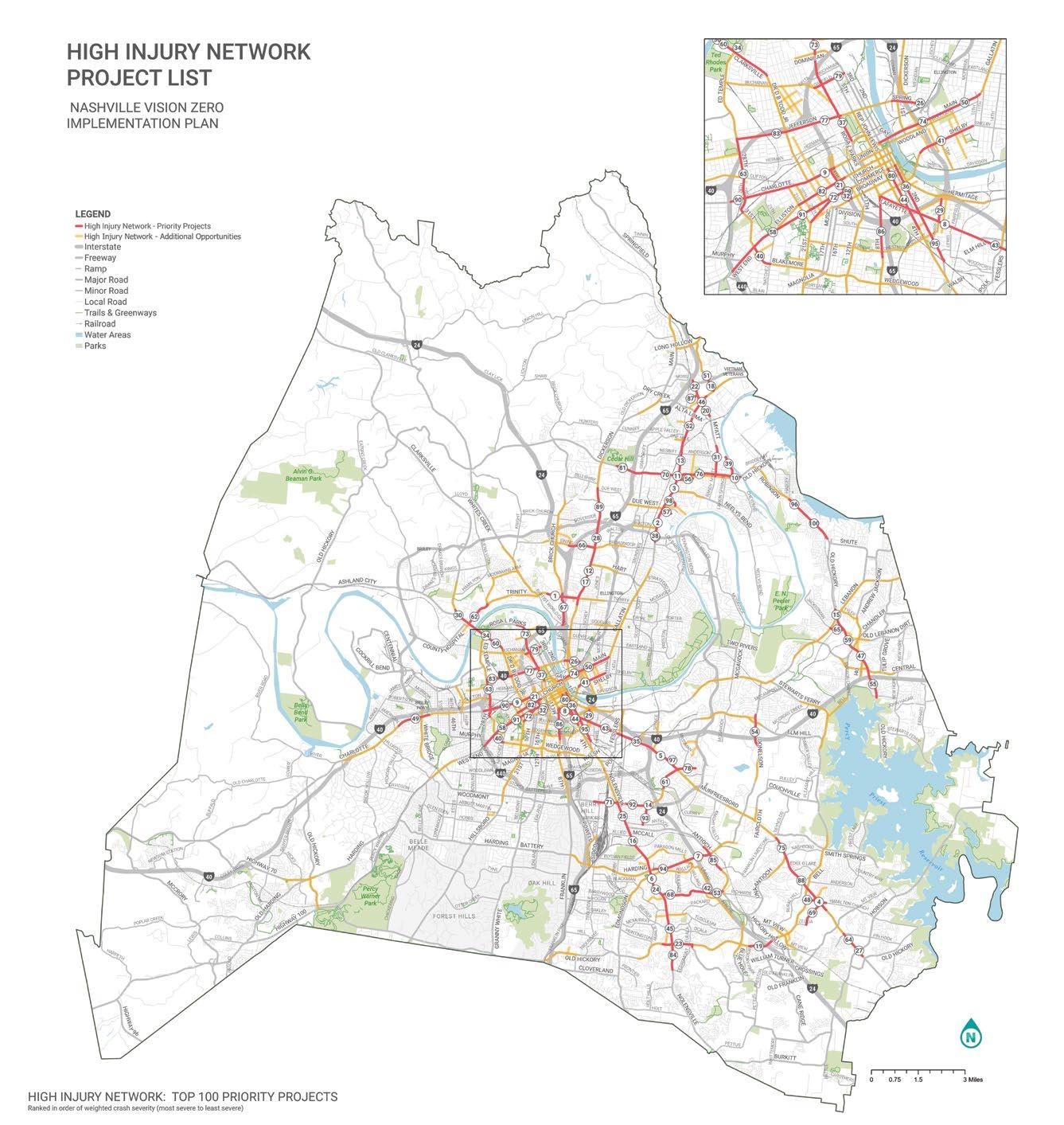
Even before these sharp increases in deaths and data releases on deaths came out last year, Nashvillians and in particular folks living on the streets have known how dangerous it is to have to walk anywhere in or around the city. Even the city’s most walkable areas are a nightmare for pedestrians when you consider current road and building construction downtown. Nashville's pedestrian high injury network, which can be viewed online, consists of roads with the highest number of traffic crashes where somebody has died or been injured while walking. Even if they’ve never had to traverse the city on foot, most Nashvillians will recognize these routes as the more difficult roads to navigate in a car as well. Driving down Murfreesboro Road during rush hour alone will show you just how much foot traffic is right there with the cars. The pedestrian high injury network identifies areas where investment can be impactful in reducing serious pedestrian crashes. The tool is a fairly defined roadmap for improvement, for lack of a better term.
Metro and Mayor Freddie O’Connell have been promoting a Vision Zero goal to eliminate fatalities and injuries on the roads in Nashville. Advocates have called for the city to move faster, and O’Connell has responded by saying the city was doing all it could to stay committed to Vision Zero.
However, the mayor’s pitched 2027 budget is slated to take approximately $8 million from the Vision Zero program to use on other road projects. Though the Mayor’s Office and Metro have said all projects are on track for Vision Zero despite a funding reallocation, advocates for safer streets argue the funds shouldn’t be diverted if the city is seeing an increase in deaths.
At a May 12 meeting of the Nashville Vision Zero Advisory Committee, folks gave public comments asking for more urgency around the increase in deaths.
Katherine McDonell, chair of the Metro Bicycle and Pedestrian Advisory Commission, called the increase in deaths a public health emergency and asked the committee to consider it as such.
“Since Jan. 1 of this year, 16 people outside of cars have been killed, including five in just the last five weeks,” McDonell said. “That's more than three times as many as there were at this point last year. These numbers are even more striking when you consider that statewide traffic fatalities are down. In Knoxville, Chattanooga and Memphis, overall traffic fatalities are actually reducing while Nashville's continue to rise. But instead of treating this like the emergency that we should, $8 million dollars have just been cut or reallocated from zero funding and another $4 million is going to repave Gallatin without really any meaningful safety [improvements]. These deaths on our streets are horrific. They're heartbreaking, but they're not surprising.”
McDonell said that since Nashville Next, a general growth plan for the city, was adopted in 2015, Nashvillians have repeatedly seen good plans be delayed, watered down or thrown away. She lists several unfinished or slowed projects as well as projects like bike lanes that were installed on Cleveland Street and identified priority bikeways with
“These are places we know people are dying, but even on the streets we fully own and even on the streets that we are designing and building from scratch, we are repeatedly failing to do anything to keep people safe. … Please just build some good infrastructure and build it fast.”
broad community support only to be quickly removed at the request of the district council member. Another project in 2019 adding bike line infrastructure at 3rd and Commerce with major community support now dead ends into oncoming traffic. Another East Nashville road project near McDonell’s house that started in 2020 finally got designed in 2024, but still is not in progress.
“To date, we still have nothing to show for this, no timeline for completion, no interim safety measures and massively wide roads that I have to take my daughter on on a daily basis,” she says.
After going through a series of other projects, she ends by saying that in 2024, following a series of public meetings, designs were developed to transform Main Street and Gallatin Pike, which is considered one of Nashville’s most dangerous corridors. Outside of deaths, nearly 800 crashes have happened in this area in just the past three years. Construction was due to be completed in 2026 from 5th to Eastland, but instead more public meetings were held two weeks
ago to reveal these plans wouldn’t begin until 2030. Instead, that area of the street would instead be repaved this summer with “some very marginal safety improvements.”
A few days after this was revealed, Swaner was killed on Gallatin and Trinity.
“This is why we're frustrated,” McDonell said. “This is why we're angry and this is why people are still dying on our streets. Most of the mentioned are on our high injury network. These are places we know people are dying, but even on the streets we fully own and even on the streets that we are designing and building from scratch, we are repeatedly failing to do anything to keep people safe … Please just build some good infrastructure and build it fast. We don't need any more plans. We don't need any more community engagement. We need action and we need it now.”
During the meeting, the committee introduced and unanimously adopted a detailed resolution condemning the removal of $8 million in surplus Vision Zero funds and the redirection of remaining Vision Zero dollars
to repaving Main Street and Gallatin Pike.
“If we can't get it right here where we have the plans, we have the funding, where we own the streets, how can we ever get it right on our pikes where people are literally taking their lives into their hands just to try to cross the street? This lack of action is not due to lack of funding,” McDonell said. “We're not even spending the money that we have. This is due to lack of political will.”
Most everyone agrees these areas are high injury areas, that resources should be allocated to fix them, but as with most things in Nashville, it seems it can’t happen fast enough. Though some might argue one can’t evoke the impending Super Bowl in every article on city growth and planning, it feels relevant to note that a city that can’t build well enough or maintain safe roads enough to stop pedestrian deaths on our major roads is planning to invite a bunch of people who don’t live here regularly to walk the streets in a few short years. Maybe when it’s their lives on the line, someone will feel it’s appropriate to use some extra money.
Homelessness Symposium slated for June 23
The Office of Homeless Services is slated to host the 2026 State of Homelessness Symposium on June 23. The event will feature Donald H. Whitehead, Jr., executive director of the National Coalition for the Homeless, Rori Knight Durham, CEO at RK Durham Consulting, LLC, John DeCarmine, principal consultant at OrgCode Consulting and Richard Cho, Managing Director at Manatt Health. OHS says the event will “bring together powerful voices, bold ideas, and real solutions to move our community forward. This year’s State of Homelessness Symposium brings together leading homelessness experts, public sector leaders, and advocates for meaningful conversations focused on today’s most pressing challenges. From capacity demands and sustainable funding streams to network expansion, system innovation and cross-sector collaboration, attendees will gain actionable strategies to strengthen our collective response to homelessness.”
NPL to Host Summer Reading Challenge
The Nashville Public Library is hosting a Summer Reading Challenge from June 1 through July 31 that invites readers of all ages across Nashville to participate by reading, completing activities and earning prizes. No library card is required to join. Participants can register for free through Beanstack online or by using the Beanstack mobile app. Individuals
and families may also pick up a paper reading log at any library branch and return it once completed. Anyone who participated in last year’s Summer Reading Challenge through Beanstack can log back into their existing account and join this year’s challenge. Individuals and families can register online or at a library branch, track reading days and activities and earn prizes by participating throughout the summer. Readers earn prizes for every 15 days of reading completed and for completing activities. Participants who register also receive a reusable bag while supplies last. Organizations such as daycares, summer camps and senior centers may register as groups through their local library branch. Participants can complete activities such as attending library programs, asking library staff for book recommendations, reading outside their usual genre, visiting new library branches, or reading from the New Book and Lucky Day collections available at branches and on Libby.
The Robinson Courtyard at Nashville’s Main Library is on its way to a new look after nearly two years of being closed. The new plans were presented at the Nashville Public Library’s May board meeting. “Endless Canopy,” a sculptural art installation by Immersive Material Office, will be the focus of the new plan. The space will also include canopy
structures that will evoke the “curvature of an open book and turning pages will frame the central fountain,” according to a release from NPL. The structures will provide both visual inspiration and functional shade for people using the courtyard. GHP Architecture and LT Design Studio will design a feature displaying radiating planting patterns of flowing native grasses, creeping groundcover and towering shrubs in raised planting beds. “The design for the Robinson Courtyard is so inspiring,” said Library Director Terri Luke. “This space will be visually stunning from every angle, balancing serene areas for quiet reflection with vibrant spaces for joyful celebration. This marks an incredible milestone in the courtyard’s transformation, and we cannot wait to see this next chapter unfold.” The courtyard’s namesake, Margaret Ann Robinson, served as chair of the Library board for 25 years and was instrumental in the opening of the Main library. Library officials closed the courtyard in the fall of 2024 after tree roots perforated the adjacent parking garage roof, resulting in a leak hazard. Library leaders will share a construction timeline as the project progresses.
The Tennessee Department of Human Services is taking applications for the 2026-27 Families First Community Grant Program,
which will award $4 million to a non-profit organization or organizations to provide direct services “to strengthen Tennessee families in need and promote self-sufficiency,” according to a TDHS release. Applications are due July 13. “At TDHS, we understand that Tennessee’s strength comes from its people, and our work is centered on ensuring every Tennessean has the opportunity to achieve economic and social well-being,” said TDHS Commissioner, Clarence H. Carter. “Through the Families First Community Grant Program, we are creating pathways that help reduce poverty by focusing on upward mobility, economic opportunity, and increasing access to education, workforce training, and individualized support services for Tennesseans facing barriers to employment. Our goal is to partner with organizations that are deeply rooted in their communities and committed to helping families build stability, independence, and long-term prosperity.” The Families First Community Grant program was created as another way to use TANF funds to help low-income families, and grants will support services in areas like education, health and well-being, economic stability and fostering safe, stable and nurturing relationships. Grant recipients will be selected through a competitive application process and evaluated based upon their ability to provide effective services and programs that address the specific needs of the community.










There are too many ways to make coffee, Gemini. Drip, espresso, cold-brew, flash-chill, pourover, french-press, sockin-a-pot, percolator, double-drained, sonic-swamped, candleboxed, infra-wet. And those are just the ones my local cafe offers. We need to be making fewer small decisions so we’ve got room for the big ones. What small things can you take off your plate so you’ve got the brain-space for what you really want to be thinking about? Think it over while you sip on this rag-squeezed Peruvian cattura.
Maybe I just don’t know when to quit, Cancer. I started playing a new videogame last night. It’s one of those really simple ones where you’re rolling digital dice and learning new magical and attack skills for differently trained class characters while you battle orcs who do damage based on distance and skill level. Pretty basic, really. I got my rogue up to level 28 by stacking poison and dodge, but I still can’t beat the final dragon at the end of the chapter. I must have fought that boss 30 times last night and I just couldn’t get through his defenses. But you know what I’m gonna do tonight, right? I’m gonna get right back in there and roll those dice again. Because that’s how we win, Cancer. We try and try until it works. No dragon can stand forever.
The ruby-throated humming bird eats four times per hour and has a heart rate of 1,260 beats per minute. That’s what I told my doctor when she asked me about making some simple lifestyle changes. She replied that “comparison is the thief of joy” and that I’ll have an easier time staying happy and healthy if I’m willing to use human metrics for success. I immediately thought of you, Leo. The standards you’ve been holding yourself to are nearly superhuman. Honestly, I’ve never seen anybody flap their wings that fast. You’re doing amazing things, but you don’t have to do that all the time. Give yourself permission to do a little less. Leave some nectar for the butterflies.
If you dream about somebody, do they dream about you? It’s probably a myth, right? I’m mostly just wondering because when I was checking-out at the Sav-a-Bunch today, the guy working the register looked up at me with his one good eye and said “Back so soon?” But I haven’t seen him in weeks. Unless you count the dreams. I’m sure it’s nothing, Virgo. But it does remind me that dreaming doesn’t get the shopping done. Even if you’ve got it all worked out in your head, you have to leave the house to make it happen.

We’ve got one of those motion-detecting lights in the storage shed at work. Seems like a great fix, but everytime I have to go out there for more empty VHS boxes or tanning-bed cleaning -solution I end up behind a wall of boxes waving my arms around in the dark. It’s hard to get the attention of an automated system that wants to ignore you. But usually there’s a person behind the system. And if you can find them, they’ll have a harder time ignoring you. That’s what I intend to do if I can ever find my way out of this storage shed.
Remember the time you went to the grocery store in your flamingo pajamas and, as you were leaving, the local TV news stopped you in the parking lot to ask what you thought about the new amusement park they’re building on top of the demolished mall? You said “that sounds like fun” and somebody took a screen grab of you making that weird face and it became the “that sounds like fun” meme and was all over internet message boards for, like, two years? I know you thought that was the biggest impact you would have on the world, Scorpio, but it’s not. You do more significant things every day just by being kind to the people around you. You change the world every time you tell somebody you’re glad to see them. Even if it doesn’t make the local TV news.
If you flip a fair coin, Sagittarius, your odds of getting tails is one time out of two, or 50/50. If you flip a coin twice, there’s about a one in four chance you’ll get two tails in a row. If you flip a coin 10 times, there’s a one in 1,024 chance that you’ll land on tails every time. You’re on a bit of a losing streak lately, Sagittarius, but this can’t go on forever. I mean, I guess it could, but it’s not very mathematically likely. If your streak persists, friend, you might try flipping a different coin. I’m starting to worry that this one is weighted against you.
I’ve been waving my hands under this automatic paper towel dispenser for at least 3 minutes. It’s like it can’t even see me. I just want to dry my hands! Hey, wait! All this hand-waving has thoroughly aired me out. Hey, maybe this machine is working exactly as intended. Sometimes the process isn’t what we’d expected, Capricorn. Just be sure to check-in on the results. Maybe you’re getting where you need to be after all.
I’ve read this book before, Aquarius. I remember that I really liked the beginning and I recall that it all turned out okay in the end. But here I am in the middle and I just don’t remember it getting this bad. By Chapter 9, things were pretty shaky. Now in Chapter 14, I can’t see things turning out well for anybody involved. But these are the kinds of stories we love, Aquarius, where things go from bad to worse to happily resolved in 260 pages. It’s trickier in real life, of course. You never know what page you’re on and nobody can tell you for sure that it’s all going to work out. All you can know is that the story isn’t over yet. And as long as you’re still in it, you can move this page in a direction you want to go.
Do you hear that, Pisces? Kind of a far-off whistling in the distance? It’s a familiar melody but I can’t quite place it. Maybe something by Bach or Brahms? Or wait, I think this was a radio-song I used to know the words to. Music triggers memories, Pisces. Sometimes of a time and place but more often just a feeling. When I’m feeling stuck in a repeated loop, it helps me to tune into music and remember all the different people I’ve been and ways I’ve thought about things. What is that song? If you’re feeling out of sorts today, Pisces, maybe tune into something you’ve loved in the past. You know, the years start coming and they don’t stop coming…wait! That’s it!
I stayed up way too late last night playing that new videogame. Every time I would lose I would just think, “one more round couldn’t hurt, right? How late could it be?” And then I’d get sucked in for another 45 minutes and the cycle would repeat again. Now I’m so tired I can barely stand up at work. I think I just told a customer to “have a great weep!” If I can make it to the end of this shift and make it home I’m gonna do things differently this time. That’s the great thing about a cycle, Aries. You can break it. Step away from your automatic response to the circumstance and ask yourself what you actually need right now. If it’s sleep, get some sleep. Don’t just jump back in where you left off because it's what you usually do. Give yourself the gift of breaking the cycle.
Did you sign the petition to save the old mall north of town, Taurus? We used to hang out there all day, drinking micro-plastic smoothies and trying on sunglasses we couldn’t afford. How will the next generation learn about risqué posters and mixing sodas together at the food court if there’s no mall? I mean, no, I haven’t been there in years. I mostly just order shoes and rugs online now. But think of the children! I guess it’s possible that some things in the past should just stay in the past. Maybe we need new, less commerce-driven community spaces. Maybe those petitions are just for people who don’t want to build the new world but can’t let go of the old one.
Mr. Mysterio is not a licensed astrologer, a trained motion-detector, or a certified somnologist. Want more? Visit mrmysterio.com Or just give him a call at 707-VHS-TAN1.
The rain stopped just before dawn, leaving the fields soaked and silver beneath the morning light. Merik sat in the loft of the barn where he had spent the night, wrapped in the blanket the old farmer had given him. It was the first full night of sleep he’d had in days.
Before leaving, he handed the blanket back. “Thank you,” he said quietly.
The farmer nodded. “Everyone needs somewhere dry now and then.”
By afternoon, Merik reached another town. Music drifted through the streets and people crowded the sidewalks. He kept his head low and his backpack close, hoping not to attract attention. He stepped into a convenience store to buy a bottle of water with the few dollars he had left. While waiting at the counter, two young men stared at him.
“You smell that?” one of them said loudly. “Smells like homeless.”
The other laughed. “Probably looking to steal something.”
Merik ignored them and placed his money on the counter. He had learned that responding usually made things
BY BRADLEY B., CONTRIBUTOR VENDOR
worse. As he turned to leave, one of the men stuck out a foot. Merik crashed hard onto the tile floor. His shoulder slammed painfully against the ground and the water bottle rolled beneath a shelf.
Laughter echoed through the store.
“Maybe get a job instead of creeping people out,” one of them mocked.
For a moment, anger burned in his chest. He was exhausted from being treated like he was less than human.
The cashier looked away, pretending not to notice. Merik grabbed the bottle and walked outside.
Behind the building, he sat beside an old vending machine, trying to steady his breathing. His hands shook slightly as he stared at the scrape across his palm.
“You alright?”
He looked up cautiously. A woman about his age stood nearby holding a small paper bag.
“I’m fine,” he answered automatically.
“You’re bleeding,” she said gently. She sat beside him and handed him the bag. Inside was a sandwich, an apple
BY NORMA B., CONTRIBUTOR VENDOR
I start this day like the one before. I get ready and put a BIG smile on my face, as I head out the door to see what this day holds in store.
There’s a chill in the air but it is sunny and bright. The temperature will surely warm up in time. Will I keep my temper in check? Keep my cool? Or will I do what I REALLY want to do and let somebody have it with both barrels not holding ANYTHING back?
But then I find myself asking: Who REALLY wins if I do that?
What do I gain if I show some sass?
Wouldn’t it be better instead to show some class?
Please help me to extend some common courtesy to those in our society even to those who DO NOT do the same for me so that others too may see this Christian quality in me and if those looking on refuse to see I know in my heart there are real and lasting benefits to keeping the peace that no one can take away from me.
and a small first-aid kit.
“You don’t have to do this,” Merik said.
“Maybe not,” she replied. “But someone should.”
The kindness in her voice caught him off guard more than the cruelty inside the store had. For several minutes they sat in silence while cars passed nearby. She didn’t ask why he was alone or where he came from. She simply treated him like a person. Before leaving, she handed him a folded piece of paper.
“There’s a shelter two towns over,” she said. “Ask for Luis. Tell him Hannah sent you.”
Merik slipped the paper carefully into his pocket. “Thank you,” he said sincerely.
As evening settled over the town, he started walking again. His shoulder still hurt, but the paper in his pocket reminded him that even in a world filled with judgment, there were still people capable of compassion. And somehow, that made the road ahead feel a little less lonely.
CREATED BY BRADLEY B.
Solve the cypher by using "The Drifter" to the left of this puzzle. Solution will be in next week's issue!
Last Issue Solution: "A single act of kindness throws out roots in all directions, and the roots spring up and make new trees.” — Amelia Earhart “21:13:2 6:2:3 3:6:4 20:5:3 11:10:7 / 16:8:3 5:2:1 / 14:2:3 21:4:1 / 21:48:3 14:5:5 10:2:1 10:18:4 10:22:3 / 5:7:2 11:10:3 7:10:5 / 3:6:2 1:22:2 / 4:3:5 14:5:8 7:8:2 21:8:7 13:6:5 1:14:3 14:4:3 21:3:1 . / 21:7:2 18:5:1 19:1:3 15:1:4 17:1:3 / 21:37:1 10:3:2 1:40:3 11:28:1 21:23:3 5:2:1 10:10:3 7:6:2 12:1:2 20:6:2 10:24:3 4:11:2 11:21:2 / 14:5:1 20:8:3 7:9:1 / 19:13:3 21:17:2 15:25:1 4:18:2 21:3:1 / 9:8:5 16:3:2 17:4:1 1:39:1 21:7:2 / 13:4:4 21:31:2

BY FREFOREVER, CONTRIBUTOR VENDOR
Truth is said to “Set the captives free.”
It cuts through the layers of lies and reveals what was, could be or our current reality.
Once the lies are exposed and eradicated, all that remains is the framework of truth. Depending on the foundation, if it is built on truth, truth remains. If it is built on lies, nothing remains.
If truth is your foundation what is built upon it will be able to withstand any storm. It can be rebuilt better and stronger than before.
When you lay a foundation of lies nothing built upon it will remain, no matter the materials used, or the design formed. All that is left is the rubble of what used to be.
If just one person had courage to tell the Emperor, to his face, he was walking around naked, the Emperor would have been freed from humiliation and disgrace.
Truth is powerful and can be used as both a tool and a weapon.
As a tool it can be delivered with compassion, courage and strength. Strength and courage are necessary qualities when delivering truth sprinkled with sensitivity and restraint.
Truth delivered as a weapon is spewed with venom and hate, causing destruction in its wake.
Be mindful of the fact that for the receiver the message of truth may appear to be an attack, due to their altered perception of their current condition. Each word is perceived as a bomb designed to destroy their finely constructed illusion of reality.
So, tread lightly and tell the truth with love and kindness, because love never fails and truth is better received when it is delivered with kindness.
And that’s the truth.

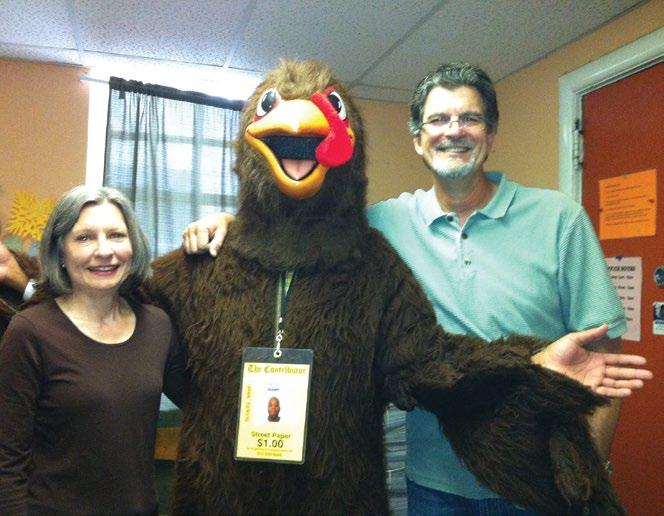
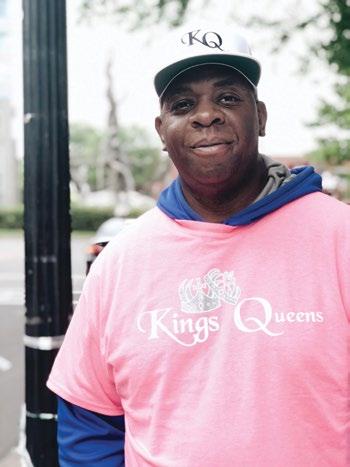
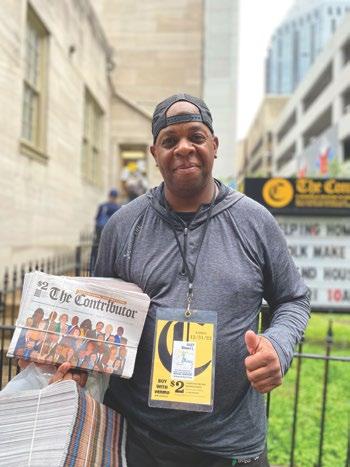
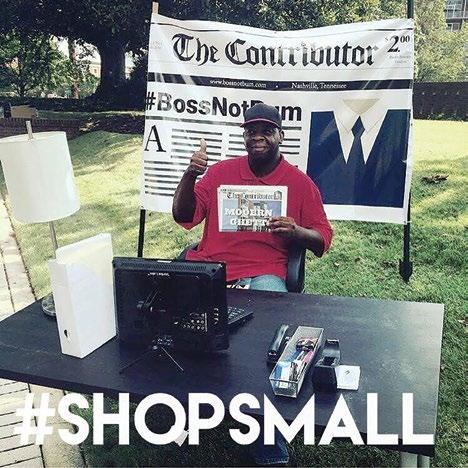
HELLO, kings and queens. My name is Shawn L.
No matter where I’m at, I refer to people I meet as “King” or “Queen.” It started when I was in prison. In prison some will go against you, but some will go along with you. It didn’t matter who you were, I was gonna call you king or queen. I was known as Mr. King and Queen in prison because of that. After 10 years of being in prison, my counselor asked me if I was getting out any time soon. I was like, “no, I guess I gotta do the whole 20.” He told me I was getting out in five years. When I learned that, I was excited, but I was also nervous. I knew I had to start figuring out what I was going to do when I got out. I didn’t know where or how to start, but I wanted to do a business called Kings and Queens. It was far away at the time, but I knew I would need to get a certain amount of money together to start my business.
As my release date approached, my business plan turned into t-shirts and hats with “Kings & Queens” on it. But, when I got out, I ended up being homeless because my mother wasn’t at the house we used to live in and nobody could tell me where she was
BY SHAWN L, CONTRIBUTOR VENDOR
because everybody in our neighborhood that I knew had moved. I didn’t find my mother until like two years later. She was like, when did you get out? I was like, oh I just got out today. I didn’t want her to worry.
So, here I am, out of prison after 15 years and trying to figure how to get back on my feet. After a year of being out, I ran into a Contributor vendor named Josh and he told me about the paper. I came to my first Contributor paper release meeting in 2009 back when we had them in the big sanctuary and I had a lot of fun. I met the staff there and they got me started selling the paper and also helped me get together documents I needed for housing and other services. After selling the paper for about a year, I knew that I wanted to do something different on my corner. It was around Christmas of 2010 and I decided to dress up on my corner. At that time there was a costume shop called Performance Studios on Thompson Lane. I went there and they suggested Santa costumes, but I wanted something different. When they suggested reindeer, I said ohhh! At that time I was a big dude so I was worried they wouldn’t have my size, but they did. So, I bought some lights
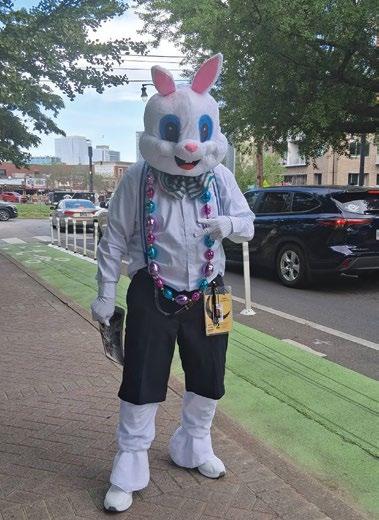
to display on the wall near my spot and I rented the costume, and the nose lit up and everybody just loved it. That’s how it started and by February I did Cupid (no diaper because it was too cold!). I wore all white and rented angel wings and a big bow and arrow. I couldn’t afford the halo though. Then I went down there again for an Easter Bunny Costume. I tried scary costumes for Halloween, but after I scared two kids, I had to take it off. The next day I came up with something playful instead of menacing. About a month later I was a Thanksgiving Turkey and then I always stayed Rudolph for Christmas.
My customers loved the costumes, and I wanted to have my own costumes instead of having to rent them. The woman at the costume shop even started to make me a few, but the store closed and she moved and we ended up losing touch. This year, I found an Easter Bunny costume at this balloon place out on Charlotte. I was able to buy this one, and now I’m in search of people who make costumes. I’ve a lot of ideas for costumes if I can find someone who can create them!
I’m also working on new designs and getting setup with equipment in my house
so I can make the shirts and hats myself. My new products will have a royalty style with crowns, swords, knights, jester hats and checkered diamond patterns. I’m working with TKO to get some graphics together. As far as The Contributor goes, it saved my life when I first started. It gave me a job and it’s just wonderful. I wouldn’t want to stop doing it. This is one job that I stuck with and I don’t think I would ever leave. I did it while I was homeless, I did it when when I was living in my first place, I did it during COVID, and I did it while I had other jobs at the same time. It’s just wonderful. It’s like family.
Being out there with my customers is wonderful. You don’t get cheers from everybody, but that’s just part of selling the paper. I’ve been flipped off, had water or whatever else thrown at me, I’ve been called the n word. Those are the bad parts and the things you put up with. But the good outweighs the bad. Selling The Contributor lets me know I can pay my bills, It lets me know I can move forward in life. It’s like no other job. I’m independent and can make my own decisions. The Contributor gives you life, it gives you meaning and it gives you love.



The Martin Short era on Saturday Night Live came shortly after Eddie Murphy had brought the sketch program back from the dead. Both Short and Murphy made magic by creating memorable characters and doing inventive imitations, but Murphy's comedy felt like an evolution of the standup storytelling style perfected by Richard Pryor. On the other hand, Short's characters and caricatures were influenced by the mythology of mid-century Hollywood and the ghosts of Broadway. Part experimental actor, part hyperactive theater kid, Short's unique blend of sensibilities takes the spotlight in a new Netflix documentary. The movie chronicles Short's rise to acclaim in television, film, and on stage, even as it documents the comedian's struggles with grief and countless professional failures.
Lawrence Kasdan's documentary Marty, Life Is Short traces Martin Short's five-decade career from the Toronto comedy scene to Hollywood stardom. The comedian chats with Kasdan — a longtime friend, the writer-director of The Big Chill, and the writer
BY JOE NOLAN, FILM CRITIC
of Raiders of the Lost Ark — to reflect on a life shaped by tragedy and joy in equal measure. When Short was 12, his eldest brother David was killed in a car accident. Both of his parents died before Short turned 20. The film also chronicles the love story between Short and Nancy Dolman, his wife of 36 years who died from ovarian cancer in 2010. It's common for comedians to come from dangerous or dark backgrounds, and Short's story follows the familiar pattern of a funny man channeling his grief into his creative work. The story of Short as a family man brings a quiet human thread to the comedian's over-the-top characters and performances, and it's one of the film's biggest strengths.
The movie follows Short's breakout success on SCTV and Saturday Night Live, where he created indelible characters like the super nerd Ed Grimley and the defensive lawyer Nathan Thurm. It follows him through scene-stealing film roles, legendary box office flops (including 1994's Clifford, where he played a 10-year-old boy), a To -
ny-winning Broadway run in Little Me, and his 21st-century resurgence with Only Murders in the Building and sold-out comedy tours with Steve Martin.
Kasdan captures Short's domestic side including summers at a lakehouse and raising three adopted children. The director edits Short's never-before-seen home movies which feature houseguests like Tom Hanks and his family, SNL's Lorne Michaels, Eugene Levy, and the late Catherine O'Hara. During their many chats for the film, Kasdan casually captures Short in the backseats of cars on the way to various events, or just making a pot of coffee first thing in the morning. Short looks directly into the camera when addressing Kasdan. He's hilarious and can't help improvising little routines, but Short is also forthright about the details of his work and his life.
The comedian is also open and almost egoless about how much of his career has been made up of failures, missed opportunities, misfires and bad breaks. At one point Short relays a period in New York where
every time he went to ride the subway he'd arrive just as the train left the terminal. He shared the anecdote as a metaphor for his stalled early career. Eddie Murphy joined the Saturday Night Live cast when he was 19 years old. Short didn't break through on SNL until he was 34. His first major film role found him cast alongside Steve Martin and Chevy Chase in The Three Amigos. It's a cult favorite today, but the movie was a box office flop in 1986. Short has endured all these setbacks through his love for the creative process and a slightly paranoid understanding that showbiz is a failure industry punctuated by great successes. Marty, Life Is Short gives audiences wins and losses, spotlit celebrations and quiet lessons, and lots of laughs.
Marty, Life Is Short is streaming on Netflix.
Joe Nolan is a critic, columnist and performing singer/songwriter based in East Nashville. Find out more about his projects at www.joenolan.com.
“The Contributor” está trabajando con uno de los principales periódicos en español La Noticia para llevar contenido a más lectores en Middle Tennessee. Nuestros vendedores de periódicos han pedido durante mucho tiempo que nuestra publicación incluya contenido que apele al interés de residentes de habla hispana en nuestra comunidad.
“The Contributor” is working with one of the leading Spanish-language newspapers La Noticia to bring content to more readers in Middle Tennessee. Our newspaper vendors have long requested that our publication include content that appeals to the interest of Spanish-speaking residents in our community.

Nashville fue ofi-
c i a l m e n t e s e l e c -
c i o n a d a p a r a albergar el Super
B ow l L X I V e n 2030 en el nuevo
N i s s a n S t a d i u m , m a r c a n d o u n momento histórico para la ciudad y el e s t a d o d e
Te n n e s s e e E l a nu n c i o f u e r e a -
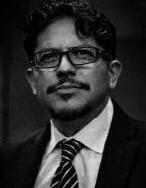
l i z a d o p o r l a N at i o n a l Fo o t b a l l League (NFL) durante su reunión de p r i m ave r a e n O r l a n d o, F l o r i d a , lue go de la aprobación unánime de los dueños de los equipos
La noticia re presenta mucho más que un par tido de fútbol americano Líderes locales y estatales consideran que el evento colocará a Nashville en el escenario global, impulsando el turismo, la inversión económica y nuevas opor tunidades para ne gocios locales y re gionales.
“ E s t o r e fl e j a c u á n t o h a c r e c i d o
N a s h v i l l e d u r a n t e l a s ú l t i m a s décadas”, expresó Deana Ivey, presidenta y directora ejecutiva de la N a s h v i l l e C o nve n t i o n & Vi s i t o r s
Cor p “No se trata solo del fútbol Es una opor tunidad para mostrar al mundo el espíritu creativo, la hospitalidad y la energía que hacen especial a Music City”
El Super Bowl es considerado uno de los eventos de por tivos y mediáticos más g randes del planeta Además del par tido, la semana incluye conciertos, transmisiones inter nacionales, eve n t o s c o r p o r at ivo s , e x p e r i e n c i a s para aficionados y una impor tante actividad comercial que atrae miles
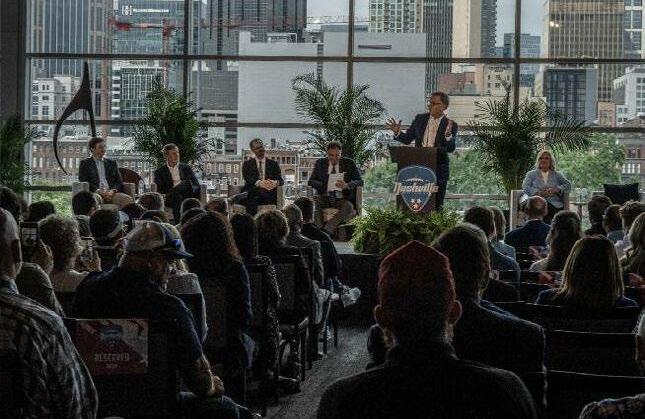
de visitantes y millones de dólares en gasto turístico
Los Tennessee Titans, organization propietaria del equipo local de la NFL, actuará como “Host Club” del evento Amy Adams Str unk, propietaria principal de los Titans, calificó el anuncio como “ un momento emocionante para Nashville y para todo Tennessee”
Por su par te, el gober nador Bill Lee señaló que la inversión en el nuevo estadio fue diseñada precisamente para atraer eventos inter nacionales d e e s t a m a g n i t u d y ge n e r a r c r ecimiento económico para el estado
El alcalde de Nashville, Freddie O’Connell, afirmó que la ciudad buscará asegurar que residentes y negocios locales puedan beneficiarse del impacto económico que traerá el Super Bowl
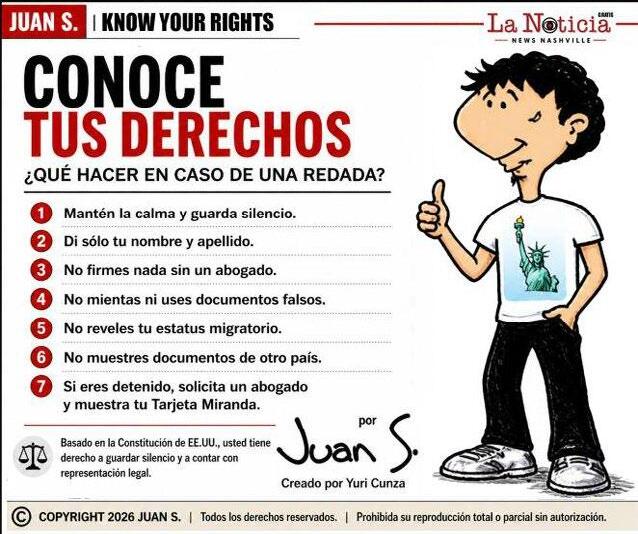
“Queremos trabajar para que nuestras comunidades y pequeños ne gocios también tengan opor tunidades de pa r ticipar y crecer con este evento”, expresó el alcalde
El impacto económico esperado es s i g n i f i c at ivo. S e g ú n d at o s d e l a NCVC , el turismo generó el año pasado más de 464 millones de dólares en impuestos para el presupuesto de Nashville y más de 692 millones para el estado de Tennessee
Además, líderes empresariales consideran que el Super Bowl podría a b r i r p u e r t a s p a r a f u t u r a s i nve rsiones, reubicaciones de empresas, convenciones y otros eventos internacionales
Marcus Whitney, presidente de la junta directiva de la NCVC , indicó que habrá esfuerzos específicos para
ayudar a ne gocios locales y organizaciones comunitarias a entender cómo aprovechar las opor tunidades relacionadas con el evento
Uno de los prog ramas que acompañará la semana del Super Bowl será NFL Source, una iniciativa de la NFL enfocada en conectar proveedores y ne gocios locales incluyend
y minoritarias con opor tunidades de contratación y par ticipación relacionadas con el evento
Pa
i ó n d e B r i d g e s t o n e
A r e n a , l a l l e g a d a d e l o s Te n n e s s e e T i t a n s y e l d e s a r r o l l o c o n t i n u o d e l c e n t r o d e N a s h v i l l e ay u d a r o n a p o s i c i o n a r a l a c i u d a d c o m o d e s t in o n a c i o n a l p a r a g r a n d e s eve n t o s
La NFL y las autoridades locales esperan que el Super Bowl LXIV no solo deje una impor tante der rama económica, sino también una exposic i ó n m e d i á t i c a i n t e r n a c i o n a l s i n p r e c e d e n t e s p a
Tennessee. L