










Venmo has canceled our account, but you can still pay using Square! You must identify your vendor so we know where to send the payment. Here's how:
After clicking “checkout,” type your vendor's name and four-digit badge number in the “Required” field. This allows us to know which vendor to



Since The Contributor started in 2007, more than 3,200 different vendors have purchased $2.3 million worth of The Contributor and sold over six million copies, generating over $15 million in income for themselves. In 2019, our C.O.V.E.R. Program (Creating Opportunity for Vendor Employment, Engagement, and Resources) was the natural expansion of our mission of removing obstacles to housing. We now offer full case management, assistance with housing and rental expenses, addiction recovery, health insurance, food benefits, and SSI/SSDI assistance.





LEARN MORE ABOUT
Imagine you have a home that you love. You raised your children there. But now they are off to college, and you’re facing a divorce. In a few weeks you will have to leave your house. Recently you were also diagnosed with cancer and need treatment.
Scroll forward a few weeks. You rented a small apartment for $1,500, but you just got let go from your job because you were unconcentrated and missed days of work because of all the medical appointments. No one is willing to hire you because they can see that you are sick. It’s all too much and you are struggling not only with your physical but also with your mental health.
Eventually, after eight months of fighting, you can no longer pay your rent. Your family is tapped out. They are struggling themselves and do not have the space or money to help you. You are facing homelessness.
Even though you are eligible for rental assistance, there are just no housing vouchers available to you. You learn that only three out of four households in the United States qualify for rental assistance because Congress has not fully funded the need.
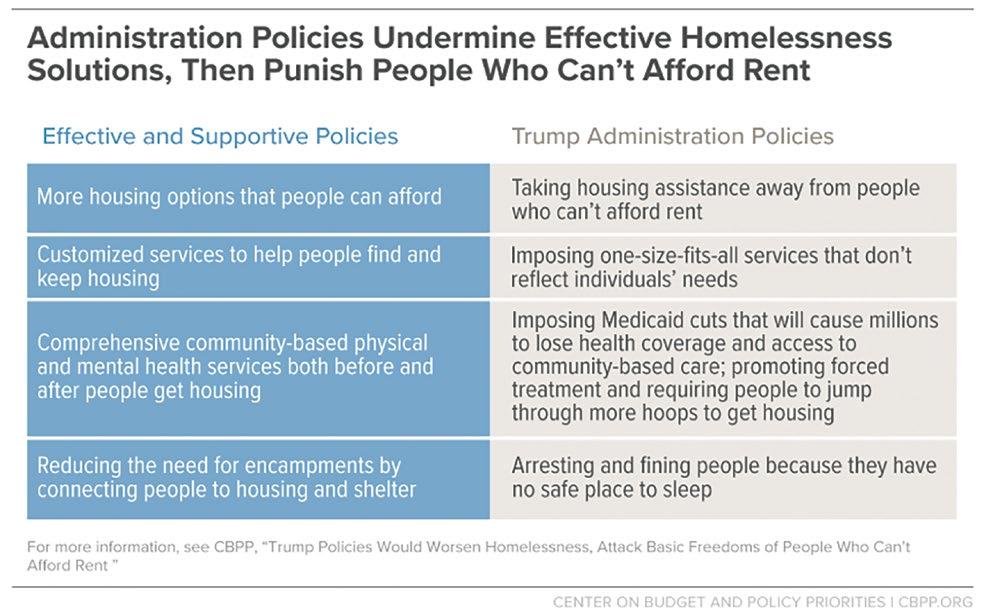
Being poor in America is expensive. And it is about to get worse as the Trump Administration promotes policies that, according to the Center on Budget and Policy Priorities, will :
• “Cut rental assistance, which helps people afford housing;
• Cut Medicaid, a key source of funding for services that can help people find and keep homes;
• Pressure communities to abandon evidence-based approaches to homelessness in favor of outdated, less-effective models; and
• Pressure states and cities to fine, arrest, jail, or institutionalize people who sleep outside because they have nowhere else safe to go, worsening inequities and access to housing and health care.”
Unfortunately, the scenario I describe above is not at all unrealistic. Too many people have already fallen through the gaps of the safety nets in this country, and more are likely to follow. Wages are not keeping up with rent, and people often are forced to choose between paying for medication, food or housing costs.
The people whom we see on the streets have often experienced similar scenarios. I recently came across a social media post from Knoxville that lists the main reasons for homelessness. This data comes directly from their Homeless Management Information System (HMIS) and shows that the lack of affordable housing was the main cause of homelessness. Most larger cities, including Nashville, are likely to paint a very similar picture.
When politicians try to blame individual behaviors rather than systemic failures for homelessness, we end up with remedies that offer quick fixes and do not address the actual causes. Evidence has shown that assisting people obtain and retain permanent housing and providing the wraparound support services they need to do so is the most effective way to reduce homelessness. This is the approach the U.S. Department of Veterans Affairs has used to reduce homelessness for Veterans by 55 percent since 2010.
Congress, however, has been unwilling to invest similar resources to benefit everyone else. Therefore, even the evidence-based solutions
BY JUDITH TACKETT
have had limited success due to a lack of funding that would have allowed local Continuums of Care* to scale up.
Now, the federal government is using national data to justify cutting permanent housing dollars. The U.S. Department of Housing and Urban Development (HUD) has been tracking homelessness through a Point-in-Time (PIT) count since 2007 (see Box 1). The PIT count only focuses on visible homelessness — the people who stay in temporary beds such as emergency shelters or transitional housing programs and those sleeping on the streets, in encampments, and in cars.
According to the PIT count, homelessness declined steadily until 2016 when it increased to never-before-seen numbers. However, there seems to be a glimpse of hope when HUD released the latest PIT numbers (with a six-month delay). Homelessness nationwide decreased by 3.3 percent.
Nonetheless, HUD in their press release presented the data in such a way to draw negative conclusions and justify a move away from a housing-focused strategy to one that invests heavily in temporary programs focused on recovery.
Investments in recovery and mental health are definitely needed, but moving away from permanent housing investments will not reduce actual homelessness long-term. And with “actual homelessness” I refer to situations where survivors of domestic violence, people going through a divorce and struggling with health issues, folks who simply lose their income, and others that experience a hard time can no longer keep their homes.
Multiple studies and reports over the years have shown that homelessness is directly linked to housing affordability. If the cost-of-living increases and rents go up, homelessness goes up. Furthermore, the prevalence of homelessness among the minority population is disproportionate to the general U.S. population. In other words, homelessness is a symptom of inequity. It is directly linked to the availability of housing.
But the Trump Administration has no appetite to invest in accessible, low-income housing
or housing subsidies — other than tax breaks for the rich, which in essence are their own form of a subsidy. Rent assistance is exactly what would help reduce homelessness.
As expected, in the most recent Continuum of Care (CoC) Notice of Funding Opportunity (NOFO) for fiscal year 2026, HUD doubled down and reduced the funding for permanent housing programs, shifting the focus to temporary programs with mandated 20-hoursper-week services. However, whether those programs will be funded at the needed levels of intensity is questionable. And once the programs end after one or two years, without the needed accessible permanent housing, a large number of program participants will likely end up where they started out.
Finland, the European country held up as a beacon of hope for many cities and countries when it comes to reducing homelessness, is a great case study that shows how these types of abrupt policy changes matter. After 12 years of steady decline in homelessness (by some accounts the reduction was more than 60 percent), Finland has seen an increase over the past two years. Critics such as Mark Horvath of Invisible People blame the change in the political climate that shifted away from funding supportive housing. The Finnish Red Cross cites a combination of the increase in the cost of living, significant cuts to social benefits, and reductions in housing subsidies as the main culprits for the recent increase.
To sum it up, when governments undermine the social safety net and when the market does not pay living wages, people increasingly struggle to maintain their housing.
Local CoC’s need to focus on building effective homelessness systems that create stronger connections with healthcare systems to provide the needed ongoing support for some of our most vulnerable neighbors. A strong homelessness system, which I prefer to call a Housing Crisis Resolution System, offers different paths out of homelessness — all of which are focused on permanent housing and build up on a strong prevention effort.
Communities, and I am mostly referring
to service providers, need to stop the fight between what comes first: shelter, recovery housing, transitional housing or Housing First program models. In essence, in an efficient Housing Crisis Resolution System, all types of programs are included and needed to give people an option to work through their crisis and obtain sustainable housing with the right types of support that addresses their individual needs as quickly as possible.
In Nashville, we have seen significant increases in resources to build permanent housing units, to offer temporary beds, to expand support services, and — most of all — to focus increasingly on Rapid Rehousing programs, which offers time-limited assistance (generally anywhere from three months up to a year, depending on the specific program). All these efforts sound great on the surface, but street and shelter homelessness has increased by about 14 percent since 2022 when the influx in funding started. We are missing something, and I have claimed repeatedly that in my opinion, our system is broken due to Metro’s overexaggerated focus on making street homelessness invisible by trying to implement quick fixes rather than investing in evidence-based, long-term solutions. The city claims to be data-driven. But data reports published by the Office of Homeless Services are contradictory, confusing, or plain false. To be able to counteract the damage that we can expect from HUD’s policy changes, Metro must provide the transparent, trusted leadership in homelessness that is at the core of any efficient, highly functional system.
* A Continuum of Care (CoC) is a regional or local planning body that coordinates housing and services funding for individuals, families, and unaccompanied youth experiencing homelessness. A CoC creates a collaborative community effort that provides a strategic systems approach that focuses on connecting people to housing and services to end their homelessness.
Judith Tackett is a longtime homelessness expert and advocate for housing-focused, person-centered solutions. Opinions in this column are her own.
Recently while traveling for work in Chicago, I came upon an art gallery along the Magnificent Mile. I’d noticed the enormous canvas works walking by before I noticed the free entry sign at the front door and walked in.
Quietly, I paced myself through the floor-to-ceiling paintings, noticing how the artist had hidden images in the paint itself in some of them. Layers of bright yellow, green and shades of pink and purple paint were outlined in thick strokes of white and black on one. I thought: “Is that smoke rising from a building? Do those two rounded finger-like objects coming together look like Michelangelo's Divine Touch?”
I stood directly before another of the canvases, noticing how the figures within were larger than myself. This painting was darker, almost all grays and blacks. Some figures had faces and others appeared shrouded, and I wondered if the same artist had painted both. There was only one other person in the shotgun-style space — a middle-aged, dark haired man who had been milling around, wiping counters and arranging items as I viewed.
“Are you the artist?” I asked.
“No,” he said, and went back to his work, shuffling a few papers.
I went back to looking, eventually pulling my phone out for a quick snap of one of the paintings I wanted to consider a bit more later. As I placed my phone back in my purse, he asked why I had come in. I said I was in town for my day job, but that I’d like to walk around my first day anywhere and see what is near me to become oriented, which is a habit formed in my second job, which was writing and editing a street newspaper.
“So you like to help people,” he said, not asking as much as making a statement. “That’s good.”
I explained that it’d be more accurate to say that I enjoy people in general, and that the work allowed me to make friends and acquaintances with all kinds of people
BY AMANDA HAGGARD
“I believe most of us should feel lucky to get to experience life on earth and should spend less time considering who created all of it.”
from all over the city and then make some kind of record of it.
He responded by saying that the pieces in the gallery were his. He said that pretty often he acted like he was not the artist because he felt people were more honest about a painting if they didn’t know who made it.
“Do you believe in God?,” the man asked suddenly.
Lord, have mercy. I wondered how I had traveled this far north to get the same kind of grilling I’d gotten constantly while living in the hills of Coffee County. I considered how much I wanted to say or whether I should just turn around and walk out. This person didn’t know me, and there was no downside to walking away. Against my better judgement, I answered:
“Probably not the same kind of man in the sky one you’re asking about,” I said.
He smirked, appearing eager to speak as I continued.
“I believe in science and that nature brings us so much beauty that it seems impossible that it came from nothing. I believe most of us should feel lucky to get to experience life on earth and should spend less time considering who created all of it.”
“Ah, so you are like my son,” he said, shaking his head, not in anger, but in resignation.
It was still inside the gallery, but outside tourists and others were hastily and noisily making their way toward dinner.
We kept talking. I asked about how ego played into the choice to not reveal his work, and he said he’d wanted to know what visitors thought, even if he might not agree with their assessment. He explained that in his studies of religion and theology, he’d come to the conclusion that God in trinity, the Triune God of Father, Son, and Holy Spirit, best explained our origin as humans, sustained life and persistence on earth.
With a mother raised in the Catholic church and a formerly Pentecostal father, along with fervor-filled memories of dating in the latter sect in high school, I recognized the beginning of a salvation pitch. Even if this wasn’t where the artist was immediately headed, my previous experiences taught me how quickly it could end there. Conversations about personal salvation never tend to go well in my experience, but I am more curious than not and knew I could easily shake off any discomfort related to evangelism, so I allowed the chat to happen without feeling any pressure.
He asked if I had children, and I replied yes, a daughter.
“Well, what do you tell your daughter?,” he asked, peering from over his glasses, which had slipped slightly down to the middle of his nose so I could see his full pupils staring at me.
“I tell her that she is good and that I love her,” I replied.
I knew that I hadn’t really answered
his question and probably wasn’t going to at that moment. It felt right and honest to reply the way I did, but the truth is also that in the moment I found it difficult to describe to a stranger how I’d relay my own personal spirituality to my offspring.
He offered to take my photo with the painting I had photographed earlier, and I agreed, despite wondering whether his snapping of the photograph was somehow trapping me in his painting. (Perhaps I’ve read too much horror and speculative fiction.)
I lingered slightly after, taking the time to view the smaller, more tuckedaway paintings. I saw one of a pair of Dalmatians and a few others with more recognizable human figures. They weren’t any more or less interesting, but I wondered about the choice to hide them further back in the gallery.
But to answer his question about what I will tell my daughter, I will put it in a way that maybe this artist will understand. Some people may be better off really hunting and trying to figure out who the artist is in order to appreciate the work. They might even compliment the artist believing it pleases their ego and gives meaning to their creations. They might wonder why the artist requires total honesty from them, but begins the entire thing in mystery. But others might find it more honest to not need to know who or what created it to fully enjoy and care for it. Honesty may reveal itself as more of an art than a science, but I believe truth is more absolute.
We’re now accepting submissions for Non-Toxic Theology, a column exploring faith and theology in ways that don’t suck —offering compassionate, thoughtful perspectives on homelessness and related issues. We welcome diverse voices and viewpoints, but reserve the right to publish only work that meets our editorial standards. Email your submissions to editorial@thecontributor.org.

UNZINE Membership is a monthly zine subscription that provides important ongoing support for the UNZINE social benefit arts project. Membership revenue goes into a shared pool and is paid directly to zine makers. This fund pays the artists directly and lets us keep our project going.
UNZINE Membership — $19.99 per month Two original UNZINES mailed monthly. Cancel anytime.
UnZine Membership is intentionally small. Membership is limited to keep the work sustainable.
Written by Chris Scott Fieselman, Vendor #0015
You start with a 55 Gallon Drum, Containing, Information Accumulation. Two holes on top. One's for what we take in. The others for what? Comes out in the end?
A lot of it’s Toxic … Dangerous Stuff … Tainted with Hatred … And Lacking in Love …
Now, take yourself, a garden hose, And insert it into, the take it in hole. You turn on the water, and just let it run, And run and run and run and run … And it cleans out the black stuff, Contained in the Drum. Give it some time, and eventually … Nothing but Clean, Fresh, Clear Water flows free …
This Earthly Story, with a Heavenly Meaning’s, A Moral that’s taught, Metaphorically Speaking.
The drum represents the total sum, Of the things that have made us, What we have become.
The contents are not hard to understand? They’re the things that come out of: The Heart of a Man.
The garden hose, and the water that flows, Is God’s Holy Word, which Cleanses the Soul. The more that you read, you search and you seek, Eventually comes out, in the words that you speak. This Parable’s written, with the Wisdom that comes, From a Water Filled, 55 Gallon Drum.
Written by Chris Scott Fieselman, Vendor #0015
A Story that was told to me … Down around Lake Okeechobee …
Brought up to Nashville, Tennessee, “The Parable of the Orange Tree.” A Farmer wanted Oranges Juicy and Sweet, So, he got himself a little old Orange Tree. Planted it and left it to grow on its own, But when the time arrived? There was something wrong?
Sour so Sour, too Sour to Eat. How do you turn Sour into Sweet? Good on the outside but underneath, It was Sour so Sour, too Sour to Eat.
Well, he nurtured it and cared for it, And Showed it Love And when that didn’t work? Then he treated it rough. But no matter, what he tried? It just wasn’t enough. He always ended up, With the same old stuff.
Sour so Sour, too Sour to Eat. How do you turn Sour into Sweet? Good on the outside but underneath, It was Sour so Sour, too Sour to Eat.
Well, he decided to try a little something new. Transplant the tree and see what it would do. Surrounded by trees that had good fruit, In the “Minute Maid” orchard, And “Sunkist” too, but ...
Sour so Sour, too Sour to Eat. How do you turn Sour into Sweet? Good on the outside but underneath, It was Sour so Sour, too Sour to Eat.
Now, listen real close and understand, How to change the heart? And the soul of the plant?
He took a little piece of a, Good Tree’s Heart. Graft it in and waited for a, Sprig to Start. Watched as the Sprig, Became a Branch, Then got rid of the rest, Because it’s all in The Past. Eventually the Branch Becomes a Tree, With Beautiful Oranges, Juicy and Sweet.
But ... Every now and then, You get those Sucker Plants, That grow up just below, The Good Fruit Branch. Make sure you remember, Keep Pruning Them, Or you’ll end up with Sour Fruit again.
Sour so Sour, too Sour to Eat. How do you turn Sour into Sweet? Good on the outside but underneath, It was Sour so Sour, too Sour to Eat.

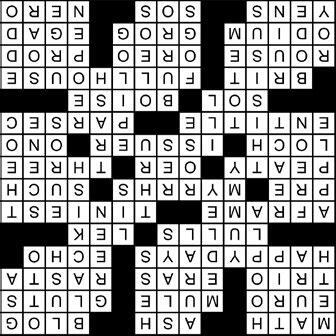
ACROSS 1. Calculus, e.g.
5. Emerald ____ borer
8. Web journal
12. Eurozone money
13. Ginger beer cocktail
14. Overabundance, pl.
15. *Mike Brady's sons in "The Brady Bunch" 16. Taylor Swift's sixth tour, with The 17. Bob Marley, spiritually speaking
18. *Howard Cunningham's TV show
20. Answer from a tunnel
21. Calms
22. Albanian currency 23. House that's mostly gable
26. Smallest
30. Ante31. Magi's gift, pl.
34. Of a particular kind
35. Like Scotch whisky, flavor-wise
37. "____ the land of the free..."
38. *Fred MacMurray in "My ____ Sons"
39. Nessie's hangout
40. Passport-giving organization, e.g.
42. A Beatle bride
43. Give right or privilege
45. 3.26 light-years
47. Sun, in Spain
48. The Gem State capital
50. London native, e.g.
52. *Danny Tanner's show
56. Make awake
57. Popular sandwich cookie
58. Elephant trainer's poker
59. Loathing
60. Hot rum drink
61. Goodness gracious!
62. Yearnings
63. Letters of distress
64. Infamous Roman Emperor DOWN
1. Crystal in the street
2. Atmosphere
3. Acid "journey"
4. Commotion
5. Pertaining to ear
6. Kills a dragon
7. Hitler's deputy
8. *Dre Johnson's show
9. Verdant
10. "The Simpsons" palindrome
11. General Services
Administration
13. Assortment
14. *Dr. Leonard ____ of "Friends"
19. Delectable
22. Fleur-de-____
23. Granny Smith, e.g.
24. Banned aerosol propellant
25. Strike back, e.g.
26. Through, for short
27. #12 Across, pl.
28. Part of an act
29. *Sandy Cohen's show
32. *Johnny ____ of "Schitt's Creek"
33. High-____ image
36. *Jack Pearson's show
38. Spam destination
40. Not in good health
41. Final words
44. Native American emblem
46. Resume business
48. Old West pack animal
49. Bread spreads
50. Foretell
51. Today's Colosseum, e.g.
52. Driving hazard, pl.
53. Desire
54. Fly like an eagle
55. Taro plant
56. *Logan ____ of "Succession"
During the time in 2007-2008 when discussions were being held concerning the possibility of Nashville publishing a street paper, a very important venue for exchange of information, ideas and thoughts was already doing great things at the Downtown Presbyterian Church in Nashville. This open forum, The Living Room, was the brain child of Rev. Don Beisswenger and a few others, which met after the noon meal at DPC on Wednesdays. Rev. Beisswenger died in 2018.
BY CHUCK C., CONTRIBUTOR VENDOR
The Living Room was a forum to talk about issues facing the unhoused population and those marginalized by poverty and other social conditions. At that time, there were few jobs available those with a criminal background except the never ending treadmill of the day labor pools. For years, many of those who were unhoused had been “flying signs” or panhandling, which often times resulted in arrests and jail time.
The Living Room gave us all a way to express our views and brainstorm ideas, which were very important to those who were participating in The Living Room. Under the moderation of Rev. Beisswenger and also Tom Wills, the foundations for The Contributor became a reality in Nashville were taking shape in it’s earliest stages.
One thing those of us who have experienced chronic homelessness is the desire to be HEARD! Being heard in a neutral non-partisan
BY FREEPRESSGMA, CONTRIBUTOR VENDOR #5843
environment is what The Living Room provided all those years ago. Freedom from criticism and judgment is something we all need and deserve as a basic human right.
Although the challenges we face today are in some ways different from those of 20 years ago, we all yearn to make our own lives richer by listening to and helping others. Hope this brief summary gives our readers a little insight into The Living Room.
My family was Air Force/Navy. Hence, we were trotted off to the West Coast ASAP at the start of the Cold War.
As far as I knew as a child, it was all just a big mystery as to what was going on and why. But one thing I did know was that the weather never varied between about 55 and 82 degrees. It never rained. A lightning storm was a huge event. I remember one storm in my entire childhood. This is of course coastal California. Before global warming.
So imagine my delight when I moved to Tennessee, the land of interesting weather, 30 years ago and ran out into my first big storm, yelling “Wooohooo!” while my friend screamed at me to be careful. Lo and behold, a giant lightning ball came flying across the field, straight at my chest. I couldn’t wait to
find out what this mysterious thing was! For some reason, it stopped about three feet in front of me and disappeared. Carrie grabbed me and dragged me out of the storm, clucking and fussing. I couldn’t see how she thought my life had been in danger.
My first day in Tennessee I was reprimanded by a Park Ranger for going out in the water when lightning was happening in the water! This is why so many Californians died in the freak lightning storm in Southern California when they waded into the water in fascination. Seriously. We just don’t know! We think y’all are crazy for talking about the weather all the time. What weather?
So during the most recent snow day I was sitting on my balcony during the white out. Being safe. Bundled up. Just missing
the great outdoors. I could see maybe one block in all directions. My first white out! I no longer had a view of the city. Traffic was at a standstill. It was white and beautiful with ghostly trees.
As is my wont, I was sitting on my balcony at around dusk. I looked up into the sky, and it seemed as if I was looking into a giant white vortex of nothingness. Suddenly there was an instant manifestation.
Appearing out of the void as if time traveling. One nanosecond, nothing. Then boom! A fluttering object homing in on my balcony. And another. Dozens. Each one suddenly appeared from the same distance as the others. Perhaps it was indeed a portal … just kidding.
Small flurrying things, silent as could be, started murmuring out and quickly zipping
by. It was swallows! Those little birds were flying for all their might and I only heard one of them call out once. She was a little behind. Probably yelling at her big brothers to wait up. Normally, they are singing all the afternoon long as they swoop around. But this time, it was as if they were appearing suddenly out of a void, silent creatures of the storm. Purposeful as a swarm of Star Wars ships, arrowing to the river beyond.
These are the things I missed the most when I actually got an apartment. Don’t get me wrong, I am so glad to have an apartment! But I don’t see those strange unusual things so often anymore. It was a blessing, though, because my arthritis was acting up, so no snow angels or snowball fights or snowman for me. But I had this spiritual experience instead!
I was traveling to Florida in September to see my son and my truck broke down and I landed in Nashville. I’ve had some ups and I’ve had some downs while being here. When I came here, I was staying in a hotel that was very expensive and I ended up moving out. I met some guys who were staying at the Centennial Park near the Parthenon on West End. They were cool at first, but then they started being mean to me and stealing my things. That was the first negative thing that happened to me here.
I started renting a storage unit and started living in it. I started to be depressed and feeling down being in a big
BY ANGELIA C., CONTRIBUTOR VENDOR
city all by myself with no family and friends. Someone told me about the newspapers to sell and I found some of the friendliest people I’ve met in a long time. They helped me in so many ways.
I done the interview and received my first 10 newspapers and went out to sell them. I was trying to find the best spot to make some money for me and my service pet, Yadipoo. We sold a couple of them and then we were about to give up and along came two nice ladies. They told me they didn’t have any cash but they could purchase online. They scanned the QR code. I later found out that I received $38. Hallelujah! That’s when I was on
SUBMITTED BY JIM P., CONTRIBUTOR VENDOR
“Nothing is more difficult, and therefore more precious, than to be able to decide.”
to something big.
My newspaper selling skills became a daily job for me. Me and Yadipoo were experiencing a whole new outlook on life. It was my full-time job until I landed a regular job. Weeks later I did, at McDonald’s. When I wasn’t working my regular job, the newspaper was my sidekick job.
The Contributor has been a major help in my life and I’m grateful. They have been the biggest support group. Andrew has been a major helper in finding me housing and signing me up for disability. My life is so much better now thanks to the friends I have at The Contributor.
BY JAMES, "SHORTY" R., CONTRIBUTOR VENDOR
Hotels are going up everywhere in Nashville lately. Just last weekend Dolly Parton opened one on the corner of 3rd and Commerce. Each one is a little bigger, a little fancier and a little different than the last. And another thing, they cost a little bit more too. Each one has something that makes it unique. It is estimated that by the year 2030, Nashville will have 220,000 more rooms. So by the time the Super Bowl comes to Nashville we can host more people.
SUBMITTED BY HOWARD P., CONTRIBUTOR VENDOR
I’m passing this on because it worked for me today. A doctor on TV said that in order to have inner peace in our lives, we should always finish things that we start. Since we all could use more calm in our lives, I looked around my house to find things I’d started and hadn’t finished. Well I finished a half bottle of Merlot, a bottle of Chardonnay, a bodle of Bailey’s, a butle of wum, tha mainder of valiuminun scriptins, an a box of choclutz. Yu has no idr how fablus I feel rite now. Sned this to all ur frenz who need inner piss. An telum u luveum!
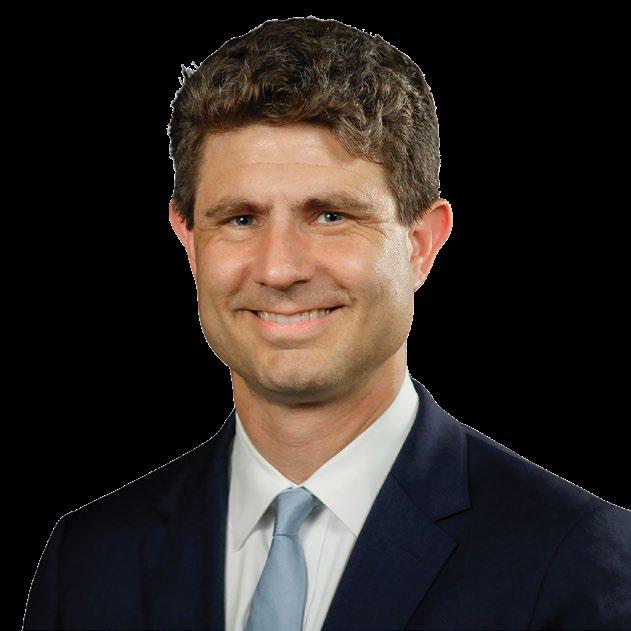
Matt Wiltshire is a household name in the economic development and affordable housing world in Nashville.
He worked for 15 years in the private sector before moving into the public sector, serving under three different mayors as the director of the Office of Economic and Community Development and then moving over to the Metropolitan Development and Housing Agency (MDHA) as their chief strategy officer. He also served as the chair of Hands on Nashville during the 2010 flood, which provided a crucial public service in helping organize volunteers citywide.
In 2023, he ran for Mayor, but said he now is fully focused on affordable housing issues and has no plans to run for the seat again.
Wiltshire is currently the President of the Pathway Housing Fund, a division of Pathway Lending, and spoke with us about his work and leadership in the affordable housing sector.
The Pathway Housing Fund is a division of Pathway Lending. What is the Pathway Housing Fund?
The Pathway Housing Fund was set up to acquire housing that is currently affordable, but is at risk of gentrification and keeping it affordable in perpetuity.
What do you do?
There are three things. First, identify acquisition opportunities; second, raise the financing for those acquisitions; and third, oversee the operations of the apartment buildings we acquire.
How many have you acquired so far?
Three apartment buildings totaling 119 units. One's in Donelson, one's in Hermitage, and one's in Hillsboro Village.
Once you acquire an apartment what happens next?
We make modest investments to improve the properties and make sure that they remain attractive, viable, sound properties for the foreseeable future.
The problem that we're solving is what we have seen happen dozens and dozens of times: Apartment buildings that provide good housing for Nashvillians get acquired often by out-of-state investors who paint them, landscape them, jack up the rents by 40 percent or more and displace the residents.
That's the problem that we're looking to solve, and we're looking to solve it by buying those same apartment buildings that out-of-state, value-add redevelopment entities want to buy. But instead of completely renovating them, we make modest investments to ensure that they remain in good condition so that we can keep them affordable forever.
How long has the Pathway Housing Fund existed?
It is helpful to talk a little bit about what Pathway Lending is. It is a 27-year-old nonprofit bank that makes loans to entrepreneurs to whom banks aren't ready to loan money yet.
To give a little bit more context: essentially Pathway is a nonprofit CDFI, which stands for Community Development Financial Institution. With a typical bank, you deposit your money in the bank, the bank puts 10 percent in a vault,
BY JUDITH TACKETT
they loan out 90 percent of the money in the form of mortgages or commercial loans. They make money on those loans, and that's how the bank exists.
We don't have depositors, we don't get deposits, but banks loan us money at very, very low rates, like 1 percent or 2 percent interest. And that is where we get our capital from. Then we turn around and we make loans. Typically they're a little bit more expensive than a bank loan, but we're loaning to people who the banks are unwilling to loan money to yet. If a bank is loaning you money at seven percent, we'd loan you money at nine percent. But the reality is the bank isn't loaning you money because you don't fit the profile that they typically want to loan money to. Once those folks prove to be good borrowers with a track record, we hand them back to the bank. That's the Pathway story.
And then the Pathway Housing Fund, we started about a year and a half ago. We're still fundraising, but we've raised $30 million so far to go acquire apartment buildings. We can leverage that money two to one, so we could go borrow $60 million on top of the $30 million. So we have essentially $90 million worth of purchasing power.
Where do you raise the money from?
Bank partners. It’s from the same folks who have lent money to Pathway in the past. We've just gotten $30 million that's dedicated to this effort. Banks are required under something called the Community Reinvestment Act to do good things in the community. Essentially, the federal government says, “Hey, we made capitalism work in this country. Banks, you benefit from capitalism, so you got to do good stuff in your communities.” And all banks do very good things in the community, but they don't always know how to do all the things that they're supposed to do.
That’s why about 30 years ago, they started lending money to Pathway, saying, “Hey, Pathway, you're the ones who know how to lend money to disadvantaged borrowers, to small entrepreneurs.
We don't know how to do that. You know how to do that. You've got those relationships. You understand those borrowers. You do that work.”
Then about a year and a half ago, as we saw the housing crisis getting worse and worse and worse, we came up with this idea of [how to] preserve housing that's affordable for the folks who work at the businesses we're lending money to. We saw that many of our borrowers weren't able to attract employees because people couldn't afford to live in the city anymore. And so we're now buying apartment buildings and keeping them affordable so that working Nashvillians can actually afford to stay in the city that they helped build.
You are a native Nashvillian and have seen Nashville grow. What are some of the positives and negatives of some of the growth you’ve been observing?
I think the growth in Nashville has been wonderful for many people — new restaurants, new jobs — but it has not been wonderful for all of us. Many Nashvillians have been priced out of the city and aren't able to take advantage of all the new things that have come to town. That lack of balance in a city is ultimately unsustainable. One of the biggest examples of that is that many of the folks who actually work here can't afford to live here anymore.
There is a lot of movement in the affordable housing sector. What are some promising new tools that you see on the horizon, other than the Pathway Housing Fund?
Just like you need to use many different tools to build a house, we need to use many different tools to address the affordable housing crisis that we're facing. [We should use] everything from grants from the Barnes Fund to low-income housing tax credits to build new units to low-cost borrowing to preserve the affordable housing that we still have. That is a more overarching statement.
The specific tool that I would like to talk about is in 2024, the state passed a law allowing cities to use debt to create and preserve affordable housing. I'm hopeful that cities across our state will begin to pull this tool out of the toolbox.
Is Nashville using that tool already? No. We are not yet. But I’m hopeful for the future.
Do you think cities like Nashville can put a dent in the affordable housing crisis without the state and federal government pulling in the same direction?
Yes, because our peer cities have. Charlotte, North Carolina, has had significantly higher population growth than Nashville over the last 20 years, but has had significantly lower housing cost increases. This has been due to a variety of factors, but a significant one is the innovative strategies that Charlotte has employed both in the public sector and in the nonprofit sector to address this challenge.
Nashville is the urban engine of the state. Do you think there could be more regional approaches when it comes to affordable housing, transit and also homelessness?
The short answer is yes. We need to address these challenges regionally. Traffic doesn't start or stop at the county line, nor does the housing affordability crisis. Decisions in one county absolutely impact the reality in surrounding areas.
Have you already seen some regional talks happening, especially in the affordable housing arena?
THDA (Tennessee Housing Development Agency), which allocates low-income housing tax credits, takes a statewide view and has been a leader on this issue. The Pathway Housing Fund also has a statewide mandate.
Has the Pathway Housing Fund already looked at specific areas outside of Nashville?
We have, yes. We haven't acquired any yet, but any place that's experiencing gentrification and a rapid rise in housing costs is a place where we want to be to help preserve housing options for the folks who work in those communities. From Chattanooga to Clarksville to Knoxville to Jackson, communities across our state are facing this challenge.
Anything else you’d like to add?
We are looking for other apartment buildings. There are two audiences. One, we want more banks to give us more money. But that’s a very select, very specific list.
The broader universe of people we want to market to are owners of apartment buildings. If there is anybody out there who owns an apartment building that’s affordable, who is interested in seeing it remain in good hands. We’d like to talk to them.
I say that to say, if you hear about apartment buildings that folks are living in that are affordable, probably older, probably a little run down, probably need some investment in them. We want to step in and buy those apartment buildings and invest in them to bring them up to Codes [and] keep them affordable for folks who live in them today.



DC knows him as “The Cowboy Poet”. Street Sense knows him as Frederic John. He shines in Billy Luck.
Jeff Krulik’s landline phone rang again. He had begun to anticipate the voice on the other line as Chris Earnshaw — also known as Frederic John — a DC local who had heard about his short film documentaries. Earnshaw needed Krulik’s help.
“He wanted me to help him make his film called Billy Luck that he wrote the script for,” Krulik said. “And he can nudge you. He won’t let it go.”
Krulik was initially hesitant, as he made his creative intentions clear: he doesn’t do narrative films. But that didn’t stop John from calling. After dozens of attempts and small chats over the phone, he convinced Krulik to meet him at a local restaurant to talk about his screenplay aspirations. Krulik brought his camera.
“I’m so grateful I did,” Krulik said. “He's showing me all these photographs of the vanished landscape. I’ve always been interested in local culture, and, of course, the underbelly, if you will, or the real DC.”
John’s screenplay, Billy Luck, aimed to take viewers around the “underbelly of Washington,” which interested Krulik, the District-grown documentarian. He was more charmed, however, by John’s self-collected and self-created rich history of DC, illustrated through his time under the pseudonym “The Cowboy Poet”. Krulik didn’t know his next move, but he knew he had to keep John on camera, and John knew he needed Krulik’s attention.
“I thought, ‘There’s something going on here.’ And I’m like, ‘Okay, I know he wants me to make narrative films, but I want to work with this guy, and I want to get him kind of going around DC, talking about what he was interested in,’ and that's how we started,” Krulik said. “He moved me, he got me interested in what he was, you know, pretty much all about. Now, I didn't really know him that well, but I took a leap of faith.”
The year 2000 began decades of film following John around DC. Billy Luck came to life — though not how it was intended to. The film follows John and Krulik’s relationship across years of developing Earnshaw’s project, exploring fond memories, frequent bickering, and, eventually, Krulik’s progression into becoming John’s doppelgänger as they battled through similar life challenges of hoarding and gambling.
The documentary was screened for the first time at the AFI Silver Theatre and Cultural Center in Silver Springs, Maryland, on April 19. The project has been years in the making, with Krulik meeting with his co-producers and long-time collaborators Greg DeLiso and Dina Selfridge over Zoom since 2020, 20 years after Krulik began filming. Due to the abundance of footage, Krulik and his editor, Brad Dismukes, edited the 90-minute first draft for months up until runtime, where Krulik stayed in a Virginia hotel for weeks leading
BY AUBREY BUTTERFIELD
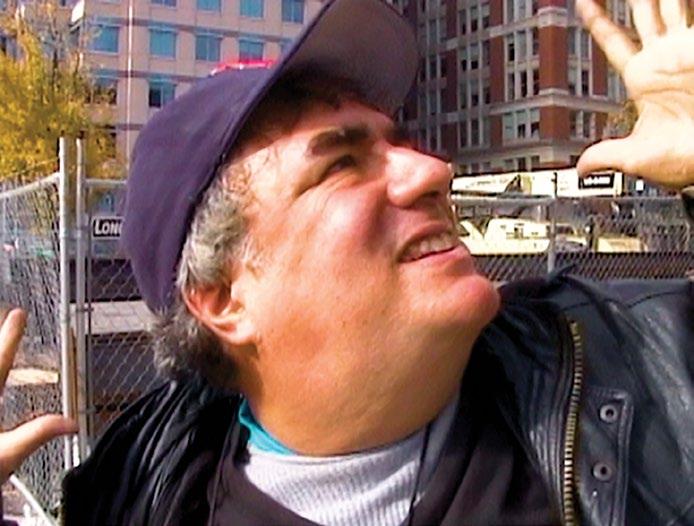
up to the premiere.
As a reward for his sacrifices, Krulik has been overwhelmed by support for the film. Friends, colleagues, and fans alike have flooded his social media praising the documentary for its humor, ambition and humanity. Viewers reported feeling connected to John and his struggles and appreciated the vulnerable and open look into his life that Billy Luck provided.
“If you have a lingering, insurmountable problem on your back, you’ll be able to relate to the universal themes of the film,” Davis White, who attended the premiere, wrote on Facebook.
Krulik is particularly drawn to “eccentric” Washingtonians, making John the perfect subject, according to both John and Krulik. His most notable work, “Heavy Metal Parking Lot”, takes a look at Judas Priest fans before his 1986 Landover, Maryland concert, spotlighting oddball fanatics.
Billy Luck opens with a conversation between John and Krulik, in which Krulik becomes frustrated as John struggles to express his talents. This point would become a recurring theme throughout the film, as John navigates how to show the world his work archiving the District.
John’s struggles were often connected to his own battles with bipolar disorder and alcoholism. As a result, he found himself deeply intertwined with horse gambling — a financial challenge for both himself and Krulik that is discussed intently in the film. The film spans from 2000 to the current day and, since the events of the documentary, John has celebrated over three decades of sobriety from drugs and alcohol, and has done personal work regarding his finances.
“I don’t go around beating the drum for, ‘I’m in recovery,’ you know, like some
of these big movie actors, you know, trying to get people to come in. I mean, I just try to be an example,” John said. “Because I don't drink anymore, it means I have a better memory, and my personality is more settled, and I care about other people.”
Prior to his focus on photography, John had different plans for his creative endeavors. The documentary covers his time in New York, as he chased acting dreams. He would eventually work at Saturday Night Live and have an iconic cameo in All That Jazz.
Despite DC’s central focus in the film, John emphasized the importance of his experiences in cities like New York, New Orleans and Las Vegas in the shaping of his life. He joined the Screen Actors Guild and became invested in blues bands, taking pictures of his bandmates while learning guitar.
“I just had this love,” John said. “I took good portraits of the bluesmen in black and white with Polaroids, and that was an extension of what I’d done exploring around downtown. Here they were starting to tear down the old city, and I was just enthralled with the photographs of Walker, Evans, you know, and Dorothea Lange, you know, the people who took the pictures in the ’30s, and especially Beatrice Abbott.”
Following his stints across the country, John returned to the District. He would finally find recognition for his photographic work in a 2016 five-page feature in The Washington Post’s Sunday magazine, which showcased “The Polaroids of the cowboy poet” and his journey capturing his hometown. He would wind up contributing to the magazine, referring to himself as a “groupie” of the publication.
“If it wasn’t for The Post magazine, I don't think a lot of people would have seen my pictures,” John said.
This moment became frustrating for Krulik, who felt excluded from the process after his years of work with John. After reflecting on his relationship with John, the documentary culminates in Krulik’s revelation that, over the course of decades, enabling John, he has become him. This is most prevalent through shots of John and Krulik’s respective storage units and efforts to expand their art to the public.
The film is currently incomplete and is being prepared for another editing round. Krulik plans on continuing to develop the film, including visual fixes, complete end credits, and more footage of his time with John. He continues to be intimately involved with the production of the film, drawing on past footage and occasionally recording more of John to finish storylines.
Today, John lives in the District with his partner and works as a vendor at Street Sense Media. He enjoys watching writers and photographers find their footing at the publication and continues to express his love for his hometown through his work. He remains in regular contact with Krulik and is still passionate about Billy Luck and other creative pursuits.
Parts of his screenplay have been published in Street Sense. The plot, he said, was inspired by the “melting pot” of New York Avenue and his affinity for the Skid Row neighborhood. While archiving the buildings through his photographs, he aimed to archive the stories of DC residents in the screenplay.
Though John no longer writes as often, he appreciates the creative freedom that the paper has granted him and other homelessness advocates in getting their words heard.
“[They] would give me a lot of space with my photographs and stuff, but the paper is more of a constituency vehicle now, so that everybody gets a chance,” John said. “I don’t have to let people know I can write and take pictures, because they know that. So I’m all for giving other people a chance, and especially since I don’t do as much vending as a lot of the other members do.”
As John continues to shape his legacy, Street Sense remains a vital part of his story.
“All of these great people have come to Street Sense, and their memory will be perpetuated because they came to Street Sense,” John said. “Nobody who came to Street Sense ever had their life go downward. It always went upward.”
Krulik is in the process of planning the film’s public distribution. Updates on the status of BILLY LUCK can be found by contacting Krulik at jeff@jeffkrulik.com, or on his Facebook page, https://www. facebook.com/jeff.krulik.
Courtesy of Street Sense Media / INSP.ngo
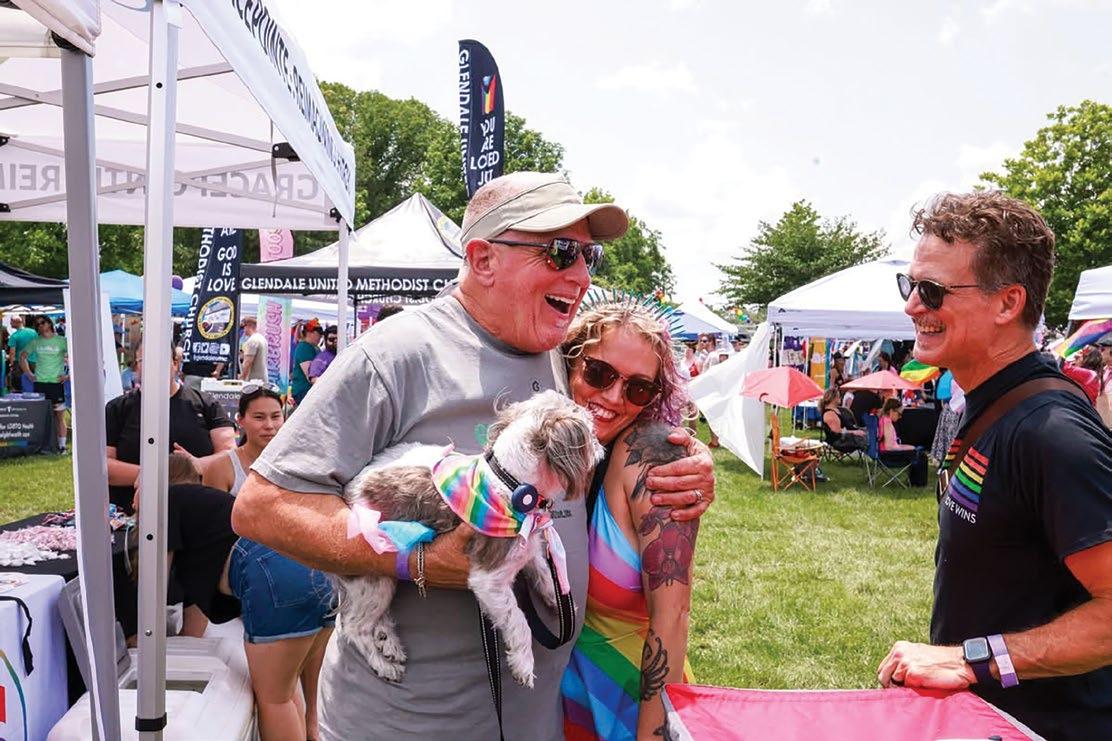
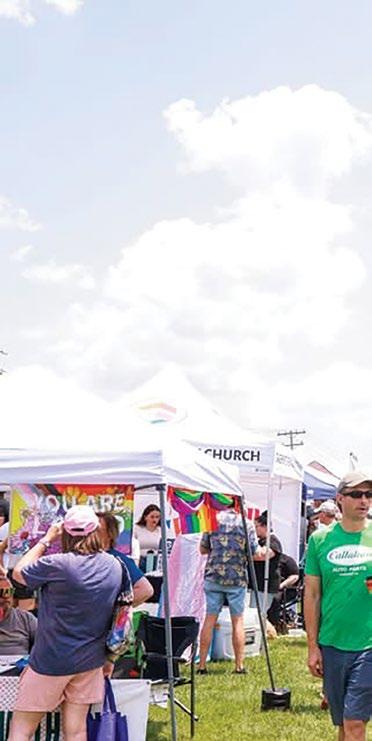
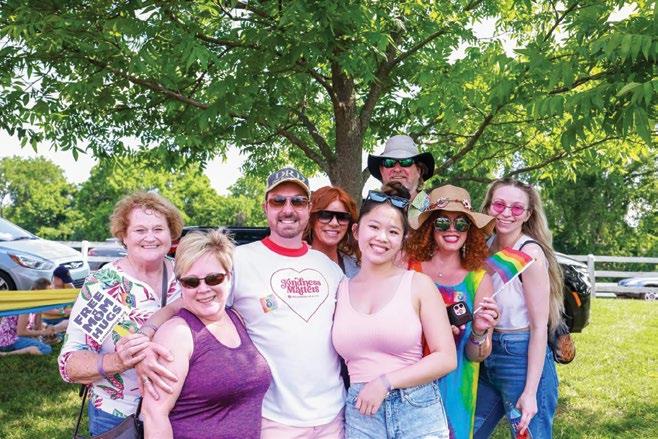
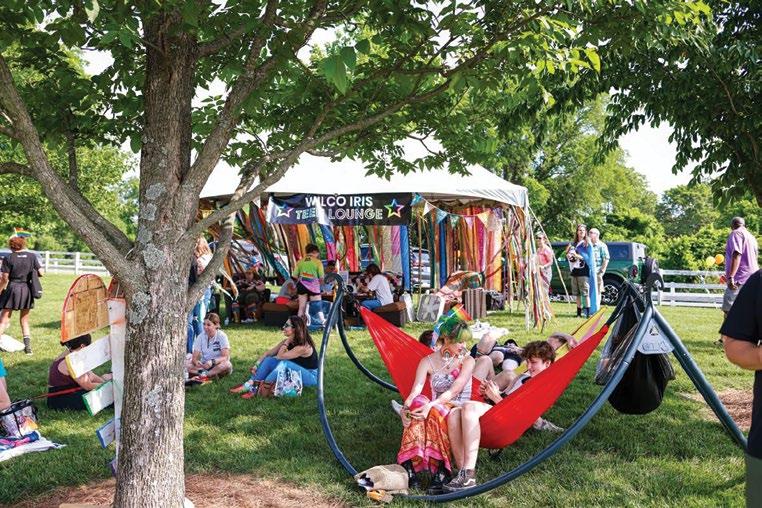
AAt Franklin Pride at the beginning of June, pop artist Morgxn took the stage for a midday show in the sweltering heat.
“This state can be hard to live in, but I come to a place like this and all I see is support and love,” he told the crowd, adding that small-town support is so important to people who might feel left out or different in their communities.
Folks may not think of Franklin as a small town, but some of the same
Franklin Pride Celebrates Six Years at the Farm
BY AMANDA HAGGARD
sensibilities abide. Williamson County is more than heavily conservative, and the family-friendly festival Franklin Pride didn’t come to be without a lot of hard work. This year, Franklin Pride celebrated its sixth year of inviting folks of all ages to Harlinsdale Farm. In the past, organizers have faced everything from permit challenges from City Hall to sponsors pulling out and funding issues, but every year, the slight hill to the left of the farm fills up with cars and people line up to celebrate.
“Every year we come back,” Clayton Klutts, president of the Franklin Pride nonprofit said during opening comments. “Through challenges, through change, through whatever life has thrown at us. Pride is not just an event. It’s proof that a community can choose love.”
Almost every year, a small group of protestors gather outside of the event. This year, that presence oddly seemed less than usual. Inside, families ate snow cones, spun wheels for buttons and rubber duckies, watched youth
choirs and dashed through bubbles and obstacle courses. Couples find any spot of shade they can find to watch a performance. Every year, people come back to run into old friends, meet new people, grab a bite to eat and dance. On the way in, attendees found moms lined up to give Free Mom Hugs. This group of women show up every year. Despite this sounding like a nightmare for the non-huggers among the group, many seemed eager to be wrapped in love on their way in. This group’s whole purpose is to ensure
BY AMANDA HAGGARD
Nashville Pride is slated to host its 2026 Nashville Pride Festival and Parade on June 27 with events leading up the annual celebration of Pride Month in June.
Last year, Nashville Pride overcame a historic financial shortfall after the festival through fundraising efforts. The festival is the largest LGBTQ+ festival in the state, and outside of COVID-19 closures, they’ve held a festival almost every year for more than 35 years. Each year, funds from the events support Nashville Pride as an organization as well as programming, community events and advocacy efforts.
The free Nashville Pride Parade begins the festivities at 10 a.m., starting at Broadway and 8th Av-

people feel loved and supported regardless of sexuality or gender identity.
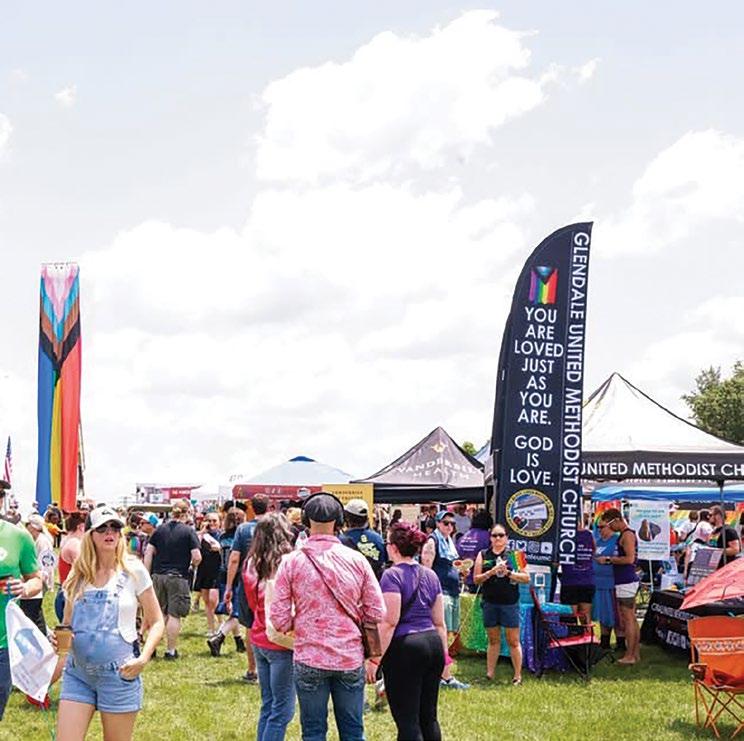
As performers played throughout the day, vendors as varied as Mars Petcare and the Nashville Predators to Glendale United Methodist Church in Nashville and First Presbyterian Church in Franklin and the Girl Scouts of Middle Tennessee were in attendance.
During Morgxn’s set, he played a mix of covers and songs from “Heartland,” which was released in full in March of this year after an EP release
last summer. The tracks are full of love for the queer experience and explorations of cultural stereotypes around what it means to live in the south and what it means to experience it as queer person.
“I sat down with [Rep. Gino Bulso (R-Brentwood)],” he told the crowd. “I asked, ‘Why are you doing all of this to attack us when all we want to do is love?’ … We just want to live. We just want to love. … Happy Pride from my little nuclear family to you nuclear families out there.
He ended by inviting the crowd onstage to sing Miley Cyrus’ “The Climb” for his send off. Older adults, teenagers and kids as young as four climbed the stairs and sang together to a crowd of doting moms, partners, friends and family members.
“This has been a perfect day,” he said.
The next day, Morgxn played CMA Fest for the first time on a much larger stage in downtown Nashville. In days after, Metro Council recognized Morgxn and“Heartland” with an offi-
enue with more than 140 entries in the procession. The festival will happen from 11 a.m. to 8 p.m. at Bicentennial Capitol Mall State Park in downtown Nashville.
Nashvillian Fancy Hagood will headline the event, with several other artists, DJs and performers supporting throughout the day: Molly Grace, Saaneah and the Gay Ole Opry as well as DJs Amor and Truestarr and hosts Trey Alize, Coqueta, The Princess and Nece Sexton. The festival’s HOTHAUS area will host DJs, dancing and drag performances. The Rainbow Stage features Rachel DeeLynn, Bria B. Freeney, Luke-Michael, Ally Free, Madeleine Kelson, Ty Lakes, Whitney Fenimore, Jessica Rose and BODHI. There will also be a marketplace, food, drinks, art and family-friendly zones.
cial proclamation. He was featured in Rolling Stone shortly after.
Meanwhile, Morgxn is planning a small-town Pride event in Sumner County. In September, the farm that he and his husband purchased together will become home to a community of people who built the event together, he said in a social media post. Families, friends, local businesses are working together to put it all together, which he said is the most fun part.
“The spirit of Pride is alive in Sumner County,” he said.
BY BILL B., CONTRIBUTOR VENDOR
I became homeless about a year and a half ago. Like a lot of people, I found my way to the day center at the Room It The Inn here in Nashville. For someone experiencing homelessness, I would describe the organization as a lifeboat in the middle of shark-infested waters. They offer essential services (showers, laundry, mail), educational classes, crisis support, and are willing to help anyone who wants help.
Eventually I found my way upstairs to the Art Room. Delia Seigenthaler runs the art program at the Inn. She and a group of volunteers teach classes just about every weekday. All of them are kind, supportive, and absolutely perfect in their own way.
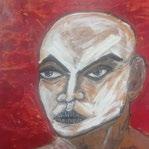
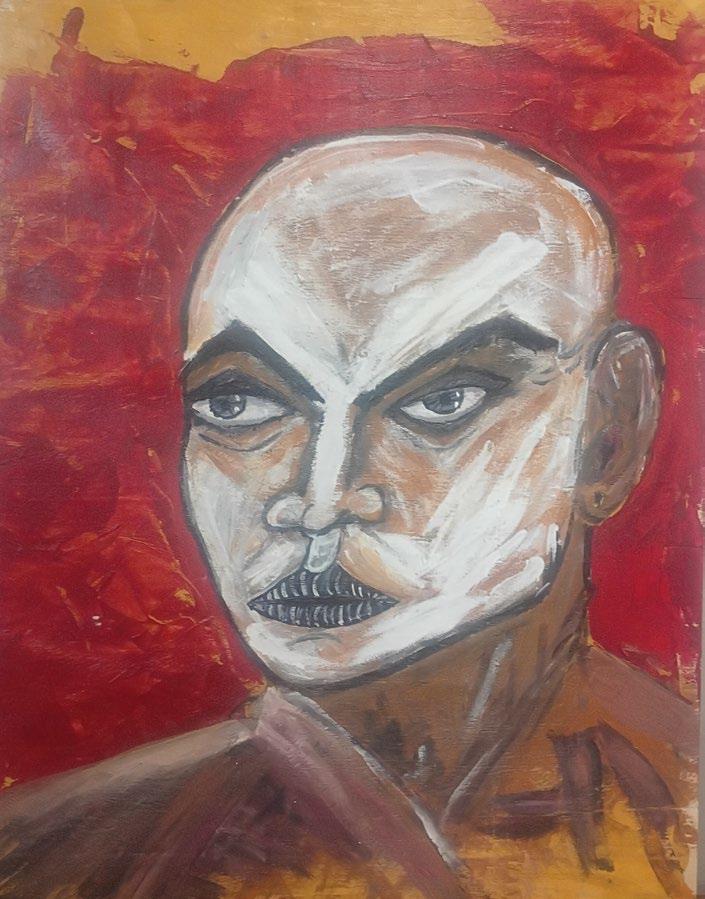
I grew up like a lot of kids watching Bob Ross on PBS painting happy little trees and wanted to try painting but never had the opportunity. So, when I got to the Art Room, I grabbed a brush and went to town. One of the first things I painted was a guy I named “Marcus”. He was imposing looking fellow that looked like he was in the middle of a bad day. I used red, white and black acrylic paint on a wood panel. I was proud.
Since then, I’ve painted several other things, some good and some that went into the trash can at the end of the day.
Recently one of the mental health counselors that provides services at the Inn stopped by the Art room. She was looking at everyone's work and asked me which pieces were mine. I showed her Marcus and some other things I had done. She complemented me on all of them and then quickly circled back to Marcus. She asked me, “What made you want to paint this piece?” I told
BY NORMA B., CONTRIBUTOR VENDOR
This is the time of year when many people think of their Fathers with love and affection.
I, too, give attention to my dad, as I try to imagine what he would’ve been like as an older man, though it’s hard since he died at only 37. I wonder would his dark brown hair have more of a salt and pepper look today?
Or would it be gray?
Would his bright blue eyes still sparkle and shine the same way when something special caught his gaze I close my eyes as I strain to hear the sound of his voice whispering in my ear.
Oh how I would love to see his smile of approval looking back at me.
But sadly for me those things are a part of the distant past. But my memories of him will forever last. Readers, please take a lesson from me and learn from my mistakes.
Show and tell your dad how much you love him before it is too late and all you have left are memories that with the passing of time tend to fade away.
BY LORA V., CONTRIBUTOR VENDOR
Ice cream a summer delight I eat it year round. It comes in a rainbow of colors and flavors
And still so much more
One for everybody’s taste
One flavor I never did Was the coffee, but I don’t like coffee. Some people do.
Ice cream is made for everybody
From 6 months old to 100 years old.
Run out and buy your favorite now.
Get your ice cream fix today.
her I didn’t know; I guess it was just a feeling I had at the time. She looked at me rather concerned and said, “You're not experiencing any of those feelings now, are you?” I laughed and assured her I was not wanting to harm myself or others. The question struck me as funny, but later I started thinking about what was going on in my life when I painted Marcus. Being newly homeless, it was a stressful time in my life to say the least. I thought about the person I was before and after painting him.
Until that day she asked me that question, I had never thought about what art was doing for me or the therapeutic effects it had on me. I noticed there is a tremendous euphoric feeling that comes from the whole creation process, and I now know it can also be somewhat cleansing. I think the day I painted Marcus he left my head, traveled down my arm and exited out of my paintbrush onto the canvas, and with him he brought a lot of the frustration, anger, and hate that created him in the first place.
Right now, at the Frist Museum they are having an exhibit featuring artworks from some of their community partners. These are different organizations that provide social services, community centers, and advocacy groups. I think a lot of the art you will see there was created out of a therapeutic need and serves as their own personal record of healing. I invite everyone to go see the exhibit. It is truly amazing.
I don't paint pictures like Marcus much anymore. Now I’ve moved on to calmer things like flowers and such. I even painted a landscape the other day.











When I was a kid I always got bloody noses. Not even from, like, fights or knocking it into stuff. I’d just be standing around on a regular Thursday or whatever, and my nose would start bleeding. It always stopped eventually, and adults never seemed too worried. Whatever it was, I guess I aged out of it because I never get a bloody nose anymore. What was I talking about, Gemini? Oh, right! Whatever is stressing you out this week is probably not going to be the thing stressing you out two or three weeks from now. Two or three years from now, you may even remember the plot of your biggest concern today. So keep some perspective and carry some kleenex just to be safe.
Robert H. Goddard is considered the father of modern rocketry. He designed and created the first liquid-fueled rockets which were a massive leap forward in the technology that eventually ushered in the Space Age. I probably never would have thought of that. I’m not considered the father of much of anything except maybe this mustard, pickle and sharp-cheddar sandwich. It’s pretty good, but I doubt it will ever go to space. Anyway, Cancer, whether history remembers us or not, I hope you’re making something you love to make. And if you want one of these sandwiches, I’ll make you one.
Is it just me, or is your neighborhood absolutely jammed with those little self-driving scooters? They just buzz up and down the streets, handlebars to the wind, fully unoccupied. I think you’re supposed to just tackle them as they pass and get on and go wherever it takes you. I saw a guy lasso one to the ground and then he rode it off toward the sunset. I could never pull that off. Plus, when I’m in motion, I like to know where I’m going. But I’ll tell you, Leo, sometimes it’s better just to be in motion at all. If you’re feeling too stationary, maybe hop on one of those things. Or you could try a walk around the block.
I love a good, hopeful alien movie. The kind where humans and aliens meet for the first time and they have to help each other and learn to understand each other and maybe save the planet or stop the bombs or teach us the true meaning of friendship. I think we make those movies because we’re scared of strangers, but at the same time we hope strangers are somehow the same as us. You probably won’t meet any space travelers this week, but if you run into a stranger, try to let your hopeful imagination win out over your fear.

I was watching that commercial where the giant red truck is speeding over the dunes in the desert. It catches some air and does a 90-degree turn and skids through the sand before it speeds down another hill. I thought to myself “Maybe I’d be happy if I was just doing that. Maybe all I need is a big red truck.” But then I saw the small print. “Professional driver on a closed course. Do not attempt.” Is nothing sacred? Must every story be a lie? If I had that truck, I’d probably just drive to work and back and still get home too tired to zoom through the desert. But we must allow these dreams to teach us, Libra. When you see your desire, ask it what it wants.
Someday, Scorpio, this will all be data-centers. Just beautiful, giant, buzzing rectangular buildings as far as the eye can see. Powerful, thirsty, engines of information saving us from the burdens of thought and effort. Until then, Scorpio, we’ll just have to make the best of what we’ve already got. Plain old streams, trees and fields of wildflowers will have to suffice until we enter our age of technological perfection. Sure, it’s a struggle for now, our only pleasures coming from painting sunsets, making music, and trying out new philosophies. But I think we can make it to our bold technological future. Unless, of course, that isn’t what you want, Scorpio. In which case, you may want to make your wishes known now.
So I went to the new Burger Cage they just opened over on Pinefield. It was good, I think? I’m kind of confused. First, it’s super bright in there. Just clean fluorescent white. There are no tables and no counter to order at. No employees anywhere in sight. There’s just a bunch of touchscreens everywhere. I walked over to one and tapped in my order (Just a No. 7 with no Dink-Sauce and medium Diet Slart). As soon as I hit “complete” a bag appeared at my feet. Came up from a tube in the floor, I think? Then a voice from the screen said. “Thank you. You have 15 seconds to exit.” So I did. Anyway, Sagittarius, I’m wondering, is everybody as desperate for a real interaction as I am? Carry that thought into your next business plan or game night.
Before we begin your horoscope, Capricorn, please stand and join us in reciting The Pledge to The Stars. Why aren’t you standing, Capricorn? What do you mean you “don’t say The Pledge to The Stars?” No, it can’t be “against your religion.” It’s not all that serious. It’s just this little thing we all say to get started. I mean, I guess I never thought that much about it. Yes, there is the part where
we promise to “kill and die for our celestial fates” but most people don’t mean that literally. I think. OK, Capricorn, you can sit this one out. And maybe I’ll rethink some of my blind allegiances as well.
Oh! It’s time for the group photo? Tell you what, Aquarius, since I’m the only one who forgot my matching Aqurius-summer-getaway group T-shirt, how about you just let me take the picture? OK, everybody, get closer together. A little bit closer. Squeeze in just a little bit. Don’t be afraid to get even closer. I’ve almost got everybody in the frame but I’m gonna need you just a tiny bit closer. Almost. Almost. That’s nearly it; just a little bit more and…Got it! Now, let this picture be a reminder that if you want to be seen this summer, you’re gonna have to be willing to get close with people. Real close.
Summer is weird, Pisces. Everything is bright and colorful. The birds wake up singing and the squirrels dance across the branches. The sun stays out late having a great time. But the air is thick and boiling-hot and it all just makes me sweaty and irritable. How long do you think this one will last? The usual amount? I’m afraid that might be too much. If you need to sit out a couple of days in the airconditioned dark, I think you should. We’ve got a long way to go and we need you in tip-top shape.
Is frozen yogurt back again? I’m not trying to be irritating, I’m just having a hard time keeping up. Because if we’re doing frozen yogurt again, that means toppings are back on the menu! That’s the good stuff. I don’t really care if the cold-part is healthy or protein-rich. I just want to cover it in crushed oreos, peanut butter cups, cherry sauce and gummy bears. Yes, all of those. You don’t have to pick just one. That’s true of a lot of things, Aries. Maybe pile on the joy this week.
You want a great pitch for a low-budget high-return summer blockbuster horror movie? Sure you do, Taurus. It’s about an ordinary town full of generally good-hearted people who just want to help each other out, get some work done, and take it easy for once. But there’s a terrible, invisible, inescapable force that prevents them from achieving their goals. I titled it “The Humidity.” I’ll send you the script if you promise to give me honest feedback. Anyway, Taurus, I’m glad that’s just a movie and real life is pretty easy. Except, wait, what’s that wave of hot discomfort blowing in from outside? Don’t let creeping mugginess keep you from doing everything you want, Taurus. That town is fictional. This one is real.
Mr. Mysterio is not a licensed astrologer, a
driver on a closed course. Want more? Visit mrmysterio.com Or just give
Select Counties Will Receive Summer SNAP Benefits
The Tennessee Department of Human Services will provide a $120 one-time payment directly to families in across 13 counties through the Summer Nutrition Initiative beginning mid June. Davidson County has previously been included in similar initiatives when COVID-19 funding was provided for assistance, but since the state initiative first launched in 2025 as a state-funded effort to provide additional nutrition assistance to serve families in underserved counties, they have been left out. "This initiative reflects Tennessee's commitment to ensuring children have access to nutritious food throughout the summer," said TDHS Commissioner Clarence H. Carter. "By providing targeted support to families in communities with limited access to summer meal programs, we are helping bridge a critical gap to ensure children receive the nutrition support needed during the summer months.” The state says in a release the program will use existing EBT cards to provide the onetime payment to families. The approved counties include: Bledsoe, Cannon, Clay, DeKalb, Fentress, Hancock, Humphreys, Jackson, Lewis, Marshall, Moore, Sequatchie and Smith. The one-time TN Summer Nutrition Initiative benefit will be given for all children aged 5-18 who are living in the home. Eligible households do not need to apply for this benefit, and families in the targeted counties will automatically receive the benefit on their existing EBT cards beginning June 12.
Homelessness Symposium slated for June 23
The Office of Homeless Services is slated to host the 2026 State of Homelessness Symposium on June 23. The event will feature Donald H. Whitehead, Jr., executive director of the National Coalition for the Homeless, Rori Knight Durham, CEO at RK Durham Consulting, LLC, John DeCarmine, principal consultant at OrgCode Consulting and Richard Cho, Managing Director at Manatt Health. OHS says the event will “bring together powerful voices, bold ideas, and real solutions to move our community forward. This year’s State of Homelessness Symposium brings together leading homelessness experts, public sector leaders, and advocates for meaningful conversations focused on today’s most pressing challenges. From capacity demands and sustainable funding streams to network expansion, system innovation, and cross-sector collaboration, attendees will gain actionable strategies to strengthen our collective response to homelessness.”
NPLF, NCS to Host Shopping and Dining Library Fundraiser
The Next Chapter Society and Nashville Public Library Foundation’s emerging leaders and library supporters group is slated to host Check Out Nashville, a week-long shopping and dining event taking place June 14-20. Throughout the week, locals are encouraged to shop and dine at participating businesses who have agreed to donate a portion of their proceeds to NPL. “We
Created by Mccollonough Ceili
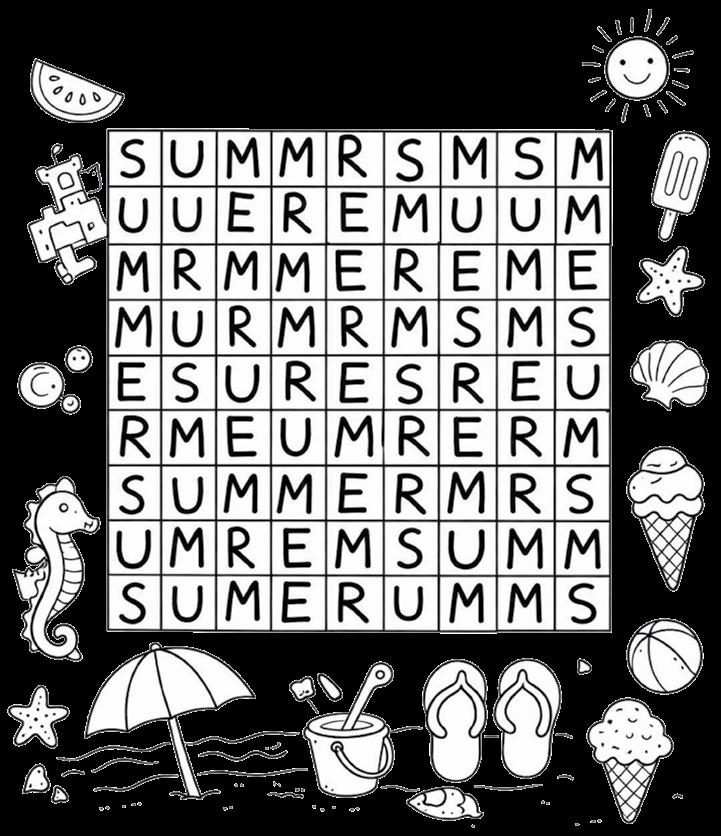
How many times can you find the word, "summer" in the grid below?
are thrilled to have NCS bring back Check Out Nashville for its second year. Partnering with local Nashville businesses to support NPL has been an incredible joy!” said Caitlin Reed, NPLF’s director of community giving. Shoppers can pick up a Check Out Nashville card, which doubles as a bookmark, at any participating location or their nearest library branch. As visitors collect marks at each partner business they stop by throughout the week, they will begin qualifying for prizes after five visits. The participant with the most total visits by the end of the week will take home the exclusive grand prize. “We had a blast pulling together our inaugural event in 2025, and we’re excited to come back bigger and better in 2026. This event is such a wonderful way for locals to give back to the library by supporting businesses in their community. An irresistible win-win!” said Becca Zeglovitch, NCS Council Chair. Check Out Nashville kicks off the week with a Sunday morning yoga class pop-up at Richland Park, a partnership with local bookseller Duckbill Bookshop in Old Hickory and an afternoon at the Nashville Sounds game.
ThinkTennessee: New Law Could Bolster Housing Affordability
A new policy brief from nonpartisan think tank ThinkTennessee says that the federal Low-Income Housing Tax Credit (LIHTC) is the state’s most effective tool for expanding attainable rental housing. They believe a new law will help communities around the state
strengthen its impact. “Since 2014, home prices have more than doubled statewide, and median rents have increased by 25.8 percent – faster than both the Southeast and the nation overall. As a result, nearly half of renters statewide are cost-burdened, spending over 30 percent of their income on housing. These trends underscore the need for scalable, effective solutions that can increase housing supply while keeping costs within reach. The brief emphasizes the importance of leveraging existing tools like the LIHTC program, which has helped to finance nearly 100,000 affordable homes in Tennessee since 1986. With the recent passage of a new law (Public Chapter 1053) in this year’s legislative session, the LIHTC program has the potential to be an even more effective tool for local communities,” a release reads. The new law allows a Tennessee city or county to adopt an ordinance or resolution to exclude the value of housing tax credits from property assessments, helping to reduce operating costs and improve project feasibility without increasing rents or significantly reducing local taxes. “Federal tax credits have played a critical role in addressing our state’s housing crisis,” said Erin Hafkenschiel, president of ThinkTennessee. “Yet, the tool has not been fully utilized due to a state policy that has weakened the incentive. This new state law allows local communities to adopt a practice that lets the LIHTCs work better for more Tennesseans — particularly as demand for housing continues to grow.”
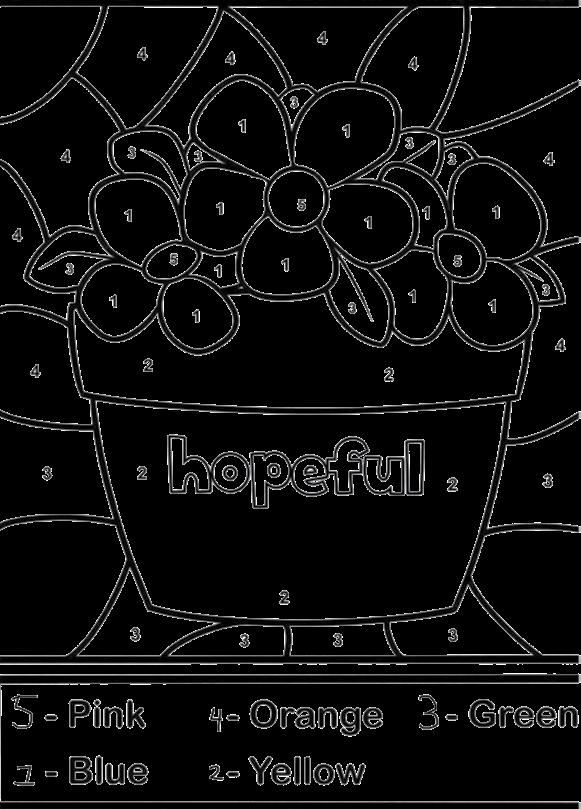
Jack needs help adding color to his picture. Use his color by number chart to see how the picture comes out!
Merik arrived at the shelter Hannah had told him about just after sunset. The building was old but sturdy and had warm lights glowing in the windows.
Part of him wanted to go inside. Another part wanted to keep walking.
Over the years, Merik had learned to rely on no one. Depending on others often led to disappointment. It felt safer to carry every burden himself.
Eventually, he crossed the street and stepped through the door.
A man behind the front desk looked up and smiled. "You must be Merik. Hannah called ahead."
The kindness caught him off guard.
For the next few days, Merik slept in a real bed and ate regular meals. He volunteered to sweep floors and clean tables, but he avoided conversations whenever possible.
One afternoon, Luis, the shelter manager, found him repairing a loose fence board.
"You know," Luis said, "you don't
BY BRADLEY B., CONTRIBUTOR VENDOR
have to earn every meal you eat."
Merik shrugged. "I like staying busy."
Luis nodded. "That's not what I meant."
The words lingered long after Luis walked away.
A week later, Merik noticed an elderly resident struggling to carry several boxes of donated supplies. Without thinking, he rushed over and helped.
"Thank you," the man said. "I hate asking for help."
Merik laughed softly. "I know the feeling."
The older man smiled knowingly. "Funny thing is, people usually feel good when they get the chance to help."
That evening, Merik sat alone outside, thinking about those words. All his life, he had viewed needing help as failure. Every insult, every rejection, every cruel encounter had convinced him that survival meant handling everything alone. But maybe he had been
BY MAUIRICE B., CONTRIBUTOR VENDOR
Every human is separated by choice of cultural, social, political or economic identity. Our similarities bring us all back up under one umbrella. That being that, we all must submit to the will of Allah/God in one way or the other.
The creator needs does not need us; we need Him. We have various types of cultural differences, enormous social context and unique political thoughts. All this commotion is what makes up a “Conscious Community,” or the what, where, when and how scenarios of this very existence.
A person who studies numbers can understand how to write an article and a person who’s good with words can formulate a mathematical equation properly only because their study has had them thinking in an “outside the box” mentality.
The spirit of growth is a development process of learning and the transformation of conception of what has been taught. To wit, the teaching of a particular type of people with personalities that differ but have the similar characteristics. For instance some people have been taught to protect themselves by any and all measures before they’re taught to read and or write. On the flip side there’s those who have been taught to read and write first then as the times present themselves of debate and actually an argument that leads to the session of fighting. In that example, the overall assessment of who conducted themselves in the “animalistic character” is the one that’s in
the wrong. As always I ask: why?
That, too, is a part of this whole community. The universe itself is actually the community and we humans and our actions across the globe are what’s so intriguing. If there were a child who had never seen another human outside of her race and had been taught and raised according to the ways of her own race then one day that child might go into a corner store with her father and see a Black man sitting in the truck of one of her neighbors. The child might look at her father and ask him what had their neighbor been doing that his friend was so dirty? At that point in time the father could only rush his daughter into the store, changing the subject. As the child begins school years later she might remind her father of the question that she had asked and tell him that there was a boy and girl just like the one that their neighbor had in his truck and she became friends with them. The father might say, “Now just because our neighbor is friends with that person doesn’t mean that you or we have to be.” The child says, “I know you remember the time that mom and you said that I have choices. Well, Dad, I’m using my choice.”
The child grows up and focuses on schooling and juggling responsibilities such as religious beliefs, employment opportunities and experiencing trials and tribulations and dealing with others and what they expect her to do. When she decides to start a family then she will provide care and teaching to the next generation, which is the next community to be.
wrong.
The next morning, Luis approached him with a stack of paperwork. "We're looking for volunteers to help organize donations. Interested?"
Normally, Merik would have hesitated. Accepting a role meant becoming part of something. It meant trusting people. For the first time in a long while, he decided to take the risk.
"Yeah," he said. "I'd like that."
Luis smiled. "Good. We could use you."
As the day went on, Merik found himself working alongside other volunteers. Some had stories similar to his. Others didn't. It didn’t matter. For once, nobody expected him to carry the weight of the world by himself.
And as he looked around the room, he realized something important. Strength wasn't measured by how much pain a person could endure alone. Sometimes true strength was allowing others to help carry the load.
CREATED BY BRADLEY B.
Solve the cypher by using "The Drifter" to the left of this puzzle. Solution will be in next week's issue!
Last Issue Solution: “There is no small act of kindness. Every compassionate act makes large the world.” — Mary Anne Radmacher " 7:9:1 13:8:3 10:1:5 13:16:6 23:5:5 13:9:10 / 22:24:1 4:10:3 7:10:1 / 22:8:1 5:6:2 23:28:2 19:17:1 / 2:3:2 16:4:1 8:2:6 ' 20:6:4 / 18:3:7 1:1:4 22:12:1 22:18:2 19:1:1 10:2:6 / 19:16:3 18:11:1 ; / 3:18:2 8:5:5 ' 14:8:2 / 12:5:5 11:7:2 13:14:2 18:4:2 4:7:1 1:23:2 5:15:3 21:3:1 / 14:1:1 21:7:2 / 3:12:9 8:8:2 7:26:2 22:4:2 / 16:6:2 16:9:1 / 9:3:2 22:10:2 16:2:1 5:2:3 9:9:1 ." — 1:19:4 23:18:3 13:11:1 / 3:18:7
BY RUSSELL C., CONTRIBUTOR VENDOR
I got bored at the apartment one day and decided I wanted to build something different. I learned very slowly. It took me just a little over six months. I already had the bicycle frame, and the electronic components like the
motor, battery, blinkers and lights I bought on Amazon. I went over to a buddy’s house in Madison who is a welder. We chopped two bicycles up, put them together and this was the monstrosity that was born.



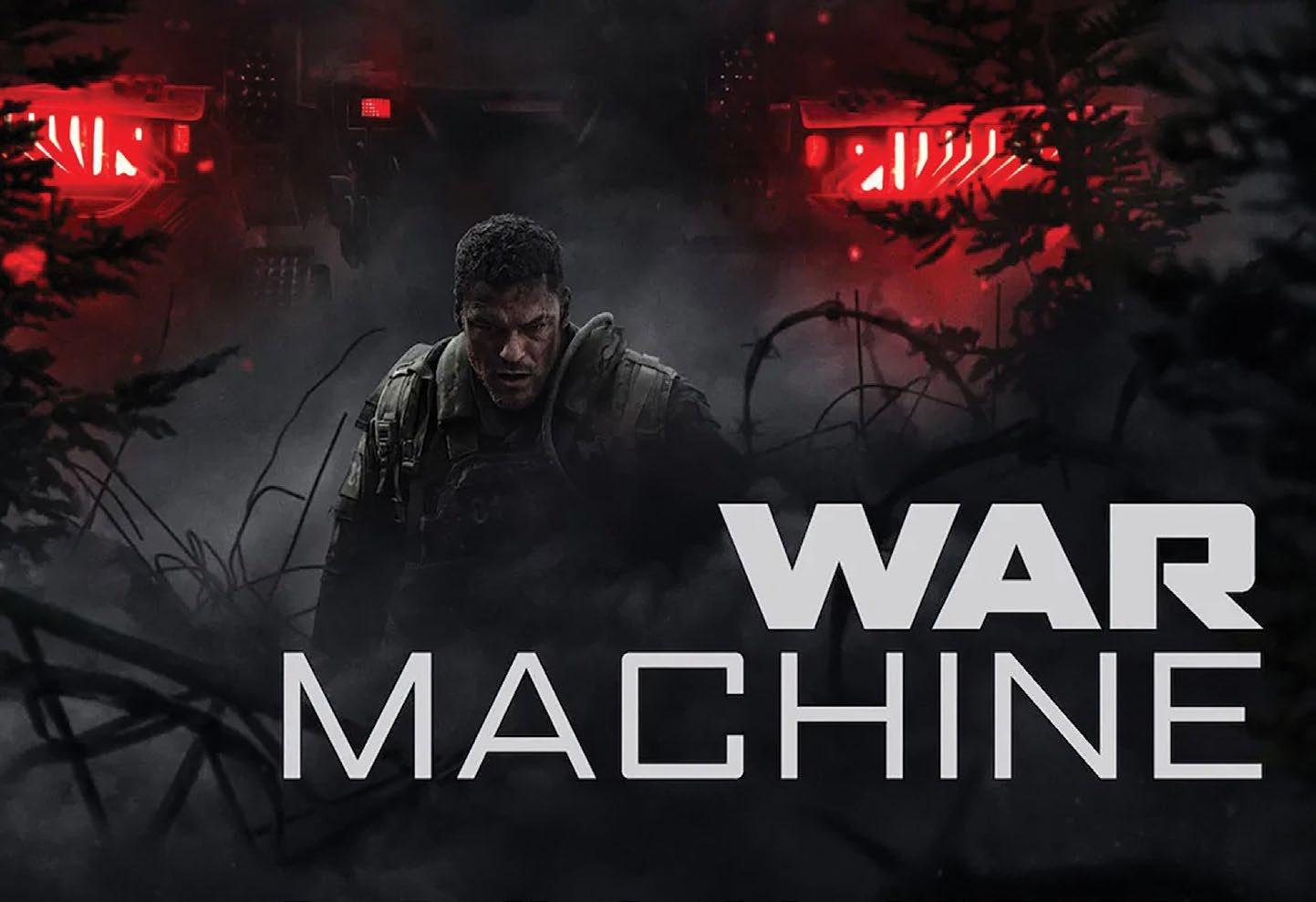
When War Machine started streaming on Netflix in March, many, myself included, were too exhausted with real-world conflicts to watch a war film. The movie earned 120 million views in five weeks and dominated Netflix globally. Word of mouth was consistently strong, so I was glad to finally watch this tense survival story that pits a crew of would-be Army Rangers against the titular war machine — a walking extraterrestrial armored vehicle.
Director Patrick Hughes (The Expendables 3) delivers a refreshingly lean war movie/scifi action thriller. The story centers on Soldier 81 (Alan Ritchson), a haunted Army Ranger candidate about to complete his training. During what's supposed to be a controlled exercise, his unit encounters a massive, marching alien machine that’s crash-landed in the forest. The squad initially believes the craft is part of the simulation designed by their commanding officer Sheridan (Dennis Quaid). But when the machine begins attacking, they realize they've stumbled onto something terrifyingly real and otherworldly.
BY JOE NOLAN, FILM CRITIC
War Machine will put viewers in mind of War of the Worlds (the machine resembles H.G. Wells' walking mechanical pods) and Predator (alien versus soldiers in the wild). The killer alien tank also reminds me of a biggie-sized version of the menacing ED209 from RoboCop. War Machine isn't the most original movie you'll see in 2026, but it has the courage of its convictions: a scary machine and a ragtag squad of never-saydie warfighters are all you need for an entertaining action movie. Cinematographer Aaron Morton grounds the film in practical, on-location photography. Hughes and screenwriters James Beaufort and Patrick Hughes craft a bareknuckle narrative that avoids bloat. The alien machine is designed like a character — imposing, methodical, visually striking. There's no politics here, no ideological messages. It's proof that solid genre storytelling is alive and well.
War Machine becomes a high-stakes survival scenario where Soldier 81 must lead his team — 7 (Stephan James), 60 (Keiynan Lonsdale), and 15 (Blake Richardson) —
against an enemy not mentioned in their field manuals. The film balances brutal action sequences with quieter character moments that reveal Ritchson's protagonist carrying deep psychological scars.
The opening scenes show 81 with his brother in Afghanistan two years before the movie’s main events. They promise each other they'll both apply for the Ranger Assessment Selection Program. Then a Taliban rocket attack kills everyone except 81. His presence in the Ranger program is driven by his promise to his late brother. He's traumatized by a leg injury and by the survivor’s guilt he feels after the attack. He’s plagued by nightmares and hides pills in his pillowcase.
Ritchson's portrayal of a traumatized soldier points to a crisis that will be familiar to The Contributor's readers. In Tennessee, approximately 570 veterans were experiencing homelessness in 2024, and in Nashville, roughly 277 veterans (nine percent of the city's 3,082 homeless individuals) remain trapped in cycles of instability, many chronically homeless. Between 48 and 67 percent of
homeless veterans suffer from mental health disorders — nearly double the rate of their housed counterparts. PTSD, depression and anxiety can be major barriers to employment and housing. Veterans referred to VA PTSD clinics are roughly 1.5 times more likely to experience homelessness than the general veteran population. For many of these men and women, the battle never seems to end.
War Machine is one of the most successful films of the year. It manages an exciting genre mash-up while also touching on the real life costs of war both in the heat of battle and here at home. It also speaks to human resilience and ingenuity in our age of increasingly more complex and powerful machines.
War Machine is streaming on Netflix
Joe Nolan is a critic, columnist and performing singer/songwriter based in East Nashville. Find out more about his projects at www.joenolan.com.
“The Contributor” está trabajando con uno de los principales periódicos en español La Noticia para llevar contenido a más lectores en Middle Tennessee. Nuestros vendedores de periódicos han pedido durante mucho tiempo que nuestra publicación incluya contenido que apele al interés de residentes de habla hispana en nuestra comunidad.
“The Contributor” is working with one of the leading Spanish-language newspapers La Noticia to bring content to more readers in Middle Tennessee. Our newspaper vendors have long requested that our publication include content that appeals to the interest of Spanish-speaking residents in our community.

d e n ó u n a p r o f u n d a r e c o n f i g u r a c i ó n d e l m ap a e n e r g é t i c o mu n d i a l , c o l o -
c a n d o nu eva m e n t e a Ve n e z u e l a p o s e e d o r a d e l a s m ayo r e s r e s e r va s p r o b a d a s d e p e t r ó l e o d e l p l a n e t a e n e l c e n t r o d e u n a d i s p u t a
e s t r at é g i c a e n t r e E s t a d o s U n i d o s ,
C h i n a y Ru s i a
D e s d e e n t o n c e s , Wa s h i n g t o n h a
i n t e n s i f i c a d o s i g n i f i c at iva m e n t e s u p r e s e n c i a m i l i t a r e n e l C a r i b e , h a
i n t e r c e p t a d o y c o n f i s c a d o e m b a r c a -
c i o n e s v i n c u l a d a s a l t r a n s p o r t e d e
p e t r ó l e o ve n e z o l a n o s a n c i o n a d o y
h a a s u m i d o u n p a p e l s i n p r e c e -
d e n t e s e n l a s u p e r v i s i ó n d e l a s
e x p o r t a c i o n e s p e t r o l e r a s ve n ez o l a n a s D ive r s a s f u e n t e s s e ñ a l a n
q u e l a a d m i n i s t r a c i ó n Tr u m p bu s c a
l i m i t a r l a i n fl u e n c i a d e p o t e n c i a s
r iva l e s s o b r e l o s r e c u r s o s e n e r g é t i -
c o s d e l p a í s s u d a m e r i c a n o
Durante años, China fue el principal comprador de cr udo vene z olano La r e l a c i ó n s e f o r t a l e c i ó m e d i a n t e acuerdos de petróleo por deuda que p e r m i t i e r o n a C a r a c a s o b t e n e r f i n a n c i a m i e n t o m i e n t r a s e nv i a b a millones de bar riles a Beijing Sin embargo, las nuevas restricciones y la intervención estadounidense han

r e d u c i d o c o n s i d e r a bl e m e n t e e s e flujo energético Analistas señalan que China enfrenta ahora mayores dificultades para ase gurar el acceso preferencial al petróleo vene z olano que disfr utó durante la era Maduro Rusia también ha sido un actor clave e n Ve n e z u e l a M o s c ú m a n t u vo durante décadas una estrecha coop e r a c i ó n c o n C a r a c a s e n m at e r i a energética, militar y diplomática Empresas vinculadas al Estado r uso poseen inversiones, par ticipación en proyectos petroleros y activos dentro del país La confiscación de embarcaciones relacionadas con el comercio p e t r o l e r o ve n e z o l a n o, i n c l u ye n d o buques asociados a intereses r usos, h a s i d o i n t e r p r e t a d a p o r a l g u n o s observadores como una señal directa de Washington hacia el Kremlin.
L a i m p o r t a n c i a d e Ve n e z u e l a r a d i c a e n a l g o m á s q u e s u u b i c a c i ó n g e o g r á f i c a E l p a í s c u e n t a c o n ap r ox i m a d a m e n t e 3 0 0 m i l m i l l o n e s
d e b a r r i l e s d e r e s e r va s p r o b a d a s d e

p e t r ó l e o, u n a c i f r a s u p e r i o r a l a d e
A r a b i a S a u d i t a Au n q u e a ñ o s d e c r i s i s e c o n ó m i c a , c o r r u p c i ó n y f a l t a
d e i nve r s i ó n r e d u j e r o n d r á s t i c a -
m e n t e l a p r o d u c c i ó n , e l p o t e n c i a l
e n e r g é t i c o ve n e z o l a n o c o n t i n ú a
s i e n d o e n o r m e
L a s m e d i d a s a d o p t a d a s p o r
Wa s h i n g t o n h a n ge n e r a d o u n i n t e ns o d e b at e i n t e r n a c i o n a l S u s d e f e n -
s o r e s a r g u m e n ta n q u e e l o b j e t ivo e s i m p e d i r q u e go b i e r n o s a dve r s a r i o s u t i l i c e n l o s r e c u r s o s ve n e z o l a n o s p a r a a m p l i a r s u i n fl u e n c i a
ge o p o l í t i c a e n e l h e m i s f e r i o o c c i -
d e n t a l . L o s c r í t i c o s , p o r s u p a r t e , s o s t i e n e n q u e l a s i t u a c i ó n r e fl e j a
u n a l u c h a p o r r e c u r s o s e s t r at é g i c o s
d i s f r a z a d a d e p o l í t i c a e x t e r i o r y
s e g u r i d a d n a c i o n a l
M i e n t r a s t a n t o, l a a d m i n i s t r a c i ó n
e s t a d o u n i d e n s e h a fl e x i b i l i z a d o
a l g u n a s r e s t r i c c i o n e s p a r a c o m -
p a ñ í a s e n e r g é t i c a s o c c i d e n t a l e s , p e r m i t i e n d o c o nve r s a c i o n e s s o b r e
t r i c c i o n
b r e e n t i d a d e s v i n c u l a d a s a Ru s i a , C h i n a e I r á n
E l r e s u l
á d e l a s d i s p u t a s
p l o m á t
s , l a p r e g u n t a c e n t r a l s i g u e s i e nd o q u i é n c o n t r o l a r á l a p r o d u c c i ó n , c o m e r c i a l i z a c i ó n y b e n e f i c i o s d e u n o d e l o s r e c u r s o s e n e r g é t i c o s m á s i m p o r t a n t e s d e l p l a n e t a L a r e s p u e s t a p o d r í a i n fl u i r n o s o l o e n e l f u t u r o d e Ve n e z u e l a , s i n o t a mb i é n e n l o s p r e c i o s g l o b a l e s d e l a e n e r g í a , l a s c a d e n a s d e s u m i n i s t r o i n t e r n a c i o n a l e s y e l e q u i l i b r i o g e o p o l í t i c o e n A m é r i c a L a t i n a d u r a n t e l a p r ó x i m a d é c a d a M á s a l l á d e l a s d e c l a r a c i o n e s d i p l o m á t i c a s y l a s s a n c i o n e s e c o n ó m i c a s , l a r e a l i d a d e s q u e Ve n e z u e l a s e h a c o nve r t i d o n u evam e n t e e n u n p u n t o e s t r a t é g i c o d e n t r o d e l a c o m p e t e n c i a g l o b a l p o r l a e n e r g í a E n e s t e e s c e n a r i o c o nve r g e n i n t e r e s e s e c o n ó m i c o s , s e g u r i d a d n a c i o n a l , i n fl u e n c i a p o l í t i c a y r
n u e va s i nve r s i o n e s y p r o ye c t o s p e t r o l e r o s e n Ve n e z u e l a , a l t i e m p o q u e m a n t i e n