
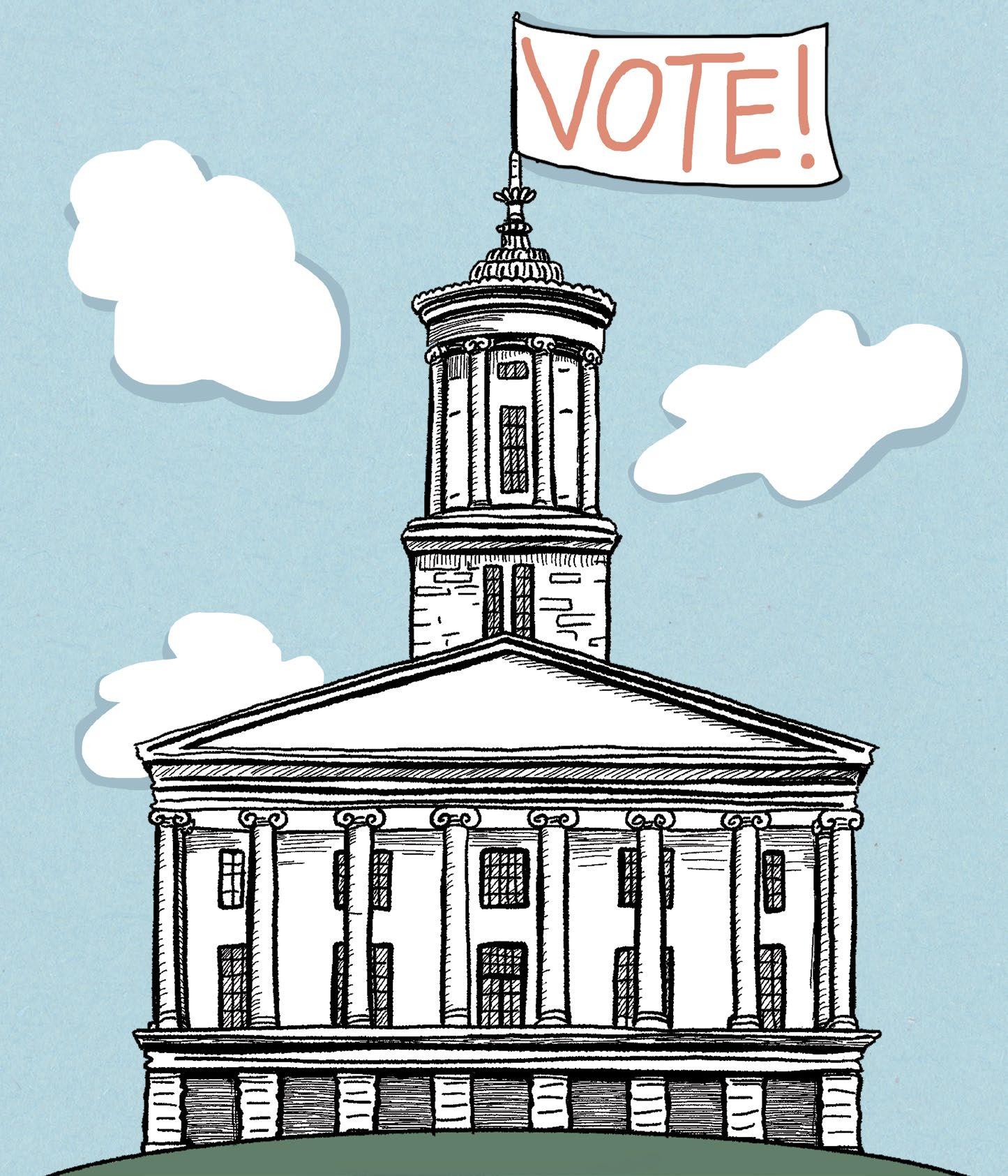
Thursday, August 6, 2026 Early Voting: July 17 – August 1 Page 9 Primary and

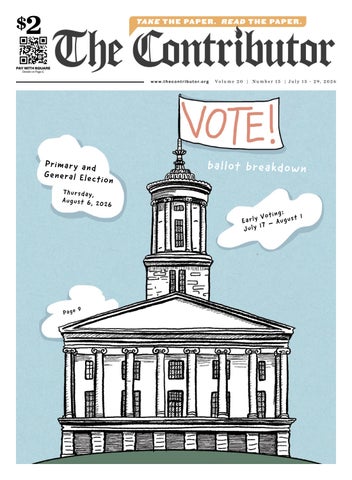
Thursday, August 6, 2026 Early Voting: July 17 – August 1 Page 9 Primary and







Venmo
After clicking “checkout,” type your vendor's name and four-digit badge number in the “Required” field. This allows us to know which vendor to pay.



In 2019, our C.O.V.E.R. Program (Creating Opportunity for Vendor Employment, Engagement, and Resources) was the natural expansion of our mission of removing obstacles to housing. We now offer full case management, assistance with housing and rental expenses, addiction recovery, health insurance, food benefits, and SSI/SSDI assistance.





Kathy Sinback is a local attorney known for her nonpartisan leadership and involvement in major reform efforts at the local and state levels.
Sinback has held diverse positions, including in the Public Defender’s Office, Metro Legal representing different departments, Juvenile Court, and the American Civil Liberties Union (ACLU). Sinback says her reputation for working in a nonpartisan way comes from seeing the different perspectives of how systems affect people — it made her cautious about quick judgments.
“I am more interested in understanding why the problems exist before jumping into trying to solve them,” Sinback said. “I’ve come to believe that real progress rarely, if ever, comes from ideological certainty. It comes from listening carefully, following the evidence, being willing to challenge our own assumptions, and learning from and listening to people whose experiences are different from our own.”
She currently serves as the Executive Vice President of the Nashville Police + Public Safety Alliance, a nonprofit organization founded two years ago to further public safety in partnership with the Metro Nashville Police Department (MNPD).
What is the Nashville Police + Public Safety Alliance and what does your job as Executive Vice President entail?
The Nashville Police + Public Safety Alliance has been around for a couple of years now. It exists to help Nashville become a safer community by bringing together high-quality research and data, thoughtful conversations, and strong community partnerships. We believe that people deserve and should have honest information about public safety so that they can make informed decisions about how to keep our community safe.
My job as executive vice president is to help move that work forward by helping to oversee the projects — both research and programmatic work — and community partnerships, and work directly with MNPD, nonprofits, neighborhood community leaders, businesses, the Chamber [of Commerce], and elected officials.
A big part of what we’re doing at the Alliance is to make sure … that the community has a lot of interaction with our police department so that [they] are engaged in conversation together and not seen as separate. We want to ask the good questions that people aren’t asking about public safety, and we think it’s important to be looking at the best research. We’re reading the latest books on public safety.
One of the ones that we’ve been focusing on lately is a book called Unforgiving Places by Jens Ludwig with the University of Chicago Crime Lab. He talks about how built environment and the way we construct our community spaces is essential to building a safe community, which means having real community where there are people who are watching out for their neighbors, having lighting in neighborhoods, and thinking through what it means to have a safe community by following the evidence of other places that have succeeded with decreasing crime in their communities through evidence-based practices.
We want to look carefully at the evidence and help to elevate the conversation about public safety in a way that’s thoughtful, respectful and grounded in a way that will make Nashville a
BY JUDITH TACKETT
truly safer community.
What are the five-year goals of the Nashville Police + Public Safety Alliance?
Over the next five years, we want to become a trusted resource for research data, and informed public dialogue about public safety is one of our goals.
We want to expand our work on crime data and safety sentiments, which we’ve already started with our data dashboard, which is online. It is a really robust resource where we take all of the MNPD crime data. We make it user friendly so that you’re able to see neighborhood level data on all UCR Part 1 crimes, which are the serious felony crimes, both violent crimes and property crimes.
We also want to broaden the conversation about public safety, because prevention and community investment are absolutely essential and primary to public safety, but so is policing. We think it’s important to talk not only about what policing shouldn’t be, but also what excellent policing looks like. So things like how do we recruit and retain exceptional officers? How do officers build trust with the community? How do we make sure that every neighborhood receives the same high level of service?
Our data showed in a recent research project called Nashville and its Peers: Policing and Public Safety that our police response rates are very high. And we know that not having sufficient coverage in our communities is also an equity issue. So we really want to work on recruiting more officers, to fill available spots in the department so that we continue to have equitable and quick response rates throughout our community.
We believe that supporting excellence in policing means making sure that the police department is able to recruit and retain, has training, technology, leadership, and wellness resources necessary to provide the level of service that Nashville needs and that Nashvillians deserve. That doesn’t mean any particular type of technology. We want to elevate those questions about technology. We want to look at what are other cities doing. And if [Nashville is] making decisions to either add technology or not add technology, we want to make sure that we’re looking at what are any trade-offs and what are the pros and cons and really having a very detailed and thorough conversation about why other police departments are going in certain directions and what’s best for Nashville.
And then if we want to, for example, not adopt certain technologies, then it’s also important for us to look at [whether there] are other ways that we can decrease response rates and things like that.
We want to make sure that our police has the leadership and wellness resources necessary to provide the level of service that Nashvillians deserve. We’re proud of our police department and its commitment to continuous improvement. We have one of the CALEA (Commission on Accreditation for Law Enforcement Agencies) certified police departments. That is one of the elite certifications for police departments in the country, which requires a real dedication to excellence in policing.
We also think that wellness is incredibly important and that we should have police officers who are able to deal with the emotional
trauma that they go through. That’s really essential to having a good, effective and ethical police department [with] people who are able to be healthy and emotionally well. We provide a leadership training program, and we want to continue that. It’s called ASPIRE, and it’s a program that the Alliance started with another group called InteraWorks, where we provide high-level leadership training that is not law enforcement-centric training. It’s about things like empathy and leadership and building community trust.
Another focus over the next five years is that we want our police to be able to live in Nashville. We think it’s important, for equity reasons and also for the well-being of our police officers, that the people who are policing a city are residents of that community. We don’t think people should be coming from outside a community to police a community that’s not their own. And so we really want to be able to make it affordable for police officers to live in Nashville, which is very difficult right now.
Nashville has seen renewed public discussion about policing following the release of the Alliance’s Peer Cities report that you mentioned and the Metro Human Relations Commission’s response to it. How do you think our community can have productive conversations about public safety when there are such different perspectives on the role of policing?
I think the first step is recognizing that most [people] in the public safety conversation want the same outcome. They want people to be safe. They want children to have opportunities in our community. They want communities to trust the police department, and they want everyone to be treated fairly. But what we sometimes get caught up in is focusing on only one part of the public safety picture.
Prevention is essential. So are reducing poverty and discrimination, expanding educational opportunities, work opportunities, and improving access to housing and mental health care and all of those other things that go into a good prevention program. All of those things influence public safety. But policing is also an essential part of the conversation.
One of the reasons that I joined the Alliance to focus on policework is that I believe that communities should have a voice in shaping what policing looks like. Of course, the history of our country has shown what happens when police departments fail to protect all residents equally. And so, accountability, transparency, and community trust are important. But I think it’s also important that we talk about policing in a positive and constructive way to complement the accountability side.
We need to not only be asking what have the police done wrong at times, which is important, but we also need to be asking, what does ethical and effective policing really look like? How do we recruit the right people, people who are exceptionally professional? How do we support our police officers through the stress of the job? And how do we build a department that is deeply connected to the community it serves and that not only has the trust of the community but also is truly a trustworthy department? I don’t see those conversations as competing with prevention or with equity or with our goal of
fixing historical inequities in our community. I really see the conversations as complementary. Safe communities obviously invest in children and families, address the root causes of crime, address our largest issues like poverty and availability of services. But safe communities also build excellent police departments that are trusted, well-trained, and responsive to the communities that they serve.
We’re glad that people are talking about the paper, and we’re glad that people are talking about these issues because all of the different perspectives on public safety are critical to working together to make our community safer. I hope that Nashville continues to have really honest conversations where we listen carefully to each other, where we acknowledge complexity, and where we can stay focused on what helps people live safer and healthier lives in Nashville.
Does the Alliance ever work with the Community Oversight Board or is that on the horizon?
We have had a wonderful meeting with them, and we are excited about the work that they’re doing. We hope to partner with them because we believe that we are sort of another angle of the same goal, which is having police departments that are both accountable to the community and well resourced. And so we’re really excited to partner with them in the future.
What, in your personal opinion, are the top three issues our community could do to improve public safety?
The first one is investing in children and families before they ever become involved in the justice system. Over my 30 years in all the many different aspects of the criminal justice system, I’ve seen how childhood trauma, unstable housing, addiction, untreated mental illness, and just a general lack of opportunity can shape the course of a person’s life. And if we want to reduce crime over the long term, we have to give young people real opportunities to succeed and give them the support they need to make safe and healthy choices in their lives.
The second one would be, we need to continue building an outstanding police department. When people call 911 because something’s going on because they’re in danger, they deserve a police department that is responsive, that’s well trained, that’s effective, that is compassionate, and does its job well. I would love to see us continue recruiting and retaining excellent officers, investing in leadership development and officer wellness, which I talked about before, and then strengthening the relationship between the officers and the neighborhoods they serve. I want the community to continue supporting the police department’s commitment to improvement and excellence in policing.
And then the third one is really having more honest and evidence-based conversations about public safety. I’ve been in many different parts of the criminal justice system. And what I’ve learned is that when it comes to crime, there’s never a simple story. I represented children accused of crimes, spent time with many victims of violence, worked alongside the police department when I was the attorney for the police department and saw from the inside how officers have to deal with extraordinarily difficult and complex situations.
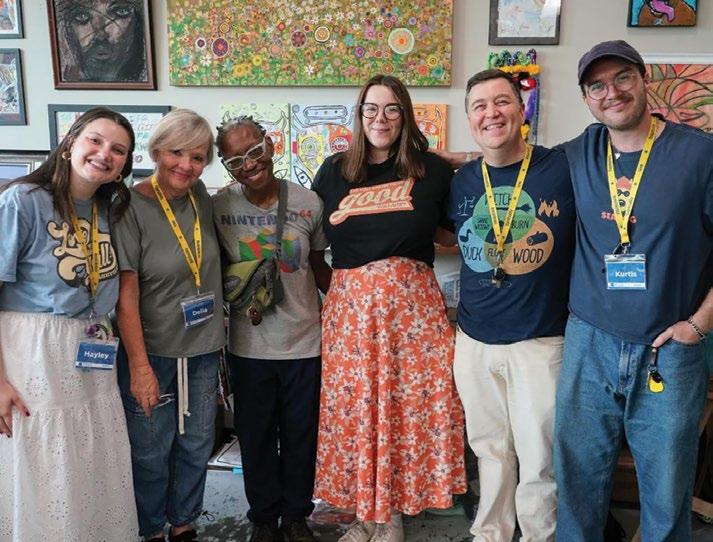
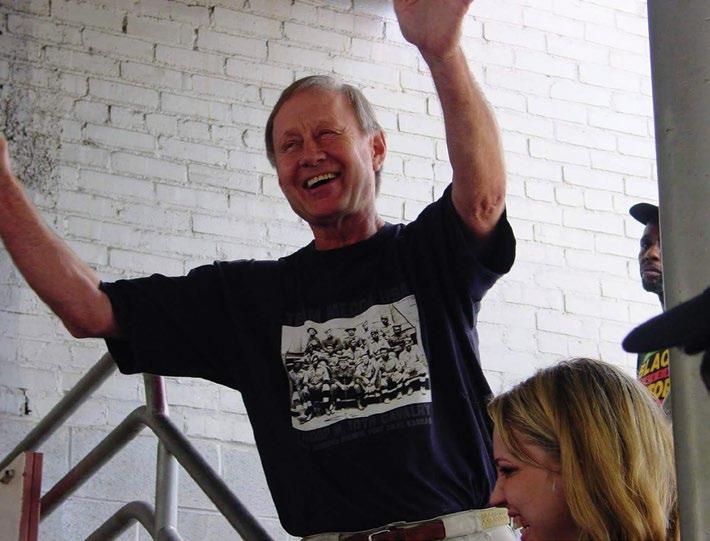
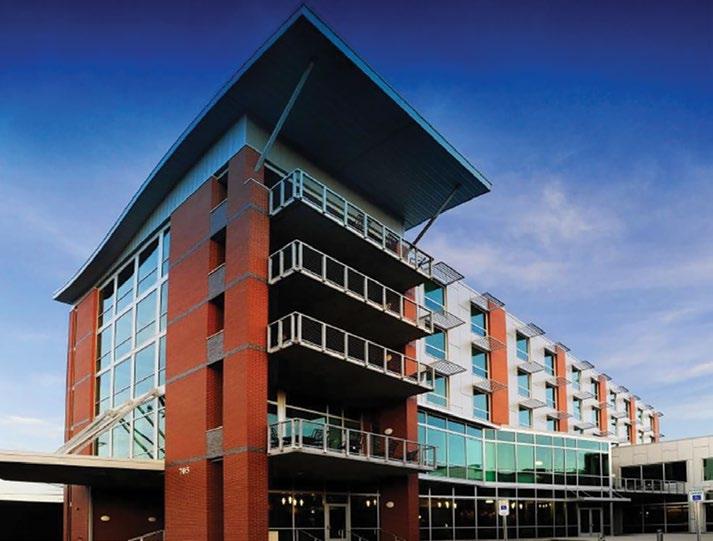
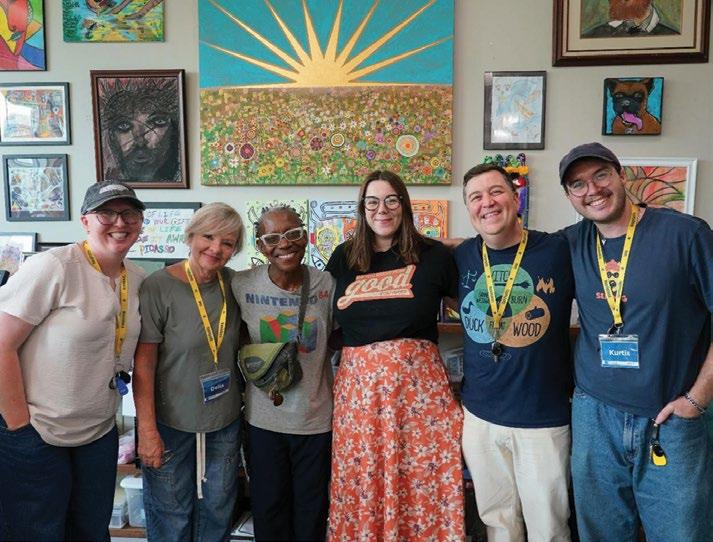
Room In The Inn turns 40 this year. It all started with a peanut butter and jelly sandwich and a dream. What started out as an act of kindness by a local priest, Father Charles Strobel, has become one of the premier Homeless Services agencies in Tennessee. Room In the Inn now shelters nearly 1500 people each winter by offering overnight shelter in a consortium of local churches.
Father Strobel heard the call and saw that more than peanut butter and jelly sandwiches were needed to address the issues facing many of those in the homeless (unhoused) population. As a result of Father Strobel’s obedience to the call and his fearless tenacity, he influenced others to see the vision and bring it to fruition. I am reminded of Moses in the Bible when he was called to lead the people out of bondage in Egypt. In Exodus
BY FREFOREVER, CONTRIBUTOR VENDOR
9:1 Moses had to go to Pharaoh and say to him, “this is what the LORD, the God of the Hebrews, says: ‘Let my people go, so that they may worship me.’” Father Strobel had to go to the rulers of that time in 1986 spanning several different industries and request that they partner with him in freeing men and women out of the bondage of homelessness.
As did Moses, Father Strobel successfully got the cooperation of the officials to fund the vision that to this day continues to set thousands of men and women free from the bondage of homelessness. This is done by providing services that allow those currently experiencing homelessness to gain the resources they need, to navigate up and out of the homeless maze. This is done while allowing each to keep their dignity, which is a gift that is greatly appreciated by those they serve. Room
in the Inn now offers services such as showers, laundry, assistance obtaining documents like birth certificates and ID cards. The organization also offers classes to engage the mind, body and spirit. There are computers that can be used for job searching and filling out housing applications as well as other social service needs. They also have a monthly legal clinic.
Lunch is served Monday - Friday. They have a point system in which, when you either attend classes, or do community cleanup you can earn from 20-40 points per class or cleanup assignment. The points add up fast and can be used as currency within Room In The Inn to get things from the clothing closet or the general store. You can also get gift cards, vouchers for Clancey’s Cafe and laundry tokens.
I say all this because I am one of the individuals that has benefited from many
of the services offered. For over a year and a half, I was there every day the doors were open. They are open Monday - Friday. During the summer (April - October) hours are 6 a.m. - 2 p.m. and during the winter (November - March) hours are 6 a.m. - 4 p.m. I have spent many days thanking God for Father Strobel and his obedience to heeding the call. For so many current and formerly homeless people, when there was no place else we could go, there was always a place at Room In The Inn for us. So, we say Happy 40th Anniversary to you (staff and volunteers), and we hope that you are blessed to have another 40 years to keep bringing the values of spirituality, hospitality, hope, love, respect and non-violence to those who cross the threshold of your doors. Thank you for all you do. Happy 40th Anniversary!
Written by Chris Scott Fieselman, Vendor #0015
Someone Needs 2B The Bigger Person. What If It Were Me?
Sung by the light of the Sunsets I’ve Seen. Another Long Island, Songwriter Wanna-be, Playing a Fool and Chasing a Dream.
There’s always, a Joker in The Deck. Do the words that I’ve spoken, have any affect? You really don’t need that card when you play. But it’s part of a brand-new deck anyway.
Do you know what it takes? To crash land a day?
There’s a lot to be said… “Where there’s a Will, there’s a Way.” If I were to offer a Word to The Wise? May it be worth the price that you pay. When April turns into May, Maybe… Maybe… Maybe… Maybe it will happen some day?
Written by Chris Scott Fieselman, Vendor #0015
When they see the letter C? Courteousy & Charity start with the letter C. So, does Courage and Creativity. Compromise and Common Sense. And, the Cornerstone of Cowardice? Confessing and Claiming… I Can’t… Calm… Cool… And… Collected… Convinced that the Calling and the Cause, Are well worth the Cost and Commitment.
You Can Conquer or you Can Care less. I consider my words, Being heard in “The Contributor” A Constant Confession, Of what it feels like? To be Continuously Blessed? When it comes down to being? Comfortable and Content? I Consider it a Challenge, A Contest, And / Or a Welcome Conquest.
Thank God I’ve got Consistency. When it Comes down to, Carrying on a Conversation? There are people out there, That I Care about, Who are Counting on me, And my Correspondence, Coming out regularly, In “The Contributor” Every Couple of weeks.
It’s always good, to have a dream, You know, you can’t possibly achieve. To go up against, and stand up for, When the going gets rough, To become what you Believe, You know you were meant to be.
Someone Needs 2B The Bigger Person. What If It Were Me?
Entertaining Evil Thoughts? Or Entertaining Angels? I’m Intent on Making a Statement, And Leaving a Lasting Impression, Upon My Fellow Man.
But… You can only take it just so far, When you’re a long way’s away, from being a star. And… It all comes down to you hearing, What I have got to say? And me being right where you are?
Someone you were meant to C ?
Someone Needs 2B The Bigger Person. What If It Were Me?
by Chris Scott Fieselman, Vendor #0015
The Bigger Person, Sets the Example. The Bigger Person, Must Chart the Course. The Bigger person Keeps Moving Forward, Even when, All Hope Seems Lost. It’s all a part of, Carrying One’s Cross, & Not the Regret or Remorse.
The Bigger Person, Wonders Why? And is Always Ready, To take on Why Not? Because…
The Bigger Person, Is Always Grateful, For the Gift of Life, And all that they have got?
The Bigger Person, Doesn’t brag about, Their many Un-Appreciated, Accomplishments. Their Actions, Speak for Themselves.
The Bigger Person doesn’t, Look for Excuses, To Blame their Misfortunes, On Someone Else?

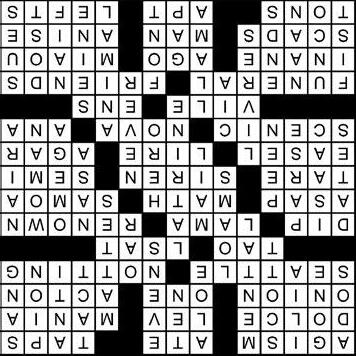
ACROSS
1. Anti-seniors sentiment
6. Ingested
9. “Lights out” tune
13. *”Sweet” villa (2025)
14. Leo, in Moscow
15. Mood disorder
16. Blooming bulb
17. *It happened on how many nights? (1934)
18. Follow up on (2 words)
19. *Sleepless where? (1993)
21. *Certain London Hill (1999)
23. “____ Te Ching”
24. Future J.D.’s hurdle, acr.
25. Chips accompaniment
28. Tibetan monk
30. Celebrity
35. Please do not delay, acr.
37. S.A.T. section
39. Polynesian island country
40. Scarlet O’Hara’s home
41. Singing femme fatale
43. Rig or truck
44. Artist’s support
46. Italian money, 1861-2002
47. Petri dish gel
48. Like a longer route?
50. ____ Scotia
52. RNs’ org.
53. Morally reprehensible
55. Ensign, for short
57. *Not a wedding (1994)
61. *They were reaping benefits (2011)
65. Silly
66. Gone by
68. Generational divide
69. Oodles
70. Each one for himself?
71. Ouzo flavor
72. A whole lot
73. Pertinent
74. Not rights
DOWN
1. Without further ____, pl.
2. Departed
3. Hip bones
4. *Actor Foley of #13
Across
5. Kind of block
6. Healing gel producing plant
7. *How many days to lose a guy? (2003)
8. 0 and 2, e.g.
9. Diplomat’s forte
10. ____-perspirant
11. One quark plus one antiquark
12. Spilled the beans
15. Dull surfaces
20. Fertile topsoil, pl.
22. Boat propeller
24. Army bathroom
25. *Fifty of these, to
jog her memory (2004)
26. Newton of science
27. Dissect
29. *AOL delivery (1998)
31. Org. with a mission
32. Last letter, to Homer
33. *Pretty one (1990)
34. Nigerian money
36. Part of a hammerhead
38. Villain’s rival
42. *When has she been kissed? (1999)
45. Books, in Paris
49. Langley, VA org. 51. Fauna member
54. Peruvian beast of burden
56. Rive Droite and Rive Gauche separator
57. Hand-to-hand combat weapon
58. Unconstitutional and uncommon have it in common
59. Indian flatbread
60. Odds’ partners
61. Arial, e.g.
62. Naive, alt. spelling
63. Olden days “do”, second person singular 64. Files suit 67. Fall into it
Extreme poverty severely impacts children’s education, health and future prosperity — consequences that essentially affect the well-being of cities, states, and the entire nation and that leave children behind as one of the most vulnerable populations.
When it comes to homelessness, most politicians choose to largely overlook the effect housing insecurity has on children. The consequence is missed economic opportunities and productivity of youth and young adults as they enter their working years.
Poverty and homelessness are intricately intertwined. The most recent Kids Count Data Book published by the Annie E. Casey Foundation in June examines state and national child wellbeing data prior and after the pandemic, in 2019 and 2024. According to the data, Tennessee ranks 37th among all states in overall child wellbeing. When looking at economic wellbeing for children, Tennessee ranked in 42nd place.
About 459,000 Tennessee kids lived in households with a high housing cost burden, a trend that has worsened between 2019 and 2024, leaving Tennessee among the states with the biggest declines in economic wellbeing for children. Tennessee specifically declined in the category of “children living in households with a high housing cost burden.”
The authors of the report point out that, “Of course, the latest data through 2024 do not reflect today’s realities for families and children, such as higher living costs, reduced public support and a shifting labor market. As new data become available, we will see how post-2024 conditions are affecting the lives of children.” For the full report visit https://www.aecf.org/ resources/2026-kids-count-data-book.
When we hone in on child homelessness data, the picture does not look promising. More than 1.5 million children nationwide experienced homelessness during the 20232024 school year, which marked a 12.6-percent increase over the prior year, according to School House Connection, a national nonprofit focused on overcoming homelessness through early care and education.
In Nashville, those numbers looked worse, with more than 4,500 students identified as homeless during the 2023-2024 school year under the McKinney-Vento Act definition, which signified a 27-percent increase over the previous school year. In addition, about one-third of Metro Nashville Public Schools students are considered economically disadvantaged.
The McKinney-Vento Homeless Assistance Act of 1987 provides a broader definition of homelessness than the usual federal definition by the U.S. Department of Housing and Urban Development (HUD). As such, under McKinney Vento, children are considered homeless when they lack a fixed, regular and adequate nighttime residence.
In a nutshell, children under McKinney-Vento, are considered homeless when they:
• Live in families that share housing with others due to housing loss, economic hardship or a similar reason;
• Stay in motels, trailer parks, or campgrounds due to the lack of an adequate
BY JUDITH TACKETT
“More than 1.5 million children nationwide experienced homelessness during the 20232024 school year, which marked a 12.6-percent increase over the prior year, according to School House Connection, a national nonprofit focused on overcoming homelessness through early care and education.
alternative;
• Stay in shelters or transitional housing; or
• Sleep in cars, parks, abandoned buildings, substandard housing, or similar settings.
In comparison, the common definition of homelessness we are generally used to, as defined by HUD, would only recognize people staying in shelters, transitional housing or sleeping outdoors, in cars, abandoned buildings and substandard housing as being homeless. That’s what HUD refers to as literal homelessness.
Nationwide about three-quarters of students who are considered homeless live in doubled-up situations. Only about 15 percent would be considered homeless under the federal HUD definition, and the remaining 10 percent are staying in motels or hotels paid for by their families. Motel rooms that are paid for by a third party such as a nonprofit, church, or government entity are considered shelter/temporary beds.
In Nashville, of the 4,500 MNPS students identified as homeless during SY23/24:
• 86 percent were doubled up;
• 7 percent stayed in shelters; and
• 7 percent were in motels/hotels.
This data is annualized, meaning that in reality families who experience homelessness tend to move a lot. I recently spoke with a single, working mom who explained to me that she mostly stayed in motels, but when the money ran out, she and her two minor kids slept in her car. At times, they also stayed at a shelter to save up some money. Finally, they moved into a program with strict rules and shared living space, where they paid $900 a month, which made it hard to save up and pay down any debts.
Talking to several families in the recent past, debts generally become insurmountable due to divorce, domestic violence, medical expenses and car payments. Consequently, many of the mostly single-parent families I spoke with also incurred credit card debt with cruel interest rates in a last-ditch effort to save their housing.
Homelessness is not a linear process and creates instability that makes it hard for kids to stay healthy and focus on their schooling.
While the definition of homelessness for
the Department of Education is broader than what we usually consider as “homeless,” the federal funding to assist homeless students does not extend to providing housing.
All these different definitions and data points can be confusing. As such the latest homelessness data HUD released in May shows an 11 percent decrease in family homelessness between 2024 and 2025. However, this does not include the “hidden homelessness,” such as the majority of families with children forced to live in doubled-up situations where they do not hold their own lease or in motels.
Family Promise, a national nonprofit that trains a network of local family providers, published a statement on June 2, saying that the decrease in HUD data does not capture the full story. “We have seen firsthand that family homelessness and housing insecurity are, in fact, increasing, as many of Family Promise’s over 170 sites have growing waiting lists and are unable to serve all the families experiencing homelessness in their region.”
A healthy, democratic economy depends on the ability of people to reach their full potential. However, child homelessness has a long-lasting effect. Stories we hear that turn into Hollywood movies such as “From Homelessness to Harvard” are exceptions that feed into our stubborn belief that if a person only works hard, they can overcome all adversity put in their path.
In reality, however, a 2021 study found that childhood and youth homelessness negatively impacts housing stability as an adult. Specifically, this particular research, authored by Milad Parpouchi, Akm Moniruzzaman, and Julian M. Somers, found that half of the participants with a history of child homelessness struggled with housing stability as an adult in a Housing First program.
Child homelessness has huge impacts not only on economic well-being but also on health outcomes. Children growing up in housing instability over a few years develop higher levels of asthma, mental health, trauma and developmental delays.
We need to recognize that early intervention and prevention to keep families in stable housing is not only the right remedy but also cost effective. In a past column about prevention (July 3, 2024), I looked at Santa Clara
County’s homelessness prevention program for families. They spent an average of $7,400 per family, which is a fraction of the cost it takes for programs to move a person experiencing chronic homelessness off the streets.
Over the years, as I have gotten to know people living outdoors, I have been surprised to learn how many folks with a long-term history of literal homelessness have experienced a childhood marked by unstable housing, homelessness and separation from their parents due to consequences of extreme poverty.
At one point while writing this column, I was thinking that maybe I am exaggerating or dramatizing the situation. But after double checking the numbers and as I have been talking to more single women with children who have been experiencing recent homelessness, I realize that we truly do not fully understand the extent that our lack of focus on child homelessness has on the well-being of our society.
Politicians are increasingly focused on removing visible homelessness and to pay for the institutions and prisons they’re building to make homelessness invisible, they erode the little safety net around health care, nutritious food supplemental programs, and public education. All programs that affect children.
A 2025-report by the Urban Institute called “How Housing Instability Affects Children” by Veronica Gaitán also includes a list of how housing stability improves economic outcomes. The full list from that report is below:
• A study of more than 7,300 children randomly assigned participating families to three groups: an experimental voucher group, a Section 8 voucher group, and a control group with no intervention. It found that children younger than 13 assigned to the experimental voucher group increased their individual earnings in adulthood by $3,477 and total pretax lifetime earnings by $302,000. They were also more likely to attend college, live in lower-poverty neighborhoods as adults, and were less likely to be single mothers (for the girls in the sample).
• [Another] study found that middle childhood (ages 6–10) is a sensitive age for moving. At that age, any move is associated with lower earnings, fewer work hours, and less educational attainment later in life.
• Spending additional time in public housing and receiving housing choice voucher supports between ages 13 and 18 (compared with unsubsidized housing) leads to increased earnings at age 26.
• Children in households with low incomes who received rental subsidies for more of their childhood experienced long-term economic benefits, like higher annual earnings by their mid-twenties. If we invest in stabilizing housing for our children through subsidies and prevention efforts, we are investing in the future economic power and well-being of our communities — at a fraction of what it would cost us to continue to underinvest in our future generations or do nothing.
BY STELLA S., CONTRIBUTOR VENDOR
God said … go to Big Mama and she did. It was splendid. Ken and Carol’s is the place in a comfortable church setting where you can shower, do laundry, get clothes and eat. You can get your mail here. Just be Godly and mind your manners because they can keep it safe and ban you for safety measures. You can also watch T.V. and relax on a couch but don’t be no Oscar tha Grouch. Ya gonna wanna keep ya place in this world. Don’t be absurd it’s just a word. The first amendment rights are written as in the constitution. And will always remain. Final answer.
BY STELLA S., CONTRIBUTOR VENDOR
Snax and naps. Chips and dips, crackers and juice. Blankies and bibs; nothing to drool over. Snax and naps. PB&J and chocolate milk. Cookies and cream. Cheese sticks and pretzels. Beds and meds. Journal & drool. Volleyball and sweat. Juice and crackers. Snax and naps. Showers, hygiene, laundry and more. Pray. Rinse. Repeat. Snax and naps.
Dedicated to Vanderbilt Medical Center
Summer Break
BY FREEPRESSGMA, CONTRIBUTOR VENDOR
The skies sodden and cool
A cloth to the forehead
The hot blaze of summer Sidestepped for now
BY ELENOR S., CONTRIBUTOR VENDOR
God is gracious, God is kind, just like the windows to your soul. Eyes of whey, eyes of blue, brown, purple or hazel. Which, witch, will brew? Not sure said the fly on my wall. Wallflowers give all the power. Puffs of smoke ease my troubled mind, as He always does. Higher is my super power. No mountain was ever climbed higher than Zion. He roars like the Lion on a lonely night. Do not be frightful cause the moon is oh so delightful. He made the heavens and the Earth through my star spangled eyes. Artists exist where he painted the sky. Red, white, blue, yellow, black and white. Which shade are you? God knew.
Created by Mccollonough Ceili
BY FREEPRESSGMA, CONTRIBUTOR VENDOR
The soaring kingfisher Diving suddenly down
To dip a minnow from the river
A sound of breeze falls through our bodies.
Running down the rice paddy path, Our hearts up in the clouds Gleeful in our naughtiness
Exploring
As if we were completely free.
triggered warning BY
SARAH C.
triggered warning nothing is mine and the timetables are uneven death only the potentiality of an end but also maybe a beginning or a rebirth or reintegration it is the not knowing that keeps me here waiting to squeeze all the juice from the fruit in case it contains no seeds to plant or this hell becomes too hot, maybe already only a fool would keep this up, all ready my mind sticking like gum caught under a shoe yet I cannot cease this walking and I’ve spilled so much juice along the way




Thursday, August 6, 2026
Early Voting: July 17 – August 1
For this special election edition, The Contributor worked to create a mini guide of all the offices and candidates for whom you might be asked to check a box in this year’s election.
The Contributor provides here a brief bit of information on every candidate on the
ballot as well as a link to their campaign website, if it is available. Early voting begins July 17 through Aug. 1 and Election Day is Aug. 6. Visit nashville. gov for more information on where to vote.
All candidates are listed as they are on the ballot in
alphabetical order. Where full information could not be found on a candidate, staff reported what was available. Full information is not provided for uncontested races and state executive committee races, but campaign websites are noted where available.

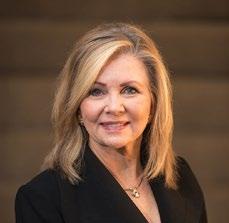
MARSHA BLACKBURN
www.marshablackburn.com
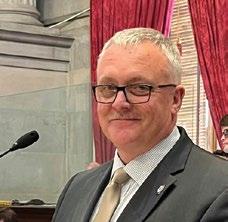
MONTY FRITTS
www.fritts4tn.com
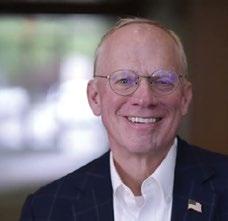
U.S. Senator Marsha Blackburn has been in Tennessee politics since 1998, when she was elected to serve on the Tennessee State Senate. The focus of her campaign has been protecting what she describes as Tennessee’s values of “faith, family and freedom.” She emphasizes border security, parental rights in education, economic growth, strengthening law enforcement and limiting government regulation. Her recent campaign ads focus
Monty Fritts calls himself a constitutional conservative who believes the government should strictly follow the U.S. and Tennessee constitutions. He currently represents the 32nd district in the Tennessee House of Representatives. His campaign website focuses on “liberty and less government,” and he lays out 10 “planks” of his platform, which include protecting religious liberty, defending
JOHN ROSE
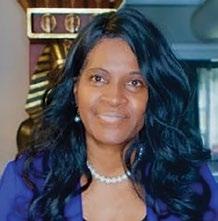
John Rose, a current U.S. representative for Tennessee’s 6th congressional district, touts his lifelong residency in Tennessee as a strength, but also calls himself a “conservative outsider.” His campaign has focused on his roles as a farmer and business owner and his website outlines his priorities as protecting faith, family and freedom, and he has faced controversy over the years for marrying a woman decades his junior that he knew while she
www.atwater4governor.com
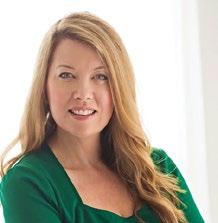
Carnita Atwater’s campaign website focuses on changing Tennessee’s political culture and restoring what she calls the rule of law. Running under the slogan “Make Tennessee Whole Again,” her website is full of family photos and community events, and she says she will be the “The People’s Governor.” Her campaign goal is to cre -
ate a government that works for all Tennesseans and she emphasizes her grassroots involvement. She focuses on replacing leadership and failed policies that she believes can be fixed with new leadership that is focused on people.
on lessening the Chinese influence on America. Blackburn highlights her experience representing Tennessee in the U.S. Senate and positions herself as someone who will keep Tennessee “America’s conservative leader.” She has also stressed and promoted her proximity to President Donald Trump and his policies, and she has faced recent pressure as she refuses to answer any questions from the media or debate her opponents on stage.
Second Amendment rights, reducing government spending and increasing state sovereignty. His campaign also focuses on limiting federal influence in Tennessee, promoting traditional family values, and supporting what he describes as biblical principles and “Godly values” in public policy.

JERRI GREEN
www.greenforgovernor.com
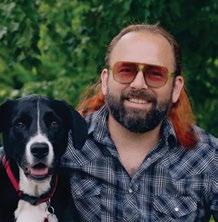
was a child and student. His platform also calls for “zero tolerance for illegal immigration” alongside responsible growth, infrastructure improvements and public safety in the state. In a campaign video on his website, he says Tennessee should be led by someone with executive and entrepreneurial experience rather than a career politician. Like Blackburn, he also highlights his support for President Donald Trump and promises to put “Tennessee First” in his ads.
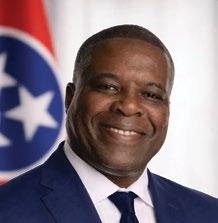
Tim Cyr’s campaign presents him as a U.S. Army veteran, National Guardsman, small farmer and stroke survivor who believes practical experience has prepared him to serve Tennessee. He describes himself as an “old-school Tennessee Democrat” guided by Christian faith and emphasizes helping working families, supporting rural communities, conservation, expanding opportunity, and reducing political division. Cyr also pledges to serve only one term as governor, arguing that leadership should focus on service rather than political careers.
Jerri Green’s campaign website highlights her background as a Memphis city council member, attorney, mother and public servant. She says her priorities include making government work for everyday Tennesseans by improving healthcare access, increasing economic opportunity, reducing violent crime
and strengthening support for working families. Green emphasizes expanding affordable healthcare, raising wages and ensuring state government serves residents rather than powerful interests. Her campaign presents her as a pragmatic Democrat.
Adam “Ditch” Kurtz is a Nashville musician and political science graduate running to bring community-focused leadership to state government. His platform emphasizes affordable healthcare, accessible education, economic fairness and restoring trust in government. Kurtz rejects corporate campaign donations and says his campaign is entirely grassroots-funded. His website presents him as a candidate who wants the government to work for “ordinary Tennesseans” rather than political insiders or special interests.
Kevin Lee McCants is both running for U.S. Senate while he aims for a seat as governor. His focus is on strengthening Tennessee’s economy, workforce and education system while preparing the state for future changes in employment and technology. He argues that leadership should deliver practical solutions that improve everyday life, expand opportunity and
support workers across all 95 counties in the state. His campaign website emphasizes economic development, closing education and workforce gaps and creating stronger coordination between state and federal government to address longterm challenges facing Tennesseans.

BILL HAGERTY www.teamhagerty.com
U.S. Senator Bill Hagerty is the only Republican candidate on the ballot for the Aug. 6 primary. On his campaign website, he calls himself “Trump’s top ally in the Senate.”

MARQUITA BRADSHAW www.marquitabradshaw.com
Marquita Bradshaw is a longtime environmental activist and community advocate from Memphis. She ran against Hagerty in 2020, and while she lost, she was the first Black woman in Tennessee to earn a major political party nomination. She also ran for Senate in 2024.
MARIA BREWER www.mariabrewerforsenate.com
Nashville-based Maria Brewer is a former Tennessee Democratic Party staffer whose campaign website says she is focused on building “a community that works for all of us, not just billionaires and special interests.”
CIVIL MILLER-WATKINS www.civil4tn.com
Civil Miller-Watkins is a former Fayette County school board member who ran for a Tennessee seat in the U.S. Senate in 2024. Her campaign says she is focused on “kitchen table” issues like health care and education.
KEVIN LEE MCCANTS www.kevinleemccants.com
McCants is also running in the governor’s race. Refer to the blurb on Page 10 for his policy positions.
DIANA ONYEJIAKA www.dianaonyejiaka.substack.com
Diana Onyejiaka from Nashville had previously filed to run for the U.S. House District 5 seat occupied by U.S. Rep. Andy Ogles, but announced in January she’d run in this race instead. Onyejiaka has a work history in healthcare compliance, higher education, federal mediation and public policy.
THOMAS E. DAVIS www.tomdavistn4.com
Tom Davis is a U.S. Army Veteran calling for a focus on “faith, family, freedom, liberty and personal responsibility” in politics. His campaign website outlines overspending in Congress, from big line items down to restaurant catering bills.
JOSHUA JAMES www.joshuajames4tn.com
Joshua James is also a U.S. Army Veteran who has been a Rutherford County Commissioner for Rutherford County’s 9th District since 2021. He works as a package center supervisor at UPS and says he’s running to get the government closer to the people it serves.
SCOTT DESJARLAIS www.scottdesjarlais.com
Incumbent Scott DesJarlais has a long history as a legislator in Tennessee. He calls himself a “strong advocate for small government.” In the past, he has faced controversy for being recorded asking a mistress to have an abortion after promoting staunch anti-abortion policies as a legislator.
HAROLD “ROCKY” JONES www.votejonesforcongress.com
Harold “Rocky” Jones is a U.S. Air Force Veteran who is based in Manchester, Tenn. His website says he is focused on fiscal responsibility and growth, and he says he will ensure AI data centers don’t end up in rural communities who do not want them.
VICTORIA BRODERICK www.victoria4tennessee.org
Victoria Broderick works in the logistics and technology industry, and says she entered politics after Roe v. Wade was overturned. Her website outlines a run based on equity, affordability, community safety and freedom.
CLIFF HUFFMAN No website listed
TIM LANIER www.lanier4congress.com
Tim Lanier is a carpenter and small businessman who says on his website that he feels like a fish out of water in Nashville. His campaign is focused on accountability in government, building infrastructure, housing affordability and education and work training.
MIKE CORTESE www.mikefortennessee.com
Mike Cortese’s website focuses on lowering the cost of living, reducing the influence of big money in politics and helping working families. A Nashville-based veteran of the music industry, Cortest says his priority is restoring middle-class opportunities.
There is limited to no information available on this candidate. He is from Sewanee and is a current Marion County commissioner.
JOYCE E. NEAL No website available
Antioch-based Joyce E. Neal Neal has a B.S. & M.S from Tennessee State University and a doctorate from Trevecca. While she does not have a website, she frequently posts on Facebook about doorto-door canvassing.
NATISHA BROOKS www.natishaforcongress.com
Natisha Brooks is a community advocate and former Metro Nashville mayoral candidate. Her campaign has focused on restoring trust in government through “conservative leadership” and she highlights her experiences in business as a strength.
JON HENRY www.henryforcongress.com
Jon Henry is a U.S. Marine veteran who is campaigning on protecting Tennessee farmland and strengthening manufacturing. His website also focuses on securing the border and reducing federal government spending as well as anti-abortion and pro-police policies.
JOHNNY GARRETT www.johnnygarrettforcongress.com
Johnny Garrett’s run has focused on his alignment with President Trump’s America First agenda. He currently serves in the Tennessee House of Representatives.
VAN HILLEARY www.vanfortn.com
Van Hilleary’s positions focus largely on supporting President Trump’s agenda. He is a Desert Storm U.S. Air Force veteran, former four-term U.S. congressman and former chief of staff to Rep. John Rose.
MATT VAN EPPS www.mattfortn.com
Incumbent Congressman Matt Van Epps from Nashville has no Republican challenger. Epps won narrowly over Democratic Rep. Aftyn Behn in a special election in fall of 2025.
DARDEN COPELAND www.dardenforcongress.com
Darden Copeland says his working class upbringing led him to wanting to restore accountability in Congress. His website outlines his work as a business owner and entrepreneur.
LORE BERGMAN www.lorebergman.org
Lore Bergman is a longtime organizer and grassroots candidate who says the government should be more responsive to working families. Her campaign focuses on protecting democracy, defending reproductive freedom and expanding affordable healthcare. Bergman is also running as a write-in candidate for U.S. House District 7.
CHRISTOPHER MARTIN FINLEY
No website available
There is limited to no information available on this candidate.
MIRIAM LEIBOWITZ
No website available
There is limited to no information available on this candidate.
MIKE CROLEY www.croleyforcongress.com
Mike Croley says on his campaign website that his run is built around listening to constituents. He focuses on affordability, accountability and action and highlights his background as an engineer as a policy building strength and encourages people to reach out and ask issue-specific questions rather than issuing talking points.
MOSLEY www.chaneymosley.com
Chaney Mosley is a U.S. Army Veteran and educator who outlines a need for bipartisan solutions at the national level. His website focuses on improving access to health care, and strengthening rural communities.
VINCENT DIXIE www.dixie4tn.com
Vincent Dixie currently serves in the Tennessee House of Representatives and is a small business owner and community leader. He says he is focused on lowering housing costs and protecting voting rights.
STATE EXECUTIVE
COMMITTEEMAN – DISTRICT 17
Republican: Brad Lytle, Derek Truelove
Democratic: Richie Mercado
STATE EXECUTIVE
COMMITTEEWOMAN – DISTRICT 17
Republican: Terri R. Nicholson
Democratic: Melissa Alvarez, Brittany Orpurt-Hilton
STATE EXECUTIVE
COMMITTEEMAN – DISTRICT 19
Republican: Steve Brubaker
Democratic: Jonathan Saad, Josh Wesley
STATE EXECUTIVE
COMMITTEEWOMAN – DISTRICT 19 (UNCONTESTED)
Republican: No candidate qualified
Democratic: Marcia Masulla
STATE EXECUTIVE
COMMITTEEMAN – DISTRICT 20
Republican: Ronald McDow
Democratic: Tyler Brasher
STATE EXECUTIVE
COMMITTEEWOMAN – DISTRICT 20
Republican: Lulu Elam, Annalisa Z. Young
Democratic: Lee Jones
STATE EXECUTIVE
COMMITTEEMAN – DISTRICT 21
Republican: No candidate qualified
Democratic: Dakota Galban, John Summers
STATE EXECUTIVE
COMMITTEEWOMAN – DISTRICT 21 (UNCONTESTED)
Republican: LaRawn Scaife
Democratic: No candidate qualified
SALETTA HOLLOWAY www.hollowayfortn.com
Former Metro Nashville Councilmember Saletta Holloway is a Nashville-based healthcare executive who is running on expanding affordable health care. Her website is focused on creating economic opportunities in all communities.
JOSHUA WARREN SALES www.sales4congress.com
Sales campaigns on a “working-class agenda” that includes universal healthcare as well as affordable housing and tax fairness. Sales is an Advanced Placement English teacher and U.S. Army veteran who says he’ll hold 50 town halls in the district.
TENNESSEE SENATE DISTRICTS 19, 21
TENNESSEE HOUSE DISTRICTS 50, 51, 53 , 54, 56 , 58
THEODORE (BUTCH) BAKER www.butchbaker.com
Thomas Baker is a former U.S. Marine, music executive and Berry Hill police chaplain. His campaign focuses on protecting constitutional rights and Christian rights as well as improving infrastructure.
Incumbent Sen. Mark Pody has served in the legislature in both the house and senate since 2010. He owns a small business in Murfreesboro. His website emphasizes his conservative leadership and his goal of protecting “family values” and Constitutional rights.
www.jonicochranfortennessee.com
Local Democratic Party leader and NAACP executive committee member Joni Cochran is a local business owner with more than 27 years of experience. Her campaign is focused on protecting civil rights, education and financial accountability.
Lindsey Patrick-Wright doesn’t have a campaign website, but her social media accounts say she is a librarian running to “make Tennessee better for all of us.”
MICHELE VETTER www.mvetterforall.com BILL HANCOCK www.billhancockfortn.com
Longtime District 52 resident Michele Vetter says on her website that she’d like to reduce partisan divides as a legislator. Her campaign says that she’d like folks to feel more involved at the local level and wants to bring the “community back to the Capitol.”
Bill Hancock is a sixth-generation Tennessean who has worked in healthcare and real estate as well as a community volunteer. His website focuses on capping tax increases and increasing public safety as well as protecting seniors from scams.
www.jaylat4tennessee.com MARK PODY www.markpody.com
JONES www.votejustinjones.com
Incumbent Justin Jones is nearly a household name in the nation after being kicked out of the legislature as an advocate, elected to office, expelled by his colleagues and then coming back again as a legislator. Jones is a long-standing, deeply rooted local advocate who says he’s working to promote justice in many different areas.
Jayla Thomas is a business leader, energy infrastructure professional and a Nashville Affordable Housing Trust Fund commissioner. Her campaign’s focus is on affordability and responsible growth as well as protecting workers from “unchecked AI-driven job displacement.”
www.johnrayfortennessee.com
Incumbent John Ray Clemmons has for a long-time focused on bipartisan problem solving in the legislature. His website highlights the need for lowered costs for families, better resources for public education and investing in infrastructure.
EWING www.voterickewing.com
Rick Ewing is the co-founder of a disability advocacy organization he founded after his child was diagnosed with a rare disease. Improving disability and aging services along with creating quality jobs are among the focuses he lists on his website.
ANGELINA ROMERO www.electevaromero.com
Eva Angelina Romero is a Gov. Bill Lee-appointed commissioner for Tennessee Housing Development Agency. Her platform has focused on freezing property taxes for seniors and capping future property tax increases as well as improving local roads. She is also a former history teacher.
LAWLESS www.angielawless.com
Angie Lawless serves on the Metro Continuum of Care Homelessness Planning Council and the Safe Haven Family Shelter board and has worked as an entrepreneur and attorney. Her campaign highlights improvements in healthcare access, affordable childcare, equitable taxation and infrastructure investment.
www.brooksforstatehouse.com
Incumbent Shaundrelle Brooks is seeking re-election on a platform of public safety, violence prevention, mental health, affordable housing, healthcare and support for working families. On her website, she highlights passing Akilah’s Law, supporting accountable policing.
www.markproctortn.com
Mark Proctor was a Captain, Major and ended his service as a Lieutenant Colonel for the Tennessee Highway Patrol. His campaign is focused on keeping communities safe and affordable living as well as government accountability.
www.westfortn.com
Beth West has worked in the nonprofit sector and names it as a reason she decided to run for office. Her website highlights the importance of showing up in the community, and she includes health care access as well as education as two main drivers of her campaign.












As legend has it, Tom Carvel was having a breakdown. More specifically, on a hot day in 1934, his ice cream truck got a flat tire which left him stranded in a parking lot on the way to his big tourist-season beach-day. He couldn’t think of anything to do but try to sell his ice cream before it melted. He sold a few to passers-by. The sun beat down and the product got meltier, creamier, more velvety. Within hours, word of mouth was sending him an influx of tourists who were excited to try his new invention. “Soft Serve” was born. Your “breakdown” might be the key to something new, Cancer. Stay with us. I’ll meet you in the parking lot.
It was absolutely gorgeous outside this morning, Leo! I drove the long way to work to watch the trees dancing in the sun. My hand outstretched, surfing in the breeze, shout-singing along with 40-year-old songs on the radio. Not even caring what the drivers beside me at the stoplight thought of my broken tenor. I let that feeling carry me all the way through my shift, Leo. Even when that big afternoon storm blew in, I just watched the rain pour down and thought about what an amazing world we live in. Then I clocked-out, walked back to my car in the dark. And realized I’d left my windows down all day. Now I’m sitting on a stack of paper towels from the men’s room. Feet sloshing in a half-inch of water I couldn’t scoop out the door. Hoping the stereo will work again once the buttons dry out. And thinking about what an amazing world we live in. Circumstances change, Leo. Tend your responses.
According to Meat Loaf, the composer and lyricist Jim Steinman wrote “Total Eclipse of the Heart” to be a centerpiece of Meat Loaf’s third solo album, “Midnight at the Lost and Found.” Steinman, however, says that the song was always intended for showcasing the vocal range, emotional breadth and heartwrenching drama that only Bonnie Tyler could bring. But Meat Loaf says she stole his song. And Meat Loaf is an honorable man. In any case, Virgo, things happened the way they did. Bonnie Tyler released the song. It was an enormous hit and a cultural joy-grenade. And the world received something it needed. If you find yourself grasping for what might have been, Virgo, turn around. Ask instead what you can be a conduit for today.
We used to watch that soap opera every day at lunch, Libra. You knew all the characters and the stories. I just thought the hammy acting and flat dialogue were something to laugh at while I dragged waffle-fries through too much ketchup. But I still run into it every once in a while. The plotlines are just as ridiculous. Some of the actors are still the same. And I’m amazed to realize that I care a little bit who cheated; who’s back from the dead; who never gave up hope. And I think that means I’ve grown up some. I don’t have to dismiss the story as silly or over-dramatic. I just let myself feel the pain and joy with other people. And I hope you still do that too.

Did I tell you I accidentally left my car windows down during that big storm yesterday, Scorpio? I thought maybe it would dry out overnight, but it was still soaked when I went out this morning. I borrowed my neighbor’s wet-vac and filled it up a few times. That, at least, diminished the floor soppiness. I tried leaving the A/C running for an hour to pull out some moisture, but now the seats are just wet and cold. My mom said to leave the windows down in the heat, but I’m afraid the rain will come back and reverse any progress I’ve made. Sometimes there isn’t just one fix, Scorpio. Sometimes you need to do a little bit of a lot of things that kind-of work. And then give yourself time. And forgive yourself if it’s still a little wet tomorrow morning.
It’s hot, Sagittarius, and you need a pool! And, if you get a pool, I hope you get one of those little pool-roomba cleaning robots to keep algae off the bottom. I don’t even need to get wet, I could just watch that little guy scrub the bottom of the pool all day. I wonder if it hums little sea-shanties to itself while it’s down there. Just working away in the chlorinated blue. Come to think of it, Sagittarius, you’re kinda like that little guy lately. Nose to the grindstone. Getting it all done. But you’re not a robot. You need to come up for air sometimes. Even if there’s still a little spot of green by the ladder in the deep end, I think this is a good time to come to the surface and grab a breath.
Text me when you get here, Capricorn, I’ll come down and let you in. No, it’s not a super-exclusive place or anything. They just have this digital locking-system on the front door and I have to open it with my phone. Yes I’m a member. No, I already got you a guest-pass, it’s fine. I get two a month. Yes, once you’re inside you get all the chili-dogs you want. No, I don’t think that’s a weird model for a chili-doggery. The membership pays for itself if you eat here four days a week. Yes, it’s autodrafted from my bank account. No, you can’t take anything home. All dogs must be consumed on-site. Yes, they will frisk you on the way out, but it’s not a big deal. Monty is very gentle. (Pro-tip, don’t take the free potato chips, you’ll fill up after two bags.) Yes, we can just go somewhere else, but I’m already full. And yes, Capricorn, I think it’s wise to reconsider your financial commitments from time to time.
Do you need a ride, Aquarius? I’m glad to run you home, but I should warn you that my car seats are still a little bit wet from when I left the windows down during that big storm the other day. It’s way better than it was, but you might notice a little squish when you sit down. If that’s alright, we can get going. Oh, and I am a little low on gas. Yeah, and my card won’t tap since my wallet’s been wet from being in my back pocket while I drive around. So, if you’ve got a couple bucks that would probably get us there. Also, if you don’t mind holding this wet-vac in your lap, there’s not really another place for it. OK! If you’re all buckled in…oh, that’s right that seatbelt doesn’t really click anymore but you can kind of tie it to the armrest? Oh, you’re just gonna walk? I get it, Aquarius. Offering to help is kind. Just make sure you’ve got the resources to back it up.
When I was a kid, we would take these family road trips through the desert to visit my grandparents by the ocean. And we’d always stop at whatever billboard-announced roadside attractions we hadn’t seen before. The world’s largest thimble. The world’s smallest mule. Sam’s Snake-Kingdom and Rhonda’s Squash-Rodeo. All were sites of wonder and delight. If you’re feeling uninspired, Pisces, remember that there are things out there you haven’t imagined yet. Maybe go for a drive and keep your eyes open for new possibilities.
I woke up 45 minutes before my alarm went off this morning. Not enough time to really get back to sleep. But too much time to just get out of bed and get going, right? So I figured the best use of my time was to lay in bed and worry. First off, I’ll probably be tired from the missing 45 minutes of sleep, so that’s concerning. And, even though I’m up early, I bet I’ll still be late to work. What if I get fired?. And what am I doing still working at a 24 hour video and tan place, anyway? Am I getting too old? What if my astrology career never takes off? What if I get sick? Did my heart just skip a beat? That’s bad, right? Can you wait to get health insurance until after you go to the doctor? What if the government cancels my bank account? And what if I don’t have any marketable…BRAMP!BRAMP!BRAMP! Oh, right, my alarm. Well, I’d better get up, Aries. And I’d better practice letting these worries pass by just as fast as they arise.
My car is pretty much dried-out from when I left the windows down in that big storm last week, Taurus. What a relief! I’m so grateful. But there is still a bit of a…smell. It’s just everytime I open the door I get kind of a hot, musty, sourfoot fish-blast. I get used to it while I’m driving, but then I smell it on my clothes at work. So I’m calling in the bigguns. Hans, the guy who details cars in the parking lot across the street, says he can get it smelling brand new. I just have to trade him my Sundaland birthday giftcard. I was gonna use it to order some new astrology hats, but I think this will be worth it. Sometimes, Taurus, it’s worth calling in a professional to get the job done right.
There was a time when people could at least agree on the basics. We all knew it was Shark Week and we all celebrated together. Now things are so fractured. Some binge shark documentaries in the fall while others stream prehistoric megaladon fantasy-fiction adventures in the dead of winter. Each of us the master of our own shark-media uptake. But if you look around, Gemini, people all have the same desires and the same basic needs. Everybody needs a countdown of the 10 most dangerous sharks and footage of a trained diver barely escaping with her life. Remember that when you see your neighbors this Shark Week or any other week of the long, long year.
Have you ever wanted to learn to play an instrument, but you didn’t know for sure which one? Or maybe you just don’t have the money to invest in something like that. It can be quite costly to try something new especially when you’re not sure if that’s what instrument you’d like to play.
Thankfully the Nashville Public Library has a possible solution to this problem.
If you go to the nashvillelibrary.org website, and look at their Library of Things you can check out various instruments and try them out before you buy them.
Some are even available in full or half
BY NORMA B., CONTRIBUTOR VENDOR
sizes made especially for children. Others are made specifically for left or right handed people.
Here’s what they currently have available:
• Acoustic and Classical Guitars
• Keyboards
• Violins and Violas
• Ukeleles
• Bongo Drums, Percussion Kits, Cabasas (a percussion instrument that produces a rattling sound similar to a rattlesnake)
• Mandolins
• Banjos
BY CHUCK C., CONTRIBUTOR VENDOR
Being unhoused or just plain tired is a condition many of us have experienced and sometimes requires an immediate fix. That feeling of walking long distances with no rest, or carrying heavy bags with no relief in sigh. That immediate fix is a place to rest. That seems like a simple enough order to fill, but not in and around Downtown Nashville. It is a very challenging order to say the least.
After Church Street Park was first opened there was a big revitalization of Church Street itself, including installing flower planters and black iron benches from 8th and Church St. all the way down to 5th and Church. These were ideal resting places for those of us who were weary or had been walking around downtown like so many of us had done on a daily basis.
A couple of these benches at 5th and Church had become the temporary “office” for The Contributor in its infancy before we tried Starbucks and ultimately the Downtown Presbyterian Church. As time progressed,
these benches were slowly removed from their locations one or two at a time until now there are only a couple (or maybe just one) at 8th and Church.
No more resting for the weary. Many businesses have even put up steel spikes with tips on them to discourage folks from resting against the building while their feet are planted on the public sidewalk. (Some homemade wooden benches have begun to appear around downtown and at some MTA bus stops, however.)
So where can a body get some rest? The Mission Day Room or Room in the Inn (no sleeping at Room in the Inn). It’s very difficult for many of us to get any quality rest without being disturbed or harassed in some way, shape or form. I long for the day when we can all get some rest.
Paul Simon’s American Tune from 1973 says, “I’m just weary to my bones ... all I’m trying is to get some rest.”
BY MAURICE B., CONTRIBUTOR VENDOR
We are in an era where the norm is that the community is out of reach and out of communication with one another. In a previous era, a child had to be home before the street lights came on. Sometimes we couldn’t go no further the next door neighbor’s house, but we’d push it and play in the streets all the way down the block. If the neighbors caught us doing wrong, they’d skin our hide and then call our parents to tell them, and when we made it home our parents would take off on us as well.
Now as times and laws have changed, children are practically grown when they choose to be, but aren’t grown when they need or want something from their parents. As the land lines and neighborhood watches have converted into smart homes and smartphones there’s true losses that have occurred inside the “Family/Community ties.”
All of humanity was created from a single pair, which formed nations and tribes so that we know one another, not despise one another, and we are tied to social responsibility. We are encouraged to support the poor, vulner-
able, and oppressed. As we stand together we stand for justice even if it’s difficult because we actually stand for Allah/God even if it’s against our own self. See, back in the day we made settlements with one another at ease. Somewhere down the line preserving relationships and social harmony was a part of spiritual responsibility. The whole global system is that of a collective responsibility all balled up in one enormous Community where you could look around and find a person from every part of the globe right next to you sharing the same interests and intentions and that is to live in peace willing to get to know you only if you’ll allow them to. At any given moment in time if a person chooses not to engage in the plan which Allah/God has written for us to follow they are considered an unbeliever/Kafir and that’s just something that you must accept. The simplicity of the nature of another choosing not to believe Allah/God’s will is to allow him or her to be. Our intentions are what are being looked at for judgement.
• Lap Harps and Lyre Harps
• A Handbell Set
• A Xylophone
• Kalimba (an African instrument often called a thumb piano or mbira.)
How does the Library of Things work?
If you see an instrument you like on their website, you can place a hold on the item and have it delivered to your local branch where you can check it out just as easily as you would a library book — and best of all, it’s free! *Items must be returned in good condition!
In addition to the musical instruments, they have a variety of other items available too in the following categories:
• Tools and Electronics
• Health and Fitness
• Activities and Games
• Crafts and Hobbies
• Kitchen Items
• Art
Maybe you can find something other than a book that is useful in your local library. Why not check it out and see for yourself?
BY MARK N., CONTRIBUTOR VENDOR
As I observe the inner cities of today, I always reflect on my youth. As a young person growing up in the inner city, I can’t recall no murders, but this doesn’t mean there wasn’t any. I also can’t recall no pedophilia, although one 6th grader disappeared. Marijuana was the main drug of choice, but no hard drugs at least in my neighborhood. There was a few alcoholics and two people suffered from mental illness. Back then these situations was so small they were almost unnoticeable. Fast forward to today, the percentage of these events or circumstances are rampant, noticeable, and very relevant. I became homeless in 2018 after an injury, and the things I am witnessing today, it’s almost as if I’m on another planet. The
crazy part of the madness is people walk up and down the street and pass by folks in direr need as if they are invisible. I can’t speculate on why this happens, that would be too much writing and still just an opinion, but if a person is 50 and under and if they really knew what it was like in the past, they would be ashamed to see what is going on in today’s world. You can explain to them the situation of now and then but it’s not the same as being in it. A person can read about the past, watch videos and so on, but to witness the difference between then and now, words can’t explain. In my opinion it’s devolving instead of evolving. Acts 1:7 says it is not for you to know times or seasons that the father has by his own authority.
BY LORA V., CONTRIBUTOR VENDOR
On a short little trip recently, I found this little ice cream shop.
To get there from Nashville you get on I-40 East going toward the Cookeville, Sparta area. You get off on at Highway 111, you go right and stay on there until you see exit 70. Then, you take a left, go through town and it is on the right side. The sign says, “Ice Cream Shop.”
It is a little place where you can order BBQ sandwiches, cold drinks, chips, ice cream cones or dishes of ice cream. One scoop or two.
They have little iron tables where you can sit down. I chose to sit at the tables outside. They asked me if I wanted them to turn on the music. It was sorta easy listening music. Remember songs like Love Shack and Under the Boardwalk?
I had my grandkids with me. They said, Granny what kind of music is that? Old Fashioned, like you? I just laughed. Remember, kids today don’t think it’s music unless it’s rap music.
It is very well worth the trip. I really enjoyed myself.
BY JAMES “SHORTY” R., CONTRIBUTOR VENDOR
Well, WeGo did it again. They changed the bays that your bus comes in and leaves out. So, you got to remember the bay they are at to get home.
I like the fact that the buses are coming more often. That makes the wait time shorter. That’s a good thing.
It’s a good thing making those three year bus passes as well.
I love that you can go anywhere you have
to go for just $4 (if you have to pay for it). Laugh, laugh, that’s cheaper than a car! It is also cool if you’re in a wheelchair or use a walker they can let down a ramp so you can just get on and off.
In the summertime heat, you can get on the bus to enjoy the air conditioning. They also have phone chargers under the seat. If you ain’t never been on one before, hop on and enjoy! Leave the driving to us!
BY A.J. G., CONTRIBUTOR VENDOR
Join People Loving Nashville every Monday for special guests, extra resources, fun activities and community. They will have hot meals, cold drinks, clothing, showers, haircuts and resource connections at 1st Avenue and Gay Street every Monday from 6 - 8 p.m.
Hosted by People Loving Nashville in partnership with Street Dog, Parkcenter, Nashville Street Barbers, Wayspring, Hope for Justice, Justice Bus, Nashville Humane Association, Nashville Rescue Mission, Nash-
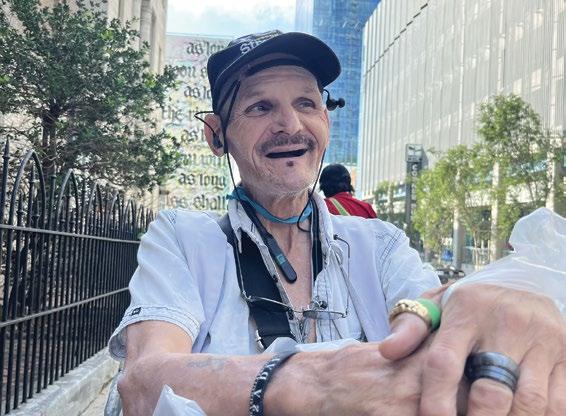
Good evening, this is William B. from The Contributor Land. I call it Contributor Land because it’s where I met a lot of people who work for The Contributor and I’ve met a lot of people coming from out of town who buy The Contributor. I draw them in by playing my music while I sell my papers, but if they don’t want one, I don’t push it. I love playing music. It’s part of my therapy
I consider myself a full grown Christian. I may curse every once in
villeCares, Dream Streets, Florish Health clinic, Today’s Hop, ShowerUp and Office of Homeless Services.
Summer Schedule:
• Mental Health and Medical: July 6 and 13
• Addiction Recovery: July 20 and 27
• Interpersonal Violence: Aug. 3 and 10
• Housing Help and Legal Aid: Aug. 17 and 24
• Fun Finale: Aug. 31
BY FREEPRESSGMA, CONTRIBUTOR VENDOR
The Gatlinburg fire of November 2016 is still seared in my brain. Why? Because I function very efficiently under stress … at the cost of PTSD later on.
My family was military. The ethic was “suffer silently.” The cost was high.
The fire shot hundreds of feet into the atmosphere, showering burning embers for miles. The smoke was choking us. My small community in Gatlinburg managed to improvise an effective evacuation plan. While I was at the top of the mountain cramming people’s pets into my truck, others were cutting away the dozens of downed trees (resulting from the high winds that preceded the fire), that were in our way. Still others were making sure the elders in our area were
at the head of the evacuation line, along with children and asthmatics. We made it out, putting out a few small start up fires as we went.
Many of us workers were left without a home, shoddy as they may have been.
For years, I couldn’t tell the story. But I did record an answer to my prayers at that time.
I offer it to all those still without a safe and caring home. Bring to me your broken Dreams
Throw them into the fire of formlessness
Surrender to Me and I shall remake you Into something yet undreamed by you
BY LASHIKA, CONTRIBUTOR VENDOR
I prepare and give out lunch to the homeless at Centennial Park on Sundays and they say thank you for the food that I give out to them. Churches get grants, but they’re supposed to use the money to help homeless people get housing. Homeless people don’t need to be on the street or sleeping on the sidewalks. A lot of the churches that get grants are not helping with the homeless people. They paid their own bills with the homeless money and it’s supposed to be for the homeless people without a home. That money is supposed to be for them to get into housing.
BY WILLIAM B., CONTRIBUTOR VENDOR
a while though because I get upset. I was born into Christianity and my family all went to church.
I used to do drugs. One of the hardest drugs in my life was crack cocaine. It’s really torn my body down over the years. Where I live at now, I can’t even do marijuana. I’m glad about that because it’s a beautiful and wonderful place to live called Room In The Inn. I get along with everybody there.
I just want to say that if you’re doing drugs and alcohol, I know you’re
grown and you can do that if you want to, but it will tear your body down. I’ve got a spot on my lung, I’ve had cancer and I may have to have open heart surgery, but I don’t know yet. I’ve got COPD, which will slowly take me out. I’m bipolar and I don’t know if drugs had anything to do with that, but in my heart and soul I think it did. So, if you think drugs won’t hurt you, you’re wrong.
I love you all out there. Love you, bye.

SUBMITTED BY HOWARD P., CONTRIBUTOR VENDOR
Q: Why do baby diapers have names like “Luvs,” Huggies,” and “Pampers,” while undergarments for old people are called “Depends”?
A: When babies crap in their diapers, people are still gonna Luv ‘em, Hug’ em, and Pamper, em. When old people use a diaper, it “Depends” on who’s in the will!




Glen Powell stars in How to Make a Killing as Becket Redfellow, the disowned heir of an obscenely wealthy family, who decides to speed up his inheritance by murdering his way through the family bloodline one relative at a time. Writer-director John Patton Ford (Emily the Criminal) loosely adapts the 1949 British black comedy Kind Hearts and Coronets, transplanting the story from Edwardian England to contemporary New York.
The film opens with Becket eating his last meal and gradually telling his life story to a priest in one long death row confession. The movie spans the four hours before Becket’s execution as he relates his tale of familial vengeance, from his childhood to his downfall. Becket was banished from the Redfellow fortune before birth, when his pregnant teenage mother was cast out by her cold, controlling father, a billionaire patriarch named Whitelaw Redfellow (Ed Harris). Raised in working-class New Jersey, Becket grows up resentful and broke while his extended family lives in comfort. When
BY JOE NOLAN, FILM CRITIC
his mother gets sick, he reaches out to his relatives for assistance, but he’s turned away outside the gates of his grandfather’s mansion. After she dies, Becket decides to claim what he believes is rightfully his, methodically eliminating the relatives standing between him and a $28 billion inheritance. Along the way, he reconnects with his childhood crush Julia (Margaret Qualley). The fact that she’s now engaged to one of Becket’s targets complicates his plans in more ways than one.
The film boasts a notable supporting cast, including Bill Camp as Becket’s kind-hearted Uncle Warren, alongside Jessica Henwick, Topher Grace and Zach Woods. But like Becket Redfellow himself, Ford’s movie has an identity crisis of its own. It’s funny, but not really funny enough to be considered a comedy. It never wants to abandon realism and go for the full zaniness required to reach Knives Out territory. That said, it’s not dramatic enough to take too seriously either. There’s real family pain
here and crushing class tensions, but the stakes never seem very high. Every murder comes relatively easily, and the repetitive funeral scenes read like punchlines. They’re supposed to be punchlines, but they don’t really land. If this is a comedy, why is there real family pain and crushing class tensions weighing it down? They’re not very funny.
The romantic story between Qualley and Powell’s characters is paper-thin and feels most meaningful as a plot device that helps bring the story to an unsatisfying happy ending. Qualley brings genuine magnetism to Julia, but the script never decides whether she’s a co-conspirator, a moral compass, or simply a prize waiting to be won. She ends up being a little of all three and not quite enough of any of them. She ultimately comes off as sexy but manipulative and twofaced, and audiences who might otherwise empathize with Becket’s journey don’t want him to end up with this toxic debutante.
Powell, to his credit, plays a little against type, coming off more as a hungry under-
dog rather than his usual charismatic leading-man roles. That said, the film feels like a missed opportunity for this talented cast to explore something closer to the gangbusters comedy of Kind Hearts and Coronets, which is still widely regarded as one of the greatest British comedies of all time. We rarely understand what’s actually driving Becket beyond generic class resentment and a vague deathbed promise to his mother, and, again, these aren’t exactly comedy gold. How to Make a Killing aims at class commentary, satire and genuine pathos without pulling the trigger on any of them. The result is a film that’s never quite bad enough to dismiss, but never quite good enough to recommend with much enthusiasm either.
How to Make a Killing is streaming on HBO Max.
Joe Nolan is a critic, columnist and performing singer/songwriter based in East Nashville. Find out more about his projects at www.joenolan.com.
“The Contributor” está trabajando con uno de los principales periódicos en español La Noticia para llevar contenido a más lectores en Middle Tennessee. Nuestros vendedores de periódicos han pedido durante mucho tiempo que nuestra publicación incluya contenido que apele al interés de residentes de habla hispana en nuestra comunidad.
“The Contributor” is working with one of the leading Spanish-language newspapers La Noticia to bring content to more readers in Middle Tennessee. Our newspaper vendors have long requested that our publication include content that appeals to the interest of Spanish-speaking residents in our community.


M i e n t r a s e s p e r a b a noticias desde Lima, Perú, la ar tista vis u a l A n a í s Q u i s p e sabía que una par te de ella ya viajaba r u m b o a N u eva York Su obra había s i d o s e l e c c i o n a d a p a r a fo r m a r p a r t e de Latinismo 2026, una impor tante e xposición inter nacional que reúne a 32 artistas de nueve países latinoamericanos en el Queens Council on the Arts, en Long Island City La escultura llegó Ella no U n a n e g at iva d e r e n ova c i ó n de v i s a impidió que Quispe pudiera asistir a la i n a u g u r a c i ó n d e u n a d e l a s o p o r t unidades más impor tantes de su car rera ar tística. Sin embargo, su instalación
Bio-Suture: for the matter that feels permaneció en la galería como un símbolo de presencia pese a la ausencia Una obra que, paradójicamente, ter minó reflejand o e l m i s m o t e m a q u e i n s p i r a a Latinismo: las fronteras visibles e invisibles que todavía enfrentan muchos ar tistas latinoamericanos
Una platafor ma nacida para abrir puertas L at i n i s m o A r t & E d u c at i o n e s u n p r oye c t o c u l t u r a l i n d e p e n d i e n t e q u e
busca redefinir la manera en que se presenta y entiende el ar te contemporáneo l at i n o a m e r i c a n o e n E s t a d o s U n i d o s F u n d a d o p o r l a a r t i s t a y c u r a d o r a colombiana Lyz Tor res y la arquitecta y gestora cultural Laura Amaya, el proyecto nació en Bogotá y, en pocos años, se ha conver tido en una platafor ma intern a c i o n a l p a r a a r t i s t a s e m e rge n t e s y c o n s olidados de América Latina
Cada edición comienza con una convocatoria abier ta inter nacional Un comité curatorial selecciona a los par ticipantes se gún la calidad conce ptual de sus propuestas y el tema anual de la exposición Los ar tistas reciben acompañamiento curatorial, inclusión en el catálogo oficial, promoción inter nacional y opor tunidades de establecer vínculos con consulados y organizaciones culturales latinoamericanas en Nueva York Además, cada año se otorga una residen-
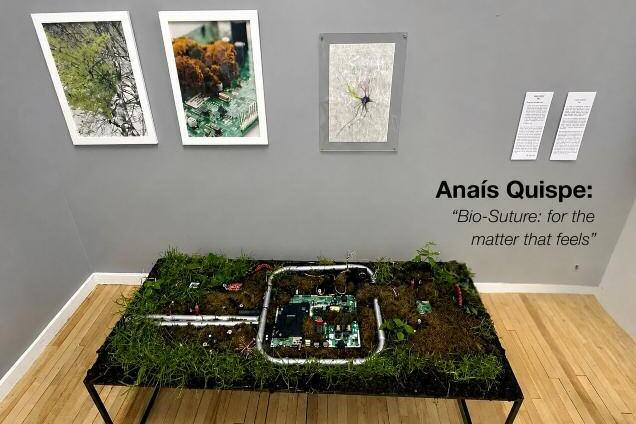
cia ar tística en Nueva York En esta edición, el reconocimiento fue para la ar tista c o l o m b i a n a D
La primera edición de Latinismo, celebrada en 2023, recorrió Brooklyn, Manhattan y Queens explorando el significado contemporáneo de la identidad latina En 2025, ante un ambiente político cada vez más hostil hacia las comunidades inmigrantes, sus fundadoras decidieron convertir la exposición en un acto de afirmación cultural y solidaridad
La edición 2026, titulada Nature Made Presence, propone una reflexión sobre la relación entre la naturale za y la tecnología Bajo la premisa de que "entre lo biológico y lo sintético, entre el cuerpo y el código, buscamos aquello que todavía late", la muestra reúne pro-puestas que exploran nuevas formas de coexistencia entre el ser humano y su entorno
A n a í s Q u i s p e : r e p a r a r l o q u e l a s f r o n t e r a s s e p a r a n
Entre todas las obras expuestas, pocas sintetizan mejor el espíritu de Latinismo que Bio-Suture
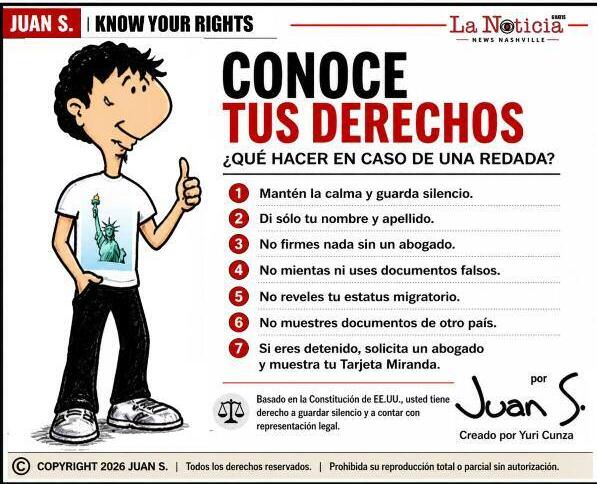
La instalación presenta una superficie horizontal donde tierra de Central Park y musgo vivo envuelven placas electrónicas obsoletas y fragmentos de tubería PVC que emergen lentamente como si la propia naturaleza estuviera recuperando aquello que alguna vez fue infraestructura urbana
Lejos de presentar la tecnología como enemiga de la naturaleza, Quispe propone una convivencia p osible entre ambas La obra explora cómo los materiales industriales pueden reintegrarse al ciclo natural y convertirse en nuevos organismos capaces de generar vida y memoria
Originalmente, Anaís Quispe había sido seleccionada como la ar tista residente de esta edición, el mayor reconocimiento otorgado por Latinismo.
"Siempre fue mi sueño exponer en la ciudad de Nueva York", comentó la artista
Ese sueño estuvo muy cerca de concretarse
Su interés por esta relación entre naturaleza y tecnología tiene profundas raíces personales Creció observando el trabajo de su padre, ingeniero eléctrico, quien le enseñó a comprender que ambos mundos no son necesariamente opuestos, sino sistemas que constantemente dialogan entre sí
A través de lo que denomina "empatía material", Quispe busca comprender cómo la tecnología también puede convertirse en
España, donde par ticipará junto a otros autores inter nacionales en la antología poética T he Ar t of the Wor d, ampliando nuevamente su búsqueda ar tística desde otra disciplina
Una red cultural como for ma de resistencia Latinismo 2026 también reúne el trabajo de destacados artistas como el peruano Lolo Ostia, quien trabaja con celulosa bacteriana viva; la chilena Elena Cavada, creadora de mosaicos elaborados con cochayuyo, un alga originaria de Chile; la también chilena Suiyen Kong, quien investiga los procesos de transformación de la naturaleza mediante grabado y técnicas mixtas; el arquitecto nicaragüense y profesor de Columbia University Oscar M. Caballer o, y el colectivo argentino Hypsibius, reconocido por sus instalaciones textiles interactivas
En momentos en que muchos artistas latinoamericanos enfrentan mayores dificultades para obtener visas y participar en escenarios internacionales, iniciativas como Latinismo representan mucho más que una exposición colectiva Se convierten en una red de apoyo, colaboración y visibilidad para creadores cuyas voces aún permanecen insuficientemente representadas Gracias al trabajo de Lyz Torres, Laura Amaya y Mark Christie, del Queens Council on the Arts, Latinismo continúa construyendo una comunidad artística que trasciende fronteras políticas y burocráticas
Queens Council on the Ar ts 5-11 47th Avenue Long Island City, NY Instagram: @latinismoart
En exhibición hasta el 1 de agosto de 2026. Envíenos sus sugerencias por correo electrónico: