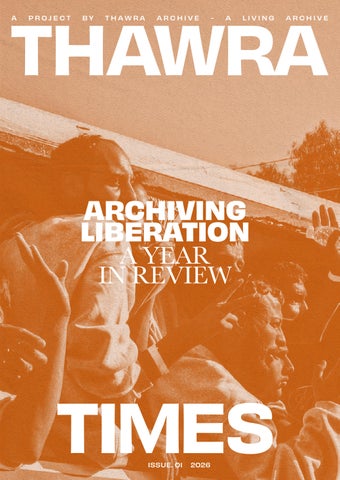
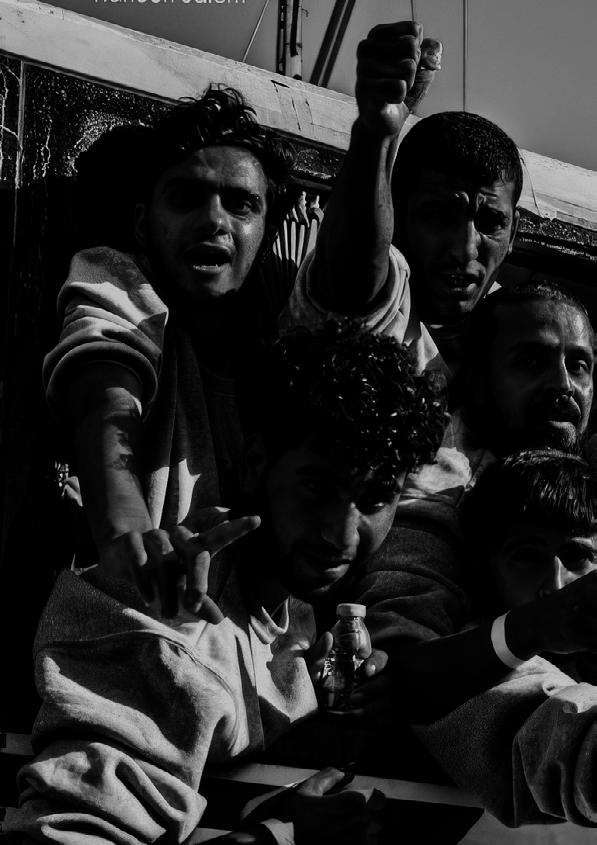
PRISONERS REMAIN THE COMPASS OF STRUGGLE: THE CHAINS WILL SHATTER THE COLONIAL ENTITY
2
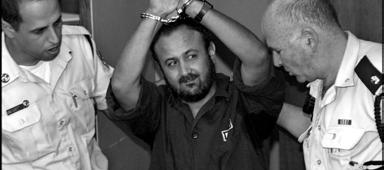
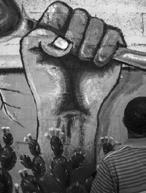
From the writing of prison literature, education circles, to hunger strikes and smuggling sperm out of prison, Palestinian political prisoners are focal sites of resistance for the national liberation struggle.
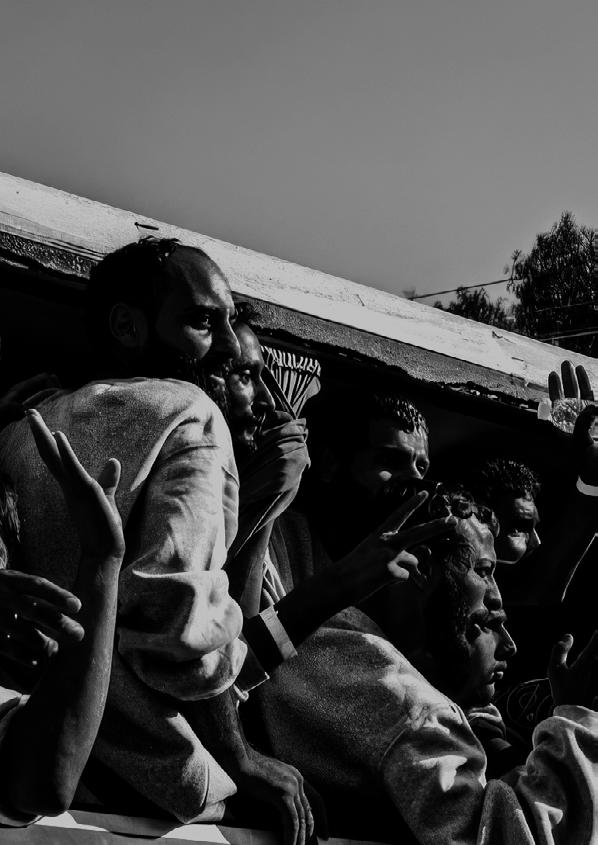
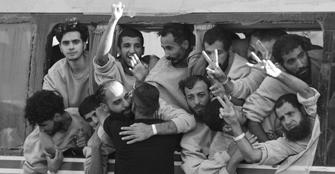
After nearly 400 days since the beginning of genocide, and steadfast resistance of the Palestinian people against barbaric settler-colonialism, the Zionist entity was forced to its knees declaring the release of almost 2,000 Palestinian political prisoners, including nearly 300 who were serving life imprisonment. The scenes that were circulated around the world, of Palestinian men embracing their mothers, fathers, the earth, after decades in confinement was a significant moment of liberation for not only for the Palestinian people, but a remarkable step of progress for the liberation of all humankind. In previous so-called exchanges (liberations), the released have come out to eventually become leaders of political organising and revolutionaries mobilising for resistance against the colonial entity. In every conceivable way, the release of thousands of Palestinian prisoners, is the release of thousands of revolutionaries.
Despite deep ideological differences across Palestinian political factions, from Marxists, to Islamic movements and secular nationalists, the Palestinian prisoner struggle, and the prisoner exchanges present a fierce national unity amongst all Palestinians the world over. In the face of imprisonment used as a weapon of fragmentation and control, Palestinians close ranks around a single, unbreakable principle: no Palestinian is abandoned to the colonial jail – the prisoner will die a martyr and revolutionary to the struggle, whether in colonial jails, or their freedom on earth. The prisoners’ cause binds Palestinians together as one people, asserting unity, dignity, and an uncompromising refusal to let colonial prisons define their future.
PALESTINE
On 28 October 2025, the chair of the UN Independent International Commission of Inquiry on the Occupied Palestinian Territory told the General Assembly that Israel is responsible for four genocidal acts in Gaza. Drawing on the Genocide Convention, the Commission found that Israeli authorities had killed Palestinians, inflicted serious bodily and mental harm, imposed conditions of life calculated to destroy them, and taken measures intended to prevent births, with the specific intent to destroy Palestinians in Gaza as a group. It also concluded that senior Israeli leaders had incited genocide in public statements.
Just days earlier, the International Court of Justice had already ruled Israel’s aid blockade and attempts to shut down UNRWA in Gaza unlawful, reinforcing a growing legal crack in the siege. This UN finding does not stop the bombs or lift the blockade, and Israel has rejected it. But it marks a historic rupture: a moment when Palestinian testimony, images from Gaza and years of documentation were translated into the word the international system tried to avoid – genocide. For movements demanding arms embargoes, prosecutions and an end to impunity, it offers a new legal and symbolic tool. In a world that has largely failed Gaza, this moment shows how Palestinian survival and witnessing continue to force the colonial present to name itself.
RESISTANCE ON ALL FRONT FROM COLONIAL JAILS, ARMED STRUGGLE, INTERNATIONAL DIPLOMACY, CULTURE: ZIONISM IS IN DECAY
FROM THE CARIBBEAN AND LATIN AMERICA TO THE WORLD: VIETNAM LIVES THROUGH TODAY
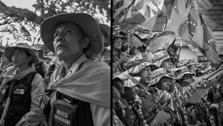
Almost three decades on after the eruption of the Bolivarian Revolution against US hegemony, American imperialism has turned its gaze once again southward tightening its parasitic grip, but so does the steadfast resistance of Venezuela and the people of Latin America and the Caribbean. Amidst the mounting capitalist crisis, Donald Trump has drummed up false accusations of state-run drug trafficking by President Nicolás Maduro, and the Western world dances to the tune of a new war for profits. The United States have amassed ships and submarines across the Caribbean, as well as deployed troops to be stationed in Puerto Rico to prepare for a potential invasion. “Normally” there are at least two US warships stationed in the Caribbean; now, as we end the year there are at least ten. The imperialist camp began a bombing campaign of fishing boats in September of 2025, claiming with unsubstantiated evidence that they contain drugs heading for the United States. The classic narratives of the U.S war machine have been unleashed, sloppily attempting to shore domestic support from an ignorant American population who have consumed decades of anti-Chavismo propaganda. While many global leaders throughout Latin America have spoken up in solidarity, the Venezuelan people remain the protagonists with their strength in the face of imperialist threat. The year has seen people across the country rise to the occasion, engaging in the mass mobilization of the
working class barrios and communes. This includes the activation of 4.5 million militia members as part of The National Bolivarian Militia, an initiative launched by Hugo Chávez in order to protect Venezuela against imperialist invasions. The Bolivarian project has continued unhindered as well, with the nation engaging in direct democratic practices within the communes, known as National Consultations, that seek to support communal economic planning and policy. This was the fourth vote this year, aiding in the development of over 10,000 new projects. These practices of democratic rule by the people fly in the face of Yankee accusations of dictatorships and corruption, all of which the U.S seek to install within Venezuela. The imperialist regime has sought many times to weaken the strength of Venezuela and her people, yet they remain undeterred. With more and more mounting pressure, the movement of Chavismo has stood up against the rising forces of capitalist hegemony. In the words of Venezuela’s interior minister, Diosdado Cabello, “Those who would like to remember Vietnam... when a small but united people with an iron will were able to give a lesson to North American imperialism.”
LATIN AMERICA 3
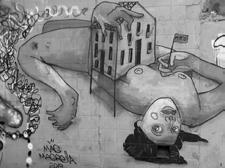
A liberatory politics demands that we prefigure worlds and ways of living that unshackle us from colonial and capitalist death making. Central to this is the experimentation with alternative infrastructures, conceptualisations of home and community, that also anchor decolonial futures in our present. And Brazil’s decades-long housing occupations embody such efforts to subvert private property regimes and neoliberal capture.
Many will be intrigued to learn that Brazil has longstanding political legacies of ‘social function of property,’ protected by national legal documents like the City Statute, which these housing movements strategically employ to manifest the right to the city and enact autoconstrução (self-construction of home) & mutirão (mutual aid).
And one of the many beating hearts of these struggles to re-occupy vacant buildings and house marginalized communities is the Occupation 9 July (Ocupação 9 de Julho) of MSTC (Homeless Workers Movement of the City Centre). Led by Carmen Silva, the Occupation 9 July movement works by occupying long-abandoned buildings in São Paulo which are being brought back to life with remarkable organization and care, transformed into safe, dignified homes for those who need them most. These spaces are not just shelters—they are living experiments in reimagining what home can be: vibrant centers of solidarity, mutual aid, and shared responsibility. Here, community is not defined by walls or own-
ership, but by cooperation, connection, and the fierce belief that people can create a life of safety, joy, and dignity together. Through the occupation, hundreds people and families are homed who would otherwise be forced into the city’s periphery, and include services from community kitchens, to gardens and cultural spaces such as libraries, cinema workshops, cooperatives, educational action, gallery residencies and partnerships with artists, architects, universities and activists.
As occupiers, activists, and practitioners around 9 July continue transforming relations to communal space, cultural production, and grassroots architecture, they must dually resist the policing forces that attempt to criminalize and delegitimize their fight to live otherwise in a violent capitalist system that feeds on neglect and uninhabitability of the most vulnerable. It comes with solace and strength that Ruina Architecture, an architectural activist collective working through the occupation, has announced its ambitious “Oasis 9 de Julho” project in February. The Oasis project will ‘requalify’ and “reinforce the role of the landscape as a tool for protection, learning, and collective living” –rehabilitating regenerative infrastructures to form an innovative political strategy in the movement’s larger fight to mend gaps in “policy failure” and broaden possibilities for beyond capitalist land relations.
THE CREATION OF A NEW HOME: THE HOMELESS WORKER’S MOVEMENT AND THE 8TH JULY OCCUPATION
TO
BE YOUNG AND NOT A REVOLUTIONARY IS A BIOLOGICAL
CONTRADICTION
(ALLENDE): YOUTH CARRY THE STRUGGLE FORWARD
The so-called Gen Z protests that erupted from Asia, to as far as Madagascar, has been one of the most significant moments of liberation the entire year – reminding us of the revolutionary nature of our young people in service of liberation.
In the summer of 2024, the Bangladeshi university students spearheaded mass protests against a quota-based system for government and public sector jobs. This led to the July massacre, which led to thousands of deaths. This later led to what many refer to as the world’s first Gen Z revolution, in which the Prime Minister, Sheikh Hasina resigned in the summer of 2025, who fled to fascist-ruled India under Modi. Although widely categorised as a “Gen Z” awakening of sorts in the media, we must remember these movements are not, as widely claimed, dependent on generation, but new forms of class struggle being waged against capitalism and imperialism, being enacted on a world scale. As we have seen through countless massacres, most widely known, the Rana Plaza massacre killing over 1,000 garment workers, where some are paid as low as three pence an hour for an eighty-hour work week for Western corporations, Bangladesh’s history is forged in workers resistance. The echo of Bangladeshi youth in overthrowing a neoliberal regime travelled and was heard, throughout the continent in Asia, to as far as Africa, and metropoles from London to Rome. In the same summer, protesters in Nairobi mobilised against the state killing of Albert Omoji Ojwang, a 30-year-old teacher and blogger. This killing came in the wake of hundreds of state murders enacted during the 2024 protests against the Finance Bill, an economic restructure imposed by IMF loan conditions. IMF loan conditions exploit local resources and labour to the benefit of global markets, with
extremely destructive consequences to local people, a clear maintenance of colonial structures of capital and resource extraction. The proposed changes to tax laws would make it increasingly difficult for the Kenyan people to afford basic daily necessities. The summer of 2024 saw a mass mobilisation of protest to resist this bill. The protests were met with extreme police brutality, resulting in hundreds of protesters murdered. Community groups are in an ongoing struggle for justice over these killings. Ojwang, who had offered critical commentary on the police from his anonymous X account, was murdered in police detention after being taken from his home on the pretences that he had defamed the Deputy Inspector of Police. Protests erupted in June 2025 in response, reigniting a wave of Kenyan youth demonstrations commemorating those killed in the fight for freedom from neocolonial economic exploitation. Youth activists have operated on models of mutual aid, enacting liberation in their methods and resisting brutal police suppression to call for a Kenya that belongs to the people. The 2025 demonstrations in Kenya signal the youth’s defiant refusal of police violence, colonial structures of economic injustice and capitalist exploitation.
ASIA & AFRICA
“It
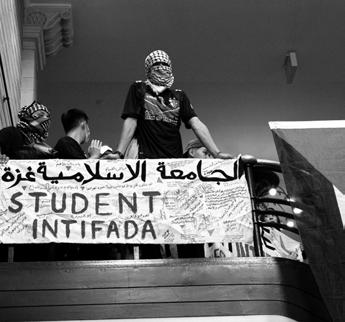
is time for revolutionary escalation of the global student intifada for Palestine: We write this call from our student movement in the Gaza Strip, from the heart of Palestine, from under the brutal Zionist bombing [...] from prison cells, to fellow students, our comrades, in all universities, schools and institutions of the world everywhere… This courageous student movement is an integral part of the Palestinian struggle.”
September 2025 also marked the emergence of the Gen Z 212 movement in Morocco, sparked by the preventable deaths of several pregnant women in an underfunded hospital in Agadir. What began as outrage quickly became a generational rupture: young people declared that a system prioritising profit, image, and external interests over human life had lost all legitimacy. From the outset, their message was uncompromising: the state must serve its people, not global capital.
Organised largely through TikTok and Instagram, the protests exposed a political class, led by the imperialist-backed Moroccan monarchy, insulated from the realities of everyday life. Since the 1980s, Morocco has poured millions into neoliberal development schemes designed to integrate the country into the global capitalist economy. Tourism, marketed as a path to prosperity, has instead become a mechanism of extraction: cities reshaped for Western visitors while local residents face rising living costs, precarious work, housing shortages, and the steady erosion of public services.
The push toward the 2030 World Cup has intensified this model, accelerating displacement and austerity in the name of global visibility and foreign investment. Though met with violent repression, the Gen Z 212 movement revealed a generation no longer willing to absorb the human cost of capitalism’s promises. Their struggle resonates far beyond Morocco, aligning with a global anti-capitalist awakening that challenges systems which sacrifice lives, dignity, and public welfare for profit and spectacle.
Youth carried the struggle forward and rose up in resistance in countries including: Bangladesh, Britain, Indonesia, Italy, Kenya, Madagascar, Morocco, Nepal, Paraguay, Peru, Philippines, Serbia and Turtle Island
LABOUR STRIKES AGAINST IMPERIALIST CAPITAL: ITALY SHUTS DOWN FOR PALESTINE
Shortly after the civilian-led humanitarian mission Global Sumud Flotilla departed Barcelona en route to Gaza in August of 2025, dockworkers’ unions along Italy’s coasts issued an uncompromising warning: if communication with the flotilla were lost, Italy’s ports will shut down and not let anything through, “not even a pin”, as dockworkers union CALP’s spokesperson Riccardo Rudino in Genoa put it plainly. Joined by grassroots youth and student organisations, thousands of dockworkers marched through the ports of Marghera, Ravenna, Taranto and Livorno at the end of September, successfully blocking weapons and supplies shipments destined for Israel’s ongoing genocide in Palestine.
On October 3rd, the mobilisations flowed out into a nationwide general strike against Italy’s and the European Union’s war economy announced by CGIL. From North to South, Italian cities and towns’ squares, streets, highways and train tracks filled with over two million demonstrators, effectively bringing the country’s economy to a standstill. Between waves of Palestinian flags and Bella Ciao chants, people marched against their government’s complicity in the ongoing genocide of the Palestinian people, which stands in direct violation of Italy’s own Constitution. Soon after, this wave of resistance triggered a chain reaction of protests across the Mediterranean, coordinating to secure safe passage for the flotilla.
Organised mobilisation from the bottom effectively halted the capitalist war machine, reaffirming Italy’s long tradition of worker-led internationalism, and challenged a government that thrives on political disengagement. At its heart lies a simple truth: the same labour exploitation that enriches multinationals within Europe also enables current colonial wars. But when workers refuse to participate, they reveal the fragility of the capitalist system and the collective power people hold against it. Striking is resistance.
SUDAN AND PALESTINE ORGANISES THE EUROPEAN LEFT
EUROPE
In November of 2025, a demonstration took place in the street of Athens: organised by Mararis Sudan Solidarity Committee, it was the first demonstration addressing the war in Sudan. The demonstration constituted a “moment for liberation” on multiple levels: Its central aim was to draw public attention to the genocide and ethnic cleansing taking place in Sudan – an attention much needed among Greek audience. A war that has continued for over two and a half years, with more than 150.000 people killed, 10 million displaced within Sudan and 4 million forced across borders, the conflict remained largely absent within the Greek radical movement. The march was organised on the aftermath of massacre in El Fasher where thousands of civilians were killed, raped and tortured by the Rapid Support Forces. In that context, it constituted a “liberation of visibility”, breaking the silence around the Sudan genocide in Greece, asserting the necessity of witnessing. At the same time, the demonstration constituted a “liberation of voice” for the refugees who participated in it. Defying the regime of isolation imposed by the Greek racist state, 200 refugees from Malakasa and Ritsona concentration camps took over the streets [1]. Located outside the main urban area, these concentration camps aim at isolating refugees and those perceived by the state as “unwanted”. Yet by taking the streets, refugees reclaimed their agency, political subjectivity and the right to speak of themselves. Indeed, It was a moment of liberation because, for once, the refugees themselves — rather than those in solidarity with them — were at the centre of attention. The Greek citizens participating and demonstrating their solidarity did not speak on behalf of the refugees. Instead, refugees themselves became the protagonists of their struggle.
Finally, the demonstration constituted a “liberation of space”; the refugees reclaimed the city, defying the both the spatial segregation imposed by the Greek state and the very whiteness characterising it. In a political landscape where whiteness and Greekness are usually centred, the demonstration marked a rare reversal. It was the Sudanese refugees shaping the narrative – not the Greek citizens in solidarity with them. Defying the segregation imposed meant that Sudanese activists, refugees and solidarity groups came together, reclaiming the city and demonstrating that another “Greece” is possible.
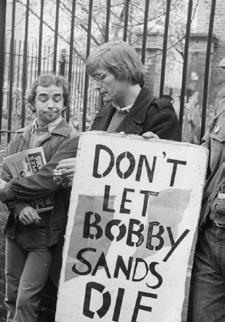
The Largest UK Hunger Strike since 1981
Prison hunger strikes emerge wherever capitalism cages dissent and imperial power demands silence. From anti-colonial prisoners to labor organizers and political radicals, the refusal of food has been one of the last weapons left to those stripped of freedom, dignity, and voice. In systems built to extract, discipline, and disappear surplus lives, the body itself becomes a site of struggle. Hunger strikes expose the violence beneath legality: prisons that protect property, borders, and empire while criminalizing resistance and survival. In late 2025, a group of eight pro-Palestinian activists detained in UK prisons launched a prolonged hunger strike while awaiting trial for months on end. Names include Qesser Zuhrah, Amu Gib, Heba Muraisi, Teuta Hoxha, Kamran Ahmed, Lewie Chiaramello, Jon Cink, and Umer Khalid. Their hunger strike is described by campaigners as the largest coordinated prisoner hunger protest in the UK since the 1981 Irish Hunger Strike against British imperial control in Ireland.
Student movements have once again emerged as a living force of history, refusing the role of passive spectators to colonial violence. From Gaza to campuses across the world, students have been hailed not merely as allies, but as participants in a shared struggle against empire. Their mobilisations signal a break with silence and complicity, asserting that Palestine is not an isolated injustice but a window into a global system built on dispossession, racial hierarchy, and exploitation. Universities are deeply enmeshed in colonial knowledge production, finance capital, and militarism, becoming sites of confrontation, where students challenge the foundations of the world as it is. This is an anti-colonial awakening rooted in internationalism, reviving the understanding that liberation is indivisible. Students are uniquely positioned to mobilise, connect struggles across borders, and forge unity between peoples fractured by empire. What animates this moment is revolutionary optimism: the belief that another world is not only necessary, but possible. In standing with Palestine, students are fighting not just for one people’s freedom, but for a future beyond colonial domination: one built on solidarity, dignity, and collective liberation everywhere.
ON STUDENT INTIFADA NORTH AMERICA
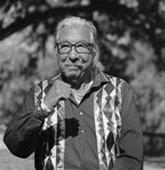
PELTIER SPENT NEARLY HALF A CENTURY INSISTING ON HIS INNOCENCE, WRITING FROM PRISON THAT HE WAS “GUILTY ONLY OF BEING AN INDIAN”.
In February of this year, after nearly 49 years in prison, Native American activist Leonard Peltier was finally released from custody in Florida. His release marked the end of one of the most publicised and contested imprisonments in modern American history, bringing long-awaited relief to his community on the Turtle Mountain Reservation in North Dakota.
Born to Lakota, Dakota, and Anishinaabe ancestry, Peltier spent his childhood among the Turtle Mountain Chippewa and Fort Totten Sioux communities. He was a committed advocate for treaty rights, self-determination, and the wellbeing and dignity of his people. He became a prominent figure through his work with the American Indian Movement (AIM), which confronted poverty, racism, and broken treaties. AIM’s occupations at Alcatraz in 1969 and Wounded Knee in 1973 drew national attention and amplified the ongoing struggle of Indigenous resistance, reinforcing the belief that they had both the right and the responsibility to defend their ancestral homelands. When two FBI agents and an Indigenous man were killed in a 1975 confrontation on the Pine Ridge Reservation, Peltier was accused and convicted, even though other AIM members tried separately were acquitted. The case rested on disputed evidence, and for decades many viewed his conviction as politically motivated. Peltier spent nearly half a century insisting on his innocence, writing from prison that he was “guilty only of being an Indian”. In January 2025, after years of pressure from human-rights organisations, supporters, and grassroots campaigns demanding clemency, his sentence was finally commuted. Peltier returned on 18 February to the Turtle Mountain Reservation in North Dakota, to his family, his community, and a long-awaited chance to heal on the land for which he had fought. He will complete the remainder of his sentence at home.
THE QURAN [2:154]
“THEY ARE ALIVE, BUT WE DO NOT PERCEIVE IT” [THEIR LEGACY LIVES ON]