TE RAUTOI EXHIBITION
PUKAPUKA WHAKAATURANGA // EXHIBITION CATALOGUE
Pukapuka Whakaaturanga 2
TE RAUTOI EXHIBITION
Te Rautoi Exhibition
RAU TE TAI ĀKINA TE RAUTOI
NAU MAI, HAERE MAI
KI TE RAUTOI
This exhibition forms part of Rau Te Tai Ākina, a programme of commemorative events marking 50 years since the establishment of Parininihi ki Waitōtara. As we reflect on this significant milestone, we honour the vision, determination, and collective effort of those who came before us, and acknowledge the generations who continue to carry that legacy forward.
The name Rau Te Tai Ākina is drawn from a powerful ngeri composed in the early 1900s. It emerged during a time when Taranaki Māori were responding to the impacts of raupatu and breaches of Te Tiriti o Waitangi. The ngeri calls our people to unity and collective action, drawing strength from the whenua and from one another. Referencing the pāhuki and whe-nua markers of Parininihi and Wāitōtara, it anchors this kaupapa firmly within the landscapes, histories, and identities of Taranaki.
The imagery of shifting tides speaks to both challenge and possibility. Across generations, our people have navigated change, adversity, renewal, and growth. Through resilience,
determination, and collective effort, we have continued to move forward while remaining connected to our whakapapa, our whenua, and our aspirations for future generations.
Te Rautoi brings together the creative voices of Taranaki Māori artists whose works explore these enduring connections. Through diverse artistic practices and perspectives, the artists share stories grounded in whakapapa and place, reflecting on identity, memory, resilience, and the ongoing relationship between people and whenua.Each artwork offers a unique
response to the kaupapa of Rau Te Tai Ākina. Together, they create a collective expression of who we are as Taranaki Māori today: a people shaped by our histories, strengthened by our communities, and inspired by the possibilities ahead.
Parininihi ki Waitōtara is proud to support and celebrate the artists whose work is featured in this exhibition. Their creativity and cultural expression remind us that art has the power to preserve memory, provoke reflection, strengthen identity, and inspire future generations.
WE INVITE YOU TO SPEND TIME WITH THESE WORKS, TO ENGAGE WITH THE STORIES THEY HOLD, AND TO REFLECT ON THE ENDURING STRENGTH AND SPIRIT OF TARANAKI MĀORI.
Rautoi
ABOUT PARININIHI KI WAITŌTARA
For fifty years, Parininihi ki Waitōtara (PKW) has worked to protect, grow, and strengthen the collective assets of Taranaki Māori for the benefit of present and future generations.
Established in 1976, PKW emerged from a vision of collective ownership and self-determination. At a time when generations of land loss had profoundly impacted Taranaki whānau, Māori landowners came together to ensure the whenua that
remained would continue to be held, managed, and protected for the benefit of their descendants. Through collective action and shared purpose, they created an organisation that could safeguard those interests and build a stronger future. The name Parininihi ki Waitōtara references the confiscation boundary that stretched from Parininihi in the north to Waitōtara in the south, encompassing the vast area of Taranaki whenua taken through raupatu. While born
from that history, PKW’s story is ultimately one of resilience, determination, and renewal.
Today, PKW represents more than 11,000 shareholders and manages approximately 20,000 hectares of Māori-owned land. What began as a commitment to protecting whenua has grown into a diverse intergenerational Māori business with interests across agriculture, forestry, property, horticulture, and investment.
As we commemorate 50 years of PKW, we honour the foresight and leadership of those who established the Incorporation and acknowledge the generations who have continued to strengthen it. Their efforts have helped create opportunities for whānau, support cultural and educational aspirations, and build an enduring legacy grounded in whakapapa, whenua, and collective wellbeing.
RAU TE TAI ĀKINA
1976-2026
CURATOR STATEMENT
Bringing together the artists for Te Rautoi revealed both the diversity of creative expression within Taranaki and the threads that continue to connect us.
While each artist works in their own medium and from their own experiences, common themes emerge throughout the exhibition. Connections to whenua, whakapapa, memory, identity, and belonging are woven through many of the works. Some pieces draw on inherited knowledge and ancestral narratives, while others offer contemporary
reflections on what it means to live, create, and thrive as Māori today.
The exhibition celebrates artistic practice as a living expression of identity. Through painting, carving, weaving, photography, digital media, and other forms, the artists share perspectives that are deeply personal while also resonating with collective experiences. Their works invite us to pause, reflect, question, remember, and imagine.
As you move through the exhibition, I encourage you to spend time with
each work and consider not only what you see, but also what you feel. The stories held within these pieces may be familiar, unexpected, challenging, or affirming. Each offers an opportunity to engage with the richness of contemporary Taranaki Māori creativity.
It has been a privilege to work alongside these artists and PKW to help bring their collective voices together in Te Rautoi.
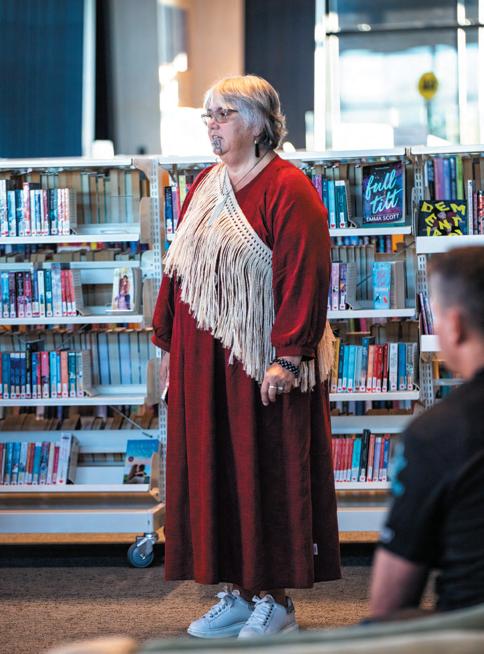
Bonita Bigham Curator
Bonita is a Taranaki-based artist, curator, arts advocate, and community leader whose practice spans raranga, whatu, and contemporary Māori visual arts. She has exhibited and curated extensively throughout Aotearoa and is passionate about creating opportunities for artists and strengthening connections between creativity, culture, and community.
Te Rautoi
Bonita Bigham (Ngāruahine, Te Ātiawa)
Pukapuka Whakaaturanga
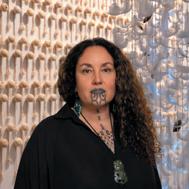
NGAHINA HOHAIA REEVE
RINGA TOI ARTISTS
NGAHINA HOHAIA
TE ĀTIAWA, NGĀTI RUANUI, NGĀTI MOEAHU, NGĀTI HAUPOTO (PARIHAKA)
Ringa Toi Artist statement
I think of the whenua as not only being the land beneath us, but also as the land embodied within us - our traditional bodies of knowledge, our ways of being and knowing, our original systems and lores. These are all forms of whenua. The muru raupatu was not only the confiscation and
dispossession of our lands - it was the raupatu of our cultural knowledge and practices, the severing of whakapapa, and the dismantling of life.
The restoration of our cultural, social, and spiritual wellbeing is the return of all of these parts as a whole.
10 Pukapuka Whakaaturanga
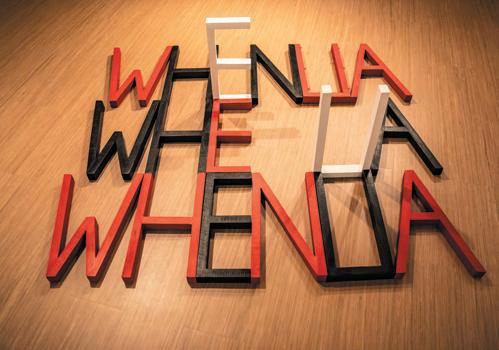
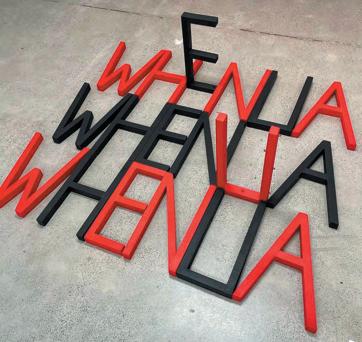
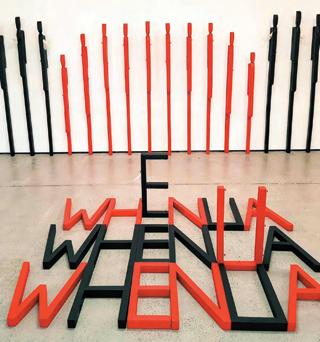
As a seemingly mundane and ordinary object, the farm fence batten is synonymous with the Taranaki landscape. Ever present in our daily view of never ending rows of farm fences, paddock partitions, property allotments, and Taranaki road sides. Many of us possibly drive past hundreds of farm fence battens each day, far too numerous to count, they are etched into the social psyche of Taranaki. But in the context of our cultural reality as tangata whenua -
they are far from mundane or ordinary. As objects of colonial demarcation, they are highly political symbols of power and ownership. They are an ever present and constant reminder of the legacy and aftermath of muru raupatu, land alienation, and dispossession. The concept of deconstruction and reconstruction is materialised in E Ū Whenua, through the act of repurposed appropriation of the farm fence posts, used in the making of this
work. The language of the material is transformed to draw on our Taranaki tupuna legacy of resistance.
E Ū is the command to hold firm. Ū gives reference also to the life giving, life sustaining potency of the mother’s breast - ko Papatuanuku te ūkaipō.
Materials Farm fence battens, fencing staples, acrylic.
Dimensions 3500mm x 1800mm
Mahi Toi E Ū Whenua
REEVE HOKOPAURA
NGĀ RAURU, TE PAKAKOHI, NGĀRUAHINERANGI
Ringa Toi Artist statement
My connection to PKW comes through my kuia and great uncle, with whenua transferred from Te Tumu Paeroa.
I trained at Te Takapū o Rotowhio, the National Stone and Bone Carving School at Te Puia in Rotorua, where I graduated from the New Zealand Māori Arts and Crafts
Institute. Studying there gave me the opportunity to learn all aspects of stone and bone carving, including the history, traditions, and meanings of designs, patterns and styles of Māori arts. Following graduation I was among a select group of students who debuted in the Tiki Āhua fashion show at Te Puia, where adornment pieces were worn on the runway - a
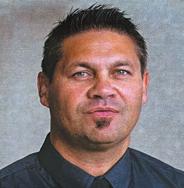
rare opportunity to see these taonga as they were meant to be seen.
My work has since been exhibited at Āhua Gallery, and I made the decision to dedicate myself to this craft because if I have to contribute to the global economy, it might as well be doing something I enjoy and am passionate about.
12 Pukapuka Whakaaturanga
With this Hei Niho I have done a more contemporary style Unaunahi design/pattern to represent a new era of Tangata Whenua coming through together as one/kotahitanga to meet all the challenges ahead of them with a readiness, resilience and a collective strength.
This Unaunahi pattern also has double meaning it also signifies that formidable wave of change and challenges that will be like the waves of the ocean forever crashing on the
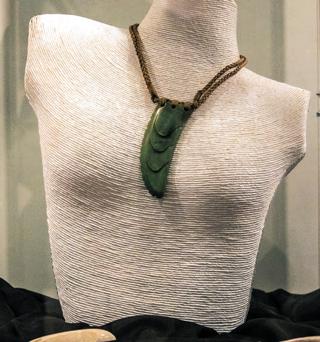
shores of the land as one dies out there will always be another behind it, like people will come and people will go but the land will remain forever.
On the other edge of the Niho I have incorporated a chevron pattern to give the illusion of the sharp serrated edge to give the confidence to be ready to cut through the many trials, tricks and tribulations ahead.
Materials Inanga pounamu
Dimensions 105 x 37 x 10mm
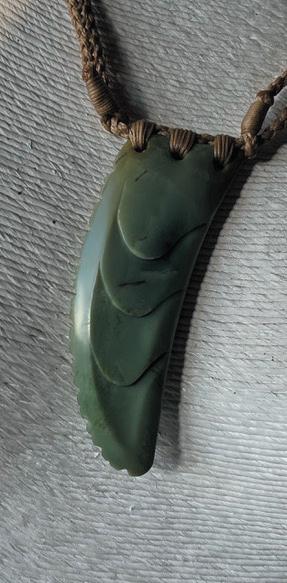
Mahi Toi Hei Niho
KIM KAHU
NGĀRUAHINERANGI
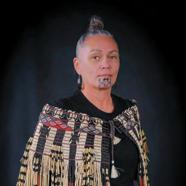
Ringa Toi Artist statement
Raranga is more than a craft, it’s a living connection to our tīpuna, to the whenua, and to each other. My practice is rooted in the traditions passed down through generations of wāhine Māori, working primarily with harakeke to create taonga that carry whakapapa and meaning.
For me, every piece woven is an act of remembrance and of continuity. The harakeke doesn’t just provide the fibre, it teaches us how to live. You tend to it, you harvest with care, you never take the rito. That’s the kaupapa I bring to all my mahi.
14 Pukapuka Whakaaturanga
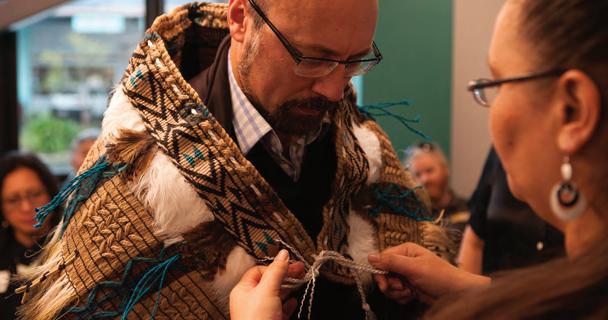
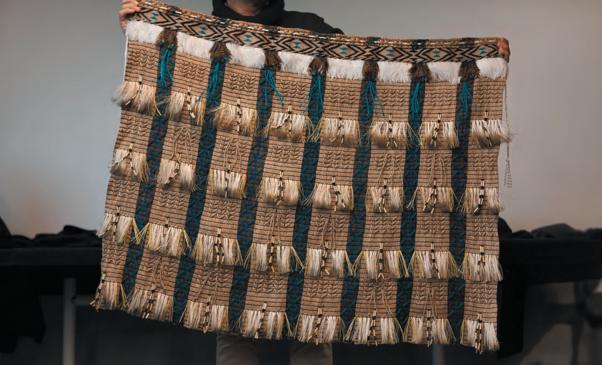
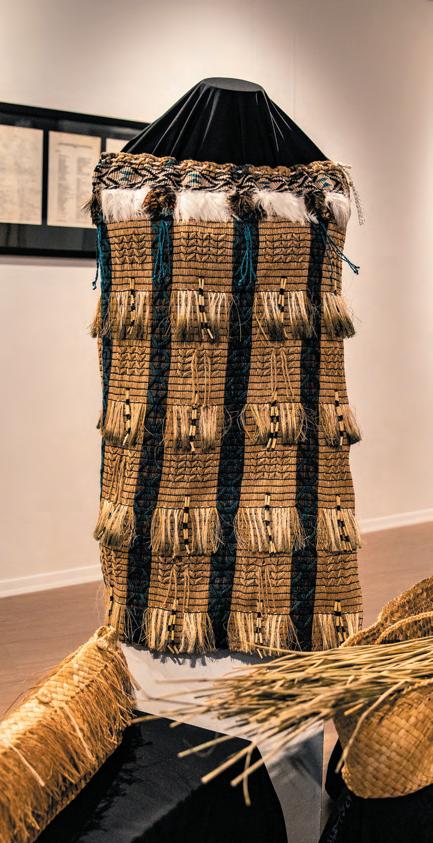
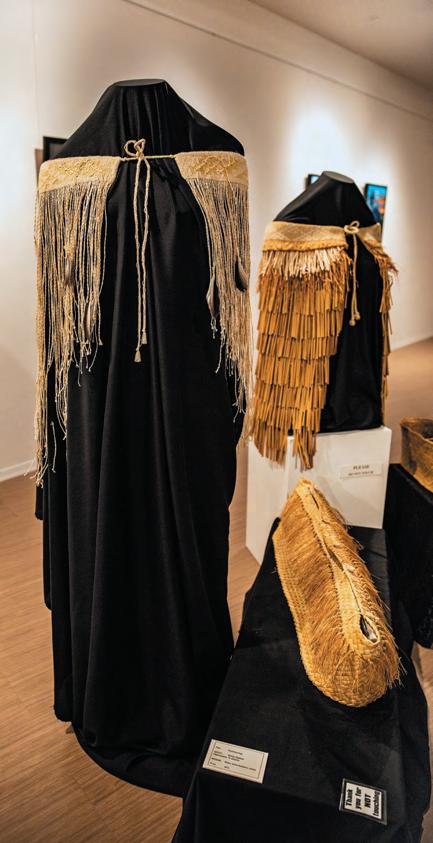
Back in 2016 Kim was commissioned to weave a kākahu that was representative of whakapapa, service to Iwi, PKW and Taranaki. This kākahu was then to be gifted to Dion Tuuta for his valuable contributions to PKW during his 8-year service.
The kākahu celebrates his whakapapa links represented through the Toroa and weka feathers
- Parihaka and Mutunga, his 8-year service with PKW depicted in the 8 panels adorned with muka and pōkinikini tags, his new venture with the Fisheries represented through the pīngao, and the blue diamond motif is representative of his contributions to PKW during his time with them. The tāniko band at the top is Dion’s continued commitment to Taranaki.
Materials Jute, toroa and weka feathers, muka, pingao and harakeke, embroidery cotton
Dimensions 54 x 34 Inches
Mahi Toi Contemporary Kakahu
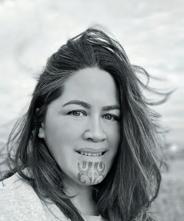
ANGELA KEREHOMA
NGĀRUAHINE, TŪWHARETOA
Ringa Toi Artist statement
Our whānau connection to PKW stems from the beginning with my grandparents John and Gloria Kerehoma. Koko JK, a member of the first committee of management and nanny Gloria, Te Māngai Rautitikura [shareholder representative] for some 20 years. As legacy and succession goes, I now have the privilege to serve PKW whānau as Te Māngai Rautitikura for PKW Trust.
My son Luka is employed by the PKW Katiaki Taiao team. Our whānau continue to support the legacy that Parininihi ki Waitōtara encompasses.
He Tangata, He Whenua, He Oranga.
16 Pukapuka Whakaaturanga
Tupuna and connection inform many paths, like lines in the land, marking out the way to help guide us on life’s journey. Clearing way for abundance and adaptability, allowing for people and ideas to blend naturally. This cloak talks about a journey and celebrates whakapapa, wānanga and whanaungatanga.
Materials Muka, tānekaha, korari, paru
Dimensions 1.2m x 1.2m laid flat
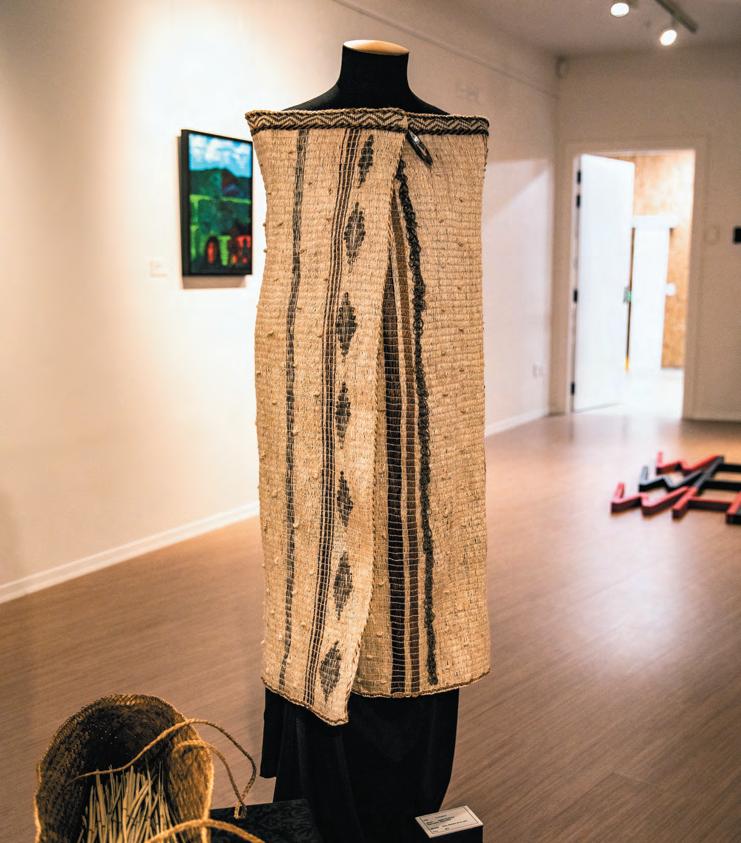
Mahi Toi Te Urutahua [kahu Muka]
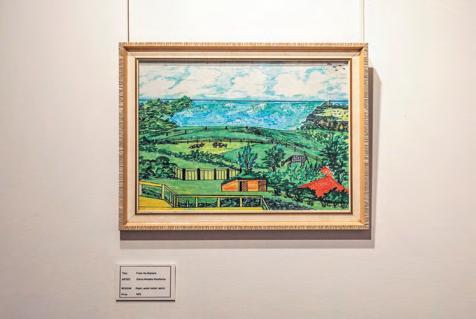
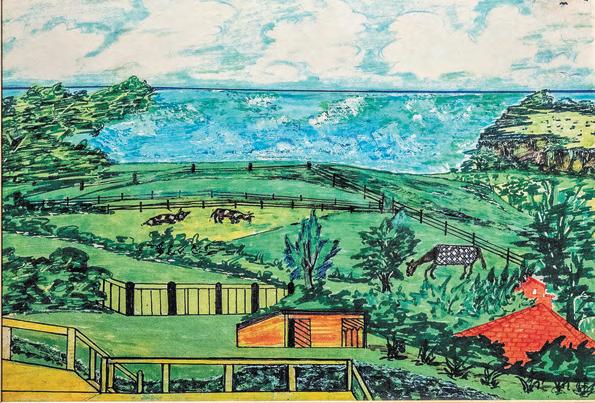
Gloria Hinehou Kerehoma was a multi medium artist best known for her contributions to raranga and tukutuku within our Ngāruahine and South Taranaki rohe and her contribution to the visual reclamation of Toi Māori within our wharenui, Te Ngakaunui, Te Rangatapu and the wharekura Kimihia te Rangimarie. To her mokopuna our Nanny was an activist! She challenged traditions of her era. Picked up chisel
and carved wood, was a prolific weaver, was a mixed medium painter and sketched many of the tāmoko her whānau wear proudly. This simple watercolor sketched from the balcony of the homestead, overlooking the woodshed, across Te Rangatapu to Te Kawau.
A representation of Ahikaaroa!
Materials Paper, pencil, water colour
Dimensions 30cm x 30cm
Mahi Toi From the Balcony [sketch in frame] by Gloria Hinehou Kerehoma
RANGI KIPA
TE ĀTIAWA NUI TONU, NGĀTI MANIAPOTO
Ringa Toi Artist statement
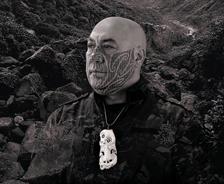
I grew up in Waitara, Taranaki, at Ngāpuketurua pā beside the Waiongona River — a site of great significance to the origins of the Ātiawa people, and skirted by major battle sites of the New Zealand Wars. That whenua shaped everything about how I see and practise my art.
Art, for me, is a tool for decolonisation, cultural recovery, and a doorway through time.
20 Pukapuka Whakaaturanga
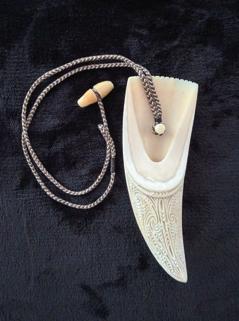
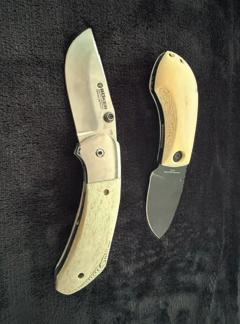
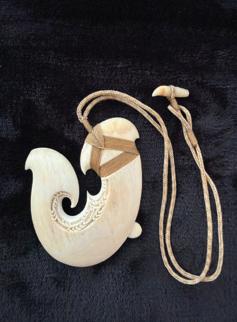
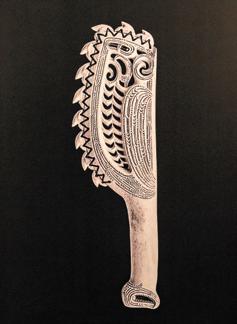
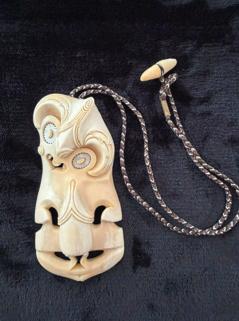
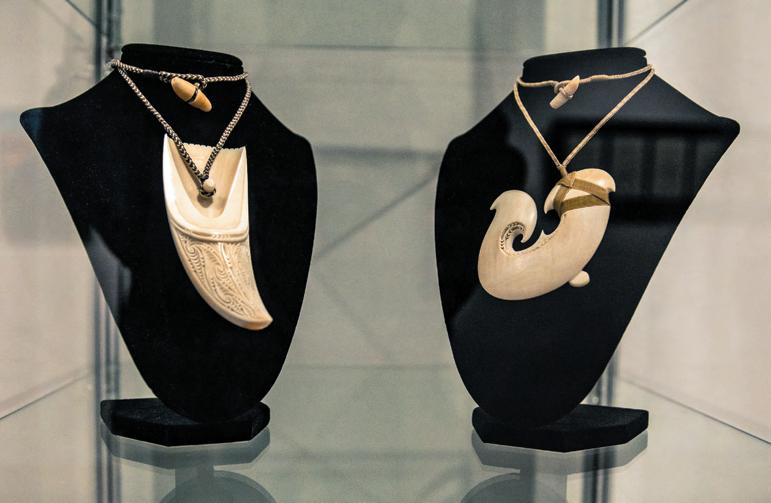
Top row (left to right)
Mahi Toi Rei Parāoa
Materials Whale tooth (sperm), waxed nylon, Ōpōhane toggle
Mahi Toi Hei Matau
Materials Whale tooth, waxed nylon, Ōpōhane toggle
Mahi Toi Hei Tiki 2020
Materials Whale tooth,
Mother of Pearl whatu, waxed nylon, Ōpōhane toggle
Bottom row (left to right)
Mahi Toi Māripi
Materials Whalebone, stainless steel, walrus tusk
Mahi Toi Wahaika parāoa
Materials Whalebone
Rautoi
DARCY NICHOLAS
TE ĀTIAWA NUI TONU, NGĀTI RUANUI, TANGAHOE, TAURANGA MOANA, NGĀTI HAUĀ
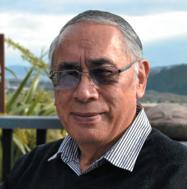
Ringa Toi Artist statement
My mothers family are the Love, Keenan, Watene families and all the relatives connected by whakapapa.
My father is Ngāti Ruanui, Tangahoe, Tauranga Moana, Ngāti Hauā iwi.
Many of their generation born in the early 1900s were heavily involved in PKW and the care and return of our lands. My mother Hana Nicholas (nee Keenan) always told me to learn the pakeha knowledge and get our land
back. My former work position was General Manager of Te Taihauauru in the Iwi Transition agency and my staff and I established the 18 tribal Rūnanga in that area to build our knowledge and economic strength and get our land back.
The land is my ancestral mother and the sky is father. We have a physical and spiritual side to our lives and our ancestors are always with us.
My late wife Anne was born in Aberdeen and my ancestors were born in many other countries. My wish is peace in the world and build a friendly future for generations to follow. My art is a constant reminder to present and future generations.
22 Pukapuka Whakaaturanga
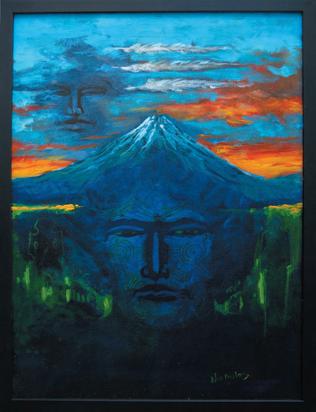
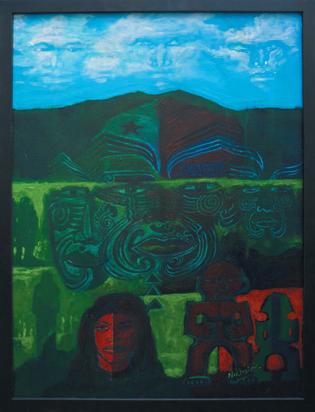
The mountain Taranaki is linked with the ancient Kahui Maunga historyTaranaki, Ruapehu, Tongariro and Pihanga.
Materials Acrylic on Canvas
Dimensions 60cm x 45cm
My paintings are the visual language of those elders who raised me. They were rich in history and the culture of our people.
Materials Acrylic on Canvas
Dimensions 60cm x 45cm
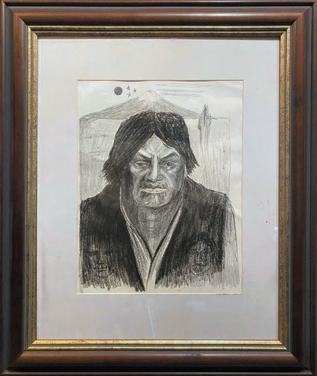
My great grandfather was a Parihaka man.
Materials Pencil and charcoal on paper
Rautoi
Mahi Toi Taranaki
Mahi Toi Mana Whenua (2)
Mahi Toi Parihaka man
HEMI SUNDGREN
TE ĀTIAWA NGĀTI TOA, NGĀTI KOATA, NGĀTI RAUKAWA

Ringa Toi Artist statement
I was raised on the Kāpiti Coast and spent my adult years in Taranaki, where service to kaupapa was the organising principle of our lives; kaupapa reo, kaupapa marae, kaupapa whenua and mahi kai. That remains my standard: to build communities of practice rooted in our own values, our own systems, our own sense of self.
Our people lived through raupatu, dispossession, and the slow violence of a system that was never
24 Pukapuka Whakaaturanga
designed to serve our norms. I do not romanticise that inheritance, nor do I carry it as grievance. I treat it as evidence, of what was taken, of what endured, and of the work still required of us. Those experiences, and the kaupapa we have served alongside them, continue to shape both me and my mahi.
My formal training took the form of an apprenticeship at the New Zealand
Māori Arts and Crafts Institute in Rotorua, where I had the good
fortune to work alongside master practitioners. That apprenticeship gave me a tuāpapa in customary and classical forms and it is from that base that I work now, into contemporary materials, architectural and design forms, while holding firm to the classical values that define the work as Māori.
Carved from an ancient swamp kauri in 2009, lifted from the whenua and given a second life as a witness. Its outward form is deliberately familiar: the early dairy factory cream can that, for more than a century, has been a quiet emblem of Taranaki’s rural economy.
“The Cream Off The Top” a phrase that names, plainly, what was taken, and from whom.
Four serpentine figures, three pierced by surveyors’ pegs, evoke raupatu and the quiet violence of imposed boundaries. Inlaid motifs: the cannon, musket, cross, bleeding heart, dairy cow, tractor, feather, and Taranaki Maunga, trace a shared, contested history of war, faith, grief, resistance, and extraction, with the raukura recalling Parihaka’s enduring legacy of resilience and action.
This piece is both protest and karakia: the cream can, once used to carry wealth away, now holds memory, reminding us the “cream” was not only butterfat, but whenua, reo, mana, and whakapapa.
Materials Turned and carved swamp kauri and Brass Dimensions 250mm x 480mm
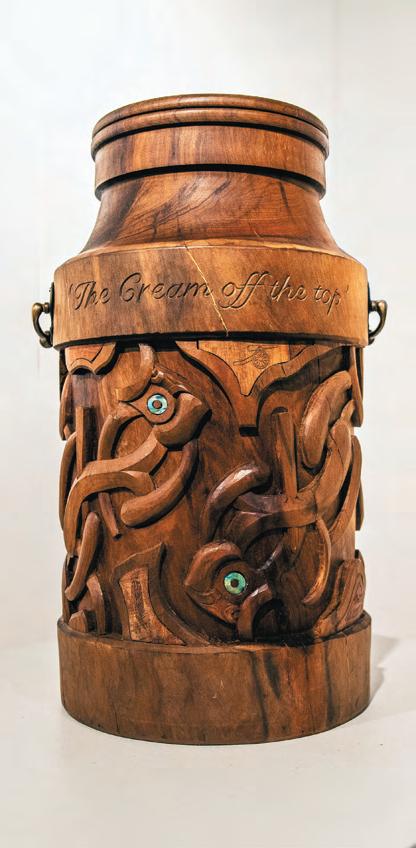
Mahi Toi Cream Can
DION TUUTA
TE ATIAWA, NGĀTI TOA, NGĀTI KOATA, NGĀTI RAUKAWA
Ringa Toi Artist statement
My whānau are shareholders in Parininihi ki Waitōtara Incorporation through our Ngāti Mutunga, Ngāti Tama and Taranaki whakapapa. I have been actively involved with Parininihi ki Waitōtara for 18 years and will remain so for the rest of my life in some form.
26 Pukapuka Whakaaturanga
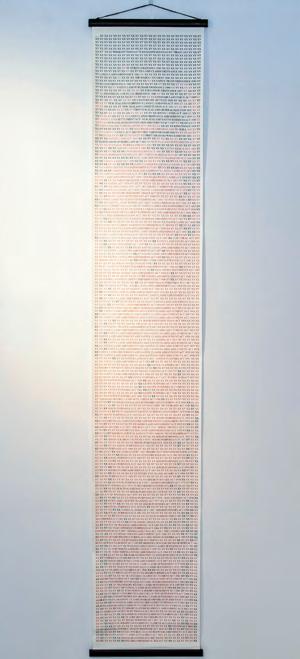
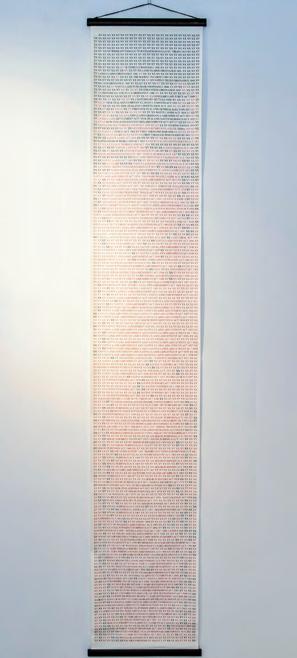
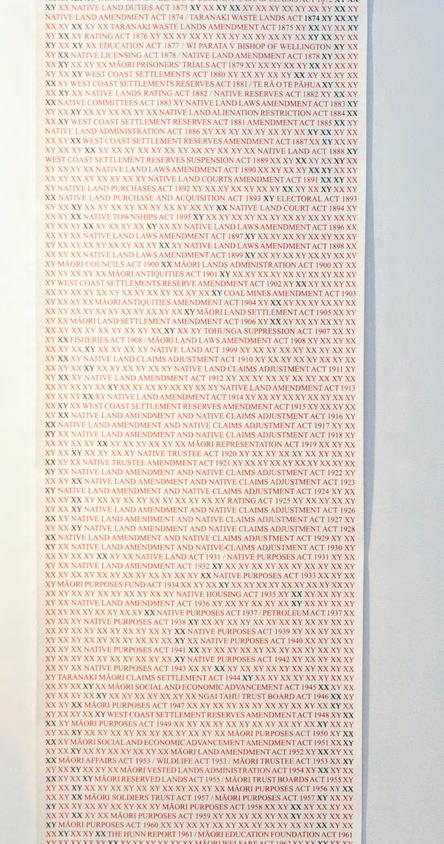
Mahi Toi Te Whakapapa o Aotearoa – The History of New Zealand
This piece of work (this version completed in 2024) presents a legislative history of Aotearoa with an emphasis on legislation focusing on Māori against the backdrop of demographic change in Aotearoa since the beginning of colonisation. It is never-ending reflecting the ongoing and evolving nature of the CrownMāori relationship.
Materials Print on Canvas
Dimensions Approx 40cm x 2.2m
BONITA BIGHAM
NGĀRUAHINE, TE ĀTIAWA
Ringa Toi Artist statement
I was raised at Waiokura Pā in Manaia where our whare carry the names Paraukau and Tama Wahine, so learning the kōrero behind those names brought an inherent understanding of the injustices wrought upon our people, particularly the Crown-initiated alienation from our whenua and the intergenerational trauma and impacts that still resonate
today. While Ngāti Tū’s relationship with Parininihi Ki Waitōtara over the past decades may have been fraught, our collective aspirations for the return of whenua and uplifting the mana of our people remains paramount.
Ahakoa te aha, kia kaha tonu tātou.
Pukapuka Whakaaturanga
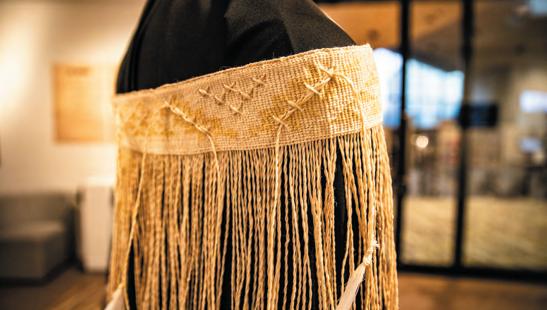
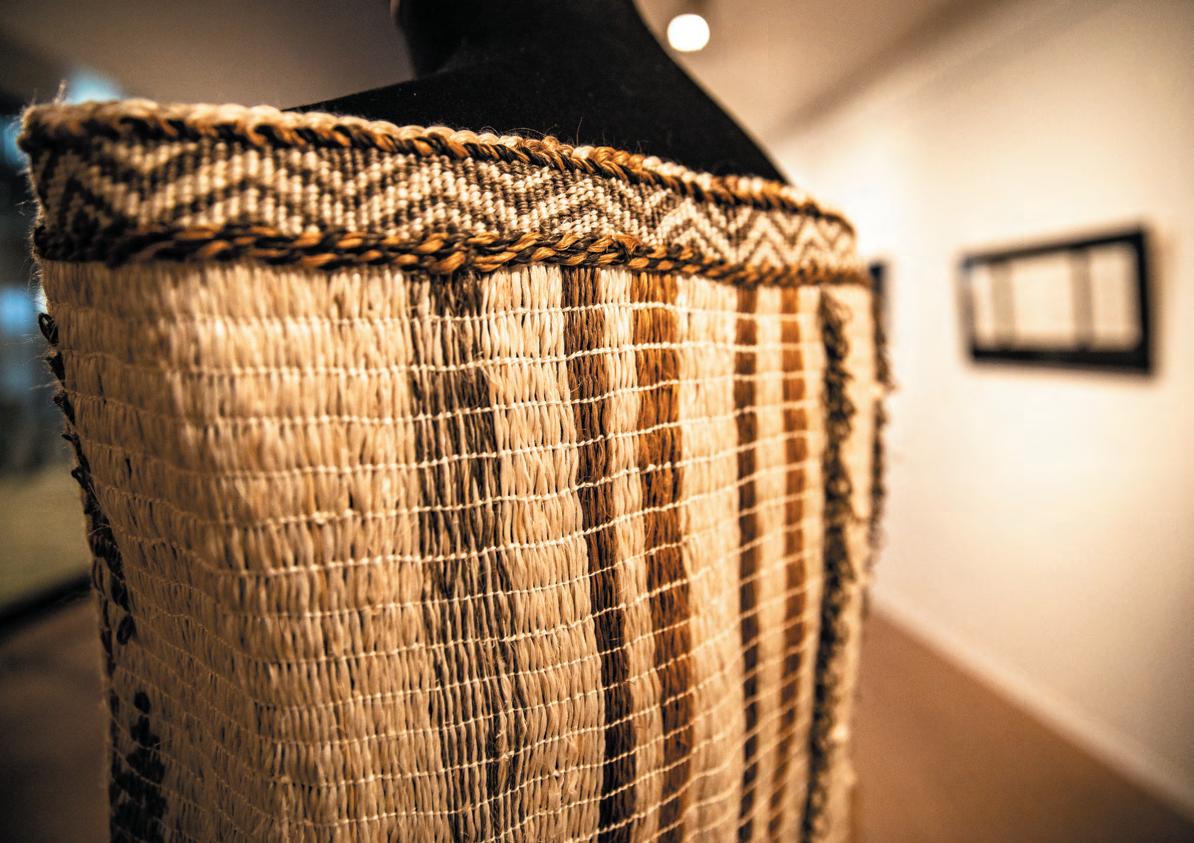
‘Pou Hinerangi’ was made for Hinerangi Raumati-Tu’ua when she retired from PKW in 2022.
The use of the dominant pattern Pouhine, the balance to Poutama, in this tarapouahi (shoulder shawl) reflected Hinerangi’s time at the helm of PKW for a decade, ushering the incorporation through changing times, challenges and shareholder expectations.
The tāniko pattern around the shoulders consists of three tapatoru (triangles), each containing 15
separate tapatoru, recognising her combined 15 years of service as a board member and Chair.
The tapatoru on each end represent her Mounga, Taranaki and Taupiri, with the middle one representing PKW. Taken together, all three reflect the essential elements of the Incorporation – governance, operations and uri – and the collective strength they provide to the organisation and the people.
They can’t, and don’t, exist without each other.
The māwhitiwhiti (crossover) patterns throughout the tāniko represent us all, Hinerangi’s whānau whānui. The huruhuru manu (bird feathers) are from a juvenile albatross, he taonga tapu. The toroa reflects the growth of PKW under Hinerangi’s exemplary service and leadership, the process of learning, experimenting, collaborating and diversifying – spreading its wings.
Materials Muka, cotton, toroa feathers.
Mahi Toi Pou Hinerangi
Pukapuka Whakaaturanga
Te Rautoi Exhibition
RAU TE TAI ĀKINA 1976-2026