Boosting margins in the Welsh uplands Texels add value in premium arable rotation
Consistency and adaptability key to Texel trade dominance
Optimising carcass weight and conformation for Scottish flock
Incremental gains from Texel performance
Texels built for commercial profit
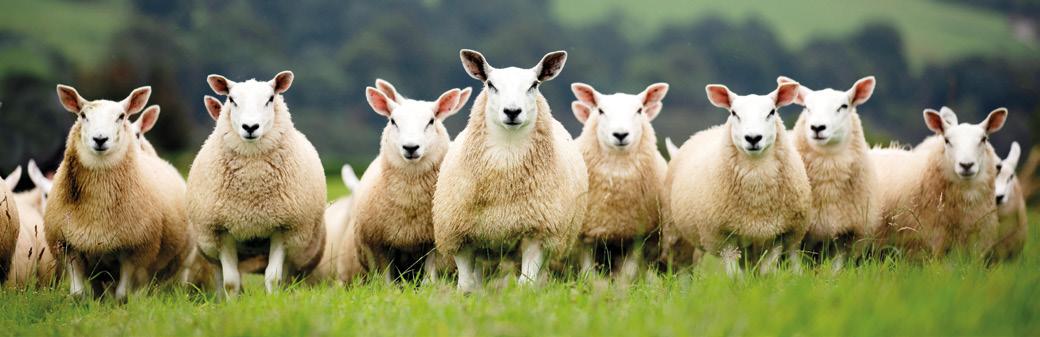
Walk through any livestock market in the UK and you’ll see it for yourself, pens of strong, white-faced Texel-cross lambs, bred in extensive upland flocks, more intensive lowland systems and everything in between. Different environments, different ewe bases, different management styles, but the same sire choice.
Why? Because Texels add value wherever they’re used
Whether you’re selling prime lambs, stores or breeding females, Texel-sired stock are known quantities. They grow well, finish efficiently and produce the shape and kill-out that buyers want. That consistent demand is often reflected in premiums over market averages and stronger deadweight returns, driven by conformation and an excellent meat-to-bone ratio.
Crucially, the breed’s strength lies in its versatility. There isn’t a single ‘type’ of Texel. For early lambing and systems focused on days to slaughter, there are rams with exceptional growth and muscling. For those retaining females, there are longer, plainer rams with figures to back maternal performance. The depth of the breed means you can match the ram to your system.
Providing
the difference that matters
Texels are also accessible. Through the Texel Sheep Society’s national and regional club network, more than 40 ram sales take place annually across the UK, with more than 8000 pedigree stock catalogued. Stock that have been evaluated through the Society’s whole breed national genomic evaluation, the largest available from a single breed in the UK’s sheep industry.
Rams can also be sourced privately from breeders nationwide, with searchable performance data available via the Society’s iTexel.uk database. That means you can identify rams with the traits that matter to your business; growth, muscle depth, maternal ability, helping you to buy with confidence, to deliver commercial traits accurately.
Performance is baked into pedigree Texel with all stock ranked on performance and accuracy. Figures aren’t there for show; they’re there to help you make decisions with confidence.
Selecting a top 5% Texel ram, with high % accuracy, for example, has the potential to add more than £690 to the value of his progeny over a three-year working life. When margins are tight, that kind of difference matters.
Across varied systems and changing support structures, Texels continue to prove their worth. Whatever your target market, whatever your environment, using Texels is about one simple outcome: adding value and strengthening profitability in your sheep enterprise.
PERFORMANCE
REAL FIGURES – REAL PROGRESS
Texel improvement starts with recorded, measured data, weights, growth and muscling collected across UK flocks.
For you: performance data you can trust and rams that consistently deliver lambs that grow, finish and meet spec.
GENOMICS
EARLIER CONFIDENCE
All Texel pedigree stock are included in the Society’s National Texel evaluations. DNA testing increases the accuracy of young rams’ figures.
For you: buy rams with greater confidence and less risk.
BREEDING VALUES
BUY FOR YOUR SYSTEM
EBVs predict how a ram’s lambs will perform for growth, muscle and maternal traits.
Rams are ranked across the breed, making comparison simple.
Key message: Select for the traits that make money in your flock. Use the terminal index and ranking to access profit traits.
iTEXEL.UK
GENETICS
THAT PAY
Genetic gain builds year on year.
A top 5% Texel ram can add £690+ to the value of his commercial progeny over three years.
When margins are tight, better genetics is one of the few tools that can permanently lift output without increasing ewe numbers. Small gains per lamb. Big gains per flock.
Texels helping you help yourself
Welcome to the 2026 edition of Primestock: The Texel Sheep Society’s commercial showcase of how Texels help you help yourself.
As spring lambs come forward across the UK, Texel-sired lambs will once again be setting the standard: delivering the growth, carcass shape and kill-out percentages that processors, butchers and retailers demand. That demand translates into confidence and consistency for commercial producers, wherever and however they farm.
In a period of tightening margins and changing support payments, every ewe and every ram must justify their place. Texels are trusted because they work: fast growth, efficient finishing and well-muscled lambs that meet specification with minimal fuss. For many producers, that means reduced days to slaughter, lower input costs and stronger overall enterprise returns.
Behind that performance is sustained breed improvement. Ongoing investment in recorded performance and genomic evaluation is accelerating progress, giving breeders and buyers clearer, more reliable information when selecting rams.
As the UK’s leading sire breed, Texels continue to adapt to the needs of commercial systems nationwide.
In challenging times, proven, predictable performance matters. Texels deliver it.
John Yates Chief Executive
Texel Primestock
Texel Primestock is published by the Texel Sheep Society Ltd.
While every effort is made to ensure accuracy of the information contained in this publication, no responsibility can be accepted by the Society for any errors or any reliance on the use of information by readers.
Photography
Jonathan Long and MacGregor Photography.
Texels deliver for upland flock
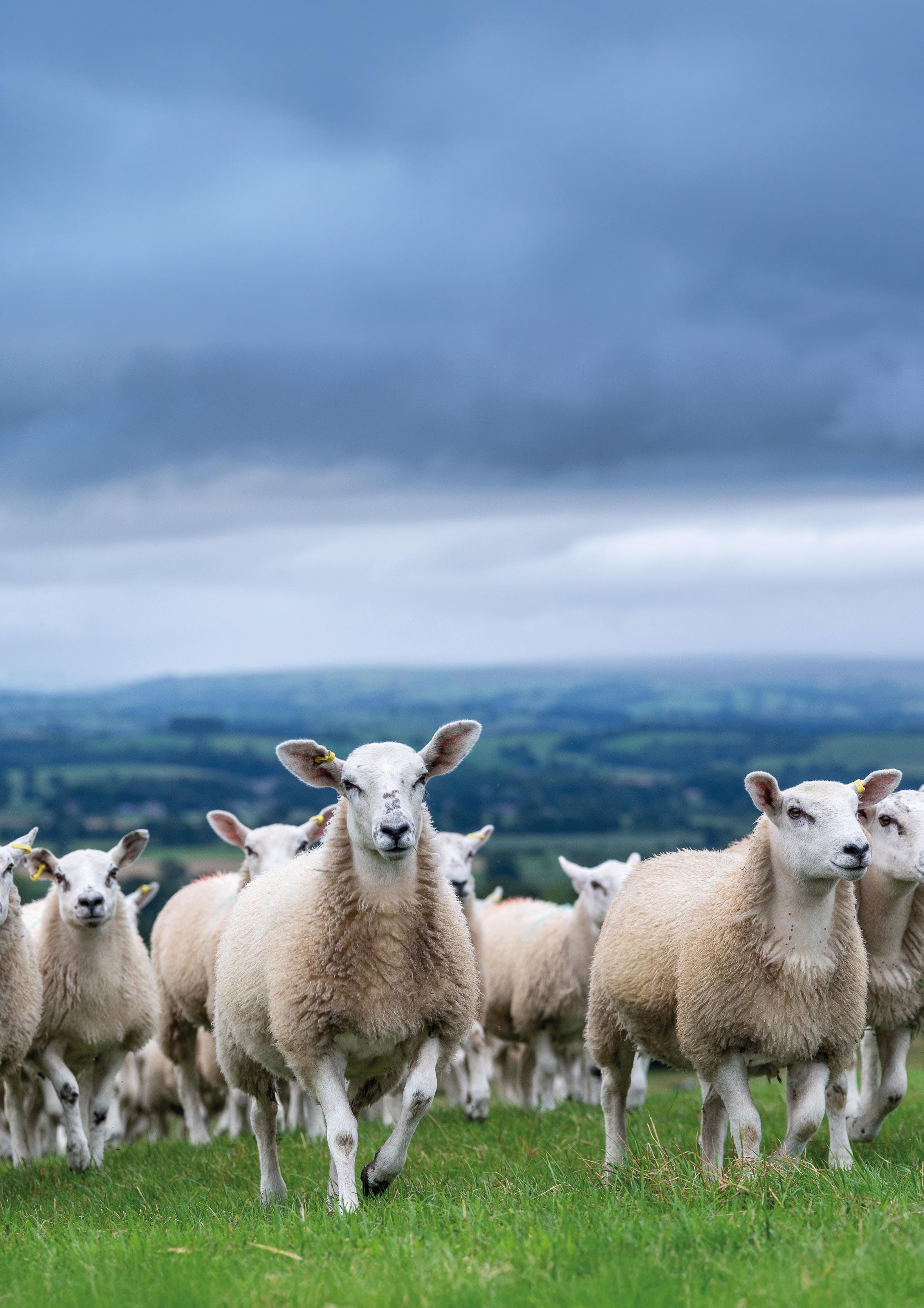
In the shadow of Yr Wyddfa (Snowdon), North Wales, the Williams family run a mixed sheep and beef farm across 700 acres, 75% of which is hill ground and home to a flock of 700 ewes.
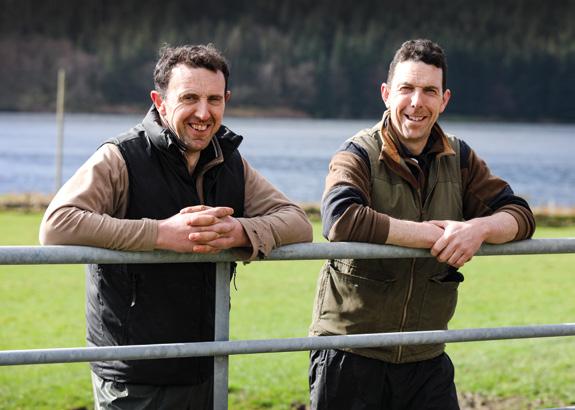
Managed by brothers Hefin and Arwel, who farm in partnership with their father, Edgar, the family’s flock is a mix of Scottish Blackface and Welsh Mountain ewes, with the Blackface flock totalling 150 ewes, with Welsh ewes making up the remaining 550.
“On top of that there are about 200 replacement ewe lambs kept every year along with up to 40 Texel cross ewes which are tupped as shearlings and sold as couples in the spring,” explains Hefin.
About 125 of the 550 Welsh ewes are put to Texel rams every year with the aim of adding value to their progeny through improved conformation and producing crossbred females which are in demand.
The remaining Welsh ewes are bred pure to produce replacements, with the Blackface
ewes, similarly, bred pure. “We find the Blackface lambs have better conformation than the pure Welsh lambs, but the ewes aren’t as resilient in the wet weather, with the farm receiving an average 105 inches of rain a year. However, they are much better at grazing on the top of the hill ground, whereas the Welsh fare better lower down the hill, our ground goes from 500 feet above sea level at the yard to more than 2200 feet above sea level at the top.
“Crossing a portion of the Welsh flock to Texel rams is something we’ve been doing for more than 30 years. We’ve always crossed a portion of the flock to another breed to add value to the lambs and Texels have been the breed of choice for a long time. Their lambs are in demand and the improved conformation means they’re sought out when we sell them in live markets,” adds Arwel.
The family sell both live and deadweight, with those Texel cross lambs that go deadweight generally grading as Us and Rs at 17-20kg deadweight.
Producing Texel cross ewes from their Welsh ewes allows the Williams family to add value to their flock.
“Farming here means winter is a dominant factor in the farming system. How we farm is dictated by the stock numbers we can carry over the winter. We’d like to keep more Texel cross ewe lambs back, but we don’t have enough in-bye ground to winter them well. Unfortunately, they’re not the right ewe for wintering on the hill.
“Where Texels really work well is that their lambs are hardy and have great get up and go at birth which can be critical if we get a hard spring.
“The same is true of the Texel cross ewes we lamb which go back to a crossbred tup for ease of lambing. Both the ewes and their lambs are hardy and fare well in the wet, cold springs we can get here, thanks to the maternal ability of the Texels,” he explains.
With the family’s hill ground now all fenced for ease of management, they both tup and lamb ewes on lower ground, tupping on silage ground to help increase productivity, says Hefin. “The hill flock was, historically, a hefted flock, but we’ve fenced the hill ground as we have some of the better hill grazing locally.
“We now tup all the ewes on better ground and the Welsh ewes usually scan at about 150% which they’d never do if we tupped them on the hill. Historically, the flock used to scan at about 120%.
Ewes then winter on the hill and come back to lower ground for lambing in April, with no ewes and lambs sent back to the hill until after weaning due to the high lambing percentage we’re achieving now,” he adds.
All ram lambs are left entire, with the aim of finishing them off grass and selling them from September onwards. “We try to finish as many as we can just off grass, but some feed can be required to put a bit of finish on them towards the latter part of the season.
Lambing is all outside, with ewes checked twice a day and left to their own devices for much of the time. “Those ewes carrying twins are offered silage and liquid feed which we find works well. We used to feed concentrates, by it resulted in too much disturbance at lambing. With liquid feed they can chose when to feed and it means they’re not being disturbed which can result in mismothering.”
With handling kept to a minimum and ewes on the hill for large parts of the year, flock health is paramount and all ewes, rams and ewe lambs are on a clostridial vaccination programme as well as being on Footvax too. Trace element boluses are also used to help with lamb vigour.
“We first used the boluses on the spring calving cattle and found calves were more lively thanks to the iodine in the bolus, so we now use them on the ewes too.”
When it comes to selling their Texel cross ewes with lambs at foot the family like to sell them when lambs are about a month old, with everything sold at Bryncir market. “The ewes are in good condition at that point and the lambs are really starting to show themselves.
“It’s usually early May and the grass is starting to grow well, so buyers are willing to pay a bit more for good couples. There is a growing demand for them and we have seen ewes with twins at foot sell for about £280/unit in recent years, with those with singles making up to £240/unit.”
Replacement Texel rams are sourced from Welshpool in September, with the aim being to buy strong tups with good length, a decent top and a good backend. “We’re willing to compete well to buy the tups we want, but we’re not necessarily looking for the biggest tup in the market.
The vigour and hardiness of the Texel cross ewes means they lamb outside successfully in March and April.
Farm Facts
Edgar, Hefin and Arwel
Williams, Rhyd-ddu, Snowdonia
• 700 Welsh, Blackface and Texel cross ewes
• 500-2200ft above sea level
• Scanning at 150%
• Texels used on Welsh ewes
“We want something moderate and well fleshed without a big head. The tups have to do two jobs for us, be a terminal sire and also produce females that catch the eye when we sell them with lambs at foot,” adds Arwel.
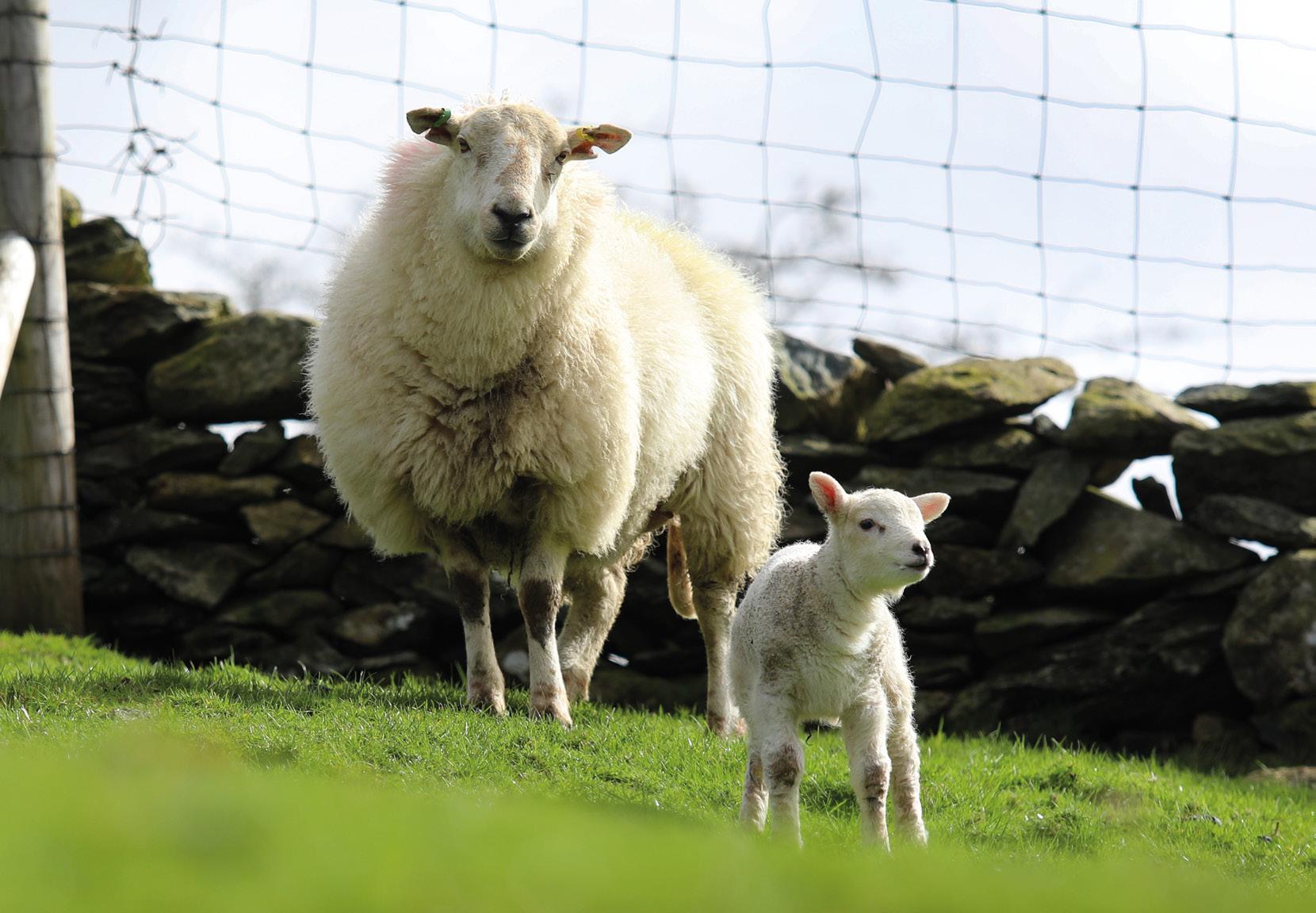
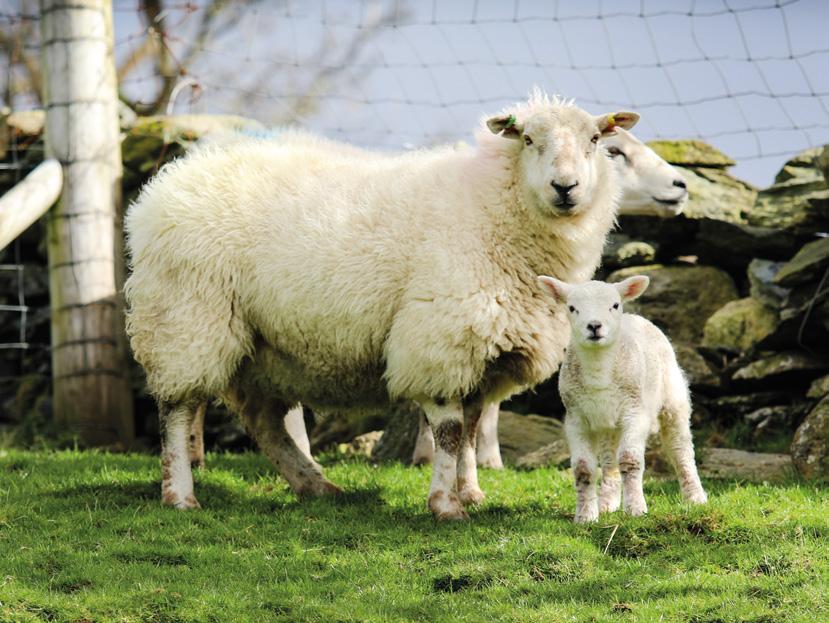
Texel cross ewes and their lambs at foot are sold as couples at a month to six weeks old.
And, while the family are keen to maximise production where they can, the increase in dairy farms in the area has made expansion more difficult in recent years. “There is ground locally now making £300/acre in rent which we can’t compete with, so we’ve got to add value to our stock to ensure we can continue. Texels are one easy way we can do that,” he says.
Texel trade talk
Texels power the UK sheep industry, accounting for more than 27% of all rams used and more than 17% of the national flock carries Texel genetics.
The breed’s impact is seen in livestock markets across the UK, helping farmers, no matter what their sheep system, add value to their flocks, as explained by auctioneers from across the UK.
Graham Loughrey
J A McClelland and Sons, Ballymena
‘Texel-sired lambs are regularly at the top of the trade here at Ballymena.
They’re the most sought after lambs week-in, weekout, with Texel cross cull ewes always at or near the top of the market too.
‘Texel cross lambs regularly earn premiums of up to £5/head over other breeds. When it comes to ram sales, we’d sell more Texels than any other breed, with a huge demand from commercial flocks.’
Derfel Harries
Clee Tomkinson and Francis, Llandovery
‘The ability of the Texel to improve the quality of lambs from a wide variety of breeds is where it really wins locally. Whether it’s crossed onto hill breeds or used in lowland flocks, the resultant crossbred lambs are always in demand.
‘They draw buyers to the pens and command a significant premium, with Texels averaging 8-10p/kg more than other breeds throughout the year.’
Russell Steer Kivells, Exeter
Texels continue to dominate our weekly market reports, particularly within the cull sheep section where they command top price most weeks.
Cull ewe prices in the past have hit a centre record high £400 in April 2025, with plenty more trading at £300 or more, with prices in early 2026 up to £388 for strong ewes. Texel cross prime lambs are equally well sought after and often command a premium price.
Archie Hamilton Lawrie and Symington, Lanark
‘’Texels and Texel crosses would generally be the dearest prime lambs and cast ewes we sell. They top the market regularly on price/ head and are always in demand.
‘The shift in the cast ewe trade in recent years has seen buyers looking for better quality ewes, particularly for the Halal trade and that is being reflected in the prices they pay for the best ewes. Those Texel cross ewes with plenty of length and weight are always sought after.
‘The best lambs to sell are the Texel crosses no matter the ewe breed they’re bred from. There’s a demand for them at all weights and they deliver every week for buyers.’
Nick Woodmass C and D Auctions, Longtown
‘Consistency is where Texels win out, they can be sold at any weight or specification and can improve any type of lowland or hill ewe.
“Buyers seek out Texel crosses in all sectors of the market, be that prime lambs, cull ewes or breeding sheep. In the prime sheep, Texels regularly earn premiums of up to 40p/kg over the market average. The same is true of breeding sheep and good Texel cross ewes with lambs at foot are always in demand.’
James Amphlett McCartneys, Worcester
‘More than 50% of the lambs we’d sell every week would be Texel crosses out of a variety of ewe breeds and every week they’d be in and among the top prices.
‘Texel crosses more often than not outperform every other breed for price/head and are always in demand, no matter the buyer. When it comes to the cull ewes, they’re nearly always the dearest ewes we sell.’
Texels add arable value
The ability to add value to his arable crops makes the inclusion of sheep and sucklers in his rotation a no brainer for Oxfordshire-based mixed farmer David Passmore.
Farming more than 800 acres in partnership with his mother, David uses livestock as a break crop in his 10-year arable rotation, enabling him to grow high yielding, premium seed crops of a variety of combinable crops.
“There’s no getting away from the fact that is the livestock which give me the opportunity to grow these higher value seed crops. Without the grass breaks in the rotation and the associated sheep and cattle the ground wouldn’t be suitable for growing seed crops of the quality we do.
“Not only do they add valuable organic matter to our thin Chilterns soils, the grass breaks also provide valuable weed control opportunities, meaning we barely see blackgrass on the farm despite it being prevalent across most other farms locally,” he explains.
“Many fields on the farm now have organic matter content in the region of 8%, adding valuable structure and moisture retaining qualities to the soils.”
For David, having a flock which fits around his arable and cattle workload is key and that means lambing outside and finishing lambs off stubble turnips later in the year.
“We run 200-250 Texel cross ewes which are sourced as ewe lambs from my cousin
in Sussex. They are then tupped to a native breed as lambs before going to Texel tups as shearlings and every year thereafter.
“The
sheep very much have to fit into and around everything else we have going on here and we’re busy with the arable workload through the summer months, so it makes sense for us to lamb a little later and then finish the lambs through the late autumn and winter months,
grazing stubble turnips which are another valuable part of the arable rotation,” he adds.
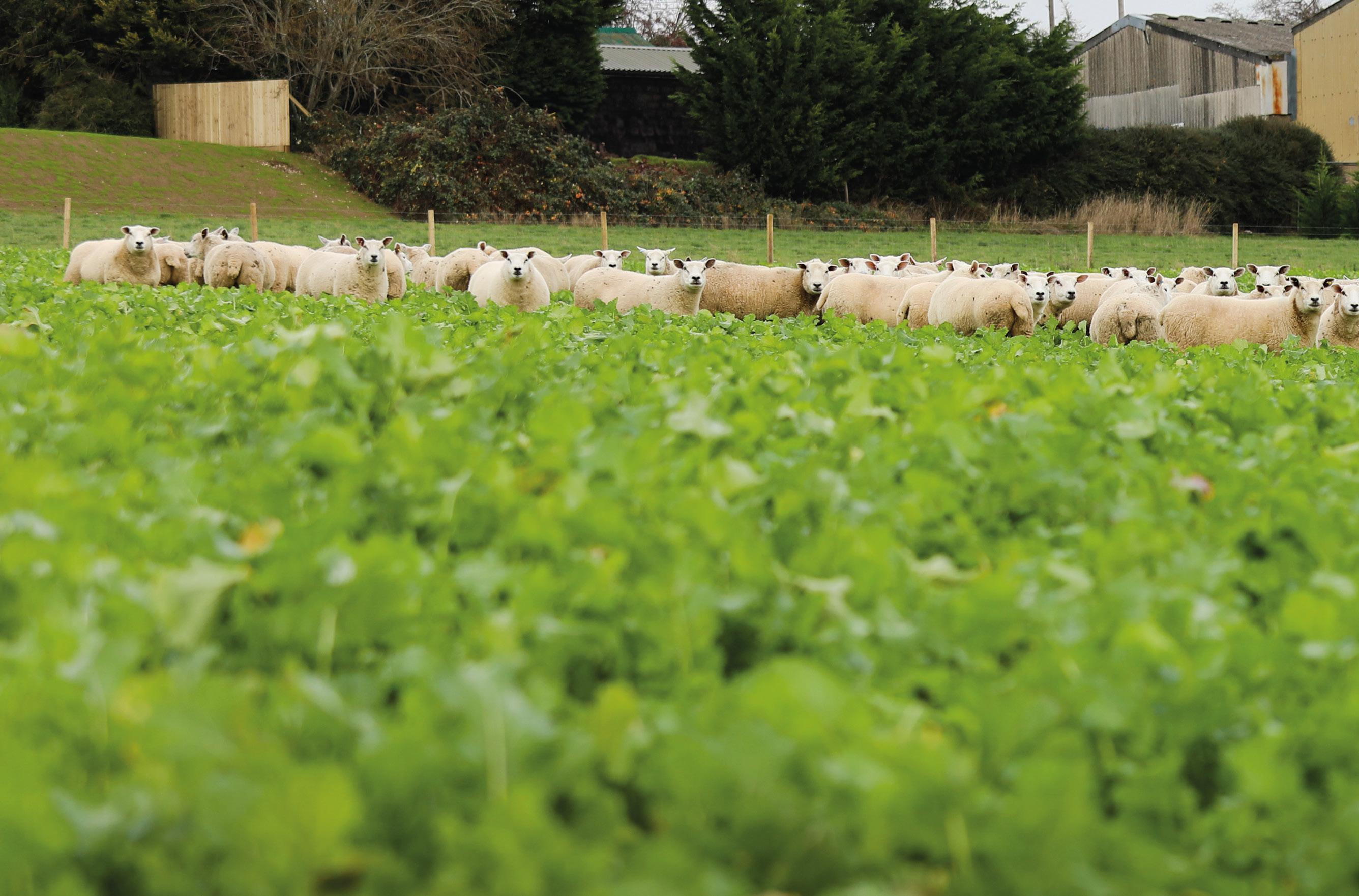
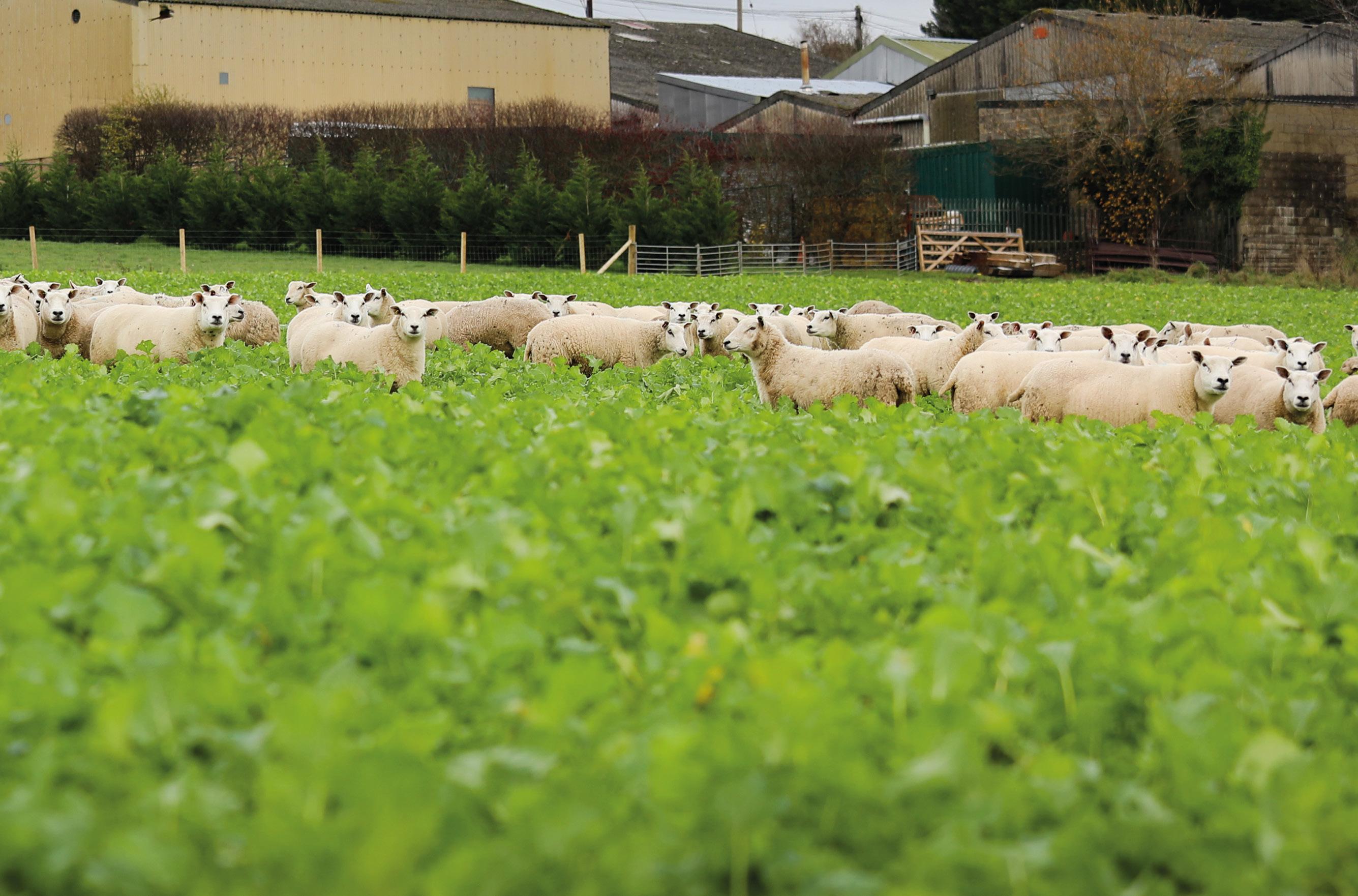
Wintering ewes on stubble turnips allows organic matter to be added to thin Chiltern soils for David Passmore.
“We used to push our lambs hard and sell them earlier, but with the shift in trade in recent years and the demand for heavier lambs later in the season, later lambing and finishing them in the New Year is resulting in a better trade.”
Ewes are lambed outside in April, with minimal intervention and are then run on grass leys, including herbal leys, over the summer months. “We then wean the lambs in early September, moving both ewes and lambs off the grass leys and onto stubble turnips from the autumn through to lambing.
“This provides a great entry for spring crops, while also saving on winter feed and housing costs. We usually follow these stubble turnip crops with spring barley, which generally yields in the region of 10t/ha. We are then able to undersow these spring barley crops with grass leys, going back round through the rotation again.”
Where stubble turnips aren’t sown, anything destined for a spring crop is sown with a cover crop over the winter, including mustard and other similar crops.
“We’re fortunate to have access to large quantities of digestate which we’re able to spread on grass leys and cover crops to boost growth and improve soil conditions.”
With most of the flock’s output sold as hoggets after the New Year on a liveweight
basis through Rugby Market, the 2024 selling season saw hoggets trade at £220230/head, with the 2025 selling season seeing these back nearer £140/head.
“We have in the past done some boxed lamb for local customers and while the demand is decent, the time and cost involved make it difficult to justify when live prices are where they are now.
“The demand for Texel sired lambs is strong no matter what time of year you sell them and the ability of Texel cross lambs to put on weight without running to fat allows some flexibility when it comes to marketing,” adds David.
The farm’s pedigree Limousin herd is run on a similar basis with cattle having been outwintered since the family moved to the farm in the 1950s. “We’ve got some great gravelly valleys here, meaning we’ve never had to house any cows over winter, resulting in some great savings and once again adding more organic matter to the soils.
“Being able to earn premiums of £30-40/t over feed price for our seed crops is a huge benefit to the business and it gives me great personal satisfaction to be able to produce such clean crops.
“Mixed farming has been out of fashion for many years, but including livestock in arable rotations is great for both enterprises and can reap significant benefits,” says David.
Farm Facts
David Passmore, Ewelme, Oxfordshire
• 800-acre mixed farm
• 250 Texel cross ewes
• Sheep add value to arable rotation
• Finishing lambs on arable break crops
Flexible marketing and the ability to increase margins makes Texel cross ewes ideal for a busy mixed farm.
Texels key to flock profitability
Texels play a significant role within the Hamilton family’s stratified sheep system in East Lothian, crossing successfully with Scotch Mule ewes to produce quality offspring for the early lamb market.
Between them, brothers James, Charles and Harry Hamilton, farm some 6000 acres, across four units – Aikengall, Thurston Mains and Barney Mains, which are owned and Nunraw, which is tenanted. In all, the livestock side of the enterprise comprises 800 suckler cows and 2500 ewes.
The sheep system begins at the top of the hill at Aikengall with the 1200-strong Blackface flock – half of those are bred pure and the rest go to Bluefaced Leicester tups to produce Scotch Mules. All the Mule ewes go to Texel rams, producing lambs for the early market, a strategy which works well for the Hamiltons,
with 90% of those lambs away by the end of July.
Harry is based at Nunraw, which is a lower unit than Aikengall, but still sits at 600ft above sea level and rises to 1200ft. It’s there that the Mule flock is kept and he feels the combination of the Texel onto the Scotch Mule is ideal for their system.
“We’ve been using Texels for more than 20 years now and I think the Texel over the Mule is as good as it gets for lambs with weight and conformation. The Texel lambs are hardy, active from birth and grow on quickly, which is exactly what we need them to do,” says Harry, who looks for similar attributes when it comes to selecting Texel rams.
Farm Facts
James, Charles and Harry Hamilton, Innerwick, East Lothian
• 2500 ewes
• 800 suckler cows
• 2025 lamb crop averaged £155
• Target 44kg liveweight
With land rising from 600ft to 1200ft, the Hamiltons value the ability of the Texel cross lambs to thrive in all conditions.
“We look for active, healthy looking tups with good bodies and good legs and feet. We want them to last a decent length of time too, so we’re not wanting tups that are pushed on too hard,” he adds.
About six or seven rams are needed each year and they are mainly bought at Kelso or off farm, with the hope being that they will last at least four or five years. In recent years, Harry says they have paid more attention to the performance data of the rams, particularly fat depth and gigot muscularity. He notes that the conformation and grades of the lambs have improved as a result.
“We don’t flush the ewes on good grass before tupping and we put a teaser out with the ewes on the hill for a few weeks before tupping. At tupping, they go on to good silage aftermath. Ewes are fed concentrates and good quality haylage for six to eight weeks before lambing, depending on body condition,” he says.
Lambing takes place indoors in March and at this time they require additional labour on top of the two full-time members of staff. They prefer to hire the same lambing staff each year if possible, which means they already know the set-up. Weather permitting, ewes and lambs are back outside within 24 hours and ewes receive concentrates after lambing if necessary, depending on the weather.
“The ewes and lambs are spread thinly over the fields when they go out in March, to ensure the lambs get a bite of grass and get off to the best start. When they begin to grow, we tighten them up, which allows us to get cows out to grass,” says Harry.
Lambs are creep fed from the beginning of April until they are weaned off their mothers and are all left entire. The aim is to finish them as quickly as possible, while prices are at a peak, so those that hit the 44kg liveweight target start going towards the end of May, all through Dawn Meats.
About 90% of the family’s Texel cross lambs are sold by the end of July each year, with rams selected for key traits, including growth rate.
“Those lambs have great conformation, so we’ll continue to add some Texel crosses to the flock each year. High health is a priority for us, so breeding our own replacements benefits this. We OPA scan all the ewes and gimmers twice a year. I’ve not ruled out having our own pure Texel flock at some point either, to produce tups for our own use.”
Within this busy enterprise, spring is a particularly hectic time, with 800 suckler cows all calving within six weeks from the start of April. Heifers calve at two years old, to Angus and Lincoln Red bulls, with the cows all put to Simmental bulls and all progeny, other than those kept for replacements, are finished on farm and sold deadweight.
To maximise their own time, seasonal help is brought in at lambing and calving and most of the machinery work is contracted out. Using home-grown barley in the creep feed helps lower feed costs.
“Previously, we’d have been more traditional, purely going on the look of the tup, but focussing on certain figures has definitely been worthwhile for us. The tups do still need to look the part too though –big, bare and correct. We are finding we’re having to pay more for what we’re looking for – we averaged £1400 for the tups we bought at Kelso last year,” he explains.
Each tup covers about 40 ewes and they go out for four weeks in October. An ideal scanning is 190%, with not many triplets, and the barren rate is normally 2.5%. Harry says Mules require particular management in the lead up to tupping, as they can be prone to triplets if they are too well looked after.
By the end of July, 90% of the lambs are away, with the rest gone by October. At this point, the ewes go back to the hill and the lambing fields are then cut for silage in September, leaving good silage aftermath for the ewes at tupping, when the process begins again in October. The entire 2025 crop of finished lambs averaged £155 for about 2000 lambs with an average deadweight of 21.5kg.
Harry describes their system as an ‘extensive, intensive’ one. The type of land they have dictates what breeds they keep and what systems they run at each unit and he says Texels suit both the farm and the ewes at Nunraw. For the past couple of years, with the aim of upping the sheep numbers are Nunraw due to some more fields being re-seeded, he’s also been keeping around 80 Texel cross ewe lambs as replacements each year, which then go back to Texels again.
Texel rams on Mule ewes are proving the perfect fit for the Hamilton family.
Harry adds: “We’re constantly looking at how we can cut the cost of production and simplify our system, to cut labour where we can. With their ability to produce hardy, fast growing lambs that can be finished quickly and kill out well, Texels suit this ethos perfectly.”
High index Texel rams add more than £690 to their slaughter progeny * 20%
Texel-sired lambs achieve growth rates of more than 0.5kg/ day, getting to slaughter weight quicker. ***
Texel lambs regularly earn up to 20% premiums over live market averages. **
More than 85% of Texel lambs grade in spec. **** 85%