




Texel Bulletin is published by the Texel Sheep Society Ltd twice a year in spring and autumn.
While every effort is made to ensure accuracy of the information contained in this publication, no responsibility can be accepted by the Society for any errors or any reliance on the use of information by readers.
Membership Subscriptions are available online at texel.uk/join-us
Advertising office@texel.co.uk
Registrations and sales cataloguing registrations@texel.co.uk cataloguing@texel.co.uk
Accounts accounts@texel.co.uk
Society Governance
Chief Executive - John Yates
Chairman - Peter Mitchell Avon Vale flock
Vice Chairman and Treasurer - Robert Laird, Cambwell flock
Contributors
Jonathan Long and Society staff
Photography Isla Campbell, Countrygirl Media, MacGregor Photography, Alfie Shaw
Design
Ghost Design
Registered office – The Mechanics Workshop, New Lanark, Lanark, ML11 9DB
Auditors – Dafferns LLP, One Eastwood, Harry Weston Road, Binley Business Park, Coventry, CV3 2UB
Solicitors – Lodders Solicitors, 10 Elm Court, Arden Street, Stratford Upon Avon, CV37 6PA
Bankers – The Royal Bank of Scotland, 65 Stephenson Way, Wavertree, Liverpool, L13 1HE


British Texel Sheep Society Ltd (Texel Sheep Society) is a Scottish Charity, SC007271, regulated by the Scottish Charity Regulator (OSCR).
British Texel Sheep Society, Unit 74 - 4th Street, Stoneleigh Park, Kenilworth, Warwickshire, CV8 2LG
Tel: 024 7669 6629
Email: office@texel.co.uk
Website: texel.uk
In touch with Texel @BritishTexel #addtexeladdvalue

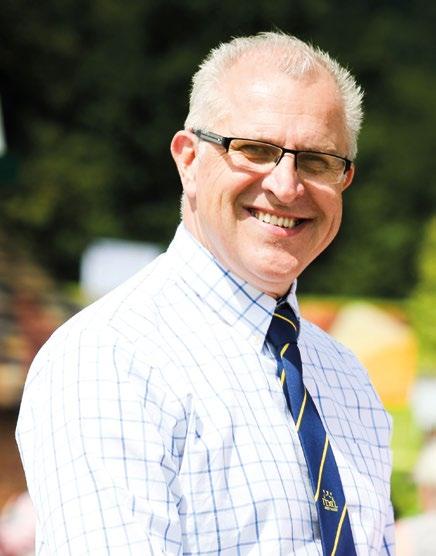
It’s often said the only constant in life is change and farming has always been a great example of that.
New technologies, changing policies and evolving markets continue to shape what we do. What hasn’t changed, however, is the commitment of the British Texel Sheep Society to support its members and strengthen the Texel breed for the future.
Over the past decade, the Society has quietly invested in building something truly special; a practical, accessible system built around flock data, genomics and an easy-to-use database.
This hasn’t been done for headlines, but to deliver real value on farm. From genetic evaluation and genomics to iTexel.uk, every step has been about lowering barriers, improving accuracy and giving members the tools they need to make informed breeding decisions.
This year represents another important milestone. With more lambs being genotyped through the Society’s expanding resource flocks, alongside the growing level of member led testing.
The Society is helping to create one of the strongest genomic reference populations in the UK pedigree industry. These foundations, laid over many years, are what allow the Society to keep technical services affordable and relevant for every member
That long-term approach also means the Society can now remove all flock fees previously operated under texelplus, while also lowering the cost of genotyping.
Going forward, a unique and novel tiered membership model gives every member access to genomic evaluation reports available on iTexel.uk, with membership levels simply reflecting how much data is contributed. It’s an inclusive system designed to reward participation while strengthening the breed as a whole (see page six).
In simple terms, the Society has brought together affordable technologies, routine genomic evaluations and a powerful database into one integrated platform, free for members to use, a first for the UK industry.
Of course, the Society is about much more than data. Shows, sales and social events remain at the heart of Society life and once again this year the Society will be supporting members at major shows, National Sales and the AGM and Social Weekend. All of these are important chances to catch up, share progress and celebrate everything about Texel.
The tools are firmly in place. The opportunity now is to embrace data-led selection and make the most of what the Society has built together.
Thank you, as always, for your continued support and for the commitment you show to your flocks and to the breed. Everything the Society achieves is built on member participation and I’m genuinely proud of what we are delivering together.
I look forward to catching up with many of you at shows, sales and events over the coming months. Until then, I wish you every success with your flock.
Warm regards,
John Yates Chief Executive #addtexeladdvalue
For
the first time: Members can now access genetic improvement reports within their Society membership fee. Members are encouraged to go for Gold with no additional costs
From Spring 2026, all flocks that provide pedigree and other animal data through iTexel.uk will be automatically assigned a tier status within the flock book. Each flock’s tier will be published on iTexel and updated throughout the season as more data are added.
This approach recognises those members that are committed to the collection and submission of data on multiple traits. Helping to more accurately characterise their animals and contributing to the Texel breed’s development.
Earning a high-tier status will demonstrate a member’s commitment to flock and breed improvement through the collection of phenotype and / or genotype data.
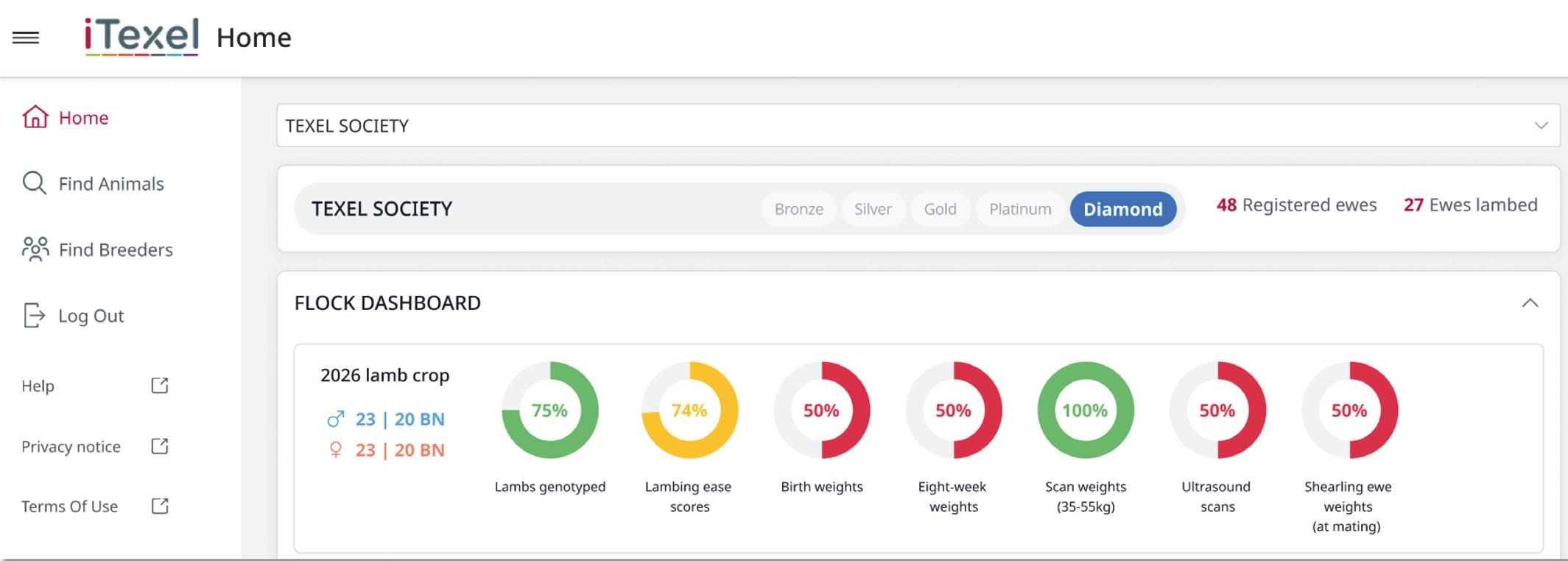
Flocks will be able to achieve Bronze, Silver, Gold, Platinum or Diamond recognition by adding lambs and data to iTexel. The tiers are accessible to all flock sizes once lambs are added and are based on collecting and entering the following:
• Lambing ease score
• Birth weight
• Eight-week weight (weighed between 42-84 days old)
• Scan weight (weighed between 35-55kg)
• Shearling ewe weight (weighed as shearling ewes go to the tup)
All these weights / scores can be collected on-farm and entered into iTexel at no cost to members.
Flocks that also genotype their lambs or have lambs ultrasound and / or CT scanned will receive further credit towards improving their tier status.

All data submitted and processed during the calendar year is included in the assignment of a flock’s tier status. The more lambs that information is recorded for, the better. As a guide:
• Bronze status will be awarded to all flocks that record at least one lamb’s pedigree information on iTexel.
• Silver status can be achieved by entering lambing ease scores and birth weights for 75% (or more) of lambs added.
• Progressing from Silver to Gold status can be achieved by also entering eight-week weight and scan weight (35-55kg) information for 75% (or more) of the lambs added.
This means flocks can reach the Gold tier and unlock several benefits by adding weights and scores for their lambs at no cost. Entering shearling
ewe weights into iTexel as they go to the tup will also contribute to improving a flock’s tier status.
• Platinum and Diamond statuses can be achieved by genotyping or ultrasound or CT scanning a selection of lambs.
Members can track their progress using the dashboard that will be published on their iTexel homepage. This will display the numbers of animals in a member’s flock and the proportion that have had information entered to date. Updated in real-time, the simple display will make it straightforward to see where gains can be made to improve a flock’s status.
Flocks achieving Gold, Platinum or Diamond status will be able to enter performance classes at summer shows and in pre-sale shows (formerly the texelplus class).
Reports on iTexel will be available to the different flock tiers as indicated in the table.
By adding more information about your animals to iTexel, their performance information will also benefit through increased accuracy. This will give breeders and their customers more confidence in the animals they choose for mating. Collectively this will contribute to improving the breed’s development and genetic gain for key, commercially relevant traits.
Report
Pedigree certificate
Pedigree sale chart
Flock list
My flock inbreeding trends
Texel breed benchmark
Performance sale chart
My males
My females
My progeny by ram
My flock genetic trends
Top stock males
Top stock females
Top ram lambs
Top shearling rams
The future for Texels is bright thanks to a focus on breed development, promotion and adopting the latest technologies, the Society’s 2025 AGM was told by Society chief executive John Yates.
“The Society has a proud legacy of innovation, with a breed built on measurable progress and the dedication of its breeders. Today, British Texels are recognised worldwide for efficiency, adaptability and quality,” he explained.
Mr Yates said the adoption of firstly estimated breeding values and latterly genomic testing by Texel breeders had underpinned the breed’s progress in the last few decades. “The breed’s consistent progress reflects the determination of breeders who have always insisted that progress must be proven, not assumed.
“Thanks to the Society’s investment in genomic research and development and routine genotyping of sires since 2016, breeders now have access to single marker information for a variety of traits via the Society’s iTexel.uk database.
“This puts invaluable information directly in the hands of breeders and means traits such as carcass quality and disease resistance and resilience can be predicted with greater accuracy.
“The future is brighter still and will be full of opportunity and driven by data. The Society is ready to support members in meeting these challenges to help continue the success story that is Great British Texels,” added Mr Yates.
Meanwhile, Society chairman Peter Mitchell, Avon Vale, reflected on another successful year for the breed in the show and sales rings.
“At every event I’ve attended this year the quality of Texels has been tremendous. Nowhere has this been more evident than at the Society’s National sales where averages were up across the board and
records were set at several venues as both pedigree and commercial buyers sought out quality Texels to move their businesses forward.
“It is, of course, the people which make this Society what it is, the highly sociable nature of Society members marks our organisation out for many.
“From Society receptions at summer shows through to chatting with members ringside at the National Sales, it has been wonderful to be so warmly welcomed wherever I’ve been,” he said.
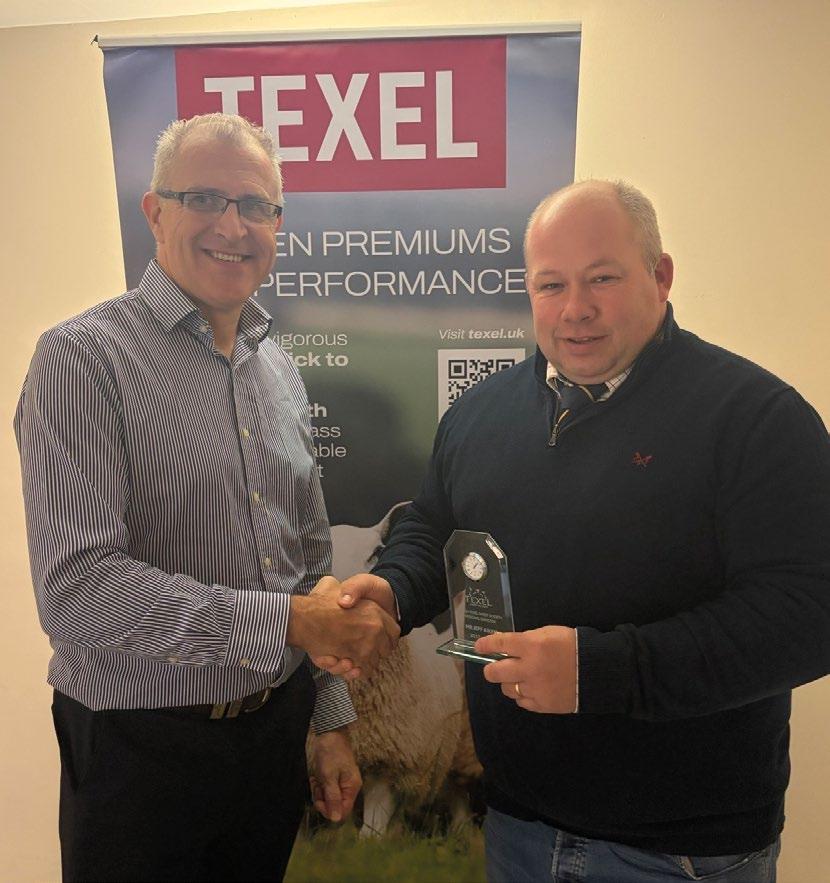
In closing Mr Mitchell thanked former Society chairman Jeff Aiken for his time as a board member, with Mr Aiken stepping down from the board having served the maximum 12-year term.
“Jeff has been a dedicated board member throughout this time, serving as both vice chairman and chairman, notably lending his support during the Society’s 50th Anniversary year. His willingness to roll up his sleeves and get involved in any Society activity is second to none and will be missed from around the board table,” he added.
Mr Mitchell went on to welcome new board member Kirree Kermode, Orrisdale, to the board for Area Six, North West and Central North of England and Isle of Man.
Reviewing the Society’s financial performance Mr Yates said the Society had performed well in a challenging environment. “Changes in agricultural policy and support payments continue to impact members’ decision making and continuing strong prime lamb prices are being reflected in reduced birth notifications which, in turn, is reflected in Society income.
“These challenges are unlikely to change dramatically in the short-term and the Society board continues to work within its means to ensure the Society’s finances remain on an even keel.
“The Society’s ongoing investment in technology, including iTexel.uk continues to reap rewards, enhancing member services while at the same time streamlining office tasks. Breed development and breed promotion remain central to the Society’s work and are essential to maintain the Texel breed’s place as the number one sire breed in the country,” he concluded.
Protecting members’ data is something the Society takes seriously. The Society operates under a clear Privacy Statement (available at texel.uk) and is registered with the Information Commissioner’s Office.
The Society uses trusted, industry-leading commercial services including GoCardless for secure payment processing (Direct Debit) and Xero for accounting, alongside its own cloud-based iTexel.uk system to manage membership, pedigree and animal records.
Society systems are supported by competent, well-trained staff and independently assessed annually through Cyber Essentials accreditation. Specialist cyber insurance is maintained with NFU Mutual for added protection.
Together, these measures ensure your personal and flock data is handled professionally, securely and in line with current regulations; giving you confidence that your information is in safe hands.
To view the Society’s full privacy policy




This year’s major summer shows will see member receptions held after all judging, giving all members, exhibitors and friends of the Society the opportunity to socialise and catch up with friends old and new.
The first show of the season, Balmoral Show, will see the reception held in the Stockman’s restaurant at 1330.
At Royal Three Counties Show the reception will follow judging and take place in the sheep lines at 1330.
The Royal Highland Show reception will take place at 1700 in the sheep lines.
This year’s reception at the Great Yorkshire Show will be held in the Stockman’s restaurant at 1700.
The final major show of the season, the Royal Welsh will see the reception take place at the Society’s trade stand at 1800.
Hot lamb rolls will be on offer at Balmoral, the Royal Highland, the Great Yorkshire Show and the Royal Welsh, with hot pork rolls at Royal Three Counties.
Further information will be available ahead of each show. Please keep an on the Society’s social media channels for more details.
The British Texel Sheep Society is continuing to invest in improvements designed to strengthen the services and support available to members. Over the coming months, several developments will be introduced aimed at enhancing the value of Society membership and supporting the future of the Texel breed.
As part of this ongoing investment, some membership and service fees will be updated during 2026. The up-to-date schedule of current and updated fees from 1st June 2026 can be seen here:
A number of changes have already been introduced that deliver direct savings for members:
• Genotyping fees have been reduced from £30 to £25 per
sample, representing a £5 saving (16% reduction). This applies to all samples received at the Society office from 1st April 2026.
• texelplus fees have been removed, saving members £20 per flock. This applies from 1st January 2026
From 1st June 2026, some fees will increase to reflect inflation and rising operating costs:
• Registry and membership subscription fees will increase in line with inflation (4%).
• Ram registration fees will increase by £7.50.
There is nothing members need to do at this stage and memberships will continue as normal. Further information on the upcoming improvements and developments are reported in this bulletin or will be shared with members shortly.
In the passing of Jimmy Warnock MBE, Watchknowe, the Texel breed and the Society has lost one of its most vocal, fervent and loyal supporters.
Jimmy’s farming career and the Texel Sheep Society’s development were closely intertwined, with Jimmy being a founder member of the British Texel Sheep Society, having been introduced to the breed by Lanarkshire abattoir owner Bill Jackson who persuaded Jimmy to become the Society’s 16th member.
A devotee of the breed Jimmy was renowned across the UK for his knowledge of Texels and his passion for the breed never dimmed, taking pride in seeing Texels flourish to become the driving force in the UK sheep industry.
Chairman during the Society’s 21st anniversary year in 1995, he was instrumental in the celebrations of that year as he had been at many major Texel milestones previously.
Indeed, it was Jimmy who triumphed at the first ever show of Texels in the UK, Lesmahagow Show in 1978. Later years saw further show success, with Watchknowe Lady Madonna, the flock’s prolific show winning ewe achieving eight breed championship titles and three interbreed titles in one year.
In total she collected no fewer than 10 interbreed titles in her show career and was reserve female champion at the Royal Show in 1995, the Society’s 21st Anniversary year.
Such was the success of this ewe that at the Society’s 21st Anniversary celebrations, an embryo from her sold for £2000.
Further show success for the Watchknowe flock came when Steven Renwick took the Royal Highland Show championship and reserve interbreed title in 2008 with an aged ewe, WJW04279, by Watchknowe Ironman that had been purchased at the Select Seven Sale.
Sales success for the flock was regular, with a highlight coming in 2005 with sale of the 44,000gns Watchknowe Lanark Cracker and 20,000gns Watchknowe Lord James, with these following hot on the heels of the 22,000gns Watchknowe Jimmy’s Pride in 2003.
Jimmy was recognised for his dedication and service to the Society when presented with the President’s Award at the Society’s 50th anniversary celebrations at Chester in 2025. He had previously been recognised for his service to the wider sheep industry when he received the NSA Scottish Region Silver Salver in 2012.
A renowned judge, Jimmy judged Texels across the UK and had the honour of judging the interbreed sheep championship at the Royal Highland Show in 2024. Further afield he had the pleasure of judging in both Sweden and Switzerland.
Society chief executive John Yates said Jimmy’s farming career had been intertwined with the Texel Sheep Society’s development and he was always a guiding light within the Society.
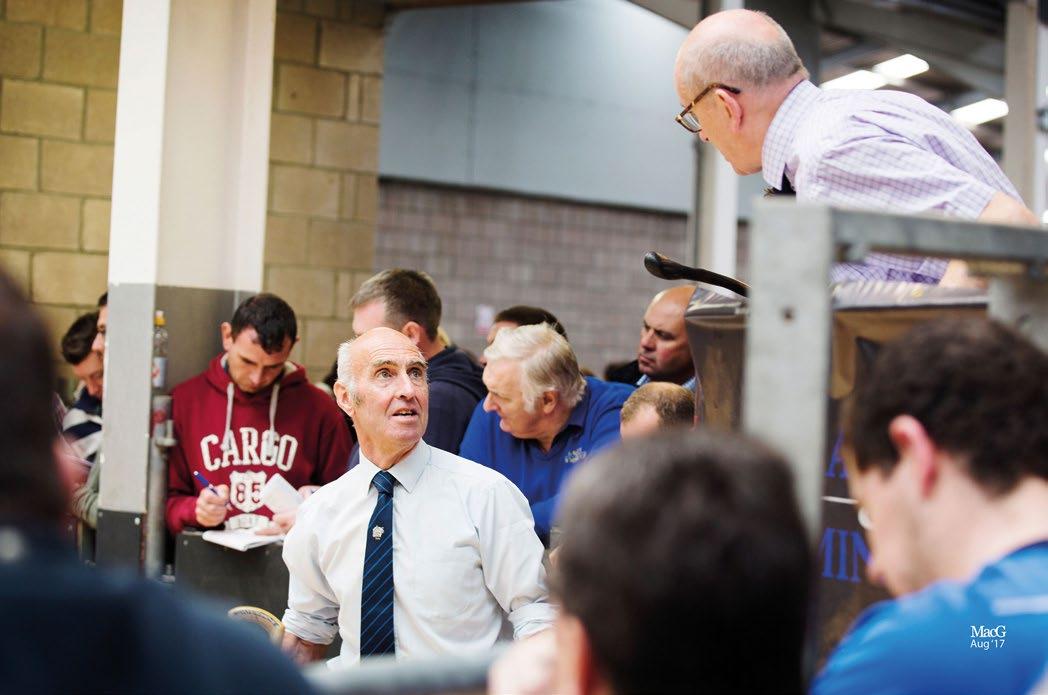

Jimmy alongside wife Elizabeth.
“Jimmy was, arguably, Mr Texel to many people, both in the UK and further afield and he will be remembered fondly for his passion and wise counsel on many matters. He was a friend to all and the Society sends its condolences to Jimmy’s family, particularly his wife Elizabeth and daughters, Helen, Jane and Carol Anne.”
The Society’s board met in November 2025 and March 2026 and in recognition of the opinions of the membership have adopted the following byelaw amendments:
Byelaw 7.3 has been amended to offer further clarity (not policy change) on Society procedures for the flock registry when member flocks disperse.
When a flock has begun dispersal proceedings, no birth notifications of animals born after the dispersal date, and no transfers will be permitted into the flock for a minimum of five years. Owners of dispersed flocks can maintain a Society membership or renew membership, add animals and transfer in, five years following the dispersal date.
The dispersal date is defined as the date of a dispersal sale, where known, otherwise, the dispersal date will be the date the Society is notified of a flock’s dispersal proceedings.
Flocks that have a sale where the term ‘dispersal’ is included as part of the cataloguing or promotional material will be classed as dispersed and breeding activity for that flock will cease. Alternative sale terms, including ‘production’ and ‘reduction’ will not be subject to these restrictions.
Two years after the dispersal date, all animals that are recorded as ‘Alive’ and in the ownership of the dispersed flock will be marked as ‘Sold’.
A flock prefix and code of a dispersed flock that has not maintained membership can be reissued at the Society’s discretion to a new member 20 years after the original dispersal date.
Additionally, byelaw 11.6.1 in support of 11.6 has been amended to remove the requirement of DNA sampling and prevention of registering of progeny from sheep failing inspection. The byelaw now includes the written procedure of notice, offering clarity for members on the exclusion of sheep in the current year and vendors from National sales for repeat breaches (See page 14).
Furthermore, byelaw 12.10 which was previously specific to National sales has been retracted and restated with improved clarity as new byelaw 11.17, with this byelaw relevant for all sales run under Society auspices.
11.17 All vendors & purchasers to fully comply with any conditions of sale being imposed by the Society, government bodies, show societies or the auctioneer.
Changes have also been made to byelaw 12.2 regarding vendors needing to have bred animals entered into a national sale. Previously, only shearling rams not bred by the vendor could be offered for sale. Byelaw 12.2 now allows for shearling ewes not bred by the vendor to be entered in Society National sales too.
12.2 All sheep to have been bred by the vendor, other than the Shearling Ram & Shearling Ewe classes.
Flock dispersals mean no new animals can be added to a flock for five years postdispersal.
Full byelaws and rules governing the Society can be found here
Members are reminded of updated byelaw 10 that states:
Females must be fully registered and those born from the 1st January 2025 must have been genotyped using the Society’s genotyping service prior to entering an ET programme. In addition, a DNA sample and genotype must have been received through the Society’s genotyping service for the registration of any service sire(s), prior to entering an ET programme.
This means any ewe lambs that were flushed in 2025 with lambs expecting to be born in 2026 must have been genotyped, otherwise members will not be able to add their lambs to iTexel.
Society records indicate there are about 100 ewe lambs flushed each year and 500 shearling ewes. Shearling ewes included in an ET programme in 2026 must be genotyped to be able to add their lambs to iTexel in 2027.
The Society was saddened to be informed of the passing of the following members and former staff members.
Dayna Zambelis, November 2025
Dennis Hamill, Ballynadrenta, November 2025
Jimmy Warnock MBE, Watchknowe, December 2025
Matt Ridley, Haltcliffe, January 2026
Marina Reid, Kelso, February 2026
Willie Knox, Haddo, March 2026
West Wales breeder Gethin Hatcher of the Penllain flock is the lucky winner of the 2025 Texel Sheep Society summer competition in partnership with Agrii.
Llanybydder-based Gethin runs 30 pedigree Texel ewes at home alongside a small flock of Llanwenogs on a limited acreage.
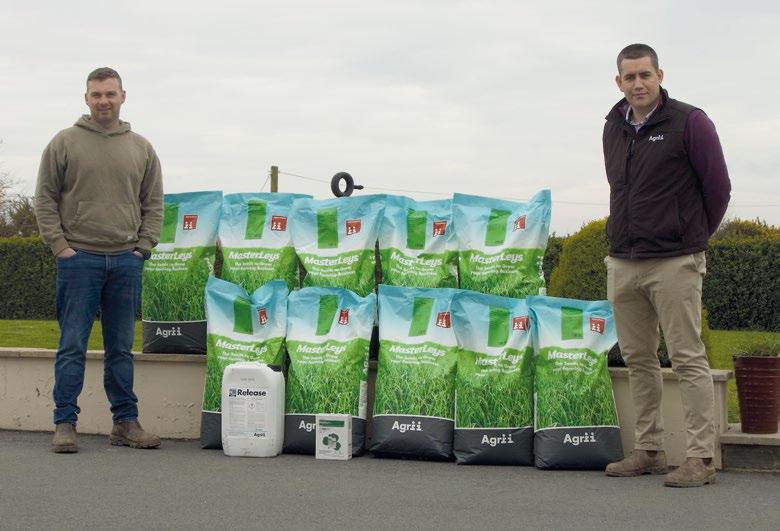

Winning the competition means he will receive a 10-acre forage improvement package, including soil testing, digital mapping, fertiliser, seed, agronomy and animal health supplements, courtesy of Agrii.
“We’re currently farming on old leys, so this should make a dramatic improvement to the quality of our grass and, hopefully, in time we’ll see the results coming through in the sheep,” said Gethin, who farms with his wife, Sara, and two children, Leisa and Owain.
“It’s
a real family effort and winning this prize will make a huge difference to our small flock, allowing us to keep developing and improving our stock,” he added.
This year’s summer competition will give entrants the chance to win an Agrii Forage Improvement Package or a Rappa Electric Fence Package
This year will see the Society attend both ScotSheep, Berwickshire and the NSA Sheep Event, Malvern.
NSA ScotSheep takes place at Wedderlie Farm, Gordon, on Wednesday 10th June, while the NSA Sheep Event is being held at the Three Counties Showground, Malvern, on Tuesday 28th July.
As part of the Society’s ongoing Youth Development Programme to support young people in the sector, the Society is continuing its regular sponsorship of the NSA Next Generation Young Shepherds Competition at both of these events.
As a continued commitment to promoting the core commercial attributes of the Texel breed, the Society offers reimbursement of primestock show entry fees to Texel Sheep Society members in 2026. Members are eligible after attending and promoting the British Texel Breed in Texel classes at qualifying primestock events.
To claim this sponsorship members should email the Society (office@texel.co.uk) detailing entries and include proof of entry after each eligible event and by 31st March 2027 to be considered by the Society. Payment, if approved, will be made directly by the Texel Sheep Society to the individual member.
For further information on which shows are supported and the funds available
Congratulations to the Society’s events and sales cataloguing manager and her fiancé, south Wales farmer Jacob Anthony, who became engaged earlier this year.
Jacob and his family run a 1000-ewe flock, alongside a suckler herd as well as producing haylage for the equine market from their farm near Bridgend, with Ailish having added to the farm enterprises with her small flock of Kerry Hills.
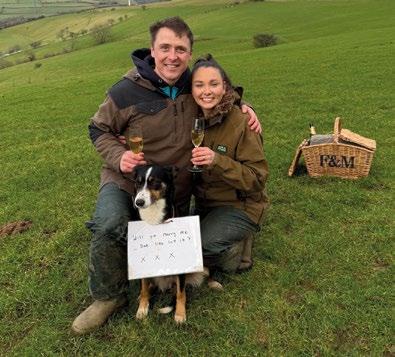

And, well done to the Society’s data and technical services manager Ed Smith who finished ninth in last autumn’s Escape from Meriden, a competition to travel the furthest distance from Meriden, the geographical centre of England, on foot in 48 hours.
Ed achieved a remarkable ‘as the crow flies’ distance of 161.3km in the challenge.
Each year the Society makes grants to Regional Texel Clubs to support their work.
These grants enable Clubs to actively promote the breed in their regions, supporting activity at local shows and sales as well as enabling Clubs to run member activities.
In 2025/26 the Society will provide Regional Club grants totalling more than £7000, giving back to Society members in recognition of their support of the Society.
Members can contact their club secretaries to see how their clubs use their grant.
Texel attended and/or sponsored Events
Dates for the diary
13th-16th May
Balmoral Show, Lisburn.
10th June
NSA Scotsheep, Gordon.
12th-14th June
Royal Three Counties Show, Malvern. 18th-21st June
Royal Highland Show, Edinburgh. 7th-10th July
Great Yorkshire Show, Harrogate. 20th-24th July
Royal Welsh Show, Builth Wells.
28th July
NSA Sheep Event, Malvern.
3rd August
Early NSA Ram Sale, Brecon. 21st August
Welsh National Sale, Welshpool. 26th-27th August
Scottish National Sale, Lanark. 28th-29th August
Northern Ireland National Sale, Ballymena.
31st August-1st September
English National Sale, Worcester.
21st September
Main NSA Ram Sale, Builth Wells.
30th October
Borderway Agri-Expo, Carlisle.
13th-15th November
AGM & Social Weekend, Tewkesbury.
21st-22nd November
English Winter Fair, Stafford.
26th November
Royal Ulster Premier Beef and Lamb Championships, Balmoral Park.
29th November
LiveScot, Lanark.
30th November-1st December
Royal Welsh Winter Fair, Builth Wells.
Members are reminded that animals presented at shows and sales run under the Society’s auspices should not be dressed in any way.
In recent years the Society has employed ‘dressing inspectors’ at the National sales to provide independent scrutiny of all entries and determine where dressing is deemed to have taken place.
Society chairman Peter Mitchell said the inspections were a key part of maintaining the integrity of sales operated under the Society’s auspices, the Society’s national sales and the Society as a whole. “Inspections remain an important topic for the board and the membership and members are reminded of the Society’s byelaws in this regard.”
“The Society’s byelaws have always been clear on the dressing of sheep. It simply isn’t allowed at Society endorsed events, including National and Club sales and shows run under the Society’s auspices” said Mr Mitchell.
• No dressing
• No trimming
• No carding
• No excessive use of dips
• No artificial whitening
• No use of heat wires or burning or singeing of fleeces
The following items should not be used to prepare fleeces of Texels for sales or shows.
• Carding combs
• Clippers
• Shears
In recent years very few sheep had been rejected from sales due to dressing, but that there were instances where members had clearly failed to abide by the rules.
• Pin combs
• Curry combs
• Dandy brushes
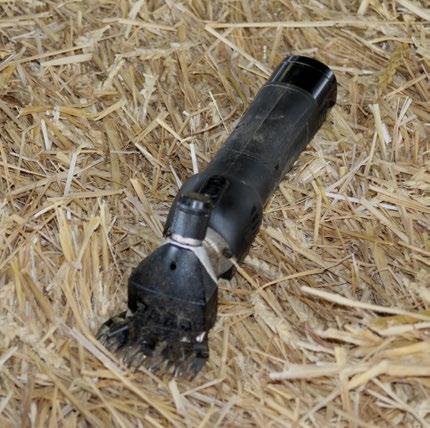
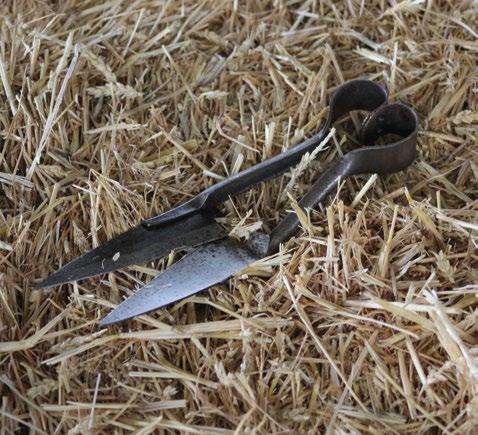
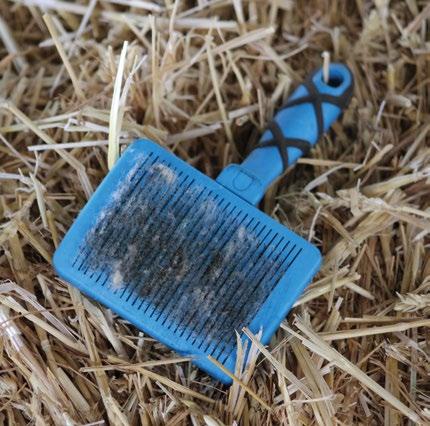
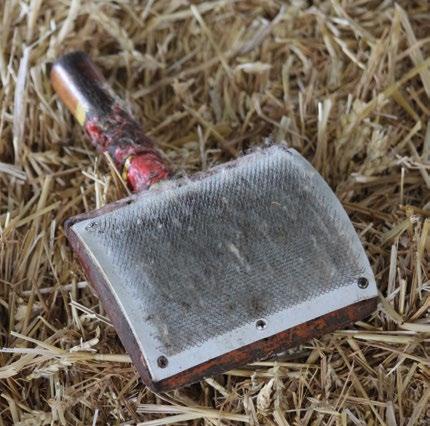
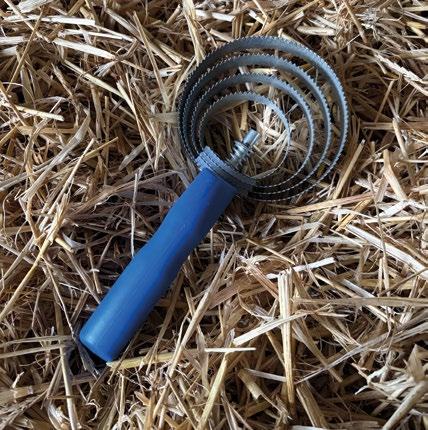
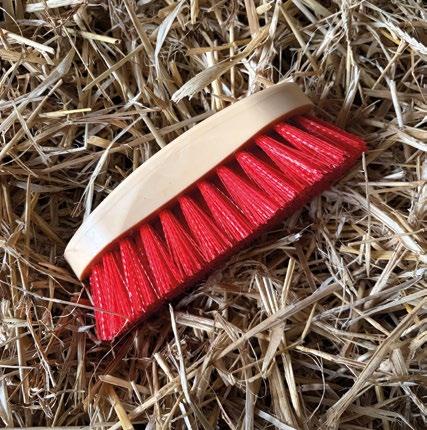
Members agree to abide by the Society rules and accept the decision of the Society’s inspectors. All sheep failing inspection will be ineligible to be shown or sold at the sale. Members who own sheep that have failed inspection are reported to the Society board, with further disciplinary actions possible.
Furthermore, members whose sheep fail inspection will have byelaw 11,6.1, detailed below, applied.
Entries which, in the Inspectors opinion, are found to have breached 11.6:
• Vendor will receive a written notice following the sale and the breach will be reported to the Board at its next meeting and may consider further disciplinary action; see also Byelaw 7.6 regarding treatment of fellow members, employees and subcontractors of the Society. Members are reminded it is against the Auctioneers rules and regulations and the Society Byelaws for ANY ejected sheep to then be sold on the Auctioneers premises.
• Sheep failing the inspection cannot be entered into another National Sale within the same calendar year.
• If a vendor commits a further breach of Bye Law 11.6 at any subsequent Society sale (which may be within the same calendar year) within five years of the first breach, they will receive a formal notice removing their eligibility to enter sheep at any Society National Sale in the following year.’
Members found to have breached the Society’s byelaws may also face a number of potential penalties, including:
• Expulsion from the Society.
• Suspension from membership of the Society.
• Suspension for a period from entering sheep for Society shows and sales and taking part in any Society sponsored activities.
• Cancellation of registrations of the member in the flock book or temporary de-registration of the member’s sheep for a period, or disqualification of sheep from any Society event or activity for an unlimited period.
• A fine, to include costs associated with the disciplinary process.
full Society byelaws can be viewed on the Society’s website
• A reprimand.
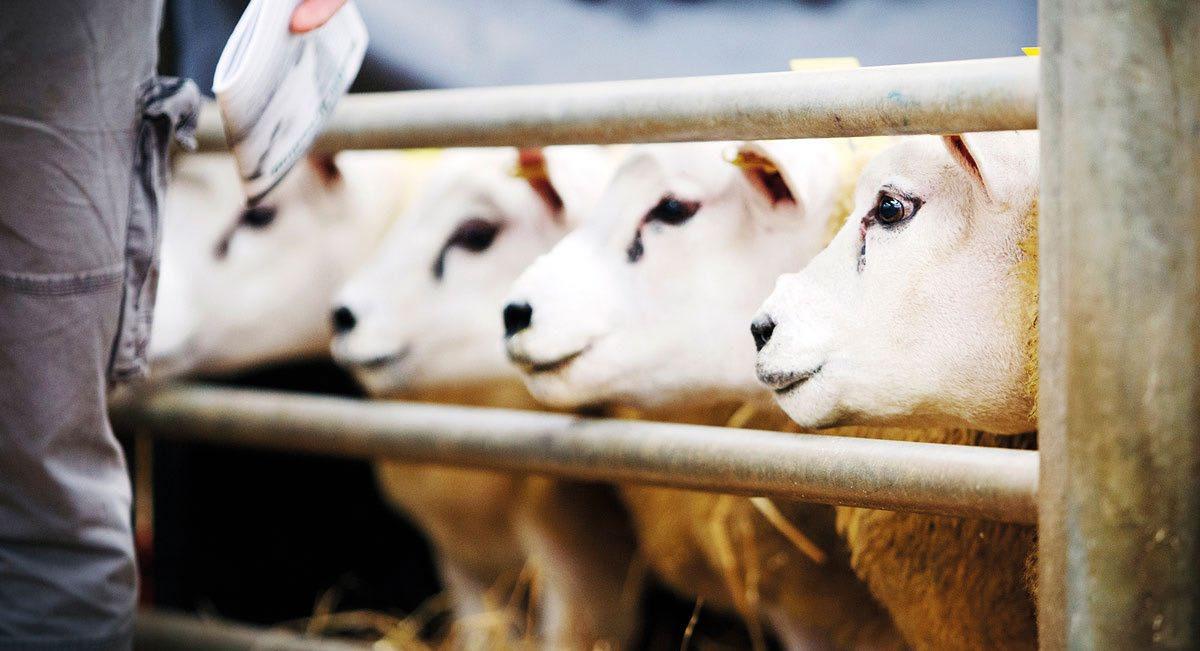
The Society board has introduced a number of positive changes to the 2026 National Sale schedules, designed to enhance the overall experience for both vendors and buyers.
Scottish National Sale
At the Scottish National Sale, 26th27th August, timings have been adjusted to improve the flow of the event.
Sale inspections will now begin at 15:00 on Wednesday afternoon, followed by the pre-sale show at 18:00.
The mart’s bar and restaurant facilities will be open, providing an excellent opportunity for members and visitors to come together ahead of sale day. On Thursday, the sale will commence at 10:00, beginning with shearling ewes, followed by ram lambs. A ewe lamb class has also been introduced for this sale.
Northern Ireland National Sale
Following a request from the Northern Ireland Texel Breeders Club, the Northern Ireland National Sale will take place on Friday 28th and Saturday 29th August. After the successful re-introduction of a two-day format in 2025, this structure will continue in 2026. Inspection and the pre-sale show will be held on the Friday, with the sale beginning at 10:00 on Saturday.
Welsh National Sale
The Welsh National Sale will be held on Friday 21st August at Welshpool Livestock Market, following a clash in the calendars.
Full timings will be confirmed closer to the event, with the sale remaining an afternoon event. Members will receive clear and up-to-date information as plans progress. A ewe lamb class has also been introduced for this sale.
The English National Sale will retain its usual format without any schedule changes applied and will take place on Monday 31st August and Tuesday 1st September. A ewe lamb class has also been introduced for this sale.
Pre-sale shows
In addition, changes have been made to the pre-sale show format across all four National Sales.
Vendors will now have the opportunity to exhibit two sheep per class should they wish, providing greater flexibility and the chance to showcase more of the quality within their consignments.
For both the Scottish National and Welsh National Sales, the number of pre-sale show classes has been reduced. These adjustments are intended to help strengthen class sizes, enhance competition and ensure a vibrant and well-supported show ring atmosphere.
These updates reflect the Society’s ongoing commitment by listening to member feedback and continually refining its flagship sales to deliver the best possible platform for trading Texels.
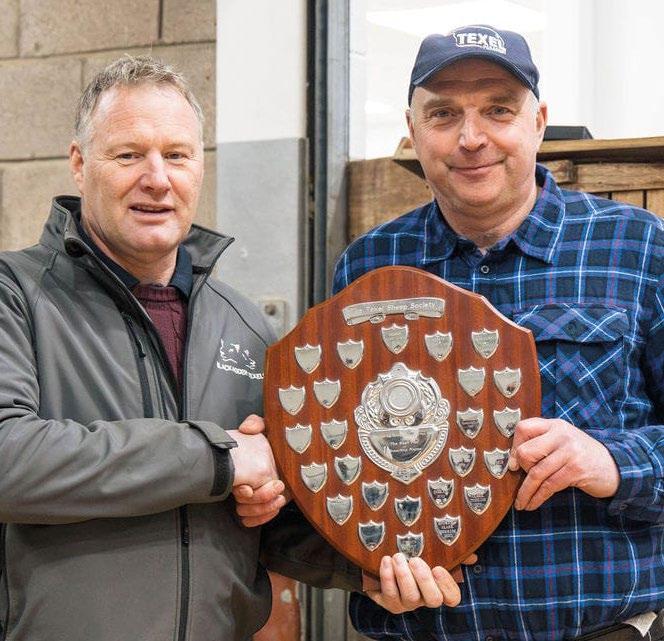
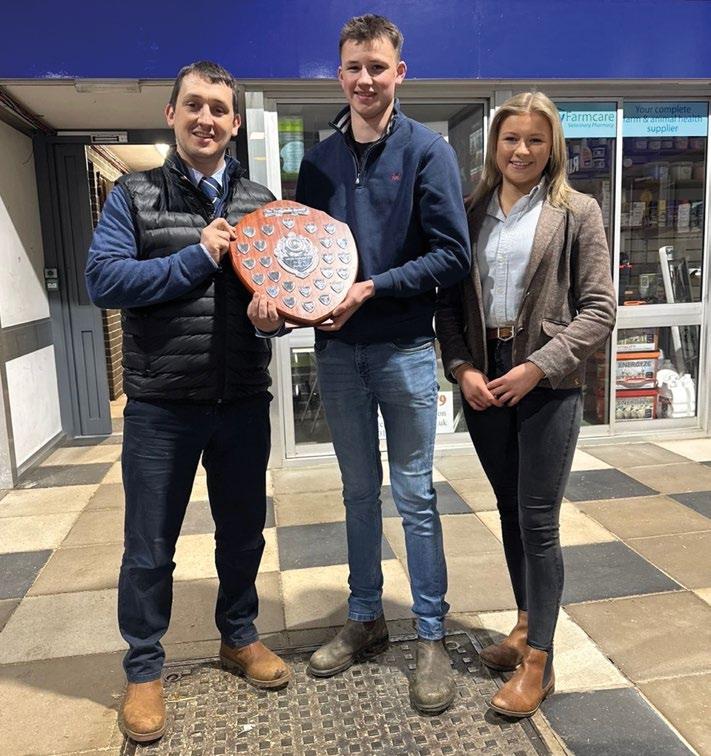
Proven performance was behind the winners of the Society’s recorded flock shields at both Kelso Ram Sales and the Main NSA Ram Sale, Builth Wells.
Taking the shield at Kelso was Robert Laird and family’s Cambwell flock, with a sale average of £5275 for 12 shearlings sold, with the pen led by the day’s sale topper, Cambwell Hotshot at £32,000.
Meanwhile, at the Main NSA Ram Sale, Builth Wells, it was Jeff and Jennifer Aiken and family’s Coniston flock which took top spot in the averages, selling three to level at £2450, with their best being a 3200gns call for Coniston Hocus Pocus.
A look back at the first 16 years of the Society’s Sire of the Year Award has thrown up some interesting facts and stats;
1
The number of overseas flocks to have won the award; Irish flock Oberstown in 2013.
1
The number of years there has been joint winners for the award, 2023.
2
3
The number of flocks to have won it three times, Sportsmans and Strathbogie.
12
The number of different flocks to have won the award (see table).
The number of award winners to have been sired by a previous winner; Glenside Razzle Dazzle, Sportsmans A Star and Sportsmans Double Diamond.
3
The number of times the Clark brothers have won the award. Twice with the Garngour flock, once with Teiglum.
1384
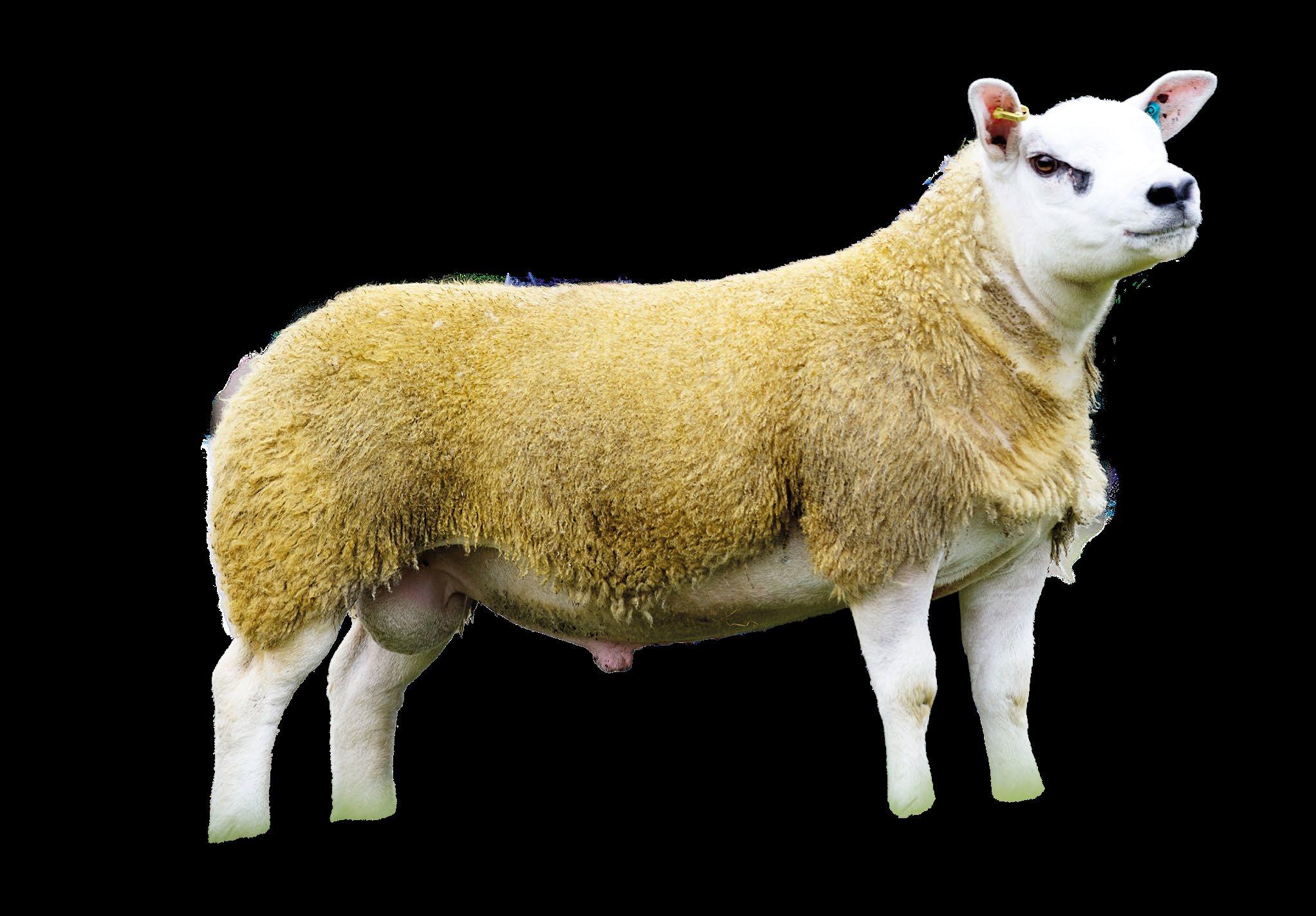
The Sire of The Year Award is presented to the breeder of the sire which records the highest average for three sons sold at the Society’s National Sales in their first year of use. The progeny must be out of different dams.
In representing members’ interests, the Society actively engages with UK and devolved government consultations where appropriate. Recent topics include:
Lamb welfare: proposed changes to castration and tail docking methods
The UK Government (Defra) launched a consultation to review the rules on castrating lambs and tail docking to improve animal welfare. The aim is to reduce pain and ensure more humane methods are used while still allowing farmers to manage sheep effectively. The consultation ran from 12th January to 9th March 2026 and involved the UK, Scottish, Welsh and Northern Irish governments.
Animal Health and Welfare Pathway: mandatory proposals
The UK Government (Defra) launched a consultation in February 2026 on making certain livestock health measures mandatory in England, including annual vet visits and flock health plans for sheep. The consultation is part of the Animal Health and Welfare Pathway and closes on 18th May 2026.
Warmer temperatures will, once again, bring an increased risk of Bluetongue being seen in UK flocks.
Members are urged to remain vigilant for signs of the disease and to protect their flocks and the wider industry by vaccination.
Movement rules are likely to change in the coming months. Members should check their devolved government’s website for the latest situation in their area and the Society will update the Bluetongue page of the Society website as new movement rules are announced, particularly in relation to their impact on Society sales.
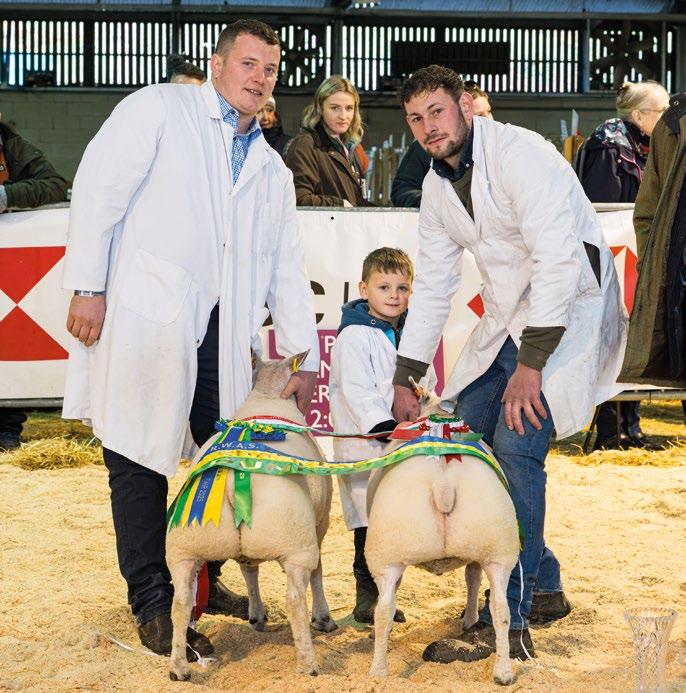
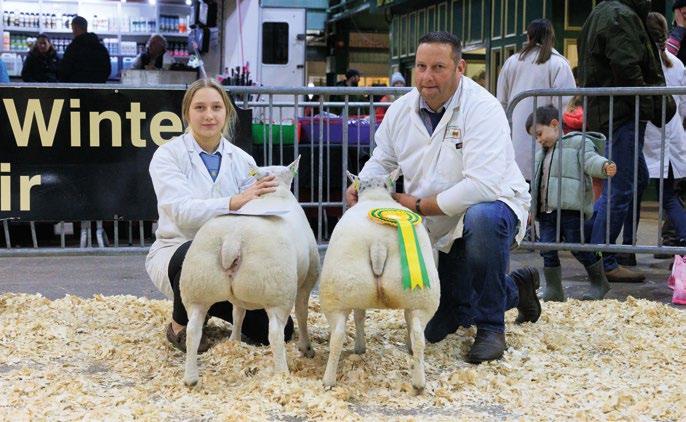
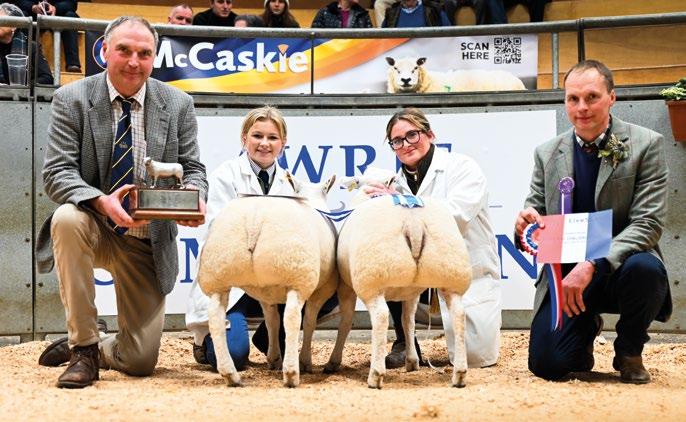
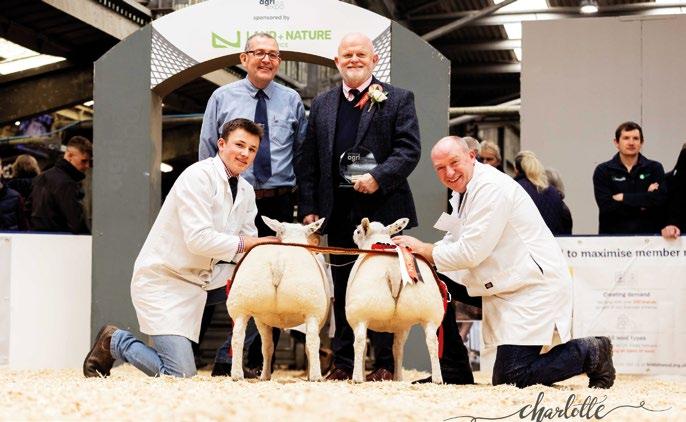
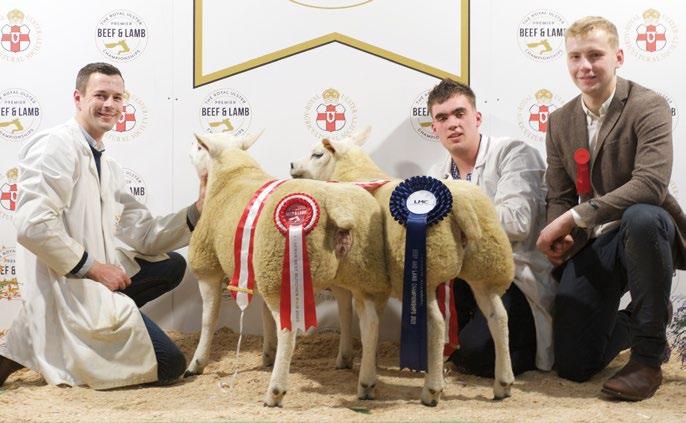
Texels were at the top end of the results at the major winter primestock shows, taking the supreme championship at the Royal Welsh Winter Fair and Agri-Expo and the reserve supreme titles at the English Winter Fair, LiveScot and the Royal Ulster Beef and Lamb Championships.
1. Lifting the championship at the Royal Welsh Winter Fair were a pair of 47kg lambs from Tirion Griffiths, Denbigh, with these going on to sell for £1500/head.
2. The English Winter Fair saw the reserve supreme championship go to Robert Garth and Sarah Priestley, with a pair which had a combined weight of 91kg.
3. Then at LiveScot, it was the Hall family, Dalston, which took the reserve overall title, with these weighing in at 51kg apiece, these went on to sell for £310/head.
4. At the beginning of the winter season, the Hall family were triumphant at Agri-Expo, Carlisle, when taking the supreme championship with a pair of Texel-sired lambs by a Woodies tup which tipped the scales at 48kg each.
5. And at the Royal Ulster Beef and Lamb Championships, Balmoral Park, the reserve supreme award fell to a pair of Texels from Stewart Ferris, with these being by Connemara Hilltop. They later sold for a new centre record of £820 apiece.
JMembers wishing to register a male should request a DNA kit for the animal through iTexel in the first instance if he hasn’t already been genotyped. It is not possible for members to transfer unregistered males prior to genotyping.
Members are also reminded that males are to be genotyped and registered prior to pedigree breeding; DNA kits can be requested simply via iTexel, with registration fees applied on the date the kit is received by the Society.
Members should aim to birth notify lambs as soon as possible to ensure they capitalise on the lower fees available earlier in the year. From 1st June birth notification fees increase for all AI, natural and ET bred lambs.
The Society reminds members that all birth notifications will be subject to fees at the prevailing rates at the time of submission. The latest fee sheet is always available on the Society website.
Should you require any assistance adding your lambs, in the first instance check your flock admin page to ensure your sheep are fully registered, followed by watching the tutorial videos on the Society’s YouTube page and if you still have problems, email registrations@texel.co.uk
Members should be aware that new Society fees will take effect from 1st June.
Members are reminded that byelaw 6.5 states that all animals (male and female) are to be registered prior to export from the UK, with registration fees the responsibility of the exporting flock/ owner. Once registered, EU compliant pedigree certificates are available to download from iTexel.
Members are reminded of the importance of maintaining accurate flock records on iTexel, as described in the Society rules.
This ensures the information presented publicly for each flock on the ‘Find Breeder’ search is up to date and relevant.
The more accurate the information about your flock is on iTexel the easier and quicker it will be to manage your flock and undertake flock management tasks.
For more tips on how to manage your flock using iTexel
Members involved with organising local shows are reminded that Society championship rosettes are available for Texel classes. To request a championship rosette for a local show email office@texel.co.uk
The value of pedigree Texels sold through sales catalogued by the Society and major commercial sales in the 2025 ram sales season and the 2025-26 in-lamb sales season totalled more than £8.25m, demonstrating the demand for Texels across the UK sheep industry.
The Society’s four National Sales accounted for £1,874,378.81, while Regional Club sales contributed a further £2,679,078. In-lamb sales then added £1,521,153.
Major commercial ram sales, the Main NSA Ram Sales and Kelso Ram Sale, boosted figures by another £2,154,284.
Society chief executive John Yates said the results highlighted the breed’s enduring position at the heart of the UK sheep industry and reflected strong latent demand for Texel genetics among commercial sheep producers.
“To have achieved more than £8.25m in pedigree Texel sales from catalogued sales and major commercial ram sales is a huge statement of the influence of pedigree Texel genetics in the UK.
“There will, of course, be many more sales the length and breadth of the UK where registered Texels have been sold, which would undoubtedly push the total value of Texels sold well beyond the £10m mark, a remarkable achievement!”
Importantly, demand has been evident across all classes of stock, with commercial buyers underpinning trade at every level. This reflects the consistent added value Texel genetics deliver to sheep enterprises, regardless of system or location.
Mr Yates added that pedigree breeders could take encouragement from the figures,
particularly at a time when the national flock continues to contract.
“Despite
wider industry challenges, Texels remain the beating heart of the sheep industry, with strong demand for the breed as both terminal and maternal sires.
Demand at all Texels sales was buoyant in 2025.
CT scanning is an additional service provided by SRUC that allows extremely accurate predictions of muscle, bone and fat quantities in live lamb carcasses. Breeders benefit from the information collected by gaining detailed insights into the lambs scanned and the breed benefits through the data that supports the Society’s genomic evaluation.
In a change to previous years, the Society will subsidise breeders £35.00 per lamb scanned towards the cost of CT scanning. When combined with the levy body subsidies, this provides a significant discount on the SRUC fees that have risen sharply over the last three years.
In 2026, the CT scanning service is available in Edinburgh, Welshpool and Stratford-upon-Avon.
The Society also pays to genotype all CT scanned lambs, saving members £25.00 in genotyping fees, providing Microphthalmia, Scrapie and now Maedi-Visna genotypes to breeders, and parentage verification; adding value for members who choose to CT scan lambs. Meaning from 2026 in total the Society invests £60.00 in every CT scanned lamb supporting the genetic evaluation and furthering the breed's development.

As the time between lambing and adding lambs’ birth information to iTexel increases, so does the chance of members introducing errors. Members should add their lambs to iTexel early to maximise data accuracy and to avoid any unnecessary late fees.
On average, in 2025, lambs were added to iTexel 72 days after
they were born, ranging from 47 lambs being added on the day they were born to 45 lambs added more than 300 days after they were born.
More than 100 flocks added all their lambs within a month of birth on average, whereas 40 flocks took more than six months to add their lambs to the database.
Common mistakes include:
Forgetting to specify the number of lambs born alive – when not filled in, iTexel automatically assumes all lambs were born dead and the member needs to contact the office to rectify the mistake. See the video here for a refresher on how to add lambs to iTexel.
Forgetting to birth notify a lamb – this can be completed on a member’s Flock Admin screen after lambs have been added.
Adding a lamb with the wrong sex – this can be corrected on a member’s Flock Admin screen. See the video here of what can be done on your Flock Admin screen.
Adding ET lambs to a donor ewe rather than a recipient – See the video here for a refresher on how to add recipients and ET lambs.
Safeguarding the Health of Your Stock! Accreditation for MV, CAE and Johne’s Disease
Buying Rams or Breeding Replacements? Protect your flock and select Accredited animals
New Monitoring Scheme for Commercial Flocks
Test a smaller number to monitor and reduce the risk of MV and Johne’s Disease

The Society is pleased to be able to report the results of flock competitions organised by regional Texel clubs which took place last year across the UK and congratulates all the winners and those who took part.
Derbyshire Club
Judge – Chris Cornthwaite, Stumpcross
Champion flock
Boden and Davies, Sportsmans Reserve champion flock
Eamonn Vaughan, Partridge Nest
Dyfed Club
Judge – Jamie Woosnam, Trefeg
Champion flock
J and G Y Davies, Aman Reserve champion flock
Roland Watkins, Cwmcerrig
Gloucester and Borders Club
Judge – Ian Andrews, Cattistock
Champion flock
Aubrey & Sue Andrews, Miserden
Reserve champion flock
S MacPherson, Sands
Northern Irish Club
Judge – Kerr Jarvie, Duncryne
Champion flock
Alan Glendinning, Lylehill
Reserve champion flock
Adrian Liggett, Corbo
North of Scotland Club
Judge – Bertie Alexander, Auchenbreddie
Champion flock
Robbie Wilson, Milnbank
Reserve champion flock
David McKerrow, Uppermill
Northern Area Club
Judge – Brian MacTaggart, Douganhill
Champion flock
Sam and Sarah Beachell, Samsar Reserve champion flock
Ruby Wright, Ruby
North West Club
Judge – Peter Woof, Stainton Champion flock
Eamonn Vaughan, Partridge Nest Reserve champion flock
Robert Pierce, Oldford
Ruthin Club
Judge – William Forrester, Doonguile Champion flock
Trefor Ryan-Davies, Bodnant.
Scottish Club
Judge – Richard Reynolds, Killyvolgan
Champion flock
Robert Cockburn, Knap Reserve champion flock
Andrew Clark, Teiglum
Shropshire and Borders Club
Judge – Philip Weaver, Empire Champion flock
W and J Forrester, Doonguile Reserve champion flock
Matthew Ellis, Cressage
Contact information for regional Clubs can be found on the Society website –www.texel.uk/contact-us
Solway and Tyne Club
Judge – Steve Smith, Penparc
Champion flock
David MacTaggart, Douganhill Reserve champion flock
Danny Hair, Drumbreddan
South East Club
Judge – Paul Castle, Ulmus
Champion flock
Claire Langrish, Pickney Reserve champion flock
Field Farm Texels, Field Farm
South Wales Club
Judge – Robin Ellis, Eglur
Champion flock
E G Morgan, Blaencar Reserve champion flock
J and G Y Davies, Aman
South West Texel Club
Judge – Anthony Carter, Millcroft
Champion flock
M Davis, Canalside
Reserve champion flock
C Coombes, Witham Vale
Full results from regional flock competitions can be found on the Society’s website.
HIGHLAND
NORTH OF SCOTLAND
NORTHERN IRELAND
RUTHIN DUTCH
SHROPSHIRE & BORDERS
SOUTH WALES
DYFED
SOUTH WEST
SOLWAY & TYNE
NORTH WEST
NORTHERN AREA
DERBYSHIRE
GLOUCESTERSHIRE & BORDERS MIDLAND
SOUTH EASTERN
SOUTHERN CENTRAL
The Society is delighted to have welcomed the following new members to the Texel flock since the autumn. The Society wishes them well in their Texel endeavours and is sure they will receive a warm welcome from members at Society and Regional Club events. Useful information for new members can be found on the Society website.
The
influence of British Texels in overseas sheep industries continues to grow as more and more nations seek out quality Texel genetics to improve their own breeding stock and, as a result, the performance of their commercial sheep industries.
These pages look at how
British Texel genetics are coming to the fore in all parts of the world, shaping and defining the future of
global sheep production.
Texels first arrived in Australia in the early 1990s when the country’s lamb industry was struggling.
The wool market had crashed and lamb meat was beginning to be seen as an unfavourable consumer product, many depicted the product as fatty and wasteful.
Australia had not imported any new breeds of sheep into the country since the 1960s and there was a limited number of dedicated meat breeds.
Then in 1989 a group of investors got together and founded a financial body to purchase Texel Sheep direct from New Zealand. New Zealand had previously imported the breed from Denmark and Finland. However, this financial body, quickly disbanded and a group of breeders stepped up and took on the financial burden to carry this project through.
It was 1993 when the first Texels were born on Australian soil. These lambs were born from embryo transfer programmes and AI programmes conducted through the Australian Texel Corporation. Australian producers were given various opportunities to purchase live sheep, embryos or semen for upgrading programs.
Within three years there were more than 350 registered Texel Studs in Australia. But, despite this early boom, Texels have always found it hard to find their way.
Initially, there was strong advocacy for the breed, particularly from the breeders and investors who brought them into Australia.
However, regardless of what their carcasses were doing in abattoirs and carcass competitions, generally agents and lamb producers could not be convinced that this breed was going to not only put more dollars in their pocket, but also improve the lamb industry.
Importation of new Texel genetics had been relatively easy, with many sourcing new bloodlines from New Zealand.
Maria Wood from the Te Rakau stud was instrumental in investing in Kirtle genetics from the UK in 2004, resulting in three fullblooded rams and a couple of ewes being born from embryos imported into Australia, along with Kirtle Banker Semen.
However, when New Zealand began to import new UK bloodlines in early 2016, Australia quickly shut its borders and since then, no new genetics have been let into the country for fear of Scrapie arriving.
More than 30 years since the breed first arrived in the country, the Australian Texel has played a significant role within the Australian lamb industry, whether that is via other breeds infusing Texel genetics for carcass attributes or simply bringing a new perspective on the way sheep should be bred and the traits which drive profitability.
In recent years the Texel Association has seen an increase in a younger generation of breeders coming on board, who believe in and can validate the attributes of the breed. There is a growing emphasis on scientific meat testing and genetic recording, such as Sheep Genetics Australia and the next generation are capitalising on these next frontier technologies.
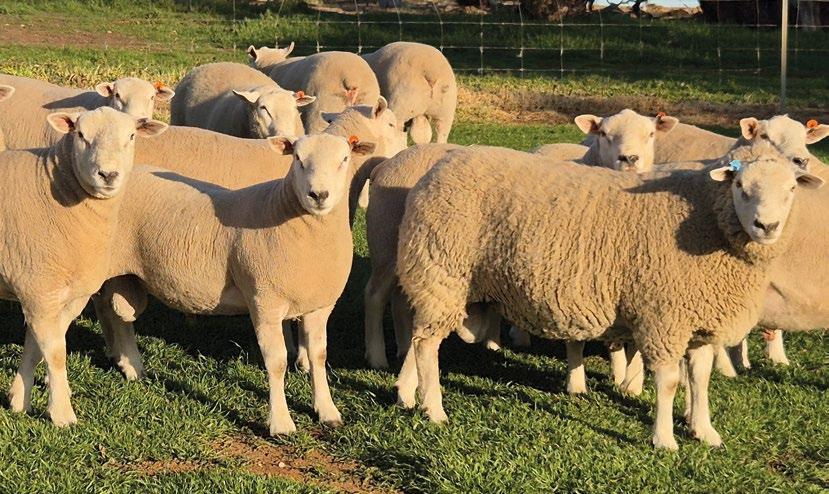
Texels have been influential in Australia, but have sometimes failed to gain overwhelming support.
Breeders over the years have invested significantly into performance recording with Lambplan, evaluating numerous traits on individual animals using raw data, genetic linkages and now 50K genomic testing.
There was a high emphasis on lean meat yield for 20 plus years and this is where the Texel excelled, with increased muscling. However, in the last six to seven years, Sheep Genetics Australia has re-evaluated its algorithms and identified that we, as a sheep industry, need to put more fat on, because animals are too lean and lamb has become tougher.
This has seen a major shift on intramuscular fat and shear force traits, which has seen breeds such as the Poll Dorset, Hampshire Down and White Suffolk, now excelling in these areas.
In 2028, the Australian Texel Stud Breeders Association will celebrate 35 years of Texels in Australia and we look forward to celebrating a breed which has influenced the Australian lamb industry for the better.
Andrew Hall
British Texels made their debut at ‘The Grand National’ Texel show in the Dutch town of Apeldoorn in September, with 78 sheep forward for judging.
Taking part in this national show, which is organised by three different flock books in the Netherlands, for the first time, the British Texel exhibits came under the close scrutiny of Texel Sheep Society chairman Peter Mitchell of the Avon Vale flock.
Despite two years of Bluetongue ravaging the country’s sheep population, the numbers forward for judging were good, with show chairman Gorrit Haintje Kulpers pleased to welcome the British Texels to the event. “The quality of sheep across all sections did not disappoint me and the crowd was good. Adding the British Texels to the show helped make up for lower numbers in the other sections caused by Bluetongue,” he added.
Peter Mitchell said it had been an honour to judge the first British Texel classes at the event and he was pleased with the standard of sheep in front of him. “Naturally, there are fewer British Texel flocks in the Netherlands, but the standard of sheep was strong in every class and the investment made by Dutch breeders over recent years in British genetics is paying off for them.”
Taking the day’s overall championship was the leader from the ram lamb class, Professors In Demand from Gerrit van den Berg, with this Kilduff Humdinger son being bred by Fryse and Gert Van Dijk.
Meanwhile, reserve in the ram lambs went to Schokland Influencer from Hans Kolk, with this one being a Teiglum Full House son.
Then, topping the shearling rams was an Incheoch D-Day son from Gerrit van den Berg, AA High Potential. He was bred by Herman Aa.
In the aged rams top spot went to Moors Gravity, an Ettrick Excite son again from Hans Kolk and bred by Mark Teeuw.
Gerrit van den Berg then won the shearling ewes with an AA Explosion daughter which had again been bred by Herman Aa.
The same breeding was responsible for the first place aged ewe, with this being another AA Explosion daughter, this time shown by breeder Herman Aa.
Leading the pack in the ewe lambs was a Kilduff Humdinger daughter from Fryse and Gert van Dijk, with second spot here going
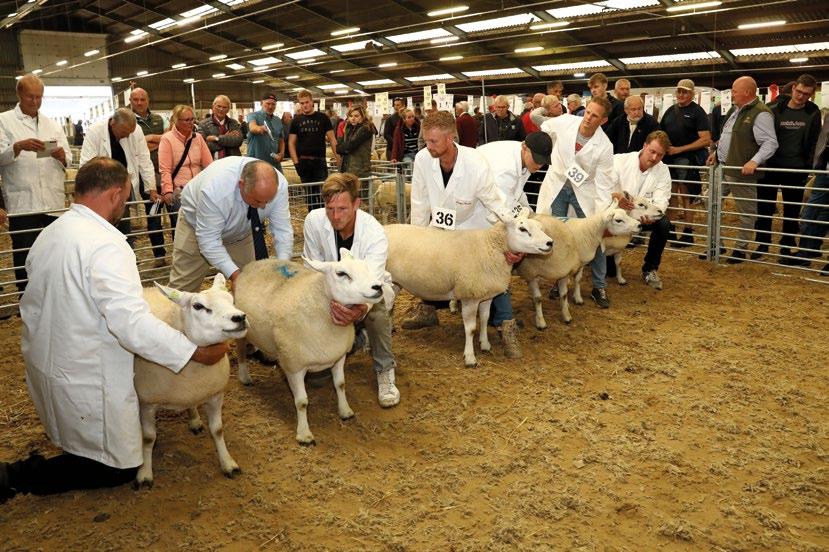
Peter Mitchell judged the first British Texel classes at The Grand National Texel Show, Apeldoorn.
to Hans Kolk with a Teiglum Full House daughter.
And the final class, a ewe with lambs was won by Herman Aa with a ewe by Lintalee Da Vinci and her lambs by AA High Potential.
Peter Mitchell said his champion, Professors In Demand, had been a great example of the breed. ‘He had a great carcass, was good on his legs and carried himself well. He has the extra length and lift we associate with the British type of Texel, with a bit of show ring sparkle too. The standard throughout was great and I commend our Dutch colleagues on an excellent show of sheep, particularly bearing in mind the struggles they’ve had over the last two years with Bluetongue.”
Texels are a relatively new breed in Mexico, despite the country historically being one of the biggest sheep producers in the world having more than 20m head and exporting wool and wovens to Europe, Merinos were the dominant type in the past.
Various reasons saw the type of sheep kept and the size of the national flock fall to about 8m mostly hair sheep through the introduction of breeds like Katahdin and Dorper. Now, more recently, Charollais and Texel genetics have been introduced, improving meat production instead of wool.
The first Texels arrived in Mexico at the end of the last century, with the first being the result of embryos imported from the UK. That was followed by live sheep from Canada, the USA and New Zealand and, once again, recent years have seen a new import protocol allow further imports of semen and embryos from the UK.
The breed is now achieving a prominent place in Mexican flocks as terminal sires and backing that up with show wins too.
At the most recent National Sheep Show last November in Querétaro, a Texel ewe was placed interbreed champion.
The winning animal, a ewe from Javiar Lara’s flock, is by a ram which is
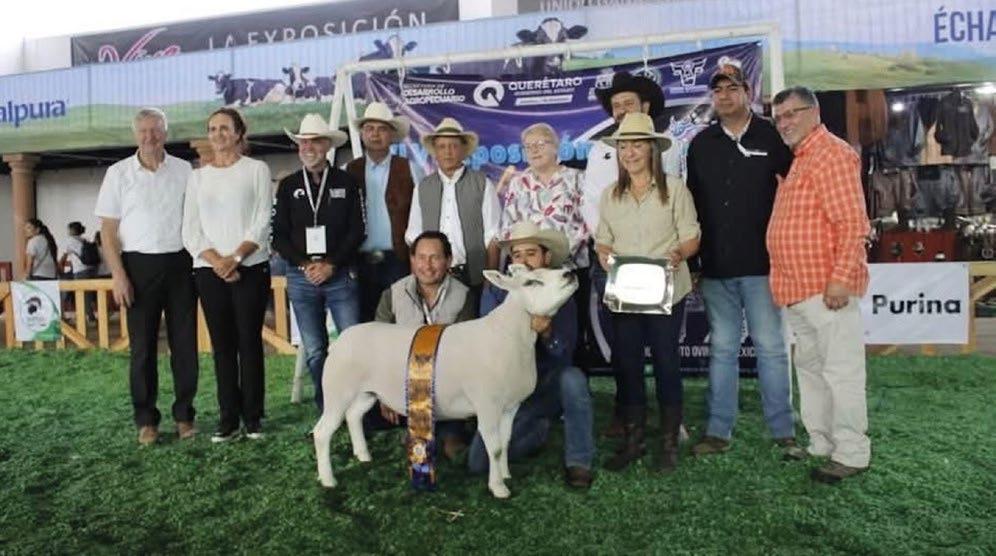
the result of embryos exported to Mexico, being by Caereinion Ace and out of a Logie Durno-bred dam by Elmscleugh Assasin, and is out of a dam by Langford Adder Again, out of a dam which is also by Caereinion Ace.
There is now no doubt that Texels are considered as the option to produce high quality lambs for the growing domestic gourmet market in Mexico.
Javier Lara
The flow of British Texel genetics across the globe has resulted in success in many territories, with British breeding coming to the fore in both show and sale rings around the world.
While post-Brexit restrictions and Bluetongue have made facilitating exports more difficult, there is still a huge demand for British Texel genetics from across the globe.
This demand, particularly from South American countries is being filled by semen and embryos, with buyers keen to source genetics from animals with both good phenotypic traits as well as strong performance traits too.
Health requirements vary for each country and full details of the health requirements for each export territory can be found on the UK Export Certification Partnership website.
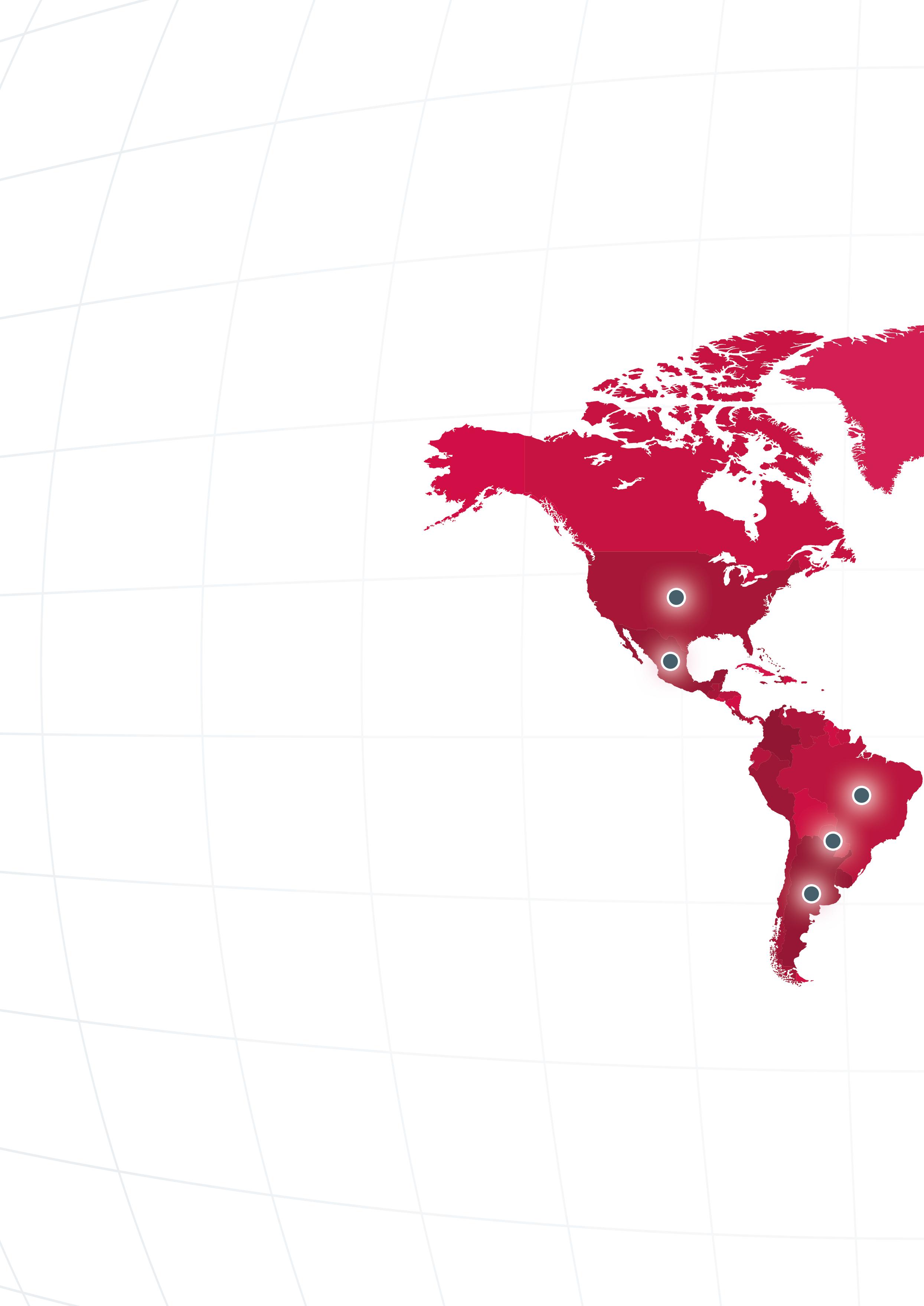
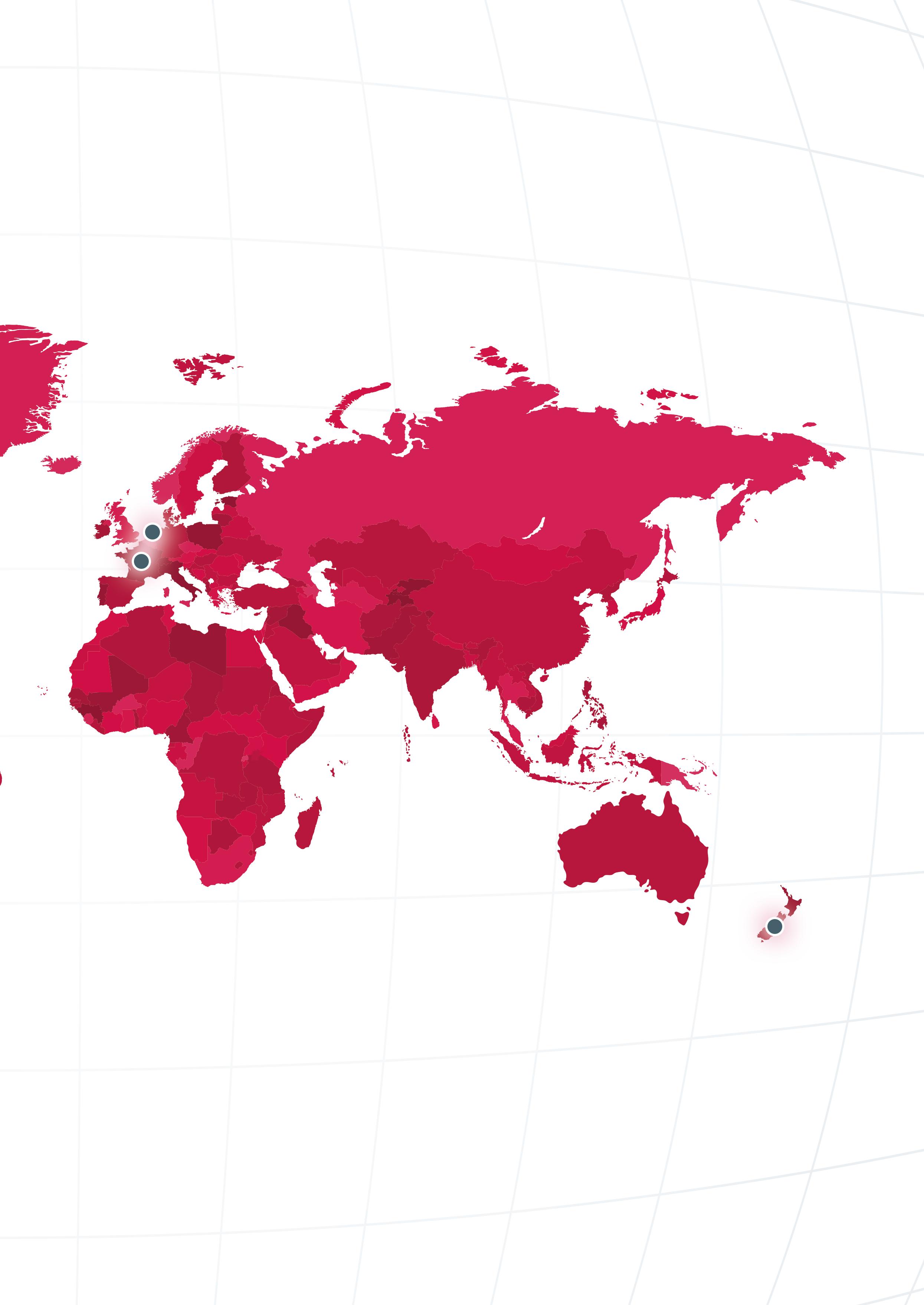
The show and sale highlights shown here, while not exhaustive, showcase how British genetics have in recent years continually brought success for those overseas breeders who continue to invest to move their flocks and the breed forward.
2017 – Semen from the Cambwell and Glenway flocks is the first British Texel semen to enter the USA following the signing of a new export agreement between the UK and USA.
2020 – A Cambwell Trademark son sells for the top price in the USA National Texel Sale when making $4000.
2024 - A daughter of Langford Adder Again picked up the reserve supreme ewe title at Ohio State Fair.
2021 – Export of semen and embryos from flocks including Logie Durno and Cambwell arrive in Mexico following the establishment of a new export health certificate between the UK and Mexico.
2025 – A Texel bred from British genetics, being a granddaughter of Caereinion Ace and Langford Adder Again, achieves a first for the breed in Mexico, claiming the interbreed championship at the Mexican National Sheep Show.
2022 – Texel semen is the among the first British sheep genetics to be exported to Argentina after a 50-year gap since the last British genetics reached the country. Further exports followed in the years after, including semen from the world record price holder Sportsmans Double Diamond.
2017 – Champion at Paris Show 2017 is a son of Teilo Welsh Dragon, a ram imported by Christophe Pery from the Davies family’s Teilo flock Wales. This followed on from progeny of Ettrick Rainbow Warrior winning first place at Paris Show in 2015.
2024 – British Texels gain first classes at Rammenkeuring De Betuwe show, Kapel Avezaath, with James Draper, Claybury, visiting to judge the classes.
This was followed in 2025, with the first British Texel classes at ‘The Grand National’ Texel show in the Dutch town of Apeldoorn. These classes were judged by Peter Mitchell, Avon Vale.
2022 – British genetics were behind new record prices in Brazil, with a pair of gimmers by Cambwell Trademark and Knock Talisker, selling for £37,356 each.
Just a year earlier a shearling ram by Cambwell Belter and out of a dam by Teiglum Vision had set a new Brazilian record when selling for £23,400.
2022 – British Texel genetics are the first imported sheep genetics from the UK to enter Paraguay following a new export agreement.
In 2024 a third share in a daughter of Garngour Detroit sold for a new Paraguayan record of £3414.
In the same year, a Cambwell Duke son sets a new Paraguayan male record when selling for £8700.
2019 – Shearling rams by British sire Vorn Yardsman were the top priced Texels sold at auction in New Zealand in 2019 when selling for NZ$8000 and NZ$6200. Yardsman himself was the fourth highest ranked sire for growth and 10th highest ranked for terminal worth across all breeds in New Zealand.
2023 - A ram bred from a UK embryo enjoyed show success in New Zealand when Maple 21289/21 collected the Texel breed championship at the Mayfield Show, Canterbury. Sired by Handbank Aidan, himself a top 1% ram in the UK, the ram is out of a Vorn ewe by Highcraigs Apex,
Put simply, genomics is the science of analysing an animal’s DNA (its genome) to uncover what’s really driving performance. Unlike traditional selection that relies on looks and pedigree, genomics reads an animal’s genetic code to identify the traits it has the potential to pass on.
In Texel breeding, that’s important. By analysing thousands of DNA markers (called SNPs), specific markers can be linked to traits that matter such as growth rate, muscle and fat production, lambing ease and more. It can be game-changing technology, but it’s also surrounded by a few persistent myths; here, we tackle some of the big ones.
Myth 1: Genomics will make my breeding values better
This one comes up a lot. Genomics doesn’t change your animals' breeding values – it makes them more accurate.
Think of it like wiping condensation off the windscreen. The road hasn’t changed, but you can see it clearly now. Genomic data increases the accuracy of breeding values, particularly for young sires and ewe lambs without progeny or performance information.
For Texel members, that accuracy means you can identify high-ranking animals earlier and with more confidence: reducing the guesswork, speeding up progress and avoiding expensive mistakes. See the article on breeding value and Index accuracy on page 34.
Myth 2: Genomics is only for the top flocks
Genomics is for anyone serious about making genetic progress faster; and because all registered males are genotyped, all flocks have access to genomic information on the sires in their flocks already.
Because the Society has been developing its genomic reference population for more than a decade, Texel members can now take advantage of the opportunity to capitalise on this resource. This puts members at the forefront of using genomic selection to drive genetic progress.
Small-scale, well-targeted testing can give Texel members insights into their flock and the data they need to lift productivity and consistency. For example, by sampling a small group of ewes, members would get a DNA-based snapshot of genetic merit for all traits. This benchmark helps you make more informed ram-buying decisions and track how your ewe base is improving over time.
Myth 3: It’s too expensive unless I test every sheep
This is one of the most common barriers and of course costs matter. But genomic testing isn’t about testing every animal; it’s about testing the right ones.
Some breeders may focus on their most influential animals, the ones driving their flocks forward. In practice, this means testing a nucleus of ewes or ewe lambs, because all sires are already tested as part of the registration process. Because ET donor ewes [born from 2025-onwards] are now required to be genotyped, this provides increased benefits for this cohort of animals.
Some breeders will genotype sale animals to provide a point-of-difference at sale time, giving their customers greater information to make informed decisions and benefitting both breeder and purchaser.
How members get the biggest bang for their buck will vary from flock to flock. Across the livestock industries, studies have shown strong returns - often more than £2 for every £1 spent on testingwhen genomic data is used strategically. The test itself doesn’t make money, but the better decisions it enables certainly can.
Myth 4: Genotyping automatically gives faster genetic gain
Genotyping gives you the information – but it’s what you do with it that counts.
Genomics improves accuracy and lets you make decisions earlier, but progress only happens when that data feeds into selection. If you test animals, but don’t change how you select or breed them, nothing really changes.
When genomics is used properly: identifying high-potential young sires, applying more selection pressure and shortening generation intervals – that’s when Texel members will see real acceleration in flock improvement.
Myth 5: Once I use genomics, I can stop recording weights and other measurements
This is a dangerous one. Genomics doesn’t replace performance information, it depends on it.
Genomic predictions are built on reference populations that combine DNA and performance data (see p36). Without ongoing recording of weights, muscle depth, lambing ease and so on, the whole system loses power.
Texel breeders who record and genotype are the ones driving progress for the entire breed. Every animal tested and recorded strengthens the accuracy of breeding values, not just for your flock, but for the whole evaluation.
When breeders stop recording, everyone’s predictions suffer, a bit like everyone using an out-of-date piece of equipment that hasn’t been updated. The best results come when genomics and performance information work together.
Myth 6: Genomic results are too complicated to use
The science behind genomics and evaluations is complex, yes, but the results are made to be practical. Just as some may not understand the inner workings of a mobile phone, they don’t need to, providing they can use it to make calls etc…
For Texel breeders, genomic data is automatically incorporated into breeding values and Indexes. At the simplest level, breeding from the highest-ranking animals: Top 1%, Top 5% and Top 10% etc…, and making sure the animal has an accuracy >50% for reliability (see page 34), will enable you to make progress. If breeders want to be more targeted, use the sub-index rankings (Growth, Muscle weight, Fat weight and Reproduction); this can be further refined by using the individual breeding values within the sub-indexes. You don’t need to understand the DNA side of things; you just need to know what the numbers mean for your flock.
Genomics isn’t a magic wand, it’s a tool and a powerful one when used with clear breeding objectives, accurate records and consistent selection pressure.
For Texel members, the opportunity is huge. Genomics helps you identify elite young sires and ewes earlier, tighten selection around key traits such as growth and muscle and build more productive, efficient flocks for the future.
It doesn’t change what’s there – it simply reveals it.
In addition to providing more accurate and, therefore, reliable, performance figures for animals, genotyping offers several other benefits to breeders and the Society.
The Society routinely checks and verifies the recorded pedigree information for all animals that are genotyped. Where any inconsistencies are identified the Society works with breeders to identify the correct information and update iTexel accordingly.
This gives the Society’s registry services greater integrity and when animals are genotyped presale, has the potential to improve the confidence of vendors and purchasers in the animals that are put forward.
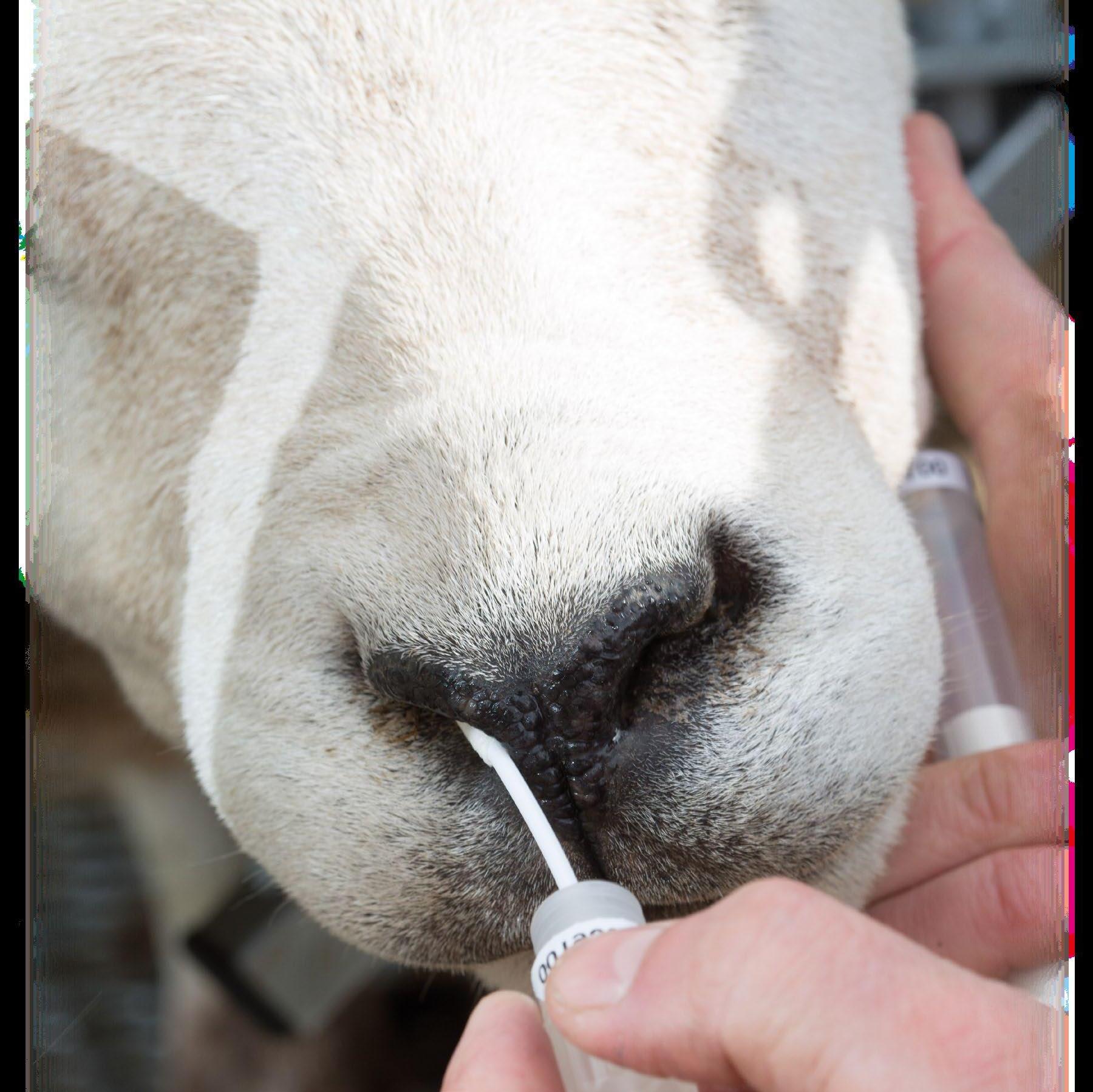
Scrapie, Microphthalmia and, from this Spring, Maedi-Visna (see section on MV genotypes - page 38) genotypes are provided to breeders and automatically published on iTexel for all genotyped animals. This information can be used by breeders as part of their selection decisions to improve the health and resilience of their flocks. Meaning that genotyping can benefit both health and performance.
Because the Society has the genotypes of sires registered in the last 10 years, this can provide insights into the diversity of the breed and how this might change over time.
The Society’s large genotype dataset is also a useful resource for researchers and can provide opportunities for the Society to participate in and benefit from, research projects such as the inbreeding analysis described in the Autumn Bulletin last year. This was only possible because of the Society’s database of genotyped animals.
Accuracy is defined as ‘the quality or state of being correct or precise’, practically it refers to how close a measurement or result is to the correct value.
This is important in many aspects of life – we want the weather forecast to be accurate so that appropriate plans can be made, we’d also like Finn Russell / George Ford / Ben Thomas / Sam Prendergast to be pretty accurate with their kicking!
Livestock breeding is no different. Breeding value and Index accuracy gives us an idea of how confident we can be in that animal’s figures and that it will pass on the traits being selected for. Improving accuracy is a result of training, in this case, the collection of more data and/or genotypes, across more progeny/siblings. The more data collected, the better it is for all involved.
Success doesn’t generally come from one-off brilliance; it’s built on good data, collected across whole flocks and multiple generations.
The accuracy values are published as a percentage between 0 (low) and 99 (high) that reflects how close a breeding value is likely to be to the animal’s true genetic merit. The higher the accuracy, the more reliable that value is. This in turn gives breeders and commercial producers confidence that what they see on paper will be realised in the field.
Traditionally, high accuracies indicated that the breeding values or Indexes had been calculated using large amounts of data. The recent switch to genomic evaluations (including DNA information in the calculations) means that high accuracies can be achieved just by genotyping an animal.
Whichever route is used, high accuracy values are unlikely to change significantly. In contrast, low accuracy values are more likely to shift as more information becomes available (performance records and / or DNA).
For commercial producers, this matters. Breeding decisions are long-term investments and accuracy helps to manage risk. It allows producers to identify which animals are worth investing in and which ones still need to prove themselves.
When is an accuracy value high enough?
Breeding values and the Indexes that are based on them, become more reliable over time as more information is added to the evaluation. The guide below provides a description of different accuracy values.
Below 50% Low
50–74%
75–90%
Likely to be based on limited pedigree or performance data. These values can change significantly.
Medium Usually includes own performance and some pedigree depth; can be achieved by genotyping. Still some risk of change.
Medium-high Often includes own performance and early progeny data; can be achieved by genotyping and limited data recording. Becoming more stable
Over 90% High
Supported by significant progeny information; or limited progeny data plus a genotype. These values are unlikely to shift significantly.
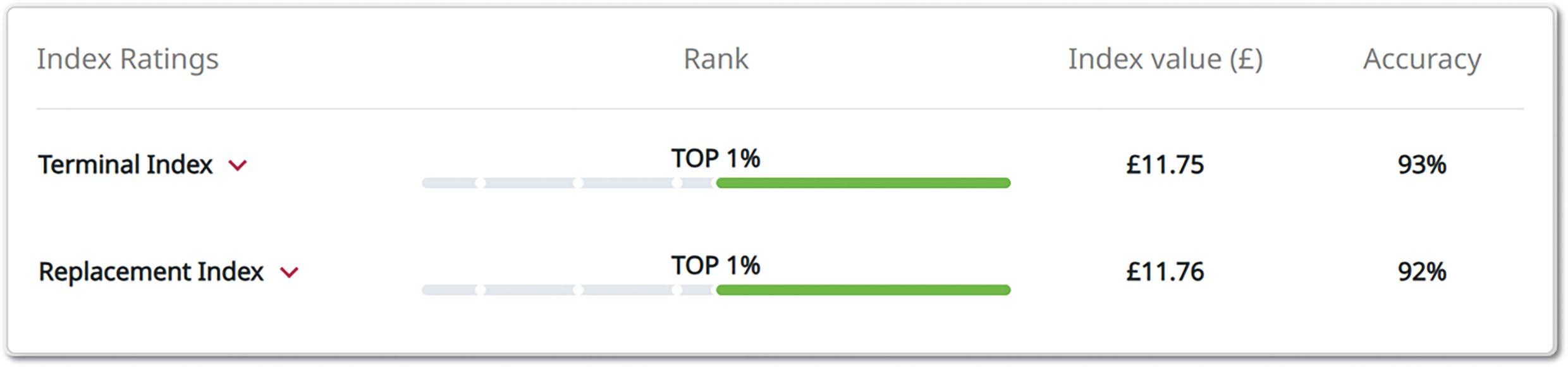
Example of Indexes with accuracy scores (%) as published on iTexel.uk.
Several factors can affect the accuracy of the breeding values and Indexes at any given time:
1. More data: Accuracy values improve as more data are collected. Pedigree information provides a starting point, but on its own, it offers limited confidence. Adding the animal’s own performance, such as birth and other weights and scan results provides more confidence. Progeny data provide valuable information; if a ram consistently sires fast-growing lambs, it gives far greater confidence that any associated breeding values reflect his true genetic potential.
2. DNA: Genomic testing also plays a key role, particularly for young animals. By using DNA information it is possible to make earlier and more reliable predictions, even before progeny hit the ground. This is particularly useful for traits that are hard to measure or appear later in life, such as intramuscular fat (IMF).
3. Linkage: Another factor in accuracy is linkage, i.e. animals that are genetically connected to others in the evaluation (sometimes called connectedness). Using rams or semen in different flocks improves comparisons, strengthens the genetic evaluation and lifts accuracy.
4. Heritability: Growth traits (based on weights recorded) tend to have higher heritabilities, so genetic differences are easier to detect and breeding values tend to be more accurate. Fertility traits such as litter size are lower in heritability, which means environmental factors have more influence and accuracy builds more slowly.
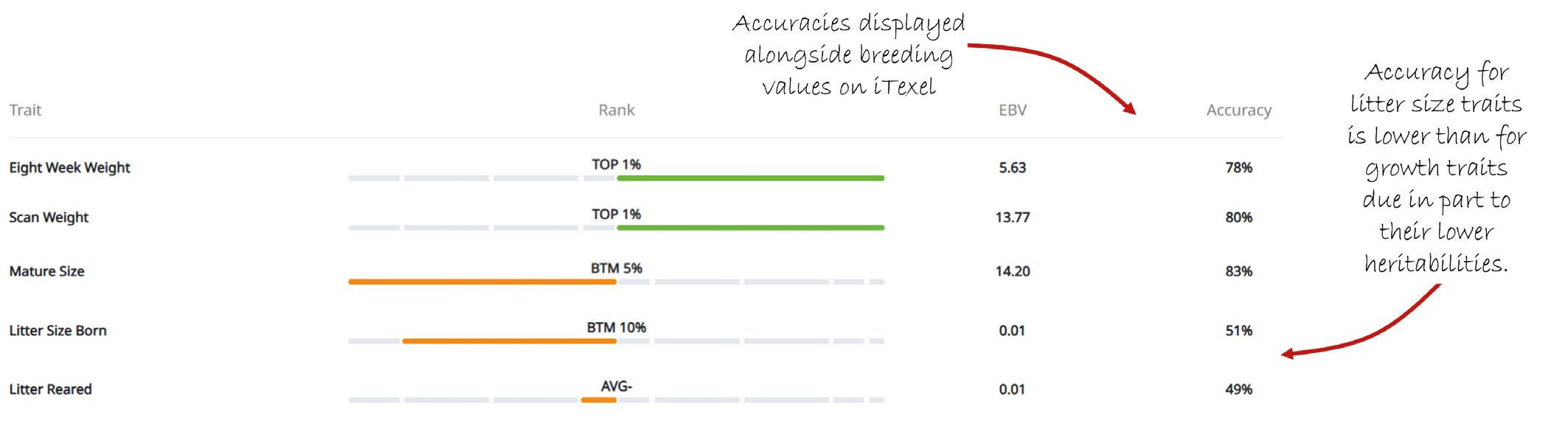
Breeding values for one animal with different accuracy values for different traits.
Building accuracy relies on the collection of good quality data over time. Recording birth dates, weights, lambing ease scores, ultrasound and CT scan results consistently is key. The more information provided, the more reliable the breeding values and Indexes become.
Using genomic testing can fasttrack accuracy, particularly for young animals. This is valuable for traits that don’t show up until later in life. Another way to improve accuracy is to use well-proven sires with wellrecorded progeny. This connects animals in a member’s flock into the broader genetic picture and improves comparisons.
There are a few common myths around accuracy (see the Mythbuster article on page 32). One is assuming that a high breeding value is best, even if the accuracy is low. In practice, a flashy number without reliable backing could change; it’s wiser to balance the value with the level of confidence in it.
Another is thinking that looks or phenotype can replace breeding values. A big, well-fed ram might look impressive in the ring, but that doesn’t mean he has the genetics to match. Appearance is shaped by feeding and environment and doesn’t always tell the full story, particularly when the environment is going to change when taken to a new flock.
There is also a belief that genomics alone guarantees high accuracy. While genomics is powerful, it works best when combined with other data such as performance records, progeny results and linkage. No single source of information is enough on its own.
Accuracy is more than just a number, it’s the confidence to support decisions. High-accuracy animals give you peace of mind: they reduce risk and help ensure the traits being selected for are passed on to the next generation. By understanding what accuracy means, what affects it and how to improve it, breeders can have more confidence in their breeding decisions. It’s not about chasing big numbers; it’s about backing animals with the data to prove they’ll deliver.
The Texel Society’s genomic reference population is a set of sheep that have been genotyped and have performance information (phenotypes) recorded on them too. This information is used to build statistical models to predict genetic merit (breeding values and Indexes) in other sheep, to improve selection accuracy and speed up genetic gain.
Building the Society’s reference population
Over the last decade the Society has built its reference population on both an ad-hoc, and proactive, basis.
In 2016 the Society introduced the requirement of a DNA sample from all registered males, a policy that continues today. This provides data on a cross-section of the breed and benefits pedigree services (see page 33 - the section on Further benefits of genotyping), though there is no guaranteed phenotype data associated with all registered males.
From 2017-onwards the Society has funded the genotyping of all CT scanned lambs – the ‘gold-standard’ phenotyping tool. This provides several phenotypes for each animal, benefitting multiple traits through a single genotype.
The research projects the Society has been involved in have also supported the genotyping of large numbers of animals; the majority of these have had performance information recorded on them too.
In 2025 there were two further developments that will also contribute to the Society’s reference population:
1. The requirement for all ET donor ewes born from the 1st January 2025 to be genotyped; like the requirement for registered males, this will provide data on a section of the breed and benefit pedigree services.
2. The development of Resource Flocks. The aim of which is to develop a robust, affordable and sustainable reference population to support the Society’s investment in genomic evaluations, breed development and Society services. The Resource Flocks work in partnership with the Society to record performance information in return for Society-funded flock genotyping.
In the first year, 10 flocks have participated that cover the diversity of the breed and the Society’s annual reference population for key traits more than doubled compared to previous years. This gives breeders greater confidence in the figures returned for all genotyped animals.
1. Data collection: Collect genotypes (DNA markers) and phenotypes (measurable traits such as weight records) for many individuals.
2. Model building: Use statistical methods to find associations between individual genetic markers and traits to create prediction equations.
3. Prediction: The monthly evaluation applies these equations to predict breeding values and Indexes for animals.
There are two main aspects of reference population management:
1. How many animals should be included? The size of the reference population varies for each trait based on the heritability of the trait, the breed’s effective population size and the desired accuracy level.
2. Which animals should be included? The Society’s reference population should represent the genetic variation within the breed, making it relevant for the breed population.
The reference population should also be refreshed each year to make sure it is kept up-to-date.
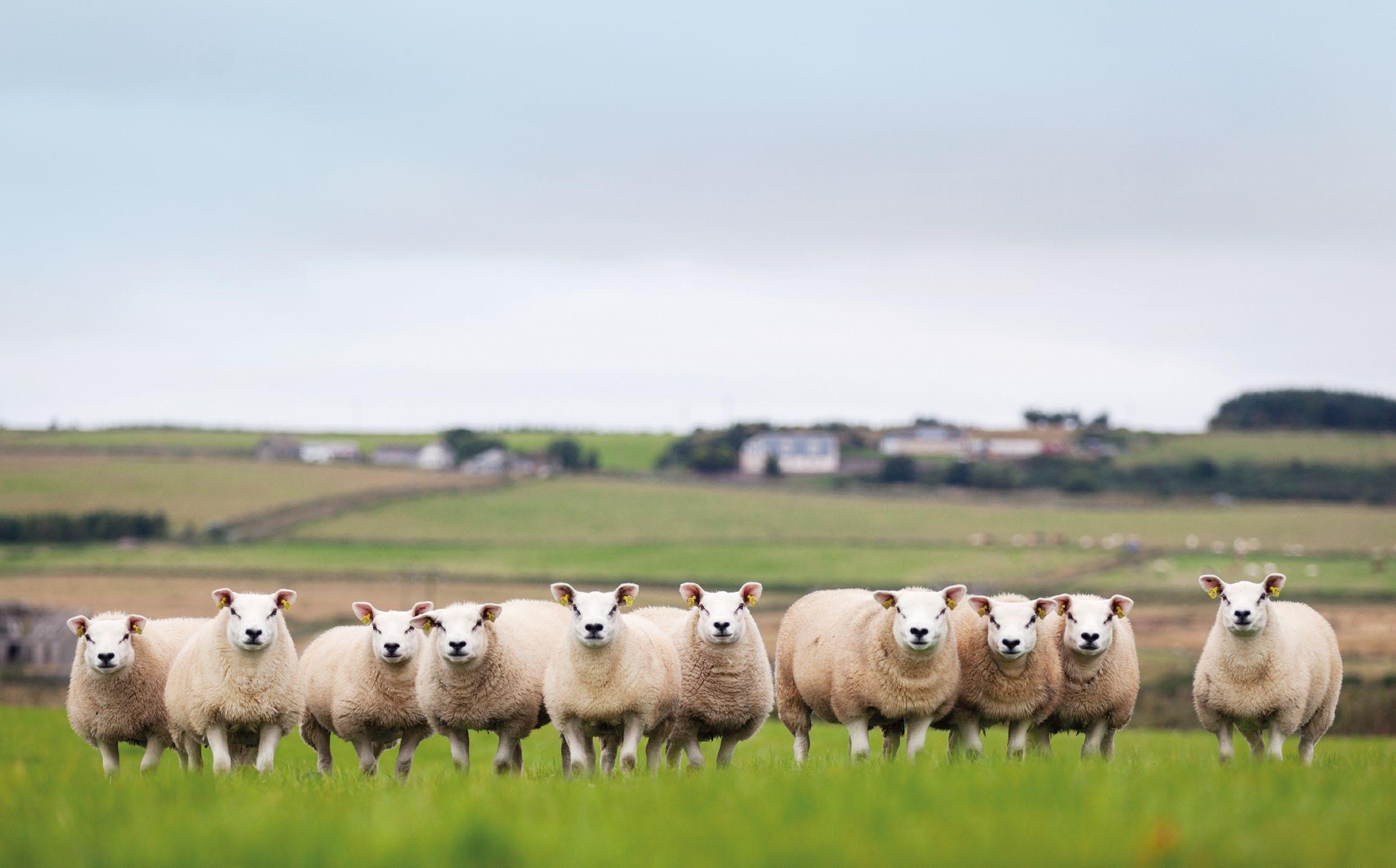
• Predicting genetic value: The reference population is the foundation that allows breeders to estimate breeding values and Indexes for young animals without waiting for their full performance data.
• Accuracy: Larger, well-structured reference populations increase prediction accuracy, meaning better identification of superior individuals.
Over the last two years, duplicate methane and carbon dioxide measurements were collected from 531 Texel lambs from three flocks.
More than 30% difference
in methane emissions per day between progeny from different sires
The Society is supporting SRUC as a genetics provider in this project and the second year of portable accumulation chamber (PAC) measurements on Texel lambs has been completed.
Female lambs had significantly higher emission levels than male lambs.
This means there is scope for selecting animals based on their genetic merit for these traits despite a relatively small number of sires being represented in the study population. An international survey has also been completed to understand the knowledge, perceptions, attitudes and communication preferences regarding genetic mitigation of emissions.
Genetics accounts for about 17% of the methane variation detected and 18% of the CO2 variation
More than half Sire A Sire B
Countries with established methane genetic evaluations showing higher acceptance and support for mitigation of emissions.
One in four of those that completed the survey thought that sheep emit significant amounts of methane.
More than 40%
of respondents thought that methane emissions from sheep need to be reduced.
The Sustain Sheep project is funded by the Green ERA-Hub programme within the EU’s Horizon Europe research and innovation programme (grant no. 101056828).
of those surveyed were familiar with the concept of methane emission mitigation and using genetic tools to do this.
70% willing to support the use of genetic tools to reduce methane emissions.
For more information
Maedi-Visna (MV) is a fatal, contagious viral disease of sheep, the name comes from the Icelandic ‘Maedi’ for laboured breathing / pneumonia and ‘Visna’ for wasting / shrinkage. Spread through close contact and milk/colostrum, the disease can significantly impact flock health and productivity. There is no cure or vaccine, with control achieved by identifying infected animals via blood tests and culling.
The onset of clinical disease is often very delayed as the virus can stay dormant for an extended period, animals may not initially test positive for three to six months post-infection, meaning many are missed on screening programmes. The disease symptoms can also be confused with many other causes, so presence in a flock is often missed or under-estimated.
The extreme variability of the virus means that developing a vaccine hasn’t been feasible so testing and removing animals is the only real control method, culling infected animals and effective biosecurity measures. However, because so many cases are missed on initial tests, repeated rounds of testing are needed (sometimes for years) until the entire flock is free of disease. This results in both slow and expensive disease eradication from flocks and when not fatal, the virus can stunt growth in lambs, leading to further financial losses.
Variations in apparent resistance to MV in different breeds has long been recognised, with increased interest in recent years in selecting for genetic resistance to the virus. Mutations in the transmembrane protein gene TMEM154 (of unknown function) have been identified to confer resistance to the disease.
Large studies of naturally infected animals have demonstrated lower infection rates in animals homozygous for a resistant allele. There is an estimated 2–3 fold lower risk of seropositivity for MV in affected flocks, though resistance may also be dependent on which strain of the virus animals are infected with.
In addition to providing resistance to initial infection, animals with resistance alleles may be better able to control virus infection and clear it to below detectable levels after infection; this offers a promising avenue for breeding for resistance to the virus.
Scientists at the University of Nottingham and the Moredun Research Institute are working to better understand the disease, the role that TMEM154 plays and characterise the diversity of this gene in different breeds.
There are four commonly occurring versions (alleles) of this gene, with two linked to resistance (Allele 1 and Allele 4) and two linked to susceptibility (Allele 2 and
• Fatal: No cure, vaccine, or effective treatment exists.
• Long incubation: Signs often appear in older sheep (over three years old) years after infection.
• Highly contagious: Spreads via close contact, respiratory secretions, milk and colostrum.
• No human risk: Does not affect people.
• Respiratory form: Progressive pneumonia, laboured breathing (Maedi).
• Neurological form: Hind limb weakness, wobbly gait, paralysis (Visna) – less frequent than other signs.
• Other signs: Wasting (weight loss), arthritis, chronic mastitis (hard udders).
• Testing: Blood tests to detect antibodies.
• Culling: Remove positive animals.
• Biosecurity: Source sheep from MVaccredited, virus-free flocks.
• Accreditation scheme: Voluntary program run by the Premium Sheep & Goat health scheme can help flocks become or stay MV-free.
• Production: Reduced growth, fertility, and lamb survival.
• Losses: Increased culling rates and economic losses.
Allele 3). Each sheep has two copies of the gene and to be resistant, an animal must possess two identical copies of a resistant allele.
These genotypes do not indicate the MV status of an animal, they will only suggest the ability of these animals to cope with MV, should they come into contact with disease. Animals that are identified as being ‘Resistant’ have been shown to be:
• Less susceptible to infection
• Less likely to spread the causative virus
• Have lesser or no clinical signs
It is important to note, that animals that are identified as being resistant can still have MV, but show significantly reduced effects.
Individual animal genotypes will be published on iTexel, available to breeders on their Gene-tex page and on individual animal pages. Similar to Scrapie and Microphthalmia, the genotypes can be included in catalogues by agreeing to ‘Publish’ the information.
There are four possible versions of the gene (named 1, 2, 3 and 4), 1 and 4 are protective, whereas 2 and 3 offer no resistance benefits. Every animal carries two versions that predict their susceptibility to MV; these can then be characterised into one of four classifications:
• Homozygous resistant
• Suspected resistant
• Heterozygous susceptible
• Homozygous susceptible
Animals identified as MV resistant are less susceptible to infection, less likely to spread disease and have lesser or no clinical signs.
Each classification is described in the table below, including whether they can be used for breeding resistance to MV. Though as with all breeding decisions, this trait should be considered alongside other breeding criteria and prioritised appropriately.
Classification Genotypes Definition
Homozygous resistant 1,1 4,4
Suspected resistant 1,4
Heterozygous susceptible 1,2 1,3 2,4 3,4
Homozygous susceptible 2,2 2,3 3,3
Animal is resistant to MV and possesses two identical copies of resistant alleles (1 or 4). This animal is an ideal candidate for breeding further genetic resistance to MV.
Animals possess one copy of both allele 1 and allele 4. Animals are potentially resistant to MV, but sufficient evidence has yet to be collected. This animal is an ideal candidate for breeding further genetic resistance to MV.
Animal is susceptible to MV but possesses at least one copy of a resistant allele (1 or 4). This animal can be used for breeding genetic resistance to MV.
Animal is susceptible to MV and possesses no resistant alleles. For breeding genetic resistance to MV, this animal will need to be mated to an animal with resistant alleles (1 or 4).
Further information can be found on the Society’s FAQ page SCAN HERE
Laryngeal chondritis (LC) is a severe, obstructive respiratory disease in livestock, particularly young sheep and goats, involving inflammation, swelling (oedema) and potential abscesses in the larynx’s arytenoid cartilages. The condition causes noisy, difficult breathing (stridor, dyspnoea) and potential death from hypoxia. Often linked to microbial infection, trauma, or breed predispositions, it requires prompt treatment with antimicrobials, anti-inflammatories and sometimes tracheostomy.
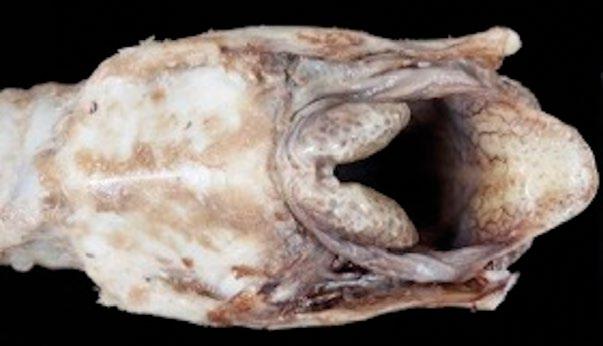
Laryngeal chondritis can be an emotive issue and one that few breeders will freely discuss with the Society or admit to having within their flocks.
The Society engaged with Ben Strugnell and Katie Waine from Nottingham University in 2018 / 2019 as part of their work to investigate larynx anatomy. This demonstrated a funnel-like larynx in the Texel compared to the more constant cross-section in Blue-faced Leicester sheep, as reported in previous Bulletins. The investigators suggested that several different physical traits could lead to the clinical presentation of Laryngeal chondritis. Other publications have also indicated that lesions in the throat can cause the condition.
A survey of Irish breeders by the Irish Department of Agriculture, Sheep Ireland and University College Dublin, to document flock health issues suggested using ultrasound analysis of necks to see if any variation or susceptibility could be identified in the live (unaffected) animal. The Society understands that some work has been completed, but it hasn’t been published. Perhaps most importantly, the report highlighted the lack of a definitive diagnosis for the condition, meaning that most data collected are classed as anecdotal and ‘throat problems’ could be due to several causes.
Members have frequently been asked [through the Bulletin] to get in touch if they have affected animals, though responses to these requests are minimal. The Society
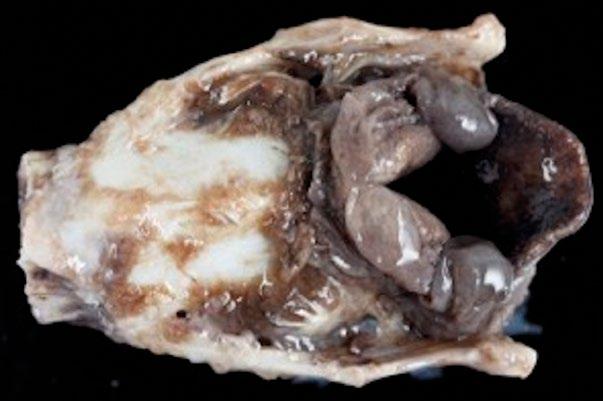
will genotype affected animals at no cost to members that do get in touch. Laryngeal chondritis is also included in the list of fate codes on iTexel that can be reported when recording animal deaths. However, these cases too are classed as anecdotal.
Because of the lack of a definitive and accepted diagnosis, reliable and accurate data collection is challenging. This means it isn’t possible to develop a breeding value for LC (resistance or susceptibility) because of the possible variation in any data collected to date.
To support collection of accurate, unbiased, data on the necks of Texel lambs, the Society engaged with SRUC’s CT scanning service in 2019 so CT scanned Texels also have a longer scan that includes the neck region to build a dataset that can support the development of a breeding value or be analysed as part of future R&D. All these animals are also genotyped by the Society; however, the Society is missing the essential clinical data of animals with a confirmed diagnosis.
There are fewer than 200 animals with LC recorded as a fate code (and they may be wrongly diagnosed and not have had it) on iTexel that have also been genotyped. Estimates of the sample sizes required to complete a genomic analysis are in the region of at least 1000 genotyped and accurately phenotyped (known clinical cases) animals (plus the same number of unaffected animals data which the Society likely has). This is due in part to the high likelihood that the condition is polygenic
A normal Larynx (l) compared to one from an animal suffering from Laryngeal chondritis.
Most common in young rams (18-24 months), but also seen in goats, horses and cattle.
Sudden, severe difficulty breathing (dyspnoea), loud inspiratory noise (stridor/stertor), extended neck, flared nostrils, open mouth, reluctance to move, leading to fatal hypoxia.
Inflammation and oedema of the arytenoid cartilages, often with necrosis, ulceration and abscess formation.
Unknown aetiology, but suspected to involve bacterial infection, trauma from drenching/bolusing, or breed conformation.
No definitive diagnostic test (particularly in the live animal), endoscopy, radiography, and ultrasonography can be used to view cartilage changes and abscesses.
Emergency tracheostomy for severe obstruction, prolonged antimicrobial therapy, anti-inflammatory drugs and corticosteroids; overall the condition is associated with a poor prognosis.
in nature – rather than due to a single mutation as is the case for conditions such as Microphthalmia.
The Society is fully committed to driving the uptake of genomics and data recording in the breed and invests heavily in supporting this. Many of the barriers to data recording have been removed and the Society is funding a genomic reference population to ensure that the breeding values published on iTexel remain relevant and applicable to the population. But to tackle LC more support is needed from members to develop an accurate dataset before any research can begin
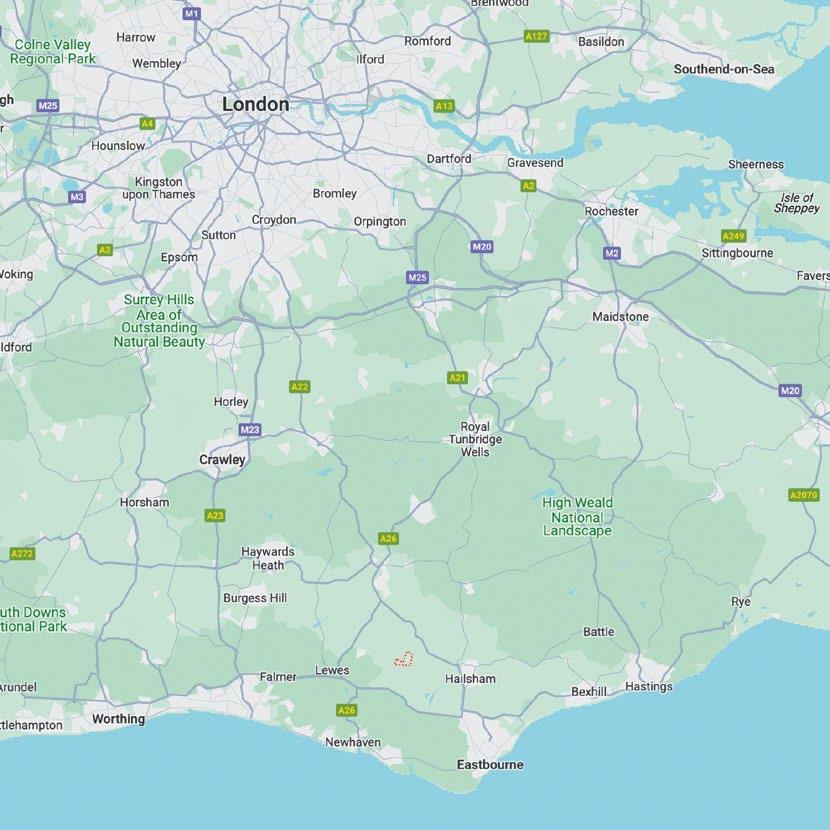


The summer show season is just around the corner and many breeders will be turning their thoughts to the major shows. Once again this year, the Society will be supporting a number of events across the UK.
This year’s judges line-up features some renowned breeders who will have the task of sorting through what will, undoubtedly, be quality entries at all shows.
13th-18th May 2026
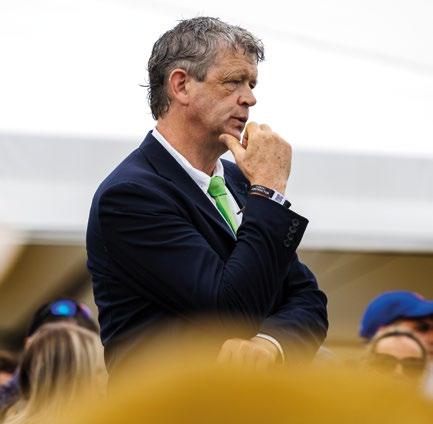
Flor Ryan of the Lawn flock, Ireland, is the judge for this year’s Balmoral Show, Lisburn.
Co Kildare-based Flor has been breeding Texels since 1987 and judged the Royal Highland Show in 2023.
The Lawn flock will be known to many UK breeders as the home of the dam of a number of notable animals from the Hexel flock of Donald MacPherson and family, including the 65,000gns Hexel Django and Hexel Born To Be Wild, among others.
Flor said after many years of attending Balmoral Show at its current home and formerly at Kings Hall it was an absolute honour to be asked to judge this year’s Texel classes.
12th-14th June 2026
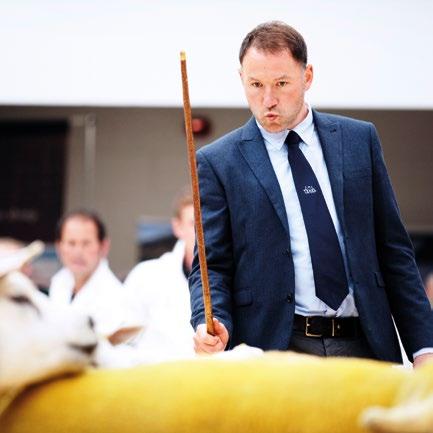
No stranger to the show ring, John is a well-known face across the livestock sector, being a noted breeder of not only Texels, but also Bluefaced Leicester and Blackface sheep as well as Charolais, Limousin and Luing cattle at home in partnership with his father Archie.
An accomplished judge across both sheep and cattle, John has previously placed entries at numerous local, regional and national shows, including the Society’s Textravaganza National Show in 2021. He has also enjoyed success in the sale ring with Texels, most recently selling a gimmer for a new sale record of 20,000gns at the 2025 Scottish National Sale, selling Allanfauld Impeccable at 32,000gns at the Solway and Tyne Club Sale and hitting 22,000gns with a shearling at Kelso in the same year.
John said the opportunity to judge the Society’s Southern Feature Show at Royal Three Counties was one he was looking forward to and he expected a quality entry from local flocks.
Northern Ireland National
Armagh 13th June 2026
The Wilkinson family have been breeding Texels since Harry bought an Irish bred gimmer lamb at Carlisle in 1987 from George Allen of Automarts.
Today, he and his son, George, run about 200 Texels under the Arkle and Ellen Valley prefixes, alongside 400 commercial ewes which are put to their own tups. The flock runs alongside the family’s other enterprises, namely a 140cow dairy herd and a holiday complex and leisure pool.
Highlights over the years have included selling tups to 32,000gns, 20,000gns and 10,000gns and gimmers to 10,000gns.
When it comes to stock selection
Harry favours a long-bodied sheep, with brightness, good colours, hair and skin, and as he was taught in YFC ‘correctness’.
18th-21st June 2026
Northern Ireland breeder Brian Hanthorn, Mullan, has the honour of judging this year’s Royal Highland Show having bred Texels since 1992 and enjoyed notable successes in both the show and sale rings.
A well-respected breeder, Brian’s highlights include selling to a top of 52,000gns for Mullan Vivaldi, with other sales at 42,000gns for Mullan Armani and Mullan Amigo at 32,000gns. The flock’s females have also, historically, also been in demand both from home and also at sales in Northern Ireland and GB.
With a keen eye for both pedigree and commercial traits, Brian will be looking for well fleshed, correct sheep which also showcase the style the modern Texel is renowned for.
7th-10th July 2026
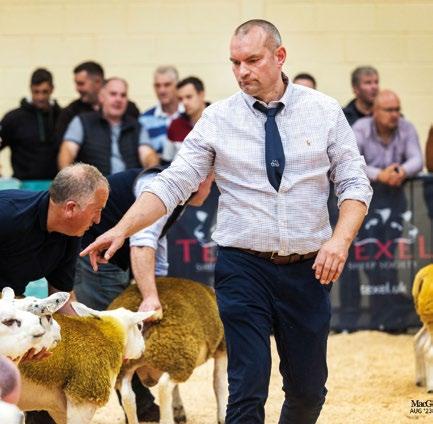
Taking charge at the Great Yorkshire show is Magherafelt, Co Londonderrybased Richard Henderson of the Ballynahone flock.
Richard has been breeding Texels since 1990 and produced the male champion at the Scottish National Sale in 2015 with Ballynahone Winner and has sold gimmers to 19,000gns.
Running 40-ewes in the Ballynahone flock, Richard has judged at events across the UK, including the Scottish National Sale in 2023, Textravaganza in 2021, the Royal Welsh Show in 2019 and the English National Sale in 2010. He is excited to have been asked to judge at the Great Yorkshire Show.
20th-24th July 2026
Texels have been central to Dye Clark’s life, having been brought up in the breed with the family’s Garngour flock and now, alongside his wife, Elizabeth, running the Clarks flock.
Farmed alongside pedigree Bluefaced Leicesters, Beef Shorthorns and crossbred ewes, the Clarks flock has enjoyed success in recent years, including selling Clarks Gray Goose for 30,000gns at Lanark in 2023.
A noted stock judge during his YFC days being twice a runner up in the Scottish YFC stockman of the year competition, Dye is also a noted commentator at shearing competitions across the country.
Dye says he is honoured to have been invited to judge the Royal Welsh and is excited to see the quality of Texels on show.
Later in the summer attention will focus on the Society’s National Sales and once again, some highly experienced and knowledgeable judges will be placing the entries.
21st August
Long time breed supporter Geraint Jones, Erw, has been breeding Texels since 1979 on his upland farm near Corwen, north Wales.
A well-known figure in the breed he has been heavily involved with the Ruthin Texel Club since its formation, having been a founder member of the Club, and has enjoyed considerable success at both shows and sales.
Show highlights included winning the female championship and the reserve male championship at the Royal Welsh as well as taking the supreme carcass title at the Royal Welsh Winter Fair.
Having judged at many shows and sales across the UK, including the Great Yorkshire Show, the English National Show and Sale, The Northern Ireland National Sale, the Irish Premier Sale and the Main NSA Ram Sale, Geraint is pleased to be judging this year’s Welsh National Sale.
26th-27th August
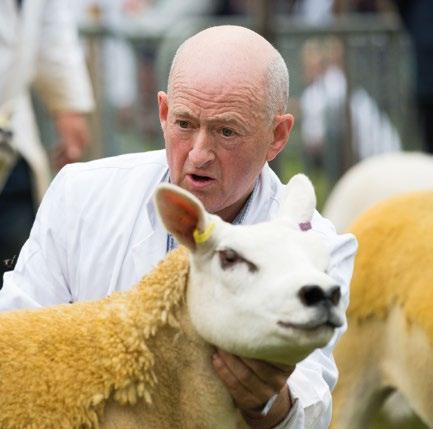
Geoff Morgan and family have been breeding Texels for more than 20 years in the heart of the Brecon Beacons National Park and the Blaencar flock is currently the All Wales champion flock.
The family’s aim is to breed quality rams and females with traits essential for both the pedigree and commercial markets.
Recent years have seen the Blaencar flock enjoy some memorable highlights, including winning both the ram lamb and ewe lamb competition at the Royal Welsh Show in 2023, with the ewe lamb later being crowned female champion and reserve overall champion.
Further success followed at the Royal Welsh in 2025, where a Blaencar ewe lamb was again awarded reserve female and reserve overall champion.
Recent sale highlights include top price ram lamb at the NSA 2024 with Blaencar Hercules at 4200gns and joint top price shearling ram at the NSA in 2025 with Blaencar Hurricane at 9000gns.
Geoff is very much looking forward to judging at the Scottish National Sale and seeing the usual high standard of sheep on show.
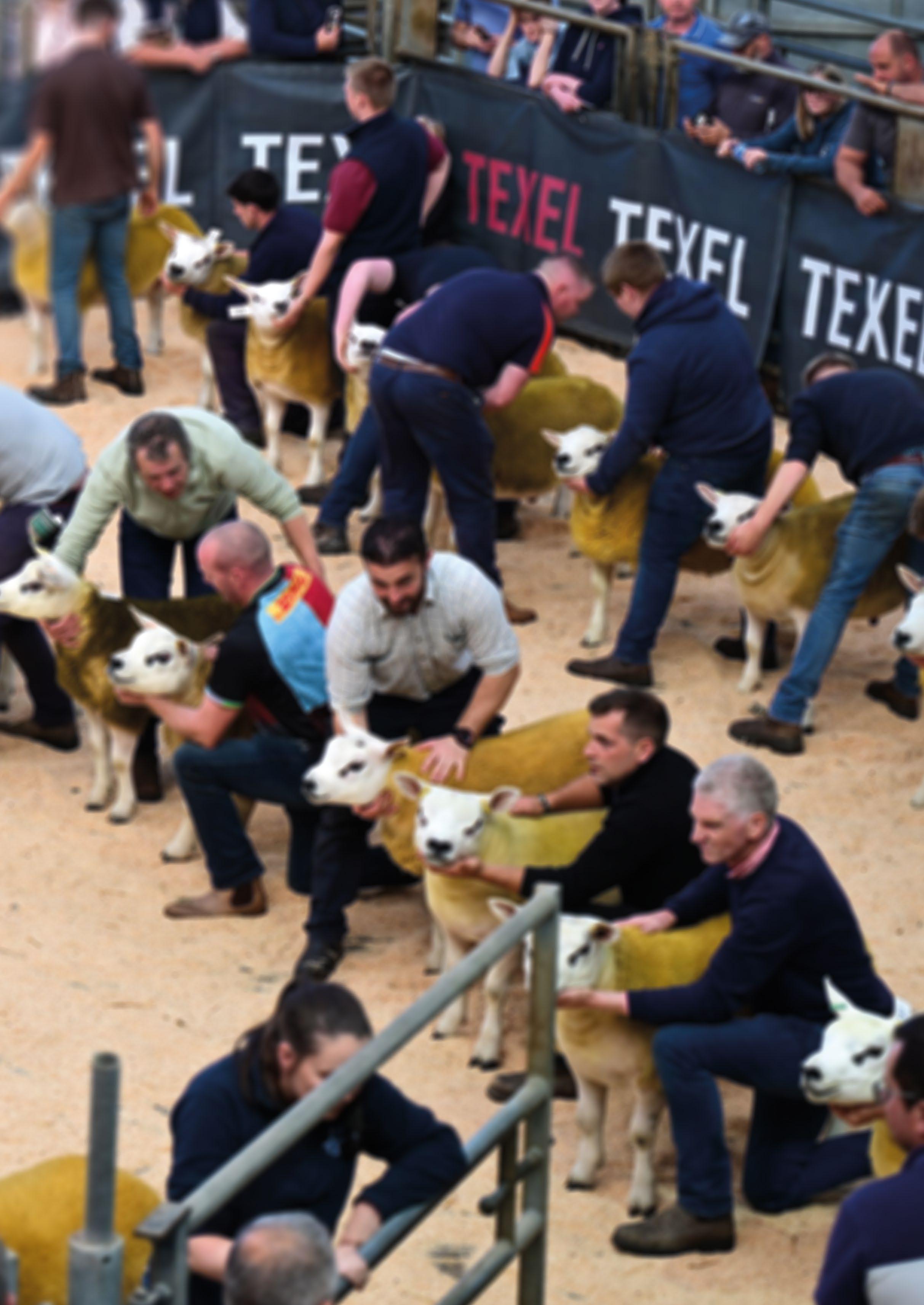
28th-29th August
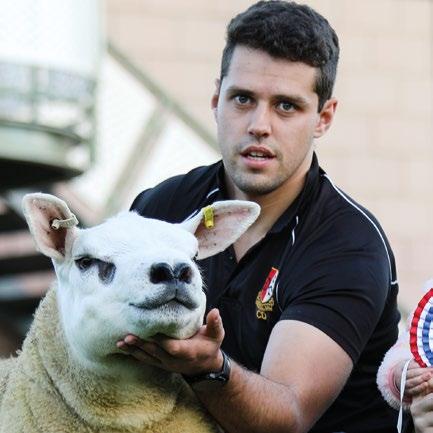
Cai Davies runs the Llandeilo, South Wales-based Teilo Texel flock with his parents, wife, daughter and sister.
Founded in 2002, the 30-ewe flock focuses on commercial soundness and power, using embryo transfer to optimise the family’s breeding goals.
Targeting ram lamb sales, Teilo lambs are sold at the Solway and Tyne Club sale, Carlisle and the NSA Wales and Borders ram sale, Builth Wells.
Meanwhile, the flock also sells females regularly, including 15–20 in-lamb ewes and 5–10 ewe lambs annually between Builth Babes, The Dyfed Club Sale and privately from home.
Notable successes for the family, include winning the All Wales Flock Competition on two occasions, with a major highlight coming in 2025 when Teilo Iasu Mowredd was crowned champion at the Main NSA Ram Sale before selling for 20,000gns.
Having judged at multiple local and regional shows, Cai is honoured to have been invited to judge the Northern Ireland National Sale, an event he’s very much looking forward too.
It will also complete a family grand slam with his grandfather previously judging the English National, his father the Scottish and Welsh and now Cai the Northern Irish National.
31st August-1st September
Peter Gray, Scrogtonhead, has, alongside his family been breeding Texels since 1992. The ambition was to breed Texel shearlings for the commercial market, to be sold at Kelso tup sales and the goal has never changed since.
Selling at Kelso since 1993, highlights include selling Scrogtonhead U-Stoater for £35,000 in 2014. The family host an annual production sale of gimmers which now takes place at home in August, with Peter taking to the box himself.
Peter has a real crave for easy fleshing sheep and prioritises sheep with commercial attributes, particularly stock with an exceptional shoulder and a level top line along, as well as being well wooled with a leg in every corner.
Peter’s judging experience includes judging at shows all over Scotland as well as the Main NSA Ram Sale, Builth Wells, in 2012. His most high-profile appointment to date was Balmoral show in 2024, judging the sheep pairs and group of three interbreed championships. He is looking forward to judging the usual high standard at the English National Sale.
20th-21st September
Farming in Northumberland, Jonathan Watson runs the Brijon flock of Texels alongside flocks of Suffolks and Beltex and pedigree herds of Limousins, Charolais and British Blues.
Concentrating solely on producing shearling rams, the flock sells regularly at Kelso Ram Sales and the Main NSA Ram Sale, Builth Wells, as well as the Solway and Tyne Club Sale, Carlisle and, for the first time in 2025, the English National Sale, Worcester.
Sales highlights include a £9000 sale at Kelso in 2014 and numerous sales at or around 7000gns, including at the Main NSA Ram Sale.
Jonathan’s aim is always to produce the best commercial rams he can, with pedigree sales being the bonus on top.
“I’m always looking for a good shoulder and top on the rams we buy as that’s what our commercial customers value.”
This award, now in its fourth year, is made to a member and recognises some of the unsung heroes within the breed who work to support their local Texel Club and raise the profile of the breed in the process.
This year’s Texel Sheep Society Spotlight Award nominees demonstrated an incredible depth of passion, knowledge and skill, making the task of selecting a winner extremely difficult, according to Society chief executive John Yates.
“All five of this year’s nominees were an absolute pleasure to interview and showed why this award is so important within the Society. They are all excellent ambassadors for the Texel breed, their regional clubs and, importantly, British farming.
“Selecting a winner was not an easy task and every single nominee should be exceedingly proud of themselves. I and my fellow judges, Society chairman Peter Mitchell, Avon Vale, and Society events manager and YDP coordinator, Ailish Ross, were immensely impressed with the quality of the nominees and their commitment to the Texel breed.”
Winning the award this year is Katie Aiken of the Coniston flock. Nominated by the North West Texel Breeders Club.
Katie exemplifies what makes the Texel Society and, particularly, the Society’s Youth Development Programme, so successful. While striving to further her own achievements, she is quick to support others in achieving their goals and always willing to lend a hand wherever she can with both Society and Club activities.
However, the high standard displayed by the other nominees, Robert Harvie of the Sadlerhead flock, Cai Davies of the Teilo flock, James Dunlop of the Eastfield flock and Henry Summerhayes of the Peacehay and Holywell flocks, made for tough competition. Every nominee this year was of an exceptionally high calibre.
“The judges extend their congratulations to all nominees, it is reassuring to see the future of the breed in such capable hands,” added Mr Yates.
Katie Aiken – Coniston, North West Texel Breeders Club
Katie has been involved with Texels her entire life. Despite being the youngest nominee this year, her knowledge, experience and passion for the breed, the Society and local clubs are exceptional. Growing up with her parents and her grandparents, on both sides, breeding Texels, Katie was immersed in the breed from an early age.
Her achievements include winning the Overall Young Handlers Trophy at the Royal Highland Show and working alongside her family showing Procters Cinderella to interbreed championship success at the Royal Welsh Show as well as presenting a pen of ram lambs at the Scottish National Sale, where Procters El Presidente topped the pen at 80,000gns.
While winning awards is a highlight, Katie values her resilience and determination in continuing to do what she loves, particularly through challenging years and takes pride in achieving great things with the support
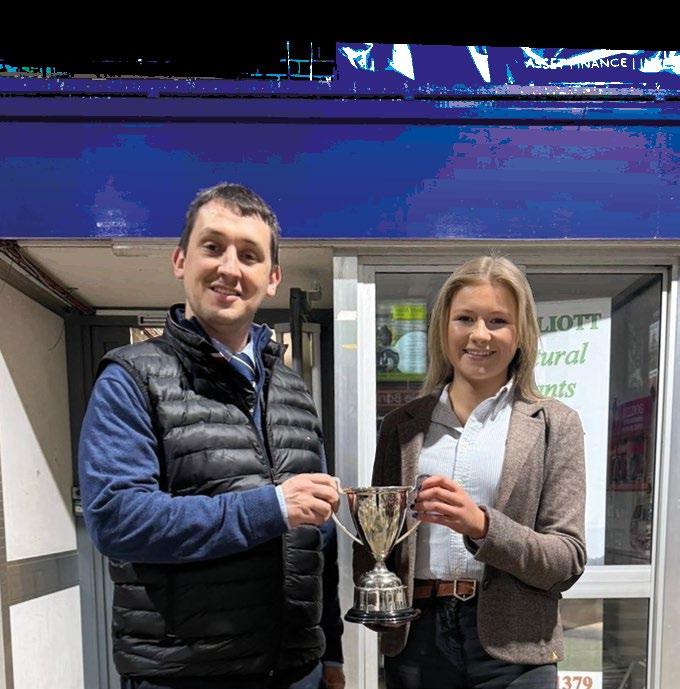
The award is open to members under 35, with Clubs and YDP committee members asked to nominate members who they feel have made an outstanding contribution to the breed in their local area or nationally.
All nominees were judged on an interview basis conducted via video call. Nominees were judged on their knowledge of the breed, the sheep and wider agricultural industry and the skills and knowledge they bring to Club activities. The award was judged by Society chief executive John Yates, Society chairman Peter Mitchell, Avon Vale and YDP coordinator Ailish Ross.
All regional Clubs and YDP Committee members will be invited to nominate for the 2027 award during autumn 2026, with interviews for nominees taking place in January 2027. Nominees should be under the age of 35 and be someone who has worked hard to excel within the Club or with their own flock.
Robert Harvie – Sadlerhead, Scottish Texel Breeders Club
Robert established the Sadlerhead flock in 2017 at the age of 22, beginning with just three ewes purchased from Millars, Craighead and Brackenridge. A standout moment in his breeding career came in 2022 with the sale of Sadlerhead Fury to Gordon Gray of the Ettrick flock.
Fury has since gone on to sire more than 500 progeny in well recognised flocks with Ettrick Grey Goose selling for 42,000gns. That same year, he also sold Sadlerhead Frank the Tank at the Scottish Club Sale for 4000gns.
Proud of having built his flock from scratch, Robert thrives on the excitement of sales and the camaraderie that comes with being part of the Texel community.
Robert is a committed member of the Scottish Texel Breeders Club, having held every major role and currently serving as treasurer and assistant secretary. He is particularly focused on encouraging young breeders to engage with the breed.
James’ love for Texels started at an early age, working alongside his grandfather John, who founded the Eastfield flock in 1976. Growing up around Texels, James developed a deep understanding and passion for the breed that has stayed with him throughout his life.

Recently appointed chairman of the Scottish Texel Breeders Club, James is committed to keeping the Club inclusive, promoting the breed and supporting young breeders, with plans underway for another successful YDP Day this summer.
James’ greatest achievement lies in developing a highly productive and efficient flock, breeding his ewes naturally to maximise performance and longevity, even while balancing the demands of working as a contract shepherd in the challenging Lanarkshire conditions.
A memorable highlight from his youth came in 2006 when he was given a day off school to attend the Scottish National Sale, where Eastfield Merlin sold for 14,000gns.
Another lifelong Texel enthusiast, Cai’s first Texel trip was to the old Lanark Market as a toddler for the Select Seven in-lamb Sale. The Teilo flock was established by his father, John, in 2004, building on the family’s Texel heritage which began with his grandparents John and Gloria’s Aman flock in 1988.
An active supporter of the Dyfed Texel Breeders Club, Cai played a key role in re-establishing the Club’s annual summer show and continues to support its online show by collecting footage and managing digital content. Passionate about the Club’s activities, he is eager to help drive engagement and participation in future.
Cai’s standout achievement came last year when Teilo Iasu Mowredd won the overall championship at the NSA Main Ram Sale and subsequently sold for a centre record price of 20,000gns.
Other highlights include judging the Scottish Texel Breeders Club Flock Competition alongside his father and winning the RWAS Stockjudging Competition in 2024.
Henry’s Texel memories stretch as far back as he can remember, growing up with the renowned Peacehay flock. In 2018, Henry went on to establish his own Holywell flock, allowing him to develop a separate focus with the aim of producing high-quality ram lambs.
He is now pleased with the progress and performance of the stock and is keen to continue driving the flock forward.
A committed supporter of the breed, Henry currently serves as vice chairman of the South West Texel Breeders Club and has been actively involved in Club sales, as well as the Progeny Show.
Among his standout achievements are the sale of Peacehay Ya Belter at the English National Sale in 2017, for 23,000gns and, more recently, securing the championship at the English National Sale in 2024 with Peacehay Gangnam Style. A true Texel enthusiast, Henry has a deep passion for studying bloodlines, analysing sale reports and planning future breeding programmes.
Join the Society’s Youth Development Programme (YDP) for an insightful and practical ‘Live to Dead’ event at Kepak Merthyr Tydfil, one of the UK’s most impressive and important processing facilities at the heart of the red meat sector.
This hands-on session will explore the full process from assessing live animals to understanding carcass selection and grading.
It’s a fantastic opportunity to deepen your knowledge, ask questions and gain skills that are essential for modern flock management and maximising market returns.
Keep an eye on your emails and social media channels for further details and the date announcement.
James Porter, Saltcotes, has been re-elected unopposed to represent Area B, Northern England, on the YDP committee for a second term. James’ term runs from autumn 2025 to autumn 2028.
The Society’s Youth Development Programme offers unique opportunities for members under 35 and those associated with member flocks to take part in events and activities to further their knowledge while also making contacts across both the Texel community and the wider industry.
YDP activities are managed by the Society, but are determined by the YDP committee by recommendation to the Society board, and consist of five elected members from the UK.
The YDP committee, which is made up of five elected members, was established to fulfill a number of objectives:
• To be an elected representative committee to reflect the views of young Texel breeders from across the UK.
• To offer sound judgement and advice, providing recommendations to the Board.
• To assist in the promotion and participate in promoting the breed and the Society to young breeders, by developing and managing the existing programme that includes: Education Awards, Spotlight Awards, Five Nations Events, Young Handlers Classes, YDP Ram Lamb Classes, and NSA Next Generation Sponsorship.
• To encourage young breeders’ participation in the promotion of the

breed at specialist sheep events and national shows.
• To be a forum to encourage eligible young breeders to consider standing for election onto the Society main board.
•
Learn more about the YDP programme and committee members
The YDP Committee met in mid-January to discuss the activities for the Youth Development Programme for the forthcoming year, with the outcome being an exciting new 'Live to Dead' event taking place later this summer, and further recommendations for the board.
Committee positions for Area A, Scotland and Area D, Wales, are due for re-election this year.
These roles are an important part of ensuring that members’ views are represented and that each region continues to have a strong voice within the YDP Committee.
In Area D, Gerallt Rowlands, Traws, is ineligible to stand for re-election due to age regulations. As a result, a new committee member will need to be elected to represent the area. In Area A, Scotland, Amy Laird, Cambwell, is eligible for re-election.
Nominations for both positions will open online in October. Members are encouraged to consider putting themselves forward or to support suitable candidates, helping to ensure continued strong representation across all regions.
James Nairey, Meinspride, has been selected as a 2026 NSA Next Generation Ambassador. Lancashire-based James has already held leadership roles in YFC and is keen to be a proactive leader and advocate for the industry. He said: “Being involved in the family farm and other farming organisations has shown me the importance of innovation, collaboration and strong leadership to sustain and grow the sheep industry.”


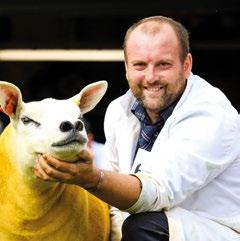

Society member and young breeder Evan Turner, Longway, was among a successful quartet of young shepherds from the UK to claim prizes at the recent Ovinpiades European Young Shepherd of the Year competition, Paris.
The event, held as part of the Salon International de l’Agriculture, featured more than 50 young shepherds from across Europe, with Evan taking second spot overall.
The demanding one-day competition tested every aspect of modern sheep husbandry. From breed recognition and prime lamb selection to an electric fencing challenge and a detailed written questionnaire, the competition required not only practical skill, but technical knowledge and calm professionalism under pressure.
With all four of the UK’s team having been winners of NSA Next Generation Young Shepherd Competitions sponsored by the
Texel Sheep Society’s Youth Development Programme (YDP), it was pleasing to see Herefordshire-based Tom Garlick claim the overall championship and Scottish shepherdess Keira Smith take fourth. Claiming fifth overall was Northern Ireland’s Jack Maxwell.
Society YDP coordinator Ailish Ross said it was a great result for the UK team and testament to the Society’s continued support of the NSA’s Next Generation Young Shepherds’ competitions.
“The Society places huge value on supporting these young people in their sheep farming endeavours and will once again be sponsoring the competitions at the NSA Sheep Event and Scotsheep this summer.
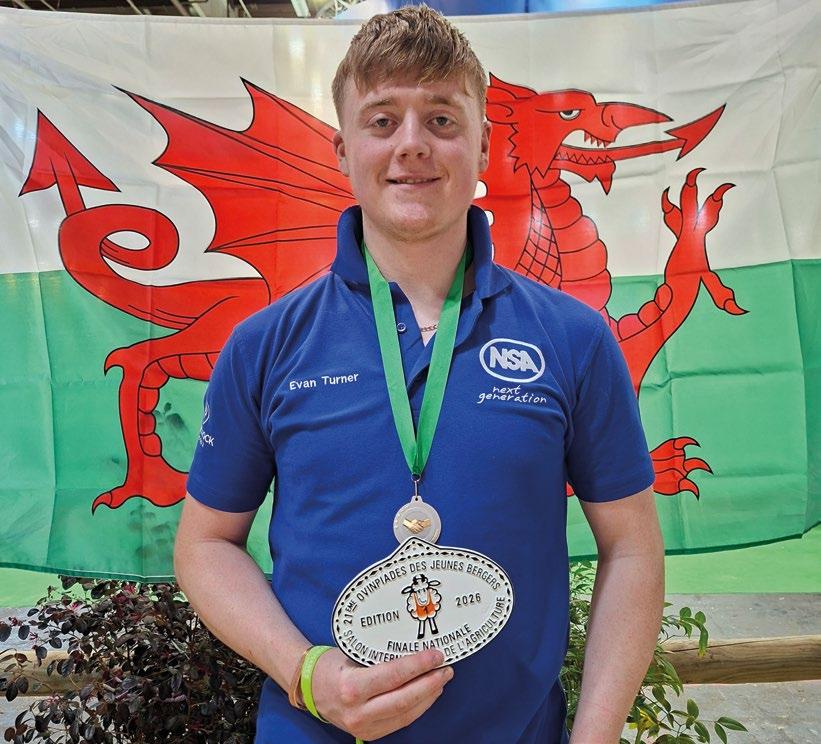
“Congratulations to all the UK team and particularly Evan, who showed just what great talent there is among the Society’s younger members.”
NSA’s technical communications officer Anna Wilson, who accompanied the group, added: “I am immensely proud of their achievements at this competition. The language barrier and differences in animal husbandry could have been overwhelming for many, but all our competitors handled the situation beautifully and demonstrated their knowledge of European markets when asked questions about finishing lambs. The comments received from judges about their stockmanship, animal handling and industry knowledge was a pleasure to hear.”
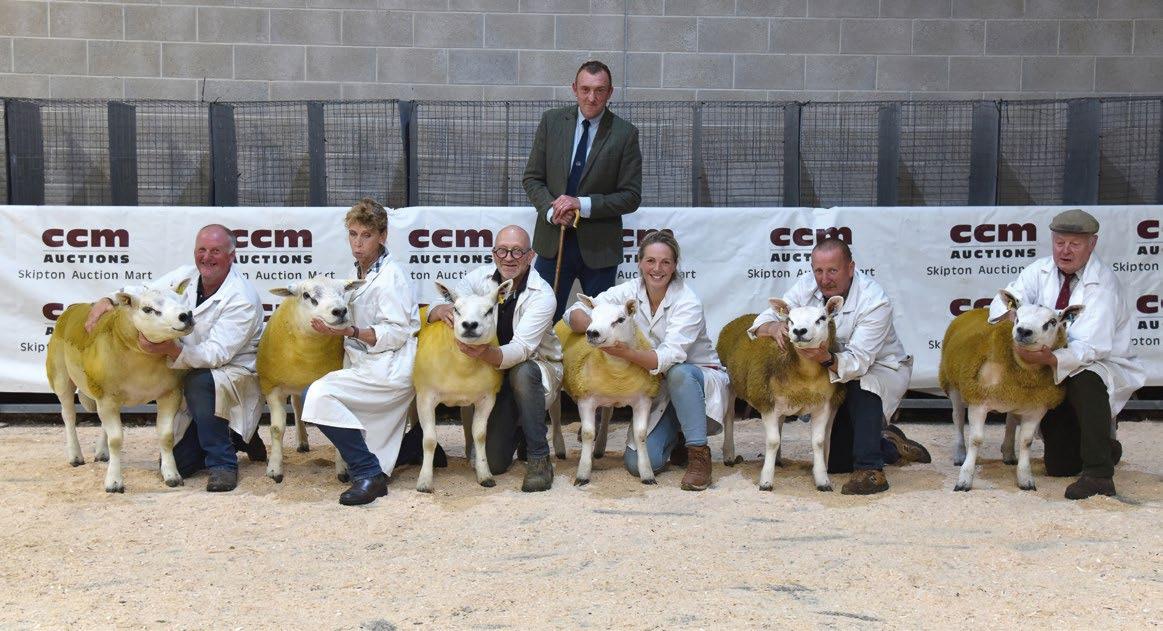
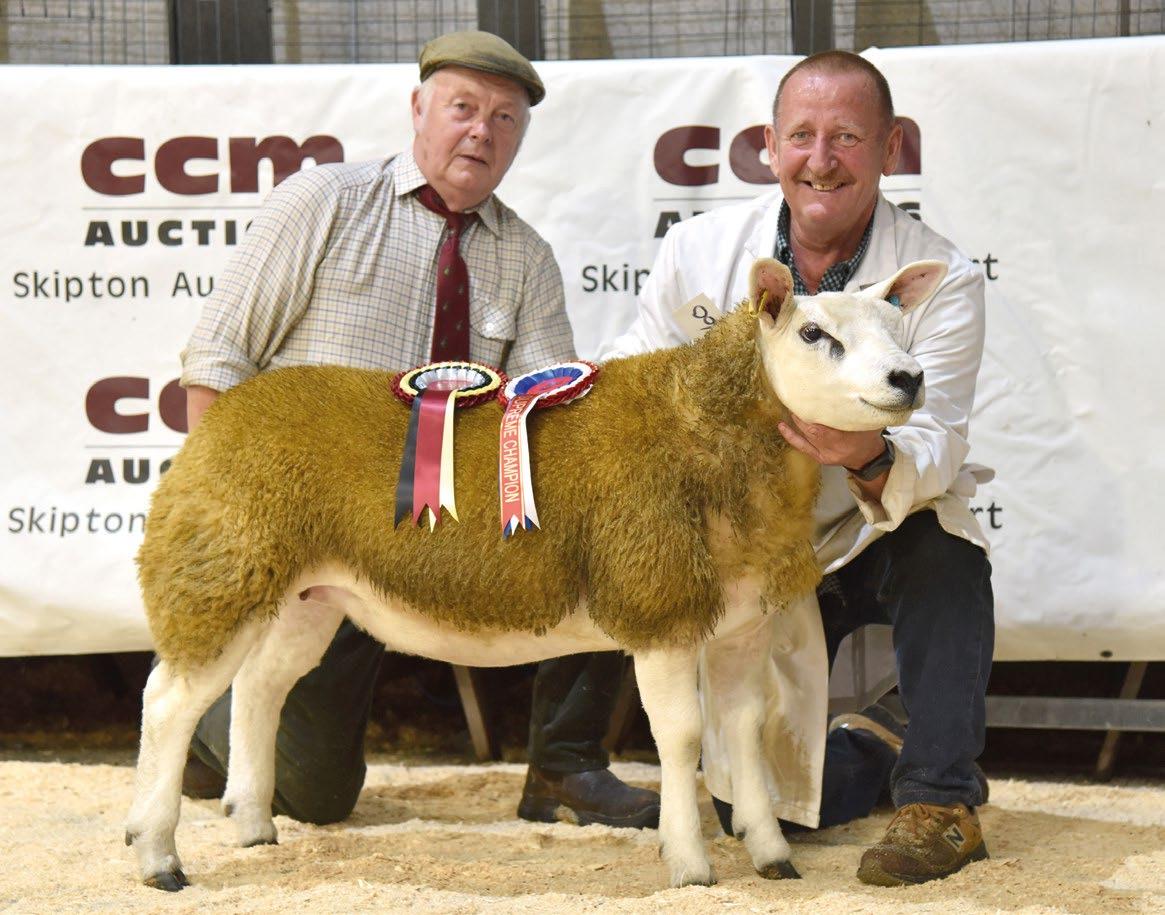
CONISTON (AXC)
J & J Aiken
Ainstable, Carlisle
T: 07971 546623 (Jeff)
E: jenniferaiken99@gmail.com
SAMSAR (BHY)
SJ & SL Beachell
Beswick, Driffield
T: 07989 402913
E: samsar39@hotmail.com
CHALET (IBC)
Ian Bennett
Langtoft, Driffield
T: 07940 220227
BEECHTREE (BSQ)
David Burkill
Driffield
T: 07983 718774
LOGRAM (CLV)
Mark Collins
Howsham, York
T: 07715 044439
E: markvetlg@gmail.com
SILPHO (DJS)
J & J Duffy
Silpho, Scarborough T: 07976 373879
E: duffy.john@virgin.net
HALDANE (YLD)
L Dewhirst & D Knaggs
Stainsacre, Whitby T: 07871 969168
GREENARCH (HEV)
Ken Hodge
Mobberley, Cheshire
T: 07968 585698
E: ken@archstructures.co.uk
HEYWORTH LODGE (LSH)
Jennifer S Lodge
Doncaster
T: 01405 785238
T: 07764 305571
Covering Postcodes NE, SR, DH, DL, TS, BD, HG, YO, LS, HU, HD, HX, WF, DN
MIDDLEDALE (BIU)
Paul Byas
Kilham, Driffield
T: 07748 946965
SAINT JOHNS (CAX)
A J Chapman
Driffield
T: 07932 419062
MANDERLEA (KAM)
Mark A Keighley
Leeds T: 01132 843462
MOSELEY (LKL)
Luke Lodge
Doncaster T: 07824 643259
GARBUTT (QCM)
Craig & Liz Mandale
Cold Kirby, Thirsk
T: 07387 971528
FIMBER (LJF)
J & RM Lucas & Son
Driffield
T: 01377 236698 www.fimber-texels.co.uk
MOFFETT (QMF) C B & D
Moffett
Hummerbeck T: 07717 85821
TYNEWOOD (PKM)
Kimberley Pickering
Gowthorpe, York T: 07823 335088
QUARRYSIDE (SYN)
Paul & Amanda Sykes
Holmfirth T: 07775 898647
PARKHOLME (TGP)
Graham Taylor
Thirsk T: 01845 526380
THORNCLIFFE (WKT)
R P & S Whiteley
Holmfirth T: 07775 774637
E: sue.whiteley@tiscali.co.uk
WELLINGLEY (LJW)
PC & EJ Longdin
Doncaster
T: 07760 125513
BLACKDALE (UBM)
BI & BM Mosey
Giling East, York T: 07552 237739 Elliott
E: elliottgisborne@ianmosey.com
WINKSLEY HILL (MHW)
B & A Myers & Daughters
Ripon T: 01765 658456
LOXLEY (NJL)
John & Alison North Settle
T: 07753 842044
E: jlnorth22@gmail.com
HANDBANK (PRH)
RM & EA Payne & Son
Stocksbridge T: 01142 883241
E: anne@handbanktexels.co.uk
PERGILL (PMF)
Jill Perrings Settle
T: 07731 936156
E: catkinsflorist@gmail.com
HAMMERTON (PBH)
DA & H Pickles
Green Hammerton, York
T: 01423 330118
M: 07703 837332
BRONTEMOOR (PSR)
JM & SM Priestley
Brampton, Cumbria
T: 07812 456736 Richard
E: brontemoor@nevisinternet.com
STONEBRIDGE (RSS)
Steve Richardson
Barnsley
T: 07764 223231
E: steve@stonebridgetexels.co.uk
In-lamb sales were once again the scene of rampant demand for Texel genetics as both new and existing breeders sought out new bloodlines to add to their flocks. Sales the length and breadth of the UK once again resulted in a cumulative turnover of more than £1.5m with top prices of 26,000gns paid for both a ewe lamb and an in-lamb gimmer.
24TH NOVEMBER
The North of Scotland Texel Club in-lamb sale staged as part of the Aberdeen Christmas Classic, saw a top call of 3500gns for a ewe lamb from Robbie Wilson, Milnbank.
Sale leader was LYM2505767, a Clanfield Golden daughter out of a dam by Holylee Foreman and ET sister to a 3500gns tup lamb. She sold to Duncan Whyte, Newton Mearns.
Averages; 43 gimmers £1159.88, five ewe lambs £1344 (Aberdeen and Northern Marts).
5TH DECEMBER
A Rhaeadr First Choice-sired one-crop ewe from the Boden family’s Sportmans pen led the trade at the Derbyshire Diamonds in-lamb sale, Bakewell, when selling at 2000gns. Leading the trade was BGS2306423, with this one being out of a dam by Seaforde Empire King and sold carrying triplets. Having been champion in the pre-sale show she was taken by the judge Paul Castle for the Ulmus flock, Peterborough.
Averages; three aged ewes £1319.50, 17 gimmers £1021.59, four ewe lambs £648.38 (Bagshaws).
Texel trade peaked at 1500gns at the Winter Warmers in-lamb Sale, Melton Mowbray, with this price paid for an in-lamb gimmer from Nick Legge’s Thornbury flock.
Bred in shepherd Peter Stubbs’ flock, sale leader was PSY2402135, an Ettrick Grey Goose daughter out of a Plasucha-bred dam by Sportsmans Express and sold carrying a single. She was the pick of Messrs Woodbridge and Wallis, Wadenhoe, Peterborough.
Averages; 16 gimmers £729.09, 15 ewe lambs £749.70 (Melton Mowbray Market).
A solid trade at the December Dazzlers in-lamb sale, Beatties Livestock Centre, saw trade peak at 1900gns for an in-lamb gimmer from Sean Hamill’s Donalds View flock.
Sale topper, HYV2400144 is by Lylehill Gunshot and out of a Ballygroogan-bred dam by Alderview Explosive. Sold carrying a single, she was the pick of Andrew Fleming, Gortin.
Averages; 34 gimmers £783.79, nine ewe lambs £926.33, two aged ewes £1050 (Beatties Livestock Centre).
Nick Legge’s Thornbury flock enjoyed another successful day at the Gloucester and Borders Texel Club’s Christmas Present in-lamb sale, Worcester, when collecting the top price and championship in the pre-sale show.
Leading the sale at 2100gns was LEN2402054 an ET-bred daughter of the 100,000gns Glenside Forever II out of a homebred dam by Tamnamoney Bullseye. She sold carrying twins to the 12,000gns Mellor Vale I Spy and was taken by Kay Dawe, Whitstone, Holsworthy, for the Tredawe flock.
Averages; 33 gimmers £957.09, three ewe lambs £1137.50, 10 recipients carrying embryos £475.65 (McCartneys).
Cefin Pryce’s Caereinion flock led the way at the Shropshire and Borders Club’s in-lamb sale when taking 1300gns for a gimmer by the homebred Caereinion Golden Boy, PEC2401284.
She’s out of a dam by Blaencar Bandit and sold with a top 1% texelplus index. In-lamb to Caereinion Helyg, she was taken by B C and J W Evans, Caersws, Powys.
Averages; 16 gimmers £693, three aged ewes £577.50, eight ewe lambs £446.25 (Welshpool Livestock Sales).
Topping the Borderway in-lamb fair at Carlisle at 2800gns was a gimmer from Robert Cockburn’s Knap flock, CKP2408420. She’s by Knap General Lee and out of a Mellor Vale-bred dam by Seaforde Empire King which bred the 20,000gns I Of The Tiger
Sold carrying twins to Duncryne Hakuna Matata, she sold in a two-way split to Mark Priestley, Seaforde and Aidan Branagan, Largy.
Averages; 28 gimmers £948.75 (Harrison and Hetherington).
It was a daughter of the 100,000gns Strathbogie Gypsy King that took the top call of 7000gns at the Nothern Stars Sale, Ballymena, with Roger Strawbridge’s Tamnamoney flock taking the top call.
Leading the sale was SRY2402905, she’s out of a Clarks Bolt daughter and sold carrying a pair to Hexel Hidden Asset. She was knocked down to Noah Taylor, Ballynacannon.
Averages; 62 gimmers £1802.78, 15 ewe lambs £1739.50 (J A McClelland and Son).
22ND DECEMBER
Top call at the Northern Area Texel Club’s Skipton Stormers in-lamb sale was a 750gns bid for a ewe lamb from Paul and Amanda Sykes’ Quarryside flock.
Sale leader was SYN2500006, a Teiglum Goliath daughter out of a dam by Stump Cross Foreman. She sold to D Bell, Cowling, Keighley.
Averages; six gimmers £551.25, two ewe lambs £735 (Craven Cattle Marts).
Robert Cockburn’s Knap flock notched up another top price performance when topping the Christmas Stars sale at 26,000gns with a daughter of his noted show ewe Knap Daisy Duke, herself a Sportsmans Cannon Ball daughter.
Taking the top call was CKP2408483, a Teiglum Goliath daughter sold carrying to Duncryne Hakuna Matata. Scanned with a single she was bought by Alan Blackwood, Auldhouseburn.
Average; 72 gimmers £3648.82 (Harrison and Hetherington).
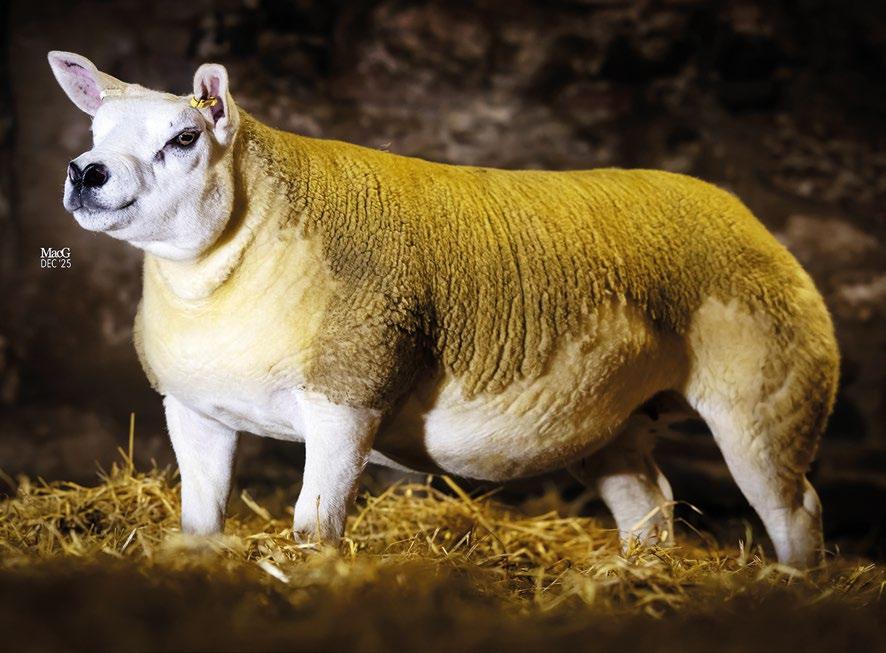
13TH DECEMBER
The Select Seven Sale at Lanark saw a top call of 22,000gns paid for a gimmer from Alan Blackwood’s Auldhouseburn pen.
Leading the trade was BYZ2435259, a Hilltop Goliath daughter out of a dam by the 100,000gns Auldhouseburn Expression and carrying to the 110,000gns Midlock Inferno. This one headed south to join the Sportsmans flock of Messrs Boden and Davies.
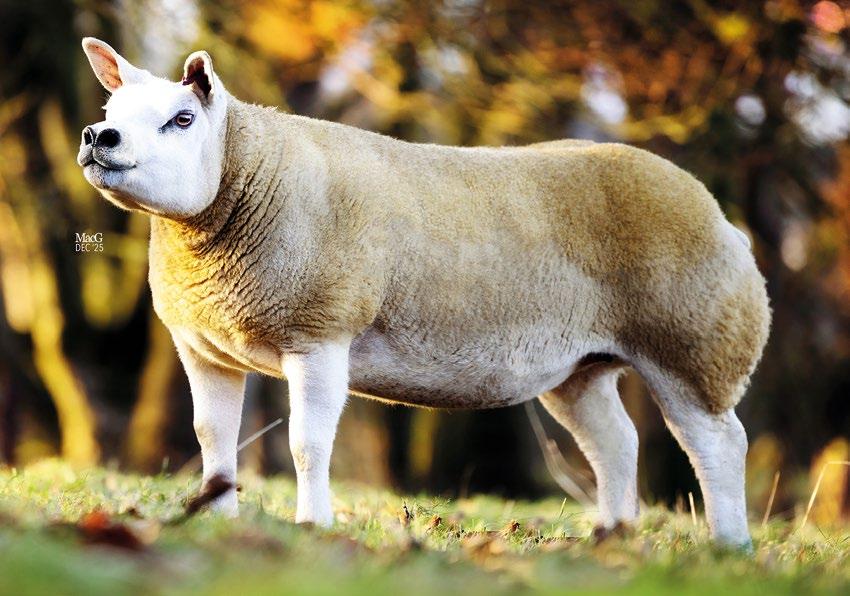
Averages; 57 gimmers averaged £3336.05, five ewe lambs averaged £1302.00 (Lawrie and Symington).
A gimmer by Hope Valley Golden Balls was the top seller at the Builth Babes Sale when making 3200gns for Alan Blackwood’s Auldhouseburn flock.
Leading the trade was BYZ2435251, a gimmer out of a dam by Haymount Fan Dabi Dozi. Offered in-lamb to the homebred Auldhouseburn Impression, she headed away home with Gareth Flett, Nistaben.
Averages; 52 females £1118.65 (Builth Market Auctioneers).
20TH DECEMBER
The Christmas Present in-lamb sale, St Asaph, saw a gimmer from Robert Cockburn’s Knap consignment lead the trade at 2500gns.
Sired by Haddo Fabio, sale leader was CKP2408476. She’s out of a Sportsmans Cannon Ball-sired dam which is ET sister to Knap Daisy Duke and sold carrying a single to Auldhouseburn Illusion. Buying this one was Gerallt Rowlands, Traws.
Averages; 36 gimmers £834.89 (Jones Peckover).
29TH DECEMBER
The Claybury Crown Jewels sale on behalf of James Draper and family saw a fierce demand for some of the leading genetics in the breed, peaking at 26,000gns for a ewe lamb by Wedderburn Highlander.
Sale leader, DHL2502673, is out of a Strathbogie Cannon Ball daughter going back to Scholars Yahoo and a full sister to the 34,000gns Claybury Dunkirk. After fierce bidding she was knocked down to Charlie Boden and family, Sportsmans.
Averages; 24 senior/donor ewes £2300, 35 shearling ewes £3193, 30 ewe lambs £2646, 86 recipients carrying embryos £1071 (Halls).
29TH DECEMBER
The final reduction sale of Michael James’ Duhonw flock saw a top call of 6500gns paid for a gimmer by Knap Gandolph.
Sale topper, JMU2414511, is out of a dam by Baltier Baron I and sold in-lamb to Garngour Highlander. Scanned with twins, she sold in a three way split to Ted Fox, College, Jonathan Watson, Brijon and Neil Edmondson, Castle Bank.
Averages; 28 gimmers £2936.25 (Harrison and Hetherington).
12TH JANUARY
A gimmer from young breeder Jack Gault’s Cherryvale flock took the highest bid of 3700gns at the Northern Ireland Texel Breeders Club in-lamb sale, Ballymena.
Sale leader, GCN2404188 is a daughter of Douganhill Gangster out of a dam by Procters Eureka and sold with a
index and in-lamb to Speenogue Ignite. She found a new home with Brendan McConville, Rathfriland.
Averages; 16 gimmers £872.81, 14 ewe lambs £610.13 (J A McLelland and Son).
Leading the trade at the North West Texel Breeders Club Sale, J36, was a Mellor Vale gimmer from Charlie Boden and family, BCM2401947, when selling at 2500gns.
She’s a daughter of the 170,000gns Knap Grumpy out of a dam by Castlecairn Doodlebug and sold to L Shuttleworth, Carnforth, Lancs, having been champion in the pre-sale show.
Averages; 32 gimmers £928.59, six ewe hoggs £525, two aged ewes £1286.25 (North West Auctions).
12TH JANUARY
The champion from the pre-sale show, a ewe hogg from the MacPherson family’s Hexel flock took the top call of 5000gns at the Longtown Ladies in-lamb sale.
Making this money was MZH2501243, a Knap High Flyer daughter out of a dam by Procters Chumba Wumba. She sold to the Mosey family, Blackdale.
Averages; 81 gimmers £1374, 13 aged ewes £413, 20 ewe hoggs £841 (C&D Auction Marts Ltd).
Mark Patteron’s Alderview flock entries were the pick of the trade at the Festive Crackers Sale, Ballymena, with the flock claiming the top three prices.
At the head of the table was PTT2502203, a Glenside Gizmosired ewe hogg out of a dam by Auldhouseburn Fandabidozi. She headed across the Irish Sea to join Nick Legge’s Thornbury flock.
Averages; 36 females £1369.38 (J A McLelland and Sons).
10TH JANUARY
William and James Herdman’s Templepark flock took top price honours at the Ballymena Babes in-lamb sale when collecting a 3800gns call for an in-lamb gimmer.
Topping the prices was HKP2402592, a gimmer out of a dam by the homebred Templepark Candy Crush and inlamb to Oberstown Indiana. She sold to Stephen McNeilly, Drumadowney.
Averages; 32 gimmers £1181.25, 10 ewe lambs £850.50 (J A McClelland and Son).
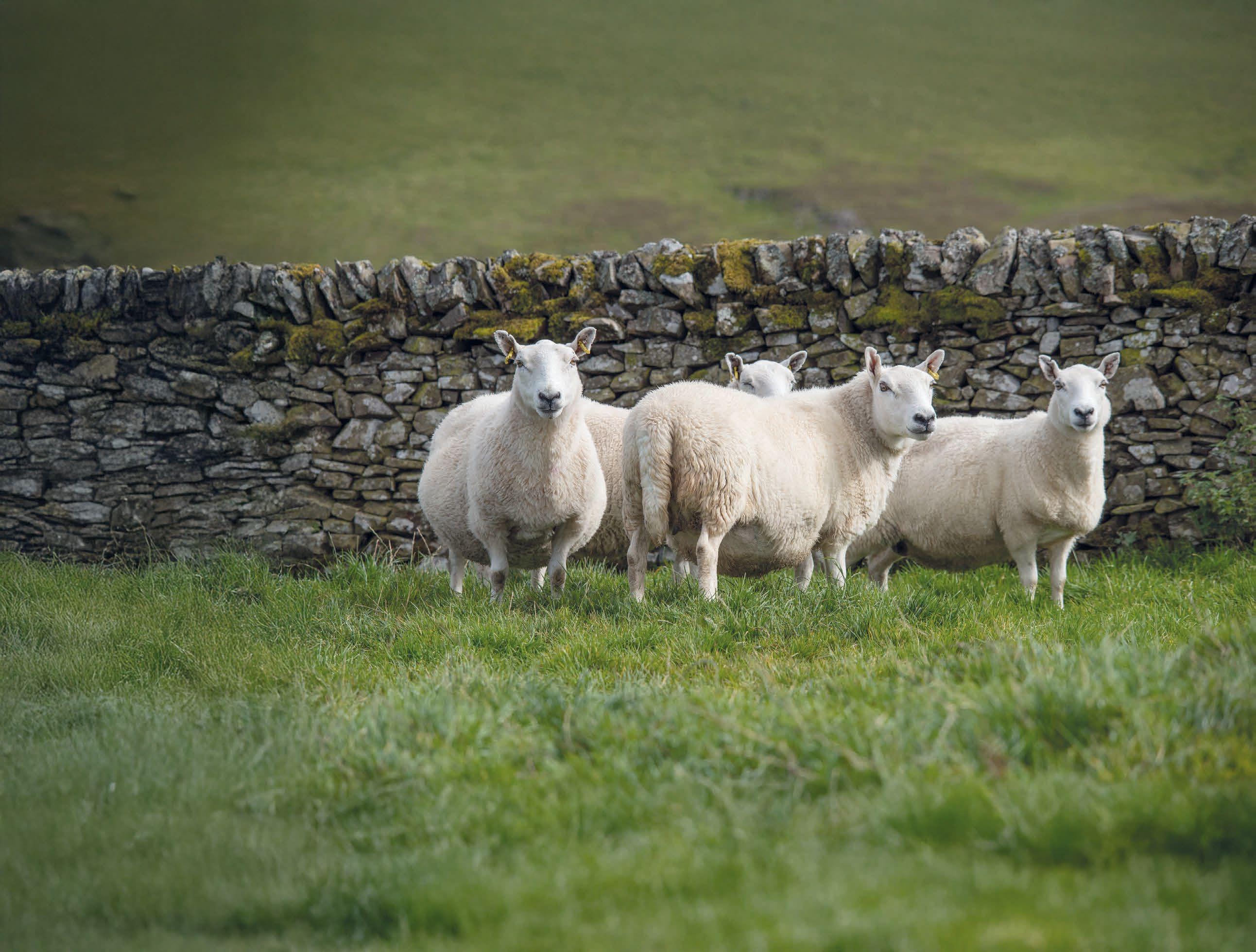

13th June 2026

Judge: Harry Wilkinson, Arkle Flock
Gosford Forest Park, Armagh Thank You To Our Sponsors:














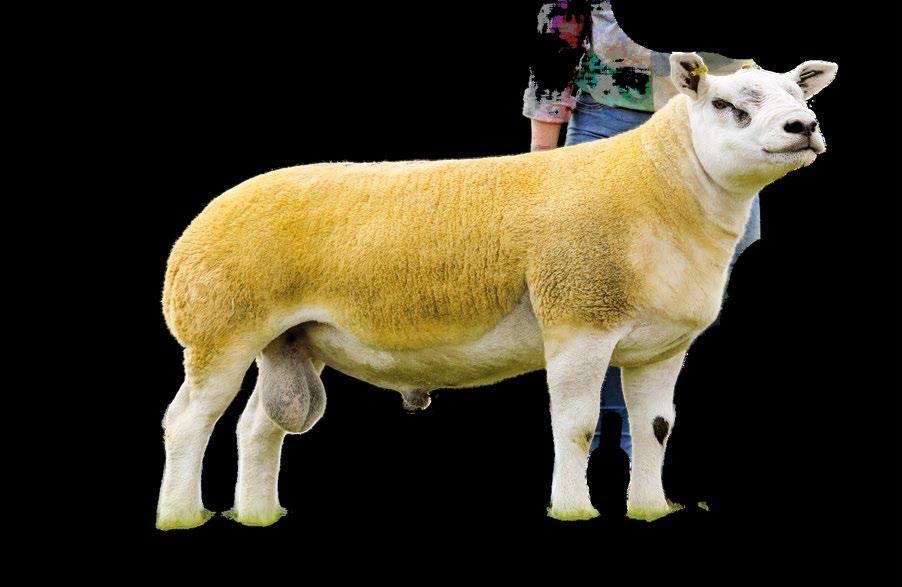
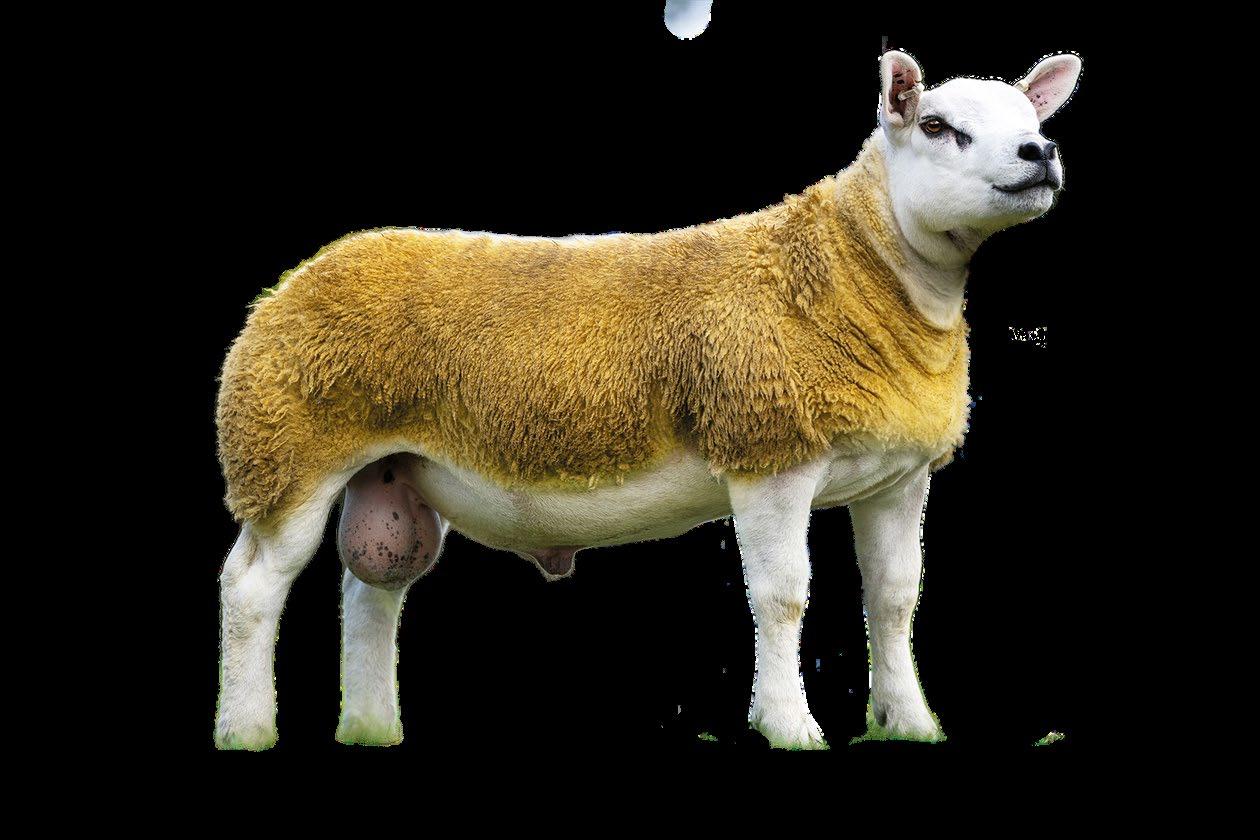

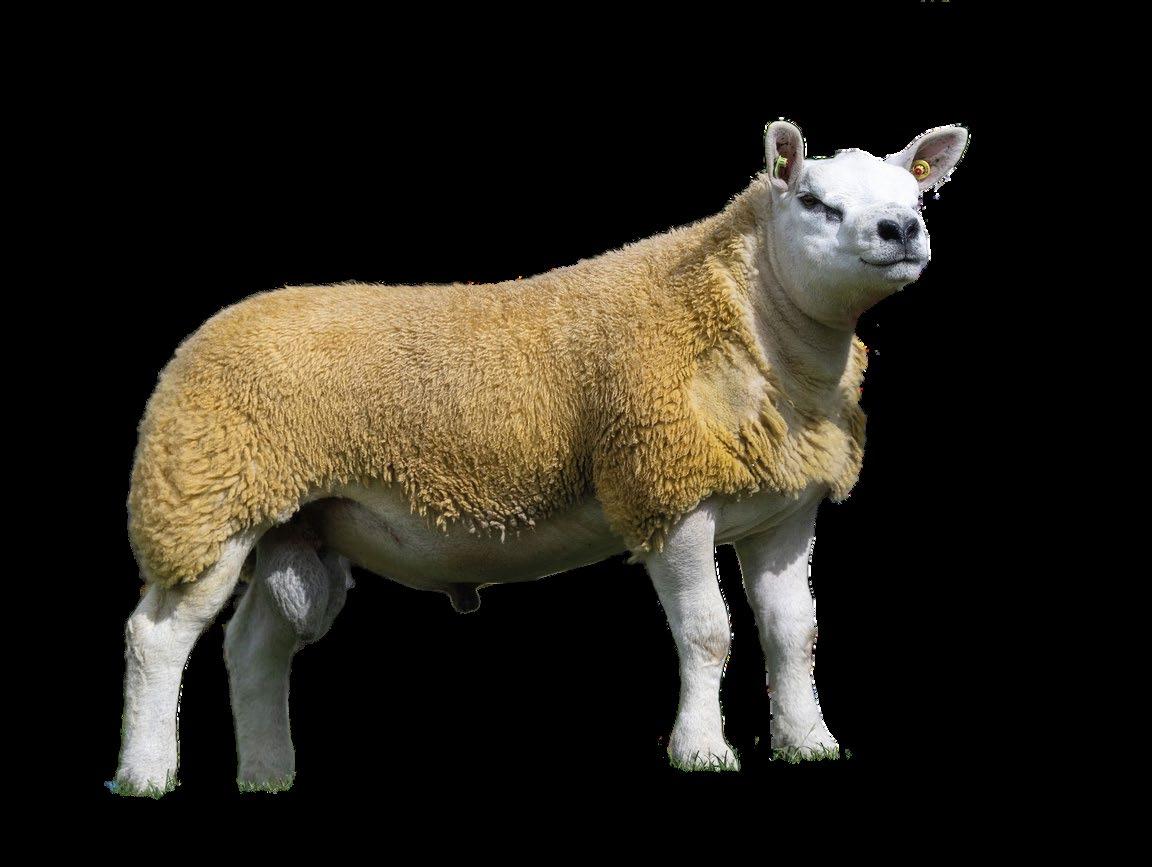
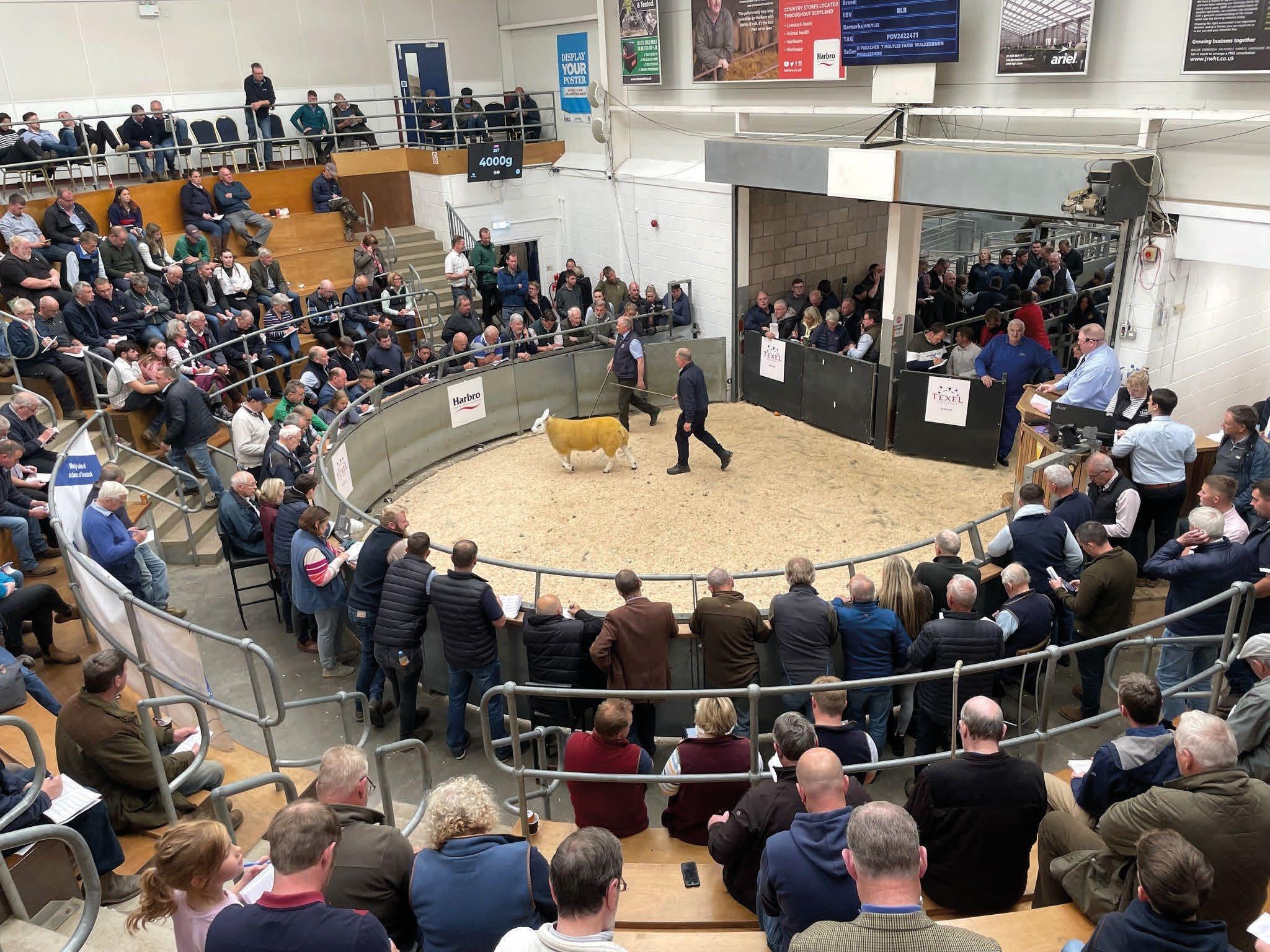
A foundation built on commercial sheep production, coupled with a desire to breed something of value has driven Oxfordshire-based James Theyer’s development of his Clanfield flock over the last 10 years.
“Iused to buy in about 400 Suffolk cross ewe lambs, run them through for a year and sell them on as shearlings, but the margin was small and with a limited acreage it wasn’t really justifiable.
“So, I began looking for ways to increase the value of the stock I was farming and felt tup breeding would be a good way to go. I had friends that were breeding Texels and so that was the breed of choice.
I started with some ewes from Piper Martin’s Barnage flock and set out to breed shearling rams for the commercial trade,” explains James.
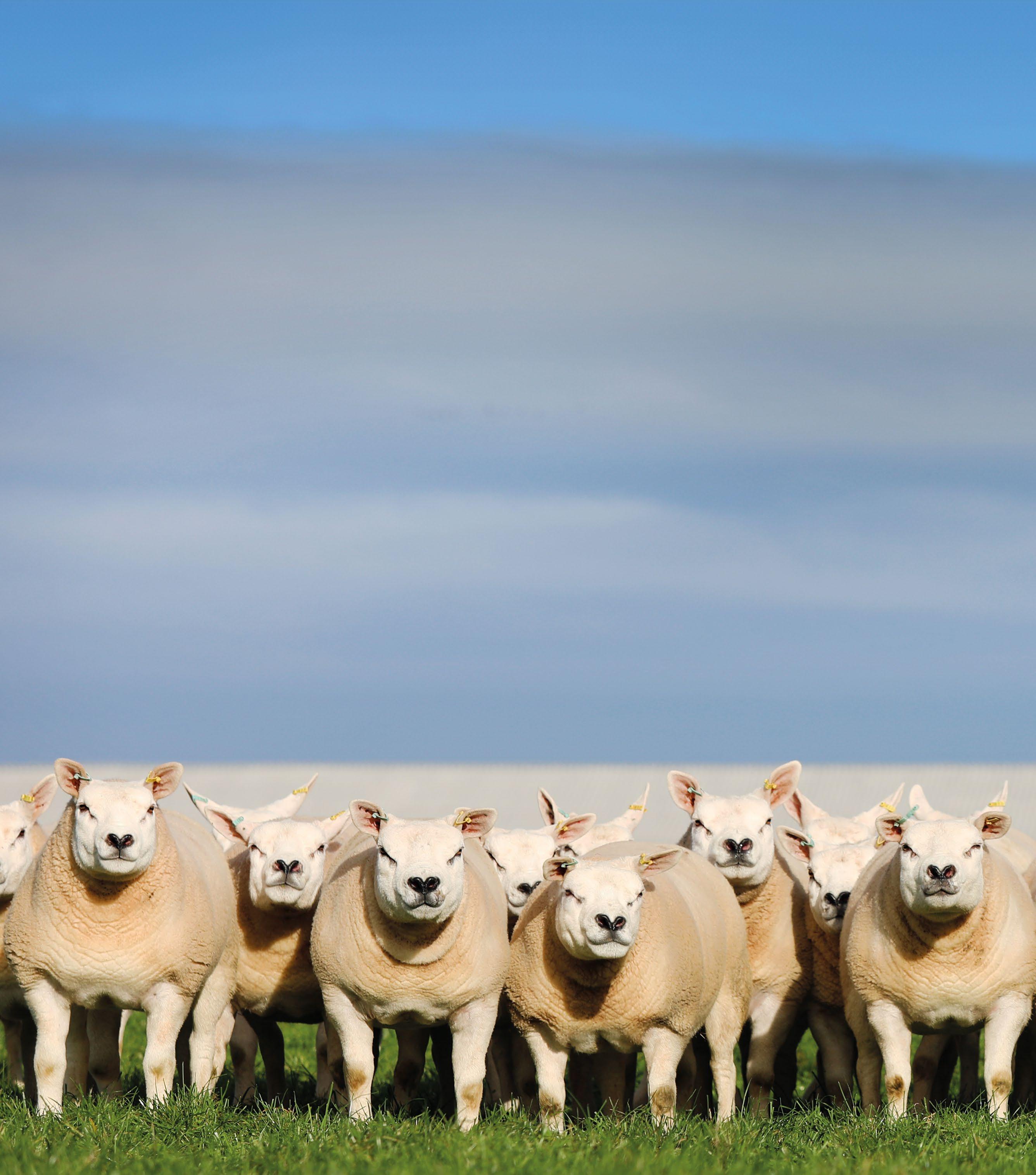
“That was going well, but I dabbled in showing and really enjoyed it. Unfortunately, the type of sheep I was breeding wasn’t always what judges were looking for. They were good functional animals, however, they lacked that extra class and sparkle often needed for the show ring.”
James decided a change of direction was called for and sought out some genetics with the extras he was seeking to progress the flock. “I sourced females from the Plasucha, Millhouse, Knock, Auldhouseburn, Ettrick, Hexel and Granite flocks, many of which have left their mark on the flock.
“These females became the foundation for the new version of the flock, aiming to breed a type of animal which could capitalise on the demand for flashier types, in particular females, enabling another level of added value in the flock,” he says.
Today the Clanfield flock is one which has achieved significant success in a relatively short time, driven by strong investment in both genetics and subsequently exploiting those genetics through embryo transfer to maximise the influence of leading females in the flock.
“Of course it is one thing having the right females, but the challenge is pairing those females with the right tups to balance their traits and deliver improvement in every generation.
“Early in the flock’s reinvention I bought a share in Millhouse Crossbow who put a solid base in the flock, leaving a good crop of females, one of which was to become the grandmother of the flock’s best seller to date, the 30,000gns Clanfield Golden.”
Future sire purchases included the 100,000gns Auldhouseburn Expression and the 160,000gns Rhaeadr First Choice, along with 30,000gns buy Auldhouseburn Grey Goose, privately bought Okehall Hammerhead, the 12,000gns Okehall Hotshot and the 2025 purchase at 13,000gns, Sportsmans Iceman.
“Expression was used across every female in his first season, 2021, really leaving a stamp across his lambs. He gave size and scale to his sons and daughters and added some extra breed character. It was the consistency of his females that was his greatest strength though, they were all of a type.
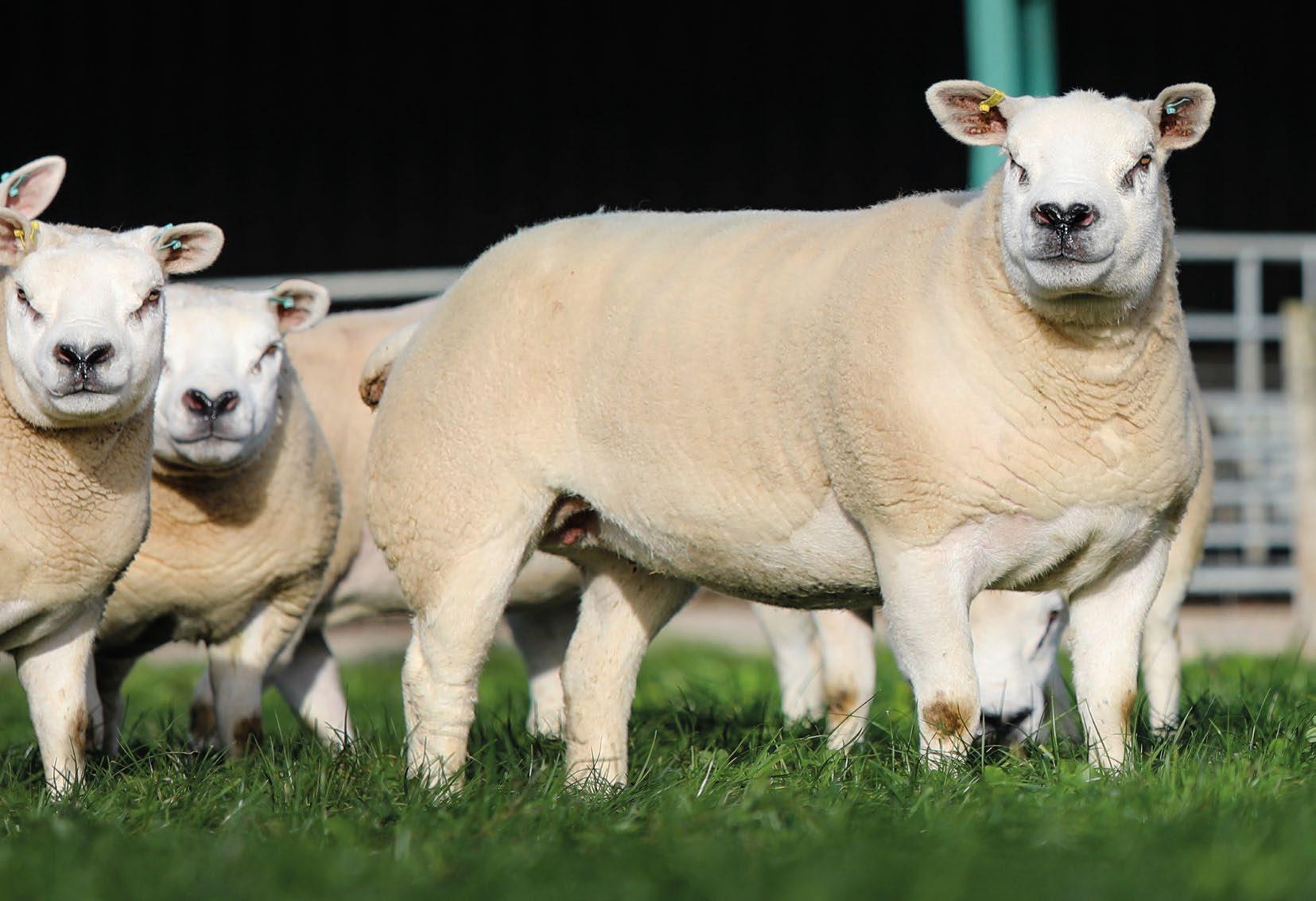
Rhaeadr First Choice then built on the success of those Auldhouseburn Expression daughters, several of which were flushed as ewe lambs to speed up the genetic progress being made. “The top end of that crop of ewe lambs were super sheep, big, stretchy and with great tops and ends. It made sense to capitalise on that by flushing them and it resulted in a super group of lambs the following year, one of which was Clanfield Golden.
“He was first prize at Royal Three Counties Show as a ram lamb, in the same year his grandfather, Expression, was male and reserve breed champion. Then he went on to sell at Lanark for 30,000gns to the Corskie, Milnbank and Uppermill flocks.
“His impact over the last two years has been immense, with sons selling to 30,000gns for Milnbank Hunter, along with Milnbank Hercules at 12,000gns, Uppermill Hotshot at 11,000gns and Uppermill Highway Express at 10,000gns.
“Uppermill Highway Express went on to be male, breed and interbreed champion at the Great Yorkshire Show in 2025 for Messrs Boden and Davies, with a Milnbank gimmer by Golden taking the breed championship at the Royal Highland Show in the same year.
“To have bred the sire of the Texel champion at both of these prestigious shows in the same year is an achievement I could have only dreamed of just a few years ago,” adds James.
The impact of Clanfield Golden and other stock sold from the flock is something James takes immense pride in. “There’s no better advert for the flock than the success others have with our stock and their progeny. A particularly prolific trade has been in selling ewe lambs, with a number of these going on to be successful in both the show ring and in breeding for other flocks.
“The opportunity to sell in-lamb gimmers is also something I’ve been keen to maximise, selling locally at the Gloucester and Borders Texel Club’s sale at Worcester as well as at the Christmas Stars and Builth Babes sales.
“The 2023 Christmas Stars sale resulted in an in-lamb gimmer being sold to Robert
Top seller to date for the flock is the 30,000gns Clanfield Golden.
Cockburn’s Knap flock, with this being an Expression daughter in-lamb to Rhaeadr First Choice. One of the resulting lambs was Knap Hammerhead which Robert retained and used heavily.
“The same ewe was the dam of the £8200 ewe lamb Robert sold in his online sale in June 2025. Again, seeing stock from the flock go on and breed well elsewhere provides a great boost for me personally and is the best form of advertising.”
At a practical level James says the flock is managed with the aim of maximising growth rates early in life, something which is particularly important in a part of the country where grass growth can be decimated over the summer months due to high temperatures.
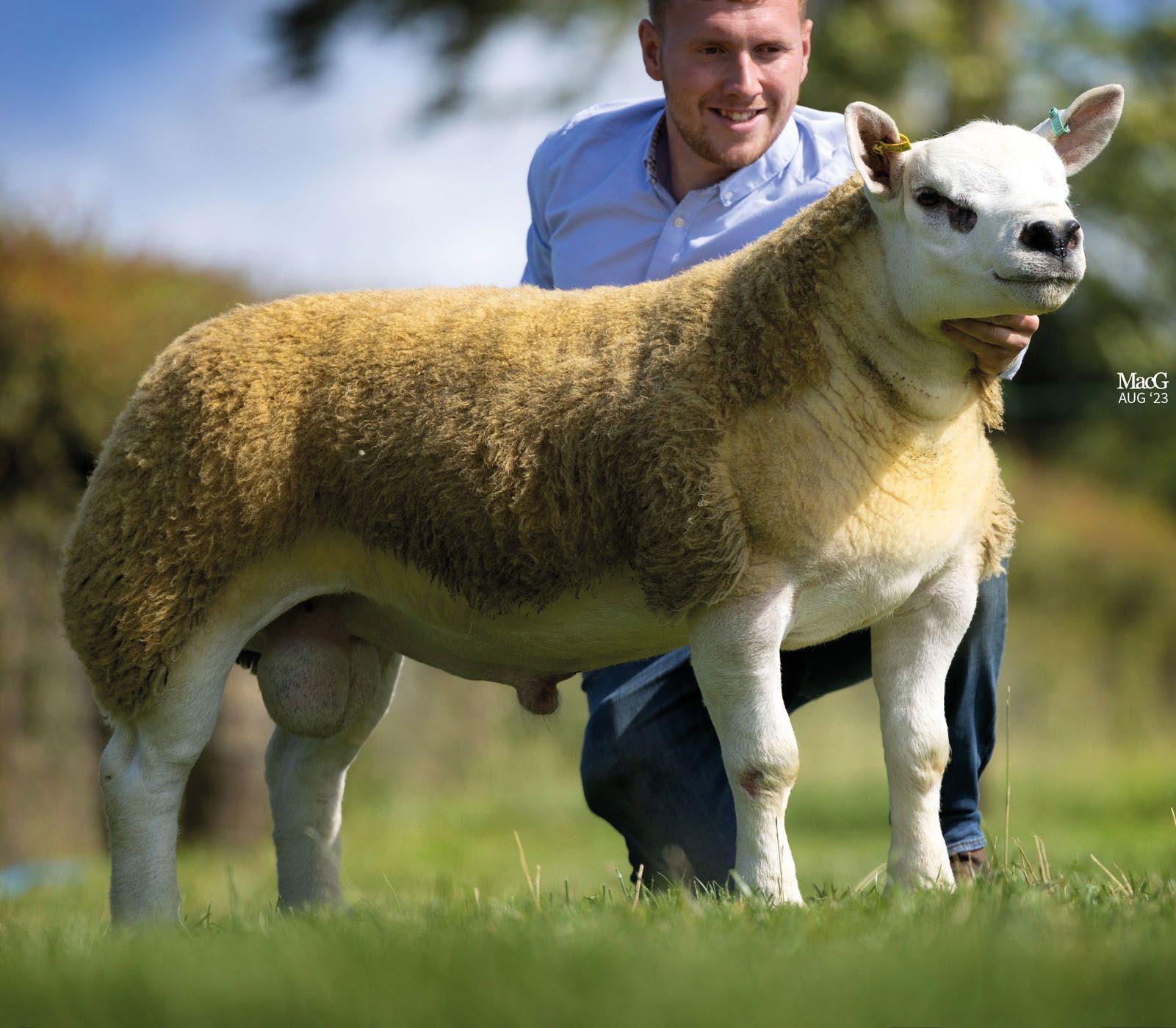
“If I can get the lambs to grow well early it sets them up for the warmer summer months when grass growth slows and in 2025 was non-existent.
“The first batch of embryos are generally born in mid-February and go out to grass as weather allows. It is important for me that all lambs are eating creep feed well before they’re turned out though. That helps maximise lamb growth in those crucial early
Using embryo transfer to maximise the impact of both leading female lines and purchased sires is paying dividends at Clanfield.
months when feed conversion efficiency is at its peak. You can’t replicate that growth later in life. That creep feed, coupled with their mother’s milk and herbal leys is delivering great early growth, something the breed is famed for.”
Lambs are weighed regularly to monitor growth rates and the flock is recorded to give the greatest possible insight into both sire and dam performance, as well as
providing vital information for prospective purchasers.
“Lambs are then weaned in the middle of June, with the ram lambs continuing to be fed, while ewe lambs move to good grass leys for the summer months to grow on.
“Ram lambs are targeted at the Society’s National Sales and I’m very selective about which lambs are kept as sale prospects. The aim is to only present lambs which are at the very top end of what we can produce. Second drawer lambs aren’t in demand and I’m highly critical of my own stock.
“There is far greater demand for good quality females than there is for males, so there’s little point in trying to market too many ram lambs,” he believes.
“Having sold females to a high of 10,000gns for a Rhaeadr First Choice daughter at the Christmas Stars Sale which went to the Auldhouseburn flock, with another by the same sire making 7500gns at Builth Babes to the same buyer, there is, potentially, scope to further increase female sales, but again I am careful to ensure the quality is right.
“Selling anything which doesn’t go on and perform for its buyer is a false sale. I want to ensure Clanfield stock have a reputation for delivering for their new owners, be that in the show ring, the sale ring or simply as sound breeding stock that help develop flocks,” adds James.
• Submit data simply using iTexel to boost flock and breed performance
• Add ultrasound, CT scanning or genotyping for greater insights
• More data means greater accuracy
• Giving you and your customers increased confidence
• Access performance classes at shows and sales
• Gain insights by using flock genetic improvement reports available on iTexel