




ay and June in Texas bring about an abundance of activities based on where you live. Folks in the Panhandle are still wearing long sleeves and staying close to the fire in the morning. East Texans are squirrel hunting and fishing. Turkey gobblers are quiet from the Lower Plains through the Hill Country and most bucks have shed their antlers. Mornings are still crisp, but kids are thinking of going swimming in the warm evening heat.
Mockingbirds, cardinals, and the familiar bobwhite quail can be heard from yard perches and pasture fence posts. Barred and horned owls that have migrated south can be heard at night as they communicate and prowl for food—the mournful, quiet “who, who” of the horned owl and the loud “who, who, who cooks for you all” from the barred owl.
South Texas is covered with a gala array of flowers and snakes are out of hibernation, so watch where you step and put your hands. Cowboys are busy, oil field workers are busy, kids are getting out of school, and schoolteachers are glad. Summer is upon us. Country folks are busy in the vegetable garden and some kids are inquiring about summer jobs. Shed antlers are getting white and easy to find before the grass and weeds get too high. It is fun time with the .22 rifle, and bait-eating turtles in rivers and ponds are in trouble when they sun in the afternoon and trigger fingers get itchy.
Baseball is in full swing along with other summer sports, and older teenagers are looking for “parking” places after dark. Warm nights and bright moons bring on the old thoughts of romance—the birds and bees. Most high school juniors and seniors are in love—for the summer.
Texans are lucky to have four seasons, and some think spring and summer are best. I personally like the days of hunting seasons from Sept. 1 to May 31, which includes dove, deer, duck, and turkey seasons. October and June are excellent for squirrels in the pecans and anaqua for those who know how to hunt and skin squirrels.
I like to keep a good scoped .22 ready for summer, a battery of shotguns for dove and ducks in the fall, and a good .270 ready for whitetails and occasional mule deer and exotics in winter. Spring turkeys demand a 12-gauge full choke with coppercoated No. 4 or 6 shot, and I have an old Winchester pump gun that does the trick. Of all the hunting seasons, spring turkey is probably the most exciting and pleasurable.
Kids out of school need a summer job or outdoor activities to keep them off the streets. Shed antler hunting, perch fishing, fun with the .22 from turtles to tin cans, varmint hunting, and trips to the park are great for summer. Whatever you do on summer days, keep ’em running, swimming, and flying by being good sports and careful with summer fun. I’ll be watching from the shade.
Horace Gore
Founder Jerry Johnston
Publisher Texas Trophy Hunters Association
President and Chief Executive Officer
Pittman • christina@ttha.com
Editor Horace Gore • editor@ttha.com
Graphic Designers Faith Peña
Dust Devil Publishing/Todd & Tracey Woodard
Contributing Writers
Rusty Baker, Wes Dillard, John Goodspeed, Carol Heughan, Judy Jurek, Lee Leschper, M.L. “Bubba” Marhofer, Emily Martinez, Eric Stanosheck
Advertising
Deborah Keene 210-288-9491 deborah@ttha.com
Sales Representative Tristan Summy 210-685-1205 tristan@ttha.com
Marketing Manager Logan Hall 210-910-6344 logan@ttha.com
Assistant Manager of Events
Jennifer Beaman 210-640-9554 jenn@ttha.com Events
Natasha Delgado 210-512-8045 natasha@ttha.com
Finance & Administration Manager Laura Garcia 210-512-4927 laura@ttha.com
To carry our magazine in your store, please call 210-288-9491 • deborah@ttha.com


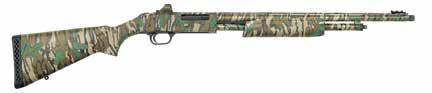
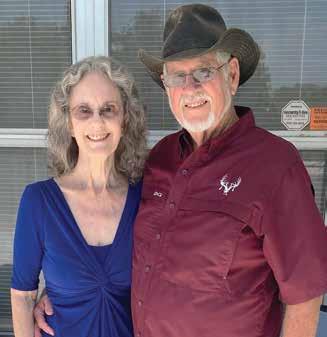
The Texas Trophy Hunters staff recently mourned the loss of a dear friend, Bettie Joan West, wife of Owen West, Platinum Life Member No. 3 and longtime friend and member of the TTHA Extravaganza team. Bettie and Owen were married 59 years and were co-owners of a car parts business in San Antonio. They raised two daughters, Kim and Lynette, and had five grandchildren.
Owen and Bettie were regulars in the outdoors, with a great interest in deer and elk hunts. Bettie often accompanied Owen to many Extravaganzas during the last 43 years when Owen worked as a floor manager for the shows. Owen and Bettie were always there when needed, and they were both at home in a hunting camp. Owen liked to tell stories of their many hunts in West Texas, when she often left Owen at the gate when it came to taking a big buck.
Bettie and Owen lived a good life together, enjoying the outdoors with the kids and grandkids. Bettie always took on any task with a smile. She will be missed by her friends at TTHA. —HG
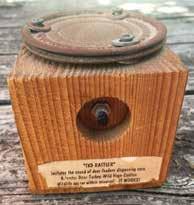
Congratulations to Travonda Satterwhite and Russ Bliese, who correctly guessed the function of the “mystery box” we presented in the March-April Journal. The box simulates the noise made by spin cast deer feeders. The small gadget, called the TDK Rattler, caused the demise of many bucks, gobblers, and feral hogs that came to the bogus sound just in time to get a hunter’s bullet, rather than the fresh taste of corn.

TTHA Member Tiffany Gonzales won a new barbecue pit in one of the raffles at the Bucks & BBQ held in March. Gonzales, a member of the 6 Gun BBQ team, said the prize couldn’t have been more welcomed. She and her husband lost their barbecue equipment in a vehicle accident last October, and are rebuilding their barbecue arsenal. “We don’t intend to quit fighting,” she said. “The BBQ family we have won’t let us.” See the Bucks & BBQ winners on page 24.






By The Old Hunter
hen Jerry Johnston started Texas Trophy Hunters 50 years ago, whitetailed deer were on the brink of becoming the nation’s leading game animal. Texas was in the forefront of deer hunting states and hunting leases were common as well as package hunts, where large businesses provided deer hunting for their employees and customers. It would be safe to say that deer hunting became a status symbol for those who had the stamina and resources to afford the sport.
The old days of deer hunting were gone, and Texas was enjoying the fruits of a new era of deer management that provided hunters with high quality deer hunting. Between deer and doves, wildlife was a major part of landowner income in much of the state, and buck contests were becoming popular in South Texas.
Hunters were taking a new interest in whitetails and what makes them tick. Back when “Ike” Eisenhower was president and I killed my first whitetail, deer hunters needed to know
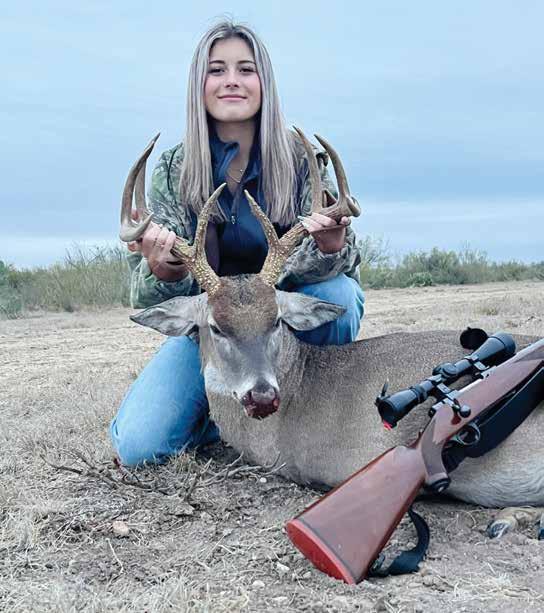
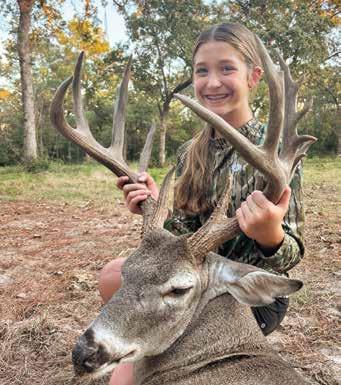
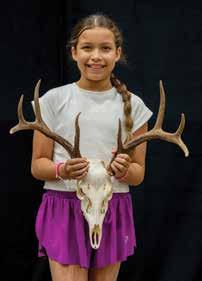
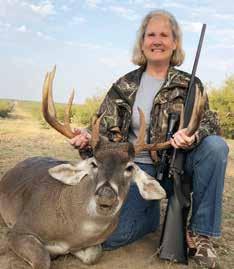
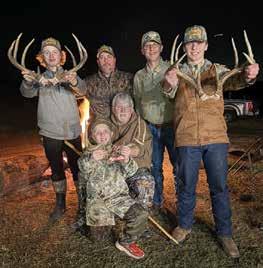
Thanks to Grandma’s scoped rifle and trail cam pics, Melody Kusenberger makes it look easy to help fill the freezer with venison.
more about whitetails than they do today. There were no corn feeders, no storebought blinds, or trail cameras. The only corn that might be used to bait deer was simply scattered on a ranch road or trail where deer traveled, and much of the deer hunting was a gamble.
Successful hunters had to figure out where the deer were, what they ate, when they ate, and when to go hunting. Much hunting was hit-and-miss because hunters could only be sure of deer coming to food plots or farm crops.
When I was discharged at Fort Hood in 1956, a common food plot for deer was most often a small acreage—5 to 10 acres—of winter wheat or oats, and a green oats patch was where many Nimrods killed their buck. Shots at deer might be long or short, depending on how far hunters could see a deer from their tree limb or homemade ground blind. Crippled bucks were common from off-hand shooting without a gun rest. The era of using dogs to find wounded deer became popular.
Hunters often used rifles with iron sights, and if a deer rifle had a scope sight, it was usually a Weaver K-4 or the cheaper J2.5. High blinds were normally a board across two low tree limbs, with narrow boards or spike nails on the tree to get to the board. Hunters often tied a nylon cord to their deer rifle with a halfhitch around the barrel. Once they got on the board, they pulled the rifle up, and when they left the tree, they let the rifle down to the ground before descending from their perch.
Weather played a much bigger part in deer hunting when practically every deer hunter was sitting in the open—where wind and rain could be a problem. A
sudden change in the weather often sent a hunter back home to contemplate the next hunt. The same was true for deer camps. Hunters often slept in small pup tents and ate in a larger tent which served as a kitchen and storage for hunting paraphernalia. There was usually a big campfire, which was the gathering place until bedtime. There were few women in deer camps.
Bucks that were killed by deer camp hunters were usually skinned and wrapped in a “buck bag” and hung in the shade for three to five days, regardless of the weather. Hunters who had no buck bags usually left the hide on until they got home. Few deer were taken to cold storage.
When I graduated from Texas A&M University in 1960, a small selection of rifles would cover 90% of deer hunting. The venerable .30-06 along with the popular .243, .308, and .270 would cover the biggest segment of deer rifles. Add the old .257 Roberts, .300 Savage, and Winchester .30-30, and you would complete the list of deer rifles. About half of the rifles had a scope of some kind.
I killed my first three bucks with a military $40 Enfield ’06 that I sporterized with a Bishop stock, sawed-off barrel, reworked trigger, and a Weaver J2.5
in a side mount. The rifle was heavy as lead, but very accurate.
After knocking over a couple of yearling bucks in Brazos County, I graduated from A&M and a year later I was stationed as a field biologist in Brown County. In November 1961, I was invited to deer hunt with Treldon Cutbirth on the family ranch south of Brownwood. I used the old Enfield to tag a typical 10-point that grossed 151 B&C—a very good buck back then.
I was issuing doe deer permits in several counties, including Brown County. The Cutbirths got about 40 permits for the 4,200-acre ranch, and by the fall of ’62,
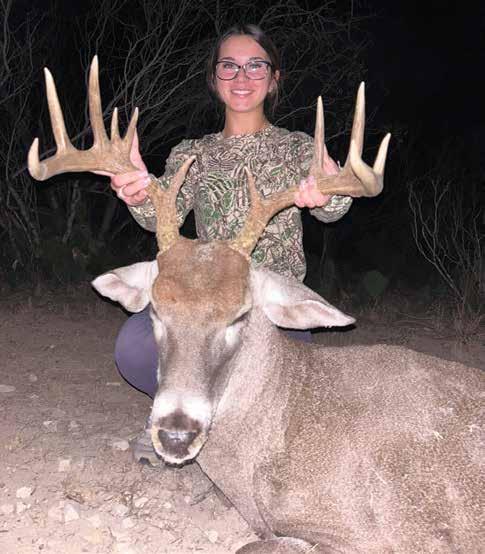
Thank goodness females in deer camp are accepted these days. Kailyn Kusenberger has certainly proven her hunting skills.
I had six mouths to feed. I conveniently helped the Cutbirth family harvest their quota of does, and much of the venison went into hamburger. Beef was too expensive for a state employee who made $315 a month, so the Gore family ate a lot of chicken and deer meat.
I recall an incident in September ’64 when we were walking late evening deer census lines in north Brown County. I was driving home after dark and I hit a deer on the pavement from Lake Brownwood as she ran across in front of the headlights. I backed up and found she was a fat, mature doe with only head injuries, but quite dead.
I loaded the doe because I didn’t want to waste the good venison. I knew that District Game Warden Supervisor Capt. John Wood—a close friend—would take the doe to the sheriff to feed the jail prisoners. I called John to report the dead deer. “Just skin her and bring her into the office in the morning,” John instructed. My daughter Donna was 8, and Joey
was 7. The twins, Barry and Garry, were 2, and they all watched closely as I hung the doe up under the lighted carport and began the skinning process. Donna shyly asked, “We going to eat that deer?” “No, we are going to skin it and take it to Capt. Wood in the morning,” I replied. I could tell that Donna had another question, so I said, “What do you think?” She smiled and replied, “I think we should eat it!”
I hadn’t thought of keeping any of the meat, but when Donna commented on eating it, I thought about the backstraps. The jail prisoners in Brownwood would get plenty of venison, and I had a wife and four hungry children. The more I thought about it, the more I was inclined to cut out the backstraps. “Donna, go to the kitchen and bring me a big pan.” She was off to the kitchen, and I finished skinning the fat doe.
I cut out the backstraps and Donna, Joey, and the twins happily took the pan to the kitchen. I was left with a skinned doe without backstraps. I found a gauze
“buck bag” and pulled it over the carcass and left it hanging.
The next morning Capt. Wood and I delivered the doe to the sheriff who met us at the truck. John said, “Jim, Mr. Gore has brought a deer for your prisoners.” The sheriff peered at the buck-bagged doe and replied, “Just unload it and I’ll get it to the locker.” With that, the sheriff reached over and opened the bag for a look. The glaring vacancy of both backstraps caught the attention of Capt. Wood.
The game warden captain looked over at me and grinned. “Well, I see that we have a strange doe here. No backstraps!” I shied away and he quickly added, “However, I suppose it’s only fair to give the Gore kids some backstrap for helping their daddy skin and bring this fat doe to the jail prisoners. What do you think, sheriff?” The sheriff smiled and agreed, and the whole thing was forgotten. Those backstraps were just part of the hundreds of pounds of venison consumed each year by the Gore kids.
Texas deer hunting took a spike in about 1970 when two popular deer feeders came on the market and were being used extensively in the Hill Country. Soon after, the attachments for creating a spinner-feeder on a 55-gallon barrel prompted the use of more feeders. Along with feeders came comfortable blinds of several makes and dimensions. These two additions, coupled with increased popularity of deer-proof fencing, caused an increase that almost doubled the old sport of “hide-and-seek” deer hunting.
Today, deer hunters have it easy with feeders, blinds, trail cameras, and scoped rifles that will pluck a buck from the next county. Hunters have a high percentage of success, especially for a trophy buck, with all the refinements that reduce the gamble of the old days.
I have hunted deer every way possible and when you boil it all down, deer hunts in 2025 are just as demanding as they were years ago. Why? Because deer hunters today have peer pressure to take prize-winning bucks while back in the day, we shot anything that was legal. I think that calls for a celebration, and three cheers for Texas deer!

Thanks to members and exhibitors, the 2025 SCI Convention in Nashville this year was a success beyond expectations. A little snow, a little ice and it wasn’t a frozen mess — it was a cocktail! And I mean, this is not hyperbole.
It will take the accountants and others a little while to get the exact numbers, but the big picture is that we set all kinds of records.
I must laud everything staff and volunteers accomplished like crowded Convention exhibit area all day every day, sold out dinners and performances — how about the Ryman; Weatherby; Beer, Boots and Bar-b-que; GSCO; the Awards; the surprises; Zambia; great interactive board meeting. You name it, and Convention 2025 had it all.
And just another icing on the cake: Don Trump Jr. made a surprise appearance to receive his surprise President’s Award! This is all in addition to the Sables luncheon, the Veterans Breakfast and the SCIF/Beretta Gala. The excitement and the energy were unbelievable and unprecedented.
Remember: importantly, SCI and the Convention are much, much more than numbers. Yes, numbers count when we need the revenue to fulfill our mission programs and yes, numbers count when we advocate for the freedom to hunt and sustainable use wildlife conservation. But it is what the numbers mean. And what they mean is that we continue to grow SCI, we continue to accomplish more for hunters and wildlife. It means we are generating more and more successful advocacy efforts worldwide!
The more of everything we have means we can command the attention and respect of our friends and fellow hunterconservationists as well as leaders, legislators and judges.
So, when it comes to numbers, we’re in better shape now than ever before in the history of SCI.
That said, I was elated to meet our many friends and partners from around the globe, who were at the Convention. There were too many to list here, and their presence enhanced the Convention experience for everyone.
Over the past many months, SCI has embarked on the most comprehensive expansion initiative in the history of hunting. I can envision a time when the global hunting community is one, SCI right in the middle of everything.
The entire hunting world can speak with one resounding voice that is so loud and so powerful that opponents of the freedom to hunt and wildlife conservation will not be able to rise above it.
Our many successful advocacy efforts are like bricks along the world’s highway. Each is important in its own right. Each represents another step forward in the fight to save hunting for future generations.
What we need to keep in mind is that, by winning on every front, we clear the way to win what has become a fight against an all-out assault by anti-hunters and animal-rightists. There is no second place. Neither hunting nor wildlife will continue as we know them if we falter.
During my term as your President, I have done everything I can to expand SCI’s presence around the world. We now have more partners and associates
in Europe, Africa and South America than ever before. And we continue to increase our global footprint by the day.
So, as much as it is proper for us to revel in the glow of the biggest and best Convention ever, it also is important for all of us to keep the vision of a brighter future in our minds as we go about our day-to-day lives.
We hunt because that’s who we are and what we do. We are conservationists because without us wildlife will fade away. We need to ensure that everyone understands what we do and why.
We also need to seek new and innovative ways, both structurally and individually, to assure everyone understands the mission of SCI and all the great things SCI does for hunting and sustainable use wildlife conservation.
SCI’s advocacy team will continue working tirelessly on behalf of hunters and hunting. And individual members and Chapters will continue to augment that effort at the local levels. It takes all of us to achieve our mission and all of us to live our shared vision.
We’ll remember this Convention for a long time. One for the history books. Now amongst all our other activities which lie before us this calendar year, we start working on our NEXT GREATEST CONVENTION 2026! See you then!
—John McLaurin, SCI President
A recent investigation by Texas Game Wardens resulted in approximately 1,200 pending charges and 22 suspects from across the state involved in the deer
breeding industry and black-market wildlife trade.
The suspects and charges are associated with three deer breeding facilities, ten release sites, one deer management pen and three illegal facilities not registered in the Texas Wildlife Information Management Services (TWIMS) database, meaning they were operating or receiving deer in violation of registration requirements and disease monitoring protocols.
“The hard work and commitment of our Texas Game Wardens to uncover these violations cannot be overstated,” said TPWD Executive Director David Yoskowitz. “Their pivotal role in conservation law enforcement helps ensure the health of all deer populations in the state. These violations don’t just break the law—they undermine the very foundation of responsible wildlife management in Texas.”
Texas Parks and Wildlife Department has referred the cases to prosecutors’ offices in 11 Texas counties.
The cases stem from a prior investigation involving the illegal smuggling of captive white-tailed deer, ultimately leading wardens to uncover this much larger network of alleged offenders after the arrest and conviction of two individuals that occurred in Montgomery County.
The investigation uncovered approximately 500 Class C charges, 700 Class B charges, 22 Class A charges and multiple state jail felony charges. Due to the ongoing nature of this case, the final number of charges filed may vary.
“I am incredibly proud of the dedication and diligence Texas Game Wardens devoted to this case,” said Col. Ronald VanderRoest, TPWD law enforcement director. “An operation of this size and scope did not develop overnight and the widespread violations may have continued unchecked, posing an even greater threat to Texas’ deer populations and the integrity of the deer breeding industry, if not for their hard work.”
TPWD has established science-based regulations and procedures to manage deer breeding in Texas and prevent major disease outbreak, all with the goal of ensuring the long-term sustainability of native and captive deer in Texas.
Yoskowitz also noted that with many
rural Texans depending on hunting as their full or supplemental income, a large-scale outbreak of CWD could pose a significant threat to white-tailed deer hunting, which has a $9.6 billion annual economic contribution and could irreversibly alter Texas’ rich outdoor heritage.
By circumventing requirements, disregarding regulations and falsifying official records, the suspects in this case intentionally placed the state’s entire deer population at risk, VanderRoest said.
“These individuals and ranches operated with impunity, repeatedly violating established laws designed to protect Texas’ natural resources and safeguard the state’s wildlife against disease transmission,” VanderRoest said. “Systematic abuse of the regulatory framework governing the deer breeding industry will not be tolerated as we focus on our mission of conservation law enforcement.”
Class C pending charges include transferring deer without valid antemortem CWD tests, lack of identifying tattoos or valid transfer permits, failure to report mortality within the required seven-day period following detection and failure to submit CWD samples within seven days of collection. Additional pending charges include illegally selling and purchasing wild white-tailed deer and hunting deer in a closed season to falsify and circumvent CWD testing requirements by submitting samples from free-ranging wild white-tailed deer in place of breeder deer.
Class B pending charges include possession of wild deer in breeder facilities to replace dead breeder deer, multiple Trap, Transport and Transplant (TTT) permit violations and criminal mischief for the destruction of county and state property.
TTT charges stem from the illegal trapping, transporting and transplanting of free-ranging white-tailed deer for release for hunting, trapping previously released wild deer and reselling them, illegal operation of unregistered facilities participating in the same TTT activities and the undocumented and unauthorized transportation and release of unidentified fawns.
Suspects face Class A charges for tak-
ing white-tailed deer without landowner consent and for hunting exotic animals from a public roadway or right of way.
Pending state jail felony charges include tampering with government records falsifying information in TWIMS reports, which were certified as accurate. These incidents include falsifying tests through the submission of tissue samples from poached wild deer for CWD testing in place of the samples of breeder deer, tag swapping between breeder deer, and swapping tags between breeder deer and replacement deer captured in the wild.
—courtesy TPWD
The Boone and Crockett Club recently voted unanimously to expand the boundary for Shiras’ moose to include the state of Nevada. The distribution of moose in the western United States was updated in 2015 to include northeast Nevada and management through the Nevada Department of Wildlife (NDOW) has allowed the state’s moose population to continue to expand and grow. The agency has determined that hunter harvest is sustainable and could also provide critical biological information. As a result, NDOW approached the Club about adding moose hunted in Nevada to the organization’s big game records keeping program.
“We are happy to promote a conservation success story where an iconic western big game species like Shiras’ moose have grown enough in population to support a regulated hunting program,” commented Kyle Lehr, the Boone and Crockett Club’s director of big game records. “Adding Nevada to the boundary for Shiras’ moose celebrates this accomplishment and allows the agency and B&C to gather critical data about the species. Measuring both hunter-harvested or found bull moose antlers creates a data set that shows how management of habitat can support a thriving moose population that can produce mature males.”
“We were excited when the Nevada Department of Wildlife reached out to
us to inquire about the expansion of our Shiras’ moose boundary to include their state,” Lehr continued. “Realizing that this was one of the original goals of our records program—to document the successes of wildlife management in North America—we worked with the Department on an expansion plan and presented that to the Records committee for review and approval at our recent annual meeting. Adding Nevada within the Shiras’ moose boundary celebrates this and allows the agency and B&C to gather critical information about the species as agencies throughout North America work to better understand this iconic western big game animal.”
NDOW currently estimates that the statewide moose population exceeds 100 adults and is projected to double by 2028 under average recruitment scenarios. Nearly all mountain ranges of Elko County, north of Interstate 80, have reported observations and most are occupied year-round by bulls, cows, and calves; observations in the Ruby Mountains, south of Interstate 80, are also increasing year-over-year. The Ruby Mountains contain vast and contiguous expanses of suitable but unoccupied moose habitat that is anticipated to allow rapid population growth.
—courtesy Boone & Crockett Club
On Jan. 25, Texas game wardens from Hamilton and Bosque counties decided to make use of the favorable duck hunting weather on the last weekend of the season and patrol the Brazos River in Bosque County.
As they were in the process of launching their boat, they heard several volleys of gunfire nearby. Navigating icy sloughs, they tried to locate the hunters. Along the way, the wardens encountered a few boats and checked one duck hunter, finding no violations. Later that morning as they were loading their boat, wardens heard a volley of shots from the same area. Using a satellite mapping program, they were able to pinpoint several private lakes in the vicinity that
In January, game wardens from Hamilton and Bosque counties stopped a group of four individuals, only three of whom had valid hunting licenses. The group had used four shotguns, some still loaded with lead shot, and had illegally harvested 54 ducks—three times the legal daily bag limit of six per licensed hunter. Three of the hunters admitted to knowing they had exceeded their daily bag limits.
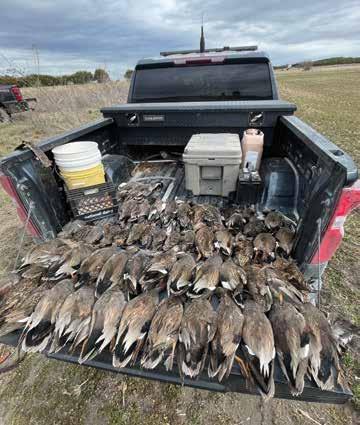
could be potential hunting locations.
Near the entrance to one of the possible locations, they encountered a man in camouflage exiting an equipment shed. He appeared evasive and was urgently texting someone. After a brief conversation, the man directed the wardens to a nearby duck blind, where three nervous hunters were packing up their gear and offered conflicting details about their group size. Initially claiming there were eight hunters—then seven—none of the remaining hunters could name the hunters who had allegedly left.
As one warden interviewed the hunters, the other went to inspect a pile of ducks on the opposite bank. As he was checking the ducks, the warden discovered a fourth individual behind the dam, dressed in camouflage with a stringer of ducks he was attempting to hide. The hunter lacked a valid hunting license and had crossed two fences to conceal the 16 birds. When confronted, the group falsely claimed he was retrieving a lost bird.
Further investigation revealed numerous violations. Near the blind, wardens found additional ducks and roughly 250 shotgun shells and hulls containing pro -
hibited lead shot. The hunters admitted to using leftover shot from dove season, knowing it was illegal for waterfowl hunting.
Ultimately, the wardens determined only four individuals were hunting— only three of whom had valid hunting licenses. The group had used four shotguns, some still loaded with lead shot, and had illegally harvested 54 ducks—three times the legal daily bag limit of six per licensed hunter.
Three of the hunters, residents of Louisiana, admitted to knowing they had exceeded their daily bag limit but didn’t want to stop shooting as they claimed this was more ducks than they had seen all season in both Texas and Louisiana.
Multiple citations were issued for exceeding the bag limit, hunting without a valid license, and using lead shot for waterfowl. The hunters were also charged civil restitution for the illegally taken ducks. The fines and restitution total for the group was more than $7,000. The ducks were seized, cleaned, and will be distributed to families in Hamilton and Bosque counties. —courtesy Texas Game Wardens Facebook page

By Dr. James C. Kroll

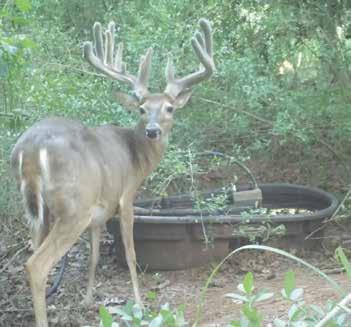
Water is a critical life requisite that no deer can live without. Absence of water is one of the only things that will make whitetails migrate. Therefore, a consistent water supply, and managed food sources, will help hold deer on your small property.
Ihave stopped counting the number of times someone comes up to me at the Texas Trophy Hunters Extravaganzas and declares: “There is no way for me to manage whitetails on my property, I only own a small piece of land.” It is true that the smaller the property, the greater the management challenges, but I am here to tell you, whether you own 20 acres or 2,000 acres, you can make your world better through applying simple management strategies that have proven themselves to provide better deer hunting!
I will never forget my buddy Stan Potts—one of the world’s best whitetail bowhunters—who has killed some of the largest bucks ever on properties as small as 10 acres. My goal with this column is to discuss what good strategies are and how to go about implementing them on a small tract of land. Keep Stan Potts and his hunting success on small land holdings in mind.
Most of the literature on deer movements report the home range of the average whitetail, depending on sex, season, age and habitat, is about one square mile, or 640 acres, but varies from 50 to 2,000 acres. Back in the 1970s and 1980s, we conducted extensive research on deer movements in the days before large scale forest clearcutting. This is significant, since until that time, forest regeneration was mostly using selective
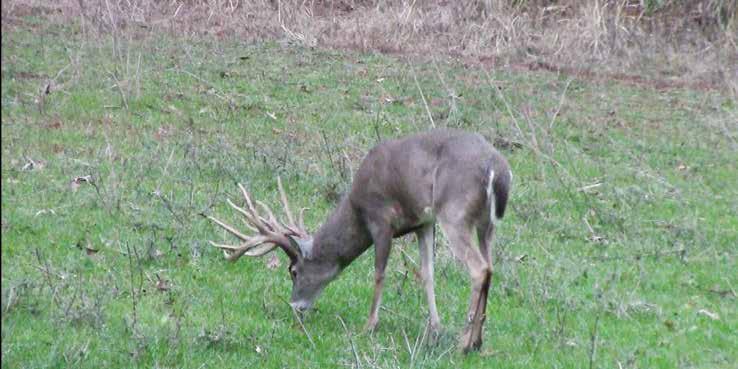
cutting, which left the forest in a much different condition than clearcutting.
Using various sized clearcuts, we monitored how the structure of the habitat affected the home range size and shape of non-breeding deer. We learned that size of the cuts and their pattern and distribution affected the size and shape of the deer’s home range. Up until then, home range shape tended to be elliptical in shape, for a very good reason. If we listed all the “live requisites” of deer within their home range, areas with at least one scarce element tended to be elliptical.
The reason, of course, was that deer had to travel linearly to reach the rare element. Then, with a little manipulation of timber cuts, we discovered that, as habitats became more diverse, home ranges become more circular. We could never get non-breeding home ranges in eastern Texas smaller than about 80-100 acres. So, I concluded the “minimum management unit” size for the southeast was 80-100 acres. Later, I would expand this number to 160 acres for areas farther west.
Analyzing the movements of deer on the “deer landscape,” I soon discovered that their needs were quite simple. Whitetails are ruminants and depend on forage as their main source of nutrition. With a few exceptions, they rely mostly on browse (leaves and twigs) of woody plants, followed by forbs (weeds), a few early stages of grasses, mushrooms, fruits and nuts (mast).
Of these, only browse can be depended on as a reliable source of raw materials for the “bugs” that inhabit their rumen, the primary fermentation vat for what they eat. In a drought, the other items tend to disappear, while browse plants may become “drought deciduous,’ but still retain their trigs and limbs for emergency browsing.
Let me remind you that, at best the height of white-tailed deer is about 4.5 feet, although they will often stand on their hind legs to reach higher browse plants. So, this height defines what I refer to as the “Deer Zone,” the area from the ground to

Cool season and warm season food plots will train your deer to “check” by periodically to see what is available. Locating food and water sources near designated sanctuaries will help protect bucks during the hunting season, especially if your land holds does.
the top of their head. Put in plain language, what goes on above the Deer Zone really goes untouched. Yes, fruits and nuts—and for that matter some leaves—fall into the Deer Zone, but most food items lie where the deer can reach them. So, what you do management-wise will determine the quality of food in reach of your deer.
The next life requisite is cover—what the deer uses to escape the weather, predators, and hunters. There are three types of cover: winter, summer, and escape.
Winter cover is any vegetation that provides both overhead protection from snow, sleet or cold rain, and impedes the flow of air within the cover. Usually, evergreens provide that need, especially trees and shrubs like cedar, juniper, pines and thickets of yaupon.
Summer thermal cover is quite different, and the idea is to find places where there is dappled shade and the wind is NOT impeded. Savannas make perfect summer thermal cover. A savanna is scattered trees with grassland beneath them.
Finally, escape cover is any vegetation in which a deer can run 20-30 yards, stop, look back and not see the cause of fleeing. Tall grasses and shrubs provide this type of cover. When you look at the South Texas brush from ground level, it appears to be a dense thicket of bushes; yet, when you get up in the air, there is great deal of space between the plants. This is deer escape cover.
Water is a critical life requisite that no deer can live without. Absence of water is one of the only things that will make whitetails migrate. During the Millennial Drought (2005-2011) thousands of deer moved to new habitats to find water. Landowners were calling me, asking “Where are my deer?” I would
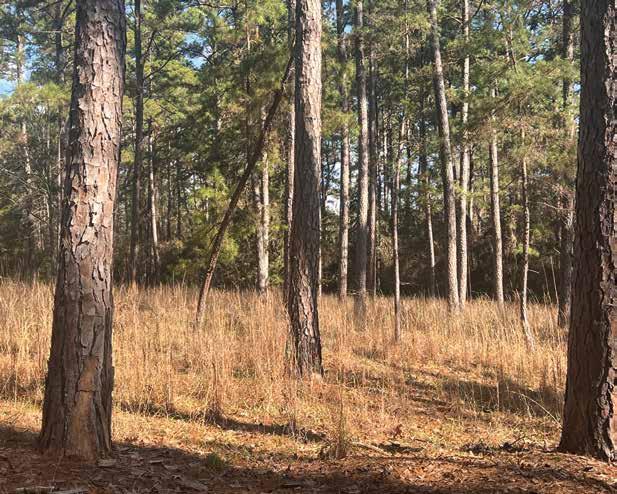
tell them, “Go to the nearest water and you will find them.” They did.
How are these essential elements distributed across the land we call the “deer landscape”? It’s kind of like your yard. You arrange plants and features to suite your needs and preferences, and deer look at their world in the same way. Remember those home ranges? Areas where all the life requisites are present to produce small, circular non-breeding season home ranges.
Why do I keep saying, “non-breeding deer”? Because there are two kinds of older bucks: dominant residents and dominant floaters. The latter just take off during the rut and may have home ranges as large as 2,000 acres. You are not going to hold those bucks, no matter what you do. However, you do attract other floaters to your “neck of the woods.”
All this said, the main idea is to make your land the one place deer want to be. Let’s put together a strategy for your land. We begin with the most critical element—cover. The cover I refer to is “escape cover.” Notice I have discussed the 80-100 acre “management unit,” but I have not asked you how big or small is your property. So, let’s begin with the number of acres you own.
This planted travel corridor is used to connect landscape features.
Let’s say it is about 60 acres of mixed woody and open vegetation, surrounded by other small landowners of various acreages. Overlay a 100-acre circle over your land, where it takes up the center of the circle. You can see places where one or more of your neighbors’ own property inside that circle. Now, look carefully at your land and their land, asking yourself, what life requisites do my land provide, and which do they not provide? Then, look at your neighbors’ lands and ask the same question.
The next step is to develop a plan to provide everything deer need on your land. But, before we address this plan, there is one critical step—you must designate a sanctuary near the middle of your property that comprises only about 10% of your land. Find a place where the vegetation is thick and provides plenty of cover. Surround the sanctuary with everything your deer need—food and especially water.
Then surround the sanctuary with improvements to the life requisites, including water trough, feeders and natural forage management such as clearing, thinning or burning. Keep the vegetation in the deer zone, if possible, on a rotation basis of every three to five years.
Lastly, DO NOT hunt the sanctuary, but rather the perimeter of your property, giving your deer travel corridors they can use to get to the sanctuary unnoticed. I did this on my research facility in the early days. My neighbors were “hammering” the deer; yet, after three years, my deer population doubled after the opening day of the season.
So, you see, having a smaller property does not create the problems you have imagined. With a little landscaping and sweat equity, who knows? You could be the next Stan Potts.



years
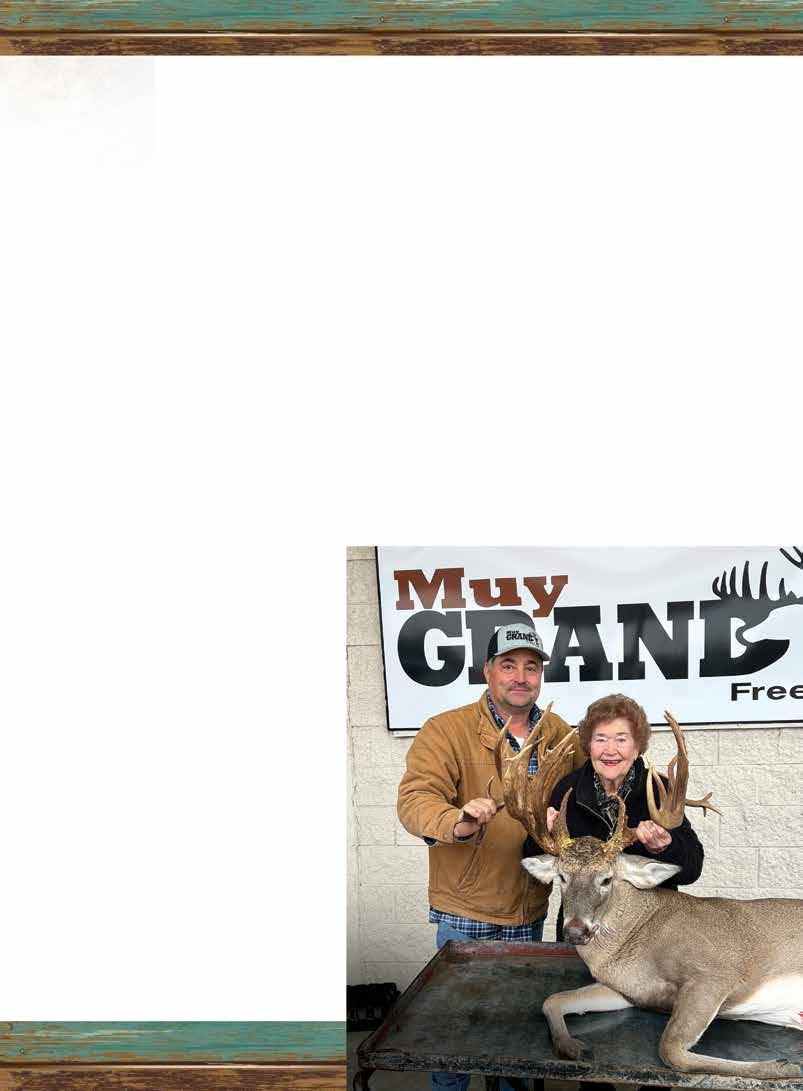
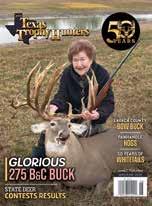
Laura Berry has long been a legend when it comes to taking South Texas whitetail bucks. She has taken her share of both typical and non-typical, some that would fill a No. 2 washtub. She has had many good opportunities while hunting with youngest son, Marty. The duo has brought many trophy bucks to the Muy Grande Deer Contest in Freer, and Laura did it again in 2024.
To boil it down, Marty manages for outstanding bucks on his ranches and Laura hunts for the best. It’s not easy to find a particular trophy buck on a large ranch and she and Marty had seen a non-typical on Marty’s Gloriosa Ranch. She wanted a closer look—on the ground.
I’ve known Laura for a lot of years, and we sing off the same page. I’ve palled around and interviewed her so many times that I know her like a sister. She grew up in the pineywoods of Shelby County and went to Draughon’s Business College in Dallas after Center High School.
Laura met Marvin Berry in Beaumont and tagged him as a winner right from the start. Marvin and Laura married and moved to Corpus Christi where they were successful in both business and raising a family of four boys.
Marvin taught Laura how to hunt and use a rifle, and she often brags about their four boys sitting on her lap on the family’s Flying Bull Ranch in Real County where each shot his first buck. She remarks about the boys, “Four of a kind beats a full house every time.”
Laura took up rifle and shotgun shooting and through time, has hunted deer and hogs with a variety of rifles, including her favorite .300 Weatherby. With her favorite shotguns, Laura has brought competitive shooters all over the world to their knees.
The deer season of 2024 was coming, and Laura thought about the non-typical buck she had seen on the Gloriosa. “Marty, I want to hunt for that unusual buck this season,” she requested. “This year I want to take a unique buck—something odd and different.” Such a request put pressure on Marty, because Laura wanted “a needle in the haystack.” By the time they both had a chance to go hunting, Marty had seen the buck a few times—a deer that was certainly unique. Marty had never gotten close enough to tell exactly what the buck had in the way of non-typical antlers, but he knew that this was the buck for Laura.
The early December weather was changing, and Laura wanted to hunt. “I want to get that buck before he breaks something,” Laura told Marty. “Can we hunt this weekend?” Marty was scheduled to work on his Gum Hollow Ranch on Friday night—work that would take most of the night. “I guess we can go after I get through,” Marty assured Laura. “I’ll come by for you early Saturday morning.”
Marty worked all night on Friday and called Laura early Saturday, but she wasn’t ready. “Don’t come now,” she said. “It’s early and I don’t have any makeup on.” Marty wondered about the makeup,
but Laura always looked nice when they went to Muy Grande. “You’re pretty confident about getting that buck,” Marty surmised. Laura replied, “Yes, I expect to see him sometime during the day.”
The duo got to their hunting spot near a lake on the Gloriosa about 8:15 and Marty scattered some corn. Laura got settled with her .300 Weatherby and before long, a few does found the corn. The weather had turned cold and rainy—just the kind of day to hunt deer. Laura had her eyes on the brush where the does had come from—hoping a buck might be trailing them.
Laura didn’t have to wait long. The big buck she was after bounded out of the brush chasing a doe. “Wait, I want to take a couple of pictures,” Marty said as the buck stopped. “Cover your ears—I’m gonna shoot!” Laura warned as she poked the gun barrel out the pushed the safety off. “Just one more,” Marty said as he clicked another photo. He was hardly ready when Laura pulled the trigger, and the Magnum sent a bullet through the deer’s shoulder. The buck wheeled and fell dead.
Laura and Marty were elated. They got out and inspected the odd-shaped antlers. The right side had split beams, making three beams with points on points. After the photos and admiring the buck, Marty field dressed and loaded the deer. In a few minutes they were on their way to Freer and Muy Grande.
The Muy Grande routine was not new to Laura. She had entered many bucks in the oldest deer contest in Texas. The buck scored 275 gross B&C in the non-typical category. Not bad for a 94-year-old grandmother who has been a legend at Muy Grande since its founding in 1965.


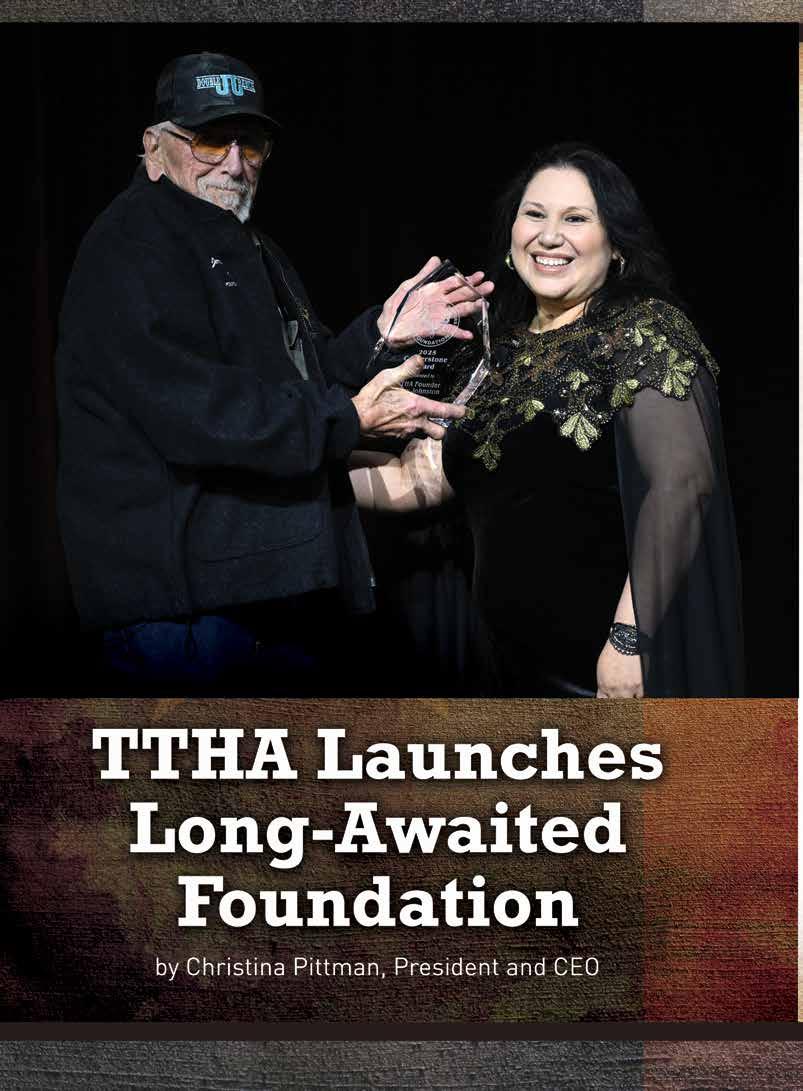
Texas Trophy Hunters Association took the opportunity to launch its new Texas Trophy Hunters Foundation at the Outdoors Extravaganza held Jan. 10-12 in Dallas. The international outdoor show was presented by Safari Club International and TTHA as a joint effort to give attendees an opportunity to visit with Texas and worldwide hunting and fishing consortiums at the Kay Bailey Hutchison Convention Center.
A Saturday night banquet and auction to celebrate Texas Trophy Hunters 50th anniversary was the perfect venue for SCI’s CEO W. Laird Hamberlin to bring me to the podium and give me the opportunity to launch the TTH Foundation and announce the founding sponsors, Brian and Denise Welker of Sugar Land. Brian, who is SCI Foundation president and Texas Trophy Hunter Platinum Life Member No. 6, and Denise, who is president of the Weatherby Foundation and TTHA/SCI Platinum Life Member No. 24, kicked off the TTH Foundation with a $25,000 donation.
The TTH Foundation took roots three years ago when SCI acquired TTHA and now with the help of SCI, the goal of a foundation has been reached. The TTH Foundation will waste no time in getting into action.
Foundations give financial support to other organizations that have mutual interests in common. The TTH Foundation will support hunting/outdoors, wildlife research, educational sponsorships, college chapters, etc. across the state.
In my announcement of the TTH Foundation at the banquet, I was privileged to recognize Jerry Johnston as founder 50 years ago, and the hard work, passion, and Texas love for hunting and the outdoors that have gone into making TTHA what it is today.
Since SCI acquired TTHA in 2021, the parent organization has provided TTHA with:
• Support of an international hunting and conservational organization
• Unparalleled advocacy influence
• Global conservations leaders
• International events and people who have a love for the outdoors
SCI also offers TTHA more options for growth and support, including the SCI Foundation and its amazing leadership, which paves the way for us to work together.
We are in the process of naming a board of directors for the TTH Foundation. Currently, that board consists of myself, Laird Hamberlin, and Brian Welker. Along with the Welkers’

founding donation of $25,000, SCIF donated $50,000 to the new TTH Foundation. Other sources are bringing in additional funds to the new foundation which is getting started with a solid source of support.
The gala event on Saturday night had presidents and executives from SCI and SCIF in attendance to celebrate a coordinated effort between two hunting and conservation partners. SCI
is the vital advocacy for hunting, with international conventions and membership. TTHA is the “Voice of Texas Hunting” with Hunters Extravaganzas, membership, and publications. The SCIF mission is to ensure the future of wildlife through conservation, education, and hunting.
The launching of the TTH Foundation is a new chapter in the TTHA story, and is the culmination of years of dreams, dedication, and achievements. It represents our commitment to giving back to the hunting community that has given us so much during the last 50 years.
We have partnered with organizations such as Disabled Outdoorsman, Trinity Oaks, and Frontline Heroes to ensure that everyone can experience the joy of the Texas outdoors. We have also collaborated with Texas Parks and Wildlife to conserve our natural resources.
The TTH Foundation will invest in groundbreaking wildlife research to ensure the sustainability of Texas wildlife. Another inspiring part of our mission is our educational scholarships and college chapters in universities such as Texas A&M, the University of Texas, Texas Tech, Texas State, and many others.
With the launching of TTH Foundation, we are taking our commitment to the next level. Our mission is simple, yet powerful: To help and inspire through wildlife research and educational scholarships.
At the Saturday night gala, we honored some extraordinary individuals who embody the spirit of TTHA. Those who received the Texas Trophy Hunters Foundation Cornerstone Award were TTHA Founder, Jerry Johnston; G2 Ranch owners Don and Sandy Gilchrist; SCI President John McLaurin on behalf of SCI; and Brian and Denise Welker for their groundbreaking help and donation to the TTH Foundation.
As I stood before the large audience at the 50th anniversary commemoration banquet, I was overcome with pride—a pride for the legacy we have all built together, the legacy we continue to shape, and the legacy we are leaving for our youth.
I want to express my heartfelt gratitude to every one of you—our Texas Trophy Hunter members. Without your support, your passion, and your belief in our mission, none of this would have been possible. Thank you for being a part of this journey of dedication to the outdoor wonders of the great state of Texas. Here’s to 50 more years of Texas Trophy Hunters Association, and for a bright future ahead.

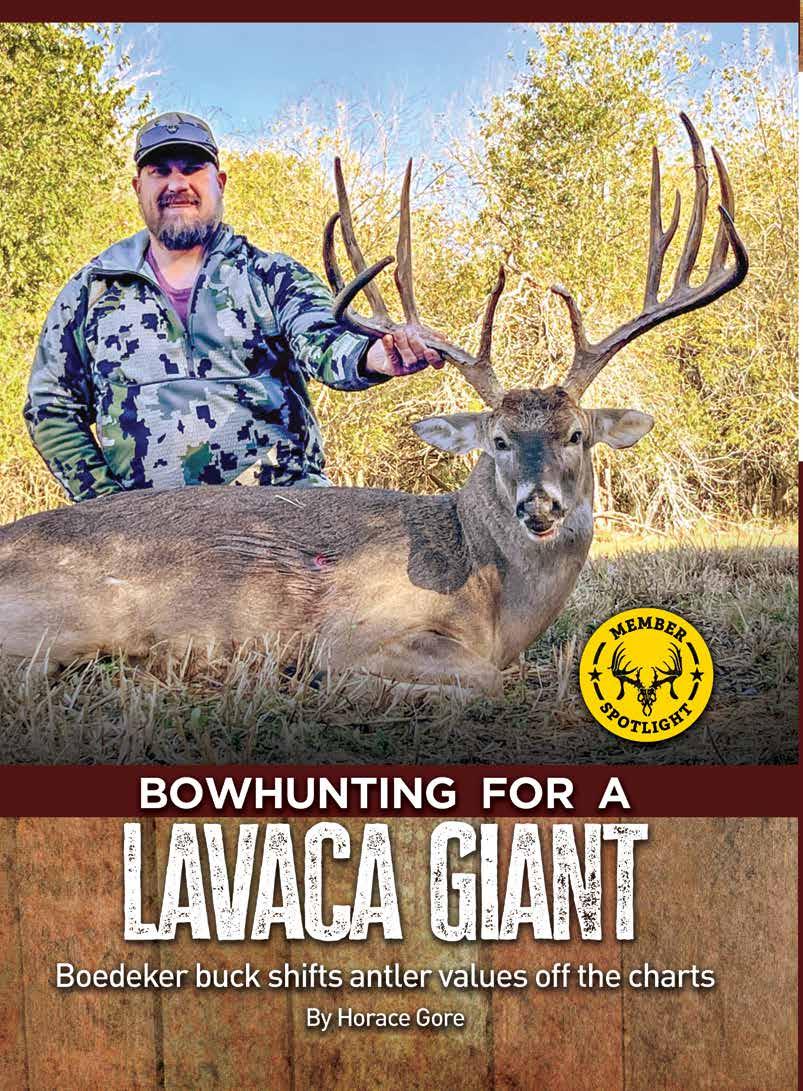
On Nov. 21, 2024, Jared Boedeker of Shiner arrowed a whitetail buck that shatters all records for Lavaca County and most of Texas. The quest for this massive typical buck took 15 early morning hunts on the Boedeker family ranch on the Lavaca/Gonzales county line. Jared fought buck fever four different times to arrow the old buck that was chasing does around the blind where Jared had sat for so many mornings.
Patience paid off on the fateful morning just after daylight when Jared’s arrow found its mark behind the buck’s shoulder. The big buck veered to his left and ran about 60 yards before collapsing. The long hunt was over, and Jared was on Cloud 9 as he walked up to the biggest buck of his long hunting career.
Jared is an old friend from my many years on the Kokernot Ranch in Gonzales County. Jared’s father, Marvin,

bought the ranch while I lived there, and Jared and I palled around and hunted a few whitetails and hogs. He hunted with a .308 back then and I was a little surprised he had taken up the compound bow, but he says he hunts with both.
The Boedeker family are hunters, including Jared’s oldest daughter Kailey, who’s a senior at Shiner High. I recall her taking her first buck when she was about 6 years old. When I lived on the Kokernot, Jared took a big nine-point Avery Island buck with his .308 that still holds the record for the ranch.
Technically, Jared’s last buck with his bow was a monster. For you folks familiar with a bell-shaped curve, this buck re-distributed the set of values for antlers on a whitetail. The bell curve has a mean in the center that represents the average antlers. The lower left side shows the poorest,
“For you folks familiar with a bell-shaped curve, this buck re-distributed the set of values for antlers on a whitetail.
The bell curve has a mean in the center that represents the average antlers. The lower left side shows the poorest, and the right side shows the best. The buck Jared killed shifted the values of the curve to the best beyond belief.
“
and the right side shows the best. The buck Jared killed shifted the values of the curve to the best beyond belief.
The antlers had over a 24-inch inside spread, and 12 long typical points with a non-typical point on each G-2. The long 26-inch beams had great mass, resulting in a gross score of 2023⁄8 . A few lucky hunters take 200-inch-plus bucks each year with their scoped rifles, but a 202-inch buck with string and feather is as scarce as hen’s teeth.
The hunts for this buck had a history. Jared has been bowhunting for 20 years and had passed on the buck as his antlers continued to grow larger every year. When the buck was in his seventh year, Jared attempted to take him with his bow, but the buck didn’t cooperate and lived another year. Then, in 2024, Jared decided that the buck was getting old and needed to feel the sting of his arrow.
A couple of years earlier Jared had built a bowhunting stand near a feeder where he had seen the buck several times. It was large enough for two hunters, but Jared had always hunted alone for this big buck. “He was easy to spot in the brush,” Jared said. “The few times I saw the buck, I recognized him immediately.”
In 2024, the deer was getting old, with daily habits that made him hard to hunt. Jared was continuously in his bow blind, but the buck didn’t show. “One reason I hunted the buck so many
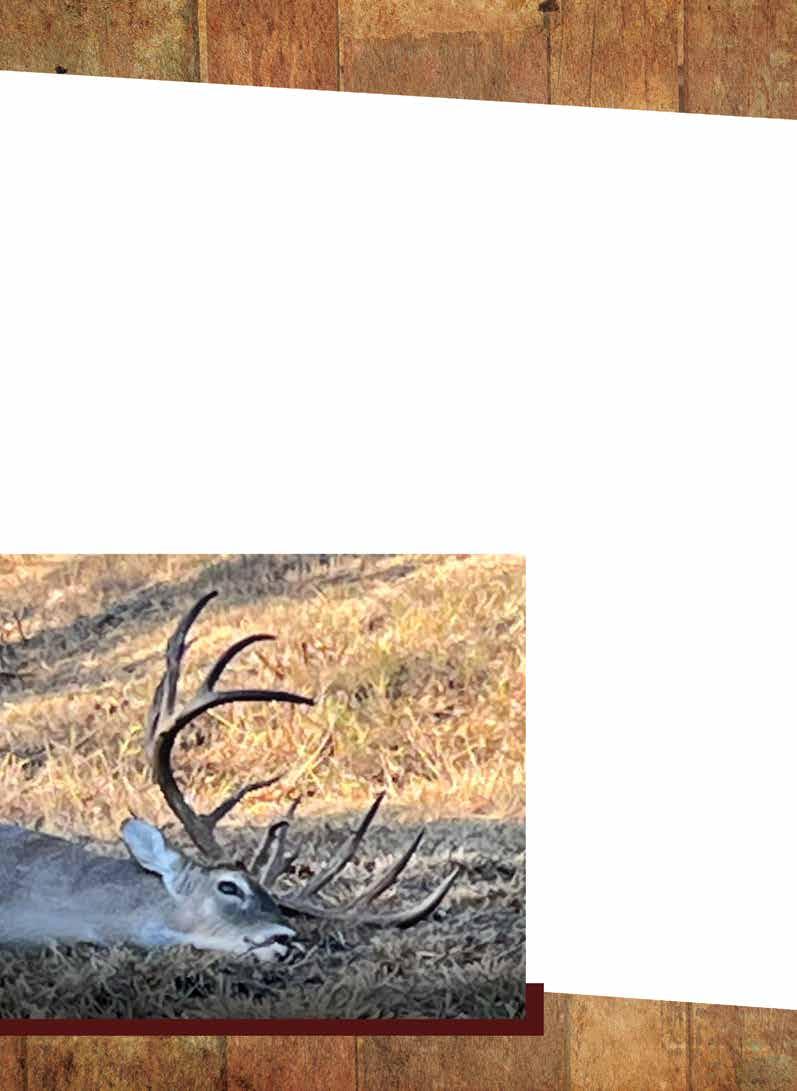
times was his unusually high and wide antlers—the biggest we ever had on the ranch,” Jared noted.
He added, “Some old bucks just eat and lay back in the brush, and that’s what this buck was doing. We thought at times that he might be dead, and my patience wore thin hunting him 15 different mornings without pulling the bow string.”
“We saw the buck on camera about the middle of September and didn’t see him again until early November,” Jared continued. “I hunted the buck time and time again without getting a shot with the bow. Then on Nov. 21, I got into the blind again before daylight and I could hear deer near me, but I couldn’t see them.
“The feeder went off at 6:45 and soon there were several bucks and does milling around the feeder. As it got lighter, I bent over to look through the brush line and caught sight of antlers. When I looked with my binoculars, I knew that it was Mr. Big. He was in no hurry to come out of the brush, but finally chased a doe a short distance and was about 20 yards away. I had my bow up, but my arrow was not steady. Before I could get organized, the buck chased another doe into the brush.
“In a few minutes the buck was back out coming toward the feeder and me, when he chased another doe back into the brush. This time I had a sinking feeling that he was gone. Then, for the fourth time, the buck came back and stopped a short distance in front of me. I drew the bow and put an arrow behind his shoulder and about 4 inches below his back. He whirled and ran about 60 yards and collapsed. I got my stuff gathered up and walked to the buck, which got bigger and better the closer I got.”
I’ve known Jared a long time, and he has taken some goods bucks on the family ranches. Two or three of his bucks would grace the wall nicely. But compared to his previous bucks, his latest bow-kill takes the shine off all the others. Jared knows he could hunt the rest of his life and never take, or even see, a buck like the one he arrowed on Nov. 21, 2024. Congrats, Jared. An archery buck like yours might do well at the 2025 Hunters Extravaganza Annual Deer Competition in Houston or San Antonio. Winning at the 50th anniversary deer contest would be “pee on the paddle!”


My dad, known as Pop, my brother-in-law “Uncle” Alan, my oldest son JD, and I made a return trip last November to Texas for a few days to get away from work and the daily grind to enjoy deer camp and the opportunity to take a few good bucks. The last two years, JD has taken a 178-inch 10-point, and this season, a 182-inch buck, which he entered into the Muy Grande deer contest. We all had the opportunity to take home a very nice buck. It was a great trip, and as usual, we saw a lot of bucks over the course of our few days hunting.
JD is the first-born grandchild on my side of our family. As I shared in a previous story I wrote for The Journal, getting to hunt with your grandfather is something special. JD is not the only grandchild to Pop and my mom. I also have a younger son named Wyatt, and two nephews who I love like my own, named Ethan and Fisher.
Wyatt and Ethan are the same age and do most things together. They’re partners in high school fishing tournaments, they go to school and church together, and whatever they can get themselves into. Fisher on the other hand is the youngest grandchild in the family. He loves to be outdoors hunting and fishing as well, and holds his own with the older ones.
As I said earlier, while we were hunting, we saw a lot of bucks. Several of those were older management bucks on the hit list, and it just so happened we knew three boys back home who might want to come to Texas and go after them. It is almost impossible for our younger boys to make the trip due
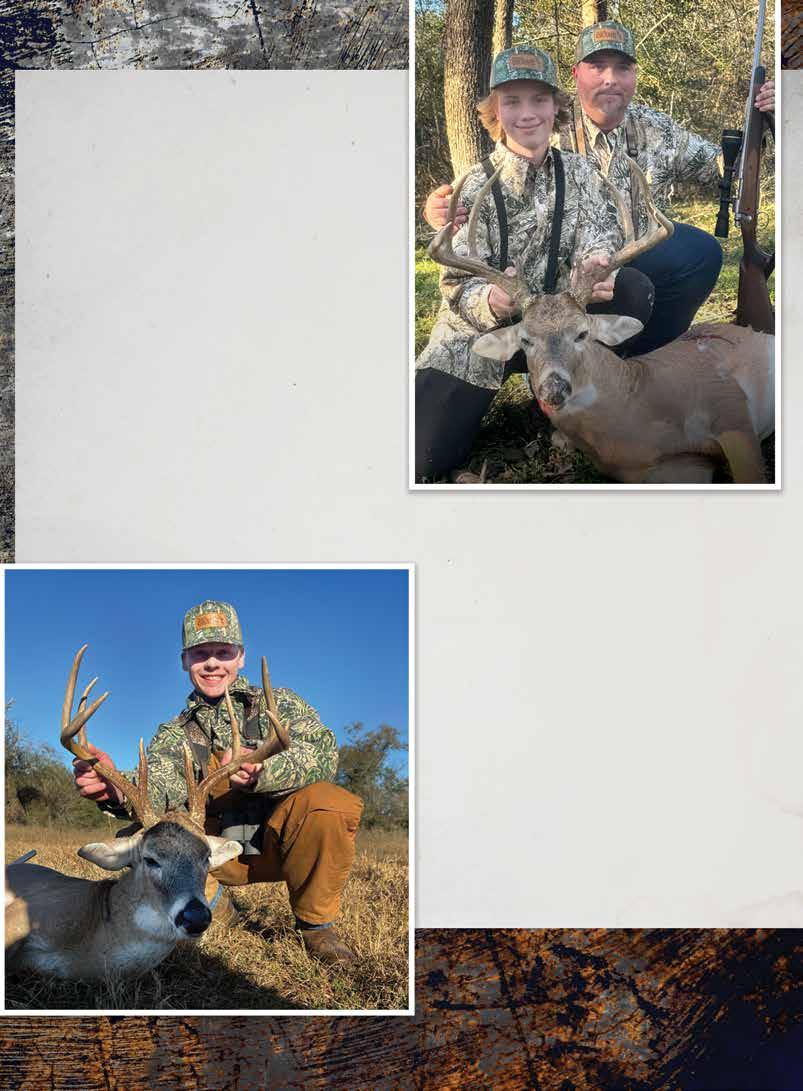
to still being in school, so we decided for Christmas. During their Christmas break we would take them to the ranch and try and get them a good buck. We surprised them at Thanksgiving with an early Christmas card, which had their Texas hunting licenses in it so they could have a month to think about and get excited for the hunt.
Christmas 2023 was different for us because I came down with the flu on the 22nd, and by the time we left early the day after Christmas I was still not 100%, but determined to head to the ranch. I rode with Uncle Alan, and the boys rode with Pop to stay away from me until I was well. We stopped in Bethany, Texas, took the boys’ picture at the famous-to-us Texas state line marker, and arrived at the ranch about 4 p.m. After unloading our gear and eating a mighty good supper at the bunkhouse, I slipped off to bed while the boys and Pop played cards and talked about deer.
Everyone was up early and excited about the first morning’s hunt. After some coffee we split up and went to the stands in search of some management bucks. I felt a lot better after getting a long, good night’s rest. I took Wyatt and Pop with me, while Uncle Alan took Ethan and Fisher with him.
We saw a lot of young bucks, and a few does that first morning and about 9 a.m. or so, things started to slow down a bit as deer slowly left the field, heading into the brush
when suddenly, an older buck came out and began to feed towards us. This buck looked to be a 5-year-old eight-point and I quickly decided Wyatt should take him. I let Wyatt use my David Dury custom built 7mm-08 that I have hunted with for the last 20 years. With one shot, Wyatt had his first Texas buck on the ground.
That afternoon Uncle Alan took Ethan, and Wyatt went with them for the afternoon. Right at daylight that morning I saw what I thought was a wide older buck, but it was still so dark that morning I couldn’t be sure. The buck didn’t hang around very long. After we talked at lunch, Uncle Alan decided to take Ethan back to that area, and very early in the afternoon the buck came in.
Wyatt kept whispering to Uncle Alan that this was the buck, and finally after being sure, Ethan got the green light. He sent
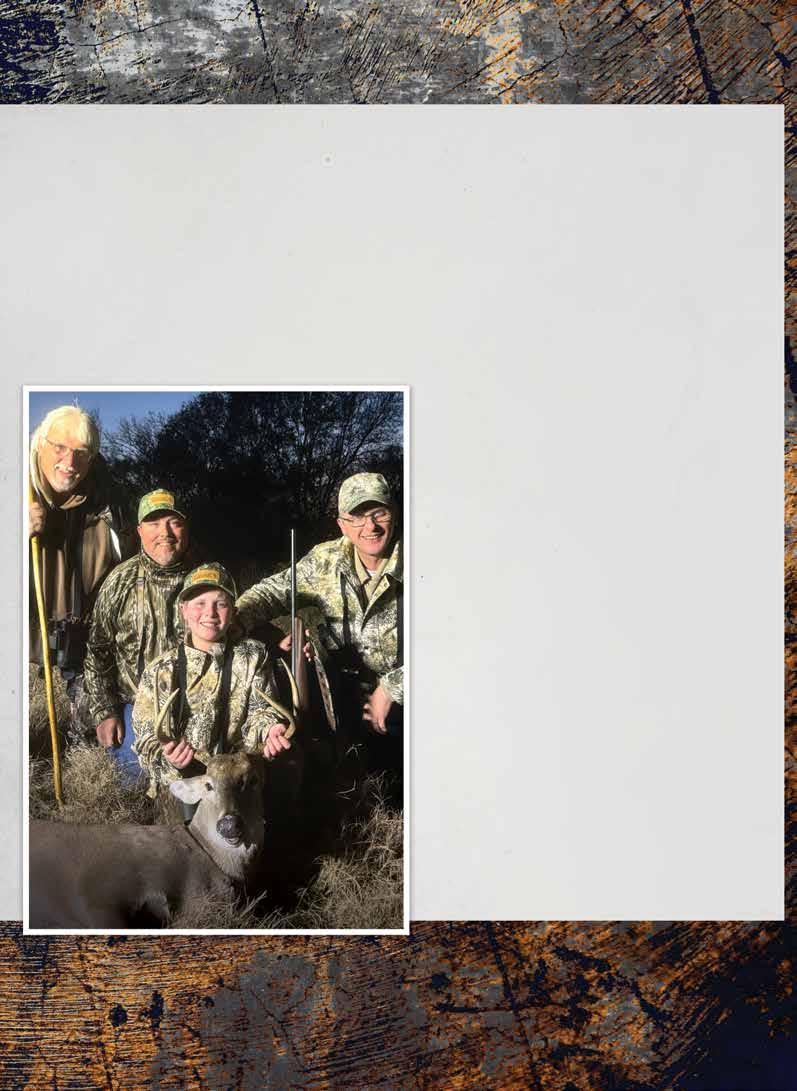
a 143-grain bullet out of his 6.5 right through the buck. The buck jumped and ran to the edge of field and that was it. Ethan had his very first Texas buck on the ground.
While all this went on, I had Pop and Fisher with me hunting in a blind we call the Tank blind. We saw several deer and a couple of young bucks, but no older deer. The next day came and went with Uncle Alan, Fisher and me sitting together in search of a buck for Fisher. Morning and evening came without anything moving that day. While we were still hunting, Pop and the other two were catching bass in the tank by the bunkhouse, hoping Fisher could get a buck.
We had come to the last evening of the hunt before we had to head home. The pressure was on for Fisher to get his buck. The last evening, we saw several nice young bucks and a couple of does, but not what we were looking for until about the time the sun started to set.
Uncle Alan and I had hunted in Kansas for several years a while back. In a few of those years I had what we call a tag sandwich, which means I came home with my tag instead of a buck. I had already been explaining to Fisher that even though a tag sandwich doesn’t taste very good, the sun still comes up the next day, Lord willing. But it’s the experience and enjoyment of deer camp that matters.
About the time I had finished explaining this to Fisher, he was looking at me like I was crazy, knowing his big brother and cousin got a buck and he wasn’t going to get one. But then he saw two bucks over my shoulder step out of the brush, skirting around the edge of the pasture. His dad and I immediately glassed them and realized they were older eight-points. We needed to take one.
Santa Claus had brought Fisher a brand new 7mm-08 a few days before, and after getting on his dad’s knee, we whispered to Fisher to get ready because both bucks were shooters. As Fisher got in position to take the shot, he liked the wider buck on the right side of the field. Fisher quickly shot the buck in the neck and dropped him in his tracks. I was tickled to death to watch my 11-year-old nephew drop a big eight-point. It’s something I will never forget.
Our ranch owner had been telling Fisher the whole trip about a buck that he never got while hunting in Mexico years ago, a giant that the cowboys called “Cha-cho.” After this hunt I have given Fisher the nickname of “Cha-cho,” and it tickles him good! What a great hunt for us to experience and get the opportunity for all of Pop’s boys to get a great Texas buck.
We hope to be able to do it again for many years to come. God bless.

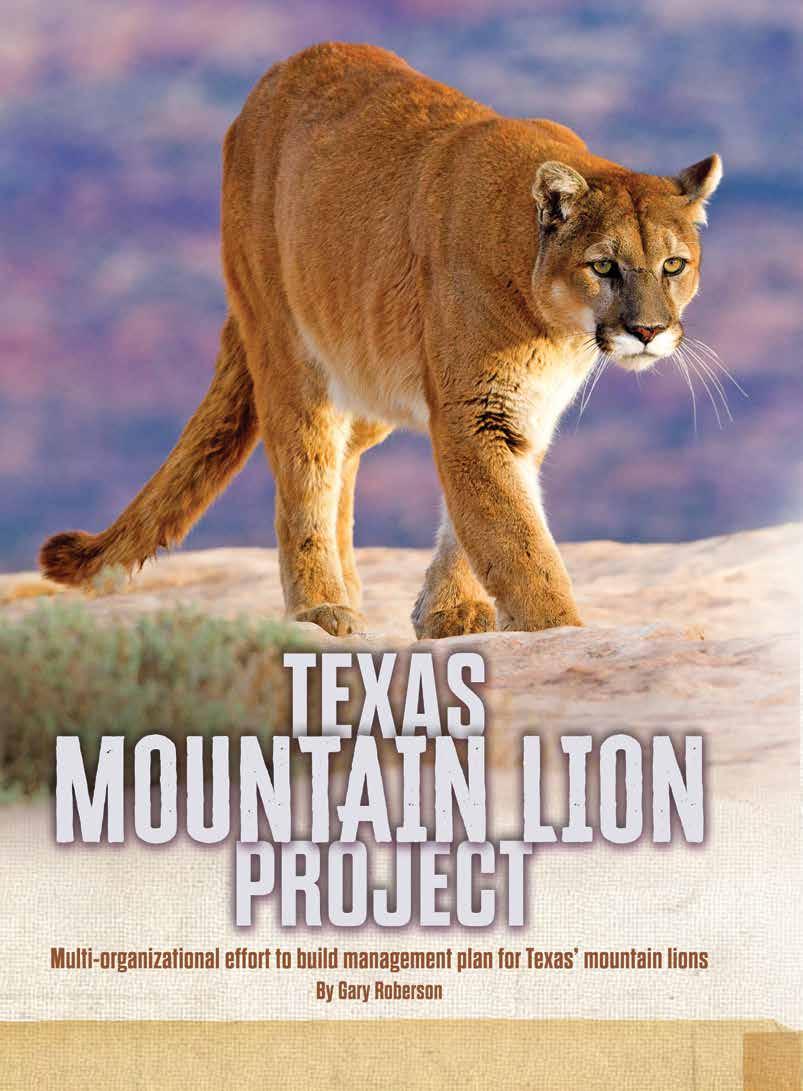
Gary received an opportunity to work with SCI Foundation and other partner organizations on an important project to learn more about the Texas mountain lion population.
Afew months ago, a friend contacted me to see if I would be interested in helping on a project to do research on the mountain lion in South Texas. Having a love for all things predators, I told him I might be. A few days later, I received a call from Maria Davidson, in Pinedale, Wyoming, who is the program coordinator for the Safari Club International Foundation. She gave me a brief description of the program and stressed the need for the research team to gain access to private property, which makes up most of the land in the nine counties that had been designated as the study area. She said they scheduled a meeting for Oct. 20, 2024, at the Safari Club International/Texas Trophy Hunters Association office in San Antonio.
While I have quite a few friends in these South Texas counties, I decided to contact my longtime friend Phil Lyne to accompany me at the meeting. Phil knows most every rancher in South Texas and could be an invaluable asset in helping gain access to ranches, if we were convinced that it was a worthwhile project.

The Texas Mountain Lion Project will be funded by SCIF, who will partner with the Ceasar Kleberg Wildlife Research Institute and Texas Parks and Wildlife Department. While the project will start in South Texas, the study will last for several years and cover most of Texas.
The mountain lion populations appear to be growing, or at least the areas where lions are being seen and killed, are expanding. However, the recent final report from TPWD Mountain Lion Stakeholder Group identified several data gaps and uncertainties regarding lion management in Texas.
“With over 95% of land in Texas privately owned, private landowners will play a critical role in mountain lion management. SCI and SCIF are strong proponents of private landowner and hunter rights, and our membership includes many important landowners in regions important for mountain lion conservation.” —SCI Foundation
The attendees at the meeting were the officers of the 10 SCI chapters from around Texas, as well as Maria Davidson, the project manager, and several members of the research project. After the usual meet and greet, Maria took charge of the meeting and gave us an overview of the program.
Quoting SCIF’s newsletter:
“This partnership grew out of the needs identified by the Mountain Lion Stakeholder Group in their report. Specifically, we plan to address the need for science-based data about abundance and distribution of mountain lions in Texas which will be used to build a comprehensive management plan for the species in Texas. SCI Foundation and our partners at the Ceasar Kleberg Wildlife Institute are leaders in wild cat research and conservation here at home in Texas. With 10 strong chapters in the state and the recent relocation of the SCI corporate headquarters to San Antonio, the timing is perfect for us to make an impact.
“With over 95% of land in Texas privately owned, private landowners will play a critical role in mountain lion manage-
ment. SCI and SCIF are strong proponents of private landowner and hunter rights, and our membership includes many important landowners in regions important for mountain lion conservation. Our Texas membership is stepping up to meet the challenges of wildlife conservation in their home state by helping to fund this critical research. Active engagement in this process is another demonstration that hunters are leaders in the conservation field.”
To date, we have had meetings with landowners in Cotulla and Tilden, which is the county seat of McMullen County. McMullen County was not in the original study area, but we decided to add it because of the excellent habitat along the Nueces and Frio rivers that traverses the county. To date, most all of the ranchers we have met are willing to allow us to do some research on their property with the biggest concern being, “What happens to all the photos that you get on the cameras?”
This is a huge and very understandable concern that anyone would want answered.
SCIF is a private organization and is ONLY interested in photos of lions and they don’t have to share photos with anyone. If requested, the landowner can be present when the SD cards are removed from the cameras and the landowner can delete any photos he/she desires.
In order to effectively target lions for collaring, we are
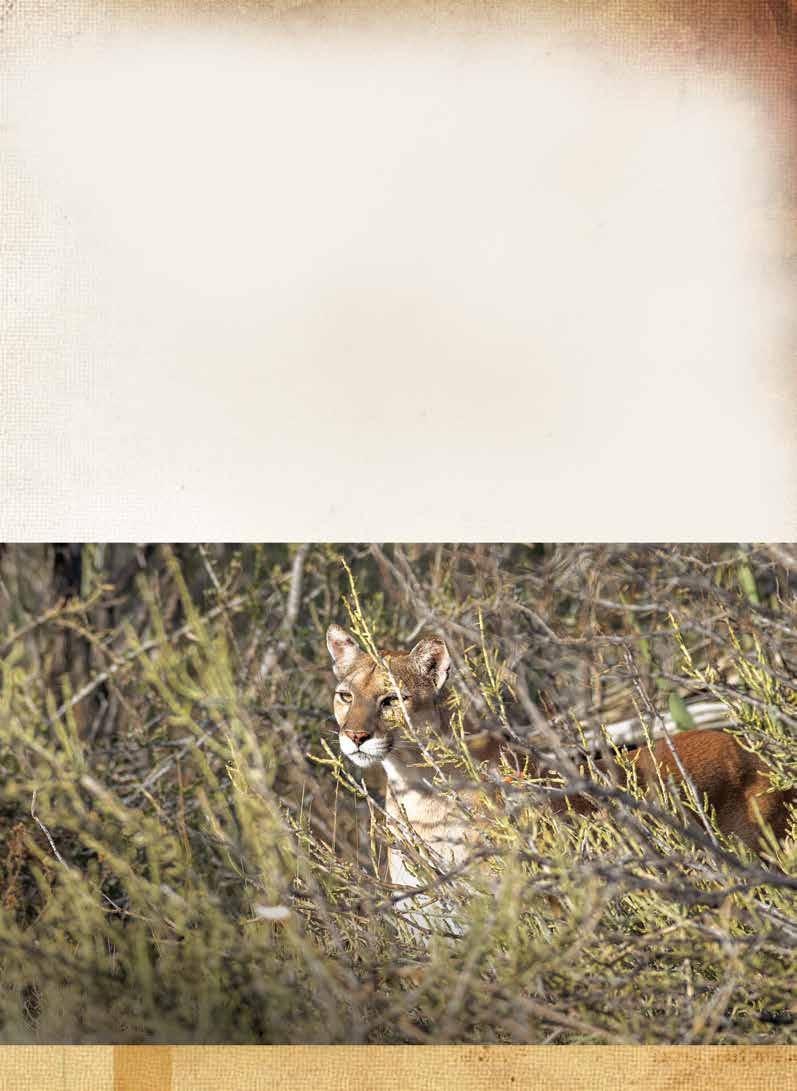
seeking current trail camera photos of mountain lions. Our goal would be to attempt to capture the lion in order to collar it for this study. If anyone would like to contribute photos, or would like more information about the project, just email Maria Davidson (mdavidson@ scifirstforhunters.org).
As most of you know, I am a little old fashioned and believe if something ain’t broke, don’t fix it. Lions have been recently documented in counties where mountain lions have not been seen in over 100 years. Photos of lions are showing up on doorbell cameras west of Austin and in North Texas.
While these sightings and lion kills prove that lions are in areas where they have not been in many years, it does little to tell us about population size and density. And I certainly know nothing about the survivorship or reproductive estimates of mountain lions in Texas. Hopefully the information gathered from this research project will assist in the formulation of science-based recommendations to TPWD for the development of policies for mountain lion management in Texas.
My thanks to SCIF and the SCI Texas chapters for funding this project. Hopefully, the scientific information gathered from this project will ensure the future of mountain lions and sustainable mountain lion hunting in Texas.
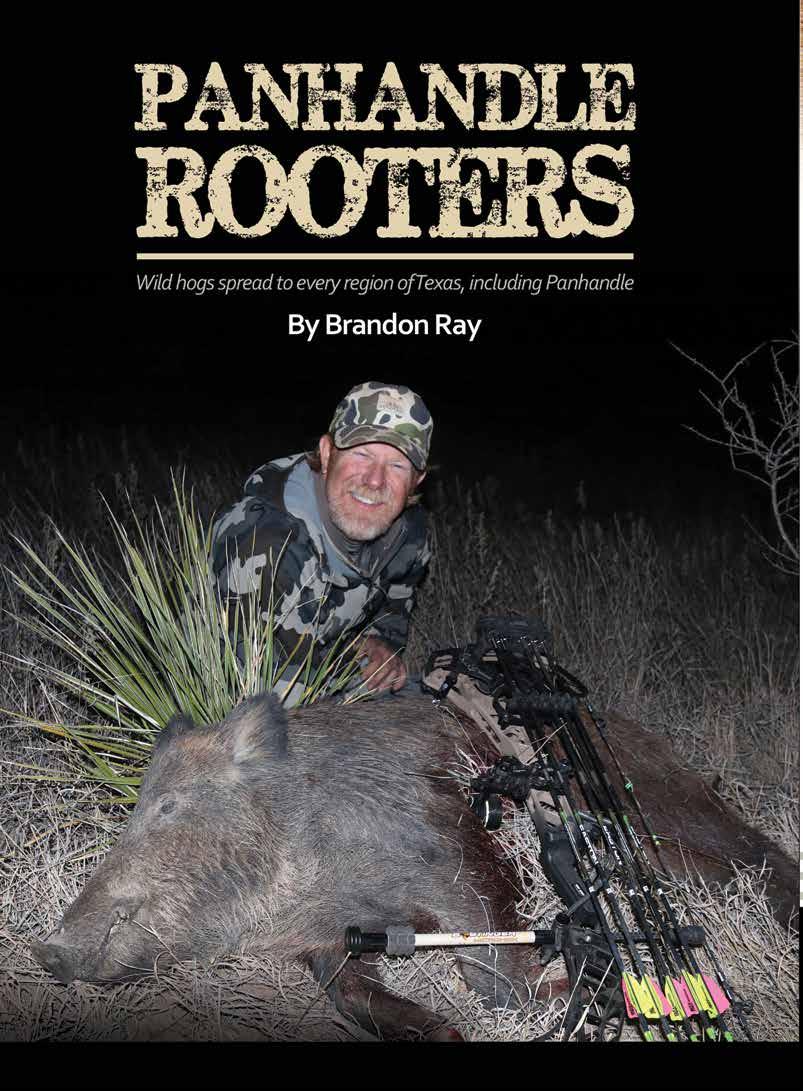
Wild hogs continue to invade the Texas landscape. Even in the open spaces of the Panhandle where they were once rare, today feral swine have firmly implanted themselves as forever residents. They thrive in brushy creek bottoms and river drainages with whitetails and turkeys, but they also live in rugged canyon landscapes shared by mule deer and aoudad. Like some biblical plague of locusts, they consume crops like wheat, milo, and peanuts, so of course the farmers want them dead. They are adaptive to any ecosystem and multiply rapidly. Thinning out the numbers is not always easy. Consider this example from December 2024.
It’s one of my go-to locations to find a quality mule deer buck in the Texas Panhandle. A secret spot that sits on the edge of a rugged, brushy canyon. Thick cedars and tall oak brush crowd the cliffs except for a few game trails that wind through the thick brush. It’s out of the way, far from roads and there’s always a few mule deer, including a buck or two, that live back there. A nearby windmill offers a water source for all wildlife. I scatter corn and alfalfa hay in a clearing, set a trail camera and
monitor the location, hoping the right buck moves in.
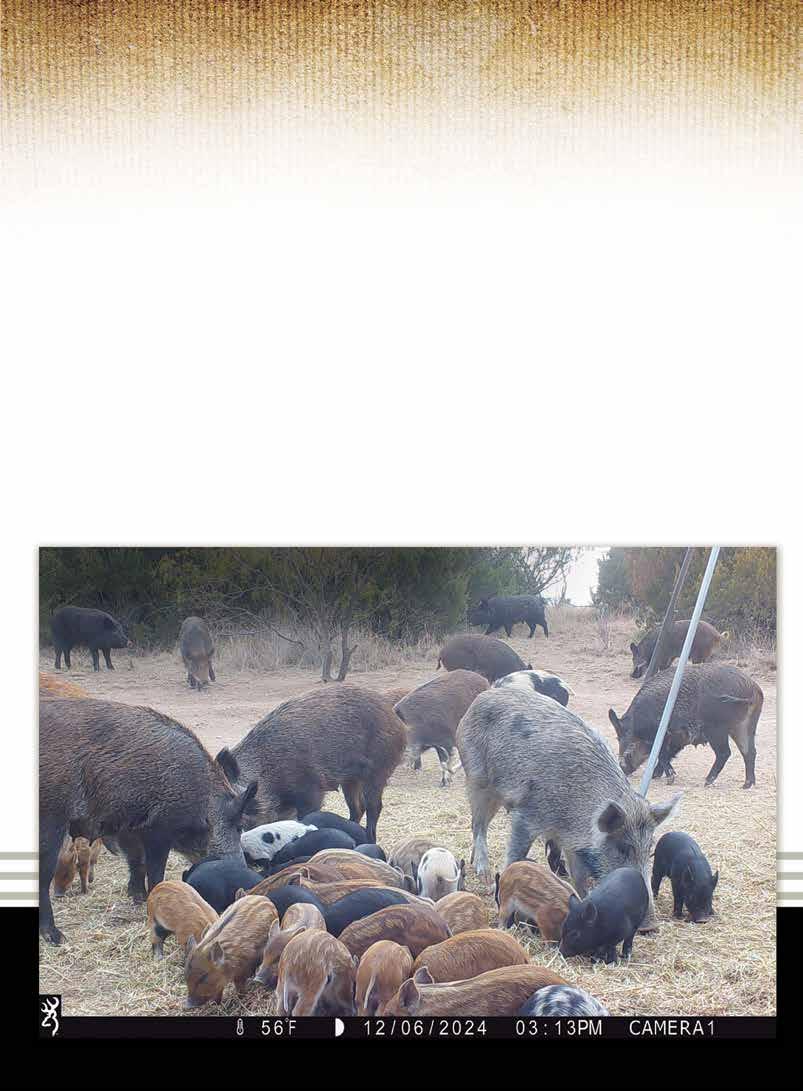
Last December, I got a surprise. Instead of a big mule deer buck, a large herd of feral hogs were gobbling up the free feed. Big ones, small ones, black ones, spotted ones and brown hogs were all raiding the corn pile. In one trail camera image I could count more than 40 pigs.
Wild pigs in that area are usually nocturnal, but this herd was bold because they were on the camera daily in daylight. You would think it would be easy to mow down the numbers, but it wasn’t. The herd was smart, bedding in jungle-thick brush in the nearby canyon, then circling the bait site every time before they would come in to eat.
Finally, one afternoon, I put hunter Rowdy Born in that tripod stand with a favorable wind direction. Early in the afternoon, he thought he heard snorting behind him, but it was difficult to tell for sure in the gusting winds. He guessed it was the target herd, circling and smelling him.
One hour later, sitting 1½ miles to the east of Rowdy’s location at a different blind, I had the same, target herd of hogs unexpectedly visit my deer blind. I could identify the herd from a couple of spotted piglets that were always on the camera. In
The author discovered this big herd of wild hogs at one of his mule deer blinds in December 2024. The herd’s frequent visits to the area meant few deer were seen and almost all the feed went to the pigs.
the midst of their feeding frenzy, I zipped an arrow through a medium-sized boar at 15 yards. The herd stampeded away in a cloud of dust with grumpy pigs growling and grunting at every stride. I found the dead pig 70 yards away by the beam of my flashlight.
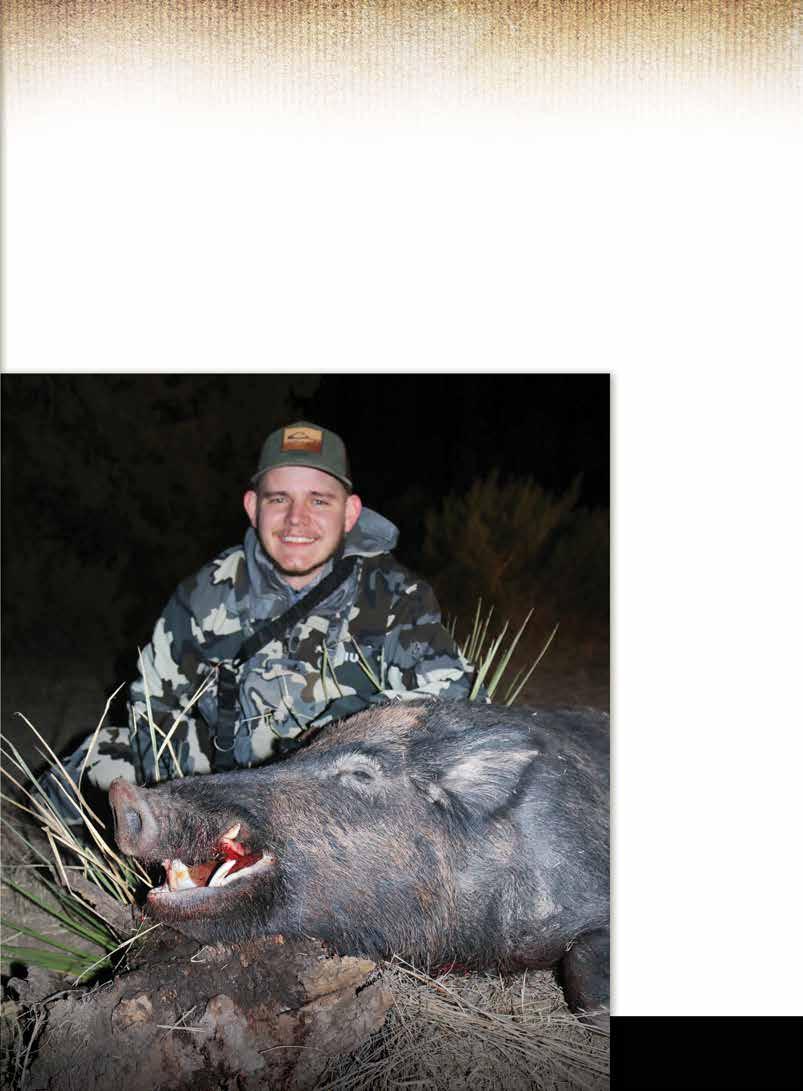
Meanwhile, Rowdy had one lone, blackcolored boar visit the free corn after sunset. He dropped that toothy boar at close range with his rifle. Rowdy said to me when I picked him up after dark, “He grew in size when I climbed down and walked up to him. Since he was by himself, I had nothing to compare him to in relation to size.” I guessed that chunky boar at 250 pounds live weight with impressive, three-inch lower tusks. The two of us strained to load the stinky boar in the truck bed for a trip to the taxidermist.
Sure, we killed two, but out of a herd of 40-plus, it was minimal progress. That general area receives year-round pig hunting pressure on neighboring ranches, day and night with skilled shooters that use thermal equipment on the nearby wheat and milo fields. The hog population still multiplies.
Despite more hunting time to try to reduce the numbers, that herd of mostly sows and piglets proved elusive. The mule deer barely visited my prime location and ultimately, I had to abandon that setup because of too much hog activity. These real problems sour the deer hunting experience for hunters everywhere.
Like many hunters, I really enjoy hog hunting. A big, rank boar with thick, ivory tusks is a fine trophy. Take that beast in daylight at close range and you’ve really accomplished something. But when it comes to the damage hogs do, how they spook deer, eat feed intended for deer or turkeys, root and plow up roads, muddy ponds and devour crops, it’s easy to see why they must be aggressively controlled. In addition to traditional hunting methods, trapping and aerial gunning are other options.
According to TPWD, the current wild hog population in Texas is estimated at 2.6 million. They have been documented in 253 of 254 counties in Texas. Only El Paso County is hogfree. The highest numbers are found in East, South and Central Texas. They show up uninvited in locations like golf courses and well-manicured lawns on the edge of town. They can be hunted year-round, day or night, with no bag limit. The repro -
ductive capability of a wild hog is impressive.
According to a booklet titled “The Feral Hog in Texas” by Rick Taylor: “Feral hogs are capable of breeding at six months of age, but eight to 10 months is normal, provided there is good nutrition. Under poor habitat conditions, sows have been known to eat their young. Gestation is around 115 days with an average litter size of four to six, but under good conditions may have 10 to 12 young. Sows may have two litters a year which may be born throughout the year, but production peaks in the early spring. The young are born with a 1:1 male to female sex ratio.”
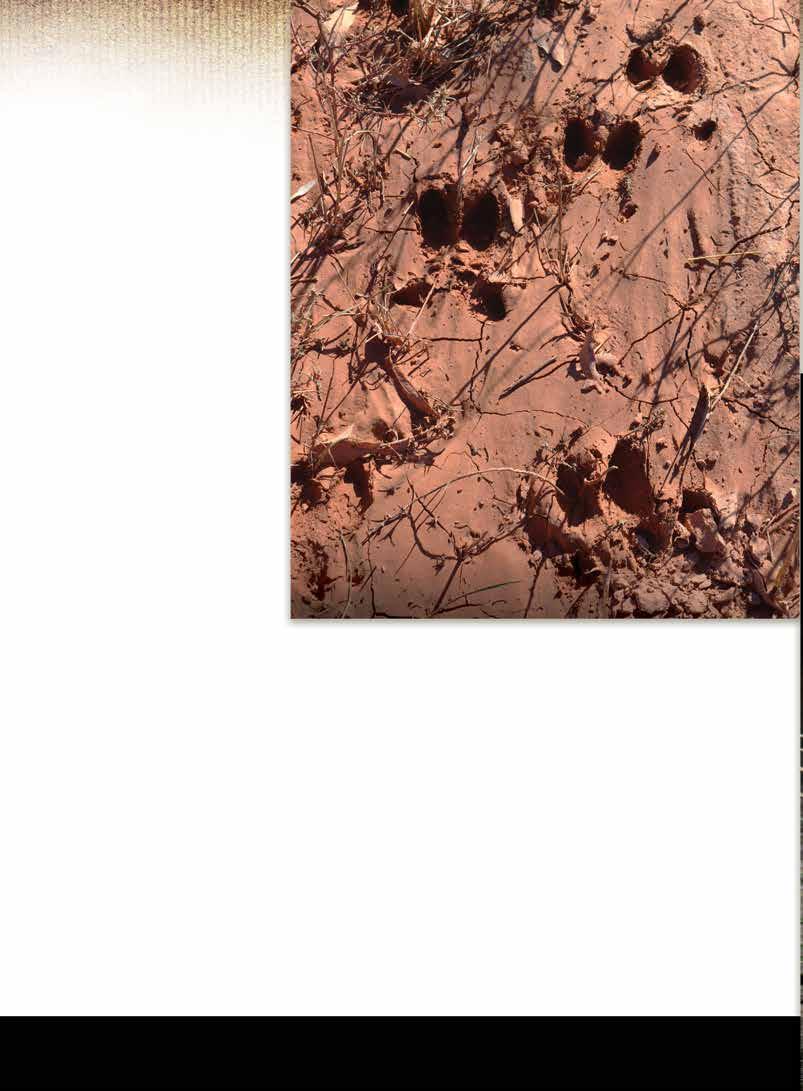
Not sure if you have wild hogs on your property? Look for the signs. Hog tracks are rounded with blunt toes, not pointed like a deer. Their droppings are round and tubular, not pelleted like a deer.
At fence crossings you will find wiry hairs snagged in the bottom strand of barbed wire as the hog ducks under it. Wild hogs rub on fence posts, trees and telephone poles to scratch an itch or mark their territory. Wallows on the edge of ponds or creeks can be the size of a car tire or as big as a bathtub,
depending on the size of the hog. Even if you don’t see hogs on your property, because most are nocturnal especially in warm temperatures, these signs will confirm they are in fact in your area.
Wild hogs are omnivorous, meaning they feed on food of both plant and animal origin. They will plow their snout into the earth to eat cactus roots, munch grass and weeds, gobble acorns under oak trees, eat eggs from ground-nesting birds, consume carrion and on and on. Twice I’ve blood-trailed a deer only to find a herd of hogs eating my dead deer.
Another time I watched a mob of hogs eat a mostly decayed cow carcass. The small hogs were inside the dead cow’s ribcage, giving the lifeless bovine the illusion it was moving. Basically, a wild hog will eat anything. I’ve tried numerous commercial “hog” attractants and scents, but I have yet to find anything
that works as good for bait as whole corn.
A hog’s sense of smell is incredible. I can think of several times last fall when I had deer walk downwind at less than 50 yards and not spook. I was using a popular ozone, scent-eliminating device. I’ve had good luck using it for deer.
However, when a hog walks the same trail downwind, there is no hesitation. The hog sticks its snout in the air, growls and runs away. When stalking a hog, wind direction should always be monitored. I use a puff bottle of powder or a handful of cotton-like weeds stuffed in a vest pocket and tossed into the breeze to monitor shifts in wind as I get close.
Hogs have a well-earned reputation for being tough to bring down. I’ve shot most of my hogs with archery tackle, but I’ve also used rifles in calibers from .223 up to .30-06 and .300 Win. Mag. A-bolt action rifle chambered in .243 with a 3-10X scope is my everyday ranch gun, therefore I’ve tallied a fair number of hogs with that rig. The key, I believe, is not so much the caliber but the location of the shot and using a bullet designed for deep penetration. Study anatomy photos before the hunt. A hog’s heart sits very low in the chest. On a broadside view, the heart is almost straight behind the front leg. On a broadside or slight quartering away angle, aim for the heart/ lung area for quick kills. If time permits, do not stare and admire your first shot. Fire a followup volley of lead to speed things up. Big males are especially tough animals. Wild hogs continue to expand their range. They can be both a welcomed off-season target and a pain in the rear when you are trying to hunt deer in the fall. Just like cedars and mesquites are now a permanent part of the Texas landscape, the prickly feral hog is also here to stay.





Life for young families today can be chaotic. Between school, sports, other extracurricular activities and all the shuttling that is involved, things can get hectic. Don’t get me wrong, they are good times, and it is wonderful seeing your kids grow up and experience life. However, things can get really busy, and parents are often stretched in multiple directions.
The Griffith family is a house of daughters. Brittain Griffith and his wife, Jennifer, are blessed with four daughters: Emrie, 15; Halle, 13; Lou, 10; and Joy, 7. The Griffiths call Hockley, a Houston suburb, home and find themselves in this very stage of life. Luckily, the girls share common interests, due undoubtedly to their parents’ influence. They are all soccer players and deer hunters.
It was easy for the girls to take up both sports following in their parents’ footsteps. Their mother, Jennifer, was an extremely talented and competitive soccer player. She played for Texas A&M University. Their father, Brittain, has enjoyed hunting his entire life. He started out hunting ducks at an early age before redirecting his attention to whitetails and mule deer. Along the way, he acquired a ranch to share his passion with the family.
The Griffith Ranch is a special place, and was a dream come true. “The ranch is close to the house. It’s convenience allows us to really spend a lot of time there and it has been great for us,” Brittain said. Towering pines and a beautiful lake provide a serene atmosphere for a retreat and relaxation. “The girls love to hunt and fish. They have been able to grow with our wildlife management program at the ranch,” he added.
After acquiring the ranch about nine years ago, Brittain began infrastructure improvements and started an intensive wildlife management program. As time went on, the program was successful and the bucks at the ranch grew bigger. “With the exception of Joy, all of the girls have taken their first bucks at the ranch,” Brittain said. “Joy is not quite ready yet, but tags along on the hunts. The older girls have started to take some
bigger bucks as the management program has improved.”
Last hunting season, there was a special buck on the ranch that the family had watched for several years. “We figured the buck was about seven years old, and thought it was time to hunt him,” Brittain said “He was special, in part because he would be the best buck we’ve hunted at the ranch.”
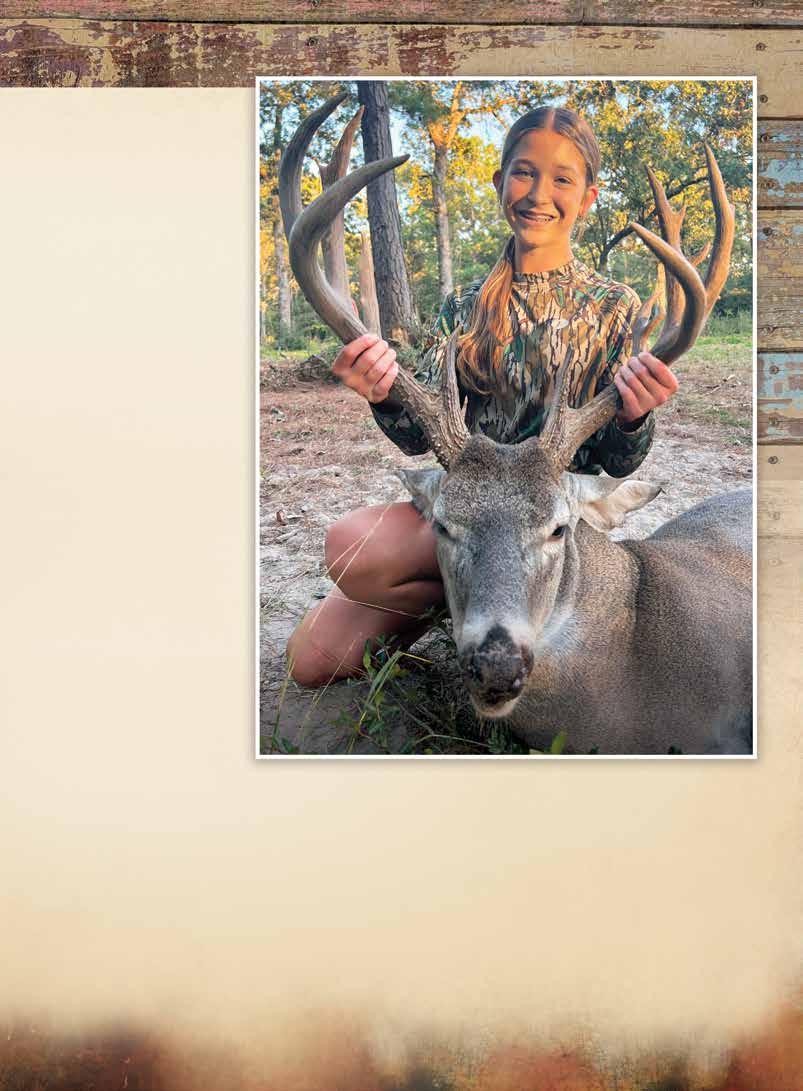
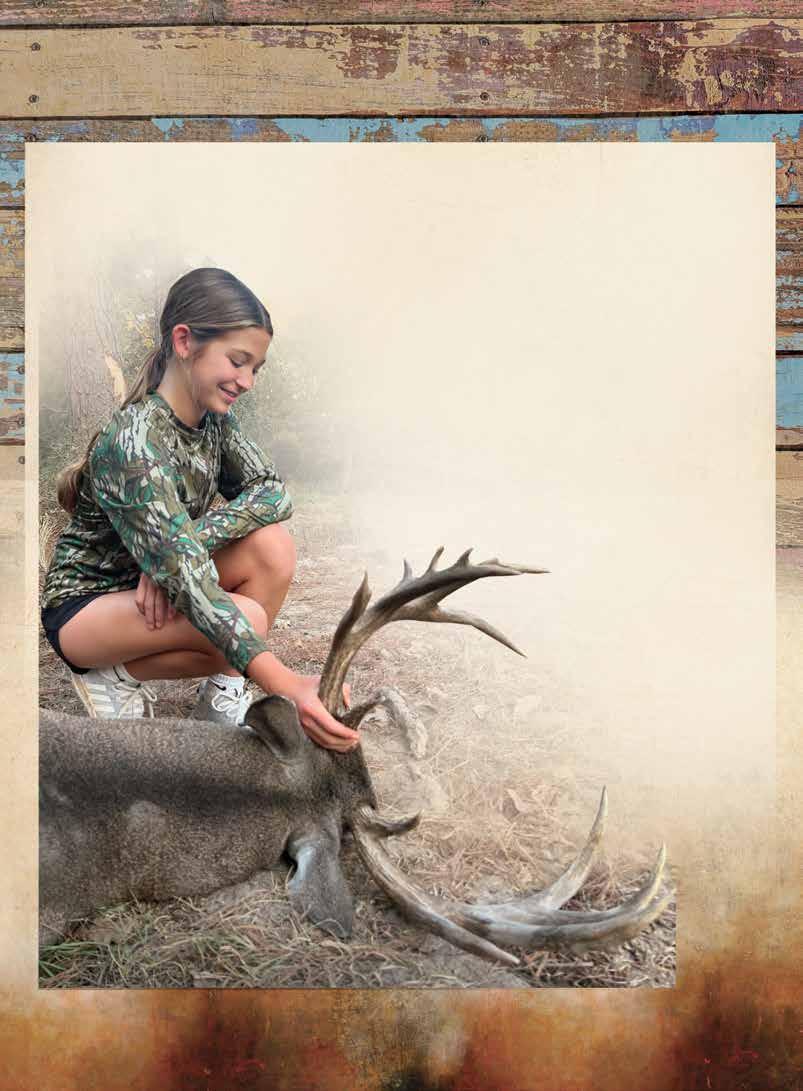
Emrie, the oldest daughter, had taken a really good buck the previous year, so it was Halle’s turn to hunt the big one. “Halle took her first buck when she was 6 years old with a crossbow from a popup blind. She is the one who never says “no” when asked to go to the ranch. So, she was definitely excited about the chance to hunt this big buck,” Brittain said with a wholehearted laugh.
Early in the season the buck appeared on a trail camera. “I didn’t know we had a buck that big,” Halle said when shown the photo. The excitement and anticipation grew as they prepared for the hunt. “We started hunting as soon as we could. The buck had a lot of extra points and we wanted to try to get him before he broke any of them off,” Brittain said. They hunted over the course of a weekend, but the buck was a no show. “It was hot—too hot for a buck to be moving!” Brittain said.
Late Sunday evening, the buck showed up again on the trail camera. “Because of the heat, we had our doubts that he would be moving during shooting hours, but we still planned to hunt Monday after school,” Brittain said.
On Monday evening they were back in the blind. Brittain and Halle watched and waited patiently as a few does and fawns moved about in the hot afternoon sun. About sundown things began to cool off and the action started. A couple of smaller bucks appeared and began milling around. Then the big buck they were hunting slipped out of the woods and cautiously began to feed.
“I was worried about the wind, but we gave him a few minutes to settle down before getting ready for the shot,” Brittain said. At about 90 yards, the old buck turned broadside and Halle was ready and waiting.
“Halle was nervous, but laser focused. I was more up-tight and about to come unhinged,” Brittain said. The shot from the Savage 6.5 Creedmoor was true and the big buck dropped where he stood.
A surreal experience, emotions ran high as Brittian and Halle began to celebrate their success. “I explained to Halle what she had already come to understand. It was a big moment for the ranch, its wildlife program, and for her,” Brittain said. They packed up their gear and left the blind to take a closer look at the buck. “He had a huge body and I really liked all the extra antler points,” Halle said. “I was so happy and excited!”
The old buck had a lot of character. He had huge antlers, great mass, and a lot of extra points that would later measure 175 gross. “It takes a lot of time and hard work to achieve that level of management and hunting success, but it was well worth it,” Brittain said. “We took a few photos, and it was all we could do to get that buck loaded, but we were all smiles on the way back home.”


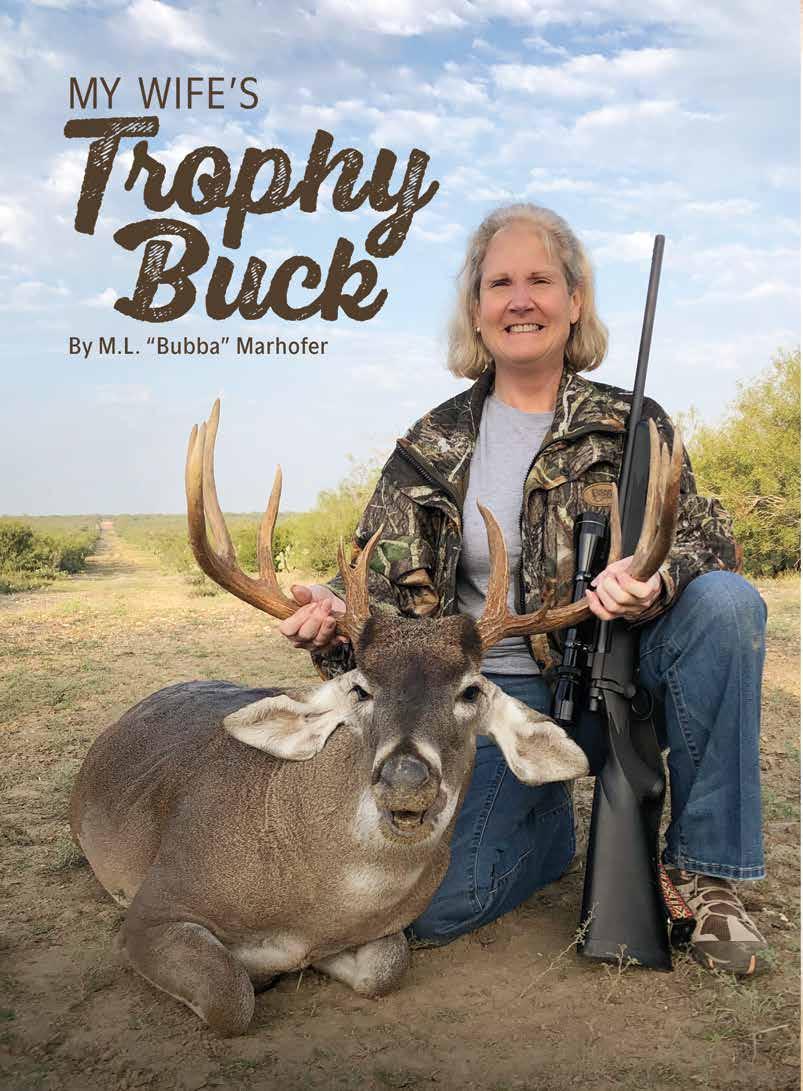
Icould smell the freshly perked coffee as I stepped off the porch and stumbled my way down the dimly lit stone pathway that led to the back door of the kitchen. My wife Susan lay comfortably nestled under the covers, trying to decide if she would join me and the boys for coffee before we headed out for the morning hunt. The “boys” being Alonzo and Aaron, owners of El Milagrito Ranch in South Texas. I had the privilege of hunting with the boys and their dad, Andy, the previous year, but that’s a story for another time.
Susan and I arrived at the ranch mid-afternoon the day before, and after handshakes and Susan’s introduction, we dropped our bags in the bunkhouse and settled in. Later that afternoon, Alonzo gave Susan the 25-cent tour around camp. We ended the tour in the main lodge for a snack and a cold drink and discussed the upcoming hunt. Aaron wouldn’t arrive until later that evening. Afterward, we enjoyed a king’s dinner of pizza and our favorite libations.
During dinner, the conversation turned to hunting and the areas of the ranch we would focus on. The buck I was after was a specific 8½-year-old that needed to be managed off the ranch. We referred to him as the “Hit List” buck. Multiple phone conversations with Alonzo during the days leading up to my hunt indicated the buck had gone incognito and hadn’t been seen for a couple weeks.
Some concern was voiced that he might have been injured and met his demise. No matter, I just wanted to visit the ranch and the boys. Besides, four more does needed to be managed off the ranch as well, so we’d still be able to bring home some venison for the freezer should the buck not materialize.
During one of our conversations, Alonzo extended an invitation for Susan to join me and suggested she bring her rifle to increase our odds of success, should the need arise, to cover two different areas of the ranch. Without hesitation, she excitedly accepted his invitation, but she really wasn’t
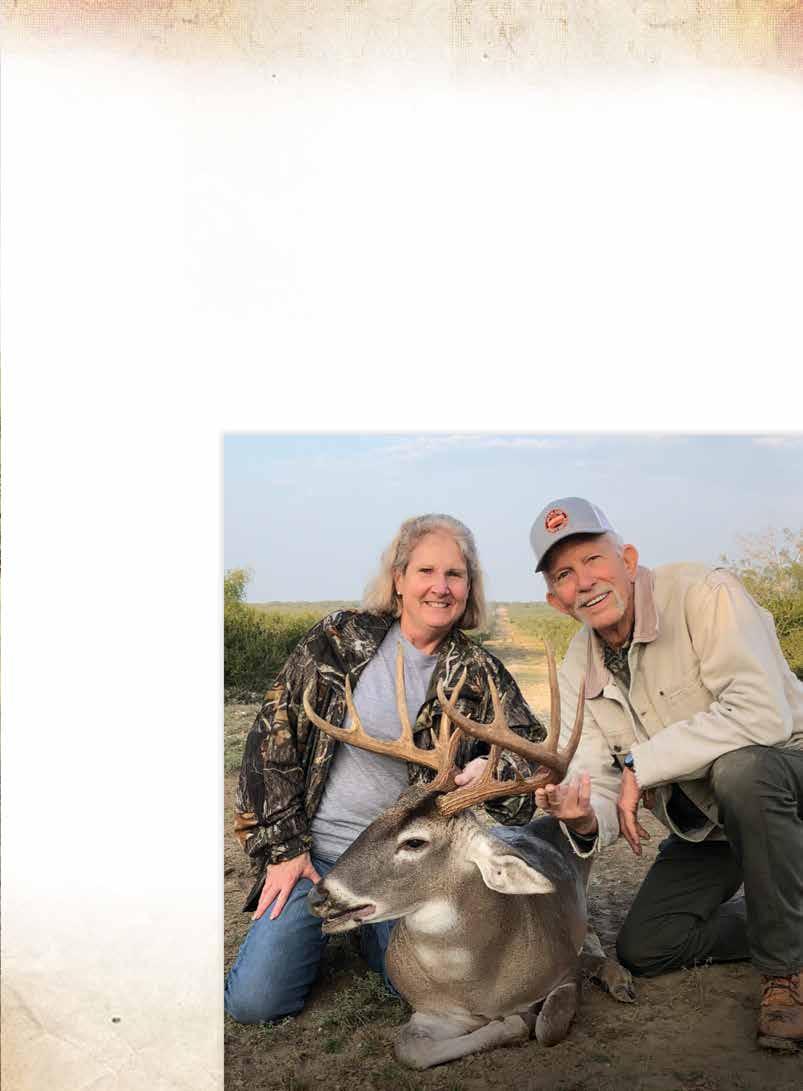
focused on hunting. My wife has taken some pretty nice bucks through the years but these days she is more interested in sleeping in, relaxing and enjoying the camp atmosphere. I did, however, pack her .25-06 Remington 700 BDL in the double hard case, just in case she had a change of heart. And yes, the rifle was checked at the range and still maintained its 1½" high quarter size grouping at 100 yards. She’s put a lot of game on the ground with that rifle through the years.
I pushed open the kitchen door, said good morning to the boys, poured myself a cup of coffee, and stuck my hand in the bag of miniature cinnamon donuts that I’d brought with me. Susan was a no-show for coffee, so Alonzo and I made our plan for the morning and headed out in the dark. Just to cover all the bases, Aaron would slip into a blind on the other side of the ranch where the buck had visited a few times earlier in the year.
A light misty rain had fallen overnight, and a light fog had settled in as we made our way down the sticky damp roads to our chosen blind for the morning. It was chilly as we settled in and waited for the fog to lift. Less than an hour later, the sun
came up and the fog finally burned off and presented us with bluebird skies. We saw quite a few deer and a couple of outstanding younger bucks, one being a 3½-year-old typical main framed 12-point that would have easily cracked 170 inches.
Hit List, however, never materialized, so we headed back to camp for a late breakfast. When we arrived, Susan enjoyed her morning coffee while visiting with Aaron as he prepared breakfast. Aaron reported that Hit List had not shown up at his blind either. After breakfast the boys wanted to show Susan around the ranch and demo their recently completed top drive Chevy suburban.
Back at camp we opted for a short nap before an afternoon snack and heading out for the evening sit. By this time Susan was well rested and decided she would grab her rifle and sit with Aaron for the evening hunt. We each had multiple buck sightings, but Hit List never made an appearance at either location.
Saturday morning, Nov. 18, 2023, was cold and clear as Aaron and Susan left camp in the pre-dawn darkness and made their way to their chosen blind for the morning. Alonzo and I topped off our coffee mugs and headed to our blind. The deer
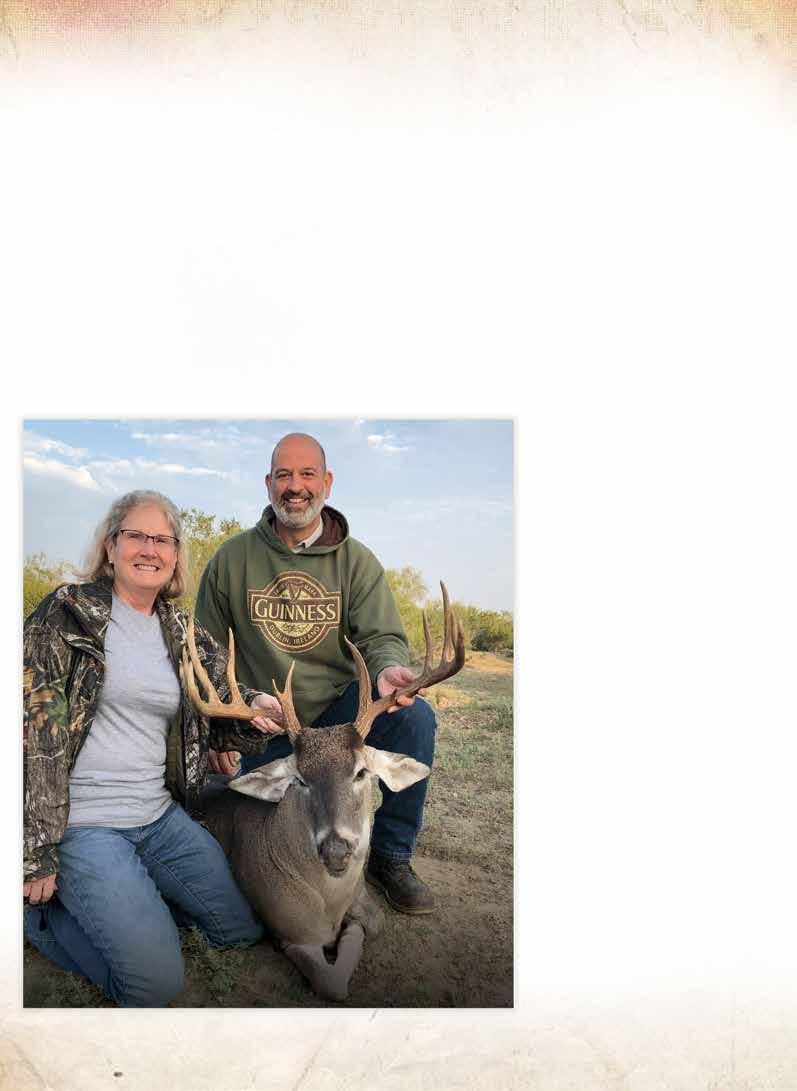
were moving early, and Alonzo and I could see their shadowy silhouettes moving in and out of the brush. When daybreak finally arrived, we saw deer everywhere, feeding in and out of the brush and spilling into all four senderos around us: older does, does with yearlings in tow, and bucks of every age class.
At times it was difficult for Alonzo and me to evaluate each mature buck as they moved in and out of the brush to ensure Hit List didn’t slip past us. As the morning wore on, I was stoked with overwhelming confidence that the deer gods would smile on me and usher the big 8½-year-old out of the South Texas brush and present him broadside in front of me. BOOM—WHACK came the sound in the distance, and I snapped my head around and looked at Alonzo. Did that shot come from this ranch?
He stared at me and began to grin. He whispered to me he thought the shot came from the direction of Aaron and Susan’s blind. Within 60 seconds, an excited text from Aaron confirmed Hit List was down. The deer gods had spoken, and I couldn’t have been happier for my wife.
Alonzo mentioned he still wanted to take a couple more does off the ranch, so I set about helping him accomplish that task. After two cycles of my rifle bolt, we had accomplished our goal, so we loaded up our bounty and headed off to congratulate Susan and Aaron. Hugs, high fives and field photos followed as Susan and Aaron recounted, multiple times, the excitement of their morning hunt. Unbeknownst to Susan, Aaron took video of the last few moments of the hunt as she prepared for the shot and pressed the trigger.
The 8½-year-old 12-point sported a 20½-inch inside spread and grossed 154 B&C. He had a beautiful, slick and dark, South Texas cape with a double white throat patch. It’s hard to imagine what he might have looked like in his prime. But it was good to know his genetics would be passed along for years to come. We spent the rest of the afternoon skinning, quartering, scoring and caping the buck for the taxidermist.
The next morning one of us slept in, while the rest of us met for coffee. My wife has always wondered why all of our hobbies require a 4:30 a.m. start to the day. As I sat there that morning drinking my coffee and talking with Alonzo and Aaron about the possibility of returning to the ranch the following year, I was reminded of just how good it is to be a deer hunter in the South Texas brush, especially when you can spend the time with loved ones and special people you can enjoy a good cup of coffee with. Thanks, boys!

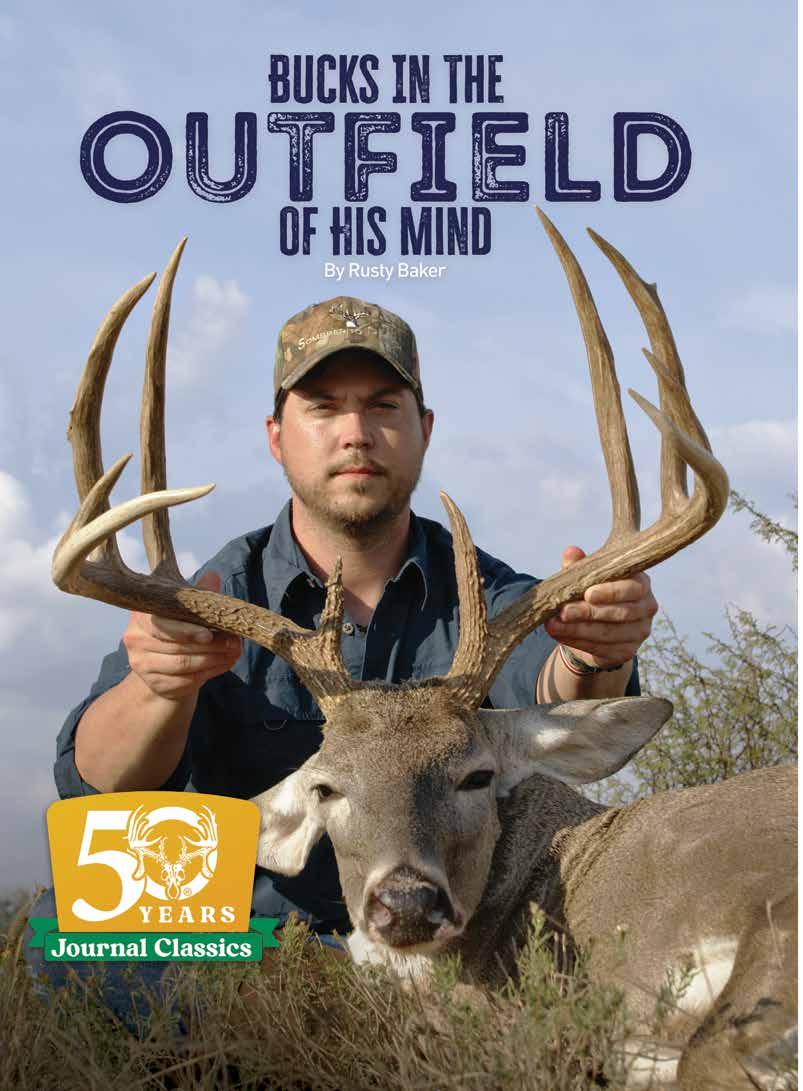
After a dream season of pro baseball, scoring this magnificent 10-pointer was a crowning achievement for Josh.

Editor’s note: Here’s a big buck tale from 2008 that profiles former Major League Baseball pitcher with two World Series championship rings, Texas native Josh Beckett. Enjoy!
It’s a cold October night in Denver, Colorado. The aromas of cotton candy and corn dogs collide with the odors of spilled beer and French fry grease. The autumn air is ripped apart by roaring screams and the drumbeats of stomping feat. A Boeing jet could not be heard if it blasted by just inches above the foul pole. Dramatically, the stadium goes nearly silent, nearly, because almost exactly a mile above sea level, members of the Boston Red Sox baseball team have just stormed across the infield and gathered jubilantly around the pitcher’s mound, jumping and screaming like fifth graders after the final bell sounds before summer vacation. For the second time in four seasons, the Red Sox are World Series Champions.
Over 60,000 loyal fans are left stunned and chilly in their seats. They’ve just witnessed the tremendous journey and unbelievable turn-around season of their Colorado Rockies come to an abrupt halt. Wrapping up a four-game sweep, the Red Sox have once again carved their names into the proud and glorious wall of baseball history.
Minutes later, the team is once again celebrating, only now it’s in the warmth and security of the team locker room. Jerseys, grass-stained and dampened by perspiration and champagne, litter the floor. Laughter abounds inside these walls, and players congratulate and embrace one another. The goal is accomplished, and talk of offseason plans can finally begin.
Some players are off to sunny beaches and warm tropical sunsets. Others are off to luxurious hotels, gourmet meals, and the lights of Vegas. But there is one player who has another quest, another goal to accomplish. It is one that has haunted his dreams and remained constantly on his mind all season, and it causes the player to head to the sand and prickly pear of South Texas. It’s a place known as the brush country. It’s a place he proudly calls home.
Josh Beckett has become one of Major League Baseball’s most dominating and feared pitchers in this era. A native of Spring, Texas, Josh spent his childhood chunking baseballs in the summer and hunting deer with his father in the fall. Both pastimes have evolved into passions. One affords him a way to make a living, the other offers him a chance to escape.
He’s extremely serious about both. How serious? Let’s just say we’re talking about a guy who, on national television, told the entire country just minutes after winning his first World Series Championship (and World Series MVP award) in 2003, “I’m going to South Texas to go deer hunting!”
So much for Disneyland.
Josh told me, “I always look forward to hunting with Mr. Bill Carter and his guides on the Sombrerito Ranch. It’s a first-class operation run by first-class people. And you won’t find too many places anywhere with their caliber of deer. On the plane flight to Boston that night after winning the World Series, really, all I was thinking about was getting back to Texas and hunting.”
Josh was right on the money. The Sombrerito Ranch, located just north of Laredo, has become synonymous with legendary whitetail deer. Josh, an old friend of mine, invited me to tag along for his last excursion there, and I said I would before he even finished asking. First of all, it would be a great chance for us to catch up and spend some time together, and second, I have always wanted to see for myself what all the talk concerning the Sombrerito Ranch was about!
Josh and I arrived on a bright and sunny early November afternoon just after lunchtime. We talked the miles away about mostly deer and everything but baseball, and how excited we were about the coming weekend. I wasn’t even hunting and I was stoked! You just don’t get the chance to go to the Sombrerito Ranch everyday! Mr. Carter was sitting on the porch chewing on a cigar when we pulled up, a mustache painting his face like Gus’ from Lonesome Dove, his jeans tucked into snake boots, a handkerchief around his neck. He is South Texas personified.
On the porch with Mr. Carter was Josh’s guide and longtime buddy, Mike Thiele. After exchanging pleasantries, it was time to head off to the stand. Mike and Josh invited me to accompany them on the first hunt, since the stand they’d be using was large enough to seat three comfortably.
The deer blind we sat in that first evening was extremely
well insulated—and, of course, the weather had turned unseasonably warm, even for early November in South Texas. Three grown men in an enclosed deer blind beneath a hot blistering sun can sure generate heat, not to mention a cornucopia of unpleasant scents.
Eventually the evening shadows began to descend upon us and offer a slight relief from the sauna the blind had become. We’d watched several does and a few younger bucks that afternoon, but it wasn’t until there were only about 20 minutes of shooting light left that we finally saw the mature buck that Mike wanted Josh to have a look at. Mike had seen this deer on a few occasions over the previous couple of weeks and had followed up on his sightings with some excellent homework in researching the stand location we were now positioned in so that Josh could get an eyeful, too.
As the deer cautiously made his way out of the mesquite and cactus, all three of us watched his every step through our binoculars. There was no doubt this was, by any hunter’s standard, a mature trophy buck. With great mass and high tines, he had the makings of a cover shot for just about any outdoor magazine out there.
Josh lowered his binocular and whispered to Mike, “I think I’d like to wait. I just don’t think that’s the deer I want.”
Now I know a lot of hunters would have taken a shot at that buck in a heartbeat, but I wasn’t surprised at Josh’s reaction. In my mind, that’s the kind of character that separates a hunter from a shooter. Josh knew exactly what kind of deer he wanted to take back to Cotulla with him, and even if it meant going home without a stop at the taxidermist, he wasn’t going to shoot a deer just for the sake of adding another trophy to his collection.
Without missing a beat, Mike replied, “No problem. Let’s ease on out of here, head back for some grub, and tomorrow we’ll go looking for another one.”
After a rib-eye steak and a baked potato that would clog the arteries of lesser men, we sat around the table that night and shared memories of deer that were just a bit too young, a tad outside of rifle range, or just too wise to rattle in, and we laughed in a way that we only seem to laugh when we are in these environments. With a cold drink in our mugs and our bellies full and satisfied, we relaxed knowing that, for the time being, all was okay in our world. There were no baseball stars here at this table, no legendary pioneers of Texas whitetail management, no outdoor writers present. This was a
table of grown men who shared a passion for whitetail hunting and management, a love for the outdoors, and a mutual respect for one another. We went to bed that night cozy within the warm cabin walls, as outside a north wind swept away the haziness and heat and lay out the welcome mat for a clear and cold dawn. The temperature was dropping drastically beyond the glass panes, and we could hear the wind occasionally bump the porch swing against the cabin wall. It was going to be a great morning in South Texas.
Morning came quietly. There was no wind, just the gentle sounds of coffee percolating in the pot, followed by the sounds of pickup trucks warming up outside. Mike had decided he and Josh would hunt a stand that, until this morning, had been empty of hunters this season. It would be a gamble, but on a cold Sombrerito morning, anything was possible. Mr. Carter offered to give me a tour of the ranch, excluding the area Josh and
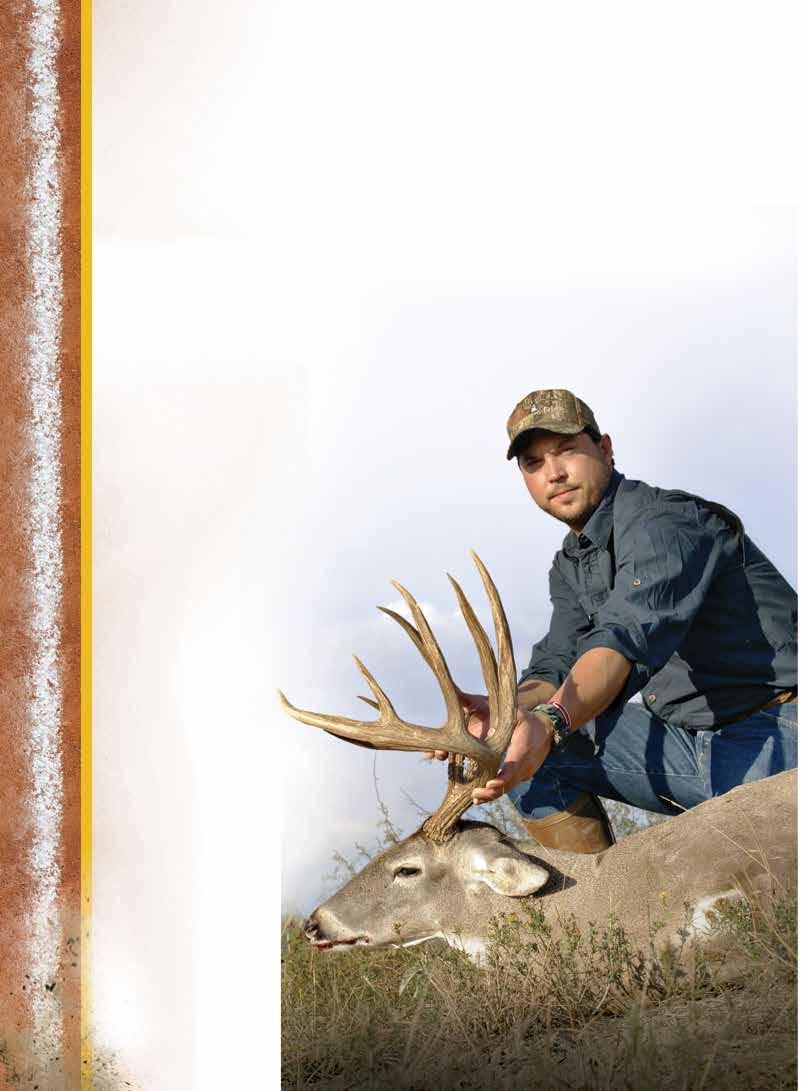
Josh takes his hunting seriously. After winning his first World Series with the Florida Marlins, he told the entire country, “I’m going to South Texas to go deer hunting!”
Mike would be hunting, and I happily accepted. In the predawn we said our goodbyes and wished them luck outside the cabin, then watched Mike and Josh slowly disappear into the darkness toward the west before we headed east.
As the morning sun peaked above the mesquites, the light frost on the ground began to thaw to a glistening dew. Deer

everywhere made their way out of the seclusion of the dense brush and into the senderos and fields. Mr. Carter and I were enjoying a spectacular morning watching all the wonders of wildlife as we eased the beat-up Ford truck down the old ranch roads, and it seemed to me the deer, especially the bucks, were acting as excited about the change in the weather as we were!
On the western end of the ranch, Mike and Josh, unfortunately, weren’t having the same kind of start to their day.
“Mike and I were seeing a lot of deer that morning, but not what we wanted,” Josh recalled. “In fact, if we hadn’t literally been covered up in deer, we probably would have exited the blind because the majority of the deer we were seeing were either does or younger bucks.”
After what seemed like an eternity to Josh, the deer congregating in and around the sendero slowly began to wander off for a siesta. As Josh remembered, “Mike and I decided at that point to leave and head to another stand for the remainder of the morning hunt.” Just as the hunters were actually beginning to collect their things to leave, though, Mike noticed movement about 150 yards down the sendero. Mike tapped Josh on the shoulder.
“Josh. Josh!” Mike whispered, “Look out there. That’s got to be the one, buddy!”
One look over his shoulder at the mammoth buck easing down the brush line was all it took for Josh to make up his mind. “I could tell right away he was the deer I had come to the Sombrerito Ranch for,” Josh said. “I knew, even from that distance, that his G-2s were well over a foot long, he had great width, and he was a perfectly symmetrical typical. I could feel the intense beating in my chest gaining pace and I could almost hear the sound of my heart pounding. I never fail to get that feeling in my stomach and that adrenaline in my veins each time I see a deer like that. That feeling is why I continue to hunt today.”
Josh placed the crosshairs of the .300 on the brute’s shoulder and drew a deep breath. As he exhaled slowly, images from the countless dreams that had tormented him throughout the baseball season raced through his mind at the speed of a 0-2 count fastball. This was it, the opportunity he had dreamed about so many restless nights, far from the lights and the roars from the ballpark, away from the cameras and the autograph seekers. This was the moment Josh had lived over and over in his mind. Now the moment was real. Beep. “Mr. Carter?” Mike queried. Beep. “Yes?” came the reply on the two-way radio. Beep. “We got him!” Mike answered. I looked at Mr. Carter. His grin was as wide as the gash in the cloth of the seat of the old pickup. Josh had just shot one of the biggest and most amazing bucks he had ever seen, a beautiful 10-pointer with 14-inch G-2s. All added together, the bruiser had over 180 inches of antler towering over his 7 ½-year-old head. We turned the truck around and headed back towards the lodge, occasionally one of us laughing out loud, both of us smiling the entire way.
Not far behind us, also headed back for camp, two hunters were reliving the morning of a lifetime. For the guide, it was a feeling of relief and the satisfaction of a job well done. For the hunter, it was the end of a mission, the crowning achievement after a dream season—and though this was the second such in just the span of two weeks, can you ever have too many of those moments?

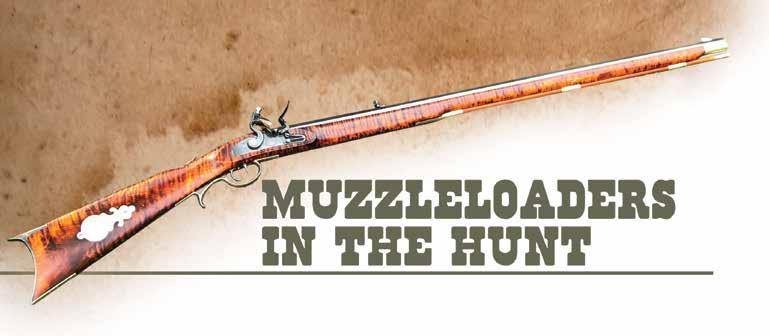
by Eric Stanosheck
Hunting mountain goats in British Columbia takes planning. When you are 154 km (95 miles) deep in the Cassiar Mountain range, you don’t want any equipment failure with your muzzleloader, so preparation is important. On hunts like this you must rely on your outfitter or local contact to have primers and powder in camp for you since it is illegal to fly with them.
Most outfitters are not familiar with the nuances of powder/primer combinations so I make sure to provide options of what powders/primers I can use and have them located and bought months ahead. This gives me time to buy and shoot loads at home with the exact components they will have for me when I arrive for the hunt.
On this hunt, all they could find was Pyrodex pellets and off-brand primers, both of which I was able to find in Fort Worth to sight-in my muzzleloader and make sure it would shoot well at my hunting destination. I had to make slight adjustments sighting in because every combination of powder and primer type will provide a different impact point and accuracy is a fundamental requirement of any big game hunt.
After a day of flying from DFW to Vancouver, British Columbia, and then another hop to Smithers, I registered in a local hotel and enjoyed the menu of a nice steakhouse. The next day was a 6-hour drive with my guide followed by a 2-hour trail ride in Polaris Rangers to base camp where I was able to repack gear into my backpack and make sure my muzzleloader was still sighted in—and it was.
The following day we drove the side-by-side ATV 110 km (66 miles), then spent the next 8 hours hiking with 70-pound packs and 10 days of food and gear to the top of a mountain at the head of the river valley where we would set up our spike camp. The weather forecast was anything but ideal for a muzzleloader
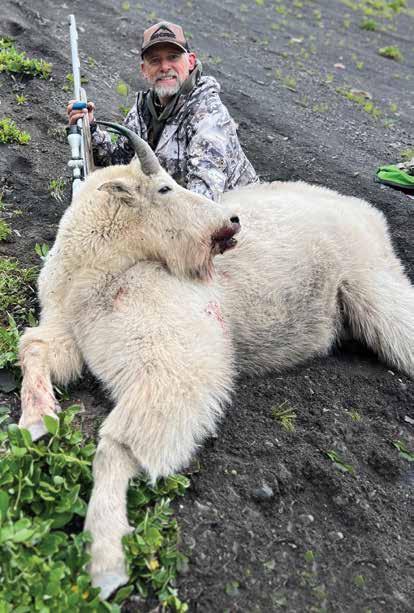
Both male and female mountain goats have sharp curved black horns, but the male— called a billy goat—will have much more horn mass and can weigh in excess of 300 pounds.
The author says a British Columbia mountain changes the hunter; it hardens you and forces you to evolve. They hiked with 70-pound packs to the top of a mountain to set up spike camp.
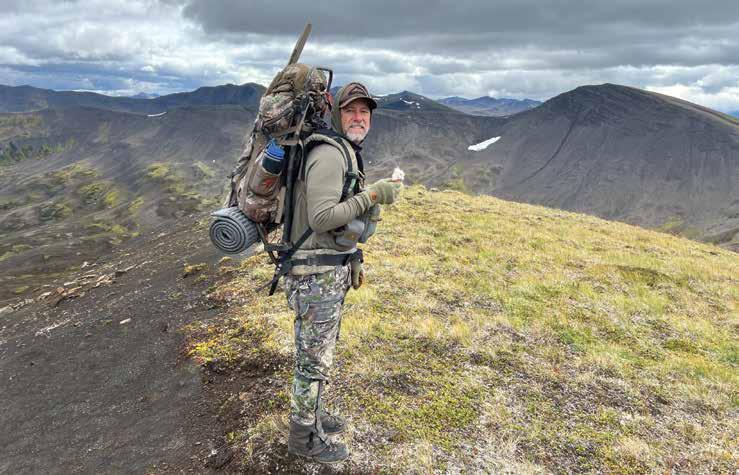
hunt, but you just play your cards right. Each day we would have near 100% humidity, rain, sleet, and wind and a few minutes of sun, which meant I wasn’t loading my rifle until I was ready to shoot.
Mountain goats are incredibly tough and agile climbers that live in some of the most vertical terrain in North American. Their cloven hooves with two independently moving toes spread easily on icy or rocky surfaces and provide them incredible stability. This adaptation allows them to live in terrain where predators, including humans, are seldom seen.
The white mountain goat lives from Alaska through Canada and as far south as Utah and northern Nevada, with the bulk of the population living in British Columbia. Both males and female have sharp curved black horns, but the male—called a billy goat—will have much more horn mass and can weigh in excess of 300 pounds.
After days of mountain climbing and hard living, we spotted a billy goat late in the day a mile or more away. We then lost him for the next two days due to dense fog but found him again. Mother Nature was brutal on this trip, and the
physical challenge of ascending and descending the places this billy called home was equally punishing.
We sat above the white goat for seven hours in a place where I could not shoot, and the goat was in a location where he’d be impossible to retrieve. Finally, around 4 p.m., he started to feed out of the vertical cliffs into more manageable terrain. We packed up and quickly took a one-mile circle to the backside of the mountain above the slope where he was feeding.
Once in position I loaded my muzzleloader for the first time since base camp. Waiting to load the rifle until you are stalking for the shot is a ritual for me in nasty weather. This strategy allows me to keep my rifle and powder completely wrapped up and out of the elements until the moment of truth, and minimizes any chance of a wet powder misfire.
I slowly worked down the jagged slope until I could see the white hair on the top of the billy’s back. I was now looking at a 63-yard shot. The goat sensed my presence and turned to run back toward safety in the cliffs. Too late; the 250-grain T/C shockwave bullet was already on course for his shoulders.
The bullet impact was perfect as he
crumpled on the spot and rolled 600 feet down the shale of the mountainside before stopping on a small grassy ledge. The overall quality of the trophy was evident to easily makes the top 15 in the Longhunter Muzzleloader Record Book as well as qualifying for the Boone and Crockett three-year awards.
After pictures and field dressing, we loaded him up our packs and started the dangerous hike back toward camp. As another storm blew in, we became disoriented and ended up circling the wrong mountain and clinging onto the edge of a 200-meter (650 feet) straight drop cliff.
Pure exhaustion, borderline hypothermia, and lack of sleep made this one of the more challenging nights on the mountain. We crawled into camp at 3:30 a.m. with heavy packs, almost a full day after leaving our tents.
A British Columbia mountain changes you; it hardens you and forces you to evolve. The mountain gives nothing but takes your will, your strength, your focus, and takes more than you ever thought you had to give each day you hunt the mountain goat. All of this becomes an even greater challenge when you take a muzzleloader on the hunt.
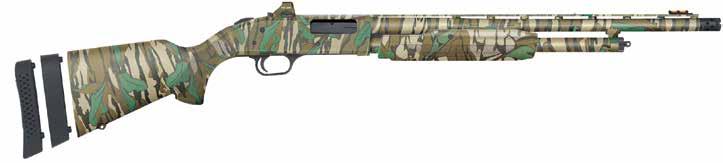
Now ready to take afield, Mossberg’s line of optic-ready 500 Turkey pump-action shotguns come in convenient combo packages, equipped with a receiver-mounted olive green Holosun HS407K micro dot sight. Two full size versions are available in 20-gauge and .410 bore and a compact Super Bantam 20-gauge offering with an adjustable length-of-pull stock. All models feature Mossy Oak Greenleaf full camo coverage and compact 20-inch barrels. Other standard features include extended choke tubes; fiber optic front sight; drilled and tapped receiver for added versatility; sling swivel studs; 5+1 shell capacity; and cover plate should the mounted optic be removed. Visit mossberg.com.
The new Breech Plug 4-in-1 Scraper combines several key tools into one easy-to-carry, hard-to-lose unit. This tool is compact for convenient pocket carry or small enough to add to your “possibles bag.” The high-impact handles come in bright orange.
Included in the device are two different scrapers for thorough, detailed cleaning of the screw-in breech plugs found on today’s in-line muzzleloaders and a 1.4-inchlong flash channel scraper to ensure primer ignition has unobstructed travel to the powder load. And in a modern twist on the traditional percussion cap nipple pick, it comes with a 1.3-inch-long wire that slides in and out of a protective tube to clean carbon build-up from inside the flash hole. Visit realavid.com.
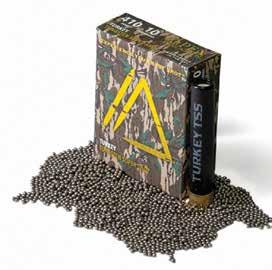
APEX Ammunition is pleased to add .410 bore to its popular line of Mossy Oak Greenleaf Turkey TSS shotshells. Available in 3-inch, 7⁄8 ounce loads, these lethal turkey rounds feature a combination of No. 9 and No. 10 Tungsten Super Shot, delivering a devastating payload of 395 ultra-dense 18.1 g/cc pellets (110 No. 9 shot and 285 No. 10 shot). Handloaded for ultimate quality control and performance, this sub-gauge turkey round delivers a dense pattern that hits with exceptional energy and knockdown power. Each shell features clean burning powder and APEX’s Tungsten Propulsion Wad System engineered to deliver the tightest patterns possible and maximum barrel protection. Visit ApexAmmunition.com.
Steiner introduces the ePredator LRF 10x42 binocular. It has the Impact Locator that syncs with the Steiner Connect App 2.0 to guide hunters to the precise ranging point. With the help of the measured distance, the integrated digital compass, and a connection to the Steiner Connect App 2.0, you can navigate directly to the point of impact.
With an extended range of up to 3,000 meters, tilt angle display, and compensated distance readings, it delivers critical data needed for accurate ballistic adjustments. Advanced capabilities include multiple modes to use while hunting or shooting such as Close Priority Mode, Far Priority Mode, and All-Weather Mode. Holding the range button will also activate a scan mode for precises and rapid readings. Bluetooth connectivity further enables seamless integration with the ePredator 8 riflescope. Visit steiner-optics.com.

Designed for anglers, boaters, and water lovers, Fishooz DryRun blends Dryshod’s premium waterproof technology with performance-driven design and unique styling. Built for comfort and durability, it’s the perfect choice for every adventure on the water. Visit dryshodusa.com/fishooz/ to learn more.
The Bino Harness is made from 300D Honeycomb Poly Oxford fabric, ensuring top-tier durability. It features an enclosed magnetic closure for secure access, batwing construction for easy attachment of accessories, and a rangefinder pocket with a tether. Elastic straps provide flexibility to stretch over extra layers without adjustments. For storage, it includes a front zipper pocket, a side stretch pocket, and a large back zippered pocket. The micro fleece lining ensures silent operation, and webbing straps with rings keep your binoculars secure. The harness also has a breathable mesh back and yoke for added comfort, and Molle webbing on the sides and bottom for additional accessories. Available in two sizes: SM (8-10x) and MED (10x12x). Visit tenzingoutdoors.com/bino-harness/ tenzingoutdoors.com
smith-wesson.com
Smith & Wesson announces the addition of the .357 Magnum caliber to the Model 1854 series.
Now, enthusiasts can enjoy the same smooth lever action rifle in an additional caliber that harkens back to a classic American design. Available in two configurations, users have the choice of a black polymer and stainlesssteel finish or a walnut stock paired with an Armornite finish. Each model boasts a 10+1 capacity, a 19¼-inch threaded barrel, and a crisp, smooth action. Additional features include a 4¾-inch Picatinny base for optics mounting, an adjustable XS Sights ghost ring rear sight, a gold bead front sight, a flat-face trigger design, and a removable magazine tube for safe unloading. Visit smith-wesson.com/products/1854
gomuddy.com
The SWAP is a lock-back folder built on a patent-pending interchangeable blade system. Comes with a 3.5-inch drop point for precise cutting work and skinning.
All blades are made of 420J2 steel for its toughness and corrosion resistance. When a blade eventually dulls, simply slide it off the spine and replace it with a fresh blade. No more slowing down the job because of a dull blade. Muddy offers several replacement blade packs in quantities to suit every hunter’s needs.
The knife comes with a rugged, slip-resistant GFN handle that provides a solid grip when hands are messy or when reaching for difficult cuts. The handles are blaze orange to prevent losing the knife in the field. For carrying convenience, the SWAP features an ambidextrous pocket clip and a lanyard hole. Visit gomuddy.com/products/swap-replace-a-blade-knife/
graplrz.com
Graplrz is designed to be the toughest lanyard on the planet. Each retainer is constructed from wire made from seven-strand stainless steel aircraft cable PVC-coated and UV-protected. An anodized, machined aluminum barb connects the wire and temple piece, securing it with a screw that has a knurled point for grip. The temple piece is made from durable, heat-resistant, industrial-strength silicone. GRAPLRZ comes in two sizes to fit every frame size on the market and is available in six styles: Original, Backcast, Adjustable, Original-youth, Backcast-youth, and Adjustable-youth. Visit graplrz.com.
The Finisher Pro II Turkey Vest concisely and comfortably manages your essential hunting tools with abundant and customized pouches and pockets. The front right features a pair of elongated zippered pockets for easy access to locator calls, box call, and other field necessities, as well as a vertical, zippered chest pocket. On the right chest, you’ll appreciate a pair of shaped mouth call holders and specialty box call pouch, and a bonus zippered chest pocket. It has a padded, drop-down seat cushion for settling into your shooting position. The detachable seat cushion is also water resistant to keep your bottom side dry. Visit blockeroutdoors.com/ new-finisher-pro-ii-turkey-vest.

Stoeger’s new M3000 Turkey Edition and the M3020 Turkey Edition come chambered in 12- and 20-gauge 2¾ - and 3-inch, respectively. With their 4+1 capacity and included extra-full turkey choke, these Turkey Edition shotguns have what it takes to deliver payloads with quick, accurate authority.
The M3000-series Turkey Edition models offer maximum concealment in a broad range of hunting environments courtesy of their buttstock-to-muzzle Mossy Oak
Bottomland camo finish. Furthermore, each gun offers diverse sighting options. Both include an easy-to-see HiViz® fiber-optic front sight atop the 22-inch barrel along with optic-mounting capabilities. The M3000 Turkey Edition receiver is cut at the factory to accept optics using supplied adapter plates that have an RMR or Burris footprint, while the M3020 Turkey Edition comes with an installed Picatinny rail for no-fuss optic mounting. Visit StoegerIndustries.com.


One of the best ways to get a young person hooked on hunting is to call in predators to close range with a game call. The excitement of a coyote, bobcat, or a fox approaching your set up is quite the adrenaline rush. If you have never called in predators with an electronic or mouth call, you should give it a try. I started calling when I was a teenager and had enough success that I was hooked. For a good long time, I could not get enough of it. Every chance I had I was out during the day and at night calling predators.
Around 2010, I went on a deer hunt with a TV show called “Hunting the Country.” The goal was to showcase some whitetail deer hunting in South Texas. We were between Hebbronville and Mirando City on a large ranch that had a lot of open grassy areas, as well as some thick brush mottes. It was ideal for covering a lot of ground, and yet had great cover for the critters.
After one morning and one evening sit, we had some nice bucks in the camp cooler. At that point, the two videographers from the show looked at me and said, “What else can we do?” I knew we wouldn’t shoot any more whitetails, so we started brainstorming things to do that could possibly add material to the show, or even create a new episode.
One of the video guys had an electronic call and asked if we could go predator hunting. Of course, anyone who manages wildlife in South Texas knows a quality predator control program is big plus to your animals and baby survival. The predators can be tough
on fawns, turkey poults, and old ruttedup bucks. So, any time we can work on our predator numbers, we are glad to accommodate.
The following morning, we set out with a very good game plan to hit several areas that gave us a lot of landscape to watch. The idea was to have a bird feather tied to a stick that would move around in the light breeze we had that day. The electronic call was placed near the visual decoy, and we backed off a good 75 yards to watch the area. We sat downwind of the decoy, hoping whatever predator we called in would approach without detecting our location.
After a few minutes of calling, I noticed some predator birds approaching the call. Just a few seconds behind, a coyote came running into the decoy. My first reaction was to stop the dog by shouting “Hey.” That worked like a charm because the coyote locked up and looked my way.
I found him in my scope and dropped him where he stood. My heart was pounding out of my chest as a rush of adrenaline hit my veins. I was excited to shoot a big whitetail buck the day before, but for whatever reason,
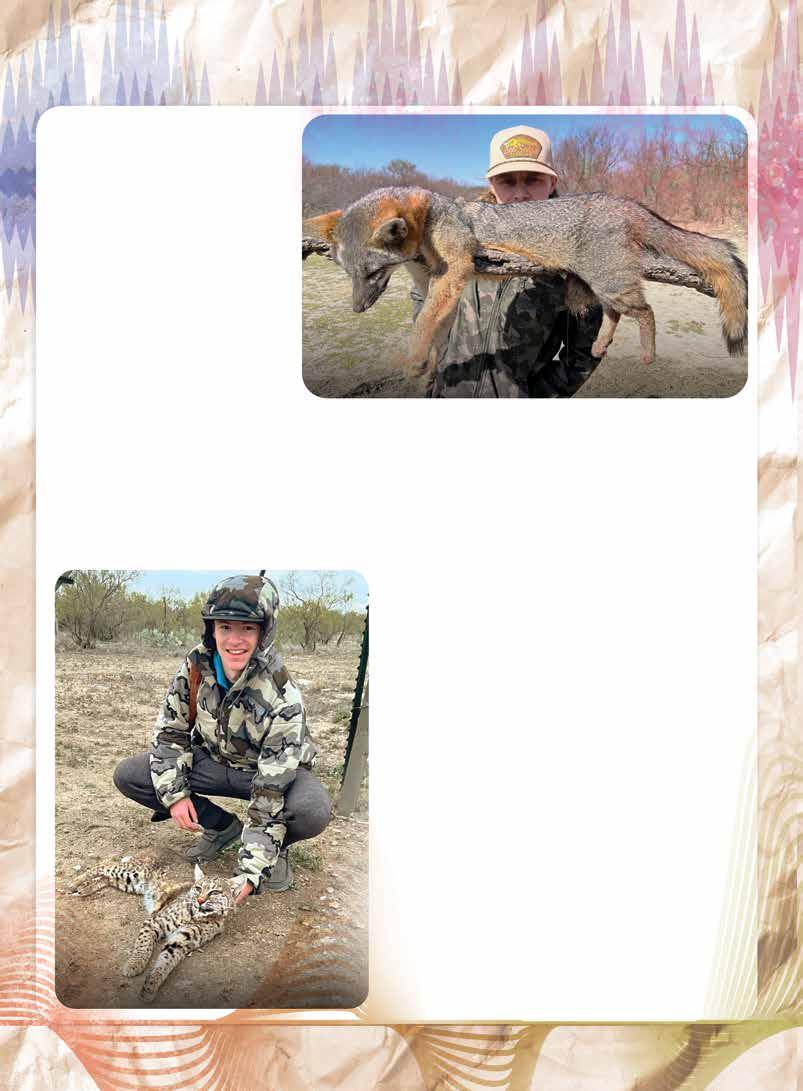
that coyote really got my heart pounding. After taking a few pics, we headed to our next setup, and it was game on.
We spent the next few days calling in a number of coyotes. Luckily, I was able to seal the deal and take over a half dozen fawn eaters. It not only was a ton of fun, but helping take out some baby killers made it all worthwhile. I highly recommend to you and your younger hunting partners to get involved in predator hunting. It’s typically not expensive to get started and quite a few landowners will welcome you to the ranch for a trespass fee so you can start hunting.
According to information from Bob’s Sporting Goods:
“When choosing the right equipment, consider how often you’re going to go predator hunting. If you’re going to go all the time, then an electronic/digital call is the best way to go. But, if you’re just getting into predator hunting, it’s best to start off with a hand call or reed. Diaphragm calls are always great to have in your arsenal.
“If you’re just starting out in predator calling, it’s an affordable way to test the waters. Also, if you’re using a mouth operated call, practice your technique ahead of time. Hand calls like squeakers are another great addition to your arsenal.
“They can be used in addition to mouth calls or electronic calls. They’re best used to call predators in closer. The sound these types of calls create doesn’t travel as far as a reed or electronic call, so don’t expect to call in distant predators.
“Bring more than one call with you on your coyote hunt. If one fails, you have another as a backup. The same goes for using an electronic call. The battery only lasts a set amount of time. If battery dies in a field and that was your only call, well, your day is probably done.
“Not only do you need to know the sounds coyotes make, but you also need to know the sounds of a
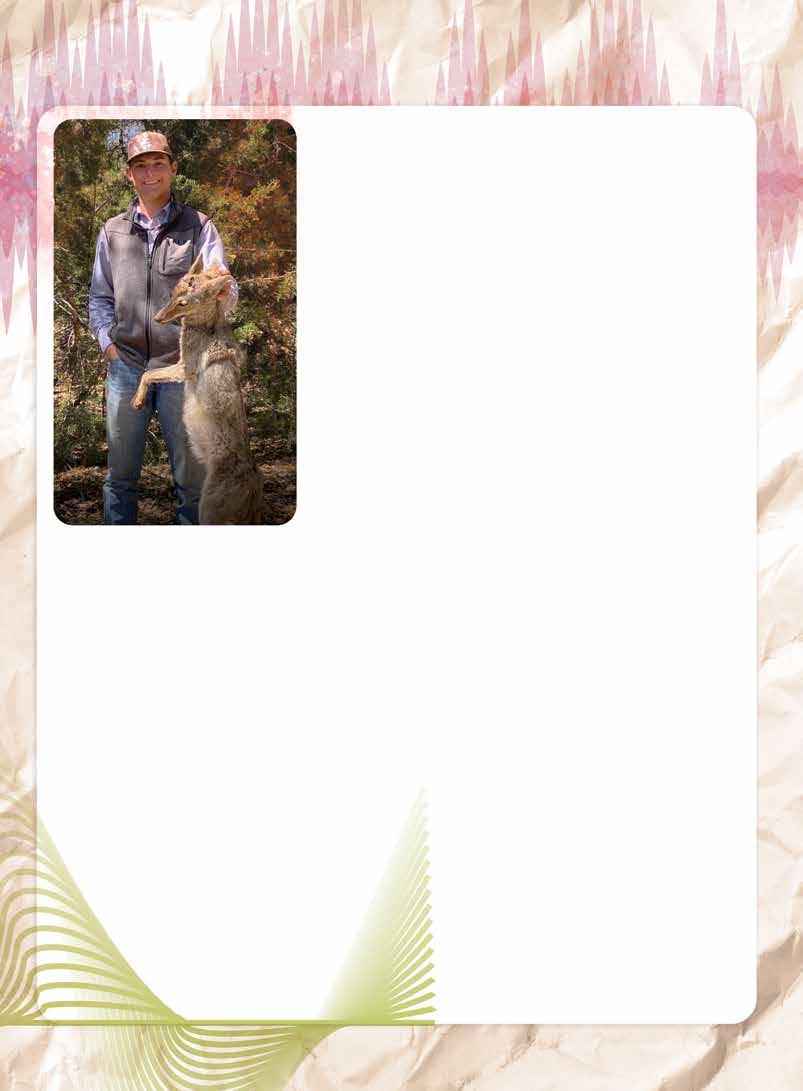
coyote’s food source. Most popular is a rabbit-in-distress, but there are also fawn, turkey, raccoon, chicken, and squirrel distress calls. Hunter tip: Many hunters will use a rabbit-in-distress call, and it ends with a failed hunt.
“Try a pup-in-distress or another call. The rabbit-in-distress call is highly overused, and coyotes are smart. They learn to associate sounds with danger, and with an overused call, they’re sure to spot it as a fake. Know what prey is relevant to the time of year you’re coyote hunting. Why?
“Well, think of it this way. If it’s breakfast time and the restaurant you’re at is only serving dinner, are you going to stay? Similarly, if it’s springtime and you’re using a call of an animal that isn’t prevalent that time of year, the odds are you won’t have extreme luck. Keep in mind what the coyotes are eating during the time you’re predator calling.
“After doing a set of calls to entice the coyotes, try and give it at least 30 minutes before calling again or moving to a different location. It’s easy to overdo it, but patience will be your friend. Howl and wait seven to 10 minutes before calling again. If you determine no coyotes are in the area, and you’re set on moving, do so cautiously. Pay attention to your surroundings and be prepared. There’s a good chance a coyote is still on its way to you.”
Good luck to you and your little hunting buddies. And most important, have fun in God’s great outdoors.
Michael Marbach is the CEO of the Christian Outdoor Alliance: mycoa.org; 210-827-9802. COA’s mission is to guide youth and outdoorsmen to a relationship with Jesus Christ through experience in God’s great outdoors.
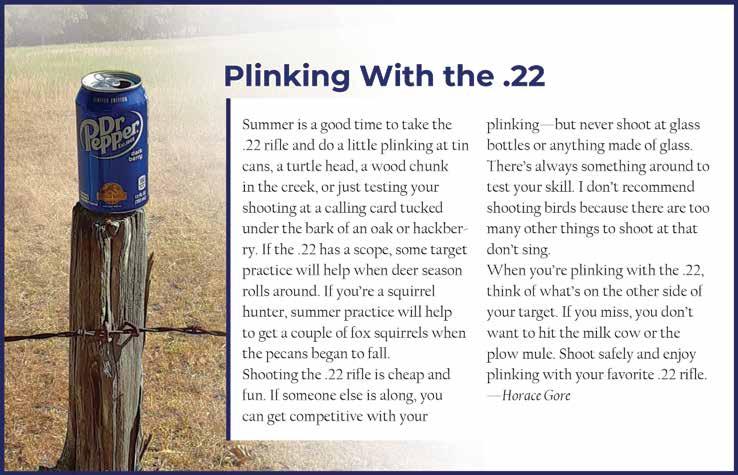

unters were out in droves last deer season, hoping to get a shot at a Texas whitetail. The season appeared to be rather normal with a good harvest in all habitats from the Pecos to the Sabine, and from the Lower Plains to South Texas. All the 800,000 deer hunters were out, taking the usual average of one deer per hunter, which is the highest average in the nation.
Deer contests were filled with entries from South Texas and the Hill Country: Muy Grande in Freer—the oldest contest; Los Cazadores in Pearsall; ANGADI in Nuevo Laredo, Mexico; Cola Blanca in Laredo; and Trophy Game Records in Ingram. Another contest in Freer— Freer Deer Camp—decided to bow out of the contest arena after many years.
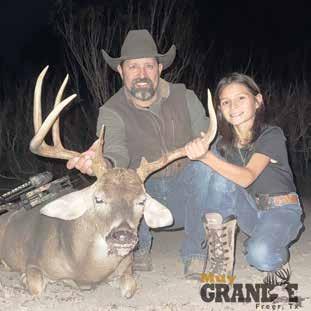
Many of the contests have regular entries from hunters who bring in good bucks year after year. These trophy hunters don’t shoot the first buck that walks out. They either get a good buck or come home empty handed. However, through the long season, most hunters who enter deer contests usually bring an outstanding buck to be measured. After all, Texas has some of the best whitetail bucks in the nation.
Back before Leonel Garza started his deer contest in Freer at his Texaco station in 1965 that became Muy Grande, hunters would kill a big buck, drive around with that buck on the fender of a car or pickup to show it off, and then nail the antlers on the wall or throw them out behind the barn. Today, that same whitetail hunting crowd brings their bucks to one or more contests across Texas to show it off, and maybe win a prize.
Deer hunting is BIG in Texas in more ways than one. Hunters harvest a lot of deer, spend a lot of money, eat a lot of venison, and take ego trips with outstanding trophy bucks. The 100 million acres of deer habitat has a wide range of deer for hunters to chose from. Many hunters just want a nice buck, while others measure their bucks by how well they fill up a No. 2 washtub. They are all here, so check out the bucks that made the deer contests last season. —Horace Gore
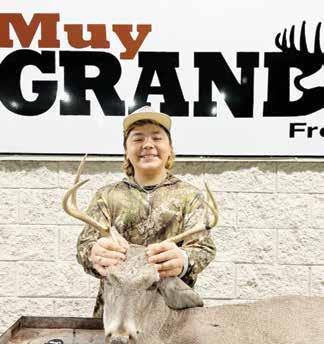
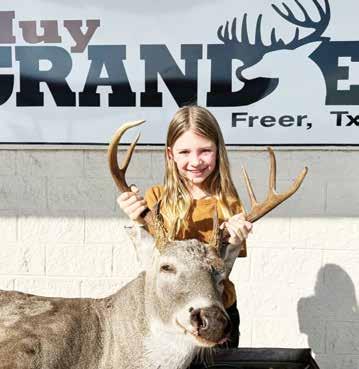



Kynlee
Valentina
Eduardo
Rodolfo
Tim
Heralio
Roberto


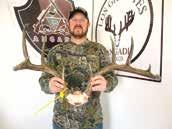



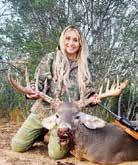
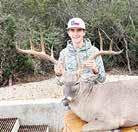
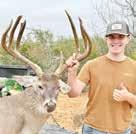
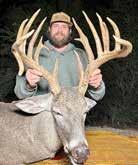
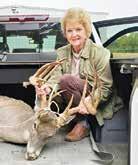
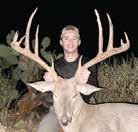
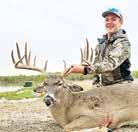
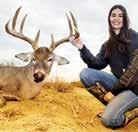
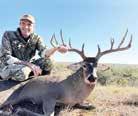
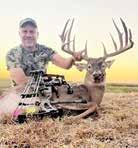
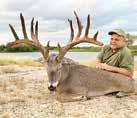
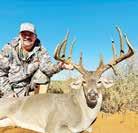
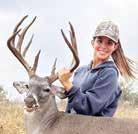
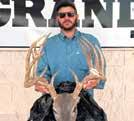




Darrel
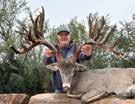
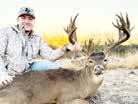
Austin
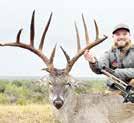
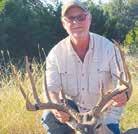
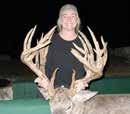
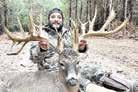
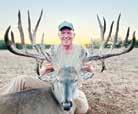

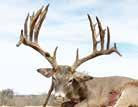
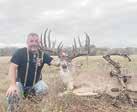
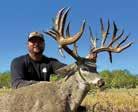
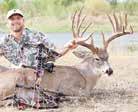
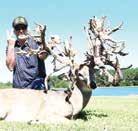
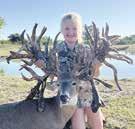
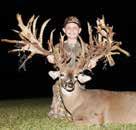
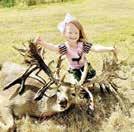

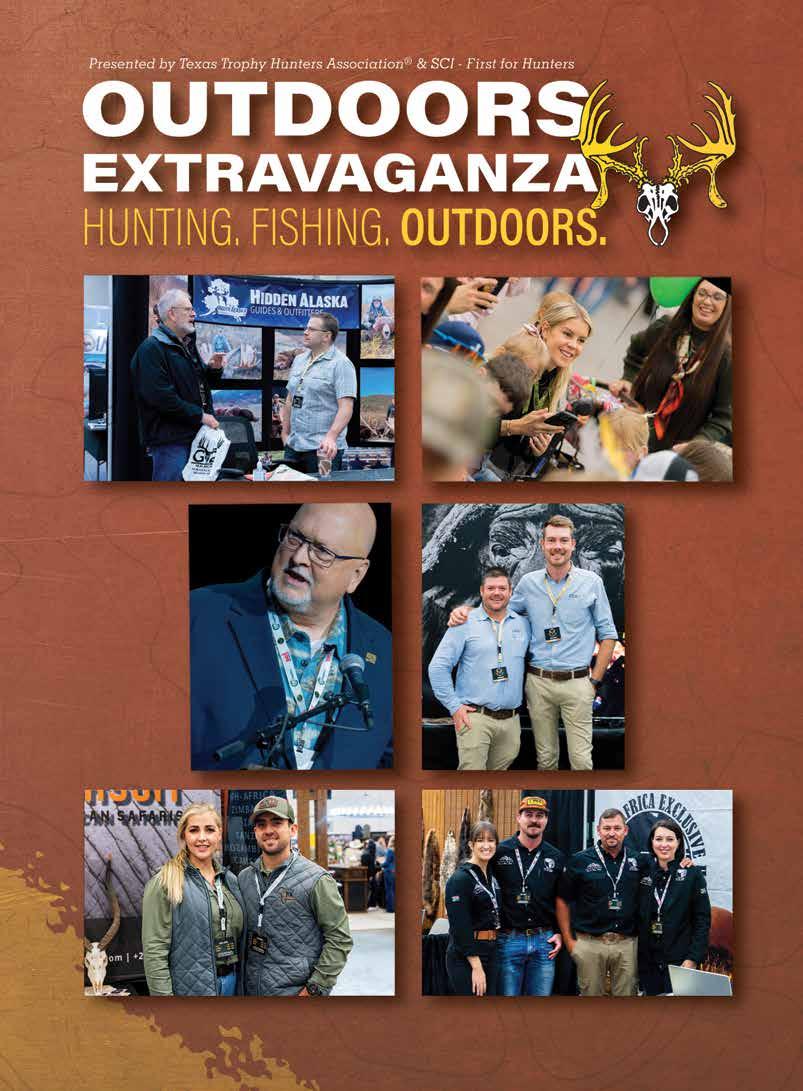

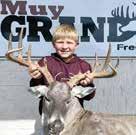
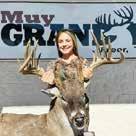
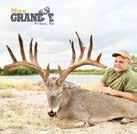
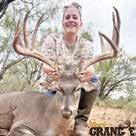

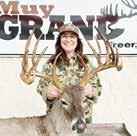
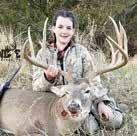
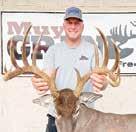
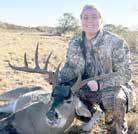
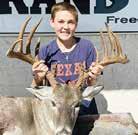
Kalli
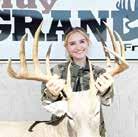

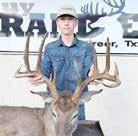
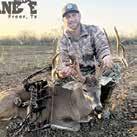
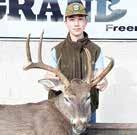
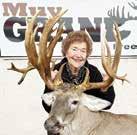



Men’s Diamond Buck
Henry Adams
Women’s Diamond Buck
Skylar Hickman
Youth Diamond Buck
Avery Pollard
1ST PLACE WINNERS
Men’s
Shawn Turner
Women’s Vicki Davis
Youth
Milan Goodwin
HIGH FENCE DIVISION
Men’s Diamond Buck
Allen Hilsinger
Women’s Diamond Buck
Jessica Jagneaux
Youth Diamond Buck
David Stadnisky
1ST PLACE WINNERS
Men’s
Cody Downs
Women’s
VC Gallardo-Garcia
Youth
Jack Garcille
LOW FENCE DIVISION
Men’s Diamond Buck
Allen Wayne Hatcher
Women’s Diamond Buck
Brenna Wallace
Youth Diamond Buck
Behren Weidner
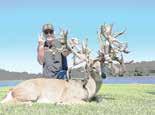
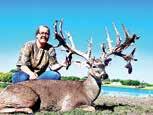
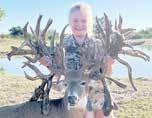
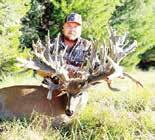
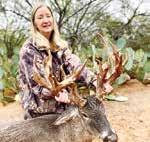
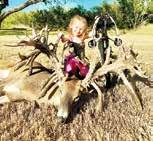
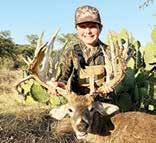
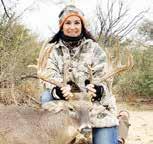
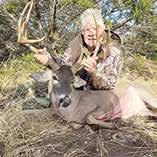
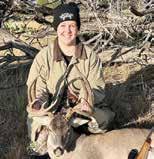
Men’s Steve Kellogg
Women’s Christin Chapa
Youth Blaine Johnson
Men’s Division Winning Buck Tommy Johnson
Women’s Division Winning Buck Avery Esser
Youth Division Winning Buck Colton Nichols
Men’s Division Winning Craig Scruggs
Women’s Division Winning Synthia Stauts
Youth Division Winning Brigg Delukie
Method Of Collection
Archery/Crossbow
Annabelle Simmons
Method Of Collection Modern Arms/Handgun Janet Scruggs
Widest Outside Spread Lee Phillips
MULE DEER DIVISION
Adult Tristan Sivells
Youth Kade Bannowsky

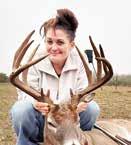
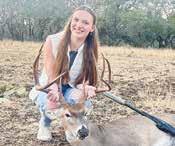
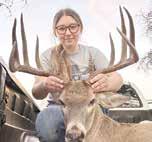
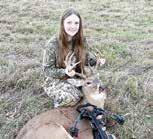
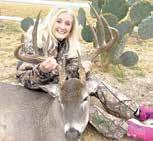
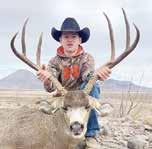


Use a dozen or more deboned dove breasts, your favorite sausage, cut vegetables, and add a good roux to create this awesome gumbo.

Cuisine is a style or method of cooking. Wild refers to something not domesticated. Put the two words together and WA-LA! The sky, or the kitchen, is the limit to what may be placed on the dinner table. Many relate cuisine to fancy food, a connoisseur of something or special epicurean type dining fare, but not true.
I adamantly admit that I’m not a professional chef nor claim gourmet cook status. This ol’ country gal was raised and still lives on wild game. I cook hearty meals good for the soul, and the stomach. Of course, my favorite preparations are sometimes rolled in flour or cornmeal and fried in hot grease.
Some people profess disliking wild cuisine due to the gamey taste, but to me there’s no such thing. Killed, processed, and refrigerated properly and timely, every species has its own distinct and unique taste. If it tastes gamey, it’s due to improper care after the fishing or hunting trip.
Let your imagination, and stomach, be your guide when creating wild cuisine. Beef, chicken, pork, or fish can be substituted with venison, quail, feral hog, alligator or whatever. Most any wild game can be roasted, barbequed, baked, fried, stewed, sautéed, grilled, made into soups and stews or ground up for crafting even more delicacies.
When a camp cook asks how a dish turned out, the common reply is, “Well, it’s pretty good, but you need to add more salt
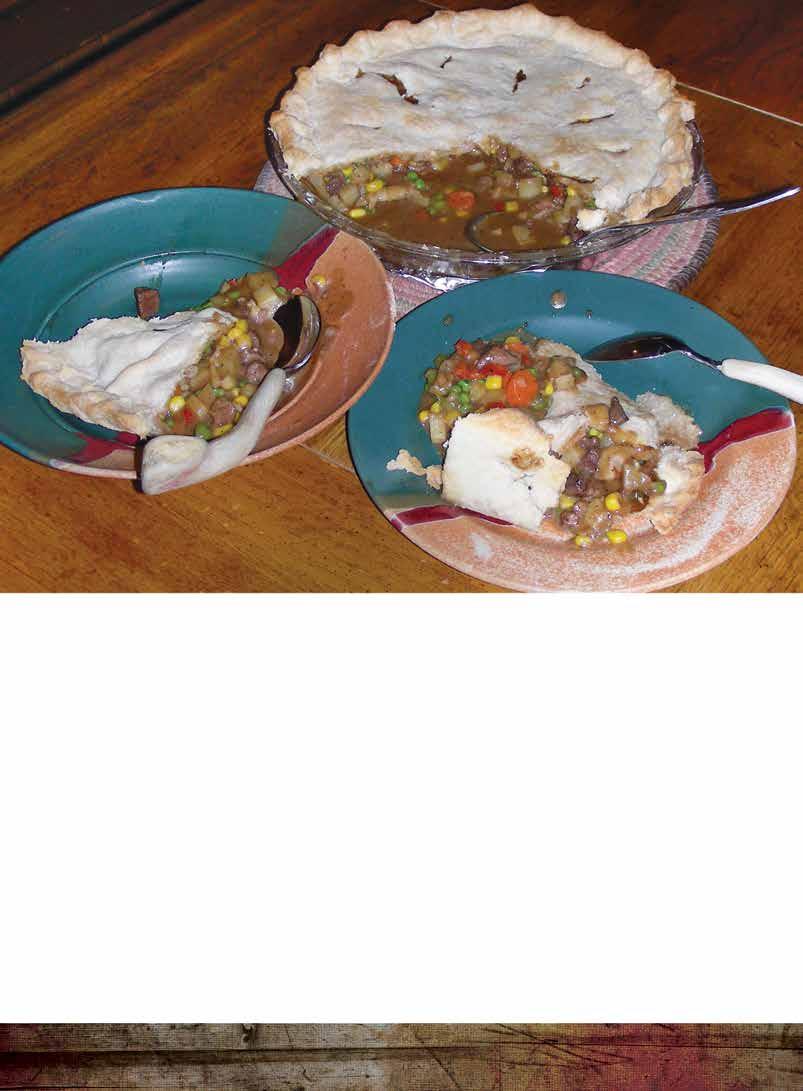
and pepper!” The true meaning: It was great because no one else wants to be the cook.
Most folks think of whitetail deer when they hear the word venison. That’s true, but many deer species also fall into the venison category. This article won’t explore those except to say venison is excellent table fare. The leanness of wild game, including venison, is very healthy, and the choice of preparation and presentation is yours.
Chicken fried backstrap or hindquarter steak is finger lickin’ good. Naturally, scab gravy must go with it. But you ask, “What is ‘scab’ gravy?” Well, it’s cream gravy made with all the little fried venison pieces in it.
Meat tenderized by machine reduces the likelihood of scabs, but tenderizing with the mouth of a Coke or beer bottle helps create them. Not only can you tear the meat apart with fingers, but more bits fall off and fry crispy. Leave them in the gravy and don’t forget hot biscuits.
Feral hog is perhaps the most underrated wild game. Technically it’s organic, and in my opinion there’s almost no way to mess up cooking wild pork. A big pig can produce beautiful chops, tasty ribs, sausage makings, excellent roasts, and even bacon. A fat 60- to 80-pound pig of either sex provides some excellent dining, and once the crowd tastes the meat, you may need more.
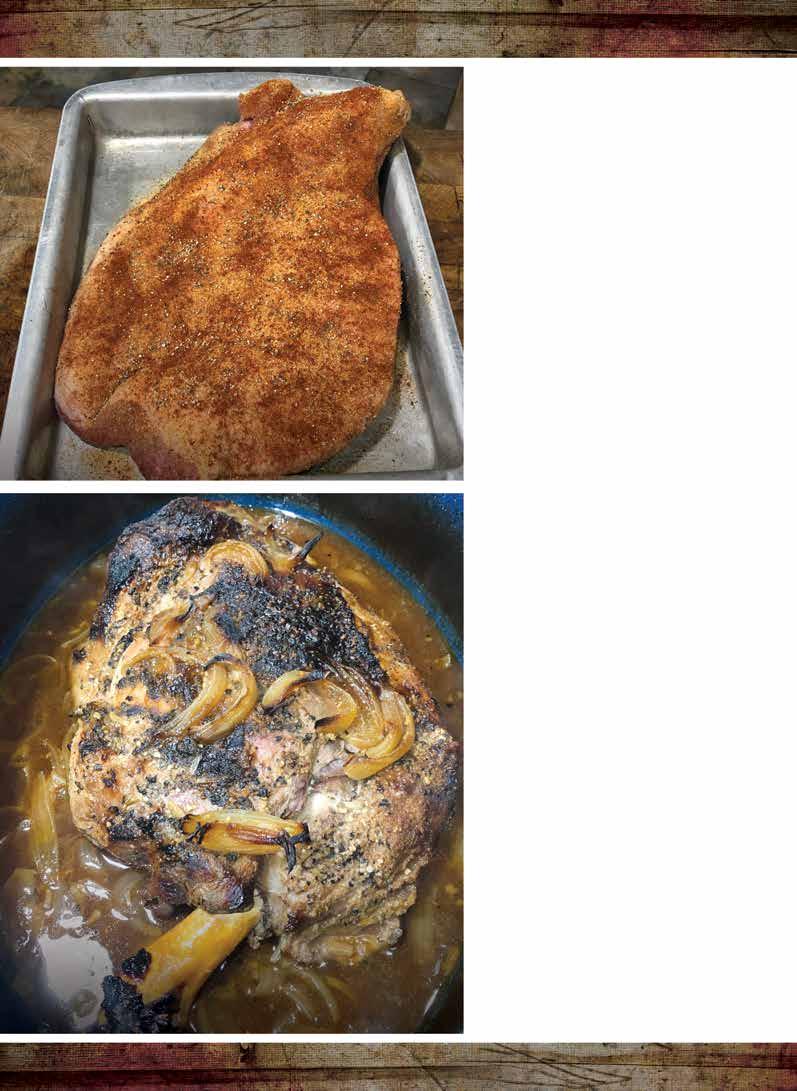
Do you like crispy fried dining? Cut pork ribs individually, flour and fry, and you’ve got a bit of meat entirely crusty to nibble off the bone.
Keep in mind that most wild game is much leaner than any store-bought meat. Big game such as elk, deer, hogs, aoudad, pronghorn antelope, and others can be hung in refrigeration for aging before processing. If you can find a cold refrigeration to hang your game for a few days, it helps tenderize the entire carcass.
Even cottontails and squirrels can be refrigerated several days. Jackrabbit is tasty, although a bit sweet. Ground up and mixed with venison, rabbit makes great chili.
Pheasant, quail, wild turkey, waterfowl, dove, and other birds can dry out quickly before, during, and after cooking. A popular treat: wrap breast pieces in bacon with or without jalapeños and onion and place on the pit. Dove or duck breast pieces lightly covered in seasoned flour, sautéed quickly in olive oil, then dipped in a raspberry chipotle and barbeque sauce mixture is quite tasty.
Wild turkey, pheasant or sandhill crane breast cut into strips or tidbits allows more people to enjoy however it’s cooked. Frying, grilling, adding to soup, casseroles, or gumbo is another way to create a wide variety of wild cuisine.
Quickly sear many types wild game on a hot fire sealing in seasonings and flavor, then slow cook on the same pit, in the oven or smoker, or placed over coals. Wrap in foil to assist retaining moisture for tenderness while saving drippings for awesome gravy. Disposable aluminum pans are handy for cooking, as cleanup is easy. Just pitch it in the trash.
Wild game leftovers such as roasted venison or pork can be made into awesome carne guisada. Don’t forget to add chili powder and comino. Or, leftovers can be ground up, add boiled eggs, chopped raw veggies, lots of mayo and garlic to enjoy on crackers or sandwiches as a spread treat.
Numerous wild game cookbooks exist today, or you can simply use Google. Read through the ingredients and preparation, then follow exactly, or adjust to your liking. Some recipes recommend serving rare while others require doneness. The longer a wild hog shoulder or hindquarter roasts, the more tender it is. Just shake meat off the bones.
Spices are the key to many successful wild cuisine dishes. I believe garlic greatly enhances venison and pork. Italian, Mexican, Asian, and other nationality recipes incorporate certain spices to deliver a particular flare, so let your taste dictate.
Once again, use your imagination when combining cuisine with wild game. Bon appétit!

BY JOHN GOODSPEED
Compound bows keep getting more refinements to make them faster, lighter, easier to adjust, more precise and more shootable. The fastestshooting bow in this roundup of the latest on the market flings arrows at 363 fps. The slowest is no slouch, either, at 330 fps. The lightest weighs 3.7 pounds while many others are not much heavier.
Several ready-to-hunt packages are available while others are adjustable enough to suit beginners or veteran archers. Some are budget-friendly
with a low of $599.99 while one priced at $2,199 justifies its price tag with all the bells and whistles it features. One features a proprietary alloy that is said to be 33 percent lighter and 21 percent stronger than T6 aluminum and six percent lighter than commercial-grade carbon fiber. The fps speeds are the manufacturers’ ratings using the International Bowhunting Organization standards. Prices are manufacturers’ suggested retail prices.
www.basspro.com; www.cabelas.com
BlackOut Epic NT, $599.99
This ready-to-hunt package at a budgetfriendly price brings a combination of speed — up to 333 fps — and performance with the efficient DHC hybrid cam system. The dual hybrid cam offers an 80 percent let-off and a smooth draw cycle. The bow is adjustable enough for both beginners and seasoned archers with draw weights ranging from 45 pounds to 60 pounds and a draw length of 27 inches to 32 inches in ½-inch increments. It measures 33 inches axle to axle. The brace height is 6½ inches. The riser is forged and machined. Picatinny rail mounts for the bow sight and arrow rest are integrated. The package includes X99 BCY strings, four-pin TruPeep sight, BlackOut quiver, BlackOut Whisker Bis cuit arrow rest, stabilizer and sling and D-loop. The bow is available in Black or TrueTimber VSX (shown here).
The INT in this Ready-To-Hunt compound bow stands for Integrated Technology, which includes the Integrated Mounting System rest and a Picatinny rail sight mounting location. The bow features the EKO cam system usually only found on Bear’s higherend bows that allows speeds up to 339 fps while offering a let-off up to 90 percent. The other let-offs are 75 percent, 80 percent and 85 percent. Draw weights are adjustable from 45 pounds to 60 pounds or 55 pounds to 70 pounds. It also sports a 6½-inch brace height, a 31-inch axle-toaxle measurement and draw lengths from 26 to 30 inches. It includes a new roller cable guard system for a smooth draw. KillerWave dampeners on both limbs deaden the shot. The Ready-To-Hunt package from Trophy Ridge includes an IMS V-Biscuit rest, a Picatinny-mounted Fatal four-pin sight, a five-arrow quiver, a stabilizer, Radical peep sight and wrist sling. It weighs 7½ pounds. The bow is available in Throwback Green, Veil Whitetail, Mossy Oak Bottomland, Stone and Olive (shown here). The bow also is available without the ready-to-hunt package ($629.99).
Built on the AeroMag riser, this 3.7-pound bow is machined from a magnesium alloy that is lighter than aluminum. The Virtue is the lightest non-carbon bow in its class. The magnesium alloy sheds weight without sacrificing the structural integrity of the riser or compromising noise or post-shot feel. The riser’s design delivers a silent shot and a well-balanced hold. The bow also utilizes corrosionresistant titanium fasteners to increase durability and further reduce weight. It also continues Bowtech’s tuneability with the patented DeadLock, TimeLock and GripLock technologies. It features the second generation CenterMass sight system as well as the IMS dovetail rest mounting option. Bowtech says the Virtue was designed in response to the enthusiasm for the limited release Honor’s strength, light weight and vibration dampening. With a brace height of 6.19 inches, the Virtue measures 32 inches axle to axle and shoots at speeds up to 341 fps. Draw length ranges from 25 inches to 30 inches while draw weight is 50 pounds, 60 pounds and 70 pounds. The bow is available in five Cerakote colors — Tac Black, Tac Stone, Tac Grey, Tac Blue and Tac Green (shown here).
With Darton Archery celebrating its 75th anniversary in 2025, it is launching the Sequel ST2 series with new technology and is donating a portion of the proceeds to Folds of Honor Foundation to provide scholarships to families of soldiers who were injured or killed. The bows, available in axleto-axle measurements of 31 inches, 33 inches and 35 inches (shown here), come with patent-pending Perfect Timing and Perfect Tuning technology that allows adjustment with an Allen wrench instead of a bow press. Timing marks are laser engraved on the cams. Speed is 330 fps and 335 fps with the speed mod. Brace height is 6.3 inches. Draw length is adjustable from 26 inches to 31½ inches. Draw weights range from 50 pounds to 80 pounds in 10-pound increments. Let-off is 75 percent to 85 percent. A portion of the proceeds of every Sequel ST2 bow ordered through 2025 with the special edition MultiCam camouflage riser and the Folds of Honor emblem on its limbs will be donated to the Folds of Honor Foundation, which delivers more than 90 percent of donations received to scholarships.
www.elitearchery.com
Artus, $1,299.99
This new model promises the latest advancements in adjustability and customization in a compact bow built around a stable and forgiving platform that shoots up to 340 fps. The Artus features the new SP2 Cam System, new VX Mods and R.A.C. System. The SP2 Cam System is customizable for draw weight, draw length and back-wall preferences while providing a smooth draw. VX Mods allow ¼-inch draw length adjustments for comfort and performance. The R.A.C. System uses Picatinny-style mounts on both limb pockets and the riser for compatibility with Elite’s RAC accessories. The dual caged riser enhances aim-ability and balance for faster shot acquisition. Measuring 30 inches axle to axle and weighing 4.7 pounds, the bow is compact and maneuverable. Brace height is 67⁄ inches. Draw length ranges from 25 inches to 30½ inches with up to 90 percent let-off.
Draw weights are 40 pounds, 50 pounds, 60 pounds, 65 pounds, 70 pounds and 75 pounds. The bow offers a choice of 20 colors, including Ninja Black (shown here). A left-handed version also is available.
www.hoyt.com
Carbon RX9 Ultra, $2,149
This model is Hoyt’s new flagship carbon hunting bow that features a redesigned riser, updated limbs and limb pockets and HBX Gen 4 cam system, which allows draw lengths from 26 inches to 32 inches in ¼-inch adjustments. It is Hoyt’s first four-track cam, known for stability and smoothness. The long-time innovator of carbon-fiber bows began incorporating that technology in the early 2000s. The RX-9 Ultra gains up to 20 fps at various draw lengths and weights over the previous flagship. It also is lighter at 4.3 pounds and has a smoother draw cycle. The de sign also reduces or eliminates hand shock. Hoyt called its approach to conceiving their bows Engineered Synergy including the design of accessories to ensure that all components work together. One example of their design of WireWRX strings as part of the bow to help it shoot better. The bow shoots up to 340 fps and measures 33½ inches axle to axle. Brace height is 63⁄8 inches. Draw weight is adjustable from 40 pounds to 80 pounds. The bow is available in 14 colors including Bourbon (shown here).
www.mathewsinc.com
LIFT XD, $1,469
Continuing evolution of 2024’s LIFT, this model features a number of customizable features. Limb Shift Technology is a tuning system that allows micro-adjustments of the limb channel with a wrench instead of a bow press. ARC7 Limb Technology delivers Mathews’ most durable and efficient limbs. The new BOND Grip System customizes the point of contact for every shooter. With four different grips, the system was designed to be changed out quickly and securely by snapping into place. Built with long-draw archers in mind, the LIFT XD boasts draw lengths up to 33½ inches and features a 6¾-inch brace height. With speeds up to 363 fps, the new oversized SWX+ Cam brings LIFT technology in the same lightweight, heavyhitting profile the LIFT is known for. The
bow weighs 4.31 pounds and measures 33 inches axle to axle. Draw weights range from 50 pounds to 75 pounds in five-pound increments. Let-off is 80 percent or 85 percent. Also being introduced is the LIFT RS ($1,359), which brings shorter draw lengths of 23½ inches to 29 inches. The 27¾inch axle-to-axle bow shoots up to 353 fps. It weighs 3.92 pounds.
www.g5prime.com
RVX+, $1,195
The new RVX+ follows on the 2024 RVX 6, but with such updates as new low-profile limb pockets and a riser that is narrower and lighter. The RVX+ is avail able in 32-inch and 34-inch axle-to-axle configurations at the same price. The 32-inch model weighs 4.3 pounds, and the 34-incher weighs 4.4 pounds versus the RVX 6’s 4.6 pounds. The Core Cam System allows for draw length specific mods, which deliver maximum ef
ficiency at every draw length. The Picatinny sight mount introduced last year is on the RVX+ as well. So is QAD’s Dovetail, machined directly into the RVX+, which allows for additional rest mounting options. The 32-inch model reaches speeds up to 338 fps. Brace height for both is 6¼ inches. Draw length ranges from 26 inches to 30 inches while draw weights for both go from 40 pounds to 80 pounds. The 34inch model hits up to 336 fps. Draw length ranges from 26½ inches to 30½ inches. The riser is available in 17 solid, camo and G-Fade colors while limbs can be ordered in 11 of those colors.
continued on next page
www.pse-archery.com
PSE’s new flagship aluminum bow was built off the Mach 30 bow that won Outdoor Life’s Bow of the Year for 2024. Designed with riser ridge geometry, it features a 31½-inch axle-to-axle length and the iconic EC2 Cam and CGM system that offers a smooth draw and arrow speeds reaching 338 fps. It weighs 4.65 pounds. The EZ.220 Snap Spacer System allows for quick tuning and cam lean adjustment. The snap spacers can be removed and repositioned on a pressed bow in 0.020-inch increments without removing axles or cams.
Full Draw Stability resists induced torque. The limb Vise Pocket provides stability through an improved limb locking system. Brace height is 6½ inches. Draw length ranges from 25 inches to 30½ inches. Draw weights range from
Decree, $1,299 50 pounds to 80 pounds. Let-off ranges from 80 percent to 90 percent. The bow is available in 10 colors including Mossy Oak Bottomland (shown here).
www.xpeditionarchery.com
Xlite 32, $1,899.99
This new flagship bow is powered by Magnite, a proprietary alloy that Xpedition says is 33 percent lighter and 21 percent stronger than T6 aluminum and six percent lighter than commercial-grade carbon fiber. Used in the defense and aerospace industries, the material also will not crack like carbon fiber when loading the material against the alignment of the fibers. Measuring 32 inches axle to axle, the mass weight of the bow is 3.8 pounds. It can shoot up to 342 fps with its XB35 dual cam system with optimized shortand long-draw modules. Draw lengths are adjustable from 25 inches to 30½ inches in ½-inch increments. Three new accessory upgrades also are included — redesigned proprietary dampeners, a more ergonomic grip with 17- and 19-degree options and an in-line Pica tinny rail sight mount that will confirm zero. Brace
height is six inches. Draw weights are 50 pounds, 60 pounds, 65 pounds, 70 pounds and 80 pounds. Let-off is 80 percent. It comes with a Cerakote finish.

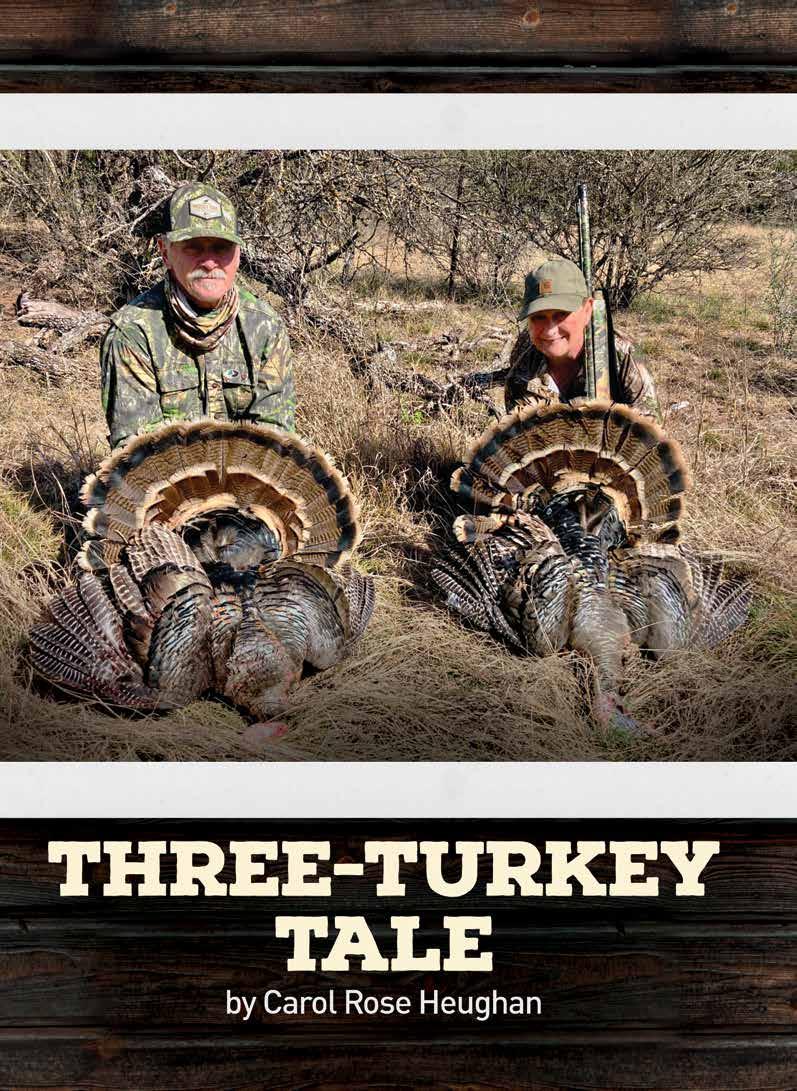
Paul Montesinos with Carol and their gobblers.
It was the first week of turkey season. Uvalde County had predicted a good turkey crop and more jakes that year. Paul, our friend Dennis and I left in the middle of the week to hunt. There is less traffic on the highway, and less activity at the lease during the middle of the week. Although we have wide open spaces at the lease, it’s always nice to have more options for turkey hunting. The more real estate you can cover, the better the hunt.
Paul scouted for new areas during deer season and found a promising new pasture to hunt for turkey. When we arrived at the lease Wednesday, it was early, so Paul and Dennis did some more scouting for the next morning’s hunt. They returned to camp at dusk very excited.
Dennis had set up decoys at the area Paul had found and they
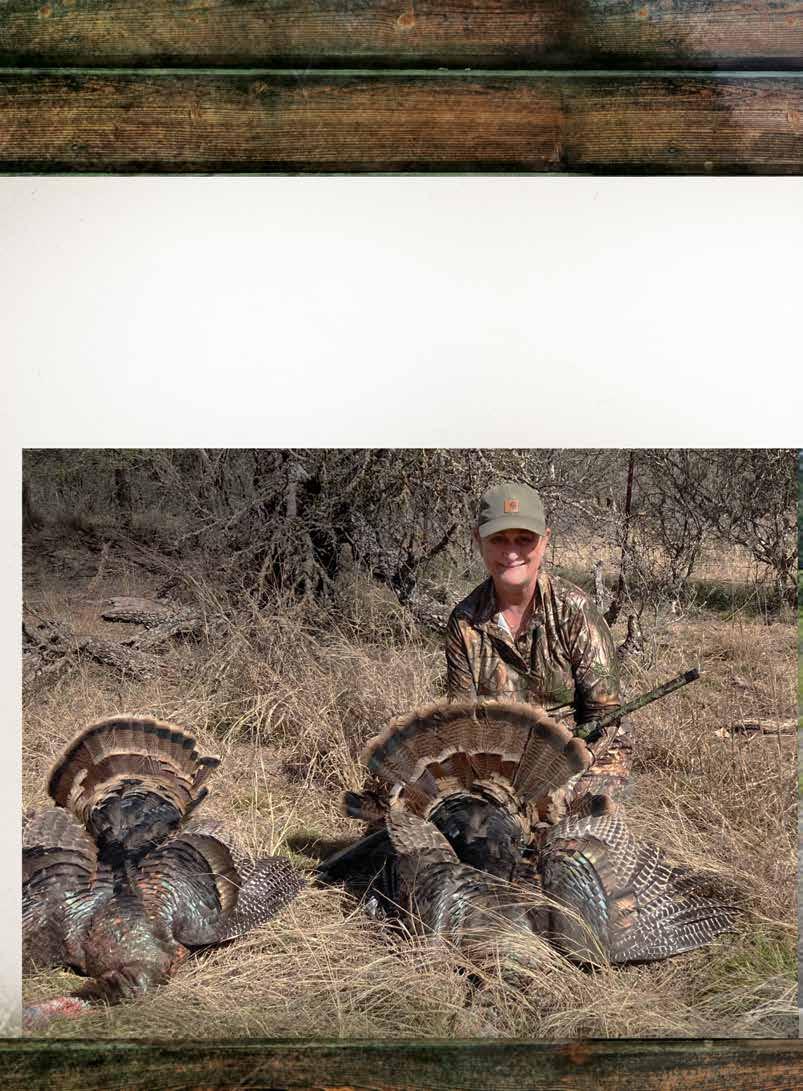
both called using mainly the slate calls. Paul got a new Woodhaven slate call for Christmas. It was the first time he used it, and the turkeys responded well to the softer call. Dennis’ Thunder Dome call was successful as well.
They called in three turkeys by double calling. This can be more productive because a turkey might be looking for a double date. In this case there were three amigos searching for love. The turkeys came in so fast and so close, Dennis did not get a good shot.
The next morning was very promising. We planned to get to the new pasture before daylight. We had a cold breakfast. I noticed Dennis had opened on a bag of peanut M&M’s. I said, “Ah, that is the Turkey Man’s secret weapon.” He gave Paul and me the green ones for good luck.
We got to the pasture before daylight. Dennis used the owl call to try and locate turkeys, or wake them up. I thought at first, “Here we go; run and gun with Dennis.” He’s hard to keep up with sometimes.
But instead, we walked to the pasture close by and set up hen decoys. We tucked ourselves away in the tall cedar bushes. Paul and Dennis waited awhile before calling. We knew the roost was close by.
Dennis used the mouth call and got a response. Anticipation filled the air. After hours of talking back and forth the turkey got close but never showed himself. We decided to try another spot further away on the lease.
Dennis called for quite some time, but nothing called back. Then as we were leaving, Dennis saw two gobblers
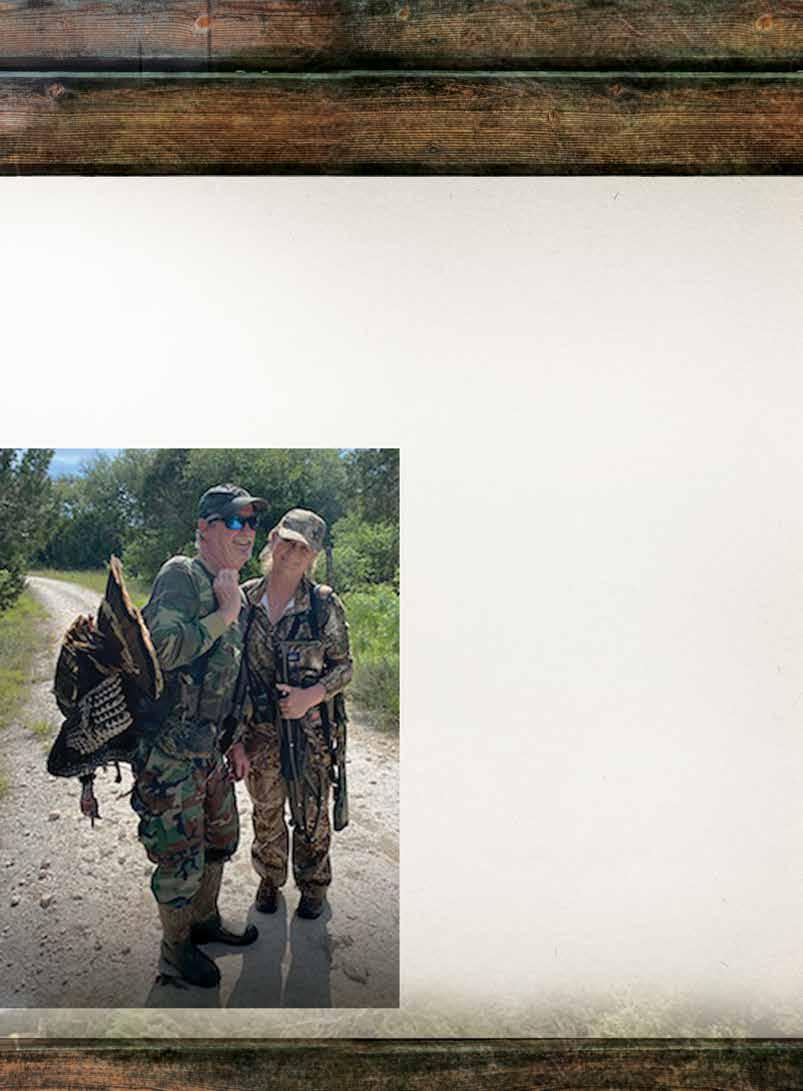
walking down the road in our direction. They had been silent. Dennis showed me where to set up in the bushes by the side of the road.
However, with the turkey’s keen eyesight, they turned around and trotted off. They did not seem to be too spooked but mainly cautious. We returned to camp with a new plan for the evening hunt. It was time to let the turkeys, and us, regroup.
Apparently, the turkeys in the first pasture did not return to the same roost. The evening hunt produced nothing. The next morning, we went back to the first pasture and set up again the same way. We had no response, and it was quiet, so we walked farther down the field to another pasture closer to the river.
Dennis and Paul called and got a response. They thought they were the same three birds again. We waited patiently for some time. They continued to call with the slate calls and Dennis also used his reliable mouth call.
The turkeys got closer and closer. I saw one of the jakes through the bushes. I had a good shot and took it. I put one turkey down.
Then the other two started kicking and pecking the corn out from my turkey. Wow, I had never seen this before. “Hey, he’s dead. Why are you kicking him when he is down?” Maybe this was a battle for breeding rights or domination.
Dennis could not get a shot at another jake because bushes were in the way. But he knew what to do. He used the mouth call to mimic more turkey fighting. It was an exciting and loud ruckus for a few minutes.
It was a breathtaking avian exhibition watching the two jakes attack the downed bird. The two jakes stayed in range, finally Dennis got a shot, and now two turkeys were down. The three amigos were no more. The one bird that did survive kind of trotted off, so we thought he might come back.
We retrieved our birds and sat back down to call him back for Paul to get a shot. We tried for hours but the last jake did not return. Paul and Dennis hunted a couple more days and had several encounters, but no chance at another shot. Paul and I will head to Tennessee to hunt with “Stretch,” aka Terry Bosher, for an Eastern turkey. I hope to get a turkey grand slam one day. To be continued.

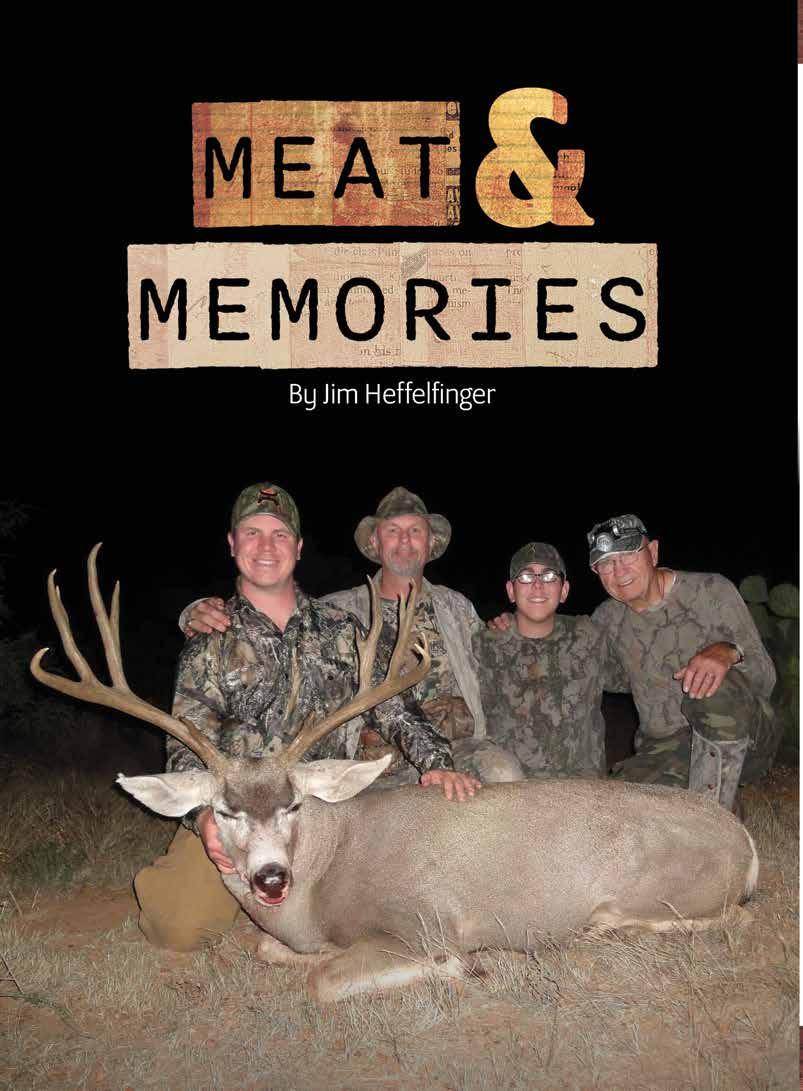
The importance of family to the future of our hunting heritage cannot be overstated. Studies confirm that having a personal mentor and a supportive social environment is the most important factor in becoming a hunter and staying a hunter. Since our earliest days in the caves, each generation of human hunters—that used to be all of us—passed on the tradition of hunting to future generations. That tradition was lost in more than 90% of the members of those future generations, and so it’s important for the rest of us to make sure we do all we can to retain hunters who will continue to be leaders in the field of wildlife conservation.
My dad grew up in the big city and so hunting was never mentioned in our house. We moved to a small rural community when I was 14 and when I heard my friends spent their weekends walking around in the woods with real shotguns shooting rabbits and squirrels, I just had to learn more. After a hunter education class, a shotgun purchase at my dad’s hardware store, and a few trips to the local woods, the course of my life irreversibly altered.
My interest in hunting spread to my older brother and my dad. We hunted together for a few years, not really knowing what we were doing, before college and jobs scattered us. My discovery of the outdoors led me to pursue a degree in wildlife management. That college degree fed my hunger for wildlife that grew into a passion. At the time, I liked hunting alone because I could call all the shots and go where and when I wanted. Then something magical happened. My parents retired in the Midwest and moved two blocks away. Dad, then 66 years old, said he was tired of hearing about all my hunting stories and wanted to experience them. It’s unusual when a son introduces his dad to hunting. Human dimensions researchers will tell you it almost never happens, but his retirement opened the gate to so many amazing adventures.
My dad and I started hunting javelina the first year and he scored with a long, two-hour stalk down into a deep canyon. A deer hunt a few months later ended in similar success with a young mule deer buck. With some luck, we also had elk tags, and he ended his first year of real hunting with three big game animals under his belt and a freezer full of game meat. Suddenly a whole new world opened to him, and we started hunting just about everything we could. The time we have spent together is unique and very special. It was an amazing
experience to hunt not only with another person, but with your dad.
My oldest son Levi completed hunter education at the age of 10 and was chomping at the bit to get into big game hunting.
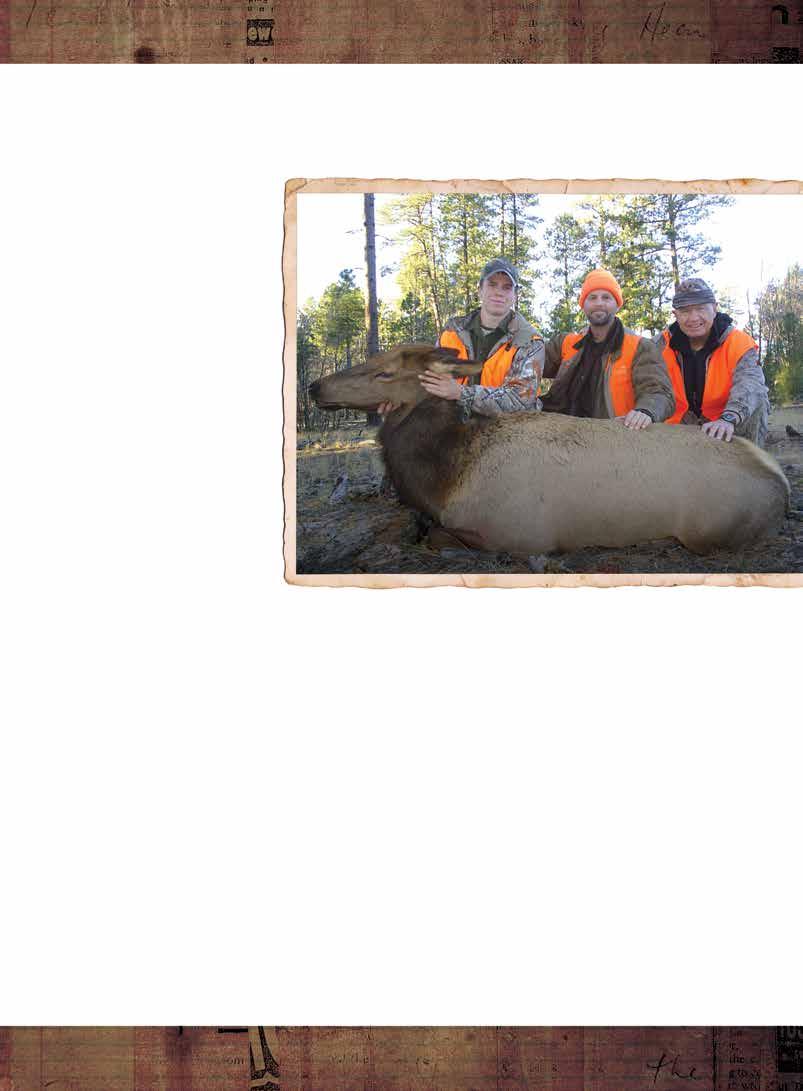
His first successful hunt was an ancient Corsican ram from the Hill Country. The ram may have been older than him. That hunt began a long string of deer, elk, pronghorn, and javelina hunts with three generations of Heffelfingers working together to outwit and out-sit the animals we pursued in the forests, brushlands, and grasslands.
Baby boomers returned from World War II with new marksmanship and outdoor skills, and a strong feeling of self-reliance. The desire to get outdoors was natural for this generation that mostly grew up on a farm or in a rural setting. The generations that followed saw social changes that took them farther and farther from nature and direct contact with the land. More of the American population lives in the city and fewer people knew how meat got to the table. Even though I was raised in the city, I spent some weekends at my uncle’s meat processing plant watching steers go from feedlot to freezer. Show me a kid who raised a 4-H steer and sold it to the highest bidding slaughterhouse, and I’ll show you a well-adjusted kid who understands the world.
Anthropologists tell us the incredible development of the complex human brain was the result of the increasing need to
communicate and coordinate abstract plans associated with hunting animals. Communication can be a powerful thing in the development of a human brain, especially a teenage one. There is no better way to open up communication with your children than to be participants in the physical and mental challenges that hunting provides. Having three generations of Heffelfingers hunting together has done remarkable things for our family and I don’t think we are unique in that regard. I could write thousands of words about the benefits of hunting to wildlife conservation in North America. I know because I’ve done it, but closer to home are the real benefits it provides me and my family.
Bonding between family members across generations is something that is hard to purposely orchestrate, but hunting provides the opportunity because you are separated from the distractions of everyday life while you work together to achieve a common goal. Passing on your knowledge of the outdoors to the next generation of hunterconservationists gives you a great sense of heritage being passed on to the future. This started thousands of generations before Team Heffelfinger was assembled and, with our help and vigilance, will continue for thousands more generations.
Oral histories shared around a campfire have been important to humans since the beginning of time. The huge assortment of
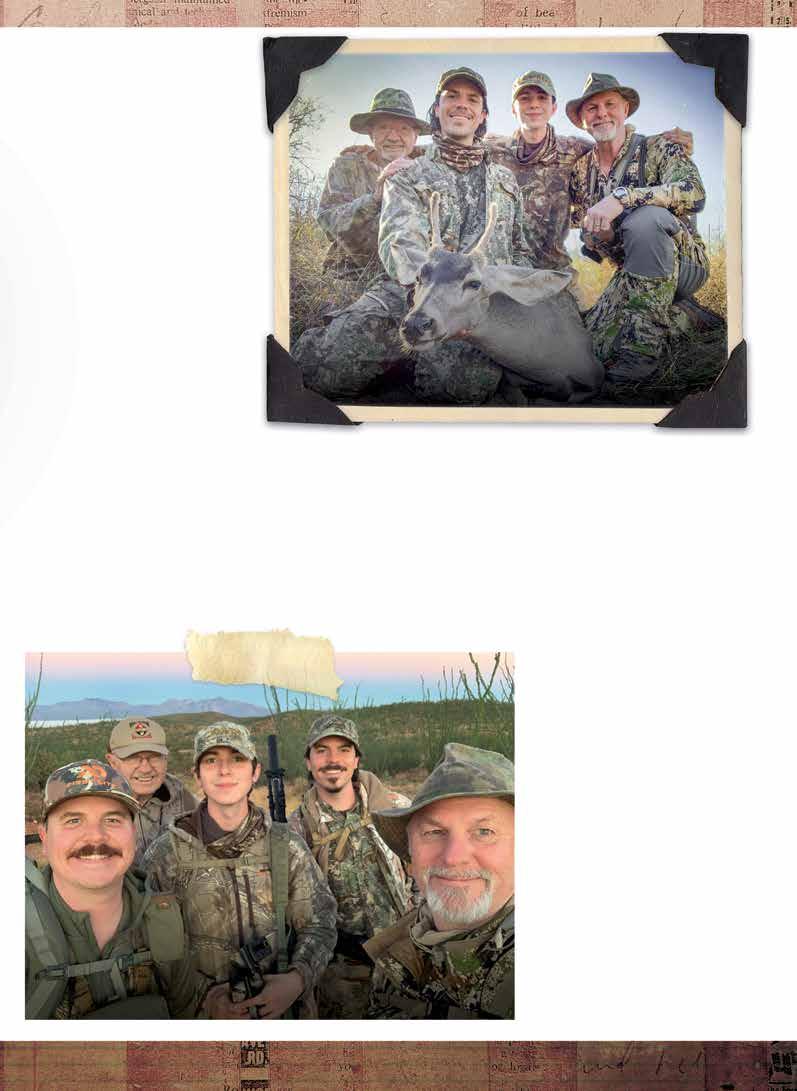
electronic gadgets and social media sites that are supposed to enhance communication seemed to have only stifled personal communication. Quiet time spent together is what creates the memories for the next generation and enriches the lives of the previous generation. Most of my best hunting memories are of enjoying small things with family and of conversations that would have never happened if it weren’t for long rides to and from hunting locations and full days in the field together. There have been many days of hunting with very few game animals sighted. At the time I was so hopeful for an animal to show up, but in retrospect I see those deerless days as gifts of time together.
As I elk hunted this year with my 91-year-old dad and two youngest sons in their 20s, I reflected on how lucky all of Team Heffelfinger is to have almost three decades of memories together. As important as memories are, the meat can be mighty important when you’re raising a family on only a biologist’s salary. Team Heffelfinger has not spent all our time sitting on hills talking. We may not be the best hunters, but we gather our fair share of fresh meat and cherish every ounce.
We’re all too busy, but parents must realize the time we have with our children is shorter than you think. Their weddings are closer than you realize, and work will always be in the way. If you don’t have children at home now, find a youth who needs mentoring and help connect the generations with an unbroken chain of support for wildlife conservation for all who will follow us.
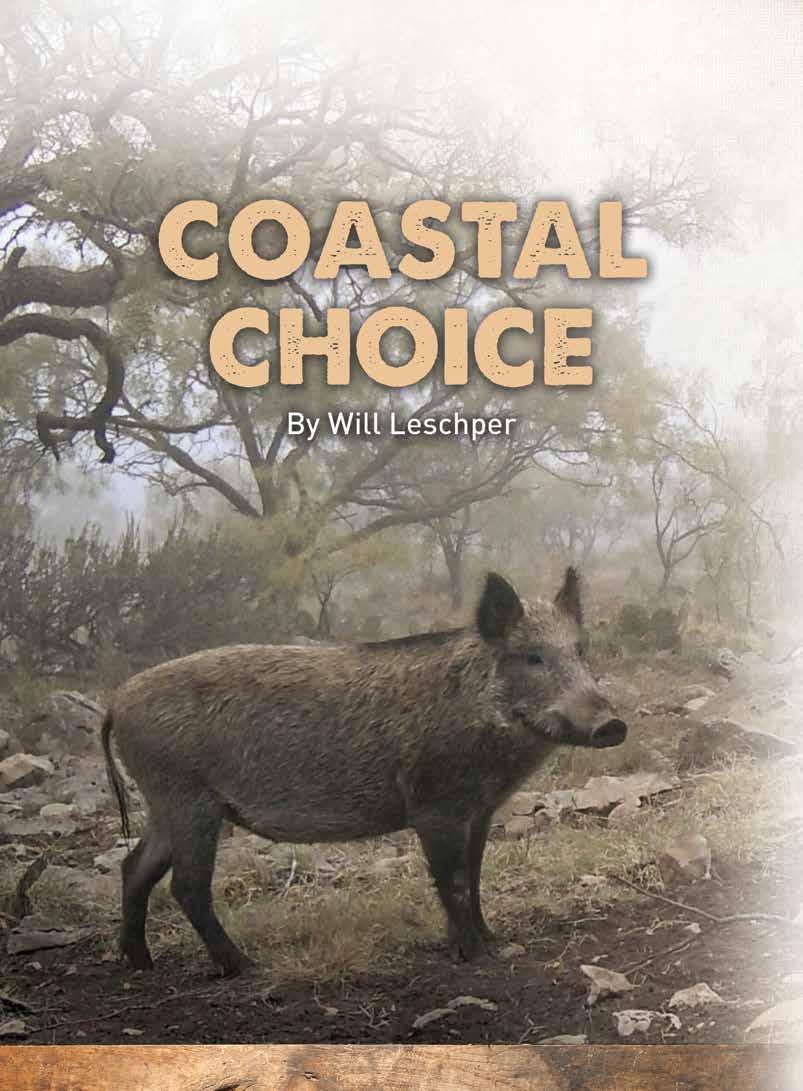
Wild pigs vary in shape, size and color, no matter where you’re hunting.
The end of white-tailed deer hunting frameworks each winter often brings about lingering, dreaded thoughts of having to wait until August or September to begin your prep to pursue big game here in Texas. If you’re good – or maybe just lucky – hopefully you found success in either bone or backstraps, or both, this past fall and winter.
However, just because deer season may be over doesn’t mean there aren’t numerous other exciting hunting pursuits. In fact, two of the Lone Star state’s prime big game opportunities offer unlimited means and methods all year long. Those are, of course, our state’s most destructive and invasive species – the feral hog – and South Texas’ most distinctive and tasty species – the nilgai antelope.
Since it’s hard to pick just one species this time of year, here’s a glimpse at your coastal choice: hogs or nilgai? Why not both!?
We have a huge pig problem — and there’s almost nothing we can do about controlling it — as wild swine (classified as feral pigs, Eurasian wild boar and hybrid populations resulting from crossbreeding of Eurasian wild boar and feral pigs) are the country’s most abundant free-ranging introduced ungulate.
The overall U.S. wild pig figure is estimated to have grown exponentially in the past four decades. From 1982 to 2016, the number in the United States increased from 2.4 million to an estimated 6.9 million, with 2.6 million estimated to reside in Texas alone, according to TPWD. Again, note that that figure in the Lone Star state is higher simply because “pigs have the highest reproductive rate of any ungulate.” Another recent figure from Texas A&M biologists puts the figure at roughly double what was previously reported, with no end in sight to the onslaught.
While pigs naturally are inclined to increase their numbers, human introduction of pigs to native habitats for hunting purposes also has been a large driver in propping up a burgeoning swine number.
Wild pigs in Texas and elsewhere will eat anything and everything they can find, forage or flay, and studies have documented “intentional predation of various vertebrate including juvenile domestic livestock, white-tailed deer fawns, groundnesting bird nests and various species of reptiles and amphibians,” according to TPWD.
And, in all reality, there is only one real predator efficient at
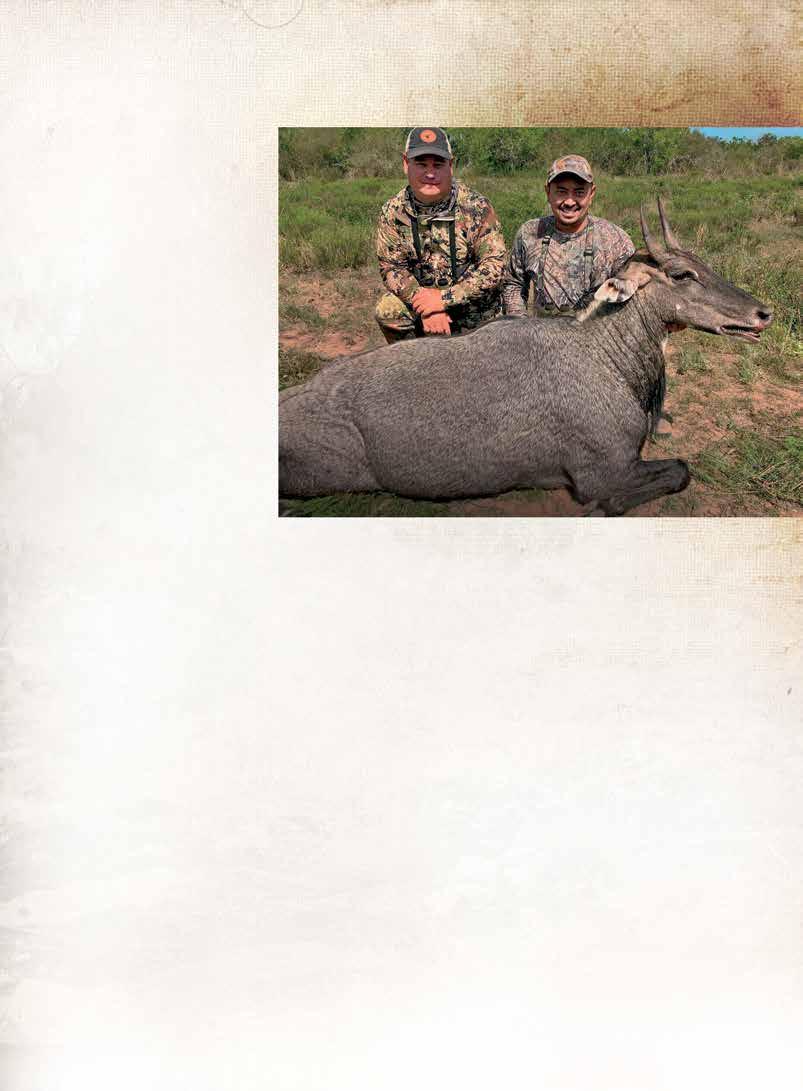
taking down scores of wild hogs: You, me, and anyone else with firepower and time on their hands.
In terms of habitat and agricultural damage, feral hogs are proficient at ruining anything and everything they can find. In 2007, researchers estimated that “each wild pig carried an associated (damage plus control) cost of $300 per year, and at an estimated five million wild pigs in the population at the time, Americans spent over $1.5 billion annually in damages and control costs. Assuming that the cost-per-wild pig estimate has remained constant, the annual costs associated with wild pigs in the United States are likely closer to $2.1 billion today,” TPWD notes.
A 2006 publication reported that wild pigs caused approximately $52 million in agricultural damage annually, but more recent studies published in 2016 and 2019 estimate that the annual loss to agriculture in Texas is approximately $118.8 million, again according to TPWD.
Another negative aspect of the expanding pig problem here in Texas is akin to the prevalence of our native white-tailed deer herd that numbers more than 5 million: vehicle collisions. According to TPWD, researchers conservatively estimate damages associated with wild pig-vehicle collisions to be $36 million annually in the United States, and that figure is only going to increase.
Now, here’s the part where I explain the silver lining: Wild pigs — even those big “nasty” old boars that get a bad rap — are delicious and can be served in so many tasty ways that I’ve lost count. There’s also no wrong way to hunt and dispatch pigs, including everything from rifles and archery gear to
shooting them from helicopters, or using dogs to get in close enough to use your “pig sticker.” As the old saying goes, “there’s no wrong way to skin a cat,” and the same can be said for killing wild pigs. The pursuit is simply in the eye of the beholder. Just make sure you’re doing it safely.
There’s also no wrong way to cook up Texas feral hogs, no matter where you kill them and how large they are. I’ve found that brining feral hog meat in an ice bath with salt, brown sugar and apple cider vinegar before barbecuing or smoking it can turn even the most rank pig into something fit to eat. In fact, I know folks who only shoot the biggest pigs they see to reap the most rewards for the dinner table.
Take care of your meat and it will take care of you is certainly fitting!
South Texas deer pursuits remain king as we’ve got the best native genetics on the planet and plenty of eyes on keeping the status quo part of the current and future landscape. However, “blue bulls,” as mature male nilgai are dubbed, are here to stay and make themselves to home wherever they may decide to roam. The Wild Horse Desert area on old maps is the epicenter of nilgai territory, but they’ve also expanded their range across the South Texas brush country and well into the Rio Grande Valley.
Nilgai offer a challenging hunt, possibly some of the hardest hunting a Texan may encounter. They are keenly aware of their
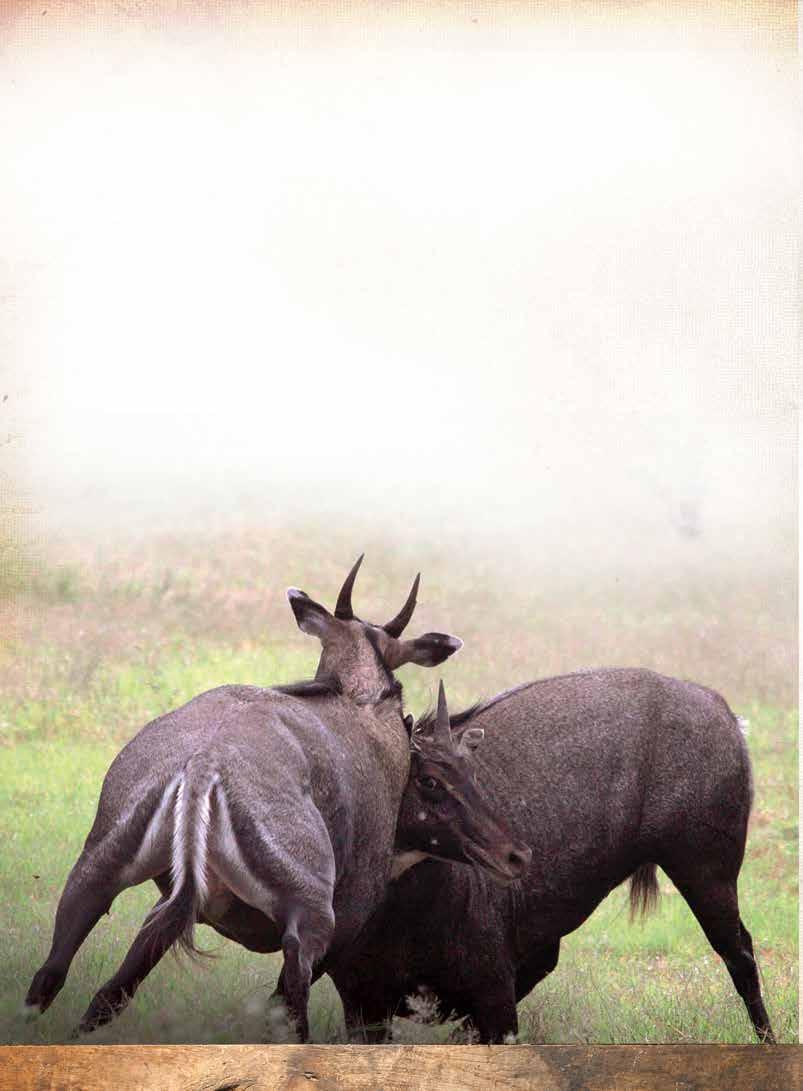
surroundings and even through can tip the scales at well above 500 pounds, they have a knack for disappearing into the brush they call home. They also are known to frequent large salt flats to graze and to be able to see any advancing threat well before you may have a chance to take a shot.
In recent years, and due to the fact that nilgai are essentially considered in the same class as feral hogs and not a true “game animal,” the antelope originally from very different ecosystems in Asia are now being hunted at night here in South Texas using thermal setups. In all reality, it’s what I would classify as a much easier hunt, as nilgai are simply among the most wary and tough animals to kill using traditional methods including spot-and-stalk, safari encounter, or even around a feeder, as they’re a bulky and smart target.
Regardless of what caliber you happen to tote afield, though it’s advised to have something robust, you’d best be proficient with it when you’re pursuing nilgai. You might get a 50-yard shot if you’re able to sneak in that close or it could be three football fields away, or farther. That means practicing with the ammo you’ll be using at the range, and also focusing on how you’ll be shooting. Some hunters can punch paper solid all day long sitting with a rest at the range but aren’t as adept shooting prone or off a stick, which might be how your nilgai shot lines up if you’re doing a spot and stalk through varying layers of spindly mesquite and other prickly vegetation.
Another consideration is the anatomy of the nilgai when discussing shot placement. The vitals sit farther forward in
Feral hogs will take over a deer feeder, providing a nuisance but also an opportunity to collect free-range pork with your whitetail rifle.
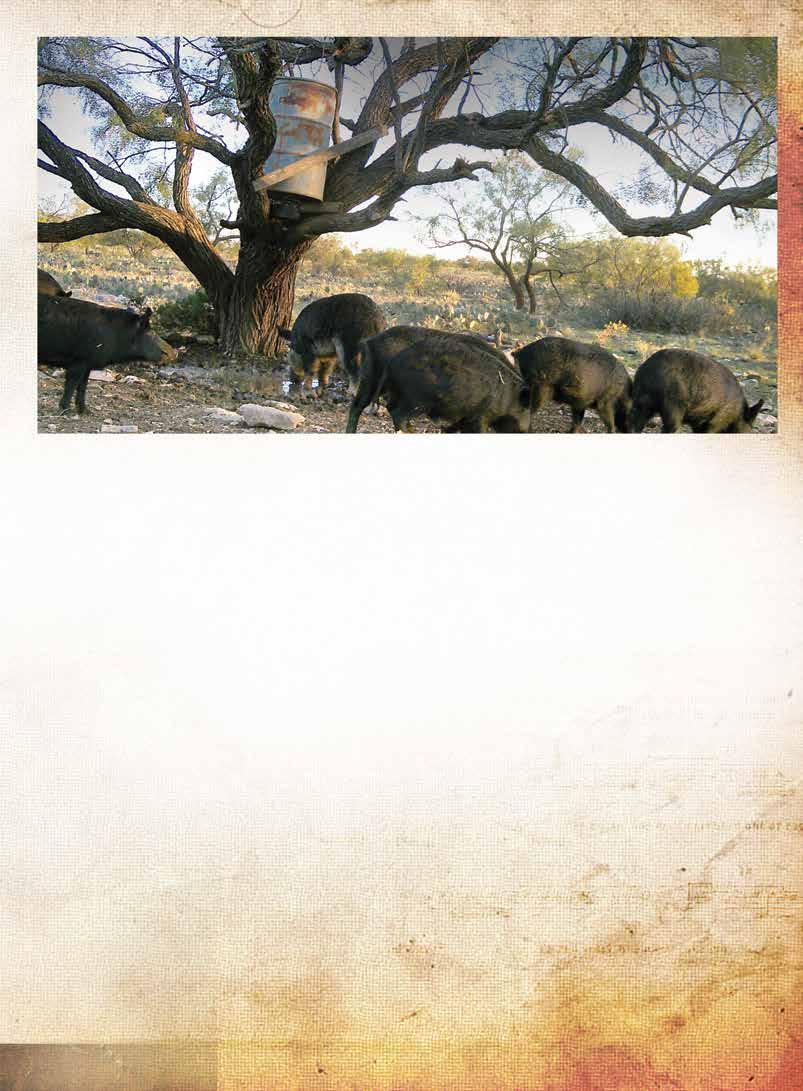
the chest cavity than those of a South Texas whitetail. If you’re sizing up the ideal broadside shot to clip the heart and/or lungs, it would be about a third of the way up from where the front shoulder starts.
To sum up the blue bull bonanza, here’s hoping first and fore-
most you get a shot at a nilgai, secondly that shot is true and, most importantly, you bring friends along to share the spoils of success. If nothing else, you can assign those lean sides of meat mirroring loafing beeves with those hearty individuals who helped pack out the critter.

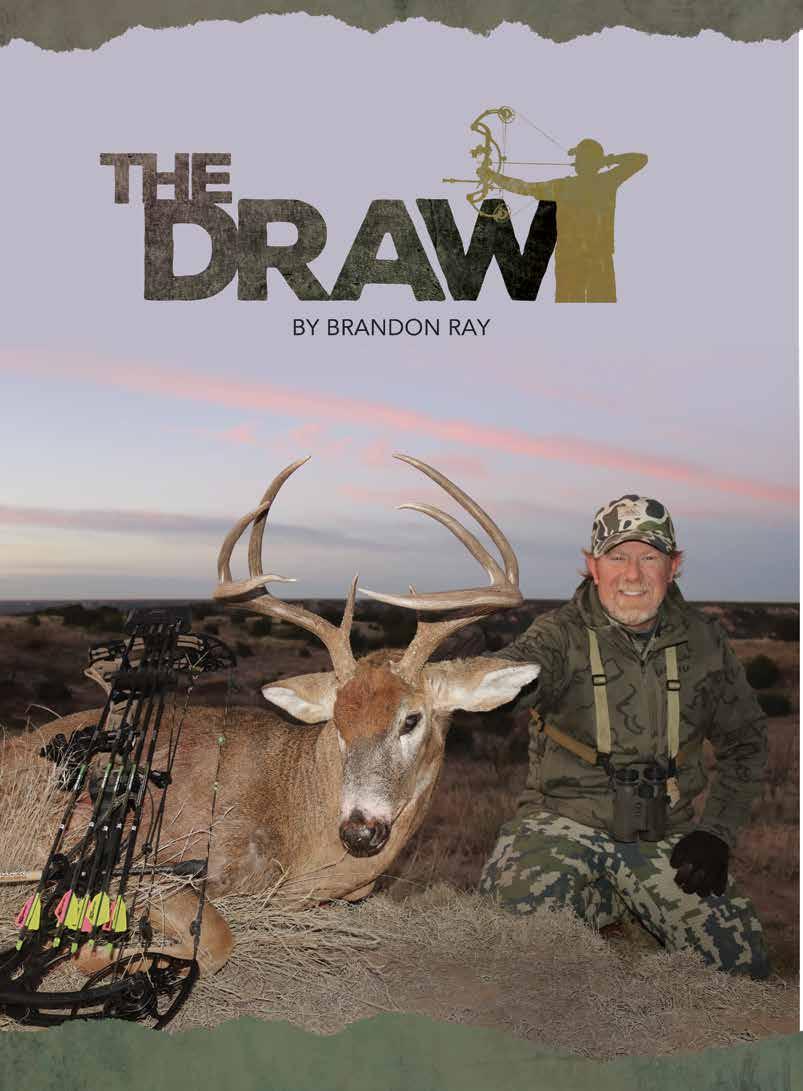
Brandon with his 2024 Texas Panhandle whitetail. He shot the big eight-point from a ground blind constructed of cedar branches and broomweeds. Success came at 14 yards on the afternoon of Nov. 29.
A close-up of the arrow and broadhead used for Brandon’s November 2024, eight-point buck.
It’s been a long season. My duties started in early August, setting blinds, hauling feed, gathering firewood and checking trail cameras. At that time of year, the sun is mean, temperatures top 100 degrees and the dust swirls like a tornado. After guiding aoudad hunters in September and October, I focus on deer hunting.
Come November, fresh rubs will scar mesquites near my blinds and temperatures will start to drop. Like many other places, November is prime time in the Texas Panhandle to see a big buck chasing a doe. By late season, it’s just plain COLD.
As I write these words in early January, I’m still trying to put one more deer in the freezer before the buzzer. This morning the low temperature was 12, the windchill was 8 and I didn’t see a deer! Weather patterns from summer to winter are extreme at the top of Texas.
One of the highlights from last fall was an encounter with a phantom buck I’d only known about from years of random trail camera pictures. On Nov. 29, late in the afternoon, that
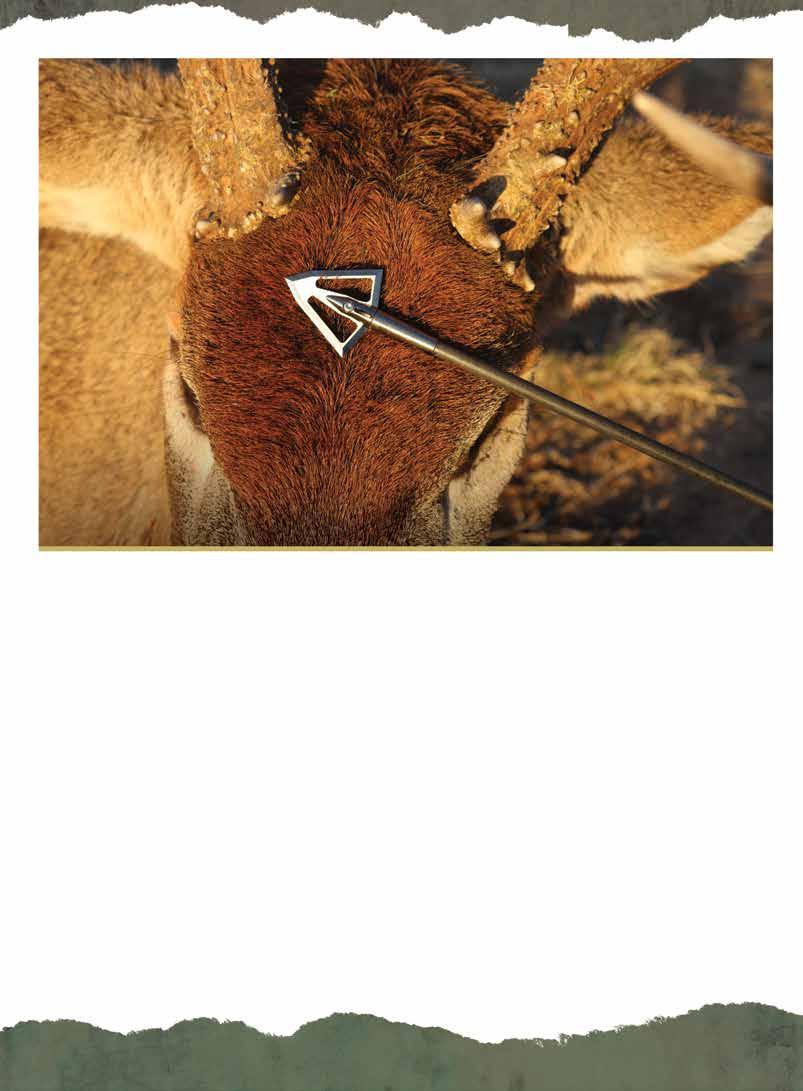
post-mature buck made an appearance. I never saw the buck coming in, only looking up and the big-bodied Panhandle whitetail was a scant 14 yards away from my brush blind.
I double-checked through my binoculars to confirm which buck it was, then quietly sucked my 57-pound bow to full draw. The 411 grain Easton Axis shaft zipped through the broadside buck’s ribs. In moments, the big deer was down and dead as a stone.
Tooth wear looks like that eight-point buck was 8-10 years old. I have five years of photos of him and all those years he was a big, mature buck. His colorful cape, sweeping beams and long G-2s and G-3s pushed his rack’s score close to 140 inches. An interesting note is that in 2023, he was only on my trail camera Nov. 23 and Nov. 29.
Years ago, a veteran deer hunter told me this: “If a new, mature buck shows up on your place at a random date, pay attention to that date. Something is bringing him there, either a doe in heat, hunting pressure somewhere else or food.” I’ve used that advice several times by specifically sitting at a blind on a certain date or series of dates because a big buck was
there the previous year. That strategy has worked several times.
Another highlight from last fall was seeing a huge typical 10-point on my trail camera. That sneaky buck was at the same blind in 2023. He visited often in 2023, although every visit from early November until early December was in complete darkness. In November 2024, the same long-tined 10-point returned in the dark, but now his rack was even bigger than before.
I would estimate his rack at 170 inches. He was only on my camera twice, Nov.13 and 14, both times in complete darkness. I suspect he lives most of the year on a neighboring ranch, only venturing to my side of the fence in the rut to prowl for a hot doe. Although I never saw him, just knowing a big buck like that is in the area makes every hunt more exciting.
Gear for my 2024 campaign included the following. I carried either a Mathews Lift 29.5 bow equipped with Gas strings, an HHA sight, QAD arrow rest and a B Stinger stabilizer or a Prime RVX 4 bow rigged with similar accessories. Both bows were set at my 28-inch draw length and 57-58-pound draw weight, fired with a Scott Echo release. My quiver was loaded with Easton Axis 4mm shafts with 55-grain Easton titanium half outs and tipped with scary-sharp, Iron Will Wide 100-grain broadheads. I used Browning trail cameras, Sig Sauer KILO6K HD 10X42 rangefinding binoculars and an Ozonics HR600 unit for scent control. All of it top end gear I would use again.
Like most Texas deer hunters, I deal with a heavy dose of reality on the places I hunt. In fall 2024, stray cattle mangled one of my feeder pens. Those same cattle spooked deer multiple times near my blinds. Feral hogs were a constant nuisance,
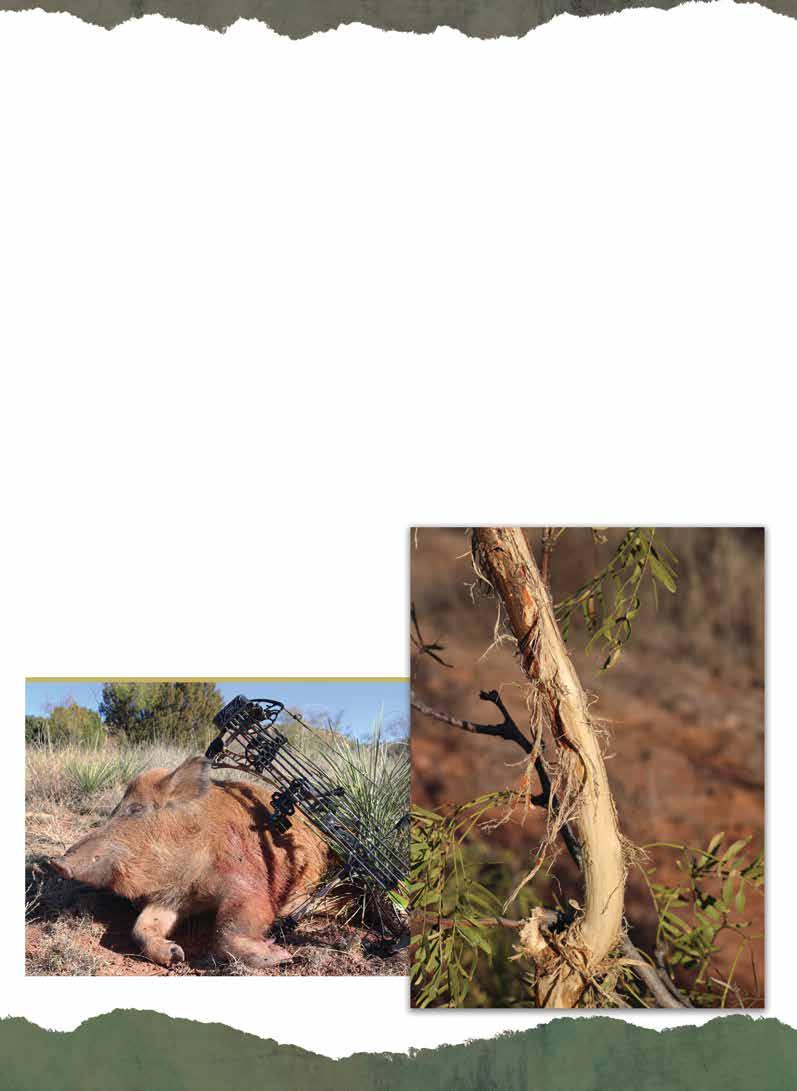
eating expensive feed intended for deer, damaging fences and spooking deer.
I encountered trespassers twice, got photos of another trespasser on my trail camera and had a mule deer doe poached off the highway by my country home. Legal hunting pressure around me on neighboring land claimed at least one of my target bucks, maybe more. These are the realities of hunting wild, free-range deer in a busy, crazy world.
Here’s a few positive notes going into next season. On my favorite Panhandle creek, a flock of 18 gobblers made frequent visits around my blinds. I could have sent an arrow at one, but instead decided to wait until the spring strut show. If even half of those longbeards stick around after the winter/spring shuffle before mating season, it should be an exciting turkey season.
Like I do every year, I make a survivor’s list. A list of bucks that made it through the season that will be worth looking for again in 2025. I make notes on their estimated antler size, age, and any physical oddities like a double throat patch or torn ear that will make identifying them easier next season. I also note what blinds they visited and what time of year they were most active in daylight. With even average antler growth, a couple of those bucks should be studs in 2025.
The long wait begins. If you love deer and deer hunting like I do, it’s an empty feeling waiting for the next deer season. Thank goodness there are turkeys to chase in April.
Fresh rub on a mesquite tree.

By Horace Gore, Wildlife Biologist
Aterm quite often heard in hunting circles is “The Golden Triangle,” referring to an area of South Texas that produces a lion’s share of big whitetail bucks. The term is fraught with information on Google by yokels who have no idea of where the phrase came from and why. In this short essay, I would like to clarify the origin of the phrase and why it came to be.
The public likes to repeat phrases and idioms that are catchy. The term, “Golden Triangle,” for whitetail bucks originated in 1998 as a wisecrack thought from the former white-tailed deer program leader of Texas Parks and Wildlife Department. The reason I’m sure of this is because I coined the phrase. Sorry about that, Waldo. As editor of The Journal of the Texas Trophy Hunters, I described The Golden Triangle to a group of deer hunters.
I was TPWD’s program leader for whitetails for 11 years. I knew Texas deer like the back of my hand, which prompted me to outline what I thought was The Golden Triangle for big bucks. A question from a deer hunter about Webb County brought my reply.
“If you stand on Main Street of Cotulla and point one finger to Laredo and the other up the Rio Grande to Eagle Pass and back to Cotulla, you have defined ‘The Golden Triangle’ for whitetail bucks in Texas.” I later used the phrase several times in Journal articles.
I was loosely using the term Golden Triangle that originated in southeast Texas and related to the valuable oil industry. I was simply spinning the term to denote an area in South Texas that produced big whitetail bucks. Since the phrase was published in a magazine with 25,000 members nationwide, the catchy term
stuck, and now you hear and read it quite often.
There are always a few individuals in any trade that use a popular thought or suggestion to their benefit. So was the case of The Golden Triangle of whitetails, but those who used the phrase simply promoted the notion that a certain area of South Texas brush was the best for big bucks.
Through the years, I have heard and seen the phrase used in many ways. Realtors advertise ranches in The Golden Triangle; ranches advertise hunting leases in The Golden Triangle; hunters brag about taking a big buck from The Golden Triangle; and so it goes. But does the same old Golden Triangle still have the quality control on Texas bucks it had in 1998? Not exactly.
We’ve learned a lot about whitetail management in the last 30 years—how to create any absence of the three criteria for big bucks: age, genetics, and nutrition. In many cases the genetics are there, but age and nutrition are lacking. Biologists and the hunting industry have found ways to supplement nutrition, and age simply comes from controlled harvest.
The old Golden Triangle had its qualifying parameters in 1998, and now they have expanded. Although the triangle is somewhat still there, the original description would now include intensely managed deer herds outside the original ragged outline that hugged the Rio Grande and took in Cotulla to Laredo to Eagle Pass and back to Cotulla.
Radio and TV personality Paul Harvey used to say, “And that’s the rest of the story.” This is how The Golden Triangle phrase came to be, and how it has influenced three generations of Texas landowners and hunters to recognize a unique area of South Texas that produces the highest quality in whitetail bucks.


By Emily Martinez
Iwas told that Texas Brigades is “intense” after I registered to apply as a cadet at the South Texas Ranch Brigade. My history teacher and a couple parents from school described it that way, and when I asked them what they meant by “intense,” they simply told me I’d see when I got there. That word made me a little nervous. It made me nervous about whether or not I was going to enjoy my time at camp.
I’m a little quiet around people I don’t know, I’d never been to a normal summer camp before, and my family doesn’t live on a ranch. I was so nervous about whether I’d fit in or not that I sent the camp director, Mrs. Natalie Wolff, a million emails, and had her on a phone call—the whole nine yards. She took time to speak with me, and was happy to explain to me what camp is like, and instead of making me second-guess my decision to apply, she made me extremely excited that I had applied in December—about four months early. After waiting those four months of application time, then one more month for selecting applicants, I got the email that I was accepted into the 3rd Battalion of STRB, and then I anticipated the arrival of my two-month summer.
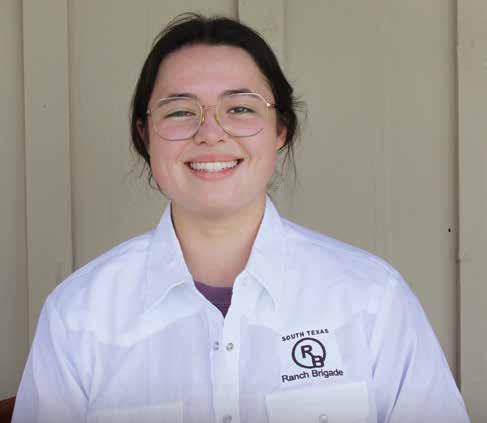
On the first day of camp, I was in Freer, Texas, at the Duval County Ranch. I walked into the hall that would serve as both the classroom and dining room. I wasn’t even walking by myself. Within the first half-hour of being at camp, I met my roommates Katie and Gretchen, then we met the rest of our herd members: Preston P., Preston J., Parker, Ethan, and Carolina.
That first day we took our grass quizzes, ate sloppy joes, and didn’t really get to know each other very well yet, but the following days were ones I’ll always feel nostalgia for. We ended up dancing, singing, cracking jokes, pulling from last to second place on the leaderboard, winning competitions; we got a lot closer to each other. We grew so much that on the second day, a teacher pulled our group aside and told us all that our team was really far along. We were closer to each other than the other herds were, and it was true. I’m so grateful for that time with my friends.
All of my greatest experiences at camp revolve around the people, no matter whether they’re my herd members, other cadets, or the great volunteers who gave so much through teaching, cooking, and caring for us. Here are some of my favorite times from camp:
Being out in nature every day at camp is so good for us humans who are created by the same God that created the rest of the world. One morning, we silent marched as a battalion to the cattle pens and saw a jackrabbit on the way.
When places were too far to walk in a timely manner, we got to ride in the stock trailer. There’s sun everywhere but
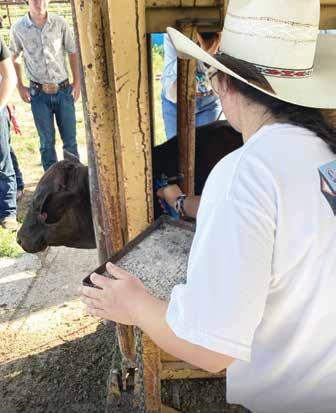
under your hat, the breeze cools you, and you get to see the clouds.
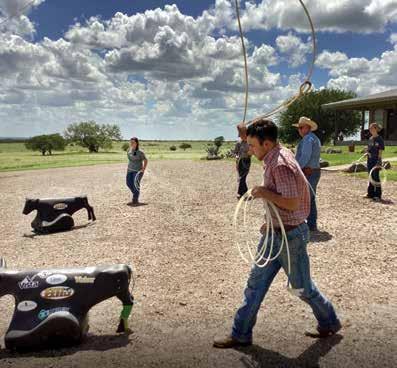
kid to apply to any Texas Brigade camp because they’ll learn more than they think they will and make friends with the same interests.
My herd, The Herefords, competed in a marching competition with our original cadence that has now been adopted by the South Texas Ranch Brigade—a very difficult silent march. We thought we got second place, but the scores were recounted and we were declared the first place winners. Go Herefords!
On the biggest competition day of camp, we drove fence posts, ran relays, roped dummies, sorted goats, saw a Starlink satellite in the sky—very spooky—and stayed up until 3 a.m. singing and dancing. Later that night, my herd sat on the floor together to say we would miss each other after camp, because we come from different parts of Texas.
Working chuteside was really informative, and more work than I’d ever done at a squeeze-chute. We got to tip horns, administer intramuscular injections, notch ears, and observe both castration and low-stress cattle management.
Once again, my favorite experiences revolve around the people that I got to work alongside. The teachers at South Texas Ranch Brigade taught me so much about public speaking, grass and soil science, animal science, and what it takes to steward a piece of land. I’m so grateful for my opportunity to attend South Texas Ranch Brigade, and highly encourage any

I’m still in touch with my herd. We exchanged numbers, started a group chat, and talk every once and awhile. Since camp, I have attended South Texas Quail Coalition to present what I’ve learned at camp about low stress cattle management procedures and how they’re both ethical and profitable.
At a camp where everything is conservation focused, I realized everybody who’s there wants to be there. It’s a great environment because the teachers want to teach, and the cadets seriously want to learn. I come from a small school with no ag class or FFA, and at camp I was surrounded by kids my age that do have those opportunities. Their desire to learn more about ranching and land stewardship was just as strong as mine, and they were willing to help me do things I didn’t know how to do.
As someone who’s passionate about the land and what we do with it, I was truly grateful to make friends who will be my colleagues and contemporaries. They are the next generation of ranchers, my generation, and we are worth investing in. Texas Brigades invests in us no matter who we are, where we come from, what we look like, or what our challenges are. They believe that my generation is capable of conserving America’s resources, and preserving America’s traditions. We just have to take up the tools and the task.
Texas Brigades is a conservation-based leadership organization which organizes wildlife and natural resource-based leadership camps for participants ranging in age from 13-17. Its mission is to educate and empower youths with leadership skills and knowledge in wildlife, fisheries, and land
stewardship to become conservation ambassadors for a sustained natural resource legacy. Texas Brigades hosts nine summer camps throughout June and July. The application period for camp runs Nov. 1 through March 15 of each year. Visit texasbrigades. org or call 210-556-1391 for more information.
Alaskan brown bear hunting is among the most notable hunting pursuits worldwide. If you’re planning a hunt, expect to ante up in a number of ways.
It’s an understatement to say that Alaska is unlike anywhere on the planet.
That’s especially true for outdoors men and women looking for the hunt of a lifetime. While there are plenty of “bucket list” hunts, one can’t overlook the epic combo trips that can be had. Some of these won’t even break the bank when compared to Texas exotics and whitetails.
First and foremost, planning any Alaskan excursion takes time, and you’re advised to invest in plenty of homework beforehand. For example, a non-resident hunter must hire a licensed guide to hunt sheep, goats, or brown bears in Alaska. However, there are plenty of other options that fit a do-ityourself trip. The Alaska Department of Fish and Game website (adfg.alaska.gov) is a great place to start, offering information on a variety of topics pertaining to hunting and fishing, especially for nonresidents.
Another tip centers on expectations, and it’s always a good starting point to be realistic about your capabilities, especially on a DIY excursion.
When it comes to combo trips, there’s always more to do than hunt your primary target animal, including hunting small game and fishing for multiple species that can be had at various peak times during the year. Among the best combo hunts in Alaska centers on the southeast part of the state, with both black and brown bears roaming the scenic landscape. The “ABC” Islands between Juneau and Sitka—Admiralty, Baranof, and Chichagof—are all loaded with deer and bears. Admiralty, nicknamed the “Fortress of the Bears,” has more brownies per square mile than any place on Earth.
The ideal solution for most hunters is to hire a quality guide, of which there are many from Ketchikan to Cordova. The most popular and luxurious hunt is based on a big mother ship, typically 45 to 60 feet with warm bunks and food, and all the comforts of home. Or you can do a pure DIY hunt. There are unlimited areas to camp, hike the trails and scan the beaches for bears, although you will almost certainly have company.
I prefer to rent a seaworthy boat, typically a sturdy 22-foot Hewes, and either make day trips or pack camping gear for a
Alaskans plan to fill their freezers for the year with moose meat, among the best table fare you’ll ever find.
multi-day trip. The latter offers you a chance to settle into and work one area, while the former still allows you a comfortable place to sleep. If you consider this option, understand that you need the seaman skills to handle heavy seas and 25-foot tides, as well as being comfortable seeking a protected cove and riding out bad weather that can pop up no matter the time of year. There’s no greater sinking feeling than heading back to a boat that had been anchored up only to see it drifting off toward the horizon.
Having a boat also lends itself to carving out some time to pursue salmon, halibut and rockfish, of which there are plenty during the spring months. Stay-aboard trips offer the ability to hunt as well as throw out lines, and it’s not uncommon to enjoy too much of a good thing if a school of salmon cruises in.
Another grand combo trip involves hunting Alaska’s Kodiak Island for Sitka black-tailed deer. Kodiak is a place as rich as all Alaska, an emerald island of massive bears, wild and sometimes violent weather, surrounded by rich seas teeming with crab and salmon and halibut. It’s also one of the greatest hunting grounds in Alaska.
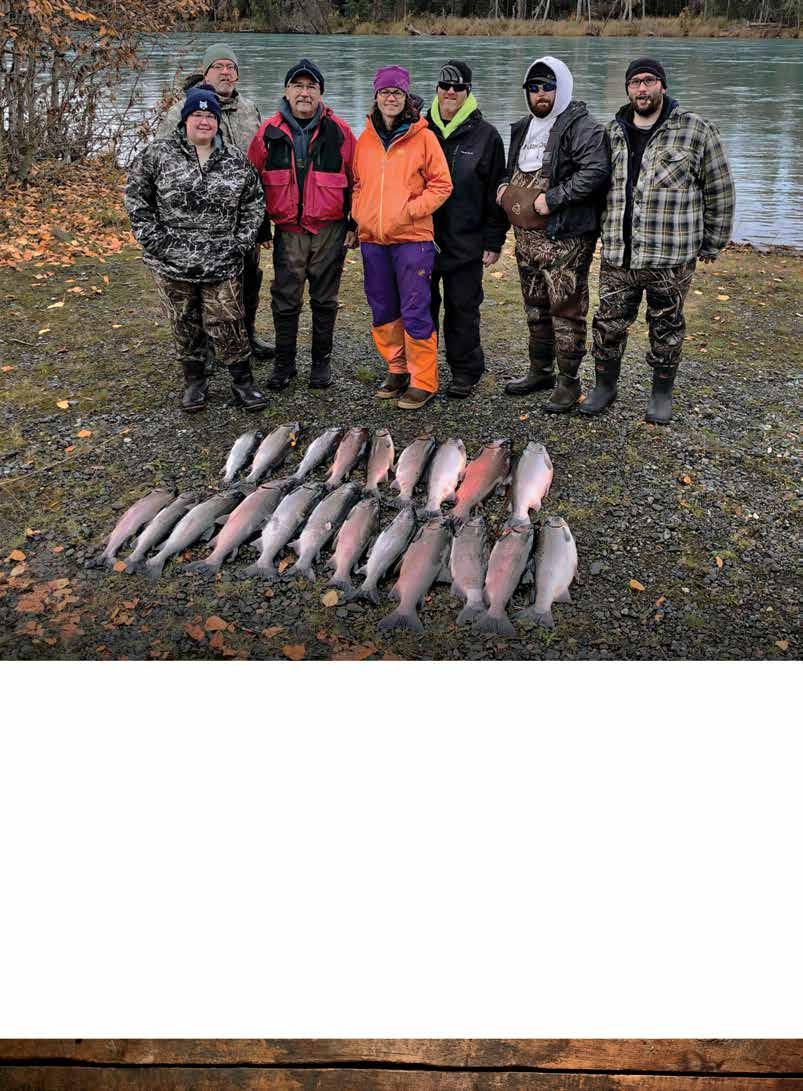
Resident and non-resident hunters alike can, for the price of a license and tags, have the hunt of a lifetime for Kodiak’s blacktails and waterfowl, varmints, and fishing for barn doorsize halibut. There are several options, but the most popular is hunting from a floating base camp, hiring one of the many transporters providing week-long hunts based on a 50- to 90-foot vessel. Expect to spend $4,000 for an action-packed all-inclusive week though the memories and freezer-filling fare are pretty much priceless. I almost forgot to mention you’ll also drop crab pots and catch tubs of king and Dungeness crab for dinner.
There’s another boat-based spring option, which is spring black bear hunting by boat in Prince William Sound out of Seward, or Kachemak Bay from Homer. This is an April-May hunt for bears just out of hibernation with a big appetite. You base and sleep on the boat, cruise and glass shorelines by day, and when you see a suitable bear, go ashore and make a stalk. There’s always time to fish midday as well when the bears aren’t active. A spring black bear hunt will cost you less than most exotic game hunts in Texas today.
In terms of timing, early fall, basically the month of September, coincides with super fishing especially for silver salmon and rainbow trout in South Central Alaska, and northern pike and grayling in the Interior. If you’re already pursuing the hunt of a lifetime, consider making trips to these honey holes that are near some of the prime hunting grounds in the state.
While bears, caribou, moose, goats and sheep are the big-game draws, one can’t overlook the small game opportunities that abound, specifically for fowl. Few people consider Alaska a bird-hunting state, but there are great populations of ptarmigan and ruffed grouse in pretty much the same places you’ll be hunting moose and caribou. And the bag limits are generous—5 to 20 grouse per day and 10 to 50 ptarmigan per day, depending on the game unit. Most Alaskan kids, as with other young hunters, make their first hunts with a .22 rifle popping grouse and ptarmigan.
Waterfowl also are a September staple, and coastal waters offer unique ducks like harlequins and eiders available nowhere else. These hunts can be done walk-in style, but the most successful waterfowl shooters employ layout boats. Again, there are DIY options, but the prime hunting opportunities rest with hiring a guide or outfitter.
The true glory of Alaska is a short trek down a path less taken will open a wild paradise for you to explore, hunt, and fish. It remains my favorite place on Earth. Regardless of how you go about heading north, the payoff is in the adventure, of which there is no shortage of supply.


Each year during the month of August, deer hunters of all ages from Texas, Mexico, and out-of-state, bring their bucks to the Hunters Extravaganza Annual Deer Competition in Houston, Fort Worth and San Antonio. Young hunters proudly enter their trophy—sometimes their first buck—hoping to win a prize. TTHA is proud to recognize some of these young hunters and their trophy bucks.

During the 2023 deer season in Mexico, Sophia Cantu took a prize-winning buck while hunting with the family in Tamaulipas, only a stone’s throw from Nuevo Laredo. Her father, Jose Cantu, has hunted Mexico for 15 years and has taken Sophia deer hunting since she was 9 years old. Sophia took her first buck at age 10 in 2022 after Jose gave her a custom rifle in .308 for deer
Sophia and Jose share a hug during a hunt. Sophia said she’s always ready for a hunt anytime.
hunting. She took her second buck with her dad’s .300 Win. Ultra Mag. after a spot-and-stalk hunt and entered it in the Hunters Extravaganza Annual Deer Competition in Houston.
There is the usual red tape for taking firearms into Mexico. Jose takes care of that each November and stores the rifles and shotguns in the lease lodge for the winter. After the seasons, Jose brings the firearms back home.
Sophia lives with her family in Friendswood, Texas (South Houston) and attends Friendswood Jr. High. Her interests in school are volleyball and jazz dancing, and her dancing schedule takes her to a variety of places in the U.S. The family takes an annual jaunt after Christmas to Mexico to visit and deer hunt before Sophia returns to classes in January.
On the Mexico lease, the hunters use an assortment of blinds for their hunts: high, ground, and pop-up. Sophia took her first buck from a high blind. When the family hunts together, they usually corn some roads and ride in the pickup. “I like to hunt anytime,” Sophia said. “But I’m not an early bird and I prefer the evening.”
Sophia’s second buck in 2023 came just before sunset when the family was hunting corned roads in the pickup. Upon seeing deer at the corn, Jose and Sophia left the truck for a stalk on the bucks and does. Jose had his .300 Ultra Mag. with a muzzle brake, and suggested Sophia try for a buck if they got close enough. After sneaking through the brush, they finally saw a buck Sophia wanted.
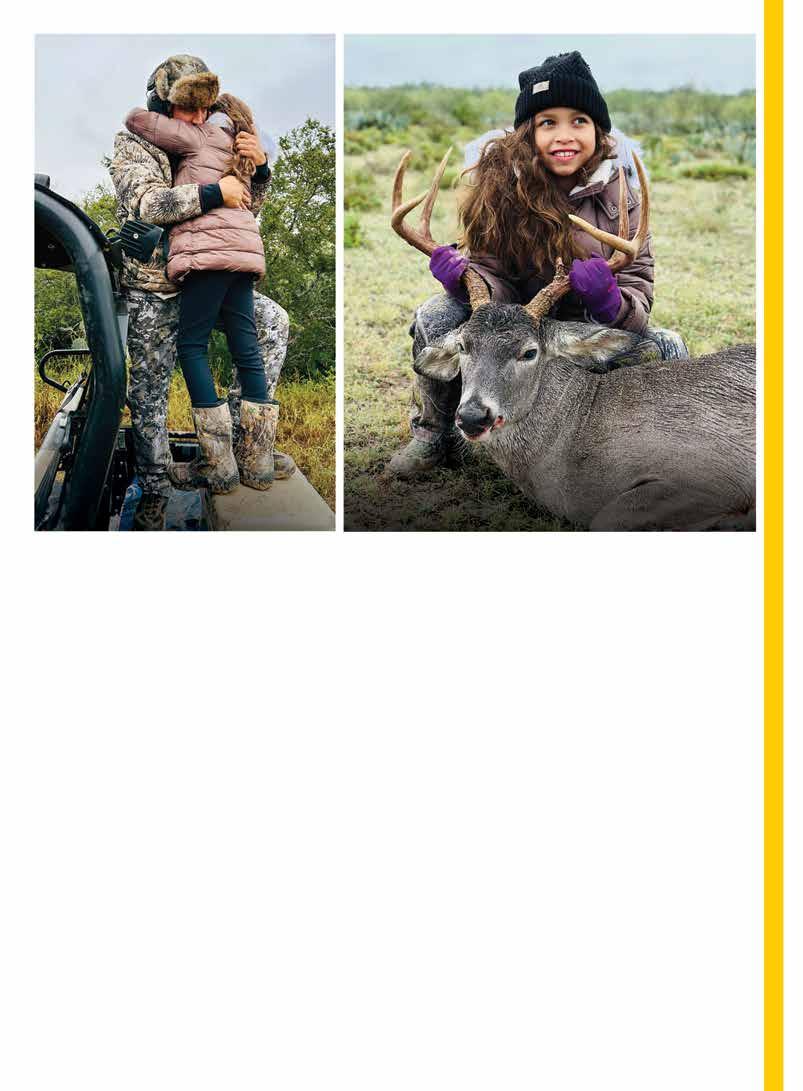
“I got in position for a shot at the buck,” Sophia said. “I followed all the rules of breathing and squeezing the trigger. The buck fell in his tracks!” The buck was a good eight-point that Jose and Sophia decided to enter in the Annual Deer Competition at the Hunters Extravaganza in Houston. The buck won first place in the South Texas/Mexico Female Youth Division.
I asked Sophia if she liked to shoot her dad’s .300 Magnum. “The rifle has a muzzle brake that keeps it from kicking too much,” she said. “I didn’t notice it kicking when I shot the deer, but my shoulder was sore the next day.”
Sophia’s .308 also has a muzzle brake, but the evening she got her buck, they were carrying Jose’s .300. “The big rifle puts a buck down in a hurry,” Sophia said about the Magnum.
The Cantu family looks forward to the trip to Mexico and the deer hunt after each Christmas. Jose will be toting his .300 Mag. and Sophia will have her .308 as they trudge the brush looking for her third whitetail buck. She has no spare time between her dancing routine and volleyball. Sophia has only a few days each winter to get a buck, but you can bet that she will be looking hard for another Extravaganza deer competition win.
Texas Trophy Hunters congratulates Sophia for her winning buck at the Hunters Extravaganza Annual Deer Competition and welcomes her as a “Trophy Hunter of Tomorrow.”

This year marks the diamond anniversary of the Kerr Wildlife Management Area. One of the oldest WMAs in TPWD’s system, it began 75 years ago in 1950. At 6,493 acres, Kerr WMA is a premier example of Edwards Plateau habitat situated at the headwaters of the Guadalupe River’s North Fork.
Located near Hunt, it was purchased by the Texas Game, Fish and Oyster Commission (now TPWD) from the Presbyterian MO Ranch Assembly to promote wildlife research and experiment with wildlife management techniques, along with interaction between domestic animals and wildlife.
Upon acquisition range conditions were poor due to livestock overgrazing coupled with dense stands of Ashe juniper, also known as “mountain cedar.” An old fence was replaced in 1968 with a deer proof fence. This allows biologists to keep the deer population at carrying capacity as habitat quality improves.
An initial study focused on whitetail deer diet. It researched what deer ate with no food source competition versus heavy competition from other deer and livestock. Data collected in the study showed that deer do not consume large amounts of grasses, but favor forbs and browse. Exotics and livestock will eat forbs and browse but prefer more grass in their diets.
Kerr WMA studied and developed a list of common plants found in the area and ranked each plant by whitetail deer preference. This plant classification has helped to establish habitat management techniques not only in the Hill Country but elsewhere.
A whitetail deer research facility was initiated in the 1970s to study antler development based on genetics and nutrition. In 1999 it was named the Donnie F. Harmel White-tailed Deer Research Facility. Much has been studied and written about whitetail antler research over the years.
Antler development based on nutrition and genetics was studied in the research facility. Data showed that antlers are genetically based and environmentally influenced. Spike buck occurrence has been a major whitetail study.
The role and age of doe producing spikes and
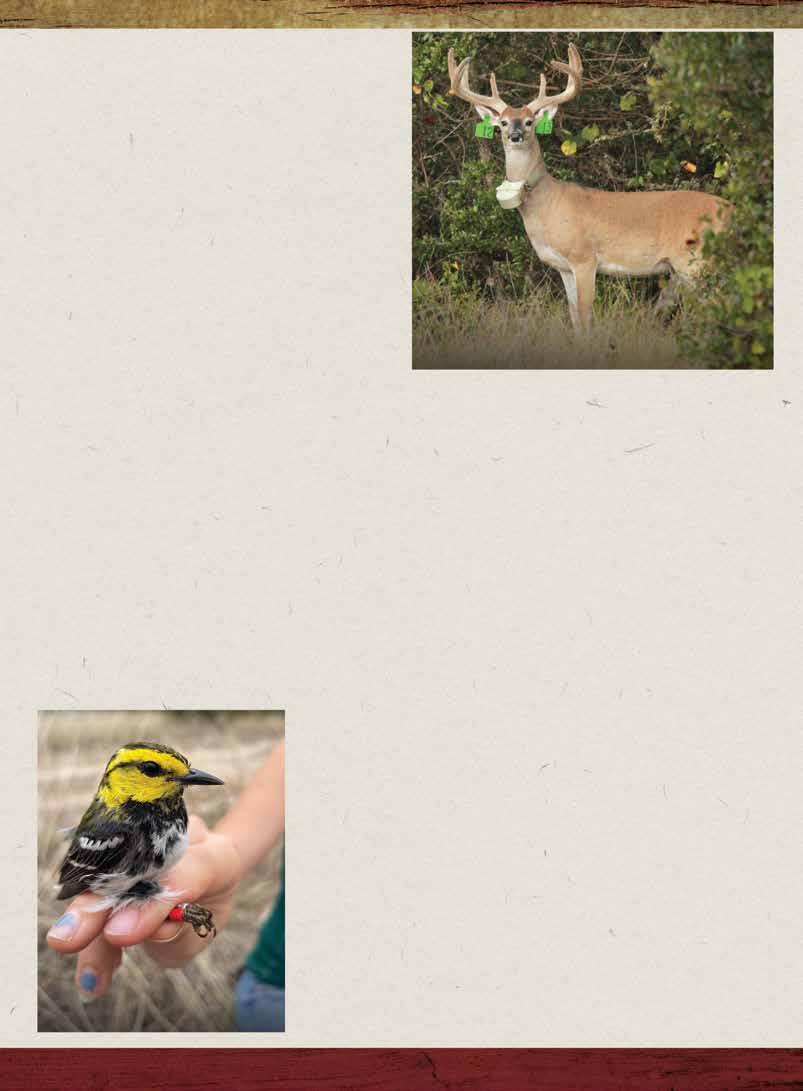
fawn survival were also studied. A three-year statewide study determined 95% of all Texas deer are born before July 15 each year.
Today there are no longer any penned deer at Kerr WMA. A TSE disease (transmissible spongiform encephalopathy) was detected in and around the deer pens, and possibly infected deer were put down and tested. All deer research at the area is on hold.
The facility is conducting a series of studies aimed at developing early diagnostic tools for chronic wasting disease. Exotic game, originally introduced to the Hill Country in the 1930s, has changed the hunting industry. TPWD began surveys in the 1960s estimating 13,000 exotics representing 13 species.
In 2020, the Exotic Wildlife Association reported Texas had more than one million animals made up of 125 species. That’s not including feral hogs. No one knows the numbers of blackbuck antelope, axis, nilgai, aoudad, and other exotics free ranging across the state. The Kerr has very limited species and numbers of exotics.
Public access is limited on the area, although the Kerr features a driving tour and birding map for bird watching opportunities. No camping is allowed with hunting only offered through TPWD’s Public Hunt System. There are range and wildlife management seminars put on at various times. Contact Kerr WMA at 830-238-4483 for more information.
Ryan Reitz is project leader for both Kerr and Mason Mountain WMAs. He began his TPWD career as a Regulatory Biologist in Mason County but moved to the Kerr in 2011. In 2017 he was promoted to his present position and feels much at home in central Texas.
Reitz pointed out one of the interesting factors of Kerr WMA is the application of renowned wildlife ecologist Aldo Leopold’s five tools of game and habitat management: axe, cow, plow, fire, and gun. “This philosophy enables a holistic system of management for land health,” Reitz said.
“Kerr is divided into 27 pastures. Cattle grazing is rotational depending on rainfall, vegetation, livestock condition, and soil. A short duration grazing system is similar to how we believe bison grazed long ago,” Reitz said.
“We also implement prescribed burns. Studies here found prescribed fire in winter controlled 95% of small Ashe juniper while shaping habitat that supports more wildlife.
We found that cattle grazing on recently burned pasture results in effective prickly pear control. Plant
diversity and land health lead our decisions.”
“Years ago, several plots were fenced separately. Plot 9 at the time had Kerr’s best range condition and served as a control pasture.” Reitz continued, “Without any grazing, mechanical or chemical applications, Plot 9 is now solidly covered with Ashe juniper.”
Currently, Kerr is intensely researching feral hogs and the effect of sodium nitrite as a toxin to reduce numbers. Alternative baits to corn, effectiveness, detection of bait, and sensitivity to other wildlife are just a few of the many avenues being studied.
Other research involves threatened and endangered species such as black-capped vireo (BCV) and golden-cheeked warbler neo-tropical songbirds. They summer and nest in central Texas. BCV were de-listed from endangered in 2018. The Kerr discovered good deer habitat relates to good BCV habitat, with benefits coming from cowbird trapping.
The tobusch fishhook cactus, reclassified from endangered to threatened status in 2018, is being monitored under grazing and fire applications.
Another current study involves the oak wilt affecting several oak tree species. In many areas once healthy trees have been reduced to gray decaying skeletons falling to litter the ground. First discovered on the Kerr WMA in 2009, this disease is becoming too common in the oak habitats of Central Texas.
A fungus spread from tree to tree through root systems, oak wilt is nearly impossible to control where trees are closely spaced. It’s also believed that sap-feeding insects may spread the wilt to healthy oaks with a fresh wound such as trimmed limbs. Ongoing research is striving for possible prevention for rural areas.
These are some of many research studies continuously being conducted at the Kerr and other WMAs across the state. Each WMA is somewhat unique simply due to its location. Congratulations on Kerr WMA’s 75th anniversary in the TPWD wildlife management system. The research and management conducted there has spread to many other areas of the state.






by Horace Gore
After editing hunting stories for 30 years, and being a hunter myself, I’m convinced big game hunters simply can’t judge distance. How many times have I read a story of a deer hunter “nailing a buck 400 yards down a South Texas sendero”? I wonder if hunters ever think about how far 400 yards really is, and how few times we can see a buck that we want to shoot at 400 yards. I call it the fantasy of long shots.
Here’s a test: If you have a rangefinder, look at something 400 yards away, and think of shooting a whitetail or pronghorn at that distance. It’s difficult to determine the quality of a whitetail or pronghorn at 400 yards, much less hit it in hunting conditions. Egad, Waldo! Even well-known celebrity hunters can’t judge distance. When I was 14 years old, I read every story of shooting and hunting in the popular Outdoor Life maga zine. Jack O’Connor was my idol, and I believed everything he wrote about hunting and shooting. He and his friends made some miraculous big game shots, but after I got older and wiser, the long shots of yore were too good to be true.
Some gun pundits often write about hitting a mule deer or bull elk at “about 500 yards” with a favorite .270 or .30-06. Or someone would shoot a running mule deer at “an estimated 300 yards” with a .257 Roberts. I didn’t give much thought to how far those shots were, but now I realize these experts fudged a bit with their estimates. One writer wrote a wild tale about a Mexican guide who could see a mule deer’s ear twitch in the brush at 300 yards. Not hardly!
Back in the day, a story of shooting a big game animal at 300

to 500 yards sounded good, but meant very little to most of us, because nobody bothered to think how far 300 or 500 yards really is. It was just magazine rhetoric that went over our heads as we continued reading.
When I think back at all the deer, pronghorns, elk, and what-have-you that Jack and Eleanor O’Connor “knocked over” at unthinkable distances, I now realize most of the shots were highly exaggerated. In his many good hunting articles, Jack never shot anything less than 300 yards—the length of three
football fields. I think Jack had 300 etched in his mind.
Eleanor’s .257 Roberts had a 21/4 power Noske scope. How she killed running mule deer at “close to 300 yards,” I’ll never know. I read somewhere that Eleanor’s Noske scope had a post reticle, which would make long shots even more difficult.
Jack was famous for his literary art for 40 years, and is still considered the best gun and hunting writer of all time. Whether he was shooting elk at 500 yards, or Eleanor was applying the .257 bullet to pronghorns at a quarter of a mile, I always read every story right down to the last word. Jack himself even hinted that shots always get longer as they go through the writer’s mind. He remarked on more than one occasion that “more game is killed at less than 200 yards, than over.”
Getting back to my editing hunting stories, I would get a story from some yokel who said he shot a buck with his .30-06 and 4-power Weaver at 400 yards from a high blind in the live oaks. I would simply change it to read: “and I took a long shot with my .30-06.” I just could not leave the exaggerated 400yard shot in the story.
One of the best ways I know of to get better at judging distance is to buy a good rangefinder and practice guessing the distance to something, and then getting the true distance. Most hunters who have never used a range finder will be surprised at how much they exaggerate the distance to a faraway object.
Some well-known magazine pundits have always used guesstimates with every shot. Street hounds who have never killed a deer or kudu like to read about long shots with few misses, and Eleanor O’Connor must have been the best shot in Arizona with her .257 Roberts and little Noske scope. A

good writer could use phrases like “the deer looked about,” or “I guessed the elk at,” and get away with impossible shots to promote a favorite rifle or cartridge.
I think 200 yards is a long shot for most hunters. Of the 50 or so bucks—whitetail and mule deer—that I have killed, all but one was less than 150 yards. My longest measured shot was 275 yards down a fence line at a South Texas buck. Counting the fence posts proved the tale with the .224 TTH and 75-grain Scirocco bullet. I hardly ever take such long shots, and always try to get closer.
Pronghorns always seem to be far away because the little speedster is small on open terrain, which makes the distance look greater. I’ve made several “300-yard shots” at pronghorn antelope that were probably closer by the tape.
Truthfully, most of my big game have been shot as less than 200 yards, including scores of whitetails, seven mule deer, 10 pronghorns, five elk, and three nilgai. The only long shot at a mule deer buck was from a mountainside to a dried lakebed in Utah. A good gun rest with my .264 Win. Mag., no wind; and the Leupold scope screwed up to 8-power did the trick. My other long shots have been made on about two or three of my 10 pronghorns.
As a rule, hunting conditions don’t allow for long shots. Hunters often think shots are long because of light conditions, or the up and down of the terrain. I could swear that uphill shots are shorter than downhill. Of course, if a pundit is promoting a particular rifle or cartridge, the shots are usually as great as the reader will believe.
But there can be long shots. Hunters who put a lot of thought into their rifle and ammo can occasionally do some fancy shooting at game animals if the distance presents itself.

Back when most hunters used 4 to 6 fixed-power scopes, Jack O’Connor preached sighting in at 3 inches high at 100 yards to place the bullet at the point-blank range of the parabolic curve.
Of course, Jack used the .270 as an example of sighting in three-inches high at 100 yards. This gave the .270 a 4-inch-high hit at 150 yards; back to zero at 275 yards; and 4 inches low at 300 yards. So sighted, a hunter could count on killing a big game animal from 50 to 300 yards by simply using a good rest, doping the wind, put ting the crosshairs on a vital spot, and squeezing the trigger.
I used Jack’s sighting-in technique for 60 years on a few far-away pronghorns and mule deer and it works when there is little wind, and you can’t get a closer shot. The wise hunter who sights the scoped rifle in 3 inches high at 100 yards for all big game will come home the winner.
The advent of feeders and trail cameras have kept hunters at close range to whitetails. However, mule deer, pronghorn, elk, and nilgai hunters continue to report some fantastic “guestimate” shots. Of course, we know that most hunters can’t find an animal far enough away to make shots at the claimed distances. But hunting and fishing hinges on tall tales about the big bass or the long shot, so we let it pass. All of us hunters have stories with shots that are hard to
believe, like rolling up fast-running jackrabbits with a scopesighted .222, putting the hex on a pronghorn running 50 mph in Wyoming snow, plugging a turkey gobbler in the head with a bullet that glances sideways 20 yards and kills a hen turkey under a feeder, or drilling a fast-bounding Wyoming mule deer with two bullets that measured less than 4 inches apart. Of course, these shots were all true, and had nothing to do with estimating distance.
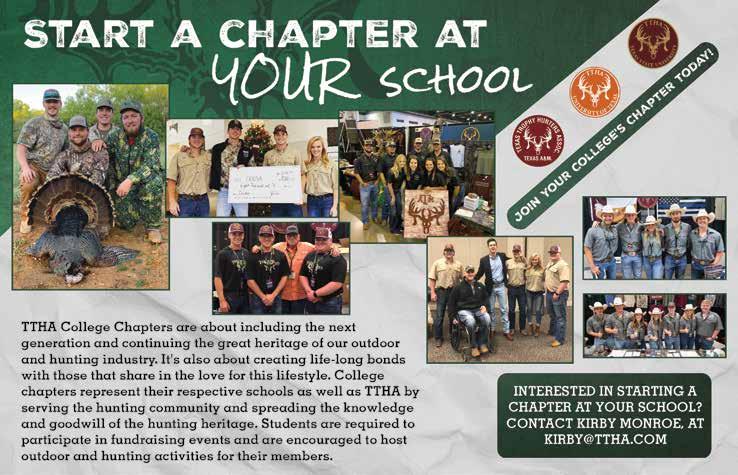
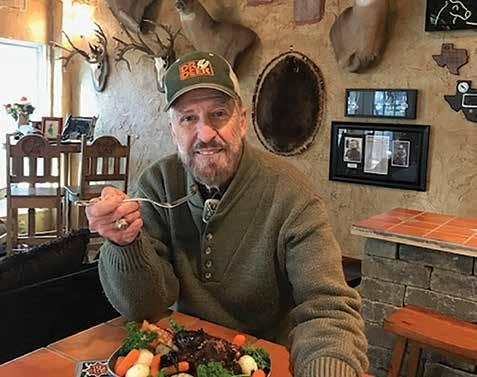
• 2 lbs. venison steak
• 1 Tbsp. or more cooking oil
• 1 large bell pepper cut into
• 1⁄4-inch strips
• 1 large white onion cut into
• 1⁄4 -inch strips
• 1⁄3 cup catsup
• 1⁄3 cup Worcestershire
• 1⁄3 cup pica pepper
• Salt and pepper
• 12-inch skillet with lid or foil
Tenderize steak meat with mallet or saucer edge. Cut meat into ½-inch strips. Salt and pepper to taste. Add oil to large skillet on MEDIUM heat. Cook meat strips on all sides until brown (don’t overcook) and pour off excess oil. Place bell pepper strips and onion strips over meat. Mix catsup, Worcestershire, and pica pepper. (Mixture contents can be modified depending on taste.) Pour mixture evenly over skillet contents.
Cover skillet with lid or foil. Cook on MEDIUM heat for 8 minutes and serve out of skillet. Serve fajitas and sauce on flour tortillas. Serves 6 with appropriate side and drink. These fajitas are absolute!

Do you have a favorite Wild Game recipe that you would like to share with our readers? If so, please type or print recipe and send to:
Texas Trophy Hunters Association, ATTN: Editor 654 Richland Hills, Suite 160 San Antonio, TX 78245





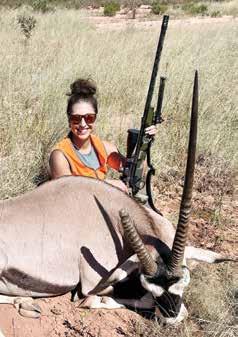
STEPHANIE BONILLA: oryx taken 9/22/24 on the White Sands Missile Range, New Mexico. GEAR: .300 PRC. OUTFITTER: self.
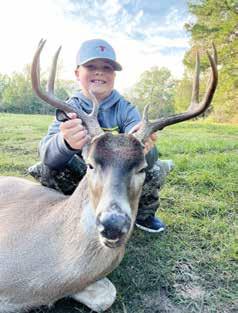
LYLE GRIFFITH: whitetail eight-point taken 11/25/23 in Grimes County.
GEAR: Browning 6.5 Creedmoor, Leupold scope. OUTFITTER: Griffith Ranch.
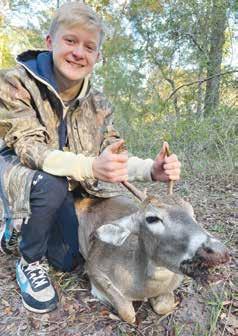
REAGAN KACSMARYK: whitetail three-point taken 12/18/23 in Grimes County.
GEAR: Browning 6.5 Creedmoor, Leupold scope. OUTFITTER: Griffith Ranch.
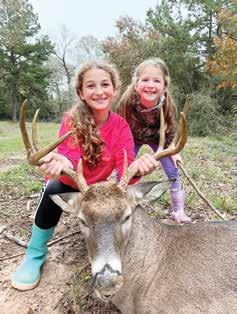
LOU GRIFFITH: whitetail nine-point taken 11/12/23 in Grimes County.
GEAR: Browning 6.5 Creedmoor, Leupold scope. OUTFITTER: Griffith Ranch.
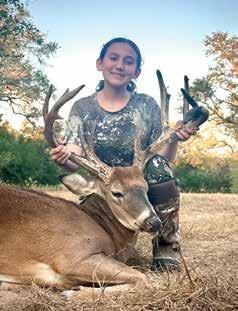
MADISON MCCURLEY: whitetail 11-point scoring 180 3/8 B&C taken 10/13/24 in DeWitt County. GEAR: 6.5 Bearcreek Grendel, SWS suppressor. OUTFITTER: Haun Ranch.
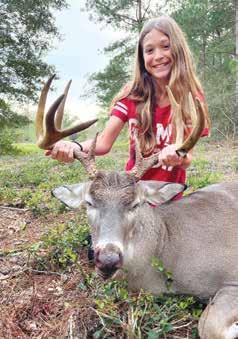
HALLE GRIFFITH: whitetail 10-point taken 10/29/23 in Grimes County.
GEAR: Browning 6.5 Creedmoor, Leupold scope. OUTFITTER: Griffith Ranch.
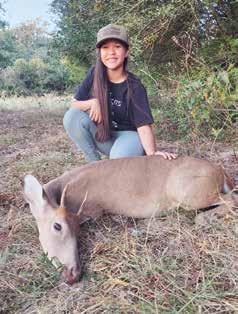
LANIE POFFENBERGER: spike buck taken 10/5/24 in Caldwell County.
GEAR: Remington .223 bolt action. OUTFITTER: Hogan Wilderness Retreat.
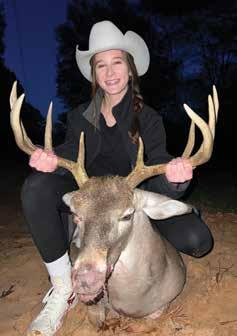
EMRIE GRIFFITH: whitetail nine-point taken 12/18/23 in Grimes County.
GEAR: Browning 6.5 Creedmoor, Leupold scope. OUTFITTER: Griffith Ranch.
NOTE: Only members of Texas Trophy Hunters Association or immediate family may submit photos. Do not paperclip or staple photos because this can damage them. Prints must be no larger than 4x6 inches and printed on photo-quality paper. No photos will be returned. Photos may also be e-mailed to HuntsEnd@ttha.com. If sent by e-mail, please make sure to include all information from the form below and limit your photo size to less than 5MB. Send a separate e-mail for each entry.






Don’t forget to use your free classified ad! It’s once per year and you must have an active membership in good standing. Send to:
You may fax your ad to (210) 523-8871, Attn: Debbie Keene or e-mail to Deborah@ttha.com. Send your ad in by May 13 to run in the next issue!
Available to current members of Texas Trophy Hunters Association only! Limit 25 words per ad. Each member may run 1 FREE ad in one issue per year. 25 word ads after FREE issue are $40 each. WE RESERVE THE RIGHT TO EDIT OR REFUSE ANY AD.
SPECIALIZED INSURANCE for outdoor recreation & hospitality businesses. Hunting & fishing lodges/preserves, guides, outfitters, ranges, & more. Comprehensive coverages incl. property, general liability, business auto. Contact Devin 361-208-4404 or devinp@jacobsweber.com.
RANCH FOR SALE ,Oklahoma, 3627 acres, 2400 Acs. High fenced, trophy whitetails, 2-20 acre lakes, hunt year round. Southwest Ranch Sales. 972-5428511.
LIMITED EDITION Book. SCI Past President Craig L Kauffman takes the reader on hunting adventures around the world. Signed copies $57. Call 717-9178173.
WANTED: T.T.H.A. belt buckles, Texas Big Game Awards Record Books, & a copy of September/October 1999 Journal with “El Jéfe” on cover. Call 662-310-5295 or email bowhuntrcfneill@yahoo.com.
KEI VALLEY SAFARIS offering plains game in the Eastern Cape of South Africa. Package hunts or build your safari. Deep sea fishing, photo safaris, and park excursions available upon request. Keivalleysafaris@gmail.com. Keivalleysafaris.com.
AOUDAD HUNT! Hunt free ranging aoudad in Llano County. Hunts begin in late August thru late October, 2025. Nice accommodations. For additional info, email darrellsteffek@gmail.com
DAVE WINCHESTER’S SPORTING Camps, New Brunswick Canada, offering full service Black Bear hunts. Spring and Fall. Call/Text for
details. Now Booking! 506-425-9044, winchestersportingcamp@gmail.com.
WILDLIFE & HABITAT Consulting. Commercial hunts available. Contact Certified Wildlife Biologist Jason Shipman 210-508-8447 or jasonashipman@gmail. com.
ARROYO CITY FISHING Cabin- 2 bedroom 2 bath private lighted fishing pier. Call Jessica 956-342-0113 $220 a night minimum two nights.
DURABLE HUNTING BLINDS for the Dedicated Deer Hunter! The Blynd hunting blinds can be counted on for long-lasting durability that will not fail you in the field and provide the cover needed at an affordable price. http://www.blynd. com/ 1-800-458-0263.
HILL COUNTRY ADVENTURES offers quality trophy exotic hunts on family land. First class lodging and meals. Visit us at: hillcountryadventuresllc.com or call: 337368-4686.
AMERICAN FEEDER - Fish Feeders. Catch and grow larger, healthier fish. All new aluminum fish and deer feeders from American Feeder. Visit http://www. american-feeder.com for details.
RESERVE RANCH, a Sportsman’s Paradise near La Pryor, Texas offering full service hunts for Whitetail Deer, Red Stag, Dove and Quail to individuals and Corporate clients. www.reserveranch. com.
JOIN THE MISSION! Support our veterans and first responders with outdoor adventures through Patriots First Outdoors. Donate or become a member today at www.patriotsfirstoutdoors.org.
MAP MY RANCH specializes in developing printed maps for all your outdoor needs. We can create basic boundary maps, or those with customized features - locations of deer blinds, feeders, food plots, ponds, etc. Contact today to get started! www. MapMyRanch.com or 713-302-2028.
VETERANS CREED OUTDOORS Team Texas. Outdoor Trips for Veterans and First Responders. Find us on Facebook on our page and group.
HELP FEED THE HOMELESS – donate excess game animals to feed the homeless, orphans, and needy families. Go to www.trinityoaks.org “contact us” tab.
MEXICO RANCH: 8,500+ ac Ranch available for serious & management minded Group. Excellent WhitetailDensity & Genetics, Blinds, FeedersCorn & Protein, 4 Bdr House exclusive for Hunt Group! Protein fed for last 2 years. Exc.Ranch for 4 Hunters. 210-379-7510. email: jharlan29@gmail.com.
THE LONE STAR Bowhunters Association. Preserving and Promoting bow hunting in Texas since 1974. Join today at www.lonestarbowhunter.com. Take a kid hunting.
S & D WHITETAILS – Limited hunts avail. Booking 2021 now. All native S TX deer from 140-230 class. Deer & Dove hunts Central TX. Over 7500 ac. 24-yrs experience. 5 Star rating. 325-642-7596.
AFRICAN SAFARI $2,995 3 animals in 1 week. Lodging, meals, open bar, guide, airport transfers and trophy fees included!! Call 956-867-4964 for details. www.matorisafaris.com.