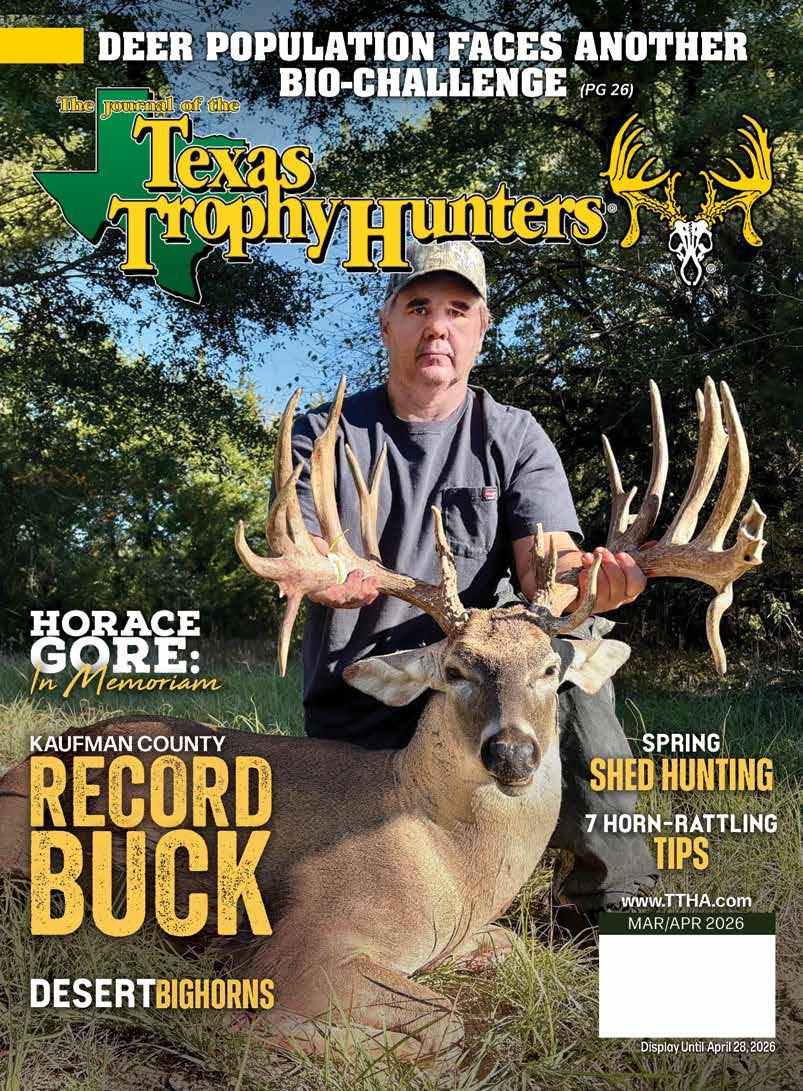




orace Gore carried the baton for The Journal and Texas Trophy Hunters Association for 30 years. On Nov. 21, he left this world behind, after a long illness. And in doing so, he’s passed the baton to me. His friend and Journal Hill Country Field Editor Gary Roberson said, “Boy, how do you replace a legend and an even greater friend?” Answer: You don’t. You fill his seat at the table and do your best to uphold the standard he set with the magazine 30 years ago when Jerry Johnston told Horace he needed his vast expertise to help move the magazine, and the organization, forward. In doing so, you also honor his friendship.
When I began working for The Journal as an editorial assistant, I first encountered Horace on the telephone. He’d been recovering from an automobile accident and worked remotely from his home in Gonzales County. No one warned me how curmudgeonly Horace could be. After that first phone call from him, I wised up. Arguing with him wouldn’t help, so I used my brains, along with some experience in dealing with less-than-pleasant customers I gleaned from my years in the hotel industry.
I listened attentively, asked the right questions, and offered a journalistic suggestion or two. The more time we spent working and collaborating together, the more we understood and respected each other. I learned plenty from him, and I might have even taught him a thing or two. Horace and I weathered all the changes within the organization and the magazine, and remained steadfast for the past 19 years. Through those years, he remained a staunch advocate for Texas hunters, landowners, and conservationists. Before he worked with TTHA, he’d worked for the Texas Parks and Wildlife Department for 33 years. That makes 60-plus years of working in public service, folks! In that time, he had three careers: biologist, magazine editor, and published book author.
I’ve been fortunate to have gone along for the ride in the past 19 years I’ve known him. During that time, I’ve been content to be the guy working behind the scenes, assisting the master craftsman with fine-tuning any loose nuts and bolts along the way in the magazine and his books. That includes being Horace’s go-to tech support with anything computer related, whether I knew how or not.
But now, it’s time to turn the page.
Instead of working at the back end of “the store,” I’m moving up to the front. I can’t really replace Horace, but I can continue what he started, with the help of the fine writers he assembled, and a few other folks, who still call The Journal, “home.” The one thing Horace impressed upon me during his time at TTHA is: Stories matter here.
Good stories, and good storytelling, aren’t leaving. Human beings are a race of storytellers, ever since they gathered around the campfire so long ago. Fellowship, community, and yes, even bragging rights, will always have a place in The Journal. And I’ll be here to help shepherd everything along.
Martin Malacara, Editor Texas Trophy Hunters Association
Publisher Texas Trophy Hunters Association
President and Chief Executive Officer Christina Pittman • christina@ttha.com
Editor Emeritus Horace Gore
Editor Martin Malacara editor@ttha.com
Executive Editor Debbie Keene
East Texas Field Editor Dr. James C. Kroll
Coastal Plains Field Editor Will Leschper
Southwest Field Editor Jim Heffelfinger
South Texas Field Editor Jason Shipman Hill Country Field Editor Gary Roberson
Newsstand Consultants JK Associates Joe Luca & Triva Bridges
Graphic Designers Faith Peña Dust Devil Publishing/Todd & Tracey Woodard
Contributing Writers
Jolie Cox, Chaztin Futrell, John Goodspeed, Judy Jurek, Wesley Mac, Bo Maurer, Brandon Ray, Stephen Rhyne, Matt Williams, Joe Woolley
Advertising Production Debbie Keene 210-288-9491 deborah@ttha.com
Sales Representative Tristan Summy 210-685-1205 tristan@ttha.com
Marketing Manager Logan Hall 210-910-6344 logan@ttha.com
Finance & Administration Manager Laura Garcia 210-512-4927 laura@ttha.com
Events Manager Jennifer Beaman 210-640-9554 jenn@ttha.com
Events Assistant Manager Natasha Delgado 210-512-8045 natasha@ttha.com
Membership Manager Valkyrie Myklebust 210-767-9759 valkyrie@ttha.com
To carry our magazine in your store, please call 210-288-9491 • deborah@ttha.com
organization. Its bimonthly magazine, The Journal of the Texas Trophy Hunters® , is available via membership and newsstands. TTHA hosts five Extravaganza® outdoor expositions, renowned as the largest whitetail hunting shows in the South. For membership information, please join
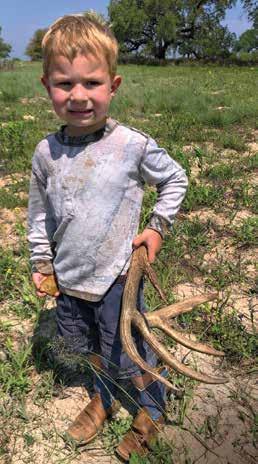
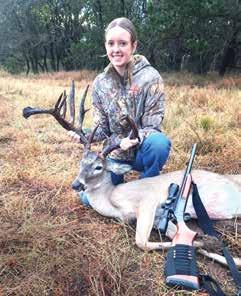
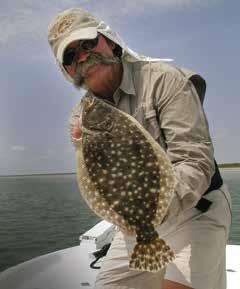
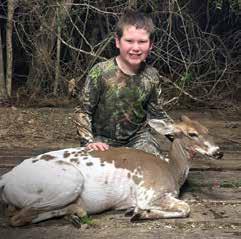


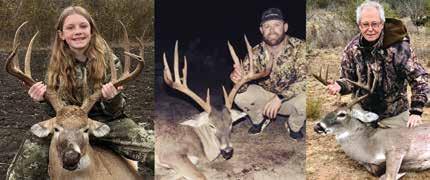
During the 2025 hunting season, Texas Trophy Hunters Association hosted the second annual Show Your Skull Showdown on Facebook and Instagram. This year’s winners fought a tight race during the Winners Circle Challenge. Week 5 winner was Chloe Jones with an incredible whitetail buck. Chloe will be featured in
Sadly, whitetail season is over. But remember— there’s still plenty of time to send in your pictures and stories for us to publish in The Journal. All we need for your story is 1,000 to 1,200 words and plenty of photos for us to choose from. Send everything to editor@ttha.com. Do it today!

a Storytellers episode in season 6. Our runner-up and winner of week 6 was Judson Cole with his first-ever whitetail buck. You can watch the 2024 winner of the Show Your Skull Showdown on Storytellers today. Watch on Waypoint Outdoors TV, CarbonTV, YouTube, and the Outdoor America Channel.




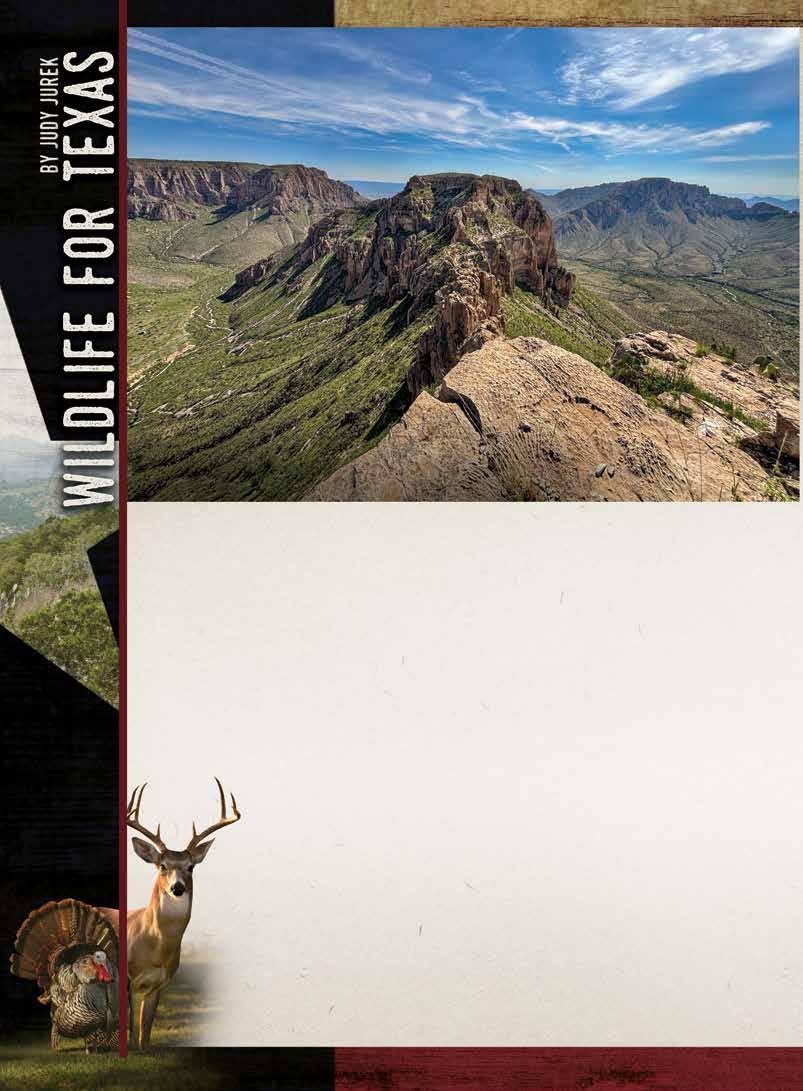
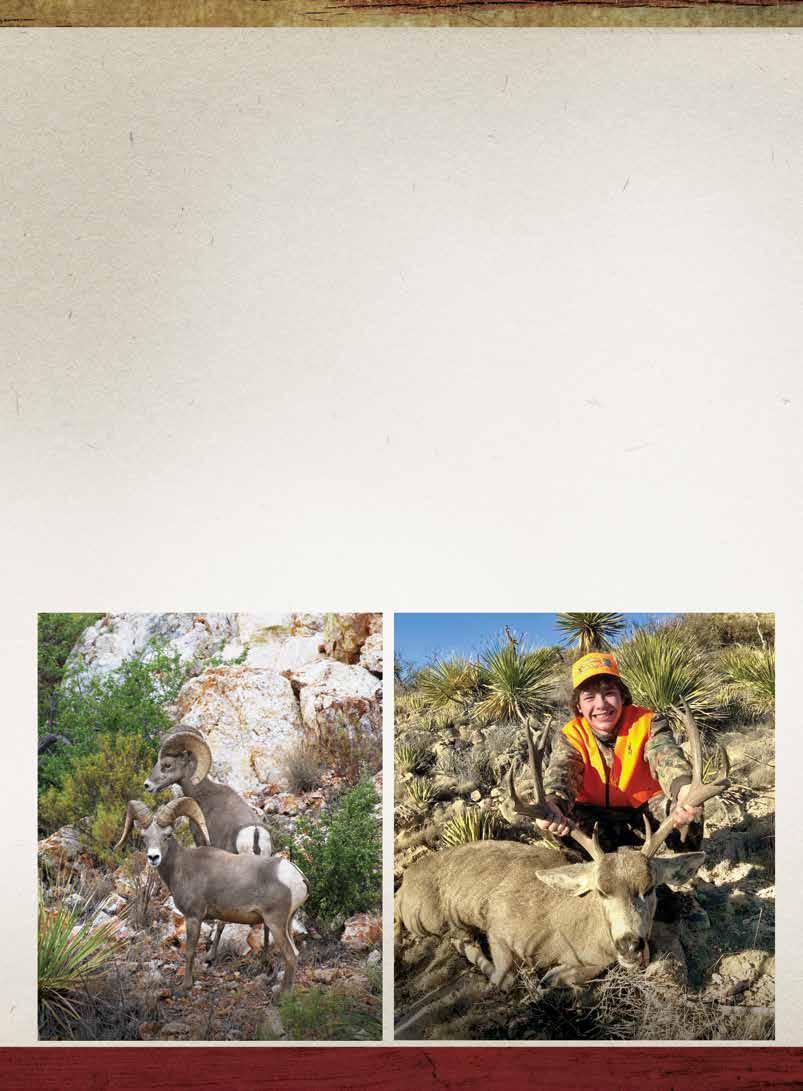
Majestic views, sprawling vistas, and plunging altitude drops make up the 11,624-acre Sierra Diablo WMA in far West Texas.
In far West Texas near Van Horn lies the 11,624-acre Sierra Diablo Wildlife Management Area (SDWMA). Its name comes from its Sierra Diablo Mountain Range location along the Culberson and Hudspeth county line. It’s remote, rugged, has steep canyons and shallow, stony soils. Elevation peaks reach 6,400 feet above sea level, with drops to 1,000 feet or more down to the desert floor. This topography is not for the weak.
Acquired in 1945 by the Texas Game, Fish and Oyster Commission—now Texas Parks and Wildlife Department—the purpose was to protect the Lone Star State’s last remaining bighorn sheep. That was 80 years ago. Restoration begun in the 1950s to maintain and improve the herd met little success in those early years. Much has been learned over eight decades. Today, it’s home to the largest free-ranging herd of bighorn sheep in the Lone Star State. Restoration, conservation and management of this special wildlife species continues today with help from TPWD, Texas Bighorn Society, and many area landowners.
Josh Cross is the resident TPWD
wildlife biologist for Sierra Diablo WMA as well as sharing his time with Elephant Mountain WMA. He’s been there almost five years and truly loves the area, having attended Sul Ross State University before joining TPWD.
“It’s definitely a challenge living and working out here,” Cross said. “The remoteness is the main thing. Most maintenance of infrastructure and equipment has to be done on site by field staff. The terrain and low annual rainfall can also present difficulties.”
With a chuckle, he added, “Running to town for groceries or parts isn’t much of an option, but something you learn to deal with and plan ahead whenever possible.”
Asked what sets SDWMA apart from others, Cross replied, “I find the Native American history of the area most interesting. We encompass Victorio Canyon, named after the Mescalero Apache Chief Victorio. The rim country around the canyon has been designated by the National Park System as the site of the last Native American battle in Texas.”
Due to its remote location and the sensitive habitat for desert bighorn sheep, access is restricted. There are no hiking and biking trails, and no camping areas open to the general public. Basically, Sierra Diablo WMA is closed at all times.
It’s land-locked, meaning you must travel through private property to get there. Surrounding landowners are cooperative but also very protective of not only their land, but SDWMA and the bighorn sheep.
“We work closely with neighboring landowners to help maintain and preserve the bighorn sheep and their habitat,” Cross said. “Currently, we have approximately 220 animals we monitor year-round utilizing game cameras. Game cameras are often deployed on rain guzzlers, man-made structures that collect rainwater and provide water to area wildlife. In October and April, we fly helicopter surveys.”
As of November 2025, SDWMA had received 16 inches of rain for the year. “A great year for us,” Cross said, adding, “Last year we only had 2.5 inches the entire year. This is far West Texas, known for its arid landscape.”
The Texas Bighorn Society has been most beneficial to SDWMA’s sheep population throughout the years. In 198283, funds were raised to construct four brood pastures of 10 acres each to vitalize re-introduction efforts. In the late 1980s, 23 sheep were relocated to Elephant Mountain WMA. Brood pens enabled raising the numbers of bighorn sheep, but were vacated in the 1990s due to disease concerns. The Sierra Diablo population has sustained itself since, serving as a great refuge for desert bighorns as well as hosting healthy mule deer numbers and occasional coyotes and mountain lions.
Sierra Diablo offers several public hunts per year through TPWD’s drawing system, with excellent gun mule deer and javelina opportunities, in addition to youth-only deer hunts. When selected, hunters are also allowed an elk, either sex, and unlimited coyotes. Cross said the average hunter success over the last five years is 62.5%. Not bad for such challenging terrain and remoteness.
“The elk are transient,” Cross said. As with many hunt-
ing opportunities, it’s a matter of being in the right place at the right time. According to Cross, aoudad numbers are kept low because TPWD and neighboring landowners put tremendous effort into removing them from the mountain range.
If drawn, permitted hunters are escorted through private ranches as a group. Thus, no standby positions are offered. All hunters are required to stay on SDWMA for the hunt duration. High road clearance 4X4 vehicles are recommended. Due to road conditions, no RVs or trailers are permitted.
Hunters must bring all their supplies necessary for primitive camping. Due to the elevation and extremely rugged terrain, anyone with physical or medical disabilities should consider these factors because the nearest medical facilities are in Van Horn, about 11/2 hours away. Despite the challenges, hunting SDWMA is both a privilege and adventure few get to experience, but well worth the effort.
As with most other WMAs within the TPWD system, this facility hosts research studies. Currently, Sul Ross State University is exploring Montezuma quail abundance. There is still much unknown about these fine birds, how they survive, what sustains them throughout the year, and many other questions.
Texas Tech is conducting a study examining watering sources as potential bacteria and disease transmission sites in reference to the bighorn sheep roaming throughout Sierra Diablo, as well as other areas of the state.
Scarcely visited except by TPWD personnel, special interest and educational groups, researchers, and a small number of hunters annually, SDWMA is in a class all its own. It is a unique WMA in the Lone Star State as well as one of the most important to supporting and maintaining Texas’ bighorn sheep.


Texas Game Wardens confirmed the death of a 45-year-old hunter from the Dallas suburb of Grapevine. He was killed in a hunting accident that occurred around midnight on Nov. 16.
Jose Ramirez was removing a firearm from a vehicle when it accidentally discharged and struck him, according
to the Texas Game Wardens. Life-saving measures were performed, but Ramirez died from his injuries. The incident occurred in Marion County in East Texas, near Shreveport and Tyler.
Texas Game Wardens posted about the incident on Facebook, encouraging every hunter to take safety seriously.
“While #TexasGameWardens are trained to investigate hunting-related incidents and work diligently to determine what happened, we always wish a tragedy like this could have been avoided,” officials said in the post.
Officials urge hunters always to handle all firearms as if they are loaded, keep muzzles pointed in a safe direction, and take time to unload your firearm before placing it in or removing it from a vehicle.
Texas experienced an increase in hunting accidents in 2024, with 18 nonfatal hunting accidents and one fatality reported in the 2024 Texas Hunting Accident Report, according to the Texas Parks and Wildlife Department. In 2023, Texas reported one fatal hunting incident and 10 non-fatal accidents. Texas’ highest numbers of deaths occurred in 1968 when the state saw 37 fatal huntingrelated accidents. —courtesy MySA.com
Two positive cases of chronic wasting disease have been confirmed at a Tom Green County deer-breeding facility owned by Ken Schlaudt, 64, of San Antonio. The samples, taken from whitetailed deer, were confirmed by both state and federal laboratories and are the first detections of CWD in the county.
The facility is one of several linked to the recent “Ghost Deer” investigation, in which Texas Game Wardens uncovered widespread, coordinated deer-breeding violations including, but not limited to: smuggling captive breeder deer and free-range white-tailed deer between breeder facilities and ranches; CWD testing violations; license violations; and misdemeanor and felony drug charges relating to the possession and mishandling of prescribed sedation drugs classified as controlled substances.
“These intentional acts jeopardize the health and wellbeing of every deer in the state by circumventing the laws in place to prevent the spread of CWD,” said Col. Ronald VanderRoest, TPWD Law Enforcement Director. “Preventing
scenarios like this is why these requirements exist in the first place, and underscores why Texas Game Wardens diligently investigated this case and will continue to enforce these regulations.”
When following proper transfer-permit procedures, captive-raised deer undergo antemortem (live) testing for CWD before being moved to a different ranch or breeding facility. By law, it is required that every deer be individually identified and have movement and testing records submitted to the Texas Wildlife Information Management Services (TWIMS) database. These measures are designed to help limit the spread of CWD. Due to several violations linked to this facility during the investigation, including felony tampering with governmental records and violation of disease monitoring protocols that increased the
risk of spreading CWD to other parts of the state, all deer at Schlaudt’s facility were removed and submitted for disease testing.
Samples from each deer were sent to the Texas A&M Veterinary Medical Diagnostic Laboratory in College Station, where the findings for two deer were identified as suspect CWD positives. Per protocol, those samples were forwarded to the National Veterinary Services Laboratories in Iowa, where the positive results were confirmed.
Due to negligent recordkeeping and intentional testing violations associated with Schlaudt’s facility, it is unknown exactly how many CWD-exposed deer have been moved or what other ranches and facilities across the state may be affected.
The “Ghost Deer” investigation began in 2024 after game wardens discovered violations during a traffic stop in Montgomery County. Their work eventually revealed one of the largest deer-smuggling networks in state history, resulting in 24 suspects and approximately 1,400 charges filed across 11 counties.
TPWD remains committed to enforcing the necessary regulations to protect the health of both captive and free-ranging deer populations and to reducing the likelihood of further disease spread, VanderRoest added. —courtesy TPWD
Due to technological advancements with Unmanned Aircraft Systems (UAS), also known as drones, now widely available, the Texas Parks and Wildlife
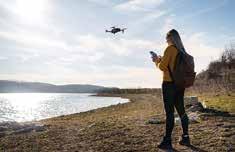
Department has noticed an increase in questions connected to their use in relation to fishing and wildlife. Some of the most frequent questions have been about the legality of using drones for deploying bait by surf or bank fisherman.
To address this, TPWD staff reviewed Title 50 of the Code of Federal Regulations (CFR) § 19.11, also known as the Federal Airborne Hunting Act (AHA), which was first enacted in 1956. Staff also sought guidance from the Office of Law Enforcement within the U.S. Fish and Wildlife Service. The result of that analysis and discussion is the determination that 50 CFR § 19.11 (b)(2) prohibits the use of aircraft, which includes UAS or drones, to take or attempt to take wildlife, or aid in the act of fishing.
For more information about Texas’ hunting and fishing regulations, visit tpwd.texas.gov.
Definitions as defined in 50 CFR§10.12 that apply to 50 CFR § 19.11:
• Aircraft means any contrivance (device) used for flight in the air
• Fish or wildlife means any wild animal, whether alive or dead, including without limitation any wild mammal, bird, reptile, amphibian, fish, mollusk, crustacean, arthropod, coelenterate, or other invertebrate, whether or not bred, hatched, or born in captivity, and including any part, product, egg, or offspring thereof
• Take means to pursue, hunt, shoot, wound, kill, trap, capture, or collect, or attempt to pursue, hunt, shoot, wound, kill, trap, capture, or collect. (With reference to marine mammals, see Part 18 of this subchapter)
• Wildlife means the same as fish or wildlife
Does the AHA prohibit the use of UAS or drones by recreational, surf, or bank fishermen for deploying bait?
Yes. UAS or drones cannot be used to deploy bait according to 50 CFR § 19.11 (b)(2) as that is considered aiding in the take or attempt to take wildlife, which includes fish.
Does the AHA prohibit TPWD from issuing a permit authorizing the use of UAS or drones by recreational, surf, or bank fishermen for deploying bait?
Yes. 50 CFR § 19.31 (a) prohibits a
state from issuing permits for the purpose of sport hunting, which includes recreational or sport fishing. —courtesy TPWD
The escalating tension between recovering wolf populations and livestock producers in Washington’s northeast counties has long demanded a structured, collaborative response. The wolf-livestock interaction protocol, developed in 2017 with significant input from the Washington Wolf Advisory Group (WAG), stands as a cornerstone of

The Fish & Wildlife Department sought to lethally remove an adult wolf from the Sherman pack in Washington state. A temporary restraining order preventing the effort was later overturned.
this effort. The protocol provides clear, science-driven criteria for intervention when non-lethal deterrents prove insufficient. Specifically, it authorizes lethal removal if a wolf pack is confirmed responsible for three livestock depredations within 30 days, or four within a 10-month period, with the aim of disrupting problematic behaviors before they lead to habituated predation.
The WAG is a diverse citizen panel convened by Washington Department of Fish and Wildlife (WDFW), which includes representatives from ranching, hunting, environmental, and other at-large interests. This group played a pivotal role in crafting the Conflict Management Protocol by fostering dialogues among often-adversarial stakeholders. WAG ensured the protocol was both operational and emphasized incorporating an array of adaptive measures such as non-lethal deterrents, enhanced range-rider programs, and compensation for verified losses. This collaborative
framework was tested in real time throughout the spring and summer of 2025 as conflicts rose in Ferry County. Far from a blunt instrument, the protocol embodies the North American Model’s emphasis on sound science and public trust to prevent conflicts from spiraling into broader ecological or economic disruptions.
The fragility of these protocols was abruptly revealed in mid-October 2025, when a temporary restraining order (TRO) issued by the King County Superior Court halted WDFW’s authorization to lethally remove an adult wolf from the Sherman pack. Filed by two wolf advocacy groups, Washington Wildlife First and Kettle Range Conservation Group, the lawsuit alleged that WDFW’s Oct. 9 decision was “arbitrary and capricious.” The TRO went into effect on Oct. 15 and paused on-the-ground management, while the pack continued to pose a threat to grazing operations across Ferry and Steven Counties. With the TRO in place, the state agency’s hands were tied, thus prolonging vulnerability for livestock during a critical transition period. The pause was short-lived. On Oct. 23, Judge Suzanne Parisien denied the wolf advocacy group’s motion for a preliminary injunction, ruling they failed to demonstrate a likelihood of success on the merits, and thereby restoring WDFW’s deference to implement the protocol. This example underscores how seriously judicial interventions can undermine management.
Ultimately, episodes like the Sherman Pack saga reinforce the vital need for inclusive forums like the WAG, where the Congressional Sportsmen’s Foundation (CSF) actively participates to bridge divides and forge enduring policies aligned with the North American Model of Wildlife Management. As a seated member of the WAG, CSF champions the sportsmen’s perspective, ensuring that wolf conservation does not come at the expense of the robust ungulate populations essential for wolf survival, hunting heritage, and the economic stability of rural communities. Through quarterly meetings, such as the August session in Clarkston where WAG dissected protocol applications amid budget constraints for non-lethal efforts, CSF
pushes for refinements like improved public outreach, post-delisting planning, and a commitment to the North American Model of Wildlife Management. CSF remains committed to ensuring sportsmen’s voices are heard in shaping adaptive, science-based management plans that support wildlife conservation and hunting heritage. —courtesy Congressional Sportsmen’s Foundation
Safari Club International (SCI) is proud to announce that its Senior Litigation Counsel, Regina Lennox, testified before Congress on the need for targeted reforms to the Equal Access to Justice Act (EAJA) to ensure the federal government does not subsidize unnecessary or low-value lawsuits.
Too often, such lawsuits have interfered with the U.S. government’s science-based findings and ability to properly manage wildlife and wildlife habitat to the detriment of conservation and to the financial benefit of specialinterest groups and trial lawyers.
Speaking to the House Committee on Natural Resources Subcommittee on Oversight and Investigations, Lennox emphasized that EAJA should function as Congress originally intended by leveling the playing field for small businesses and individuals, not to subsidize repeated, duplicative, or marginal litigation brought by well-funded special-interest organizations.
She highlighted two recent cases that illustrate how EAJA has drifted from its original purpose:
• SCI defended the Fish and Wildlife Service’s 2017 decision to delist Yellowstone grizzly bears. Six sets of plaintiffs filed suit and lost most of their claims, yet still sought more than $1 million in attorneys’ fees, despite the tens or hundreds of millions in net assets several of the organizations have.
• In a 2023 case, SCI defended the Service after three organizations represented by Earthjustice challenged the withdrawal of proposed leadammunition restrictions on a refuge, even though the agency made clear it

Regina Lennox testified before the House Committee on Natural Resources Subcommittee on Oversight and Investigations.
could revisit the issue through future rulemaking. The plaintiffs filed a complaint and negotiated a settlement requiring the Service to take actions it had already committed to, yet still received $35,000 in attorneys’ fees and costs. SCI opposed the settlement, but the district court approved it within days.
“The government should not subsidize lawsuits against itself from wealthy special interest groups,” Lennox concluded. “Amending EAJA would reinforce Congress’ intent and potentially reduce unnecessary and unproductive litigation.”
Chair Paul Gosar (R-Arizona) noted that SCI, representing hunters, is responsible for increasing populations of wildlife around the world. Lennox confirmed and identified how hunters benefit wildlife through habitat conservation and wildlife funding.
SCI remains committed to working with Congress constructively to advance reforms that promote responsible governance, science-based wildlife management, and fairness under the law.
—courtesy SCI
The state’s latest plan to kill bears in part of Western Alaska to try to boost a flagging caribou population has drawn a new legal challenge. On Nov. 10, environmental groups filed a lawsuit in state Superior Court that seeks to strike down the Alaska Board of Game’s July approval of a controversial predator control
program in the part of the state used by the Mulchatna caribou herd.
The lawsuit, filed by the Alaska Wildlife Alliance and the Center for Biological Diversity, is the latest step in a legal and political battle over state efforts to increase the herd size. It names the board, the Alaska Department of Fish and Game and the department’s commissioner as defendants. The lawsuit argues that the revived program approved by the Board of Game suffers from many of the same flaws that were in the previous program. That program had been approved by the board in 2022 but was overturned by court rulings earlier in the year that resulted from a previous lawsuit filed by the Alaska Wildlife Alliance.
Two state judges found that the program, under which 186 brown bears, five black bears and 20 wolves have been killed since 2023, violated the elements of the Alaska constitution. The lawsuit says the new predator control program is largely the same as the old one, and it continues to violate the Alaska constitution’s requirement for sustained yield of natural resources. For Alaska, the principle of sustained yield holds that renewable resources should be managed so that they can exist indefinitely.
There are two ways that the sustained

yield requirement is violated, according to the lawsuit.
The board, when it approved the predator control plan presented by the Alaska Department of Fish and Game, “failed to take a hard look at brown and black bear population data” for the targeted area, thus failing to properly consider impacts to those populations, the lawsuit said.
And the plan has no end point, meaning there is no trigger for suspension of predator control if bear populations drop below a minimum threshold deemed necessary for their sustainability, the lawsuit said.
“The Board of Game gave the Alaska Department of Fish and Game the authority to aerially shoot any bears of any age across 40,000 square miles until 2028, with no population data or cap on the number of bears killed,” said Nicole Schmitt, executive director with the Alaska Wildlife Alliance.
She noted that the southeast border of the targeted area is only 3 miles from Lake Clark National Preserve, 30 miles from Katmai National Park and 50 miles from McNeil and Brooks Falls, sites that are world-famous for the large numbers of brown bears that gather there to fish for salmon. Meanwhile, the western border reaches two national wildlife refuges, “which means this program threatens bears who move across vast stretches of public lands,” she said.
Cooper Freeman, Alaska director at the Center for Biological Diversity, called the program “a disgraceful misuse of public resources and a betrayal of the trust Alaskans place in their wildlife managers.” “There’s no excuse for the state of Alaska to be gunning down bears from helicopters,” Freeman said in the statement.
“ADF&G is committed to all users of the herd in rebuilding this population, which has been identified as important for providing high levels of human consumption under state statute and regulation,” ADF&G Commissioner Doug Vincent-Lang said in a statement. Vincent-Lang said “intensive management,” or IM, has shown to be helping the caribou herd. Intensive management is the term Alaska wildlife managers use
for predator-control programs.
“There is strong evidence that neither disease nor nutrition are preventing this herd from recovering. Department predator removal efforts in the Mulchatna caribou herd IM program are administered to reduce wolf and bear populations in small, defined areas for short periods of time, to enhance caribou calf survival and to increase herd abundance,” Vincent-Lang said in his statement. “Predation has been isolated as the limiting factor preventing the herd from growing, and predator removal is increasing calf survival—we know that now—and we have seen increased calf survival as a result of our past IM efforts.” —courtesy Alaska Beacon
On Dec. 16, U.S. Fish and Wildlife Service (FWS) Director Brian Nesvik ordered a thorough and comprehensive review of the National Wildlife Refuge System (NWRS) and National Fish Hatchery System (NFHS). Unlike many other units of federal public land, such as National Parks and National Forests, the NWRS and NFHS units are focused first on fish and wildlife, not human uses, and any activity conducted within the Refuge or Hatchery Systems must be compatible with the founding purpose, a mandate codified in federal law. Further, these Systems are unique in that they are intended to be managed in a bottom-up approach, in that Refuge purposes take priority over the mission of the NWRS. However, lack of attention and resources, or changing administrative polices, not legislative actions, have changed their management, not to the benefit of wildlife and sportsmen and women. The Congressional Sportsmen’s Foundation believes it’s valuable for FWS to conduct an audit of what is and is not working, and an audit to determine how individual refuge management and the overarching Refuge and Hatchery Systems can best fulfill their goals of meeting the primary purpose(s) of each respective refuge. —courtesy Congressional Sportsmen’s Foundation

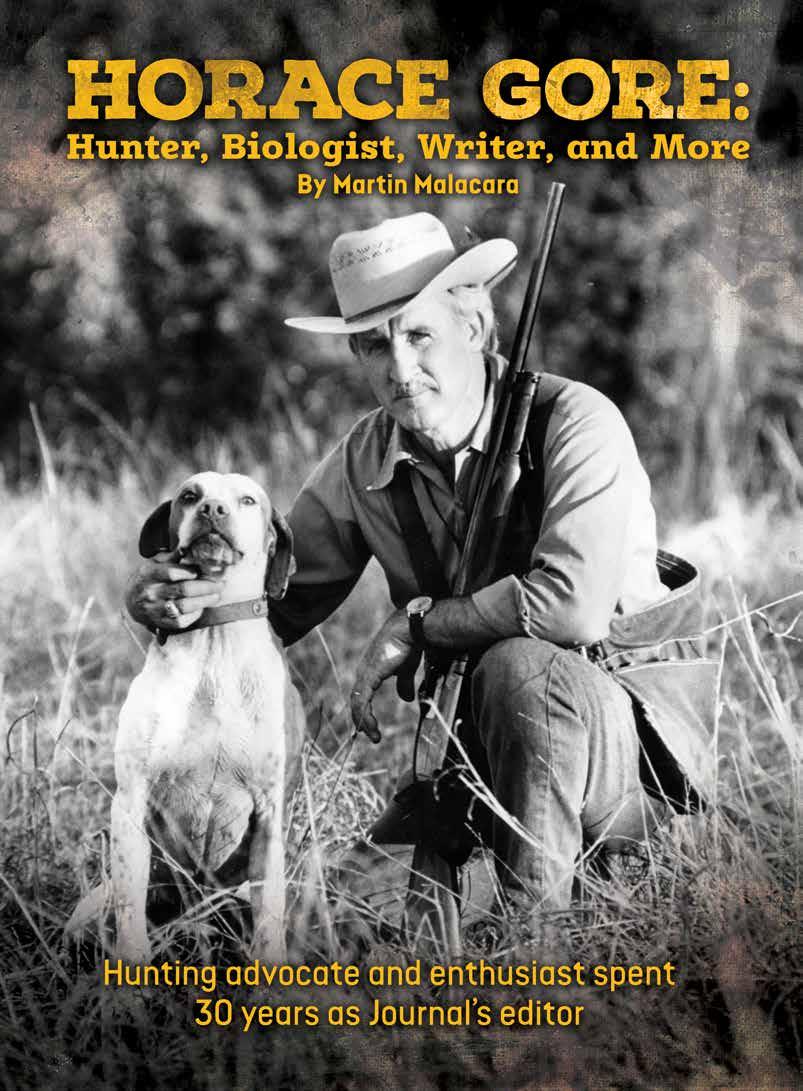
ATexas hunting icon has left us.
Horace Gilmore Gore, editor of The Journal of the Texas Trophy Hunters, died Nov. 21. Gore had been The Journal’s editor for 30 years. Gore had been working as the editor from his home in Central Texas, and preparing for the January/February issue, when he took ill. Gore was 92.
Gore spent those 30 years advocating for hunters and hunting, landowners, and conservation. Gore shared his wisdom and expertise throughout the pages of The Journal. In fact, he originated the phrase, “The Golden Triangle,” when writing about the prime spot in Texas for deer and deer hunting. Gore even shared his favorite wild game recipes with readers, too.
The greatest talent Gore brought to the editor’s desk at The Journal was his masterful storytelling. His words drew the reader directly into the heart of the story, with a turn of phrase, a blunt commentary, his own homespun aphorisms, which he aptly dubbed, “Goreisms,” or a very sly tongue-in-cheek. When he told stories at the office, during staff gatherings, or in front of an audience at the Hunters Extravaganzas, he enthralled and entertained folks with his colorful wit and charm. No one had a dull moment while in his company.
Before working for the flagship magazine of the Texas Trophy Hunters Association, Gore worked as a biologist for the Texas Parks and Wildlife Department for 33 years, getting hired as a wildlife biologist when the state agency was called the Texas Game and Fish Commission. During his time there, Gore served as Whitetail Program Director, helped develop the Texas Big Game Awards program, and helped restore Eastern turkey to the Pineywoods.
Also during that time, he encountered a fellow biologist who he had a bone to pick with. The biologist in question: none other than Dr. Deer himself, Dr. James Kroll.
“The first time I met Horace, he was a species leader for Texas
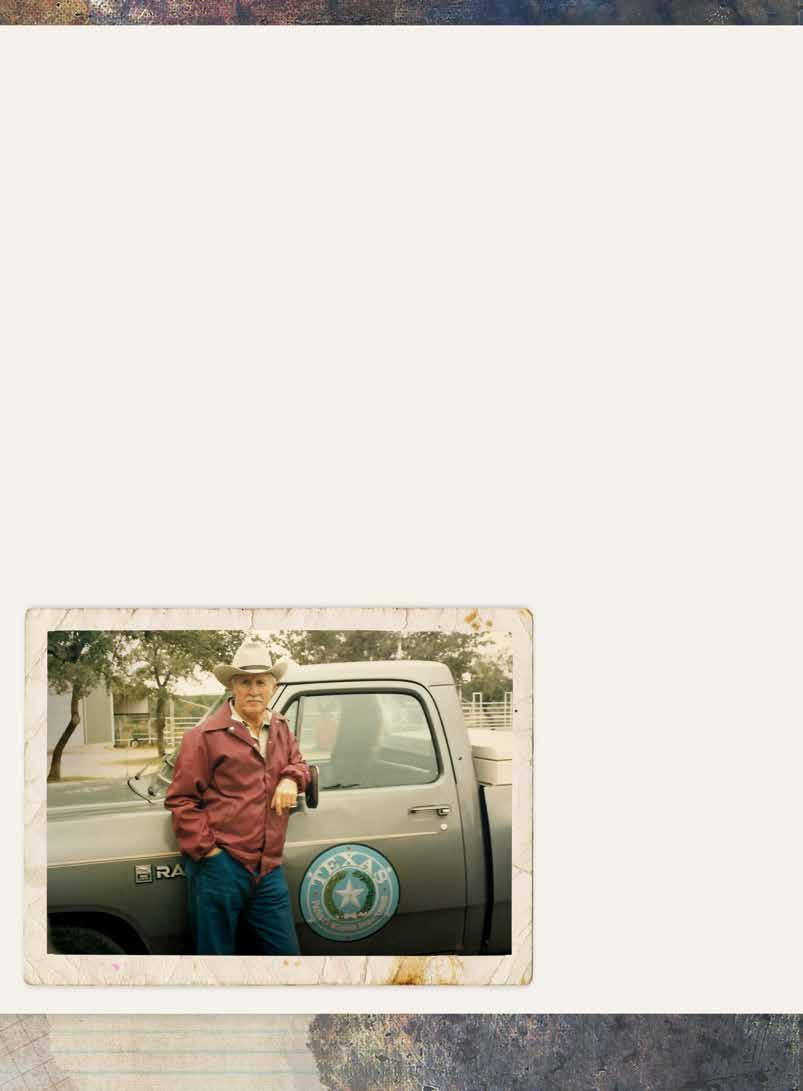
Parks and Wildlife. I had written an article critical of the way the department was operating, and he took umbrage over it,”
Kroll said. “I was summoned to Austin! The meeting began with disagreement, and ended with a decades-long friendship.”
Kroll added, “For decades, Horace was a force guiding the future of deer management and hunting. He based his decisions, not on whim, but on science. As a true Texan, he stood up for what was right and never backed down in lieu of political expediency. There are good men, there are great men, but Horace Gore was both and the rarest of men, one who changed his world.”
Gore retired in 1993 from TPWD and moved to Gonzales County to live on the Kokernot Ranch. He planned to spend the rest of his life there, hunting and fishing. But a phone call with the founder of Texas Trophy Hunters Association offered Gore the chance at a second career.
Jerry Johnston needed someone to do the editing for his magazine, and couldn’t think of anyone better than Gore to fill the job. Gore had been friends with Johnston since 1979, and accepted the job, agreeing to commute from Gonzales County to San Antonio a few days a week, beginning around September 1995. Gore never imagined working for TTHA for 30 years.
Johnston said he could write an entire book on his adventures and escapades with his longtime friend. “It was a great day when Horace left from TPWD and went to work with Trophy Hunters,” he said. “Horace was as witty as John Wayne. Even as Horace got older, he never missed a step.” Jerry jokingly wondered if Horace was even from planet Earth.
“Bless his heart,” he said. “He told me once he truly didn’t know what his birthday was, just the year.”
Not only did Gore edit the magazine, he also took charge of TTHA’s Annual Deer Competition, held at the Hunters Extravaganzas in Fort Worth, Houston, and San Antonio. Gore was a certified Boone and Crockett scorer, so he would measure and score most of the deer himself. Gore became a welcome fixture at the shows, where he’d meet and greet dignitaries, outdoor industry executives, and the TTHA membership. Gore and Kroll would work together for the magazine, and partner up for TTHA’s television show.
“He became one of the most influential outdoor editors in the country,” Kroll said. “He orchestrated the production of a TTHA TV program on the boondoggle over CWD in Wisconsin. We won a Golden Moose Award from the Outdoor Channel.”
Jimmy Hasslocher, president of Frontier Enterprises Inc. and chairman of Operation Game Thief, forged a friendship with Gore for nearly five decades.
“The Texas Trophy Hunters maga-
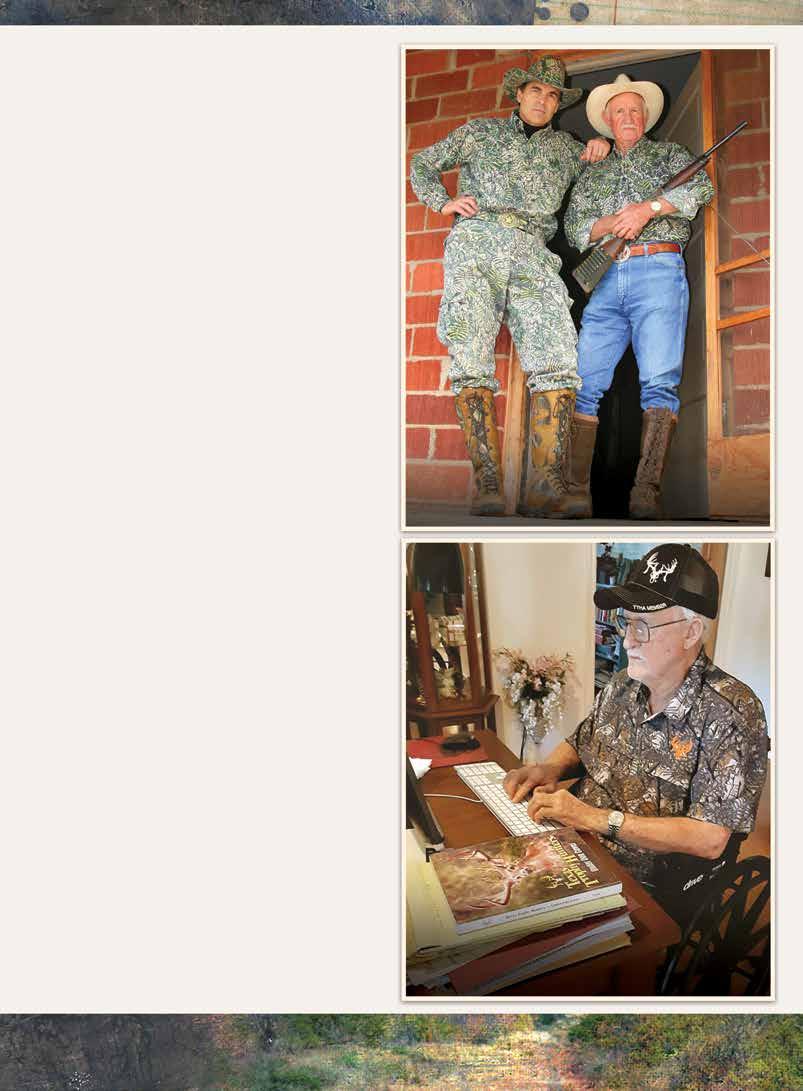
zine and (TTHA) members were the beneficiaries of Horace’s life experiences from his work at Texas Parks & Wildlife as a biologist, and his circle of friends who really helped in the early days of putting Texas Trophy Hunters on the map,” Hasslocher said. “This is a passing of a great man who put everything into what he believed in. I, for one, was the beneficiary of a kind, decent man who loved what he did and appreciated his special circle of friends.”
Jason Shipman, the South Texas field editor for The Journal, worked alongside Gore at the deer contest booth at the Extravaganzas. “As a wildlife biologist, I crossed paths with Horace years ago,” Shipman said. “The relationship quickly turned into one of professional admiration and great respect. At the time, I was established in the wildlife field, but younger and quite ambitious. He, on the other hand, had led an illustrious career and was a living legend in the wildlife community.”
Shipman added, “He said I reminded him of a younger version of himself, and that I needed a mentor. We spent the next 20 years working on content for The Journal, traveling to the Extravaganzas to run the TTHA deer contest, and attending other wildlife-related events. I was by his side, along with our mutual friend Marty Berry, on the hunt for his last whitetail buck. We talked daily, and he taught me to always use good judgment.”
“He often shared other sage advice that he coined as Goreisms. Horace was a giant! He was the Augustus McCrae of the hunting and wildlife industries. I am fortunate to have shared a great deal of time with him and will strive to carry on his legacy in the wildlife field. He was my mentor, a true friend, and will be greatly missed.”
E. L. “Butch” Young is another biologist influenced by Gore. Gore was Young’s first supervisor at TPWD in 1965.
“He was a tough supervisor who guided my career with TPWD. After he became Regional Director in Waco, he assigned me some special projects that broadened my contacts with game wardens. He was always striving for good relations with wardens to learn what they knew about their county’s wildlife and landowners,” Young said.
“The late Jack Ward Thomas, who was a biologist in the Hill Country, and Horace Gore are the two people who most influenced me to write popular and technical articles. They had the philosophy that we owed it to the public to tell them what we learned in our wildlife research and management activities. I’m writing novels now, and I owe a lot of my ability and urge to write to Horace Gore,” he added.
Judy Jurek, another Journal contributor, also considers herself a mentee of Gore.
“He was a mentor to me, a dear friend, sometimes (an) antagonizer, but he always tried to make you to think and do for yourself,” Jurek said. “He believed he started me as a writer—I never corrected him—although I’d been published several times before we met 40 years ago and he barked at me, ‘Send me a story and I’ll see if it’s any good!’ Fortunately, he liked it, and the rest is history.”
Jurek recalled the first time she met Gore.
“I’d joined Texas Outdoor Writers Association and attended a couple of conferences. Back then it was truly a ‘boys club,’ as there were few female outdoor writers,” Jurek said. At one particular conference held in Bandera, Jurek walked into the hospitality room, where she met her friend Bill Mills, who was seated next to a man with a little white moustache, arguing with Mills about their drinks. She asked the men what they were drinking, when the moustache man sipped his drink, told her it was good, then asked rather loudly, “Who are you? You a writer? Why don’t I know you? You’re a purty thing, skinny too!” That’s when Mills introduced Jurek to Gore, the moustache man, telling Gore the lady is a writer.
Jurek proved her writing talent to Gore, and became a close friend. “At one of his big fish-fries at the ranch,” she said, “I can’t recall who told me, but someone sitting beside me leaned over, pointed to Horace, Al Brothers and Ernie Davis, all sitting together on a couch and whispered to me, ‘You know you’re in the company of wildlife legends. Those men are changing the way Texas hunts.’”
“He meant well,” said Al Brothers, a noted pioneer in wildlife management, about his longtime friend. He and Gore met while attending Texas A&M University in 1958, where both
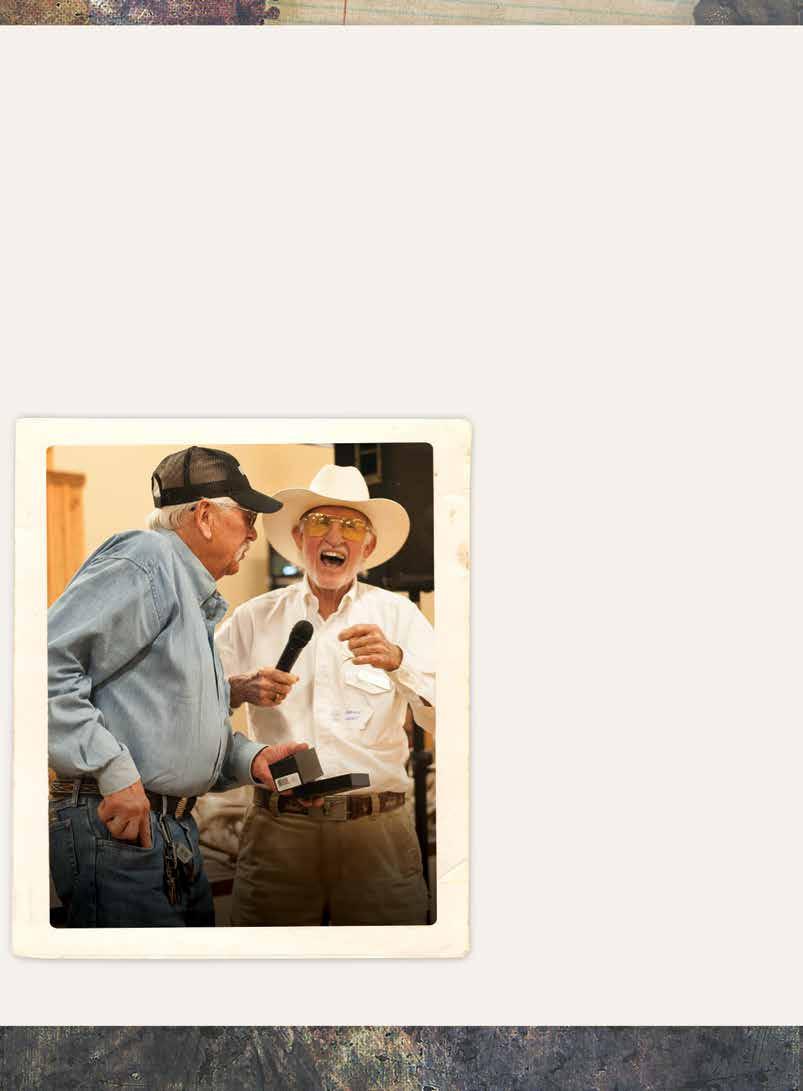
learned how to be wildlife biologists. “He was very efficient at what he did, and he was quite a character,” Brothers said.
Brothers added that although his friend came from an impoverished background, he did well for himself at the university by attending on the GI Bill. To make ends meet during their time at the university, Gore drove a county school bus part-time, while Brothers cut hair for several students with a pair of hand clippers.
Gore, a member of the “Silent” generation, was born in 1933 in Arkansas, during the Great Depression. According to his autobiography, “Stringtown to the Kokernot,” the recollections of a wildlife biologist, outdoor writer, hunter and gun collector, published in 2024, Gore and his older brother, Bill, lived in a rural area called Stringtown, named after the road where his family lived, until the family moved down the road to Horatio, near the Oklahoma state line. Those days were cut short, however, when Gore’s father, Morris, abandoned the family in 1938. When Gore entered second grade, he and Bill went to live with their grandmother, Maude Gilmore, in Briggsville. Gore called that time to the fifth grade very important in forming his young adolescent life. Gore and his family moved again, this time to Hooks, Texas, where he spent his pre-teen and teenage years fishing, hunting, playing high school football and baseball, and even playing alto saxophone in the high school band.
In 1945, his grandmother bought him his very first rifle, a Model 15 Springfield single shot .22, from Sears-Roebuck. He had a paper route to help pay for ammo. He spent plenty of time hunting rabbits, squirrels, and birds.
When Gore graduated from Hooks High School in 1951, he did so with 28 other seniors. When he received his diploma, he also received an envelope containing a $300 scholarship to Draughon’s Business College in Dallas. In order to get around, his brother and mother spent $800 to buy him a used 1948 Plymouth four-door sedan, his very first car.
After the time he spent at the business college, Gore decided to join the Army in 1954, and spent two years in service for his country. After his Army service, he used the GI Bill to attend Texarkana Junior College, then transferred to Texas A&M, where he graduated in 1960 with Bachelor of Science degree in wildlife science.
Ralph Winingham, a retired outdoor writer for the San Antonio Express-News who also contributed to The Journal, recalled his first encounter with Gore at a shooting competition.
“The first time I remember meeting Horace in the flesh was around 2010 at a Karnes County Lonesome Dove Fest Celebrity sporting clays competition,” he said. “The festival organizers had contacted Horace, inviting him to come on down to shoot against about a dozen other media members and celebrities. I was the reigning champion at the competition, and Horace was well aware of my scattergun shooting reputation. As anyone who knew Horace can attest, he always had a trick up his sleeve.”
Winingham added, “Rather than shoot against me, he chal-
lenged me to shoot his L.C. Smith side-by-side .410 in the competition ‘Just to see how good you really are,’ in his words. My response was that I would be happy to give the vintage shotgun a whirl—if he would give the .410 to me should I come out victorious. I managed to shoot the winning score with that .410, but despite my achievement, Horace admitted he just couldn’t let go of his prized L.C. Smith. I can’t blame him, as I would have done the same thing.
“After that encounter, Horace always had the highest praise for my ability to handle a smoke pole and relied on my expertise as both a wingshooting source and author of numerous hunting and shooting articles during the many years I was honored to work with him for The Journal of the Texas Trophy Hunters magazine.”
Gary Roberson, predator hunter and Hill Country field editor for The Journal, recalled meeting Gore at the SHOT Show in 1992.
“At that time, he was running with John Jefferson, who I had met several years earlier,” he said. “John and Horace worked together at Texas Parks and Wildlife. Horace had read an article or two that I had written for other publications, and approached me about writing for The Journal of the Texas Trophy Hunters in the early 2000s. I was outfitting across West Texas, the Hill Country and New Mexico. He wanted someone from ‘out West’ to write, as most of the other writers covered the South and East Texas.
“When I started, I thought that he just wanted an article every now and then, which fit my busy schedule. After a short time, he cornered me at a Hunters Extravaganza and told me he wanted me on the (Journal) field staff and to contribute in every issue. How could you tell Horace, no? While I hunted with Horace on several occasions, primarily in Shackelford County, I enjoyed my trips to the Kokernot Ranch in Gonzales the most. I loved walking through the old ranch house, reading the Goreisms plastered on all of the walls, doors and refrigerator. Dang, I will miss him.”
“In times like this, it’s always difficult to know what to say about someone who has done so much and influenced so many people and informed so much good conservation,” said Jim Heffelfinger, a regional game specialist at the Arizona Wildlife and Fish Department, and adjunct professor at the University of Arizona, who also covers the Southwest for The Journal
“Horace was larger than life, and any thoughts he had were worth considering seriously because of the massive experience and institutional knowledge he had in all things Texas and deer. Few people in Texas will leave the kind of massive legacy Horace left.”

Lee Leschper, another Journal contributor, knew Gore for the past 30 years.
“Horace was the right man in the right place to shape Texas deer hunting, and by default, all deer hunting,” Leschper said. “He was a voice for the association and for all of us Texas deer hunters. I knew him for most of three decades, as a fellow Aggie, friend, and my unforgiving editor.”
“Rereading his book, “Texas Trophy Hunters, Under One Cover,” I appreciate again the depth of his wisdom and the razor of his wit. It reminded me of a few choice and timeless words he’d directed at me. On hunting Tajikistan: ‘Personally, I wouldn’t want to go there just to kill an ibex. But then, I’m older than you.’ On the evolving media world: ‘I suggest that we all sit tight, and pray for a good 2-inch rain.’ On real hunting: ‘A moose on the ground (or in waist-deep water) in Alaska is similar to a blue bull on the sand of the Norias Division of King Ranch. You had better be prepared.’”
Gore was a respected member of the Elks Lodge of Gonzales, Texas, and belonged to the Austin Woods & Waters Club, the Dallas Woods & Waters Club, and the Boone and Crockett Club. Additionally, he remained an engaged member of the Texas A&M Association of Former Students. Gore had four children: Donna Gore Athey, Barry G. Gore, Garry L. Gore and Joel W. Gore, six grandchildren, and four great grandchildren. He will be greatly missed by family, friends, Texas hunters, and members of Texas Trophy Hunters Association.



By Dr. James C. Kroll

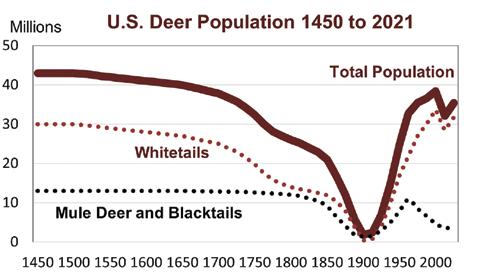
We often see estimates for white-tailed deer populations at the turn of 20th century being somewhere around 300,000 to 500,000 animals. Habitat deterioration and unregulated hunting had reduced a herd that may have numbered as many as 40-plus million when Europeans arrived on this continent. During my lifetime, white-tailed deer numbers increased to at least 35 million, about 80% of the original population. The greatest growth rate occurred during the first half of the 20th century, and recently has experienced population fluctuations reflective of habitat deterioration, coupled with emerging new limiting factors such as predators and disease.
The graph shown on page 28 is somewhat deceptive, because what you do not see are the geographically unique fluctuations over time. Who would have predicted that epizootic hemorrhagic disease/blue tongue (EHD) would come to kill thousands of deer annually? Or the emergence of a yet another pathogen, chronic wasting disease (CWD), whose impact remains unsettled? Or the cumulative negative impacts of rapidly increasing populations of top-carnivores such as coyotes, wolves, bears and mountain lions?
It’s no wonder why recently, populations appear to be on the decline. As if these have not been serious enough, an old
New World screwworm flies are about the size of the common housefly, or slightly larger, with orange eyes, a metallic blue or green body, and three long stripes along its back.
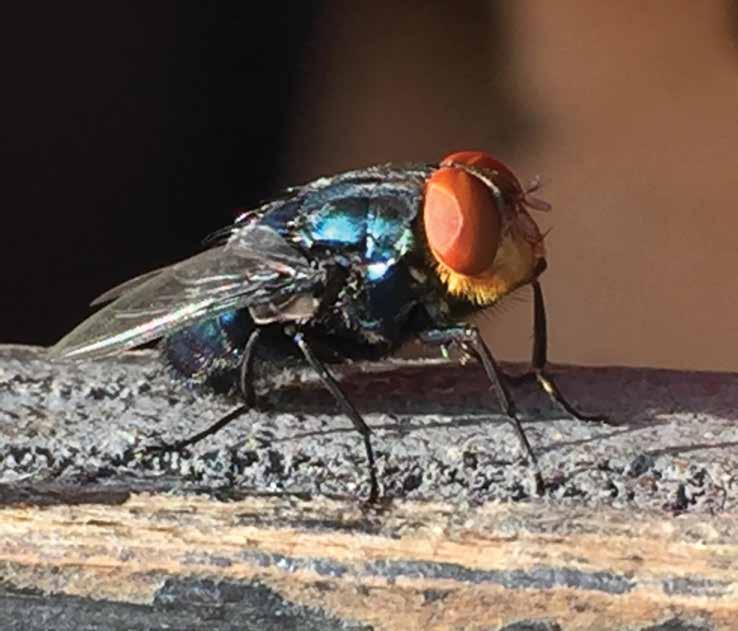
enemy to deer populations is driving northward to once again threaten both deer and the domestic livestock industry. It’s the New World screwworm fly (Cochliomyia hominivorax), the one we thought had been eradicated in 1966.
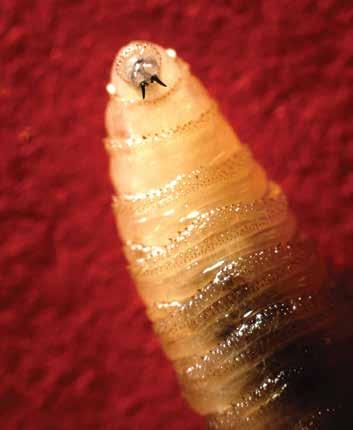
As a young man, I remember seeing cattle with grotesque sores produced when the maggots turned minor injuries into gaping holes, and calves literally eaten alive when the flies deposited eggs in their umbilical stump. I remember manually removing screwworm maggots and applying “Smear 62” and pine-tar oil to the gaping wounds, often with little result. The nationwide economic impact of the screwworm from 1930-40 was $5-$10 million per year, or $118-$236 million in today’s dollars. By the 1950s and 1960s, the economic impact per year increased to $60-$120 million, $806 million to $1.3 billion today.
It can be argued the screwworm was also responsible for the low deer populations in Florida and the Southwest when I began my hunting career. Although screwworms had been known in the Americas since about 1842, they really became a problem in the Southeast after 1933, just when states were trying to re-establish whitetails through stocking. The impacts

of these pests on deer include high fawn mortality, ranging from 40% to 80%; loss of bucks due to injuries invested during the rut; and massive deer die-offs as great as 50%. For many years, deer populations remained relatively static, in spite of re-stocking efforts.
By the 1950s, the huge impact these flies had on domestic and wild animals led to one of the most successful pest eradication efforts to this day. Based on the fact the flies mate but once, scientist Edward Knipling in the 1930s proposed a concept called the sterile insect technique (SIT). It involved sterilizing large numbers of male flies using X-ray radiation, and releasing them in massive numbers to mate with wild females. Raymond Bushland, who was in charge of the program, further developed the methodology, which involved rearing flies on ground meat, blood, and other ingredients. Bushland and other researchers coordinated efforts between facilities in Florida and Curaçao, where the technique was successfully demonstrated on a smaller island.
From 1957-61, the USDA launched an eradication program in the southeastern United States, using SIT with radiationsterilized males. Screwworm was successfully eradicated in
the Southeast in only a few years. Large production facilities were developed at Bithlo and Sebring, Florida. Then the program moved to the Lone Star State, where a large-scale production facility was constructed at Mission in 1962.
I remember seeing one of the screwworm sterile fly boxes dropped from aircraft for the eradication efforts on a ranch. As best I can remember, they were small, white boxes marked with bright red radiation symbols and warnings not to touch them. I heeded the warning.
Did the program work? It can be argued the screwworm eradication program was probably one of the most successful pest eradication programs ever developed. The USDA and its supporting universities and scientists deserve great credit for their discoveries and implementation. The Mission, Texas, fly production facility closed in 1981, after officials declared the eradication program successful.
The pest has been moving north from Central America and southern Mexico for some time. The biggest question is: Are we prepared to push back a new invasion?
Production moved to Tuxtla Gutierrez, Chiapas, Mexico, to continue the eradication efforts in Mexico and the region. Following the eradication of screwworms in the U.S. in the mid-1960s, the Texas whitetail population recovered and grew significantly, quadrupling during the 1970s. Today, an estimated 5.4 million deer live in Texas. Screwworm eradication certainly cannot get all the credit for the huge Texas population growth, but it certainly had a lot to do with it. So ends a happy story—or does it?
Recently, wildlife scientists, Texas Parks and Wildlife Department, and the Texas A&M Extension Service, not to mention agricultural scientists, have warned about the possibility of the New World screwworm (NWS) re-entering the state from Mexico. If the NWS were to return, it could be devastating to both livestock and whitetails, resulting in significant economic losses to some of the state’s most valuable natural resources.
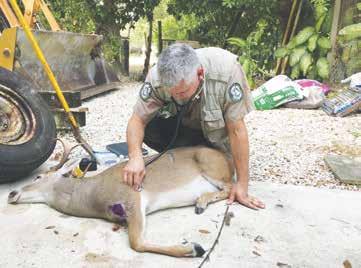
A deer infested with New World screwworm.
In September 2025, the issue became more critical when the USDA announced NWS had been discovered just 75 miles from the U.S. border within the busy commercial region of northern Mexico. The U.S. currently obtains sterilized screwworm flies from the COPEG facility in Panama, a joint project between the U.S. and Panama. Support is also being provided to a new facility in Metapa, Mexico, which is being renovated to help increase production and support regional eradication efforts. To end its reliance on foreign facilities, the U.S. is also building its own sterile fly production facility in Edinburg, Texas, which was expected to be operational in 2025, but now in 2026.
This facility is expected to produce up to 300 million flies per week and will work in tandem with facilities in Panama and Mexico to protect American agriculture. To put this into perspective, at peak production in 1958, 50-70 million sterile flies were produced per week. According to the Food and Agriculture Organization, the projected completion of these facilities, if on schedule, should meet the needs for a repeat at eradication.
Once accomplished, however, enhanced surveillance and preparedness will be critical. After all, the NWS was pronounced “eradicated” once already. I might point our here, there have been other suggestions about fly production facilities, including a modular approach using smaller, distributed facilities that are mobile. I have seen no movement on this approach up to this time.
The whitetail remains remarkably abundant, in spite of a host of limiting factors, some of which were predictable and others constituting a surprise. In regard to the future of the white-tailed deer and deer hunting, the next decade will be the deciding factor. One thing is for certain, as a deer biologist with five decades of experience, managing whitetails will become increasingly difficult.
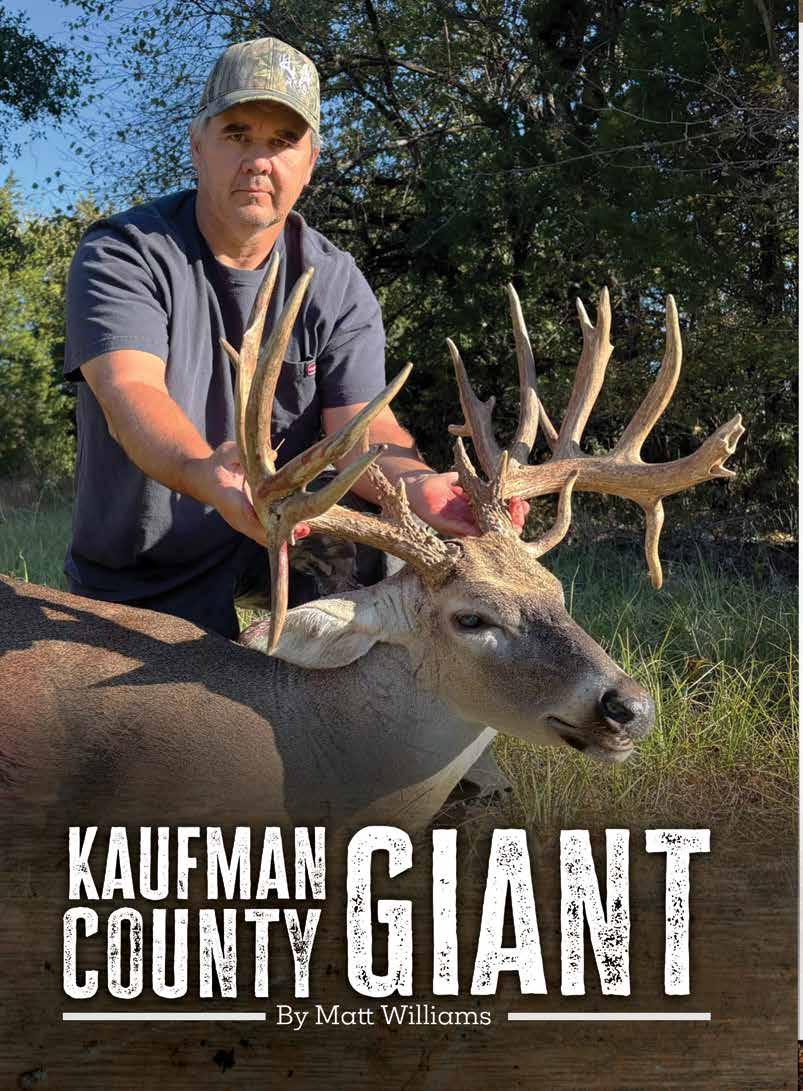
News of several whoppers trickled across the outdoors desk last fall. Just when I thought the tales couldn’t get any taller, along came word of a true East Texas giant out of Kaufman County, courtesy of Courtland Sewell of Scurry.
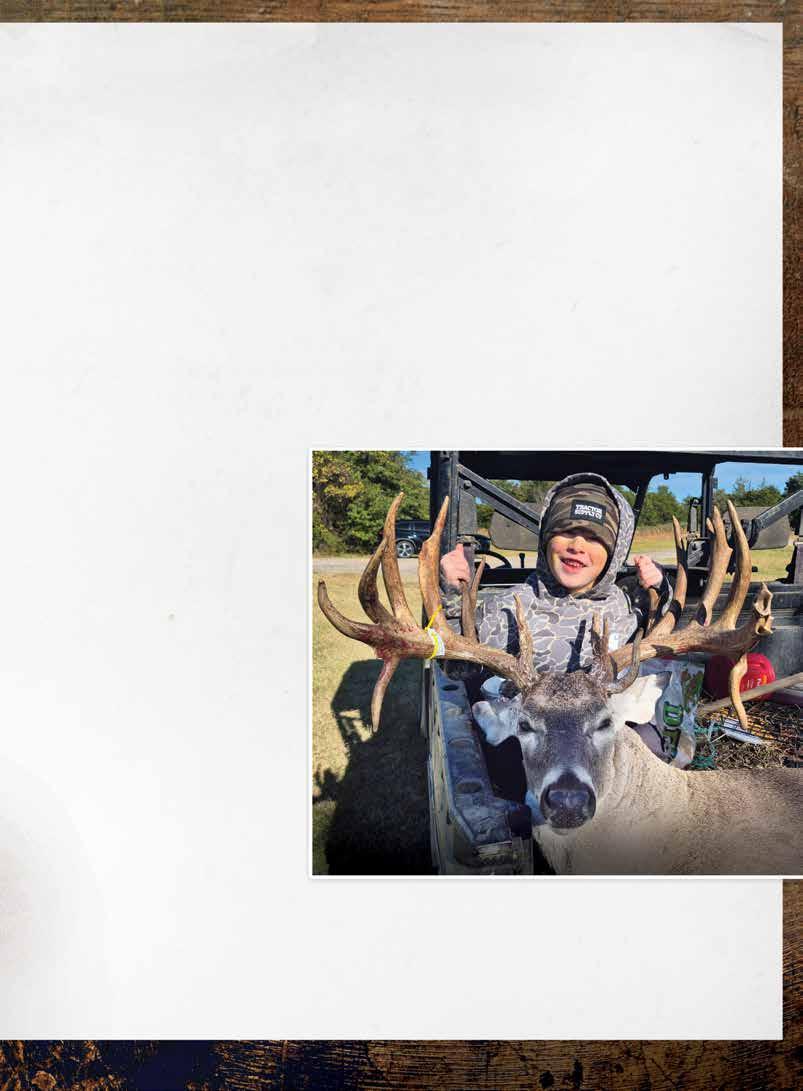
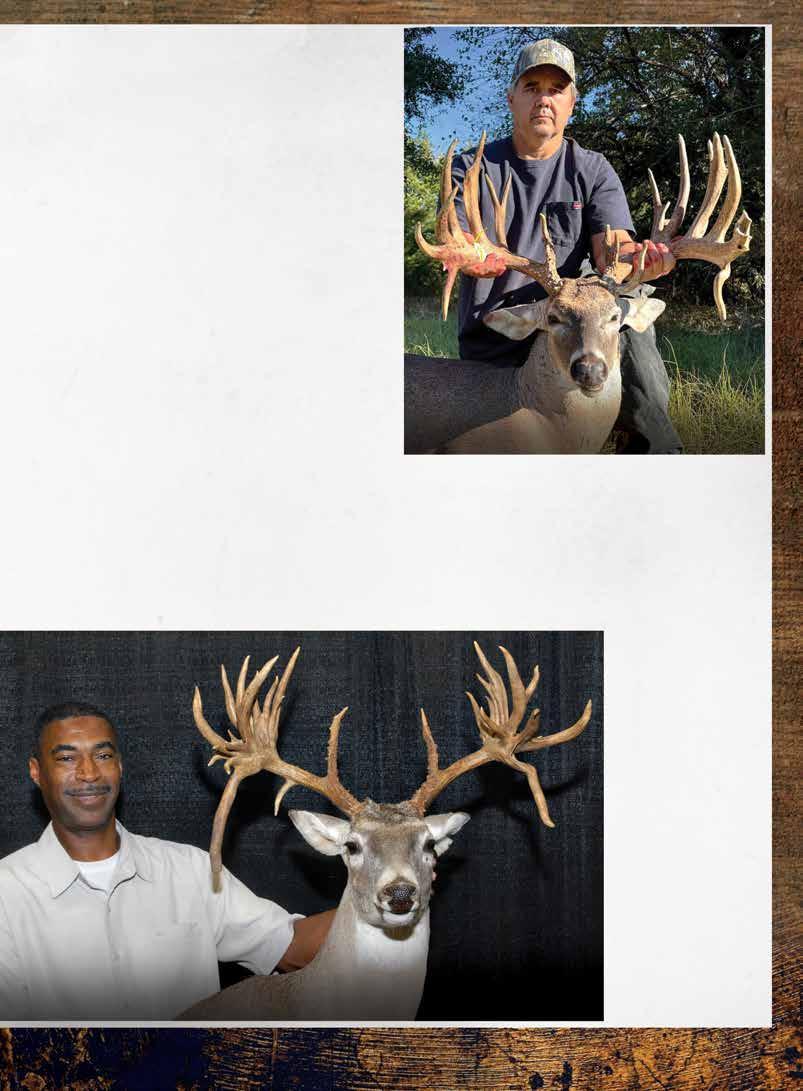
Sewell’s remarkable non-typical was a fairy tale buck in every respect, one that appeared from nowhere and took the hunter by total surprise on the morning of Nov. 9. In fact, the 52-year-old ranch hand was quick to admit he wouldn’t have even been hunting that day if it weren’t for a little girl named Rhiannon.
Rhiannon is the 6-year-old granddaughter of an old friend Sewell had invited to hunt on the 56-acre tract of property where he lives. It was the girl’s very first deer hunt, and she was sharing a stand with her grandfather, about 100 yards away from Sewell and her father, Aaron Anderson. The two stands were situated in relation to about 20 acres of food plots sown earlier this fall to help carry Sewell’s cattle through the winter.
“I was pretty sore from work the day before, and I honestly wouldn’t have even been out there if it weren’t for her,” Sewell said. “I was definitely happy to get this buck. The only thing that would have made it better was if Rhiannon had gotten him. Kids are the future of this sport, but this one may have ruined her. He’s not your everyday buck.”
Kaufman County record
Not even close.
Sporting 22 scorable points including a matching pair of drop tines, gobs of mass and nearly 60 inches of abnormal growth, Sewell’s free ranging buck was green scored at 2324⁄8 gross and 227 net in mid-November. The deer was taped by Kyle Easley, a 15-year veteran Boone and Crockett scorer from McKinney. Easley rescored the rack in January for entry into the B&C All-Time record book following the mandatory 60-day drying period.
The rack is sure to undergo a little shrinkage, but the official score will still be well above the 195 minimum B&C requires of record-book non-typicals. The Sewell buck also crushes the former Kaufman County record set in 2009 by Texas Parks and Wildlife Department Game Warden Eric Minter of Kaufman. Minter’s remarkable 31-point archery buck nets 2052⁄8 B&C.
Easley knows a thing or two about scoring nasty-looking non-typicals. In 2024, he taped 14-year-old Reili Brewer’s record book 29 pointer from Bowie County in northeast Texas. Scoring 239 2⁄8 , the deer ranks as the biggest free ranging deer ever entered in the Texas Big Game Awards program by a youth hunter statewide. Like the Brewer Buck, Easley called Sewell’s deer a oncein-a-lifetime whitetail that illustrates what can happen on open range when age meets with good genetics and nutrition
and a lucky hunter happens to be in the right place at the right time. While some social media critics have made comments that the deer could possibly be a high fence escapee, Easley doesn’t believe so.
“I’ve scored dozens of high fence deer over the years, and I see no indicators that lead me to believe this is a high fence deer,” Easley said. “I believe this is 100 percent a free-range deer. It’s just an incredible animal.”
Easley said he spent roughly 90 minutes scoring the buck. The main frame 10-pointer had nine scorable points on the right antler and 13 on the left. Easley said the non-typical antlers were fairly easy to interpret, with no questionable judgment calls.
“It’s pretty straightforward on what is typical and what isn’t,” Easley said. “I score a lot of deer in Texas, but I will say that if Region 5 (Post Oak Savannah) produces a bigger one, I definitely want to see it. This deer is a showstopper, for sure.”
Interestingly, Sewell had no idea the monster buck even existed. The hunter owns several trail cameras, but he didn’t bother putting them out on the property this season. He said he made several sits around the food plots during opening
week and saw a handful of decent bucks, but none that made the grade.
His luck changed about 8 a.m. that fateful Sunday when the enormous whitetail emerged from the wood line and began nibbling at the oats and wheat. The deer was all alone, about 350 yards away, when he and Anderson first spotted the deer.
“We could see those drops and other big tines pretty plain,” he said. “I knew right away he was unlike anything I had ever seen before.”
The two men took turns looking at the buck through binoculars as it slowly moved their direction. Sewell played it safe and waited about 20 minutes until the deer closed the gap to about 250 yards. That’s when he took a brace, shouldered his 6.5 Creedmoor, and touched the trigger.
“I wasn’t about to take a shot that I didn’t feel comfortable with,” Sewell said. “Once he got close enough I told Aaron, that’s it, I’m dropping him.” Sewell said the buck ran about 30 feet and fell. It wasn’t until he approached the buck that he began to realize just how big the deer really was.
“I’ve been hunting 42 years and killed some decent bucks, but nothing like this one,” Sewell said. “It’s like coming across a needle in a haystack. I didn’t even know he was around until I pulled the trigger and posted the picture on Facebook. That’s when I started getting pictures and calls from friends and neighbors who knew the deer was around.”
One of those neighbors was Kyle Schlee of nearby Ola. Schlee and his dad were hunting on an 140-acre tract about ¾-mile away when they heard Sewell’s shot followed by the tell-tale “thud” of a solid hit.
“I immediately texted a buddy of mine who hunts about a mile from me to see if he shot,” Schlee said. “When he told me he was still in bed, I had a funny feeling somebody had gotten that big buck. Sure nuff, I saw it on Facebook that night. He was a true East Texas giant.”
Schlee was one of several hunters along the King’s Creek bottom who had some history with the buck, and possibly one of his ancestors. Interestingly, Schlee and another neighbor, Jerry Judlicka, got trail-camera pictures in 2016 of a massive non-
typical that looked remarkably similar to the Sewell buck. To their knowledge, that buck was never killed by a hunter.
“There’s no way to know for certain, but I’d bet that deer was the daddy of Courtland’s buck and probably died of old age,” Schlee said. “I shot a 14-pointer in 2018 that had some of the same traits.”
Schlee said he first became aware of the Sewell buck in early September 2025 when the deer showed up on a trail camera. He actually encountered the deer during the Archery Only season on the morning of Oct. 22. “He chased a doe past me at 25 yards and never let off the gas,” he said. “They jumped a fence, ran around in the brush for about 10 minutes and came right back through the same way. He was a mind-blowing buck to see.”
Schlee said he knows of several other hunters who got photos of the magnificent deer, some from as far as 21/2 miles away. “Several people knew about him, but nobody wanted to talk about it in public,” he said. Rhiannon will be talking about it for years.

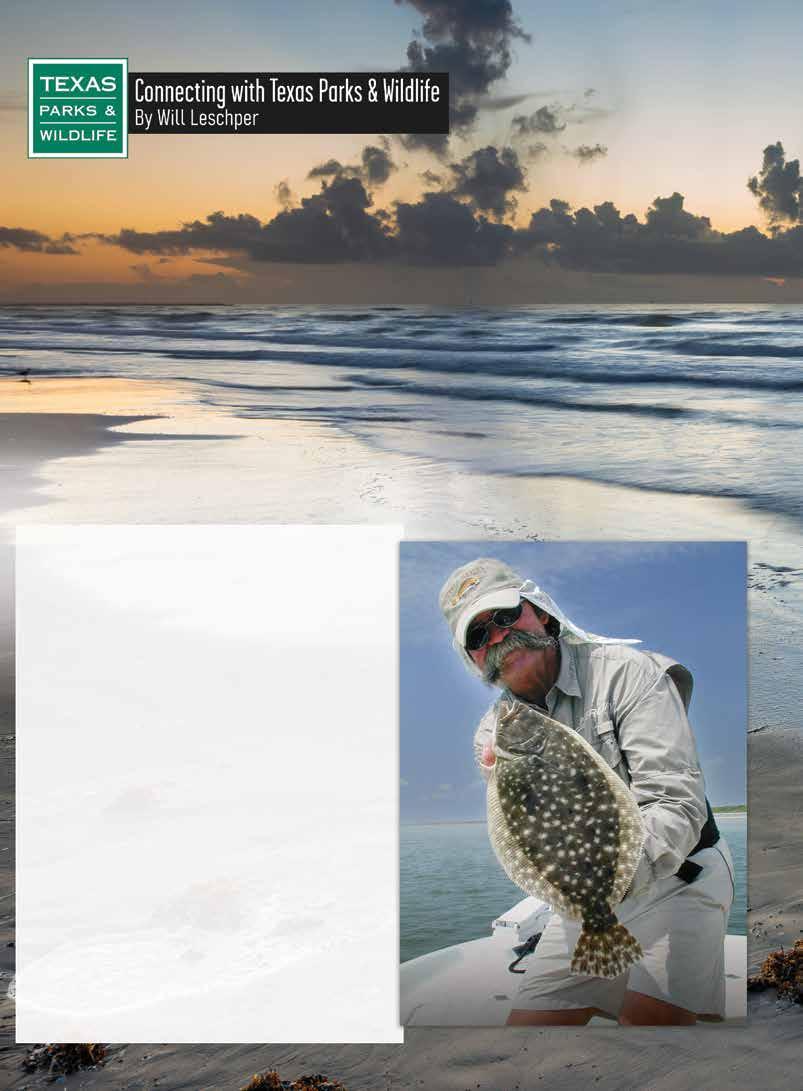
The Texas flounder fishery has certainly seen better days, and it’s uncertain if we’ll ever see the “good-old days” again.
As with speckled trout and redfish, the flounder fishery along the Texas coast has seen many ups and many downs, with ebbs and flows in between. As a result, the Texas Parks and Wildlife Department has enacted numerous alterations to flounder bag and size limits and season frameworks during the past 20 years.
In 2006, the possession limit for both recreational and commercial anglers was made equal to the bag limit. That move was aimed at the practice of “double dipping,” in which an angler could catch a limit of flounder in the hours preceding midnight and then catch another in the hours right after the start of a new day. That had been a practice for some anglers who fished by gigging, a highly efficient way of targeting flounder at night using lights and a multi-pronged long pole.
In 2009, TPWD lowered the daily bag limit for flounder for recreational anglers to five, with a two-fish bag during November. The commercial bag limit also was lowered to 30, with a two-fish bag during November. Gigging was also banned during November. At the time, TPWD cited data showing the relative abundance of flounder had fallen by about 50% since the early 1980s.
In 2014, TPWD moved to extend the two-fish bag limit for recreational and commercial fishermen from Nov. 1 through Dec. 14, a period at the height of the annual flounder spawning period. The entire fishery was later closed by TPWD during that time frame annually and no fish may be kept, which continues today.
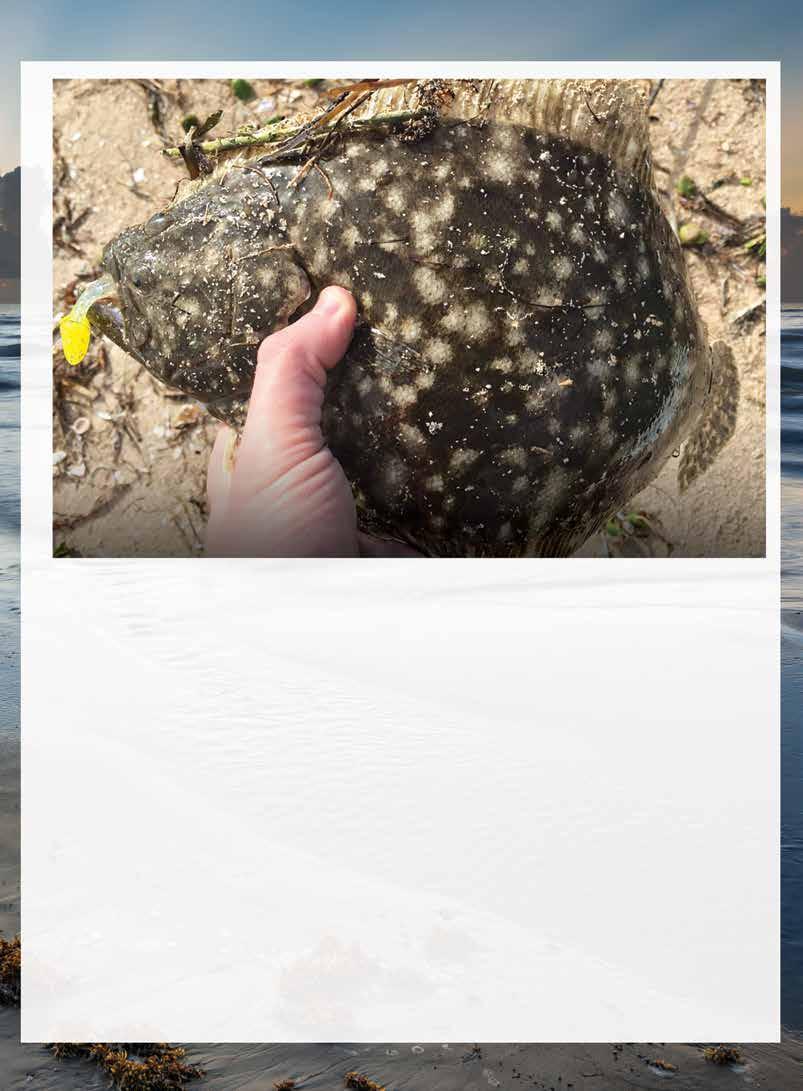
TPWD data collected during creel surveys during the past two decades also has shown an interesting long-term trend that highlights just how much the flounder fishery has been affected by declining stocks. During the part of the year with a fivefish bag limit, roughly 90% of anglers keep only a single fish, according to TPWD’s surveys, while less than 2% of anglers keep their full five-fish bag limit. During the part of the year with a two-fish bag limit previously during the fall and winter flounder run, about half of anglers kept one fish on average, while about 42% kept their two-fish bag limit.
TPWD creel-survey data also has shown an interesting trend on the flounder hot spots, which should come as no surprise. According to the figures collected by biologists, about threefourths of the recreational flounder harvested come from Sabine Lake and Galveston Bay, with other bays accounting for less than 6% each. On the commercial side, Matagorda Bay accounts for 24% of landings, with Corpus Christi Bay at 23%, Aransas Bay at 20%, and Galveston Bay at 17%, according to TPWD reports.
Another round of studies conducted in the early 1990s and mid-2000s by TPWD also points to the fact that gigging remains the prime way to fill flounder limits, a phenomenon that’s currently being researched further by scientists at the Harte Research Institute in Corpus Christi. According to the TPWD studies, nighttime landings could account for up to 90% of all flounder landings in some regions during the spring and fall months.
Flounder are strange creatures, ranging simply from their distinctive look to a more in-depth glimpse at their life cycle, which requires that specific conditions be met for optimum population growth.
Flounder migrate from bays and estuaries to the deeper Gulf of Mexico to spawn each fall and winter after reaching maturity at two years of age. Females can spawn more than a dozen times each season, according to TPWD, and at 14 inches in length, roughly half of female flounder are sexually mature. Raising the length limit to 15 inches was done by TPWD to maximize the amount of spawning seasons a flounder could undergo, with roughly 80% to 90% of 15-inch females being fully mature.
After their eggs hatch, flounder larvae are symmetrical, with eyes on both sides of their body. As the flounder grows, the right eye migrates to the left side of its head. When the flounder reaches half an inch in length, the eye has finished its migration. The juvenile flounder then drift back into bay and estuary areas, seeking lower-salinity water in the spring, according to TPWD. The peak spawning time in fall and winter coincides with lower water temperatures in the Gulf. Flounder larvae thrive at water temperatures in the lower to mid-60s, and the timing of the “flounder run” highlights just how important the role Mother Nature plays in survivability.
Continued on page 121

BY GARY ROBERSON
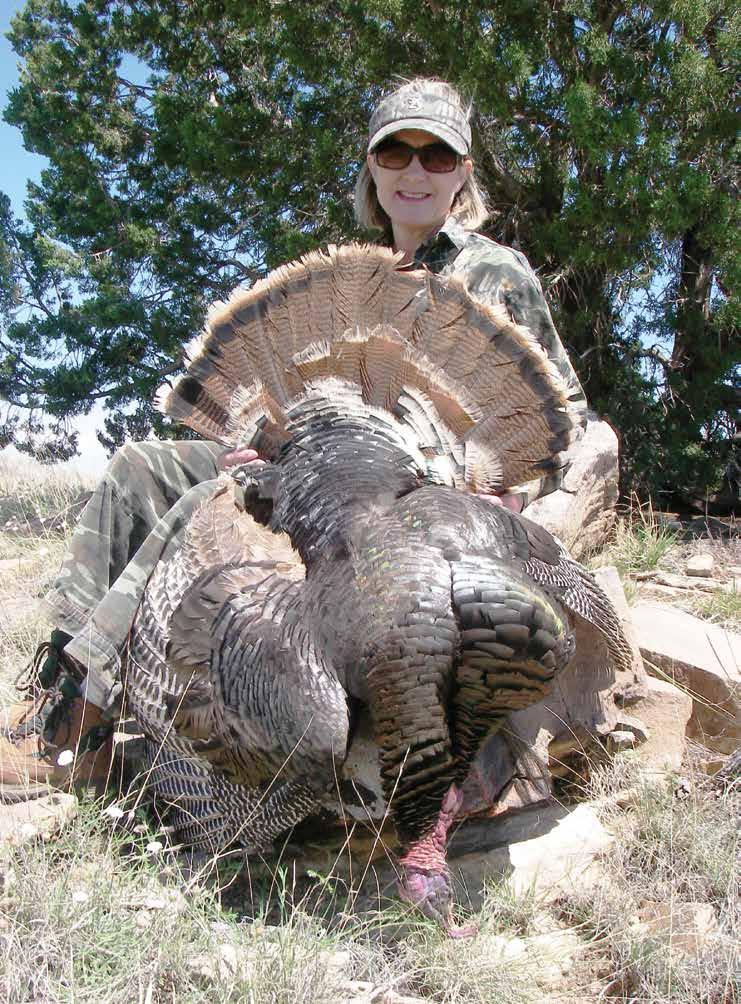
Growing up on a ranch in southern Medina County, it was rare to see wild turkeys. The drought of the 1950s and a heavy predator population of both four- and two-legged variety had all but wiped out the local turkey population. I can remember my grandfather, in cooperation with the Texas Parks and Wildlife Department, making several attempts to restock the birds with limited success.
Finally, in the mid to late ’60s, the turkey population began to increase and sightings became fairly commonplace. Our ranch was spring and summer home for the birds, as they would migrate to Hondo Creek to roost in the taller timber over running water in the fall and winter months. In those days, there was only a fall season that ran concurrent with the deer season. If we were to have a turkey for Thanksgiving, we would have to get a bird early in the season because the cold weather would move them west.
I killed my first turkey when I was 11 years old. A small group of mature gobblers had become addicted to the corn I was scattering in my attempts at luring a buck and missed the seasonal migration. Because I was deer hunting, I had my Savage Model 99 in .243 Winchester, and I knew that it would make a terrible mess of the bird if I shot it in the body. I can still remember trying to shoot the turkey in the neck as he was pecking at the corn. There must have been a little divine intervention, for after recovering from the recoil, there was a big gobbler flopping in
Editor’s note: Back by popular demand, here’s a good one from our archives. Enjoy.
the sendero.
I jumped from the blind, leaving my rifle, and sprinted to the bird that I was sure was going to escape into the white brush thicket. By the time I got to the bird, he was laying face down and motionless. I proudly grabbed his legs and raised him off the ground to admire my trophy. It was at that time chaos ensued. The bird started flapping its wings, beating me severely about the head and shoulders. At 60 pounds, I was grossly outmatched, but there was no way that I was going to turn my first turkey loose. Since I was obviously losing the match, I decided to resort to a ground game in an attempt to reduce the wing beating that he was giving me.
I released my grip on one of the legs just before hitting the ground so that I could make a move for his neck. Landing on top on the vicious creature, my move was successful, or at the very least somewhat successful. I had a leg in one hand and a bloody neck in the other, control on both ends. While the bird was obviously not going anywhere, the flopping was stirring up so much dust that I was about to choke. Releasing the leg, I got astride of the bird, lying across both wings until the flopping stopped. Since that day, killing a turkey seems to have gotten a little easier, or at least the recovery has.
No matter what you’re hunting, success is generally better where there’s a good population of what you are chasing. My home county
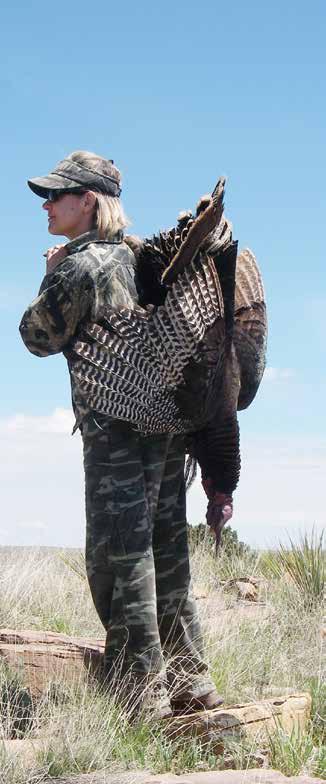
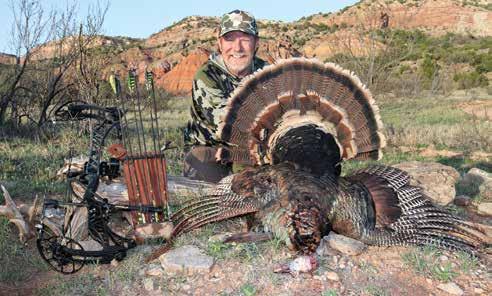
Gary says he thought the hen yelped and called the gobbler to her when she was ready to mate, but it turns out the exact opposite is true. He learned the tom gobbles and struts, luring the hen to him. If you hear a tom vocalizing, chances are he does not have company and is attempting to call a receptive hen. A gobbler stops calling when he’s strutting around hens.
of Menard designated itself the “Turkey Capital of Texas,” and since I began hunting there, my success has greatly improved. Living and hunting in “the capital” for nearly 25 years has given me the opportunity to call and study the habits of countless
wild turkeys. While I have never won a turkey-calling contest, I seem to have pretty good success by relying on what I know about the habits of Rio Grande turkeys. Here are a few simple tips that might help you bag a gobbler this spring. Scout the area that you plan to hunt. Find out where the birds are roosting and the direction they go when leaving the roost. If there’s one reason for my success when calling turkeys, this is it. Being set up in the direction of where a gobbler wants to go naturally makes me a better caller.
Know where birds are feeding, watering, and loafing (shading up in the heat of the day). Being familiar with drainages, fields and fence lines (net wire) is extremely important. Net-wire fencing has cost me more birds than anything else that I know. For some reason, a bird that’s trying to get to a lovesick hen forgets how to fly over the many net-wire fences that he crosses on an almost daily basis. If you hear a gobbling tom, get in the pasture with him. If he’s in the neighbor’s pasture, set up at least 100 yards from the fence line so that the bird will feel comfortable pitching over the fence without landing on the source of the calling.
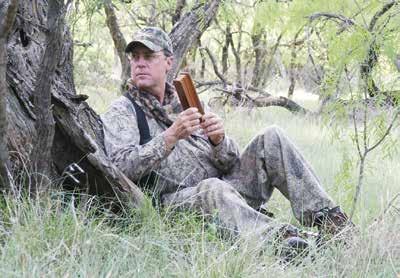
Use several different calls. When calling Hill Country birds, I have found that I have greater success when sounding like more than one hen. For this reason, I carry a variety of mouth calls, a couple of box calls, and a slate that’s my favorite “go-to” call when I get a bird within 100 yards or so. I prefer a slate for close-calling situations, because it’s easier for me to softly yelp, purr, and cluck—all good finishing sounds.
Use loud sounds to locate birds. One of my favorite calls is a coyote howler. It’s a loud call; and the louder the sound, the greater your chance of getting a response. While some would argue that a coyote sound might spook a turkey, I have never seen this occur. Hooting like an owl is a popular sound to locate birds on the roost, and the caws of a crow can be very effective during the day. The problem with driving pasture roads and yelping to elicit a gobble is that many times a tom will be too close when he responds. The bird will gobble and respond to what he thinks was a hen, only to find a pickup and a hunter scrambling for his gear and shotgun.
Several years ago, the late Bob Dixon of Mossy Oak and I were hunting southwest
of Menard. I knew that there were at least 20 gobbling birds roosting along a drainage ditch because we had heard them that morning. It was a strange afternoon, and the birds were simply not vocalizing, though conditions seemed excellent. We walked and yelped, walked and howled, walked and cawed like a crow until nearly sundown without hearing so much as a peep. Bob and I finally stopped, looked at each other, and scratched our heads. What happened to all the turkeys that were here earlier in the day? Had we, or some other predator, spooked the birds away from the roost area?
As we contemplated our next move, a guard donkey on the ranch to the north began to bray. Then its braying set off every gobbler within earshot and suddenly, there were toms shock-gobbling in most every direction. I looked over at Bob and said, “I wonder what the Hootans would take for that burro?”
Don’t be afraid to try something different. While 99% of the calling sounds I make are hen sounds, I have on occasion gobbled at really dominant birds to get them within shotgun range. Wild turkeys are similar to chickens in that they have a pecking order. The more-dominant birds do most of the breeding, and for that reason, are the most difficult to call. If a bird hangs up, strutting back and forth, try gobbling back to him. If he’s at the top of the pecking order, chances are pretty good that he will come looking for a fight.
For years, I thought that the hen yelped and called the gobbler to her when she was ready to mate, when it turns out the exact opposite is true. In actuality, the tom gobbles and struts, luring the hen to him. If you hear a tom
Gary says don’t be afraid to try something different. While 99% of the calling sounds he makes are hen sounds, he has gobbled at really dominant birds to get them within shotgun
range. Wild turkeys are similar to chickens in that they have a pecking order.
vocalizing, chances are he does not have company and is attempting to call a receptive hen. As a rule, a gobbler stops calling when he’s strutting around hens.
Be patient. Like my turkey-calling mentor Bruce Brady would say, “We’re just going to have to wait our turn.” What Bruce meant was that as long as the gobbler was messing with his hens, he was not going to pay any attention to our calling. Once he bred the hen or hens and they moved away from him, he would be more receptive to calling.
Aim your shotgun at the bird as if you were shooting a rifle. A shotgun with a turkey or extra-full choke produces a very tight or small pattern. I try to kill the bird outside 20 yards, if possible. Remember: the closer the target, the smaller the pattern. Aim at the turkey’s neck just below the head because most of the shot is in the upper part of the pattern.
While I have killed several turkeys beyond 50 yards with my 12-gauge shotgun and 3-inch Magnum shells, this is my comfort zone. I know that others have their own ideas, but my favorite shot size is No. 5, though it’s more difficult to find.
If my memory serves me correctly, the first spring turkey season in Texas was in 1975. Since that time, turkey hunting has continued to grow in popularity. There is an old song, “T for Texas, T for Tennessee.” But as participation in spring turkey season grows, the folks in this part of the state say that “T” is not for Tennessee; “T” is for turkeys, and they welcome the economic impact that the spring season brings.

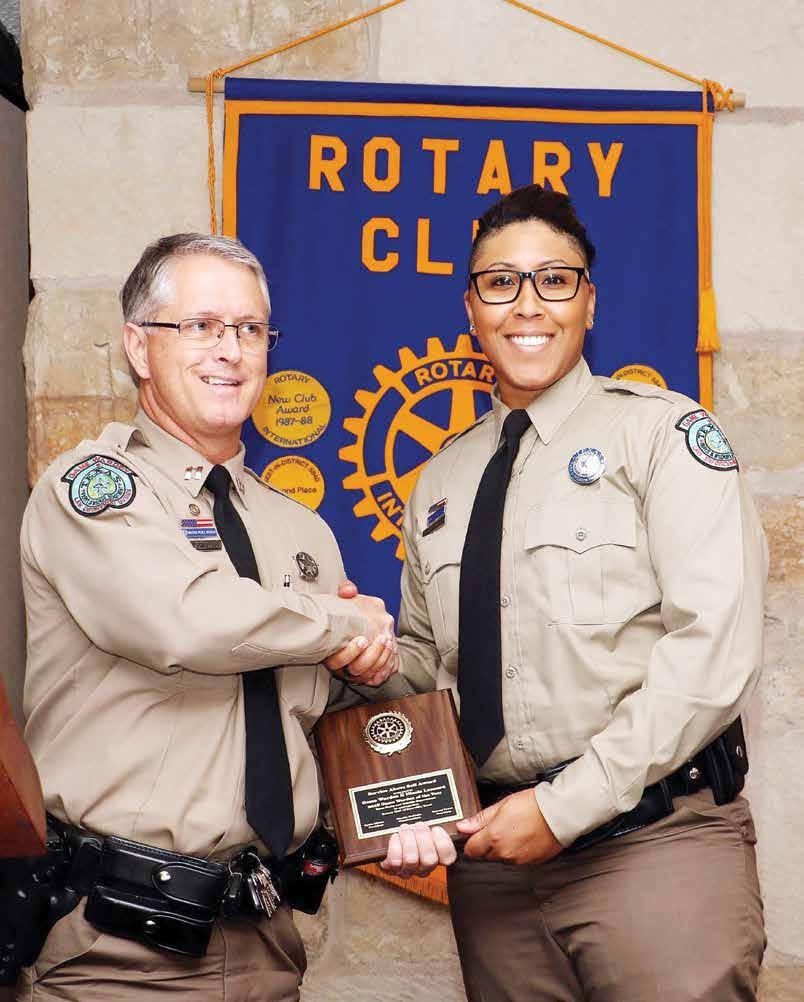
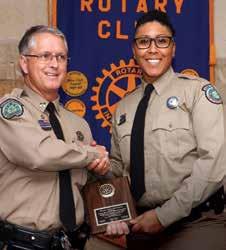
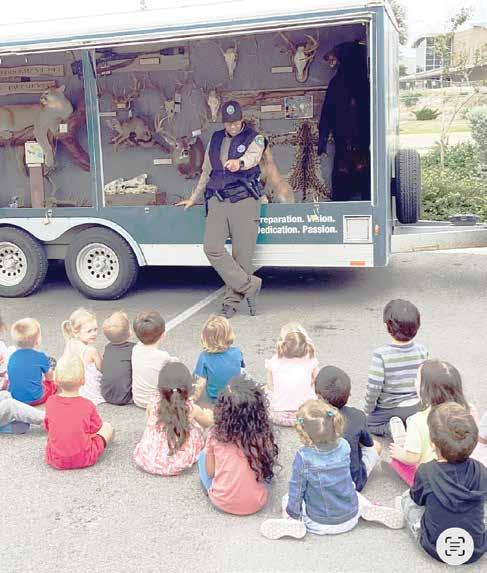
ATexas Game Warden’s job can be thankless at times, as well as both necessary and quite rewarding to those choosing this profession. One such lady experiencing all that comes with being a Lone Star game warden is Nicole Leonard.
Known to most as Coley, being a game warden wasn’t always in her career plan. She began coaching basketball as a graduate assistant basketball coach at Sam Houston State University while studying for a master’s degree in security studies. While at Sam Houston State, her boss/head coach introduced her to a Texas game warden.
Subsequent ride-alongs with game wardens piqued her interest because Coley had always loved the outdoors. Seeing how game wardens worked with the public, performed community service and protected natural resources, coupled with her law-enforcement studies, Coley applied to and enrolled in the Texas Game Warden Academy.
Graduating in June 2011, Coley was assigned to Comal County, known far and wide for its famous towns, New Braunfels and Gruene. The beautiful Guadalupe River spills into and out of Canyon Lake, winding down into San Antonio Bay. In 2017, Comal County was listed as one of the 10 fastest-growing counties in the nation. Its population continues increasing daily.
“I’ve spent my entire 14-and-a-half years here,” Coley said, adding, “I don’t think I’d rather be anywhere else. I love my job, my assigned area. We may be given temporary assignments or deployment to other areas when necessary, so it’s interesting to visit different state areas.”
Most every game warden has performed border patrol duties as one time
BY JUDY JUREK
or another. Depending on the various hunting and fishing seasons across our great state, one may help other wardens in their specific area, their subject season.
When queried if something stood out in her memory about being a warden, Coley replied, “There are several, but I remember my first dove season, very first
weekend. Another warden and I worked a party hunting over bait. We wrote 15 to 20 tickets. I don’t recall the exact number, but it was a lot and most memorable as one of my first contacts with the public as a game warden. Don’t hunt over a baited field. It will cost you!”
Asked about something she dislikes about being a warden, Coley responded, “I’m not a fan of jumping on boats in the Gulf. It’s different on the lakes and riv-
ers. That doesn’t bother me, but it’s just something about the ocean.” When this writer said she doesn’t like not being able to see land when boating, Coley said, “That is part of it!”
“The diversity of my job is what keeps it so interesting to me. There’s never a routine,” she said. “You never know day to day what the next call may throw at you — good or bad. It’s a big challenge, plus, it’s also about earning respect. You deal with just about anything and everything, including all types of people.” With a chuckle, she quipped, “Your patience may be tested by some!”
Water has always appealed to Coley, and she thoroughly enjoys every moment doing river and lake patrols. Naturally warm summer months provide the most activity engaging with the public, but even cold days can put people on the water, or at least its edge. Checking fishing licenses, boating registration with required safety items, fish size and bag limits are but a few items checked by game wardens.
As part of proper licensing, Coley and other wardens check that boat operators and hunters have taken mandatory boating or hunting safety courses according to their birthday. A boat operator includes personal watercraft (PWC).
Fall brings on the first hunting sea-
sons, with dove being the most popular followed by whitetail deer hunting. Comal County, like many others, has antler restrictions for harvesting bucks, and many times brings a call to a game warden about a “mistake” buck not meeting requirements.
Many wardens often say ignorance of the law is no excuse. It’s the responsibility of a hunter, fisherman, or boat operator to learn and know the laws pertaining to the sport they pursue. Encountering a game warden is not really the time to learn, although they’ll most certainly educate you on the spot. “Educating the public is a big part of our job,” Coley said.
Besides her basic duties, Coley is part of the Texas Game Warden State Forensic Reconstruction and Mapping (STORM) team. She helps investigate serious boat accidents and fatalities to determine the cause with reconstruction evidence.
“Every incident is different,” she said. “Some are more easily put together than others, based on possible witnesses, survivors, damaged vessels, etc. It can be gratifying, yet sometimes heartbreaking. It gives me much satisfaction to be a small part of concluding a sometimes unfortunate, often avoidable, event.”
A favorite part of her game warden duties is speaking to school students of all ages. Many times, she’ll have the Opera-
tion Game Thief trailer to enhance her talk. “It’s fun,” she said. “Many students have never been exposed much to the outdoors and our state’s wildlife despite living here in Central Texas.”
Sometimes a year later she may talk at the same school again, with some of the same students being more knowledgeable than the previous year. “The fact I was able to interest them somewhat into learning more about the outdoors and wildlife is fulfilling to me,” she said.
Coley is the mother of two young sons, Jaxon, almost 5, and Colton, 21/2. There’s an Australian shepherd thrown in the mix, too. “They keep me on my toes,” Coley said, adding, “I think they are beginning to understand what Mom does. We try to spend as much play time as possible outdoors. They sometimes attend public events I work. They always learn something. I’m proud of my boys.”
When asked about her favorite part of being a game warden, Coley didn’t hesitate. “Overall, I enjoy educating the public about safety and resource management,” she said. “I like engaging with people when they are out enjoying the outdoors with their families and maybe enjoying new outdoor activities like boating and fishing. We are making sure people make it home safe at night and that is rewarding.”
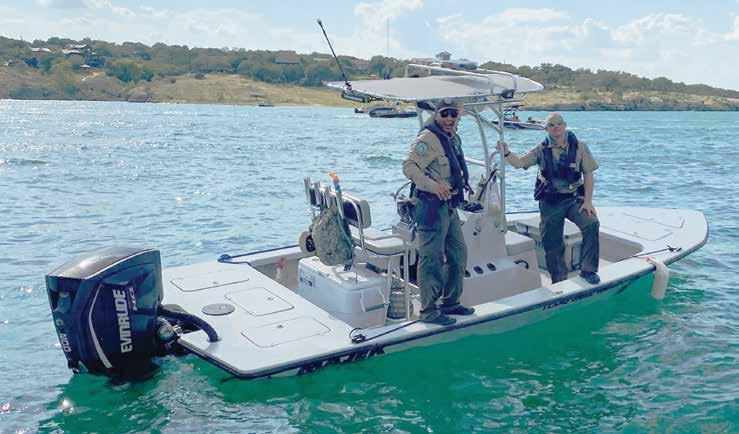

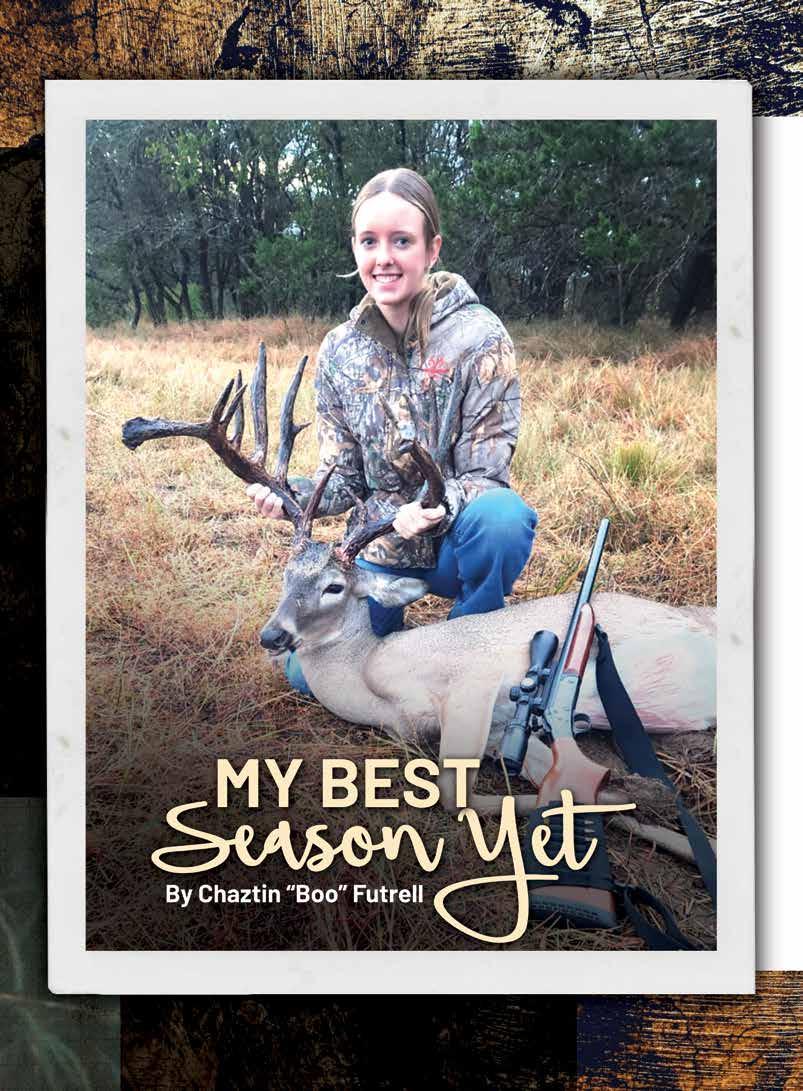

In the 2024-25 season, I had one of the best experiences of my life. This season, I had one even better. It’s hard to put into words what hunting means to me, but every time I go into the field with my dad, I feel the excitement, my nerves, and the quiet, all at the same time. It’s like everything in the world slows down, no schedules and no stress, and all that matters is the quiet wait for that deer to walk out.
Last season, we went to the stand on the river to try to get a deer. My older sister had already got a deer, but I had not seen anything ready to take. We’re on a 250-acre lease in the Texas Hill Country that has been good to us. We have seen axis in years past, nice bucks and does, lots of wild pigs, and even an occasional fallow deer.
That day, we decided the river blind might be best with the way the wind blew that evening. My dad, Breck, and I had been looking through binoculars. Then, out of nowhere, an aoudad walked out. I was like, “What is that?” I wasn’t even expecting to see that. A huge ram weighing more than 200 pounds walked out. He finally got within range. I got my gun ready, took a deep breath, and squeezed the trigger. The shot felt good, around 90 yards, but the ram ran away. I thought I’d missed. My stomach dropped, and I felt that awful sick feeling. Dad said, “Let’s go check because you hit him.”
We followed the trail down to the riverbank, and sure enough, we found him on the edge of the water. I took a perfect shot after all. I can’t even describe how I felt when I realized I had done it. The aoudad was even bigger up close, with a long, shaggy mane and thick, curled horns, but man what an awful smell.
Dad gave me a huge smile, and then we thought about how we would get this guy back up the riverbank. Thankfully, we had a winch on the hunting Jeep to drag it up the side. My first aoudad with Dad is something I’ll remember forever.
In the youth deer season, I thought there was no way I could top that aoudad hunt. But I was oh, so wrong! I’ve
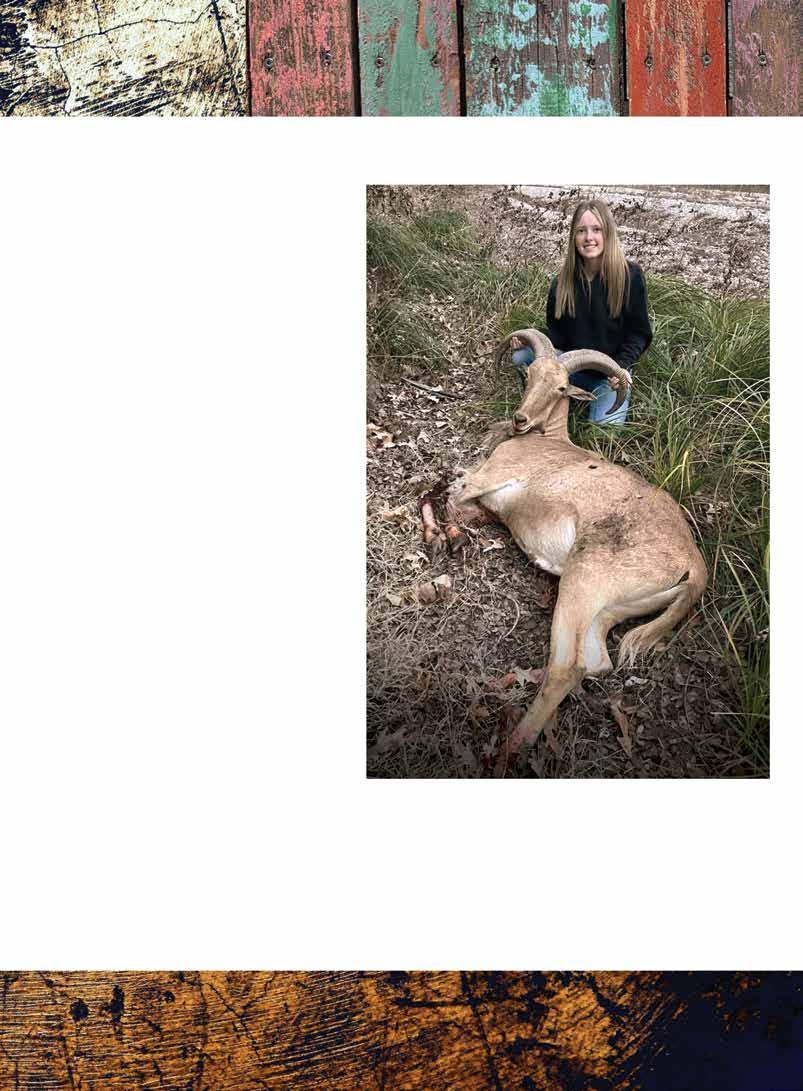
taken a few nice bucks before, but nothing close to what I would see. The night before youth weekend opening, our trail camera had picked up a huge buck, a typical 14-point with a kicker off one of his G-2s.
When I saw that picture, my heart almost stopped. We were all in disbelief, thinking no way it’s real. We all thought someone was messing with Dad’s camera. We had already planned to be in the stand the next morning, but now we
would go, rain or shine. Dad joked, “We are going regardless, unless there’s a tornado touching the ground.”
So that night, I got all my hunting clothes ready, my camo jacket, and the Harrington & Richardson .243 that fits me just right. I barely slept. I kept replaying the picture of that buck in my head, wondering if I’d actually get to see him. Before the sun came up, Dad and I climbed quietly into the oat field stand. It was cooler that morning, which was good for the deer. Dad grabbed the binoculars to take a look and said, “Yep, I think that’s him.” It was barely light, and I told Dad, “I’m not even going to look yet.” My adrenaline and nerves were kicking in, and Dad said, “Let’s wait 10 more minutes until it’s a little lighter, and if he’s still there, you can try and put him down.”
Ten minutes went by, and we could see it was the buck with a doe. I watched them through the scope, trying not to move too much. He was in the perfect position for me to get a shot. He was the biggest buck I’d ever seen.
Even from 120 yards, I could tell it was the same one from the camera picture. I put my head down on the stock, and Dad said, “What are you doing?” I told him, “Praying.” I took a deep breath, and found the buck in my scope, already standing broadside, and I slowly squeezed the trigger.
The sound echoed through the pasture, and I saw him kick and run. He was down. Dad said, “You smoked him!” We waited a few minutes, then left the stand to go look.
The whole walk towards the deer, I could barely breathe. When we found him, I couldn’t hold back the tears. He was absolutely massive, with tall tines, close to even sides, and that little kicker off his G-2, just like in the picture. I knelt beside him, crying the whole time from all the emotions.
It’s hard to describe how happy and blessed I felt that morning. It was the most emotional moment I’ve ever had in the field. Dad gave me a hug, and said, “That’s the deer of a lifetime right there, kid.” And he was right.
what it means to be part of something bigger than just pulling a trigger.
Hunting isn’t about killing, it’s about connecting. It’s about being still, being grateful, and learning from every experience, even the hard ones. There’s something special about being out there in God’s country. I’ve learned success in hunting doesn’t just come from luck, it comes from respect for the land, for the animals, and for the people who teach you along the way.
I don’t know what next season will bring, but I do know one thing, I’ll be ready. I’ll keep practicing with my .243, keep checking trail cameras, and keep learning everything I can.
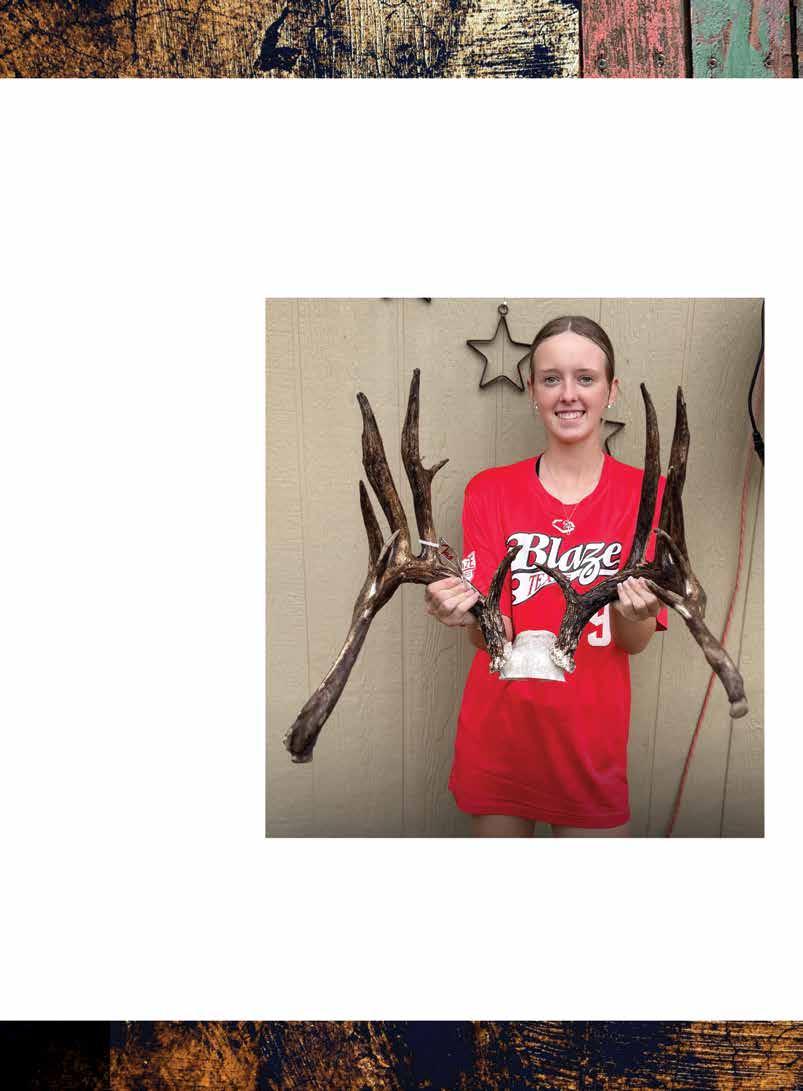
Even though Boo took such a fine buck, she cherishes the values she’s been taught about hunting: being still, being grateful, and learning from each experience.
I don’t think I’ll ever forget that moment, not because of the deer, but because of everything it represented: patience, practice, respect for the animal, and the hunting bond I have with Dad. Both of those hunts with Dad, the aoudad and the big buck, taught me so much more than just how to shoot. They taught me about patience, about trusting myself, and about
Maybe I’ll never top that 14-point buck, and honestly, I’m okay with that. Because for me, hunting isn’t about trophies, it’s about memories. When I think back on that aoudad down by the riverbank and that big Texas buck on a cool fall morning, I feel nothing but gratitude. Those hunts remind me how lucky I am to have a dad who teaches me, to live in a place where we can hunt, and to know what it feels like to truly earn something. This has been my best season yet!
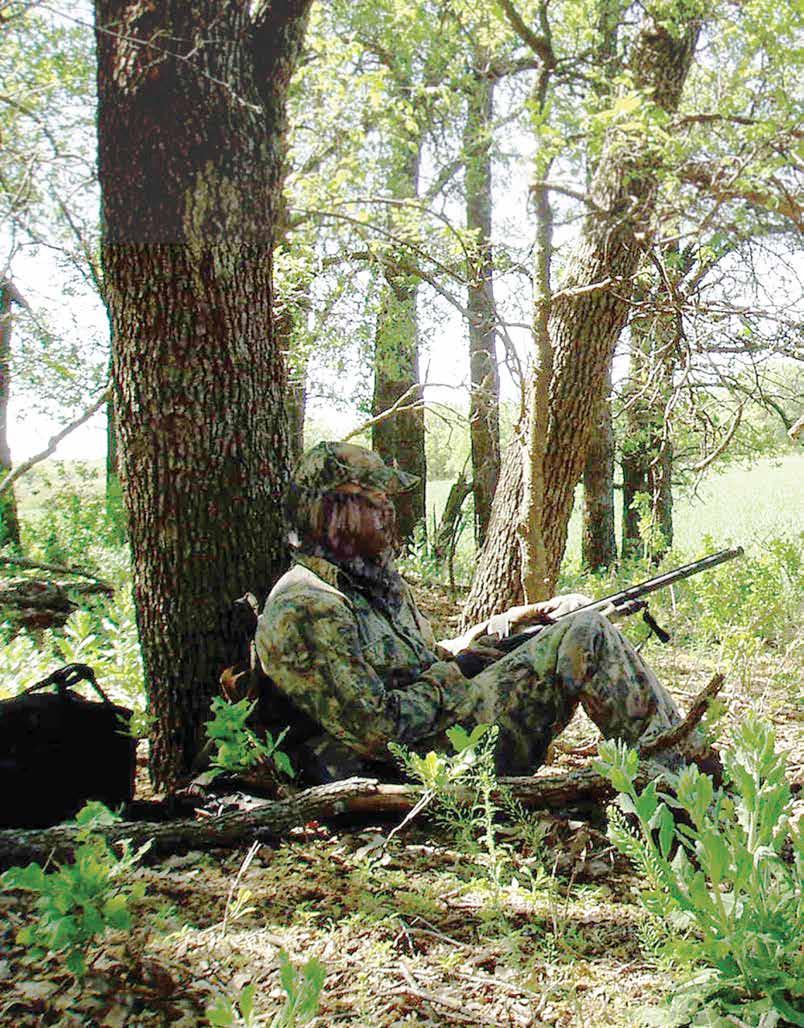
BY WILL LESCHPER
South Texas has a way of getting under your skin.
Maybe it’s the scent of crushed mesquite in the morning or the sight of a bronze redfish tail piercing a glassy flat at noon. For outdoorsmen and outdoorswomen, this treasured piece of the state offers a rare kind of springtime alchemy: Rio Grande turkey gobblers thundering in the brush country
and redfish prowling Gulf Coast bays and marshes — both within a day’s reach and both at their seasonal peak.
This is a place where a hunter can chase gobblers at sunrise and trade camo for wading boots by lunchtime. It’s a place where feathers and fins coexist in a rhythm uniquely South Texas.
Here’s a look at the most sporting
and true feathers-and-fins doubleheader in the Lone Star State.
Gobblers in the brush country
South Texas turkey hunting isn’t just a pursuit — it’s a mood. The mesquite thickets, prickly pear clusters and oak mottes give the region a rugged, almost cinematic backdrop. Rios thrive in this landscape, traveling in large, loosely
organized flocks that can test a hunter’s patience and skill.
For the serious turkey hunter, the day begins well before fly-down. Predawn scouting is essential: map out roost trees, note mid-morning loafing spots and pay attention to the subtle travel routes cutting through the brush
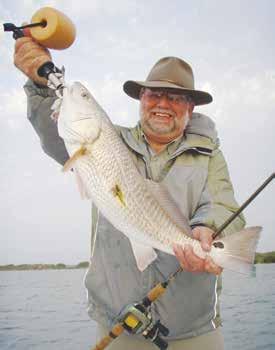
Above: Redfish are equal-opportunity gourmands and will take a variety of live and dead natural baits.
Left: Spring turkey hunting brings with it its own distinct ambiance. Setting up under a large tree can be the easiest way to wait for a mature tom.
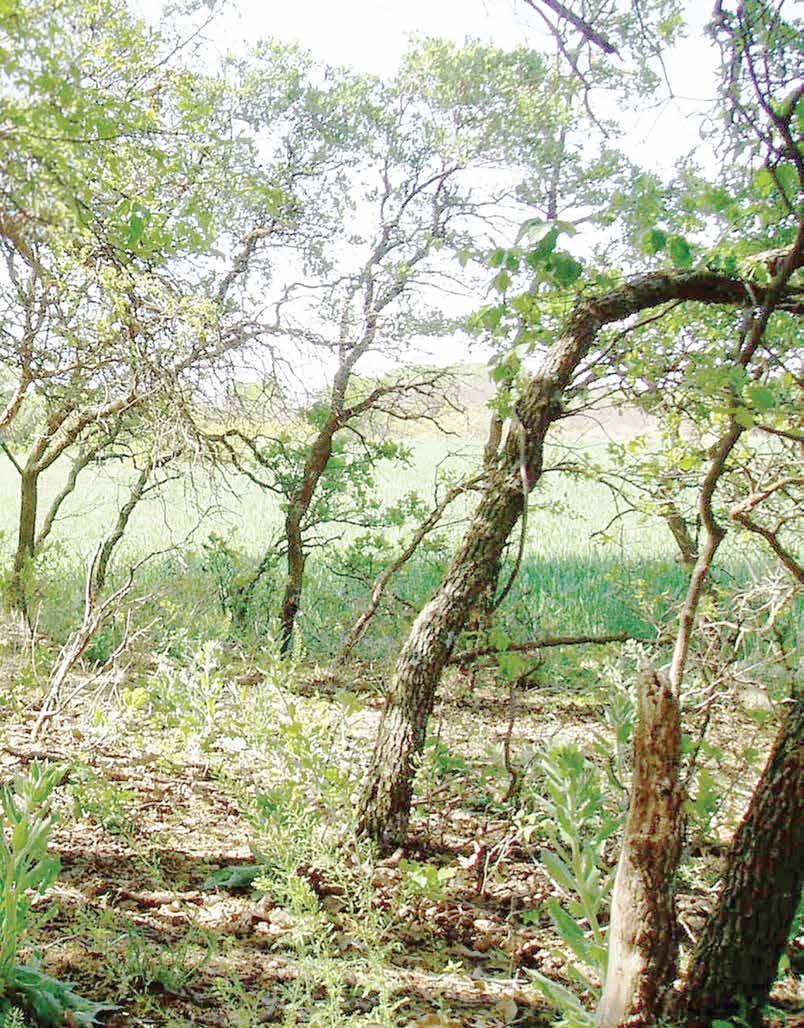
— often visible only as faint game trails or worn senderos. These are the lines Rios use to connect food, shade and water. Find these and you’ll find the birds.
Calling with purpose
South Texas birds respond well to calling, but they demand authenticity. Subtlety beats volume. Soft clucks
and yelps, mixed with long stretches of silence, often outperform aggressive cuts. Decoys — especially a lone hen or a hen with a jake — can provide that last nudge often needed to pull a tom out of a group and into range.
The payoff
For many hunters, the magic lies in the approach: a distant gobble grow-
ing louder, glimpses of a fan weaving through the brush, the final steps as a tom stretches its neck in search of the hen it thinks it hears. It’s a moment of pure adrenaline, and in South Texas, it’s a moment that happens with reliable frequency.
When the morning sun climbs high and the gobbles fade, the call of the coast becomes irresistible. Just a short drive easterly from the brush country, the bays around Rockport, Port Aransas, Corpus Christi and the legendary Laguna Madre come alive with redfish activity.
Redfish are creatures of structure and movement. Successful anglers understand the signs: tailing fish feeding in ankle-deep water; push wakes rippling the flats; tidal drains funneling baitfish; and grass flats and potholes forming natural ambush points.
This time of year, clarity is king, and the crystal shallows of the Laguna Madre and other bay systems make sight-casting in skinny water not just possible, but expected.
Whether you prefer artificials or live bait, redfish offer almost unlimited options: soft plastics mimic the mullet and shrimp reds crave; topwater lures draw heart-stopping, surface-splitting strikes; popping cork rigs with live shrimp are tough to beat in deeper potholes; and fly anglers can match the hatch with shrimp and crab patterns for a technical challenge unlike any other on the coast.
On foot, in a kayak or from a skiff, the fight is the same — powerful runs, deep surges and the unmistakable pull of a fish built for strength.
Pairing turkey hunting with redfish angling isn’t just a two-sport day — it’s a celebration of what makes South Texas special. It’s the contrast between the dry rustle of brush and the soft hiss of a coastal breeze. It’s swapping a box call for a spinning reel. It’s the satisfaction of tagging a strutting tom in the morning and sliding a copper-bright redfish into your hands before sunset.
For travelers, photographers, guides and seasoned outdoorsmen, this is one of the most dynamic combinations the region offers. Feathers and fins. Land and sea. Tradition and adrenaline.
In South Texas, you don’t have to choose. You can have it all — often in the same day. God bless Texas!
Here are recommended equipment options for a South Texas doubleheader trip.
Shotgun: 12- or 20-gauge with a turkey choke (ideally one you’ve practiced with).
Ammunition: Premium TSS (Tungsten Super Shot) or similar loads in No. 6 or No. 7 (these usually all have a boss tom on the box!)
Calls: Slate call, diaphragm and box call for variety or for personal preference; use what you’re good with.
Decoys: One hen or a hen and jake combo.
Camo: Brush- or mesquite-pattern camo, face mask and gloves (snake boots are a good idea if the weather is warm and to deflect thorny vegetation, too).
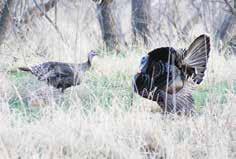
Rod and reel: 7-foot medium-action spinning or baitcasting setup. If you’re targeting the jetties or surf, a longer, heavier rod can be advantageous, especially if the bulls are in.
Line: 10- to 20-pound braid with a fluorocarbon leader.
Lures: Soft plastics, gold spoons, topwaters and shrimp imitations have been the go-to for decades along the entirety of the Texas coast.
Fly setup: 7- or 8-weight rod with shrimp and crab patterns. Tailor your reel to the size of the rod with a floating fly line to keep your offerings from sinking into the grass on skinny flats.
Wading gear: Flats boots or wading boots and polarized sunglasses are essential. If the weather is still cool in the spring and fall, opt for waders to deflect the chill.
March–April: Peak gobbling activity and ideal temperatures make South Texas among the premier destinations in America for spring turkey hunting. The season begins earlier in southern counties each year than those farther to the north.
March–June: Clear water for sightcasting and active feeding. September–November offers excellent bull red action if you’re planning a return trip.
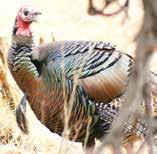

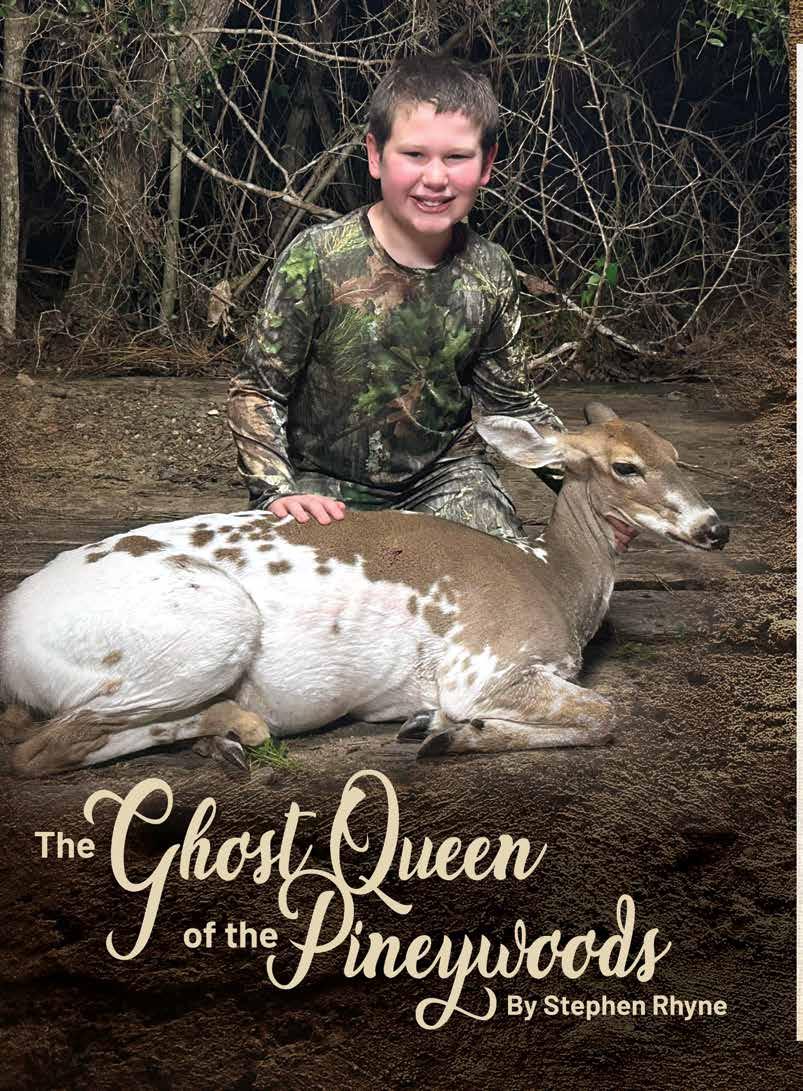
This story dates back to spring 2021, when I joined a lease, and was greeted with open arms. I was invited to a turkey hunt on this particular property, and in the middle of that week, I was asked if I would like to join, because there was an opening. I met my great friend, Julian Howard, for the first time that week, and he gave me a tour of the property.
Immediately upon entering camp, Julian quickly pointed out one particular detail about the club. “She is off limits!” he said. He pointed to a slightly faded photo on the bulletin board of a very special white-tailed doe, a piebald that had been living on the club for what would have been nine years at the time.
Back then, she had only been seen on trail cameras, and never in person by a human eye. A couple of years later, I was lucky enough to capture her on trail cameras multiple times. Until the summer of 2023, I believe photos were all we had. It made me wonder if she really existed or was just a figment of our imagination, or our cameras were just playing tricks on us.
Julian and a couple of other members were blessed that summer with the opportunity to see the doe in a clearcut for a few brief moments. I remember the phone call afterward, and the excitement in their voices, after her first live spotting in 11 years. A couple of months later, she was seen again by a guest on the property, while he was hunting hogs. Since then, she went back to living her hidden and secretive life. I originally named her “Snow White,” but many others referred to her most of the time as “The Ghost.” Either way, she was very smart and extremely aware of her surroundings, being able to stay hidden for all these years, especially
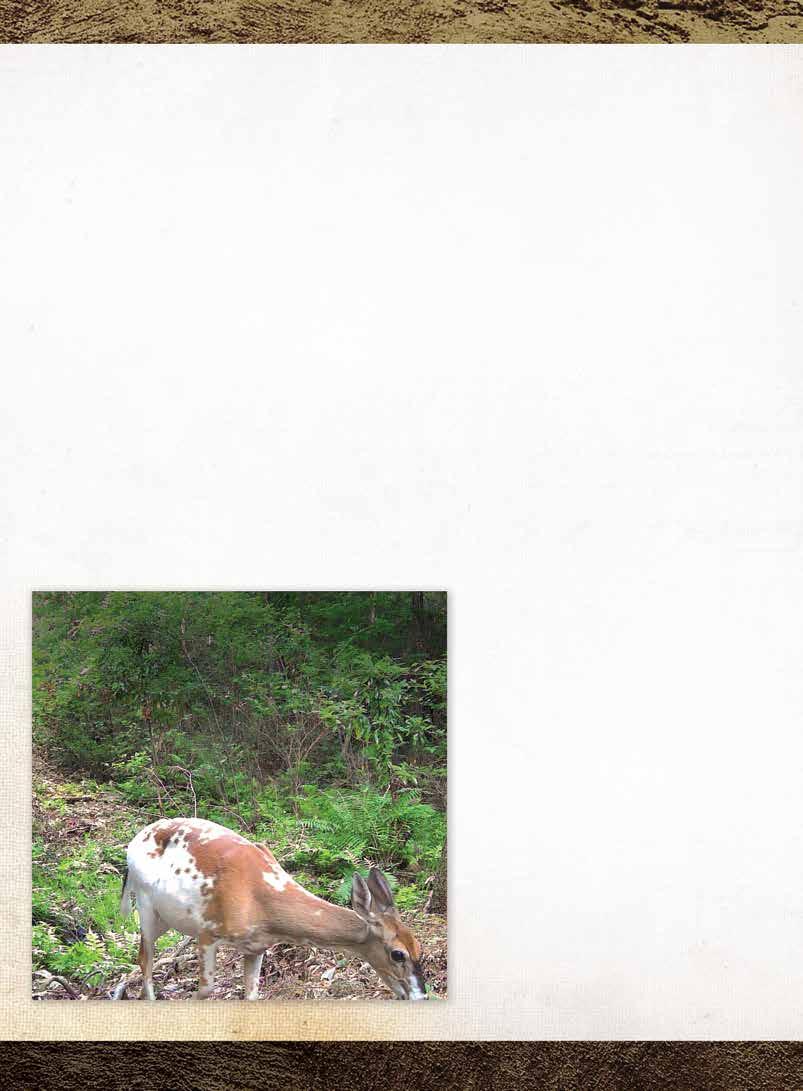
given her unique genetic makeup. That fall, she was removed from the do-not-harvest list because she was getting very old for a wild, free-range whitetail, and many of us believed it would be appropriate to prevent her from possibly suffering in her old age.
However, she didn’t plan on leaving us any time soon, and she went two more years without being seen again. Now, by this time, I had hundreds of videos and photos of her on my trail cameras. I watched her successfully raise fawns in 2024, and I also watched the trail camera footage as she fearlessly protected her fawn in spring 2025. Unfortunately, for unknown reasons, this fawn did not survive. I watched the little one follow her for several weeks and was just as excited as a kid on Christmas morning every time I saw the two of them together. She was a warrior, an attentive momma, and even the raccoons weren’t safe if they lingered around her little ones.
Toward the end of this summer, after picking up a new section on the property, I finally started to pin down some of her travel corridors. I wouldn’t say she was patterned, but I knew I was definitely close to her home range, and I wanted to try and let one of my kiddos have an opportunity to take her. I began the final portion of this journey by spending countless hours of scouting and planning, just to even have the opportunity to see her in person. Two short weeks prior to the season opening, I finally realized I was in the right spot, and it was just a matter of us being patient. Honestly, I never expected everything to truly come together, but I would give it my all.
On Sept. 27, 2025, four o’clock came very quick on opening day of the season. I woke up my kiddos, my son Colt and daughter Heidi, and we headed to the woods. Within 30 minutes of daylight, we saw the doe’s 1-year-old son, a spike she successfully raised the previous year. I have watched this guy lose his spots, develop his first set of nubs, and now his first set of antlers, and he has been with her every step of the way, except the few weeks this spring where she had been trying to raise a new fawn. When he walked out, I just knew we were about to see her, but once again, she had other plans for us. We gave her a couple of hours to show, and decided to head home so I could work for a bit, prior to us heading back out for the evening hunt.
We got into the stand just prior to 5 p.m., and let me tell you, it was hot! We were cooking in that box blind. We tried to keep the windows closed to keep our scent inside the blind, but 90 degrees in a sealed-up blind is brutal. Colt and I took our shirts off, Colt removed the bottom half of his pants legs, and poor Heidi just rolled her pants up. None of us had shoes on either.
We broke down and finally opened one window, hoping to get a breeze, but that didn’t do much. As we approached the last hour of the day,
I told Colt we should suffer through the heat and close the window, because if she were to show up, we shouldn’t let her smell us. Just a short time later, I looked forward and saw two younger does standing at the end of our lane. I knew immediately these were the two does that were always with Snow White and her young son.
At approximately 6:45, it finally happened. I saw a flash of white entering our view. My heart instantly began racing as I realized my two kiddos and I were truly living a once-in-a-lifetime moment, just being able to see her and her beauty. After ensuring Heidi and Colt were both able to see her, the hard work began.
It took us forever, but we were finally able to get a window open. The Tikka .243 Colt’s papaw let him borrow, settled in and out the window. It doesn’t sound like much, but when you have three sets of nervous East Texas doe eyes staring toward you the entire time at only 60 yards or so, this isn’t always an easy task.
But as soon as we were finally ready, she disappeared, and I just knew we were done. Nerves had taken over Colt for the first time I had ever witnessed. He has taken several great bucks, multiple does, and even turkeys, but I had never seen his emotions get a hold of him like this encounter. Both kiddos sat back down, thinking we were done for the evening, but suddenly, she popped out at 15 yards from the stand, headed right back down to where she had been feeding earlier.
Colt quickly got himself back up and prepared, but the doe continually faced straight at him or away from him for several minutes, leaving him standing there shaking and fighting back his nervous jitters. Then, finally, she turned broadside and I heard him ask, “Am I good?” “Yes,” I responded, and the rest was a flash of emotions.
As Colt pulled that trigger, I was honestly left in shock. To see her immediately fall in front of us, I couldn’t believe it was actually real. As I turned to Colt, my heart was filled with joy and love as I for the first time in the woods with him for the past 6-7 years, I saw him cry true, genuine tears of happiness. He was speechless, and I believe the first thing he finally said was, “She’s the bees knees,” with a tearful smile.
He got lots of hugs from his sister and daddy, followed by a couple of quick phone calls to special folks down the street
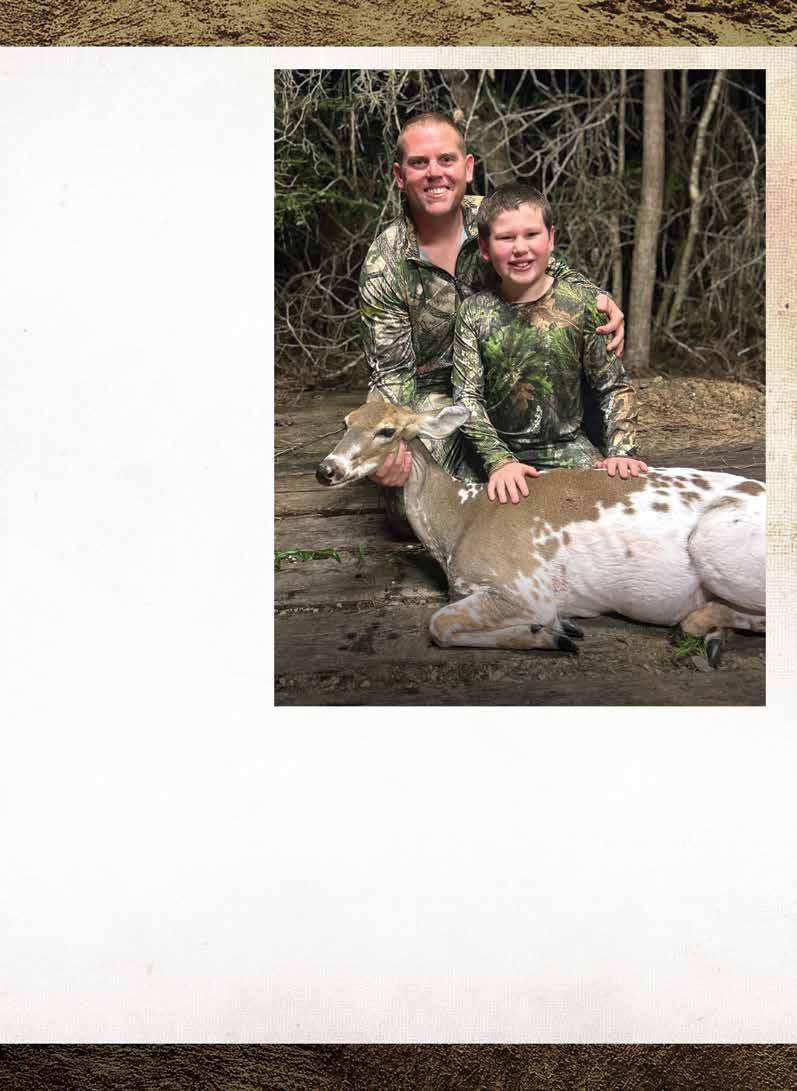
eagerly waiting to hear from us. Even until the moment I first touched her, I still didn’t believe it was real, and I might wake up thinking it was a dream. But man, what a moment my children and I shared in the Pineywoods.
We have been blessed with some amazing memories and adventures through the years. Thank you to everyone who have been there and been a part of this journey. I know some people will disapprove of us taking her, but understand, we have the utmost respect for her and all the wildlife we chase. This is our way of life, just as those in my family before me. Hopefully, my kiddos pass this way of life down to their kids someday, and allow me to continue to experience these wonderful memories with them for many years to come.
This doe was, and is, truly special. A 131/2- year-old freerange East Texas piebald, white-tailed doe. She was my Snow White, she was our ghost, and ultimately, she was a queen of the Texas Pineywoods.


Desert bighorn sheep were historically found throughout the American Southwest and six states in northern Mexico. Within this wide distribution, they were found in most of the available arid and extremely rugged desert terrain. Their reliance on these specific habitat features relegated them to isolated desert mountain ranges, and this spotty pattern of distribution left them vulnerable to decimating factors in the 1800s. After Europeans moved into the southwestern United States and northern Mexico, desert bighorn sheep suffered from intensive overgrazing by livestock, disease, drought, and unregulated killing for subsistence meat.
Of these factors, disease was the most impactful in the disappearance of desert bighorns in many of their former haunts. As widespread wildlife conservation started to be embraced by the public and practiced by professionals, the remaining populations were saved and many restored. Biologists learned what habitat features desert bighorns needed and worked to provide those. As we learned more, we found
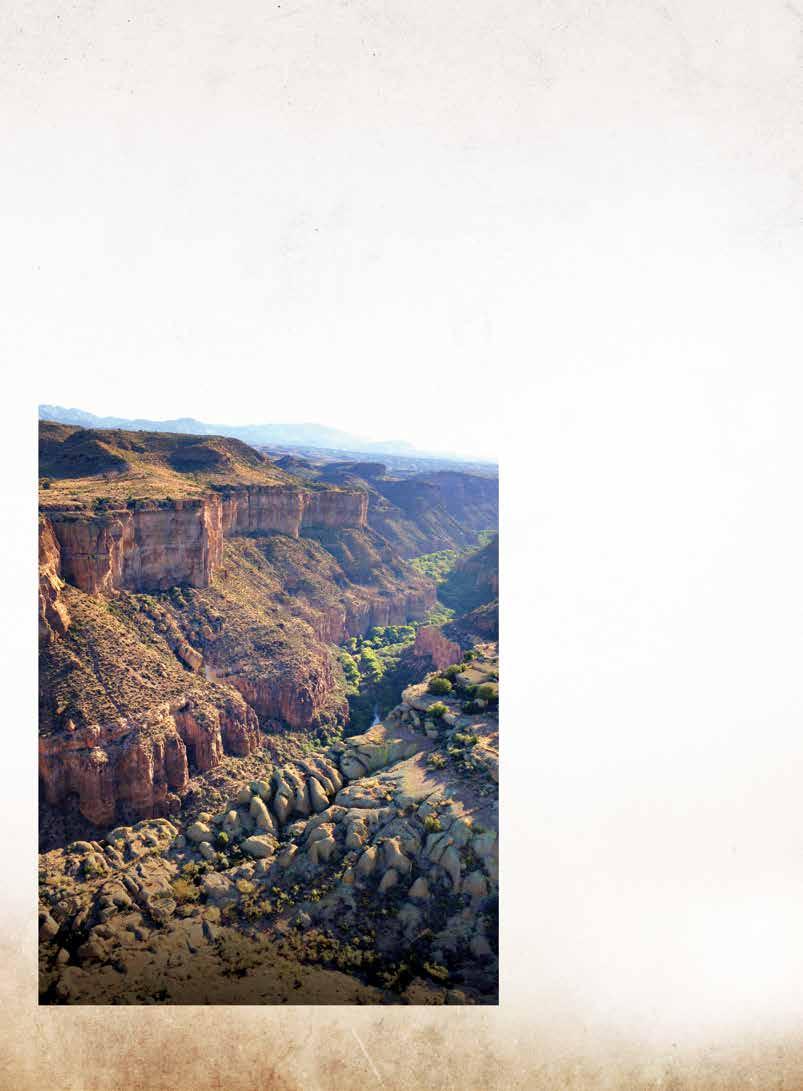
out it was also important to reduce their exposure to domestic and exotic sheep and goat species because of the diseases that got them in trouble in the first place.
It was obvious we could have no wild sheep without habitat protection and no big rams without quality nutrition. Genetics play a role in sheep horn size, but it takes a back seat to good nutrition throughout life so a ram carries that benefit into his older years. Bighorn restoration started with an evaluation of bighorn habitat in all historical and potential ranges. Biologists then used those evaluations to rank them in order of probability of success so they could start to restore the best habitat first. Research informed these evaluations by determining what was more important for sheep and what habitat features led to the most robust healthy wild sheep populations. We now know a lot about what sheep need and continue to work hard to provide it.
The open rocky cliffs are the most iconic bighorn sheep habitat feature. They are quite literally a species that lives on the edge because they have learned to survive in a world of predators. Early indigenous people in the Southwest took a page out of the bighorn’s playbook when they established communities in cliff dwellings to stay safe and watch for danger. Wild sheep need cliffs and ledges nearby to escape predators, especially when they have their lambs and for a couple months after. Evaluations of bighorn habitat use shows they spend most of their time within a short distance of this escape terrain.
Some sheep populations thrive in areas without any known water sources, but water in the desert is important to most sheep. They may not need open water to drink in all months, or even in wet some years, but in the long term, it’s a critical habitat component for populations to persist. During dry periods, water allows animals to spread out and use all available habitat. Research shows that bighorn core use areas are always within 2 miles of a reliable water source. Vegetation often contains water, but when rainfall is below average, plants are dry and cannot be processed in the sheep’s four-chambered stomach. Like cows, they need to ruminate, or chew their cud, and being able to drink water allows them
to eat dry vegetation and still extract nutrients because of the additional water.
Agencies have worked tirelessly adding water sources to desert sheep habitat to improve distribution and replace water sources lost through time as water tables drop and springs dry up. These water developments are expensive to build and even more expensive to maintain, but conservation groups like the Texas Bighorn Society and Arizona Desert Bighorn Sheep Society are important partners in making all that happen.
Of course, sheep need vegetation, but not just any vegetation. Not all plants are nutritious. Certain forage plants are important to fuel their annual life cycle. The wrong plants, like invasive non-native plants (red brome, buffelgrass, cheatgrass), not only replace more nutritious vegetation, but also provide more fine fuels that carry fires more often in areas not adapted to fire. Fire is generally a good and natural thing in bighorn habitat to increase nutrition and open up the habitat, but too much fire in the low desert areas can be destructive. In rugged habitat, managers worry about a prescribed fire getting away from them and causing property damage or even loss of life.
And because biologists like to say confusing things, I’ll add that sheep also need a lack of vegetation. As it turns out, what they need as much as nutrition is the ability to avoid being eaten. The cliffs help with that, but they need the vegetation to be open enough to detect approaching predators. More open habitat has been shown to allow sheep to spend more time feeding and doing other sheep things rather that constantly worrying about being ambushed.
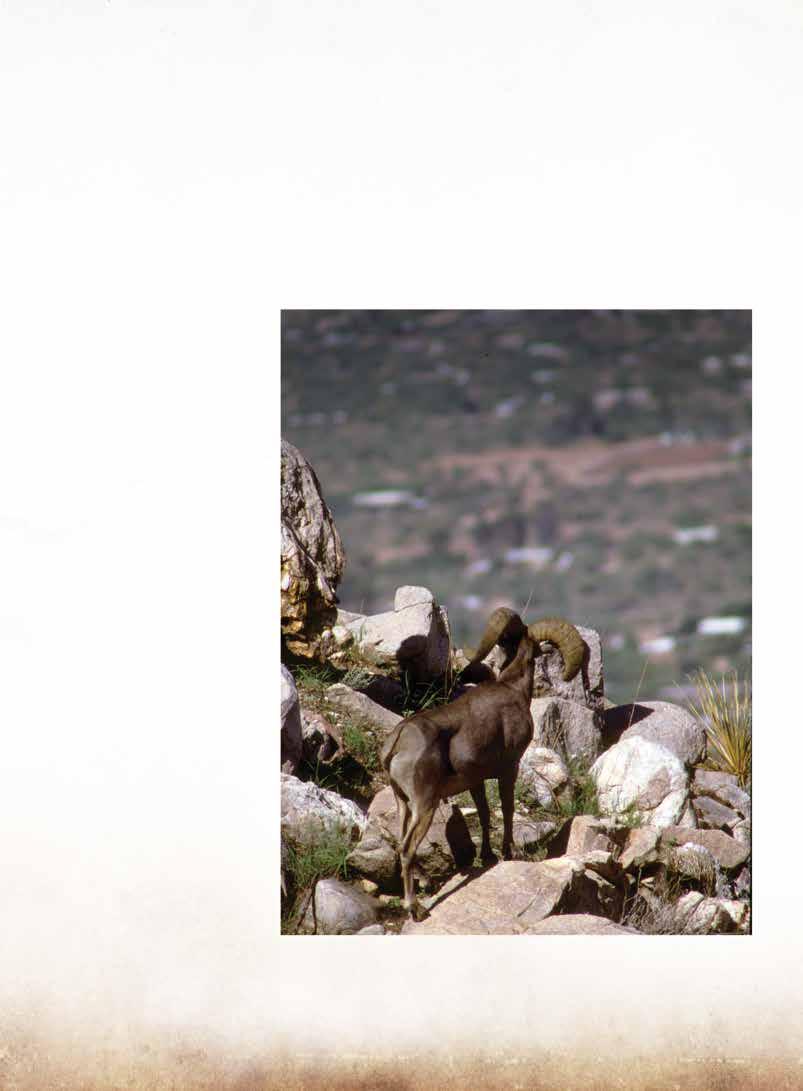
pearance of wild sheep populations in the Southwest was mostly due to them contracting domestic sheep diseases. In a 1939 publication titled, “The Bighorn Sheep of Texas,” the authors wrote: “Of particular significance is the fact that in counties in which many sheep and goats are grazed, Texas bighorns are few in number or entirely absent.” Unfortunately, modern research has confirmed this incompatibility. One of the needs of wild bighorn is to not be close to their exotic and domestic sheep and goat relatives because they carry diseases that bighorn did not evolve with and have not developed the defenses to survive.
Bighorns are specially adapted to scattered dry southwestern mountain ranges with cliffs and rugged terrain. Considering all the challenges they face in the modern world, they are living life on the edge in more ways than one.
Increasingly, bighorn sheep live not only on the edge of the cliff, but on the edge of human habitation.
Human presence in and around sheep habitat can reduce usable habitat either by permanently removing habitat (houses, mining operations) creating enough disturbance so an area is unusable (high recreation areas) or it can cut off historical movement corridors between high quality habitat patches. We now have highways and fences crisscrossing all over the place and this impacts the habitat they have available to use. Movement corridors are critical to maintain gene flow between populations and so sheep can move around looking for important resources such as when a local water source dries up, or to find mates or better feeding areas.
It has been very clear for some time that the original disap -
Despite these challenges, bighorn enthusiasts have been working very successfully with managers and researchers to restore historical populations throughout the Southwest. Millions of dollars get raised at hunting and conservation expos and
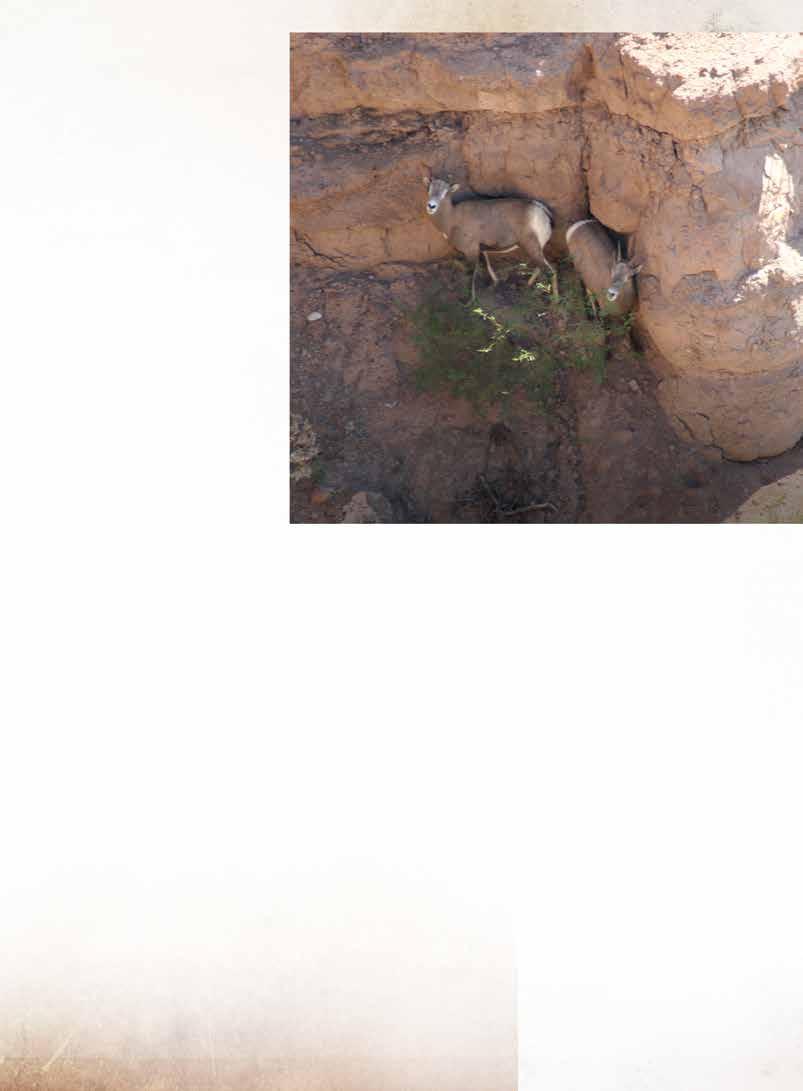
conventions for the continued management, research, and restoration of wild sheep. Single hunting permits for a ram get auctioned for hundreds of thousands of dollars with the proceeds going directly to sheep conservation. According to the Wild Sheep Foundation, more than 22,000 wild sheep have been translocated as part of about 1,500 relocation events in the last 90 years in North America as a result on this public and private collaboration.
The protection, conservation, and management of habitat will always be the key to having healthy, sustainable bighorn herds in the Southwest and Mexico. But not all things that desert bighorn need can be managed. For example, we can’t make more cliffs or rain, but we do have effective tools to manage vegetation to provide nutrition and a view of approaching predators. We can also increase the distribution of perennial water sources across the desert landscape to help them use more of that habitat during dry times of the year and during droughts. The larger the areas we can piece together with all the necessary habitat attributes, the better chances wild sheep will have to meet future challenges.
What started as a replacement for an aging military cartridge has turned out to be a very pleasant surprise. The round to be supposedly retired is still with us and going strong almost 80 years later, while the new kid on the block has evolved into one of the most versatile cartridges ever developed. We are, of course, talking about the .30-06 Springfield and the .308 Winchester.
The .30 Government Model 1906 used a more aerodynamic spitzer (sharp-pointed) bullet to replace the blunt-nosed bullets then in military use. The result was a quantum leap forward in energy and trajectory. The new sharp-pointed version could hit hard and go farther. Serving admirably through two World Wars, by 1947 the military thought the “Aught Six” was a bit long in the tooth and started looking for a replacement.
The goal was to create a service cartridge that could produce the same amount of energy and with similar ballistics, but do so in a lighter cartridge fired from a lighter firearm. The process began in the late 1940s, and as the military is wont to do, took most of 10 years to complete. The result was a cartridge named the 7.62x51mm and designed for use in the new M14, a clip-fed semiauto with 22-inch barrel.
The Army adopted the new rifle and cartridge in 1957. Both were placed in service with the Army in 1959 and the Marine Corps a bit later. Engineered with the Soviet threat in mind, the full-sized rifle/ammo combination sent a 147-grain
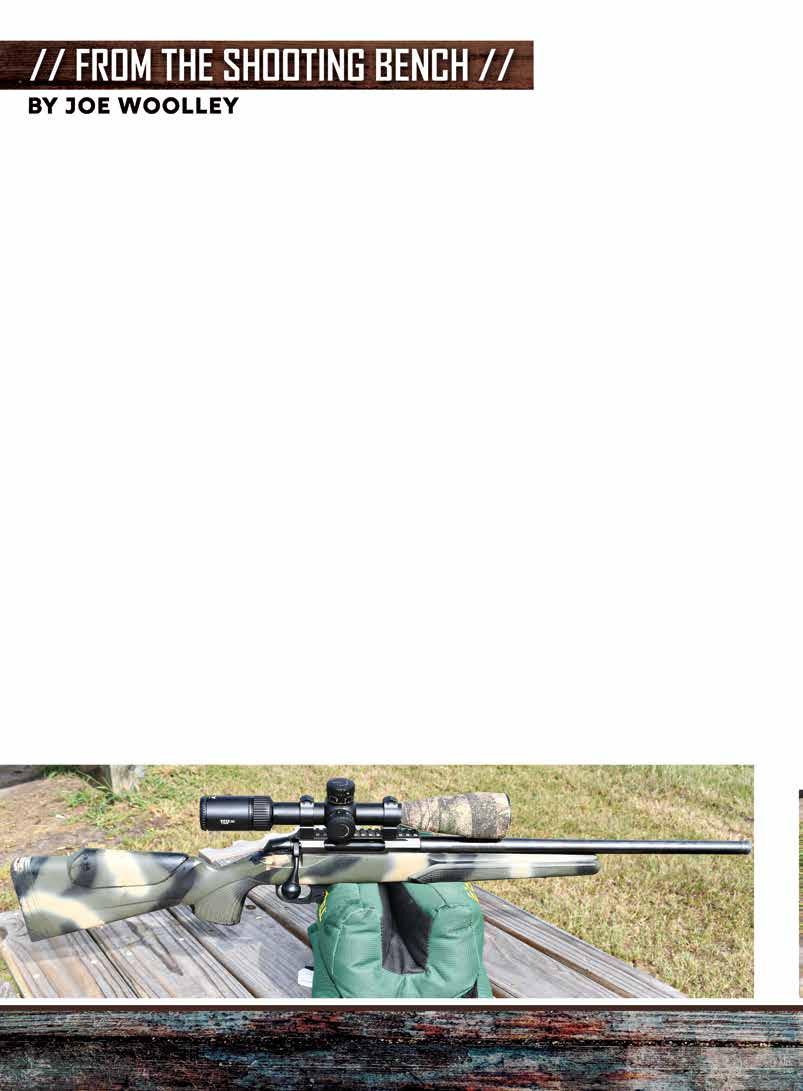
bullet downrange at 2,800 fps. Perfect for protecting against the Soviets and China, the combo turned out to be a bit heavy, both in weight and recoil, for the jungles of Vietnam. Accordingly, the M14/7.62x51 system was replaced by the much lighter M16 in the mid-1960s, and the M14 became the shortest-serving rifle in U.S. military history.
The 7.62x51mm cartridge may not have served long in infantry rifles (it’s still in common service in machine guns) but some folks, such as ammo maker Winchester, believed it was a great round and continued development of it. Not waiting for the military to commit, Winchester launched their own version in 1952, with initial performance producing just over 2,800 fps with a 150-grain bullet. We know it today as the .308 Winchester and believe that it just might be one of the most versatile cartridges ever to exist.
I shot my first deer with a Remington Model 700 LTR. Remington distributed that rifle after a decade of experimenting with different platforms in search of the “perfect” rifle. It was light enough to carry, accurate enough to serve, and provided sufficient energy to knock down just about anything I would want to hunt in Texas.
One of the things I learned in using the Remington 700 LTR was that I could get just about everything I wanted from a good .308 rifle and be able to stay with a 20-inch barrel. I lost a little velocity, but the shorter barrel let me use a thicker barrel and gain added accuracy, which frequently
Heavy enough to handle some extended shooting and light enough to hunt with, the Tikka T3X CTR is one of the author’s common companions during deer season.
comes with a stiff barrel. The shorter length also let me mount my Dead Air Sandman-S suppressor in what remained a very maneuverable rifle.
I’ve been reloading ammunition for 45 years, and I’m now what I call a “tweaker.” I enjoy working through the endless permutations sometimes needed to produce the perfect round for a firearm. I’ve found some cartridges allow maximum accuracy along with maximum velocity in the same load.
The .308 Winchester has seldom done that for me. Most of the .308 loads I’ve tried in a variety of rifles have produced outstanding accuracy, but only at less-than-maximum velocity. For example, look at the reloading manuals and you can find recipes for 165- and 168-grain bullets that purportedly deliver 2,700 to sometimes 2,800 fps. And that they can, but accuracy has always suffered as velocity has increased, at least in my testing. The best accuracy with those bullets seems to be around 2,600 fps.
My favorite factory .308 Win. load is the Federal Gold Medal Match 168-grain Sierra MatchKing. I recognize those are target bullets, but they set the bar for all the other .308 loads I try. Their standard velocity of 2,600 fps seems to work well across a variety of the mid-weight bullets for this caliber. My favorite reload for that is 44.5 grains of Varget with Federal Gold Medal Match primers and Federal match brass.
A good exception to this rule has turned out to be the relatively new Sierra 165 Game Changer and Hodgdon’s CFE 223 powder. My 20-inch Tikka T3x CTR regularly produces more
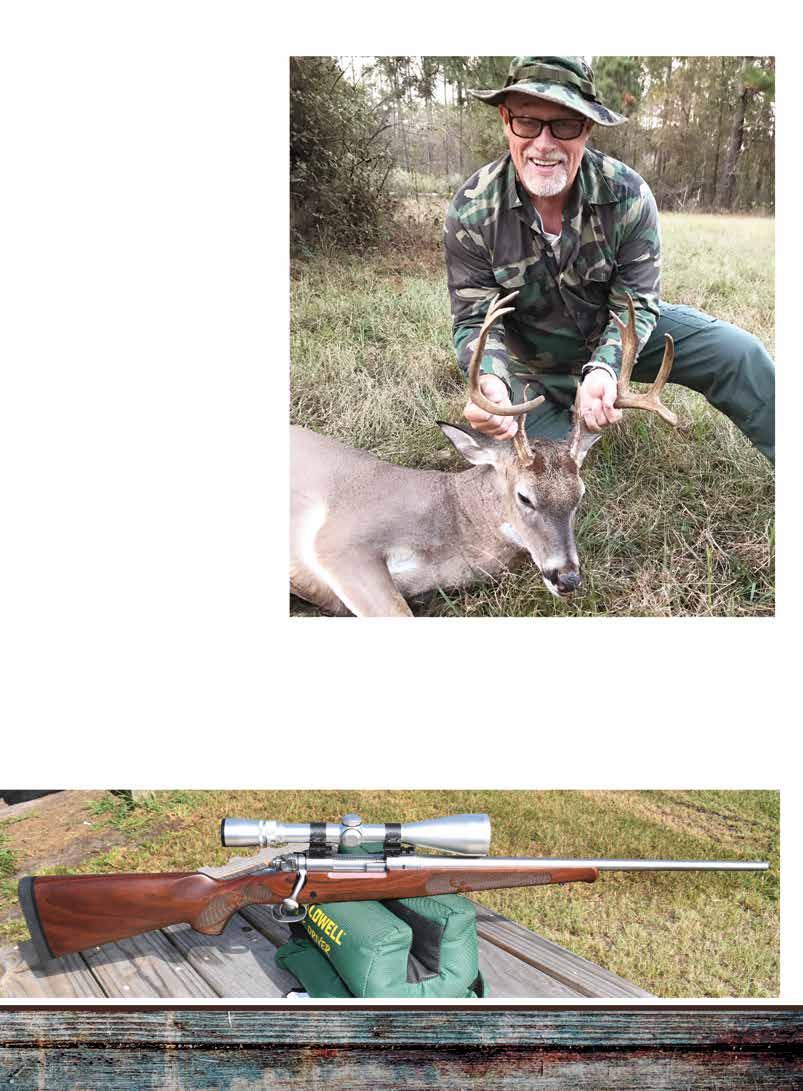
than 2,750 fps with 45.9 grains of the CFE 223 and Federal Gold Medal Match once again. Accuracy has been outstanding in the Tikka, with most groups under ¾ inch. The deer I’ve shot with that load have gone about 5 feet before they dropped.
Continued on page 122

EOTECH introduces its DCBL line of firearm suppressors. The 3D-printed, Grade 5 Titanium, flow-through design, makes for a cleaner shot process with reduced recoil. Precision-engineered and designed for exceptional sound suppression, recoil mitigation, and operational reliability, they feature a proprietary Breathable Technology. The suppressors actively stabilize internal pressure while reducing blowback and minimizing back pressure to the weapon system. This translates to smoother cycling, reduced carbon buildup, and enhanced shooter control.
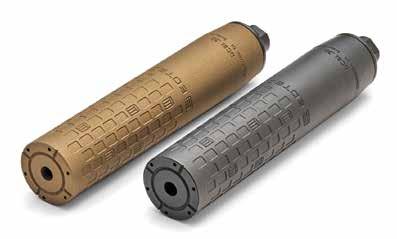
The corrosion-resistant construction is built to withstand harsh operational environments, including salt air, extreme temperatures, and prolonged courses of fire. A Cerakote finish in either Matte Black or Tan provides added durability. Available in three calibers: 5.56, 7.62, and 9mm PCC. Visit eotechinc.com.
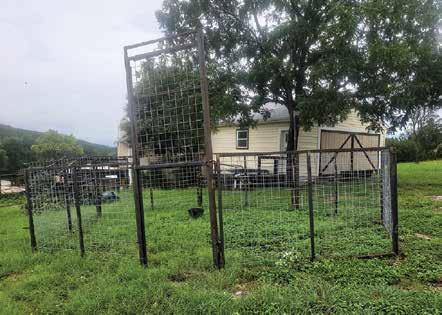
When feral hogs threaten your land, you need solutions that work. Hog Eradicators delivers reliable, humane, and highly effective trapping systems designed to protect the property of landowners, farmers, and wildlife managers. The heavy-duty steel traps feature small-gap panels, weather-resistant construction, and spacious designs capable of capturing multiple hogs at once. Paired with advanced camera systems and a roller-bearing drop gate that triggers instantly from your smartphone, it ensures fast, efficient control. Visit HogEradicators.com.
The Armageddon Gear Truck Gun Rifle Case is a 41-inch workhorse made from American double-waxed canvas with padded air-mesh to protect your rifle without trapping moisture. A roomy exterior pocket and slim zippered stash keep essentials handy, whether you’re tossing it into a farm truck, a hunting rig, or sliding it under the seat for quick access. Built in Buena Vista, Georgia, from the finest U.S. materials, this case is pure functionality and durability and always made to be used hard and handed down. Visit armageddongear.com.
The Coot Magnum over/under shotgun is built for foul weather. Akkar USA coats all metal components with a sleek Tungsten Cerakote finish, enhancing durability and resistance to wear, rust, and corrosion. A Magnum chamber accommodates a wide range of shotshells from 2¾” to 31/2”. It gives the flexibility to tackle everything from upland game to the largest waterfowl. With five extended choke tubes included, hunters can customize the shot pattern for optimum performance. Extended chokes offer the added advantage of tool-less removal, so swapping tubes is quick and easy. Whether tight patterns or wider spreads, this shotgun adapts to individual shooting styles and ammo choices. Visit akkarusa.com to learn more. armageddongear.com
ScentLok’s new Traverse Duffel Series offers a reliable, sporty, and odorcontrolling solution for carrying your field gear and travel items. Available in two sizes and three configurations—80L, 130L, and 130L Roller—the duffels are constructed with hardy 600D PVC backed polyester fabric. Outer bag features include MOLLE straps for attaching gear, practical zippered pockets on both ends, front zippered pocket, comfortable hand carry, and removable backpack-style straps for toting handsfree for longer distances. Features within the vast main compartment include mesh pouch for ozone units as well an included carbon mat to adsorb odors from clothing and air inside the duffel. Visit scentlok.com to learn more.
The EHG RG9 Grip – Ruger RXM Full Sized features ¾-scale TSP on the front strap, back strap, side panels, and forward index pads; magazine well flare for easier reloading; universal light/laser accessory rail; trigger guard undercut for a high grip and improved shooter comfort; and magazine-release scallop allows easy access to the textured magazine release. It’s compatible with many Magpul GL9 magazines and other OEM mags built to the same pattern, and compatible with most Gen3 magazine release components, slide-stop components, and holsters, as well as other parts; Ships with magazine release, magazine-release spring, slide lock spring, and takedown pin spring, and constructed from strong, rigid, injection-molded polymer. Visit magpul.com.

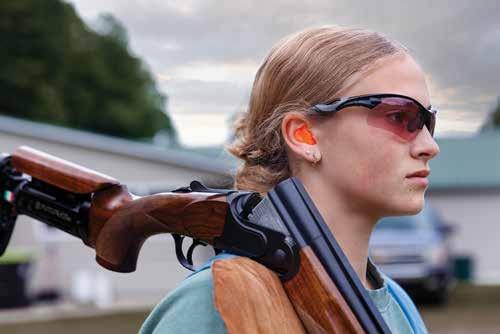
fenxcustom.com
Fen X now offers custom-fit ear protection, via its smartphone app. With the app, AI technology enables users to scan their ear from home, producing a perfect image of their ear. That saves money and time, without the need for a costly audiologist visit or the hassle of working with molds. Each custom set of earplugs is manufactured and shipped within 48 hours, ensuring a final product from scan to delivery in just a few days, rather than weeks. They have designs specifically for sleeping, concerts, and recreational shooting. To top it all off, Fen X features custom adapters for popular true wireless earbuds, including Apple AirPods Pro, Sony WF-1000XM5 (and previous XM4), and Bose QuietComfort Earbuds. For more information, visit fenxcustom.com.
whitewaterfish.com
The Basin Deck Boot is 100% waterproof; has a textured slip-resistant sole that’s channeled to shed water; premium rubber body; reinforced heel and toe; molded kicker for quick removal; dual web loops for easy-on; mildew-proof, antibacterial, and moisture-wicking treatment; and contoured polyurethane insole with arch support. Comes in sizes 8 to 13. Visit whitewaterfish.com.

Each summer when teaching Hunter Education to the kids who attend our hunting and fishing adventure camps, we do a lot of animal identification. With all the native game we have on the ranches, and all the exotics that roam our property, it’s very educational for kids to learn what the different critters are and where they come from. The Texas Hill Country is loaded with all kinds of exotic animals, and they’re thriving in this environment.

Fallow deer have antlers with flat (palmated) ends. The word fallow refers to their pale brown color.
It all started in the 1930s with ranches looking to add to their hunting opportunities. It has been big-time successful, and people come from all over the United States to hunt all the different species. It started with the nilgai being introduced, and then came animals like axis, sika, and blackbuck, to name a few. As of today, Texas has more big-game species totaling over one million in high fences or free ranging in North America.
According to the Exotic Wildlife Association, a Texas-based group with more than 5,000 member ranches:
“The ranches in Texas not only do hunts, but they also raise the animals for conservation and have saved species that are extinct in their native land. In some instances, different conservation groups like the EWA have repopulated animals such as the scimitar-horned oryx in their home range.
“There are over a hundred distinct exotic species on ranches throughout the state. These ranches provide an opportunity to view and hunt animals native to countries such as England, China, Japan, India, South Africa, Zimbabwe, Namibia, Botswana, Iran, Pakistan, and many others. Exotic animals thrive in Texas because of the warm climate and similar terrain to the countries they are native to. Ranch land that once supported cattle now is the home to exotic species.
“There are more than a million non-native hoof stock
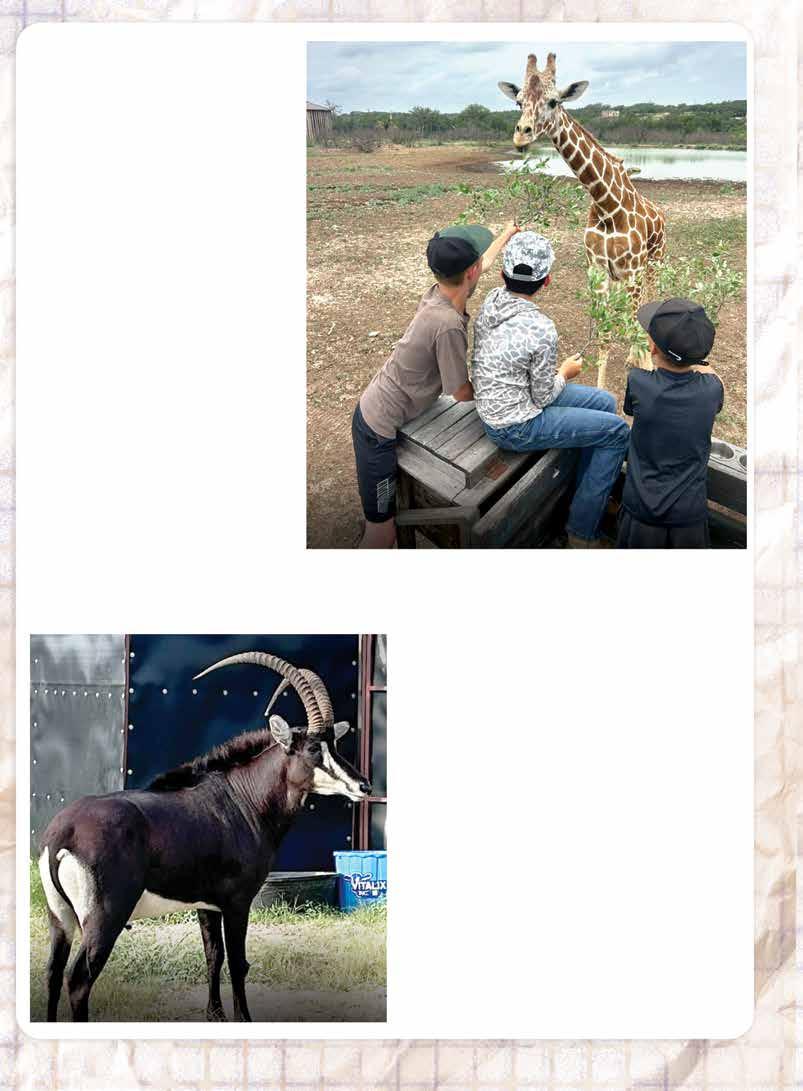
exotics that belong to 125 different species. The exotic industry brings in over $2 billion in revenue each year. The most common reason for having exotic animals in Texas is hunting. There is not a closed season on exotics, so it provides a year-round income source for property owners.
“Also, there a many exotic operations that are breeding facilities. These ranches provide research on species that are listed as endangered or are in danger of extinction in their native lands. Many Texas raised exotics are returned in an attempt to revive and increase remaining native populations.”
The exotics have given hunters year-round hunting opportunities, and they have taken full advantage of it. When the elk, mule deer and whitetail seasons end, the hunt is not over because there are lots of opportunities to get outdoors and chase all types of game. A lot of the exotics are horned animals, so unlike antlered animals that shed, a horned animal keeps its head gear for its lifetime.
We have taken advantage of the exotics with our summer camps and our campers have taken all types of species. Our camps have seen kids take nilgai, oryx, addax, eland, axis, fallow, blackbuck, and aoudad, to name a few. All of these animals are fun to hunt, but most are very good to process for filling a freezer. The meat from these animals is extremely good so it’s no wonder so many people are figuring out their next exotic animal for the wall and the freezer.
The exotic hunting in Texas has been extremely popular for years, but it’s my opinion that people from all over the United States and abroad are learning about what we have to offer. Over the past few years, we have seen the proof.
Identifying all the animals in Texas can be challenging, but also a lot of fun. I am telling all the kids to start educating their parents on all the different animals. Even if you
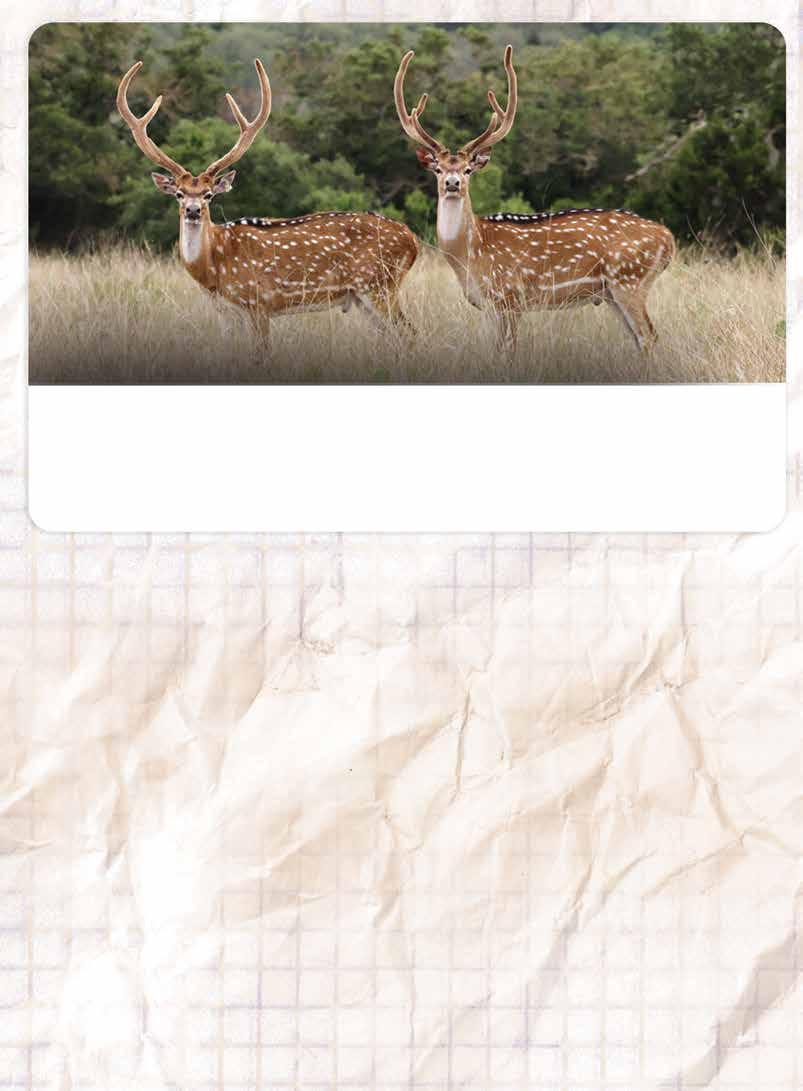
don’t hunt, it’s fun to take pictures and learn more about what the good Lord has provided us.
Michael Marbach is the CEO of the Christian Outdoor Alliance, mycoa.org; 210-827-9802. COA’s mission is to guide youth and outdoorsman to a relationship with Jesus Christ through experience in God’s great outdoors.
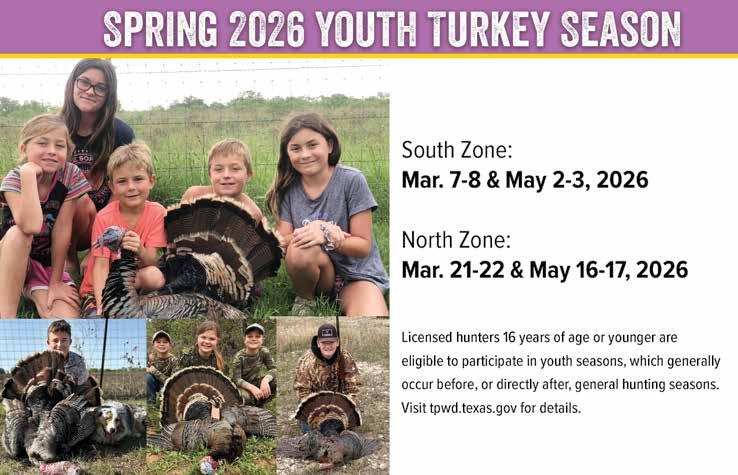
BY JOHN GOODSPEED
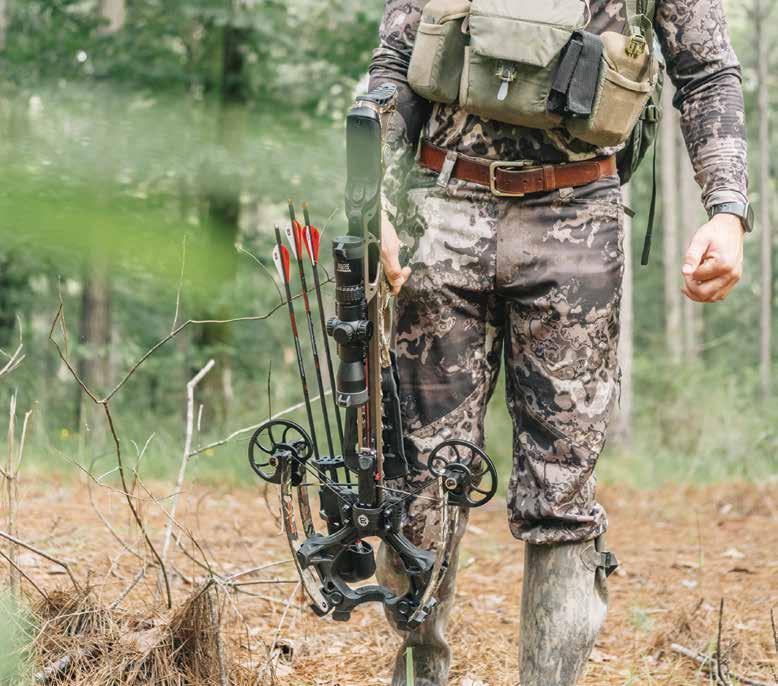
The latest crossbows keep getting pumped up with technology, with one promising rifle-like accuracy and many featuring carbon composite risers to increase strength and reduce weight, self-timing cams for eliminating user adjustments and rail-less designs that cut friction and promote greater accuracy.
Compact designs, which allow more maneuverability in tight situations, are more popular, too, with one measuring just 5¾ inches wide axle to axle cocked.
One weighs a mere 2.2 pounds, which isn’t surprising because it’s a pistol crossbow, one in a line that promises the ability to practice in the backyard or to help control varmints. The lightest full-size crossbow weighs 7.3 pounds without accessories.
The fastest flings bolts at 470 feet per second, or fps as used in this roundup article.
Many crossbow scopes sport red or green illumination and hash marks for various ranges, up to 100 yards for one
model. One scope comes with a built-in GPS system to make figuring out holdovers a breeze.
Prices range from $74.99 for a pistol crossbow and $499.99 for a full-size model to one that hits $3,649.99 and includes all the bells and whistles including the narrowest width and lightest weight.
Three manufacturers decided to drop their crossbow lines for 2026.
While FeraDyne Outdoors’ Axe Crossbows simply did not have its latest model ready to introduce by the deadline for this article, the company’s Rocky Mountain folded its crossbow operations except for supplying crossbow and archery accessories such as broadheads and sights.
Others halting the manufacture of crossbows are Darton Archery and P.S.E., or Precision Shooting Equipment. Both, however, will continue building compound bows.
The following are some of the latest introduced. Prices are suggested by the manufacturers so discounts may be found.
The latest from Barnett, the Hyper Raptor T-REX, blends the latest technology, speed and precision with a system that provides easy cocking and decocking, a new floating TriggerTech trigger, HyperFlite arrows that reach speeds up to 440 fps and tack-driving accuracy. The compact frame allows a weight of 8.2 pounds without accessories while the axle-to-axle width measures 7¼ inches. The overall dimensions uncocked are 32 inches by 15.6 inches.
The crossbow features the Raptor Series’ carboncomposite step-through riser, fiber-molded parabolic limbs, self-timing Infinity cams, the Soft-Lok Bristle Retainer System, pivoting limb pockets, an anti-dry fire trigger system, a CNC-machined aluminum flight track, a pass-through fore end with Verti-Grip Palm Rest and string dampers. It delivers 163 foot/pounds of kinetic energy. Draw weight is 220 pounds. The power stroke is 16 inches.
The package includes three 22-inch HyperFlite arrows, a 2-7X36 illuminated multi-reticle scope with flip-up caps, a neoprene scope cover, a premium three-arrow side mount quiver, lubrication wax and an integrated planetary gear cocking system with quick-detach crank handle. The crossbow comes mostly assembled. The camo pattern shown here is Veil Drifter.
While the company introduced the Desire XLZ Pistol Crossbow model several years ago, it’s among a lineup of Bear’s pistol crossbows, which might come in handy for those with smaller backyards who want to get in some target practice and sharpen their skills. Some users report this is no toy and can be used for hunting varmints or small game. The Desire XLZ is outfitted with a breakbarrel cocking device for fast loading. An adjustable stock extends up to 21/2 inches for a better fit and stability.
It comes with open sights and a laser sight. The 60-pound draw weight launches bolts at speeds up to 175 fps. It comes with three bolts. Another model costs a little less but still packs a punch with speeds up to 175 fps and a 60-pound draw weight.
The Desire XL Pistol Crossbow ($74.99) also is suitable for backyard practice or taking on small game. Its stock also can be adjusted up to 21/2 inches. This model weighs 2.2 pounds. Length is up to 24 inches. Three bolts are included.
While there have been other configurations with the name Sniper in the past, the G4D is one of the latest offerings from CenterPoint, and the ultra-compact package packs a wallop. At 6¾ inches wide axle to axle cocked, it can fling bolts up to 400 fps. The crossbow can deliver 142 foot-pounds of kinetic energy. It also comes with a detachable silent crank cocking system in a sled-type design with a new de-cocking feature, an illuminated 4x32 scope, adjustable stock, Whisper Silencing System, rubber-coated foregrip and a foot stirrup.
The scope has dual illumination of red and green. The buttstock can be adjusted to four positions. The compression fiberglass quad limbs are mounted to an aluminum riser. The automatic cam safety is CNC machined and features an anti-dry-fire mechanism. It’s 27.95 inches long and weighs 8 pounds. It comes with three 20-inch 0.003-inch carbon arrows, detachable quiver and rail lube.
Replacement parts are available on the website.
$499.99
Excalibur introduced two new crossbows, the Hybrid X shown below and the Mag Max ($799.99). The Hybrid X blends Excalibur’s recurve design with some compound crossbow attributes, such as cams — but in the front, not the rear. The position protects the cams from being bumped against objects to prevent damage. The recurve limbs with cables sweep towards the rear. The axle-to-axle width cocked is 10.8 inches. Uncocked, it is 181/2 inches wide. Overall length is 29.6 inches. The bow is cocked with Excalibur’s ChargerX Integrated Crank cocking system.
Cranking force is 14 pounds. The crossbow can be restrung without a bow press with a stringing tool sold separately. It can shoot up to 435 fps with a kinetic energy of 165 foot-pounds. The overall weight is 10.3 pounds with accessories. The package includes an Overwatch scope, 30mm scope rings, Rebolt quiver and four of each — V-Flight 18-inch arrows, 100-grain field points and 150-grain field points. The Mag Max’s limbs are Excalibur’s signature recurve design, and it can fling bolts up to 350 fps. With accessories, it weighs 7.9 pounds. Overall length is 32 inches. Draw effort with a rope aid is
14 pounds. Features include CeaseFire Technology that prevents firing unless an arrow is loaded and R.E.D.S. Suppressors, which reduce shock, vibration and noise. It comes with a Dead Zone Scope, one-inch scope rings, a four-arrow quiver, three Quill 161/2-inch arrows and three 100-grain field points.
Hybrid X, $2,199.99
One of the latest from Ravin, the R470 combines what the company calls rifle-like accuracy and speed, up to 470 fps, in a compact, lightweight design that’s 26¾ inches long and weighs 8.4 pounds. Using the proprietary HexCoil Cam System, which rotates the cams 300 degrees, this crossbow ensures precision and ease of use with a rated 196 foot-pounds of kinetic energy. It includes the VersaDrive Cocking System, which Ravin says is silent and effortless, anti-dry-fire technology with an automatic safety, a removable draw handle and built-in sling mounts. Working with the Trac-Trigger Firing System, the compact cocking mechanism is built into the stock design. With 17 pounds of cocking force, the VersaDrive Cocking System is ambidextrous and can cock and un-cock the crossbow. Trac-Trigger Firing System is a patented mechanism that slides forward on the rail and clasps the center of the string when the bow is drawn, allowing for straight-line nock travel. The patented Frictionless Flight System lets the arrow and string to free float above the rail, eliminating friction for accuracy and increased string and cable life.
It uses composite quad limbs and an aluminum CNC machined riser. The stock is polymer. Fully-assembled, the R470 comes with a 100-yard illuminated scope, three 0.003 arrows with field tips, removable draw handle and a quiver with a mounting bracket. The crossbow also is available in XK7 Camo ($2,749.99).
R470, $2,549.99

TenPoint says the TRX 26 Oracle X model above is its lightest and narrowest reverse-draw, rangefinding crossbow. With 410-grain Pro Elite 400 Carbon Arrows, it can shoot up to 460 fps and deliver 193 foot-pounds of kinetic energy. It’s 261/2 inches long, 5¾ inches wide axle to axle cocked, and weighs 7.3 pounds without accessories. It’s 11 inches wide uncocked.
The Burris Oracle X Rangefinding Scope is activated with a wireless remote or the range button on the scope. The aim point stays the same anywhere within the two- to seven-power zoom range. The ACU-Lock Scope Bridge is said to be 25 times stronger than traditional scope rails for scope stability and accuracy. TenPoint says the twinriser technology is 41 percent lighter and twice as stiff as traditional risers.
It’s designed with symmetrical top and bottom plates that reduce riser flex, noise and vibration. The threepound TriggerTech Precision Zero-Creep trigger features frictionless release technology that “breaks like glass.” Other features include the ZERO-Trac Barrel & GUIDELock Arrow Rest System, a rail-less design that reduces friction and fully captures the arrow for precision; the patented, silent ACUslide MAXX Cocking & De-Cocking System that provides silent cocking for the 300-pound draw weight and safe de-cocking; a reverse-draw design to provide more speed with less draw weight; and an AR-style ambidextrous thumb safety. The package also includes three CenterPunch HPX Carbon Arrows, integrated string stop, bow hook and a quiver.
One of the latest from Xpedition is another lightweight and compact crossbow, the Xtraction 400, that zips bolts up to 400 fps. It’s 8 inches axle to axle cocked and weighs 7.7 pounds. It measures 12 inches uncocked, 36 inches overall. It features a 3-pound trigger and anti-dry fire technology. It comes with a 4X32 illuminated scope, five-bolt quiver, three Xit-20 bolts with clip-on nocks and rope-cocking device. The pull weight is 180 pounds. Power stroke is 15 inches. It comes in black.
The RDX 410 model packs a budget-friendly price tag compared to other reverse-draw crossbows while providing up to 410 fps and measuring 29 inches long and nine inches wide axle to axle cocked. It measures 15 inches wide uncocked. It also comes with the integrated ACUdraw Silent system that reduces the 200-pound draw weight to five pounds for easy cocking. The reverse-draw design generates more speed with less draw weight for a smoother shot. It comes with the new 70-yard Pro-View 400 Scope that provides aim points out to 70 yards and features an updated illuminated red or green reticle for a cleaner view. The integrated string stop system reduces noise and vibration. The crossbow weighs 71/2 pounds without accessories. The RDX package also includes three Match 400 Carbon Arrows and a quiver. Xtraction


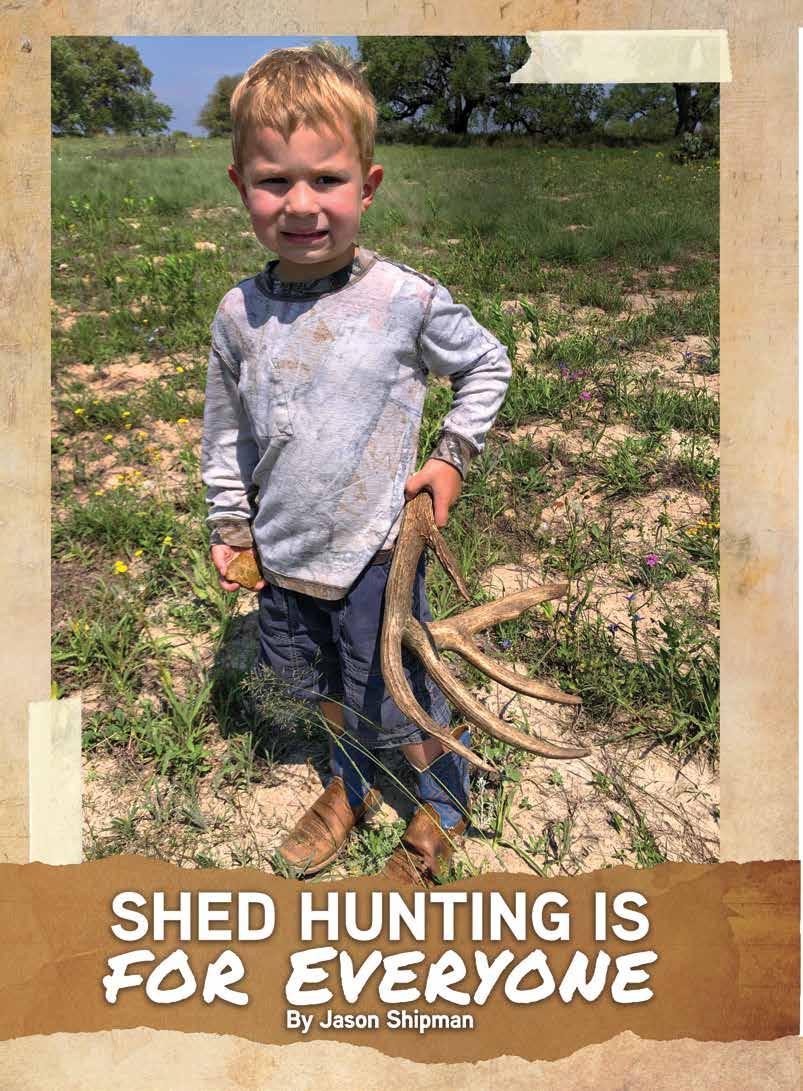
People have been fascinated with antlers since prehistoric time. It has been well documented, dating as far back as ancient cave dwellers’ depictions. Times have changed since then, but people still love to hunt. Today, deer hunting in Texas is estimated to generate $5 billion annually. It’s a big business! Arguably, not every hunter is after a big buck, but not many will turn one down either. The age-old infatuation with antlers continues full-steam ahead, and is still very much alive and well today.
Antlers occur in an infinite number of configurations. Racks may be wide or narrow, with typical or non-typical configurations, and have a variety of points for added character, such as forks, kickers, stickers, and drop tines. It’s an established fact that age, genetics, and nutrition are drivers for antler growth. The antler growth cycle occurring in cervids is intriguing and likely contributes to their appeal. Each year, bucks shed their antlers, and grow a new set. With proper management and ideal conditions, hopefully with each passing year the new set of antlers gets bigger.
The cycle begins in late spring or early summer. It starts off slowly and speeds up later in the summer. During growth, the antlers are covered in velvet and grow from the tip. Antler growth is an energy-expensive process for bucks, and if nutrition is deficient, they will draw from reserves in their skeletal frame if necessary. Antlers are known to be the fastest-growing tissue in the world, and their growth has been studied for its potential in cancer research. In late summer or early fall, blood flow decreases to the growing antlers
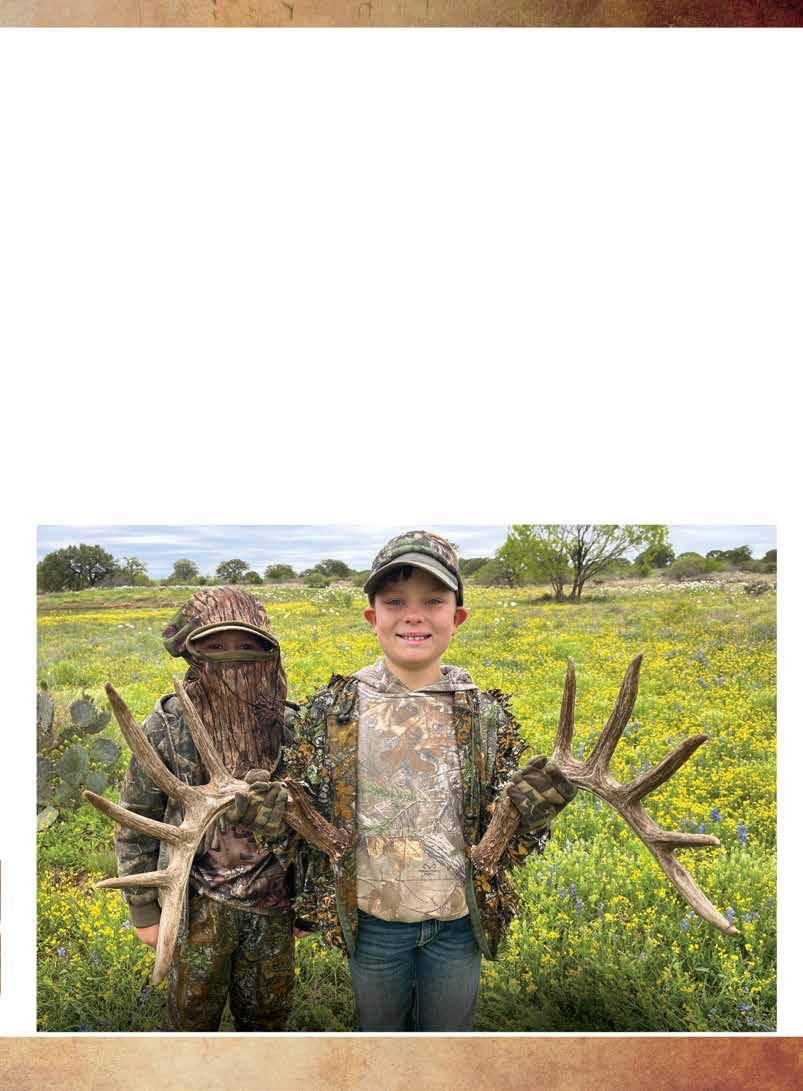
as they begin to mineralize and harden. The velvet dries and is stripped away within a day or two. In later winter or early spring, testosterone levels decrease, and the antlers are cast, or shed, and the cycle starts over.
Searching for and finding these shed antlers is a great way to spend time outdoors. With mild temperatures and beautiful wildflower scenery, spring is an ideal time to be in the field. Aside from collecting antlers, and the thrill of picking up a new find, there are other reasons to hunt for sheds. For starters, it provides the thrill of the hunt, but is a non-consumptive use of the wildlife resource. You have the antlers, and the buck is still out there running around. Additionally, it can provide great scouting information for the next hunting season.
I like to start shed hunting as soon as the bucks begin dropping antlers in the spring. In South Texas, bucks begin casting around March 15 and finish around April 15. Keep in mind, the balance of the state will run approximately 30 days earlier. Some bucks may lose their antlers earlier if stressed due to fighting, lack of feed, or if poor conditions persist.
There are distinct advantages and disadvantages in regard to the timing of your shed antler hunts. Searching earlier will result in finding nice, fresh, brown sheds. Sometimes these darker antlers are more difficult to see, but the spring vegetation is shorter during this time and offers better overall visibility. As time goes on, the dropped antlers will turn whiter and are much easier to spot; however, the overall vis -
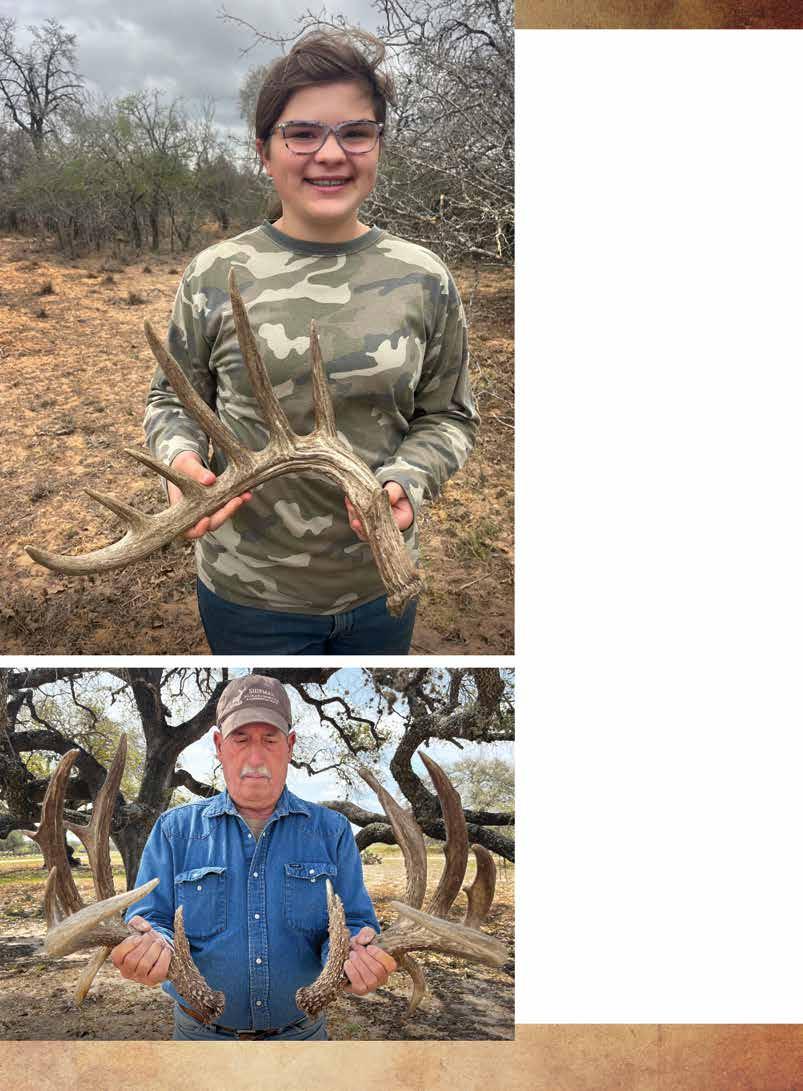
ibility decreases as the spring vegetation matures.
Looking for shed antlers on a big landscape can be a daunting task. It can begin to feel as if you’re looking for a needle in a haystack. Stacking the odds in your favor always helps. Start by looking in the areas where deer spend the most time. Searching around food and water sources consistently produces great results. Circle these areas thoroughly. Other good areas to focus on include bedding areas and along brush lines or edges of fields. Deer love spending time near edges, so concentrate on areas within 100 yards of these transitions from cover to clearings.
Strategy will also help increase shedhunting success. Go slow, be thorough, and systematically cover as much ground as possible. Walking on trails connecting food, water, and bedding areas is a productive strategy. In open areas, such as grassy fields, make transects to methodically cover the area. If you feel like you’re overthinking things, just go for a stroll. Sometimes the best finds occur incidentally, when you’re not looking at all. I have been on many spring turkey hunts that quickly turned into shed-hunting expeditions.
Aside from pairing well with spring turkey hunting, there are additional considerations when shed-antler hunting. One thing you certainly want to keep an eye out for is snakes. If the ground cover is thick, ride in an ATV side-by-side or wear snake boots as a precautionary measure. Be sure to keep an eye out for other things while covering ground. You may stumble upon a dead head, or expired buck, from years back. Who knows, it may be the one that disappeared that you’ve hunted so hard for. If you’re really observant, you might even find an arrowhead or some other “treasure.”
Shed hunting is for everyone! It’s a great hobby that can provide hours of enjoyment and fun for the entire family. It’s a lot like hunting for Easter eggs as a kid, only on another level. This spring be sure to take the family out for a little shed-hunting expedition. The countryside will be at its prettiest in its Sunday clothes, and there is no better time to be outdoors. Get out there early before it gets hot and have a good time.

BY GARY ROBERSON
As many of you will remember, I wrote an article about rattling whitetails for The Journal last year. My goal was to rattle up and kill a mature Menard County eightpoint buck with one of the Ruger-made Marlin 336s. Since that hunt, I realized how much I missed rattling bucks, especially in the Hill Country where it’s open enough to observe them as they approach. The semi-open terrain allows me to see how a buck will react to differing stimuli. Since I have been rattling deer for more than 50 years, here are a few commonsense tricks that I employ that may help increase your chances of success.
My favorite time of the year to rattle is not in the peak of the rut, as most other hunters prefer. In my opinion, it’s best in the
pre-rut period when bucks are cruising while looking for receptive does. The bucks have the most vigor at this time of the year and are not exhausted, as they will be in the post rut. If I rattle in the peak of the rut, most of the mature bucks in my target audience are occupied by does in estrus. Pulling a buck away from the very thing they’re fighting over is next to impossible. As a matter of fact, I have observed bucks tending does, drive their mates away from me when rattling.
In the early days, I would wear the best camo apparel I could find to match the area where I would be hunting. Today, I wear solid brown or tan vests or jackets that more closely resemble another deer. Remember, you are mimicking the sound of two bucks fighting, so do your best to look like a deer.
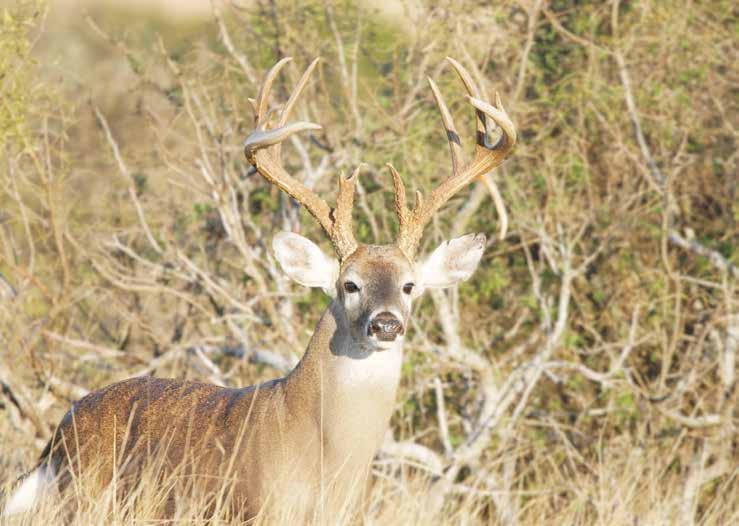
Most every buck that responds will end up downwind of you, so give him the stink that he is expecting to smell.
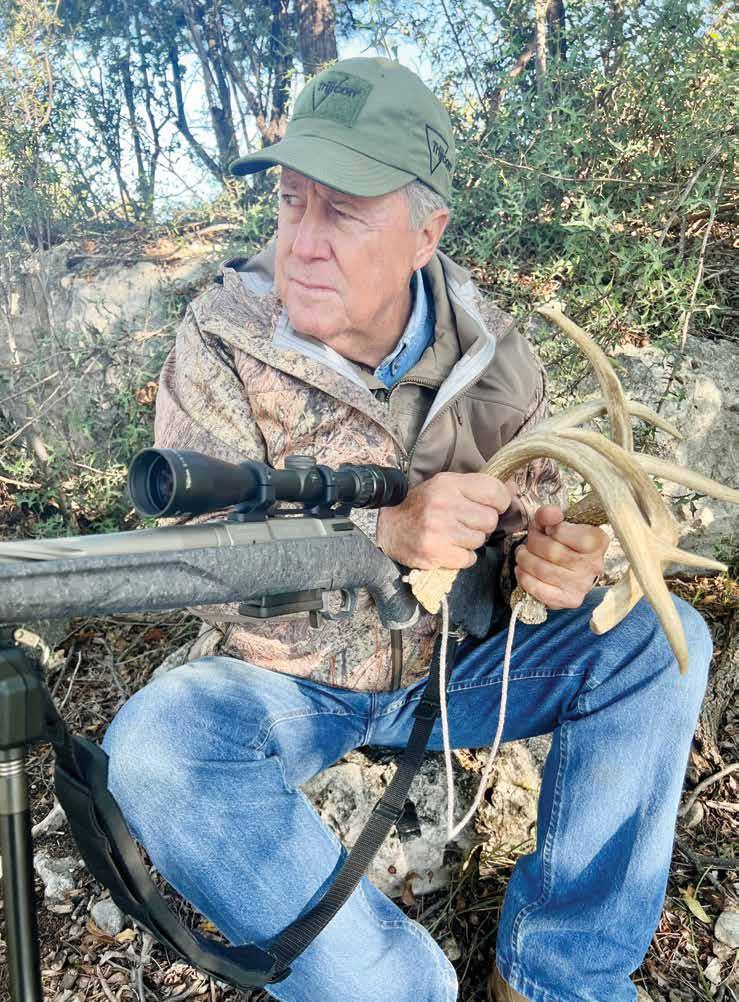
The author’s favorite time of the year to rattle is the prerut period, when bucks are cruising while looking for receptive does.
Murry Burnham and I hunted together back in the ’80s, and he taught me one of the best decoy tricks that I employ on most bucks that respond to my calling: show him an antler.
I rattle while sitting on the ground, so I’m at eye level with the deer. When a buck rolls up and stares at me, I raise one of my rattling antlers about head high and rock it back and forth, as a buck might do when facing another buck. Most likely, the buck traveled a fair distance to see a fight or defend his territory. He expects to see another buck, so show him one.
Go down to the local deer processor and check the metatarsal glands on some of the deer that hunters have dropped off. I try to find those that are darker brown in color because they will have the strongest odor. Cut them off, place them in a Ziploc bag and put them in the refrigerator. When you set up to rattle, place the glands on a limb on your downwind side. If you don’t have a convenient limb, place the gland on the top of your cap or hat with the fleshy side down. You will be surprised how the gland will stick in place. Most every buck that responds will end up downwind of you, so give him the stink that he is expecting to smell.
When two bucks are fighting around the period of the rut, they’re trying to kill each other. Start out with the antlers raised over your head and give them a loud crack that is produced when the main beams meet. Twist the antlers together to imitate two bucks pushing. By having the antlers held higher off the ground, you will find that it helps to get the sound out farther.
When sitting on the ground, dig your heels into the ground and push back and forth to imitate the sound of buck’s hooves attempting to gain an advantage. Take the base of the rattling horn and drive it into the ground to make the sound of a buck stomping his feet. I do not make these sounds until I know that I have a buck close enough to hear them.
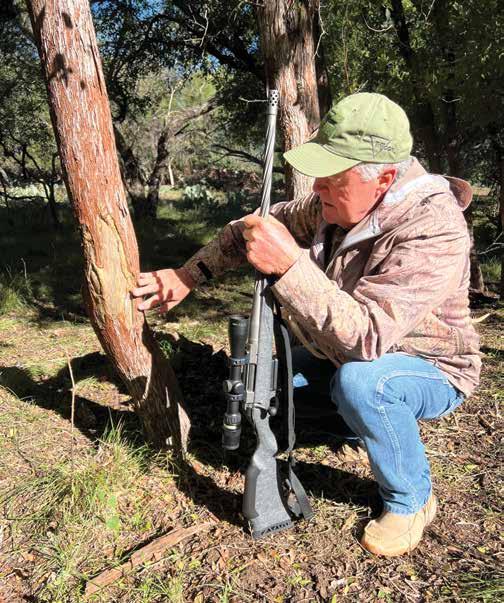
The author likes to scout an area and find where the larger rubs are because those rubs tell him that mature bucks are likely in the area.
When bucks are working the velvet off their antlers, they will hook a lot of smaller bushes or switches. As the rut approaches, they begin to rub on much larger trees. I like to scout an area and find where the larger rubs are because it tells me mature bucks are likely in the area. Sneak into the area with the wind in your face to help cover sound and keep your scent from spooking game in the area. I prefer to set up in a cross wind with the sun over my shoulder. This will help blind the approaching buck and make it easier for me to see him. Make sure that you can clearly see and shoot the area to your downwind. That’s where the buck is going.
When rattling, I typically stay on a stand for 15 minutes unless something responds, and then I will stay a little
longer. If the bucks are responding aggressively, it doesn’t take long for one to respond, and they generally don’t go wide to the downwind. I have had very aggressive bucks almost run over me.
I remember one cold Jan. 1 morning in northern Menard County when Brian Hawkins and I were rattling. I sat against some short oak brush or shinery and had not rattled more than 30 seconds when I saw an old buck with almost every point broken from fighting, explode through the brush about 30 yards away. When he hit the little opening, he gained speed and aimed right at me. When he was about 10 to 15 steps away, I raised my hands to avoid a collision. He hit the brakes and slid up so close to me that I could almost touch him, and he covered me with dirt and gravel.
If you decide you want the challenge of trying to call a buck to you, I hope these tips improve your success.

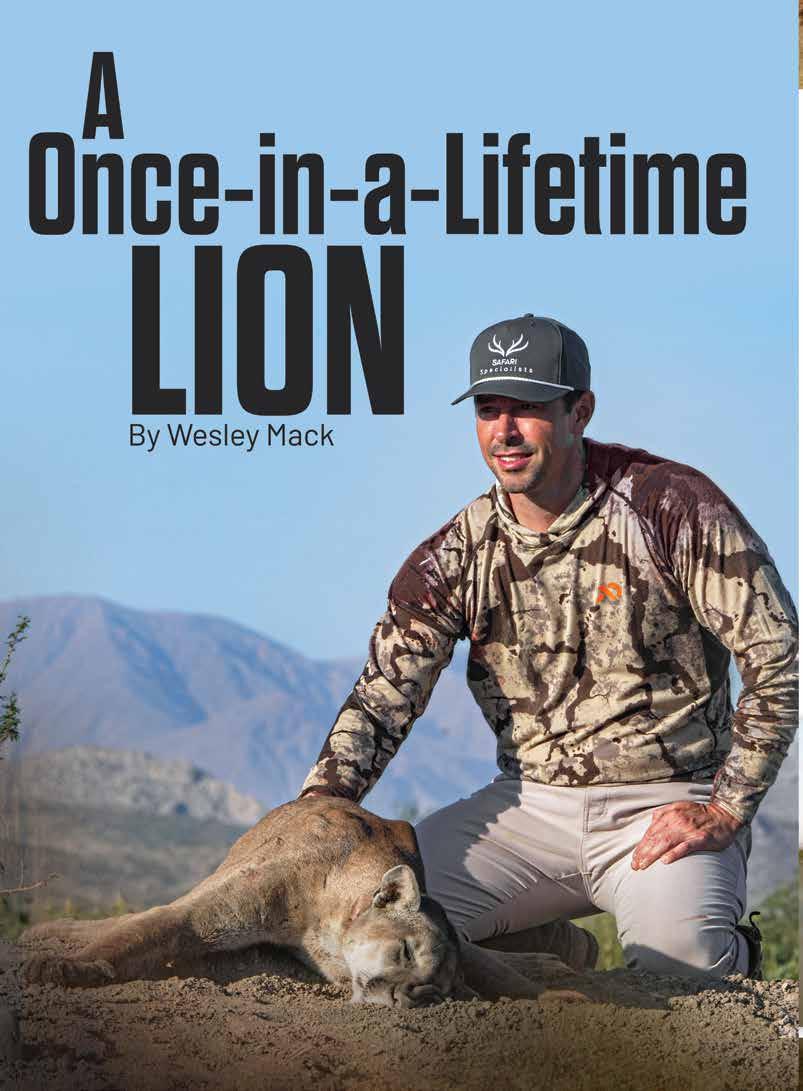
In West Texas, nothing comes easy. Every ridge, every bull, every outcome has to be earned. I learned that firsthand in the fall while chasing 300-inch bulls with outfitter Dalton Bannister of Safari Specialists, and stumbled into a once-in-a-lifetime mountain lion encounter I’ll be talking about the rest of my life!
I’ve hunted all over, but my roots started in Uvalde. I was blessed to grow up on Louis and Beth Herndon’s 3,000acre ranch, a true piece of wild Texas scrub country managed every single day for deer habitat. Most folks in that part of the state know Louis as “Pooch” Herndon. He was one of one. With sheep, goats, cattle, deer, and racehorses, he ran it all and somehow made it work.
My dad found his ranch through a classified in the Austin AmericanStatesman in the 1970s. He became the lease boss, and for decades, we made the pilgrimage from Lake Conroe to Uvalde. I used to wonder why we didn’t just move there. Summers meant hauling feed, herding goats, running dozers, and blasting down rough ranch roads on four-wheelers. Those days shaped everything I love about hunting and land management today.
Wesley had originally gone hunting to take an elk, but circumstances didn’t really allow for
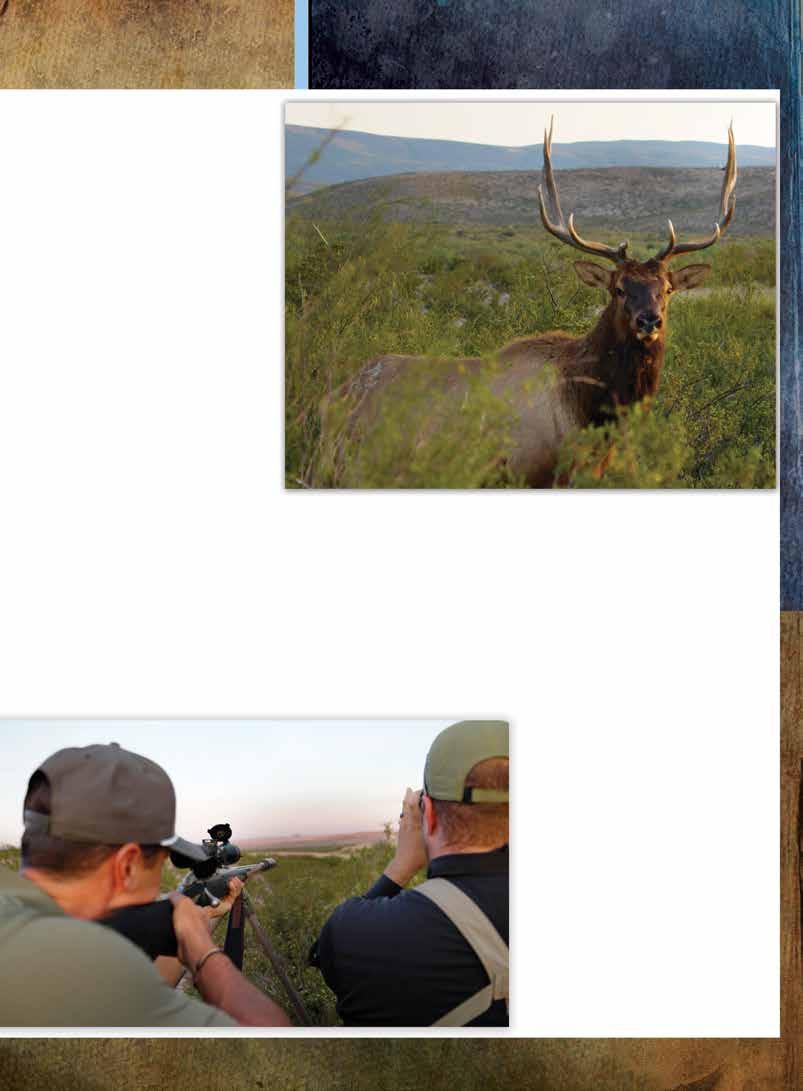
When it came time to chase my first elk, I called Dalton. His business is one of our clients at the digital outdoor marketing firm where I work. Dalton has had consistent success on a giant West Texas property, with hundreds of thousands of acres of rugged country where the bulls are wild, smart, and built for survival.
We planned a three-day hunt. I brought two videographers
to film it, and we met Dalton and headed straight out. That first afternoon, we unloaded a Can-Am and pushed miles into the ranch until we hit rolling hills above a tank. Dalton started cow-calling, and within minutes, a bull ripped off an answer. He warned us the bottom was thicker than it looked, and he was right. It had tall grass with brush pockets, and that’s what West Texas elk love to hide in.
We dropped down, and before long, two bulls came storming in, one to 19 yards. Both were under our 300inch target, but we were fired up. A few hours earlier I’d been behind a desk in Austin, and afterwards I had bugling bulls inside bow-range. When the bulls pulled off, another answered from behind the tank. In West Texas, “behind the tank” can mean a mile or two, but we headed that way.
That’s when everything changed.
As we eased over a rise, I glanced left and saw what I thought was a light-colored mule deer standing broadside. I pulled up my binoculars—and froze. It wasn’t a mule deer.
I dropped the binoculars and said, in the loudest whisper I’ve ever delivered, “It’s a mountain lion.” Everyone locked up, with eyes wide. Dalton threw down the shooting sticks. “Twohundred-twenty-yards,” he said.
I’ve got a love/hate relationship with my .300 Win. Mag. My first shot missed low. My videographers will never let me forget that. I reloaded, then whispered, “Please God,” and
squeezed again. The second shot thumped loud with that unmistakable smack, and the lion somersaulted backward off the rise.
We were fired up. Dalton sprinted back for the Can-Am, a mile uphill. As soon as he left, we heard a strange moaning sound. For a second we thought the wounded lion was circling us. Turned out it was one of those rough Mexican cows that “don’t believe in fences.” Apparently, they’re pretty damn mean. I told our team I had one bullet left.
When Dalton returned, we headed straight to the spot. We saw blood everywhere, but no lion, and that’s not unusual. The blood trail was strong at first, then thinned out across the rocky ground. The trail carried a couple hundred yards before spacing out. Suddenly, it became dark. We had two iPhone lights. Every mesquite clump looked like it hid a crouched, angry cat. Dalton didn’t help by telling stories about wounded leopards in Africa.
Eventually, we backed out. We needed dogs.
Wesley estimated the big cat at around 4 years old. It weighed 140 pounds and measured 6 feet 6 inches long.
Two weeks earlier, I’d been on a business call with the founder of a well-known speaker brand. He showed up late and said, “Sorry, boys. We had a lion on our ranch last night.” He told us about the dog man who came out and found it. Hayden Benton out of Brackettville was our guy.
Hayden picked up on the first ring. I told him the story: shot, blood, trail, video, losing light. He said, “Wesley, I’m loading my dogs right now. I’ll drive to Marathon and sleep in the parking lot. Be at the ranch before sunup.”
I think we slept 3 hours that night, tossing and turning, and thinking, “How the hell did I miss that cat?”
We met Hayden before daylight and hiked to the shot site. He released the dogs, handed me a single-shot rifle, and said, “Don’t shoot my dog. And get ready, this is going to get chaotic.”
Ten minutes later, the brush beside us erupted with dogs barking and brush breaking. Suddenly the lion appeared, running, then hobbling 10 yards away, thankfully headed in the other direction. Hayden yelled, “Let’s go!” and the chase began. Fastest 40 yards of my life! The dogs pushed the lion until he finally bayed up under thick brush. When I got close, he was on his back, dogs barking inches from his face, and the blood dog’s neck was in the lion’s mouth.
Hayden, a young man standing 6’7”, was one foot from the lion shouting, “He’s about to kill my dog!” I took the shot. I didn’t miss that one. The lion died instantly. The dogs calmed down, Hayden was relieved, Dalton was fired up, and the
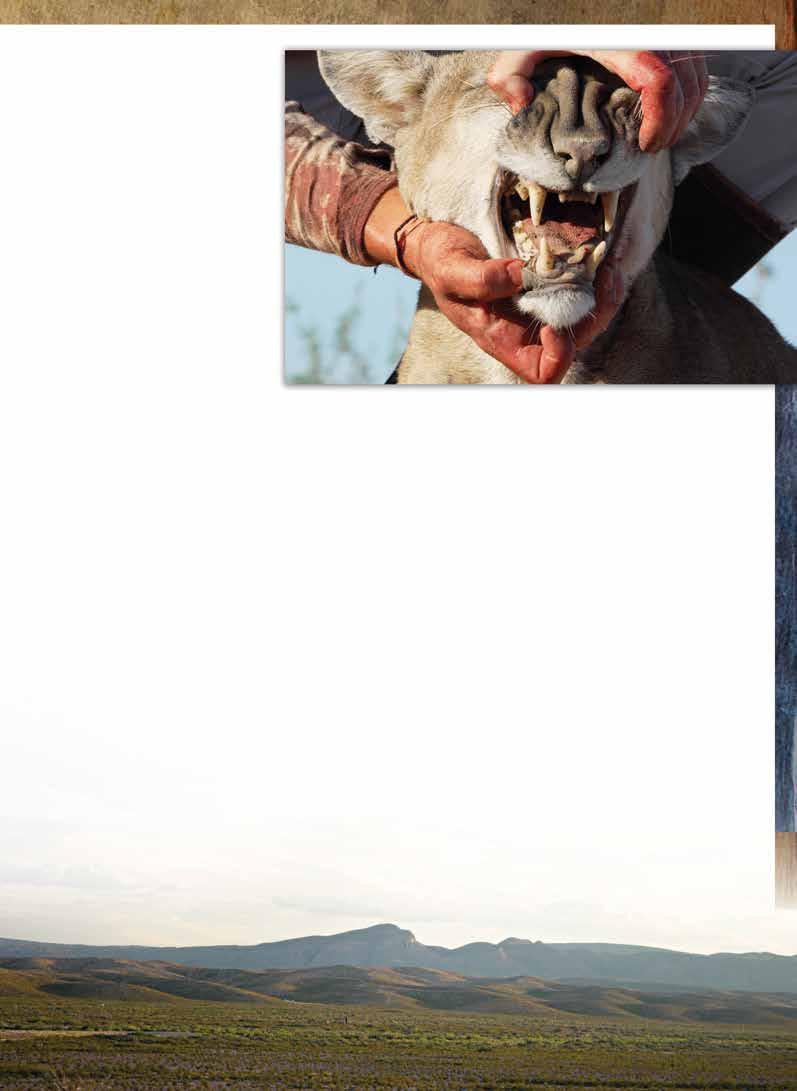
ranch was thrilled. And everything finally sank in. I had killed something most Texas hunters will never see in the wild, let alone shoot.
Texas Parks and Wildlife says there’s no solid population estimate for mountain lions in Texas, and real sightings are rare. I’ve seen estimates that a regular person has a 1% or lower chance of ever seeing one in their lifetime. This one was a mature male, roughly four years old, 140 pounds, and 6 feet 6 inches long, only an inch shorter than Hayden.
Predator management isn’t politics, it’s land stewardship. The Borderlands Research Institute at Sul Ross documented 200 lion-kill sites in the Davis Mountains from GPS-collared cats. Mule deer and whitetail were a major portion of their diet. A single lion killing around one deer a week adds up fast. I’ve seen what unmanaged predators do. Coyotes wiped out my father-in-law’s entire blackbuck herd in a week.
People always ask if I killed an elk. Not on this trip. A full moon, steady wind, and a lion hammering that area overnight shut things down. Dalton still called in bulls every morning, and we passed some really good 280-class bulls because we were committed to 300-plus. That’s hunting, but I left with a story and an experience I’ll never forget.
West Texas elk hunting is a blast, and I’ll be back next year. Big thanks to Texas Trophy Hunters for letting guys like me, who grew up reading this magazine in deer stands, share our stories. And thank you, Dalton, for running a hard hunt, and Hayden for recovering a once-in-a-lifetime lion. Can’t wait for the next adventure, boys!


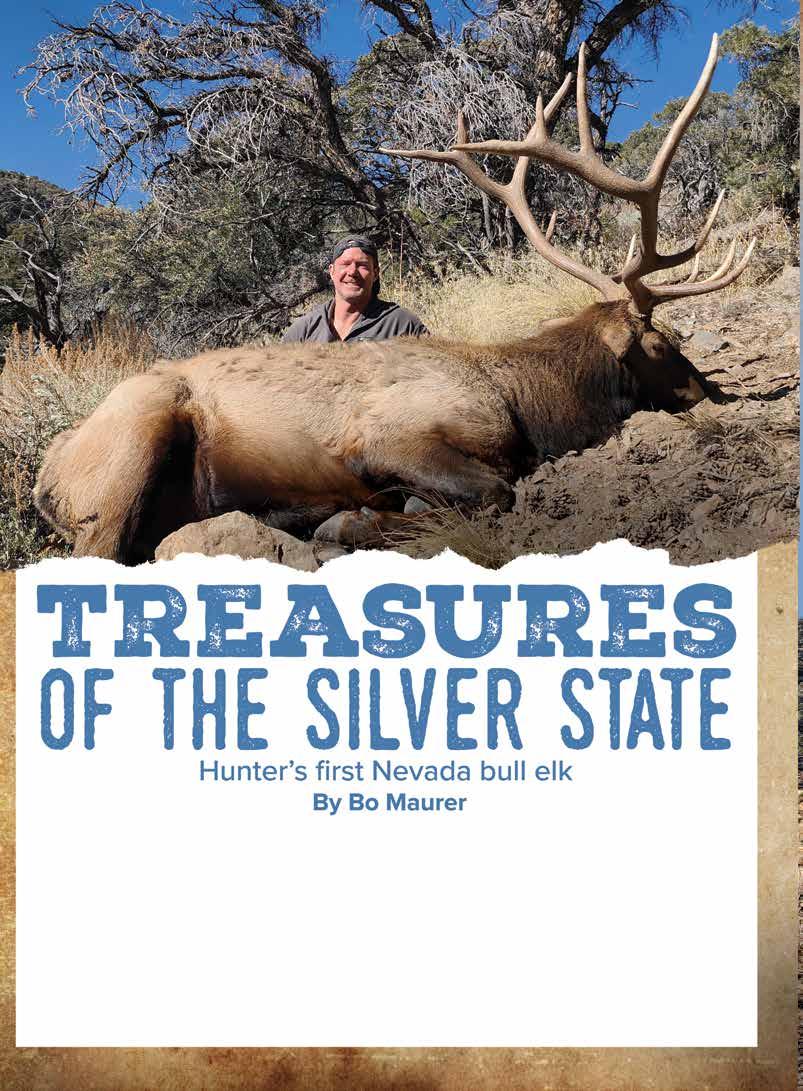
My heart was pounding out of my chest, and my hands were shaking. The giant bull and his buddy were now 825 yards away. The bull was so big it looked like a yellow school bus standing in the sunlight. I knew right away that this was one of the biggest bulls I’d ever laid eyes on, and I was terrified of screwing up the long shot.
During the spring application season, I seriously considered no longer applying for a tag in Nevada, due to the high cost and low odds. However, I decided to stay the course and continued to apply. I was later stunned to see the results of my successful draw for my first bull elk choice.
I had some intel on the Nevada unit, but not much. Unfortunately, my good hunting buddy had to bail at the last minute, so I was heading to Nevada solo.
On my long drive there, I contacted the Huntin’ Fool team. They were super helpful in getting me pumped up for the hunt. This was my first hunt in Nevada, so I was excited and anxious to get into the unit.
The unit I would be hunting was incredibly remote and required a ¼ tank of gas just to get one way into my unit from the closest town. I had brought extra gas, but not enough. By Day 2, I was back in town buying more gas jugs.
The tag I drew was highly coveted and one of the best
units in the state, so I was shocked at how many hunting camps were in the area. It was a bit intimidating being a solo hunter when there were so many people, tents, campers, trucks and ATVs spread throughout the unit.
By Day 3 of scouting and hiking the unit, the pressure was getting to me, and I was completely exasperated. It was difficult to get away from the ATV crowds. Even after a few 10-mile hikes, I found no mature bulls.
It was now time to relocate.
Before I knew it, I was inching my Land Cruiser up an incredibly steep mountain and there was no way to turn around, so I had to keep going.
Suddenly, there was a big rut in the middle of the road. My tires were balanced on either side of the rut. My heart was pounding, and I was terrified. It was getting dark and starting to snow.
Why do I get myself in these situations?
I had managed to navigate the roads and get deep into the other side of the unit. Moving to a different part of the unit was a game changer. This side of the unit was more huntable terrain without needing a long ATV ride. I was pumped to get up on a few new glassing spots at first light.
The next morning, hiking up a ridge in the dark, I saw ATV lights moving in my direction. Once at the top, I saw what looked like a guide and his hunter heading in the direction I had planned to go.
I decided to change course and hiked in the opposite direction.
I crossed a small canyon and hiked up to the rocky nob. The wind was howling as I glanced over the nob in total
disbelief. I yanked my Swarovski NL Pure to my eyes. A stud bull stood out in the wide open with the sun glowing on him. There were two bulls together. They looked so incredibly nervous that even 800 plus yards away, I was terrified to screw this up. The wind was howling in my face and away from the bulls.
The next thing I knew, the bulls looked like they had disappeared, but I quickly realized that they had just stepped into the shadows of piñon and juniper trees. It was mindblowing that the bull that looked as big as a school bus simply vanished by stepping into the shade.
My first concern was that other hunters in the area were watching this bull.
After studying both bulls in my new mini Swarovski spotter, I found the second bull was a gorgeous 7x7. But he just didn’t have the same “wow factor” as the stud 6x7 did with giant royal points. There were also tree branches stuck in the antlers of the stud bull, making my heart skip an extra beat with pure excitement.
It was time to make a move.
I had mapped out a route to get close to the bedded-down bulls. I climbed back down the backside of the nob, staying completely out of sight. I walked up to a clearing with a flat spot and an unobstructed view of the big bull. I decided this was the best vantage for me.
I set up my Gunwerks 28 Nosler with a bipod and rear bag. The bull hadn’t moved, so I quickly set up my spotter with a scope cam to try and film. My heart raced as I slid the extra 180-grain Hybrid Target Berger cartridge into the chamber and closed the bolt. There was a slight breeze, so I made a
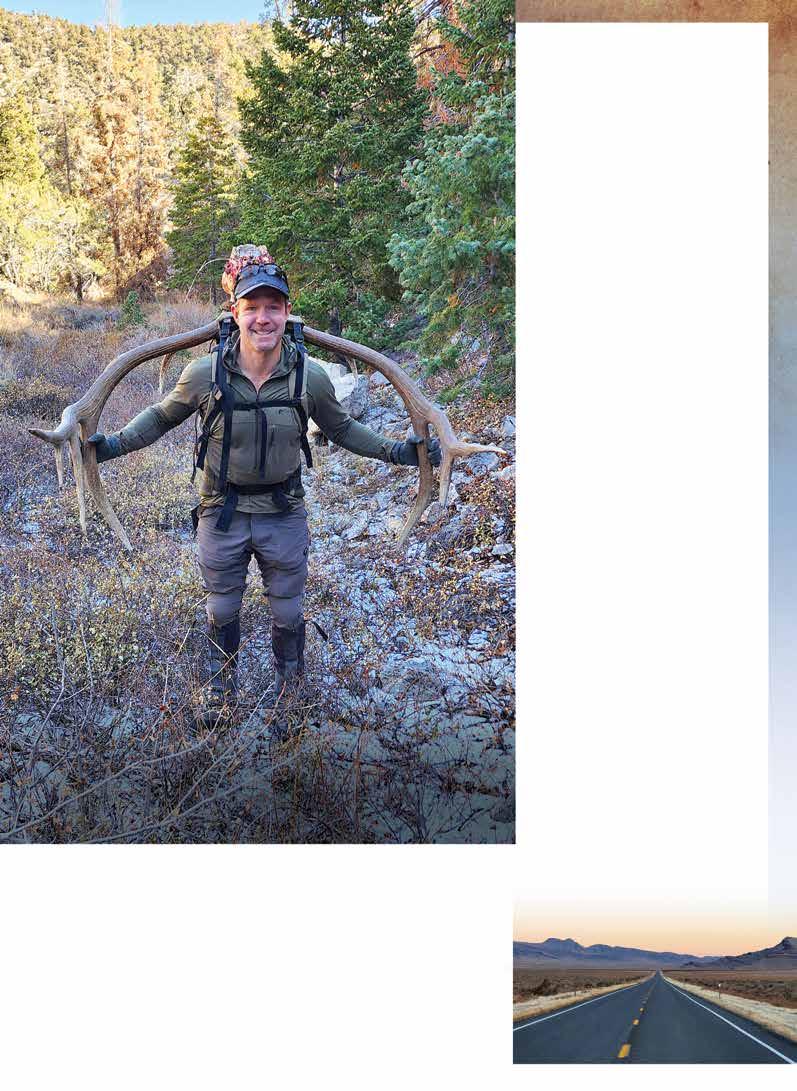

wind adjustment. After a few relaxed breaths, I checked my parallax and gently squeezed the trigger.
The suppressed rifle barked, and I lost my sight picture. Out of the corner of my eye, I saw the bull, who looked like he was hit on my phone screen. I scrambled to find the bull again in my scope. I finally found him, and he was down and kicking, so I sent one more to ensure this was a clean kill.
I rolled over on my back in complete disbelief. Did this really just happen?
I was thrilled and thankful for the fortunate chain of events. But there was tremendous work ahead, so I hustled over to lay hands on the awesome bull.
After the always challenging solo photo shoot, I broke down the bull, getting the meat in the shade as soon as possible.
With all the meat in the shade, I finally enjoyed a ceremonial cup of coffee and a snack. This was a huge blessing, and I wanted to soak up every bit of this incredible experience.
Having never seen this country before in the daylight, I was a bit anxious about getting back to my truck. There were a few cliffs that I had to navigate around. Thankfully, I returned to my truck with the first load shortly after dark.
With the help of the onX app, I relocated my truck closer to the meat to shorten the remaining pack-outs the next day.
I want to recognize the local guide, who I had briefly met at the gas station in town. This gentleman knew I was completely solo and sent me a message checking on my hunt. To my disbelief, he showed up the next day to help me pack out this bull.
What an extraordinary solo adventure in Nevada. I am thankful for the incredible experience and unforgettable adventure!
Article originally published in the 2025 March/April issue of Safari Magazine. Bo Maurer is an SCI member who lives in Colorado.


Things I wish someone told me long ago
It was March 29, opening morning of the 2025 North Texas spring turkey season. In the previous two weeks, I’d done my scouting. I located tracks, found spent feathers and droppings by the creek, and glassed from a canyon rim to confirm where the birds mingled. A blind was set near the most sign. Next, a trail camera confirmed at least three mature gobblers were courting hens along that Panhandle river corridor.
At daylight it was a cool 50 degrees. I heard gobbling in the cottonwoods 150 yards to the north. Four feisty jakes gobbled, flew down and stalked my calls. They swarmed my decoy spread, half-strutting like they were the bullies of the creek bottom. I watched the show for an hour, then heard more gobbling from the south, followed by loud hen chatter.
Waddling down a dusty cow trail, two big gobblers were fluffed up as big as washing machines. They were marching behind four hens. When they saw the flock of jakes by my decoys, the two big gobblers moved closer. With one of the big gobblers a scant eight yards away, I eased my bow to full draw. The sight pin steadied and I released. The Magnus Bullhead broadhead smacked the big Rio Grande in the neck. The gobbler flopped like a fish out of water as the jakes jumped on him. I had to wave my arms outside the blind
This trail camera picture was taken in spring 2025. Trail cameras can tell you when turkeys pass certain locations, so you know where best to spend your time. A camera can also give clues as to how many gobblers are in each area.
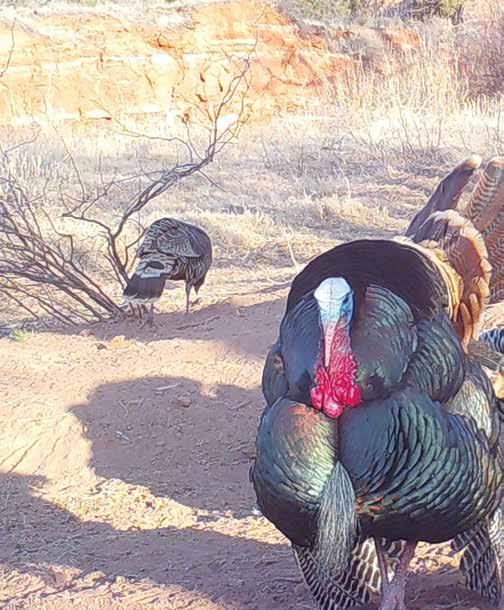
to send the crazy birds on their way. My opening-morning gobbler had an 81/2-inch beard and 1¼-inch spurs.
Four rules for turkey success I wish someone would have told me about these basics years ago.
First rule: Odds of success with a bow are much higher from a wellpositioned blind than hiding in available cover. Look for sign like pitchfork-shaped tracks, spent feathers and droppings to decide where
Brandon with his second Rio Grande gobbler from spring 2025 in Texas. He arrowed the big gobbler from a pop-up blind at 8 yards on the afternoon of April 11.
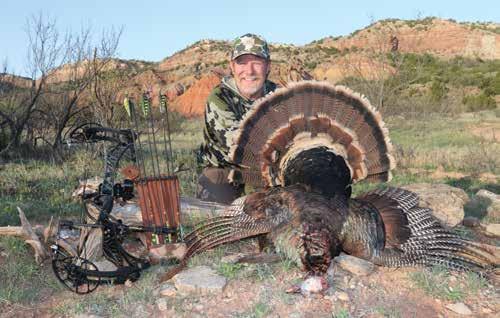
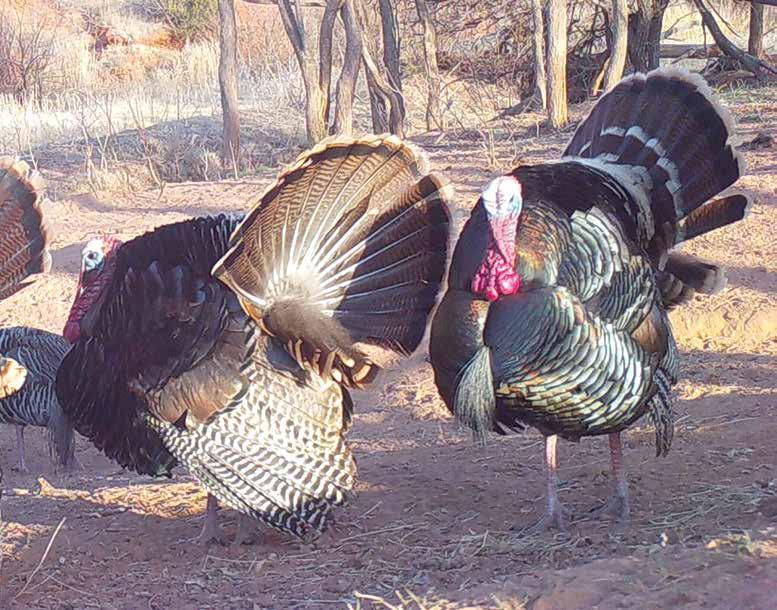

to set the blind. A rancher or landowner can save you time by telling you where they routinely see turkeys. Choose a roomy pop-up blind and secure it at all corners, preferably set in the shade. Set the blind so the primary shooting window faces north or south. Close all the other windows. If positioned to the east or west, the rising or setting sun can reflect off a shiny bow limb or hand, spooking a nearby turkey. Wear dark clothing, a headnet and gloves to go unnoticed and stay at the back of the blind. Clear out leaves and sticks from inside the blind and lay down a blanket to muffle sound. I often take my shoes off and sit in sock feet, then shoot from my knees.
Second rule: calling and patience. Don’t be intimidated by pros and think you need expert calling skills to kill a gobbler. Start with a simple box call and learn how to make realistic yelps. If a blind is in a well-scouted location, minimal calling can lure a curious gobbler into range.
Many times, gobblers do not vocally respond, instead approaching the sound of your call quietly. Listen for the sound of his wings dragging the ground, strutting. Be patient! If I’m confident my blind

is in a good location, I sit all day. Pack snacks, water and books to pass the time. When I hunt all day, I call about every half hour in case a gobbler is nearby.
Third rule: the right bow rig. Choose a smooth-drawing bow with minimal accessories. I like short-axle rigs, 29-34 inches, with basic add-ons, for ease of maneuvering inside a blind. Rig the bow with a short stabilizer so it won’t bump the front of the blind.
Add a QAD drop-away rest and a single-pin HHA Optimizer sight with a bright-green fiber-optic pin. I set the one pin for 20 yards and practice for shots from 10 to 25 yards. A ¼-inch peep sight allows plenty of light to reach my eye in a dark blind. Don’t let the draw-weight bullies convince you that you need a heavy draw weight.
I routinely kill turkeys and deer with bows that pull 55 to 60 pounds. The ability to draw the bow smoothly with minimal movement and hold it steady while you aim is more important than macho poundage. My turkey setup last year was a Mathews Lift X 29.5 bow set at 55 pounds at my 28-inch draw length. Fourth rule: keep shots close. Set decoys about 8 to 10 yards from the blind.
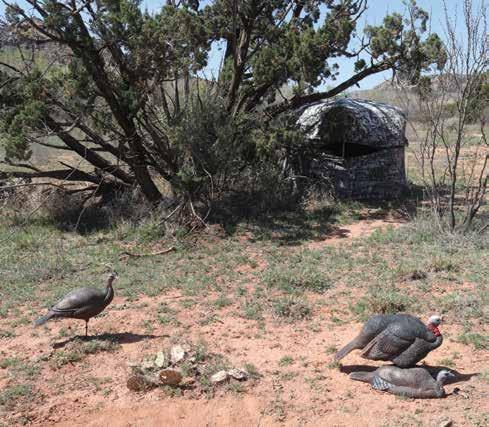
My go-to setup is a bedded hen with a half strutting jake and an upright hen. Even if the gobbler hangs up beyond the decoy spread, he’s often under 25 yards. I prefer head/neck shots instead of body shots. This requires some extra thought about your arrow and broadhead. I’ve had good luck with 100-grain Magnus Bullhead broadheads on the end of stiff carbon shafts fletched with three 4-inch feathers. My finished arrow weight, including the steel insert and broadhead, is between 450 to 500 grains, depending on shaft size.
I filled my second Texas tag on the afternoon of April 11. It was a warm 81 degrees, and I was thankful for the shade inside the blind set under the limbs of a twisted cedar tree. The river bottom was quiet until 3 p.m.
Finally, a ruckus of gobbling answered the yelps from my box call. The sound got louder, the birds coming closer. Soon, a trio of big gobblers came through the mesquites and stood gobbling and strutting at 80 yards. What a sight!
Their copper-colored tail fans shined in the afternoon light like a new penny. Through my binoculars, I could see each bird had a 9-inch-or-longer beard. One of the gobblers had a beard as thick as a paintbrush, a bird I recognized from trail camera images. For the next hour, those three gobblers tortured me, gobbling and strutting, fighting with each other, walking as close as 55 yards, but eventually losing interest and wandering down the creek. Rule number two, patience, was being tested.
At 6:50, after a couple of hours of no turkey chatter whatsoever, a bird gobbled to the north of my blind. I returned the sound with a few soft yelps from my box call. Peeking through the rear slit in my blind, I could see two jakes and one big gobbler coming at a steady trot. The dominant gobbler went straight to the
Here’s one of Brandon’s blind setups from spring 2025 on a creek bottom in the Texas Panhandle. Notice the three decoys placed eight steps from the blind. He arrowed a big gobbler at this setup late in the afternoon.
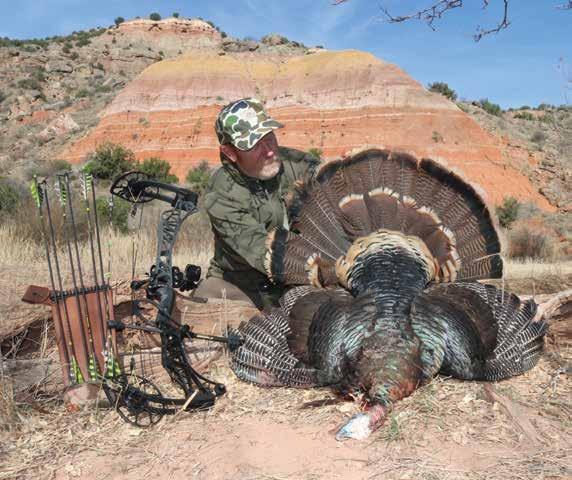

Brandon with his opening-day gobbler from spring 2025 in the Texas Panhandle. The gobbler ran four jakes away from the decoys, offering an 8-yard shot late in the morning.
jake decoy over a bedded hen.
I waited with my bow at full draw. I held the string back, waiting for the dang jakes to be clear of the target gobbler. The distance was only eight steps. With the jakes now off to the side, my arrow crashed into the mature gobbler’s neck, dropping him instantly. My second Texas tom had a 91/2inch beard with 11⁄8 -inch spurs.
Follow these four rules for success this spring. Why didn’t someone tell me years ago?




By Jolie Cox
Acouple of hunting guides mentioned Texas Brigades to me while on my first Texas Youth Hunting Program hunt. I went home, did research, and decided to apply. Later, I learned I would attend the North Texas Buckskin Brigade. Words cannot express how fun and involving this experience was for me.
Everyone who attended did so much in a short amount of time. I gained many new skills and learned several lessons. Being there changed my viewpoints on many things and gave me the chance to do things I’ve never done before. We learned about the importance of knowing the factors in an environment so we could use it to our advantage to manipulate a habitat. Along with that, we identified plants, talked about the basic needs for wildlife, and named Aldo Leopold’s tools for environmental management.
At camp, we touched on a variety of different topics. One of the many things I learned is the four different chambers of a deer’s stomach: the rumen, the reticulum, the omasum, and the abomasum. I also learned how to score deer using the Boone and Crockett official scoring system, along with how to age deer. After learning this, I realized it will be a continuous learning path. Aging was not my strong suit, but with more practice, I will understand.
There were countless hands-on experiences. We would be out in the field identifying plants or having demonstrations for a specific topic. One morning, we had a prescribed fire demonstration where we learned about the different techniques of using fire, and later in the evening, we got to do a spotlight survey. We went out to identify how many deer were in a specific area. I loved this because everything was very visual and hands-on. It’s one of the best ways for me to learn and understand.
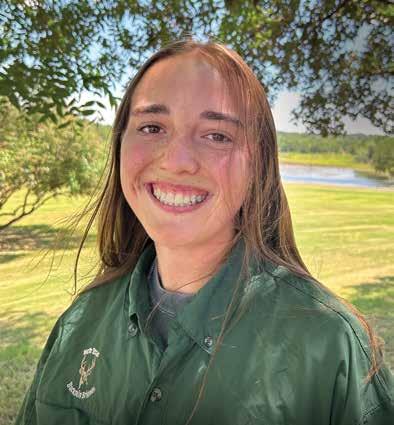
I heard other people say that their favorite thing at camp was meeting people. While that was such a big part of my journey all throughout the camp, it went beyond getting to know them. It led further into participating in activities with them, being surrounded by those who had similar goals as me, and forming true connections with others.
We participated in lots of team-building activities, which made us grow stronger together. We had to work together in order to form strategies and complete tasks. Everyone had a desire to learn more about wildlife and conservation. Several people
had goals to enter the industry once done with high school and college. Because there were no phones, people were interacting and connecting on a real level. This also showed me how much there is to experience on a day-to-day basis. But we get caught up on a screen and waste most of our time throughout the day. It has encouraged me to be wiser with my daily screen time.
A bad habit that I sometimes tend to have is procrastination. However, being
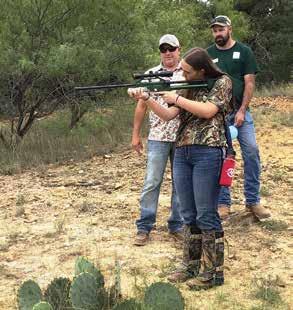
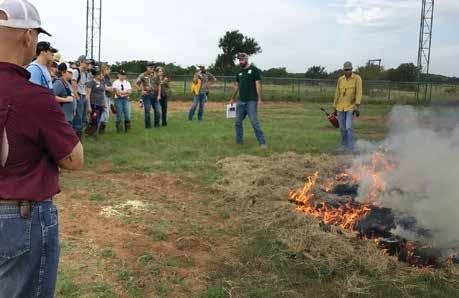
at camp and doing something all the time with little to no downtime to get other projects done opened my eyes with the little amount of stuff that I have to do at home. For example, I say I’m busy at home and always getting my stuff done at the last second. When, in reality, I have so much time at home that I could be using to complete things, but I’m actually on my phone.
Once camp ended, we had a graduation ceremony. This is where we got pinned and received our certificates. Another thing they do is announce the top cadet, which was me. Going into this camp, I expected to come out with just more knowledge about wildlife and conservation techniques, but I learned valuable lessons.

Texas Brigades is a conservation-based leadership organization which organizes wildlife and natural resource-based leadership camps for participants ranging in age from 13-17. Its mission is to educate and empower youths with leadership skills and knowledge in wildlife, fisheries, and land stewardship to become conservation ambassadors for a sustained natural resource legacy.
Texas Brigades hosts 10 summer camps throughout June and July. The application period for camp runs Nov. 1 through March 15 of each year. Visit texasbrigades.org or call 210-556-1391 for more information.
A major lesson is that it’s not about being the loudest in the room, only making a big impact. I really saw this when being named as the top cadet. I was, by far, not the most outspoken person. In fact, I’m a quiet, shy person, but I always try to be intentional with everything I do and everyone I meet.
They also taught me to be intentional with myself. It encouraged me to really think about what’s going on in my own head. Since tuning in with myself, I have set goals and began to align opportunities with my schedule. A major goal I have for myself is to go back next year in a leadership role. By having a chance to do that, I will work hard to complete activities as they come and step out to find more opportunities.
This Texas Brigades camp was truly a rewarding experience. I’m only scratching the surface of how incredible it was. In the end, I came home with knowledge, unforgettable memories, new friends, and more that will follow me deeper in my life.
Cadets always learn best with a hands-on approach.
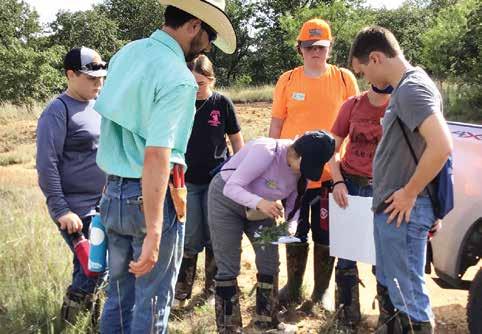




By Martin Malacara
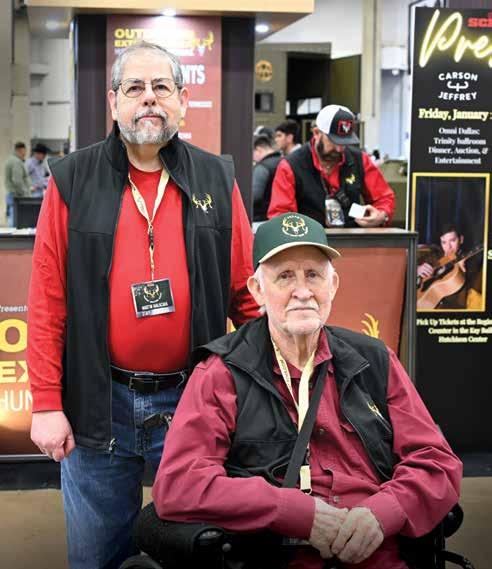

“Ignorance is no excuse.” —Goreism
That’s a pretty good axiom to live by. I’ve been working on that for most of my life, particularly in the last 19 years, ever since I met the man who said it. Horace Gore was a most dynamic individual, professionally, philosophically, and personally. When I told my friends about my new boss 19 years ago, I told them to imagine combining Yosemite Sam and Pecos Bill, with the outcome being Horace. Little did I know, within that dynamic, larger-than-life personality hid the soul of a cowboy poet and master storyteller.
During those years, I found it quite a treat to have lunch with Horace when he came to the office. We would mostly dine at Jim’s coffee shop. Horace would always tell whichever waitress who served us he was close friends with Jimmy Hasslocher, whose dad Jim, founded the restaurant chain. He’d joked that he was waiting on a special card from Jimmy, which would entitle Horace to free meals from Jim’s for life.
Of course, we’d talk shop for just a bit, but then we’d talk about everything else. He would share the occasional Goreism, like the one at the top of the
page. A couple more come to mind. “Man has an infinite appetite for distractions,” and “You may not know it, but don’t let anybody know that you don’t know it.” The man was a fountain of wisdom.
So, how did we start working together?
I began working with The Journal in 2006. The magazine needed an editorial assistant because it had three other sister publications: The Journals of the Alabama Trophy Hunters, the Arkansas Trophy Hunters, and the Canadian Trophy Hunters. The assistant editor at the time, the late Doug Patrick, was overwhelmed because Horace was recovering from an automobile accident.
I had come to The Journal’s doorstep from a news publishing outfit, Prime Time newspapers, where Doug previously worked, alongside graphic designer Eric Moser, and art director, the late Shane Tackett. Doug and I split the workload. He managed TTHA’s magazine and the Arkansas publication, while I managed the Alabama and Canadian publications. When Doug wasn’t available, I was in charge of keeping Horace updated on the goings-on with all four publications. I learned rather quickly you had to be on your toes when dealing with Horace. He didn’t like putting up with ignorance. After my first admonishment from Horace, I wised up and brought my A-game while working with him. I made sure I had answers to his questions, and if I didn’t, I’d tell him I’d have the answers within 24 hours. He couldn’t complain much after that.
discussion. Horace admired the man almost as much as he admired Jack O’Connor, who incidentally, served as shooting editor of Outdoor Life magazine for 31 years. That alone puts Horace in rarified company.

“Gore was the best Texan ever from Arkansas.”
—Marty Berry
The one theme, or motif, of Hemingway’s writing often mentioned by Horace during those discussions, either during lunch, or in one of many weekly phone conversations we had, comes from Hemingway’s story, “The Snows of Kilimanjaro.” The story opens with a description of a dead, frozen leopard close to the summit on Mount Kilimanjaro. No one knows why the leopard went up the mountain. But to the book’s protagonist, Harry, a writer dying from a neglected wound that turned gangrenous, the leopard’s journey represented the highest aspiration of any human or noble creature at the end of life. Harry took a metaphorical trip up the mountain to find meaning, fulfillment and honor, in order to escape his life below. Harry probably thought attempting such a journey, and failing, was much more noble than living a wasted, troubled life below the mountain.
It stands out to me now after the death of my boss, friend, and mentor. I believe big cats like the leopard and tiger were Horace’s spirit animals (see page 112). Unlike Harry, he did live a full, rich life. He managed to write two books: one devoted to his Journal writings and TTHA history, and the other to his life story. He made such huge impact on so many people in the hunting world. He worked diligently and tirelessly, up until the very end.
Believe it or not, my first brush with TTHA came when I was 9. My father was the assistant manager at the El Tropicano Hotel in 1976. My brother and I spent a lot of time there while my dad took care of hotel business. I was in the lobby playing on the newfangled Pong video arcade machine in the hotel lobby, feeding it quarters, while Jerry Johnston held his first TTHA Convention, the precursor to the Hunters Extravaganza, in the hotel ballroom. Little did I know I’d wind up working for the Association’s flagship magazine. That’s why I call San Antonio the biggest small town in Texas.
When the experiment of having three other magazines ended, and with changes in editorial staff, Horace and I remained and our mentor-mentee relation began. When I had questions, he was more than eager to answer them. We learned we had a few things in common.
One example: my mother was born in 1932, one year before Horace, so I heard many of her childhood stories about growing up during the Great Depression. It made it easier to relate to him. We shared a common background. We both came from public service: I as a former newspaper editor/reporter, and he as a wildlife biologist with Texas Parks and Wildlife Department. He believed, and I believe, the public has the right to be informed and educated about the government agencies that control our daily lives and activities.
Horace and I shared an affinity of history, good writing, and good writers. Although I had my fill of Ernest Hemingway in high school, he was often the subject of a good lunchtime
The perfect example of this commitment was when he came to San Antonio to have surgery on his right leg. Unfortunately, the surgeon couldn’t save it, and had to remove it. While Horace recovered at Baptist Hospital in downtown San Antonio, he told me to visit him so we could work on our annual editorial calendar so The Journal would be prepared for the following year. I went to his room, with notes and notebook in hand, and found him sitting up in his hospital bed, chomping at the bit. We were so busy with the calendar, he couldn’t be bothered by any of the hospital staff. He shooed away the poor duty nurse and told her to come back when he was ready, in a most authoritative tone. I felt a little bad for her, but had to chuckle at the same time, because that was pure Horace. Once his mind was set, nothing short of a Whataburger could sway him from the task at hand.
Nevertheless, after Horace had his leg removed, our lunches together came to an end. We had planned on having lunch at the historic Menger Hotel with my dad, and pay a visit to Paris Hatters to get his hat steamed and blocked. Dad went from El Tropicano to the Menger to work as the assistant manager there, and would give Horace the 50-cent tour after lunch. I regret we couldn’t do that sooner. It would have been a treat for Horace because he was quite the Texas history maven. To quote his friend Marty Berry, “Gore was the best Texan ever from Arkansas.”
Goodbye, Horace. You could be scathing in your criticism, but you challenged me to do my best. You taught me more about the natural world, and you imparted on me enough wisdom to last the rest of my lifetime.


Editor’s note: The following story comes from Horace’s autobiography, “Stringtown to the Kokernot,” published for Texas Trophy Hunters Association’s 50th anniversary. He wrote it as a way to examine and reflect on his remaining days in the twilight of his life. It serves as a poignant insight into a man who lived a long, full life.
After five years of existence in a wheelchair, and generally being confined to three rooms in the house, I have come to feel like a tiger in a cage. My thoughts about confinement go back a long way, ever since I read “Bring’em Back Alive” by Frank Buck (1930) when I was in the ninth grade in Hooks, Texas. The idea of catching a wild animal in Africa and putting it in a zoo for public viewing was very new to me at the time, but now it comes back to reality since I’m now like a wild animal in confinement.
When I look back at the 89 years of my life, I can readily compare my days to those of a tiger. I was always on the prowl, living on the edge, looking for something to achieve—something exciting—and feeling subjective to those whose attributes were superior to mine.
I always liked the freedom of the wild, the hunt, and sometimes dreamed of being put in jail for something I didn’t do. Later in life, I found myself to be estranged from some of the rules of society, and landed in jail once when alcohol got the best of me—when I used poor judgment. I didn’t like jail, and don’t recommend it.
I’ve always been a hunter, but not always after game. I’ve hunted for love; for money; for the excitement of the chase; for fame; for professional achievement, and success in life. We all hunt for something.

My idea of life comes from a philosophy that a person’s existence is nothing more or less than the total of all of their experiences. The more experiences—the richer the life. If I compare my life to that hypothesis, I must admit that I have had a very rich life—one that should be celebrated, and in some ways, copied. A rich life is more than advancements to piety—there must also be bad times, when contributions to society are contrary to the good. I’ve made payments to both.
A tiger does not have thought processes that separate good from evil. It relies on three things for a good life—food, cover and replication. These necessities are entwined with staying alive and fighting for dominance. If I look at my life, it has been no different than that of the tiger. I came from a humble beginning, and have taken on the task of marriage, children, and the military, and spent years obtaining an educational parameter that would make me dominant in a particular field. The difference in me and the tiger is that I have the ability to discern good from evil, as stipulated in our Christian society. We must live by the golden rule, and the Ten Commandments.
I’ve had a good life. I’ve accomplished most of the things that I’ve wanted to do. Just like a tiger, I have prowled and conquered. My home range has included education, mar-
riage and divorce, fatherhood, personal achievements, professional success, and now all I can do is write. But I’m thankful for the ability to use words to express my thoughts about hunting and living.
I’ve stood at death’s door twice. A head-on wreck, and when my blood sugar suddenly went down to about 40 while the folks were away, and I sank to oblivion at my computer. I dodged death in the wreck, and I came back to reality when the emergency crew pumped sugar back

into my veins. If I did taste death in either case, it was very quick and quiet—no trumpets or angels—just nothing, and not bad at all if it were not so permanent.
I’m reminiscent of Frank Buck’s catching of animals for zoos, a tiger in a cage. No more roaming; no more combat; no more conquests. Like the tiger, I get good food and care, with few challenges. And, as we hear from the Christian brethren—It’s all over but the shouting! I will die peacefully in confinement—a tiger in a cage.









Water temperature also is a vital factor in determining the sex of flounder.
Southern flounder exhibit environmental sex determination, where environmental factors can influence phenotypic sex during early juvenile development.
When water temperatures are in the optimal range of 62 degrees to 65 degrees, juvenile flounder have a roughly 50% chance of being either male or female, according to TPWD data. At higher water temperatures, flounder have a higher probability of becoming male, while higher temperatures also increase the risk of juvenile mortality.
An intensive study conducted by fisheries biologists at North Carolina State University on both wild and captive flounder yielded specific evidence of just how water temperature affects the current and future flounder figure.
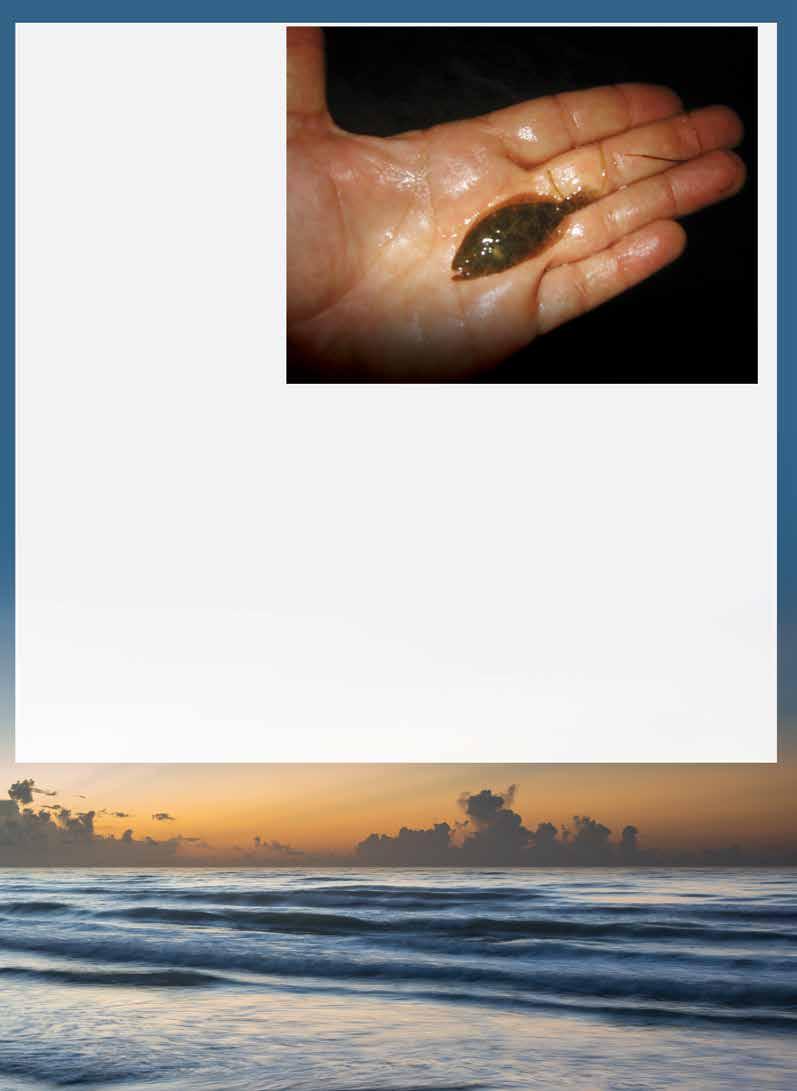
TPWD’s flounder stock enhancement program could be one way to help curb the longtime downward trend in flatfish populations.
Researchers sampled wild flounder at both northern and southern habitats in the state that featured differing water temperatures. In northern locales, where water temperatures were documented averaging 73 degrees, the male-to-female ratio was closer to the mid-range for optimum breeding success. In southern locales, where the average temperature was about 80 degrees, the male-to-female figure was skewed to roughly 94% male flounder.
When rearing flounder in the same conditions in tanks, the same phenomenon was documented, providing strong evidence that temperature is a key factor influencing sex ratios in nursery habitats.
The research from Texas all the way up the Carolina coast has yielded one overriding conclusion: the future of the same fish anglers enjoy catching across numerous varying saltwater ecosystems is in a fight for survival.
Due to sexually dimorphic growth, the Texas flounder fishery is almost entirely dependent on females, fish that grow larger than males and are the ones most likely to be kept by
anglers. In addition to growing larger, female flounder also live longer, roughly a seven-year lifespan to that of a male’s threeyear life cycle, according to biologists.
Based on the research across multiple states, the data shows that continued rising water temperatures will not only be detrimental to larval flounder, they will also lead to a larger figure of males in the population, many of which won’t even grow large enough to legally keep. One possible avenue to sustain and protect the flounder population in Texas is an approach that’s already been used to great success for other species, with one caveat. TPWD’s saltwater hatchery system has helped pump out millions of redfish and trout during its lifespan that dates back to 1982, supplementing natural fish stocks across the entire coast, one fingerling at a time.
Unlike reds and specks, flounder have proven more difficult to produce en masse, though TPWD’s flounder stock enhancement program has certainly shown promise in its most recent efforts. The program, which is run at multiple hatchery sites, including in Corpus Christi and Lake Jackson, helped to produce about 300,000 juvenile flounder in 2022 that were released along the coast. The previous high watermark for a single flounder production year was about 25,000.
While I prefer the mid-weight bullets for my Texas deer hunting, rifles chambered in .308 Winchester are capable of handling a variety of bullet types and weights. Need a good rifle for a youngster or sensitive shooter? Try the .308 reduced loads that push a 125-grain bullet in the 2,600-fps range as well. If you want to really step on it, they can also push that lightweight bullet to around 3,100 fps. For pronghorn antelope, try the 150-grain bullets at 2,800 to 2,900 fps. Need a good load for bigger animals? The .308 Win. can push a 180-grain bullet over 2,500 fps.
The .308 doesn’t really start to fall behind the 30-06 until it reaches the heavier bullets, where the greater powder capacity of the “06” really comes into play. That said, and since the .308 is seldom used on nilgai and elk, the .308 Winchester can do
just about anything you need done in Texas hunting.
Some have described the .308 Win. as inherently accurate. Perhaps true, and the .308 does seem to have plenty of punch for the longer shots. I’ve managed to ring many a steel plate at 1,000+ yards with a good old 168 Sierra MatchKing. Though I would never dream of engaging game animals at that distance, steel shooting is a totally different story, and I love the ability to do both with a single rifle and cartridge.
The latest generation of cartridges, such as the 6.5 Creedmoor, may now have the spotlight more than the .308, but the newer cartridges seem to perform best in a narrow band of bullet weights, short of a round that is suitable for critters with teeth and claws. That’s where the oh-so-versatile .308 outperforms these new cartridges, and seems to be able to do it all.
This Springfield Armory Redline epitomizes the short (20-inch) lightweight barrels and stock along with a medium caliber. The combination makes it a good candidate for a suppressor.
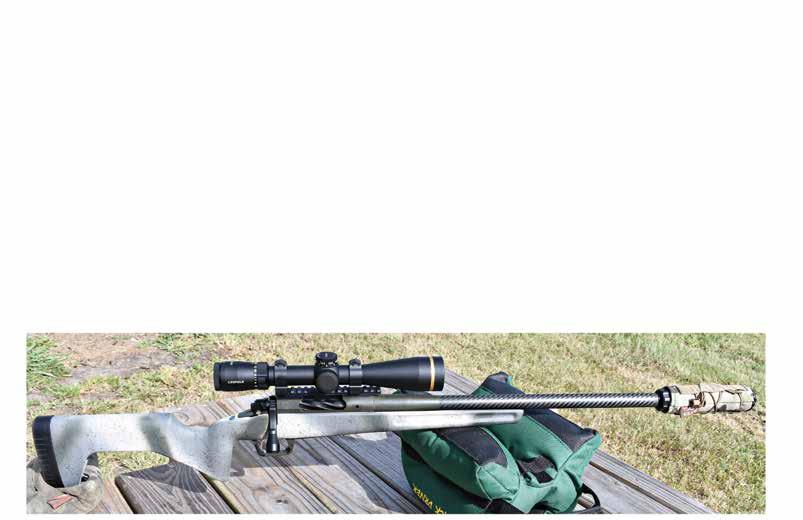


March 3 • April 2

March 19 • April 17 Last Quarter: March 11 • April 10 First Quarter: March 26 • April 24

By Everett Headley

Prep time: 10 minutes

Cook Time: 2 hours

Serves: 6

This Moroccan style of cooking balances sweet and savory flavors in a conical, Dutch-oven-like dish called a tagine. Ingredients are added in layers in the base of the dish and then covered by the lid. As it cooks, steam condenses on the lid, returning to the base and concentrating flavors. The result is an exotic take on a slow-cooked dish with tantalizing aromas. Preparation is easy and simple. Roasts are an excellent choice for this type of dish. This tagine is a great way to change up the menu and introduce an exciting and new culinary technique.
• 1.5 lb venison, cubed into 3/4” pieces
• 1 tbsp paprika
• 1 tbsp chili powder
• 1 tsp kosher salt
• 1 cup all-purpose flour
• 1 tbsp honey
• 1 small onion, diced
• 2 cloves garlic, minced
• 2 tbsp. Worcestershire sauce
• ½ cup tomato puree
• 1 can chopped tomatoes
• 1.5 cup vegetable stock
• 1 cup red wine
• ½ cup chopped dates
• ½ cup golden raisins (sultanas)
• 1 can chickpeas or green peas
• ¼ cup almonds, sliced
• 2 tbsp olive oil
Serve on a bed of jasmine rice or couscous. A dollop of crème freshe can be added. Naan completes the dish and soaks up the sauce. A crock pot or Dutch oven can substitute for a tagine, but some of the earthy flavor will be lost. If a thickened sauced is desired, remove the lid for the last 15 minutes of cooking.
Mix paprika, salt, chili powder, and flour. Toss cubed venison in dry mix, coating each piece well. Discard leftover mix. Heat tagine pot bottom and add olive oil. Brown coated venison in base then remove. On medium-high heat, sweat onion and garlic in base and cook for 3 minutes, just enough to tenderize the onion.
Deglaze the pan by pouring the vegetable stock in first. Then add honey, Worcestershire sauce, puree and chopped tomatoes, and red wine. Stir for one minute and add browned venison. Place in a 325° oven for one hour, then add sultanas, chickpeas, almonds, and dates. Cook for an additional hour until venison is softened to desired doneness and aromas have mixed well. Your nose will let you know. Garnish with sliced almonds.

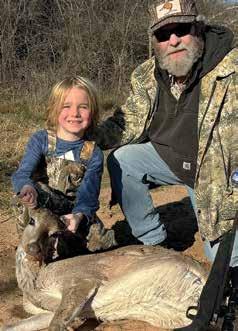
RIVER RILEY: whitetail doe (first deer) taken 1/1/25 in Comanche County. GEAR: .243.
OUTFITTER: Pawpaw.
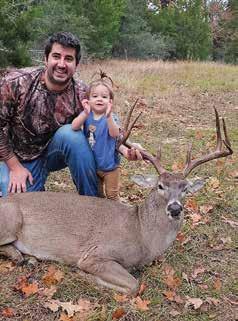
RANDALL & BLAKELY WHITE: whitetail seven-point with 18½-inch inside spread, scoring 121 7⁄8 B&C, taken 12/9/24 in Freestone County. GEAR: Rifle.
OUTFITTER: self.
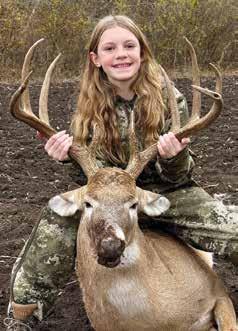
BLAKELY JONES: whitetail ninepoint (first deer) with 191⁄8 -inch inside spread, scoring 144 5⁄8 B&C, taken 12/7/24 in Collin County. GEAR: Benjamin airbow. OUTFITTER: Dad.
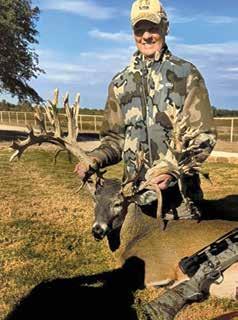
BUSTER HORLEN (PLM): whitetail 77-point with 28 7⁄8 -inch inside spread, scoring 413 4⁄8 B&C, taken 12/10/24 in Tom Green County.
GEAR: Ruger M77 Hawkeye, 6.5 Creedmoor, Swarovski scope. OUTFITTER: 5 Star Outfitters.
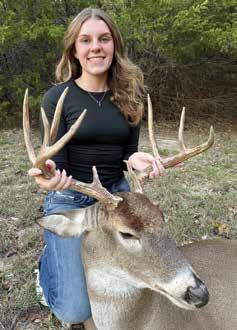
CHLOE JONES: whitetail nine-point taken 11/24/24 in Collin County. GEAR: Benjamin airbow. OUTFITTER: self.
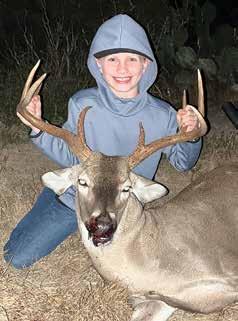
CADE TIDEY: whitetail eight-point with 19 1⁄8 -inch inside spread, scoring 121 3⁄8 gross B&C, taken 11/8/24 in La Salle County.
GEAR: Howa 1500 mini .223 Rem., 55-grain Hornady Spire Point, Leupold Vari-X III 2.5-8X scope. OUTFITTER: “Pa” (grandfather).
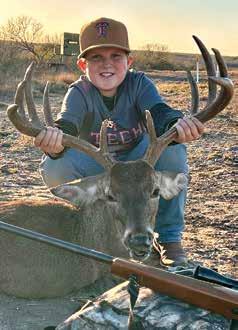
CLAY UZZELL: whitetail 10-point taken 1/18/25 in McMullen County. GEAR: .243 rifle. OUTFITTER: Dad (Bar Fork Ranch).
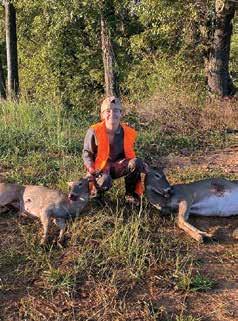
MARSHALL TYREE: two whitetail does taken 10/12/24 in Newton County, Georgia.
GEAR: Savage Model 110 in .308, 150-grain Nosler Ballistic Tip handloads, Vortex 4-16 scope. OUTFITTER: Dad.
NOTE: Only TTHA members or immediate family may submit photos. Do not paperclip or staple photos, as this can damage them. Prints must be no larger than 4x6 inches and printed on photo-quality paper. Photos may also be emailed to HuntsEnd@ttha.com. If sent by email, please make sure to include all information from the form and limit your photo size to less than 5MB. Send a separate e-mail for each entry. No photos will be returned. Photos become the property of Texas






Don’t forget to use your free classified ad! It’s once per year and you must have an active membership in good standing. Send to:
654 Richland Hills, Ste. 160, San
You may fax your ad to (210) 523-8871, Attn: Debbie Keene or e-mail to Deborah@ttha.com. Send your ad in by March 6 to run in the next issue!

Available to current members of Texas Trophy Hunters Association only! Limit 25 words per ad. Each member may run 1 FREE ad in one issue per year. 25 word ads after FREE issue are $40 each. WE RESERVE THE RIGHT TO EDIT OR REFUSE ANY AD.
AOUDAD HUNT! Hunt free ranging aoudad in Llano County. Hunts begin in late August thru late October, 2026. Nice accommodations. For additional info, email darrellsteffek@gmail.com.
WILDLIFE EXEMPTIONS – Texas
Rangeland Management provides TurnKey Wildlife Services to keep your Property Taxes LOW! Contact Wildlife Biologist Sergio Morales: 210-526-1522 | www. TexasRangeManagement.com.
MACS MOBILE GUN CARE in DFW - Expert Cleaning/Maintenance, and Premium Accessories with Install for Top Tier Firearms. All at Your Front Door! Book Now: CLEANMYGUNS.COM.
OWN A BUSINESS IN THE OUTDOOR INDUSTRY - We can help you sell your ag/ outdoor business or buy your dream business. Commission-only! Chip Miller, Senior Business Advisor (License #643275). Call or text: 512-677-7750.
HUNT SOUTH TEXAS Deer, Hogs, Turkey, Quail, Dove, Javelina, Varmints. 350 acres near Freer. Low fence. Fully equipped 3 BR, 2ba ranch house with satellite TV. Starting at 150.00 per person per day. Trophy buck, 2500.00. References. 361-947-0584.
WILDLIFE & HABITAT Consulting. Commercial hunts available. Contact Certified Wildlife Biologist Jason Shipman 210-508-8447 or jasonashipman@gmail. com.
S.M FENCING, Welding and Bulldozing. Contact Shawn Mangham. 325-451-7120.
RUGGED EDGE BLADES - a husband & wife Veteran owned company offering beautiful, quality Damascus knives at a reasonable price. Whether you’re out on a hunt, or at the campsite cooking, we have the perfect knife for you. Backed with lifetime warranty and #1 customer satisfaction! Find us at www. ruggededgeblades.com or give us a call at 682-239-0137. Rugged Knives for Rugged Adventures.
KEI VALLEY SAFARIS offering plains game in the Eastern Cape of South Africa. Package hunts or build your safari. Deep sea fishing, photo safaris, and park excursions available upon request. Keivalleysafaris@gmail.com. Keivalleysafaris.com.
WELDED STRUCTURES: Custom Clearing and Fab LLC handles metal buildings, welded structures, and livestock pens throughout the hill country and south Texas. Call Dustin Stareck 316-323-7673. www. customclearingandfab.com.
WANTED: A WHITETAIL HUNTER/Private Plane Owner that loves to hunt trophy deer. I have 1300 acres in the Flint Hills of Kansas. 512.365.8205 OR 512.970.5477.
SPECIALIZED INSURANCE for outdoor recreation & hospitality businesses. Hunting & fishing lodges/preserves, guides, outfitters, ranges, & more. Comprehensive coverages incl. property, general liability, business auto. Contact Devin 361-208-4404 or devinp@jacobs-weber.com.
THERMAL DRONE WILDLIFE SURVEYS by premier wildlife consulting firm Spring Creek Outdoors! Professional full time wildlife biologists. Contact matthew.nuernberg@ gmail.com.
TXN HOME SERVICES - America’s Toughest Gutter Guards with Leaf Blaster Pro. Built to last. Proven to protect. 40-Year Warranty. Gutters that got you covered. 346-460-9199 | TXNHomeServices.com.
BIG TIME HUNTS – World-Class adventures across Southern & Northern BC, Canada! Hunt Stone Sheep, Moose, Goat, Cougar & more. All-inclusive, guided packages. Book your hunt today! www.bigtimehunts.com | bigtimehunts@gmail.com.
TECOMATE PLOTMASTER 600. Includes: Dual Disc Harrow, Chisel Points, plow & Sweep Points. Used once $4450. Call Bill Hohertz 830-305-4009 or tresluna49@ icloud.com.
AMERICAN FEEDER - Fish Feeders. Catch and grow larger, healthier fish. All new aluminum fish and deer feeders from American Feeder. Visit http://www.americanfeeder.com for details.
RESERVE RANCH, a Sportsman’s Paradise near La Pryor, Texas offering full service hunts for Whitetail Deer, Red Stag, Dove and Quail to individuals and Corporate clients. www.reserveranch.com.
JOIN THE MISSION! Support our veterans and first responders with outdoor adventures through Patriots First Outdoors. Donate or become a member today at www.patriotsfirstoutdoors.org.
MAP MY RANCH specializes in developing printed maps for all your outdoor needs. We can create basic boundary maps, or those with customized features - locations of deer blinds, feeders, food plots, ponds, etc. Contact today to get started! www. MapMyRanch.com or 713-302-2028.
VETERANS CREED OUTDOORS Team Texas. Outdoor Trips for Veterans and First Responders. Find us on Facebook on our page and group.
HELP FEED THE HOMELESS – donate excess game animals to feed the homeless, orphans, and needy families. Go to www. trinityoaks.org “contact us” tab.
THE LONE STAR Bowhunters Association. Preserving and Promoting bow hunting in Texas since 1974. Join today at www. lonestarbowhunter.com. Take a kid hunting.
S & D WHITETAILS – Limited hunts avail. Booking 2021 now. All native S TX deer from 140-230 class. Deer & Dove hunts Central TX. Over 7500 ac. 24-yrs experience. 5 Star rating. 325-642-7596.
TEXANS ARCHERY CLUB wants to expand our state’s archery range infrastructure. Looking for local partners/land to expand our network. www.TexasArchery.info 501c3.